Upgrade to Pro — share decks privately, control downloads, hide ads and more …

Web Performance Is a Journey [PerfNow 2026]

Web Performance Is a Journey [PerfNow 2026]

Our industry has spent a couple of decades being confident about things that turned out to be wrong – and that's okay. The gap between what we expected and what the data actually shows is one of the subjects of this talk. Underneath every metric, protocol, and best practice we've ever chased is the same challenge: performance is a proxy for how people experience software, and people are not simple enough to sum up in a few metrics.

That's the starting point, not the destination. Harder questions are ahead of us. Questions like what does "fast" even mean when an interface starts answering before it's finished thinking, how much uncertainty will people tolerate from software that's probabilistic instead of deterministic, and why nothing in our observability tooling can tell us when a user is confused instead of content. We don't know what we don't know. This talk is an argument for why that's exciting.

Tammy Everts

November 19, 2026

Transcript

79 slides
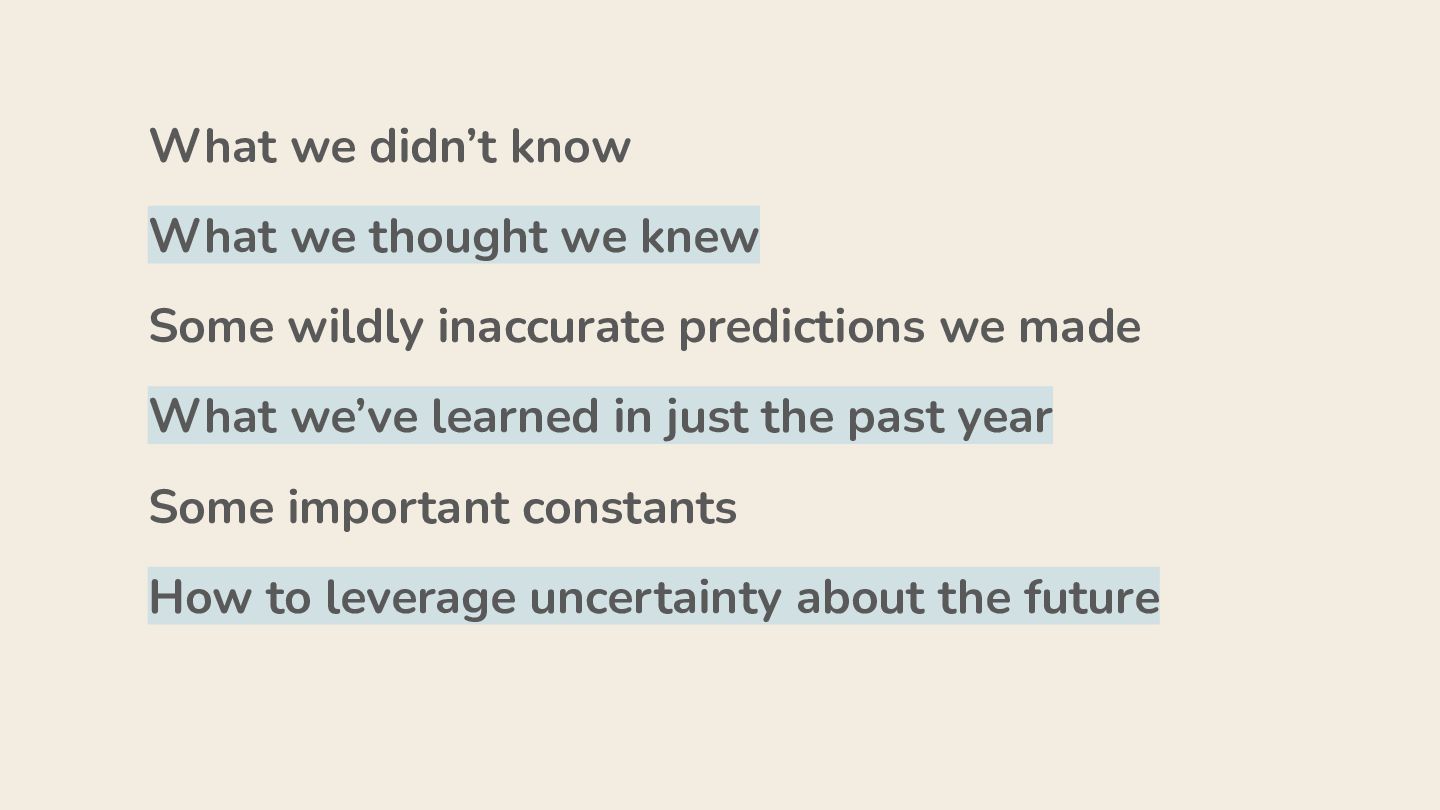
  1. What we didn’t know What we thought we knew Some

    wildly inaccurate predictions we made What we’ve learned in just the past year Some important constants How to leverage uncertainty about the future
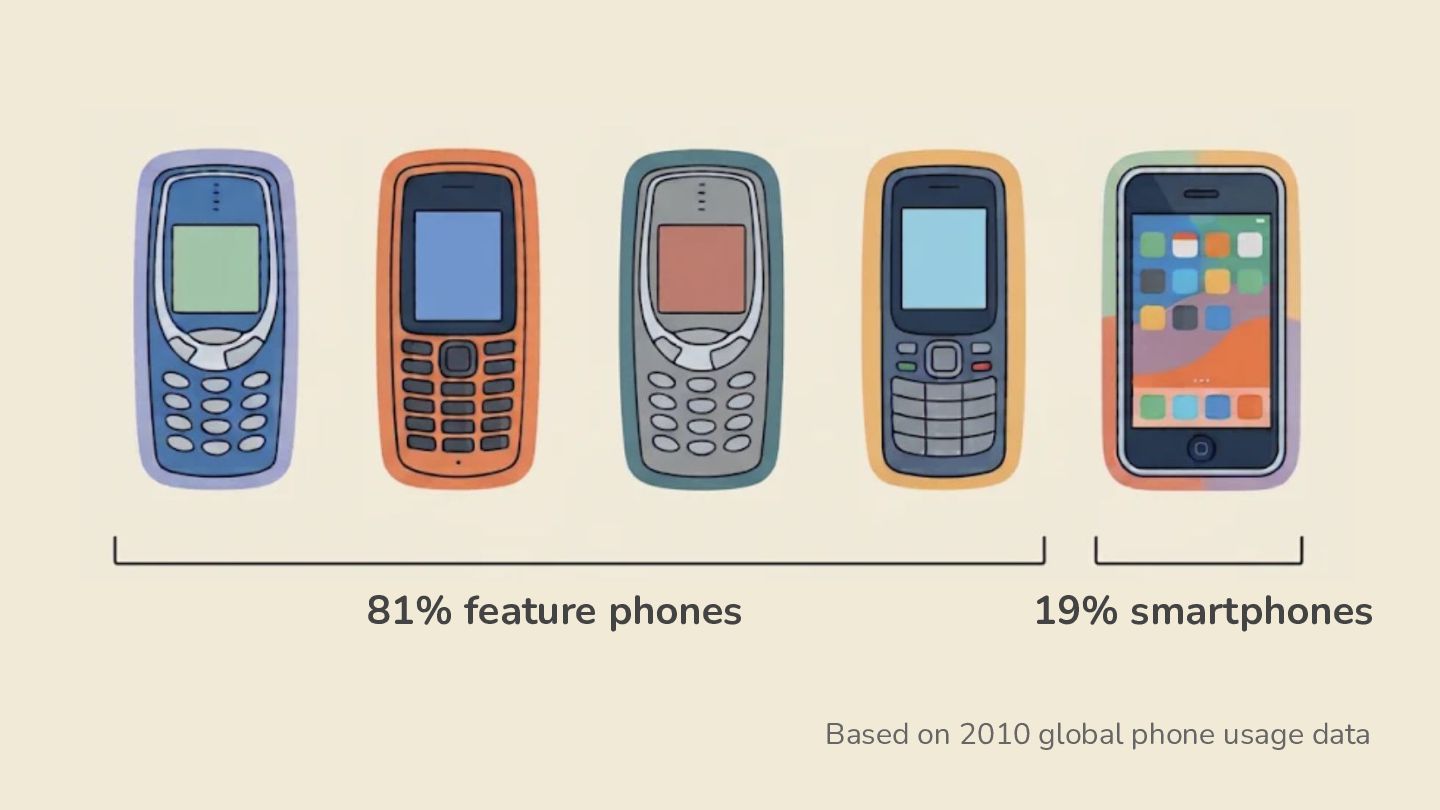
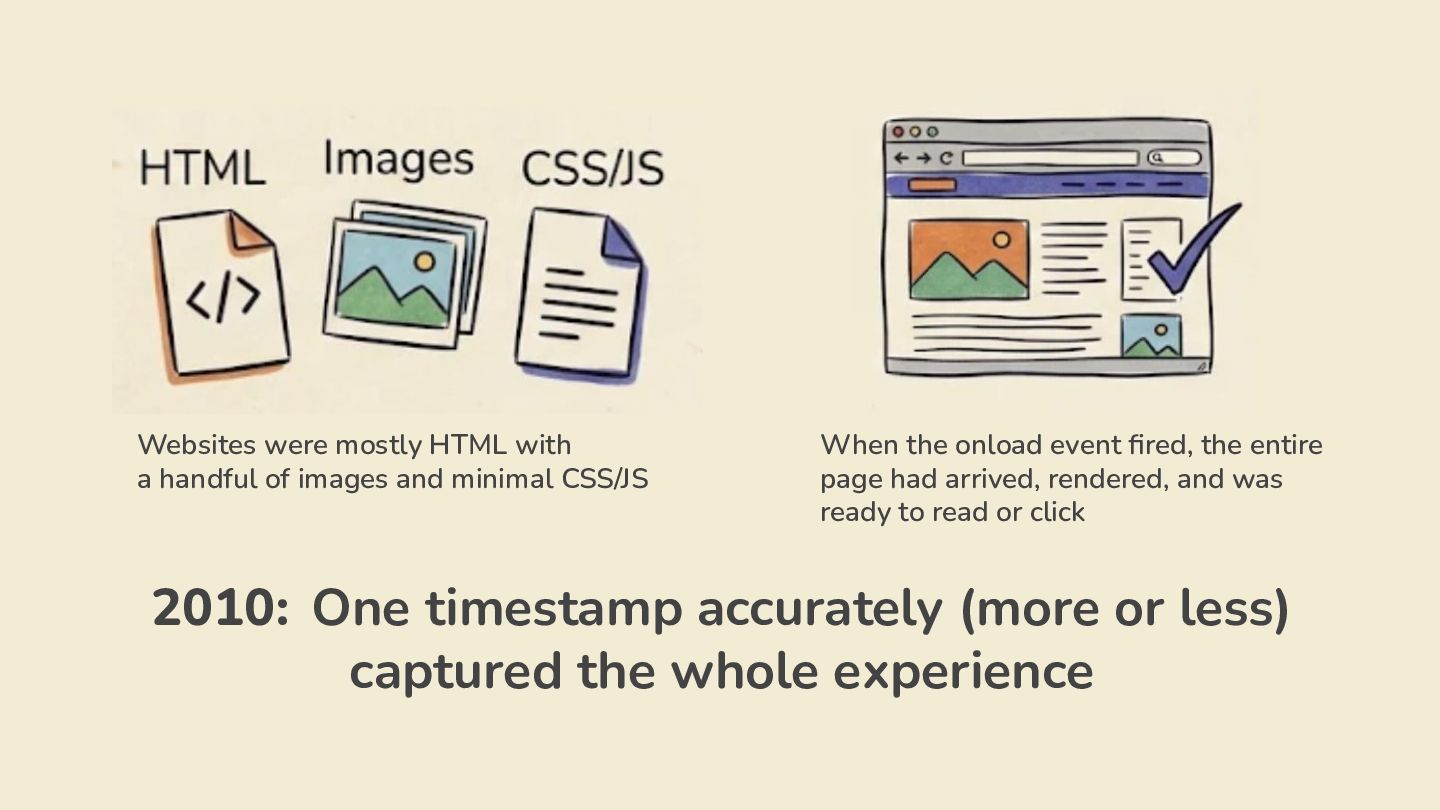
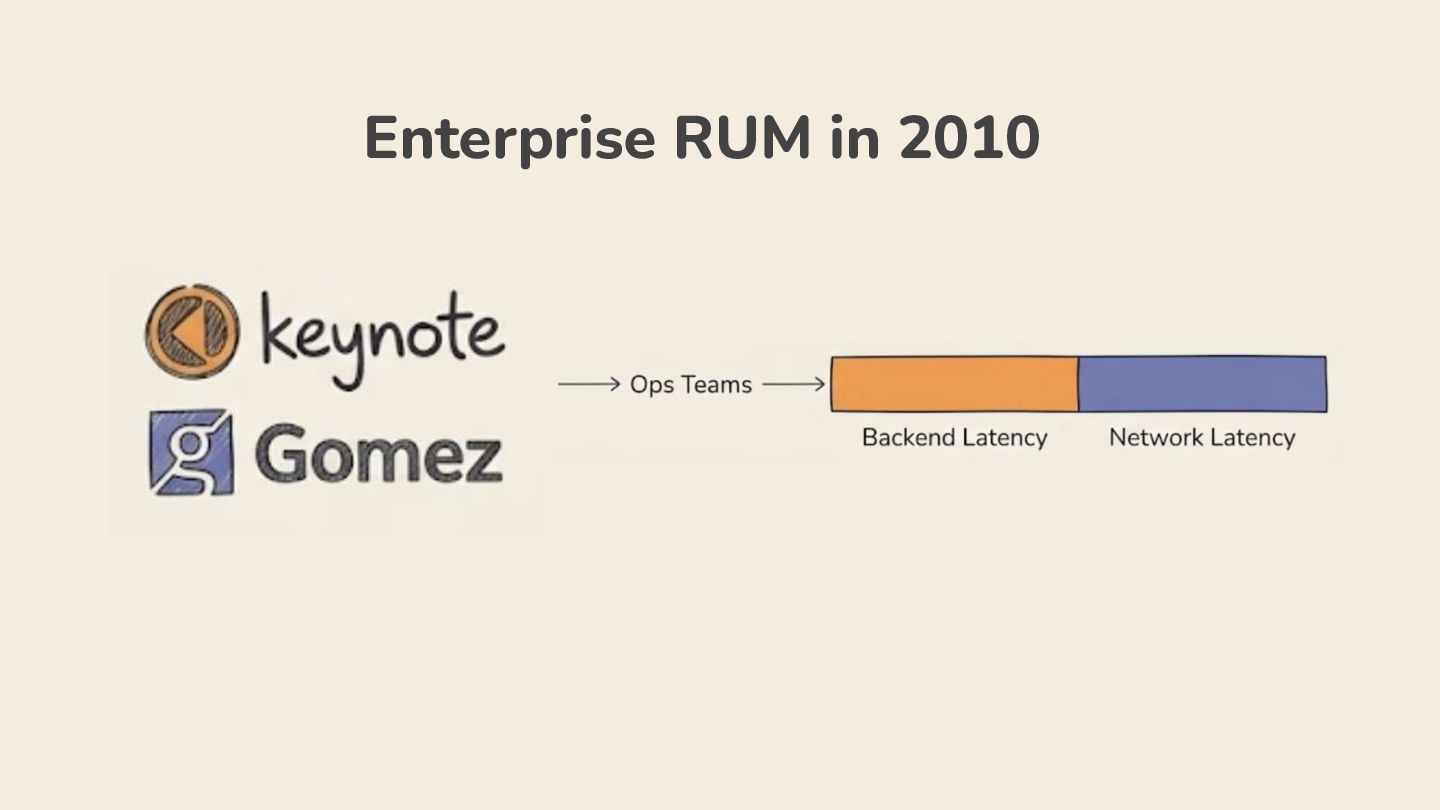
  2. Websites were mostly HTML with a handful of images and

    minimal CSS/JS When the onload event fired, the entire page had arrived, rendered, and was ready to read or click 2010: One timestamp accurately (more or less) captured the whole experience
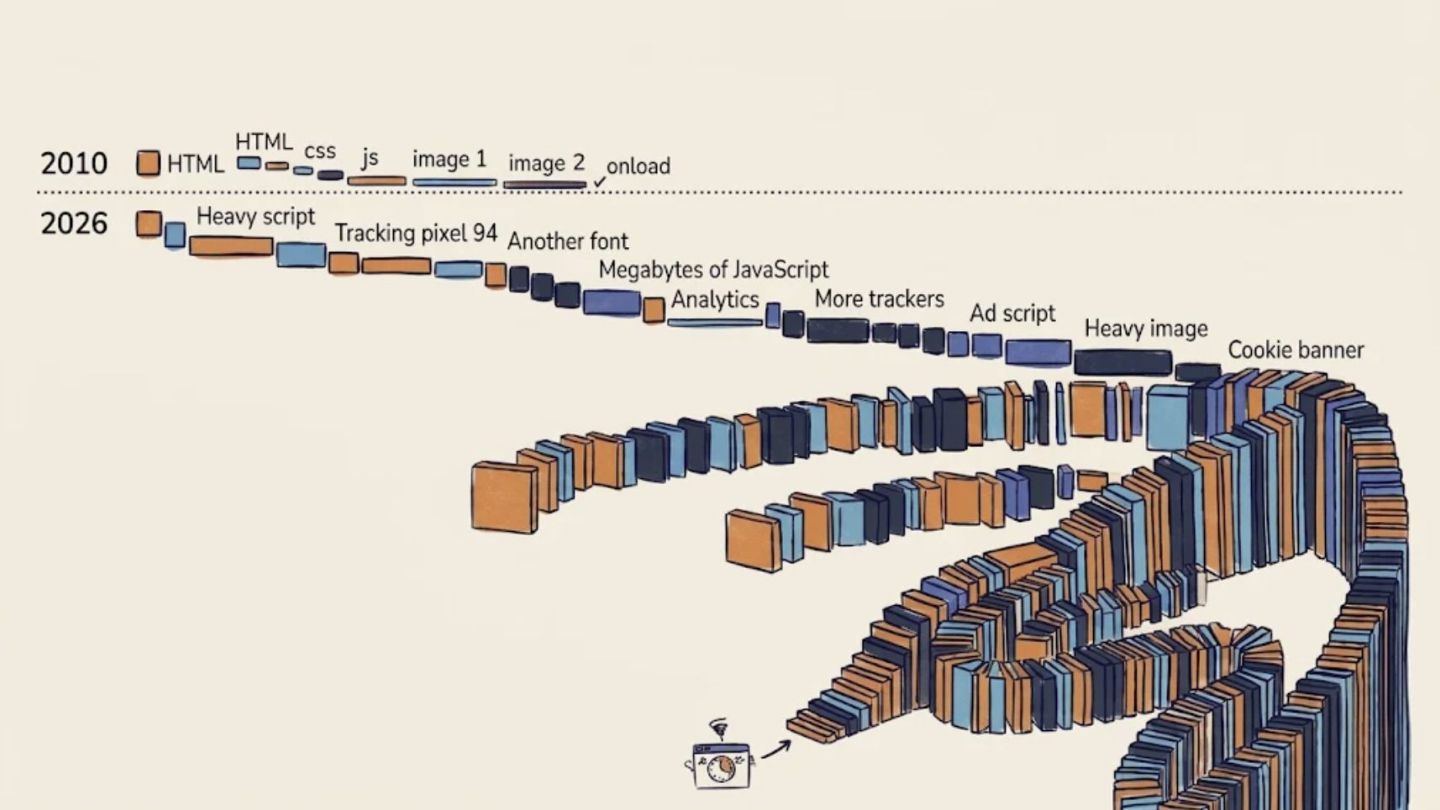
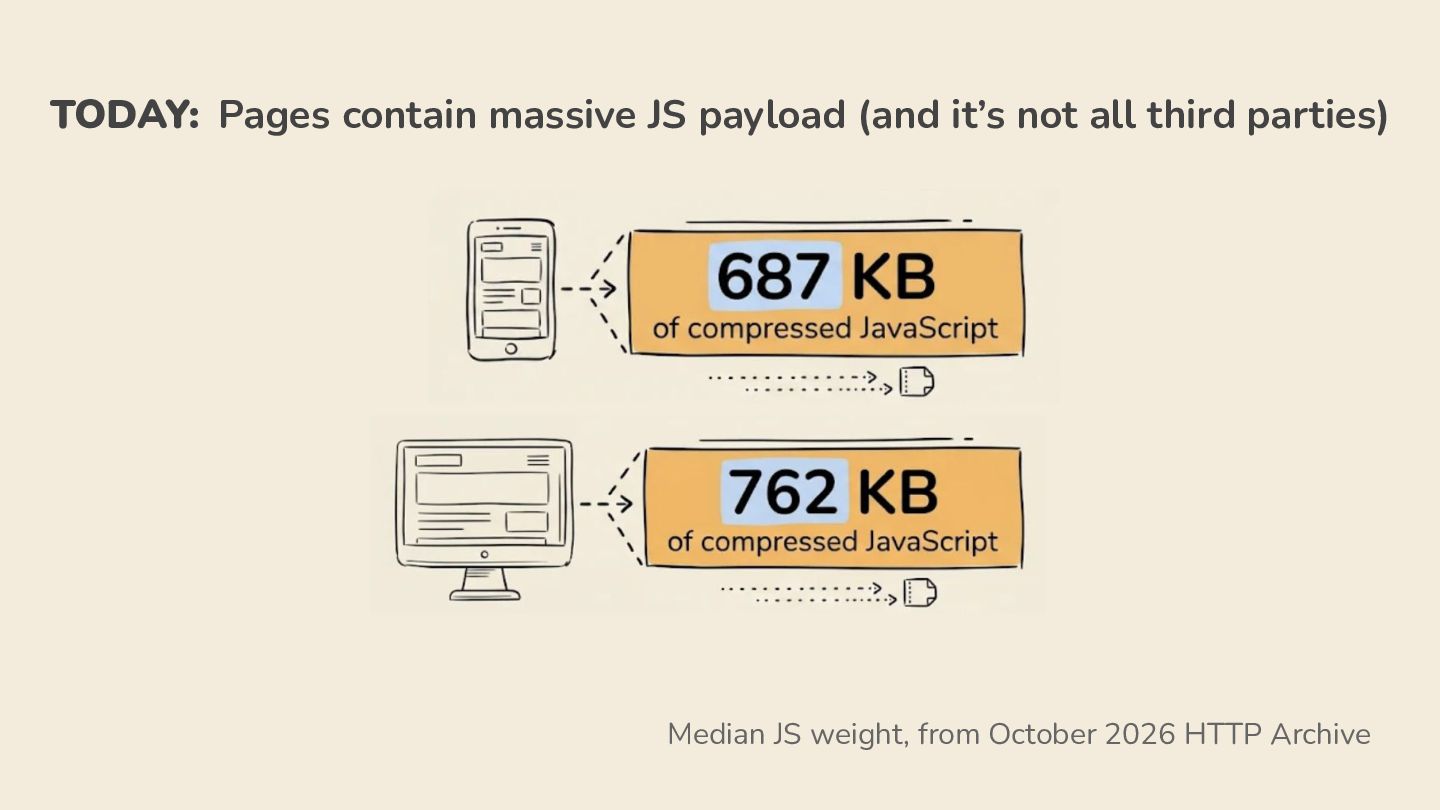
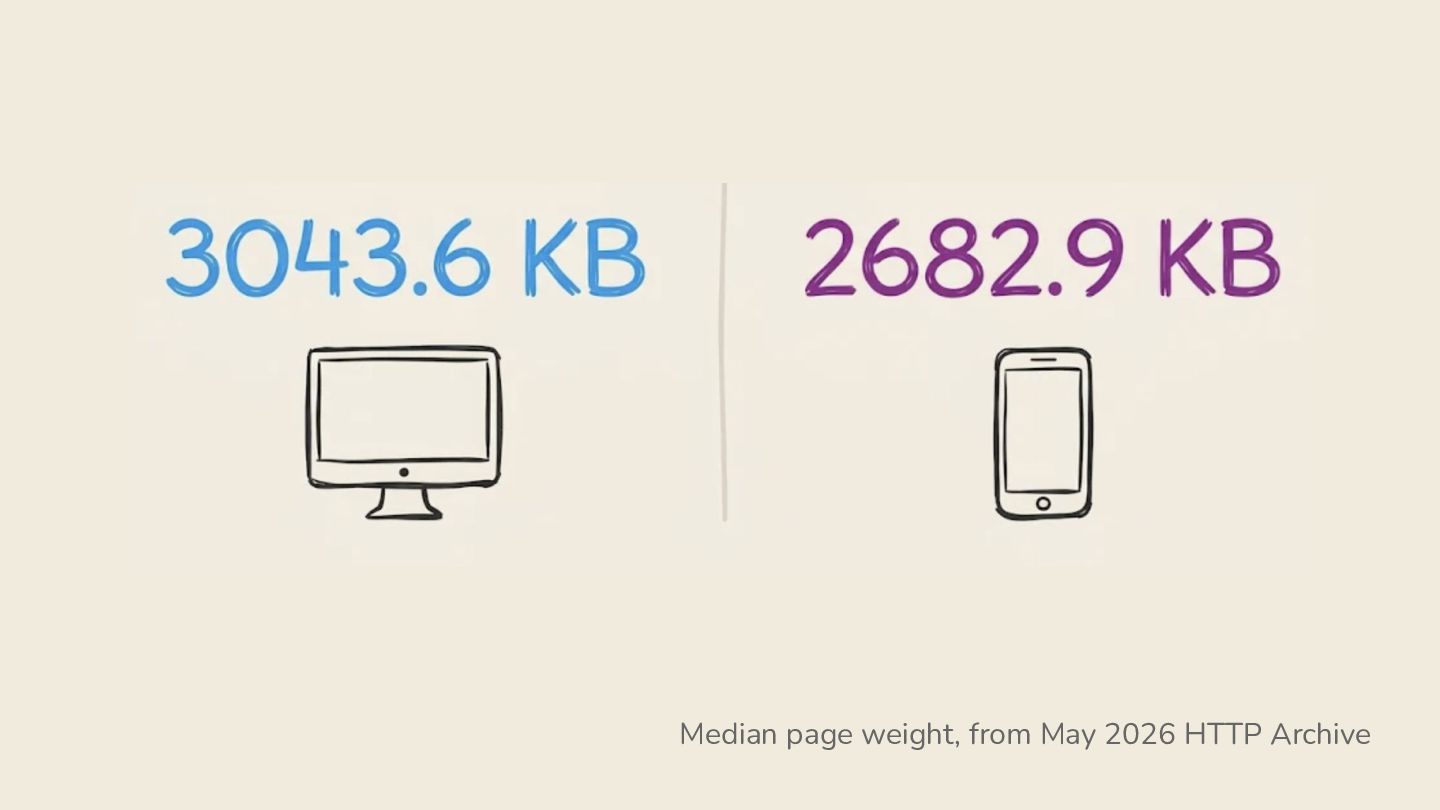
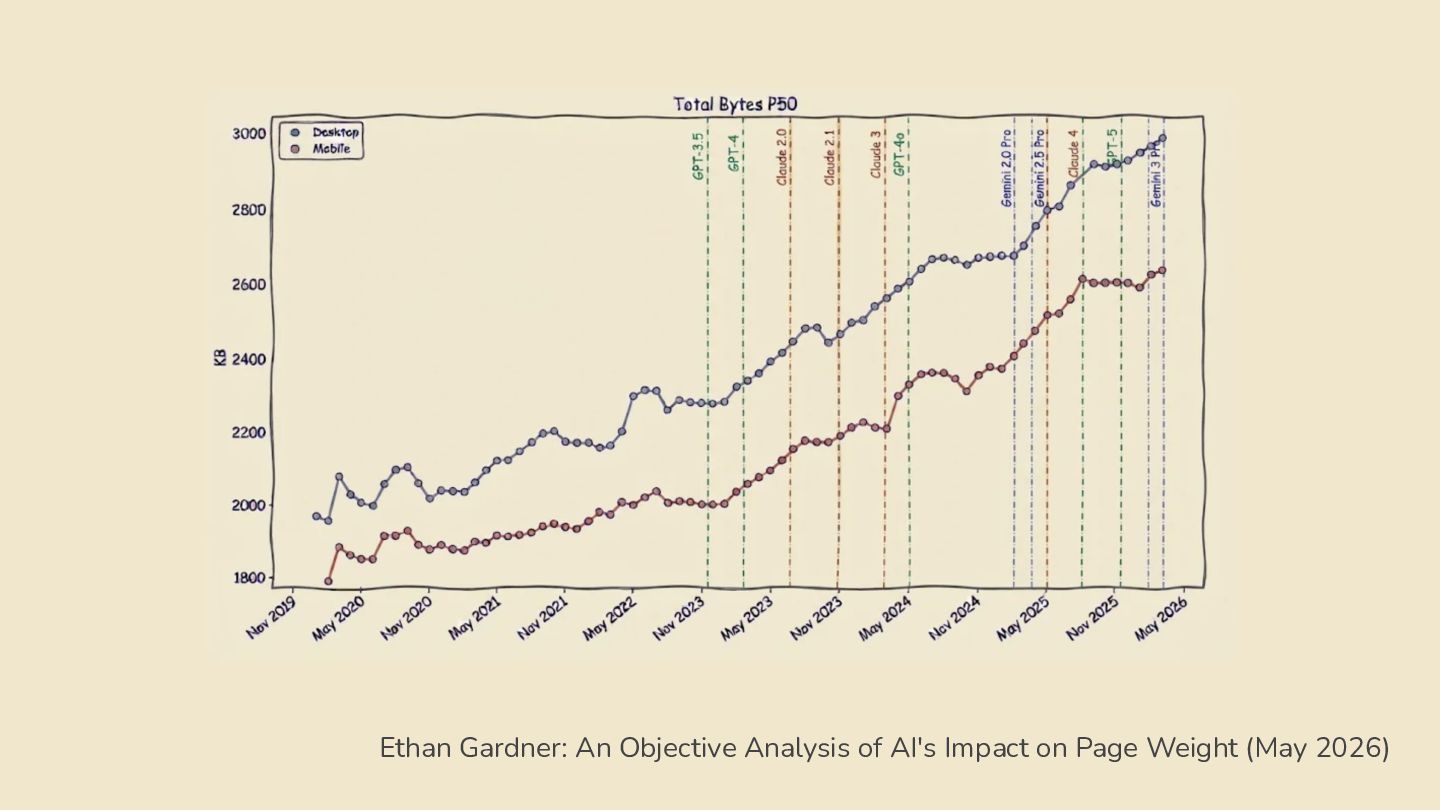
  3. TODAY: Pages contain massive JS payload (and it’s not all

    third parties) Median JS weight, from October 2026 HTTP Archive
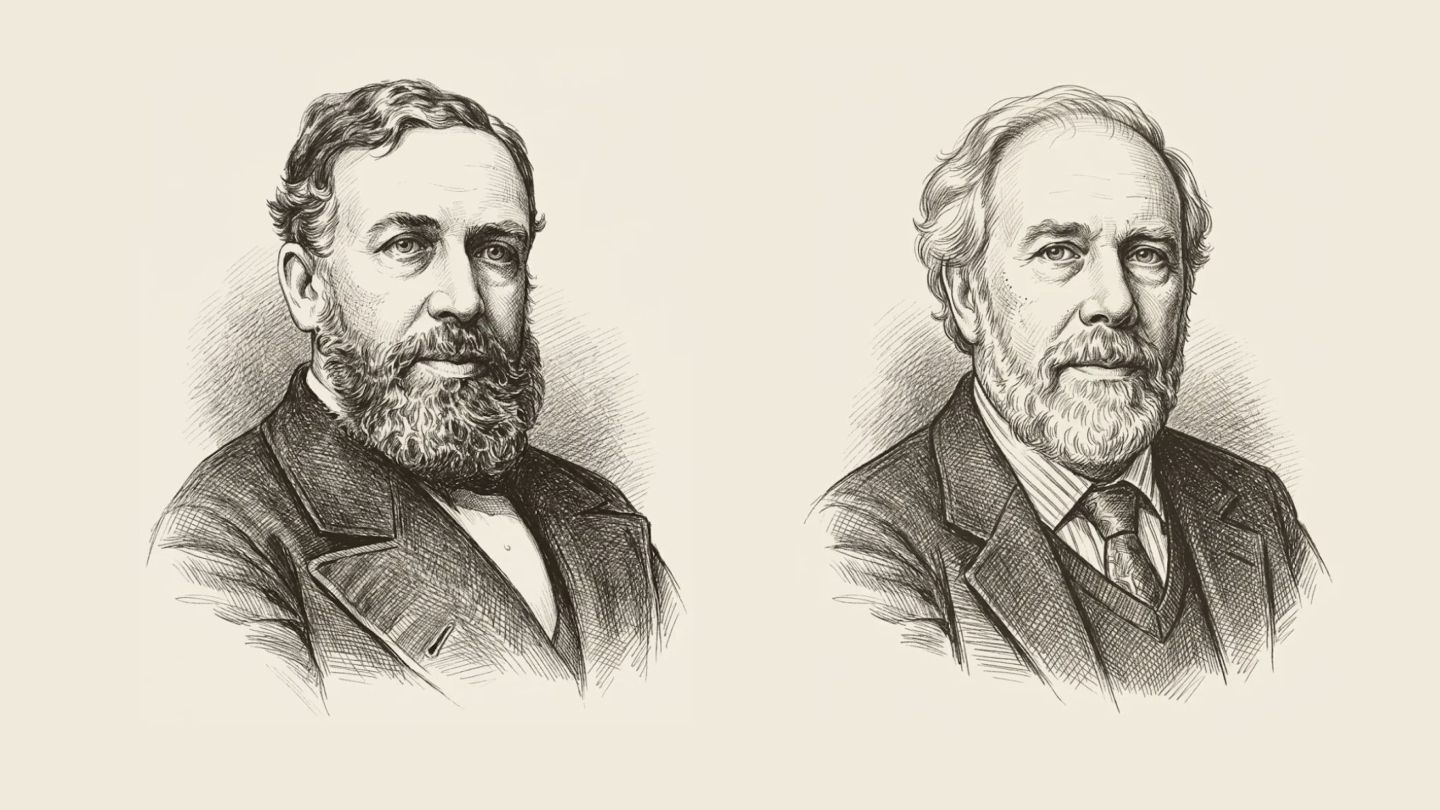
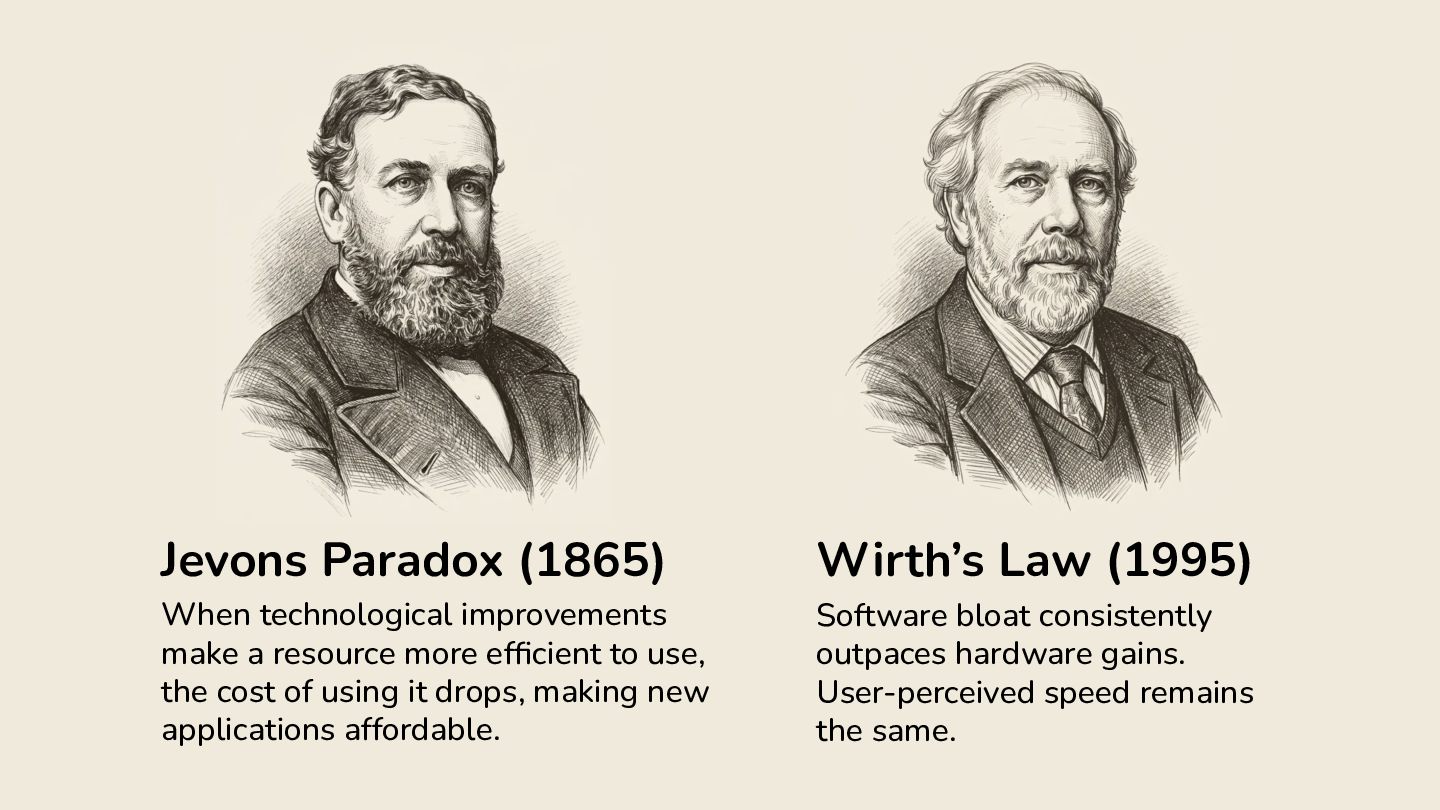
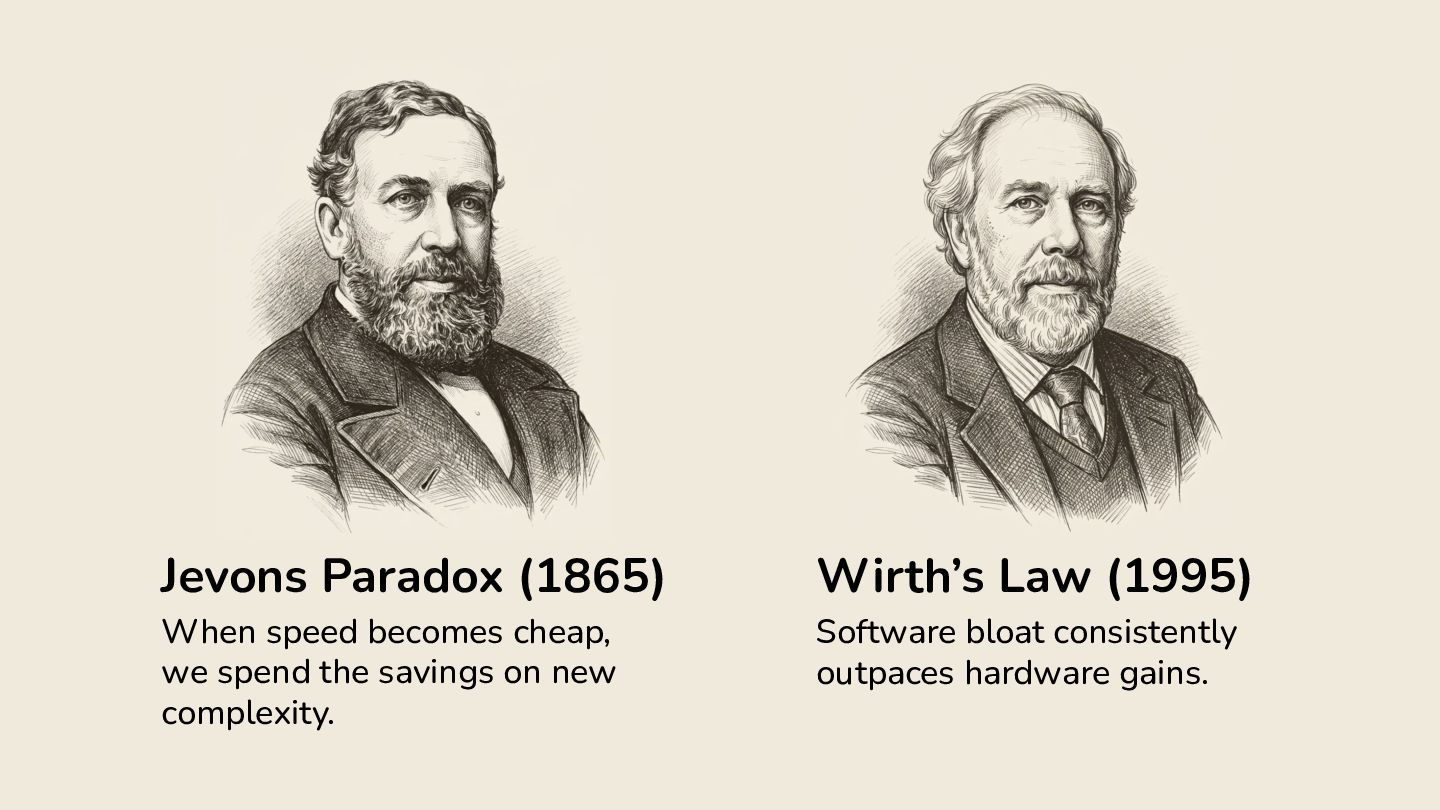
  4. Jevons Paradox (1865) When technological improvements make a resource more

    efficient to use, the cost of using it drops, making new applications affordable. Wirth’s Law (1995) Software bloat consistently outpaces hardware gains. User-perceived speed remains the same.
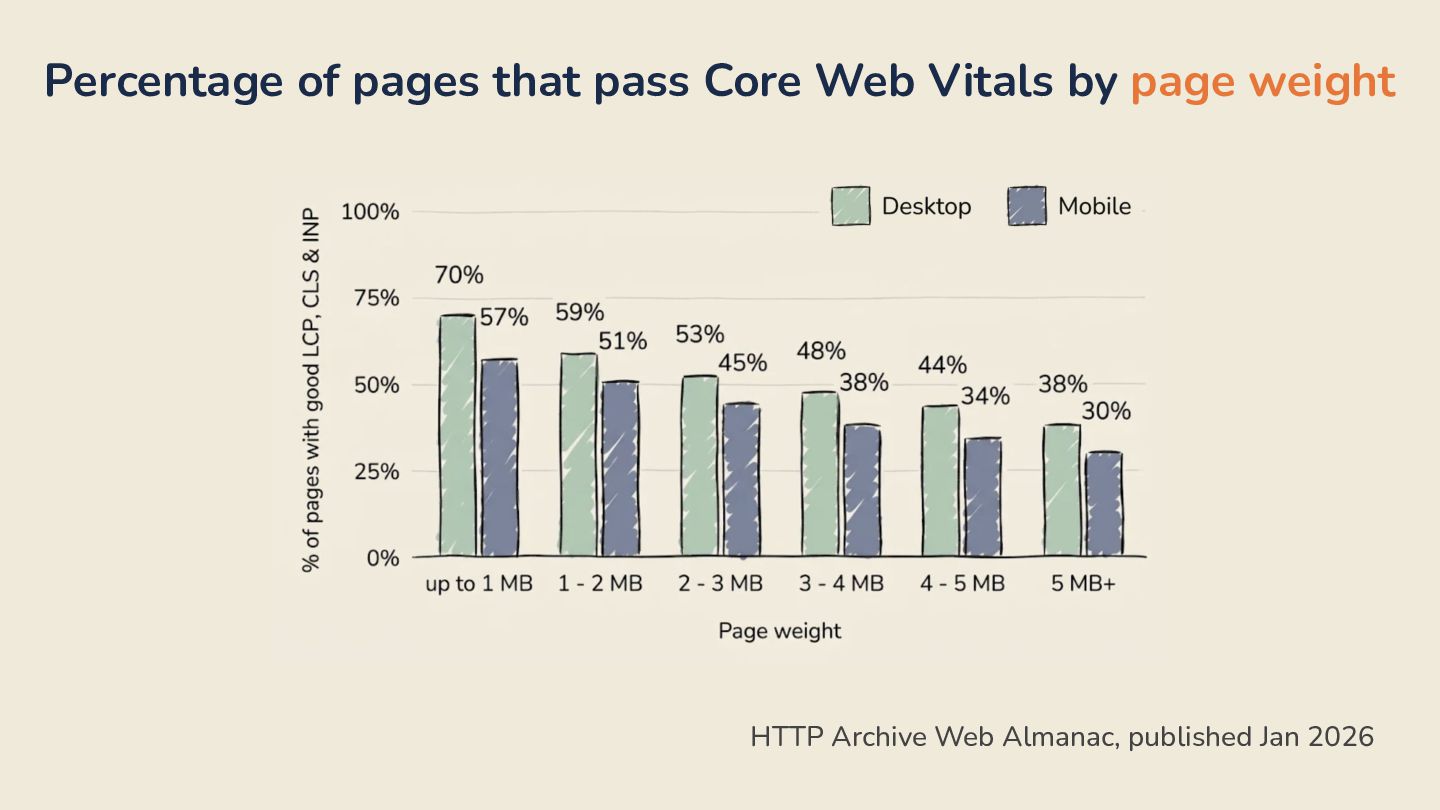
  5. Percentage of pages that pass Core Web Vitals by page

    weight HTTP Archive Web Almanac, published Jan 2026
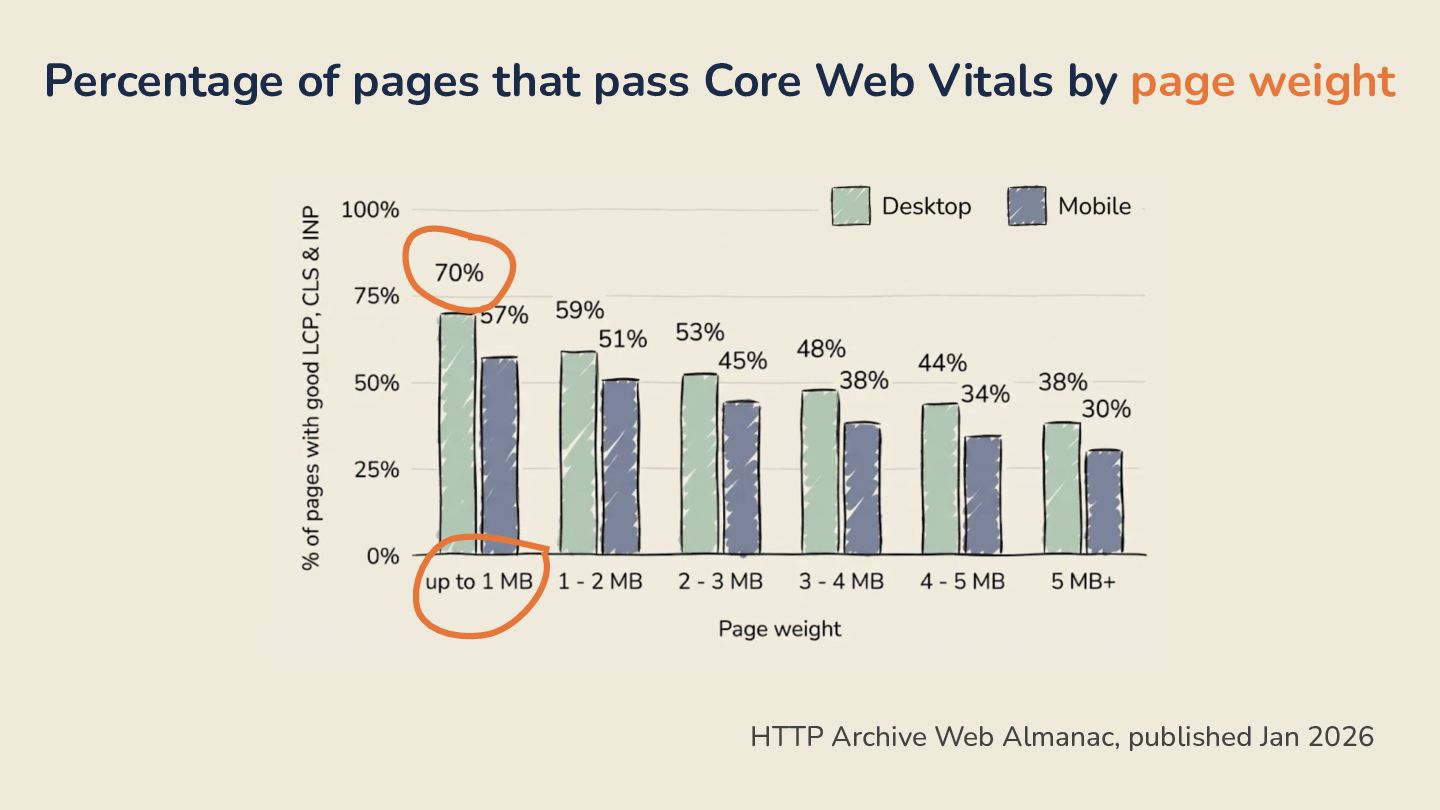
  6. Percentage of pages that pass Core Web Vitals by page

    weight HTTP Archive Web Almanac, published Jan 2026
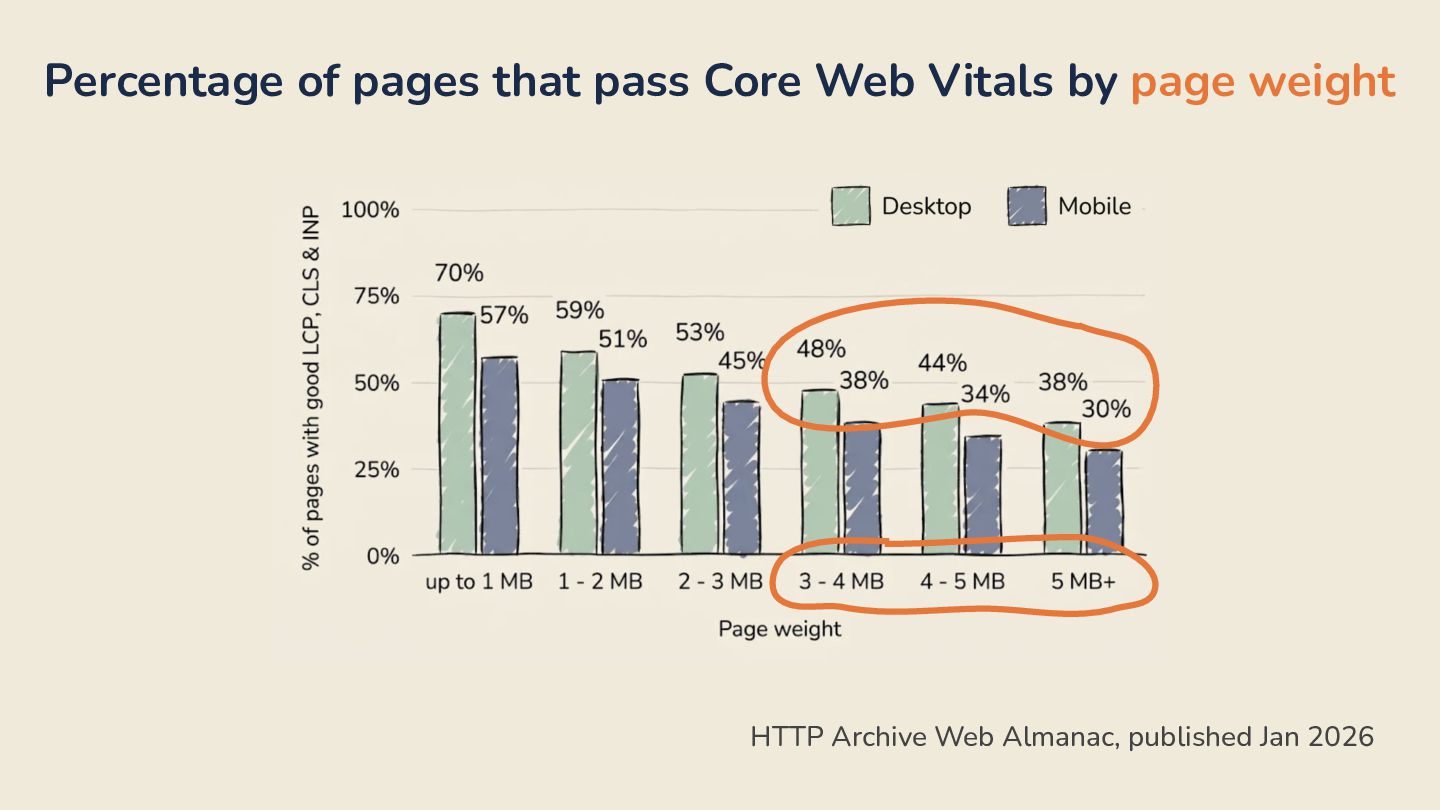
  7. Percentage of pages that pass Core Web Vitals by page

    weight HTTP Archive Web Almanac, published Jan 2026
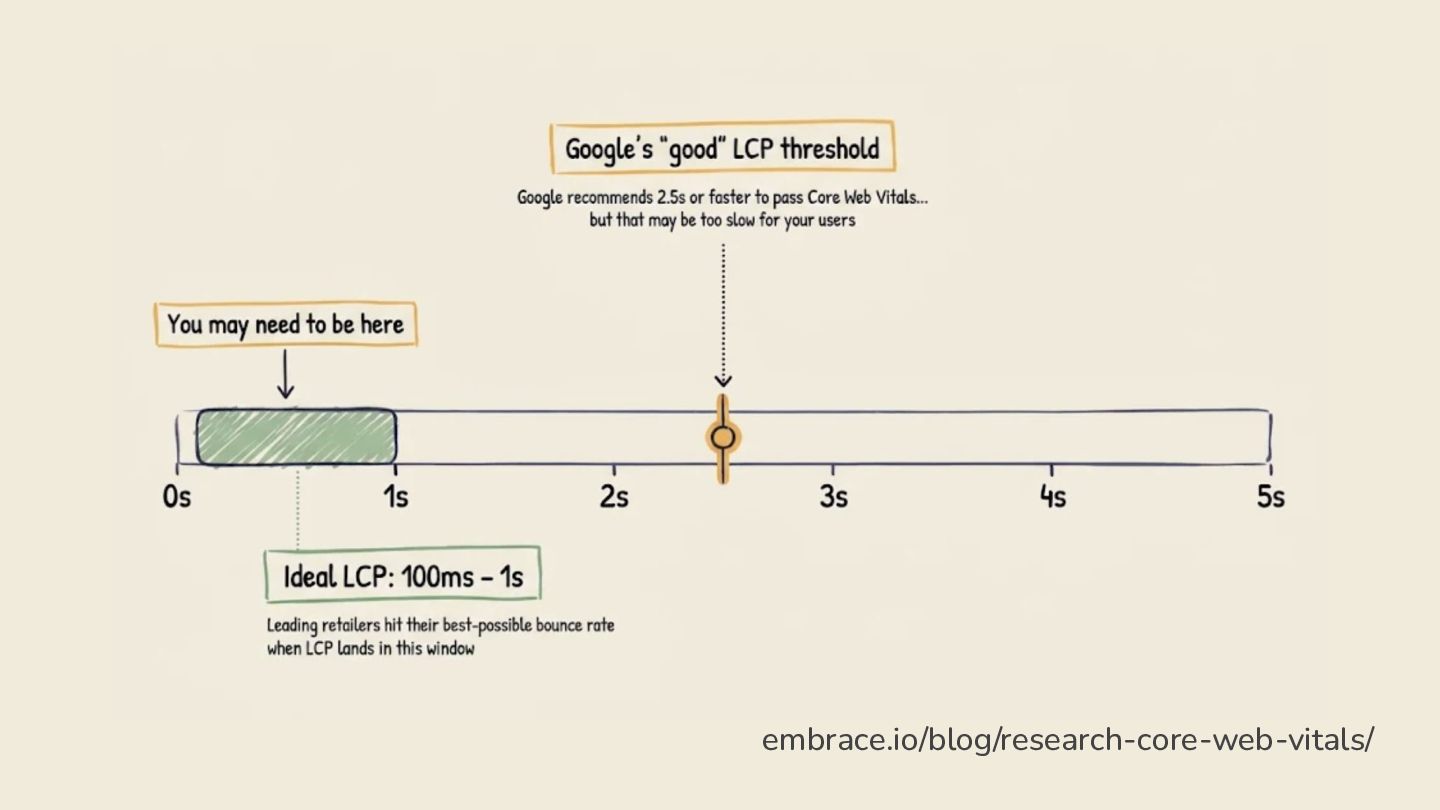
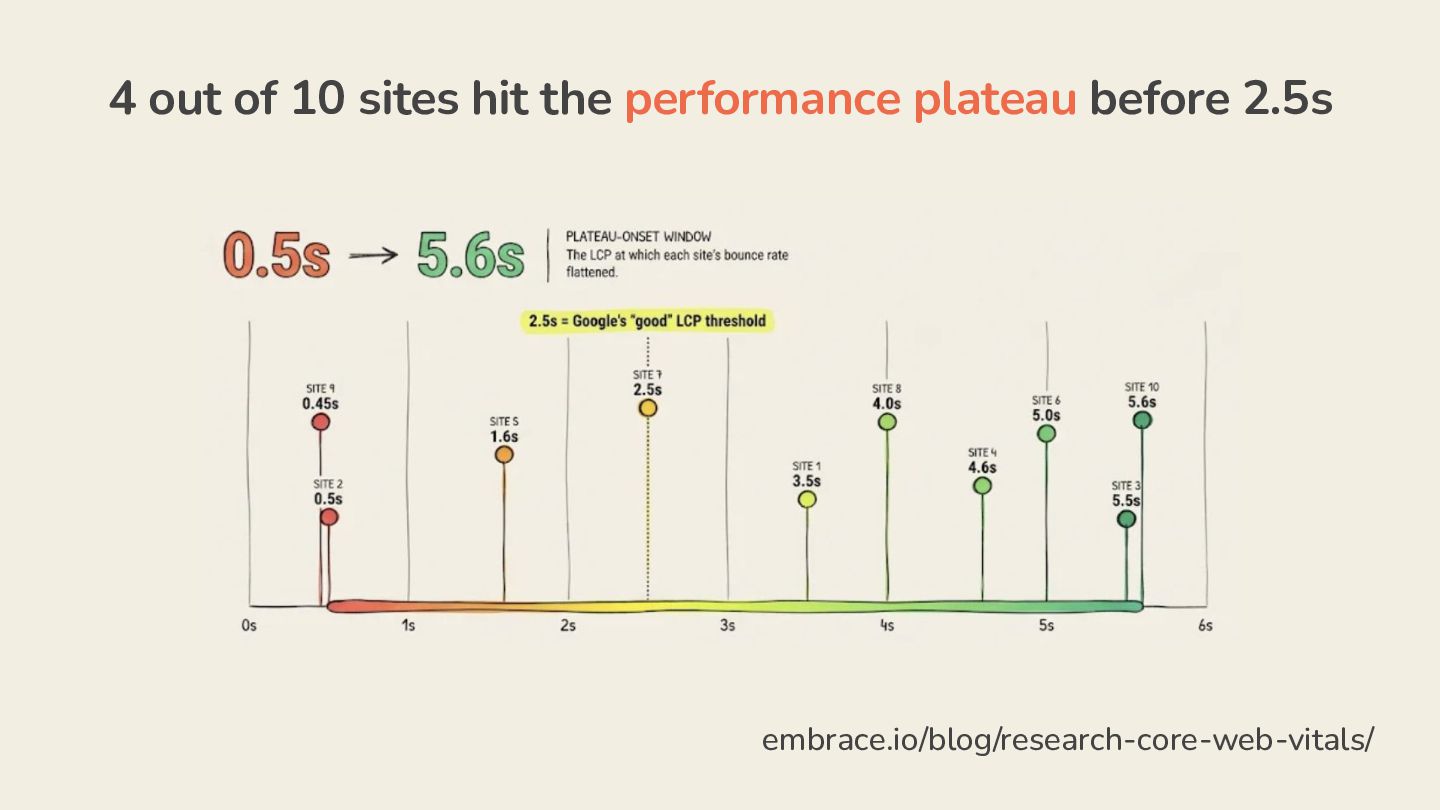
  8. 4 out of 10 sites hit the performance plateau before

    2.5s embrace.io/blog/research-core-web-vitals/
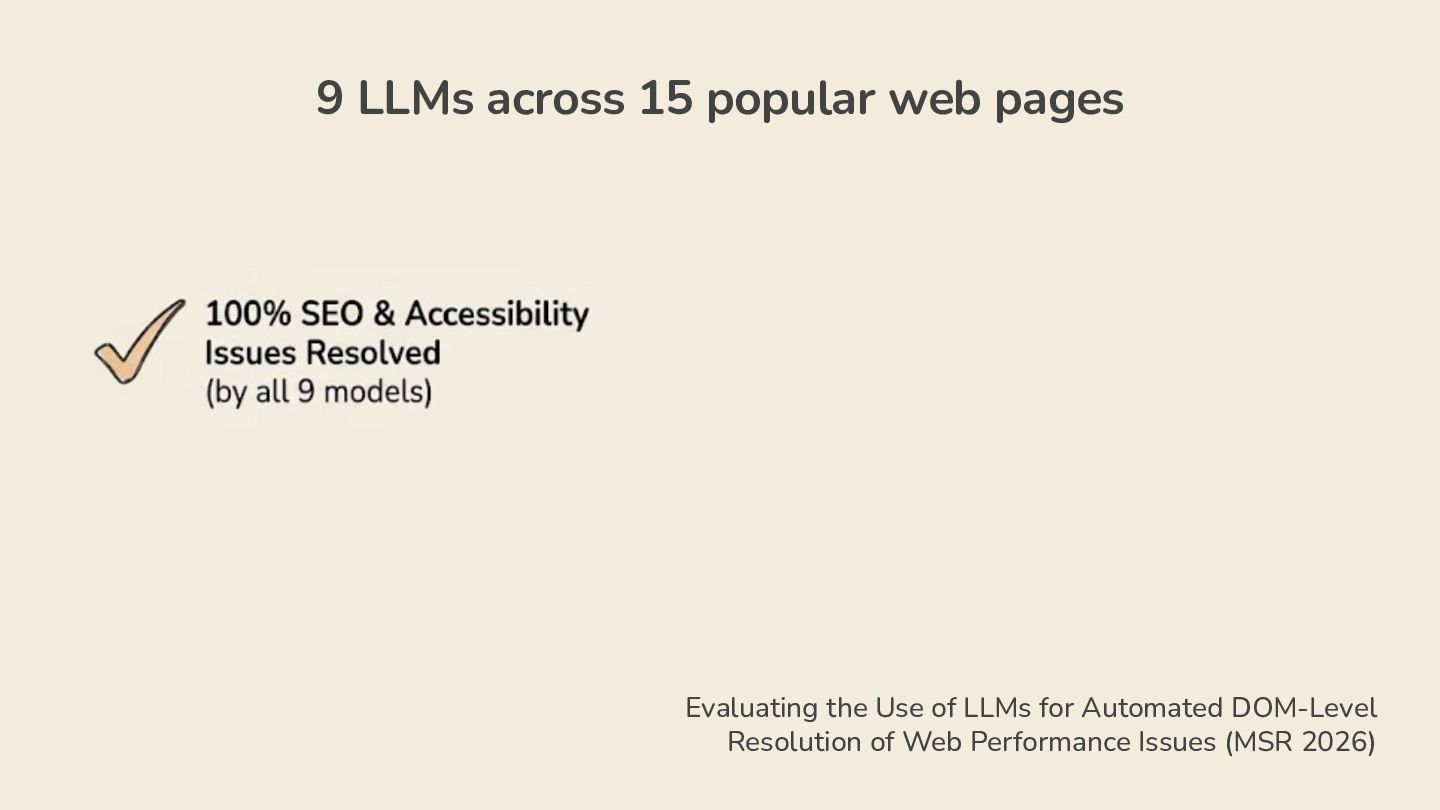
  9. 9 LLMs across 15 popular web pages Evaluating the Use

    of LLMs for Automated DOM-Level Resolution of Web Performance Issues (MSR 2026)
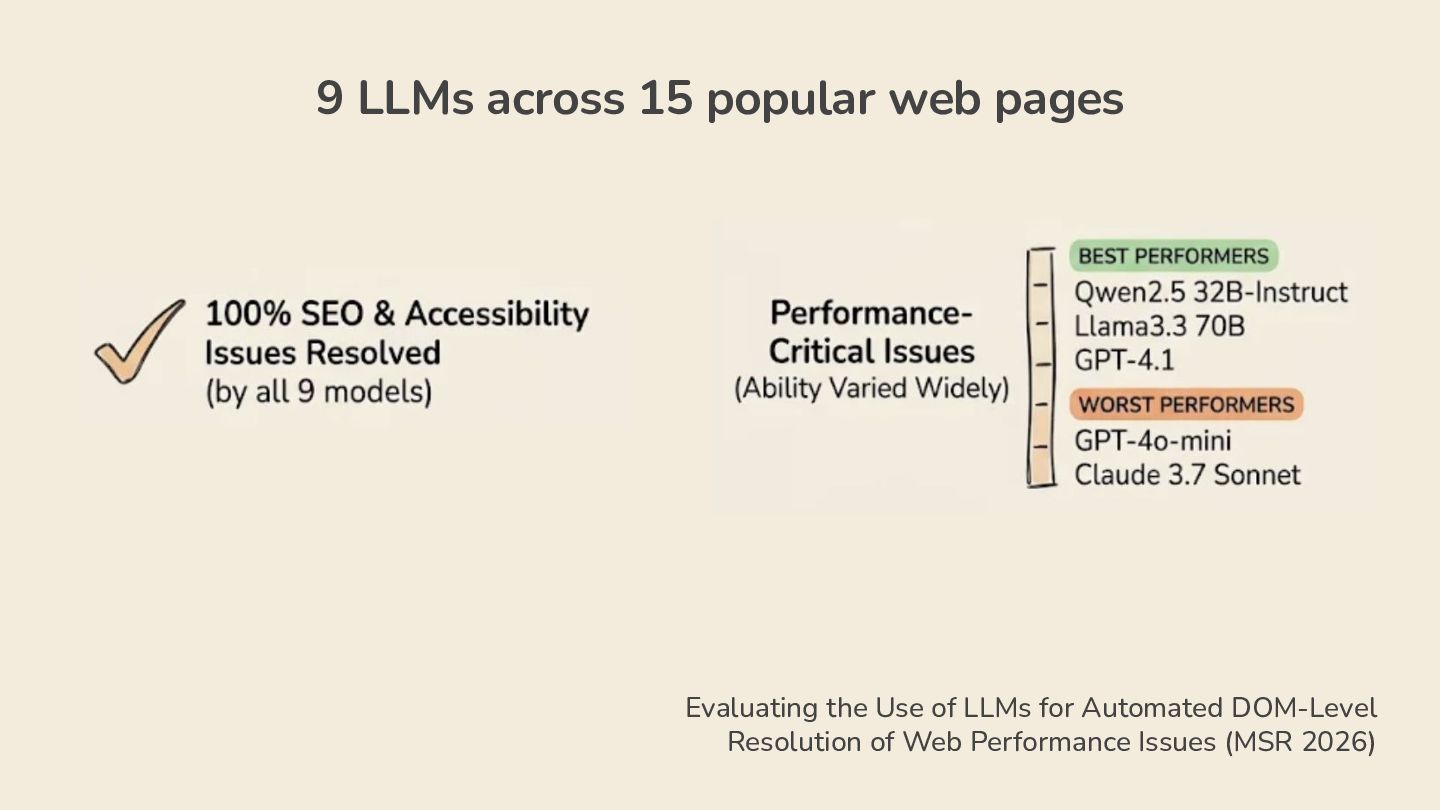
  10. 9 LLMs across 15 popular web pages Evaluating the Use

    of LLMs for Automated DOM-Level Resolution of Web Performance Issues (MSR 2026)
  11. Jevons Paradox (1865) When speed becomes cheap, we spend the

    savings on new complexity. Wirth’s Law (1995) Software bloat consistently outpaces hardware gains.
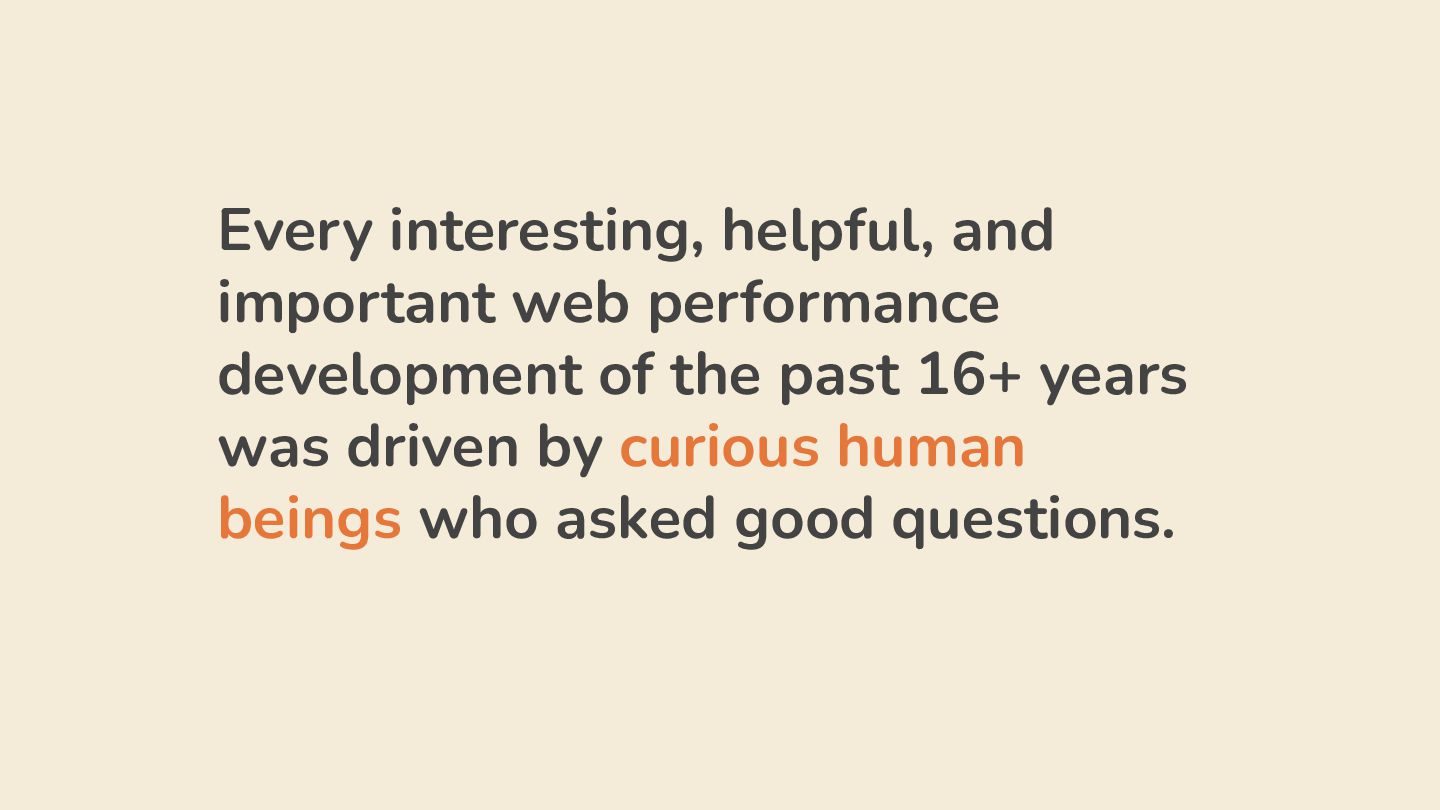
  12. Every interesting, helpful, and important web performance development of the

    past 16+ years was driven by curious human beings who asked good questions.
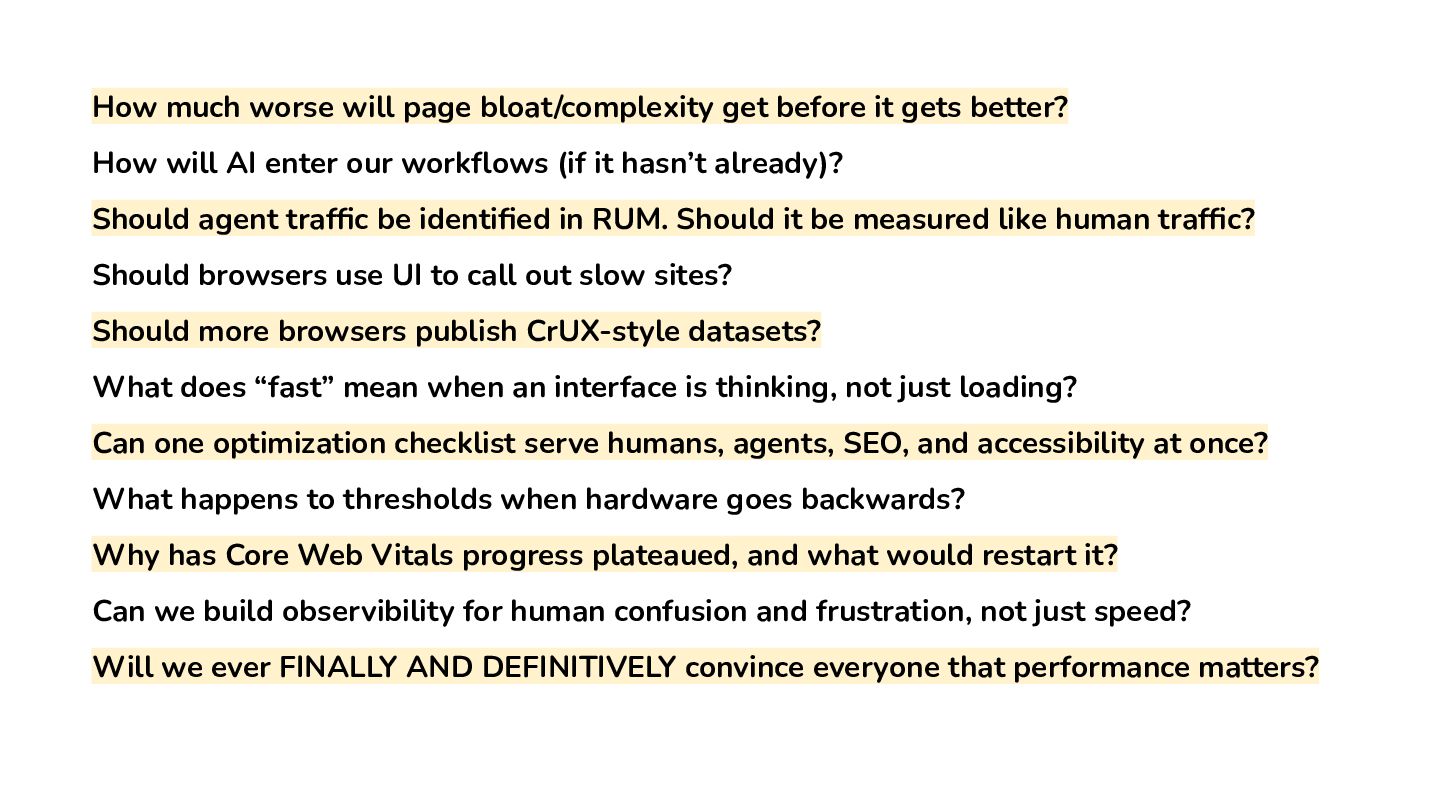
  13. How much worse will page bloat/complexity get before it gets

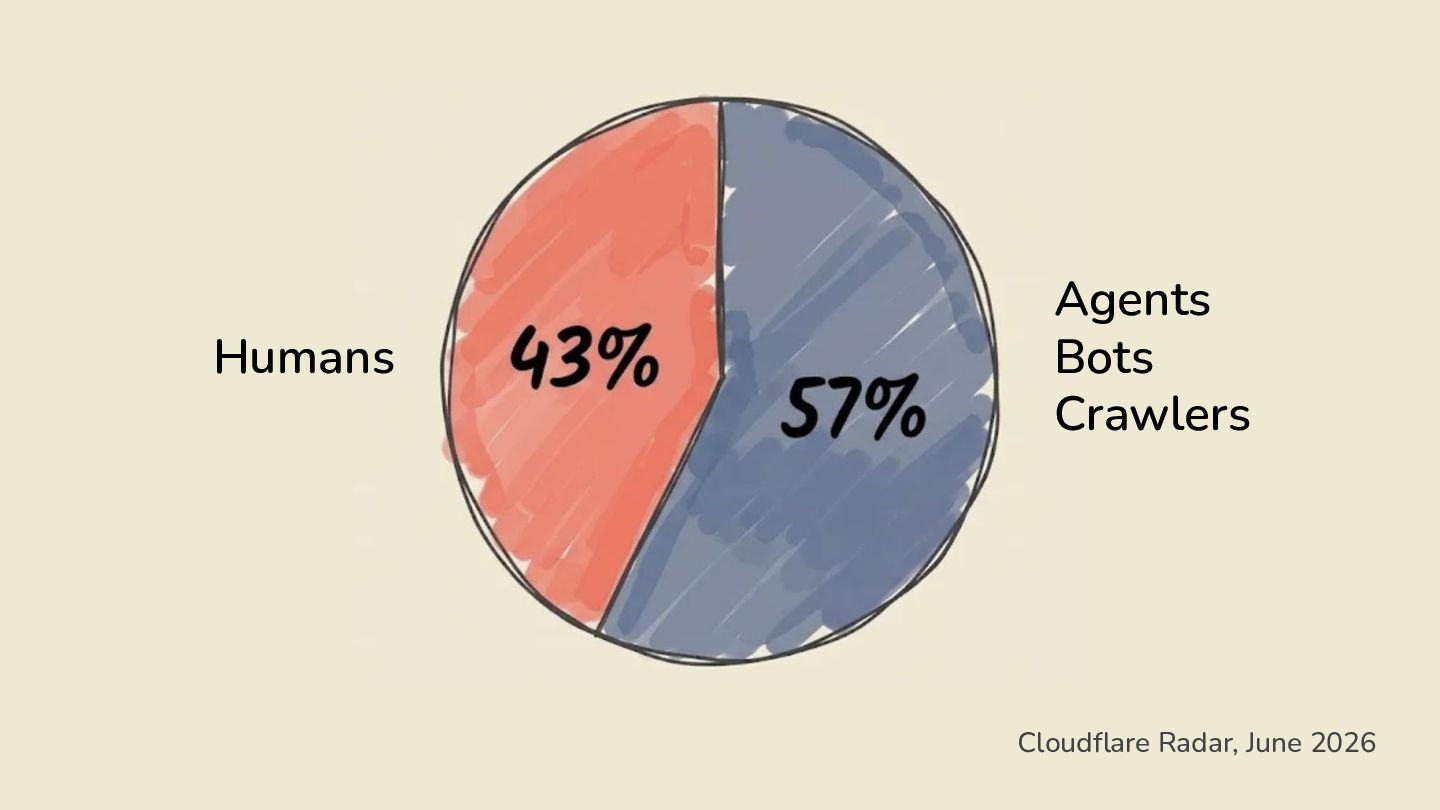
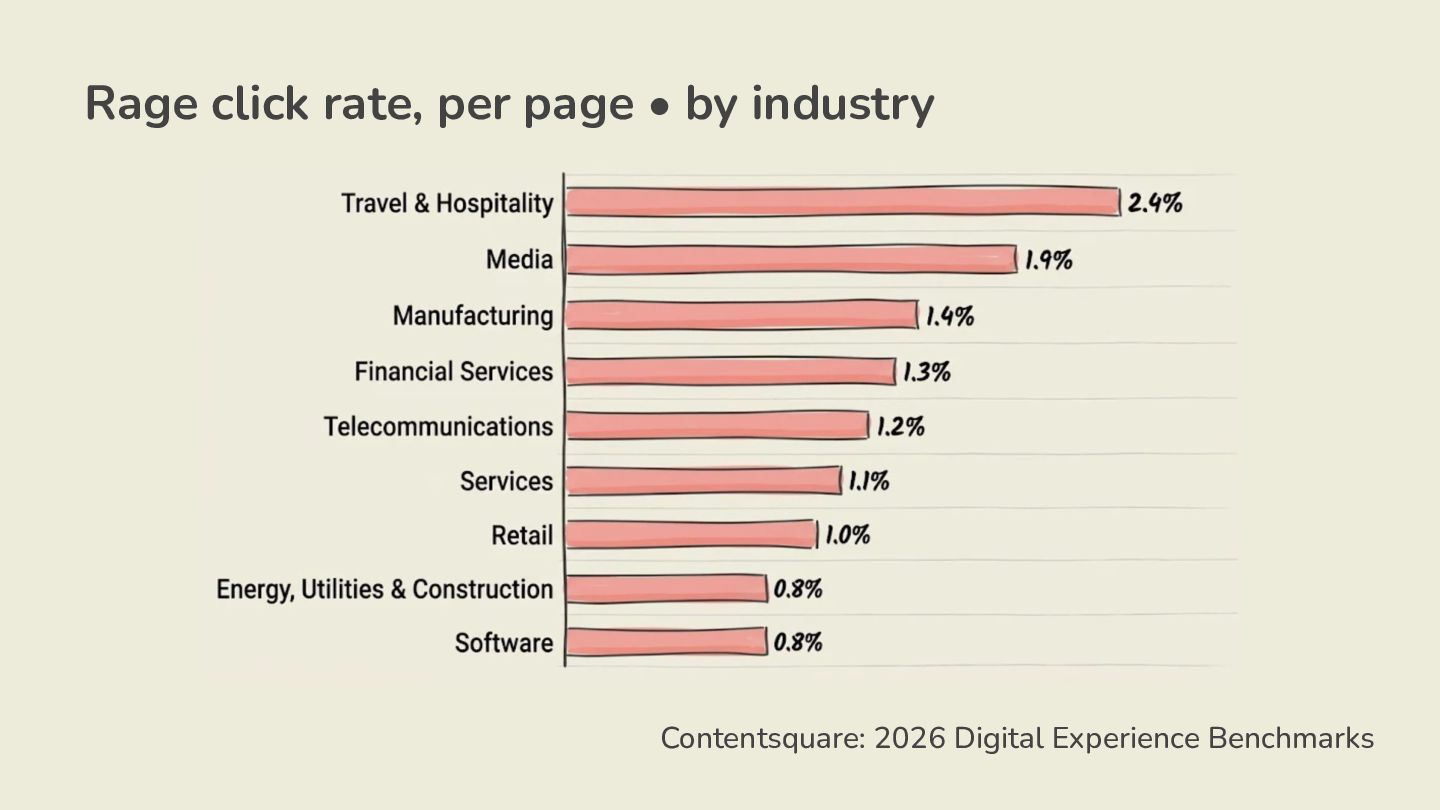
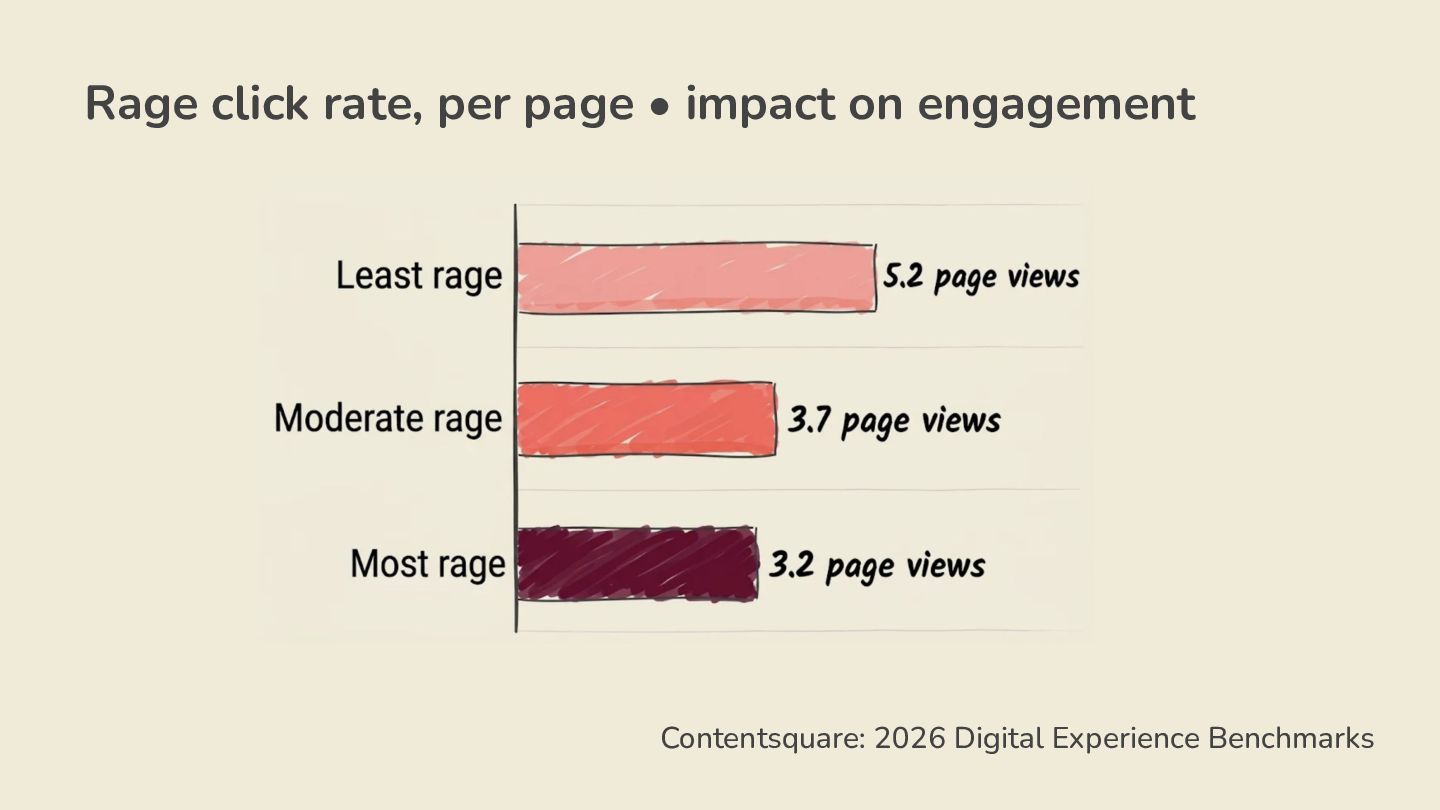
    better? How will AI enter our workflows (if it hasn’t already)? Should agent traffic be identified in RUM. Should it be measured like human traffic? Should browsers use UI to call out slow sites? Should more browsers publish CrUX-style datasets? What does “fast” mean when an interface is thinking, not just loading? Can one optimization checklist serve humans, agents, SEO, and accessibility at once? What happens to thresholds when hardware goes backwards? Why has Core Web Vitals progress plateaued, and what would restart it? Can we build observibility for human confusion and frustration, not just speed? Will we ever FINALLY AND DEFINITIVELY convince everyone that performance matters?

More Decks by Tammy Everts

Other Decks in Technology