Upgrade to Pro — share decks privately, control downloads, hide ads and more …

Early Alert Tool & Workflows for Detecting and...

Sponsored · Your Podcast. Everywhere. Effortlessly. Share. Educate. Inspire. Entertain. You do you. We'll handle the rest.

Early Alert Tool & Workflows for Detecting and Prioritising IAS

Slides of the presentation given during the online General Assembly of the GuardIAS project.

Avatar for Damiano Oldoni

Damiano Oldoni

May 11, 2026

More Decks by Damiano Oldoni

Other Decks in Research

Transcript

  1. Early Alert Tool & Workflows for Detecting and Prioritising Emerging

    IAS Damiano Oldoni (INBO) 11-05-2026 https://bit.ly/emergingIAS
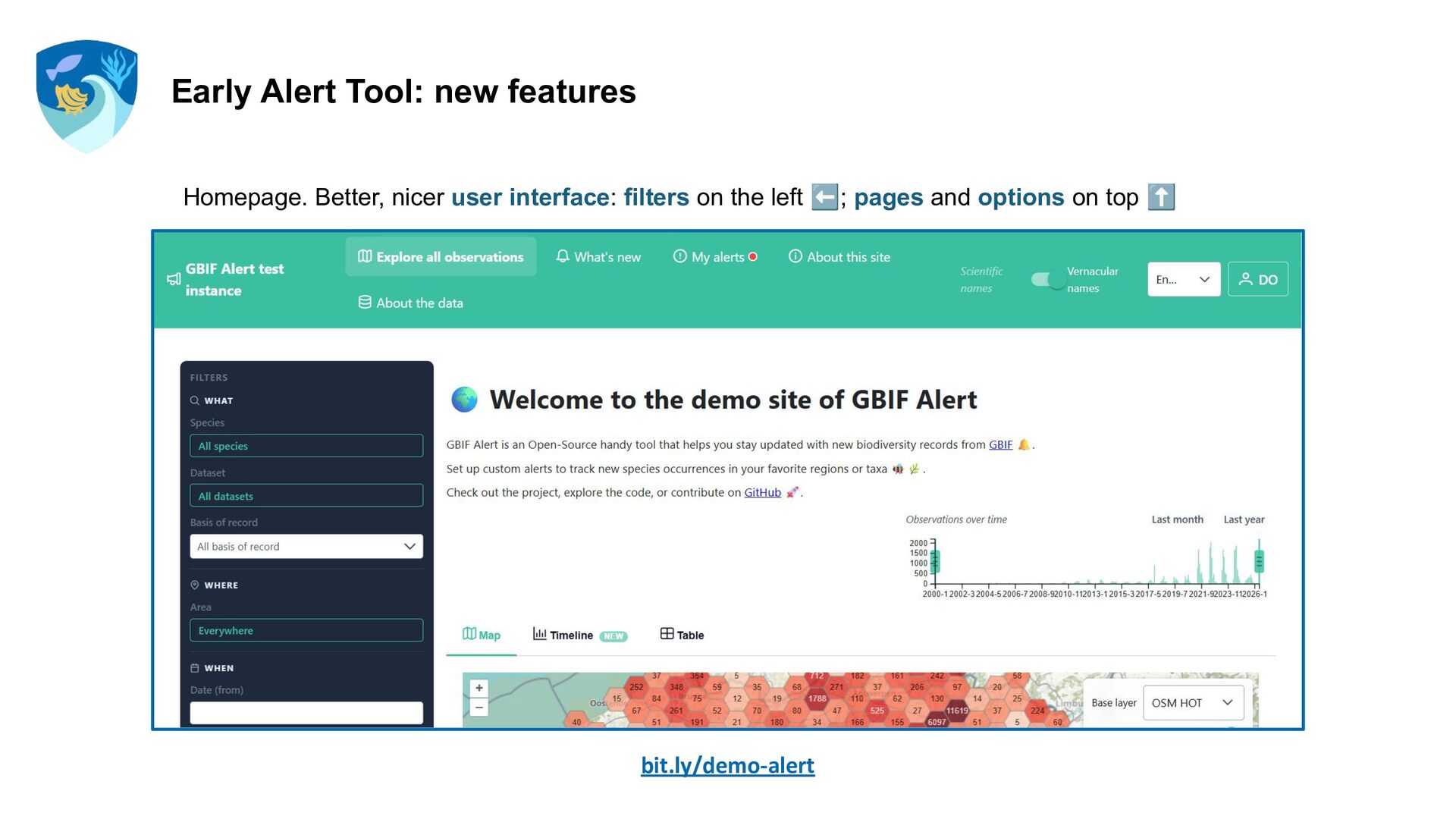
  2. Early Alert Tool: new features Homepage. Better, nicer user interface:

    filters on the left ⬅; pages and options on top ⬆ bit.ly/demo-alert
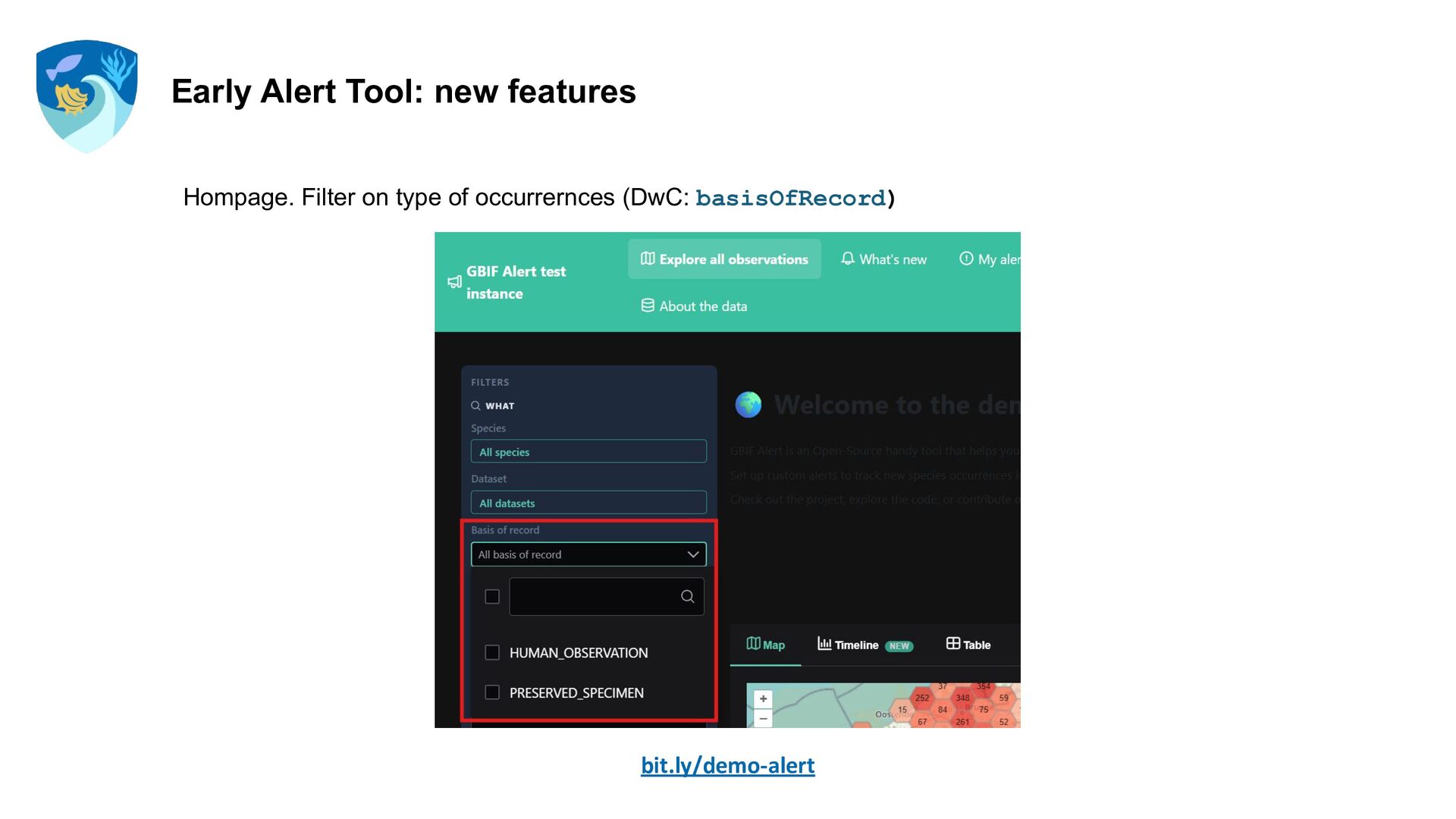
  3. Early Alert Tool: new features Hompage. Filter on type of

    occurrernces (DwC: basisOfRecord) bit.ly/demo-alert
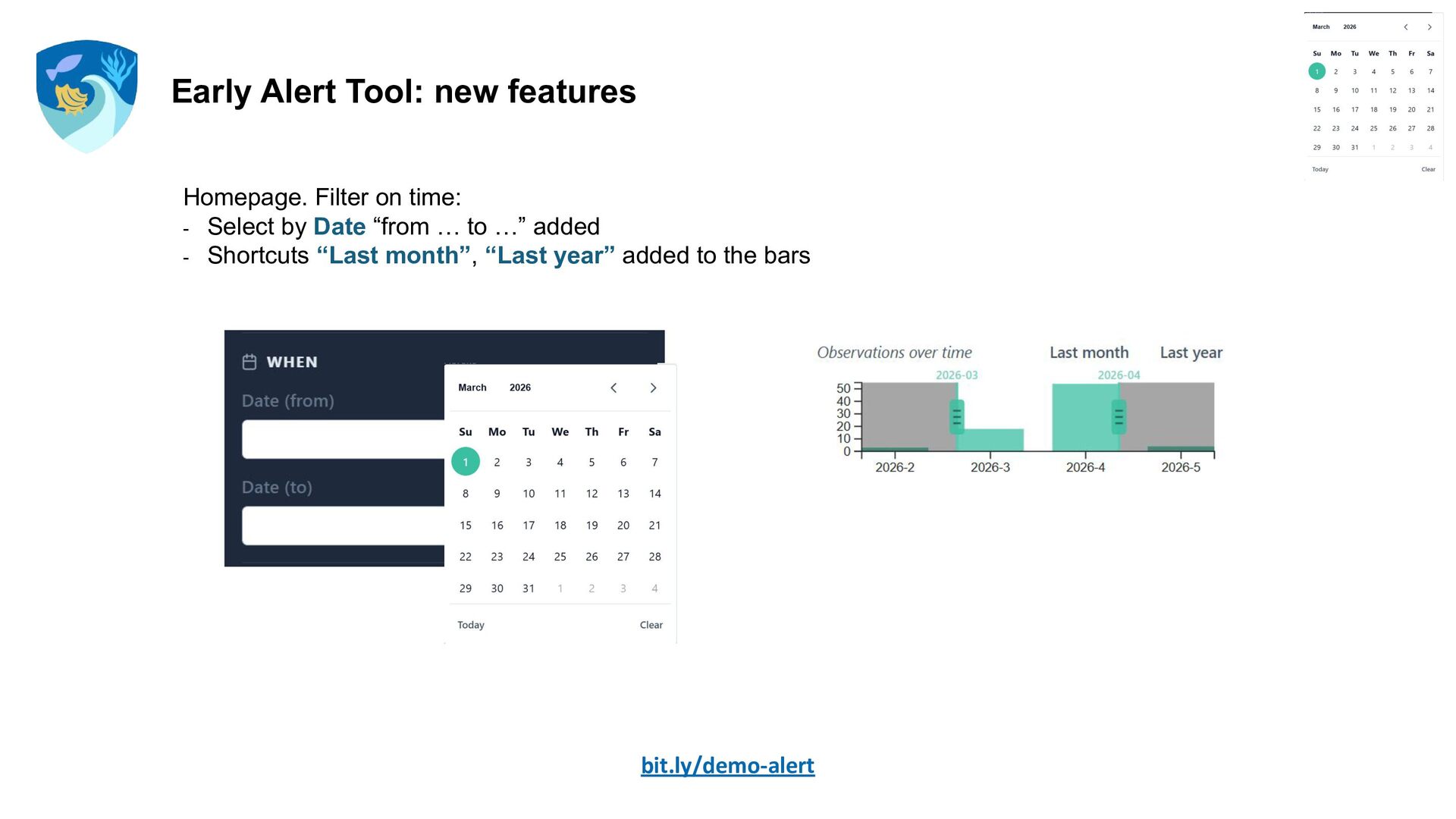
  4. Early Alert Tool: new features Homepage. Filter on time: -

    Select by Date “from … to …” added - Shortcuts “Last month”, “Last year” added to the bars bit.ly/demo-alert
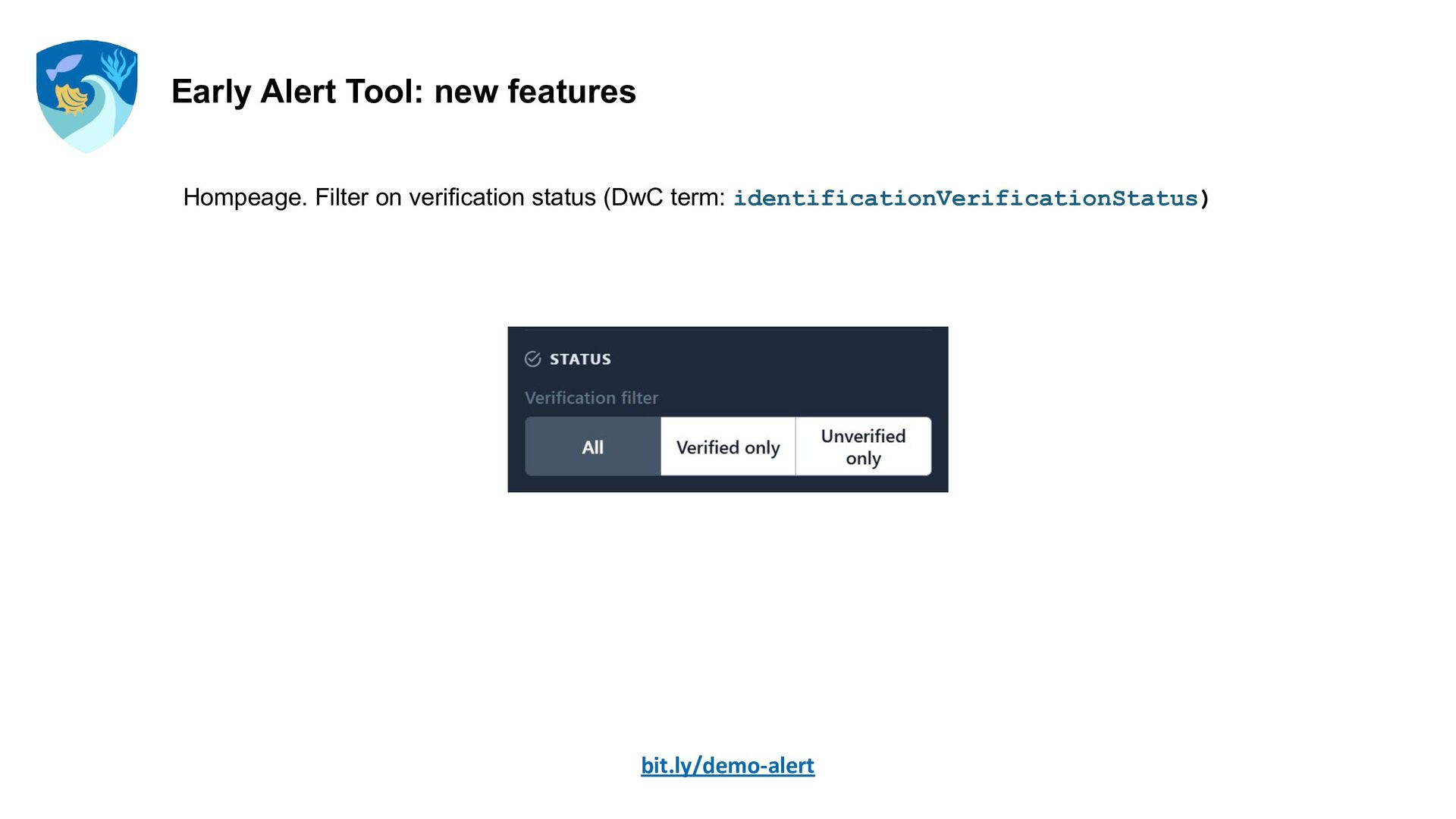
  5. Early Alert Tool: new features Hompeage. Filter on verification status

    (DwC term: identificationVerificationStatus) bit.ly/demo-alert
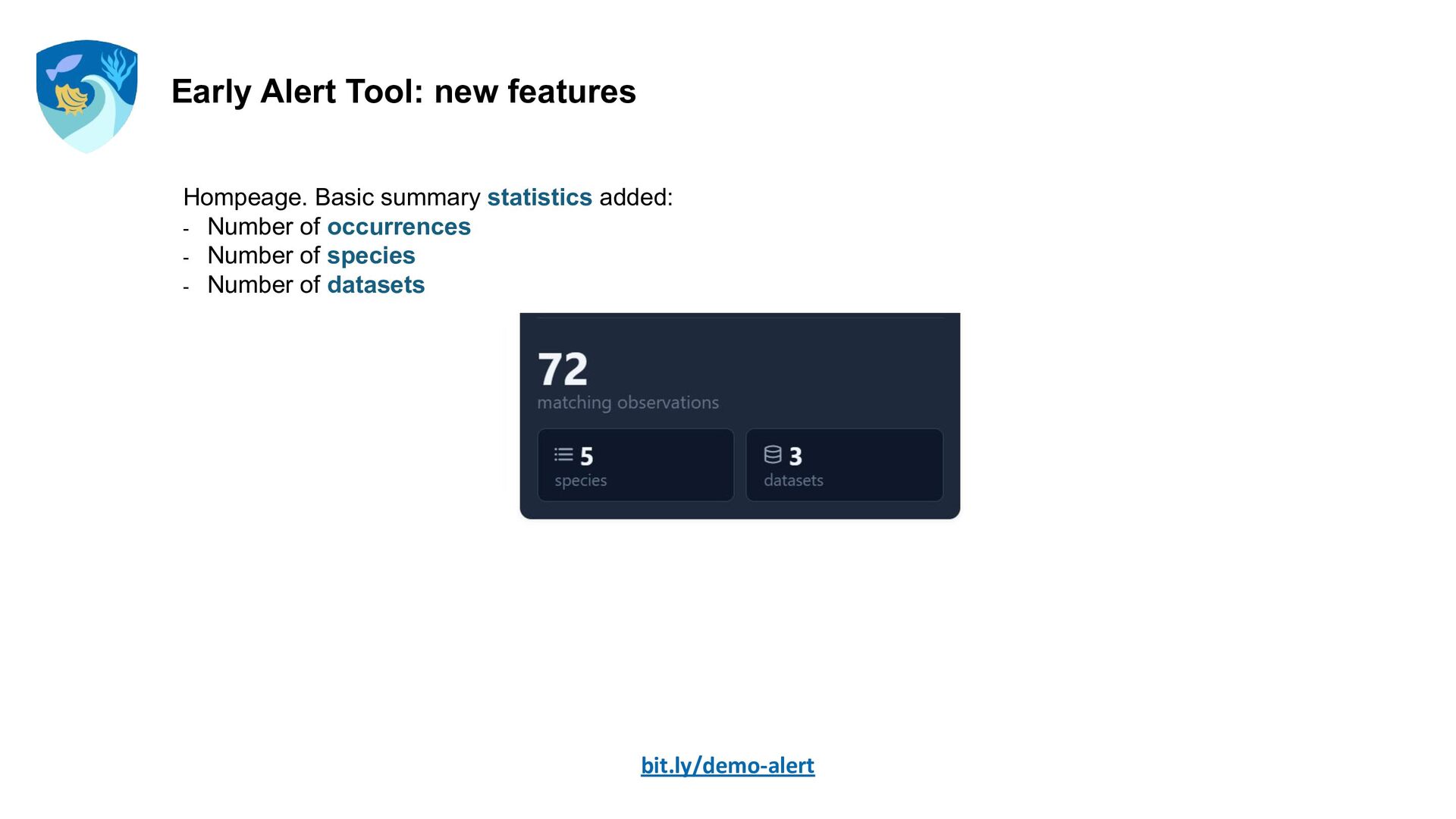
  6. Early Alert Tool: new features Hompeage. Basic summary statistics added:

    - Number of occurrences - Number of species - Number of datasets bit.ly/demo-alert
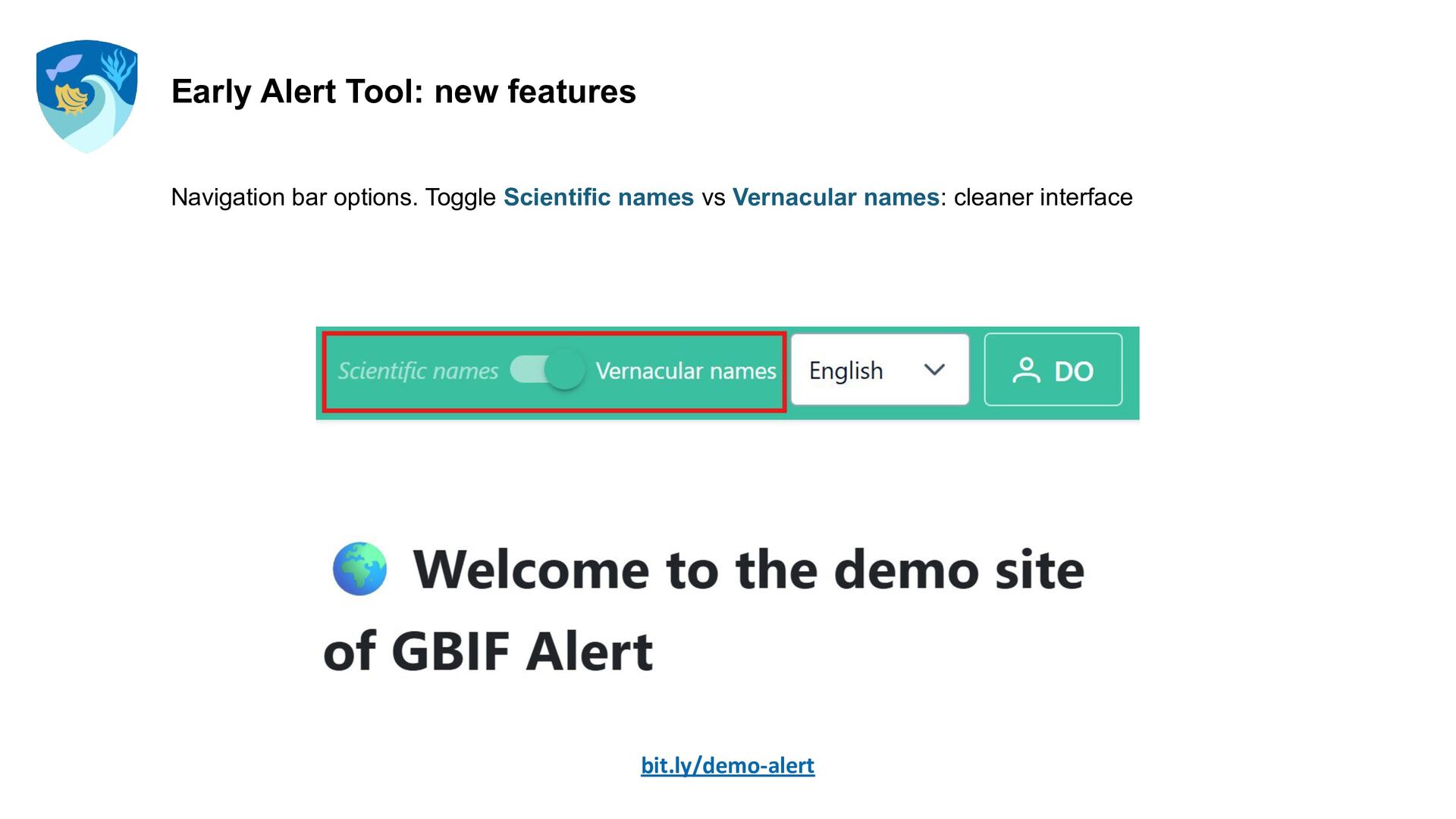
  7. Early Alert Tool: new features Navigation bar options. Toggle Scientific

    names vs Vernacular names: cleaner interface bit.ly/demo-alert
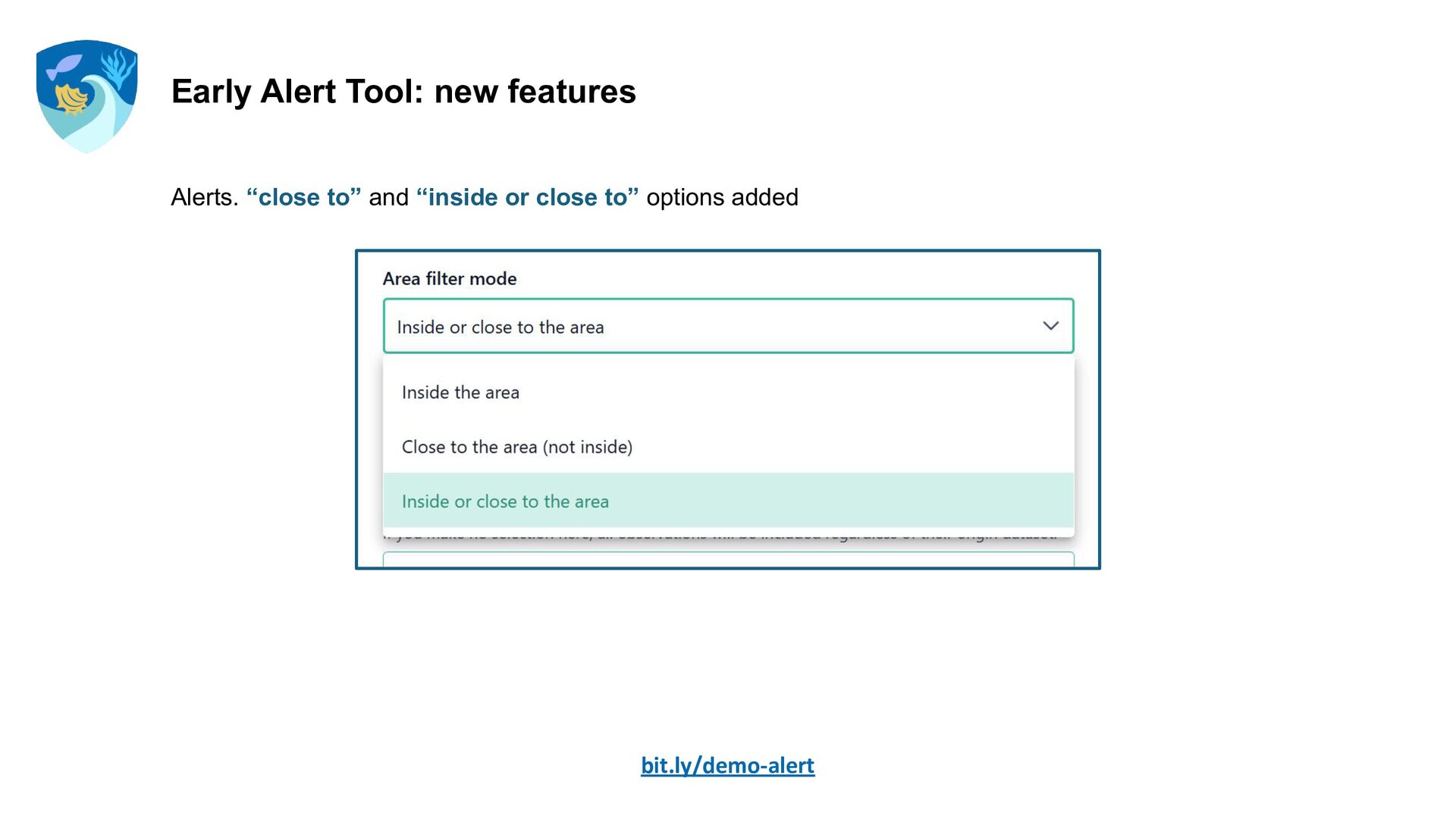
  8. Early Alert Tool: new features Alerts. “close to” and “inside

    or close to” options added bit.ly/demo-alert
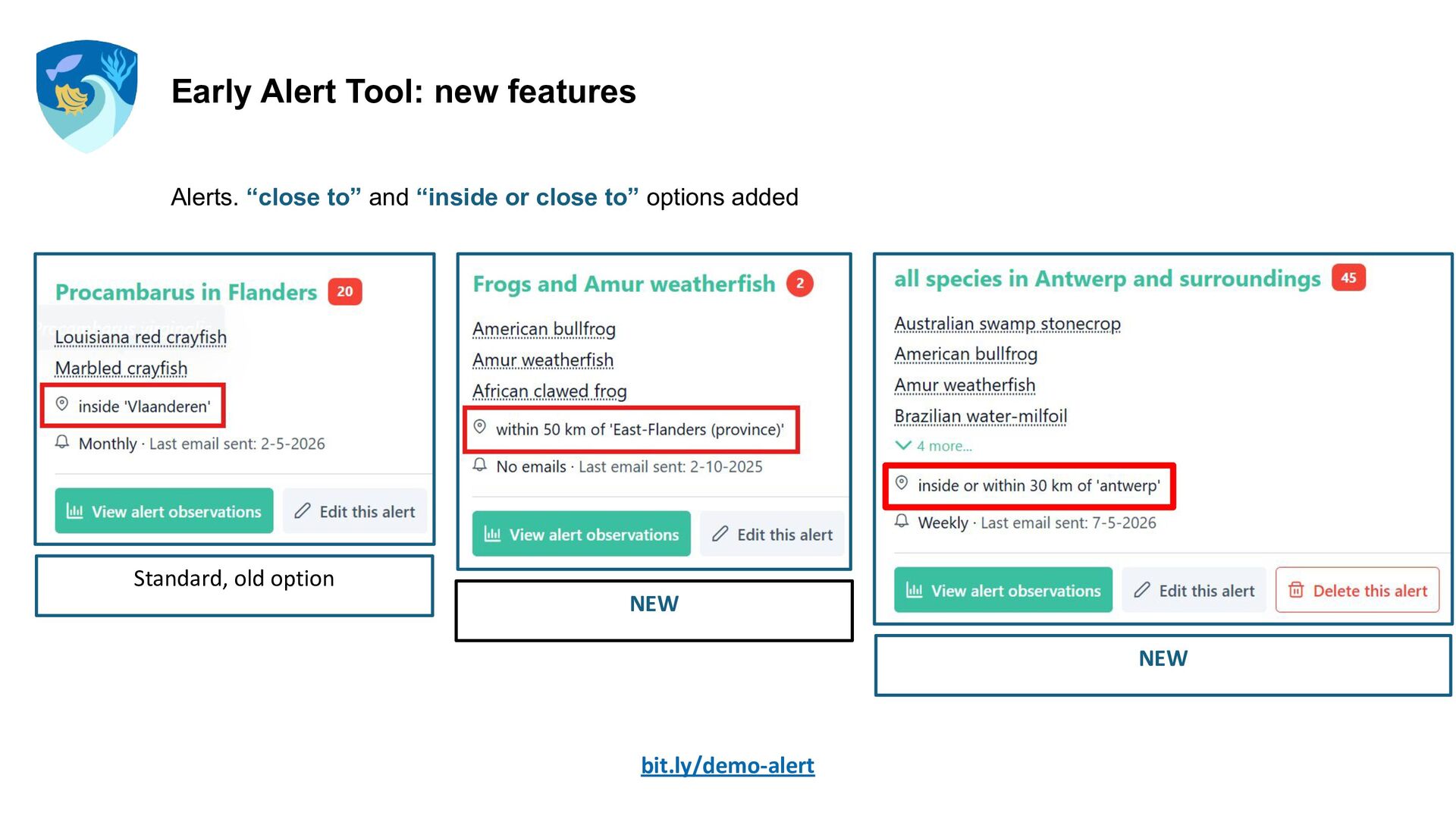
  9. Early Alert Tool: new features Alerts. “close to” and “inside

    or close to” options added bit.ly/demo-alert Standard, old option NEW NEW
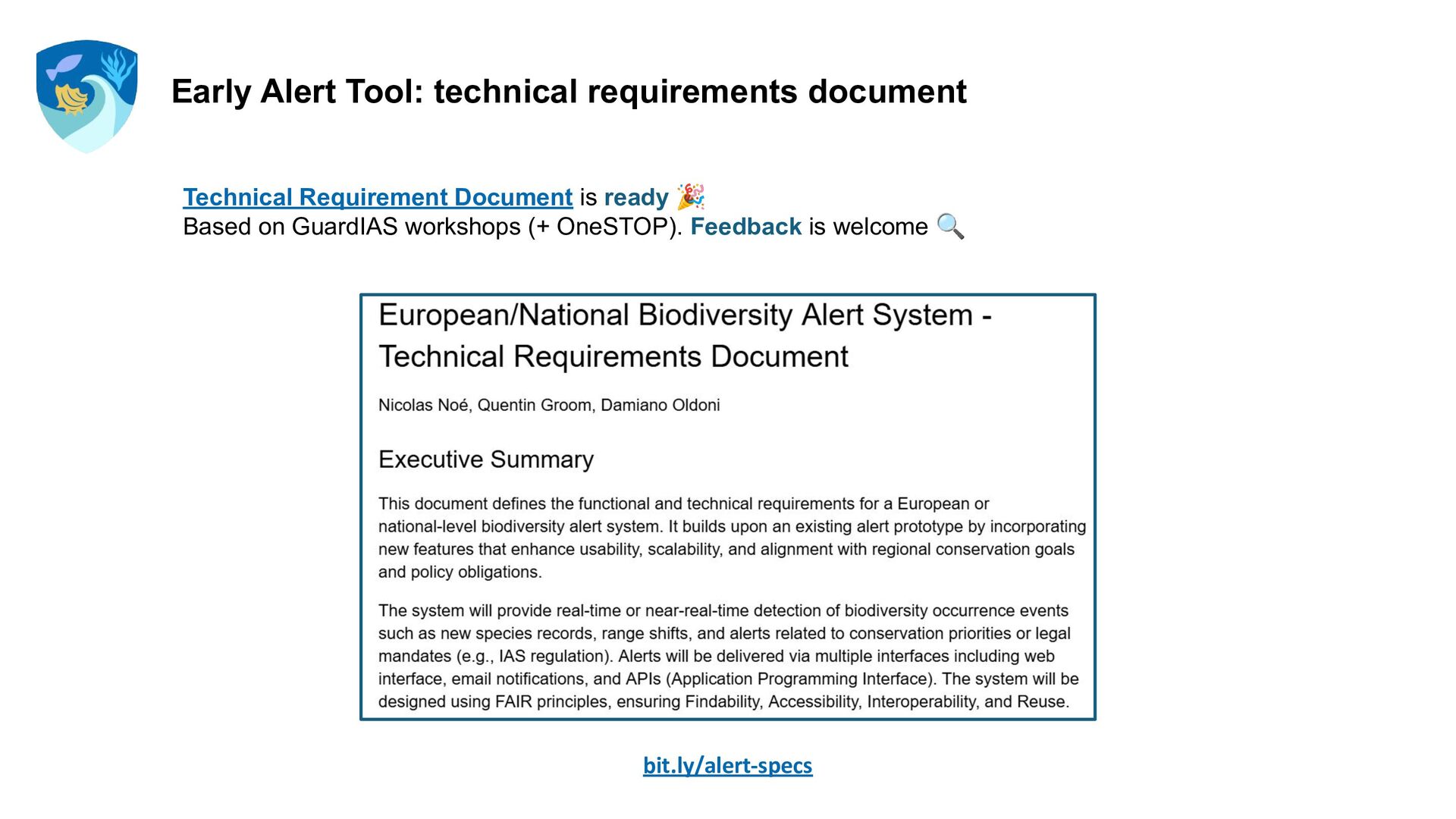
  10. Early Alert Tool: technical requirements document Technical Requirement Document is

    ready 🎉 Based on GuardIAS workshops (+ OneSTOP). Feedback is welcome 🔍 bit.ly/alert-specs
  11. Deliverable 2.5 Workflow for detecting and prioritising emerging alien species

    based on species occurrence cubes almost ready. Species occurrence cubes - Aggregate GBIF occurrence data along spatial, temporal and taxonomic dimensions to create “data cubes”. - Example: calculate the #occurrences per grid cell, year, species - Concept from TrIAS project (Oldoni D & al 2020): done in R from raw occurrences. - Now a GBIF download service, with support from EU-funded B-Cubed project. - Learn more:documentation, blogpost, tutorial and webinar, tech specs. https://www.gbif.org/occurrence-cubes
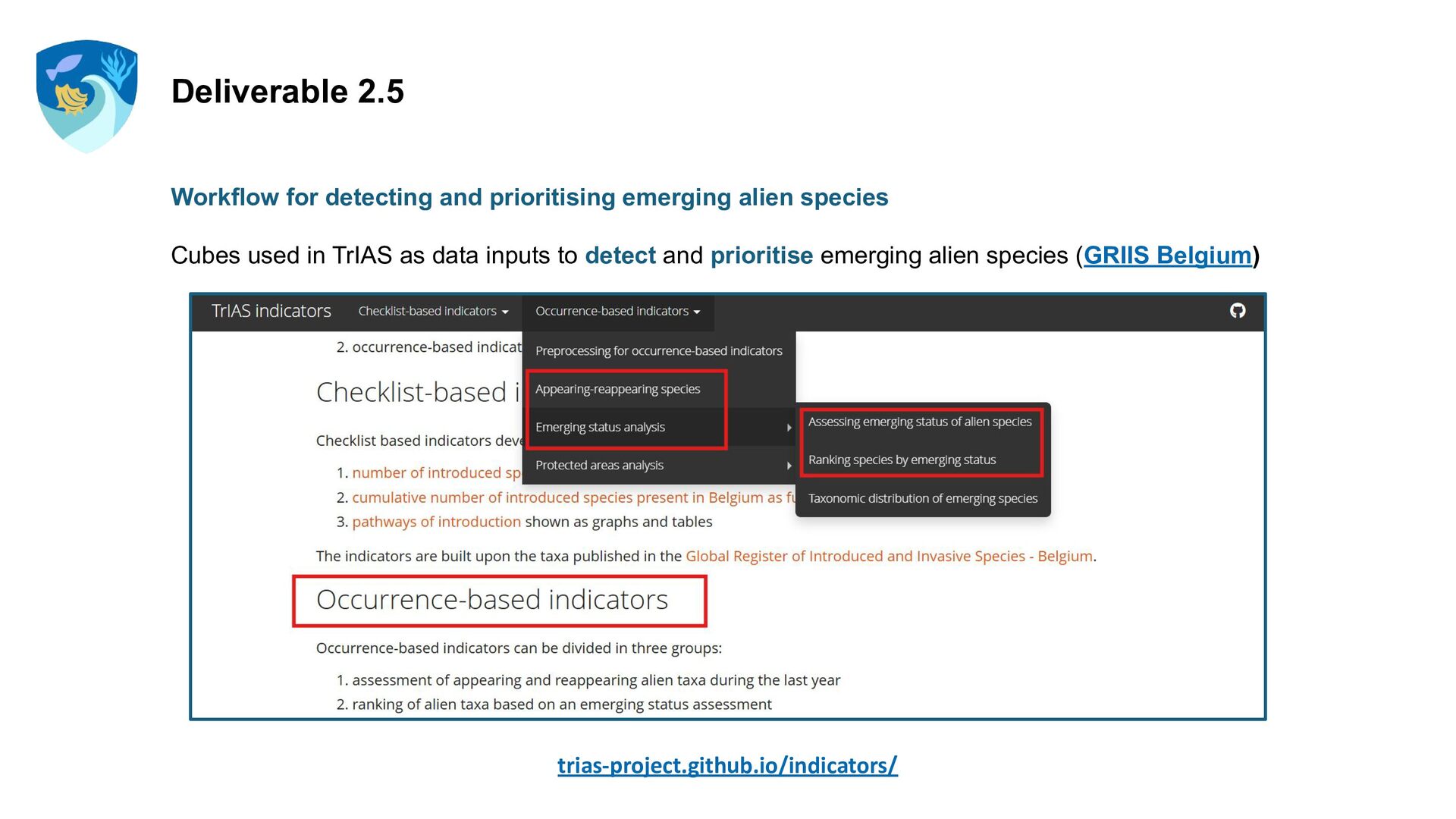
  12. Deliverable 2.5 Workflow for detecting and prioritising emerging alien species

    Cubes used in TrIAS as data inputs to detect and prioritise emerging alien species (GRIIS Belgium) trias-project.github.io/indicators/
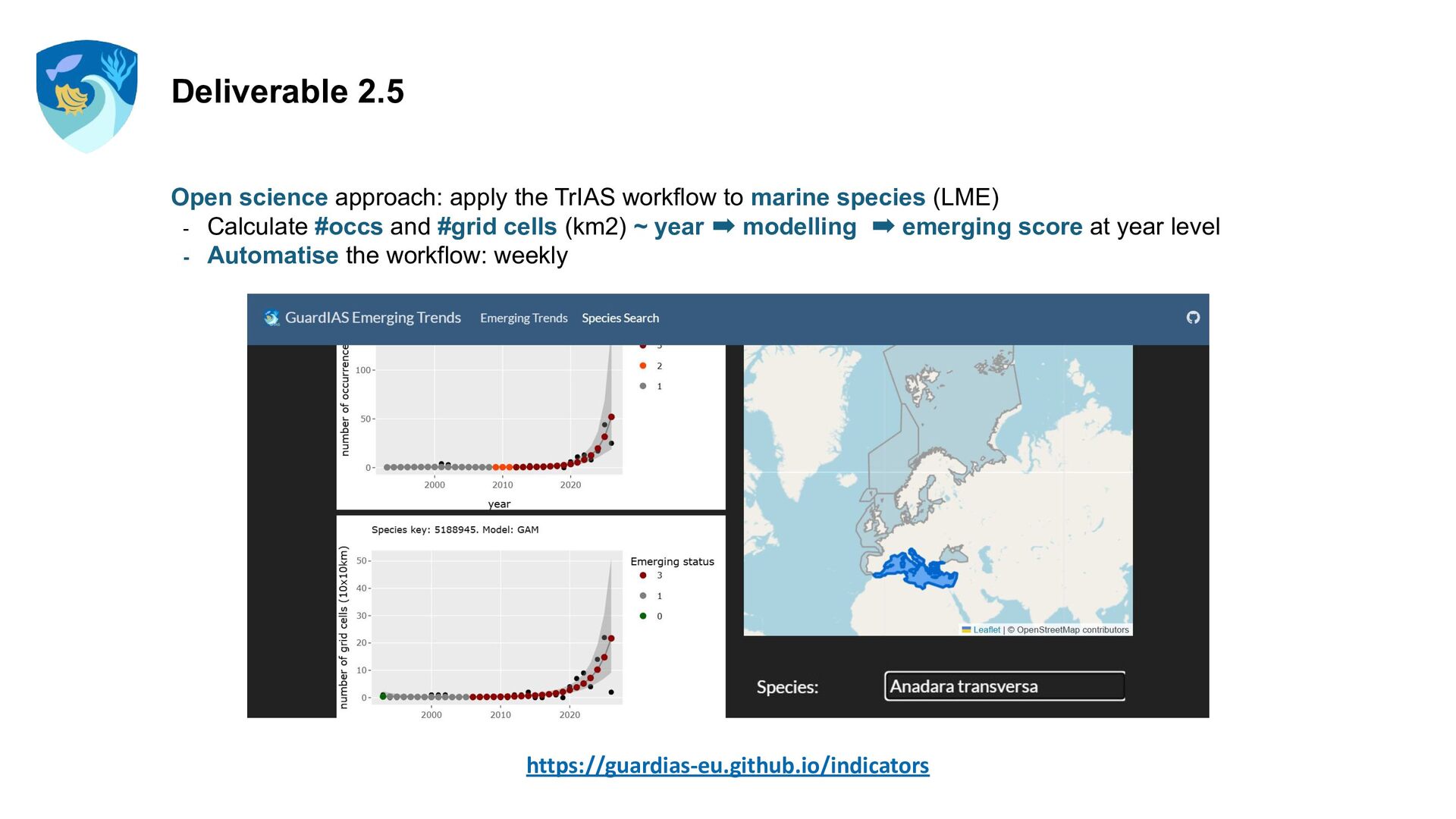
  13. Deliverable 2.5 Open science approach: apply the TrIAS workflow to

    marine species (LME) - Calculate #occs and #grid cells (km2) ~ year ➡ modelling ➡ emerging score at year level - Automatise the workflow: weekly https://guardias-eu.github.io/indicators
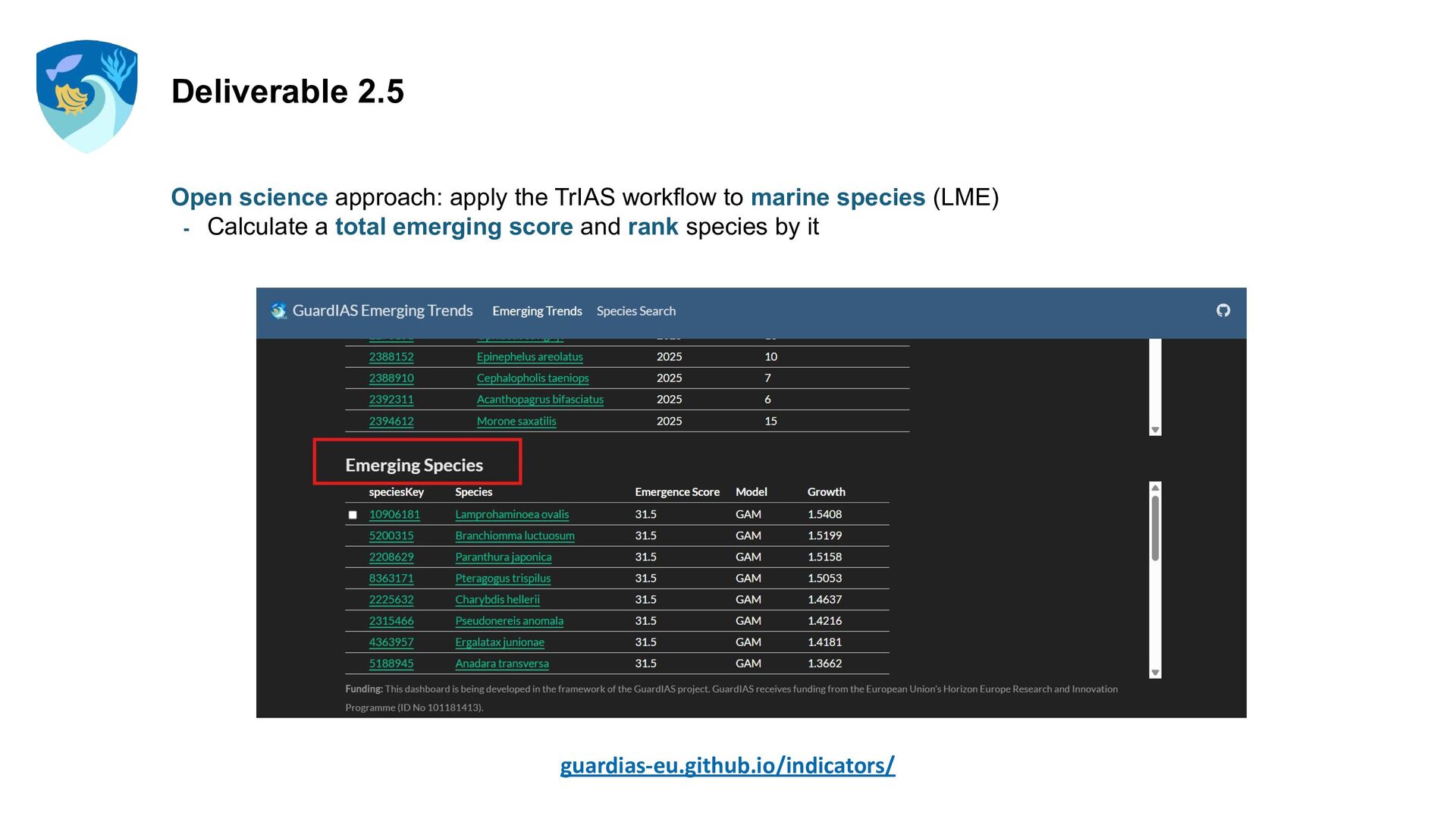
  14. Deliverable 2.5 Open science approach: apply the TrIAS workflow to

    marine species (LME) - Calculate a total emerging score and rank species by it guardias-eu.github.io/indicators/
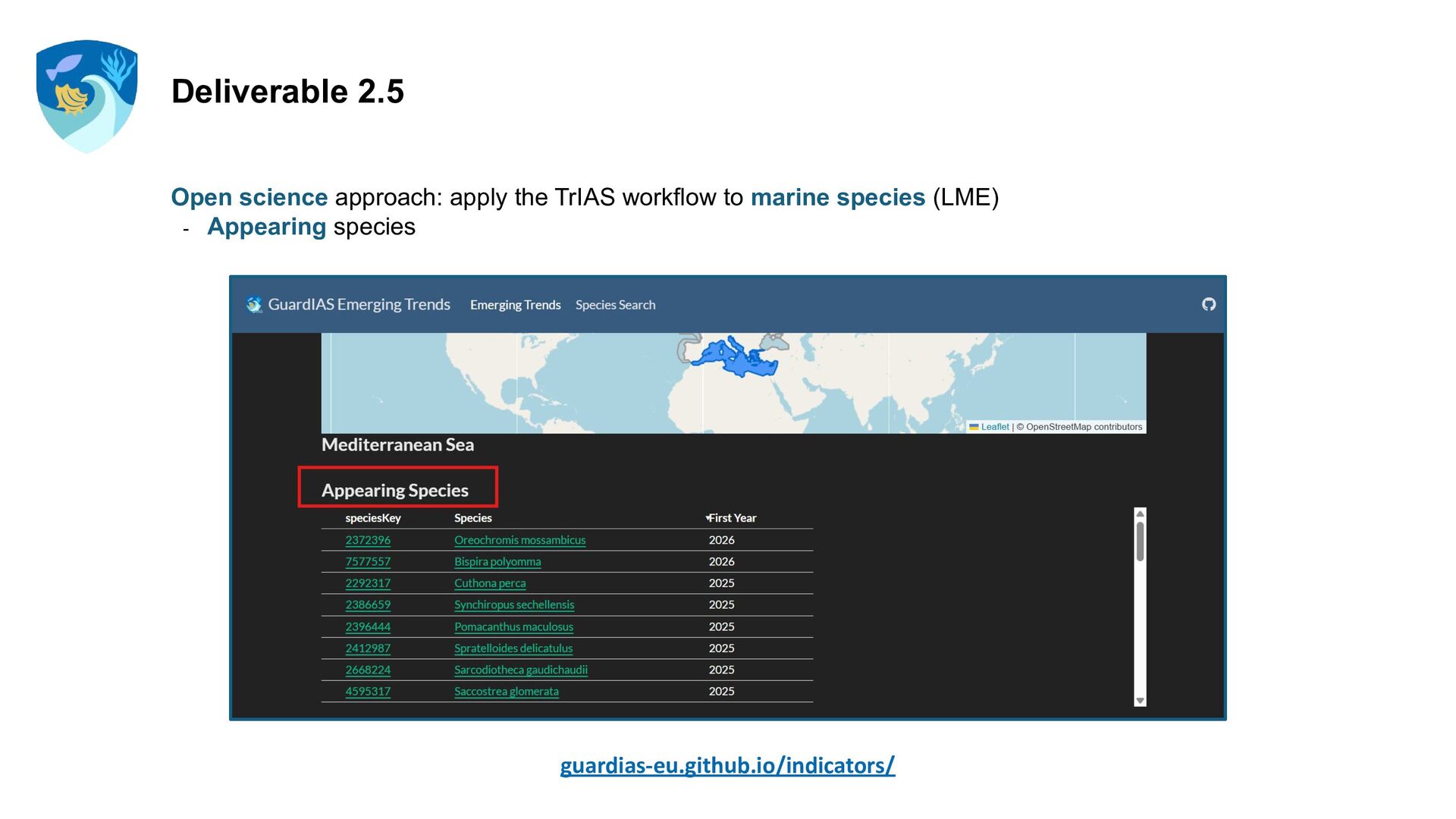
  15. Deliverable 2.5 Open science approach: apply the TrIAS workflow to

    marine species (LME) - Appearing species guardias-eu.github.io/indicators/
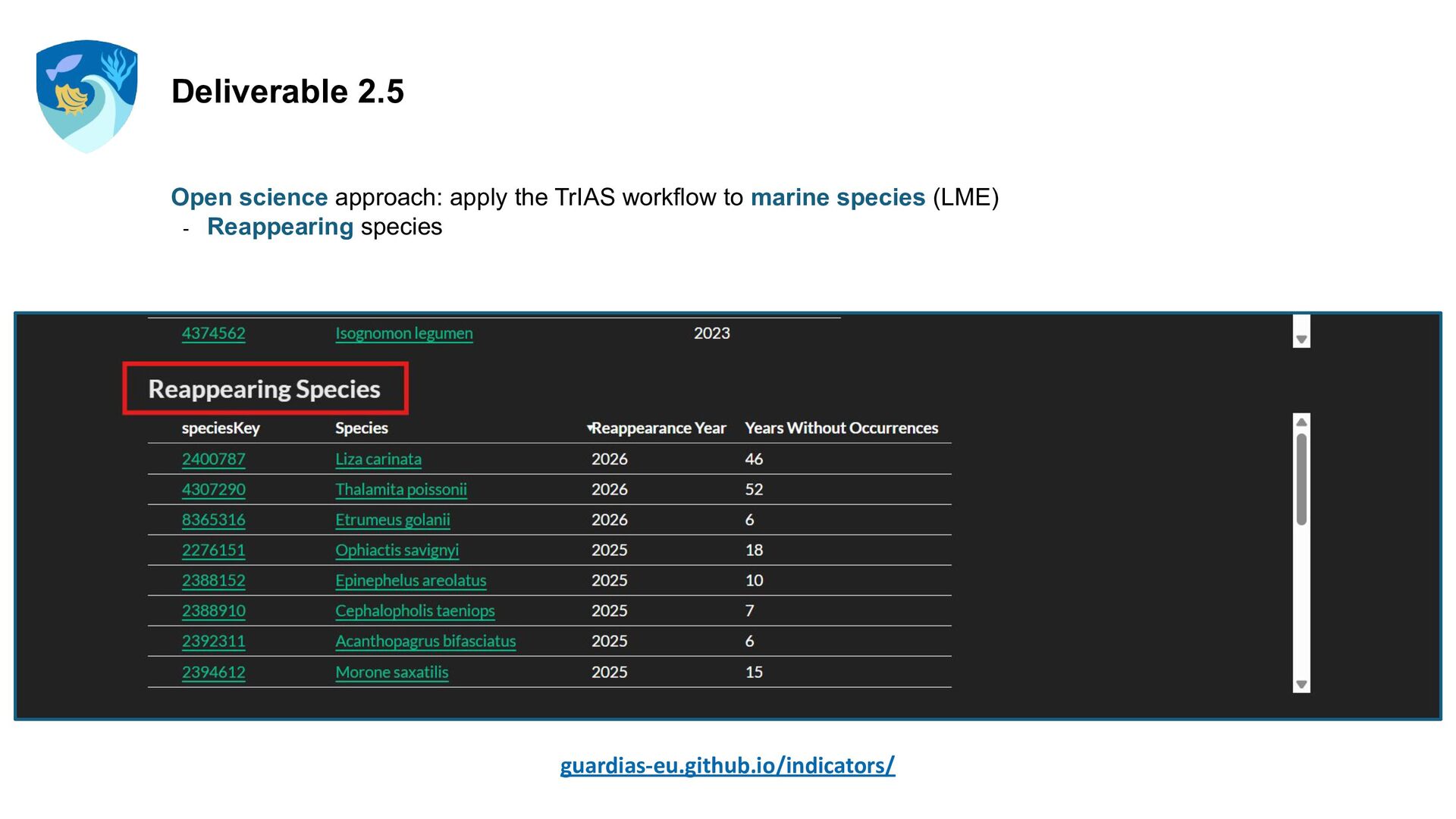
  16. Deliverable 2.5 Open science approach: apply the TrIAS workflow to

    marine species (LME) - Reappearing species guardias-eu.github.io/indicators/
  17. Deliverable 2.5 Future improvements - Taxonomic scope: include terrestrial en

    freshwater species - Spatial scope: include EU countries - Research effort bias correction: add class level info (class level occurrence cubes), as in TrIAS guardias-eu.github.io/indicators/