Share
Embed
Linux for Real Time Workloads: bare metal and KVM
Introduction
What is Real-Time & why does it matter
What is a deadline
Why a Real-Time Operating System, and examples
What about Linux? Does it work?
Improving Real-Time behavior on Linux
Real-time scheduling policies
PREEMPT_RT
CPU Isolation
NOHZ_FULL
Latency numbers (bare-metal)
Tests & results
What about Real-Time Virtual Machines?
Motivation & Drawbacks
Latency numbers (VMs)
Leonardo BRAS
Kernel Recipes PRO
September 25, 2025
Transcript
56 slides
-
Improving Linux for (KVM) Real Time Workloads Leonardo Brás Soares
Passos Kernel Recipes 2025 -
whoami • Leonardo Brás Soares Passos • Work @ Arm
UK (started this month) • Kernel team • arm64 • KVM • Previously: Virt-RT team @ Red Hat • Find me: leobras @ {IRC, GitLab, GitHub, Mastodon} -
Disclaimer This presentation is based in the experience acquired during
my employment at Red Hat, as a member of the Virt-RT team. This work was not done in any capacity of my Arm employment. -
What is Real Time ? I need you to deal
with my request in T time, or else... -
What is Real Time ? I need you to deal
with my request in T time, or else... -
What is Real Time ? • Real-time (computing) is the
computer science term for hardware and software systems subject to a "real-time constraint", for example from event to system response.[1] • Real-time programs must guarantee response within specified time constraints, often referred to as "deadlines". [2] -
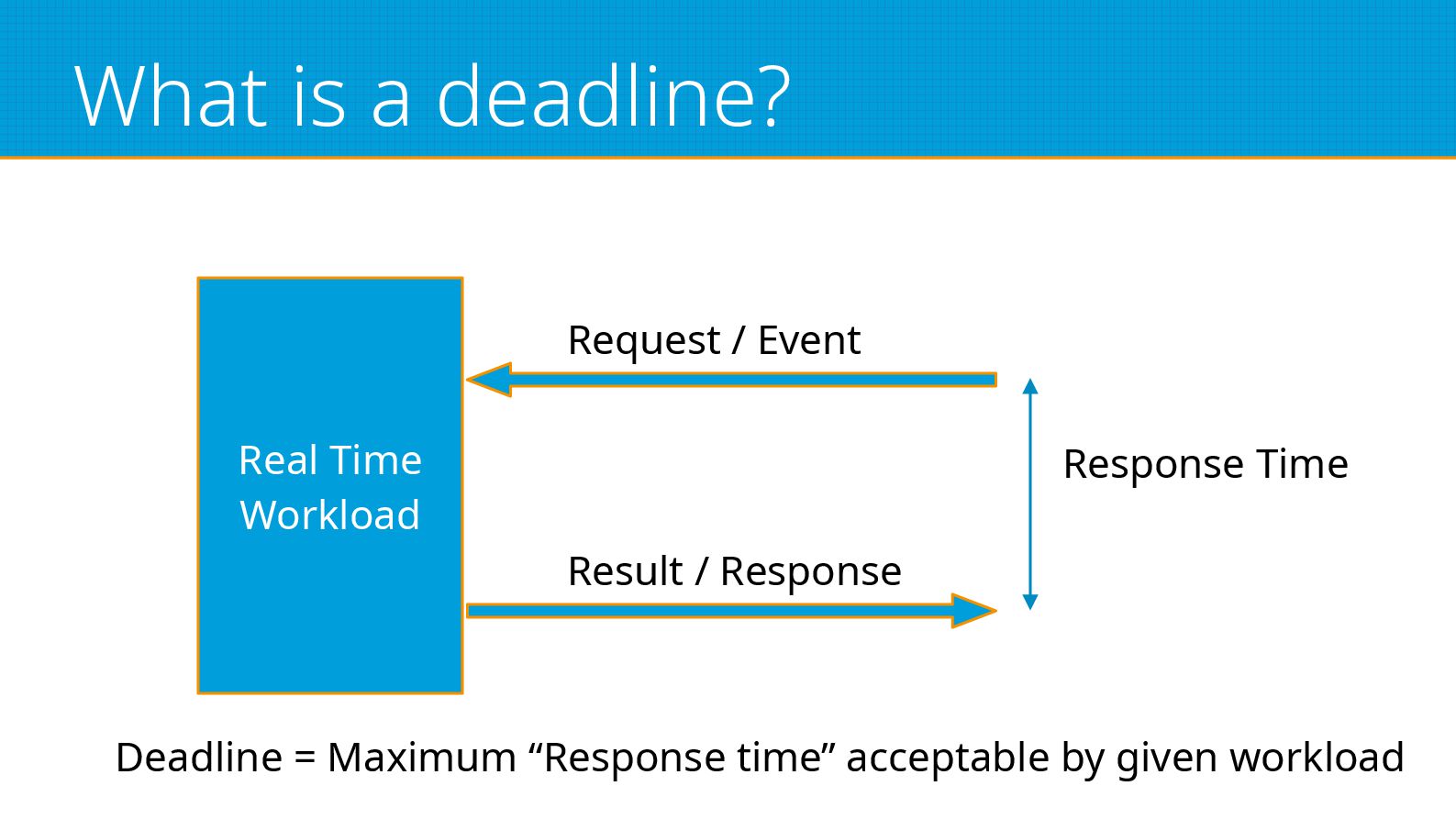
What is a deadline? Real Time Workload Request / Event
Result / Response Response Time Deadline = Maximum “Response time” acceptable by given workload -
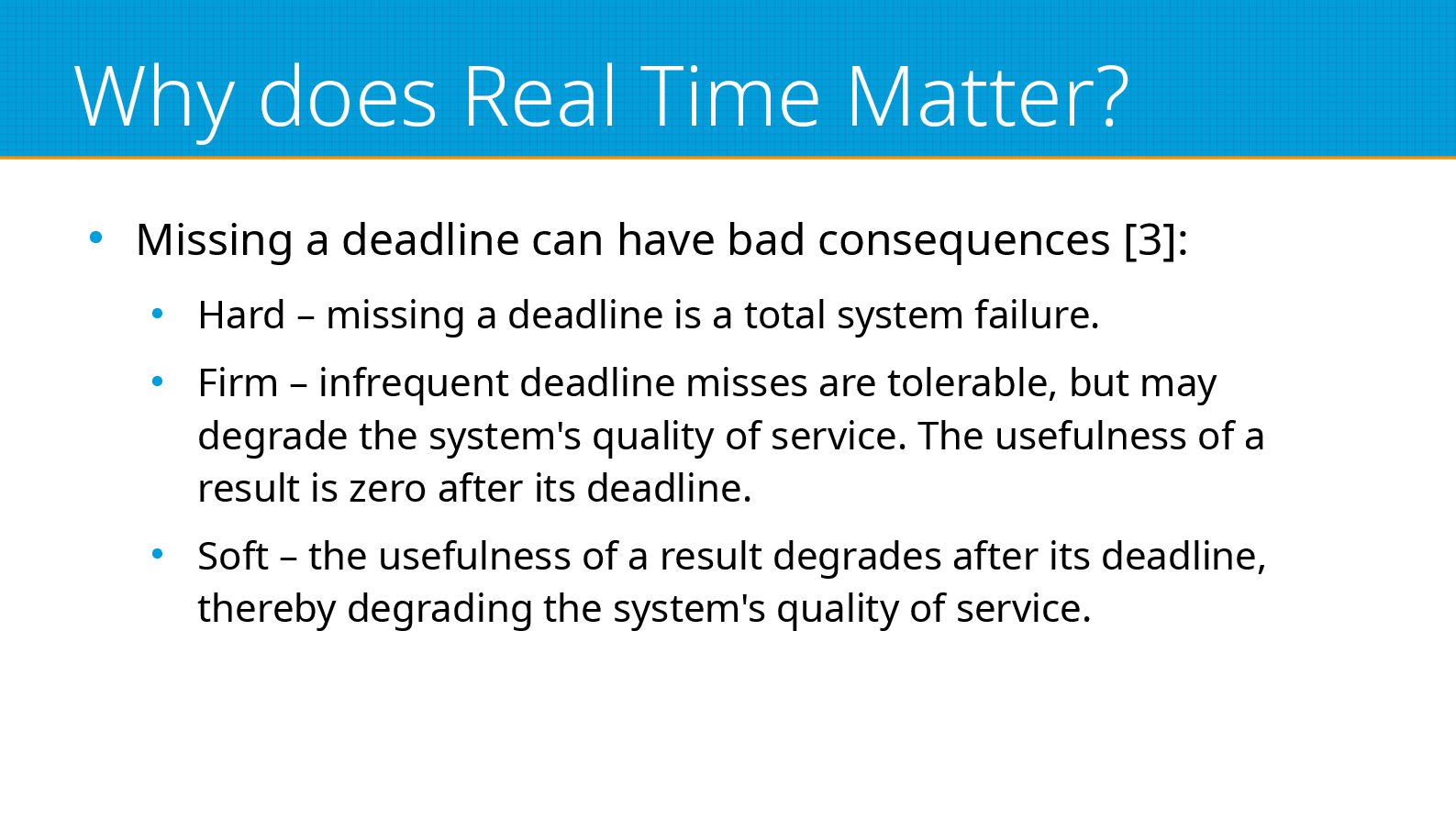
Why does Real Time Matter? • Missing a deadline can
have bad consequences [3]: • Hard – missing a deadline is a total system failure. • Firm – infrequent deadline misses are tolerable, but may degrade the system's quality of service. The usefulness of a result is zero after its deadline. • Soft – the usefulness of a result degrades after its deadline, thereby degrading the system's quality of service. -
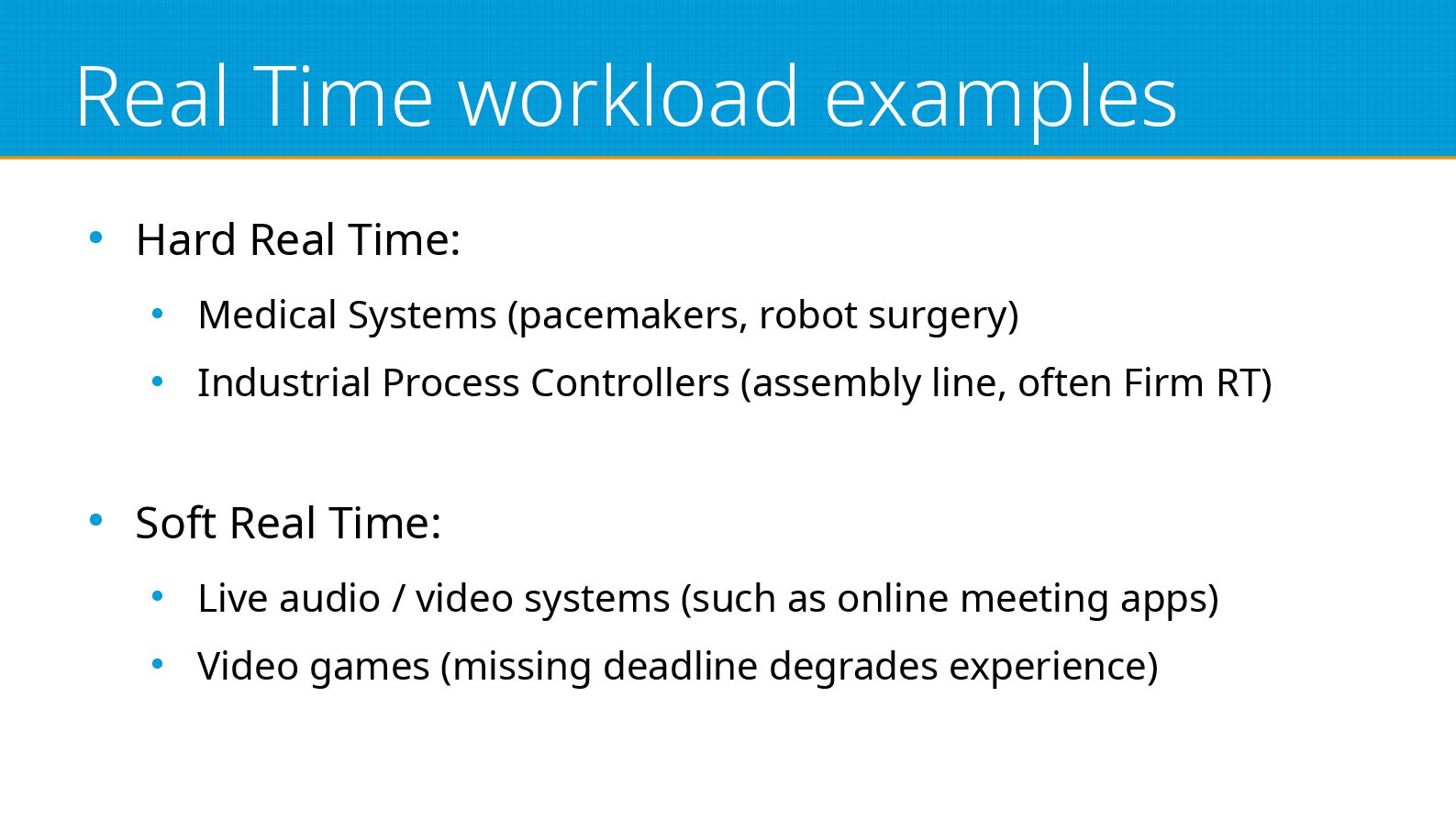
Real Time workload examples • Hard Real Time: • Medical
Systems (pacemakers, robot surgery) • Industrial Process Controllers (assembly line, often Firm RT) • Soft Real Time: • Live audio / video systems (such as online meeting apps) • Video games (missing deadline degrades experience) -
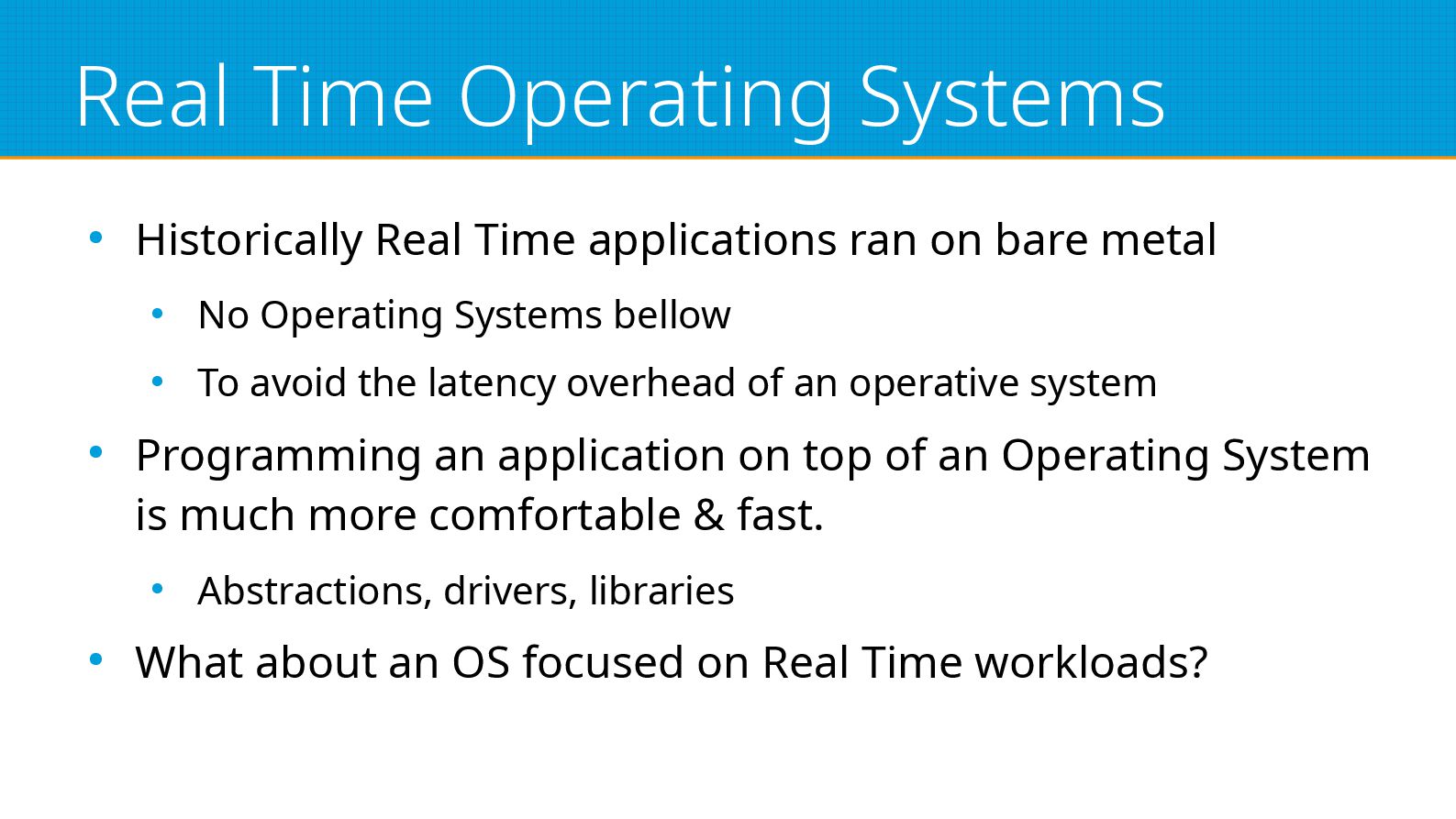
Real Time Operating Systems • Historically Real Time applications ran
on bare metal • No Operating Systems bellow • To avoid the latency overhead of an operative system • Programming an application on top of an Operating System is much more comfortable & fast. • Abstractions, drivers, libraries • What about an OS focused on Real Time workloads? -
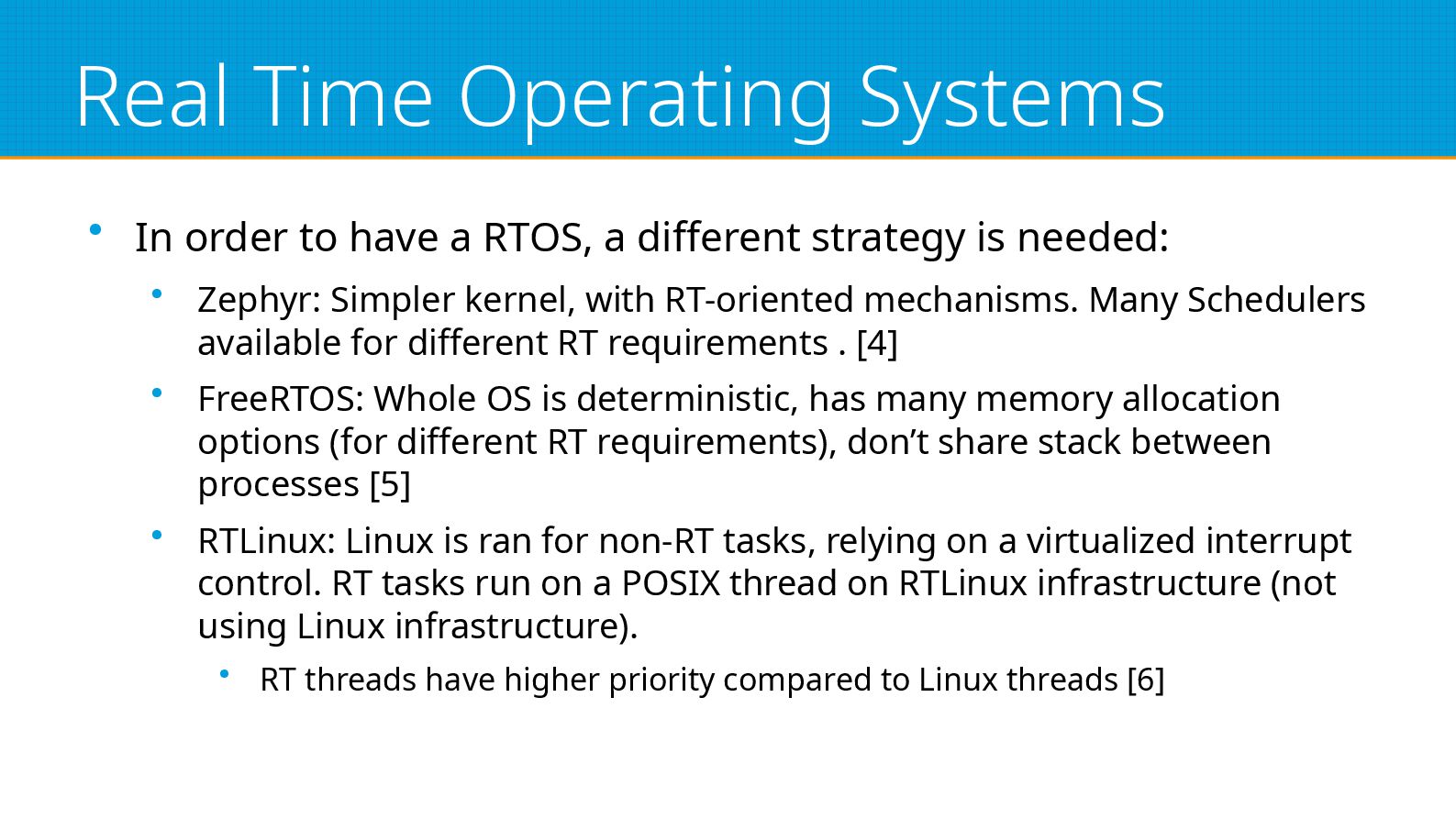
Real Time Operating Systems • In order to have a
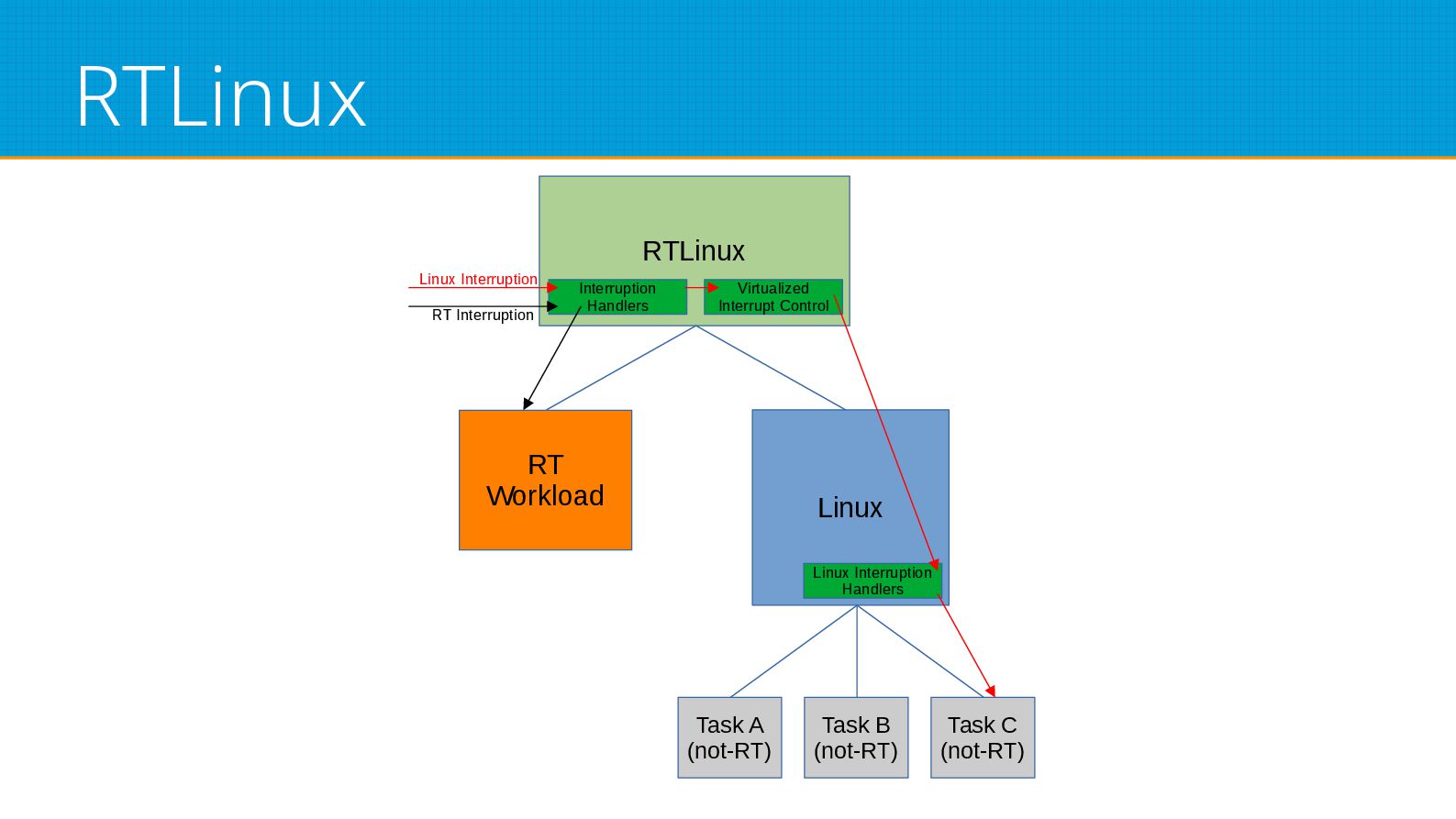
RTOS, a different strategy is needed: • Zephyr: Simpler kernel, with RT-oriented mechanisms. Many Schedulers available for different RT requirements . [4] • FreeRTOS: Whole OS is deterministic, has many memory allocation options (for different RT requirements), don’t share stack between processes [5] • RTLinux: Linux is ran for non-RT tasks, relying on a virtualized interrupt control. RT tasks run on a POSIX thread on RTLinux infrastructure (not using Linux infrastructure). • RT threads have higher priority compared to Linux threads [6] -

RTLinux RT Workload RTLinux Linux Task A (not-RT) Task C
(not-RT) Task B (not-RT) Virtualized Interrupt Control Interruption Handlers Linux Interruption Linux Interruption Handlers RT Interruption -
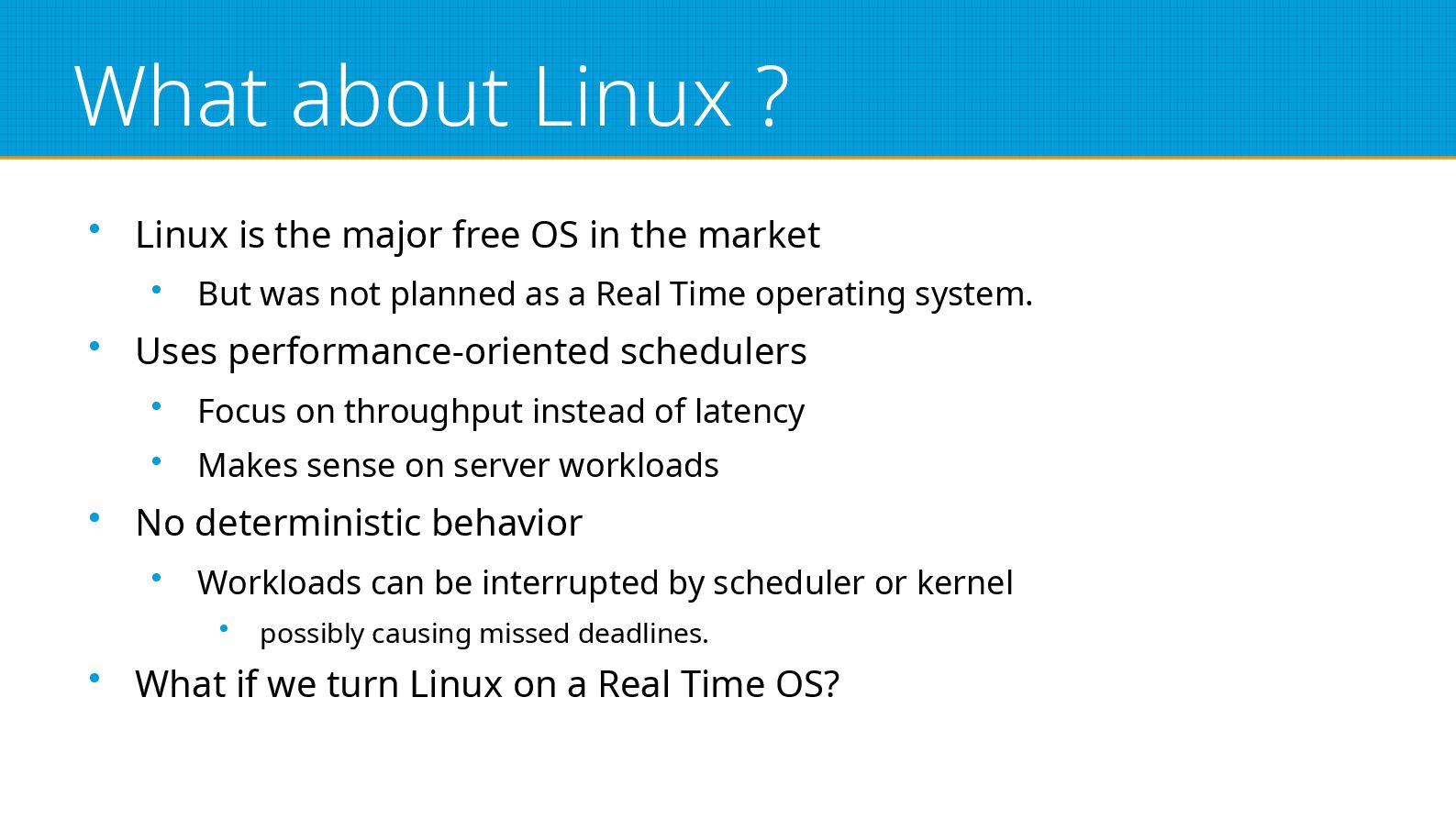
What about Linux ? • Linux is the major free
OS in the market • But was not planned as a Real Time operating system. • Uses performance-oriented schedulers • Focus on throughput instead of latency • Makes sense on server workloads • No deterministic behavior • Workloads can be interrupted by scheduler or kernel • possibly causing missed deadlines. • What if we turn Linux on a Real Time OS? -
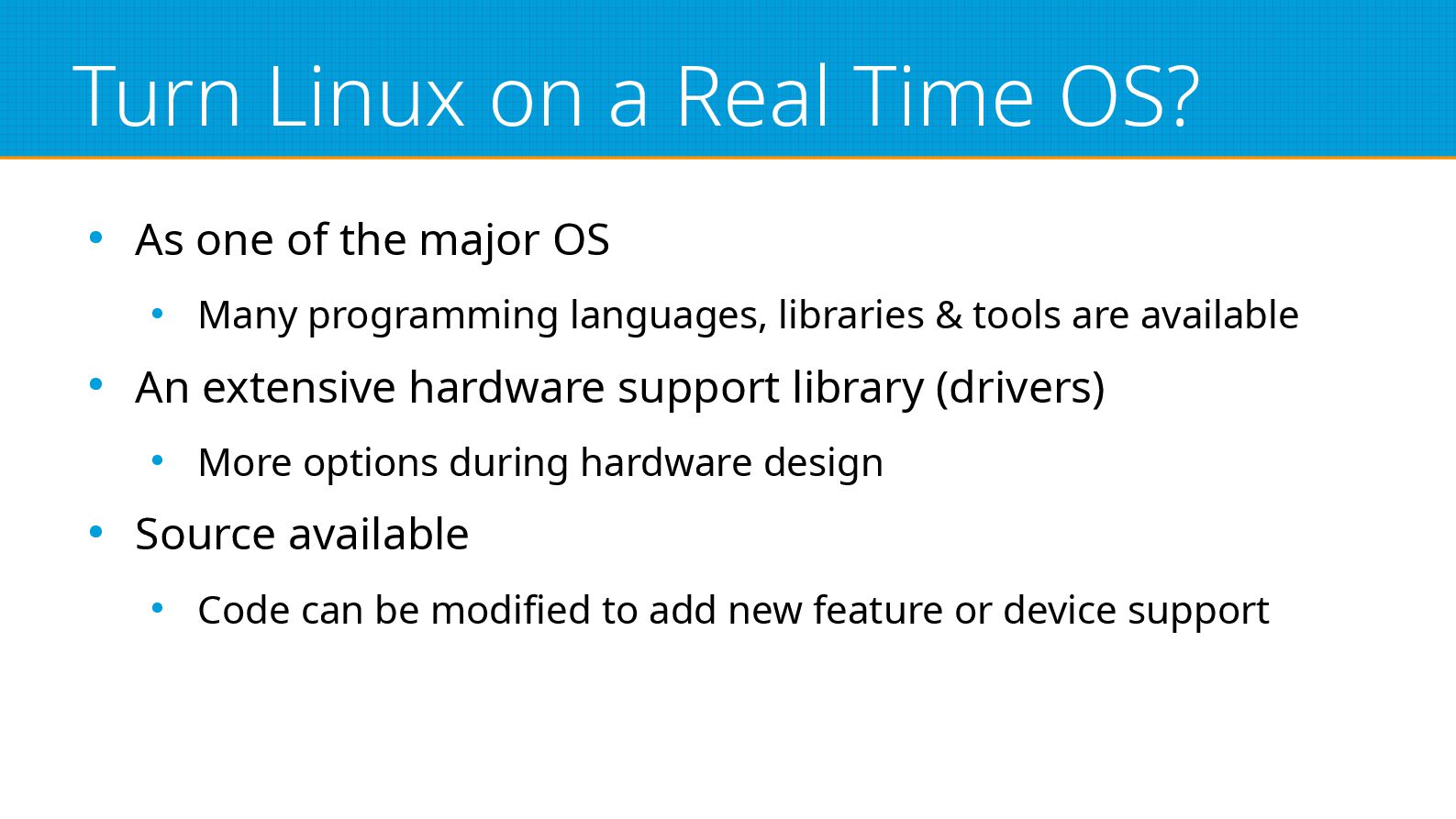
Turn Linux on a Real Time OS? • As one
of the major OS • Many programming languages, libraries & tools are available • An extensive hardware support library (drivers) • More options during hardware design • Source available • Code can be modified to add new feature or device support -
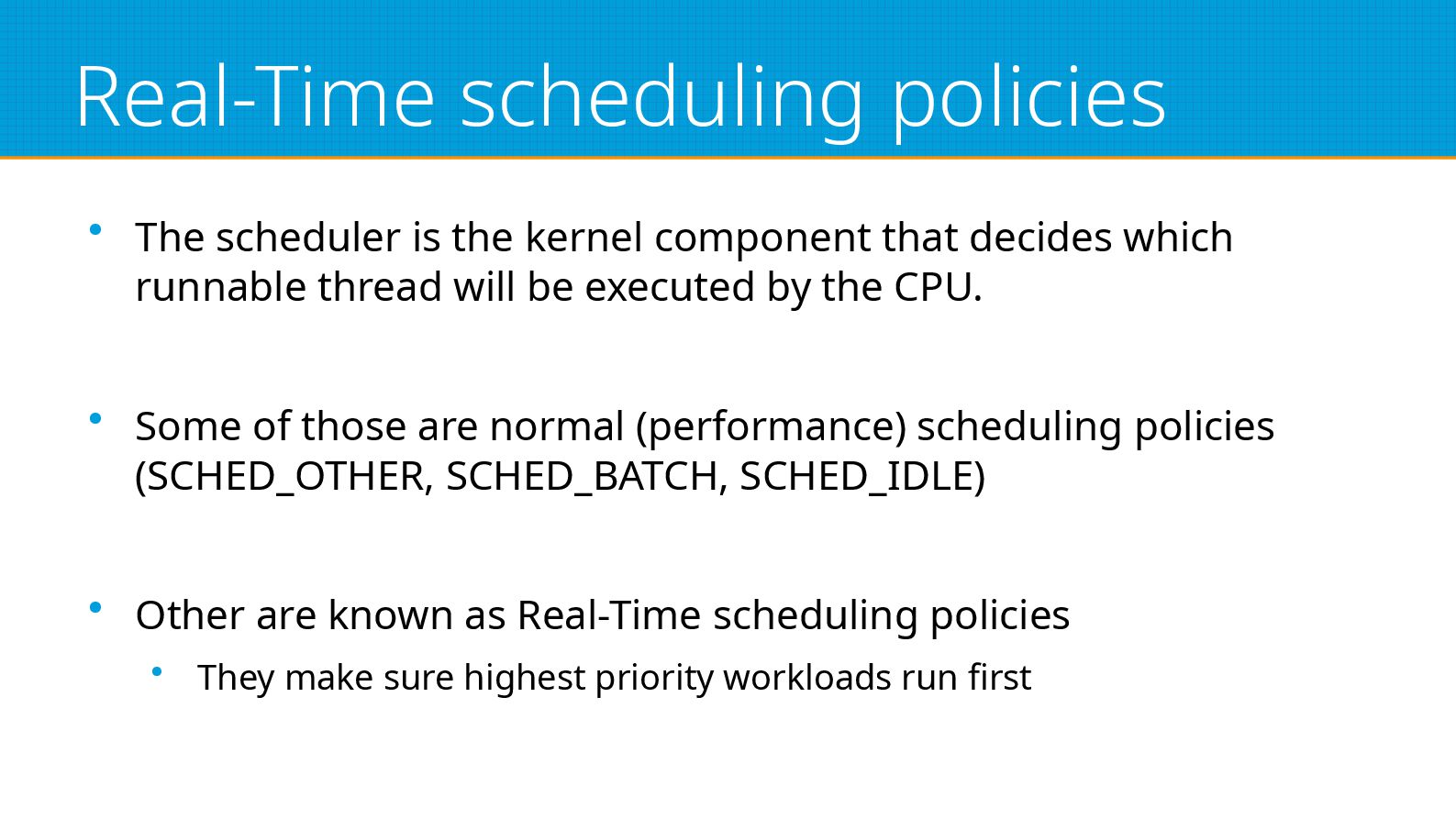
Real-Time scheduling policies • The scheduler is the kernel component
that decides which runnable thread will be executed by the CPU. • Some of those are normal (performance) scheduling policies (SCHED_OTHER, SCHED_BATCH, SCHED_IDLE) • Other are known as Real-Time scheduling policies • They make sure highest priority workloads run first -
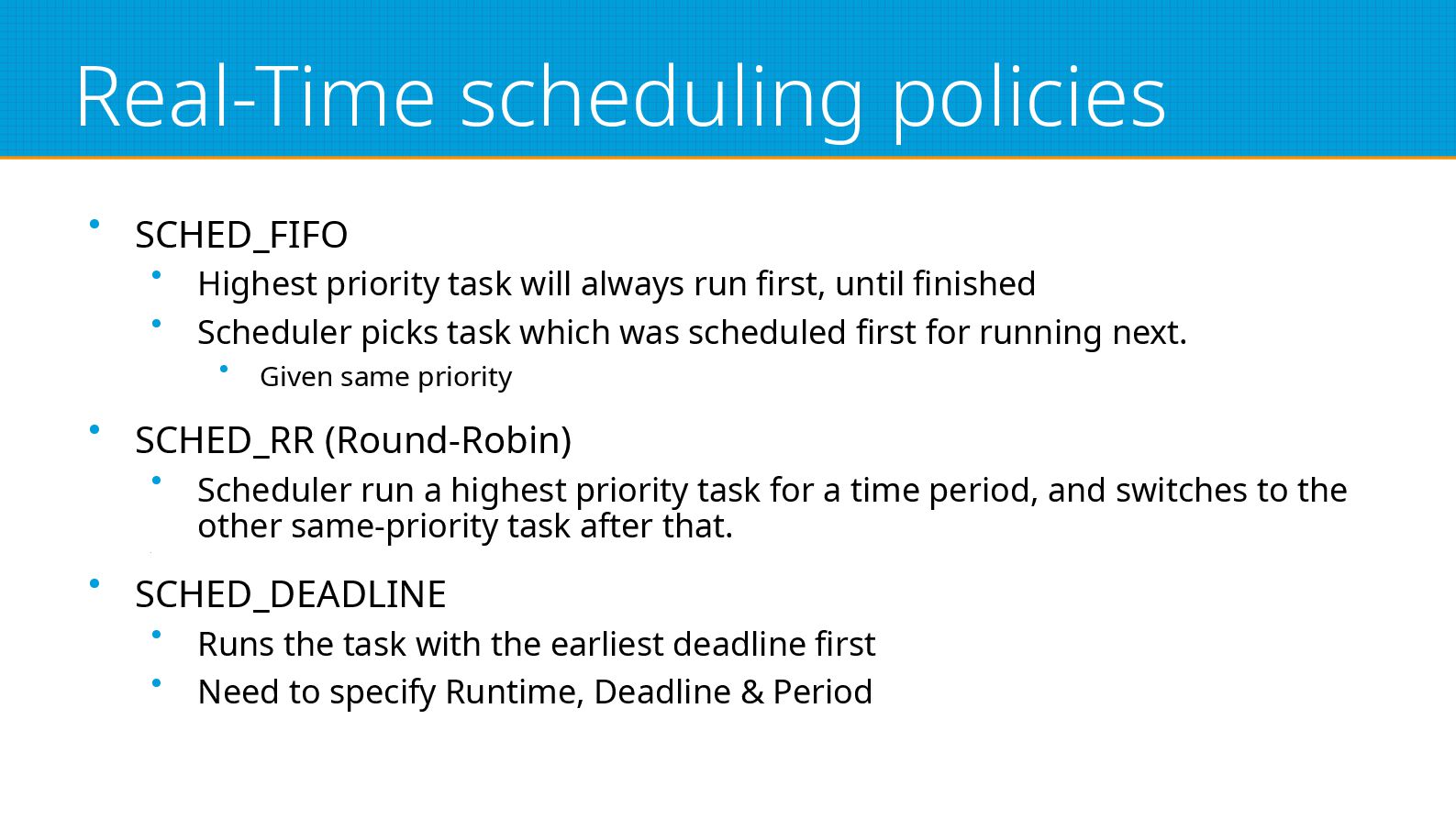
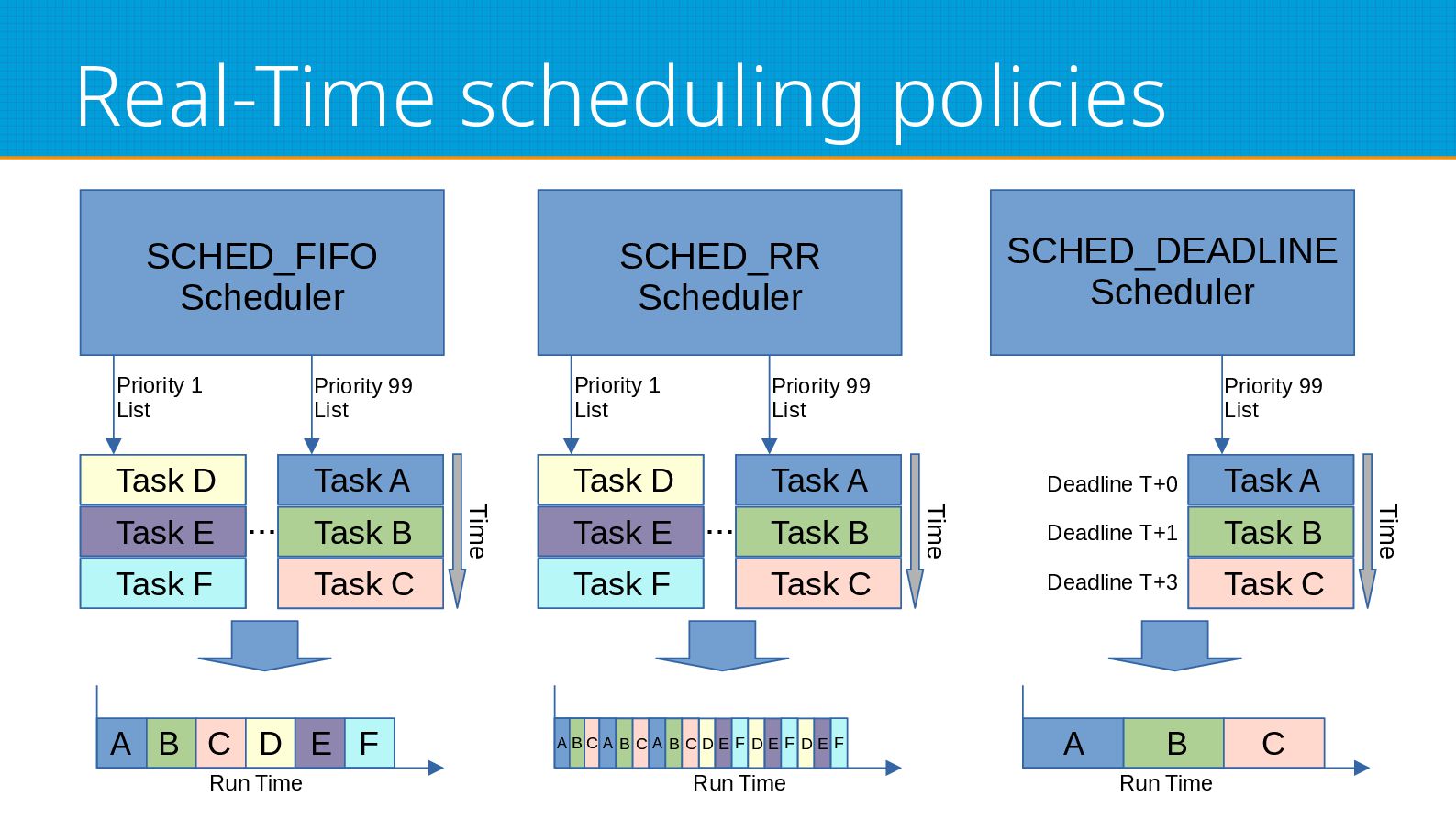
Real-Time scheduling policies • SCHED_FIFO • Highest priority task will
always run first, until finished • Scheduler picks task which was scheduled first for running next. • Given same priority • SCHED_RR (Round-Robin) • Scheduler run a highest priority task for a time period, and switches to the other same-priority task after that. • • SCHED_DEADLINE • Runs the task with the earliest deadline first • Need to specify Runtime, Deadline & Period -
Real-Time scheduling policies ... Priority 1 List Priority 99 List
Task A Time Task A Task A Task A Task B Task C Task A Task A Task D Task E Task F SCHED_FIFO Scheduler Run Time ... Priority 1 List Priority 99 List Task A Time Task A Task A Task A Task B Task C Task A Task A Task D Task E Task F D E F Run Time SCHED_RR Scheduler A B C A B C A B C D E F D E F A B C D E F Priority 99 List Task A Time Task A Task A Task A Task B Task C Run Time SCHED_DEADLINE Scheduler Deadline T+0 Deadline T+1 Deadline T+3 A B C -
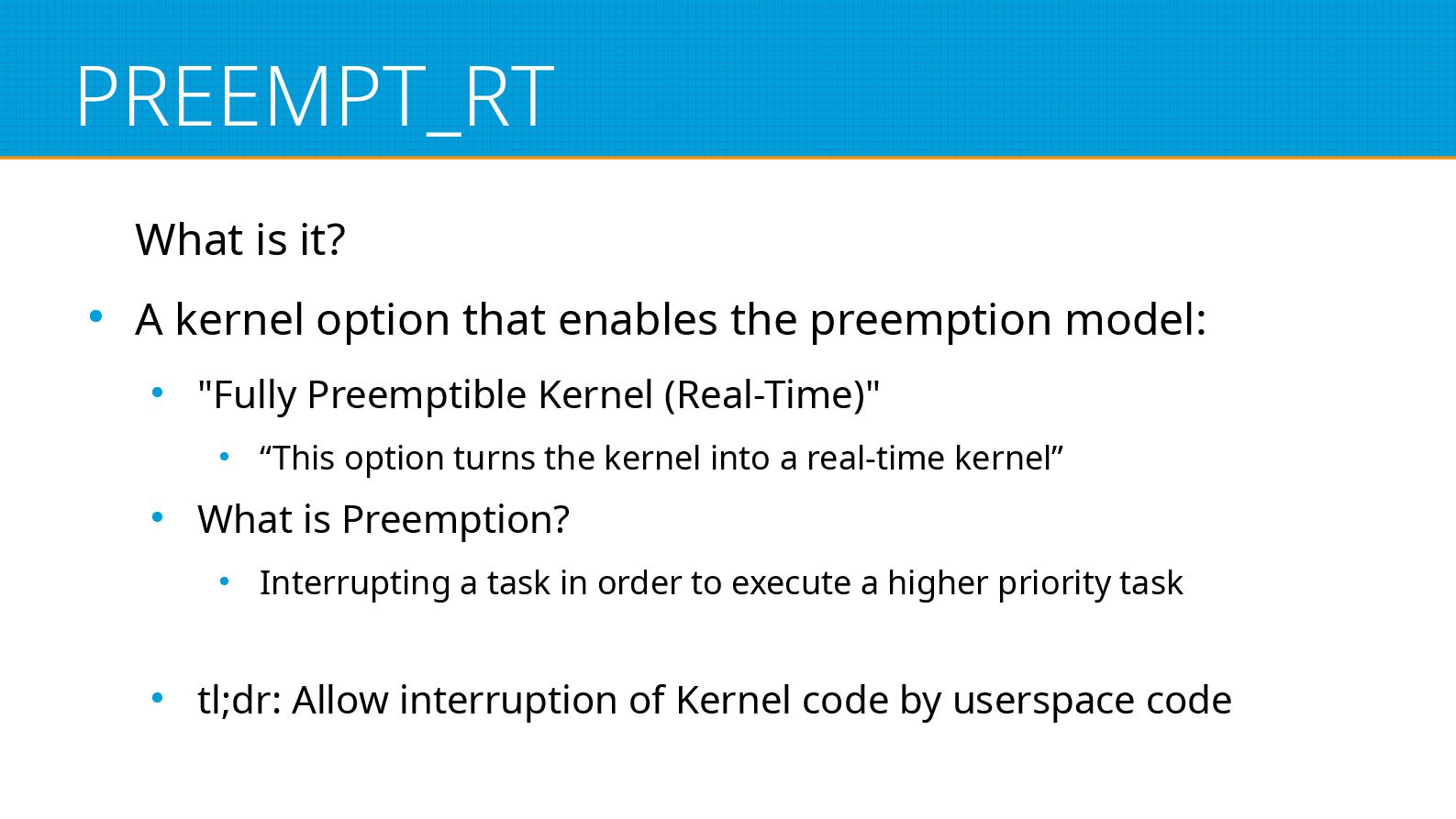
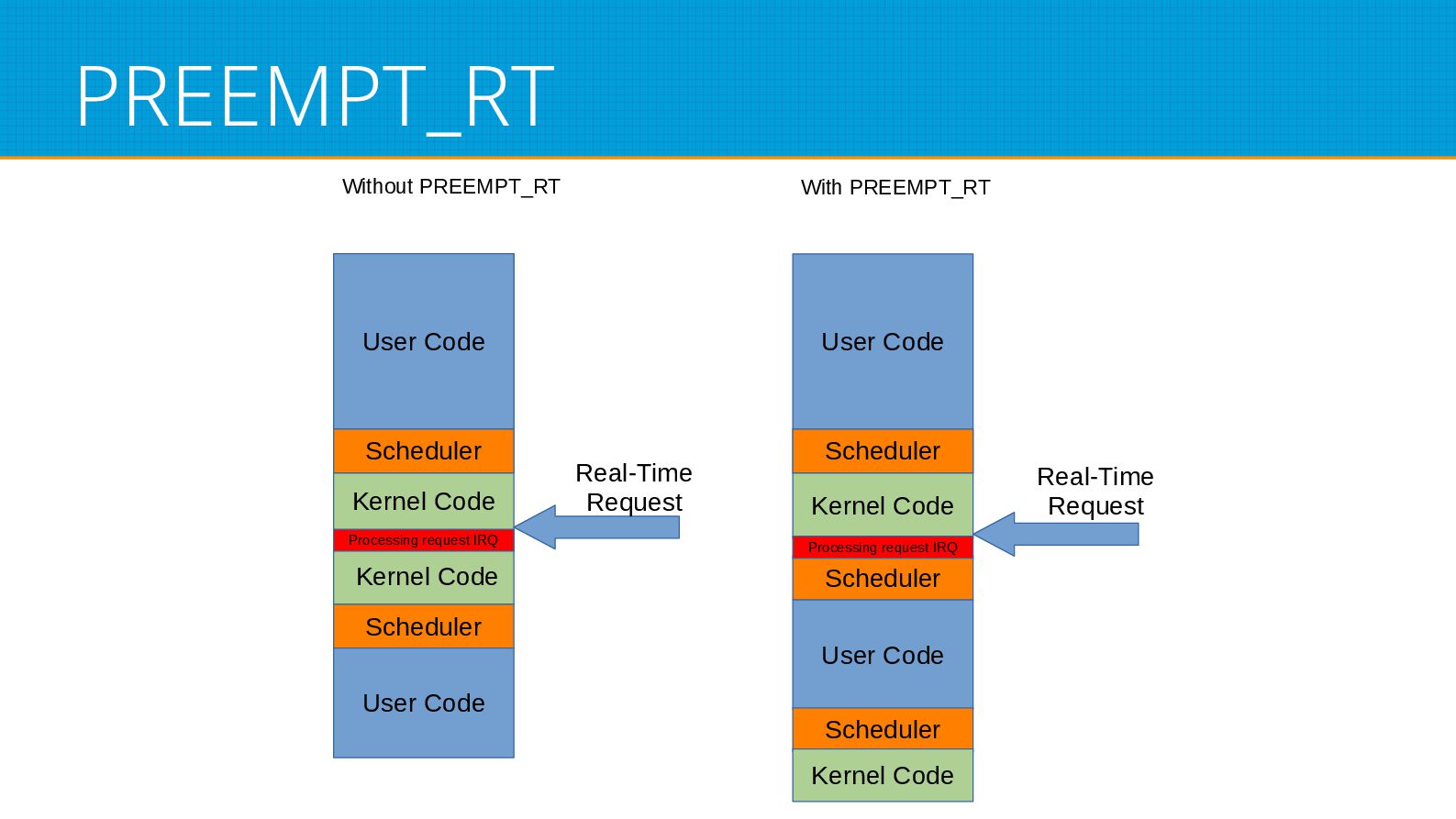
PREEMPT_RT What is it? • A kernel option that enables
the preemption model: • "Fully Preemptible Kernel (Real-Time)" • “This option turns the kernel into a real-time kernel” • What is Preemption? • Interrupting a task in order to execute a higher priority task • tl;dr: Allow interruption of Kernel code by userspace code -
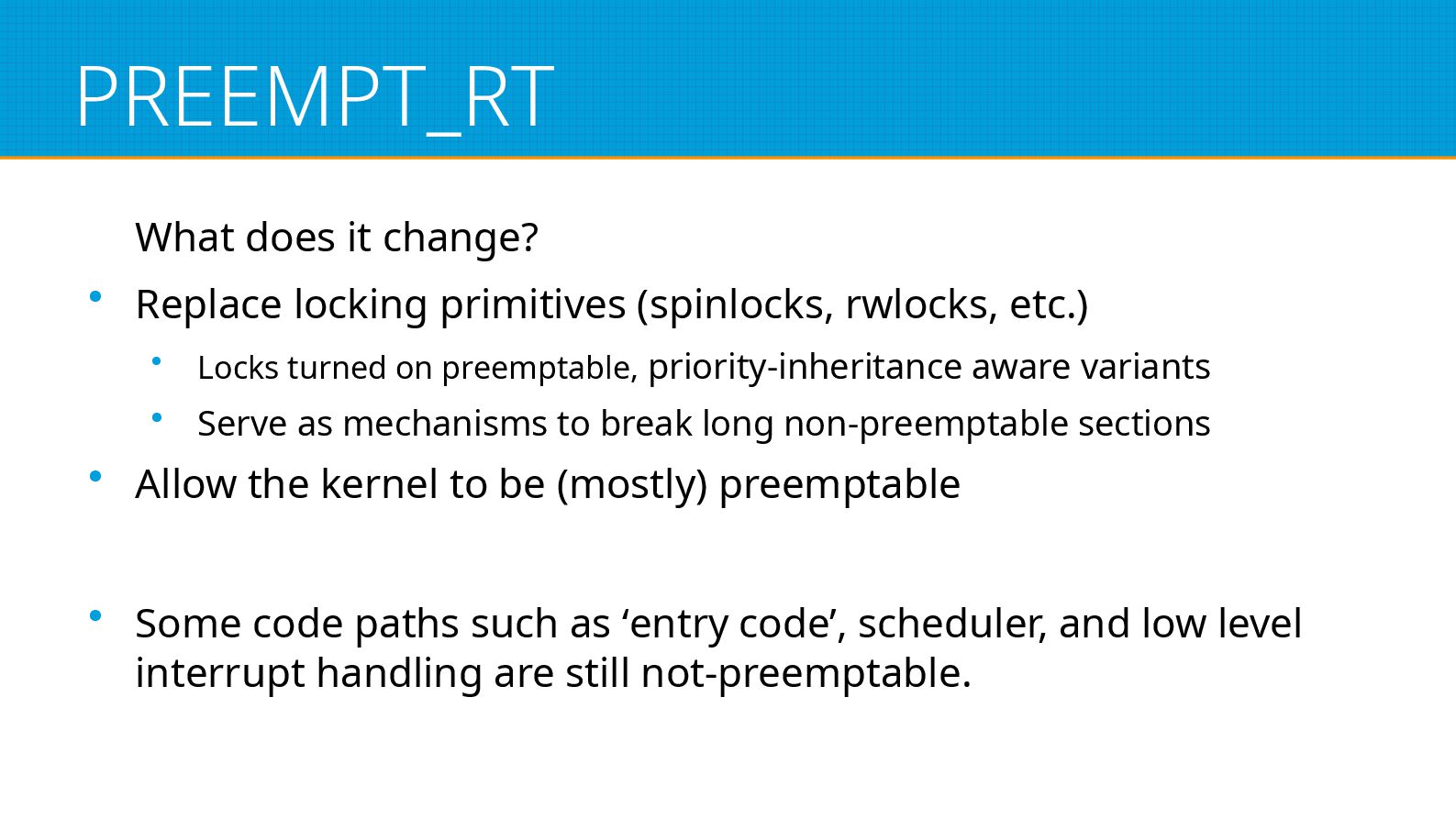
PREEMPT_RT What does it change? • Replace locking primitives (spinlocks,
rwlocks, etc.) • Locks turned on preemptable, priority-inheritance aware variants • Serve as mechanisms to break long non-preemptable sections • Allow the kernel to be (mostly) preemptable • Some code paths such as ‘entry code’, scheduler, and low level interrupt handling are still not-preemptable. -
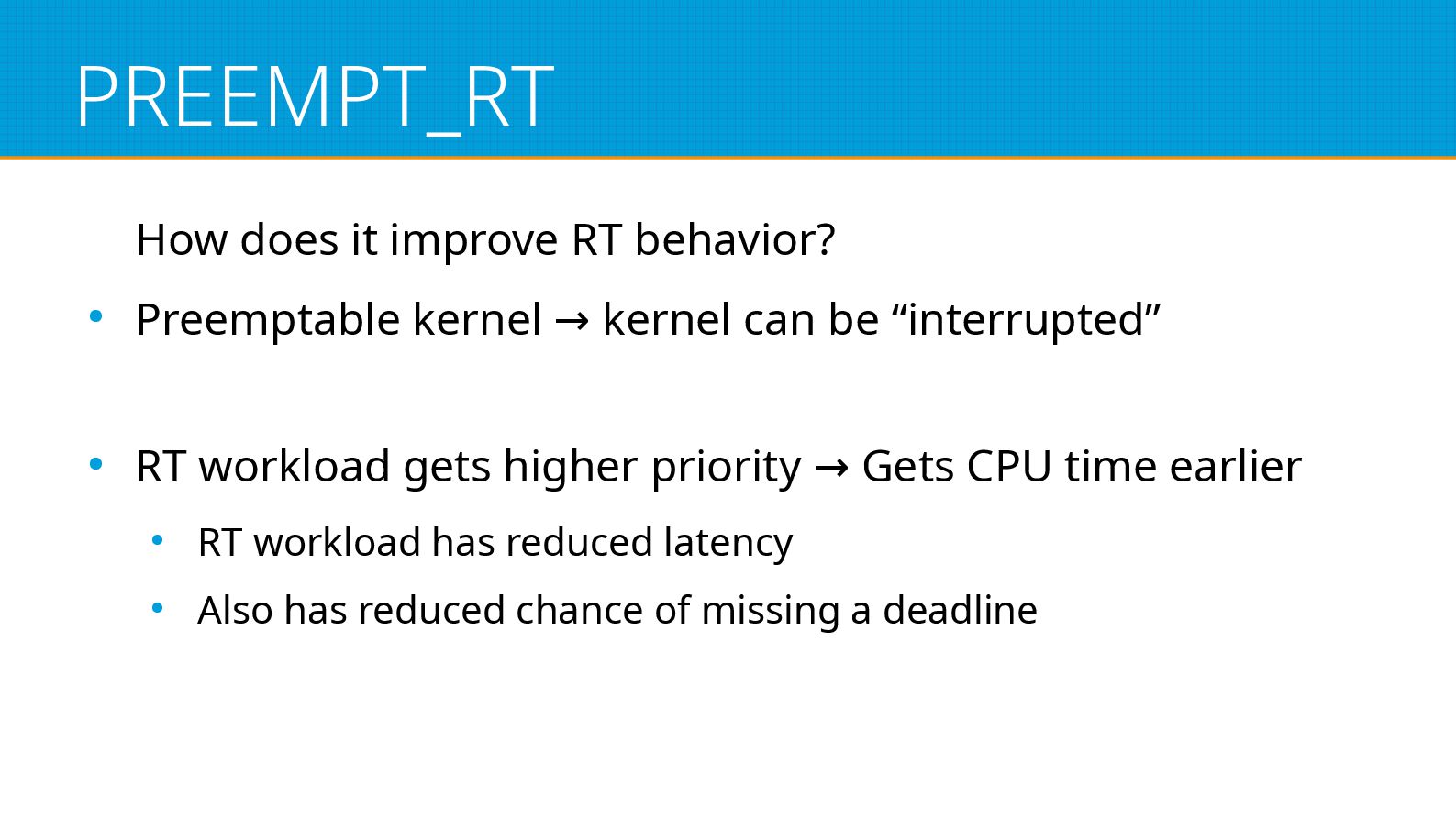
PREEMPT_RT How does it improve RT behavior? • Preemptable kernel
kernel can be “interrupted” → • RT workload gets higher priority Gets CPU time earlier → • RT workload has reduced latency • Also has reduced chance of missing a deadline -
PREEMPT_RT User Code Scheduler Kernel Code Kernel Code Processing request
IRQ Scheduler User Code Scheduler Real-Time Request Without PREEMPT_RT User Code Scheduler Kernel Code Scheduler User Code Scheduler Real-Time Request With PREEMPT_RT Processing request IRQ Scheduler Kernel Code User Code -
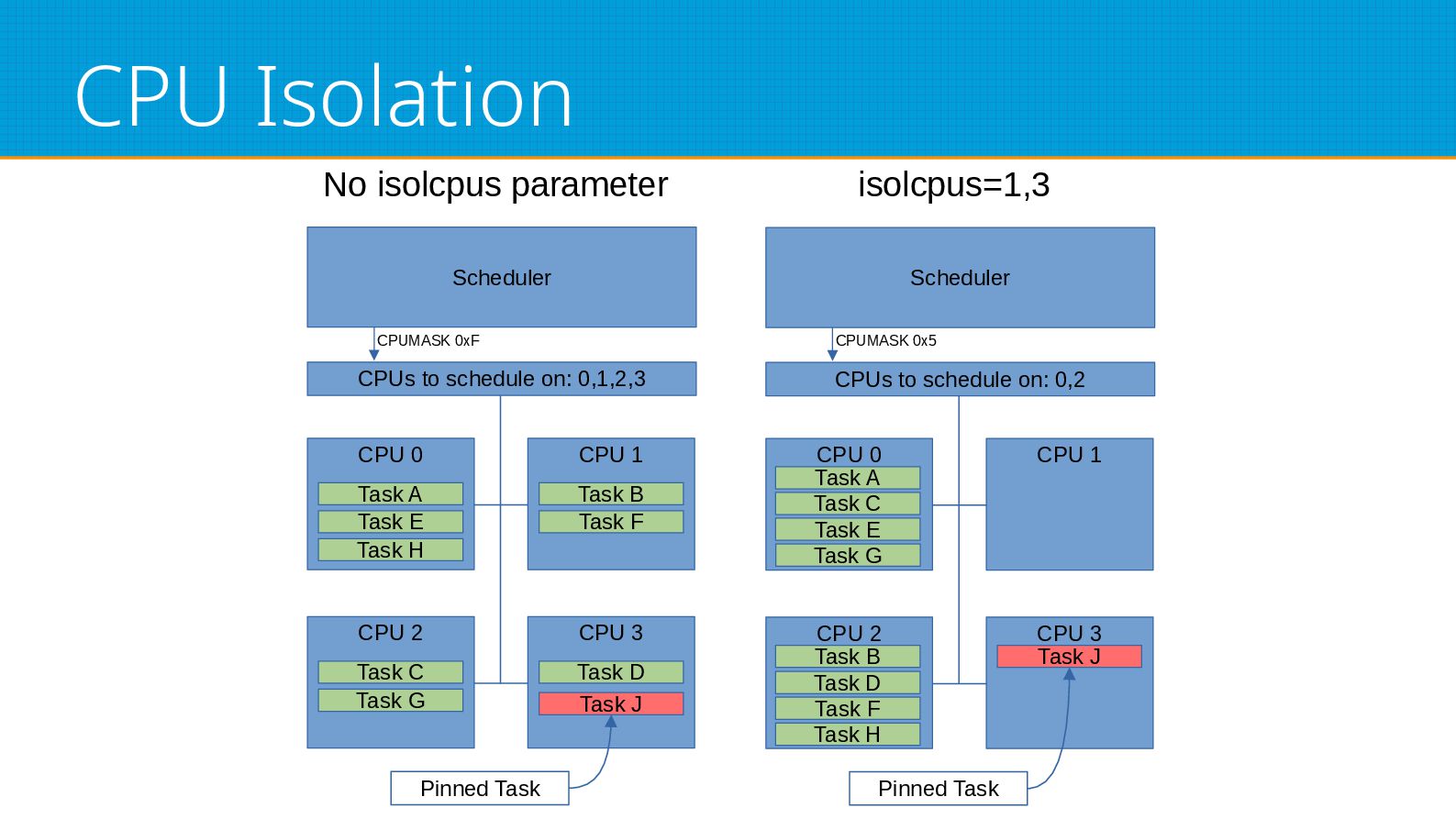
CPU Isolation What is it? • Linux boot parameter •
Remove a CPU list from the SMP load balancer and scheduler. • Tell other Linux code to avoid scheduling work on it. -
CPU Isolation What does it change? • Scheduler don’t schedule
work on Isolated CPUs by default • User need to manually assign (pin) a process to given CPU • User has full control of what runs there. • Also avoid some ‘housekeeping’ kernel work there • Less workload interruption -
CPU Isolation How does it improve RT behavior? • RT
workloads can be ‘pinned’ to Isolated CPUs • Single workload per CPU Not competing for CPU time → • Multiple CPUs can handle multiple different RT-workloads • Non-RT stuff can run on other CPUs -
CPU Isolation Scheduler CPUs to schedule on: 0,1,2,3 CPU 0
CPUMASK 0xF CPU 1 CPU 2 CPU 3 Task A Task E Task H Task B Task F Task C Task D Task G Task J Pinned Task No isolcpus parameter Scheduler CPUs to schedule on: 0,2 CPU 0 CPUMASK 0x5 CPU 1 CPU 2 CPU 3 Task A Task E Task H Task B Task F Task C Task D Task G Task J Pinned Task isolcpus=1,3 -
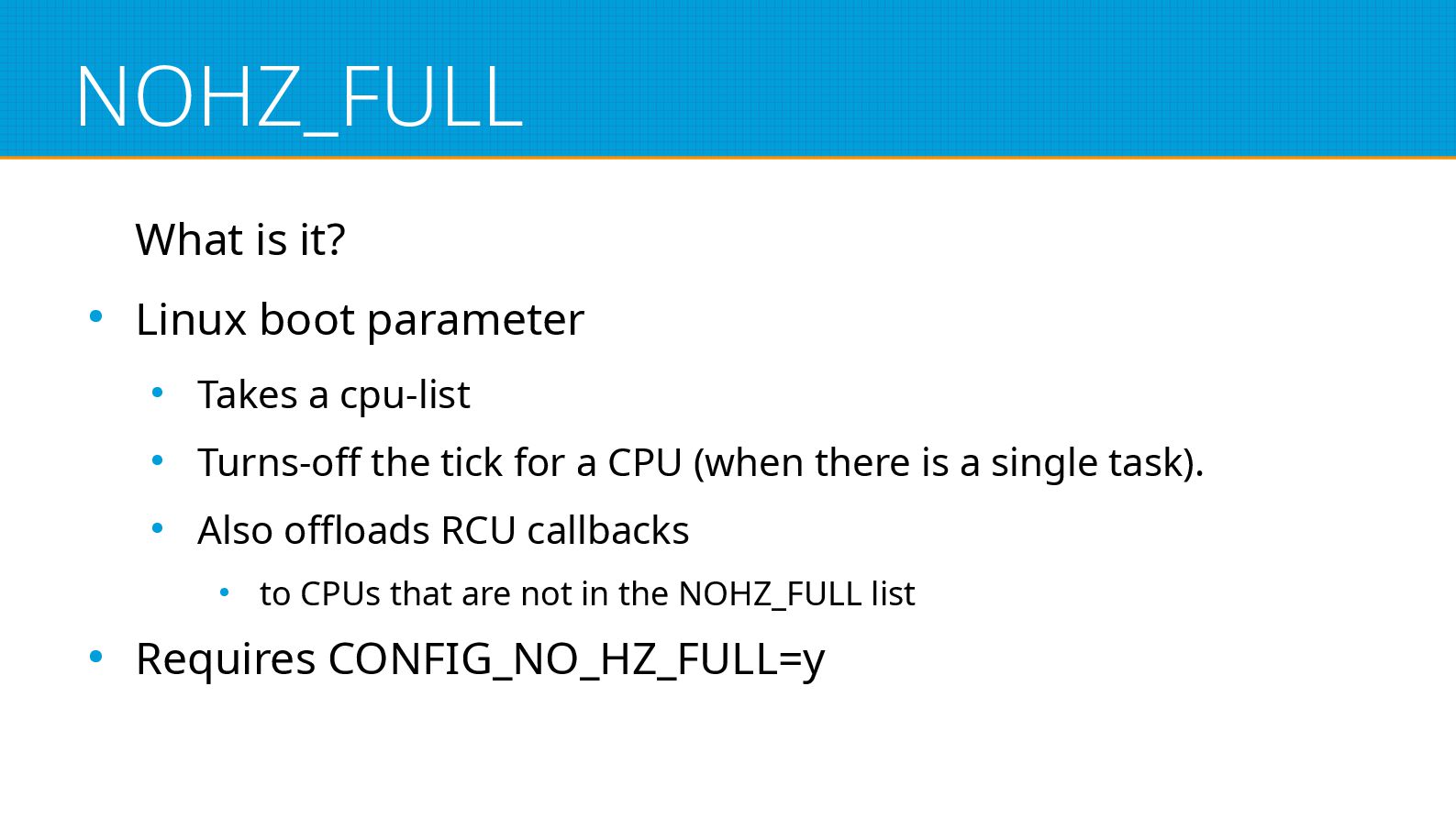
NOHZ_FULL What is it? • Linux boot parameter • Takes
a cpu-list • Turns-off the tick for a CPU (when there is a single task). • Also offloads RCU callbacks • to CPUs that are not in the NOHZ_FULL list • Requires CONFIG_NO_HZ_FULL=y -
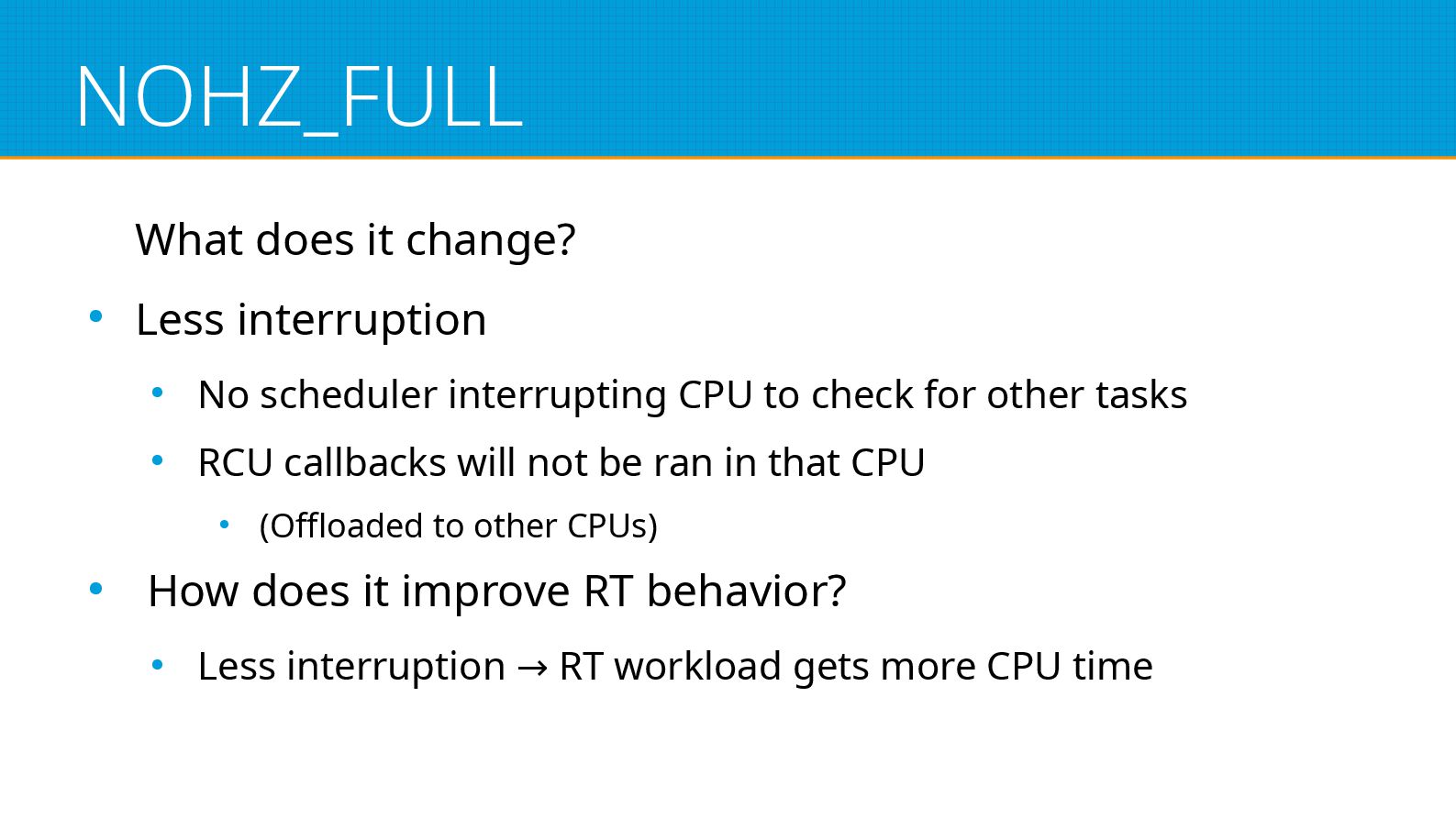
NOHZ_FULL What does it change? • Less interruption • No
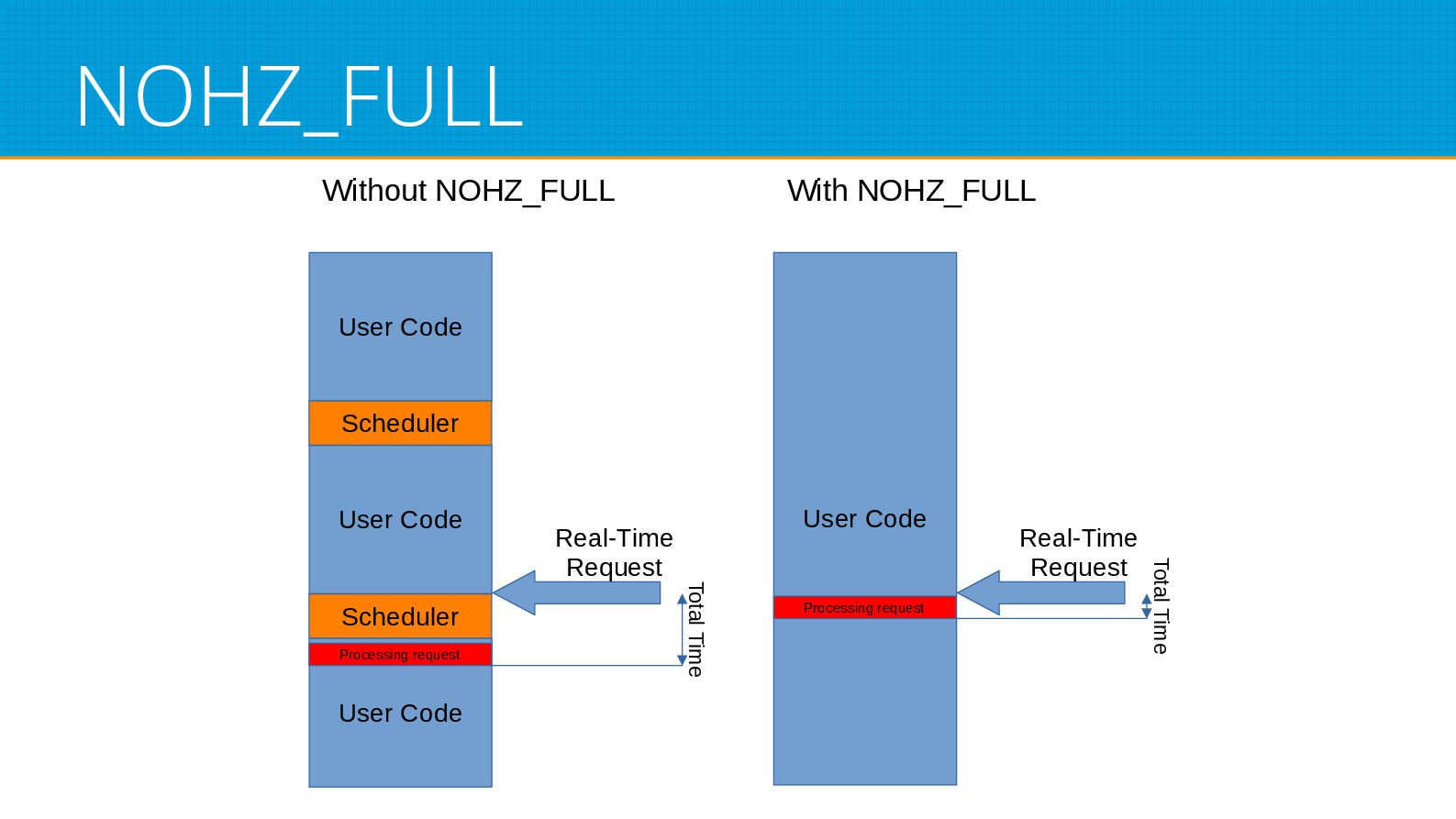
scheduler interrupting CPU to check for other tasks • RCU callbacks will not be ran in that CPU • (Offloaded to other CPUs) • How does it improve RT behavior? • Less interruption RT workload gets more CPU time → -
NOHZ_FULL User Code Scheduler Real-Time Request Without NOHZ_FULL With NOHZ_FULL
User Code Scheduler User Code Processing request Total Time User Code Real-Time Request Processing request Total Time -
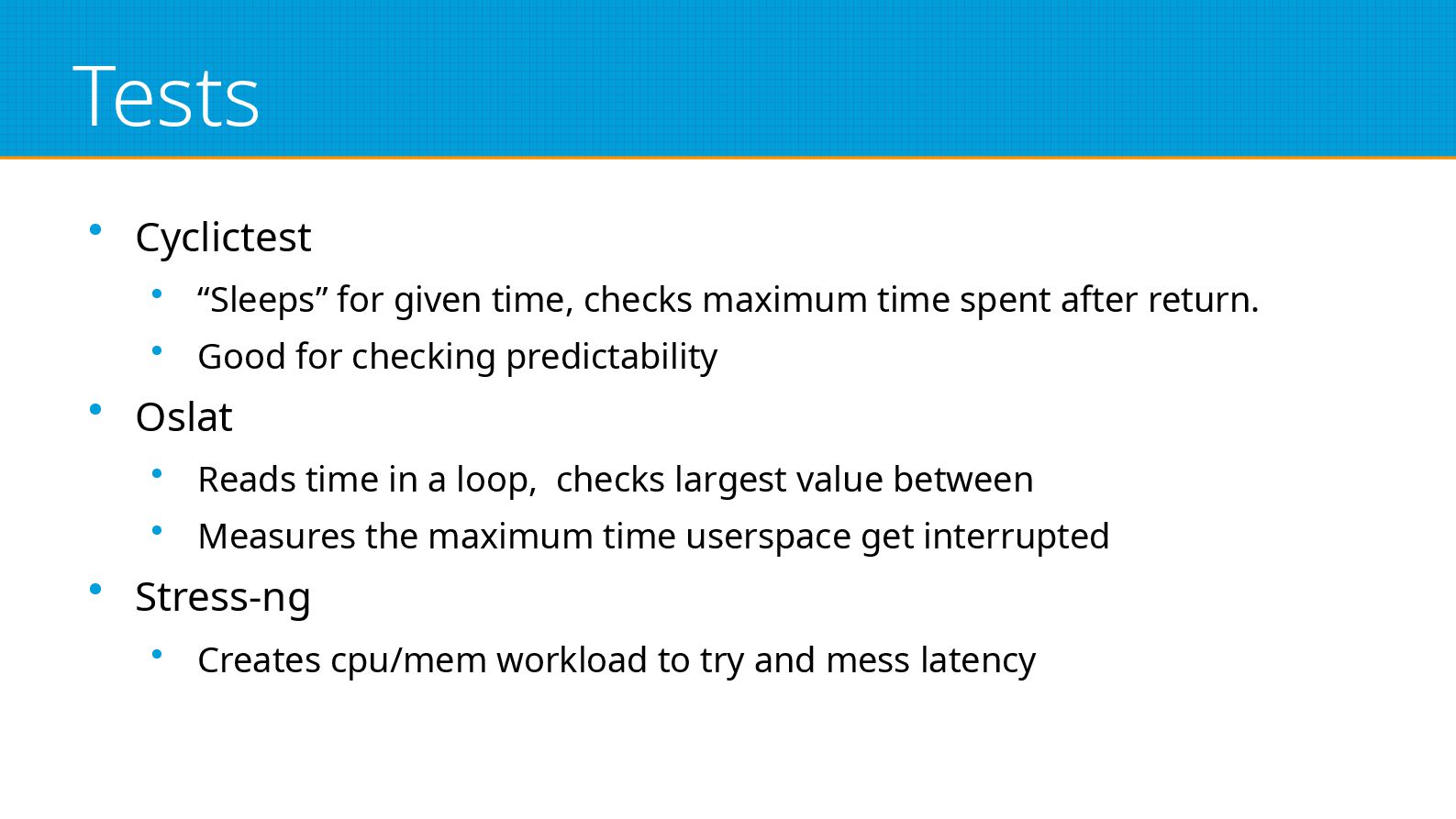
Tests • Cyclictest • “Sleeps” for given time, checks maximum
time spent after return. • Good for checking predictability • Oslat • Reads time in a loop, checks largest value between • Measures the maximum time userspace get interrupted • Stress-ng • Creates cpu/mem workload to try and mess latency -
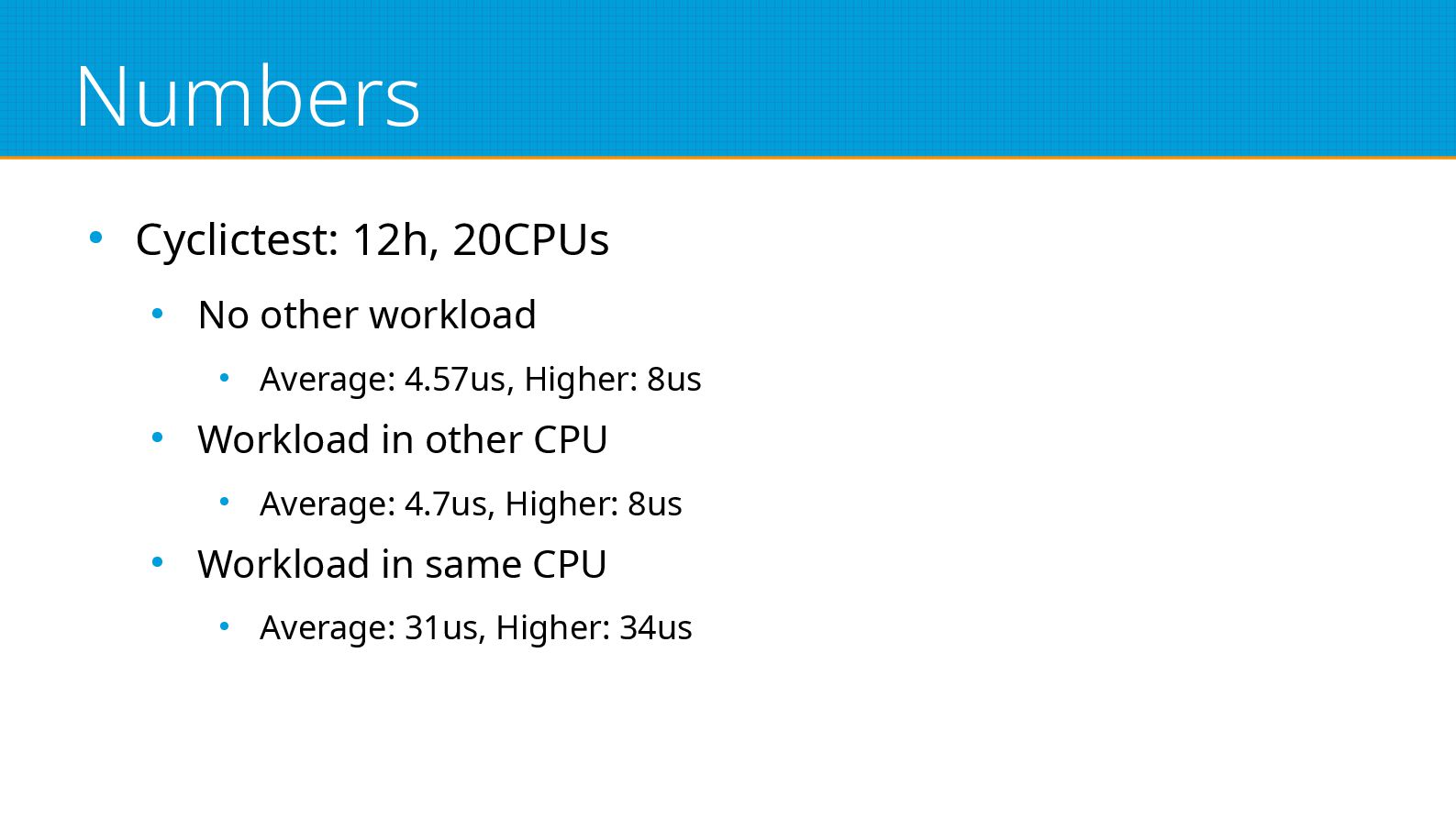
Numbers • Cyclictest: 12h, 20CPUs • No other workload •
Average: 4.57us, Higher: 8us • Workload in other CPU • Average: 4.7us, Higher: 8us • Workload in same CPU • Average: 31us, Higher: 34us -
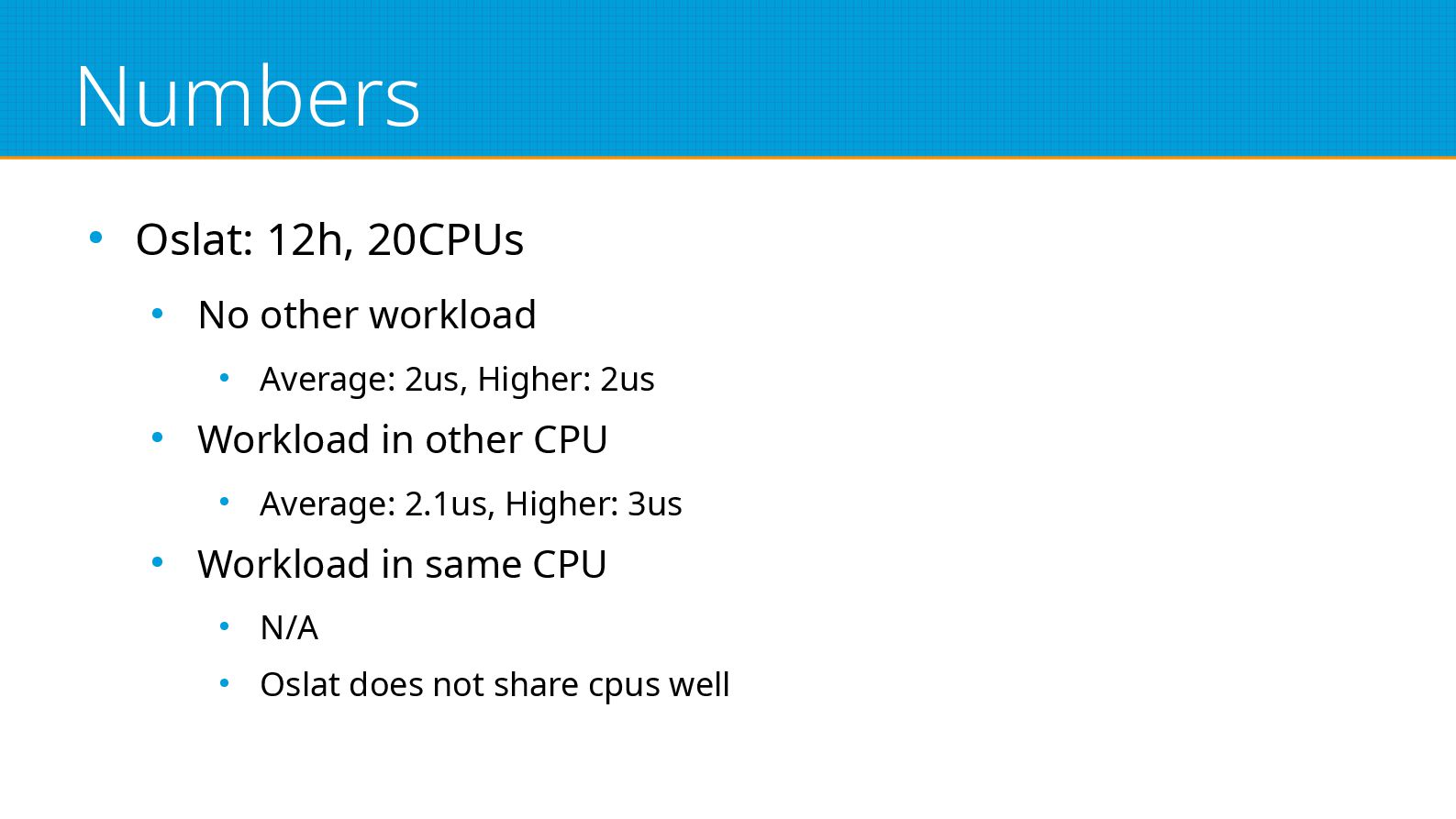
Numbers • Oslat: 12h, 20CPUs • No other workload •
Average: 2us, Higher: 2us • Workload in other CPU • Average: 2.1us, Higher: 3us • Workload in same CPU • N/A • Oslat does not share cpus well -
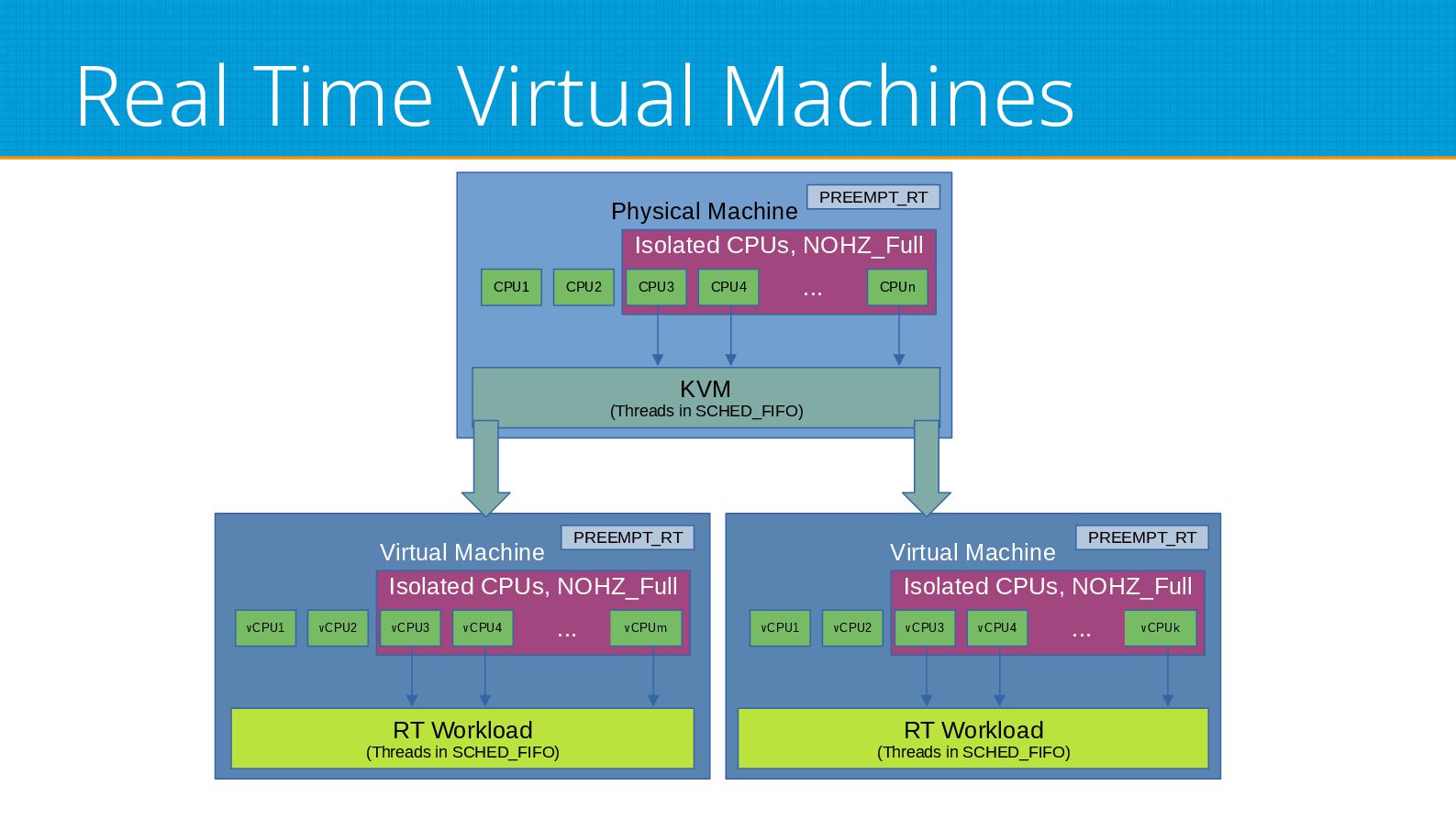
Real Time Virtual Machines Physical Machine Isolated CPUs, NOHZ_Full KVM
(Threads in SCHED_FIFO) CPU1 CPU2 CPU3 CPUn CPU4 ... PREEMPT_RT Virtual Machine Isolated CPUs, NOHZ_Full RT Workload (Threads in SCHED_FIFO) vCPU1 vCPU2 vCPU3 vCPUk vCPU4 ... PREEMPT_RT Virtual Machine Isolated CPUs, NOHZ_Full RT Workload (Threads in SCHED_FIFO) vCPU1 vCPU2 vCPU3 vCPUm vCPU4 ... PREEMPT_RT -
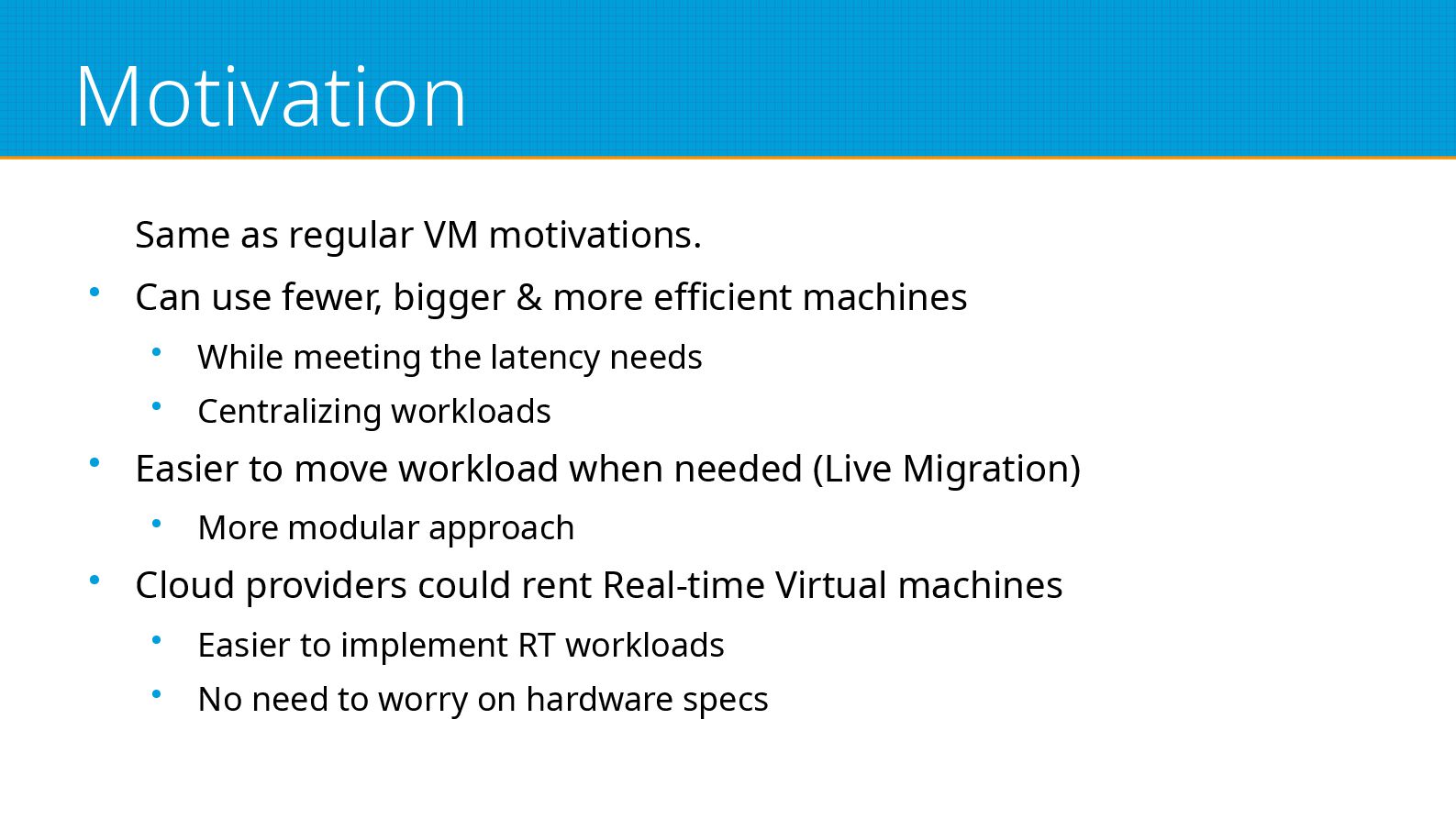
Motivation Same as regular VM motivations. • Can use fewer,
bigger & more efficient machines • While meeting the latency needs • Centralizing workloads • Easier to move workload when needed (Live Migration) • More modular approach • Cloud providers could rent Real-time Virtual machines • Easier to implement RT workloads • No need to worry on hardware specs -
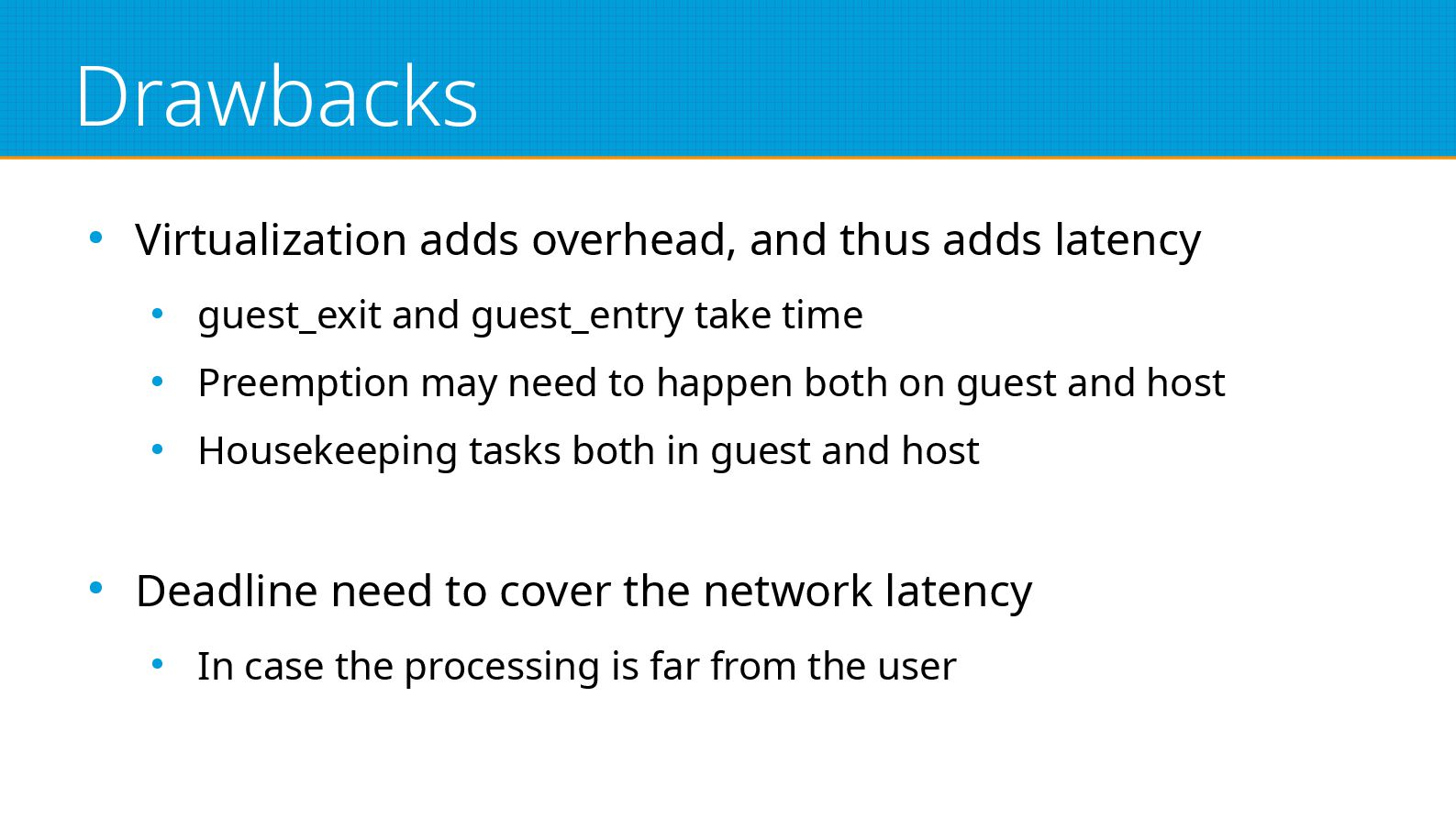
Drawbacks • Virtualization adds overhead, and thus adds latency •
guest_exit and guest_entry take time • Preemption may need to happen both on guest and host • Housekeeping tasks both in guest and host • Deadline need to cover the network latency • In case the processing is far from the user -
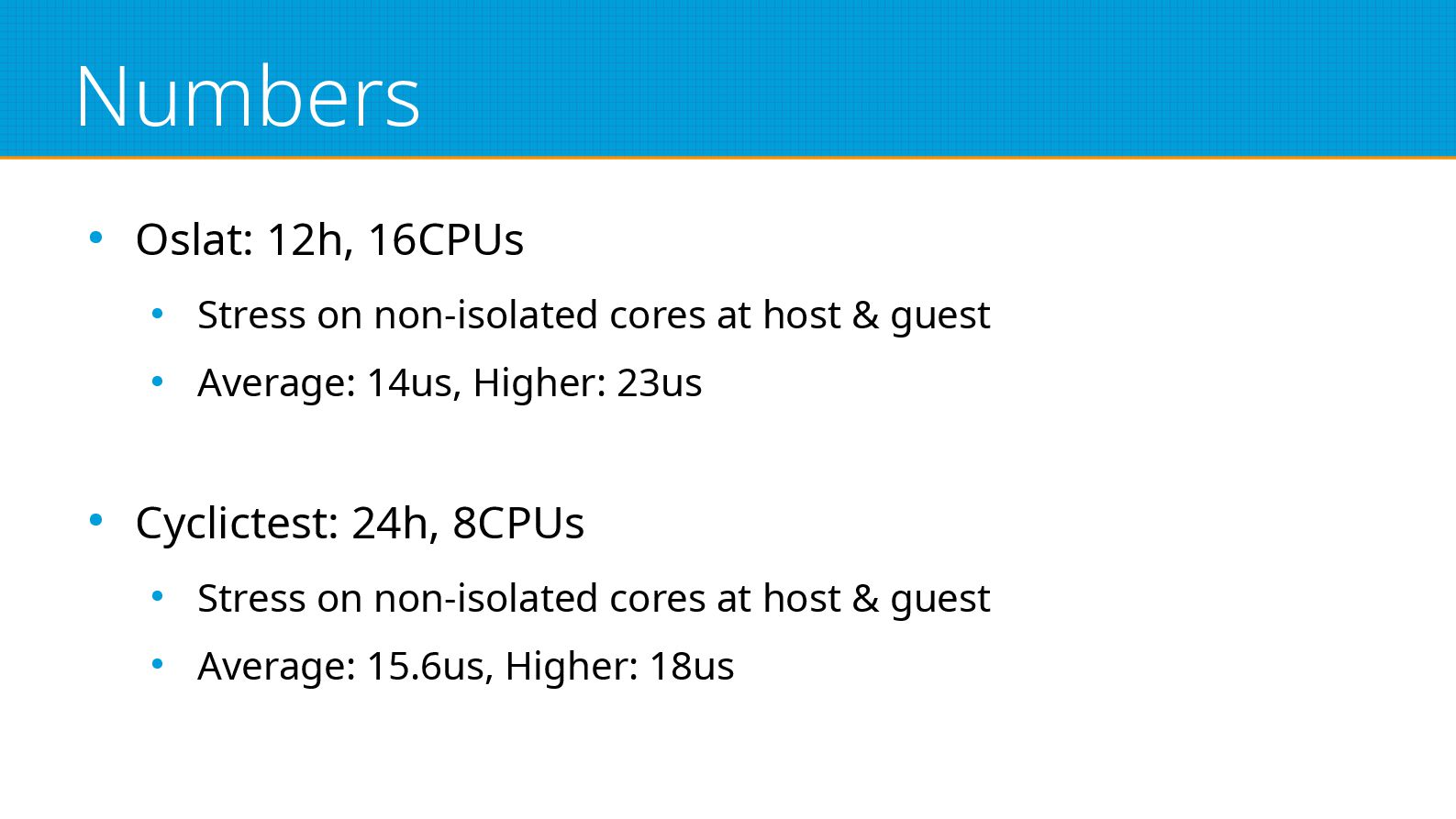
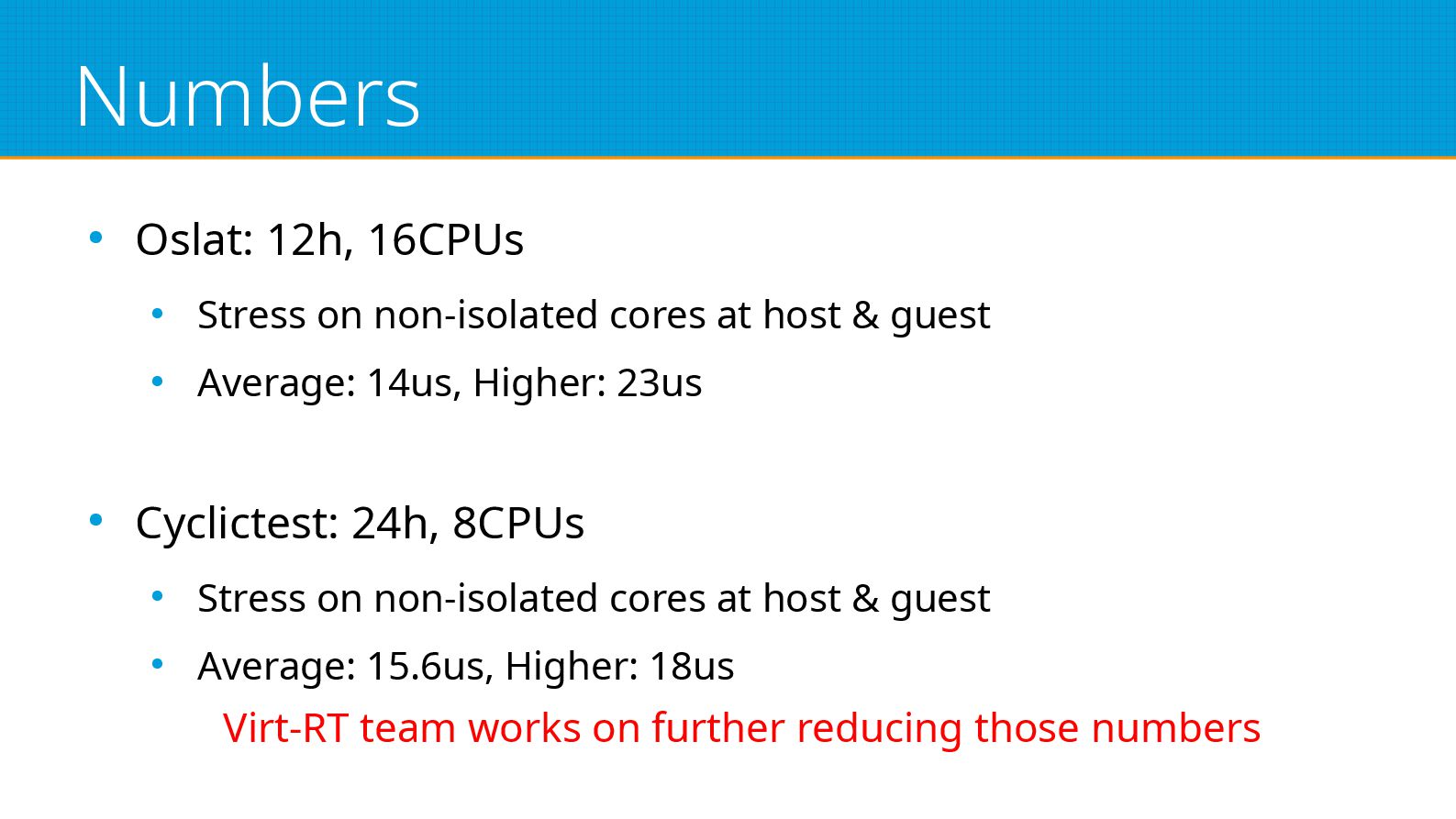
Numbers • Oslat: 12h, 16CPUs • Stress on non-isolated cores
at host & guest • Average: 14us, Higher: 23us • Cyclictest: 24h, 8CPUs • Stress on non-isolated cores at host & guest • Average: 15.6us, Higher: 18us -
Numbers • Oslat: 12h, 16CPUs • Stress on non-isolated cores
at host & guest • Average: 14us, Higher: 23us • Cyclictest: 24h, 8CPUs • Stress on non-isolated cores at host & guest • Average: 15.6us, Higher: 18us Virt-RT team works on further reducing those numbers -
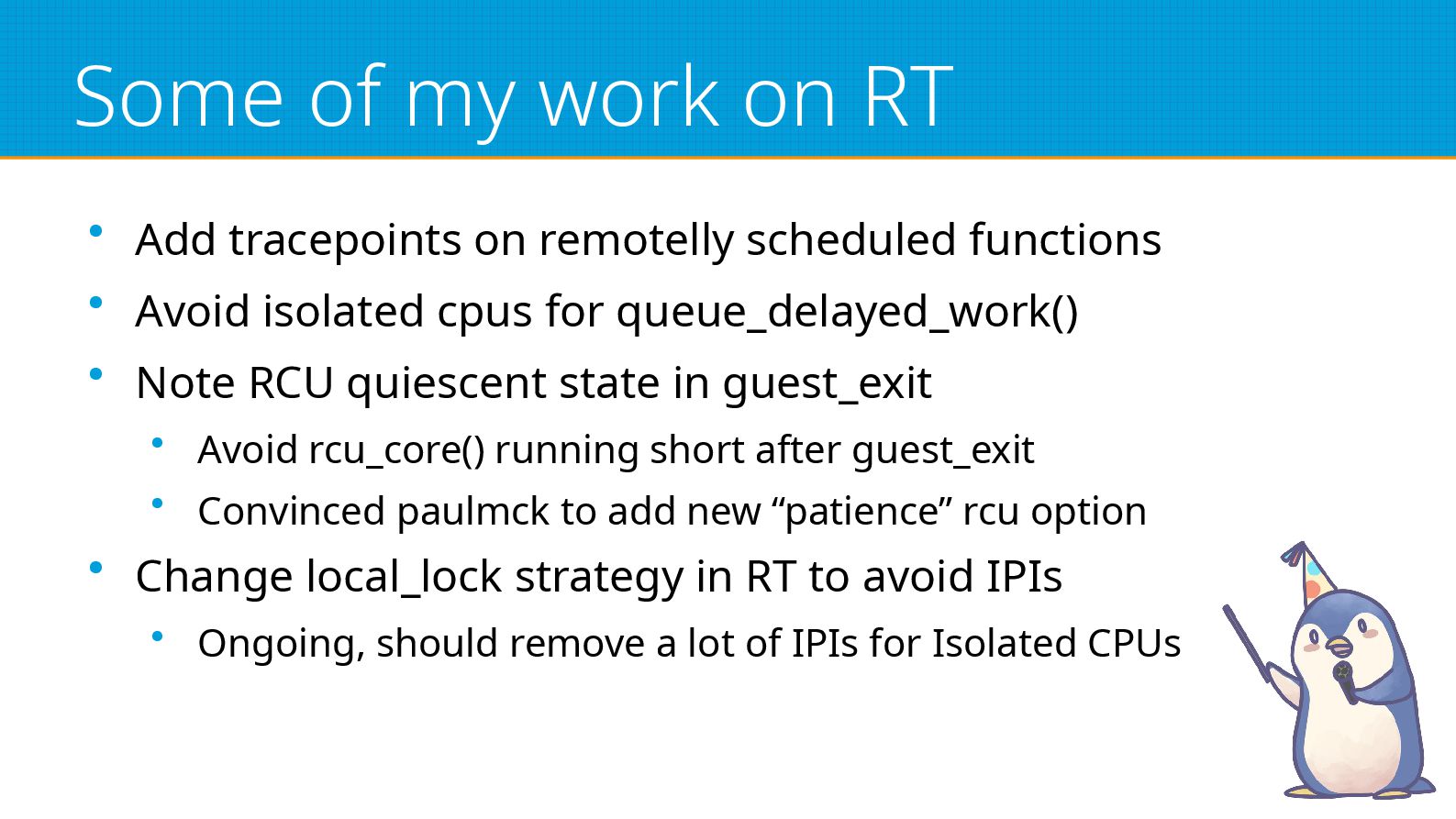
Some of my work on RT • Add tracepoints on
remotelly scheduled functions • Avoid isolated cpus for queue_delayed_work() • Note RCU quiescent state in guest_exit • Avoid rcu_core() running short after guest_exit • Convinced paulmck to add new “patience” rcu option • Change local_lock strategy in RT to avoid IPIs • Ongoing, should remove a lot of IPIs for Isolated CPUs -
References: [1] "FreeRTOS - Open Source RTOS Kernel for small
embedded systems - What is FreeRTOS FAQ?". FreeRTOS. Retrieved 2021-03-08. [2] Ben-Ari, Mordechai; "Principles of Concurrent and Distributed Programming", ch. 16, Prentice Hall, 1990, ISBN 0- 13-711821-X, page 164 [3] Kopetz, Hermann; Real-Time Systems: Design Principles for Distributed Embedded Applications, Kluwer Academic Publishers, 1997 [4] “Zephyr Documentation : Schedulers”. Retrieved 2023-08-23 https://docs.zephyrproject.org/latest/kernel/service s/scheduling/index.html [5] “FreeRTOS Documentation”. Retrieved 2023-08-23. https://www.freertos.org/features.html [6] “RTLinux page”. Retrieved 2023-08-23. https://en.wikipedia.org/wiki/RTLinux [7] “Linux Kernel Documentation”. Retrieved 2023-08-24. https://www.kernel.org/doc/html/latest