Share
Embed
alecthomas/kong はいいぞ
GopherのためのCLIツール開発』最新事情 LT 発表資料
https://findy.connpass.com/event/362163/
FUJIWARA Shunichiro
July 28, 2025
Transcript
12 slides
-
自己紹介 @fujiwara (X, GitHub, Bluesky) 2025-02〜 さくらインターネット ISUCON 優勝4回 /
運営5回 github.com/kayac/ecspresso github.com/fujiwara/lambroll -
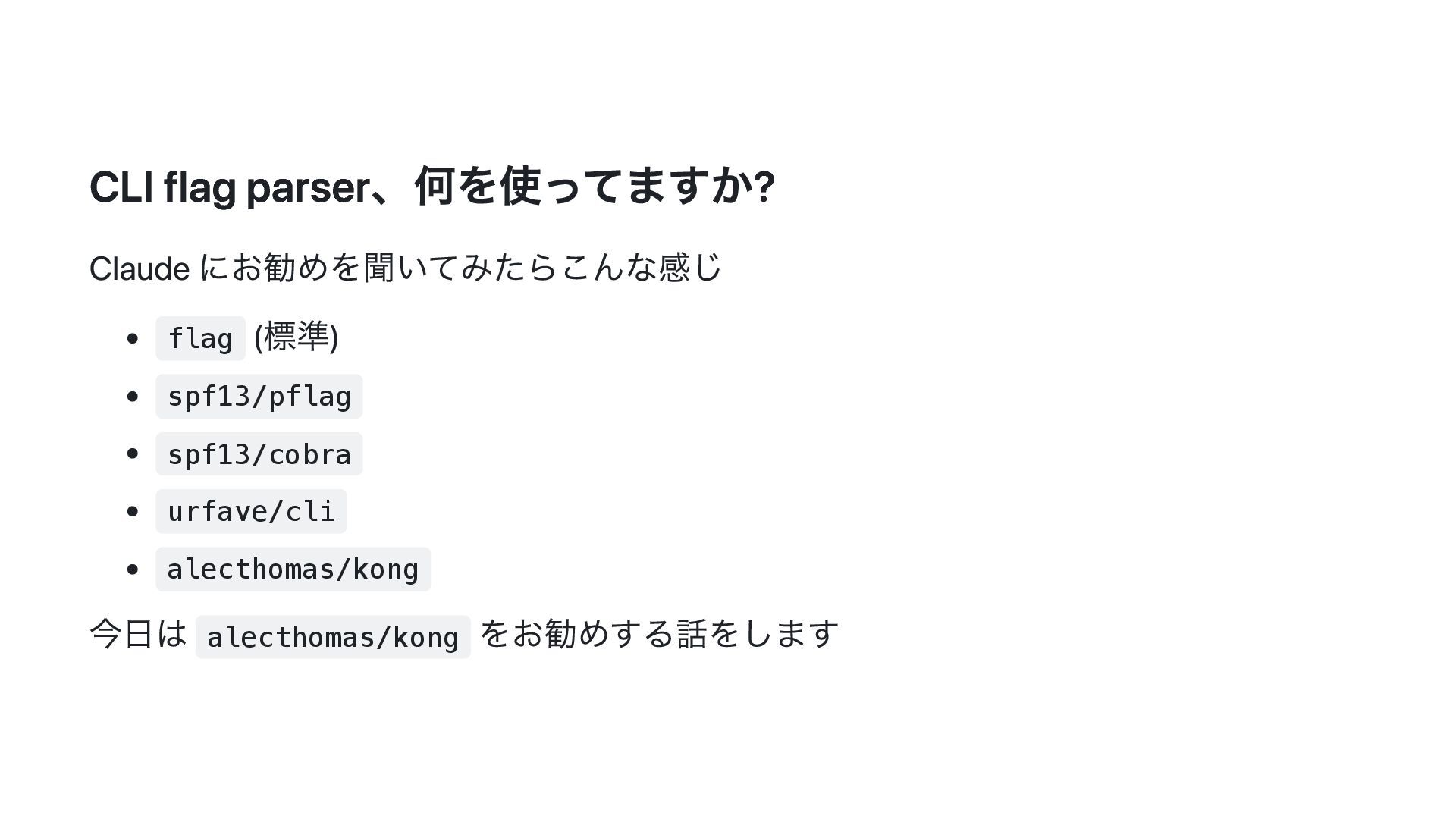
CLI flag parser、何を使ってますか? Claude にお勧めを聞いてみたらこんな感じ flag (標準) spf13/pflag spf13/cobra urfave/cli
alecthomas/kong 今日は alecthomas/kong をお勧めする話をします -
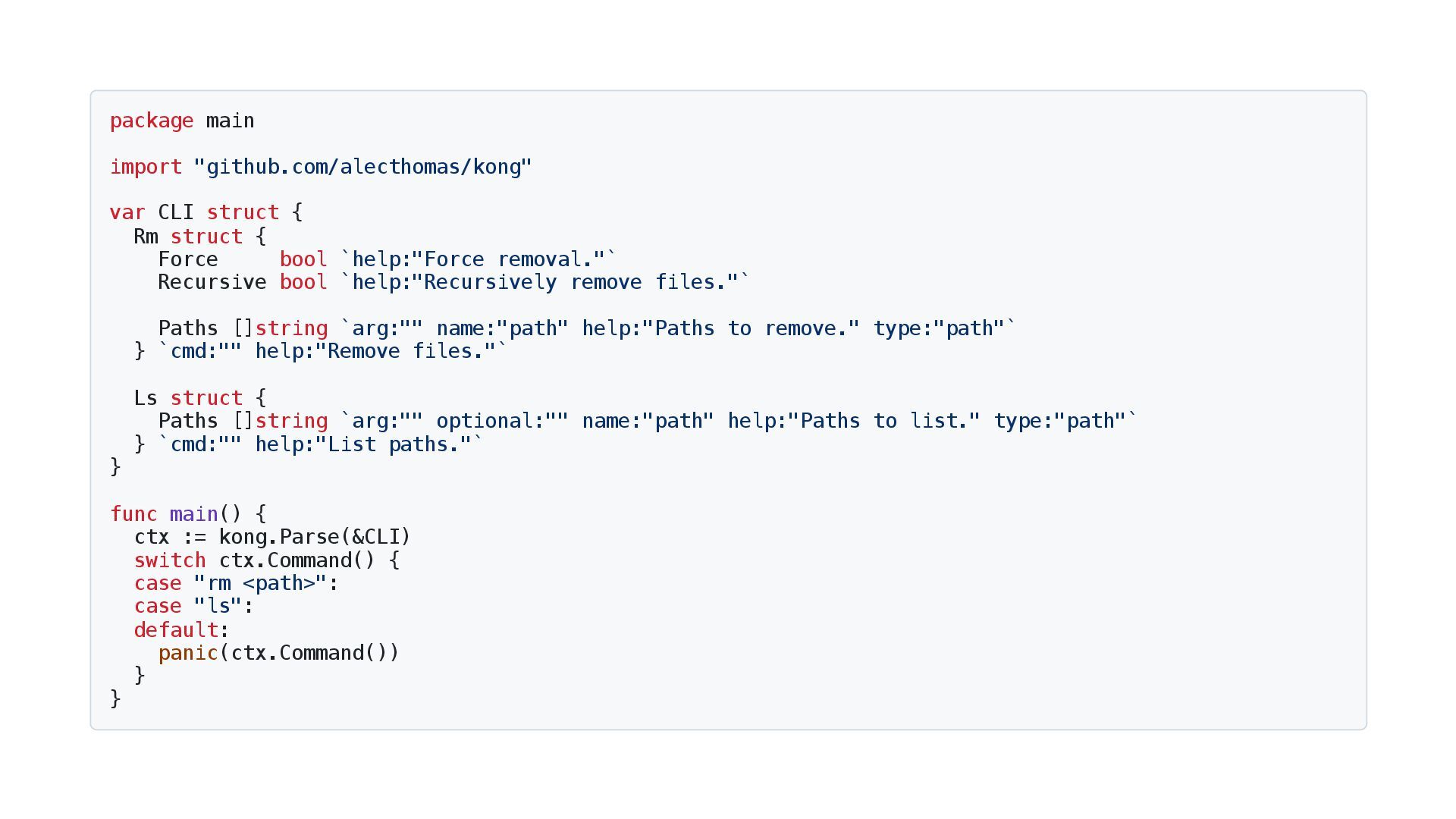
package main import "github.com/alecthomas/kong" var CLI struct { Rm struct
{ Force bool `help:"Force removal."` Recursive bool `help:"Recursively remove files."` Paths []string `arg:"" name:"path" help:"Paths to remove." type:"path"` } `cmd:"" help:"Remove files."` Ls struct { Paths []string `arg:"" optional:"" name:"path" help:"Paths to list." type:"path"` } `cmd:"" help:"List paths."` } func main() { ctx := kong.Parse(&CLI) switch ctx.Command() { case "rm <path>": case "ls": default: panic(ctx.Command()) } } -
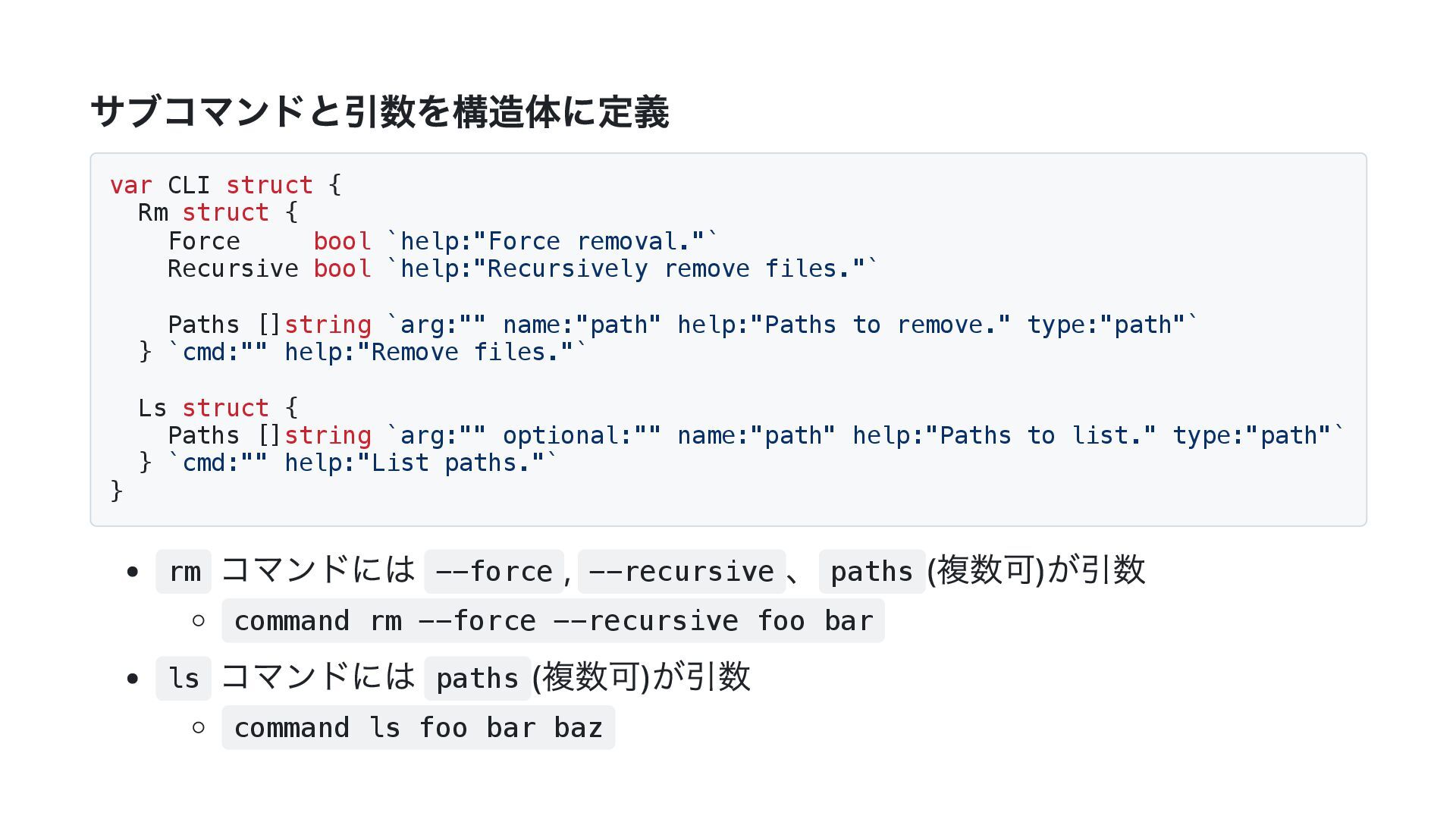
サブコマンドと引数を構造体に定義 var CLI struct { Rm struct { Force bool
`help:"Force removal."` Recursive bool `help:"Recursively remove files."` Paths []string `arg:"" name:"path" help:"Paths to remove." type:"path"` } `cmd:"" help:"Remove files."` Ls struct { Paths []string `arg:"" optional:"" name:"path" help:"Paths to list." type:"path"` } `cmd:"" help:"List paths."` } rm コマンドには --force , --recursive 、 paths (複数可)が引数 command rm --force --recursive foo bar ls コマンドには paths (複数可)が引数 command ls foo bar baz -
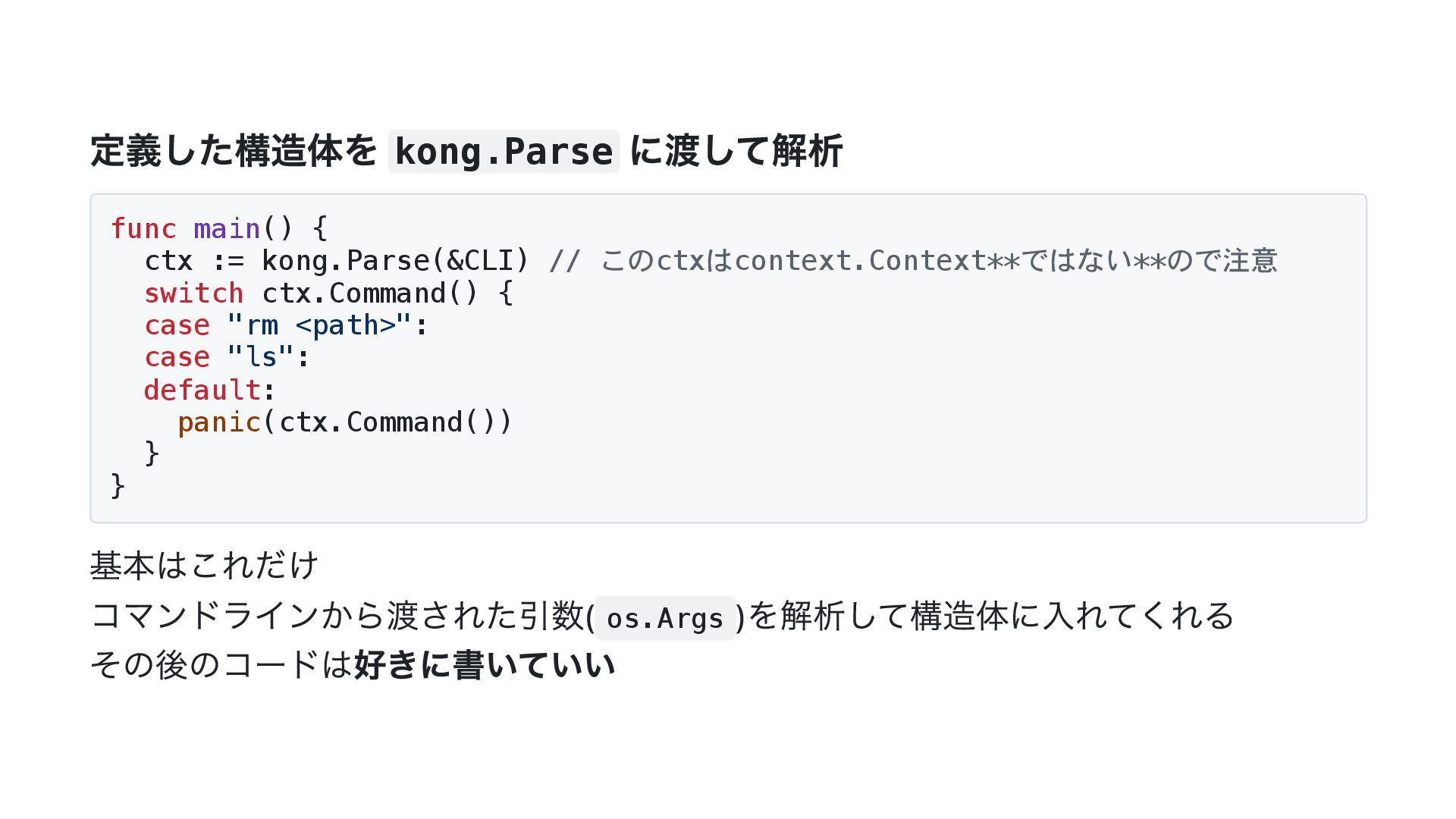
定義した構造体を kong.Parse に渡して解析 func main() { ctx := kong.Parse(&CLI) //
このctxはcontext.Context**ではない**ので注意 switch ctx.Command() { case "rm <path>": case "ls": default: panic(ctx.Command()) } } 基本はこれだけ コマンドラインから渡された引数( os.Args )を解析して構造体に入れてくれる その後のコードは好きに書いていい -
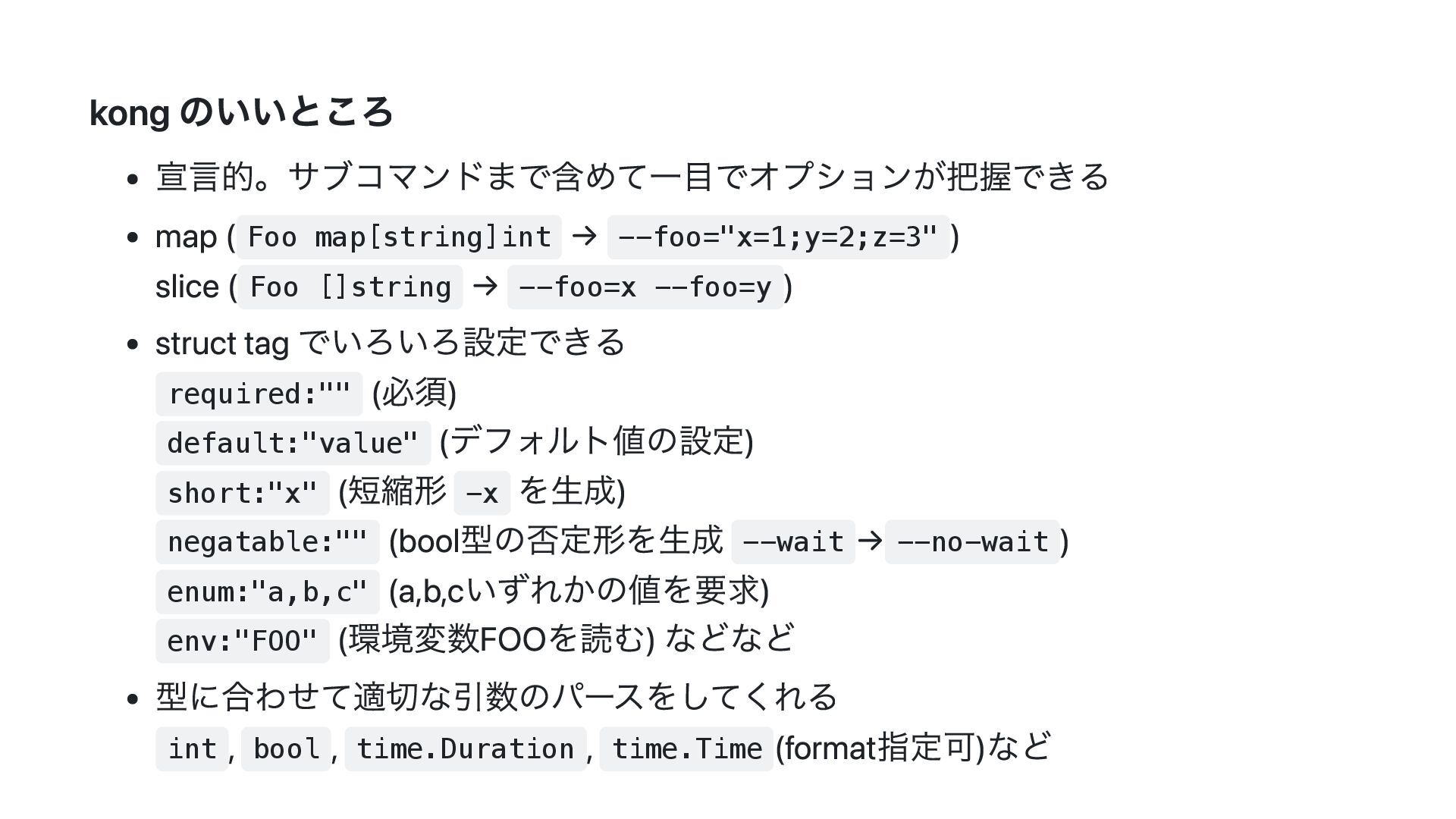
kong のいいところ 宣言的。サブコマンドまで含めて一目でオプションが把握できる map ( Foo map[string]int → --foo="x=1;y=2;z=3" )
slice ( Foo []string → --foo=x --foo=y ) struct tag でいろいろ設定できる required:"" (必須) default:"value" (デフォルト値の設定) short:"x" (短縮形 -x を生成) negatable:"" (bool型の否定形を生成 --wait → --no-wait ) enum:"a,b,c" (a,b,cいずれかの値を要求) env:"FOO" (環境変数FOOを読む) などなど 型に合わせて適切な引数のパースをしてくれる int , bool , time.Duration , time.Time (format指定可)など -
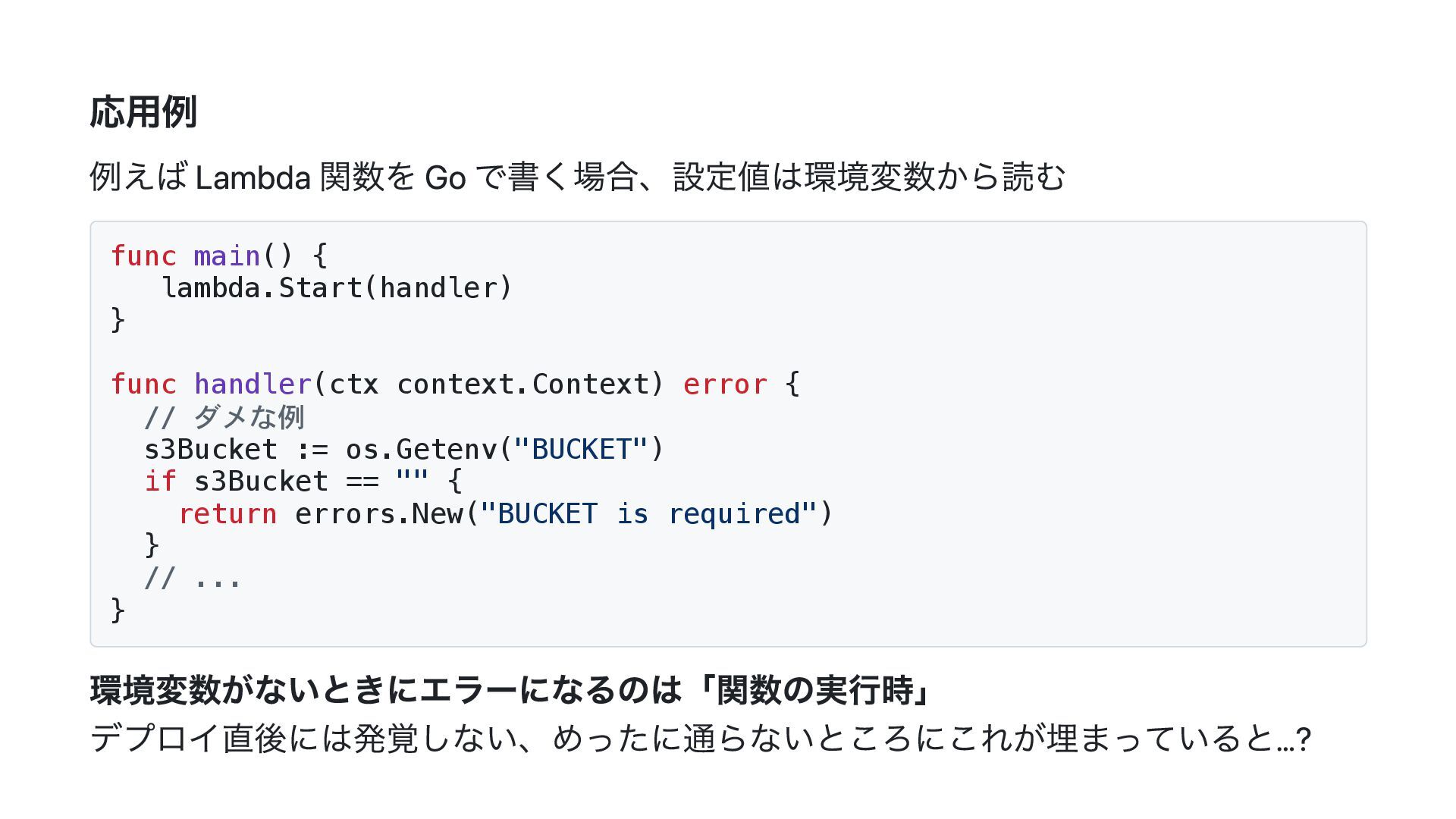
応用例 例えば Lambda 関数を Go で書く場合、設定値は環境変数から読む func main() { lambda.Start(handler)
} func handler(ctx context.Context) error { // ダメな例 s3Bucket := os.Getenv("BUCKET") if s3Bucket == "" { return errors.New("BUCKET is required") } // ... } 環境変数がないときにエラーになるのは「関数の実行時」 デプロイ直後には発覚しない、めったに通らないところにこれが埋まっていると…? -
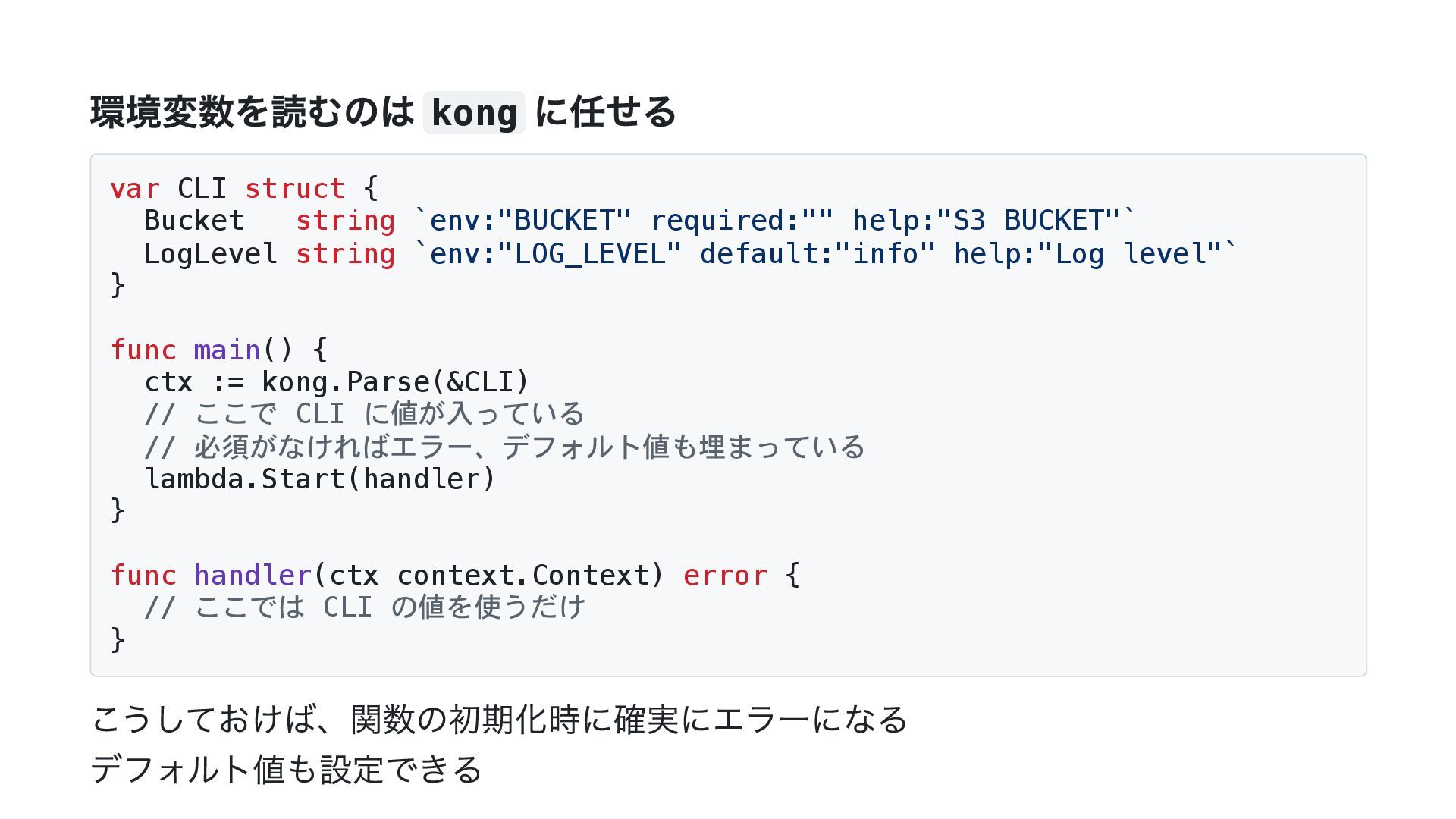
環境変数を読むのは kong に任せる var CLI struct { Bucket string `env:"BUCKET"
required:"" help:"S3 BUCKET"` LogLevel string `env:"LOG_LEVEL" default:"info" help:"Log level"` } func main() { ctx := kong.Parse(&CLI) // ここで CLI に値が入っている // 必須がなければエラー、デフォルト値も埋まっている lambda.Start(handler) } func handler(ctx context.Context) error { // ここでは CLI の値を使うだけ } こうしておけば、関数の初期化時に確実にエラーになる デフォルト値も設定できる -
まとめ alecthomas/kong はパーサー特化、便利なのでお勧めです 最近の fujiwara-ware はだいたい kong を使っています (ecspresso, lambroll
は alecthomas/kingpin から移行)