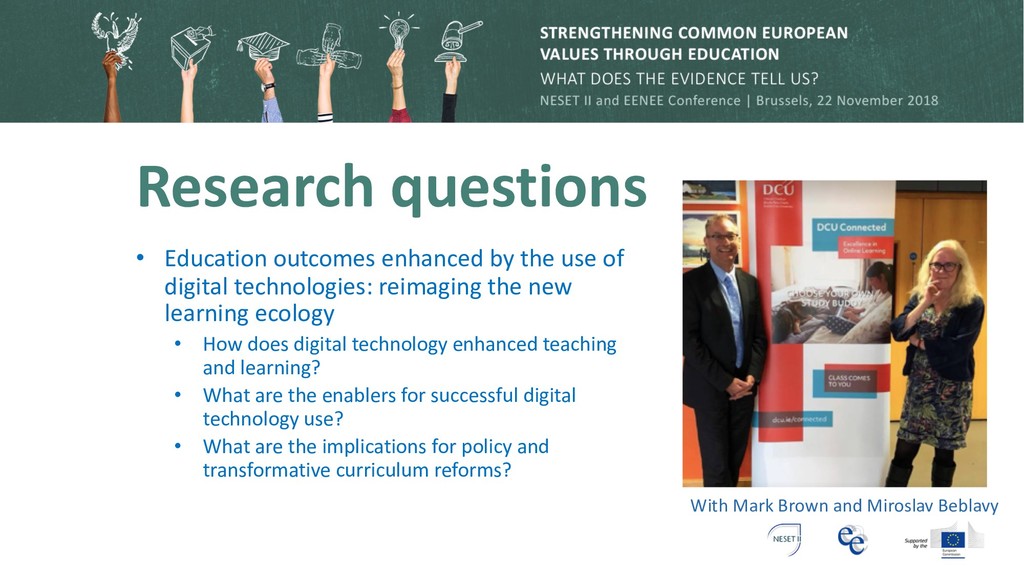
digital technologies: reimaging the new learning ecology • How does digital technology enhanced teaching and learning? • What are the enablers for successful digital technology use? • What are the implications for policy and transformative curriculum reforms? With Mark Brown and Miroslav Beblavy
of the digital society • Affordances of digital technology • Effective pedagogy for innovation • Continuous Professional Learning • Barriers • Principles and recommendations • Final reflections
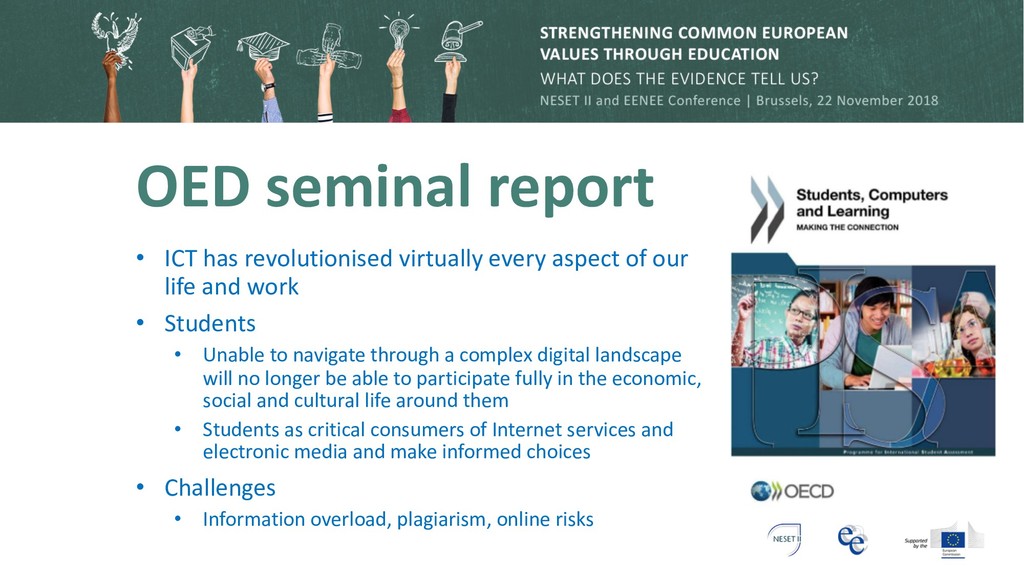
of our life and work • Students • Unable to navigate through a complex digital landscape will no longer be able to participate fully in the economic, social and cultural life around them • Students as critical consumers of Internet services and electronic media and make informed choices • Challenges • Information overload, plagiarism, online risks
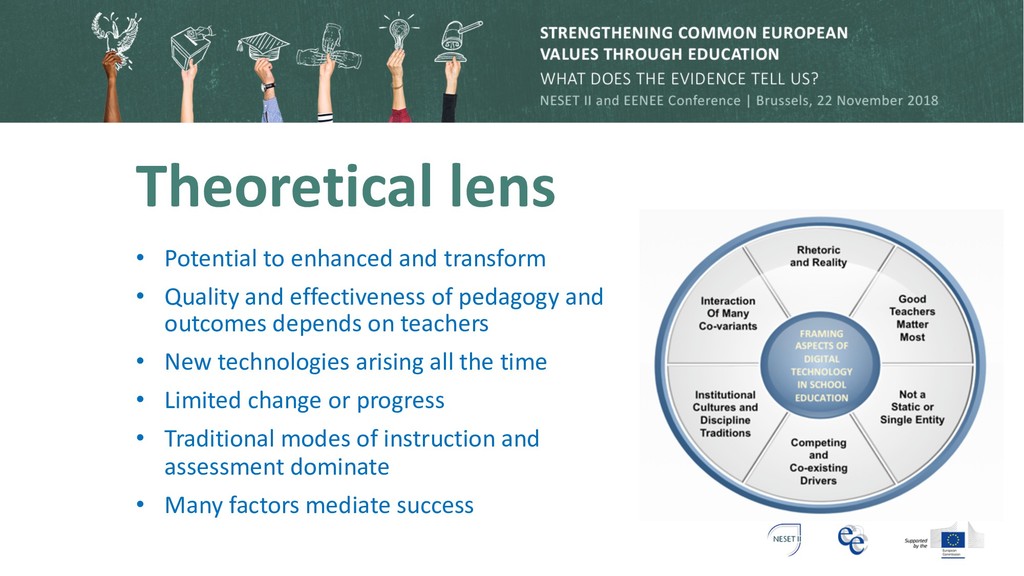
and effectiveness of pedagogy and outcomes depends on teachers • New technologies arising all the time • Limited change or progress • Traditional modes of instruction and assessment dominate • Many factors mediate success
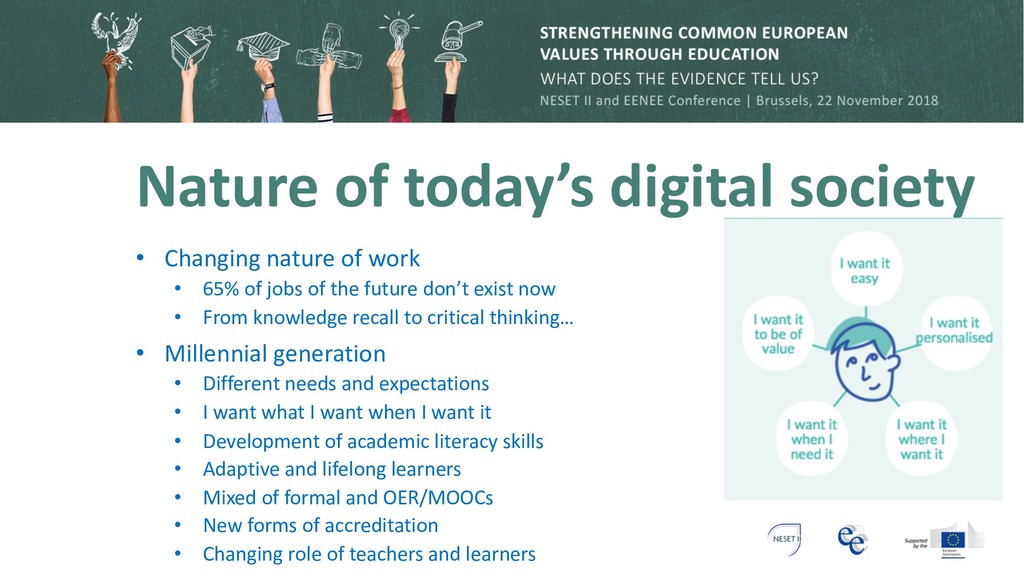
• 65% of jobs of the future don’t exist now • From knowledge recall to critical thinking… • Millennial generation • Different needs and expectations • I want what I want when I want it • Development of academic literacy skills • Adaptive and lifelong learners • Mixed of formal and OER/MOOCs • New forms of accreditation • Changing role of teachers and learners
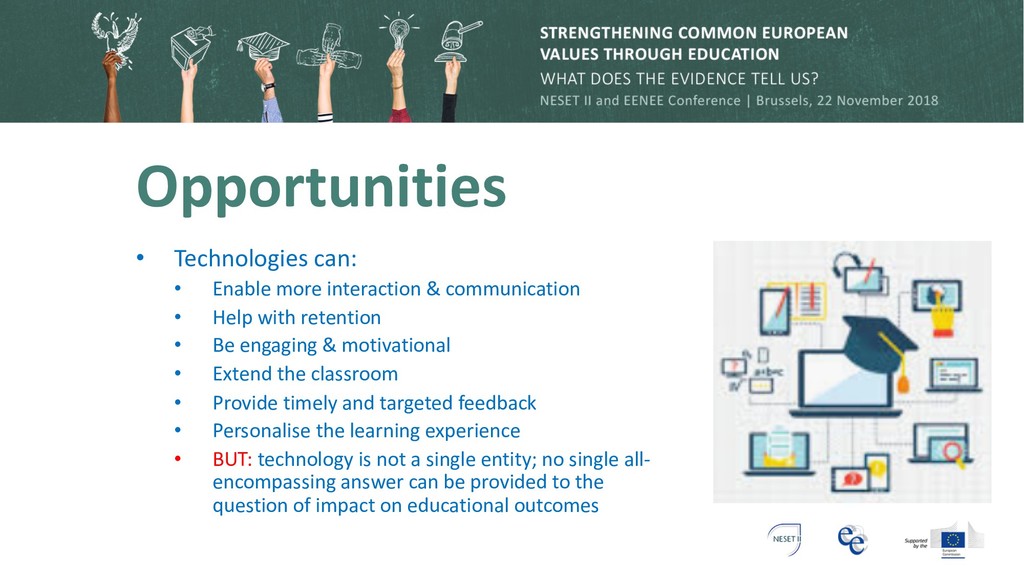
• Help with retention • Be engaging & motivational • Extend the classroom • Provide timely and targeted feedback • Personalise the learning experience • BUT: technology is not a single entity; no single all- encompassing answer can be provided to the question of impact on educational outcomes
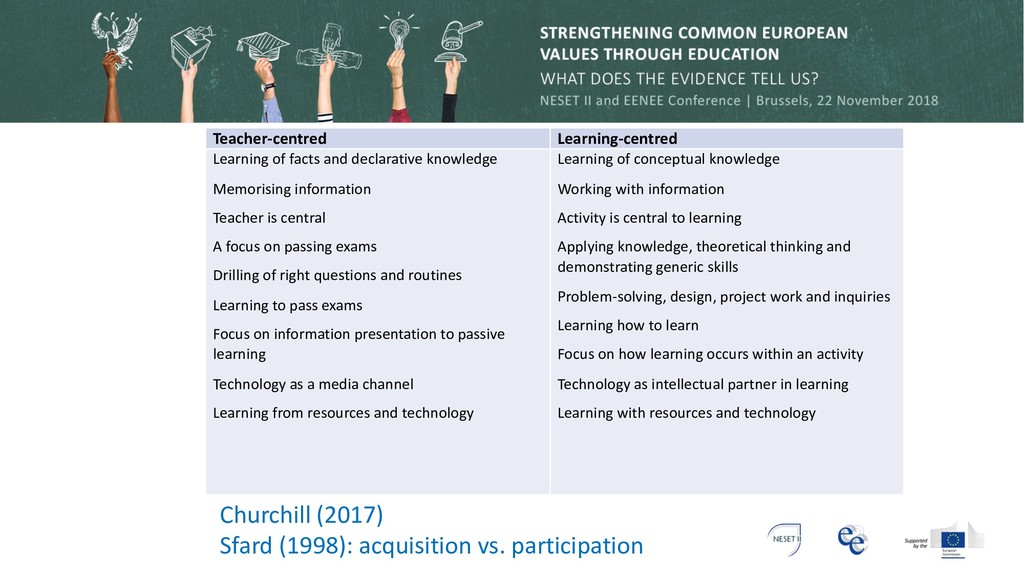
Teacher is central A focus on passing exams Drilling of right questions and routines Learning to pass exams Focus on information presentation to passive learning Technology as a media channel Learning from resources and technology Learning of conceptual knowledge Working with information Activity is central to learning Applying knowledge, theoretical thinking and demonstrating generic skills Problem-solving, design, project work and inquiries Learning how to learn Focus on how learning occurs within an activity Technology as intellectual partner in learning Learning with resources and technology Churchill (2017) Sfard (1998): acquisition vs. participation
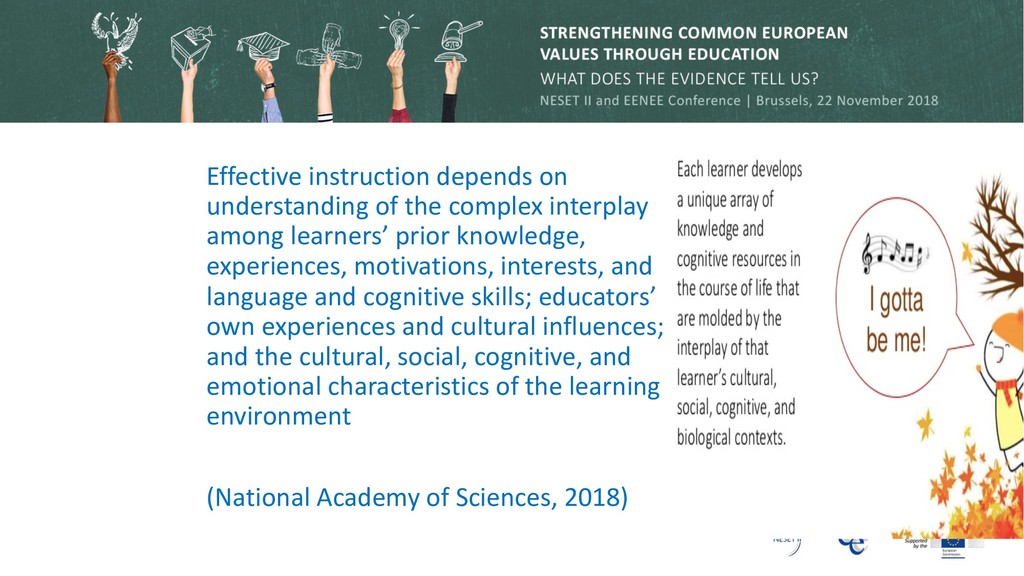
learners’ prior knowledge, experiences, motivations, interests, and language and cognitive skills; educators’ own experiences and cultural influences; and the cultural, social, cognitive, and emotional characteristics of the learning environment (National Academy of Sciences, 2018)
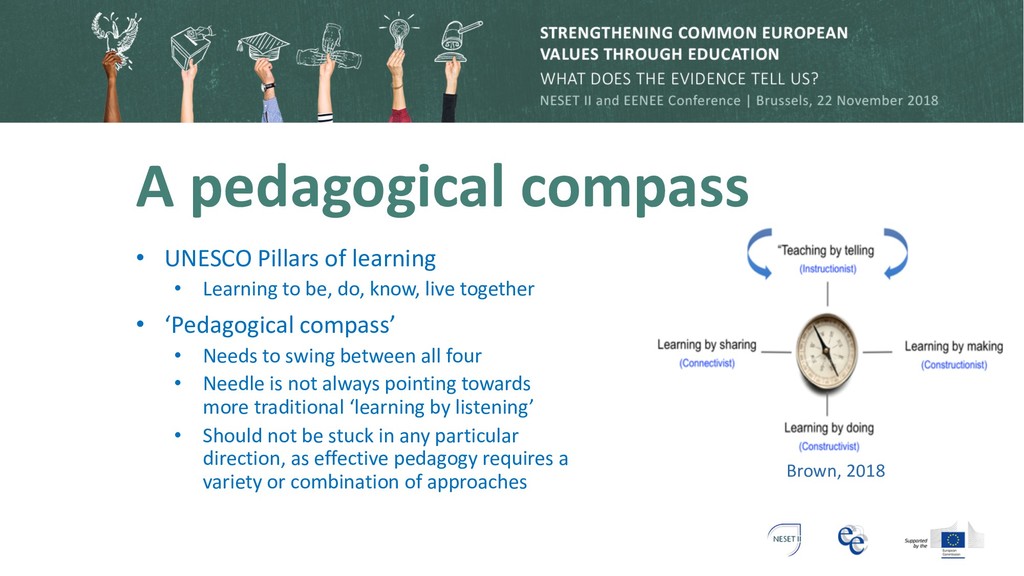
to be, do, know, live together • ‘Pedagogical compass’ • Needs to swing between all four • Needle is not always pointing towards more traditional ‘learning by listening’ • Should not be stuck in any particular direction, as effective pedagogy requires a variety or combination of approaches Brown, 2018
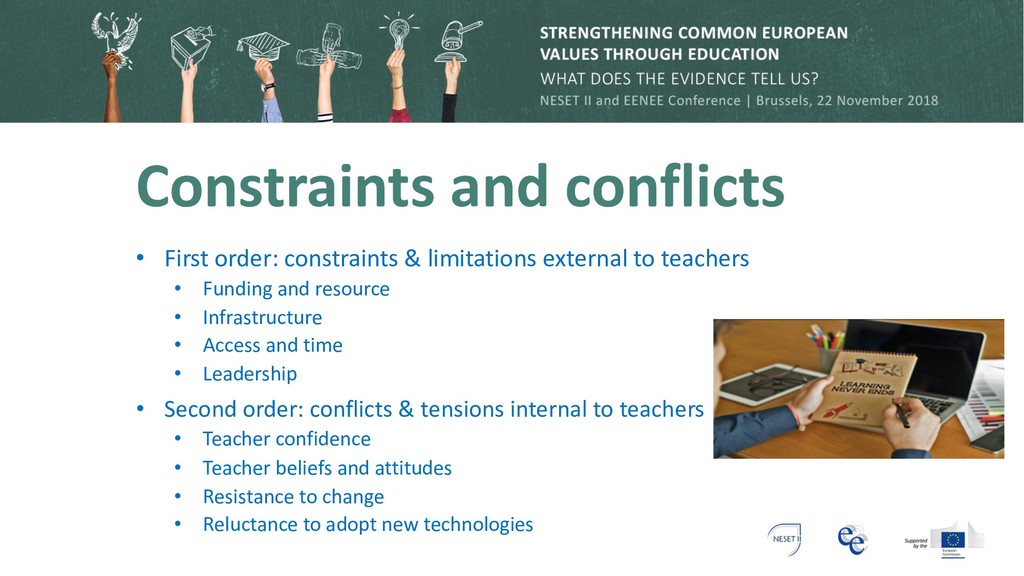
to teachers • Funding and resource • Infrastructure • Access and time • Leadership • Second order: conflicts & tensions internal to teachers • Teacher confidence • Teacher beliefs and attitudes • Resistance to change • Reluctance to adopt new technologies
the teacher • Enable teachers to develop innovative learning interventions • Make effective use of digital technologies • Formats • Specialised and tailored workshops • Peer support and mentoring • Examples of good practice • Share and discuss practice • Resources, OER and MOOCs
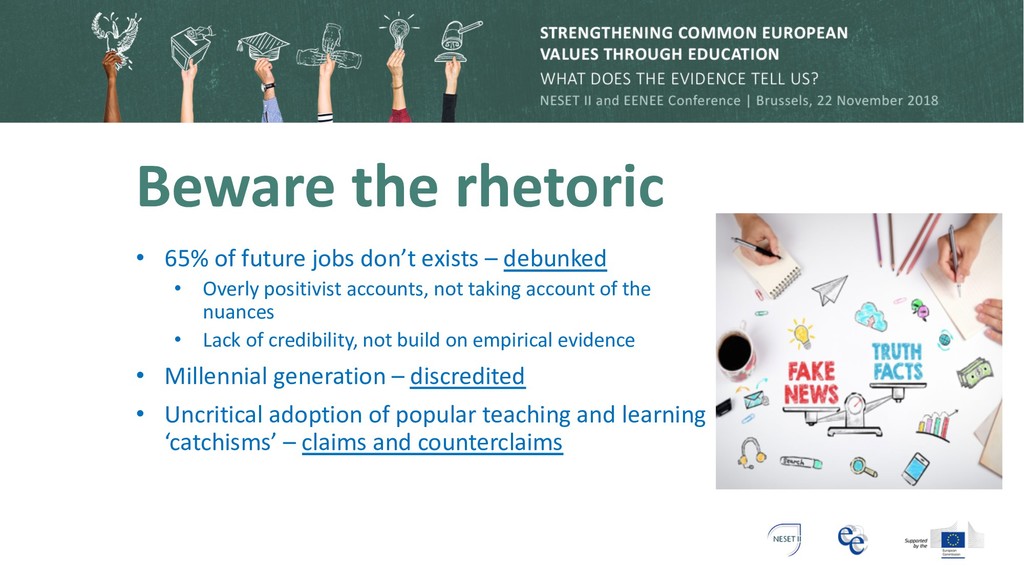
– debunked • Overly positivist accounts, not taking account of the nuances • Lack of credibility, not build on empirical evidence • Millennial generation – discredited • Uncritical adoption of popular teaching and learning ‘catchisms’ – claims and counterclaims
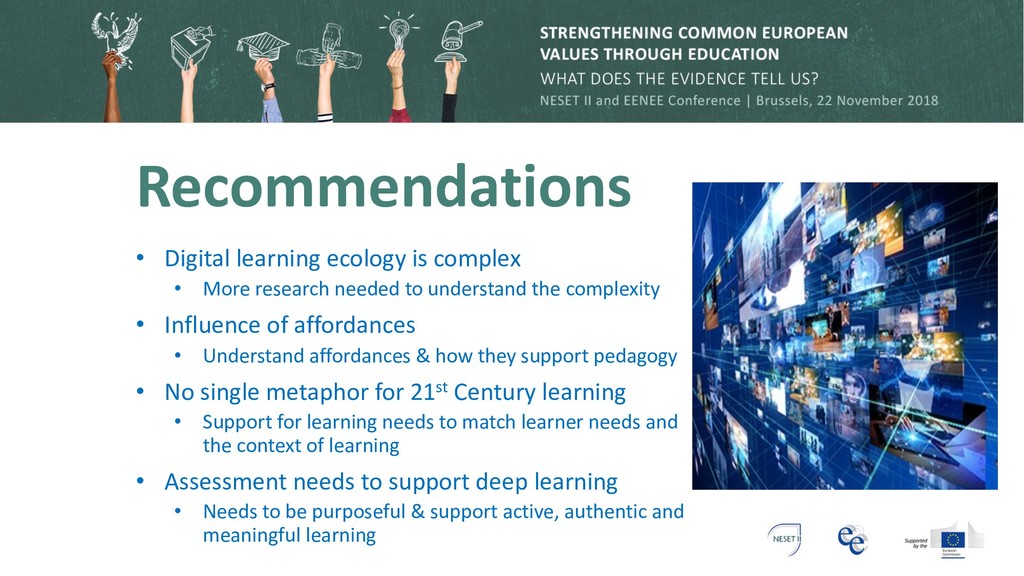
needed to understand the complexity • Influence of affordances • Understand affordances & how they support pedagogy • No single metaphor for 21st Century learning • Support for learning needs to match learner needs and the context of learning • Assessment needs to support deep learning • Needs to be purposeful & support active, authentic and meaningful learning
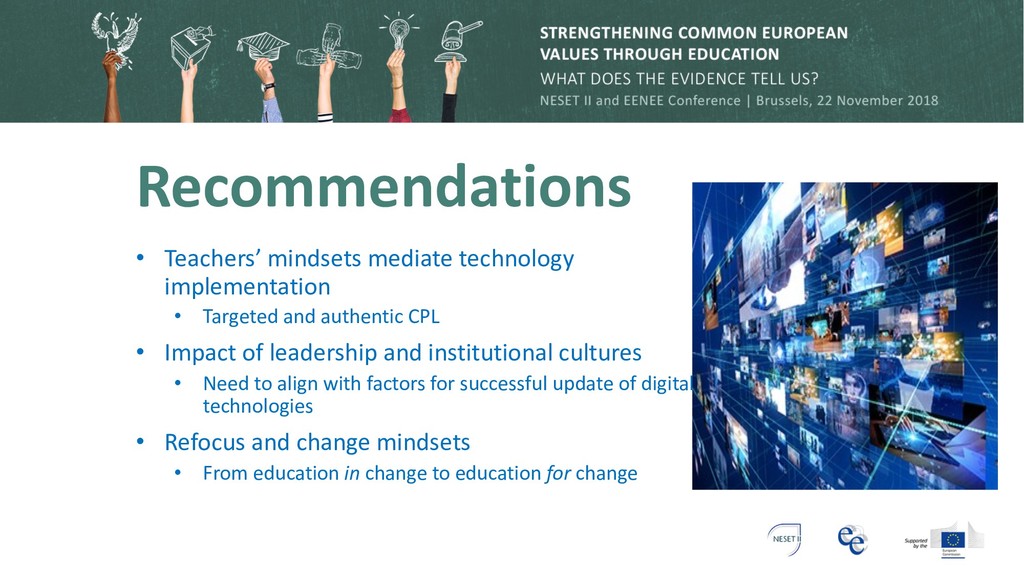
authentic CPL • Impact of leadership and institutional cultures • Need to align with factors for successful update of digital technologies • Refocus and change mindsets • From education in change to education for change


 gconole
 inesmontani
 uxyall
 stephaniewalter
 samtorres
 bermonpainter
 akosma
 michaelherold
 katiecoart
 popppiees
 szymonslowik
 lauravandoore