Share
Embed
Transcript
27 slides
-
Purpose −To use the augmented 7Cs of Learning Design framework
to design or re-design modules −To reflect on the framework and what works and what doesn’t −To make suggestions on improvements Image source -
Learning Design • A pedagogically informed approach to design that
makes appropriate use of technologies -
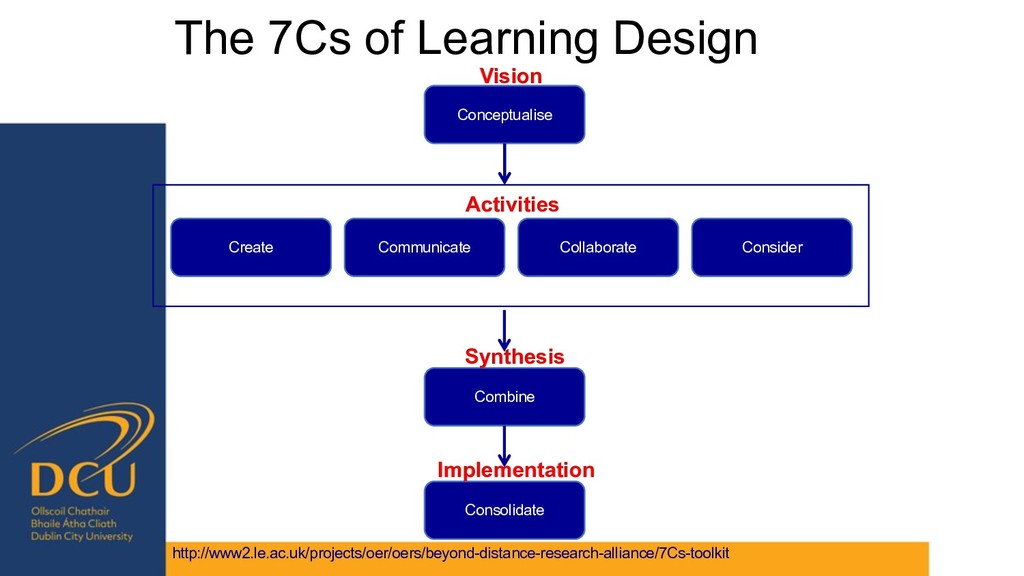
The 7Cs of Learning Design Conceptualise Vision Communicate Create Consider
Collaborate Activities Combine Synthesis Consolidate Implementation http://www2.le.ac.uk/projects/oer/oers/beyond-distance-research-alliance/7Cs-toolkit -
A1: How to ruin a course −List the ten ways
in which technologies can ruin a course −Consider strategies to avoid these issues Purpose: To consider the ways in which technologies can ruin a course and creation of strategies to avoid these problems http://tinyurl.com/m3x32se -
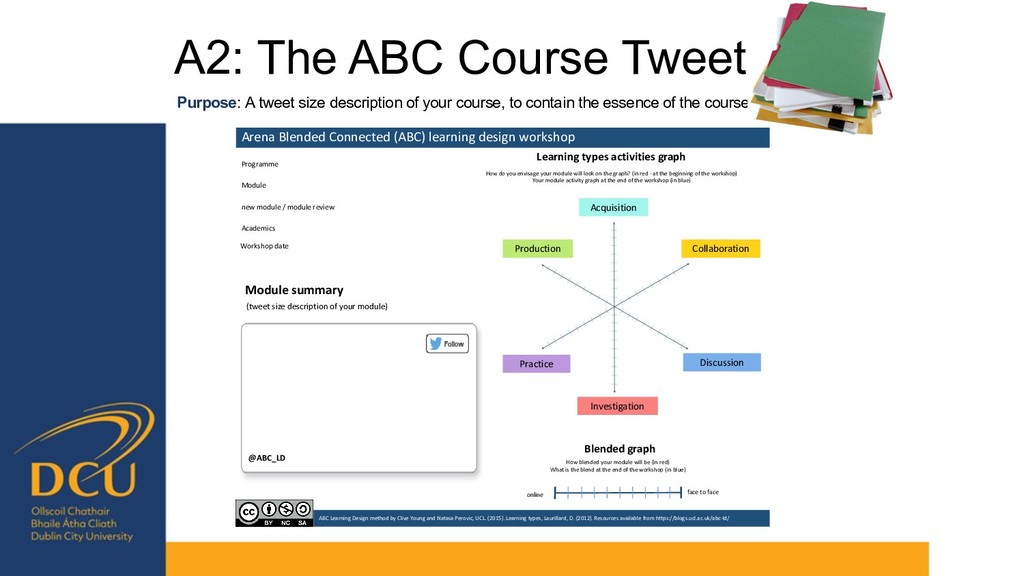
A2: The ABC Course Tweet Purpose: A tweet size description
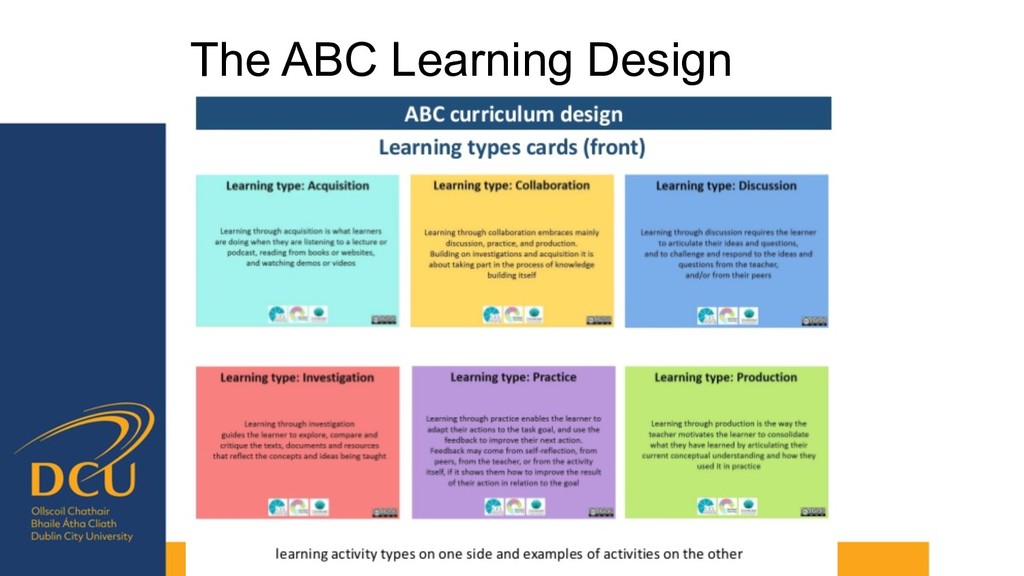
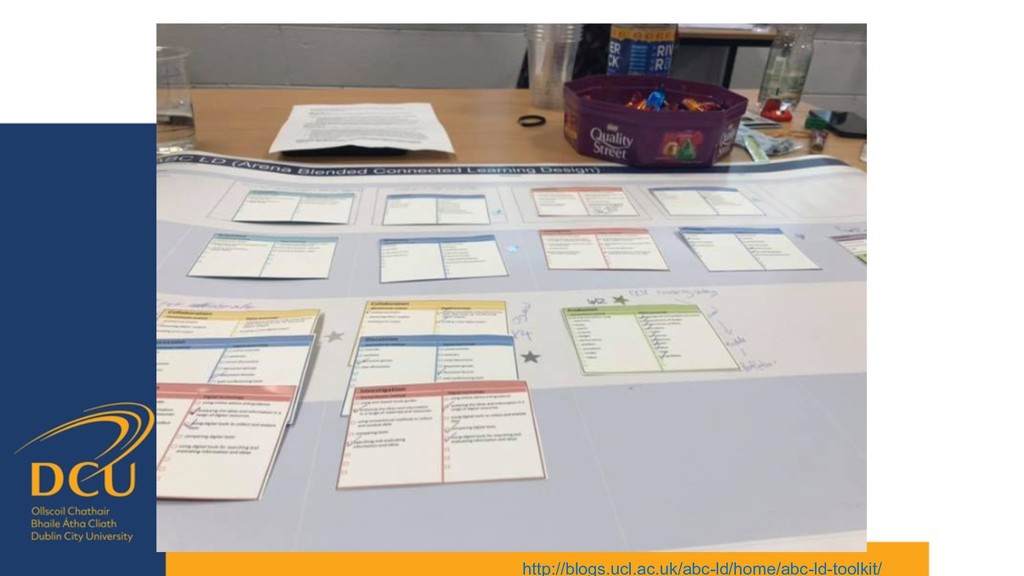
of your course, to contain the essence of the course Arena Blended Connected (ABC) learning design workshop ABC Learning Design method by Clive Young and Natasa Perovic, UCL. (2015). Learning types, Laurillard, D. (2012). Resources available from https://blogs.ucl.ac.uk/abc-ld// Programme Module new module / module review Academics (tweet size description of your module) Workshop date How do you envisage your module will look on the graph? (in red - at the beginning of the workshop) Your module activity graph at the end of the workshop (in blue) Learning types activities graph How blended your module will be (in red) What is the blend at the end of the workshop (in blue) face to face online Blended graph Acquisition Investigation Production Practice Discussion Collaboration @ABC_LD Module summary -
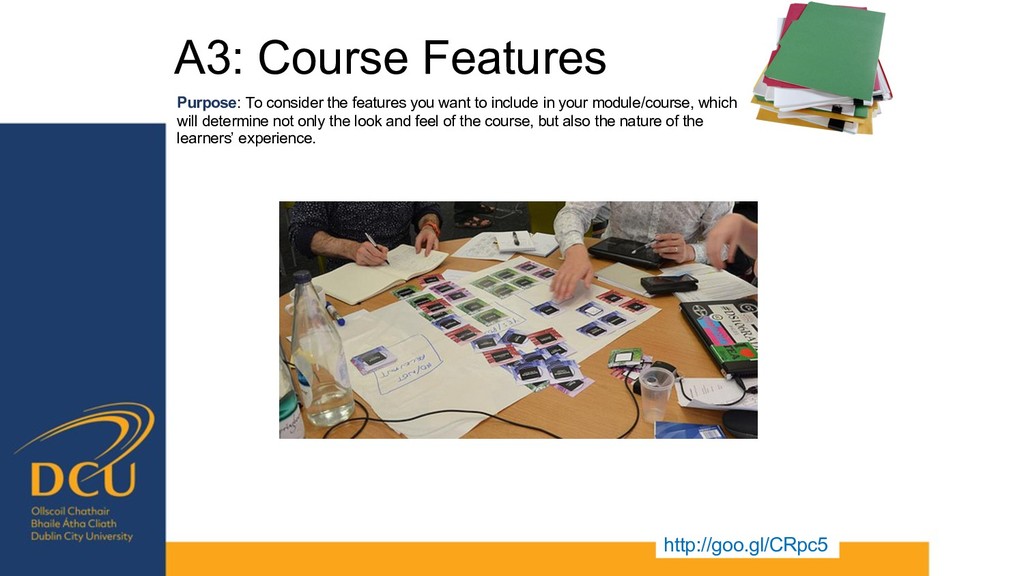
A3: Course Features http://goo.gl/CRpc5 Purpose: To consider the features you
want to include in your module/course, which will determine not only the look and feel of the course, but also the nature of the learners’ experience. -
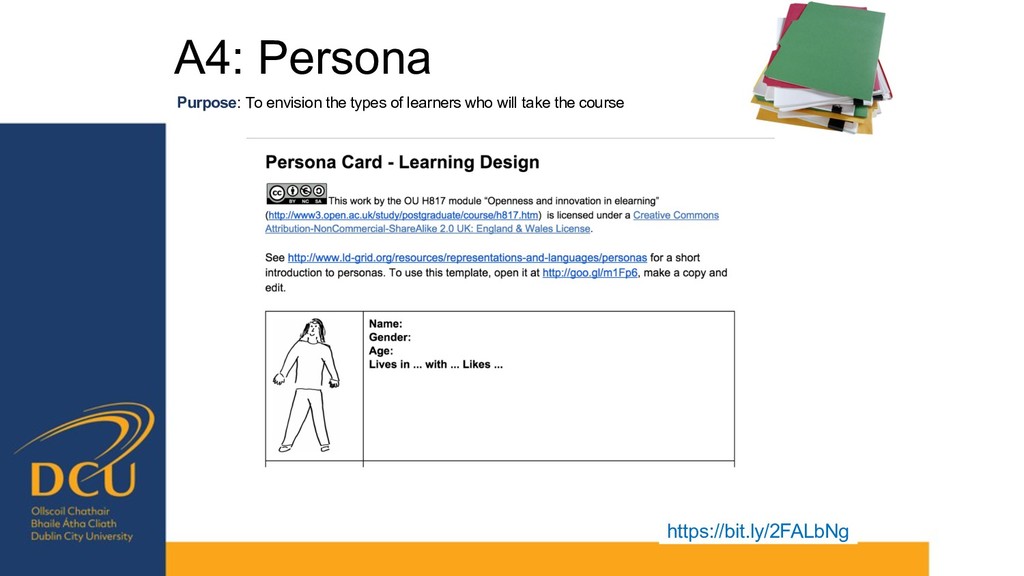
A4: Persona https://bit.ly/2FALbNg Purpose: To envision the types of learners
who will take the course -
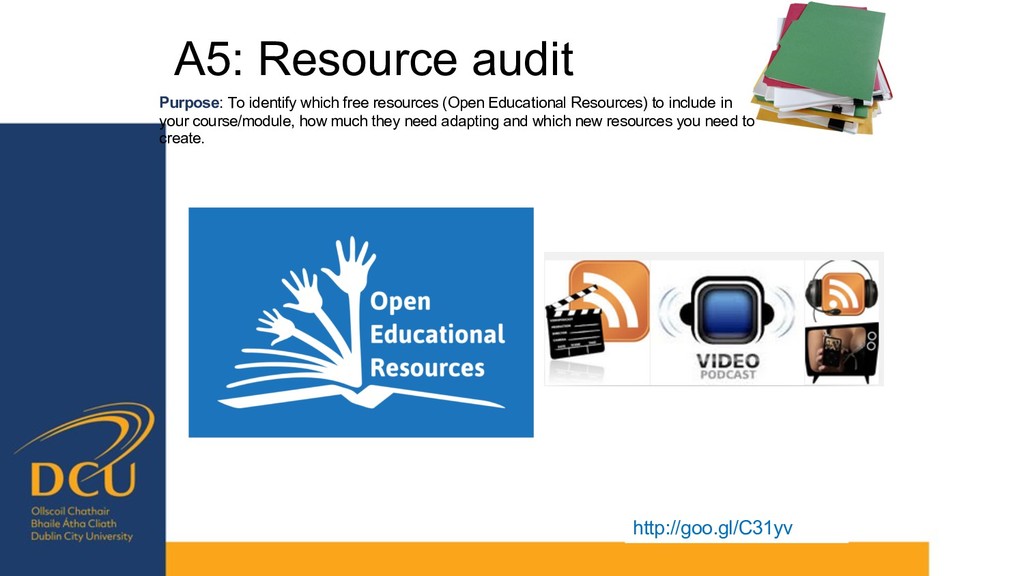
A5: Resource audit http://goo.gl/C31yv Purpose: To identify which free resources
(Open Educational Resources) to include in your course/module, how much they need adapting and which new resources you need to create. -
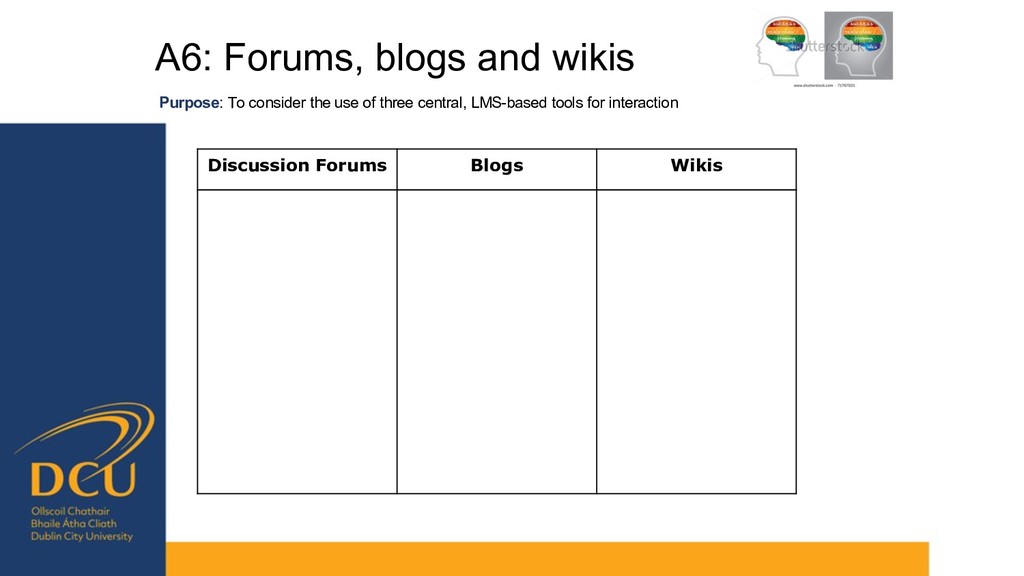
A6: Forums, blogs and wikis Purpose: To consider the use
of three central, LMS-based tools for interaction Discussion Forums Blogs Wikis -
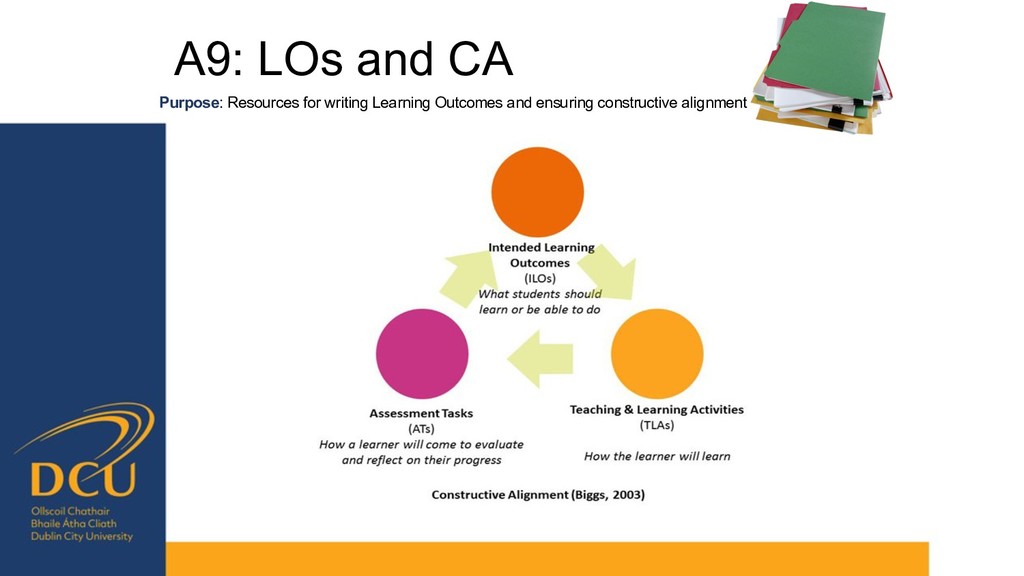
A9: LOs and CA Purpose: Resources for writing Learning Outcomes
and ensuring constructive alignment -
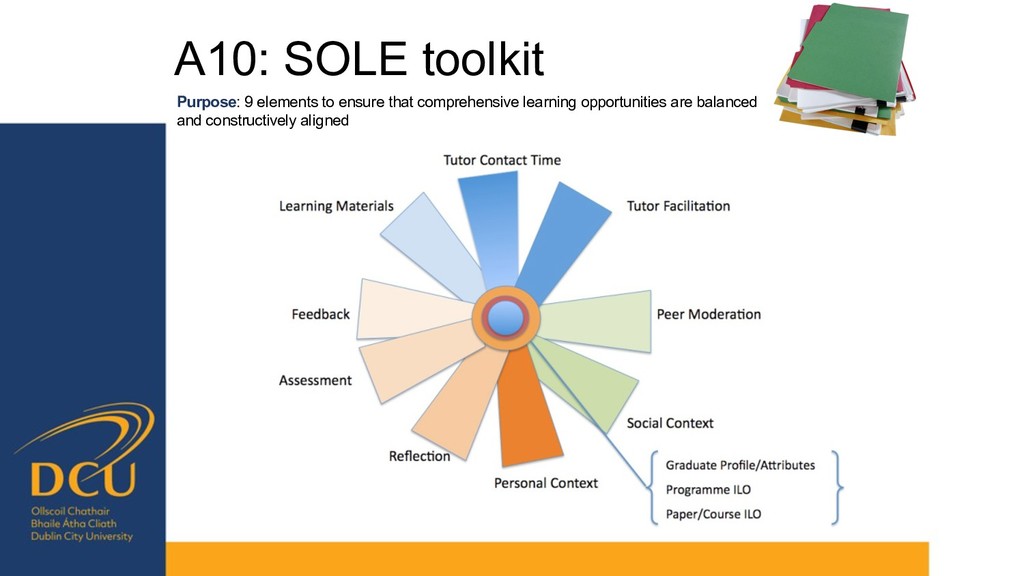
A10: SOLE toolkit Purpose: 9 elements to ensure that comprehensive
learning opportunities are balanced and constructively aligned -
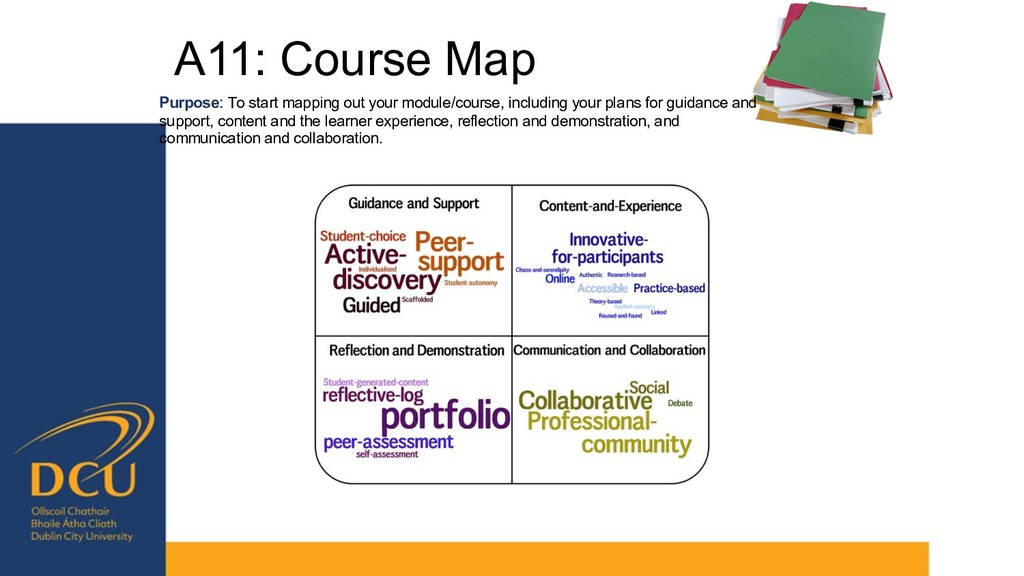
A11: Course Map Purpose: To start mapping out your module/course,
including your plans for guidance and support, content and the learner experience, reflection and demonstration, and communication and collaboration. -
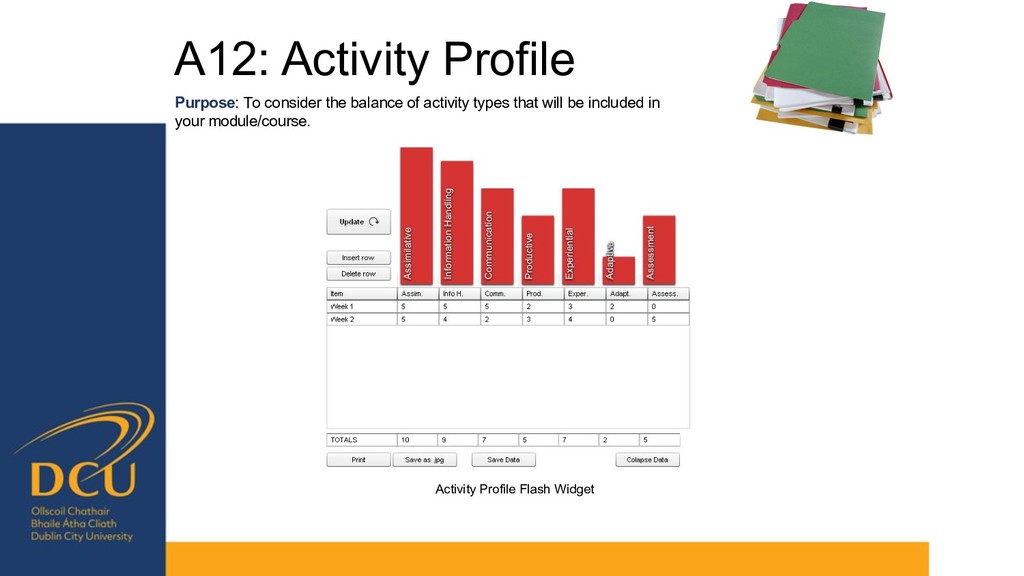
A12: Activity Profile Purpose: To consider the balance of activity
types that will be included in your module/course. Activity Profile Flash Widget -
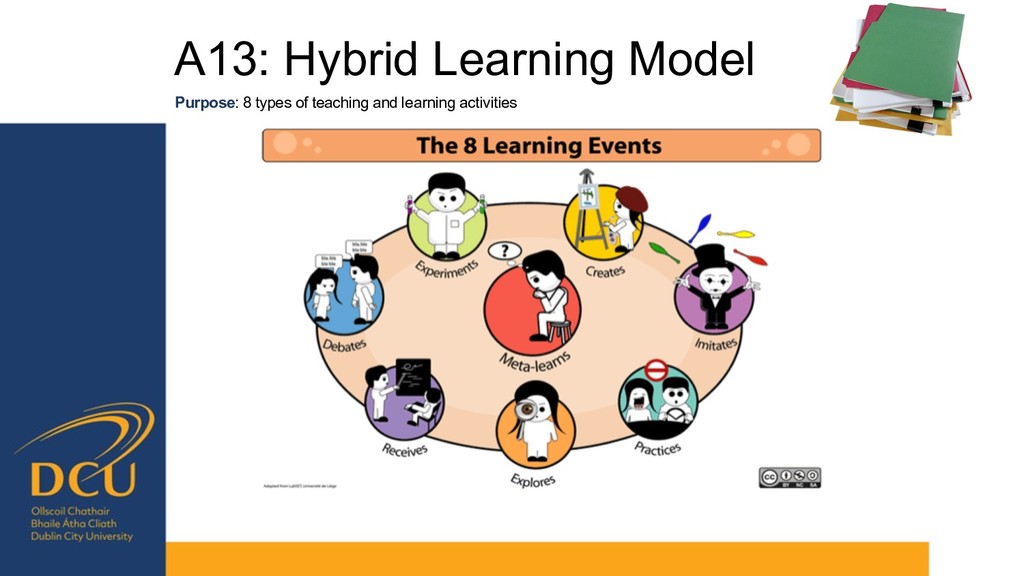
A13: Hybrid Learning Model Purpose: 8 types of teaching and
learning activities -
A13: Hybrid Learning Model Purpose: 8 types of teaching and
learning activities -
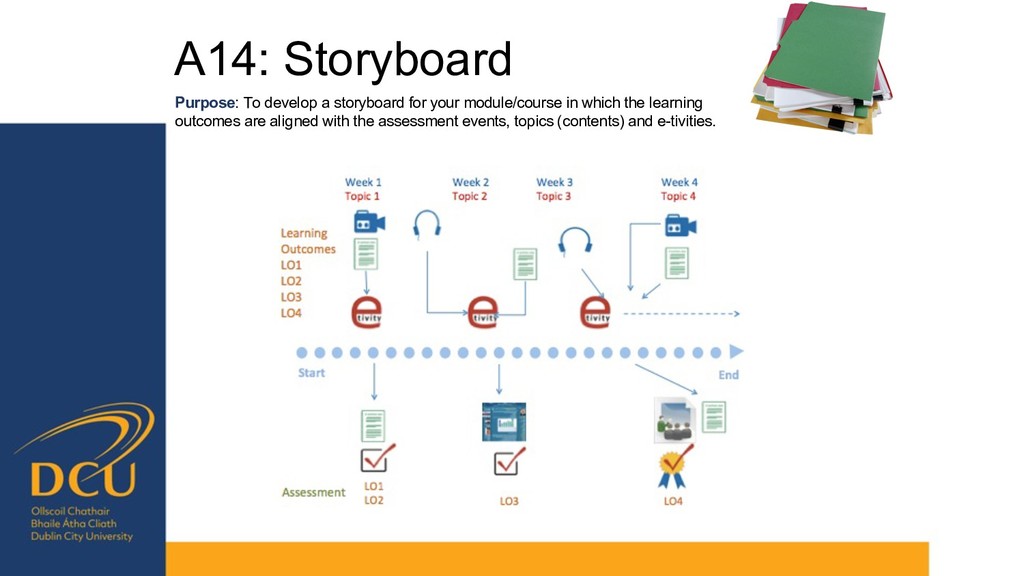
A14: Storyboard Purpose: To develop a storyboard for your module/course
in which the learning outcomes are aligned with the assessment events, topics (contents) and e-tivities. -
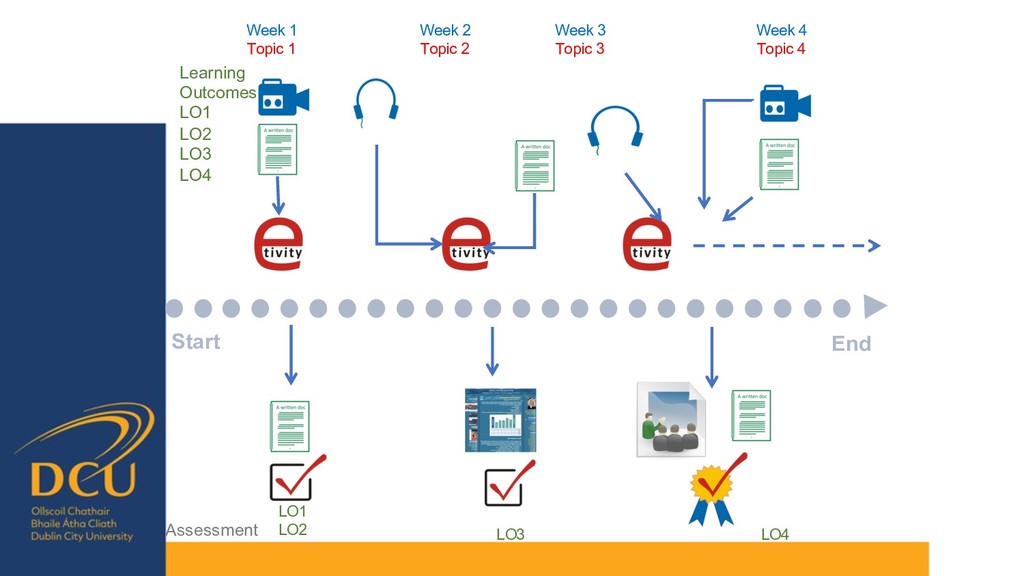
Start End Learning Outcomes LO1 LO2 LO3 LO4 Assessment LO1
LO2 LO3 LO4 Week 1 Topic 1 Week 2 Topic 2 Week 3 Topic 3 Week 4 Topic 4 -
A15: Rubrics for evaluation Purpose: To devise a set of
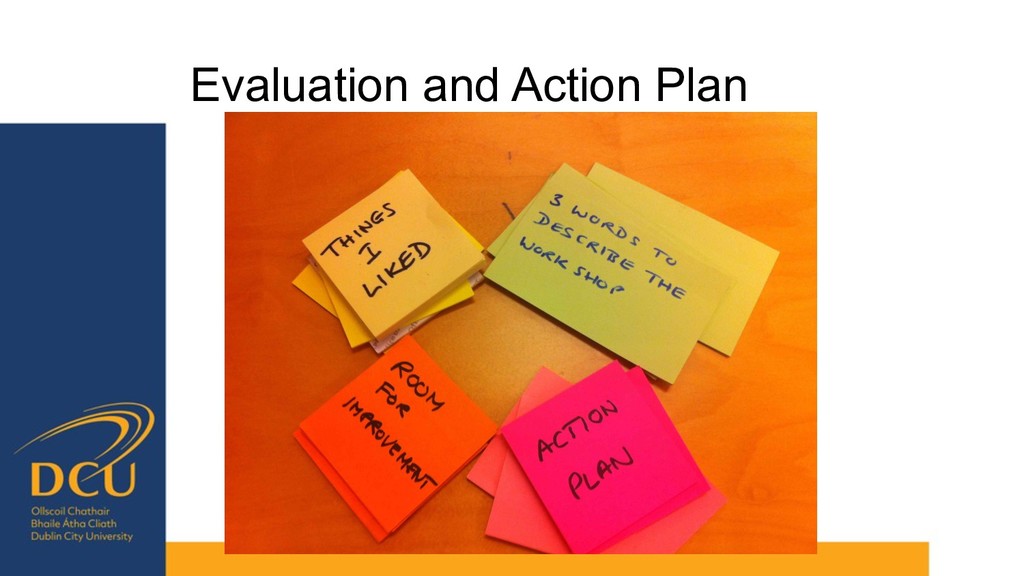
criteria for evaluating the success of the design in a real learning context −Brainstorming some criteria to evaluate the success of the design in a real learning context −Try and focus on measurable/observable things −Think about what data collection you might use – classroom observation, surveys, interviews, use of post its (Things I liked, room for improvement, etc.) −Use the LTDI Evaluation Cookbook to get ideas −http://www.icbl.hw.ac.uk/ltdi/cookbook/