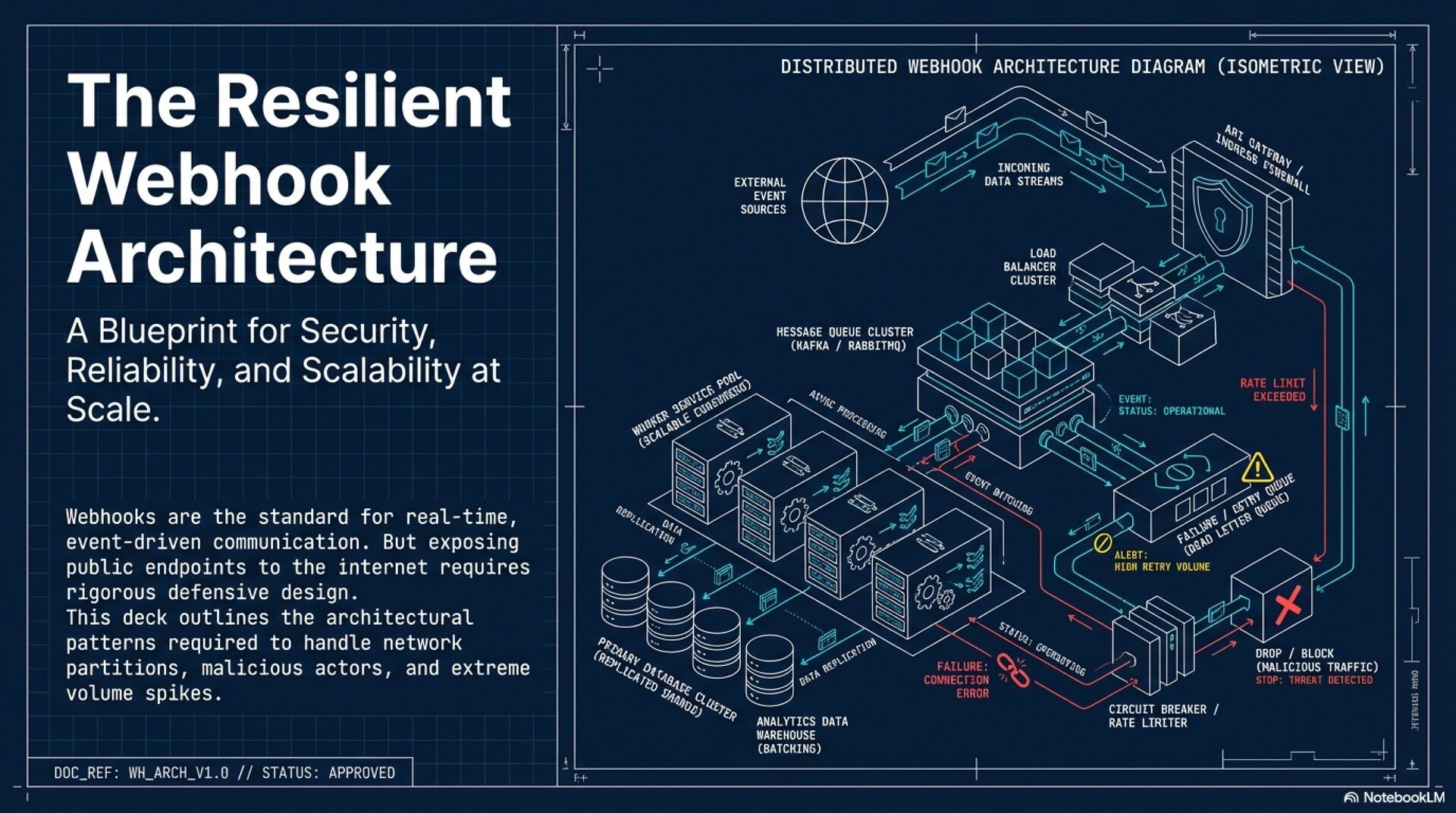
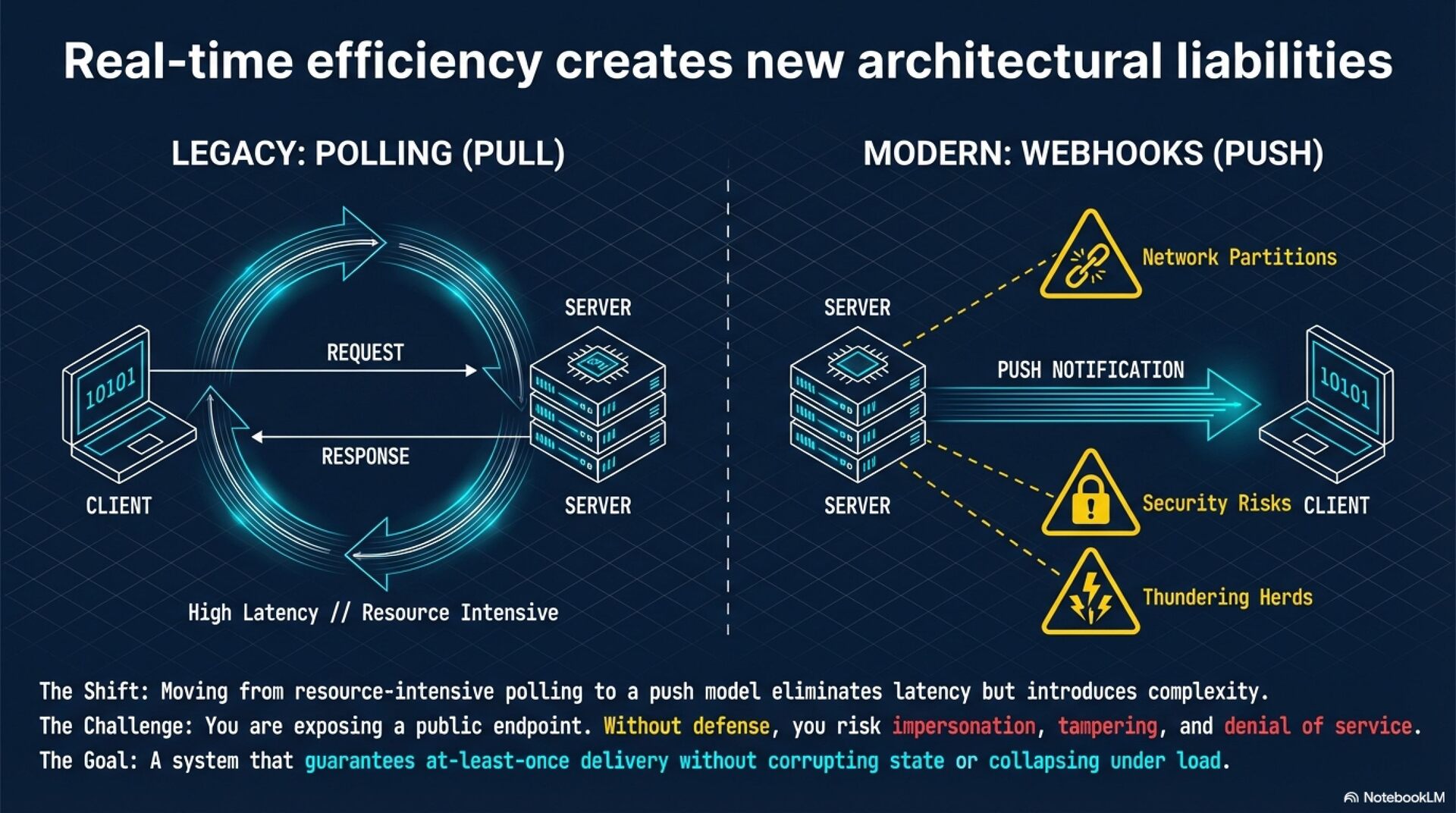
Webhooks facilitate real-time, event-driven communication between systems but require a defensive architecture to ensure security, reliability, and scalability. Unlike polling, webhooks utilize a "push" model, necessitating robust handling of network partitions, malicious activity, and traffic spikes.
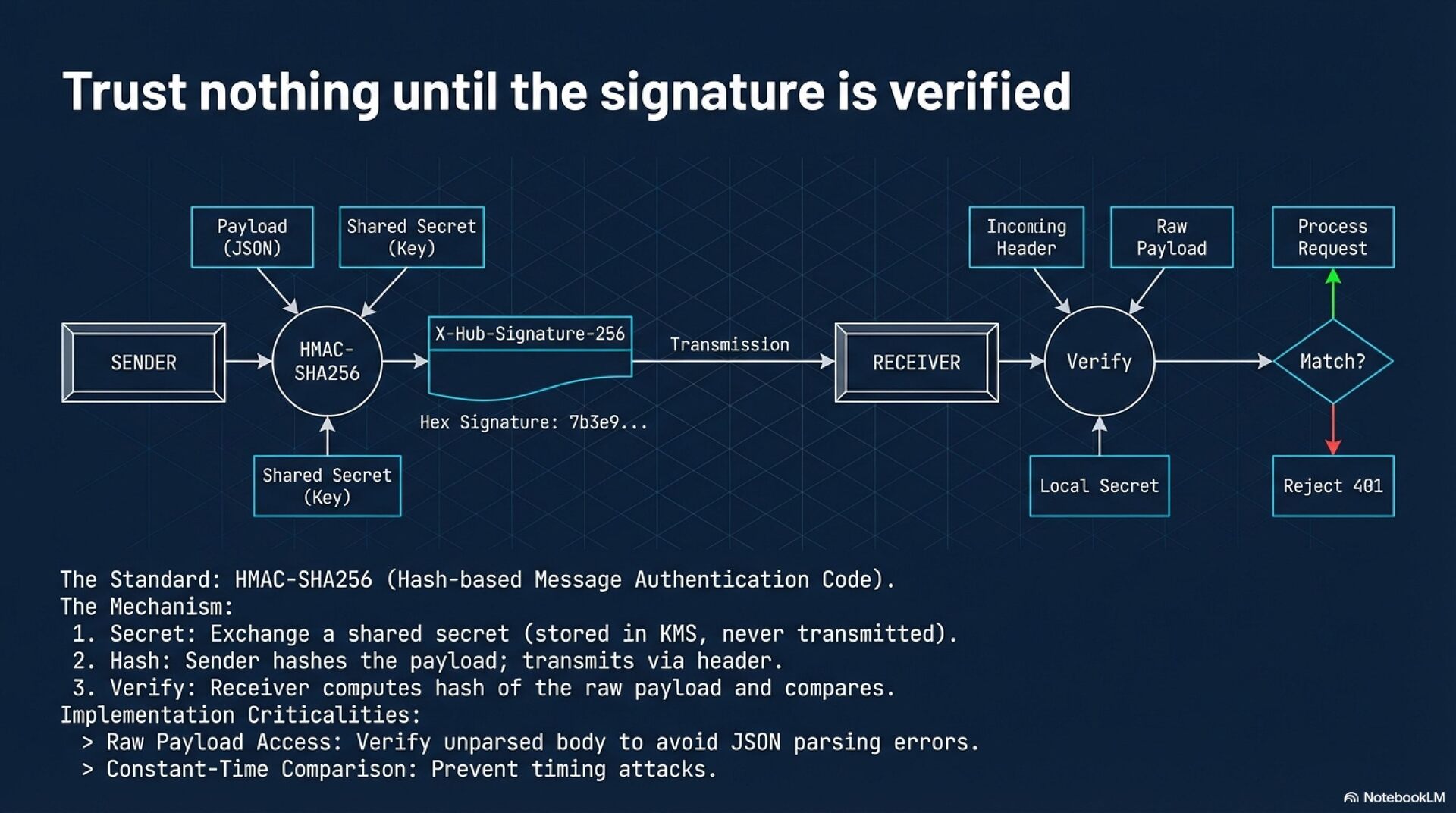
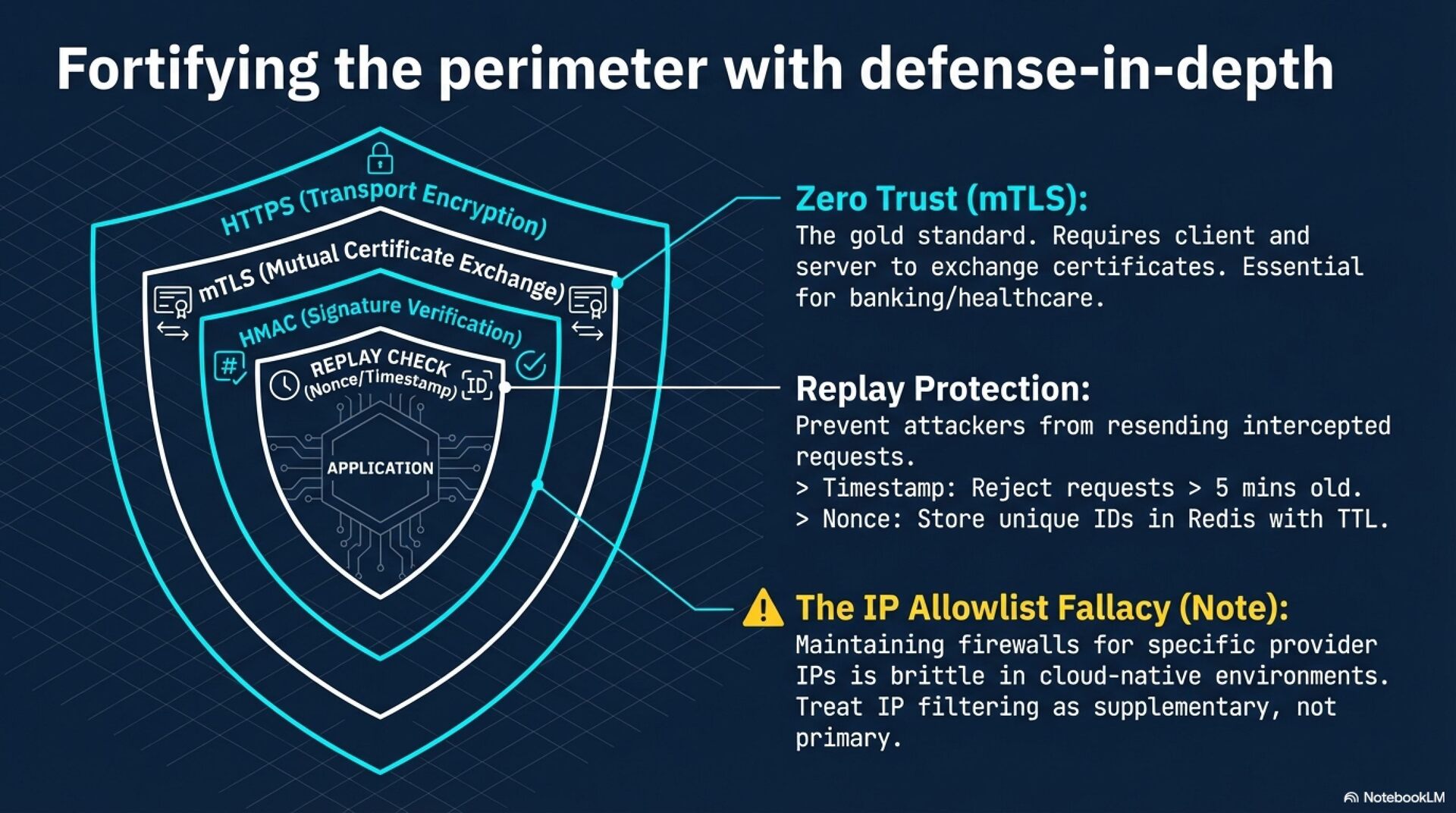
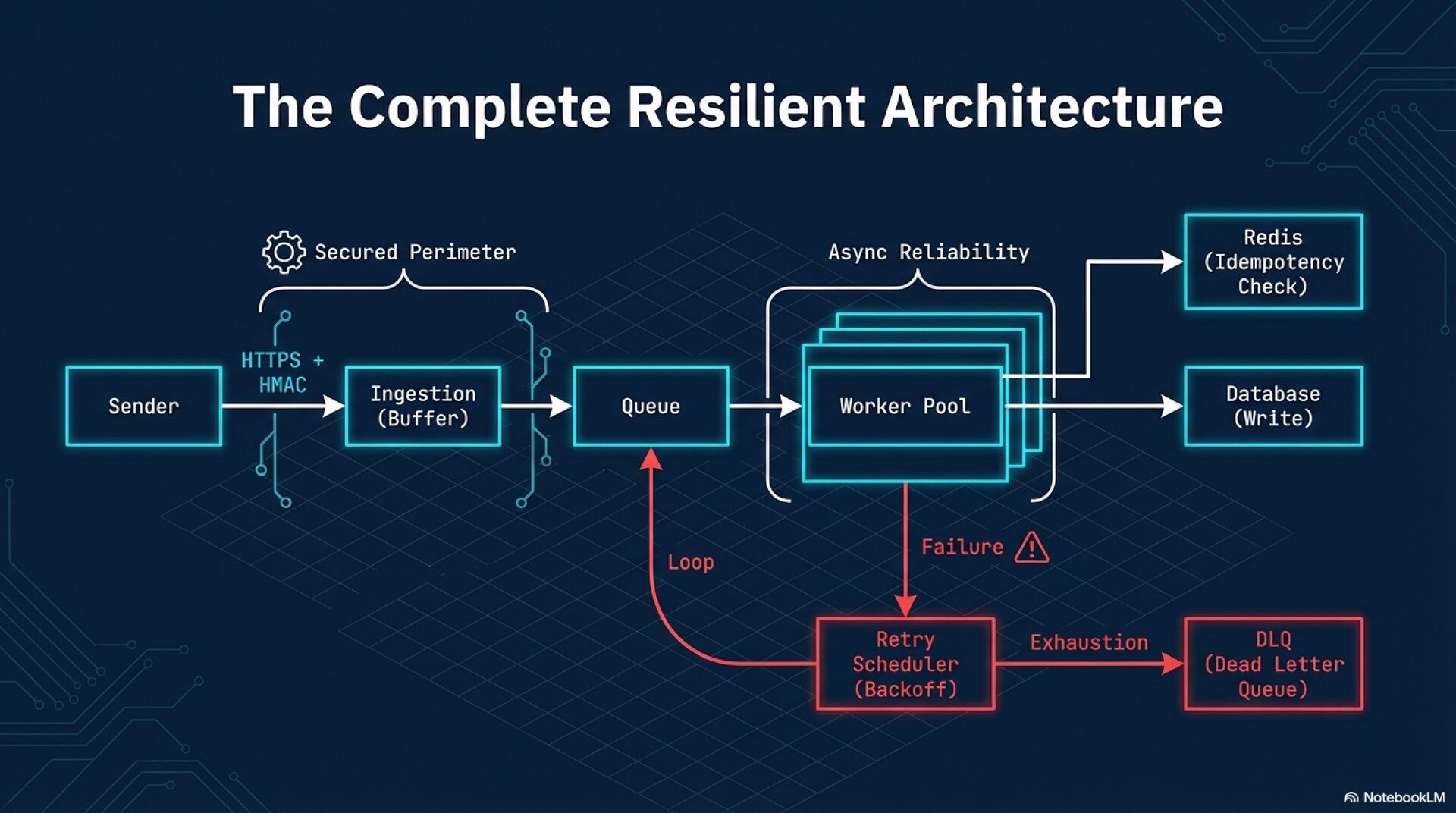
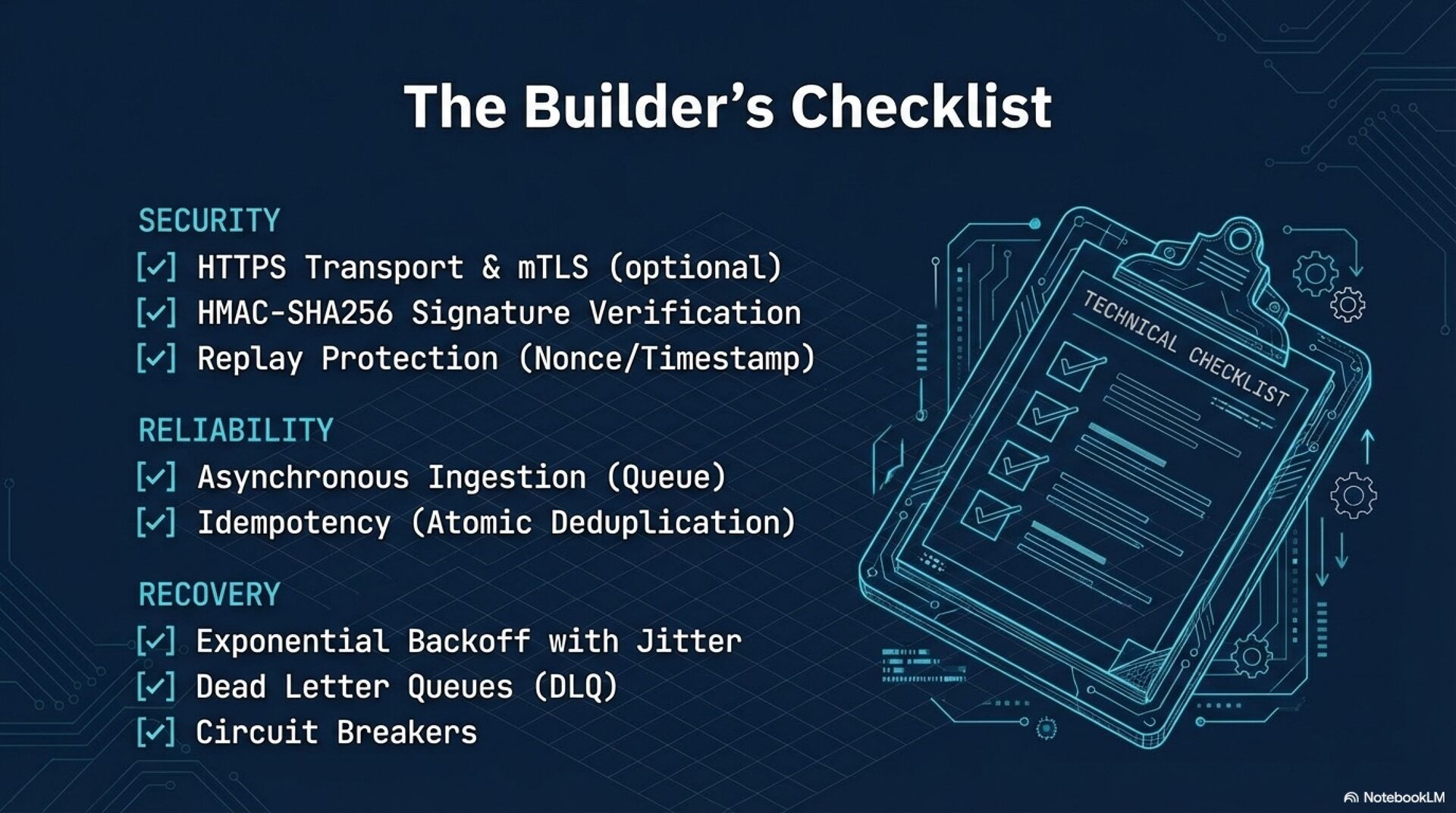
Security and Authentication Security implementation must go beyond obscured URLs. The industry standard involves HMAC-SHA256 signature verification to ensure payload integrity and authenticity. Critical implementation details include using constant-time string comparisons to prevent timing attacks and validating raw, unparsed payloads. To prevent replay attacks, systems should enforce timestamp tolerance windows and utilize nonces. While Mutual TLS (mTLS) offers a higher security standard for zero-trust environments, it introduces significant complexity compared to signatures and IP allowlisting.
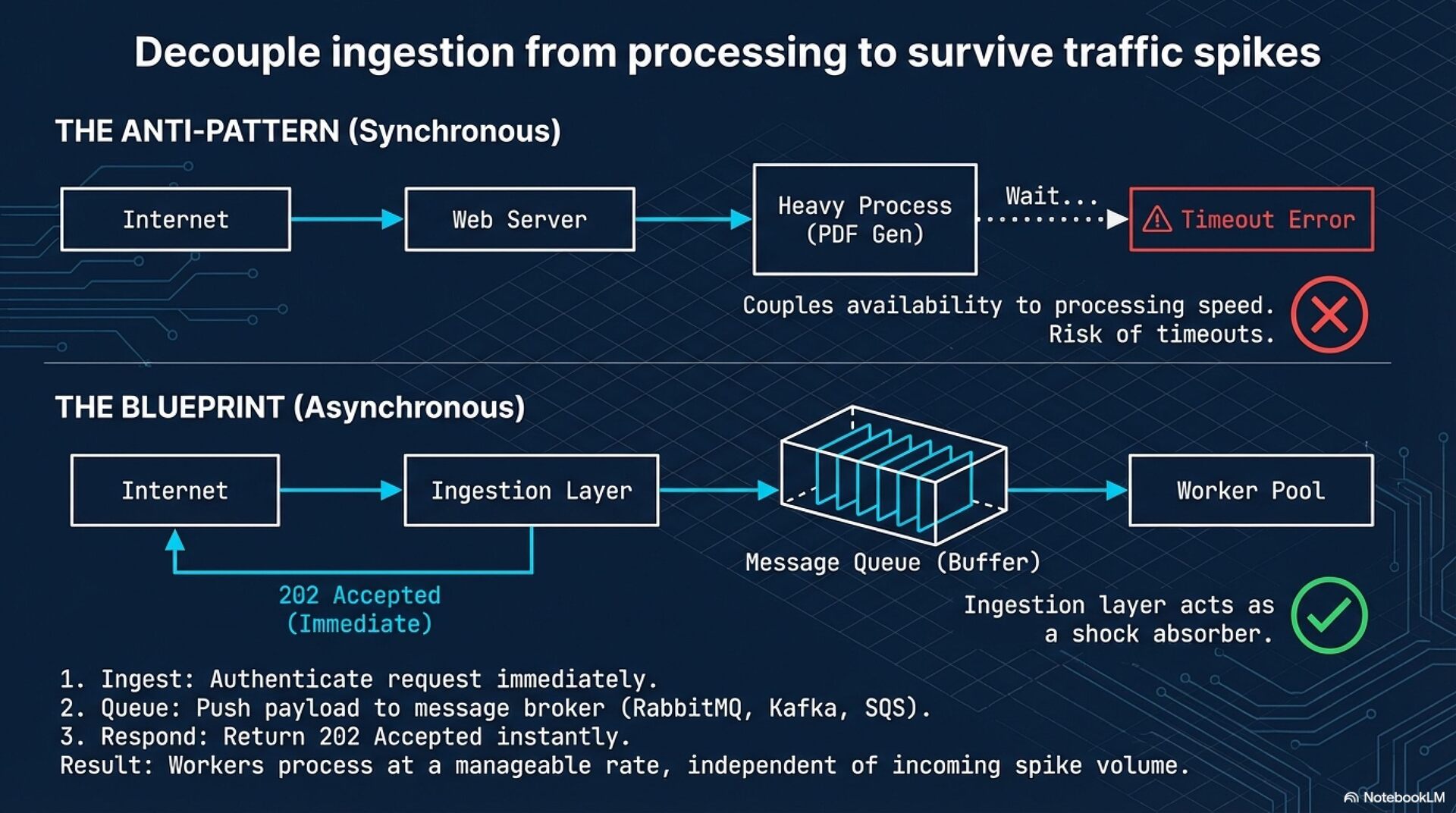
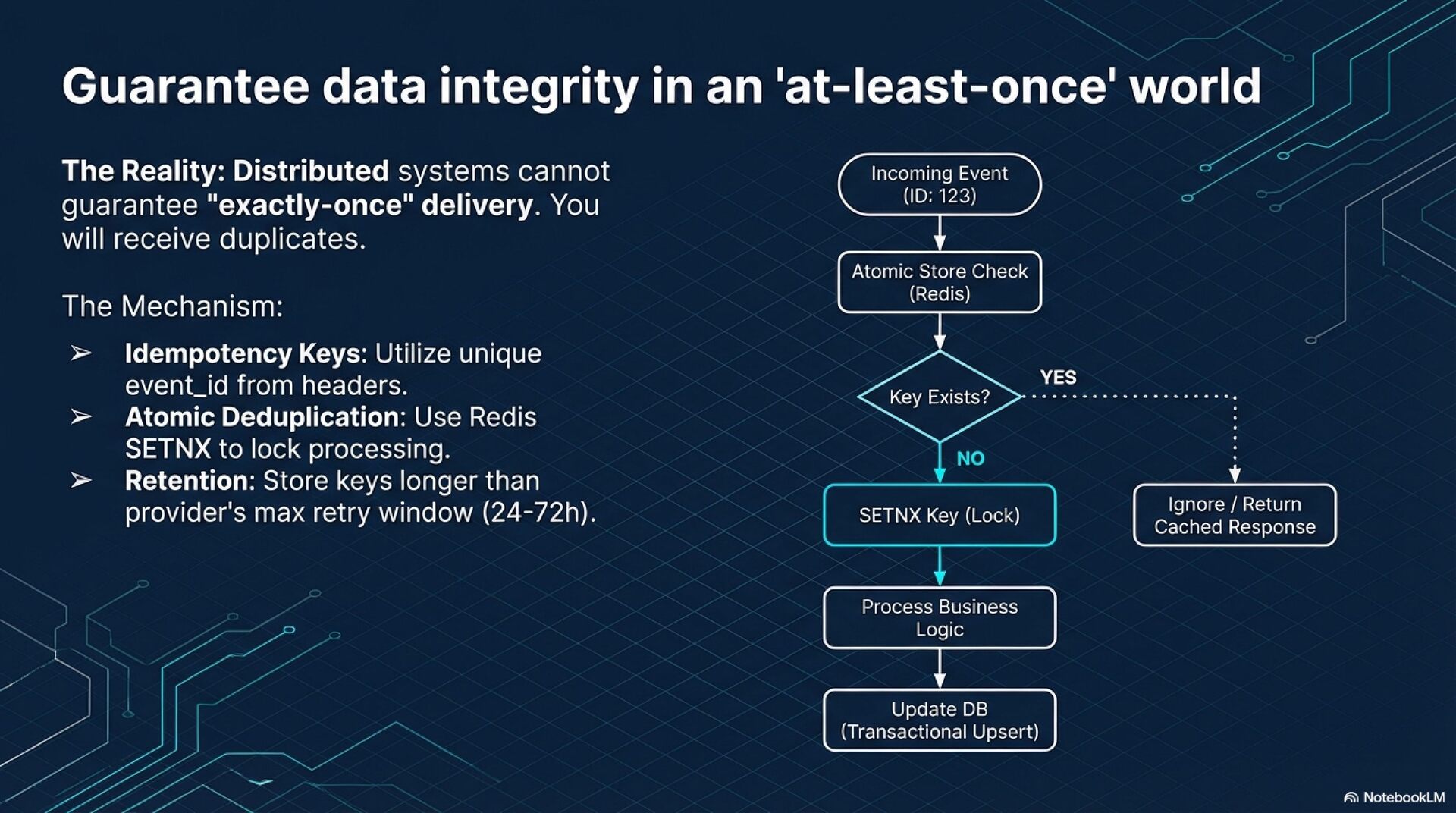
Reliability and Architecture Because webhooks typically guarantee "at-least-once" delivery, receivers must implement idempotency using unique event keys and atomic storage to prevent duplicate processing from corrupting data. To handle high throughput and avoid timeouts, architectures should be asynchronous: an ingestion layer should immediately acknowledge requests (returning 202 Accepted) and offload the payload to a message queue for background processing by workers.
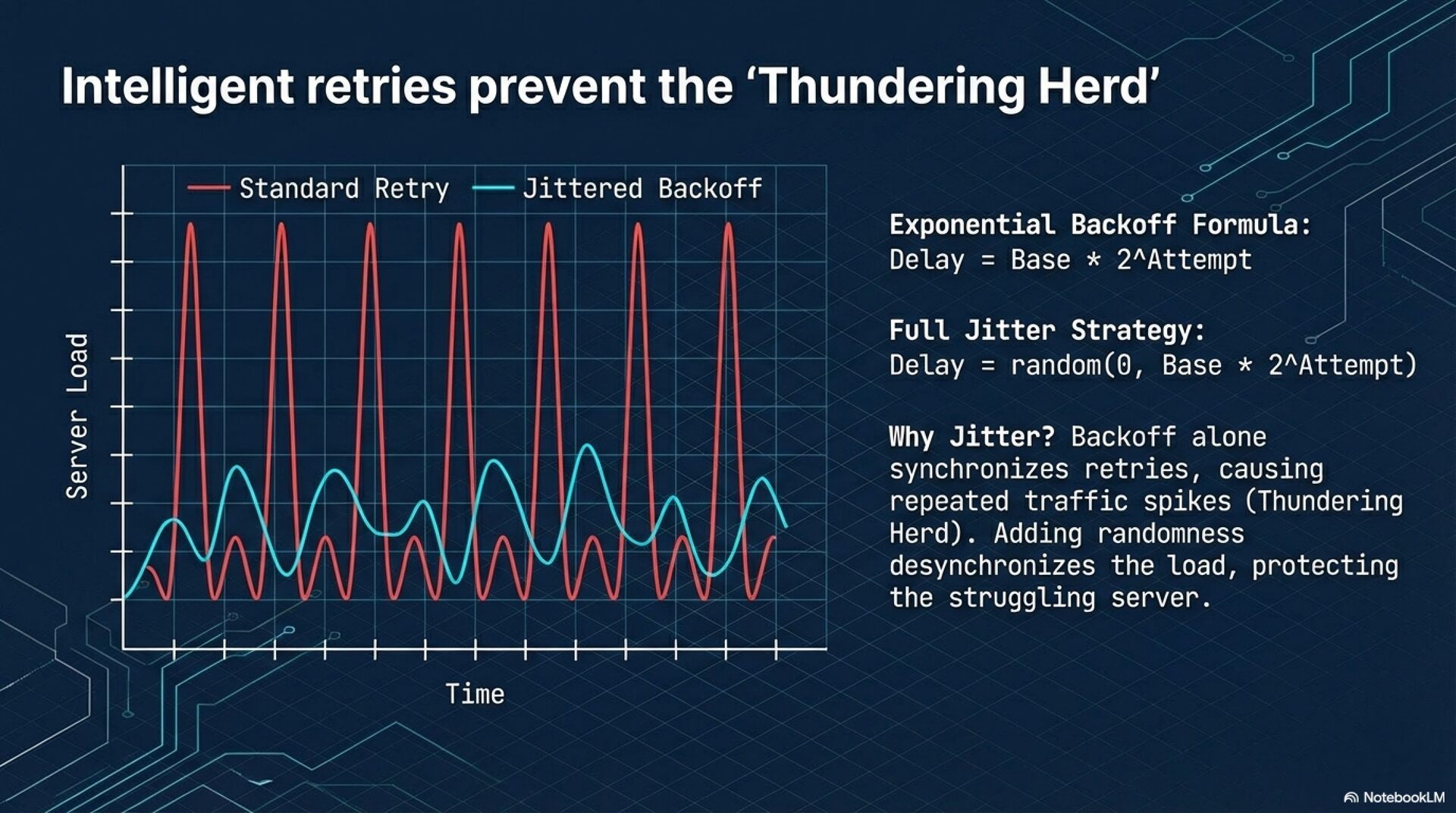
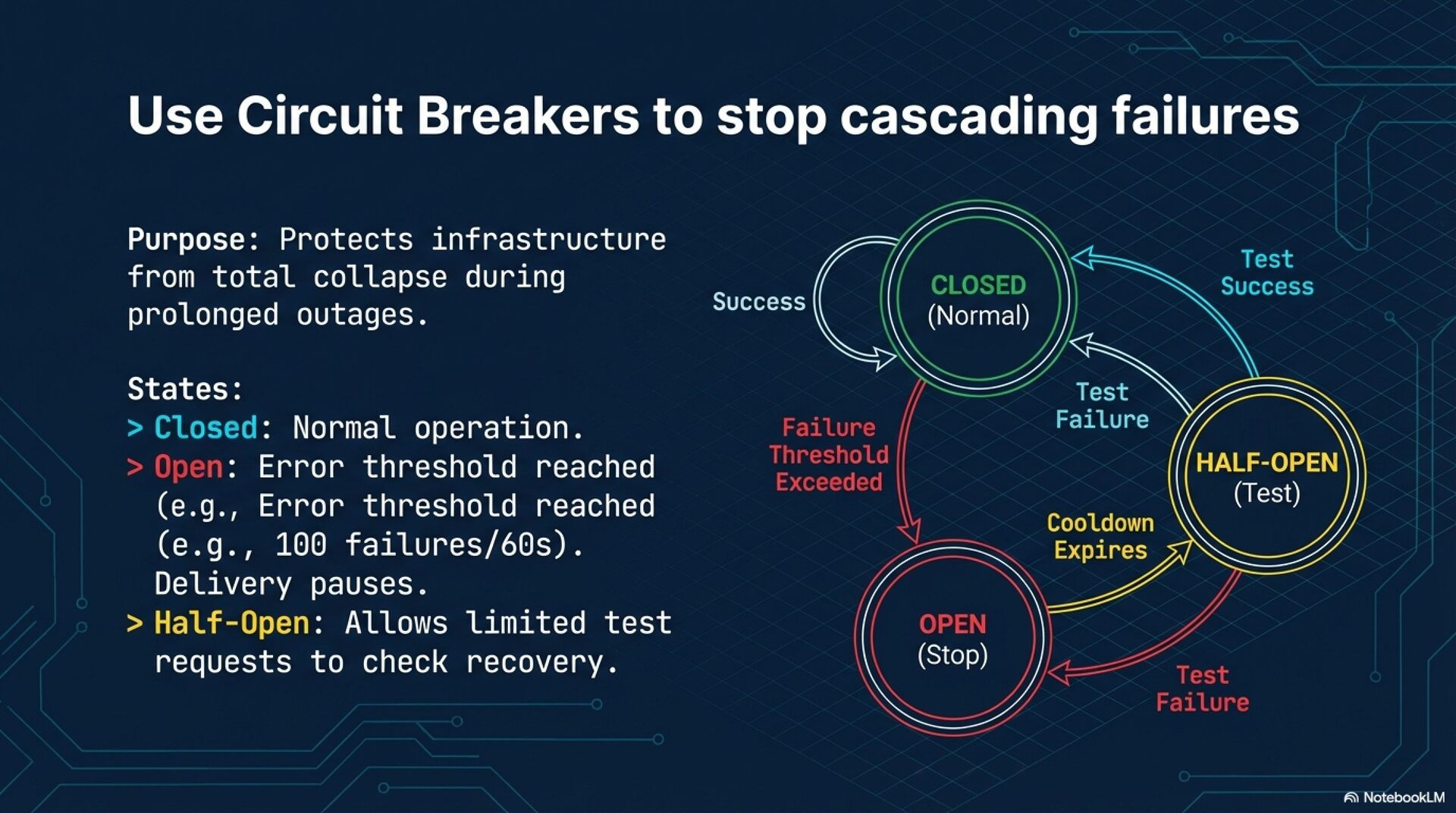
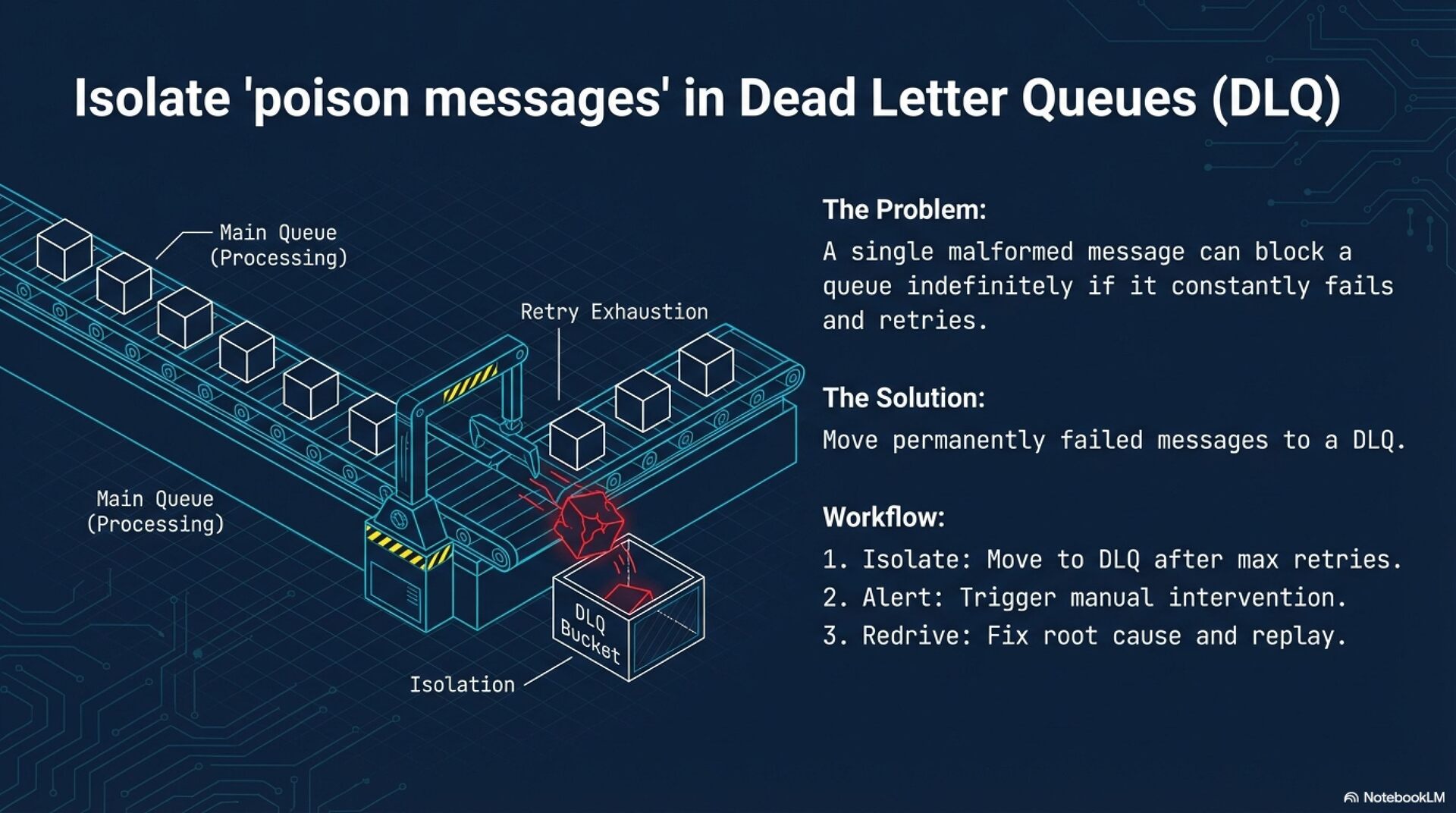
Failure Handling and Recovery Robust systems employ exponential backoff with jitter for retries to prevent "thundering herd" scenarios that could overwhelm the receiver. Messages that fail all retry attempts should be routed to a Dead Letter Queue (DLQ) for inspection and potential redrive rather than being discarded. Additionally, circuit breakers are essential to pause delivery to failing endpoints, protecting the infrastructure from cascading failures during outages.
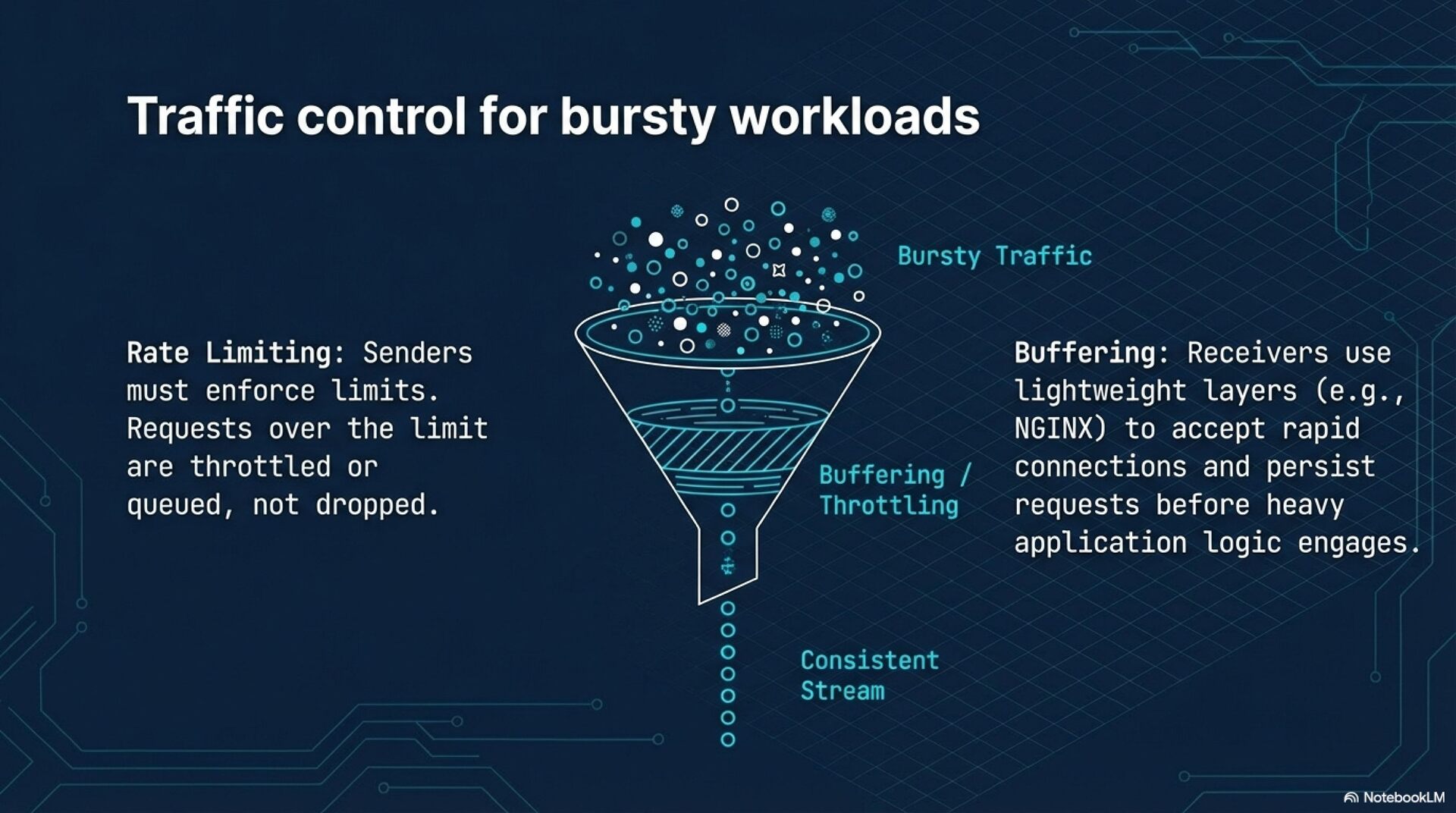
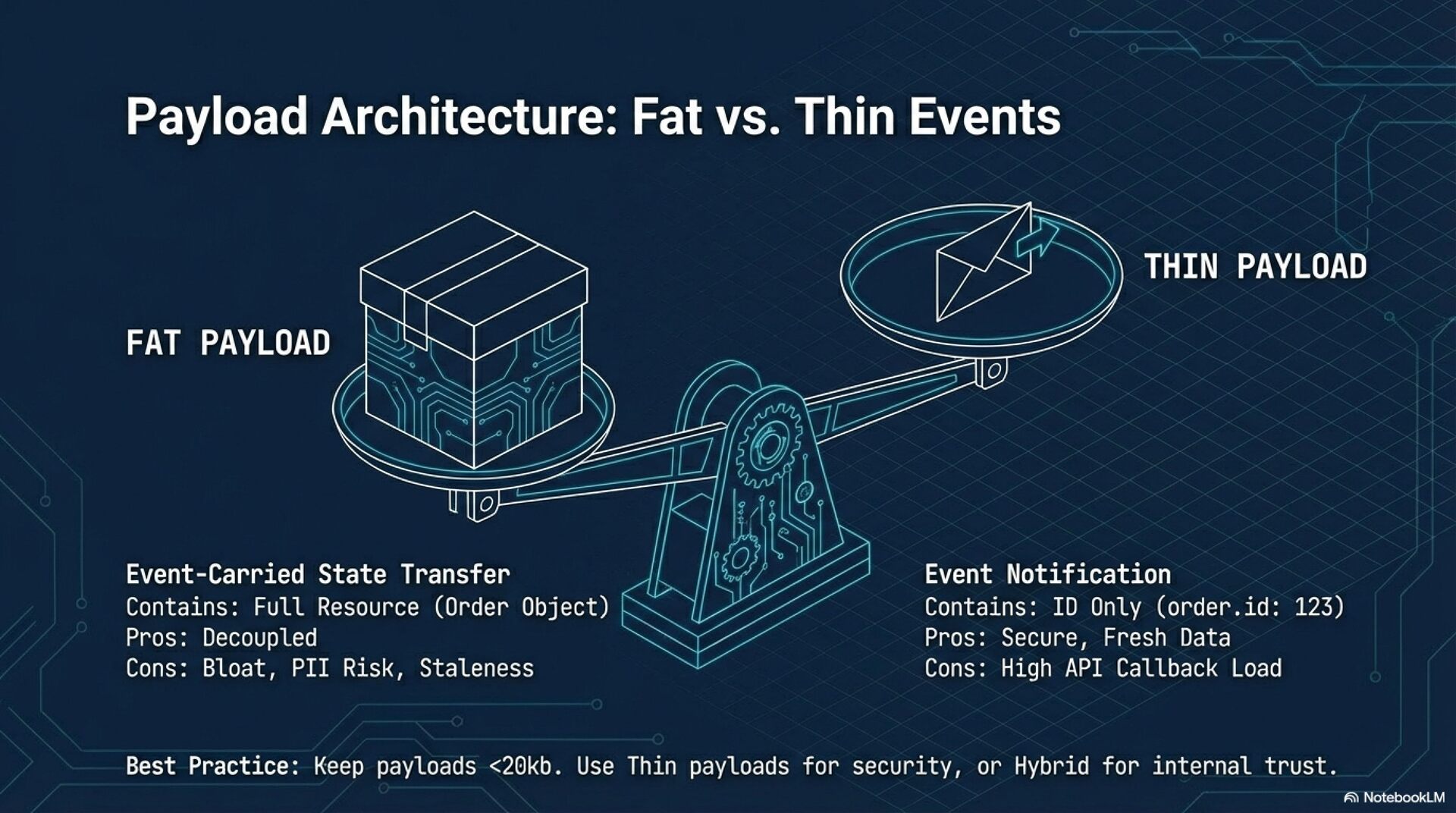
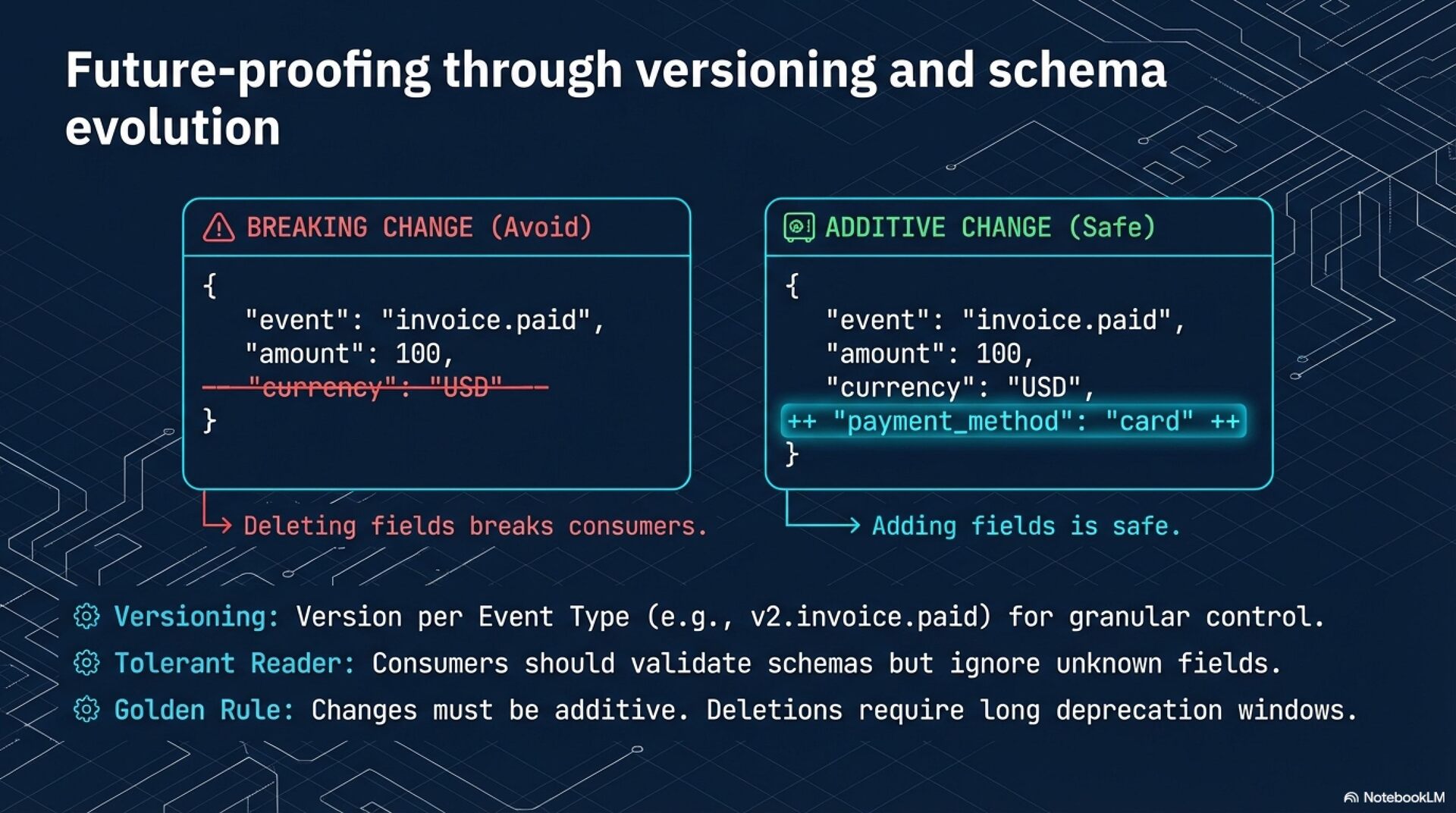
Scalability and Payload Design To manage bursty traffic, providers should enforce rate limiting and buffering. Payload design involves a trade-off between "Fat" payloads (full state, convenient but larger attack surface) and "Thin" payloads (notifications only, secure but require callback API calls). Best practices suggest keeping payloads under 20kb, minimizing PII, and utilizing additive versioning per event type to maintain backward compatibility.


 glaforge
 terurou
 kakakakakku
 recruitengineers
 soudai
 naruoga
 iotengineer22
 mtpooh
 furuton
 tanakaseiya
 ynisqa1988
 kameitomohiro
 shumei_ito
 jonoalderson
 nmsamuel
 bkeepers
 codingconduct
 cassininazir
 jcasabona
 apolaine
 michaelherold
 emna__ayadi
 bcantrill
 aleyda
 minecr