Share
Embed
ML Integrations on Application Development
Presentation Slides at 如何開發可解釋的AI
https://www.eventbrite.com/e/ai-aihacarus-tickets-68588170063
Hacarus Inc.
September 19, 2019
Transcript
33 slides
-
Call me Ninz! - Software Engineer @ Hacarus - Studying
MSCS @ Ateneo de Manila University - Music enthusiast - Physics and astronomy is <3 - I love data! - Curious, always. -
Let’s begin! • Introduction • Integration Challenges • Architectural and
Development Approach -
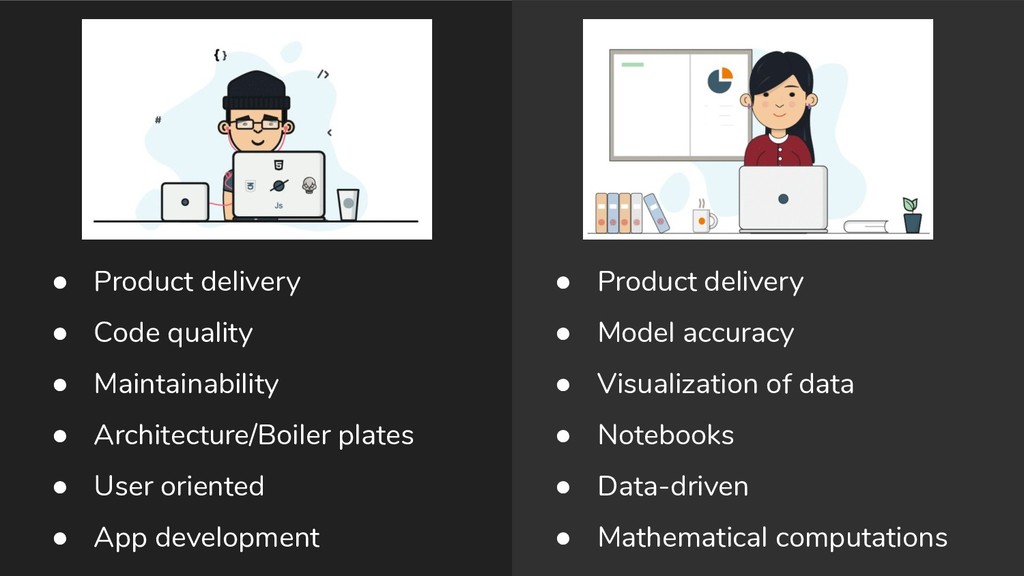
• Product delivery • Code quality • Maintainability • Architecture/Boiler
plates • User oriented • App development • Product delivery • Model accuracy • Visualization of data • Notebooks • Data-driven • Mathematical computations -
The software engineer • Code from data scientist ARE SOMETIMES
not efficient and clean. • Models are based on limited training and testing data. • Data formats, input and output. • D O C U M E N T A T I O N ! -
The Challenges - Making sure code is efficient and maintainable
- Resource limitations - Code quality - Error handling - Data integrity for both input and results - Proper feedback loop for data scientists and developers -
Efficiency and Maintainability This crucial for both Machine Learning and
Application development side. Usually the focus are the following: - Resource Limitations - Code Quality - Error Handling -
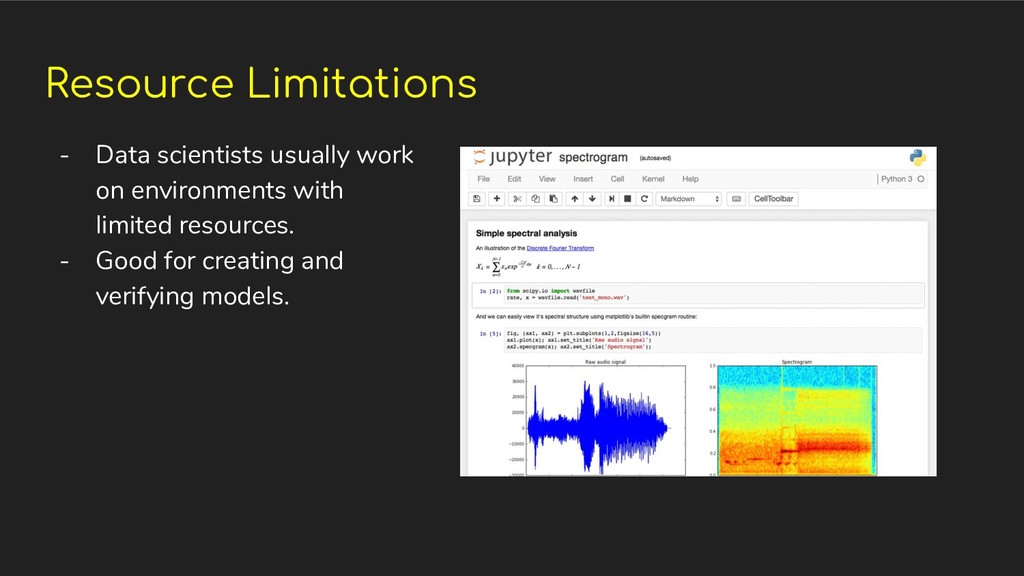
Resource Limitations - Data scientists usually work on environments with
limited resources. - Good for creating and verifying models. -
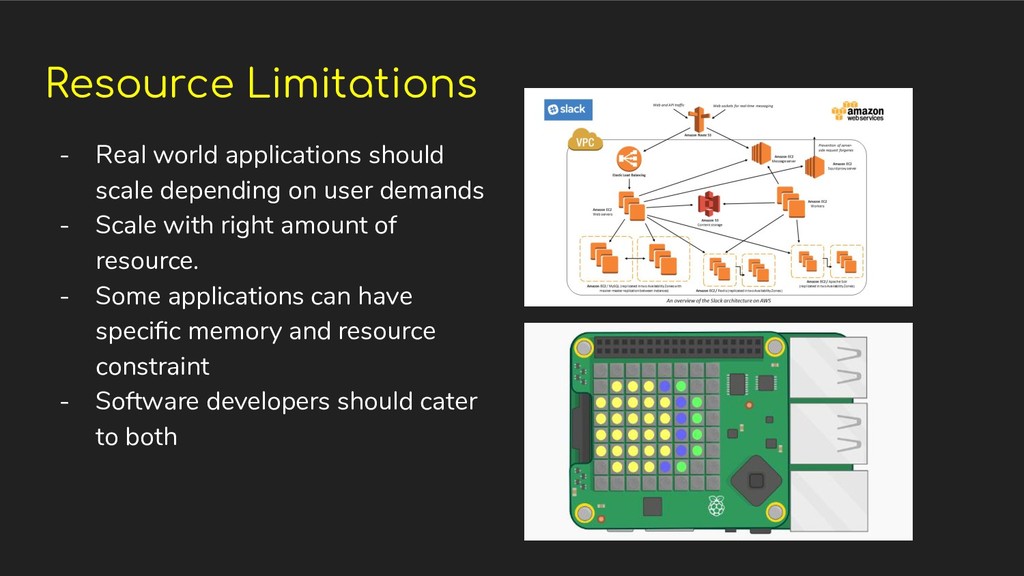
Resource Limitations - Real world applications should scale depending on
user demands - Scale with right amount of resource. - Some applications can have specific memory and resource constraint - Software developers should cater to both -
Code Quality - Don’t expect 100% code quality - The
quality of the codebase falls into software developers - Type hints are very useful - Tools that improve code readability are highly encourage. -
Error Handling model.fit() model.predict() Codes coming from data scientists are
usually abstracted and high level. Data scientists and application developers must agree on how to handle errors. -
Data Integrity - Pre-processing of data inputs - Consistency between
expected inputs and outputs - Making sure the right results are displayed on the application side - Making sure the right data is passed to the machine learning side -
Feedback loop - DOCUMENT as many things as you can
- Agree on implementation key points such as - Release versions and deployment - Data pipelines - Validation, etc - Regular meetings with data science team is a must! -
Proper Resource Handling - Memory vs CPU - CPU needed
for training - Memory needed for model storage - Consider the kind of algorithm the model uses - Sparse modeling usually performs well in smaller resource setup -
Proper Resource Handling - Type of deployment - Mobile? -
Cloud? - Local? - Multi Threading VS Multiprocessing - Usually have a thin layer of python interface between. -
Code Quality - Data scientists and Application team should use
linters and automatic code formatting tools. - Agree on conventions on function definitions and interfaces. - Code reviews - Use Type Hints and other tools that IDEs utilize -
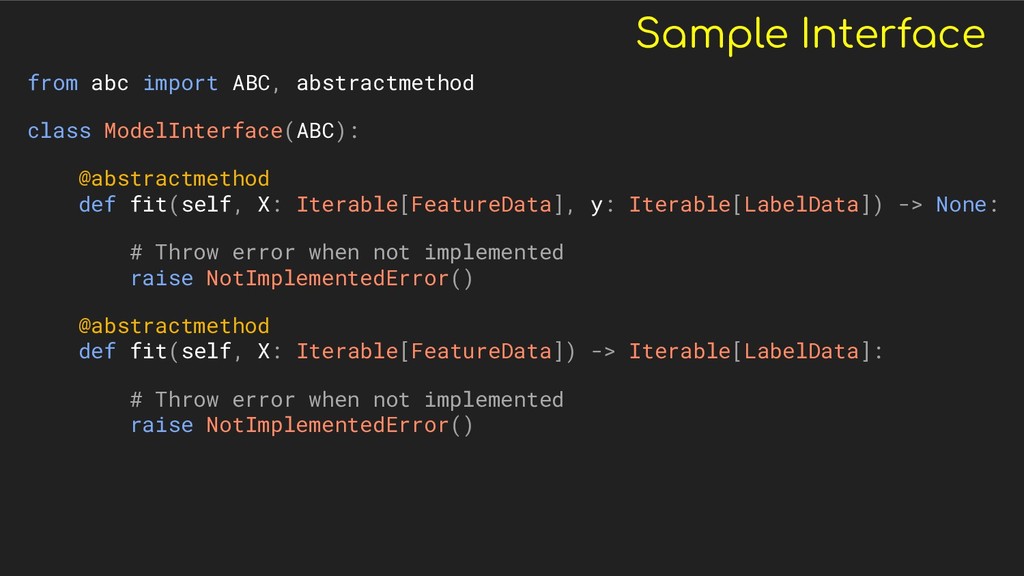
Sample Interface from abc import ABC, abstractmethod class ModelInterface(ABC): @abstractmethod
def fit(self, X: Iterable[FeatureData], y: Iterable[LabelData]) -> None: # Throw error when not implemented raise NotImplementedError() @abstractmethod def fit(self, X: Iterable[FeatureData]) -> Iterable[LabelData]: # Throw error when not implemented raise NotImplementedError() -
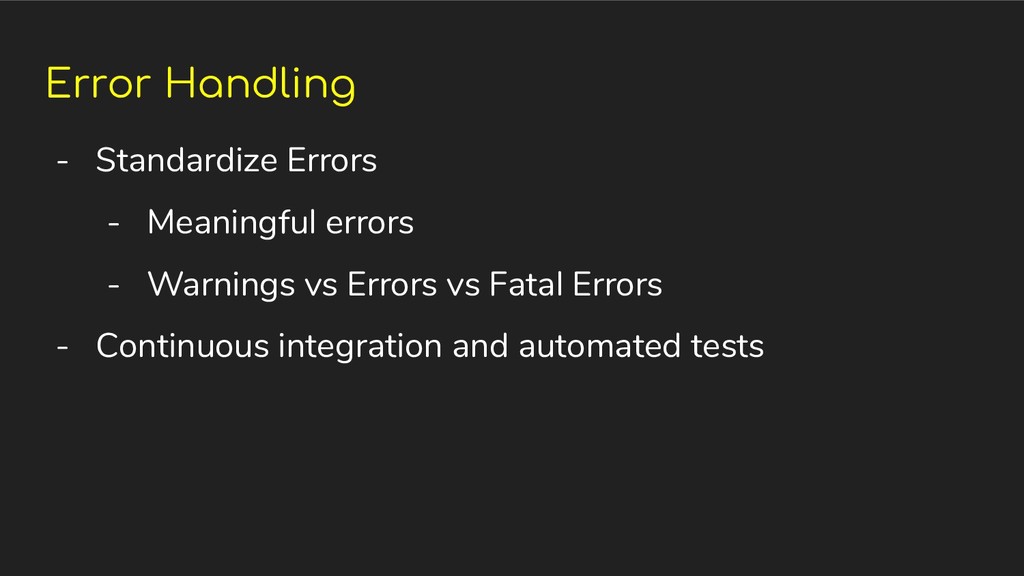
Error Handling - Standardize Errors - Meaningful errors - Warnings
vs Errors vs Fatal Errors - Continuous integration and automated tests -
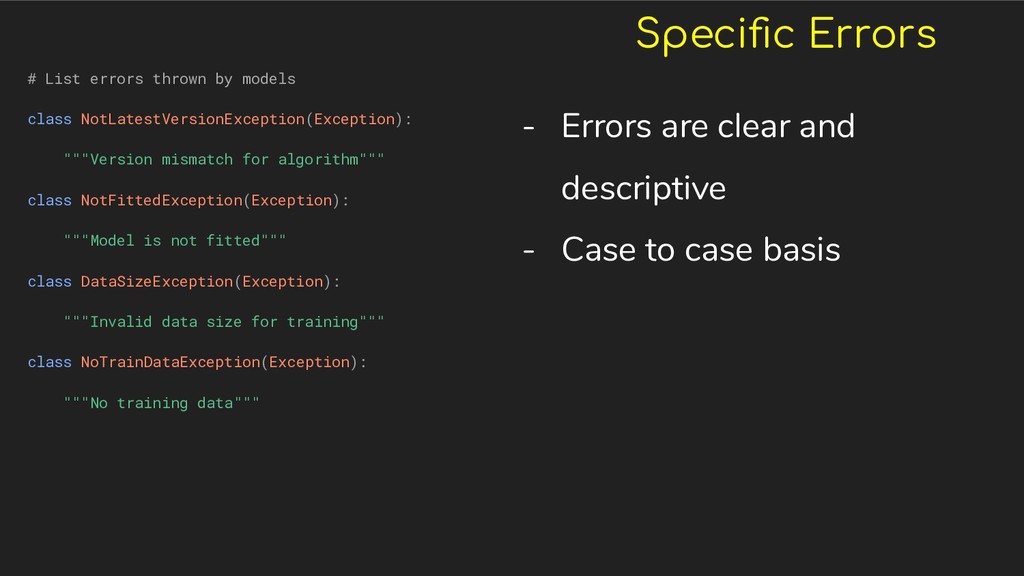
Specific Errors # List errors thrown by models class NotLatestVersionException(Exception):
"""Version mismatch for algorithm""" class NotFittedException(Exception): """Model is not fitted""" class DataSizeException(Exception): """Invalid data size for training""" class NoTrainDataException(Exception): """No training data""" - Errors are clear and descriptive - Case to case basis -
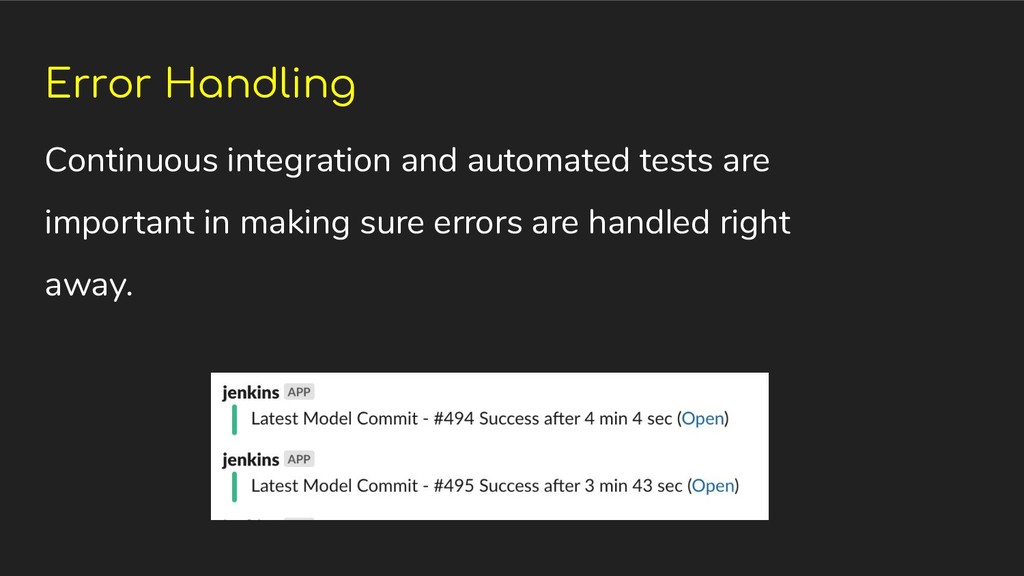
Error Handling Continuous integration and automated tests are important in
making sure errors are handled right away. -
Data Integrity - Create data classes for strict type implementation
- Pre processing should be atomic in nature. - Single operation per data only - Data output and results must be stored as granular as possible -
Data Class class TraningData: """TraningData represents labeled dataset""" def __init__(self,
data: Iterable, label: Label = None, metadata=None) -> None: """ Parameters ---------- data : Iterable, shape, matrix) label : Label.GOOD | Label.BAD metadata : other info """ self.data = data self.label = label self.metadata = metadata -
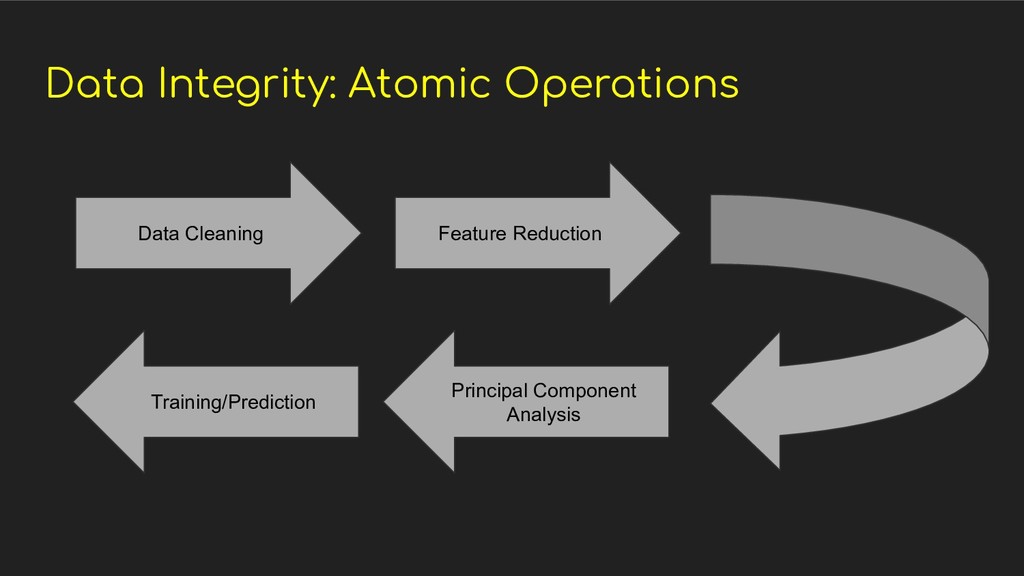
Data Integrity: Atomic Operations Data Cleaning Feature Reduction Principal Component
Analysis Training/Prediction -
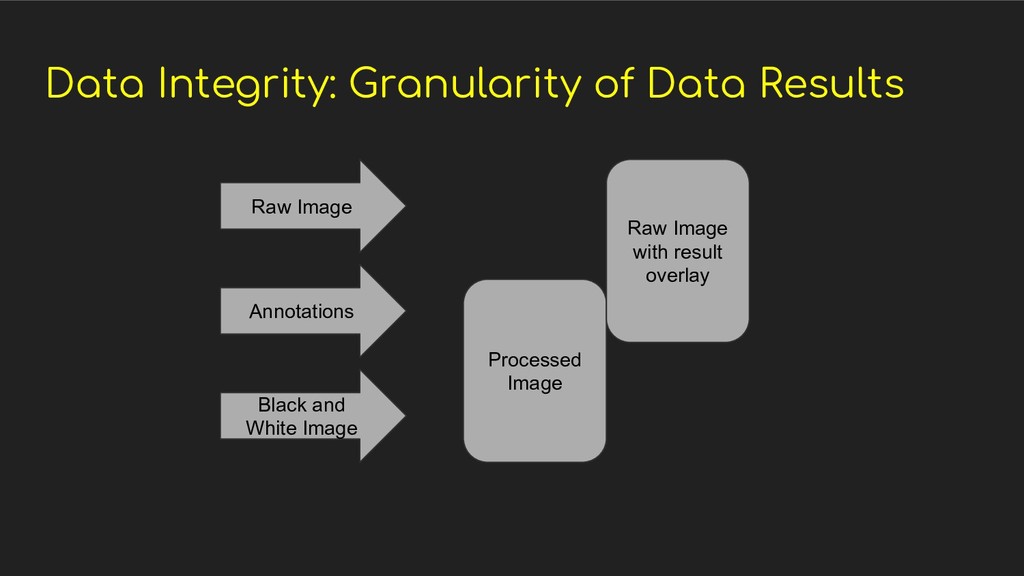
Data Integrity: Granularity of Data Results Raw Image Annotations Black
and White Image Processed Image Raw Image with result overlay -
Feedback Loop Without proper feedback loop and communication, it is
very difficult to work with machine learning developers and data scientist. -
Feedback Loop Proactive Documentation - When app developers notice something
missing, we inform data science team right away - Documentation in advance even if the feature is still being developed -
Feedback Loop Version Handling - ML libraries and applications uses
different versioning - One application might use a different version of the ML -
Feedback Loop Deployment - Software developers must give capability to
ML team to deploy new versions of algorithms - Deployment must be reversible and backwards compatible -
Feedback Loop Team Building Activities (for nerdy people) - Kaggle
Challenge - Software engineers doing ML exercises with data scientists and vice versa. - Solves online challenges, etc. - Makes it easier to align with ML team.