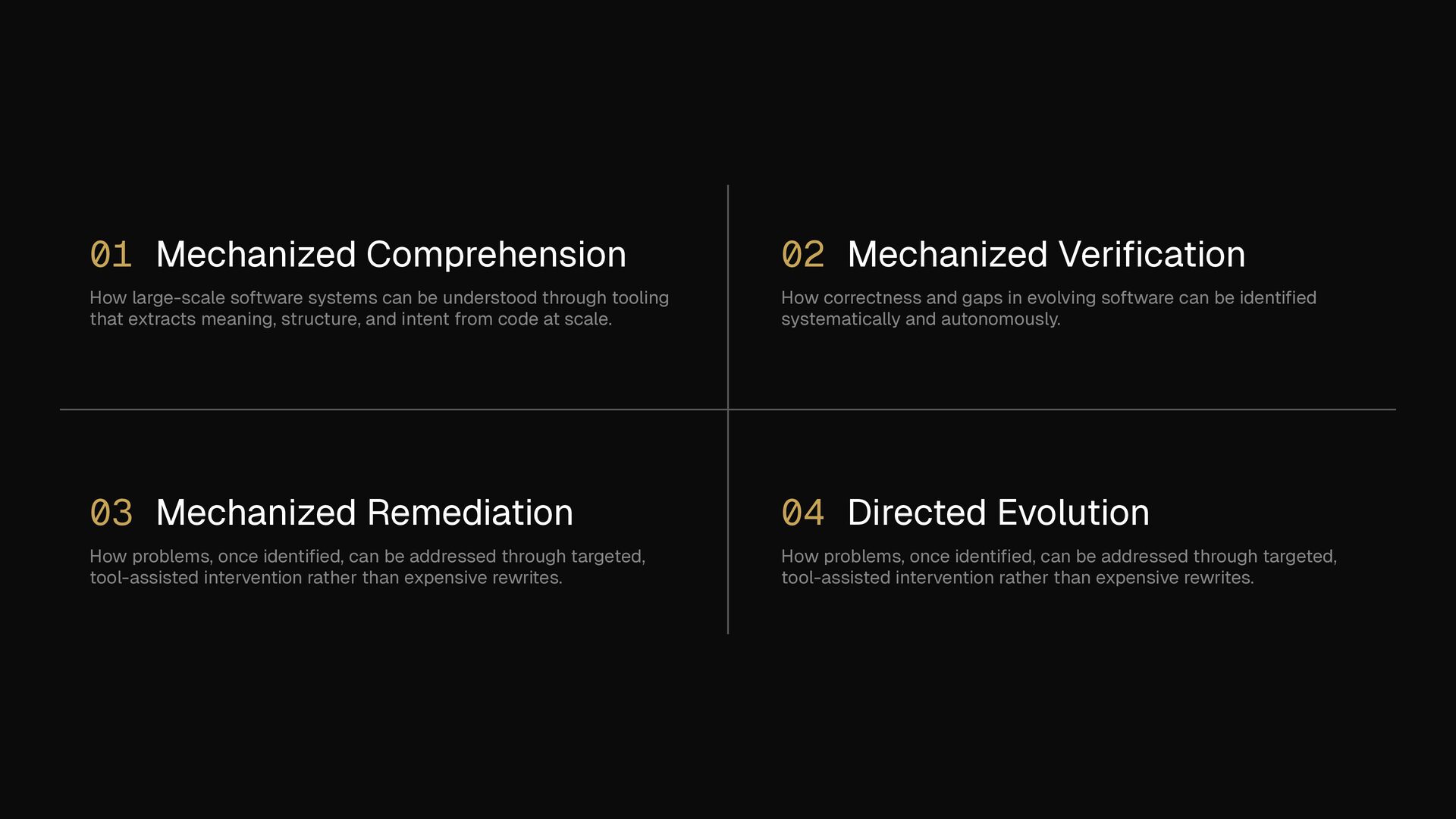
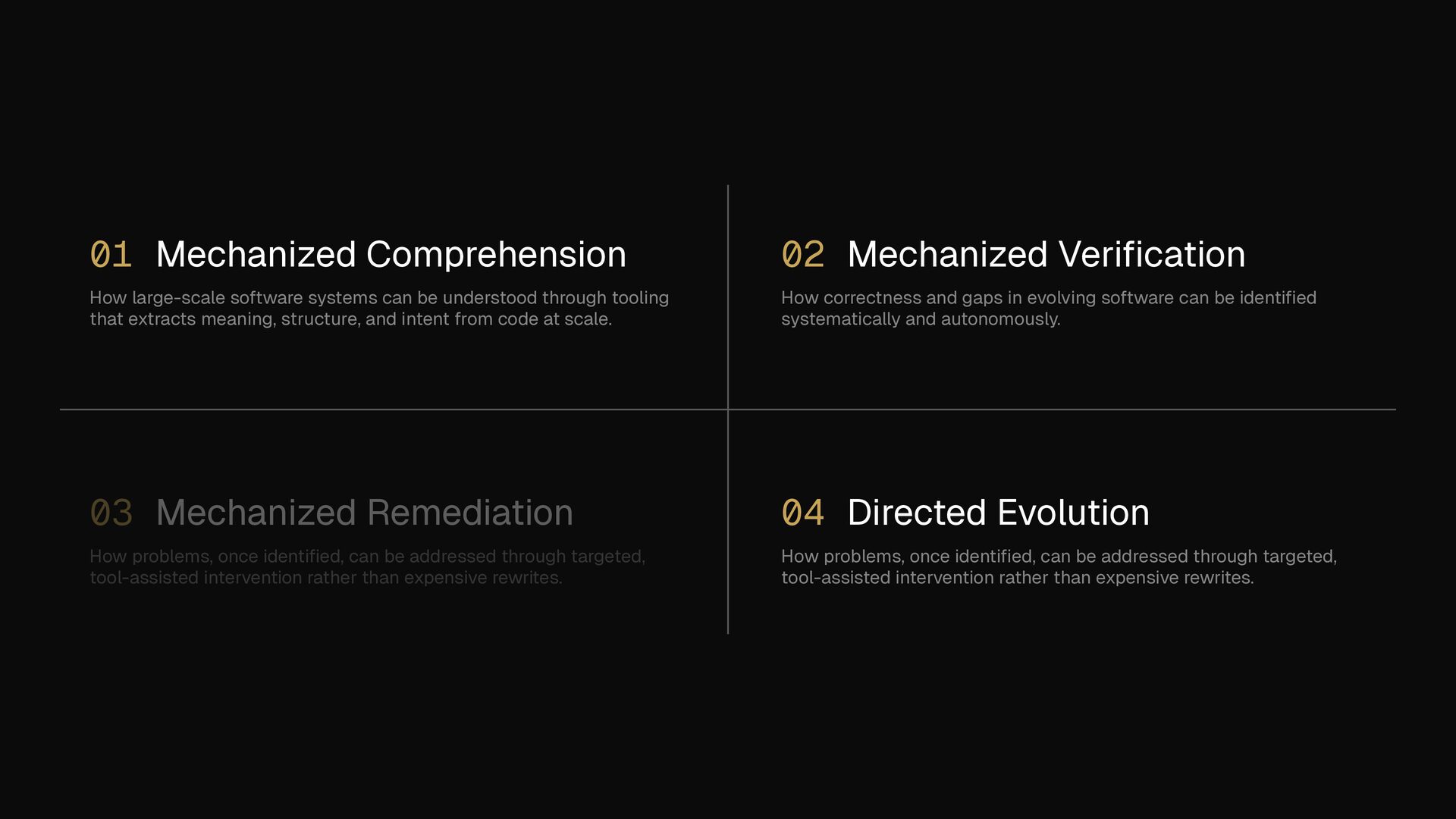
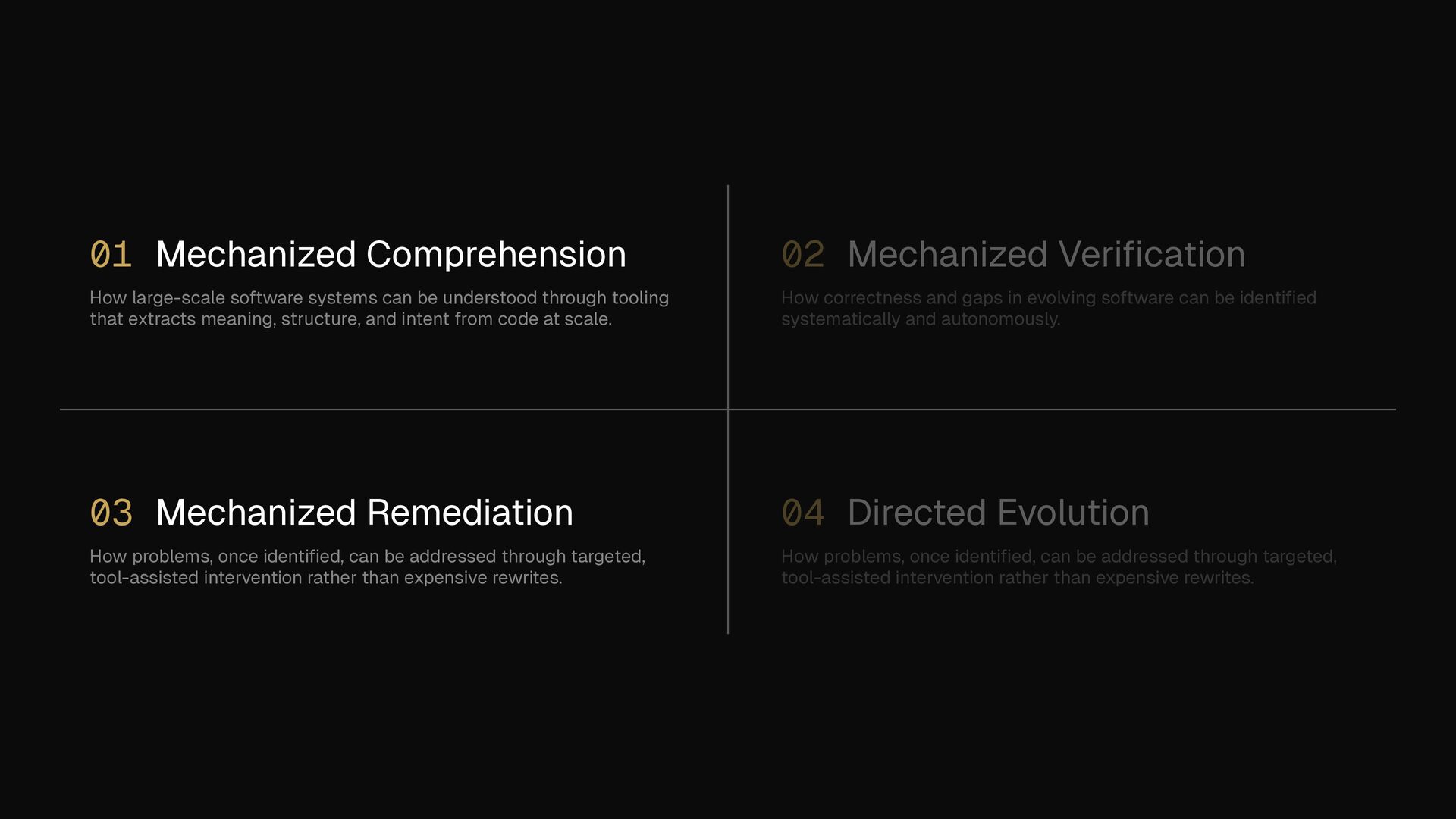
through tooling that extracts meaning, structure, and intent from code at scale. 02 Mechanized Veri fi cation How correctness and gaps in evolving software can be identi fi ed systematically and autonomously. 03 Mechanized Remediation How problems, once identi fi ed, can be addressed through targeted, tool-assisted intervention rather than expensive rewrites. 04 Directed Evolution How problems, once identi fi ed, can be addressed through targeted, tool-assisted intervention rather than expensive rewrites.
through tooling that extracts meaning, structure, and intent from code at scale. 02 Mechanized Veri fi cation How correctness and gaps in evolving software can be identi fi ed systematically and autonomously. 03 Mechanized Remediation How problems, once identi fi ed, can be addressed through targeted, tool-assisted intervention rather than expensive rewrites. 04 Directed Evolution How problems, once identi fi ed, can be addressed through targeted, tool-assisted intervention rather than expensive rewrites.
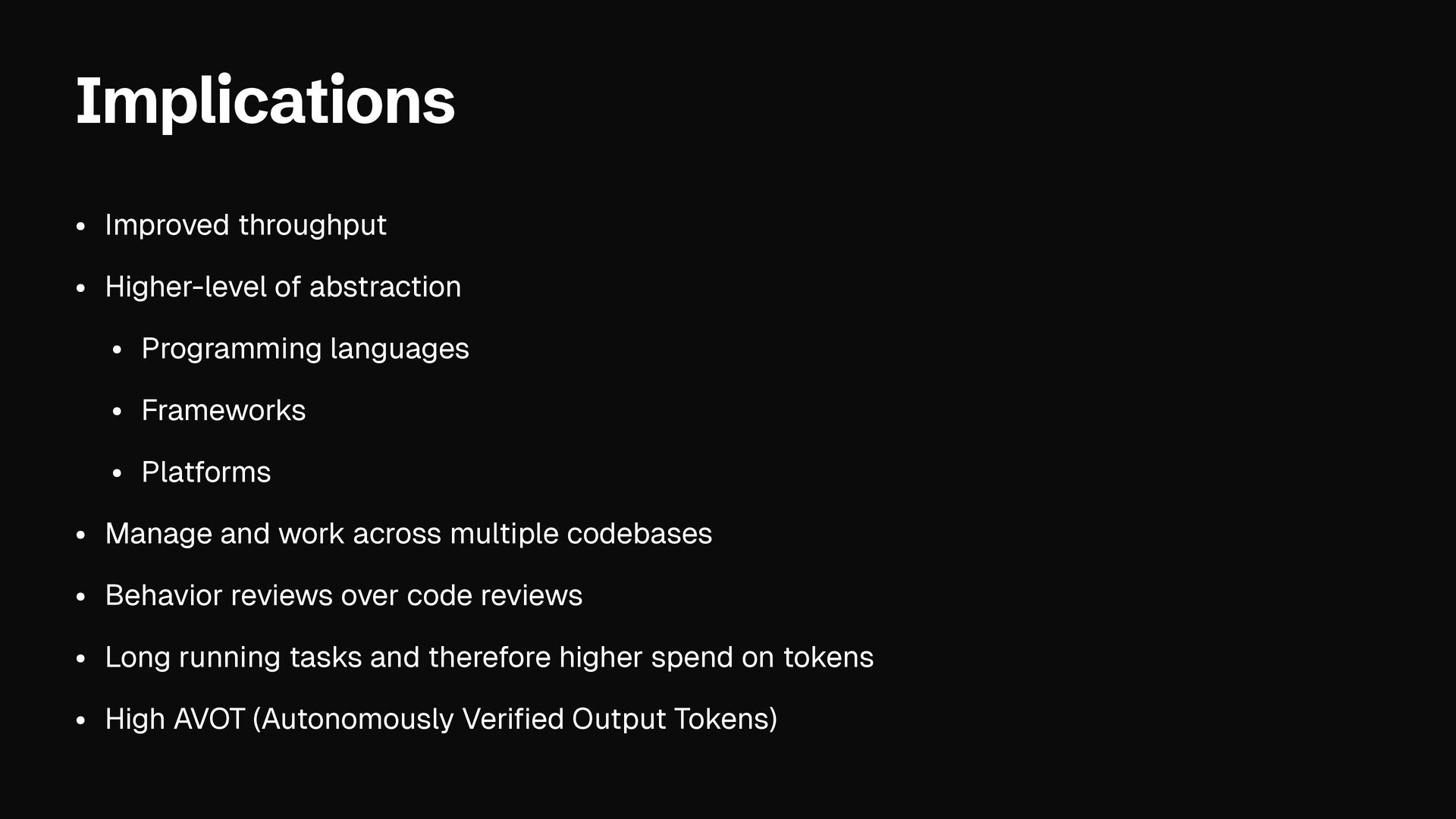
languages • Frameworks • Platforms • Manage and work across multiple codebases • Behavior reviews over code reviews • Long running tasks and therefore higher spend on tokens • High AVOT (Autonomously Veri fi ed Output Tokens)
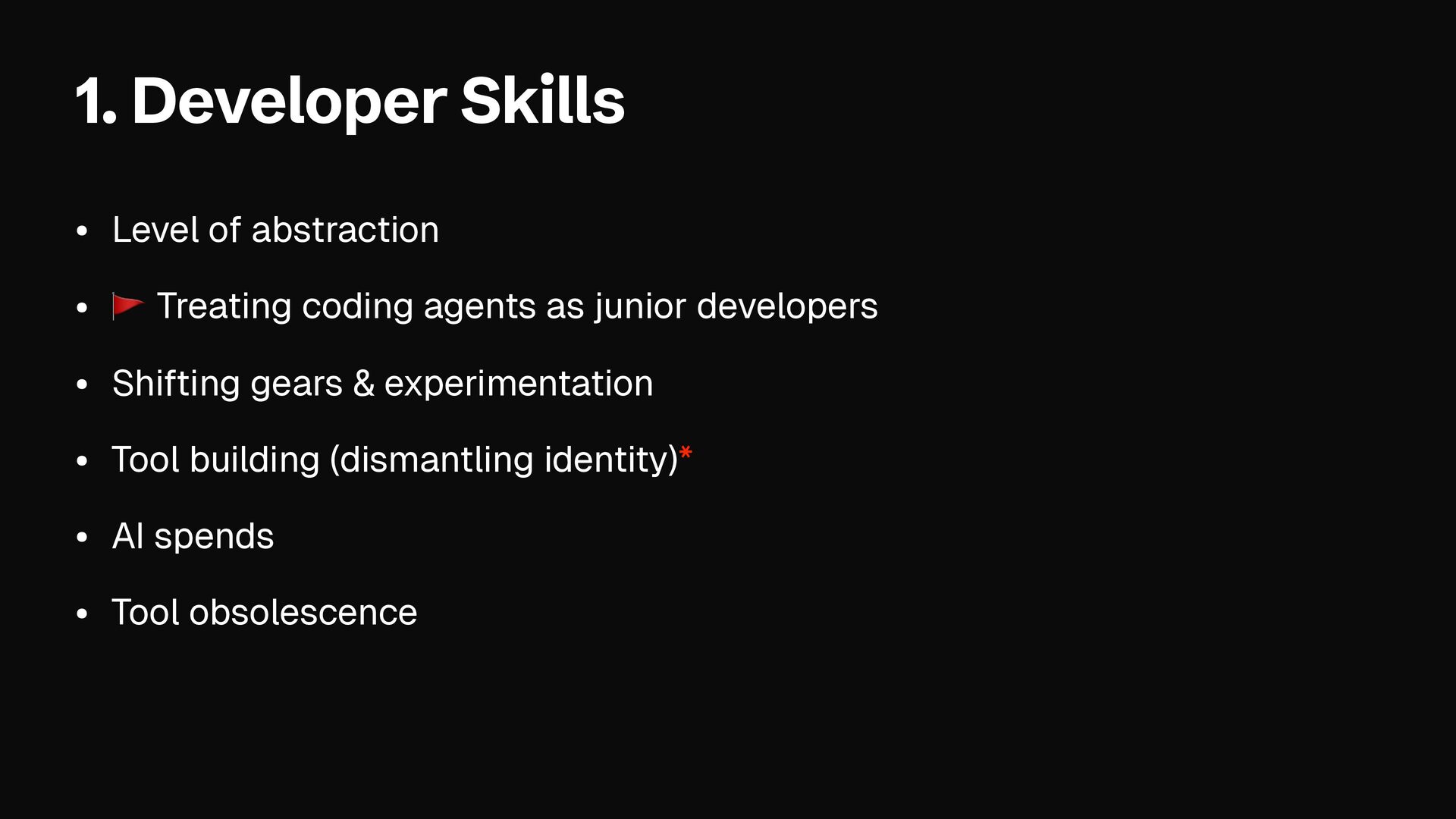
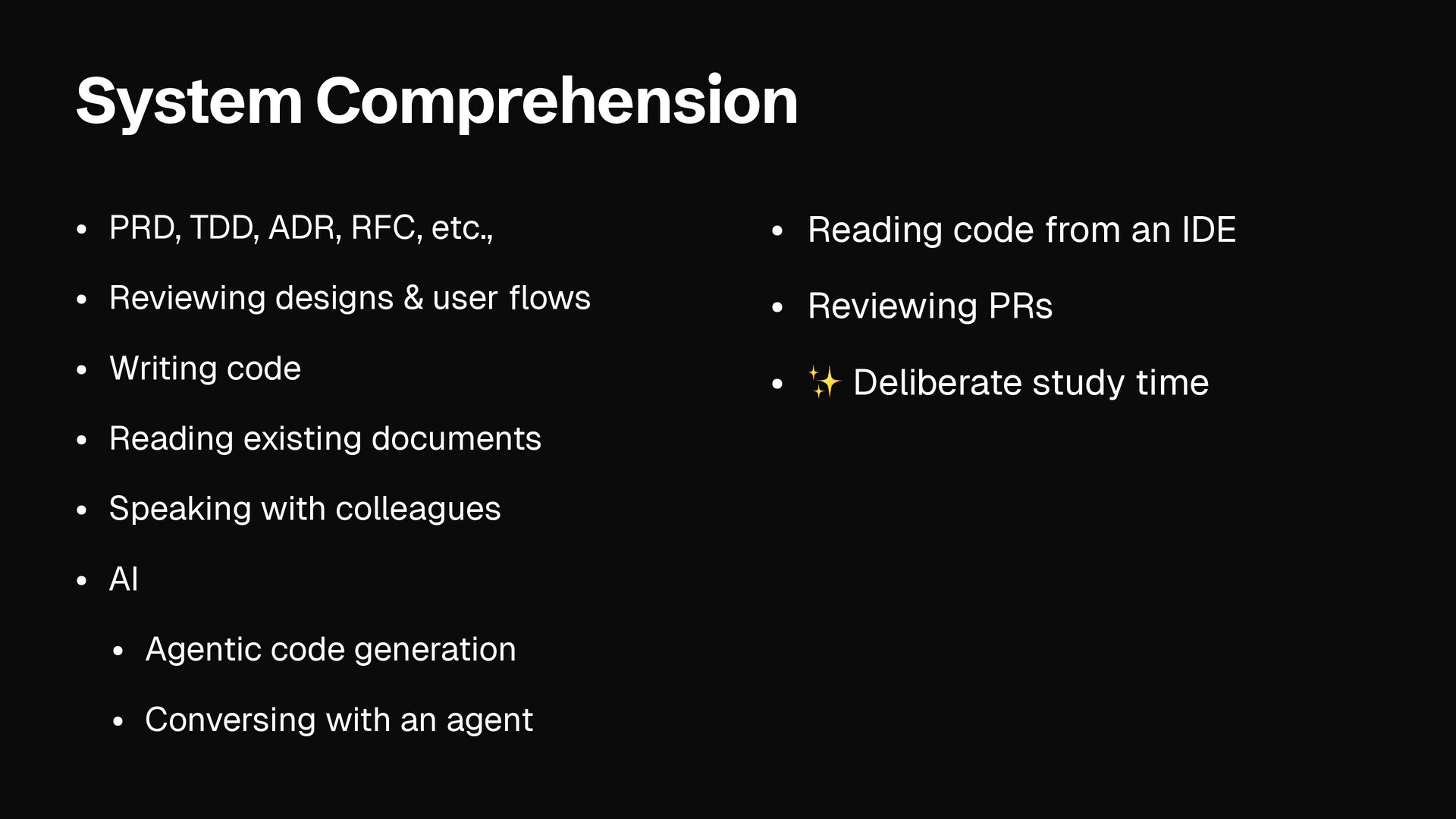
designs & user fl ows • Writing code • Reading existing documents • Speaking with colleagues • AI • Agentic code generation • Conversing with an agent • Reading code from an IDE • Reviewing PRs • ✨ Deliberate study time
through tooling that extracts meaning, structure, and intent from code at scale. 02 Mechanized Veri fi cation How correctness and gaps in evolving software can be identi fi ed systematically and autonomously. 03 Mechanized Remediation How problems, once identi fi ed, can be addressed through targeted, tool-assisted intervention rather than expensive rewrites. 04 Directed Evolution How problems, once identi fi ed, can be addressed through targeted, tool-assisted intervention rather than expensive rewrites.
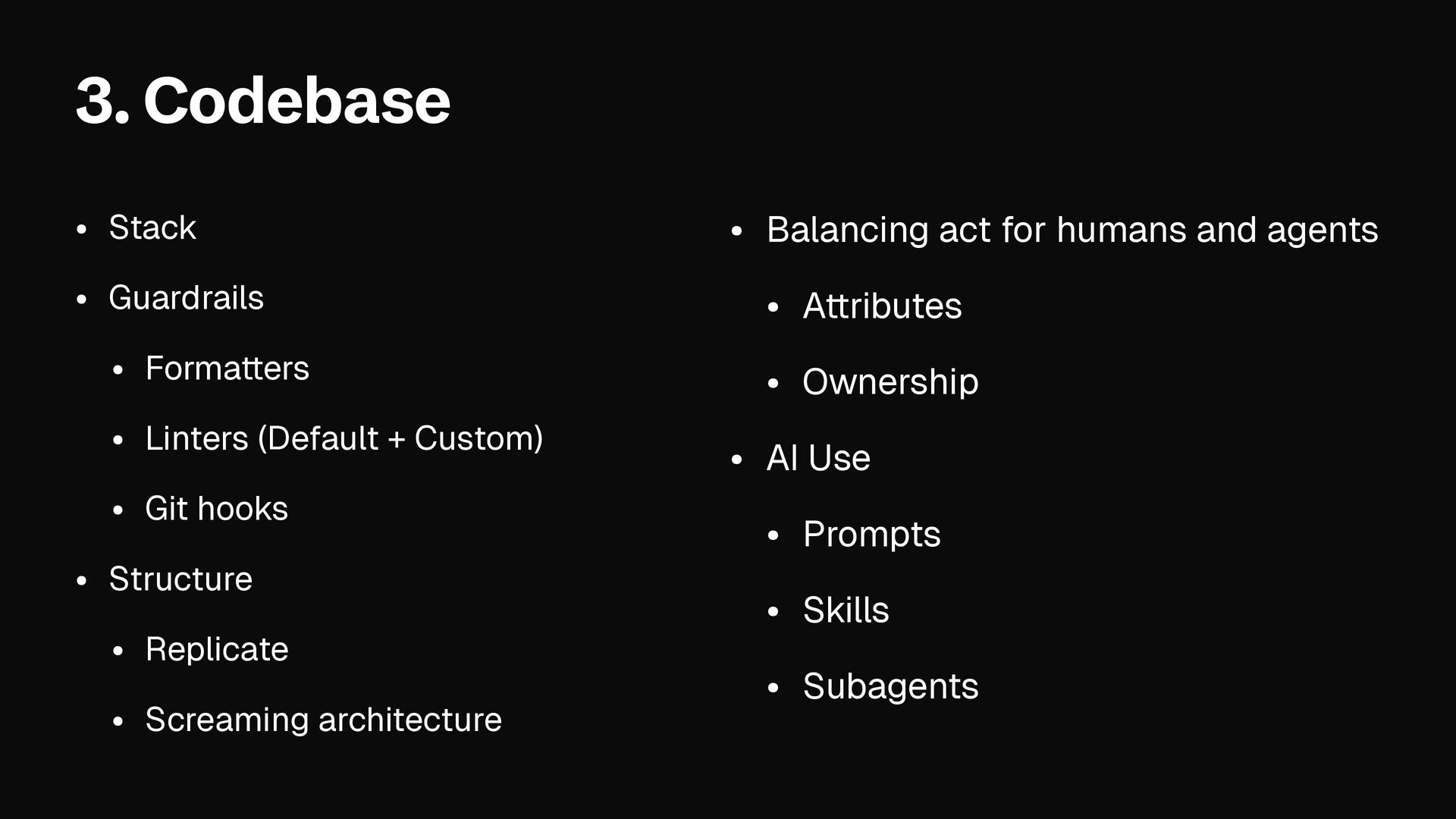
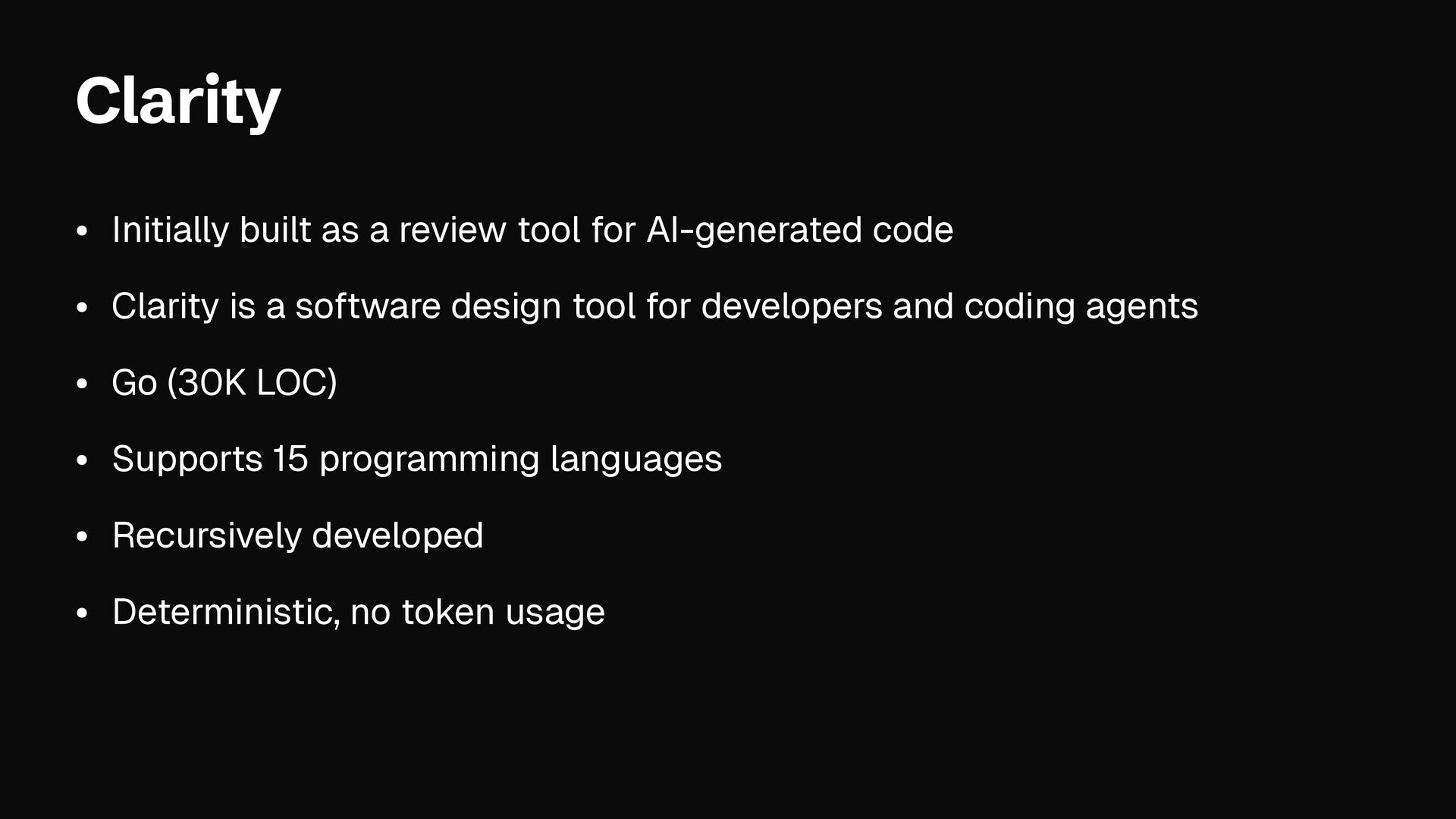
code • Clarity is a software design tool for developers and coding agents • Go (30K LOC) • Supports 15 programming languages • Recursively developed • Deterministic, no token usage
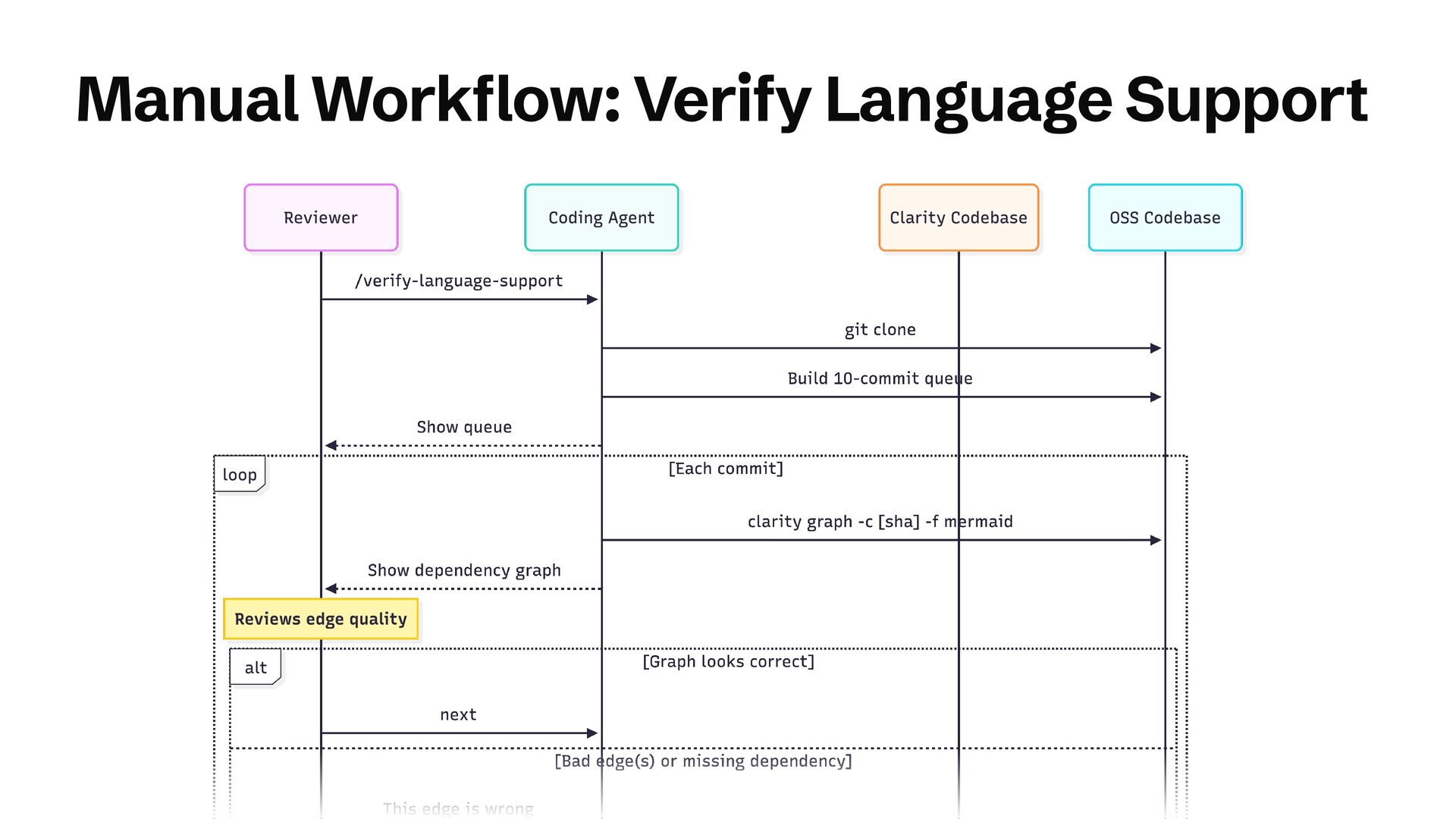
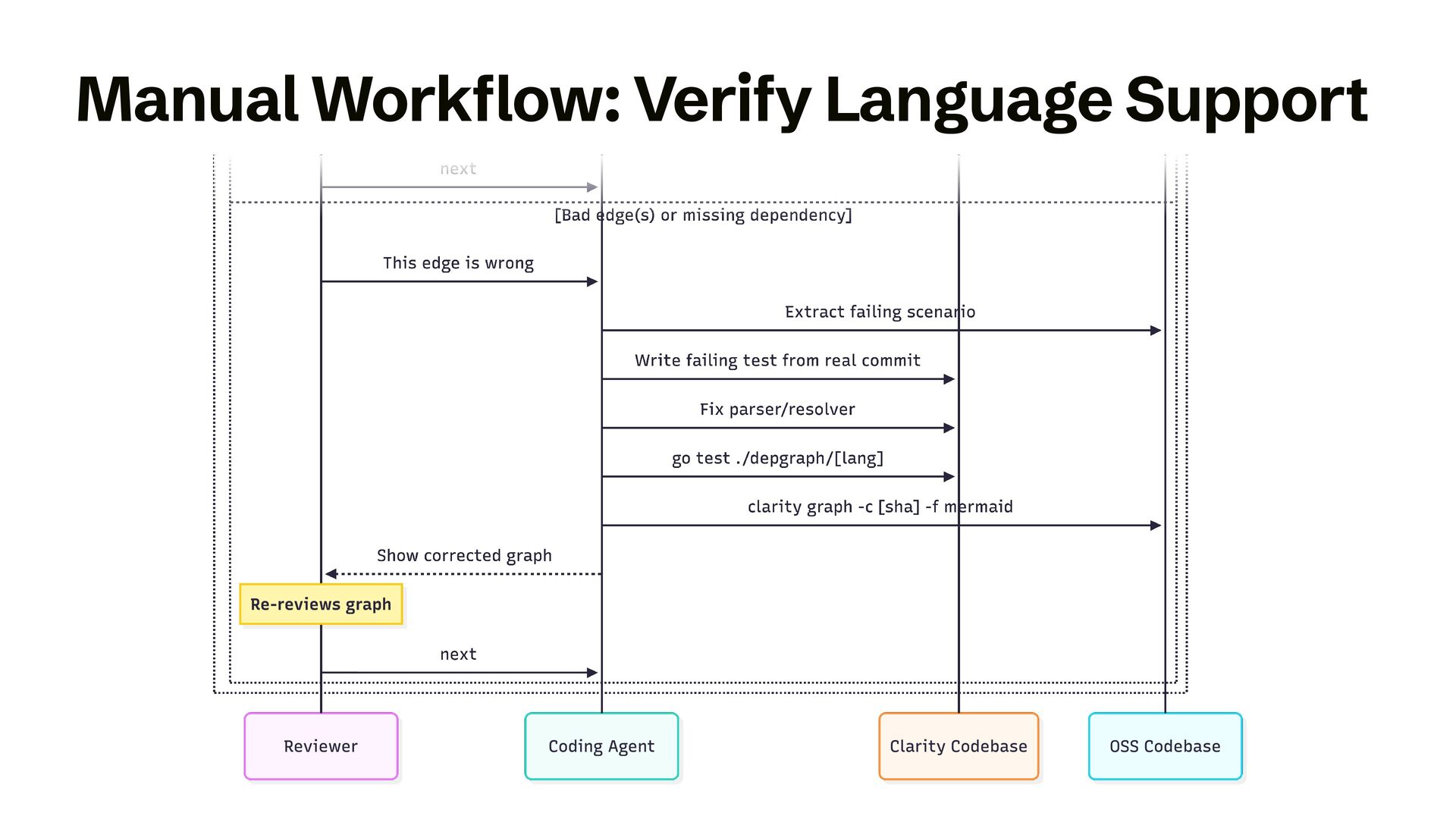
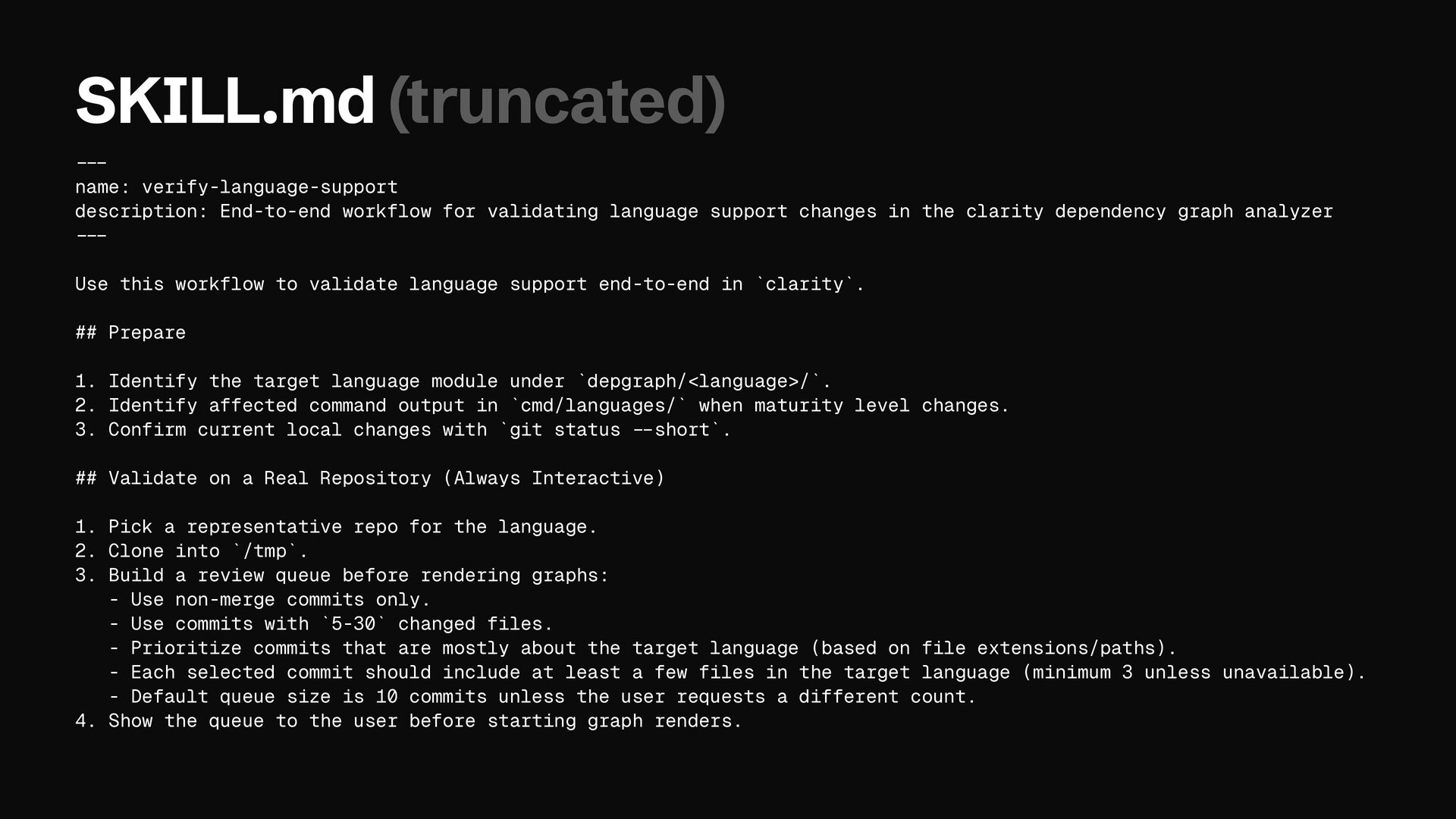
for validating language support changes in the clarity dependency graph analyzer - - - Use this workflow to validate language support end-to-end in `clarity`. ## Prepare 1. Identify the target language module under `depgraph/<language>/`. 2. Identify affected command output in `cmd/languages/` when maturity level changes. 3. Confirm current local changes with `git status - - short`. ## Validate on a Real Repository (Always Interactive) 1. Pick a representative repo for the language. 2. Clone into `/tmp`. 3. Build a review queue before rendering graphs: - Use non-merge commits only. - Use commits with `5-30` changed files. - Prioritize commits that are mostly about the target language (based on file extensions/paths). - Each selected commit should include at least a few files in the target language (minimum 3 unless unavailable). - Default queue size is 10 commits unless the user requests a different count. 4. Show the queue to the user before starting graph renders.
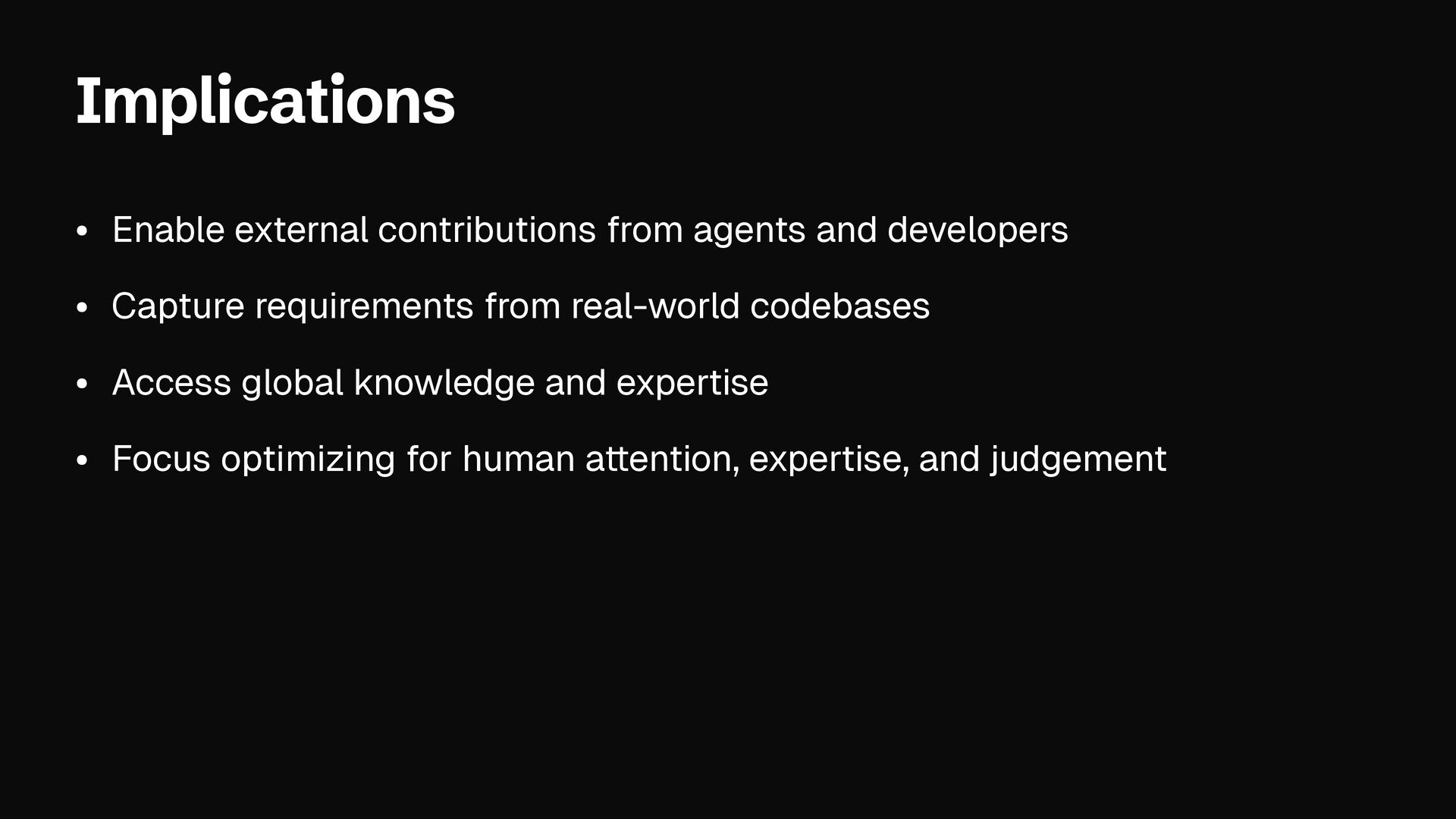
Capture requirements from real-world codebases • Access global knowledge and expertise • Focus optimizing for human a tt ention, expertise, and judgement


 ragunathjawahar
 kmars0605
 suneo3476
 tosite
 kenjiyoneyama
 htkym
htkym
 yasaichi
 tanahiro2010
 nao_randd
 prota
prota
 syumai
 eed3si9n
 jame2408
 reverentgeek
 techseoconnect
 jct
jct
 uxyall
 lara
lara
 marketingsoph
 baasie
 tmiket
 skipperchong
 retrage