Upgrade to Pro
— share decks privately, control downloads, hide ads and more …
Speaker Deck
Sign up for free
Menu
Search
Features
All features
Private URLs
Password Protection
Custom URLS
Scheduled publishing
Remove Branding
Restrict embedding
Deck Collections
Notes
Features
All features
Private URLs
Password Protection
Custom URLS
Scheduled publishing
Remove Branding
Restrict embedding
Deck Collections
Notes
Explore
Featured decks
Featured speakers
Programming
Technology
Storyboards
Explore
Featured decks
Featured speakers
Programming
Technology
Storyboards
Pricing
Search
Sign in
Sign up for free
(responsive) webdesign
Search
simoncoudeville
February 24, 2012
Design
1.1k
13
Share
Embed
Copy iframe code
Copy JS code
Copy link
Start on current slide
(responsive) webdesign
simoncoudeville
February 24, 2012
Other Decks in Design
See All in Design
富山デザイン勉強会_デザイン思考.pdf
keita_yoshikawa
2
210
空間アプリ開発のフィードバックをCodexにするための抽象的なデザインツールの模索
karad
0
220
Look Dev Meetup #50
baku89
1
520
Edmonton River Slidedeck
edmontonriver
0
400
HeartLanguage - DesignProcess
heartlanguage
0
160
noteらしさを織り込むハーネスエンジニアリング
uto
0
2k
開発・制作におけるUI・UXデザインの重要性について~UI・UXデザインってなんだろう~
yamasaku
0
240
プレゼンスライド作成で意識していること
kimichan
0
130
Kouseki | CREATIVE CLASS成果物
yuri9911
0
240
【CEDEC2026】アートとゲームデザインをつなぐVFX設計『GRANBLUE FANTASY: Relink - Endless Ragnarok』における表現と可読性の両立
cygames
PRO
2
1.5k
2026-04-06 CMU School of Design "Vision-Driven Design"
ishii_mit
0
170
柔軟性のあるUIで、多くの環境でアプリを活躍させる/iOSDC26
noppefoxwolf
0
1.3k
Featured
See All Featured
Reality Check: Gamification 10 Years Later
codingconduct
0
2.3k
How To Speak Unicorn (iThemes Webinar)
marktimemedia
1
590
Taking LLMs out of the black box: A practical guide to human-in-the-loop distillation
inesmontani
PRO
3
2.4k
Templates, Plugins, & Blocks: Oh My! Creating the theme that thinks of everything
marktimemedia
31
2.9k
Building Flexible Design Systems
yeseniaperezcruz
330
41k
Sharpening the Axe: The Primacy of Toolmaking
bcantrill
46
3k
[Rails World 2026] Durable orchestration on Rails: from continuation to workflow
palkan
1
420
Stewardship and Sustainability of Urban and Community Forests
pwiseman
0
540
The Pragmatic Product Professional
lauravandoore
37
7.5k
Design and Strategy: How to Deal with People Who Don’t "Get" Design
morganepeng
133
20k
DBのスキルで生き残る技術 - AI時代におけるテーブル設計の勘所
soudai
PRO
68
58k
What Being in a Rock Band Can Teach Us About Real World SEO
427marketing
0
1.1k
Transcript
Hello, I’m Simon
I ❤ Making websites
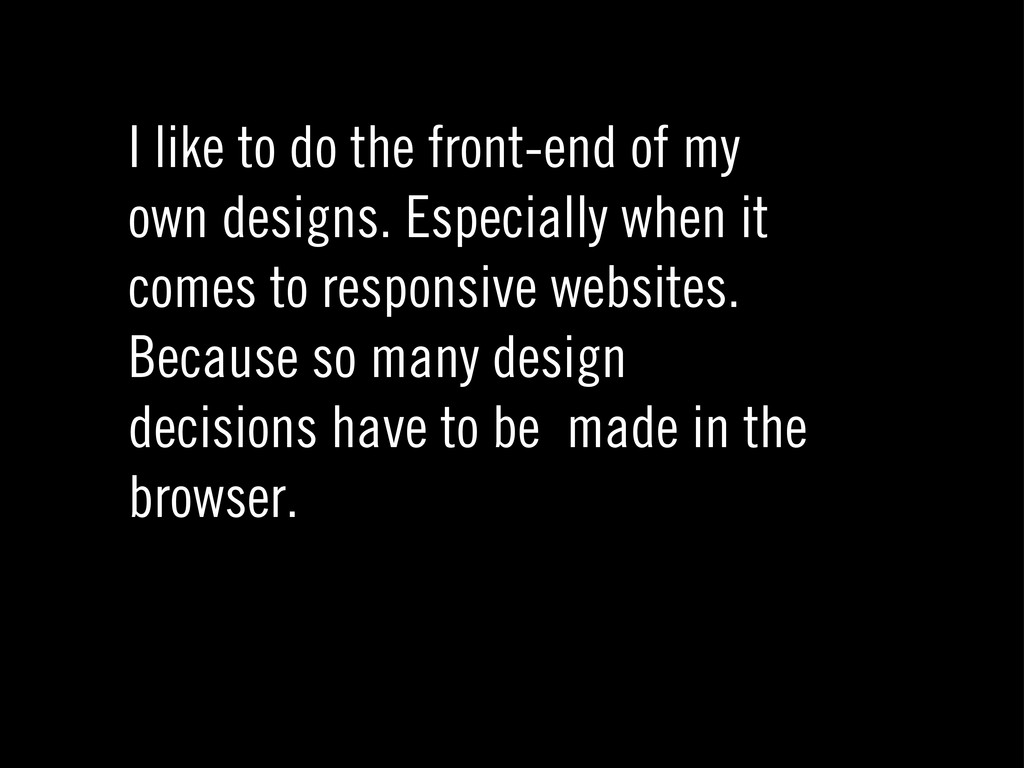
I like to do the front-end of my own designs.
Especially when it comes to responsive websites. Because so many design decisions have to be made in the browser.
Webdesigner Netlash-bSeen @simoncoudeville s.imon.be
None
None
None
None
(responsive) webdesign
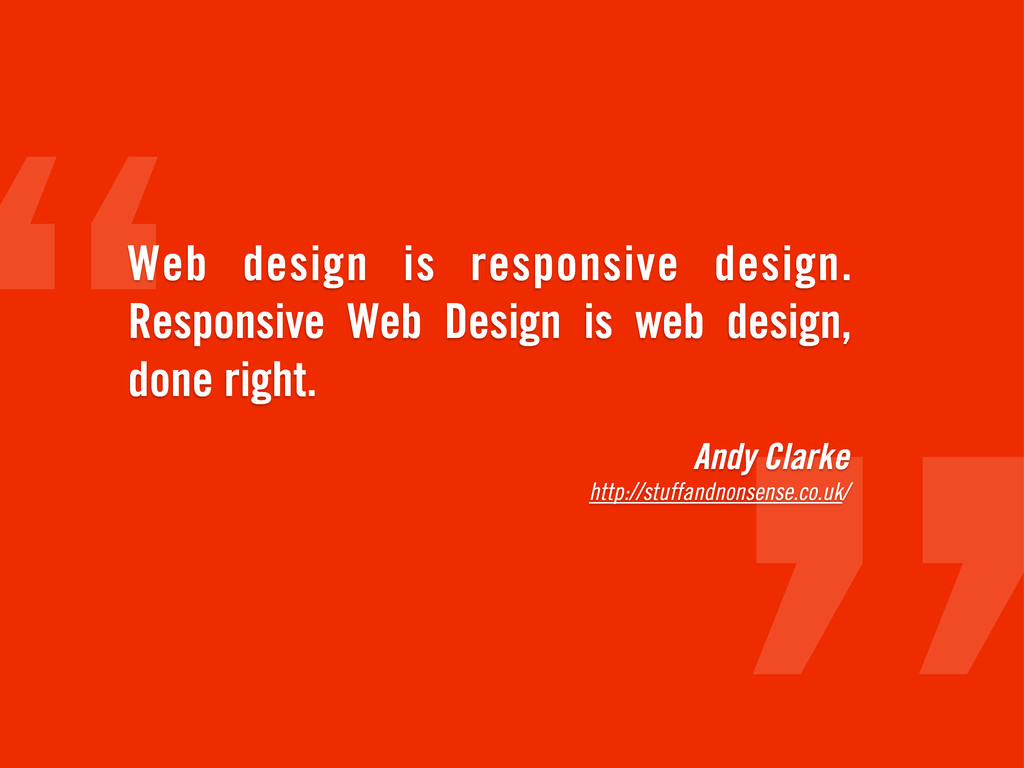
Andy Clarke http://stuffandnonsense.co.uk/ Web design is responsive design. Responsive Web
Design is web design, done right.
In case you haven’t noticed, mobile is growing! ‐
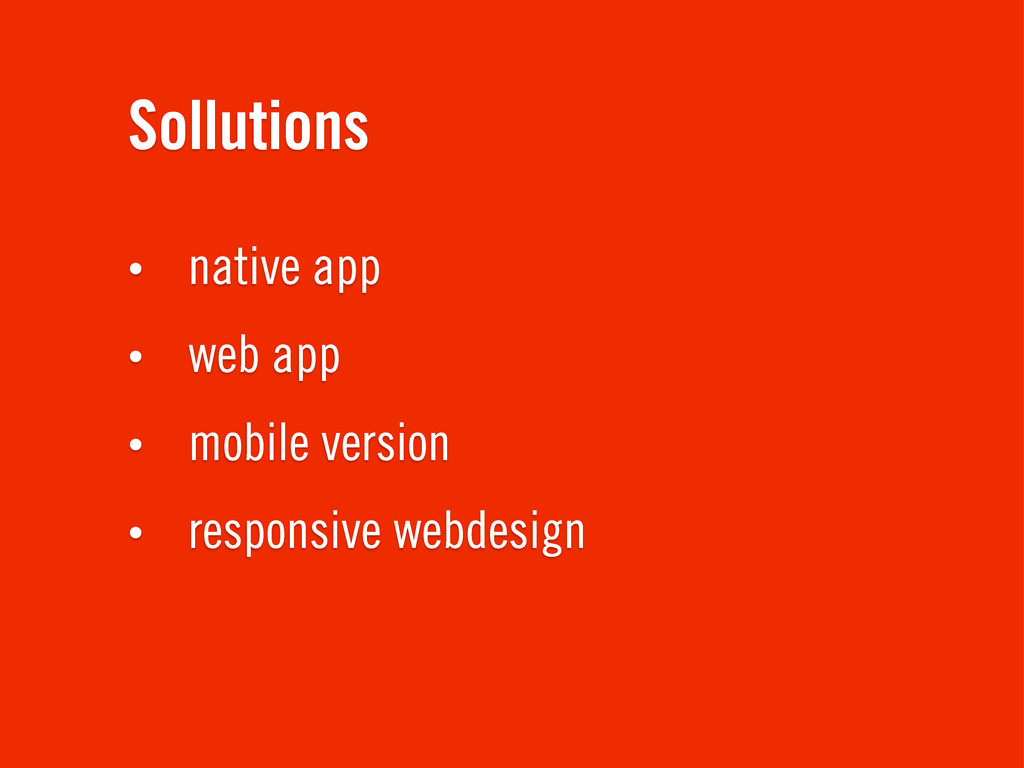
Sollutions • native app • web app • mobile version
• responsive webdesign
It depends.
I ❤ apps
I ☠ mobile sites
I ☠ being redirected.
Via, tweets, Facebook, bookmark, RSS readers, ...
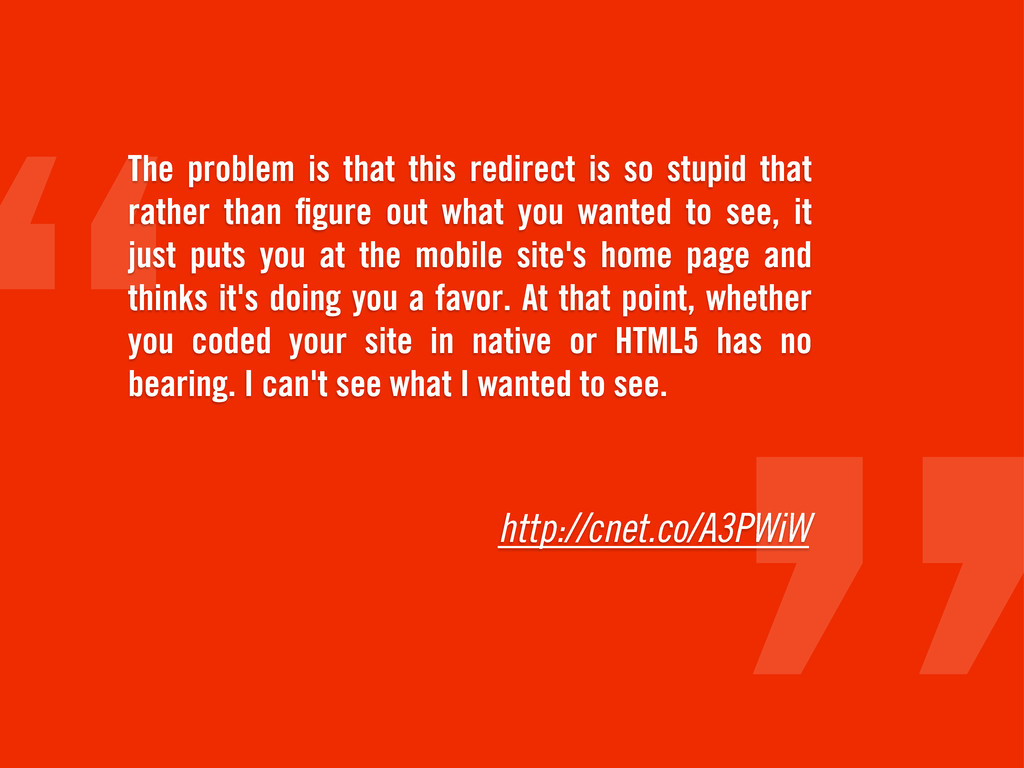
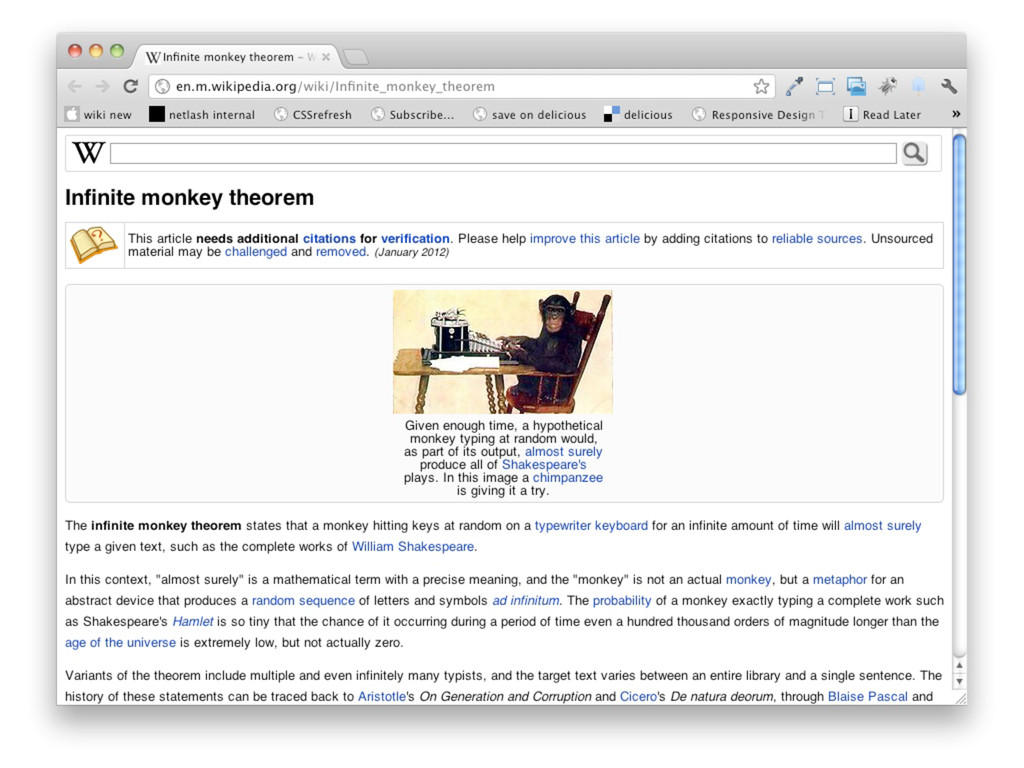
http://cnet.co/A3PWiW The problem is that this redirect is so stupid
that rather than figure out what you wanted to see, it just puts you at the mobile site's home page and thinks it's doing you a favor. At that point, whether you coded your site in native or HTML5 has no bearing. I can't see what I wanted to see.
And what if a user actually sees your regular site
on a mobile device?
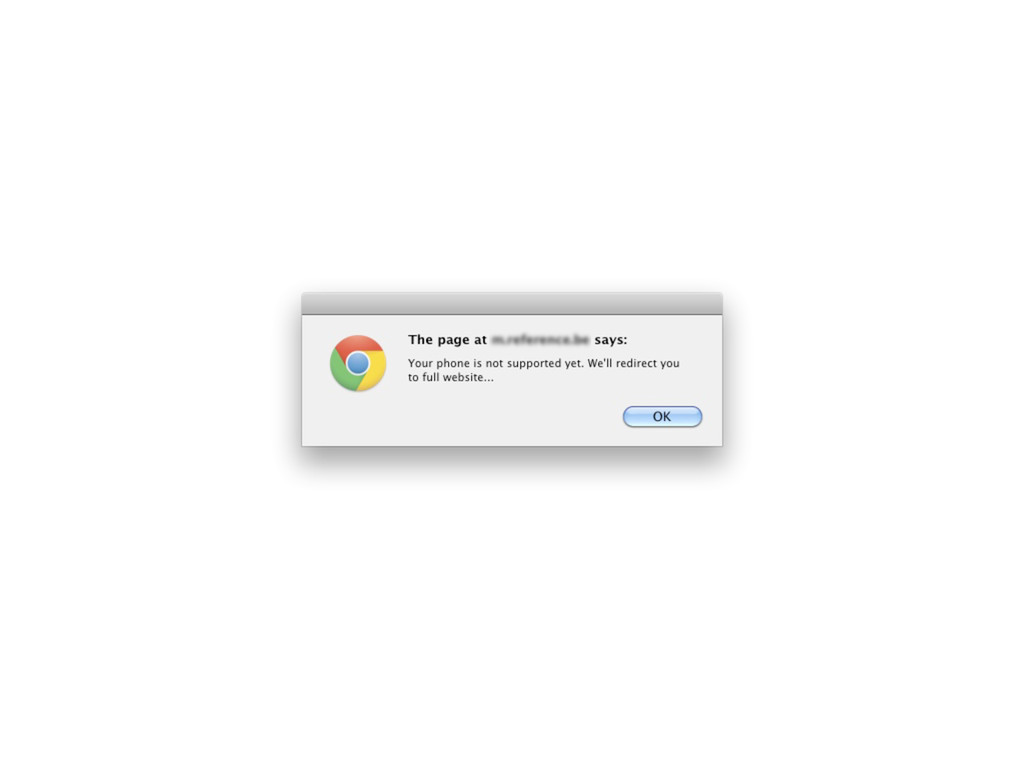
Please don’t click here to go to the full site.
↺ The other way around.
None
None
99 viewports, iphone’s just 1
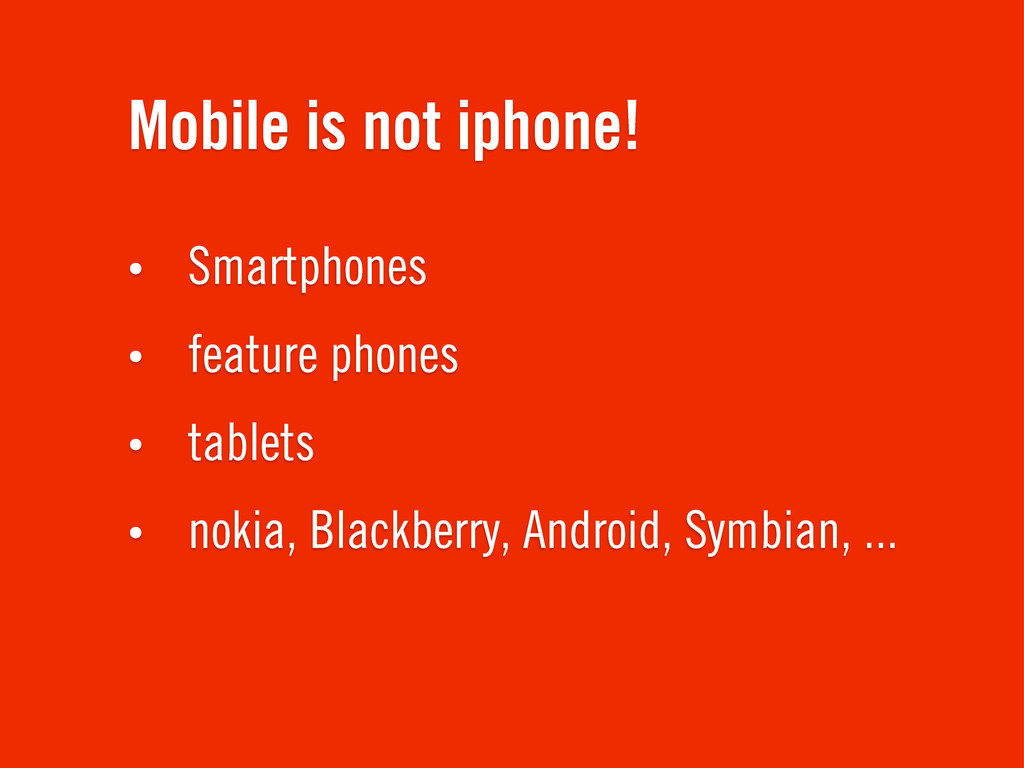
Mobile is not iphone! • Smartphones • feature phones •
tablets • nokia, Blackberry, Android, Symbian, ...
Ethan Marcotte Our sites are accessed by an increasing array
of devices and browsers, and our users deserve a quality experience no matter how large (or small) their display.
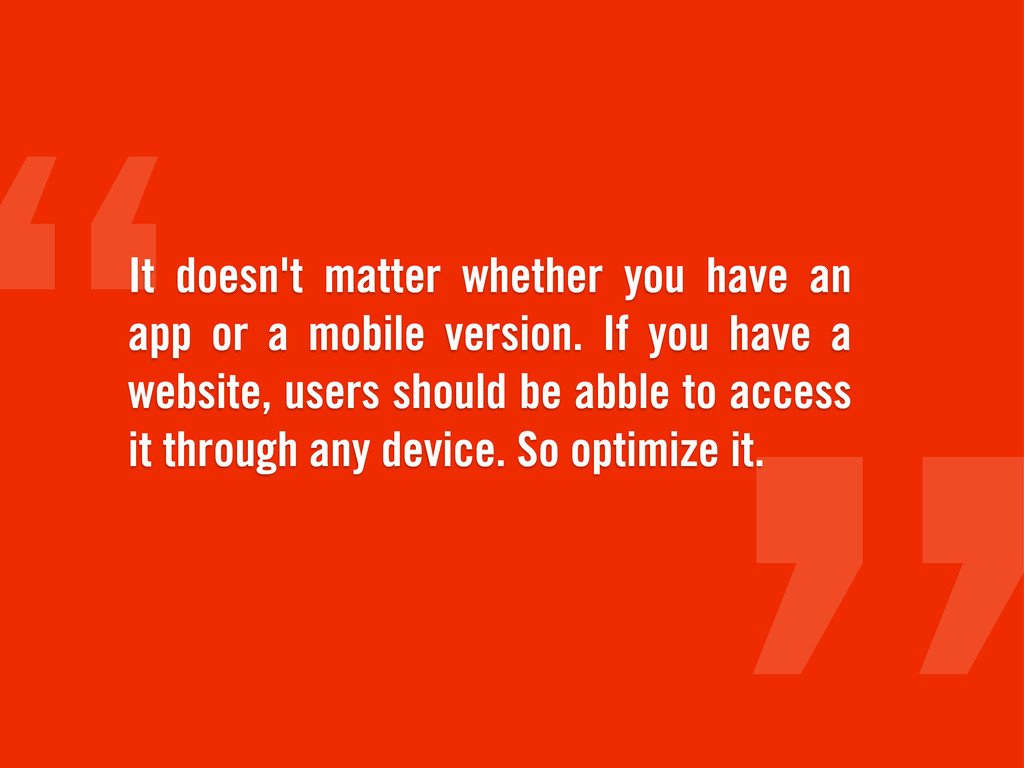
It doesn't matter whether you have an app or a
mobile version. If you have a website, users should be abble to access it through any device. So optimize it.
Think responsively.
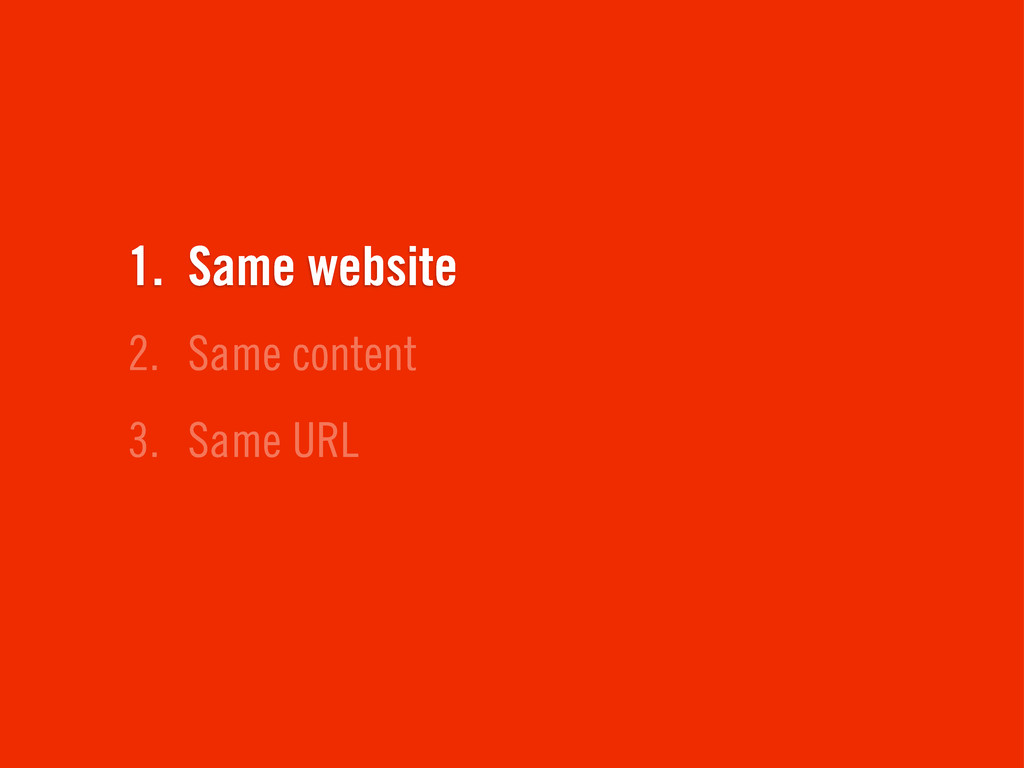
3. Same URL 2. Same content 1. Same website
3. Same URL 2. Same content 1. Same website
3. Same URL’s 2. Same content 1. Same website
2. different functionalities 1. different layouts
2. different functionalities 1. different layouts
What is it not? • Hiding content • display: none
David (TheLeggett) Leggett http://www.uxbooth.com/blog/considerations-for-mobile-design-part-2-dimensions/ The most reasonable case for omitting
objects from a mobile site is when the object wasn’t essential to the desktop site in the first place.
The new road To enlightment.
how to start? (working draft)
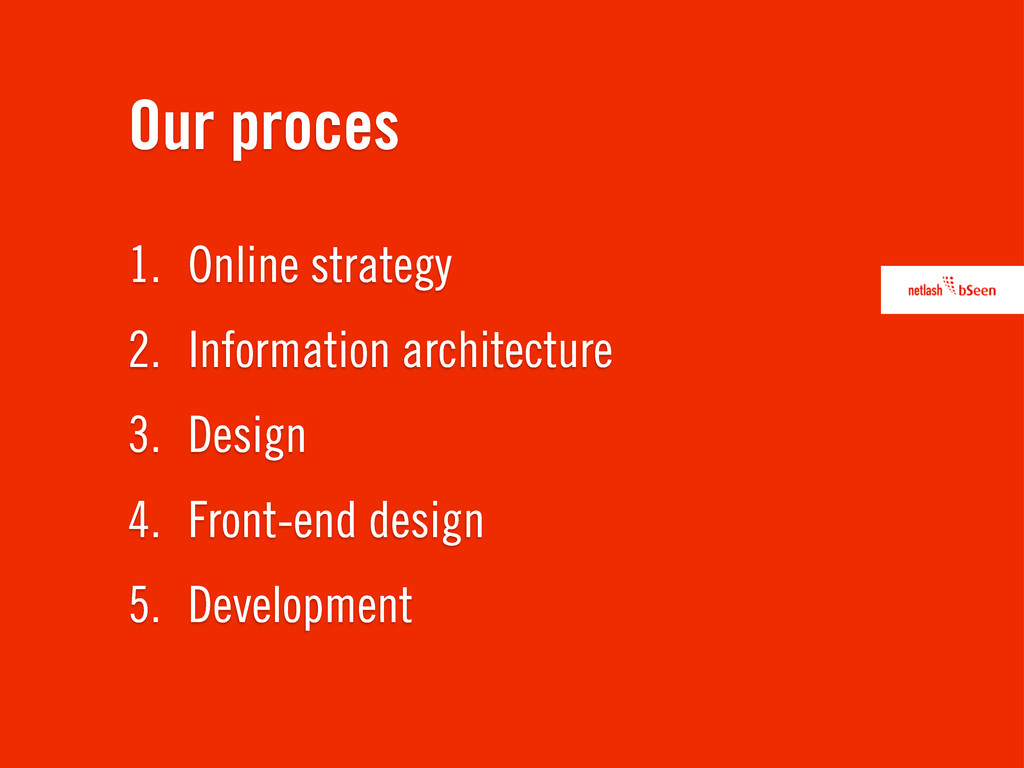
1. Online strategy 2. Information architecture 3. Design 4. Front-end
design 5. Development Our proces
♛ Content is king
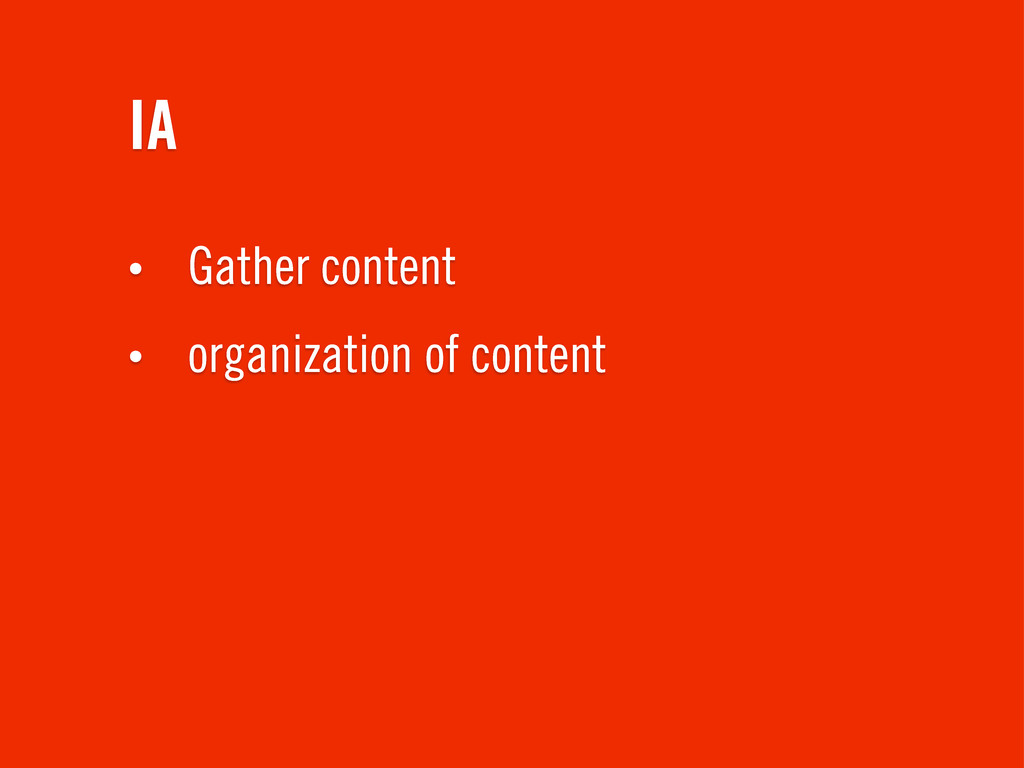
IA • Gather content • organization of content
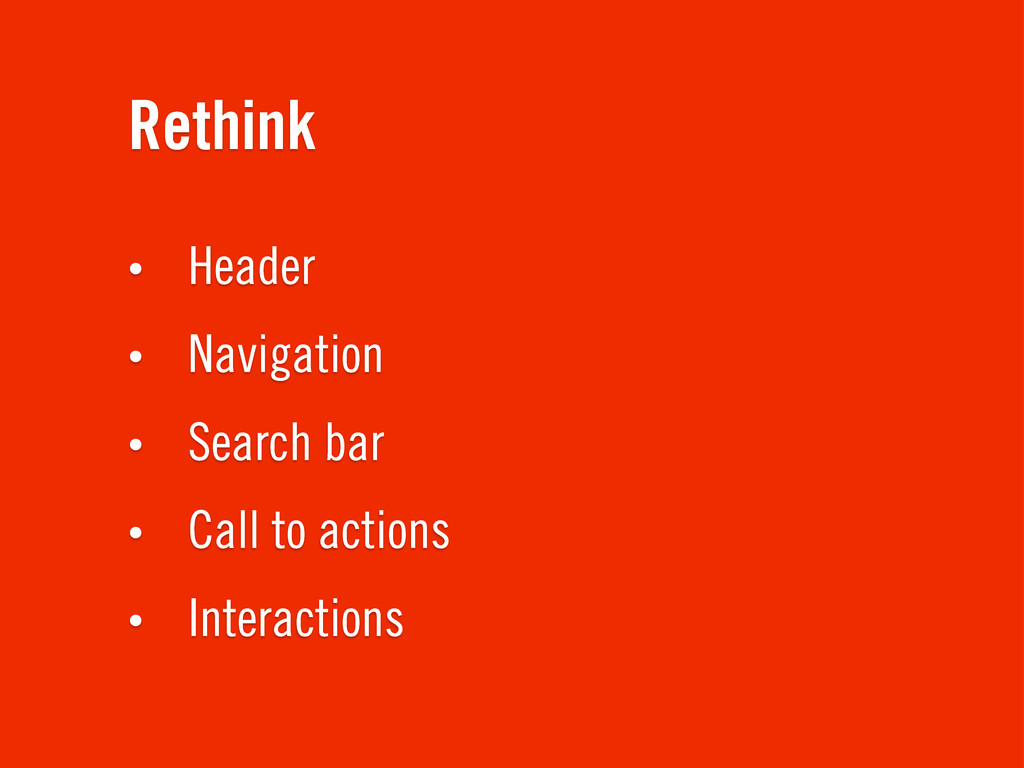
Rethink • Header • Navigation • Search bar • Call
to actions • Interactions
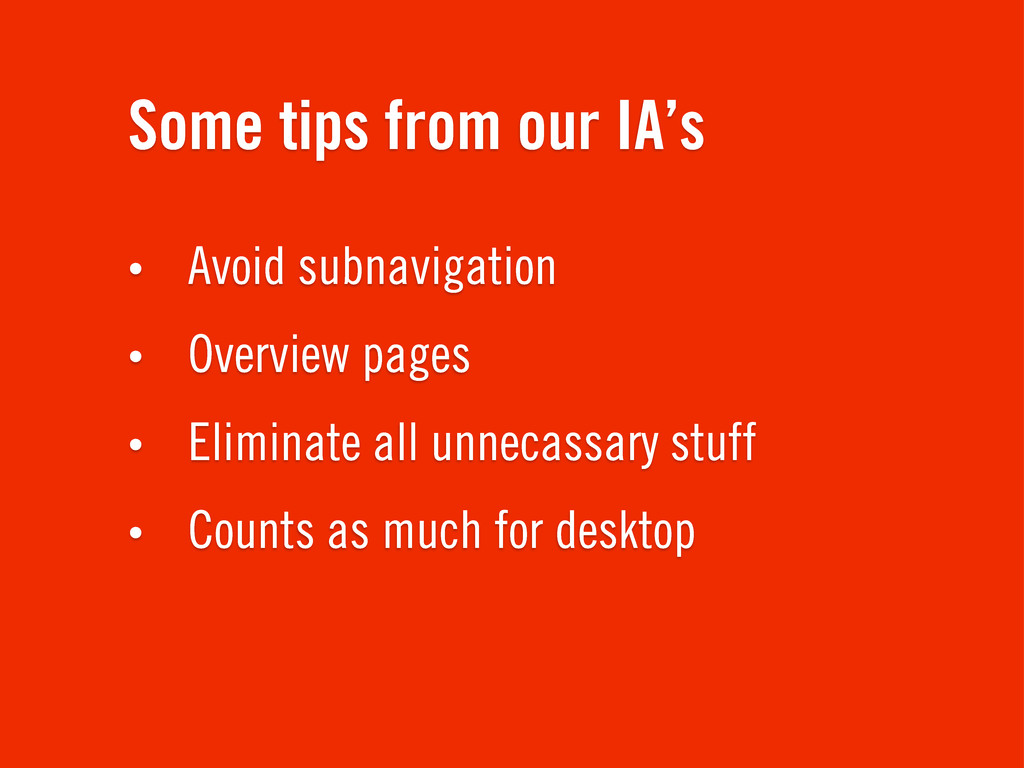
Some tips from our IA’s • Avoid subnavigation • Overview
pages • Eliminate all unnecassary stuff • Counts as much for desktop
✒ Design
Designing in the browser
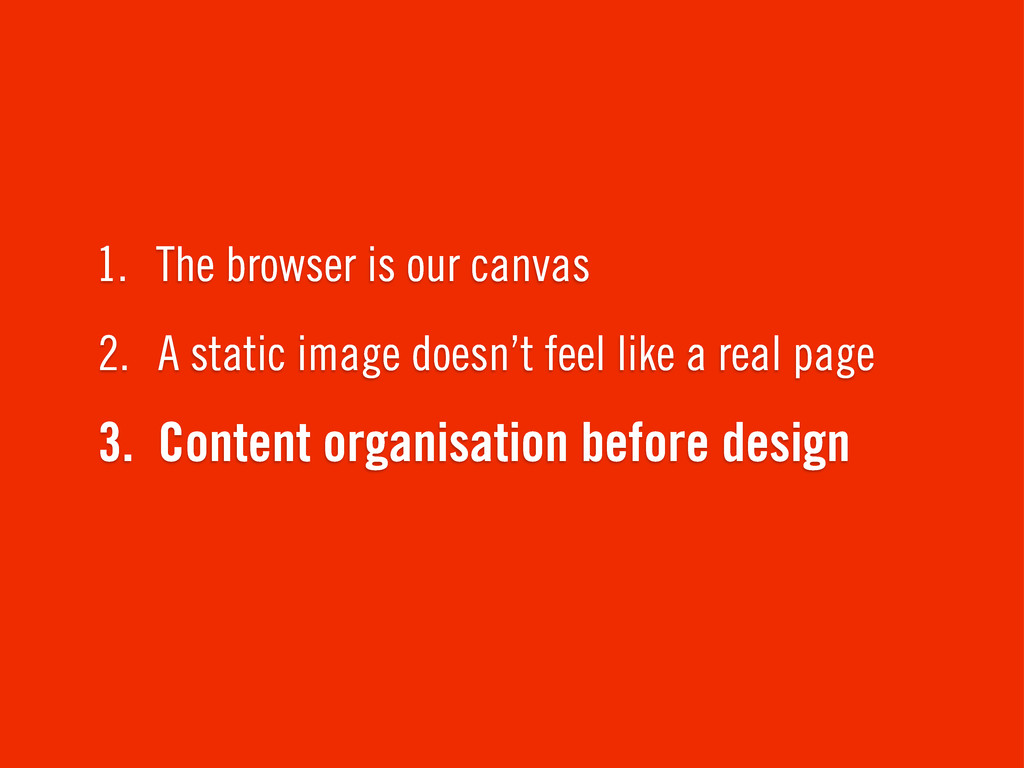
3. Content organisation before design 2. A static image doesn’t
feel like a real page 1. The browser is our canvas
3. Content organisation before design 2. A static image doesn’t
feel like a real page 1. The browser is our canvas
3. Content organisation before design 2. A static image doesn’t
feel like a real page 1. The browser is our canvas
Designing in photoshop
3. Try things not possible with only 2. No limitations
1. Photoshop as creative outlet
3. Try things not possible with only 2. No limitations
1. Photoshop as creative outlet
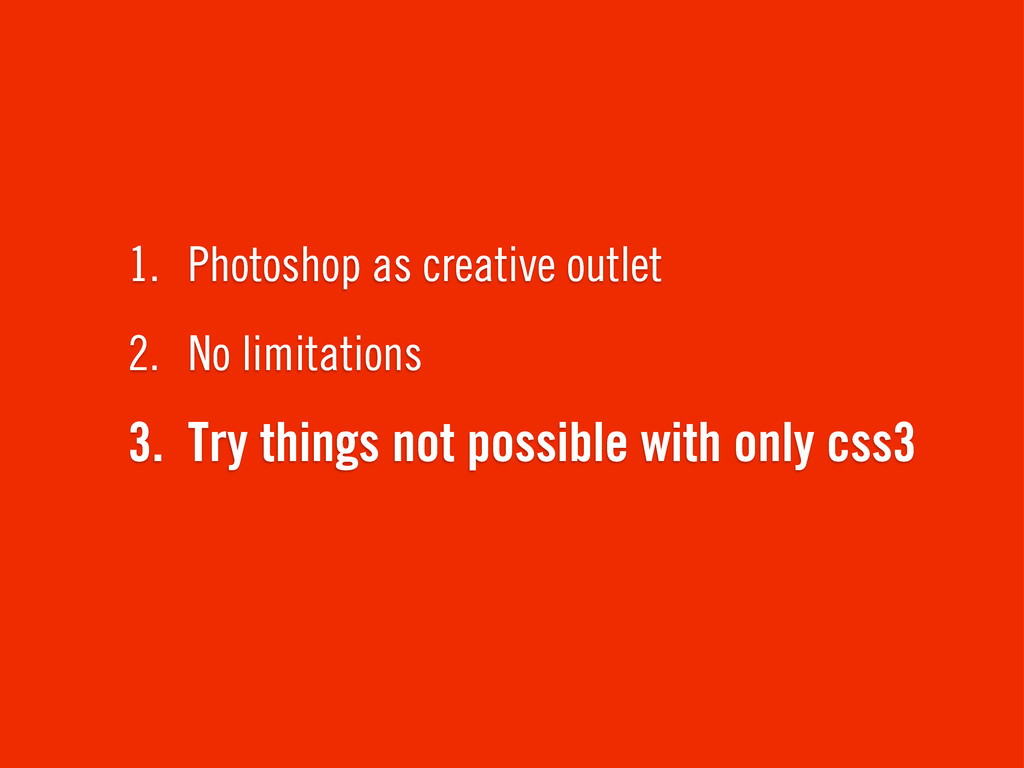
3. Try things not possible with only css3 2. No
limitations 1. Photoshop as creative outlet
Establish the global visual design direction
3. The designer ≠ front-end dev 2. Something to fall
back on 1. Starting point
3. The designer ≠ front-end dev 2. Something to fall
back on 1. Starting point
3. The designer ≠ front-end dev 2. Something to fall
back on 1. Starting point
Designing proportions.
3. Modular! 2. Think proportions, ratios, percentages 1. Forget pixels!
3. Modular! 2. Think proportions, ratios, percentages 1. Forget pixels!
3. Modular! 2. Think proportions, ratios, percentages 1. Forget pixels!
Width?
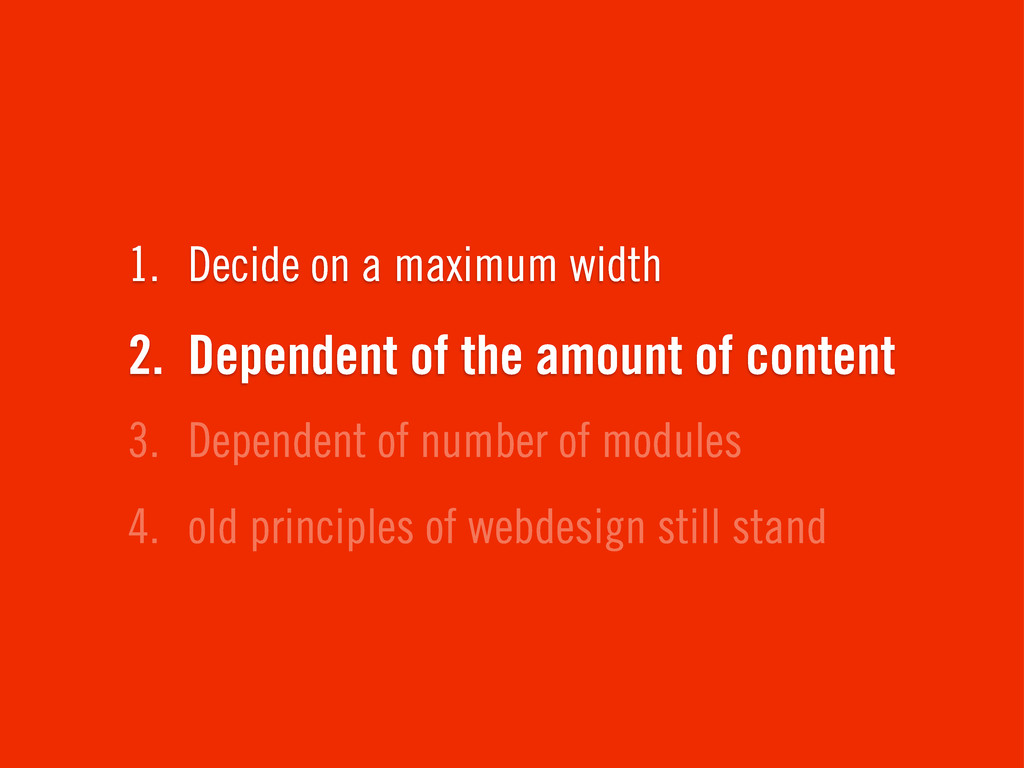
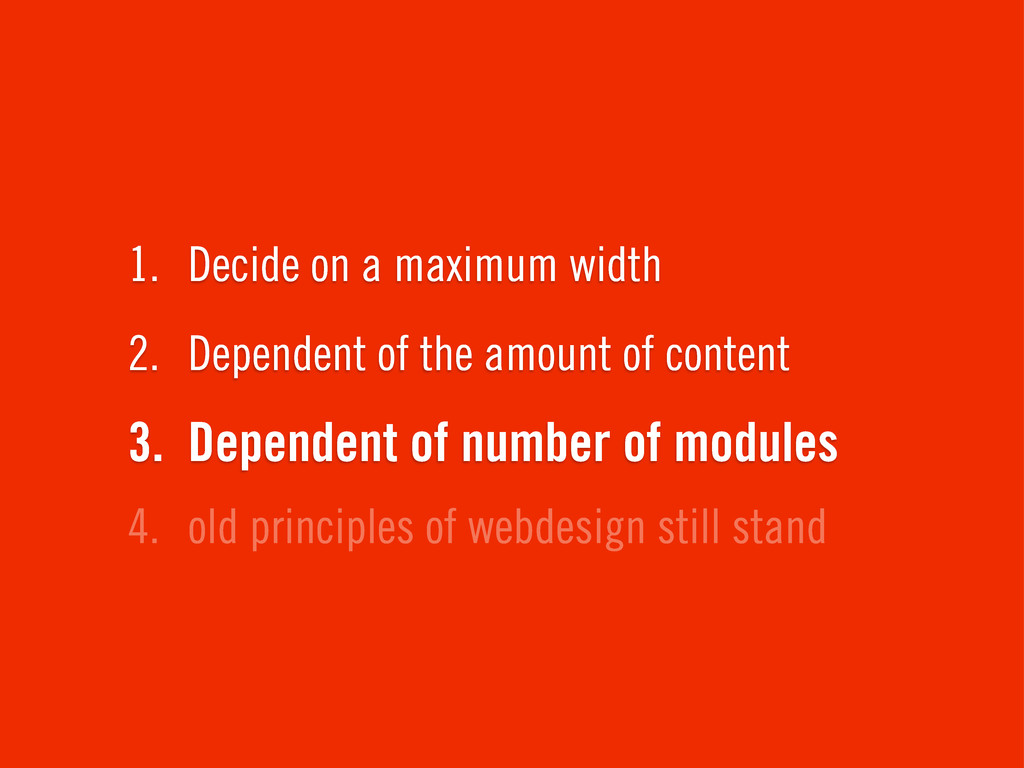
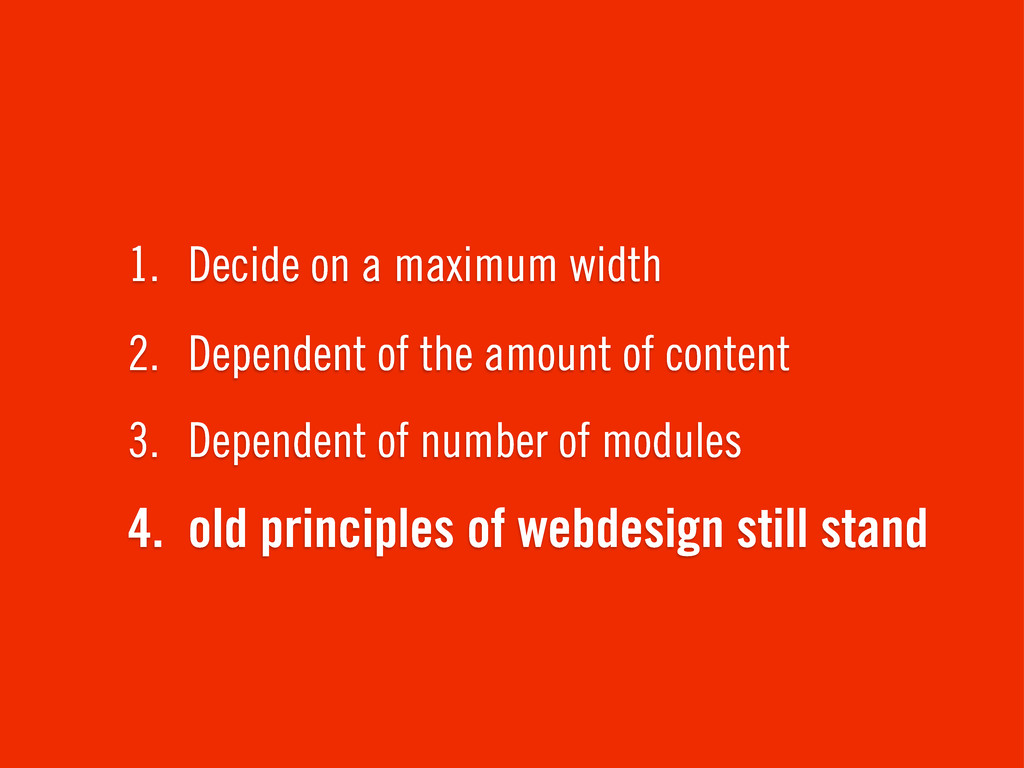
4. old principles of webdesign still stand 3. Dependent of
number of modules 2. Dependent of the amount of content 1. Decide on a maximum width
4. old principles of webdesign still stand 3. Dependent of
number of modules 2. Dependent of the amount of content 1. Decide on a maximum width
4. old principles of webdesign still stand 3. Dependent of
number of modules 2. Dependent of the amount of content 1. Decide on a maximum width
4. old principles of webdesign still stand 3. Dependent of
number of modules 2. Dependent of the amount of content 1. Decide on a maximum width
Grid!
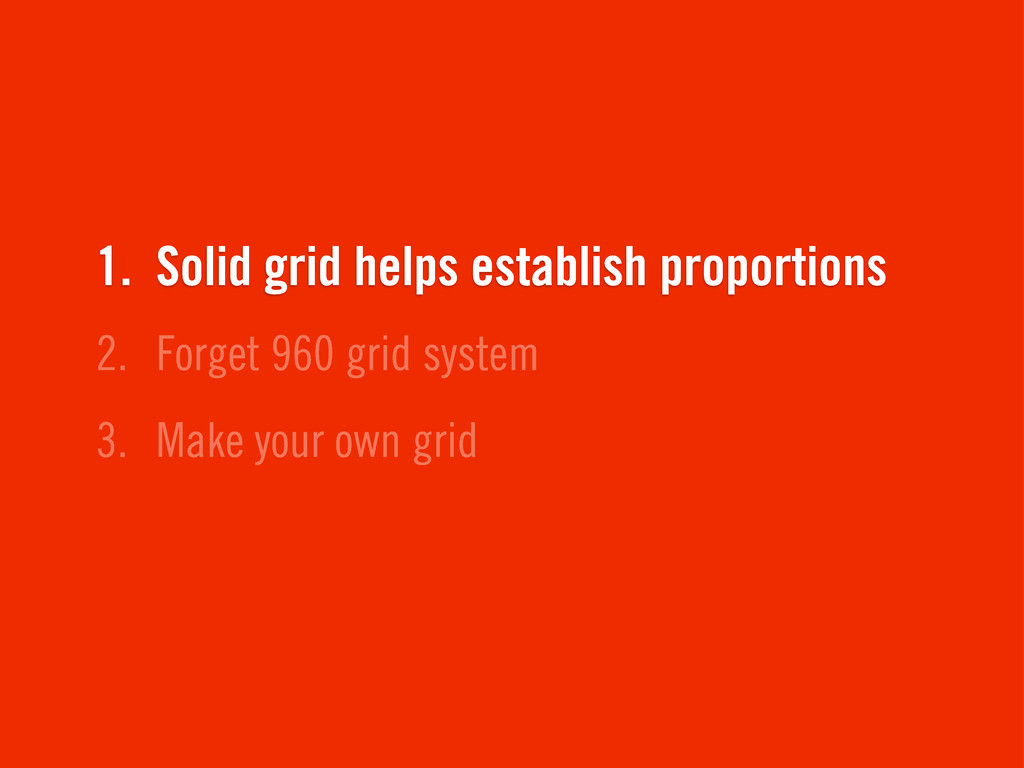
3. Make your own grid 2. Forget 960 grid system
1. Solid grid helps establish proportions
3. Make your own grid 2. Forget 960 grid system
1. Solid grid helps establish proportion
3. Make your own grid 2. Forget 960 grid system
1. Solid grid helps establish
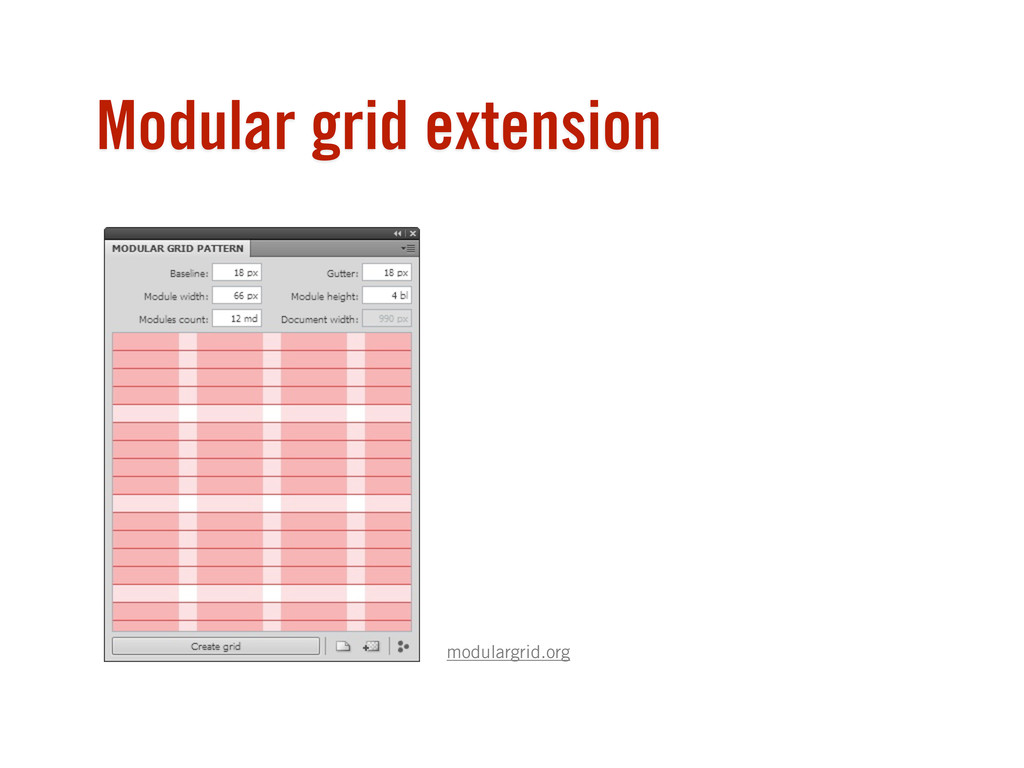
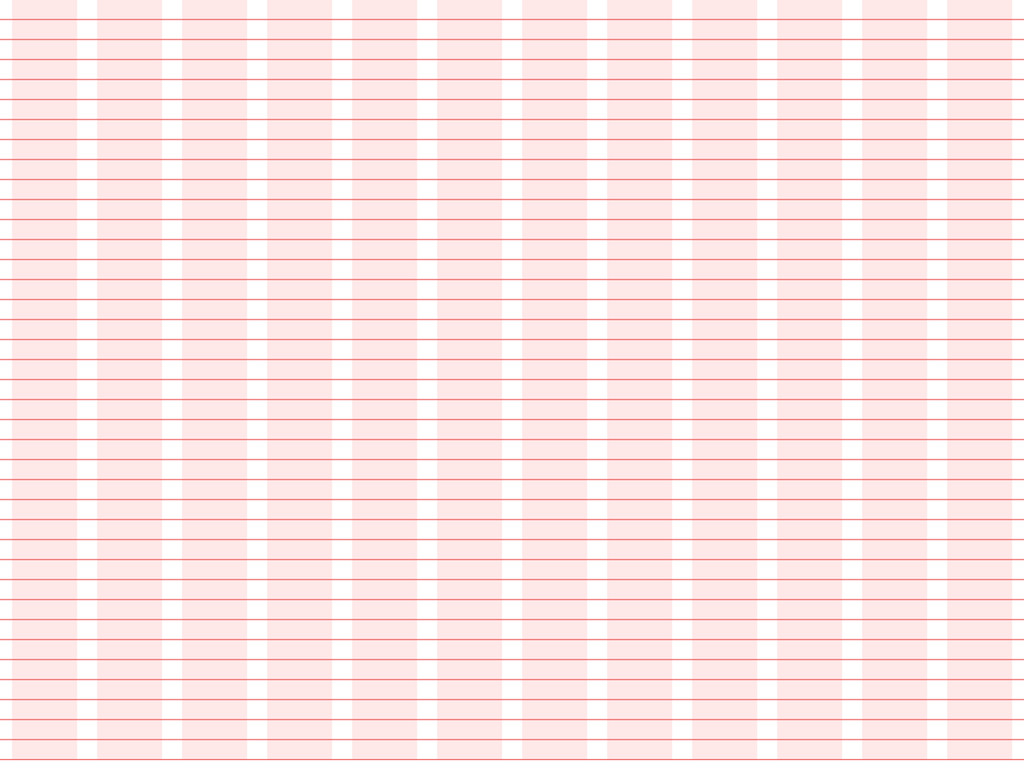
Modular grid extension modulargrid.org
None
None
None
None
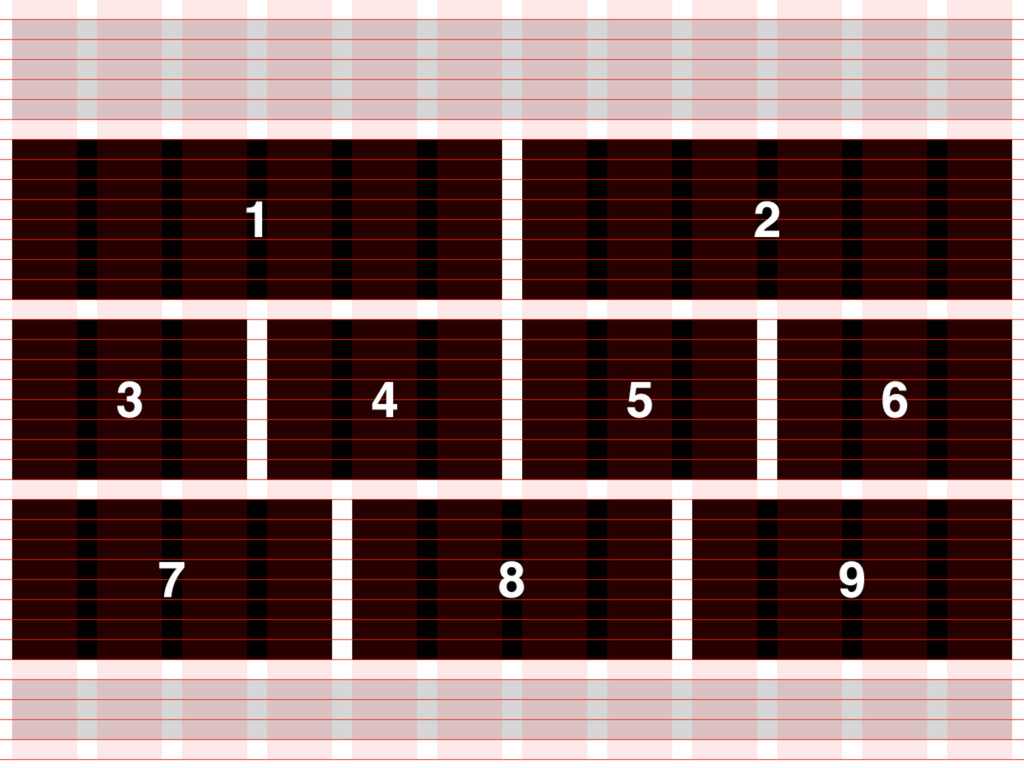
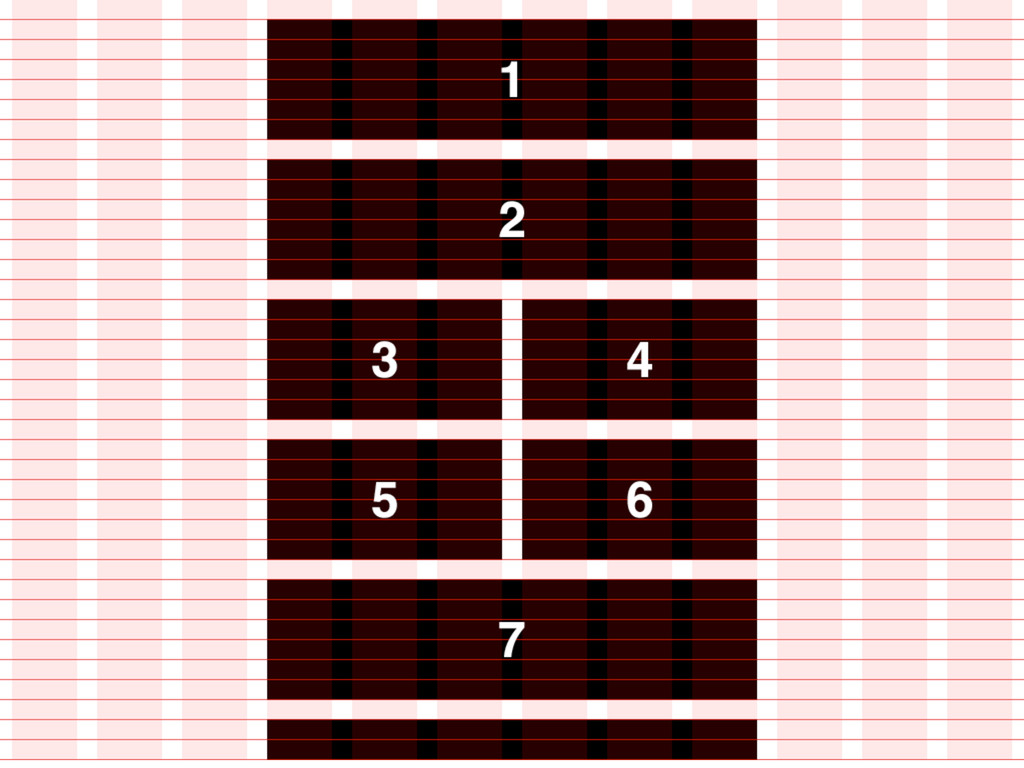
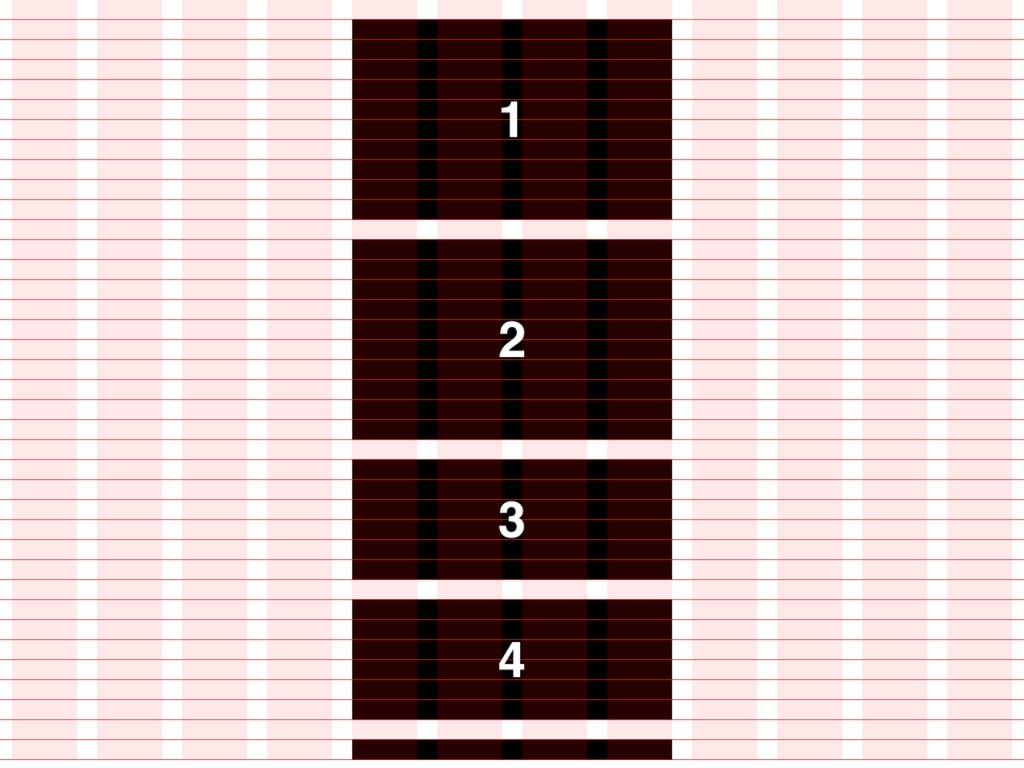
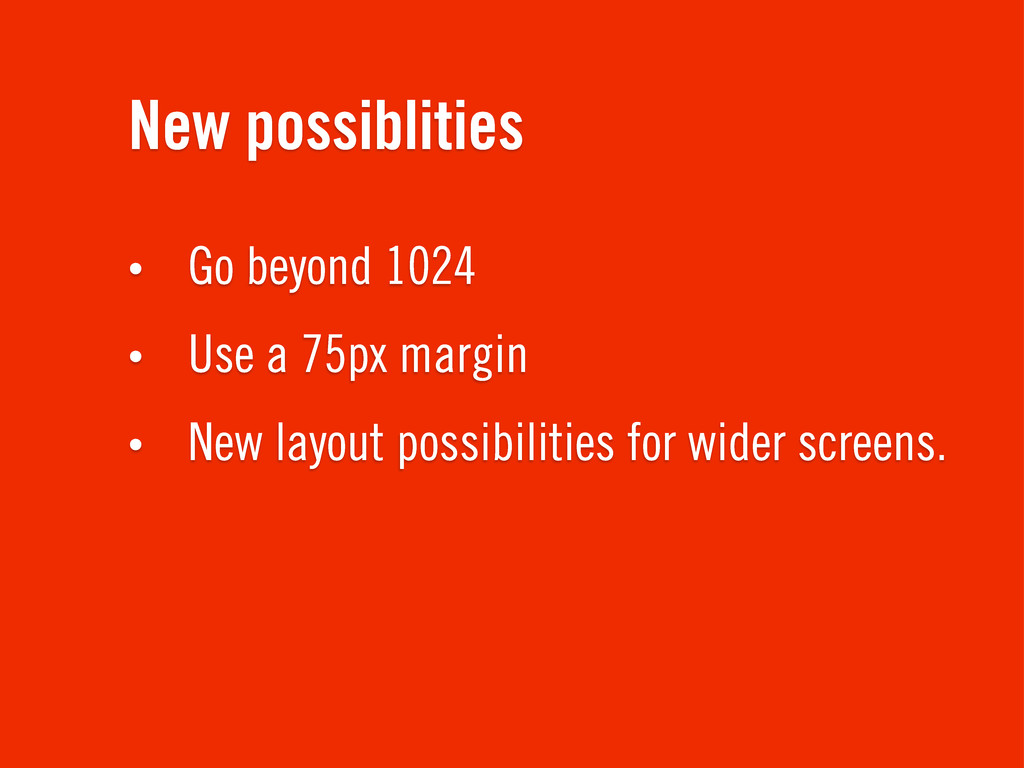
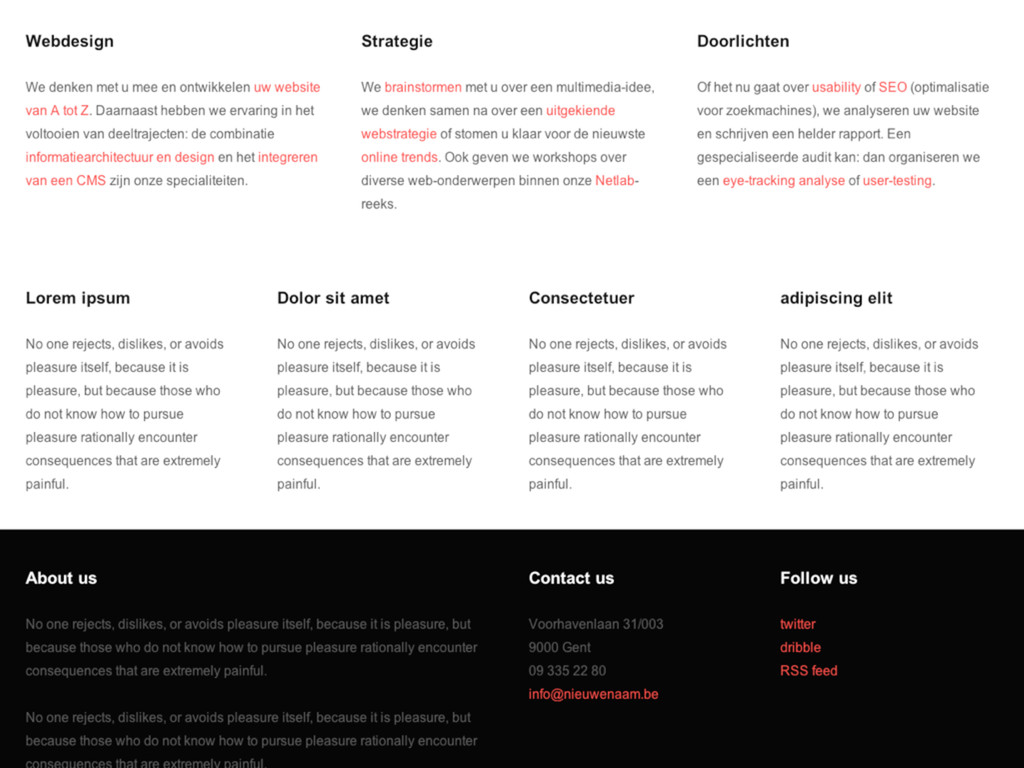
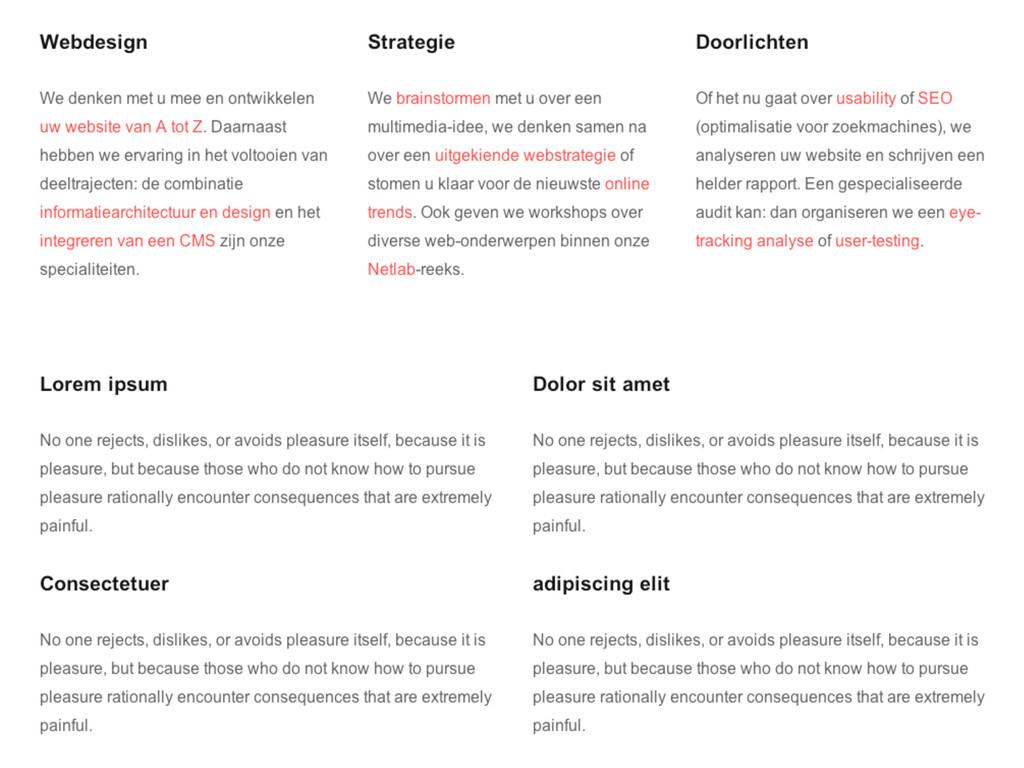
New possiblities • Go beyond 1024 • Use a 75px
margin • New layout possibilities for wider screens.
None
None
Best practice
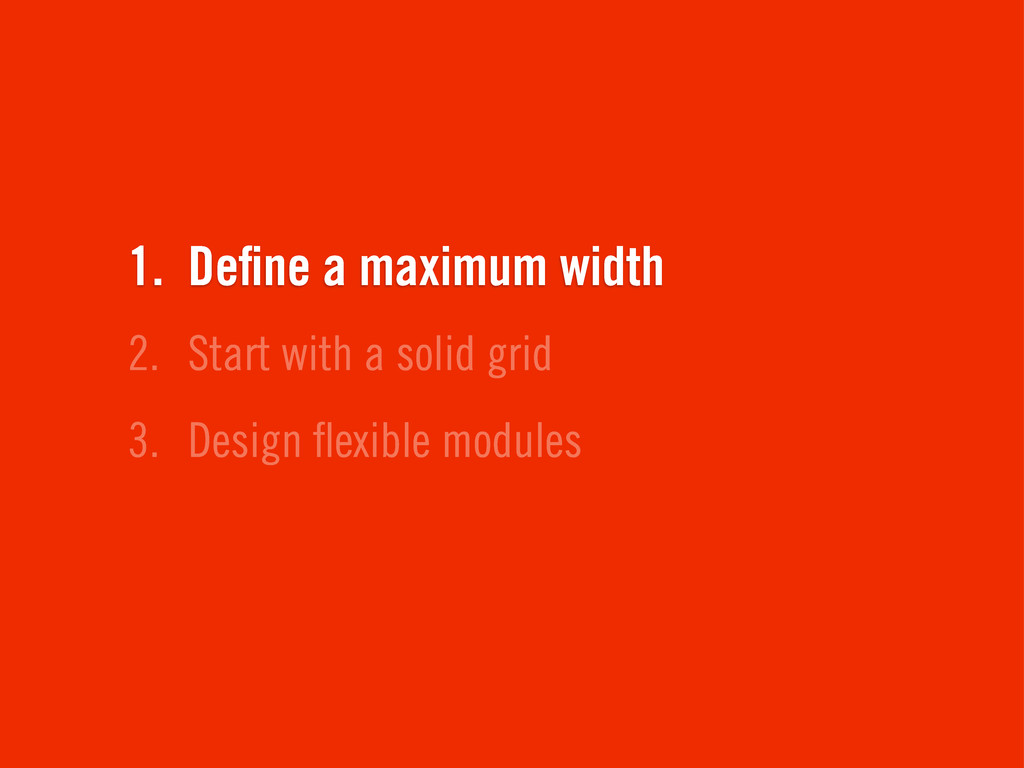
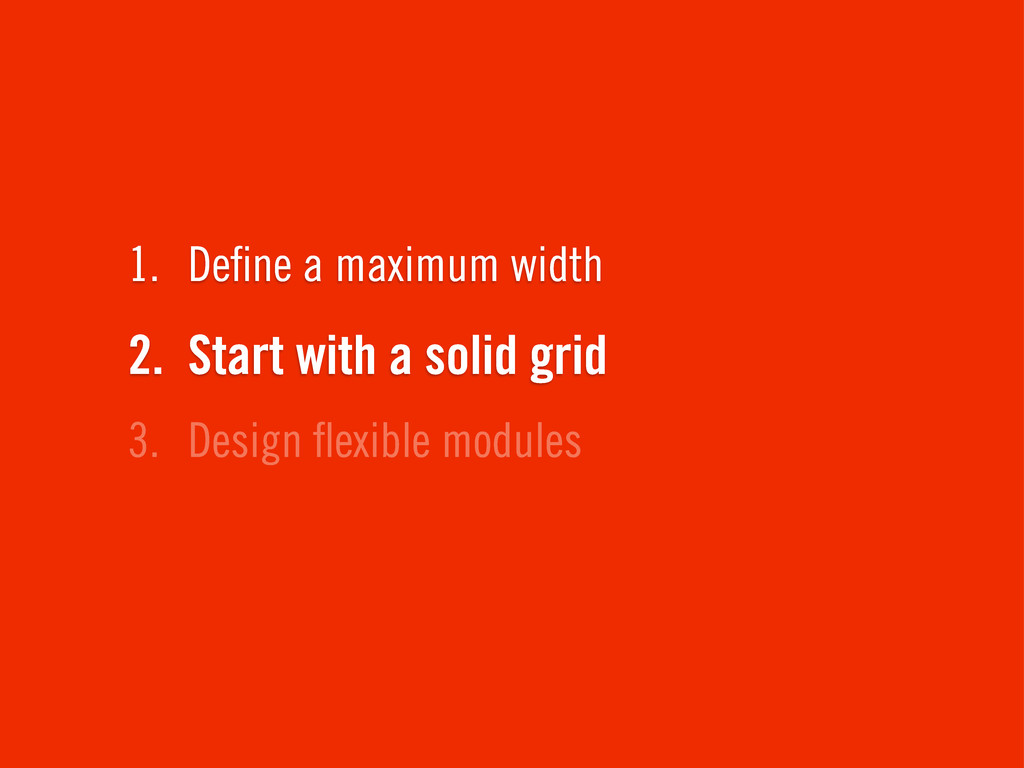
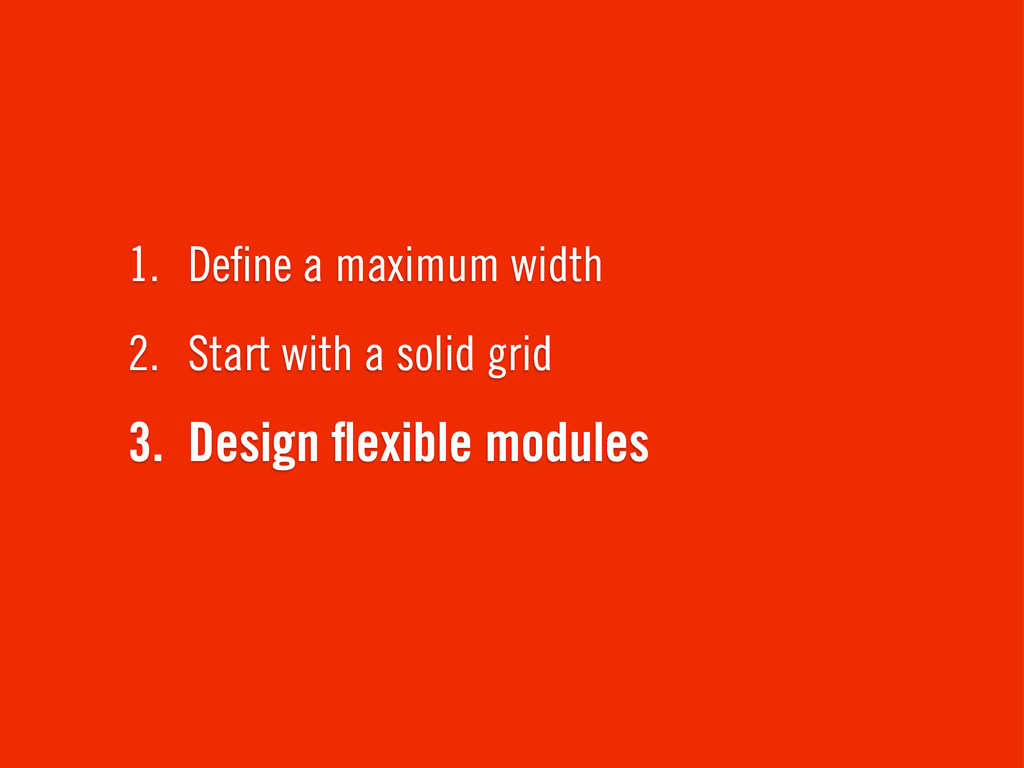
3. Design flexible modules 2. Start with a solid grid
1. Define a maximum width
3. Design flexible modules 2. Start with a solid grid
1. Define a maximum width
3. Design flexible modules 2. Start with a solid grid
1. Define a maximum width
To the browser!
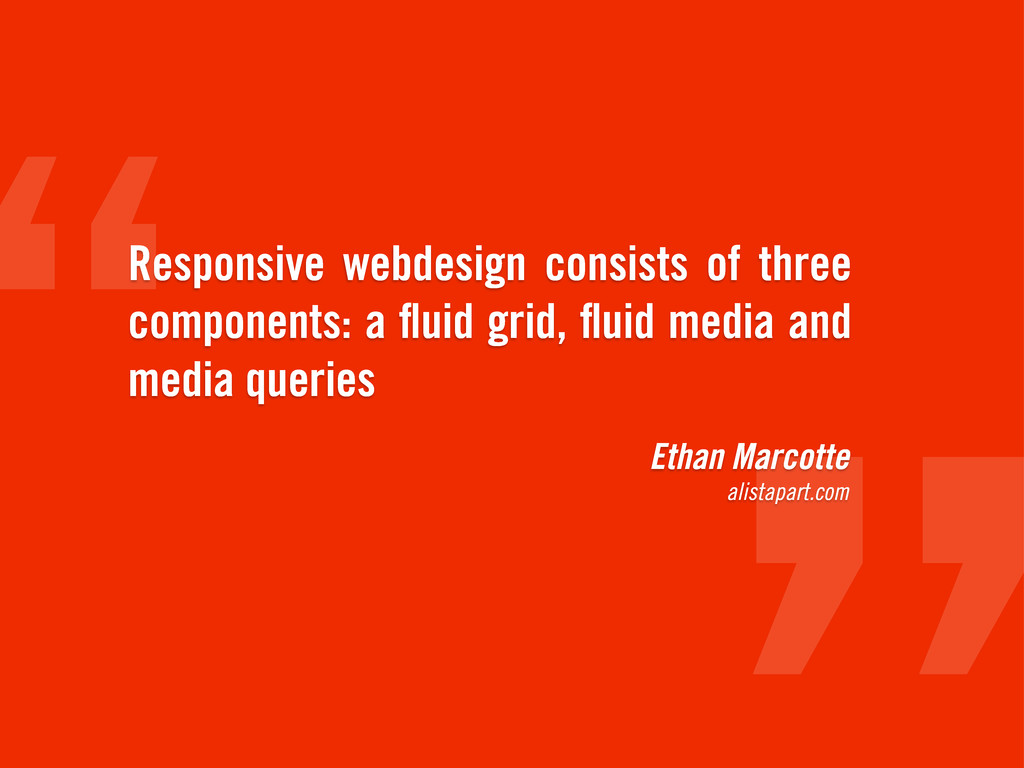
Ethan Marcotte alistapart.com Responsive webdesign consists of three components: a
fluid grid, fluid media and media queries
Fluid vs fixed Responsive vs adaptive
fluid, responsive http://dropmark.com/
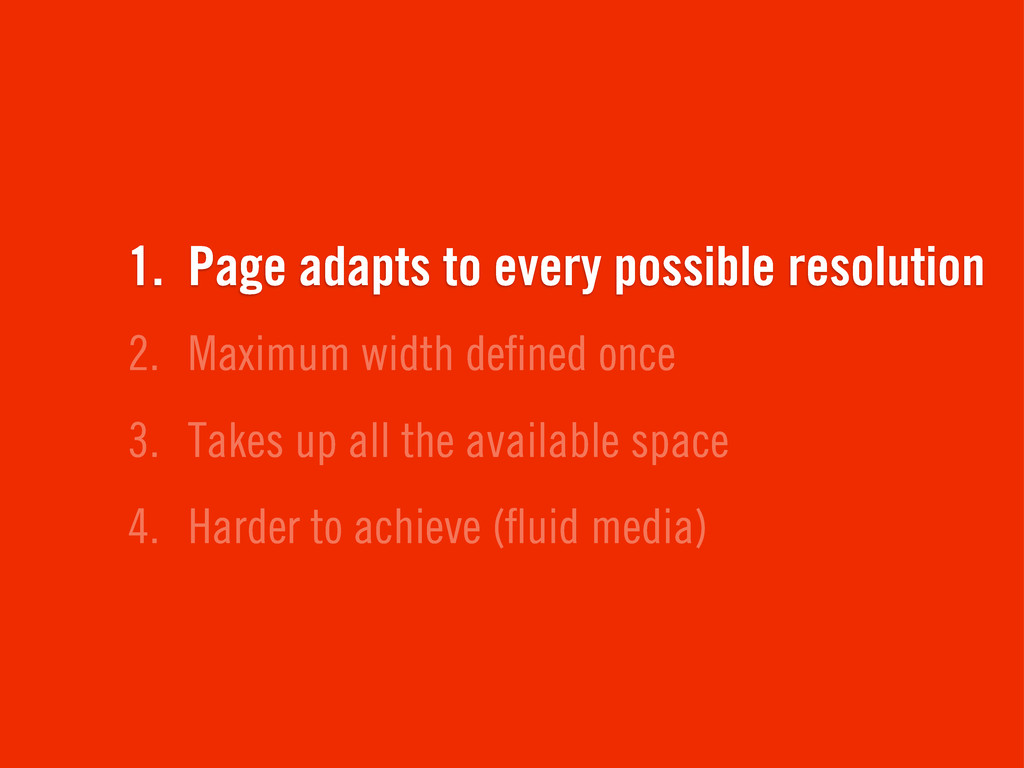
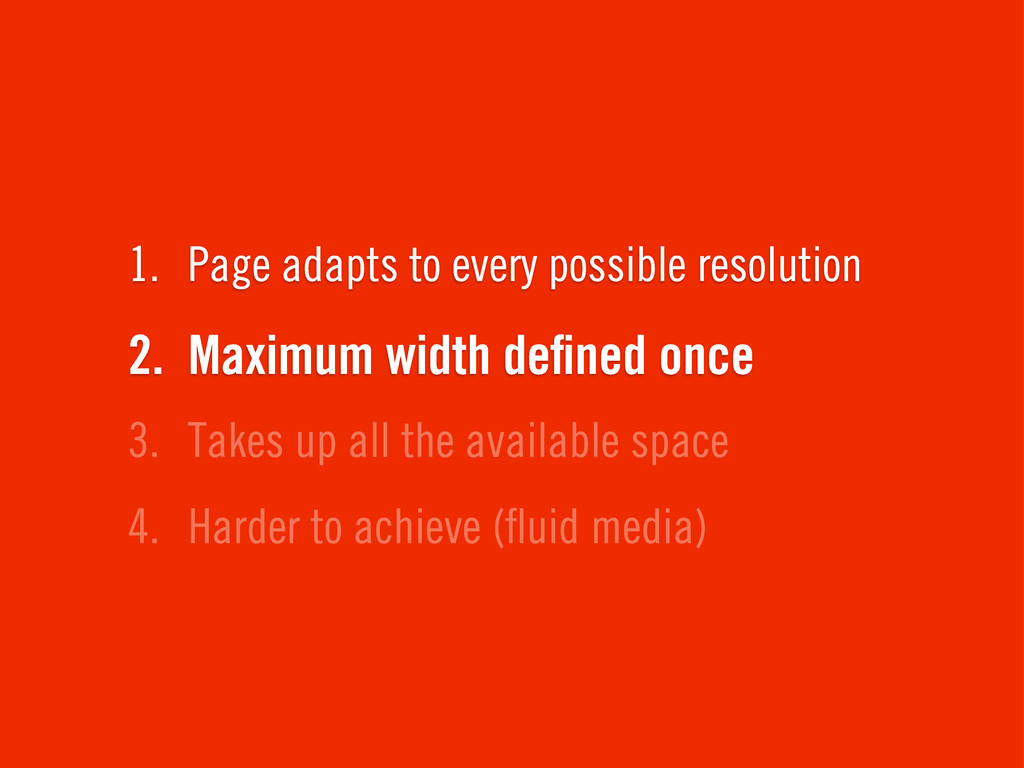
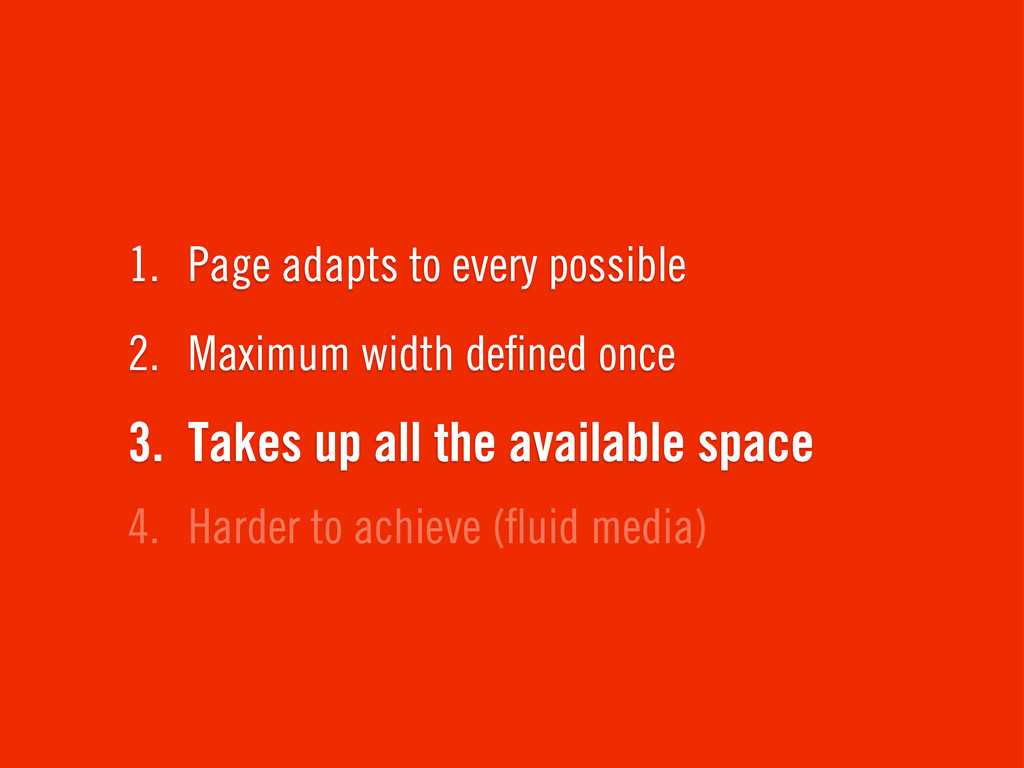
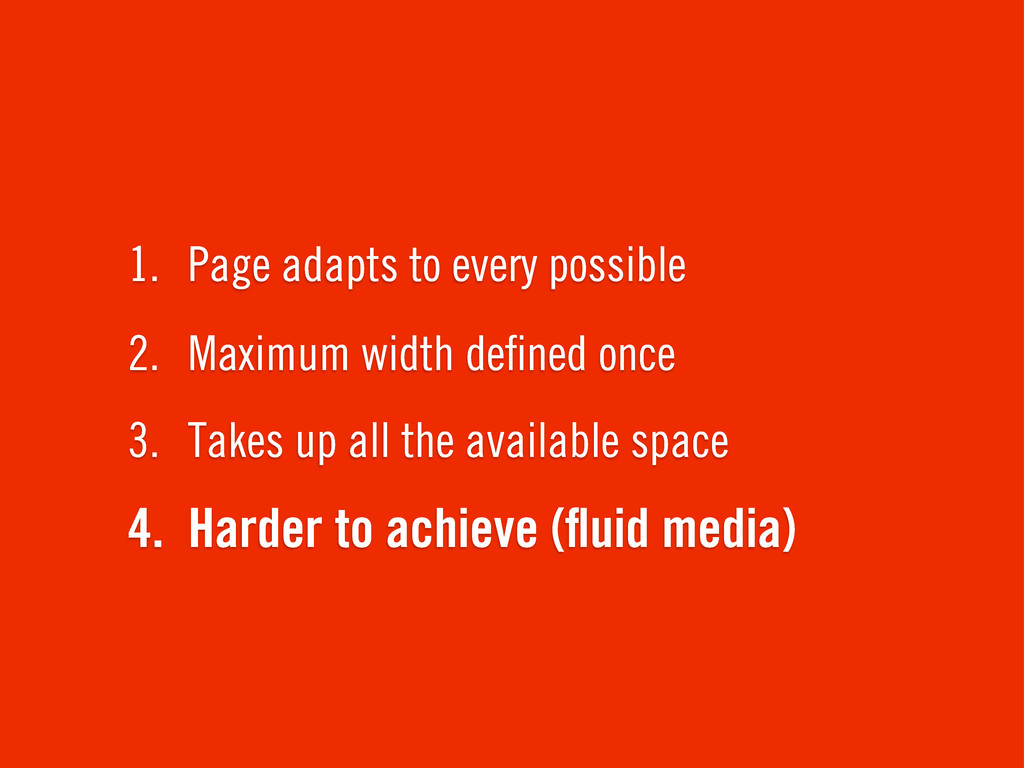
4. Harder to achieve (fluid media) 3. Takes up all
the available space 2. Maximum width defined once 1. Page adapts to every possible resolution
4. Harder to achieve (fluid media) 3. Takes up all
the available space 2. Maximum width defined once 1. Page adapts to every possible resolution
4. Harder to achieve (fluid media) 3. Takes up all
the available space 2. Maximum width defined once 1. Page adapts to every possible
4. Harder to achieve (fluid media) 3. Takes up all
the available space 2. Maximum width defined once 1. Page adapts to every possible
fixed, adaptive http://mikedidthis-focus.tumblr.com/
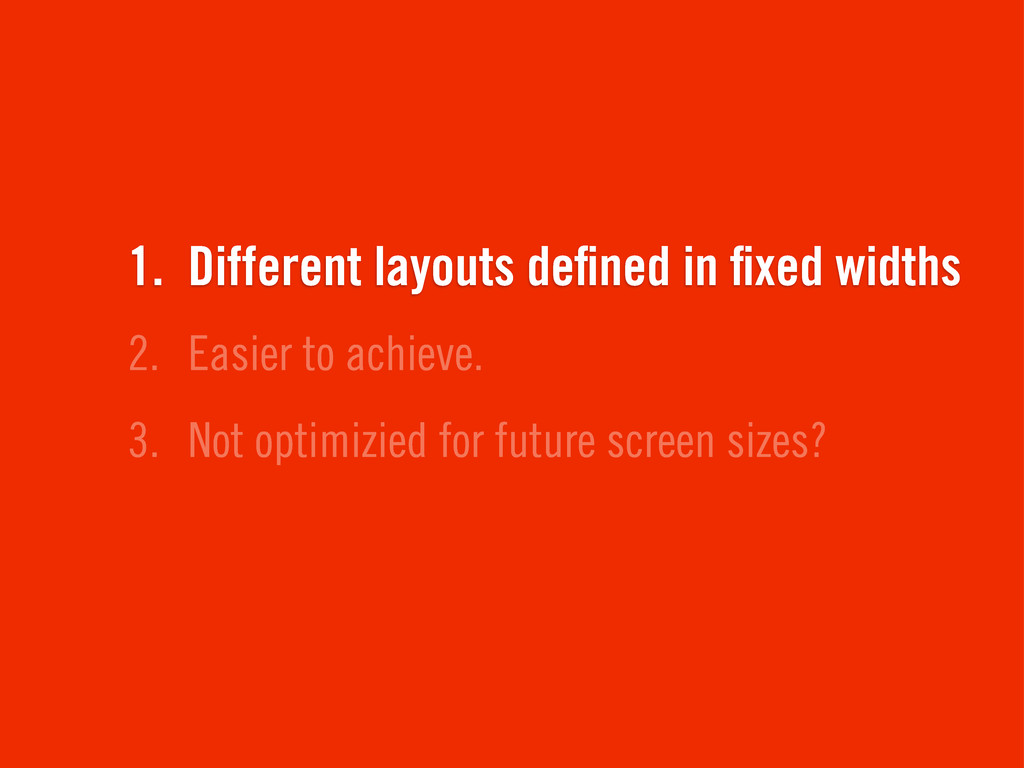
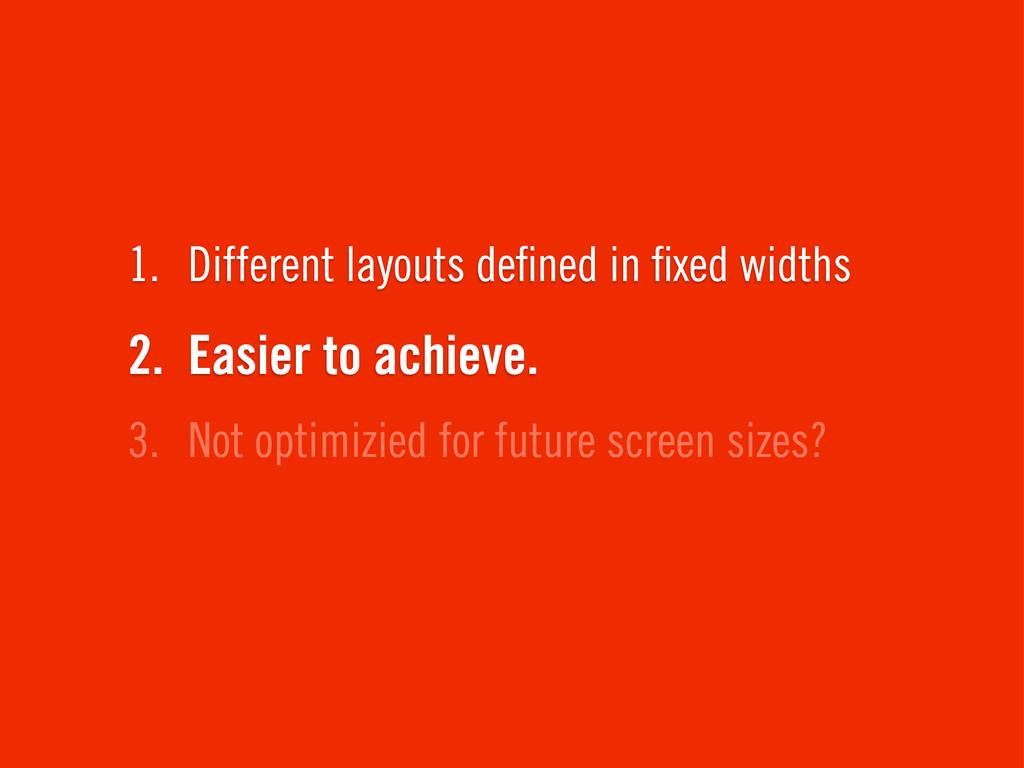
3. Not optimizied for future screen sizes? 2. Easier to
achieve. 1. Different layouts defined in fixed widths
3. Not optimizied for future screen sizes? 2. Easier to
achieve. 1. Different layouts defined in fixed widths
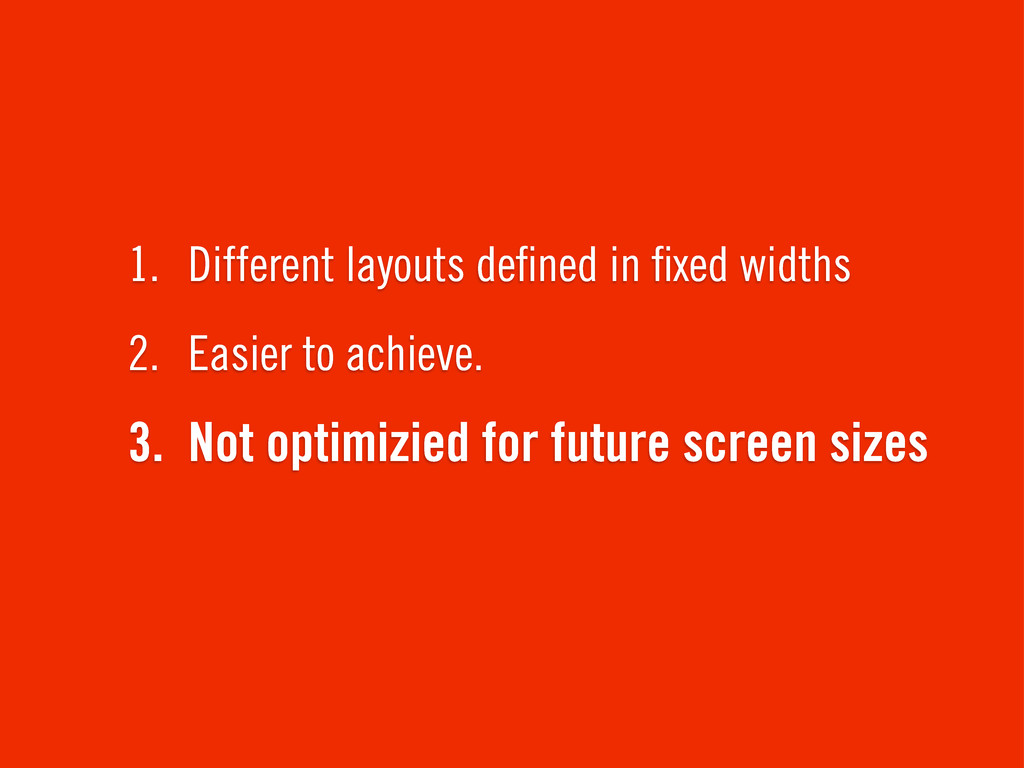
3. Not optimizied for future screen sizes 2. Easier to
achieve. 1. Different layouts defined in fixed widths
CSS3 media queries
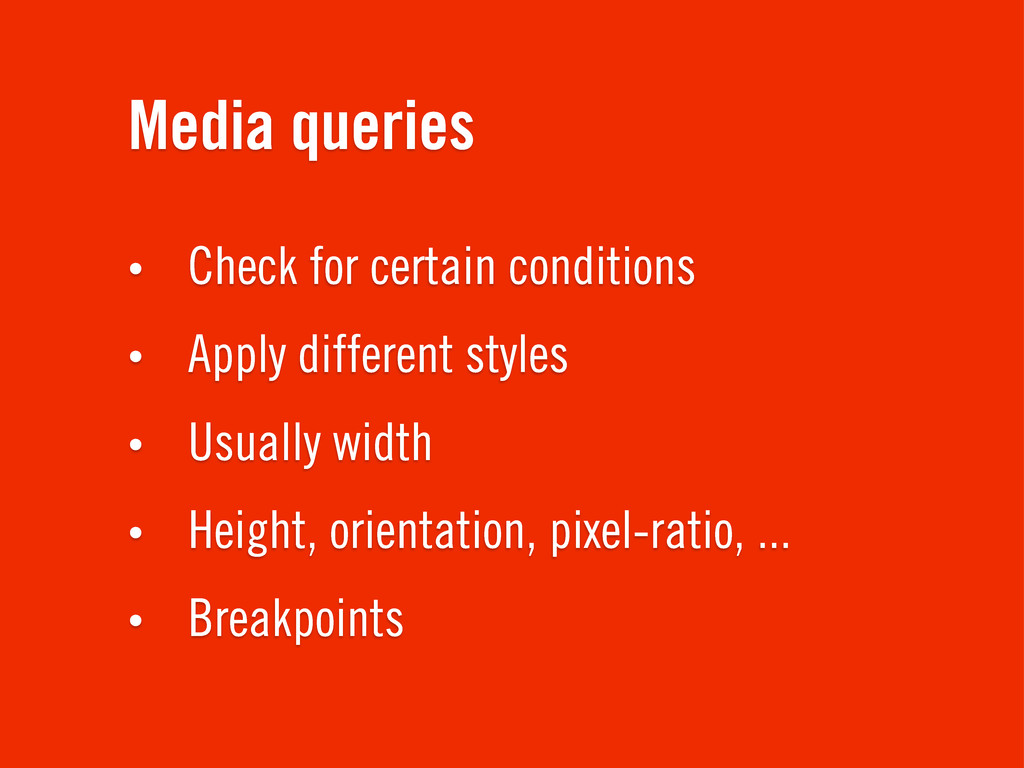
Media queries • Check for certain conditions • Apply different
styles • Usually width • Height, orientation, pixel-ratio, ... • Breakpoints
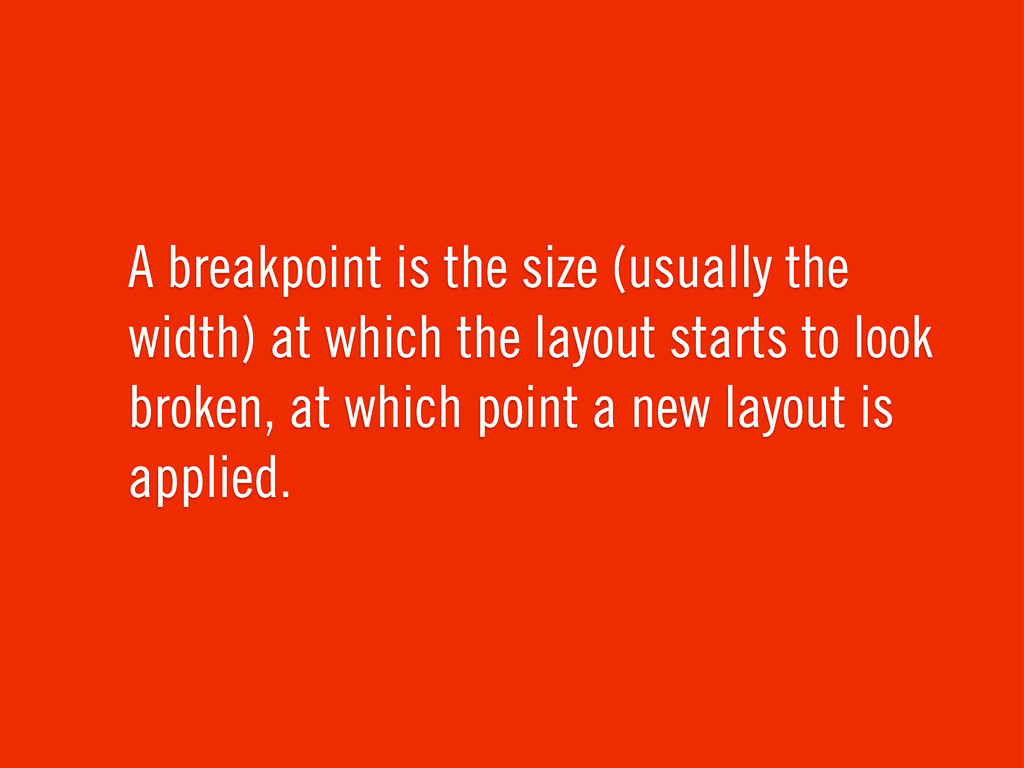
A breakpoint is the size (usually the width) at which
the layout starts to look broken, at which point a new layout is applied.
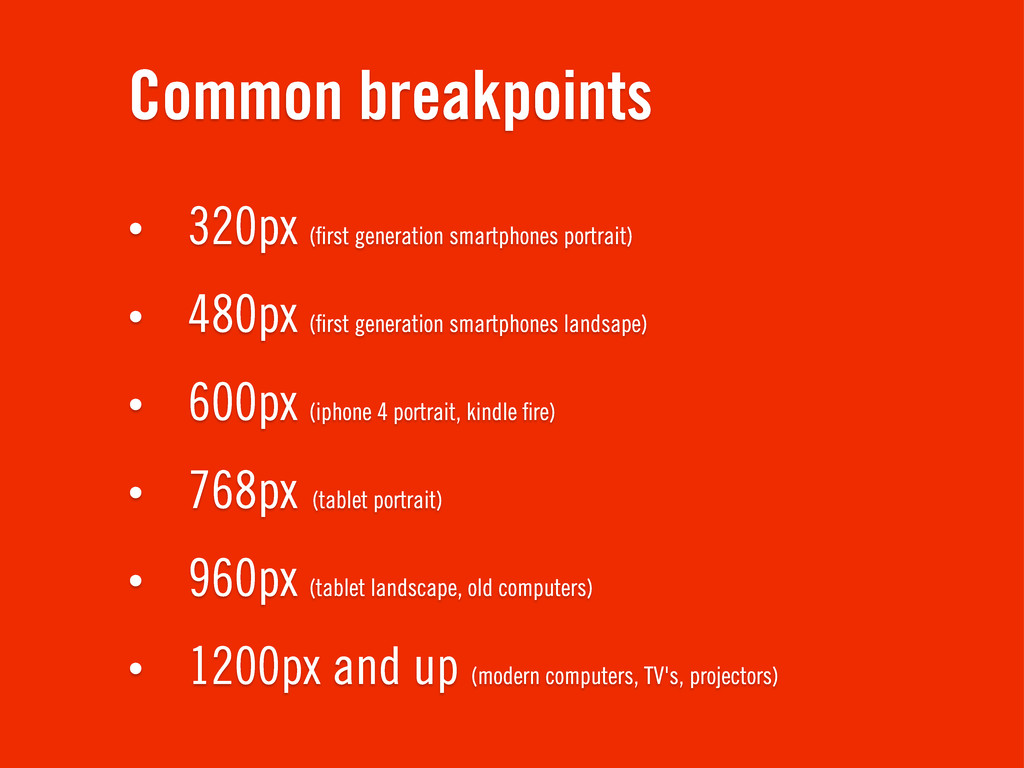
Common breakpoints • 320px (first generation smartphones portrait) • 480px
(first generation smartphones landsape) • 600px (iphone 4 portrait, kindle fire) • 768px (tablet portrait) • 960px (tablet landscape, old computers) • 1200px and up (modern computers, TV's, projectors)
Long live natural responsive web design breakpoints.
Mark Drummond http://marcdrummond.com/responsive-web-design/2011/12/29/default- breakpoints-are-dead Use awkwardness as your guideline, not
ephemeral default device widths.
http://responsivepx.com/ http://www.youtube.com/watch? v=kYpENMubJKQ
Mobile first Basic CSS is defined before the first breakpoint.
Mobile first • Typography • link colors • background colors
• margins • ...
This way the simplest version is served first so less
capable devices still serve a usable readable website.
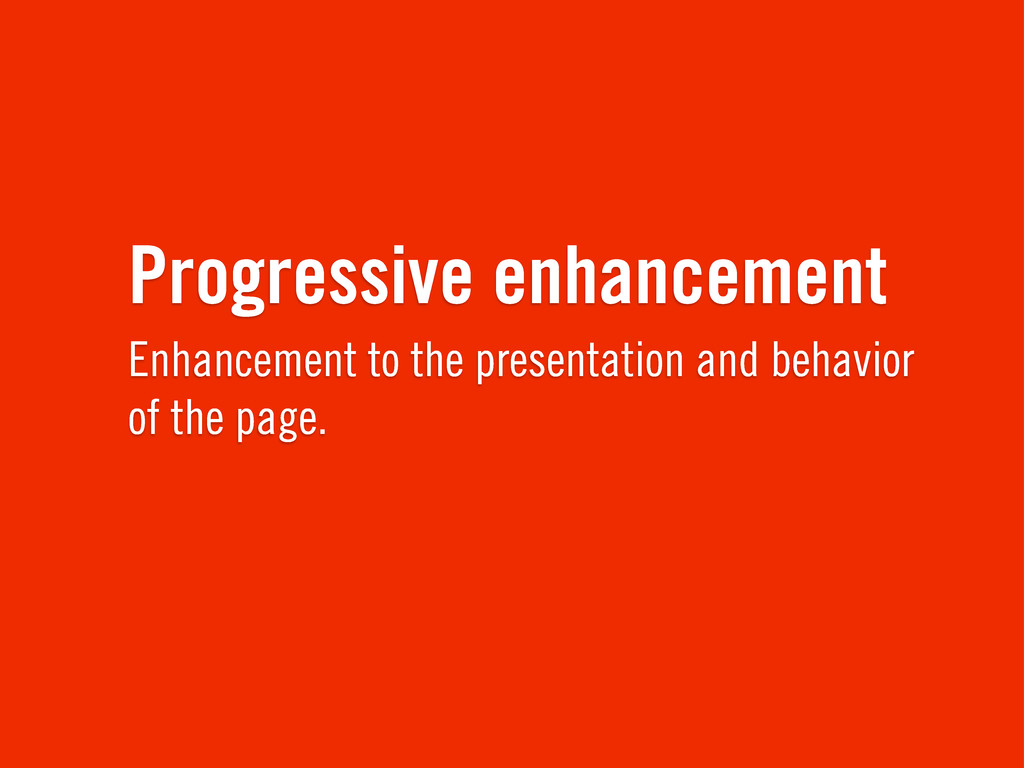
Progressive enhancement Enhancement to the presentation and behavior of the
page.
This is my grid. There are many like it, but
this one is mine. My grid is my best friend. It is my life. I must master it as I must master my life.
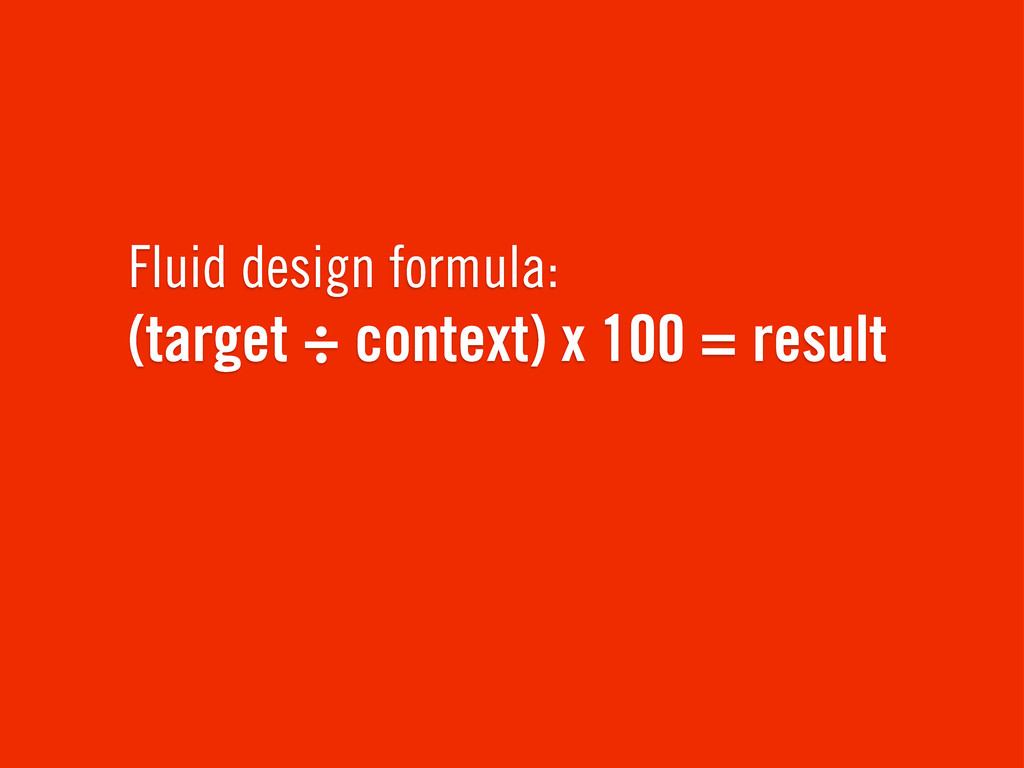
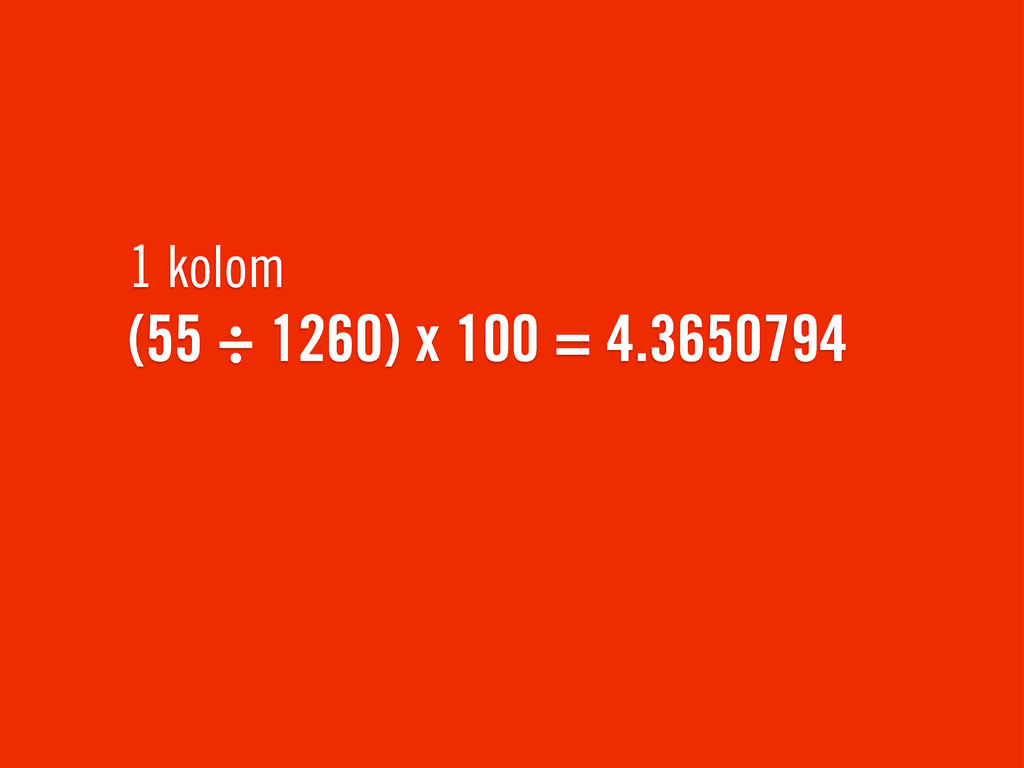
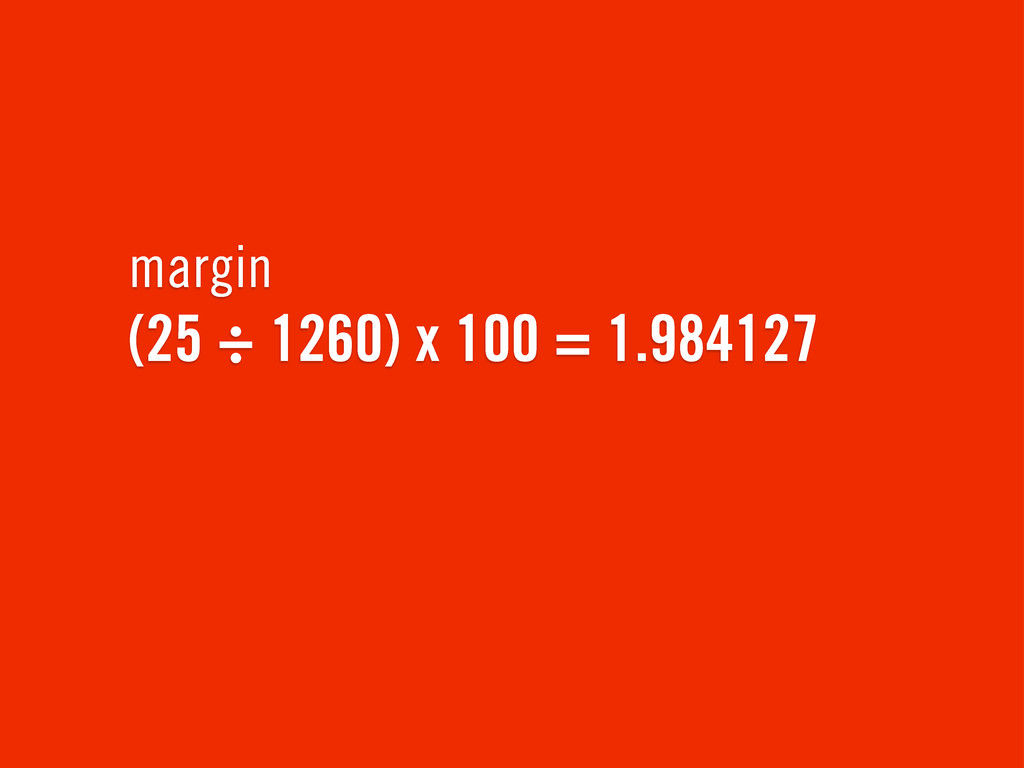
Fluid design formula: (target ÷ context) x 100 = result
None
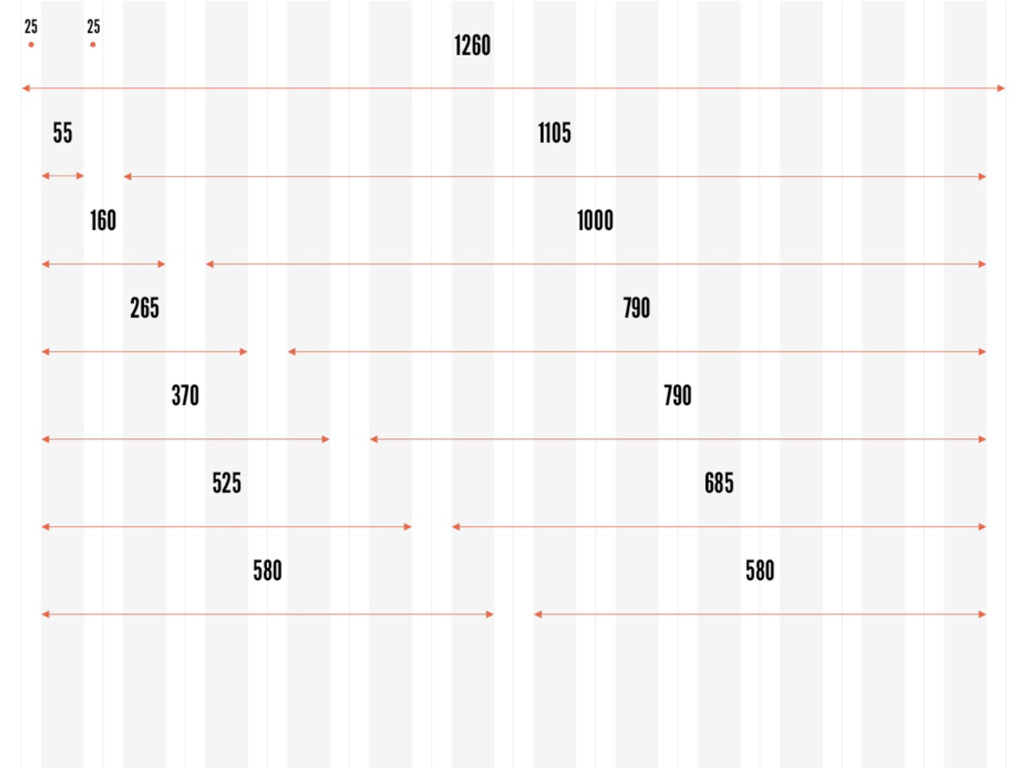
1 kolom (55 ÷ 1260) x 100 = 4.3650794
margin (25 ÷ 1260) x 100 = 1.984127
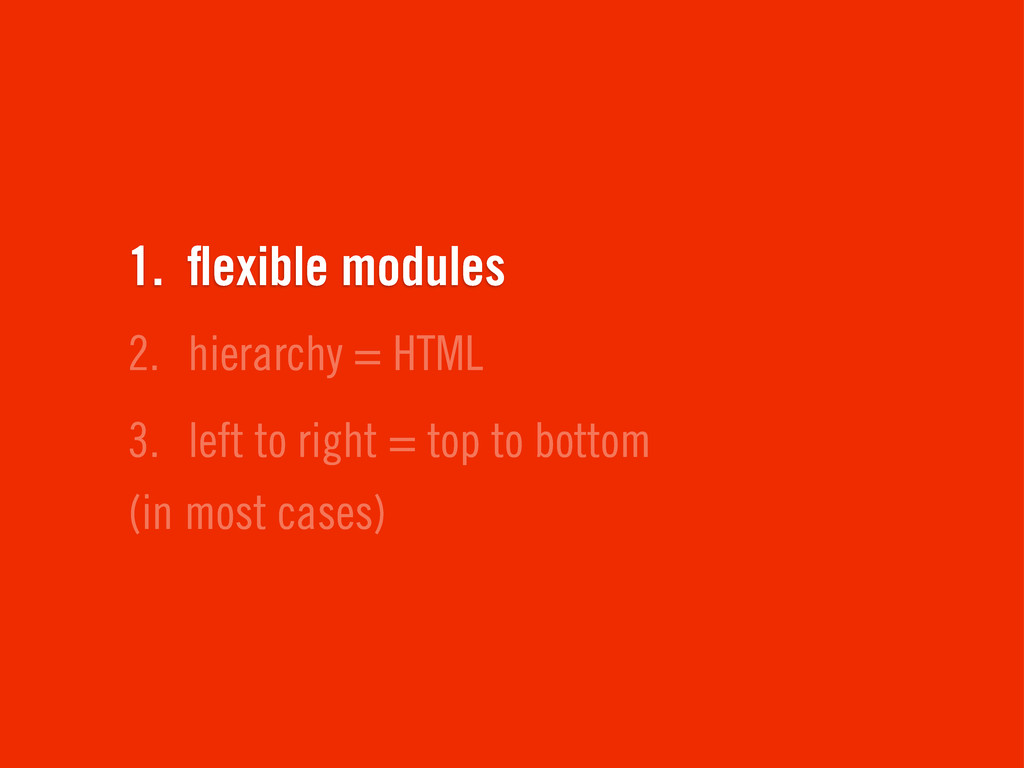
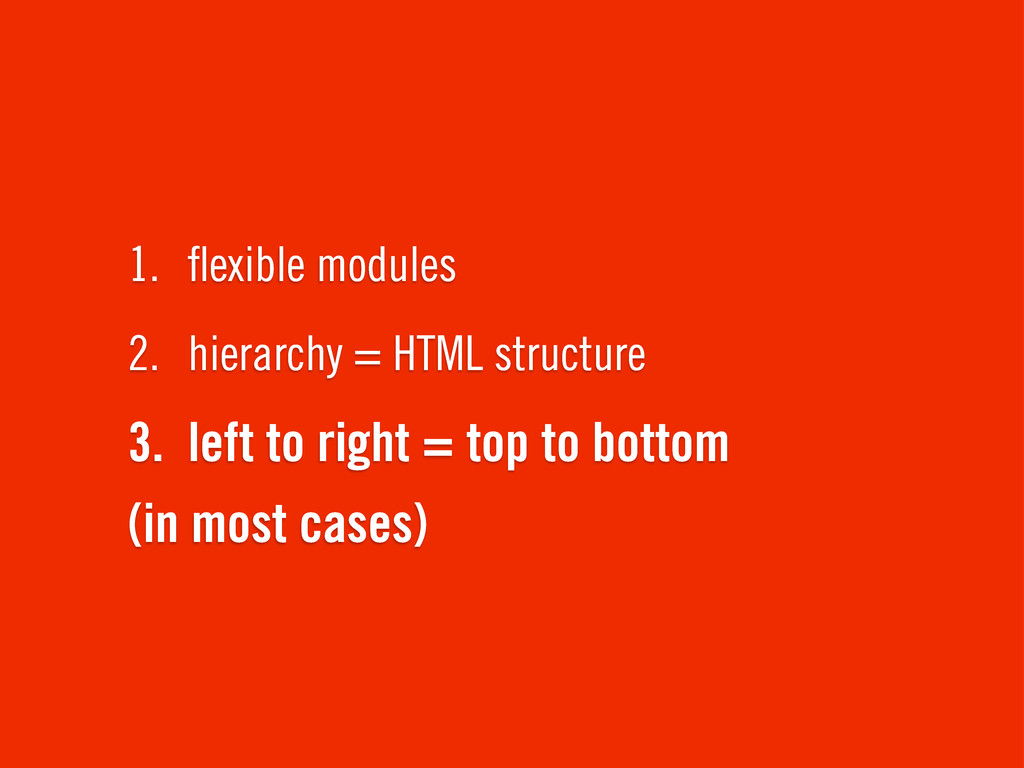
3. left to right = top to bottom (in most
cases) 2. hierarchy = HTML 1. flexible modules
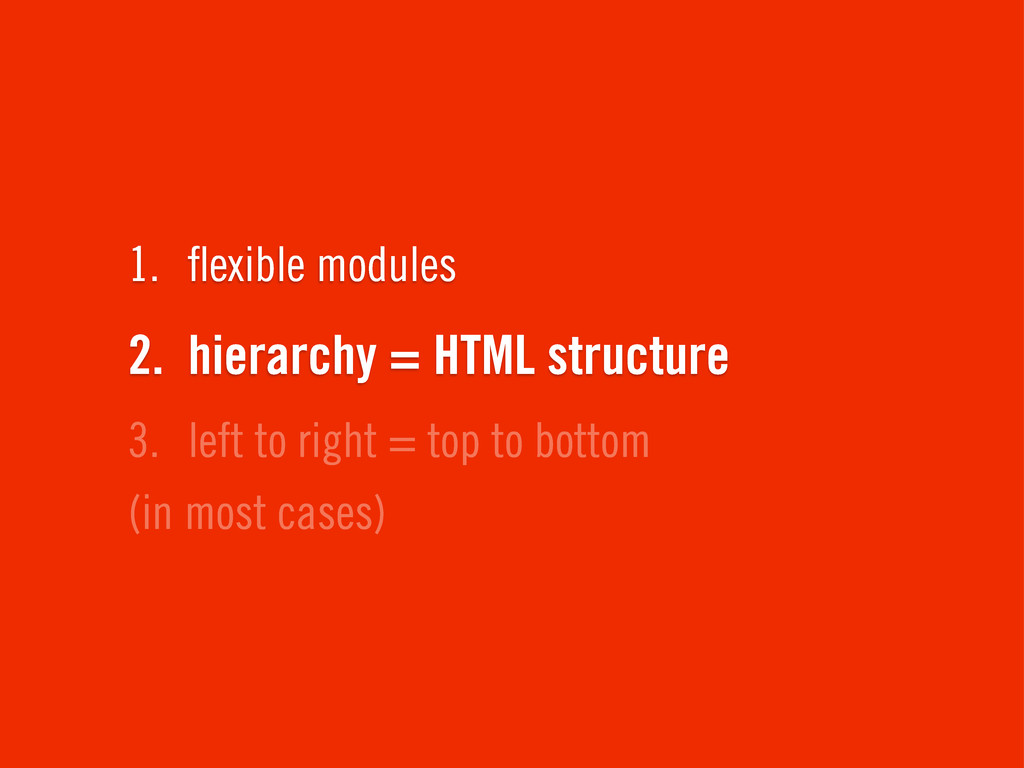
3. left to right = top to bottom (in most
cases) 2. hierarchy = HTML structure 1. flexible modules
3. left to right = top to bottom (in most
cases) 2. hierarchy = HTML structure 1. flexible modules
The future is awesome! ✌
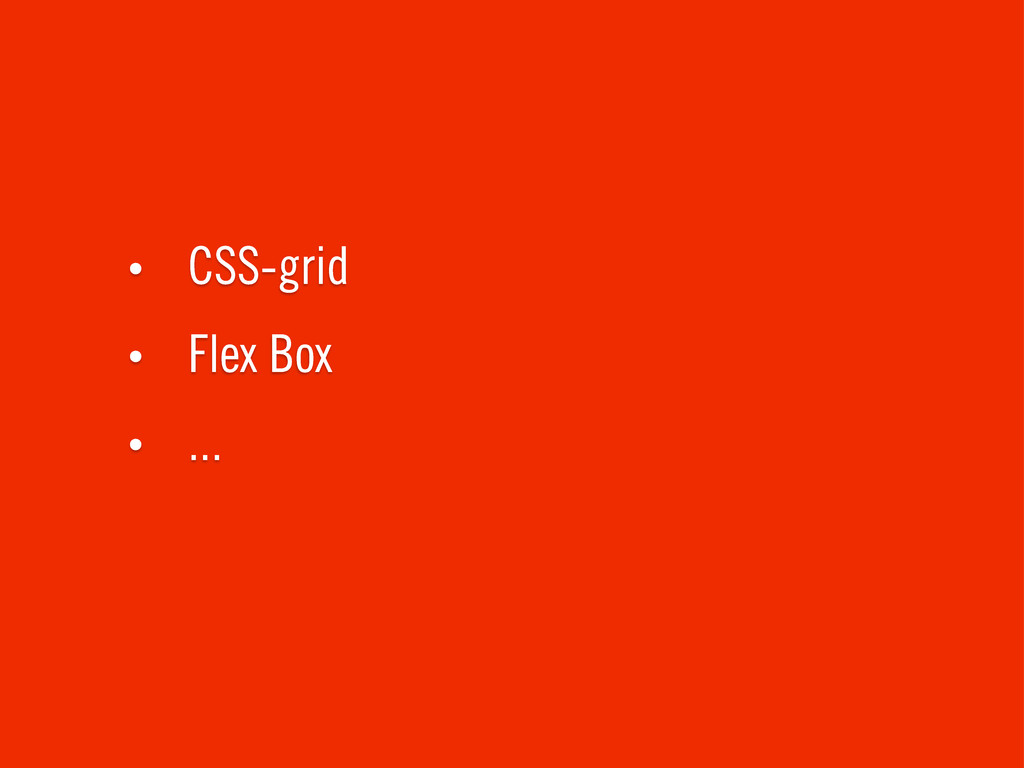
• CSS-grid • Flex Box • ...
Content should be available to as many people as possible.
The device should never be an obstacle between the user
and their goal.
What we do: webdesign.


 keita_yoshikawa
 karad
karad
 baku89
 edmontonriver
 heartlanguage
 uto
uto
 yamasaku
 kimichan
 yuri9911
 cygames
 ishii_mit
 noppefoxwolf
 codingconduct
 marktimemedia
 inesmontani
 yeseniaperezcruz
 bcantrill
 palkan
 pwiseman
 lauravandoore
 morganepeng
 soudai
 427marketing