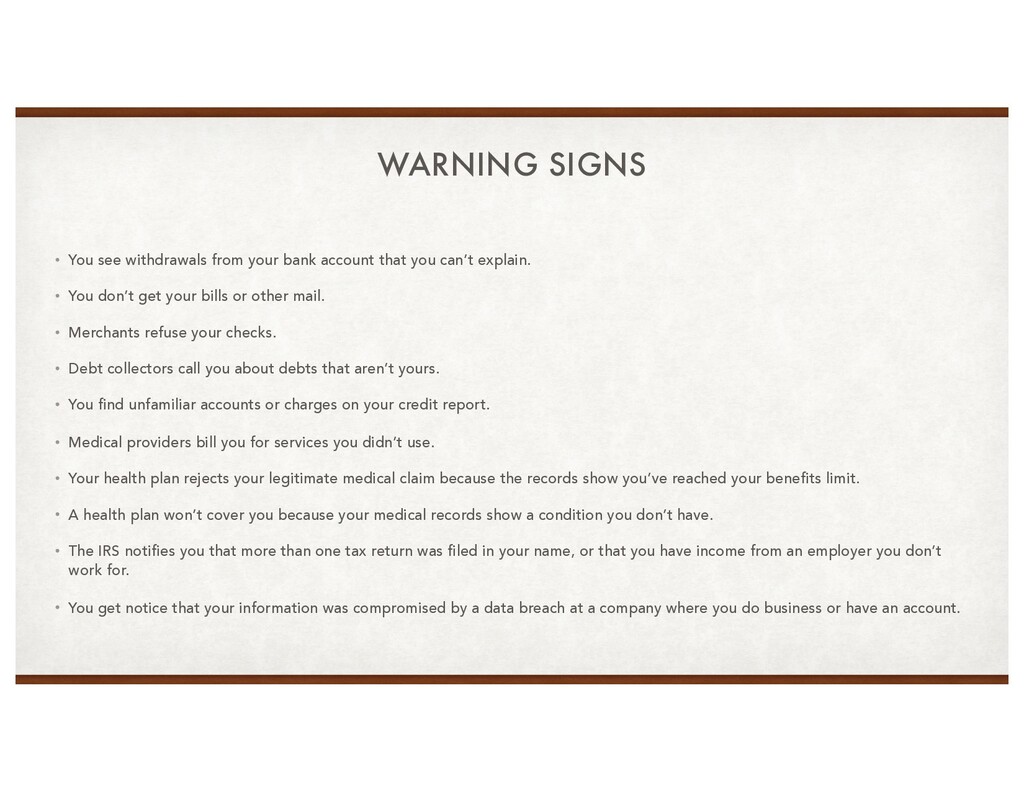
that you can’t explain. • You don’t get your bills or other mail. • Merchants refuse your checks. • Debt collectors call you about debts that aren’t yours. • You find unfamiliar accounts or charges on your credit report. • Medical providers bill you for services you didn’t use. • Your health plan rejects your legitimate medical claim because the records show you’ve reached your benefits limit. • A health plan won’t cover you because your medical records show a condition you don’t have. • The IRS notifies you that more than one tax return was filed in your name, or that you have income from an employer you don’t work for. • You get notice that your information was compromised by a data breach at a company where you do business or have an account.
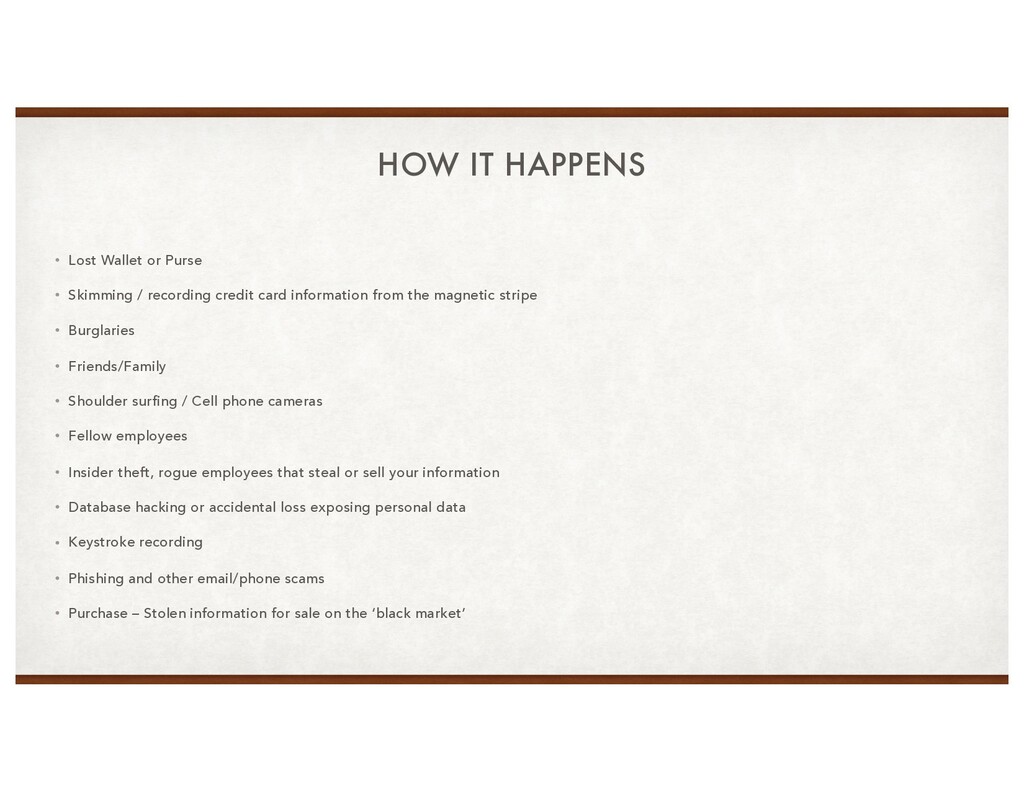
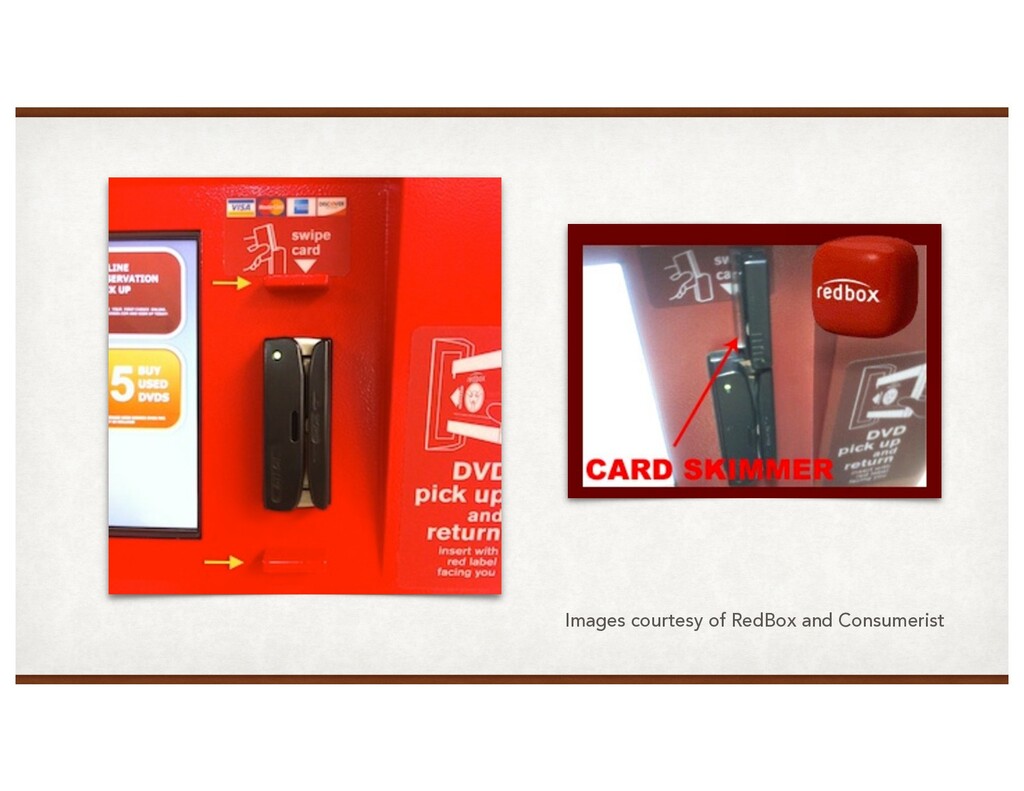
/ recording credit card information from the magnetic stripe • Burglaries • Friends/Family • Shoulder surfing / Cell phone cameras • Fellow employees • Insider theft, rogue employees that steal or sell your information • Database hacking or accidental loss exposing personal data • Keystroke recording • Phishing and other email/phone scams • Purchase – Stolen information for sale on the ‘black market’
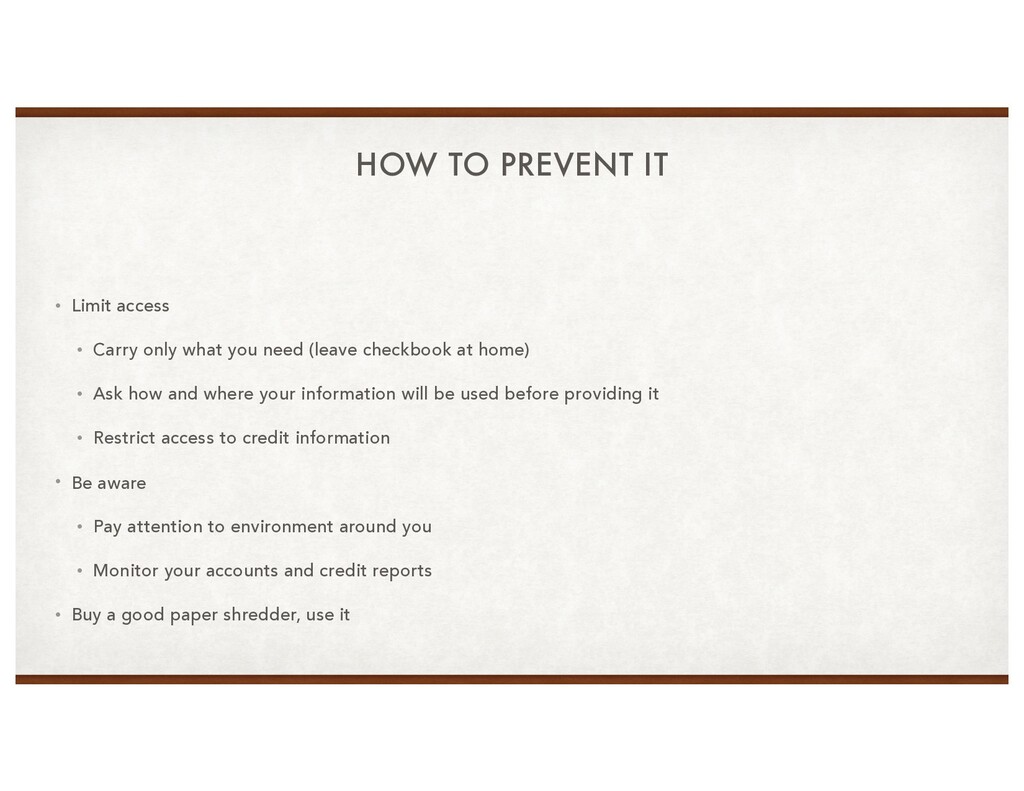
what you need (leave checkbook at home) • Ask how and where your information will be used before providing it • Restrict access to credit information • Be aware • Pay attention to environment around you • Monitor your accounts and credit reports • Buy a good paper shredder, use it
secure place • Shred any and all financial records, statements, applications and cards • Don’t put outgoing mail, especially bill payments, in personal curbside mailboxes. Use USPS mailboxes instead • use mail holds, pick it up from the post office
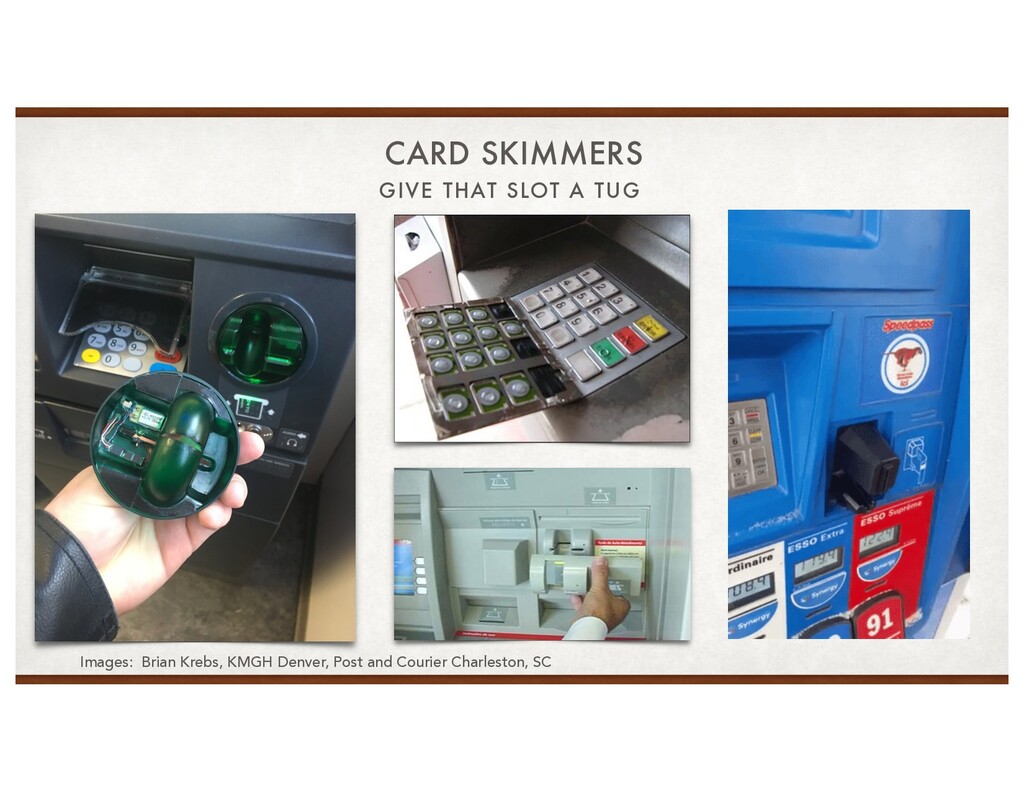
friends with your card • Look around for cameras • use trusted ATMs • Store credit card and bank customer service numbers on your phone • GIVE IT A TUG
allow direct draft from your accounts • Dont link your checking or savings account to PayPal • Monitor accounts monthly • Setup alerts • Your bank only communicates to your through snail mail or their authenticated app/ website
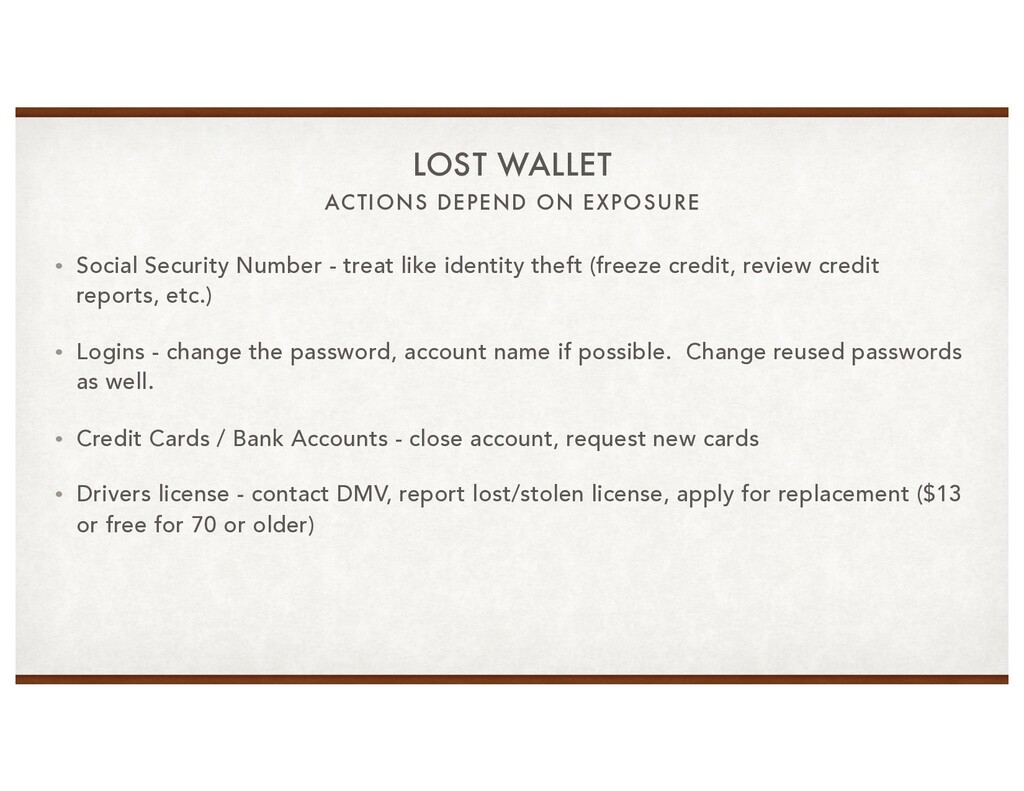
- treat like identity theft (freeze credit, review credit reports, etc.) • Logins - change the password, account name if possible. Change reused passwords as well. • Credit Cards / Bank Accounts - close account, request new cards • Drivers license - contact DMV, report lost/stolen license, apply for replacement ($13 or free for 70 or older)
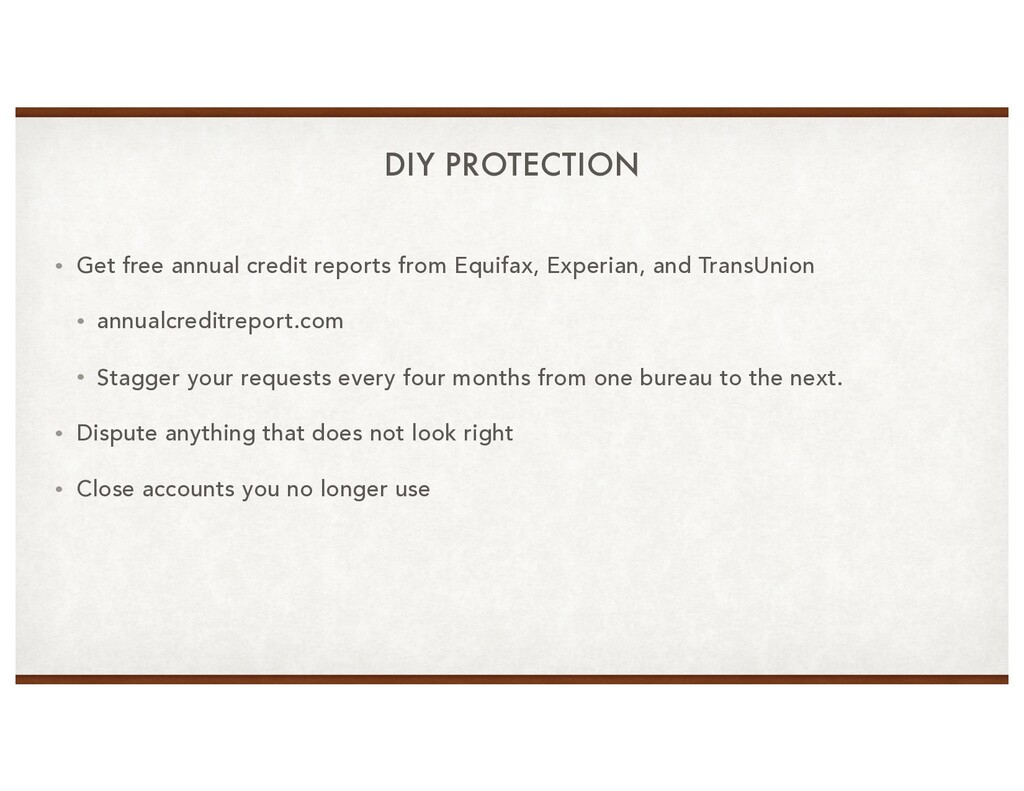
Experian, and TransUnion • annualcreditreport.com • Stagger your requests every four months from one bureau to the next. • Dispute anything that does not look right • Close accounts you no longer use
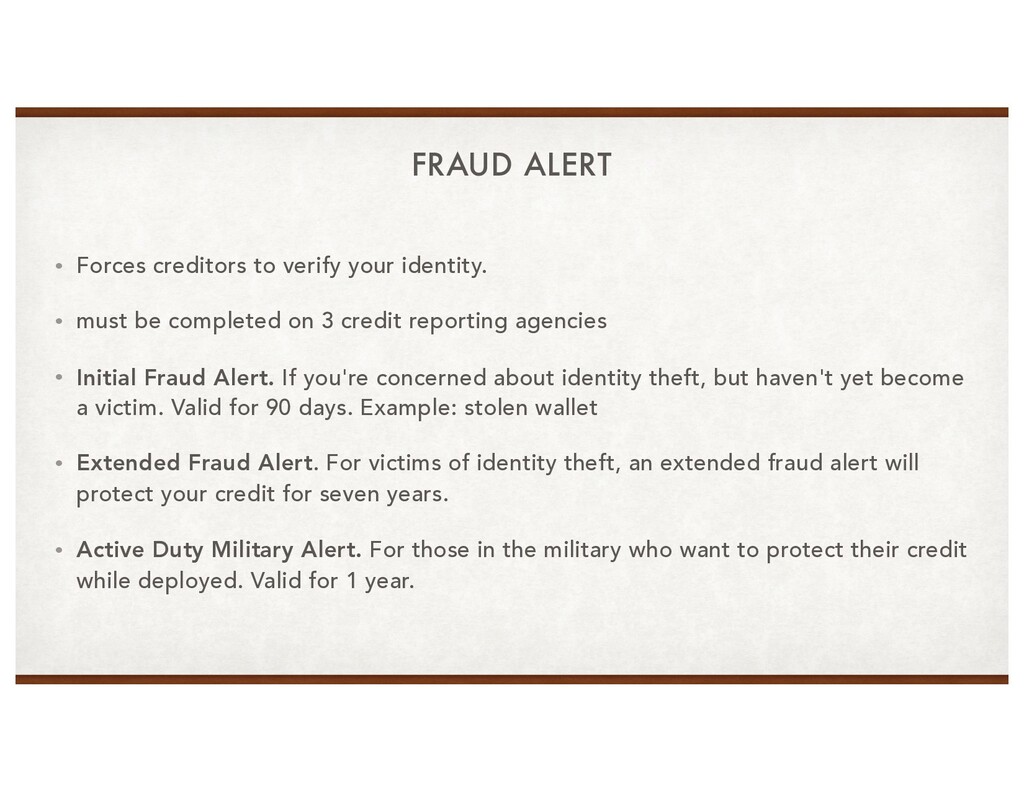
must be completed on 3 credit reporting agencies • Initial Fraud Alert. If you're concerned about identity theft, but haven't yet become a victim. Valid for 90 days. Example: stolen wallet • Extended Fraud Alert. For victims of identity theft, an extended fraud alert will protect your credit for seven years. • Active Duty Military Alert. For those in the military who want to protect their credit while deployed. Valid for 1 year.
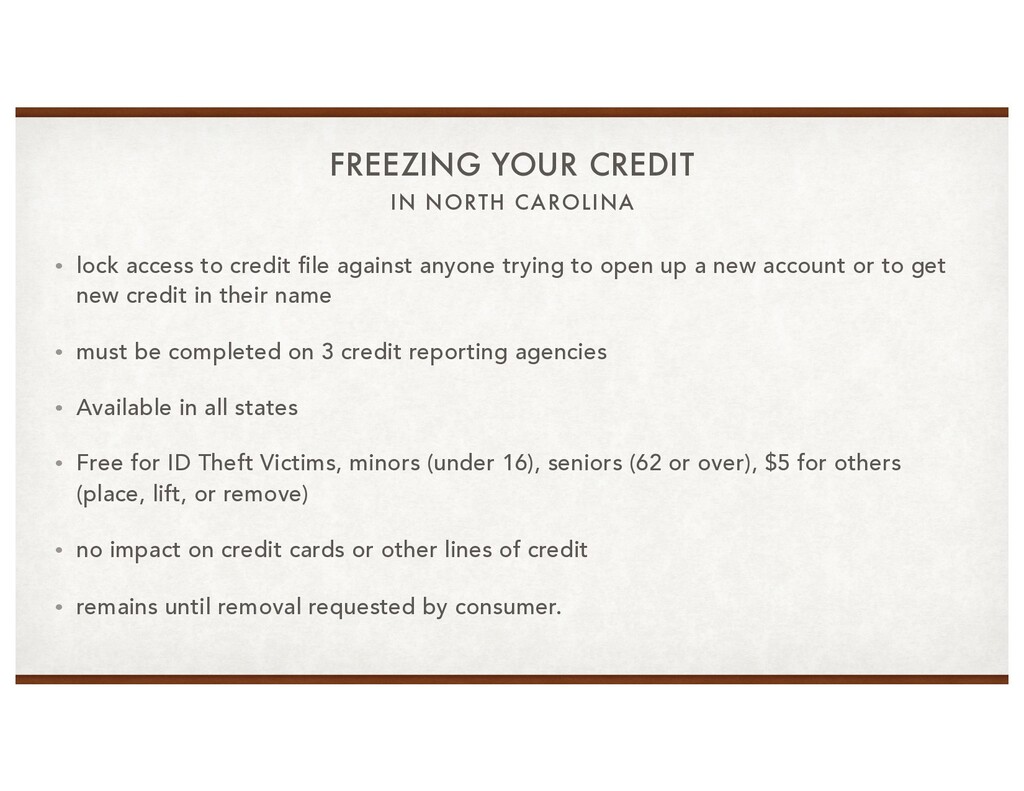
credit file against anyone trying to open up a new account or to get new credit in their name • must be completed on 3 credit reporting agencies • Available in all states • Free for ID Theft Victims, minors (under 16), seniors (62 or over), $5 for others (place, lift, or remove) • no impact on credit cards or other lines of credit • remains until removal requested by consumer.
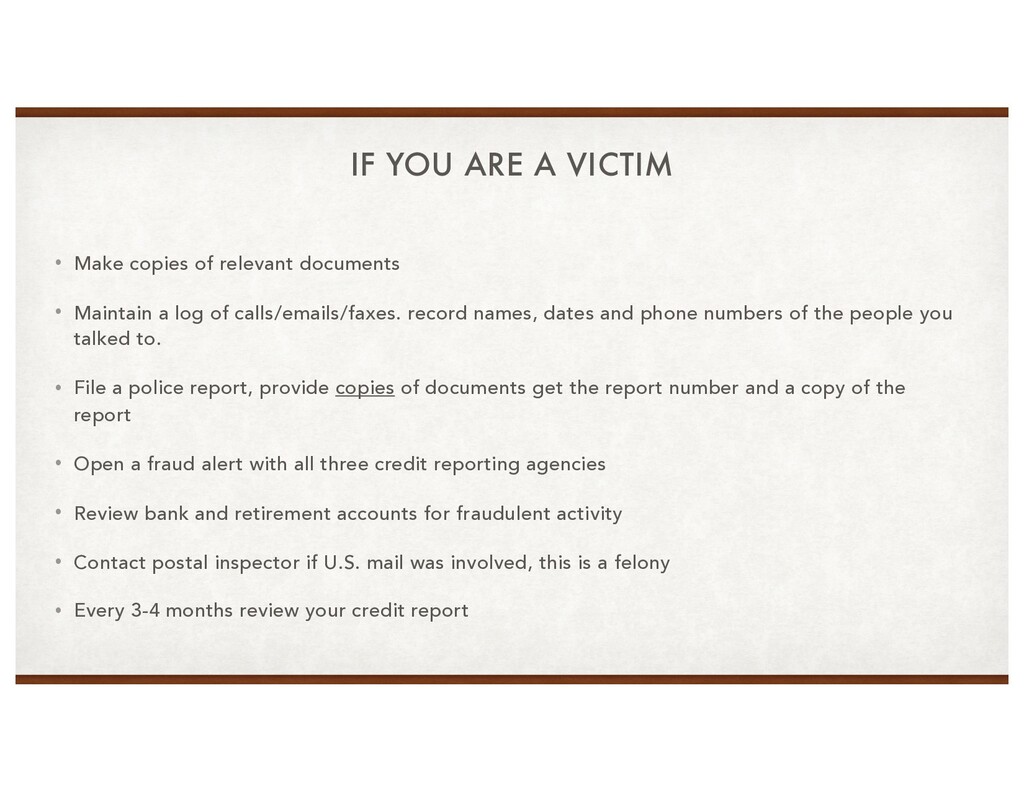
documents • Maintain a log of calls/emails/faxes. record names, dates and phone numbers of the people you talked to. • File a police report, provide copies of documents get the report number and a copy of the report • Open a fraud alert with all three credit reporting agencies • Review bank and retirement accounts for fraudulent activity • Contact postal inspector if U.S. mail was involved, this is a felony • Every 3-4 months review your credit report


 tonyrice
 oracle4engineer
 yosukeyoshida
 ama_ch
 manabuseki
 ryutakondo
 wind111
 ota1022
 oidfj
 tkito
 inesmontani
 sat
 amarelo_n24
 aleyda
 lauravandoore
 retrage
 szymonslowik
 elsirapls
 sabderemane
 cassininazir
 mkilby
 3n
 ryanjones