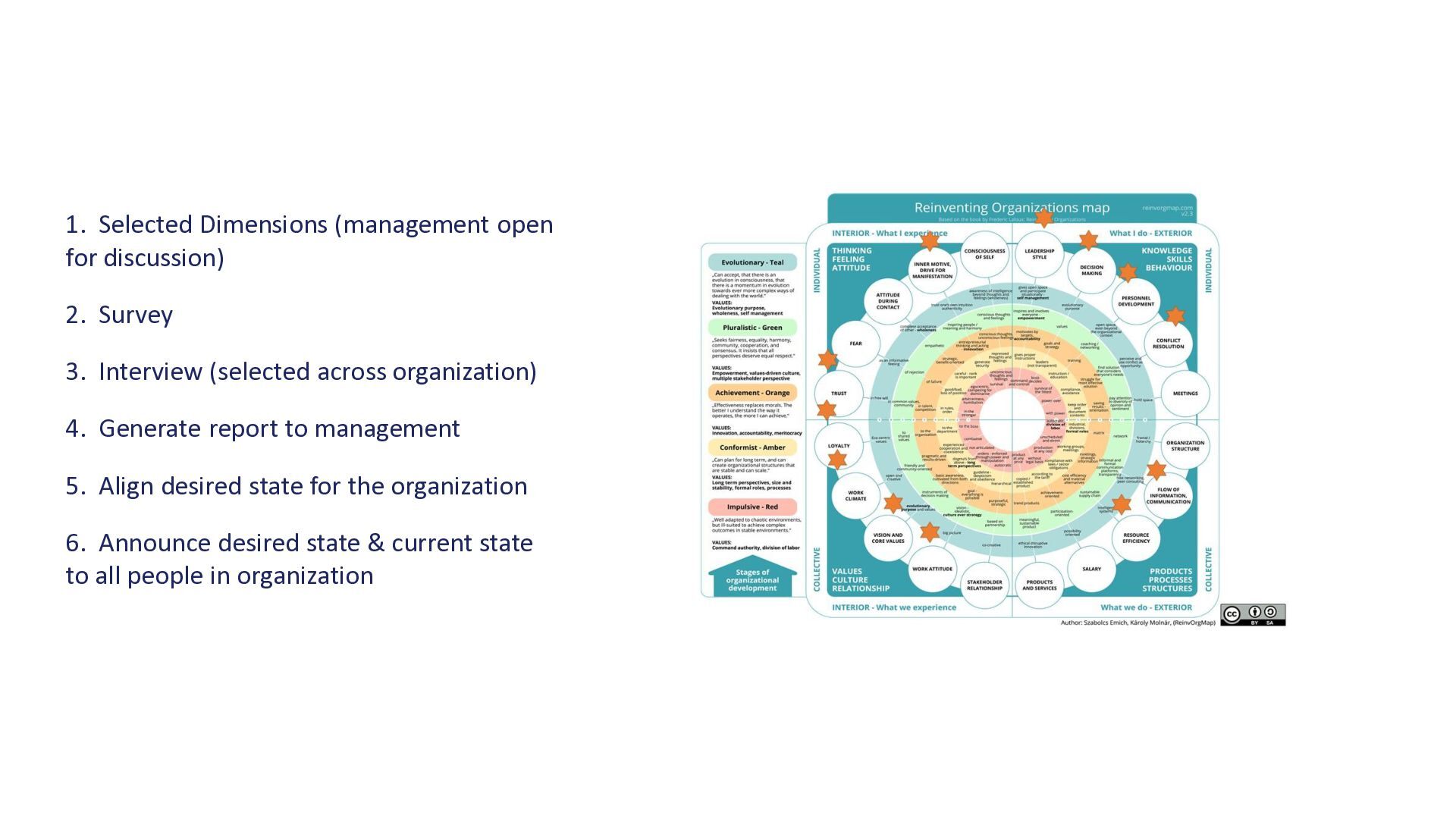
Interview (selected across organization) 4. Generate report to management 5. Align desired state for the organization 6. Announce desired state & current state to all people in organization
using Scrum, but its practices weren't “good” • More than 10 people joined Scrum meetings — but interaction only happened between fewer than five people • Two Product Owner roles shared one backlog, and they were not aligned before meeting with developers
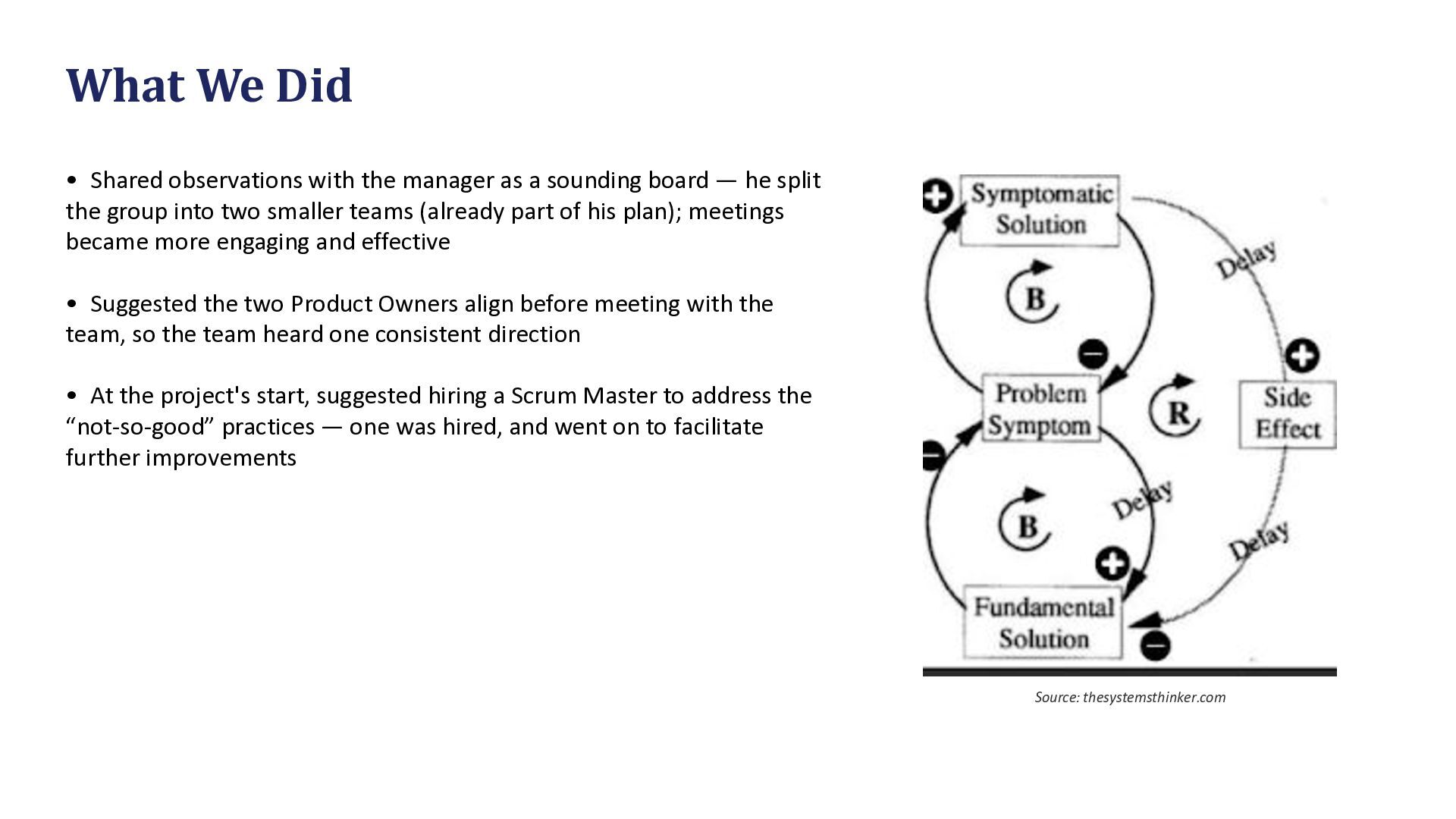
a sounding board — he split the group into two smaller teams (already part of his plan); meetings became more engaging and effective • Suggested the two Product Owners align before meeting with the team, so the team heard one consistent direction • At the project's start, suggested hiring a Scrum Master to address the “not-so-good” practices — one was hired, and went on to facilitate further improvements Source: thesystemsthinker.com
established Scrum teams in the organization, or hire an experienced Scrum Master. This tends to show up as an organization grows more teams — not every new team has the same exposure to the “good” practices that more established Scrum teams have already built up.
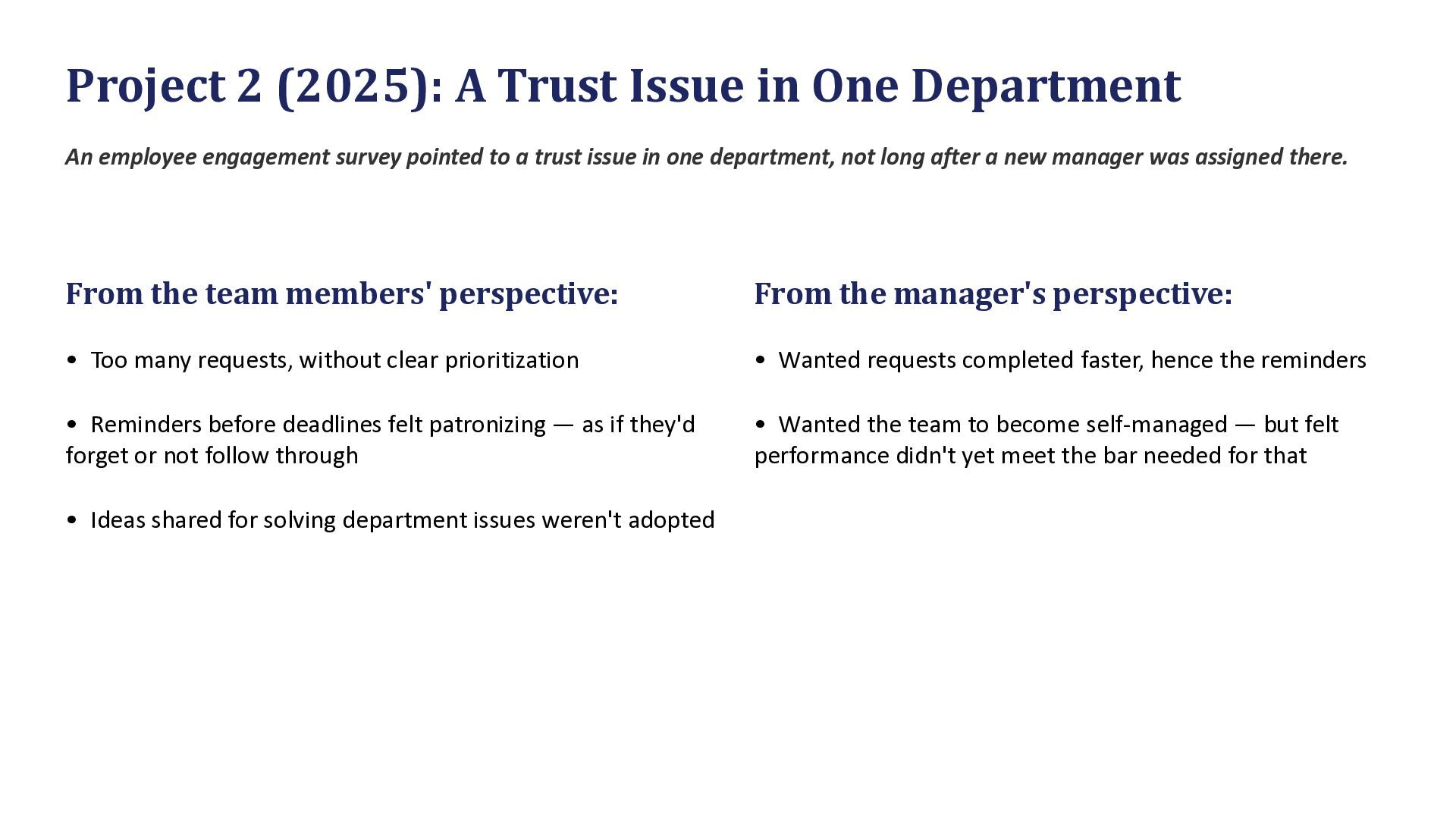
employee engagement survey pointed to a trust issue in one department, not long after a new manager was assigned there. From the team members' perspective: From the manager's perspective: • Too many requests, without clear prioritization • Wanted requests completed faster, hence the reminders • Reminders before deadlines felt patronizing — as if they'd forget or not follow through • Wanted the team to become self-managed — but felt performance didn't yet meet the bar needed for that • Ideas shared for solving department issues weren't adopted
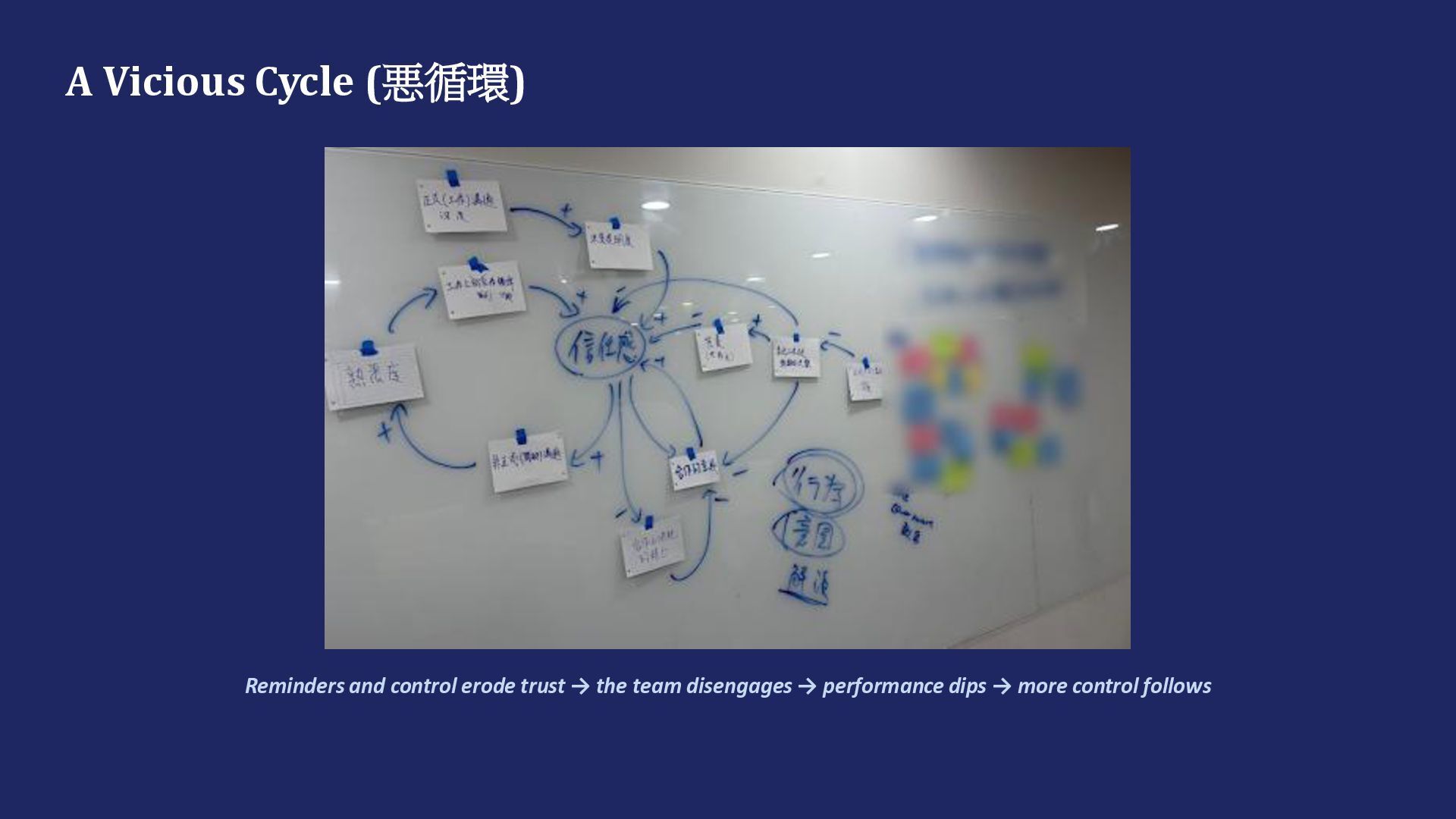
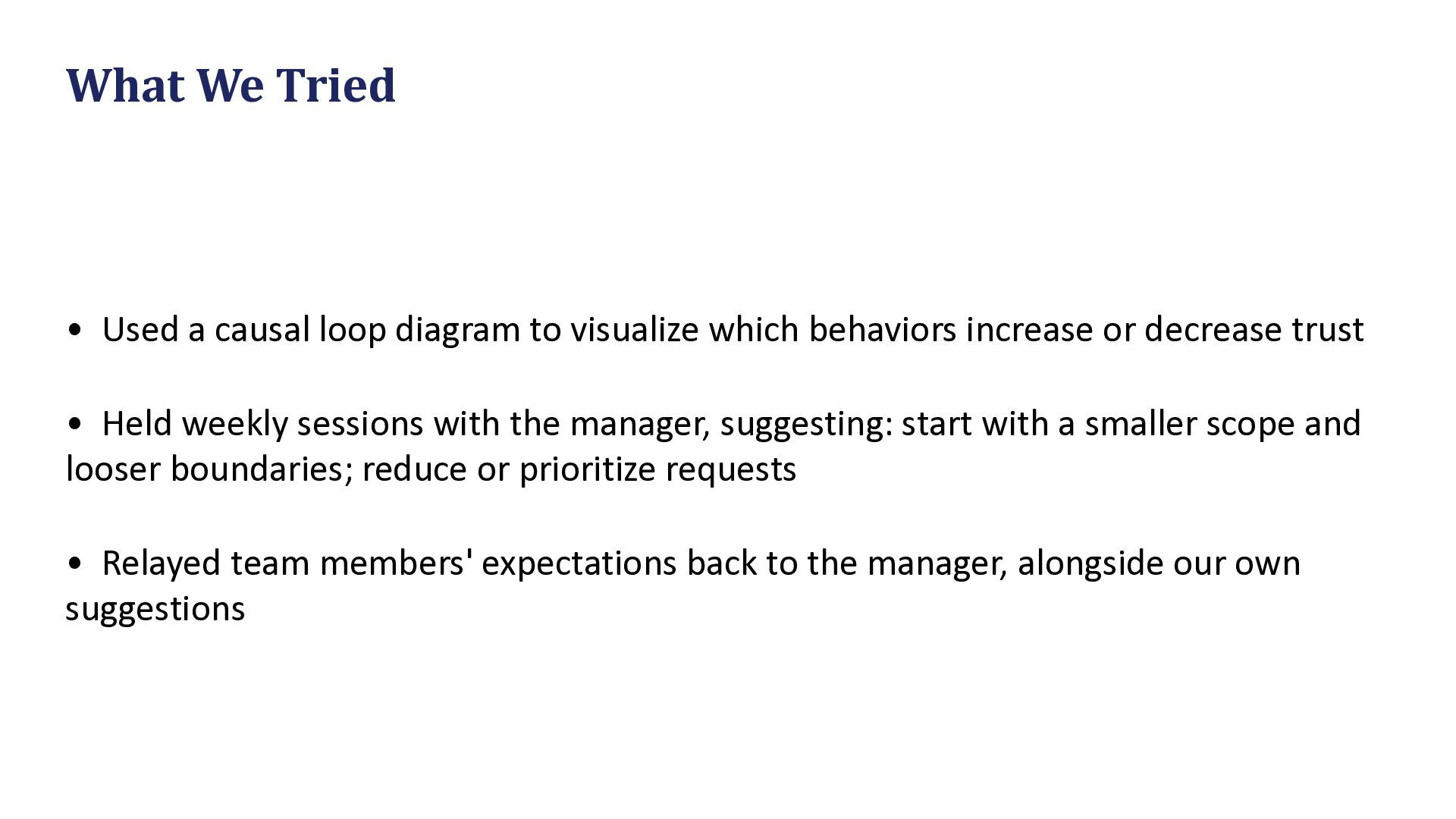
visualize which behaviors increase or decrease trust • Held weekly sessions with the manager, suggesting: start with a smaller scope and looser boundaries; reduce or prioritize requests • Relayed team members' expectations back to the manager, alongside our own suggestions
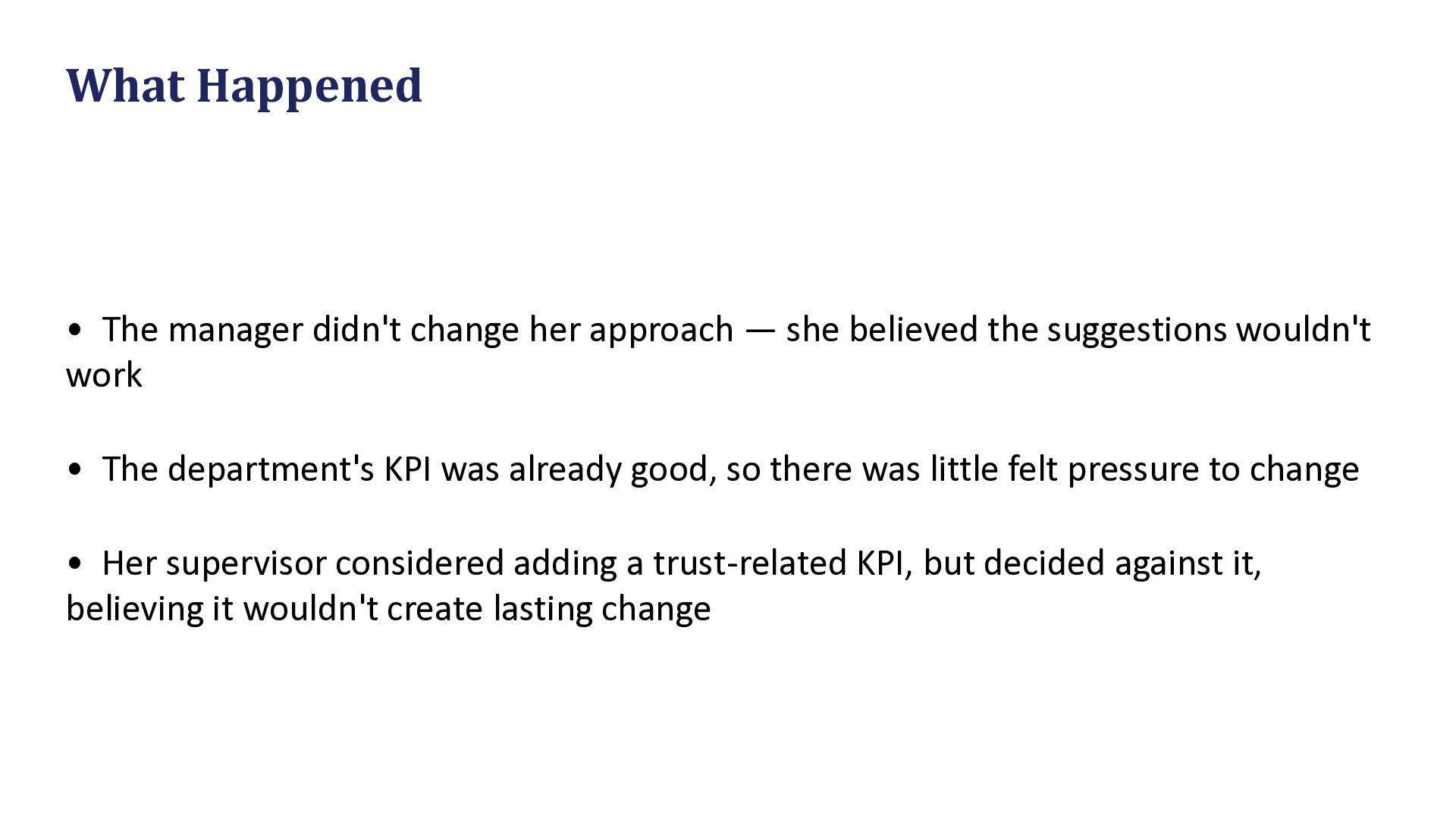
she believed the suggestions wouldn't work • The department's KPI was already good, so there was little felt pressure to change • Her supervisor considered adding a trust-related KPI, but decided against it, believing it wouldn't create lasting change
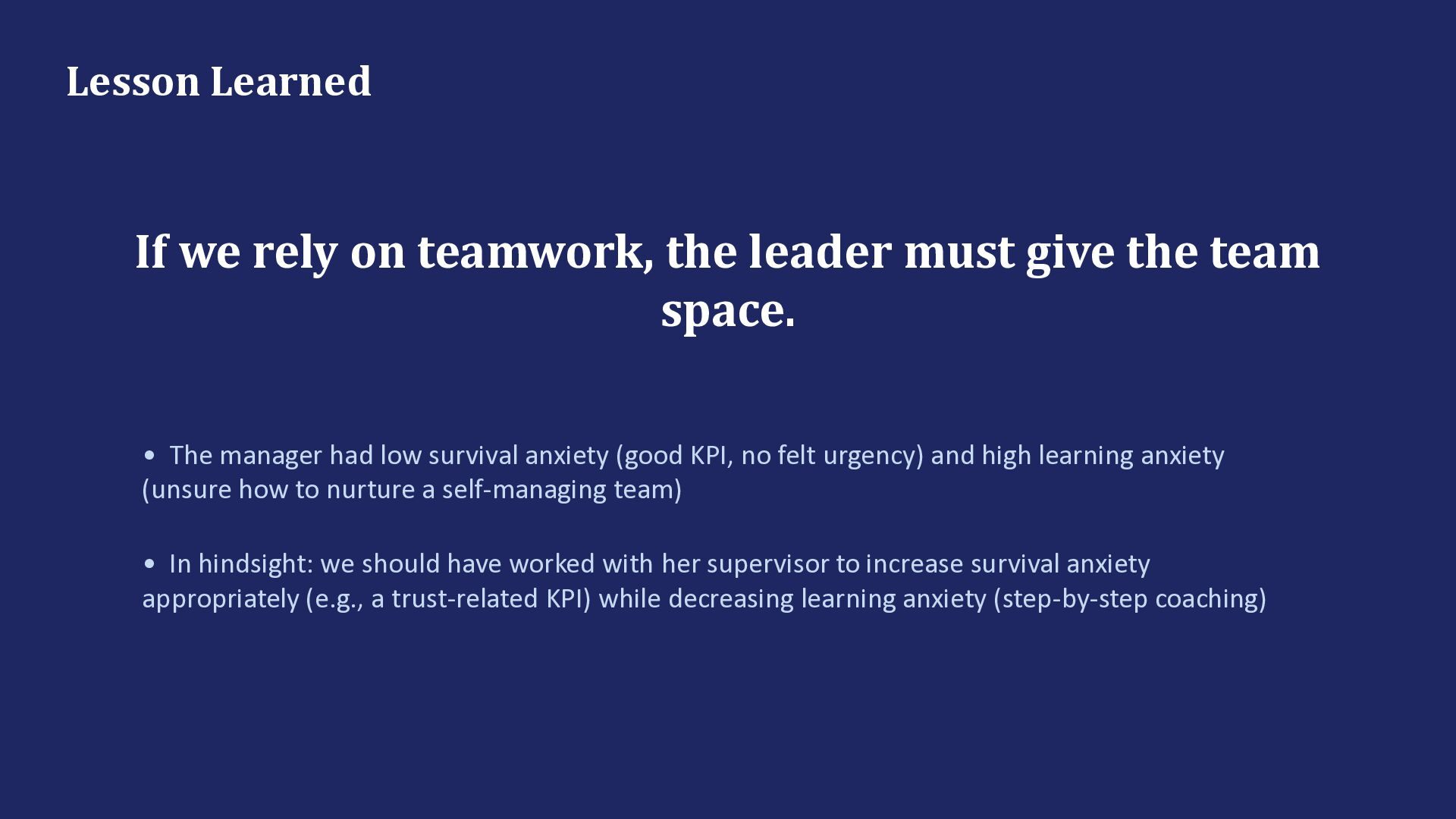
give the team space. • The manager had low survival anxiety (good KPI, no felt urgency) and high learning anxiety (unsure how to nurture a self-managing team) • In hindsight: we should have worked with her supervisor to increase survival anxiety appropriately (e.g., a trust-related KPI) while decreasing learning anxiety (step-by-step coaching)
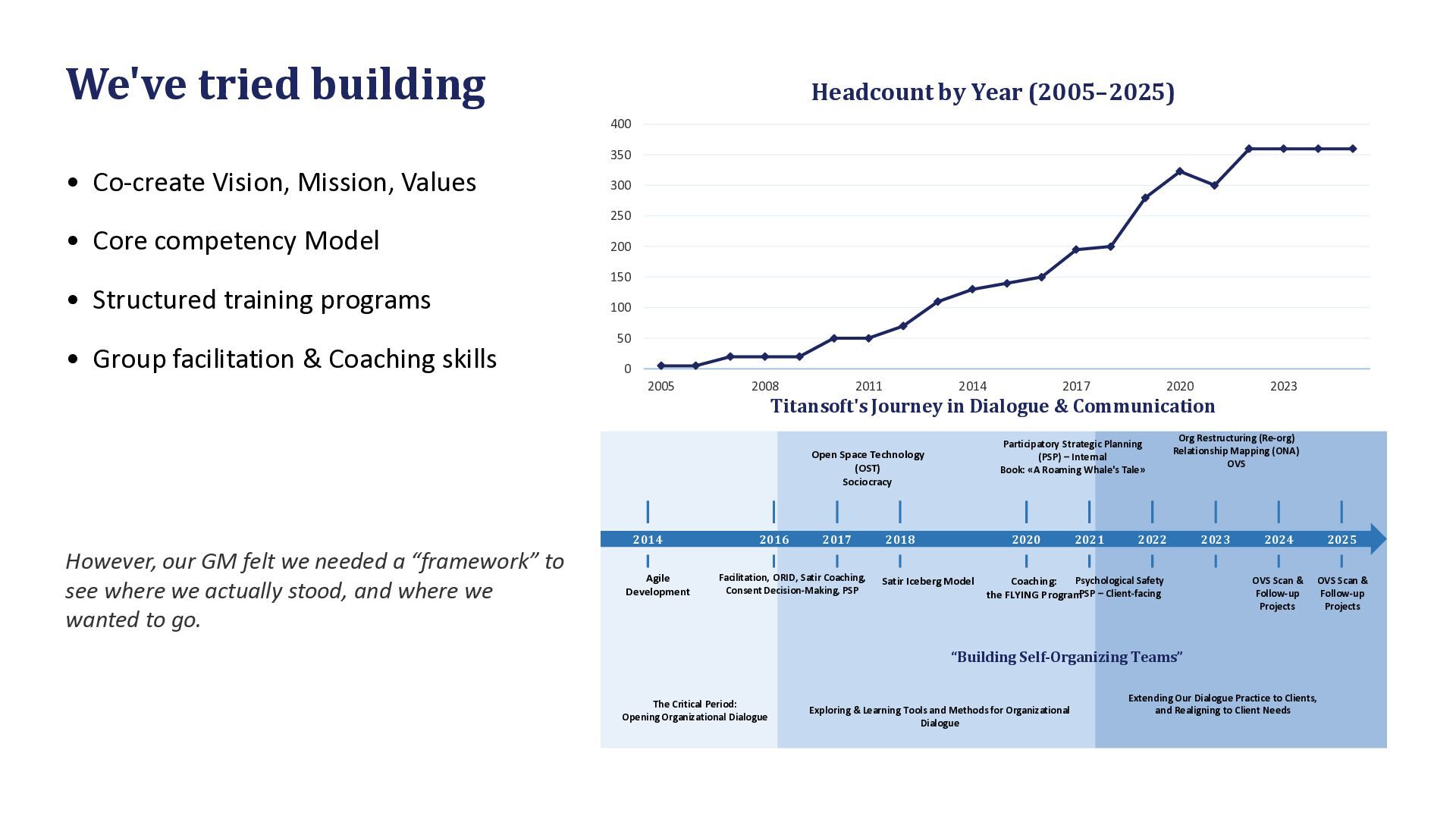
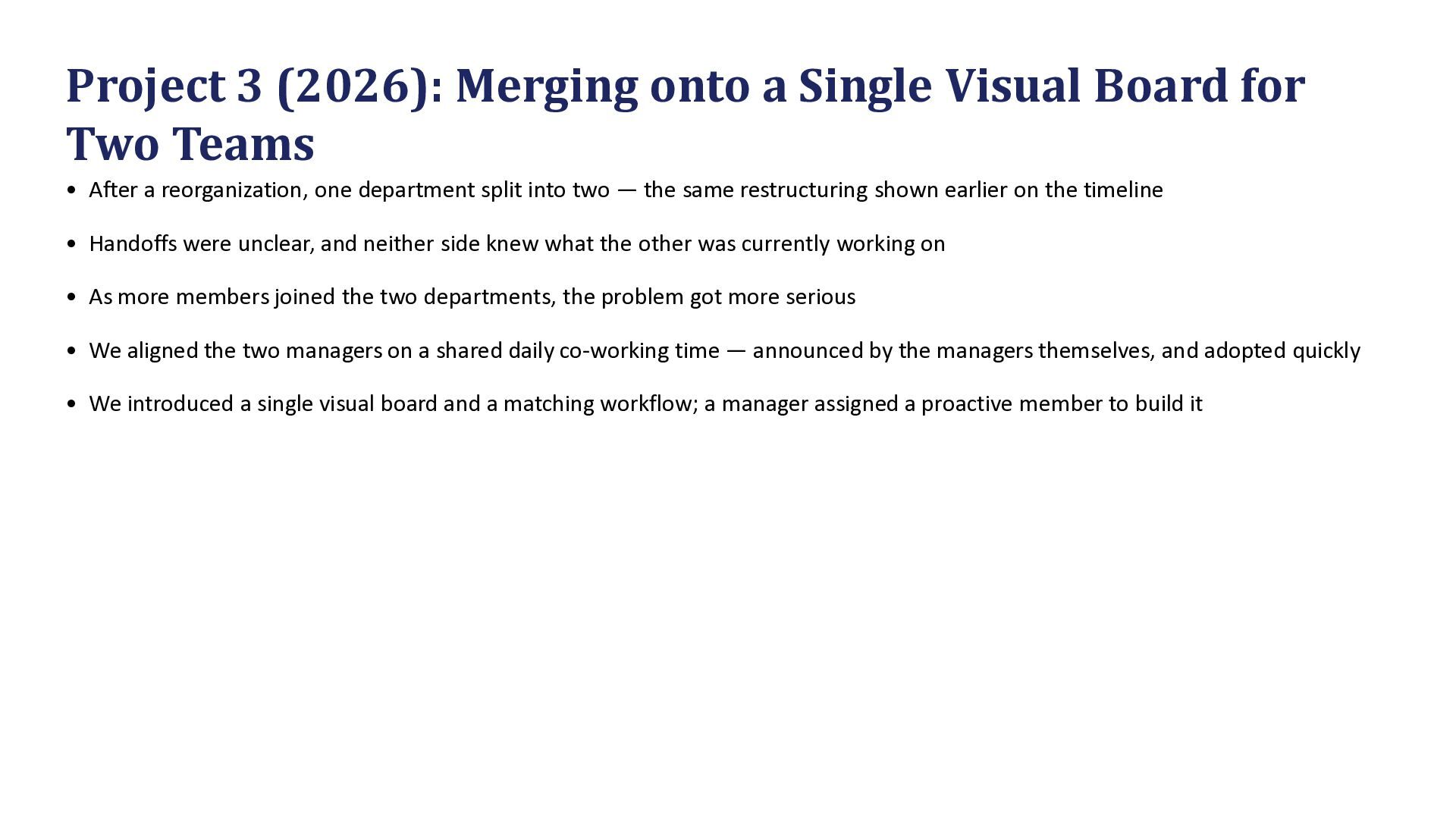
Two Teams • After a reorganization, one department split into two — the same restructuring shown earlier on the timeline • Handoffs were unclear, and neither side knew what the other was currently working on • As more members joined the two departments, the problem got more serious • We aligned the two managers on a shared daily co-working time — announced by the managers themselves, and adopted quickly • We introduced a single visual board and a matching workflow; a manager assigned a proactive member to build it
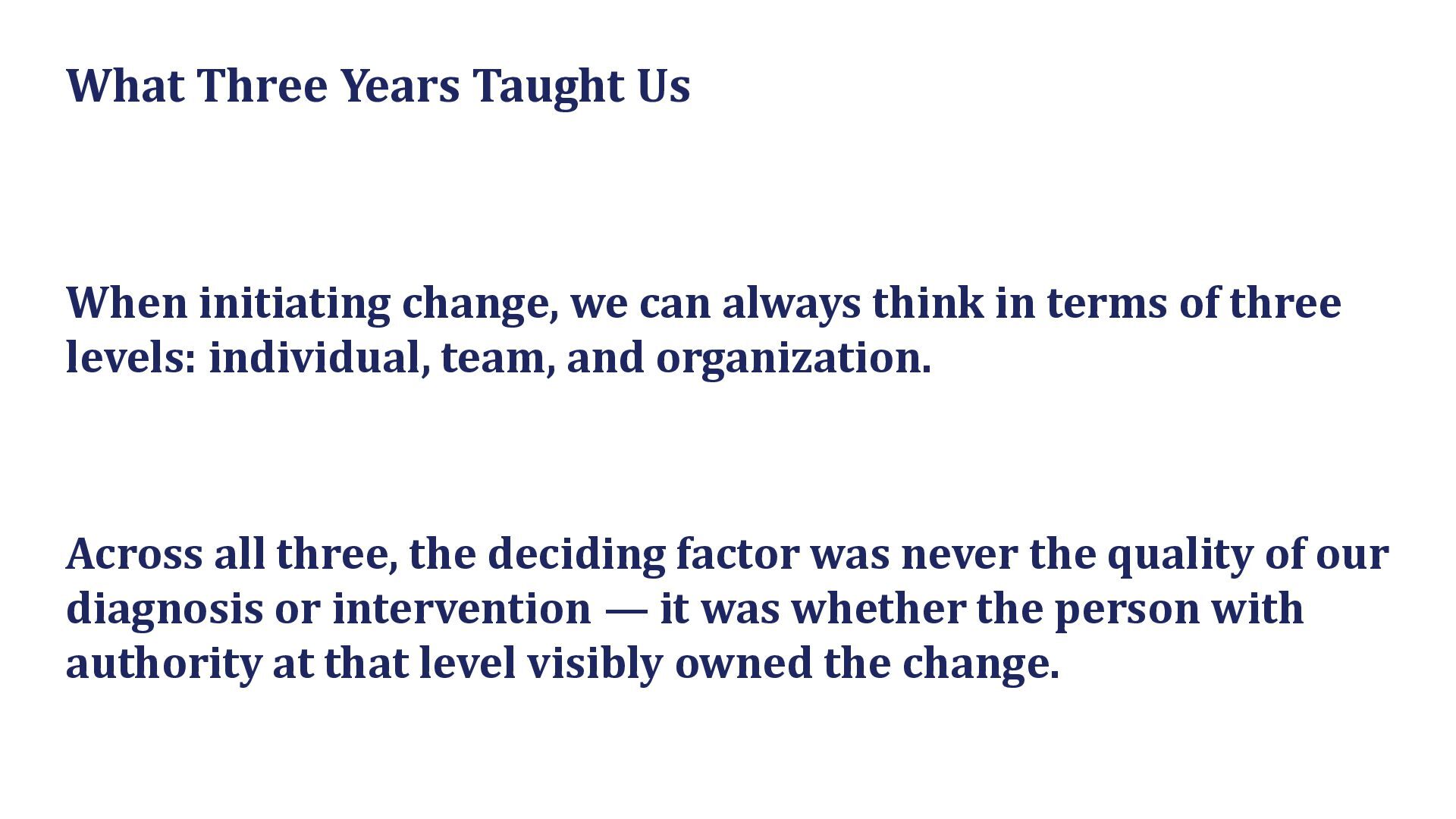
always think in terms of three levels: individual, team, and organization. Across all three, the deciding factor was never the quality of our diagnosis or intervention — it was whether the person with authority at that level visibly owned the change.
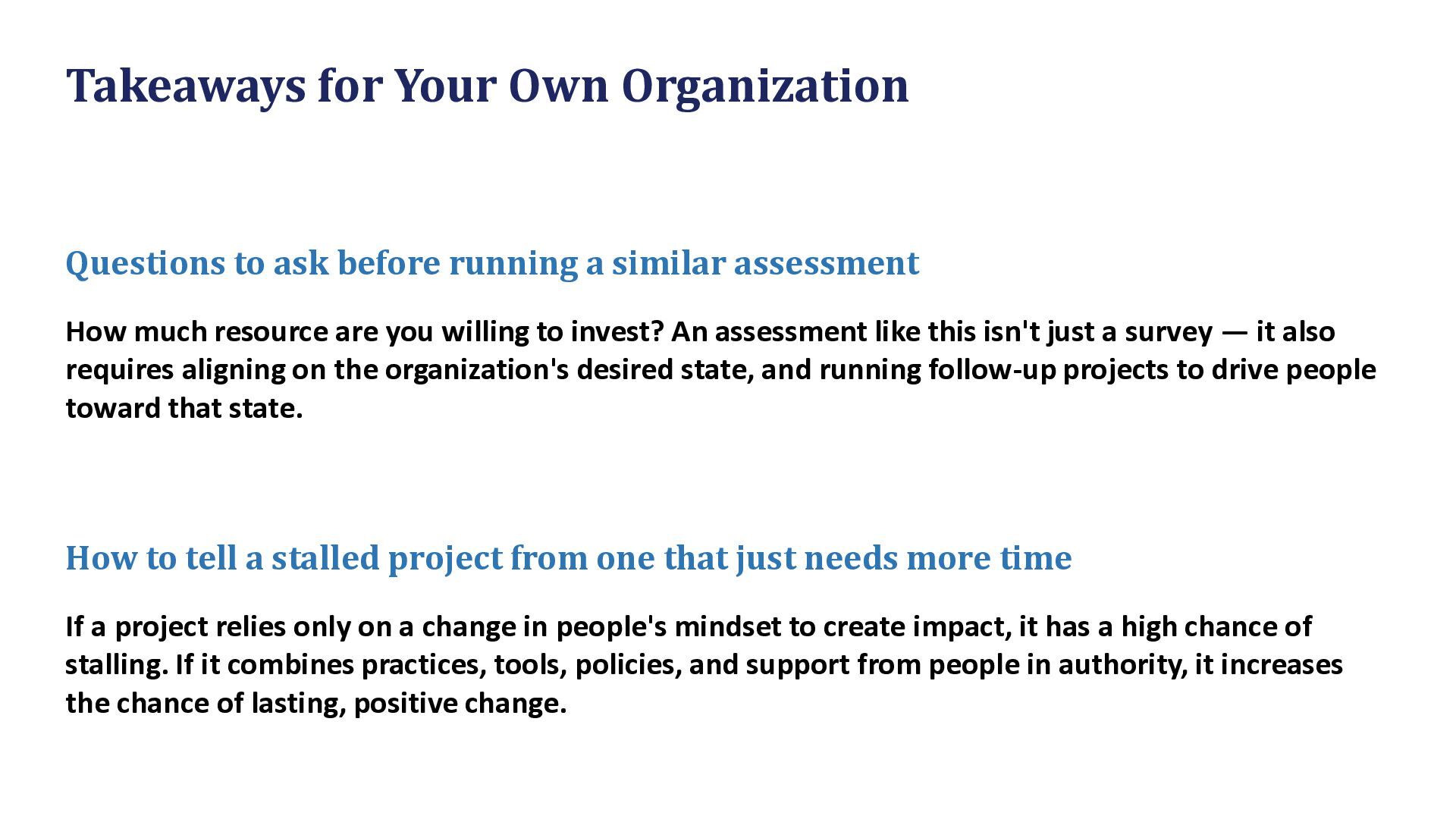
a similar assessment How much resource are you willing to invest? An assessment like this isn't just a survey — it also requires aligning on the organization's desired state, and running follow-up projects to drive people toward that state. How to tell a stalled project from one that just needs more time If a project relies only on a change in people's mindset to create impact, it has a high chance of stalling. If it combines practices, tools, policies, and support from people in authority, it increases the chance of lasting, positive change.

 Your Podcast. Everywhere. Effortlessly.


 886samhuang
 eileencodes
 smashingmag
 elsirapls
 tanoku
 kristinabergwall1
 denniskardys
 davidcarrasco
 nwiizo
 bluesmoon
 malarkey
 hannesfritz
 mayatellez