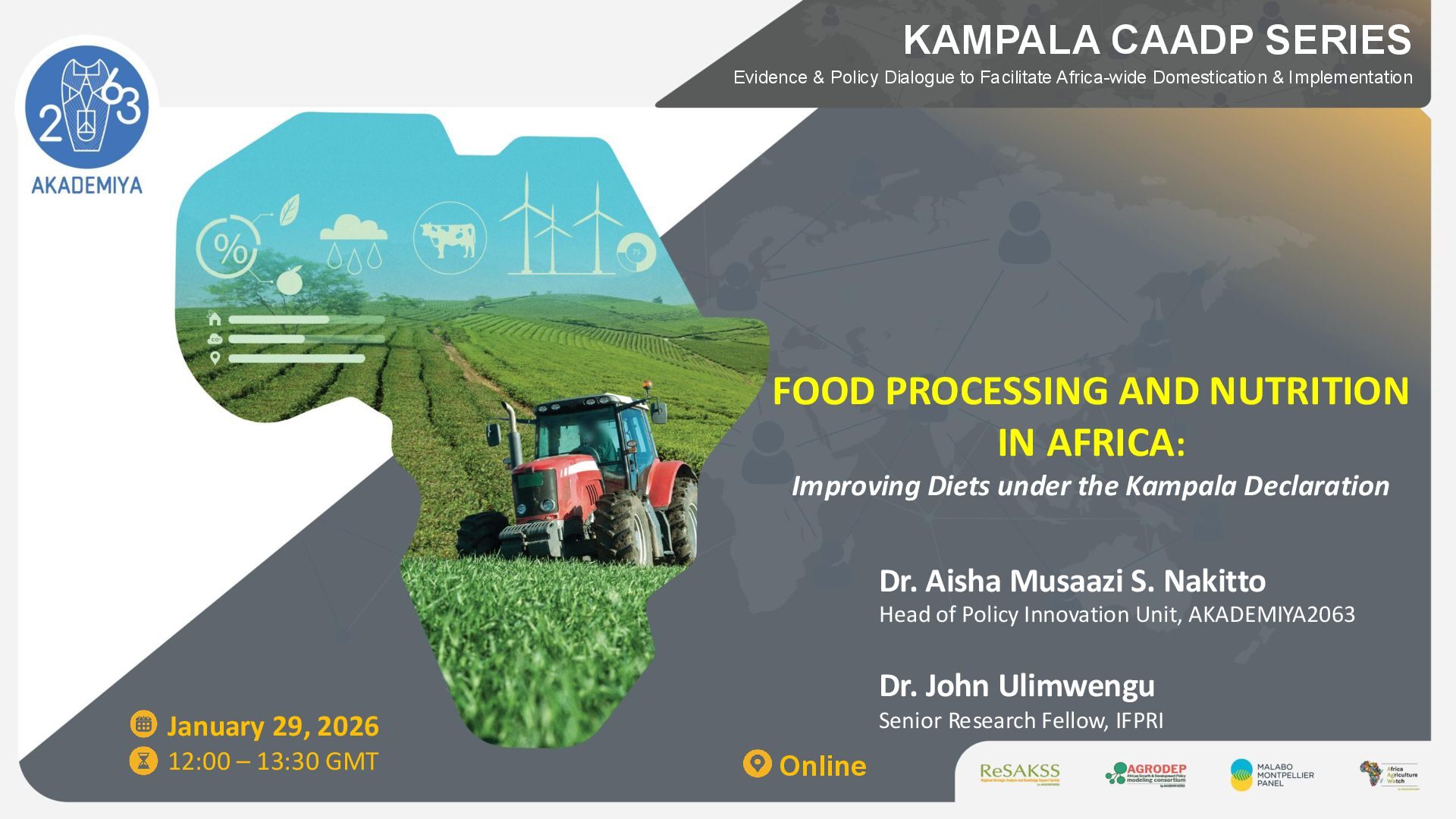
KAMPALA CAADP SERIES FOOD PROCESSING AND NUTRITION IN AFRICA: Improving Diets under the Kampala Declaration January 29, 2026 12:00 – 13:30 GMT Online Dr. Aisha Musaazi S. Nakitto Head of Policy Innovation Unit, AKADEMIYA2063 Dr. John Ulimwengu Senior Research Fellow, IFPRI
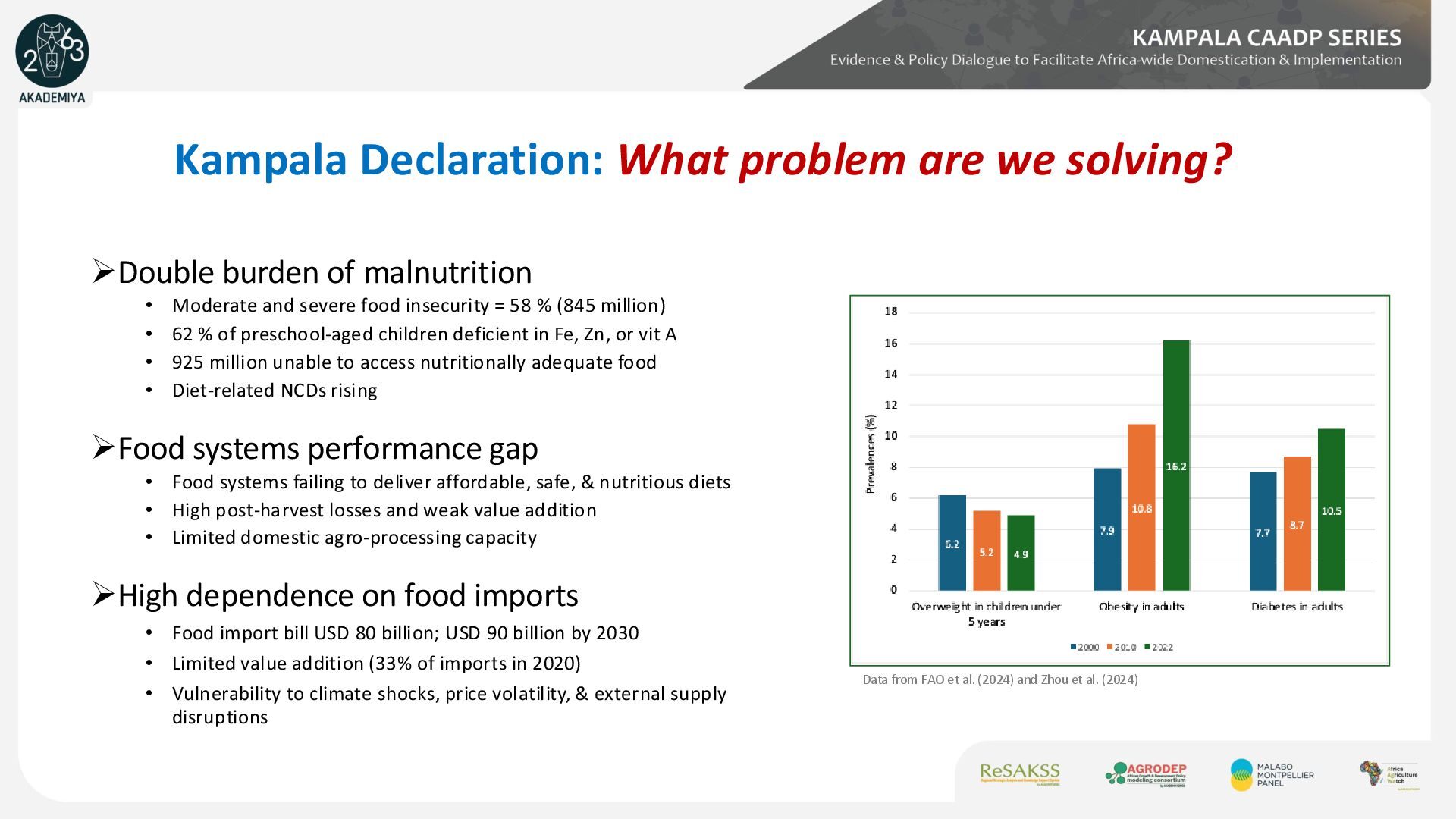
KAMPALA CAADP SERIES Kampala Declaration: What problem are we solving? ➢Double burden of malnutrition • Moderate and severe food insecurity = 58 % (845 million) • 62 % of preschool-aged children deficient in Fe, Zn, or vit A • 925 million unable to access nutritionally adequate food • Diet-related NCDs rising ➢Food systems performance gap • Food systems failing to deliver affordable, safe, & nutritious diets • High post-harvest losses and weak value addition • Limited domestic agro-processing capacity ➢High dependence on food imports • Food import bill USD 80 billion; USD 90 billion by 2030 • Limited value addition (33% of imports in 2020) • Vulnerability to climate shocks, price volatility, & external supply disruptions Data from FAO et al. (2024) and Zhou et al. (2024)
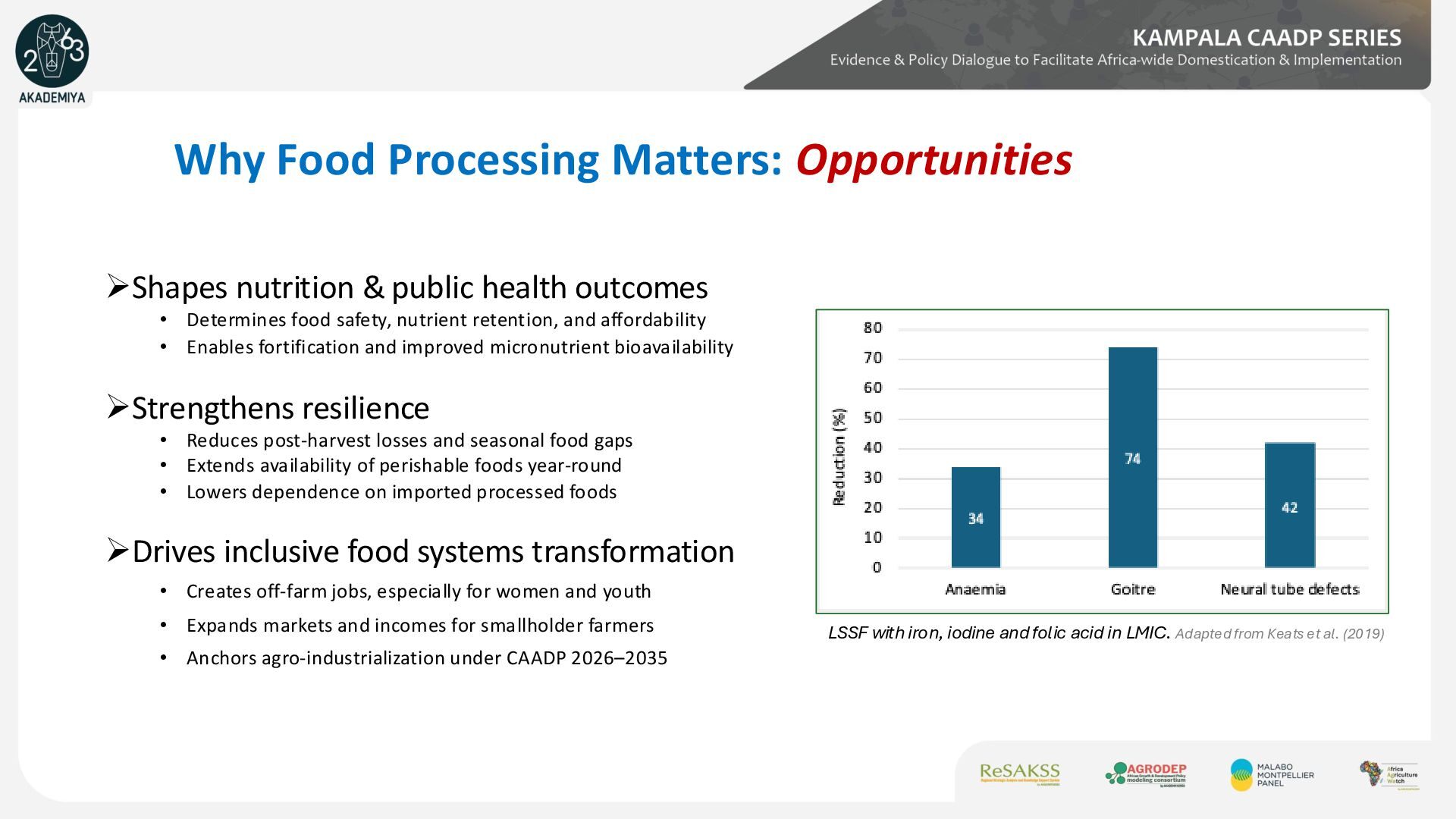
KAMPALA CAADP SERIES Why Food Processing Matters: Opportunities ➢Shapes nutrition & public health outcomes • Determines food safety, nutrient retention, and affordability • Enables fortification and improved micronutrient bioavailability ➢Strengthens resilience • Reduces post-harvest losses and seasonal food gaps • Extends availability of perishable foods year-round • Lowers dependence on imported processed foods ➢Drives inclusive food systems transformation • Creates off-farm jobs, especially for women and youth • Expands markets and incomes for smallholder farmers • Anchors agro-industrialization under CAADP 2026–2035 LSSF with iron, iodine and folic acid in LMIC. Adapted from Keats et al. (2019)
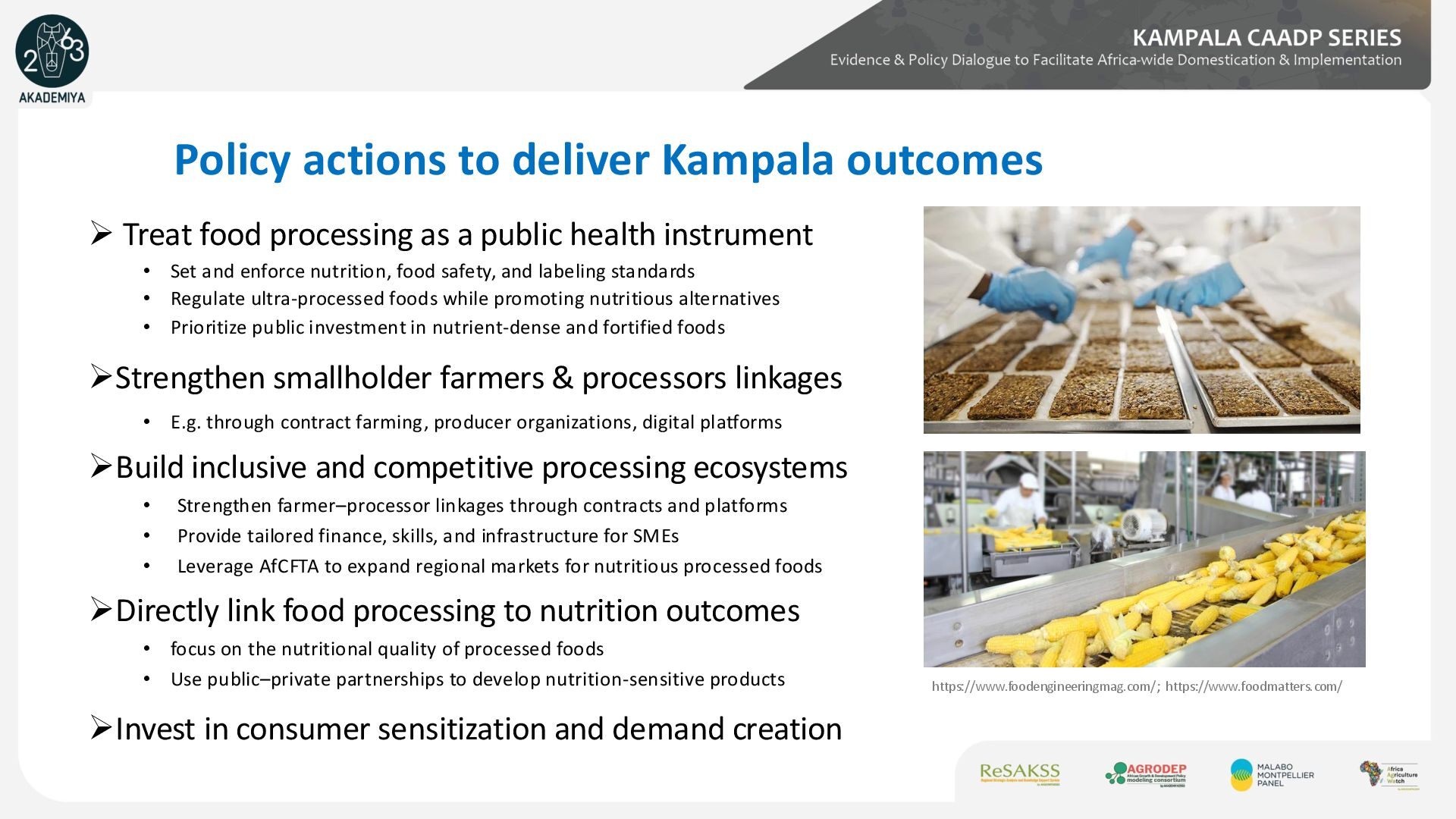
KAMPALA CAADP SERIES Policy actions to deliver Kampala outcomes ➢ Treat food processing as a public health instrument • Set and enforce nutrition, food safety, and labeling standards • Regulate ultra-processed foods while promoting nutritious alternatives • Prioritize public investment in nutrient-dense and fortified foods ➢Strengthen smallholder farmers & processors linkages • E.g. through contract farming, producer organizations, digital platforms ➢Build inclusive and competitive processing ecosystems • Strengthen farmer–processor linkages through contracts and platforms • Provide tailored finance, skills, and infrastructure for SMEs • Leverage AfCFTA to expand regional markets for nutritious processed foods ➢Directly link food processing to nutrition outcomes • focus on the nutritional quality of processed foods • Use public–private partnerships to develop nutrition-sensitive products ➢Invest in consumer sensitization and demand creation https://www.foodengineeringmag.com/; https://www.foodmatters.com/


 akademiya2063
 yumaichikawa
.png) satai
satai
 hotchpotch
 monochromegane
 eumesy
 kzinmr
 ayatokanada
 kzmssk
 de9uch1
 tsantalis
 fkske
fkske
 koheishinden
 tanoku
 ipullrank
 lauravandoore
 rkaga
rkaga
 csswizardry
 honnibal
 matthewcrist
 productmarketing
 tammielis
 addyosmani
 geoffreycrofte
 ryanjones