KAMPALA CAADP SERIES Neglected and Underutilised Species (NUS): Potential for Food and Nutrition Security – a Knowledge Review January 29, 2026 12:00 – 13:30 GMT Online Carlo Rega – European Commission Joint Research Centre
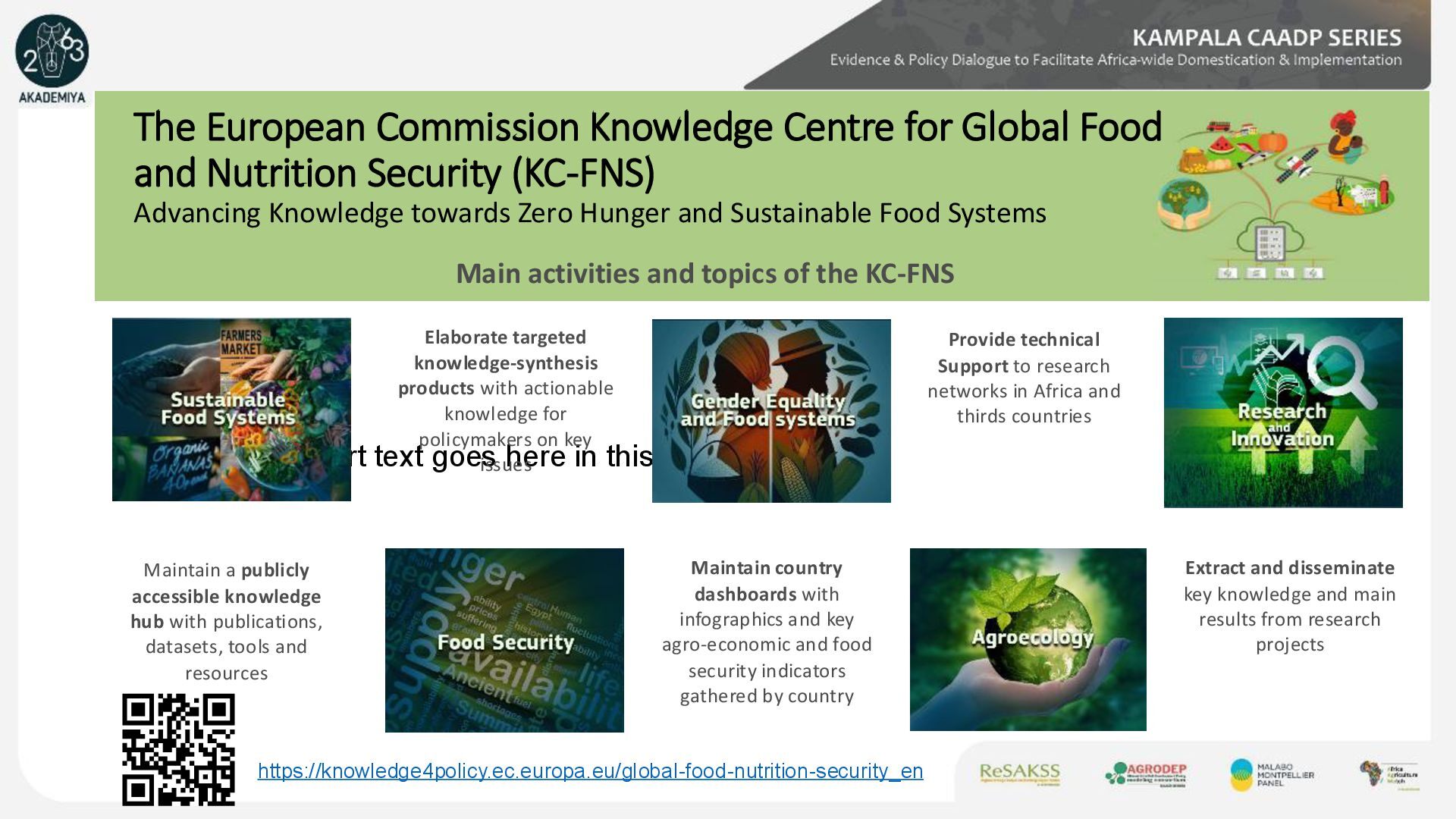
KAMPALA CAADP SERIES The European Commission Knowledge Centre for Global Food and Nutrition Security (KC-FNS) Advancing Knowledge towards Zero Hunger and Sustainable Food Systems https://knowledge4policy.ec.europa.eu/global-food-nutrition-security_en Main activities and topics of the KC-FNS Elaborate targeted knowledge-synthesis products with actionable knowledge for policymakers on key issues Maintain a publicly accessible knowledge hub with publications, datasets, tools and resources Provide technical Support to research networks in Africa and thirds countries Maintain country dashboards with infographics and key agro-economic and food security indicators gathered by country Extract and disseminate key knowledge and main results from research projects
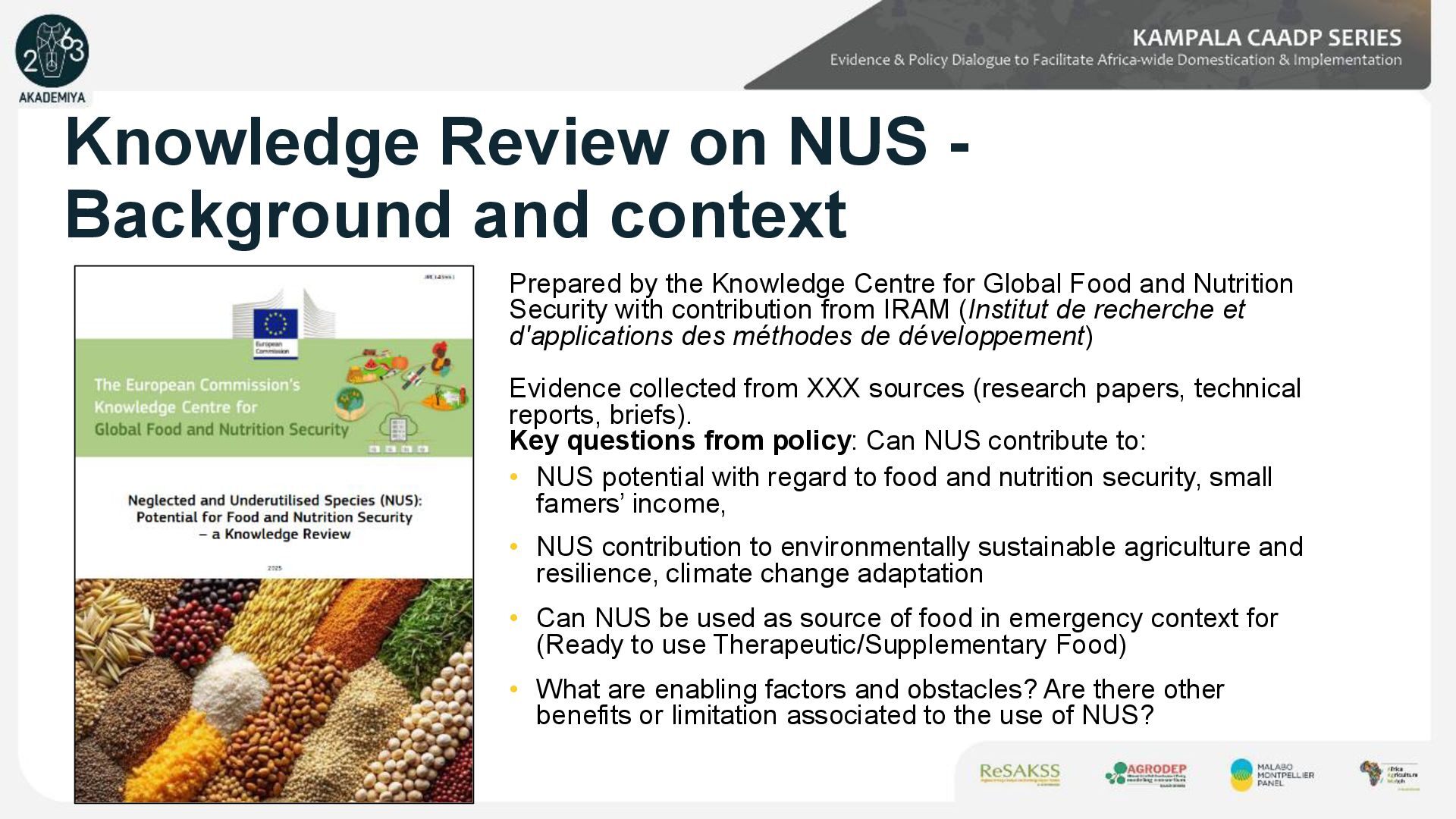
KAMPALA CAADP SERIES Knowledge Review on NUS - Background and context Prepared by the Knowledge Centre for Global Food and Nutrition Security with contribution from IRAM (Institut de recherche et d'applications des méthodes de développement) Evidence collected from >60 sources (research papers, technical reports, briefs). Key questions from policy: Can NUS contribute to: • NUS potential with regard to food and nutrition security, small famers’ income, livelihood • NUS contribution to environmentally sustainable agriculture and resilience, climate change adaptation • Can NUS be used as source of food in emergency context for (Ready to use Therapeutic/Supplementary Food) • What are enabling factors and obstacles? Are there other benefits or limitation associated to the use of NUS?
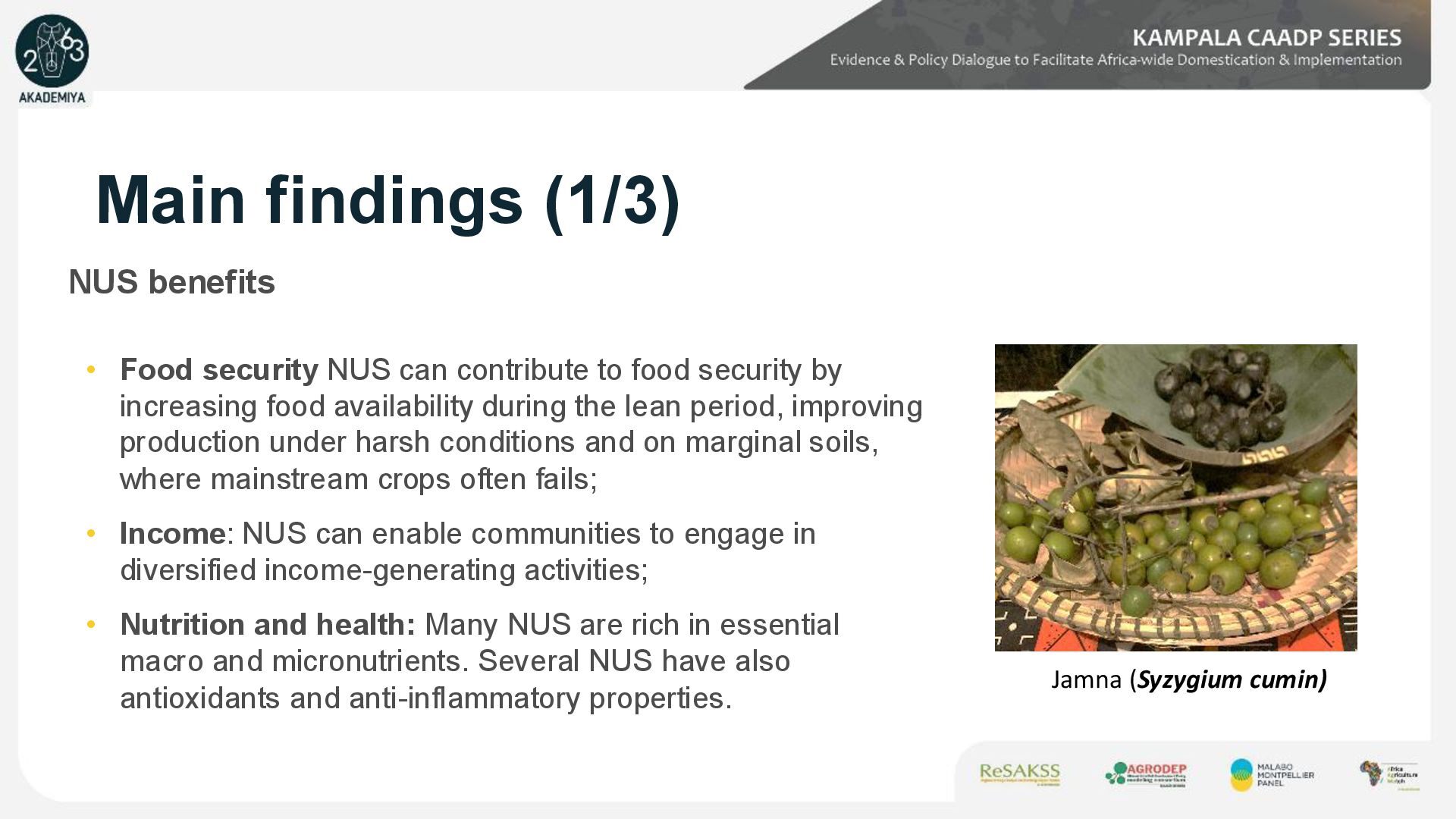
KAMPALA CAADP SERIES Main findings (1/3) NUS benefits • Food security NUS can contribute to food security by increasing food availability during the lean period, improving production under harsh conditions and on marginal soils, where mainstream crops often fails; • Income: NUS can enable communities to engage in diversified income-generating activities; • Nutrition and health: Many NUS are rich in essential macro and micronutrients. Several NUS have also antioxidants and anti-inflammatory properties. Jamna (Syzygium cumin)
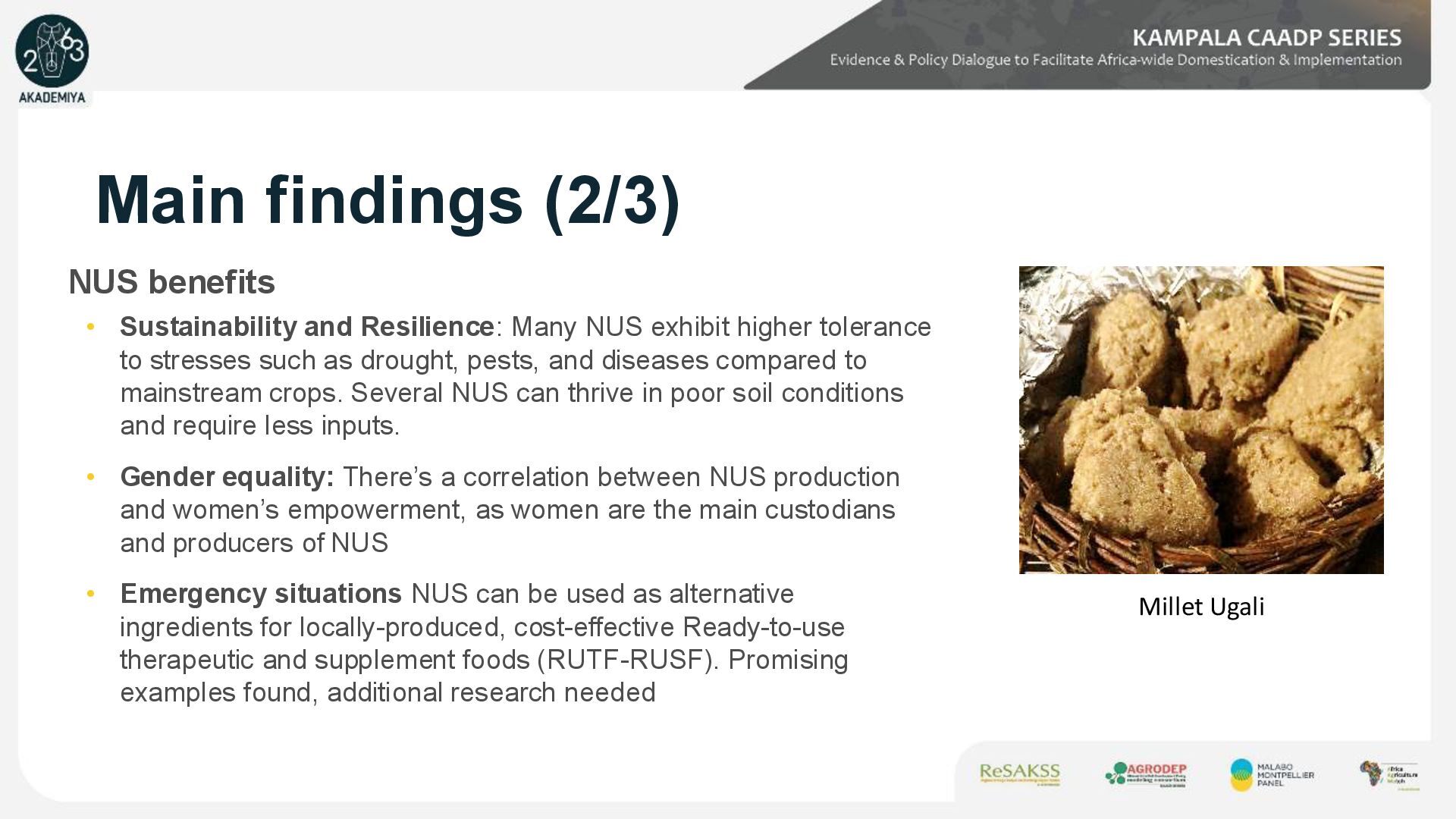
KAMPALA CAADP SERIES Main findings (2/3) NUS benefits • Sustainability and Resilience: Many NUS exhibit higher tolerance to stresses such as drought, pests, and diseases compared to mainstream crops. Several NUS can thrive in poor soil conditions and require less inputs. • Gender equality: There’s a correlation between NUS production and women’s empowerment, as women are the main custodians and producers of NUS • Emergency situations NUS can be used as alternative ingredients for locally-produced, cost-effective Ready-to-use therapeutic and supplement foods (RUTF-RUSF). Promising examples found, additional research needed Millet Ugali
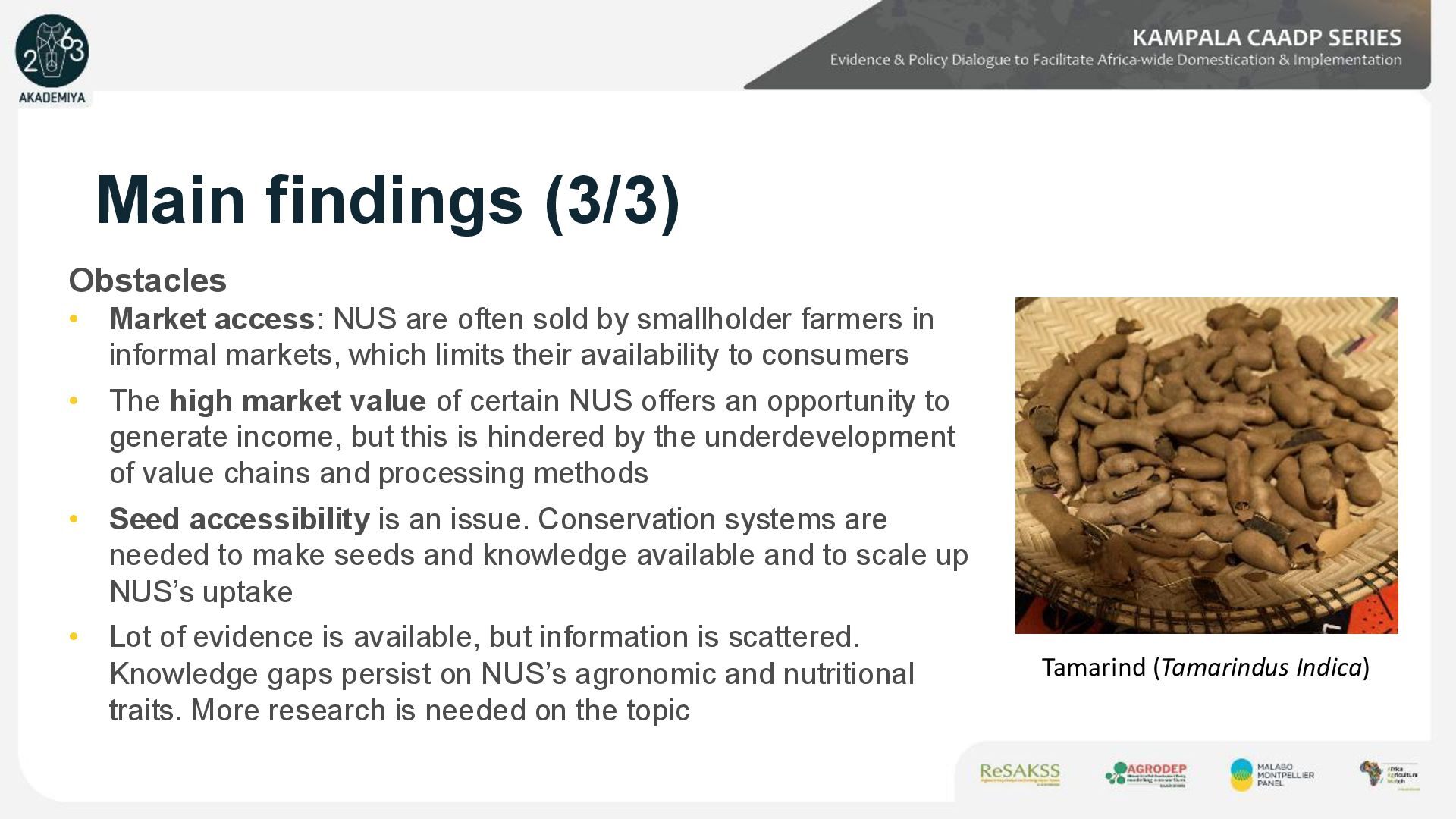
KAMPALA CAADP SERIES Main findings (3/3) Obstacles • Market access: NUS are often sold by smallholder farmers in informal markets, which limits their availability to consumers • The high market value of certain NUS offers an opportunity to generate income, but this is hindered by the underdevelopment of value chains and processing methods • Seed accessibility is an issue. Conservation systems are needed to make seeds and knowledge available and to scale up NUS’s uptake • Lot of evidence is available, but information is scattered. Knowledge gaps persist on NUS’s agronomic and nutritional traits. More research is needed on the topic Tamarind (Tamarindus Indica)
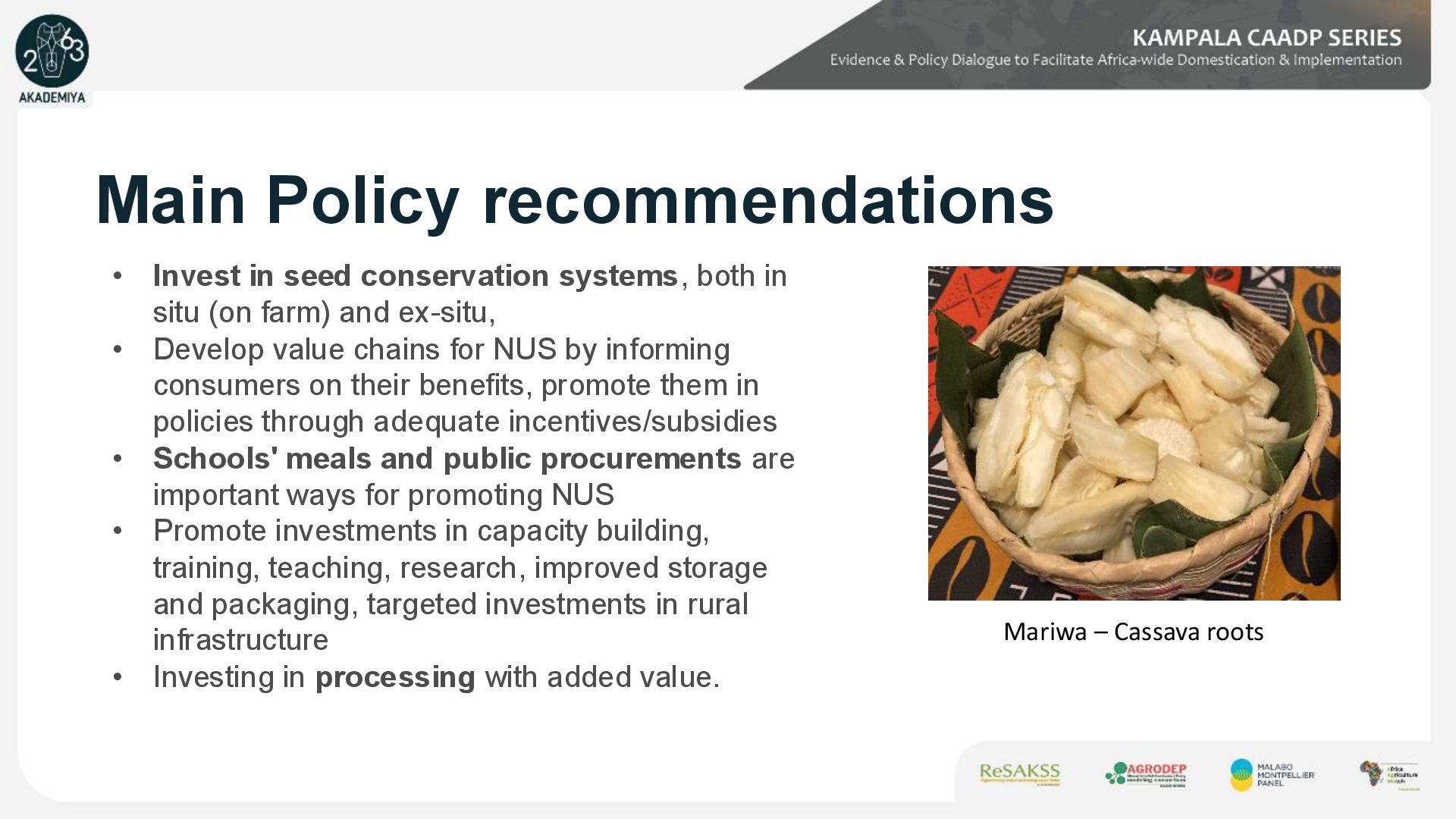
KAMPALA CAADP SERIES Main Policy recommendations • Invest in seed conservation systems, both in situ (on farm) and ex-situ, • Develop value chains for NUS by informing consumers on their benefits, promote them in policies through adequate incentives/subsidies • Schools' meals and public procurements are important ways for promoting NUS • Promote investments in capacity building, training, teaching, research, improved storage and packaging, targeted investments in rural infrastructure • Investing in processing with added value. Mariwa – Cassava roots


 akademiya2063
 naok615
 sazimai
 polipoli
 rikkabotan7
 ftakahashi
 tsantalis
 takehaya
 xspa2012
 murakawatakuya
 institudelelevage
 hotchpotch
 yuukit
 codingconduct
 morganepeng
 panda_program
 stephaniewalter
 signer
 michielstock
 reverentgeek
 skipperchong
 aleyda
 eileencodes
 katiecoart
 ianozsvald