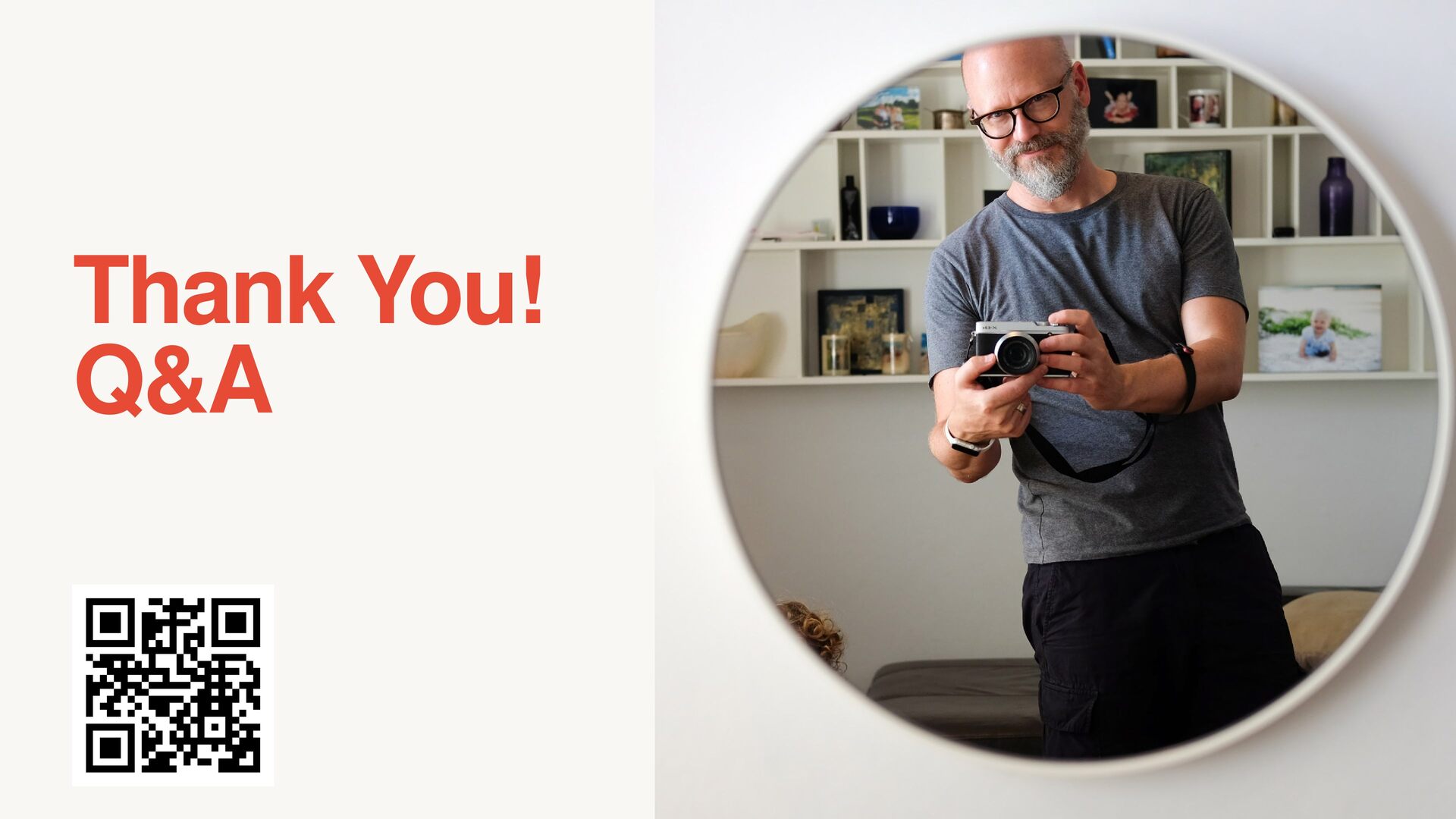
Share
Embed
Navigating the journey into design leadership - Hatch Atelier, Berlin, 2026
Kick-off talk and workshop for the Berlin Hatch Atelier, 2026
Andy Polaine
May 22, 2026
Transcript
74 slides
-
Navigating the journey into design leadership ©2026 Andrew Polaine Hatch
Leadership Atelier Berlin 2026 Andy Polaine Photo by Simple on Unsplash Image: S W on Pexels Find me here pln.me/linktree or do the QR thing: -
©2026 Andrew Polaine Hatch Leadership Atelier Berlin 2026 Find me
here pln.me/linktree or do the QR thing: -
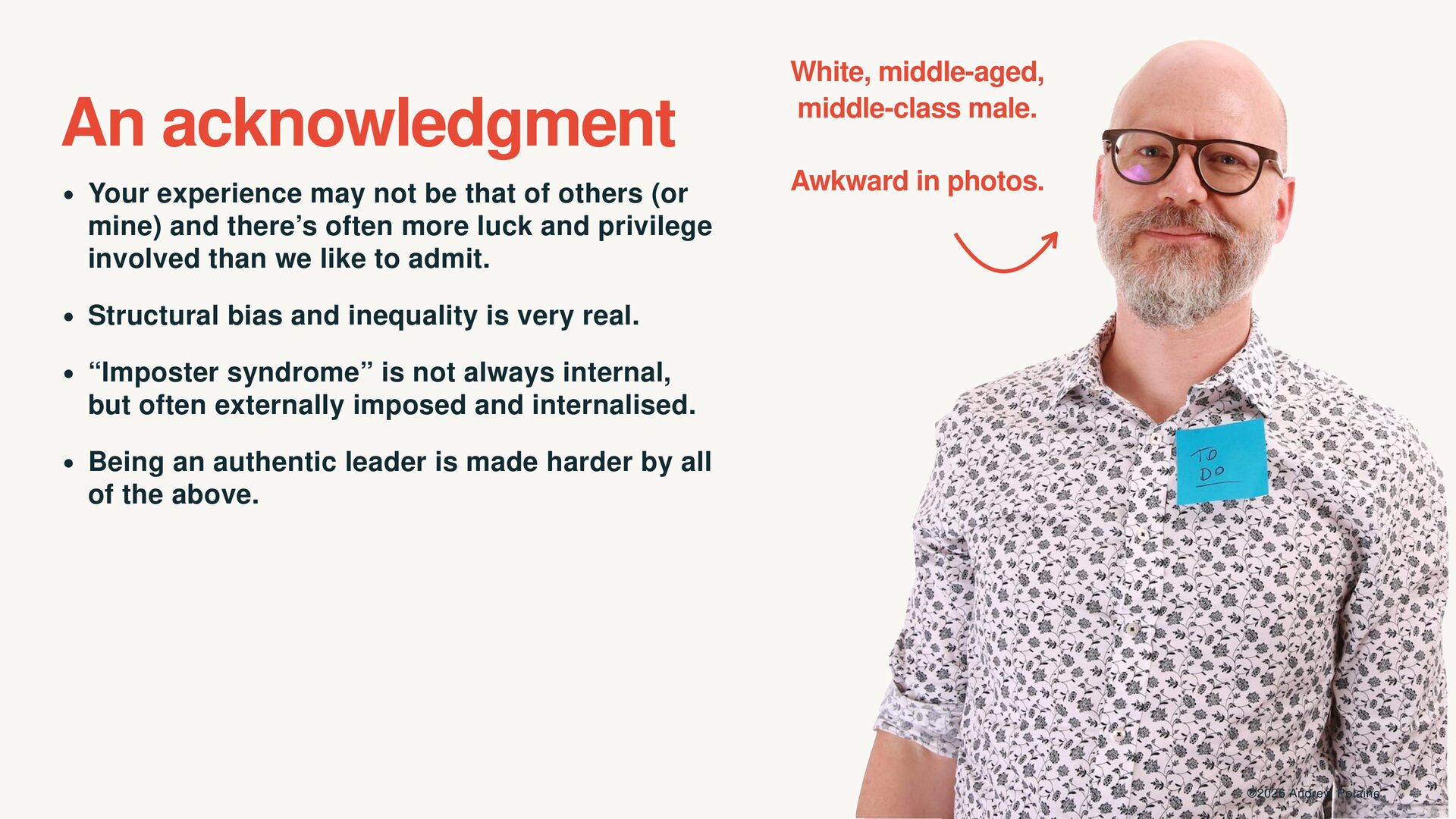
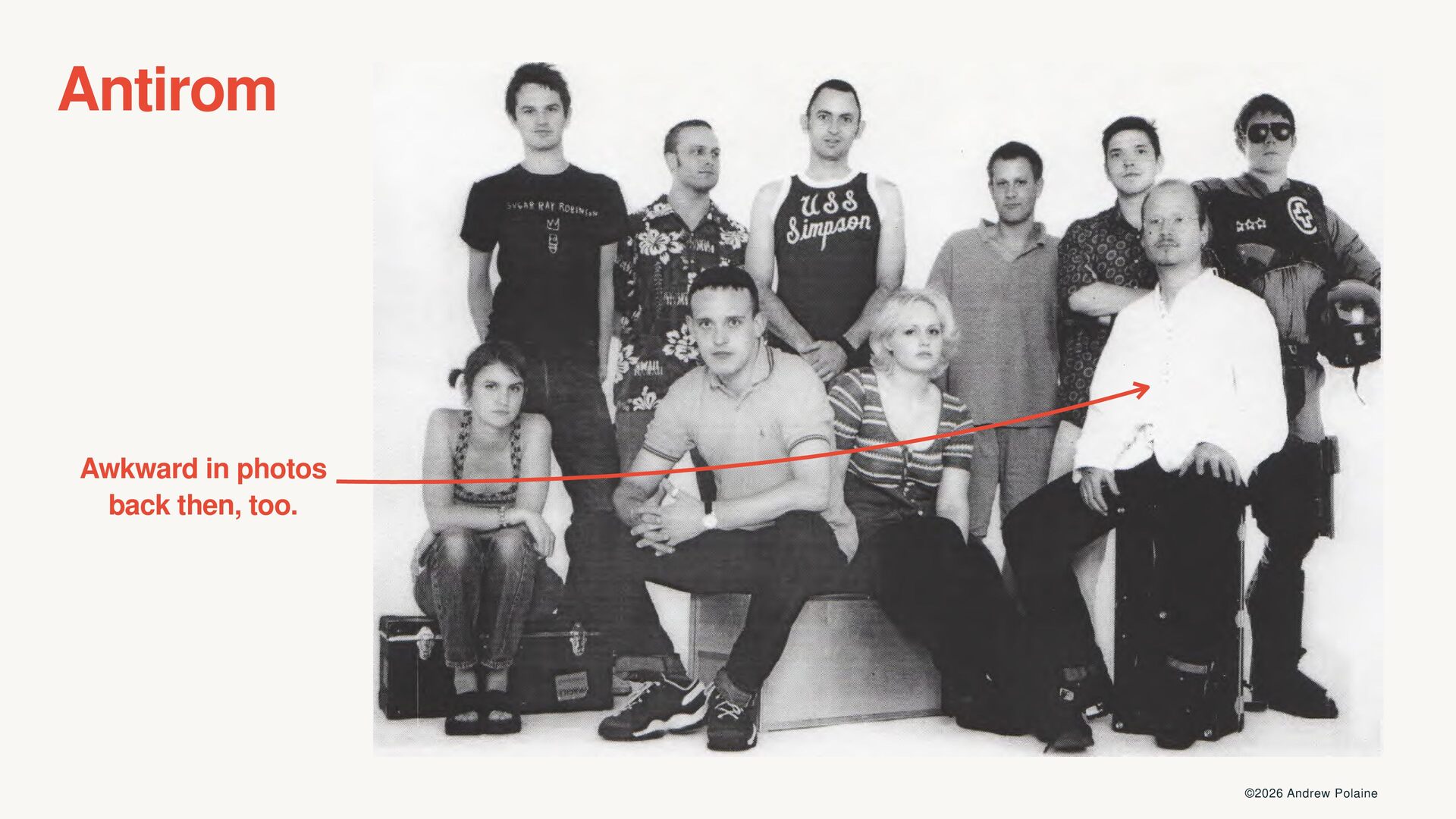
White, middle-aged, middle-class male. Awkward in photos. ©2026 Andrew Polaine
• Your experience may not be that of others (or mine) and there’s often more luck and privilege involved than we like to admit. • Structural bias and inequality is very real. • “Imposter syndrome” is not always internal, but often externally imposed and internalised. • Being an authentic leader is made harder by all of the above. An acknowledgment -
©2026 Andrew Polaine The worst thing about growing up is
realising adults don’t have all the answers. -
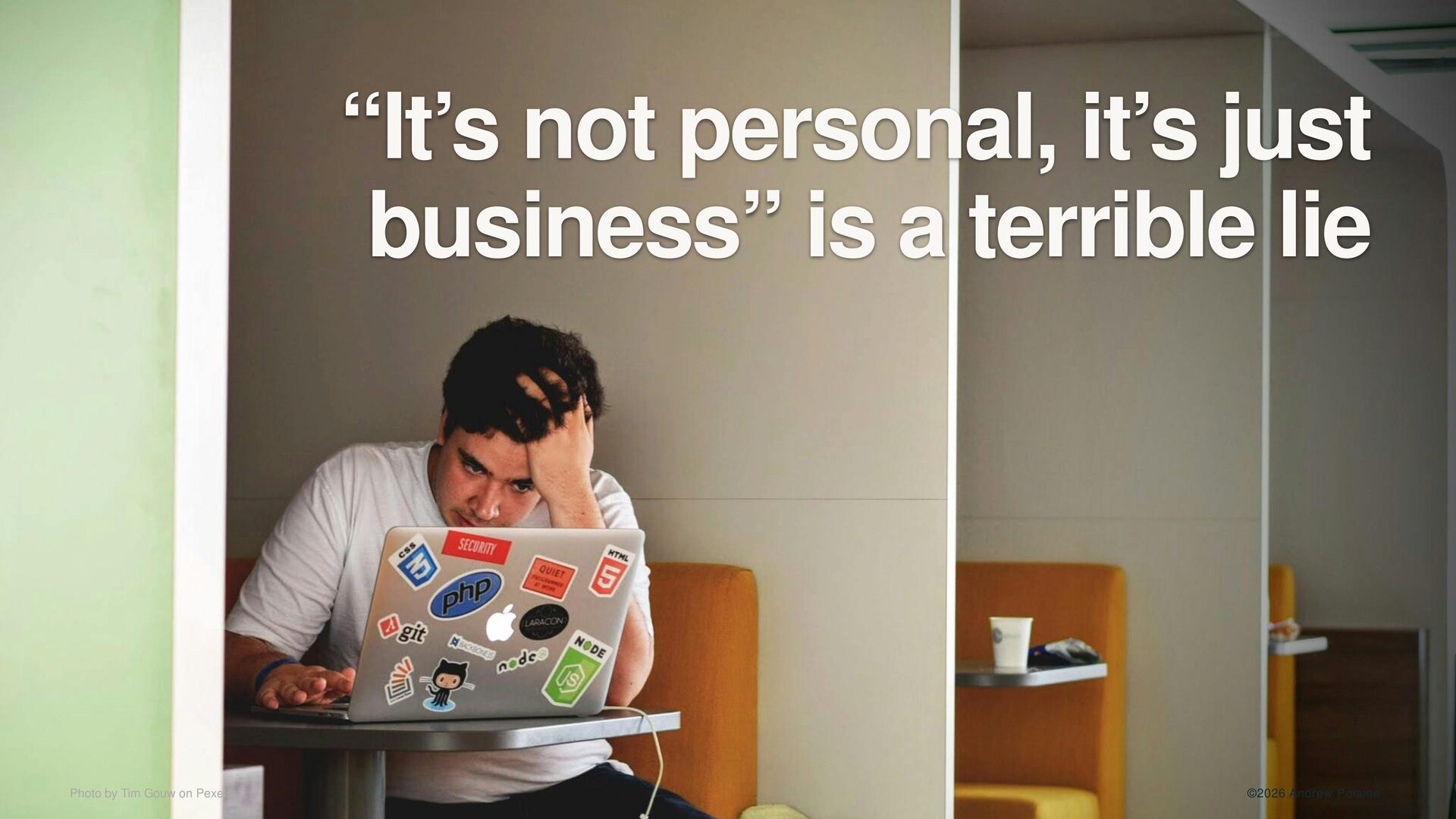
©2026 Andrew Polaine “It’s not personal, it’s just business” is
a terrible lie Photo by Tim Gouw on Pexels -
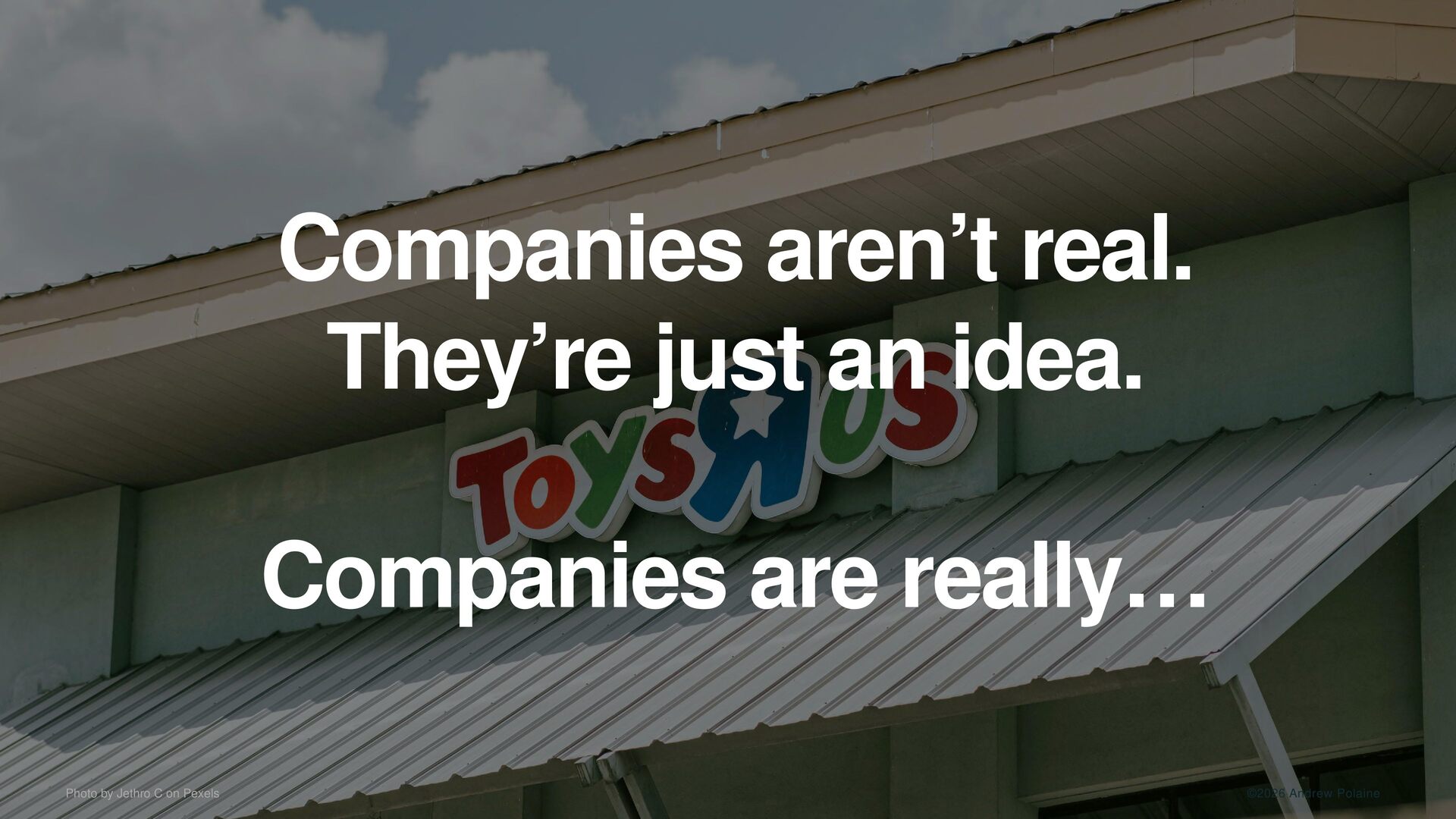
©2026 Andrew Polaine Companies aren’t real. They’re just an idea.
Companies are really… Photo by Jethro C on Pexels -
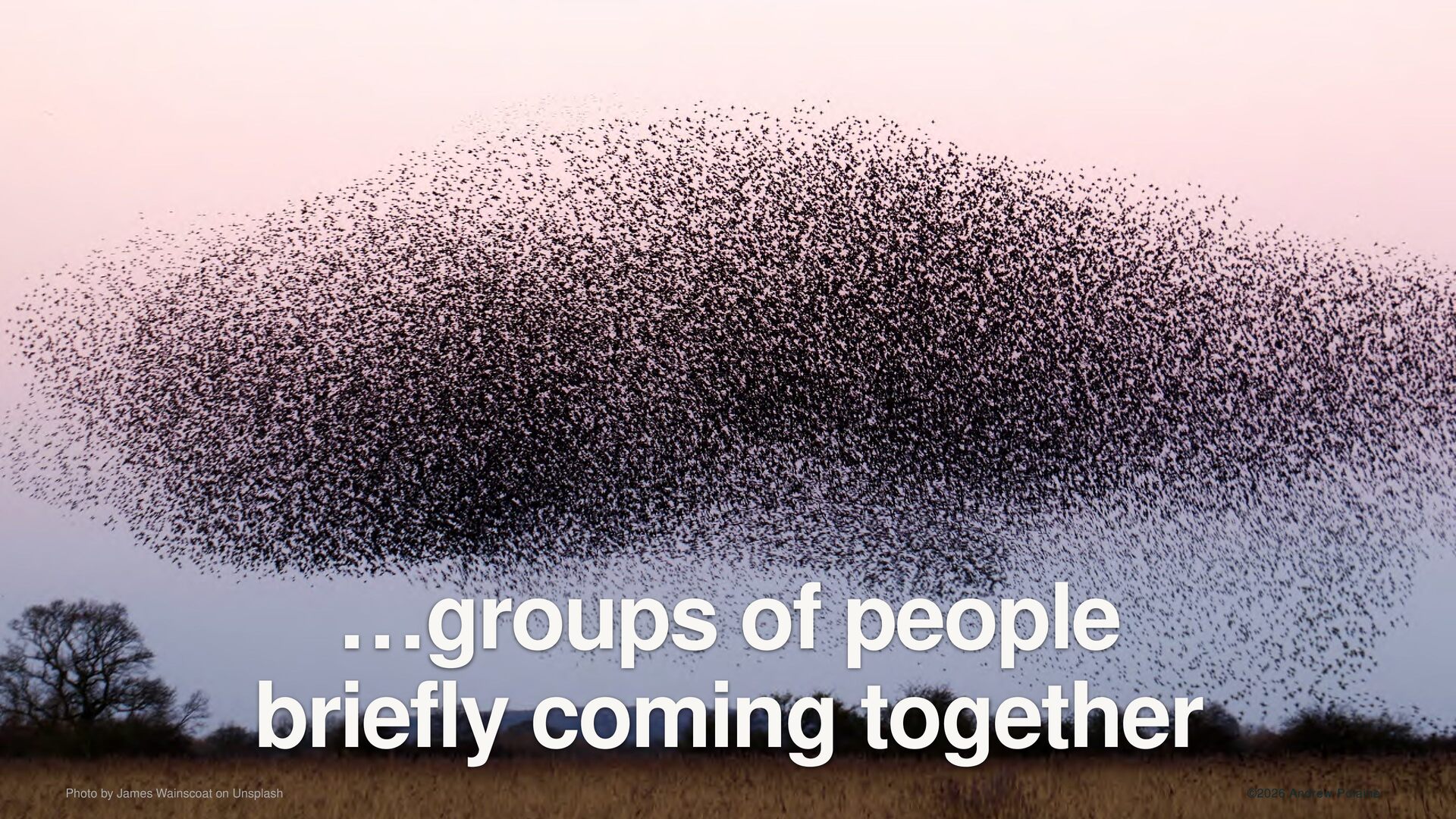
©2026 Andrew Polaine Photo by James Wainscoat on Unsplash …groups
of people briefly coming together -
©2026 Andrew Polaine Projects are 90% conversations. Most of the
difficulties are people problems, not design problems. Photo by Samuel Scrimshaw on Unsplash -
©2026 Andrew Polaine The meta-work is the work Photo by
Pixabay on Pexels -
©2026 Andrew Polaine Which means it is all about how
you relate to others Photo by Ketut Subiyanto on Pexels -
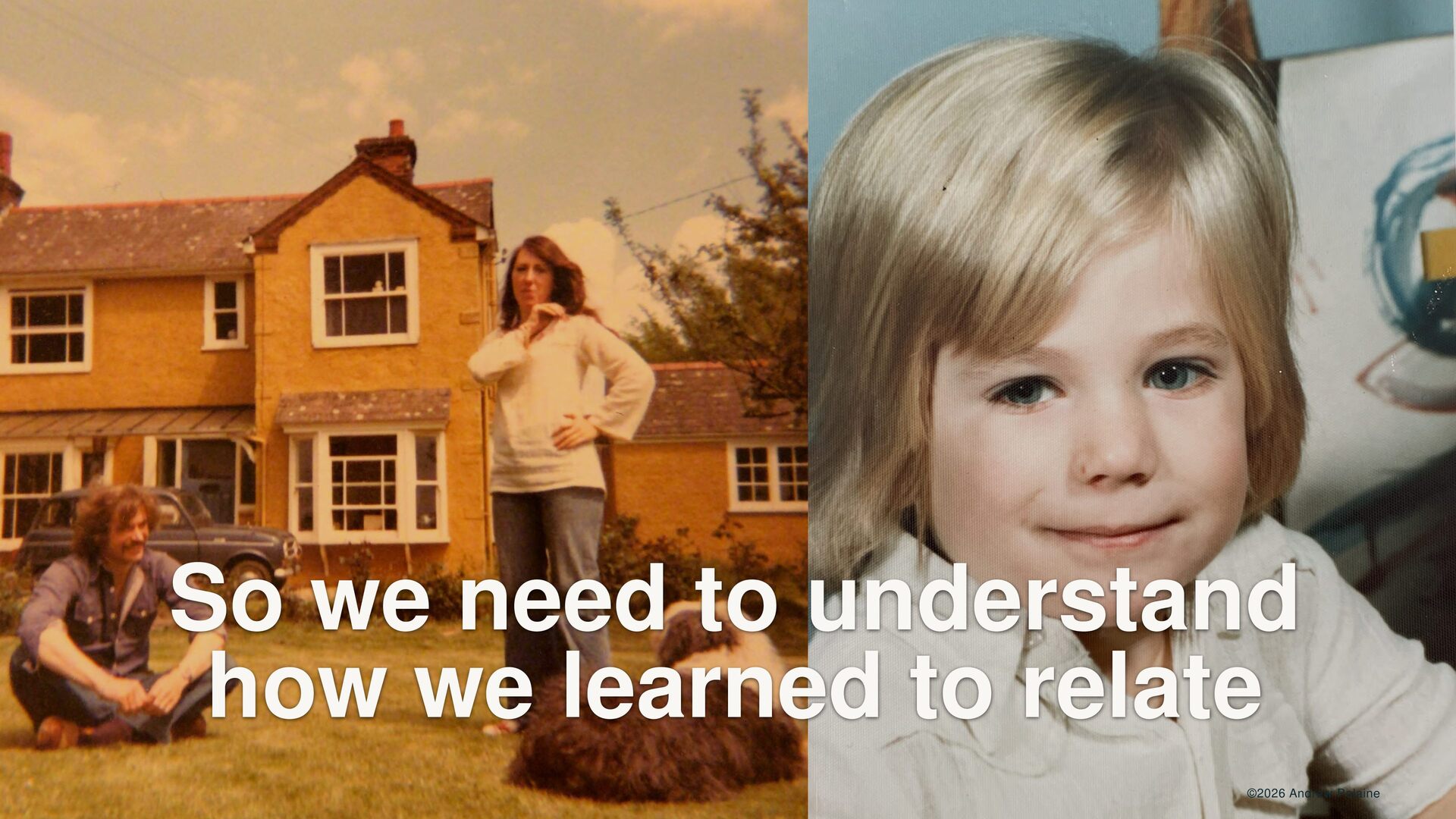
©2026 Andrew Polaine So we need to understand how we
learned to relate -
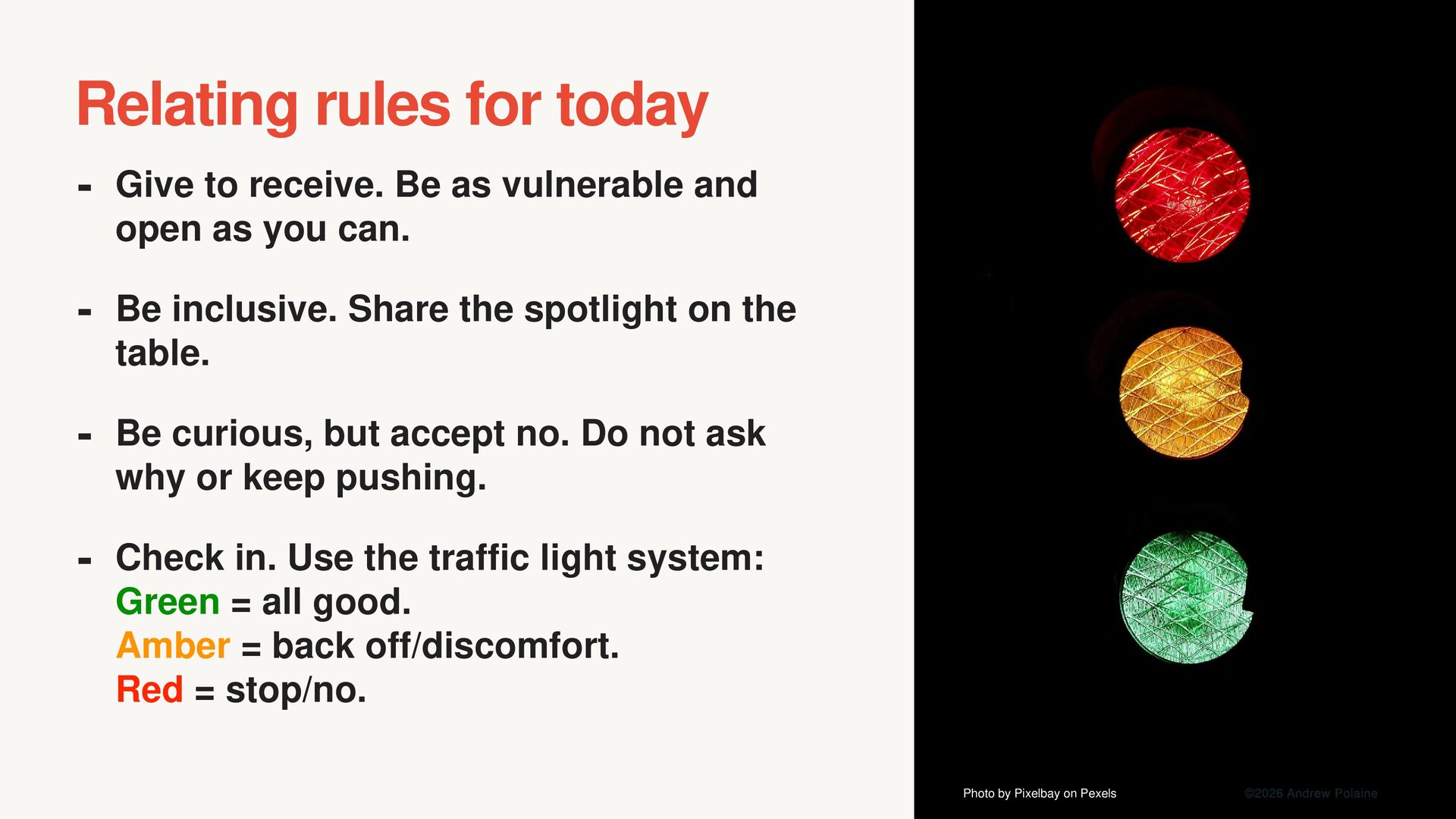
- Give to receive. Be as vulnerable and open as
you can. - Be inclusive. Share the spotlight on the table. - Be curious, but accept no. Do not ask why or keep pushing. - Check in. Use the traf fi c light system: Green = all good. Amber = back off/discomfort. Red = stop/no. ©2026 Andrew Polaine Relating rules for today Photo by Pixelbay on Pexels -
©2026 Andrew Polaine Tell me about your childhood. What values
have you taken from your caregivers? 1. Appoint a timekeeper. 2. Turn to the person next to you and answer the question above. 3. Take ~3 minutes per person. 4. Discuss with others next to you. 3 mins per person -
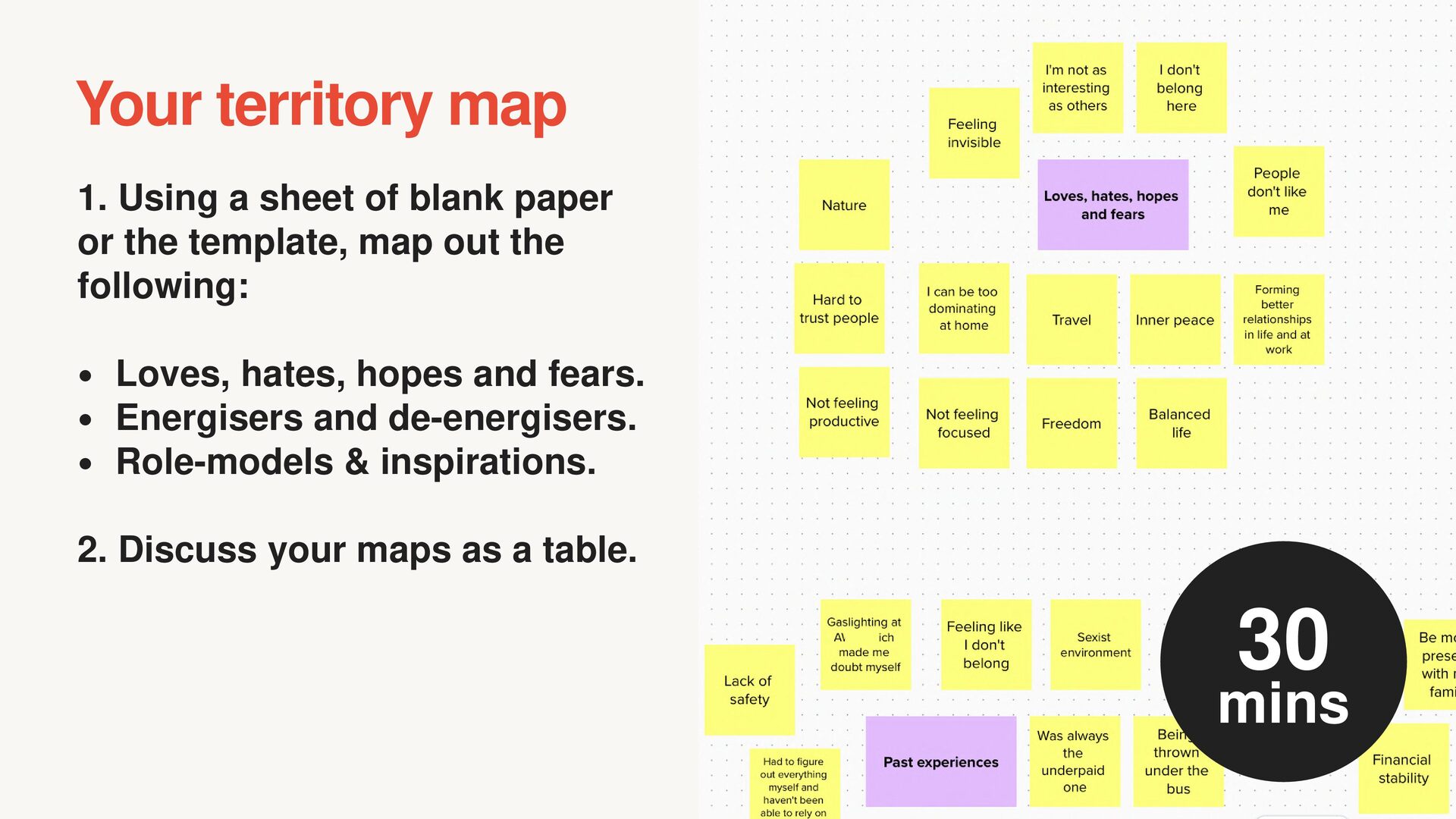
©2026 Andrew Polaine Your territory map 1. Using a sheet
of blank paper or the template, map out the following: • Loves, hates, hopes and fears. • Energisers and de-energisers. • Role-models & inspirations. 2. Discuss your maps as a table. 30 mins -
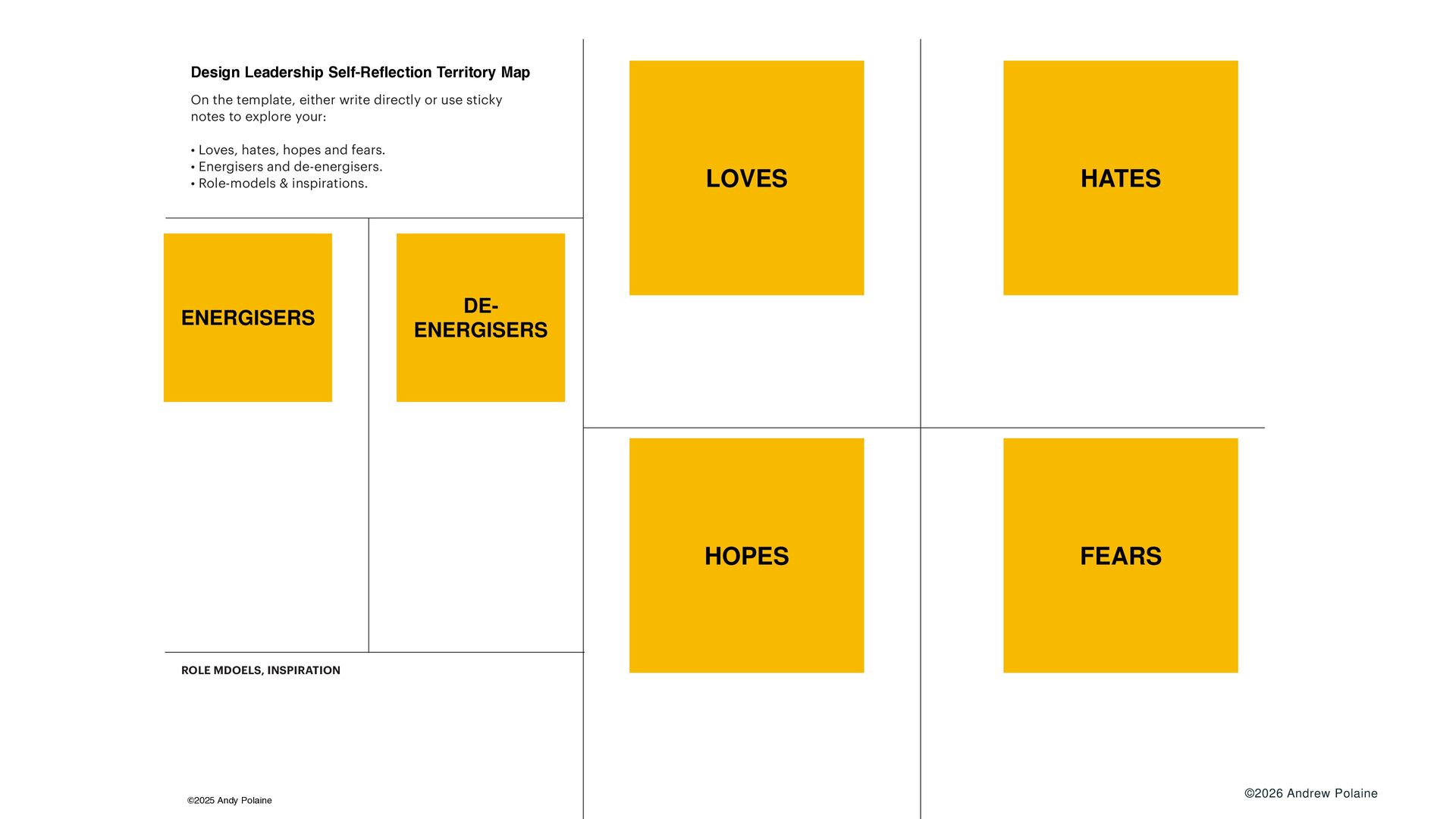
©2026 Andrew Polaine Design Leadership Self-Reflection Territory Map ©2025 Andy
Polaine On the template, either write directly or use sticky notes to explore your: • Loves, hates, hopes and fears. • Energisers and de-energisers. • Role-models & inspirations. ENERGISERS DE-ENERGISERS ROLE MDOELS, INSPIRATION LOVES HATES HOPES FEARS LOVES HATES FEARS HOPES ENERGISERS DE- ENERGISERS -
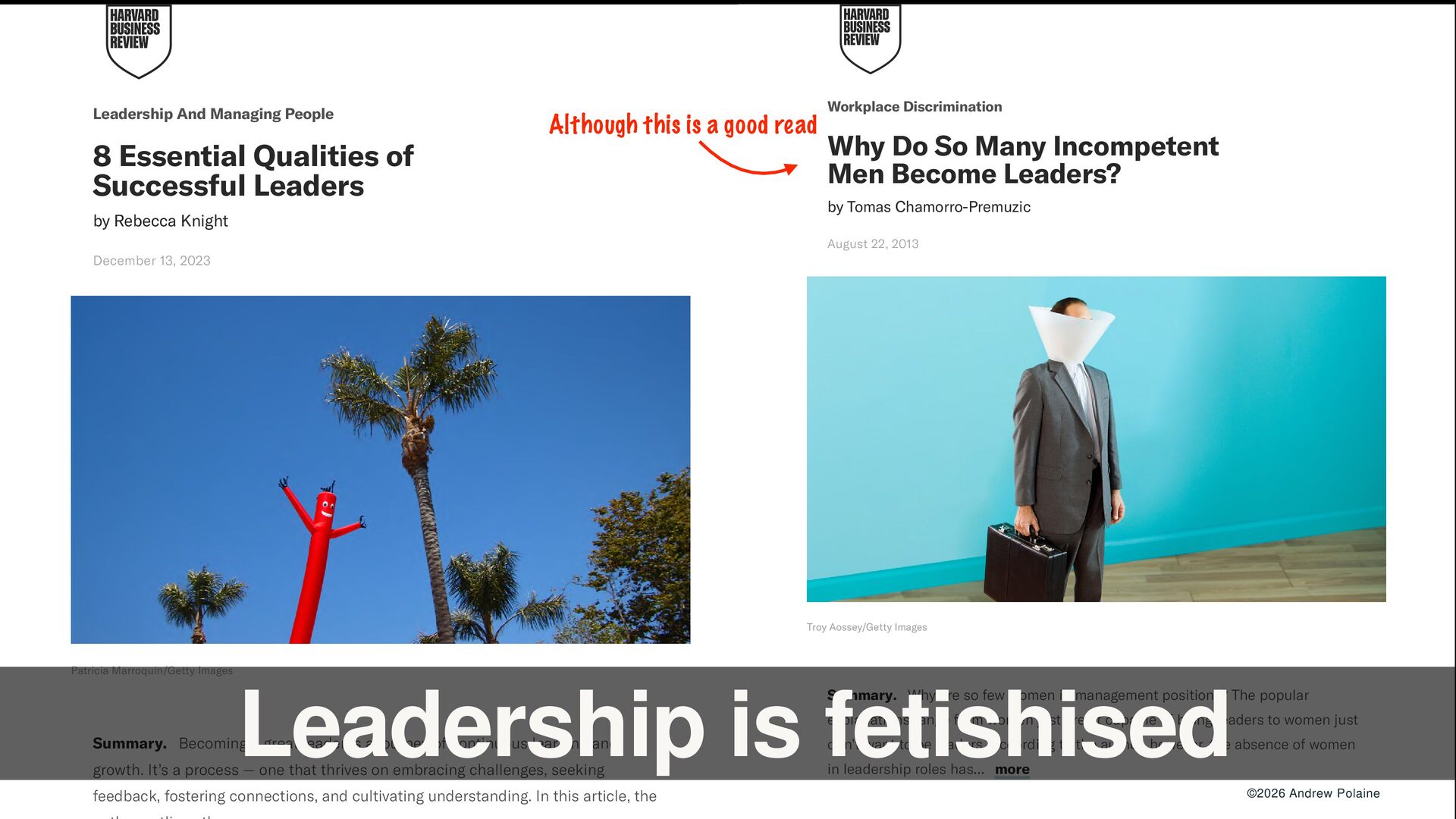
Workplace Discrimination Why Do So Many Incompetent Men Become Leaders?
by Tomas Chamorro-Premuzic August 22, 2013 Troy Aossey/Getty Images Summary. Why are so few women in management positions? The popular explanations range from women just aren’t capable of being leaders to women just don’t want to be leaders. According to the author, however, the absence of women in leadership roles has... more ©2026 Andrew Polaine Photo by Ketut Subiyanto on Pexels Leadership And Managing People 8 Essential Qualities of Successful Leaders by Rebecca Knight December 13, 2023 Patricia Marroquin/Getty Images Summary. Becoming a great leader is a journey of continuous learning and growth. It’s a process — one that thrives on embracing challenges, seeking feedback, fostering connections, and cultivating understanding. In this article, the Leadership is fetishised Although this is a good read -
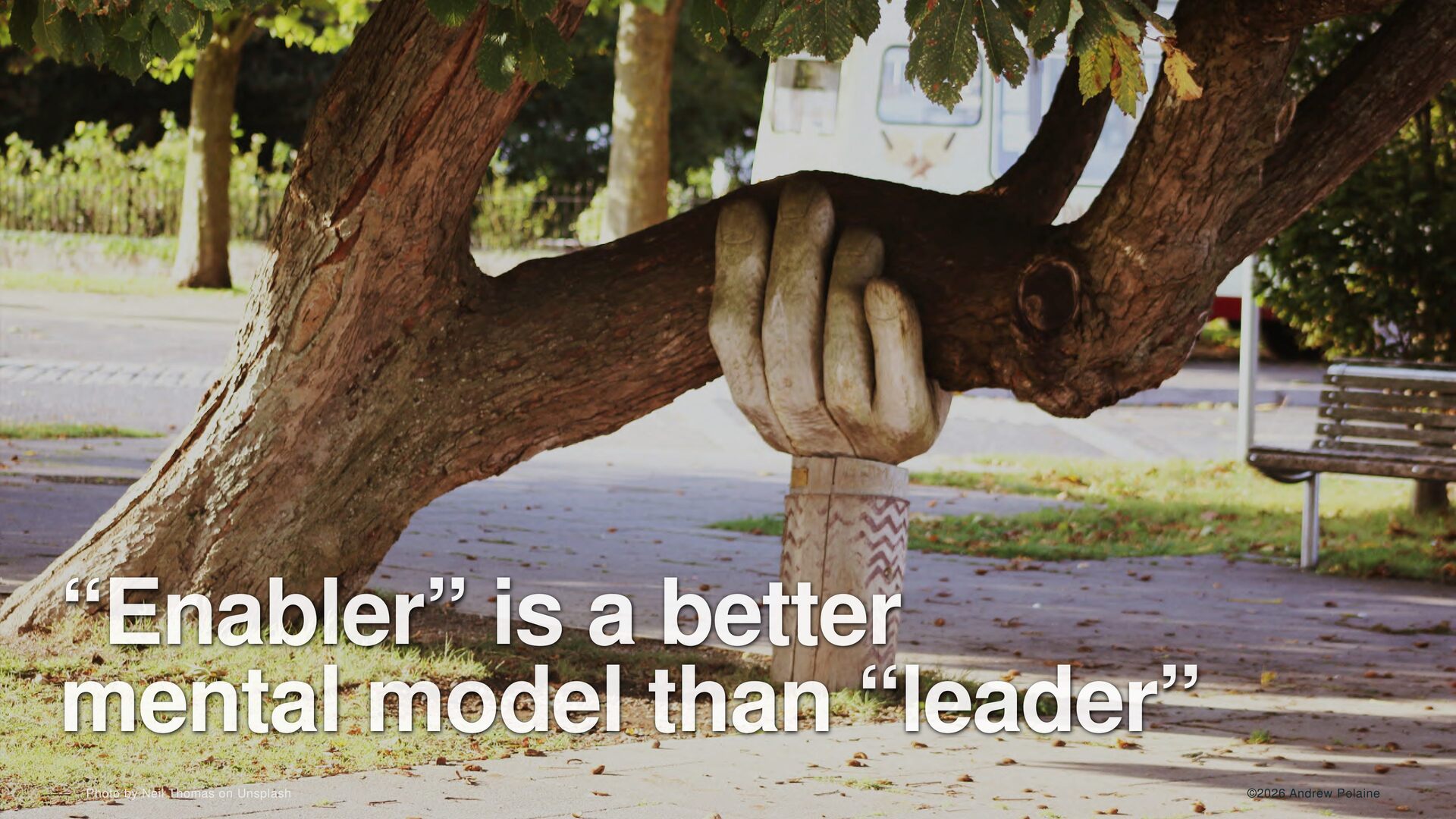
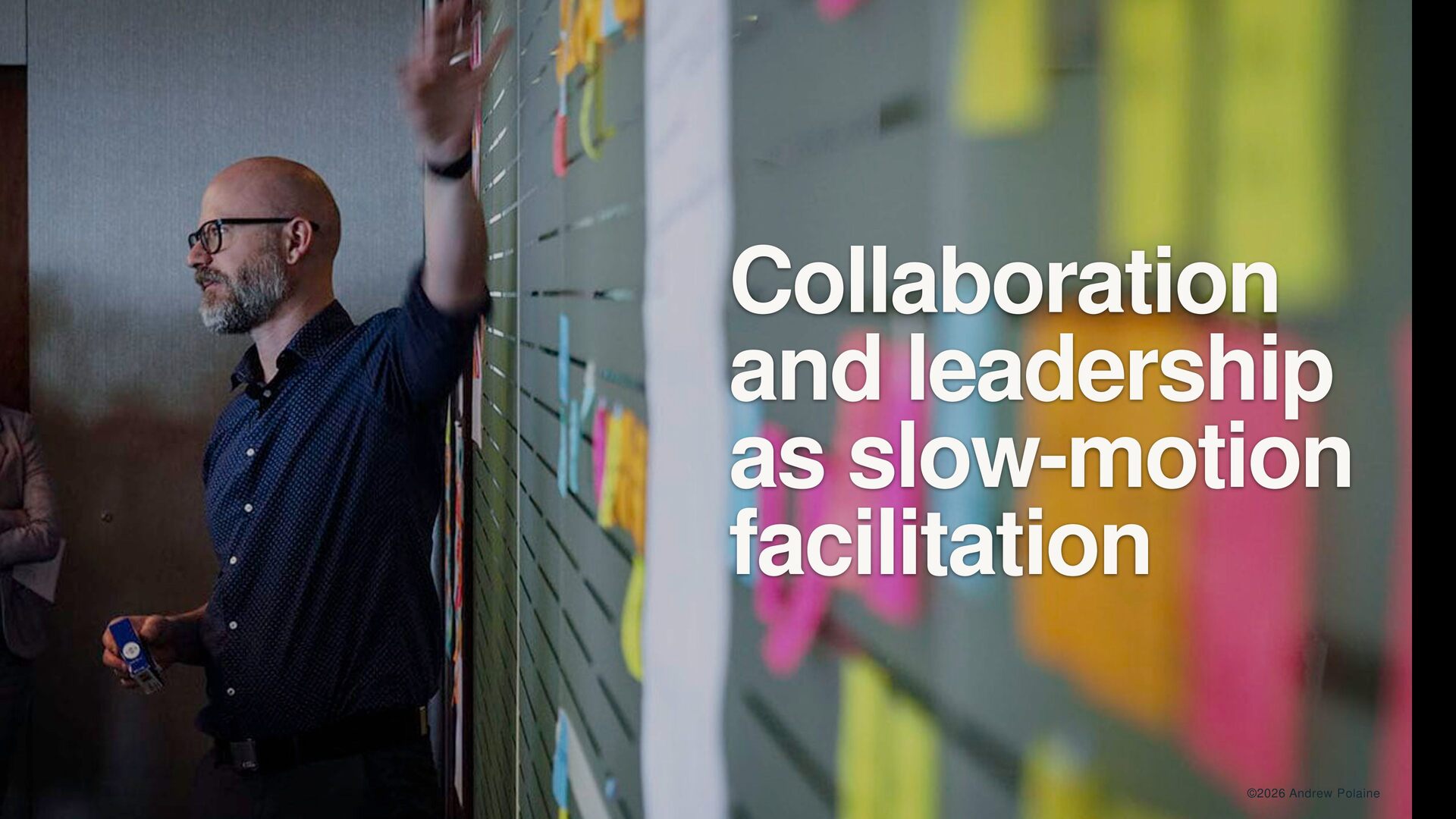
©2026 Andrew Polaine “Enabler” is a better mental model than
“leader” Photo by Neil Thomas on Unsplash -
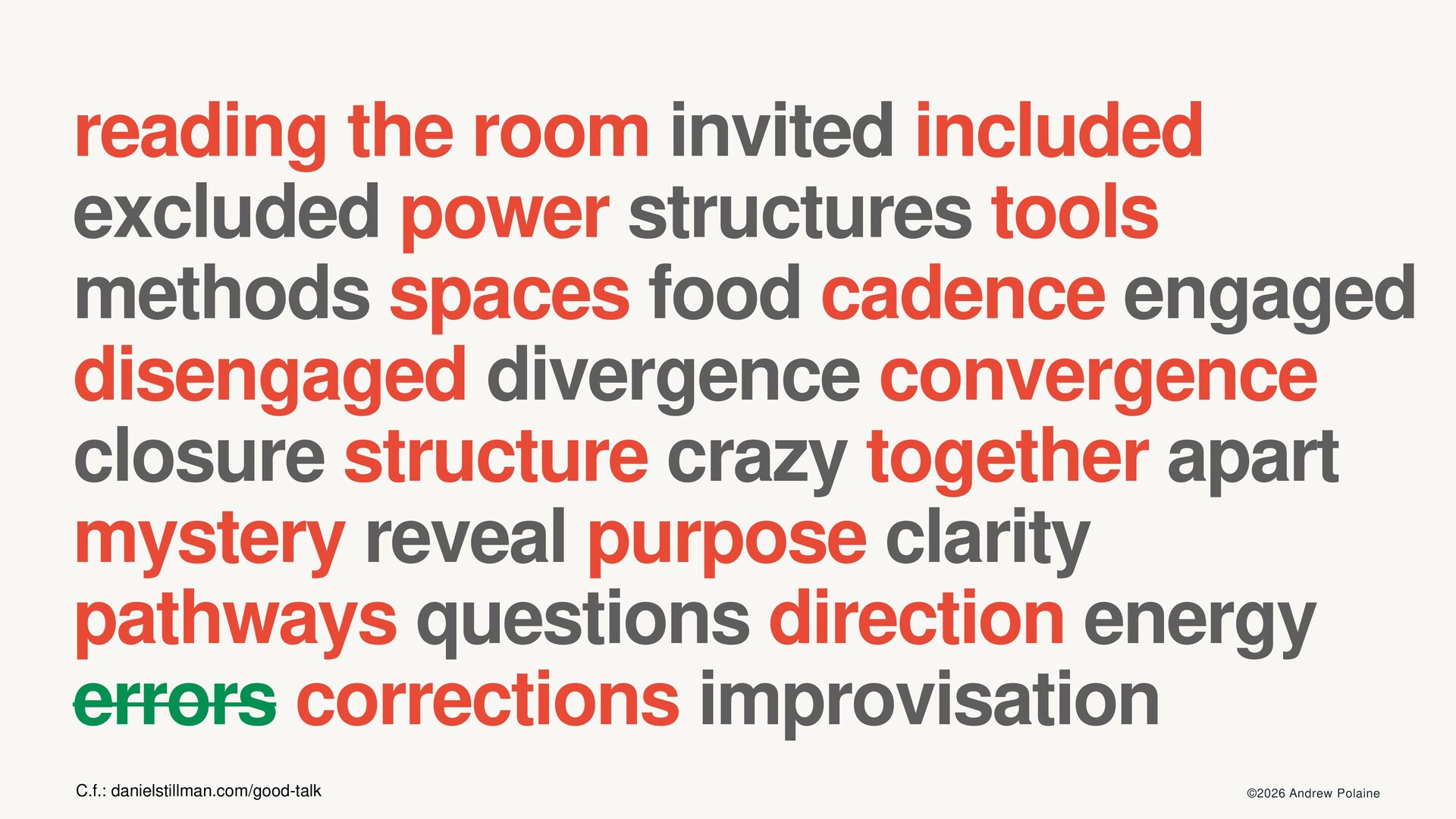
©2026 Andrew Polaine reading the room invited included excluded power
structures tools methods spaces food cadence engaged disengaged divergence convergence closure structure crazy together apart mystery reveal purpose clarity pathways questions direction energy errors corrections improvisation C.f.: danielstillman.com/good-talk -
©2026 Andrew Polaine “On what basis are we deciding to
build this? How do we make decisions?” -
©2026 Andrew Polaine “Are the right people able to have
the right conversations and work together in the right way at the right time?” -
©2026 Andrew Polaine “Are the right people able to have
the right conversations and work together in the right way at the right time?” -
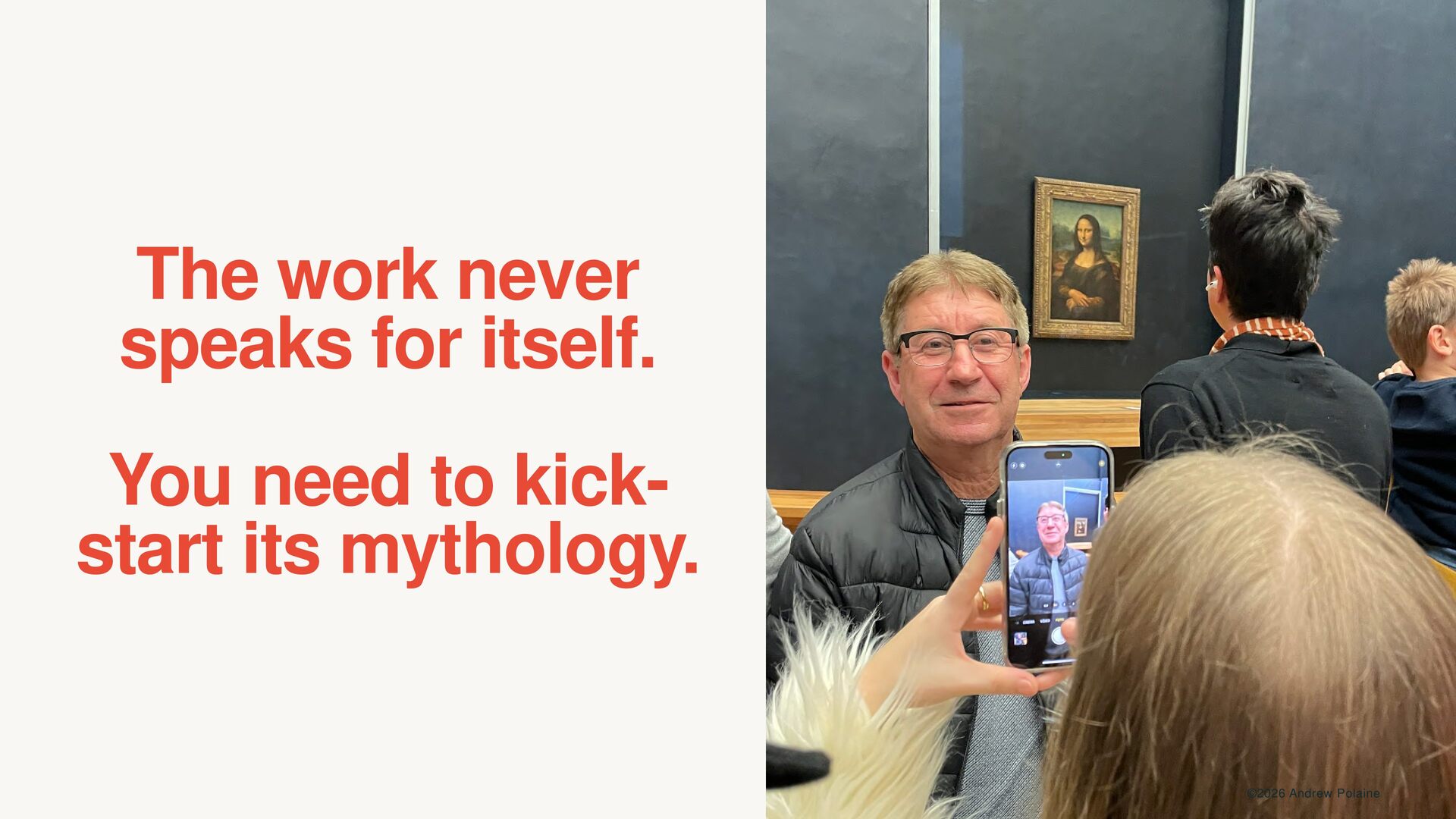
©2026 Andrew Polaine The work never speaks for itself. You
need to kick- start its mythology. -
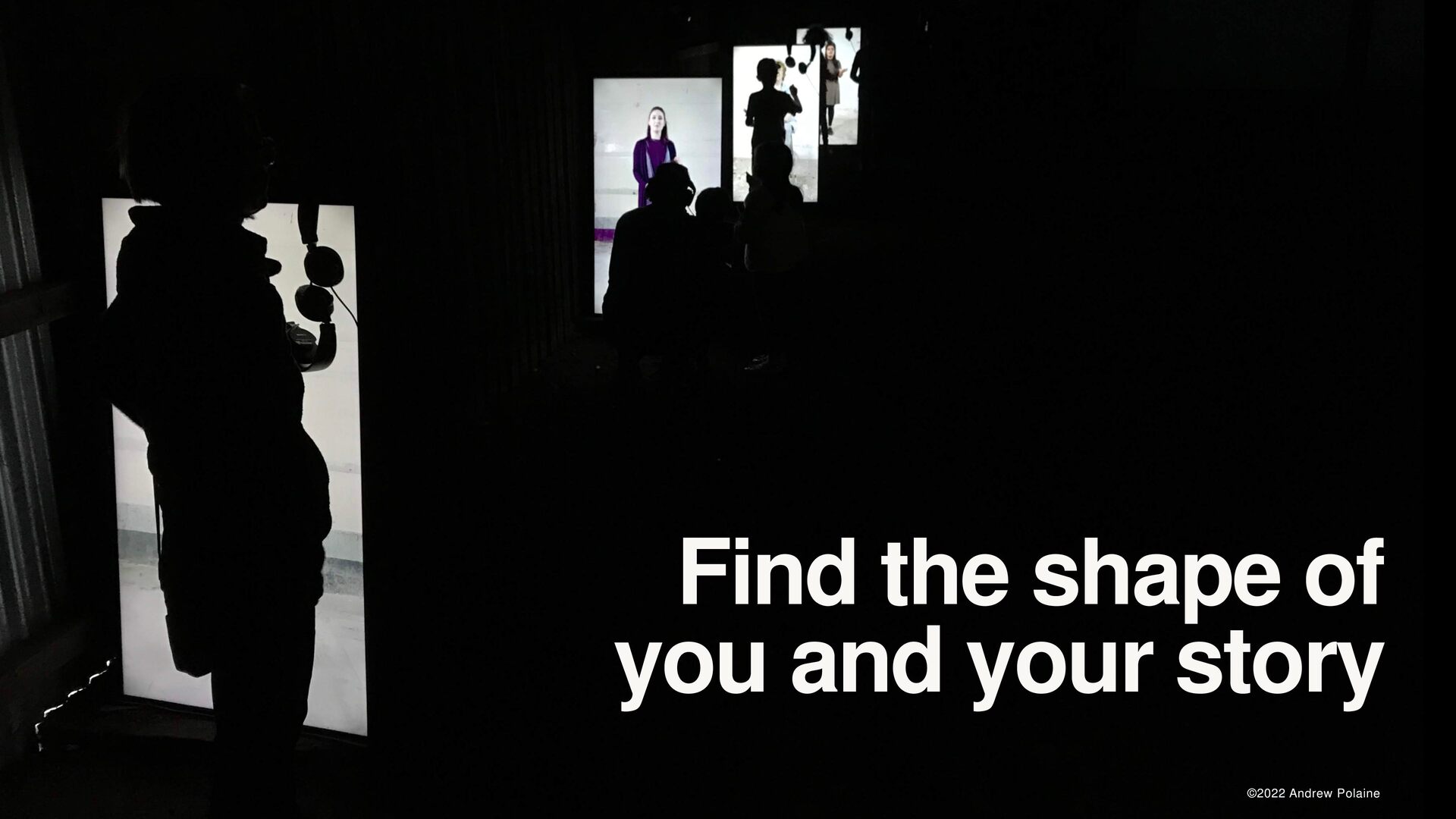
©2026 Andrew Polaine Find the shape of you and your
story ©2022 Andrew Polaine -
©2026 Andrew Polaine Work at the next level without permission
Image: abode on Pexels -
©2026 Andrew Polaine Start at the end and work backwards.
Image: abode on Pexels -
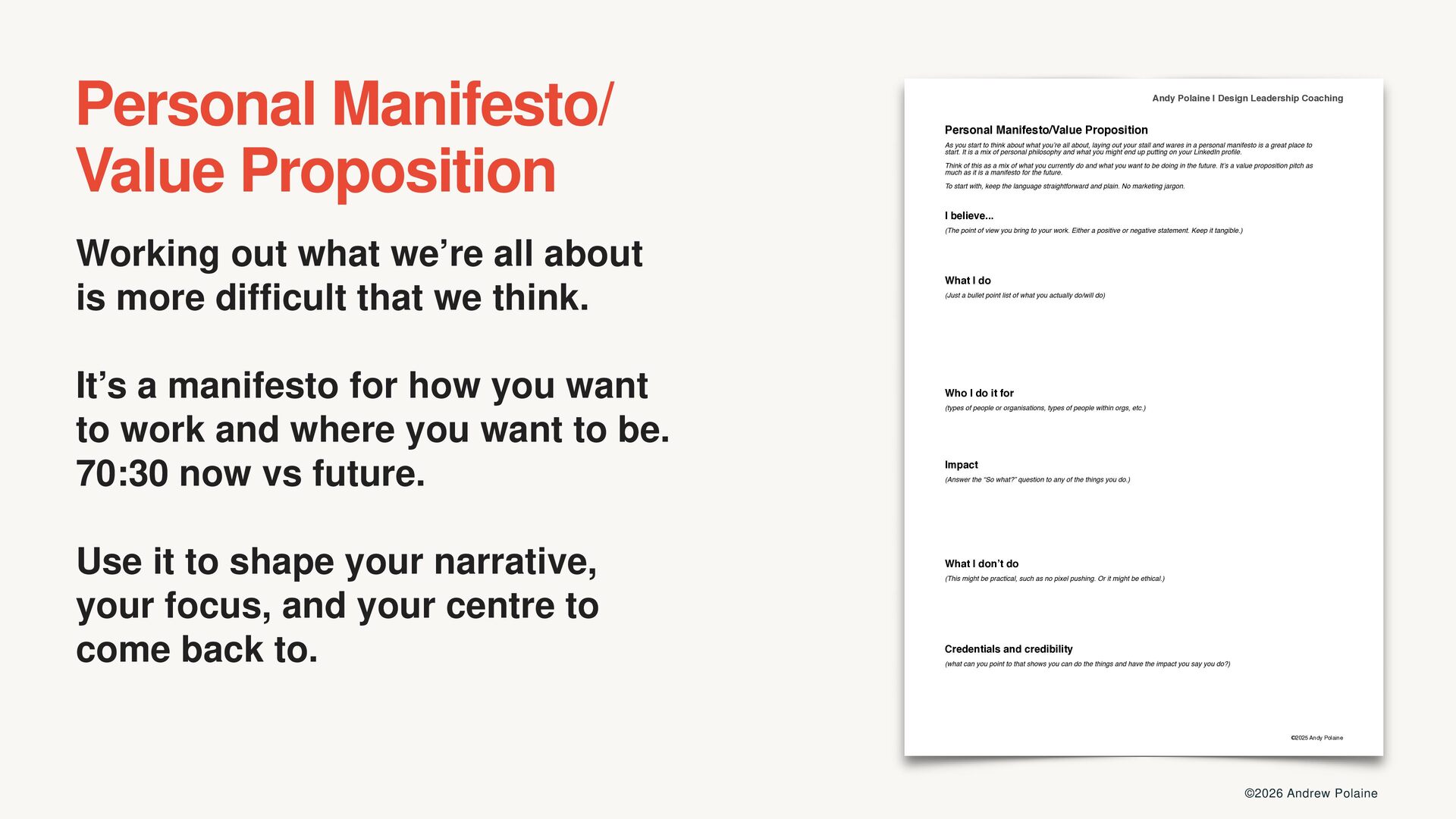
©2026 Andrew Polaine Personal Manifesto/ Value Proposition Working out what
we’re all about is more dif fi cult that we think. It’s a manifesto for how you want to work and where you want to be. 70:30 now vs future. Use it to shape your narrative, your focus, and your centre to come back to. Personal Manifesto/Value Proposition As you start to think about what you’re all about, laying out your stall and wares in a personal manifesto is a great place to start. It is a mix of personal philosophy and what you might end up putting on your LinkedIn profile. Think of this as a mix of what you currently do and what you want to be doing in the future. It’s a value proposition pitch as much as it is a manifesto for the future. To start with, keep the language straightforward and plain. No marketing jargon. I believe... (The point of view you bring to your work. Either a positive or negative statement. Keep it tangible.) What I do (Just a bullet point list of what you actually do/will do) Who I do it for (types of people or organisations, types of people within orgs, etc.) Impact (Answer the “So what?” question to any of the things you do.) What I don’t do (This might be practical, such as no pixel pushing. Or it might be ethical.) Credentials and credibility (what can you point to that shows you can do the things and have the impact you say you do?) Andy Polaine | Design Leadership Coaching ©2025 Andy Polaine -
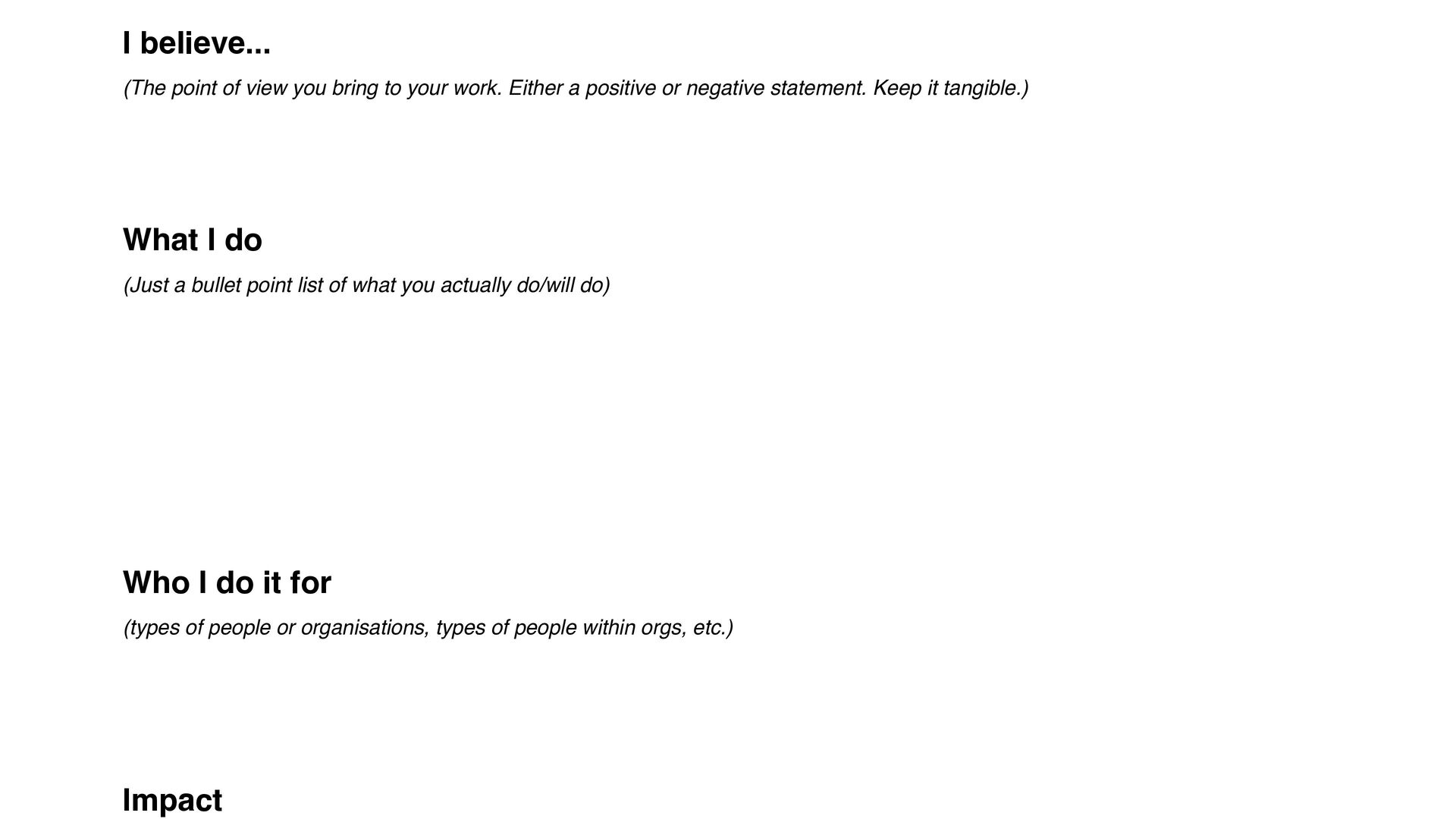
©2026 Andrew Polaine I believe... (The point of view you
bring to your work. Either a positive or negative statement. Keep it tangible.) What I do (Just a bullet point list of what you actually do/will do) Who I do it for (types of people or organisations, types of people within orgs, etc.) Impact -
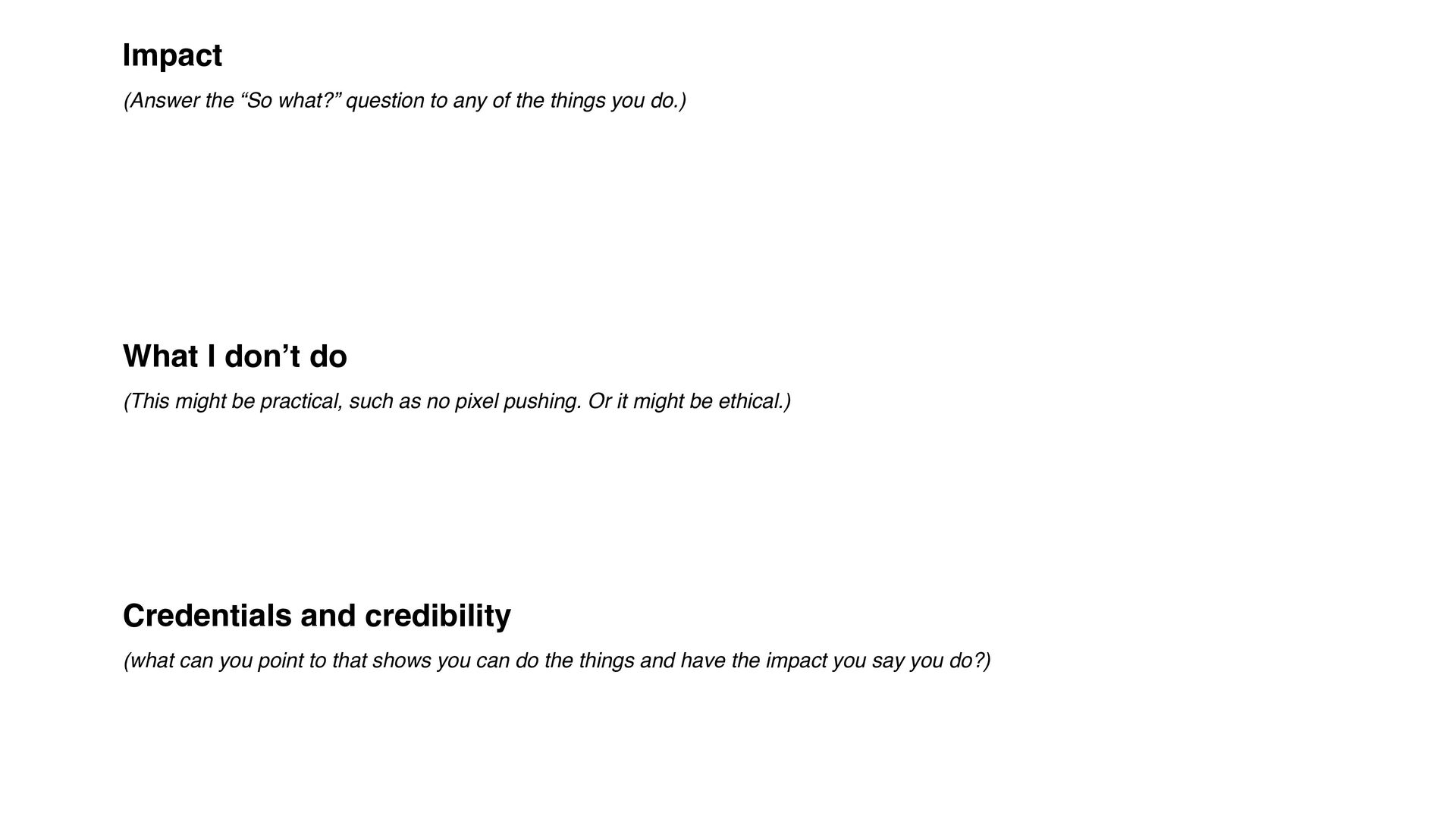
©2026 Andrew Polaine Impact (Answer the “So what?” question to
any of the things you do.) What I don’t do (This might be practical, such as no pixel pushing. Or it might be ethical.) Credentials and credibility (what can you point to that shows you can do the things and have the impact you say you do?) -
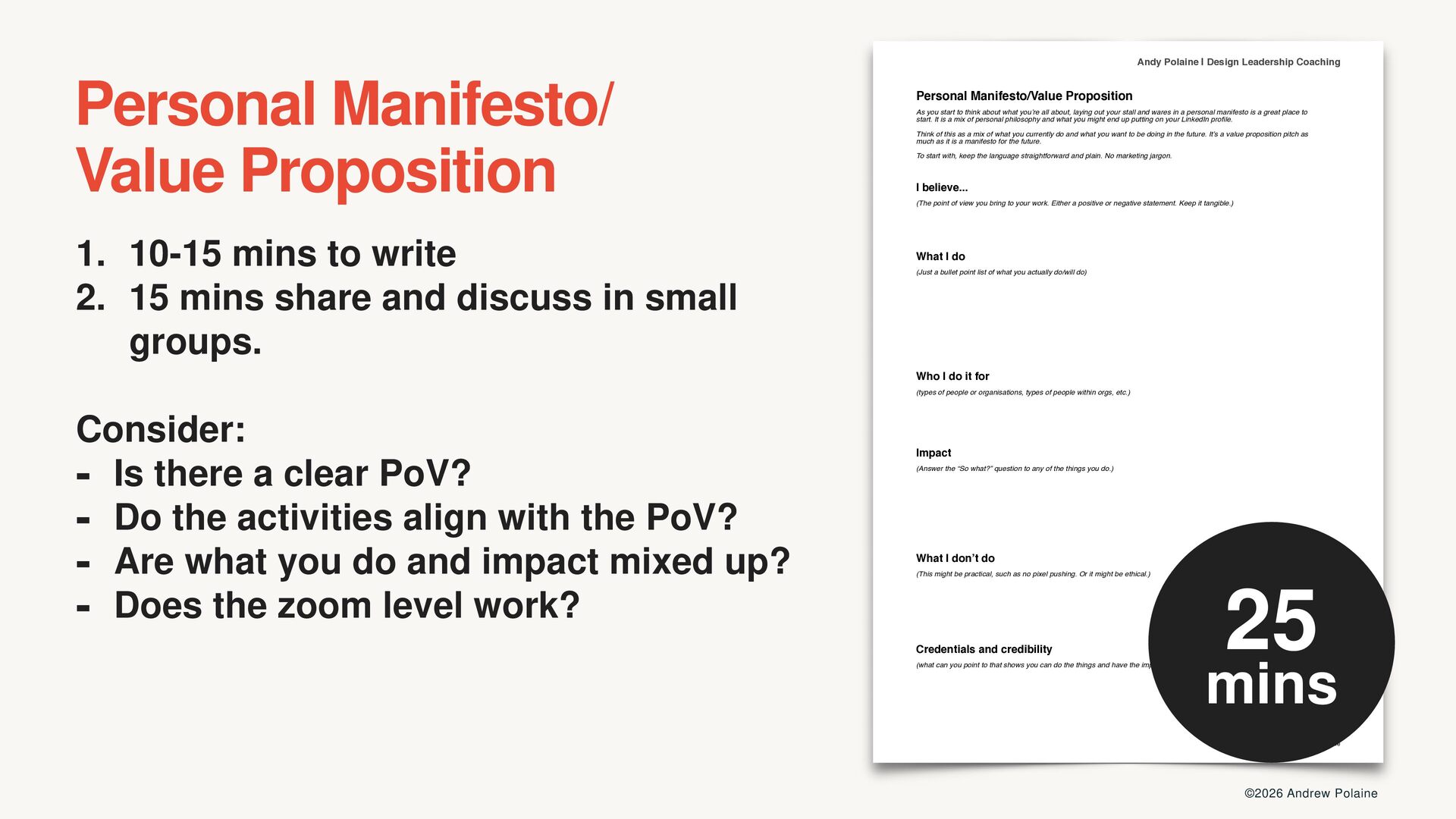
©2026 Andrew Polaine Personal Manifesto/ Value Proposition 1. 10-15 mins
to write 2. 15 mins share and discuss in small groups. Consider: - Is there a clear PoV? - Do the activities align with the PoV? - Are what you do and impact mixed up? - Does the zoom level work? Personal Manifesto/Value Proposition As you start to think about what you’re all about, laying out your stall and wares in a personal manifesto is a great place to start. It is a mix of personal philosophy and what you might end up putting on your LinkedIn profile. Think of this as a mix of what you currently do and what you want to be doing in the future. It’s a value proposition pitch as much as it is a manifesto for the future. To start with, keep the language straightforward and plain. No marketing jargon. I believe... (The point of view you bring to your work. Either a positive or negative statement. Keep it tangible.) What I do (Just a bullet point list of what you actually do/will do) Who I do it for (types of people or organisations, types of people within orgs, etc.) Impact (Answer the “So what?” question to any of the things you do.) What I don’t do (This might be practical, such as no pixel pushing. Or it might be ethical.) Credentials and credibility (what can you point to that shows you can do the things and have the impact you say you do?) Andy Polaine | Design Leadership Coaching ©2025 Andy Polaine 25 mins -
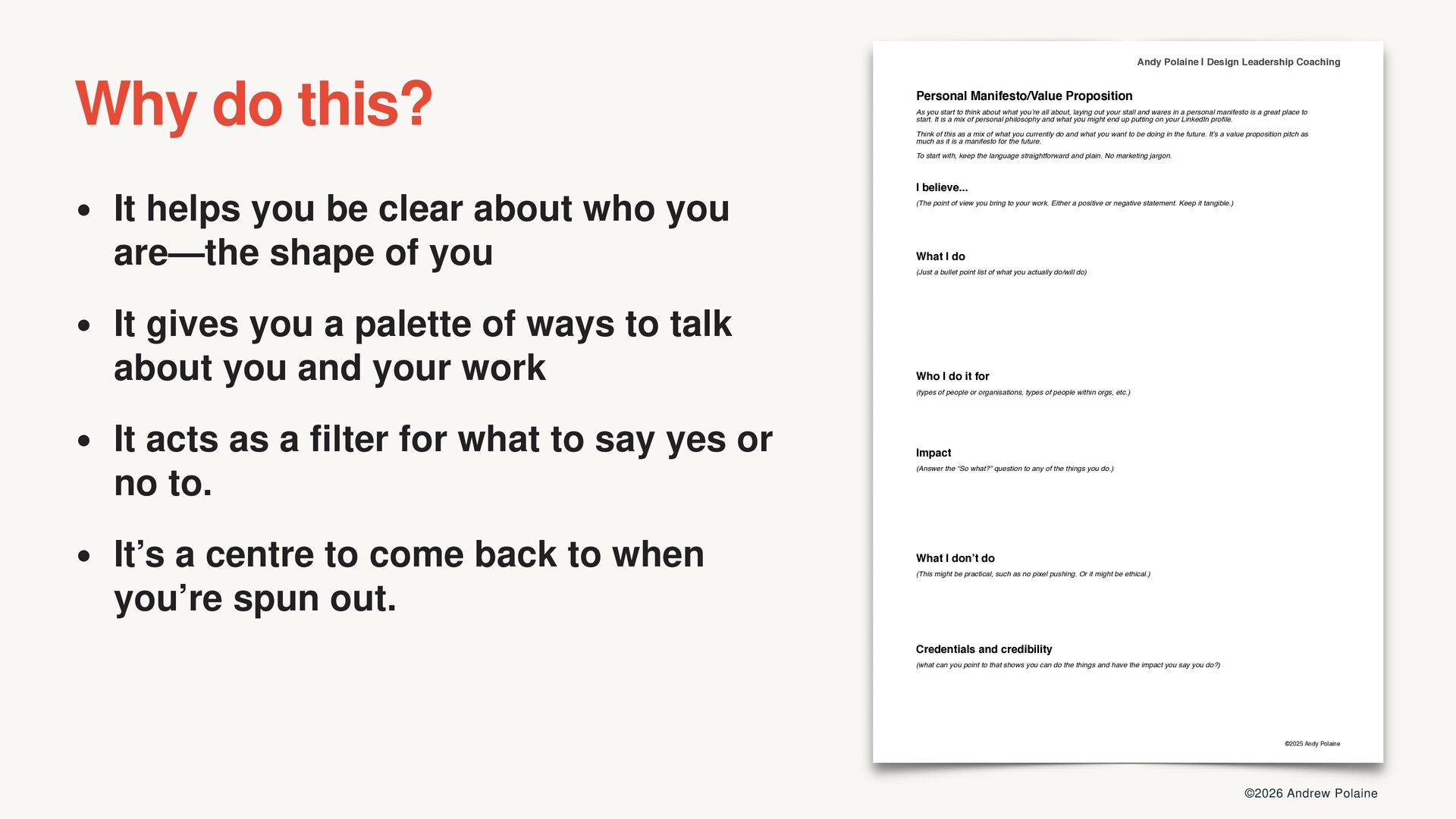
©2026 Andrew Polaine Why do this? • It helps you
be clear about who you are—the shape of you • It gives you a palette of ways to talk about you and your work • It acts as a fi lter for what to say yes or no to. • It’s a centre to come back to when you’re spun out. Personal Manifesto/Value Proposition As you start to think about what you’re all about, laying out your stall and wares in a personal manifesto is a great place to start. It is a mix of personal philosophy and what you might end up putting on your LinkedIn profile. Think of this as a mix of what you currently do and what you want to be doing in the future. It’s a value proposition pitch as much as it is a manifesto for the future. To start with, keep the language straightforward and plain. No marketing jargon. I believe... (The point of view you bring to your work. Either a positive or negative statement. Keep it tangible.) What I do (Just a bullet point list of what you actually do/will do) Who I do it for (types of people or organisations, types of people within orgs, etc.) Impact (Answer the “So what?” question to any of the things you do.) What I don’t do (This might be practical, such as no pixel pushing. Or it might be ethical.) Credentials and credibility (what can you point to that shows you can do the things and have the impact you say you do?) Andy Polaine | Design Leadership Coaching ©2025 Andy Polaine -
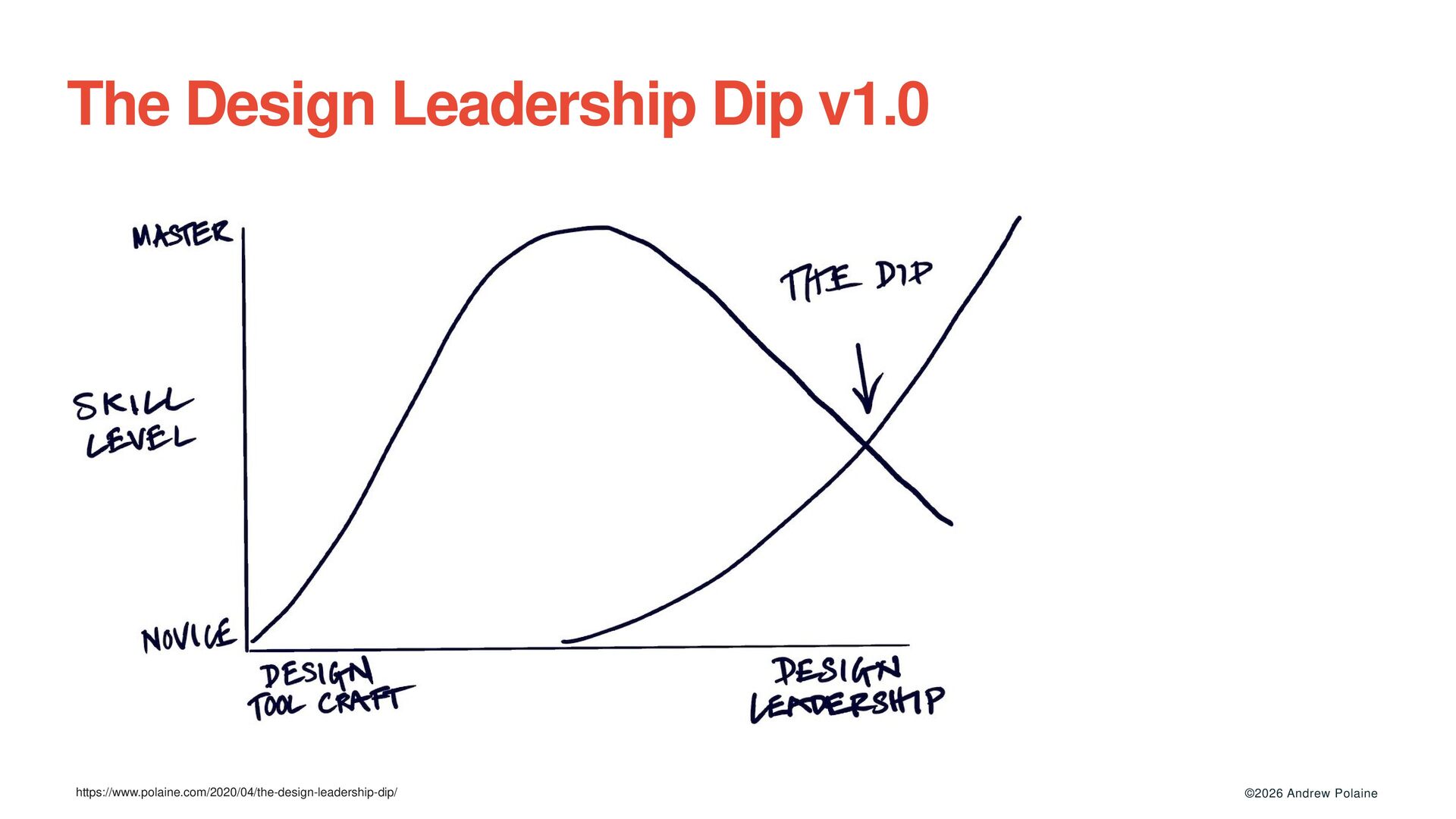
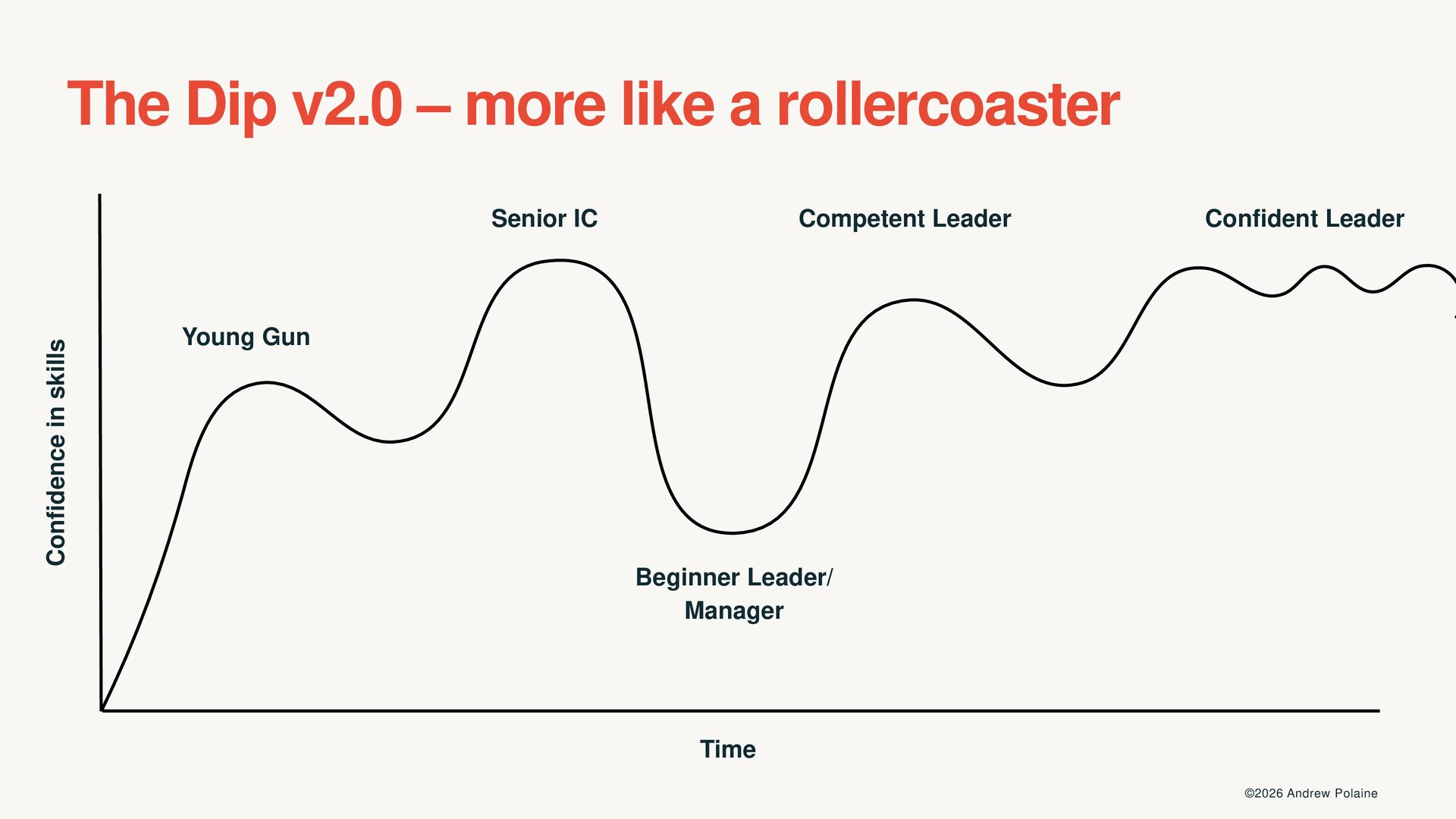
©2026 Andrew Polaine The Dip v2.0 – more like a
rollercoaster Con fi dence in skills Time Young Gun Senior IC Beginner Leader/ Manager Competent Leader Con fi dent Leader -
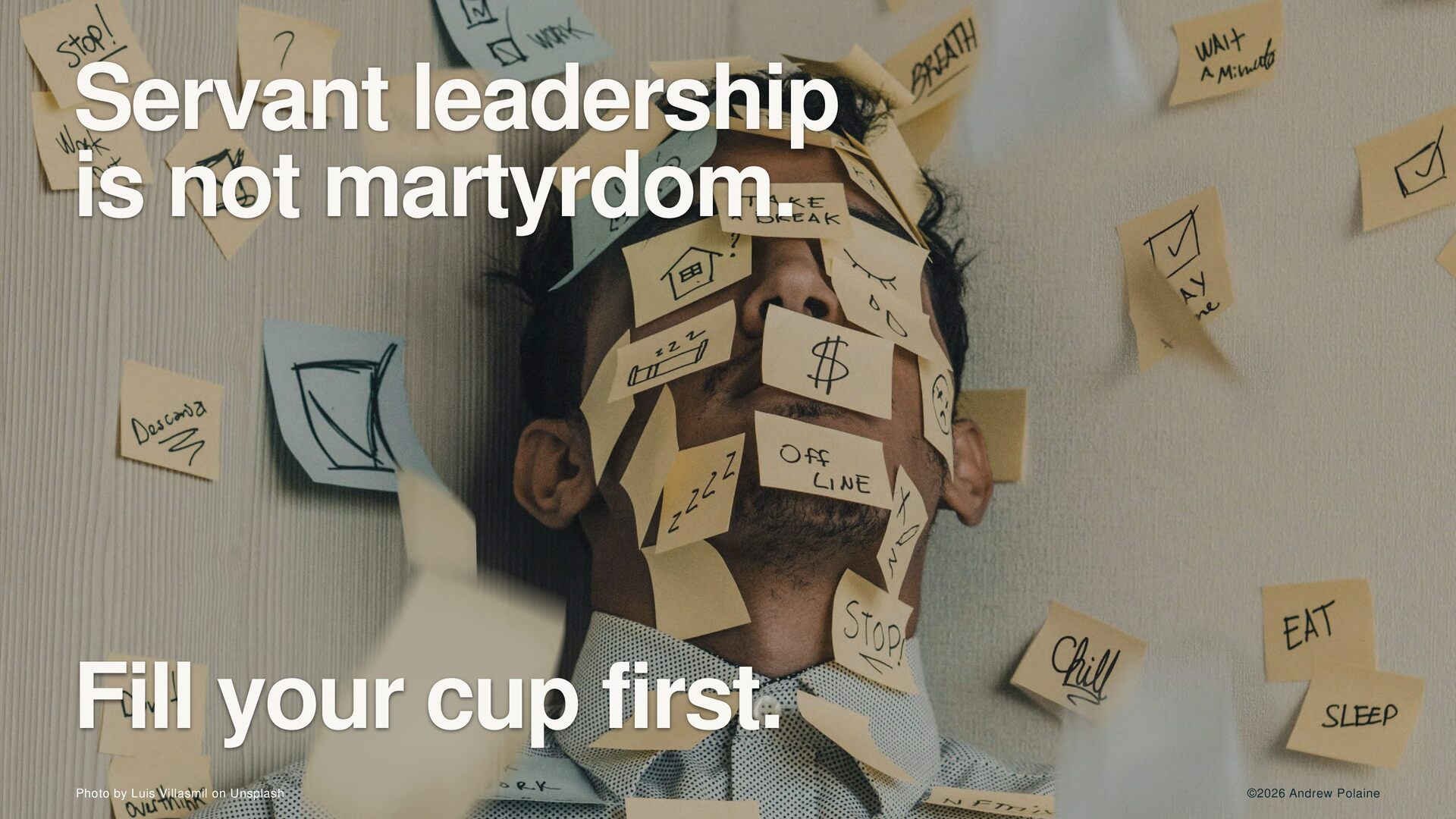
©2026 Andrew Polaine Servant leadership is not martyrdom. Photo by
Luis Villasmil on Unsplash Fill your cup first. -
©2026 Andrew Polaine The AI slide. Everything old is new
again. Just more expensive. -
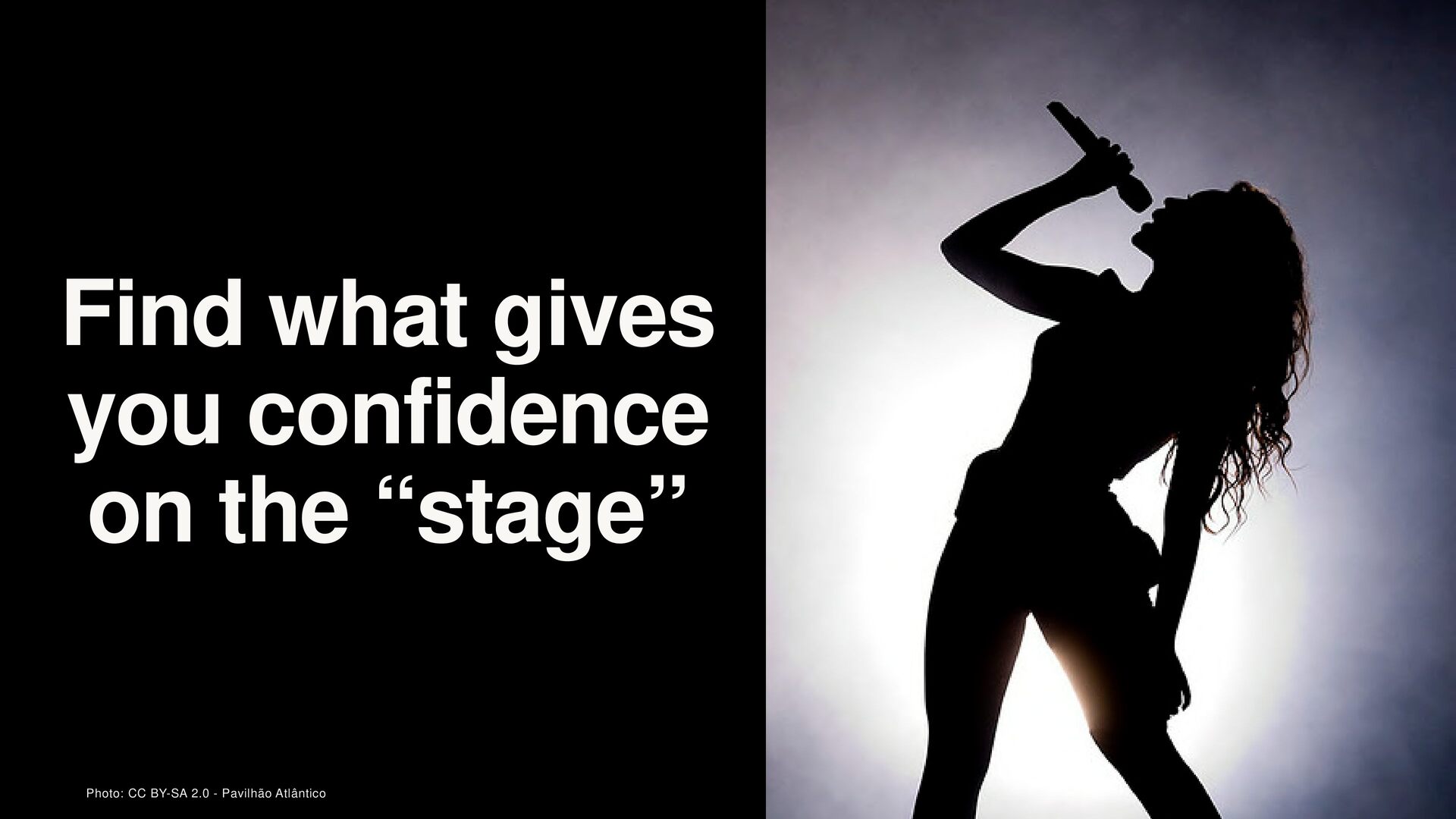
©2026 Andrew Polaine Photo: CC BY-SA 2.0 - Pavilhão Atlântico
Find what gives you confidence on the “stage” -
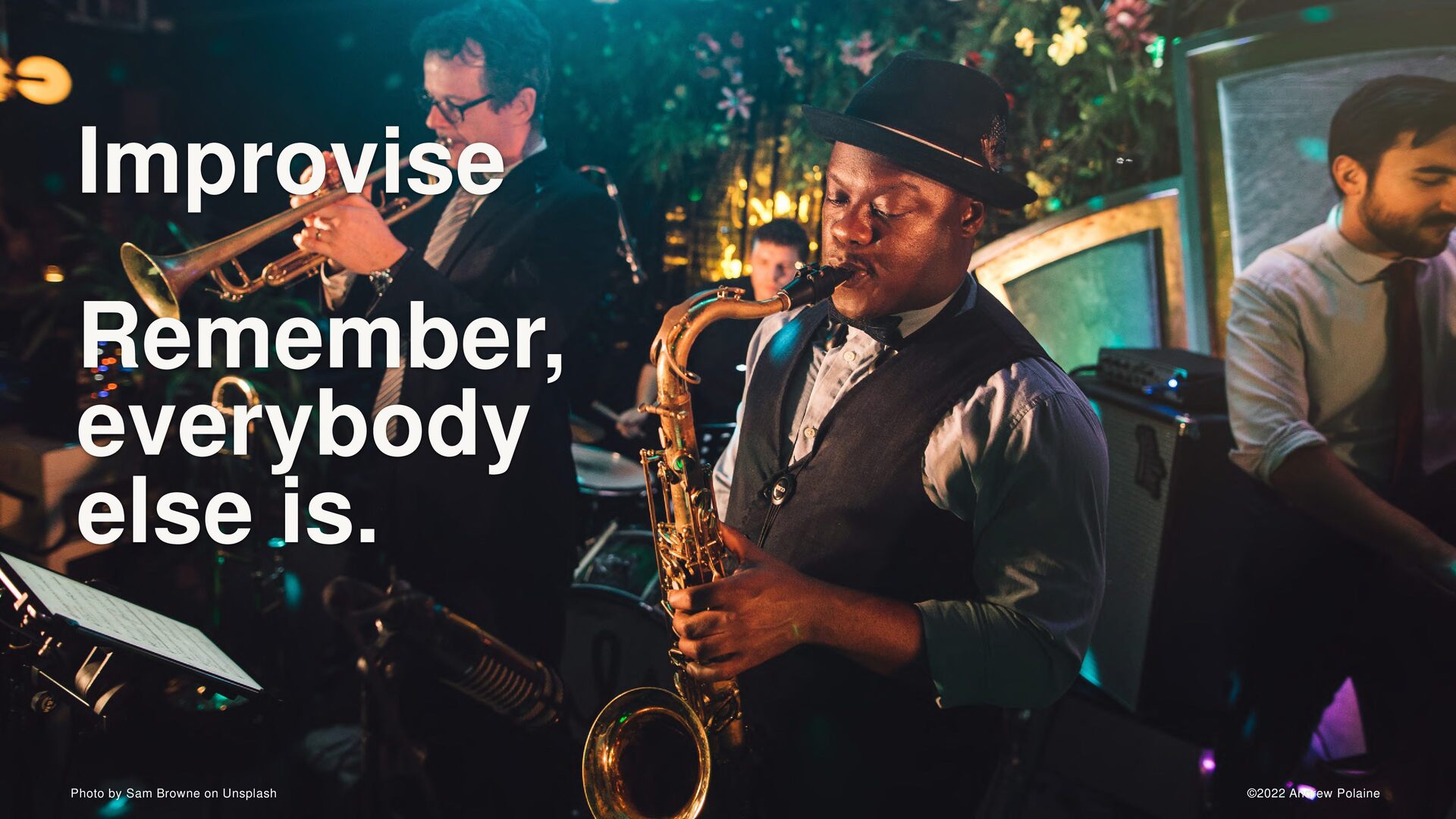
©2026 Andrew Polaine Improvise Remember, everybody else is. ©2022 Andrew
Polaine Photo by Sam Browne on Unsplash