in open source software to the hardware world • Produce a complete open-source reference SoC design for others to build upon • Linux of the hardware world • Produce volume silicon and low-cost development boards (Raspberry Pi for grown-ups!) • Not-for-profit. Based at University of Cambridge Computer Lab.
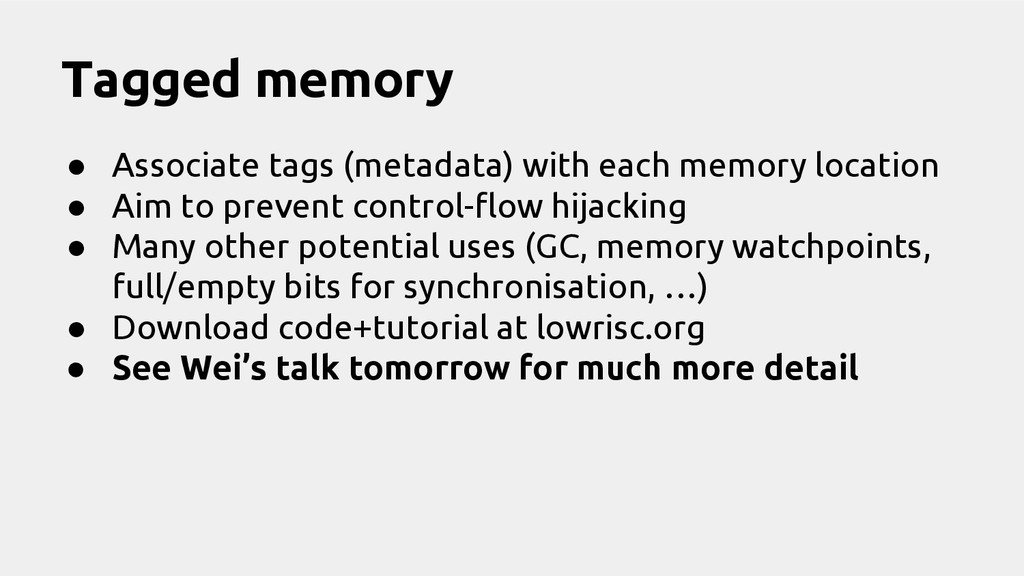
to prevent control-flow hijacking • Many other potential uses (GC, memory watchpoints, full/empty bits for synchronisation, …) • Download code+tutorial at lowrisc.org • See Wei’s talk tomorrow for much more detail Tagged memory
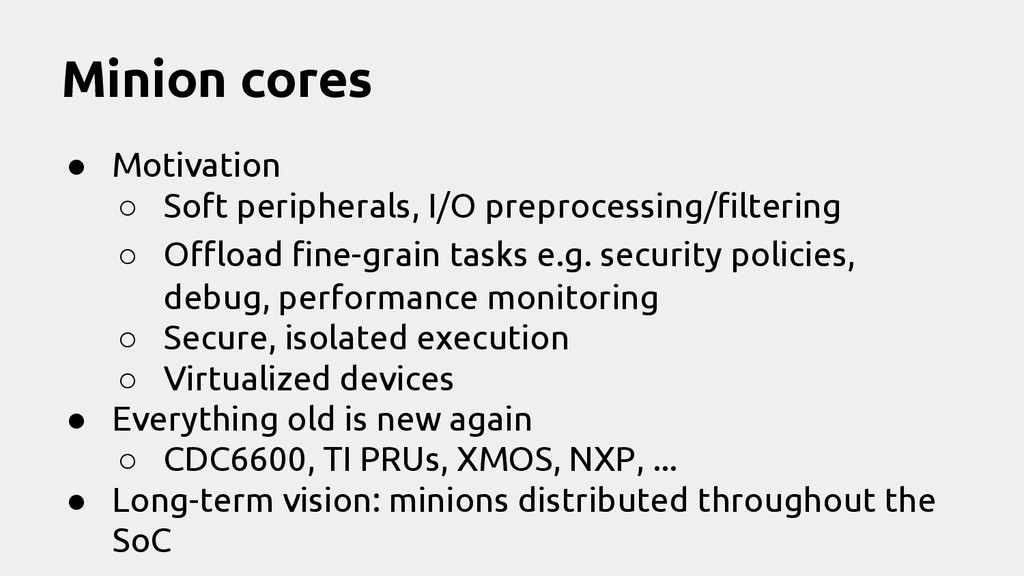
tasks e.g. security policies, debug, performance monitoring ◦ Secure, isolated execution ◦ Virtualized devices • Everything old is new again ◦ CDC6600, TI PRUs, XMOS, NXP, ... • Long-term vision: minions distributed throughout the SoC Minion cores
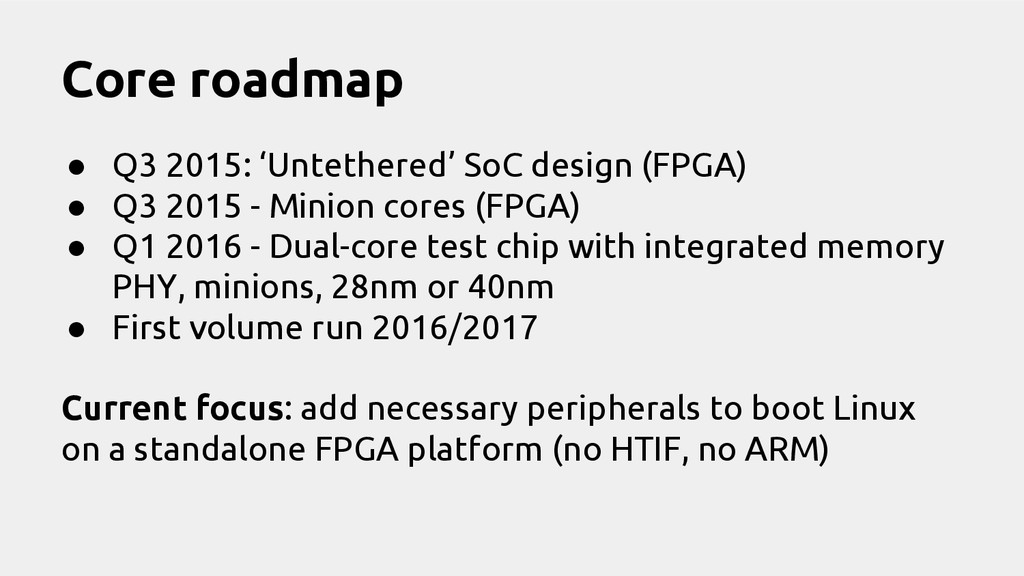
- Minion cores (FPGA) • Q1 2016 - Dual-core test chip with integrated memory PHY, minions, 28nm or 40nm • First volume run 2016/2017 Current focus: add necessary peripherals to boot Linux on a standalone FPGA platform (no HTIF, no ARM) Core roadmap
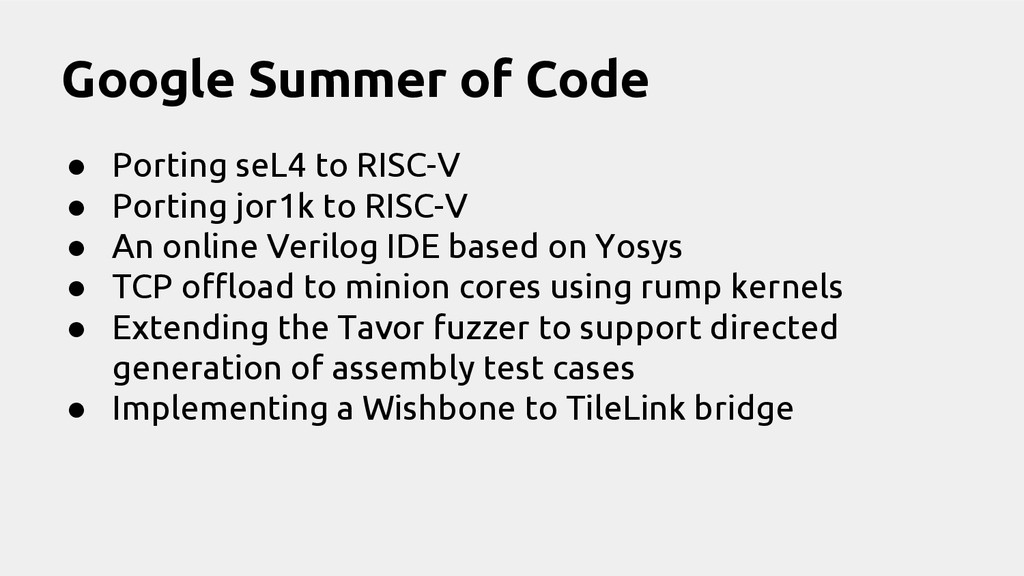
• An online Verilog IDE based on Yosys • TCP offload to minion cores using rump kernels • Extending the Tavor fuzzer to support directed generation of assembly test cases • Implementing a Wishbone to TileLink bridge Google Summer of Code
for minion cores) • New PhD students and staff starting in October • Local interns at the lab • Discussions and collaborations with startups, established companies, and academic groups Other developments
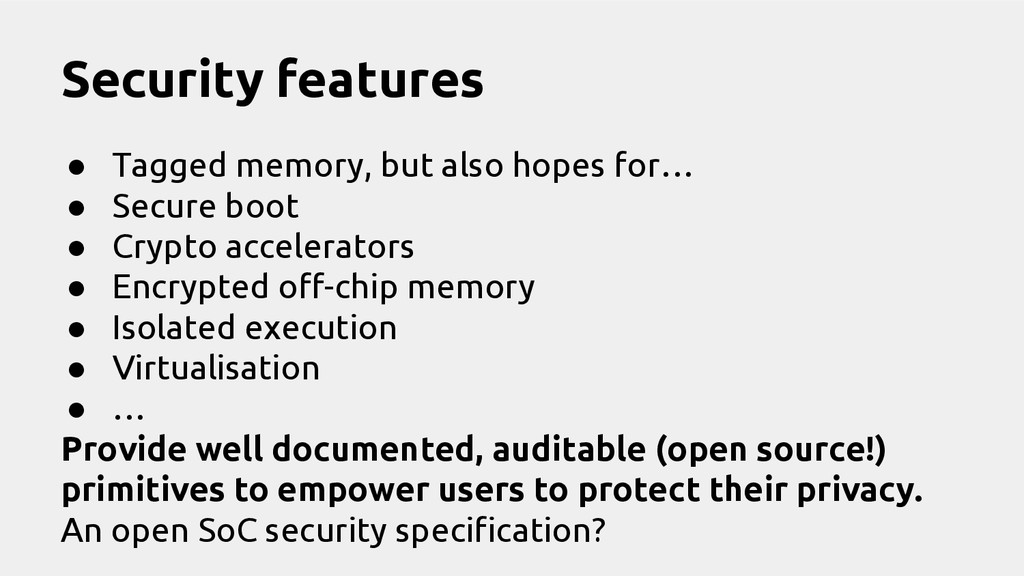
• Crypto accelerators • Encrypted off-chip memory • Isolated execution • Virtualisation • … Provide well documented, auditable (open source!) primitives to empower users to protect their privacy. An open SoC security specification? Security features
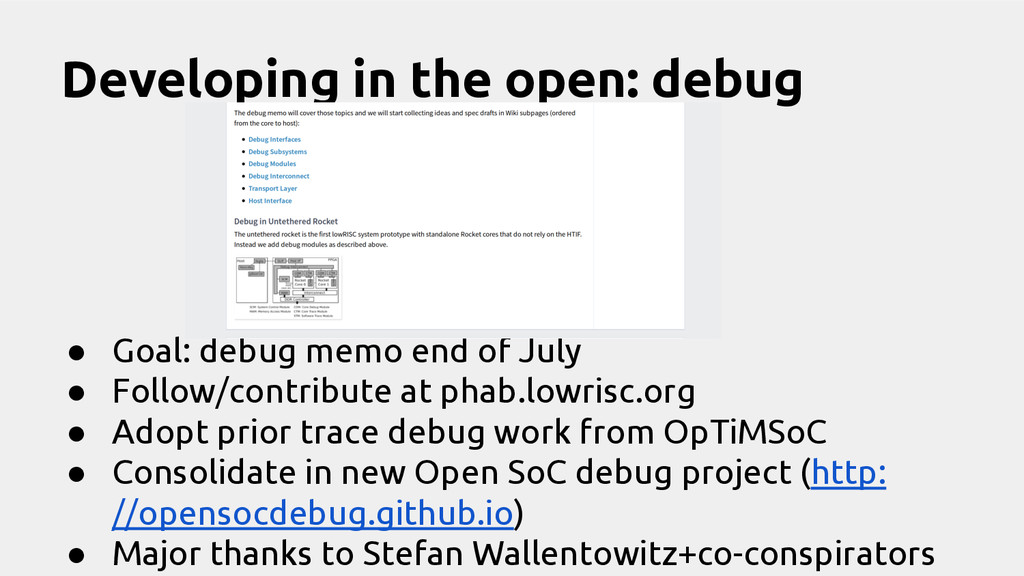
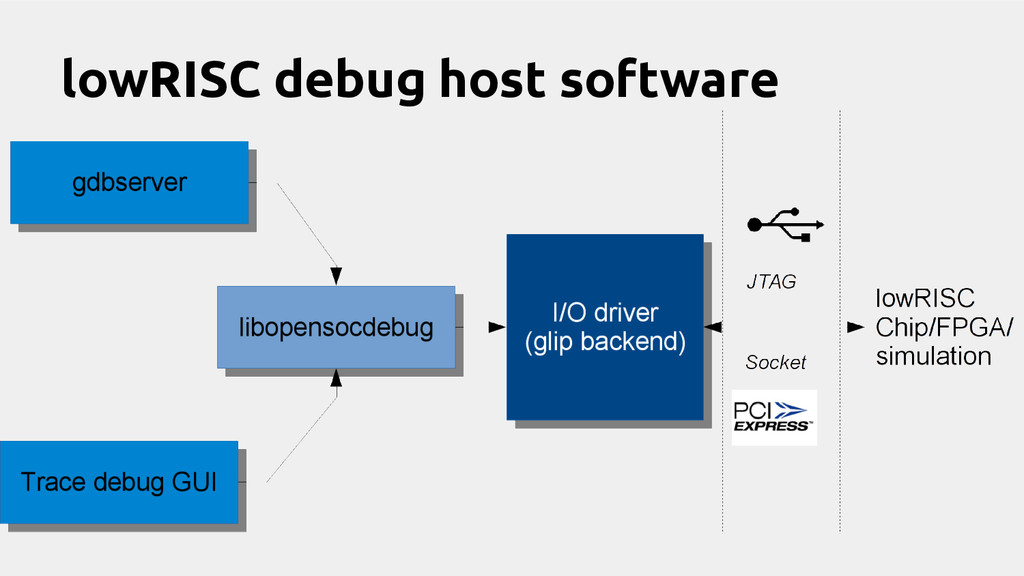
phab.lowrisc.org • Adopt prior trace debug work from OpTiMSoC • Consolidate in new Open SoC debug project (http: //opensocdebug.github.io) • Major thanks to Stefan Wallentowitz+co-conspirators Developing in the open: debug
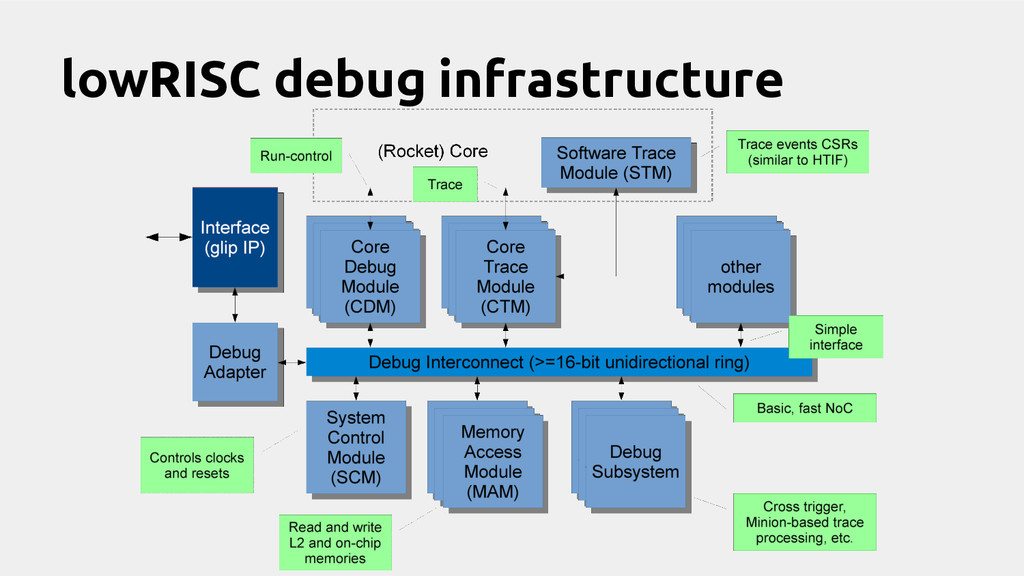
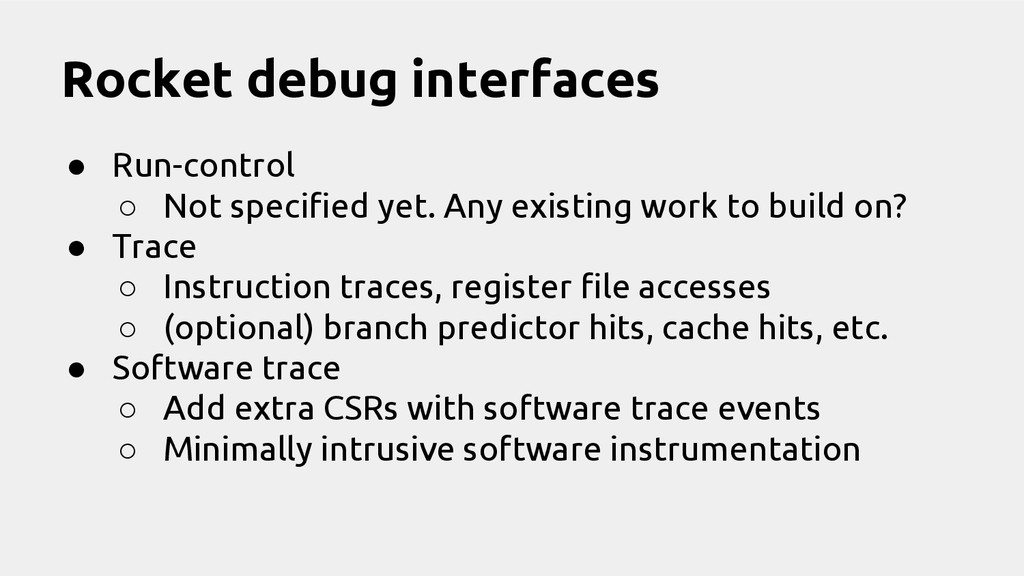
through code, set breakpoints etc • Trace debugging ◦ System generates trace events during execution ◦ Filtering, triggering, and processing on chip • Shared infrastructure for both lowRISC debug modes
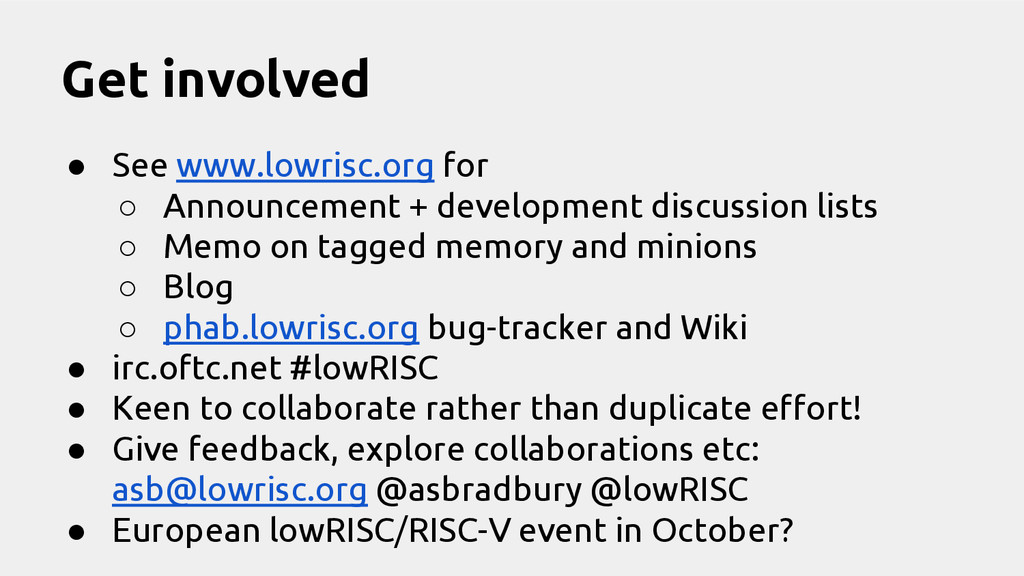
◦ Memo on tagged memory and minions ◦ Blog ◦ phab.lowrisc.org bug-tracker and Wiki • irc.oftc.net #lowRISC • Keen to collaborate rather than duplicate effort! • Give feedback, explore collaborations etc: [email protected] @asbradbury @lowRISC • European lowRISC/RISC-V event in October? Get involved


 asb
 chmikata
 csswizardry
 fortegp05
 sansantech
 tammyeverts
 ryutakondo
 inesmontani
 yosukeyoshida
 carta_engineering
 shotashiratori
 say_no_w
 a_suenami
 ipullrank
 caitiem20
 addyosmani
 minecr
 michielstock
 stephaniewalter
 axbom
 notwaldorf
 soudai
 aleyda
 lemiorhan