Share
Embed
An update on the lowRISC open source System-on-Chip
Given at ORConf 2015, held at CERN. 9th October 2015.
Alex Bradbury
October 09, 2015
Transcript
16 slides
-
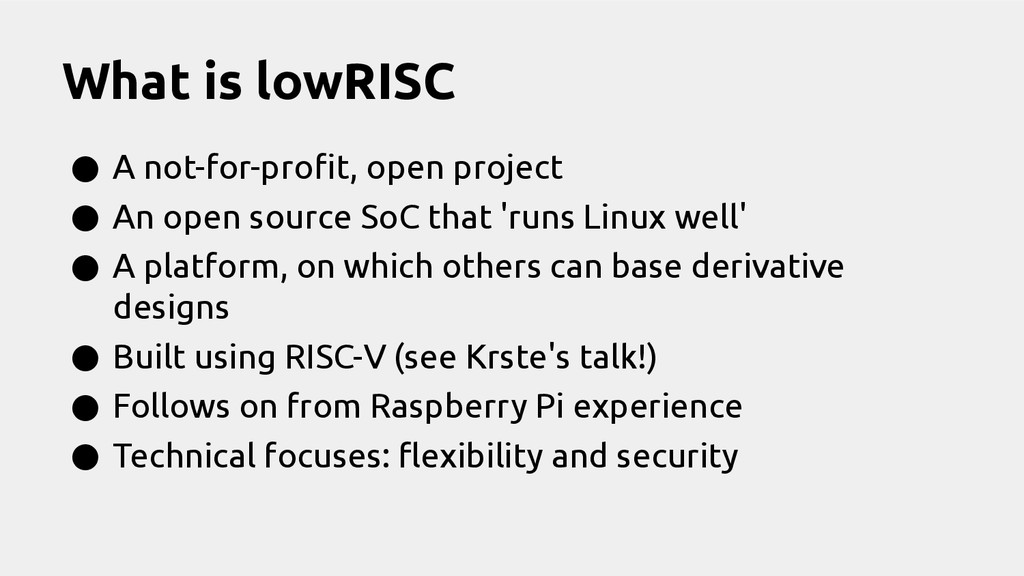
What is lowRISC • A not-for-profit, open project • An
open source SoC that 'runs Linux well' • A platform, on which others can base derivative designs • Built using RISC-V (see Krste's talk!) • Follows on from Raspberry Pi experience • Technical focuses: flexibility and security -
The lowRISC approach • Produce low-cost development boards – 'Raspberry
Pi for grownups' • Regular tape-outs. Not just a one-off effort • Form collaborations. We can't do this alone • Initial funding from private donor, recently from Google. Eventually self-sustaining • Simple, permissive licensing • How can we succeed where others have struggled? -
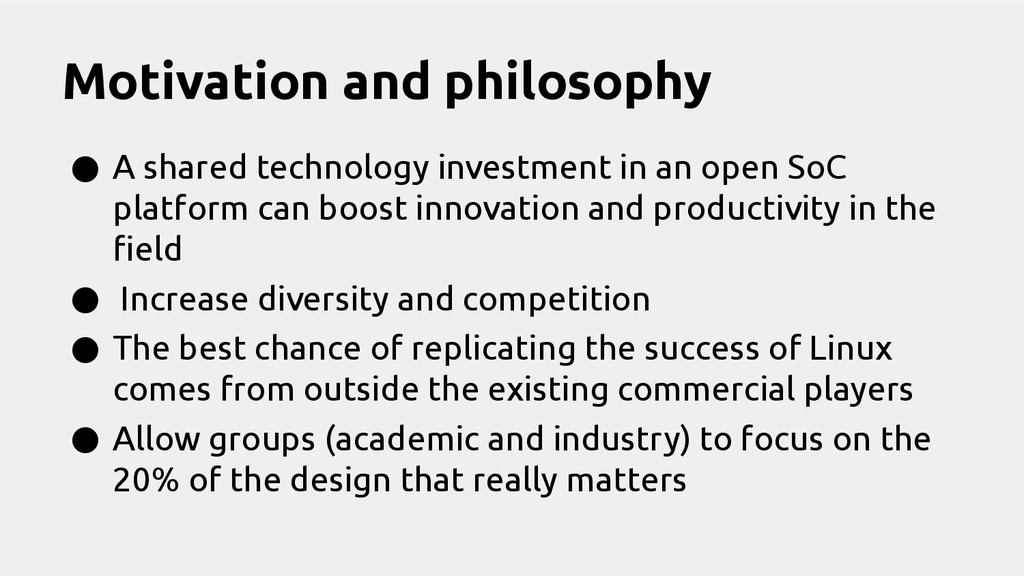
Motivation and philosophy • A shared technology investment in an
open SoC platform can boost innovation and productivity in the field • Increase diversity and competition • The best chance of replicating the success of Linux comes from outside the existing commercial players • Allow groups (academic and industry) to focus on the 20% of the design that really matters -
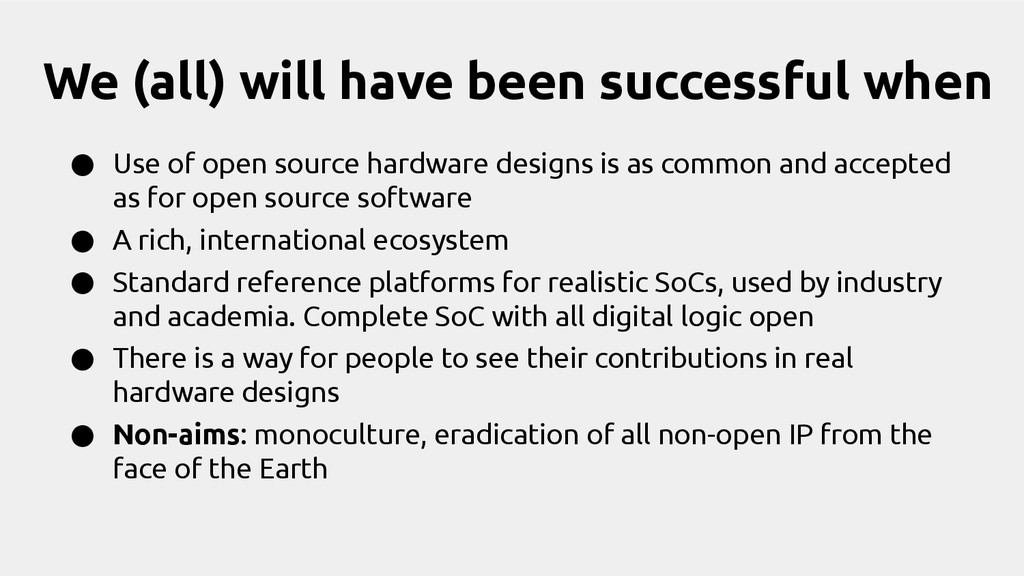
We (all) will have been successful when • Use of
open source hardware designs is as common and accepted as for open source software • A rich, international ecosystem • Standard reference platforms for realistic SoCs, used by industry and academia. Complete SoC with all digital logic open • There is a way for people to see their contributions in real hardware designs • Non-aims: monoculture, eradication of all non-open IP from the face of the Earth -
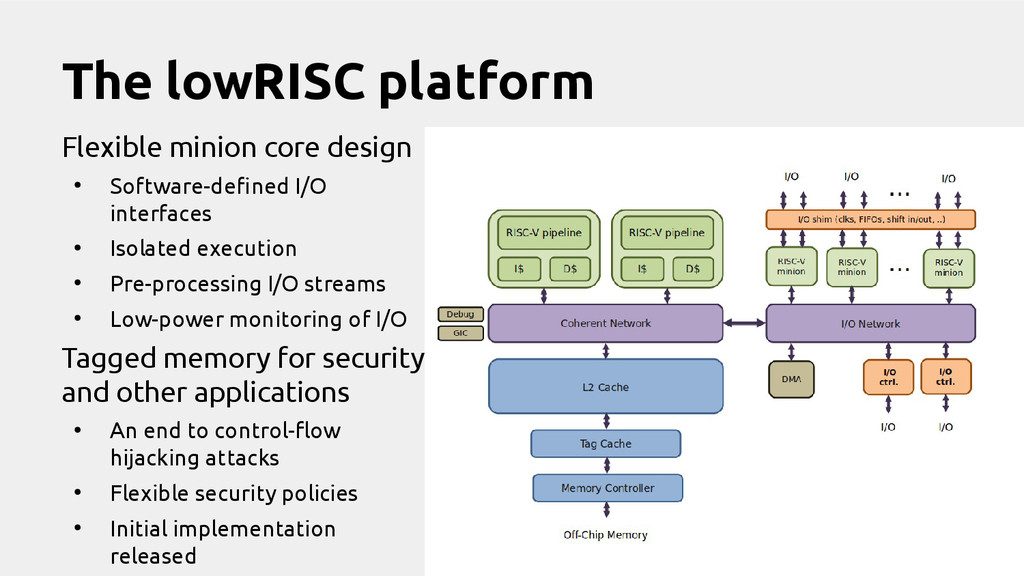
The lowRISC platform Flexible minion core design • Software-defined I/O
interfaces • Isolated execution • Pre-processing I/O streams • Low-power monitoring of I/O Tagged memory for security and other applications • An end to control-flow hijacking attacks • Flexible security policies • Initial implementation released -
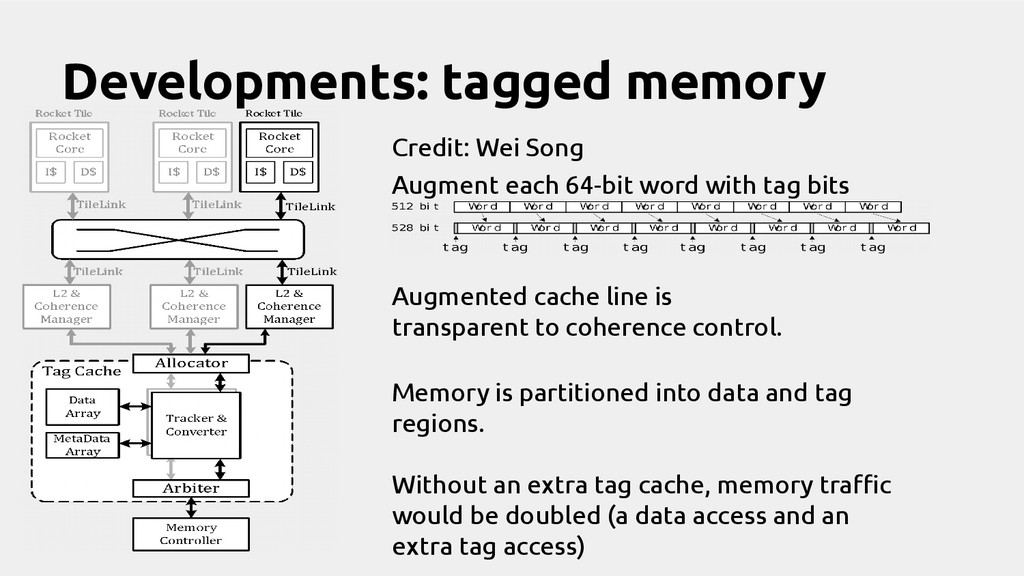
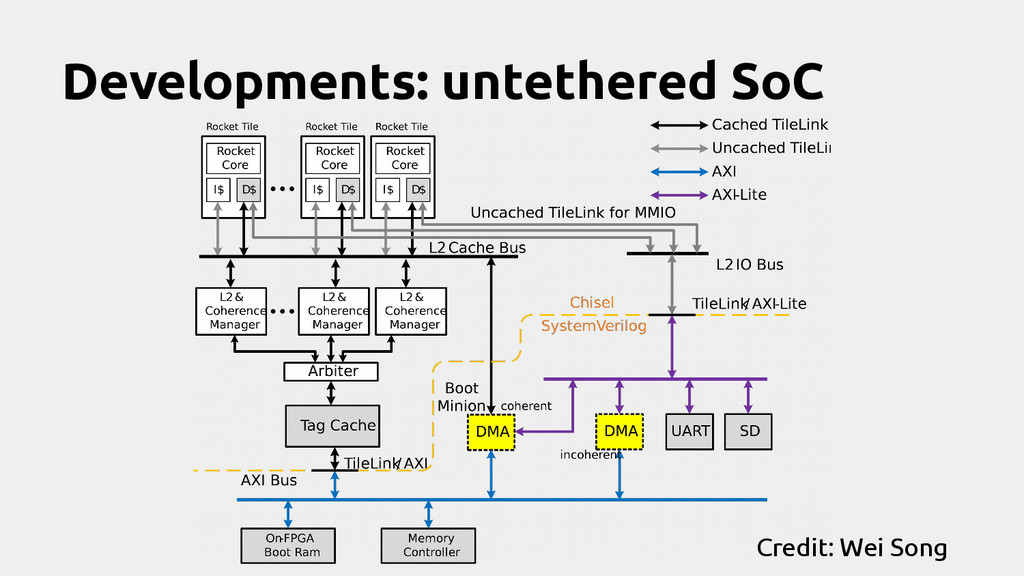
Developments: tagged memory Augment each 64-bit word with tag bits
Augmented cache line is transparent to coherence control. Memory is partitioned into data and tag regions. Without an extra tag cache, memory traffic would be doubled (a data access and an extra tag access) Credit: Wei Song -
Developments: Summer of Code • Google Summer of Code mentoring
organisation • Supported 6 projects + 2 local interns • See talks from Hesham (seL4) and Sebastian (rump kernels and minion cores) and Sebastian (jor1k) • Completed prototype LLVM pass for protecting control flow using tagged memory • +more (see blog over next few weeks) -
Developments: collaborations+growth • PULP (see talks later on in the
day) • Debug (see Stefan's talk tomorrow) • Community input and contributions • See phab.lowrisc.org and mailing list • Growth of the core Cambridge-based team -
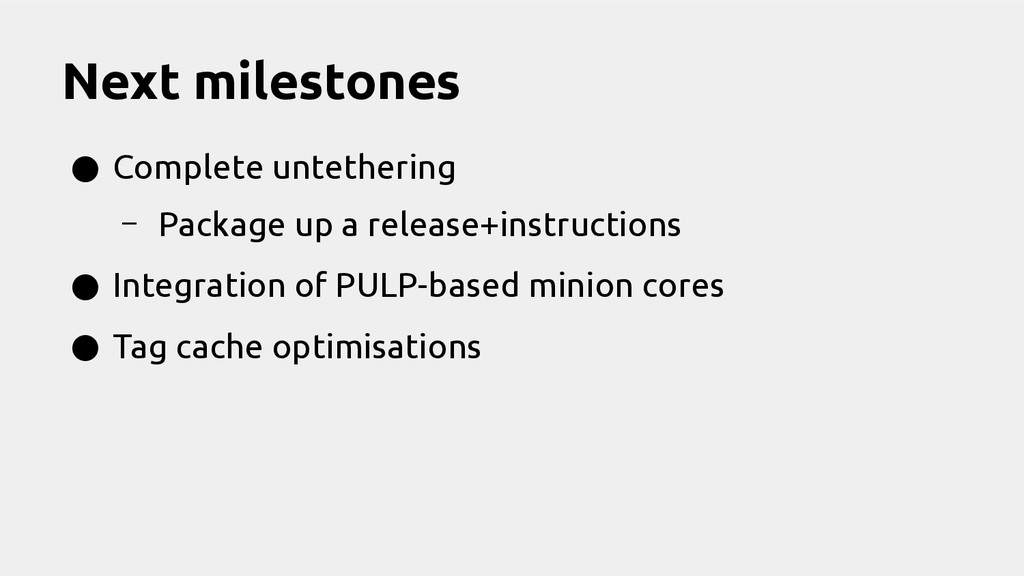
Next milestones • Complete untethering – Package up a release+instructions
• Integration of PULP-based minion cores • Tag cache optimisations -
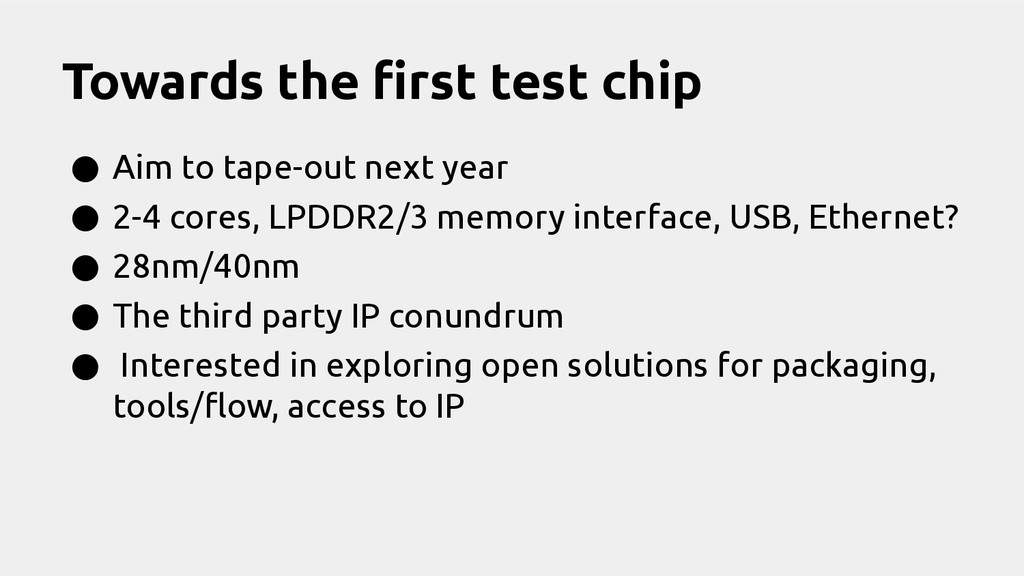
Towards the first test chip • Aim to tape-out next
year • 2-4 cores, LPDDR2/3 memory interface, USB, Ethernet? • 28nm/40nm • The third party IP conundrum • Interested in exploring open solutions for packaging, tools/flow, access to IP -
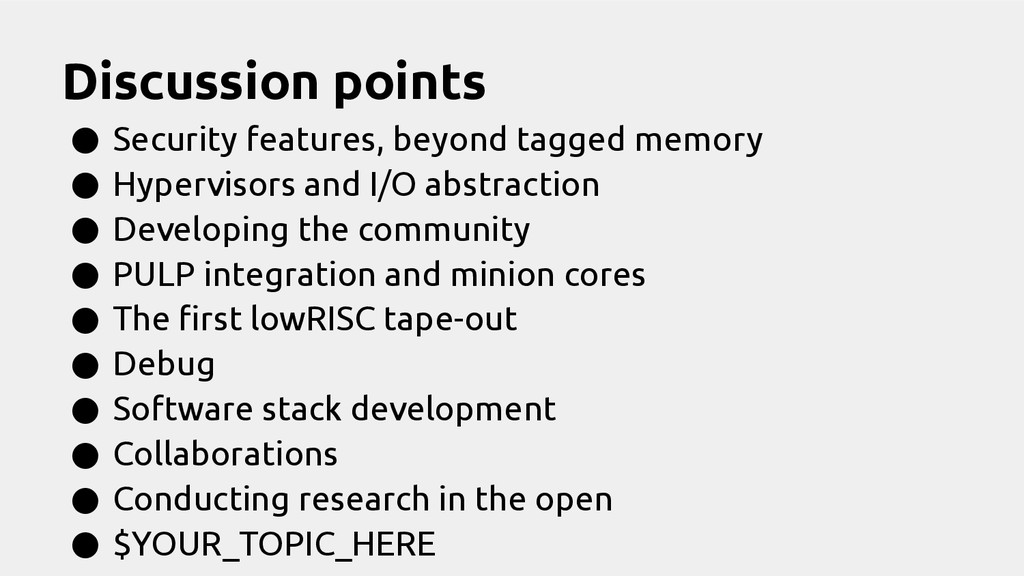
Discussion points • Security features, beyond tagged memory • Hypervisors
and I/O abstraction • Developing the community • PULP integration and minion cores • The first lowRISC tape-out • Debug • Software stack development • Collaborations • Conducting research in the open • $YOUR_TOPIC_HERE -
Conclusion • A final reflection: room for improvement? • Thank
you – Donors, contributors, collaborators, technical advisory board, supporters • Questions? • See also: lowrisc.org, our mailing list, phab.lowrisc.org • Email: [email protected] • Stickers!