merger between Open Source Development Labs and the Free Standards Group, it’s goal was to standardize Linux, support its growth, and progress it’s commercial adoption.
where something … a technology, an approach, a standard, a mindset is “Designed for” or “built into” (or for) the Cloud (Public, Private, or Hybrid) You’ll frequently see “Cloud Native” used in reference to architecture only… but it is much more than this! It applies to many different areas, hence the use of philosophies.
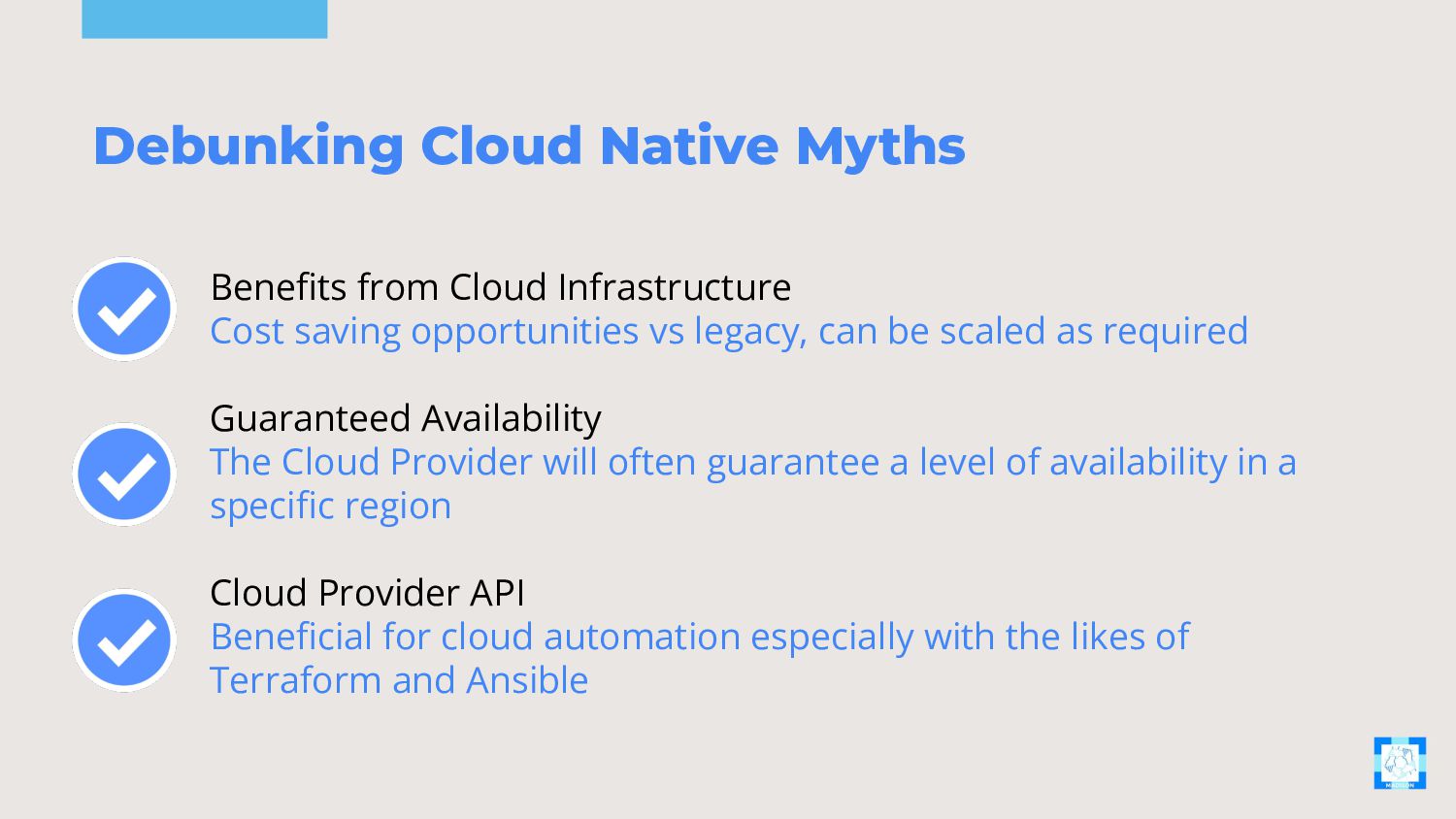
be scaled as required Guaranteed Availability The Cloud Provider will often guarantee a level of availability in a specific region Cloud Provider API Beneficial for cloud automation especially with the likes of Terraform and Ansible Debunking Cloud Native Myths
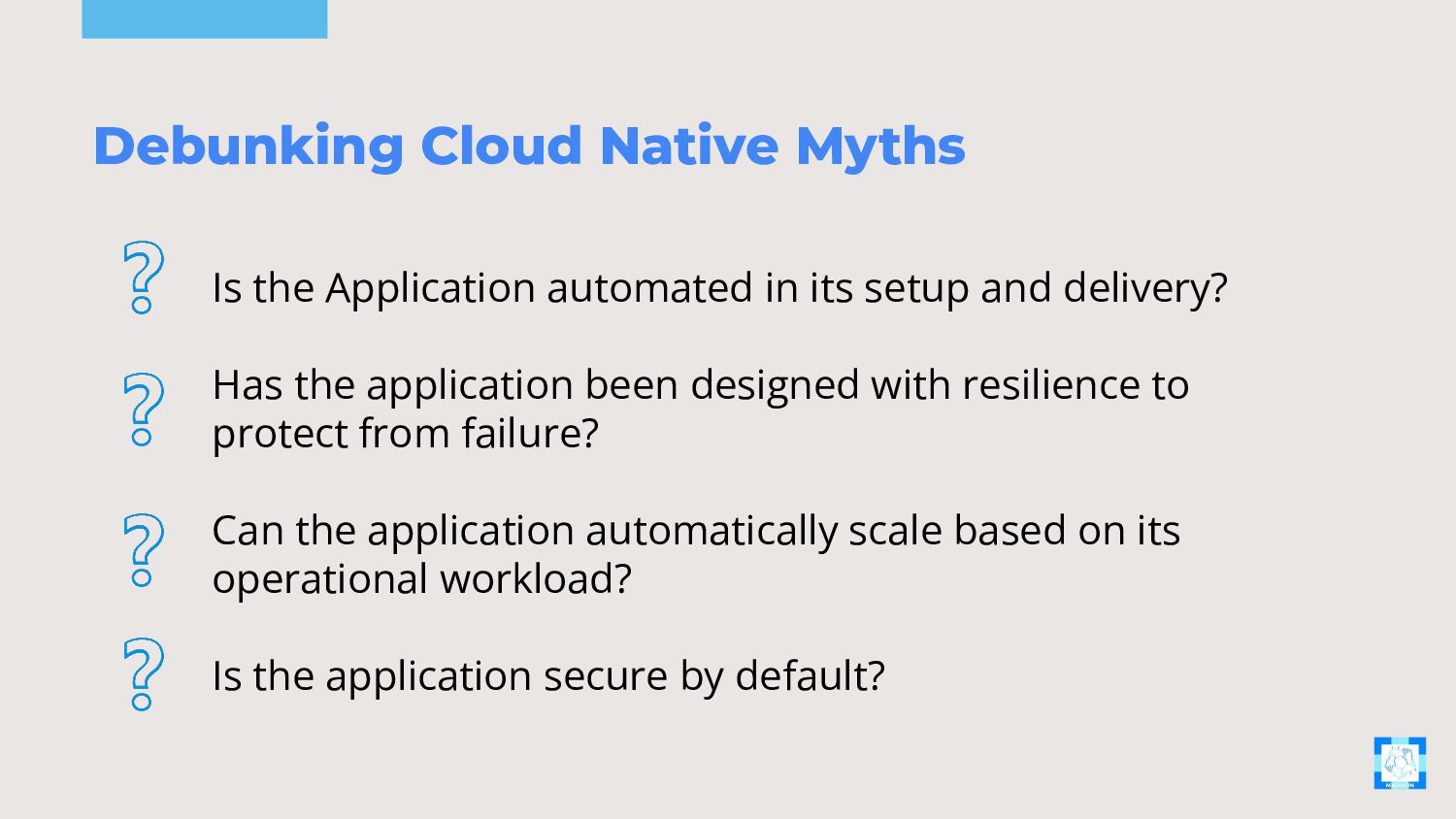
the application been designed with resilience to protect from failure? Can the application automatically scale based on its operational workload? Is the application secure by default? Debunking Cloud Native Myths
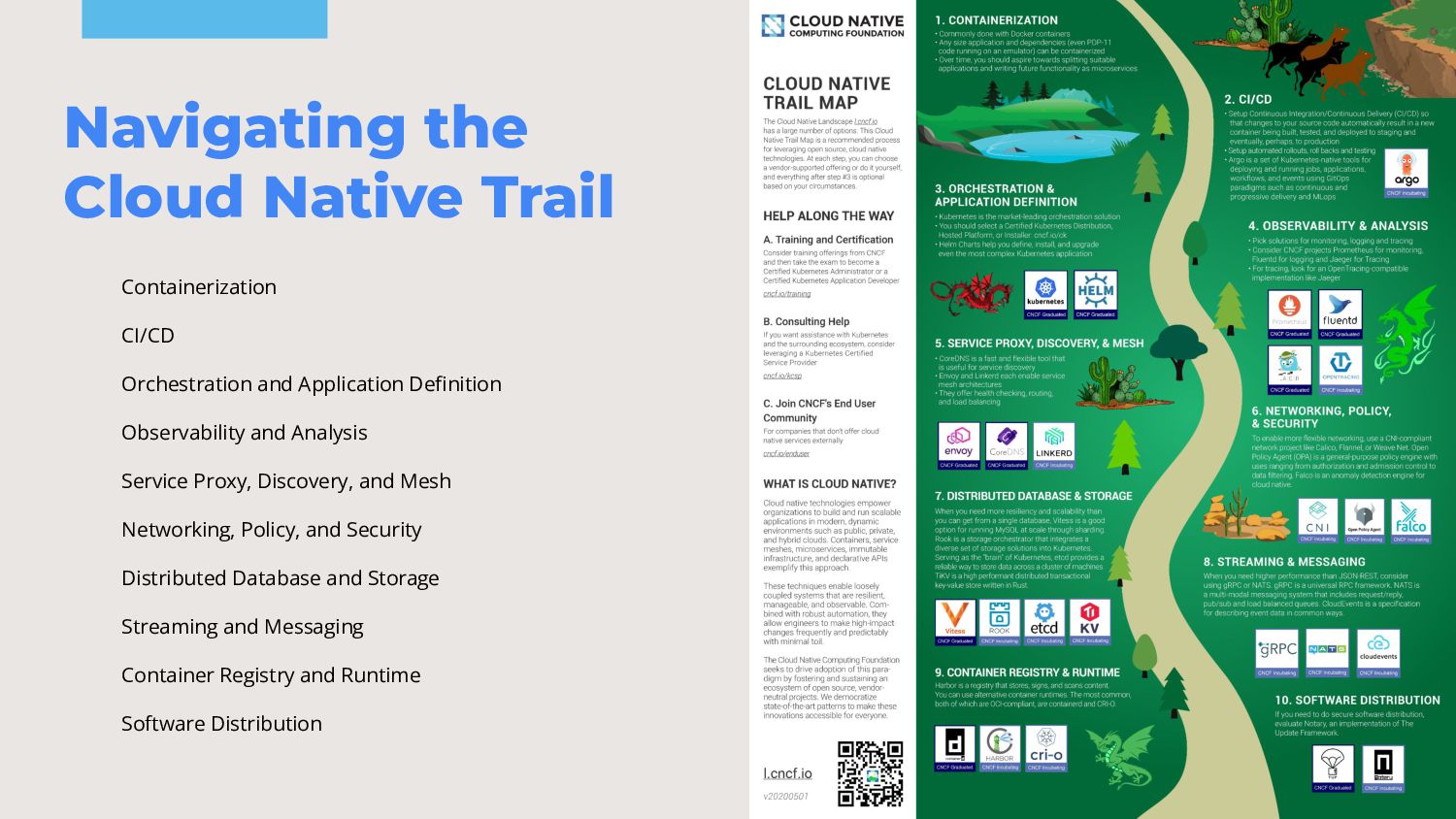
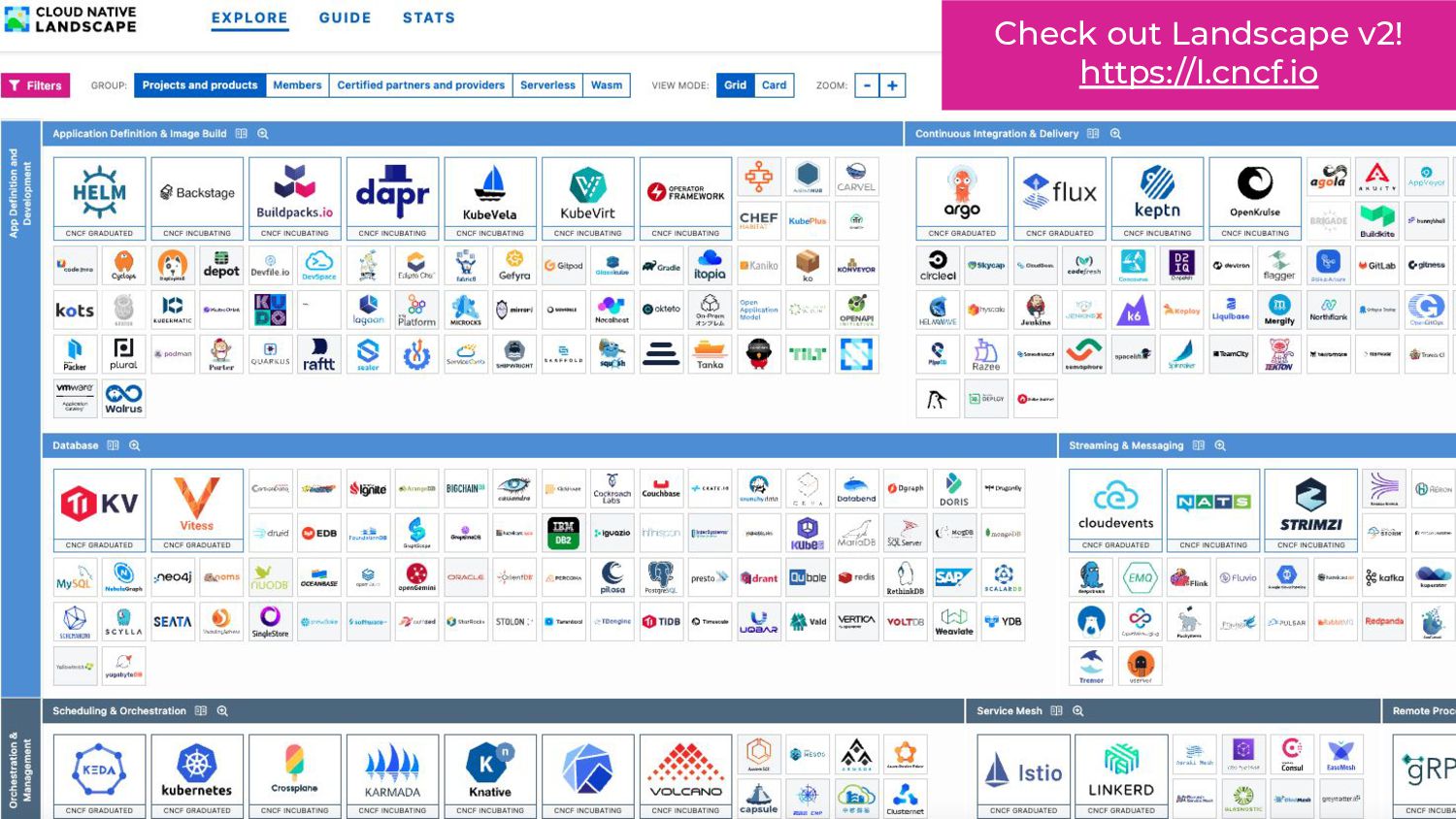
Definition Observability and Analysis Service Proxy, Discovery, and Mesh Networking, Policy, and Security Distributed Database and Storage Streaming and Messaging Container Registry and Runtime Software Distribution
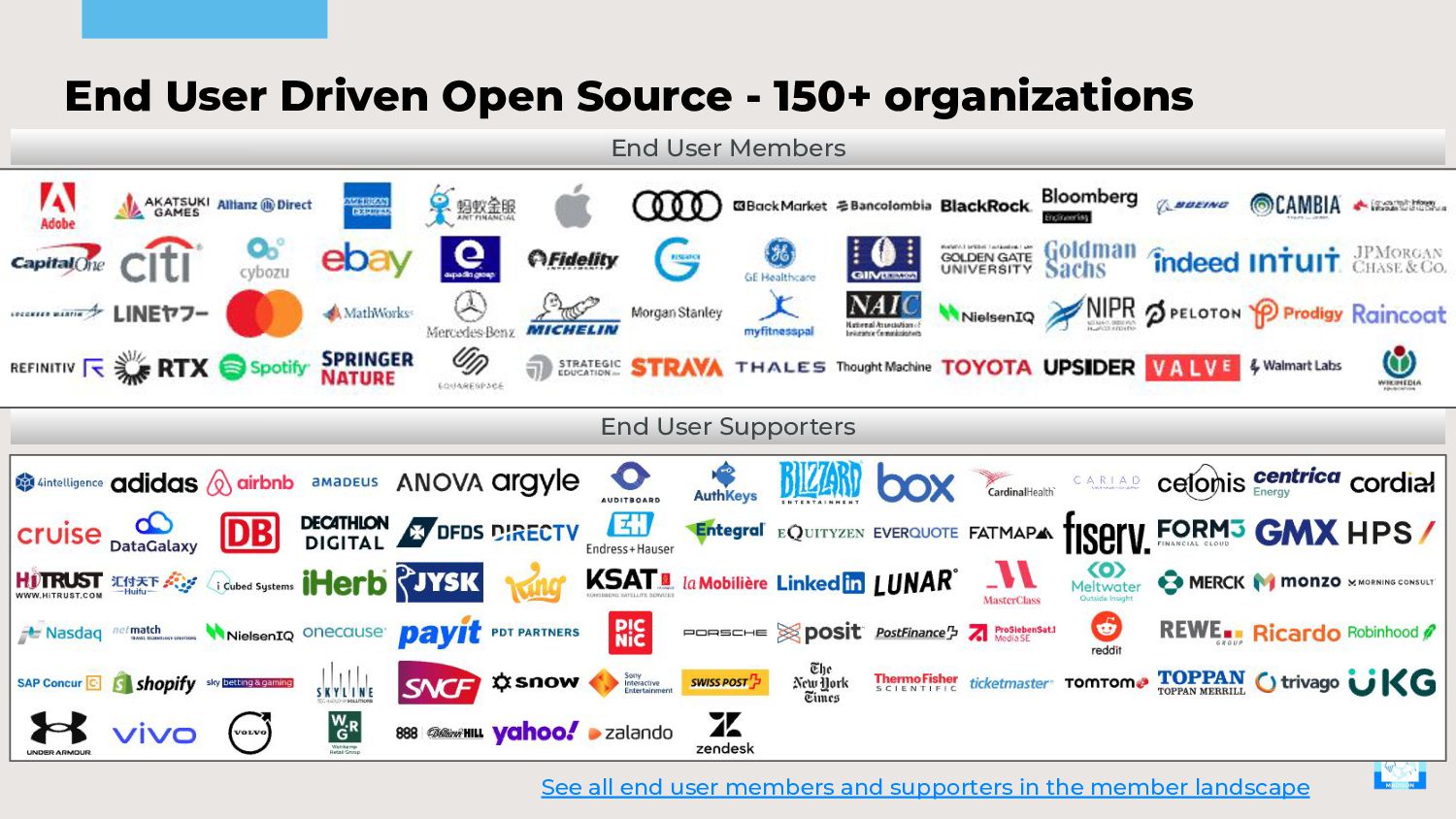
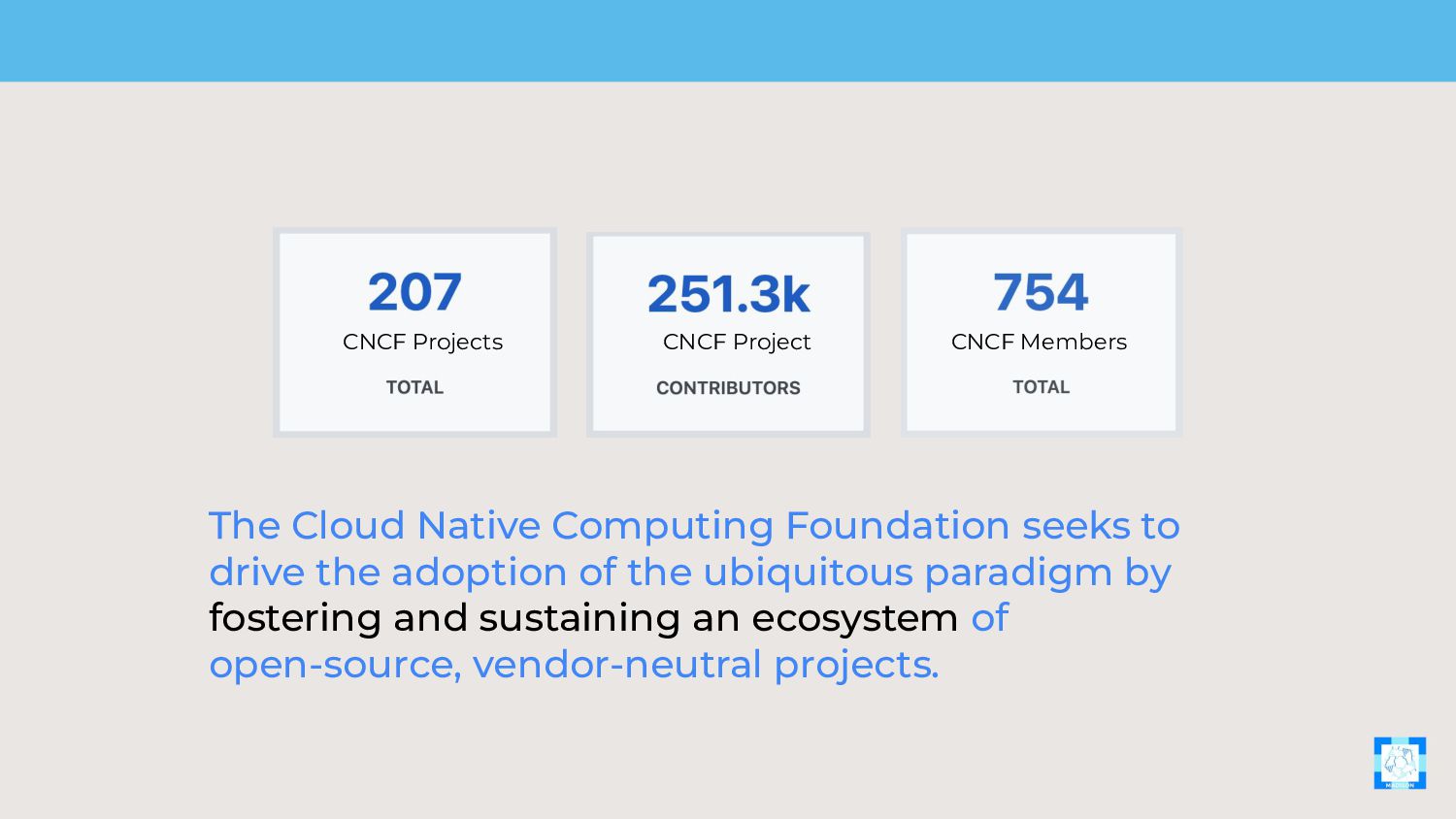
components of the global technology infrastructure. CNCF brings together the world’s top developers, end users, and vendors and runs the largest open source developer conferences.
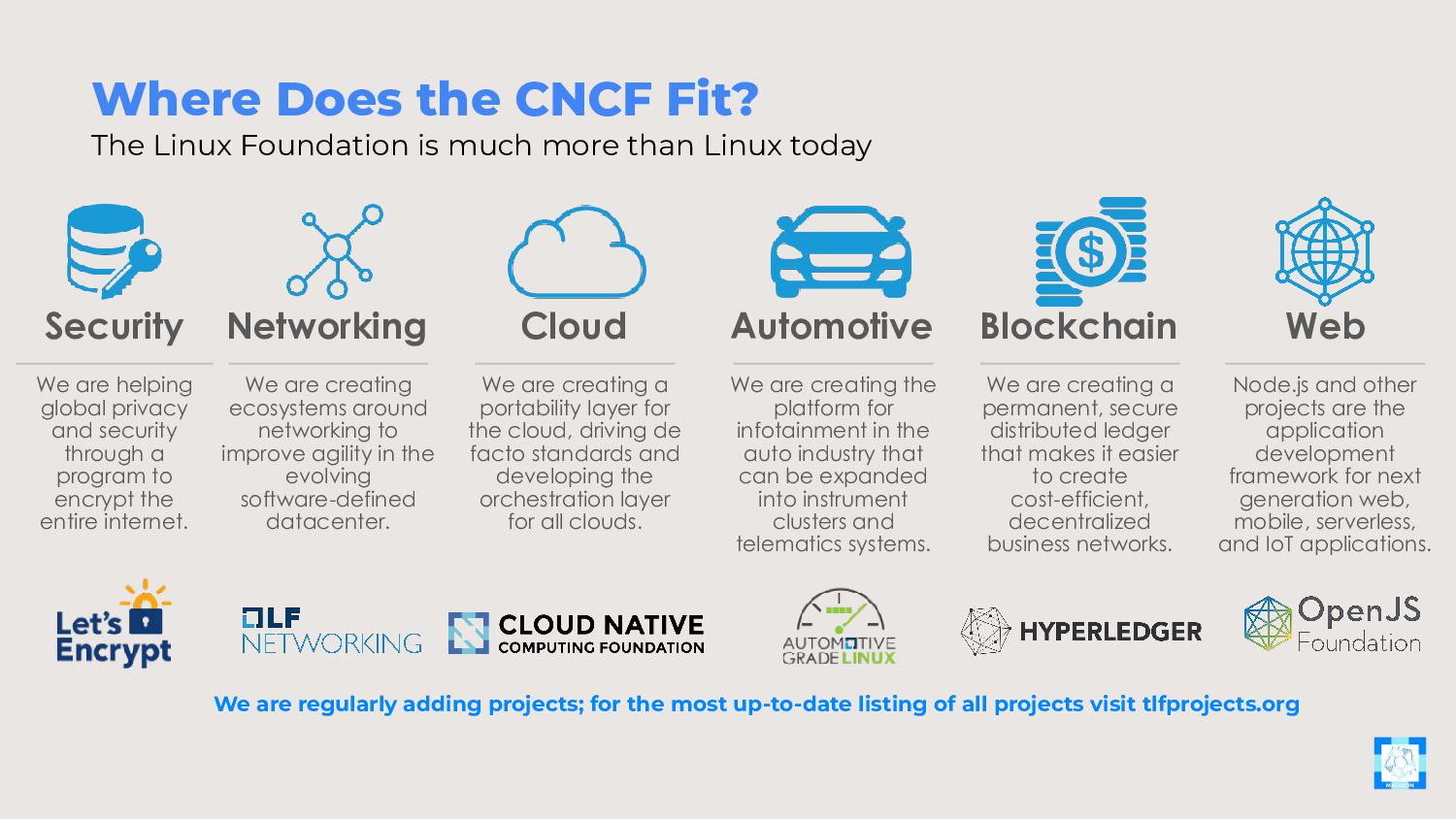
more than Linux today We are helping global privacy and security through a program to encrypt the entire internet. Security Networking We are creating ecosystems around networking to improve agility in the evolving software-defined datacenter. Cloud We are creating a portability layer for the cloud, driving de facto standards and developing the orchestration layer for all clouds. Automotive We are creating the platform for infotainment in the auto industry that can be expanded into instrument clusters and telematics systems. Blockchain We are creating a permanent, secure distributed ledger that makes it easier to create cost-efficient, decentralized business networks. We are regularly adding projects; for the most up-to-date listing of all projects visit tlfprojects.org Web Node.js and other projects are the application development framework for next generation web, mobile, serverless, and IoT applications.
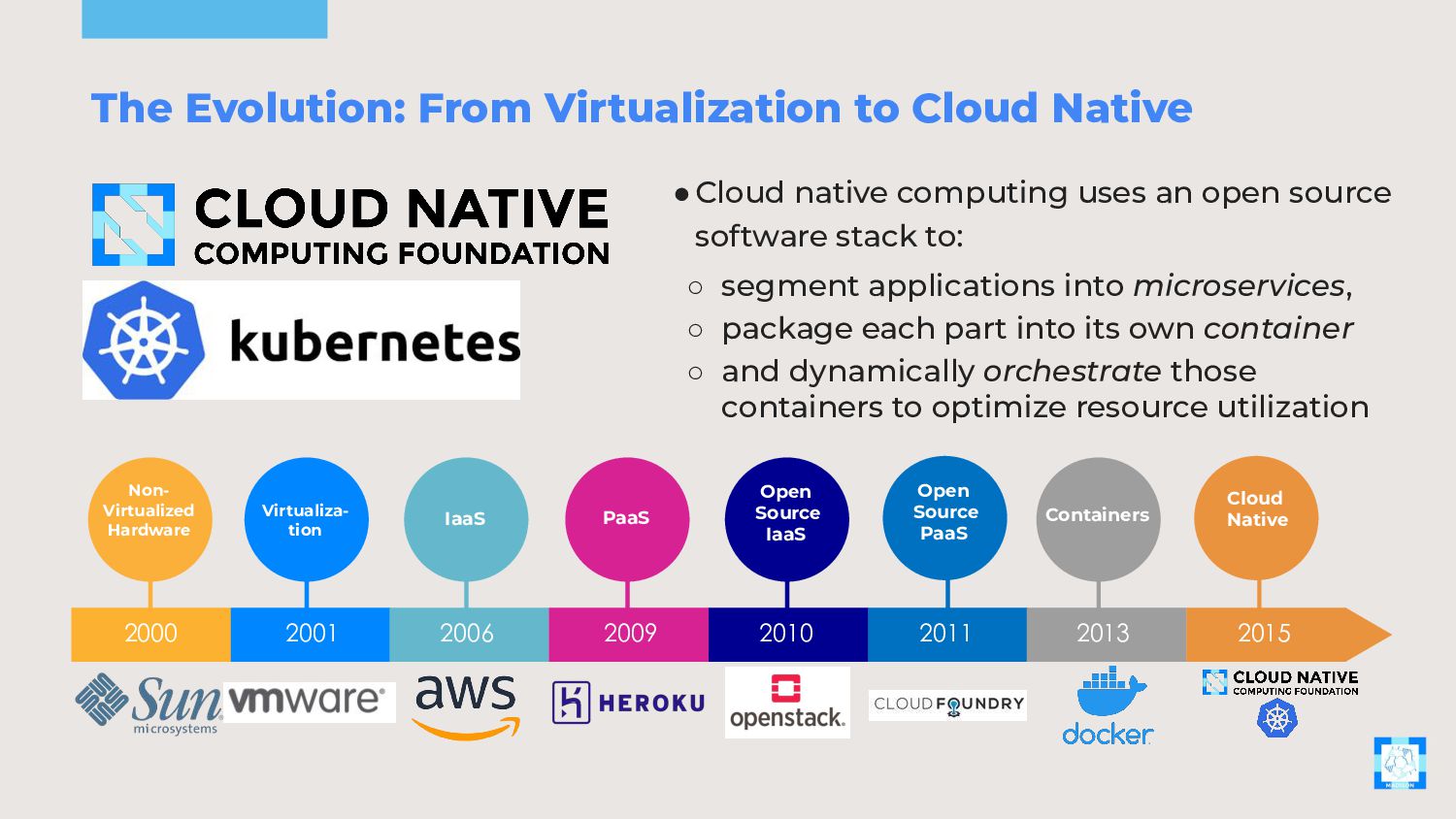
•Cloud native computing uses an open source software stack to: ◦ segment applications into microservices, ◦ package each part into its own container ◦ and dynamically orchestrate those containers to optimize resource utilization Open Source IaaS PaaS Open Source PaaS Virtualiza- tion 2000 2001 2006 2009 2010 2011 Non- Virtualized Hardware 2013 2015 IaaS
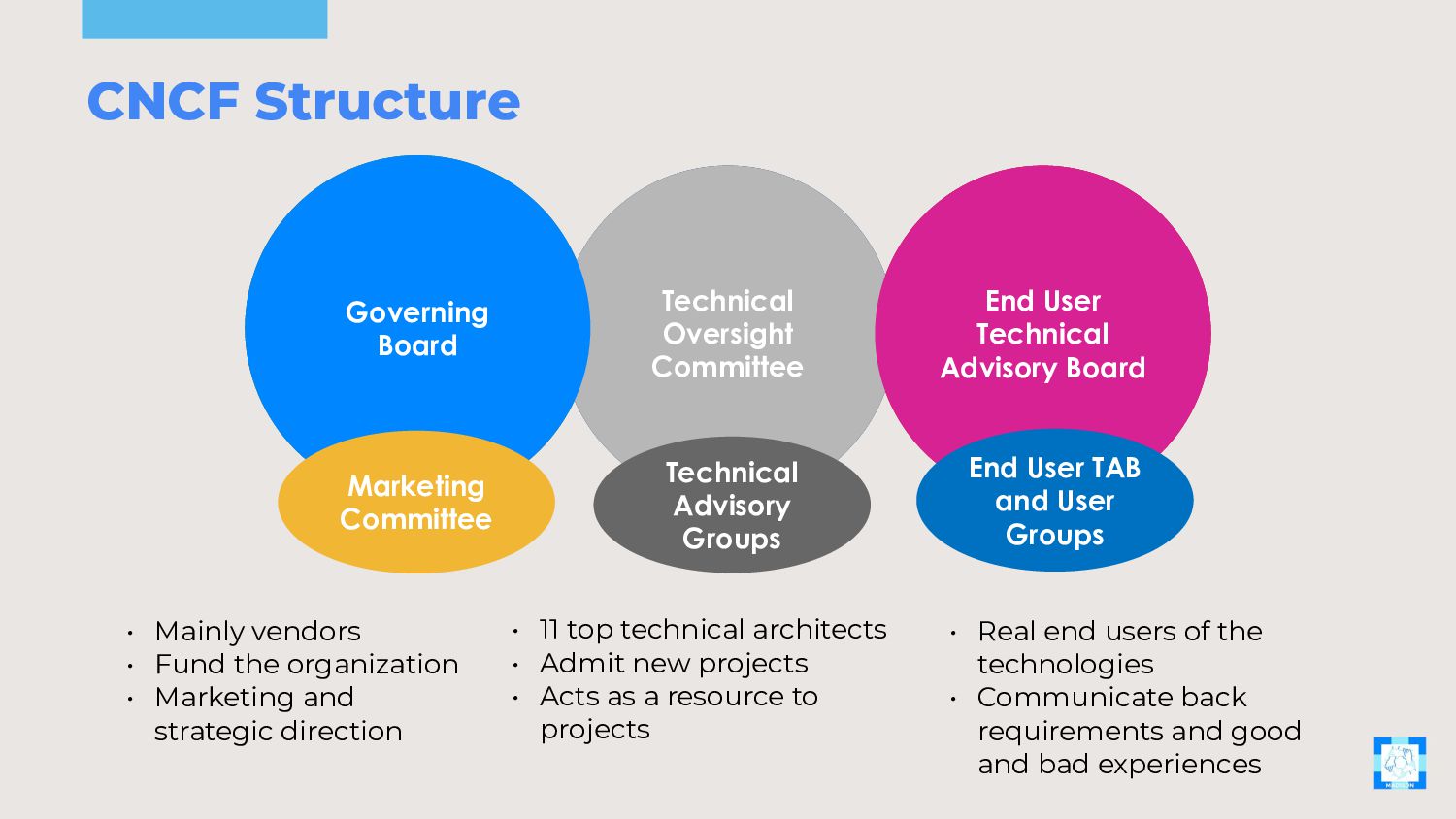
strategic direction • 11 top technical architects • Admit new projects • Acts as a resource to projects • Real end users of the technologies • Communicate back requirements and good and bad experiences Technical Oversight Committee Governing Board End User Community Technical Oversight Committee Governing Board End User Technical Advisory Board Marketing Committee Technical Advisory Groups End User TAB and User Groups CNCF Structure
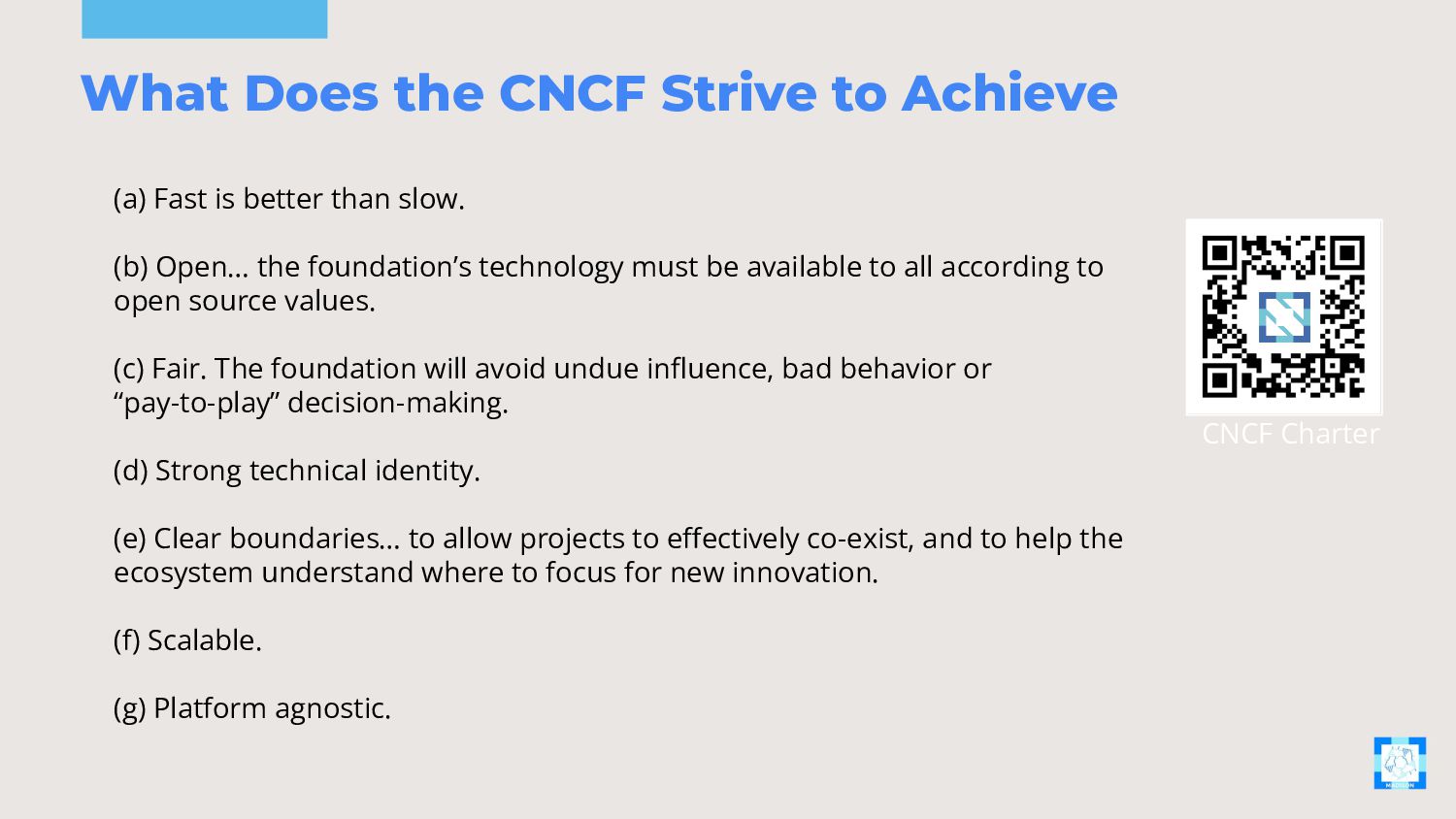
better than slow. (b) Open… the foundation’s technology must be available to all according to open source values. (c) Fair. The foundation will avoid undue influence, bad behavior or “pay-to-play” decision-making. (d) Strong technical identity. (e) Clear boundaries… to allow projects to effectively co-exist, and to help the ecosystem understand where to focus for new innovation. (f) Scalable. (g) Platform agnostic. CNCF Charter
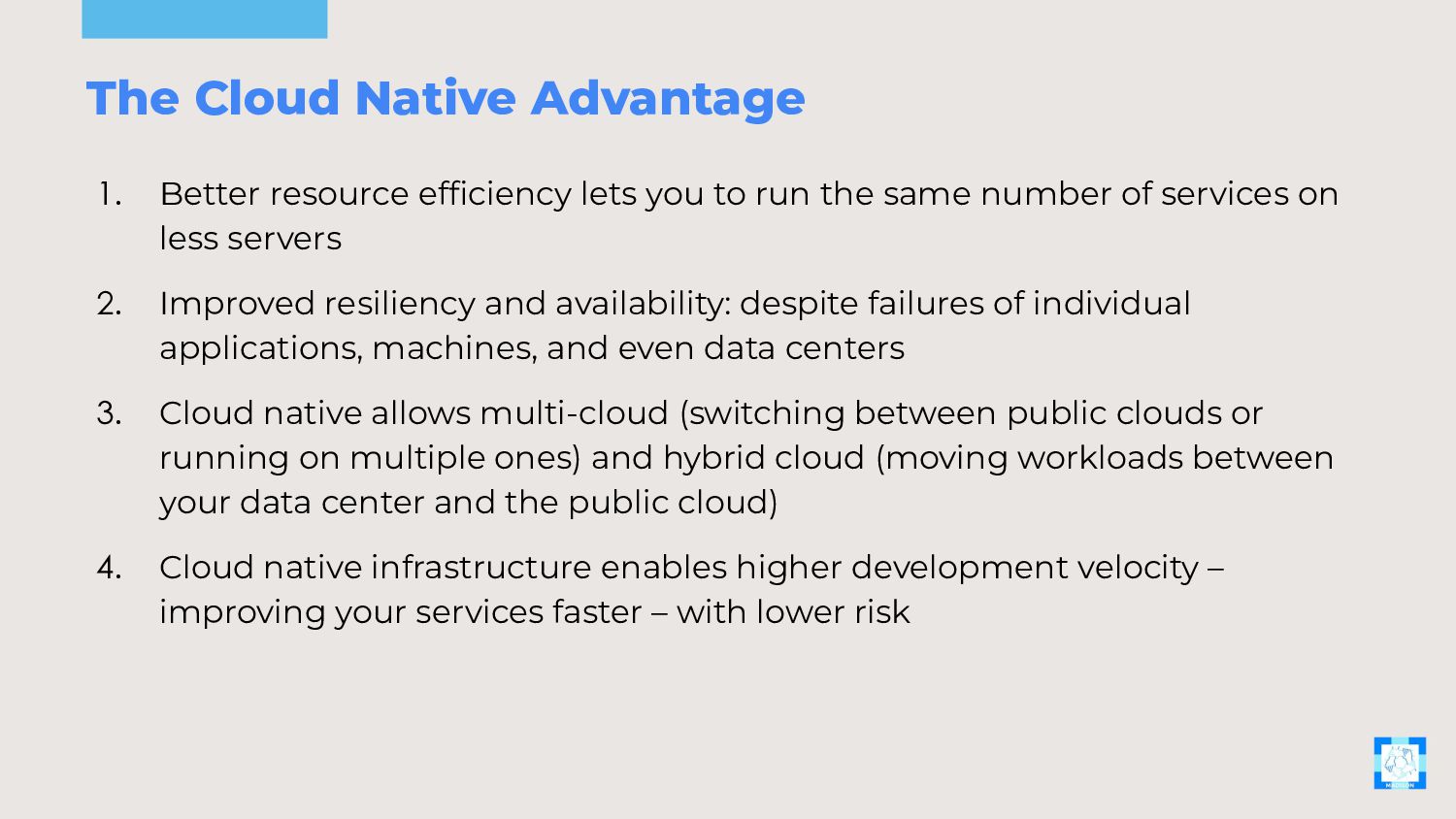
number of services on less servers 2. Improved resiliency and availability: despite failures of individual applications, machines, and even data centers 3. Cloud native allows multi-cloud (switching between public clouds or running on multiple ones) and hybrid cloud (moving workloads between your data center and the public cloud) 4. Cloud native infrastructure enables higher development velocity – improving your services faster – with lower risk The Cloud Native Advantage
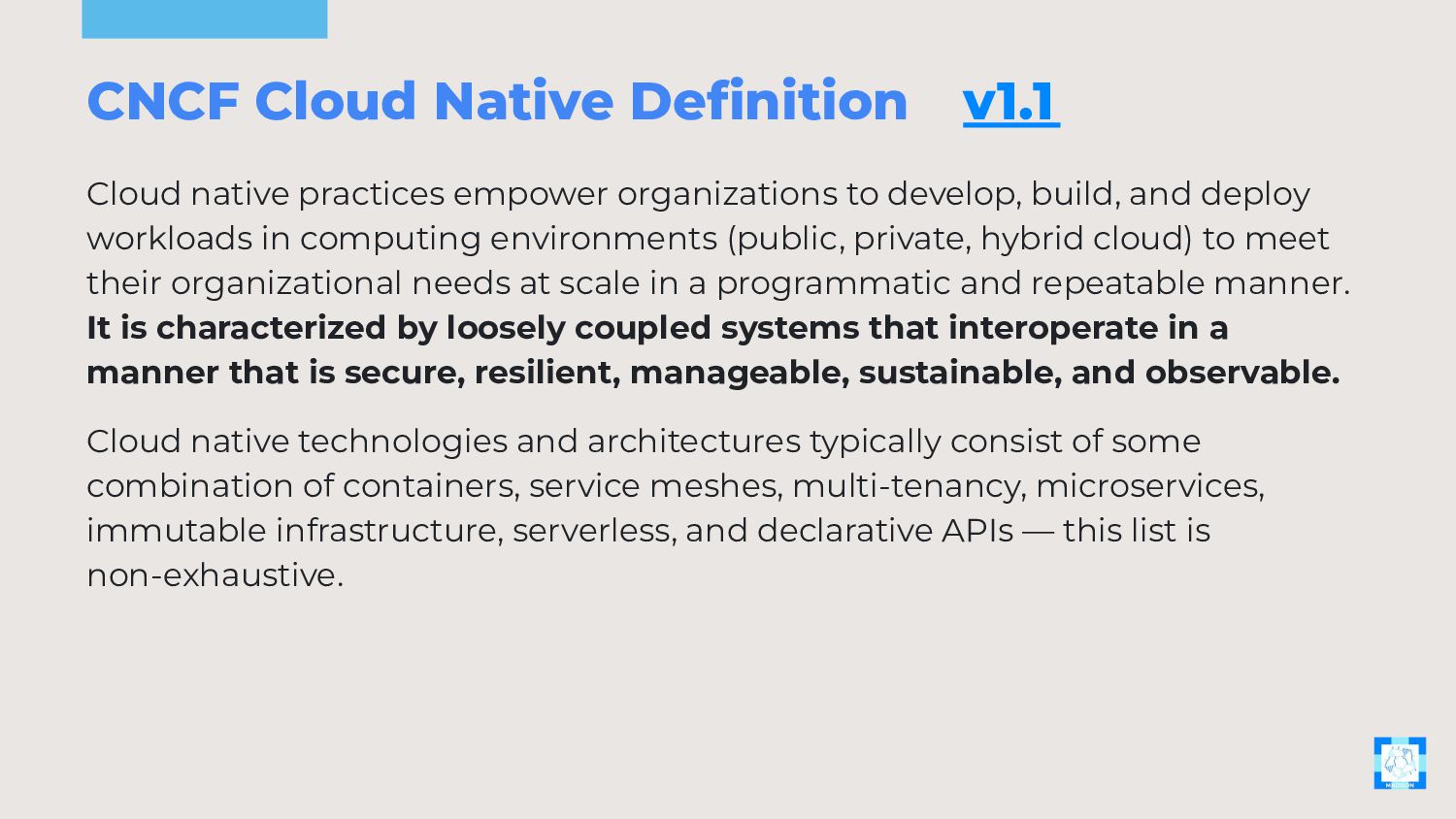
workloads in computing environments (public, private, hybrid cloud) to meet their organizational needs at scale in a programmatic and repeatable manner. It is characterized by loosely coupled systems that interoperate in a manner that is secure, resilient, manageable, sustainable, and observable. Cloud native technologies and architectures typically consist of some combination of containers, service meshes, multi-tenancy, microservices, immutable infrastructure, serverless, and declarative APIs — this list is non-exhaustive. CNCF Cloud Native Definition v1.1
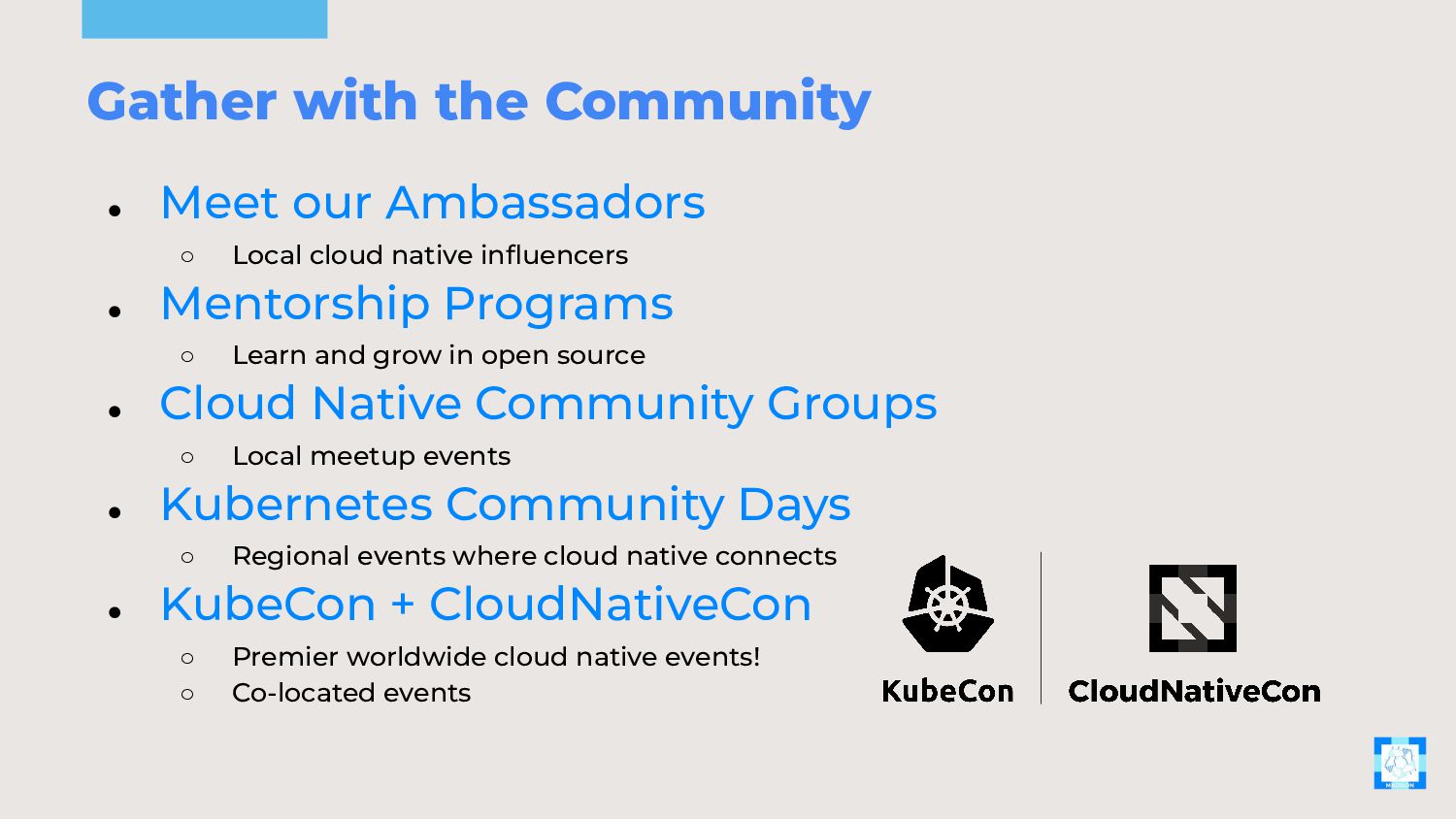
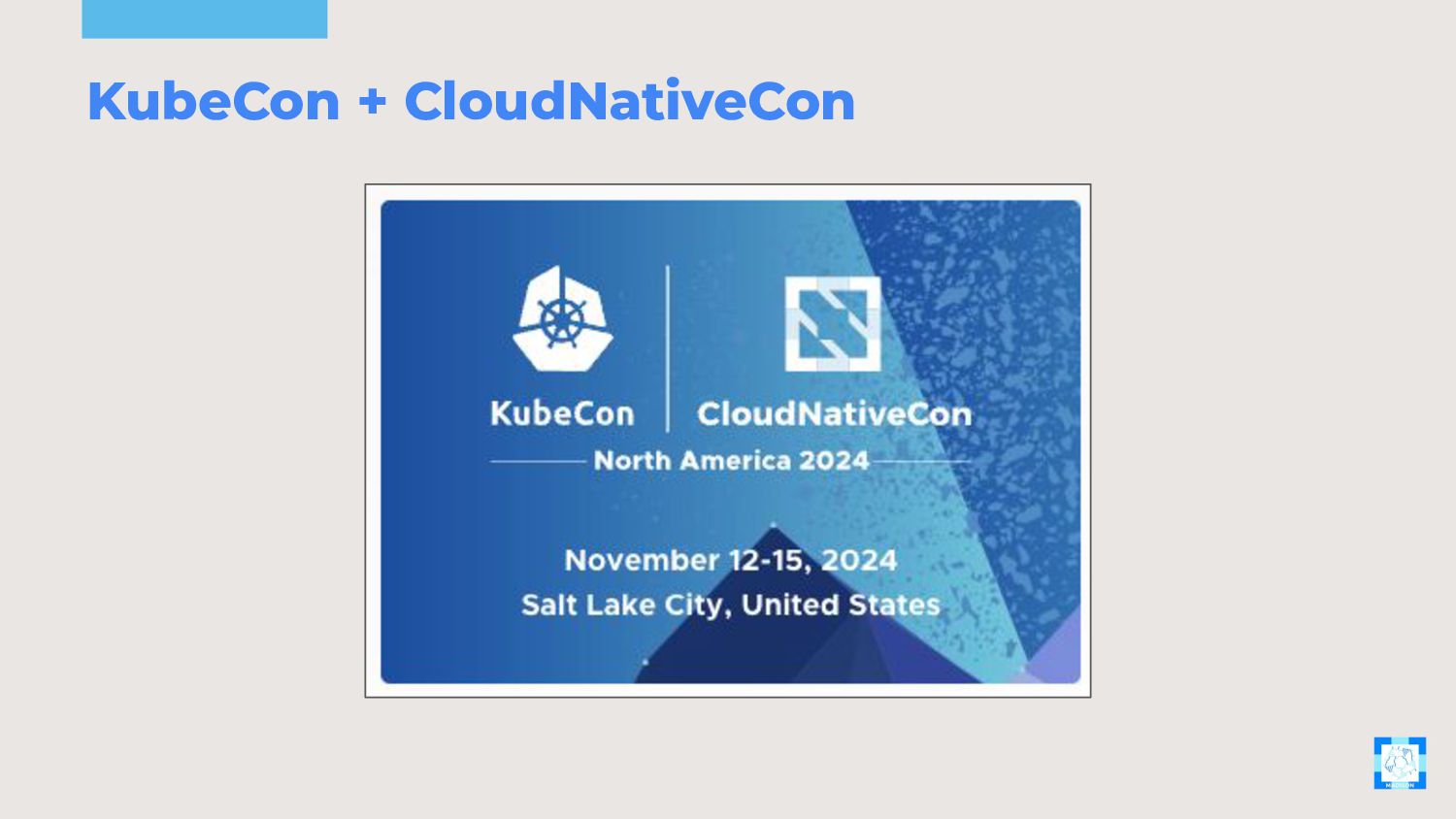
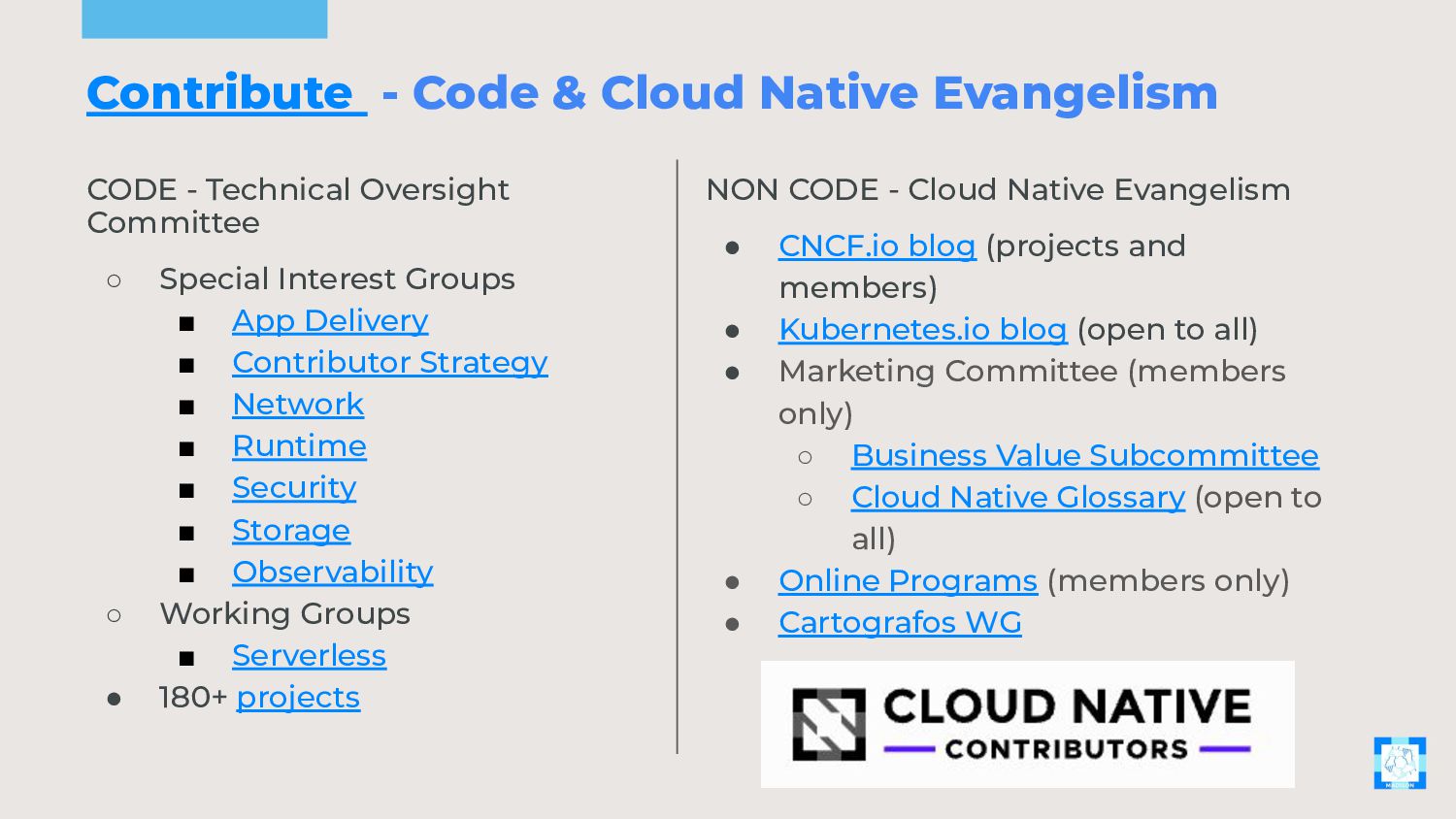
cloud native influencers • Mentorship Programs ◦ Learn and grow in open source • Cloud Native Community Groups ◦ Local meetup events • Kubernetes Community Days ◦ Regional events where cloud native connects • KubeCon + CloudNativeCon ◦ Premier worldwide cloud native events! ◦ Co-located events
company page on LinkedIn, Join our Cloud Native Community Group on CNCF, and follow our CFP process (coming soon) to submit your ideas and talks to help grow this community.
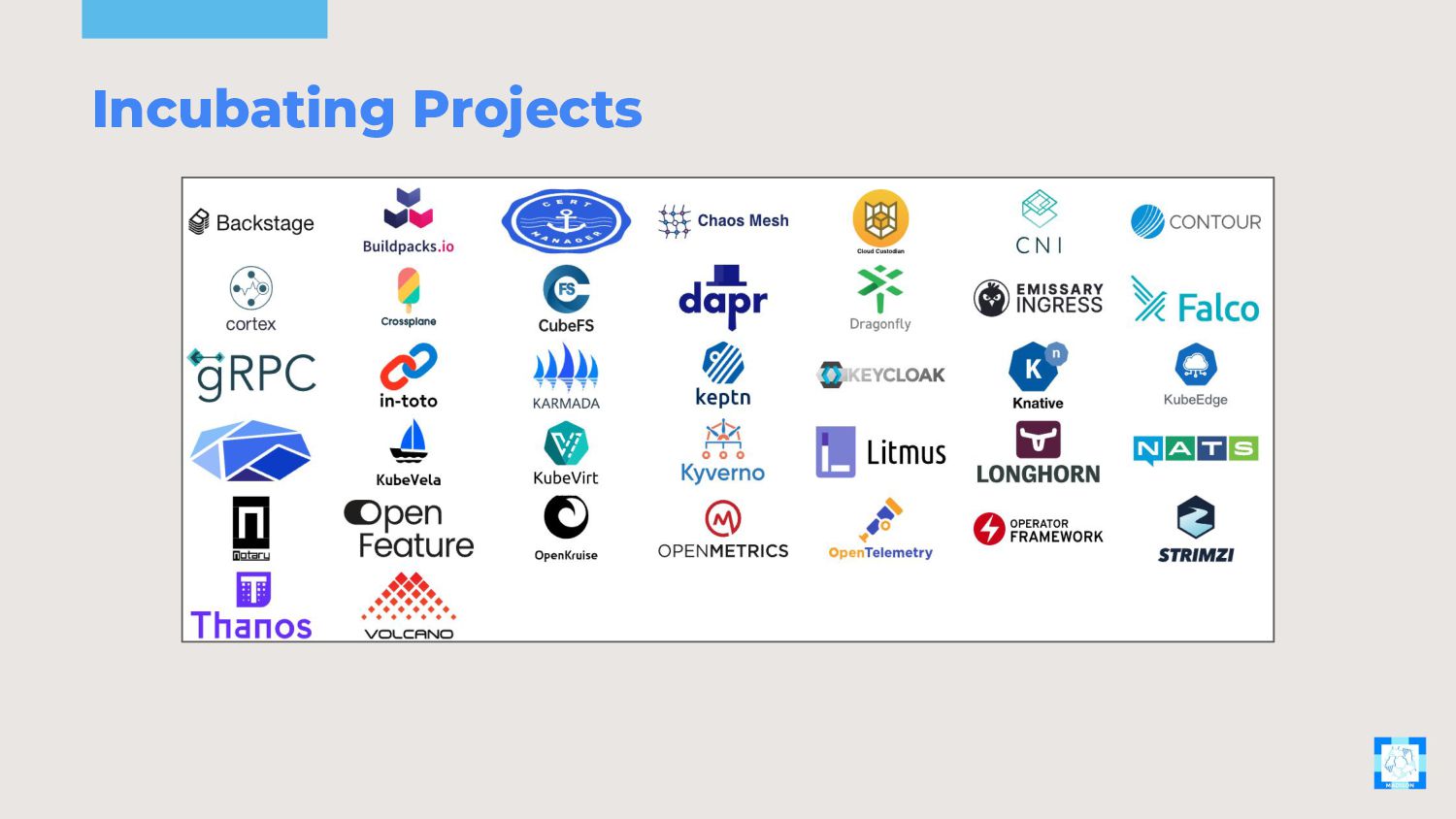
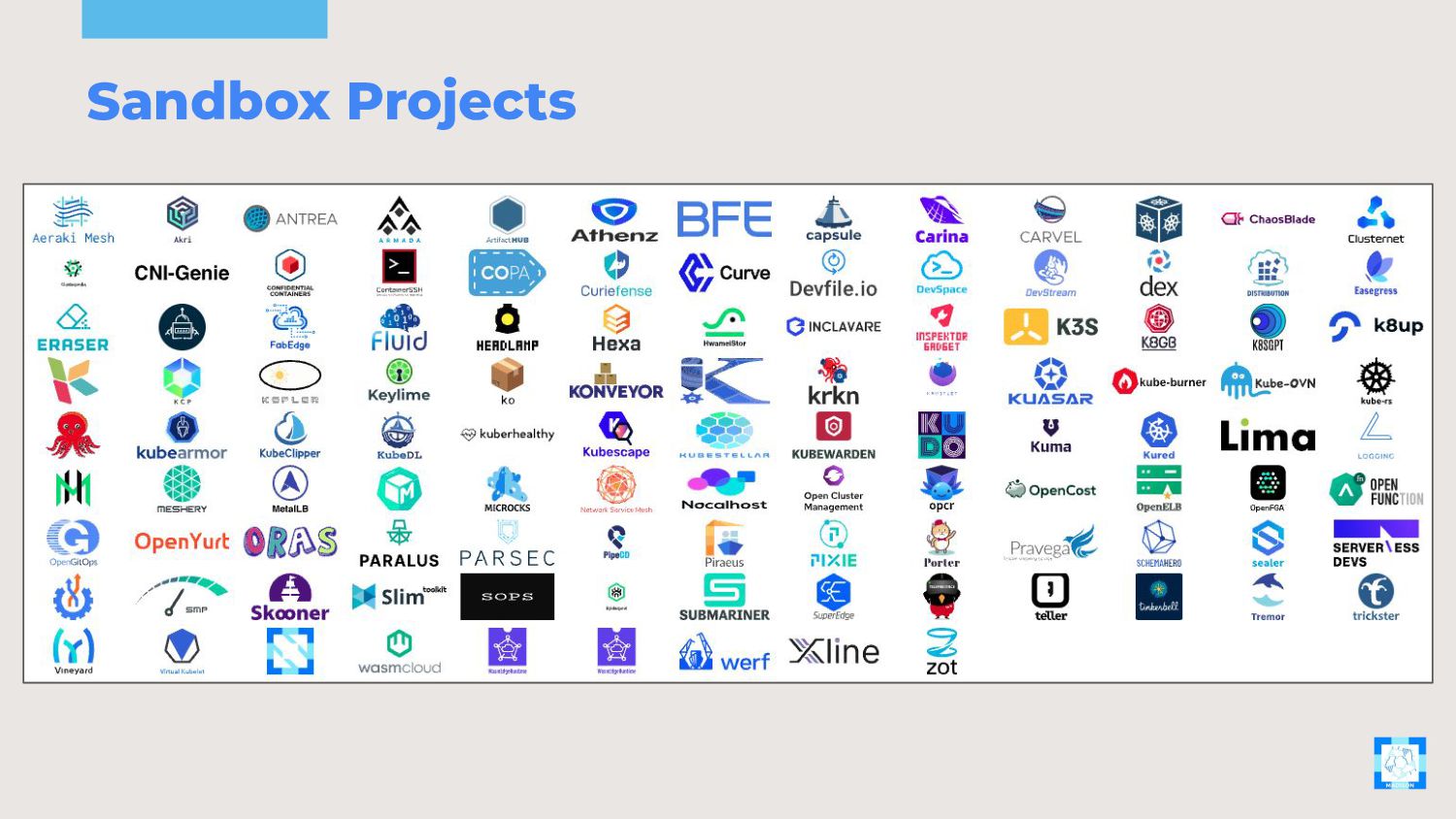
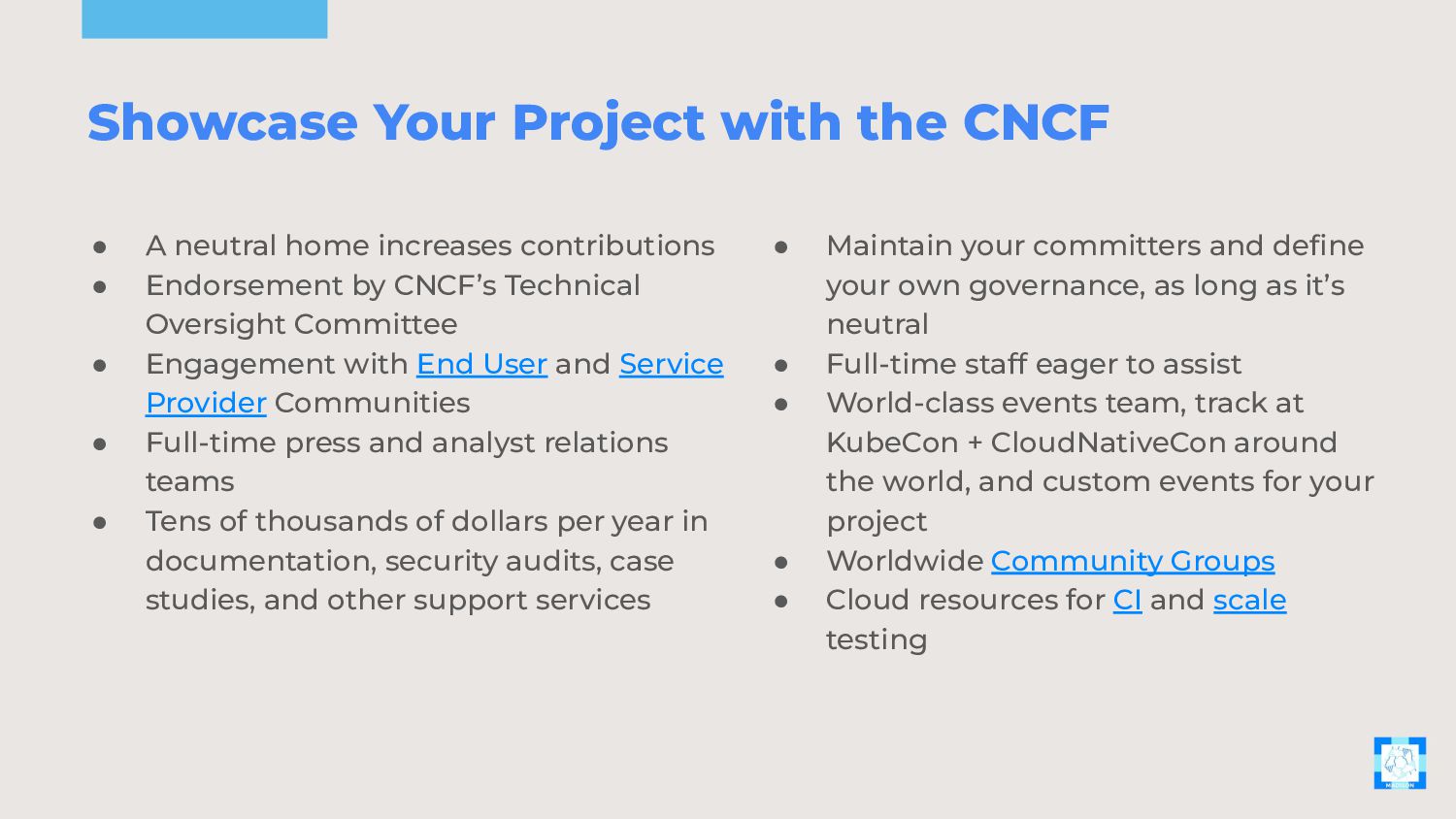
increases contributions • Endorsement by CNCF’s Technical Oversight Committee • Engagement with End User and Service Provider Communities • Full-time press and analyst relations teams • Tens of thousands of dollars per year in documentation, security audits, case studies, and other support services • Maintain your committers and define your own governance, as long as it’s neutral • Full-time staff eager to assist • World-class events team, track at KubeCon + CloudNativeCon around the world, and custom events for your project • Worldwide Community Groups • Cloud resources for CI and scale testing


.jpg)
.jpg)
.jpg) cloudnativemadison
cloudnativemadison
 kenichiodo
 ivry_presentationmaterials
 kentapapa
 jtakeda
 koukihosaka
 kzkhykw1991
 pfn
pfn
 kaminashi
 akitoshiga
 yut0naga1_fa
 grimoh
 yamanoku
 brettharned
 takai
takai
 speakerdeck
 sabderemane
 marktimemedia
 tanoku
 cassininazir
 lara
lara
 twada
twada
 rasagy
 popppiees
 notwaldorf