Upgrade to Pro — share decks privately, control downloads, hide ads and more …

Self-Learning Software Developers: Thriving in ...

Sponsored · Your Podcast. Everywhere. Effortlessly. Share. Educate. Inspire. Entertain. You do you. We'll handle the rest. →

Self-Learning Software Developers: Thriving in an AI-Accelerated World

In a world where artificial intelligence is accelerating technological change, independent learning is becoming one of the most important skills for software developers.

As technologies evolve faster and knowledge becomes outdated more quickly, developers can no longer rely solely on formal education, traditional courses, or past expertise. The real competitive advantage lies in knowing what to learn, how to learn it efficiently, and when to apply that knowledge.

In this talk, I explore how software developers can develop effective self-learning strategies and remain relevant in an increasingly AI-driven industry.

The presentation covers several key topics:

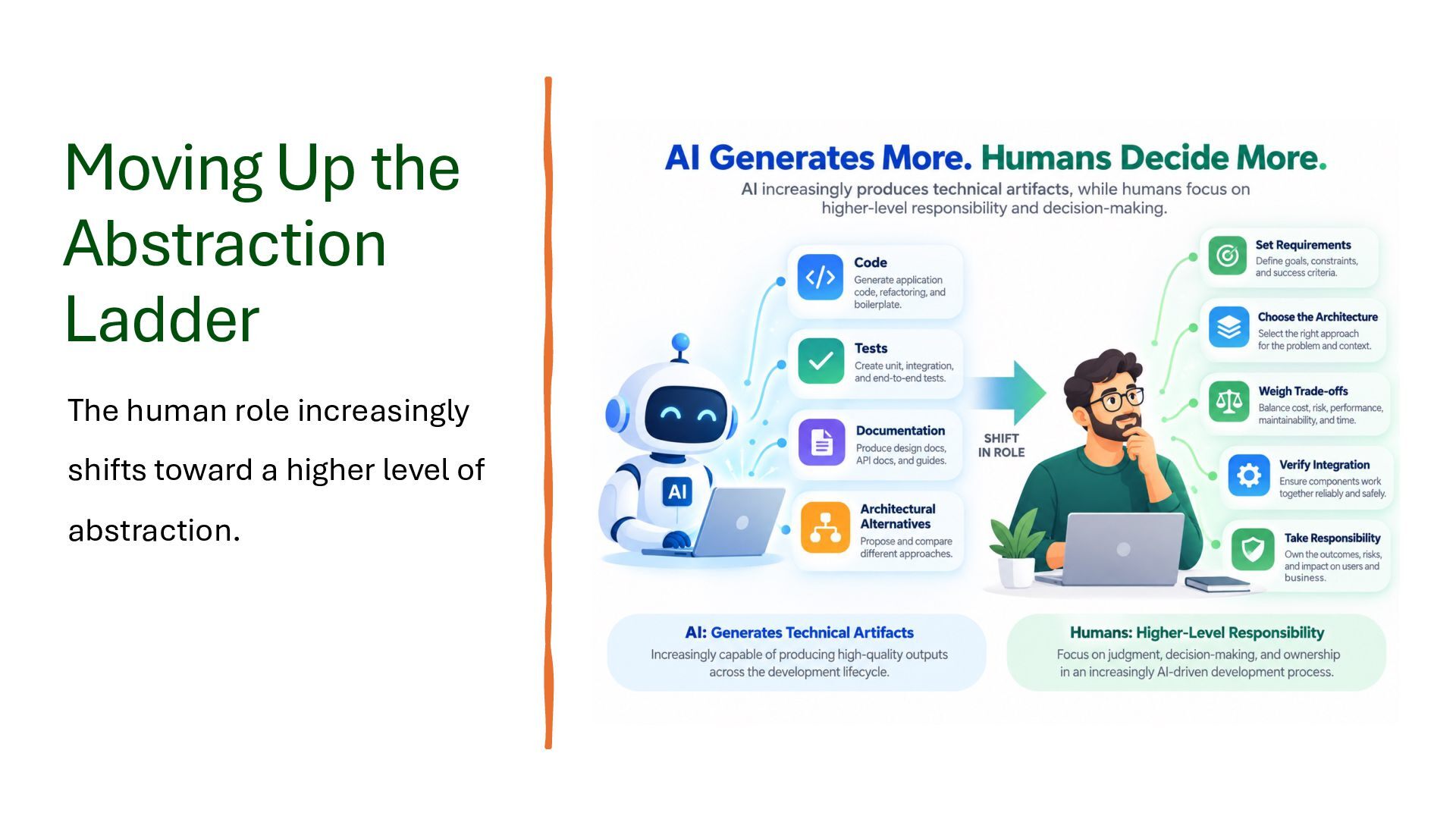
The Changing Developer Role: Moving toward higher levels of abstraction, broader responsibilities, and cross-domain expertise.

The Economics of Learning: Understanding opportunity costs, diminishing marginal utility, and how to prioritize learning investments.

Learning on Demand: Identify knowledge gaps, acquire relevant skills, and apply them to real problems.

Learning Faster and Smarter: Using progressive compression, structured exploration, and practical application to accelerate understanding.

AI as a Personal Learning Partner: Using AI-generated training materials, Socratic dialogue, and interactive feedback to improve the learning process.

Building a Self-Learning Infrastructure: Develop sustainable learning habits, maintain continuous progress, and strengthen your ability to learn.

A central message of this talk is that knowing everything is impossible, learning fast is essential, and knowing what NOT to learn may be even more valuable.

The presentation offers practical insights for software developers, technical educators, and anyone looking to build a sustainable career in an industry where continuous adaptation is no longer optional.

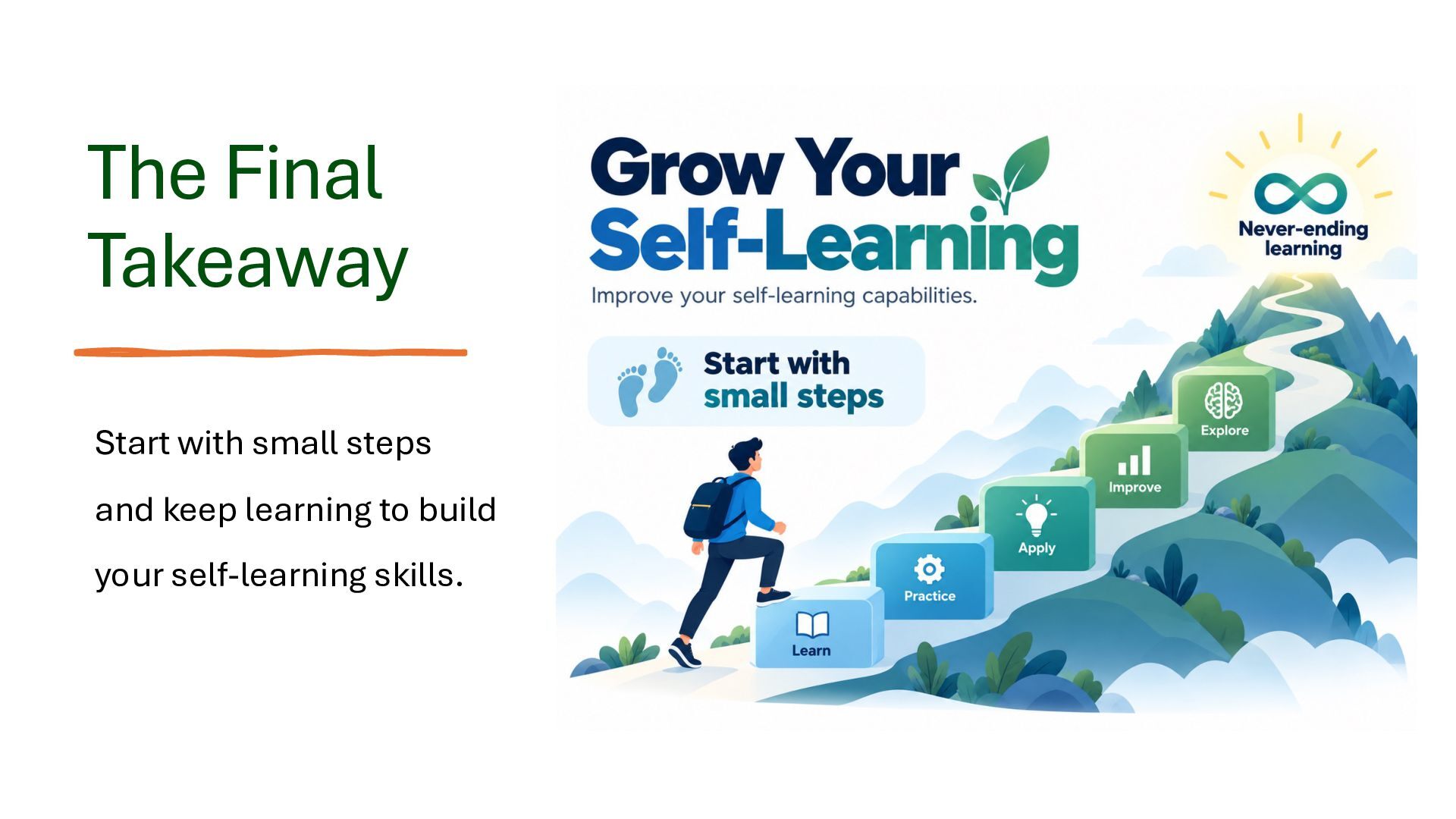
The goal isn't just to acquire more knowledge, but to get better at learning itself.

Speaker: Haim Michael
Conference: JavaCro 2026
Blog: https://blog.lifemichael.com

Avatar for life michael

life michael

October 14, 2026

More Decks by life michael

Other Decks in Technology

Transcript

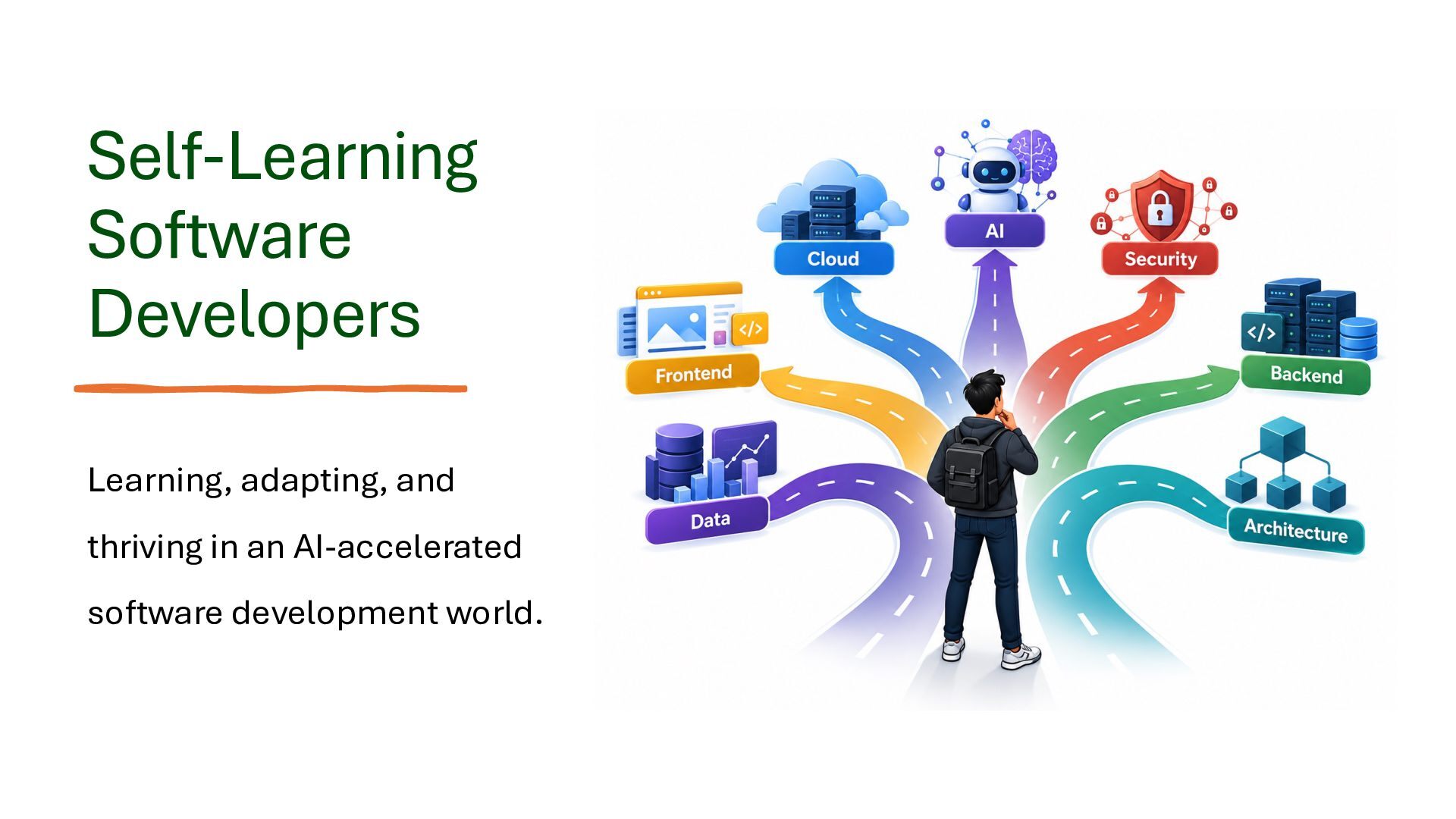
  1. Self-Learning Software Developers Thriving in an AI-Accelerated World Haim Michael

    Founder & CEO @ Zindell Technologies www.zindell.com | blog.lifemichael.com life michael
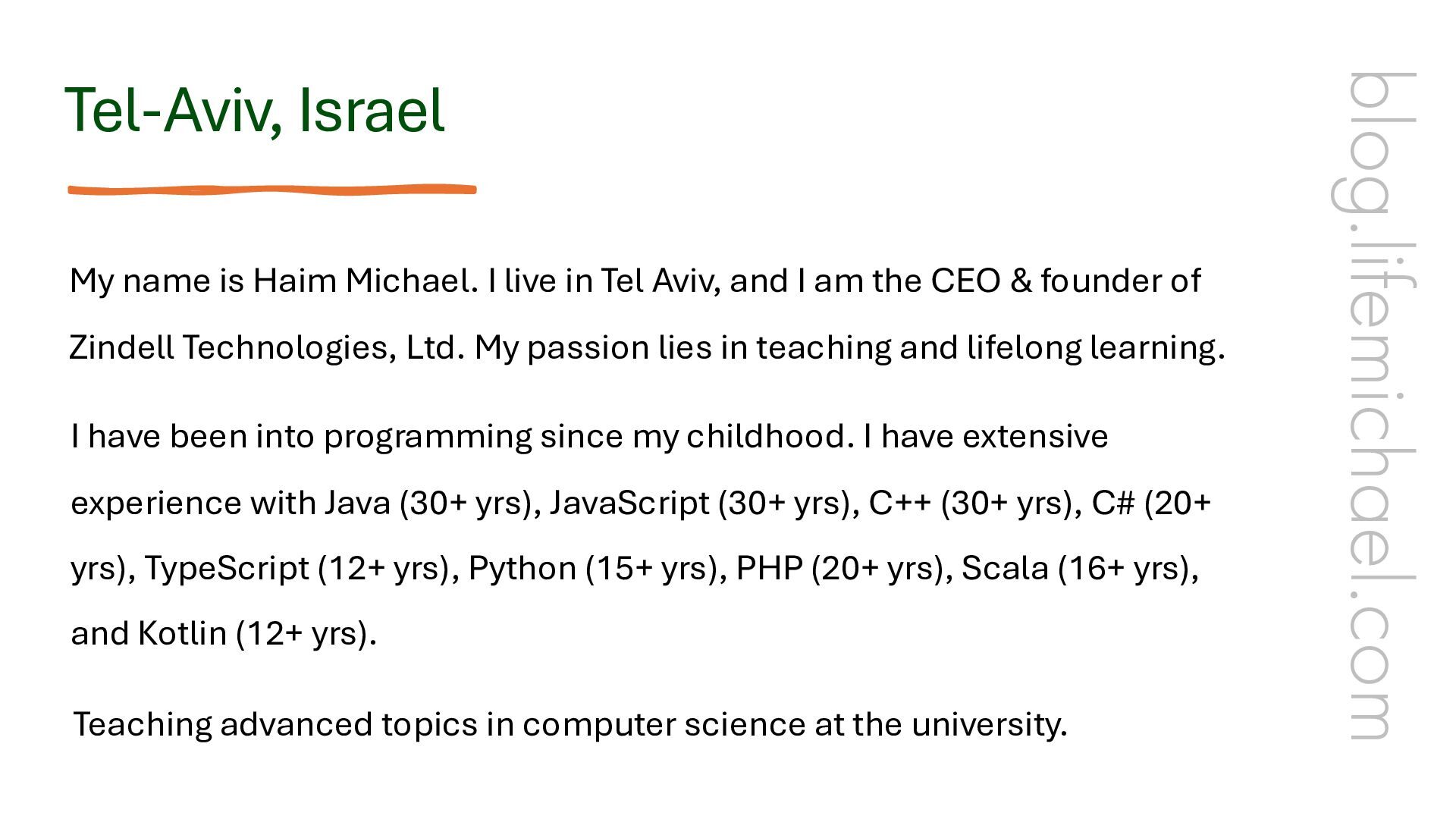
  2. My name is Haim Michael. I live in Tel Aviv,

    and I am the CEO & founder of Zindell Technologies, Ltd. My passion lies in teaching and lifelong learning. I have been into programming since my childhood. I have extensive experience with Java (30+ yrs), JavaScript (30+ yrs), C++ (30+ yrs), C# (20+ yrs), TypeScript (12+ yrs), Python (15+ yrs), PHP (20+ yrs), Scala (16+ yrs), and Kotlin (12+ yrs). Teaching advanced topics in computer science at the university. blog.lifemichael.com Tel-Aviv, Israel
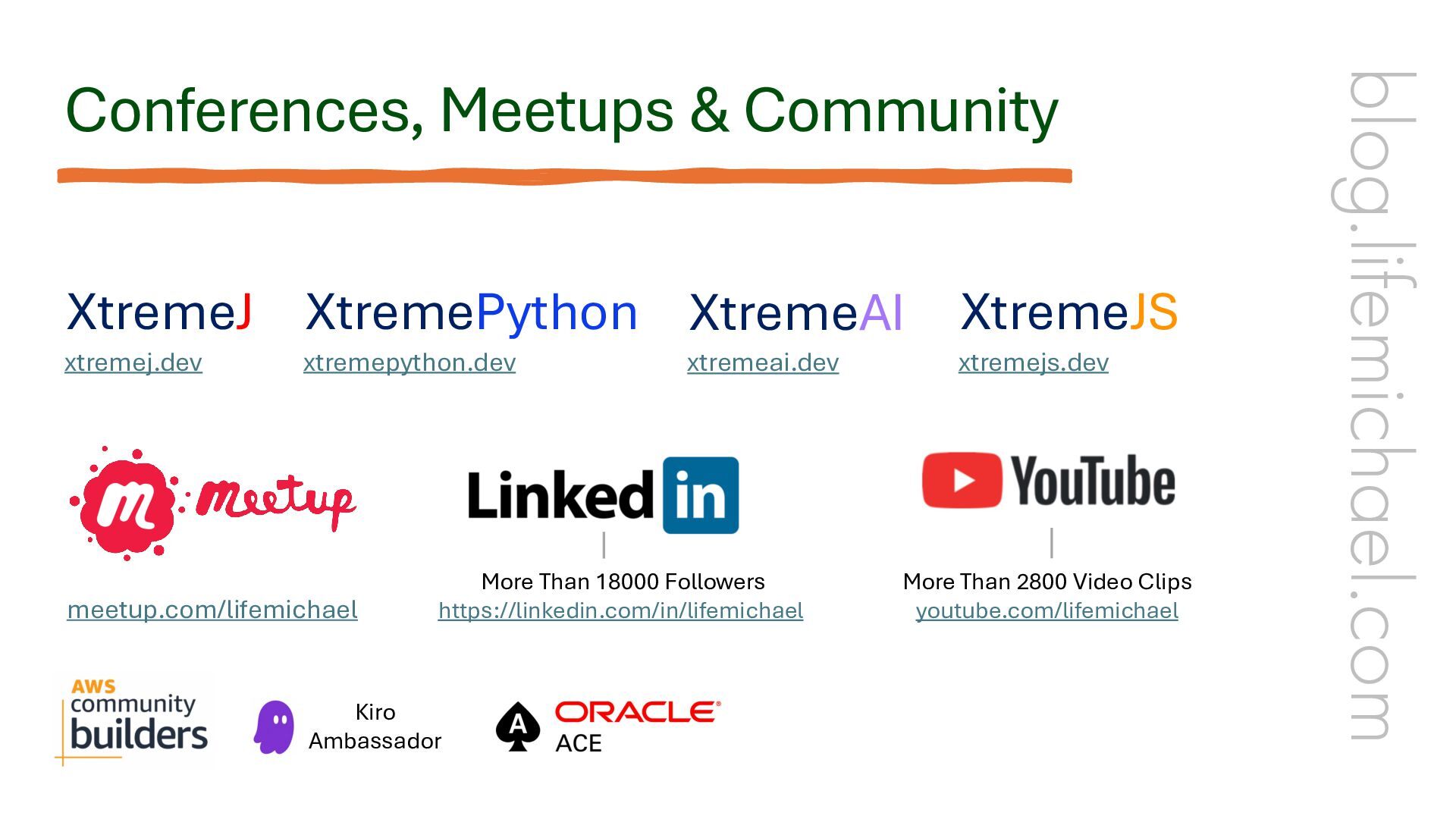
  3. XtremeJ XtremePython XtremeAI xtremej.dev xtremepython.dev meetup.com/lifemichael xtremeai.dev More Than 18000

    Followers https://linkedin.com/in/lifemichael Kiro Ambassador XtremeJS xtremejs.dev More Than 2800 Video Clips youtube.com/lifemichael blog.lifemichael.com Conferences, Meetups & Community
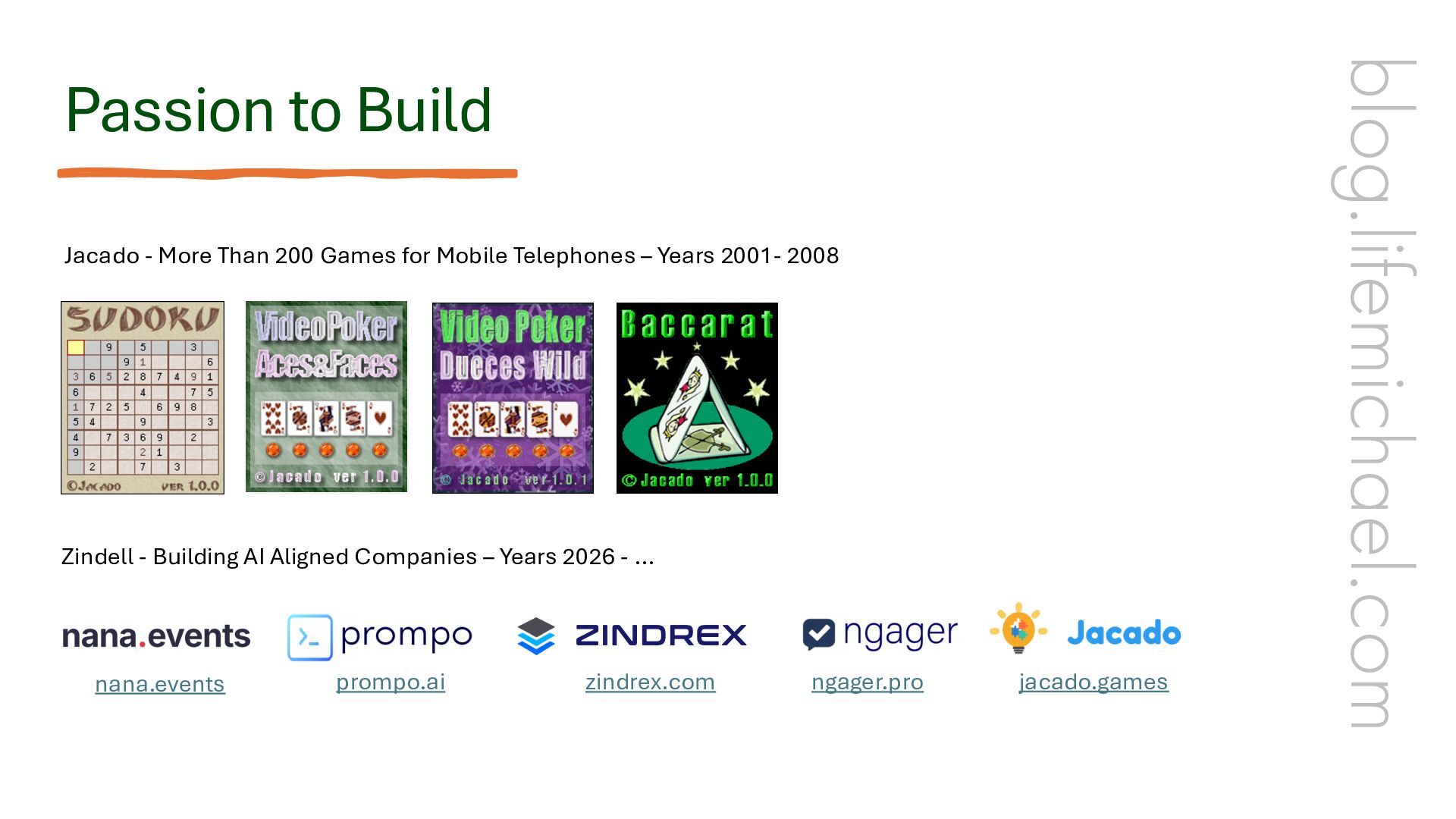
  4. Jacado - More Than 200 Games for Mobile Telephones –

    Years 2001- 2008 Zindell - Building AI Aligned Companies – Years 2026 - … nana.events prompo.ai zindrex.com ngager.pro jacado.games blog.lifemichael.com Passion to Build
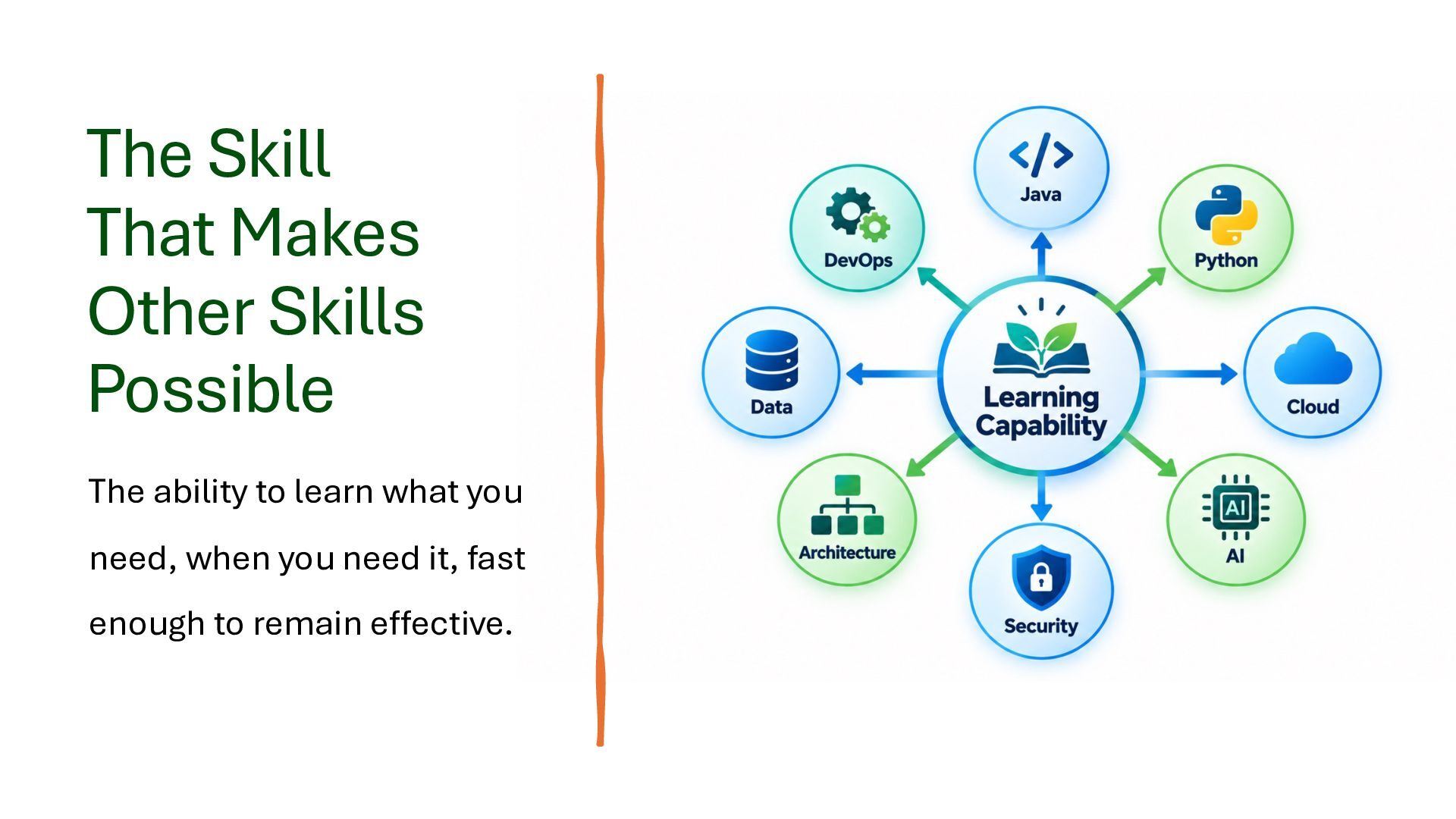
  5. The Skill That Makes Other Skills Possible The ability to

    learn what you need, when you need it, fast enough to remain effective.
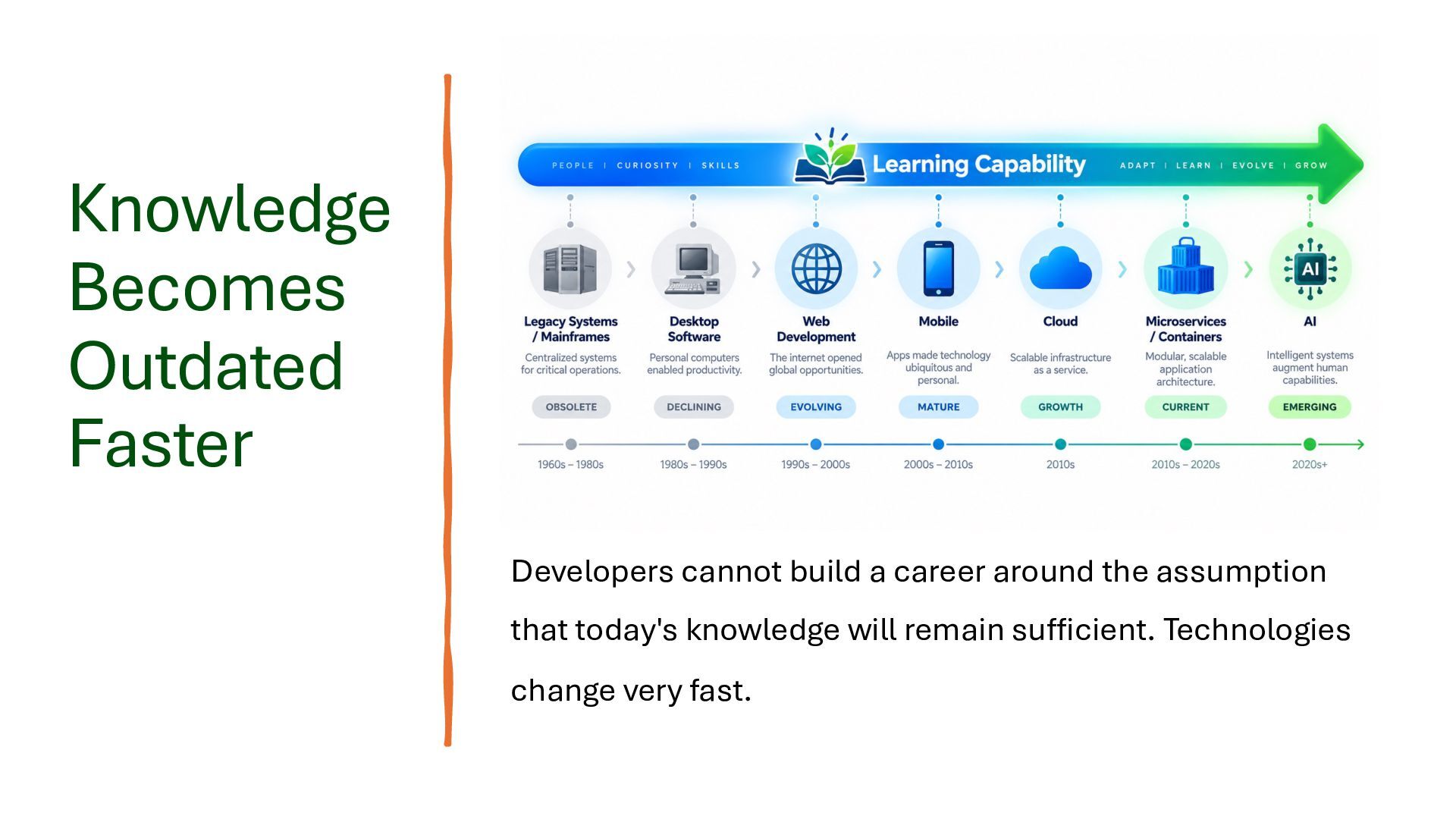
  6. Knowledge Becomes Outdated Faster Developers cannot build a career around

    the assumption that today's knowledge will remain sufficient. Technologies change very fast.
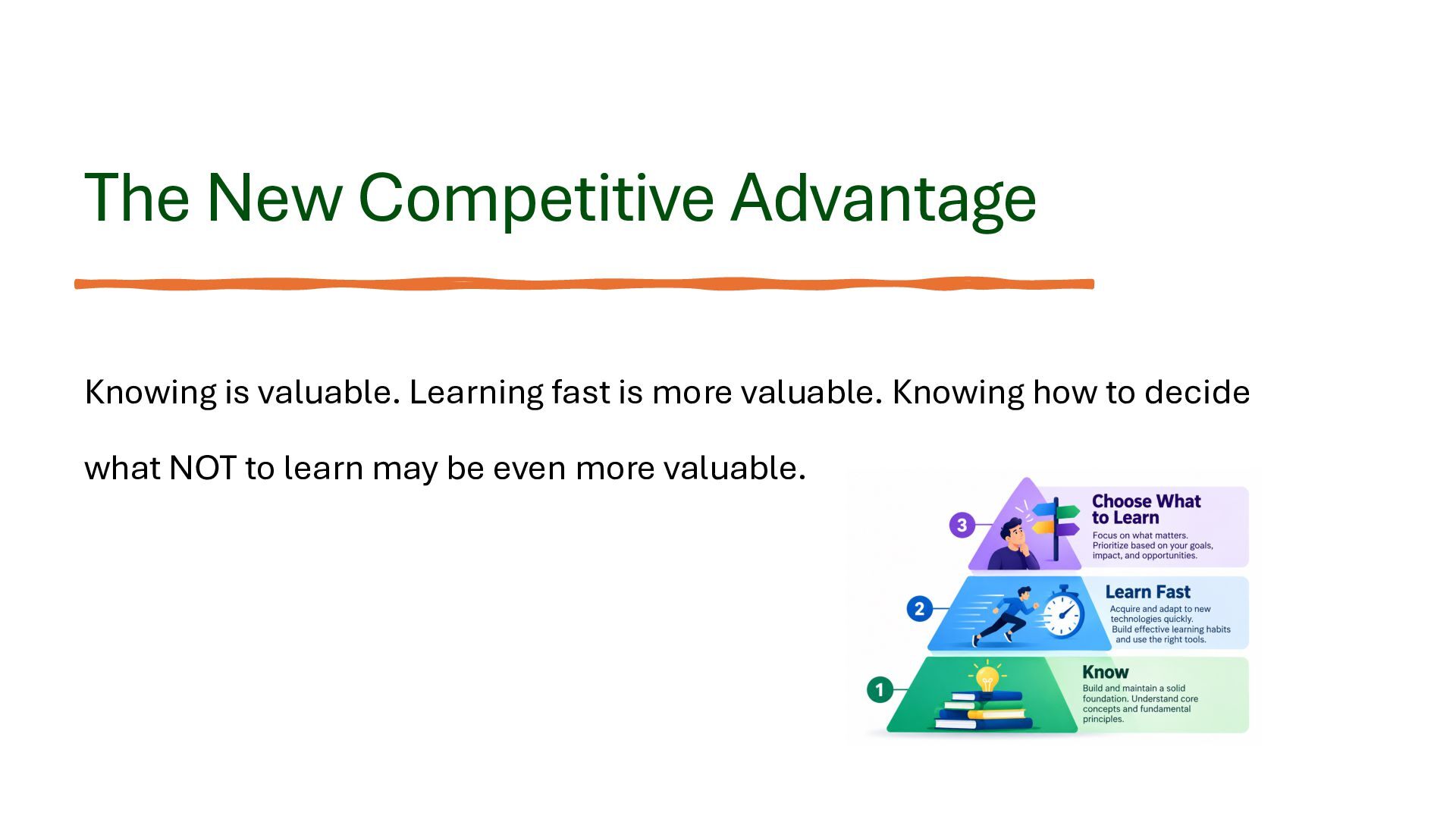
  7. The New Competitive Advantage Knowing is valuable. Learning fast is

    more valuable. Knowing how to decide what NOT to learn may be even more valuable.
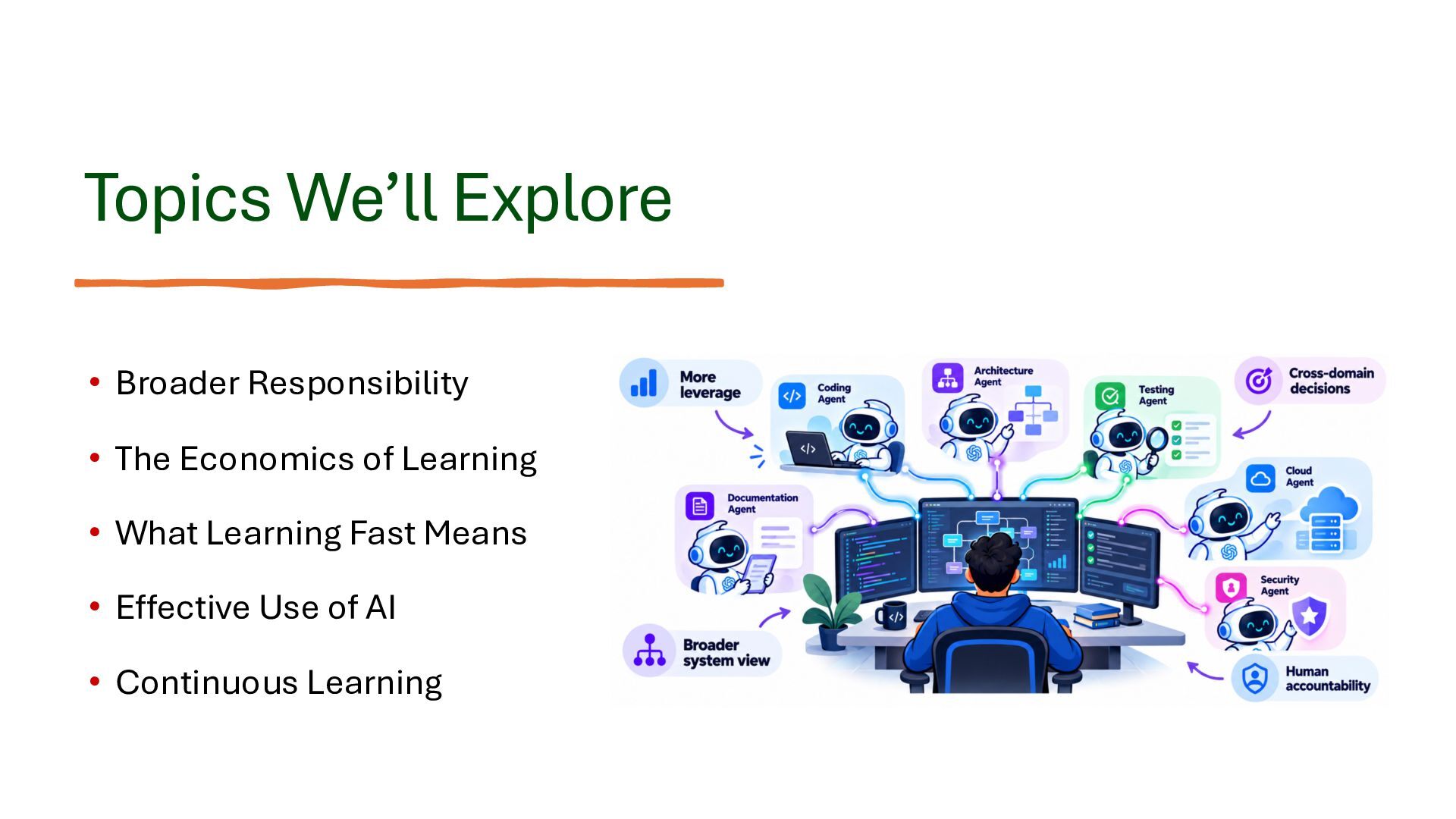
  8. Topics We’ll Explore • Broader Responsibility • The Economics of

    Learning • What Learning Fast Means • Effective Use of AI • Continuous Learning
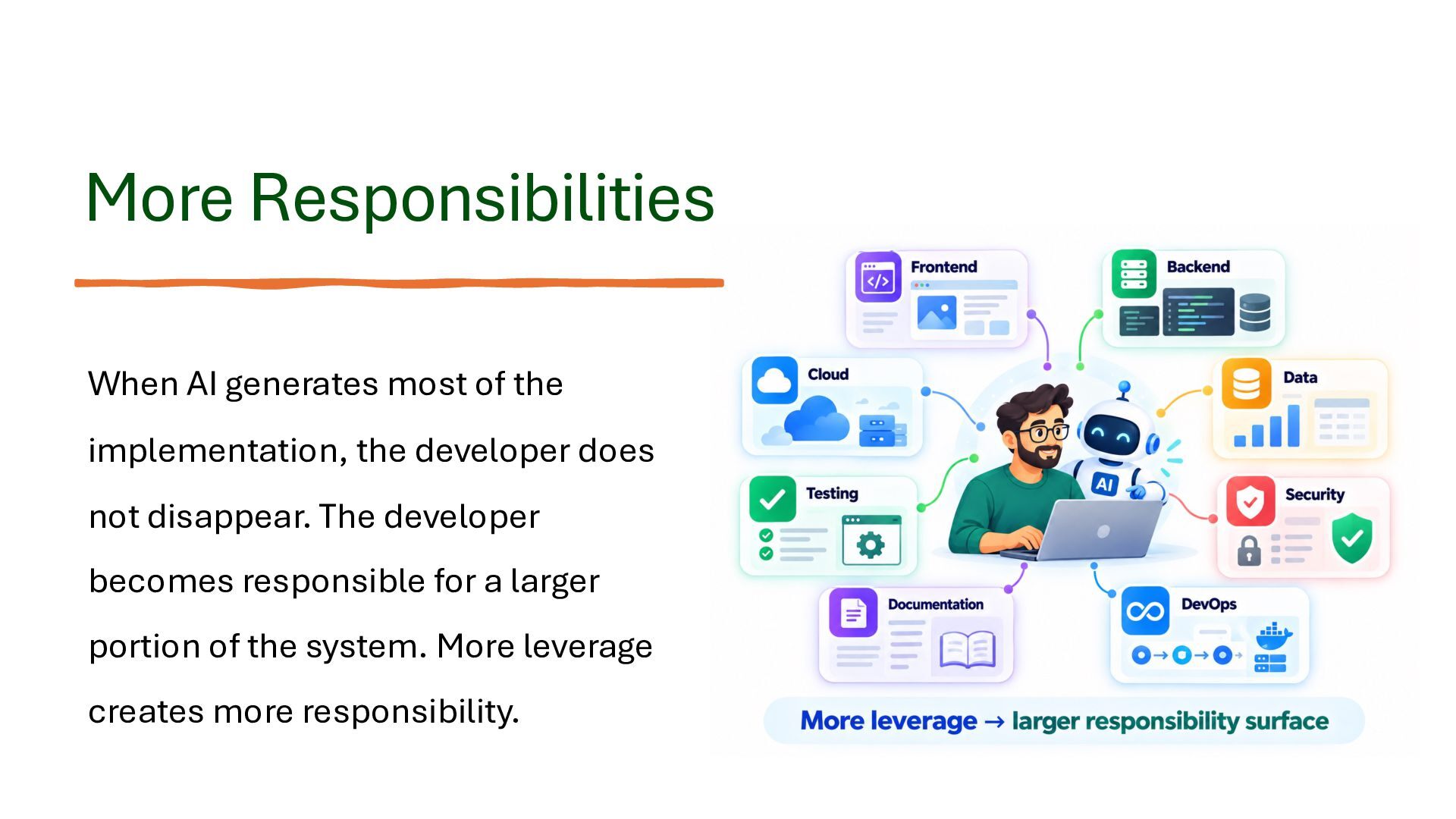
  9. More Responsibilities When AI generates most of the implementation, the

    developer does not disappear. The developer becomes responsible for a larger portion of the system. More leverage creates more responsibility.
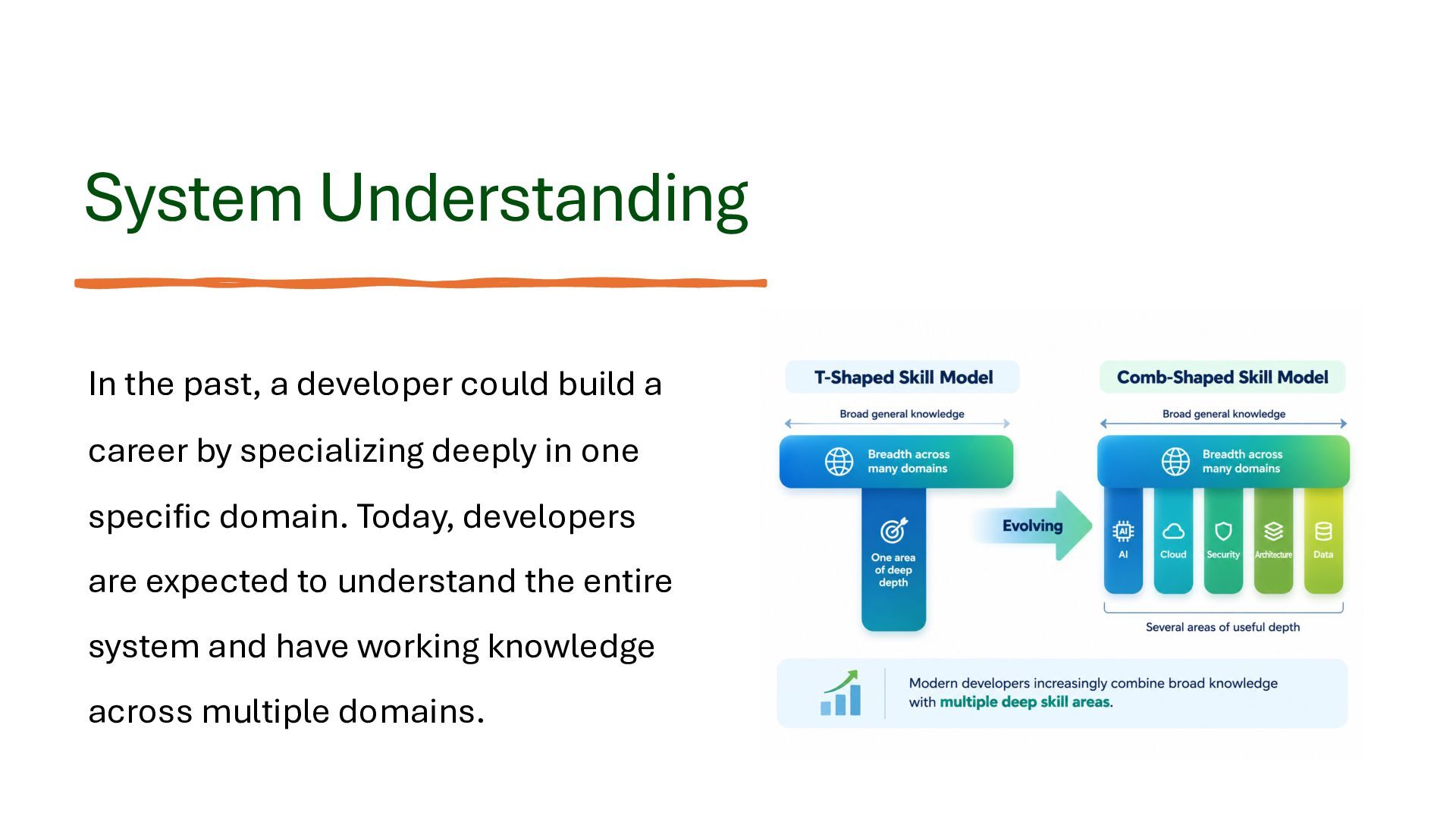
  10. System Understanding In the past, a developer could build a

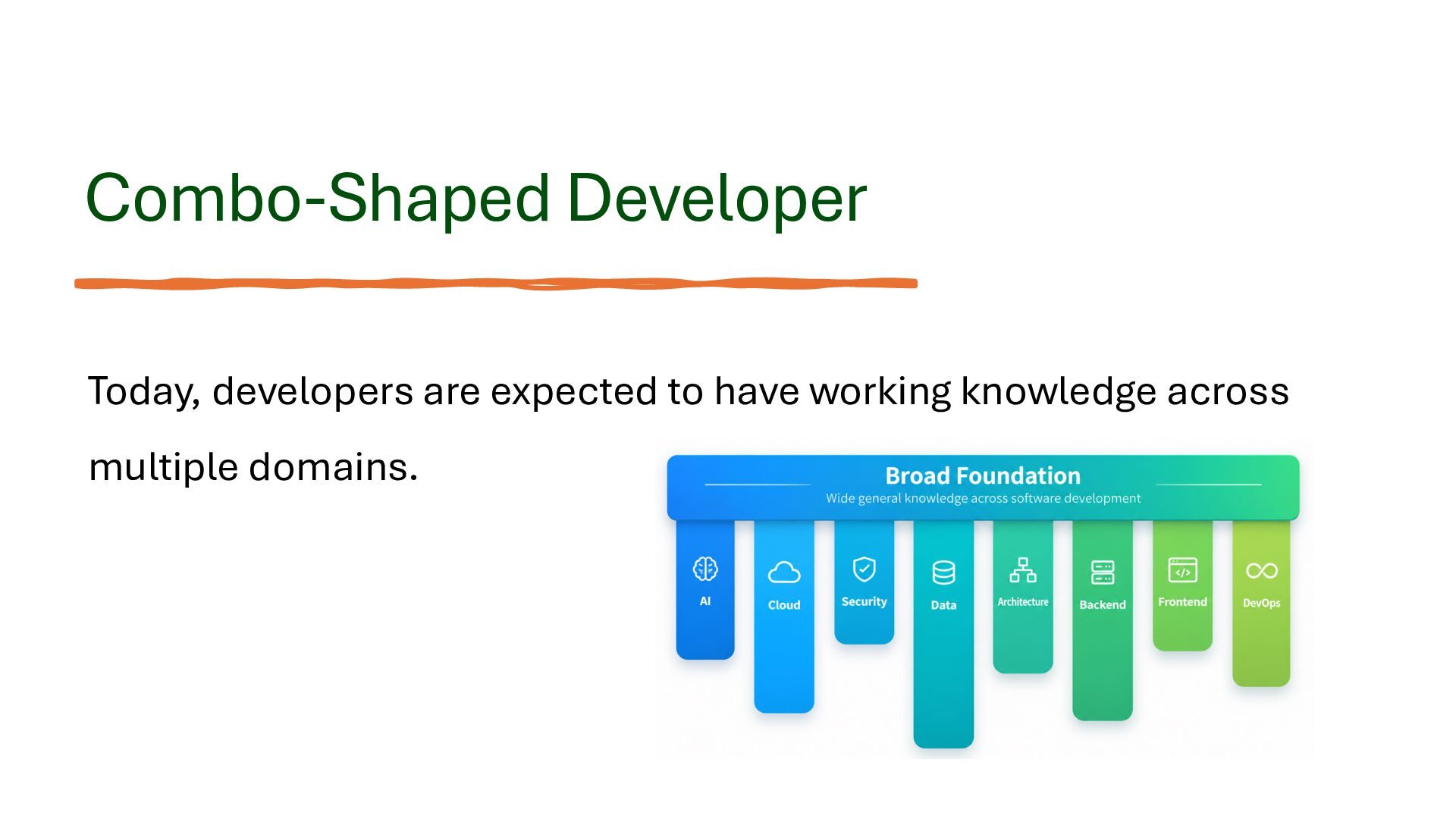
    career by specializing deeply in one specific domain. Today, developers are expected to understand the entire system and have working knowledge across multiple domains.
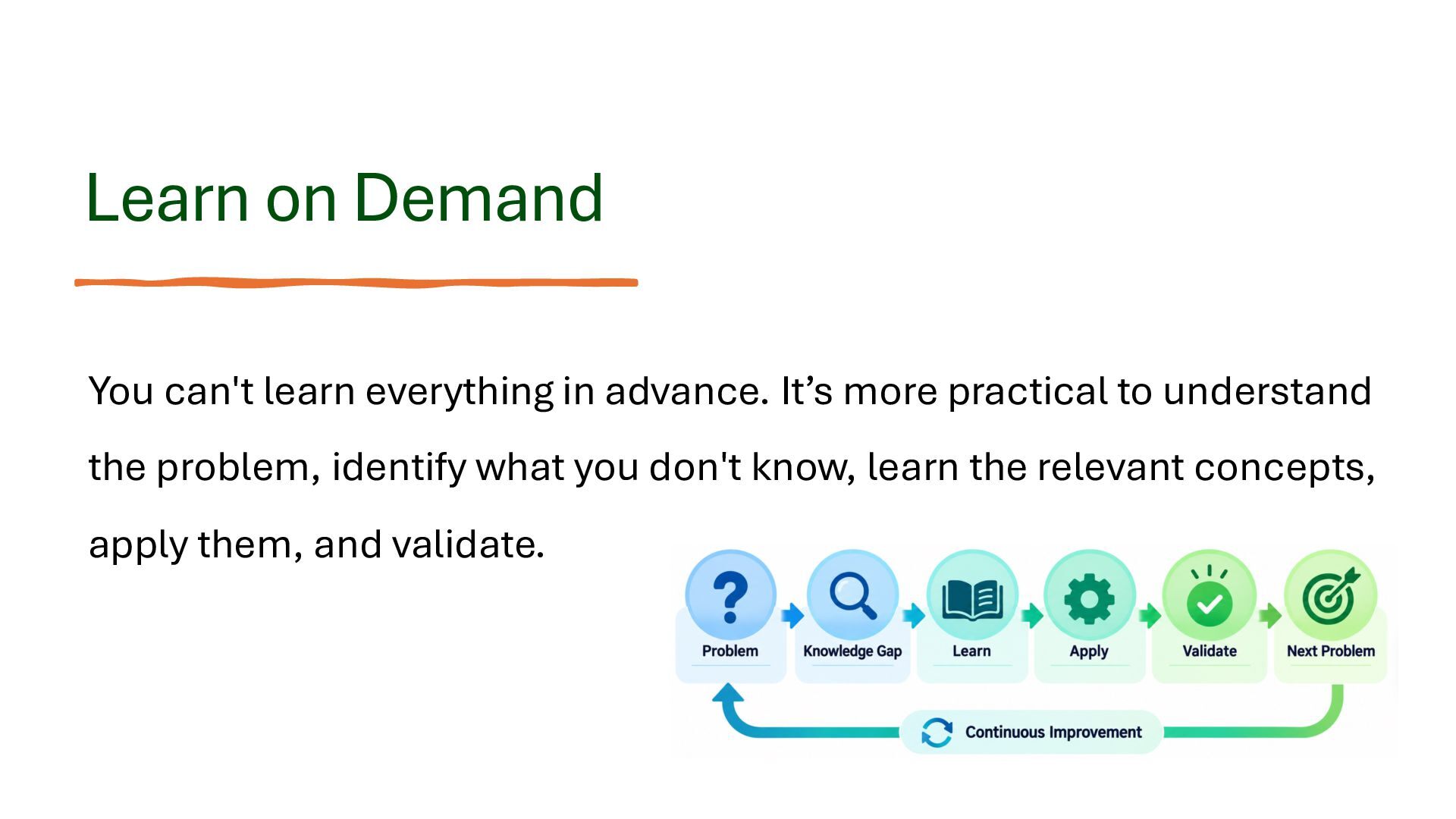
  11. Learn on Demand You can't learn everything in advance. It’s

    more practical to understand the problem, identify what you don't know, learn the relevant concepts, apply them, and validate.
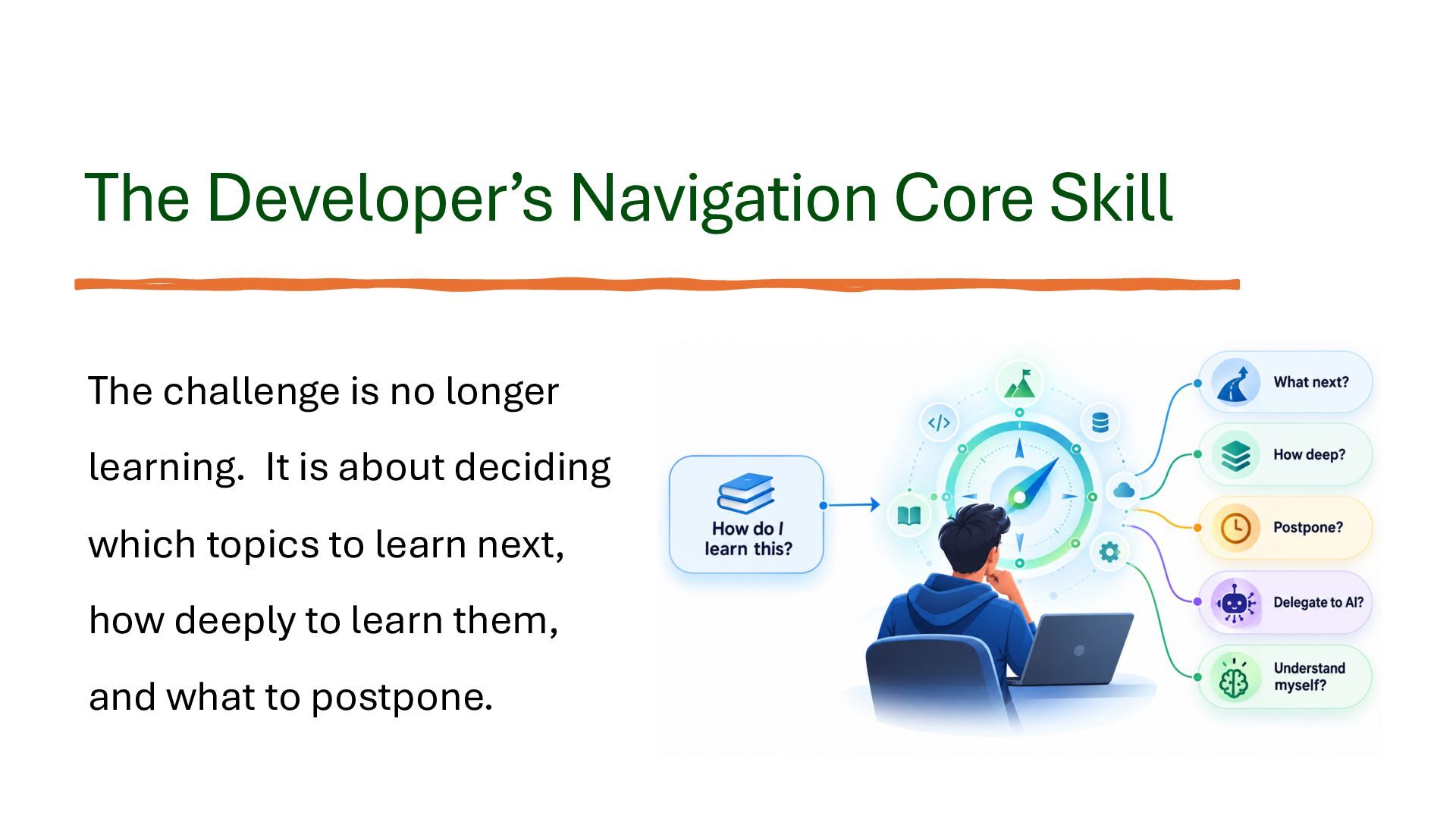
  12. The Developer’s Navigation Core Skill The challenge is no longer

    learning. It is about deciding which topics to learn next, how deeply to learn them, and what to postpone.
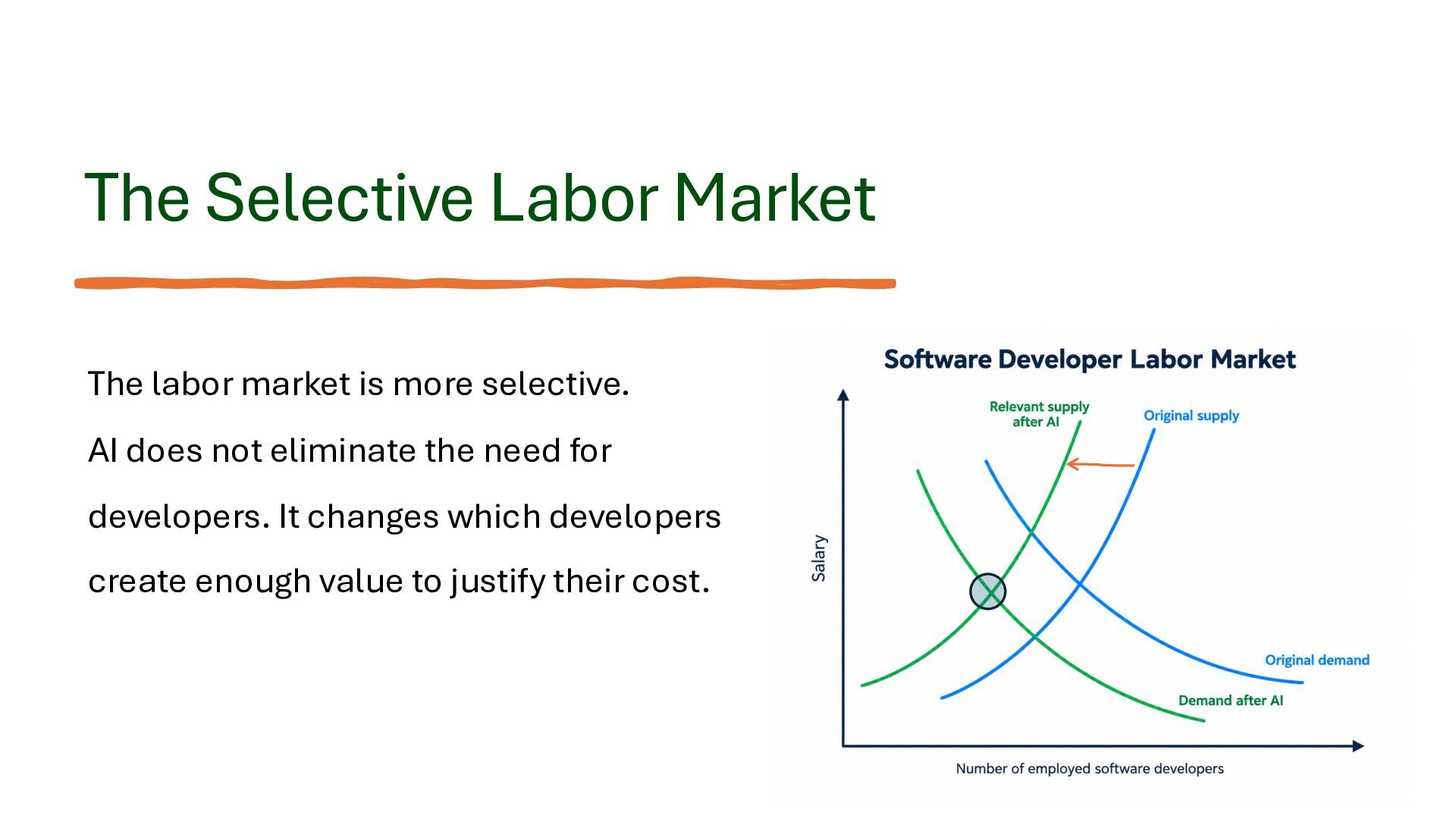
  13. The Selective Labor Market The labor market is more selective.

    AI does not eliminate the need for developers. It changes which developers create enough value to justify their cost.
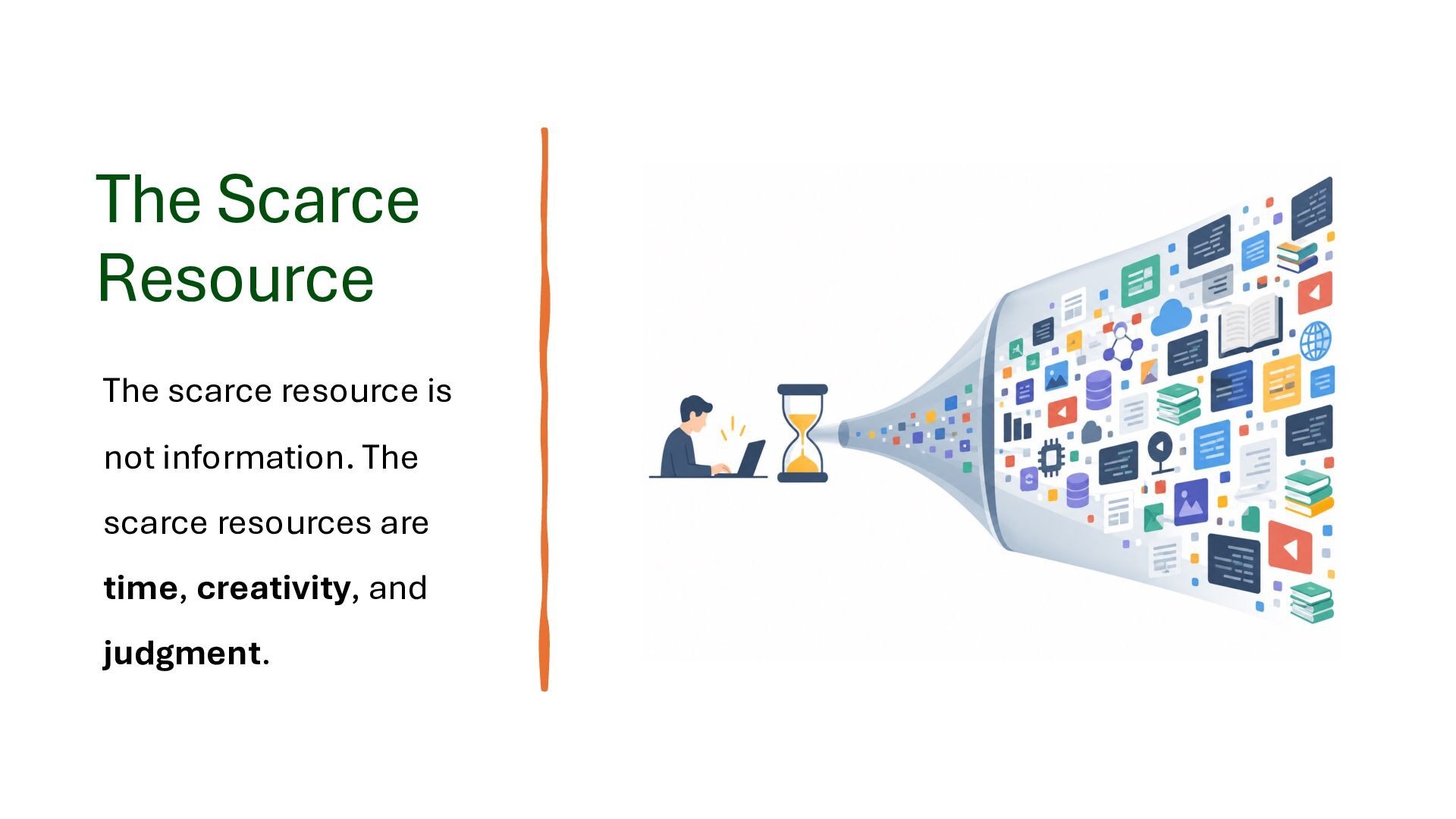
  14. The Scarce Resource The scarce resource is not information. The

    scarce resources are time, creativity, and judgment.
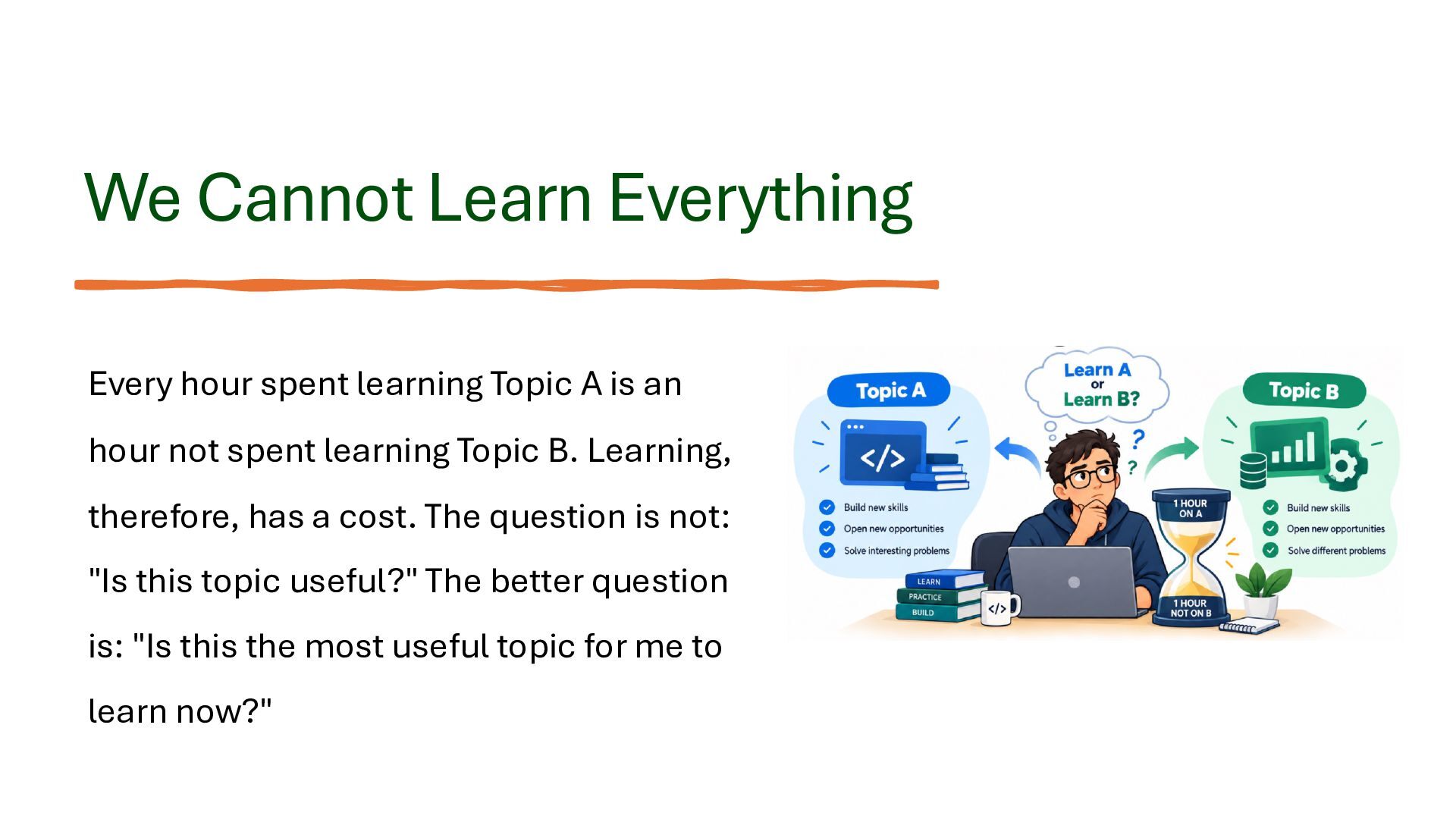
  15. We Cannot Learn Everything Every hour spent learning Topic A

    is an hour not spent learning Topic B. Learning, therefore, has a cost. The question is not: "Is this topic useful?" The better question is: "Is this the most useful topic for me to learn now?"
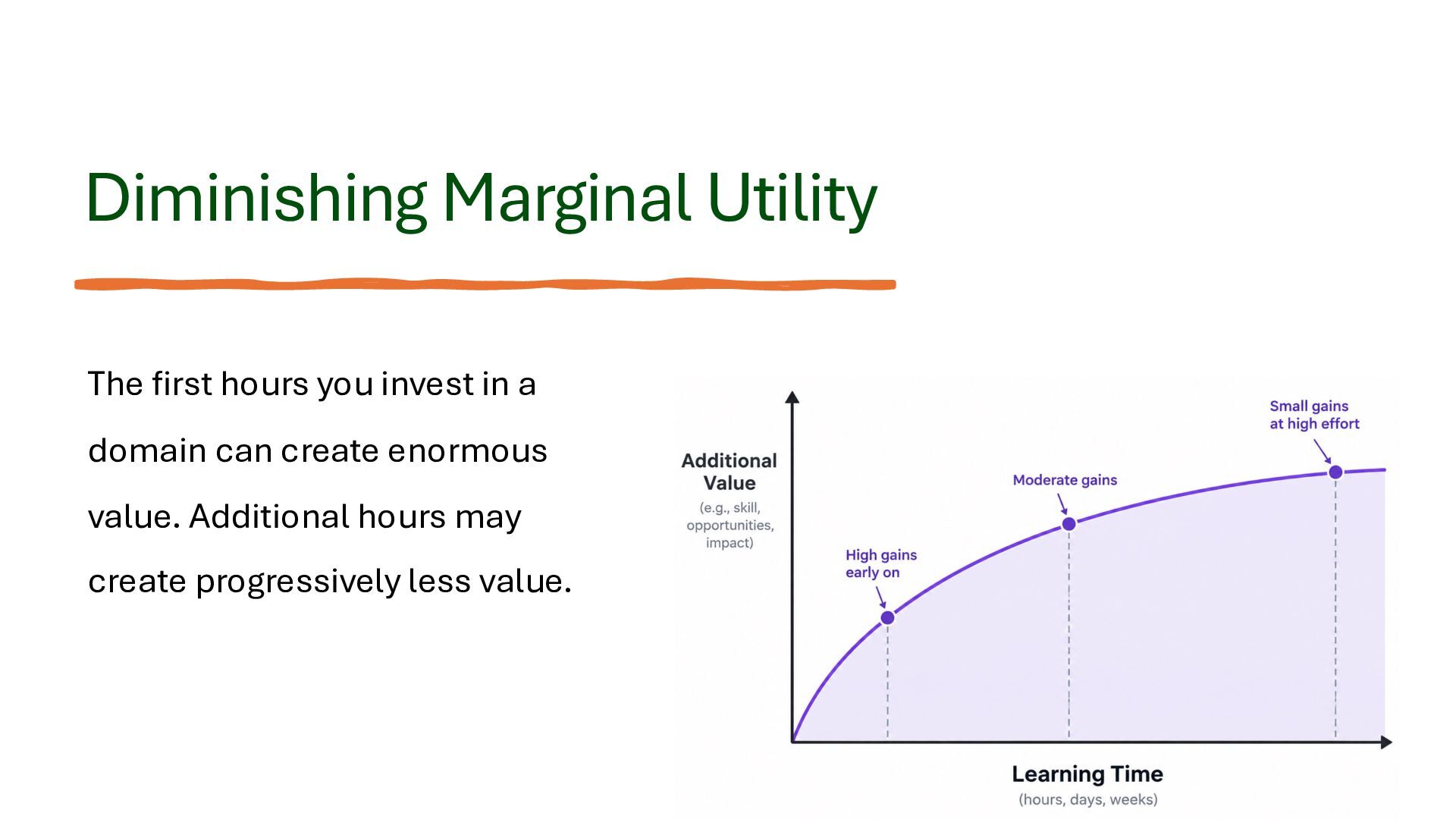
  16. Diminishing Marginal Utility The first hours you invest in a

    domain can create enormous value. Additional hours may create progressively less value.
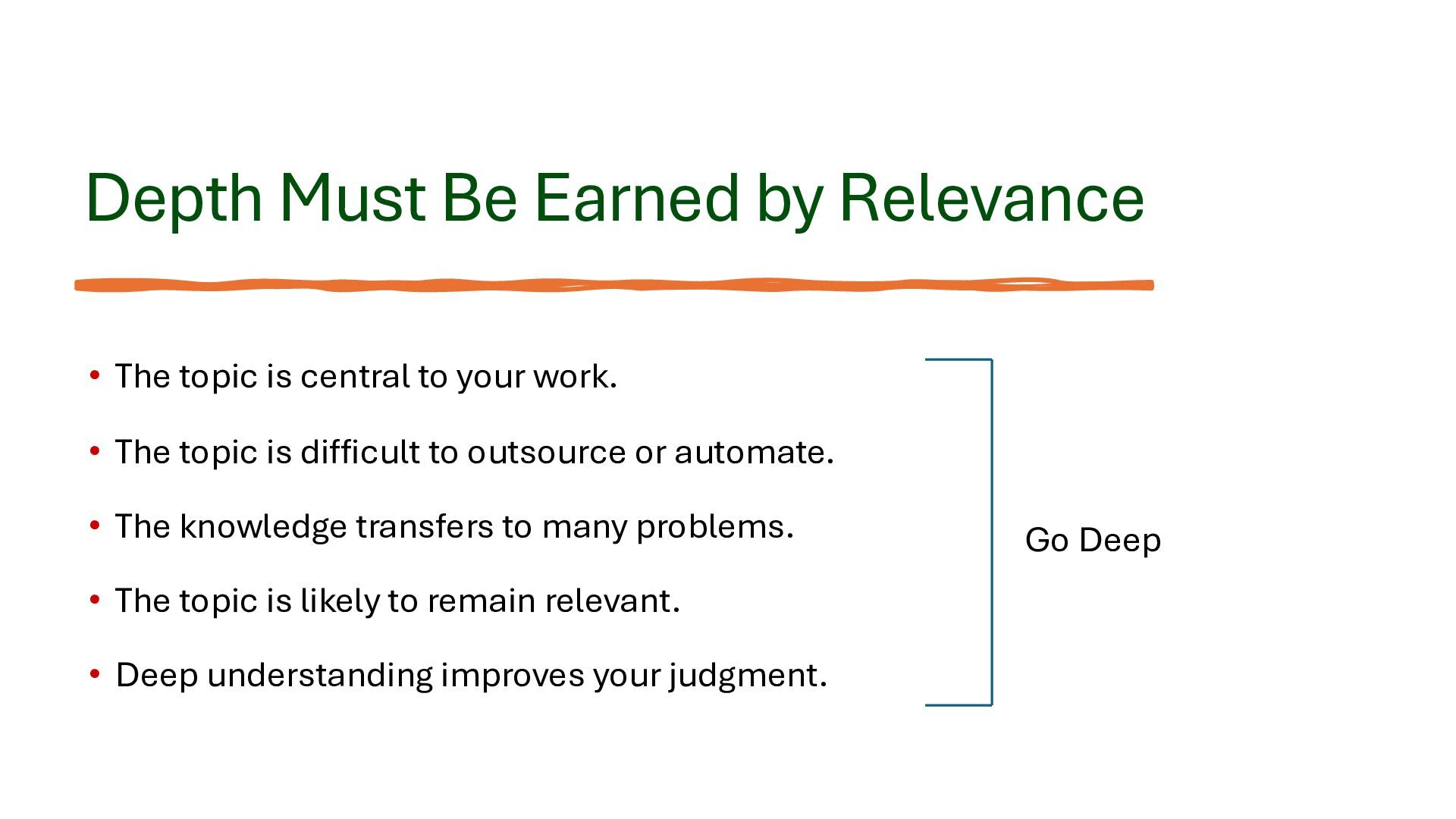
  17. Depth Must Be Earned by Relevance • The topic is

    central to your work. • The topic is difficult to outsource or automate. • The knowledge transfers to many problems. • The topic is likely to remain relevant. • Deep understanding improves your judgment. Go Deep
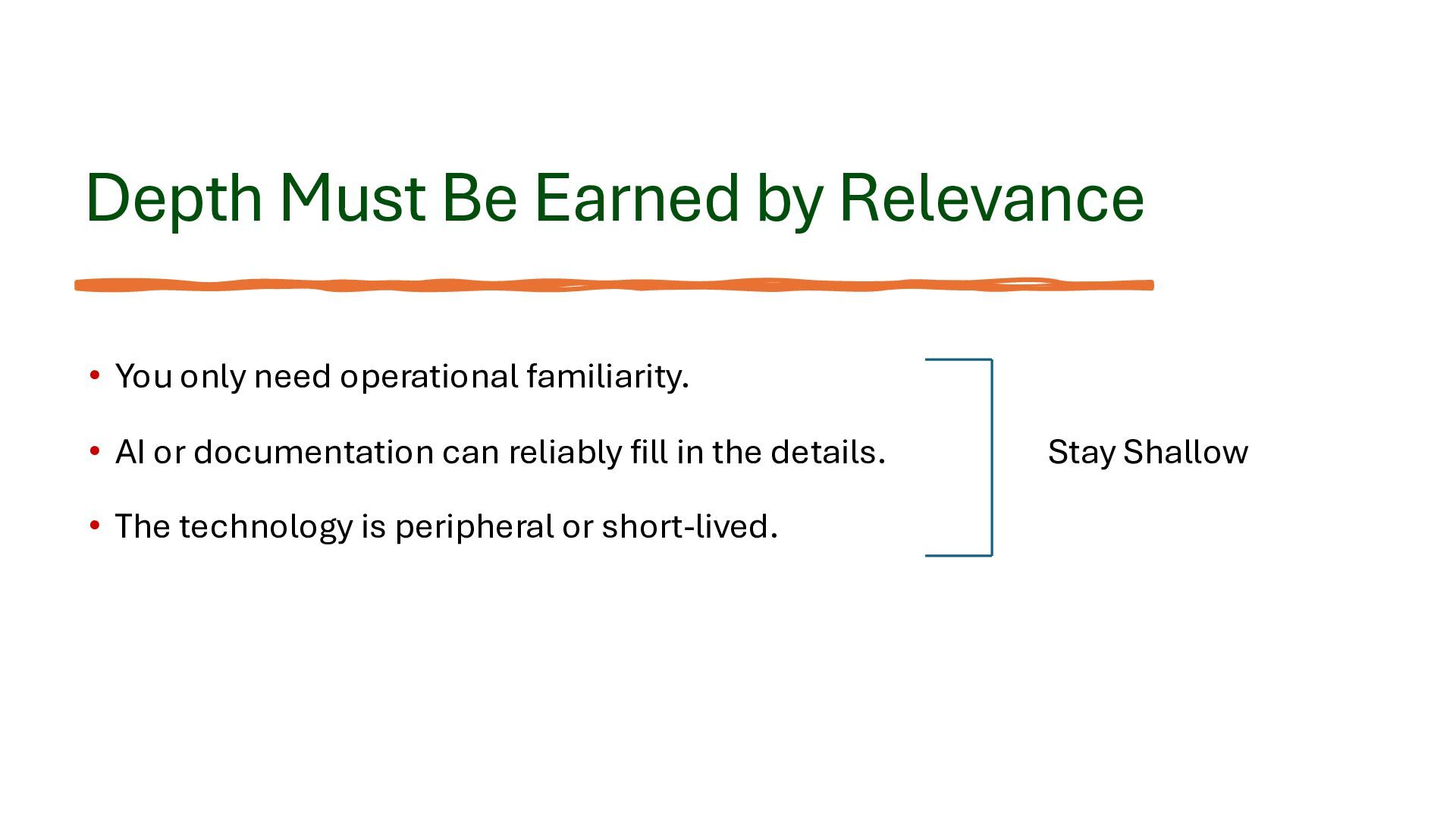
  18. Depth Must Be Earned by Relevance • You only need

    operational familiarity. • AI or documentation can reliably fill in the details. • The technology is peripheral or short-lived. Stay Shallow
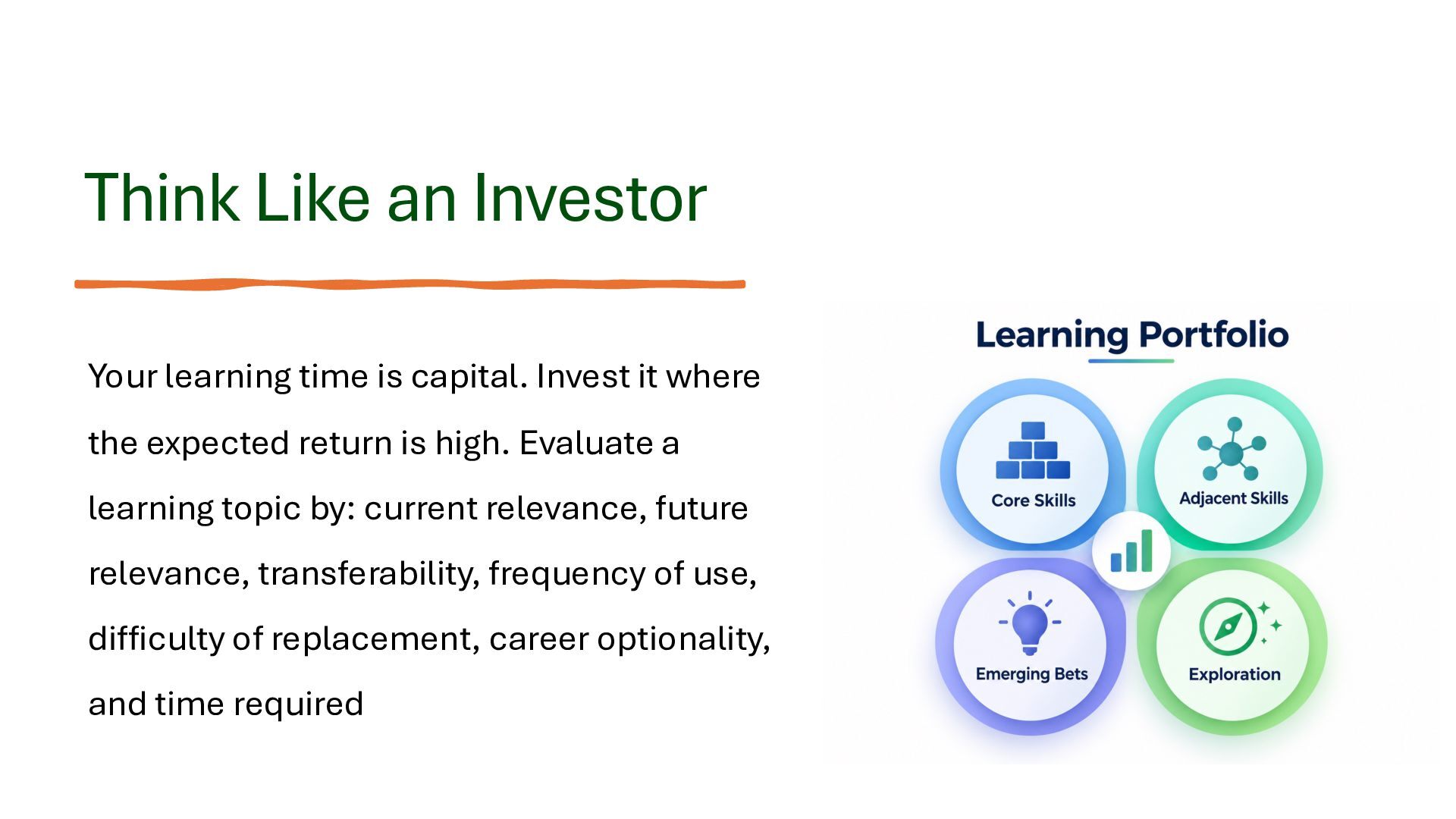
  19. Think Like an Investor Your learning time is capital. Invest

    it where the expected return is high. Evaluate a learning topic by: current relevance, future relevance, transferability, frequency of use, difficulty of replacement, career optionality, and time required
  20. Courses Cannot Cover Everything Software development contains too many domains,

    frameworks, platforms, tools, and specialized technologies. It is economically unrealistic to expect a live course for every learning need. Even when a synchronous course exists, its pace may not match the exact problem you need to solve today.
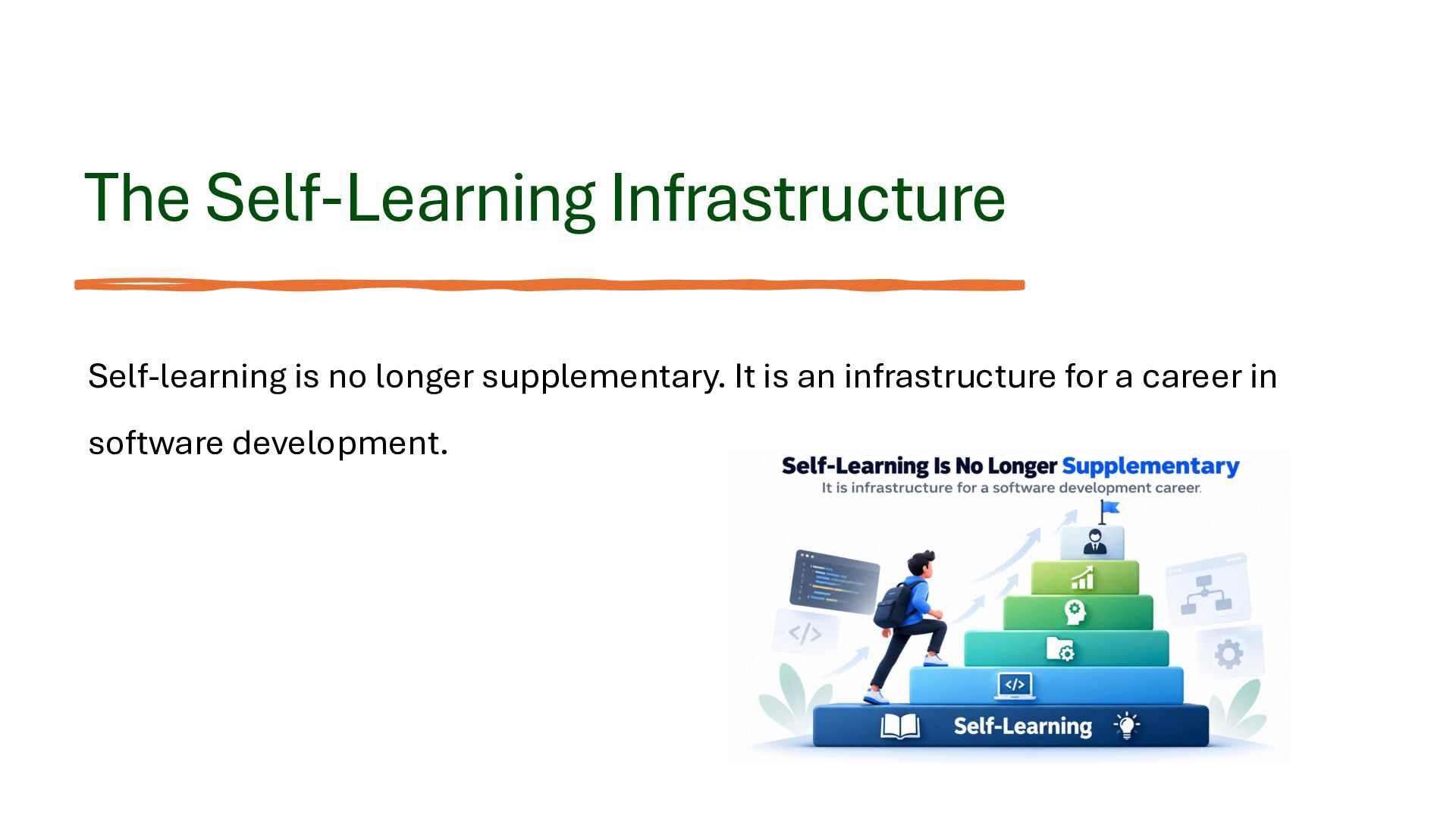
  21. The Self-Learning Infrastructure Self-learning is no longer supplementary. It is

    an infrastructure for a career in software development.
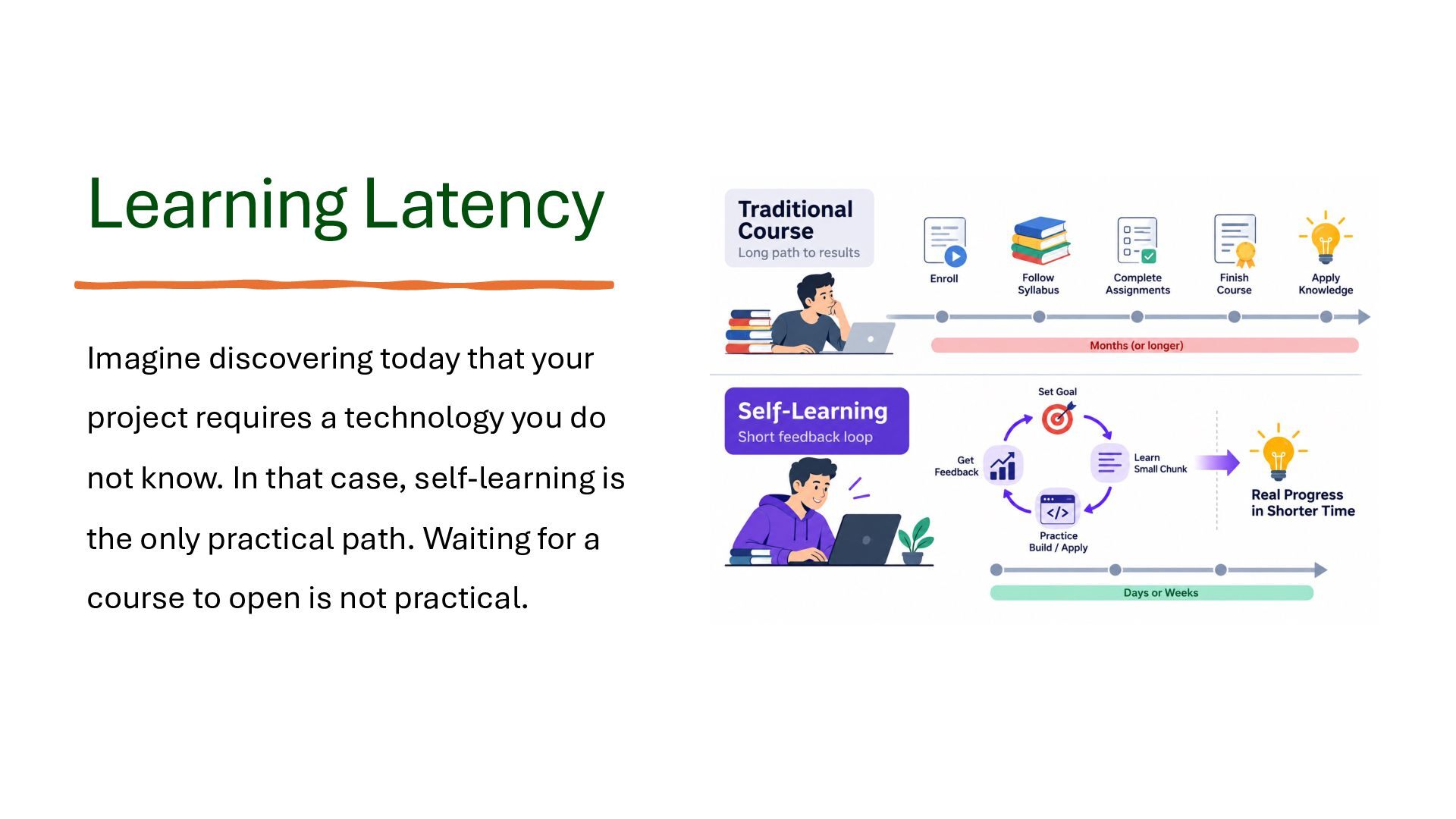
  22. Learning Latency Imagine discovering today that your project requires a

    technology you do not know. In that case, self-learning is the only practical path. Waiting for a course to open is not practical.
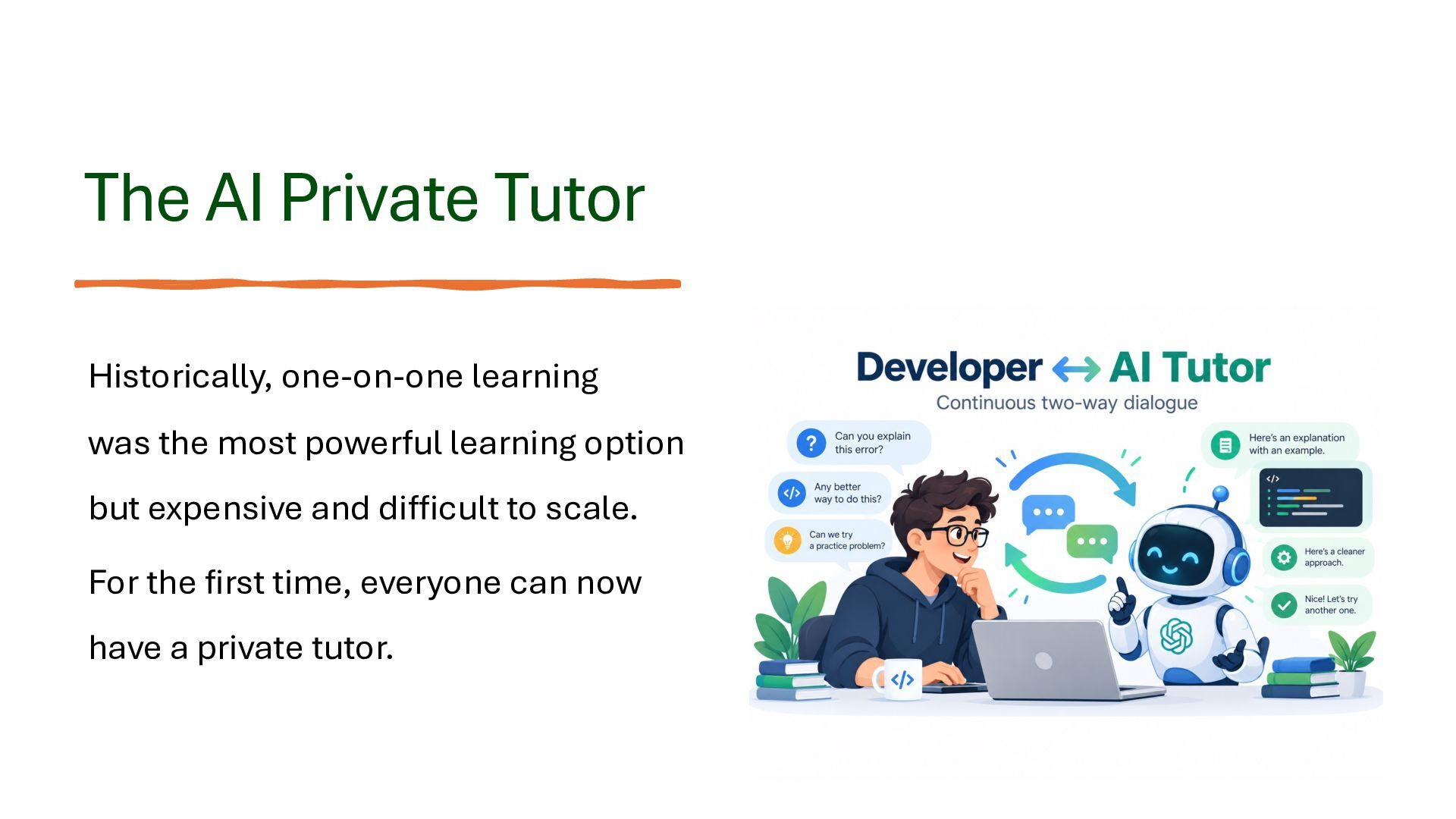
  23. The AI Private Tutor Historically, one-on-one learning was the most

    powerful learning option but expensive and difficult to scale. For the first time, everyone can now have a private tutor.
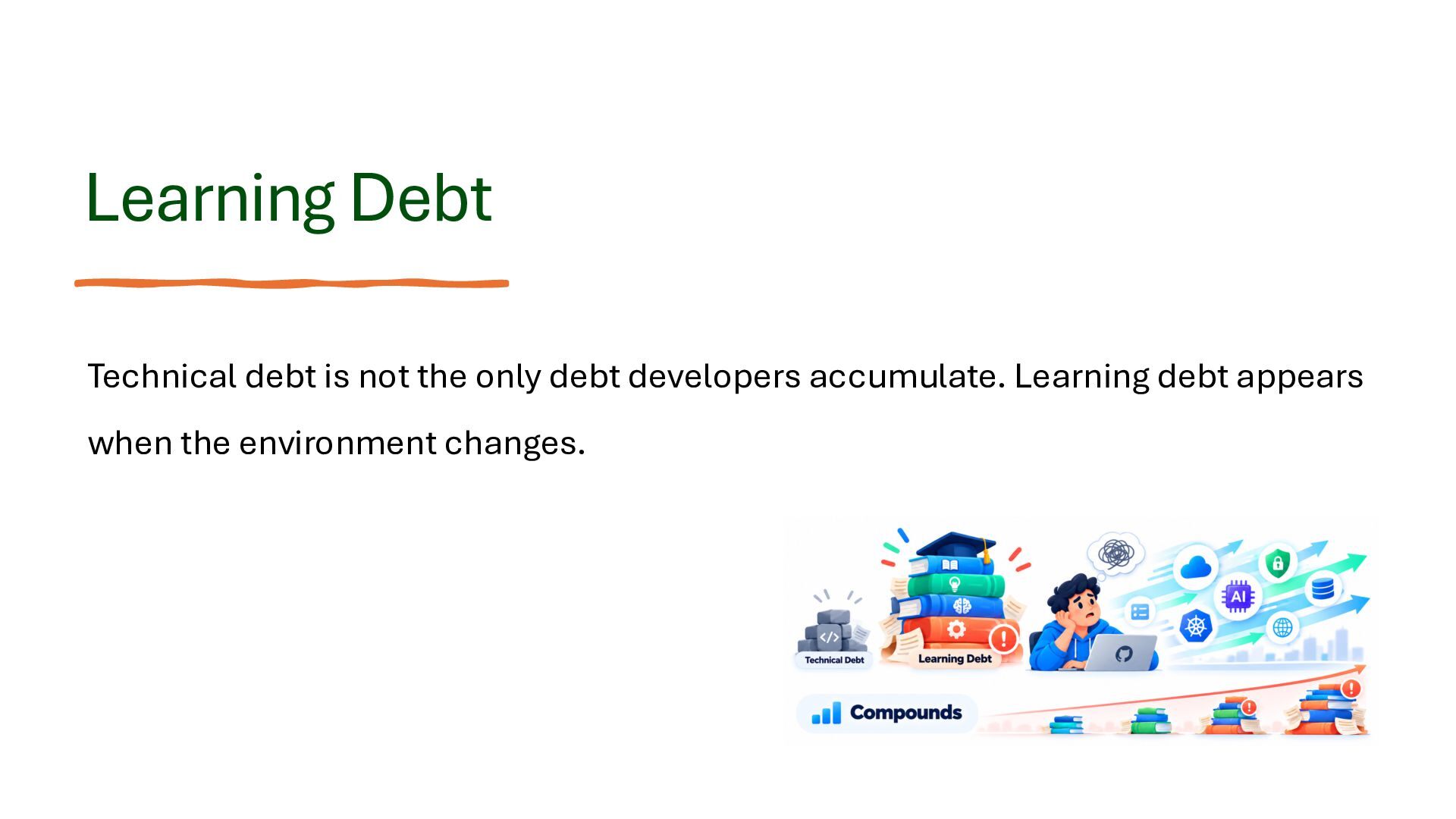
  24. Learning Debt Technical debt is not the only debt developers

    accumulate. Learning debt appears when the environment changes.
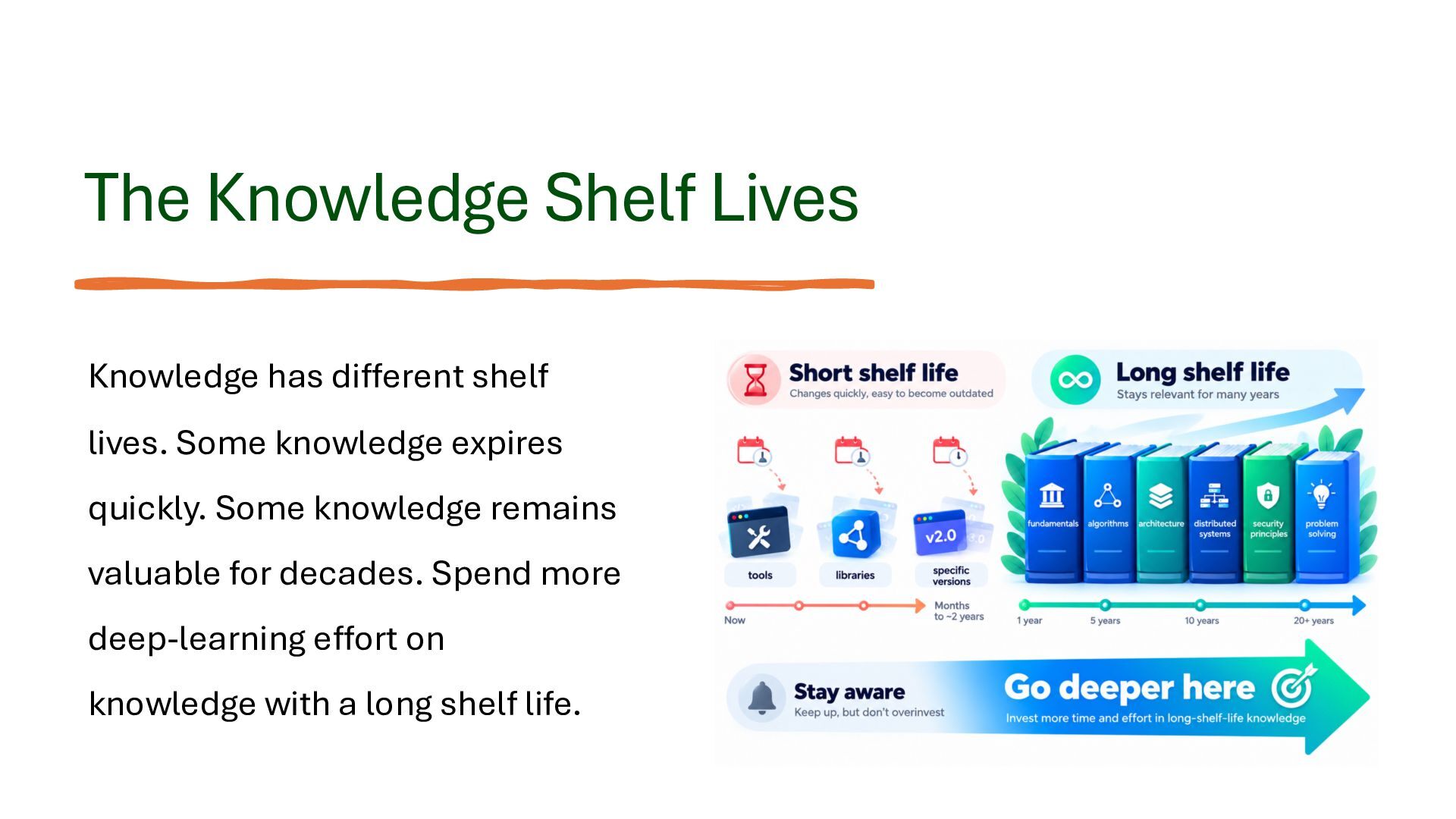
  25. The Knowledge Shelf Lives Knowledge has different shelf lives. Some

    knowledge expires quickly. Some knowledge remains valuable for decades. Spend more deep-learning effort on knowledge with a long shelf life.
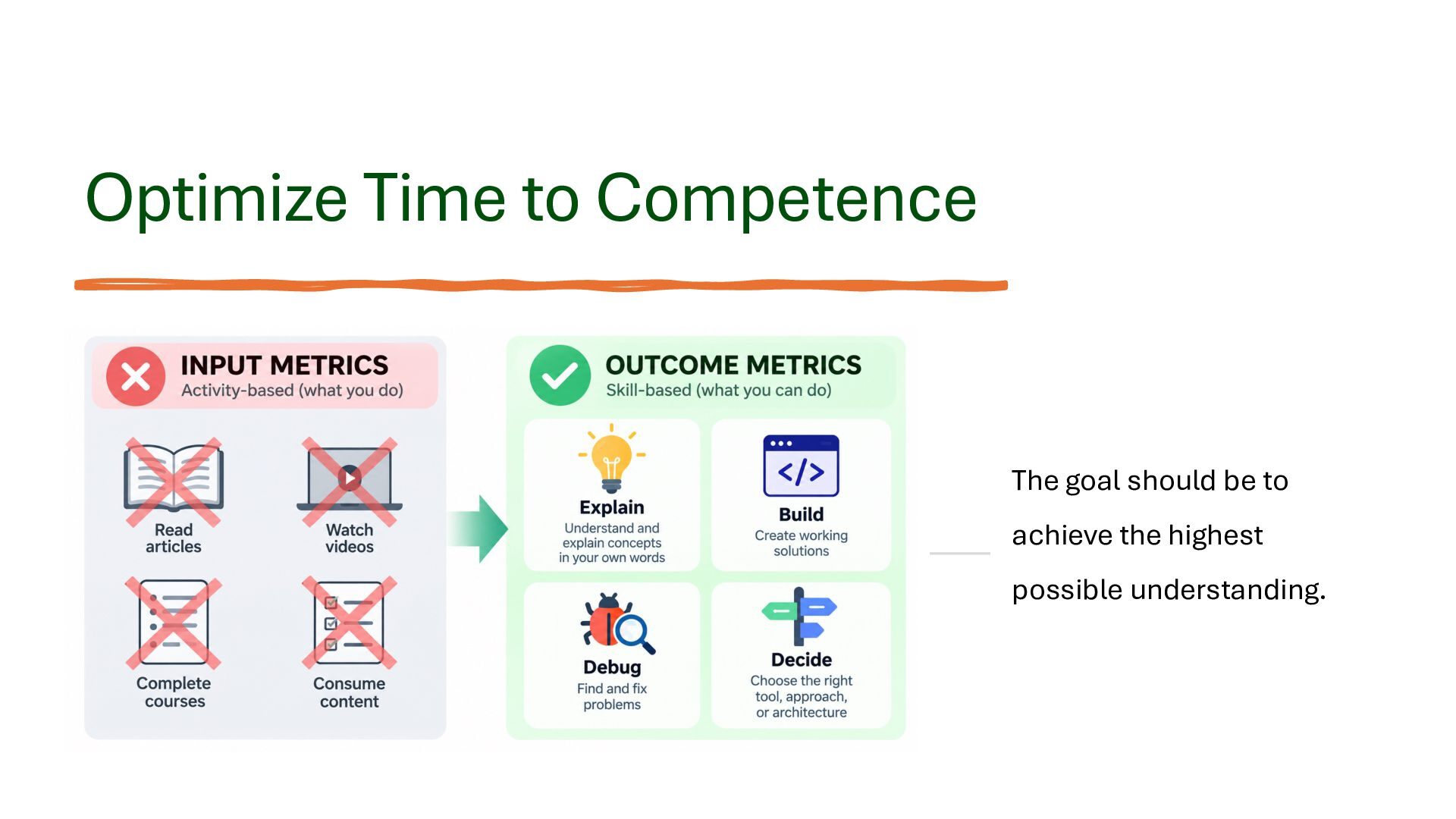
  26. Optimize Time to Competence The goal should be to achieve

    the highest possible understanding.
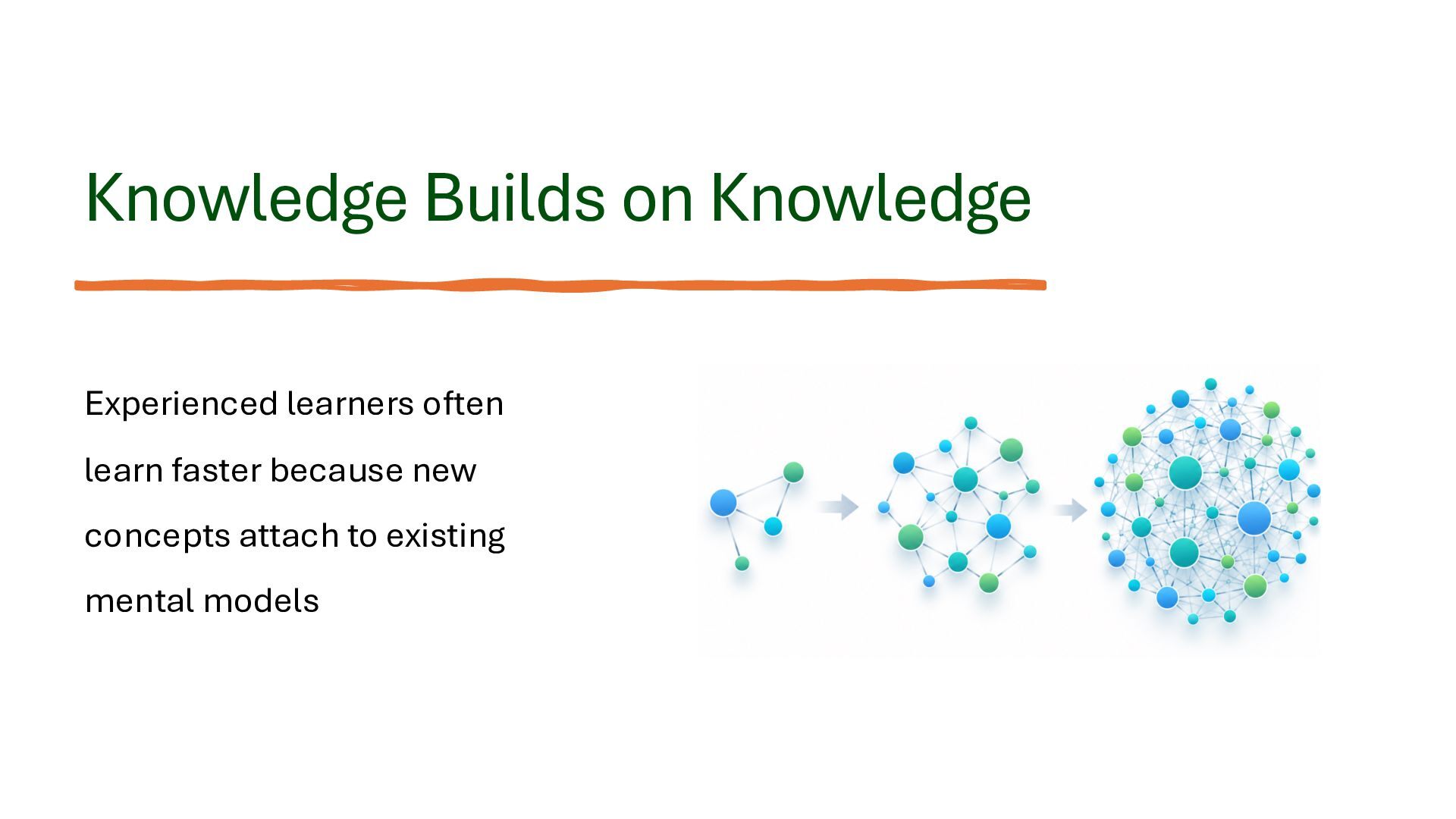
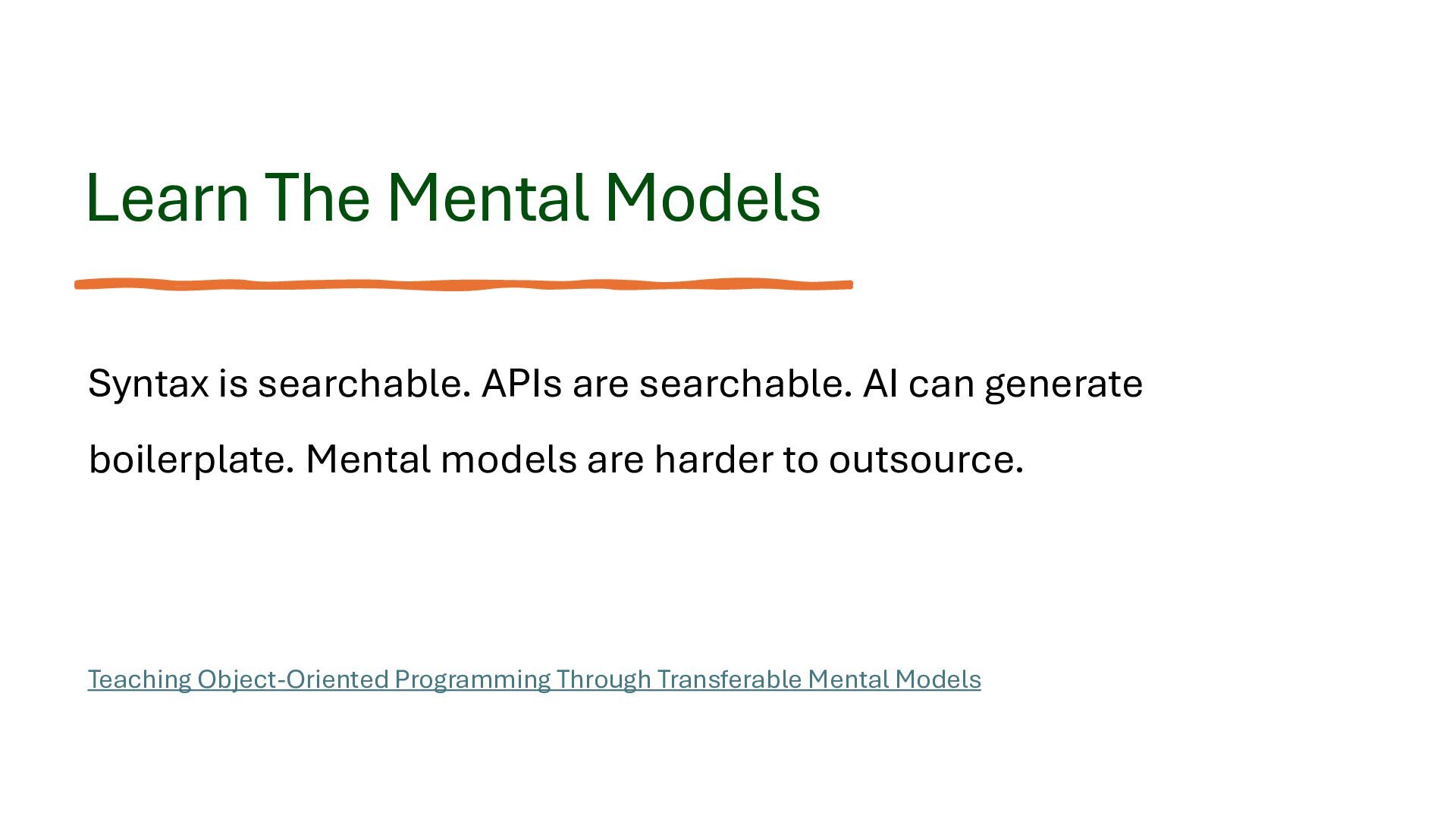
  27. Learn The Mental Models Syntax is searchable. APIs are searchable.

    AI can generate boilerplate. Mental models are harder to outsource. Teaching Object-Oriented Programming Through Transferable Mental Models
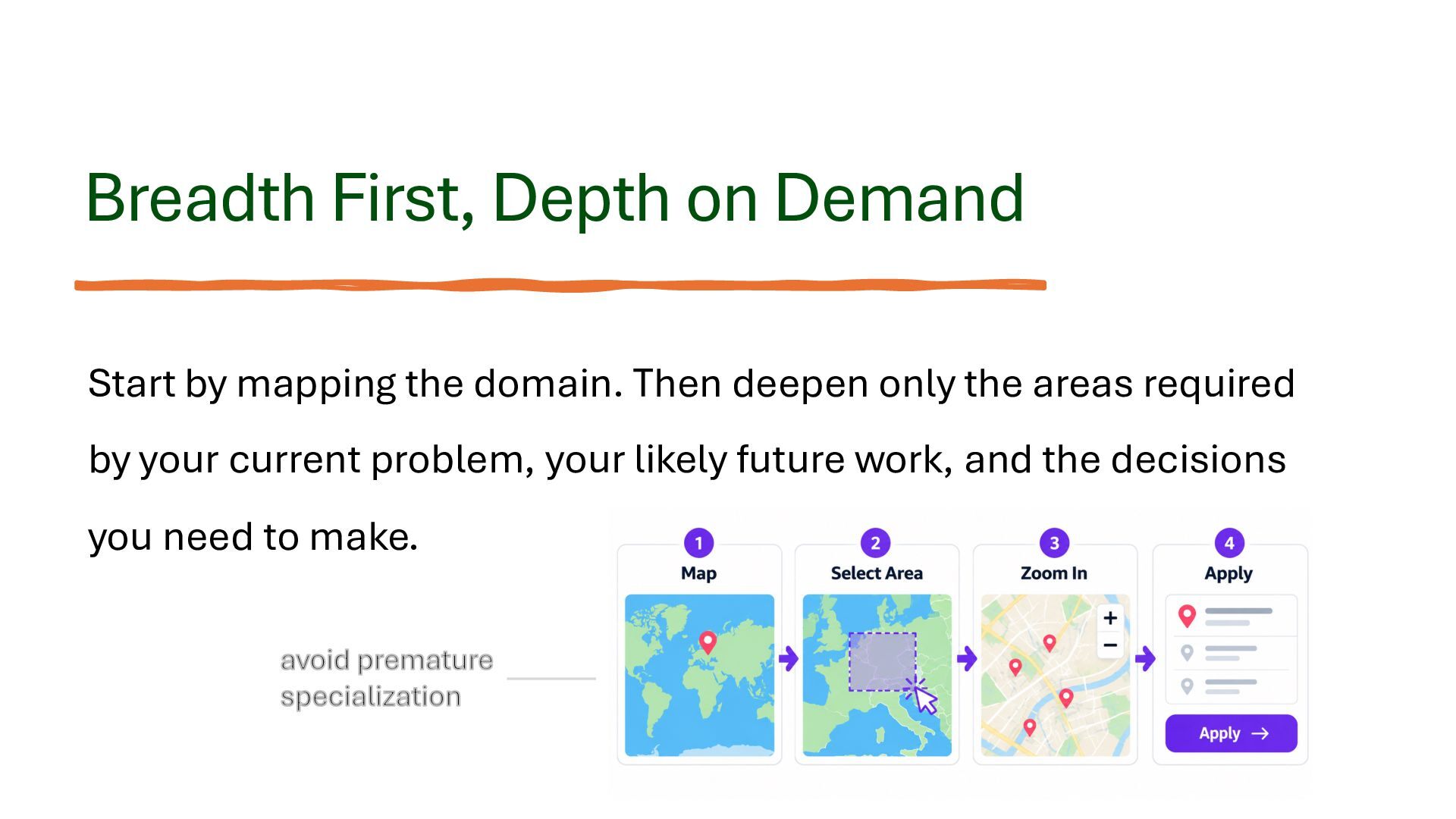
  28. Breadth First, Depth on Demand Start by mapping the domain.

    Then deepen only the areas required by your current problem, your likely future work, and the decisions you need to make.
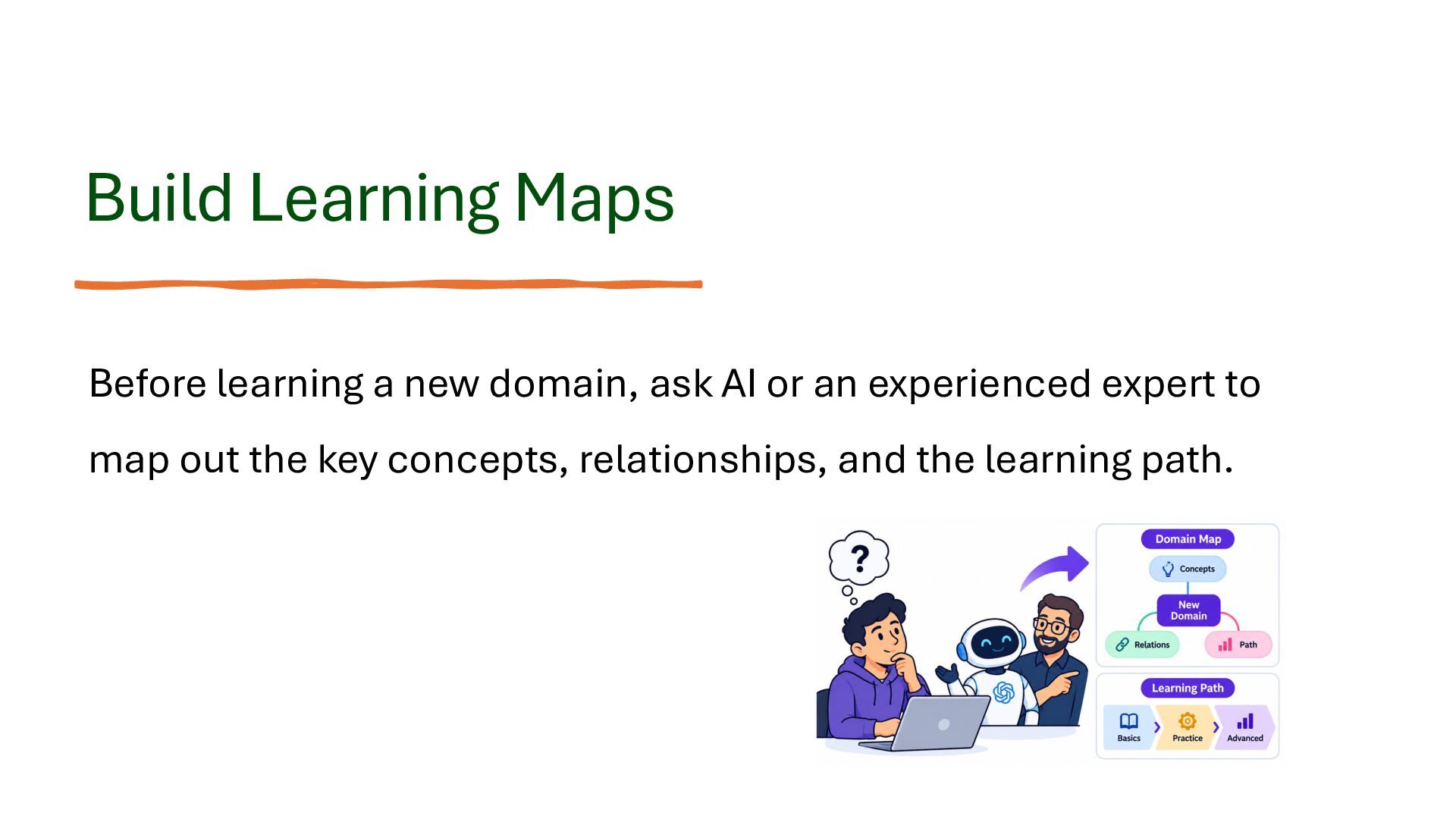
  29. Build Learning Maps Before learning a new domain, ask AI

    or an experienced expert to map out the key concepts, relationships, and the learning path.
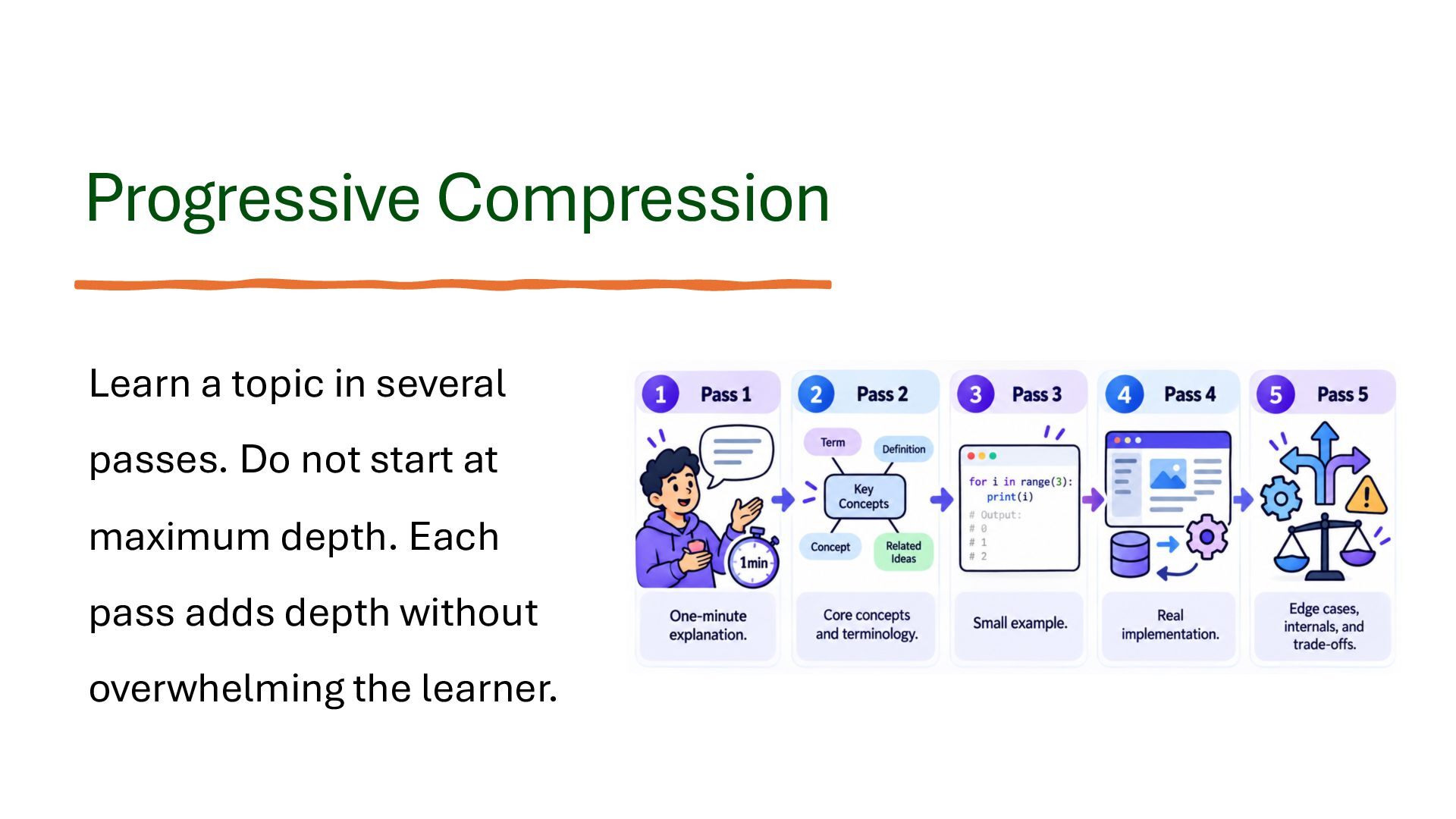
  30. Progressive Compression Learn a topic in several passes. Do not

    start at maximum depth. Each pass adds depth without overwhelming the learner.
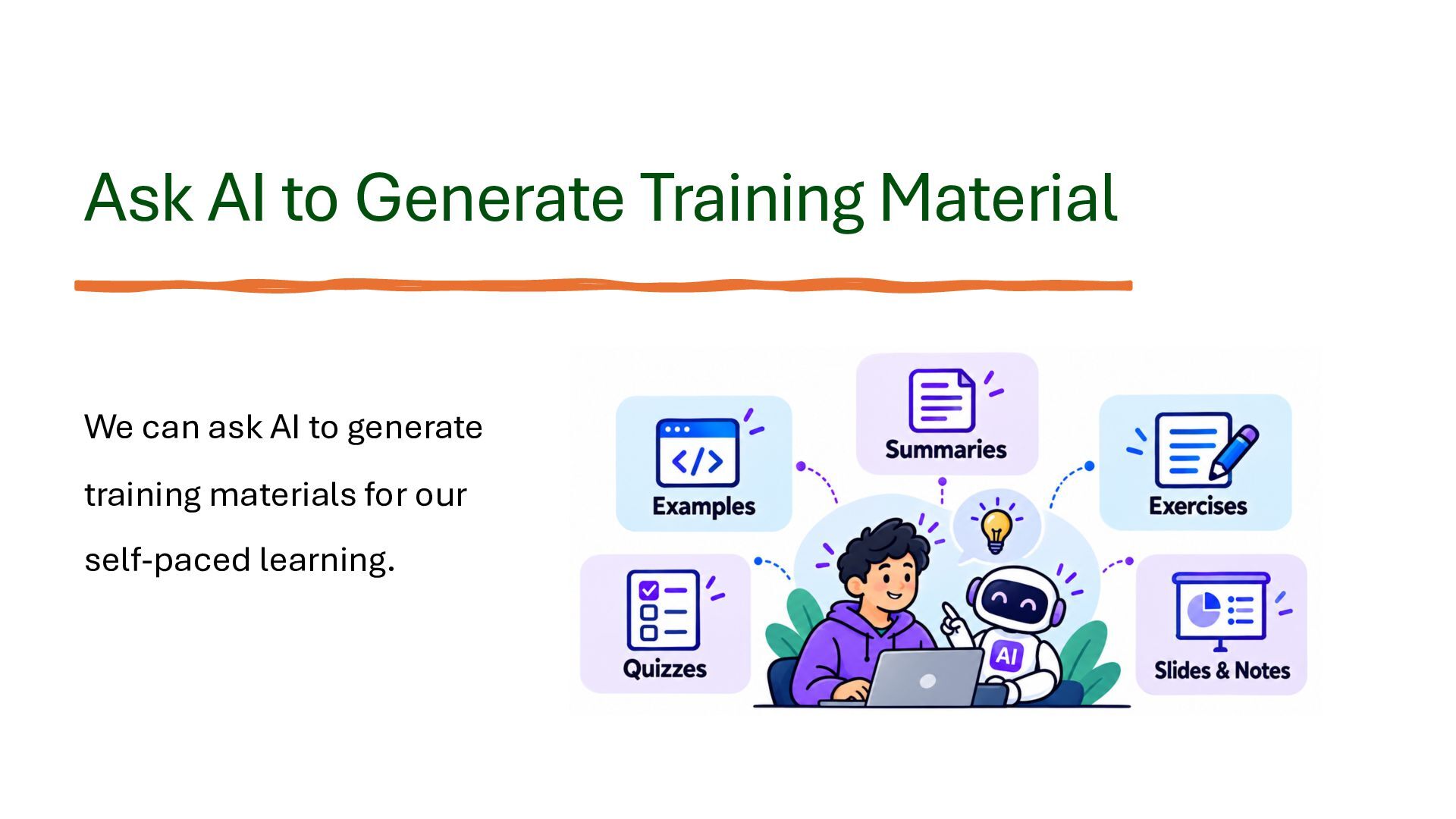
  31. Ask AI to Generate Training Material We can ask AI

    to generate training materials for our self-paced learning.
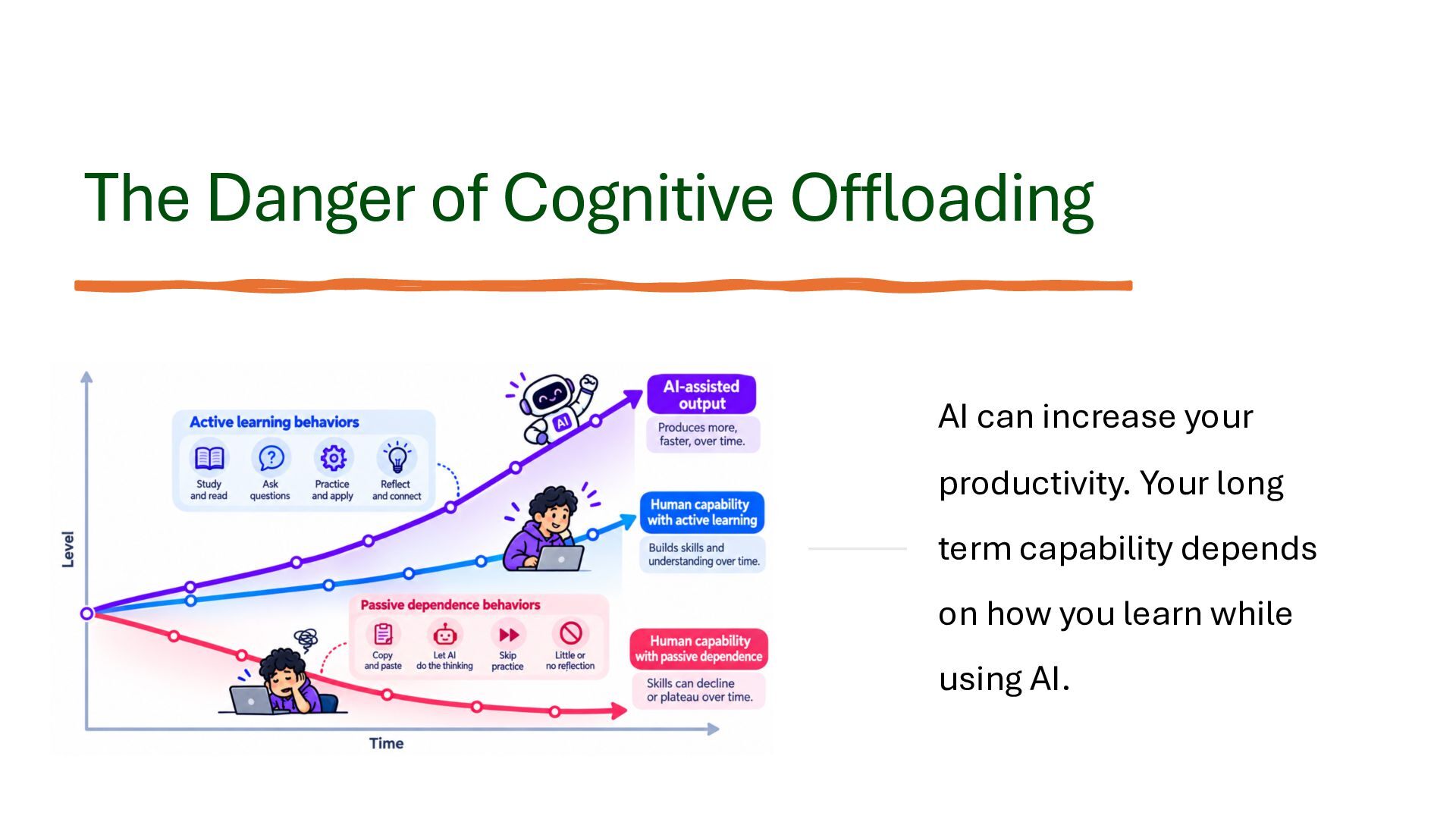
  32. The Danger of Cognitive Offloading AI can increase your productivity.

    Your long term capability depends on how you learn while using AI.
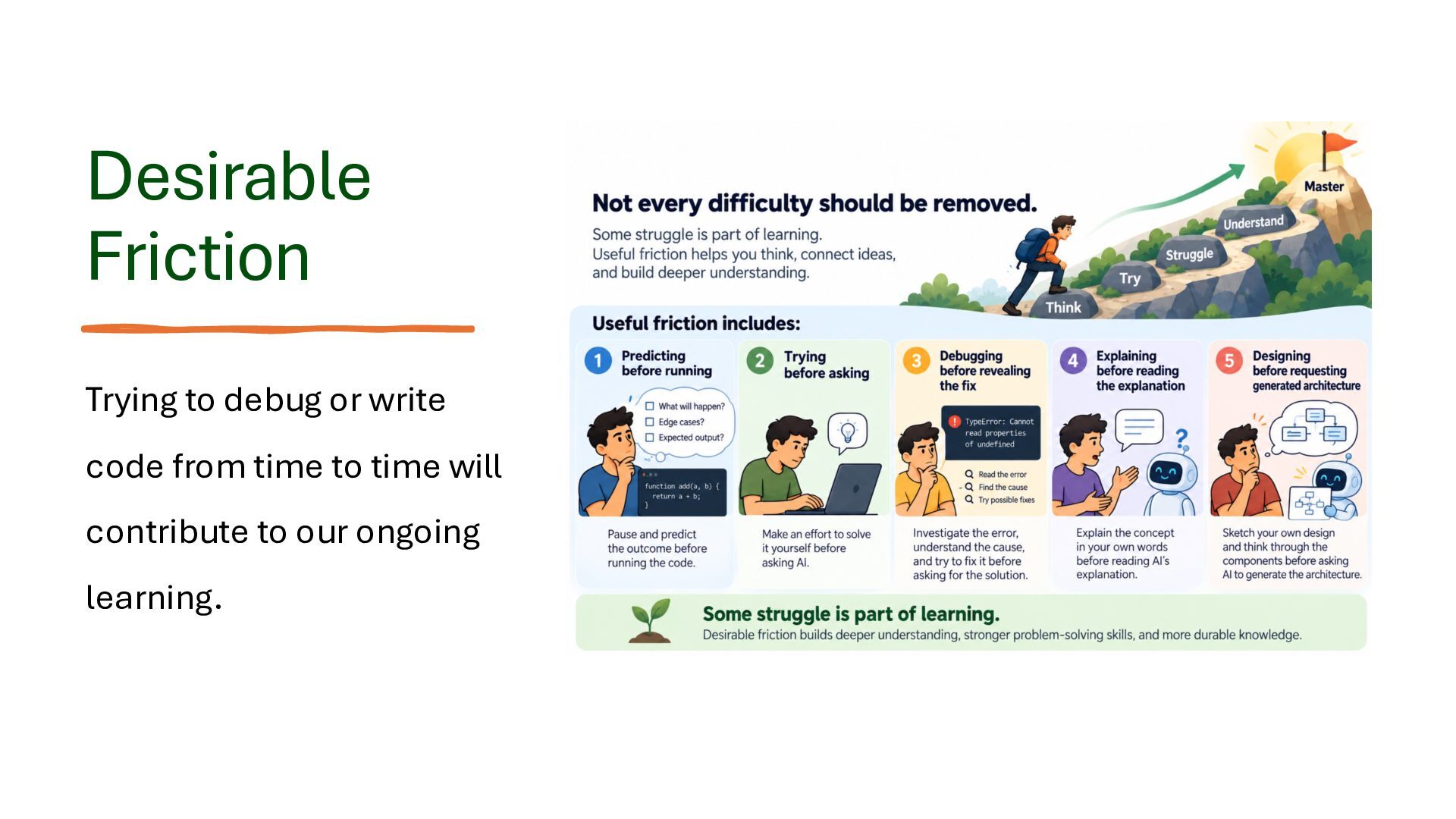
  33. Desirable Friction Trying to debug or write code from time

    to time will contribute to our ongoing learning.
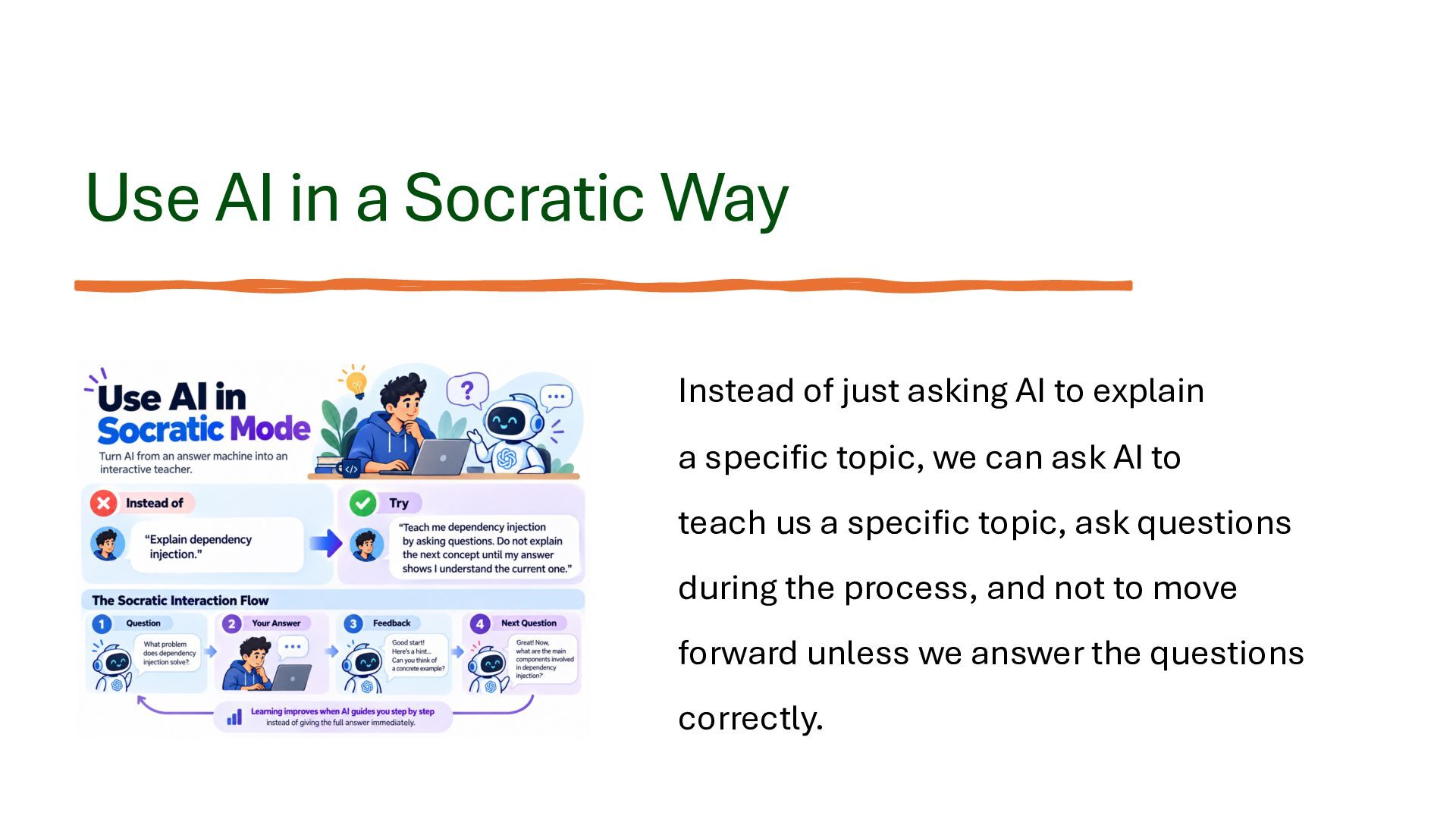
  34. Use AI in a Socratic Way Instead of just asking

    AI to explain a specific topic, we can ask AI to teach us a specific topic, ask questions during the process, and not to move forward unless we answer the questions correctly.
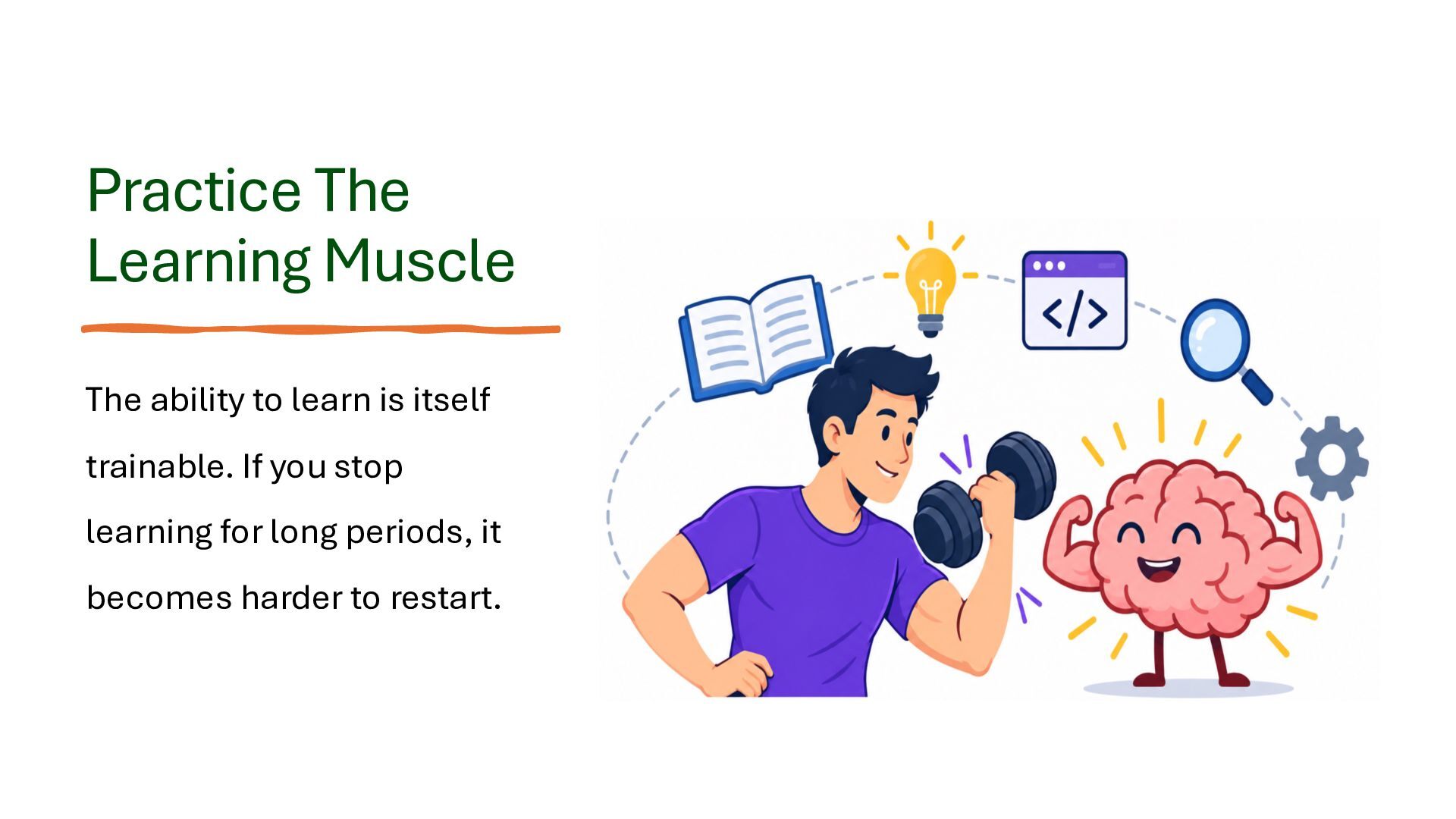
  35. Practice The Learning Muscle The ability to learn is itself

    trainable. If you stop learning for long periods, it becomes harder to restart.
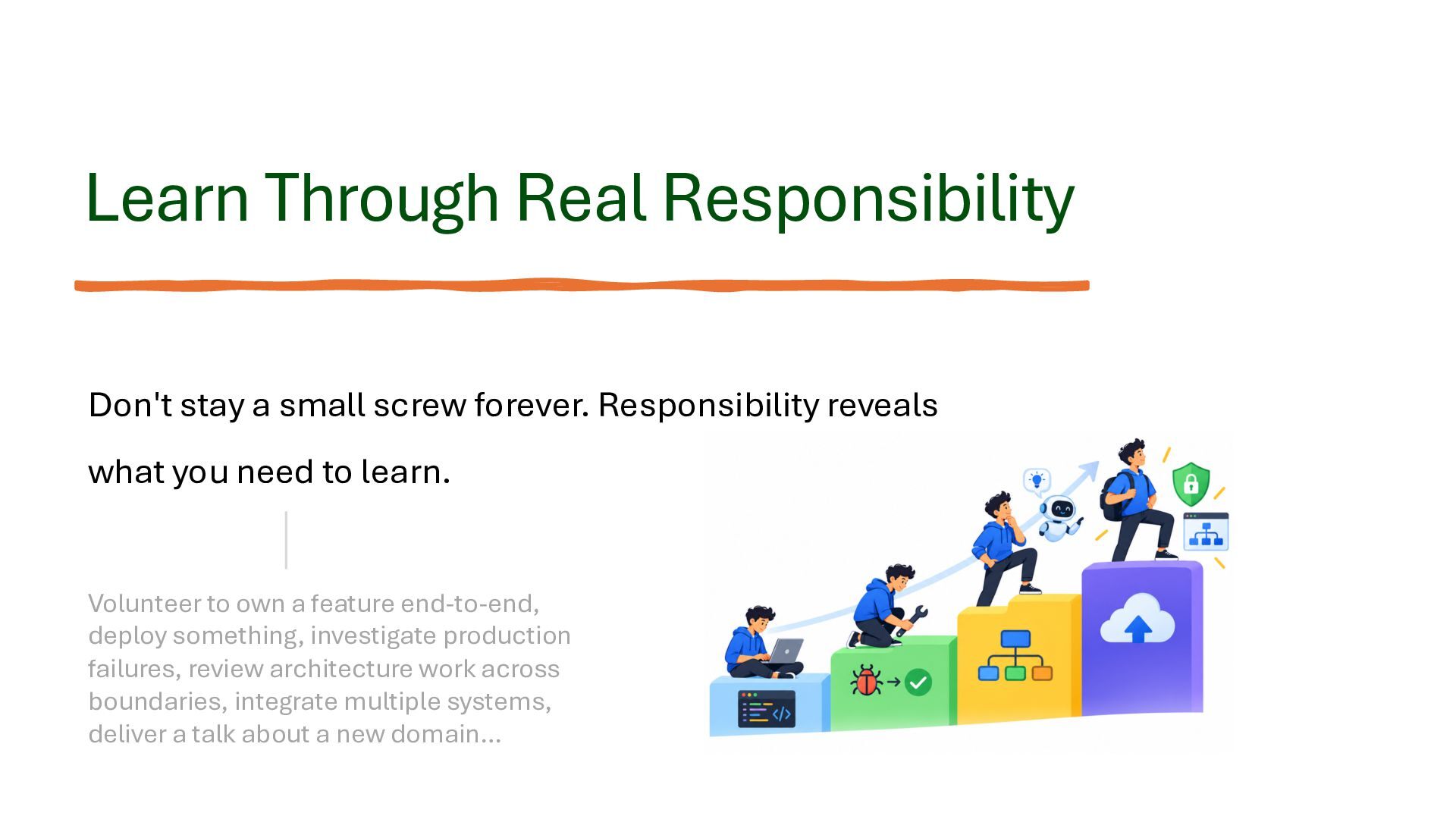
  36. Learn Through Real Responsibility Don't stay a small screw forever.
    Responsibility reveals what you need to learn. Volunteer to own a feature end-to-end, deploy something, investigate production failures, review architecture work across boundaries, integrate multiple systems, deliver a talk about a new domain…
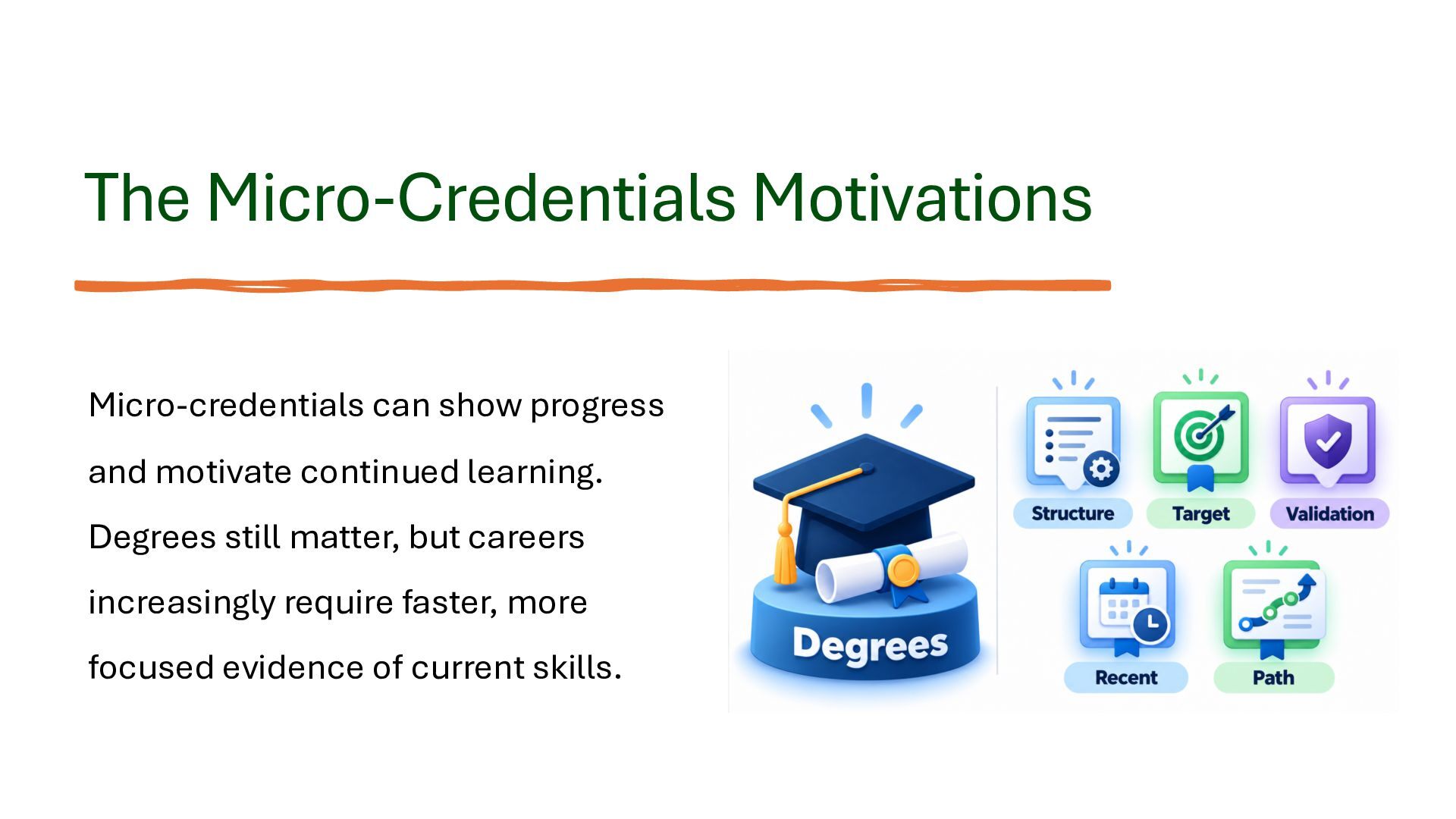
  37. The Micro-Credentials Motivations Micro-credentials can show progress and motivate continued

    learning. Degrees still matter, but careers increasingly require faster, more focused evidence of current skills.
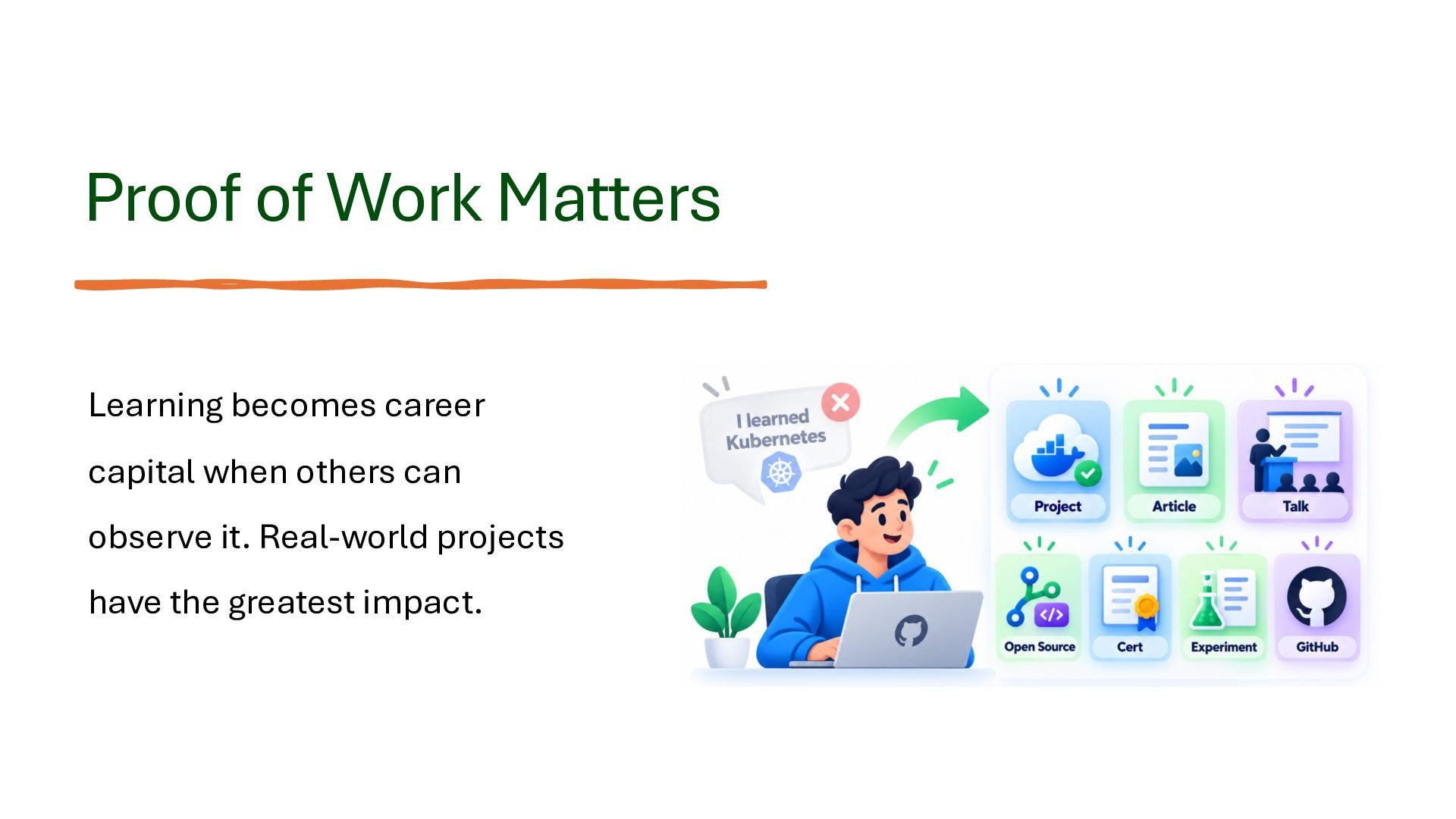
  38. Proof of Work Matters Learning becomes career capital when others

    can observe it. Real-world projects have the greatest impact.
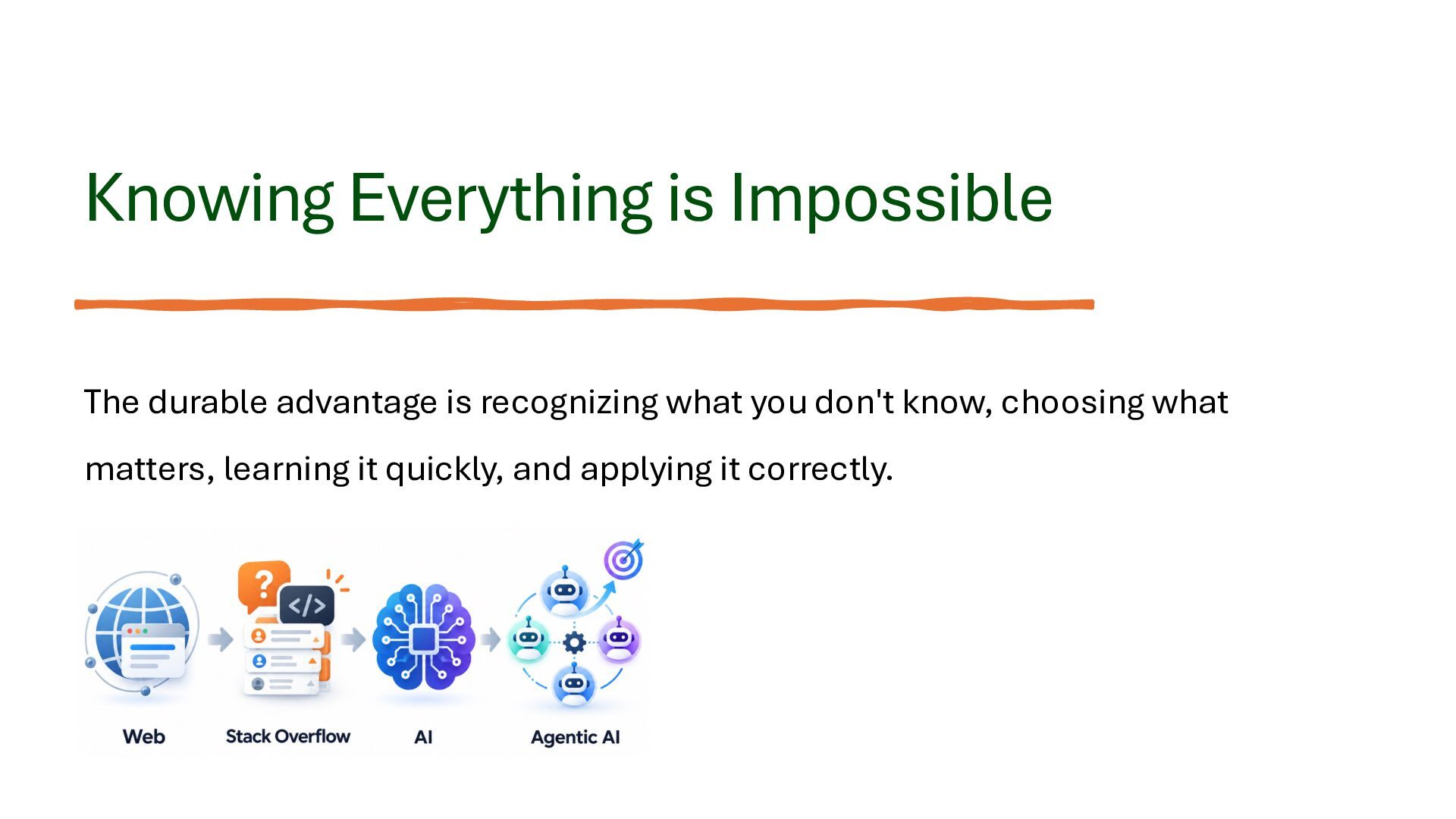
  39. Knowing Everything is Impossible The durable advantage is recognizing what

    you don't know, choosing what matters, learning it quickly, and applying it correctly.
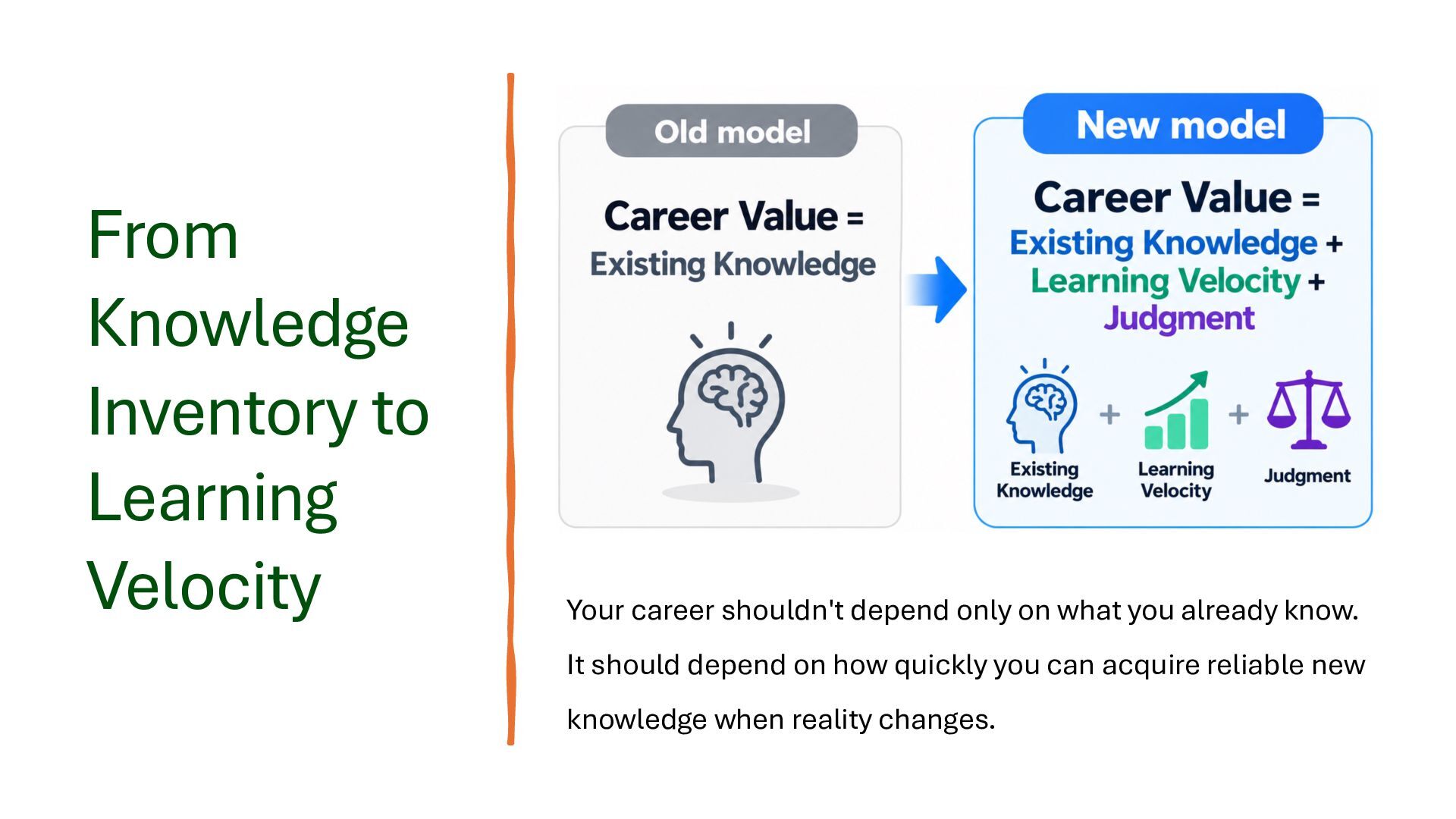
  40. From Knowledge Inventory to Learning Velocity Your career shouldn't depend

    only on what you already know. It should depend on how quickly you can acquire reliable new knowledge when reality changes.
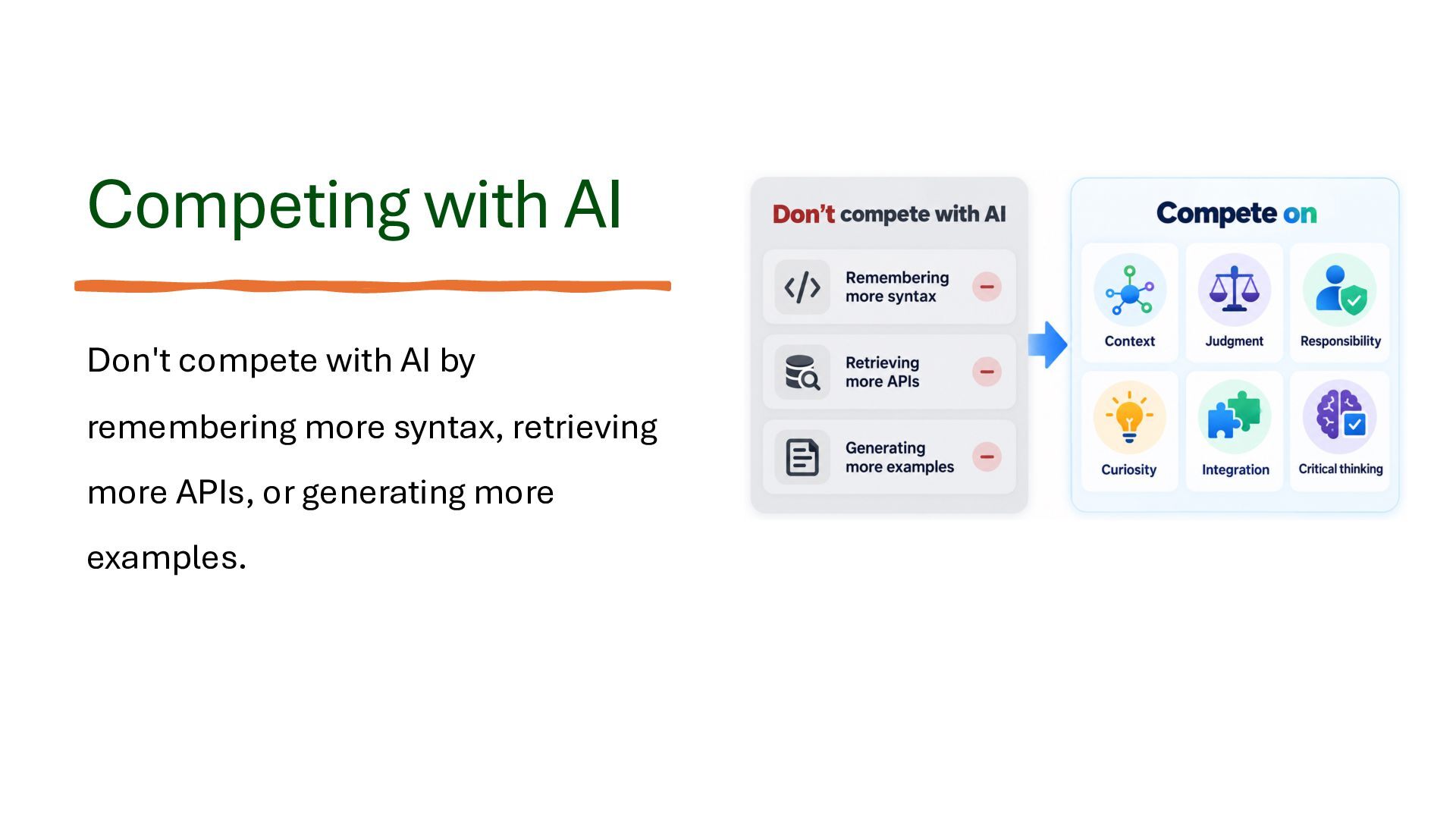
  41. Competing with AI Don't compete with AI by remembering more

    syntax, retrieving more APIs, or generating more examples.
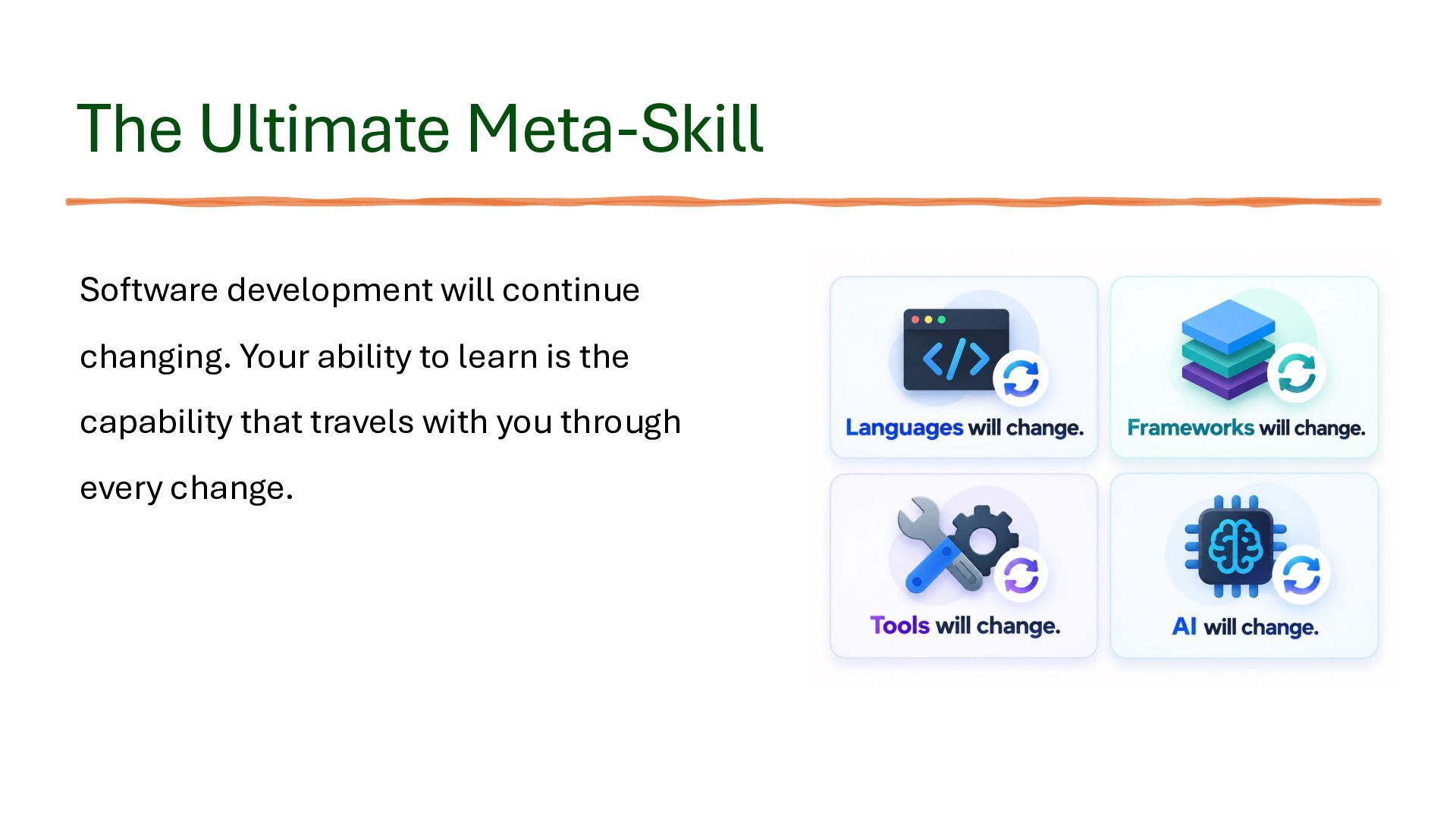
  42. The Ultimate Meta-Skill Software development will continue changing. Your ability

    to learn is the capability that travels with you through every change.
  43. Q&A Thanks for attending my talk :) WhatsApp +972.54.6655837 [email protected]

    https://blog.lifemichael.com XtremeJ xtremej.dev life michael XtremeJS xtremejs.dev XtremePython xtremepython.dev XtremeAI xtremeai.dev meetup.com/lifemichael Monolith vs Microservices