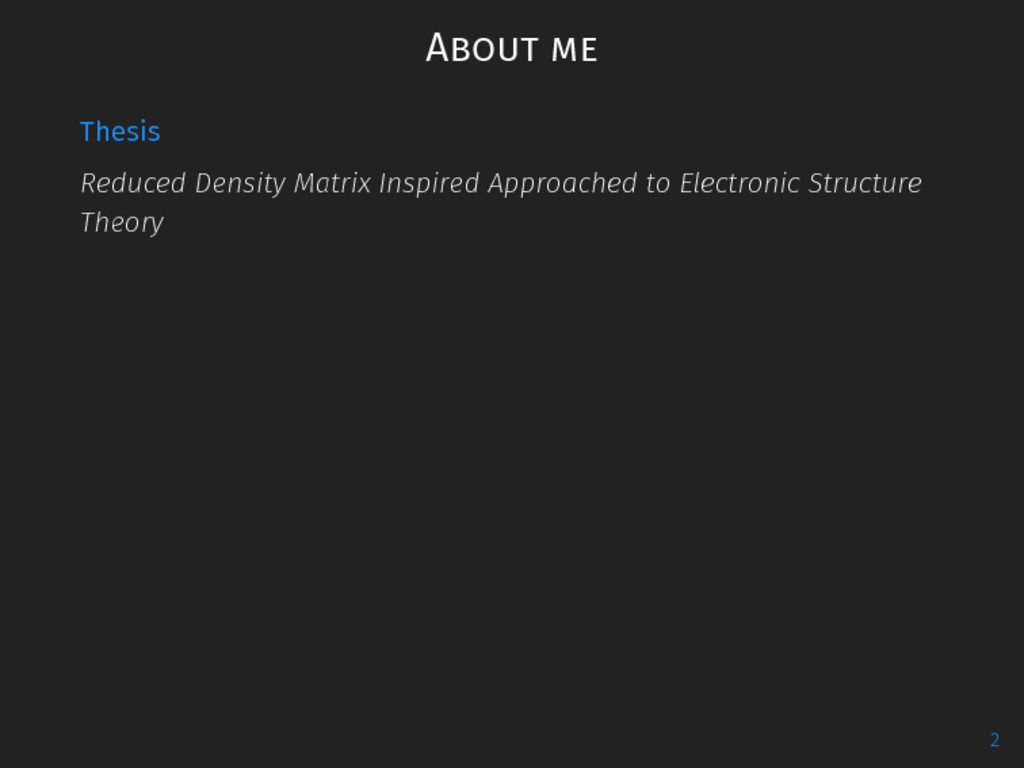
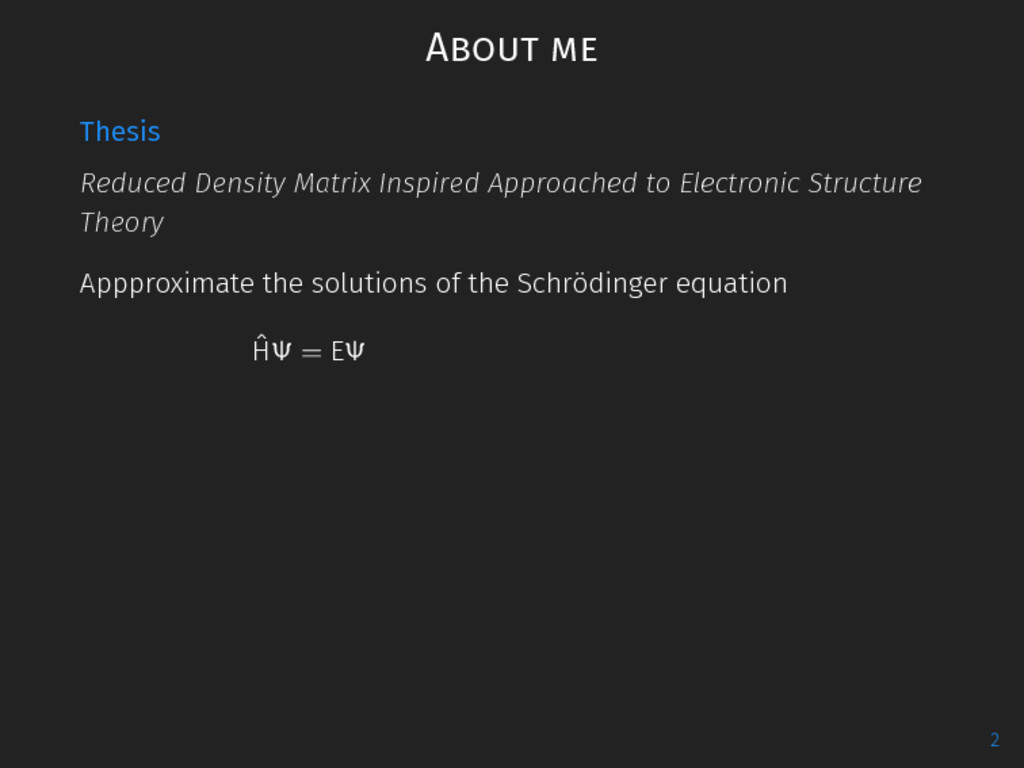
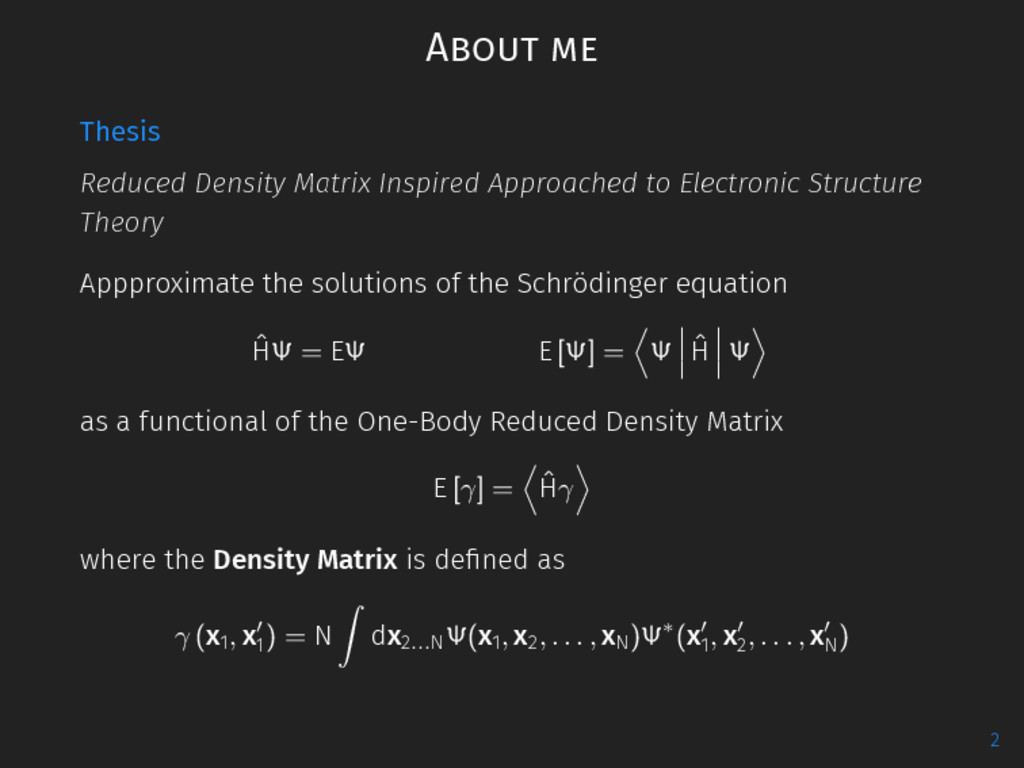
Structure Theory Appproximate the solutions of the Schrödinger equation ˆ HΨ = EΨ E [Ψ] = Ψ ˆ H Ψ as a functional of the One-Body Reduced Density Matrix E [γ] = ˆ Hγ where the Density Matrix is defined as γ (x1 , x1 ) = N dx2...N Ψ(x1 , x2 , . . . , xN )Ψ∗(x1 , x2 , . . . , xN ) 2
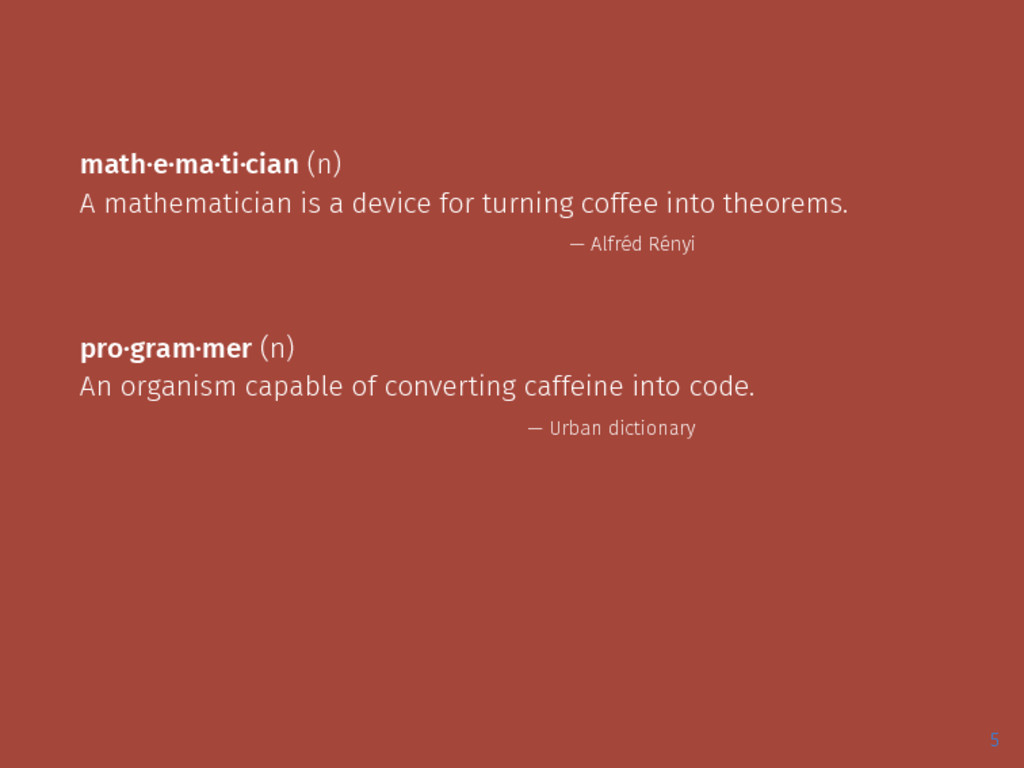
into theorems. — Alfréd Rényi pro·gram·mer (n) An organism capable of converting caffeine into code. — Urban dictionary che·mist (n) Knows how to make the caffeine. 5
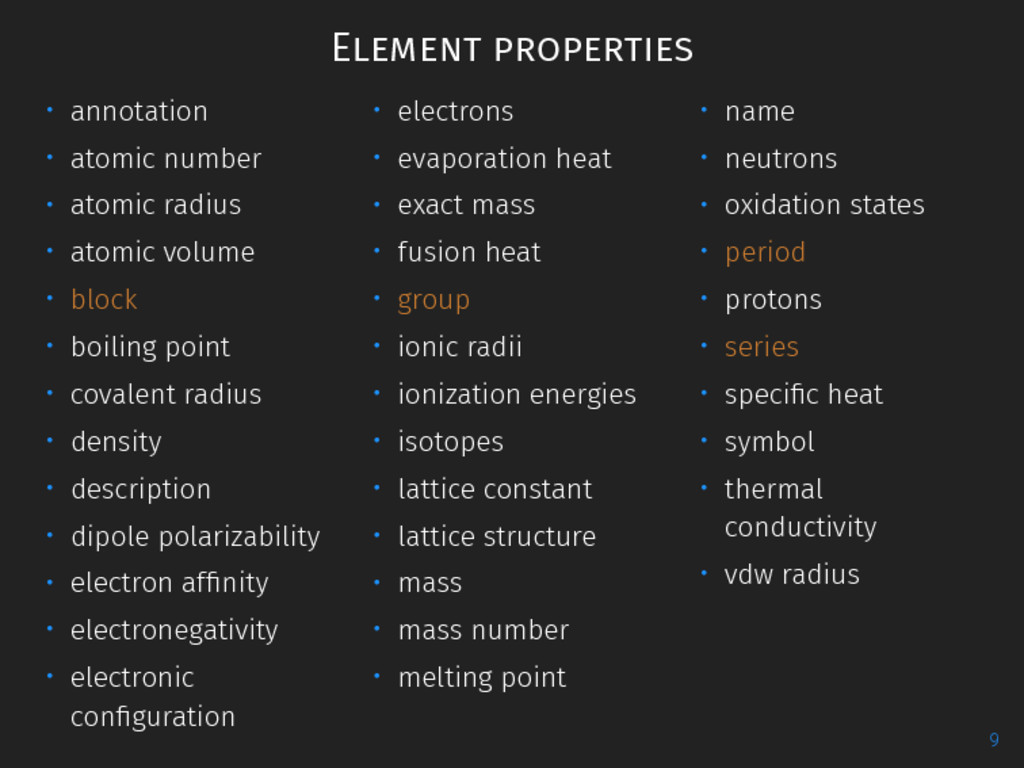
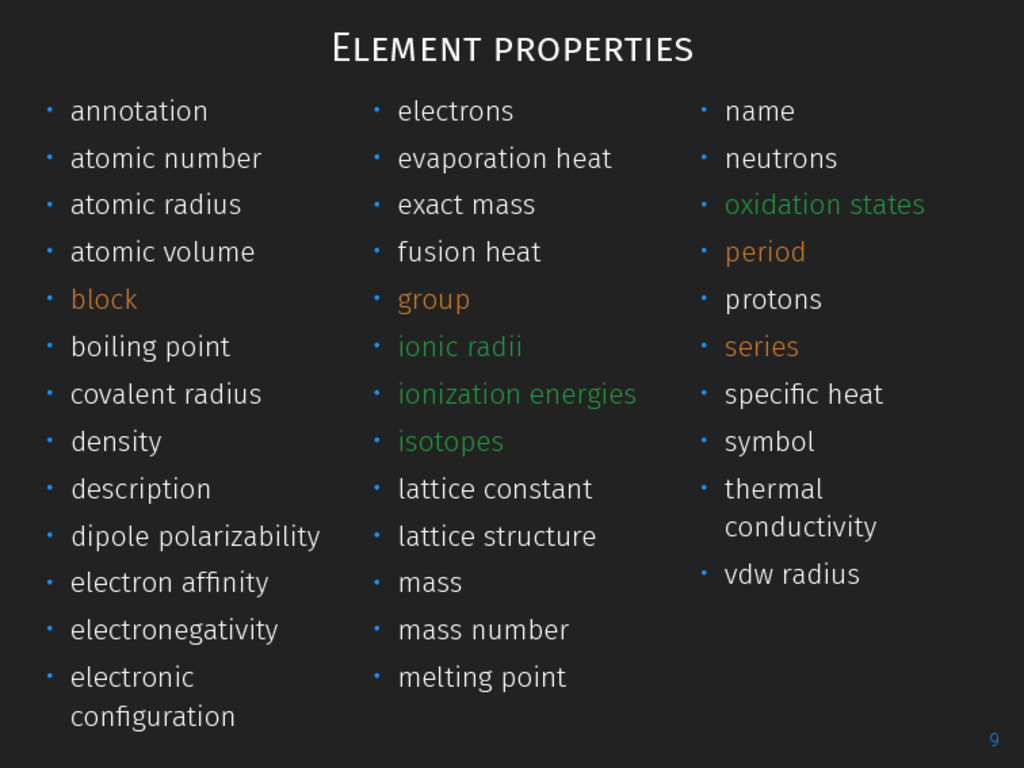
method >>> from elements import element element method can be used to retrieve elements from the db >>> h = element(’H’) >>> h.name ’Hydrogen’ >>> si = element(’Silicon’) >>> si.mass 28.0855 >>> al = element(13) >>> al.electronegativity 1.61 10
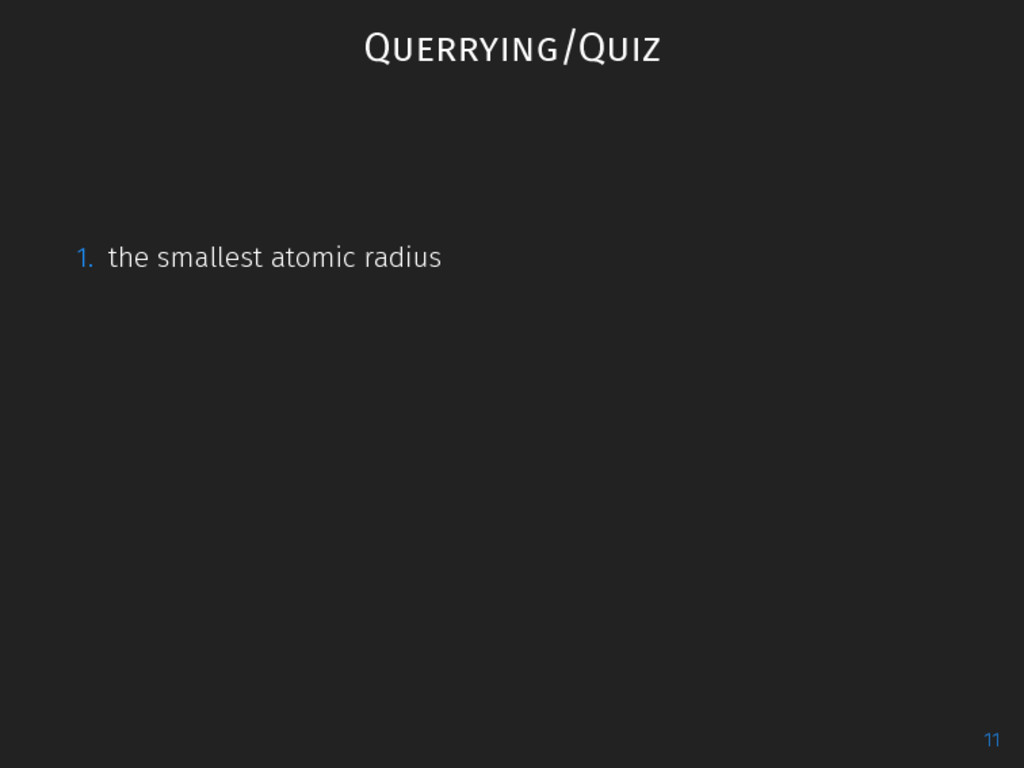
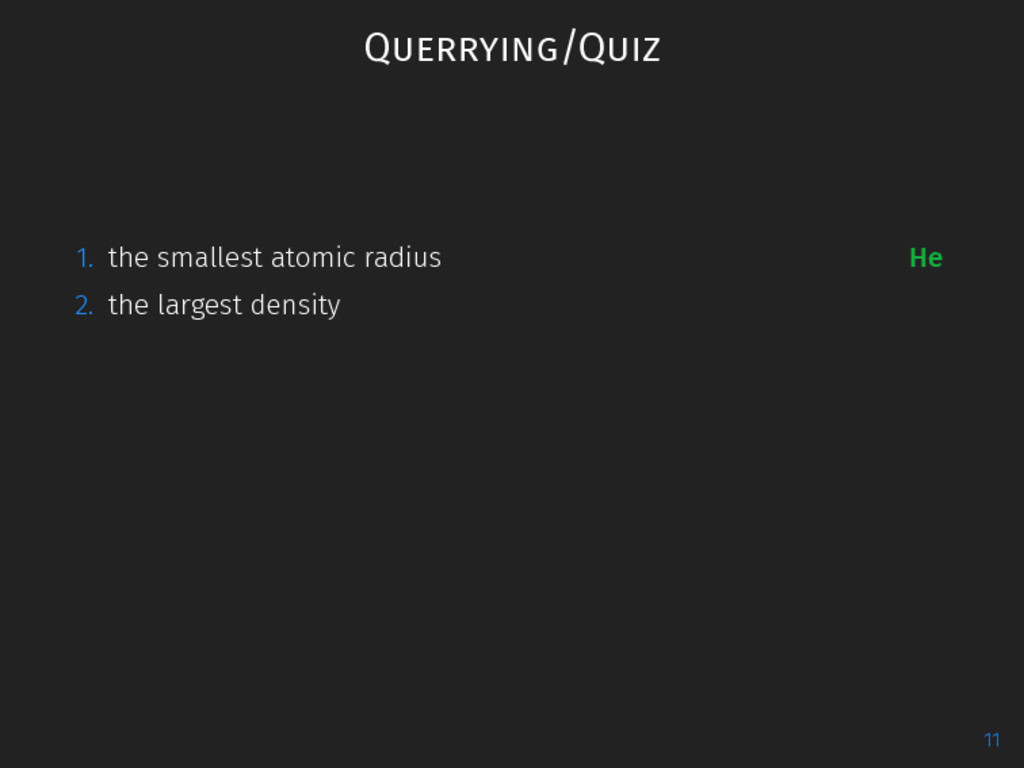
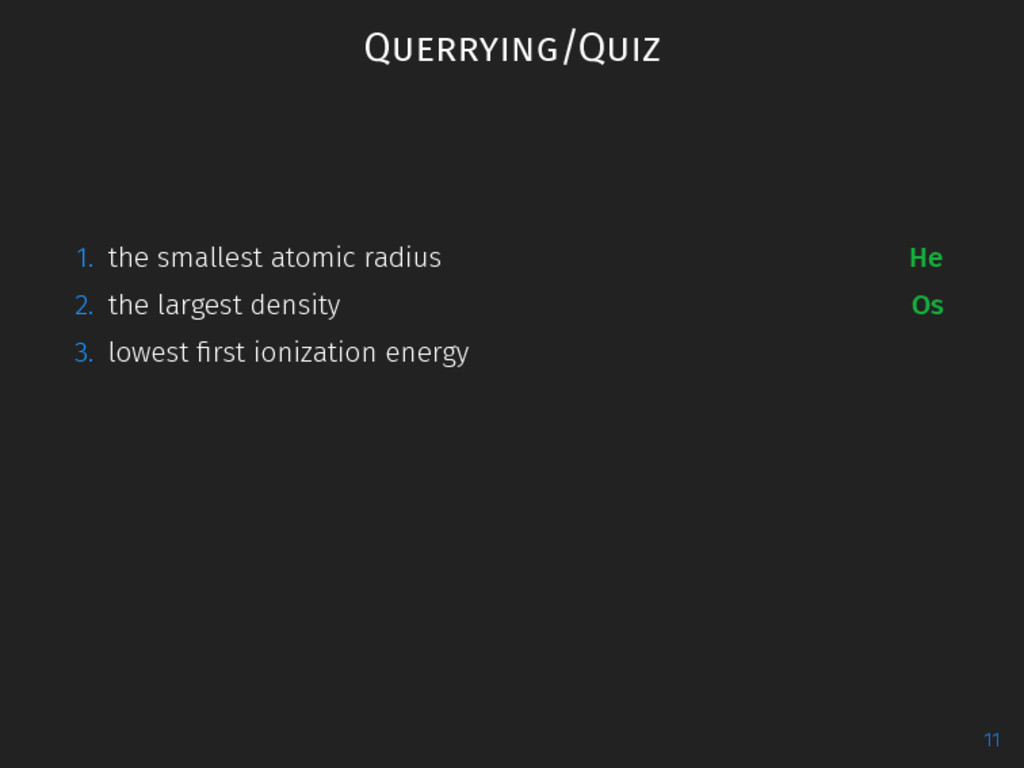
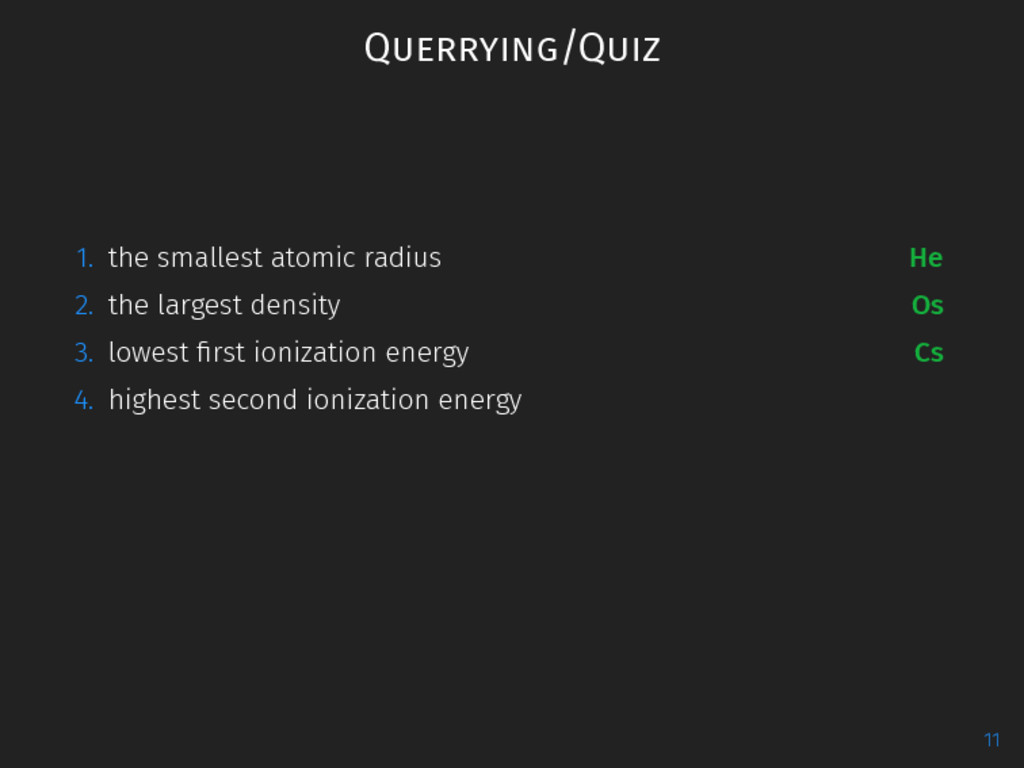
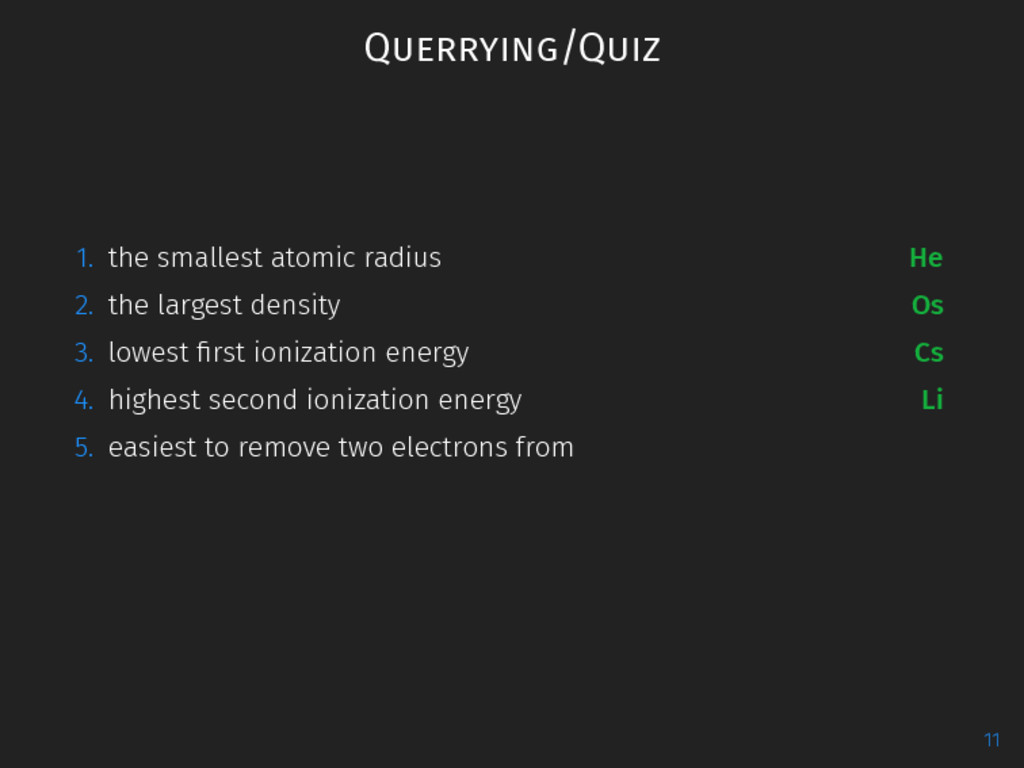
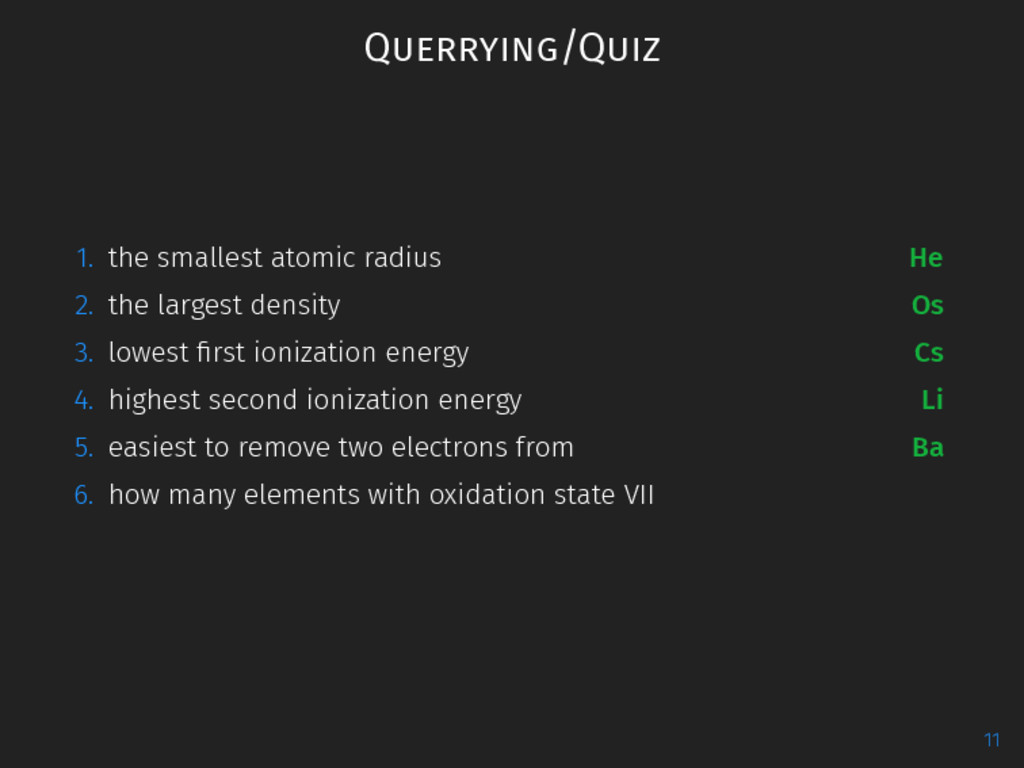
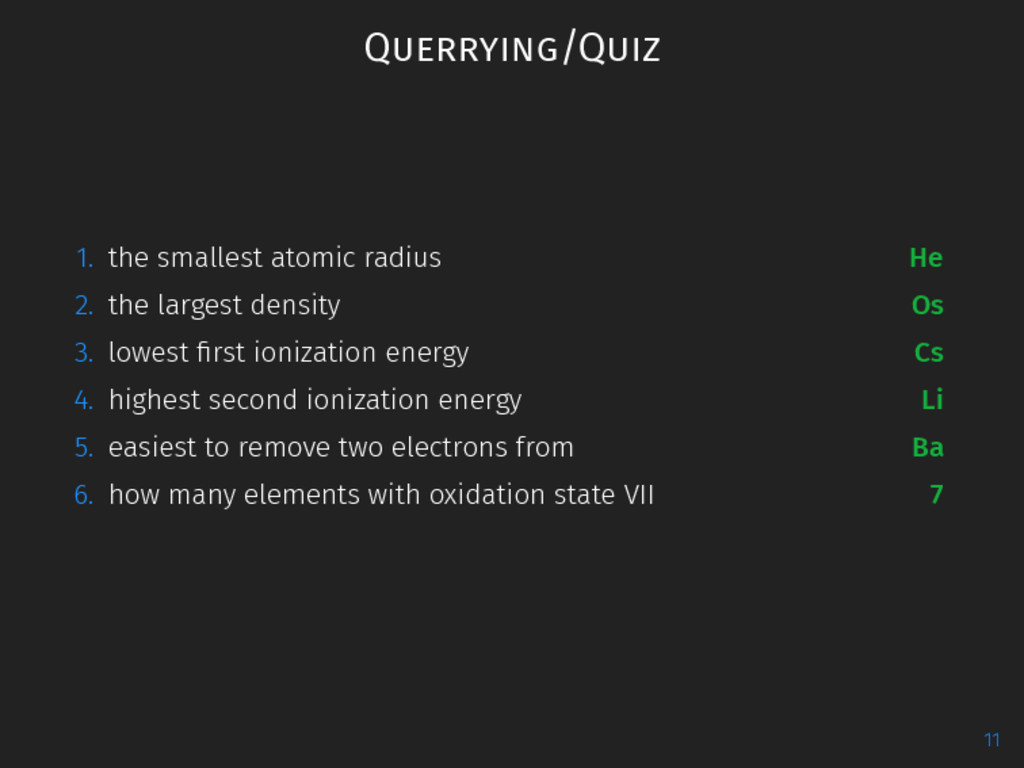
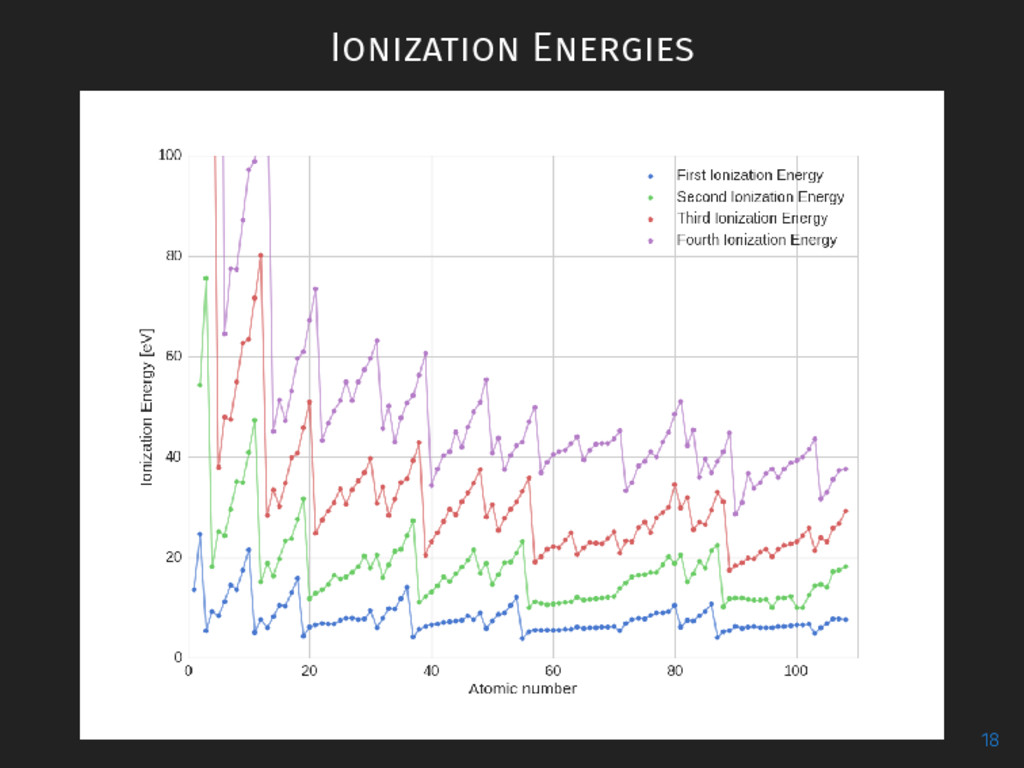
density Os 3. lowest first ionization energy Cs 4. highest second ionization energy Li 5. easiest to remove two electrons from Ba 6. how many elements with oxidation state VII 11
density Os 3. lowest first ionization energy Cs 4. highest second ionization energy Li 5. easiest to remove two electrons from Ba 6. how many elements with oxidation state VII 7 11
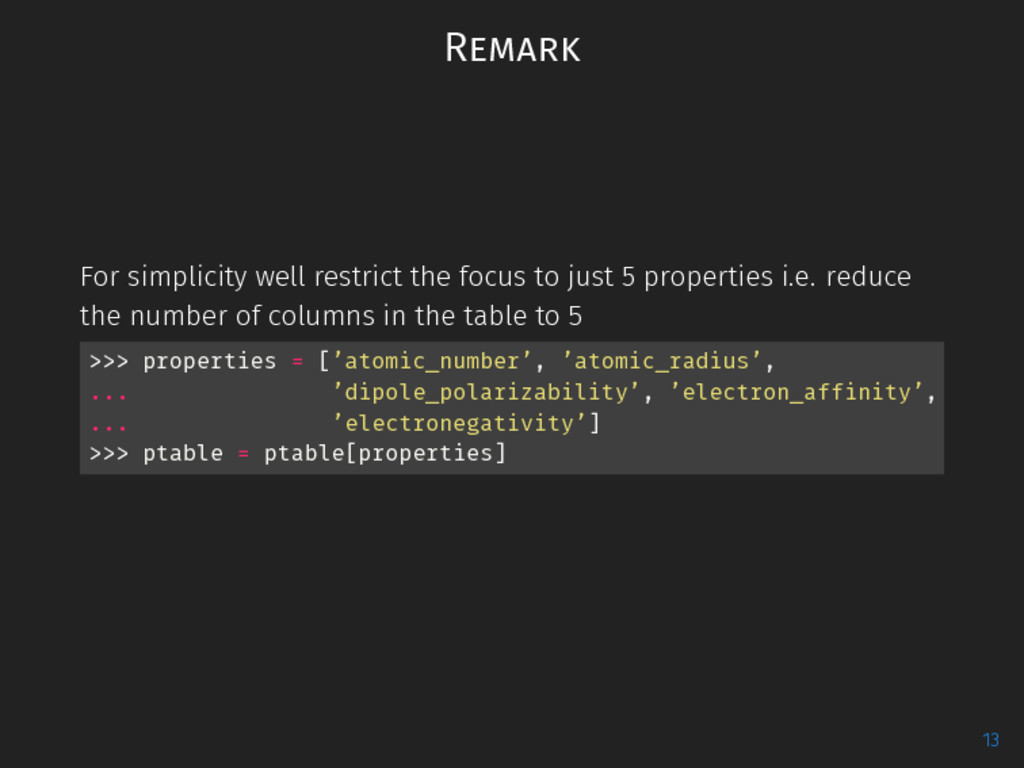
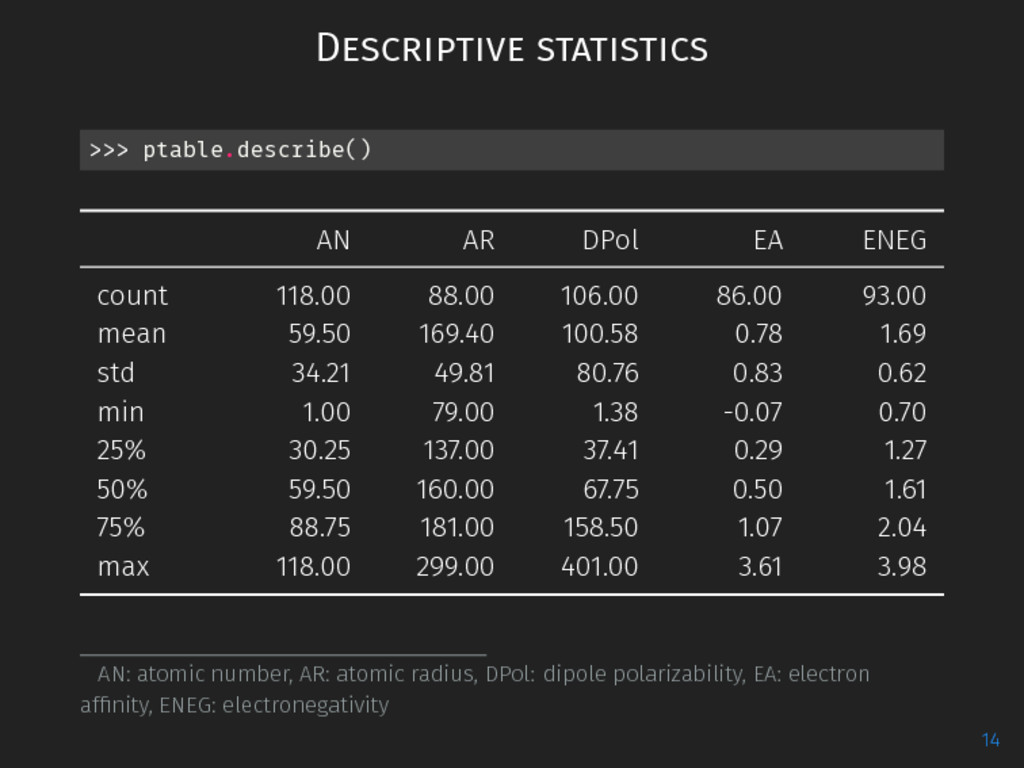
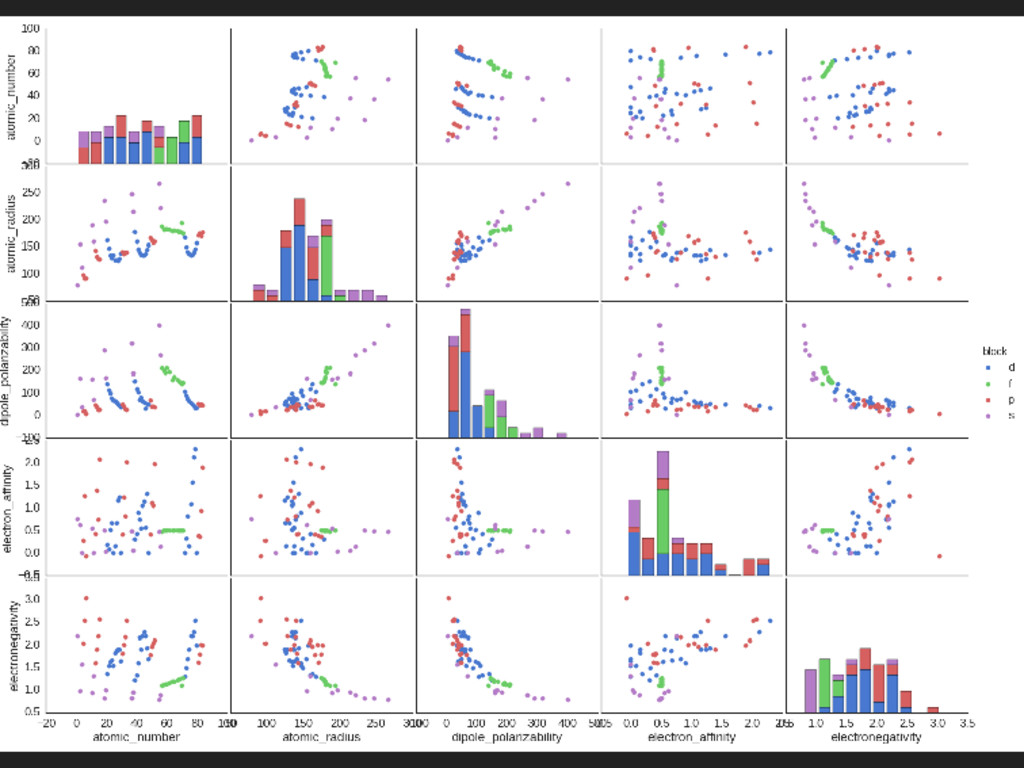
properties i.e. reduce the number of columns in the table to 5 >>> properties = [’atomic_number’, ’atomic_radius’, ... ’dipole_polarizability’, ’electron_affinity’, ... ’electronegativity’] >>> ptable = ptable[properties] 13
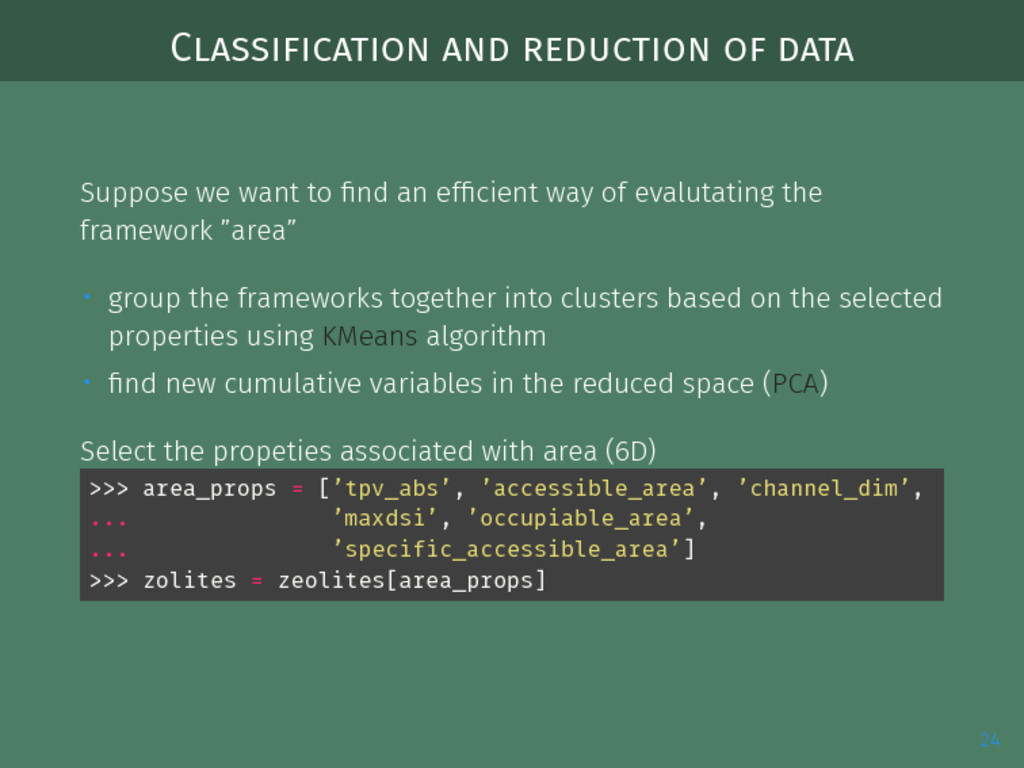
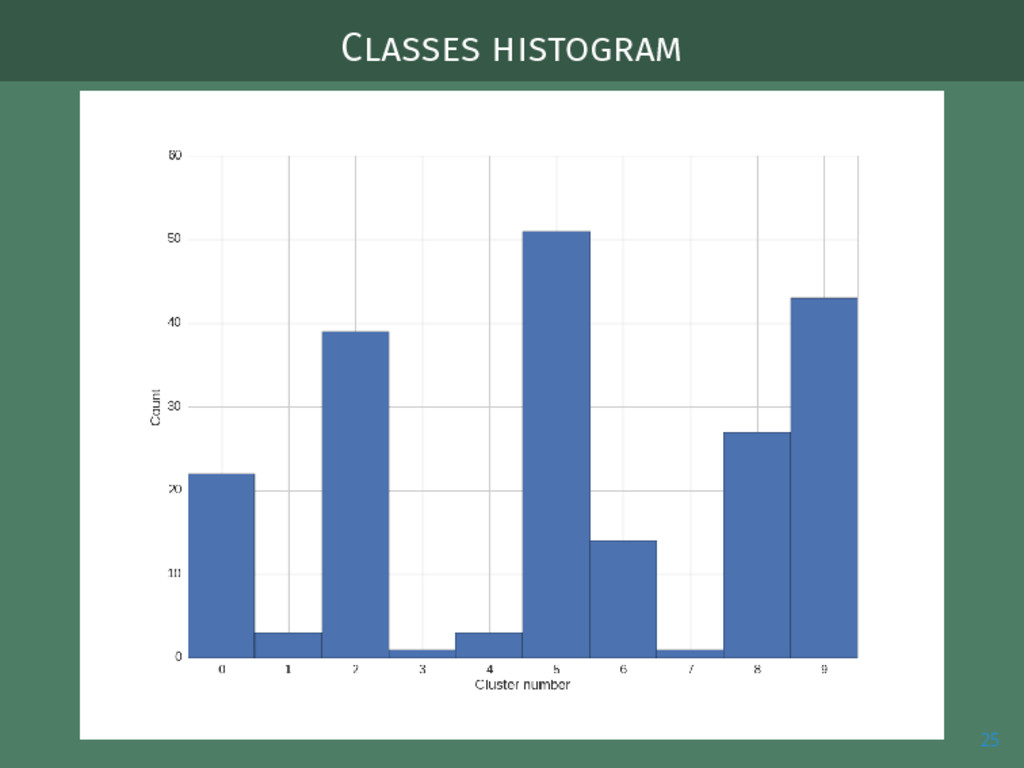
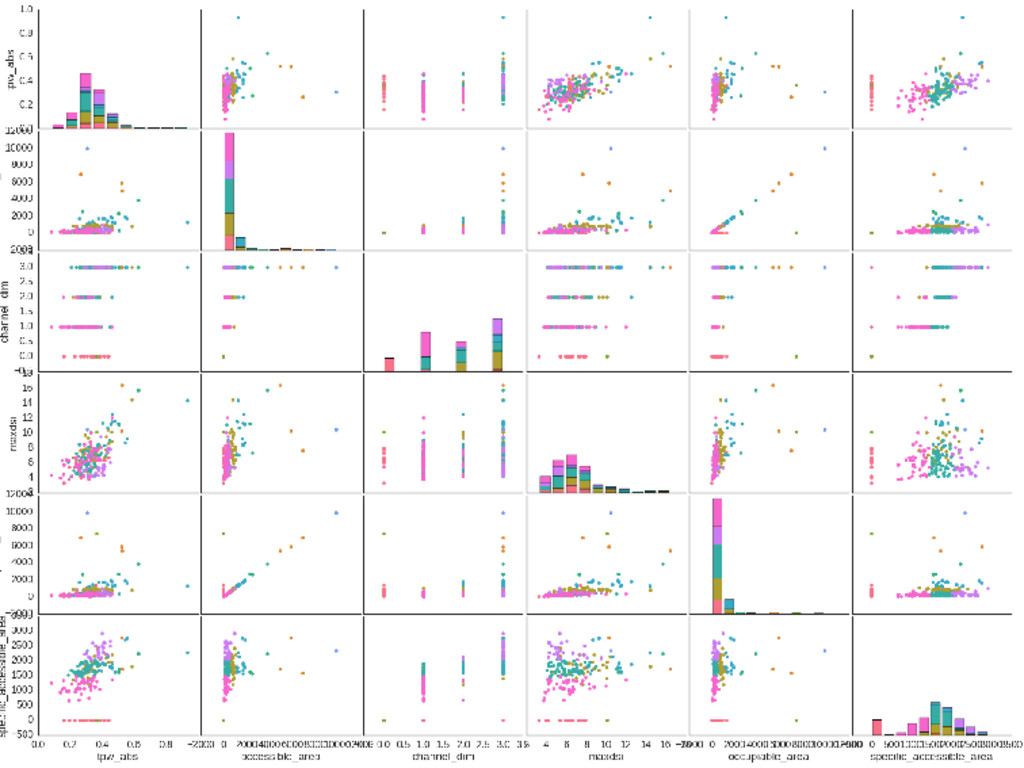
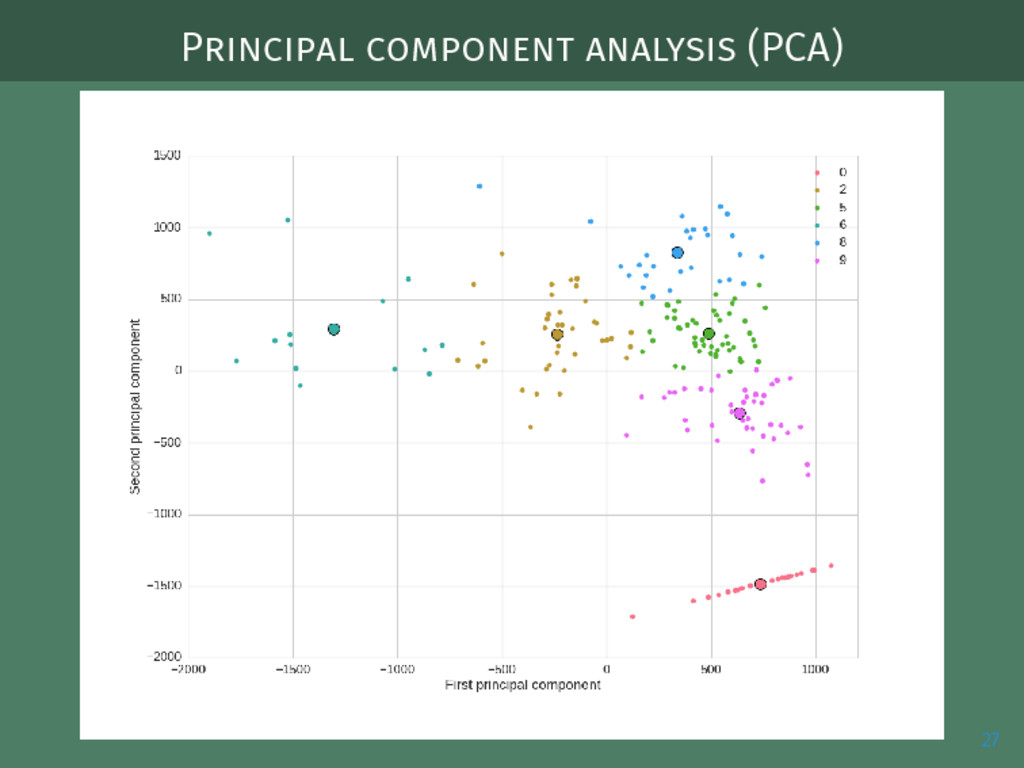
an efficient way of evalutating the framework ”area” ∙ group the frameworks together into clusters based on the selected properties using KMeans algorithm ∙ find new cumulative variables in the reduced space (PCA) Select the propeties associated with area (6D) >>> area_props = [’tpv_abs’, ’accessible_area’, ’channel_dim’, ... ’maxdsi’, ’occupiable_area’, ... ’specific_accessible_area’] >>> zolites = zeolites[area_props] 24


 lmmentel
.png) satai
satai
 reokashiwa
 ayaniwa
 hariby
 upura
upura
 fkske
fkske
 recsyslab
 ontheslope
 kzmssk
 matsumooon
 rikkabotan7
 csswizardry
 cassininazir
 tapps
tapps
 techseoconnect
 kastner
 schroneko
 aleyda
 inesmontani
 thirion
 jcasabona
 portentint
 lindahogenes










![Visualize symmetry unique T and O atoms MFI [010] 29](https://files.speakerdeck.com/presentations/afbf762f5c124af080c3bc92a323af65/slide_46.jpg)
![Visualize symmetry unique T and O atoms MFI [010] TON](https://files.speakerdeck.com/presentations/afbf762f5c124af080c3bc92a323af65/slide_47.jpg)