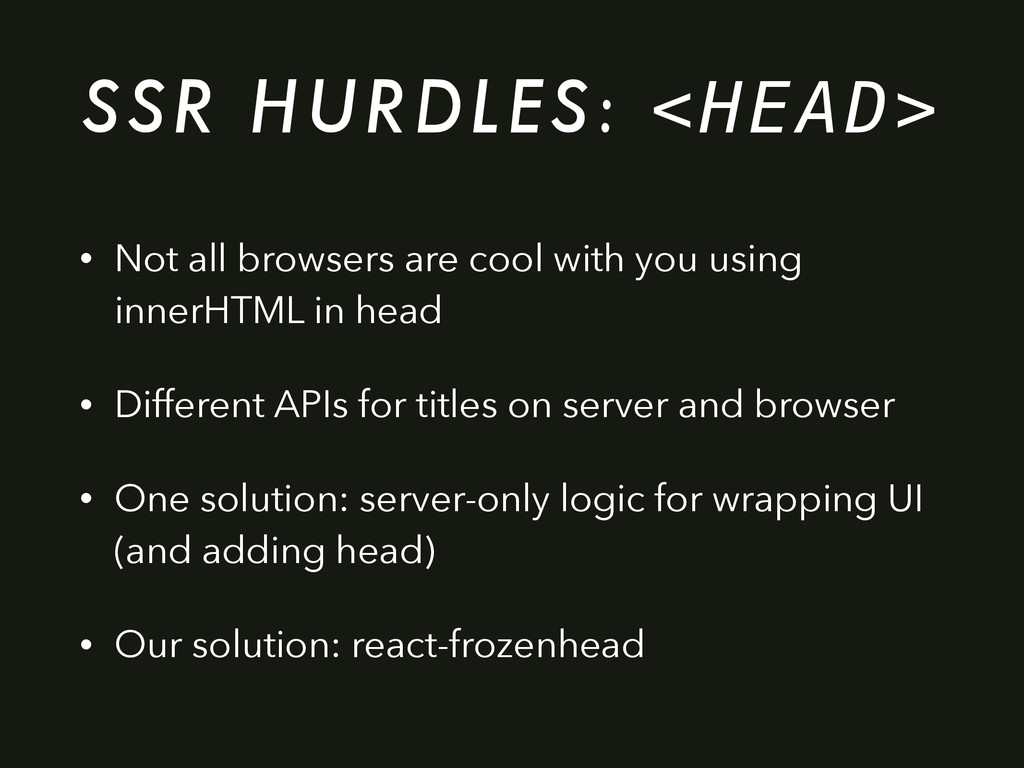
you using innerHTML in head • Different APIs for titles on server and browser • One solution: server-only logic for wrapping UI (and adding head) • Our solution: react-frozenhead
• Colocate data requirements with any component via getInitialStateAsync lifecycle method • But… • Fibers? • “React Async is an anti-pattern” • Made server-side integration tricky
• Based on Ember’s router • But… • No SSR solution in sight—certainly not by our launch date • Looked to be repeating the same mistakes as react-router-component
• Designed from the ground up to work with SSR • Generate entire document (including <head>) • But… • Very conservative design • No colocation of data requirements and UI code
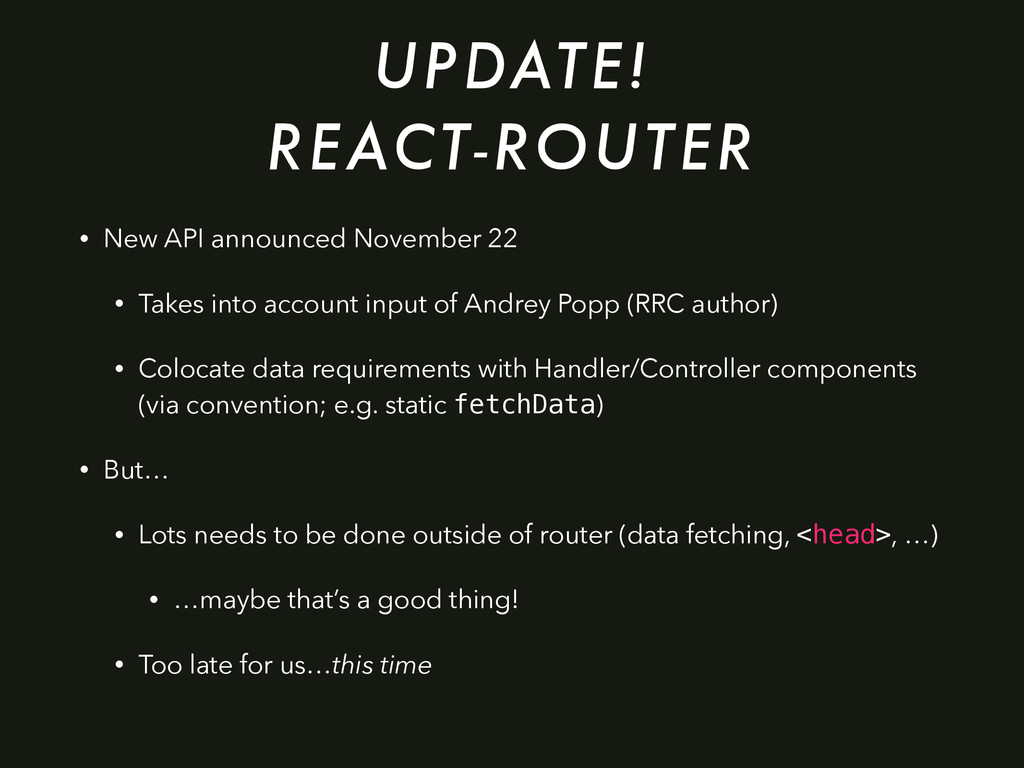
into account input of Andrey Popp (RRC author) • Colocate data requirements with Handler/Controller components (via convention; e.g. static fetchData) • But… • Lots needs to be done outside of router (data fetching, <head>, …) • …maybe that’s a good thing! • Too late for us…this time
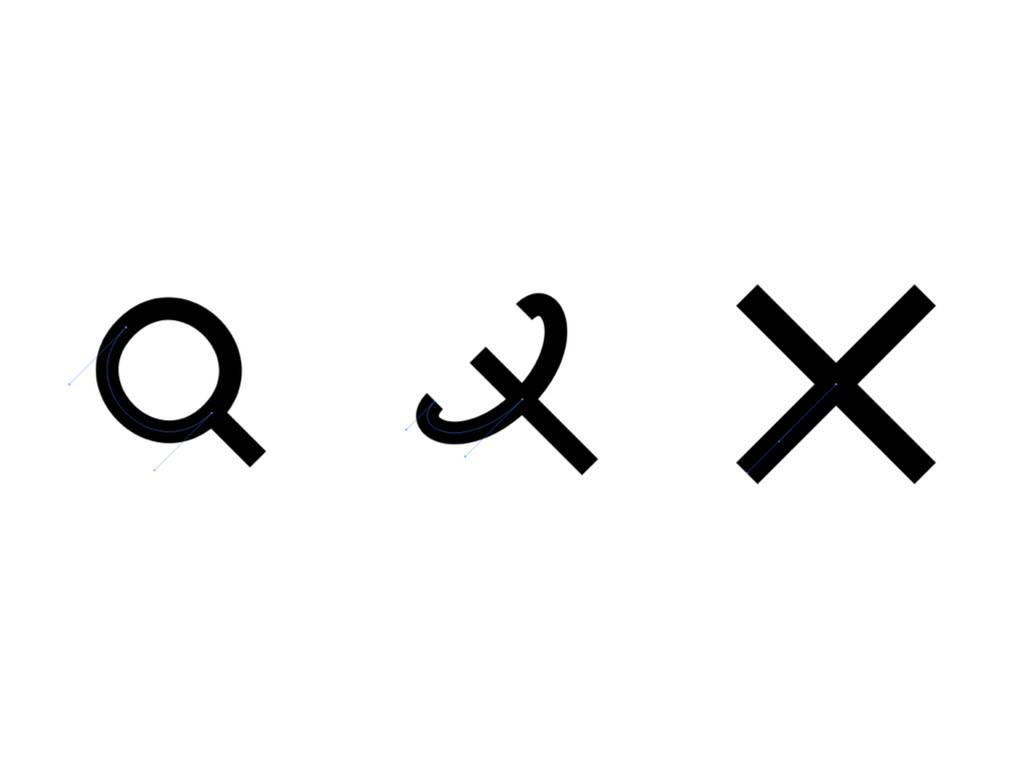
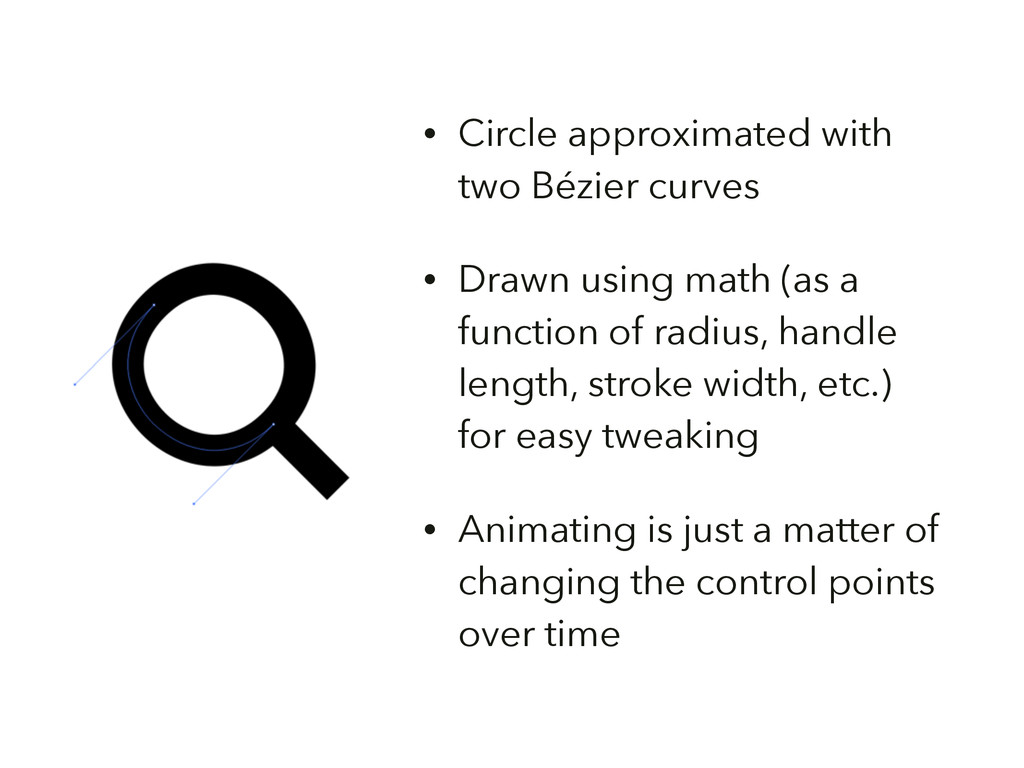
math (as a function of radius, handle length, stroke width, etc.) for easy tweaking • Animating is just a matter of changing the control points over time
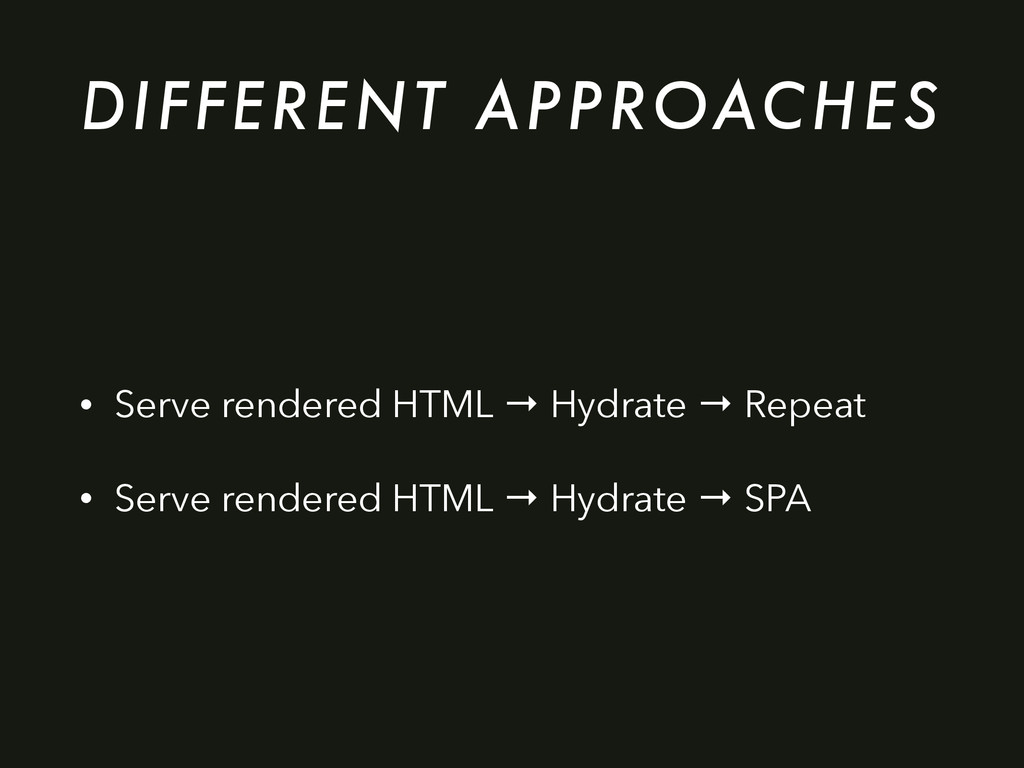
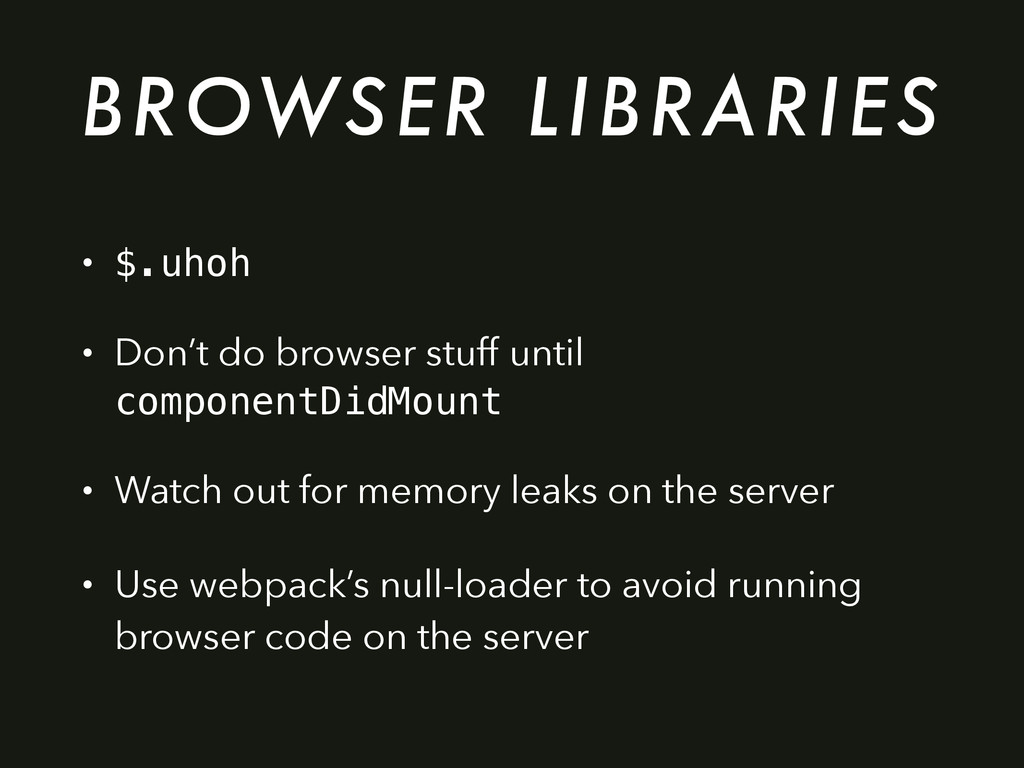
(toFixed(), etc) • Move code to componentDidMount • only called on client so this is where you can start messing with state with abandon • but nothing you do will be in the initial response (sorry, Google) • so you don’t do much in it • “Fossils”
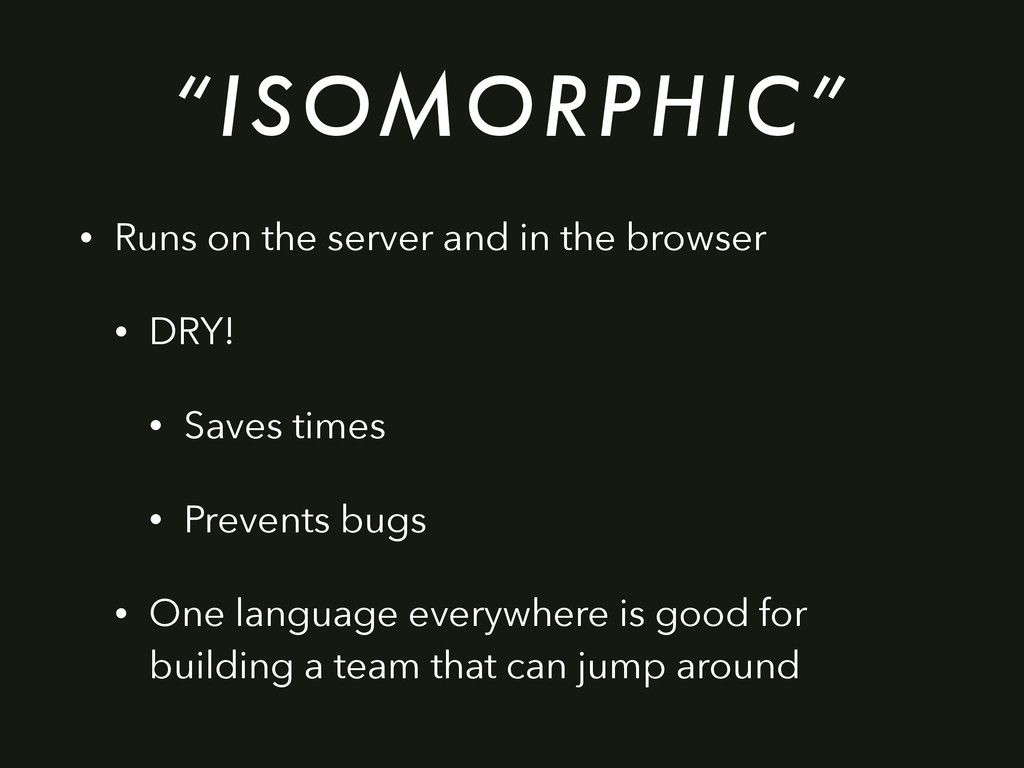
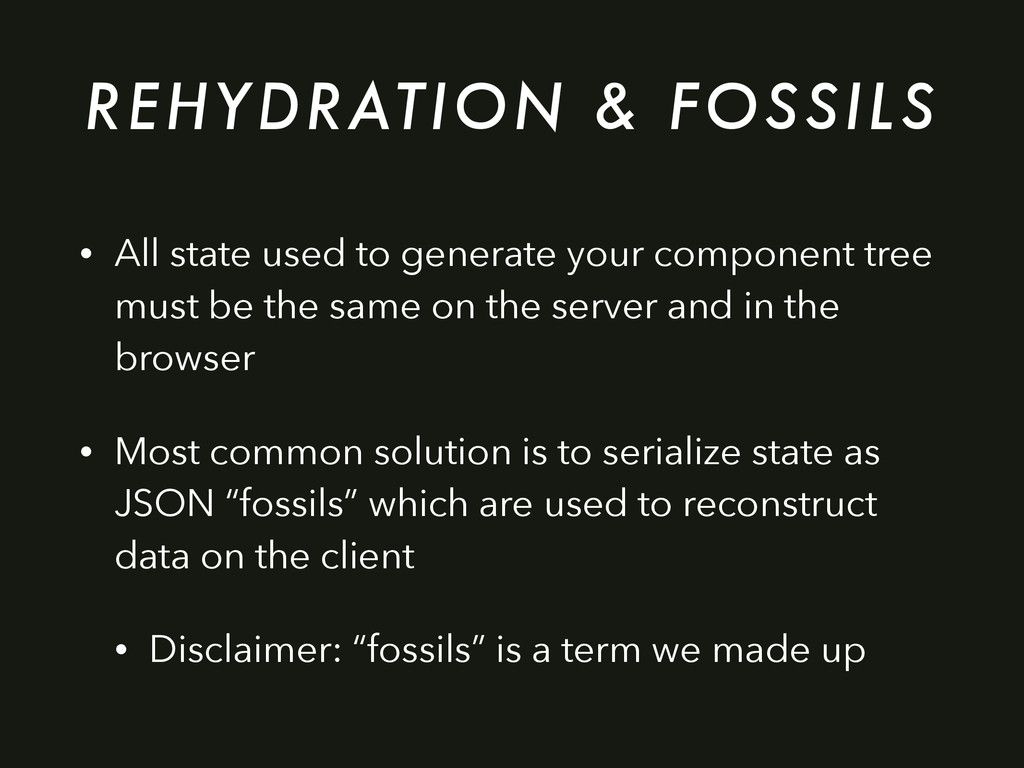
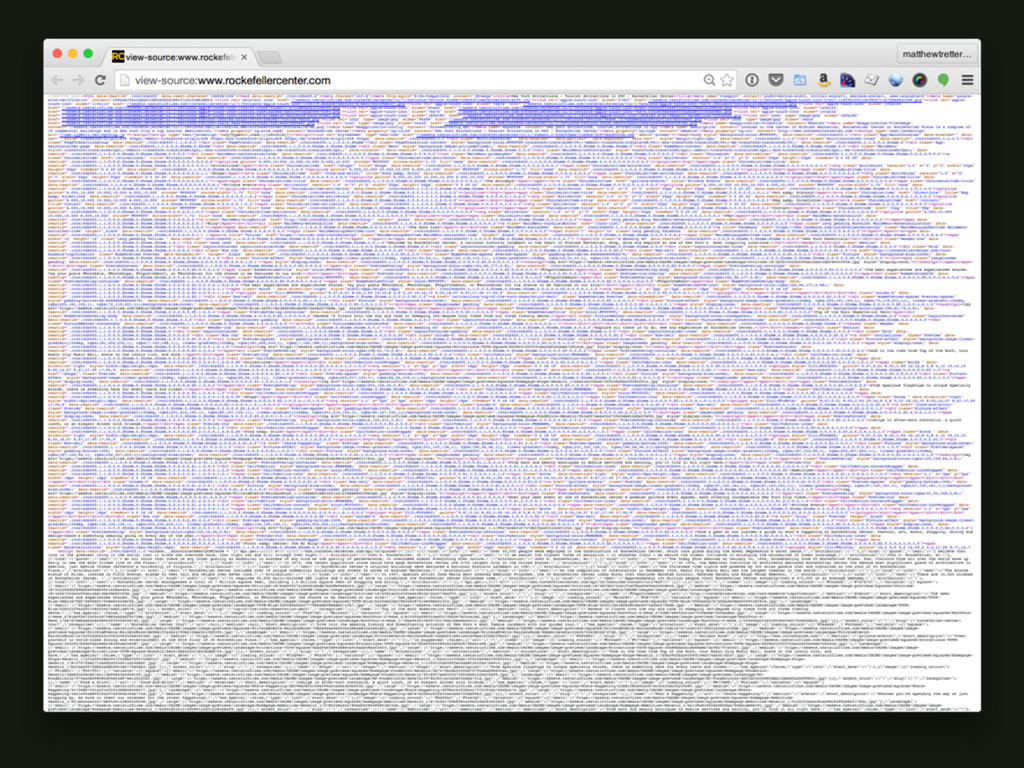
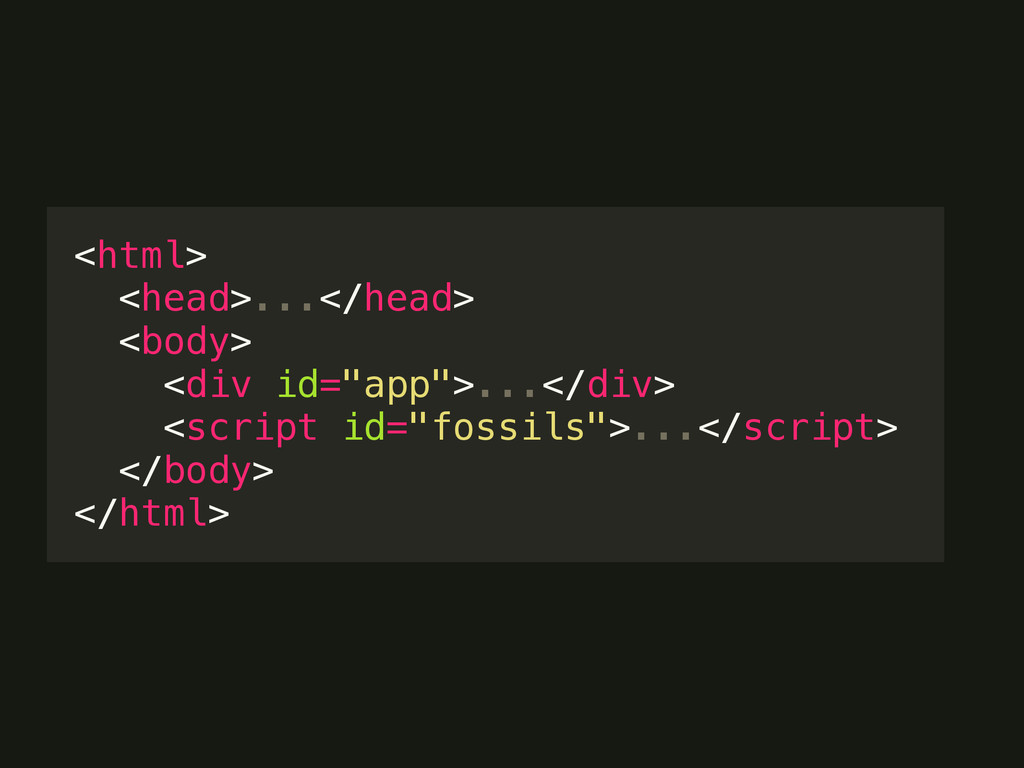
component tree must be the same on the server and in the browser • Most common solution is to serialize state as JSON “fossils” which are used to reconstruct data on the client • Disclaimer: “fossils” is a term we made up
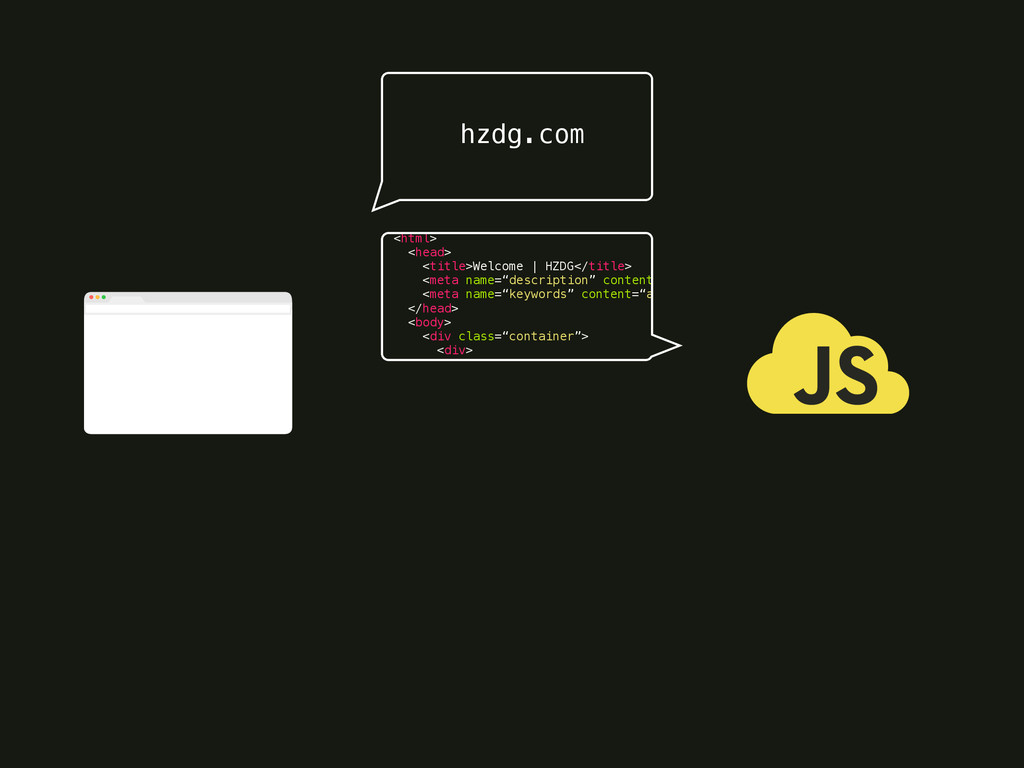
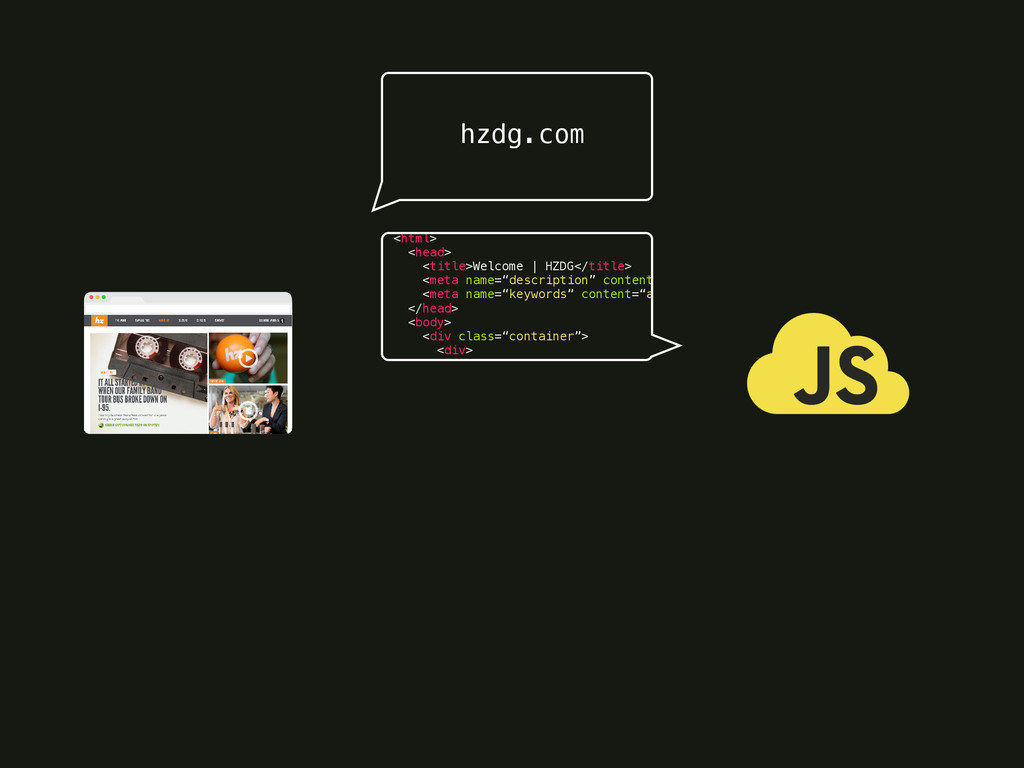
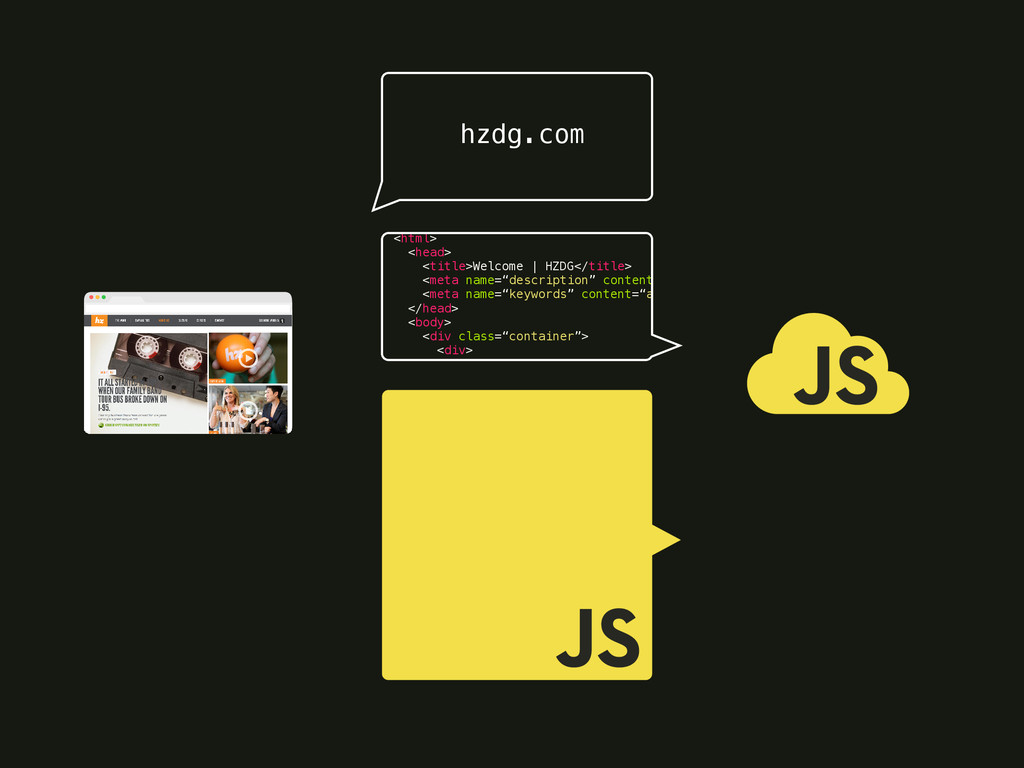
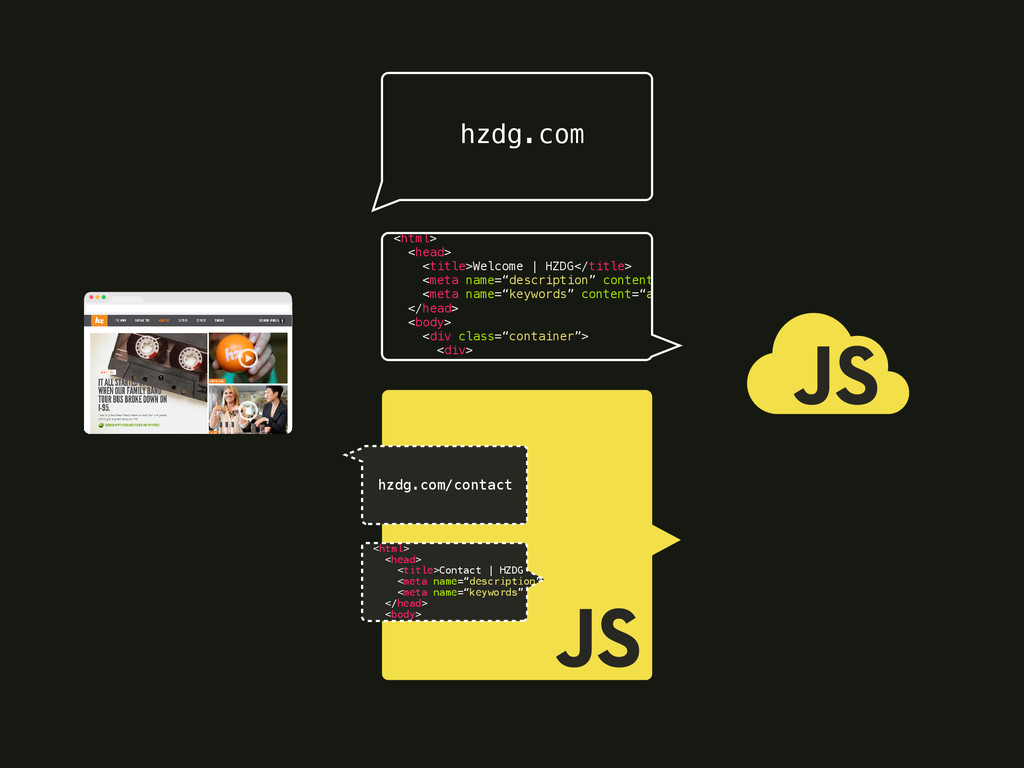
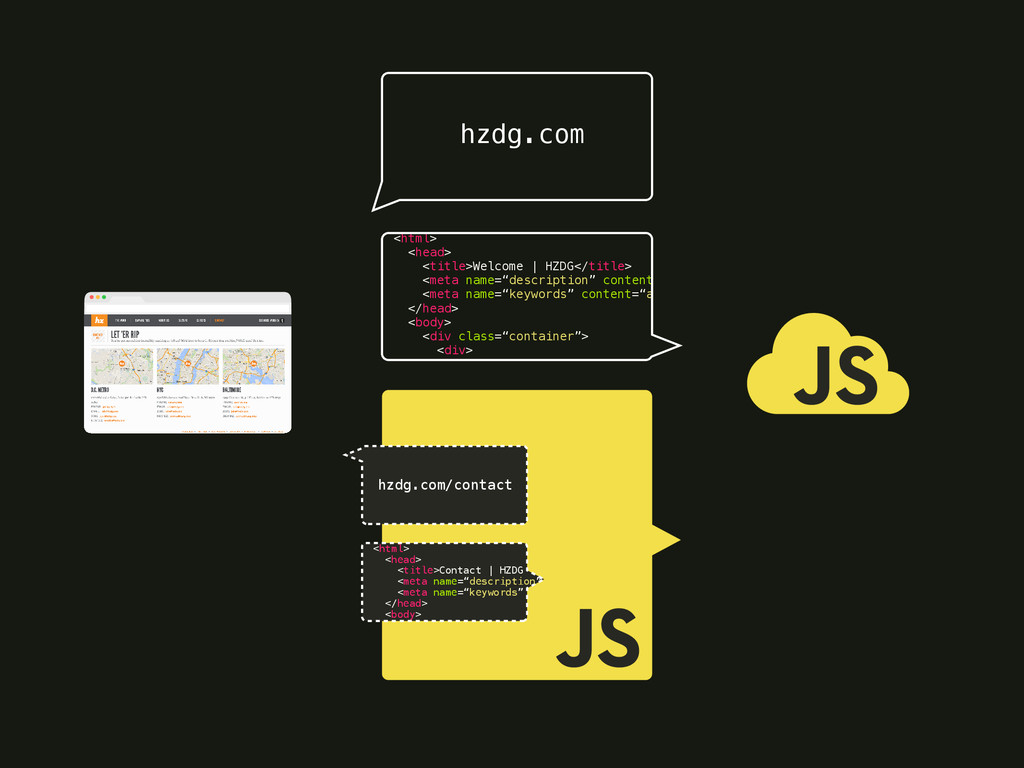
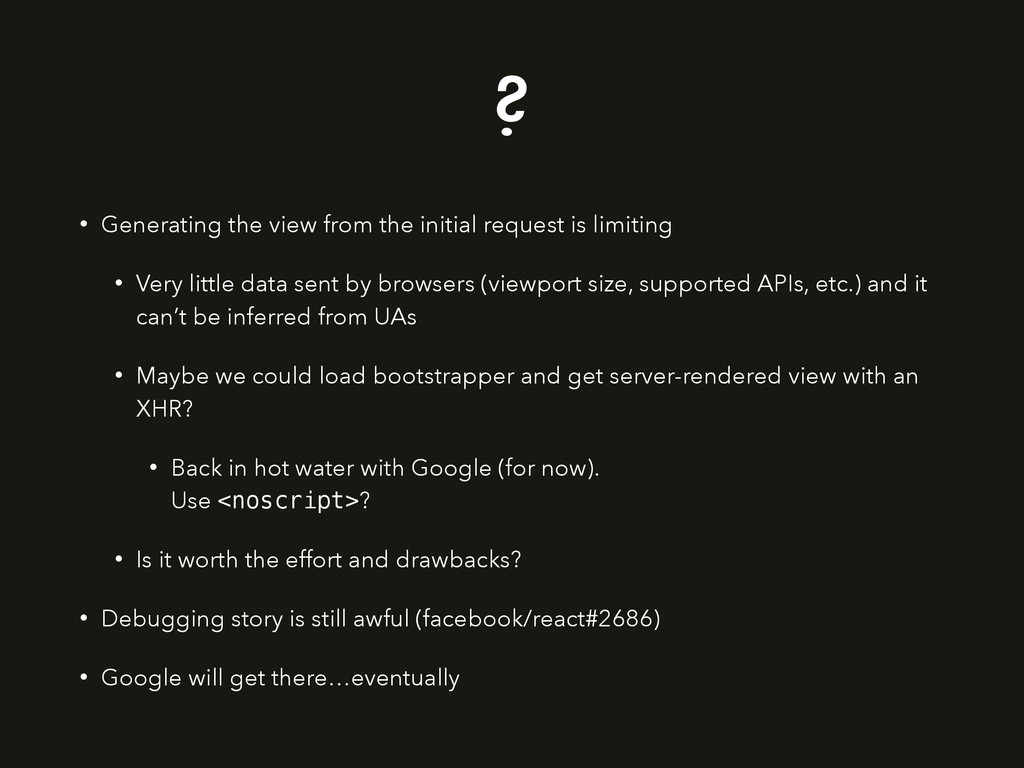
limiting • Very little data sent by browsers (viewport size, supported APIs, etc.) and it can’t be inferred from UAs • Maybe we could load bootstrapper and get server-rendered view with an XHR? • Back in hot water with Google (for now). Use <noscript>? • Is it worth the effort and drawbacks? • Debugging story is still awful (facebook/react#2686) • Google will get there…eventually
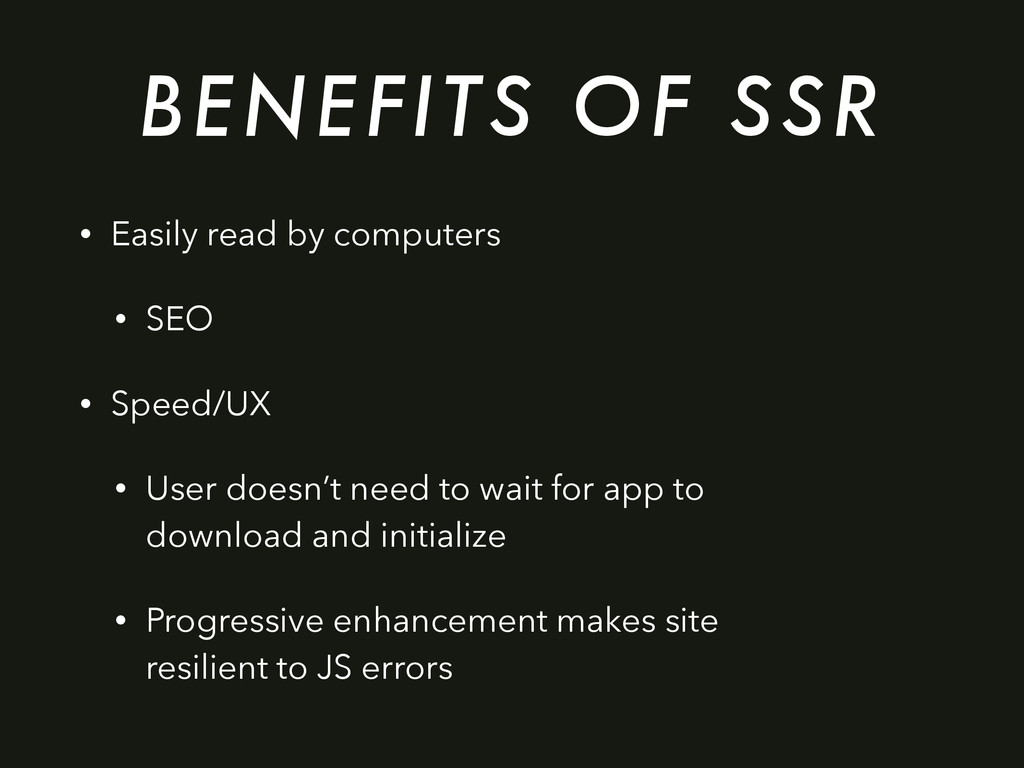
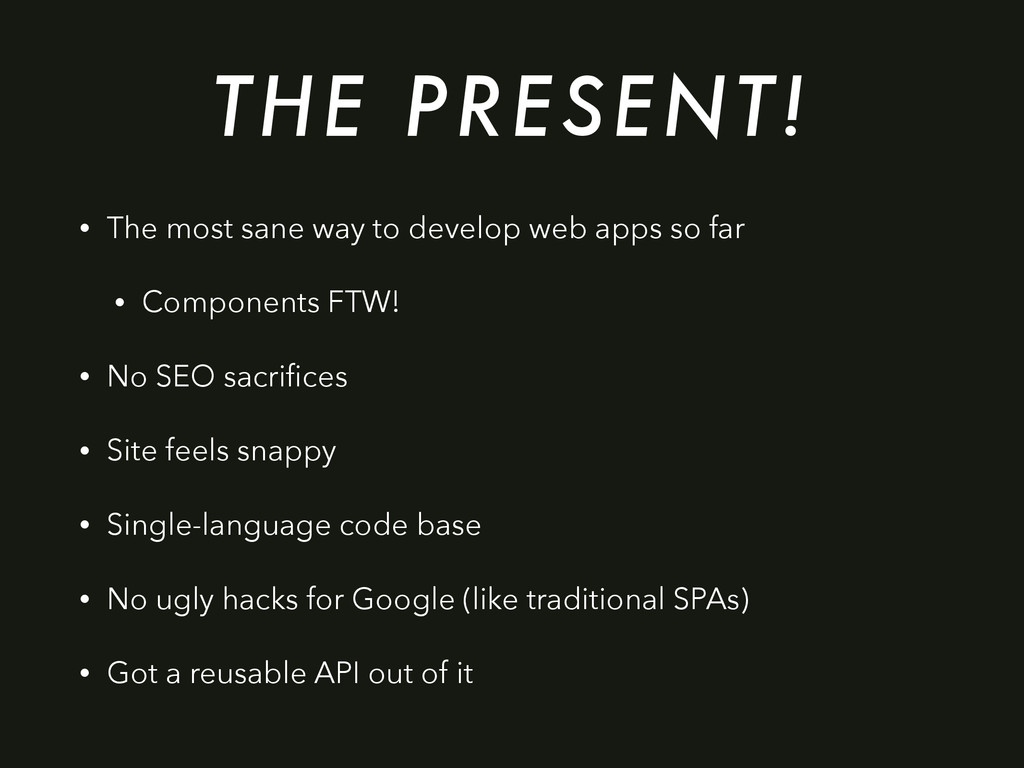
apps so far • Components FTW! • No SEO sacrifices • Site feels snappy • Single-language code base • No ugly hacks for Google (like traditional SPAs) • Got a reusable API out of it


 matthewwithanm
 terapyon
 kenichiodo
 daidaidai
 gree_tech
 takuroabe
 kash1064
 mohab1
 ama_ch
 kakehashi
 occhi
occhi
 minorun365
 stomk
stomk
 notwaldorf
 greggifford
 ammeep
 destraynor
 schroneko
 marcduiker
 jcasabona
 ks91
ks91
 codingconduct
 reverentgeek
 ianozsvald
 kastner














![HZDG.COM MATTHEWWITHANM MATTHEW DAPENA-TRETTER [email protected] HZDG](https://files.speakerdeck.com/presentations/0a1c656333604999b0f3685b99b5b73d/slide_47.jpg)