Upgrade to PRO for Only $50/Year—Limited-Time Offer! 🔥

RxJS, Signals, and Native Observables: Answerin...

RxJS, Signals, and Native Observables: Answering the Critical Questions

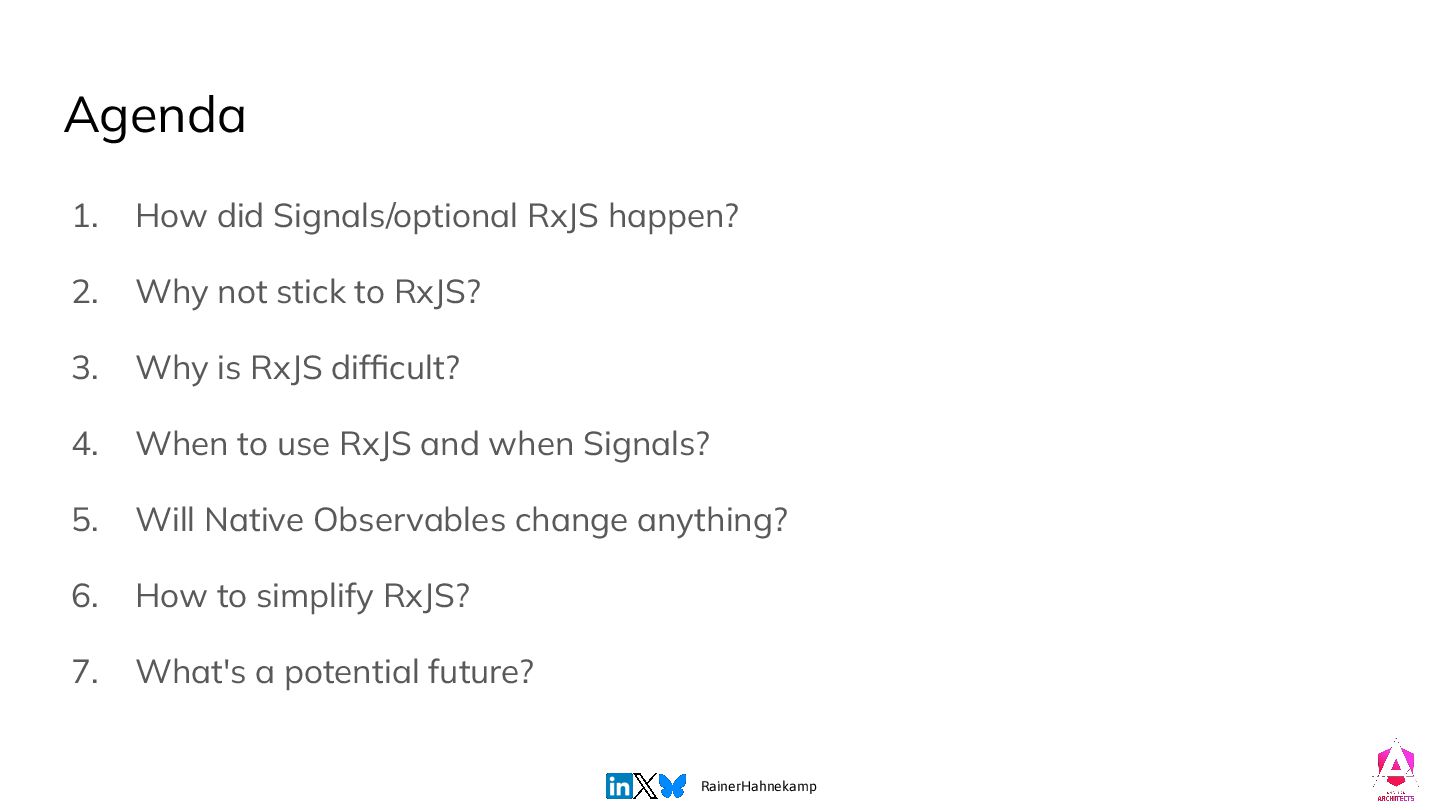
RxJS, Signals, and now Native Observables - Angular developers are currently facing a paradox of choice. The move toward "optional RxJS" has sparked debate, confusion, and excitement. To cut through the noise, this session is structured around seven guiding questions that tell the story of Angular's reactive future.
We will explore:
- The Context: How did the shift to Signals and optional RxJS happen, and why didn't we just stick to RxJS?
- The Friction: Why is RxJS perceived as difficult, and how can we simplify our usage of it today?
- The Strategy: When exactly should you use Signals, and when are Observables still superior?
- The Horizon: Will Native Observables change the game again, and what does the future likely hold?

Avatar for Rainer Hahnekamp

Rainer Hahnekamp

December 03, 2025
Tweet

More Decks by Rainer Hahnekamp

Other Decks in Technology

Transcript

  1. About Me... https://www.youtube.com/ @RainerHahnekamp https://www.ng-news.com • Rainer Hahnekamp • ANGULARarchitects.io

    • NgRx Core Team • Developer / Trainer / Speaker @RainerHahnekamp Open Source Projects NgRx Toolkit Testronaut NgRx Sheriff
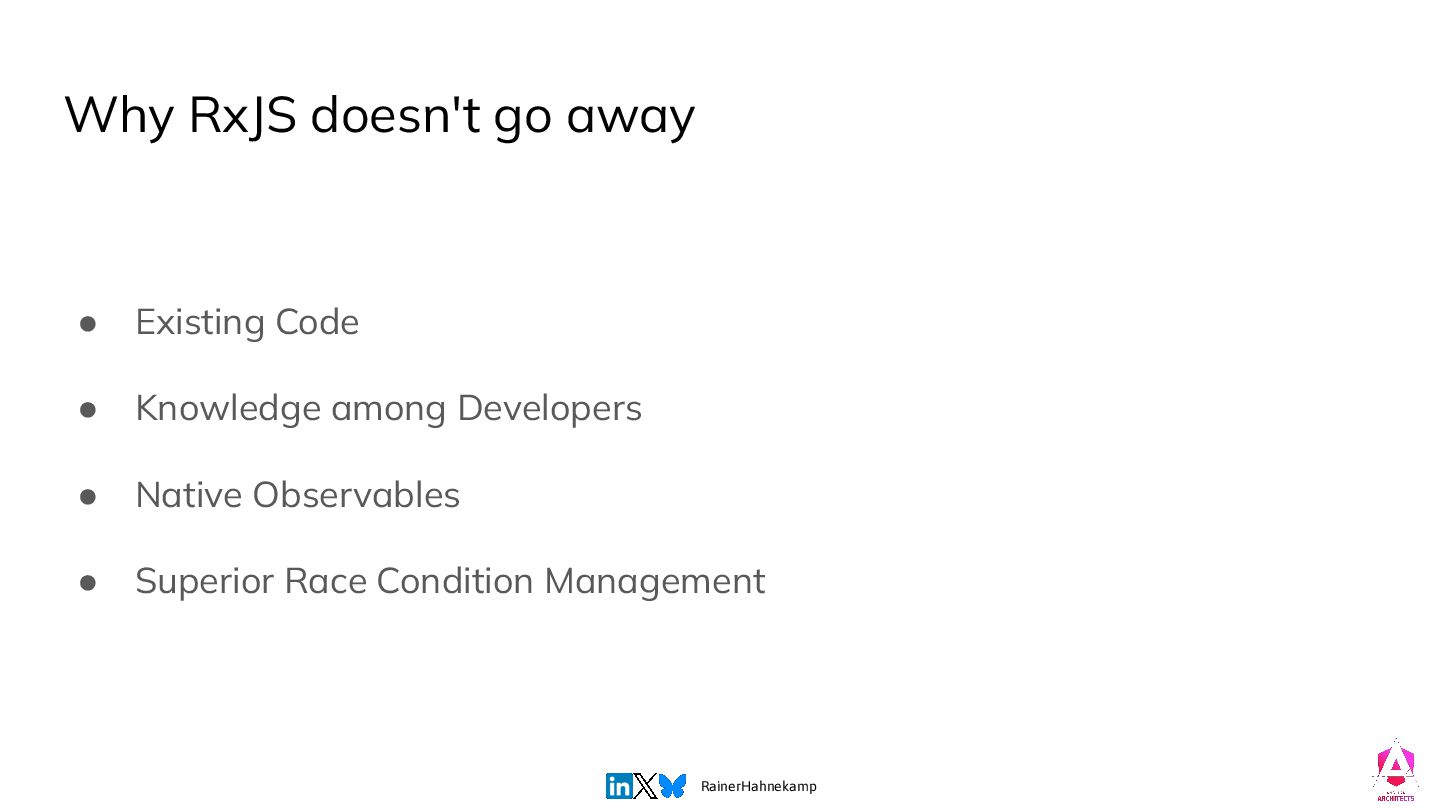
  2. RainerHahnekamp Why RxJS doesn't go away • Existing Code •

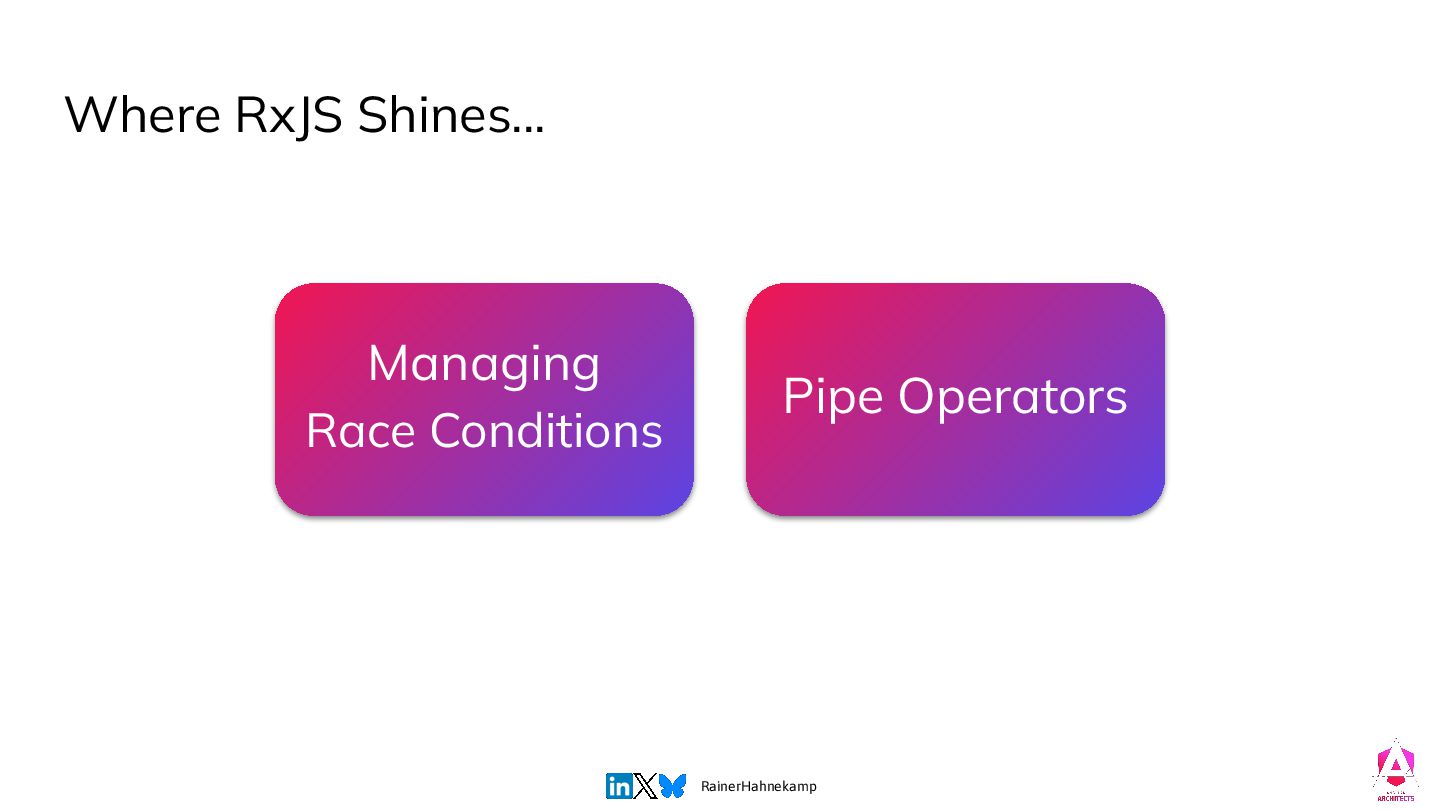
    Knowledge among Developers • Native Observables • Superior Race Condition Management
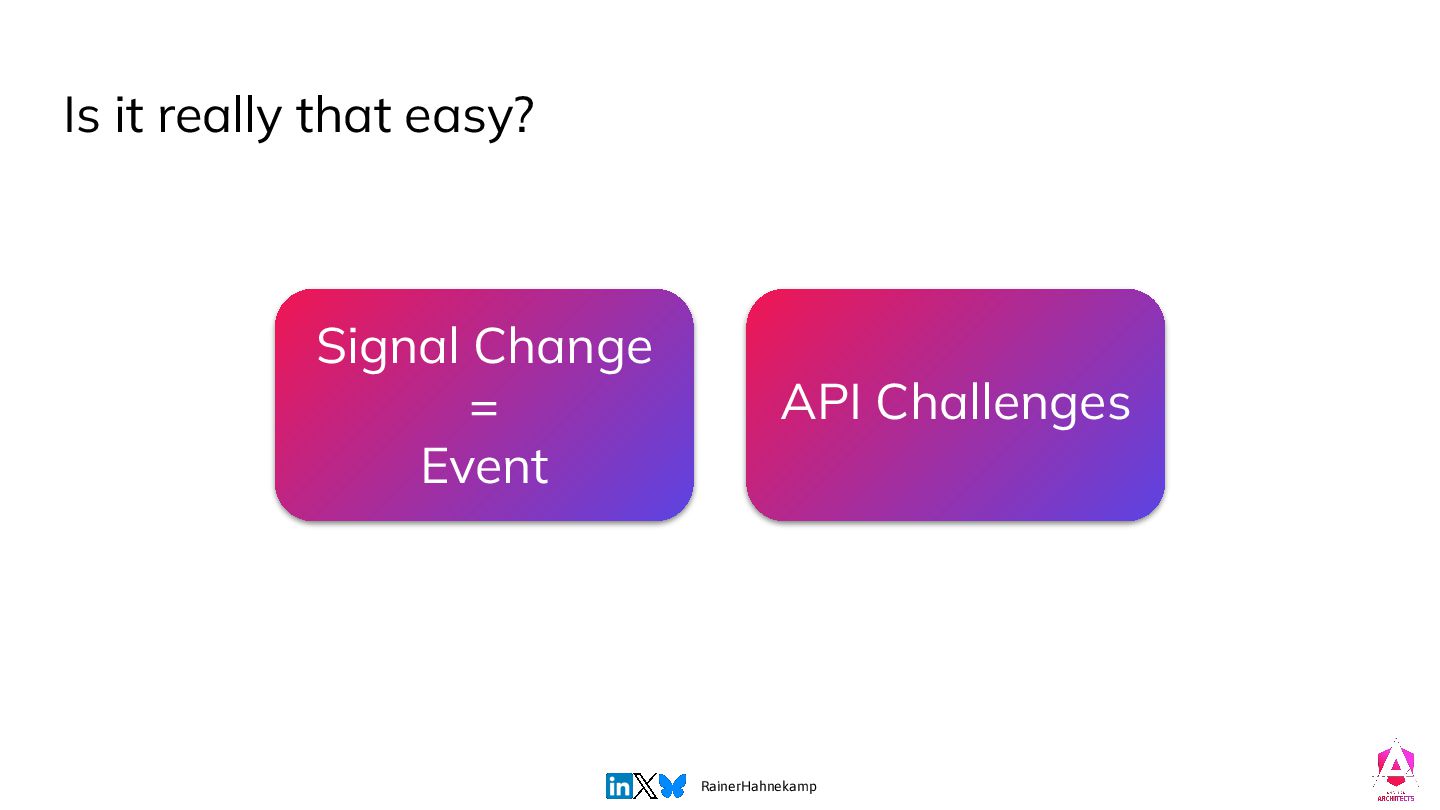
  3. RainerHahnekamp Agenda 1. How did Signals/optional RxJS happen? 2. Why

    not stick to RxJS? 3. Why is RxJS difficult? 4. When to use RxJS and when Signals? 5. Will Native Observables change anything? 6. How to simplify RxJS? 7. What's a potential future?
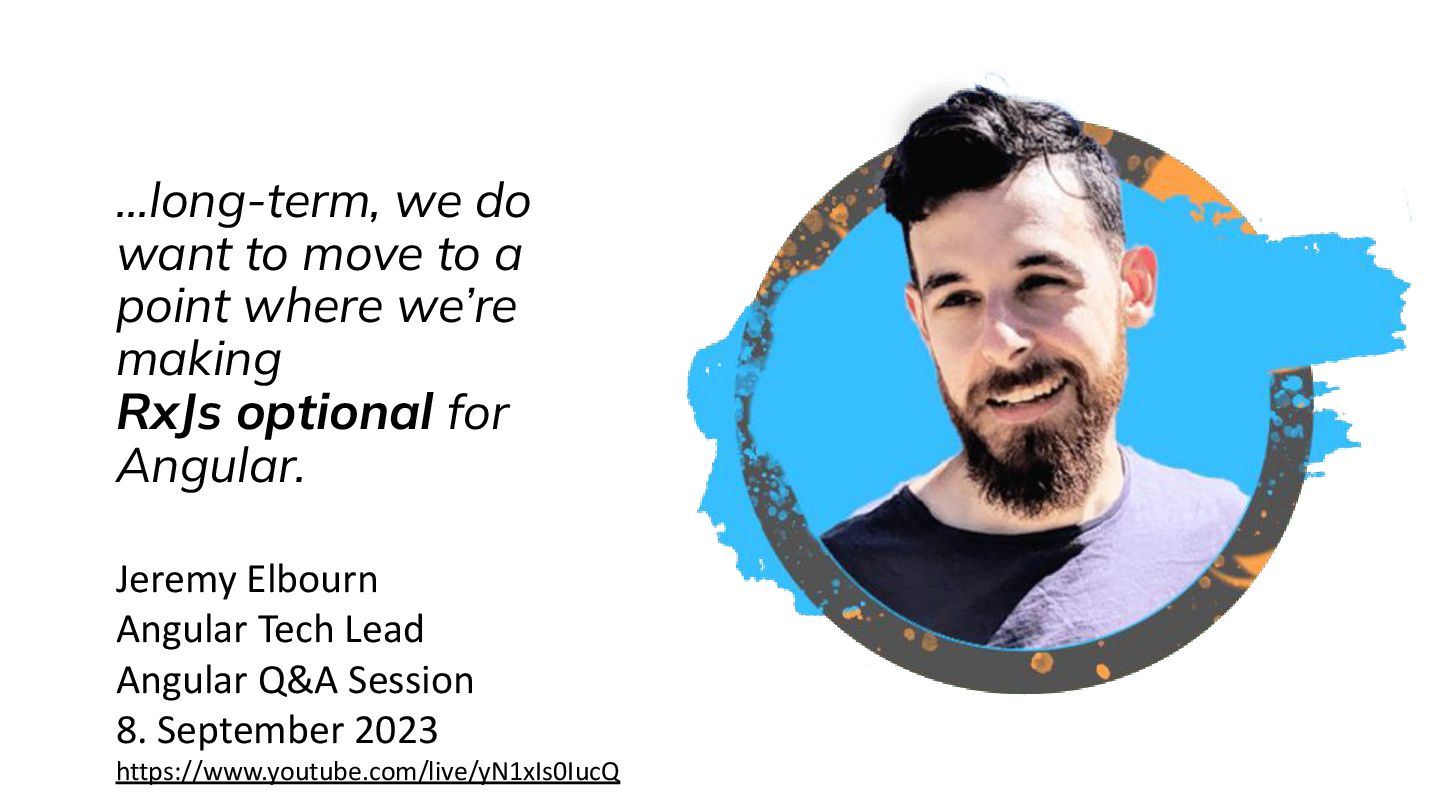
  4. …long-term, we do want to move to a point where

    we’re making RxJs optional for Angular. Jeremy Elbourn Angular Tech Lead Angular Q&A Session 8. September 2023 https://www.youtube.com/live/yN1xIs0IucQ
  5. We primarily want to remove it (RxJs) from the critical

    learning journey. Minko Gechev Angular Product Lead Ng-Poland 2024 https://www.youtube.com/watch?v=QtTLZRIVaKk
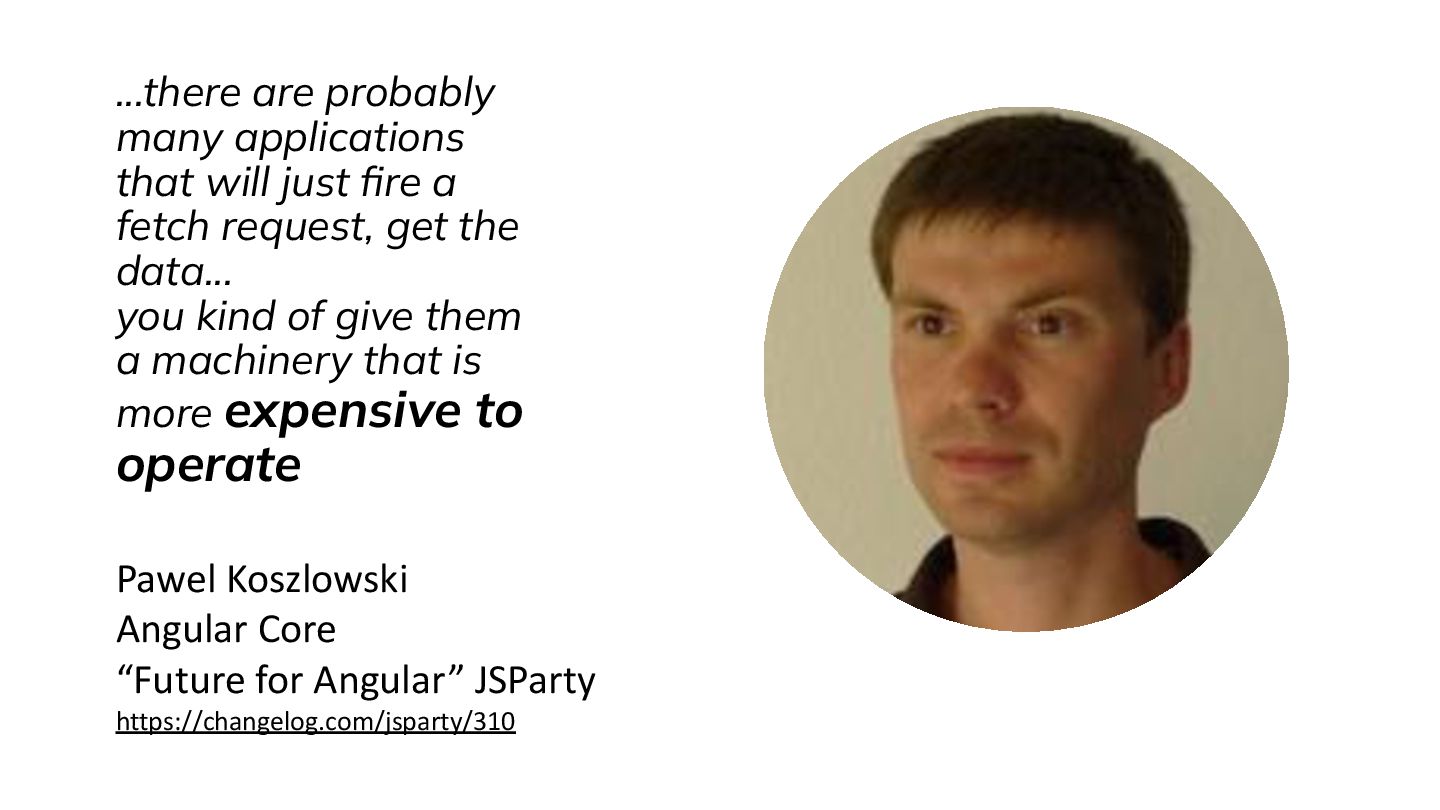
  6. …there are probably many applications that will just fire a

    fetch request, get the data… you kind of give them a machinery that is more expensive to operate Pawel Koszlowski Angular Core “Future for Angular” JSParty https://changelog.com/jsparty/310
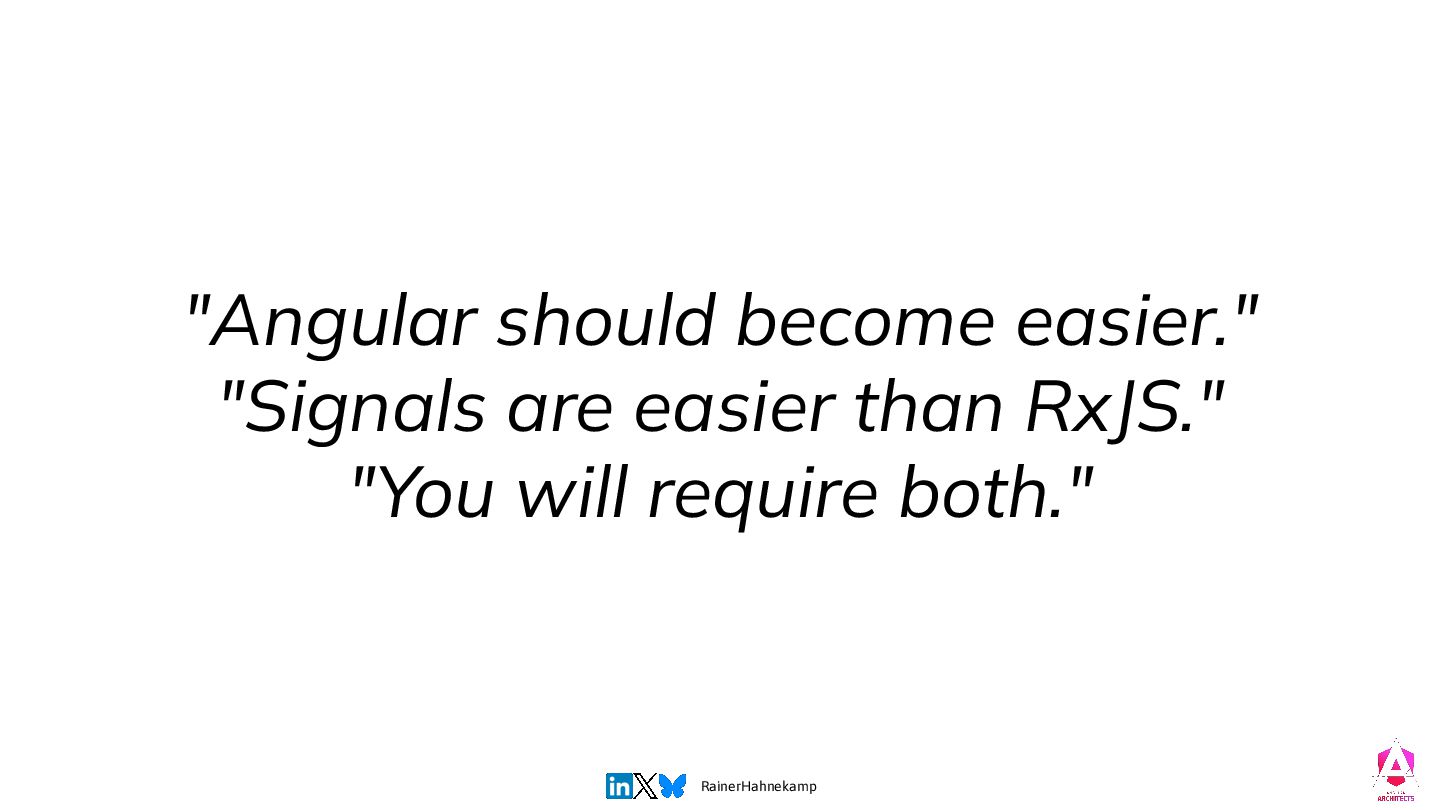
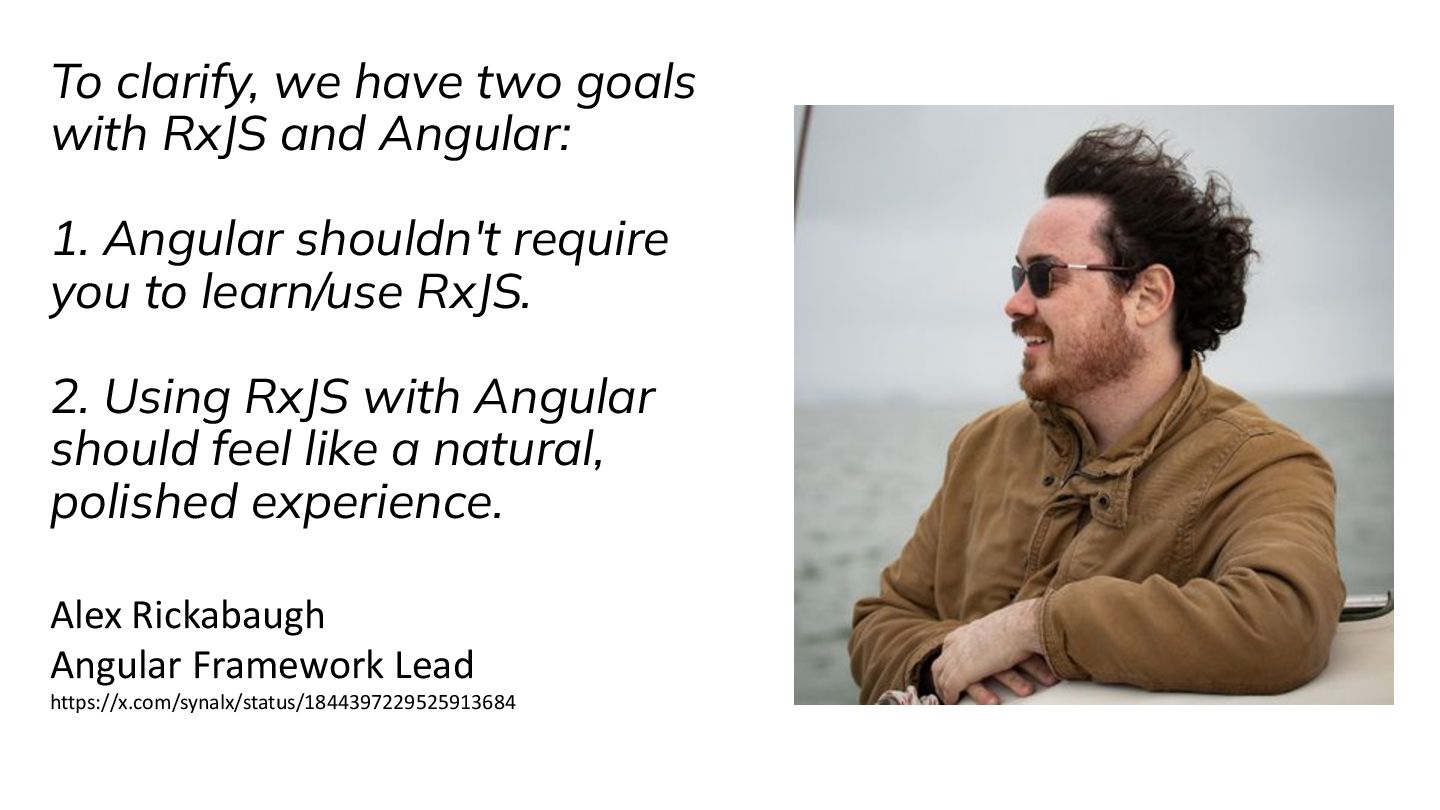
  7. To clarify, we have two goals with RxJS and Angular:

    1. Angular shouldn't require you to learn/use RxJS. 2. Using RxJS with Angular should feel like a natural, polished experience. Alex Rickabaugh Angular Framework Lead https://x.com/synalx/status/1844397229525913684
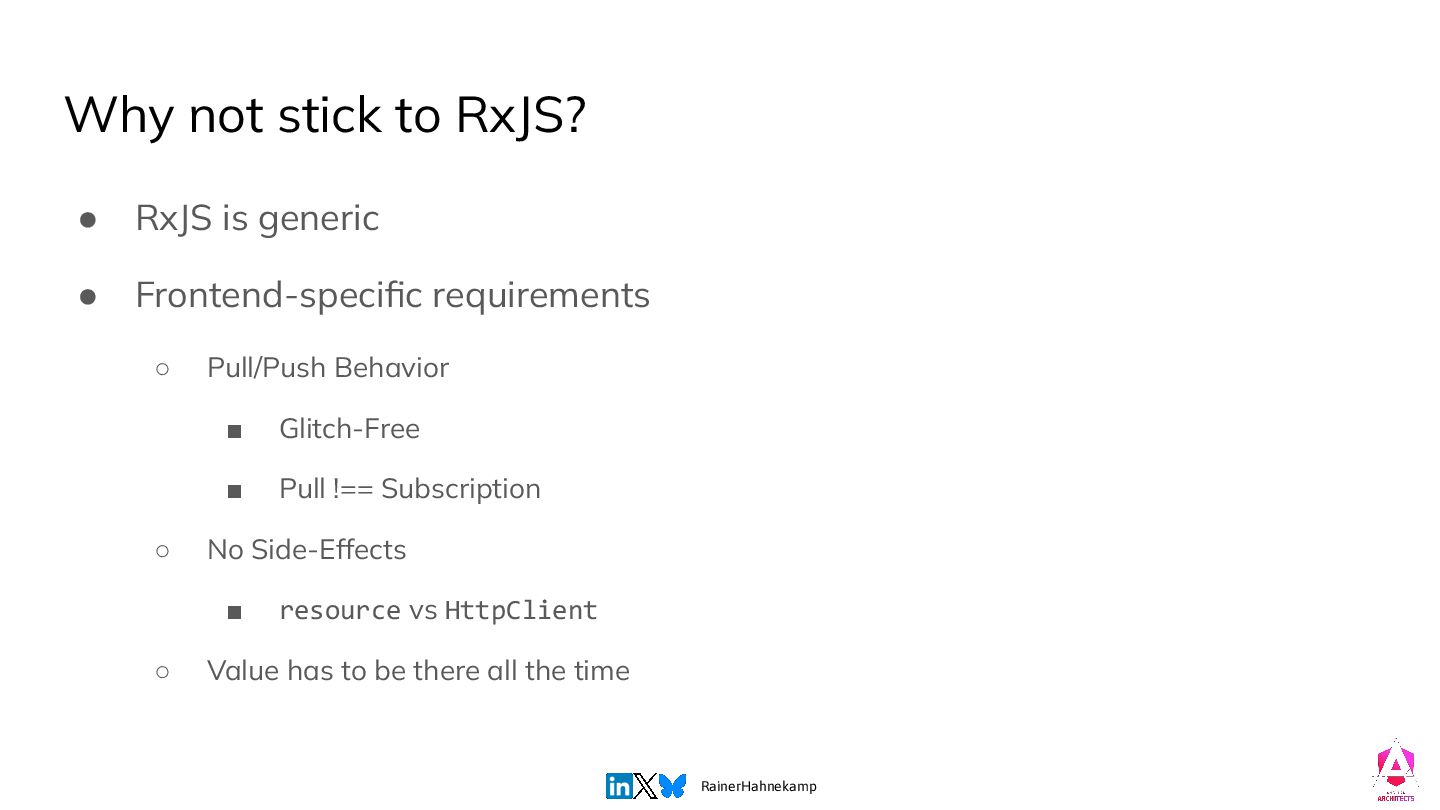
  8. RainerHahnekamp Why not stick to RxJS? • RxJS is generic

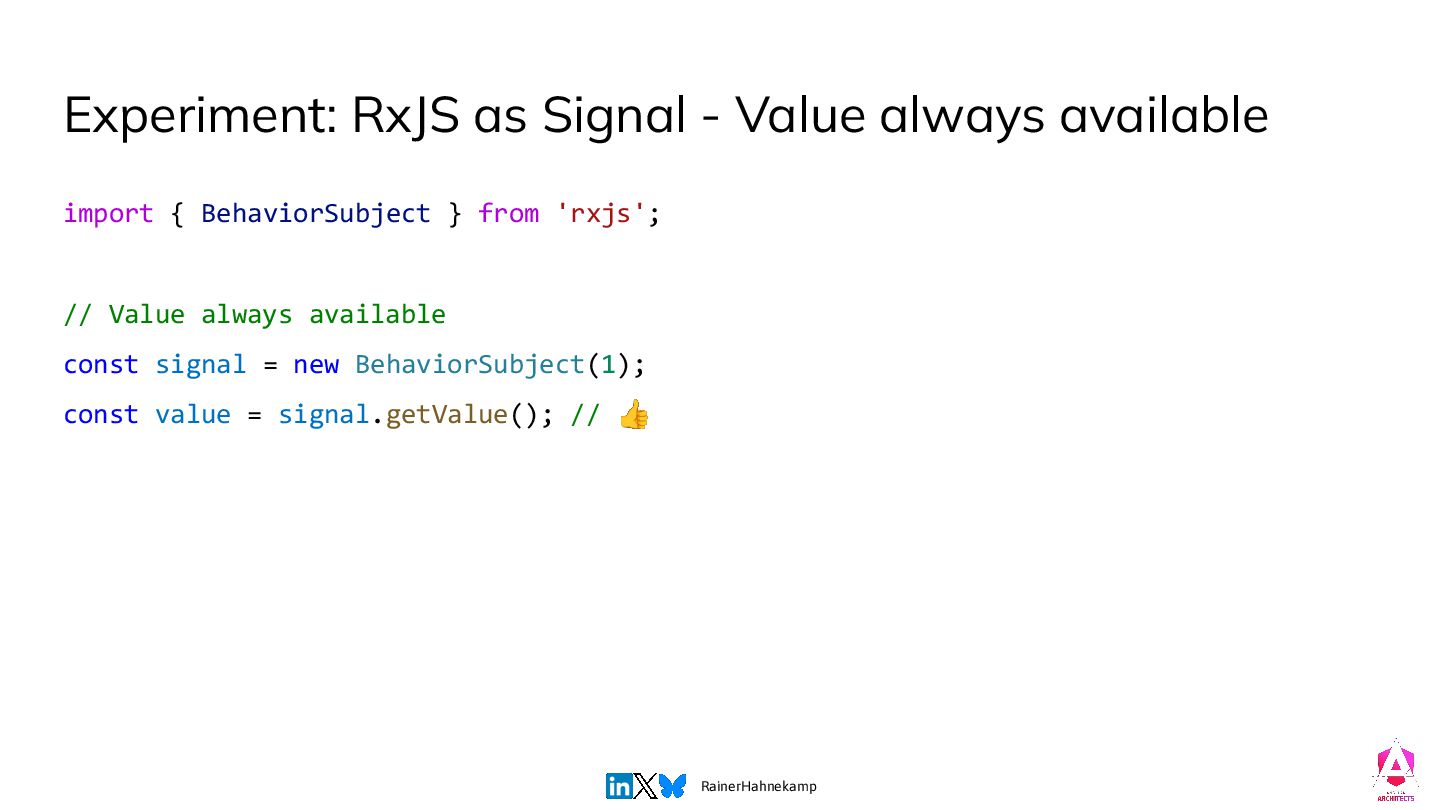
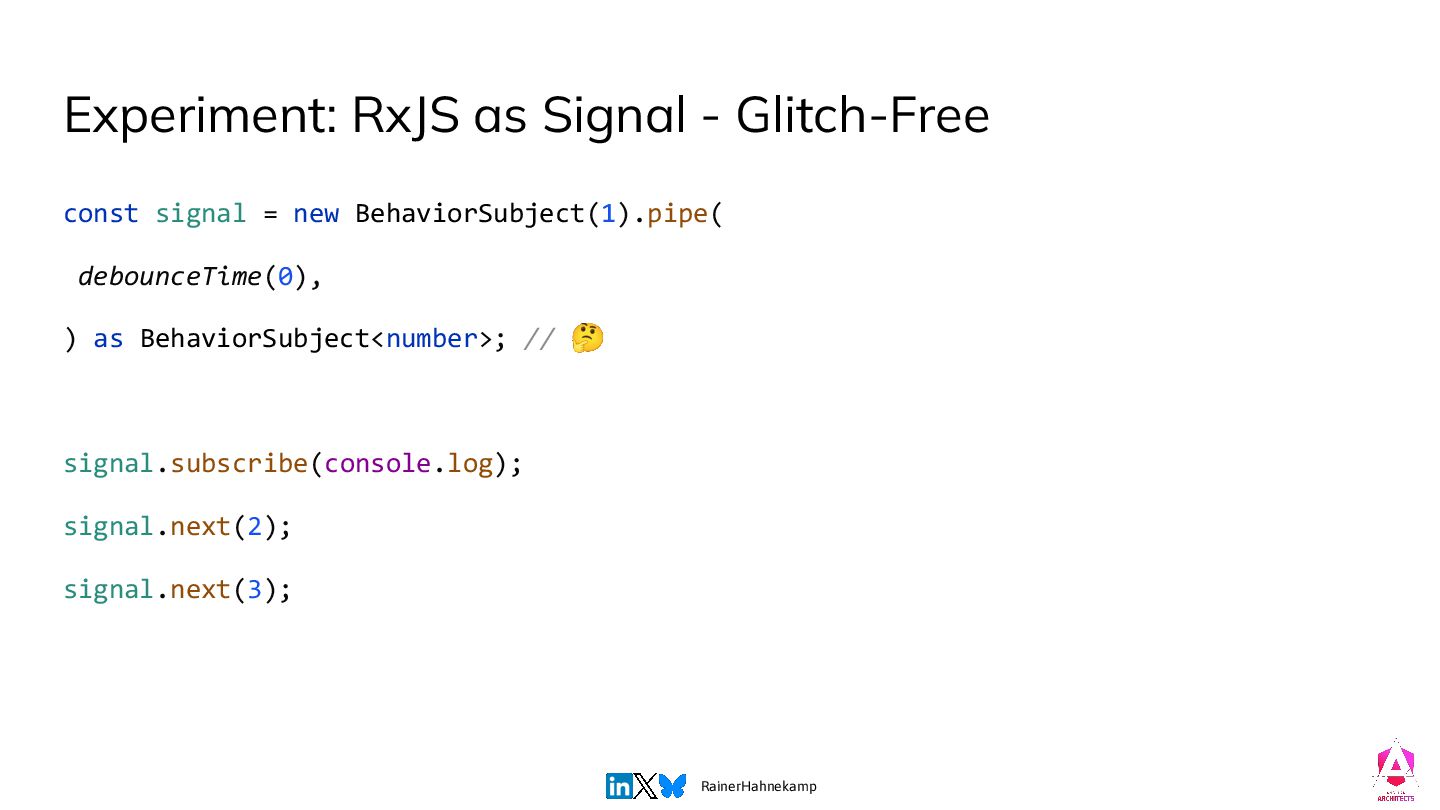
    • Frontend-specific requirements ◦ Pull/Push Behavior ▪ Glitch-Free ▪ Pull !== Subscription ◦ No Side-Effects ▪ resource vs HttpClient ◦ Value has to be there all the time
  9. RainerHahnekamp Experiment: RxJS as Signal - Value always available import

    { BehaviorSubject } from 'rxjs'; // Value always available const signal = new BehaviorSubject(1); const value = signal.getValue(); // 👍
  10. RainerHahnekamp Experiment: RxJS as Signal - Glitch-Free const signal =

    new BehaviorSubject(1).pipe( debounceTime(0), ) as BehaviorSubject<number>; // 🤔 signal.subscribe(console.log); signal.next(2); signal.next(3);
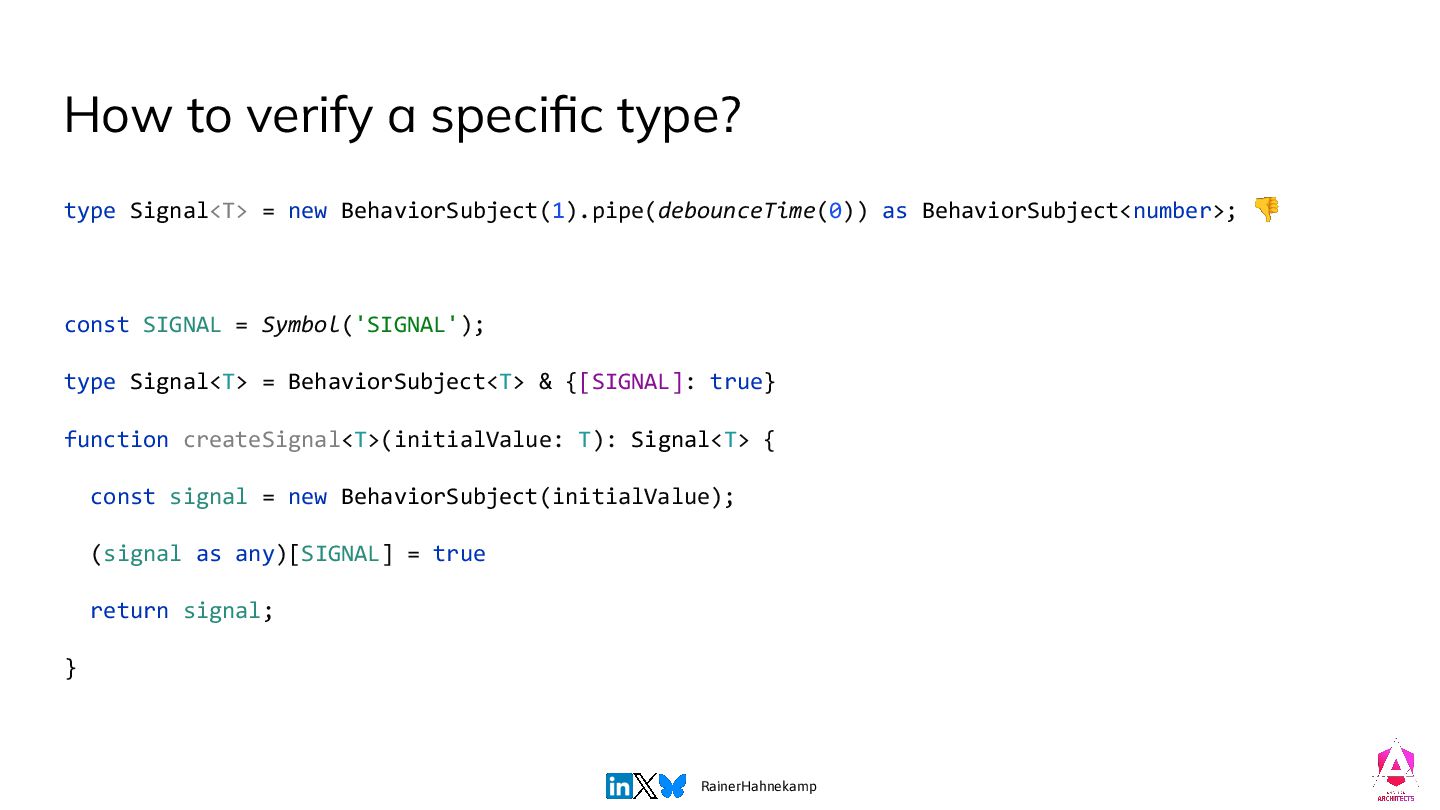
  11. RainerHahnekamp How to verify a specific type? type Signal<T> =

    new BehaviorSubject(1).pipe(debounceTime(0)) as BehaviorSubject<number>; 👎 const SIGNAL = Symbol('SIGNAL'); type Signal<T> = BehaviorSubject<T> & {[SIGNAL]: true} function createSignal<T>(initialValue: T): Signal<T> { const signal = new BehaviorSubject(initialValue); (signal as any)[SIGNAL] = true return signal; }
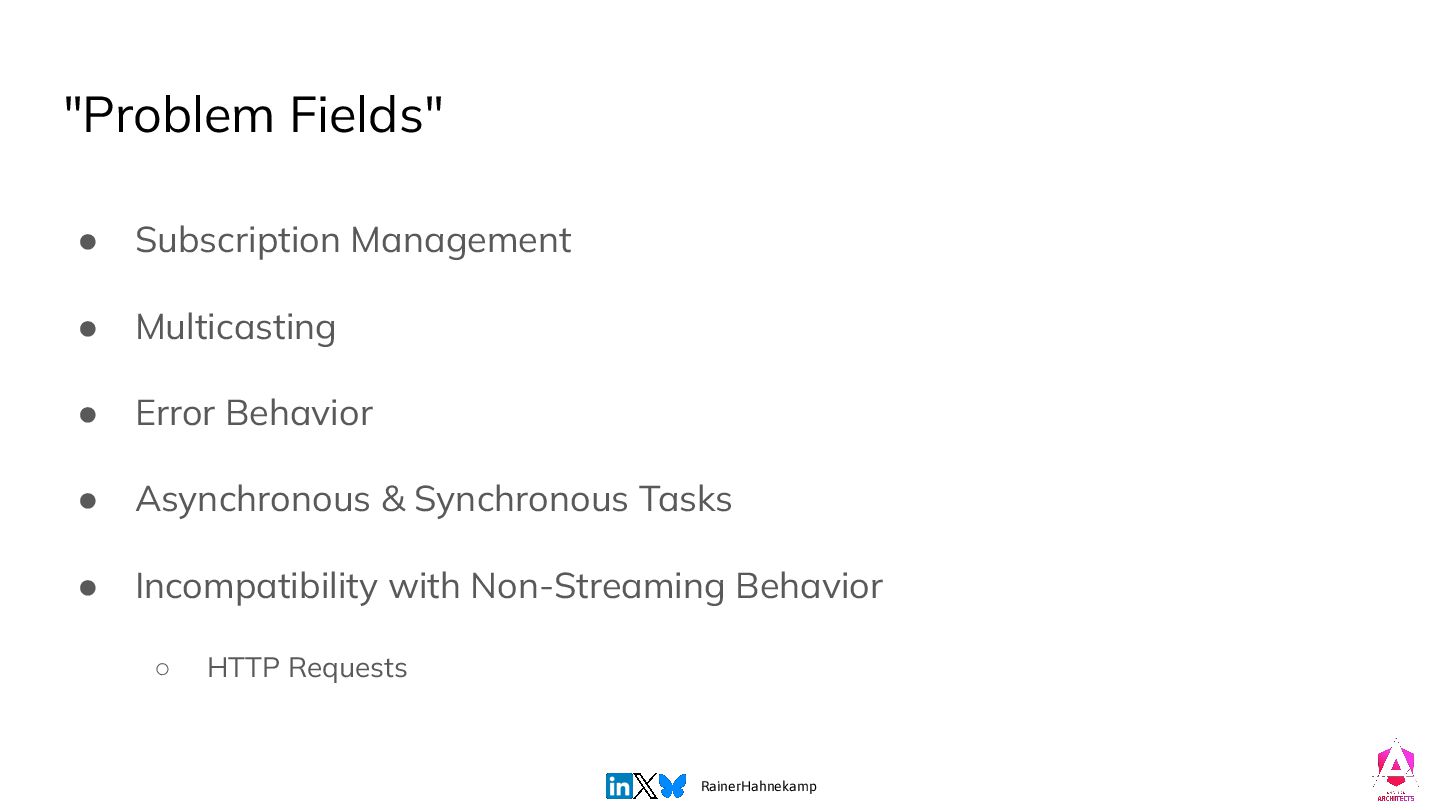
  12. RainerHahnekamp "Problem Fields" • Subscription Management • Multicasting • Error

    Behavior • Asynchronous & Synchronous Tasks • Incompatibility with Non-Streaming Behavior ◦ HTTP Requests
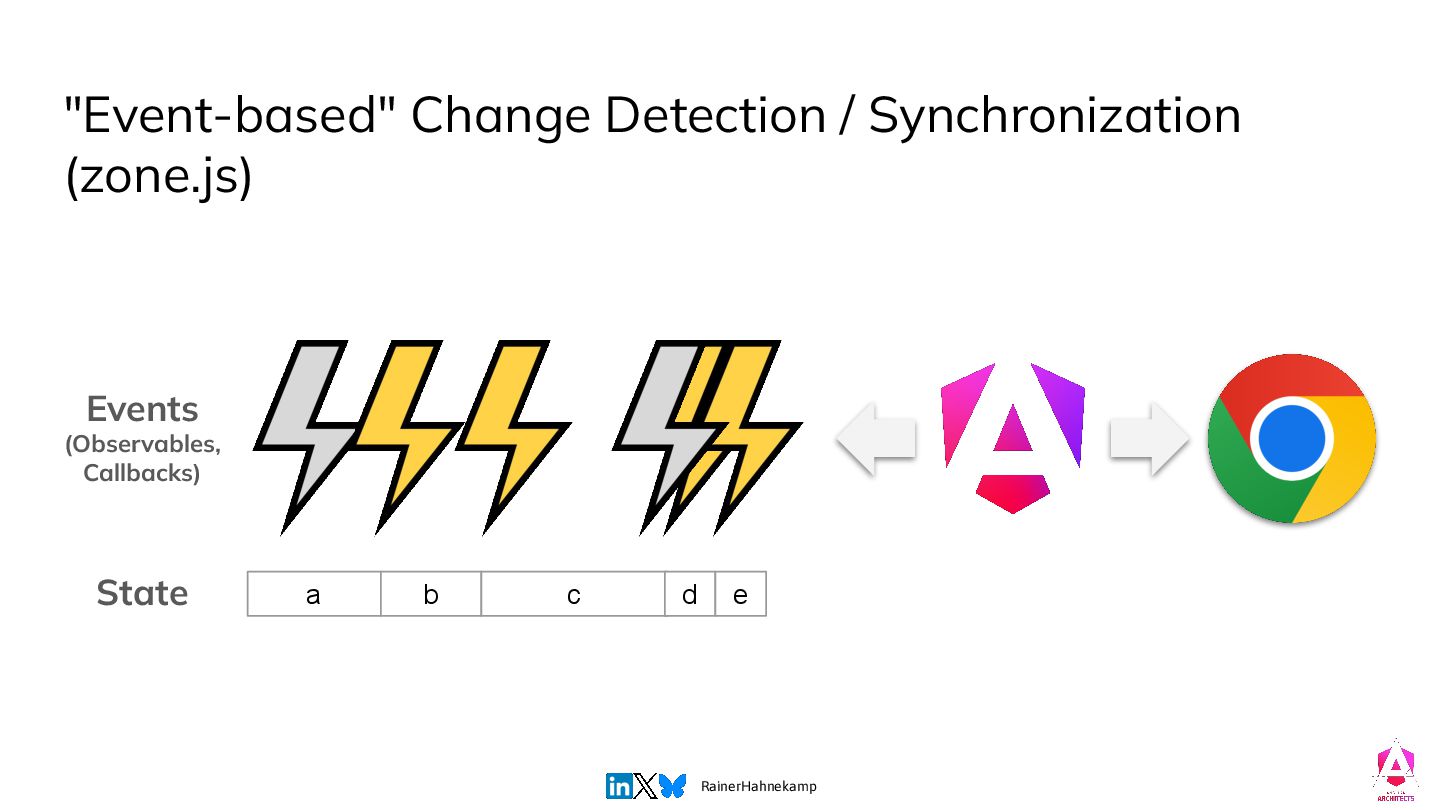
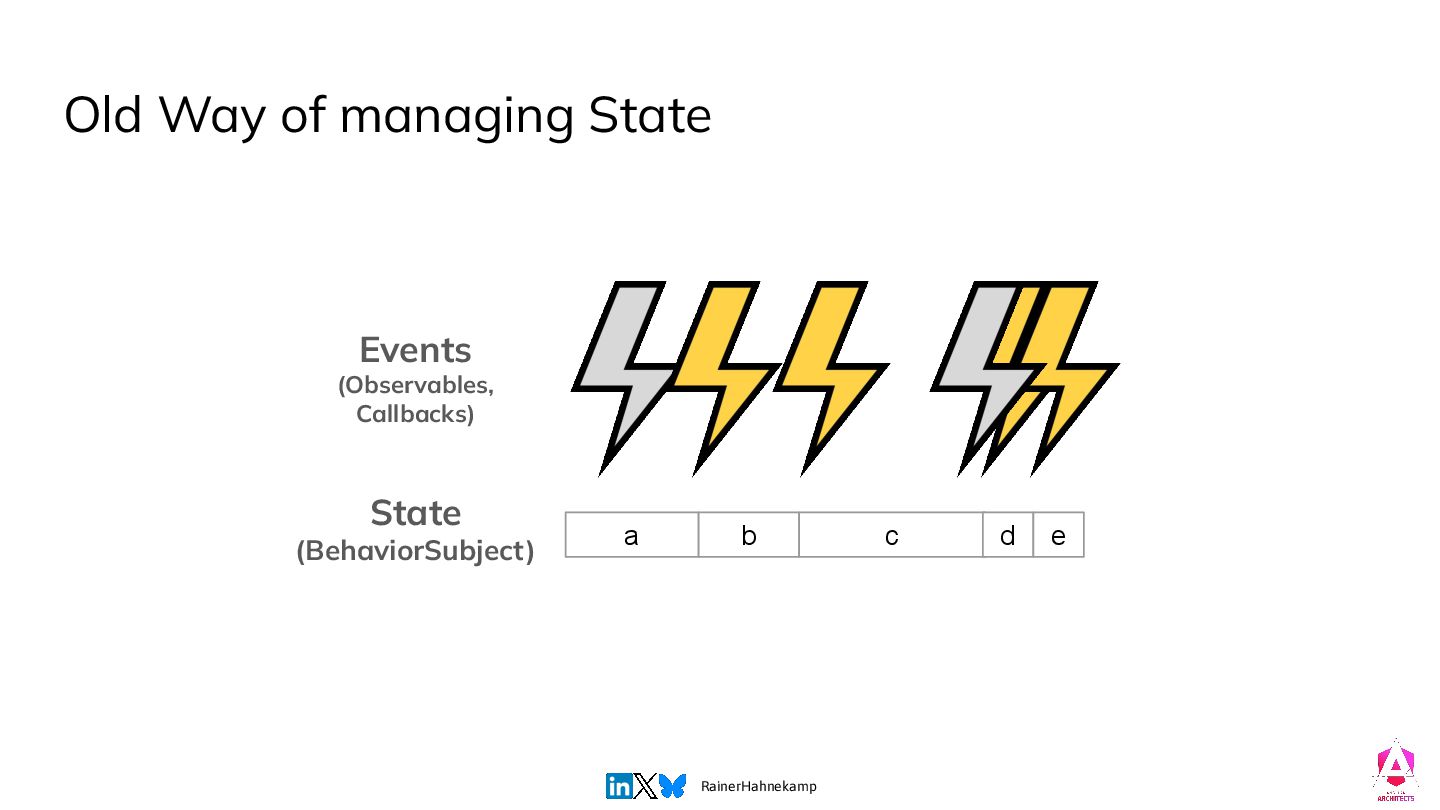
  13. RainerHahnekamp a b c d e State Events (Observables, Callbacks)

    "Event-based" Change Detection / Synchronization (zone.js)
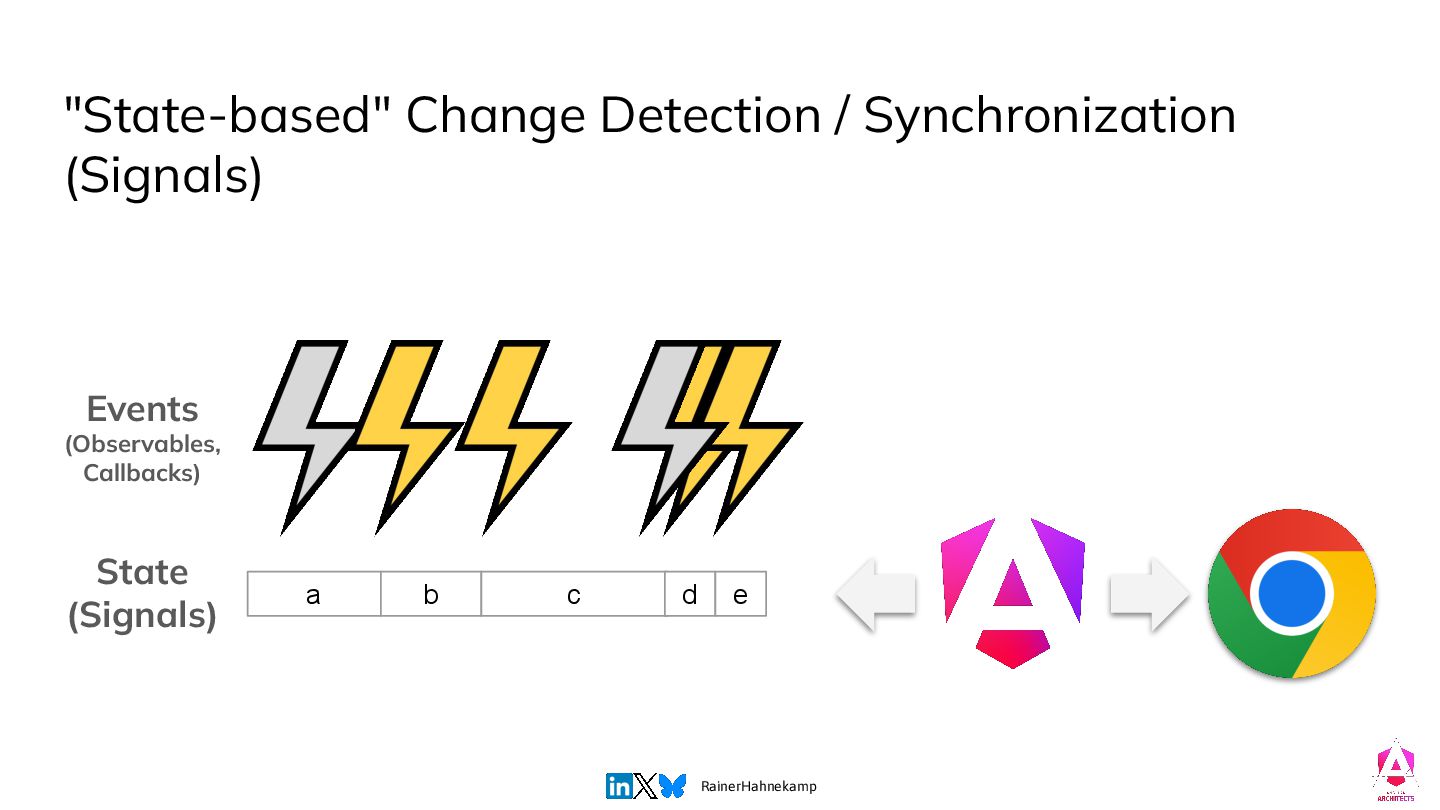
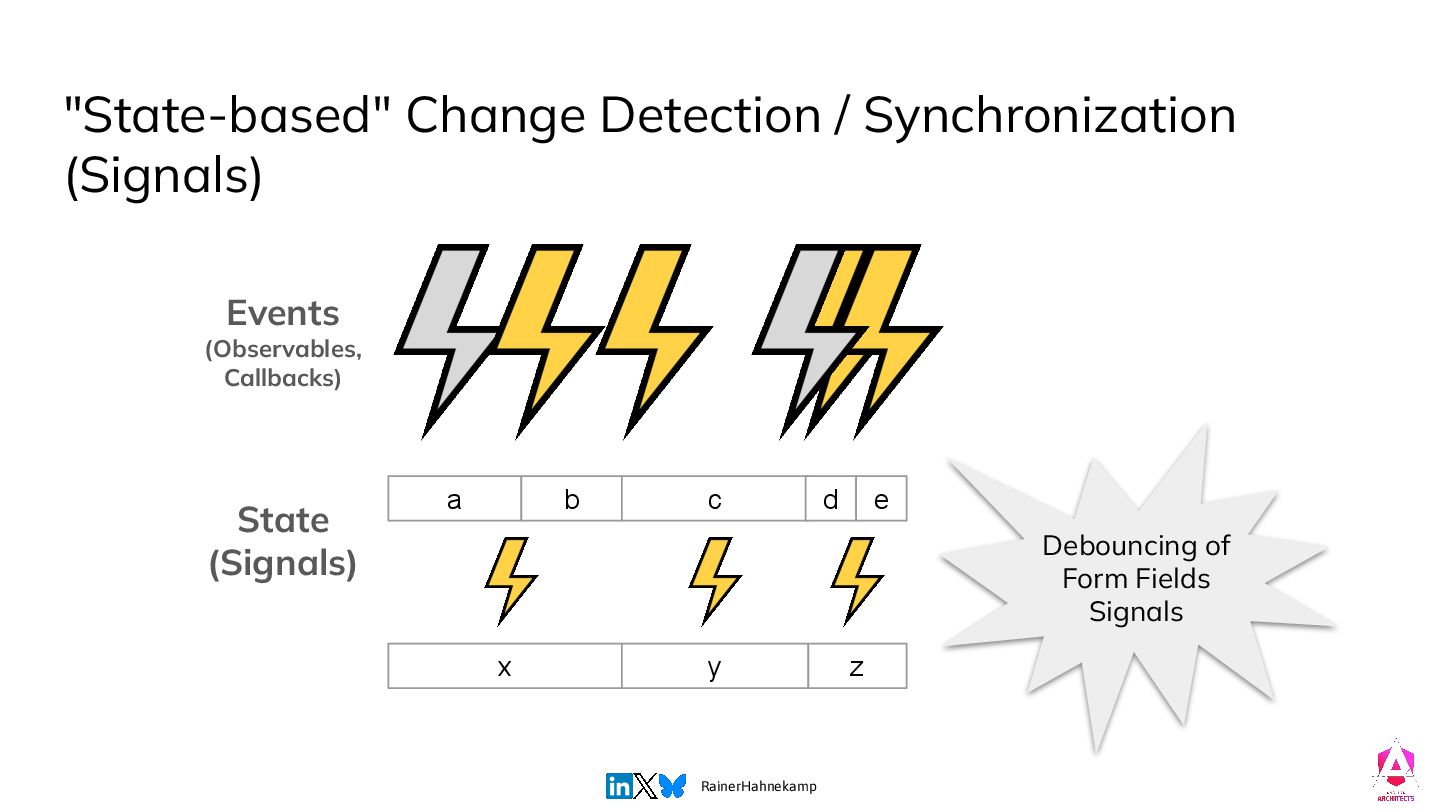
  14. RainerHahnekamp a b c d e State (Signals) Events (Observables,

    Callbacks) "State-based" Change Detection / Synchronization (Signals)
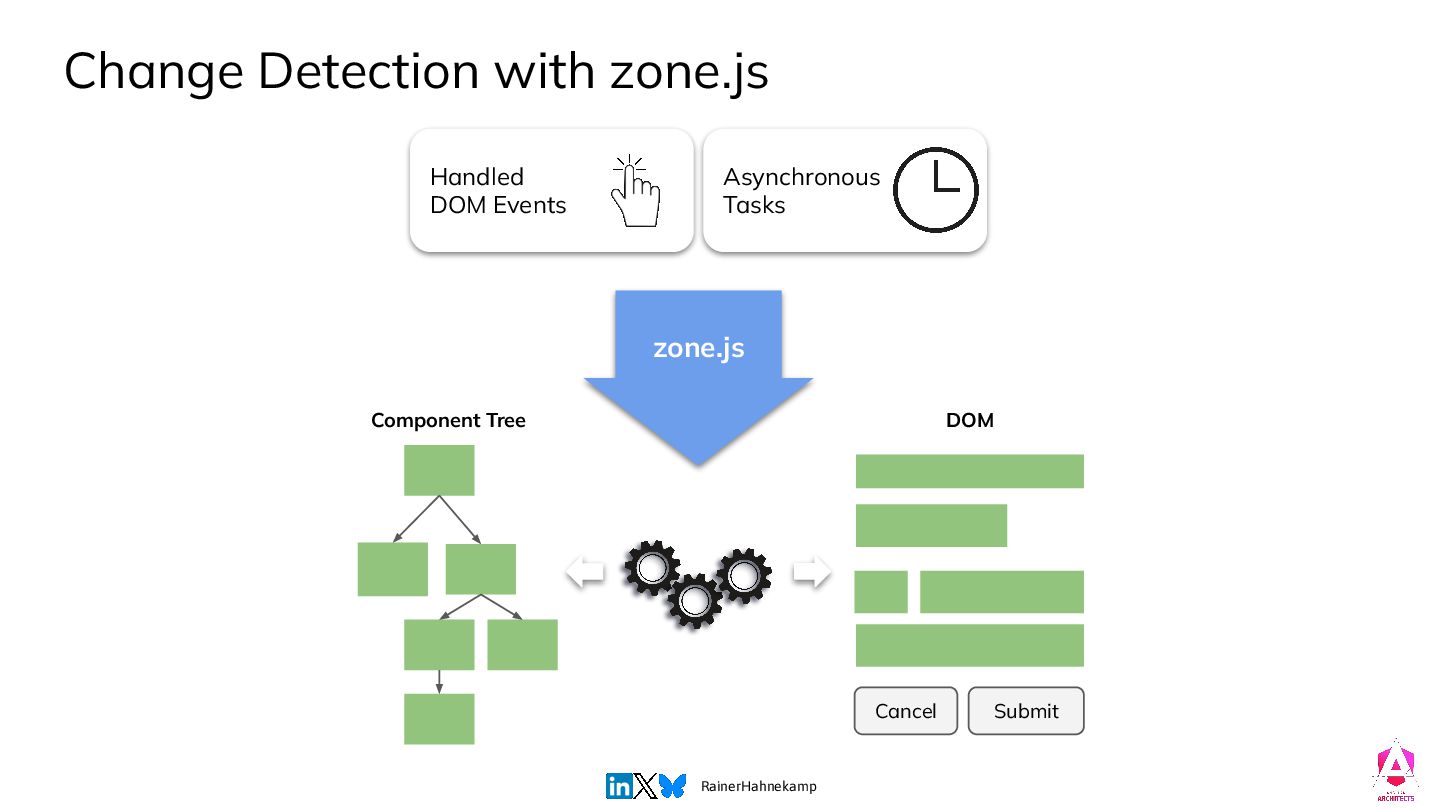
  15. RainerHahnekamp Component Tree DOM Submit Cancel zone.js Handled DOM Events

    Asynchronous Tasks Change Detection with zone.js
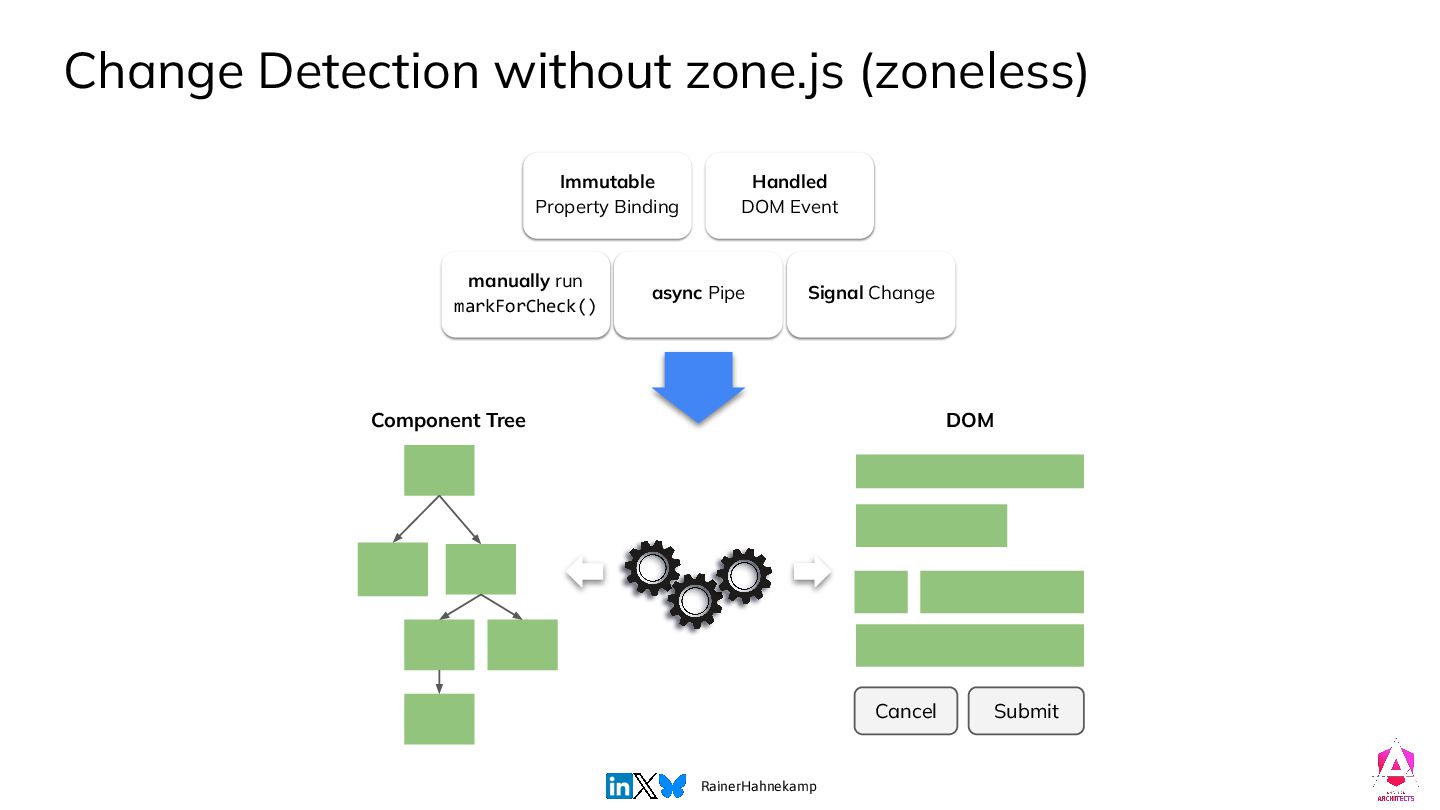
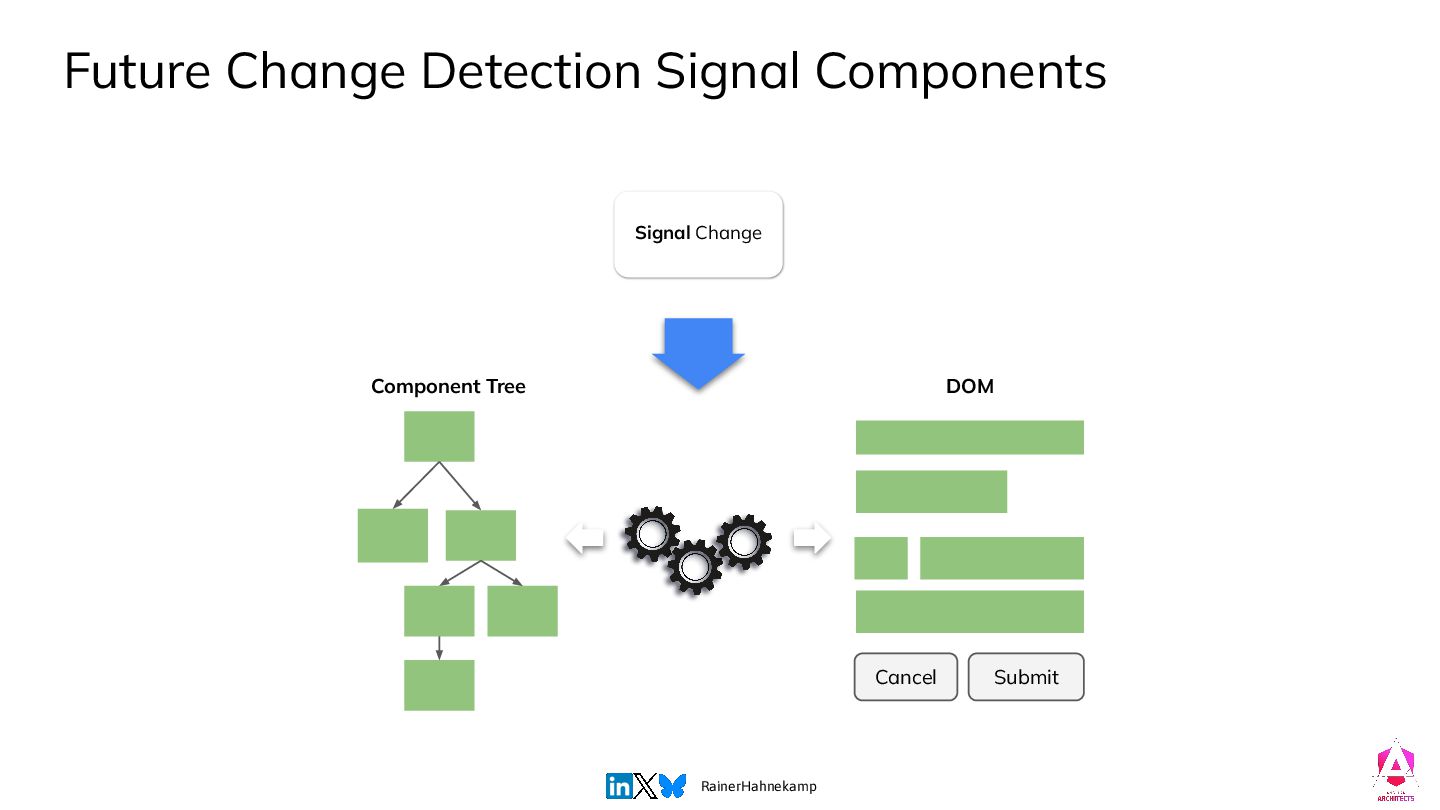
  16. RainerHahnekamp Component Tree DOM Submit Cancel Change Detection without zone.js

    (zoneless) async Pipe Signal Change Handled DOM Event Immutable Property Binding manually run markForCheck()
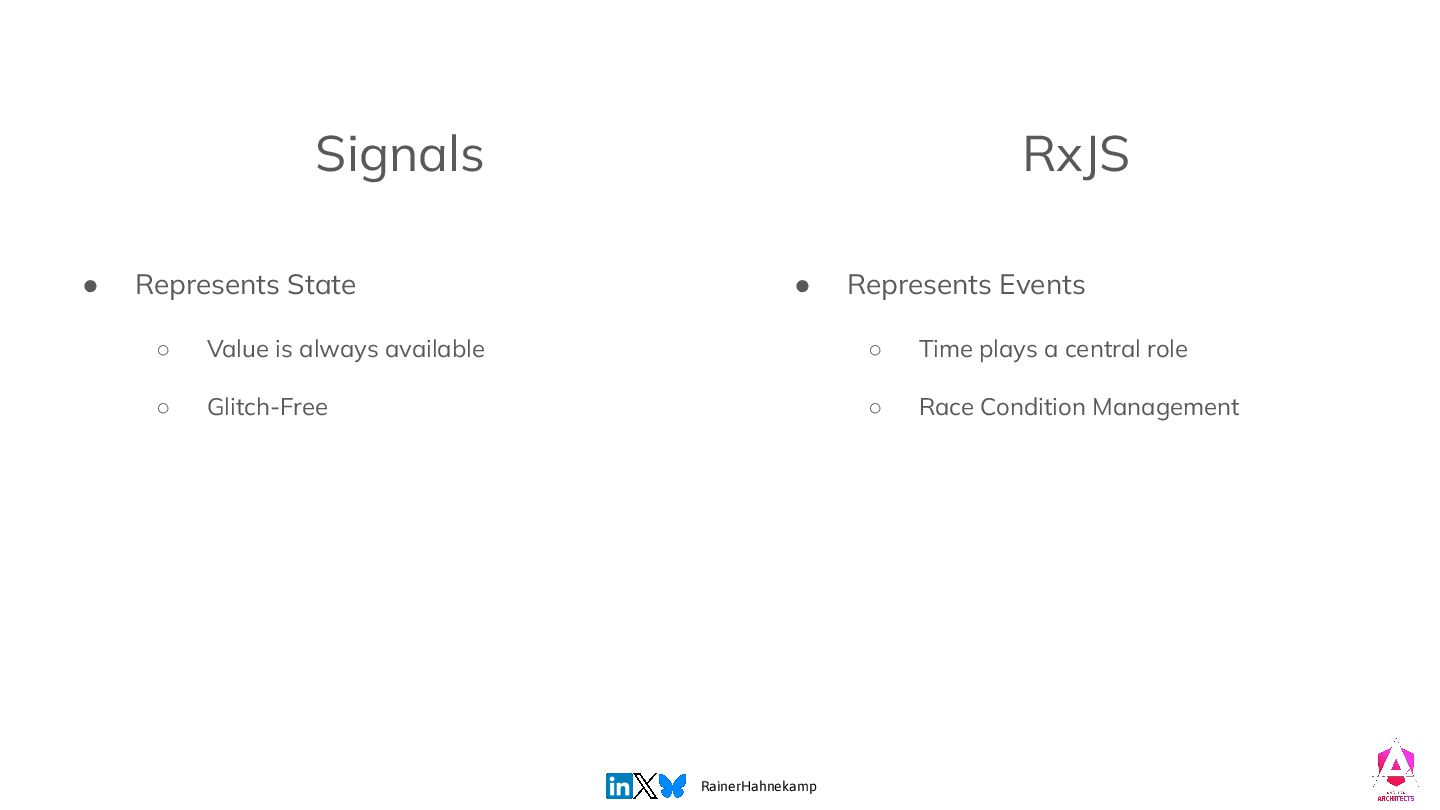
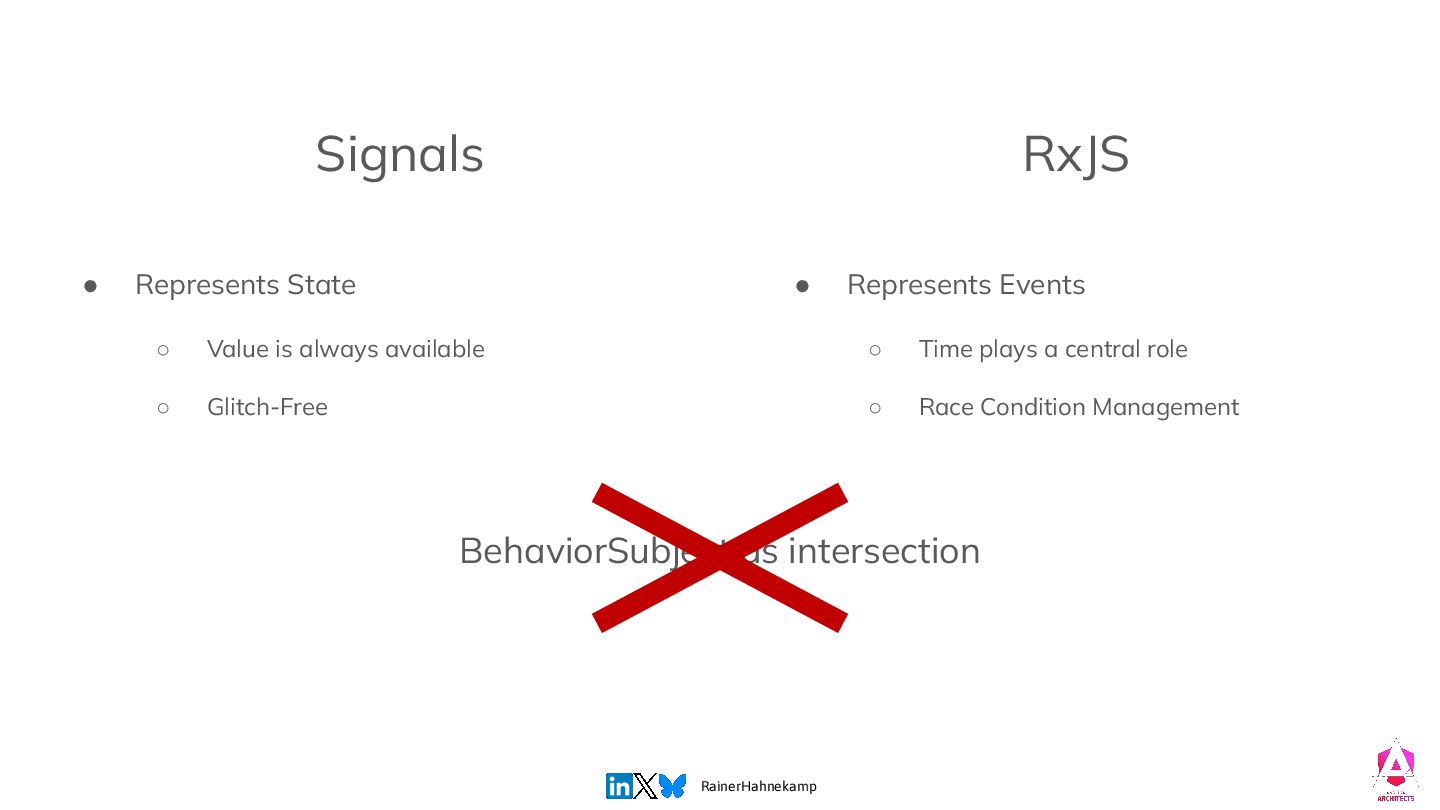
  17. RainerHahnekamp Signals • Represents State ◦ Value is always available

    ◦ Glitch-Free RxJS • Represents Events ◦ Time plays a central role ◦ Race Condition Management
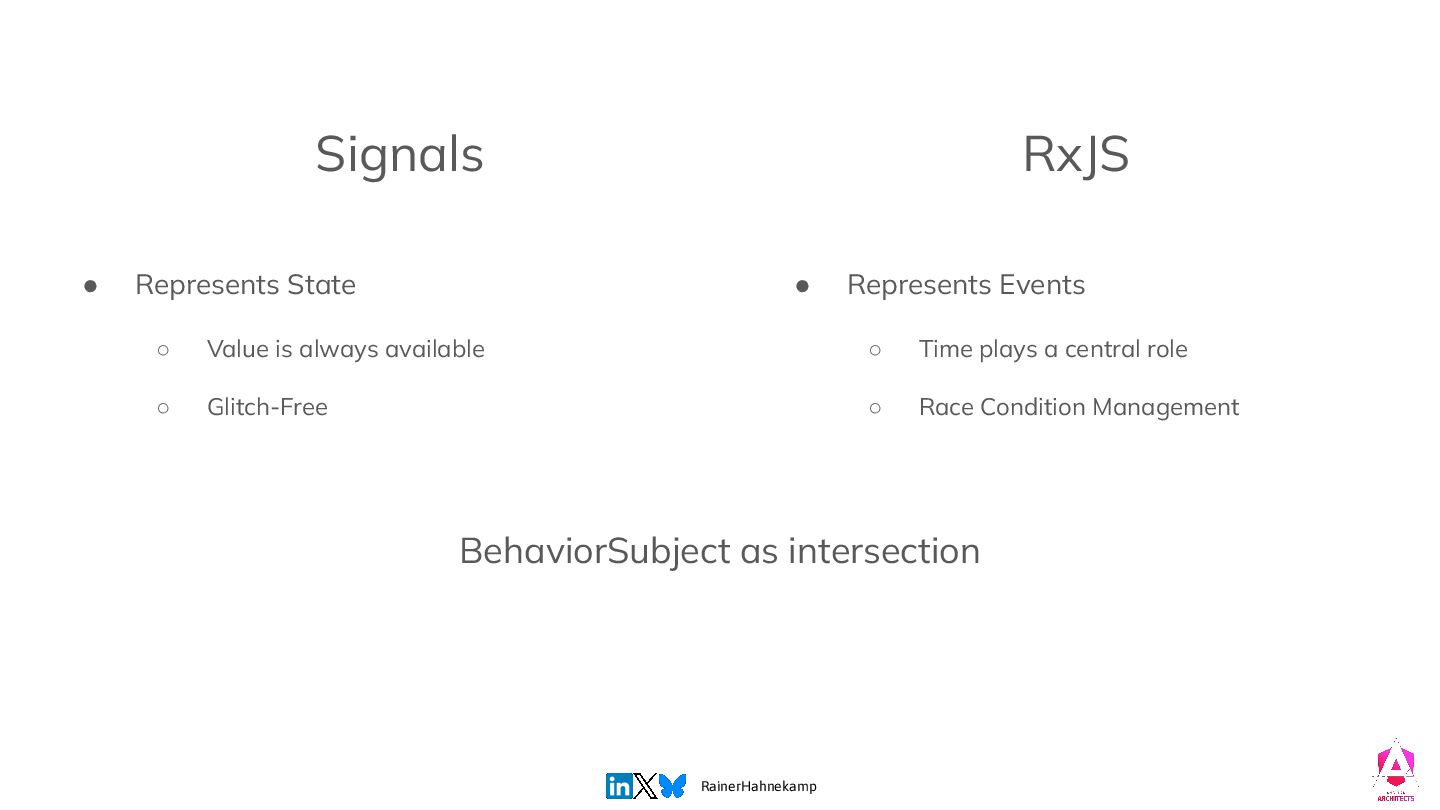
  18. RainerHahnekamp Signals • Represents State ◦ Value is always available

    ◦ Glitch-Free RxJS • Represents Events ◦ Time plays a central role ◦ Race Condition Management BehaviorSubject as intersection
  19. RainerHahnekamp Signals • Represents State ◦ Value is always available

    ◦ Glitch-Free RxJS • Represents Events ◦ Time plays a central role ◦ Race Condition Management BehaviorSubject as intersection
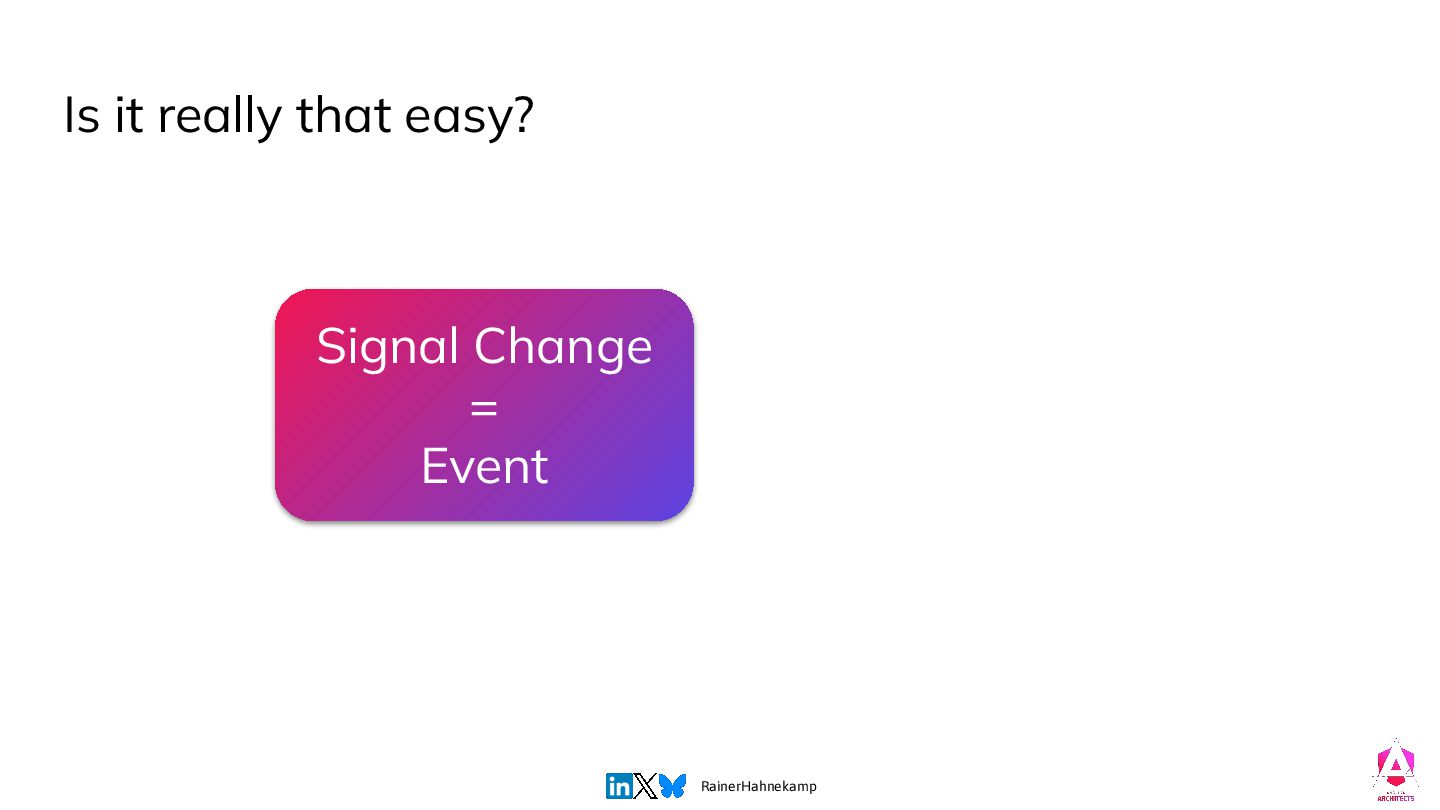
  20. RainerHahnekamp a b c d e State (Signals) Events (Observables,

    Callbacks) "State-based" Change Detection / Synchronization (Signals) x y z Debouncing of Form Fields Signals
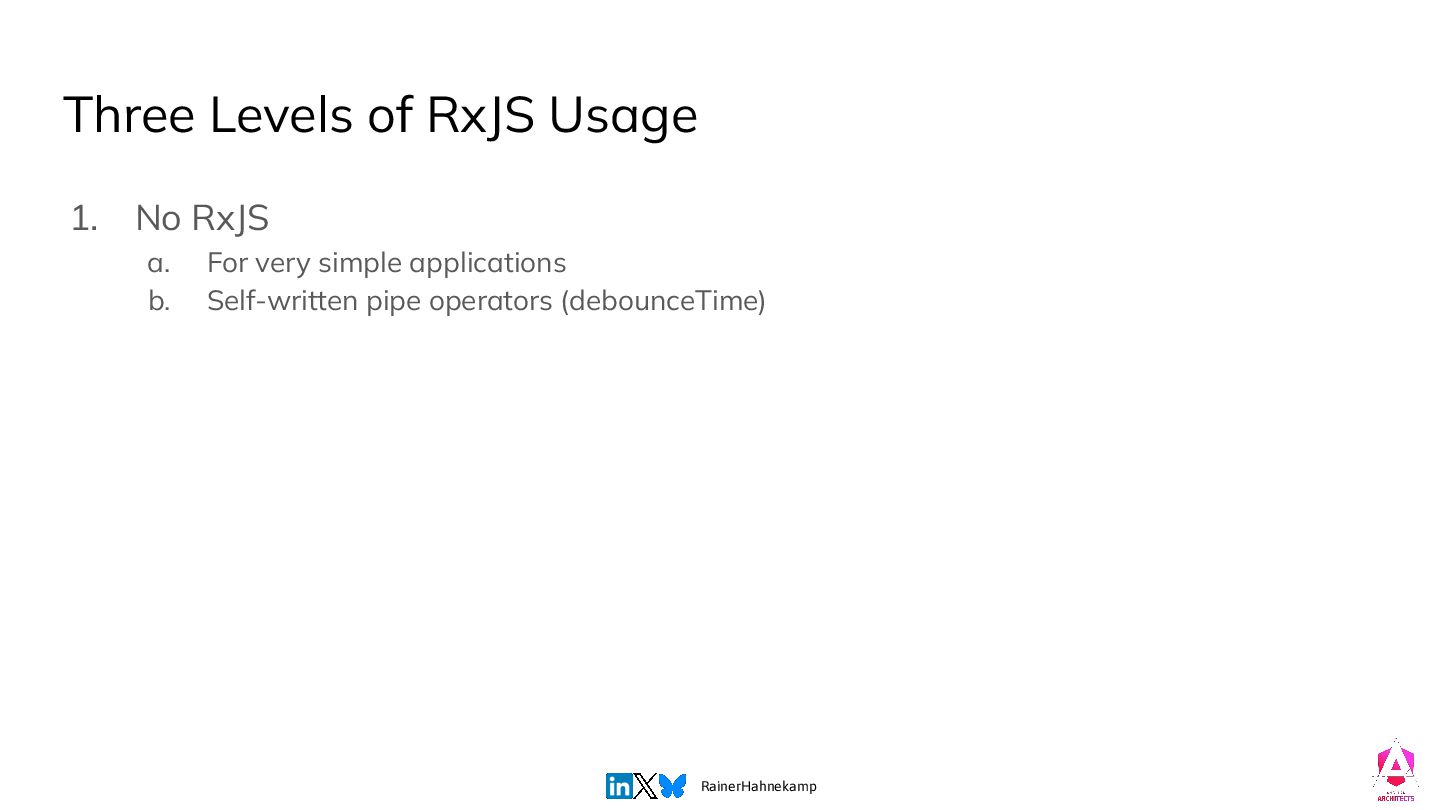
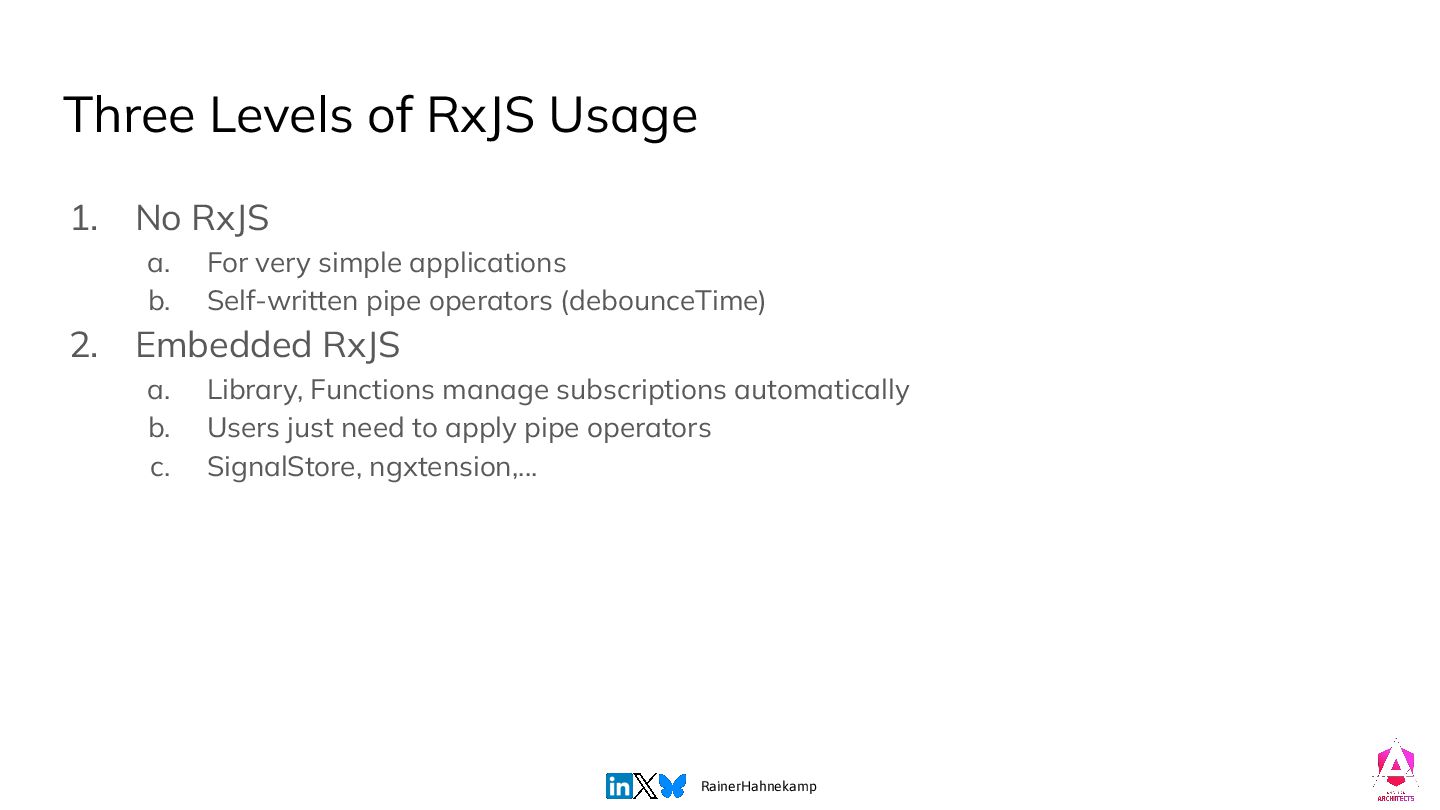
  21. RainerHahnekamp Three Levels of RxJS Usage 1. No RxJS a.

    For very simple applications b. Self-written pipe operators (debounceTime)
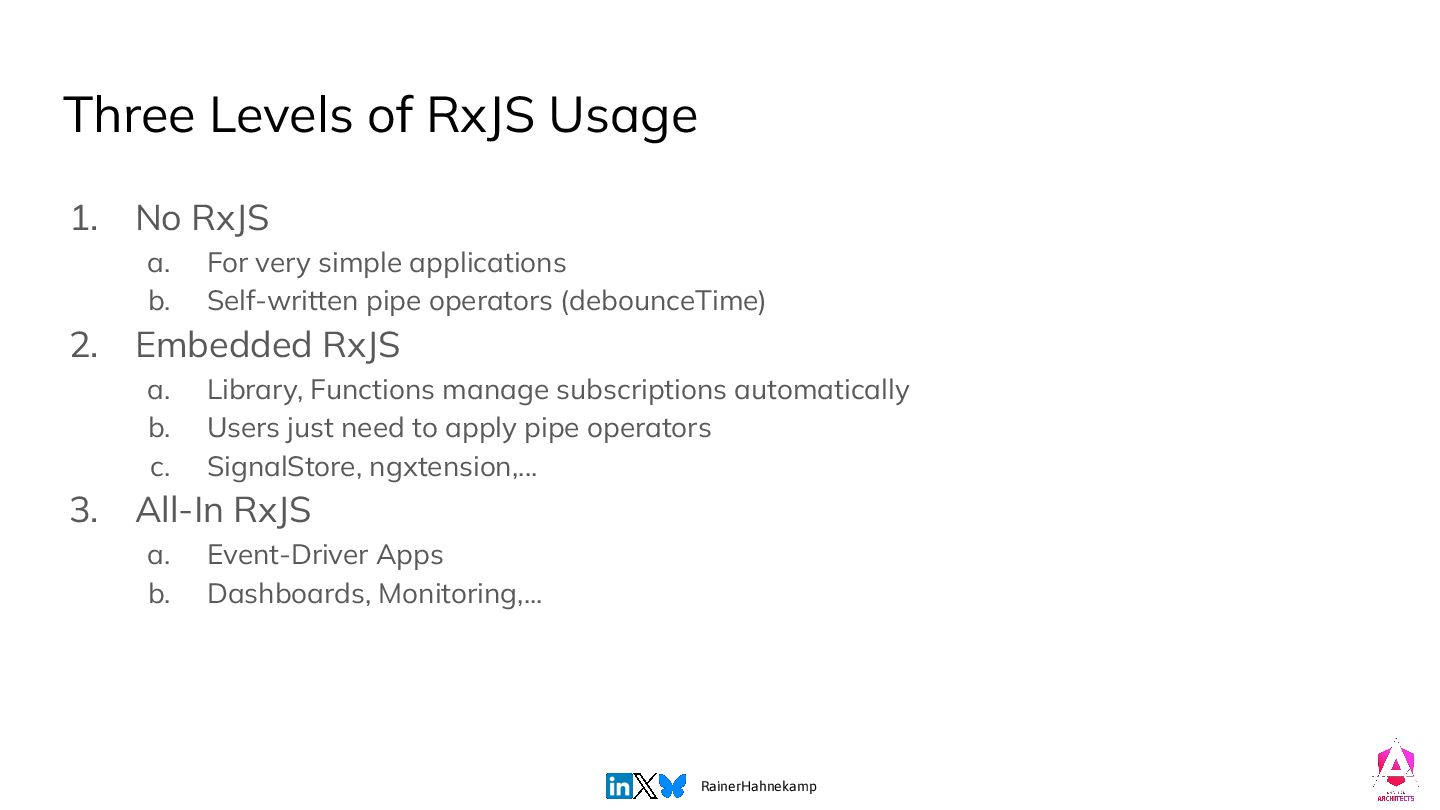
  22. RainerHahnekamp Three Levels of RxJS Usage 1. No RxJS a.

    For very simple applications b. Self-written pipe operators (debounceTime) 2. Embedded RxJS a. Library, Functions manage subscriptions automatically b. Users just need to apply pipe operators c. SignalStore, ngxtension,...
  23. RainerHahnekamp Three Levels of RxJS Usage 1. No RxJS a.

    For very simple applications b. Self-written pipe operators (debounceTime) 2. Embedded RxJS a. Library, Functions manage subscriptions automatically b. Users just need to apply pipe operators c. SignalStore, ngxtension,... 3. All-In RxJS a. Event-Driver Apps b. Dashboards, Monitoring,...
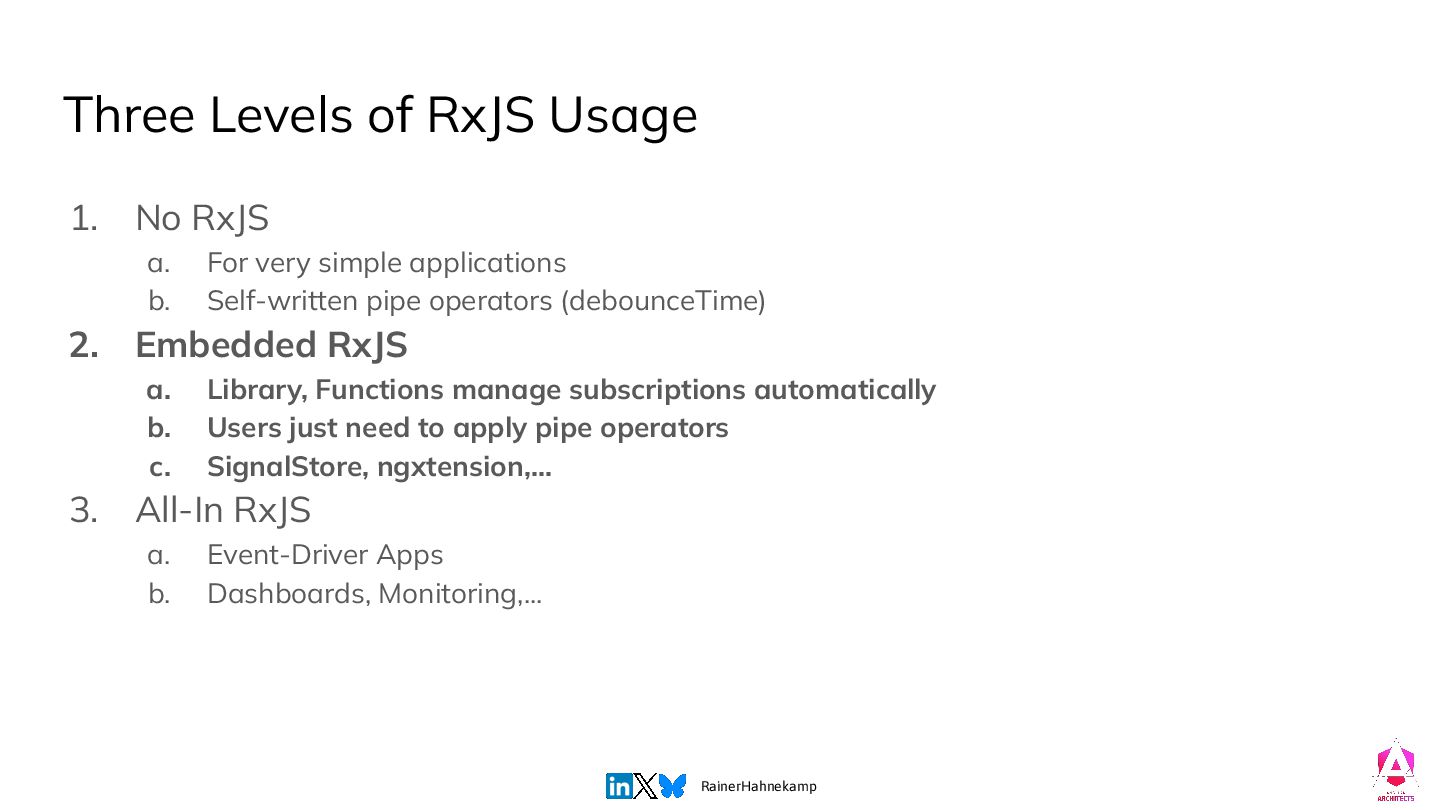
  24. RainerHahnekamp Three Levels of RxJS Usage 1. No RxJS a.

    For very simple applications b. Self-written pipe operators (debounceTime) 2. Embedded RxJS a. Library, Functions manage subscriptions automatically b. Users just need to apply pipe operators c. SignalStore, ngxtension,... 3. All-In RxJS a. Event-Driver Apps b. Dashboards, Monitoring,...
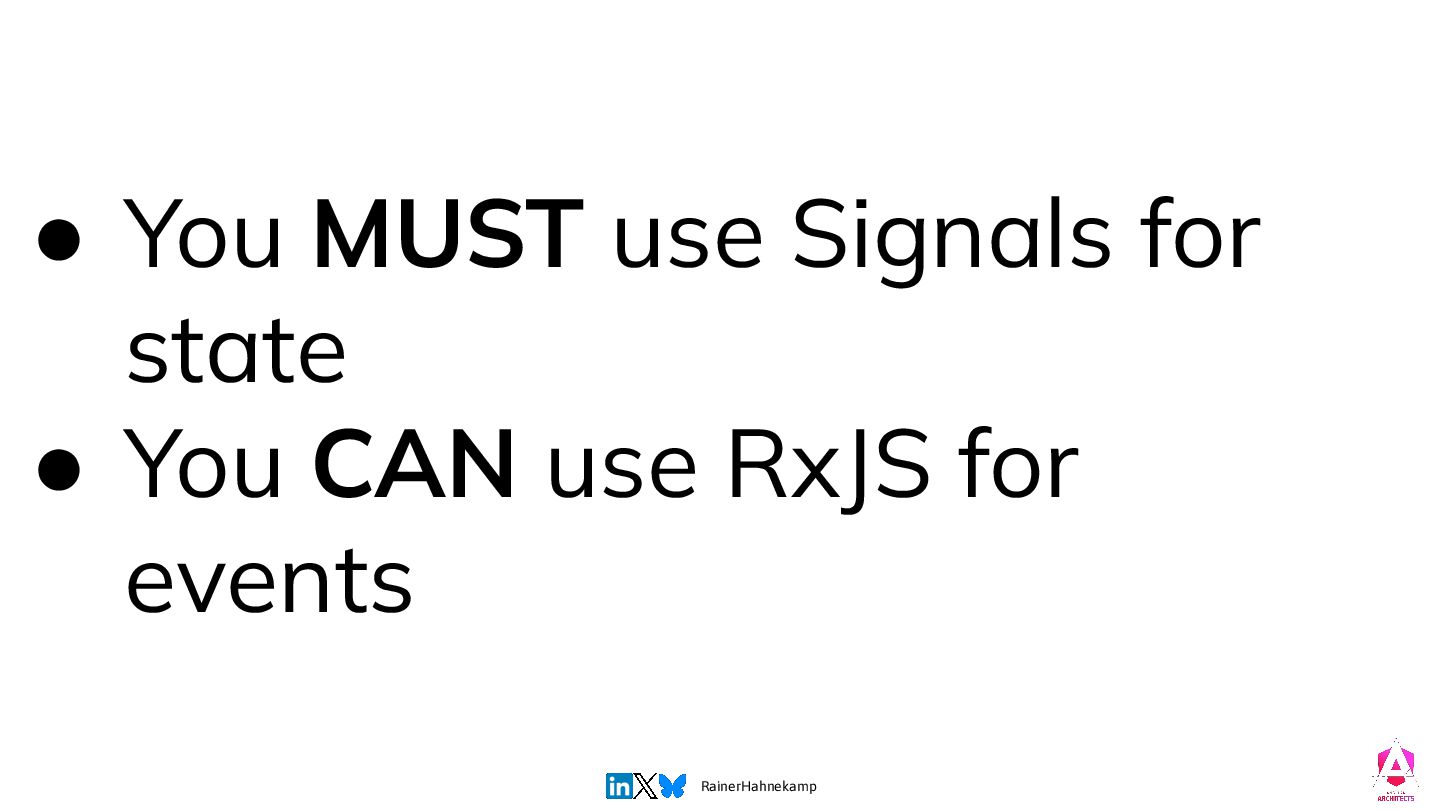
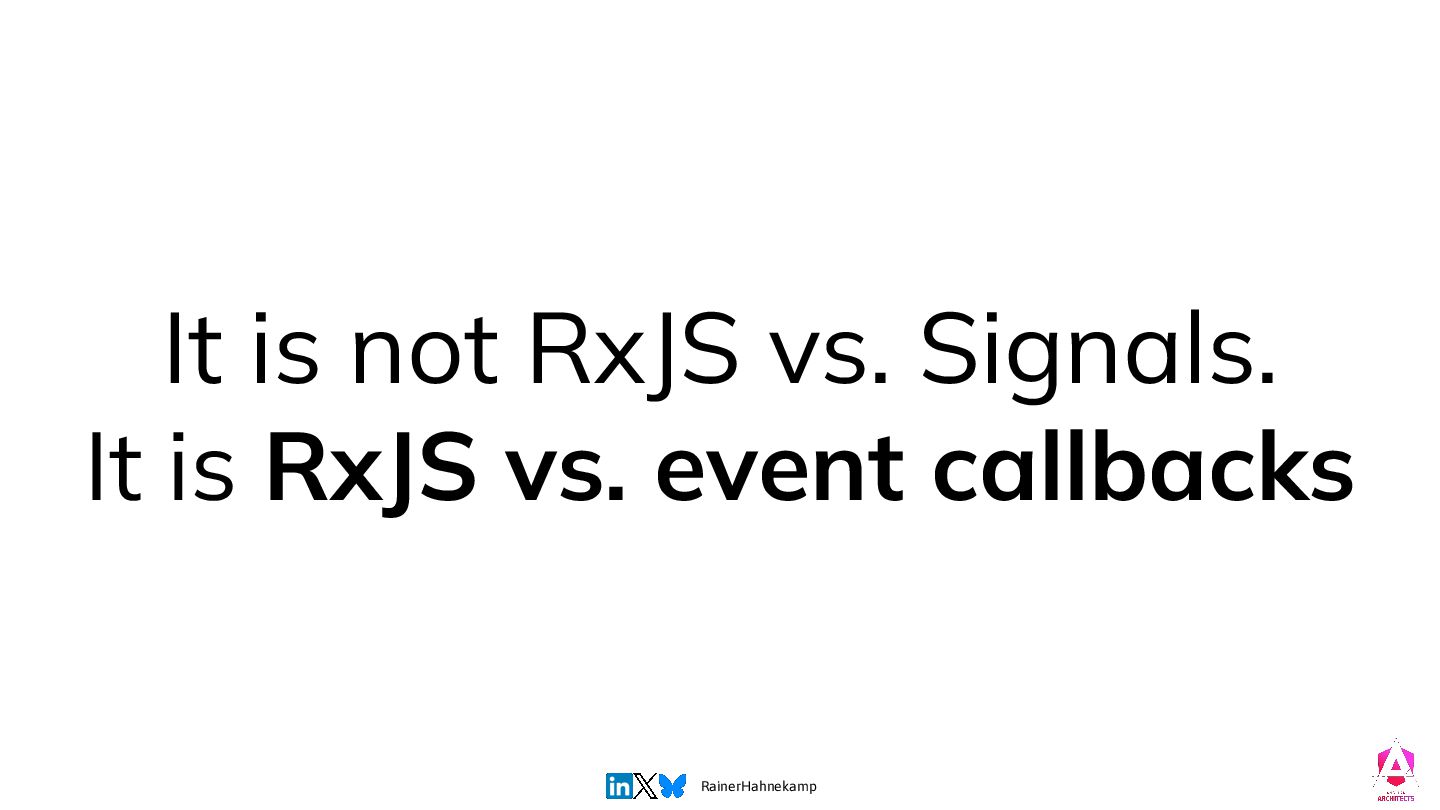
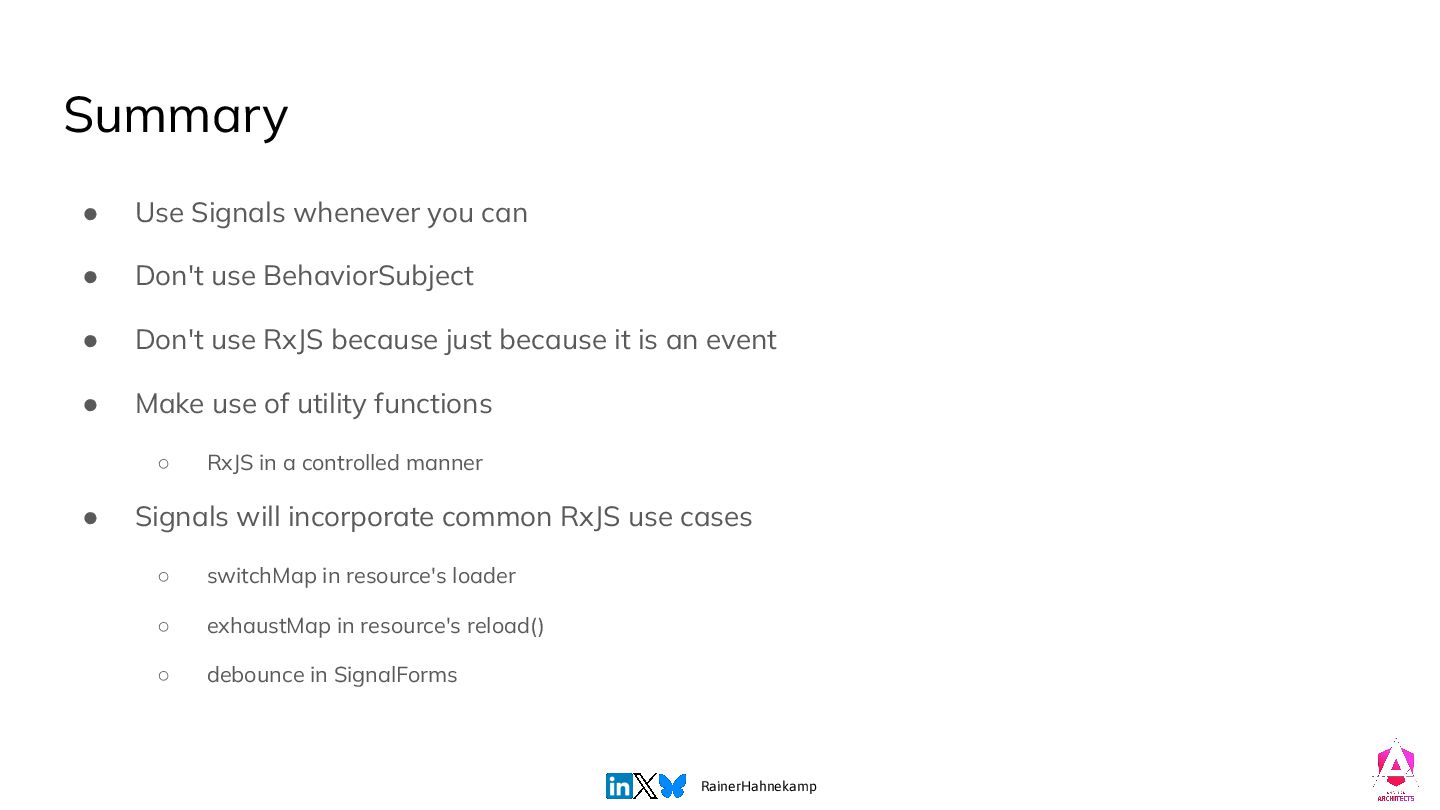
  25. RainerHahnekamp Summary • Use Signals whenever you can • Don't

    use BehaviorSubject • Don't use RxJS because just because it is an event • Make use of utility functions ◦ RxJS in a controlled manner • Signals will incorporate common RxJS use cases ◦ switchMap in resource's loader ◦ exhaustMap in resource's reload() ◦ debounce in SignalForms