Upgrade to Pro
— share decks privately, control downloads, hide ads and more …
Speaker Deck
Features
Speaker Deck
PRO
Sign in
Sign up for free
Search
Search
D言語に入門した話 / Introduction to D language
Search
chapati
April 19, 2022
Technology
420
0
Share
D言語に入門した話 / Introduction to D language
D言語に入門した話です
Twitterでご指摘いただいたのですが
- スライド15ページに記載のCTFEの実行について,バイトコードへの変換は特に行っていないようです
chapati
April 19, 2022
More Decks by chapati
See All by chapati
GCCのプラグインを作る / I Made a GCC Plugin
shouth
1
270
Other Decks in Technology
See All in Technology
マーケットプレイス版Oracle WebCenter Content For OCI
oracle4engineer
PRO
5
1.7k
サプライチェーンセキュリティの空白地帯 - 信頼できる”依存性”の未来を考える
rung
PRO
2
490
Amazon CloudFrontにおけるAIボットアクセス制御のポイント
kizawa2020
5
310
Oracle AI Database@AWS:サービス概要のご紹介
oracle4engineer
PRO
4
2.7k
Generative UI × A2UI で AI エージェントを作った話 AI-DLC も使ってみた!
kmiya84377
1
280
20260528_生成AIを専属DSに_Howの次にすべきことを考える
doradora09
PRO
0
260
ビジュアルプログラミングIoTLT vol.23
1ftseabass
PRO
0
160
Cloud Run のアップデート 触ってみる&紹介
gre212
0
250
大規模災害時でも高い信頼性を維持するアプリケーション基盤の実現/nikkei-tech-talk46
nikkei_engineer_recruiting
0
120
ITエンジニアを取り巻く環境とキャリアパス / A career path for Japanese IT engineers
takatama
4
1.8k
開発を止めない CI/CD ~CI Visibilityによる継続的最適化~
pensuke628
0
210
A Harness for Behaviour: how to get AI to generate code that does what we intend, or "TDD in the age of AI"
xpmatteo
1
520
Featured
See All Featured
Exploring the Power of Turbo Streams & Action Cable | RailsConf2023
kevinliebholz
37
6.5k
The Illustrated Guide to Node.js - THAT Conference 2024
reverentgeek
1
370
Ecommerce SEO: The Keys for Success Now & Beyond - #SERPConf2024
aleyda
1
2k
Jamie Indigo - Trashchat’s Guide to Black Boxes: Technical SEO Tactics for LLMs
techseoconnect
PRO
0
150
sira's awesome portfolio website redesign presentation
elsirapls
0
270
Distributed Sagas: A Protocol for Coordinating Microservices
caitiem20
333
22k
Organizational Design Perspectives: An Ontology of Organizational Design Elements
kimpetersen
PRO
1
710
New Earth Scene 8
popppiees
3
2.3k
The #1 spot is gone: here's how to win anyway
tamaranovitovic
2
1.1k
SEO Brein meetup: CTRL+C is not how to scale international SEO
lindahogenes
1
2.7k
Chasing Engaging Ingredients in Design
codingconduct
0
200
ReactJS: Keep Simple. Everything can be a component!
pedronauck
666
130k
Transcript
D言語に入門した話 チャパティ
自己紹介 チャパティ (Twitter:@_shouth_kit) 情報工学課程4回 プログラムを書くのが好き ちゃぱえもんと呼ばれることもある
D言語って 知ってますか?
None
None
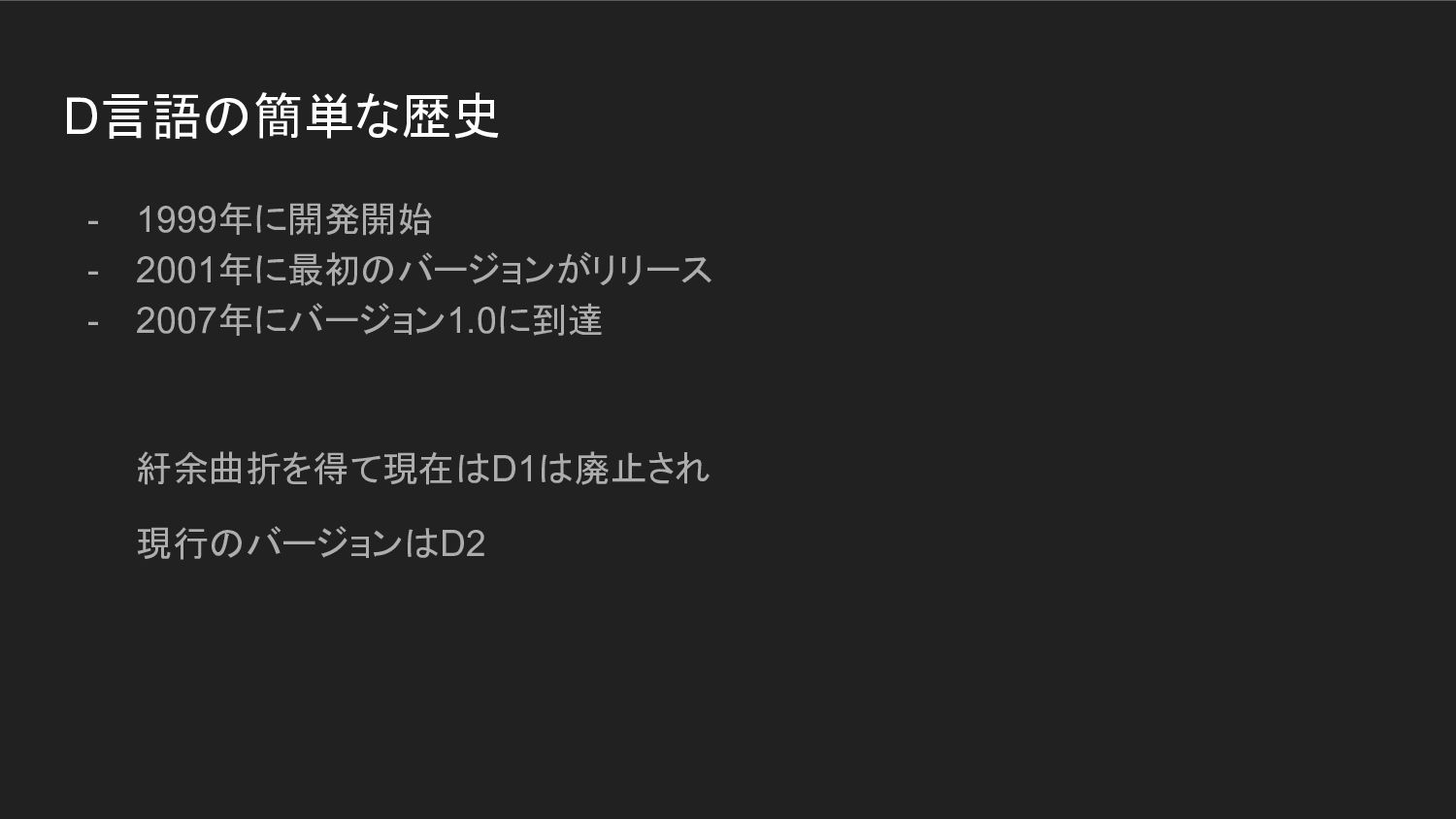
D言語の簡単な歴史 - 1999年に開発開始 - 2001年に最初のバージョンがリリース - 2007年にバージョン1.0に到達 紆余曲折を得て現在はD1は廃止され 現行のバージョンはD2
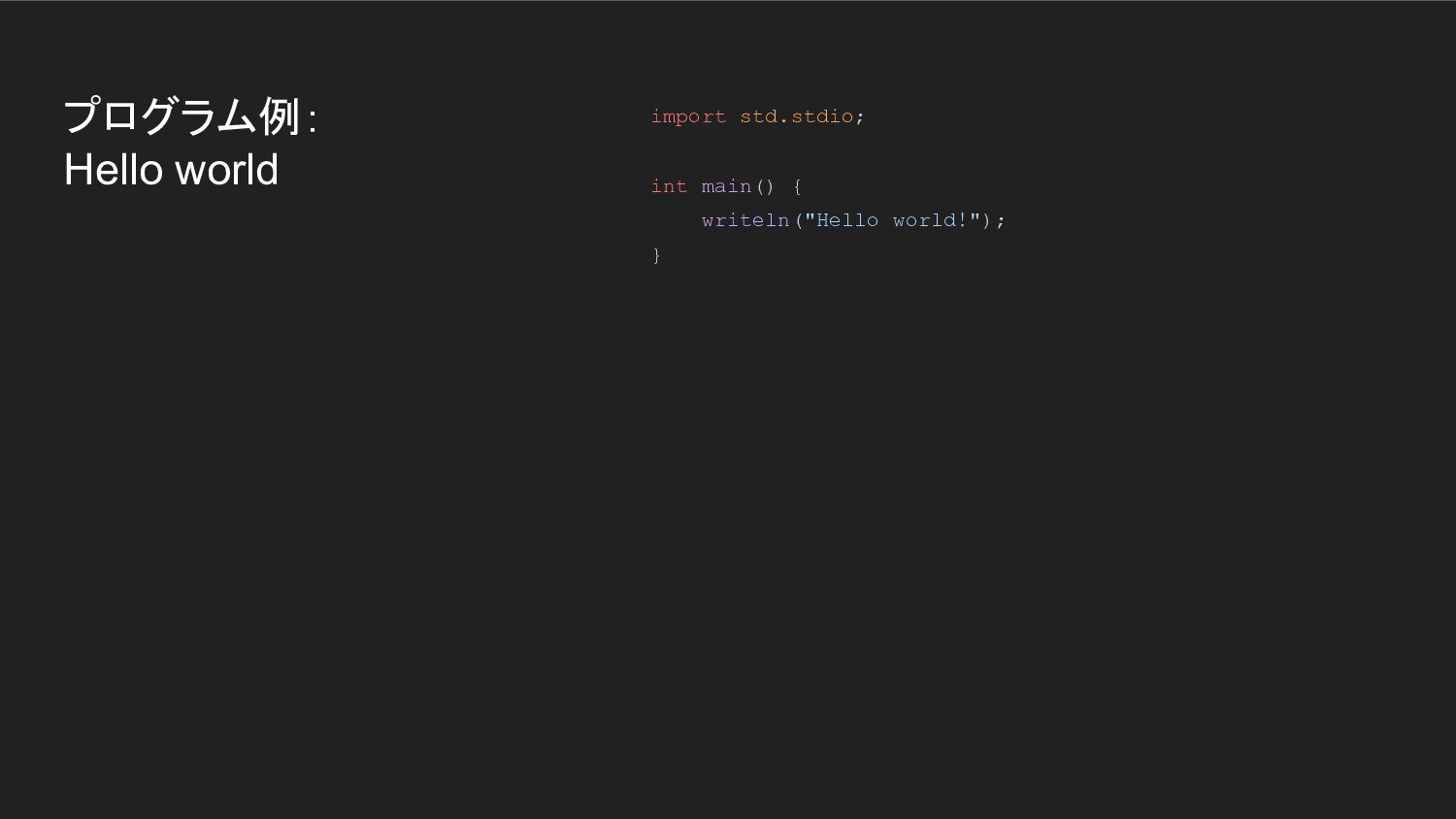
プログラム例: Hello world import std.stdio; int main() { writeln("Hello world!");
}
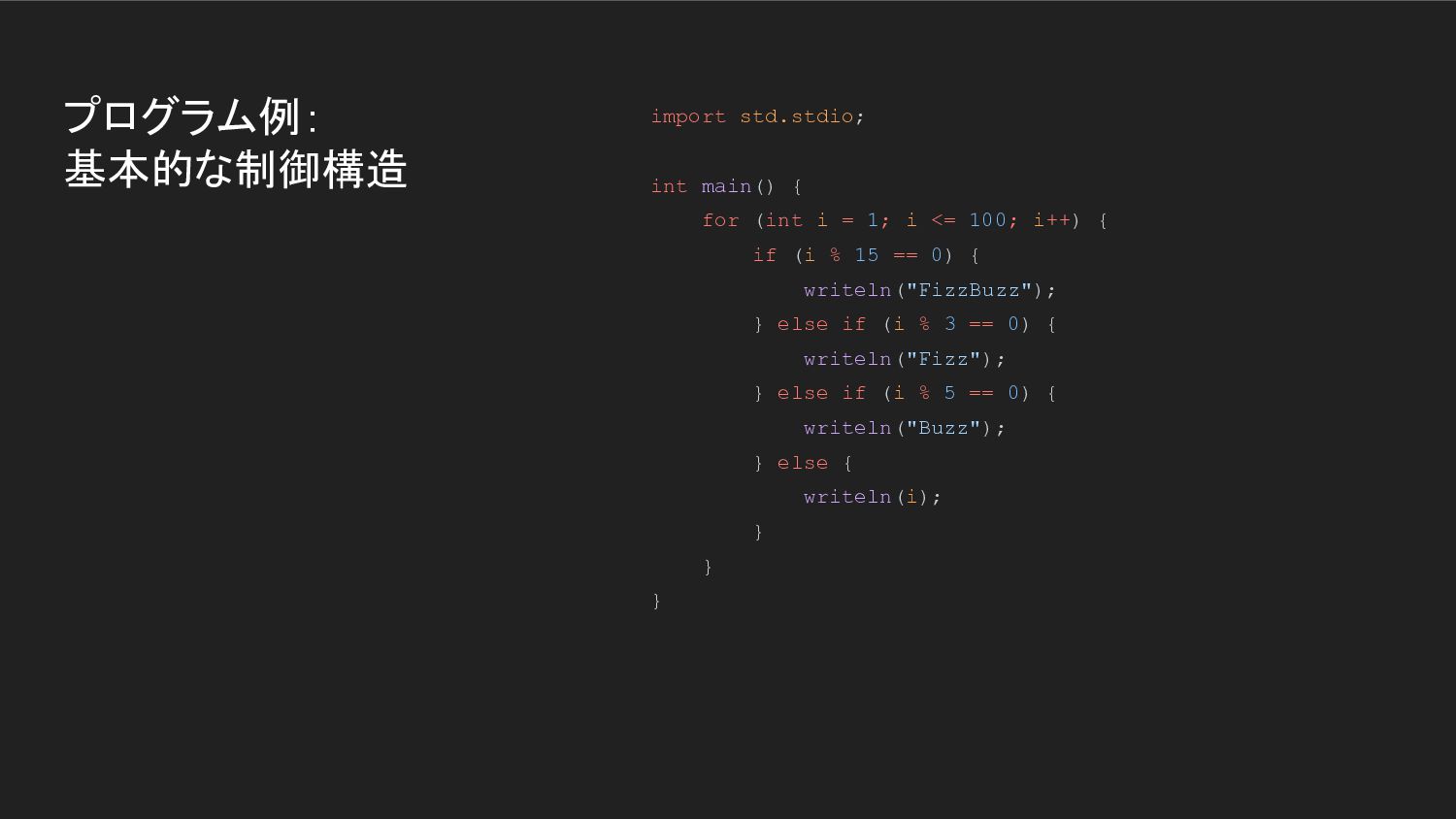
プログラム例: 基本的な制御構造 import std.stdio; int main() { for (int i
= 1; i <= 100; i++) { if (i % 15 == 0) { writeln("FizzBuzz"); } else if (i % 3 == 0) { writeln("Fizz"); } else if (i % 5 == 0) { writeln("Buzz"); } else { writeln(i); } } }
ね,簡単でしょう?
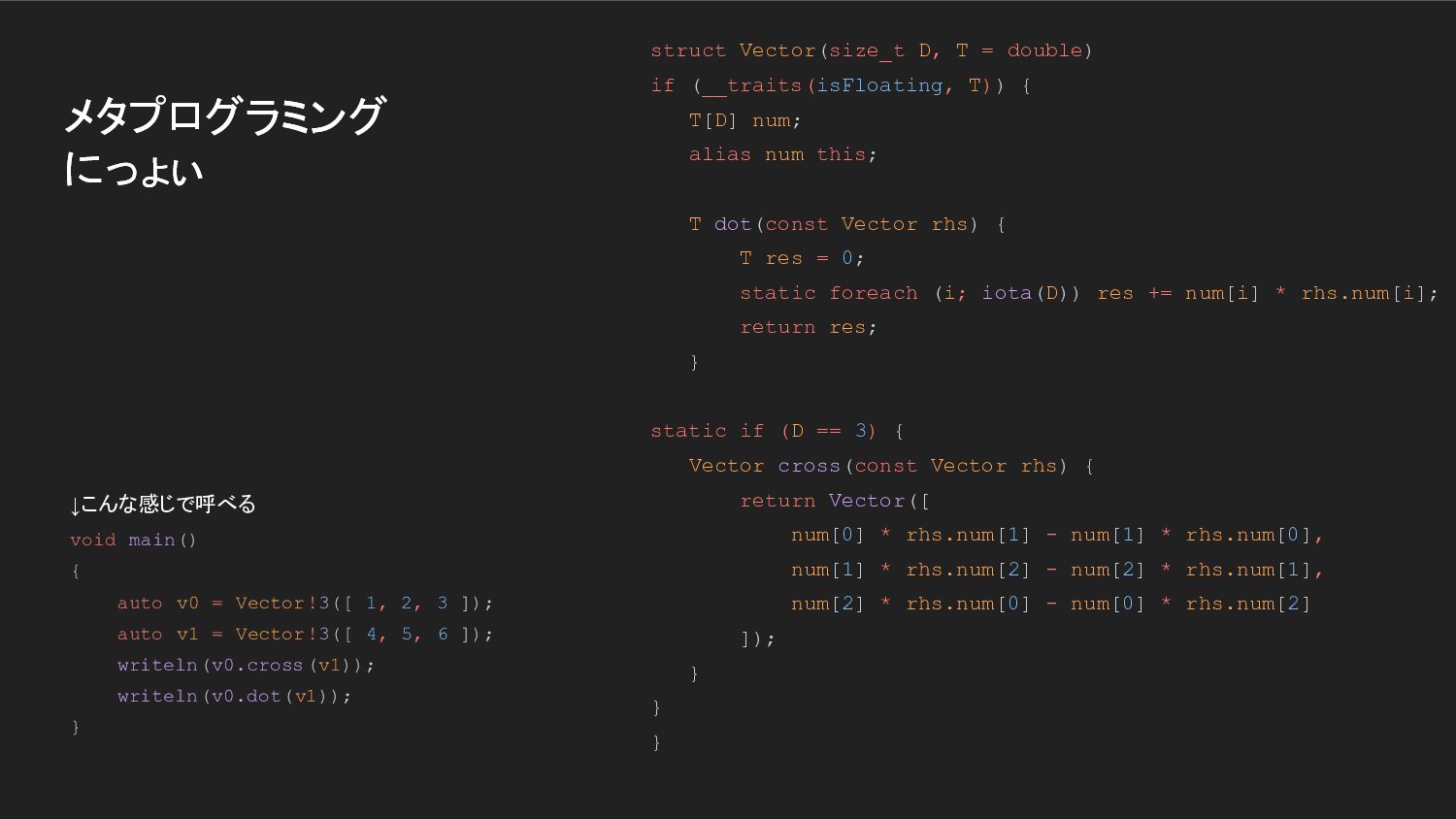
メタプログラミング にっょぃ struct Vector(size_t D, T = double) if (__traits(isFloating,
T)) { T[D] num; alias num this; T dot(const Vector rhs) { T res = 0; static foreach (i; iota(D)) res += num[i] * rhs.num[i]; return res; } static if (D == 3) { Vector cross(const Vector rhs) { return Vector([ num[0] * rhs.num[1] - num[1] * rhs.num[0], num[1] * rhs.num[2] - num[2] * rhs.num[1], num[2] * rhs.num[0] - num[0] * rhs.num[2] ]); } } } void main() { auto v0 = Vector!3([ 1, 2, 3 ]); auto v1 = Vector!3([ 4, 5, 6 ]); writeln(v0.cross(v1)); writeln(v0.dot(v1)); } メタプログラミング にっょぃ ↓こんな感じで呼べる
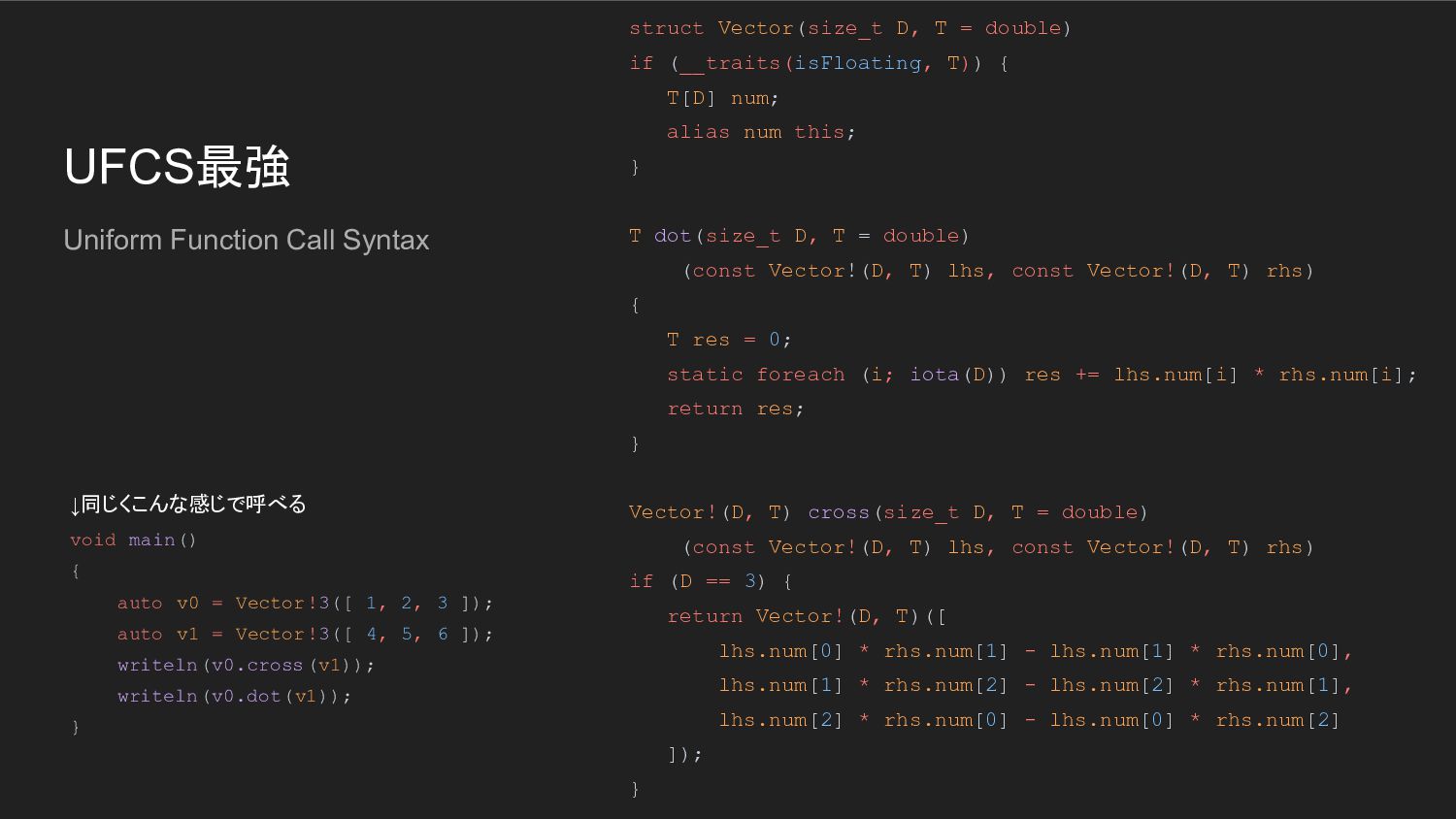
UFCS最強 struct Vector(size_t D, T = double) if (__traits(isFloating, T))
{ T[D] num; alias num this; } T dot(size_t D, T = double) (const Vector!(D, T) lhs, const Vector!(D, T) rhs) { T res = 0; static foreach (i; iota(D)) res += lhs.num[i] * rhs.num[i]; return res; } Vector!(D, T) cross(size_t D, T = double) (const Vector!(D, T) lhs, const Vector!(D, T) rhs) if (D == 3) { return Vector!(D, T)([ lhs.num[0] * rhs.num[1] - lhs.num[1] * rhs.num[0], lhs.num[1] * rhs.num[2] - lhs.num[2] * rhs.num[1], lhs.num[2] * rhs.num[0] - lhs.num[0] * rhs.num[2] ]); } Uniform Function Call Syntax void main() { auto v0 = Vector!3([ 1, 2, 3 ]); auto v1 = Vector!3([ 4, 5, 6 ]); writeln(v0.cross(v1)); writeln(v0.dot(v1)); } ↓同じくこんな感じで呼べる
UFCS最強 import std.stdio; string repeat(string s, size_t times) { char[]
res; for (size_t i = 0; i < times; i++) res ~= s; return cast(string) res; } void main() { "Hello world\n".repeat(3).write(); } 要はこんなことができる
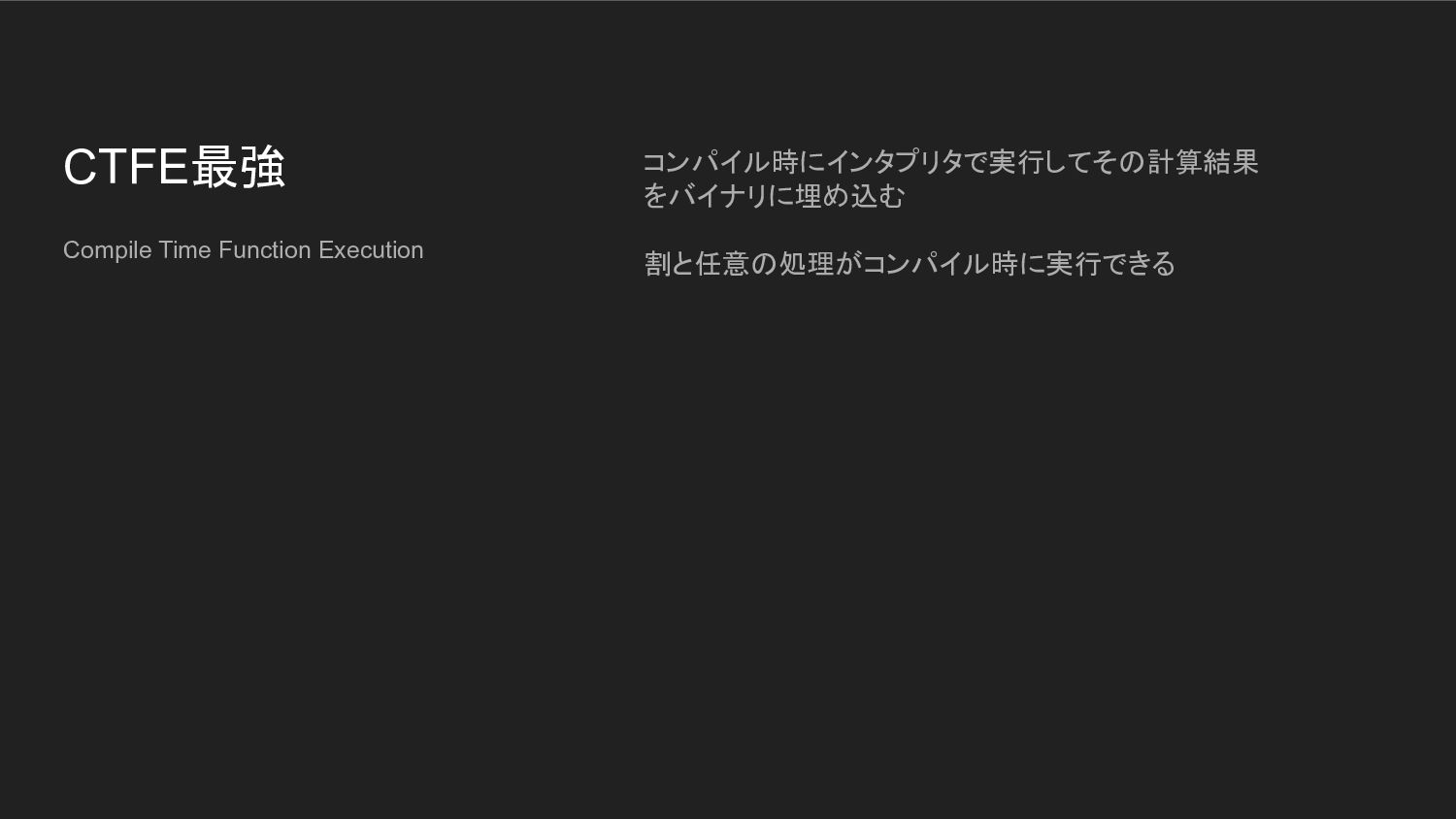
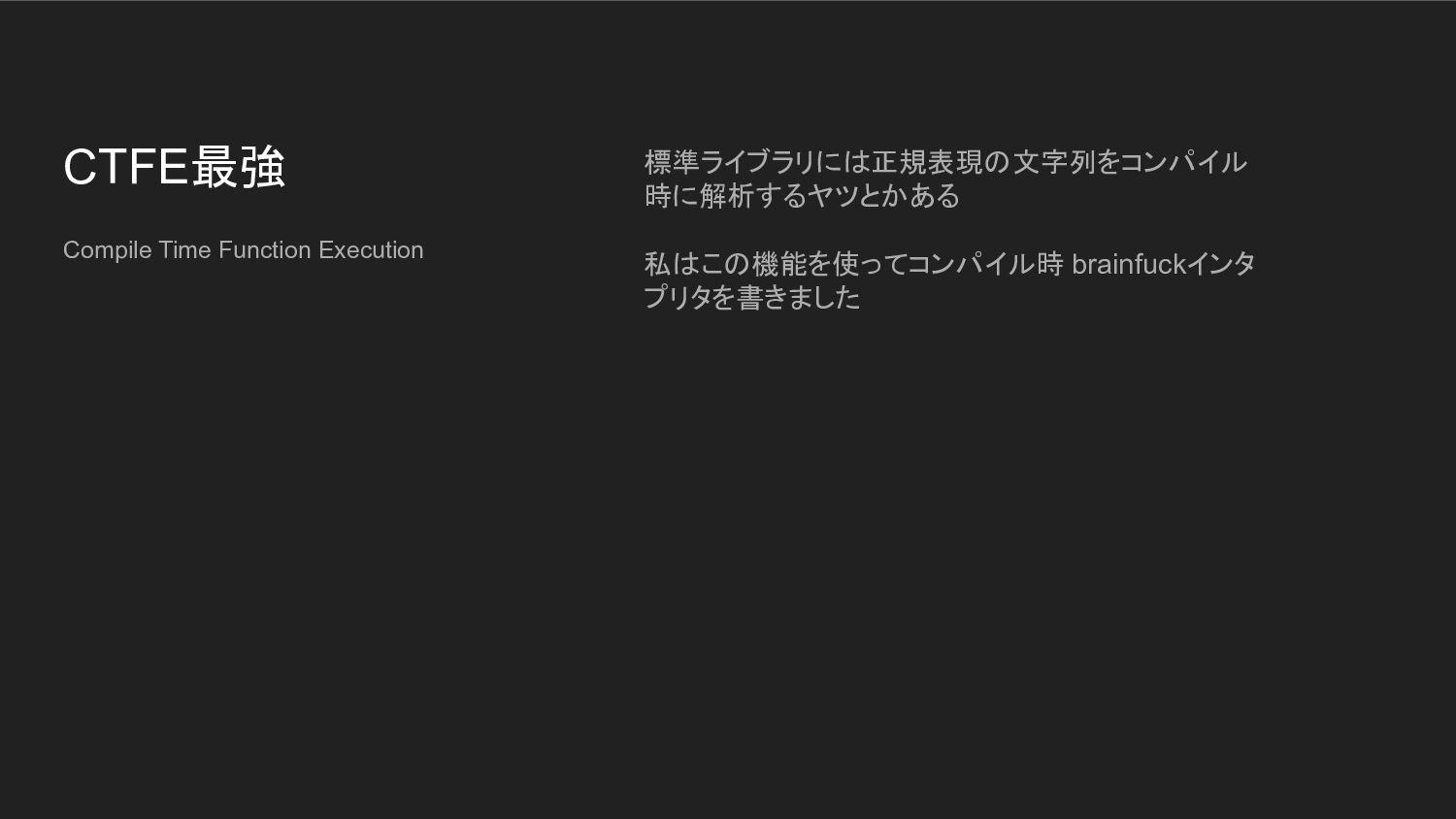
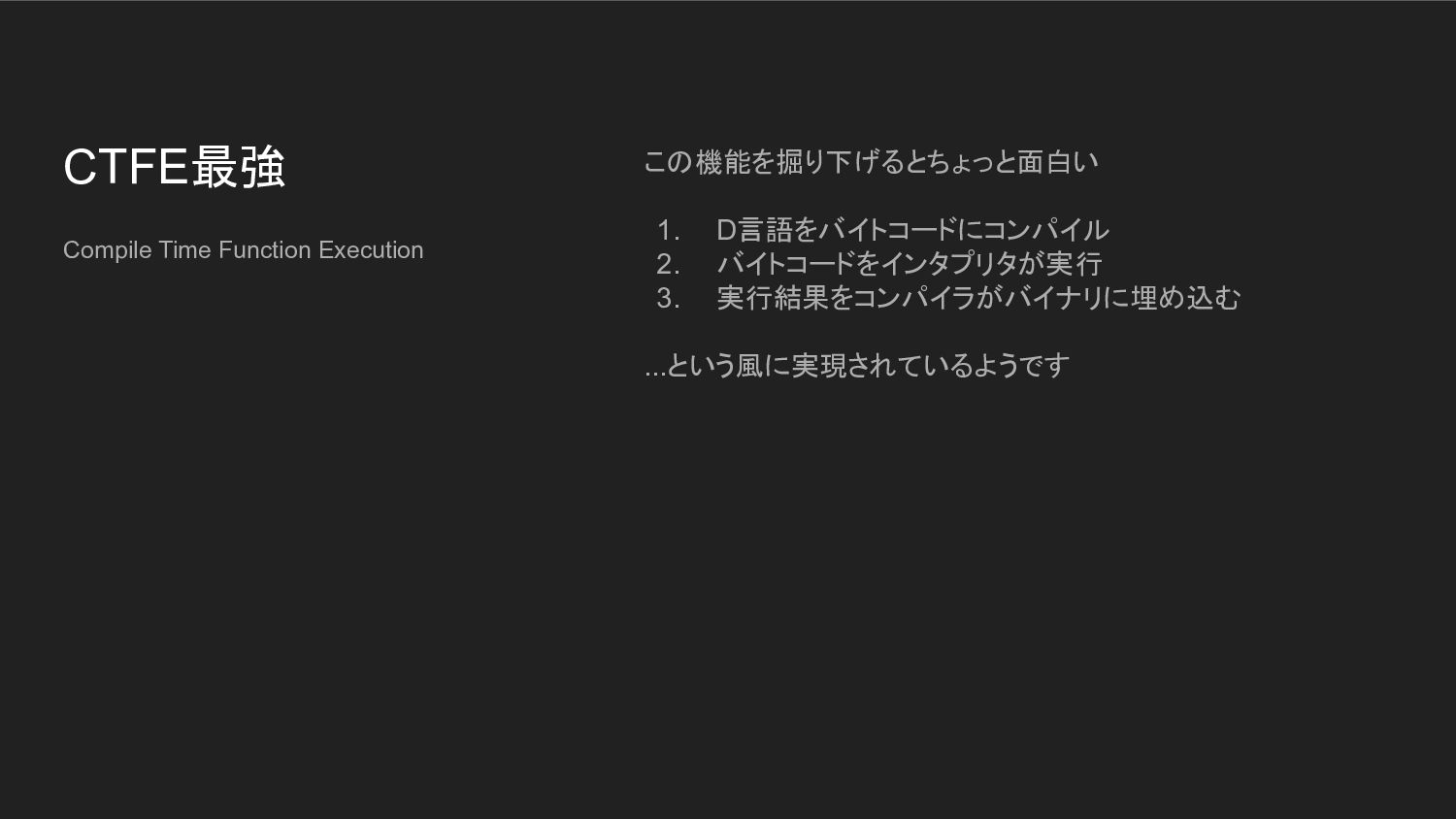
CTFE最強 Compile Time Function Execution コンパイル時にインタプリタで実行してその計算結果 をバイナリに埋め込む 割と任意の処理がコンパイル時に実行できる
CTFE最強 Compile Time Function Execution 標準ライブラリには正規表現の文字列をコンパイル 時に解析するヤツとかある 私はこの機能を使ってコンパイル時 brainfuckインタ プリタを書きました
CTFE最強 Compile Time Function Execution この機能を掘り下げるとちょっと面白い 1. D言語をバイトコードにコンパイル 2. バイトコードをインタプリタが実行
3. 実行結果をコンパイラがバイナリに埋め込む ...という風に実現されているようです
微妙だと思う点もある あくまで私の主観ですが ...
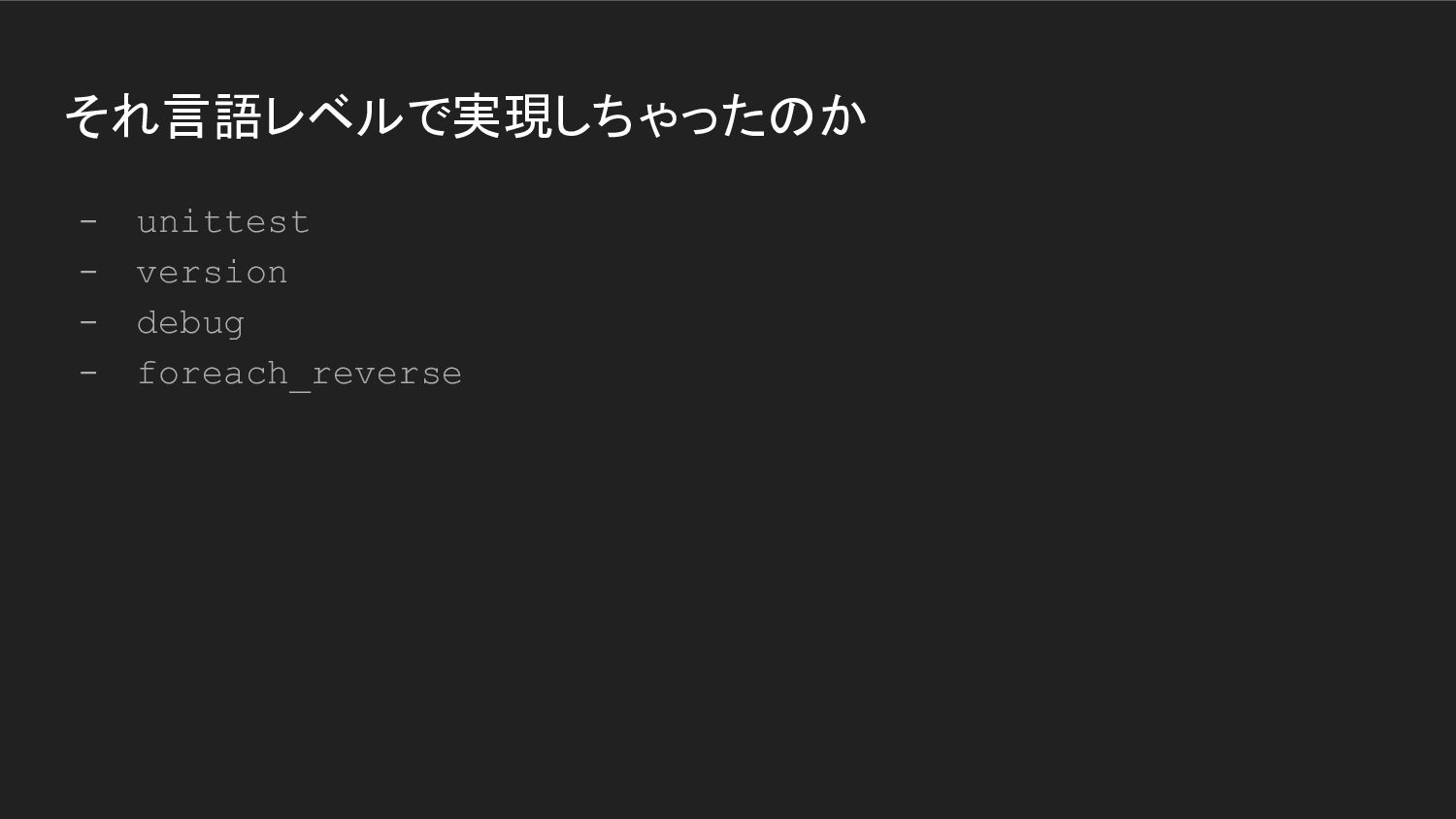
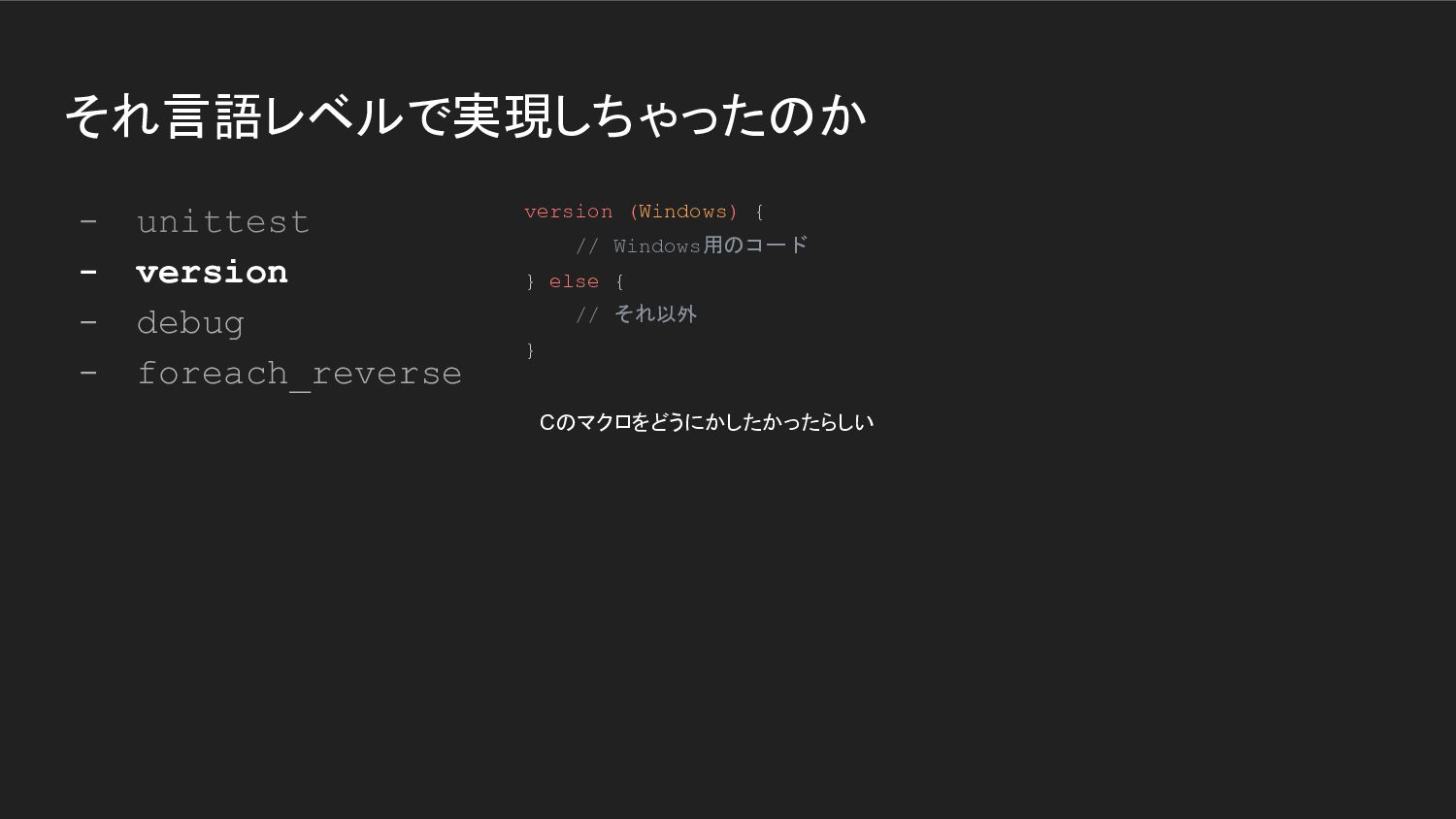
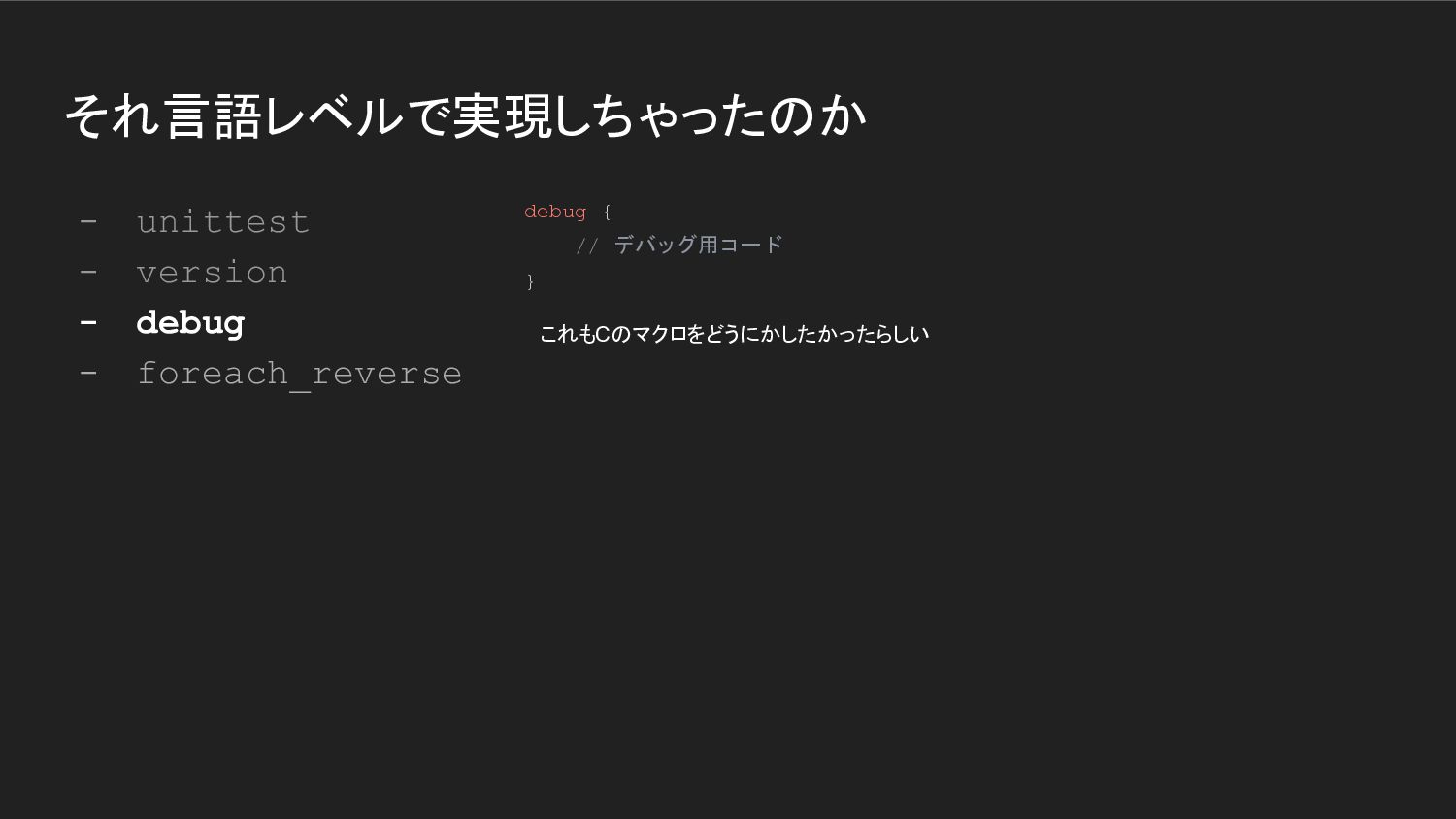
それ言語レベルで実現しちゃったのか - unittest - version - debug - foreach_reverse
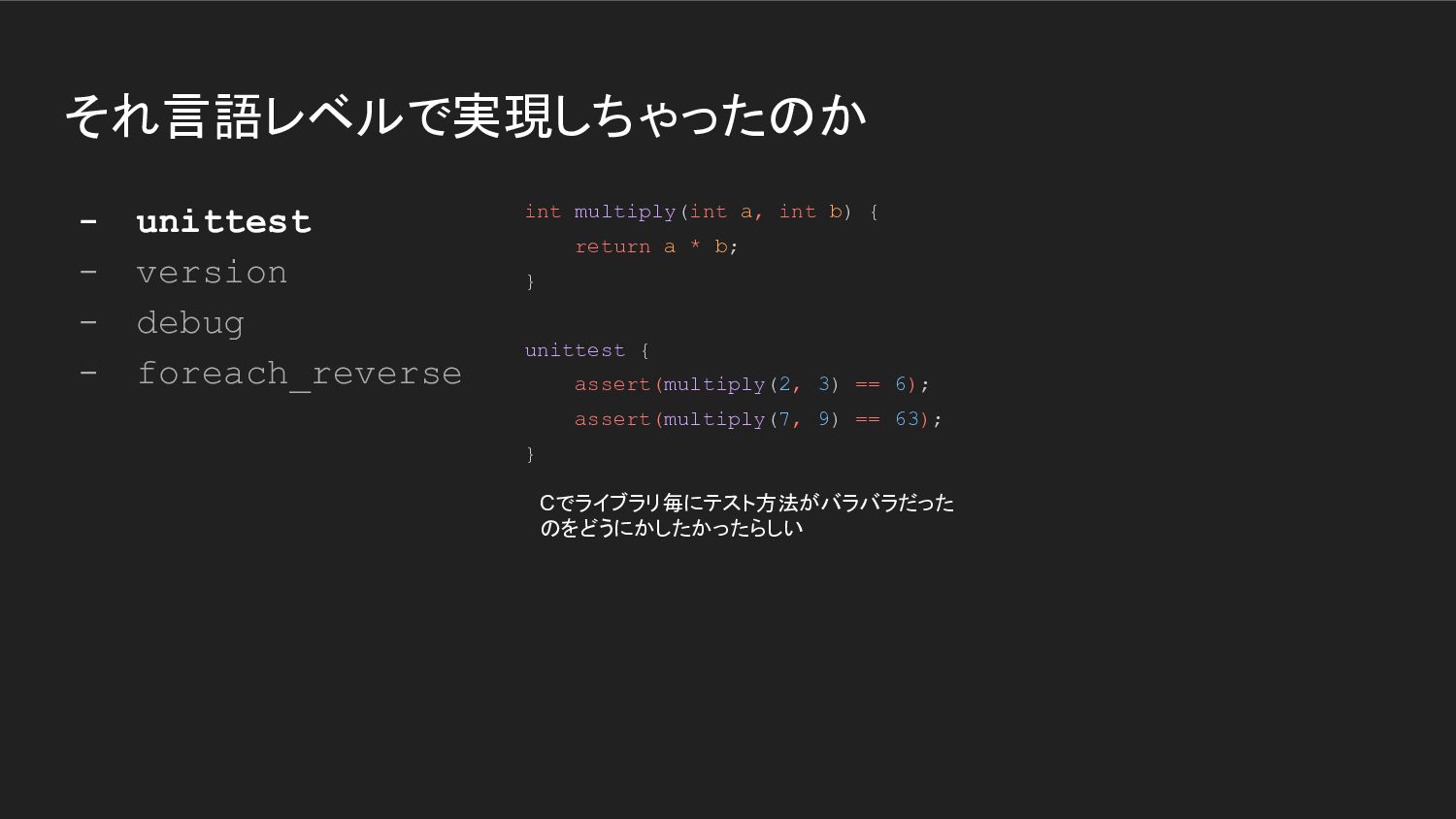
それ言語レベルで実現しちゃったのか - unittest - version - debug - foreach_reverse int
multiply(int a, int b) { return a * b; } unittest { assert(multiply(2, 3) == 6); assert(multiply(7, 9) == 63); } Cでライブラリ毎にテスト方法がバラバラだった のをどうにかしたかったらしい
それ言語レベルで実現しちゃったのか - unittest - version - debug - foreach_reverse version
(Windows) { // Windows用のコード } else { // それ以外 } Cのマクロをどうにかしたかったらしい
それ言語レベルで実現しちゃったのか - unittest - version - debug - foreach_reverse debug
{ // デバッグ用コード } これもCのマクロをどうにかしたかったらしい
それ言語レベルで実現しちゃったのか - unittest - version - debug - foreach_reverse int[]
arr = [ 1, 2, 3, 4, 5 ]; foreach_reverse (i, e; arr) { // 逆向きに反復 } 「順方向」と「逆方向」を相補的なモノとして捉えたようだ
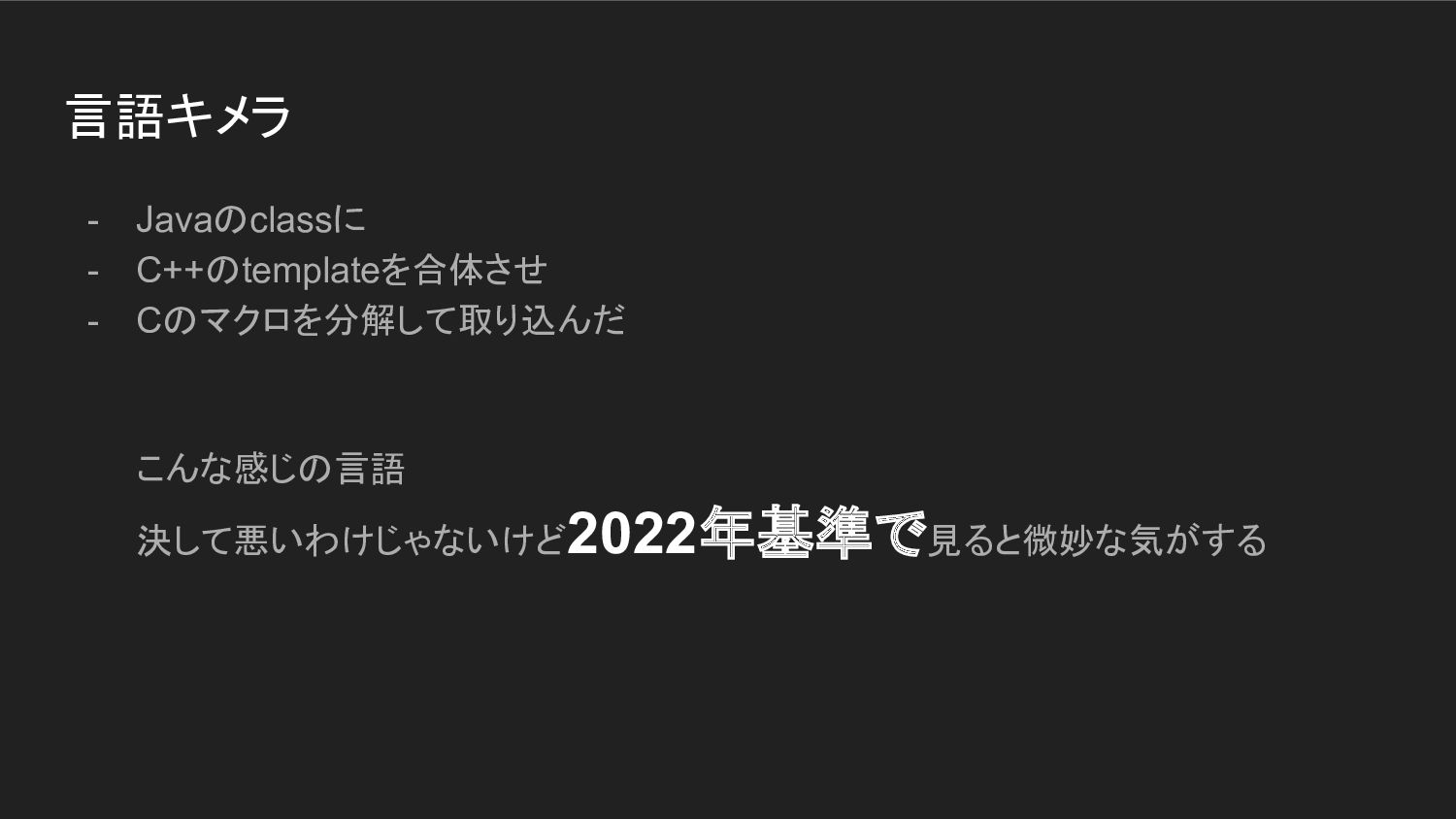
言語キメラ - Javaのclassに - C++のtemplateを合体させ - Cのマクロを分解して取り込んだ こんな感じの言語 決して悪いわけじゃないけど2022年基準で見ると微妙な気がする
質疑応答とか 一通り Origins of the D Programming Language を読み込んだので D言語の歴史とかも触りだけ話せます
参考 - Origins of the D Programming Language https://dl.acm.org/doi/pdf/10.1145/3386323 -
Dlang Tour https://tour.dlang.org


 shouth
 oracle4engineer
 rung
rung
 kizawa2020
 kmiya84377
 doradora09
 1ftseabass
 gre212
 nikkei_engineer_recruiting
 takatama
 pensuke628
 xpmatteo
 kevinliebholz
 reverentgeek
 aleyda
 techseoconnect
 elsirapls
 caitiem20
 kimpetersen
 popppiees
 tamaranovitovic
 lindahogenes
 codingconduct
 pedronauck



![UFCS最強 import std.stdio; string repeat(string s, size_t times) { char[]](https://files.speakerdeck.com/presentations/5ecbad5ae8be41658673358cac13d272/slide_11.jpg)

![それ言語レベルで実現しちゃったのか - unittest - version - debug - foreach_reverse int[]](https://files.speakerdeck.com/presentations/5ecbad5ae8be41658673358cac13d272/slide_20.jpg)