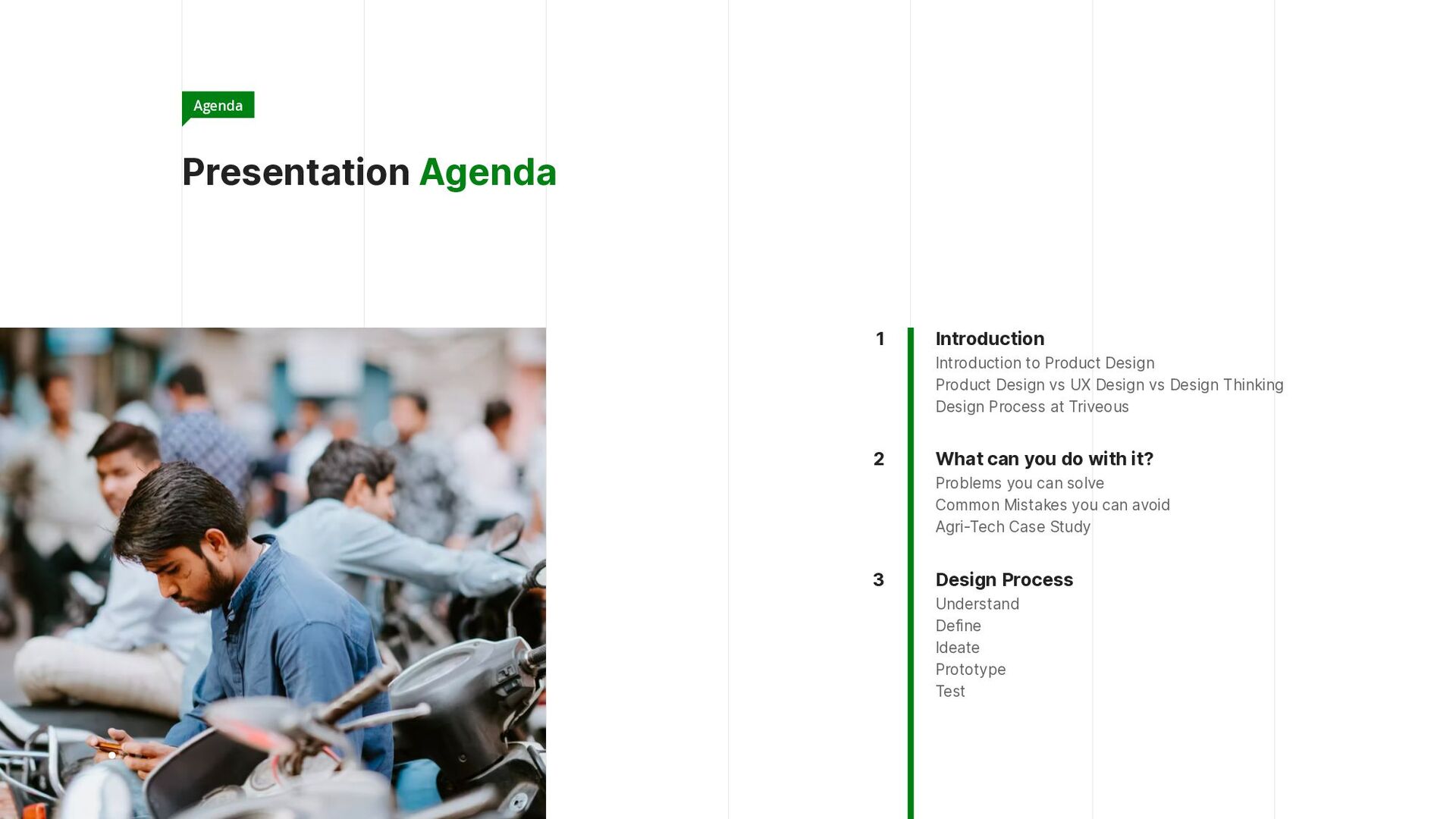
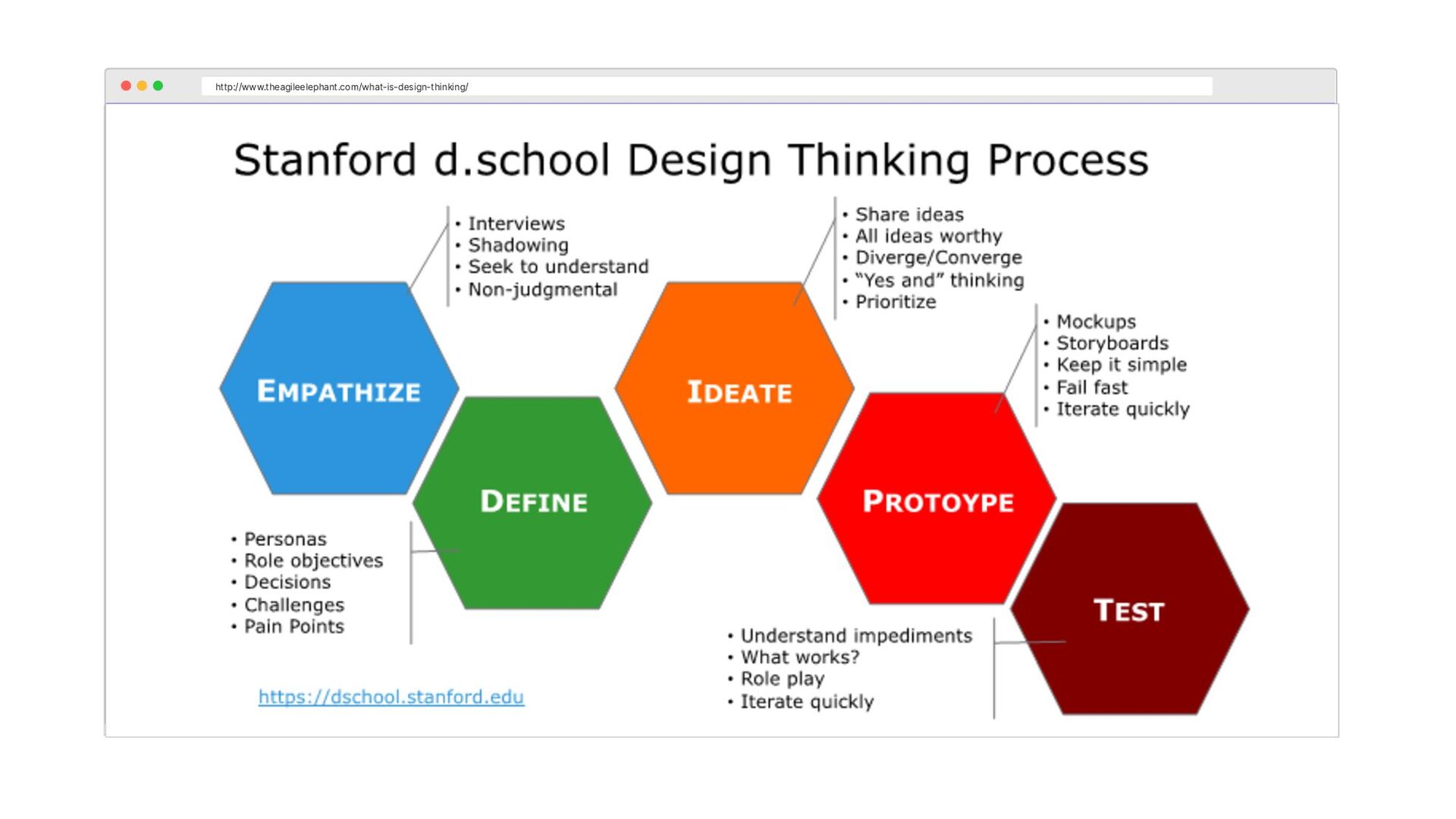
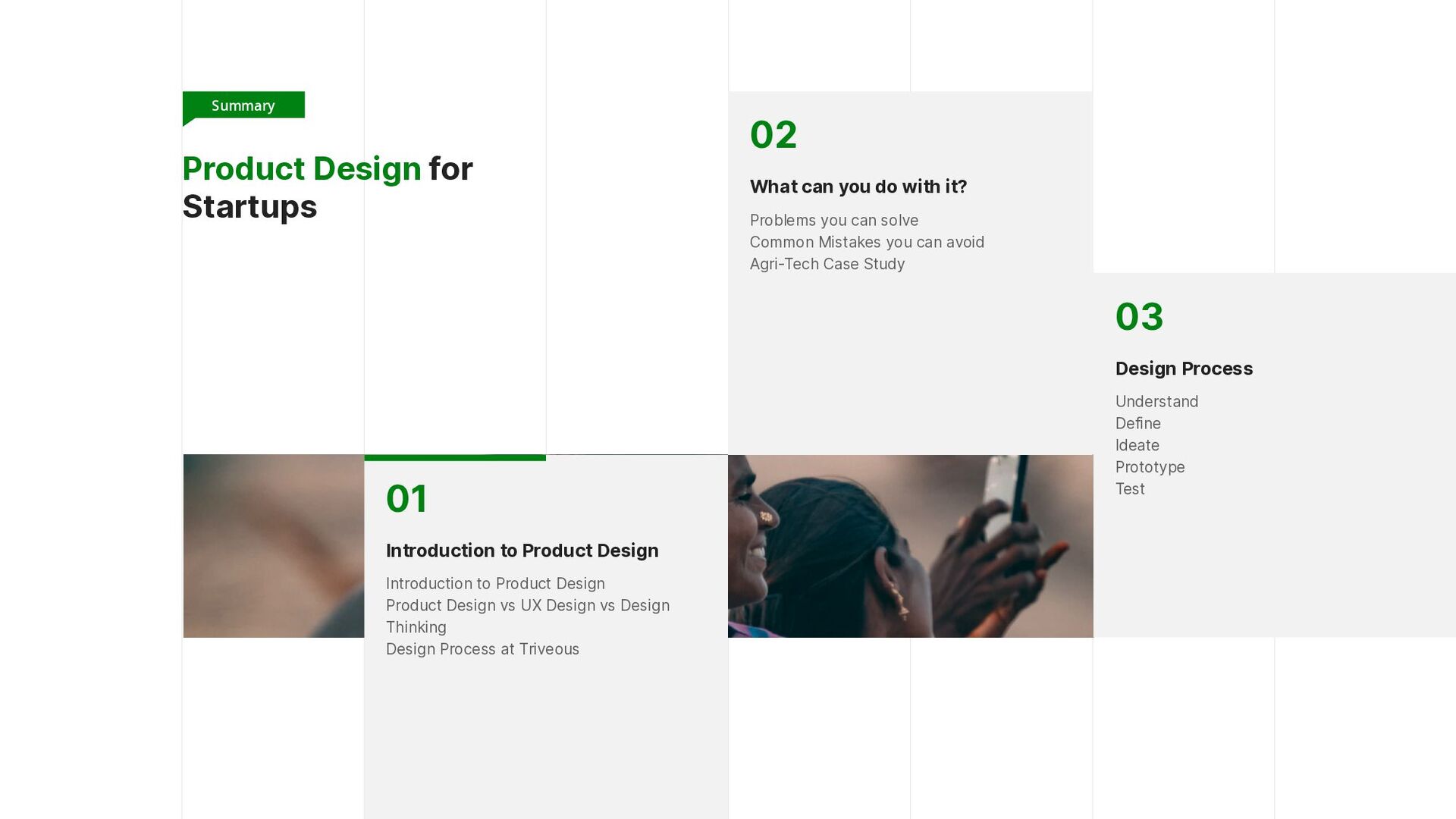
Product Design vs UX Design vs Design Thinking Design Process at Triveous 1 What can you do with it? Problems you can solve Common Mistakes you can avoid Agri-Tech Case Study 2 Design Process Understand Define Ideate Prototype Test 3
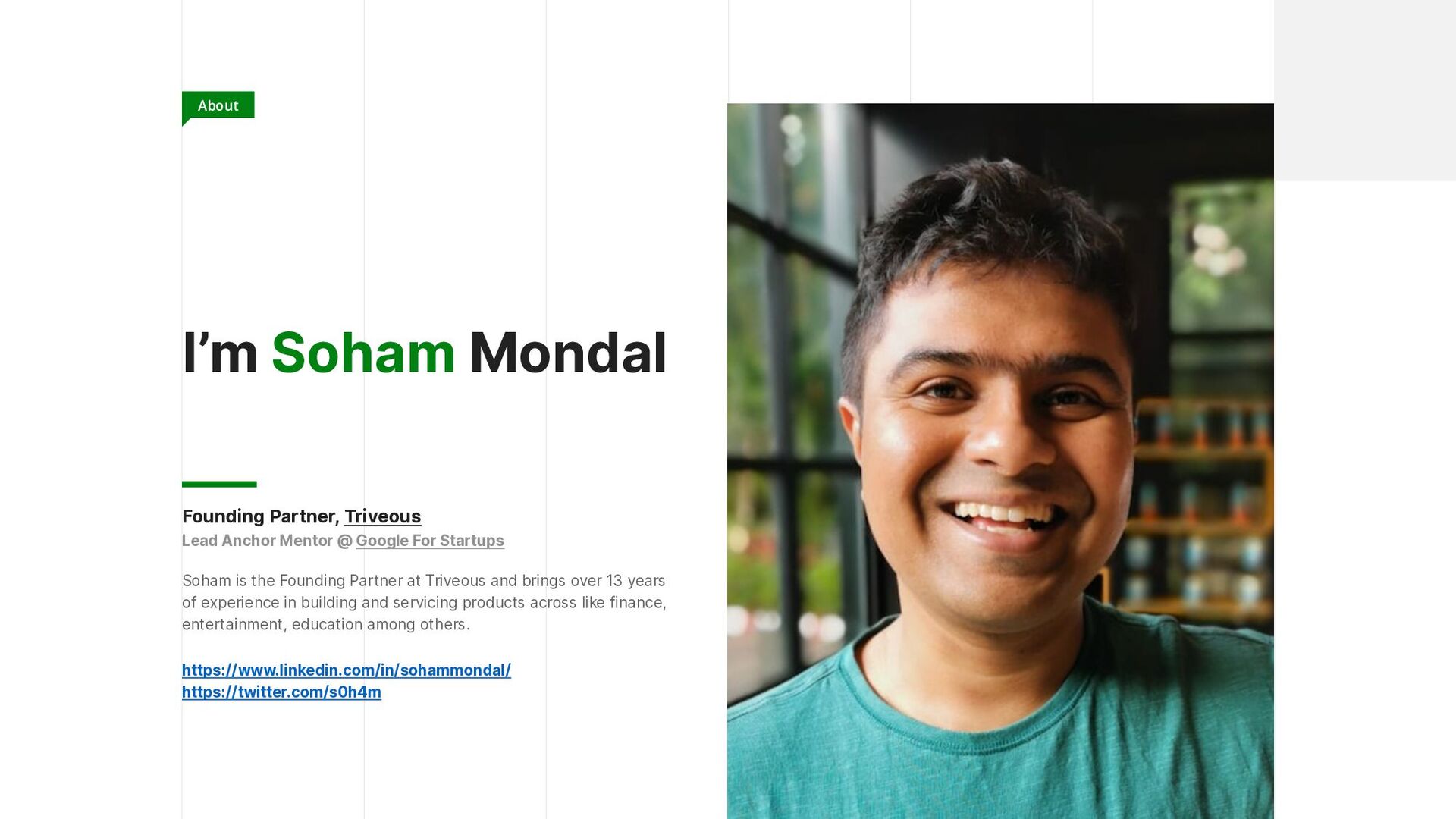
@ Google For Startups Soham is the Founding Partner at Triveous and brings over 13 years of experience in building and servicing products across like finance, entertainment, education among others. https://www.linkedin.com/in/sohammondal/ https://twitter.com/s0h4m About
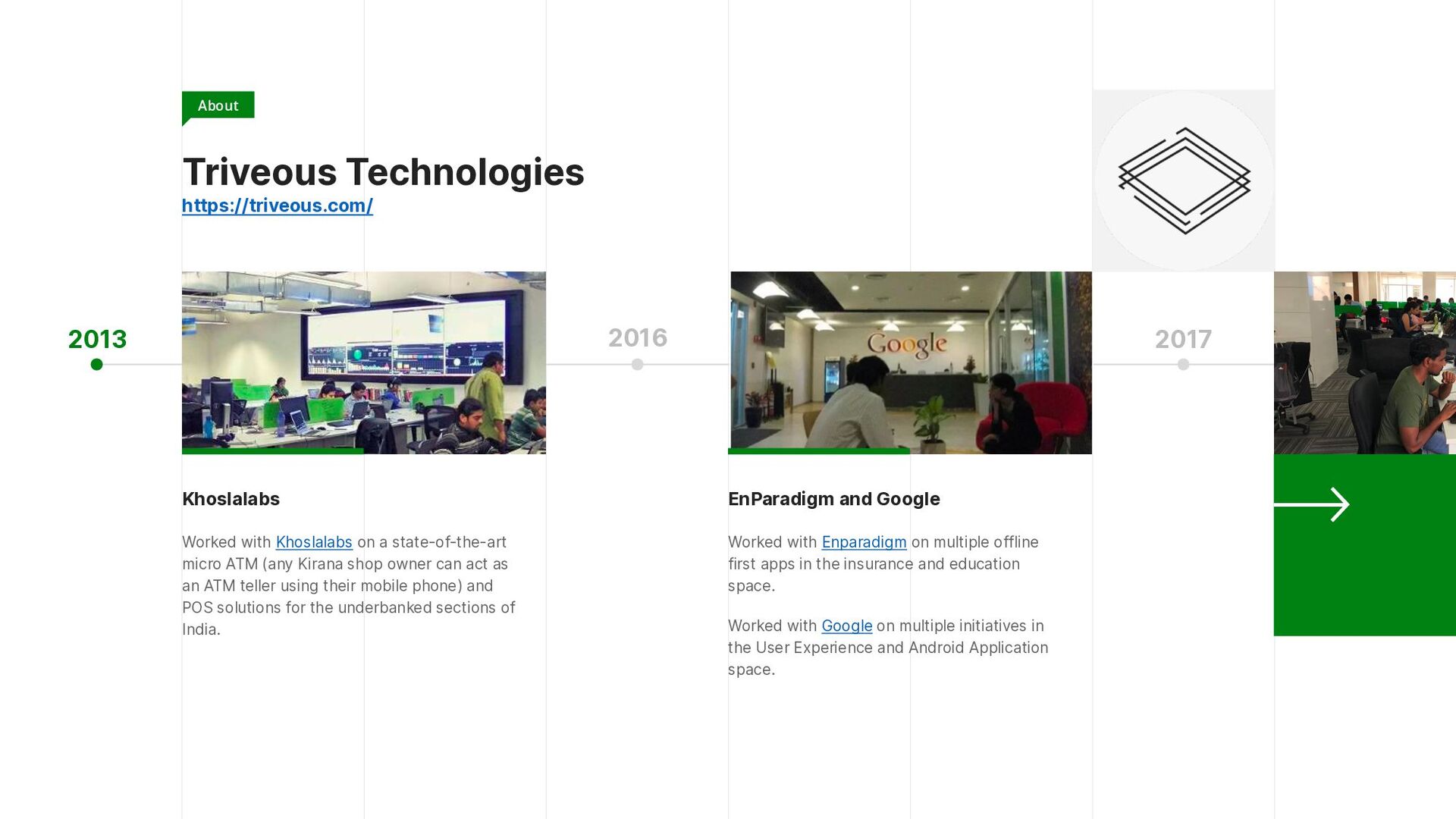
Khoslalabs on a state-of-the-art micro ATM (any Kirana shop owner can act as an ATM teller using their mobile phone) and POS solutions for the underbanked sections of India. EnParadigm and Google Worked with Enparadigm on multiple offline first apps in the insurance and education space. Worked with Google on multiple initiatives in the User Experience and Android Application space. About
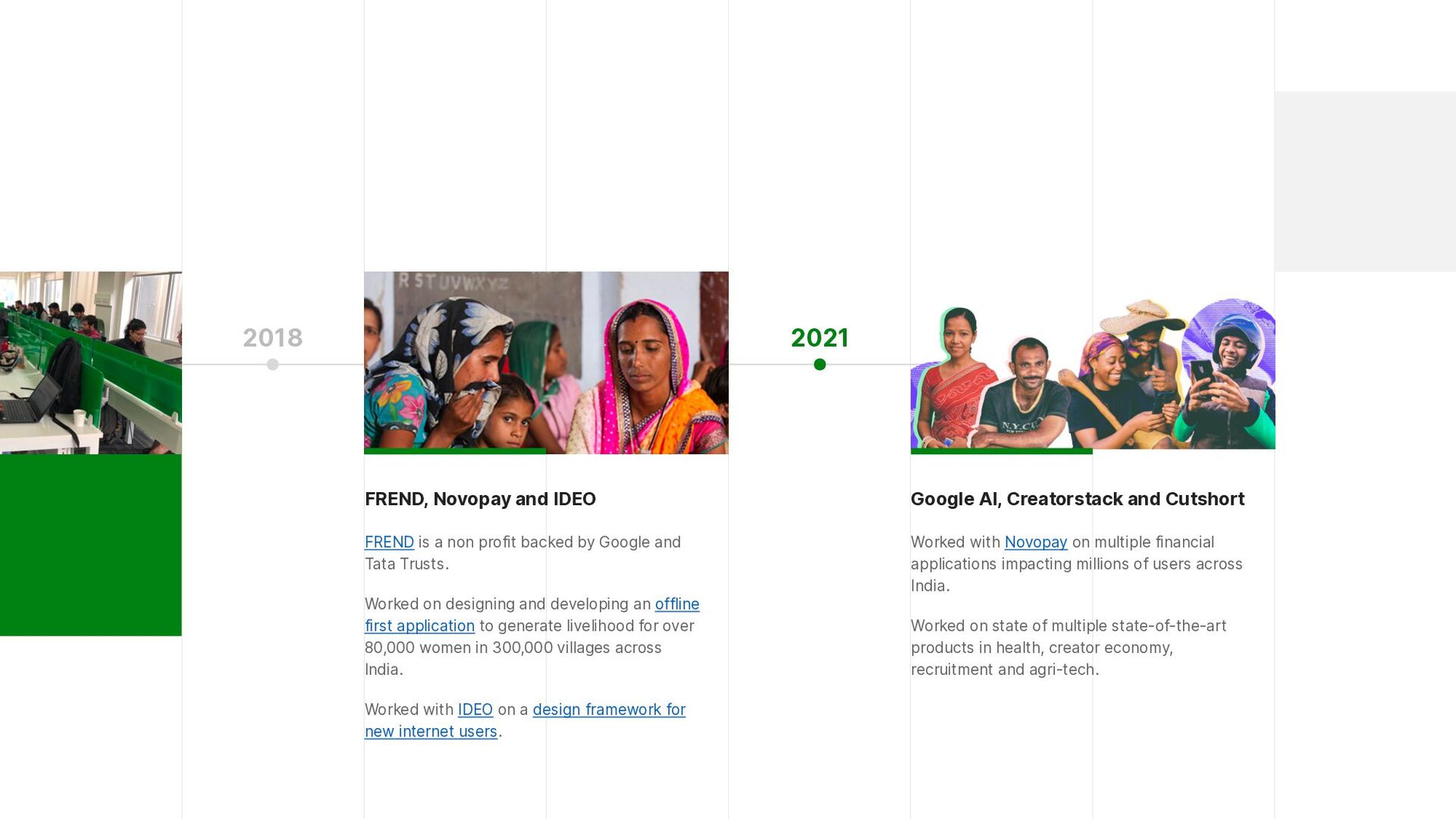
profit backed by Google and Tata Trusts. Worked on designing and developing an offline first application to generate livelihood for over 80,000 women in 300,000 villages across India. Worked with IDEO on a design framework for new internet users. Google AI, Creatorstack and Cutshort Worked with Novopay on multiple financial applications impacting millions of users across India. Worked on state of multiple state-of-the-art products in health, creator economy, recruitment and agri-tech.
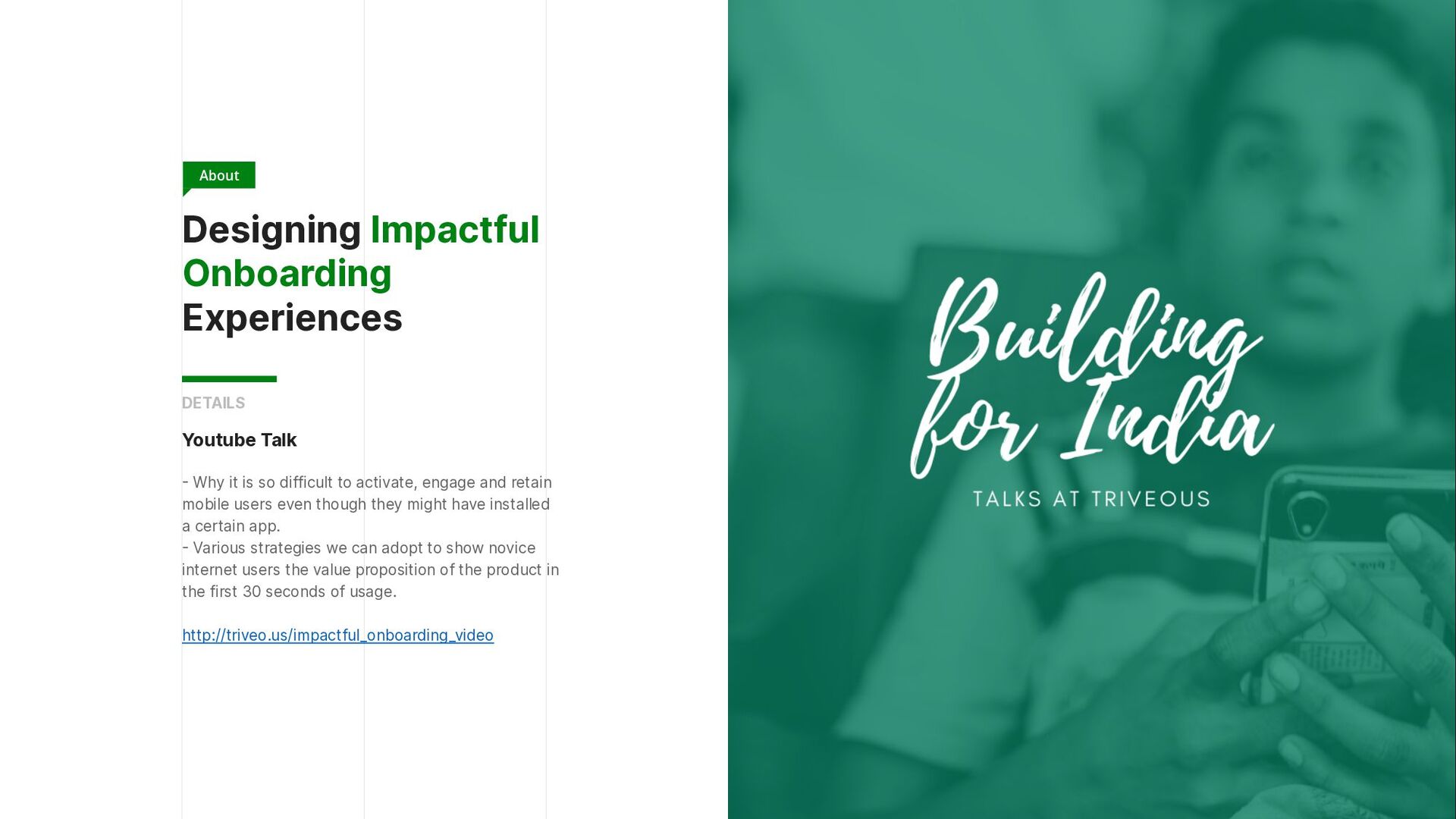
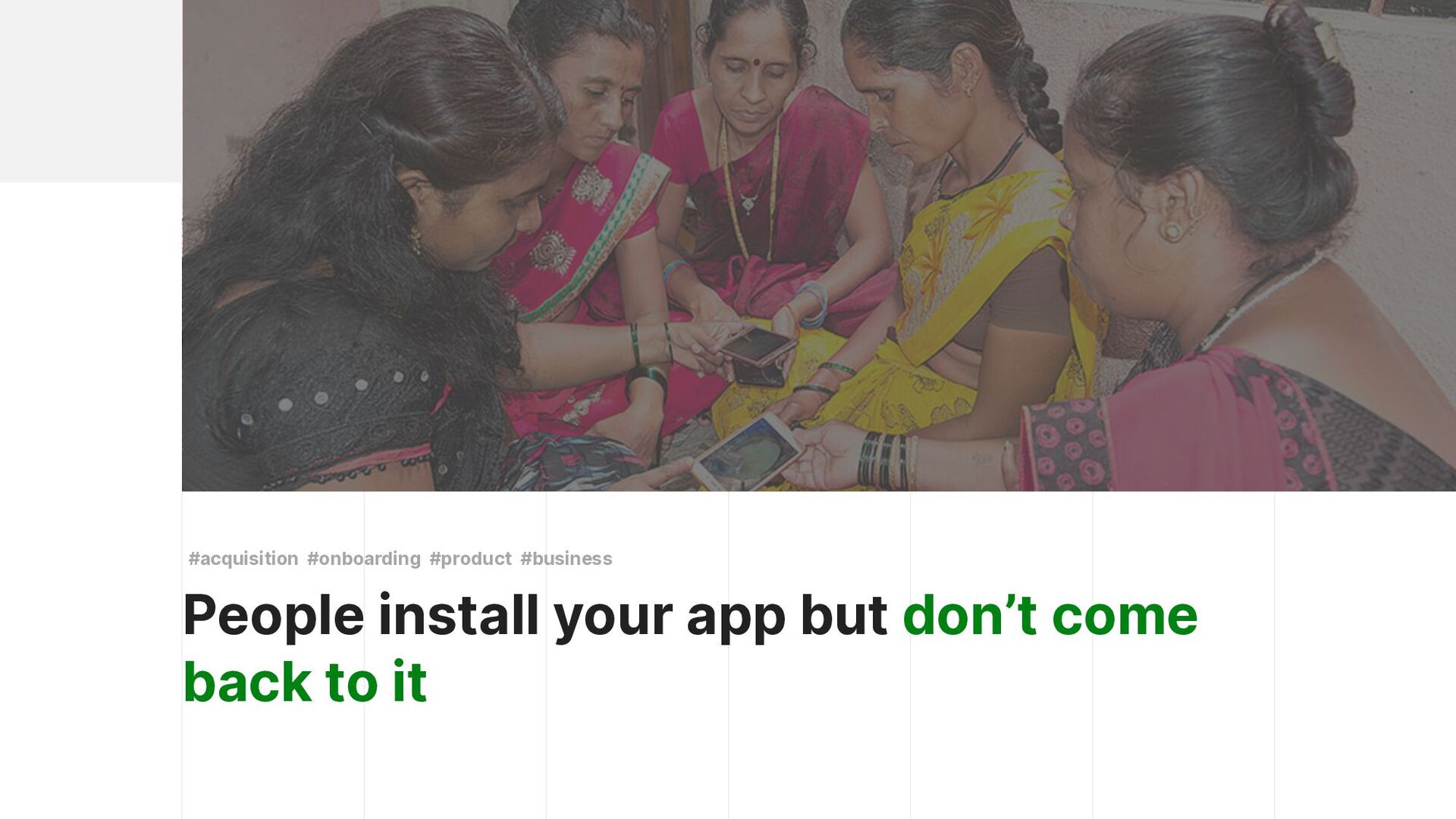
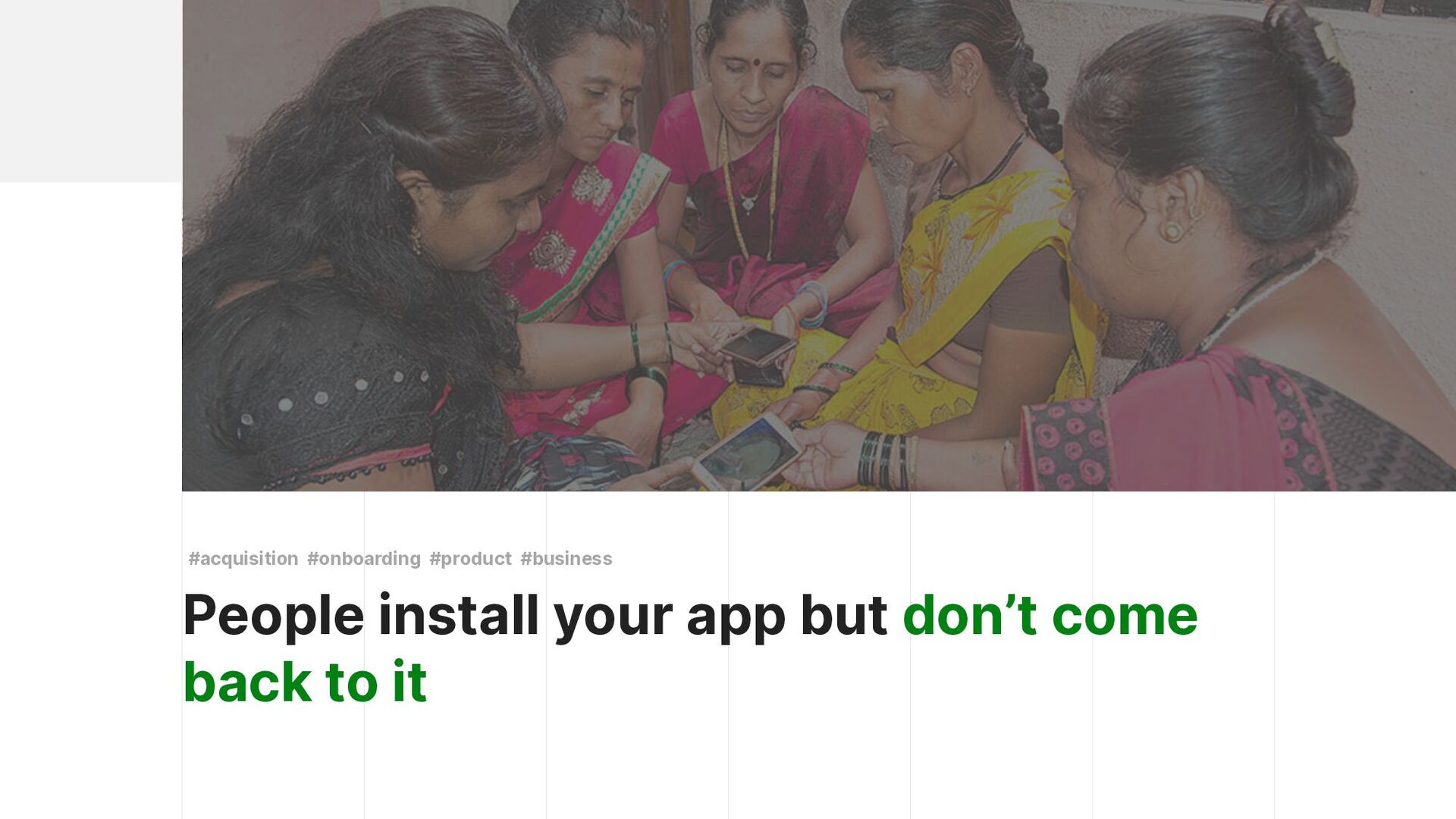
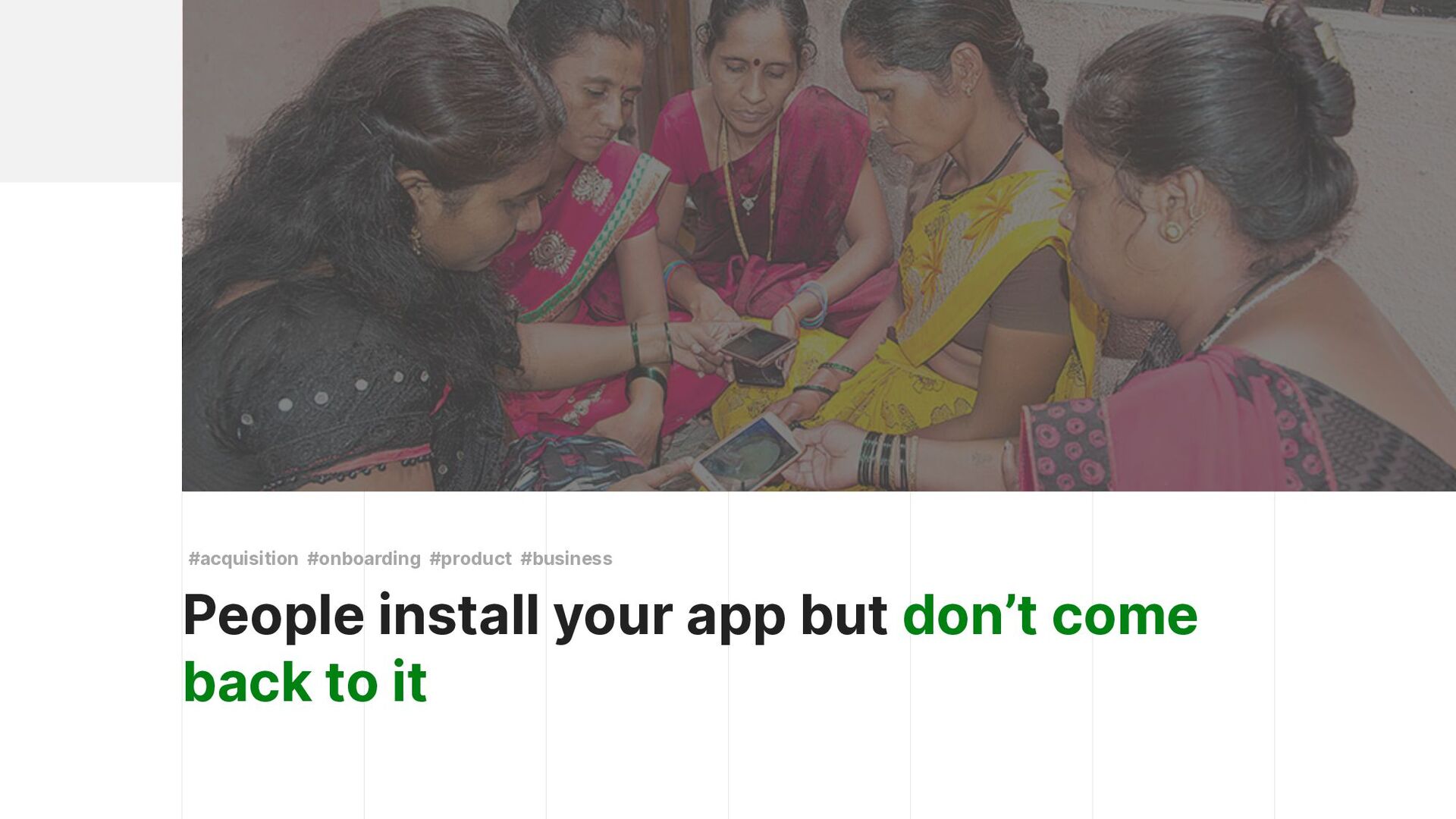
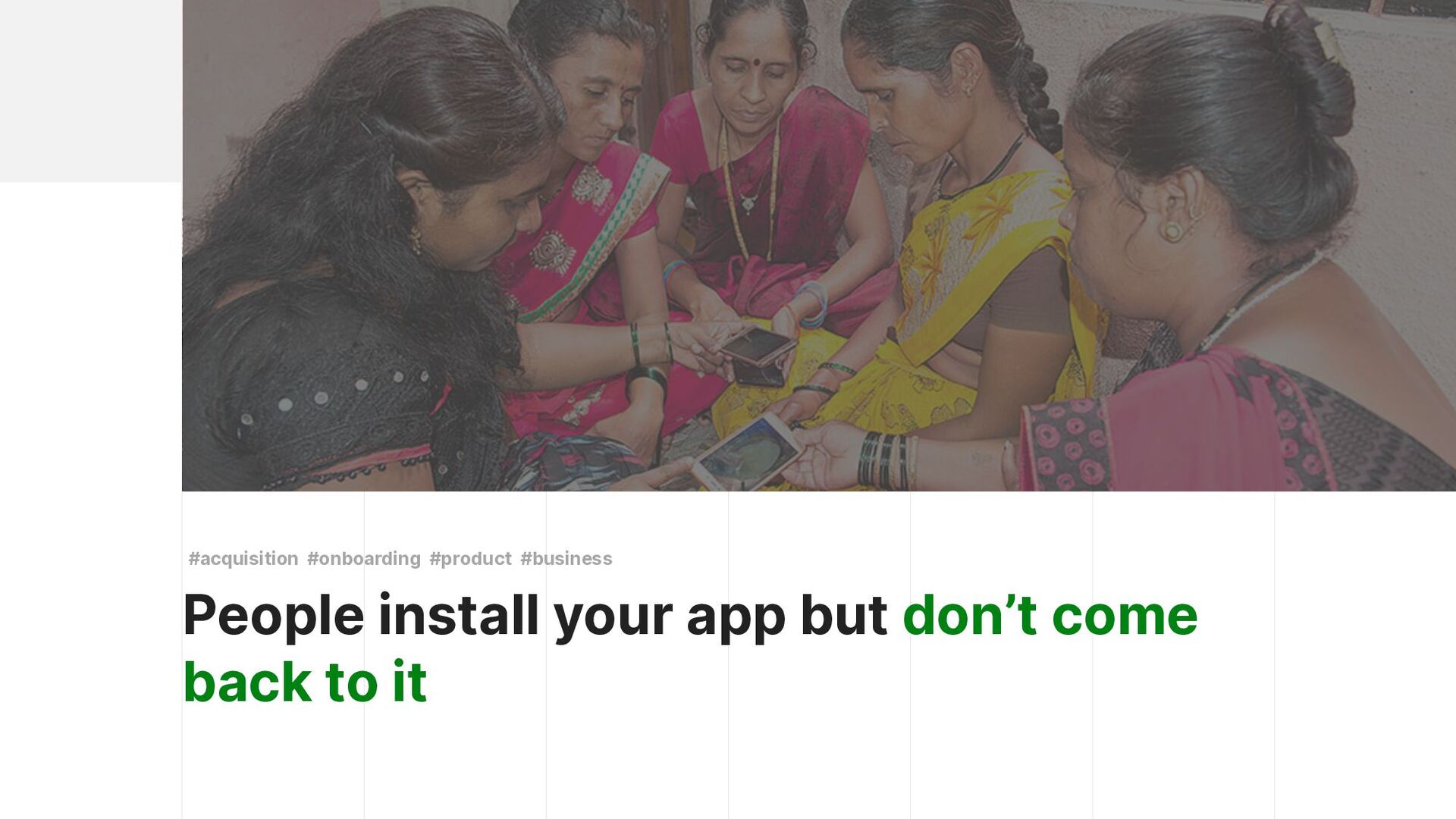
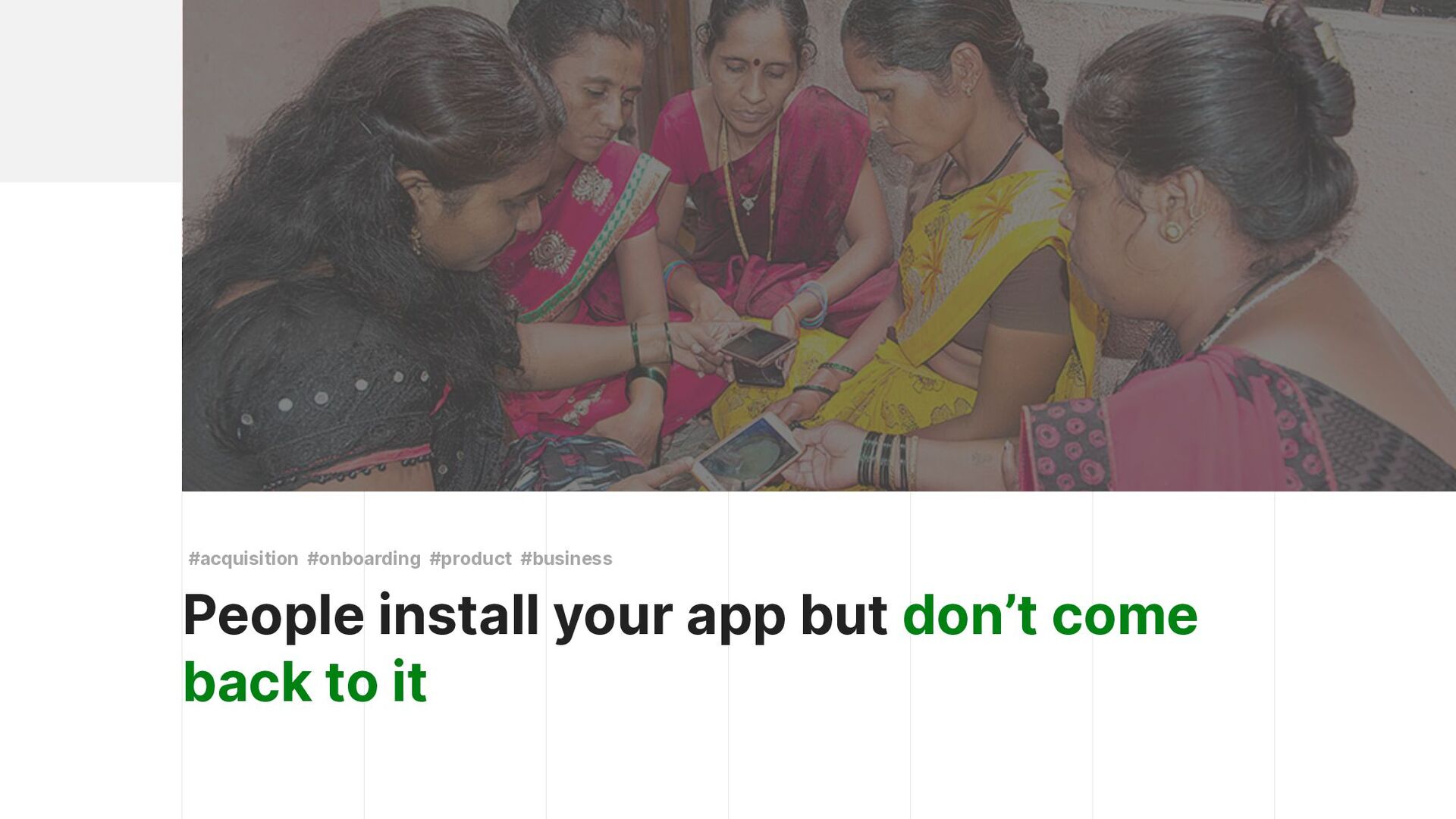
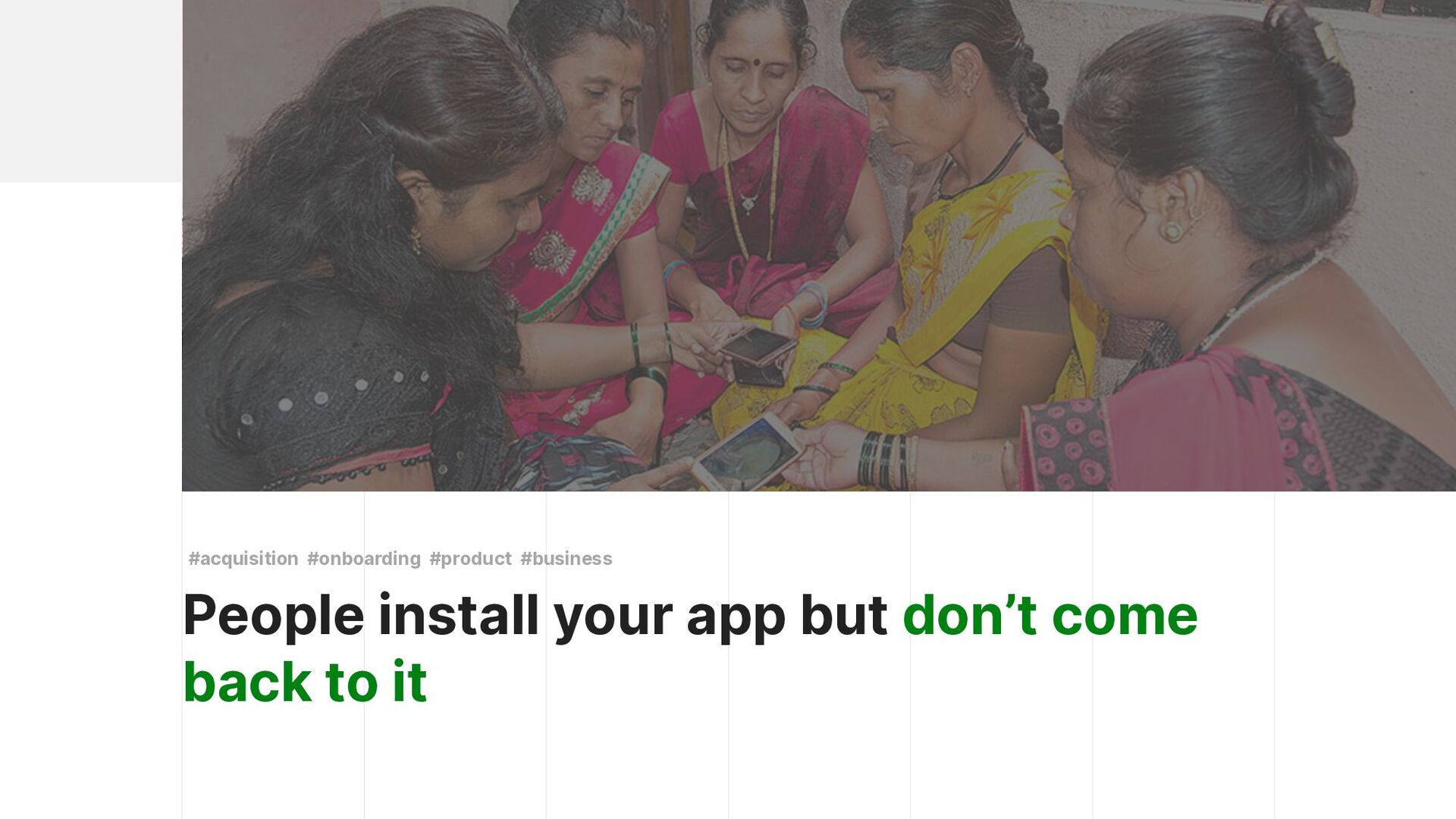
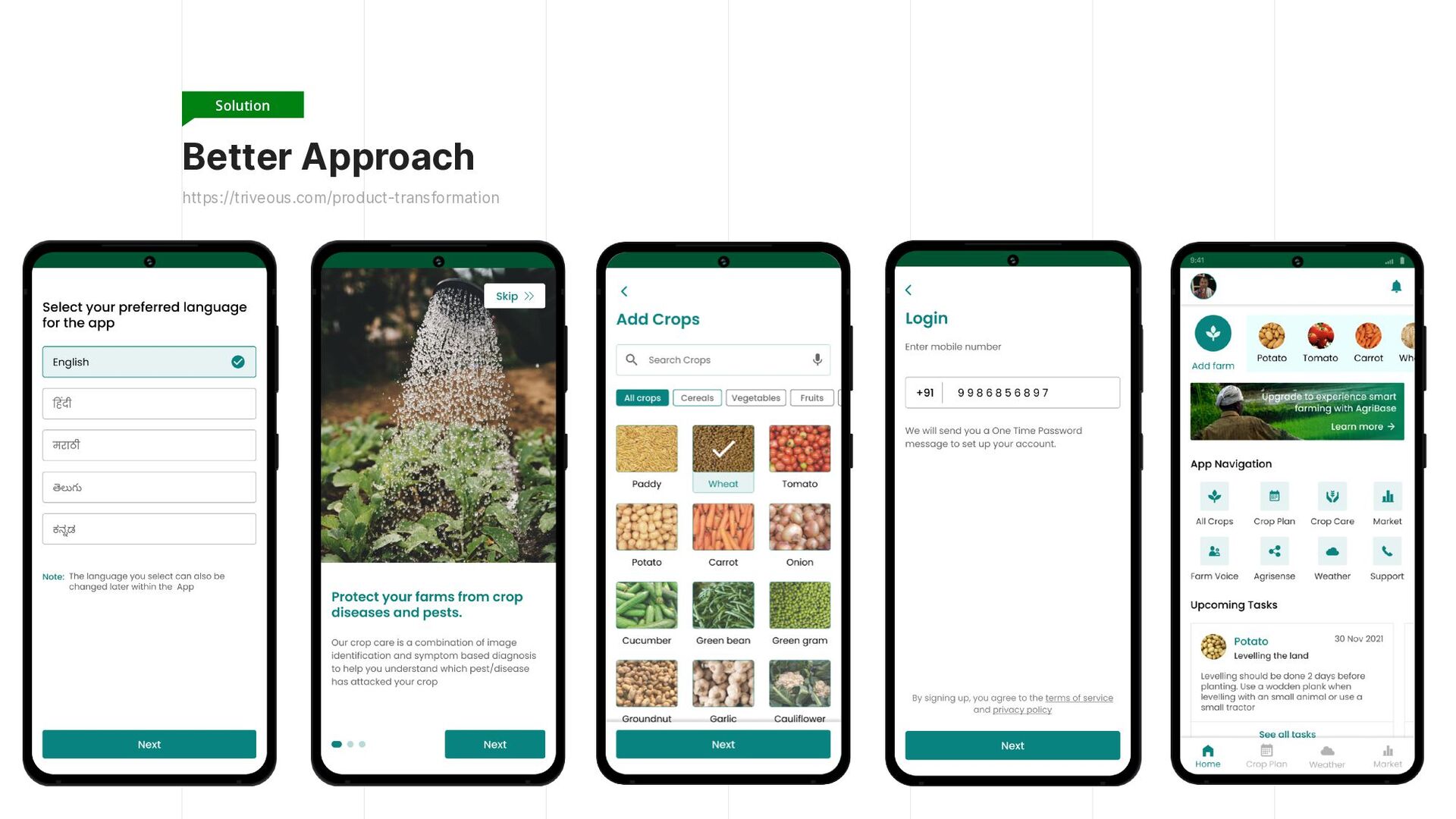
so difficult to activate, engage and retain mobile users even though they might have installed a certain app. - Various strategies we can adopt to show novice internet users the value proposition of the product in the first 30 seconds of usage. http://triveo.us/impactful_onboarding_video DETAILS About
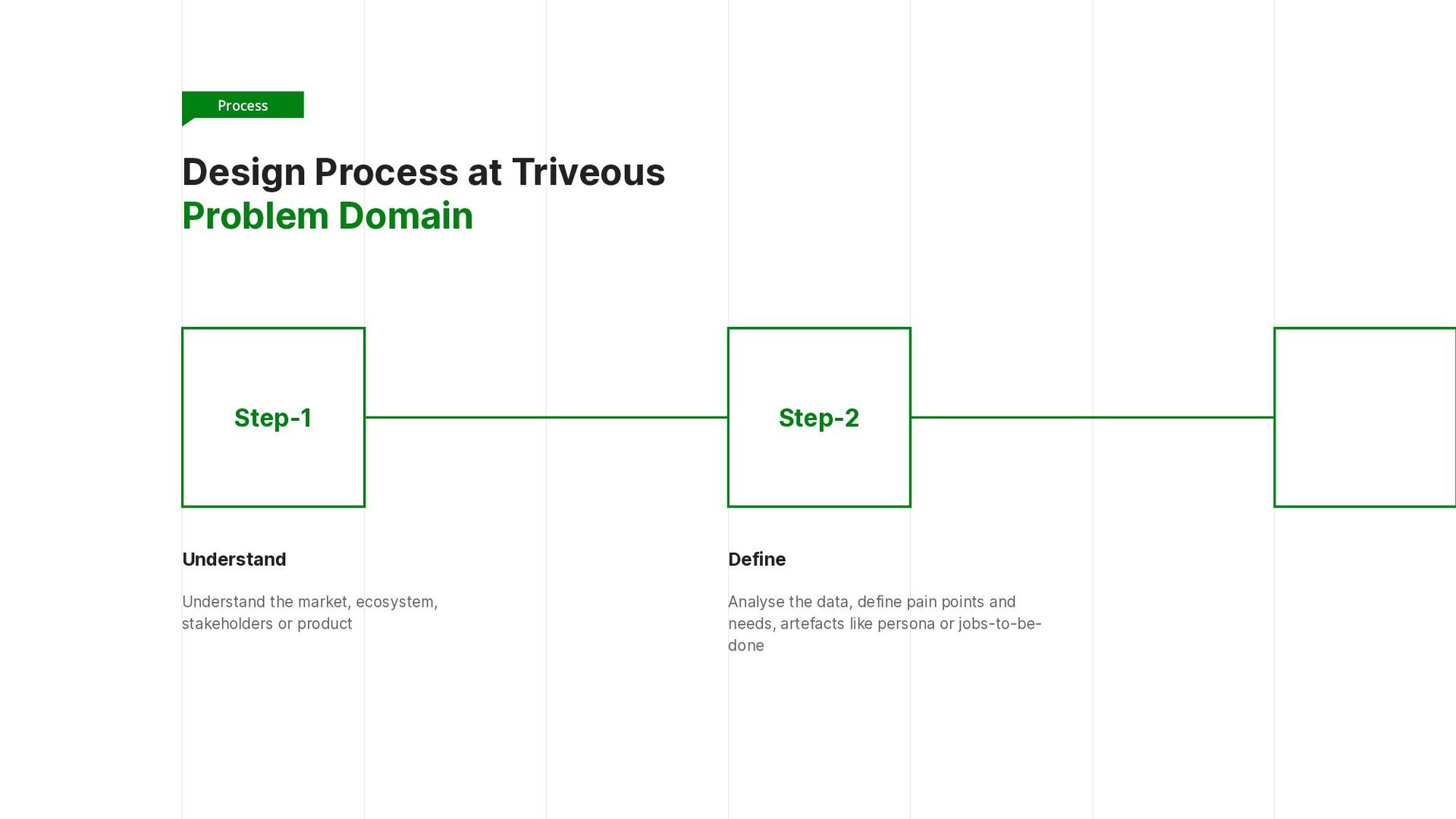
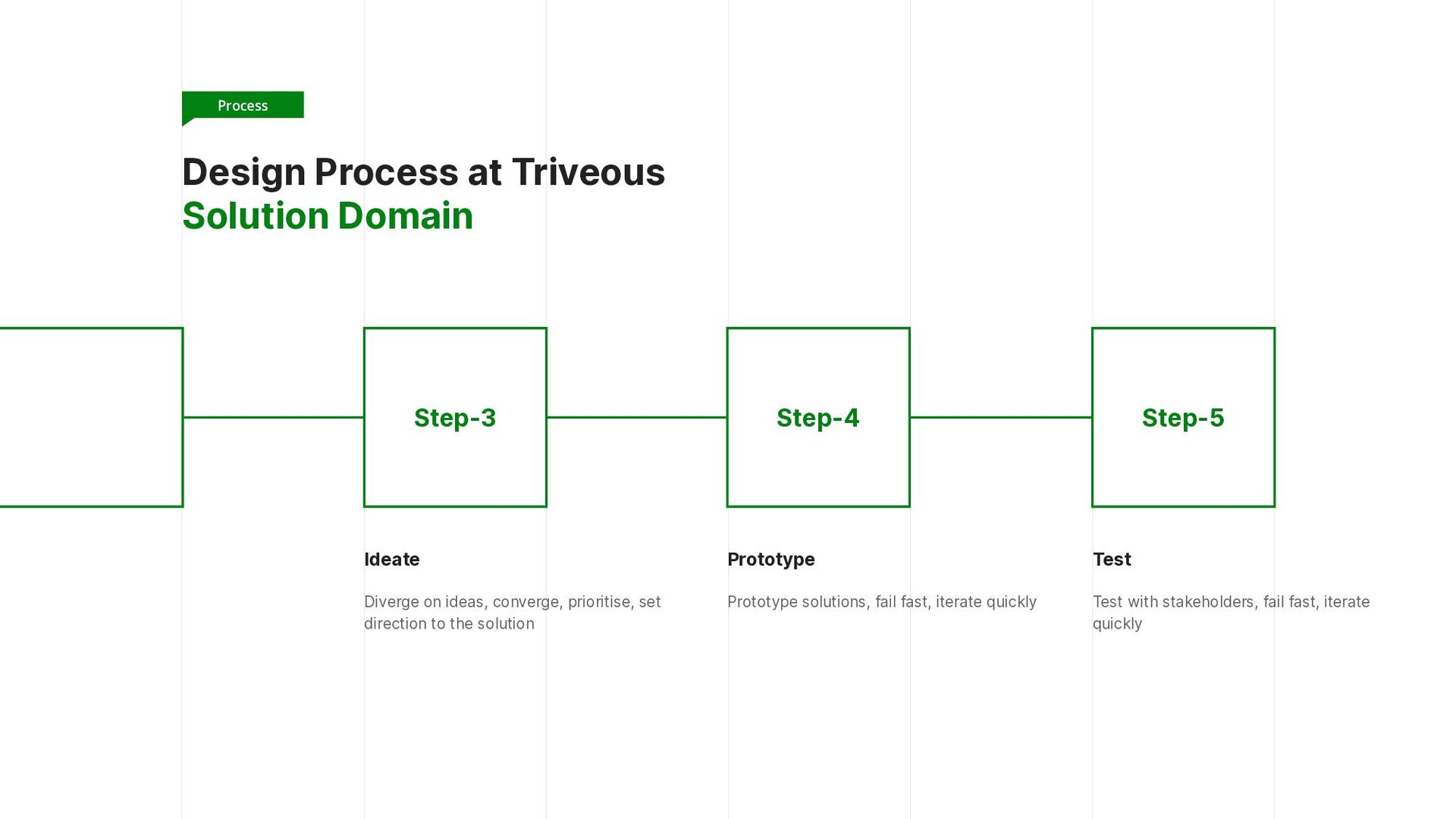
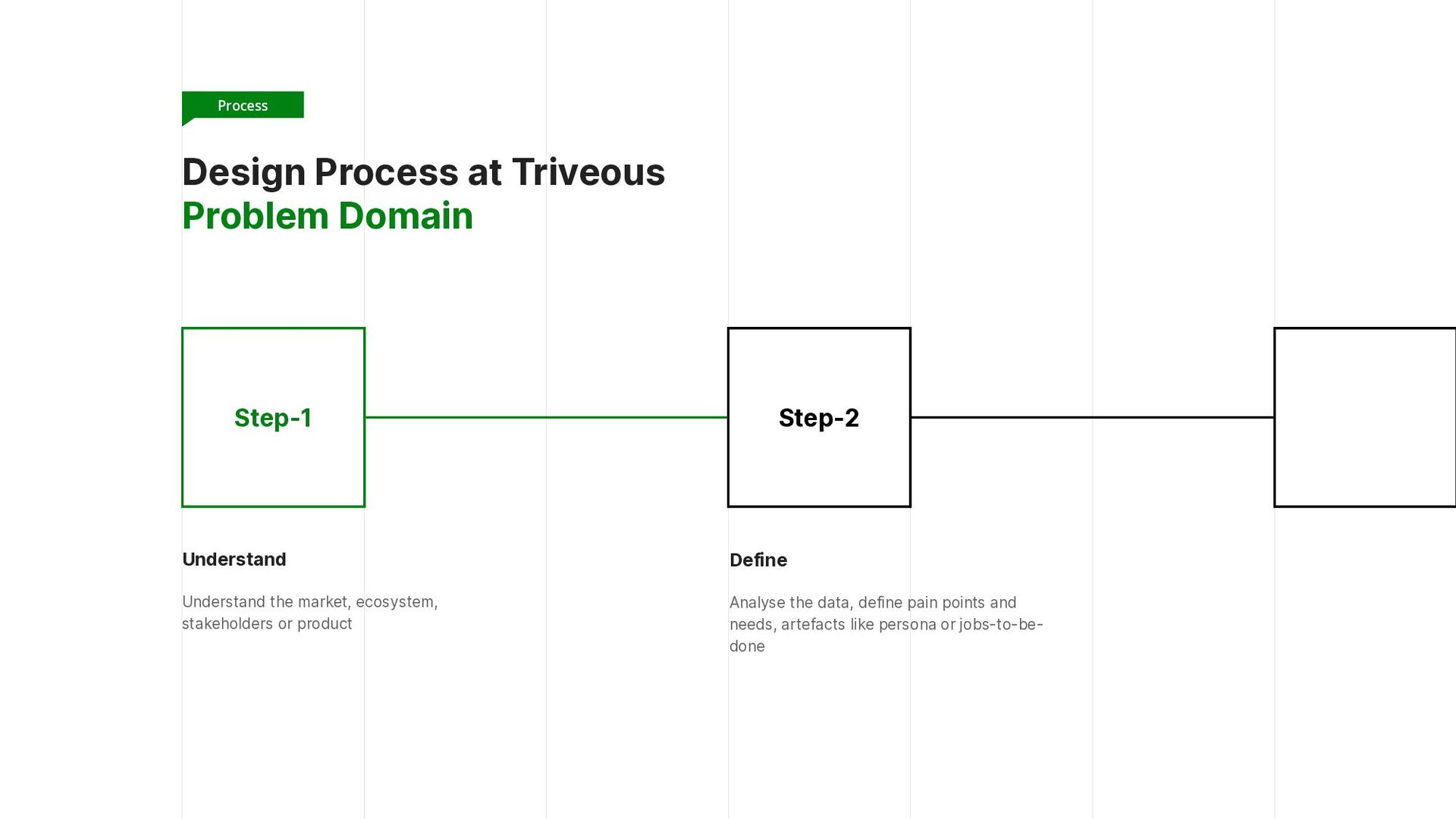
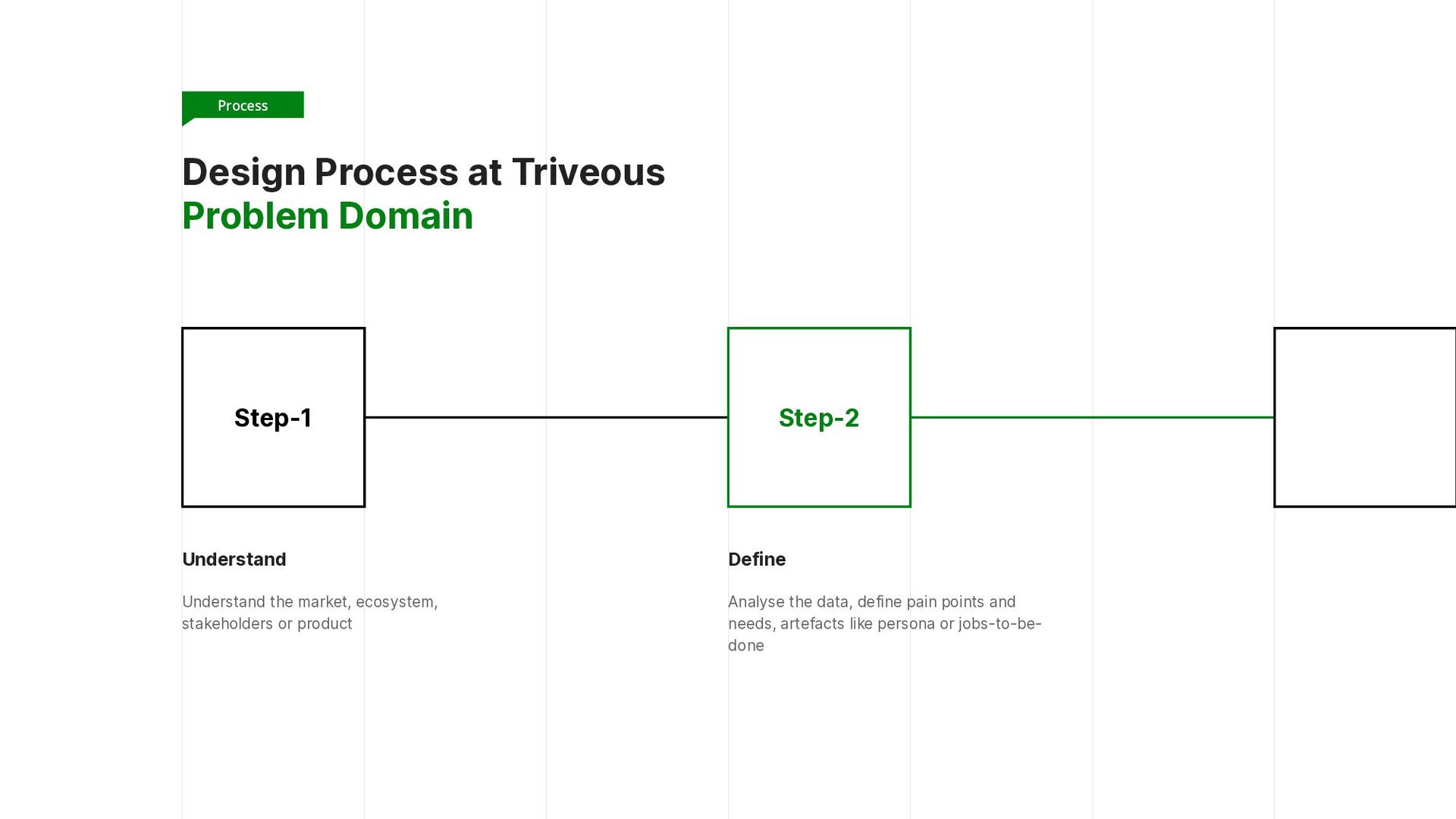
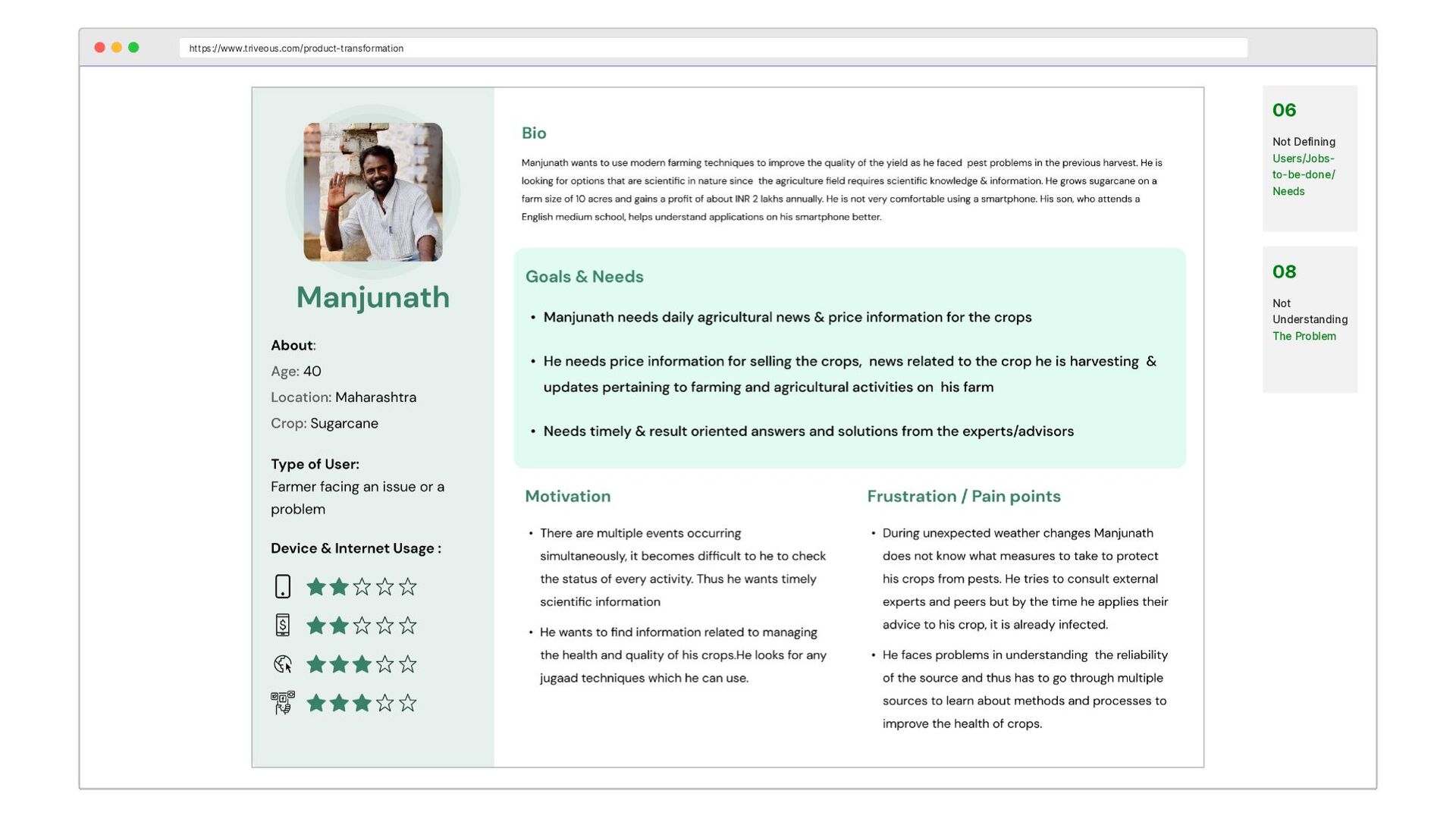
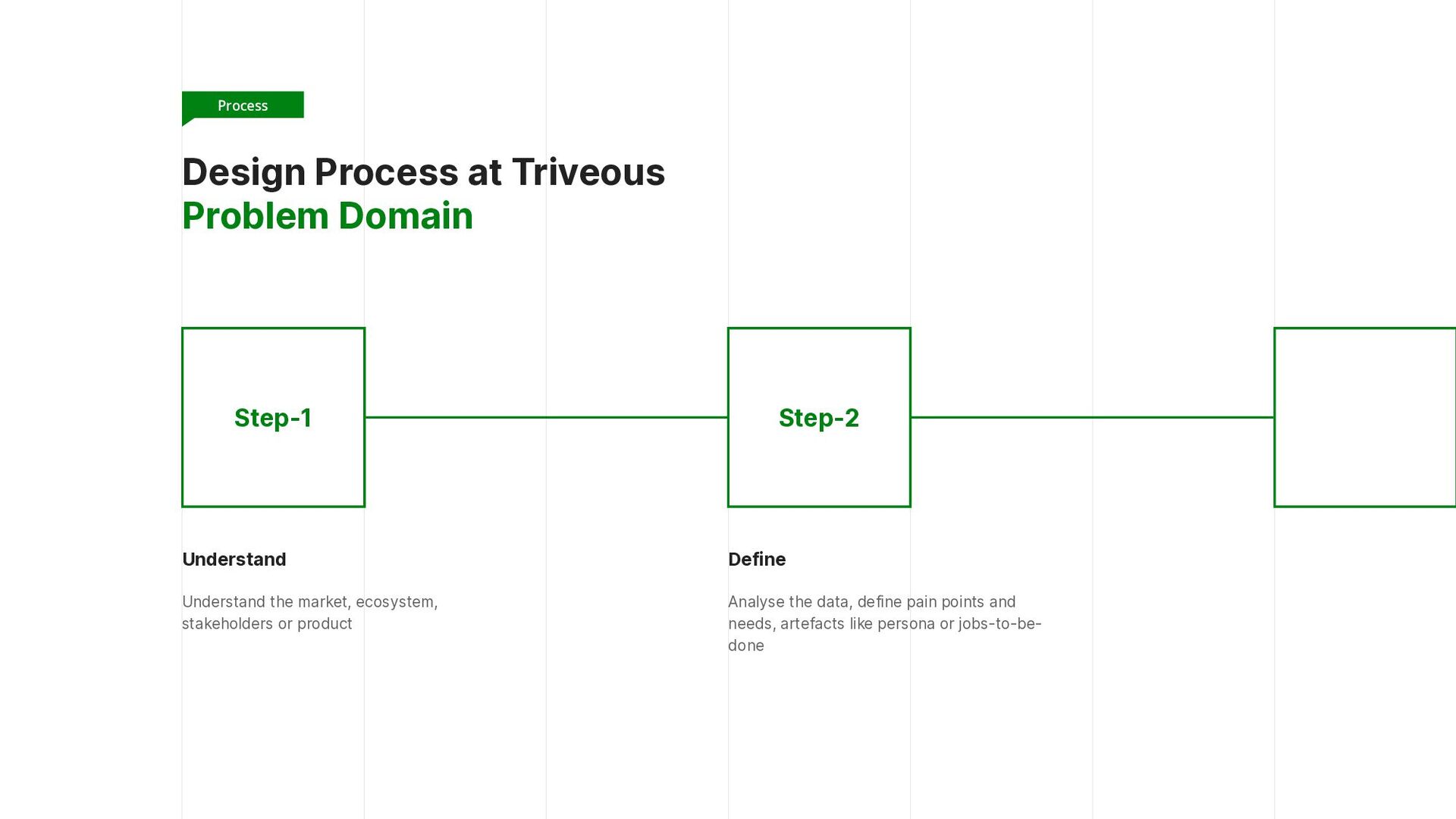
the market, ecosystem, stakeholders or product Define Analyse the data, define pain points and needs, artefacts like persona or jobs-to-be- done Process
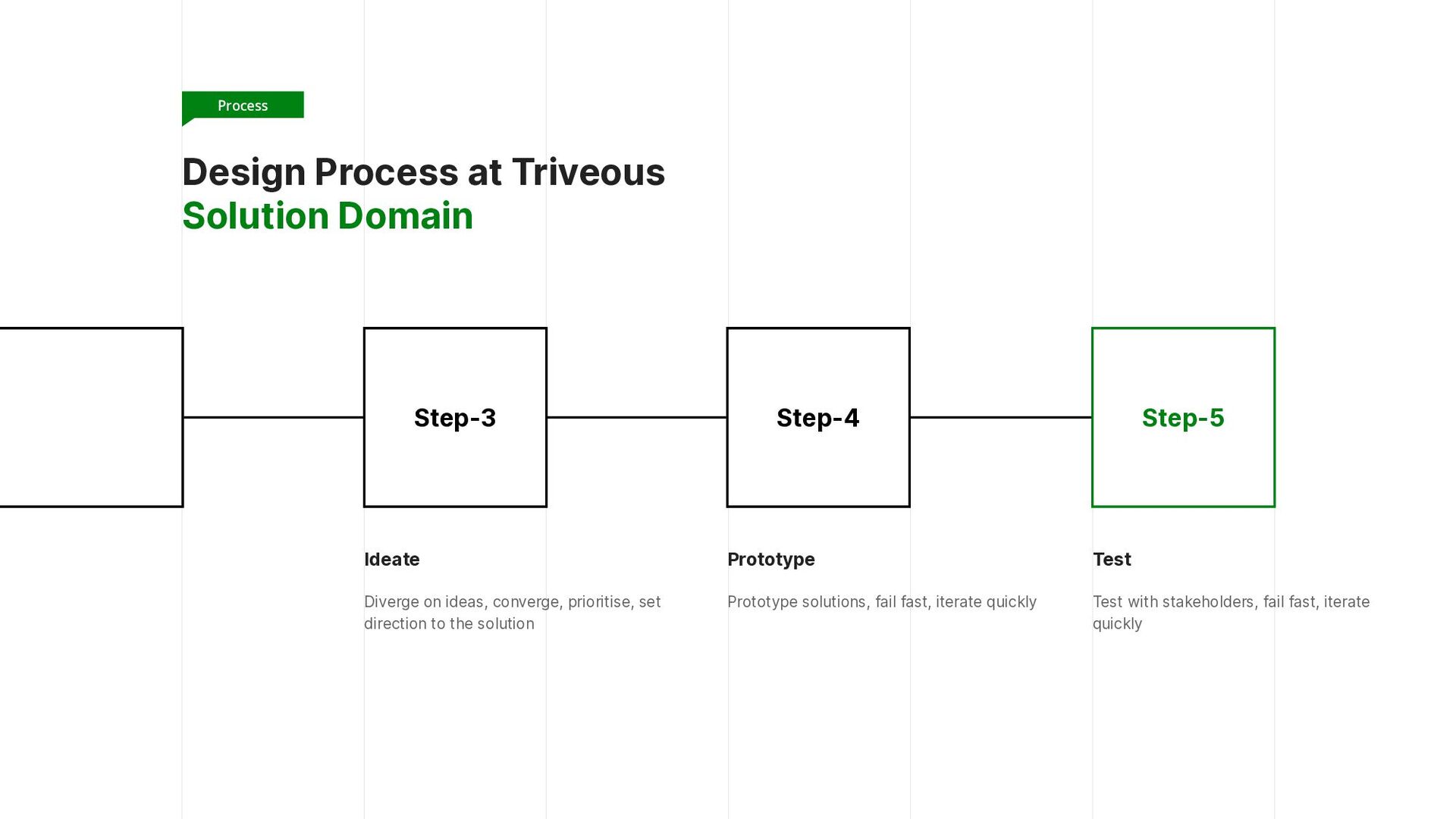
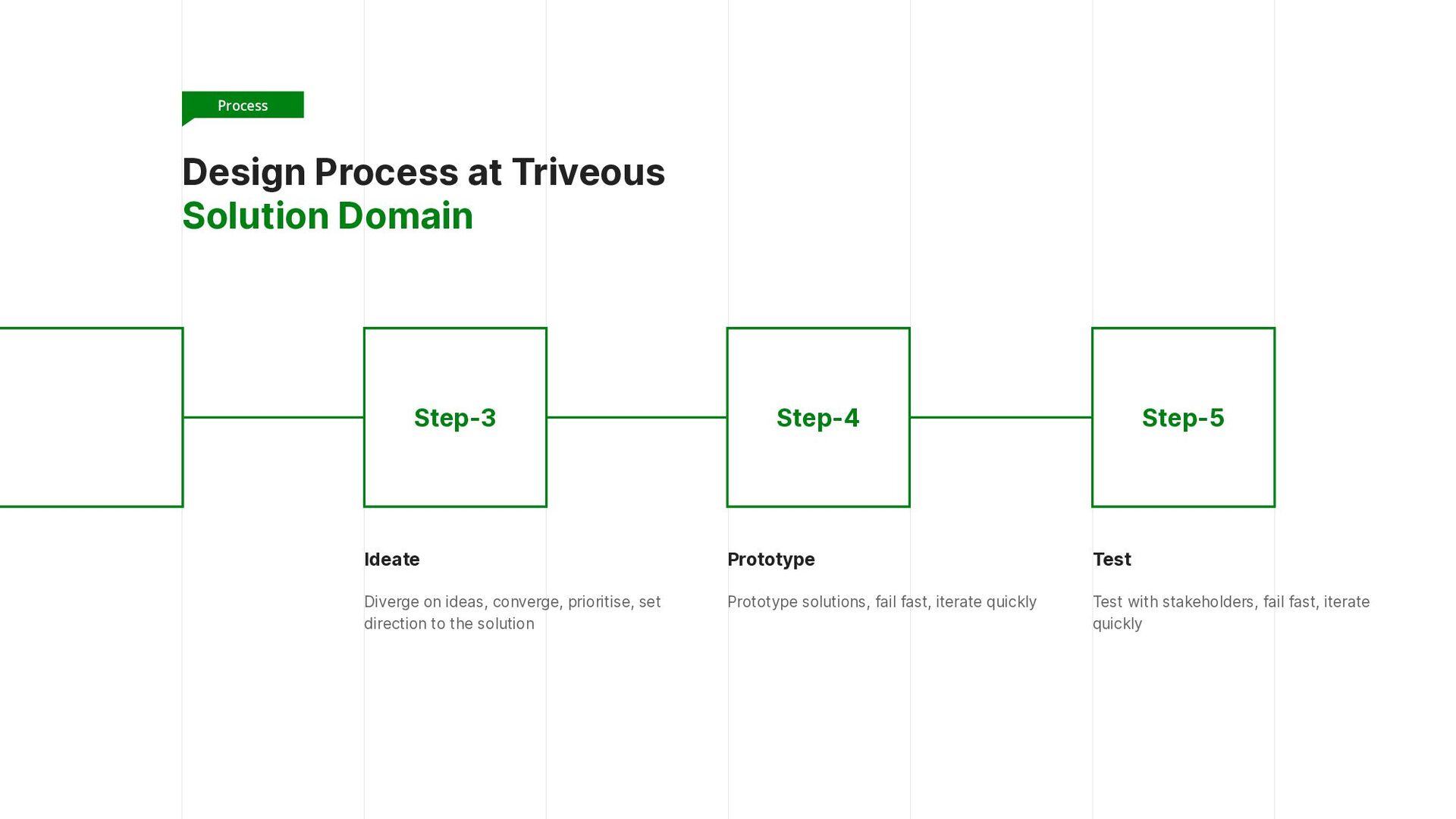
direction to the solution Prototype Prototype solutions, fail fast, iterate quickly Test Test with stakeholders, fail fast, iterate quickly Design Process at Triveous Solution Domain Process
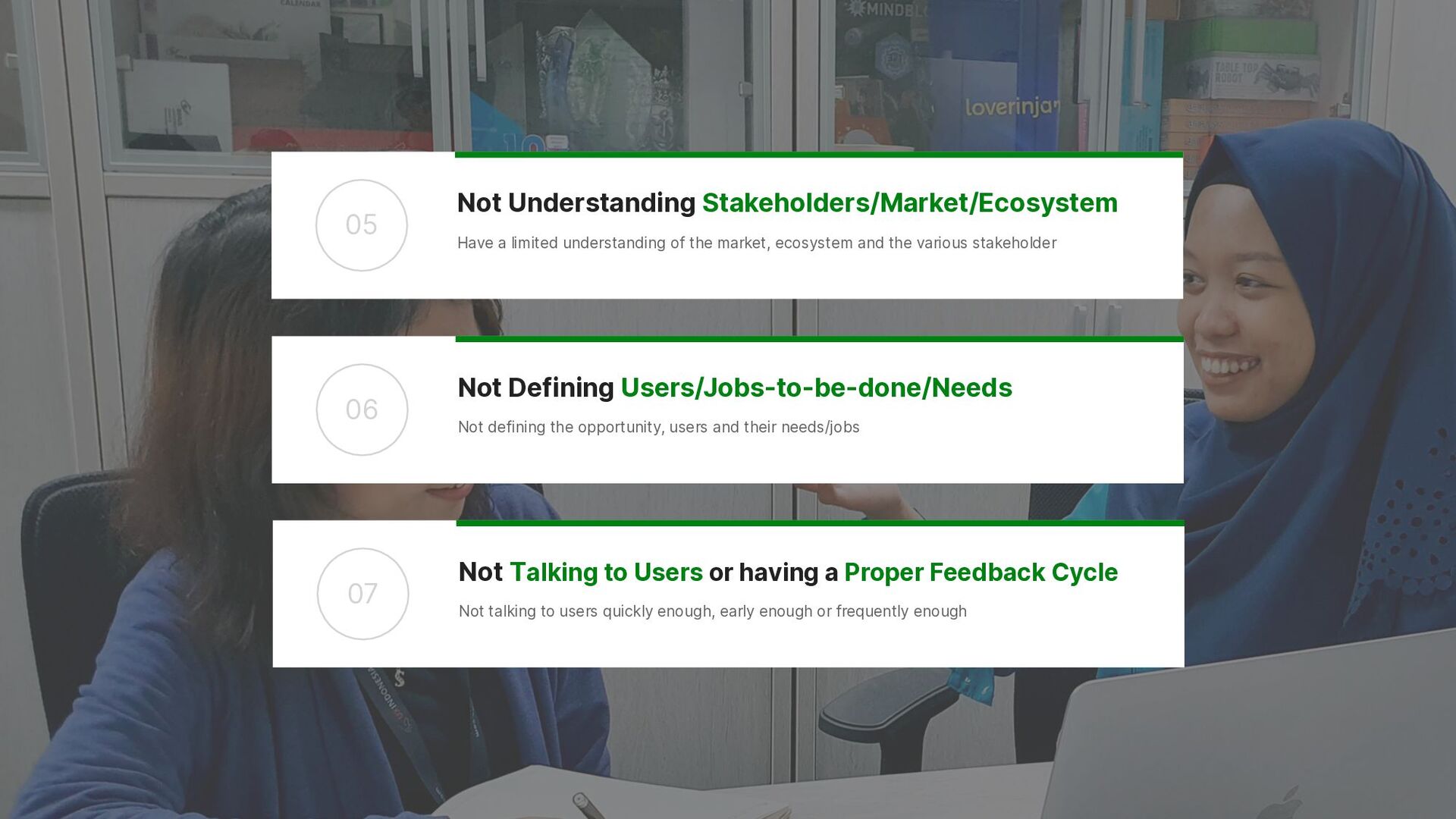
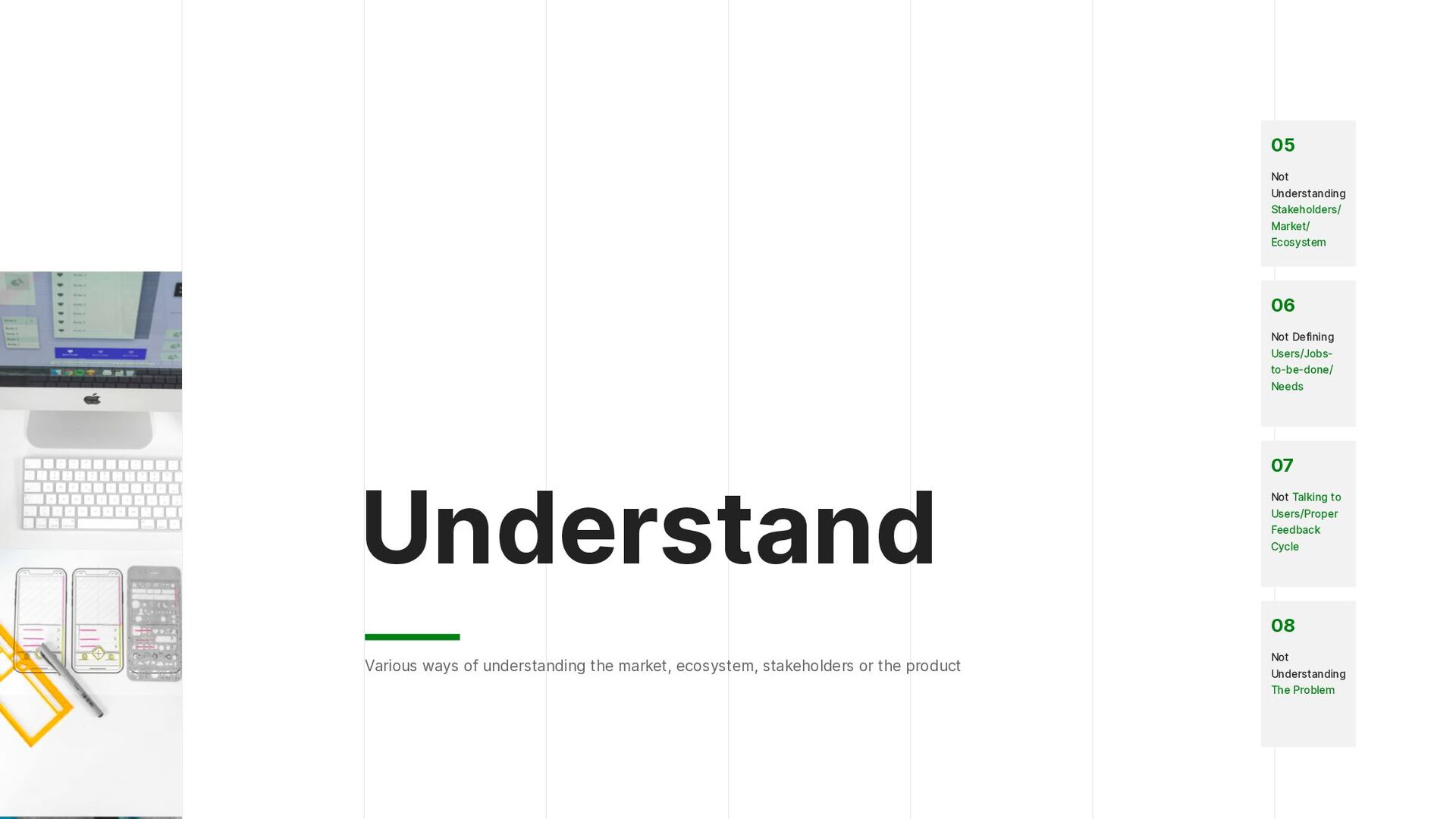
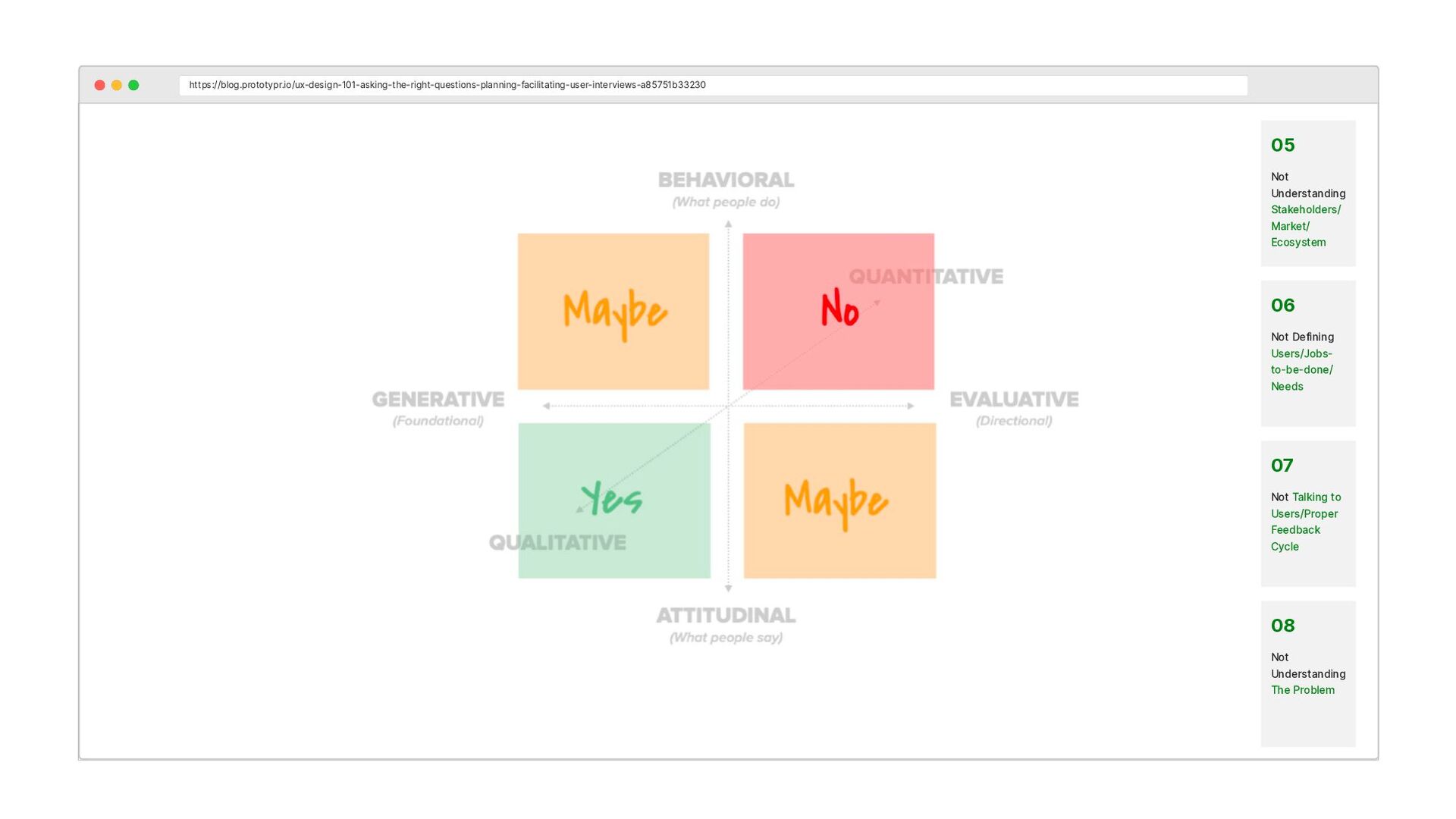
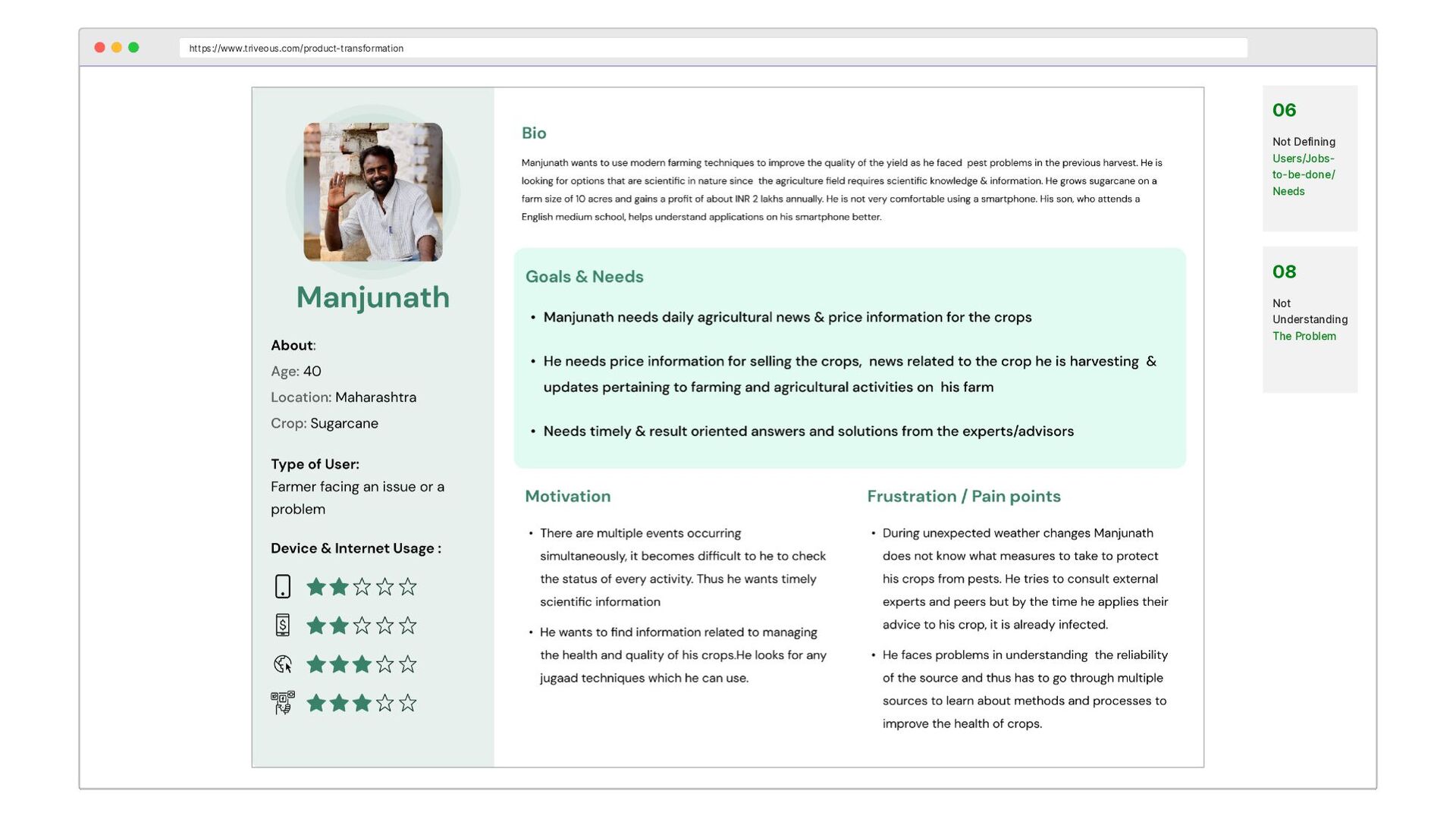
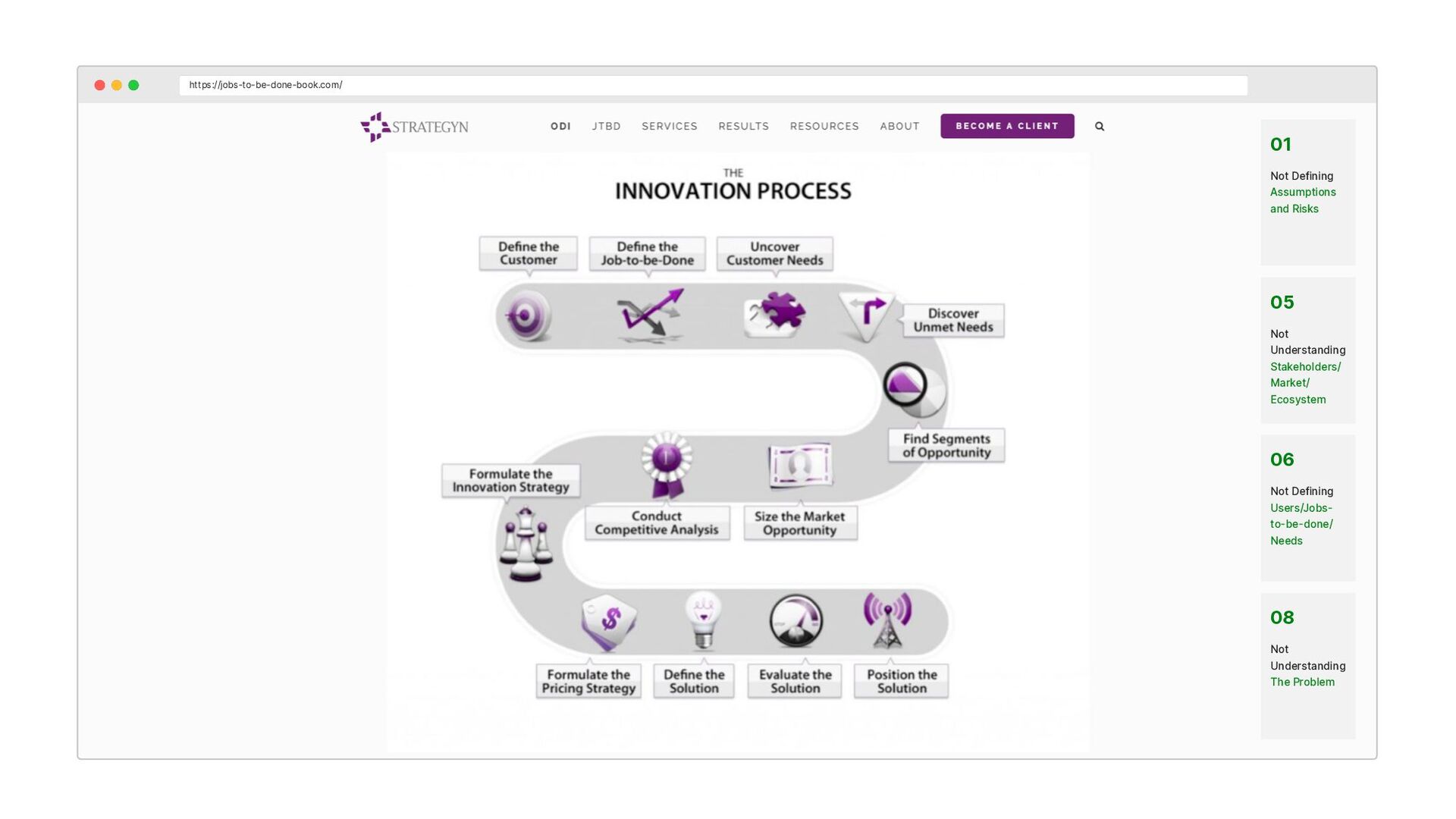
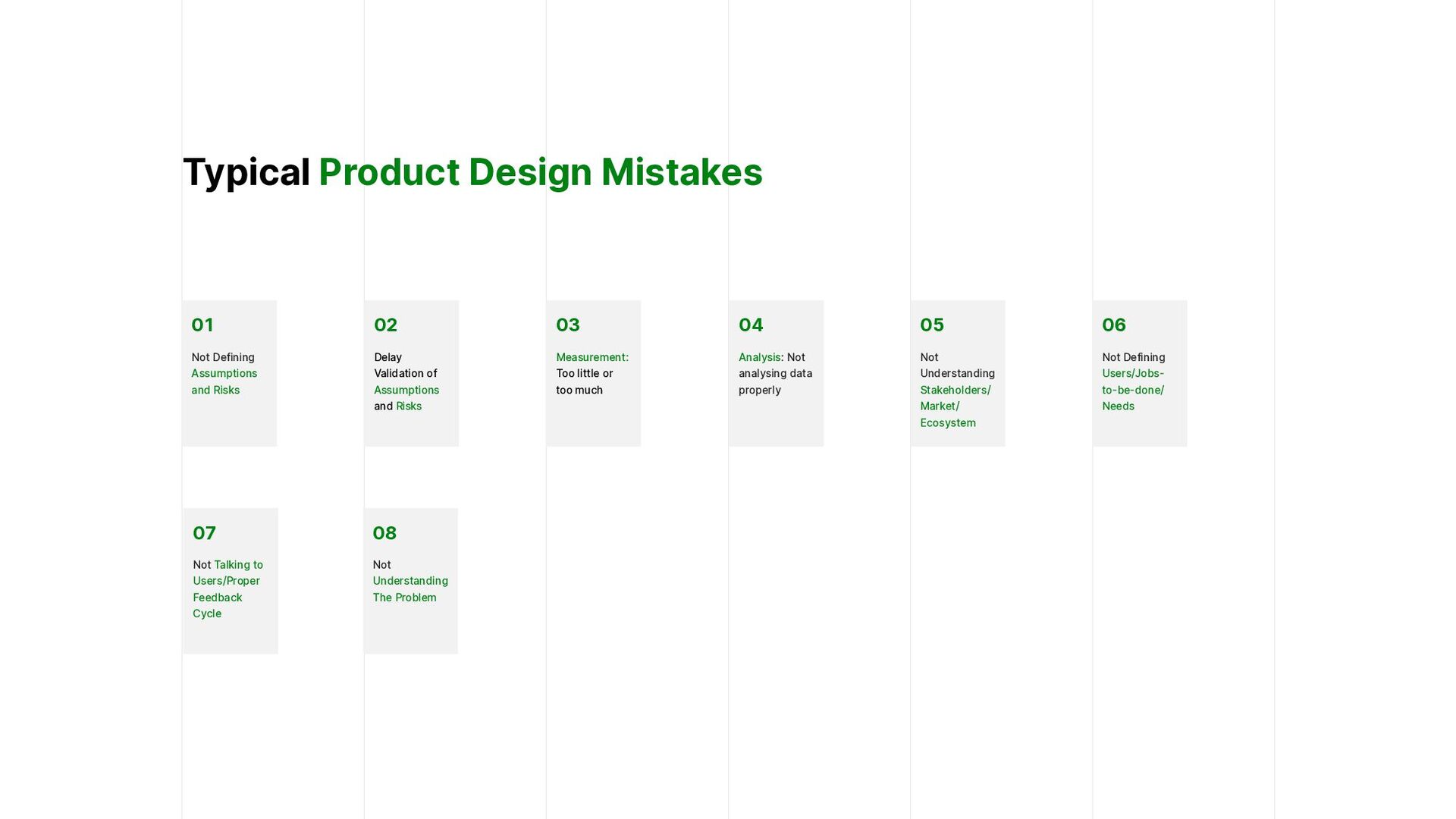
Not talking to users quickly enough, early enough or frequently enough 07 Not Defining Users/Jobs-to-be-done/Needs Not defining the opportunity, users and their needs/jobs 06 Not Understanding Stakeholders/Market/Ecosystem Have a limited understanding of the market, ecosystem and the various stakeholder 05
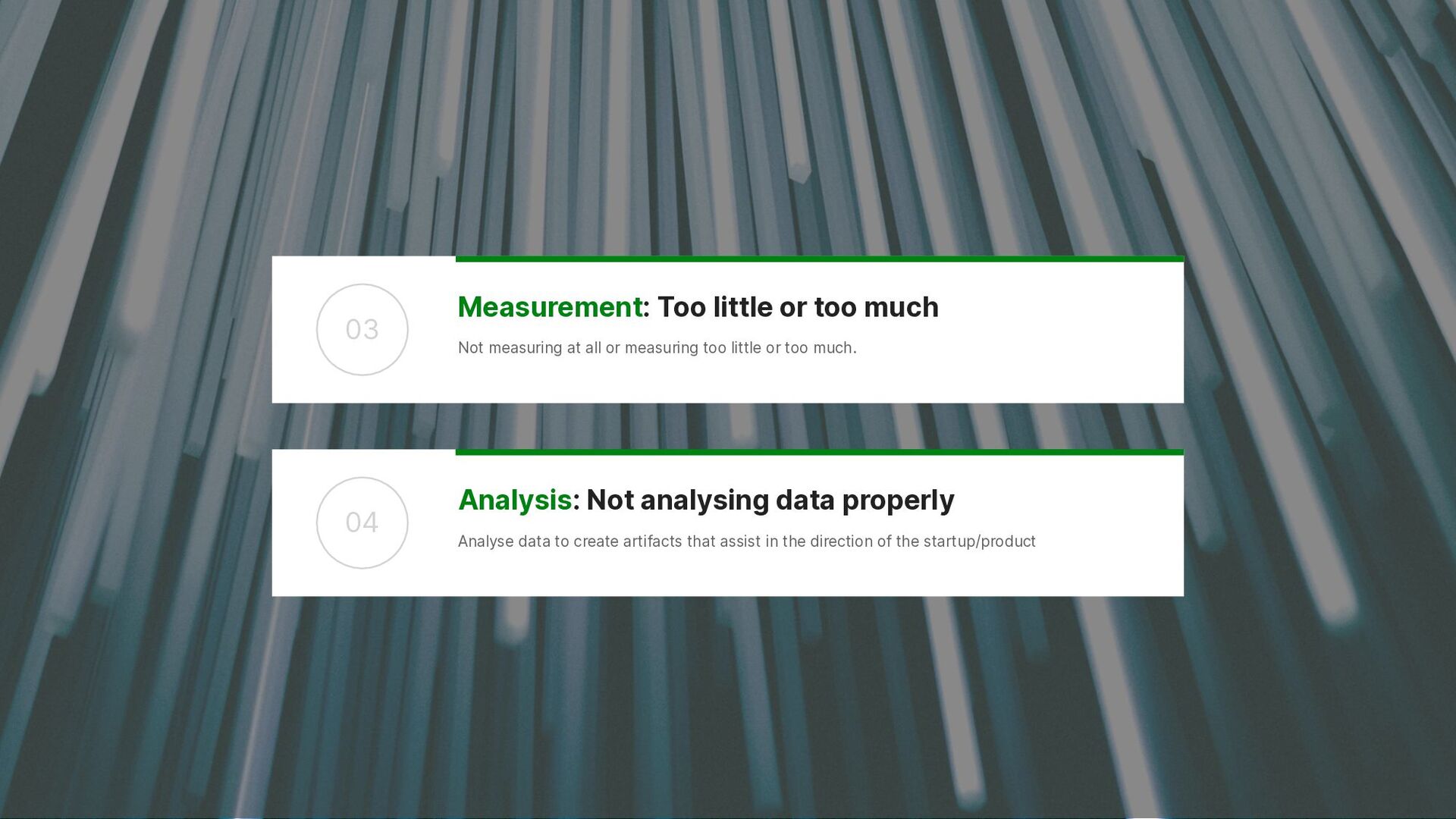
that assist in the direction of the startup/product 04 Measurement: Too little or too much Not measuring at all or measuring too little or too much. 03
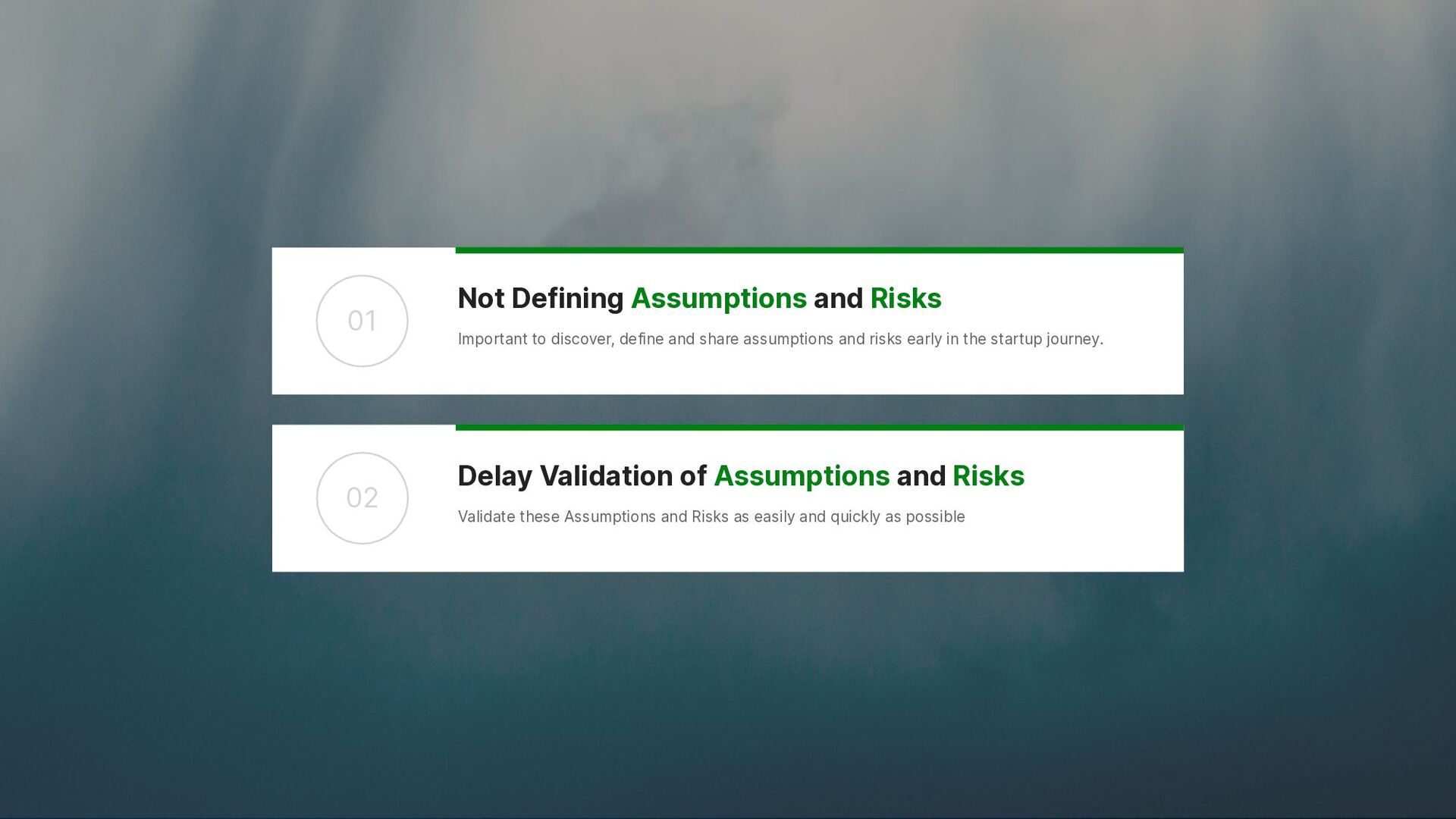
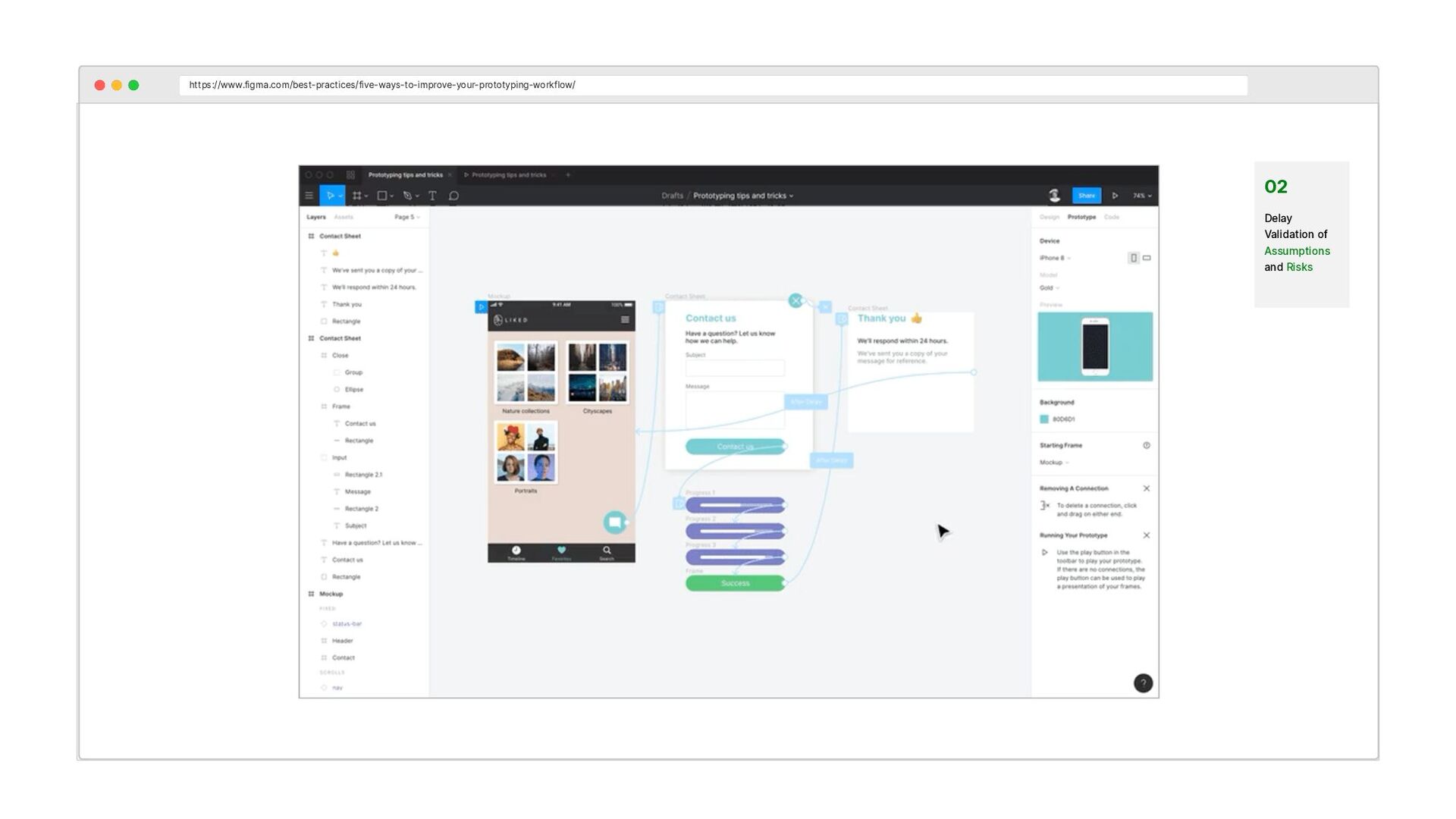
share assumptions and risks early in the startup journey. 01 Delay Validation of Assumptions and Risks Validate these Assumptions and Risks as easily and quickly as possible 02
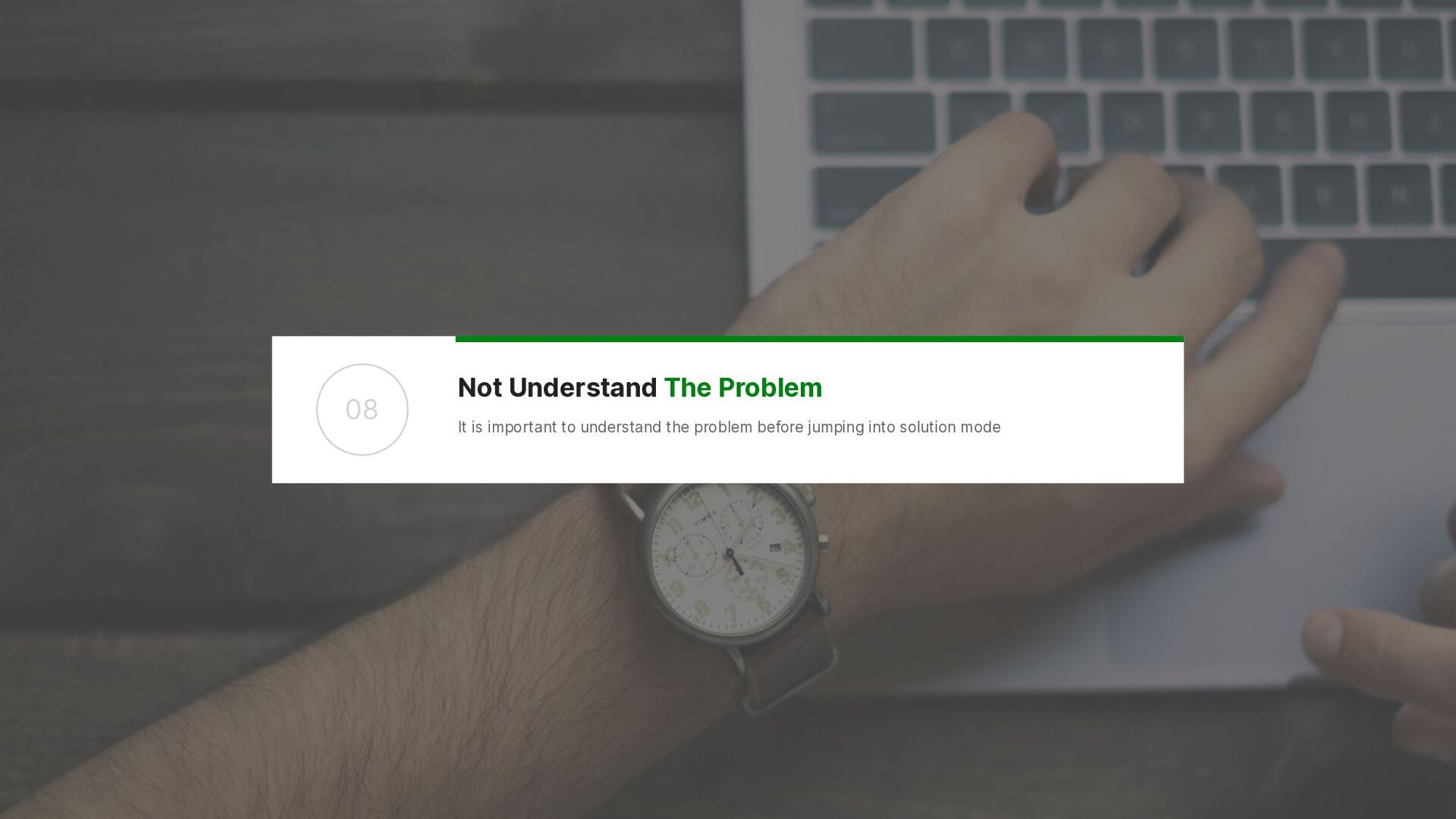
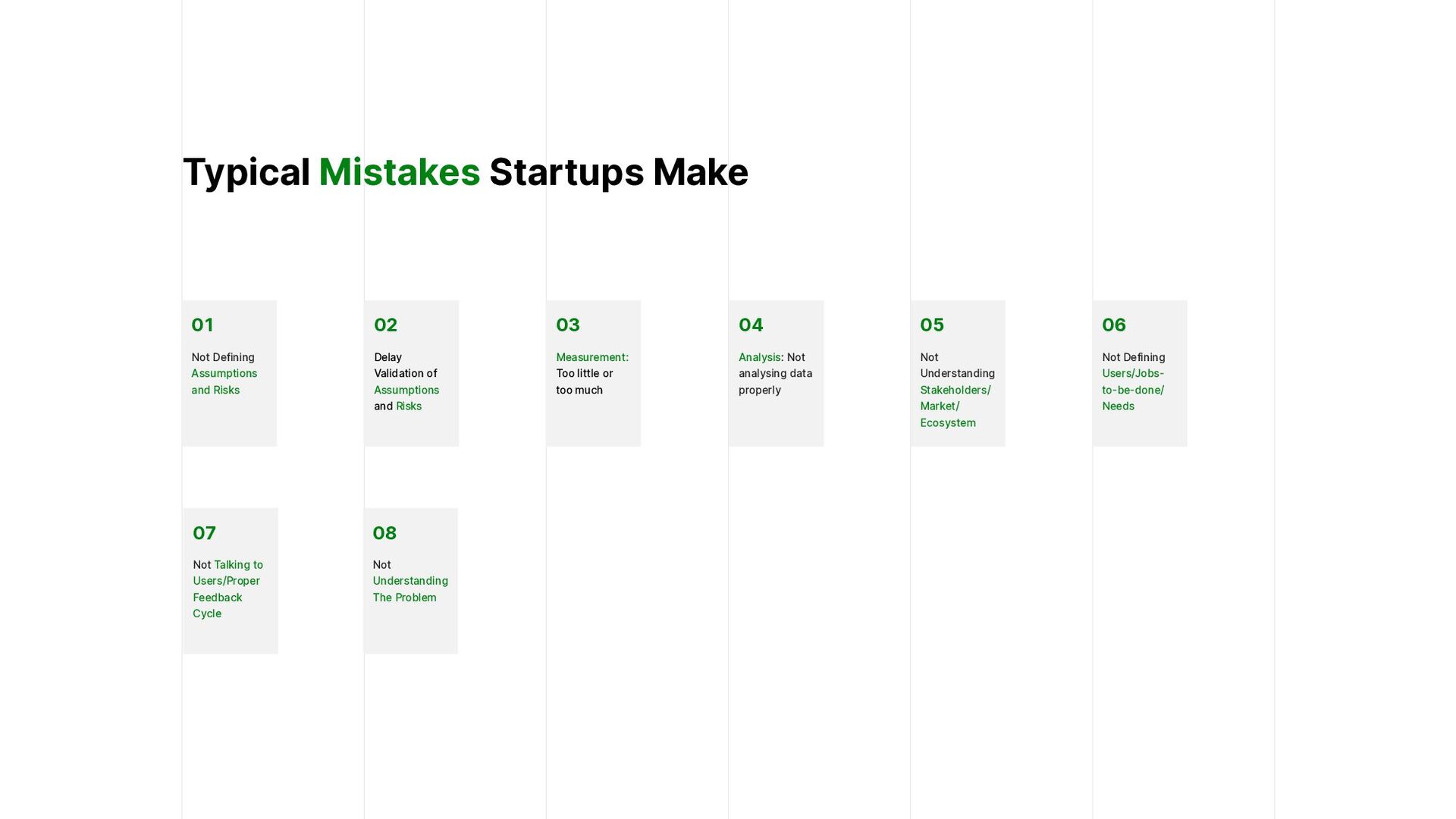
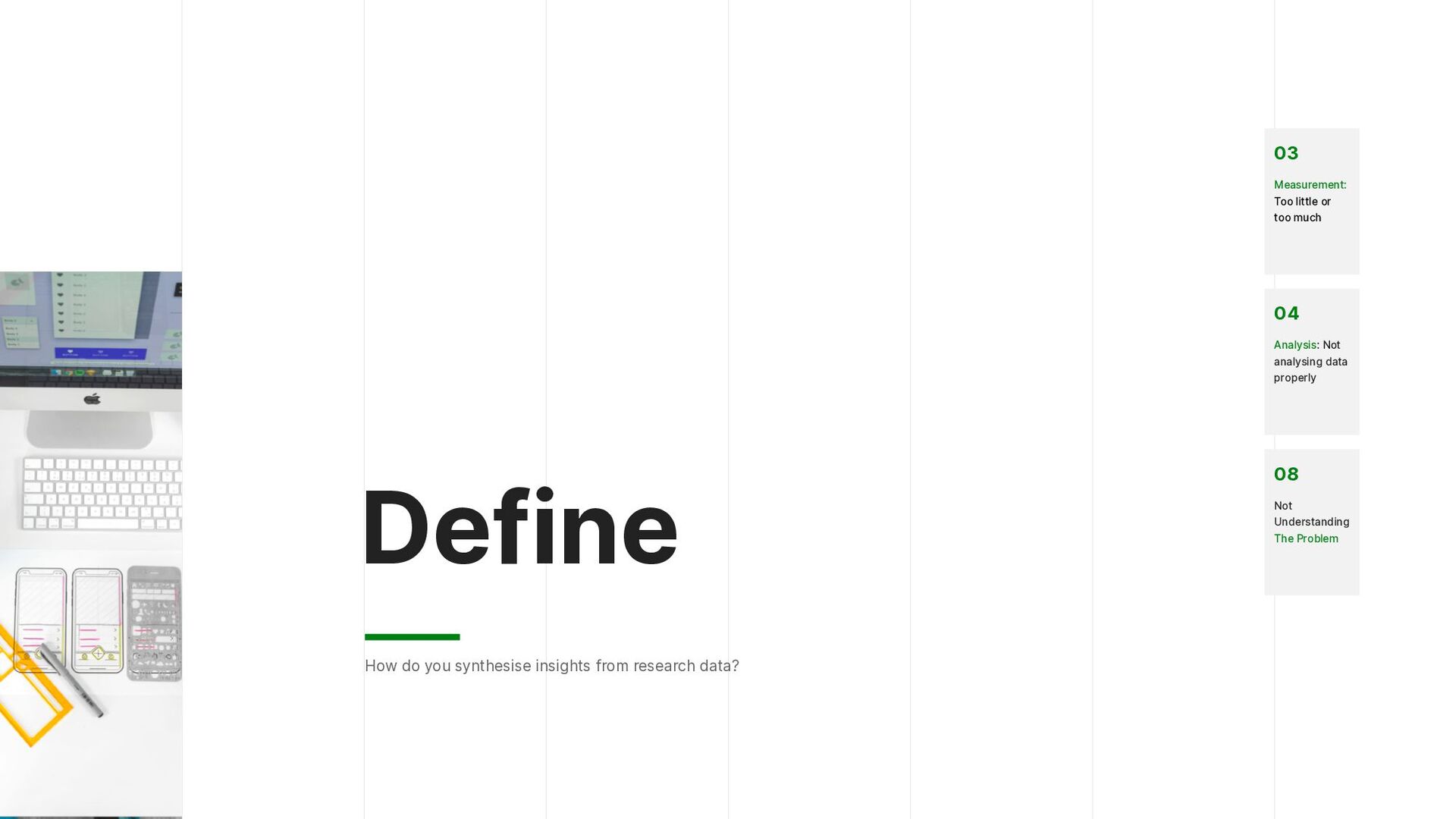
Cycle 02 Delay Validation of Assumptions and Risks 03 Measurement: Too little or too much 08 Not Understanding The Problem 01 Not Defining Assumptions and Risks 05 Not Understanding Stakeholders/ Market/ Ecosystem 06 Not Defining Users/Jobs- to-be-done/ Needs 04 Analysis: Not analysing data properly
the product 05 Not Understanding Stakeholders/ Market/ Ecosystem 06 Not Defining Users/Jobs- to-be-done/ Needs 07 Not Talking to Users/Proper Feedback Cycle 08 Not Understanding The Problem
the market, ecosystem, stakeholders or product Define Analyse the data, define pain points and needs, artefacts like persona or jobs-to-be- done Process
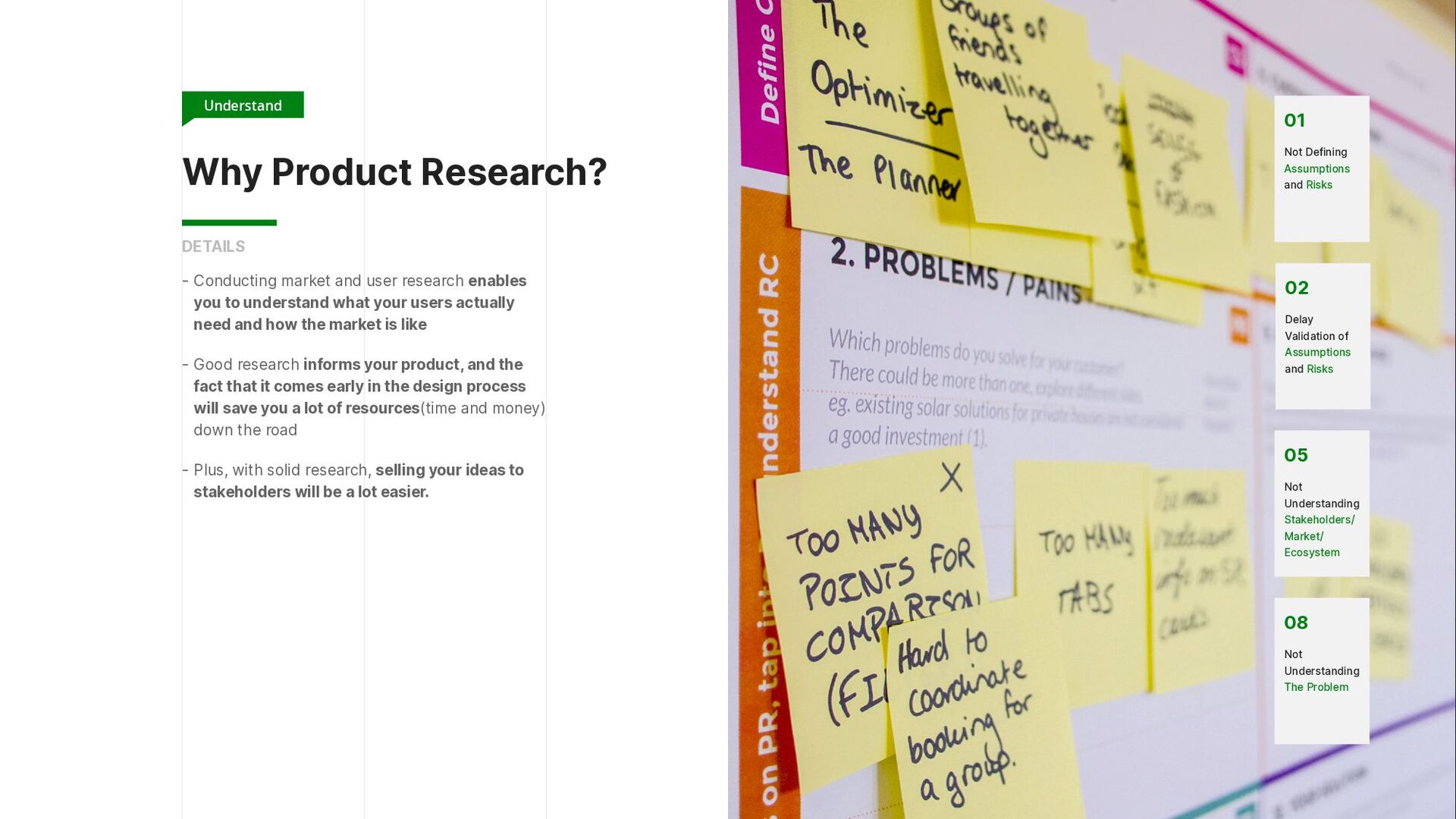
you to understand what your users actually need and how the market is like - Good research informs your product, and the fact that it comes early in the design process will save you a lot of resources(time and money) down the road - Plus, with solid research, selling your ideas to stakeholders will be a lot easier. DETAILS 01 Not Defining Assumptions and Risks 02 Delay Validation of Assumptions and Risks 05 Not Understanding Stakeholders/ Market/ Ecosystem 08 Not Understanding The Problem Understand
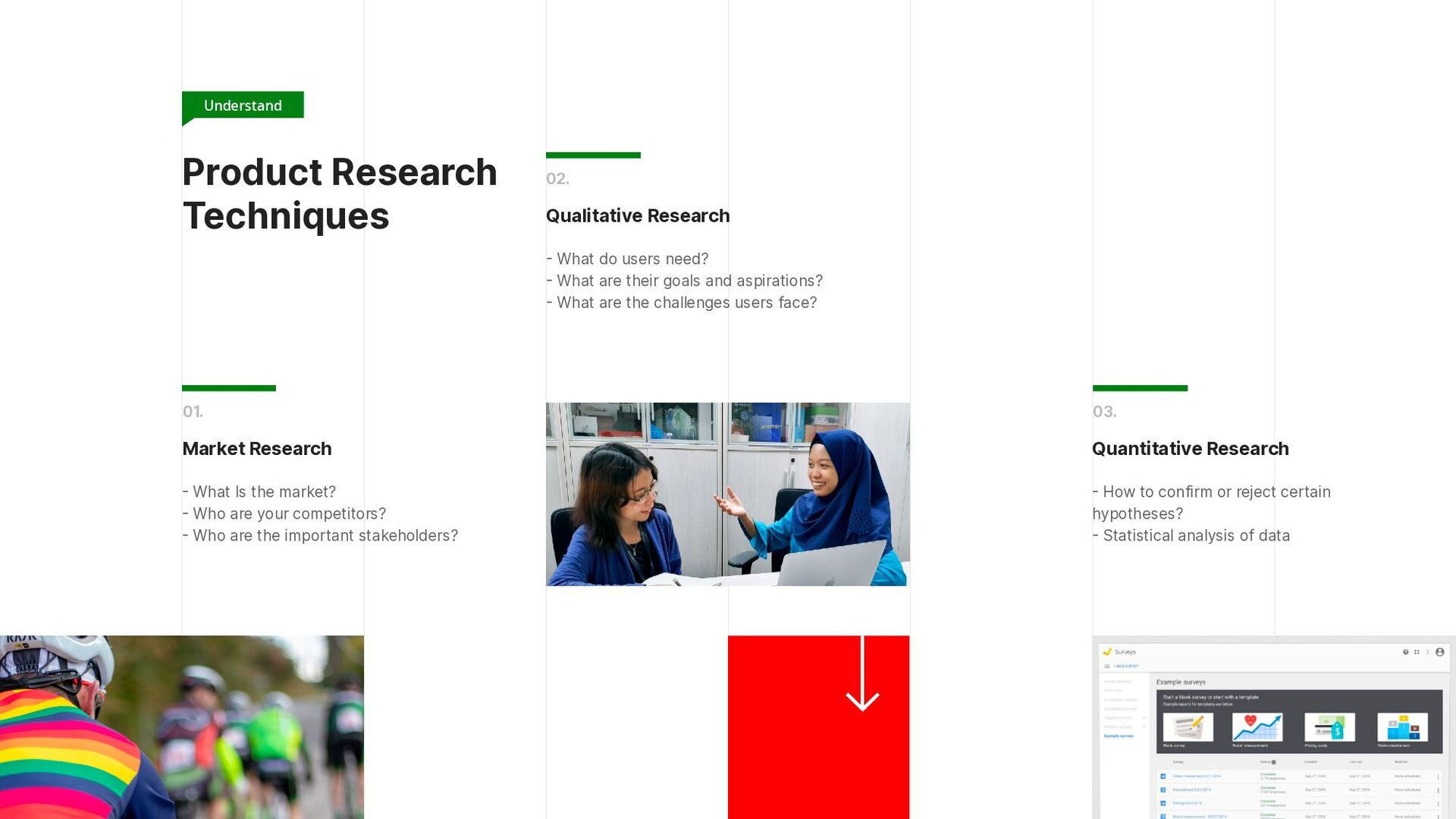
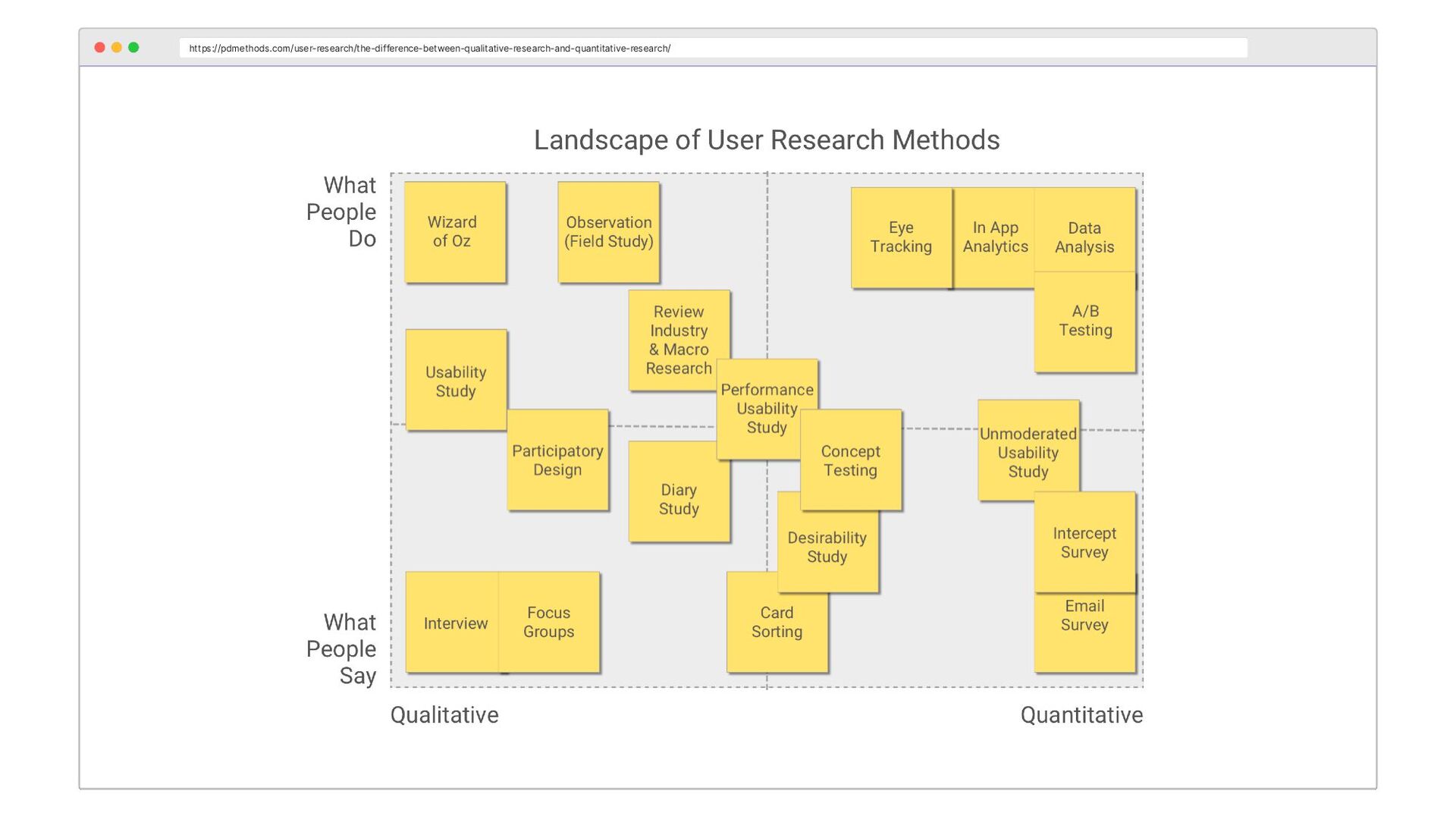
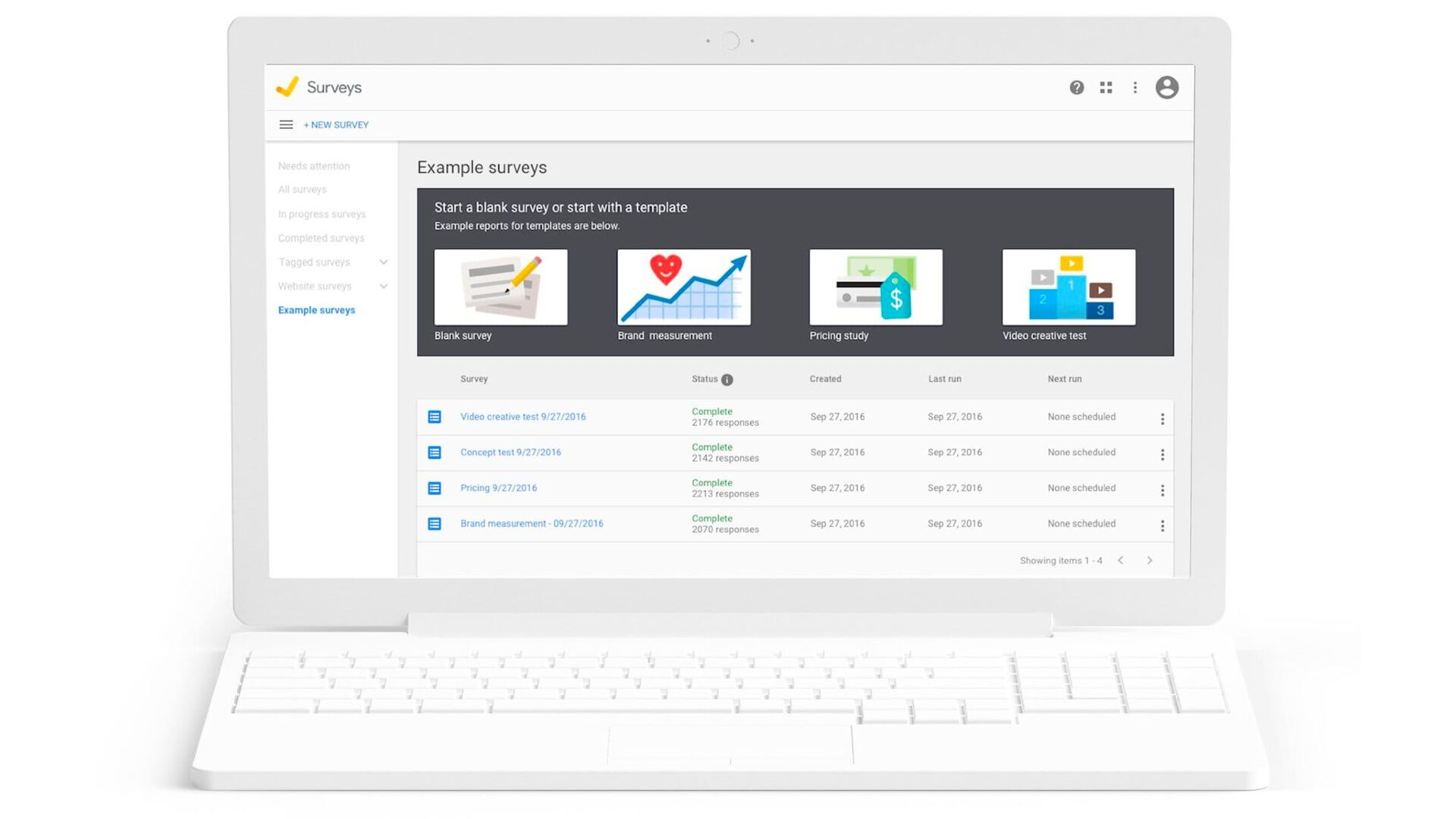
- Who are your competitors? - Who are the important stakeholders? 01. Qualitative Research - What do users need? - What are their goals and aspirations? - What are the challenges users face? 02. Quantitative Research - How to confirm or reject certain hypotheses? - Statistical analysis of data 03. Understand
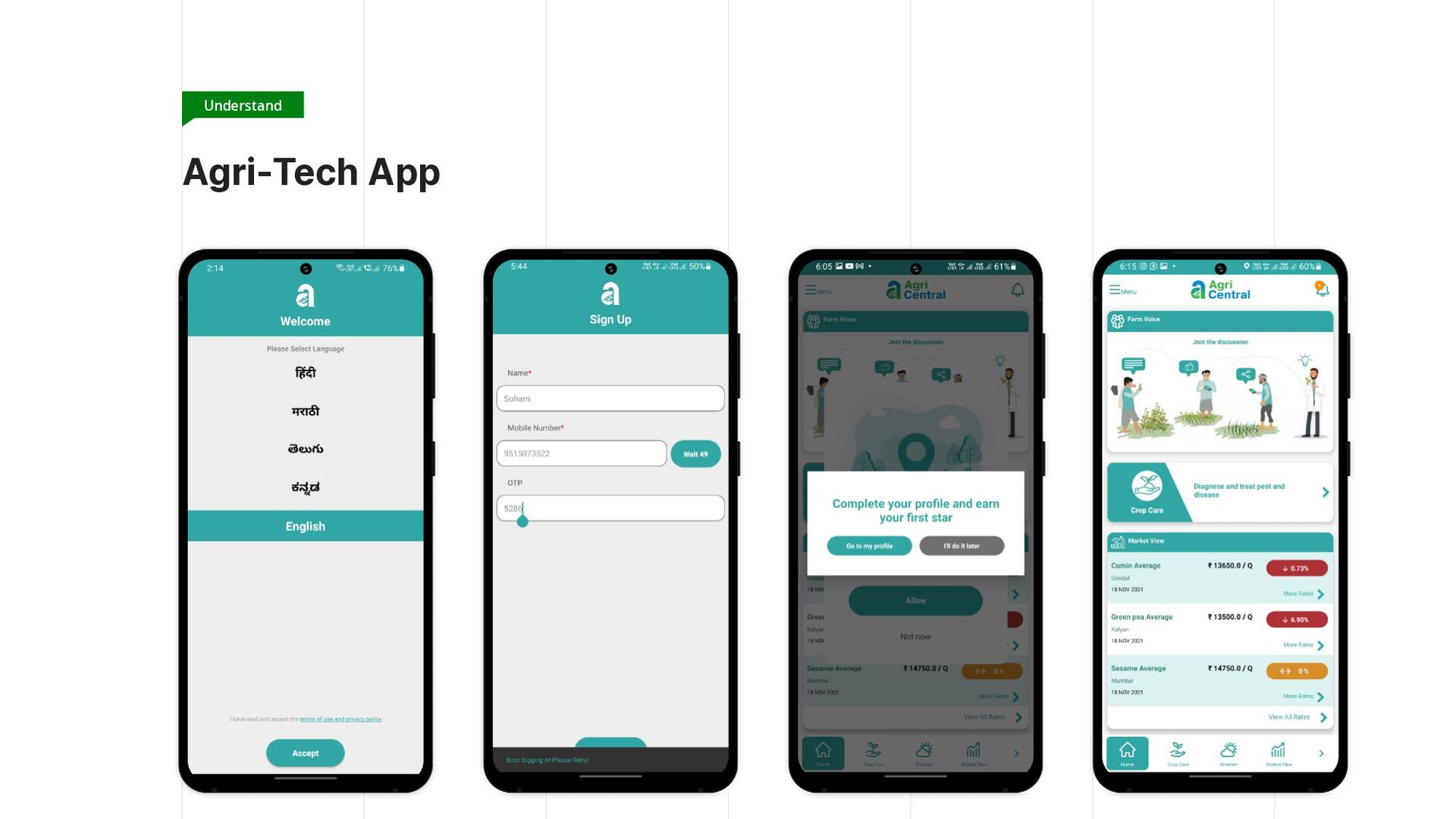
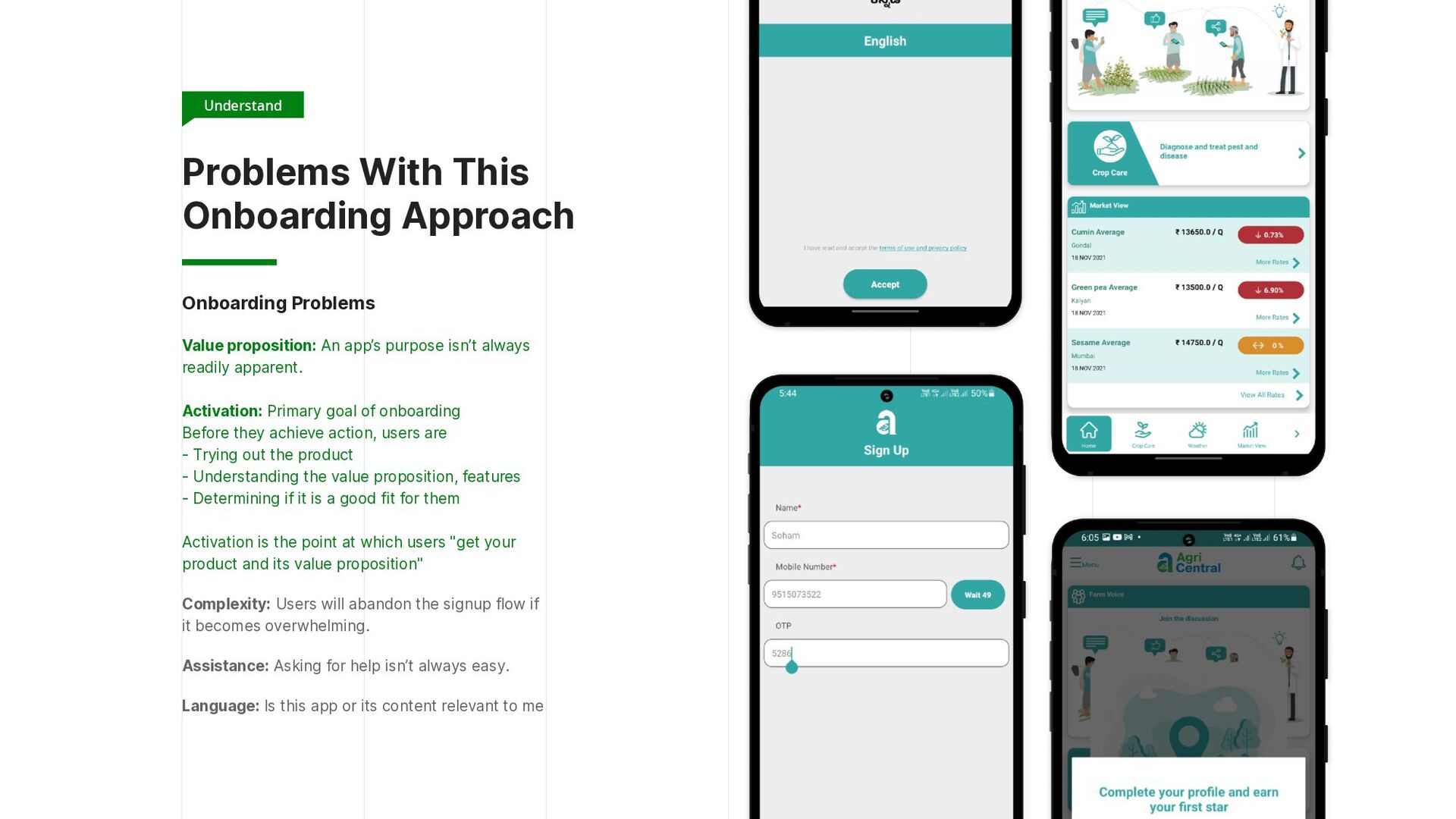
app’s purpose isn’t always readily apparent. Activation: Primary goal of onboarding Before they achieve action, users are - Trying out the product - Understanding the value proposition, features - Determining if it is a good fit for them Activation is the point at which users "get your product and its value proposition" Complexity: Users will abandon the signup flow if it becomes overwhelming. Assistance: Asking for help isn’t always easy. Language: Is this app or its content relevant to me Understand
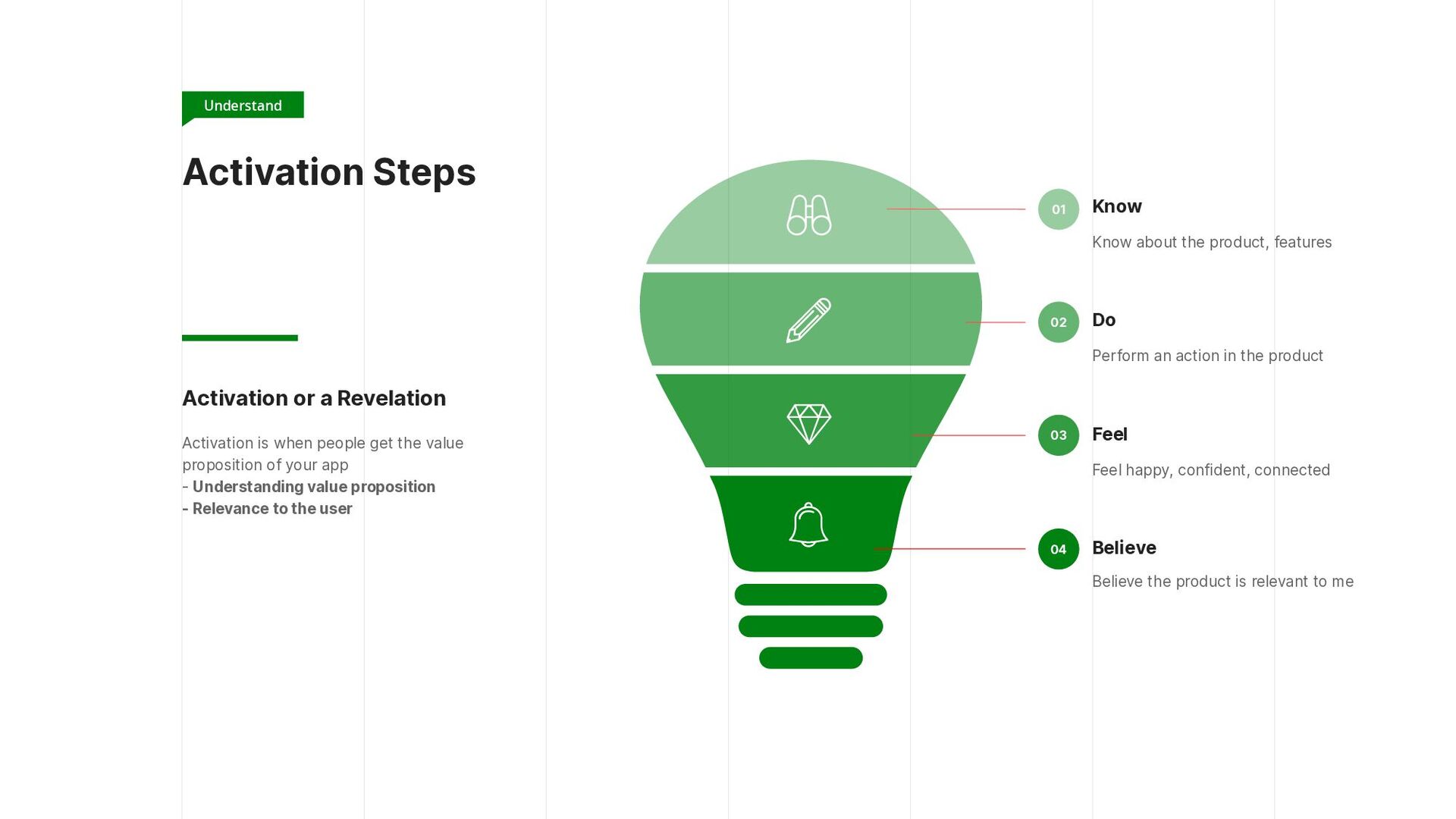
action in the product 02 Feel Feel happy, confident, connected 03 Believe Believe the product is relevant to me 04 Activation or a Revelation Activation is when people get the value proposition of your app - Understanding value proposition - Relevance to the user Activation Steps Understand
the market, ecosystem, stakeholders or product Define Analyse the data, define pain points and needs, artefacts like persona or jobs-to-be- done Process
Not Understanding Stakeholders/ Market/ Ecosystem 08 Not Understanding The Problem 06 Not Defining Users/Jobs- to-be-done/ Needs 03 Measurement: Too little or too much 02 Delay Validation of Assumptions and Risks
direction to the solution Prototype Prototype solutions, fail fast, iterate quickly Test Test with stakeholders, fail fast, iterate quickly Design Process at Triveous Solution Domain Process
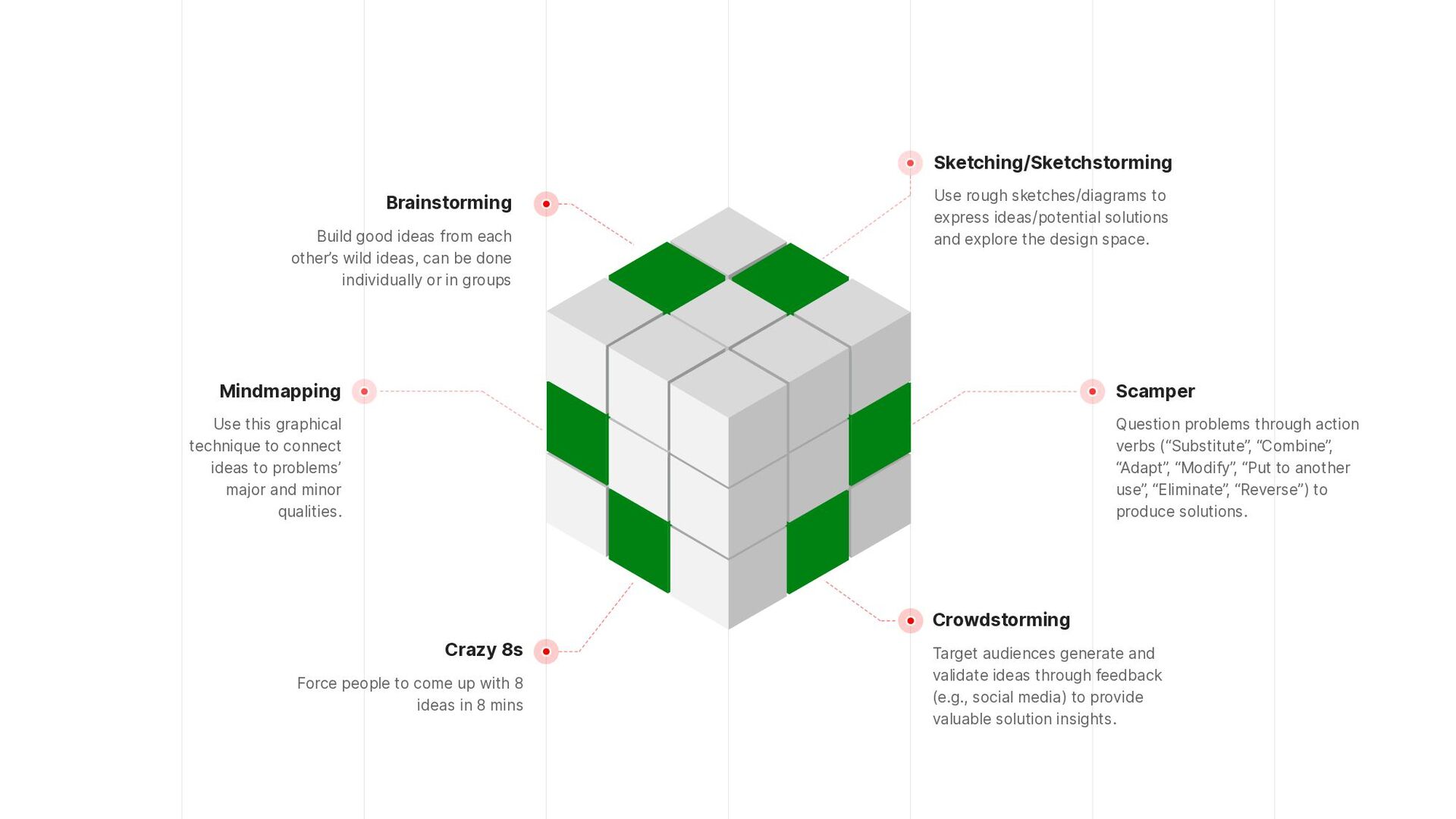
the design space. Scamper Question problems through action verbs (“Substitute”, “Combine”, “Adapt”, “Modify”, “Put to another use”, “Eliminate”, “Reverse”) to produce solutions. Crowdstorming Target audiences generate and validate ideas through feedback (e.g., social media) to provide valuable solution insights. Crazy 8s Force people to come up with 8 ideas in 8 mins Mindmapping Use this graphical technique to connect ideas to problems’ major and minor qualities. Brainstorming Build good ideas from each other’s wild ideas, can be done individually or in groups
direction to the solution Prototype Prototype solutions, fail fast, iterate quickly Test Test with stakeholders, fail fast, iterate quickly Design Process at Triveous Solution Domain Process
the market, ecosystem, stakeholders or product Define Analyse the data, define pain points and needs, artefacts like persona or jobs-to-be- done Process
direction to the solution Prototype Prototype solutions, fail fast, iterate quickly Test Test with stakeholders, fail fast, iterate quickly Design Process at Triveous Solution Domain Process
Cycle 02 Delay Validation of Assumptions and Risks 03 Measurement: Too little or too much 08 Not Understanding The Problem 01 Not Defining Assumptions and Risks 05 Not Understanding Stakeholders/ Market/ Ecosystem 06 Not Defining Users/Jobs- to-be-done/ Needs 04 Analysis: Not analysing data properly
to Product Design Product Design vs UX Design vs Design Thinking Design Process at Triveous 02 What can you do with it? Problems you can solve Common Mistakes you can avoid Agri-Tech Case Study 03 Design Process Understand Define Ideate Prototype Test Summary
Links https://triveous.substack.com https://www.triveous.com/product-transformation http://triveo.us/product_design_gfs http://triveo.us/impactful_onboarding_video At the intersection of Design, Product & Engineering Triveous


 soham
soham
 heartlanguage
 kakukoki
 a2k
a2k
 niccy
niccy
 taitotnk
 r5ni4
r5ni4
 noppefoxwolf
 kenichiota0711
 fumink7
 terencebasart
 hiromimaeo
 yuichi_hara7
 deanohume
 brad_frost
 marktimemedia
 reverentgeek
 konakalab
 denniskardys
 akashhashmi
 ipullrank
 maltzj
 techseoconnect
 axbom
axbom
 rakko
rakko








![Email [email protected] https://triveous.com/ Social https://www.linkedin.com/in/sohammondal/ https://twitter.com/s0h4m Deck and](https://files.speakerdeck.com/presentations/dfd147e3f0d645f7b2ebdda308799170/slide_80.jpg)