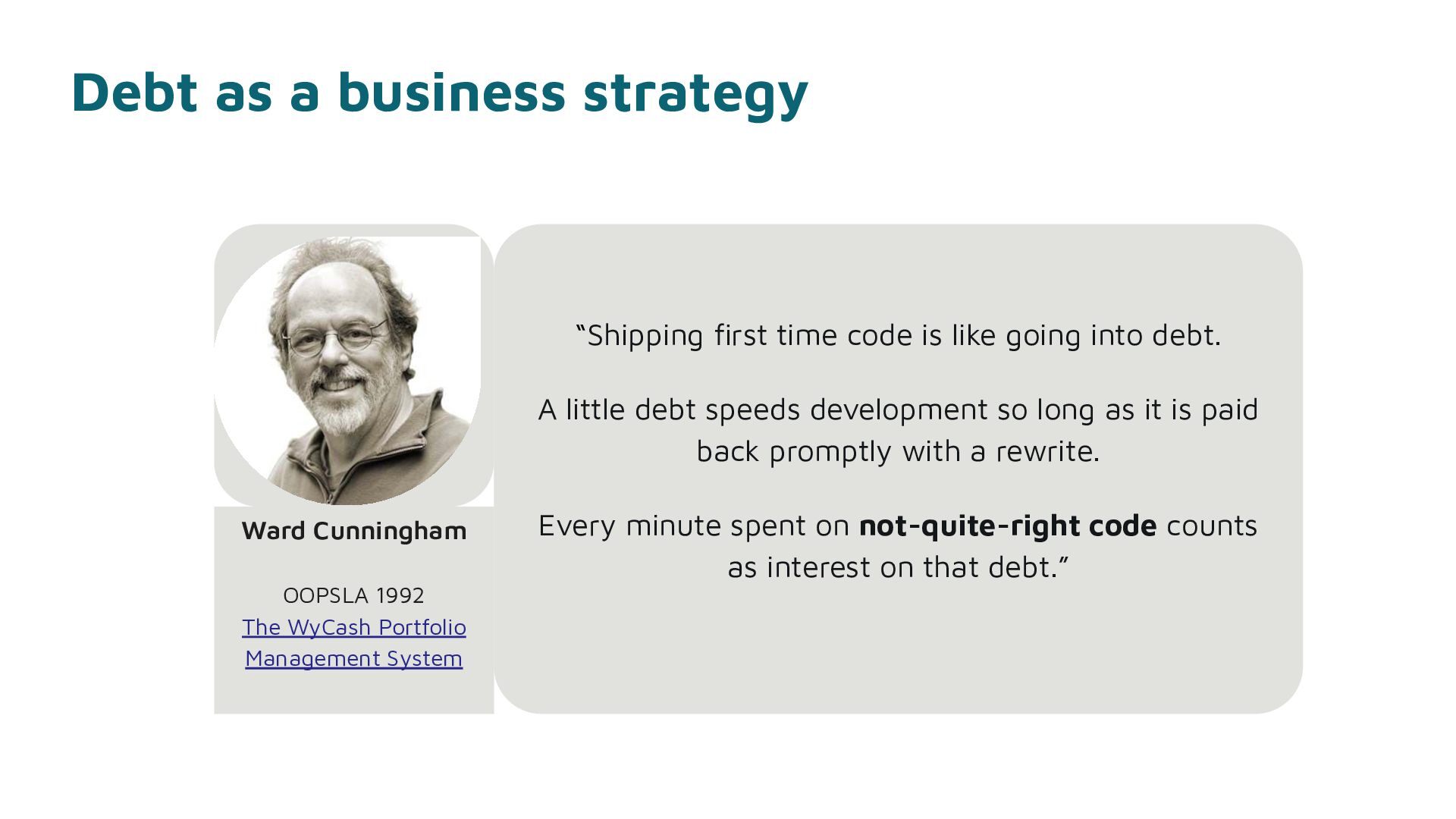
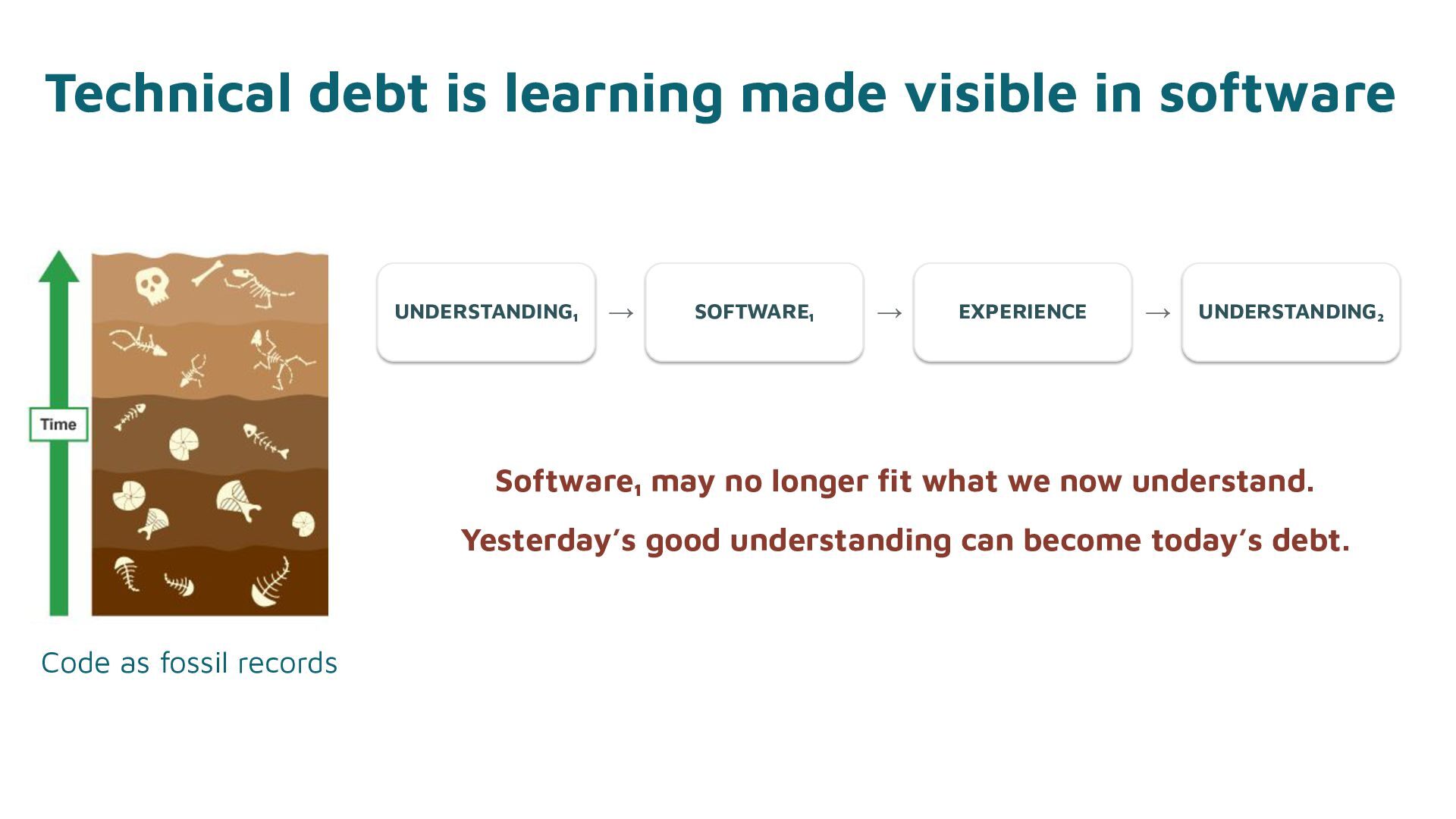
like going into debt. A little debt speeds development so long as it is paid back promptly with a rewrite. Ward Cunningham OOPSLA 1992 The WyCash Portfolio Management System Every minute spent on not-quite-right code counts as interest on that debt.”
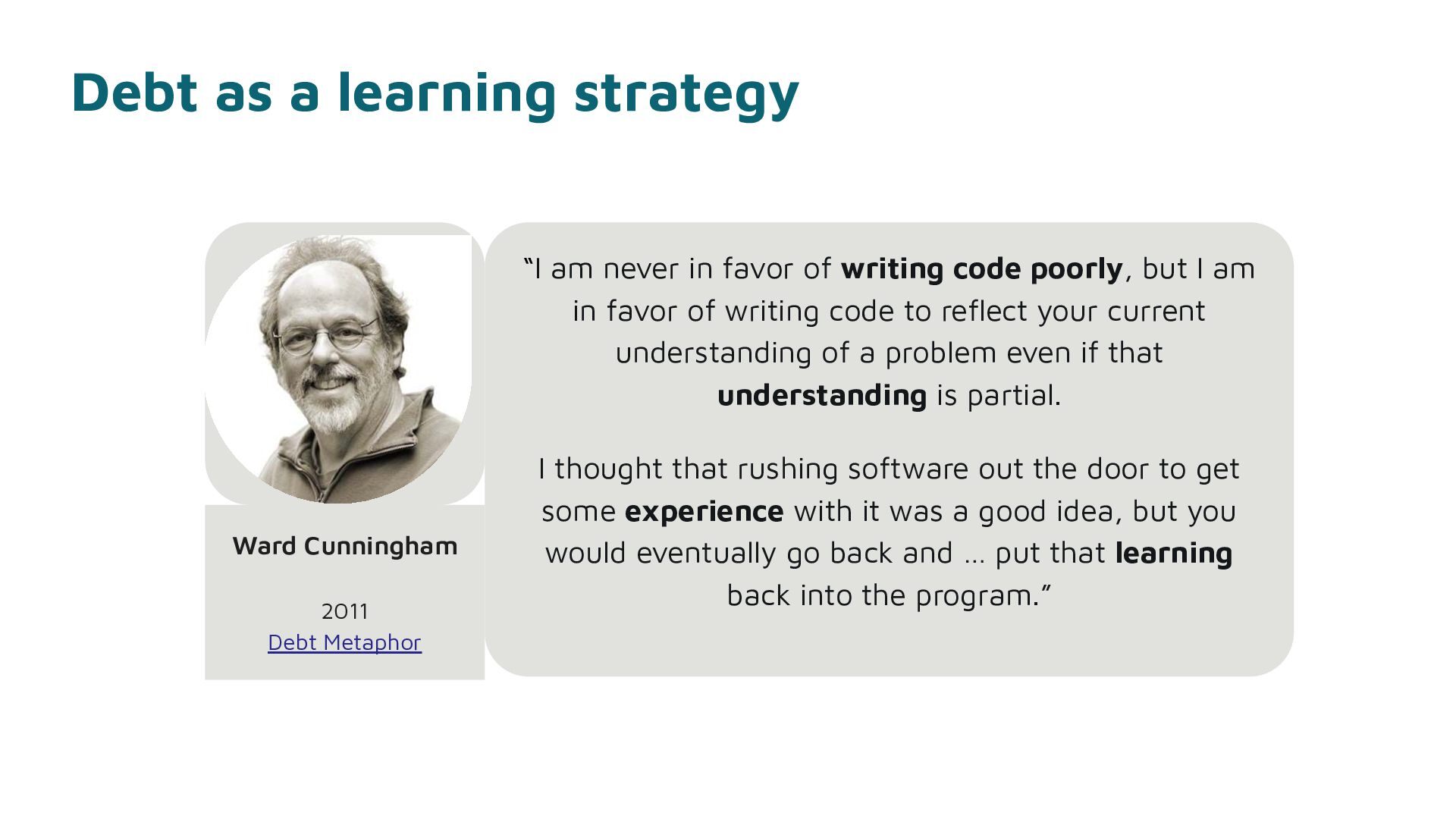
of writing code poorly, but I am in favor of writing code to reflect your current understanding of a problem even if that understanding is partial. Ward Cunningham 2011 Debt Metaphor I thought that rushing software out the door to get some experience with it was a good idea, but you would eventually go back and … put that learning back into the program.”
SOFTWARE₁ → EXPERIENCE → UNDERSTANDING₂ Software₁ may no longer fit what we now understand. Yesterday’s good understanding can become today’s debt. Code as fossil records
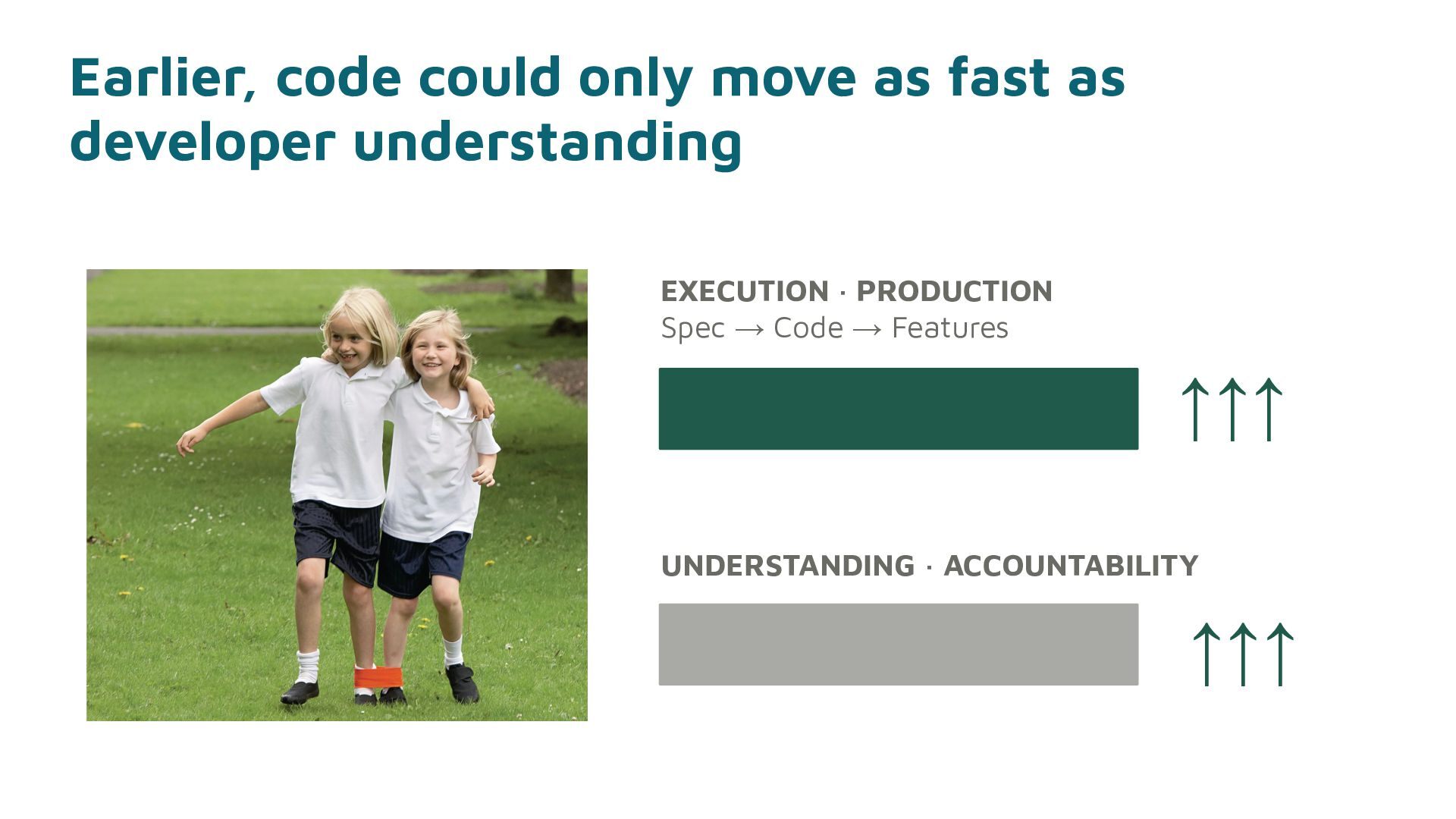
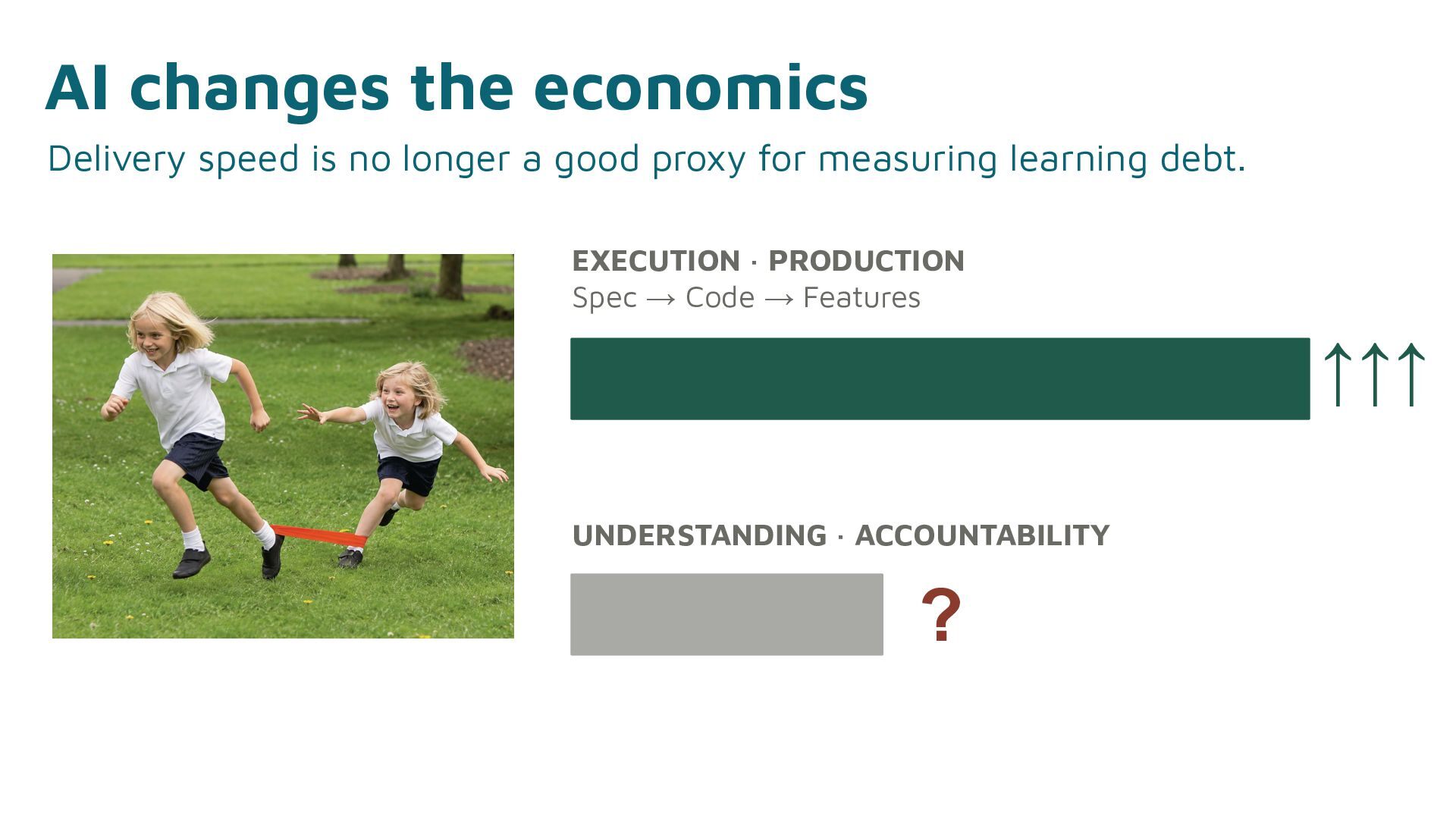
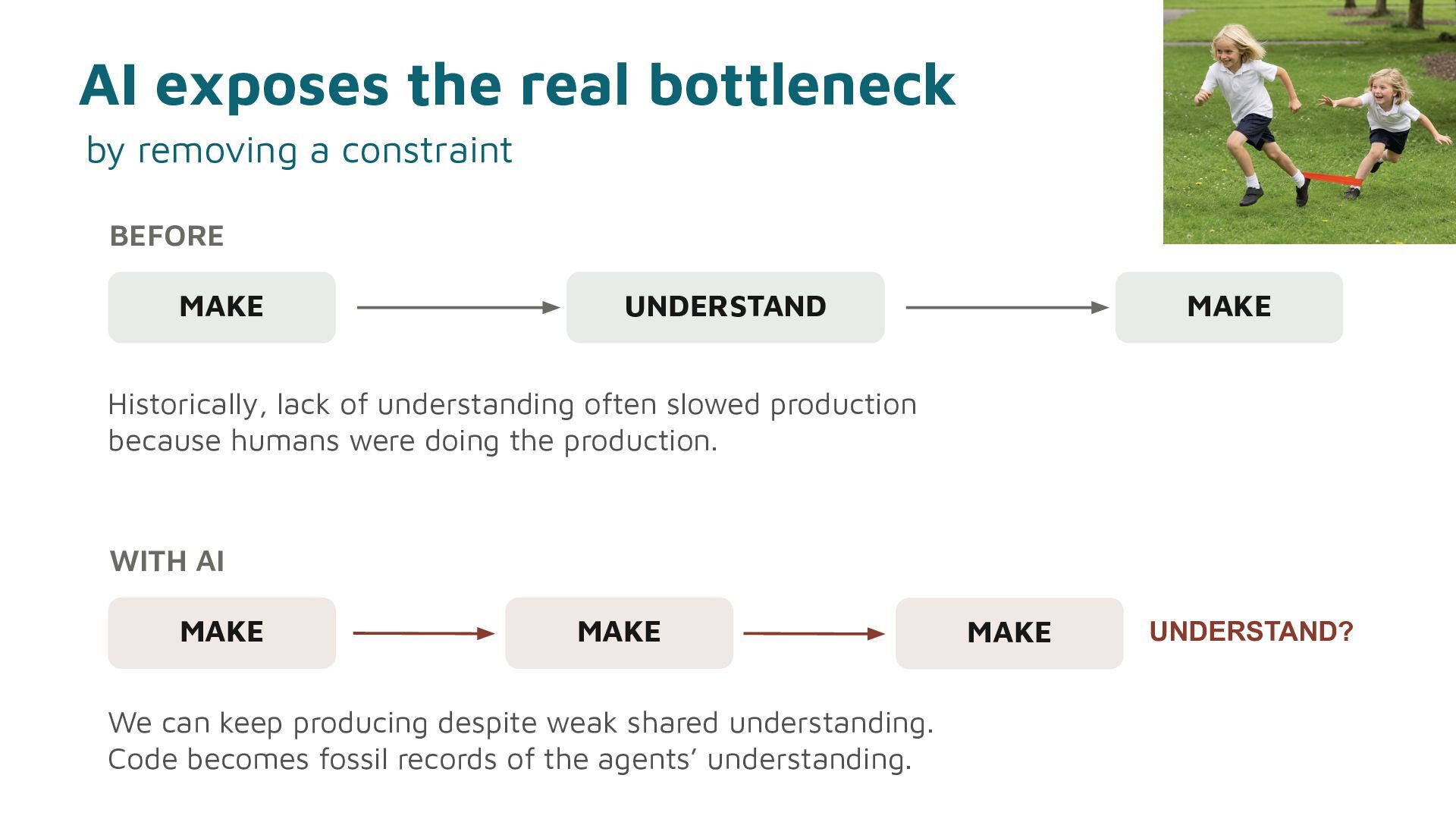
MAKE UNDERSTAND MAKE Historically, lack of understanding often slowed production because humans were doing the production. WITH AI MAKE MAKE We can keep producing despite weak shared understanding. Code becomes fossil records of the agents’ understanding. MAKE UNDERSTAND?
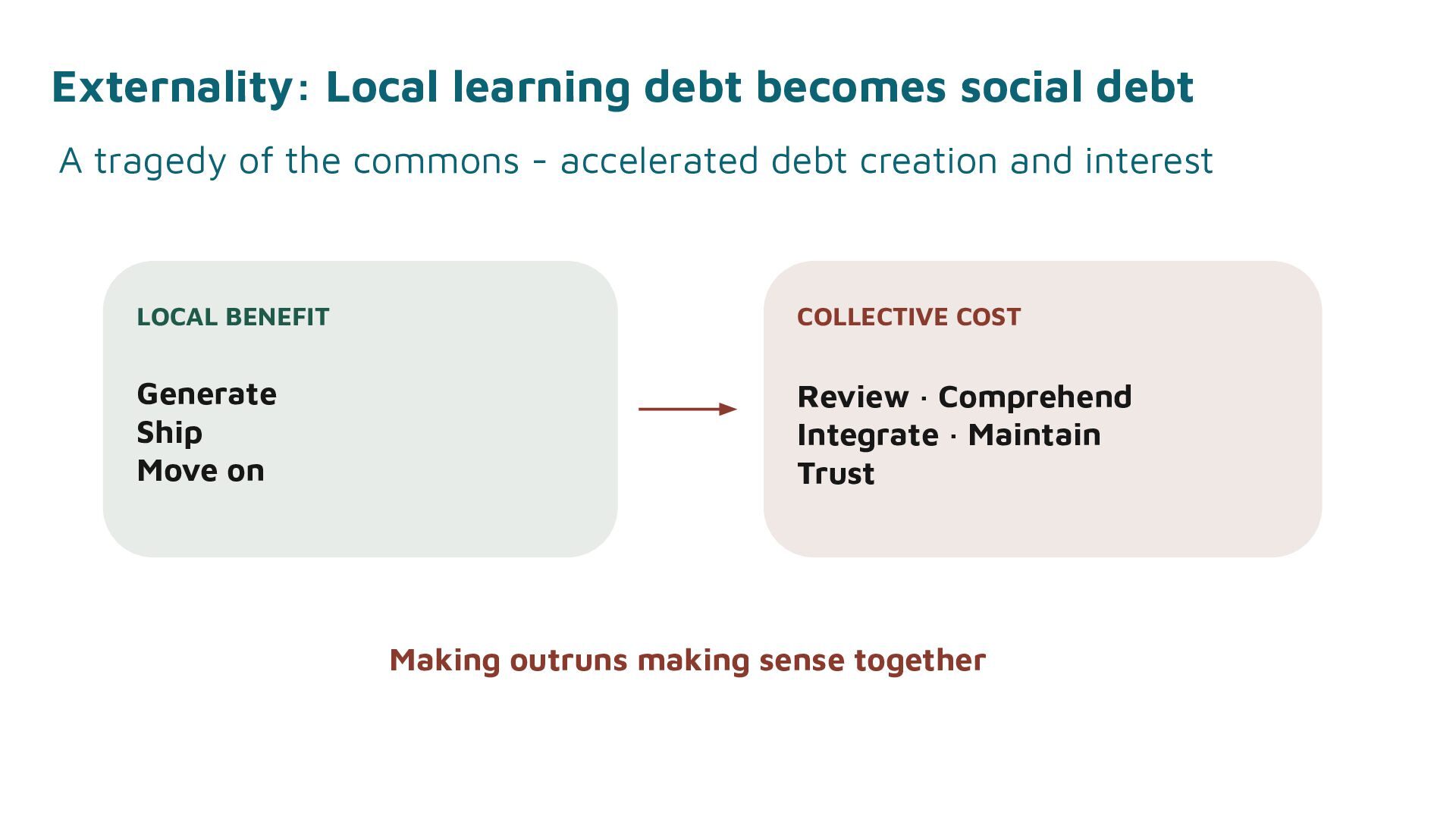
the commons - accelerated debt creation and interest LOCAL BENEFIT COLLECTIVE COST Generate Ship Move on Review · Comprehend Integrate · Maintain Trust Making outruns making sense together
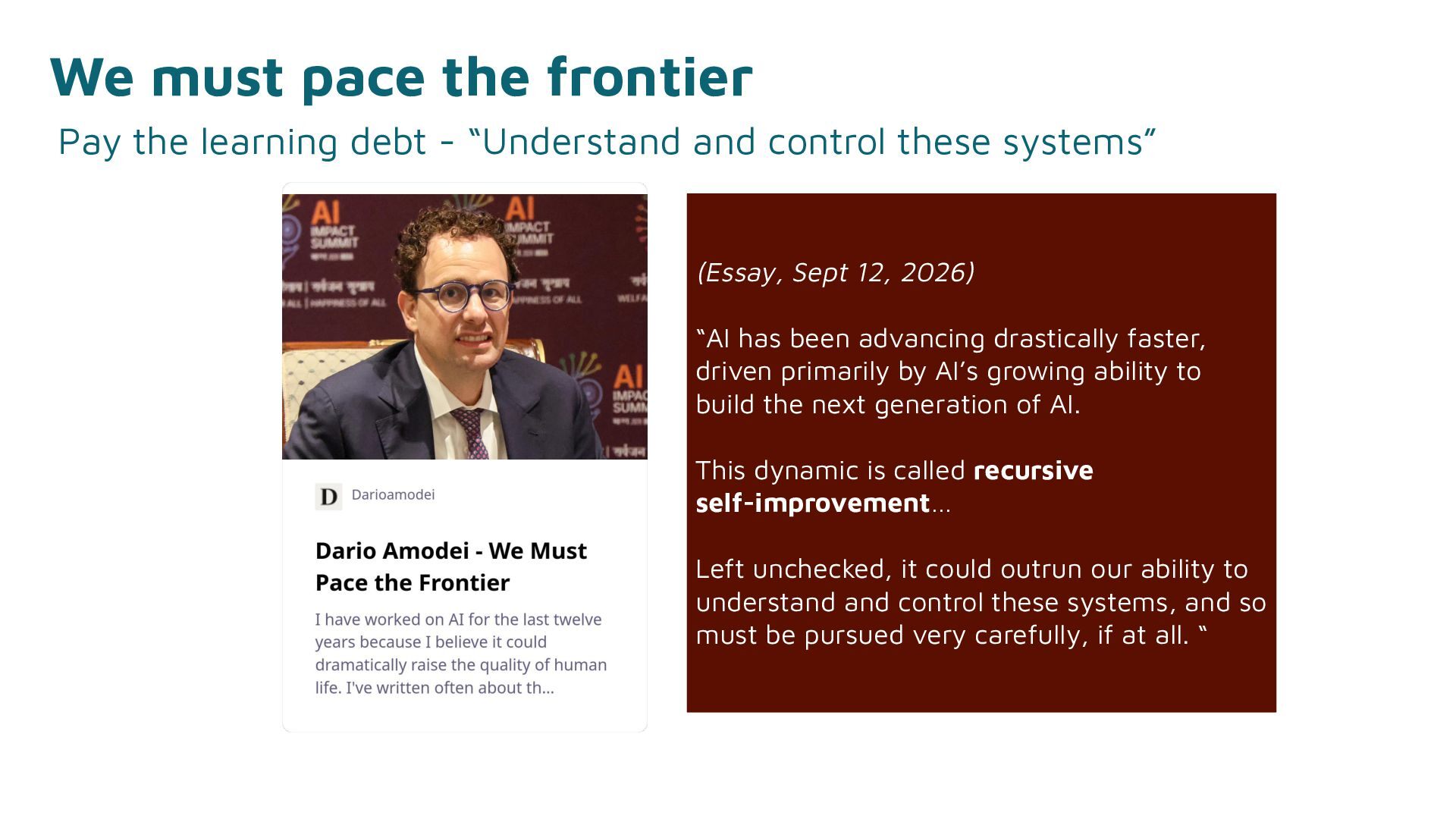
“Understand and control these systems” (Essay, Sept 12, 2026) “AI has been advancing drastically faster, driven primarily by AI’s growing ability to build the next generation of AI. This dynamic is called recursive self-improvement… Left unchecked, it could outrun our ability to understand and control these systems, and so must be pursued very carefully, if at all. “
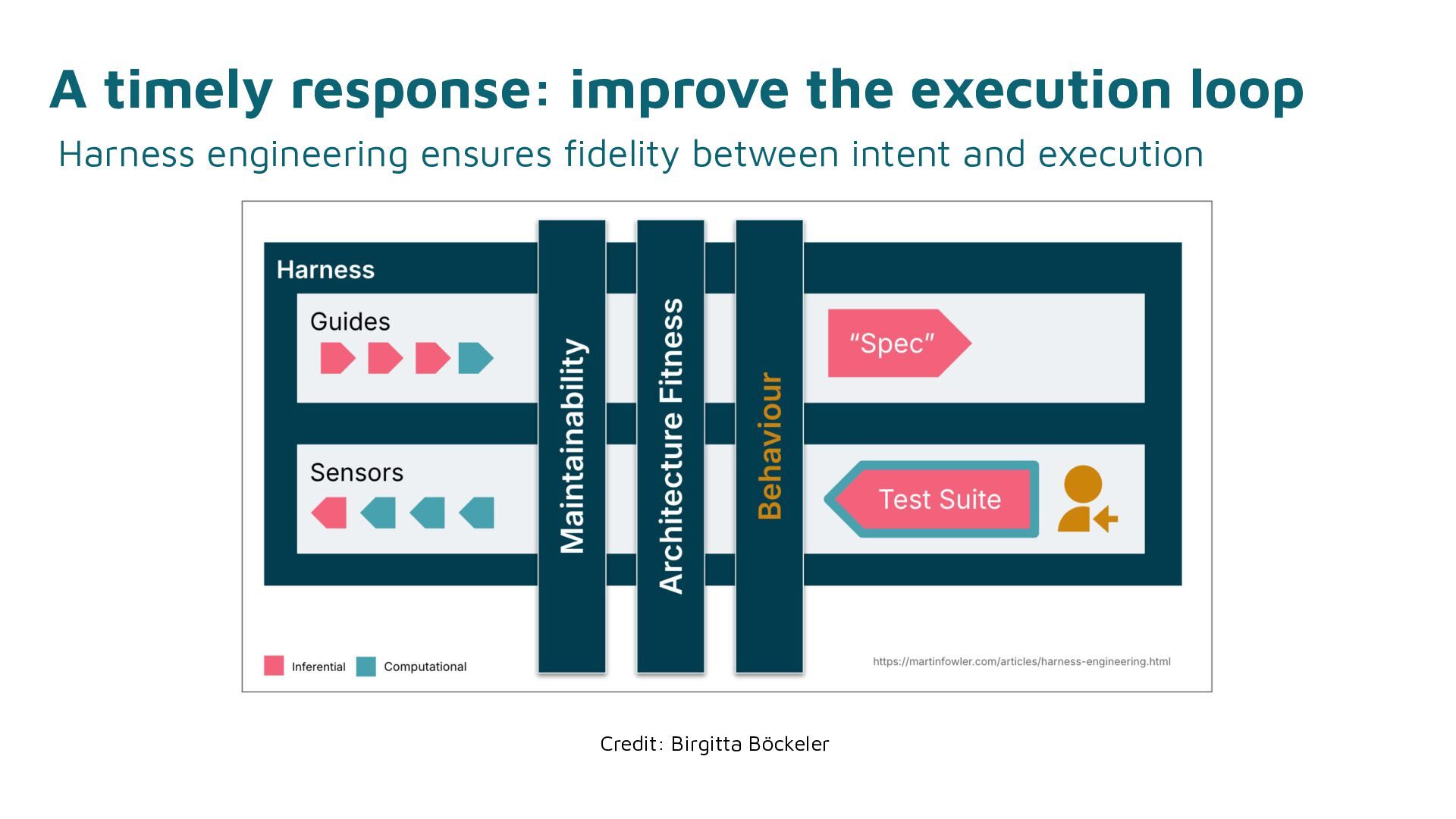
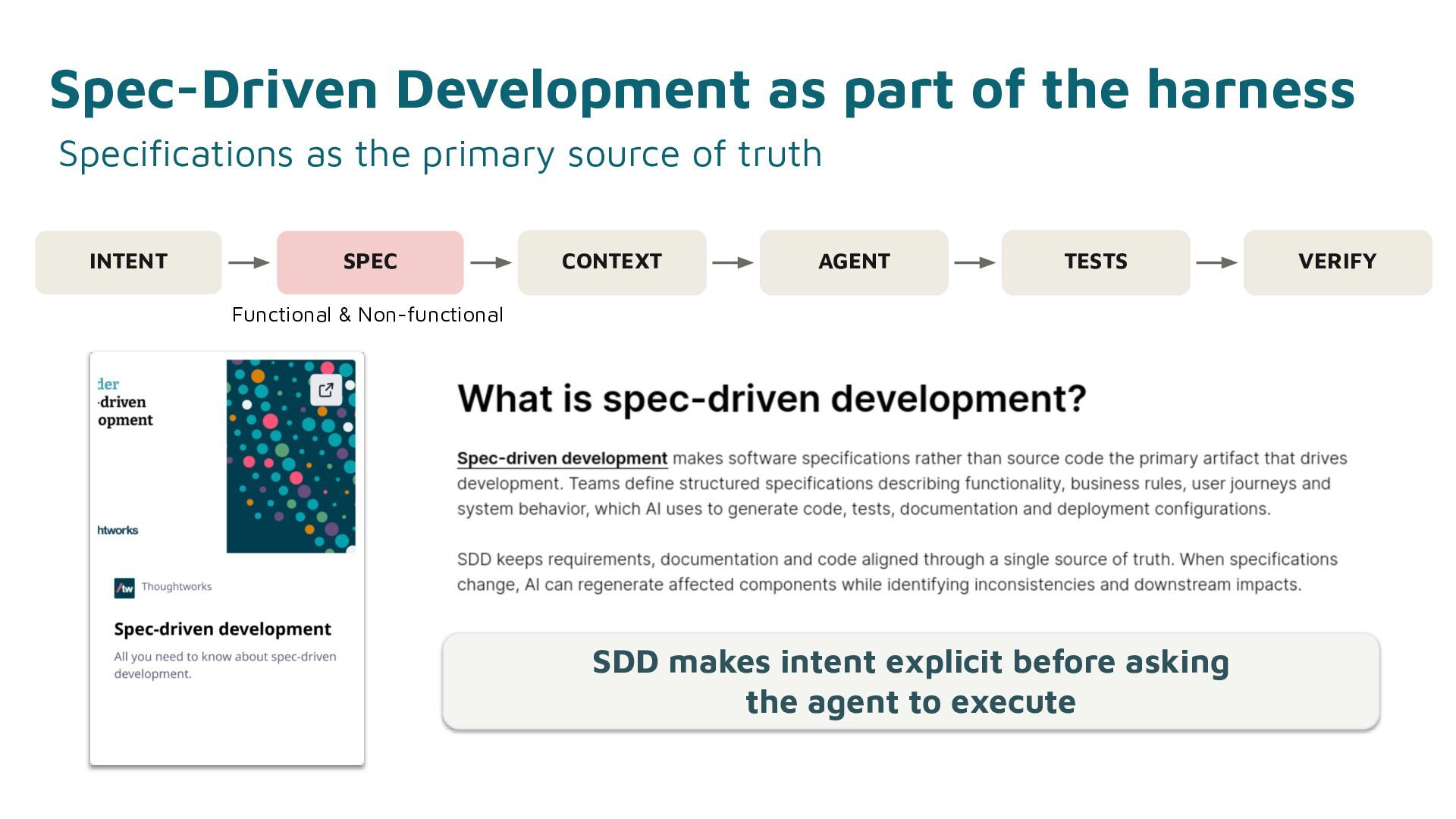
primary source of truth INTENT SPEC CONTEXT AGENT TESTS Functional & Non-functional SDD makes intent explicit before asking the agent to execute VERIFY
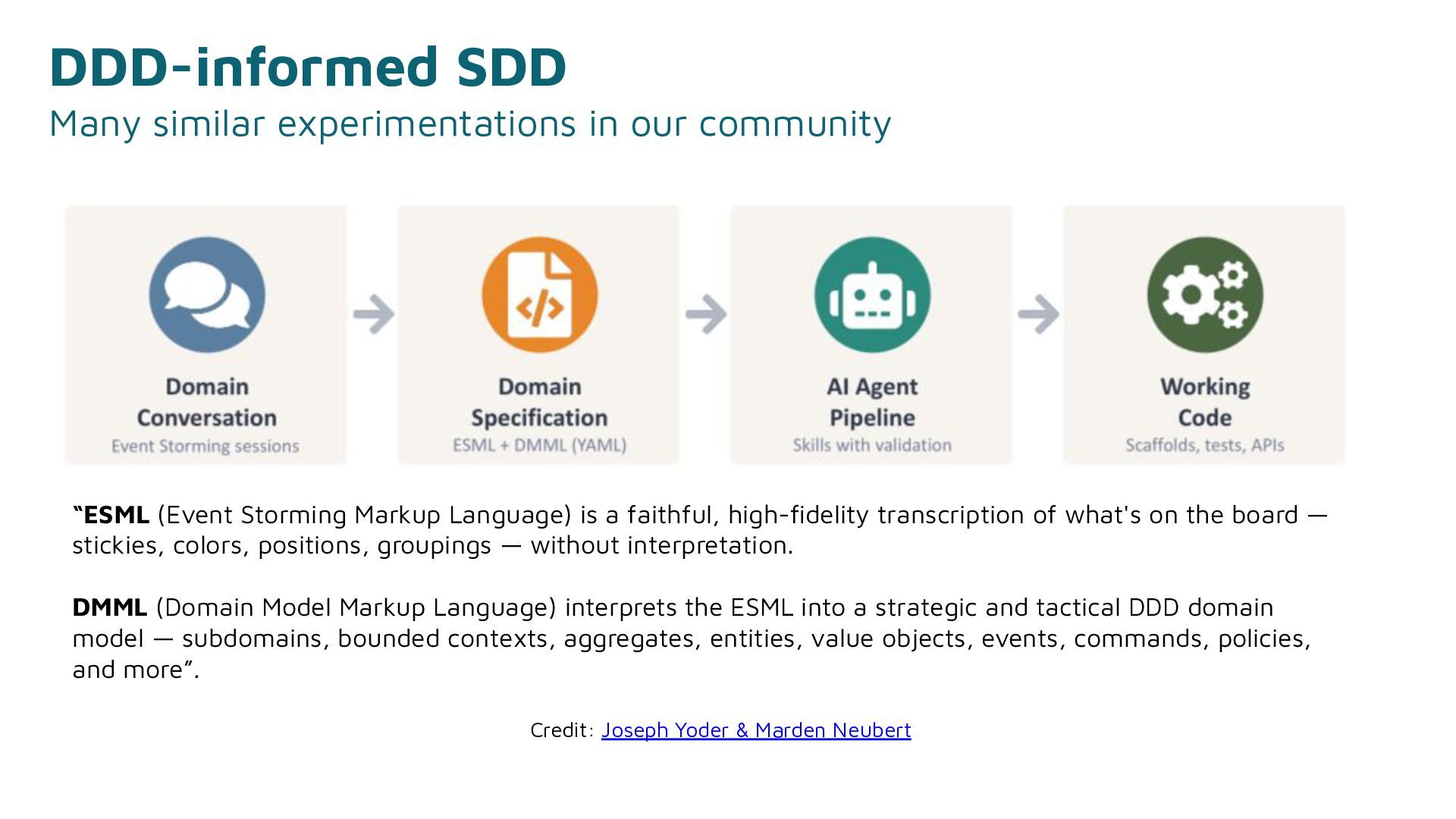
Storming Markup Language) is a faithful, high-fidelity transcription of what's on the board — stickies, colors, positions, groupings — without interpretation. DMML (Domain Model Markup Language) interprets the ESML into a strategic and tactical DDD domain model — subdomains, bounded contexts, aggregates, entities, value objects, events, commands, policies, and more”. Credit: Joseph Yoder & Marden Neubert
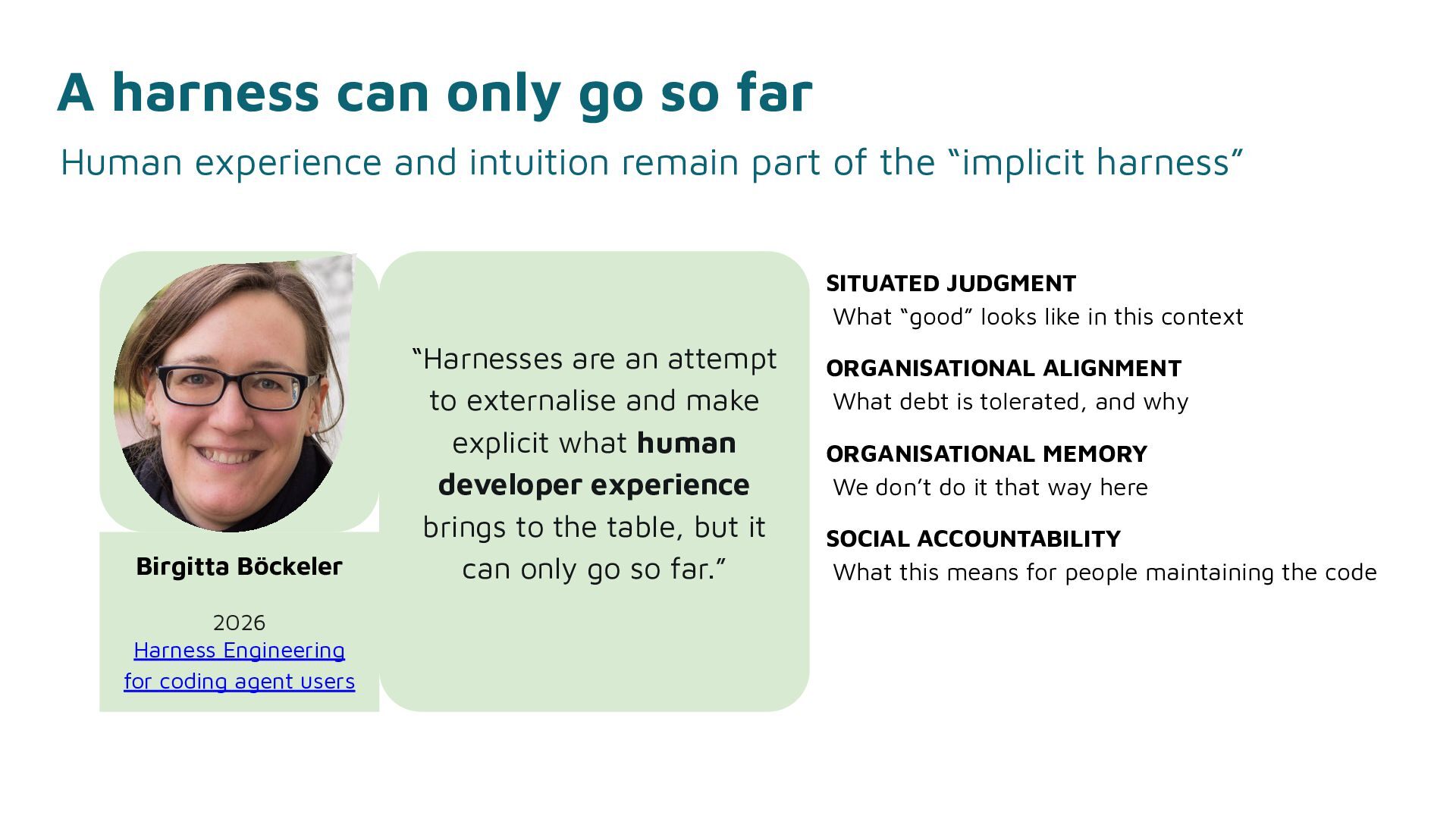
intuition remain part of the “implicit harness” SITUATED JUDGMENT What “good” looks like in this context Birgitta Böckeler 2026 Harness Engineering for coding agent users “Harnesses are an attempt to externalise and make explicit what human developer experience brings to the table, but it can only go so far.” ORGANISATIONAL ALIGNMENT What debt is tolerated, and why ORGANISATIONAL MEMORY We don’t do it that way here SOCIAL ACCOUNTABILITY What this means for people maintaining the code
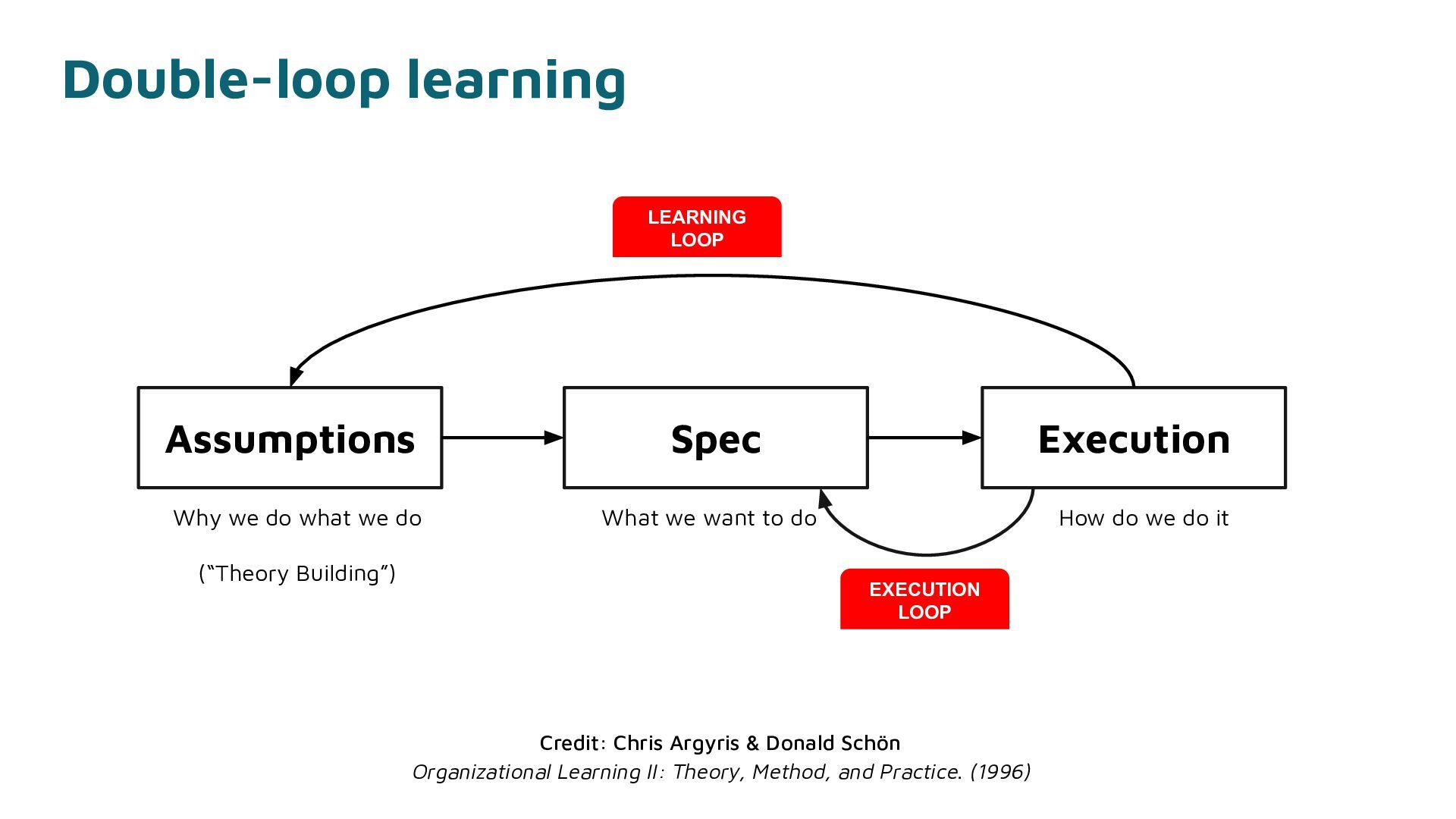
what we do What we want to do How do we do it (“Theory Building”) EXECUTION LOOP Credit: Chris Argyris & Donald Schön Organizational Learning II: Theory, Method, and Practice. (1996)
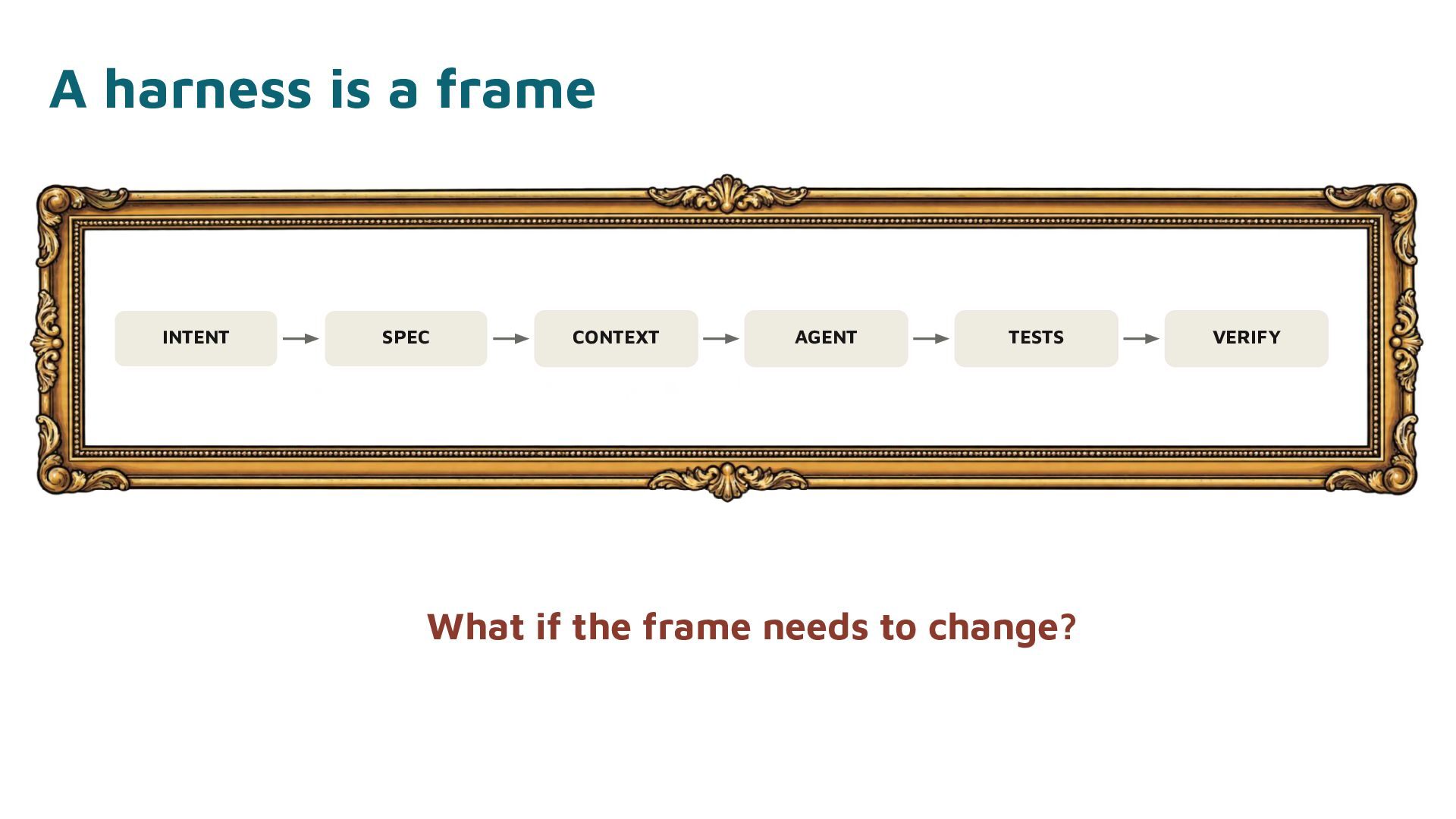
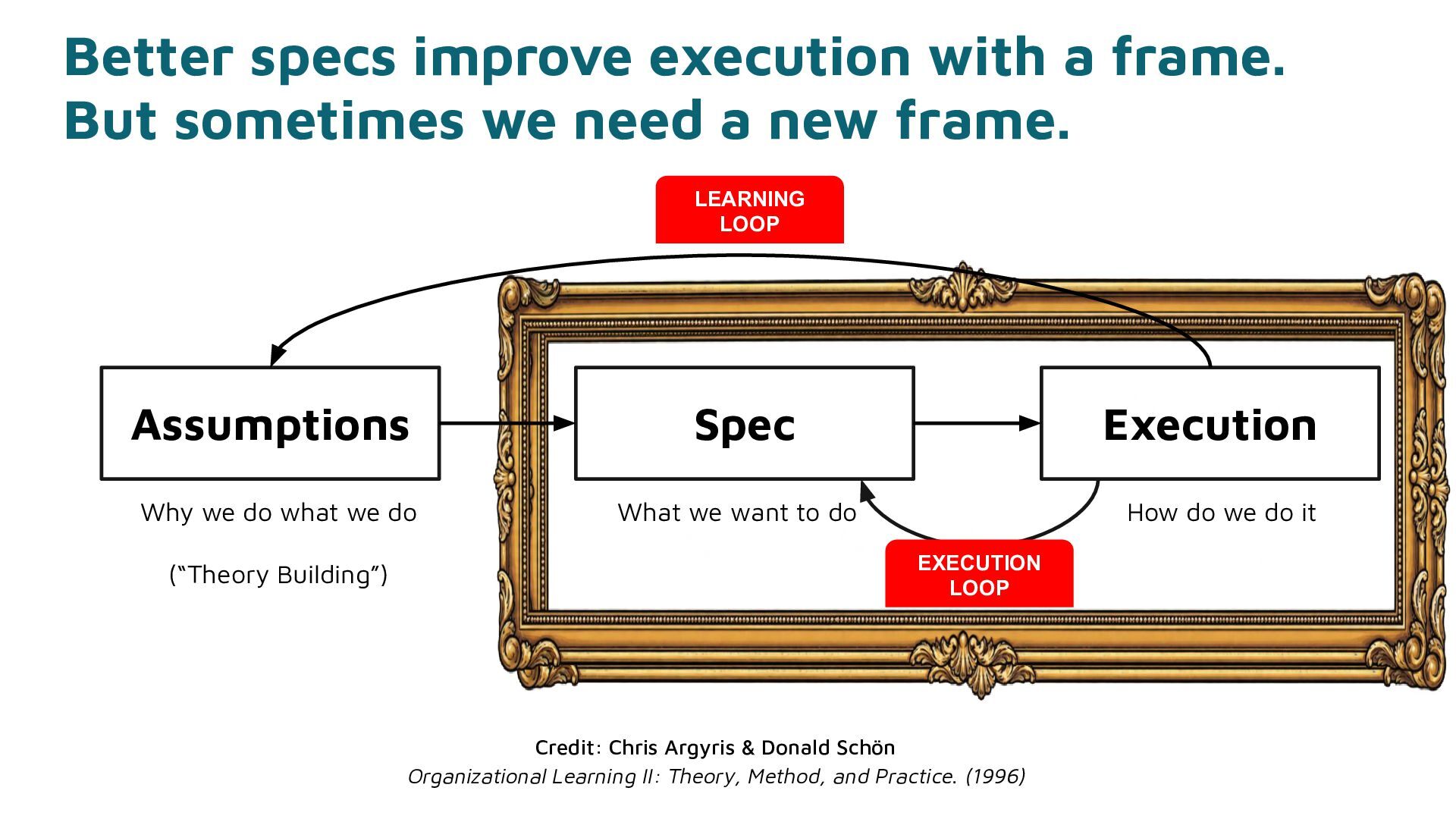
need a new frame. LEARNING LOOP Assumptions Spec Execution Why we do what we do What we want to do How do we do it (“Theory Building”) EXECUTION LOOP Credit: Chris Argyris & Donald Schön Organizational Learning II: Theory, Method, and Practice. (1996)
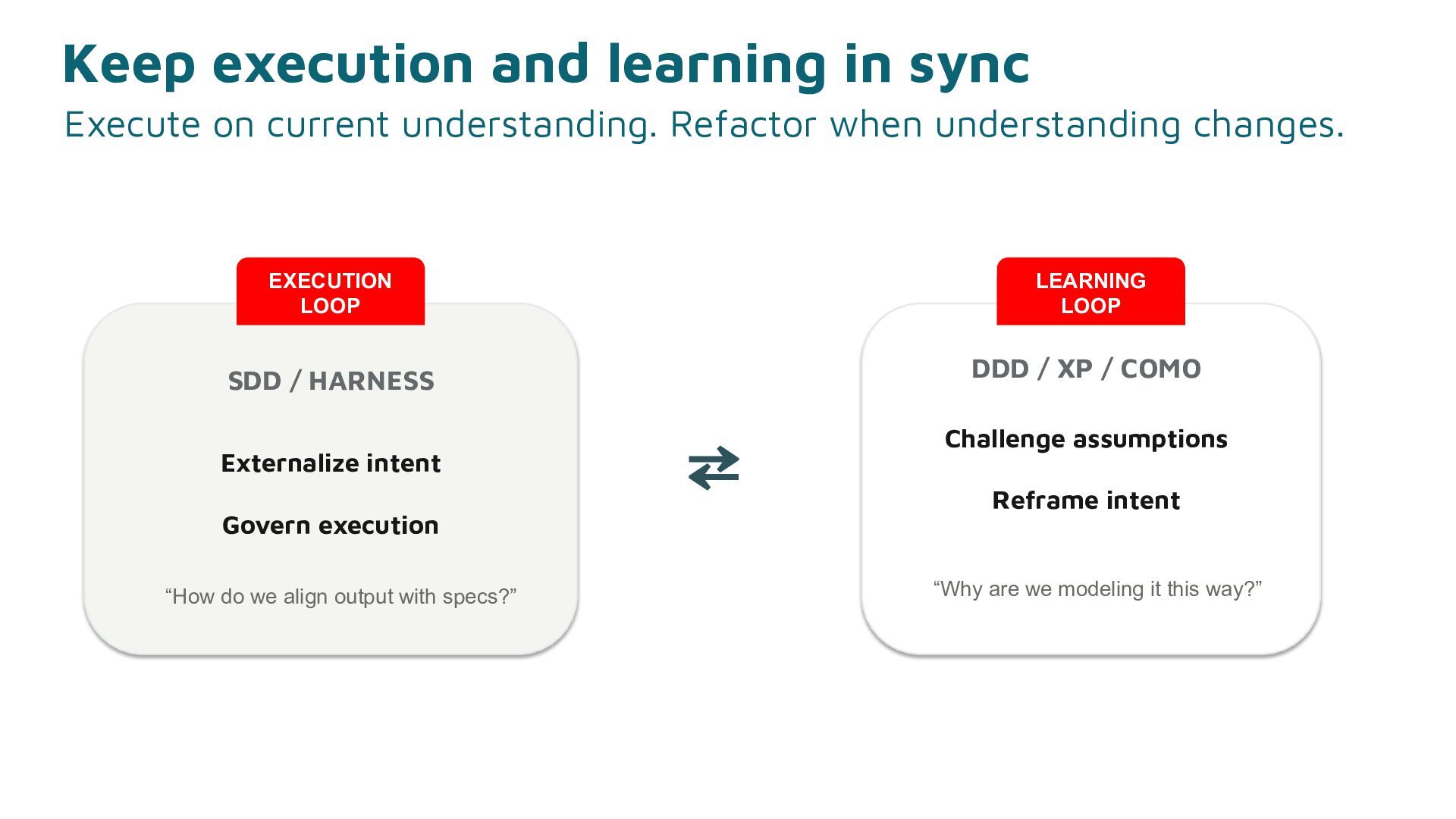
Refactor when understanding changes. EXECUTION LOOP LEARNING LOOP DDD / XP / COMO SDD / HARNESS Externalize intent Govern execution “How do we align output with specs?” ⇄ Challenge assumptions Reframe intent “Why are we modeling it this way?”
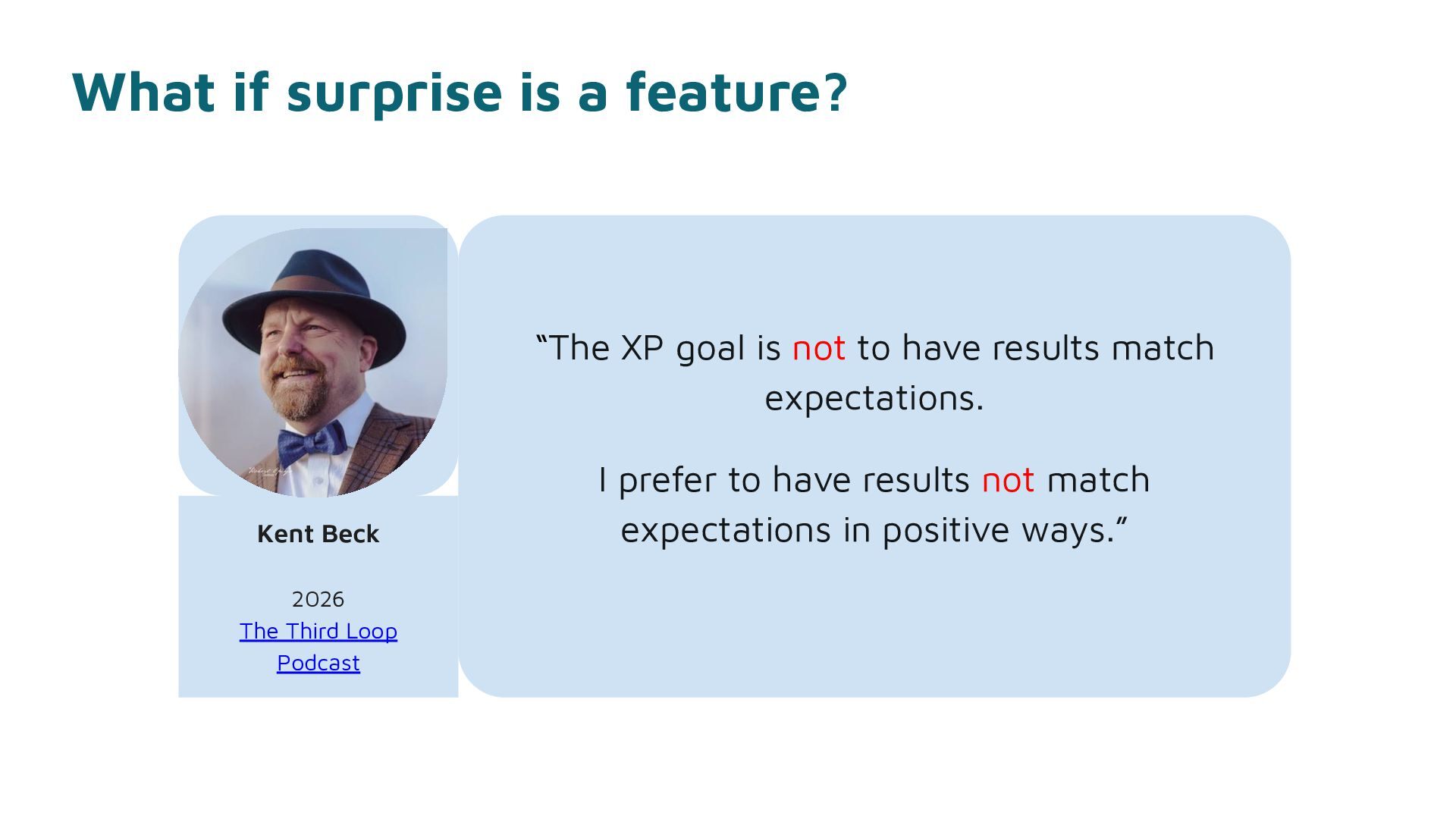
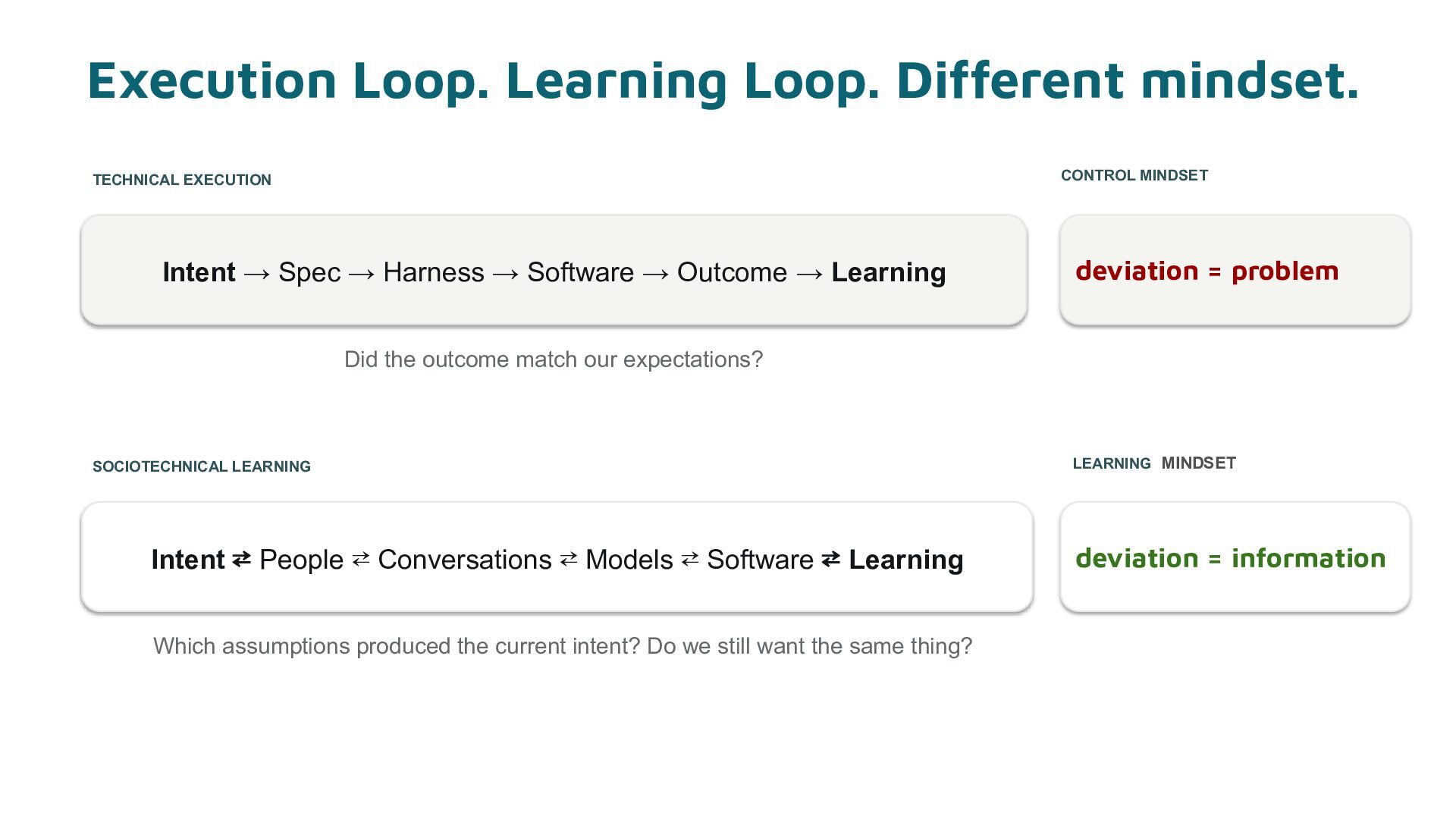
Intent → Spec → Harness → Software → Outcome → Learning deviation = problem Did the outcome match our expectations? SOCIOTECHNICAL LEARNING Intent ⇄ People ⇄ Conversations ⇄ Models ⇄ Software ⇄ Learning Which assumptions produced the current intent? Do we still want the same thing? LEARNING MINDSET deviation = information
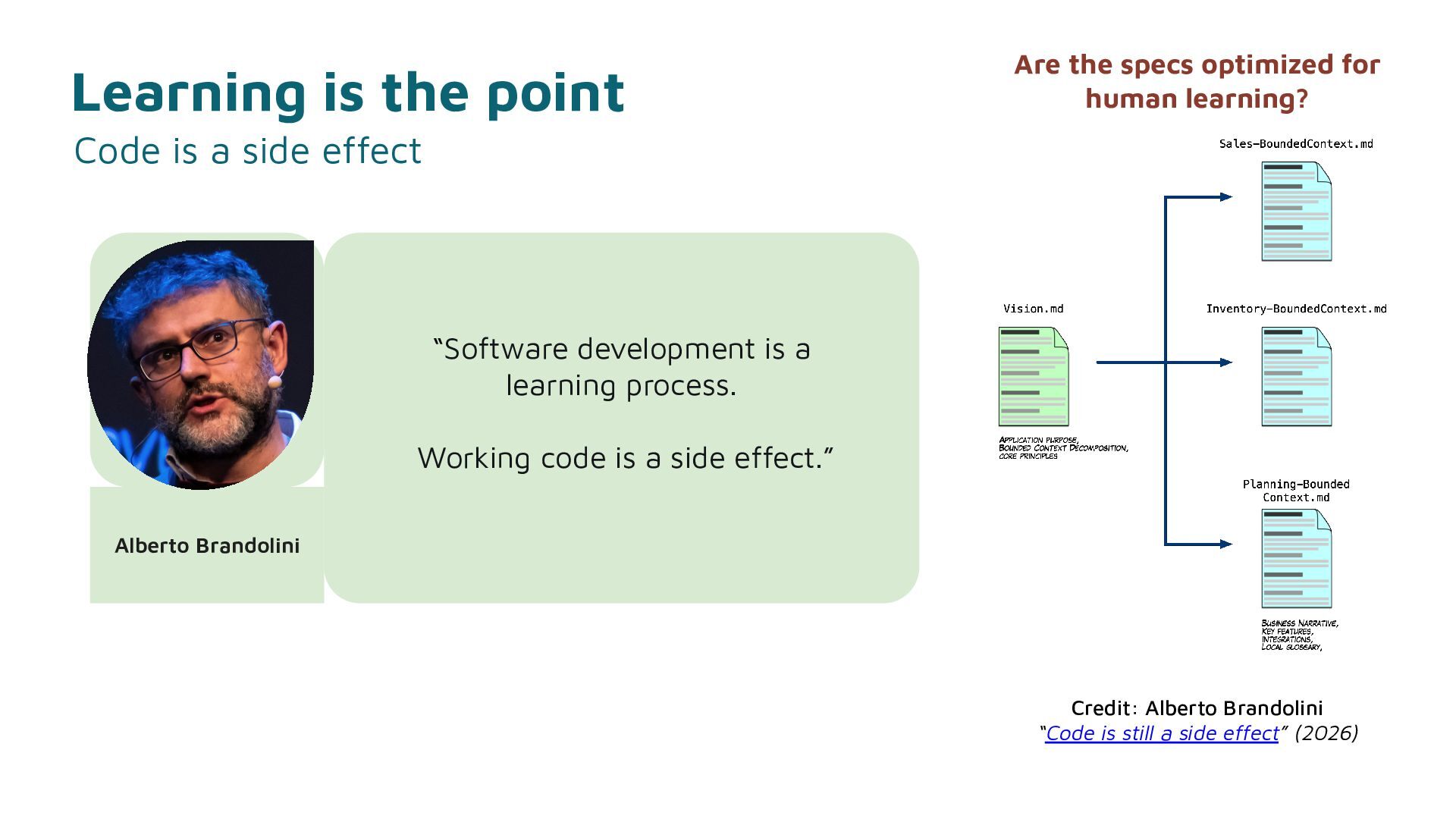
learning? Code is a side effect “Software development is a learning process. Working code is a side effect.” Alberto Brandolini Credit: Alberto Brandolini “Code is still a side effect” (2026)
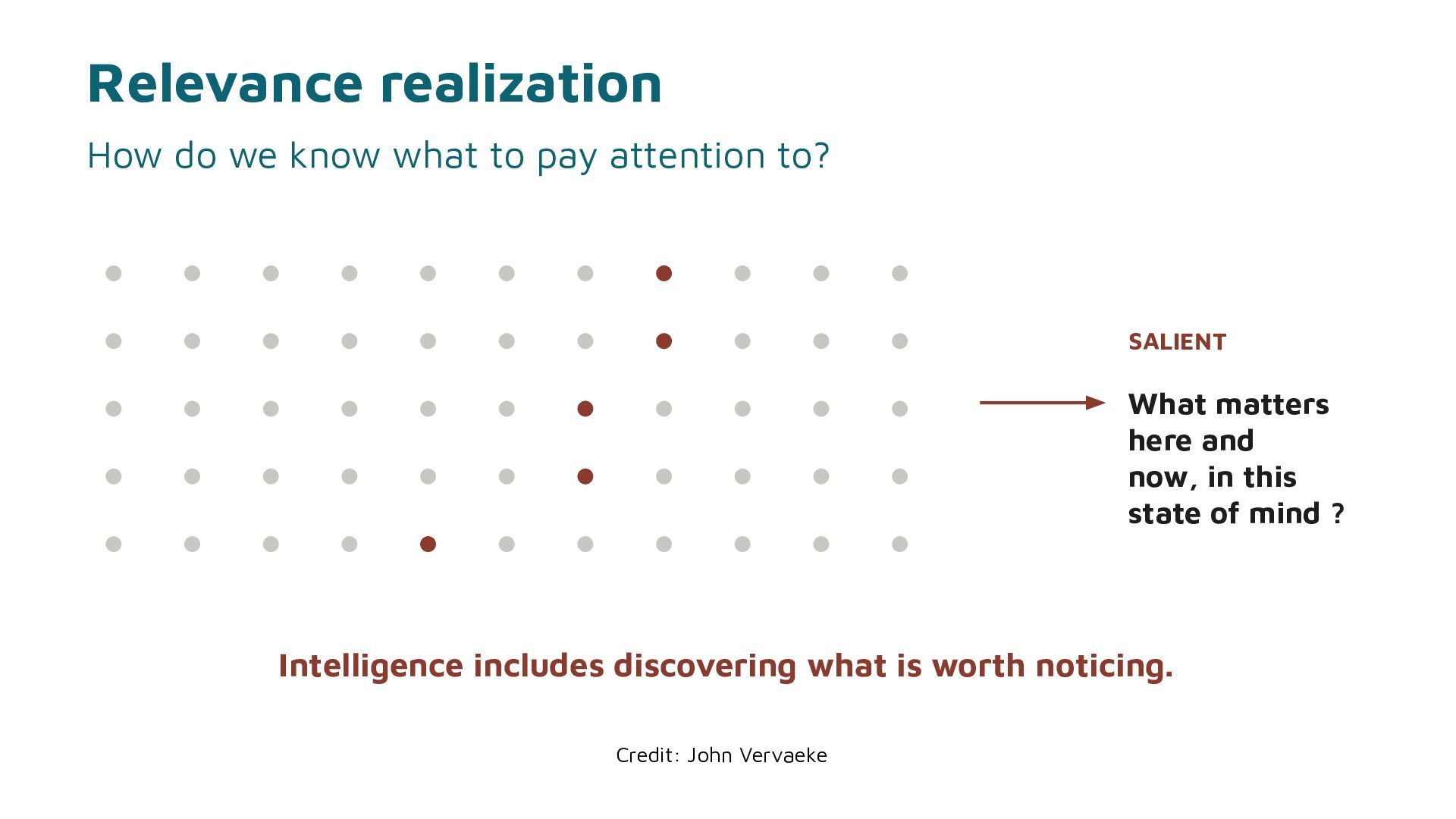
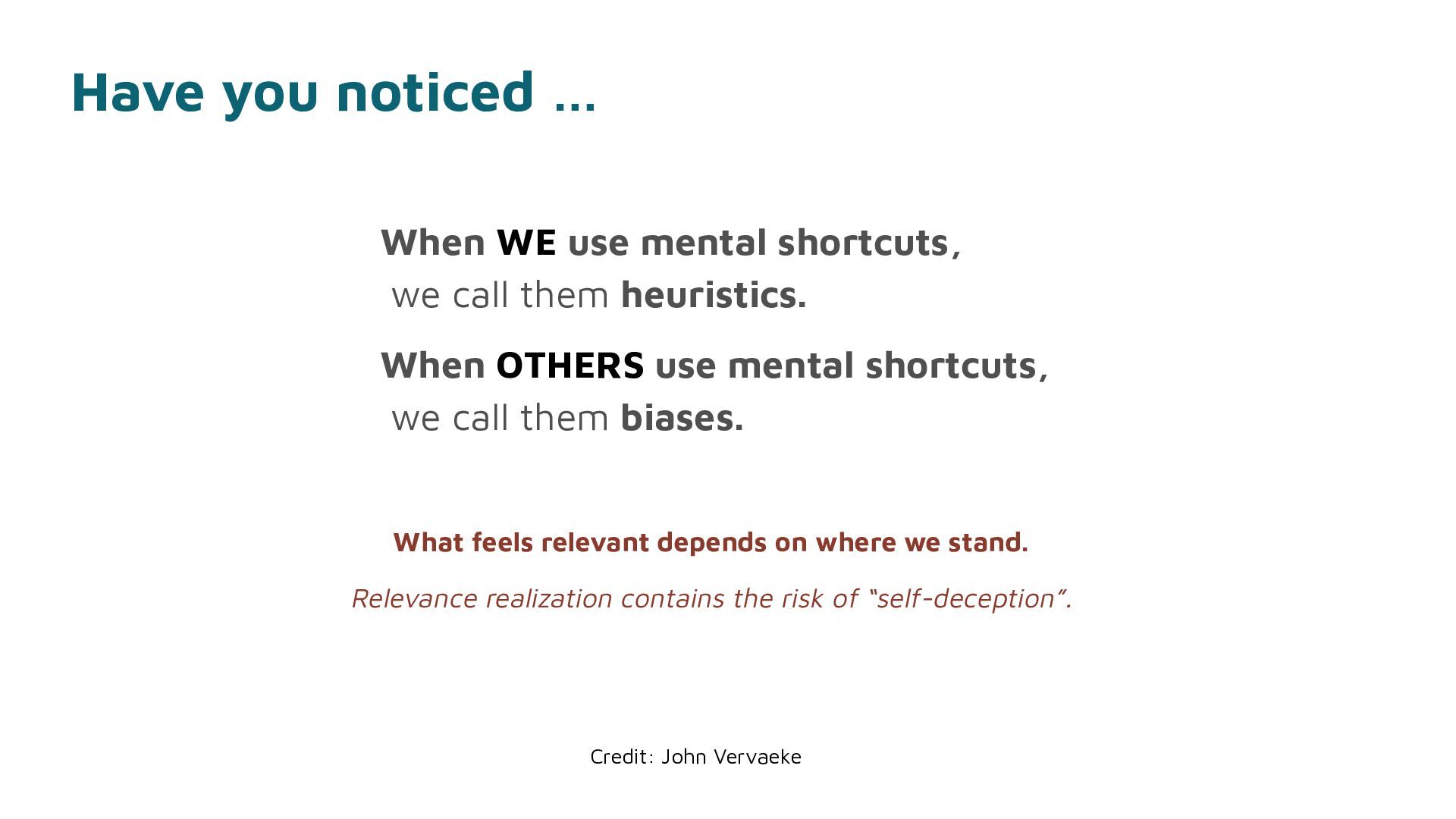
call them heuristics. When OTHERS use mental shortcuts, we call them biases. What feels relevant depends on where we stand. Relevance realization contains the risk of “self-deception”. Credit: John Vervaeke
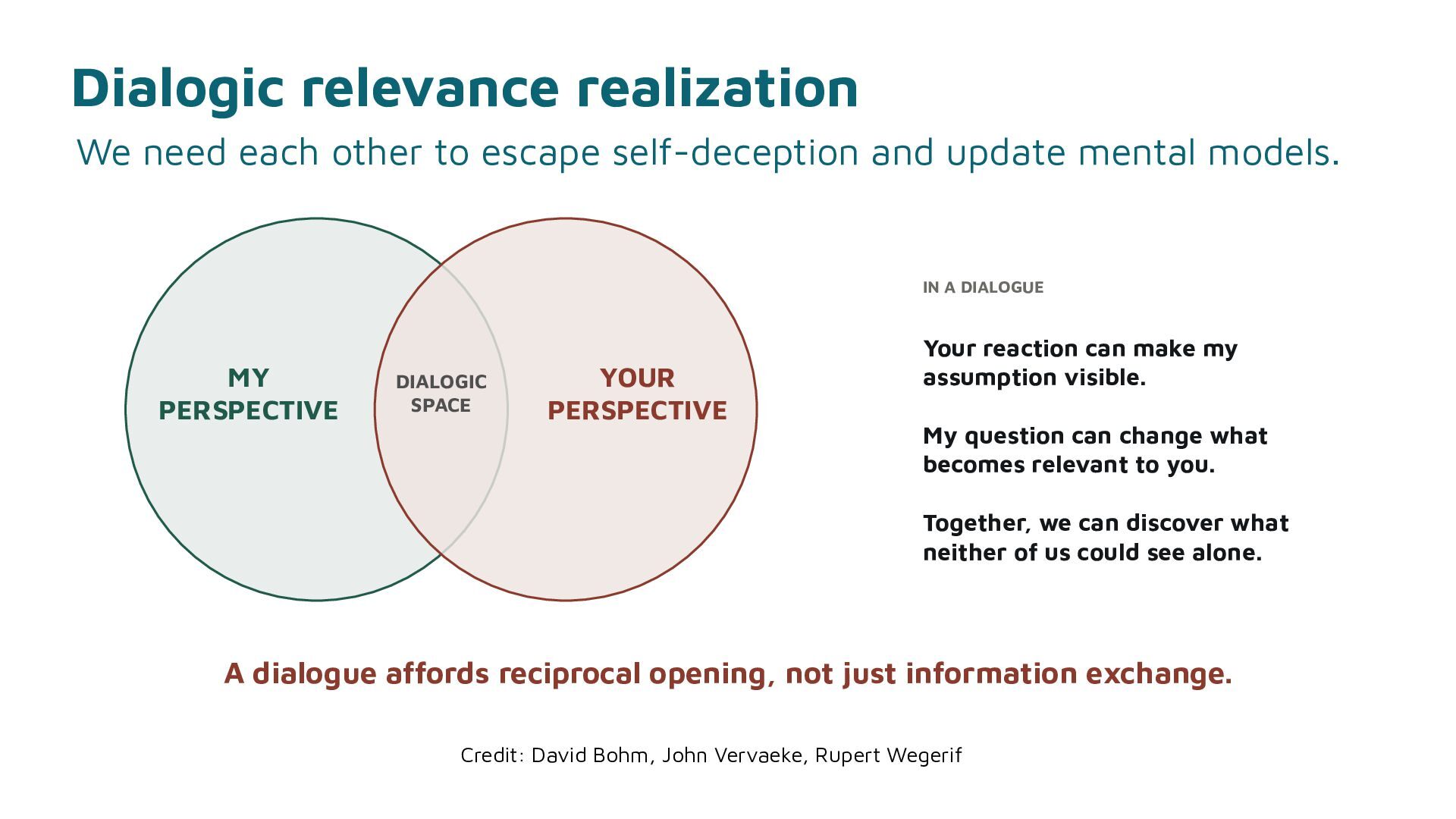
and update mental models. IN A DIALOGUE MY PERSPECTIVE DIALOGIC SPACE YOUR PERSPECTIVE Your reaction can make my assumption visible. My question can change what becomes relevant to you. Together, we can discover what neither of us could see alone. A dialogue affords reciprocal opening, not just information exchange. Credit: David Bohm, John Vervaeke, Rupert Wegerif
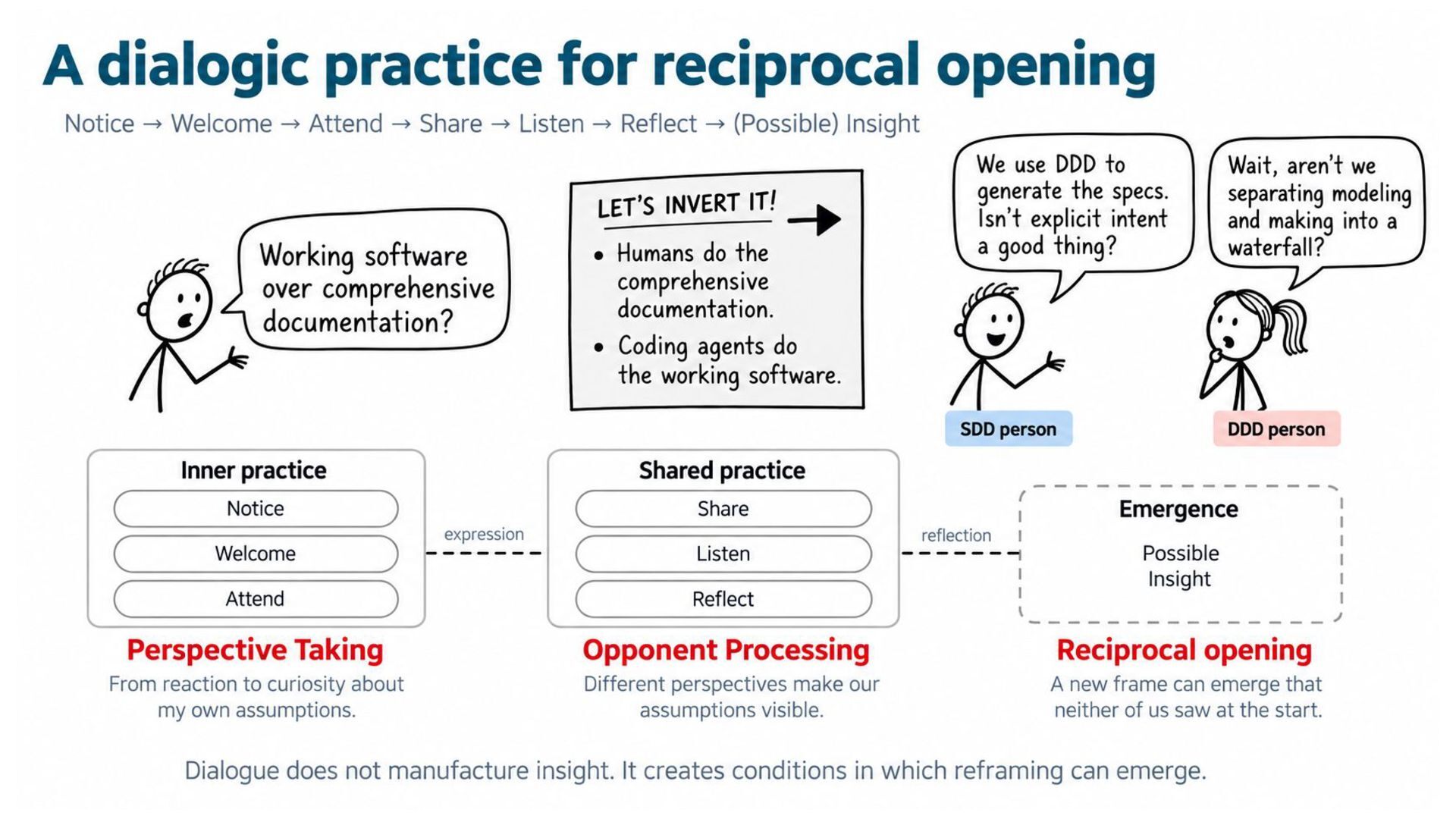
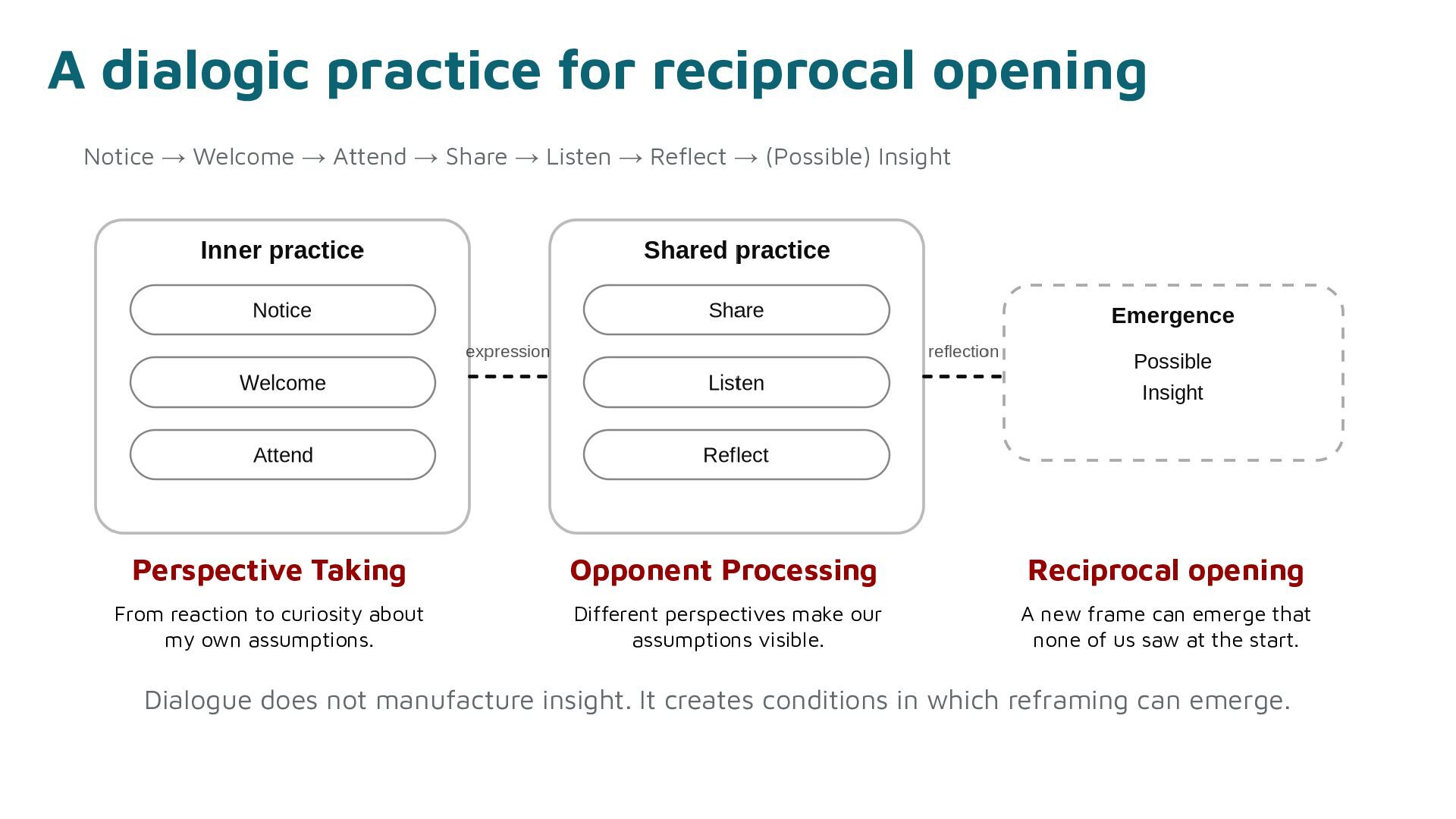
Attend → Share → Listen → Reflect → (Possible) Insight Perspective Taking Opponent Processing Reciprocal opening From reaction to curiosity about my own assumptions. Different perspectives make our assumptions visible. A new frame can emerge that none of us saw at the start. Dialogue does not manufacture insight. It creates conditions in which reframing can emerge.
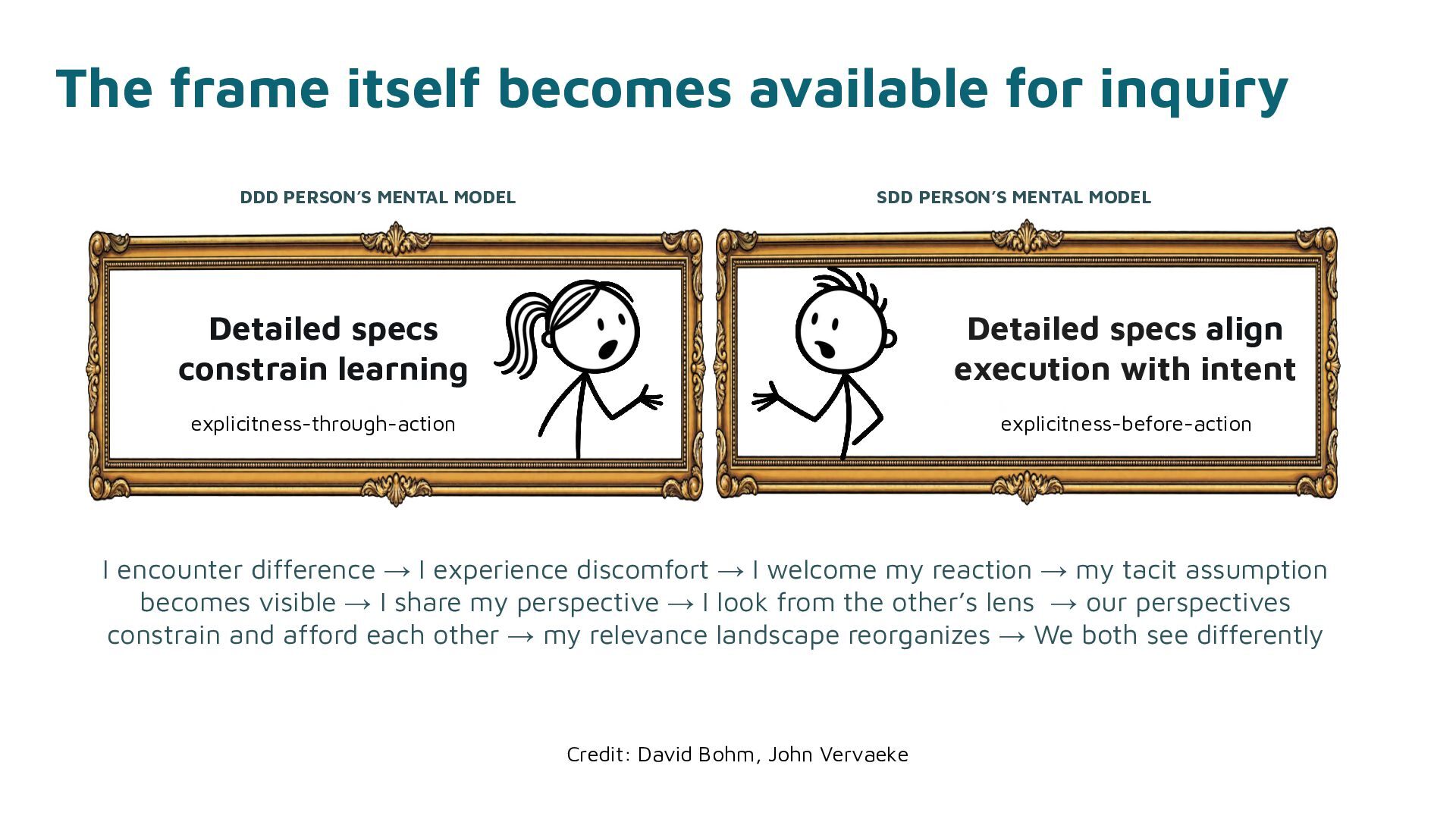
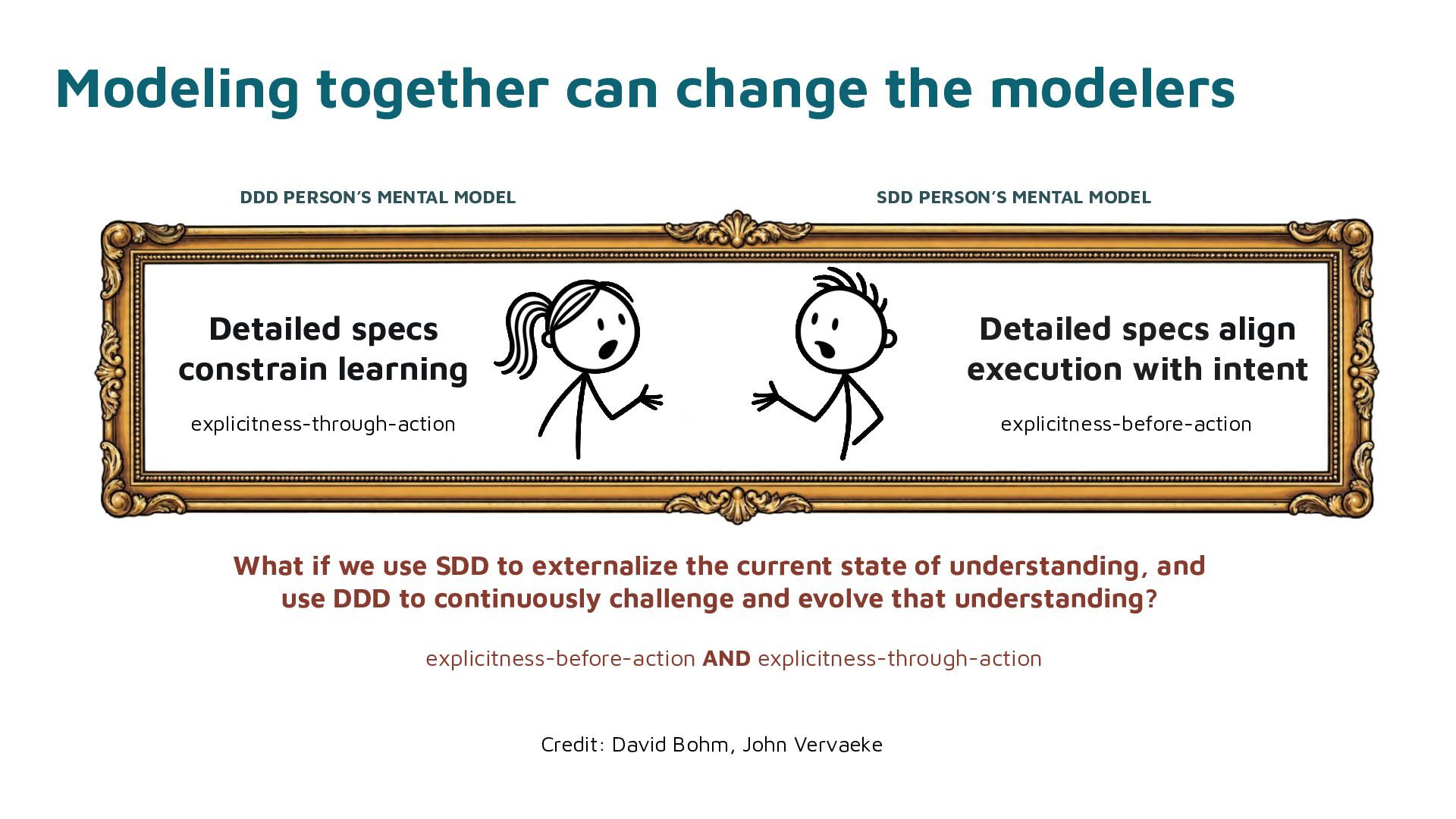
MODEL SDD PERSON’S MENTAL MODEL Detailed specs constrain learning Detailed specs align execution with intent explicitness-through-action explicitness-before-action I encounter difference → I experience discomfort → I welcome my reaction → my tacit assumption becomes visible → I share my perspective → I look from the other’s lens → our perspectives constrain and afford each other → my relevance landscape reorganizes → We both see differently Credit: David Bohm, John Vervaeke
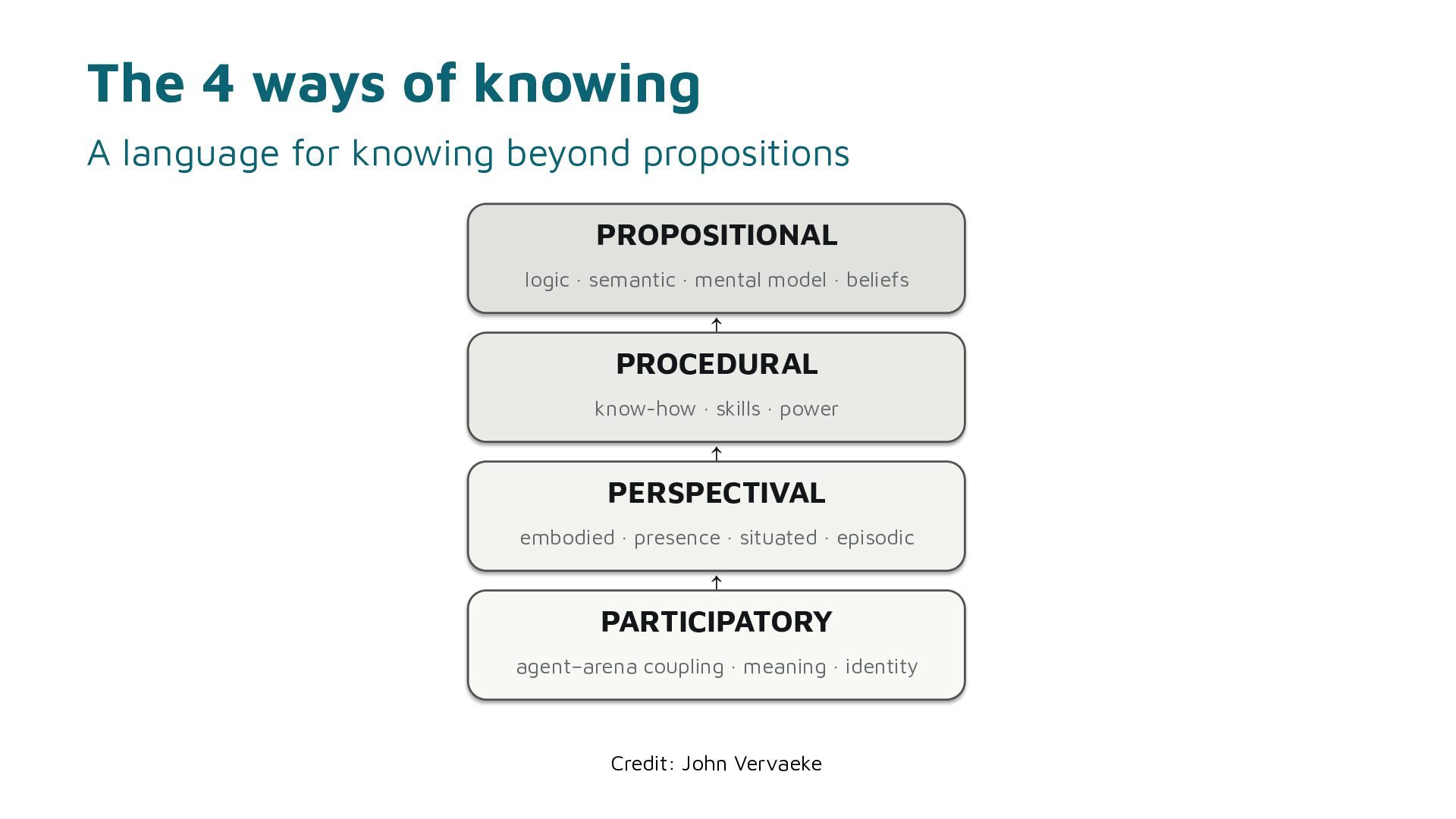
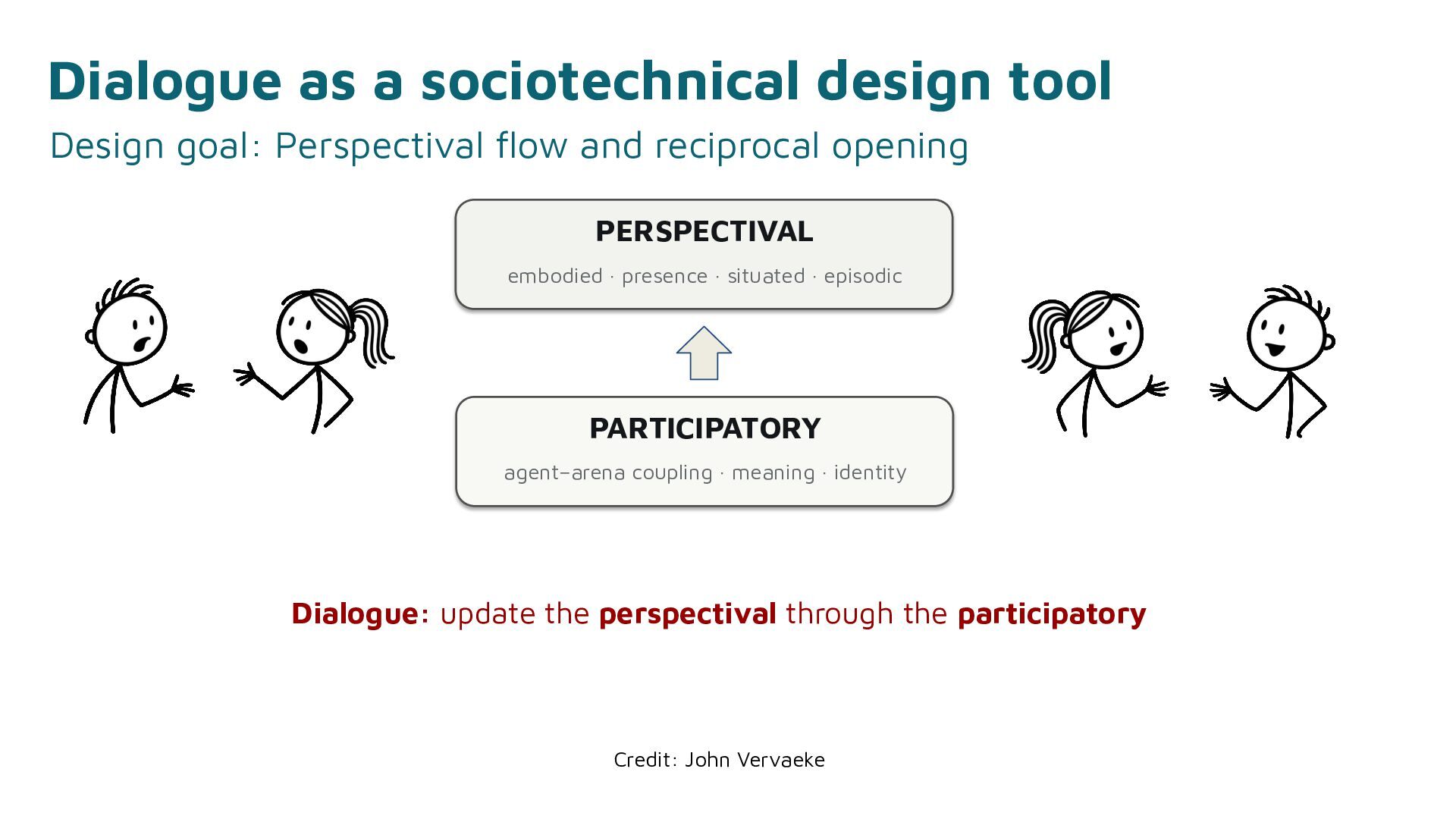
and reciprocal opening PERSPECTIVAL embodied · presence · situated · episodic PARTICIPATORY agent–arena coupling · meaning · identity Dialogue: update the perspectival through the participatory Credit: John Vervaeke
SDD PERSON’S MENTAL MODEL Detailed specs constrain learning Detailed specs align execution with intent explicitness-through-action explicitness-before-action What if we use SDD to externalize the current state of understanding, and use DDD to continuously challenge and evolve that understanding? explicitness-before-action AND explicitness-through-action Credit: David Bohm, John Vervaeke
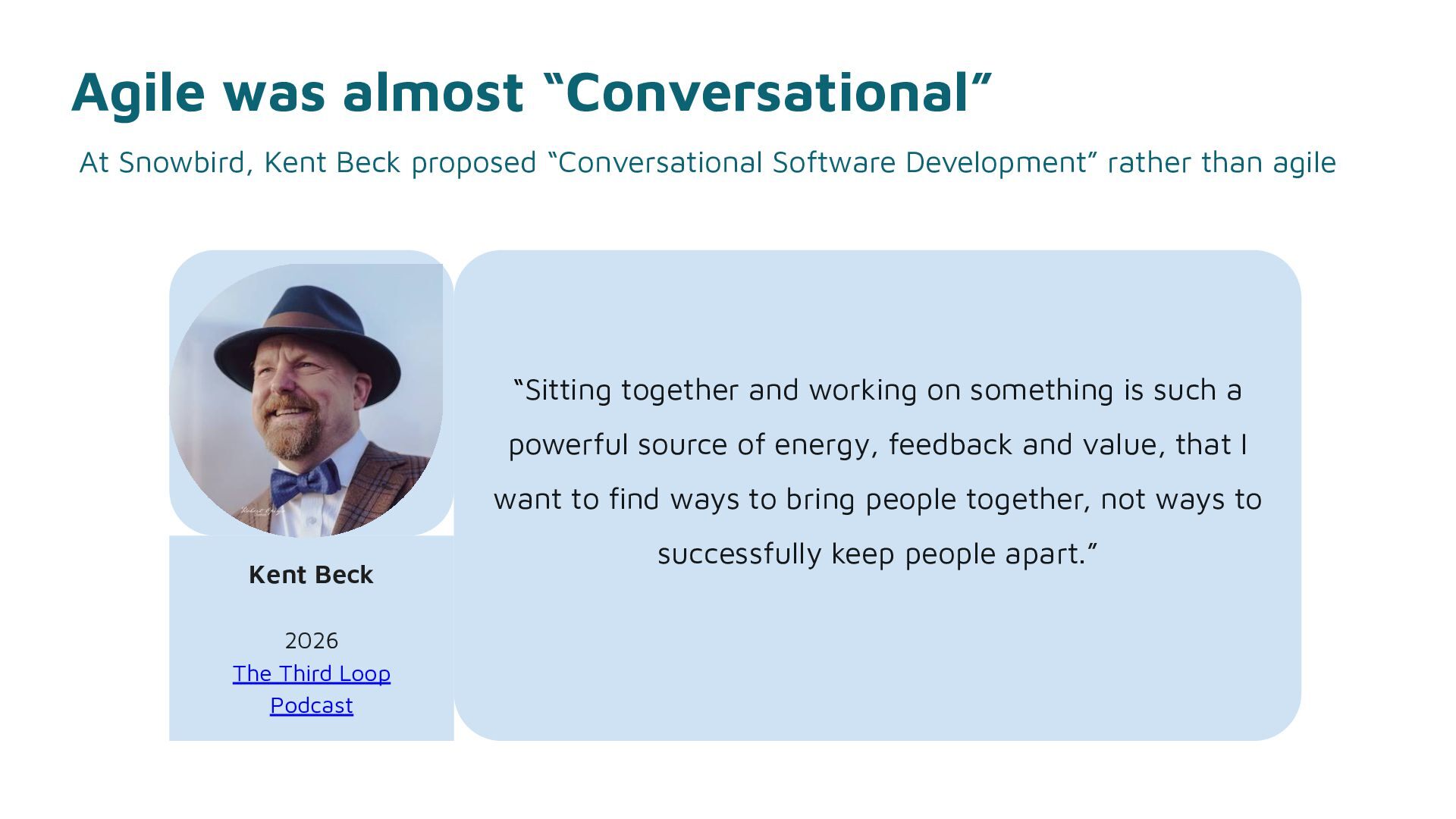
Software Development” rather than agile “Sitting together and working on something is such a powerful source of energy, feedback and value, that I want to find ways to bring people together, not ways to Kent Beck 2026 The Third Loop Podcast successfully keep people apart.”
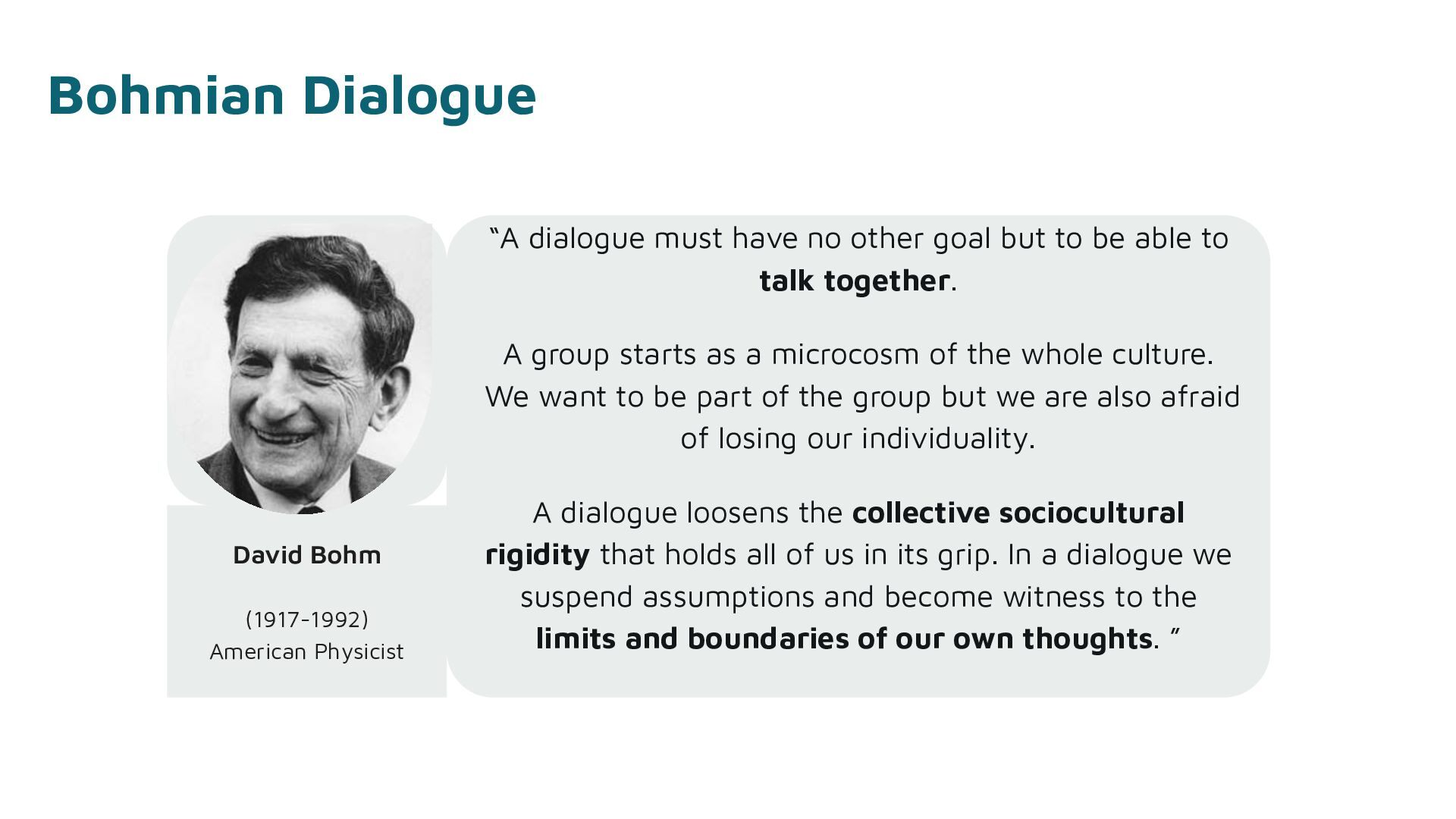
to be able to talk together. A group starts as a microcosm of the whole culture. We want to be part of the group but we are also afraid of losing our individuality. David Bohm (1917-1992) American Physicist A dialogue loosens the collective sociocultural rigidity that holds all of us in its grip. In a dialogue we suspend assumptions and become witness to the limits and boundaries of our own thoughts. ”
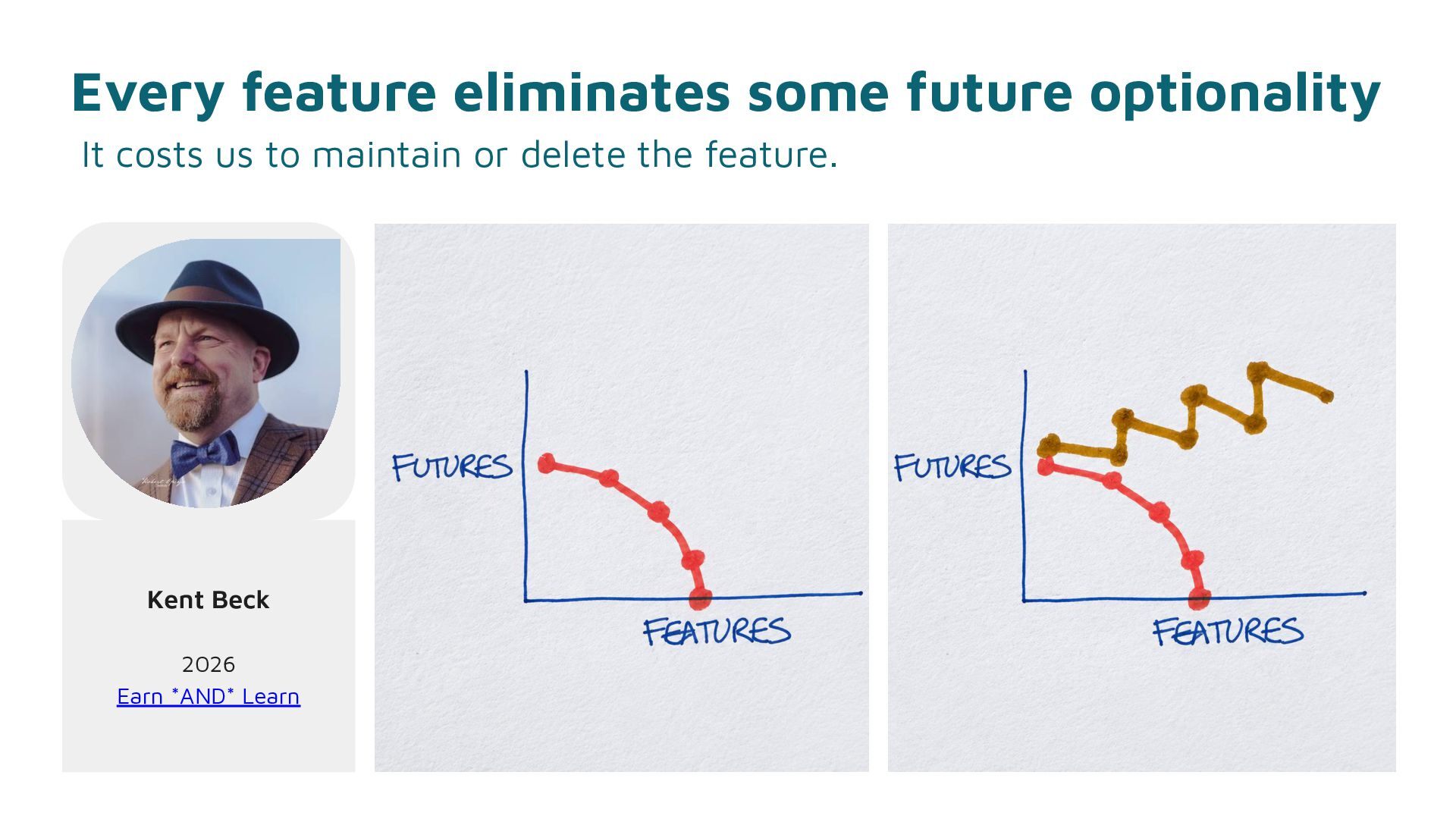
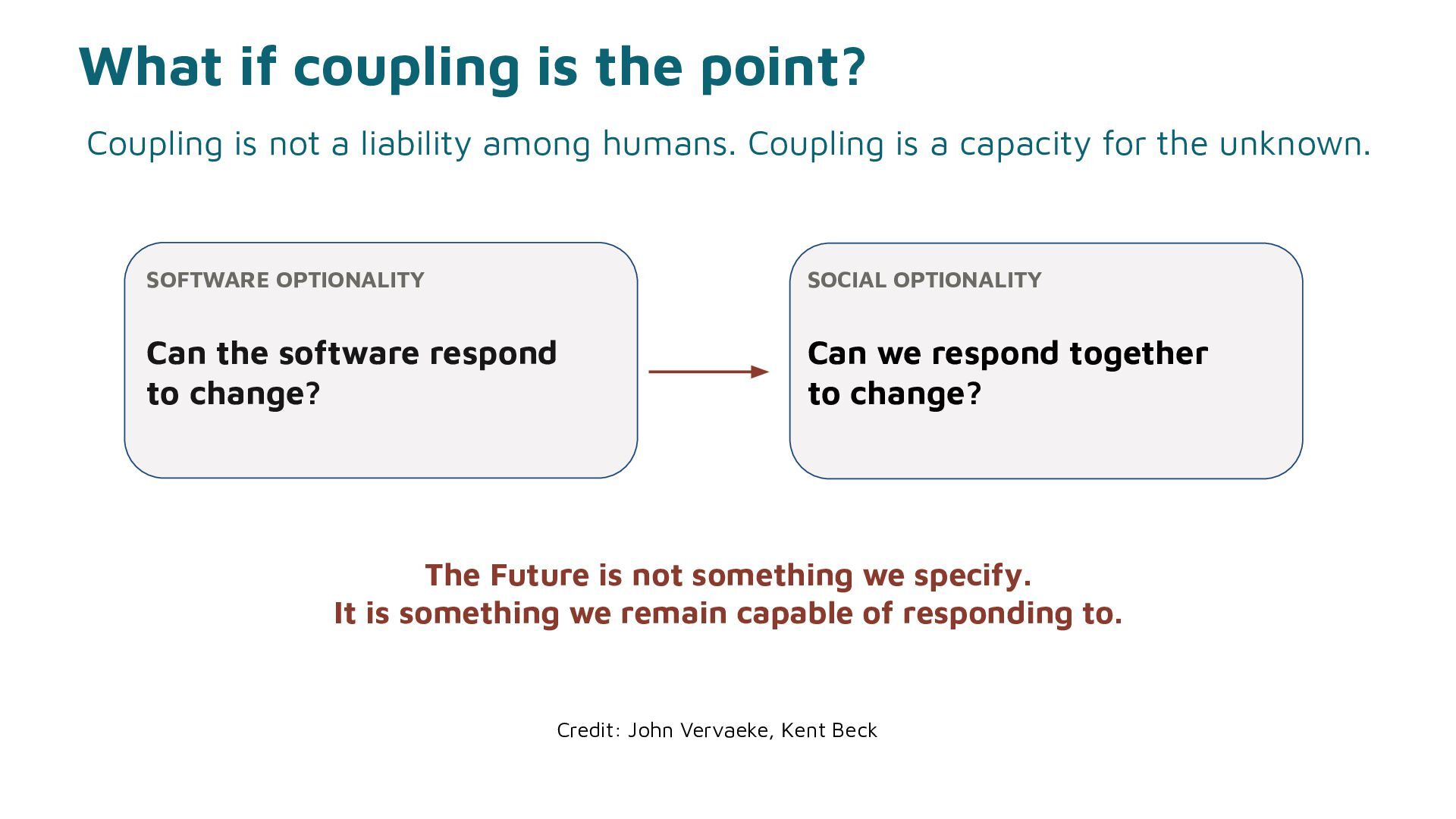
liability among humans. Coupling is a capacity for the unknown. SOFTWARE OPTIONALITY SOCIAL OPTIONALITY Can the software respond to change? Can we respond together to change? The Future is not something we specify. It is something we remain capable of responding to. Credit: John Vervaeke, Kent Beck


 xinyao
 rakko
 jdejongh
 destraynor
 mraible
 tammyeverts
 skipperchong
 davetheseo
 tmiket
 axbom
 danielanewman
 brad_frost
 codingconduct