Share
Embed
Proactive Cost Management Detecting Anomalies
This deck was presented in Conf42 Observability
Yury Nino
June 20, 2025
Transcript
29 slides
-
www.yurynino.dev 2 @yurynino Love SRE, DevOps, Chaos Engineering, Observability, Reading,
Writing and Teaching. Cloud AppMod Engineer -
www.yurynino.dev Distributed Systems 4 I would like to tell you
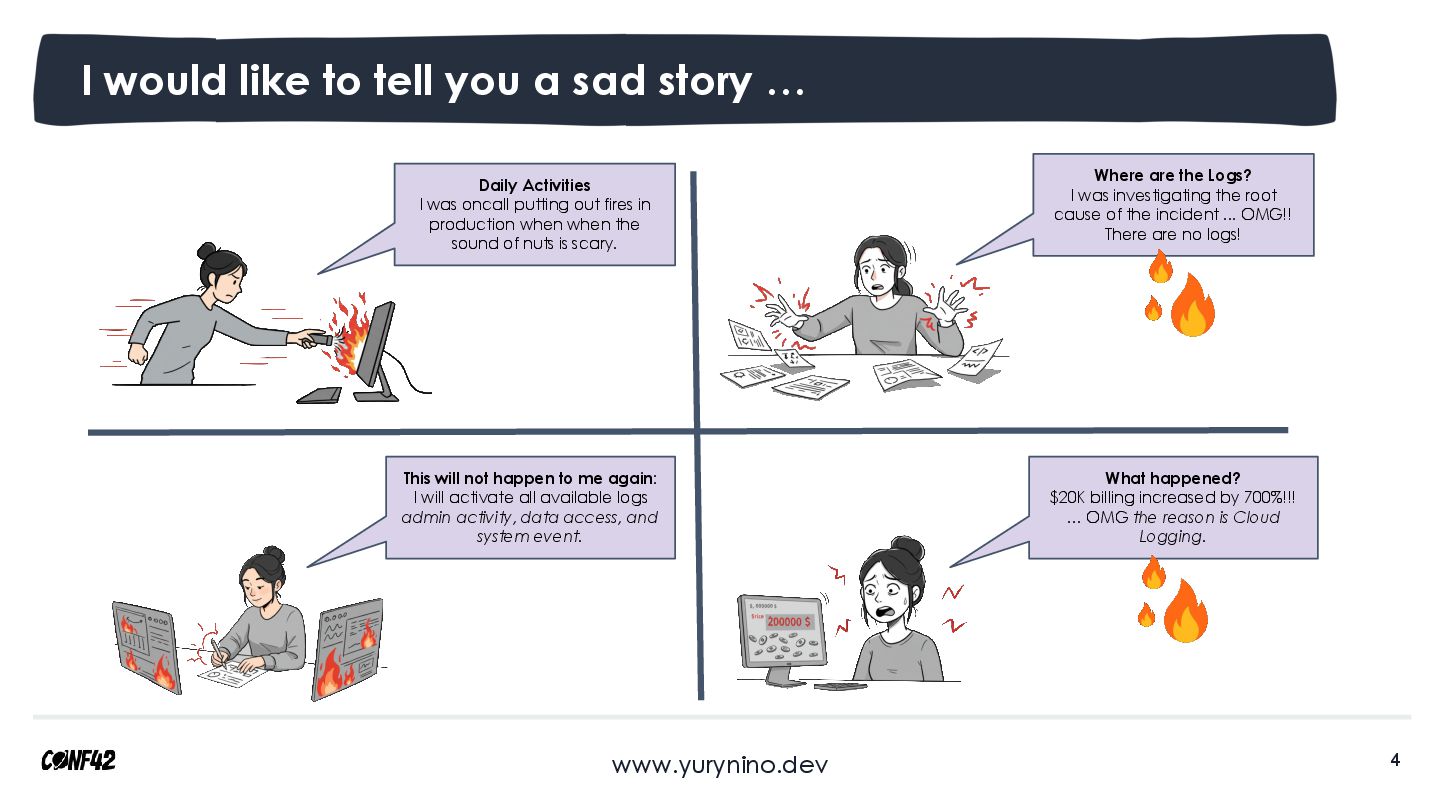
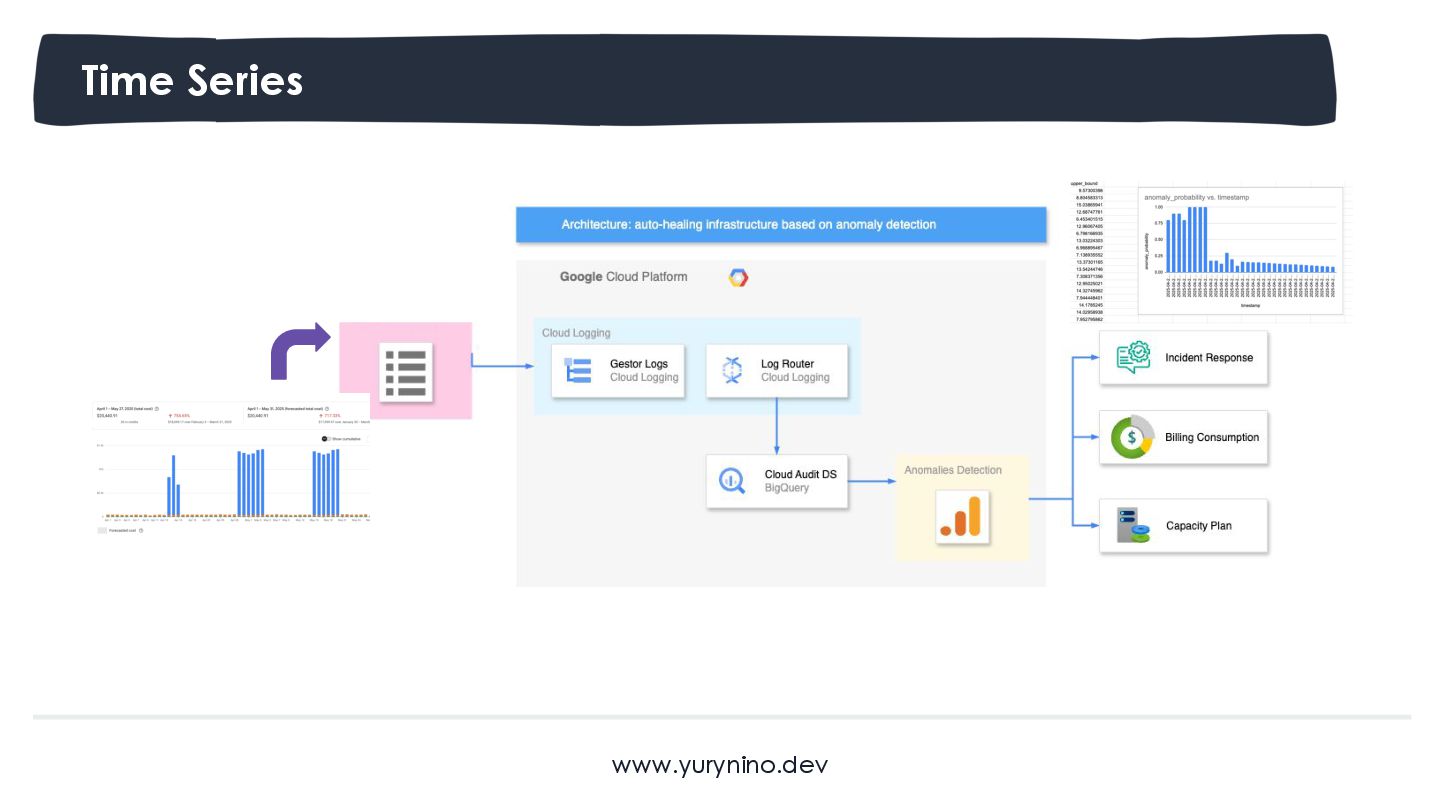
a sad story … Daily Activities I was oncall putting out fires in production when when the sound of nuts is scary. Where are the Logs? I was investigating the root cause of the incident ... OMG!! There are no logs! This will not happen to me again: I will activate all available logs admin activity, data access, and system event. What happened? $20K billing increased by 700%!!! … OMG the reason is Cloud Logging. -
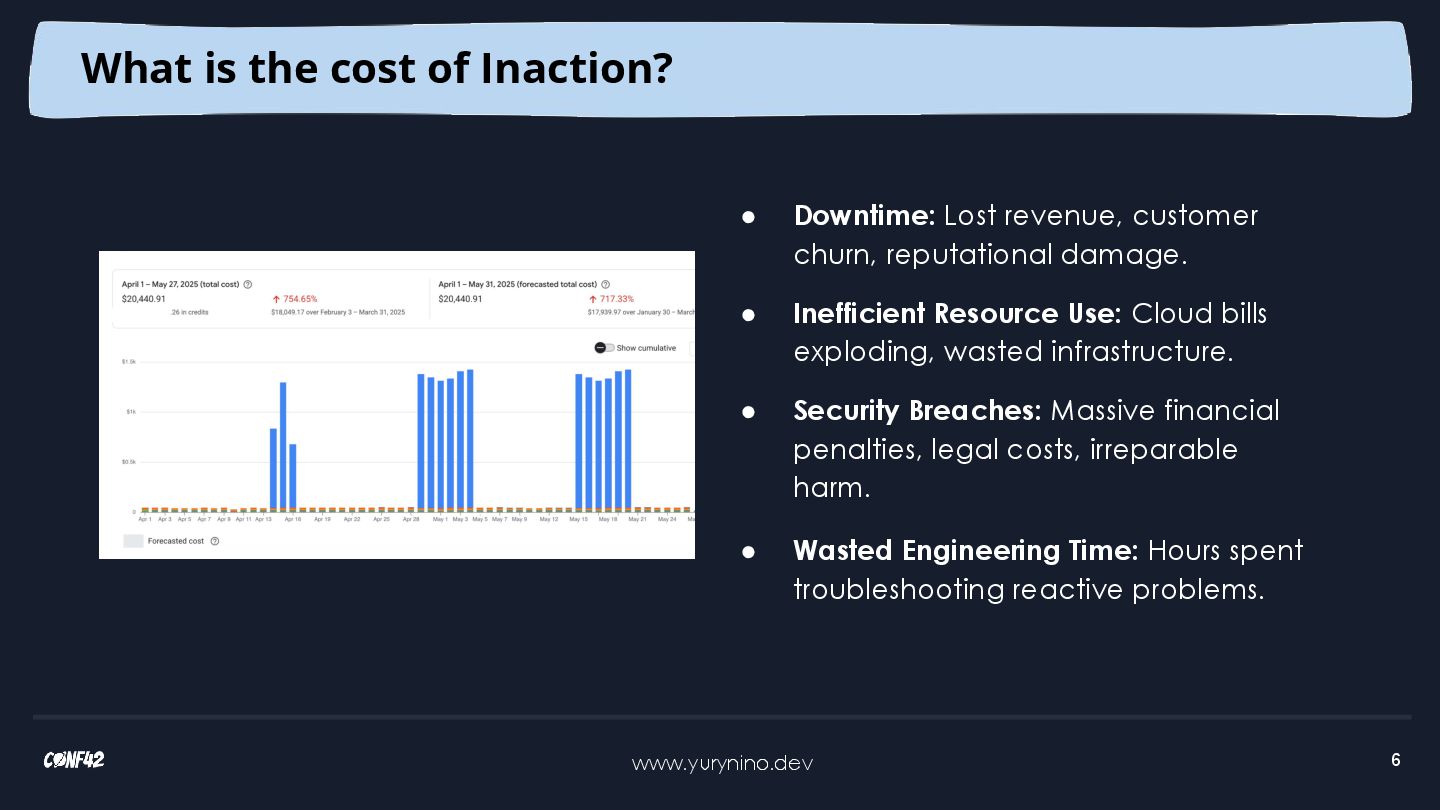
www.yurynino.dev 6 What is the cost of Inaction? • Downtime:
Lost revenue, customer churn, reputational damage. • Inefficient Resource Use: Cloud bills exploding, wasted infrastructure. • Security Breaches: Massive financial penalties, legal costs, irreparable harm. • Wasted Engineering Time: Hours spent troubleshooting reactive problems. -
www.yurynino.dev 7 Cost Management Challenges Logs can help you …
but … Machine Learning Techniques Deeping on Time Series Use Cases Q & A AGENDA Topics will be covered © 2021 ADL - AWS www.sitereliabilityengineering.co -
www.yurynino.dev 8 If the problem was the logs … the
solution should be in the logs also … Apply proactive cloud cost is useful here which involves continuously monitoring, analyzing, and optimizing spending on cloud resources … -
www.yurynino.dev 9 Proactive Cost in Cloud shifts the focus from
what did we spend?" to "how can we spend smarter and more efficiently from the outset? It's a critical component to maximize business value from cloud investments while keeping costs under control. -
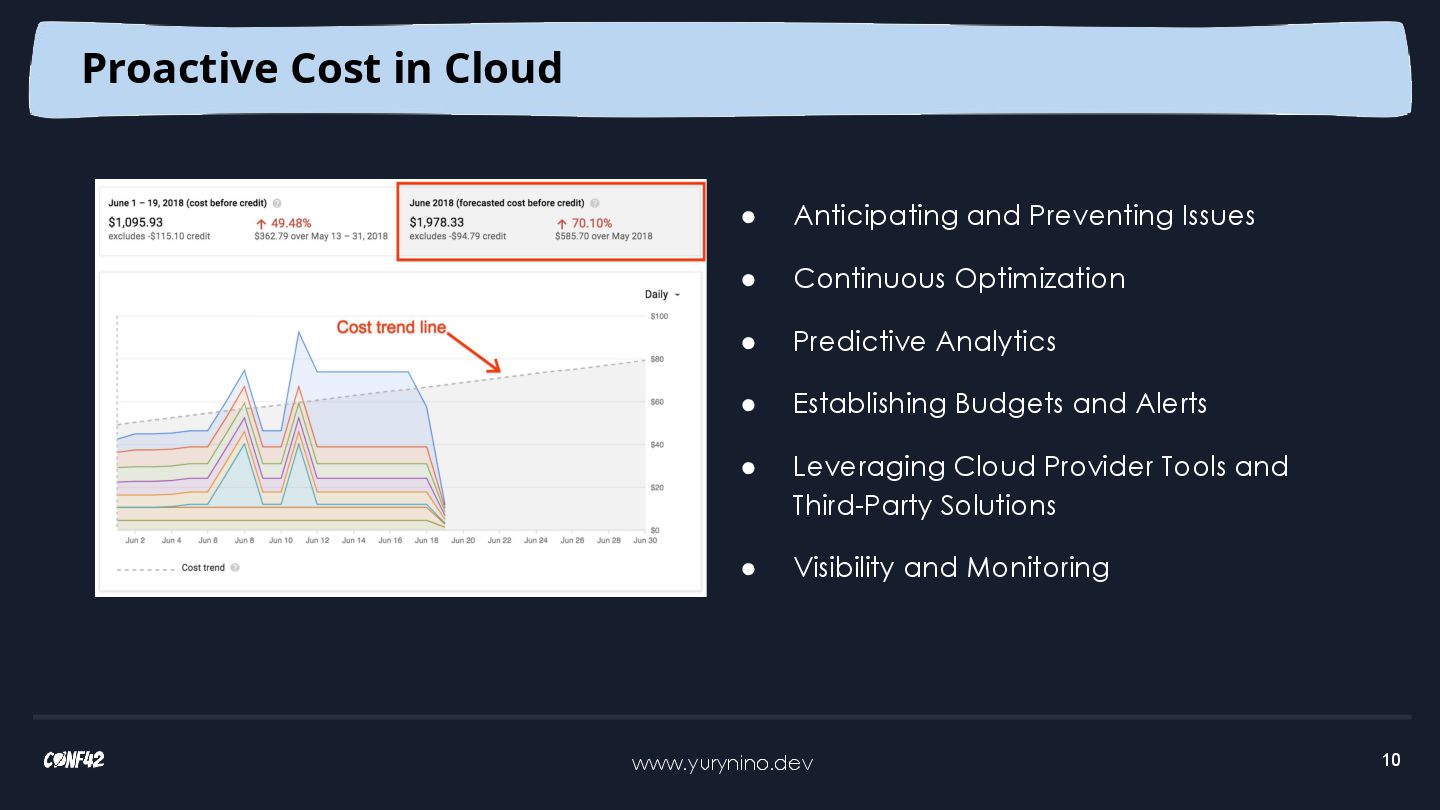
www.yurynino.dev 10 Proactive Cost in Cloud • Anticipating and Preventing
Issues • Continuous Optimization • Predictive Analytics • Establishing Budgets and Alerts • Leveraging Cloud Provider Tools and Third-Party Solutions • Visibility and Monitoring -
www.yurynino.dev 11 Visibility and Monitoring represent several challenges compared to
traditional environments, primarily due to the distributed, dynamic, and often ephemeral nature of cloud infrastructure. Analyzing logs in cloud … -
www.yurynino.dev 12 If the problem was the logs … the
solution should be in the logs also … -
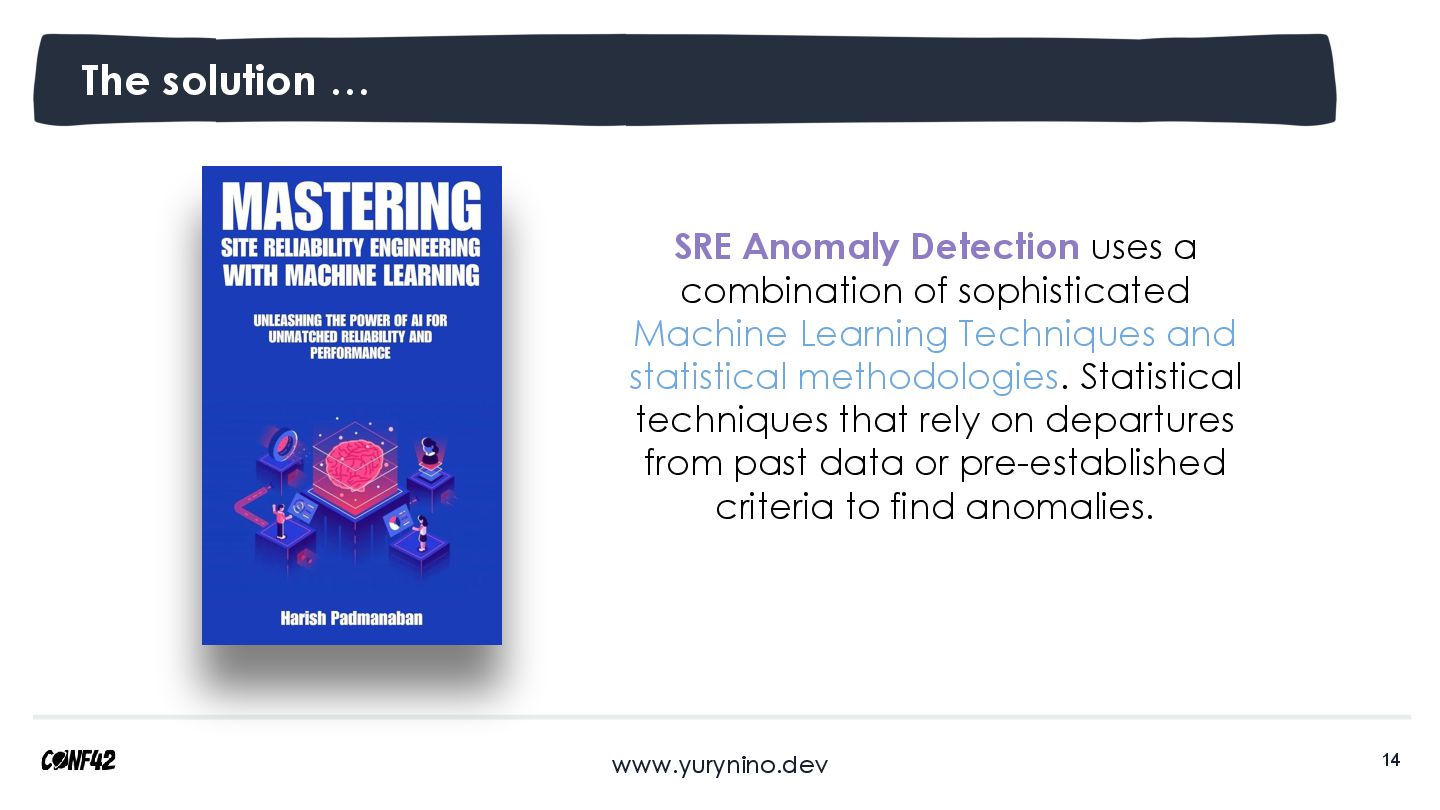
www.yurynino.dev Distributed Systems 14 The solution … SRE Anomaly Detection
uses a combination of sophisticated Machine Learning Techniques and statistical methodologies. Statistical techniques that rely on departures from past data or pre-established criteria to find anomalies. -
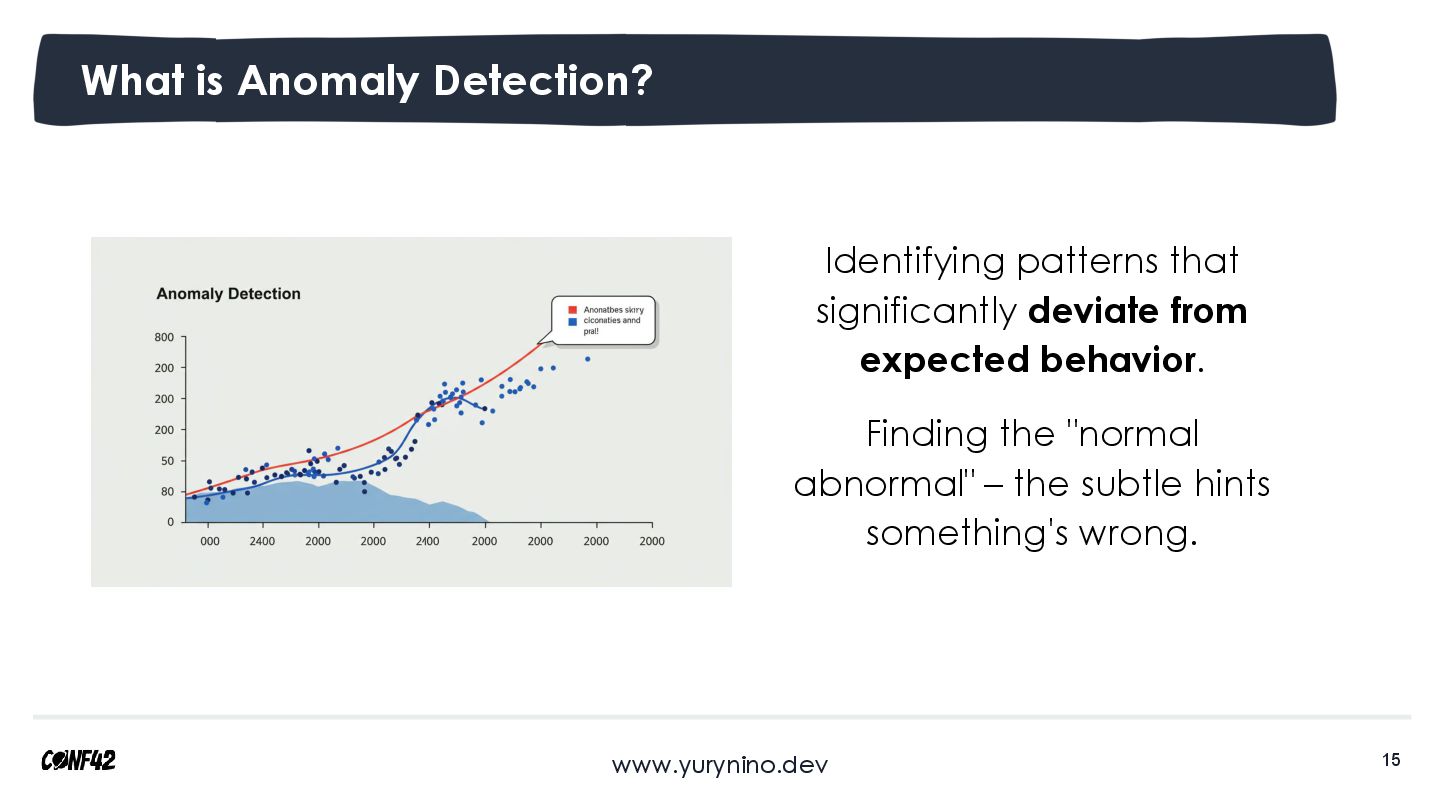
www.yurynino.dev Distributed Systems 15 What is Anomaly Detection? Identifying patterns
that significantly deviate from expected behavior. Finding the "normal abnormal" – the subtle hints something's wrong. -
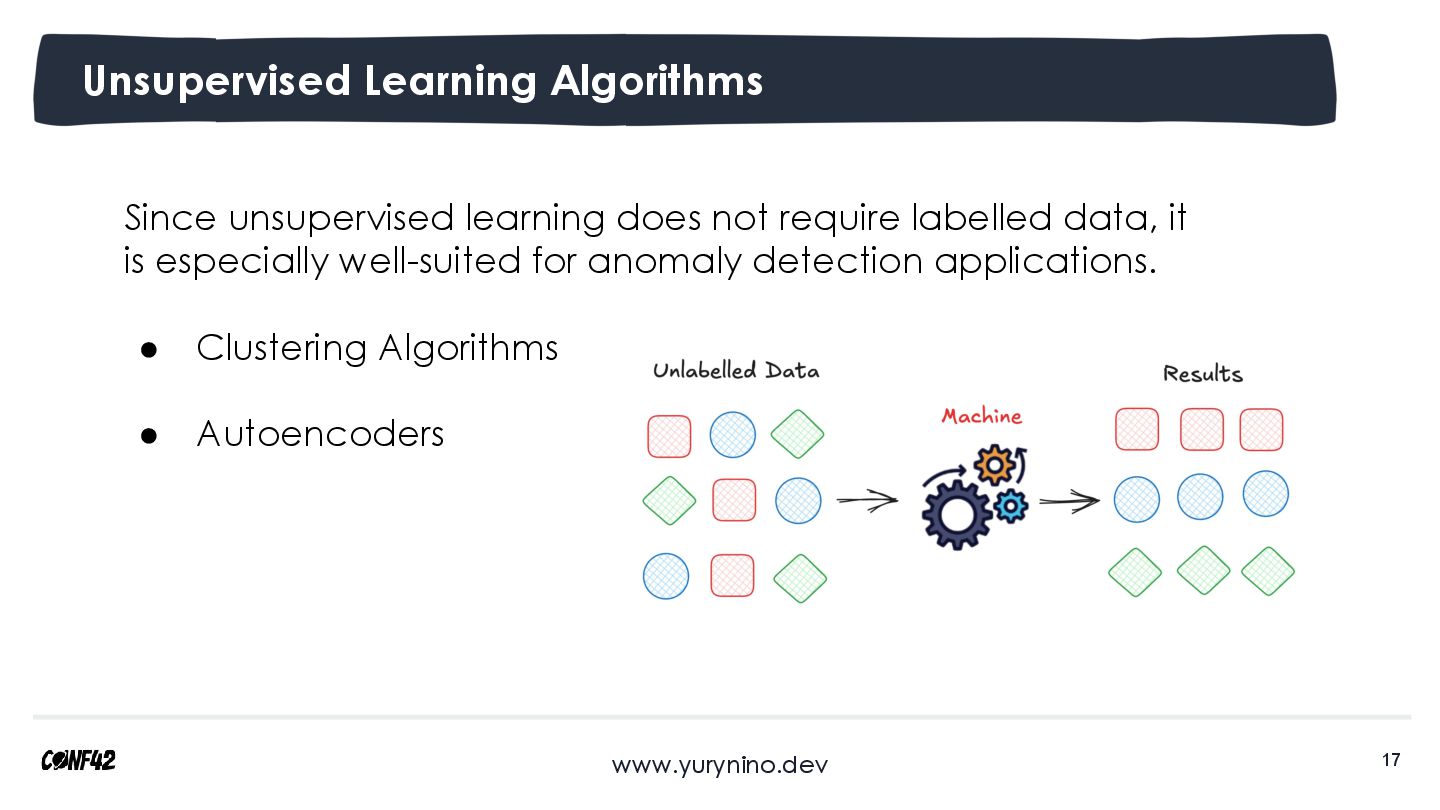
www.yurynino.dev Distributed Systems 17 Unsupervised Learning Algorithms Since unsupervised learning
does not require labelled data, it is especially well-suited for anomaly detection applications. • Clustering Algorithms • Autoencoders -
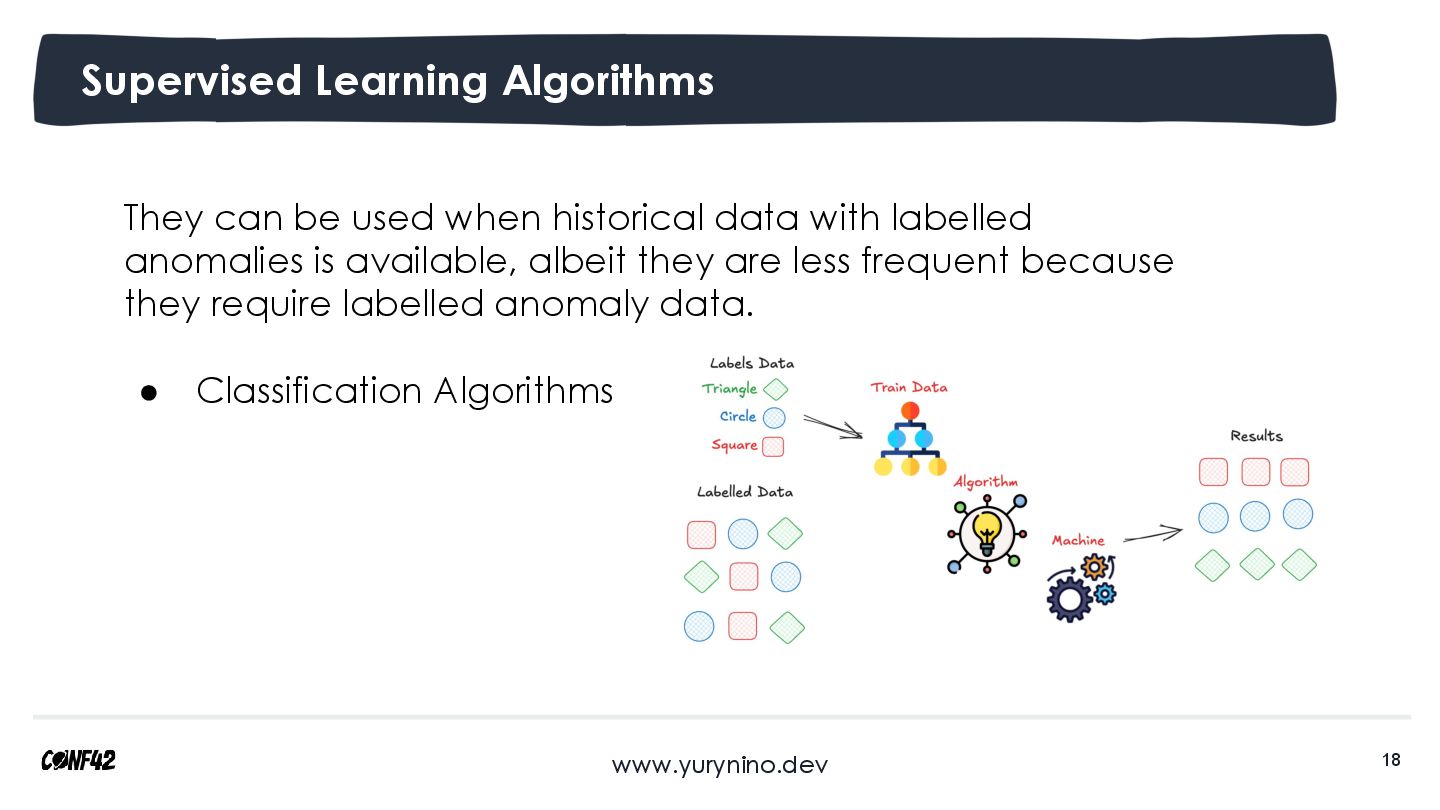
www.yurynino.dev Distributed Systems 18 Supervised Learning Algorithms They can be
used when historical data with labelled anomalies is available, albeit they are less frequent because they require labelled anomaly data. • Classification Algorithms -
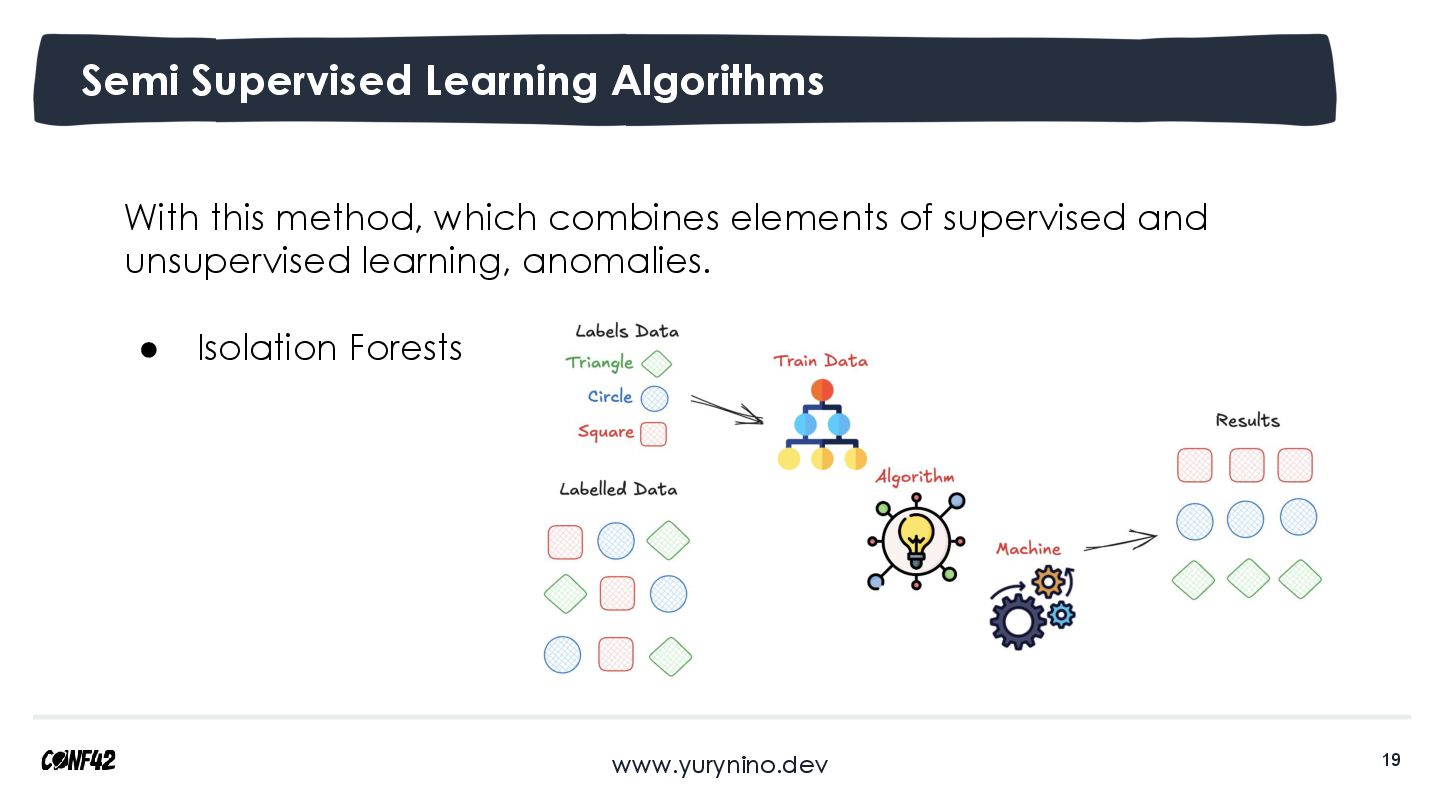
www.yurynino.dev Distributed Systems 19 Semi Supervised Learning Algorithms With this
method, which combines elements of supervised and unsupervised learning, anomalies. • Isolation Forests -
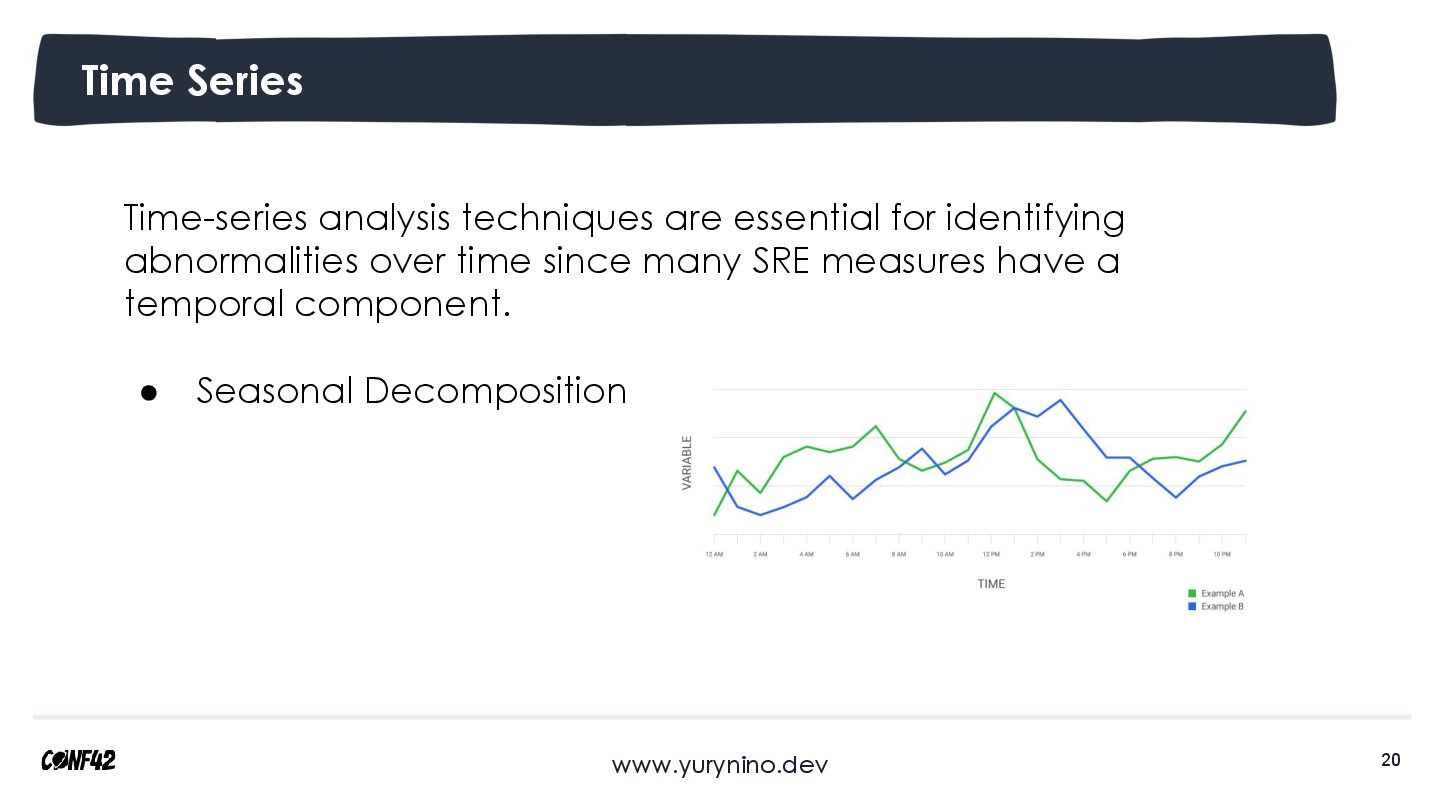
www.yurynino.dev Distributed Systems 20 Time Series Time-series analysis techniques are
essential for identifying abnormalities over time since many SRE measures have a temporal component. • Seasonal Decomposition -
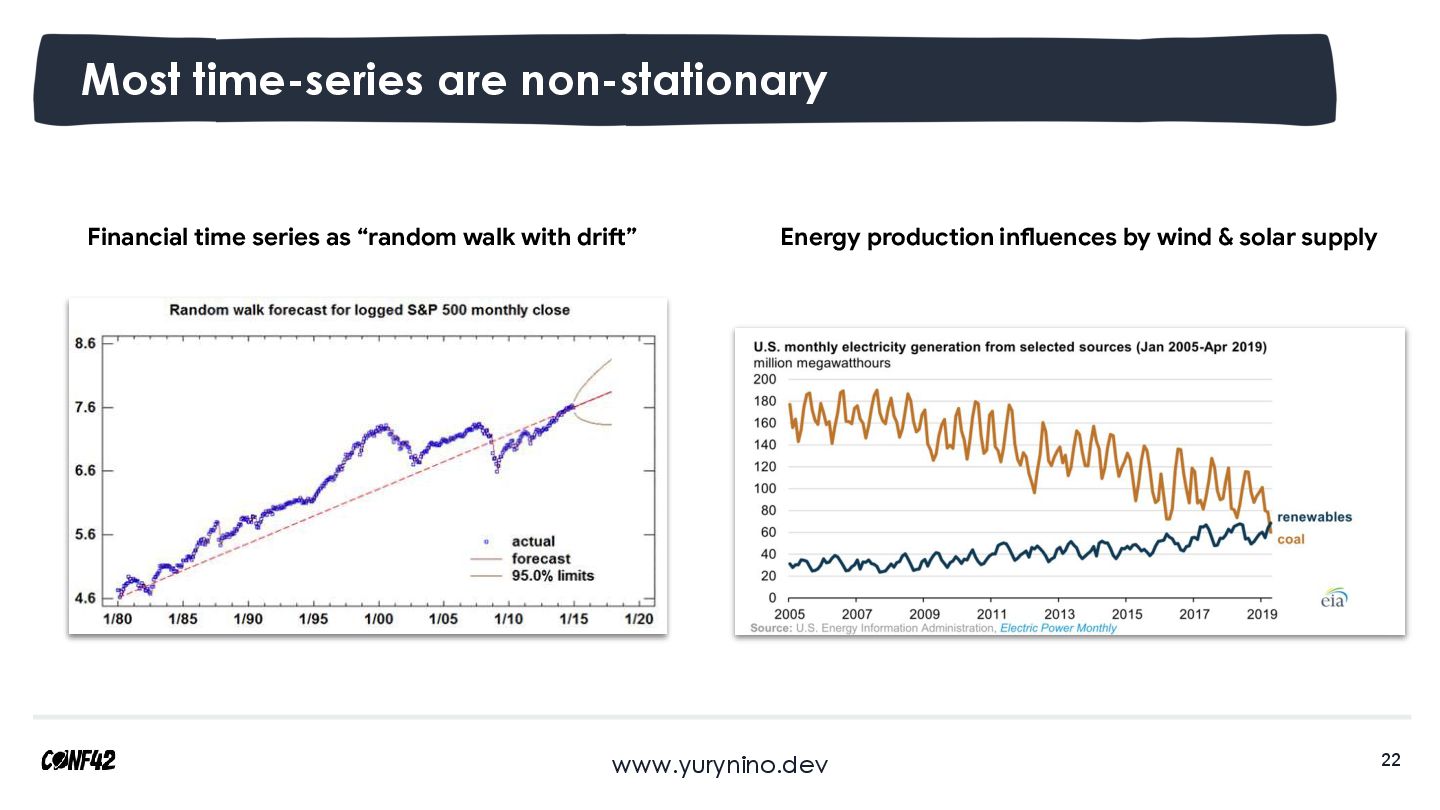
www.yurynino.dev Distributed Systems 22 Most time-series are non-stationary Financial time
series as “random walk with drift” Energy production influences by wind & solar supply -
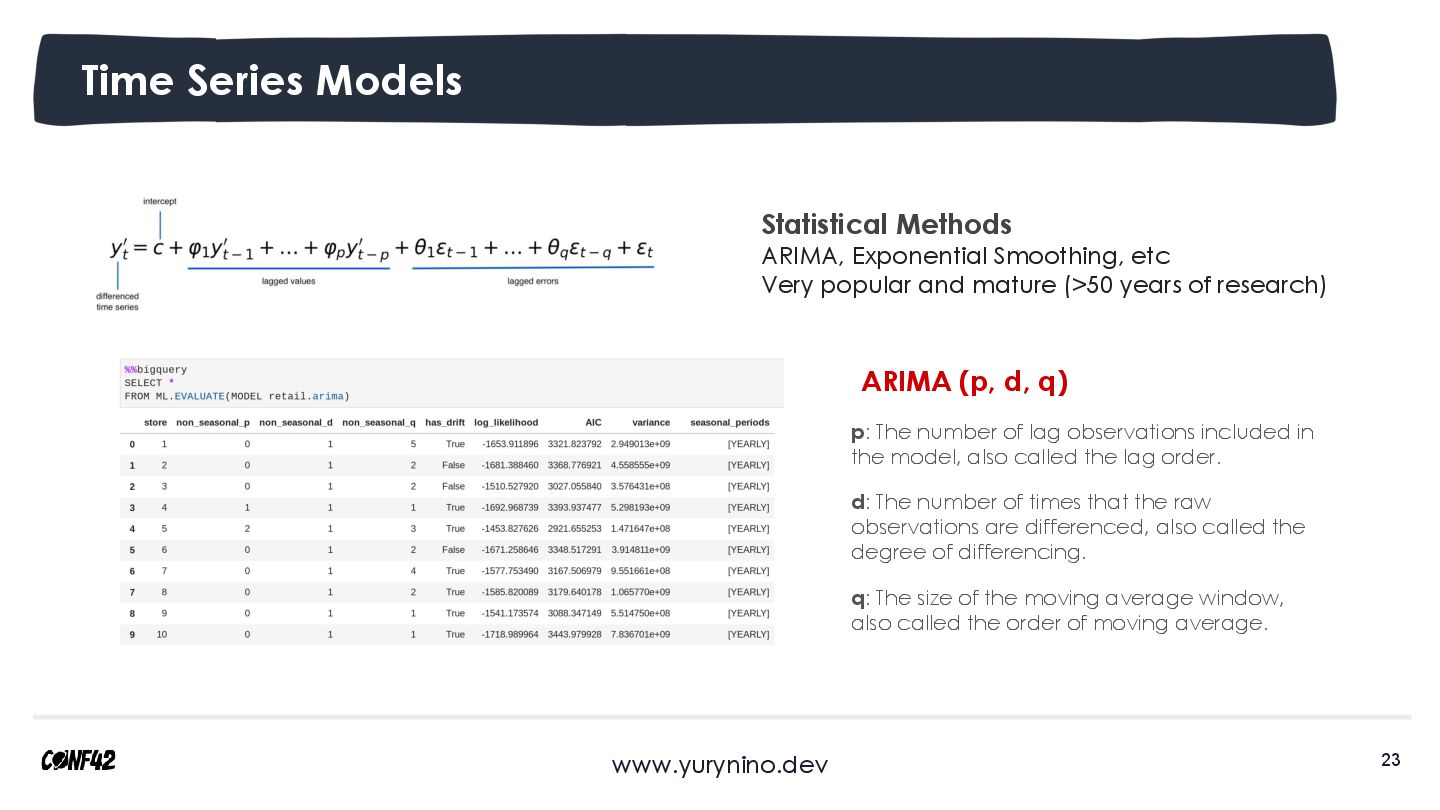
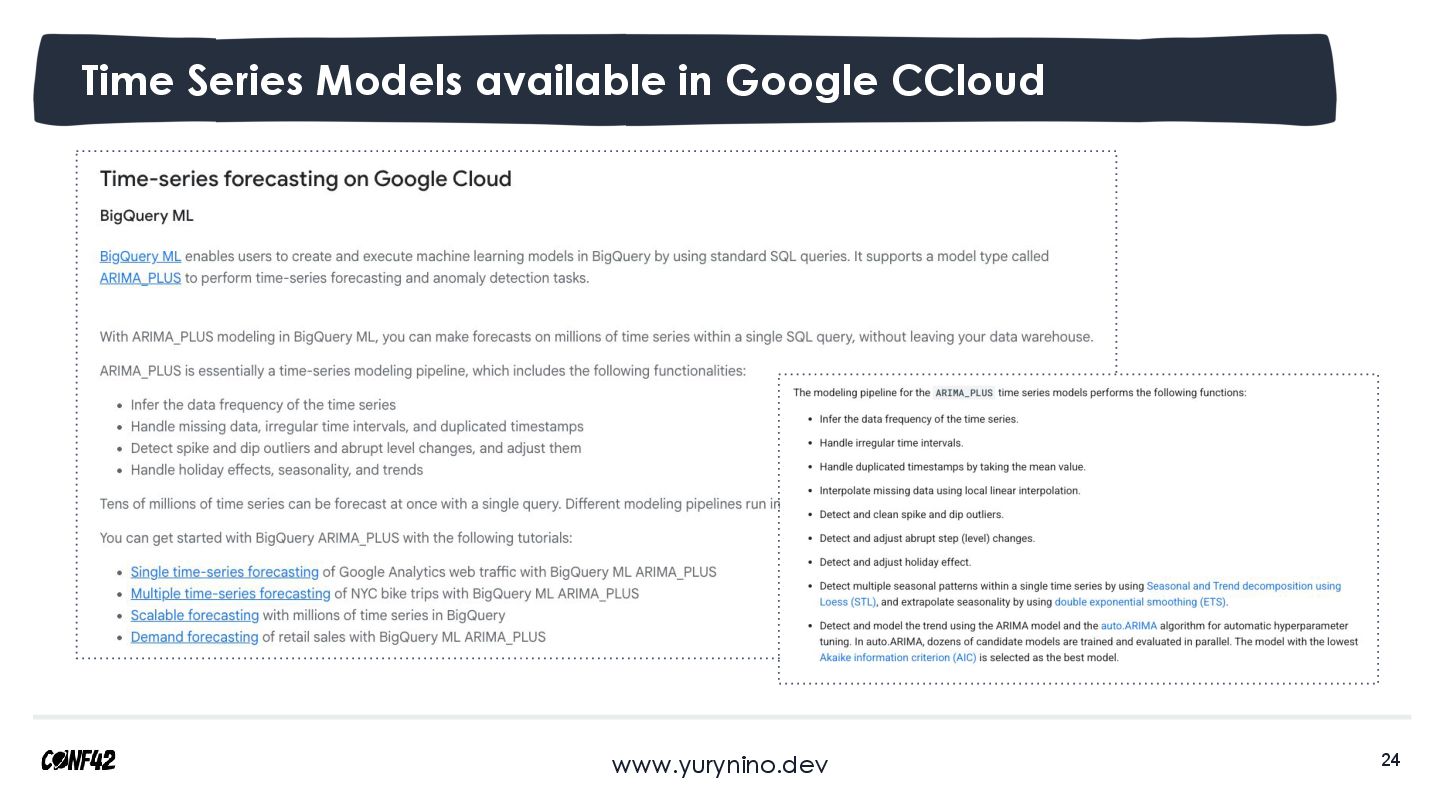
www.yurynino.dev Distributed Systems 23 Time Series Models ARIMA (p, d,
q) p: The number of lag observations included in the model, also called the lag order. d: The number of times that the raw observations are differenced, also called the degree of differencing. q: The size of the moving average window, also called the order of moving average. Statistical Methods ARIMA, Exponential Smoothing, etc Very popular and mature (>50 years of research) -
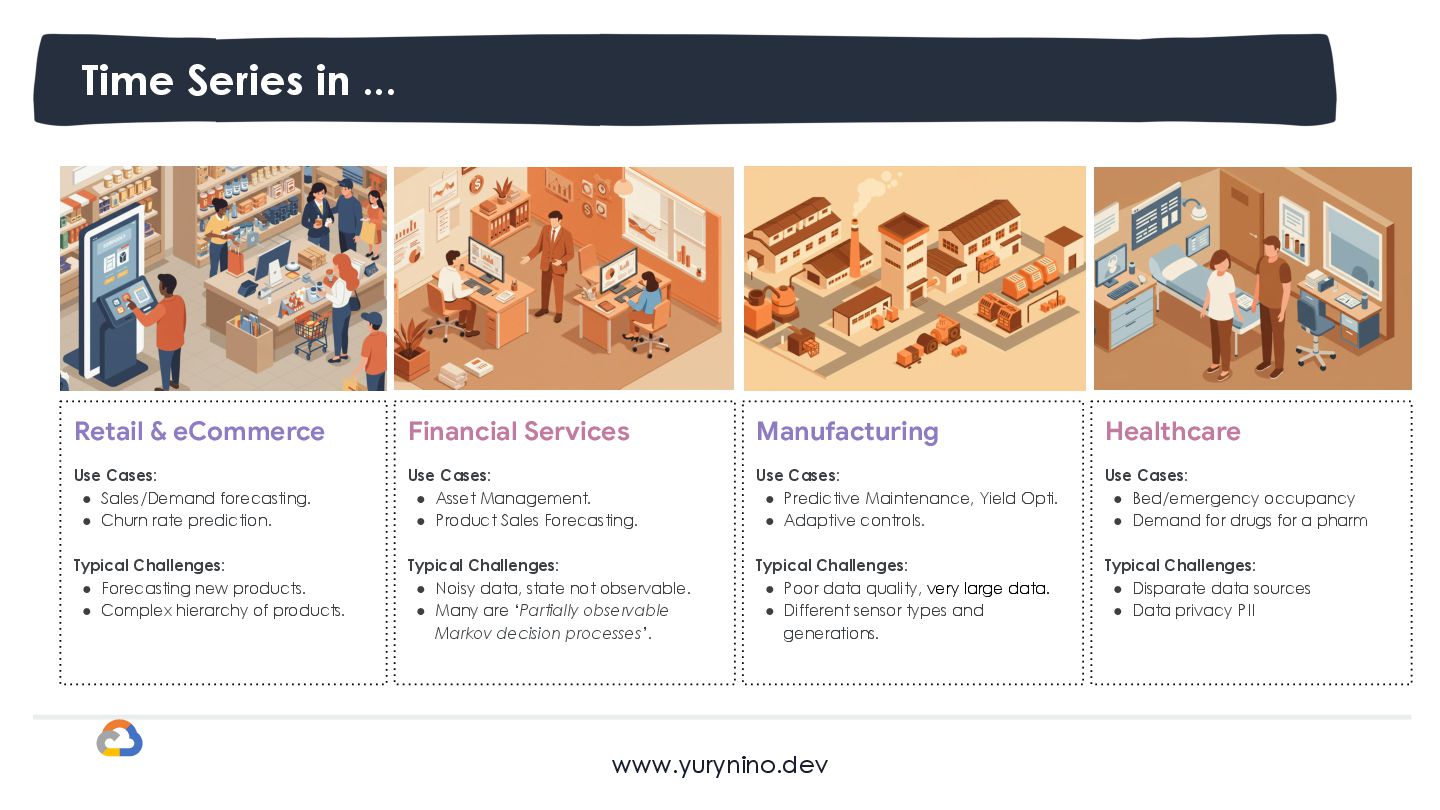
www.yurynino.dev Retail & eCommerce Use Cases: • Sales/Demand forecasting. •
Churn rate prediction. Typical Challenges: • Forecasting new products. • Complex hierarchy of products. Distributed Systems Time Series in ... Financial Services Use Cases: • Asset Management. • Product Sales Forecasting. Typical Challenges: • Noisy data, state not observable. • Many are ‘Partially observable Markov decision processes’. Manufacturing Use Cases: • Predictive Maintenance, Yield Opti. • Adaptive controls. Typical Challenges: • Poor data quality, very large data. • Different sensor types and generations. Healthcare Use Cases: • Bed/emergency occupancy • Demand for drugs for a pharm Typical Challenges: • Disparate data sources • Data privacy PII