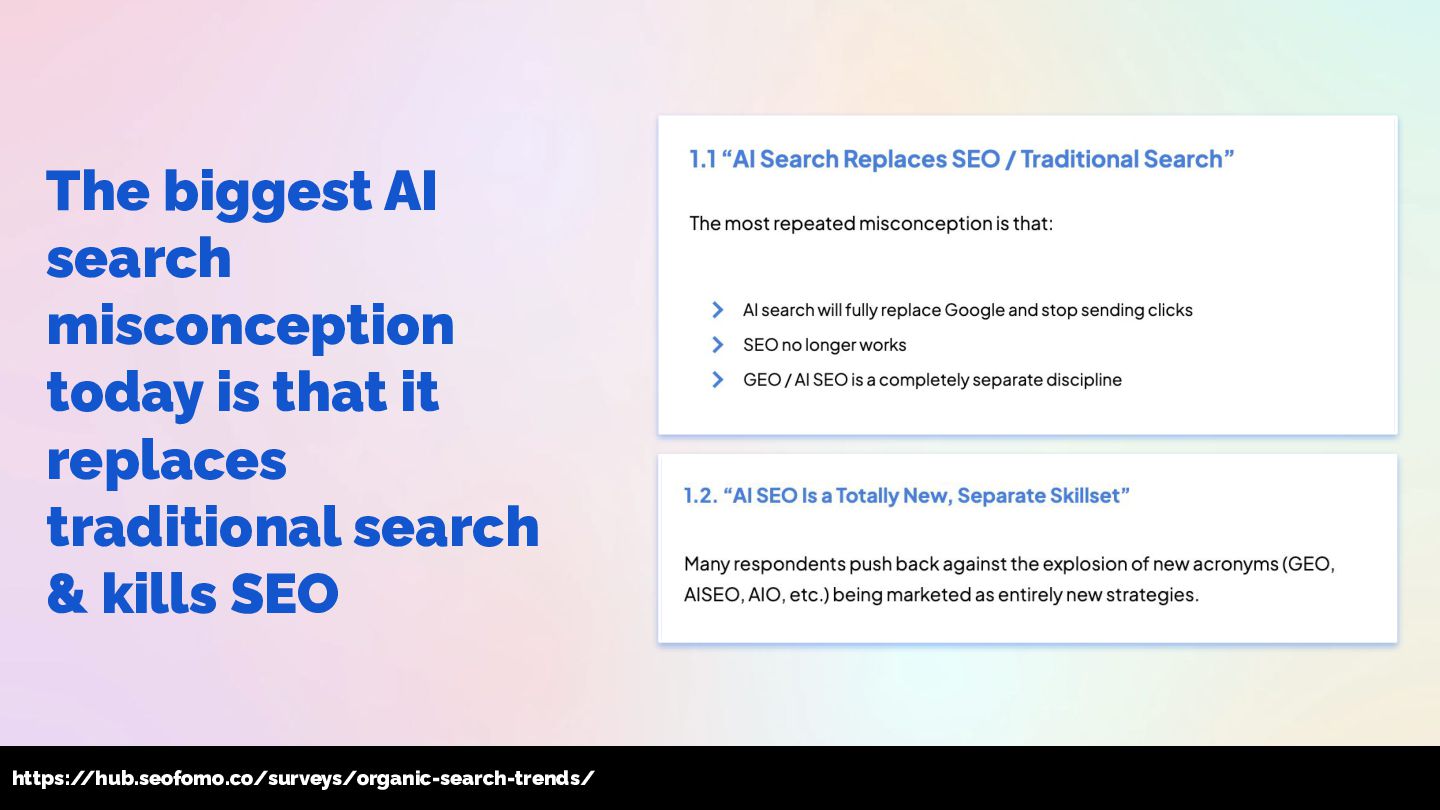
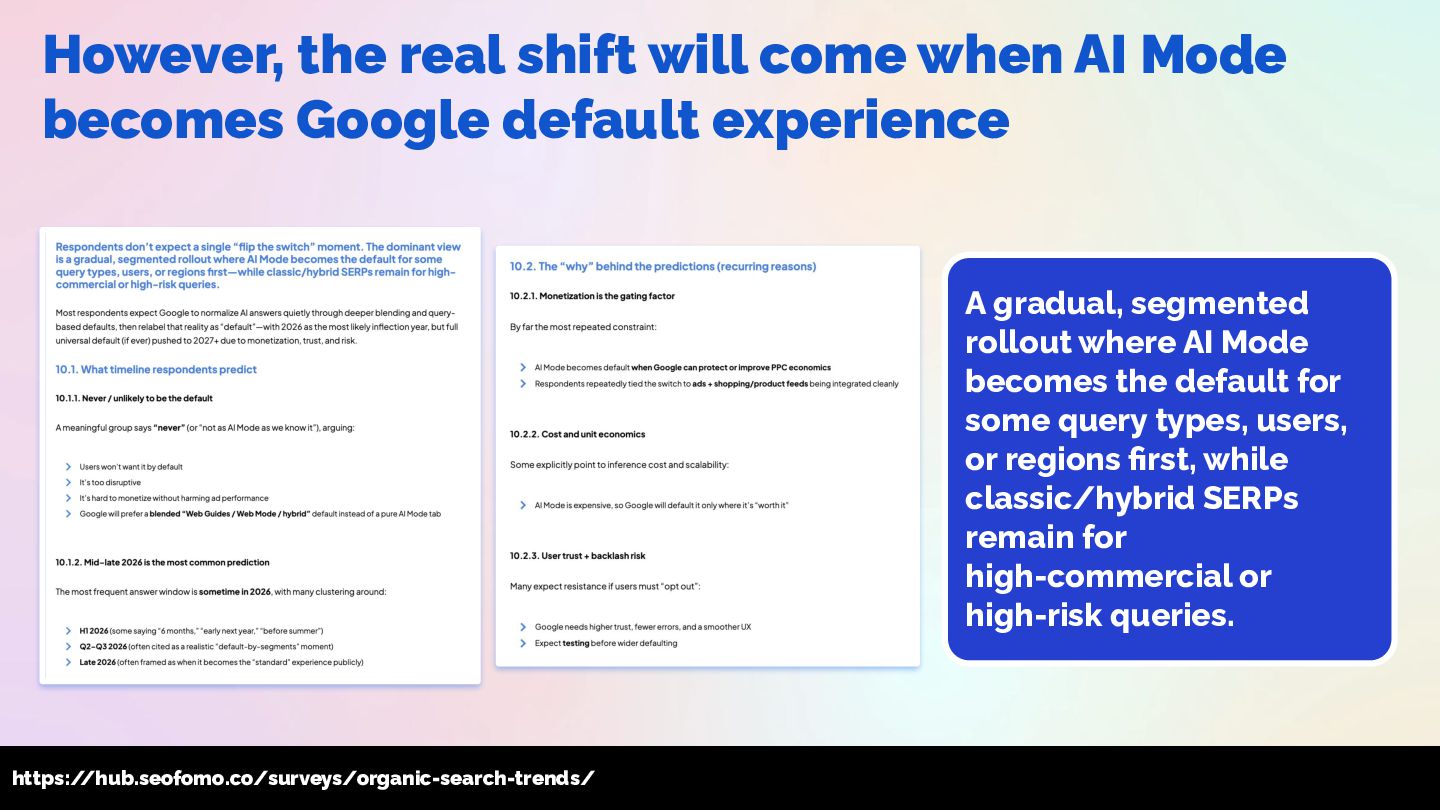
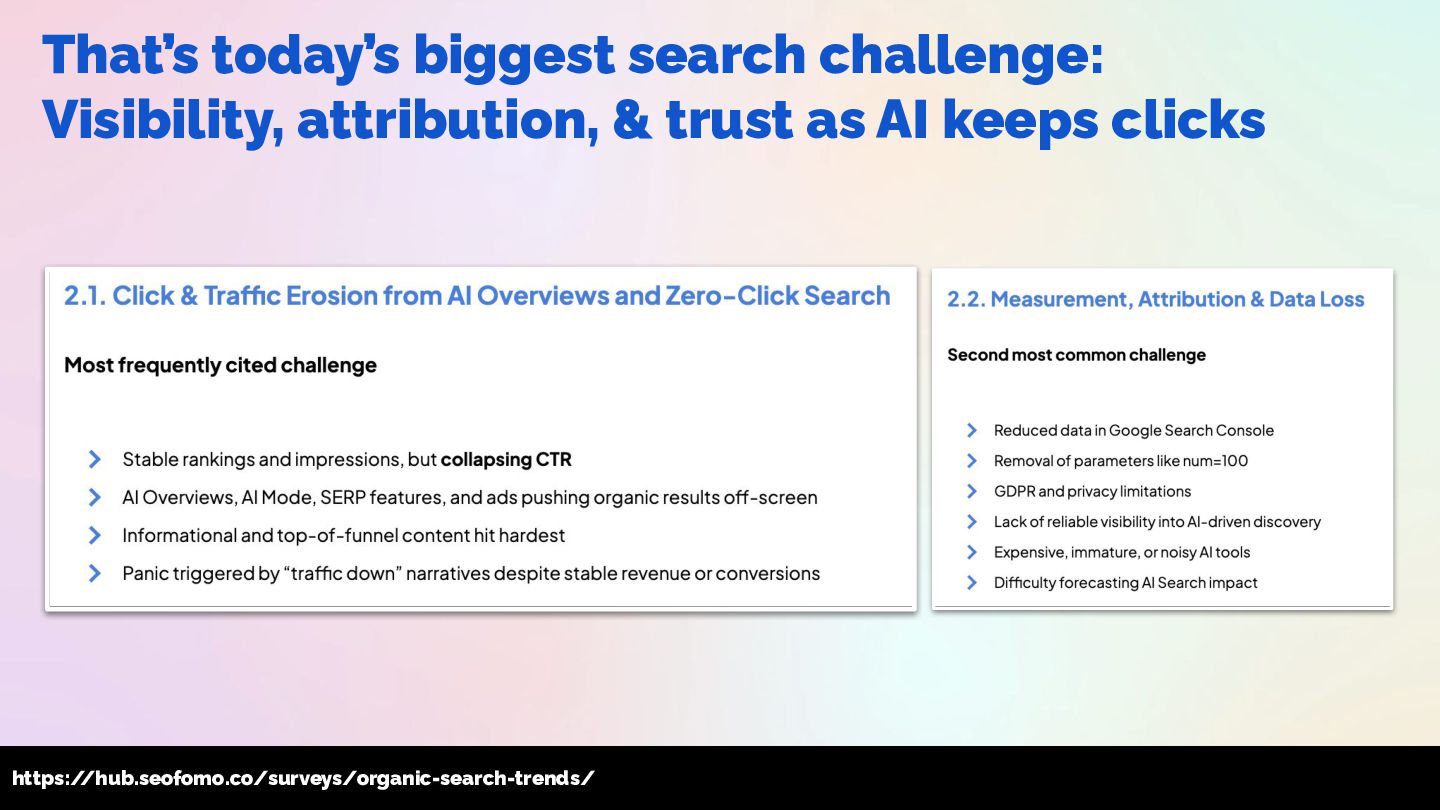
Google default experience https:/ /hub.seofomo.co/surveys/organic-search-trends/ A gradual, segmented rollout where AI Mode becomes the default for some query types, users, or regions first, while classic/hybrid SERPs remain for high-commercial or high-risk queries.
getting less search traffic and are expected to get even less: Does it mean SEO is dead? By Aleyda Solis - SEO Consultant & Founder at Orainti & SEOFOMO at SMX Munich
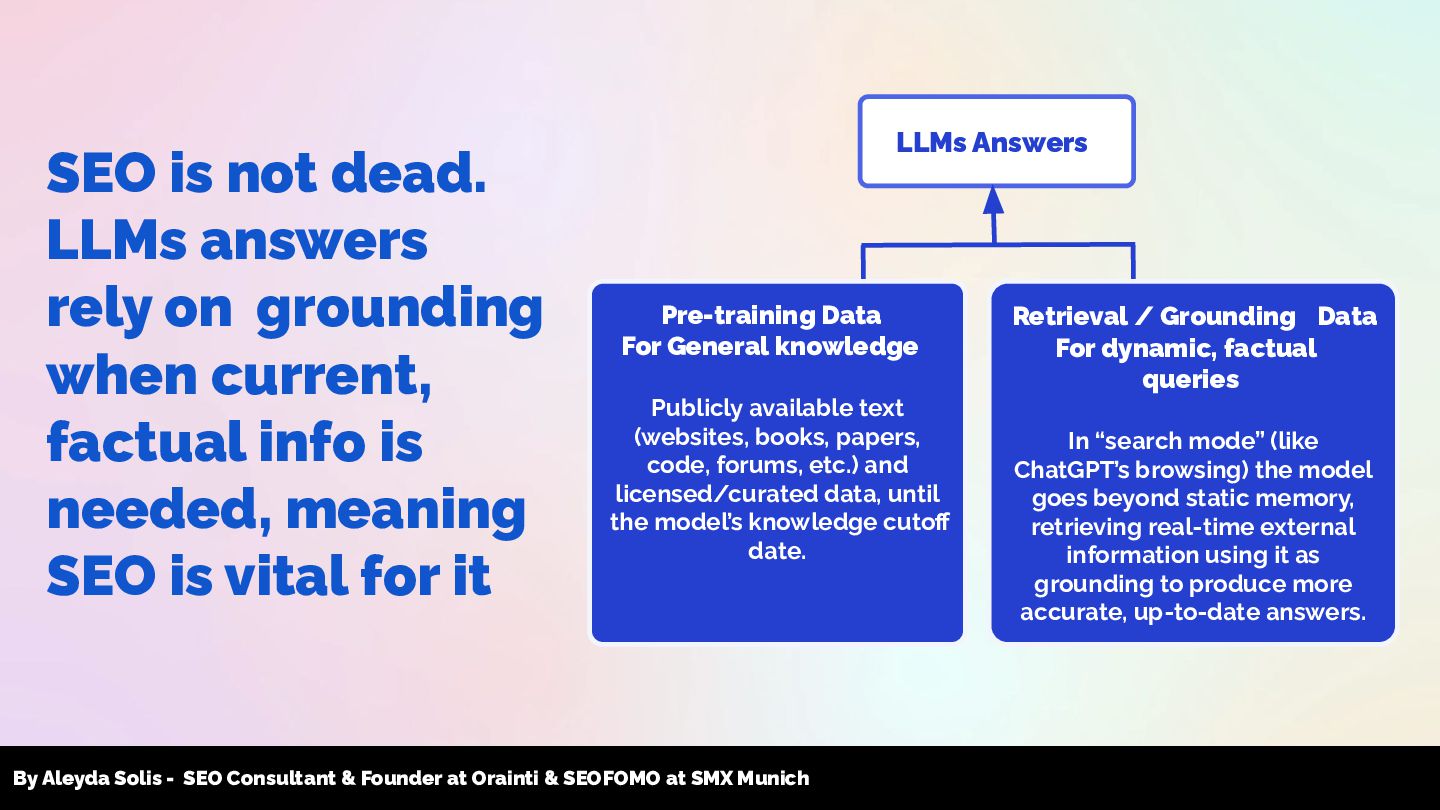
current, factual info is needed, meaning SEO is vital for it LLMs Answers Retrieval / Grounding Data For dynamic, factual queries In “search mode” (like ChatGPT’s browsing) the model goes beyond static memory, retrieving real-time external information using it as grounding to produce more accurate, up-to-date answers. Pre-training Data For General knowledge Publicly available text (websites, books, papers, code, forums, etc.) and licensed/curated data, until the model’s knowledge cutoff date. By Aleyda Solis - SEO Consultant & Founder at Orainti & SEOFOMO at SMX Munich
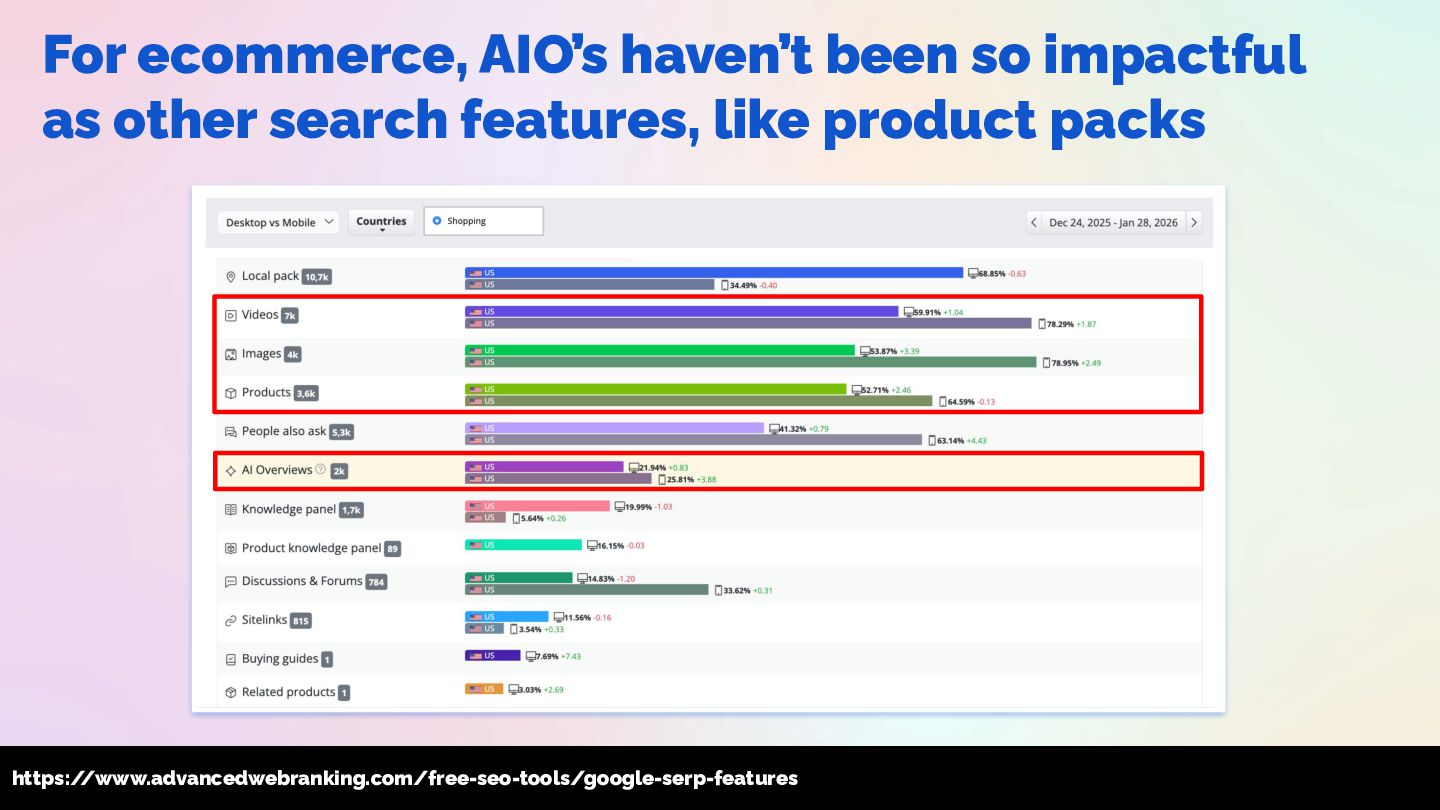
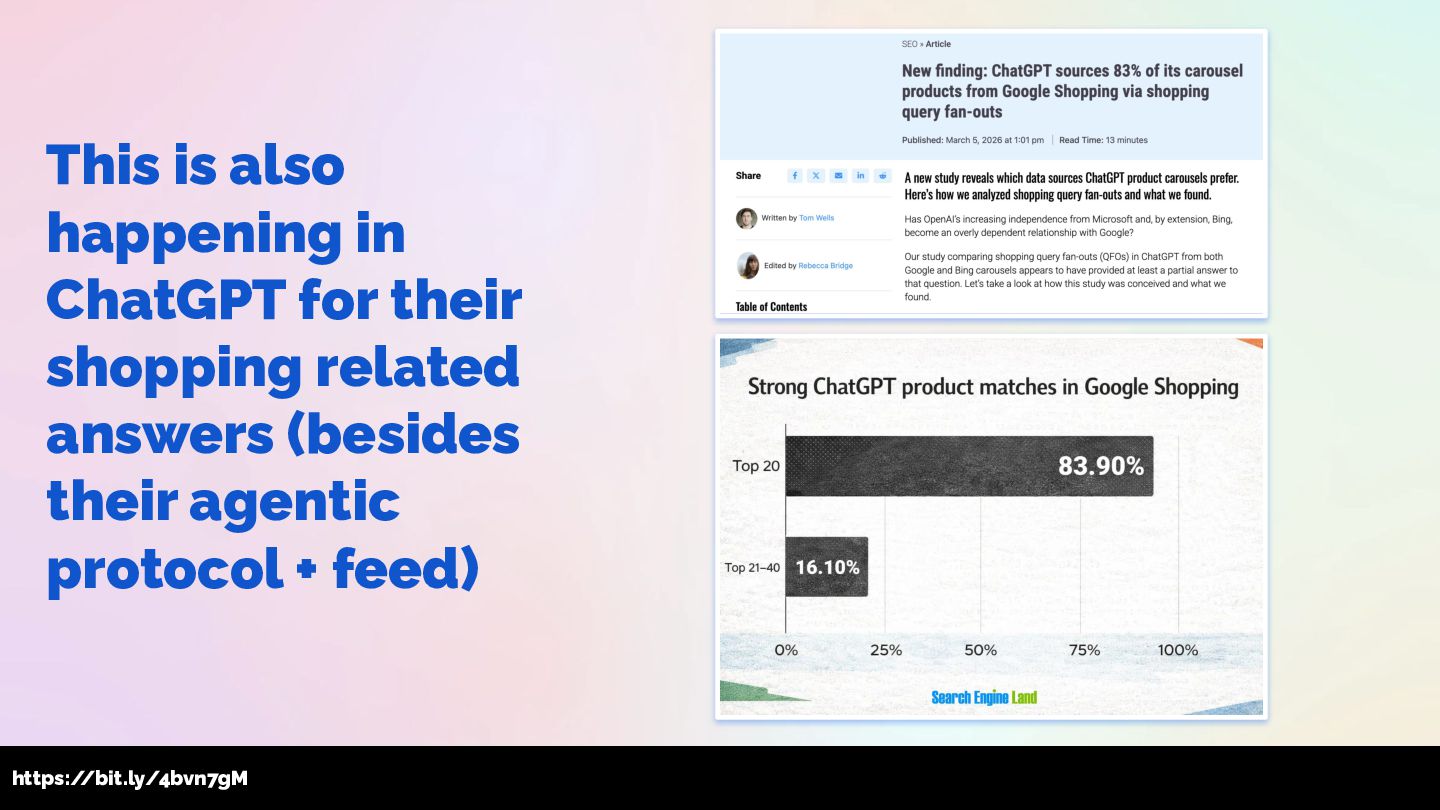
shifts patterns in ecommerce? By Aleyda Solis - SEO Consultant & Founder at Orainti & SEOFOMO at SMX Munich By Aleyda Solis - SEO Consultant & Founder at Orainti & SEOFOMO at SMX Munich
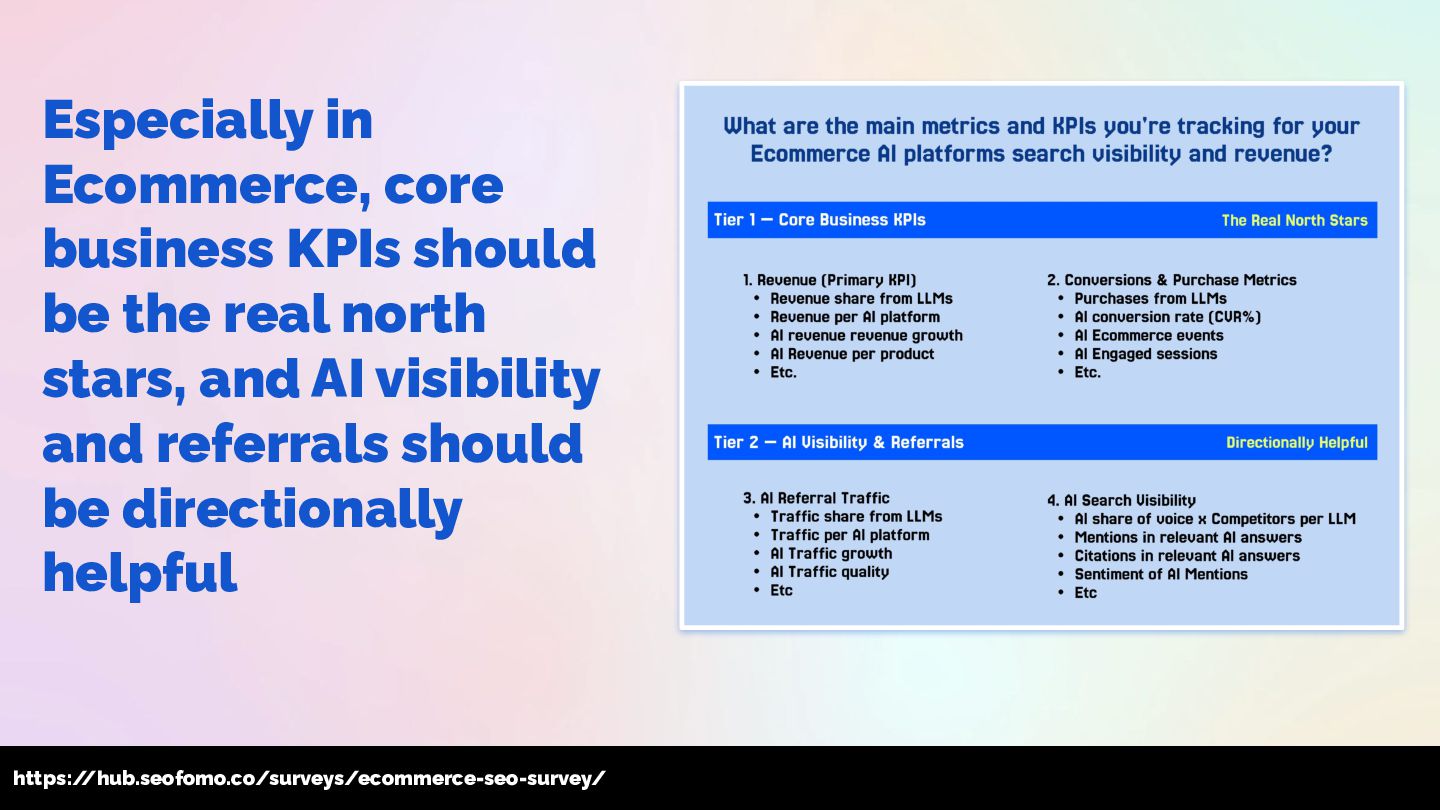
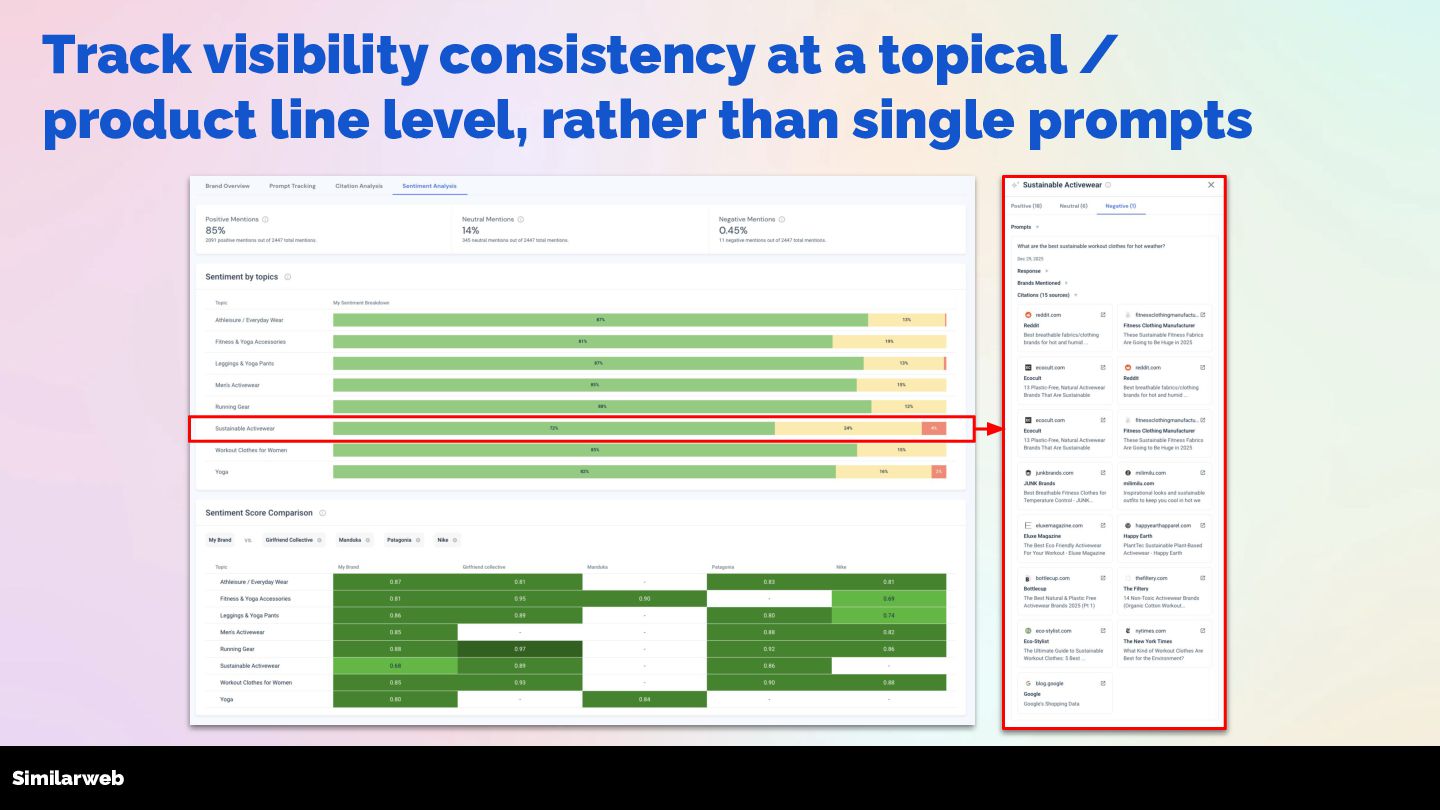
using a blend of Branding and Performance KPIs Use AI visibility, sentiment, purchases, and revenue 1. Start using a blend of branding and performance KPIs for AI search 2. Use branding KPIs such as: AI brand visibility, sentiment, citations, share of voice per platform 3. Use performance KPIs such as: assisted conversions / sales, revenue, average order value, CAC, ROI from AI flows By Aleyda Solis - SEO Consultant & Founder at Orainti & SEOFOMO at SMX Munich
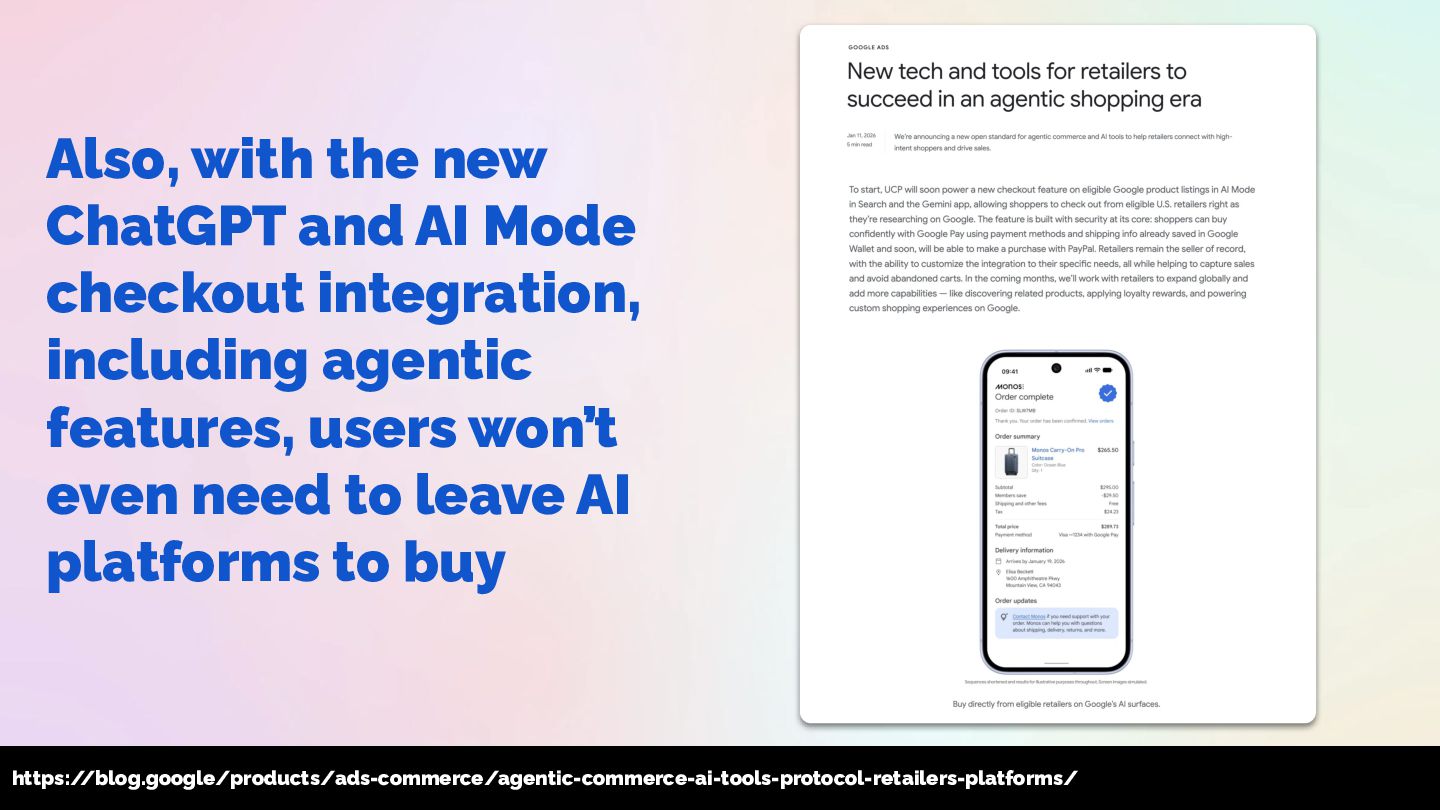
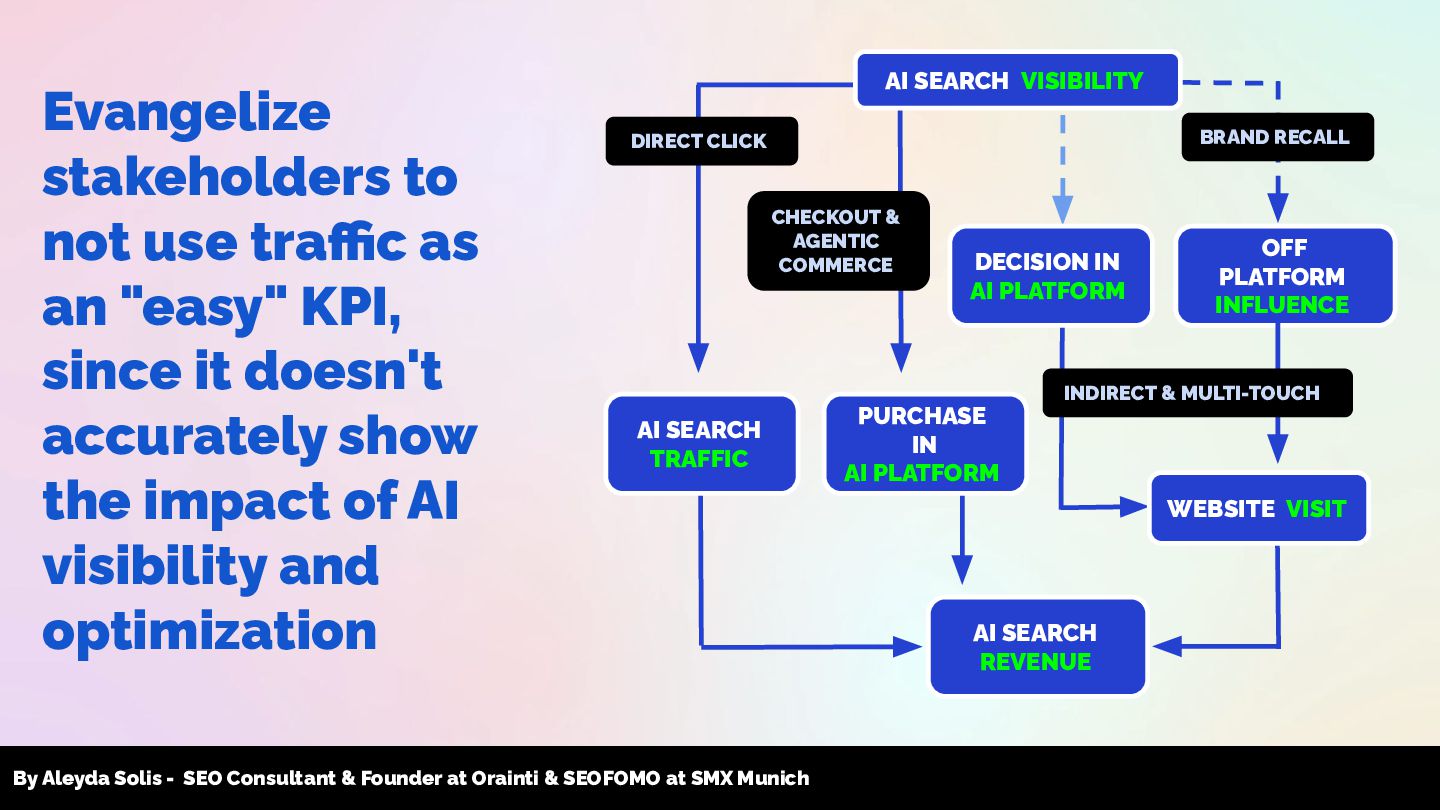
& SEOFOMO at SMX Munich BRAND RECALL AI SEARCH REVENUE AI SEARCH TRAFFIC OFF PLATFORM INFLUENCE DECISION IN AI PLATFORM WEBSITE VISIT INDIRECT & MULTI-TOUCH AI SEARCH VISIBILITY PURCHASE IN AI PLATFORM DIRECT CLICK Evangelize stakeholders to not use traffic as an "easy" KPI, since it doesn't accurately show the impact of AI visibility and optimization CHECKOUT & AGENTIC COMMERCE
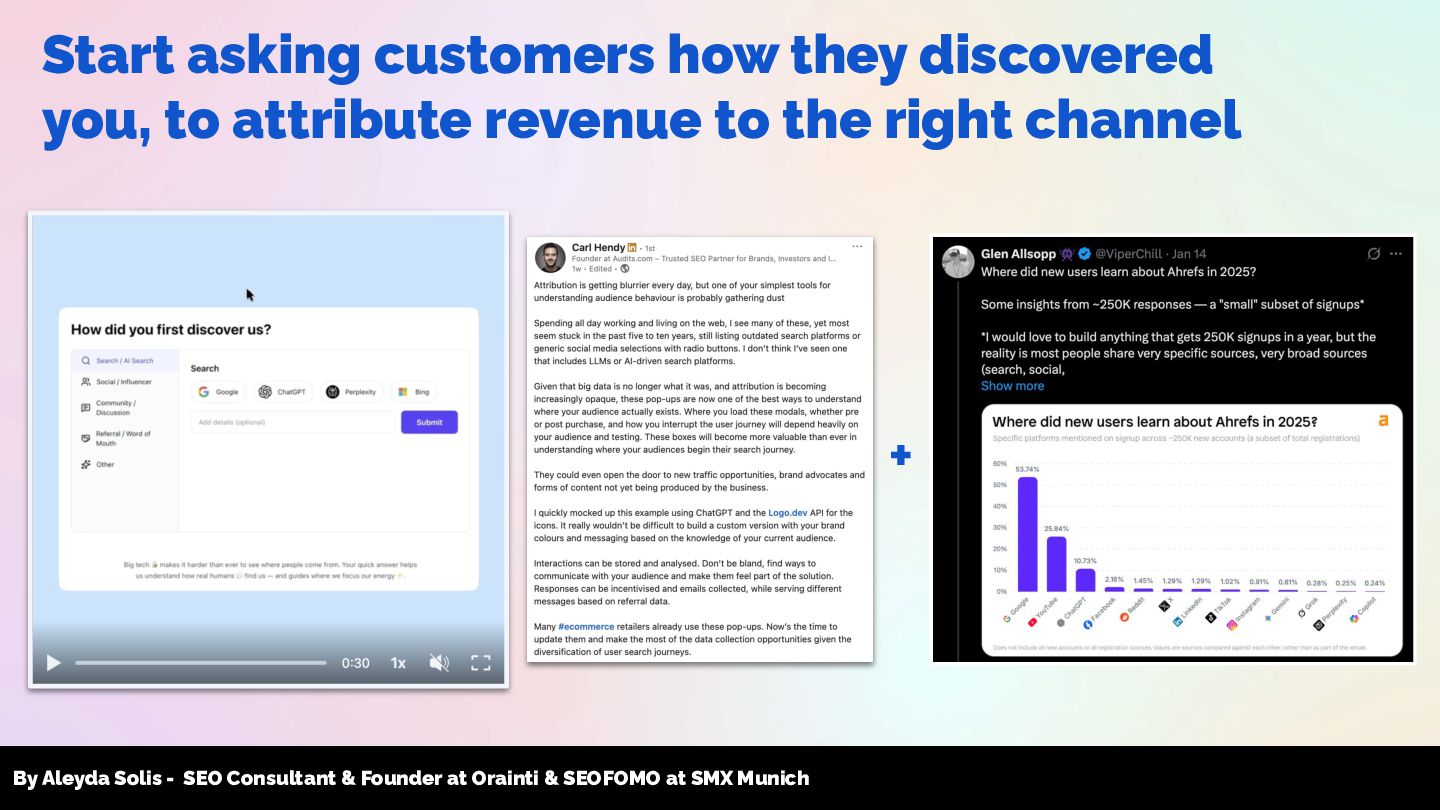
* Revenue * Customer Acquisition Cost * ROI * Visibility * Sentiment * Citations * Share of Voice * Conversions/Sales * Revenue * Customer Acquisition Cost * ROI VS Traditional Search AI Search It’s key to shift expectations and tracking to monitor AI visibility, citations, sentiment & sales By Aleyda Solis - SEO Consultant & Founder at Orainti & SEOFOMO at SMX Munich
for products AI platforms need full topic graphs to safely recommend products under diverse constraints. 1. For each product line, define a topical map: Core entity (e.g. “women’s road running shoes”), subtypes (daily trainer, long-run, speed, recovery), alternatives, etc. 2. Cover all decision dimensions , not just popular queries (Use cases, constraints, trade offs, risks, edge cases, etc.) 3. Create topic-level summaries above product-level content. 4. Assess & monitor topic completeness gaps: % of subtypes with content, % of products with full attribute sets, % of decision scenarios covered, etc. By Aleyda Solis - SEO Consultant & Founder at Orainti & SEOFOMO at SMX Munich
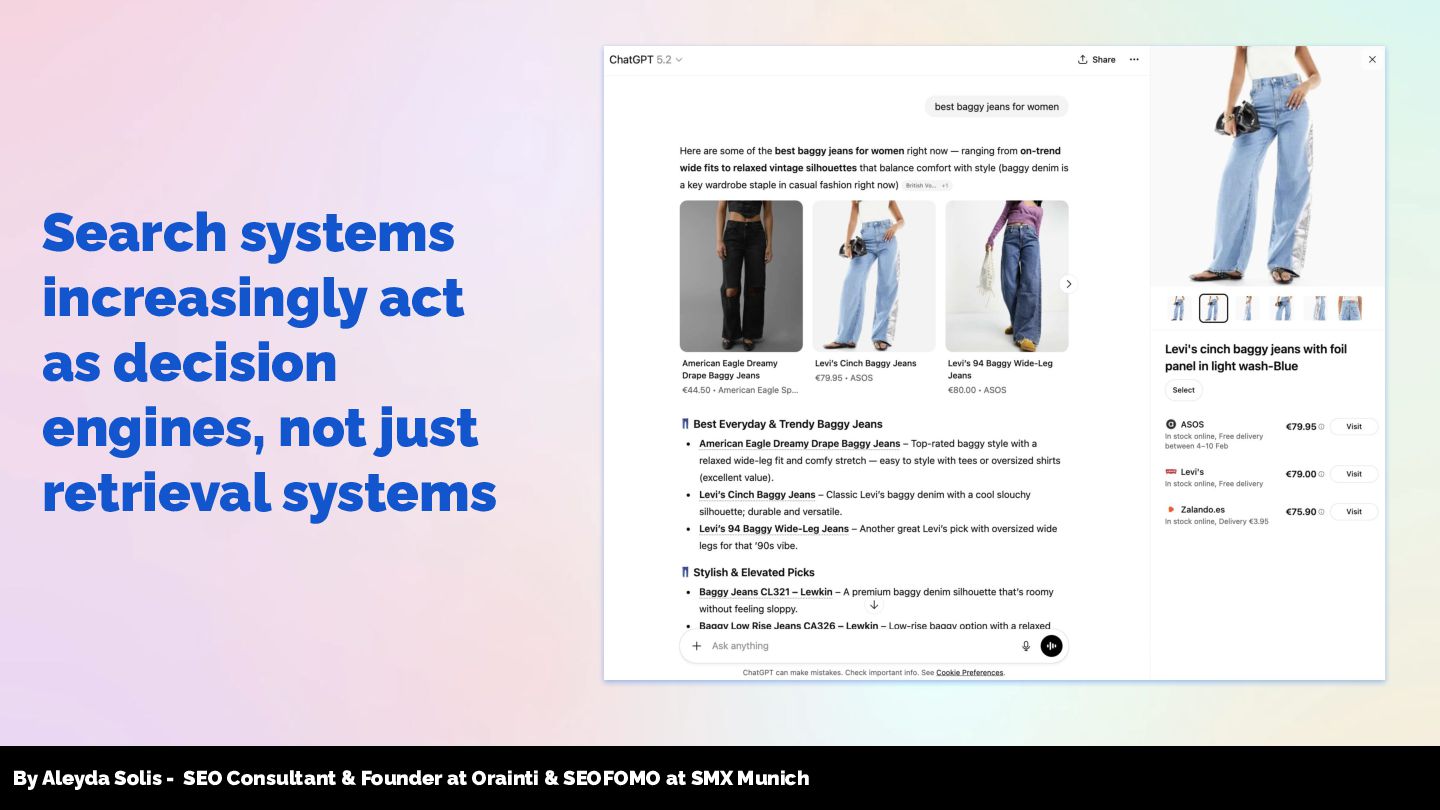
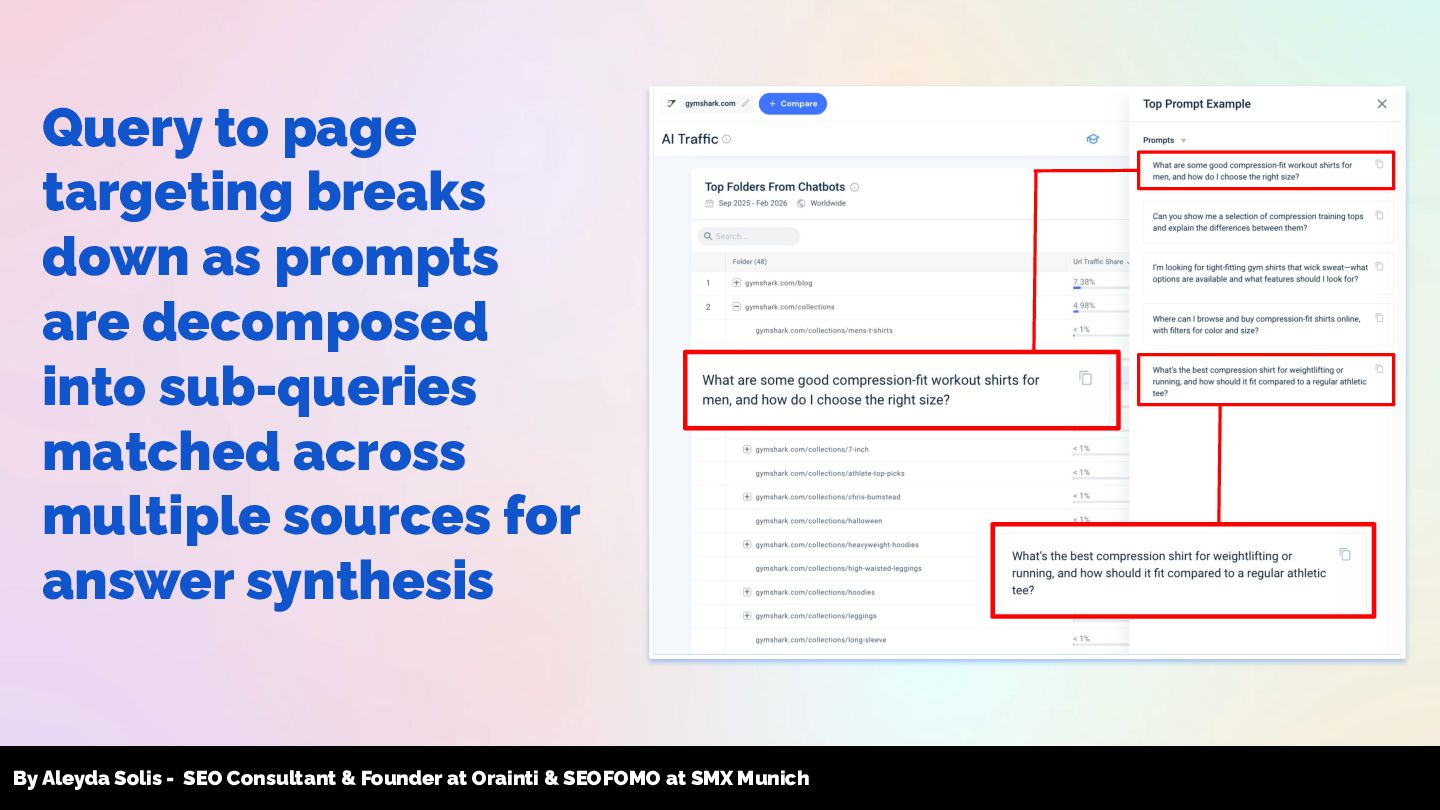
the decision reasoning and constraint matching performed by AI platforms 1. Re-model demand as jobs × constraints, not queries: • Rows: use cases / jobs-to-be-done • Columns: constraints (price, size, compatibility, delivery, risk, performance, context) 2. Ensure every meaningful intersection is supported by: Product attributes, content modules, filters, internal links 3. Align filters to natural language constraints : “Good for long runs”, “Easy to travel with”, “Soft cushioning” By Aleyda Solis - SEO Consultant & Founder at Orainti & SEOFOMO at SMX Munich
& SEOFOMO at SMX Munich Eg. Don’t target "best running shoes 2026", but map jobs-to-be-done against constraints: Take "Marathon training × Cushioning (Max)": You'd ensure you have the product attributes tagged (cushion level: maximum), a content module explaining why max cushioning matters for long distances, a filter like "Soft cushioning for long runs," and internal links connecting the marathon training guide to the product listing.
now directly influence which product gets selected: AI systems pull reasoning from this content when recommending products 1. Create expert-authored Buying guides , “Which should I choose” comparisons, Use-case explainers, Tradeoff content 2. Link products explicitly to scenarios and constraints 3. Maintain consistency between guides and PDP attributes By Aleyda Solis - SEO Consultant & Founder at Orainti & SEOFOMO at SMX Munich
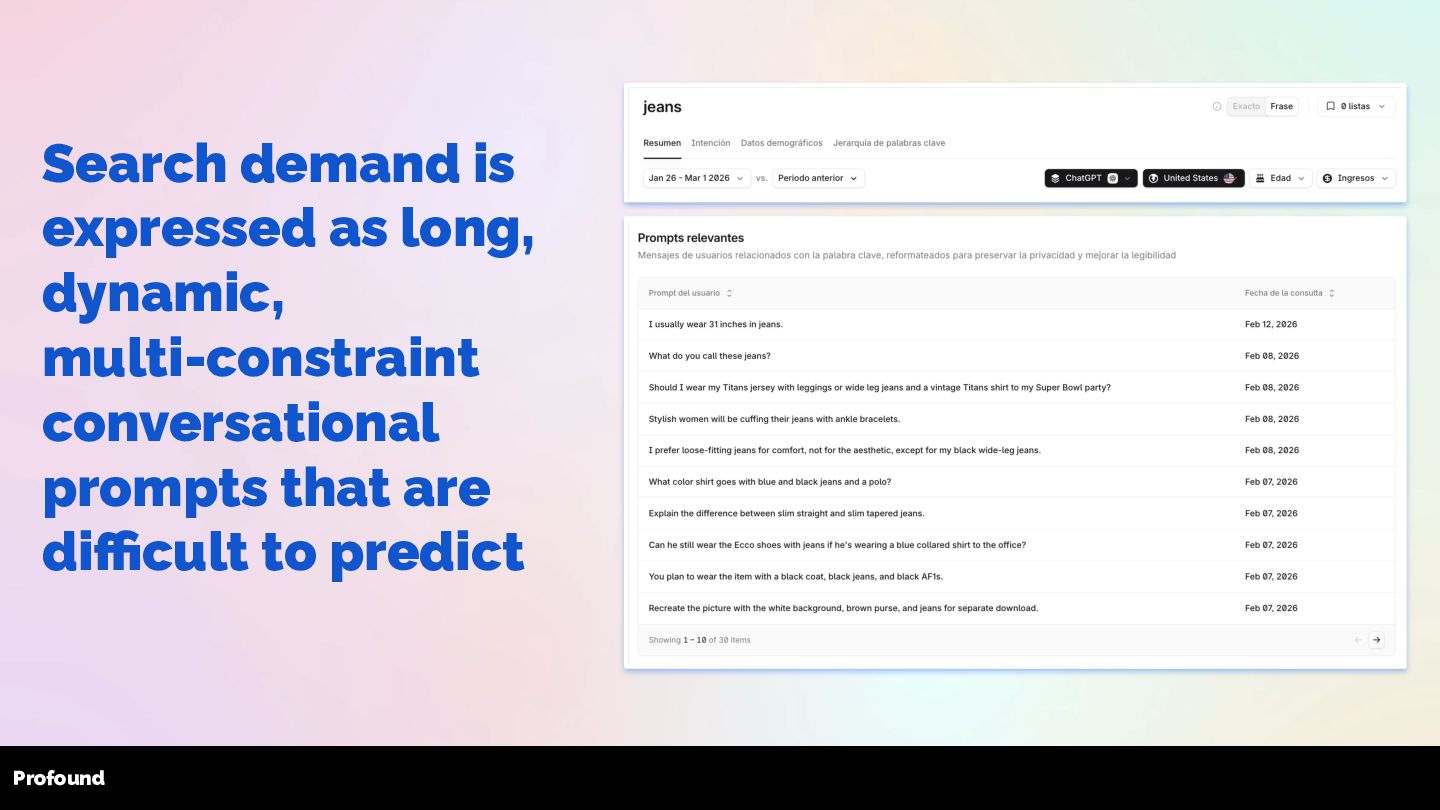
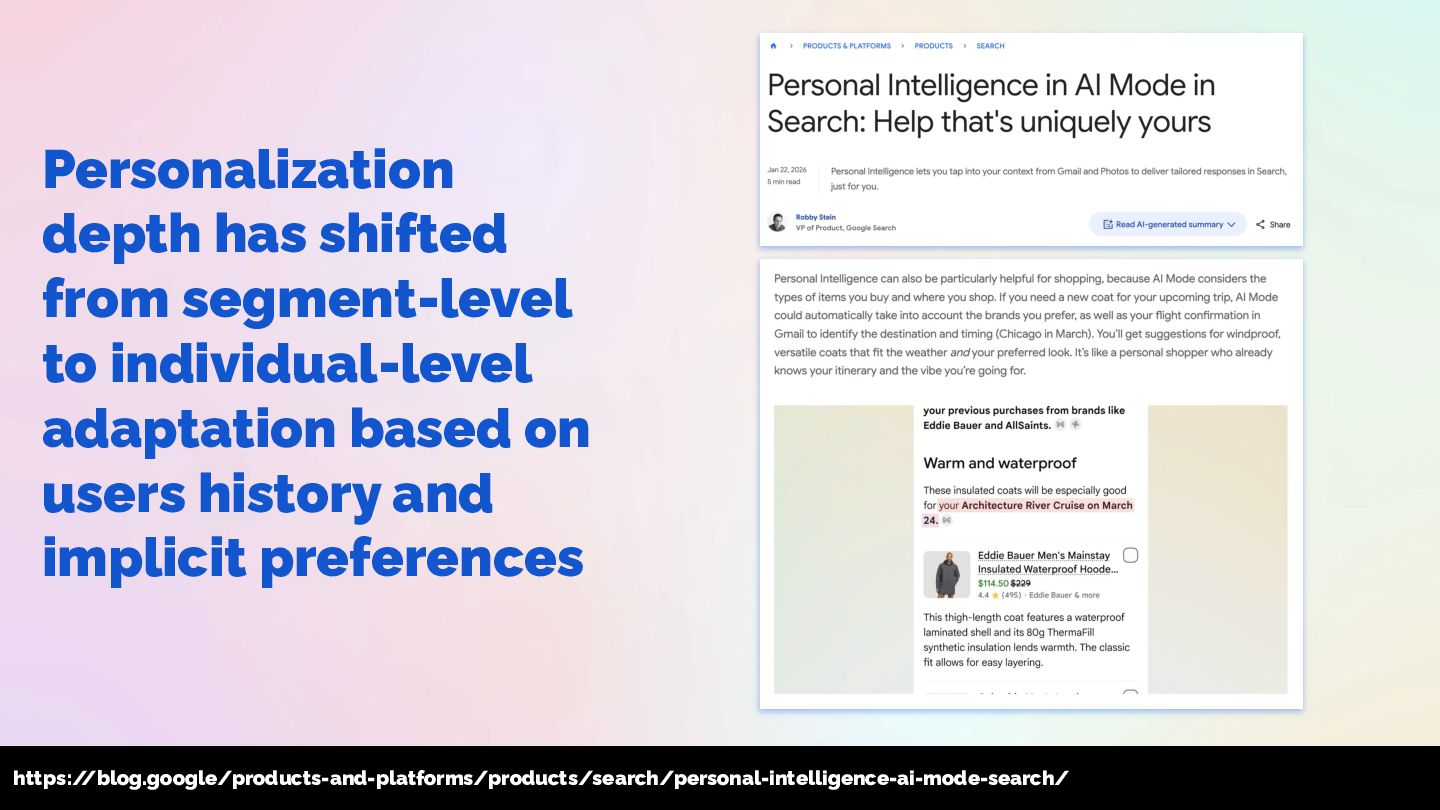
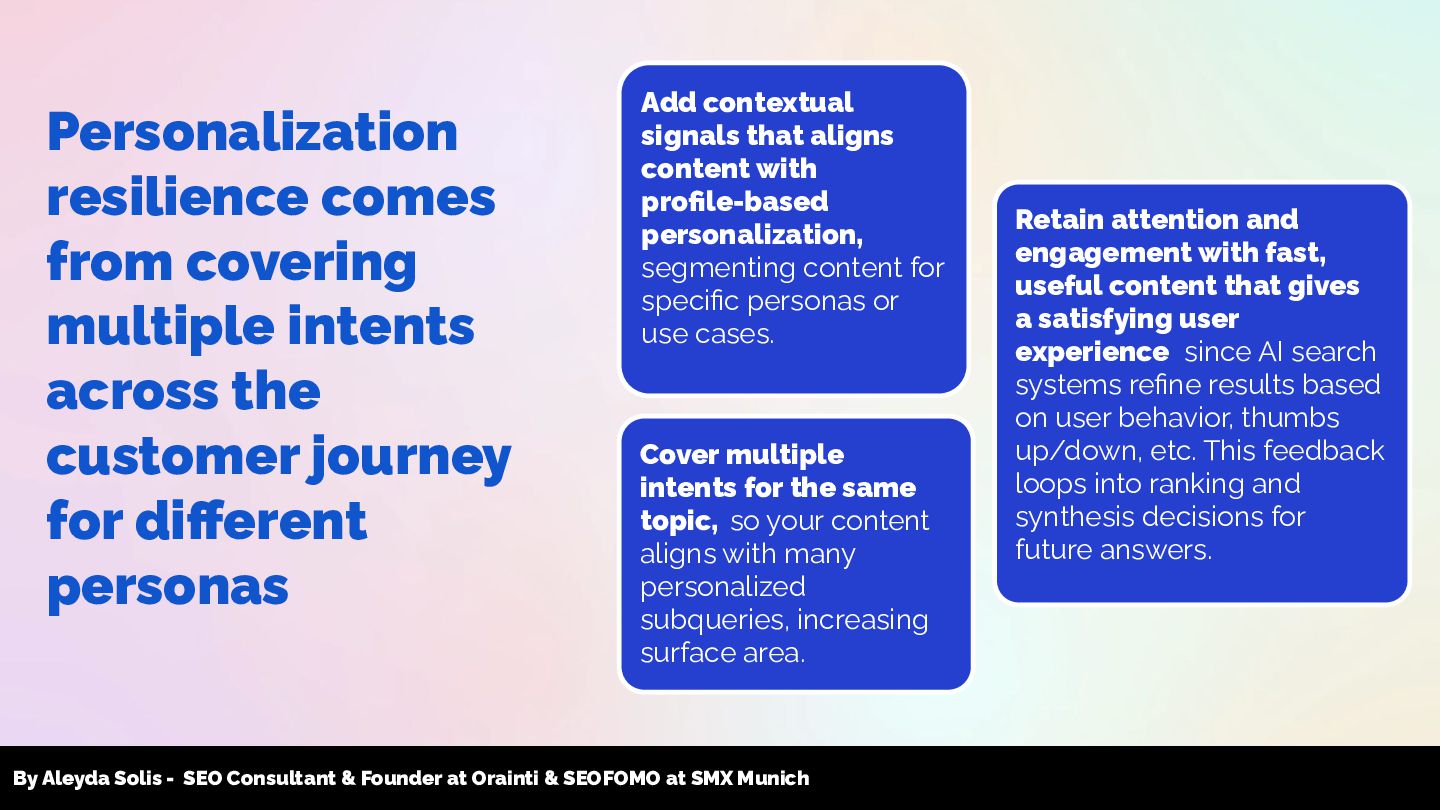
journey for different personas Cover multiple intents for the same topic, so your content aligns with many personalized subqueries, increasing surface area. Add contextual signals that aligns content with profile-based personalization, segmenting content for specific personas or use cases. Retain attention and engagement with fast, useful content that gives a satisfying user experience since AI search systems refine results based on user behavior, thumbs up/down, etc. This feedback loops into ranking and synthesis decisions for future answers. By Aleyda Solis - SEO Consultant & Founder at Orainti & SEOFOMO at SMX Munich
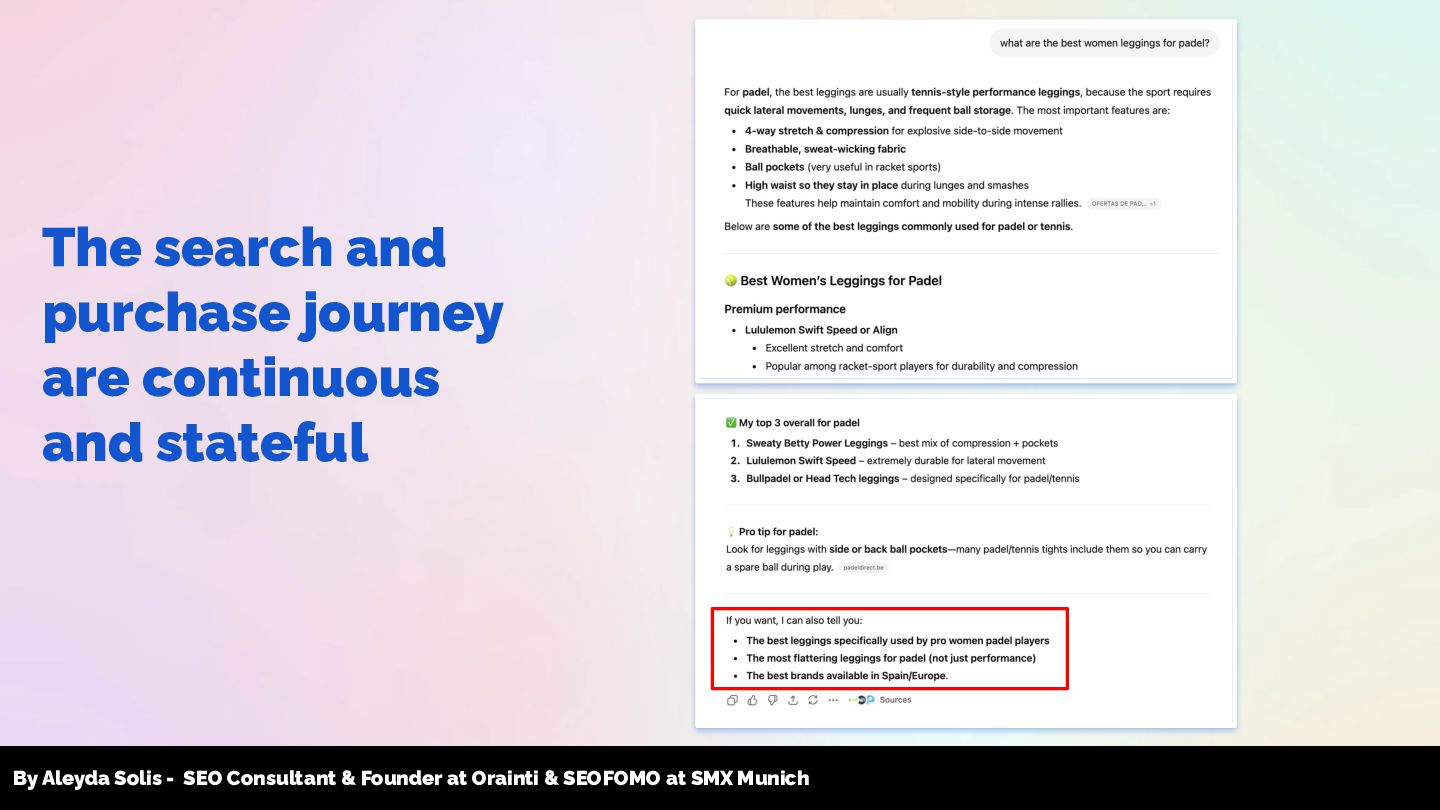
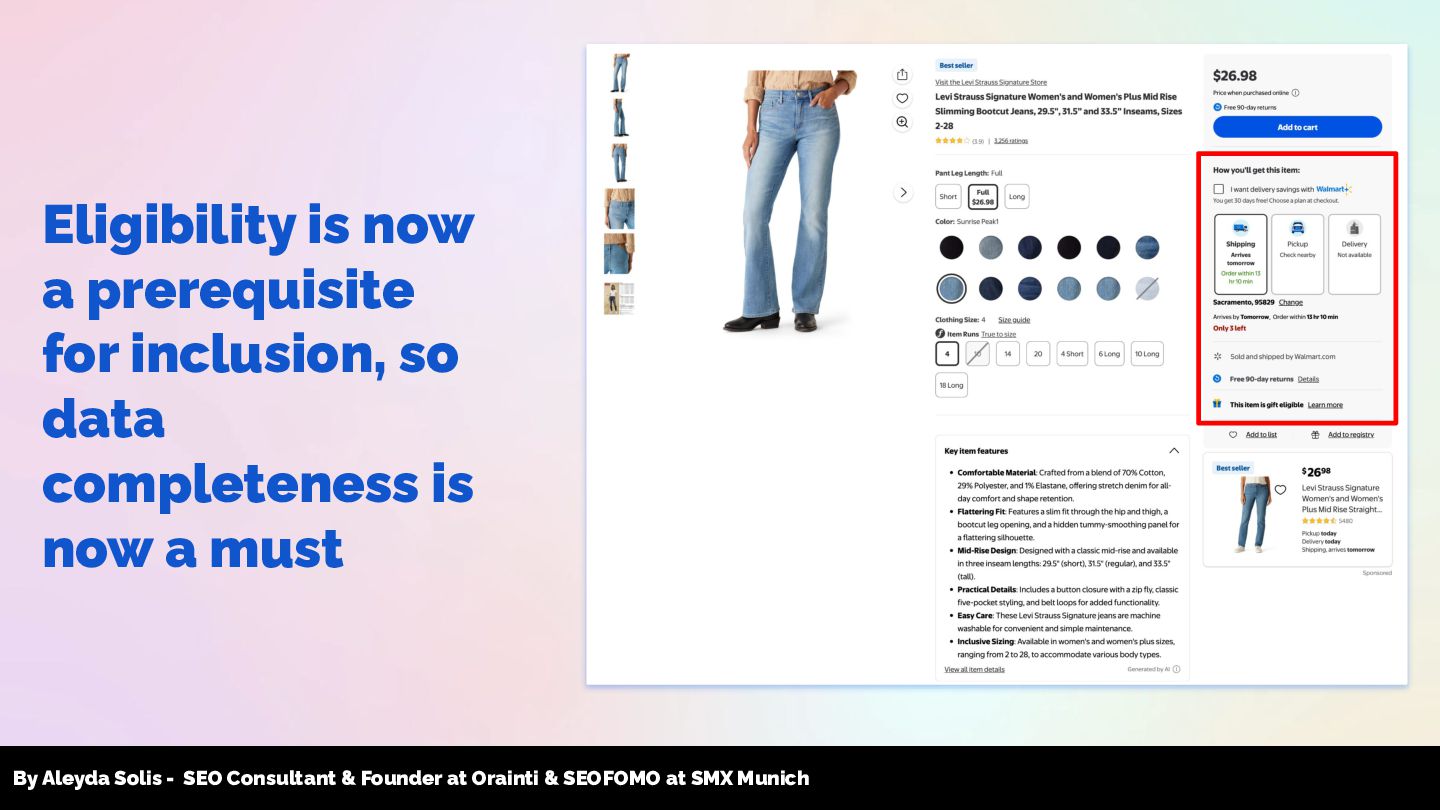
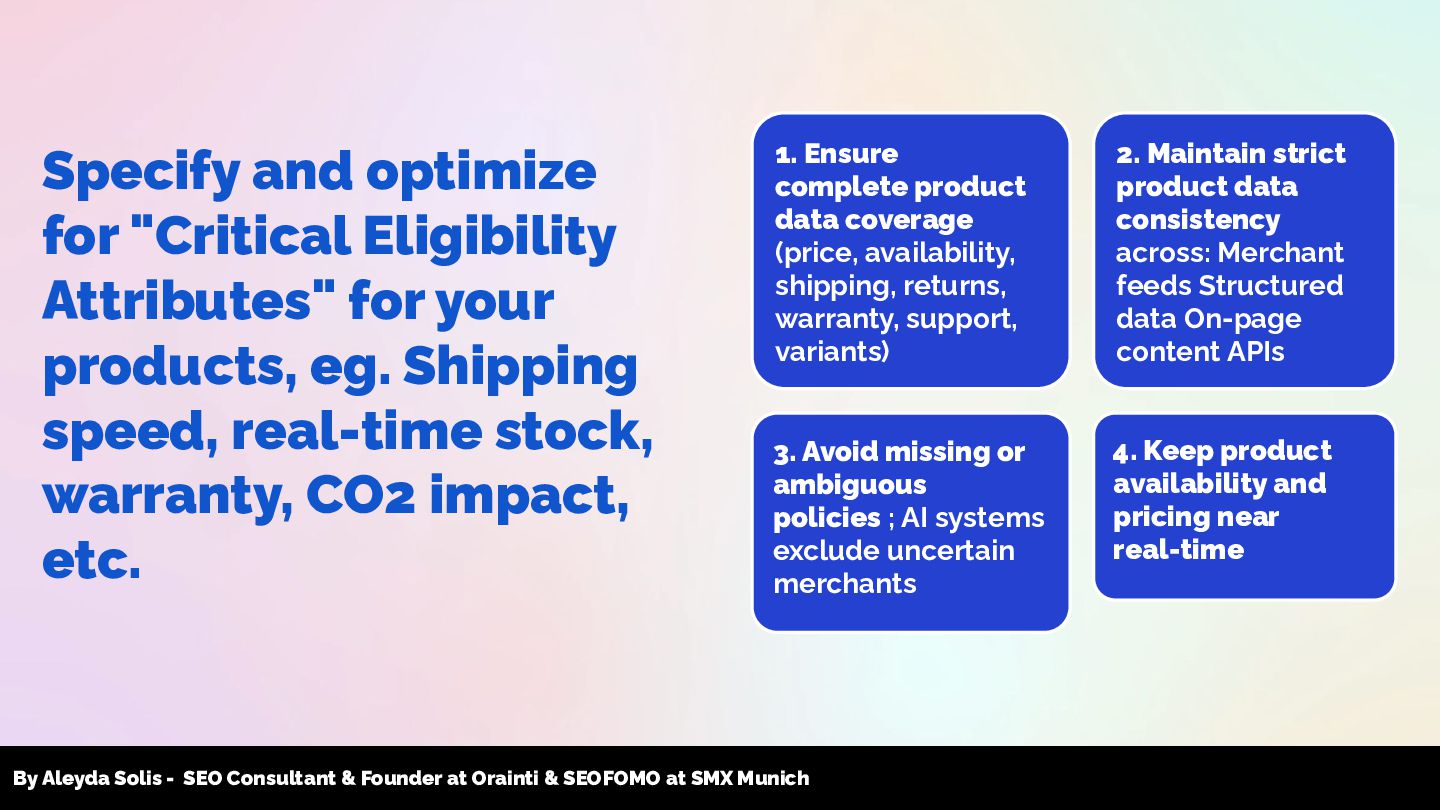
eg. Shipping speed, real-time stock, warranty, CO2 impact, etc. 1. Ensure complete product data coverage (price, availability, shipping, returns, warranty, support, variants) 2. Maintain strict product data consistency across: Merchant feeds Structured data On-page content APIs 3. Avoid missing or ambiguous policies ; AI systems exclude uncertain merchants 4. Keep product availability and pricing near real-time By Aleyda Solis - SEO Consultant & Founder at Orainti & SEOFOMO at SMX Munich
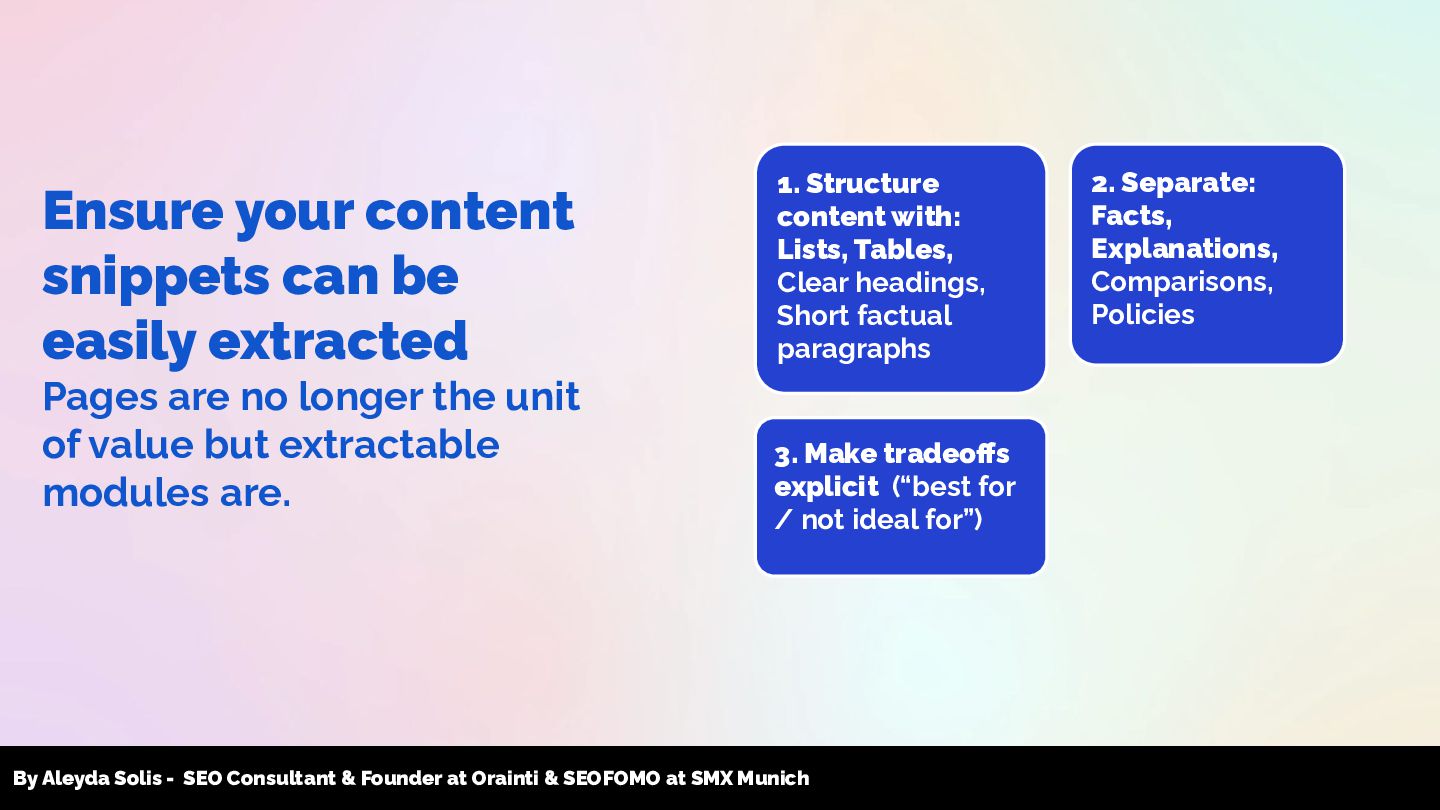
no longer the unit of value but extractable modules are. 1. Structure content with: Lists, Tables, Clear headings, Short factual paragraphs 2. Separate: Facts, Explanations, Comparisons, Policies 3. Make tradeoffs explicit (“best for / not ideal for”) By Aleyda Solis - SEO Consultant & Founder at Orainti & SEOFOMO at SMX Munich
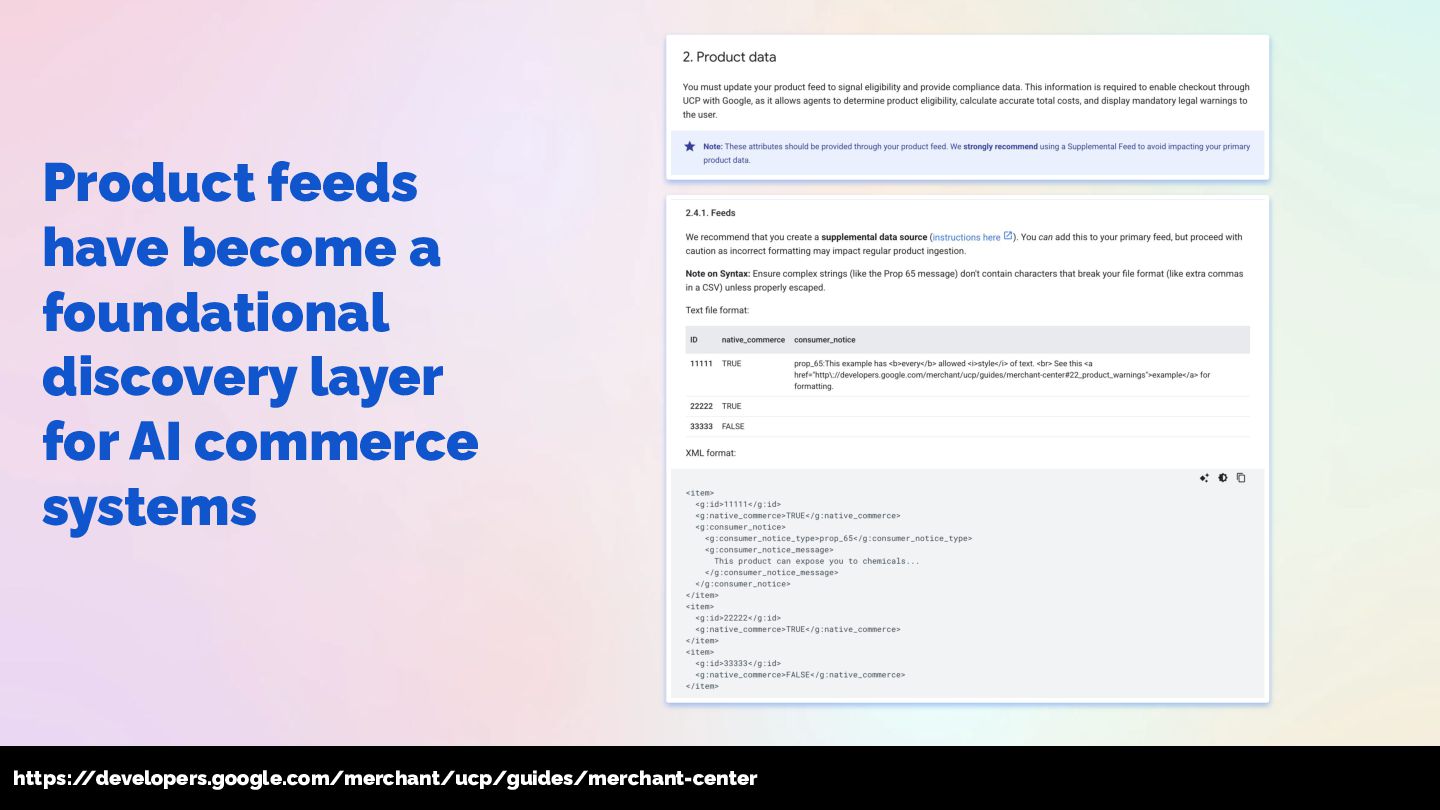
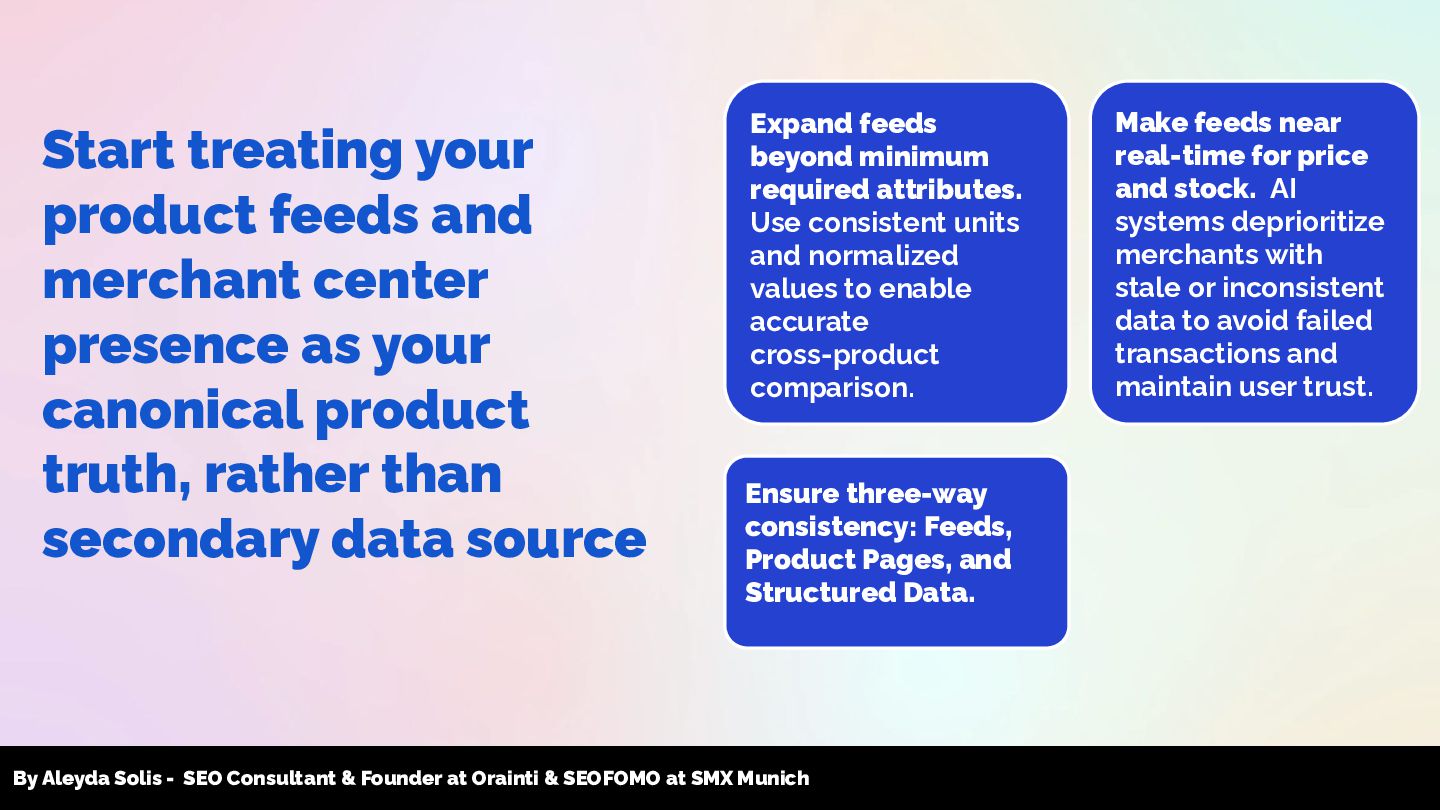
your canonical product truth, rather than secondary data source Make feeds near real-time for price and stock. AI systems deprioritize merchants with stale or inconsistent data to avoid failed transactions and maintain user trust. Ensure three-way consistency: Feeds, Product Pages, and Structured Data. Expand feeds beyond minimum required attributes. Use consistent units and normalized values to enable accurate cross-product comparison. By Aleyda Solis - SEO Consultant & Founder at Orainti & SEOFOMO at SMX Munich
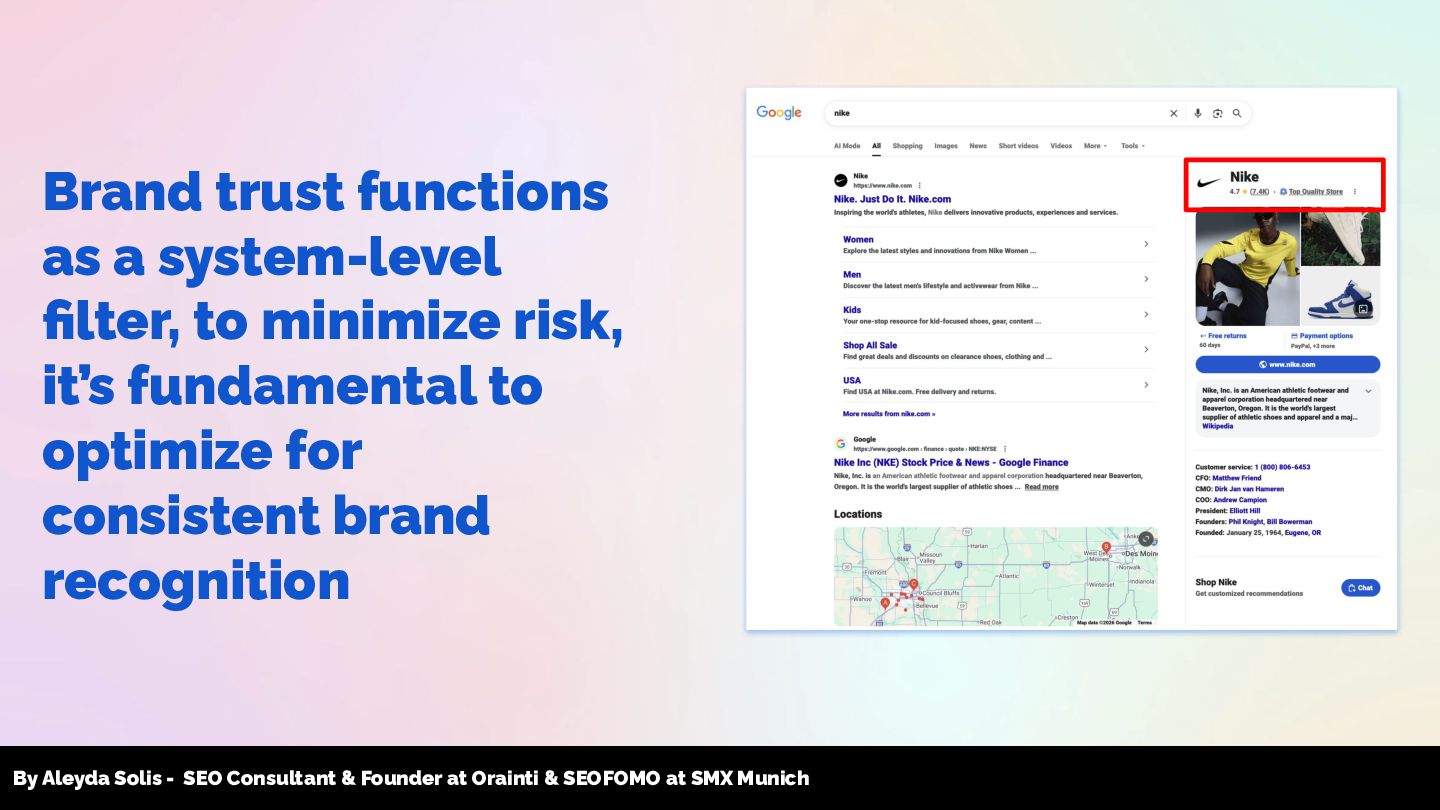
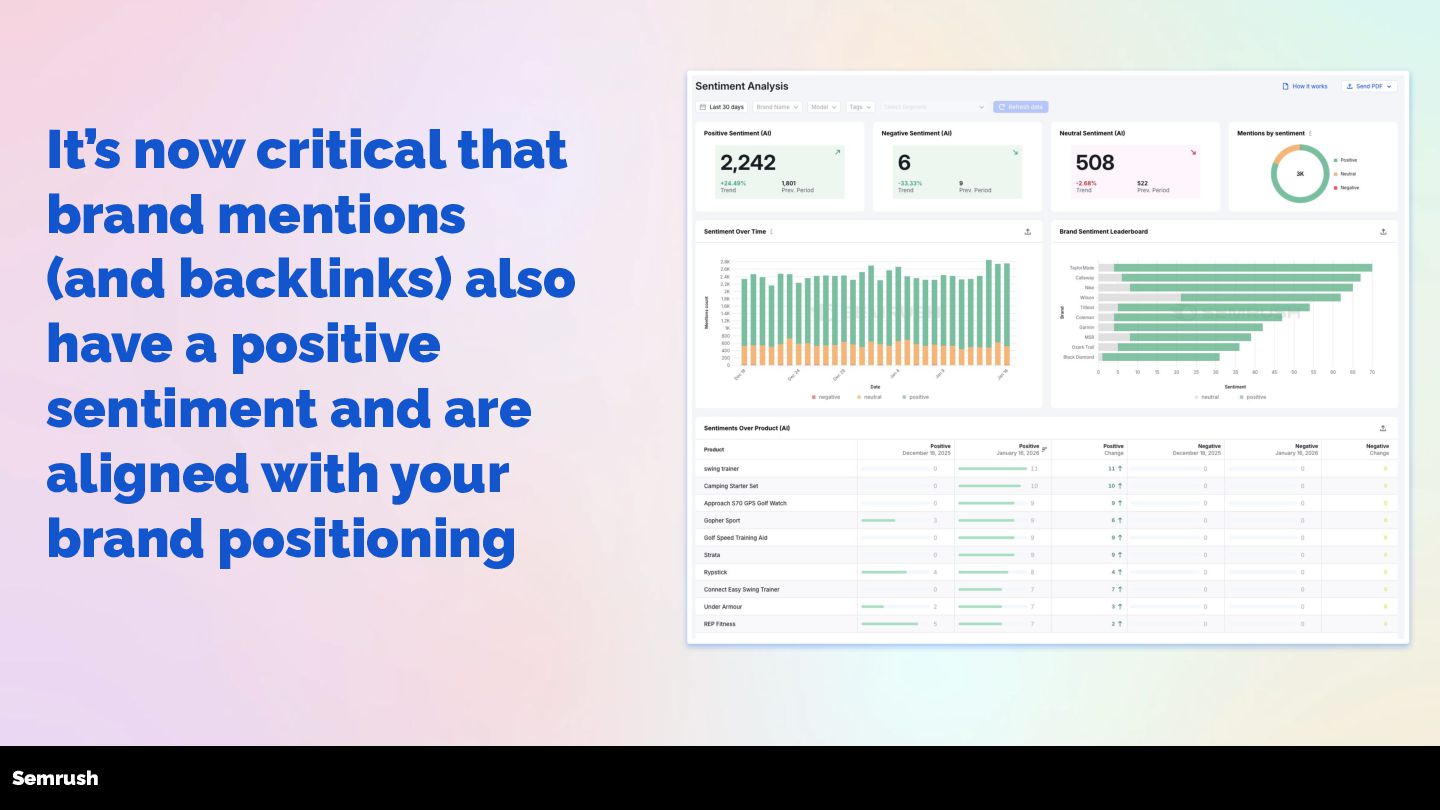
gate AI systems use brand consistency and external validation to reduce recommendation risk 1. Secure third-party mentions and reviews on authoritative sites 2. Ensure consistent brand information across the web 3. Maintain visible customer support, returns, and company info 4. Avoid contradictory claims across channels By Aleyda Solis - SEO Consultant & Founder at Orainti & SEOFOMO at SMX Munich
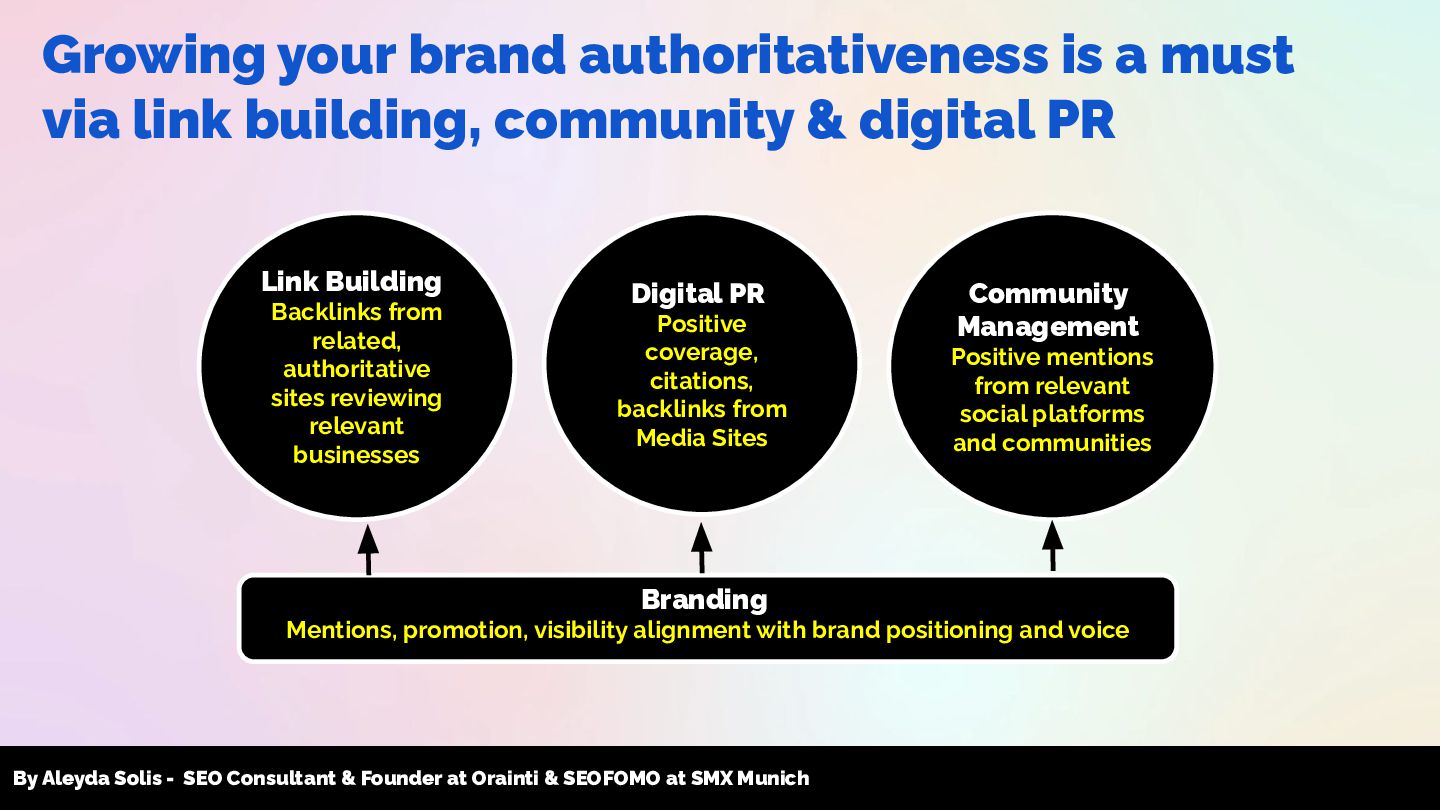
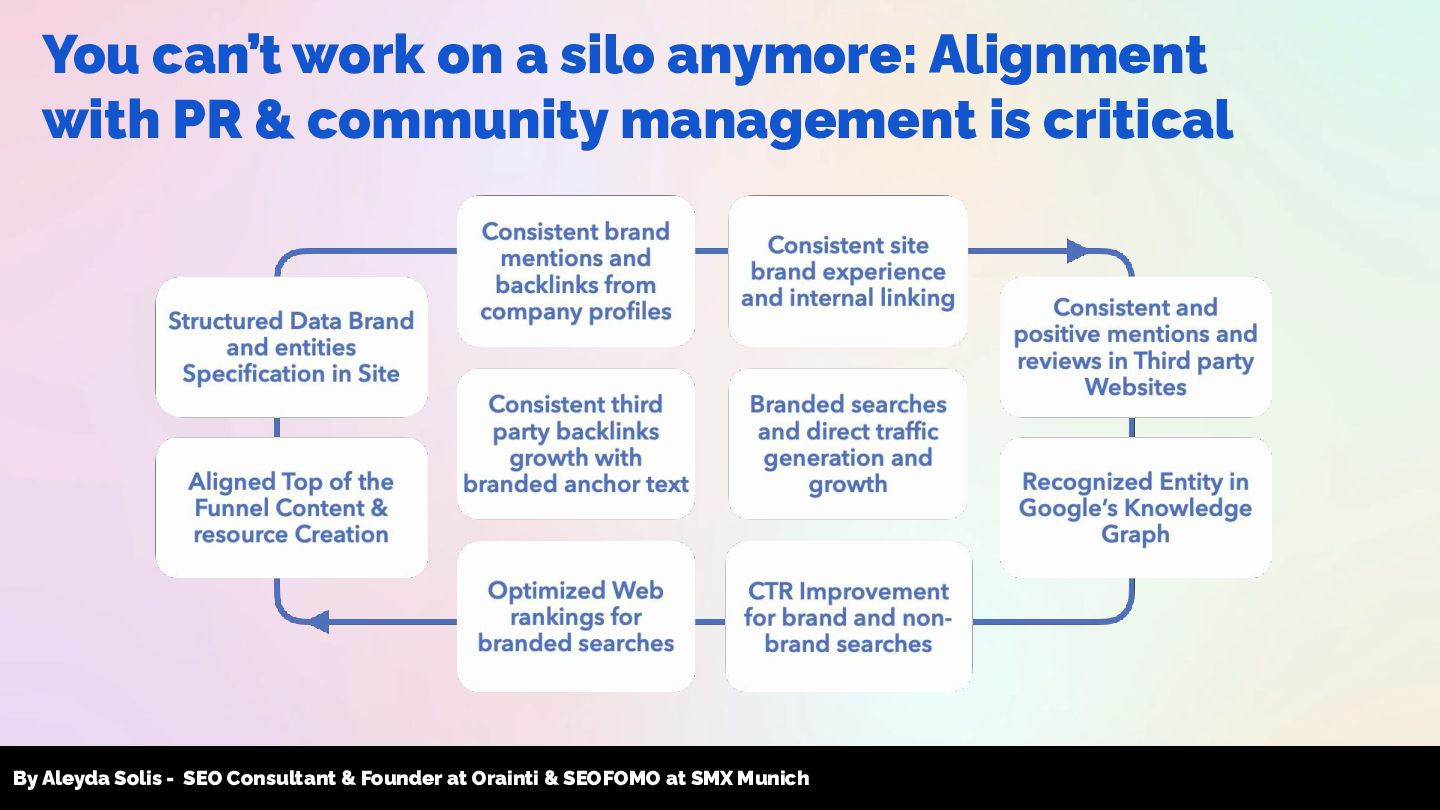
community & digital PR Digital PR Positive coverage, citations, backlinks from Media Sites Community Management Positive mentions from relevant social platforms and communities Link Building Backlinks from related, authoritative sites reviewing relevant businesses Branding Mentions, promotion, visibility alignment with brand positioning and voice By Aleyda Solis - SEO Consultant & Founder at Orainti & SEOFOMO at SMX Munich
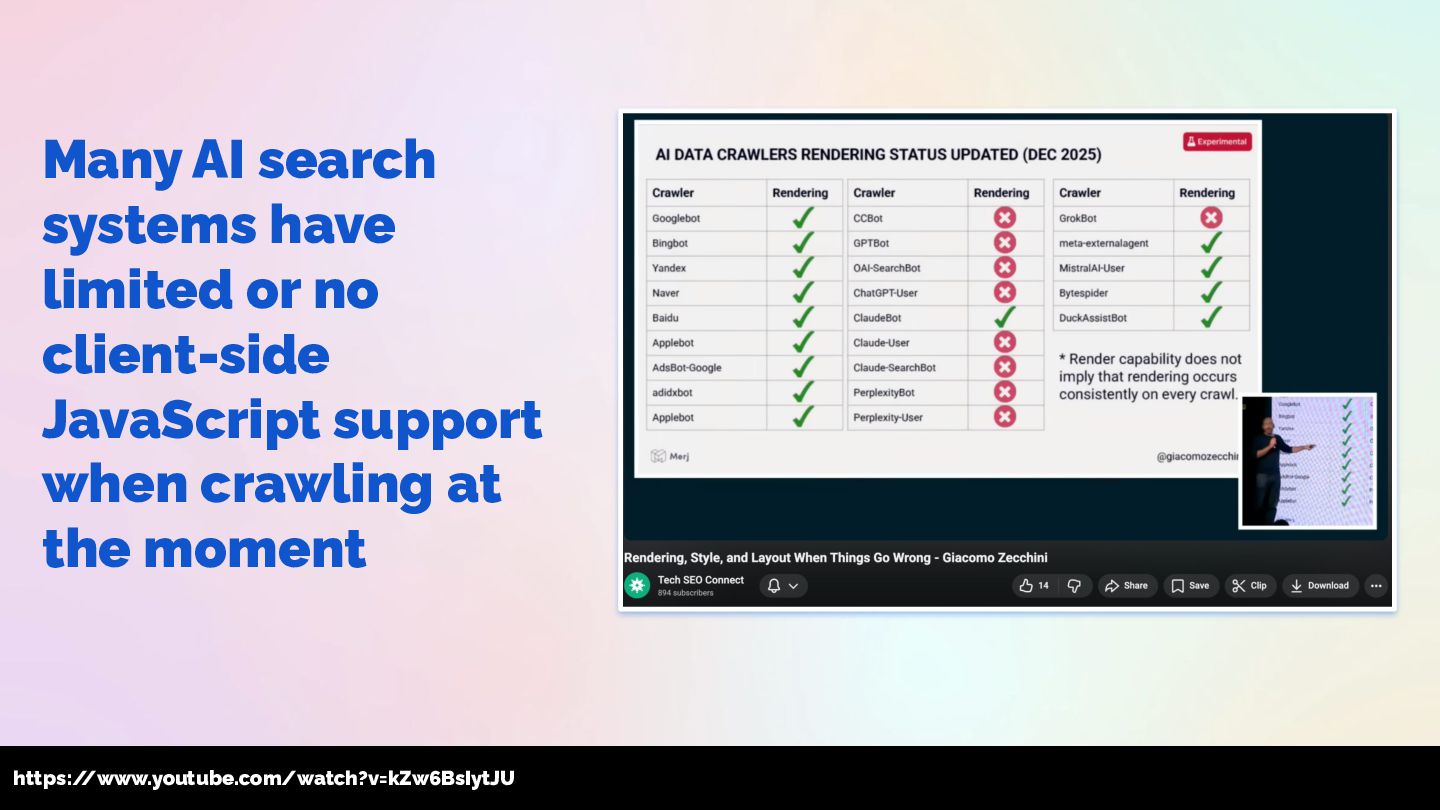
shifts & your own optimization context Differences in User Search Behavior / Intents to further expand your site topical authority targeting the full journey Bigger Role of third-party Citations / Mentions Different bots/user agents for which you might have specific crawlability rules Lack of CSR JS support by AI bots From Performance (traffic, conversions) only to Brand (visibility, sentiment, share of voice) and Performance metrics and goals Crawlability Indexability Relevance Popularity Metrics/Goals By Aleyda Solis - SEO Consultant & Founder at Orainti & SEOFOMO at SMX Munich
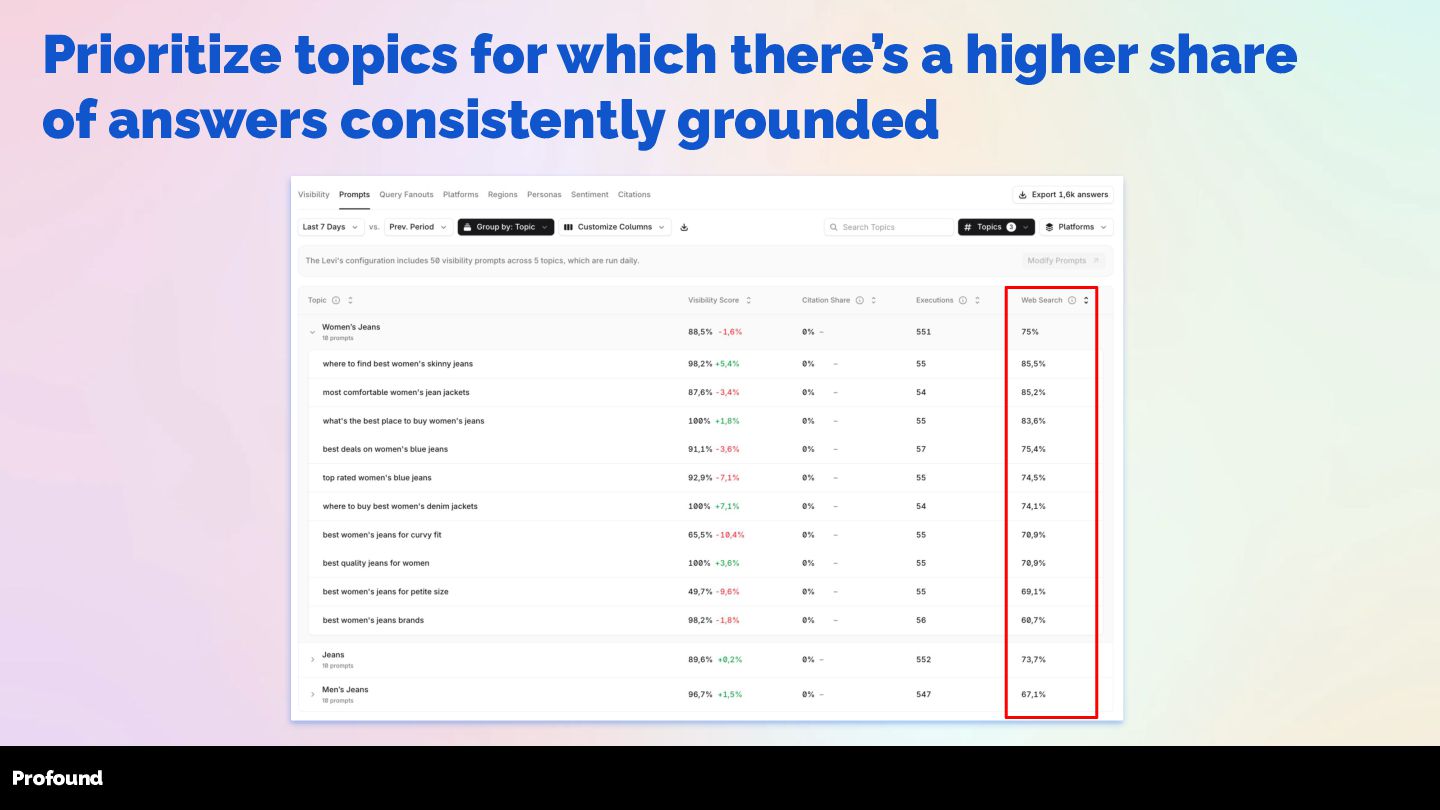
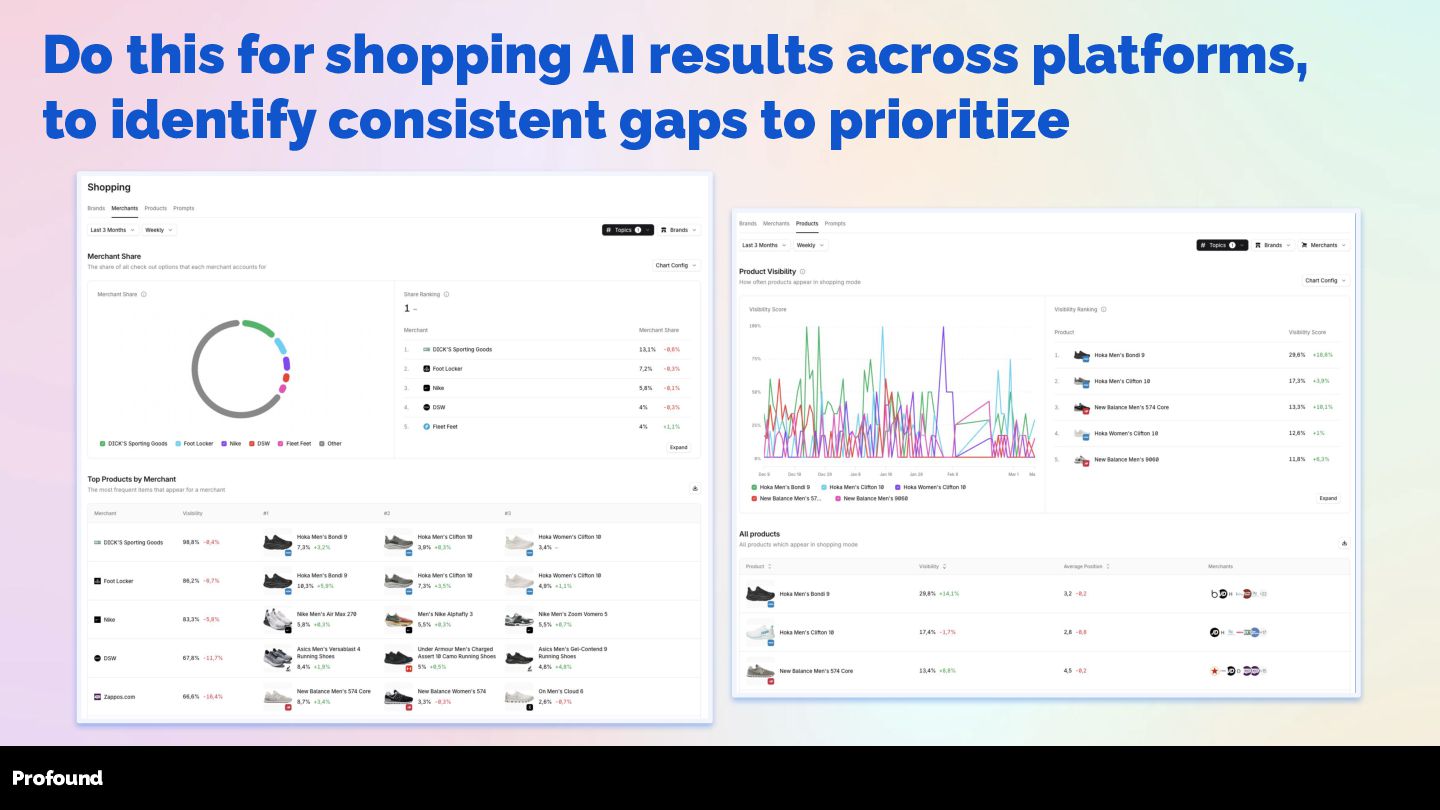
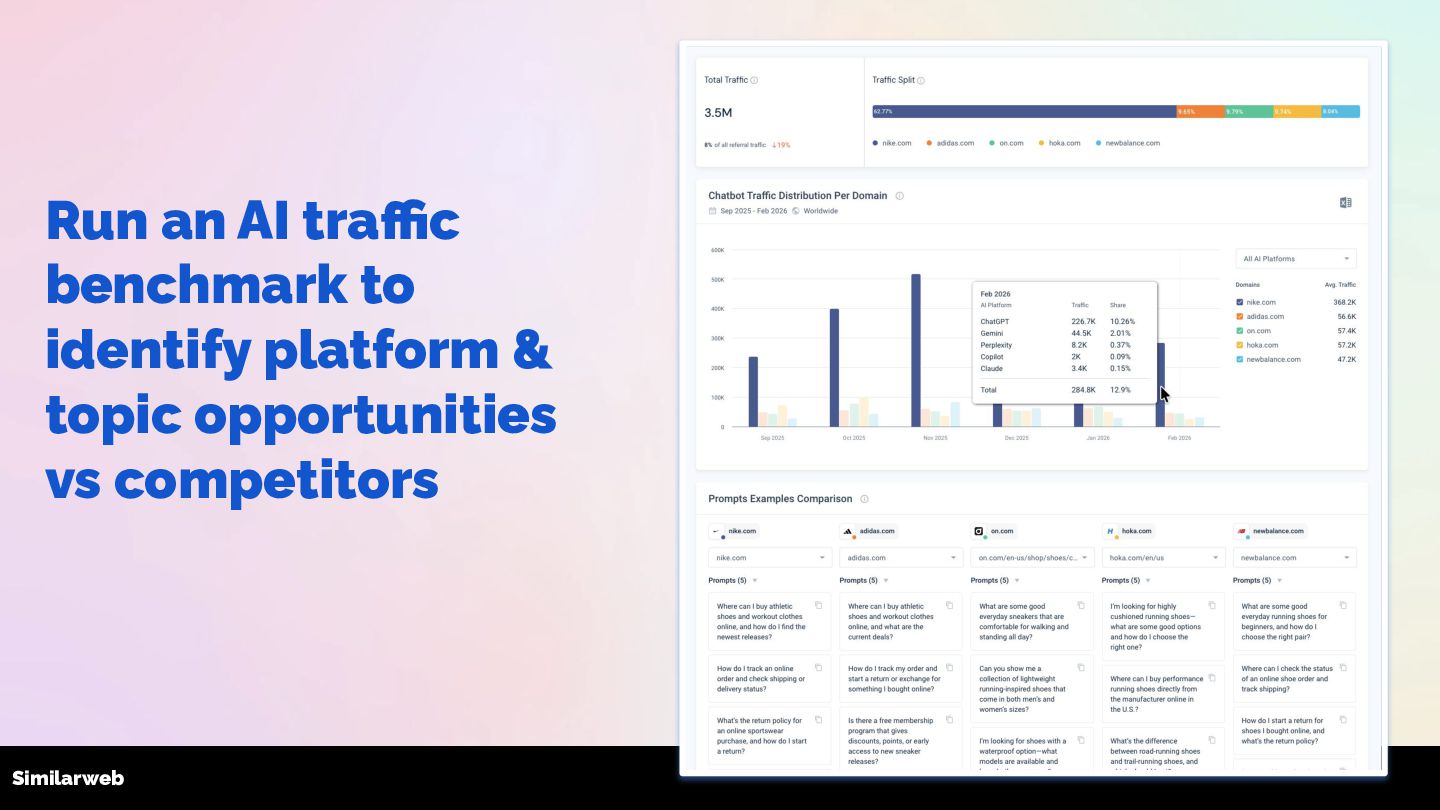
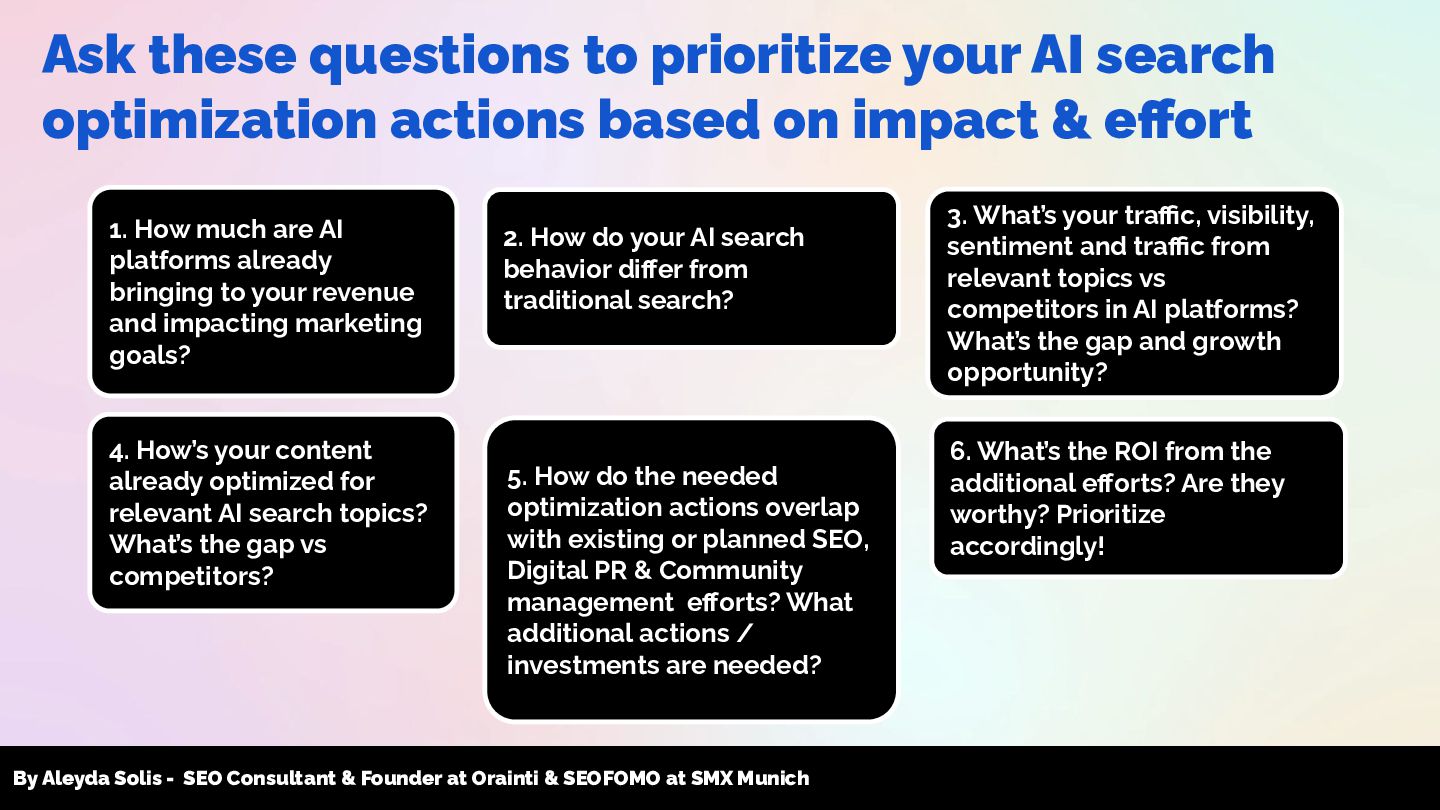
revenue and impacting marketing goals? 2. How do your AI search behavior differ from traditional search? 3. What’s your traffic, visibility, sentiment and traffic from relevant topics vs competitors in AI platforms? What’s the gap and growth opportunity? 4. How’s your content already optimized for relevant AI search topics? What’s the gap vs competitors? 5. How do the needed optimization actions overlap with existing or planned SEO, Digital PR & Community management efforts? What additional actions / investments are needed? 6. What’s the ROI from the additional efforts? Are they worthy? Prioritize accordingly! Ask these questions to prioritize your AI search optimization actions based on impact & effort By Aleyda Solis - SEO Consultant & Founder at Orainti & SEOFOMO at SMX Munich
Mode / ChatGPT / TikTok / YouTube / Baidu / Any Platform Used for Search] By Aleyda Solis - SEO Consultant & Founder at Orainti & SEOFOMO at SMX Munich
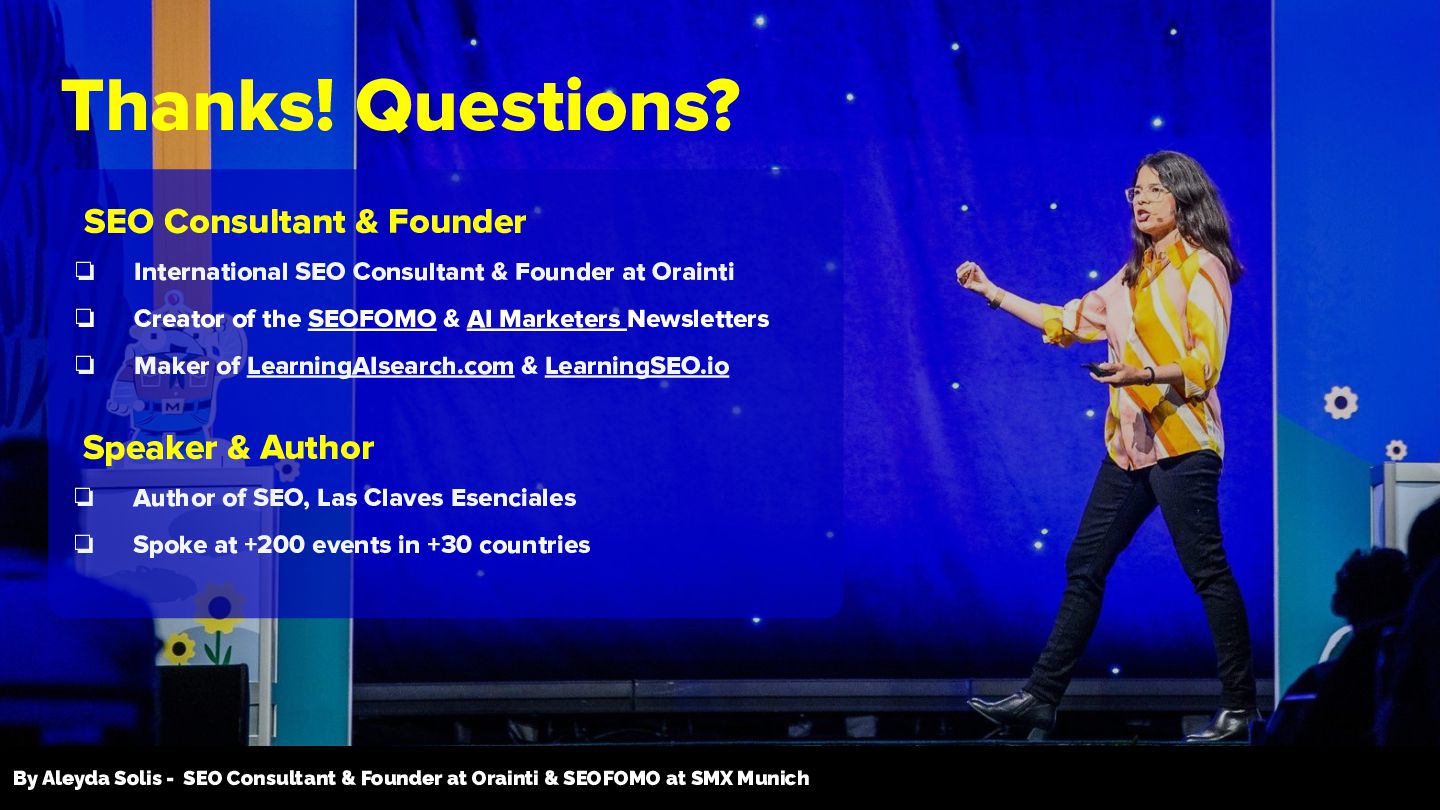
& Founder at Orainti ❏ Creator of the SEOFOMO & AI Marketers Newsletters ❏ Maker of LearningAIsearch.com & LearningSEO.io Speaker & Author ❏ Author of SEO, Las Claves Esenciales ❏ Spoke at +200 events in +30 countries By Aleyda Solis - SEO Consultant & Founder at Orainti & SEOFOMO at SMX Munich


 aleyda
 alexgalinos
 novasell
 tenshoku_draft
 joshbly
 portentint
 graydotco
.jpeg) pelogia
pelogia
 metehanyesilyurt
 awsjcpm
 zjchahalis
 chrisleverseo
 speedyindexteam
 inesmontani
 dougneiner
 techseoconnect
 wayneb77
 szymonslowik
 ipullrank
 davidcarrasco
 kneath
 hannesfritz
 katarinadahlin
 badams