Lock in $30 Savings on PRO—Offer Ends Soon! ⏳

Mobile development in 202*

Mobile development in 202*

Avatar for Beatrice Kinya

Beatrice Kinya

December 21, 2025
Tweet

Other Decks in Programming

Transcript

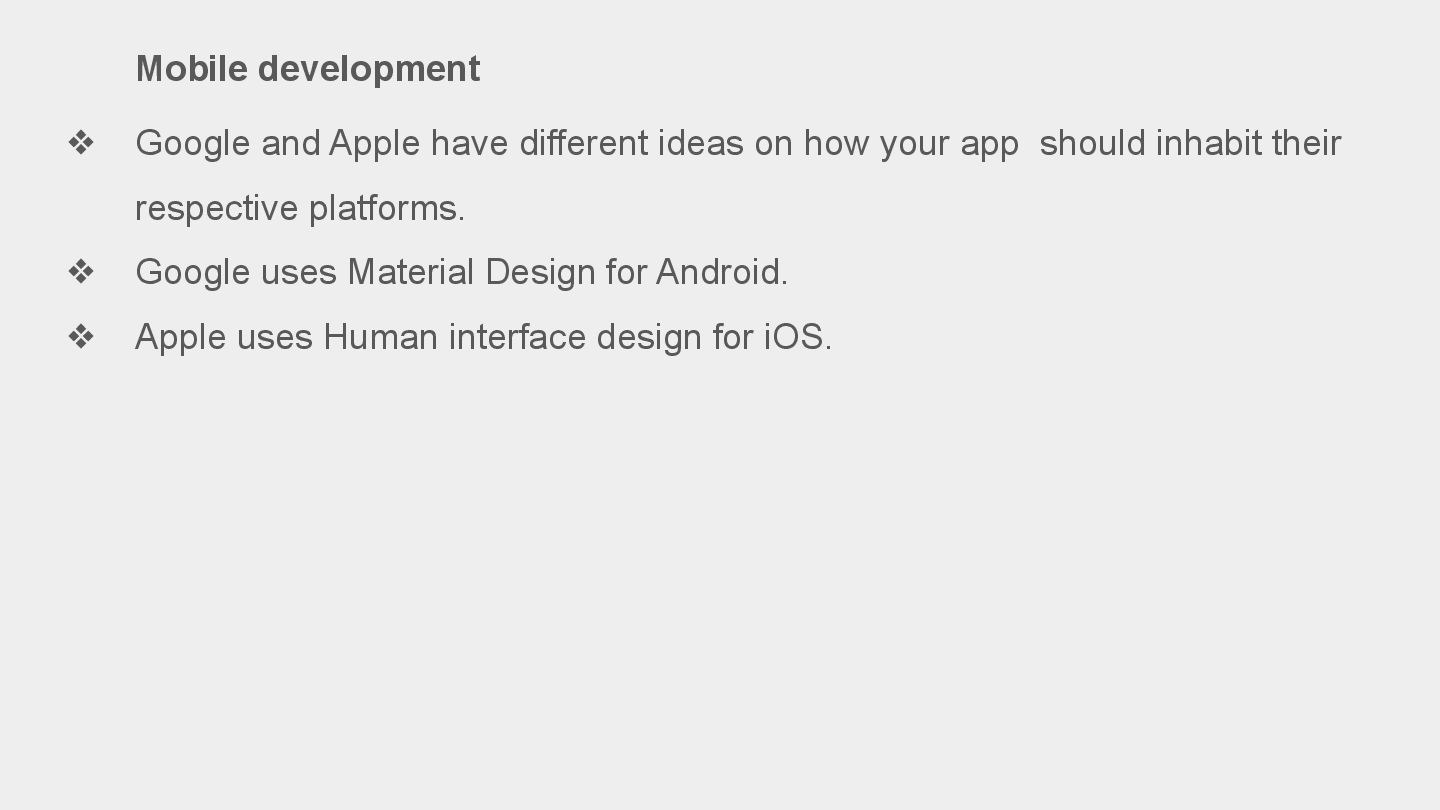
  1. Mobile development ❖ Google and Apple have different ideas on

    how your app should inhabit their respective platforms. ❖ Google uses Material Design for Android. ❖ Apple uses Human interface design for iOS.
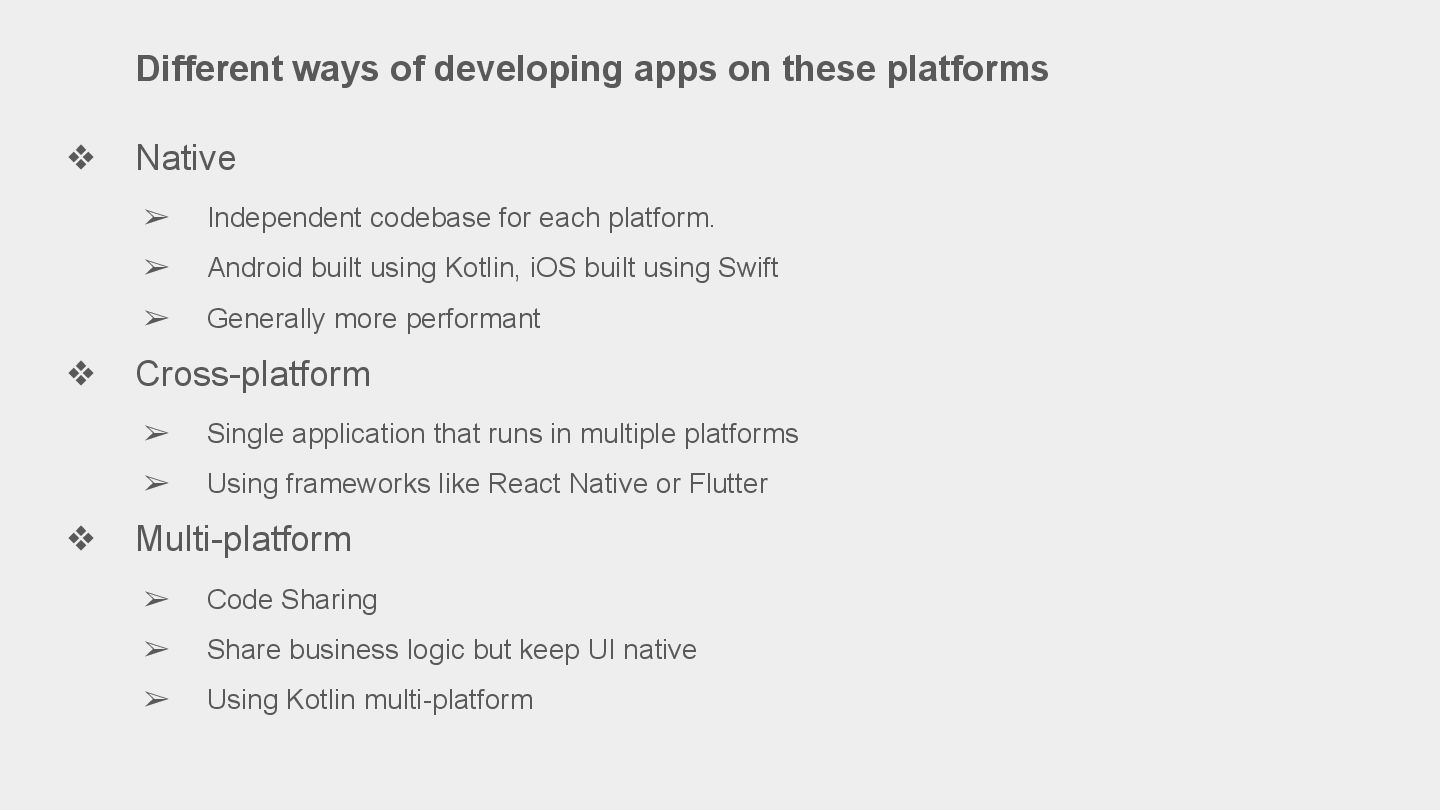
  2. Different ways of developing apps on these platforms ❖ Native

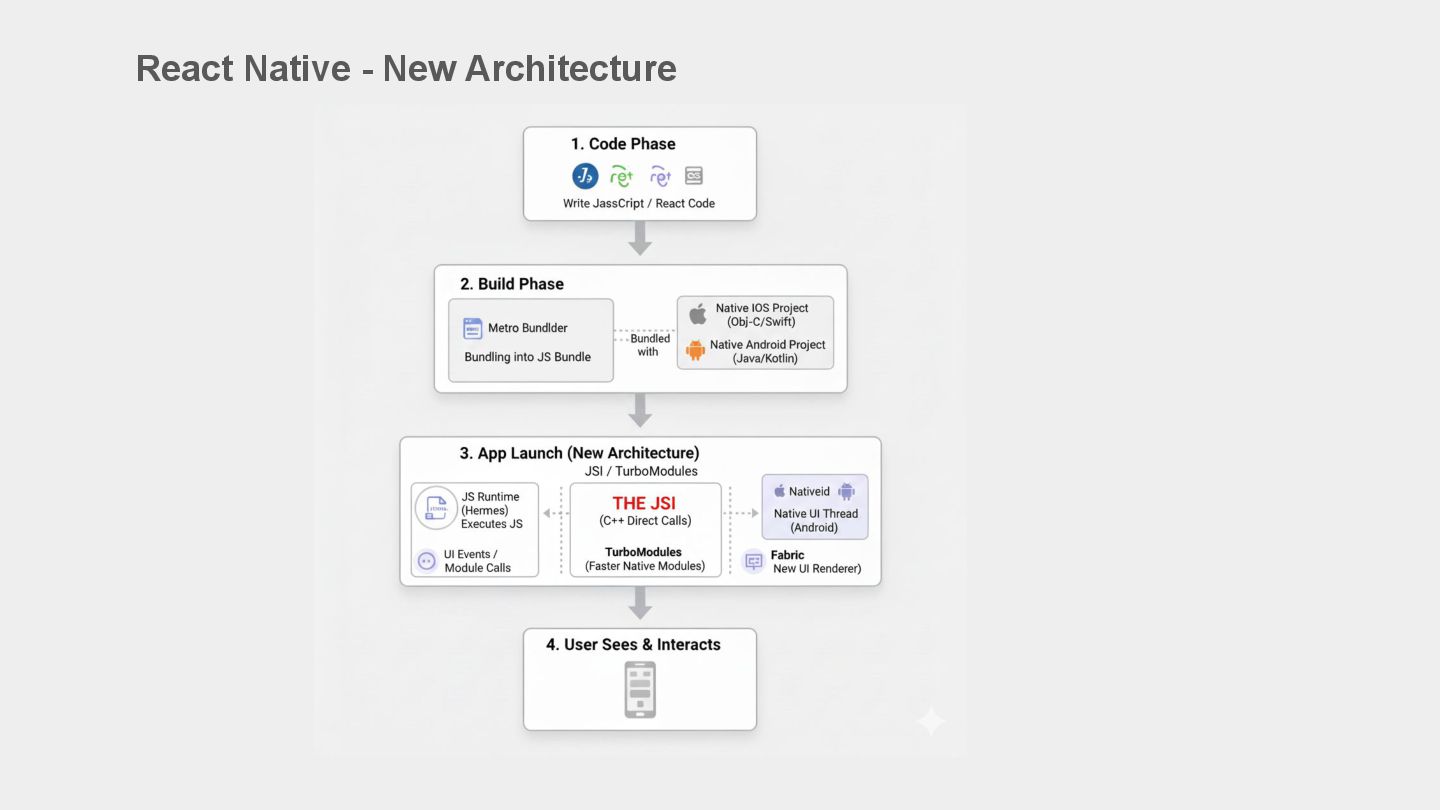
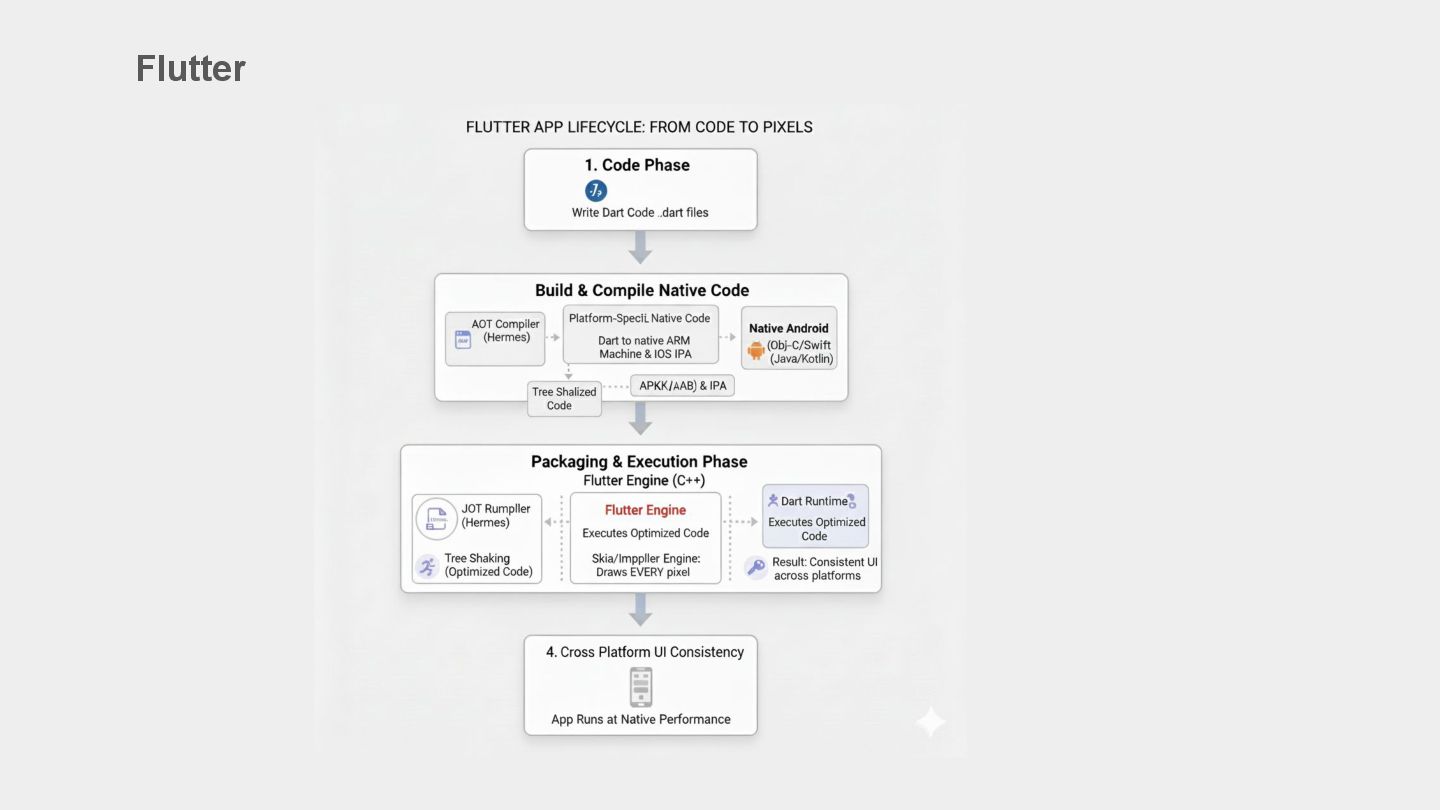
    ➢ Independent codebase for each platform. ➢ Android built using Kotlin, iOS built using Swift ➢ Generally more performant ❖ Cross-platform ➢ Single application that runs in multiple platforms ➢ Using frameworks like React Native or Flutter ❖ Multi-platform ➢ Code Sharing ➢ Share business logic but keep UI native ➢ Using Kotlin multi-platform
  3. Convergence of iOS and Android Development ❖ Language similarities between

    Swift and Kotlin ❖ Declarative UI using Swift UI in iOS, and Jetpack Compose in Android ❖ Shared architectures like MVVM, MVI, unidirectional data flow etc ❖ UX similarities The ever increasing convergence of Mobile development
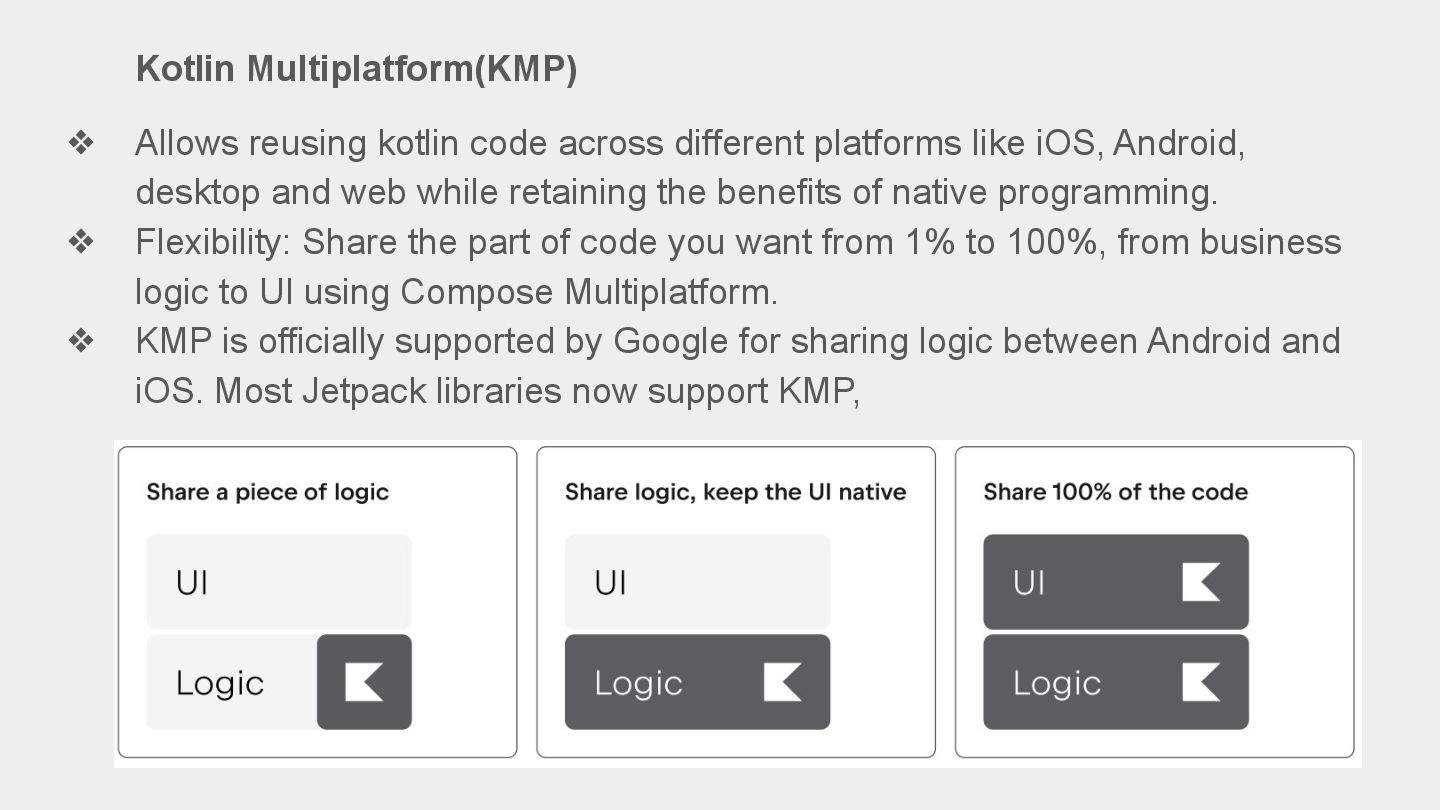
  4. Kotlin Multiplatform(KMP) ❖ Allows reusing kotlin code across different platforms

    like iOS, Android, desktop and web while retaining the benefits of native programming. ❖ Flexibility: Share the part of code you want from 1% to 100%, from business logic to UI using Compose Multiplatform. ❖ KMP is officially supported by Google for sharing logic between Android and iOS. Most Jetpack libraries now support KMP,
  5. KMP Cont’ ❖ actual and expect modifiers to access platform

    specific APIs like CameraX on Android and ARKit on iOS ❖ Define a common contract in the common code, and provide platform specific implementation for it. ❖ Platform specific compilation. The compiler splits the shared code into two paths. It produces Java bytecode to run on Android runtime and utilizes LLVM toolchain to compile native machine code for iOS producing native-level performance on both platforms
  6. Which one should you choose? ❖ Skills and expertise ❖

    Are porting a large Android codebase and share some logic with iOS? ❖ Performance requirements
  7. Lastly ❖ All these frameworks tools ❖ Do not stop

    at the cross-platform or multi-platform frameworks. Learning about individual ecosystem will take your app from good to exceptional
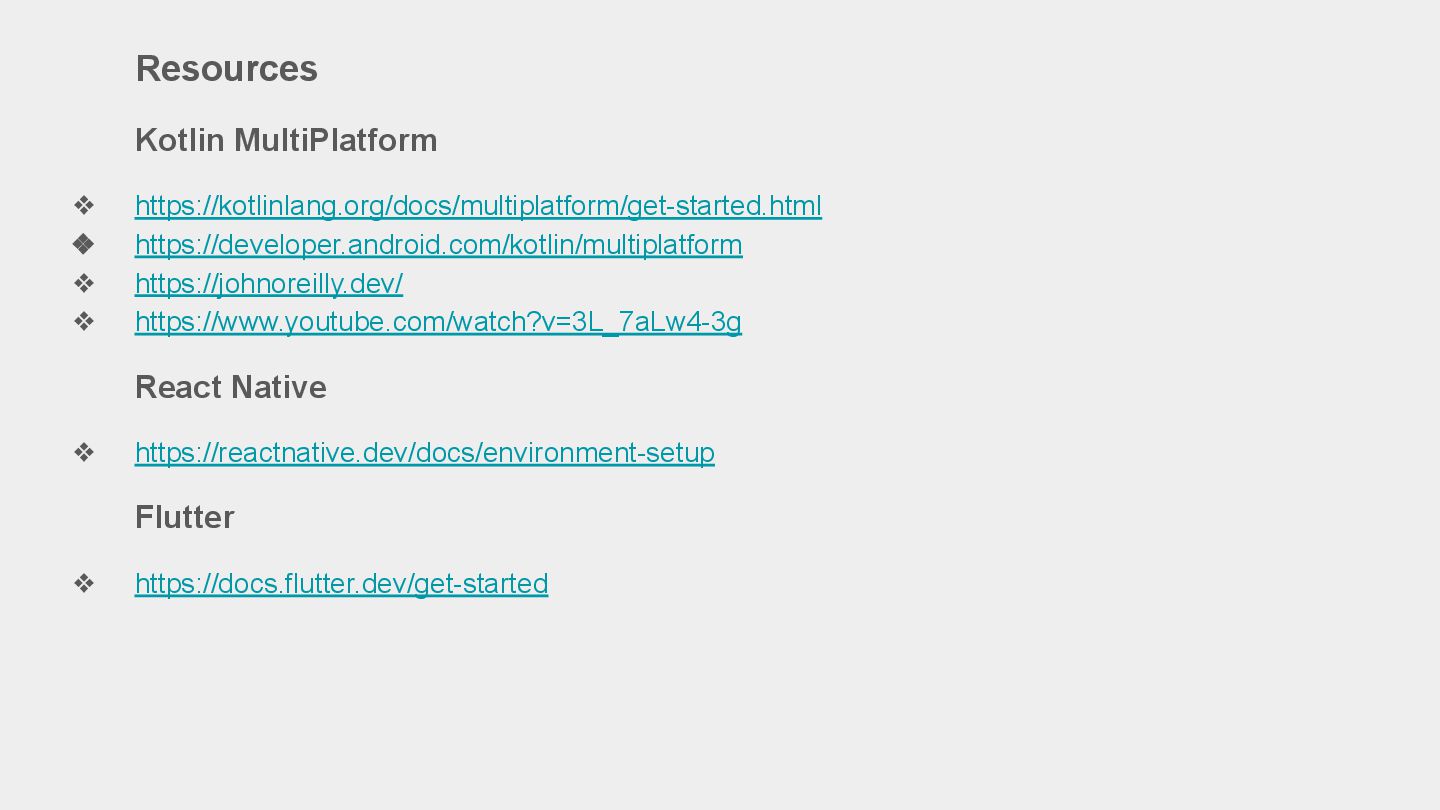
  8. Resources Kotlin MultiPlatform ❖ https://kotlinlang.org/docs/multiplatform/get-started.html ❖ https://developer.android.com/kotlin/multiplatform ❖ https://johnoreilly.dev/ ❖

    https://www.youtube.com/watch?v=3L_7aLw4-3g React Native ❖ https://reactnative.dev/docs/environment-setup Flutter ❖ https://docs.flutter.dev/get-started