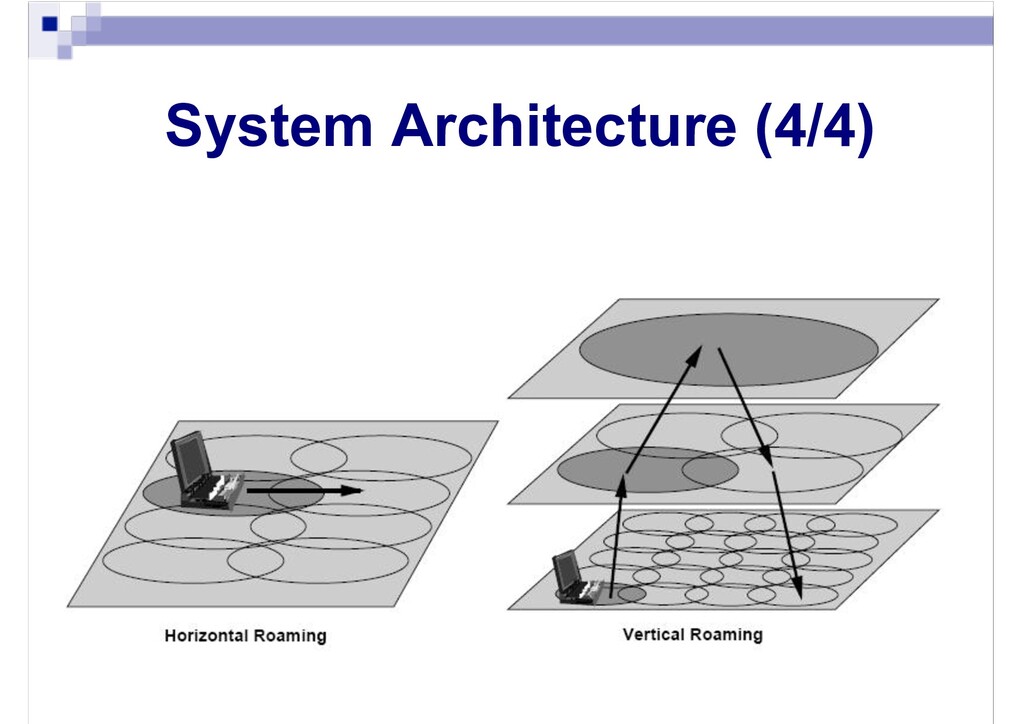
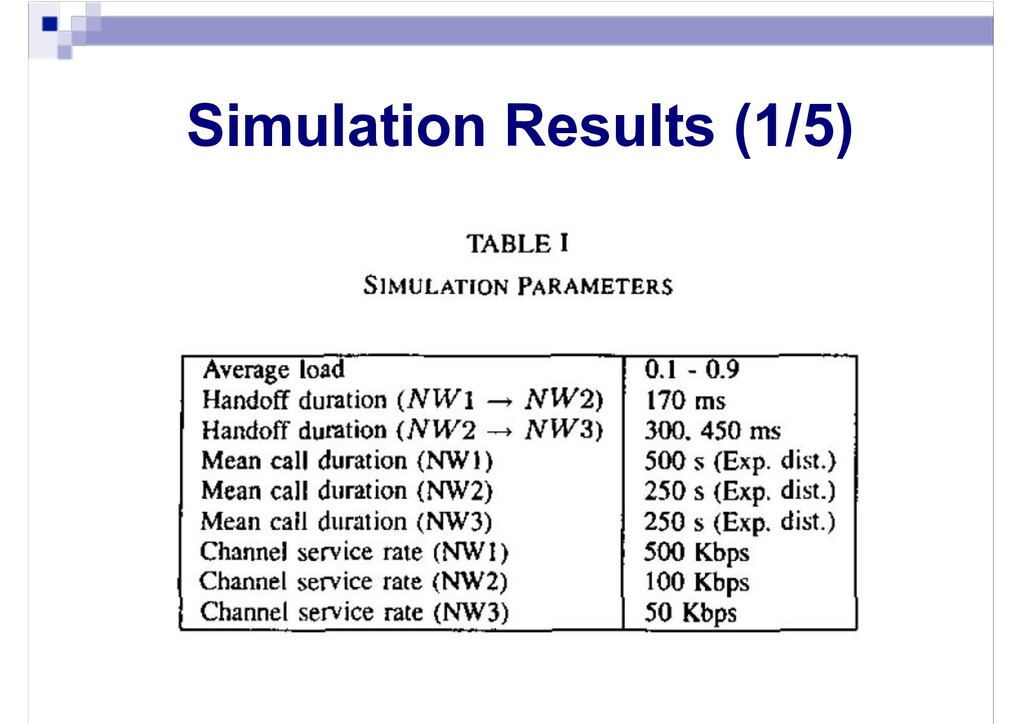
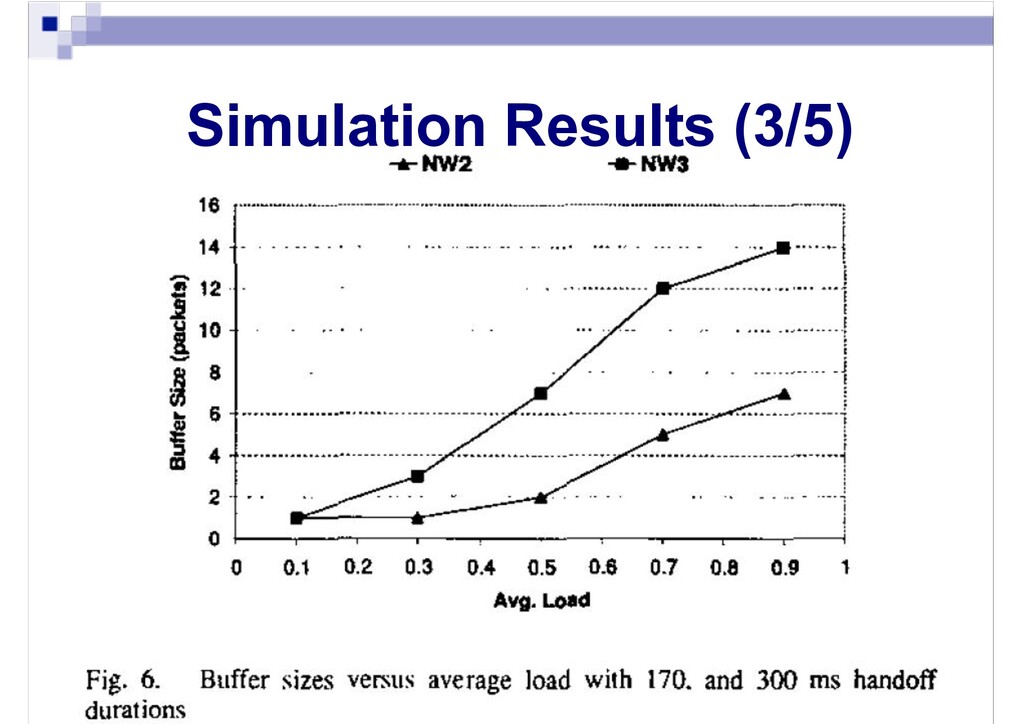
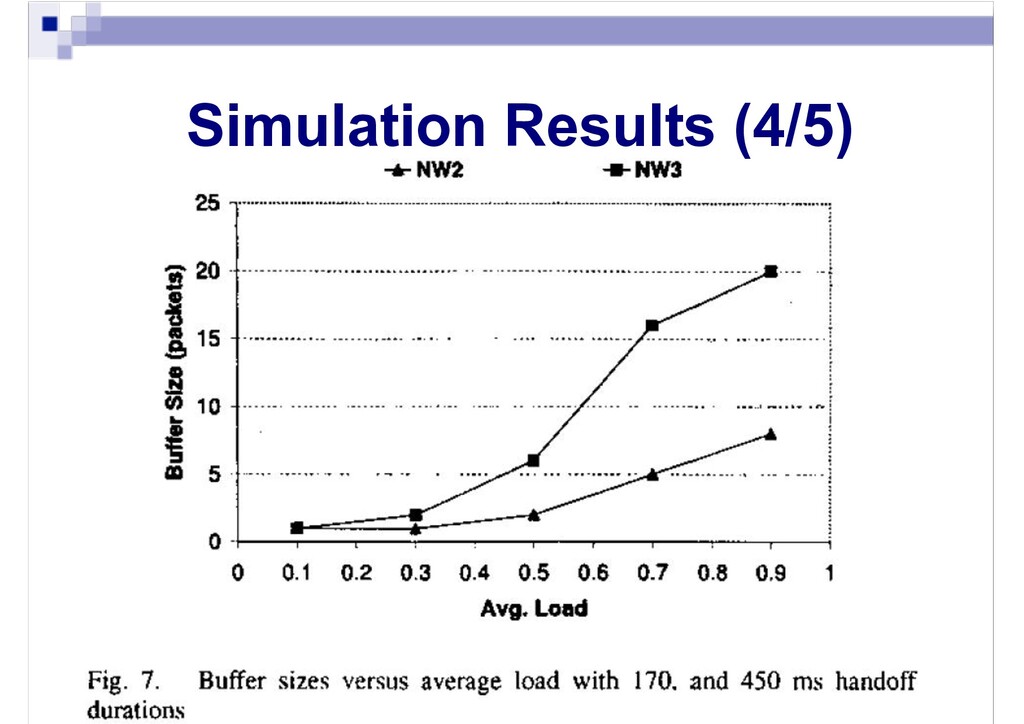
this paper • Determined the required buffer sizes to achieve lossless upward vertical handoffs. • Simulation results show that the average packet delays are within the acceptable QoS limits for most multimedia traffic types.
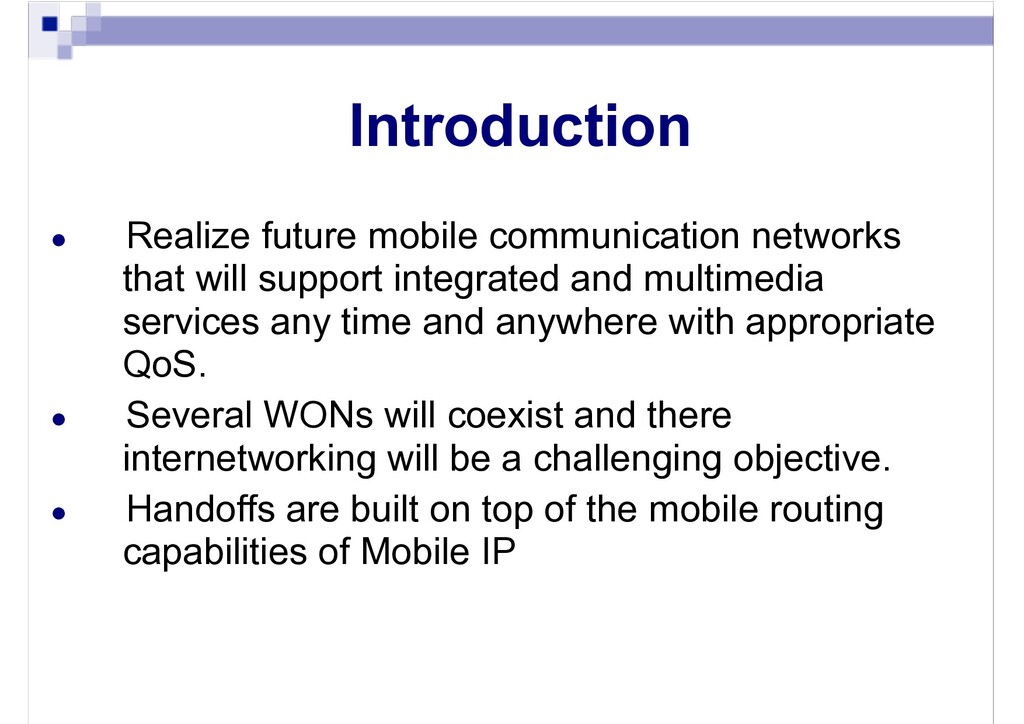
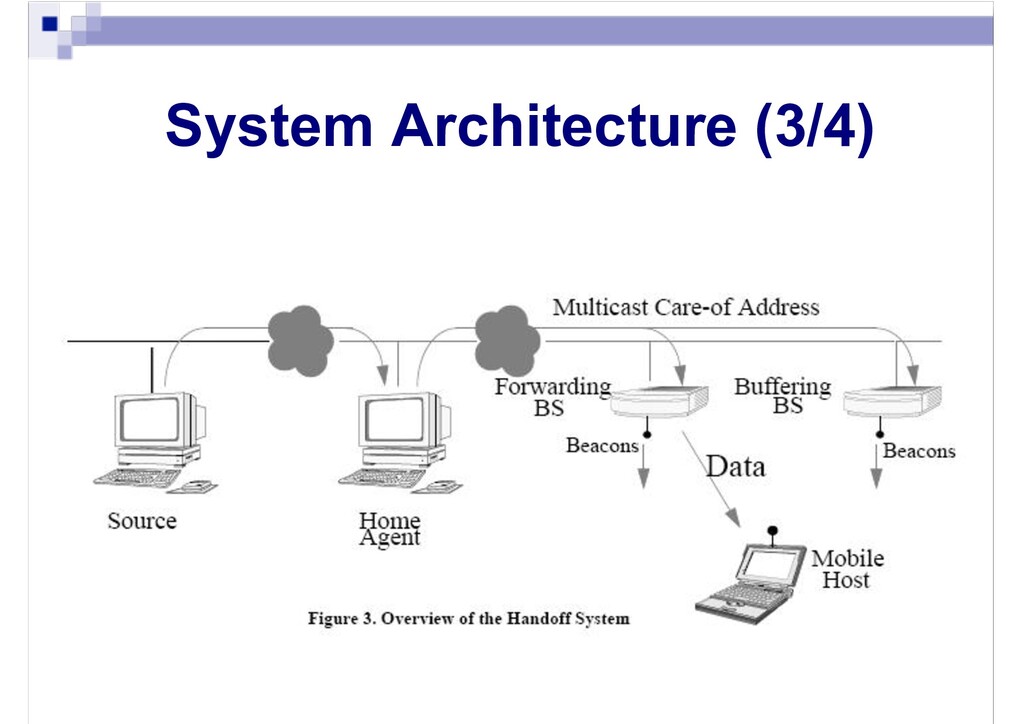
integrated and multimedia services any time and anywhere with appropriate QoS. • Several WONs will coexist and there internetworking will be a challenging objective. • Handoffs are built on top of the mobile routing capabilities of Mobile IP
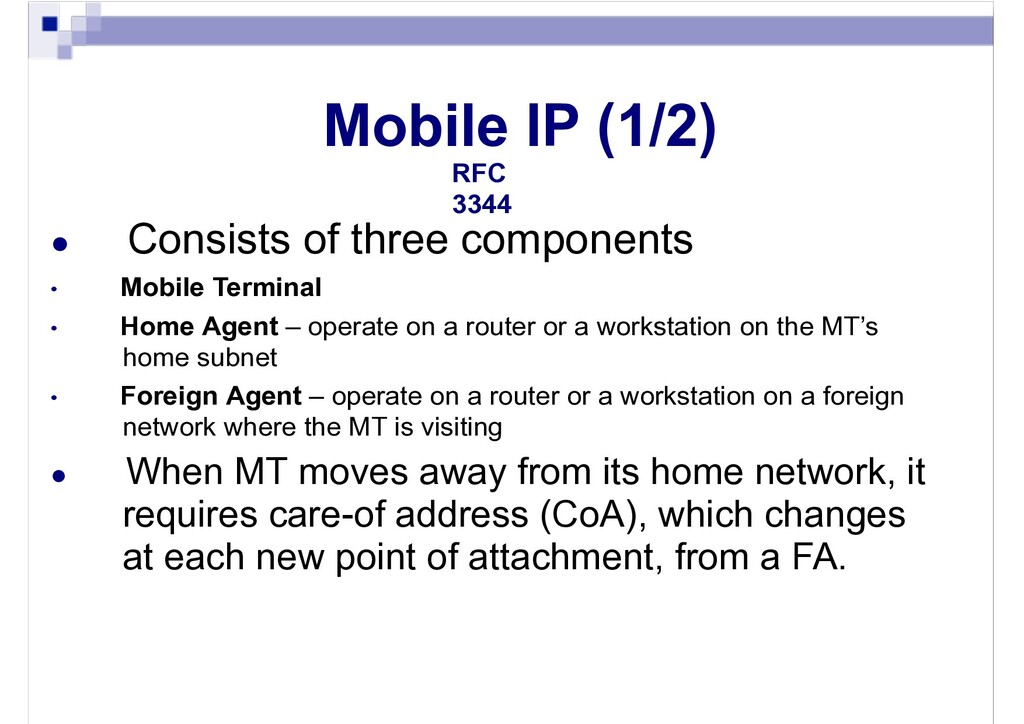
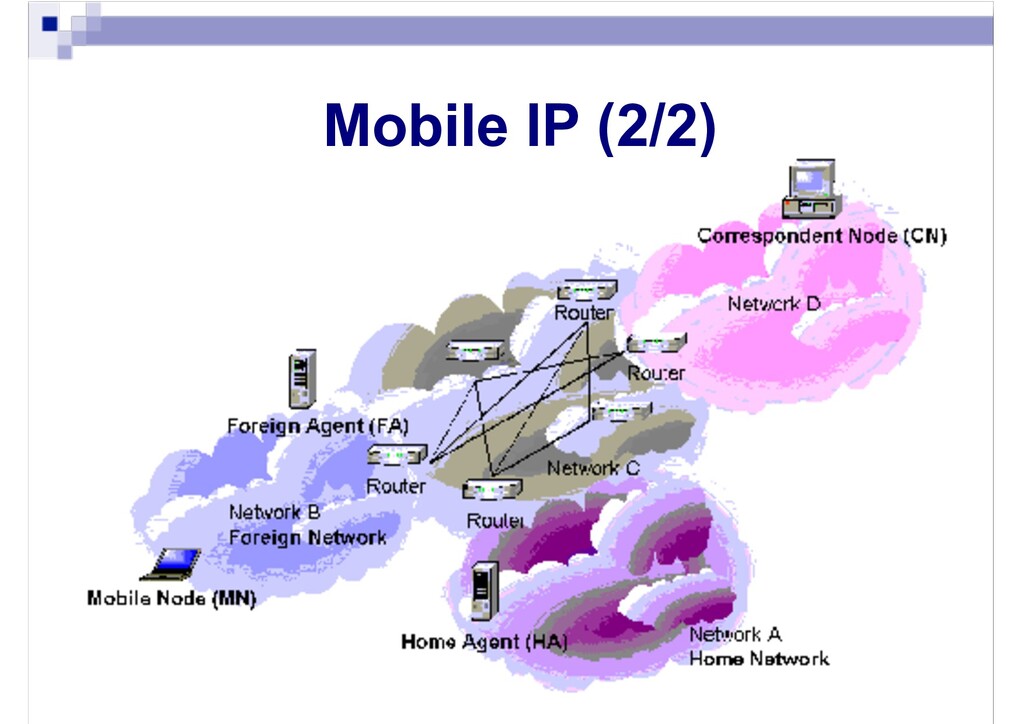
Terminal • Home Agent – operate on a router or a workstation on the MT’s home subnet • Foreign Agent – operate on a router or a workstation on a foreign network where the MT is visiting • When MT moves away from its home network, it requires care-of address (CoA), which changes at each new point of attachment, from a FA. RFC 3344
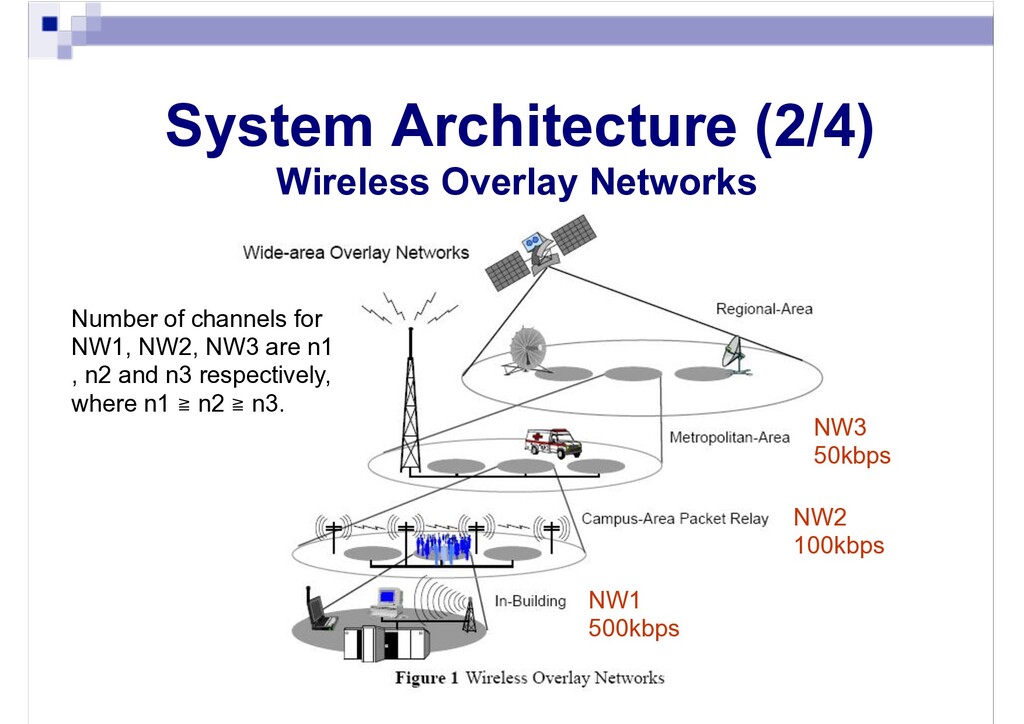
structure or clusters of room-size building- size, and wide area networks. • Each of which has its own characteristics in terms of capacity, bandwidth, latency, and technology What are Wireless Overlay Networks
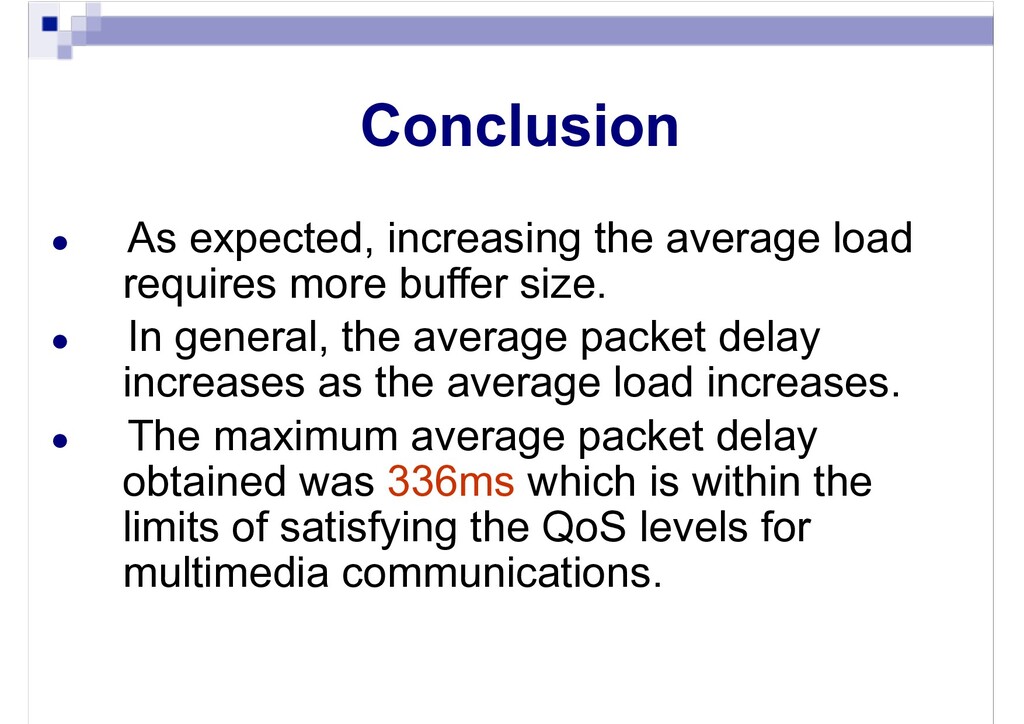
buffer size. • In general, the average packet delay increases as the average load increases. • The maximum average packet delay obtained was 336ms which is within the limits of satisfying the QoS levels for multimedia communications.

 Your Podcast. Everywhere. Effortlessly.


 gasol
gasol
 sazimai
 enochan
 stktu
stktu
 naok615
 hellosct1
 pomcho555
 yukiar
.png) satai
satai
 hisaokatsumi
 shunk031
 ept
ept
 institutdelelevage
 morganepeng
 eitanlees
 techseoconnect
 tmiket
 addyosmani
 sabderemane
 tammyeverts
 aleyda
 rakko
rakko
 jakevdp
 cassininazir