Native is an open-source mobile application framework created by Facebook. It is used to develop applications for Android, iOS and UWP by enabling developers to use React along with native platform capabilities. Jadav Chirag • 2019
Native are somewhat similar frameworks (at least at first sight). Both help developing apps using the same code base; both are supported by giant tech companies; they are open source and free. They also share the hot reload feature and excellent UI solutions for a remarkable native experience A close and detailed comparison of both platforms reveals numerous differences between them though. From a programming language, through performance, up to the state of community — React Native and Flutter are two different ways of creating mobile apps. Let’s dive right in! Jadav Chirag • 2019
widely adopted language, with a lot of support from the online community and a track record of many successful mobile and web applications. Flutter uses Dart, which we have explained in details in the first post of the series. Dart is fairly new, although the learning curve for this language is not steep, especially for experienced developers familiar with C# and Java
to the system.Apps created that way are almost indistinguishable from native ones. The vast number of React Native UI components promises a great user experience, even better than its younger opponent. However, native components are also a significant burden for React Native because of performance issues and limited portability Flutter uses widgets for UI creation. They are not part of the platform which gives Google’s framework an advantage in terms of portability, performance, and compatibility. User Interface made with Flutter feels really native and looks great thanks to its proprietary widgets. USER INTERFACE BOTH FRAMEWORKS DIFFER WHEN IT COMES TO DESIGNING THE USER INTERFACE
way to identify which framework is ideal for mobile app development. The reason why Flutter vs React Native stays ahead of other frameworks is due to Dart frame. Additionally, the JavaScript layer helps them to connect with native components easily. Alternatively, React Native has a larger fan following and community, however, developers are aware of the pain they face when it comes to creating hybrid applications. However, native applications adjust exceptionally well to these requirements. As per the framework, the developers will not face any issue while developing an application in a native environment.
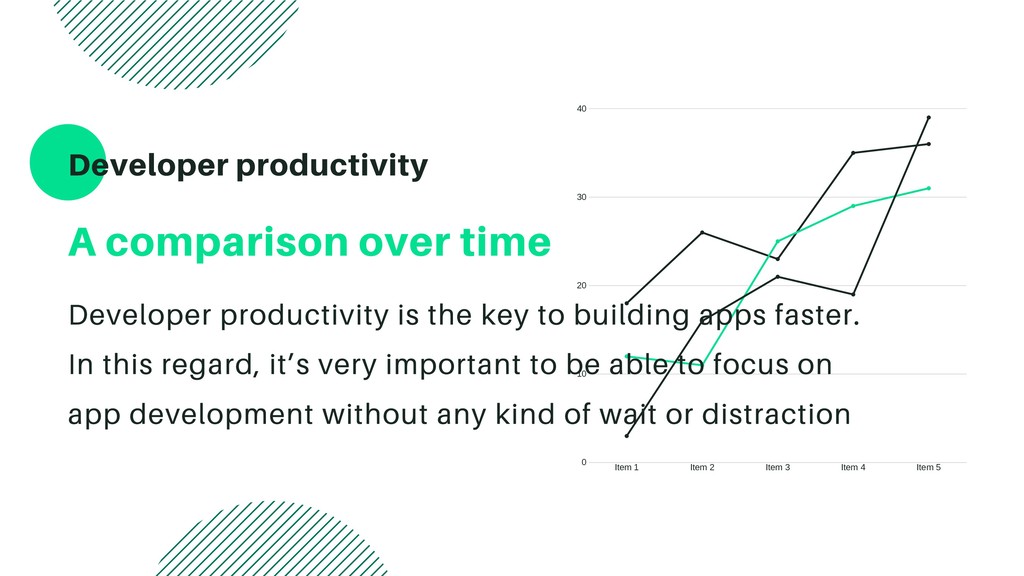
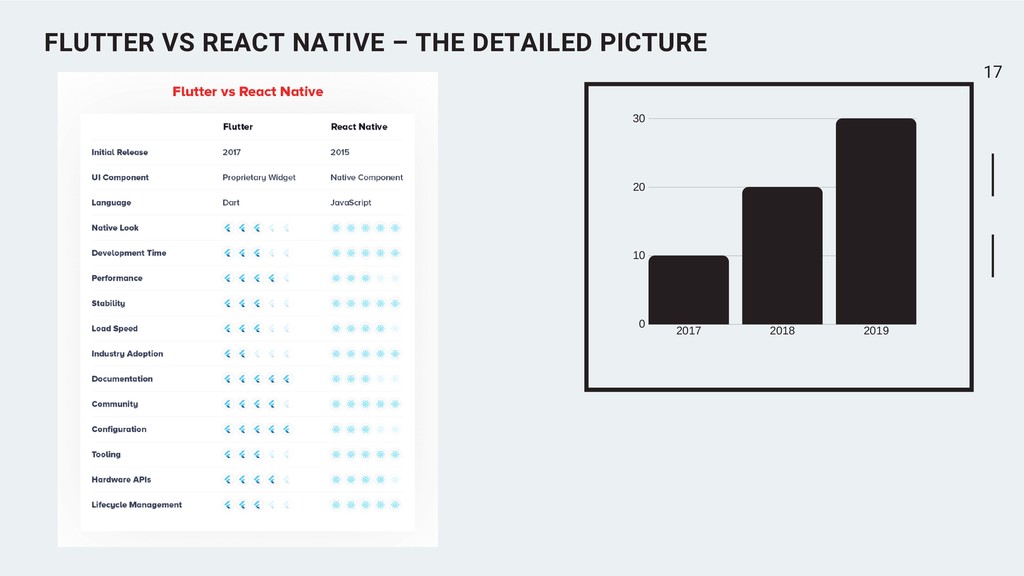
40 30 20 10 0 A comparison over time Developer productivity is the key to building apps faster. In this regard, it’s very important to be able to focus on app development without any kind of wait or distraction Developer productivity
& Upgradation As soon as developers start to show interest in technology and adopt it in their development process, they form a community to share knowledge. A strong community helps developers to learn from each other and solve the problems they are facing.
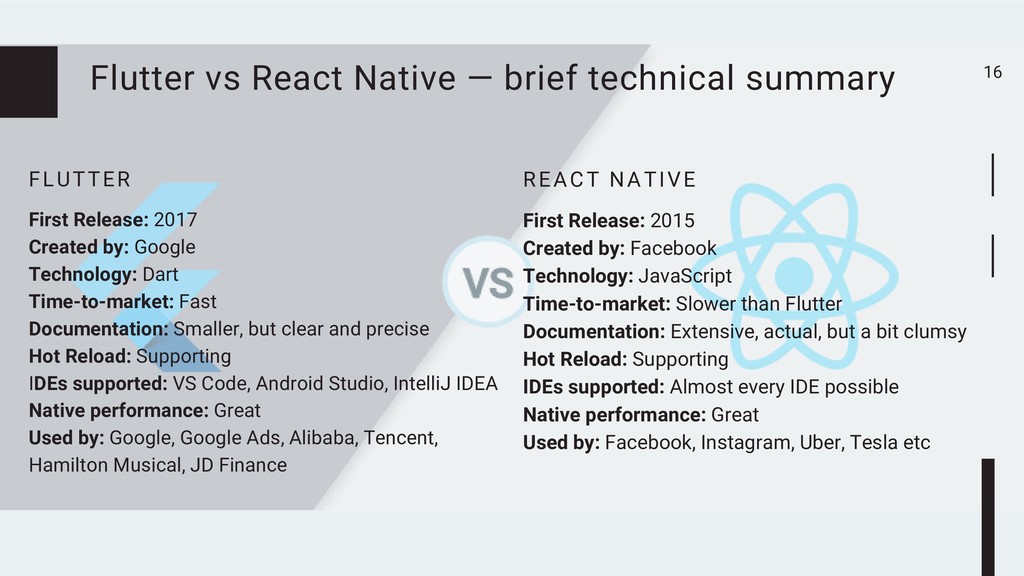
Release: 2017 Created by: Google Technology: Dart Time-to-market: Fast Documentation: Smaller, but clear and precise Hot Reload: Supporting IDEs supported: VS Code, Android Studio, IntelliJ IDEA Native performance: Great Used by: Google, Google Ads, Alibaba, Tencent, Hamilton Musical, JD Finance 16 REACT NATIVE First Release: 2015 Created by: Facebook Technology: JavaScript Time-to-market: Slower than Flutter Documentation: Extensive, actual, but a bit clumsy Hot Reload: Supporting IDEs supported: Almost every IDE possible Native performance: Great Used by: Facebook, Instagram, Uber, Tesla etc
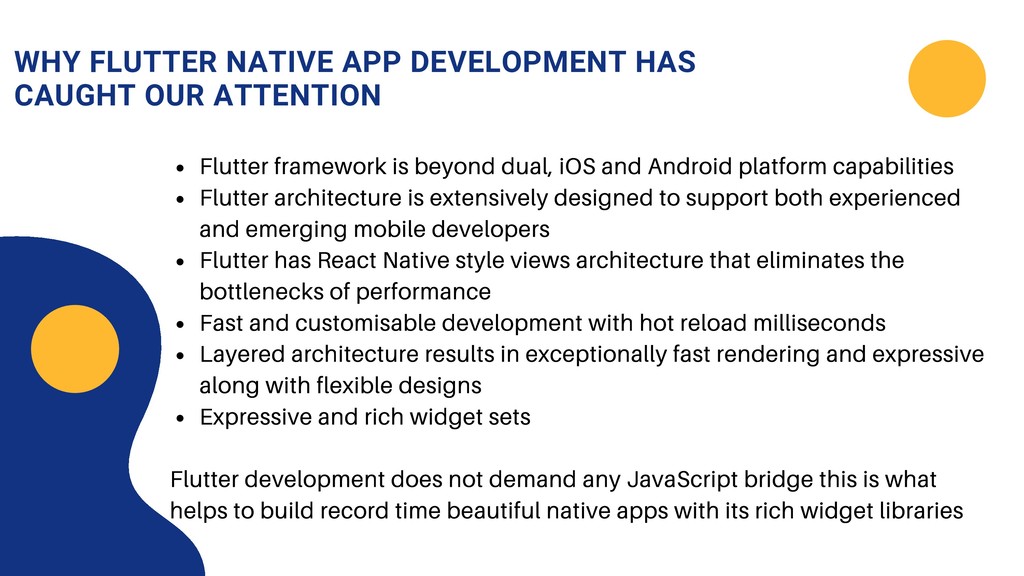
framework is beyond dual, iOS and Android platform capabilities Flutter architecture is extensively designed to support both experienced and emerging mobile developers Flutter has React Native style views architecture that eliminates the bottlenecks of performance Fast and customisable development with hot reload milliseconds Layered architecture results in exceptionally fast rendering and expressive along with flexible designs Expressive and rich widget sets Flutter development does not demand any JavaScript bridge this is what helps to build record time beautiful native apps with its rich widget libraries


 jadavchirag
 andpad
 kasacchiful
 steliosf
 ivargrimstad
 tomokon
 siroemk
 yukikurage
 colorful12
 akit37
 yasaichi
 texmeijin
 morizo_1984
 dougneiner
 aarron
 rkaga
rkaga
 holman
 cromwellryan
 codingconduct
 livdayseo
 inesmontani
 sarafernandez
 paigeccino
 lynnandtonic
 marketingsoph