Share
What the Heck is OAuth and OpenID Connect?
OAuth is not an API or a service: it is an open standard for authorization and any developer can implement it. OAuth is a standard that applications can use to provide client applications with “secure delegated access”. OAuth works over HTTP and authorizes Devices, APIs, Servers and Applications with access tokens rather than credentials, which we will go over in depth below. OpenID Connect (OIDC) is built on top of the OAuth 2.0 protocol. It allows clients to verify the identity of the user and, as well as to obtain their basic profile information. This session covers how OAuth/OIDC works, when to use them, and frameworks/services that simplify authentication.
Blog post: https://developer.okta.com/blog/2017/06/21/what-the-heck-is-oauth
Matt Raible
Transcript
77 slides
-
Matt Raible | @mraible What the Heck is OAuth and
OIDC? September 22, 2017 Connect.Tech https://www.flickr.com/photos/rockmixer/2806330093 -
Blogger on raibledesigns.com Web Developer and Java Champion Father, Skier,
Mountain Biker, Whitewater Rafter Open Source Connoisseur Who is Matt Raible? Bus Lover Okta Developer Advocate -
What about You? Java, .NET, Python, or Node.js? Have you
ever written authentication from scratch? Have you implemented OAuth or OIDC? Have you heard of Okta? Auth0? Why are you here? -
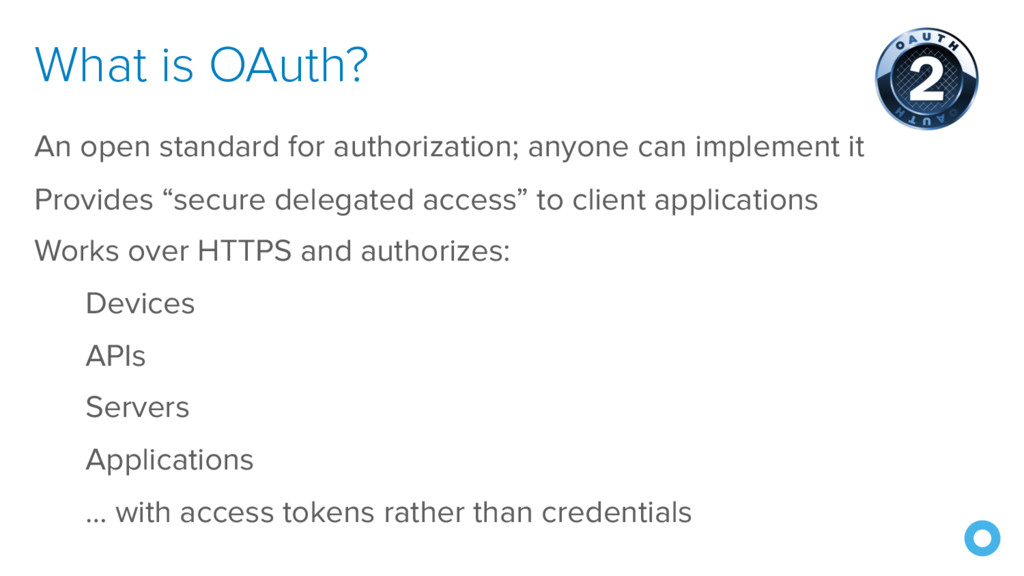
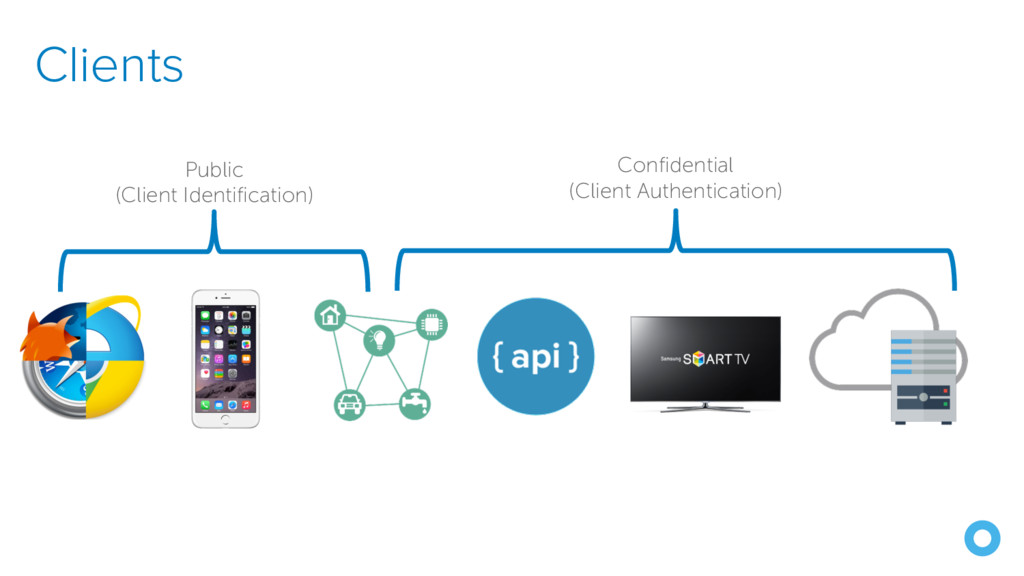
An open standard for authorization; anyone can implement it Provides
“secure delegated access” to client applications Works over HTTPS and authorizes: Devices APIs Servers Applications … with access tokens rather than credentials What is OAuth? -
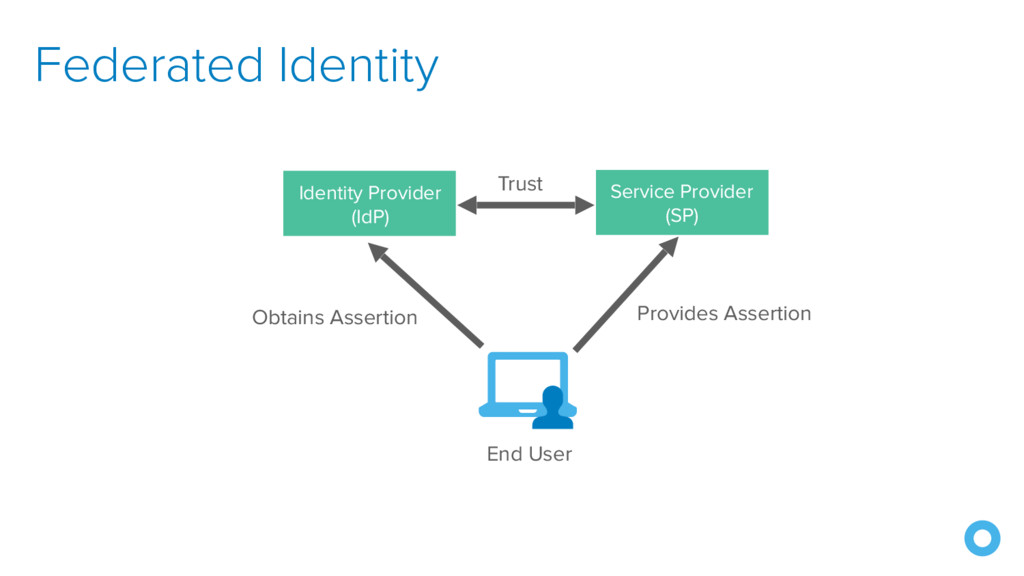
Federated Identity Identity Provider (IdP) Service Provider (SP) End User
Trust Obtains Assertion Provides Assertion -
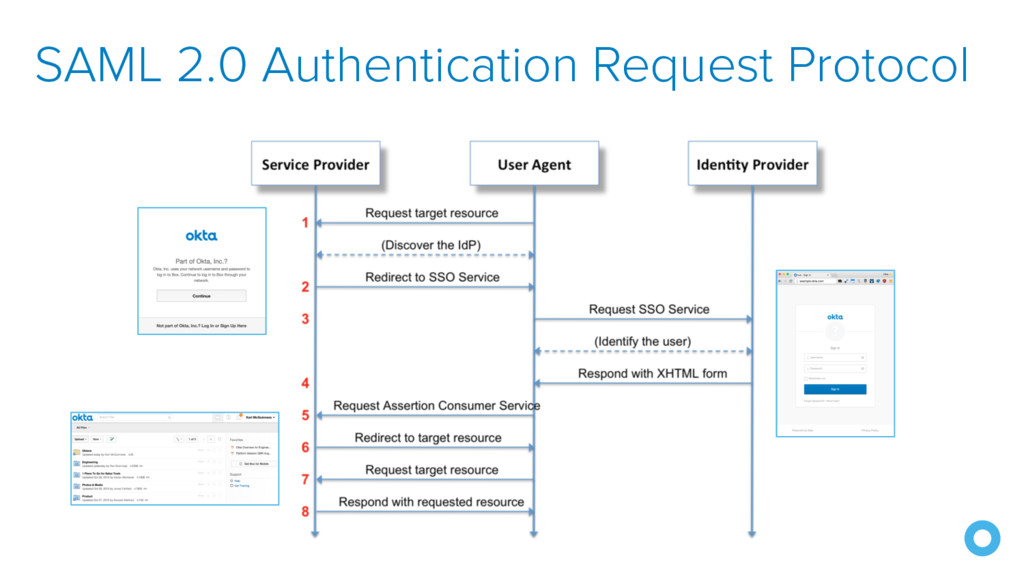
SAML 2.0 Assertion <Assertion xmlns="urn:oasis:names:tc:SAML:2.0:assertion" ID="b07b804c-7c29-ea16-7300-4f3d6f7928ac" Version="2.0" IssueInstant="2004-12-05T09:22:05" <Issuer>https://example.okta.com</Issuer> <ds:Signature
xmlns:ds="http://www.w3.org/2000/09/xmldsig#">...</ds:Signature> <Subject> <NameID Format="urn:oasis:names:tc:SAML:2.0:nameid-format:unspecified"> [email protected] </NameID> <SubjectConfirmation Method="urn:oasis:names:tc:SAML:2.0:cm:bearer"> </SubjectConfirmation> </Subject> <Conditions NotBefore="2004-12-05T09:17:05" NotOnOrAfter="2004-12-05T09:27:05"> <AudienceRestriction> <saml:Audience>https://sp.example.com/saml2/sso</saml:Audience> </AudienceRestriction> </Conditions> <AuthnStatement AuthnInstant="2004-12-05T09:22:00" SessionIndex="b07b804c-7c29-ea16-7300-4f3d6f7928ac"> <AuthnContext> <AuthnContextClassRef> urn:oasis:names:tc:SAML:2.0:ac:classes:PasswordProtectedTransport </AuthnContextClassRef> </AuthnContext> </AuthnStatement> <AttributeStatement> <Attribute Name="displayName"> <AttributeValue>Matt Raible</AttributeValue> </Attribute> </AttributeStatement> </Assertion> -
Delegated Authorization Problem How can a user authorize an app
to access protected data on their behalf? -
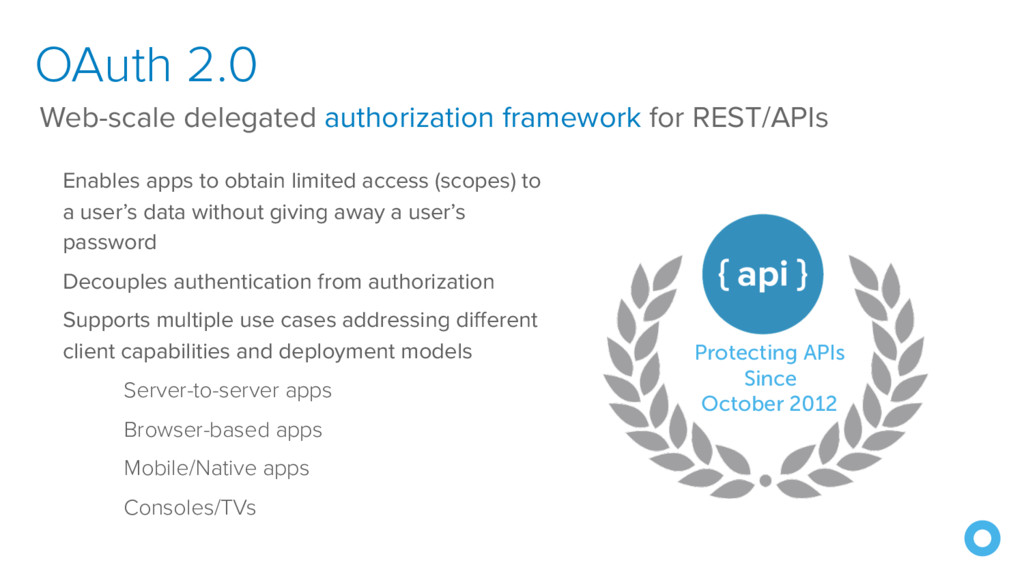
OAuth 2.0 Enables apps to obtain limited access (scopes) to
a user’s data without giving away a user’s password Decouples authentication from authorization Supports multiple use cases addressing different client capabilities and deployment models Server-to-server apps Browser-based apps Mobile/Native apps Consoles/TVs Web-scale delegated authorization framework for REST/APIs Protecting APIs Since October 2012 -
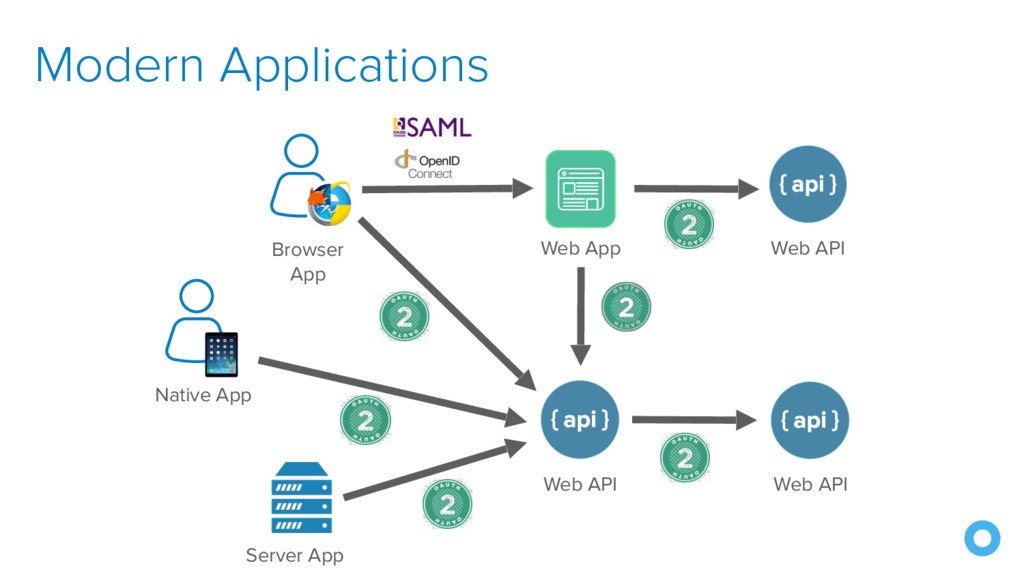
Modern Applications Browser App Server App Web API Web API
Web API Native App Web App -
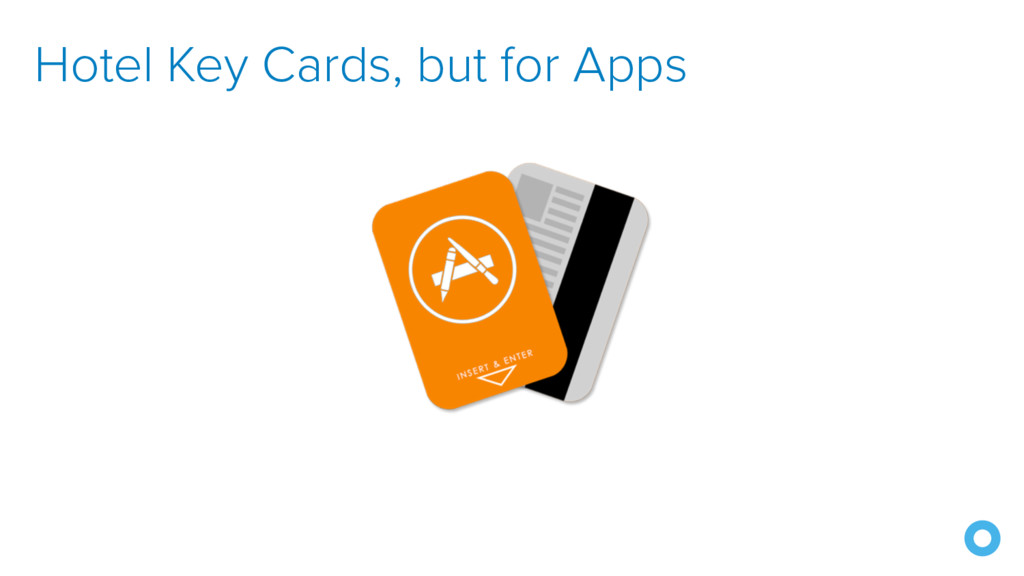
Hotel Key Cards, but for Apps OAuth Authorization Server Resource
(API) Access Token -
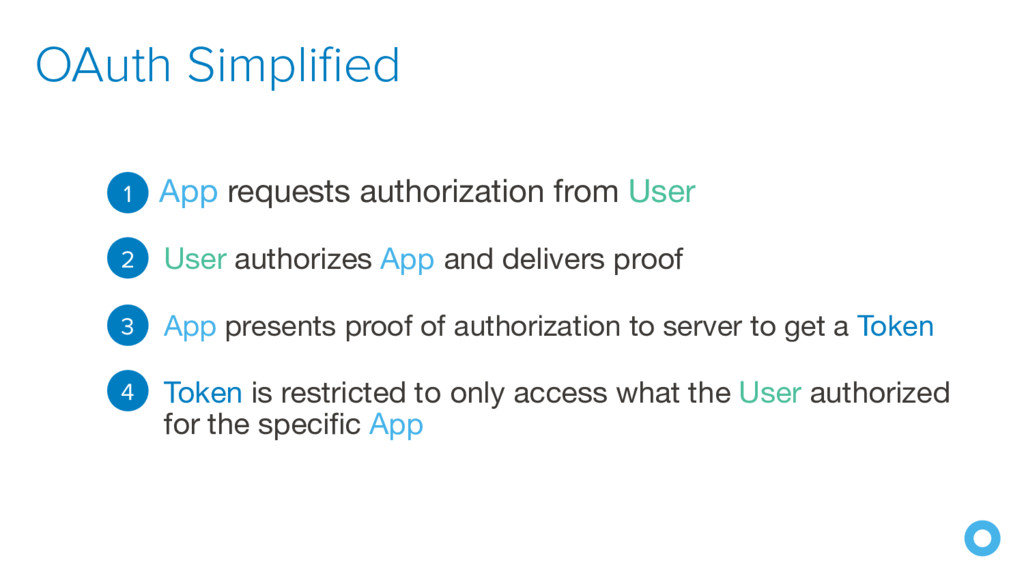
OAuth Simplified App requests authorization from User 1 User authorizes
App and delivers proof 2 App presents proof of authorization to server to get a Token 3 Token is restricted to only access what the User authorized for the specific App 4 -
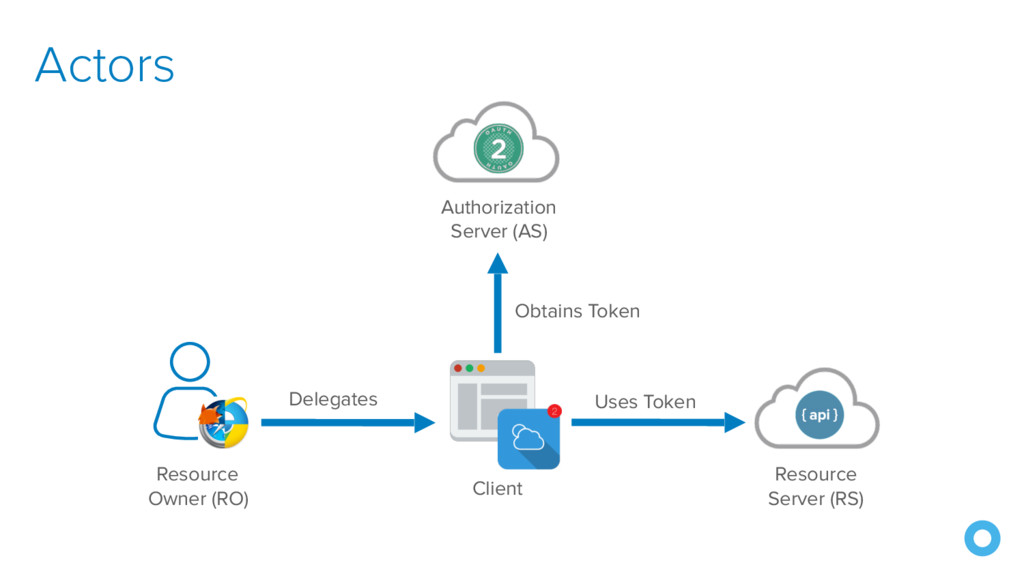
Authorization Server (AS) Resource Owner (RO) Client Delegates Obtains Token
Uses Token Resource Server (RS) Actors -
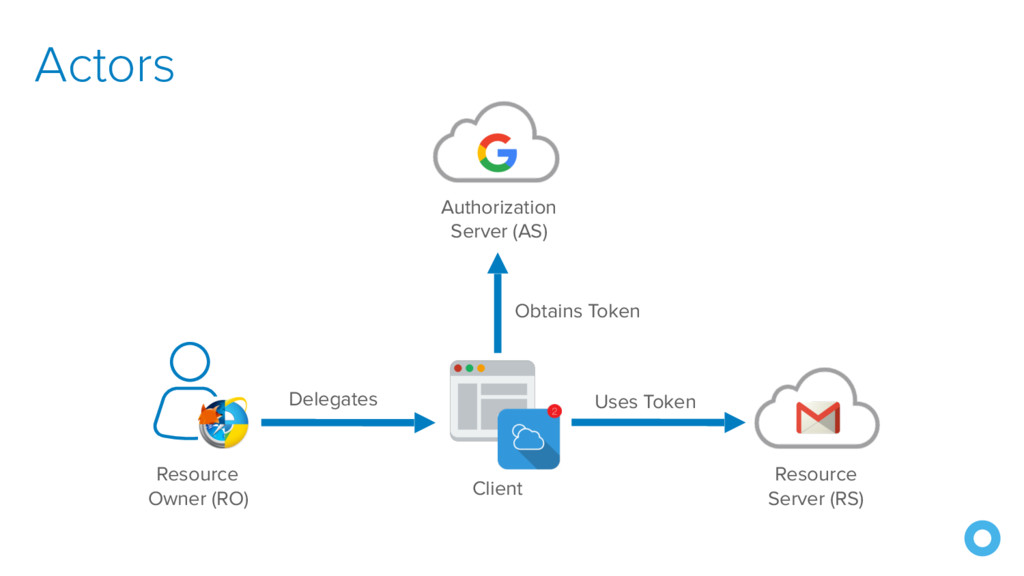
Authorization Server (AS) Resource Owner (RO) Client Delegates Obtains Token
Uses Token Resource Server (RS) Actors -
Scopes Additive bundles of permissions asked by client when requesting
a token Decouples authorization policy decisions from enforcement Who owns the data? End user or the target service Who gets to specify the authorization policy? End user or application owner Scopes to Deny Scopes to Allow -
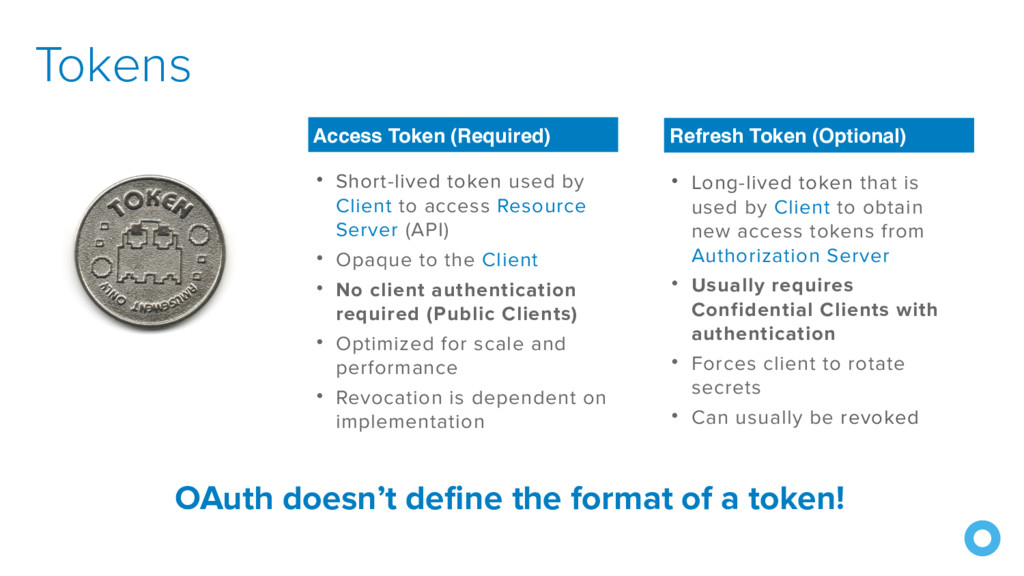
Tokens • Short-lived token used by Client to access Resource
Server (API) • Opaque to the Client • No client authentication required (Public Clients) • Optimized for scale and performance • Revocation is dependent on implementation Access Token (Required) • Long-lived token that is used by Client to obtain new access tokens from Authorization Server • Usually requires Confidential Clients with authentication • Forces client to rotate secrets • Can usually be revoked Refresh Token (Optional) OAuth doesn’t define the format of a token! -
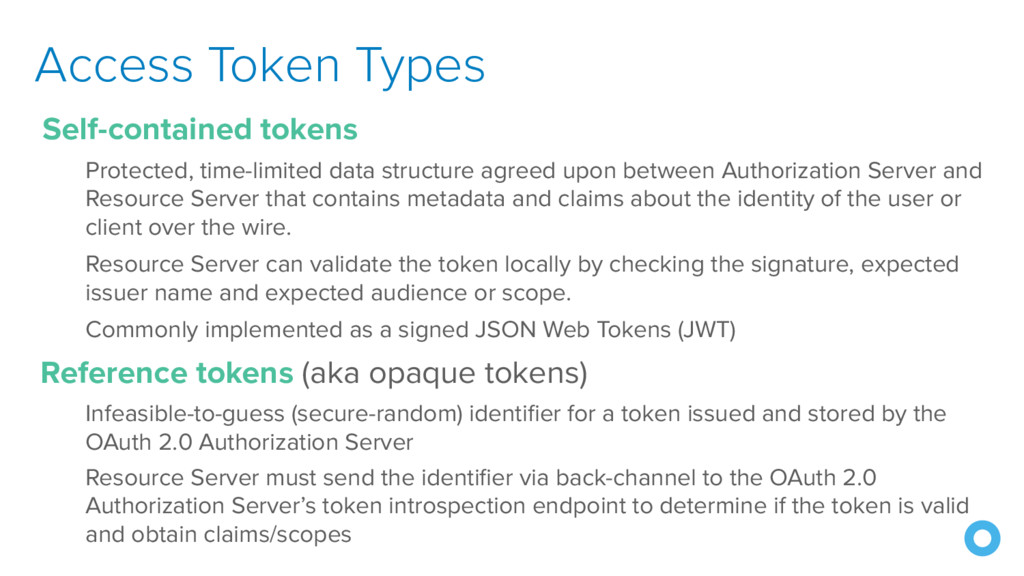
Access Token Types Self-contained tokens Protected, time-limited data structure agreed
upon between Authorization Server and Resource Server that contains metadata and claims about the identity of the user or client over the wire. Resource Server can validate the token locally by checking the signature, expected issuer name and expected audience or scope. Commonly implemented as a signed JSON Web Tokens (JWT) Reference tokens (aka opaque tokens) Infeasible-to-guess (secure-random) identifier for a token issued and stored by the OAuth 2.0 Authorization Server Resource Server must send the identifier via back-channel to the OAuth 2.0 Authorization Server’s token introspection endpoint to determine if the token is valid and obtain claims/scopes -
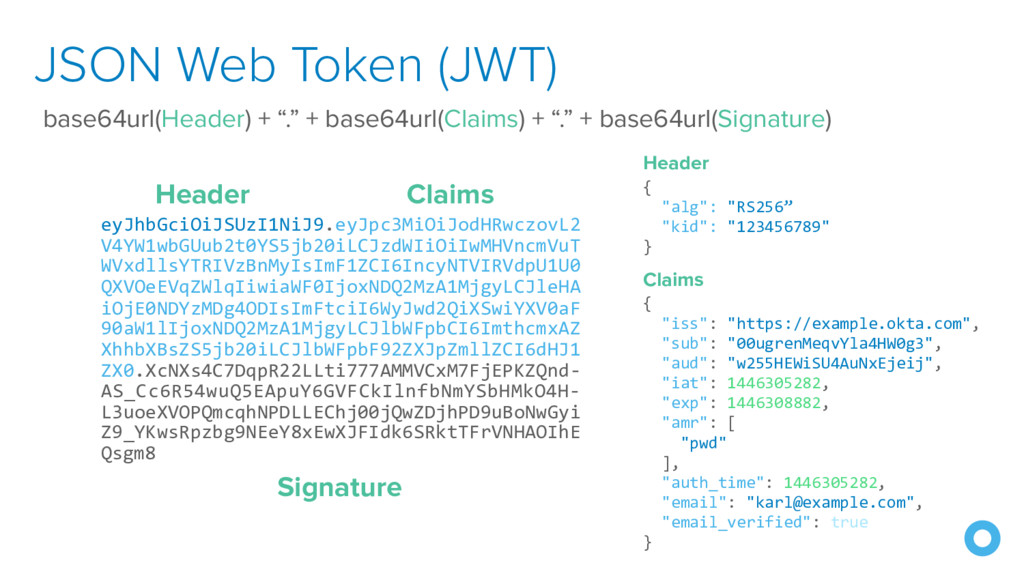
JSON Web Token (JWT) base64url(Header) + “.” + base64url(Claims) +
“.” + base64url(Signature) eyJhbGciOiJSUzI1NiJ9.eyJpc3MiOiJodHRwczovL2 V4YW1wbGUub2t0YS5jb20iLCJzdWIiOiIwMHVncmVuT WVxdllsYTRIVzBnMyIsImF1ZCI6IncyNTVIRVdpU1U0 QXVOeEVqZWlqIiwiaWF0IjoxNDQ2MzA1MjgyLCJleHA iOjE0NDYzMDg4ODIsImFtciI6WyJwd2QiXSwiYXV0aF 90aW1lIjoxNDQ2MzA1MjgyLCJlbWFpbCI6ImthcmxAZ XhhbXBsZS5jb20iLCJlbWFpbF92ZXJpZmllZCI6dHJ1 ZX0.XcNXs4C7DqpR22LLti777AMMVCxM7FjEPKZQnd- AS_Cc6R54wuQ5EApuY6GVFCkIlnfbNmYSbHMkO4H- L3uoeXVOPQmcqhNPDLLEChj00jQwZDjhPD9uBoNwGyi Z9_YKwsRpzbg9NEeY8xEwXJFIdk6SRktTFrVNHAOIhE Qsgm8 { "alg": "RS256” "kid": "123456789" } { "iss": "https://example.okta.com", "sub": "00ugrenMeqvYla4HW0g3", "aud": "w255HEWiSU4AuNxEjeij", "iat": 1446305282, "exp": 1446308882, "amr": [ "pwd" ], "auth_time": 1446305282, "email": "[email protected]", "email_verified": true } Header Claims Signature Header Claims -
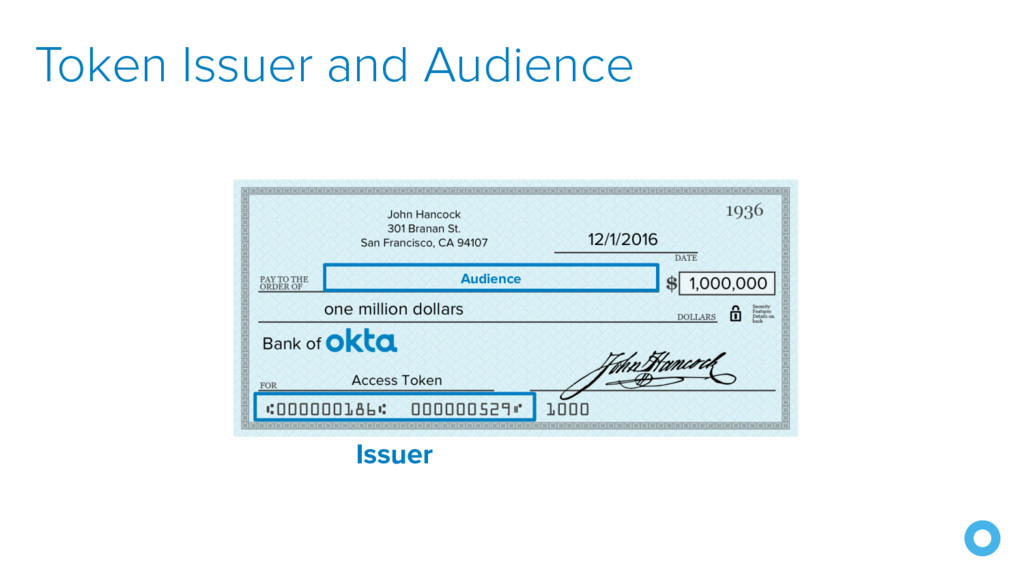
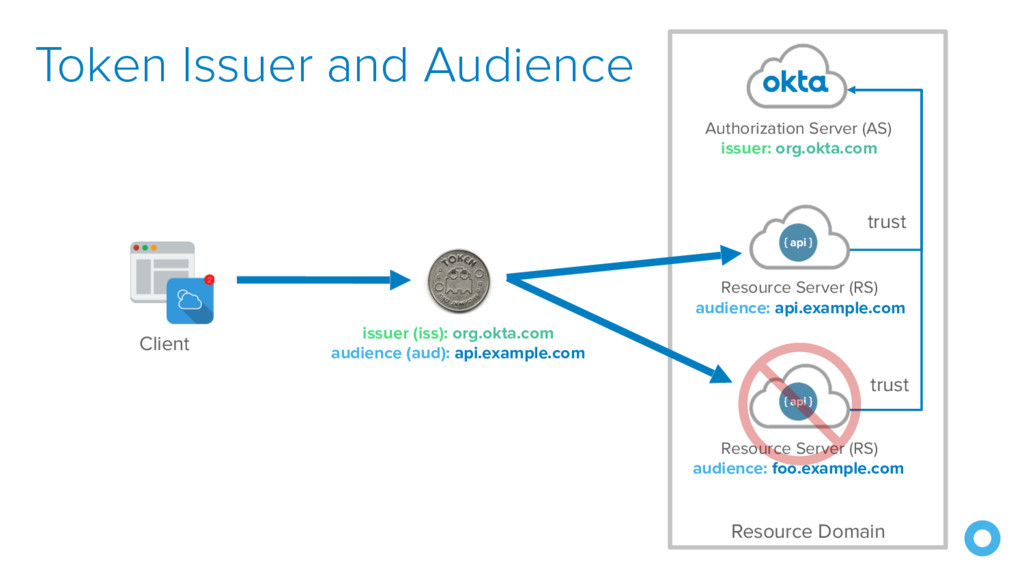
Token Issuer and Audience Resource Server (RS) audience: api.example.com Authorization
Server (AS) issuer: org.okta.com Resource Server (RS) audience: foo.example.com Resource Domain Client trust trust issuer (iss): org.okta.com audience (aud): api.example.com -
Authorization Server Authorize Endpoint (/ oauth2/authorize) Token Endpoint (/oauth2/token) Authorization
Server Authorization Grant Refresh Token Access Token Introspection Endpoint (/ oauth2/introspect) Revocation Endpoint (/ oauth2/revoke) -
© Okta and/or its affiliates. All rights reserved. Okta Confidential
Token State Management Developer Friction 47 -
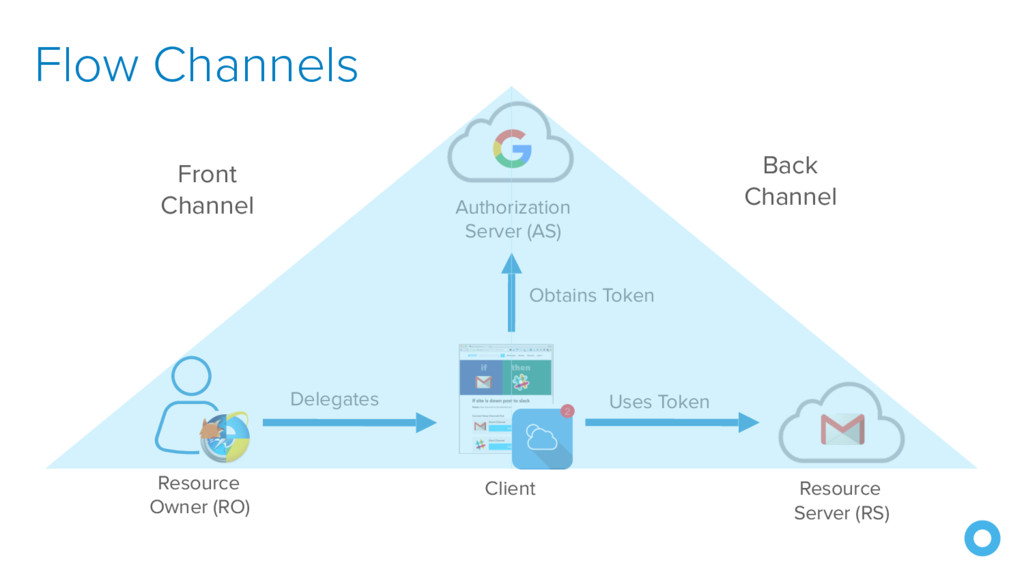
Flow Channels Resource Server (RS) Authorization Server (AS) Resource Owner
(RO) Client Delegates Obtains Token Uses Token Back Channel Front Channel -
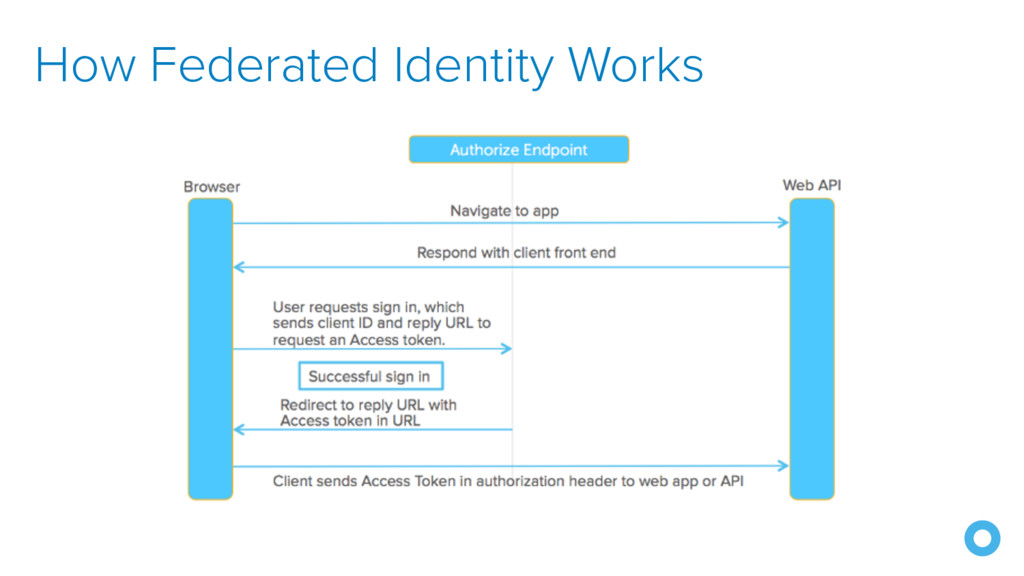
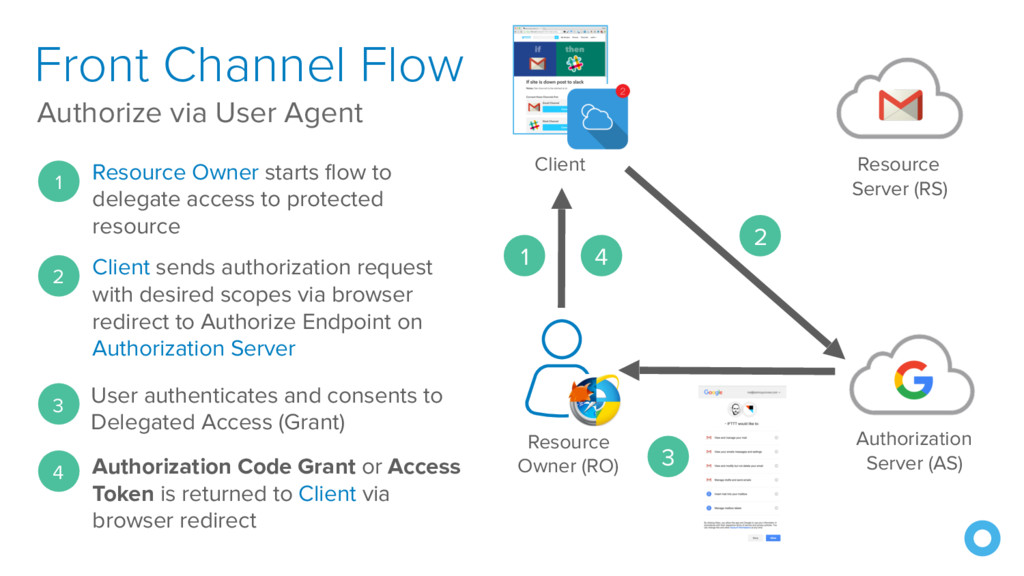
Front Channel Flow Authorize via User Agent Resource Server (RS)
Authorization Server (AS) 4 2 3 1 Resource Owner starts flow to delegate access to protected resource 1 Client 2 Client sends authorization request with desired scopes via browser redirect to Authorize Endpoint on Authorization Server 3 User authenticates and consents to Delegated Access (Grant) 4 Authorization Code Grant or Access Token is returned to Client via browser redirect Resource Owner (RO) -
Authorization Request GET https://accounts.google.com/o/oauth2/auth? scope=gmail.insert gmail.send& redirect_uri=https://app.example.com/oauth2/callback& response_type=code& client_id=812741506391& state=af0ifjsldkj
HTTP/1.1 302 Found Location: https://app.example.com/oauth2/callback? code=MsCeLvIaQm6bTrgtp7& state=af0ifjsldkj Request Response Note: Parameters are not URL-encoded for example purposes -
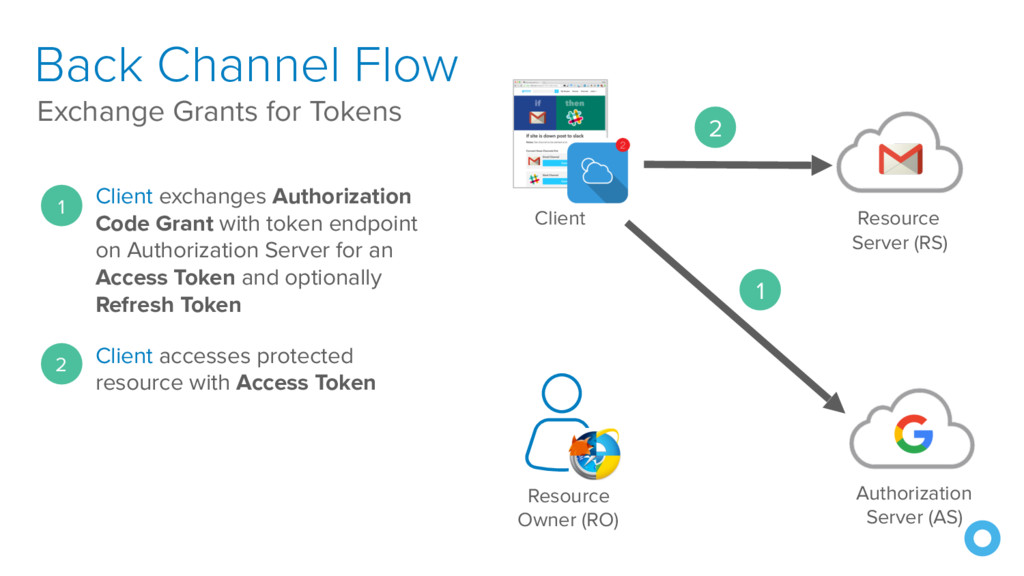
Back Channel Flow Exchange Grants for Tokens Resource Server (RS)
Authorization Server (AS) 1 Client 2 Client accesses protected resource with Access Token Resource Owner (RO) 2 Client exchanges Authorization Code Grant with token endpoint on Authorization Server for an Access Token and optionally Refresh Token 1 -
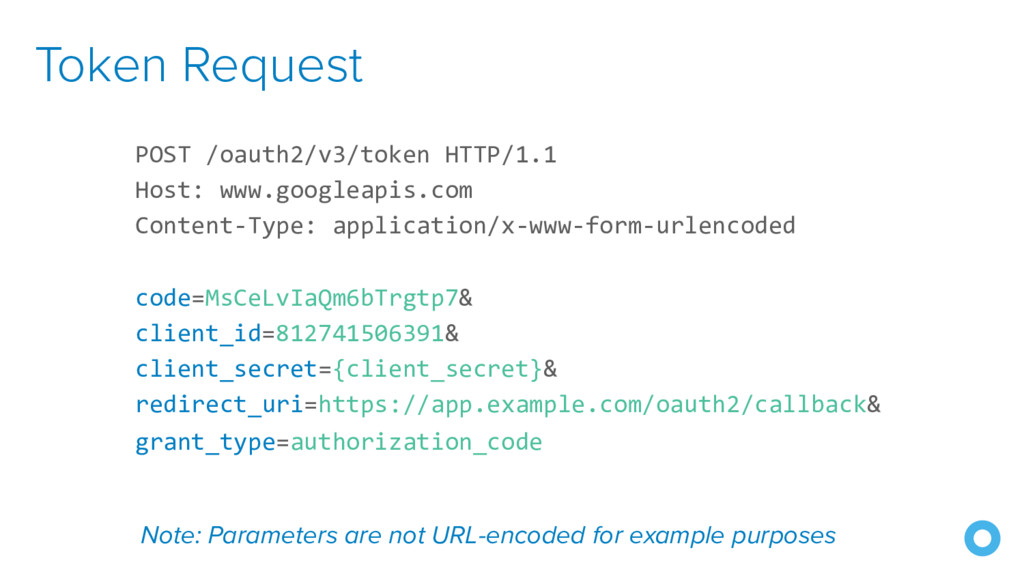
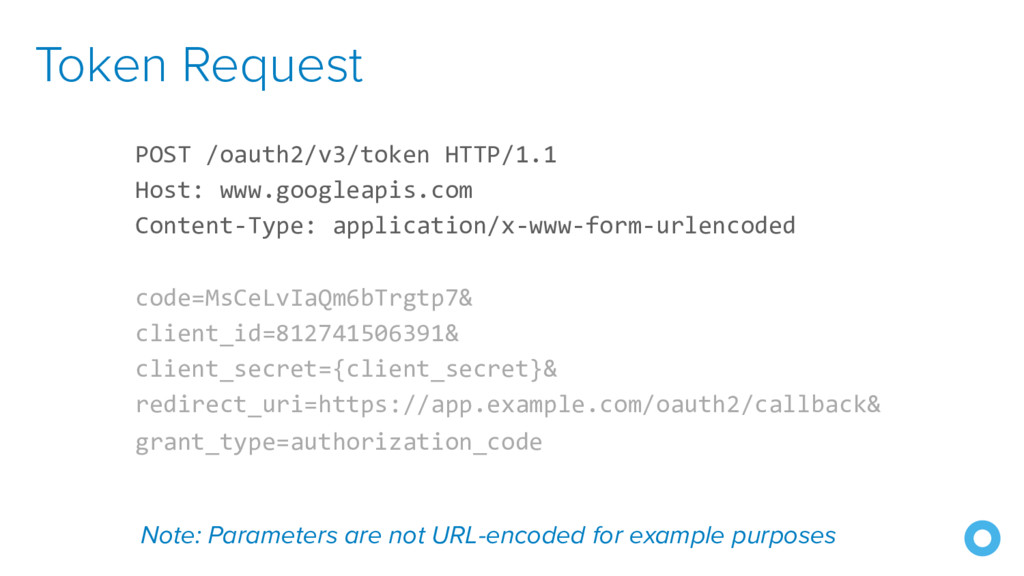
Token Request POST /oauth2/v3/token HTTP/1.1 Host: www.googleapis.com Content-Type: application/x-www-form-urlencoded code=MsCeLvIaQm6bTrgtp7&
client_id=812741506391& client_secret={client_secret}& redirect_uri=https://app.example.com/oauth2/callback& grant_type=authorization_code Note: Parameters are not URL-encoded for example purposes -
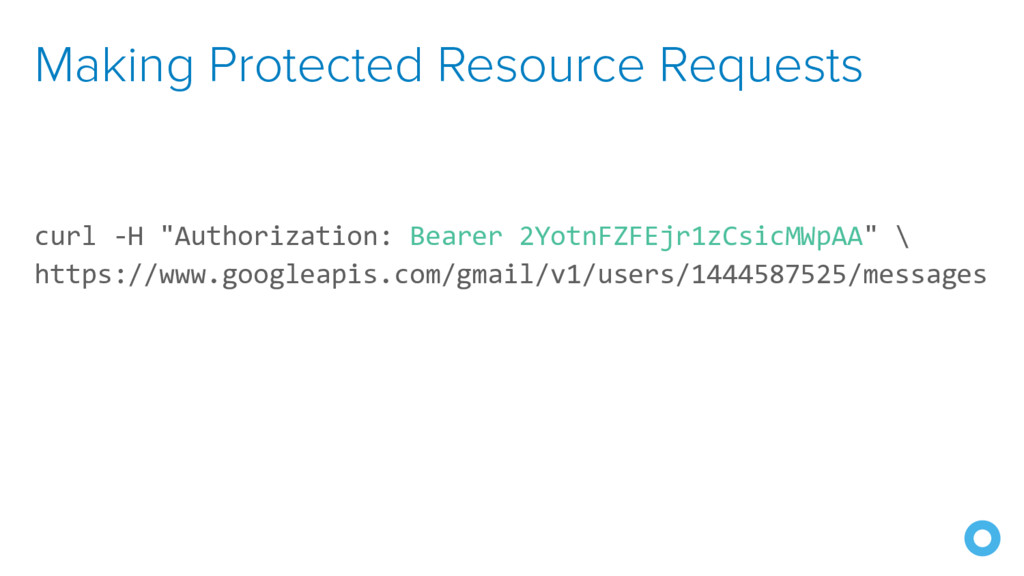
Making Protected Resource Requests curl -H "Authorization: Bearer 2YotnFZFEjr1zCsicMWpAA" \
https://www.googleapis.com/gmail/v1/users/1444587525/messages -
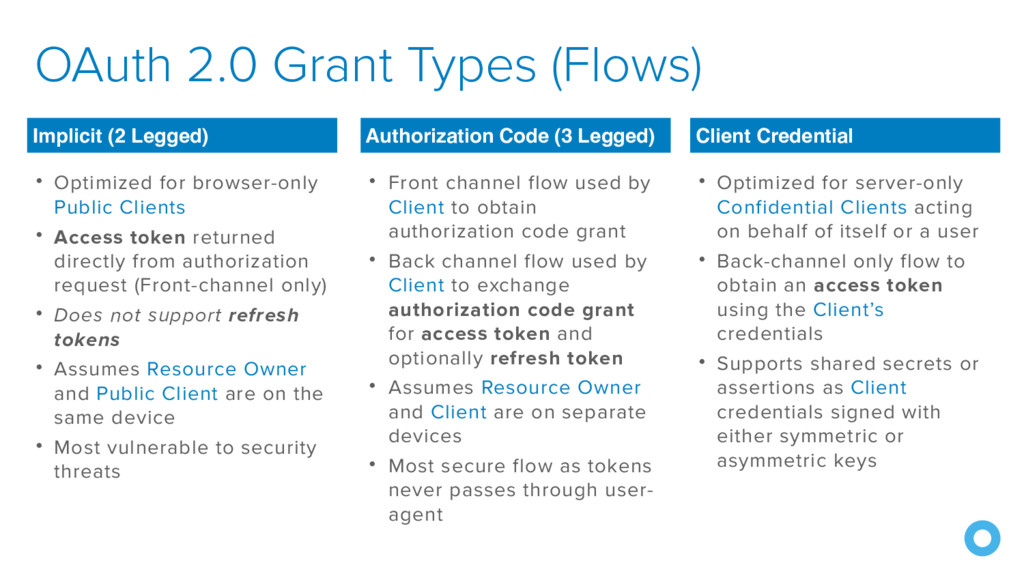
OAuth 2.0 Grant Types (Flows) • Optimized for browser-only Public
Clients • Access token returned directly from authorization request (Front-channel only) • Does not support refresh tokens • Assumes Resource Owner and Public Client are on the same device • Most vulnerable to security threats Implicit (2 Legged) • Front channel flow used by Client to obtain authorization code grant • Back channel flow used by Client to exchange authorization code grant for access token and optionally refresh token • Assumes Resource Owner and Client are on separate devices • Most secure flow as tokens never passes through user- agent Authorization Code (3 Legged) • Optimized for server-only Confidential Clients acting on behalf of itself or a user • Back-channel only flow to obtain an access token using the Client’s credentials • Supports shared secrets or assertions as Client credentials signed with either symmetric or asymmetric keys Client Credential -
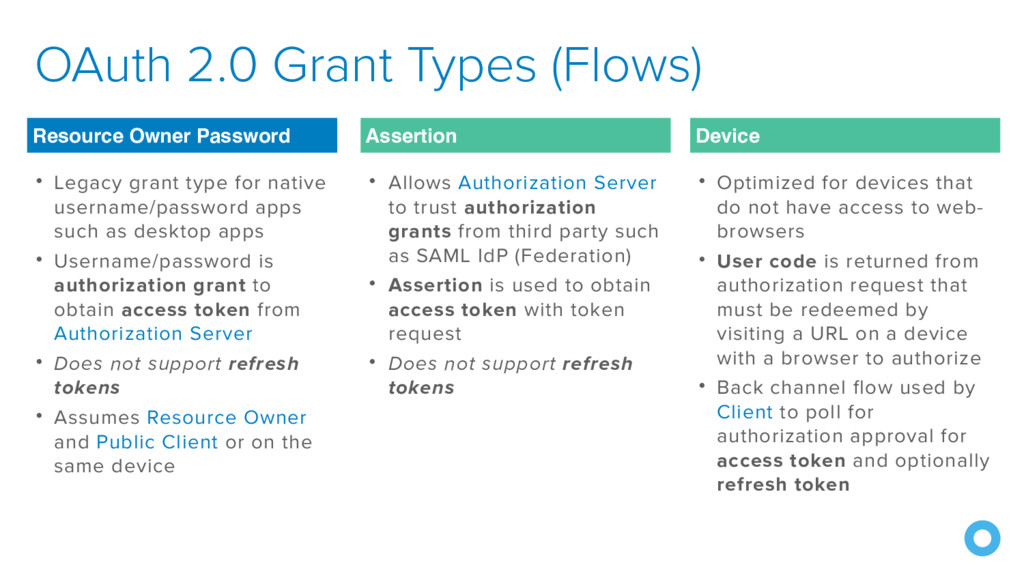
OAuth 2.0 Grant Types (Flows) • Legacy grant type for
native username/password apps such as desktop apps • Username/password is authorization grant to obtain access token from Authorization Server • Does not support refresh tokens • Assumes Resource Owner and Public Client or on the same device Resource Owner Password • Allows Authorization Server to trust authorization grants from third party such as SAML IdP (Federation) • Assertion is used to obtain access token with token request • Does not support refresh tokens Assertion • Optimized for devices that do not have access to web- browsers • User code is returned from authorization request that must be redeemed by visiting a URL on a device with a browser to authorize • Back channel flow used by Client to poll for authorization approval for access token and optionally refresh token Device -
OAuth Flows Six different flows Necessary because of: How you
get consent from client? Who is making consent? Adds a lot of complexity to OAuth When people ask if you support OAuth, are they asking for all six? Image: Ian Sane, Spring Runoff https://www.flickr.com/photos/31246066@N04/4620052369 -
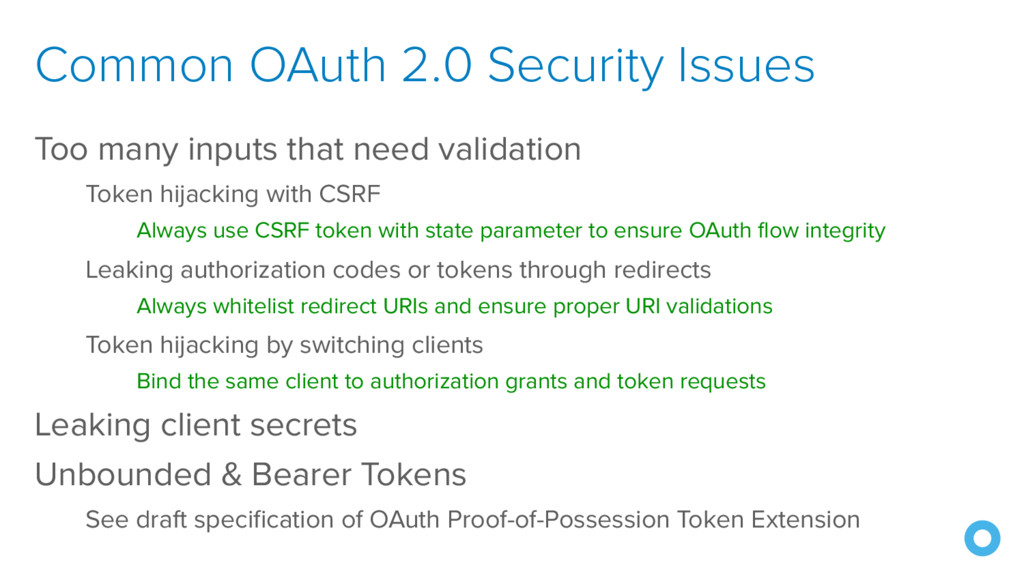
Common OAuth 2.0 Security Issues Too many inputs that need
validation Token hijacking with CSRF Always use CSRF token with state parameter to ensure OAuth flow integrity Leaking authorization codes or tokens through redirects Always whitelist redirect URIs and ensure proper URI validations Token hijacking by switching clients Bind the same client to authorization grants and token requests Leaking client secrets Unbounded & Bearer Tokens See draft specification of OAuth Proof-of-Possession Token Extension -
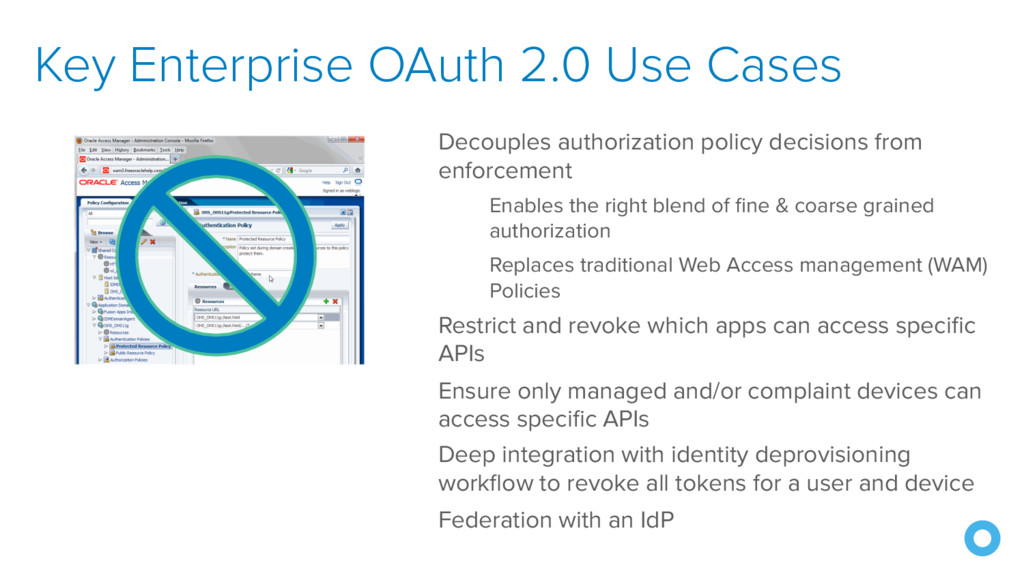
Key Enterprise OAuth 2.0 Use Cases Decouples authorization policy decisions
from enforcement Enables the right blend of fine & coarse grained authorization Replaces traditional Web Access management (WAM) Policies Restrict and revoke which apps can access specific APIs Ensure only managed and/or complaint devices can access specific APIs Deep integration with identity deprovisioning workflow to revoke all tokens for a user and device Federation with an IdP -
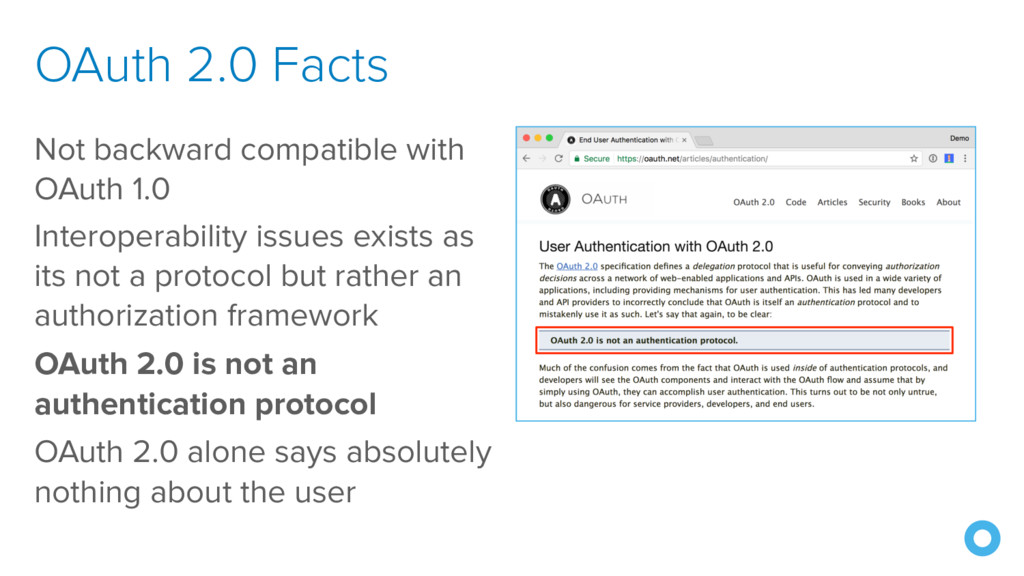
OAuth 2.0 Facts Not backward compatible with OAuth 1.0 Interoperability
issues exists as its not a protocol but rather an authorization framework OAuth 2.0 is not an authentication protocol OAuth 2.0 alone says absolutely nothing about the user -
© Okta and/or its affiliates. All rights reserved. Okta Confidential
61 Not an Authentication Protocol? -
OAuth 2.0 as Pseudo-Authentication Client accessing a https:// api.example.com/me resource
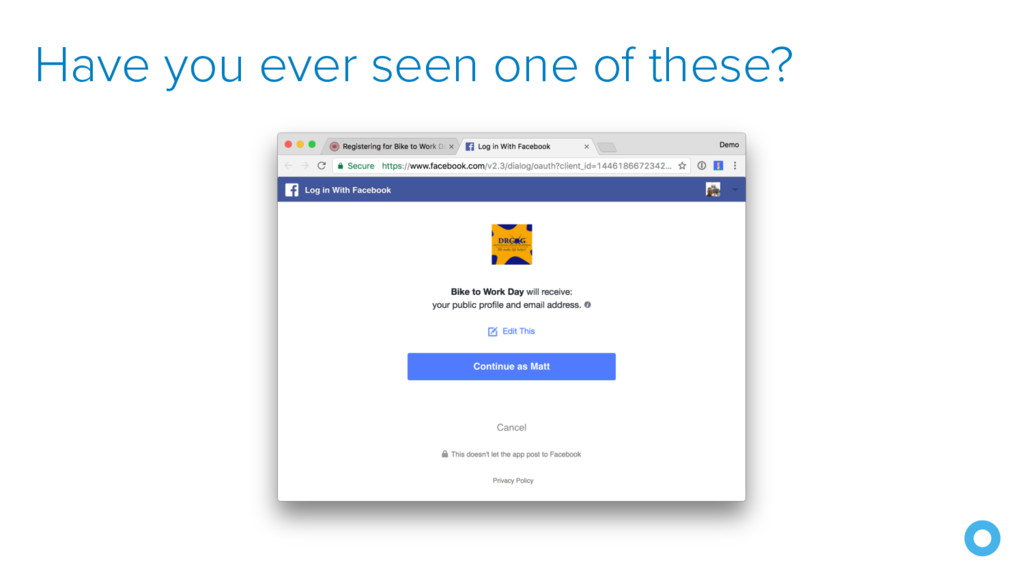
with an access token is not authenticating the user Access tokens just prove the Client was authorized, are opaque, and intended to only be consumed by the Resource Server Who is the user (claims)? When did the user authenticate? Does the user still have an active or expired session? How did the user authenticate? Just password or password + second factor As made famous by Facebook Connect and Twitter -
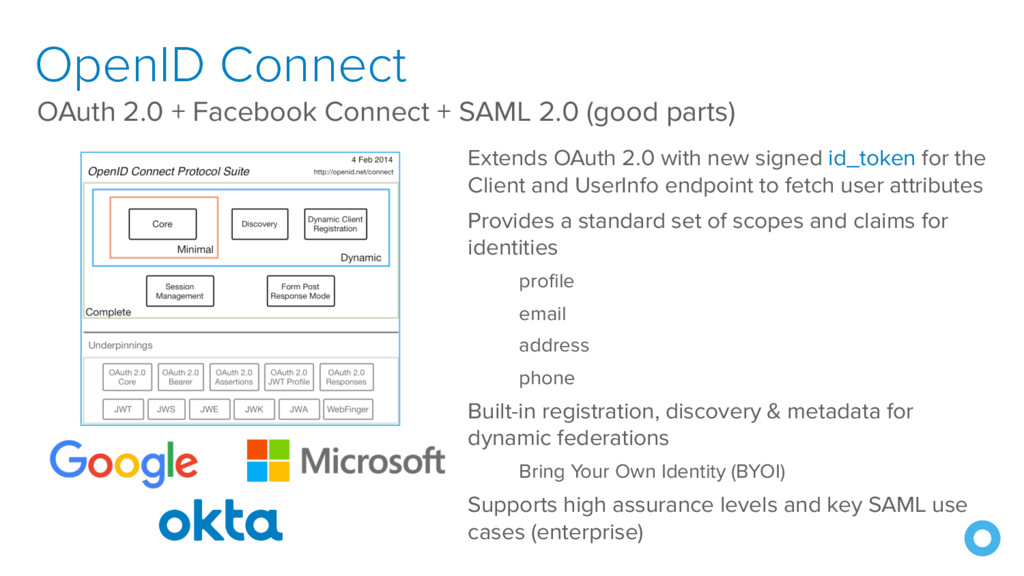
OpenID Connect Extends OAuth 2.0 with new signed id_token for
the Client and UserInfo endpoint to fetch user attributes Provides a standard set of scopes and claims for identities profile email address phone Built-in registration, discovery & metadata for dynamic federations Bring Your Own Identity (BYOI) Supports high assurance levels and key SAML use cases (enterprise) OAuth 2.0 + Facebook Connect + SAML 2.0 (good parts) -
Authorization Request GET https://accounts.google.com/o/oauth2/auth? scope=openid email& redirect_uri=https://app.example.com/oauth2/callback& response_type=code& client_id=812741506391& state=af0ifjsldkj
HTTP/1.1 302 Found Location: https://app.example.com/oauth2/callback? code=MsCeLvIaQm6bTrgtp7& state=af0ifjsldkj Request Response Note: Parameters are not URL-encoded for example purposes -
Token Request POST /oauth2/v3/token HTTP/1.1 Host: www.googleapis.com Content-Type: application/x-www-form-urlencoded code=MsCeLvIaQm6bTrgtp7&
client_id=812741506391& client_secret={client_secret}& redirect_uri=https://app.example.com/oauth2/callback& grant_type=authorization_code Note: Parameters are not URL-encoded for example purposes -
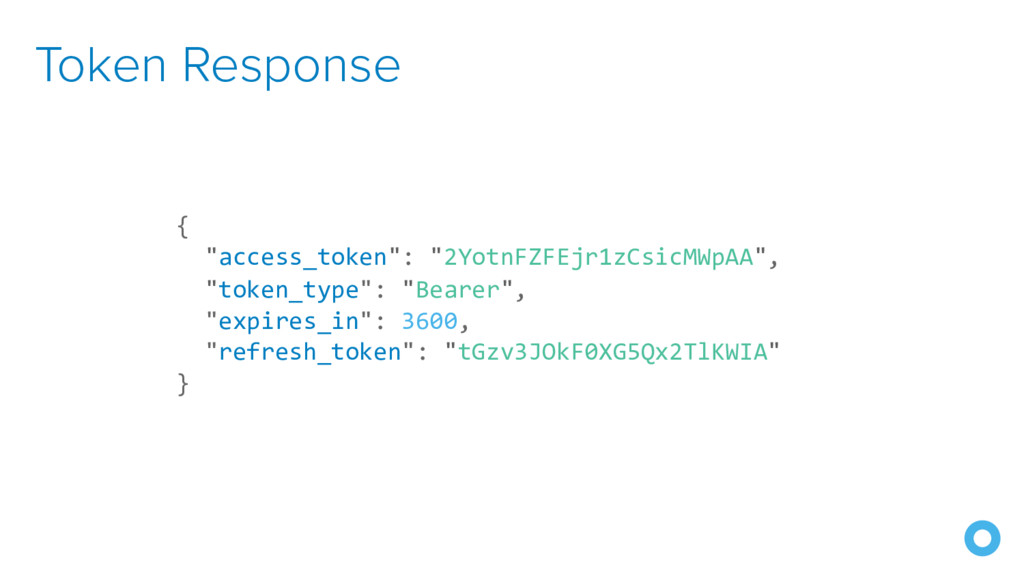
Token Response { "access_token": "2YotnFZFEjr1zCsicMWpAA", "token_type": "Bearer", "expires_in": 3600, "refresh_token":
"tGzv3JOkF0XG5Qx2TlKWIA", "id_token": "eyJhbGciOiJSUzI1NiIsImtpZCI6IjFlOWdkazcifQ..." } -
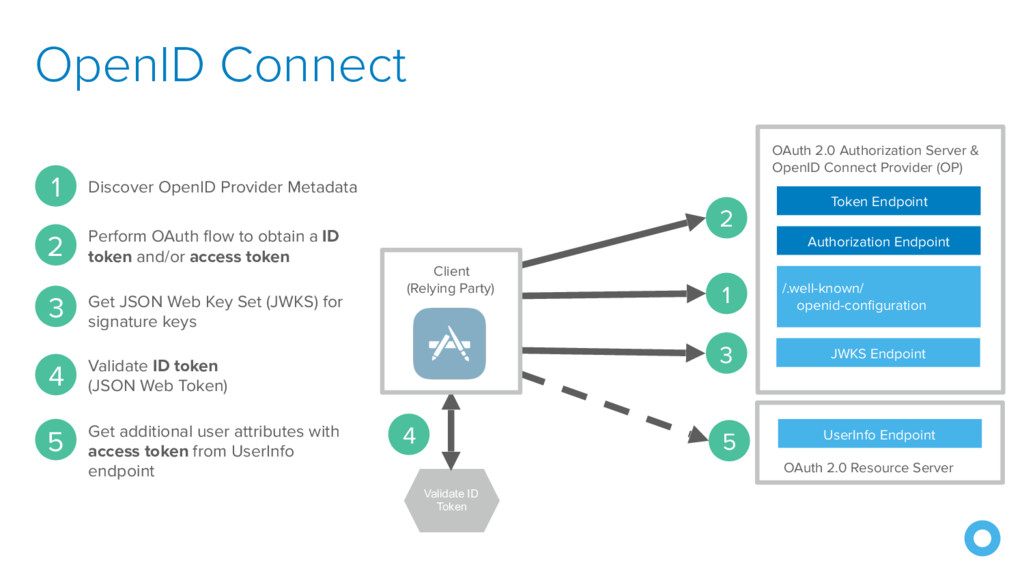
Validate ID Token Token Endpoint Authorization Endpoint /.well-known/ openid-configuration JWKS
Endpoint UserInfo Endpoint OAuth 2.0 Authorization Server & OpenID Connect Provider (OP) OAuth 2.0 Resource Server Client (Relying Party) 1 3 2 5 4 1 Discover OpenID Provider Metadata 2 Perform OAuth flow to obtain a ID token and/or access token 3 Get JSON Web Key Set (JWKS) for signature keys 4 Validate ID token (JSON Web Token) 5 Get additional user attributes with access token from UserInfo endpoint OpenID Connect -
Okta OpenID Connect Integrates with Okta Authentication API for branded
Sign-In UX Certified for the following conformance profiles: OP Basic OP Implicit OP Hybrid OP Config -
Sign-In Widget and JS Auth SDK 71 Open-source embeddable widget
for end-to-end sign-in flow with MFA and account recovery Returns an ID Token for authenticated user Supports social authentication providers Built-on common JS Auth SDK Open source: https://github.com/okta/okta-signin- widget -
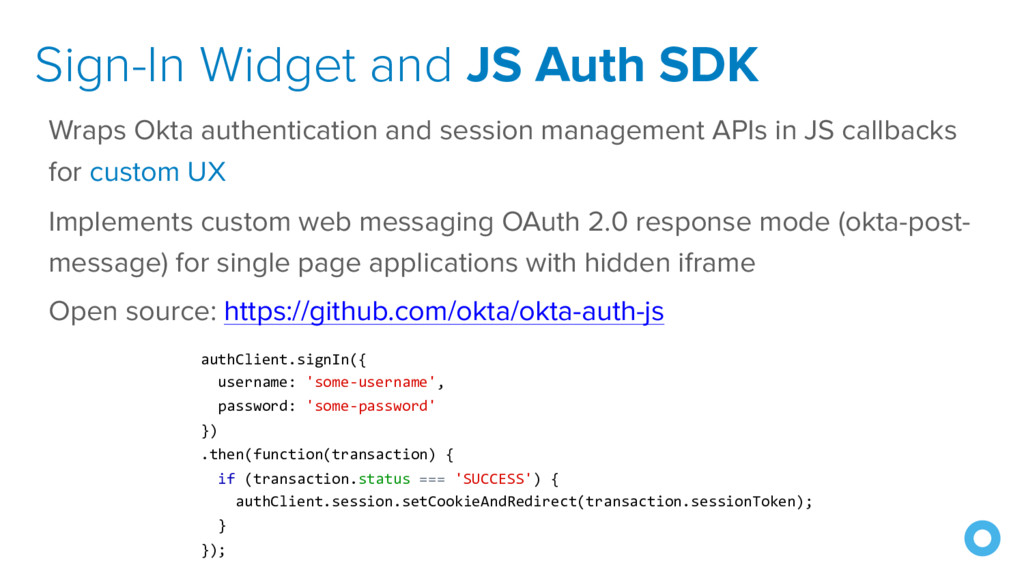
Sign-In Widget and JS Auth SDK Wraps Okta authentication and
session management APIs in JS callbacks for custom UX Implements custom web messaging OAuth 2.0 response mode (okta-post- message) for single page applications with hidden iframe Open source: https://github.com/okta/okta-auth-js authClient.signIn({ username: 'some-username', password: 'some-password' }) .then(function(transaction) { if (transaction.status === 'SUCCESS') { authClient.session.setCookieAndRedirect(transaction.sessionToken); } }); -
Google OAuth Client Library ScribeJava Spring Security OAuth Nimbus OAuth
SDK List of client and server libraries for many languages: https://oauth.net/code/ OAuth and OIDC Libraries -
ORY Hydra https://github.com/ory/hydra Apereo CAS https://github.com/apereo/cas Keycloak https://github.com/keycloak/keycloak JHipster UAA
https://jhipster.github.io/using-uaa/ Open Source OAuth and OIDC Servers