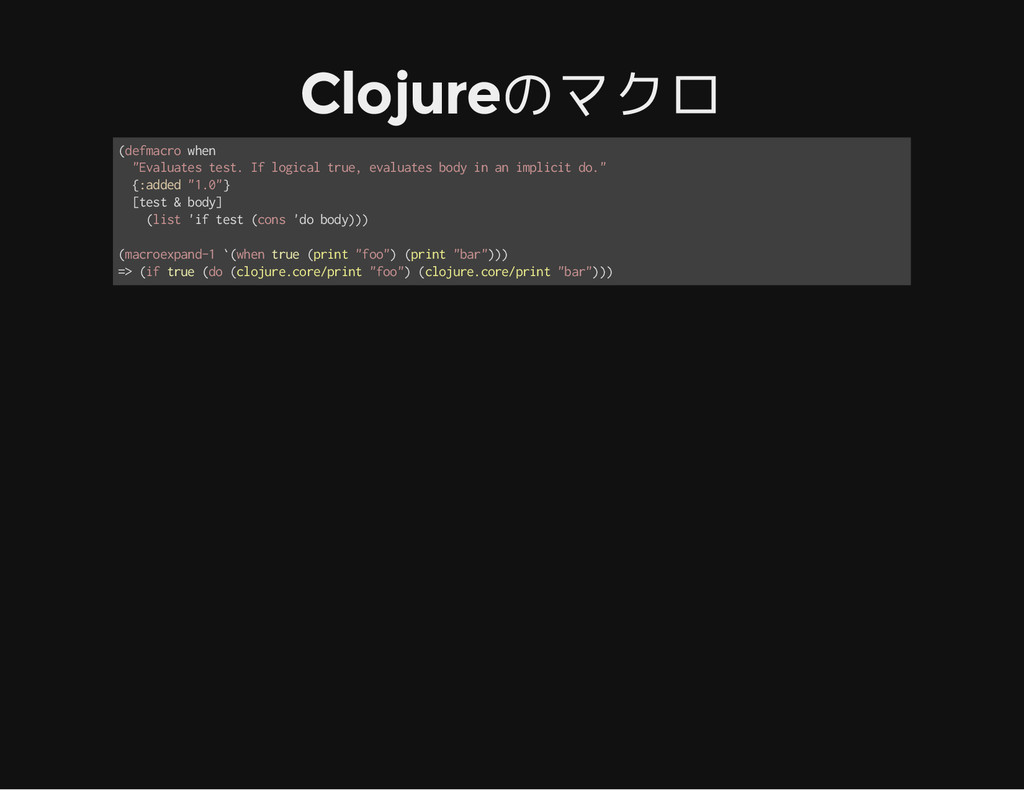
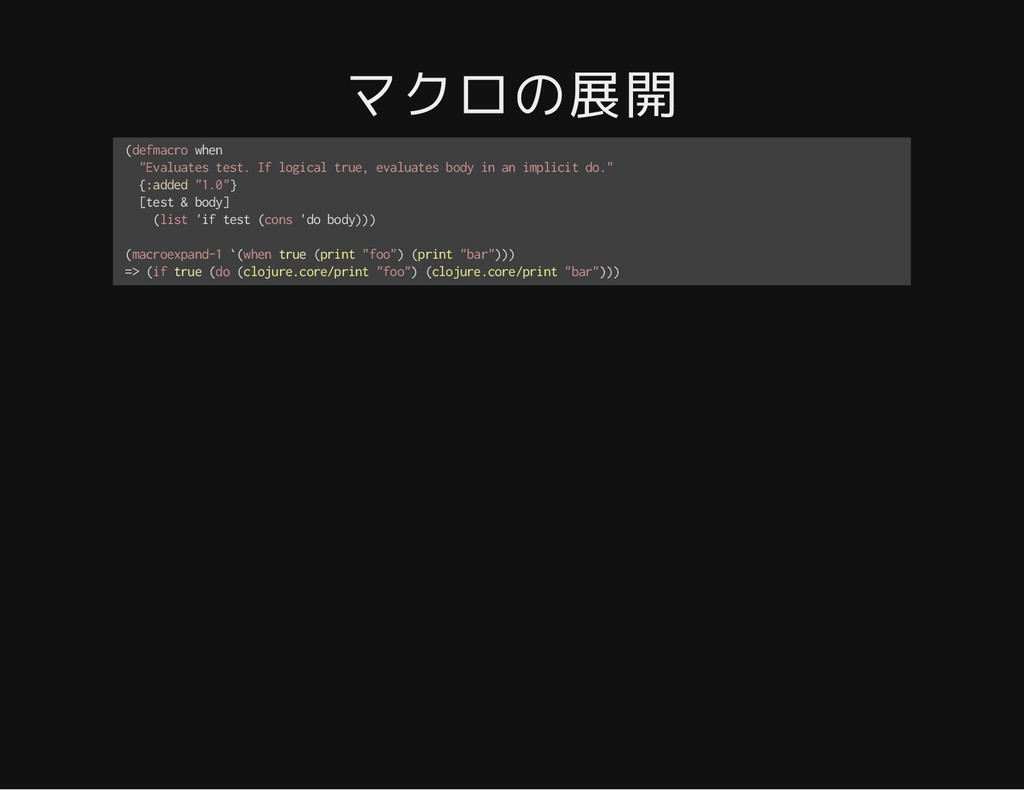
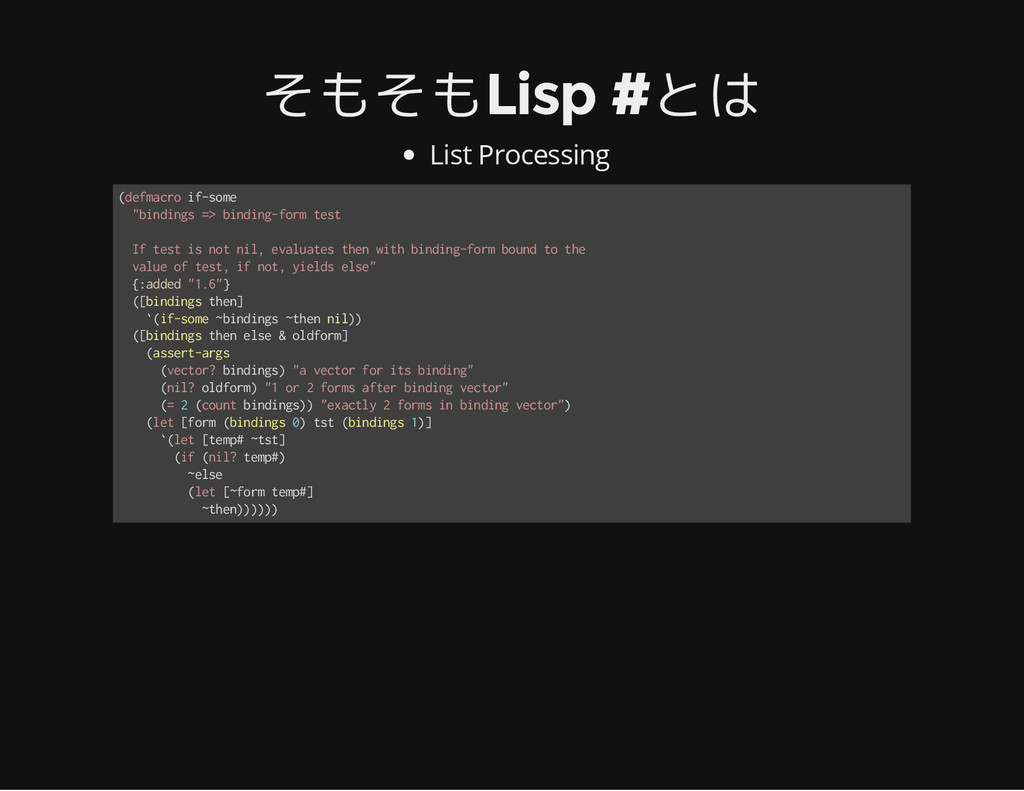
If test is not nil, evaluates then with binding-form bound to the value of test, if not, yields else" {:added "1.6"} ([bindings then] `(if-some ~bindings ~then nil)) ([bindings then else & oldform] (assert-args (vector? bindings) "a vector for its binding" (nil? oldform) "1 or 2 forms after binding vector" (= 2 (count bindings)) "exactly 2 forms in binding vector") (let [form (bindings 0) tst (bindings 1)] `(let [temp# ~tst] (if (nil? temp#) ~else (let [~form temp#] ~then))))))
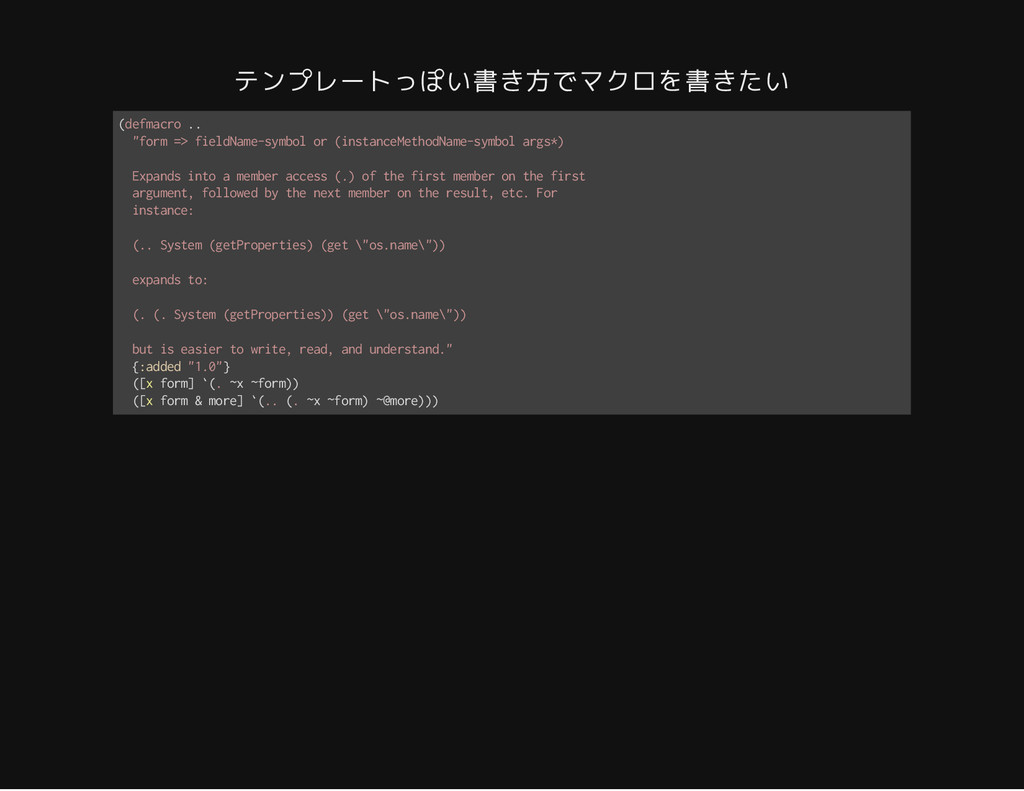
into a member access (.) of the first member on the first argument, followed by the next member on the result, etc. For instance: (.. System (getProperties) (get \"os.name\")) expands to: (. (. System (getProperties)) (get \"os.name\")) but is easier to write, read, and understand." {:added "1.0"} ([x form] `(. ~x ~form)) ([x form & more] `(.. (. ~x ~form) ~@more)))
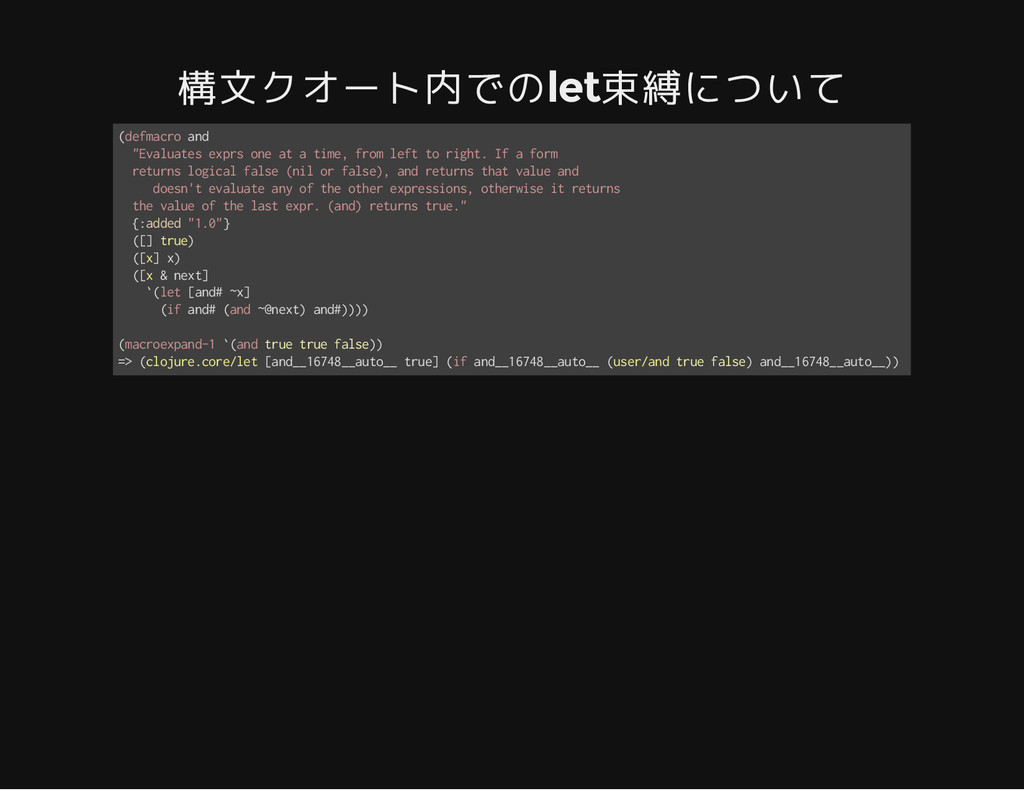
left to right. If a form returns logical false (nil or false), and returns that value and doesn't evaluate any of the other expressions, otherwise it returns the value of the last expr. (and) returns true." {:added "1.0"} ([] true) ([x] x) ([x & next] `(let [and# ~x] (if and# (and ~@next) and#)))) (macroexpand-1 `(and true true false)) => (clojure.core/let [and__16748__auto__ true] (if and__16748__auto__ (user/and true false) and__16748__auto__))


 razon
razon
 leveragestech
 mikanichinose
 maimyyym
 masasuzu
 foursue
 kinunori
 kohbis
 dada4386
 oracle4engineer
 ks91
ks91
 slsops
 vivion
 aleyda
 chrisshort
 palkan
 jonyablonski
 takai
takai
 inesmontani
 jonoalderson
 schlessera
 marcoroth
 cassininazir
 3n
3n
 kimpetersen




![関数型プログラミング (fn [n] (* n n))](https://files.speakerdeck.com/presentations/238ca123ac9647a2958bd17c02d0b8db/slide_11.jpg)