ubiquitous, convenient, on-demand network access to a shared pool of configurable computing resources (e.g., networks, servers, storage, applications, and services) that can be rapidly provisioned and released with minimal management effort or service provider interaction. Source: http://nvlpubs.nist.gov/nistpubs/Legacy/SP/nistspecialpublication800-145.pdf
the data center comes up for lease, what people are doing is looking at, ‘I could spend a big pile of money to refit it, or I could replace it with an AWS account’” - Adrian Cockcroft, former Netflix Cloud Architect
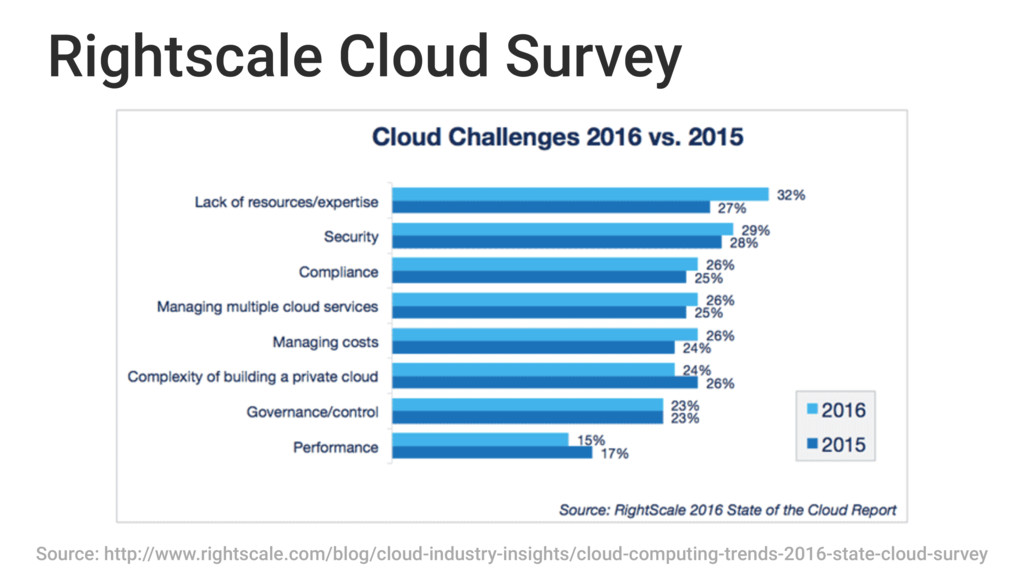
/ Ops • Increased collaboration • Cultural Transformation • Deep Automation • CI / CD • Increased Business Agility Reference: http://www.rightscale.com/blog/cloud-industry-insights/cloud-computing- trends-2016-state-cloud-survey
cloud concepts, leverage them & be aware of the pitfalls • Huge increase in scale and complexities • Shift in Day 1 & Day 2 away from traditional tools or processes • Cost Visualisation & Optimisation
cloud • Traditional companies are not attractive in developers’ eyes, as they want to work in a company which is relevant in the new age • IT are increasingly seen as equal partners with business and opinions are duly considered Good Read: http://talkincloud.com/cloud-computing-research/why-are-developers-considering-cloud
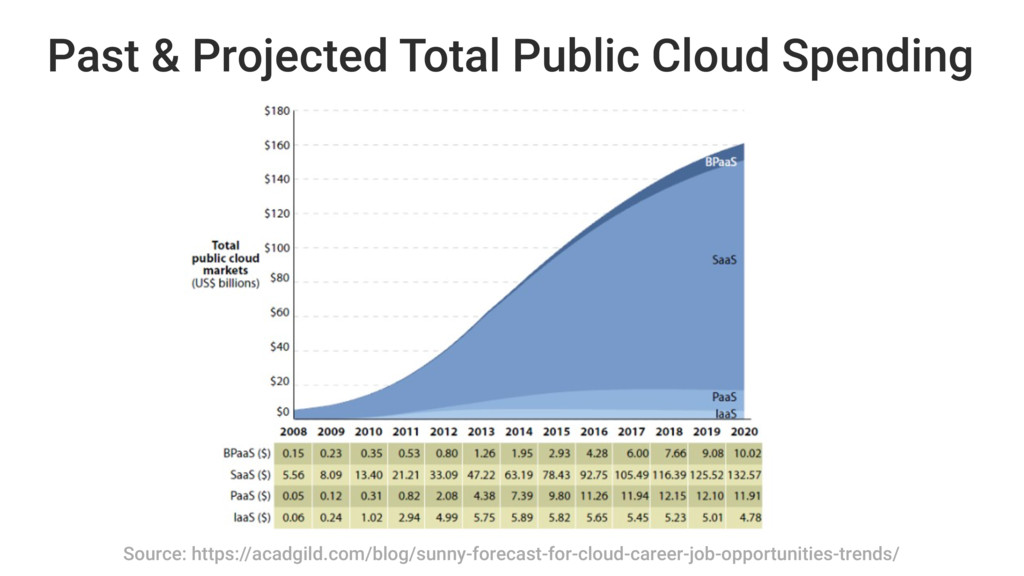
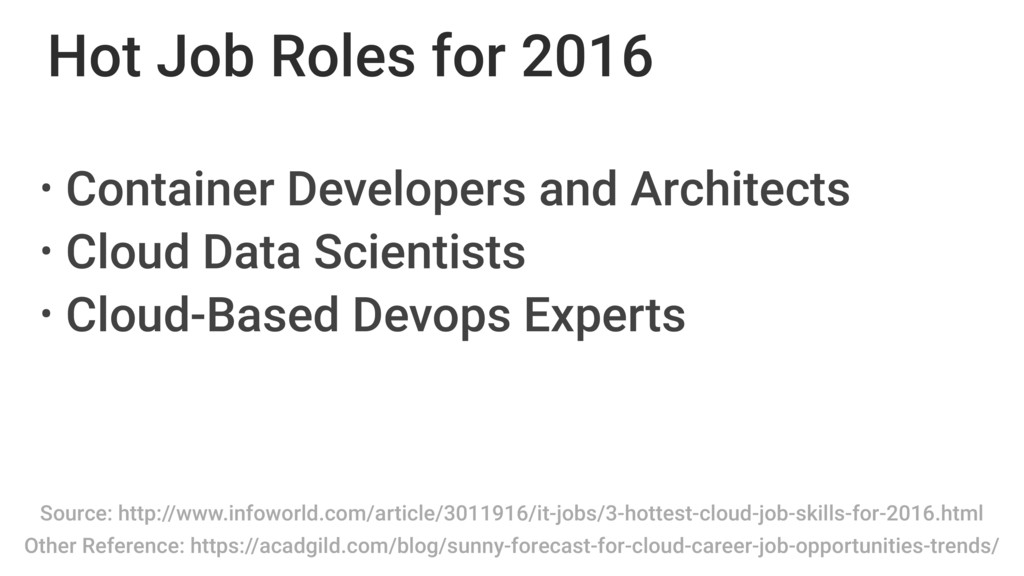
and Architects • Cloud Data Scientists • Cloud-Based Devops Experts Other Reference: https://acadgild.com/blog/sunny-forecast-for-cloud-career-job-opportunities-trends/
VMWare, Others • Security - CompTia & ISC CISP • Certifications can differentiate and are lucrative. However, relevant real-world experience is still preferred Source: http://www.stormwind.com/blog/4-big-money-certifications-no-one-talking-about Source: http://www.tomsitpro.com/articles/cloud-it-certifications,2-537.html
outstrips supply for skilled cloud professionals => Re-training of IT Professionals might be an option. • Need to establish cloud competency centers to derive best practice and standards. • Gaining Cloud Architects and establishing DevOps teams should be a key priority • Avoid silos & re-align business efforts
I trust you? • Data at rest, in transit • Enterprises needs a better understanding of the shared security responsibilities model • Off-load non-mission critical workloads to Public Cloud while keeping mission critical workloads in Private Cloud? • How do you manage identity and authorisation of SaaS apps? Identity as a Service (IDaaS)?
enterprise standards. • Enterprise Support options might not meet requirements. Custom agreements must be negotiated • Not able to control those standards • Not able to off-load risk sufficiently for concern


 stevepotayteo
 amarelo_n24
 sansantech
 yusuke427
 henryofficial
 kazzpapa3
 shotashiratori
 tnir
 goyoki
 inariku
 iwamot
 chriscoyier
 philnash
 aleyda
 addyosmani
 orderedlist
 davidcarrasco
 ryanjones
 codingconduct
 baasie
 eileencodes
 axbom