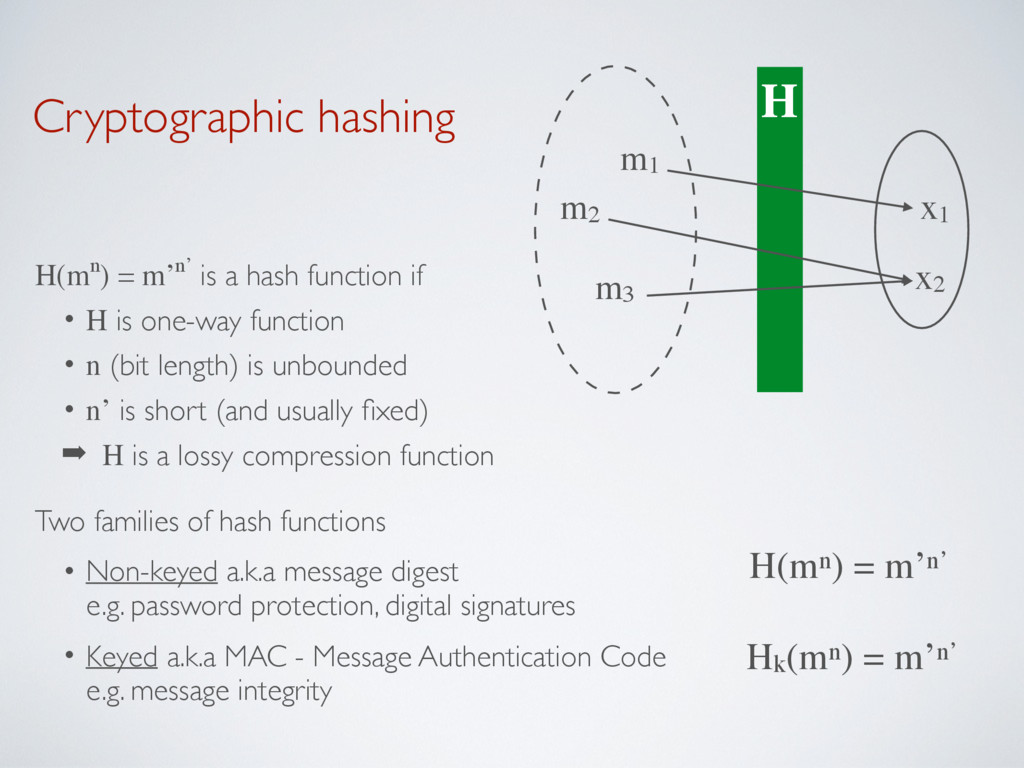
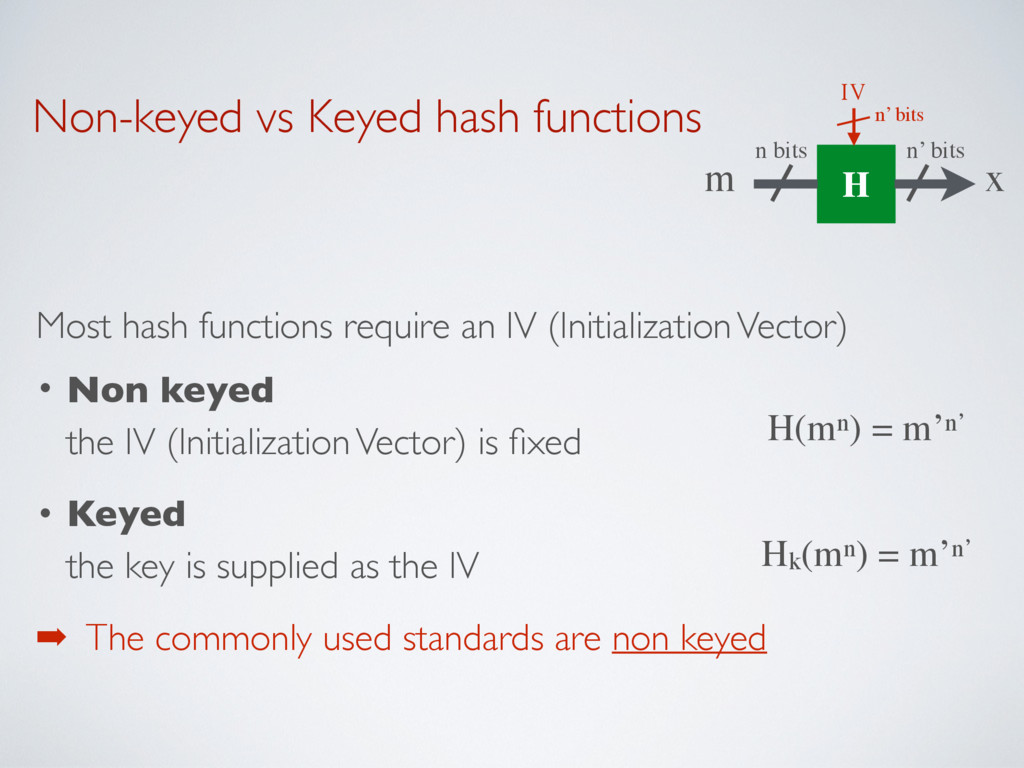
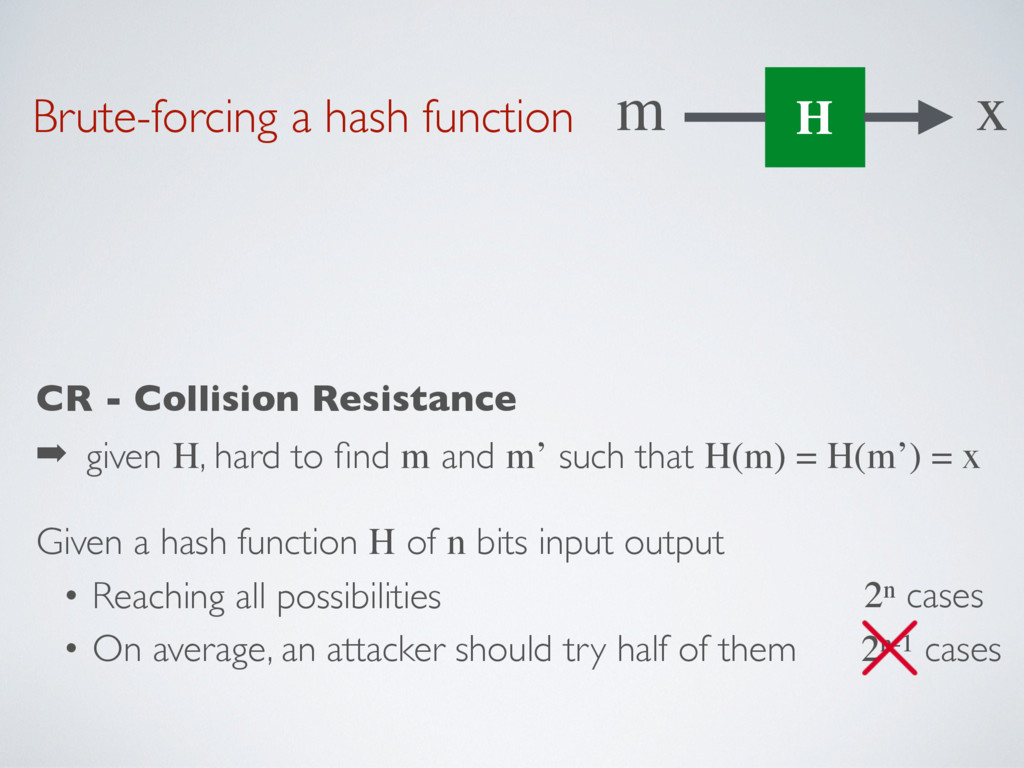
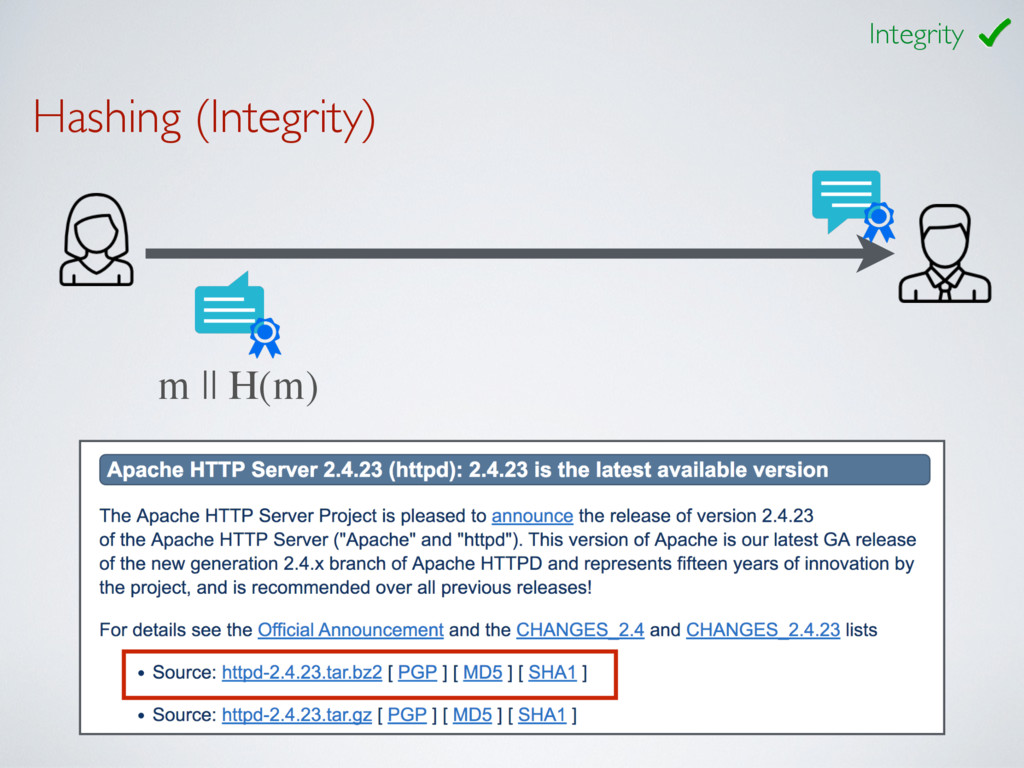
• H is one-way function • n (bit length) is unbounded • n’ is short (and usually fixed) ➡ H is a lossy compression function Two families of hash functions • Non-keyed a.k.a message digest e.g. password protection, digital signatures • Keyed a.k.a MAC - Message Authentication Code e.g. message integrity H(mn) = m’n’ Hk(mn) = m’n’ H m1 m2 m3 x1 x2
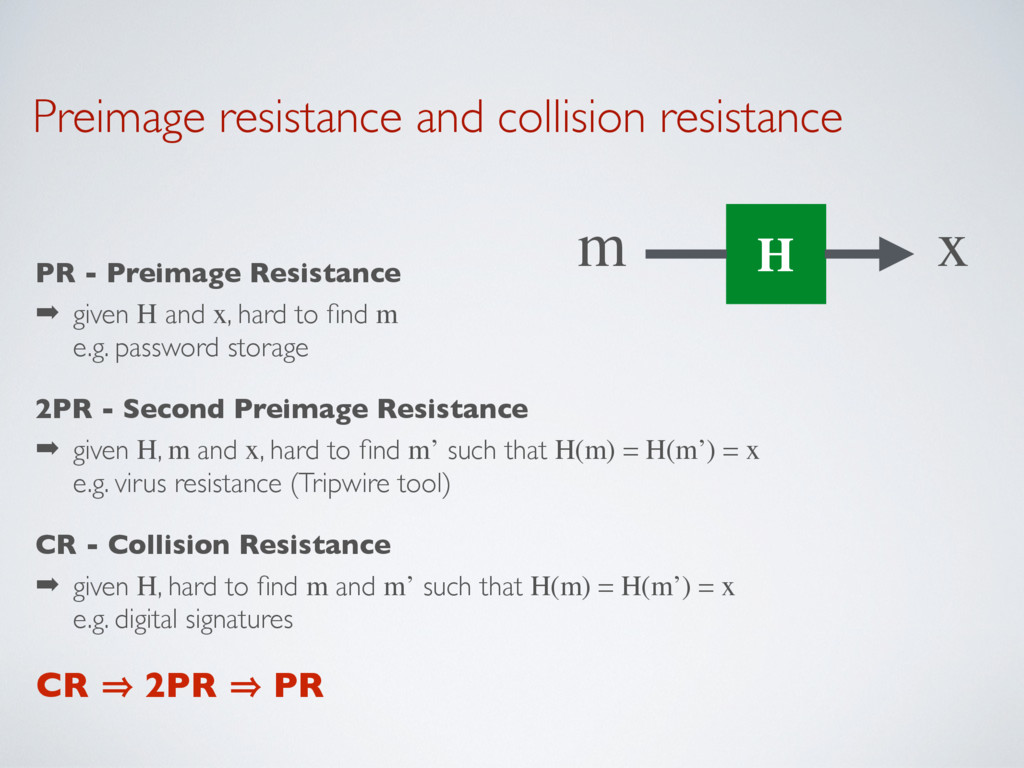
given H and x, hard to find m e.g. password storage 2PR - Second Preimage Resistance ➡ given H, m and x, hard to find m’ such that H(m) = H(m’) = x e.g. virus resistance (Tripwire tool) CR - Collision Resistance ➡ given H, hard to find m and m’ such that H(m) = H(m’) = x e.g. digital signatures CR 㱺 2PR 㱺 PR H m x
IV (Initialization Vector) • Non keyed the IV (Initialization Vector) is fixed • Keyed the key is supplied as the IV ➡ The commonly used standards are non keyed H(mn) = m’n’ Hk(mn) = m’n’ n bits n’ bits H m x IV n’ bits
H, hard to find m and m’ such that H(m) = H(m’) = x Given a hash function H of n bits input output • Reaching all possibilities • On average, an attacker should try half of them H m x 2n cases 2n-1 cases
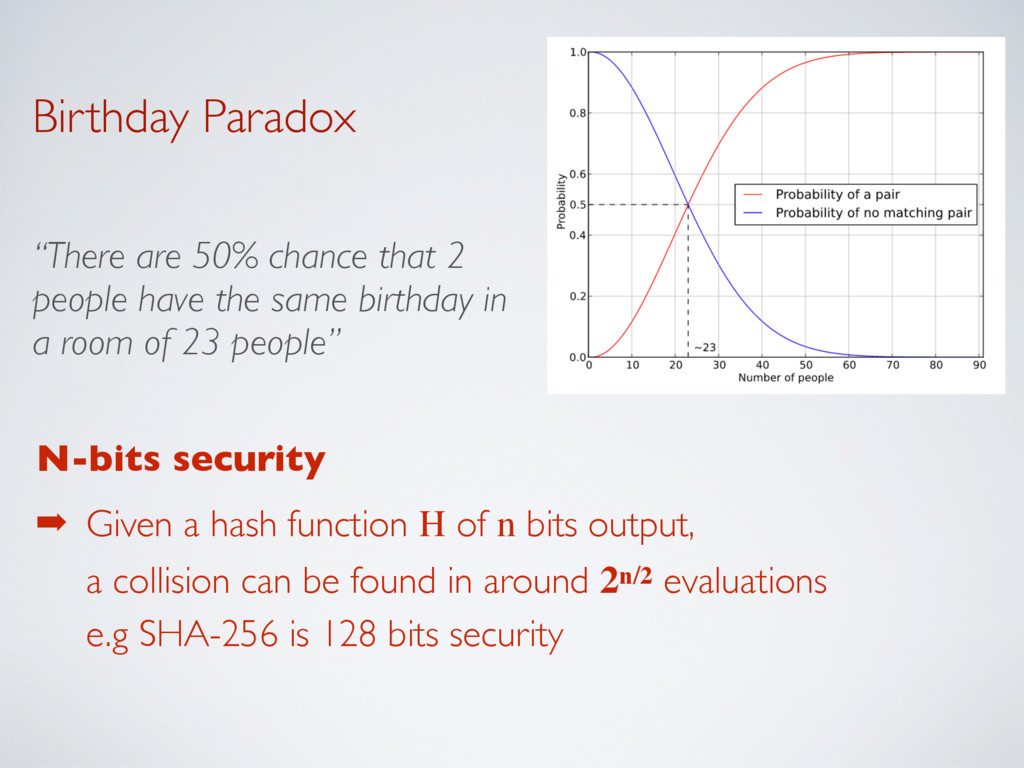
the same birthday in a room of 23 people” N-bits security ➡ Given a hash function H of n bits output, a collision can be found in around 2n/2 evaluations e.g SHA-256 is 128 bits security
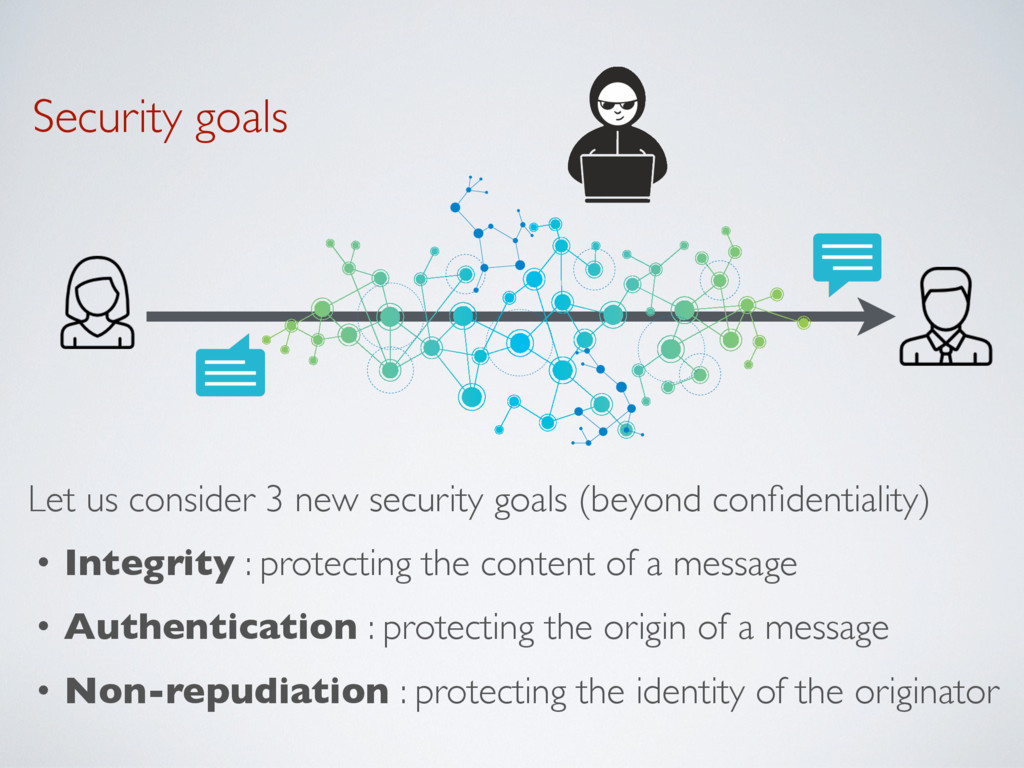
confidentiality) • Integrity : protecting the content of a message • Authentication : protecting the origin of a message • Non-repudiation : protecting the identity of the originator
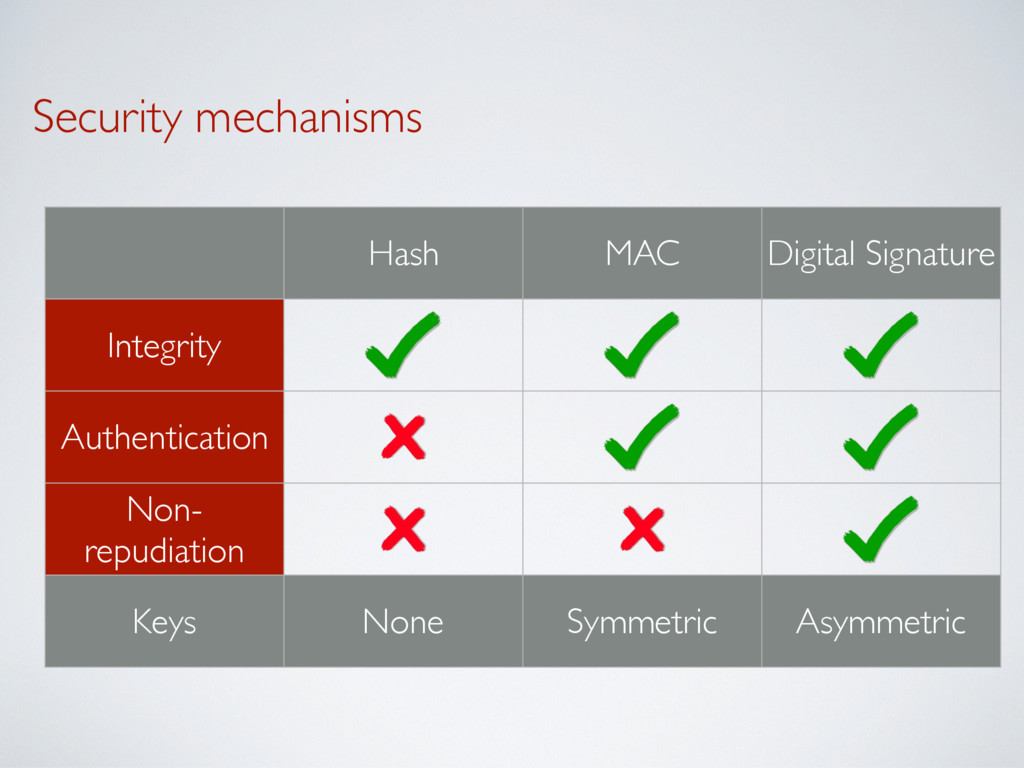
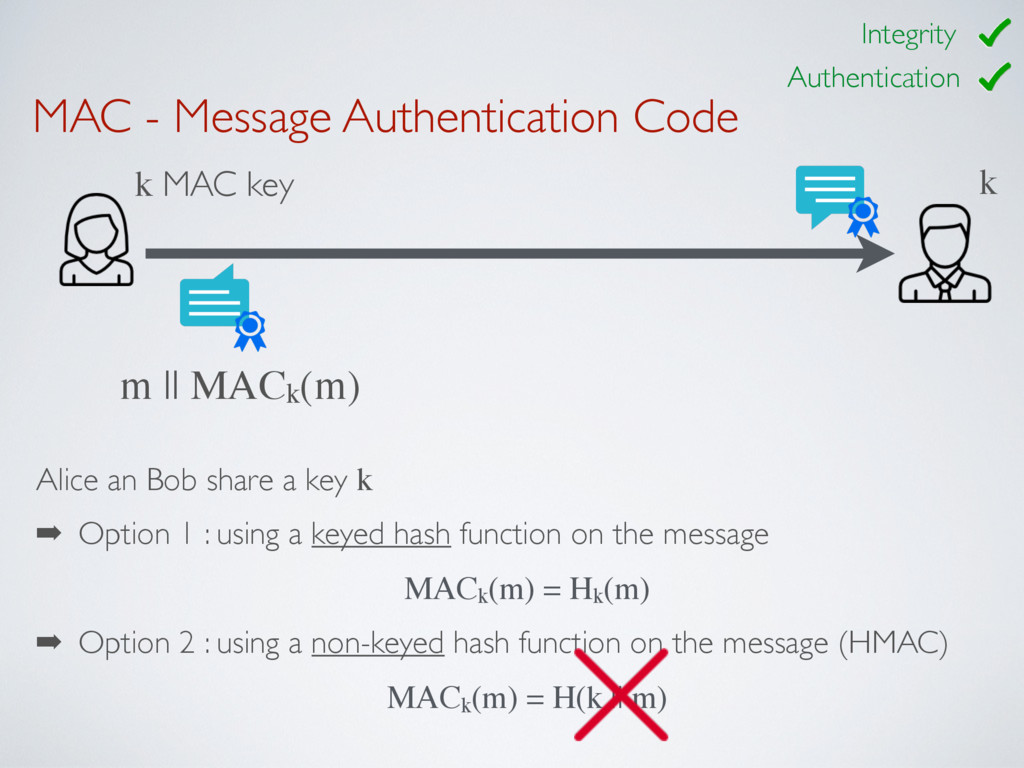
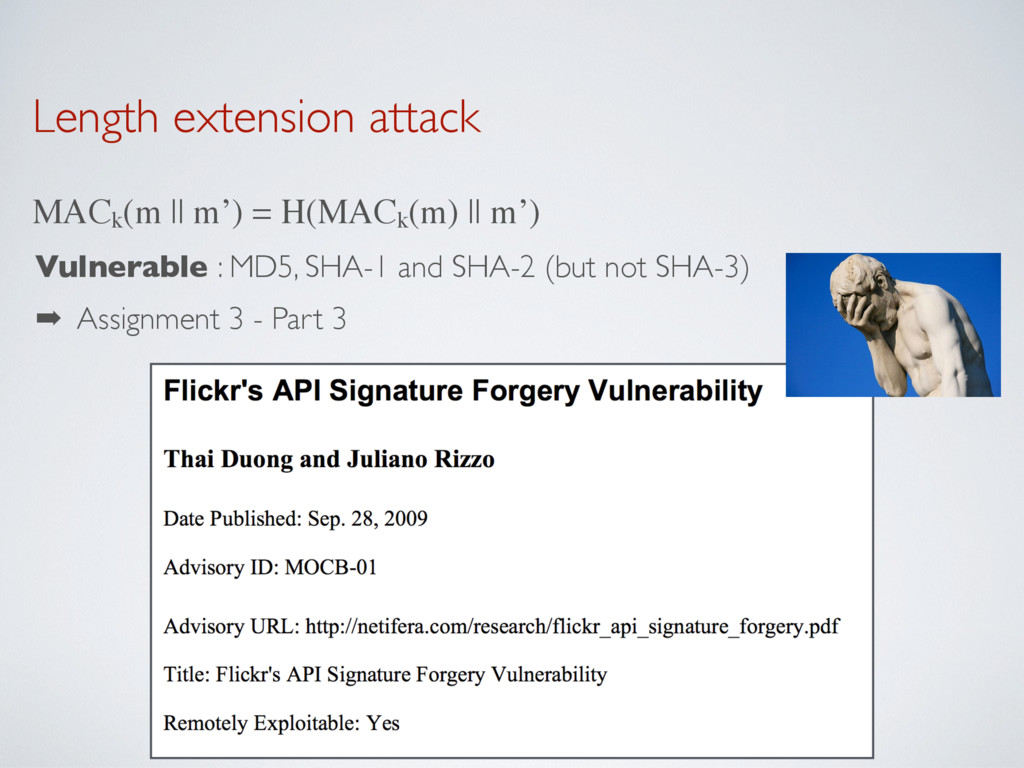
key k ➡ Option 1 : using a keyed hash function on the message MACk (m) = Hk (m) ➡ Option 2 : using a non-keyed hash function on the message (HMAC) MACk (m) = H(k || m) m || MACk(m) k MAC key k Integrity Authentication
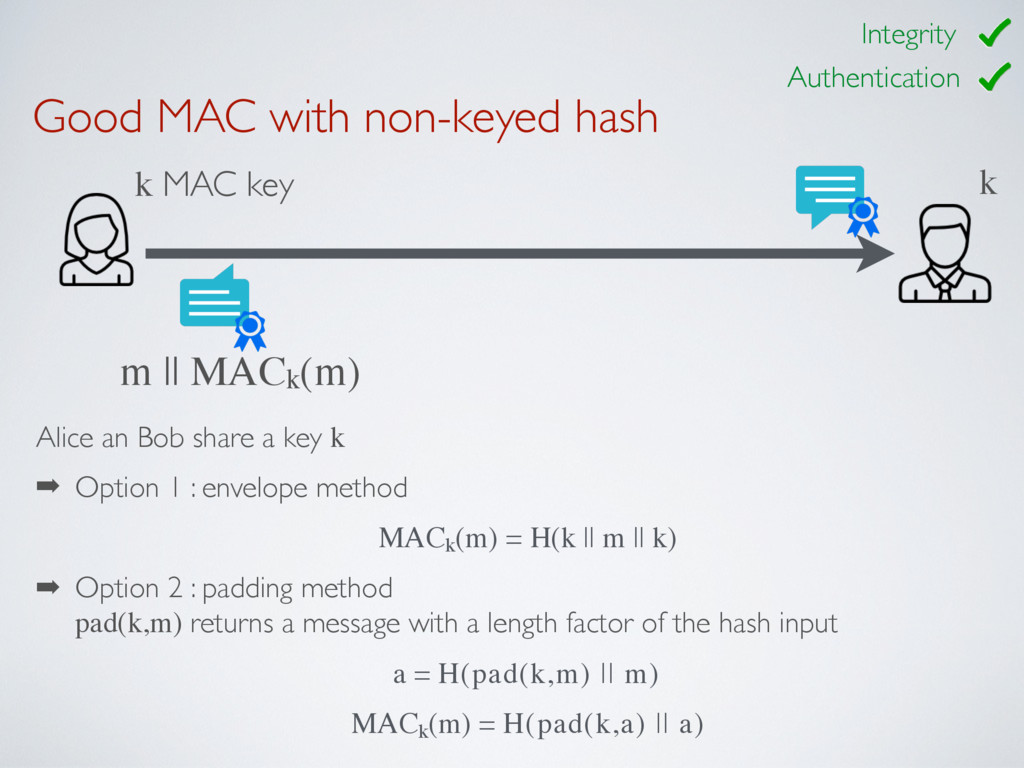
key k ➡ Option 1 : envelope method MACk (m) = H(k || m || k) ➡ Option 2 : padding method pad(k,m) returns a message with a length factor of the hash input a = H(pad(k,m) || m) MACk (m) = H(pad(k,a) || a) m || MACk(m) k MAC key k Integrity Authentication
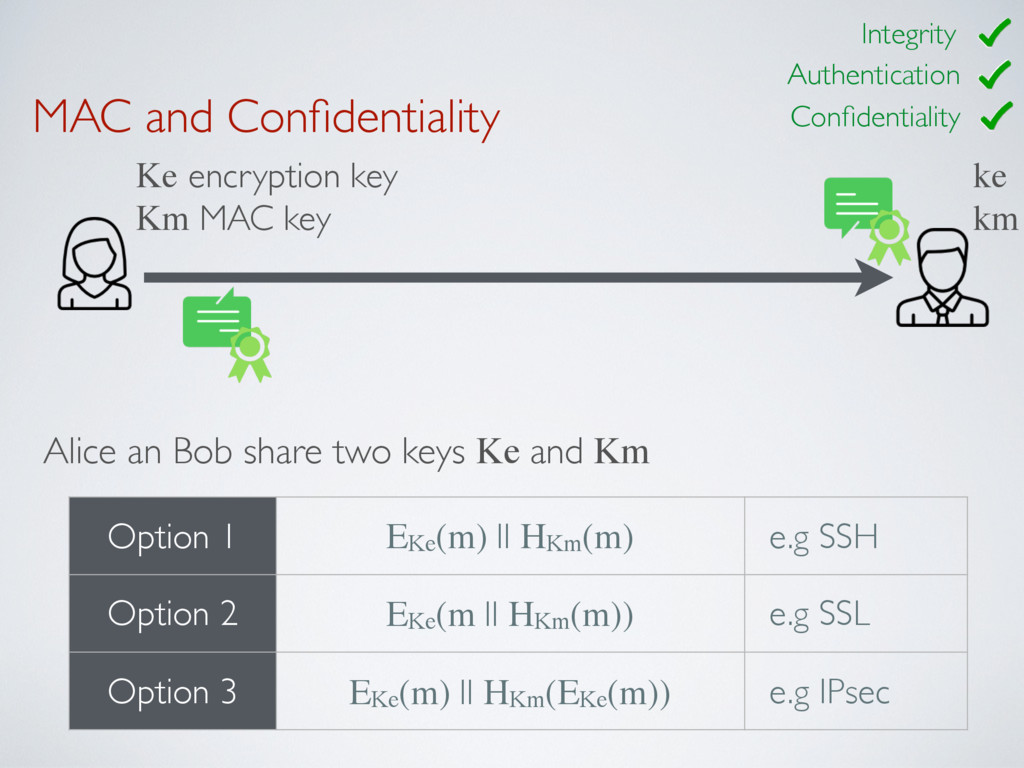
and Km Option 1 EKe(m) || HKm(m) e.g SSH Option 2 EKe(m || HKm(m)) e.g SSL Option 3 EKe(m) || HKm(EKe(m)) e.g IPsec Ke encryption key Km MAC key ke km Integrity Authentication Confidentiality
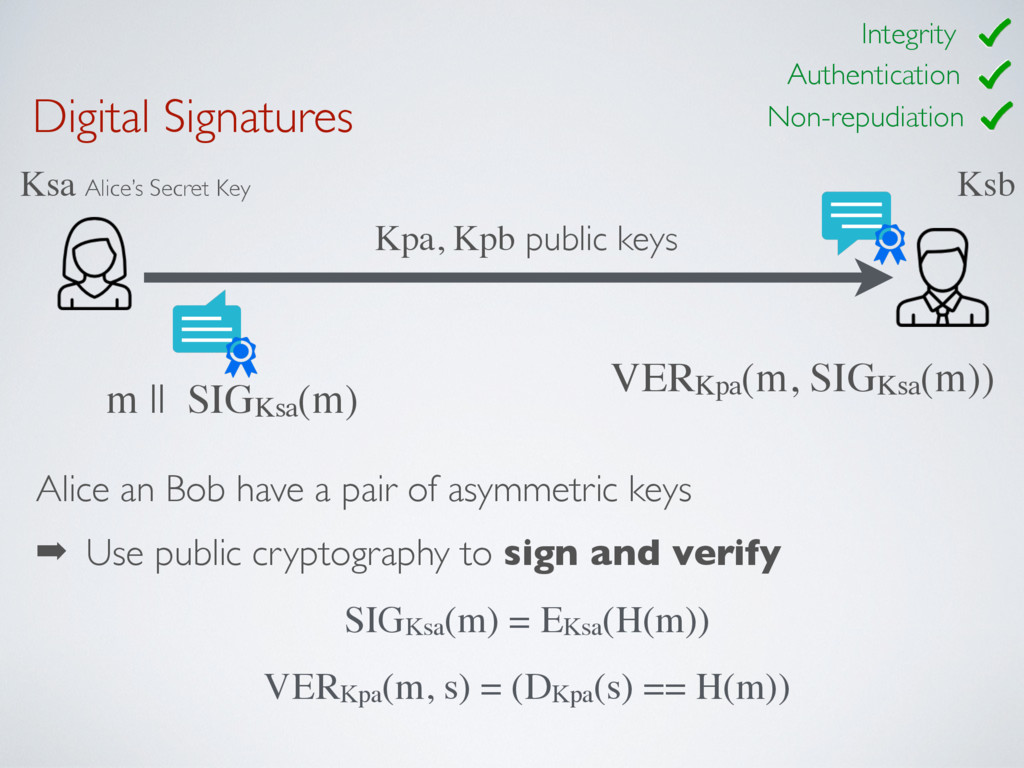
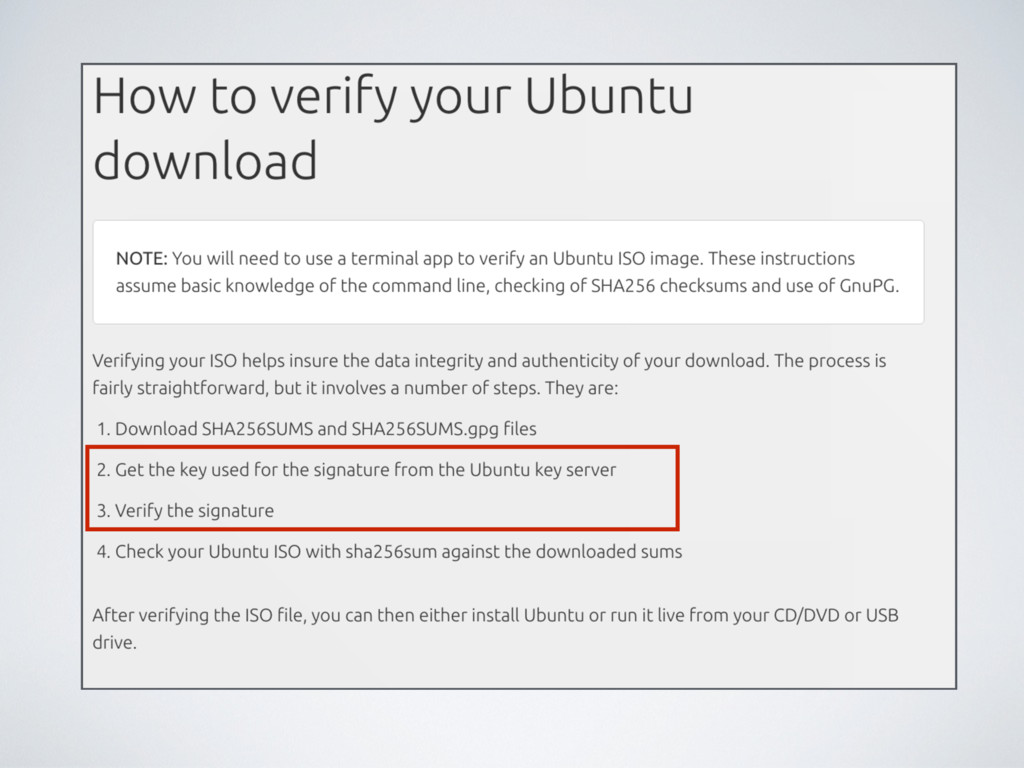
keys m || SIGKsa(m) Integrity Authentication Non-repudiation Alice an Bob have a pair of asymmetric keys ➡ Use public cryptography to sign and verify SIGKsa(m) = EKsa(H(m)) VERKpa(m, s) = (DKpa(s) == H(m)) VERKpa(m, SIGKsa(m))
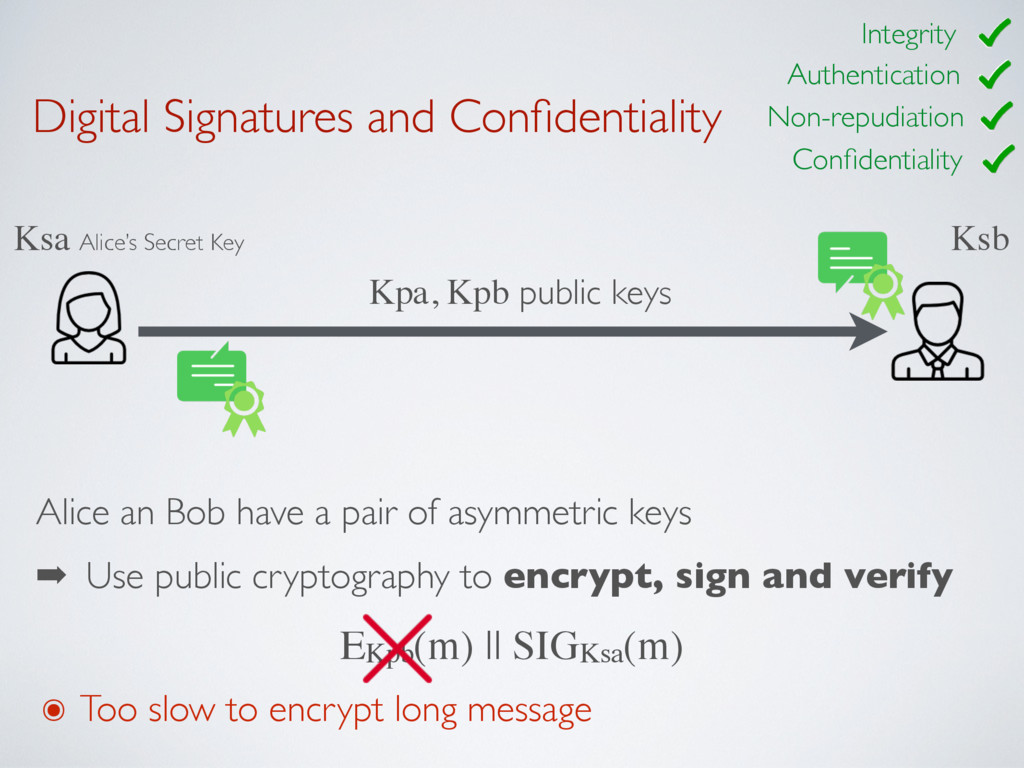
Kpb public keys Integrity Authentication Non-repudiation Confidentiality Alice an Bob have a pair of asymmetric keys ➡ Use public cryptography to encrypt, sign and verify EKpb(m) || SIGKsa(m) ๏ Too slow to encrypt long message
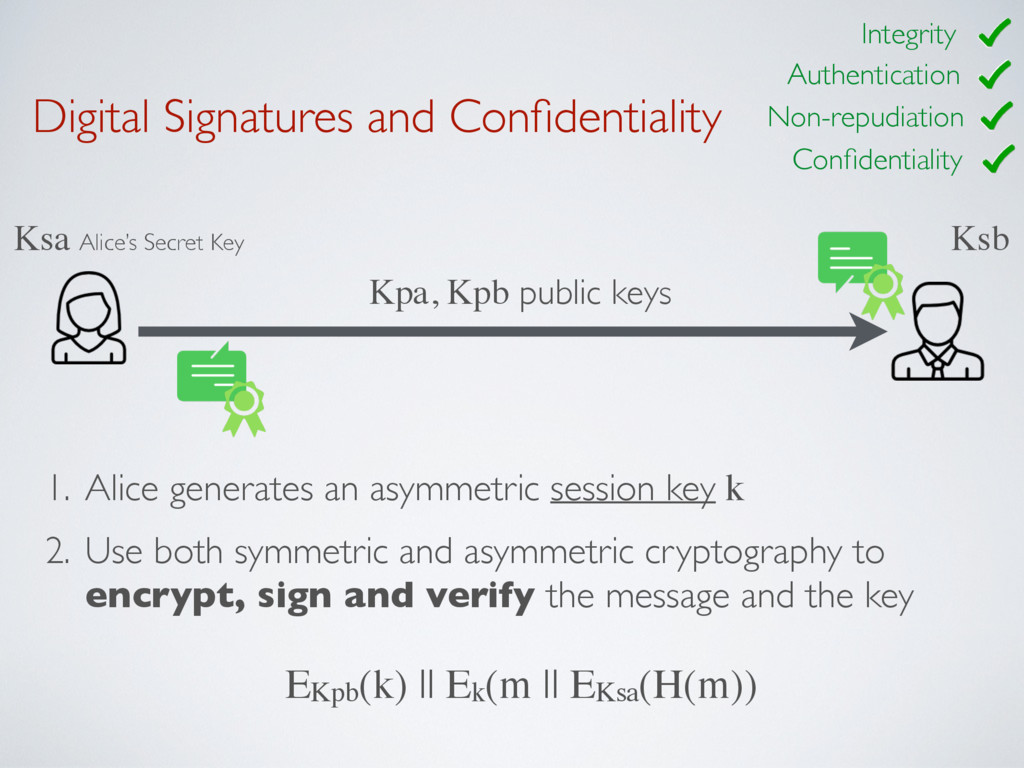
Kpb public keys Integrity Authentication Non-repudiation Confidentiality 1. Alice generates an asymmetric session key k 2. Use both symmetric and asymmetric cryptography to encrypt, sign and verify the message and the key EKpb(k) || Ek(m || EKsa(H(m))
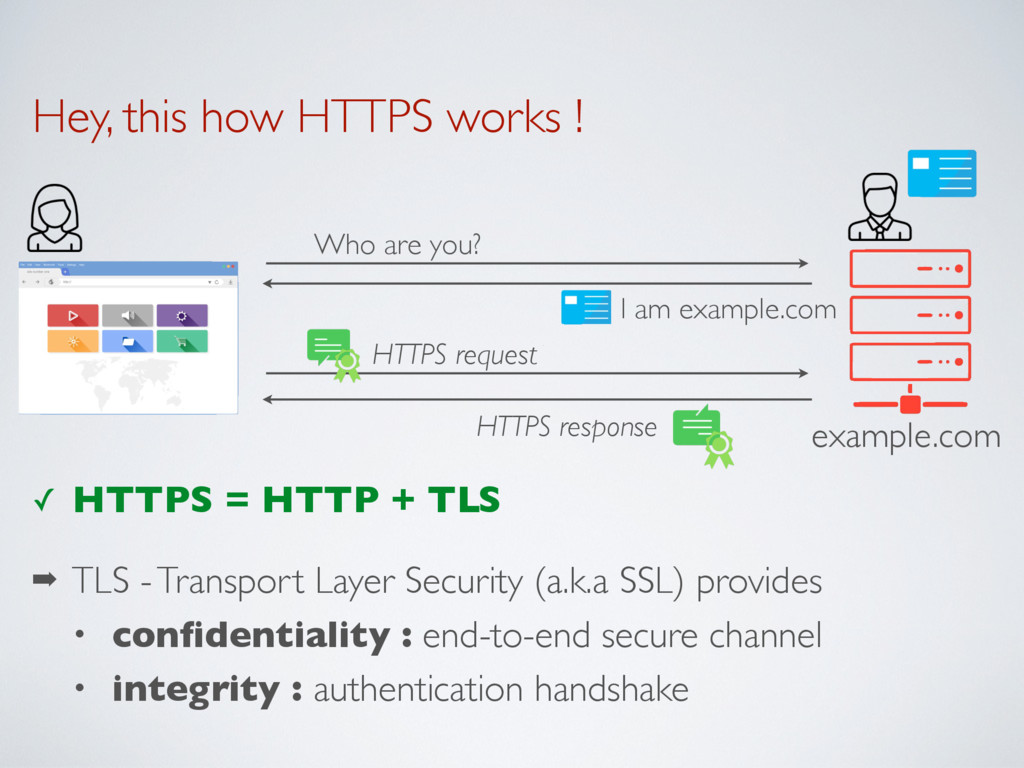
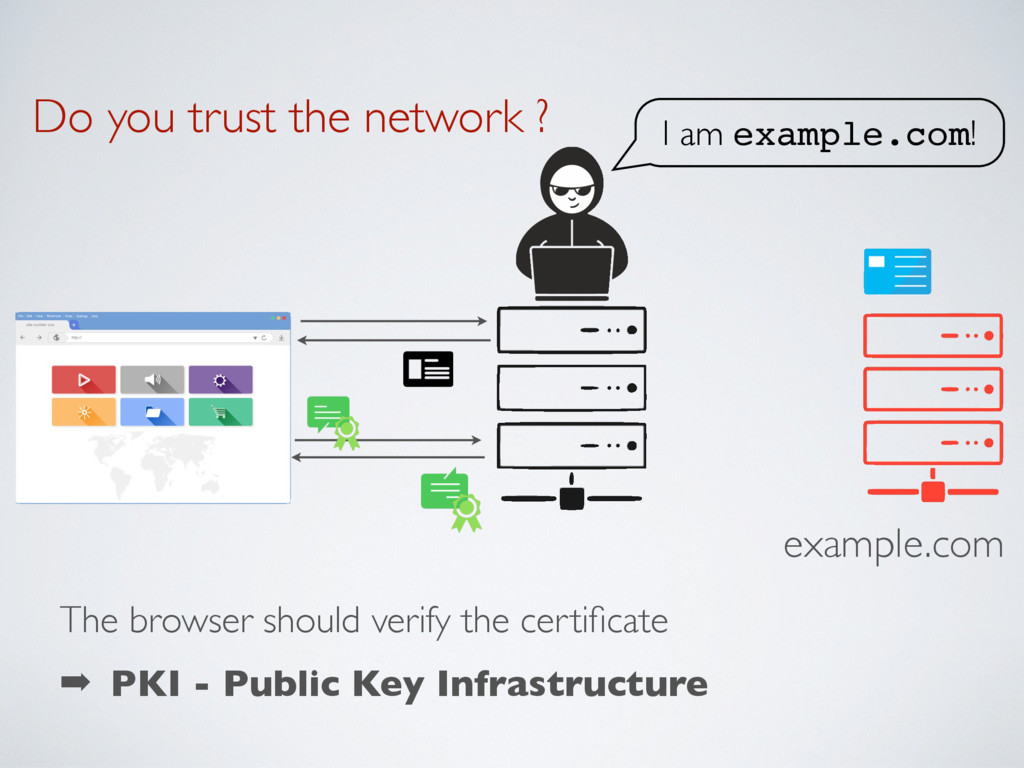
Layer Security (a.k.a SSL) provides • confidentiality : end-to-end secure channel • integrity : authentication handshake Hey, this how HTTPS works ! example.com HTTPS request HTTPS response Who are you? I am example.com
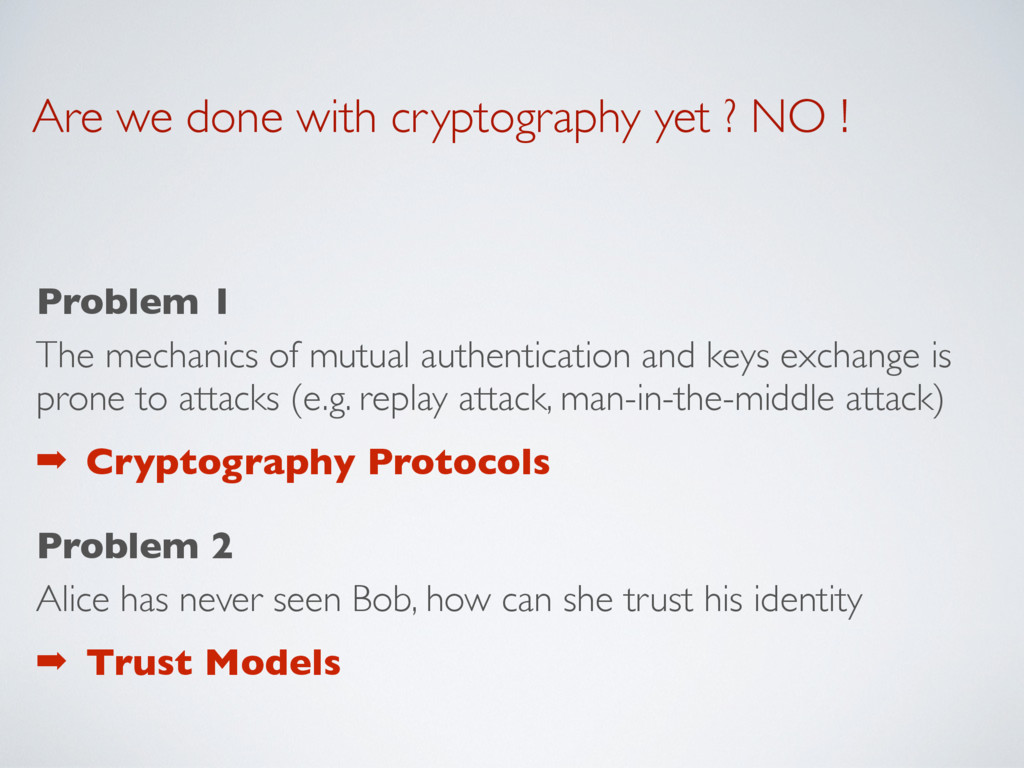
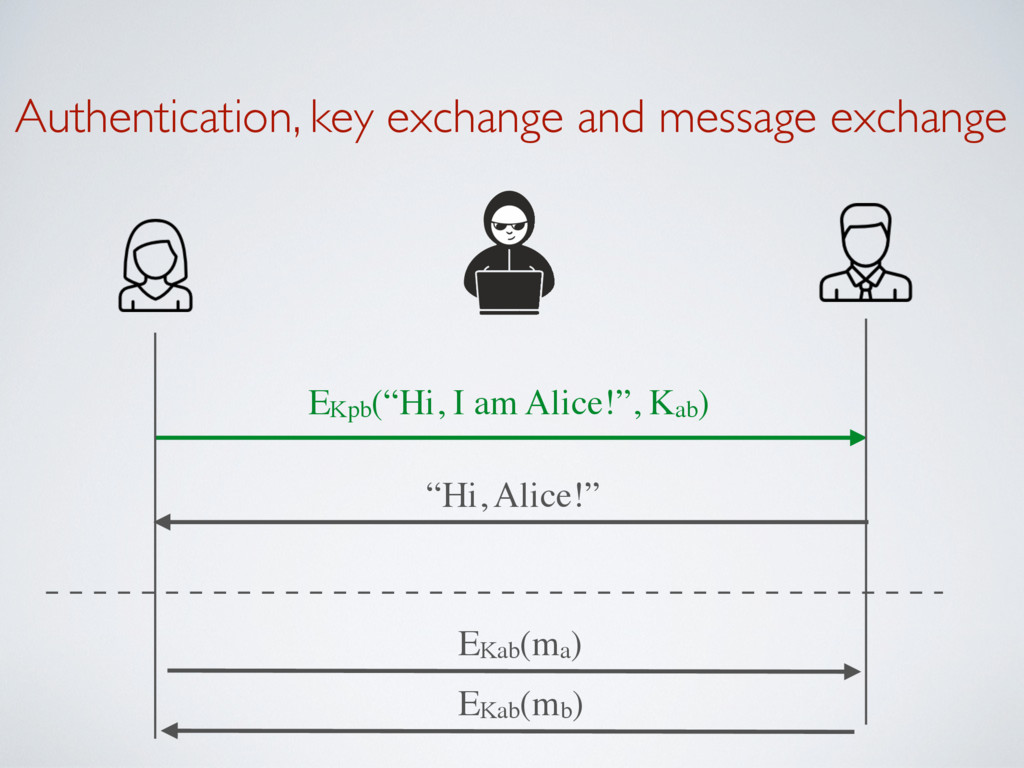
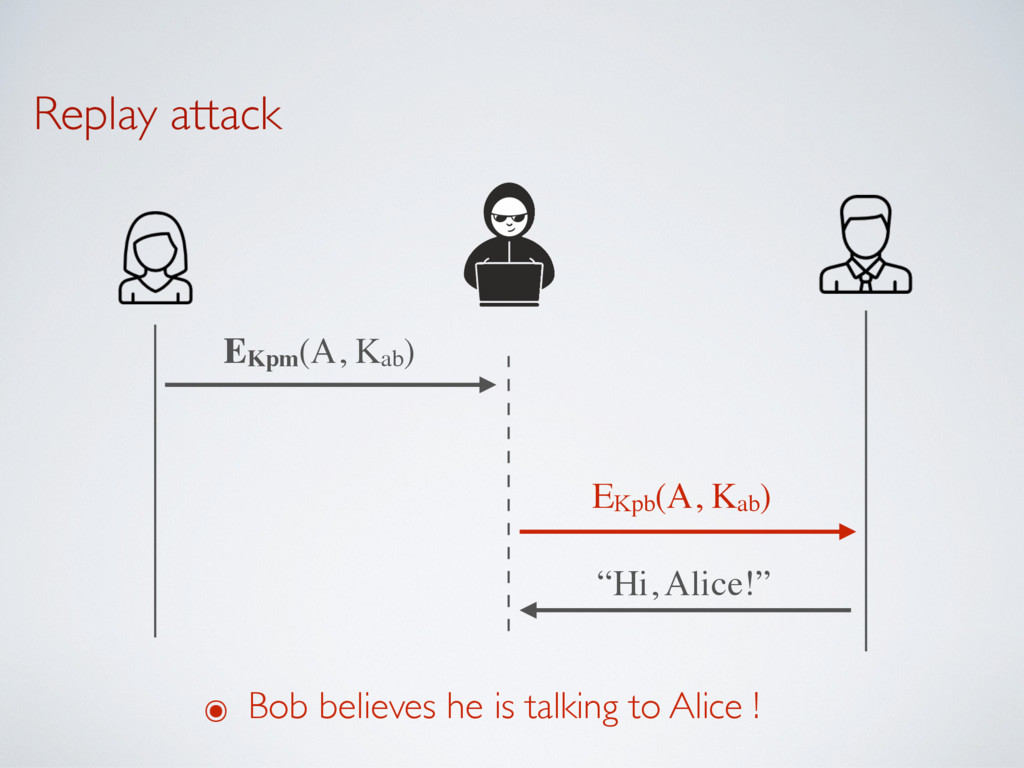
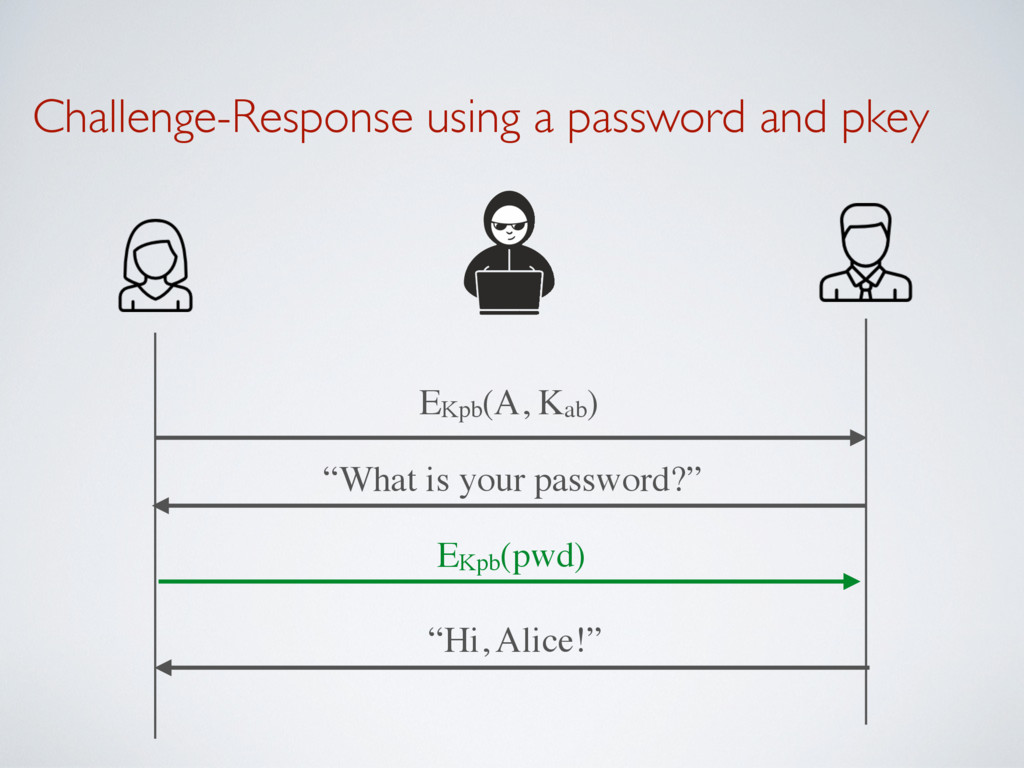
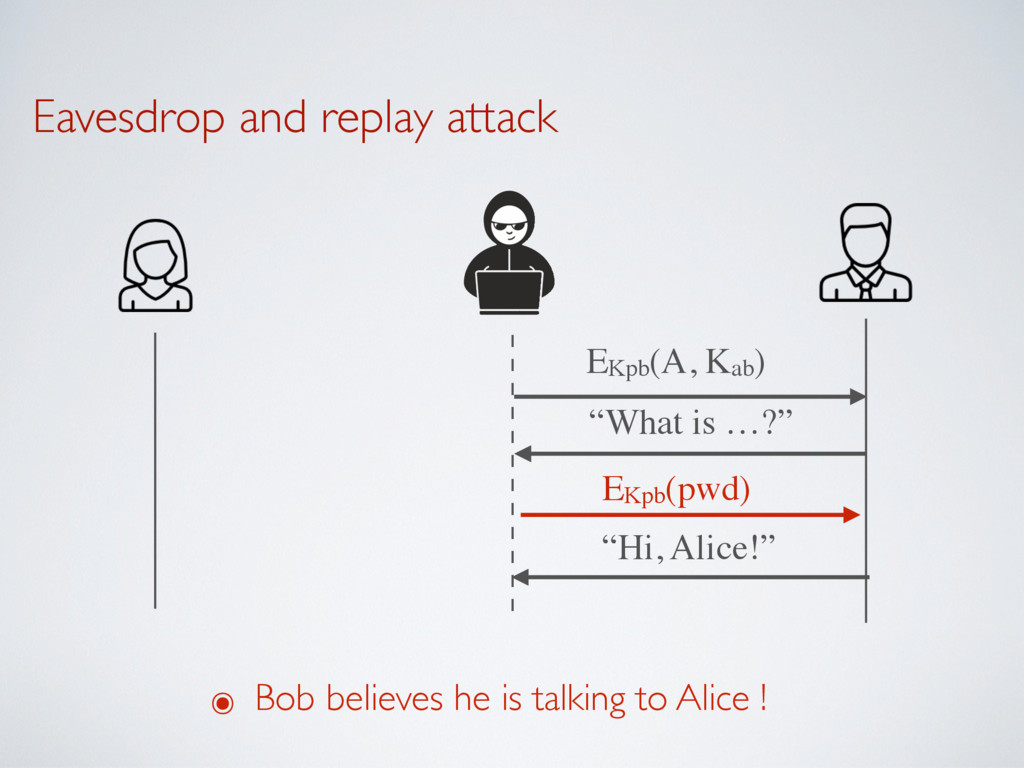
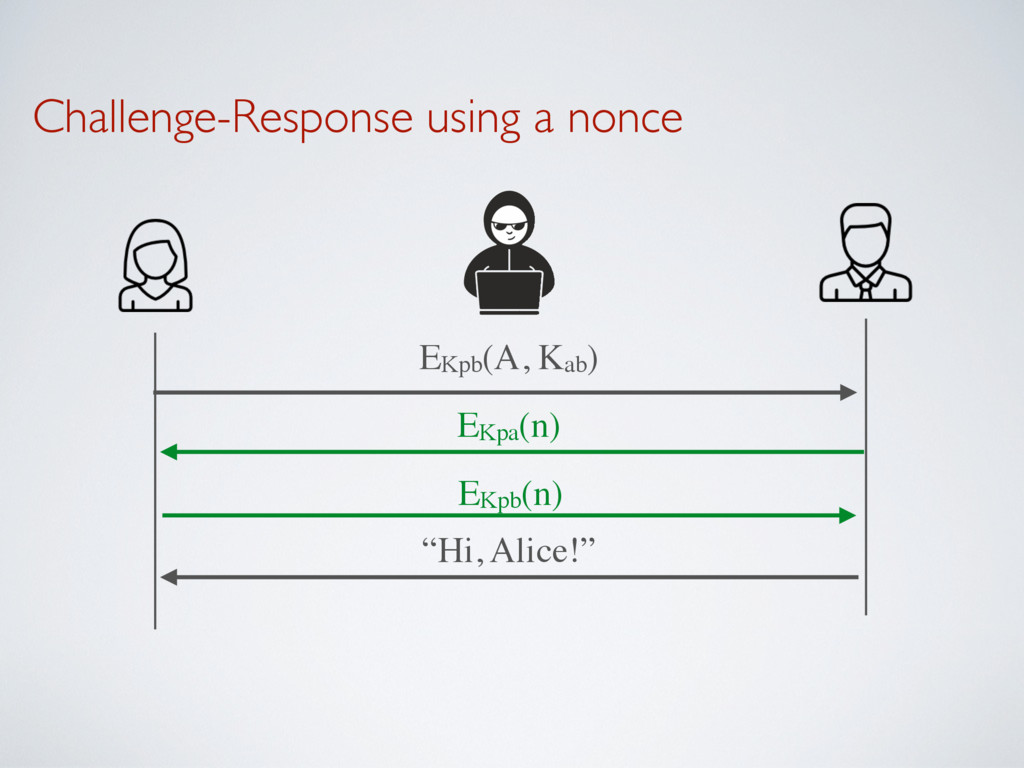
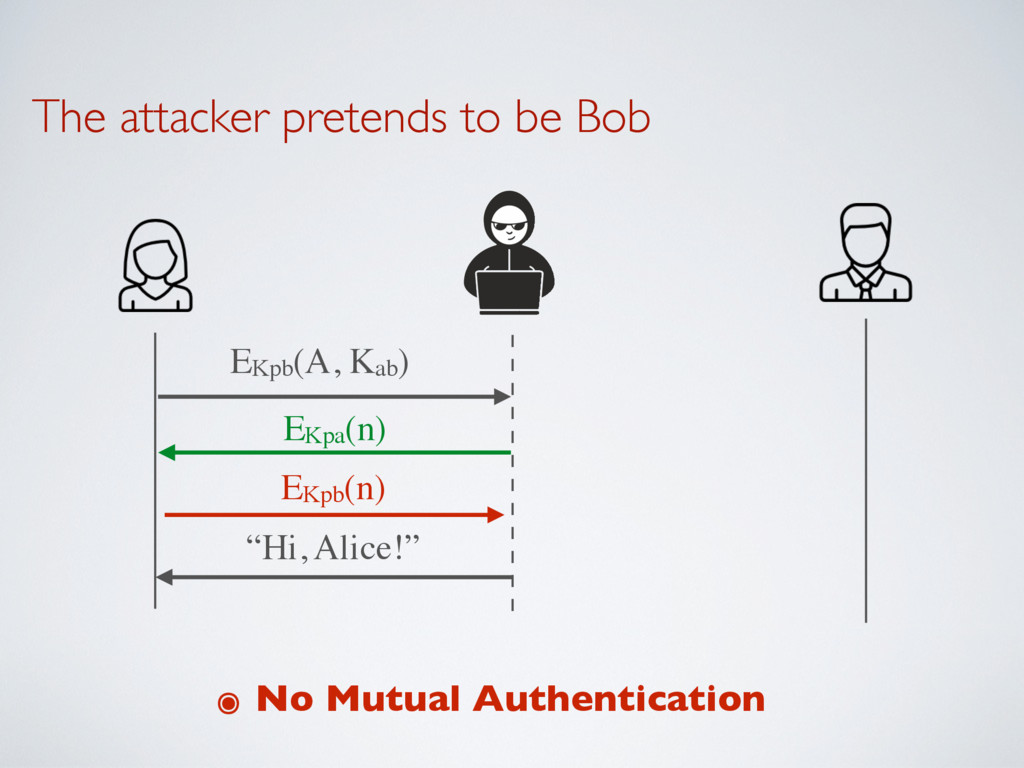
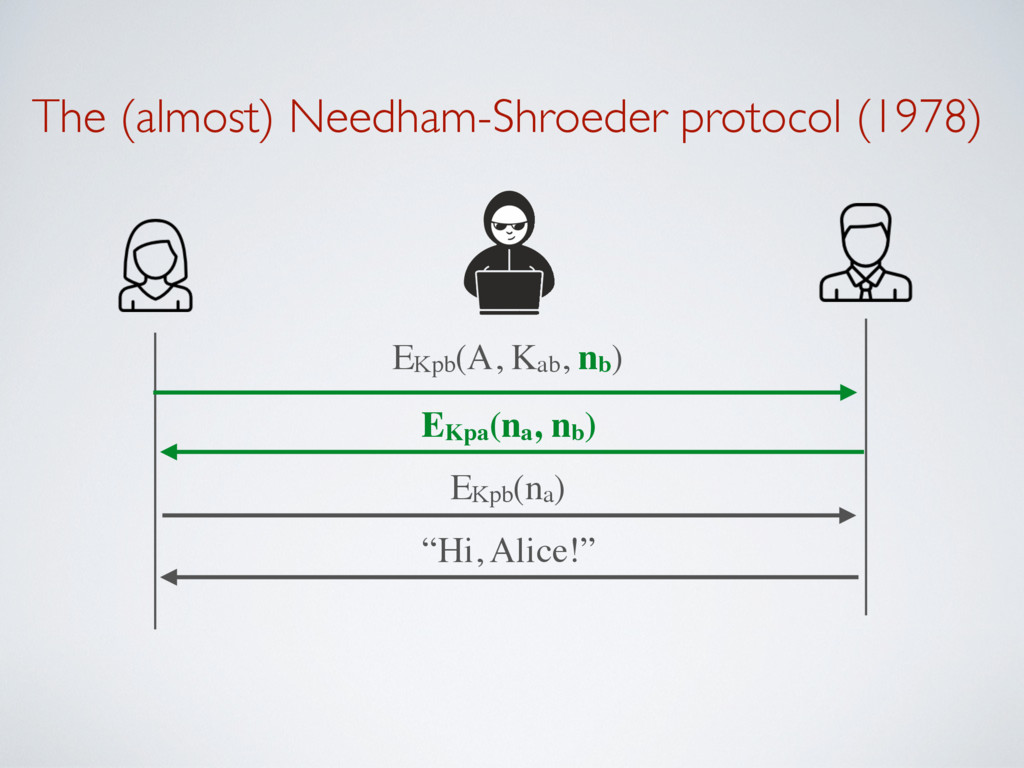
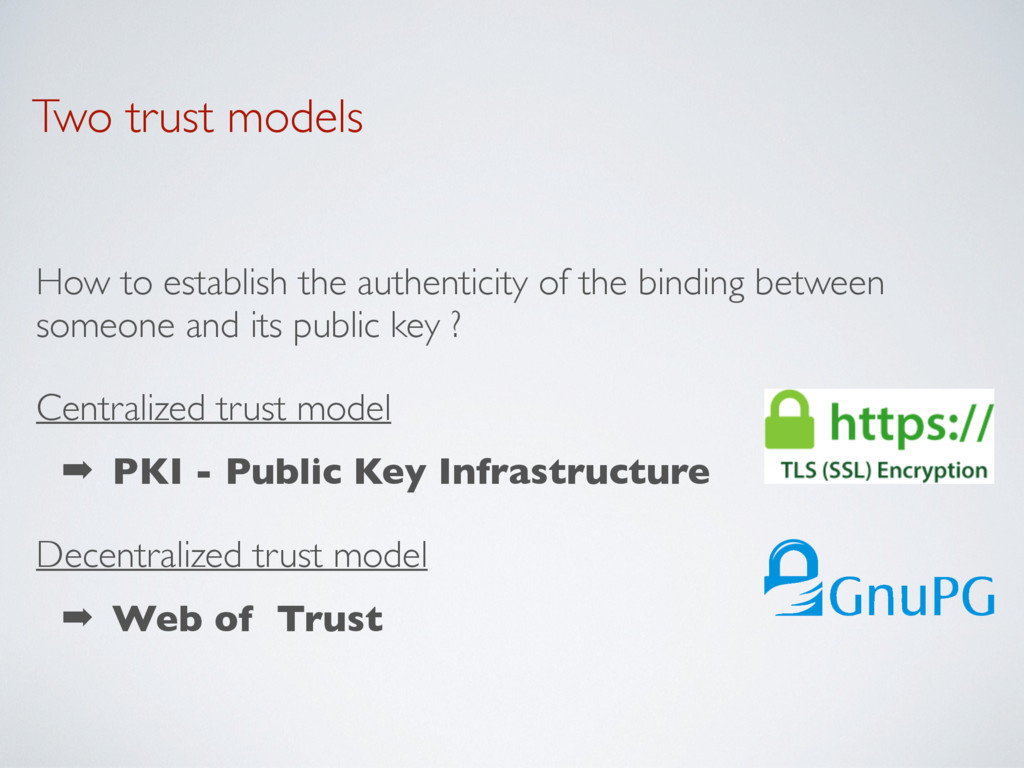
1 The mechanics of mutual authentication and keys exchange is prone to attacks (e.g. replay attack, man-in-the-middle attack) ➡ Cryptography Protocols Problem 2 Alice has never seen Bob, how can she trust his identity ➡ Trust Models
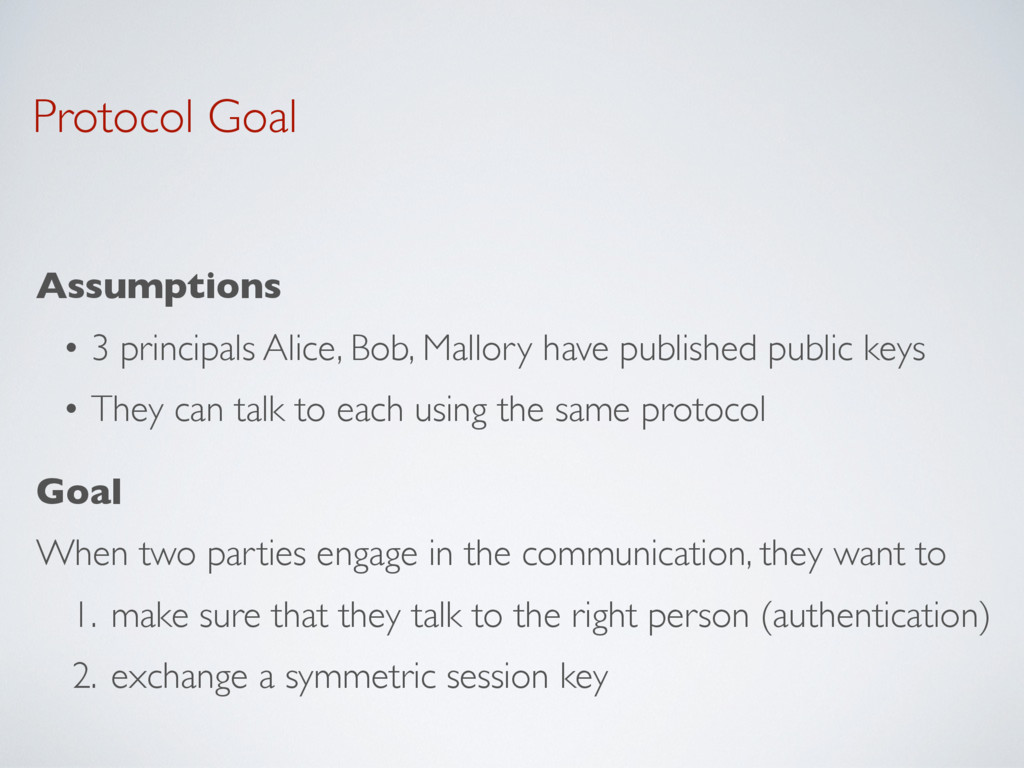
published public keys • They can talk to each using the same protocol Goal When two parties engage in the communication, they want to 1. make sure that they talk to the right person (authentication) 2. exchange a symmetric session key
the other principals 1. send and receive messages 2. encrypt and decrypt with known keys In addition, the attacker has full control over the network 3. intercept messages
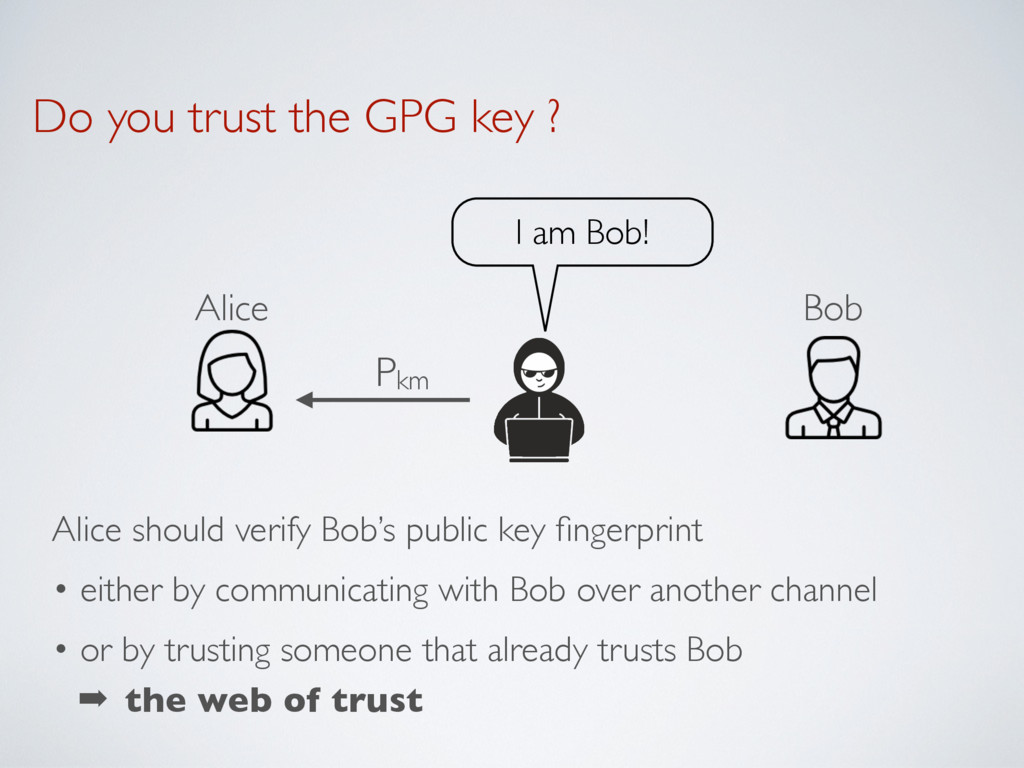
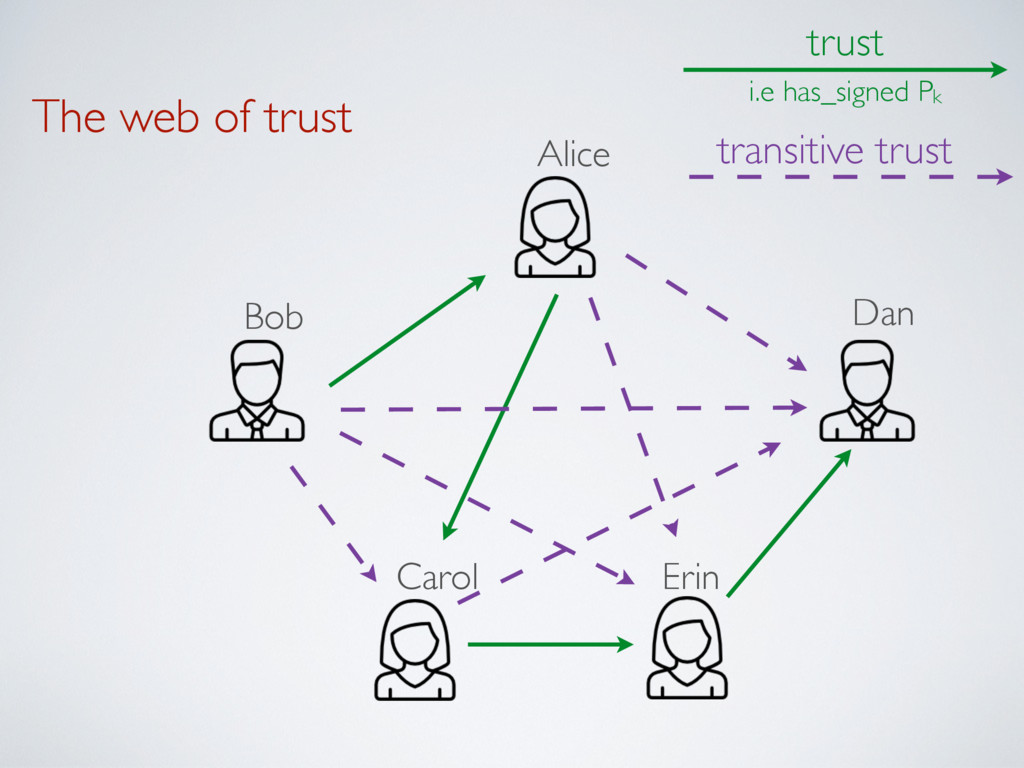
Bob’s public key fingerprint • either by communicating with Bob over another channel • or by trusting someone that already trusts Bob ➡ the web of trust Alice Bob I am Bob! Pkm


 thierrysans
 skipperchong
 chriscoyier
 matthewcrist
 destraynor
 marktimemedia
 hannesfritz
 eileencodes
 maggiecrowley
 gr2m
gr2m
 tmiket
 akademiya2063