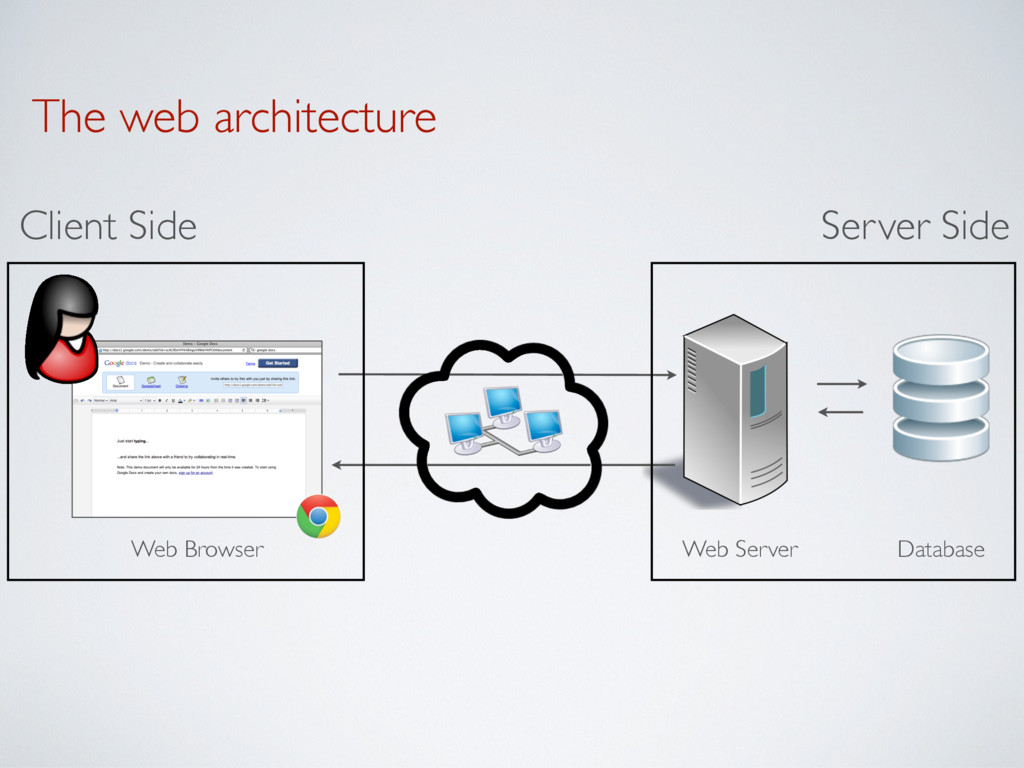
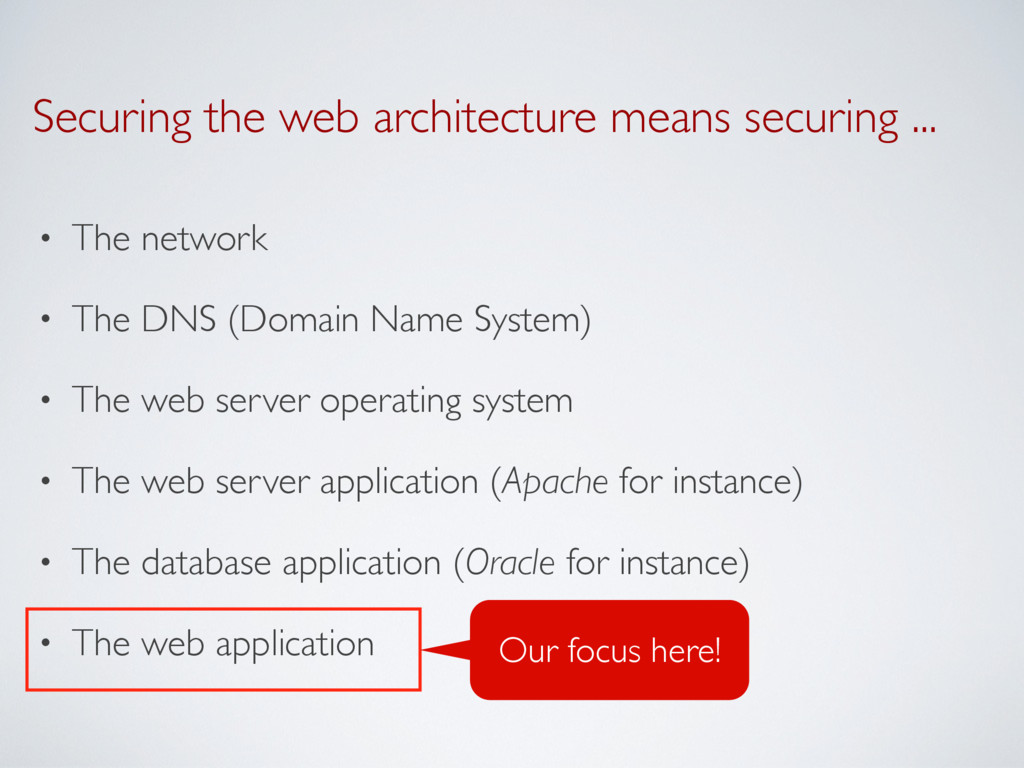
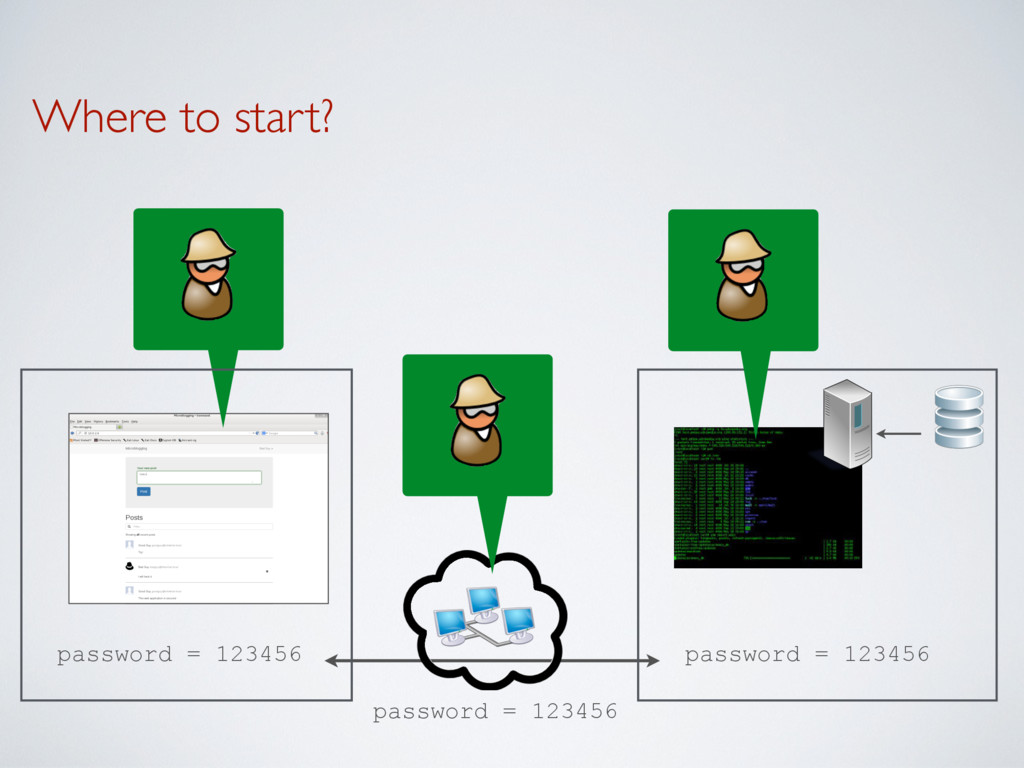
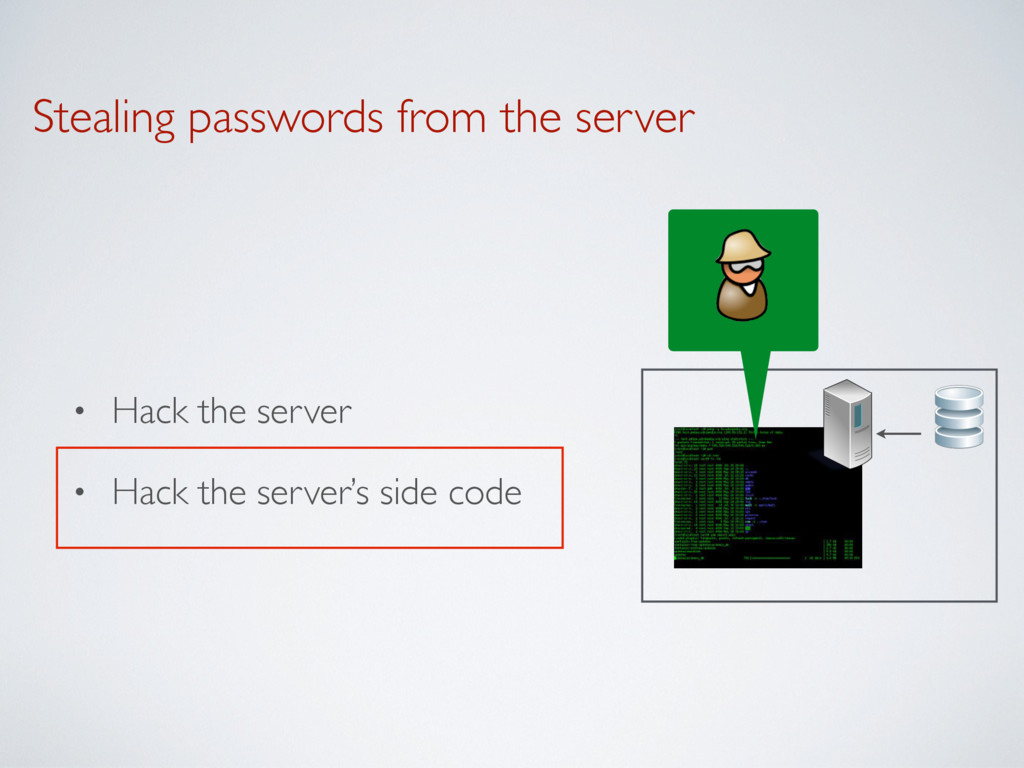
• The DNS (Domain Name System) • The web server operating system • The web server application (Apache for instance) • The database application (Oracle for instance) • The web application Our focus here!
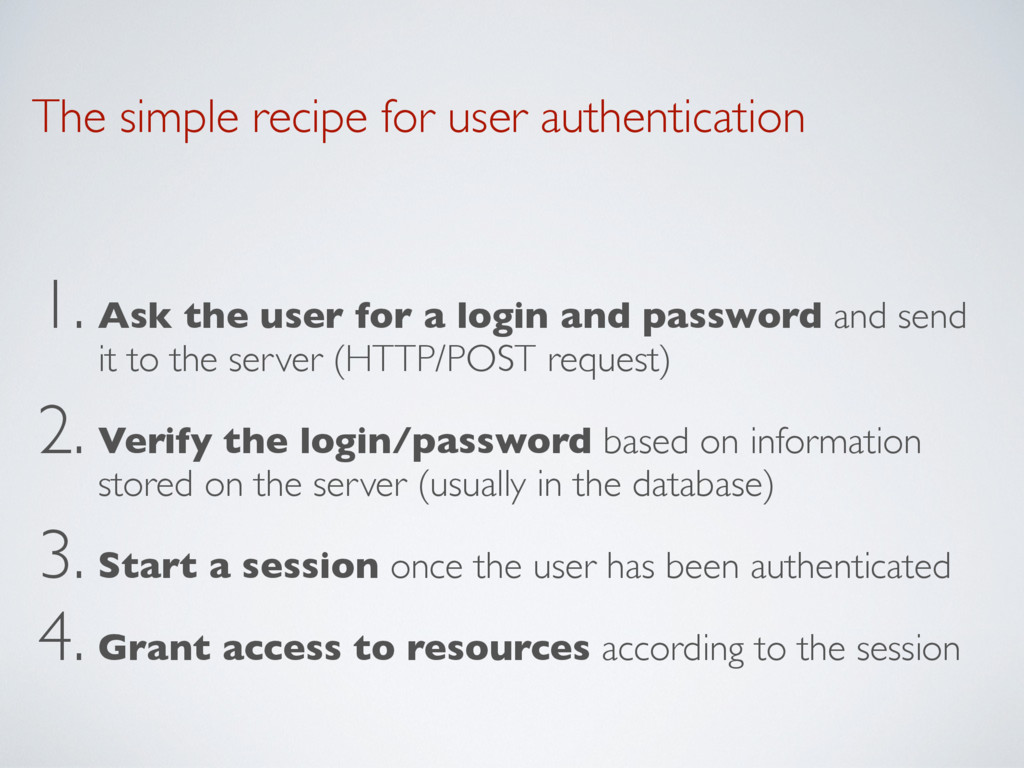
for a login and password and send it to the server (HTTP/POST request) 2. Verify the login/password based on information stored on the server (usually in the database) 3. Start a session once the user has been authenticated 4. Grant access to resources according to the session
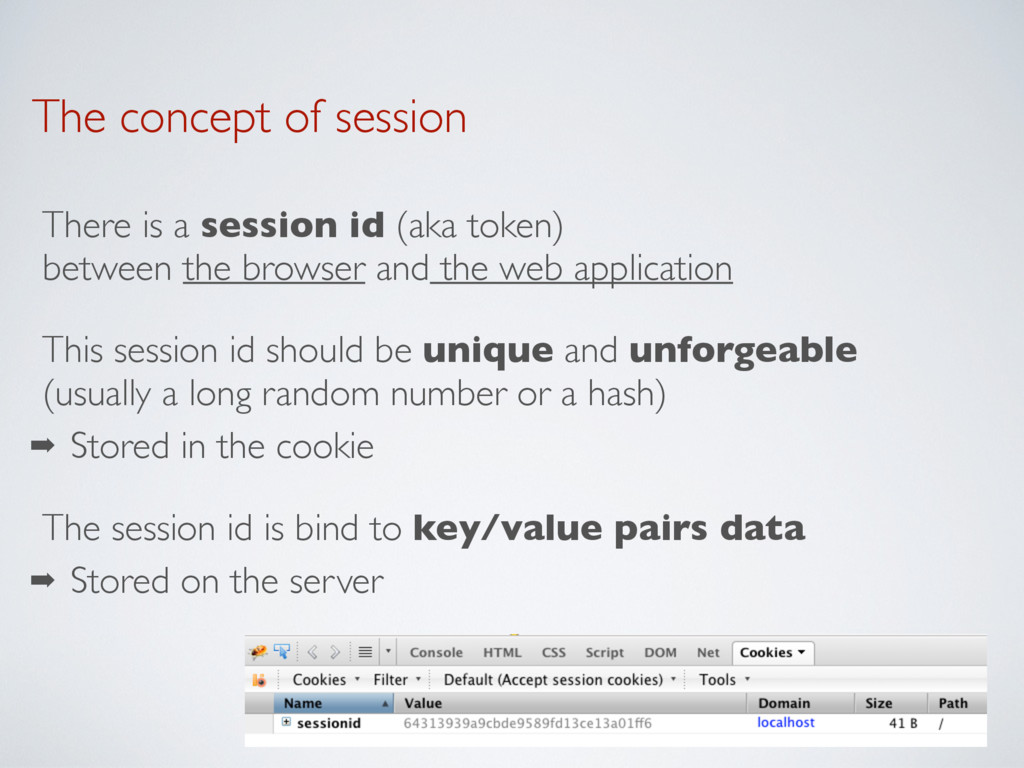
token) between the browser and the web application This session id should be unique and unforgeable (usually a long random number or a hash) ➡ Stored in the cookie The session id is bind to key/value pairs data ➡ Stored on the server
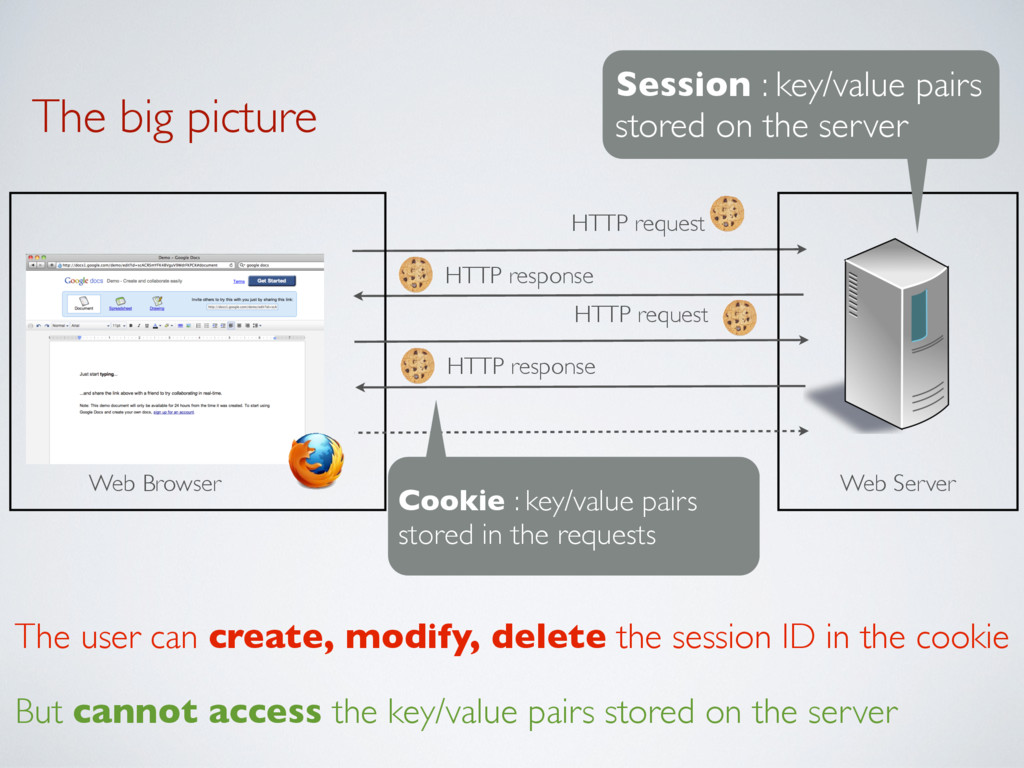
response HTTP request HTTP response Cookie : key/value pairs stored in the requests The user can create, modify, delete the session ID in the cookie Session : key/value pairs stored on the server But cannot access the key/value pairs stored on the server
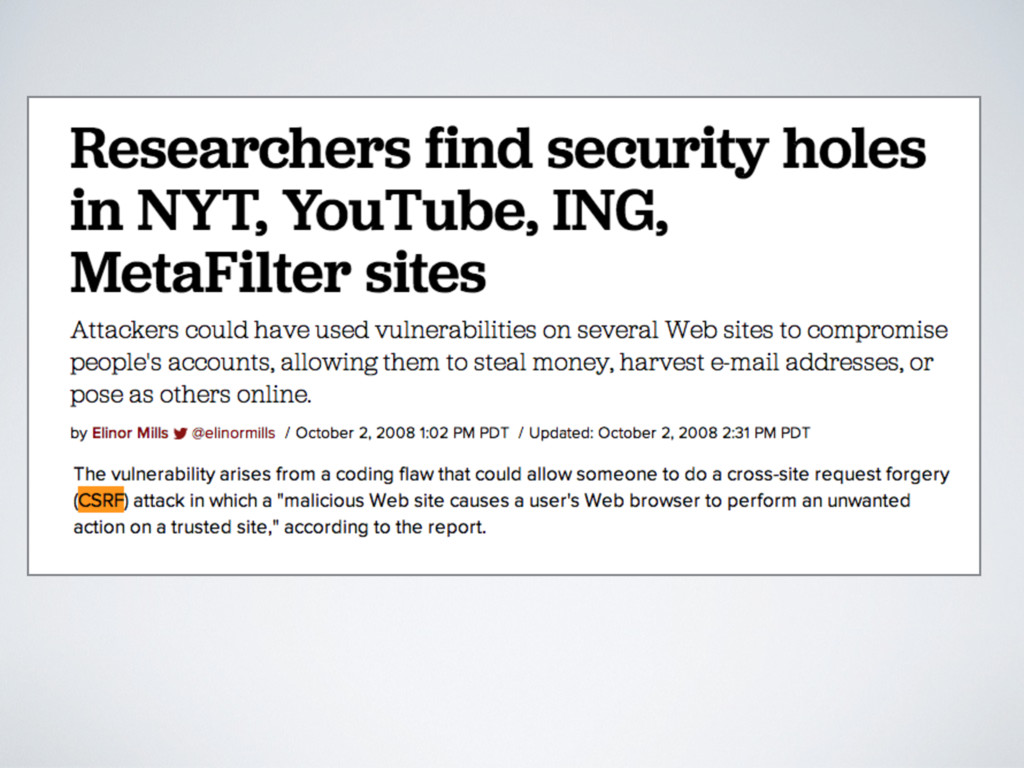
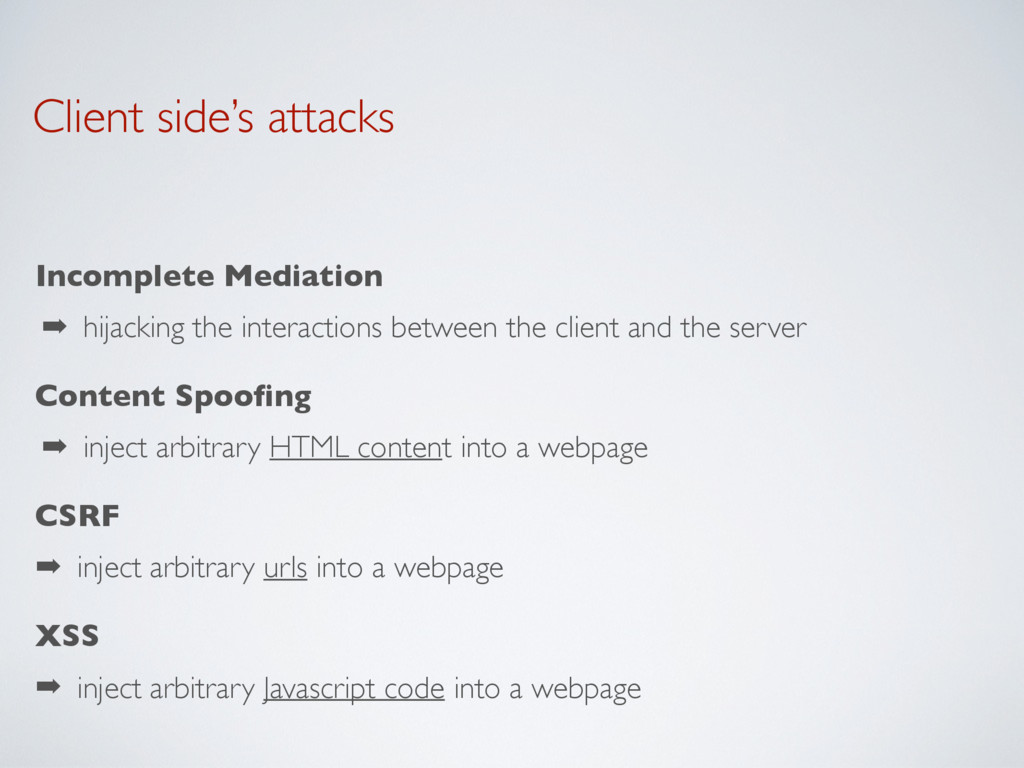
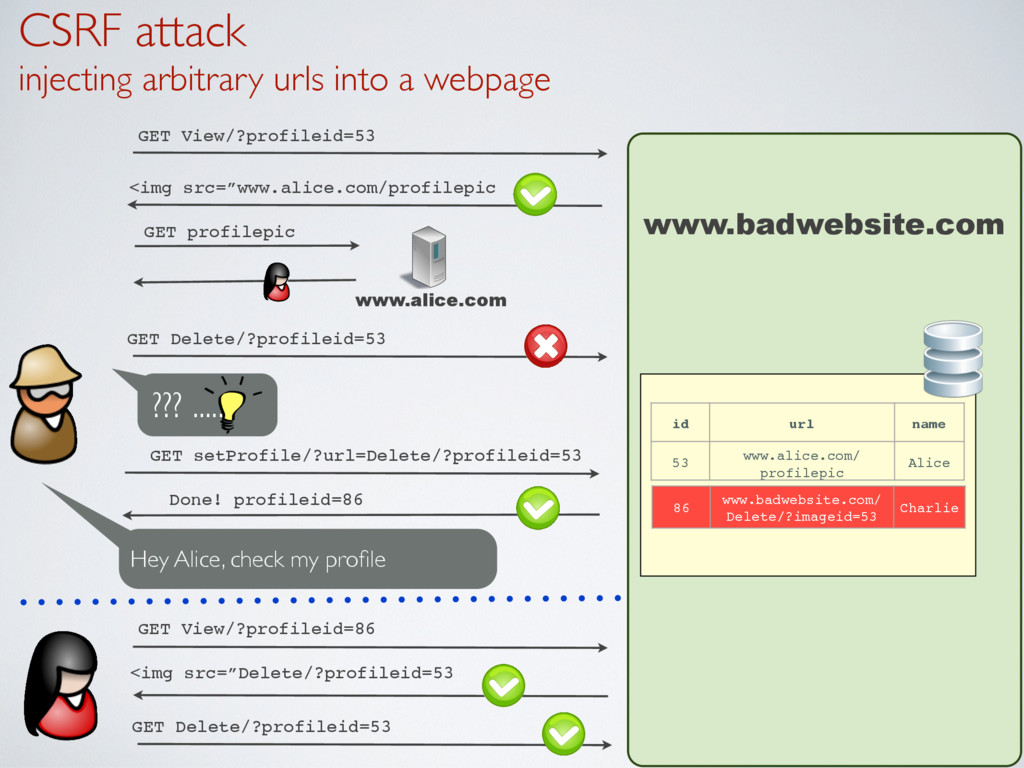
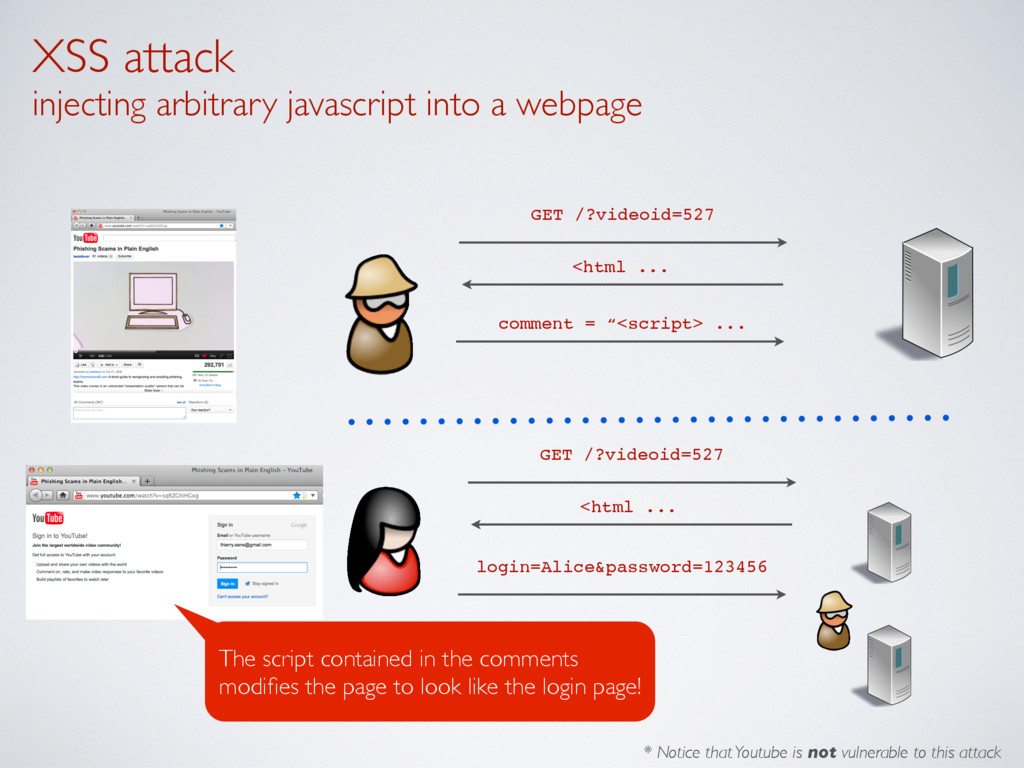
the client and the server Content Spoofing ➡ inject arbitrary HTML content into a webpage CSRF ➡ inject arbitrary urls into a webpage XSS ➡ inject arbitrary Javascript code into a webpage
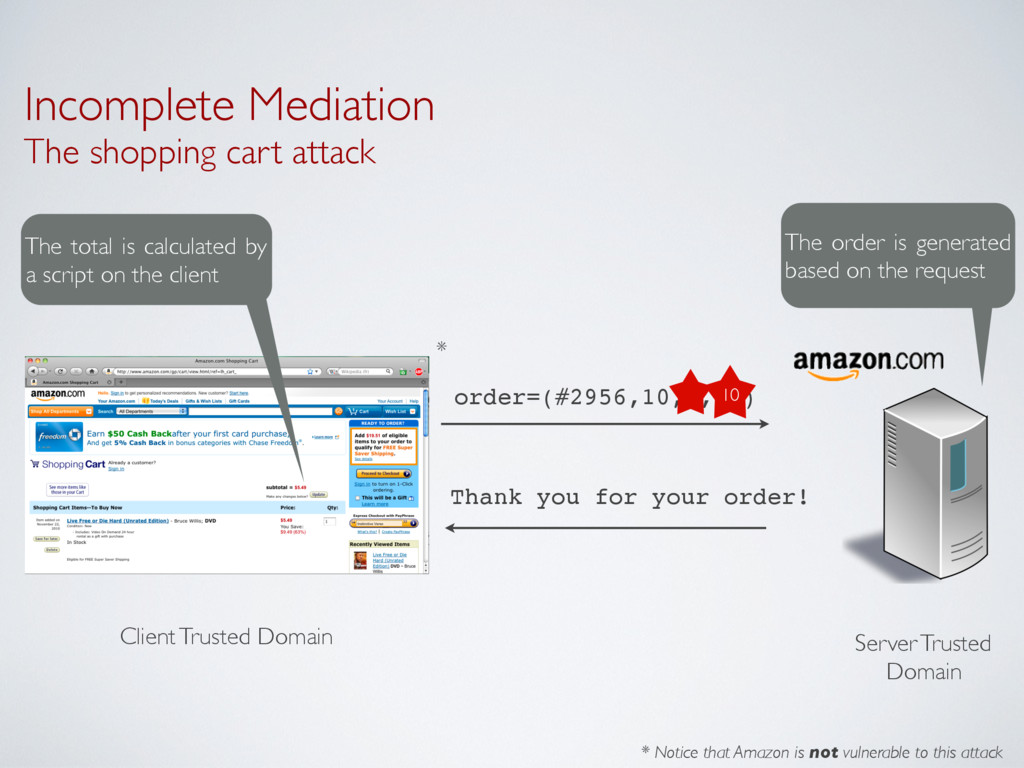
Client Trusted Domain * Notice that Amazon is not vulnerable to this attack * Thank you for your order! The total is calculated by a script on the client The order is generated based on the request 10
is not vulnerable to this attack GET /?videoid=527 <html ... GET /?videoid=527 <html ... Content Spoofing injecting arbitrary HTML content into a webpage The page contains the attacker’s code.
<img src=”Delete/?profileid=53 GET Delete/?profileid=53 Hey Alice, check my profile id url name 53 www.alice.com/ profilepic Alice 86 www.badwebsite.com/ Delete/?imageid=53 Charlie www.badwebsite.com <img src=”www.alice.com/profilepic Done! profileid=86 GET profilepic www.alice.com CSRF attack injecting arbitrary urls into a webpage
vulnerable to this attack login=Alice&password=123456 GET /?videoid=527 <html ... GET /?videoid=527 <html ... The script contained in the comments modifies the page to look like the login page! XSS attack injecting arbitrary javascript into a webpage
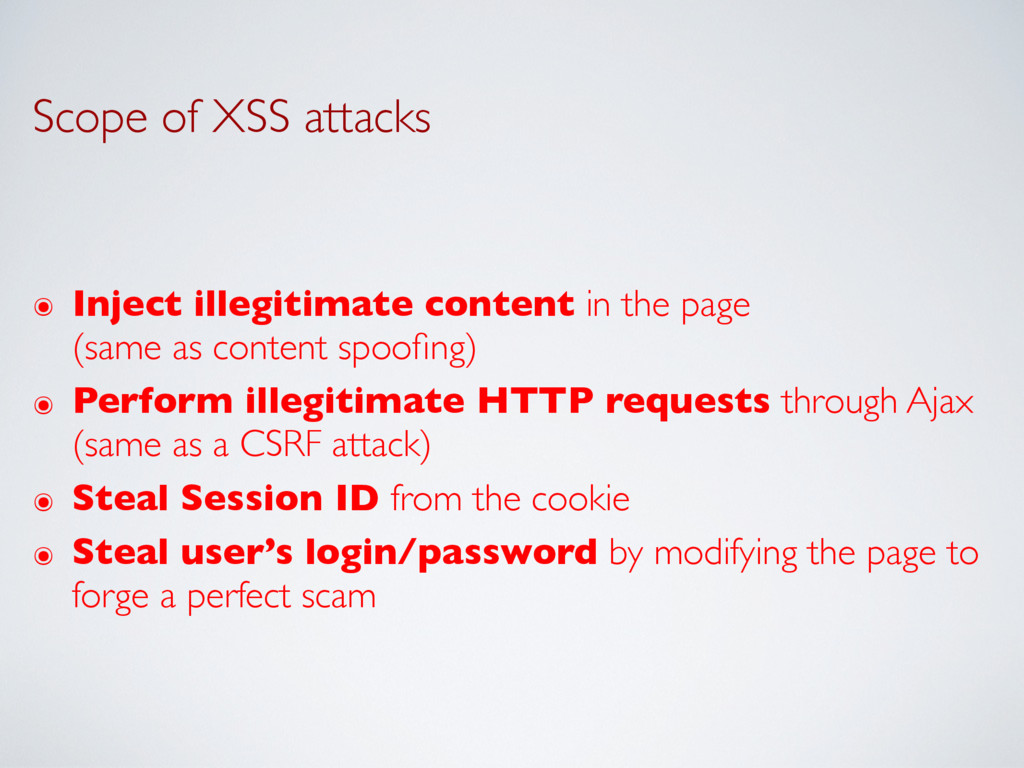
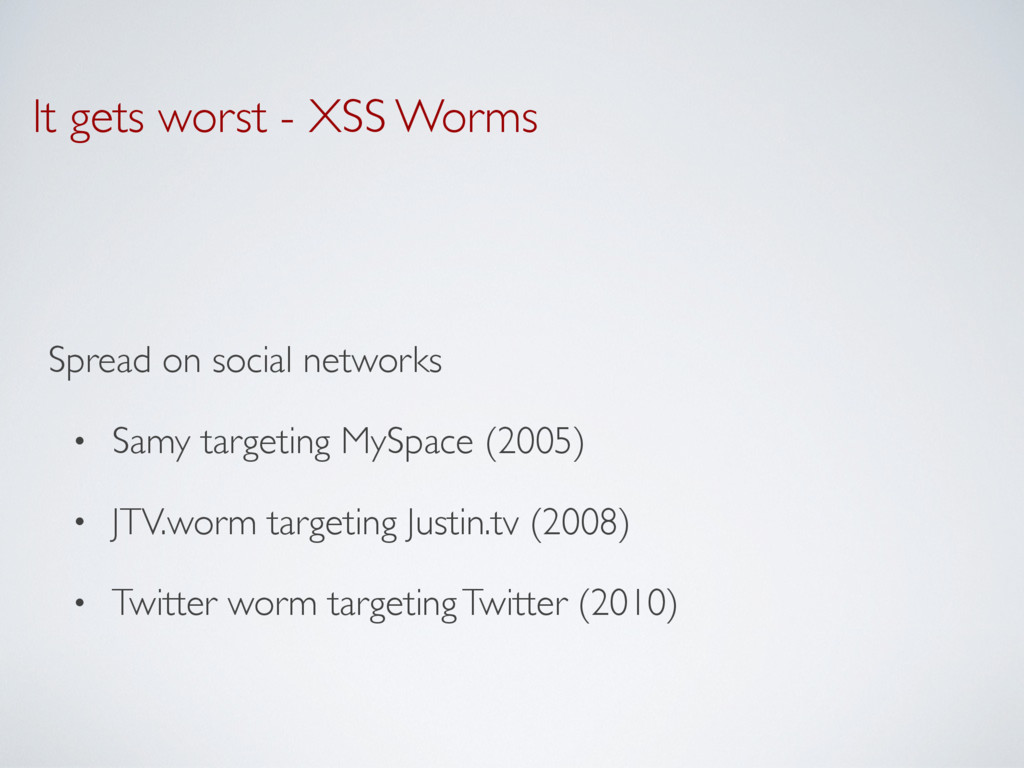
page (same as content spoofing) ๏ Perform illegitimate HTTP requests through Ajax (same as a CSRF attack) ๏ Steal Session ID from the cookie ๏ Steal user’s login/password by modifying the page to forge a perfect scam


 thierrysans
 katarinadahlin
 colly
colly
 destraynor
 bethany
 malarkey
 portentint
 notwaldorf
 lindahogenes
 jonoalderson
 gr2m
gr2m
 sergeychernyshev
 cassininazir