Upgrade to Pro — share decks privately, control downloads, hide ads and more …

HHVM

Sponsored · Your Podcast. Everywhere. Effortlessly. Share. Educate. Inspire. Entertain. You do you. We'll handle the rest.

 HHVM

Get started with HHVM. Learn about running and debugging your application on HHVM and why HHVM can be so much faster than Zend PHP!

http://www.phpconference.nl/

Avatar for Alexander

Alexander

June 27, 2014
Tweet

More Decks by Alexander

Other Decks in Programming

Transcript

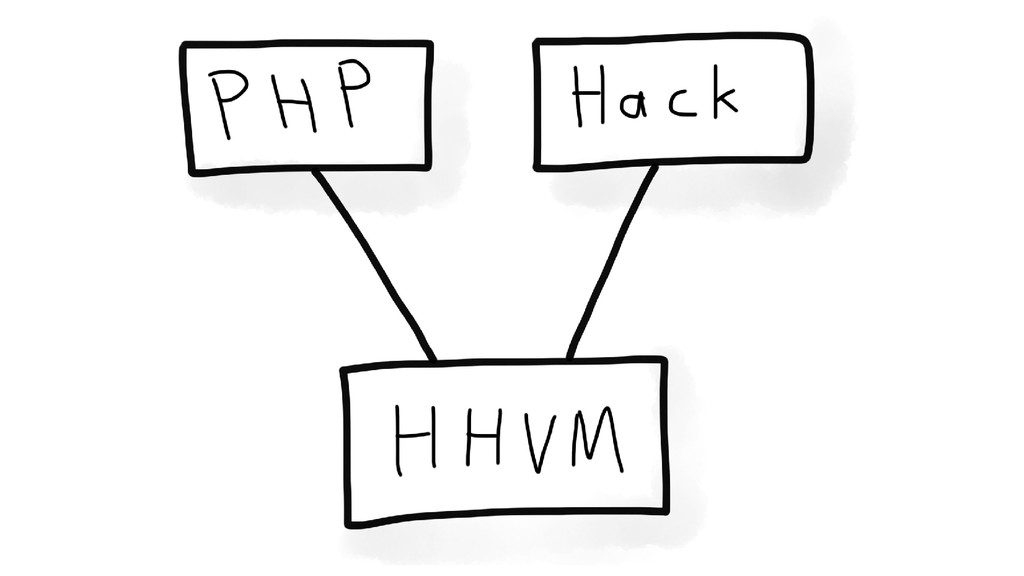
  1. JIT compiler • HHVM – PHP HHBC (ByteCode) HHIR (Intermediate

    Representation) → → Machine code →
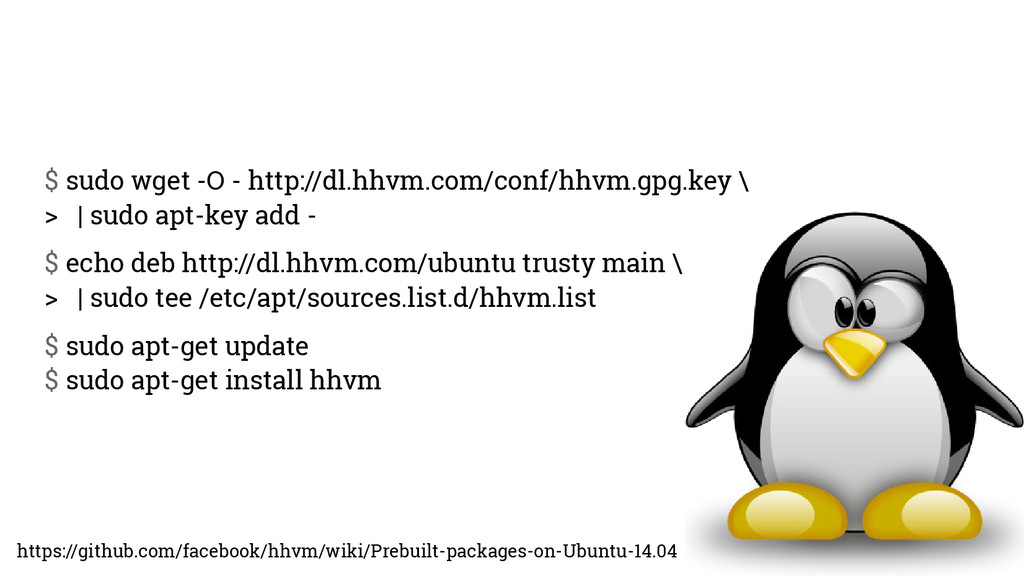
  2. $ sudo wget -O - http://dl.hhvm.com/conf/hhvm.gpg.key \ > | sudo

    apt-key add - $ echo deb http://dl.hhvm.com/ubuntu trusty main \ > | sudo tee /etc/apt/sources.list.d/hhvm.list $ sudo apt-get update $ sudo apt-get install hhvm https://github.com/facebook/hhvm/wiki/Prebuilt-packages-on-Ubuntu-14.04
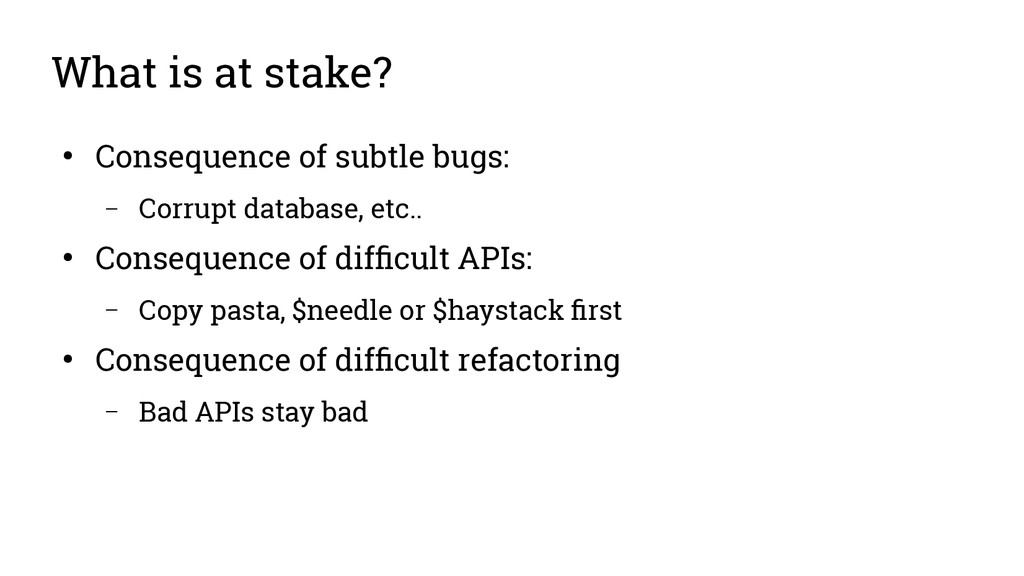
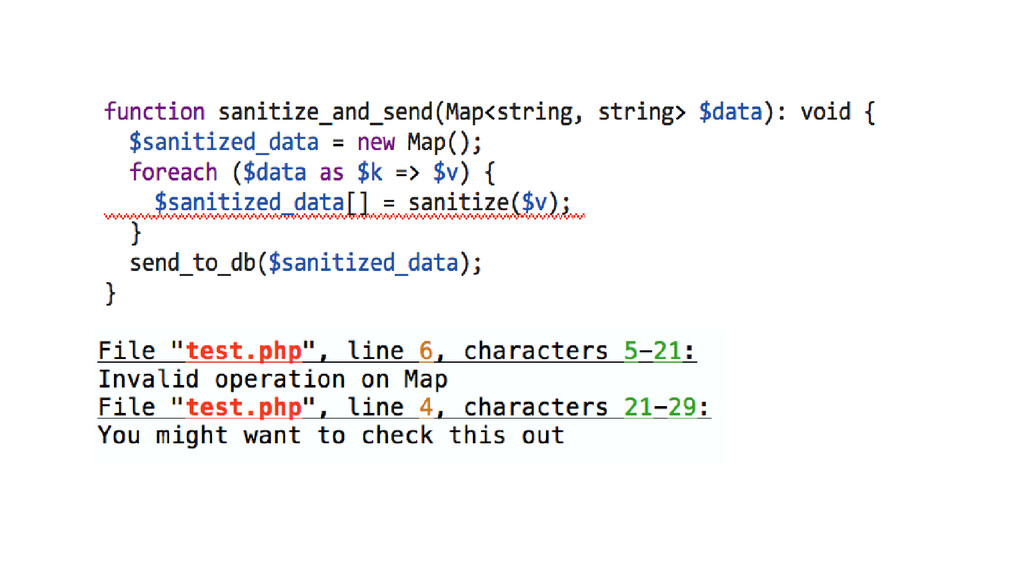
  3. What is at stake? • Consequence of subtle bugs: –

    Corrupt database, etc.. • Consequence of difficult APIs: – Copy pasta, $needle or $haystack first • Consequence of difficult refactoring – Bad APIs stay bad
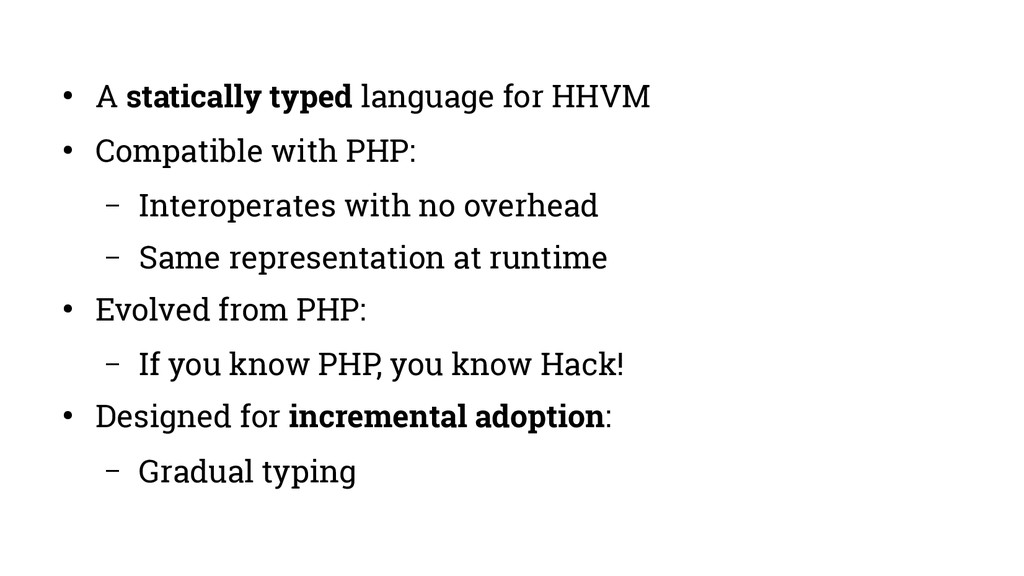
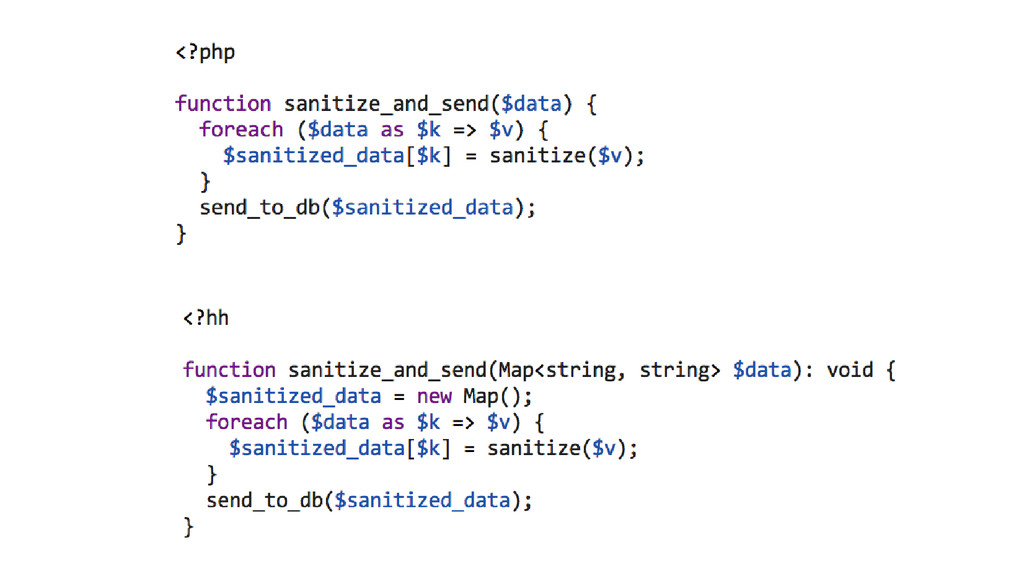
  4. • A statically typed language for HHVM • Compatible with

    PHP: – Interoperates with no overhead – Same representation at runtime • Evolved from PHP: – If you know PHP, you know Hack! • Designed for incremental adoption: – Gradual typing
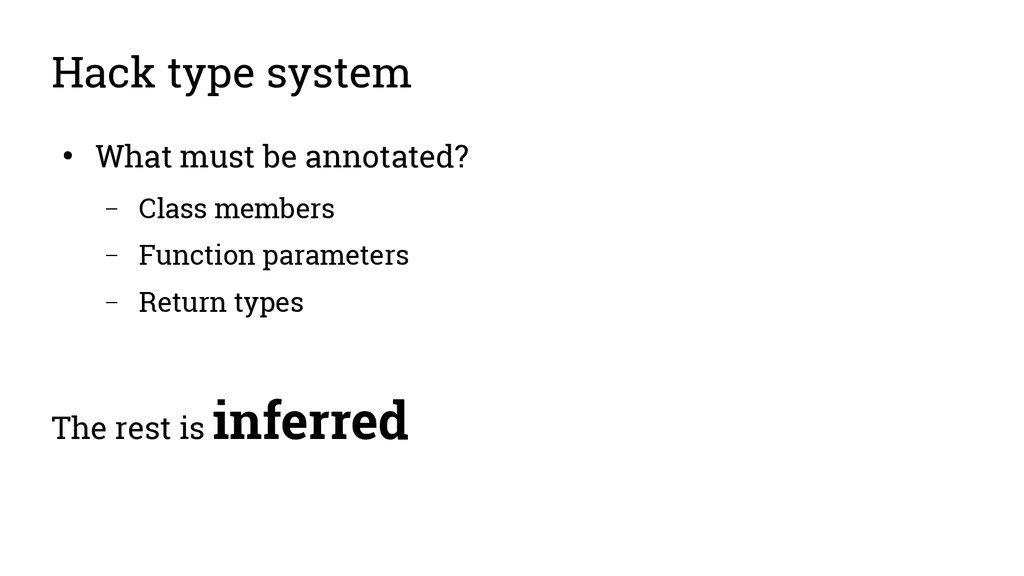
  5. Hack type system • What must be annotated? – Class
    members – Function parameters – Return types The rest is inferred
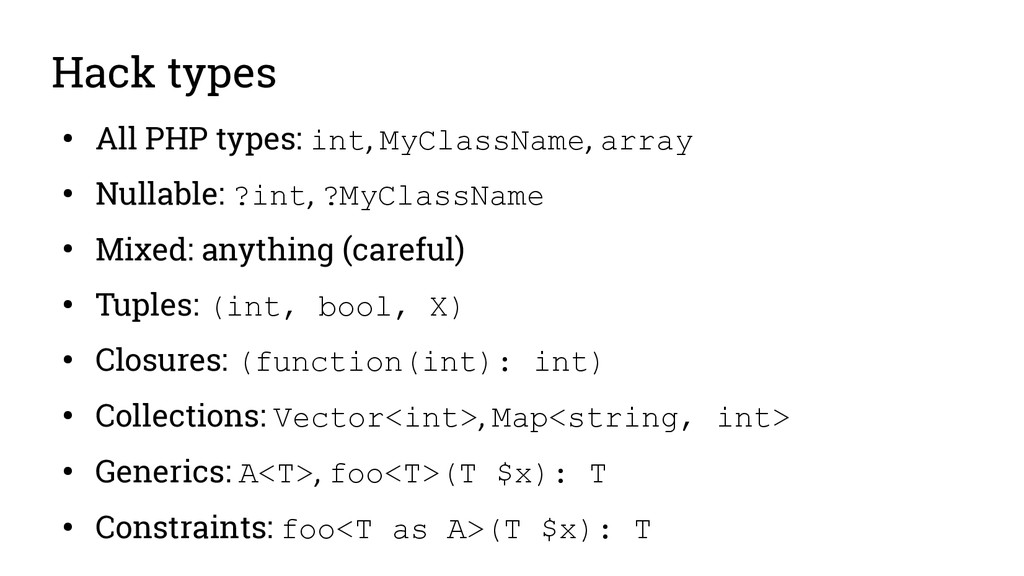
  6. Hack types • All PHP types: int, MyClassName, array •

    Nullable: ?int, ?MyClassName • Mixed: anything (careful) • Tuples: (int, bool, X) • Closures: (function(int): int) • Collections: Vector<int>, Map<string, int> • Generics: A<T>, foo<T>(T $x): T • Constraints: foo<T as A>(T $x): T
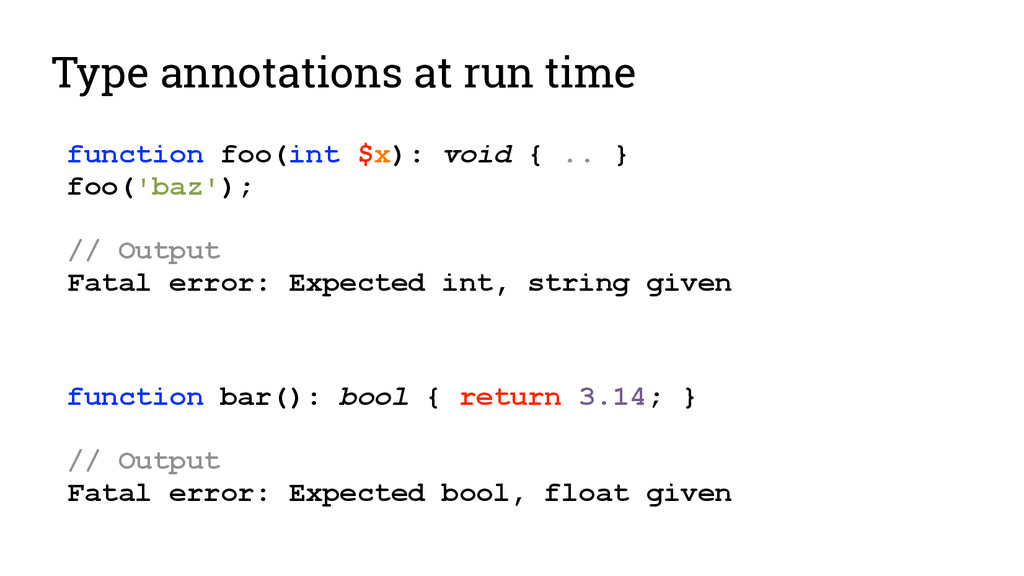
  7. Type annotations at run time function foo(int $x): void {

    .. } foo('baz'); // Output Fatal error: Expected int, string given function bar(): bool { return 3.14; } // Output Fatal error: Expected bool, float given
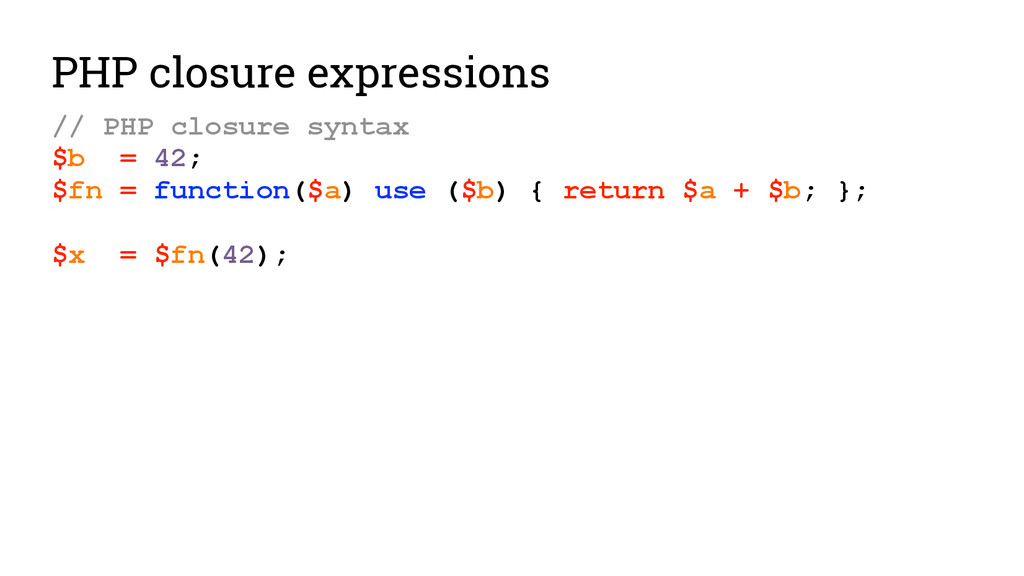
  8. PHP closure expressions // PHP closure syntax $b = 42;

    $fn = function($a) use ($b) { return $a + $b; }; $x = $fn(42);
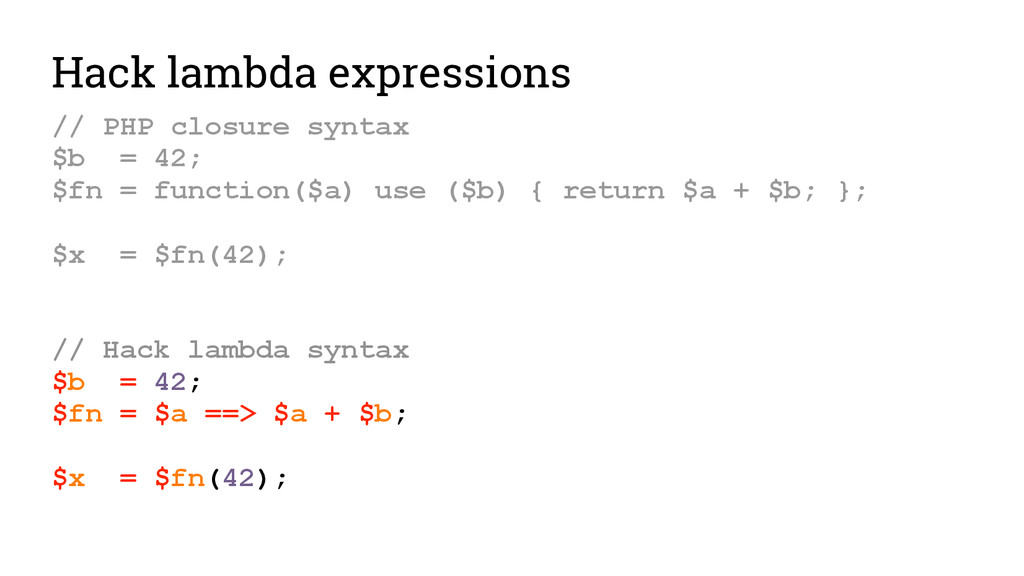
  9. Hack lambda expressions // PHP closure syntax $b = 42;

    $fn = function($a) use ($b) { return $a + $b; }; $x = $fn(42); // Hack lambda syntax $b = 42; $fn = $a ==> $a + $b; $x = $fn(42);
  10. Benefits of Lambda Expressions • More concise • Auto capturing

    references • Makes it easier to use callback-based APIs (wait for it..)
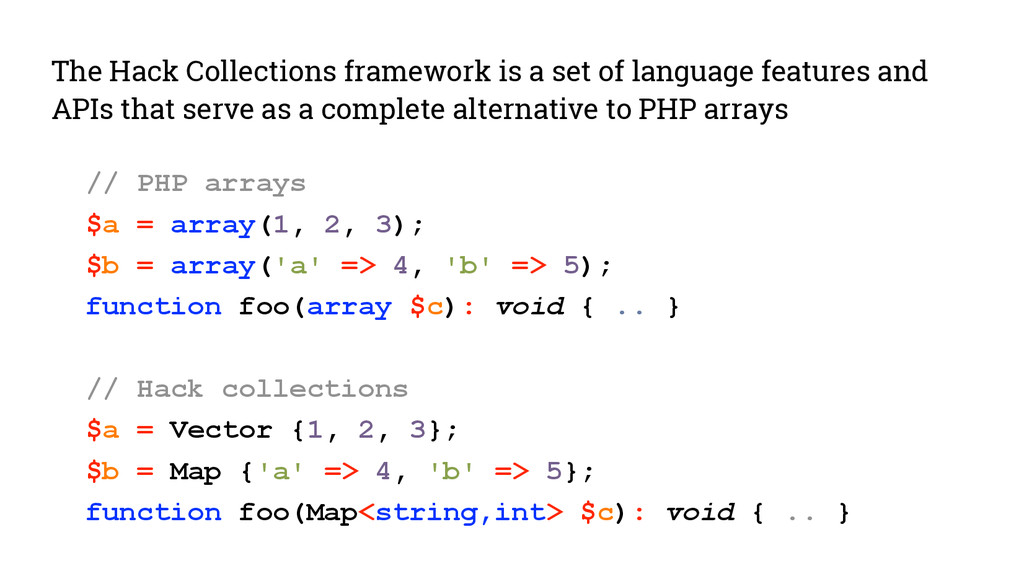
  11. The Hack Collections framework is a set of language features

    and APIs that serve as a complete alternative to PHP arrays // PHP arrays $a = array(1, 2, 3); $b = array('a' => 4, 'b' => 5); function foo(array $c): void { .. } // Hack collections $a = Vector {1, 2, 3}; $b = Map {'a' => 4, 'b' => 5}; function foo(Map<string,int> $c): void { .. }
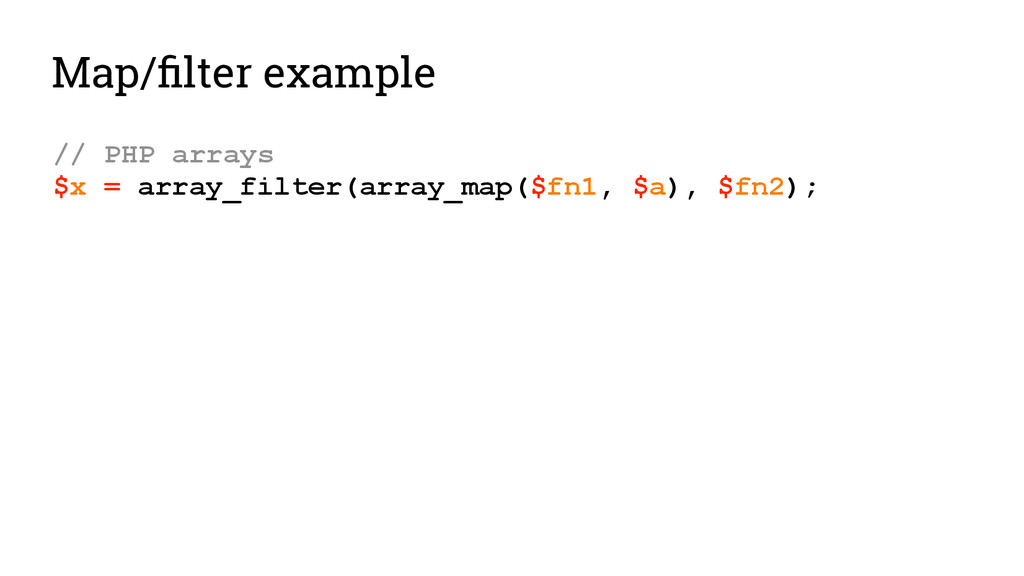
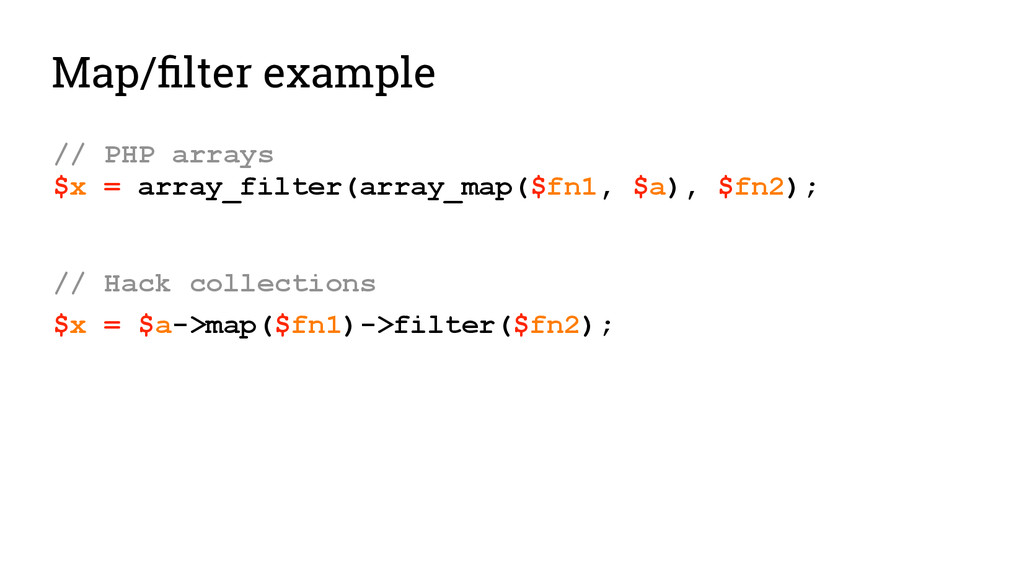
  12. Map/filter example // PHP arrays $x = array_filter(array_map($fn1, $a), $fn2);

    // Hack collections $x = $a->map($fn1)->filter($fn2);
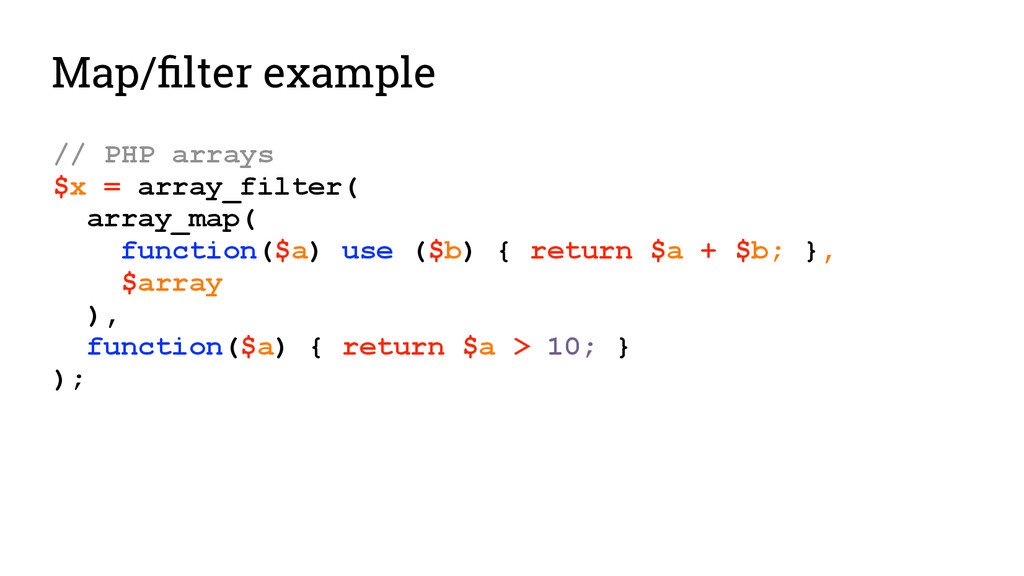
  13. Map/filter example // PHP arrays $x = array_filter( array_map( function($a)

    use ($b) { return $a + $b; }, $array ), function($a) { return $a > 10; } );
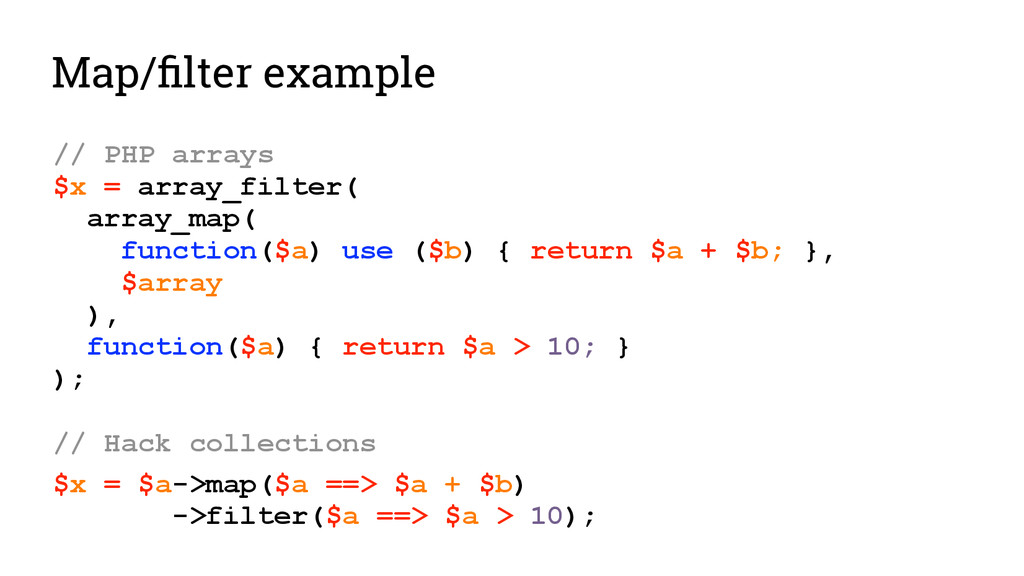
  14. Map/filter example // PHP arrays $x = array_filter( array_map( function($a)

    use ($b) { return $a + $b; }, $array ), function($a) { return $a > 10; } ); // Hack collections $x = $a->map($a ==> $a + $b) ->filter($a ==> $a > 10);
  15. More features • Async/await • Constructor promotion • Trailing comma's

    in function calls • Trait requirements • User attributes (<<Entity>> class C {}) • <<Override>> • ...