Upgrade to Pro — share decks privately, control downloads, hide ads and more …

Python

Sponsored · Your Podcast. Everywhere. Effortlessly. Share. Educate. Inspire. Entertain. You do you. We'll handle the rest.
Avatar for bananaappletw bananaappletw
September 26, 2016

 Python

Bamboofox club lecture

Avatar for bananaappletw

bananaappletw

September 26, 2016
Tweet

More Decks by bananaappletw

Other Decks in Programming

Transcript

  1. $who am i • ID : bananaapple • 學校科系 :

    交通大學網工所 • 年級 : 一年級 • Email: [email protected]
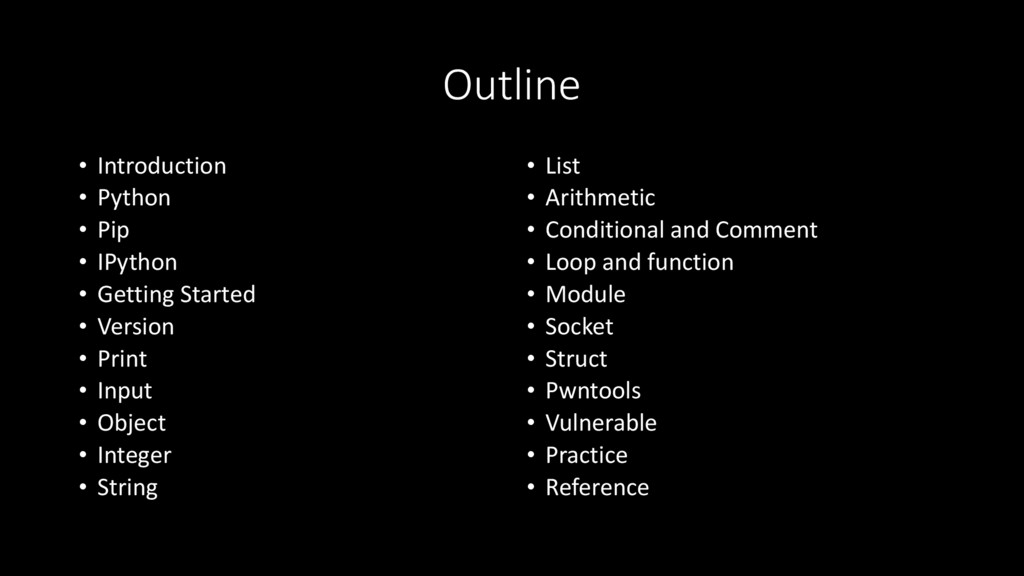
  2. Outline • Introduction • Python • Pip • IPython •

    Getting Started • Version • Print • Input • Object • Integer • String • List • Arithmetic • Conditional and Comment • Loop and function • Module • Socket • Struct • Pwntools • Vulnerable • Practice • Reference
  3. Introduction • Easy • Swift • Grace • Object-oriented •

    Strong module support • Default built in most environment • Script language
  4. Python • Debian GNU / Linux • Python2 sudo apt-get

    install python2 • Python3 sudo apt-get install python3 • Windows Sorry
  5. Pip • Pip is package management for Python • Installation

    • Python2 sudo apt-get install python2-pip • Python3 sudo apt-get install python3-pip • Windows Sorry
  6. IPython • Installation • Python2 sudo apt-get install ipython •

    Python3 sudo apt-get install ipython3 • Windows Sorry
  7. Getting Started • From terminal type python ipython • Save

    file with file extension .py and type python print.py ipython print.py • Add first line #!/usr/bin/env python • Add executable privilege to file and ./filename execute it chmod +x ./print.py ./print.py
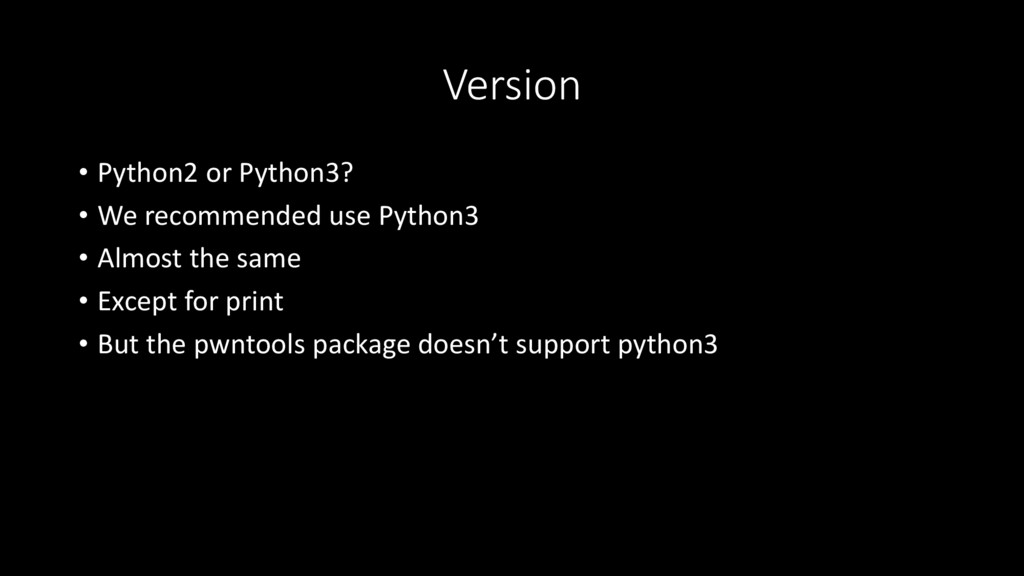
  8. Version • Python2 or Python3? • We recommended use Python3

    • Almost the same • Except for print • But the pwntools package doesn’t support python3
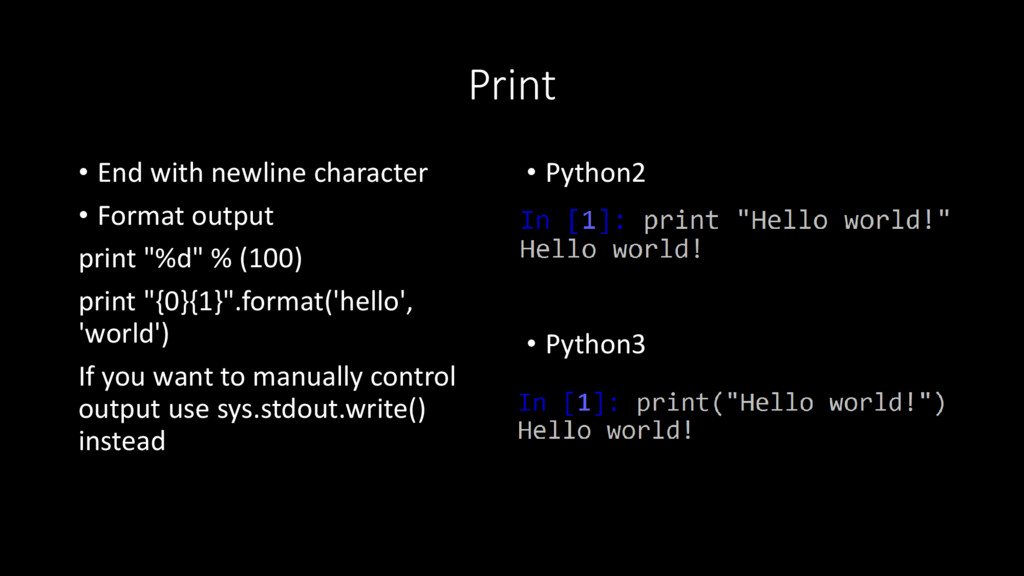
  9. Print • End with newline character • Format output print

    "%d" % (100) print "{0}{1}".format('hello', 'world') If you want to manually control output use sys.stdout.write() instead • Python2 • Python3
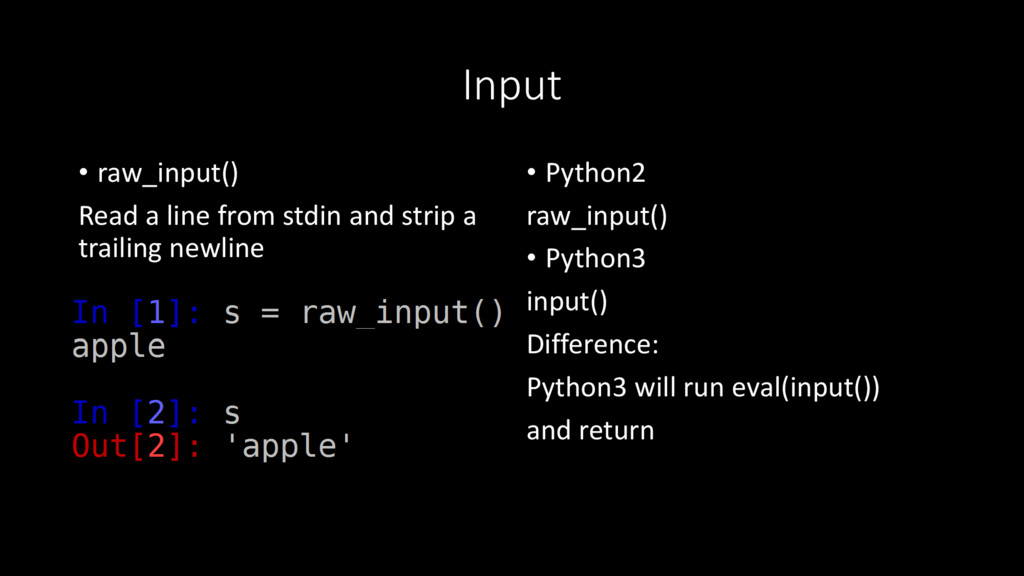
  10. Input • raw_input() Read a line from stdin and strip

    a trailing newline • Python2 raw_input() • Python3 input() Difference: Python3 will run eval(input()) and return
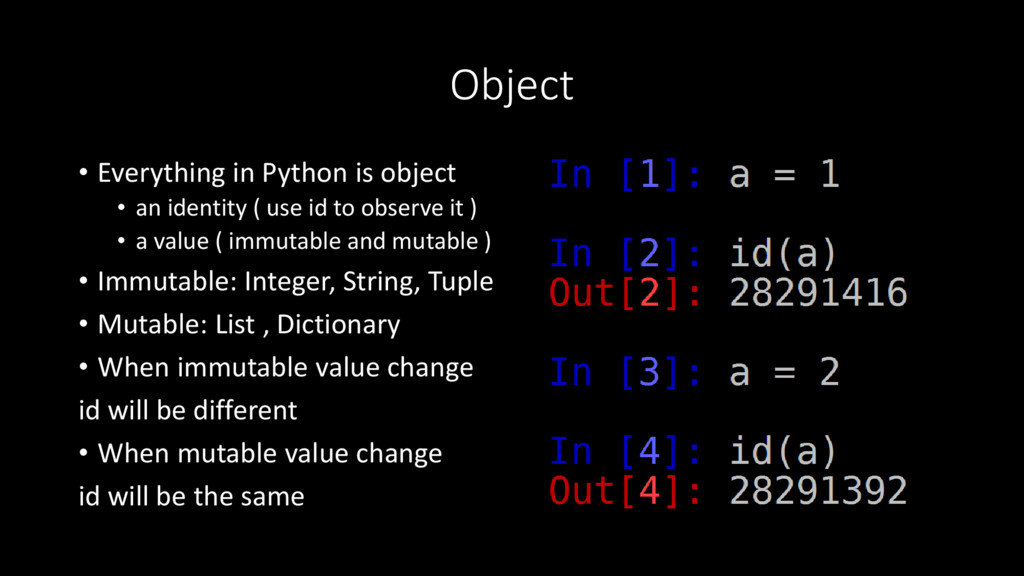
  11. Object • Everything in Python is object • an identity

    ( use id to observe it ) • a value ( immutable and mutable ) • Immutable: Integer, String, Tuple • Mutable: List , Dictionary • When immutable value change id will be different • When mutable value change id will be the same
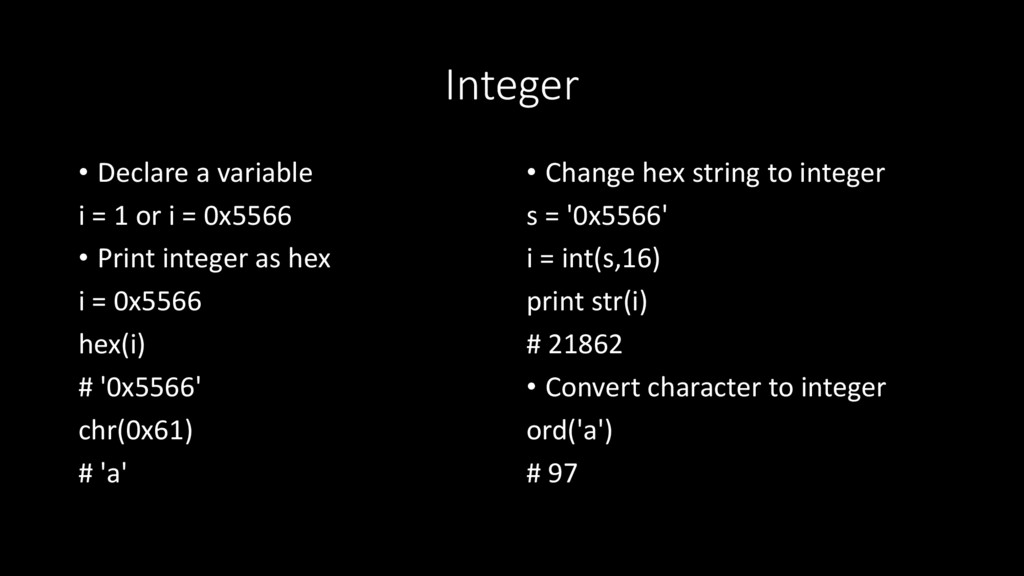
  12. Integer • Declare a variable i = 1 or i

    = 0x5566 • Print integer as hex i = 0x5566 hex(i) # '0x5566' chr(0x61) # 'a' • Change hex string to integer s = '0x5566' i = int(s,16) print str(i) # 21862 • Convert character to integer ord('a') # 97
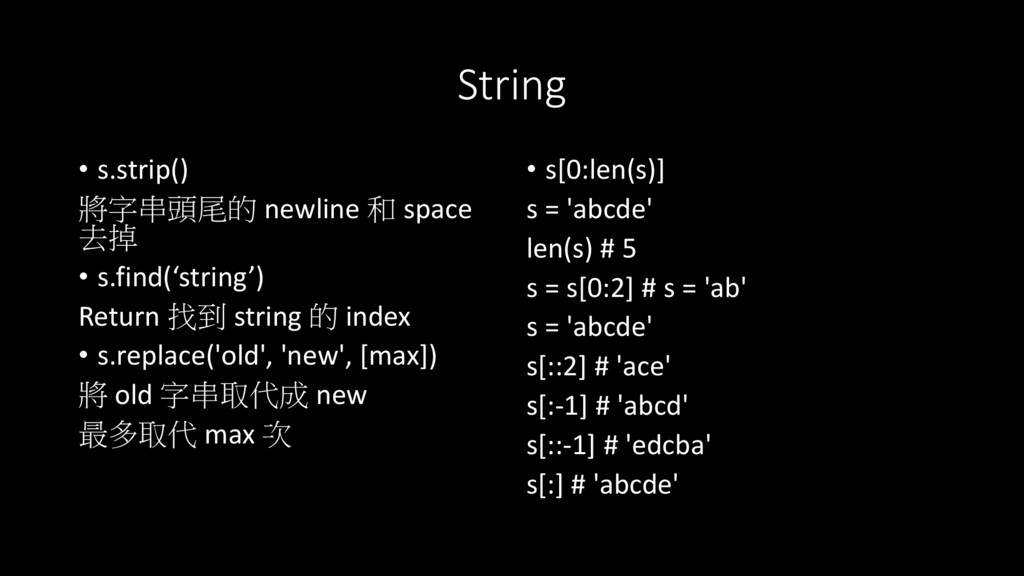
  13. String • s.strip() 將字串頭尾的 newline 和 space 去掉 • s.find(‘string’)

    Return 找到 string 的 index • s.replace('old', 'new', [max]) 將 old 字串取代成 new 最多取代 max 次 • s[0:len(s)] s = 'abcde' len(s) # 5 s = s[0:2] # s = 'ab' s = 'abcde' s[::2] # 'ace' s[:-1] # 'abcd' s[::-1] # 'edcba' s[:] # 'abcde'
  14. List • Declare with [] lis =[] • lis.append(element) #

    lis = [element] • lis.remove(element) • lis.sort() • lis.reverse() • Split string include spaces s = 'a b c d e' lis = s.split(' ') # lis = ['a', 'b', 'c', 'd', 'e'] • map( function_name, sequence ) def f(x): return x**2 map(f,range(10)) [0, 1, 4, 9, 16, 25, 36, 49, 64, 81]
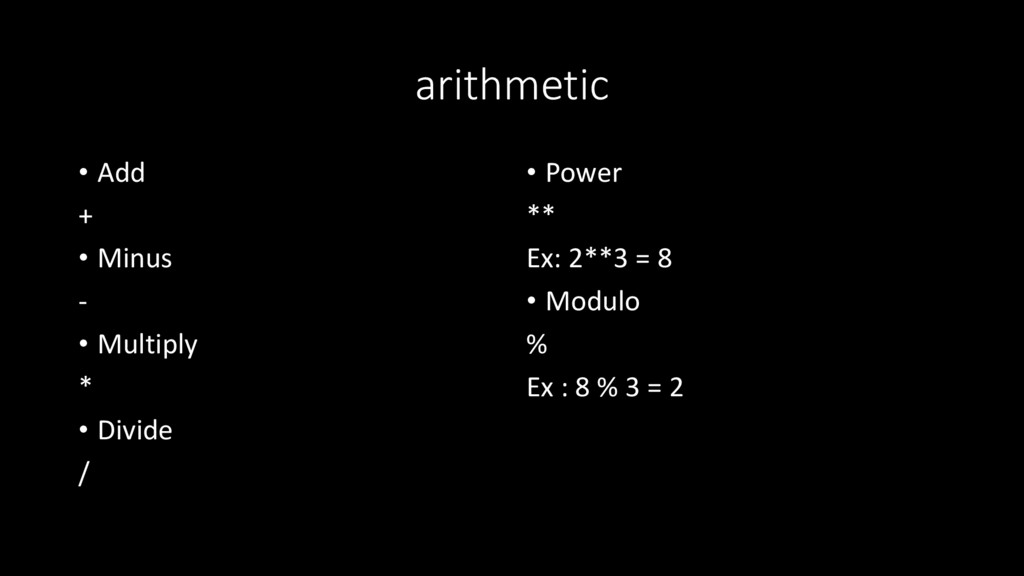
  15. arithmetic • Add + • Minus - • Multiply *

    • Divide / • Power ** Ex: 2**3 = 8 • Modulo % Ex : 8 % 3 = 2
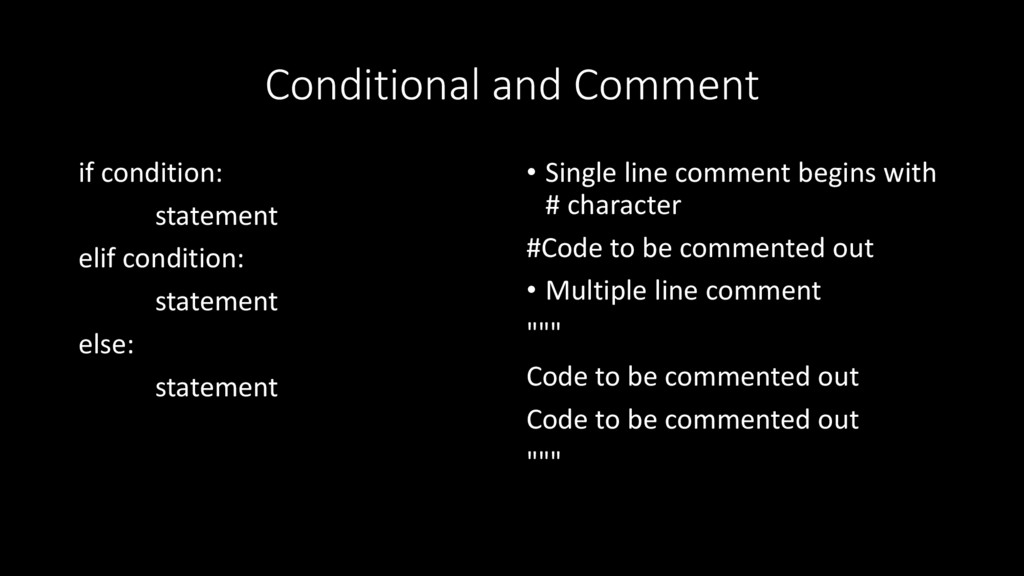
  16. Conditional and Comment if condition: statement elif condition: statement else:

    statement • Single line comment begins with # character #Code to be commented out • Multiple line comment """ Code to be commented out Code to be commented out """
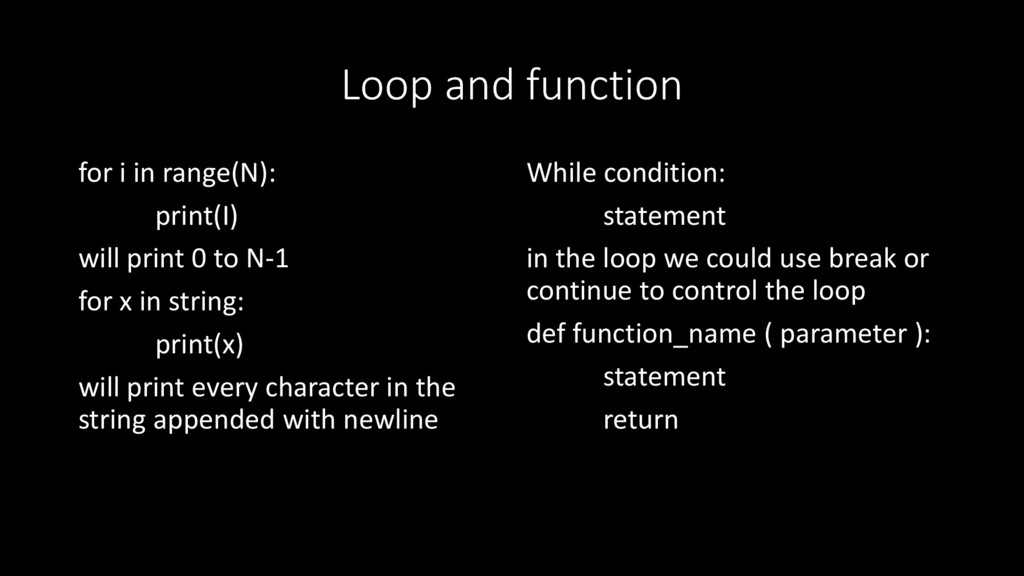
  17. Loop and function for i in range(N): print(I) will print

    0 to N-1 for x in string: print(x) will print every character in the string appended with newline While condition: statement in the loop we could use break or continue to control the loop def function_name ( parameter ): statement return
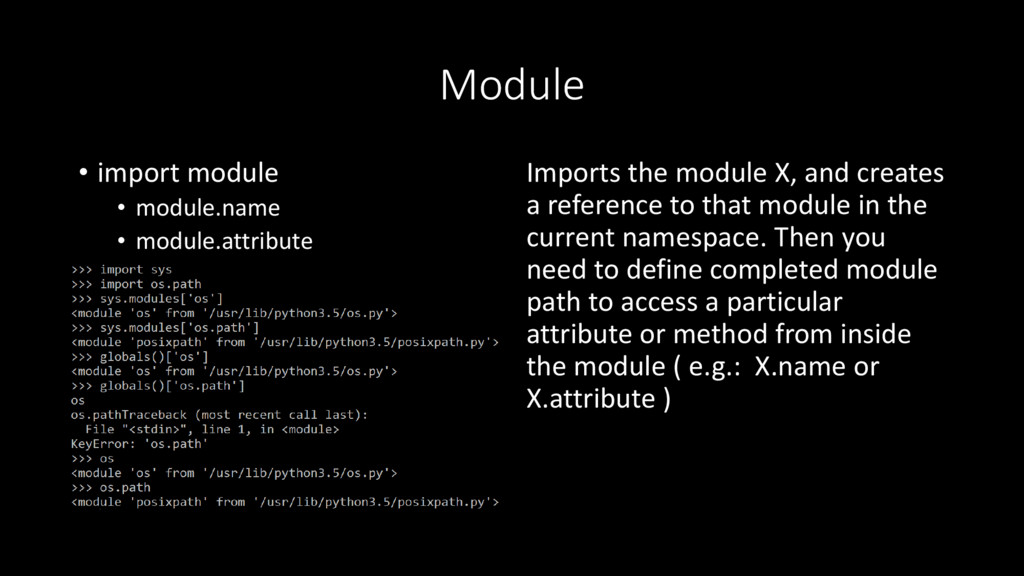
  18. Module • import module • module.name • module.attribute Imports the

    module X, and creates a reference to that module in the current namespace. Then you need to define completed module path to access a particular attribute or method from inside the module ( e.g.: X.name or X.attribute )
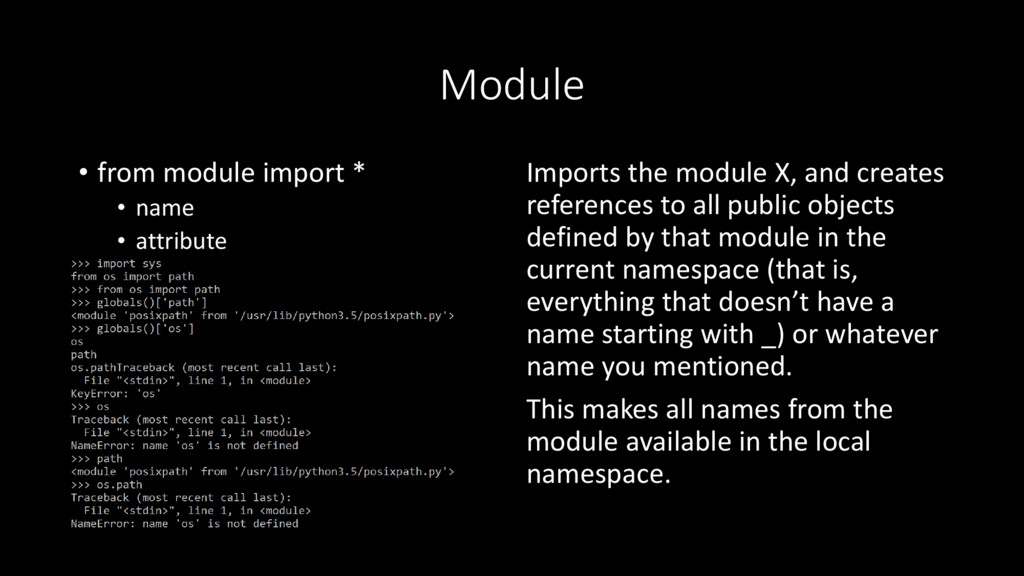
  19. Module • from module import * • name • attribute

    Imports the module X, and creates references to all public objects defined by that module in the current namespace (that is, everything that doesn’t have a name starting with _) or whatever name you mentioned. This makes all names from the module available in the local namespace.
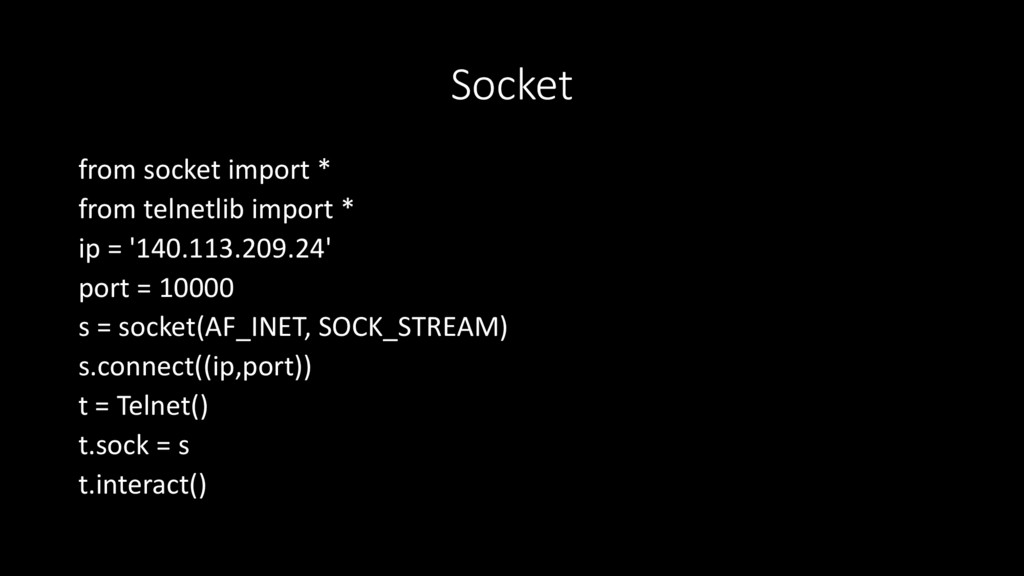
  20. Socket from socket import * from telnetlib import * ip

    = '140.113.209.24' port = 10000 s = socket(AF_INET, SOCK_STREAM) s.connect((ip,port)) t = Telnet() t.sock = s t.interact()
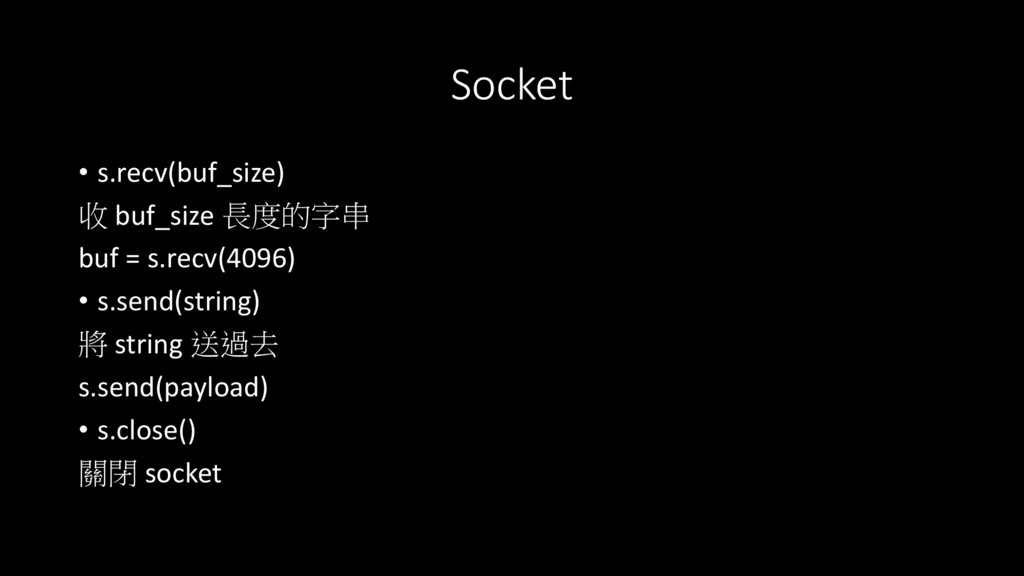
  21. Socket • s.recv(buf_size) 收 buf_size 長度的字串 buf = s.recv(4096) •

    s.send(string) 將 string 送過去 s.send(payload) • s.close() 關閉 socket
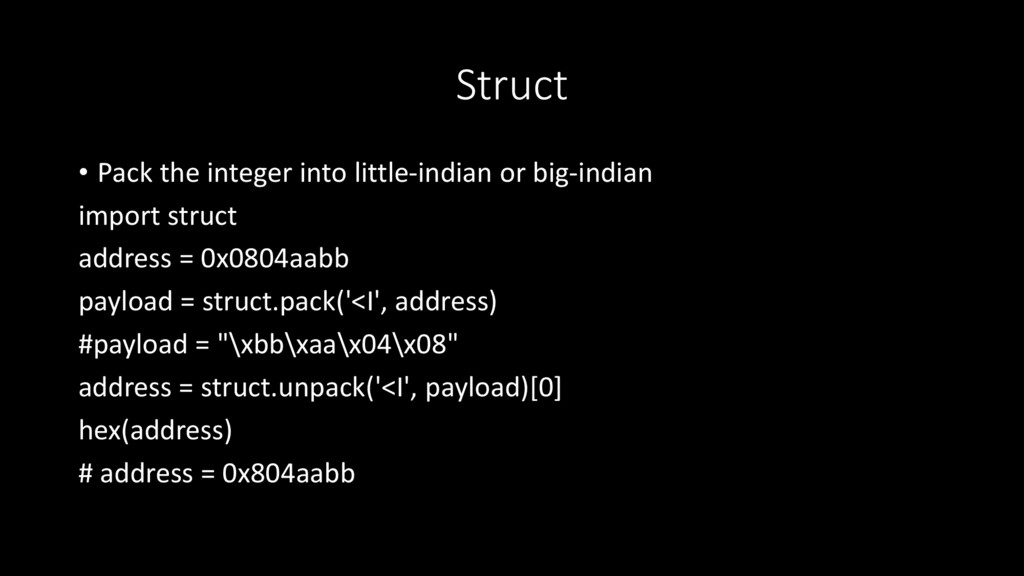
  22. Struct • Pack the integer into little-indian or big-indian import

    struct address = 0x0804aabb payload = struct.pack('<I', address) #payload = "\xbb\xaa\x04\x08" address = struct.unpack('<I', payload)[0] hex(address) # address = 0x804aabb
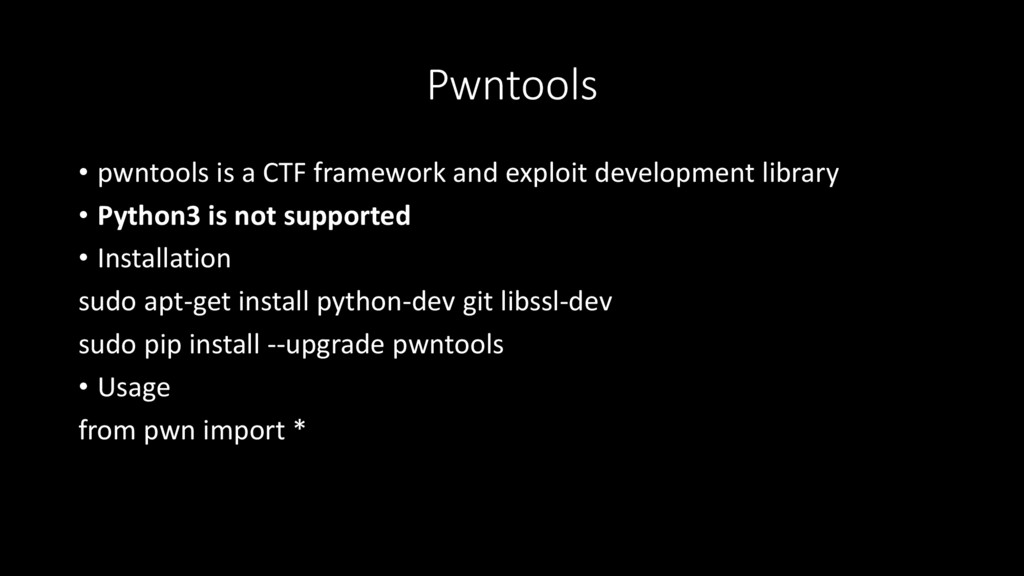
  23. Pwntools • pwntools is a CTF framework and exploit development

    library • Python3 is not supported • Installation sudo apt-get install python-dev git libssl-dev sudo pip install --upgrade pwntools • Usage from pwn import *
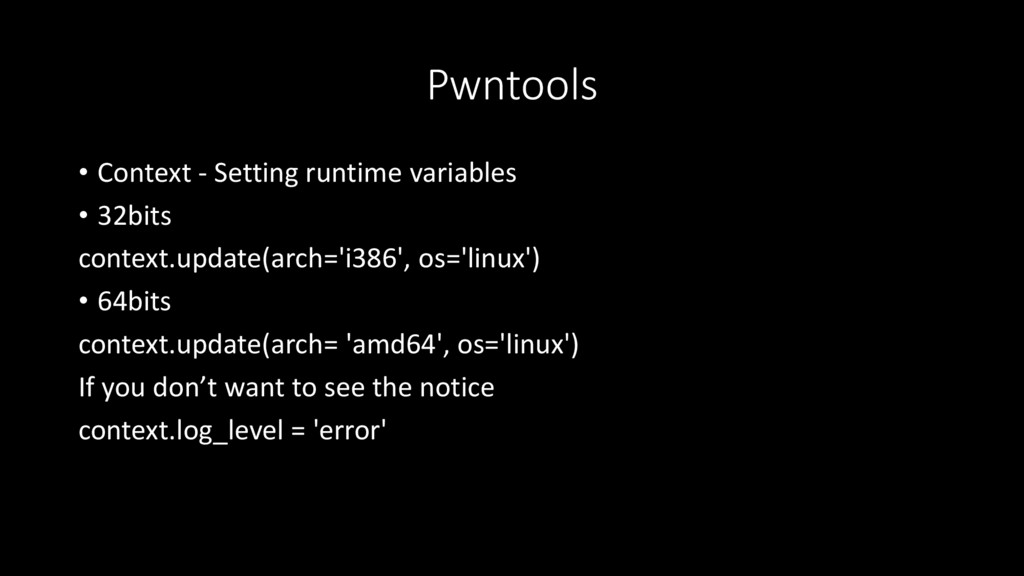
  24. Pwntools • Context - Setting runtime variables • 32bits context.update(arch='i386',

    os='linux') • 64bits context.update(arch= 'amd64', os='linux') If you don’t want to see the notice context.log_level = 'error'
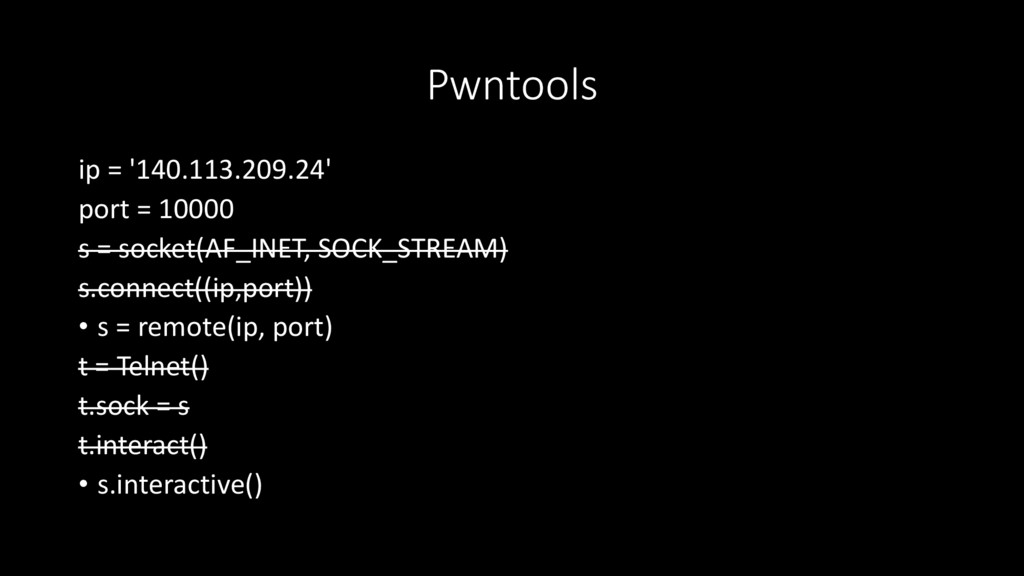
  25. Pwntools ip = '140.113.209.24' port = 10000 s = socket(AF_INET,

    SOCK_STREAM) s.connect((ip,port)) • s = remote(ip, port) t = Telnet() t.sock = s t.interact() • s.interactive()
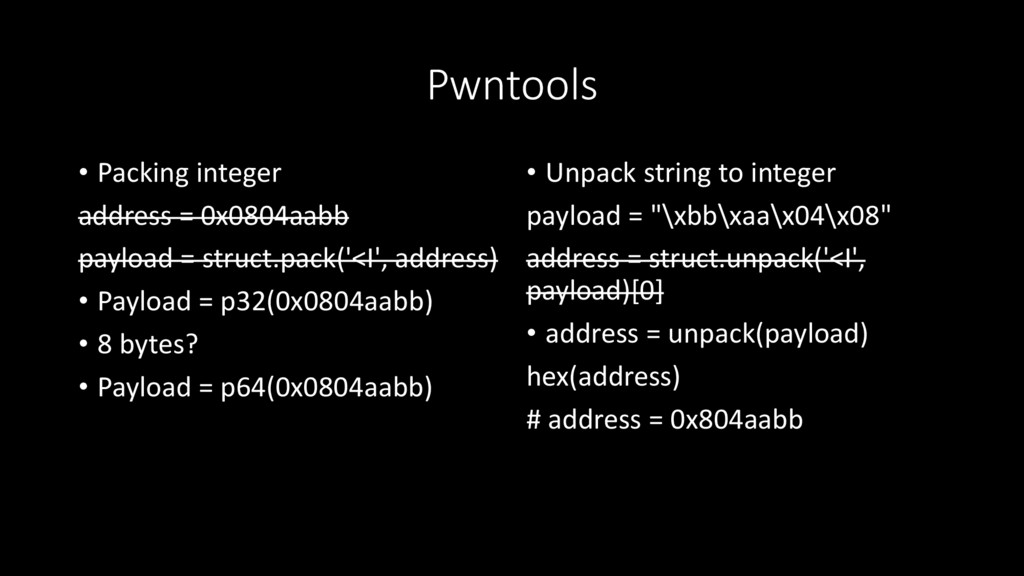
  26. Pwntools • Packing integer address = 0x0804aabb payload = struct.pack('<I',

    address) • Payload = p32(0x0804aabb) • 8 bytes? • Payload = p64(0x0804aabb) • Unpack string to integer payload = "\xbb\xaa\x04\x08" address = struct.unpack('<I', payload)[0] • address = unpack(payload) hex(address) # address = 0x804aabb
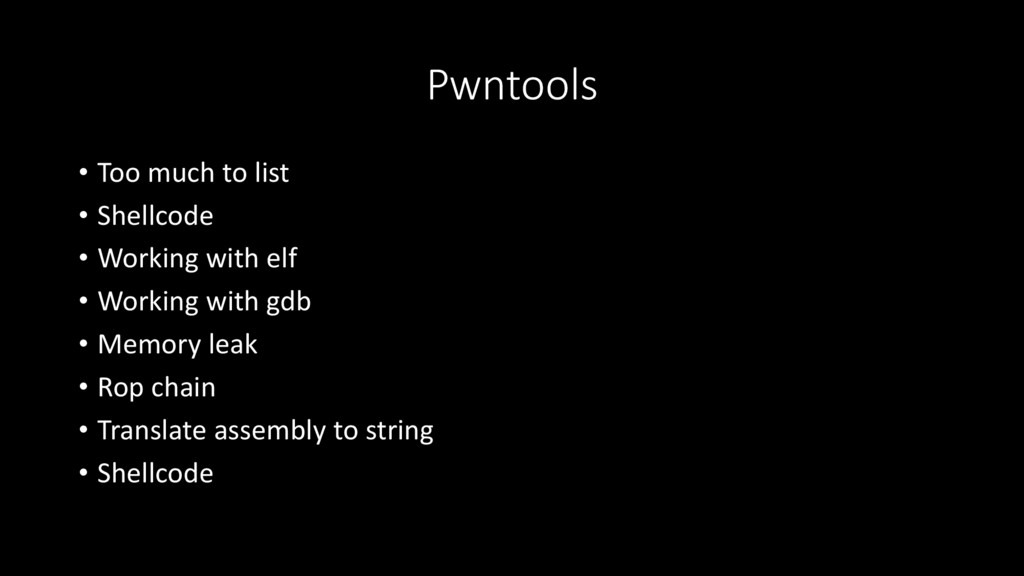
  27. Pwntools • Too much to list • Shellcode • Working

    with elf • Working with gdb • Memory leak • Rop chain • Translate assembly to string • Shellcode
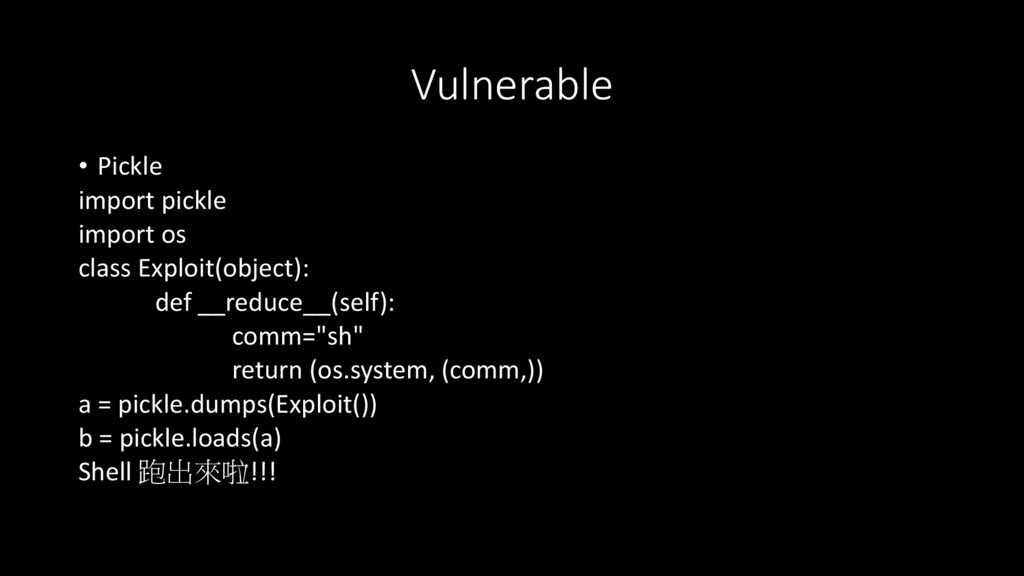
  28. Vulnerable • Pickle import pickle import os class Exploit(object): def

    __reduce__(self): comm="sh" return (os.system, (comm,)) a = pickle.dumps(Exploit()) b = pickle.loads(a) Shell 跑出來啦!!!
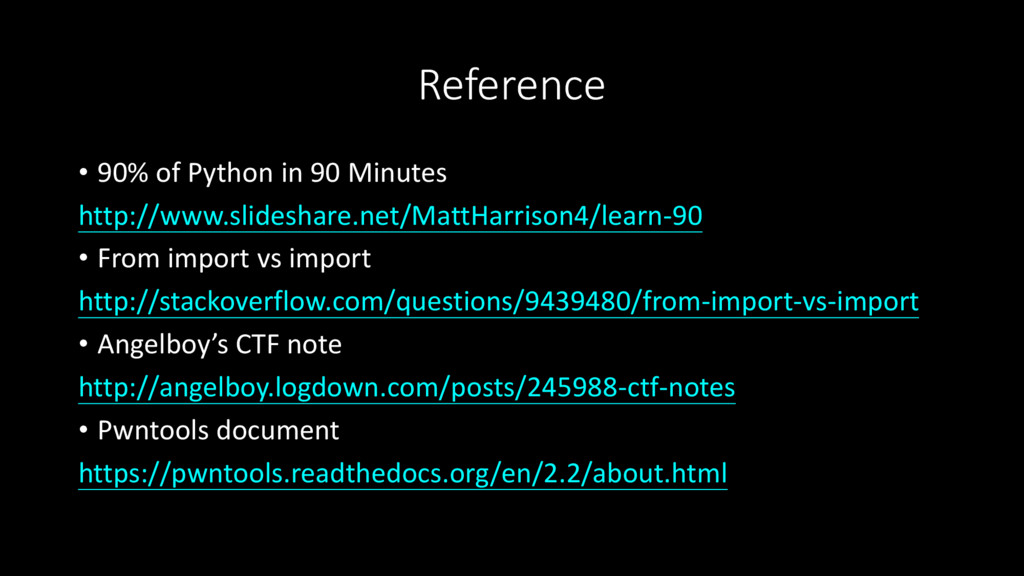
  29. Reference • 90% of Python in 90 Minutes http://www.slideshare.net/MattHarrison4/learn-90 •

    From import vs import http://stackoverflow.com/questions/9439480/from-import-vs-import • Angelboy’s CTF note http://angelboy.logdown.com/posts/245988-ctf-notes • Pwntools document https://pwntools.readthedocs.org/en/2.2/about.html