Doctor of Science and Engineering Research: e-learning, information systems design, programming education Previous job: Software engineer for school administration systems (2005–2013) Organizer, Java Users Group Hokkaido Organizer, PostgreSQL Users Group Hokkaido
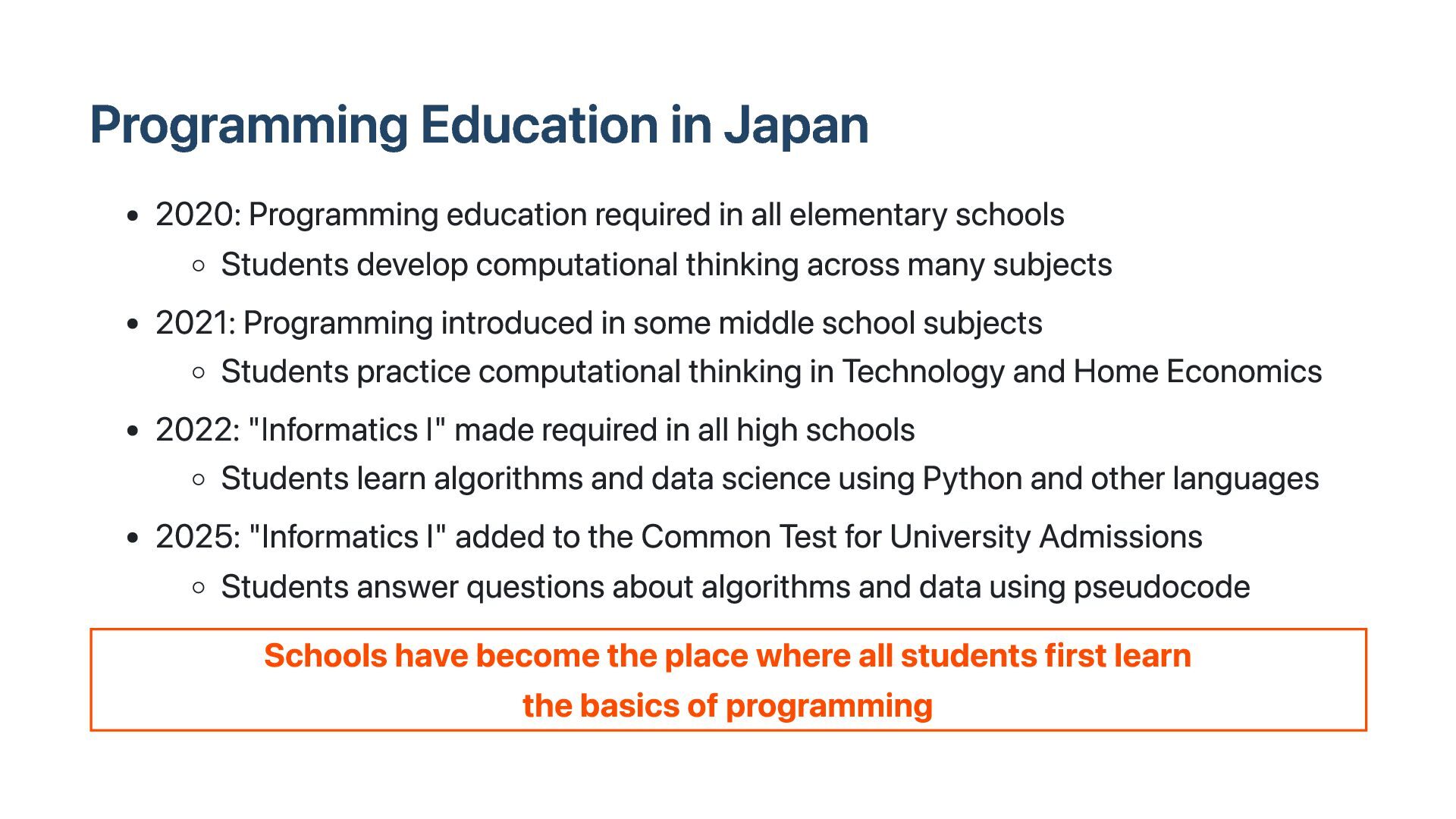
elementary schools Students develop computational thinking across many subjects 2021: Programming introduced in some middle school subjects Students practice computational thinking in Technology and Home Economics 2022: "Informatics I" made required in all high schools Students learn algorithms and data science using Python and other languages 2025: "Informatics I" added to the Common Test for University Admissions Students answer questions about algorithms and data using pseudocode Schools have become the place where all students first learn the basics of programming
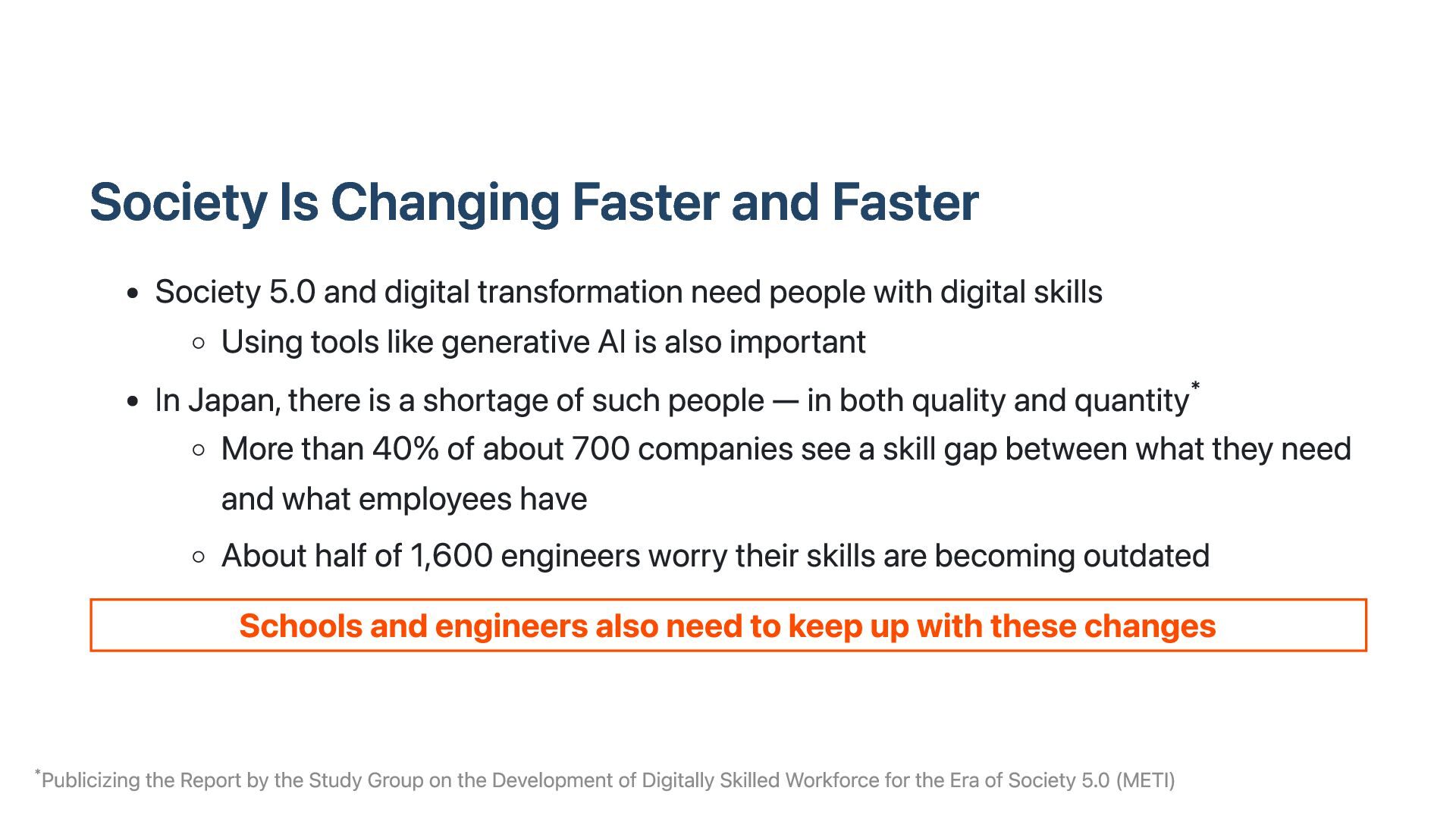
transformation need people with digital skills Using tools like generative AI is also important In Japan, there is a shortage of such people — in both quality and quantity* More than 40% of about 700 companies see a skill gap between what they need and what employees have About half of 1,600 engineers worry their skills are becoming outdated Schools and engineers also need to keep up with these changes *Publicizing the Report by the Study Group on the Development of Digitally Skilled Workforce for the Era of Society 5.0 (METI)
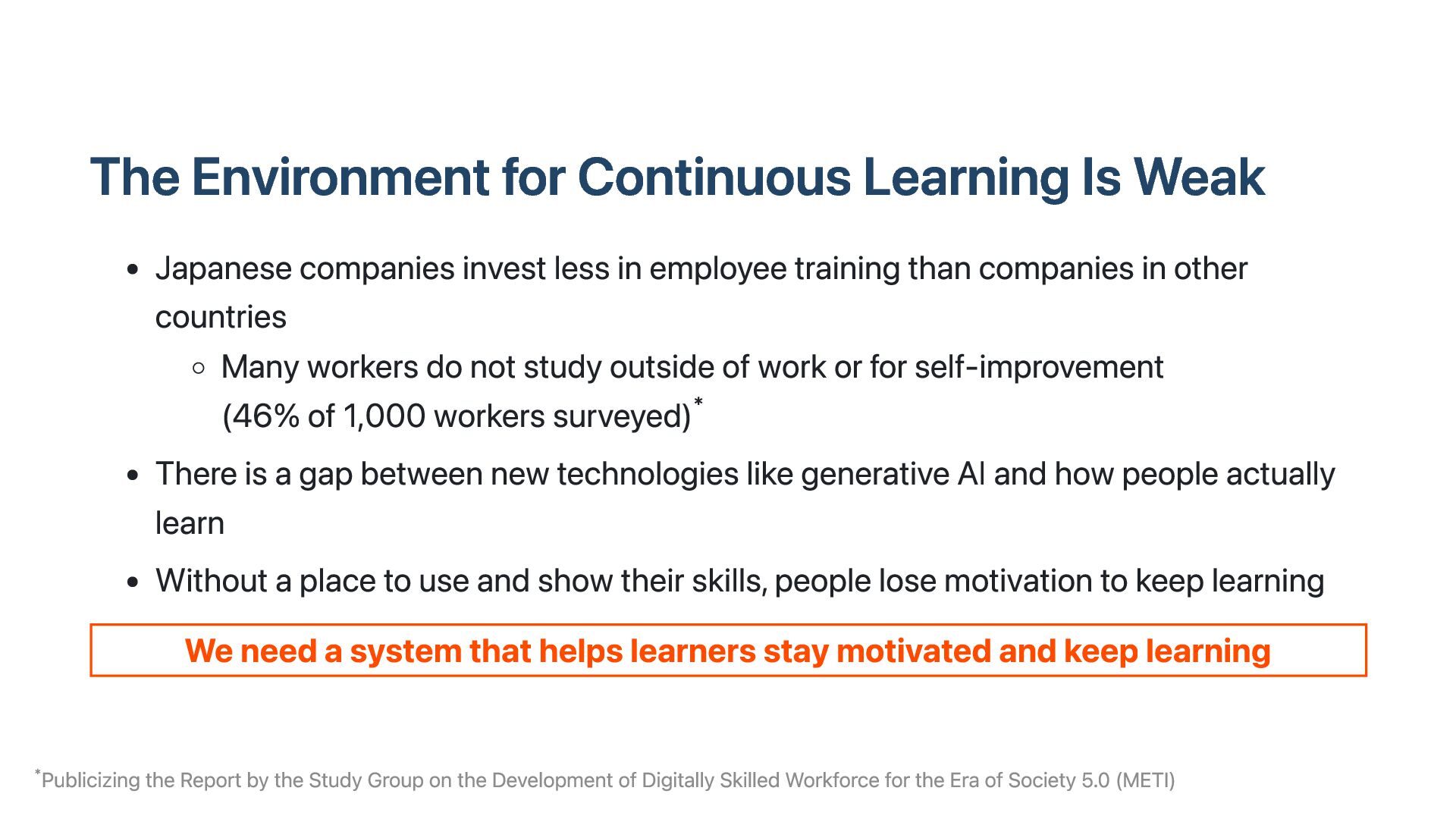
less in employee training than companies in other countries Many workers do not study outside of work or for self-improvement (46% of 1,000 workers surveyed)* There is a gap between new technologies like generative AI and how people actually learn Without a place to use and show their skills, people lose motivation to keep learning We need a system that helps learners stay motivated and keep learning *Publicizing the Report by the Study Group on the Development of Digitally Skilled Workforce for the Era of Society 5.0 (METI)
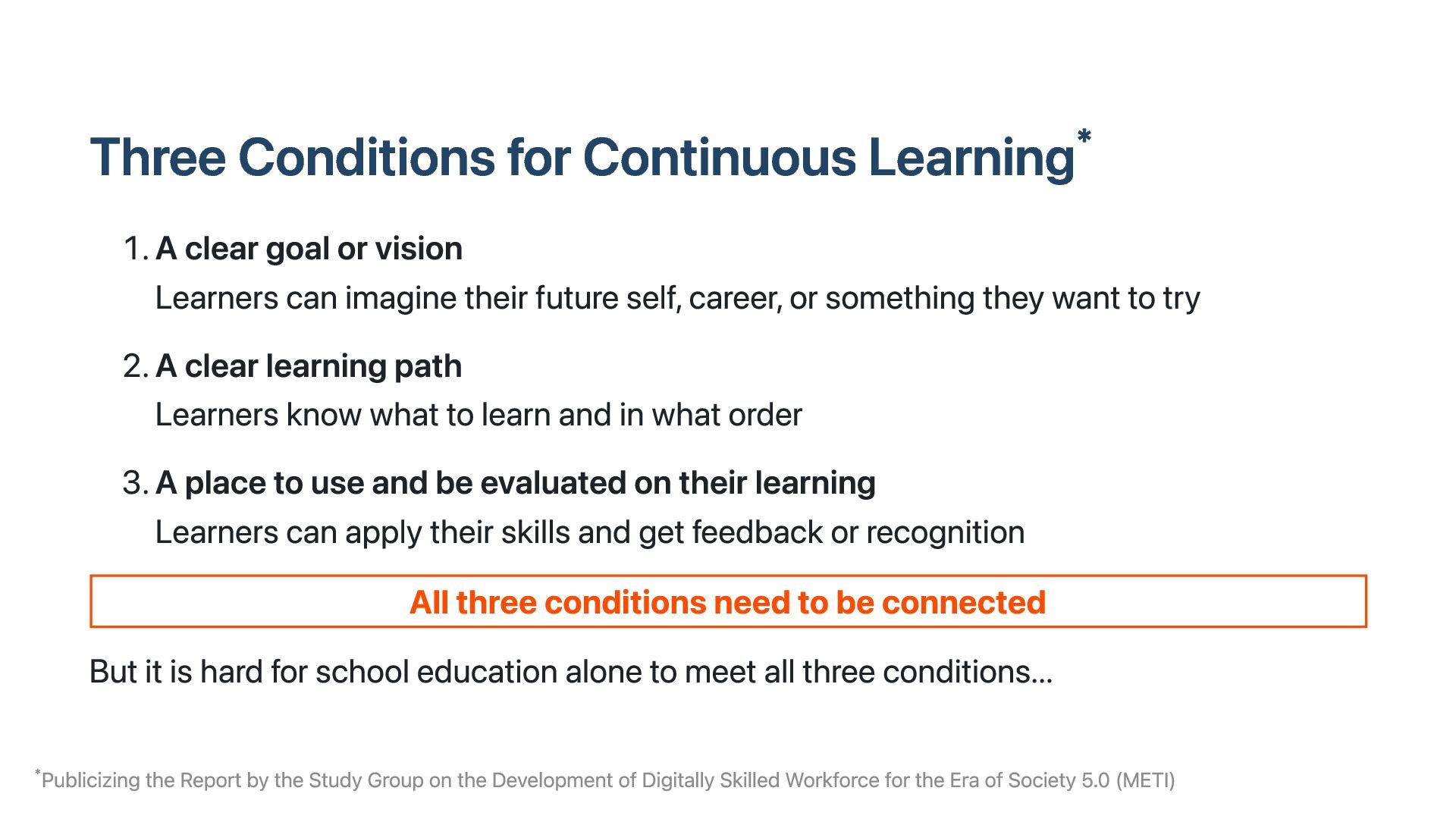
vision Learners can imagine their future self, career, or something they want to try 2. A clear learning path Learners know what to learn and in what order 3. A place to use and be evaluated on their learning Learners can apply their skills and get feedback or recognition All three conditions need to be connected But it is hard for school education alone to meet all three conditions... *Publicizing the Report by the Study Group on the Development of Digitally Skilled Workforce for the Era of Society 5.0 (METI)
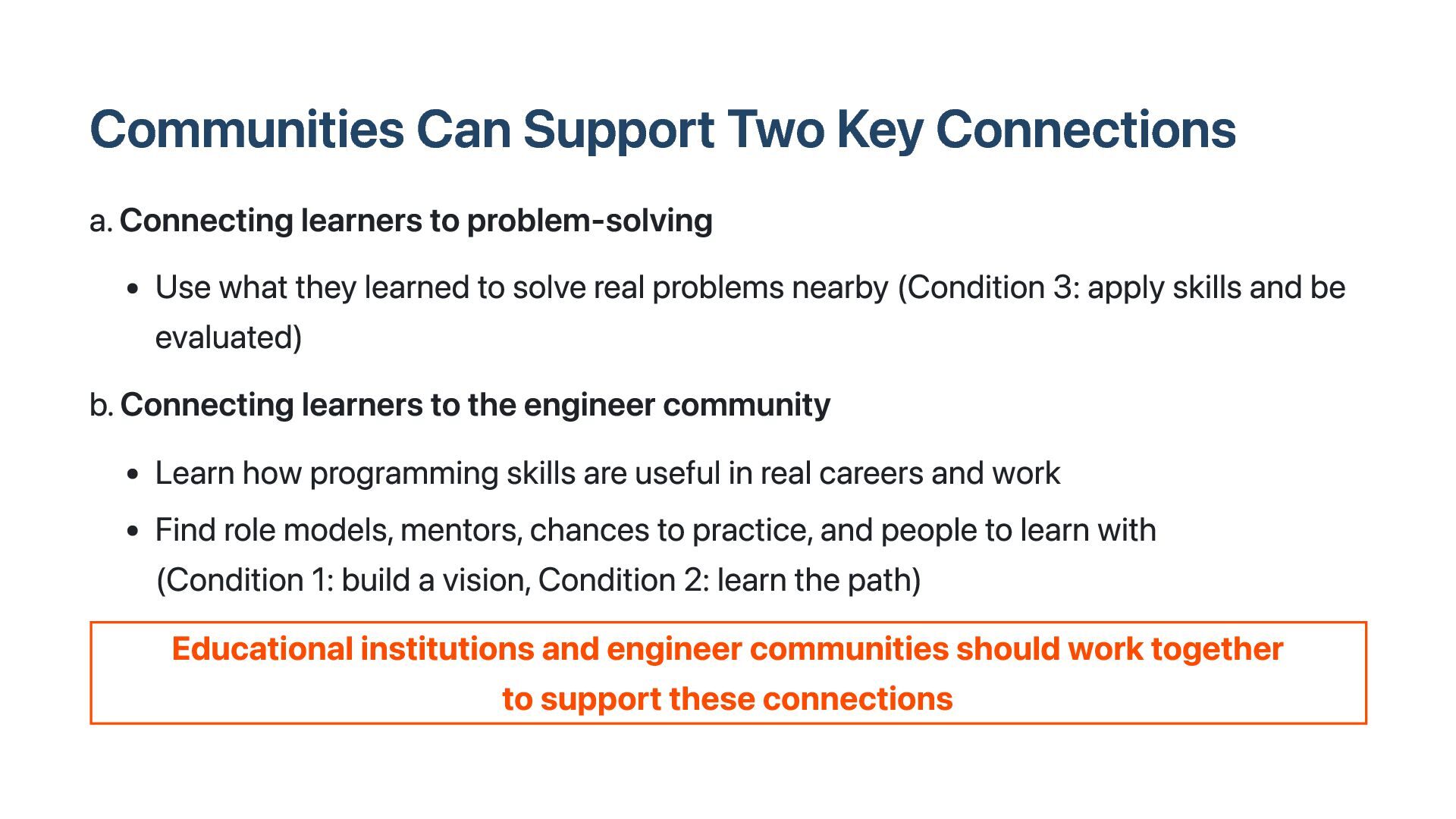
problem-solving Use what they learned to solve real problems nearby (Condition 3: apply skills and be evaluated) b. Connecting learners to the engineer community Learn how programming skills are useful in real careers and work Find role models, mentors, chances to practice, and people to learn with (Condition 1: build a vision, Condition 2: learn the path) Educational institutions and engineer communities should work together to support these connections
elementary and middle school students Universities and engineer communities support children's learning Case 2: Engineer communities support learning Java Users Group Hokkaido / JavaDo creates a place where students and working engineers learn together
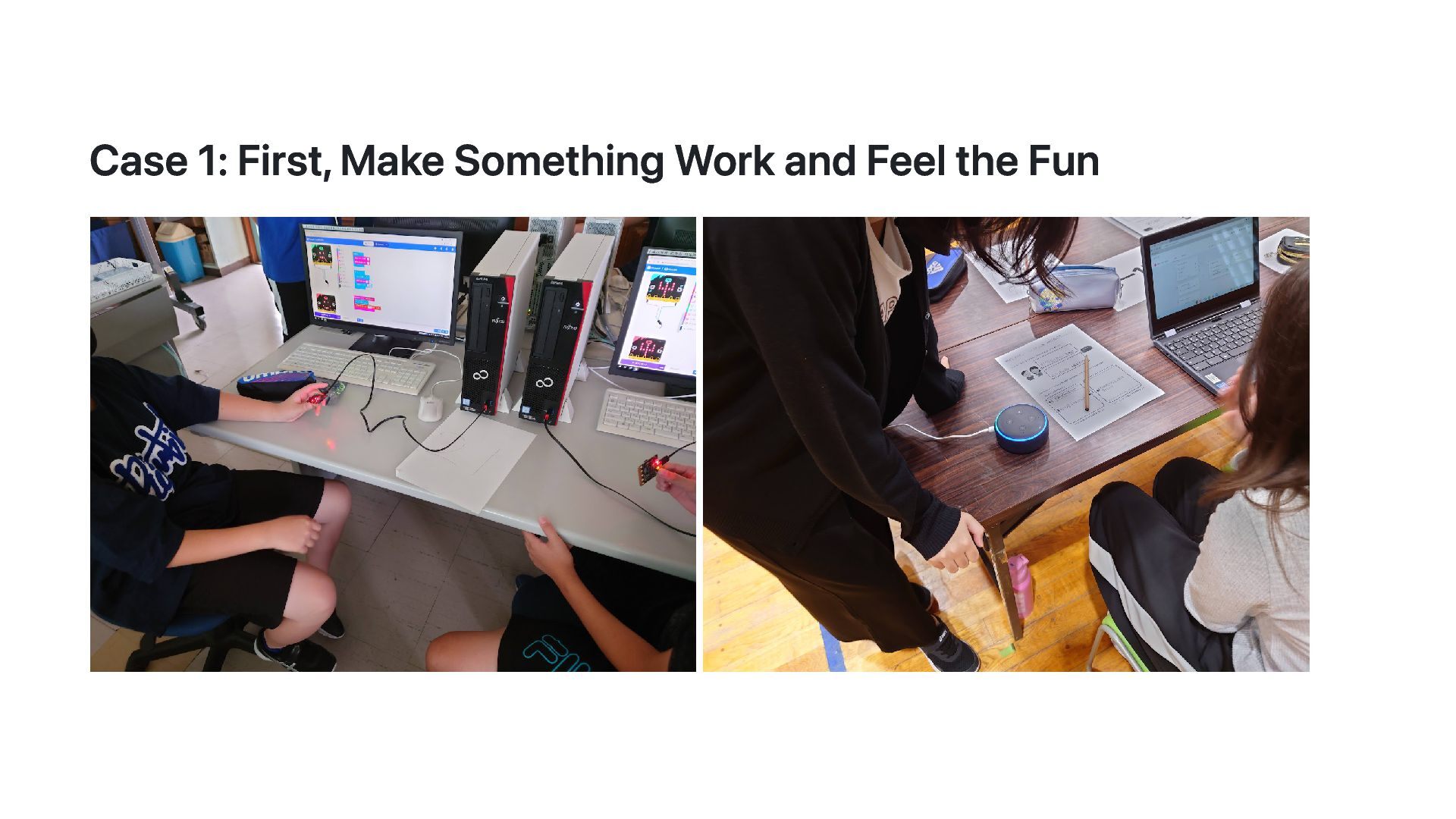
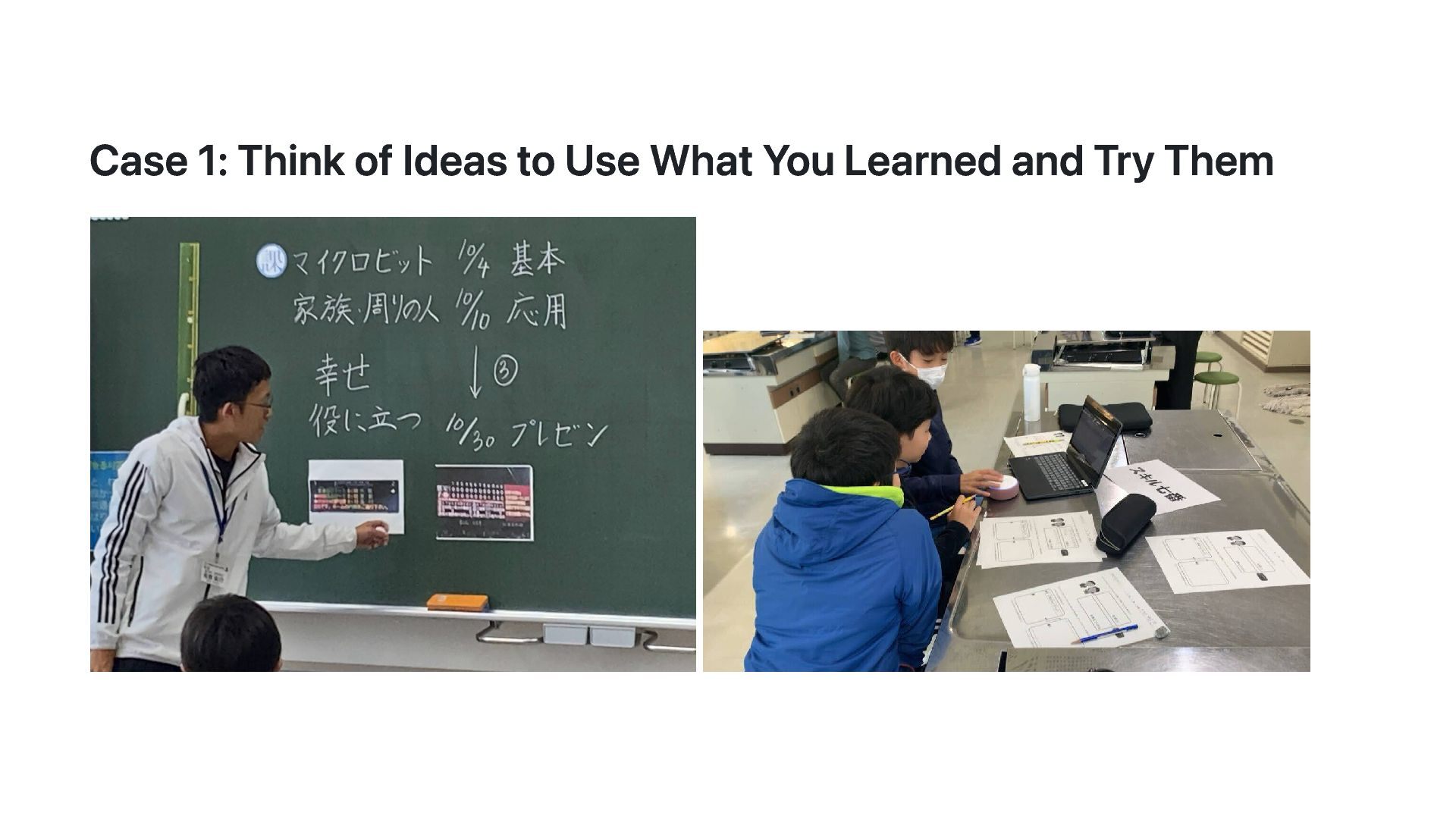
Schools Universities, schools, and engineer communities work together to support children's programming learning. Our Focus: First, let learners make something work and feel the fun Next, learners think of ideas to use what they learned to help others University students and adults do not give answers — they support thinking and provide chances to be evaluated
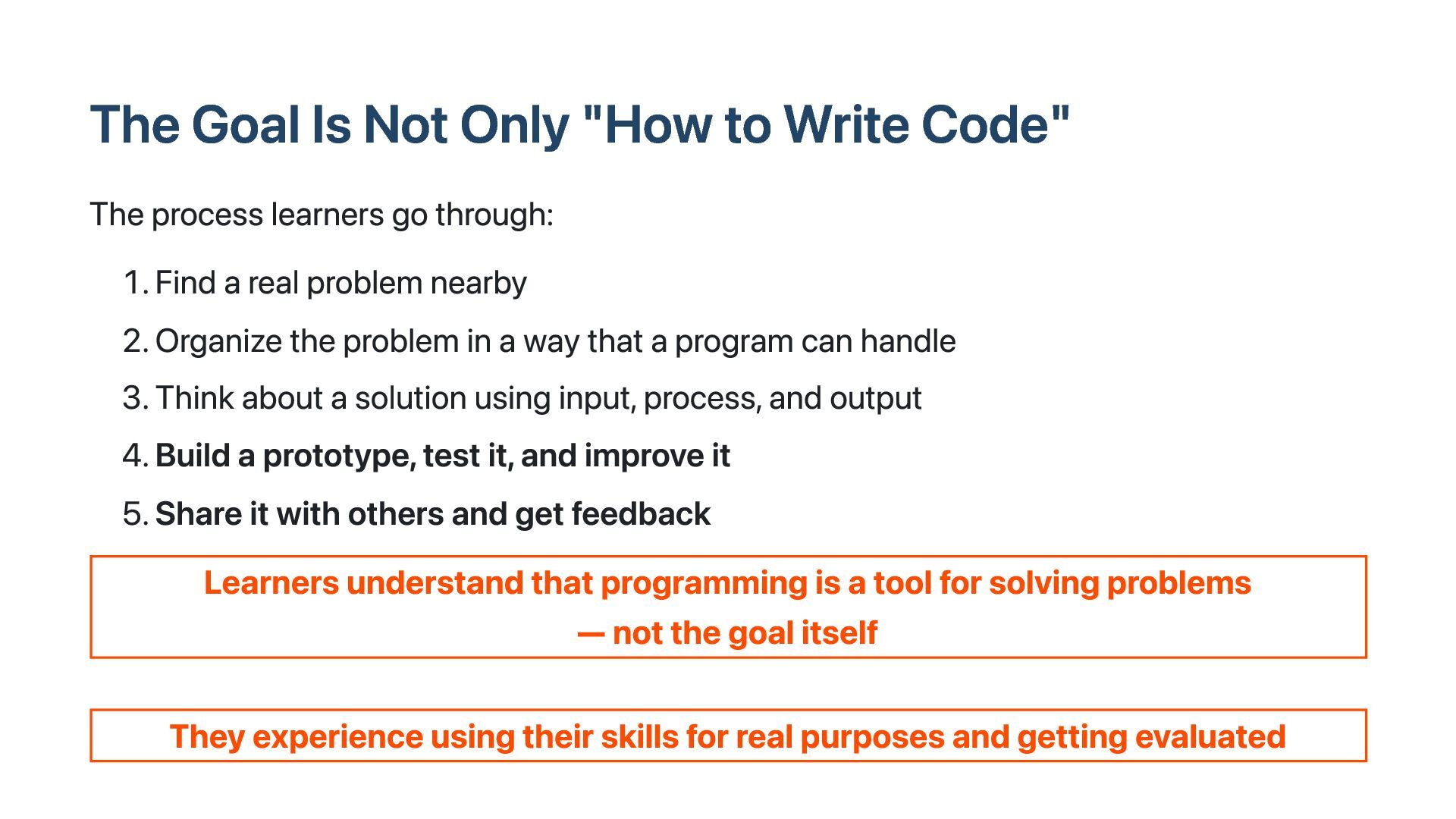
process learners go through: 1. Find a real problem nearby 2. Organize the problem in a way that a program can handle 3. Think about a solution using input, process, and output 4. Build a prototype, test it, and improve it 5. Share it with others and get feedback Learners understand that programming is a tool for solving problems — not the goal itself They experience using their skills for real purposes and getting evaluated
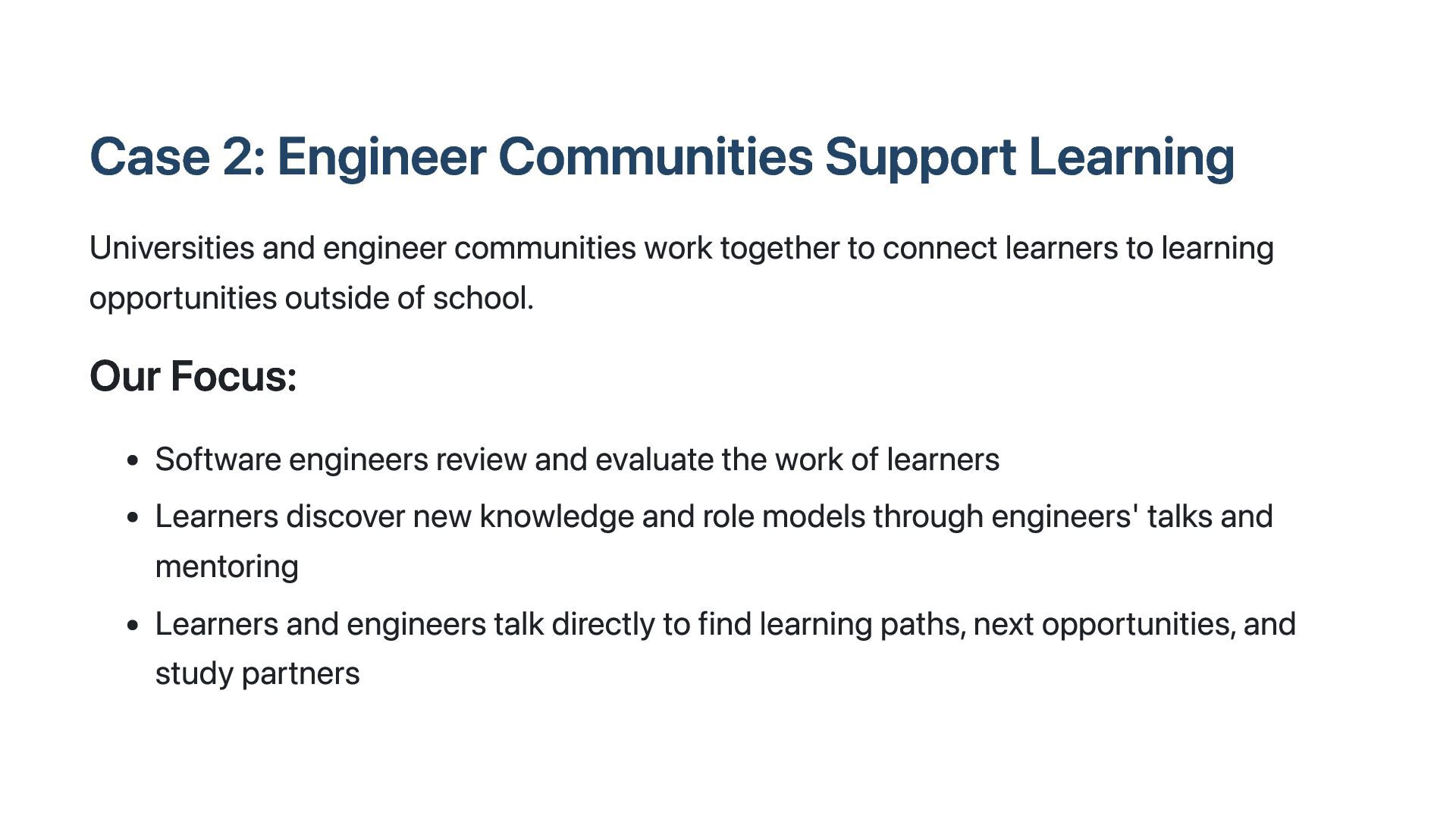
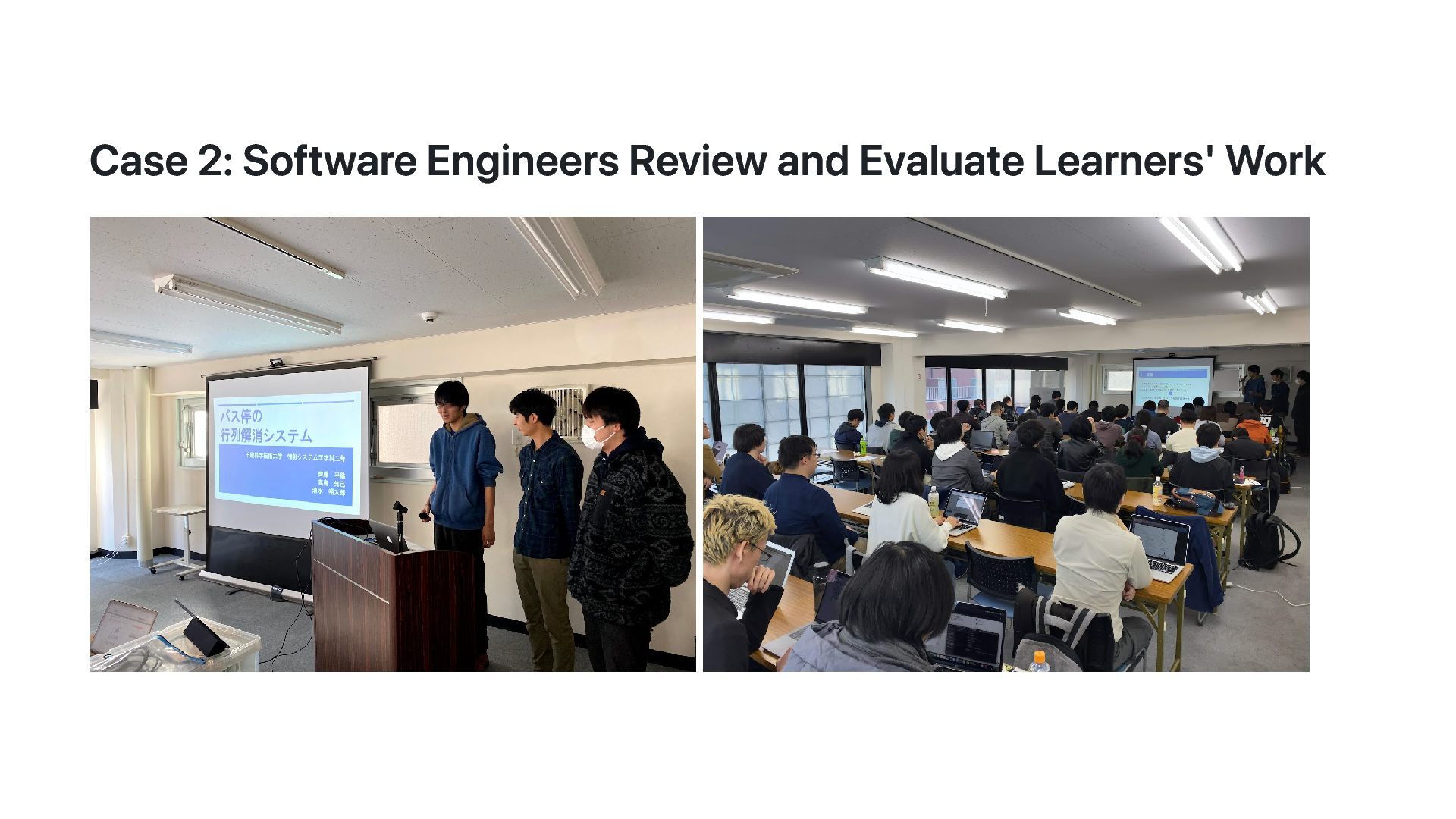
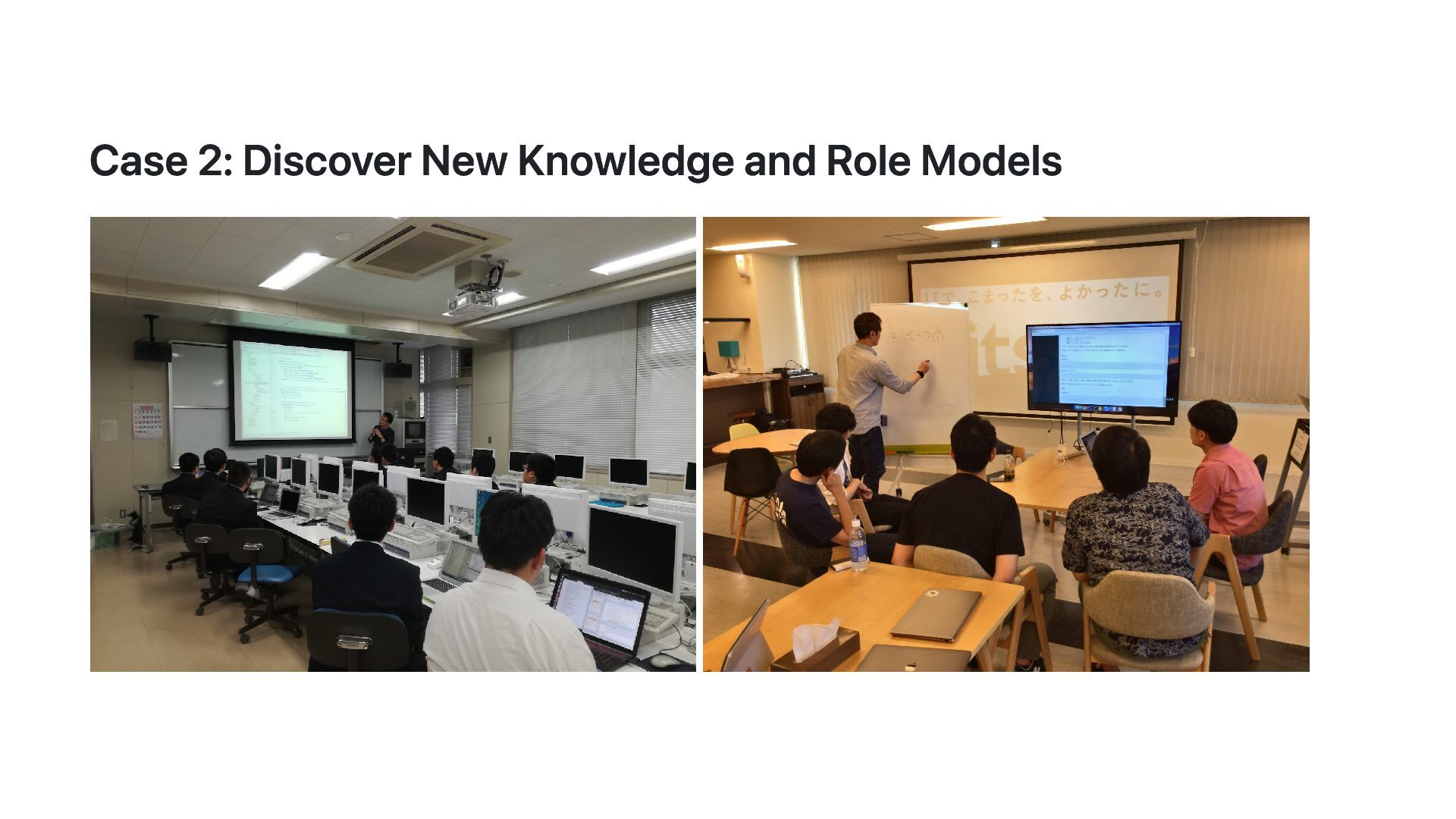
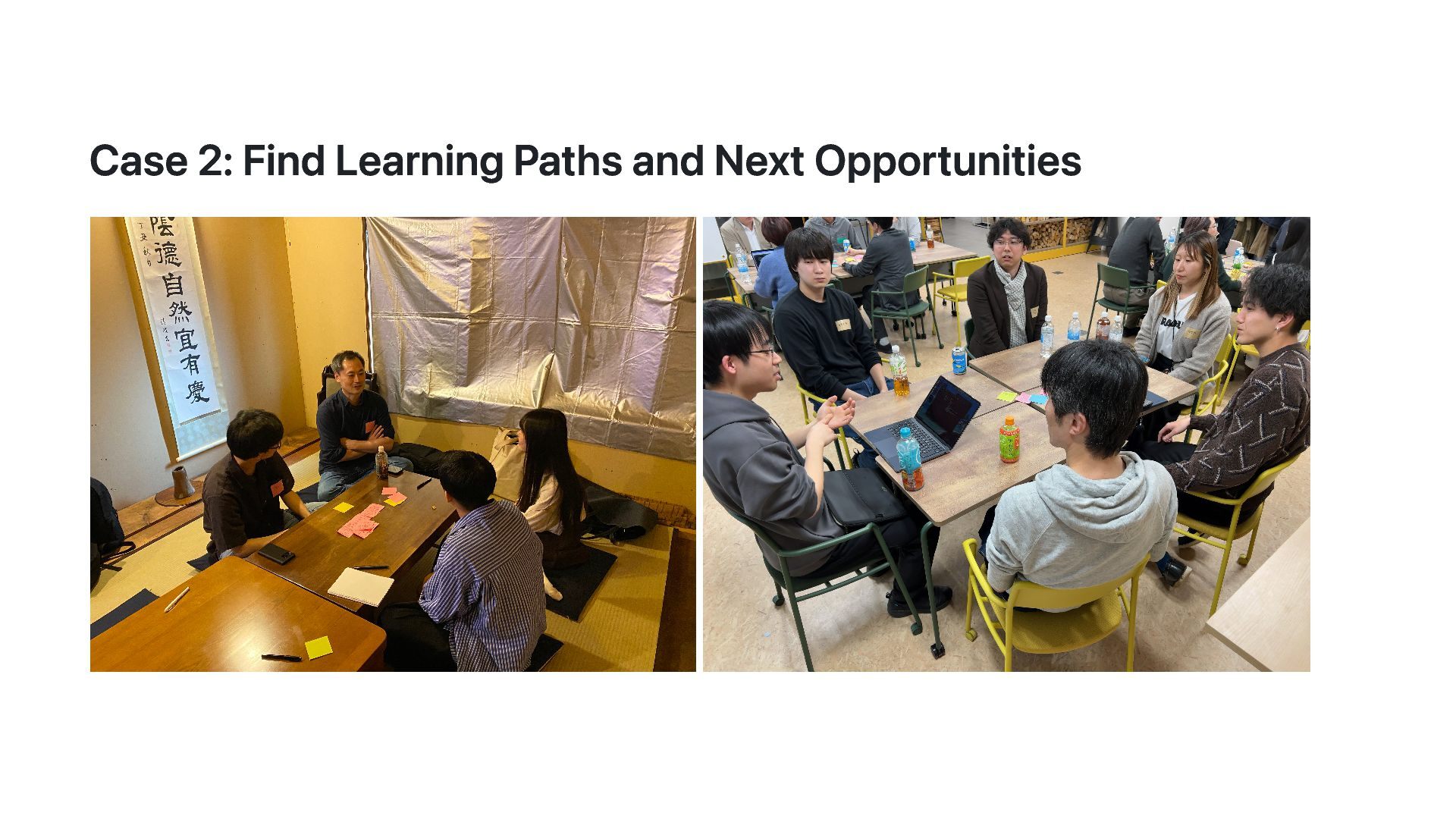
work together to connect learners to learning opportunities outside of school. Our Focus: Software engineers review and evaluate the work of learners Learners discover new knowledge and role models through engineers' talks and mentoring Learners and engineers talk directly to find learning paths, next opportunities, and study partners
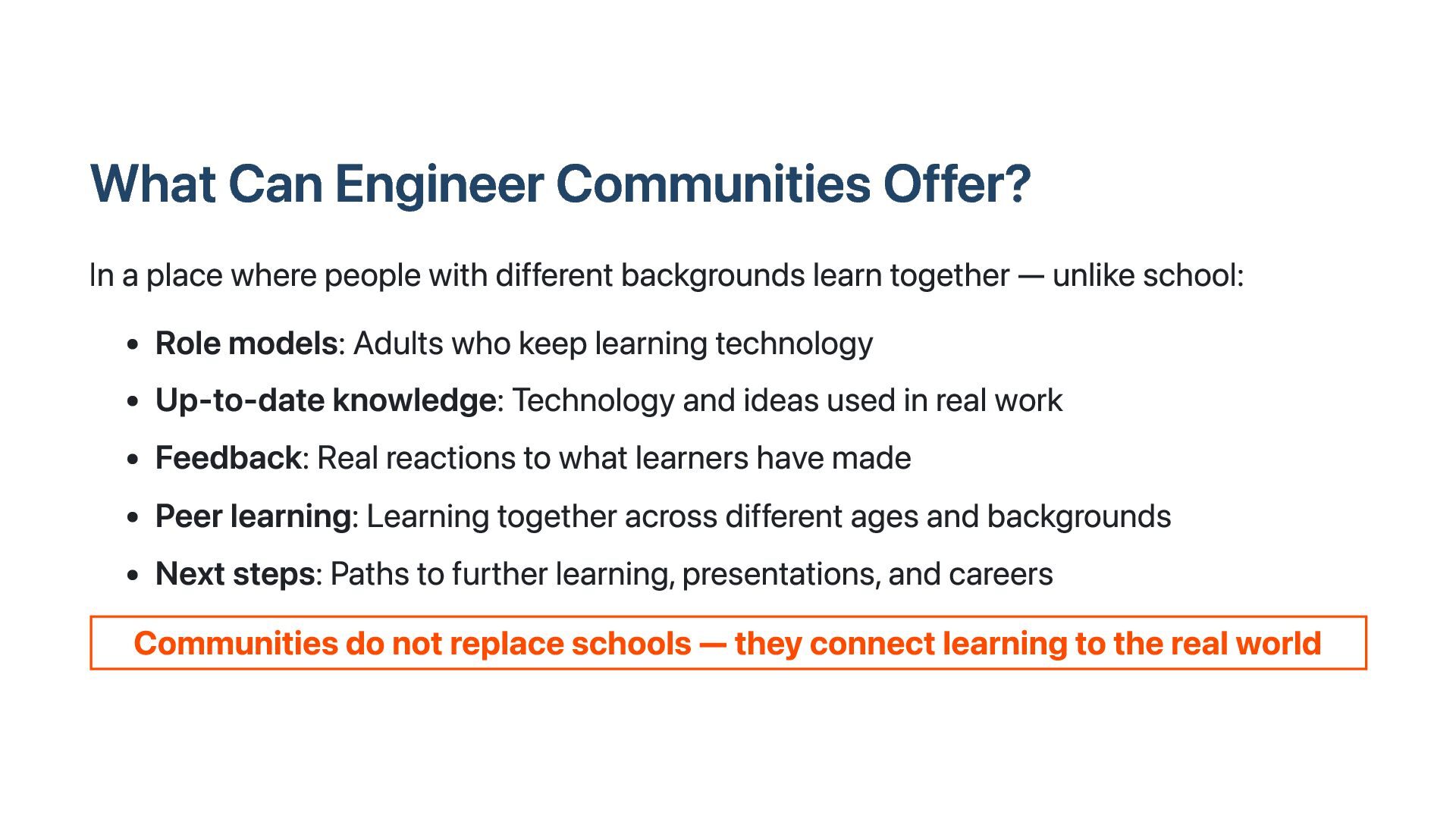
with different backgrounds learn together — unlike school: Role models: Adults who keep learning technology Up-to-date knowledge: Technology and ideas used in real work Feedback: Real reactions to what learners have made Peer learning: Learning together across different ages and backgrounds Next steps: Paths to further learning, presentations, and careers Communities do not replace schools — they connect learning to the real world
programming education? Output: One A3 sheet of paper Materials needed: Paper and a pen — you can also use sticky notes if you like Goal: Design a support idea that fits your region's education system, culture, and resources Make a group of about 4 people with those nearby, and write on the paper together
write on the paper for your chosen region and school level. Your Region's Situation How much programming education happens there? What people, facilities, or materials are available? Challenges for Learners What experiences do learners need? What skills do learners want? Challenges for Teachers Where do teachers need support — preparation, teaching, or evaluation? What is hard for local schools to provide?
Discuss and write down how support can help solve the challenges you found. The role of schools and teachers Community supporters available in your region What those supporters can specifically do to help
these 3 points: 1. Which region and which classroom challenge did you choose? 2. What do you want learners to be able to do? 3. Which people or organizations in your region will support the class, and how?
A vision / A clear path / A place to apply skills and be evaluated Schools provide the basics of programming But it is hard for schools alone to meet all three conditions Universities and engineer communities support two key connections Connecting learners to problem-solving (Condition 3) Connecting learners to the engineer community (Conditions 1 and 2) Communities do not replace schools — they connect learning to the real world
— they should create places to try and be evaluated Case 1: Elementary and middle school students use what they learned to solve real problems Case 2: Learners present at engineer community events and receive feedback No special preparation is needed Listen to presentations, ask questions, talk about your own work That is enough for learners to find a role model and take the next step Children who learn programming will one day become mentors for the next generation


 gishi_yama
 ichiroc
 matleenalaakso
 bvr7352
 ytapples613
 hiola
hiola
 pawan_pharm
 robintux
 jdbedics
 uranoken
 drpoonamkc
 tasusu
 reverentgeek
 mfonobong
 baasie
 soudai
 pwiseman
 twada
twada
 brettharned
 smashingmag
 hatefulcrawdad
 aleyda
 stephenakadiri
 portentint