Share
Embed
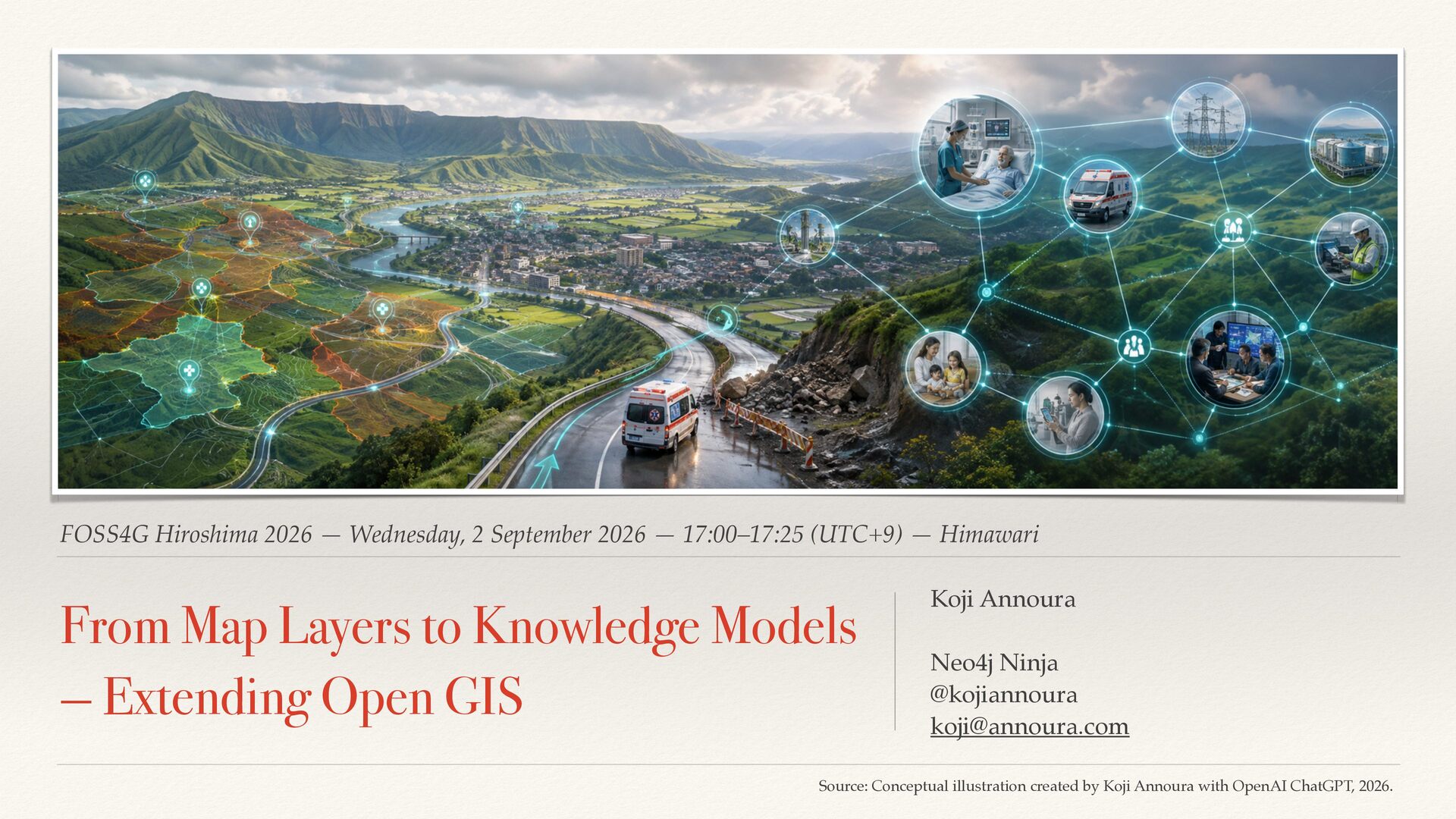
From Map Layers to Knowledge Models — Extending Open GIS
Open-source GIS tools such as QGIS and PostGIS excel at spatial analysis, but in earthquake-prone regions like Japan, layered maps alone are often insufficient. This talk introduces a practical extension that adds relational modeling to existing workflows, improving transparency and decision support in complex disaster scenarios.

Koji Annoura
September 02, 2026
Transcript
83 slides
-
FOSS4G Hiroshima 2026 — Wednesday, 2 September 2026 — 17:00–17:25
(UTC+9) — Himawari From Map Layers to Knowledge Models — Extending Open GIS Koji Annoura Neo4j Ninja @kojiannoura [email protected] Source: Conceptual illustration created by Koji Annoura with OpenAI ChatGPT, 2026. -
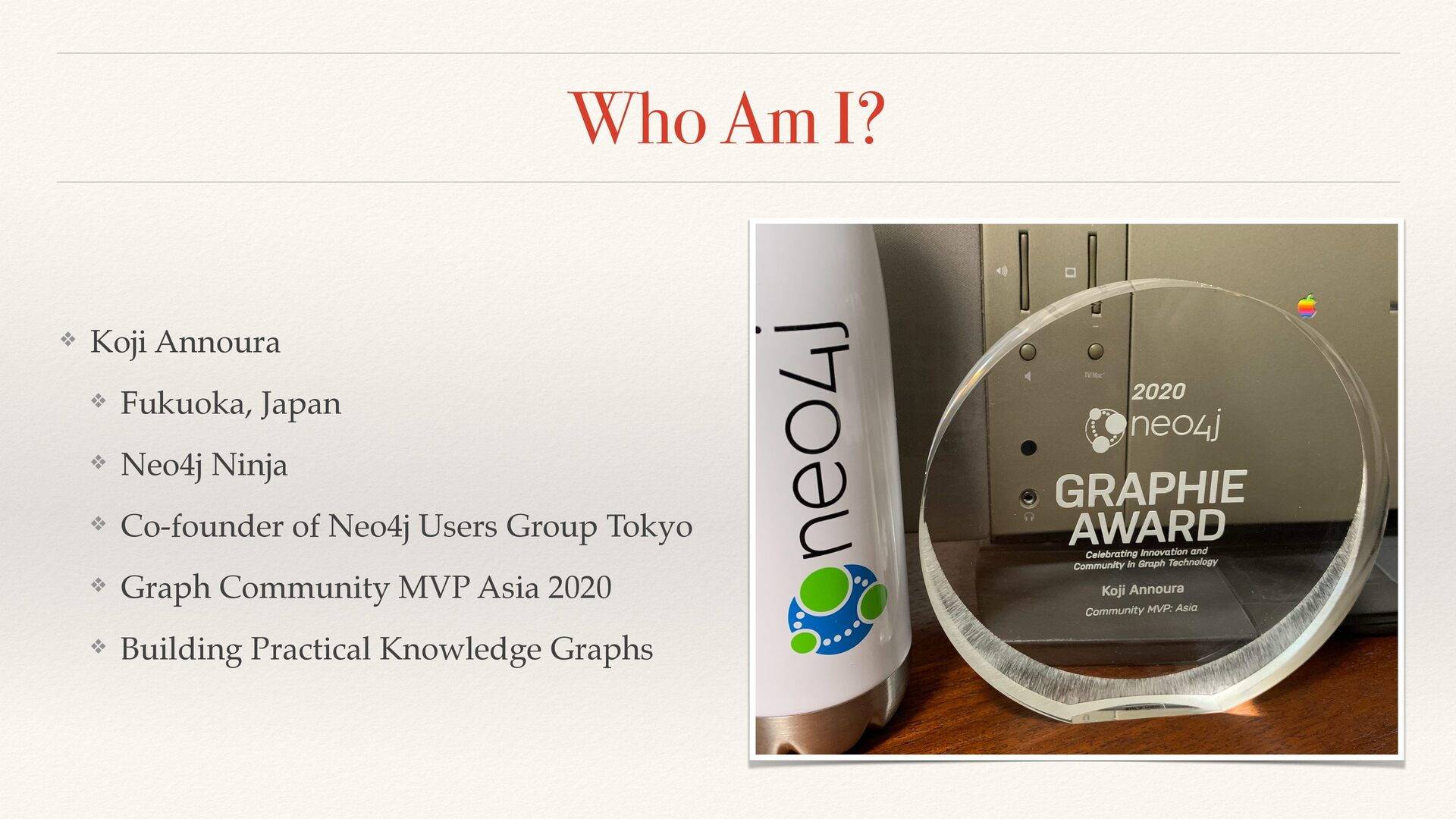
Who Am I? ❖ Koji Annoura ❖ Fukuoka, Japan ❖
Neo4j Ninja ❖ Co-founder of Neo4j Users Group Tokyo ❖ Graph Community MVP Asia 2020 ❖ Building Practical Knowledge Graphs -
Today’s Journey ❖ 1. Start with a Real Disaster ❖
2. Follow the Dependency Chain ❖ 3. Turn Operational Knowledge into a Graph ❖ 4. Connect GIS and Knowledge ❖ 5. Find and Explain a Safe Transfer -
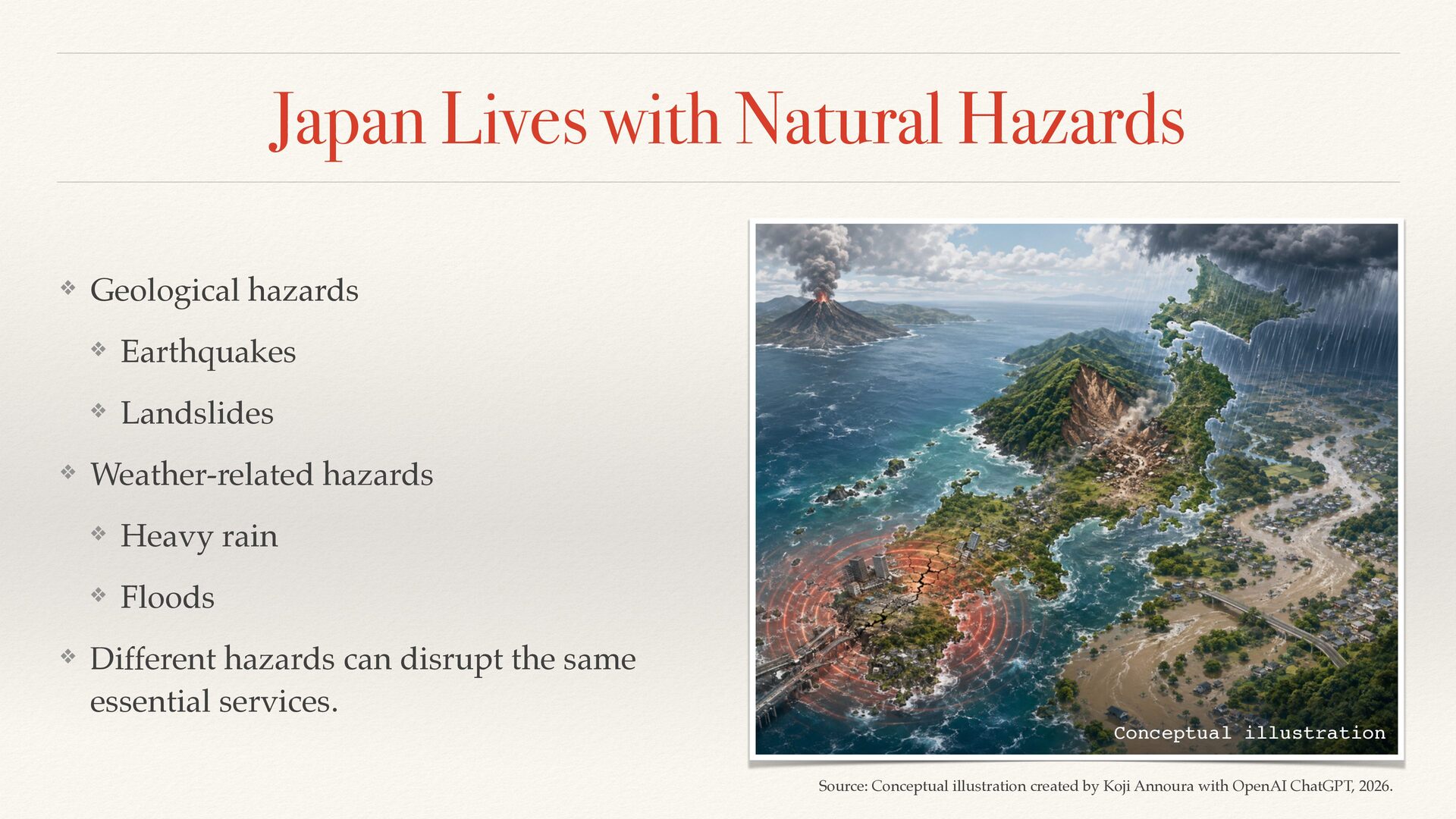
Japan Lives with Natural Hazards ❖ Geological hazards ❖ Earthquakes
❖ Landslides ❖ Weather-related hazards ❖ Heavy rain ❖ Floods ❖ Different hazards can disrupt the same essential services. Conceptual illustration Source: Conceptual illustration created by Koji Annoura with OpenAI ChatGPT, 2026. -
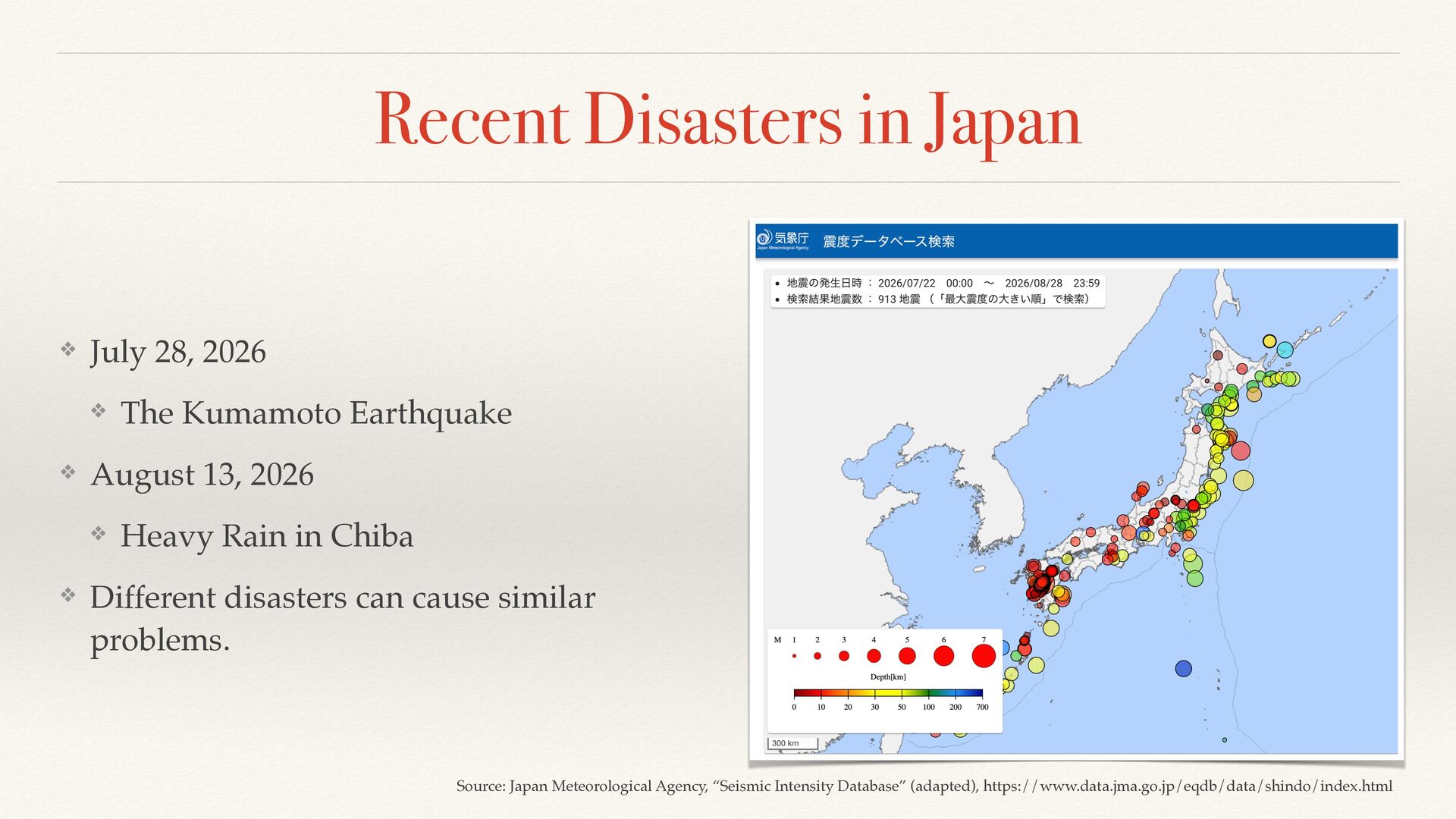
Recent Disasters in Japan ❖ July 28, 2026 ❖ The
Kumamoto Earthquake ❖ August 13, 2026 ❖ Heavy Rain in Chiba ❖ Different disasters can cause similar problems. Source: Japan Meteorological Agency, “Seismic Intensity Database” (adapted), https://www.data.jma.go.jp/eqdb/data/shindo/index.html -
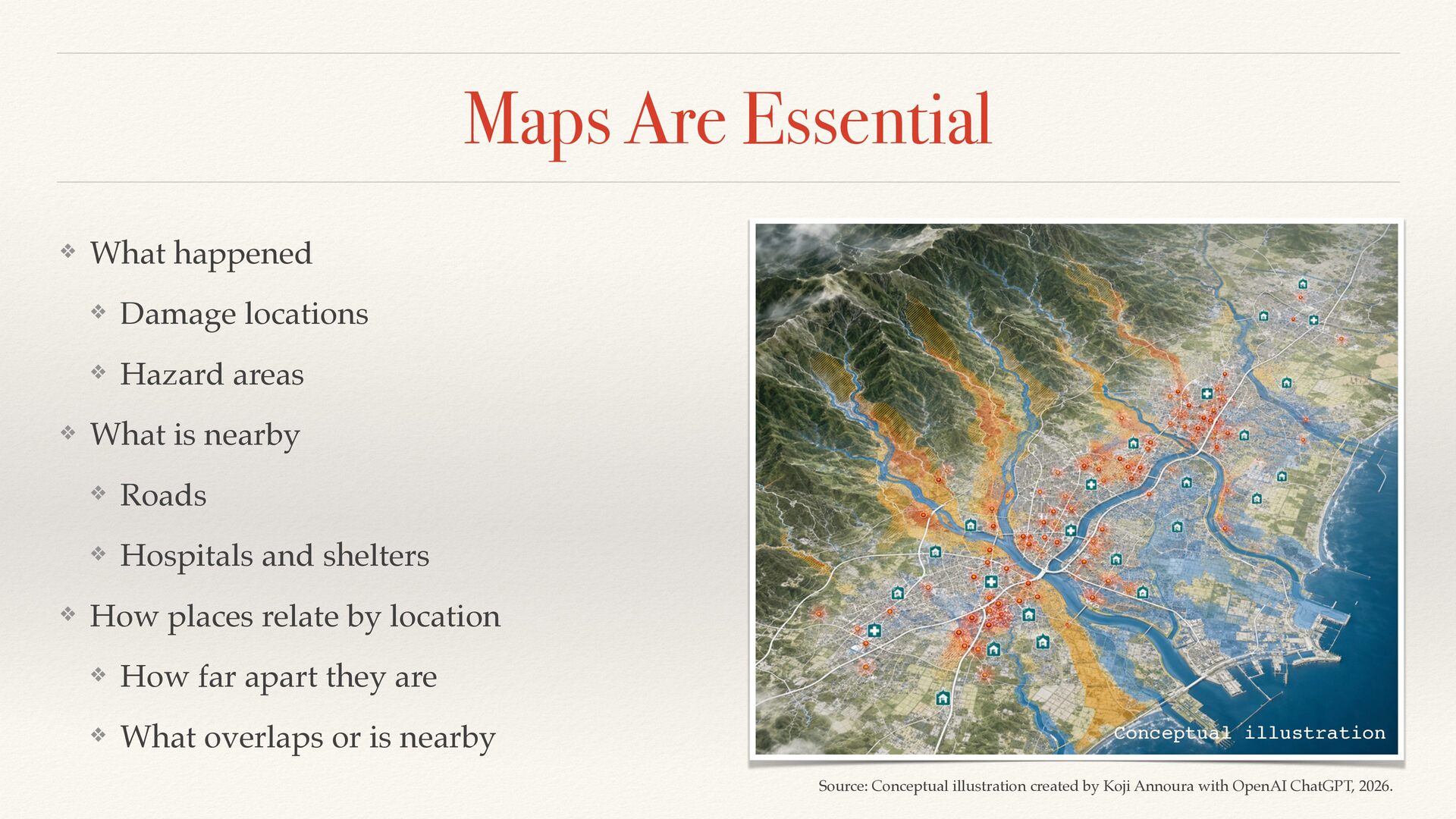
Maps Are Essential ❖ What happened ❖ Damage locations ❖
Hazard areas ❖ What is nearby ❖ Roads ❖ Hospitals and shelters ❖ How places relate by location ❖ How far apart they are ❖ What overlaps or is nearby Conceptual illustration Source: Conceptual illustration created by Koji Annoura with OpenAI ChatGPT, 2026. -
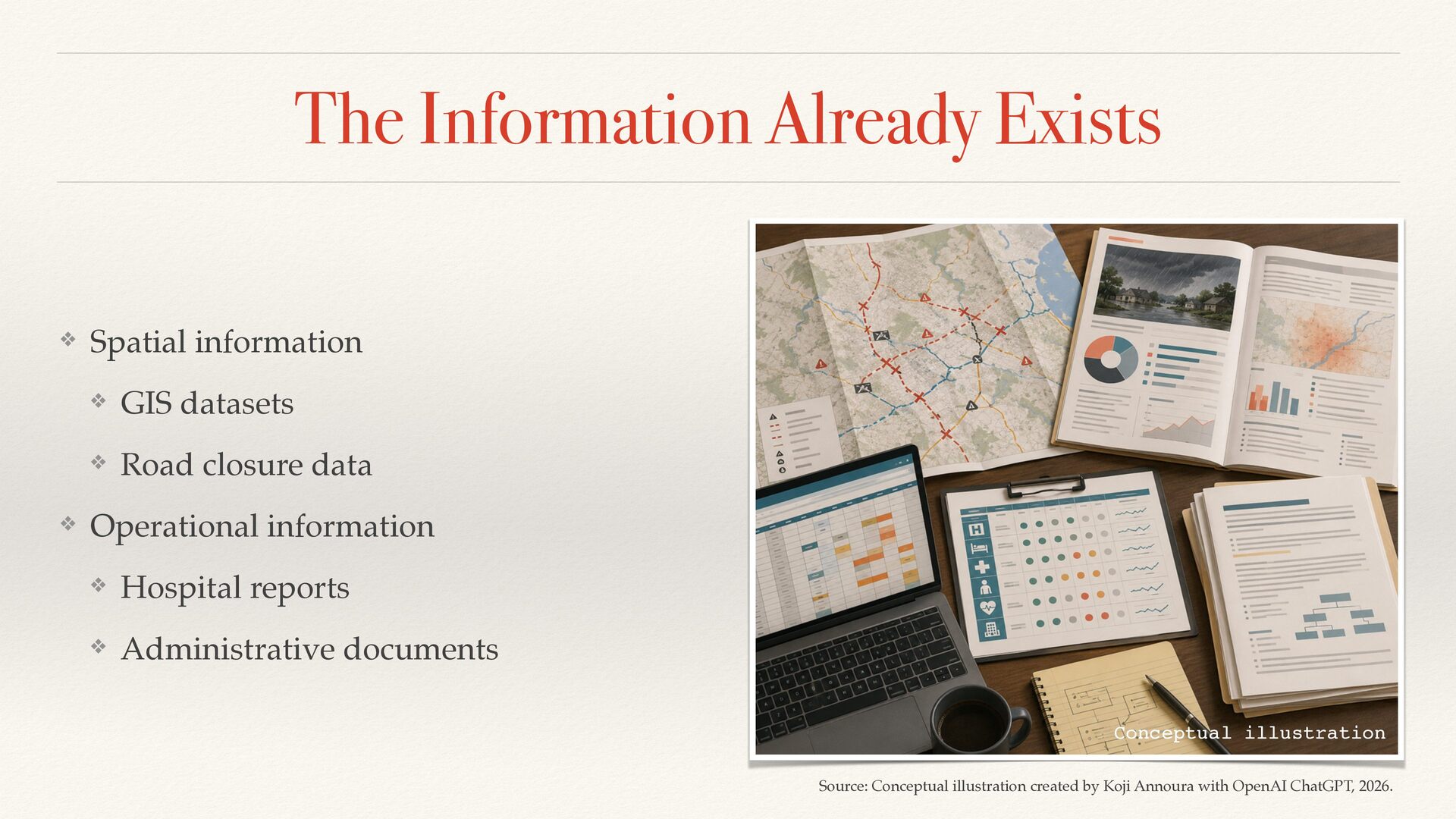
The Information Already Exists ❖ Spatial information ❖ GIS datasets
❖ Road closure data ❖ Operational information ❖ Hospital reports ❖ Administrative documents Conceptual illustration Source: Conceptual illustration created by Koji Annoura with OpenAI ChatGPT, 2026. -
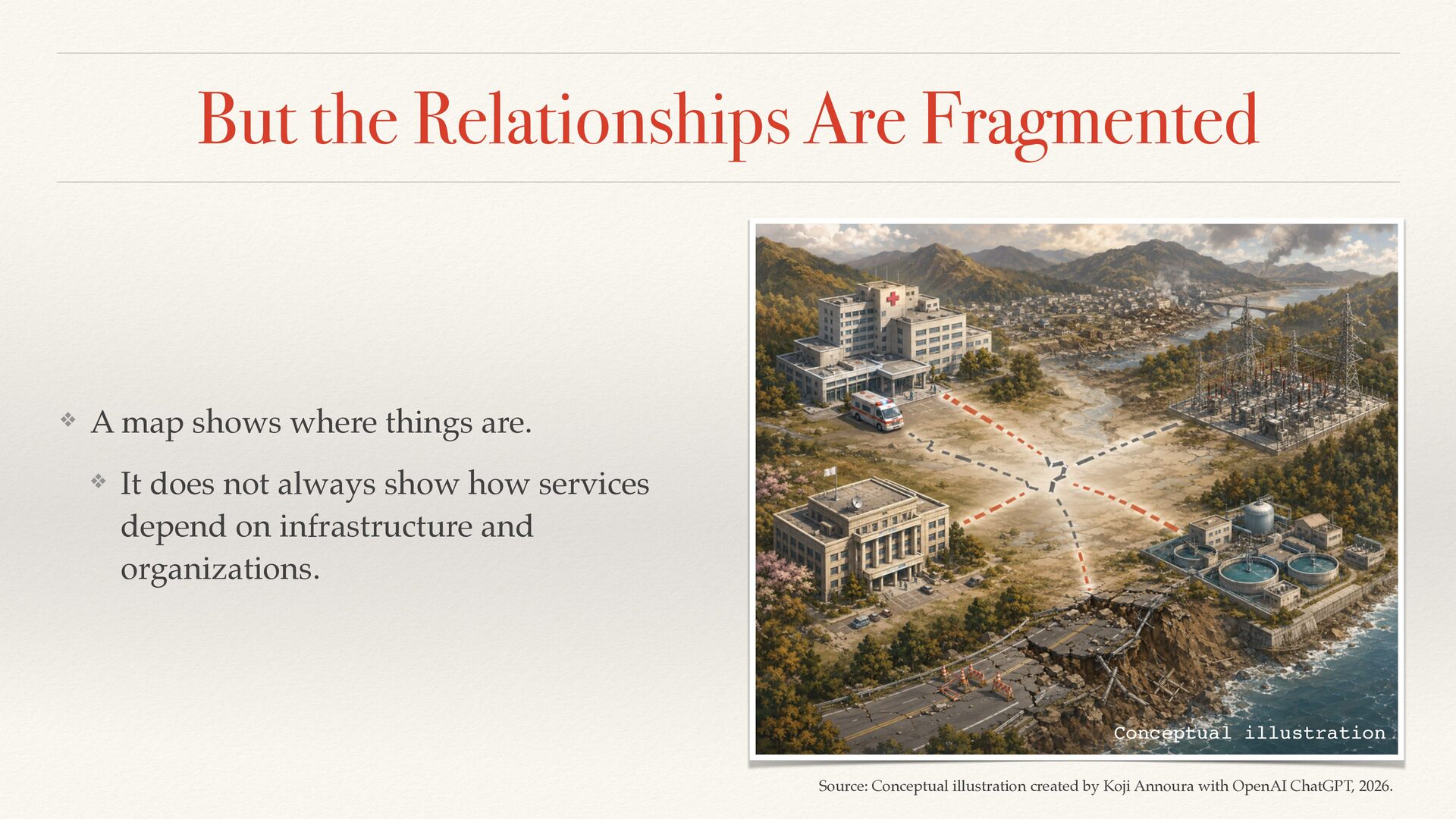
But the Relationships Are Fragmented ❖ A map shows where
things are. ❖ It does not always show how services depend on infrastructure and organizations. Conceptual illustration Source: Conceptual illustration created by Koji Annoura with OpenAI ChatGPT, 2026. -
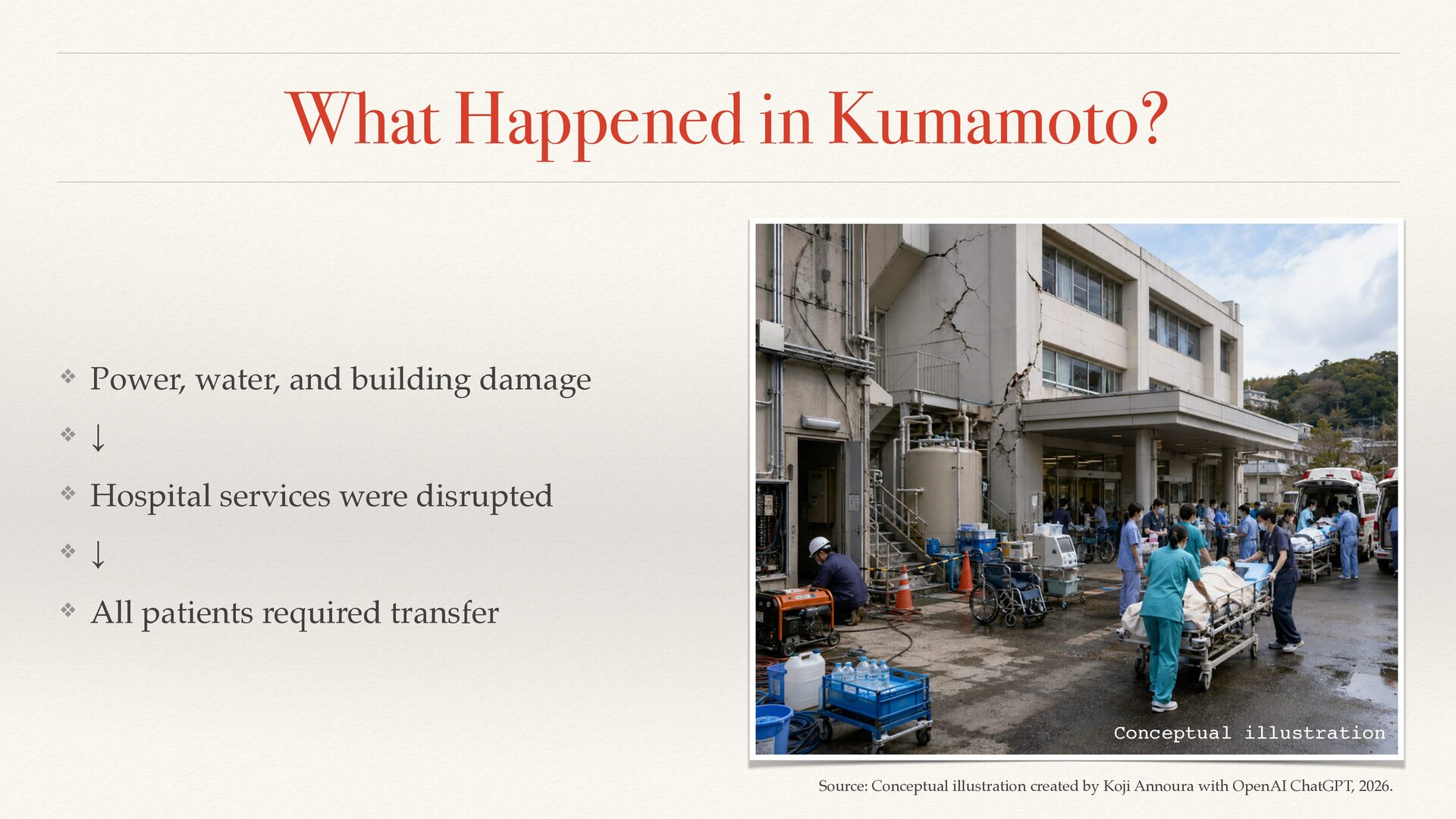
What Happened in Kumamoto? ❖ Power, water, and building damage
❖ ↓ ❖ Hospital services were disrupted ❖ ↓ ❖ All patients required transfer Conceptual illustration Source: Conceptual illustration created by Koji Annoura with OpenAI ChatGPT, 2026. -
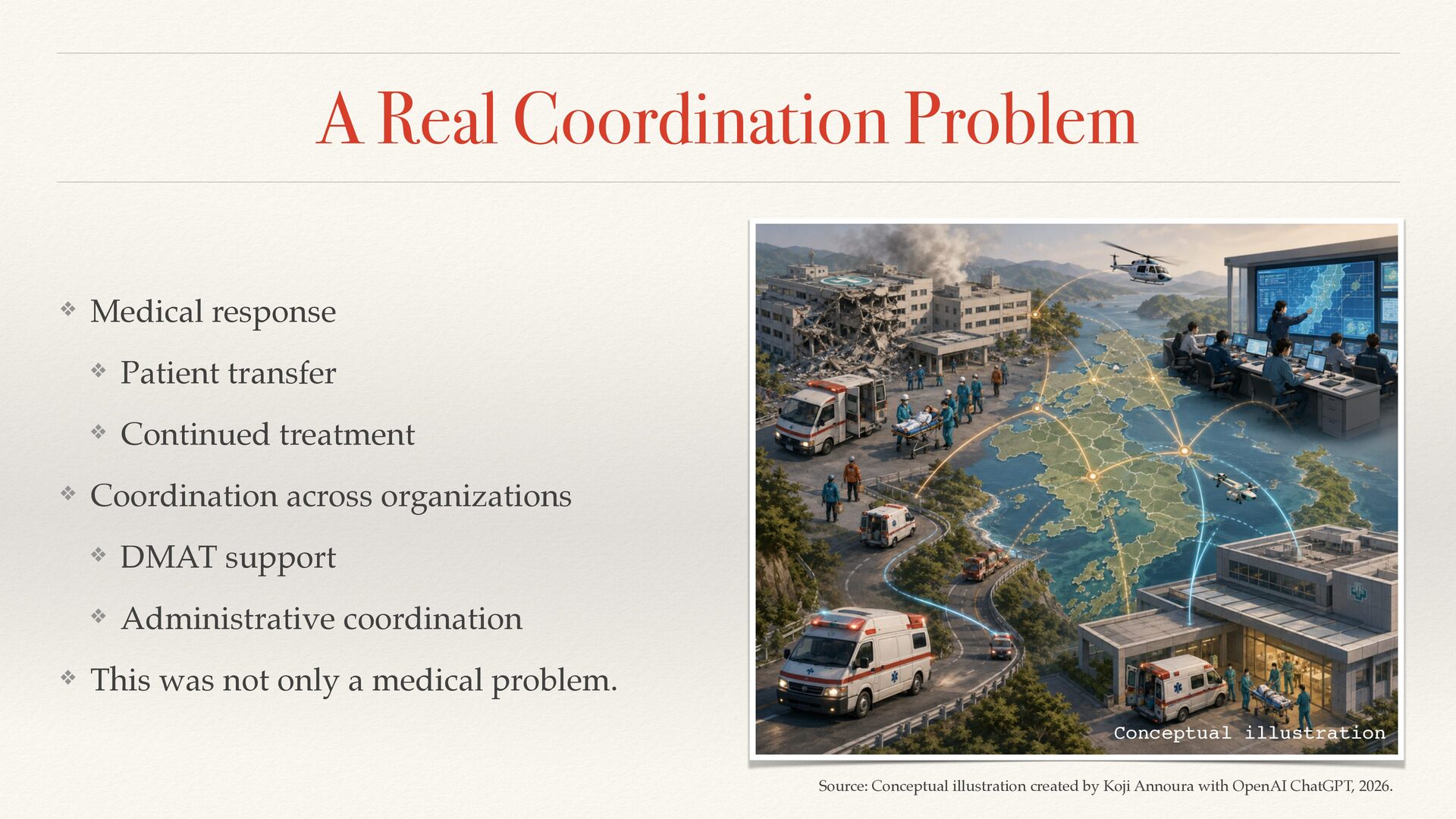
A Real Coordination Problem ❖ Medical response ❖ Patient transfer
❖ Continued treatment ❖ Coordination across organizations ❖ DMAT support ❖ Administrative coordination ❖ This was not only a medical problem. Conceptual illustration Source: Conceptual illustration created by Koji Annoura with OpenAI ChatGPT, 2026. -
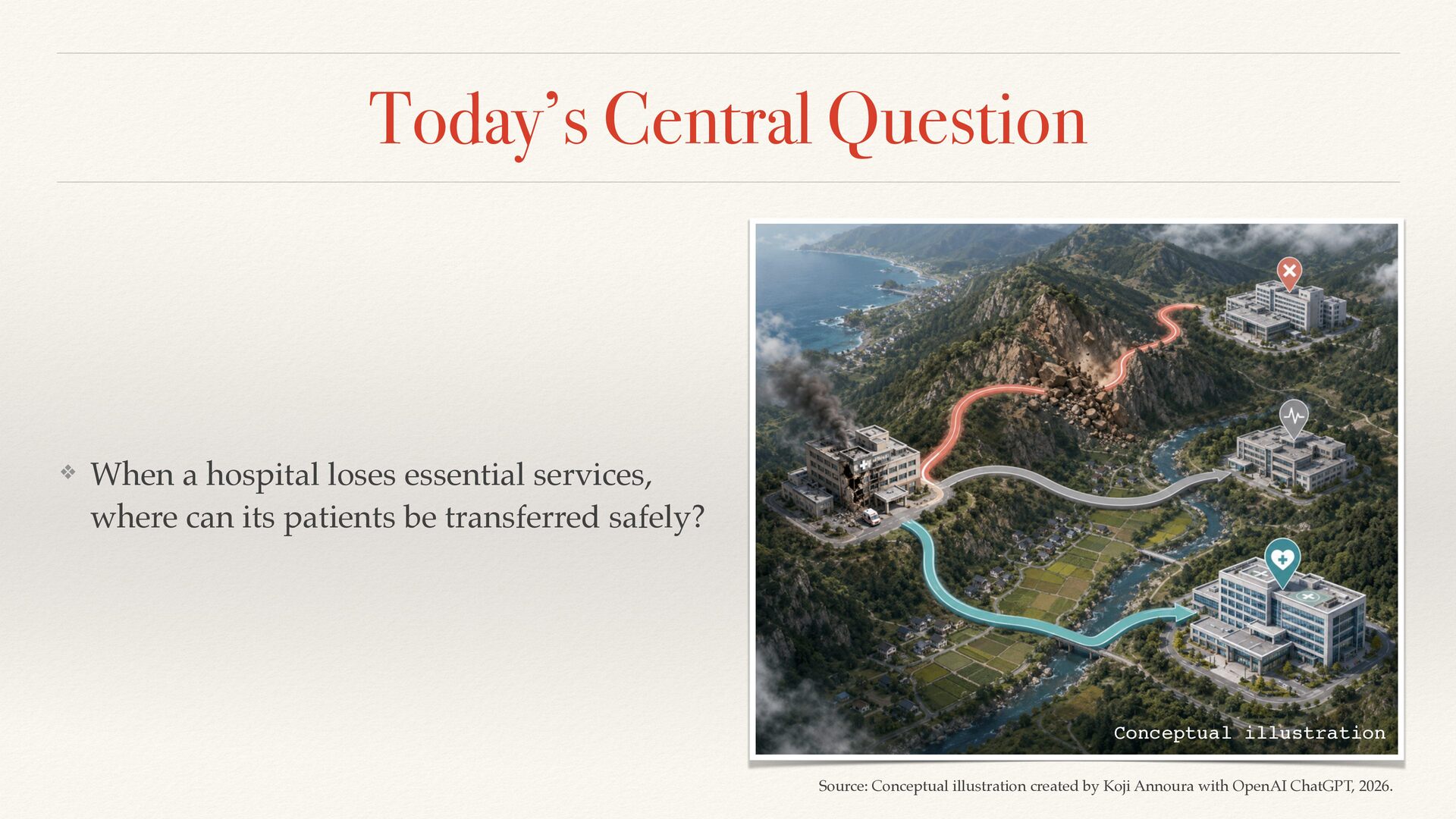
Today’s Central Question ❖ When a hospital loses essential services,
where can its patients be transferred safely? Conceptual illustration Source: Conceptual illustration created by Koji Annoura with OpenAI ChatGPT, 2026. -
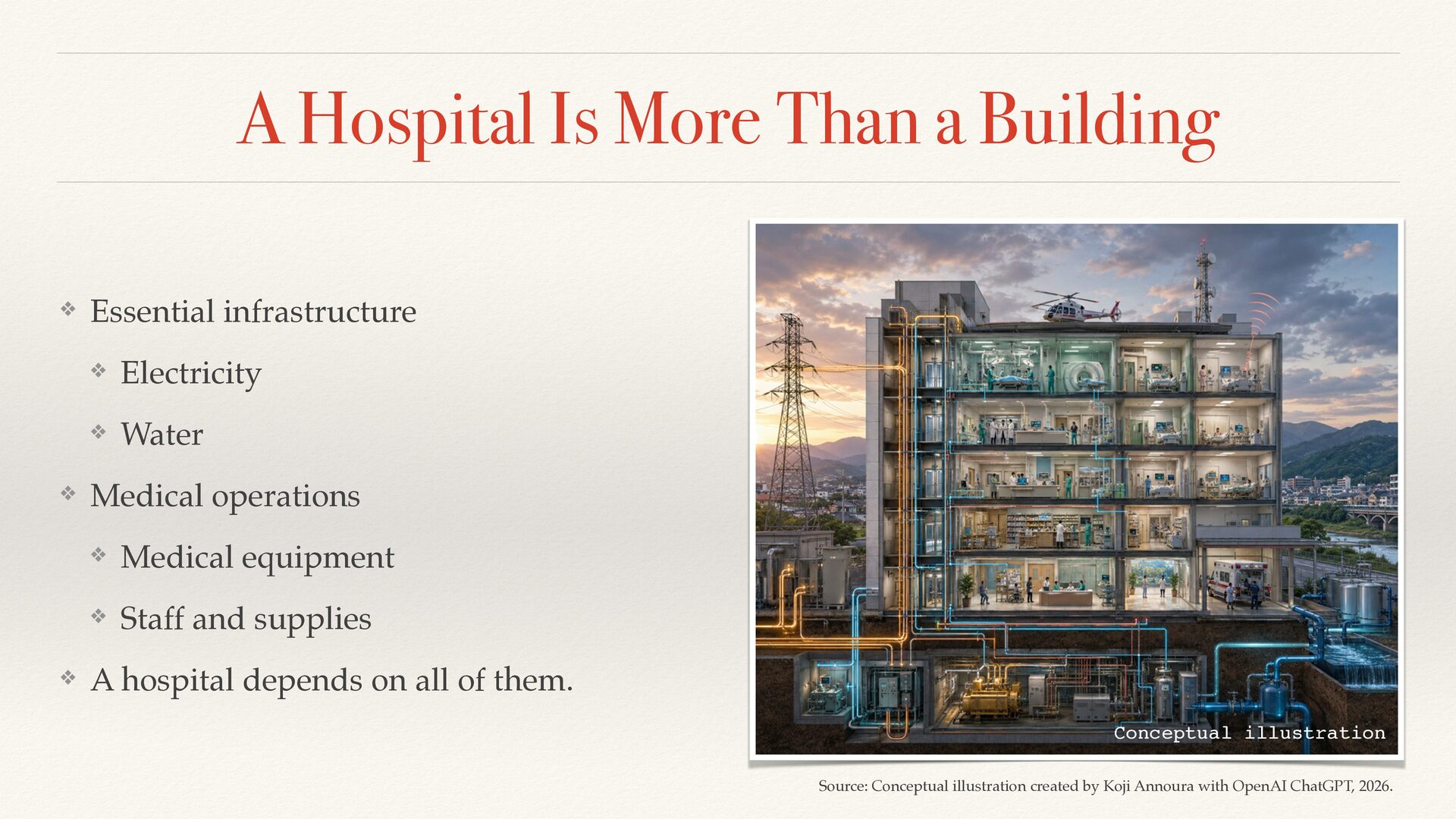
A Hospital Is More Than a Building ❖ Essential infrastructure
❖ Electricity ❖ Water ❖ Medical operations ❖ Medical equipment ❖ Staff and supplies ❖ A hospital depends on all of them. Conceptual illustration Source: Conceptual illustration created by Koji Annoura with OpenAI ChatGPT, 2026. -
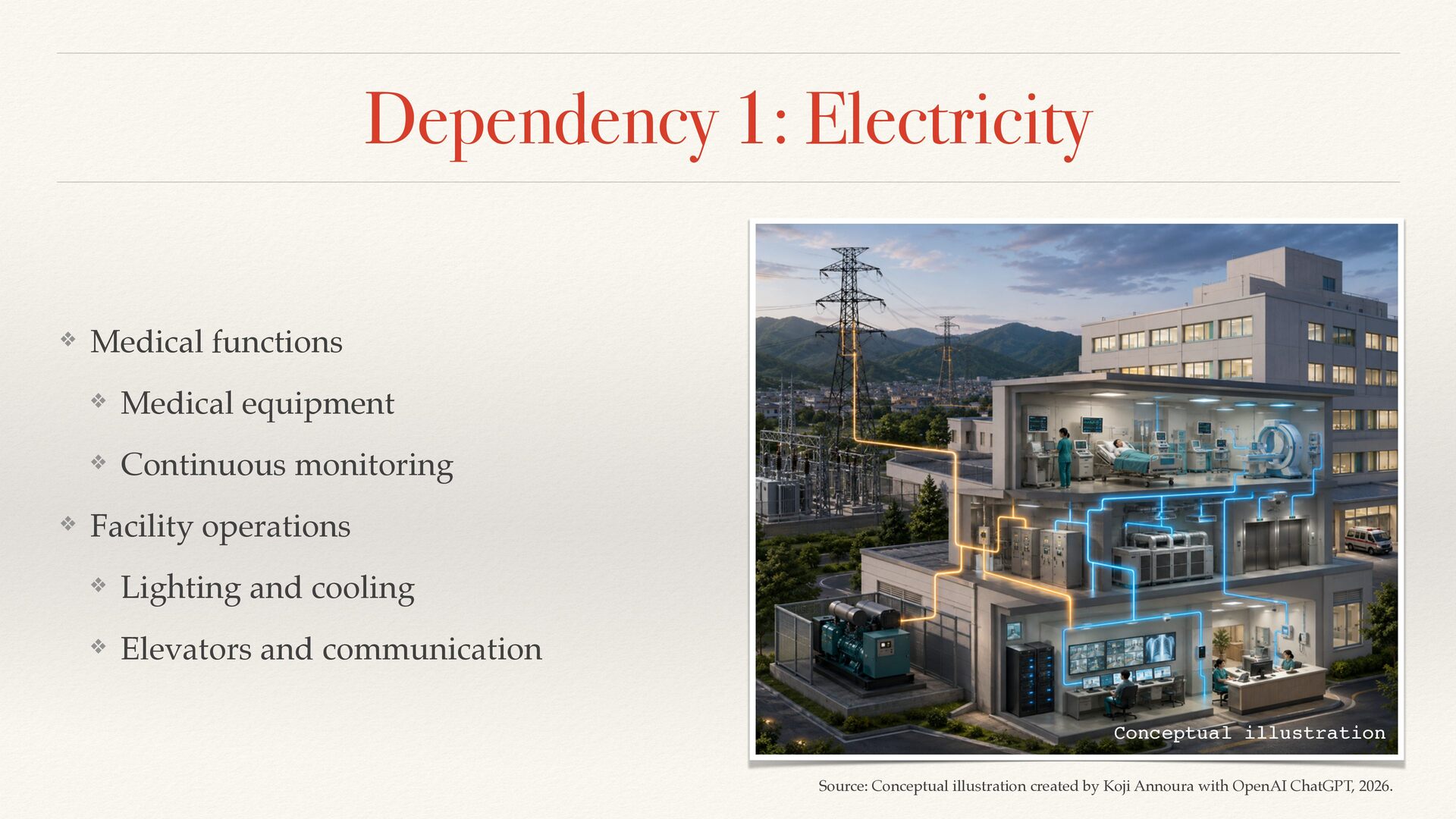
Dependency 1: Electricity ❖ Medical functions ❖ Medical equipment ❖
Continuous monitoring ❖ Facility operations ❖ Lighting and cooling ❖ Elevators and communication Conceptual illustration Source: Conceptual illustration created by Koji Annoura with OpenAI ChatGPT, 2026. -
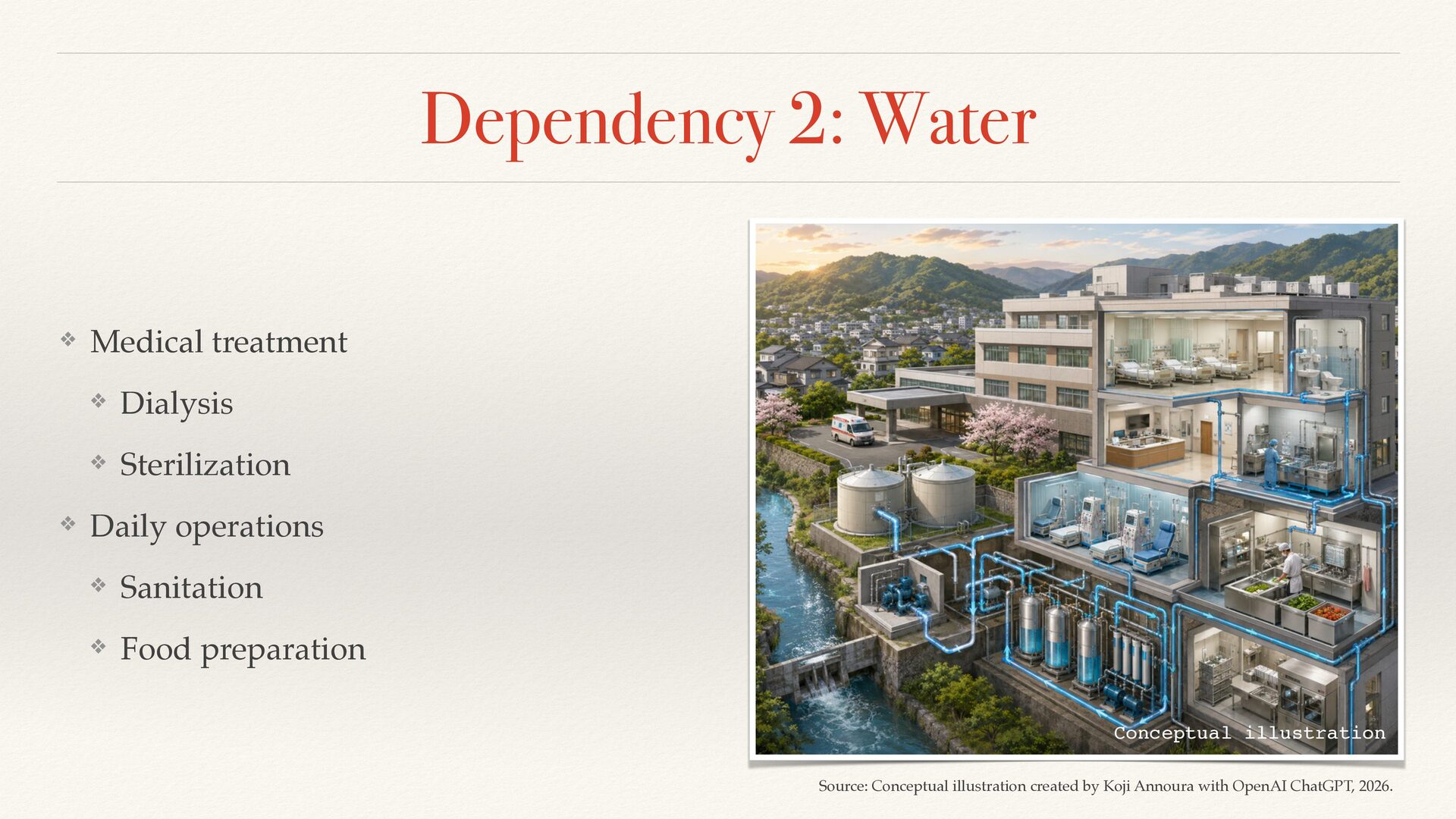
Dependency 2: Water ❖ Medical treatment ❖ Dialysis ❖ Sterilization
❖ Daily operations ❖ Sanitation ❖ Food preparation Conceptual illustration Source: Conceptual illustration created by Koji Annoura with OpenAI ChatGPT, 2026. -
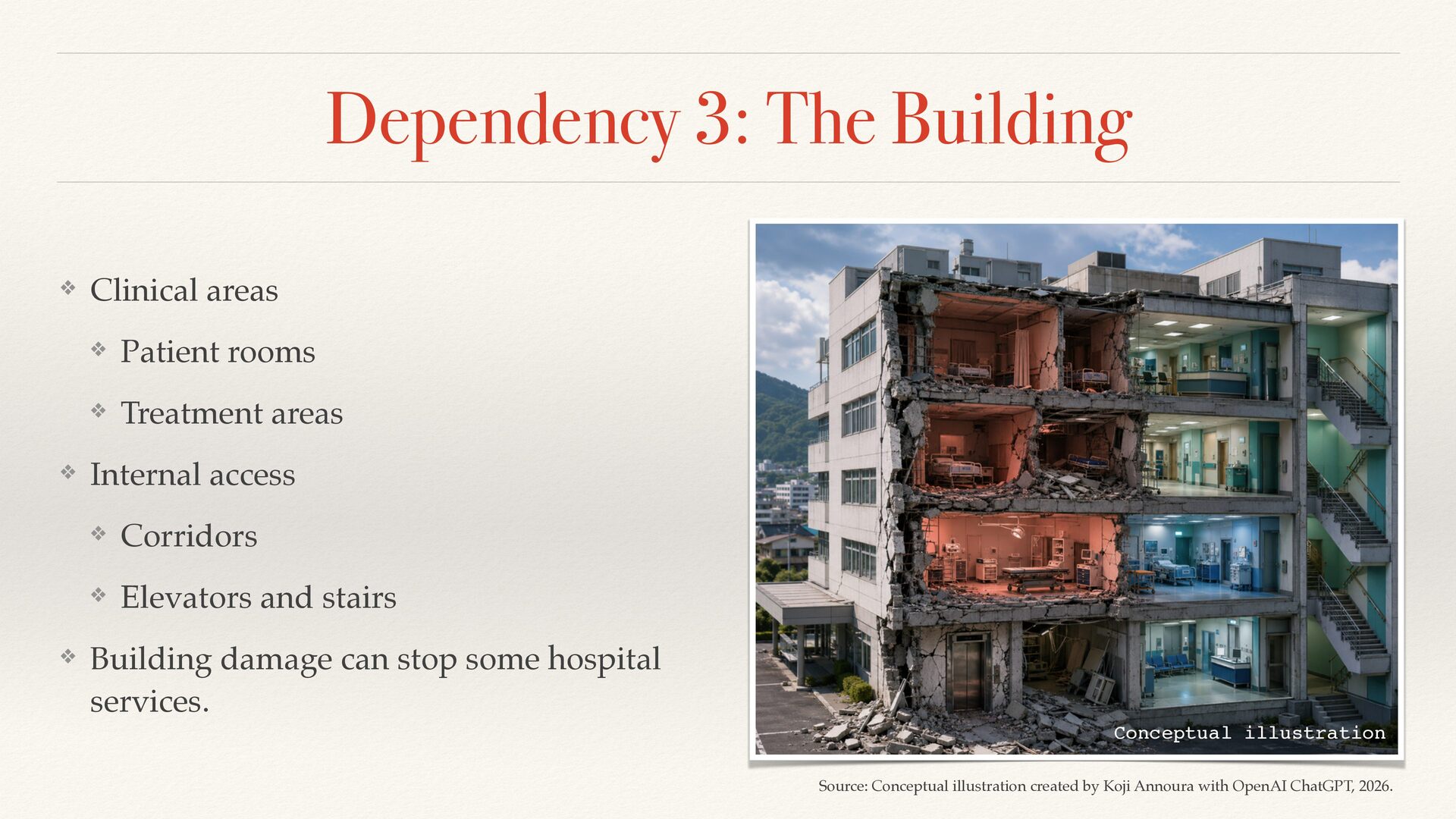
Dependency 3: The Building ❖ Clinical areas ❖ Patient rooms
❖ Treatment areas ❖ Internal access ❖ Corridors ❖ Elevators and stairs ❖ Building damage can stop some hospital services. Conceptual illustration Source: Conceptual illustration created by Koji Annoura with OpenAI ChatGPT, 2026. -
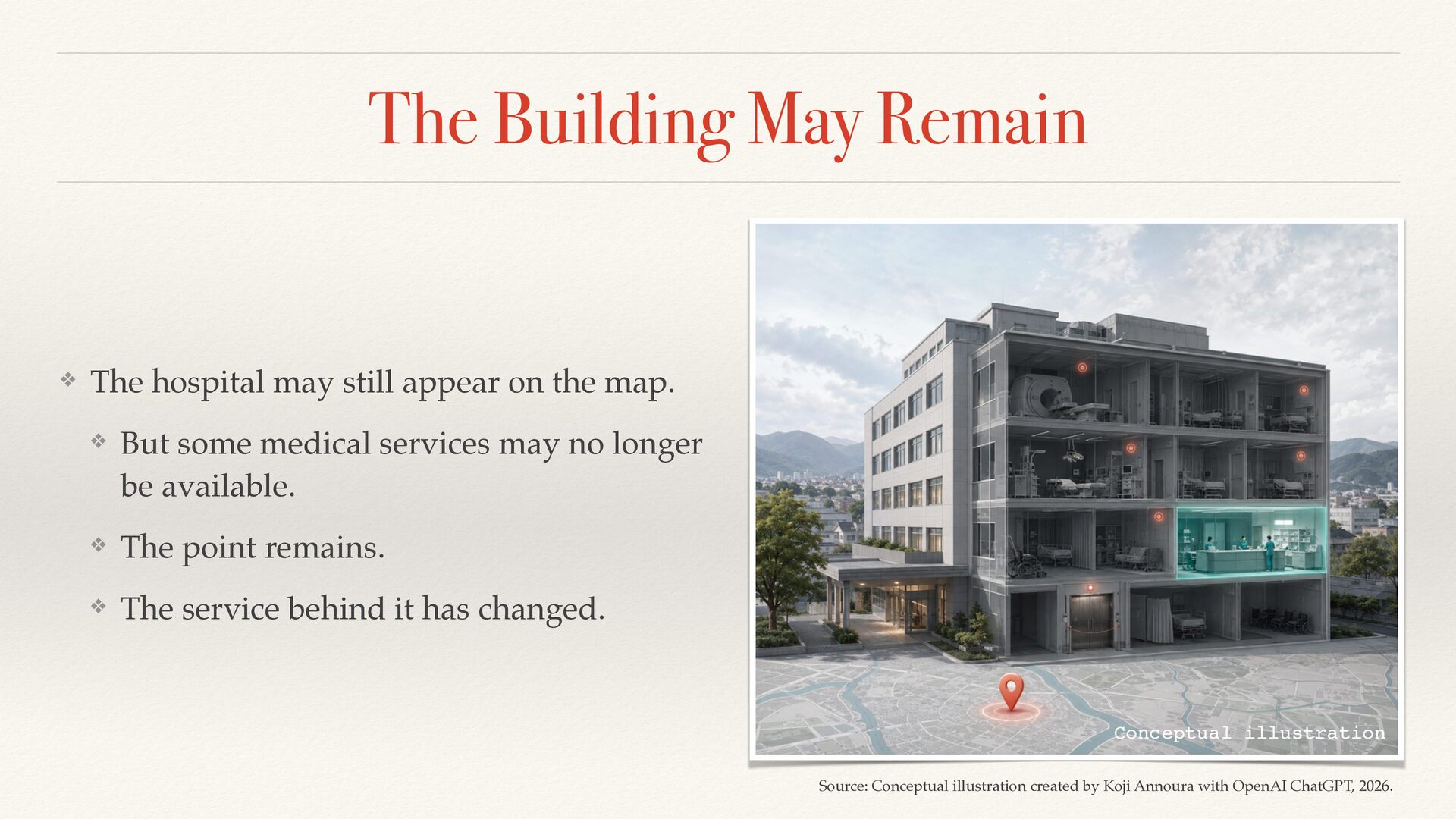
The Building May Remain ❖ The hospital may still appear
on the map. ❖ But some medical services may no longer be available. ❖ The point remains. ❖ The service behind it has changed. Conceptual illustration Source: Conceptual illustration created by Koji Annoura with OpenAI ChatGPT, 2026. -
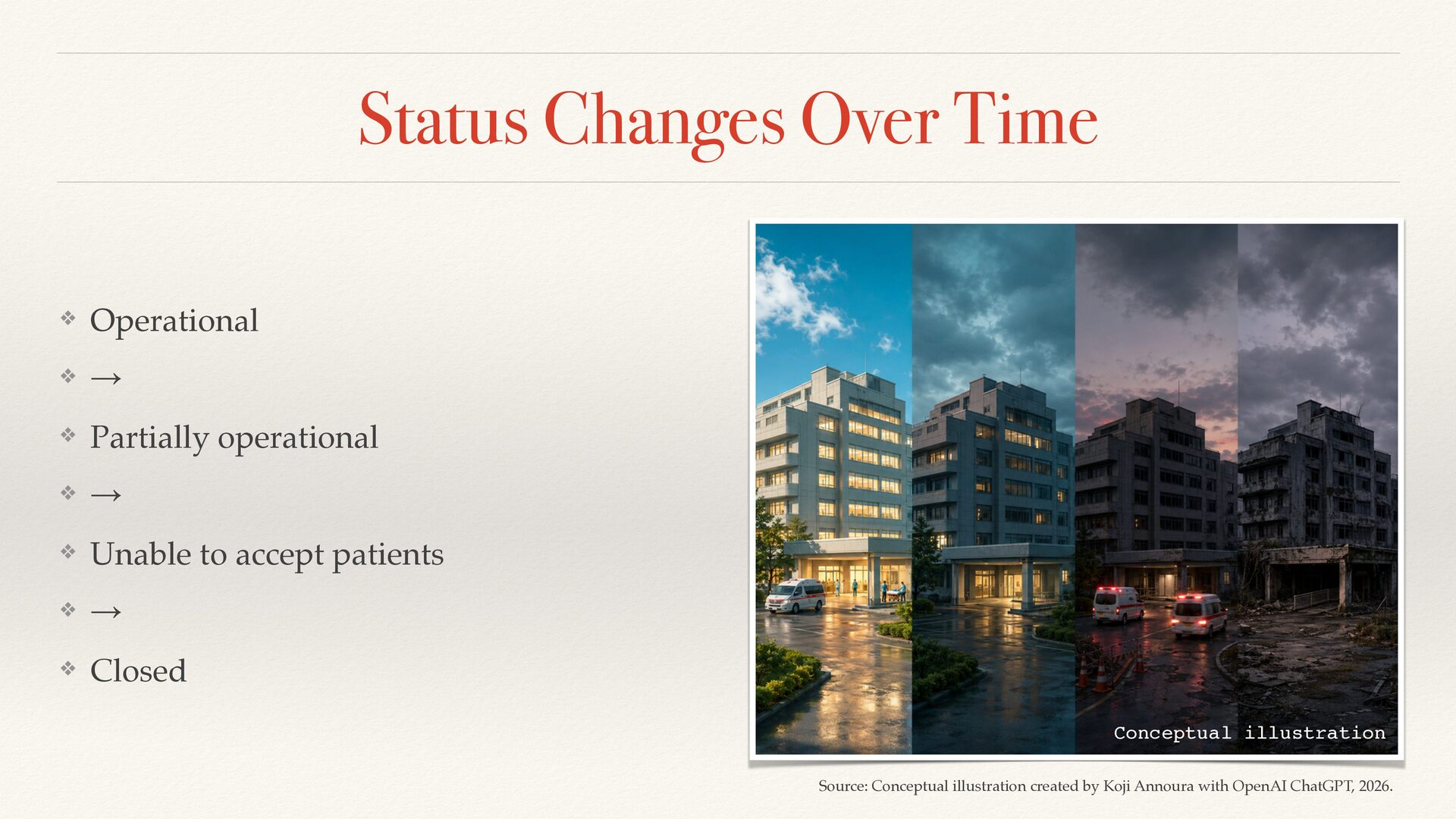
Status Changes Over Time ❖ Operational ❖ → ❖ Partially
operational ❖ → ❖ Unable to accept patients ❖ → ❖ Closed Conceptual illustration Source: Conceptual illustration created by Koji Annoura with OpenAI ChatGPT, 2026. -
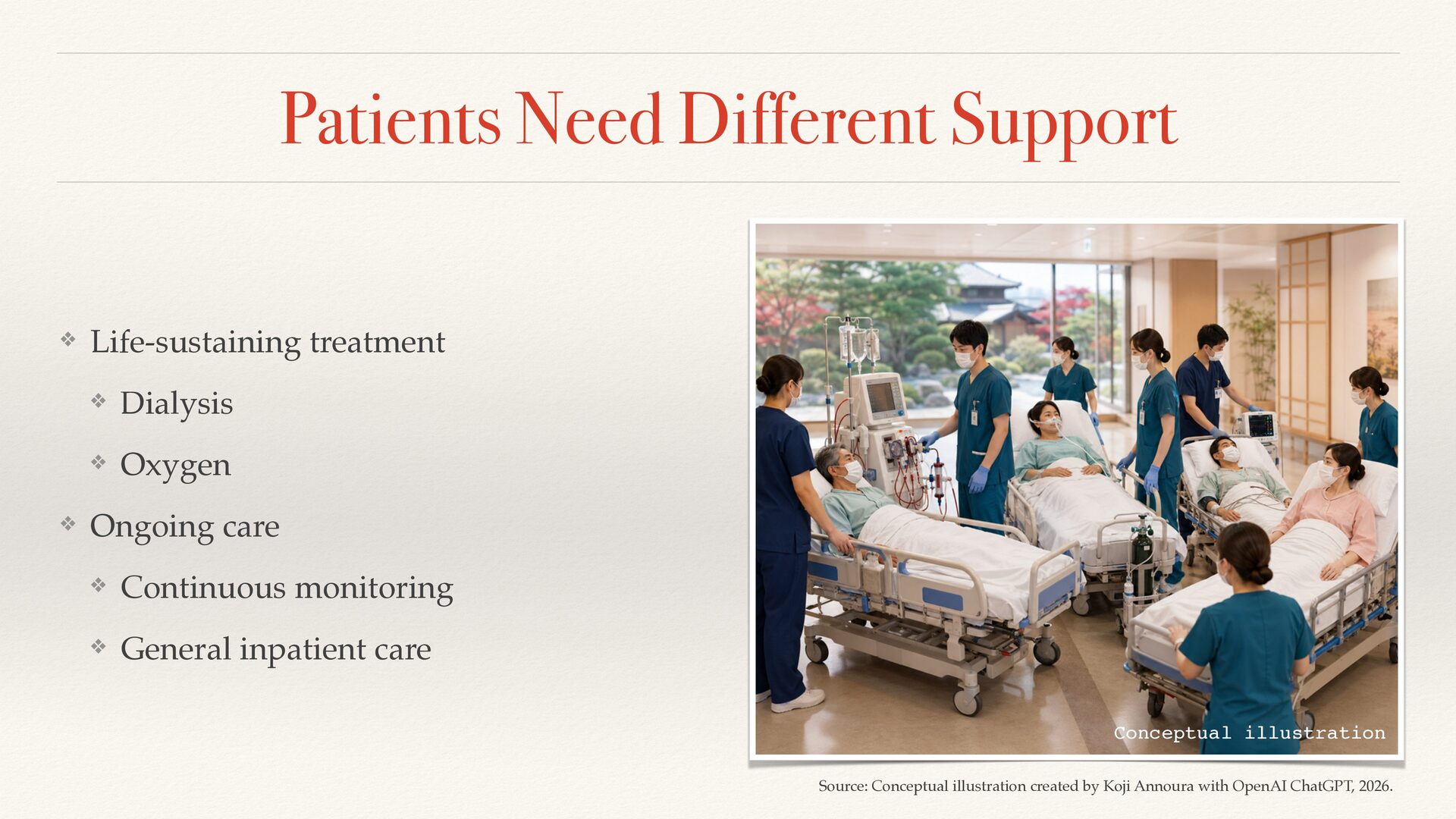
Patients Need Different Support ❖ Life-sustaining treatment ❖ Dialysis ❖
Oxygen ❖ Ongoing care ❖ Continuous monitoring ❖ General inpatient care Conceptual illustration Source: Conceptual illustration created by Koji Annoura with OpenAI ChatGPT, 2026. -
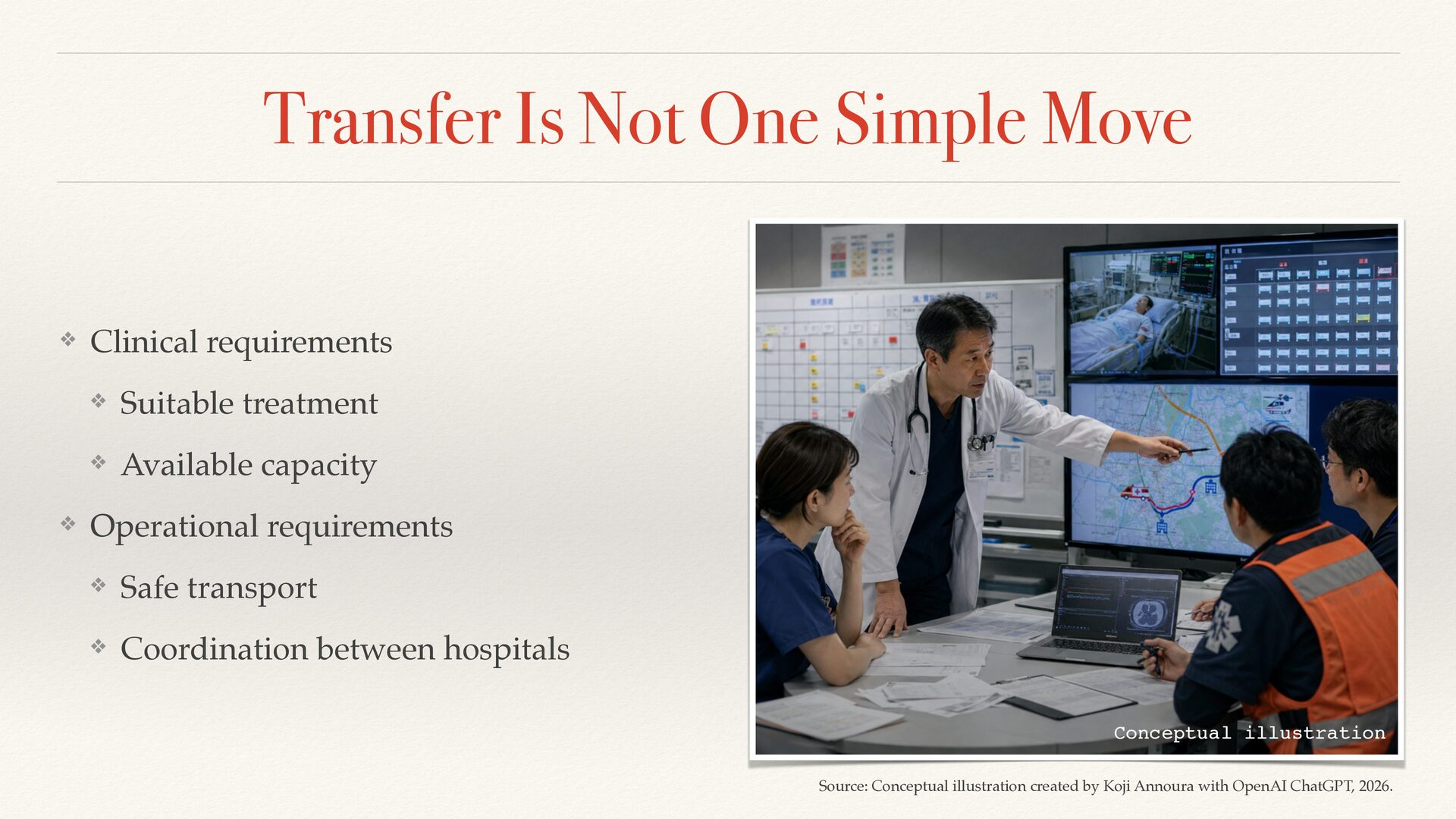
Transfer Is Not One Simple Move ❖ Clinical requirements ❖
Suitable treatment ❖ Available capacity ❖ Operational requirements ❖ Safe transport ❖ Coordination between hospitals Conceptual illustration Source: Conceptual illustration created by Koji Annoura with OpenAI ChatGPT, 2026. -
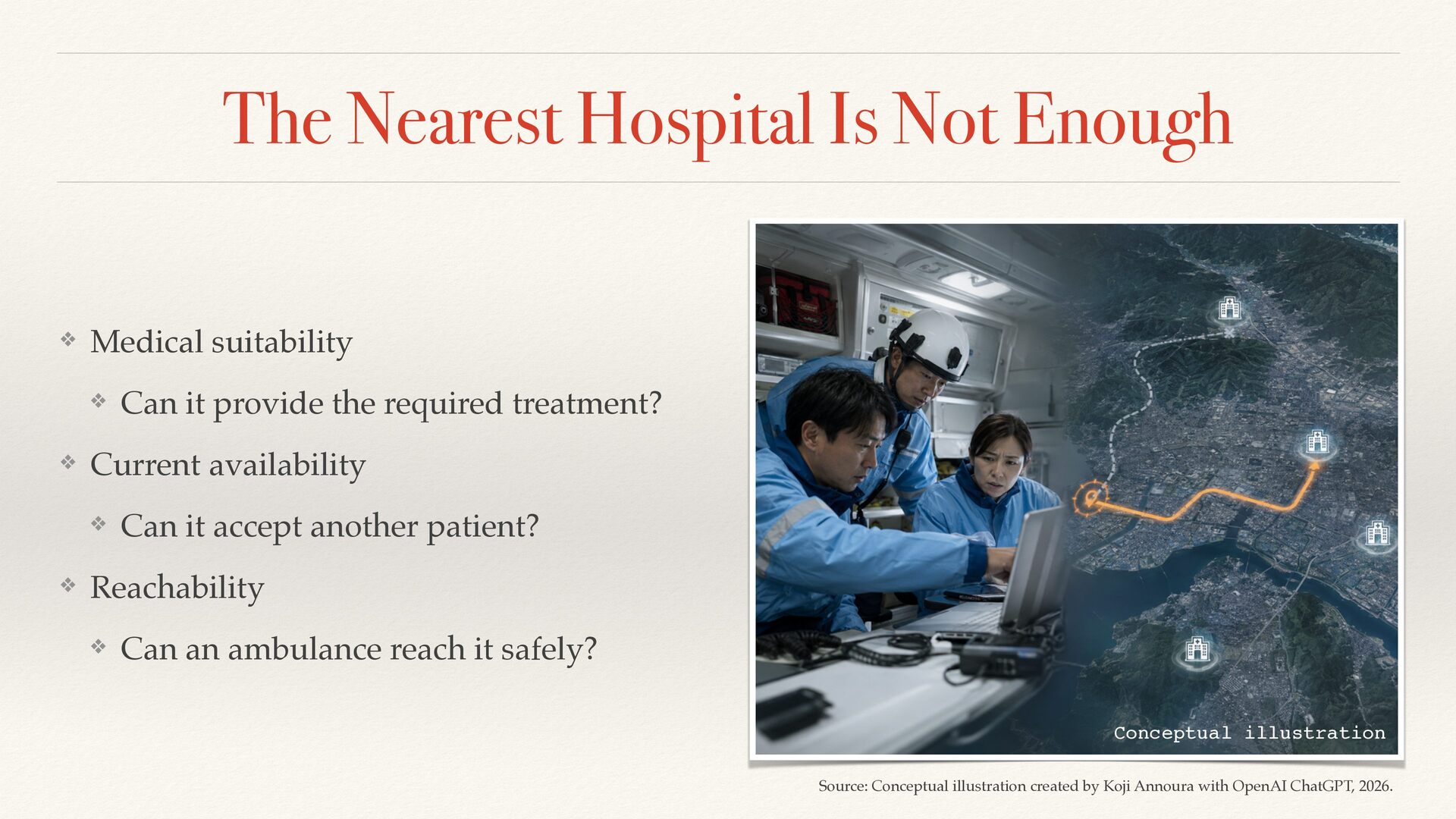
The Nearest Hospital Is Not Enough ❖ Medical suitability ❖
Can it provide the required treatment? ❖ Current availability ❖ Can it accept another patient? ❖ Reachability ❖ Can an ambulance reach it safely? Conceptual illustration Source: Conceptual illustration created by Koji Annoura with OpenAI ChatGPT, 2026. -
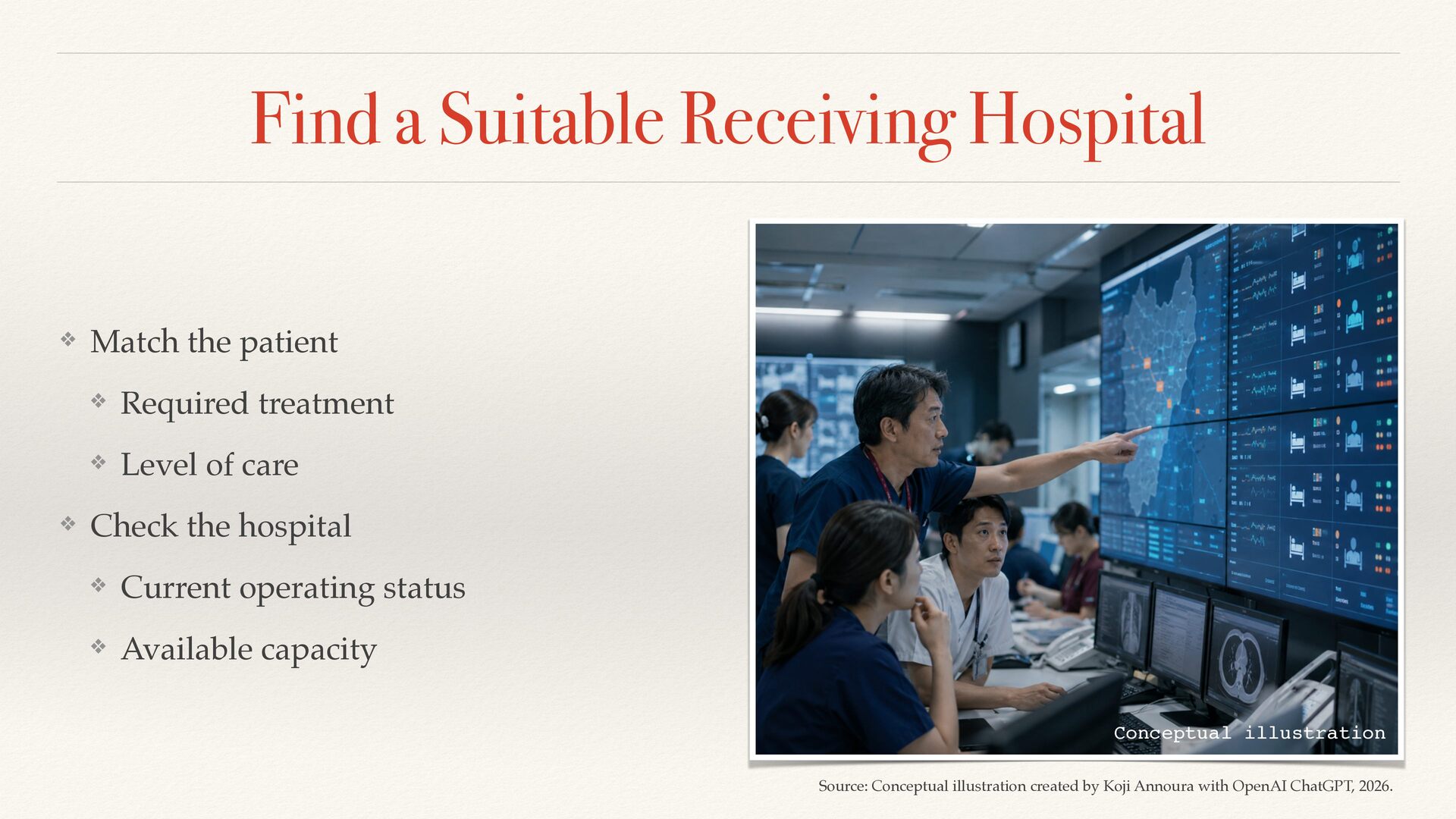
Find a Suitable Receiving Hospital ❖ Match the patient ❖
Required treatment ❖ Level of care ❖ Check the hospital ❖ Current operating status ❖ Available capacity Conceptual illustration Source: Conceptual illustration created by Koji Annoura with OpenAI ChatGPT, 2026. -
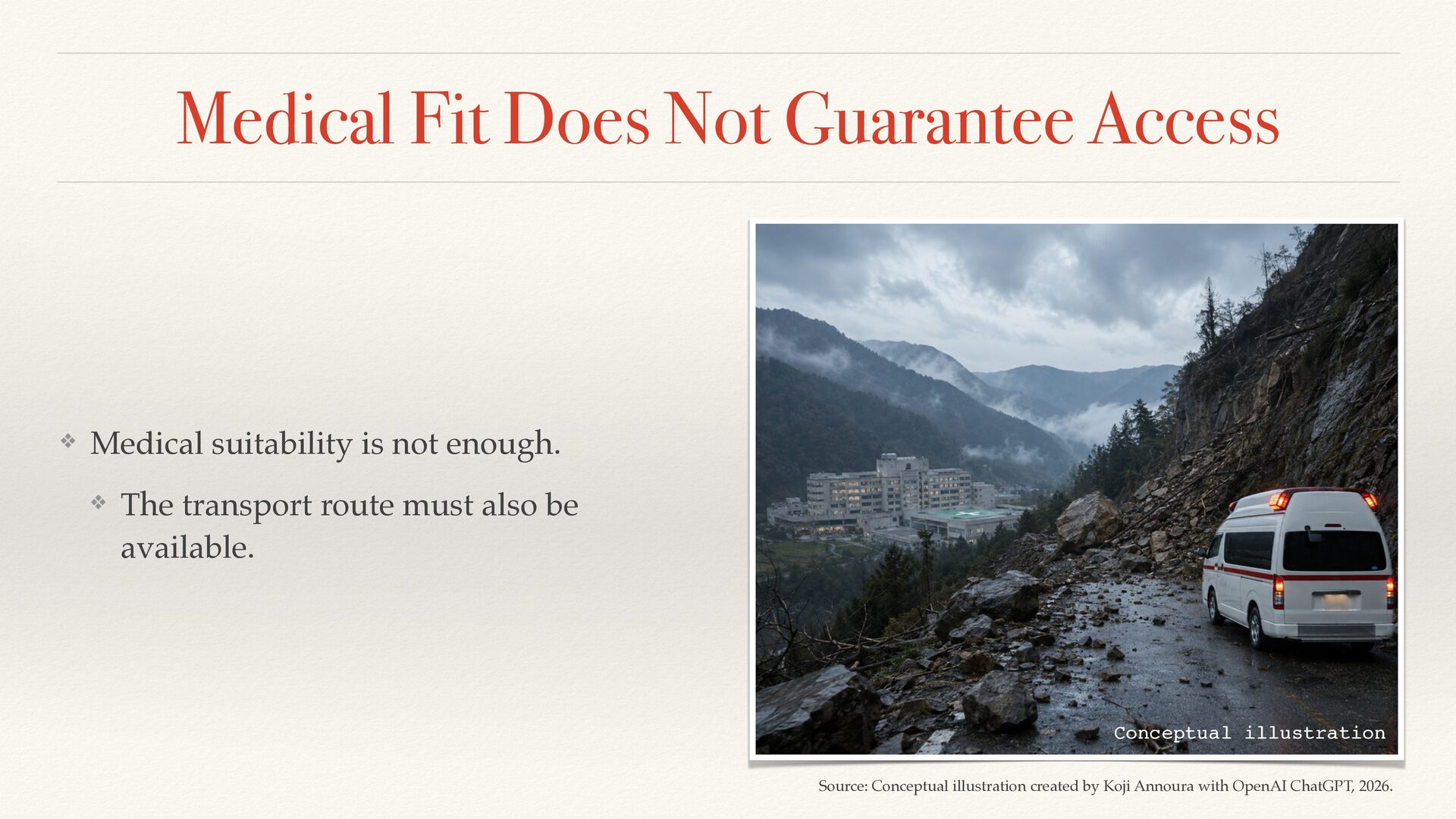
Medical Fit Does Not Guarantee Access ❖ Medical suitability is
not enough. ❖ The transport route must also be available. Conceptual illustration Source: Conceptual illustration created by Koji Annoura with OpenAI ChatGPT, 2026. -
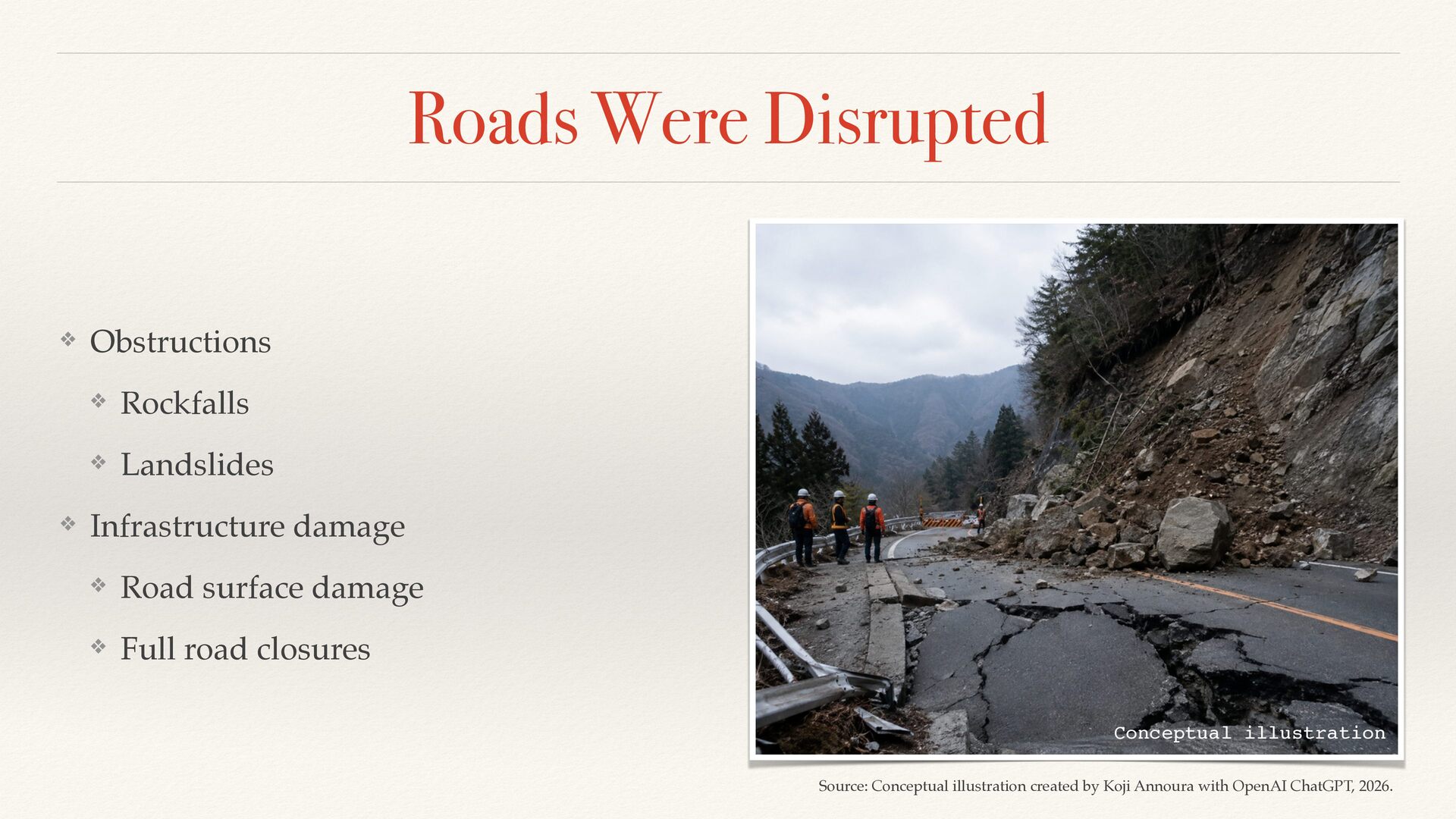
Roads Were Disrupted ❖ Obstructions ❖ Rockfalls ❖ Landslides ❖
Infrastructure damage ❖ Road surface damage ❖ Full road closures Conceptual illustration Source: Conceptual illustration created by Koji Annoura with OpenAI ChatGPT, 2026. -
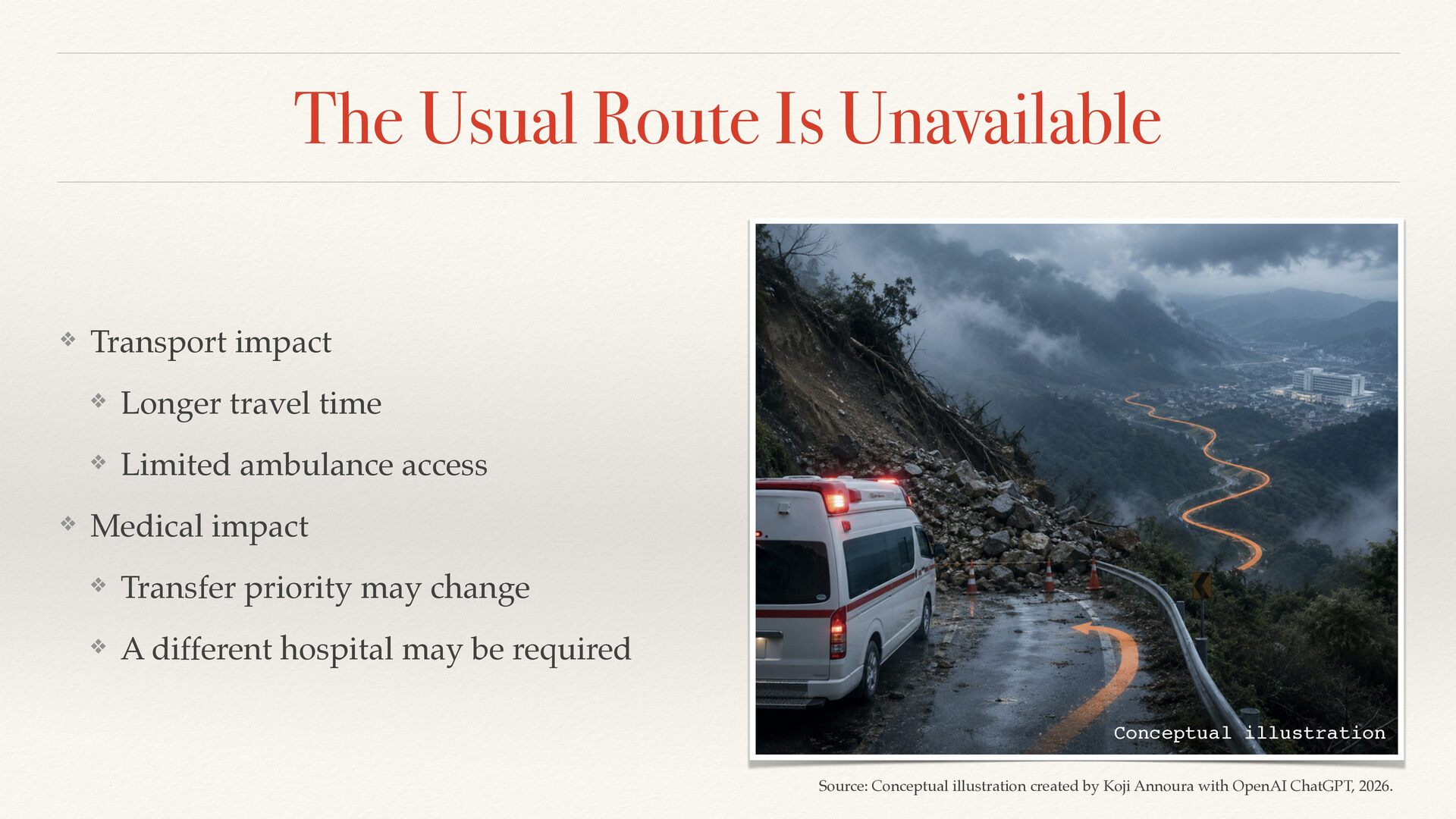
The Usual Route Is Unavailable ❖ Transport impact ❖ Longer
travel time ❖ Limited ambulance access ❖ Medical impact ❖ Transfer priority may change ❖ A different hospital may be required Conceptual illustration Source: Conceptual illustration created by Koji Annoura with OpenAI ChatGPT, 2026. -
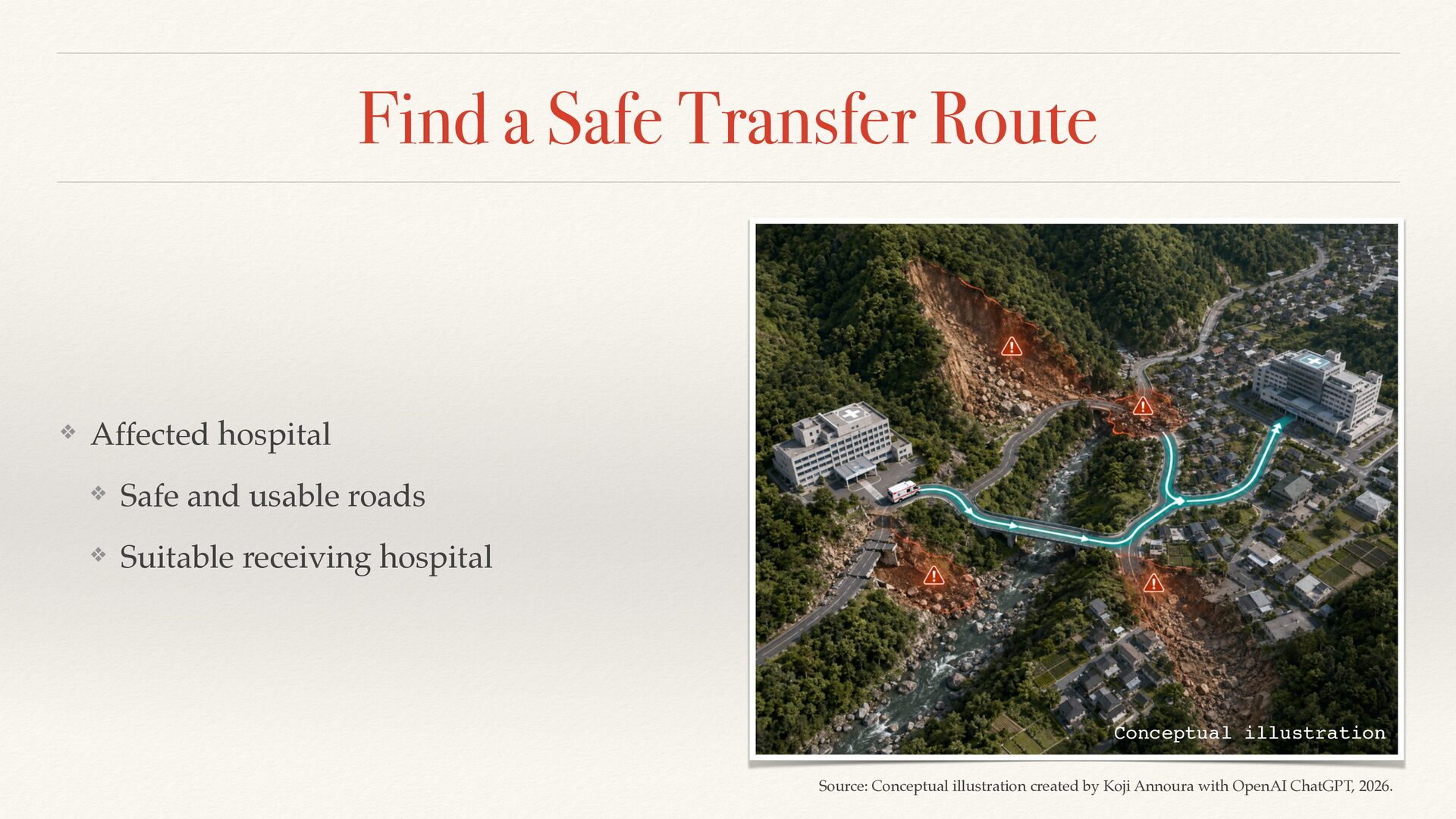
Find a Safe Transfer Route ❖ Affected hospital ❖ Safe
and usable roads ❖ Suitable receiving hospital Conceptual illustration Source: Conceptual illustration created by Koji Annoura with OpenAI ChatGPT, 2026. -
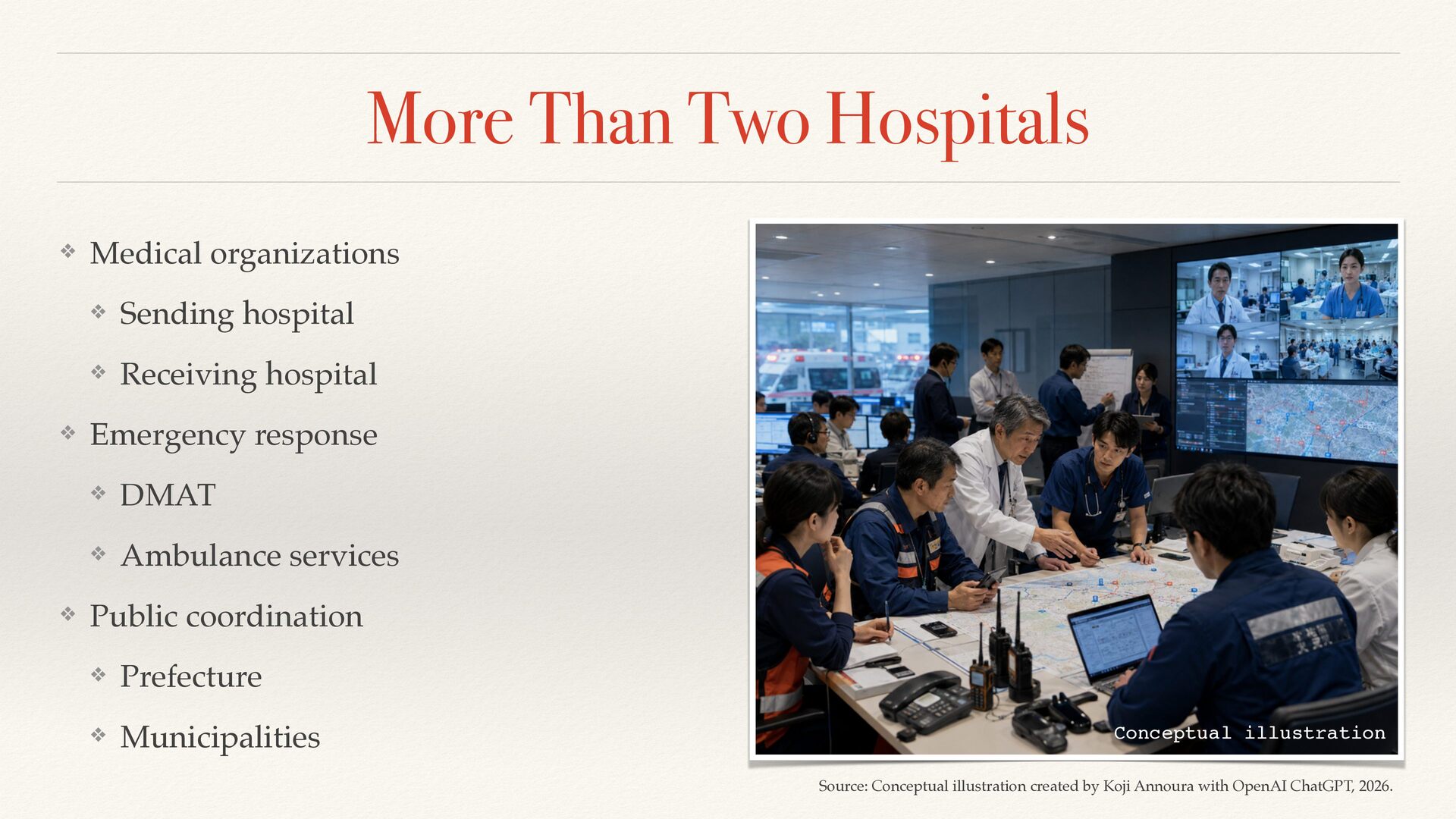
More Than Two Hospitals ❖ Medical organizations ❖ Sending hospital
❖ Receiving hospital ❖ Emergency response ❖ DMAT ❖ Ambulance services ❖ Public coordination ❖ Prefecture ❖ Municipalities Conceptual illustration Source: Conceptual illustration created by Koji Annoura with OpenAI ChatGPT, 2026. -
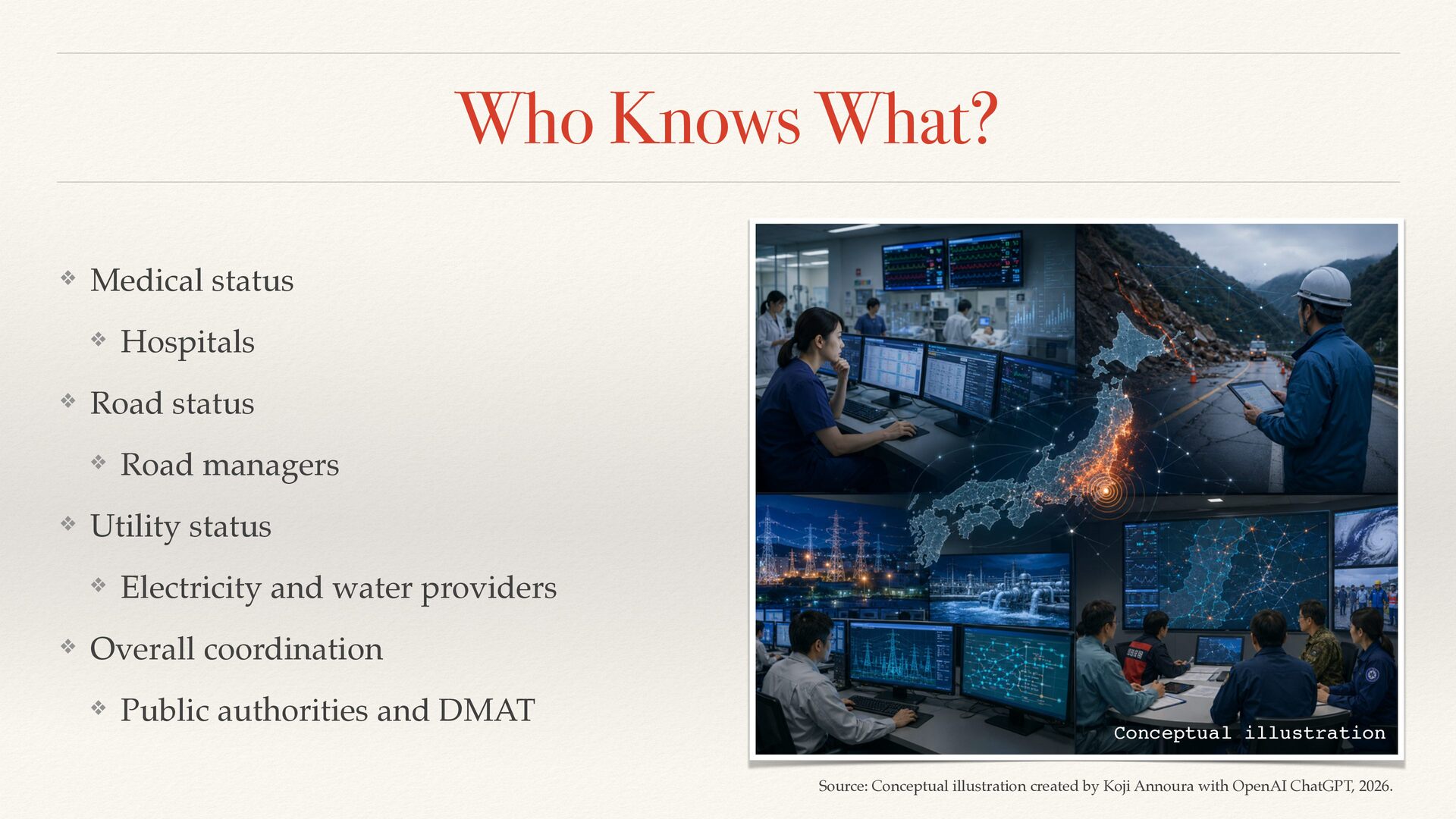
Who Knows What? ❖ Medical status ❖ Hospitals ❖ Road
status ❖ Road managers ❖ Utility status ❖ Electricity and water providers ❖ Overall coordination ❖ Public authorities and DMAT Conceptual illustration Source: Conceptual illustration created by Koji Annoura with OpenAI ChatGPT, 2026. -
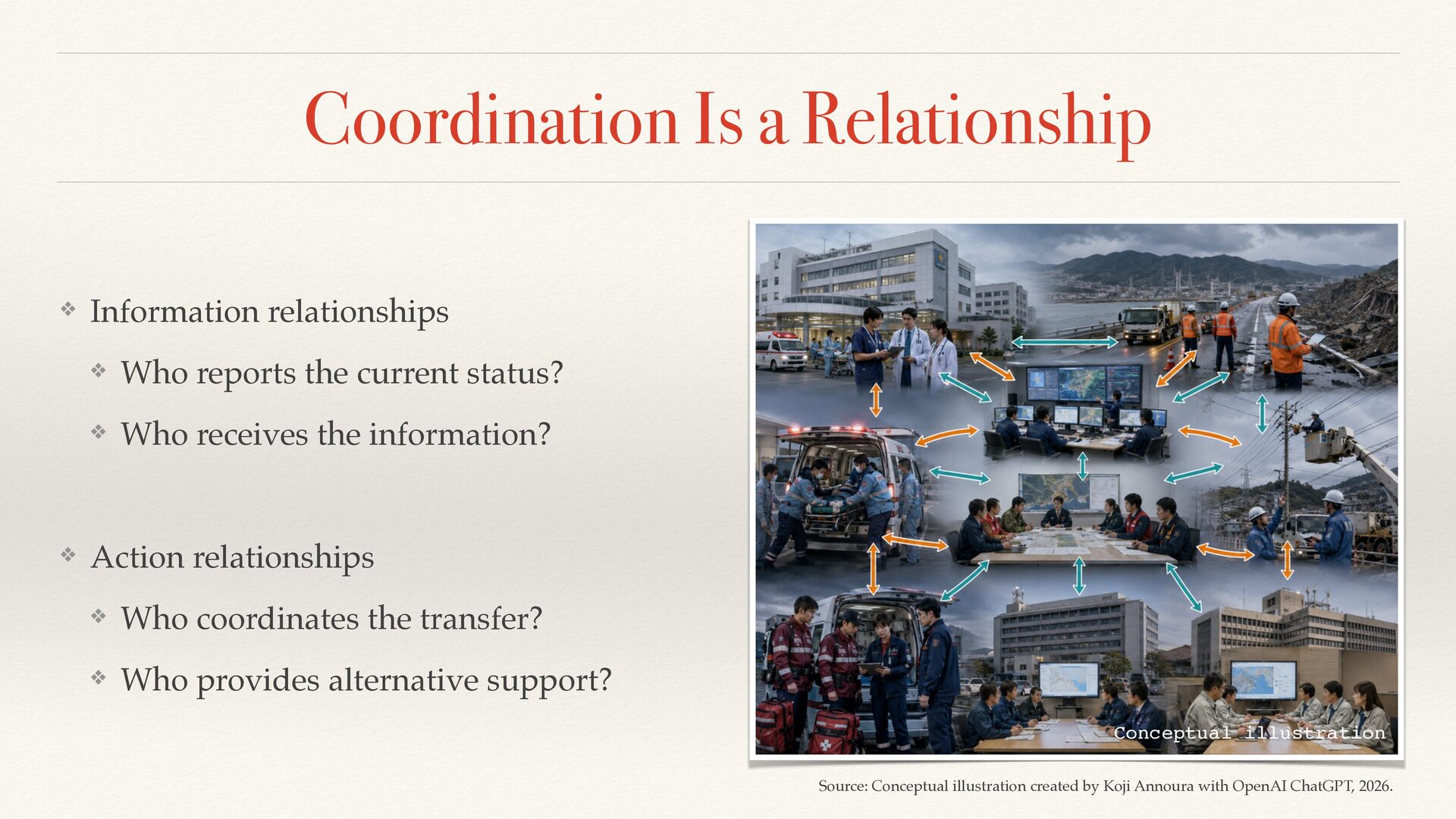
Coordination Is a Relationship ❖ Information relationships ❖ Who reports
the current status? ❖ Who receives the information? ❖ Action relationships ❖ Who coordinates the transfer? ❖ Who provides alternative support? Conceptual illustration Source: Conceptual illustration created by Koji Annoura with OpenAI ChatGPT, 2026. -
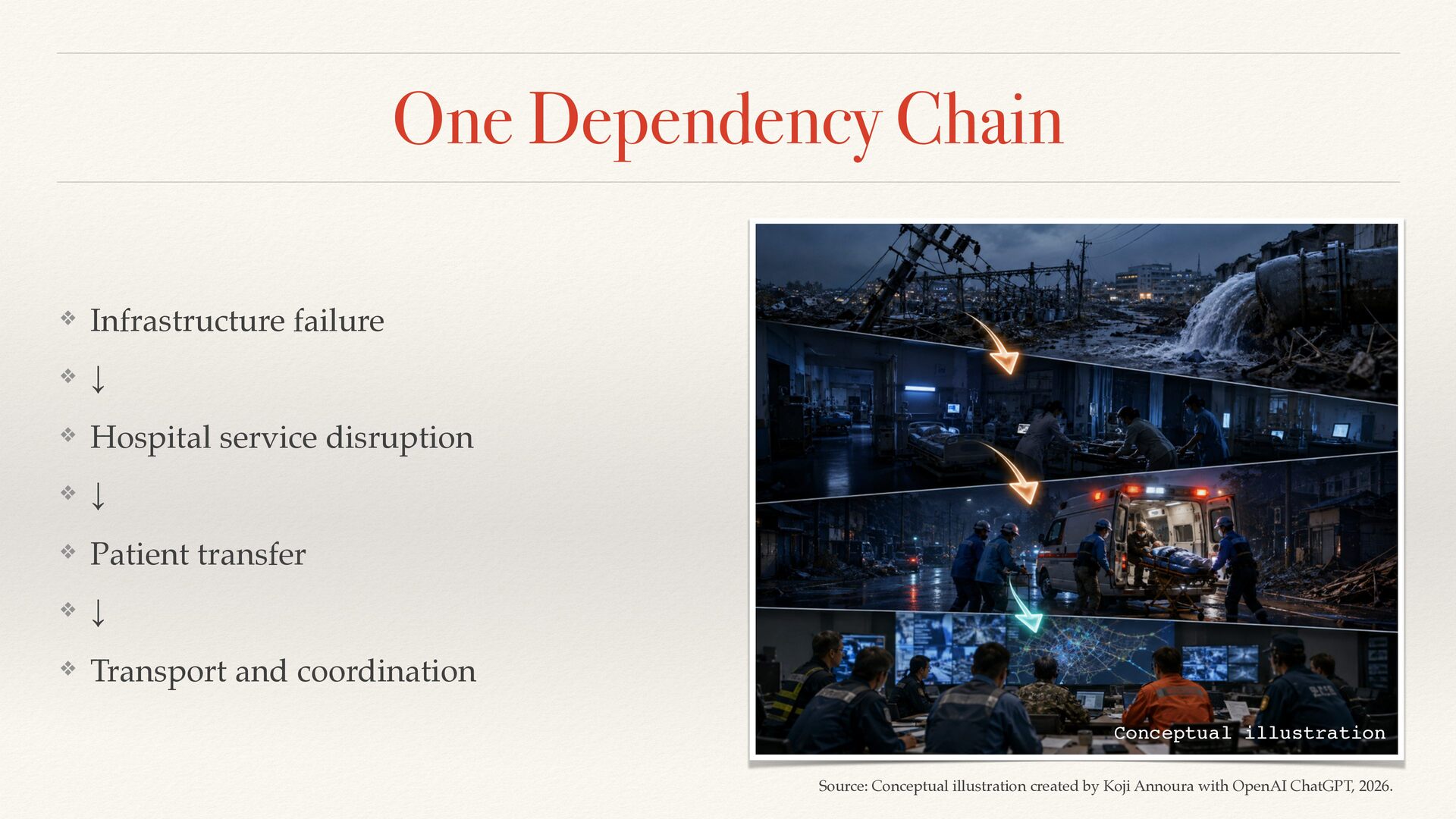
One Dependency Chain ❖ Infrastructure failure ❖ ↓ ❖ Hospital
service disruption ❖ ↓ ❖ Patient transfer ❖ ↓ ❖ Transport and coordination Conceptual illustration Source: Conceptual illustration created by Koji Annoura with OpenAI ChatGPT, 2026. -
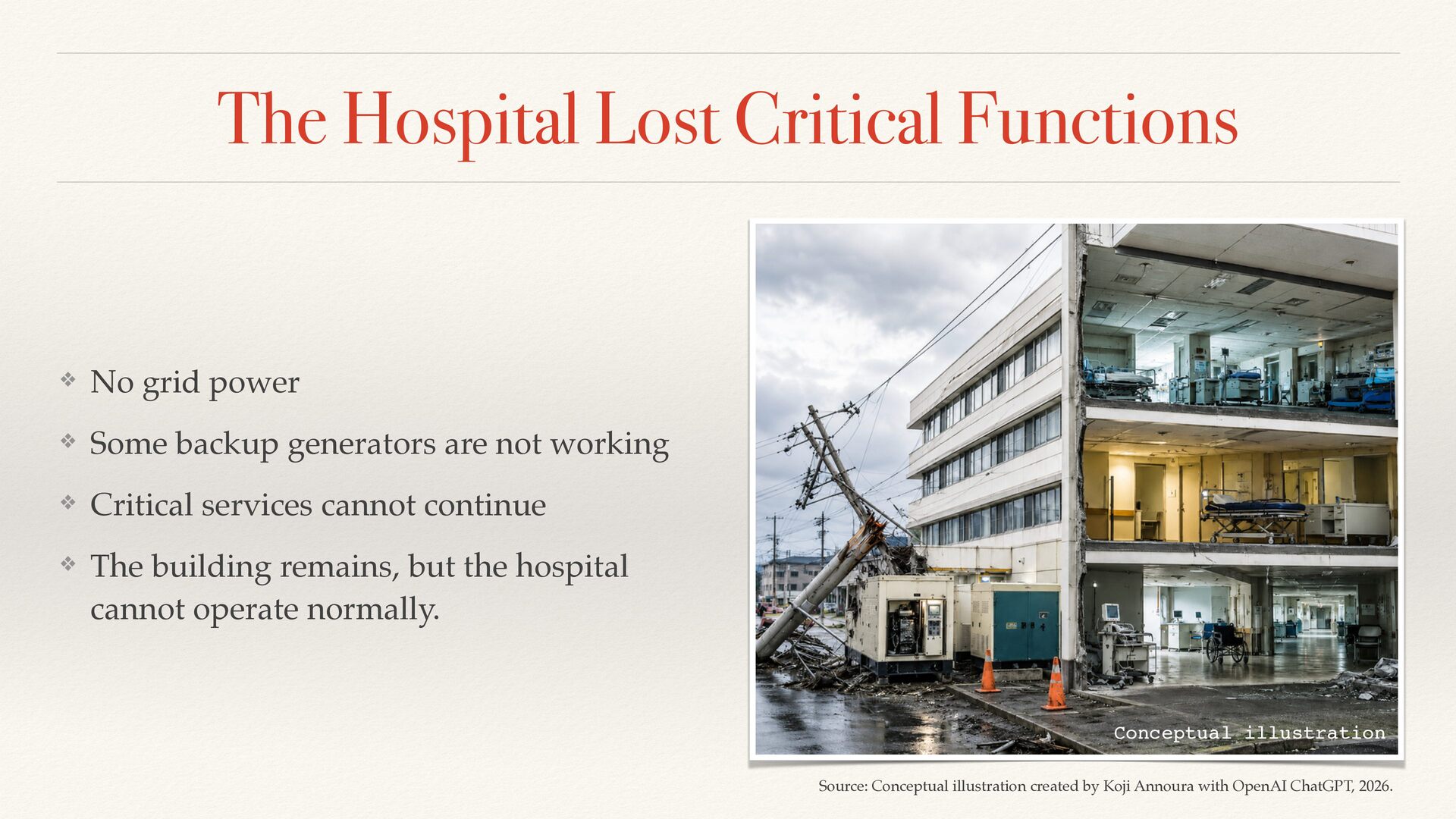
The Hospital Lost Critical Functions ❖ No grid power ❖
Some backup generators are not working ❖ Critical services cannot continue ❖ The building remains, but the hospital cannot operate normally. Conceptual illustration Source: Conceptual illustration created by Koji Annoura with OpenAI ChatGPT, 2026. -
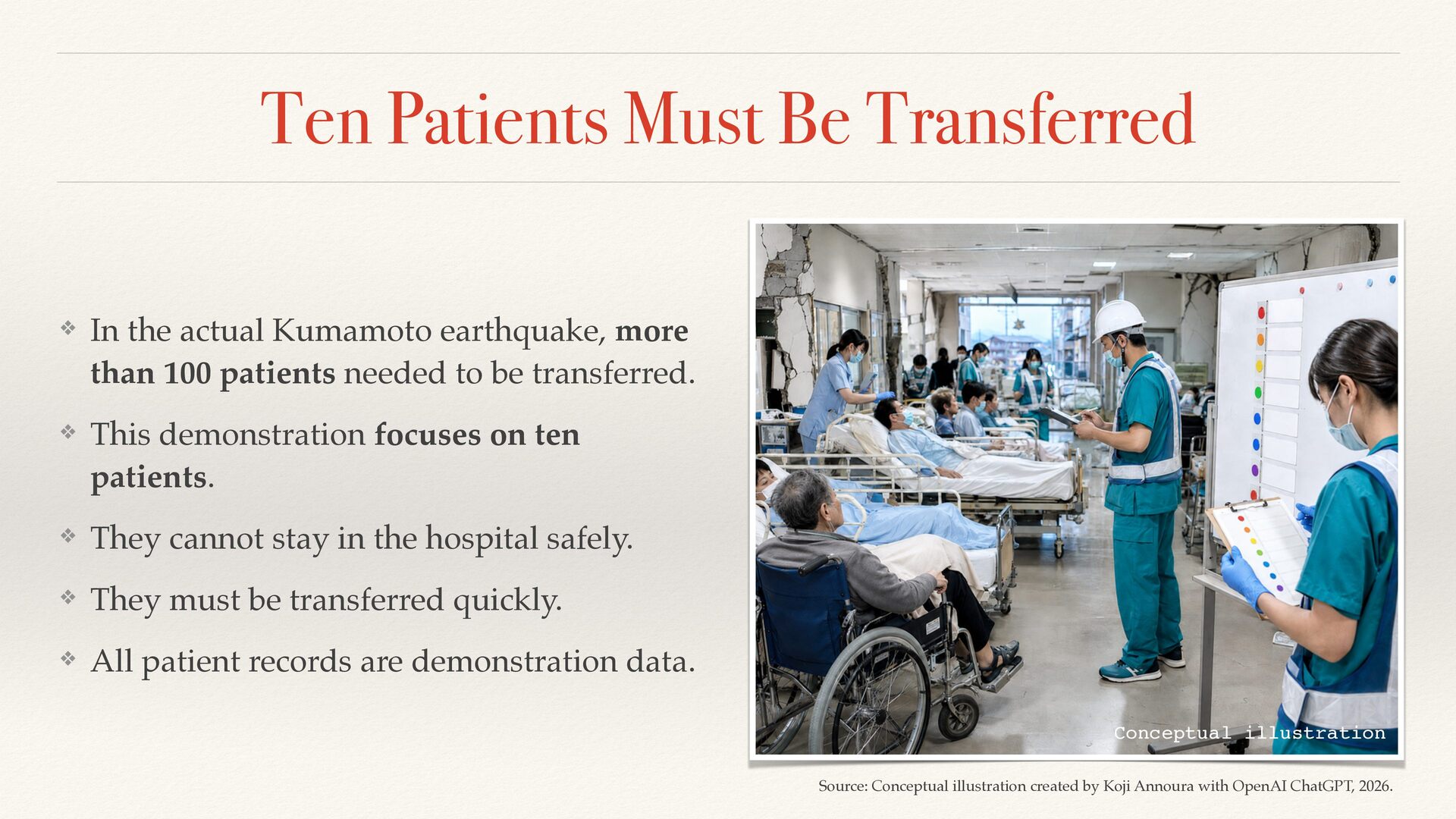
Ten Patients Must Be Transferred ❖ In the actual Kumamoto
earthquake, more than 100 patients needed to be transferred. ❖ This demonstration focuses on ten patients. ❖ They cannot stay in the hospital safely. ❖ They must be transferred quickly. ❖ All patient records are demonstration data. Conceptual illustration Source: Conceptual illustration created by Koji Annoura with OpenAI ChatGPT, 2026. -
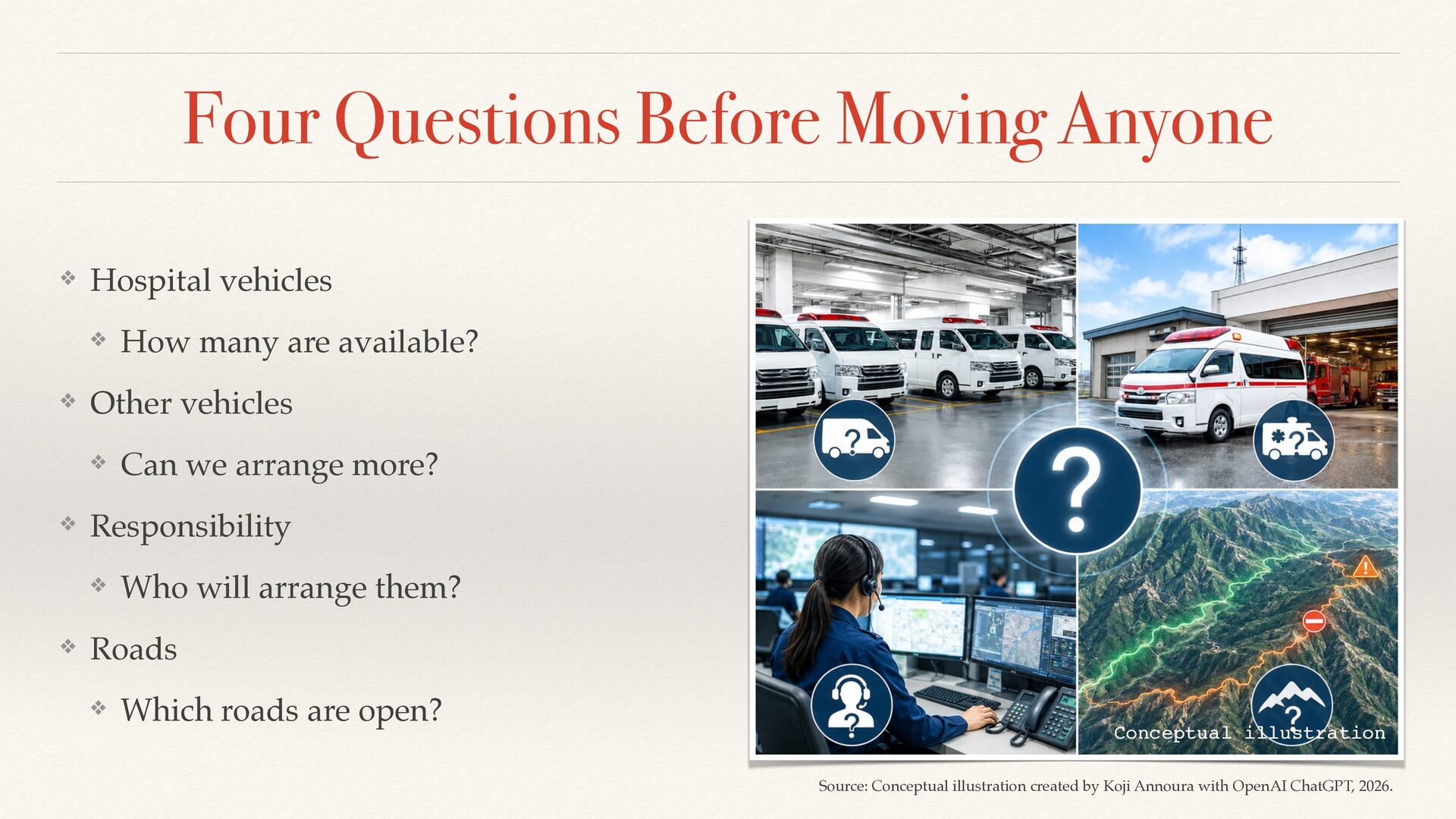
Four Questions Before Moving Anyone ❖ Hospital vehicles ❖ How
many are available? ❖ Other vehicles ❖ Can we arrange more? ❖ Responsibility ❖ Who will arrange them? ❖ Roads ❖ Which roads are open? Conceptual illustration Source: Conceptual illustration created by Koji Annoura with OpenAI ChatGPT, 2026. -
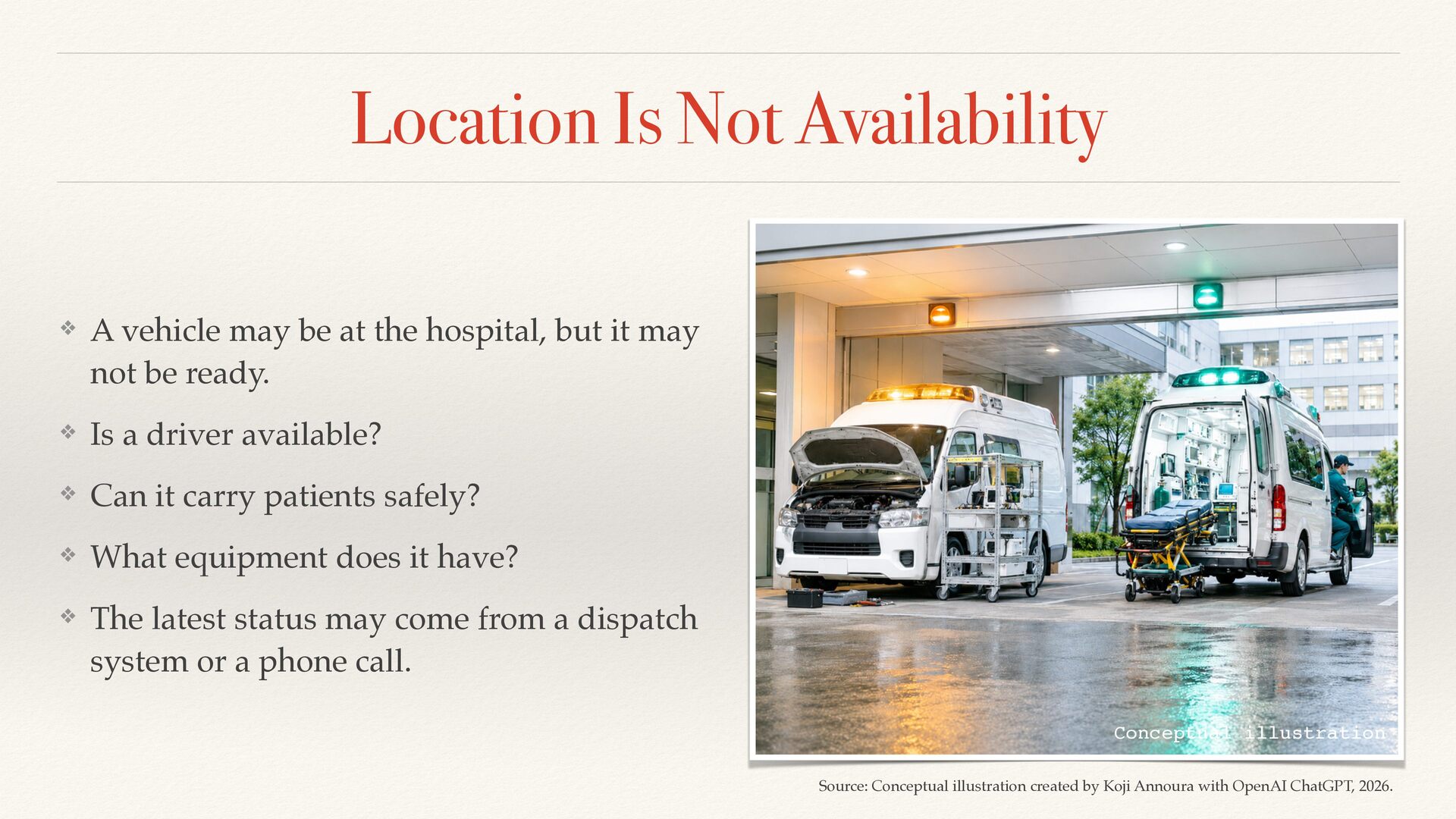
Location Is Not Availability ❖ A vehicle may be at
the hospital, but it may not be ready. ❖ Is a driver available? ❖ Can it carry patients safely? ❖ What equipment does it have? ❖ The latest status may come from a dispatch system or a phone call. Conceptual illustration Source: Conceptual illustration created by Koji Annoura with OpenAI ChatGPT, 2026. -
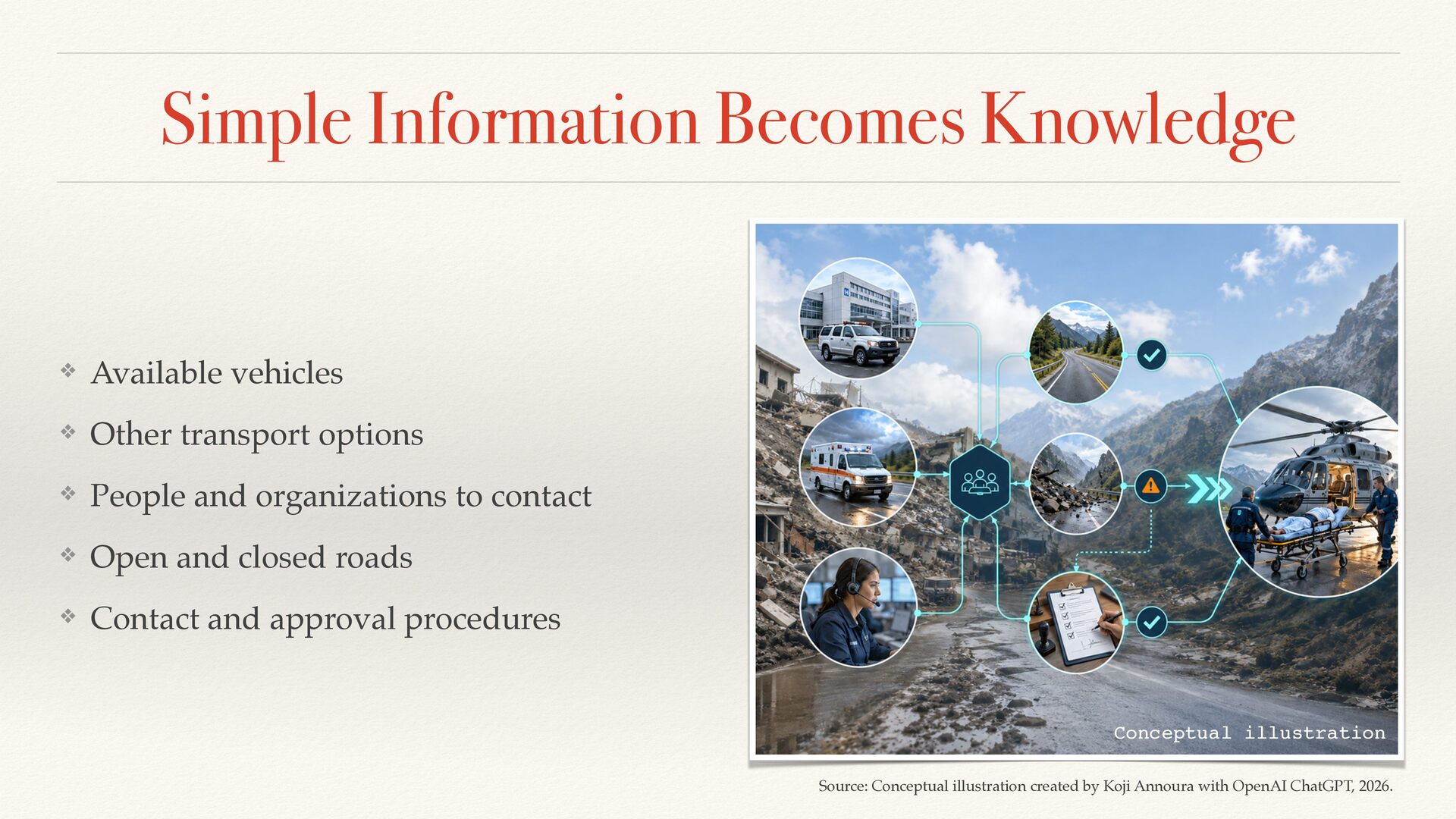
Simple Information Becomes Knowledge ❖ Available vehicles ❖ Other transport
options ❖ People and organizations to contact ❖ Open and closed roads ❖ Contact and approval procedures Conceptual illustration Source: Conceptual illustration created by Koji Annoura with OpenAI ChatGPT, 2026. -
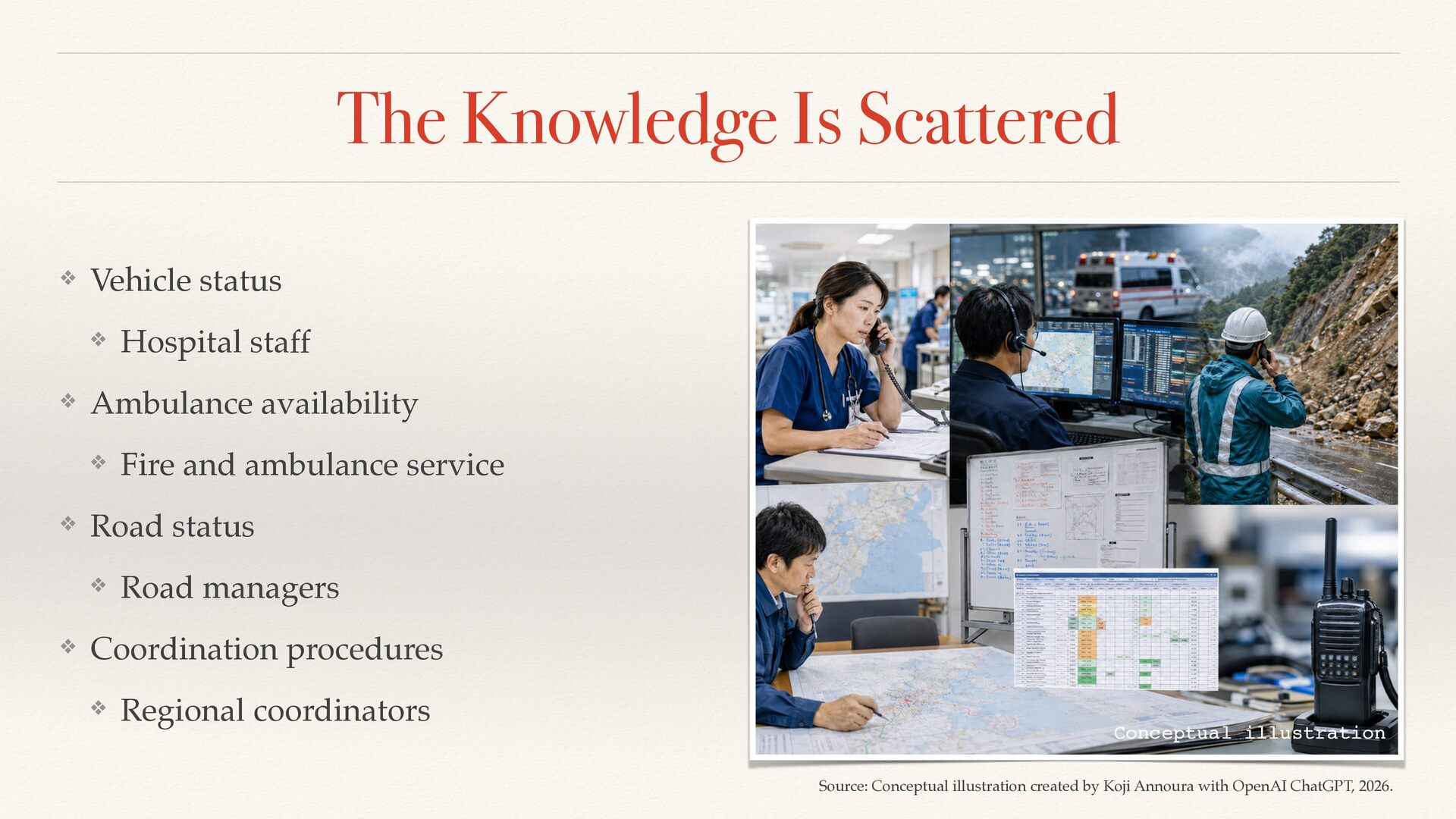
The Knowledge Is Scattered ❖ Vehicle status ❖ Hospital staff
❖ Ambulance availability ❖ Fire and ambulance service ❖ Road status ❖ Road managers ❖ Coordination procedures ❖ Regional coordinators Conceptual illustration Source: Conceptual illustration created by Koji Annoura with OpenAI ChatGPT, 2026. -
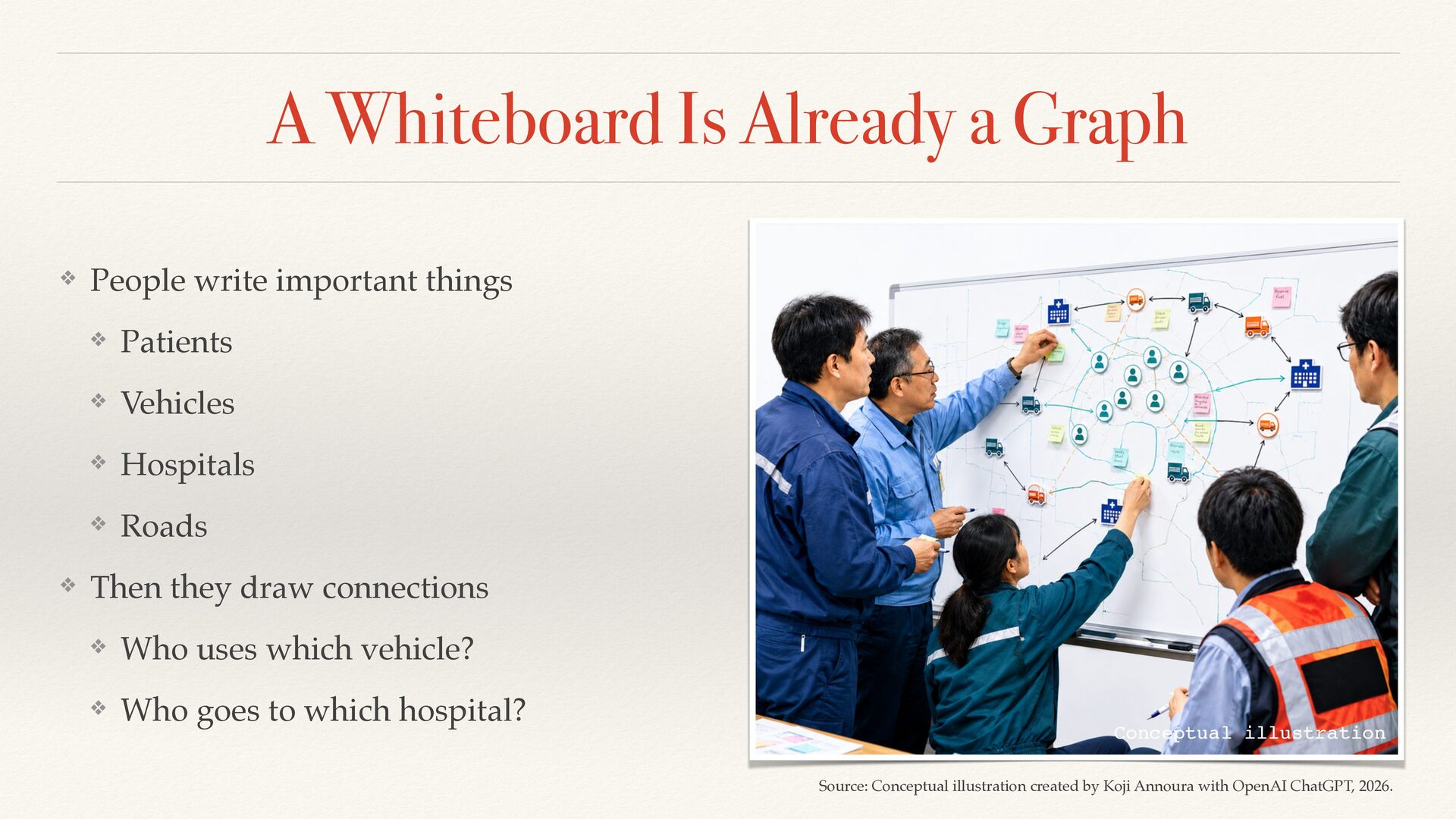
A Whiteboard Is Already a Graph ❖ People write important
things ❖ Patients ❖ Vehicles ❖ Hospitals ❖ Roads ❖ Then they draw connections ❖ Who uses which vehicle? ❖ Who goes to which hospital? Conceptual illustration Source: Conceptual illustration created by Koji Annoura with OpenAI ChatGPT, 2026. -
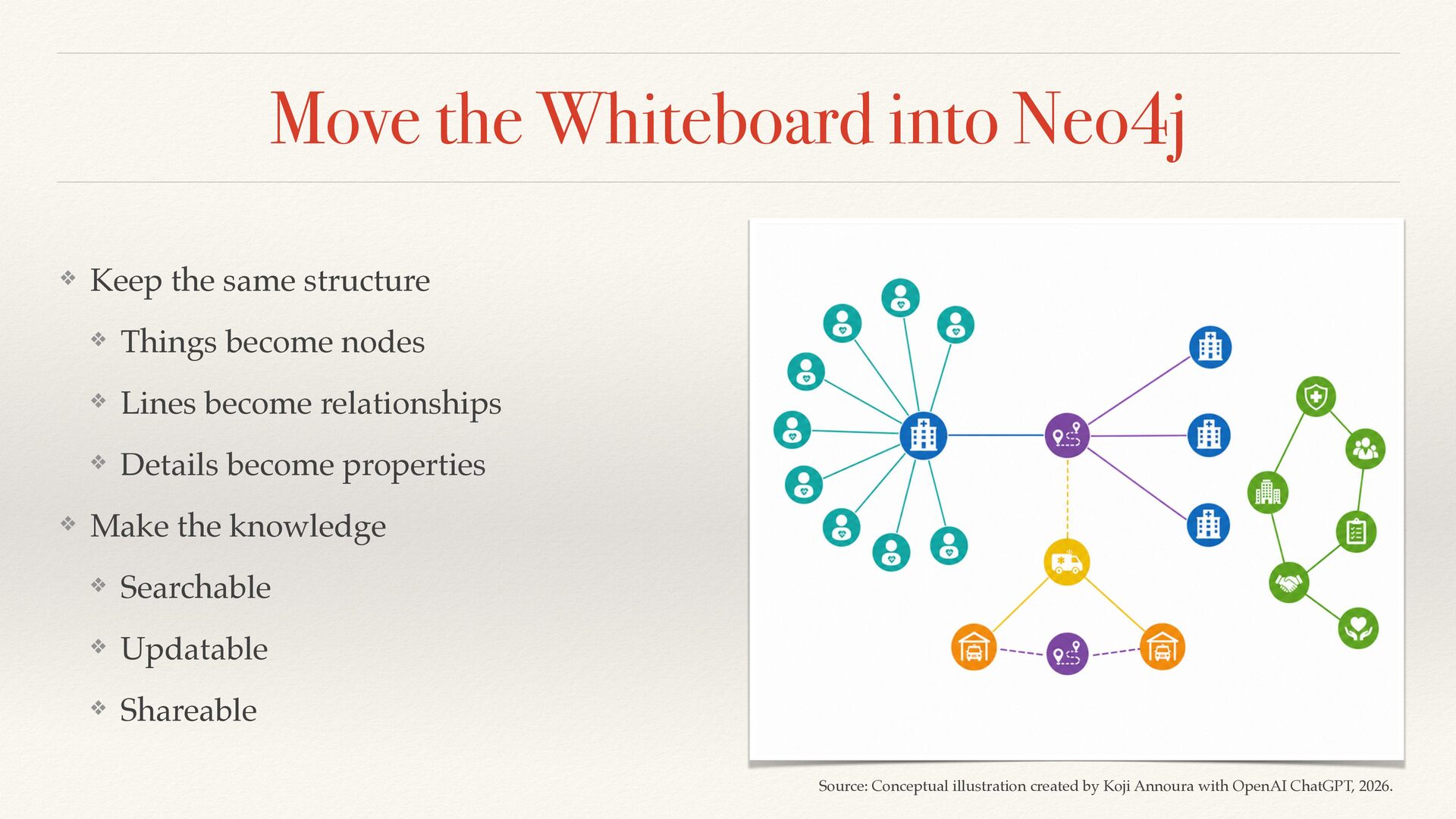
Move the Whiteboard into Neo4j ❖ Keep the same structure
❖ Things become nodes ❖ Lines become relationships ❖ Details become properties ❖ Make the knowledge ❖ Searchable ❖ Updatable ❖ Shareable Source: Conceptual illustration created by Koji Annoura with OpenAI ChatGPT, 2026. -
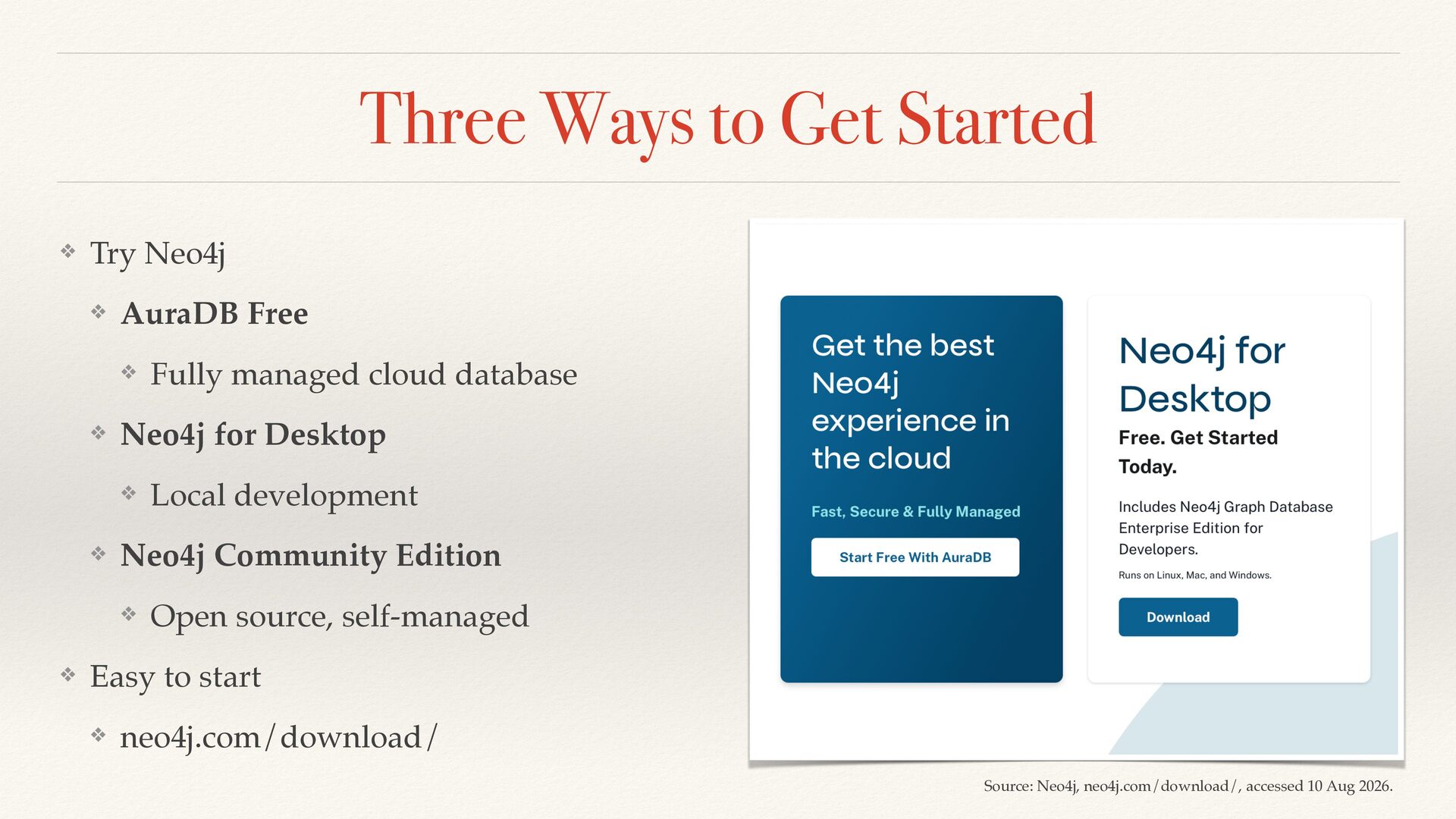
Three Ways to Get Started ❖ Try Neo4j ❖ AuraDB
Free ❖ Fully managed cloud database ❖ Neo4j for Desktop ❖ Local development ❖ Neo4j Community Edition ❖ Open source, self-managed ❖ Easy to start ❖ neo4j.com/download/ Source: Neo4j, neo4j.com/download/, accessed 10 Aug 2026. -
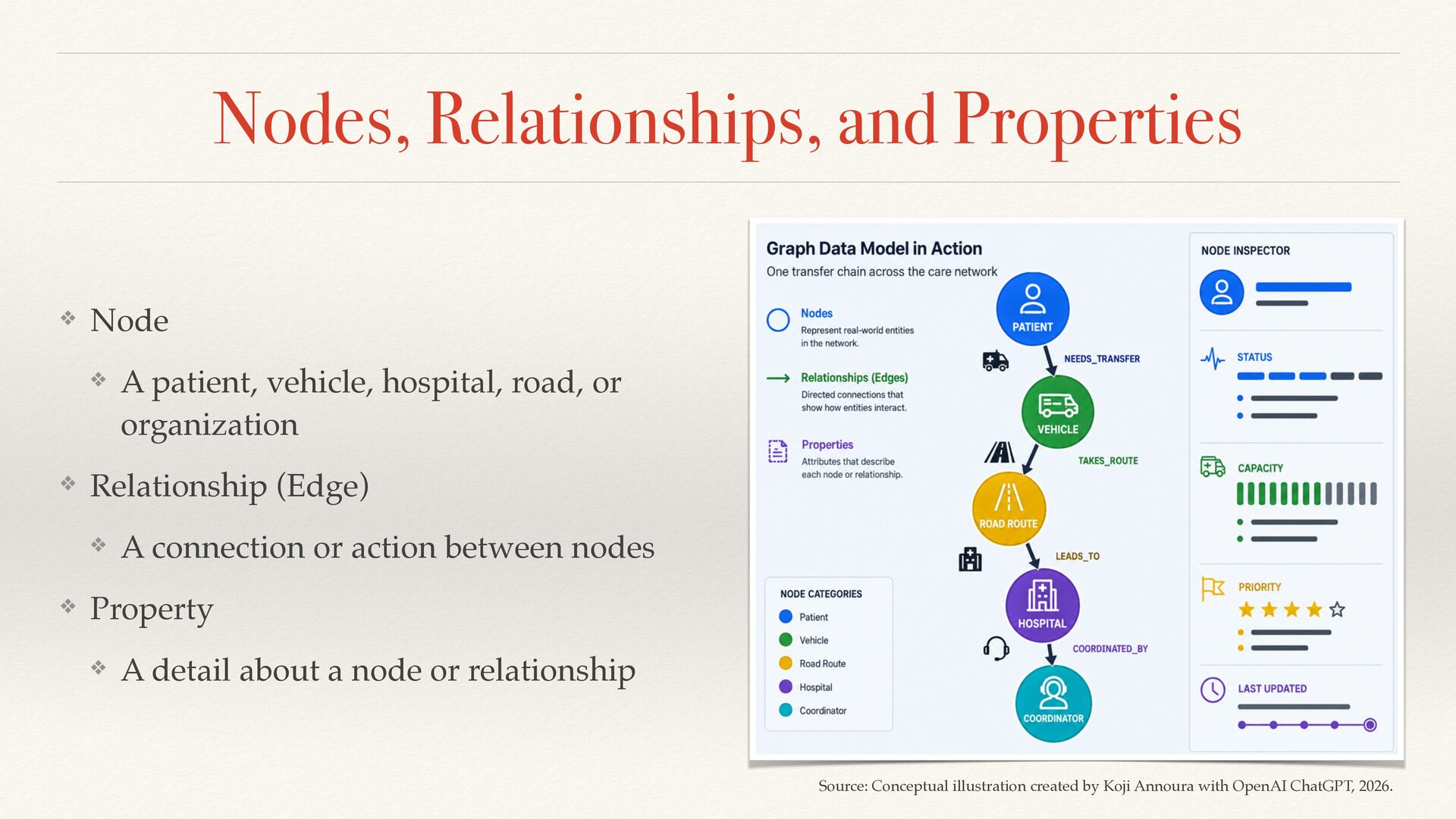
Nodes, Relationships, and Properties ❖ Node ❖ A patient, vehicle,
hospital, road, or organization ❖ Relationship (Edge) ❖ A connection or action between nodes ❖ Property ❖ A detail about a node or relationship Source: Conceptual illustration created by Koji Annoura with OpenAI ChatGPT, 2026. -
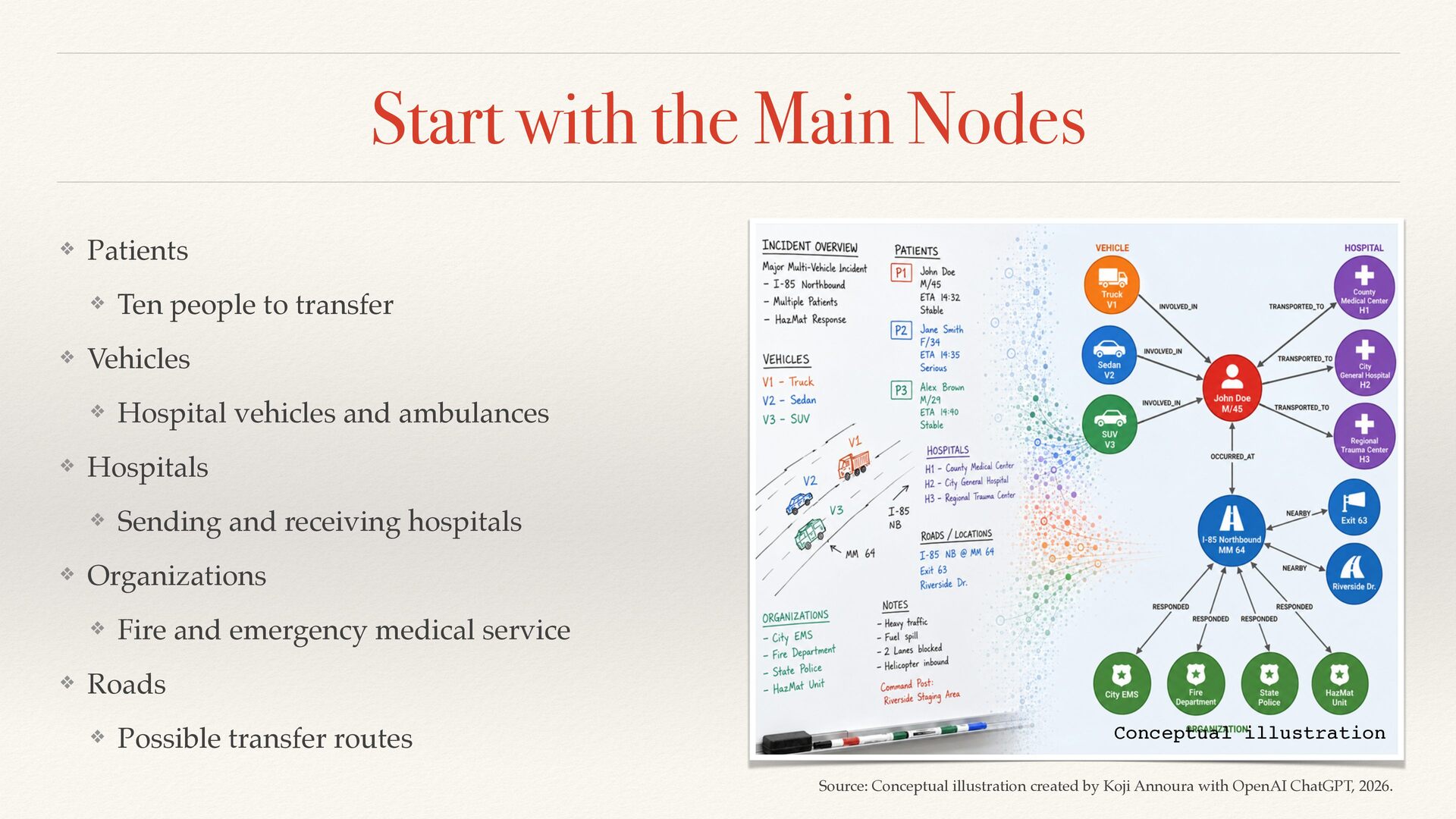
Start with the Main Nodes ❖ Patients ❖ Ten people
to transfer ❖ Vehicles ❖ Hospital vehicles and ambulances ❖ Hospitals ❖ Sending and receiving hospitals ❖ Organizations ❖ Fire and emergency medical service ❖ Roads ❖ Possible transfer routes Conceptual illustration Source: Conceptual illustration created by Koji Annoura with OpenAI ChatGPT, 2026. -
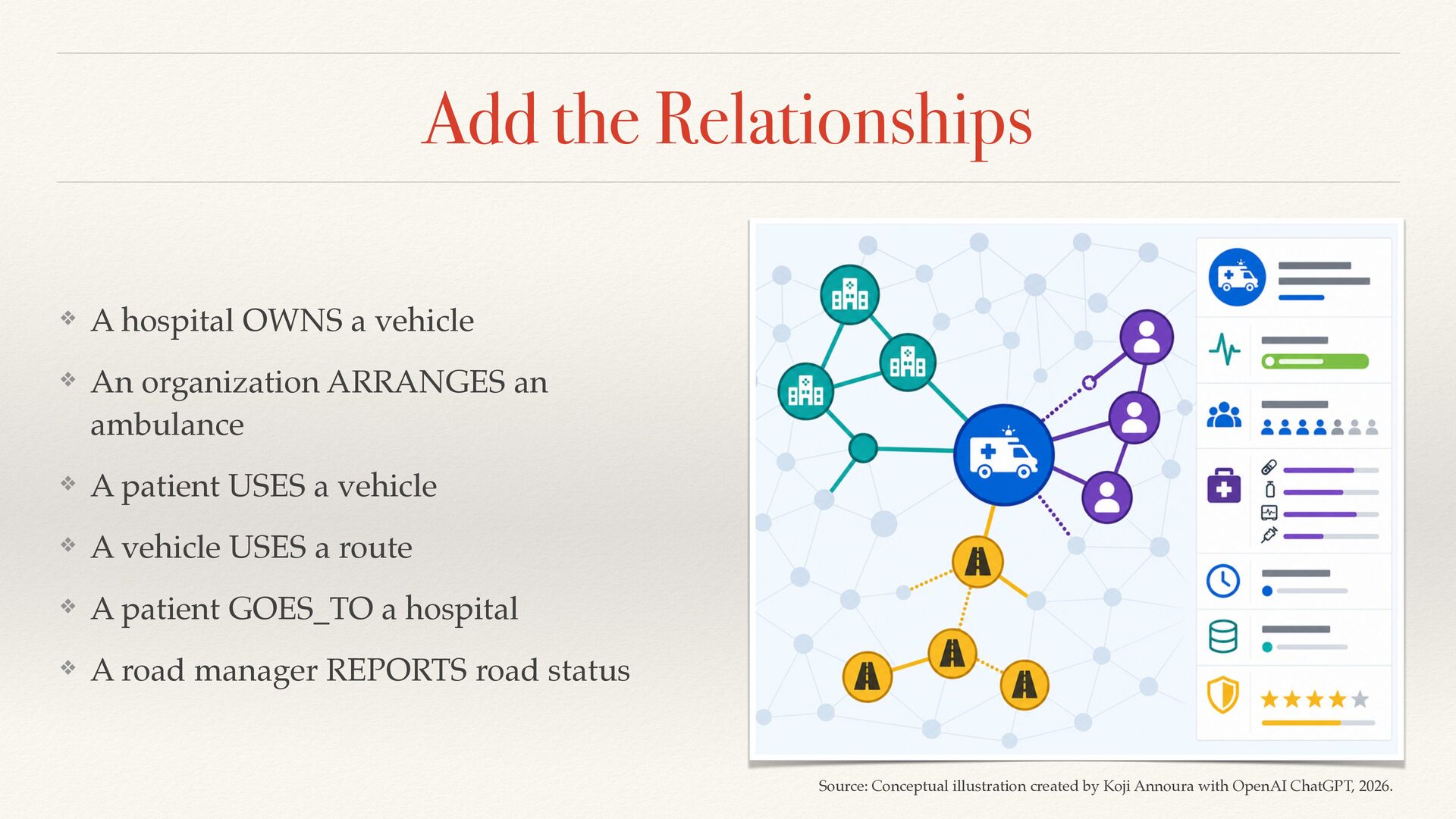
Add the Relationships ❖ A hospital OWNS a vehicle ❖
An organization ARRANGES an ambulance ❖ A patient USES a vehicle ❖ A vehicle USES a route ❖ A patient GOES_TO a hospital ❖ A road manager REPORTS road status Source: Conceptual illustration created by Koji Annoura with OpenAI ChatGPT, 2026. -
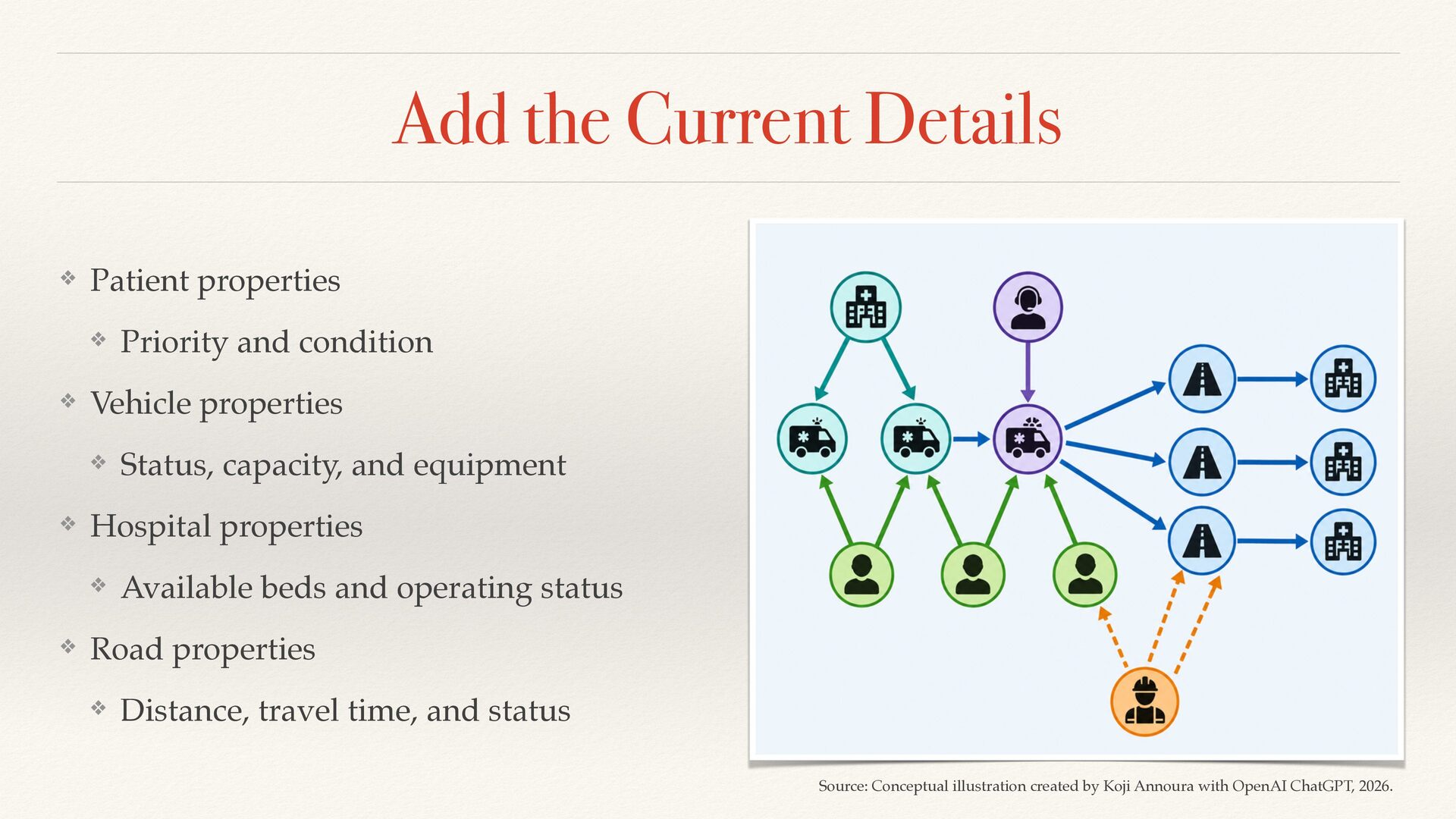
Add the Current Details ❖ Patient properties ❖ Priority and
condition ❖ Vehicle properties ❖ Status, capacity, and equipment ❖ Hospital properties ❖ Available beds and operating status ❖ Road properties ❖ Distance, travel time, and status Source: Conceptual illustration created by Koji Annoura with OpenAI ChatGPT, 2026. -
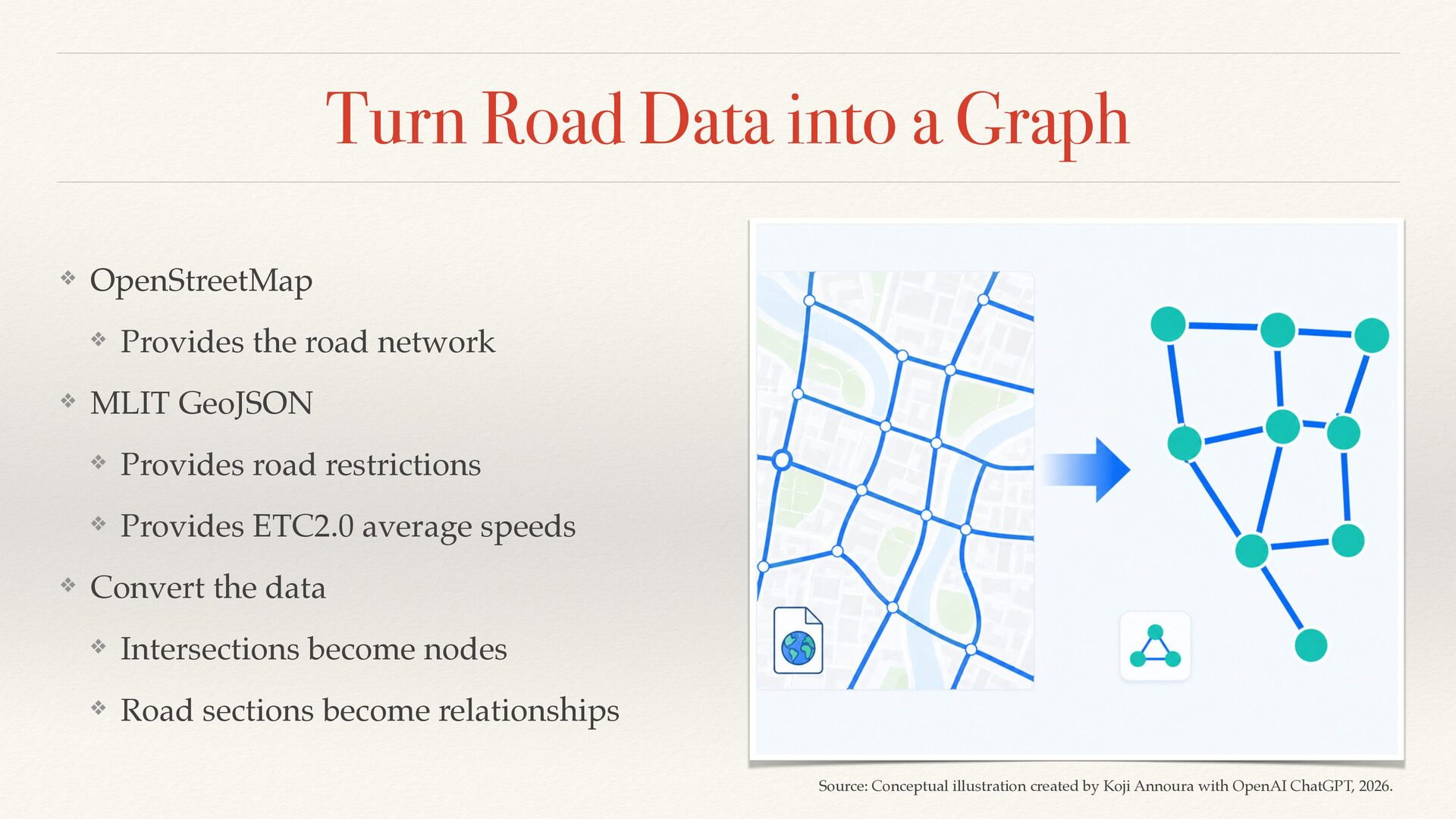
Turn Road Data into a Graph ❖ OpenStreetMap ❖ Provides
the road network ❖ MLIT GeoJSON ❖ Provides road restrictions ❖ Provides ETC2.0 average speeds ❖ Convert the data ❖ Intersections become nodes ❖ Road sections become relationships Source: Conceptual illustration created by Koji Annoura with OpenAI ChatGPT, 2026. -
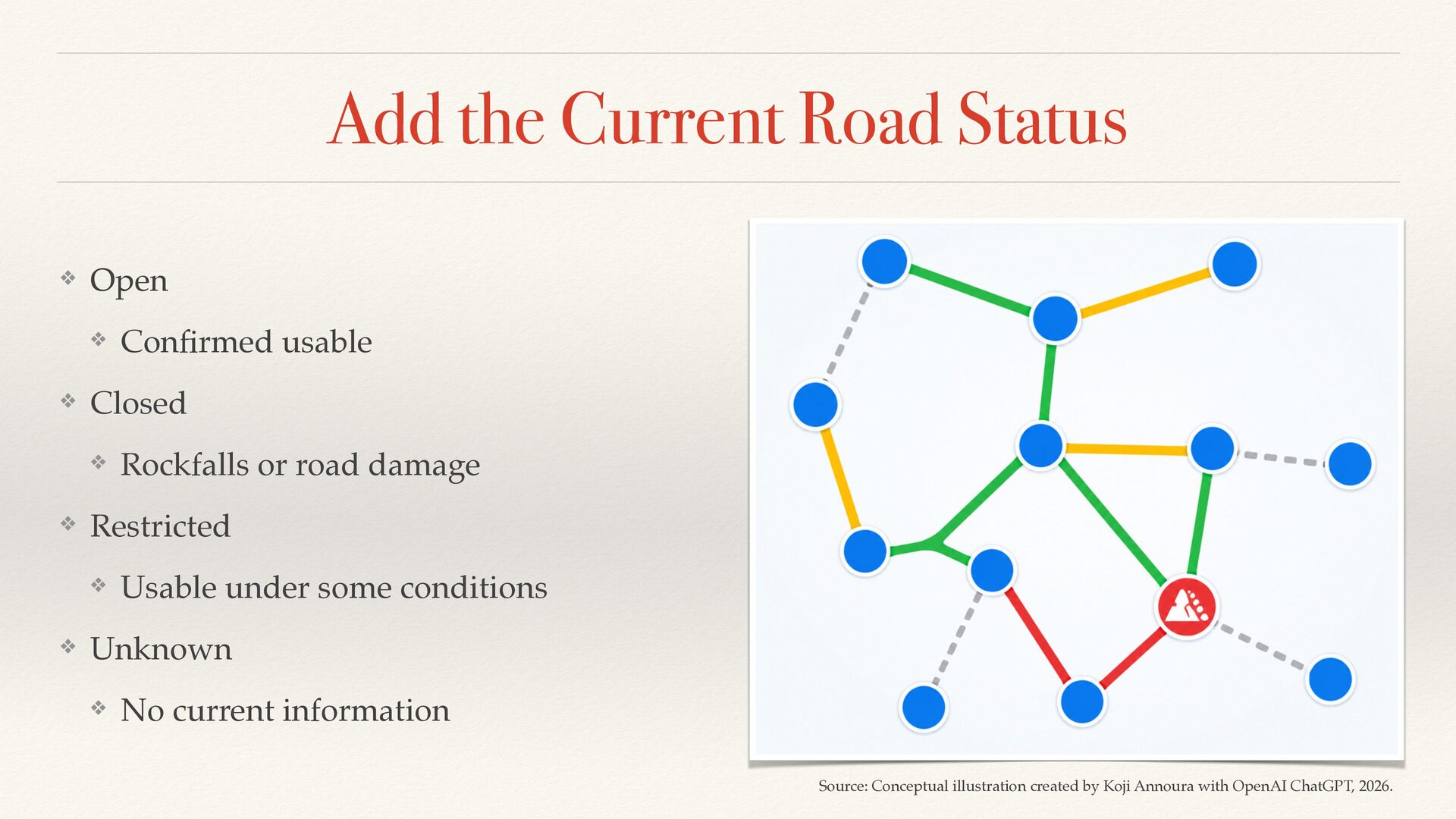
Add the Current Road Status ❖ Open ❖ Con rmed
usable ❖ Closed ❖ Rockfalls or road damage ❖ Restricted ❖ Usable under some conditions ❖ Unknown ❖ No current information fi Source: Conceptual illustration created by Koji Annoura with OpenAI ChatGPT, 2026. -
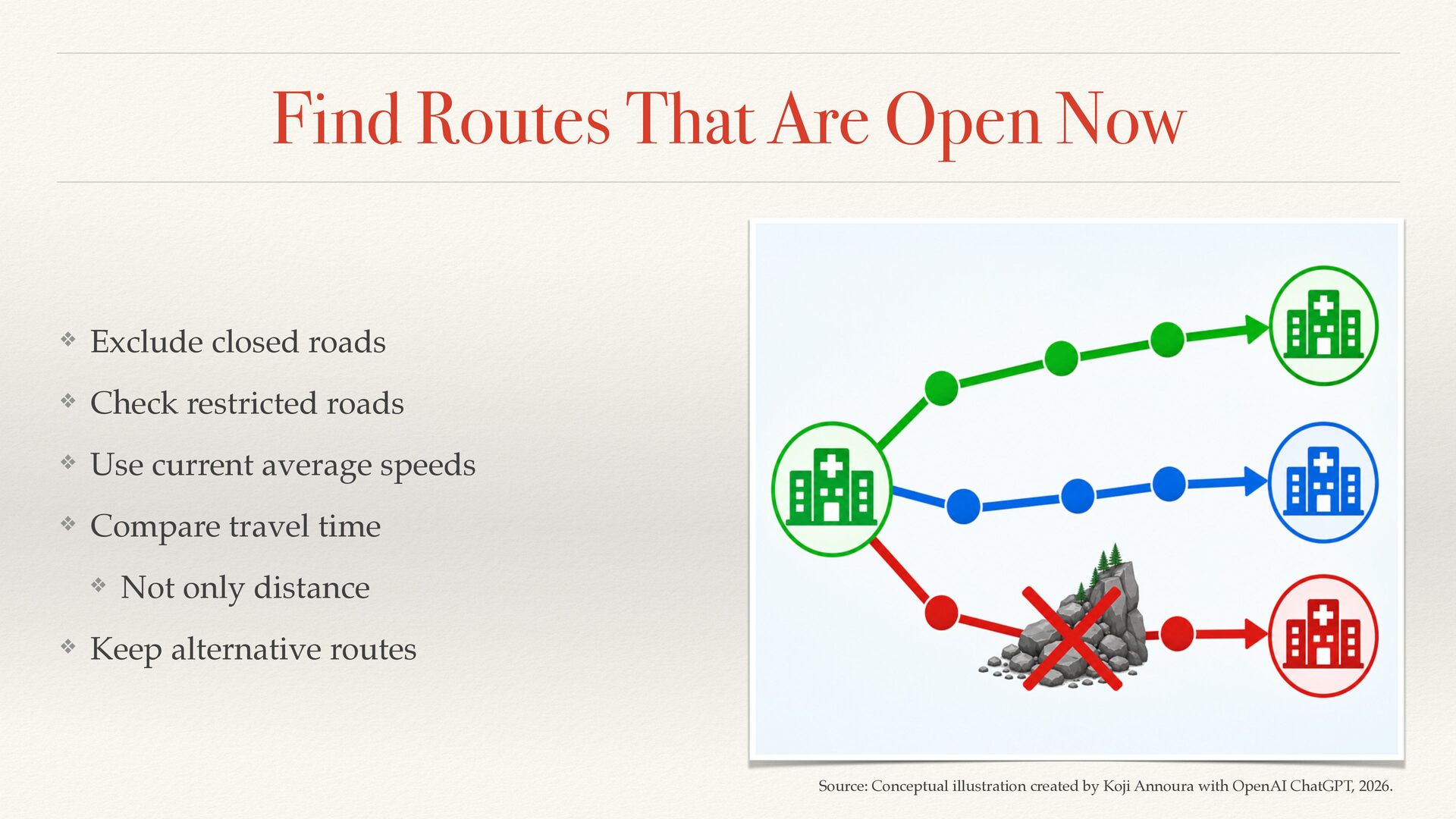
Find Routes That Are Open Now ❖ Exclude closed roads
❖ Check restricted roads ❖ Use current average speeds ❖ Compare travel time ❖ Not only distance ❖ Keep alternative routes Source: Conceptual illustration created by Koji Annoura with OpenAI ChatGPT, 2026. -
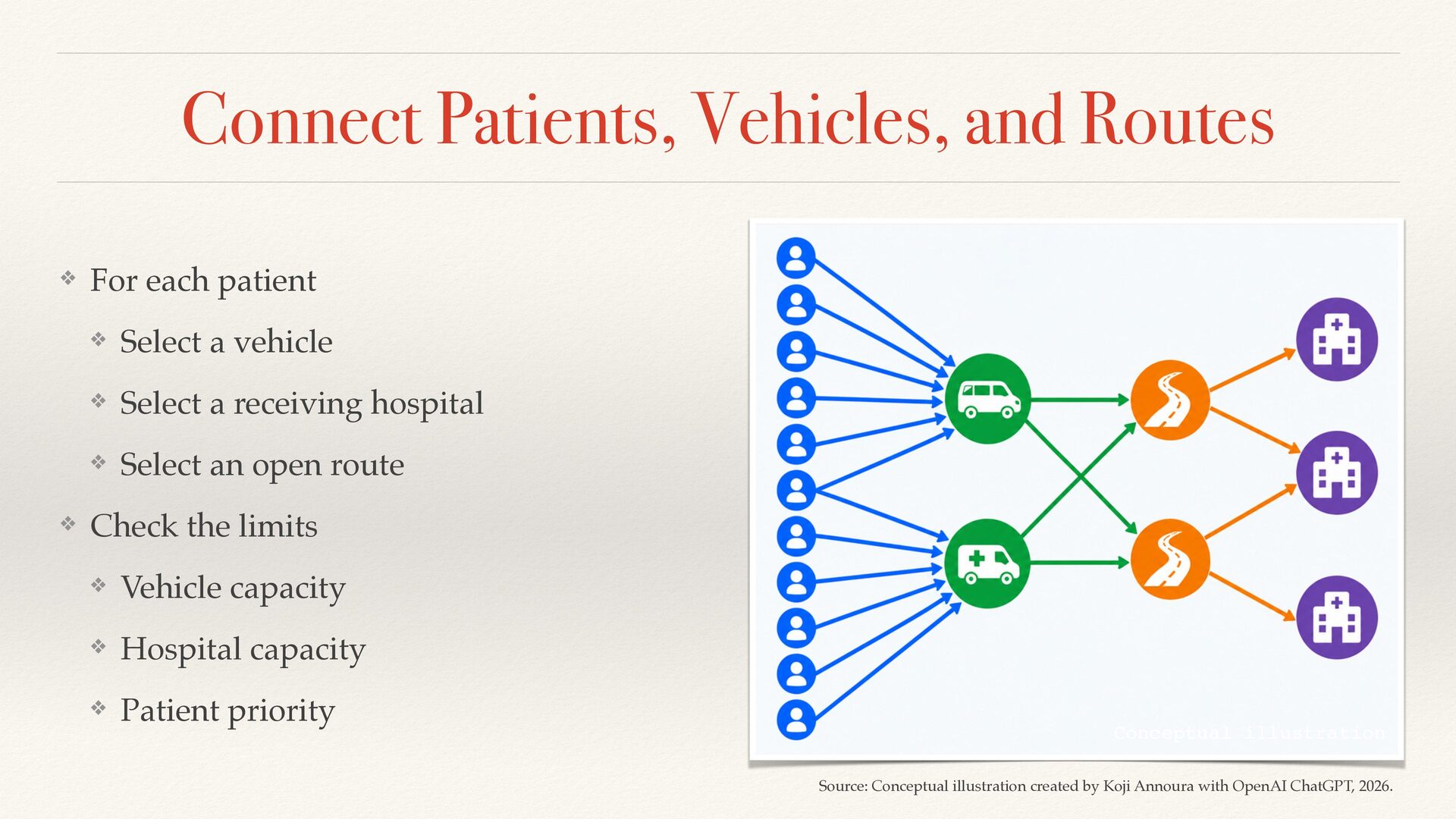
Connect Patients, Vehicles, and Routes ❖ For each patient ❖
Select a vehicle ❖ Select a receiving hospital ❖ Select an open route ❖ Check the limits ❖ Vehicle capacity ❖ Hospital capacity ❖ Patient priority Conceptual illustration Source: Conceptual illustration created by Koji Annoura with OpenAI ChatGPT, 2026. -
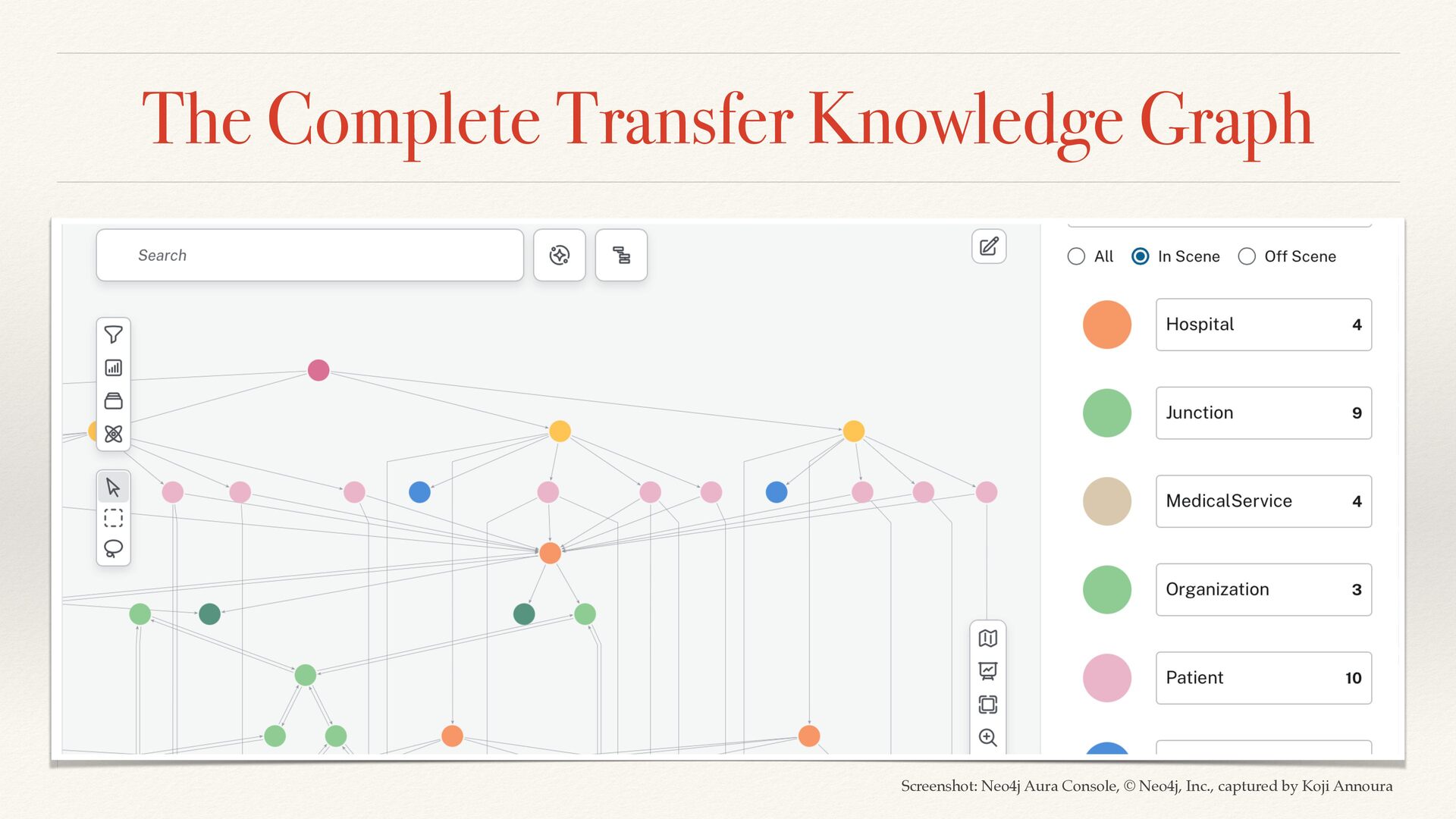
The Complete Transfer Knowledge Graph Screenshot: Neo4j Aura Console, ©
Neo4j, Inc., captured by Koji Annoura -
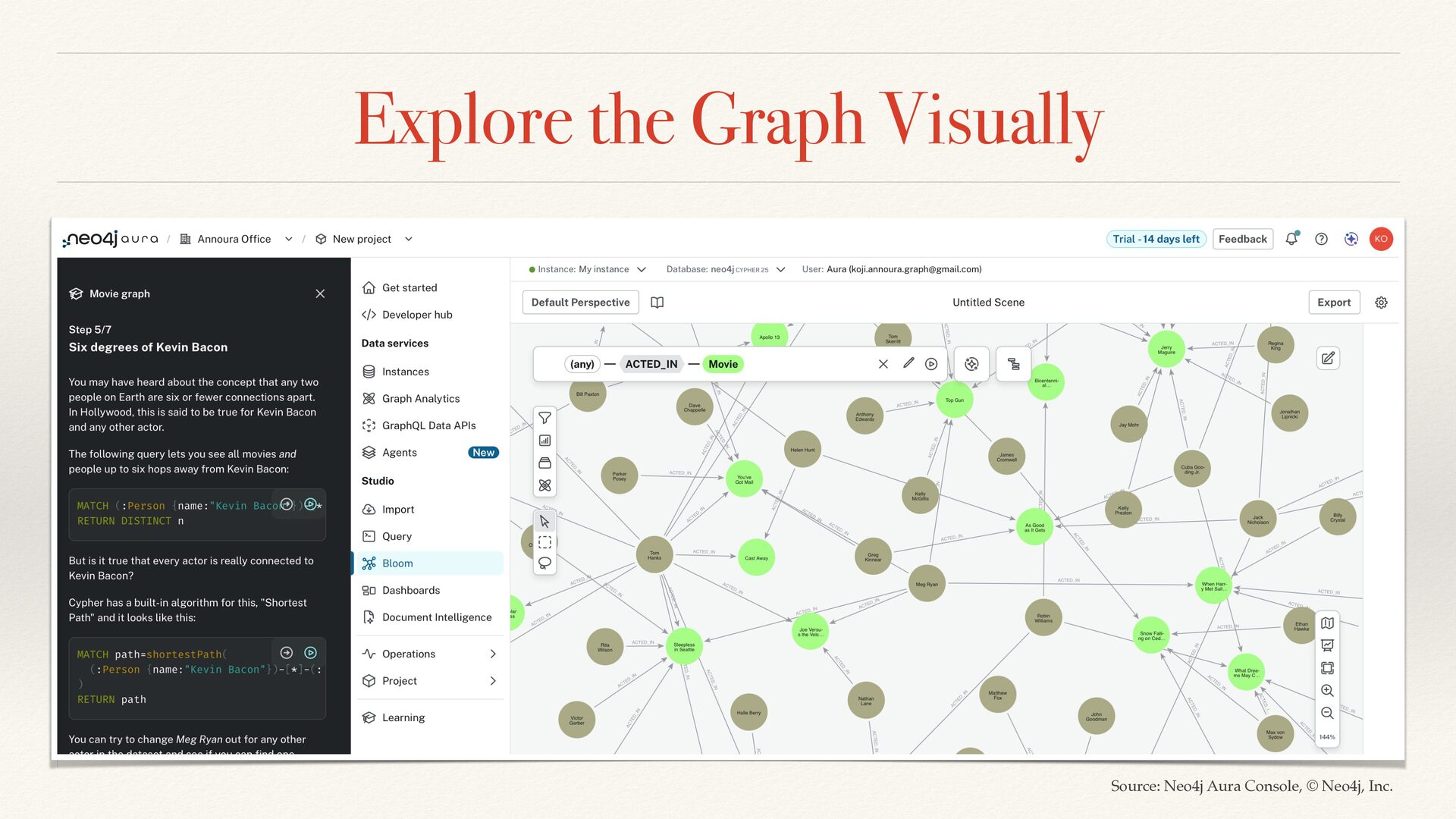
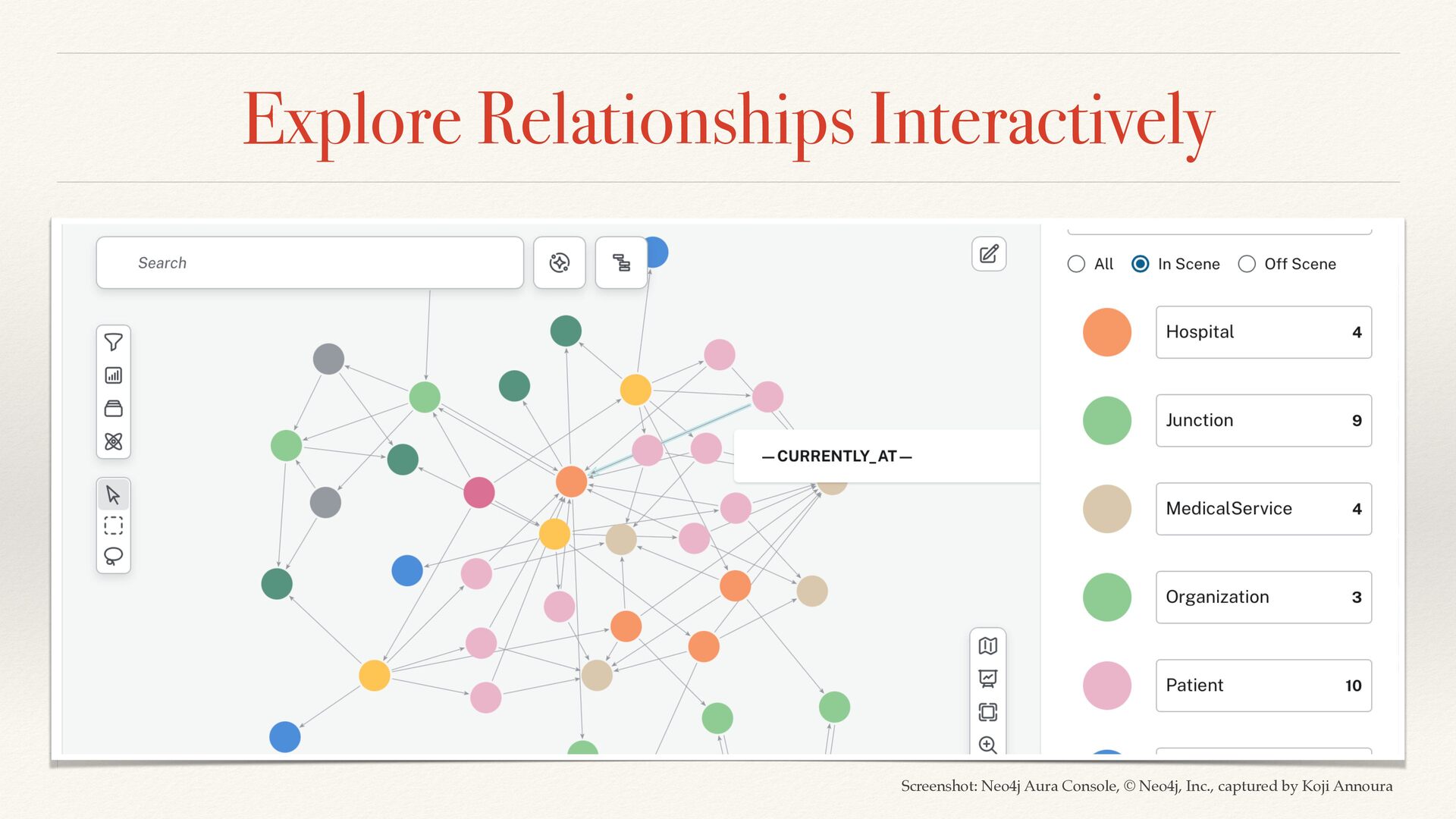
Explore Relationships Interactively Screenshot: Neo4j Aura Console, © Neo4j, Inc.,
captured by Koji Annoura -
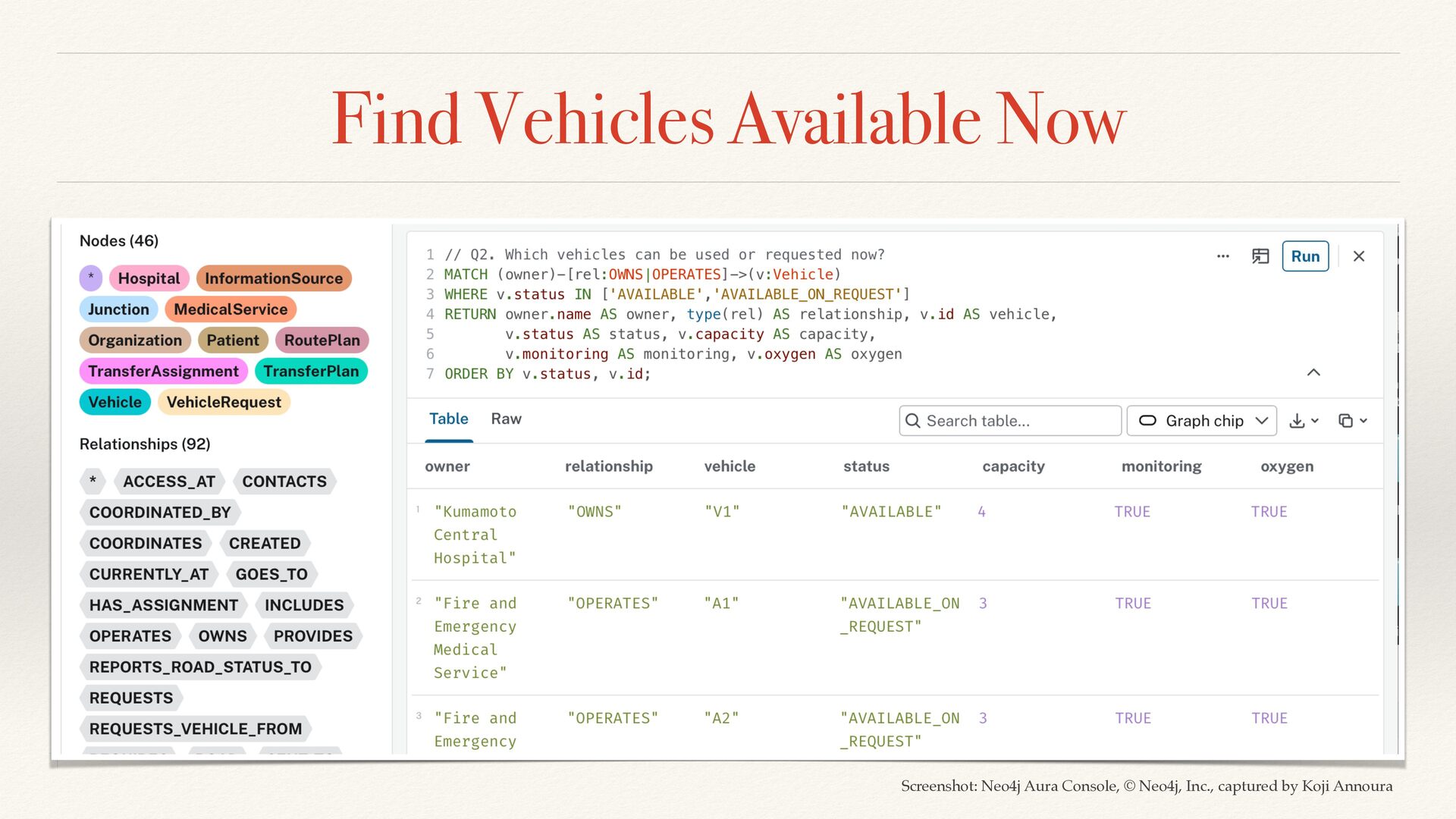
Find Vehicles Available Now Screenshot: Neo4j Aura Console, © Neo4j,
Inc., captured by Koji Annoura -
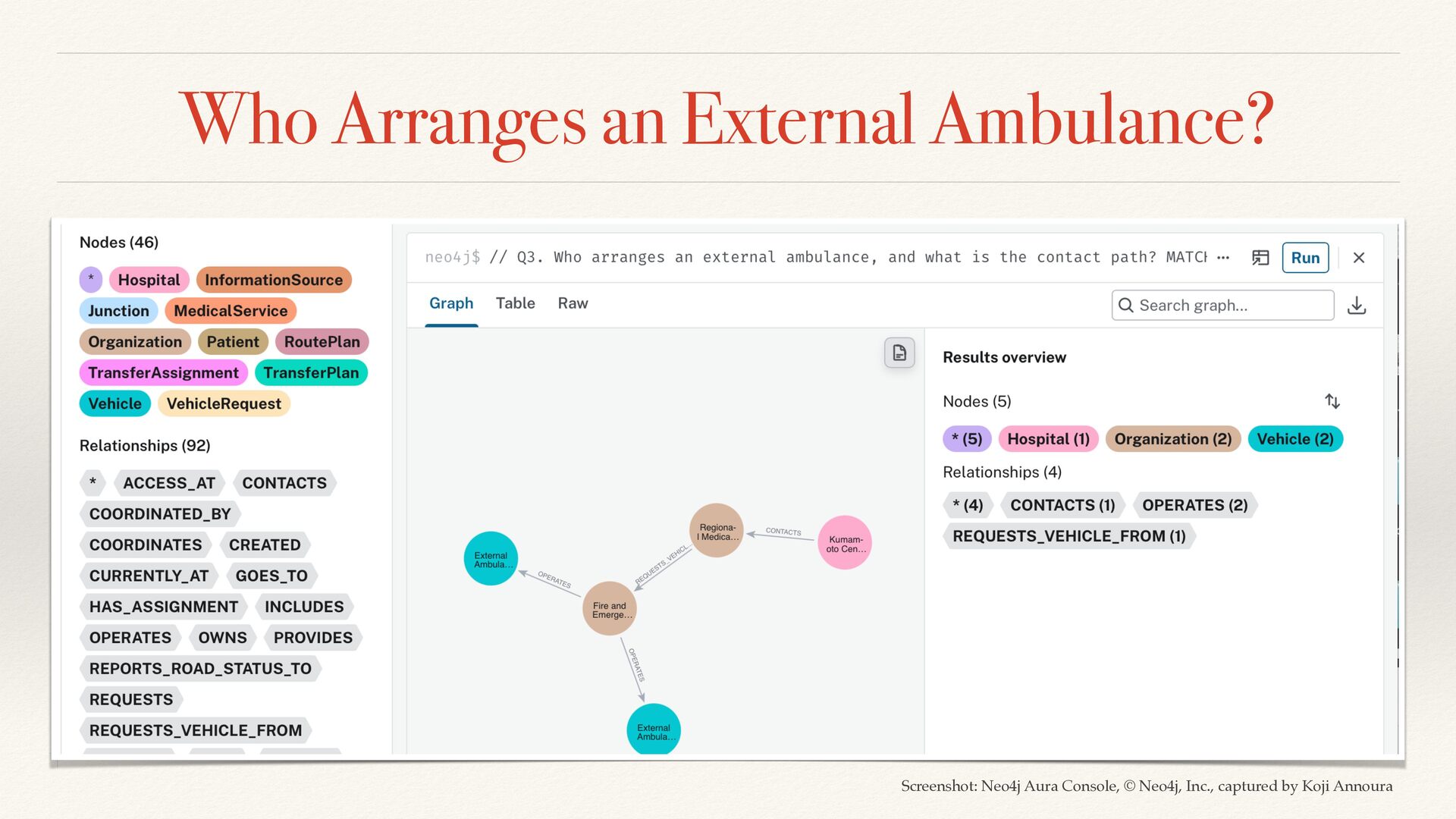
Who Arranges an External Ambulance? Screenshot: Neo4j Aura Console, ©
Neo4j, Inc., captured by Koji Annoura -
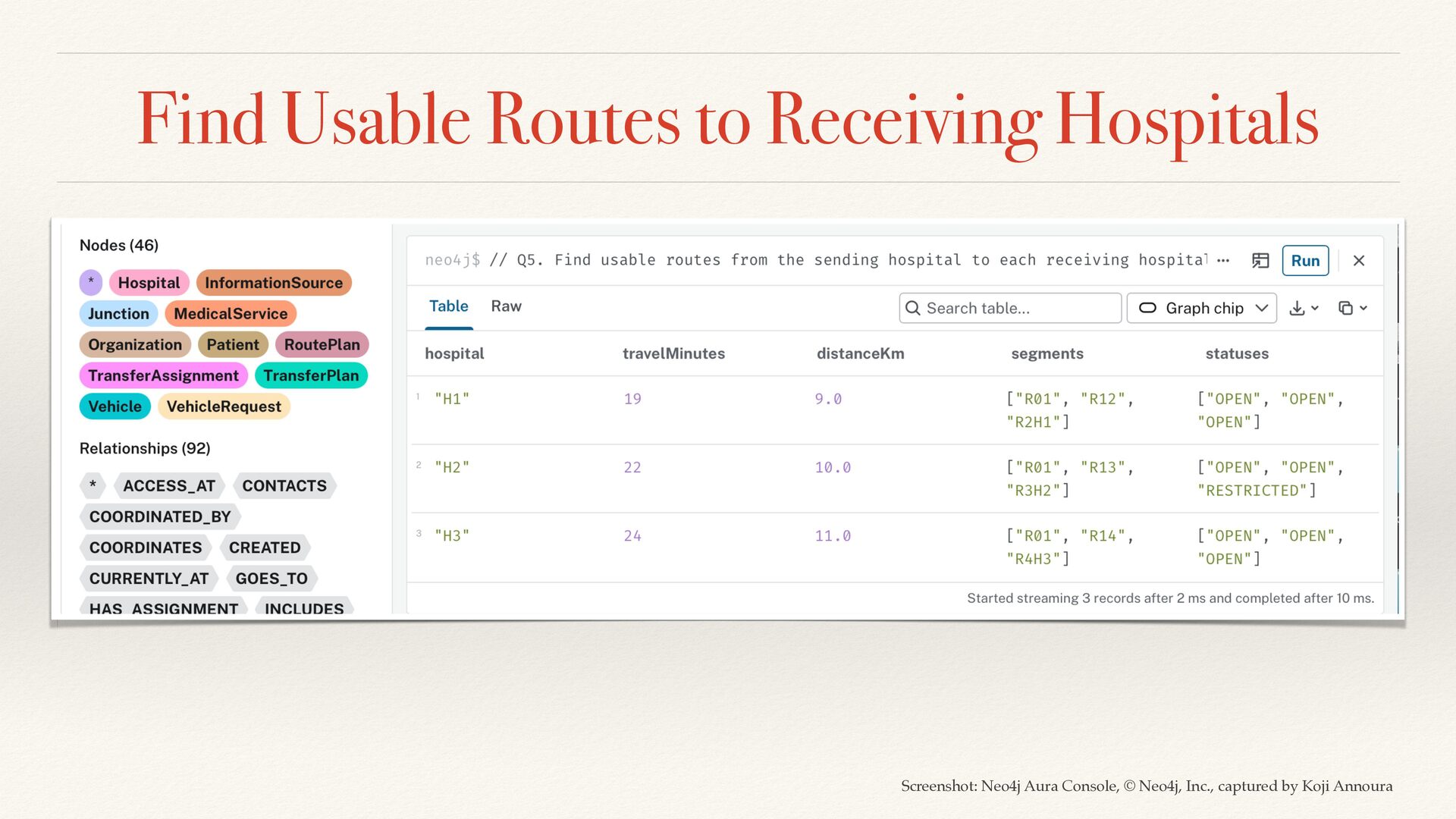
Find Usable Routes to Receiving Hospitals Screenshot: Neo4j Aura Console,
© Neo4j, Inc., captured by Koji Annoura -
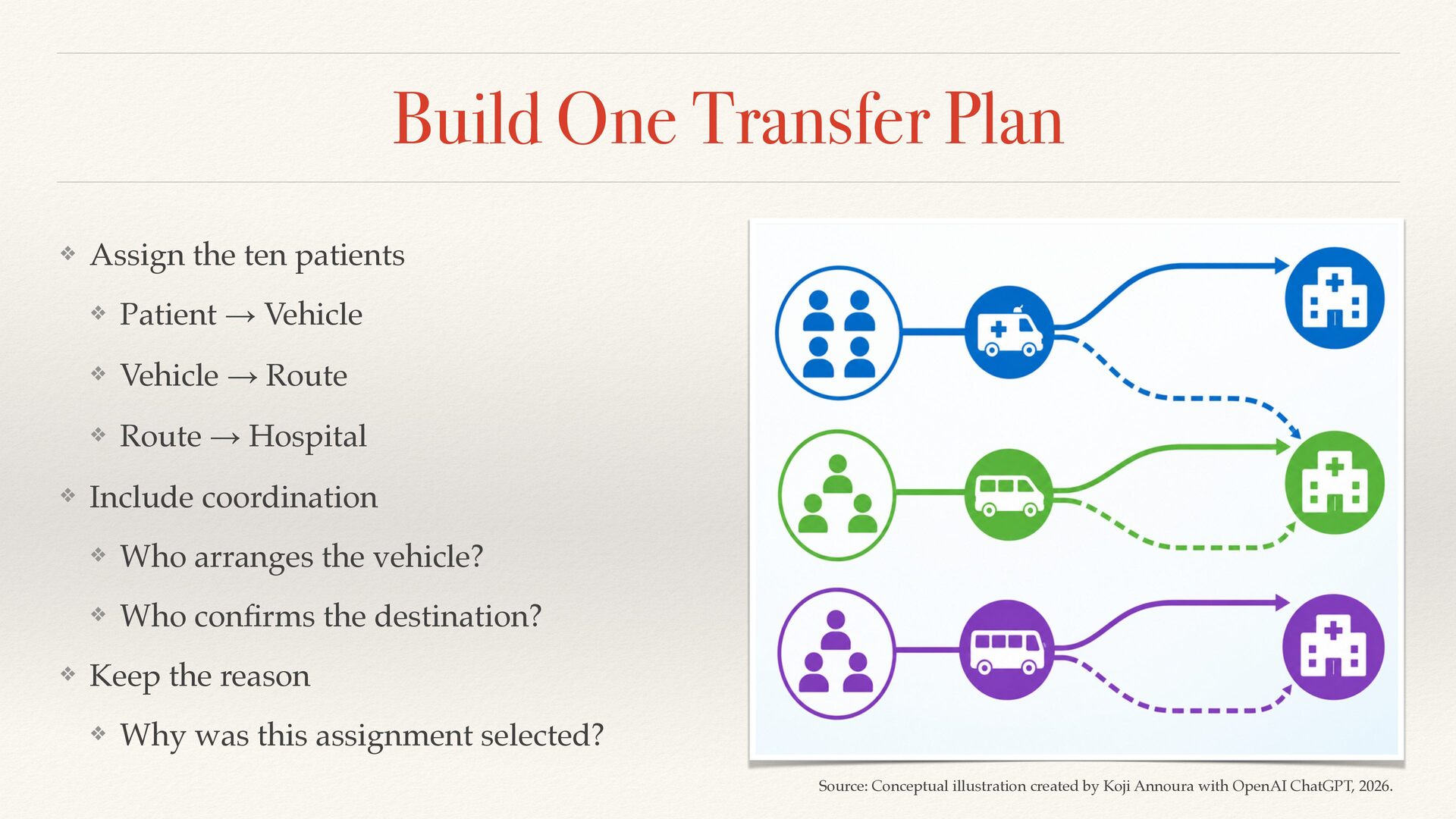
Build One Transfer Plan ❖ Assign the ten patients ❖
Patient → Vehicle ❖ Vehicle → Route ❖ Route → Hospital ❖ Include coordination ❖ Who arranges the vehicle? ❖ Who con rms the destination? ❖ Keep the reason ❖ Why was this assignment selected? fi Source: Conceptual illustration created by Koji Annoura with OpenAI ChatGPT, 2026. -
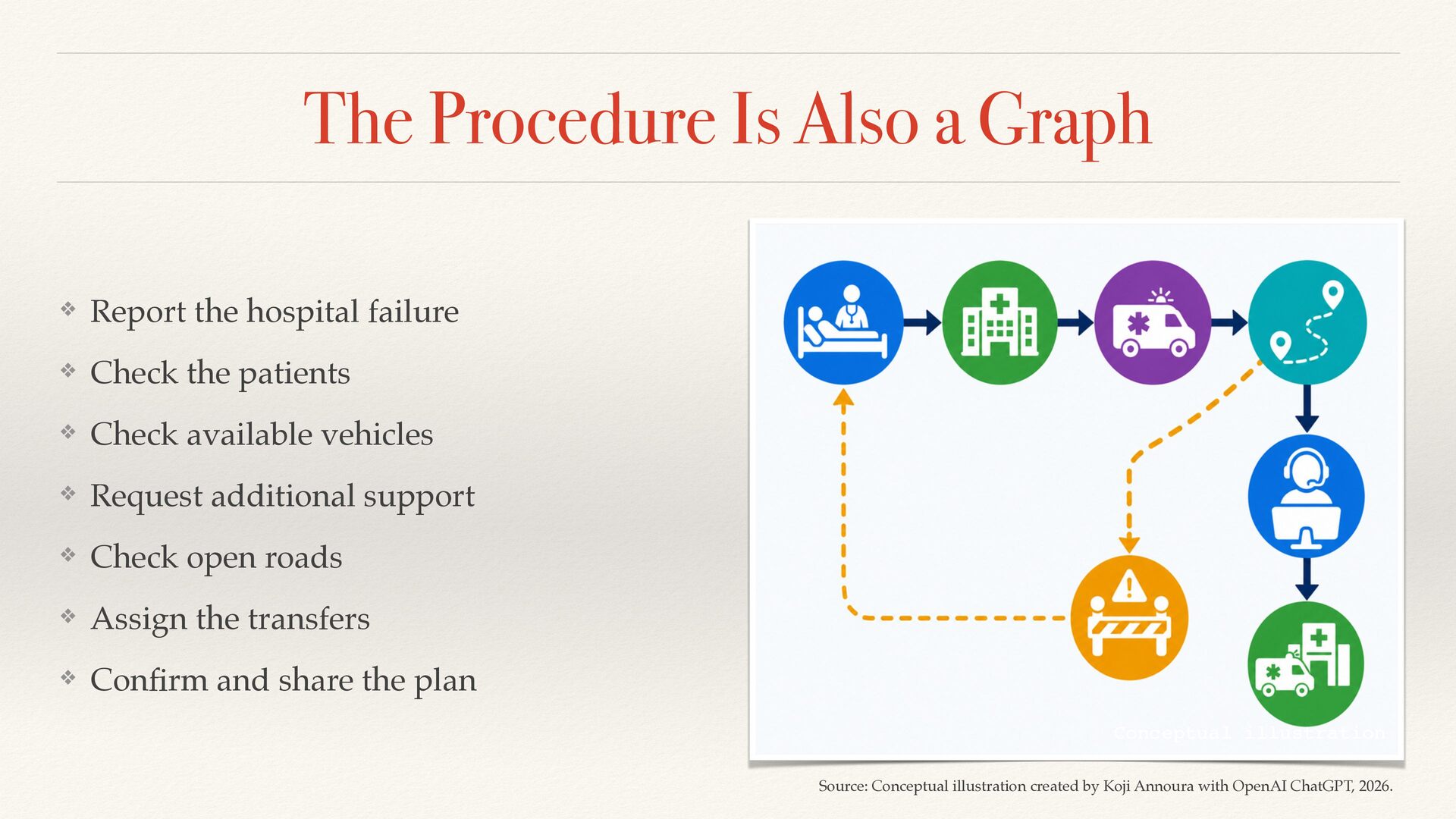
The Procedure Is Also a Graph ❖ Report the hospital
failure ❖ Check the patients ❖ Check available vehicles ❖ Request additional support ❖ Check open roads ❖ Assign the transfers ❖ Con rm and share the plan Conceptual illustration fi Source: Conceptual illustration created by Koji Annoura with OpenAI ChatGPT, 2026. -
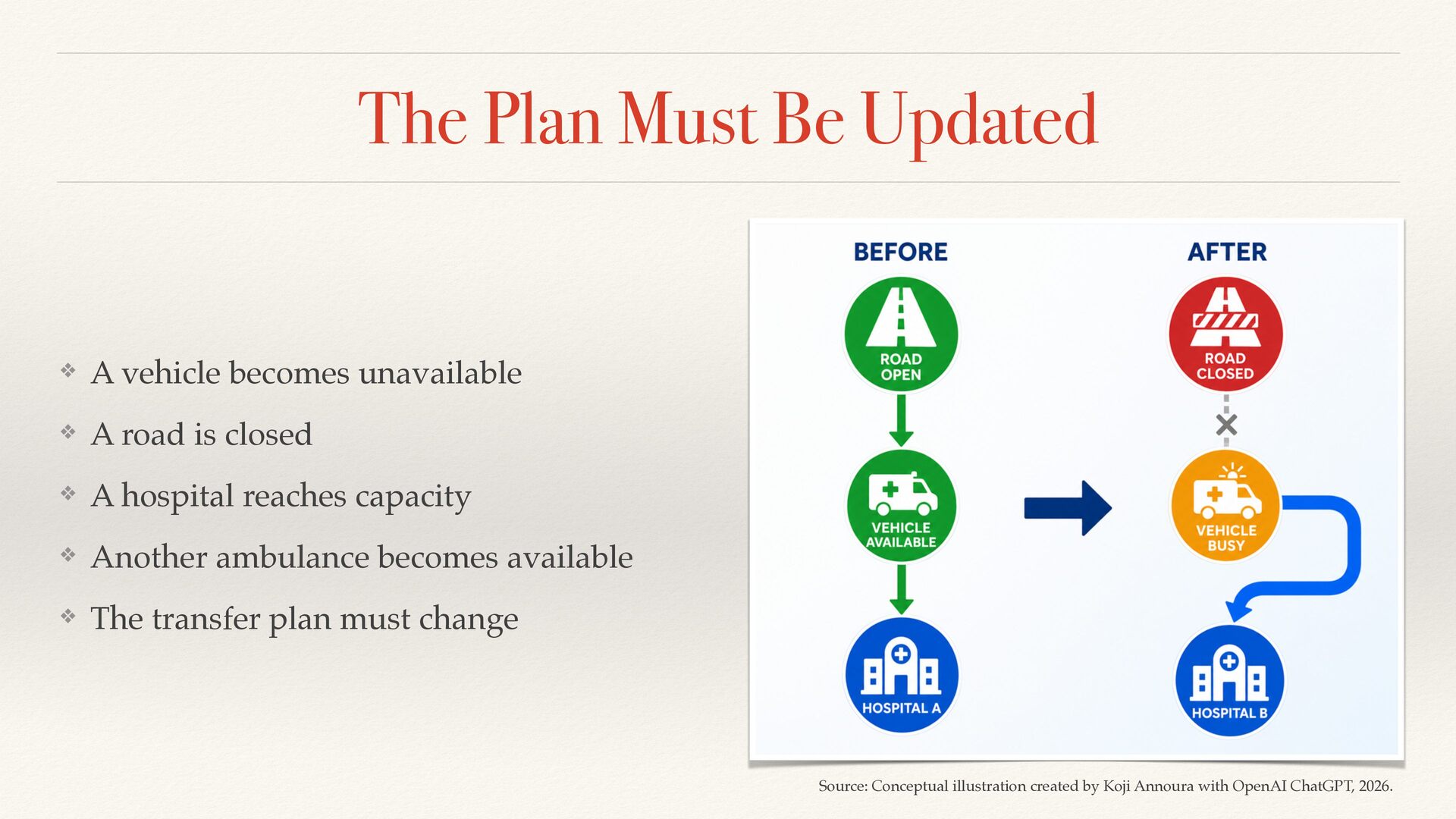
The Plan Must Be Updated ❖ A vehicle becomes unavailable
❖ A road is closed ❖ A hospital reaches capacity ❖ Another ambulance becomes available ❖ The transfer plan must change Source: Conceptual illustration created by Koji Annoura with OpenAI ChatGPT, 2026. -
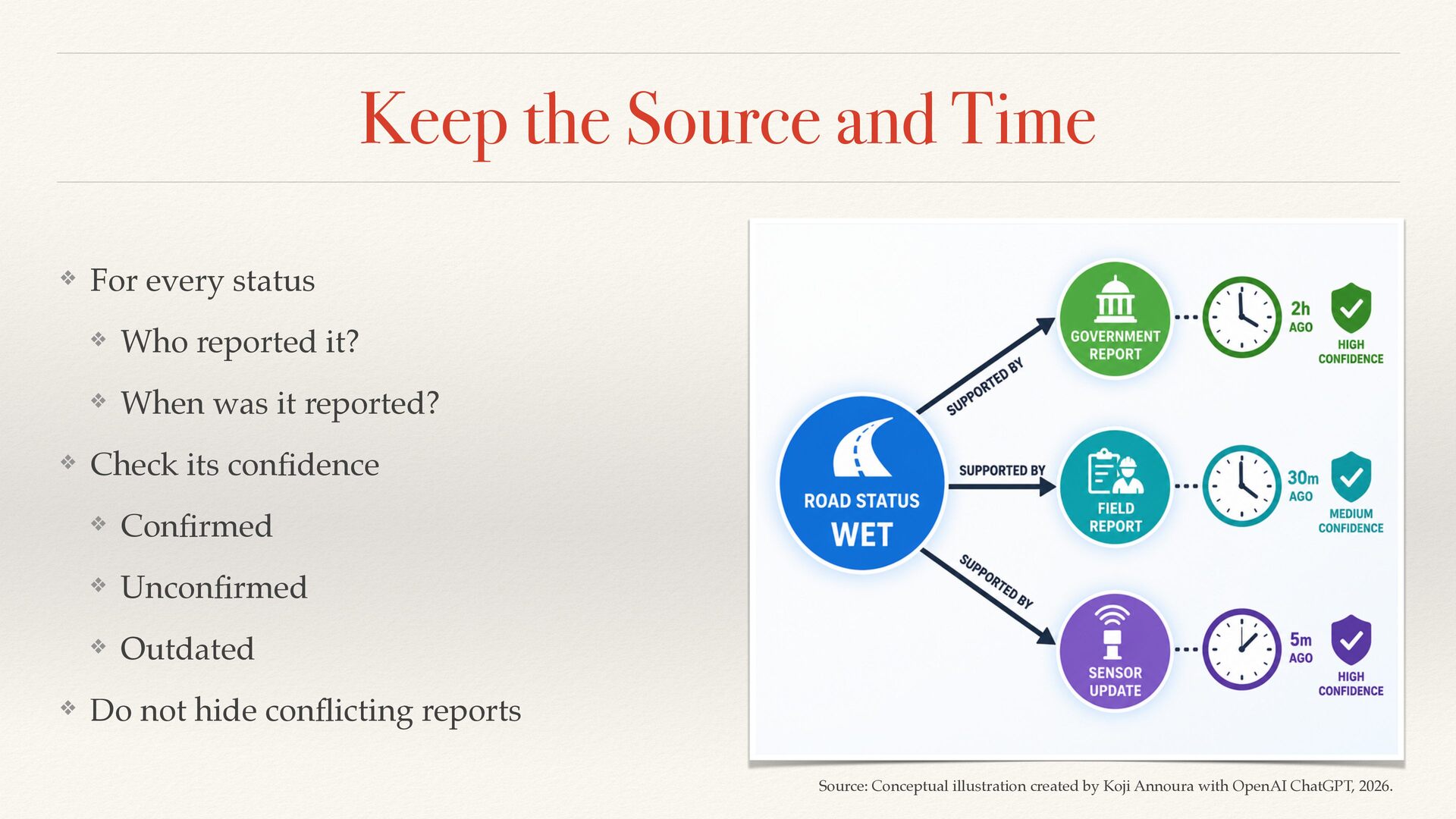
Keep the Source and Time ❖ For every status ❖
Who reported it? ❖ When was it reported? ❖ Check its con ❖ Con dence rmed ❖ Uncon rmed ❖ Outdated ❖ Do not hide con icting reports fl fi fi fi Source: Conceptual illustration created by Koji Annoura with OpenAI ChatGPT, 2026. -
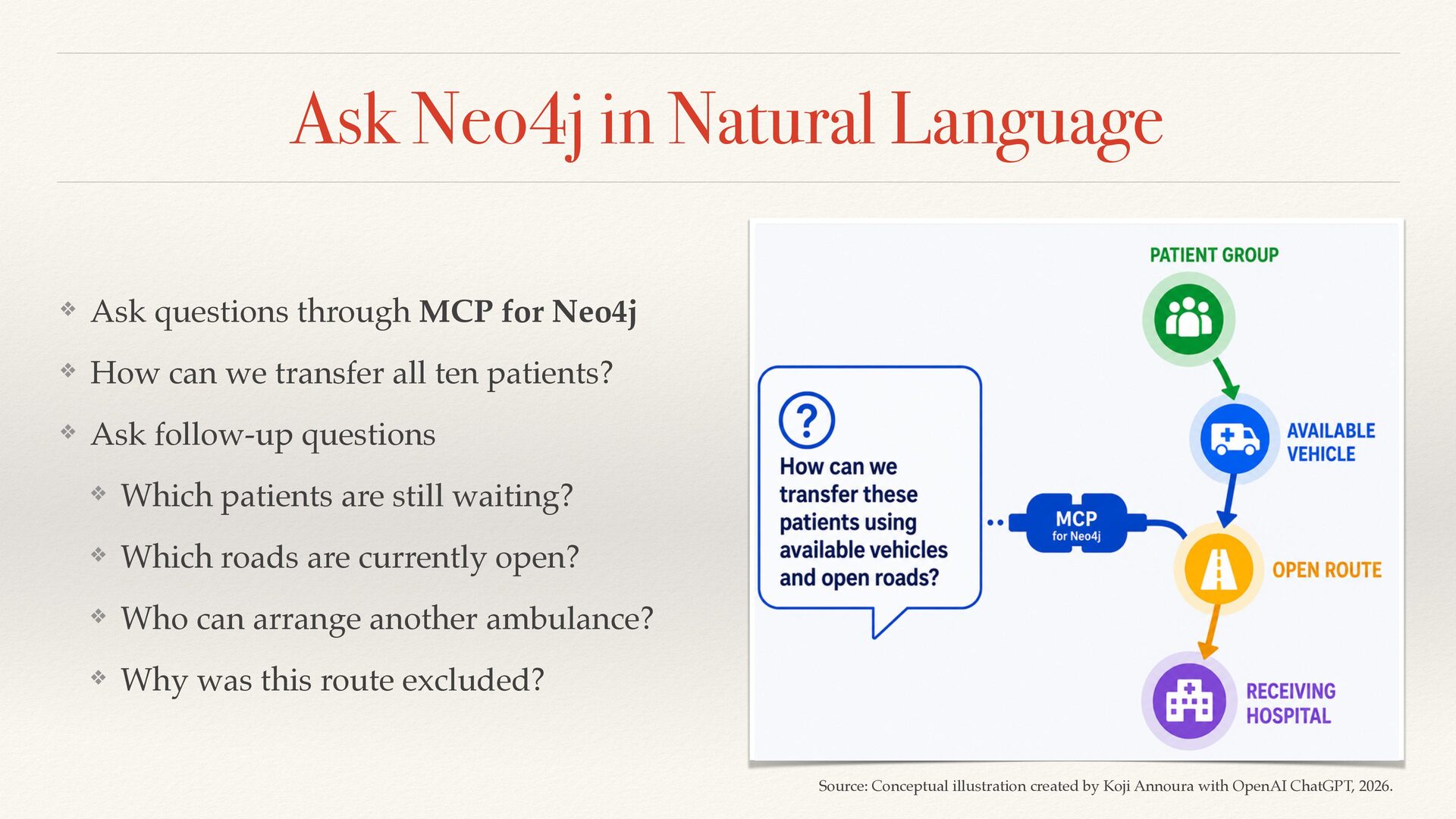
Ask Neo4j in Natural Language ❖ Ask questions through MCP
for Neo4j ❖ How can we transfer all ten patients? ❖ Ask follow-up questions ❖ Which patients are still waiting? ❖ Which roads are currently open? ❖ Who can arrange another ambulance? ❖ Why was this route excluded? Source: Conceptual illustration created by Koji Annoura with OpenAI ChatGPT, 2026. -
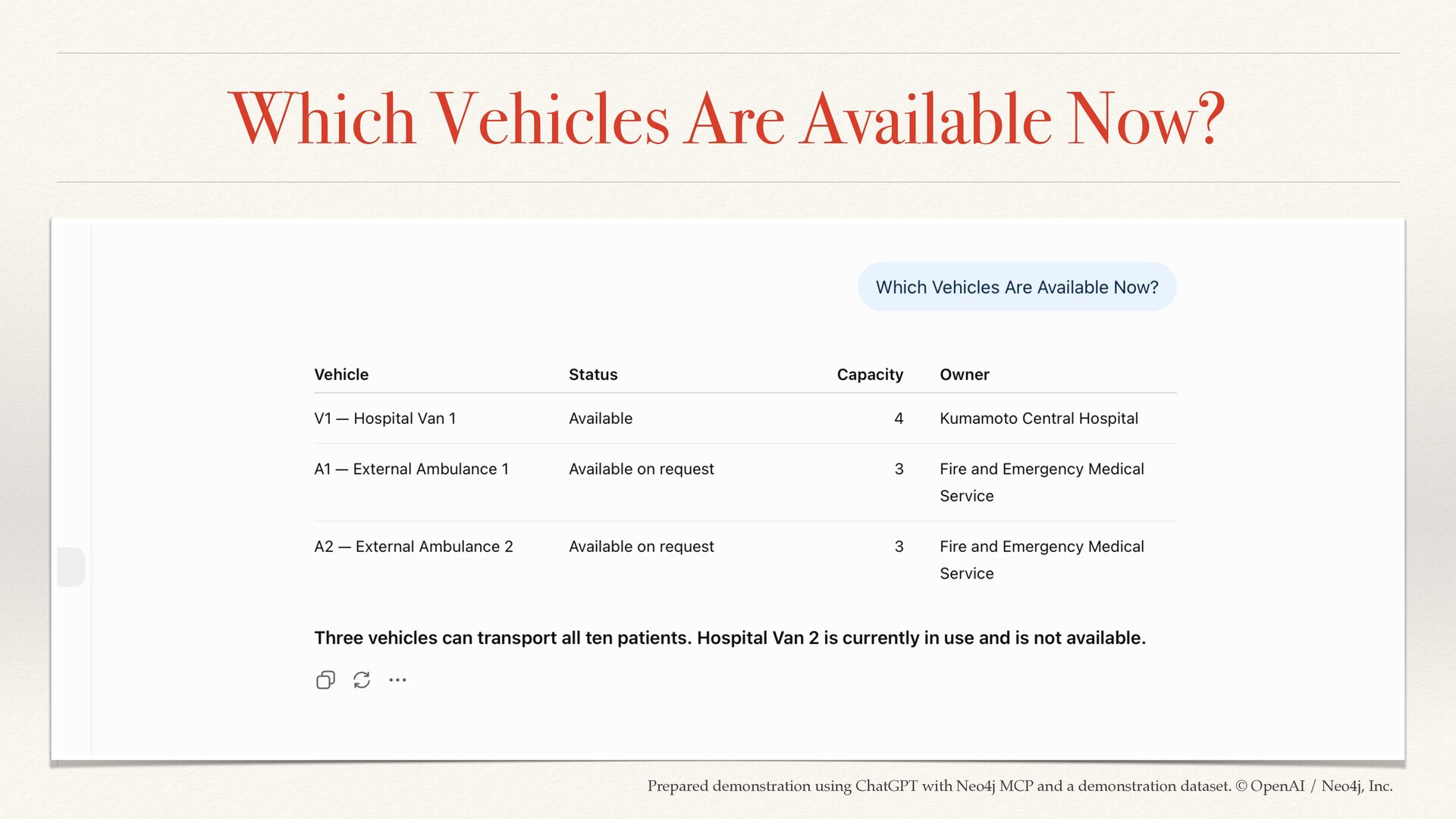
Which Vehicles Are Available Now? Prepared demonstration using ChatGPT with
Neo4j MCP and a demonstration dataset. © OpenAI / Neo4j, Inc. -
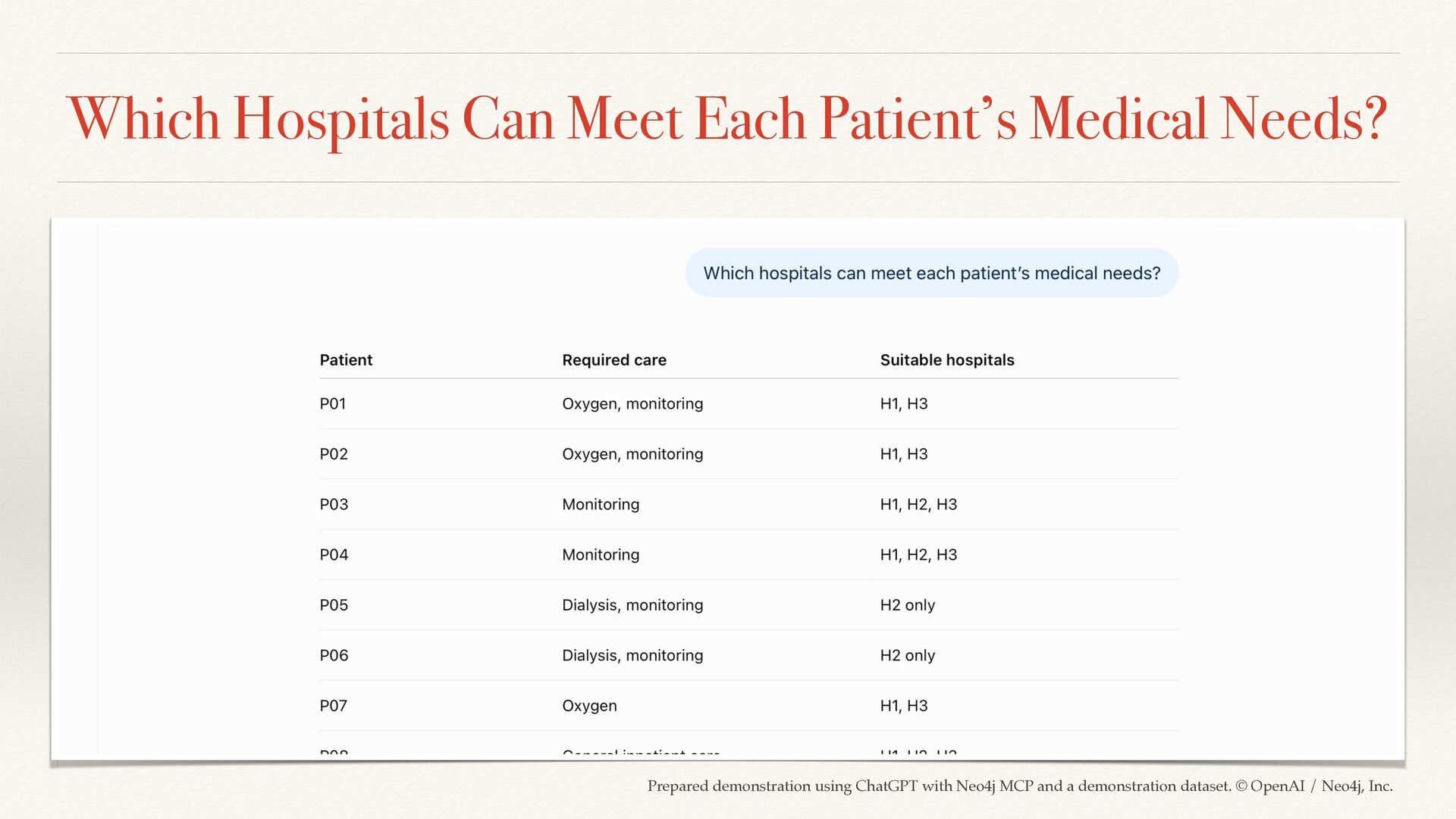
Which Hospitals Can Meet Each Patient’s Medical Needs? Prepared demonstration
using ChatGPT with Neo4j MCP and a demonstration dataset. © OpenAI / Neo4j, Inc. -
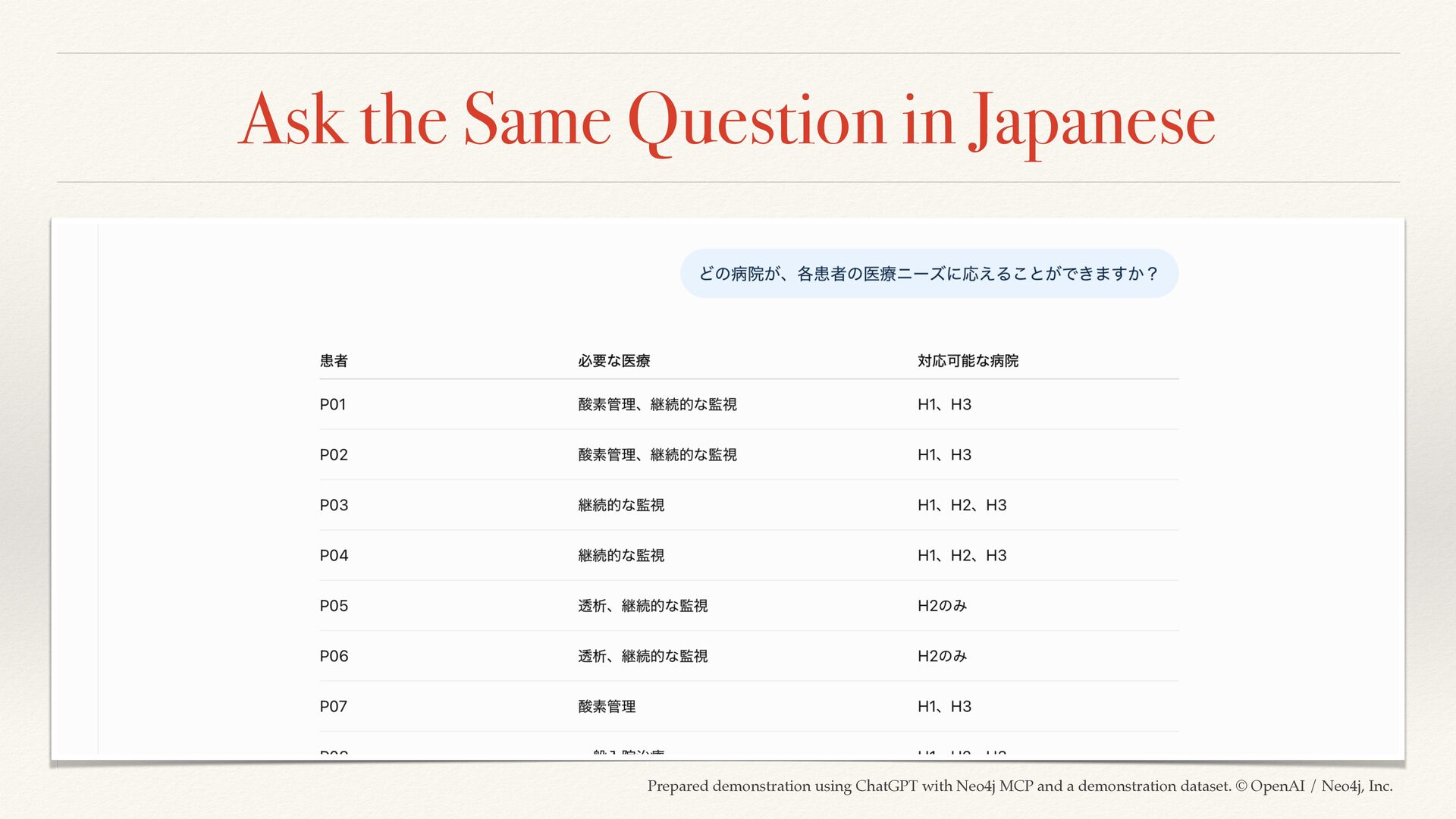
Ask the Same Question in Japanese Prepared demonstration using ChatGPT
with Neo4j MCP and a demonstration dataset. © OpenAI / Neo4j, Inc. -
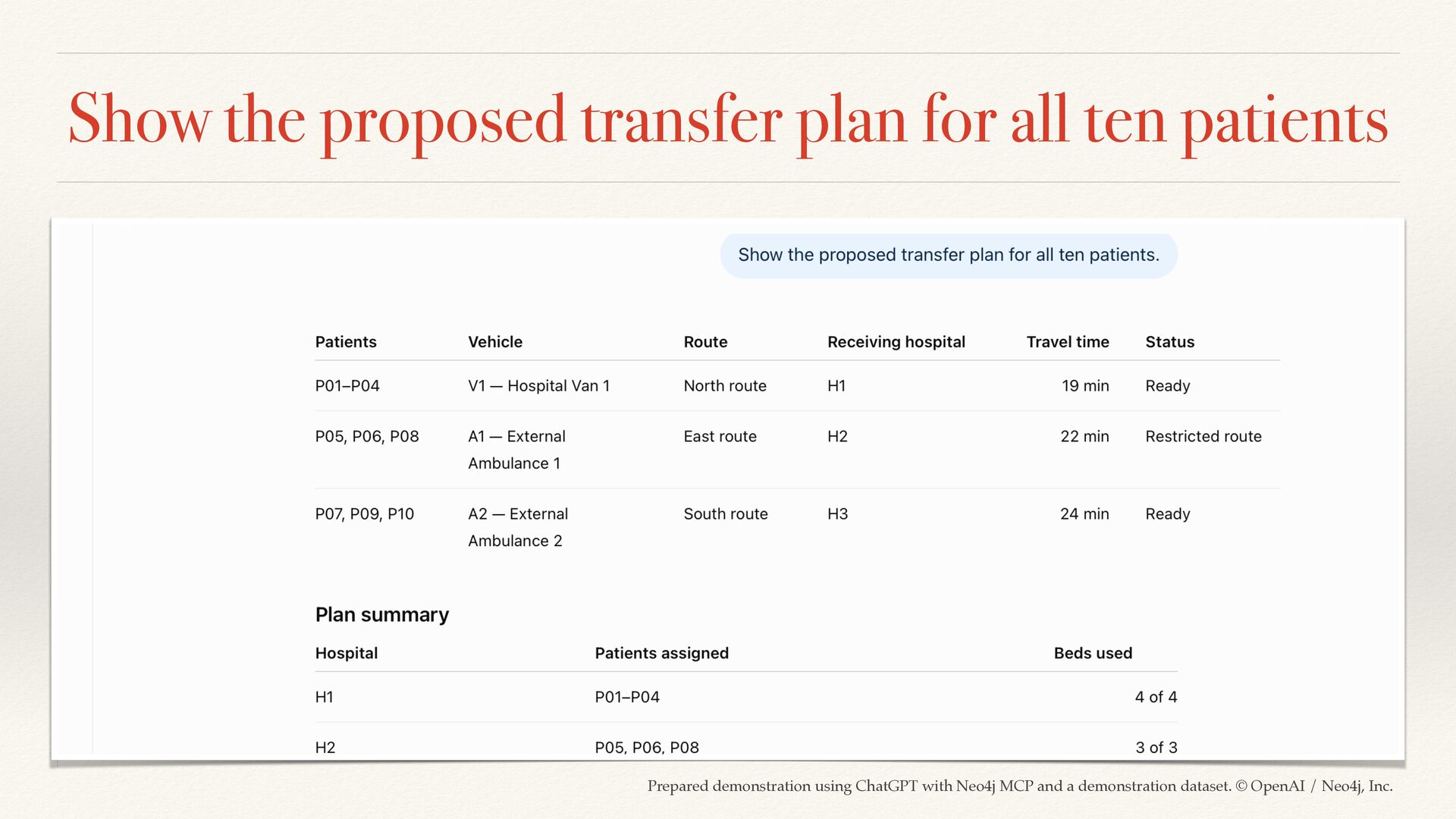
Show the proposed transfer plan for all ten patients Prepared
demonstration using ChatGPT with Neo4j MCP and a demonstration dataset. © OpenAI / Neo4j, Inc. -
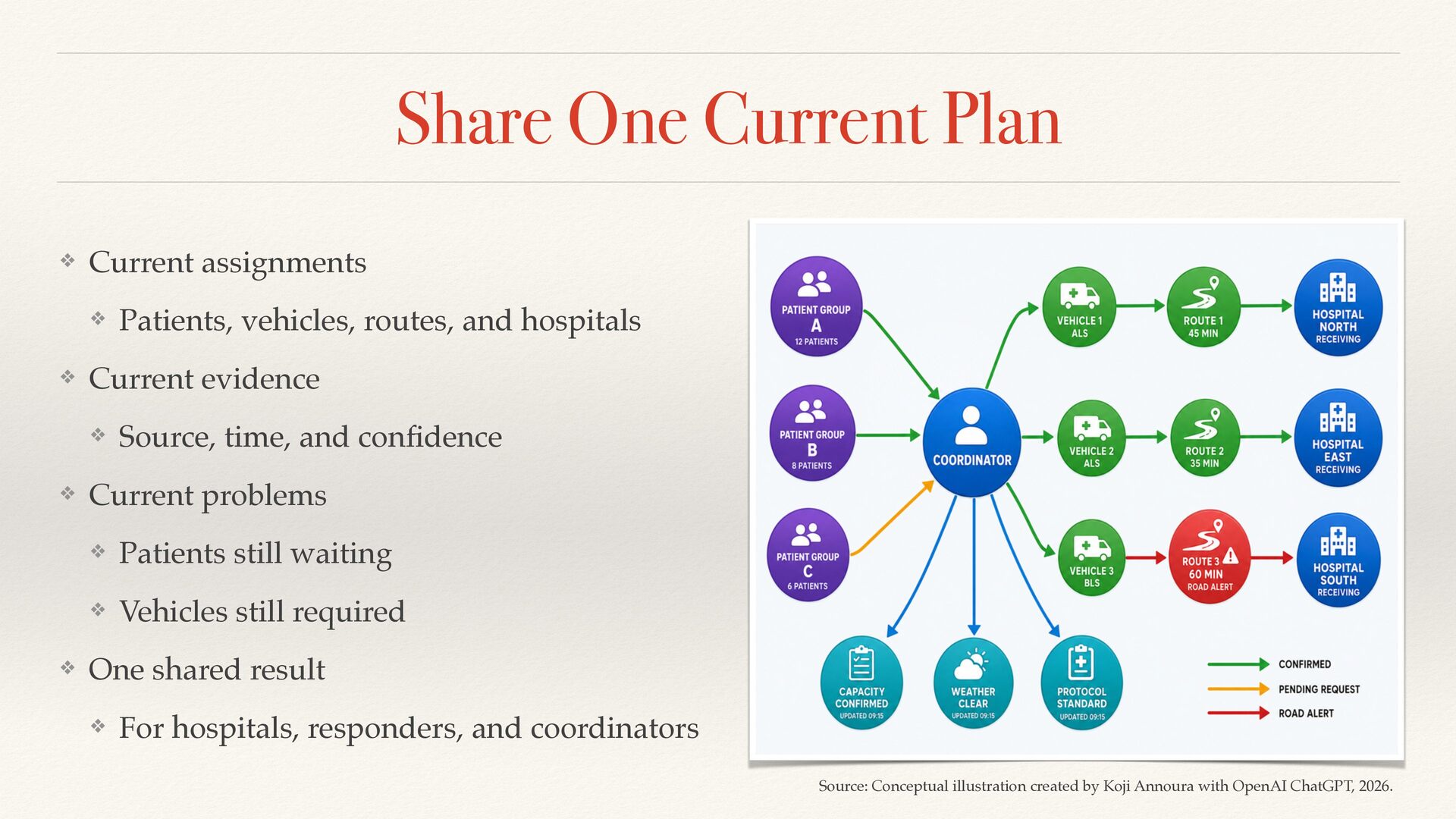
Share One Current Plan ❖ Current assignments ❖ Patients, vehicles,
routes, and hospitals ❖ Current evidence ❖ Source, time, and con dence ❖ Current problems ❖ Patients still waiting ❖ Vehicles still required ❖ One shared result ❖ For hospitals, responders, and coordinators fi Source: Conceptual illustration created by Koji Annoura with OpenAI ChatGPT, 2026. -
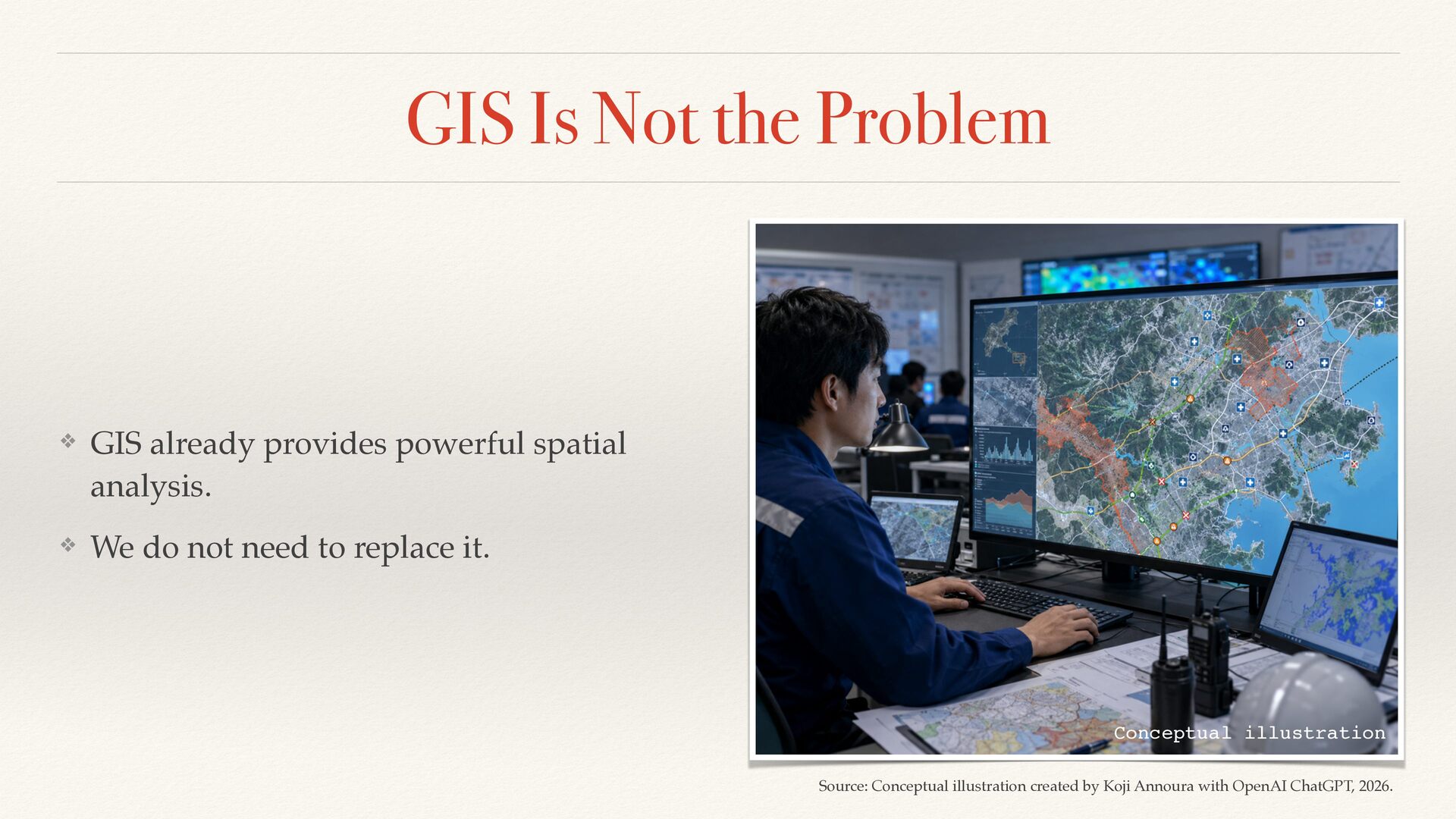
GIS Is Not the Problem ❖ GIS already provides powerful
spatial analysis. ❖ We do not need to replace it. Conceptual illustration Source: Conceptual illustration created by Koji Annoura with OpenAI ChatGPT, 2026. -
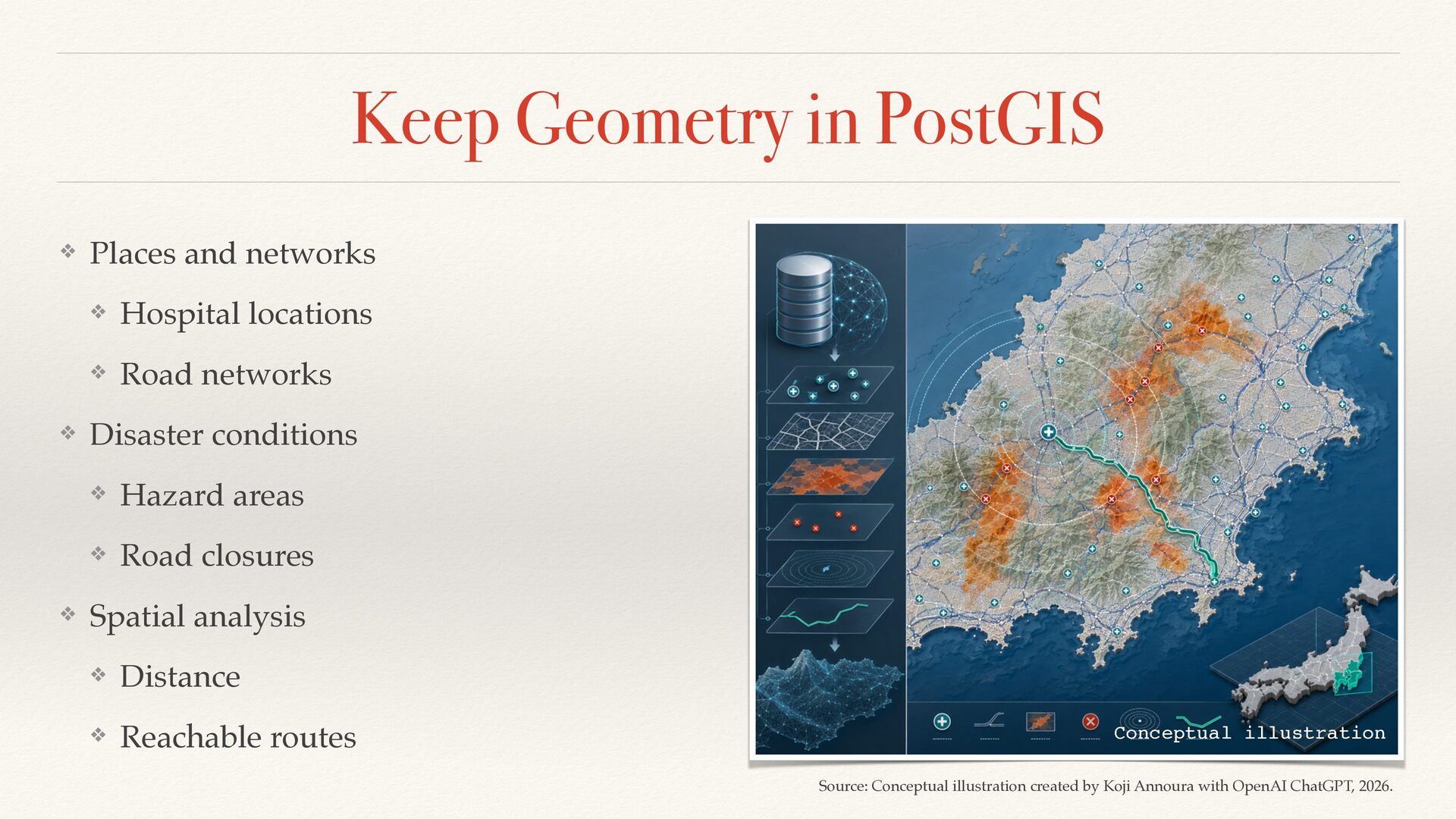
Keep Geometry in PostGIS ❖ Places and networks ❖ Hospital
locations ❖ Road networks ❖ Disaster conditions ❖ Hazard areas ❖ Road closures ❖ Spatial analysis ❖ Distance ❖ Reachable routes Conceptual illustration Source: Conceptual illustration created by Koji Annoura with OpenAI ChatGPT, 2026. -
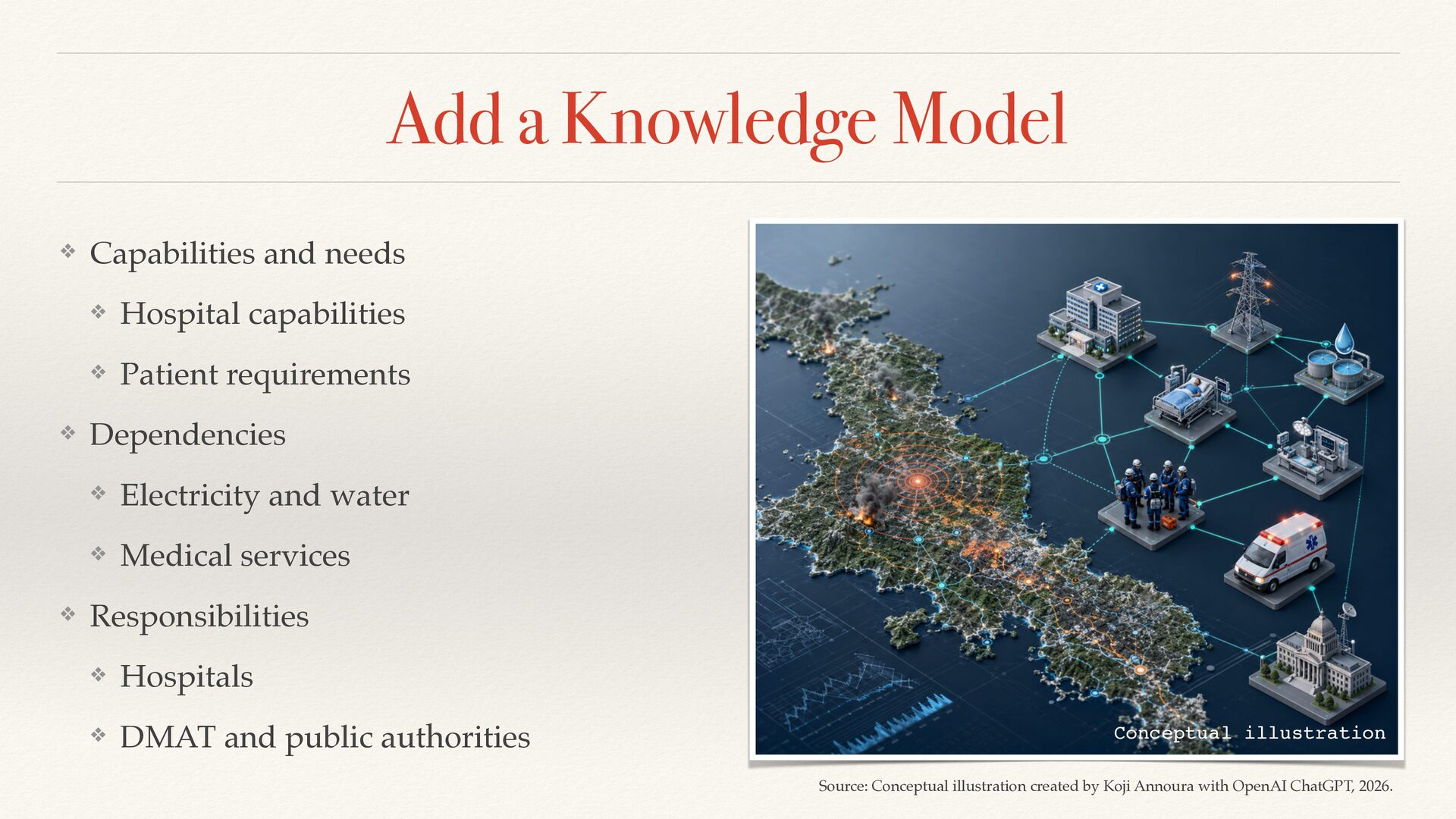
Add a Knowledge Model ❖ Capabilities and needs ❖ Hospital
capabilities ❖ Patient requirements ❖ Dependencies ❖ Electricity and water ❖ Medical services ❖ Responsibilities ❖ Hospitals ❖ DMAT and public authorities Conceptual illustration Source: Conceptual illustration created by Koji Annoura with OpenAI ChatGPT, 2026. -
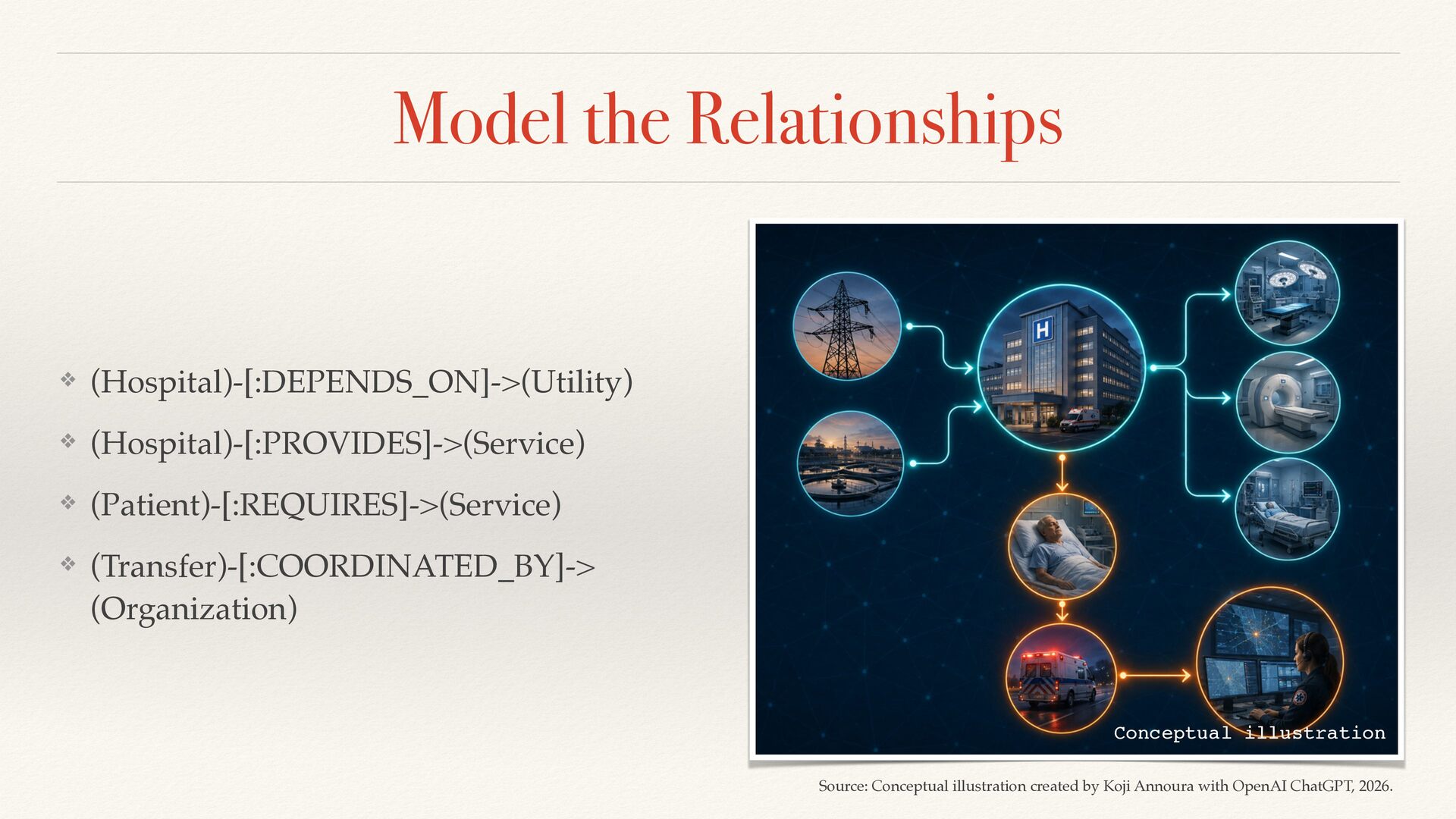
Model the Relationships ❖ (Hospital)-[:DEPENDS_ON]->(Utility) ❖ (Hospital)-[:PROVIDES]->(Service) ❖ (Patient)-[:REQUIRES]->(Service) ❖
(Transfer)-[:COORDINATED_BY]-> (Organization) Conceptual illustration Source: Conceptual illustration created by Koji Annoura with OpenAI ChatGPT, 2026. -
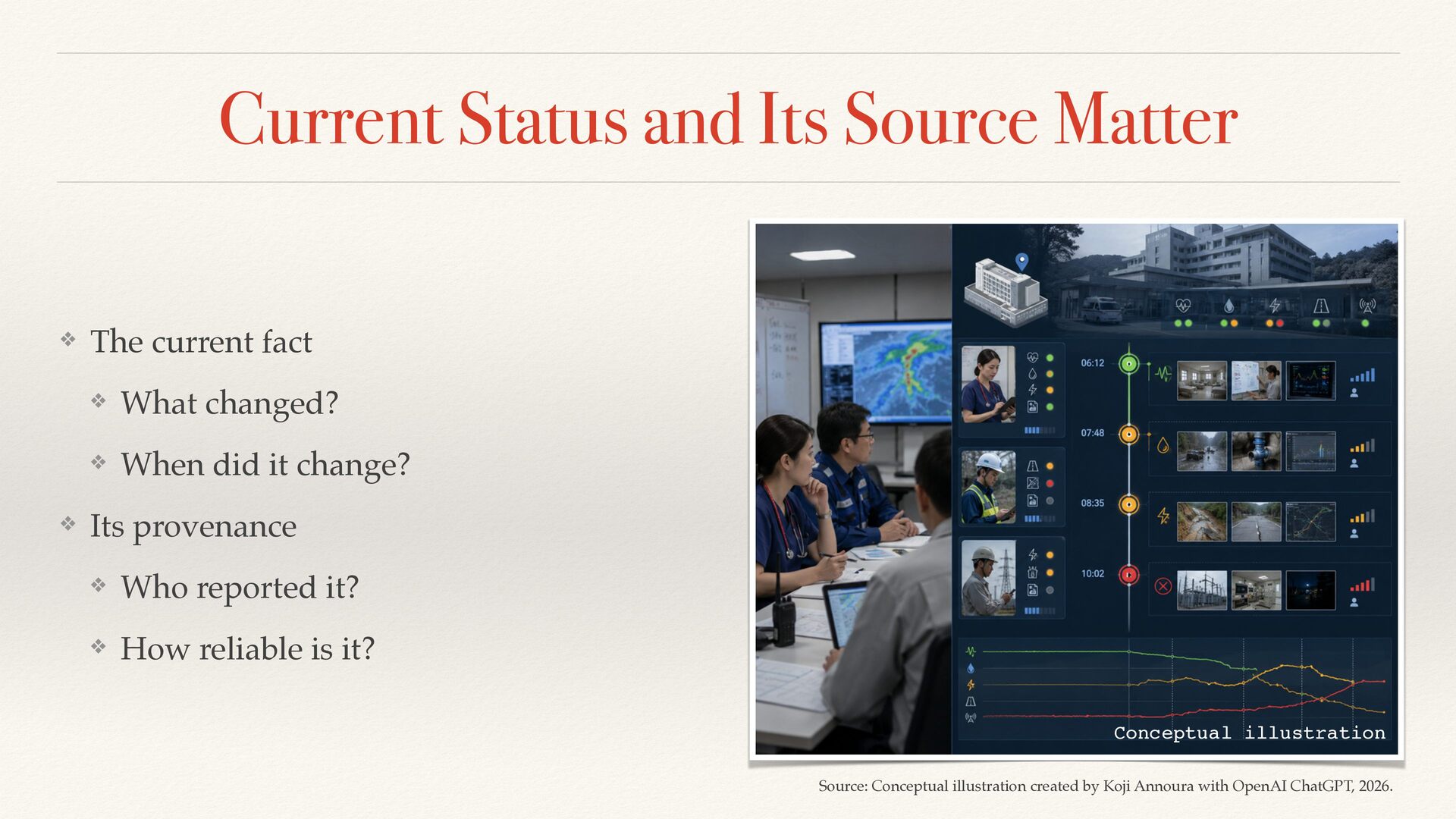
Current Status and Its Source Matter ❖ The current fact
❖ What changed? ❖ When did it change? ❖ Its provenance ❖ Who reported it? ❖ How reliable is it? Conceptual illustration Source: Conceptual illustration created by Koji Annoura with OpenAI ChatGPT, 2026. -
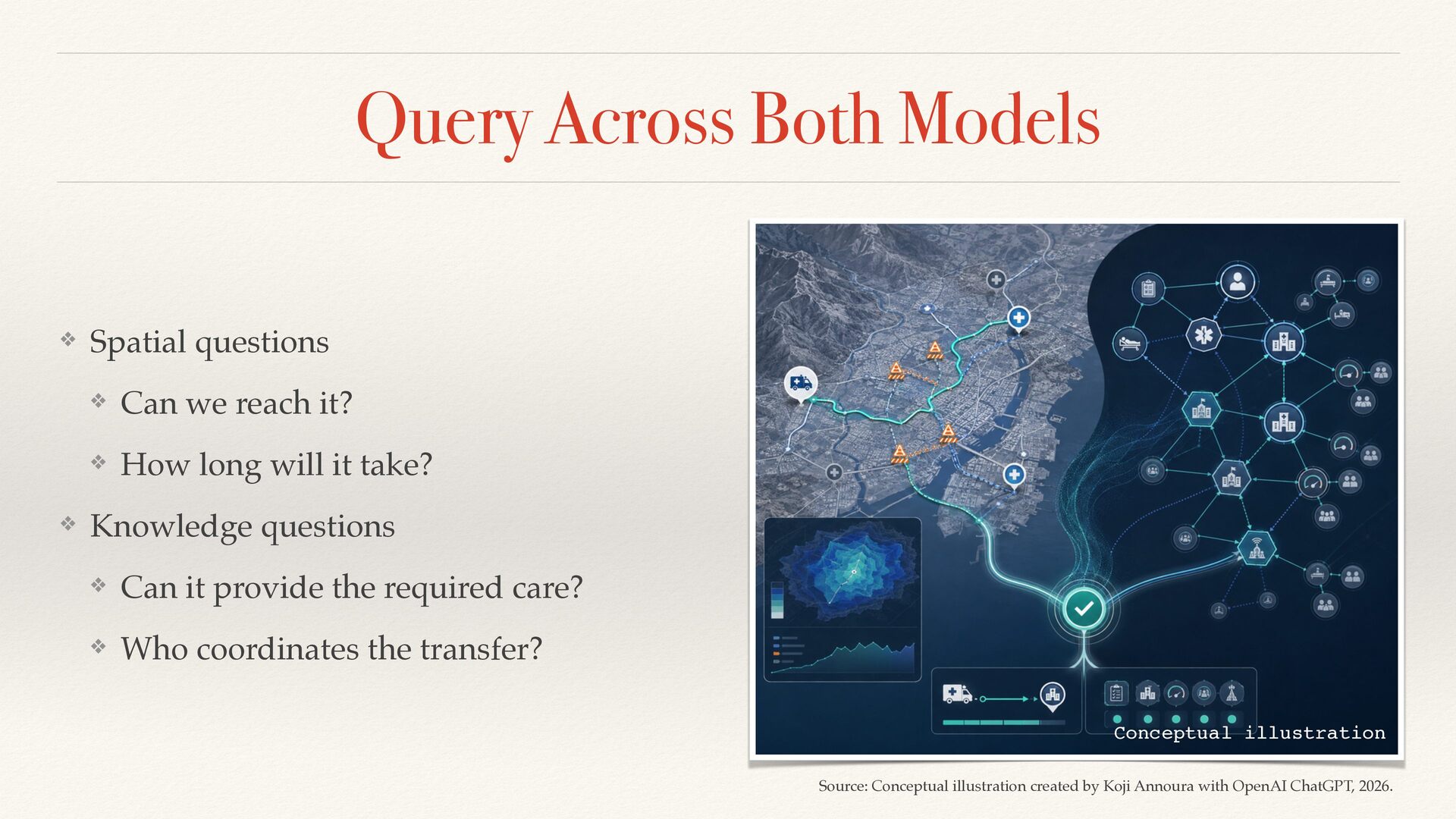
Query Across Both Models ❖ Spatial questions ❖ Can we
reach it? ❖ How long will it take? ❖ Knowledge questions ❖ Can it provide the required care? ❖ Who coordinates the transfer? Conceptual illustration Source: Conceptual illustration created by Koji Annoura with OpenAI ChatGPT, 2026. -
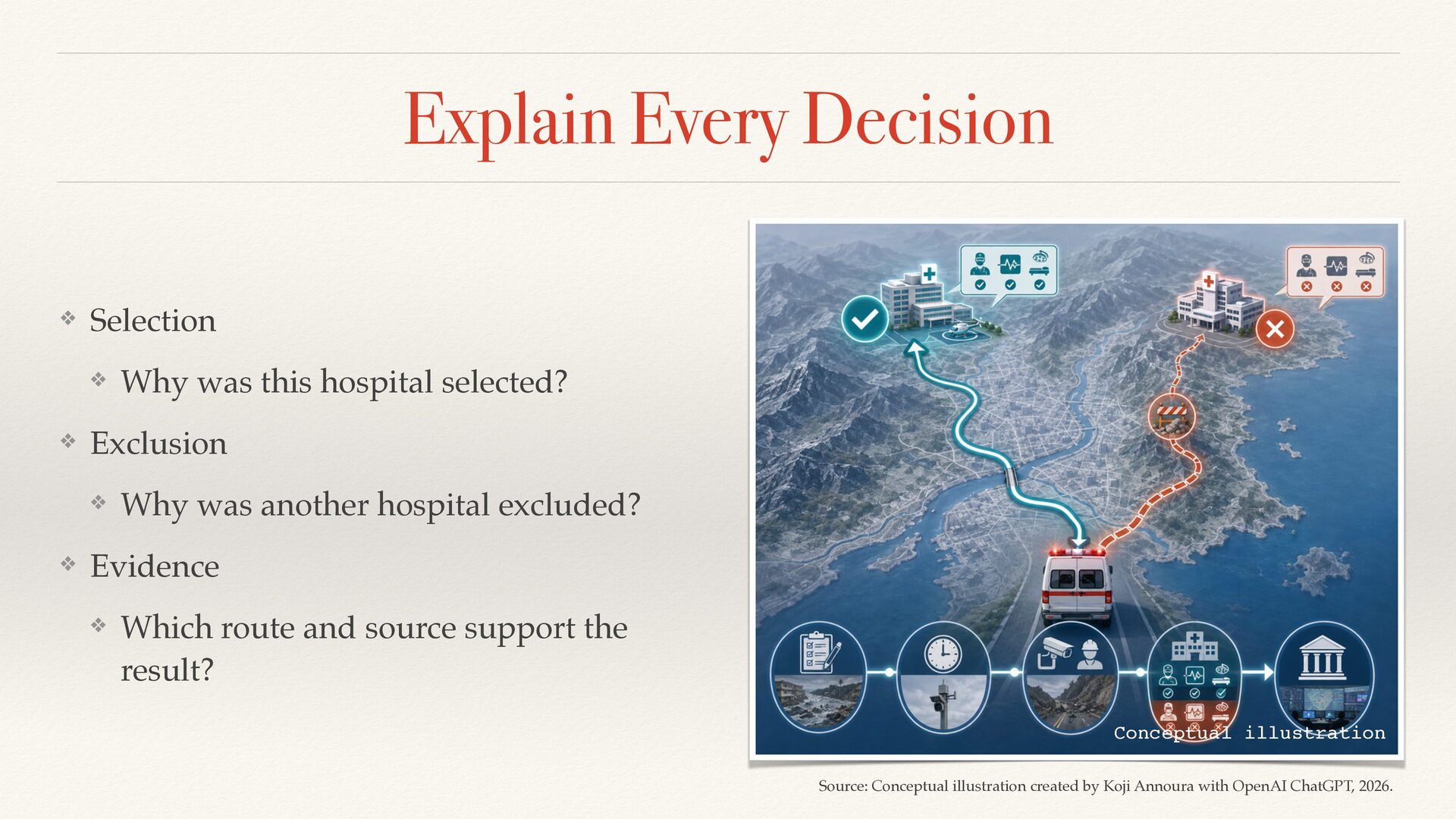
Explain Every Decision ❖ Selection ❖ Why was this hospital
selected? ❖ Exclusion ❖ Why was another hospital excluded? ❖ Evidence ❖ Which route and source support the result? Conceptual illustration Source: Conceptual illustration created by Koji Annoura with OpenAI ChatGPT, 2026. -
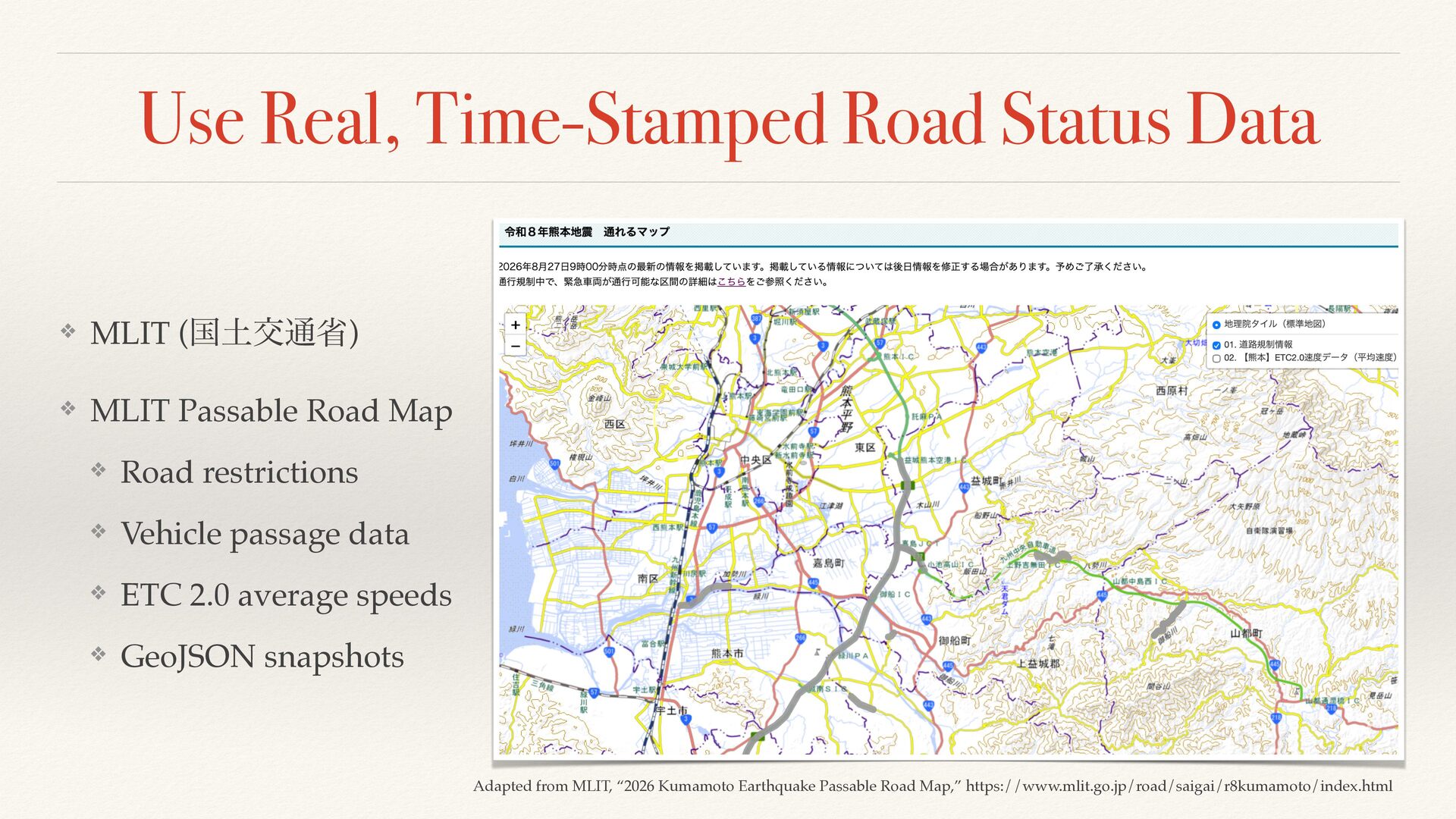
Use Real, Time-Stamped Road Status Data ❖ MLIT (国土交通省) ❖
MLIT Passable Road Map ❖ Road restrictions ❖ Vehicle passage data ❖ ETC 2.0 average speeds ❖ GeoJSON snapshots Adapted from MLIT, “2026 Kumamoto Earthquake Passable Road Map,” https://www.mlit.go.jp/road/saigai/r8kumamoto/index.html -
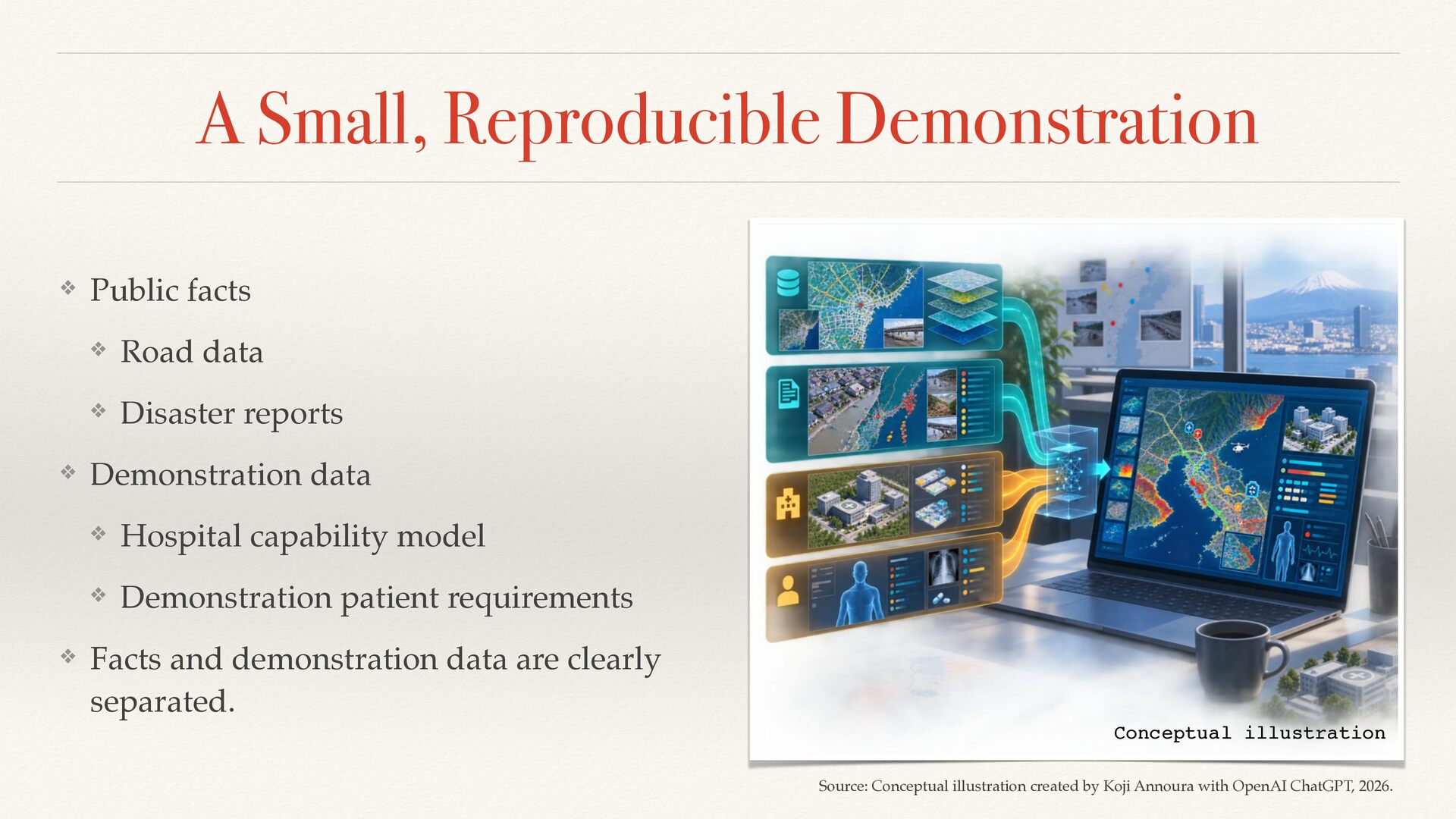
A Small, Reproducible Demonstration ❖ Public facts ❖ Road data
❖ Disaster reports ❖ Demonstration data ❖ Hospital capability model ❖ Demonstration patient requirements ❖ Facts and demonstration data are clearly separated. Conceptual illustration Source: Conceptual illustration created by Koji Annoura with OpenAI ChatGPT, 2026. -
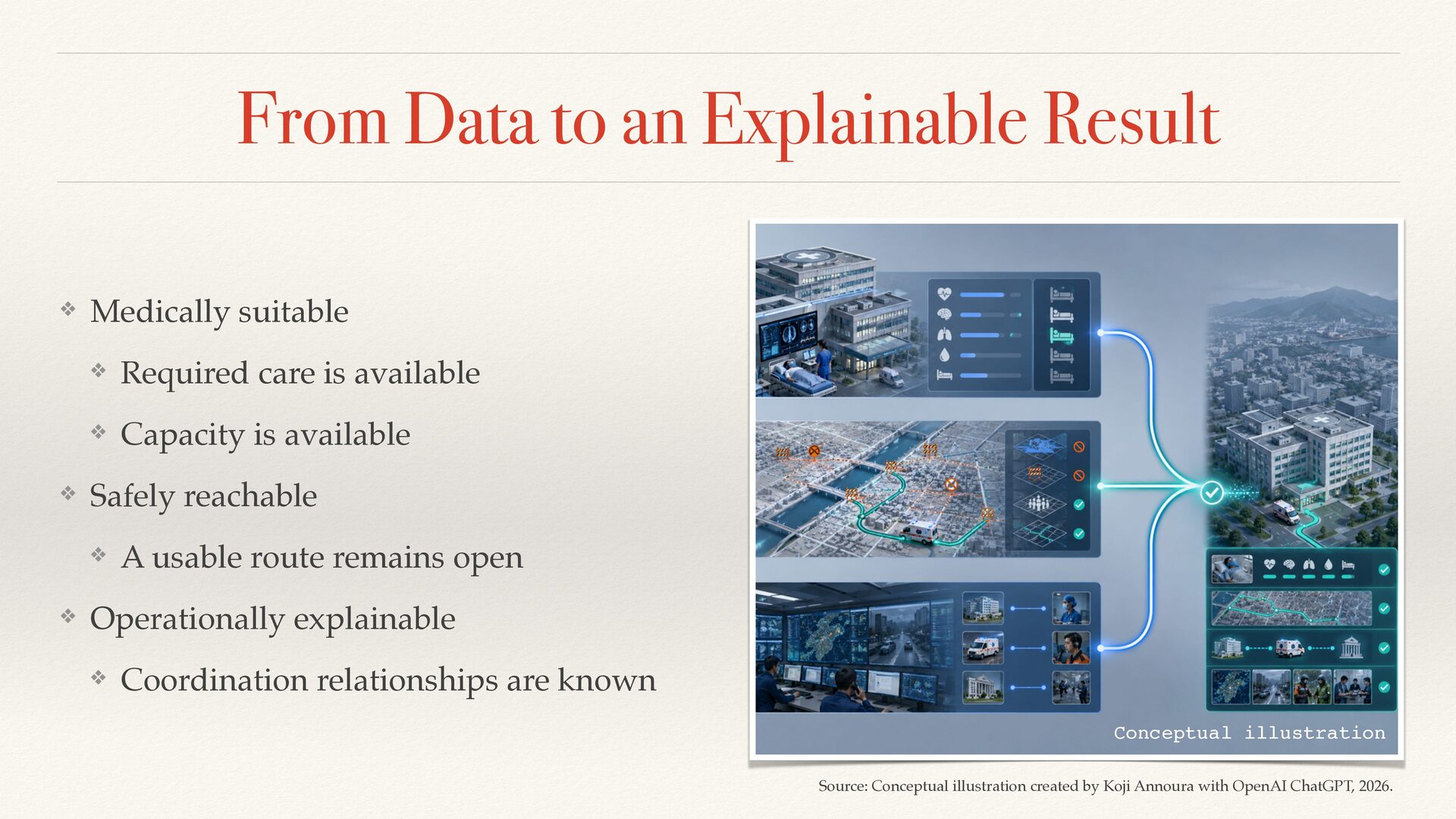
From Data to an Explainable Result ❖ Medically suitable ❖
Required care is available ❖ Capacity is available ❖ Safely reachable ❖ A usable route remains open ❖ Operationally explainable ❖ Coordination relationships are known Conceptual illustration Source: Conceptual illustration created by Koji Annoura with OpenAI ChatGPT, 2026. -
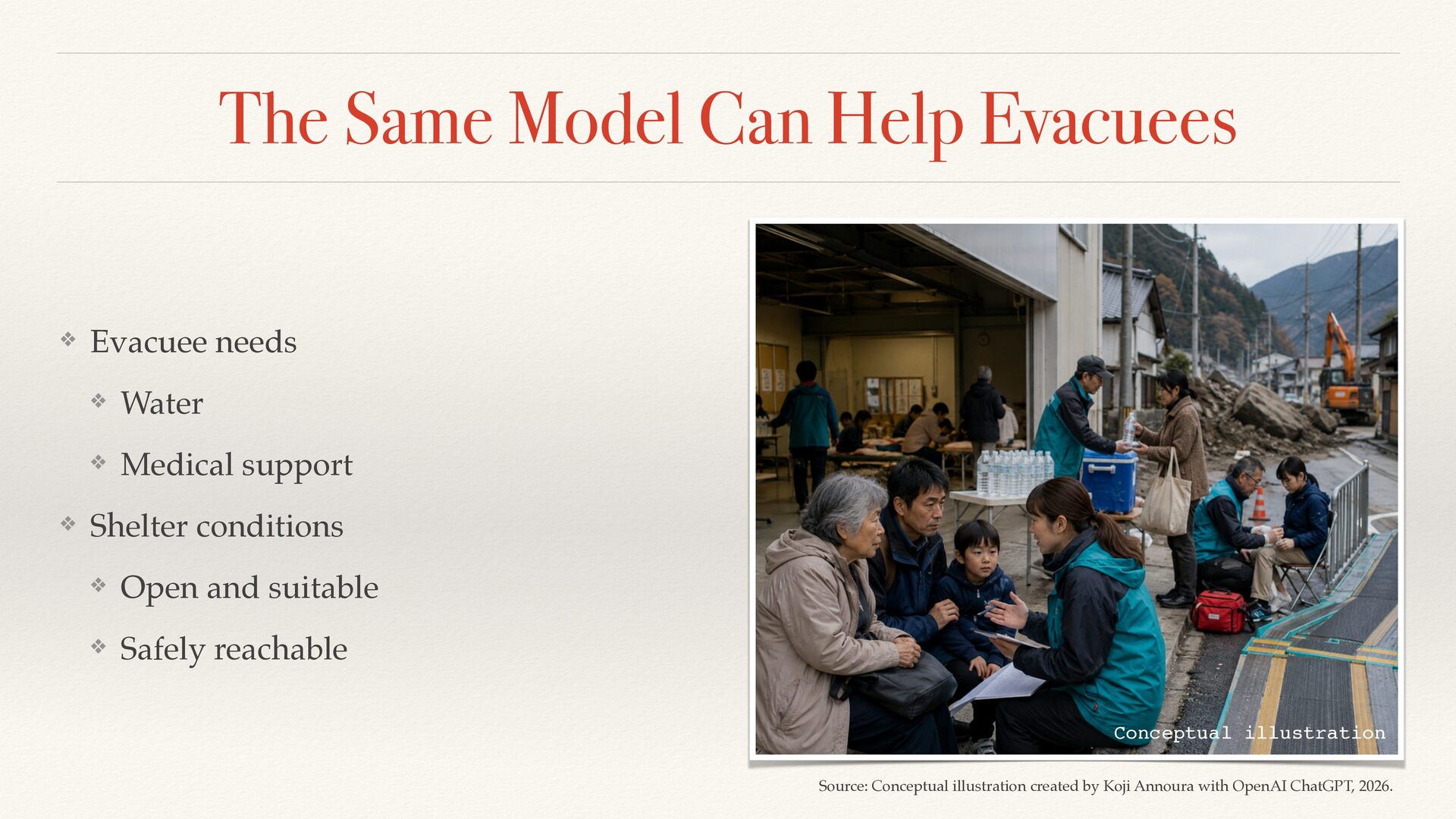
The Same Model Can Help Evacuees ❖ Evacuee needs ❖
Water ❖ Medical support ❖ Shelter conditions ❖ Open and suitable ❖ Safely reachable Conceptual illustration Source: Conceptual illustration created by Koji Annoura with OpenAI ChatGPT, 2026. -
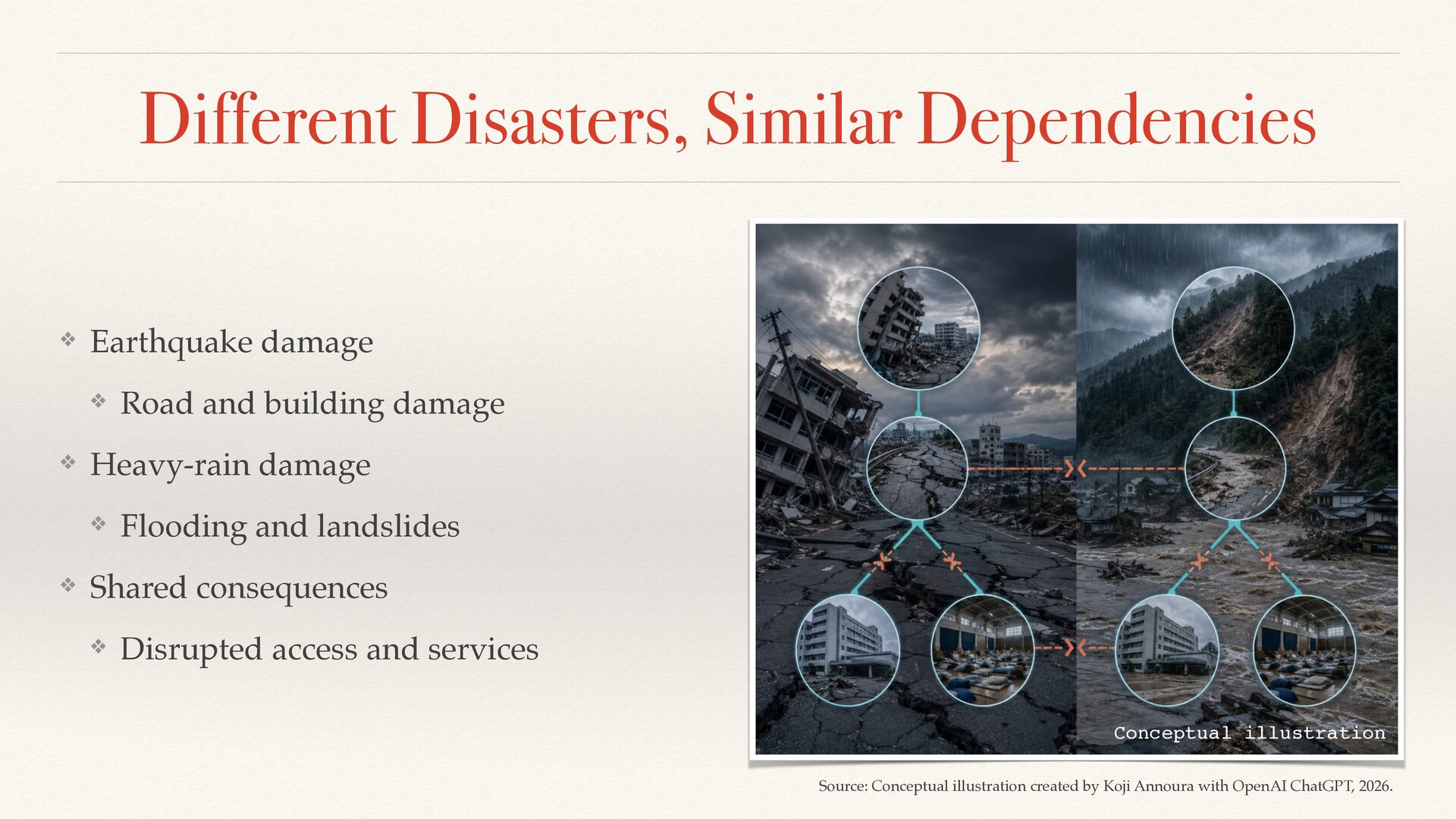
Different Disasters, Similar Dependencies ❖ Earthquake damage ❖ Road and
building damage ❖ Heavy-rain damage ❖ Flooding and landslides ❖ Shared consequences ❖ Disrupted access and services Conceptual illustration Source: Conceptual illustration created by Koji Annoura with OpenAI ChatGPT, 2026. -
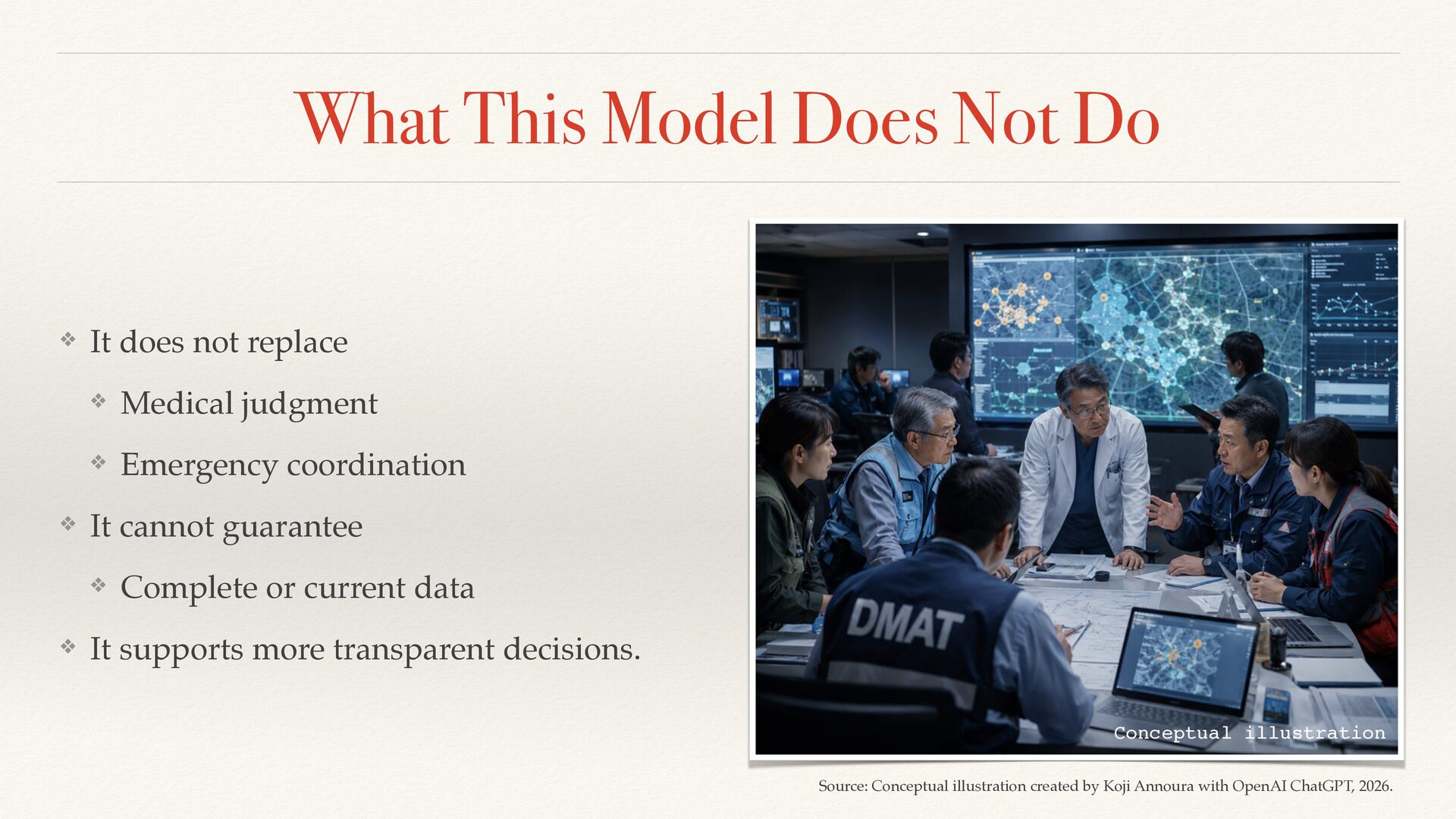
What This Model Does Not Do ❖ It does not
replace ❖ Medical judgment ❖ Emergency coordination ❖ It cannot guarantee ❖ Complete or current data ❖ It supports more transparent decisions. Conceptual illustration Source: Conceptual illustration created by Koji Annoura with OpenAI ChatGPT, 2026. -
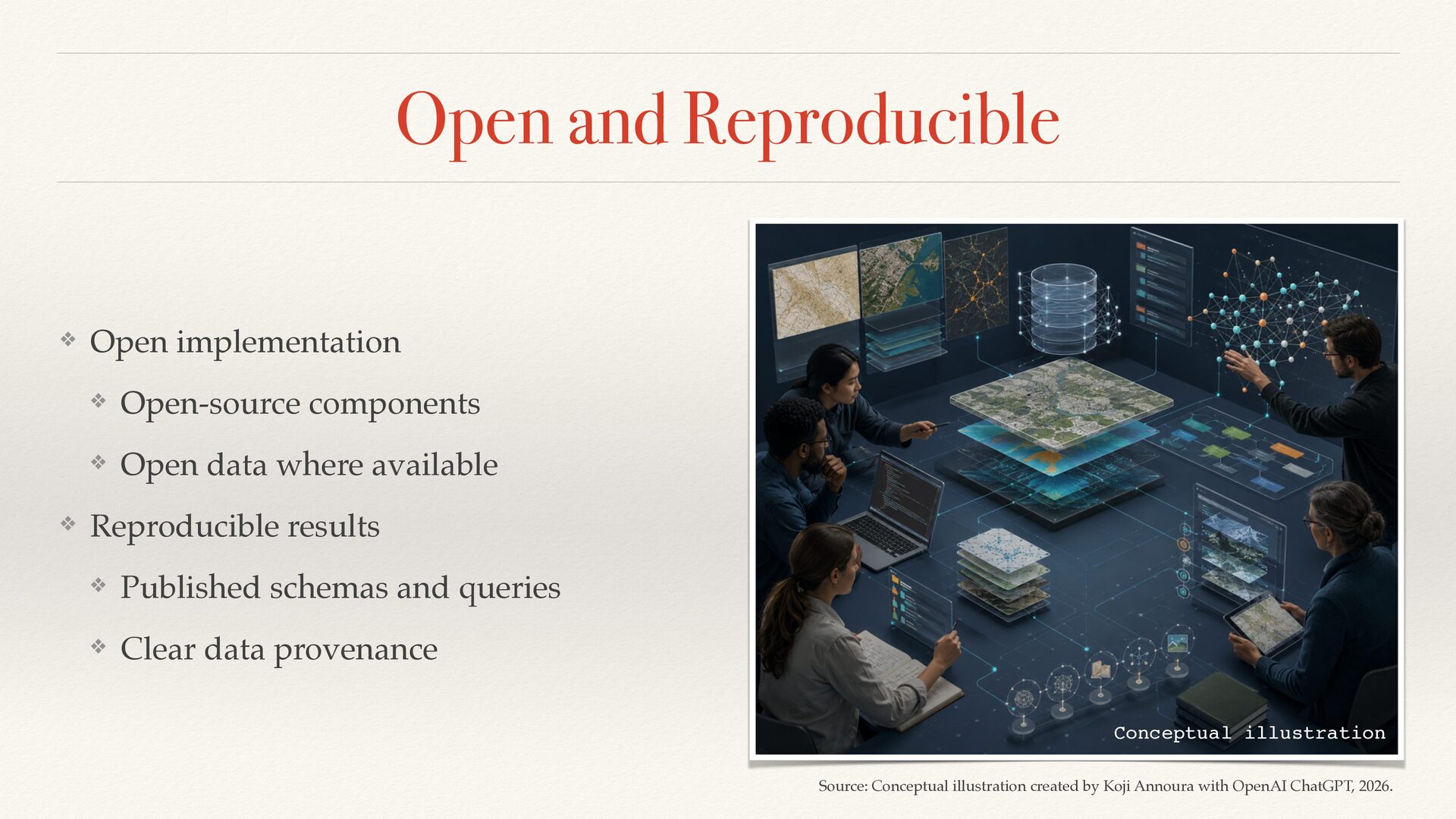
Open and Reproducible ❖ Open implementation ❖ Open-source components ❖
Open data where available ❖ Reproducible results ❖ Published schemas and queries ❖ Clear data provenance Conceptual illustration Source: Conceptual illustration created by Koji Annoura with OpenAI ChatGPT, 2026. -
Key Takeaway ❖ Maps show where hospitals, roads, and damage
are. ❖ Knowledge models show how patients, services, infrastructure, and organizations depend on each other. fi ❖ Together, they help us nd options that are reachable, suitable, and explainable. -
Thank You ❖ Thanks for listening! ❖ Koji Annoura ❖
https://annoura.com ❖ [email protected] ❖ @kojiannoura
 kojiannoura
 ryuz88
 kmiya84377
 keitaibaraki
 haru860
 mohab1
 nsatoh
 tarappo
 staka121
 tomoki10
 sumeshi
 yoshimura_datam
 sue445
 nikkihalliwell
 hatefulcrawdad
 kimpetersen
 wayneb77
 techseoconnect
 tamaranovitovic
 katarinadahlin
 jonyablonski
 afnizarnur
 marktimemedia
 soysaucechin