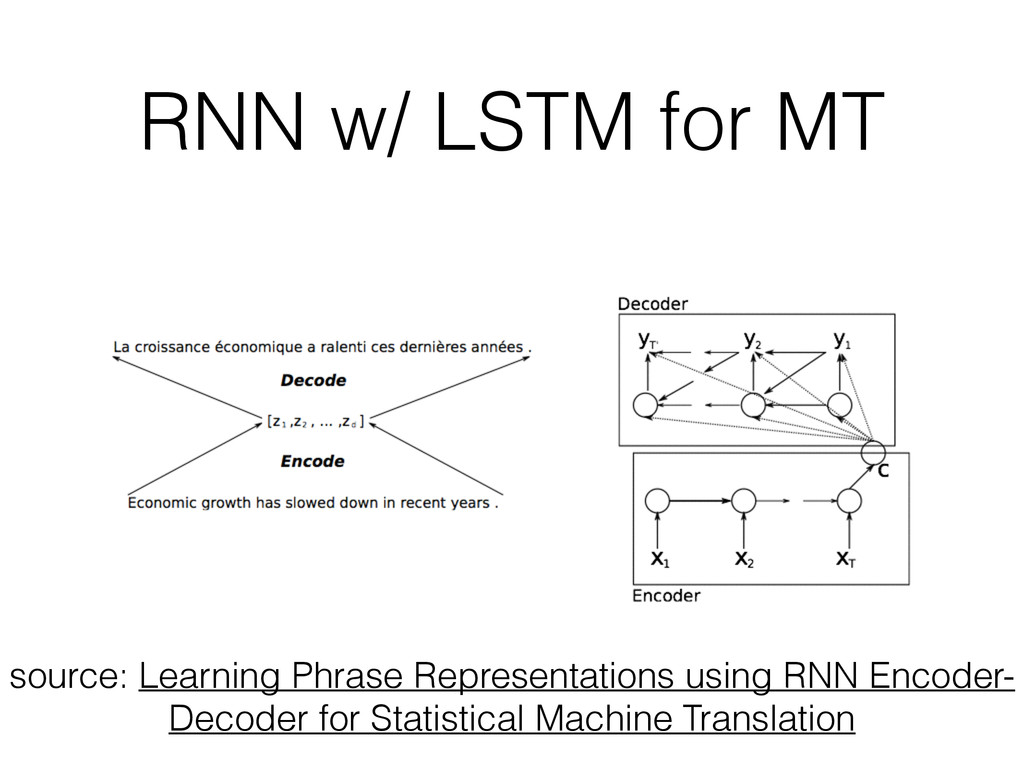
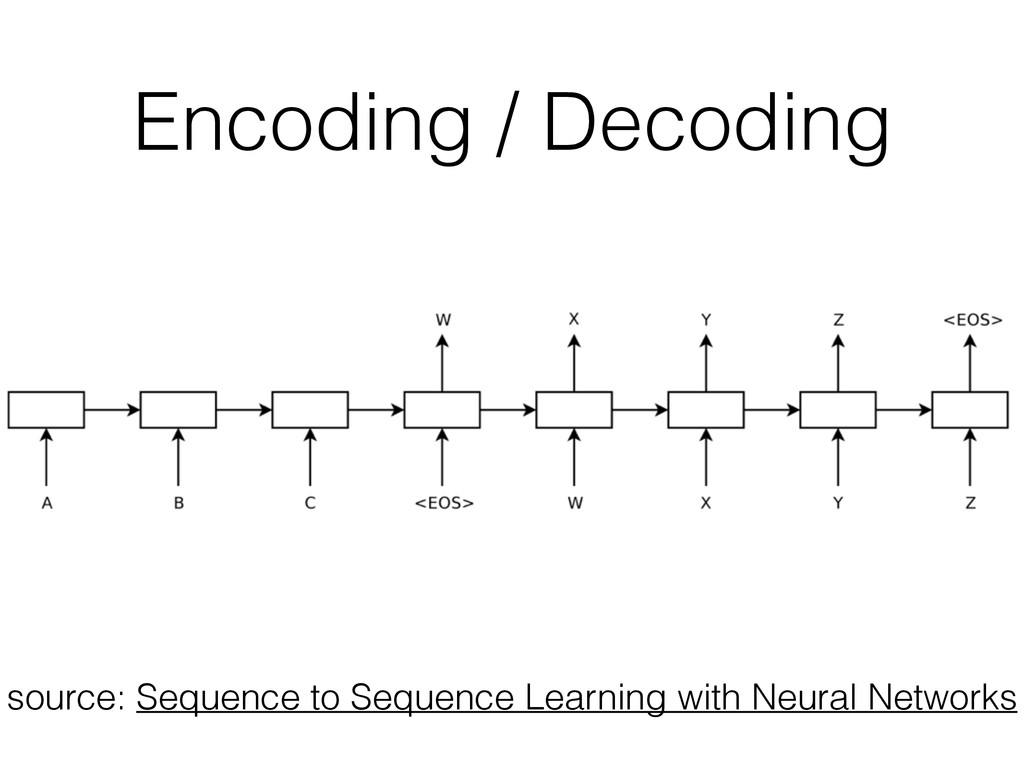
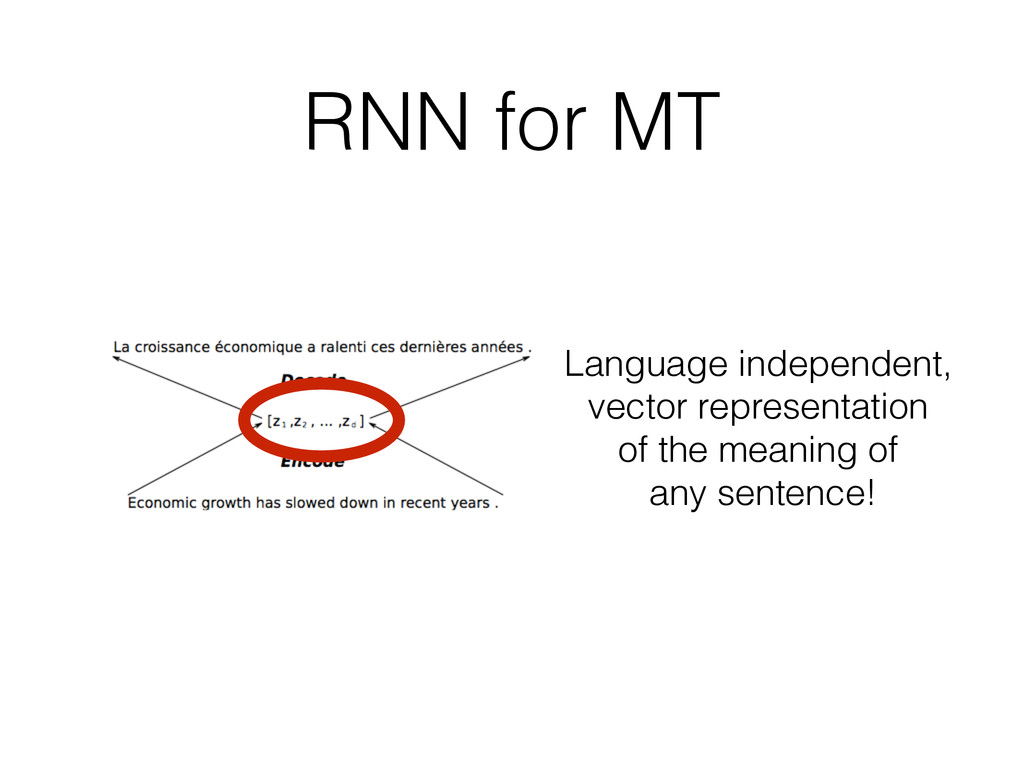
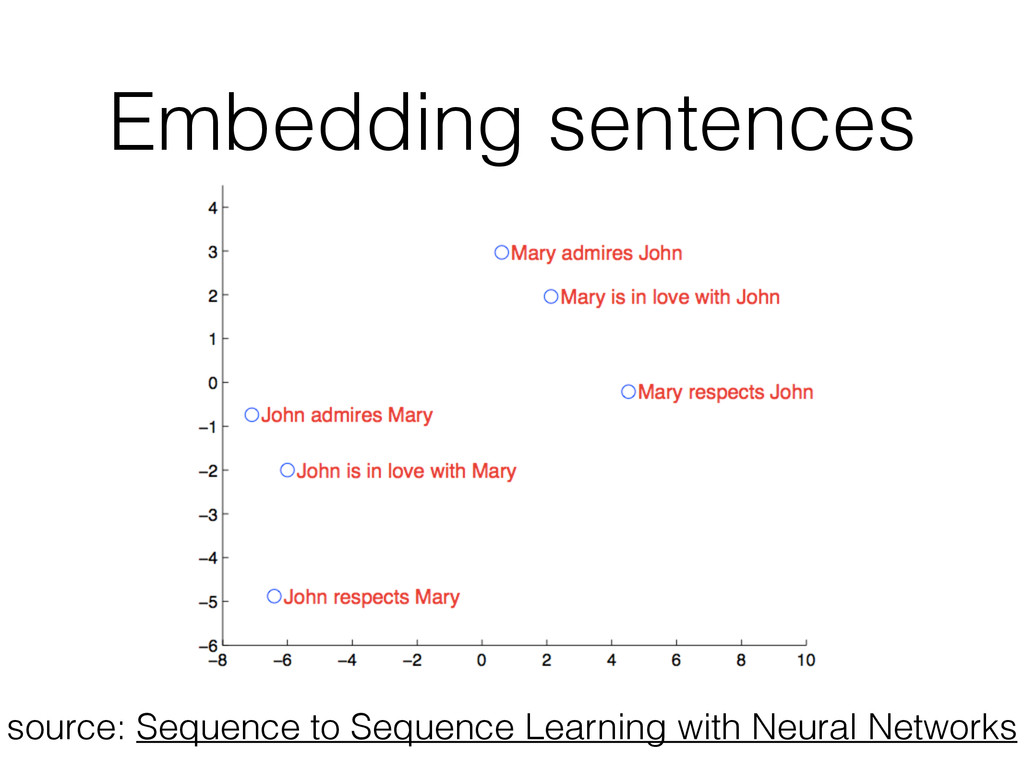
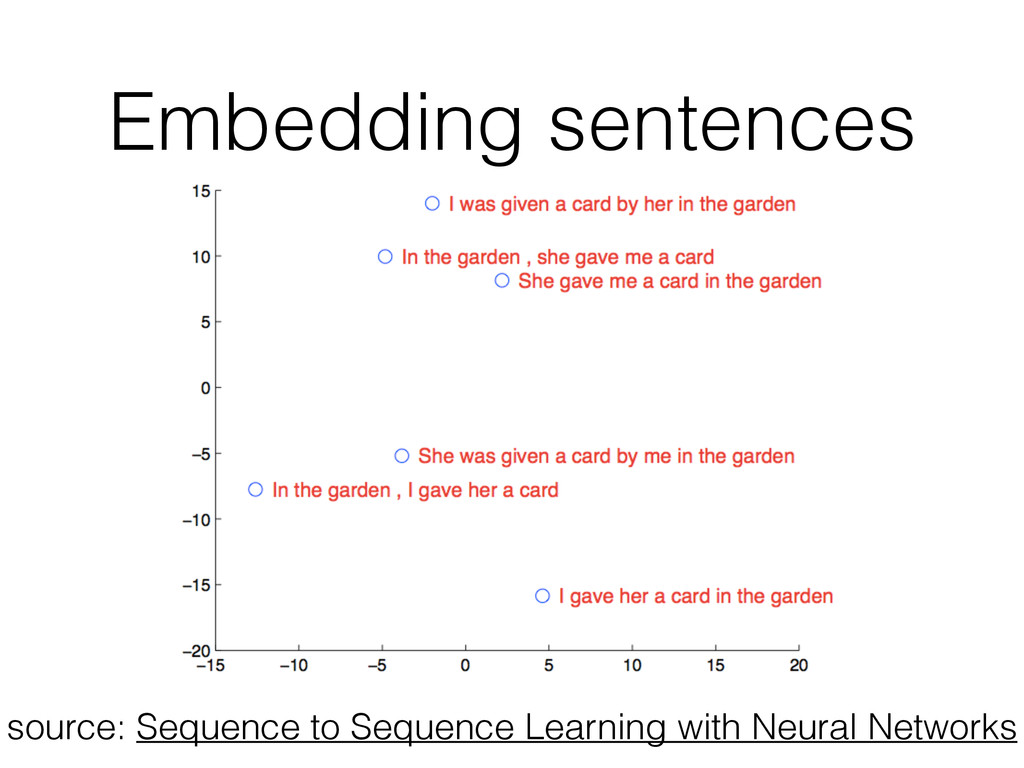
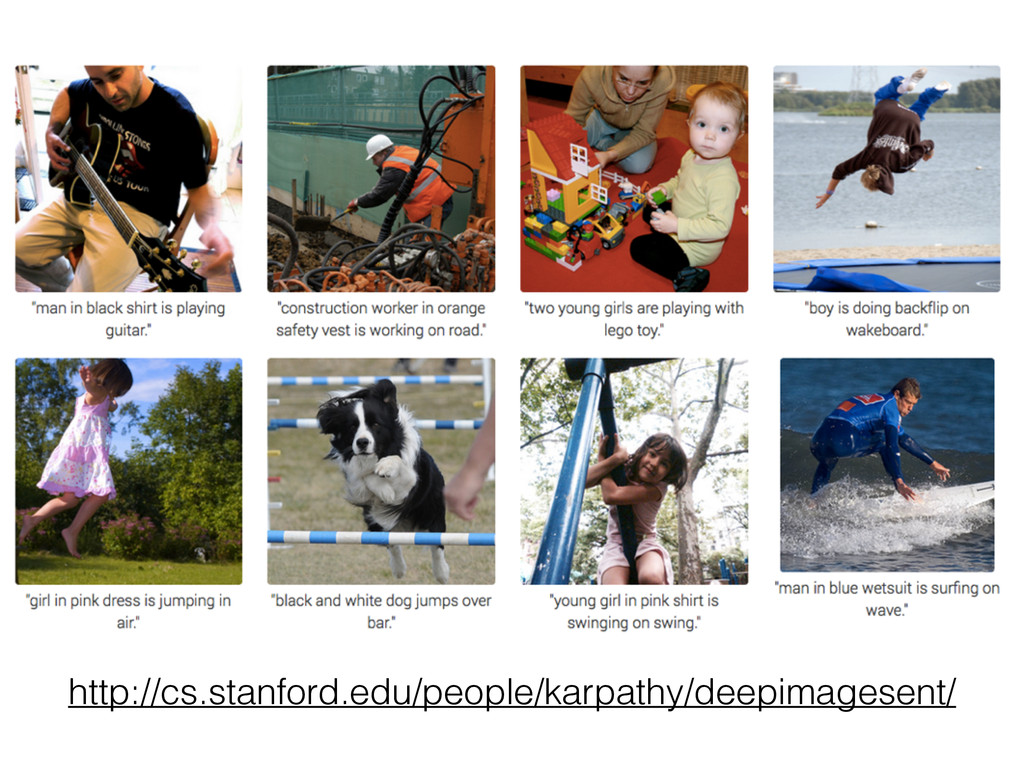
for Natural Language Understanding & Machine Translation • Decoding visual embeddings as English sentences • Learning to Play, Execute, Program, Answer Queries
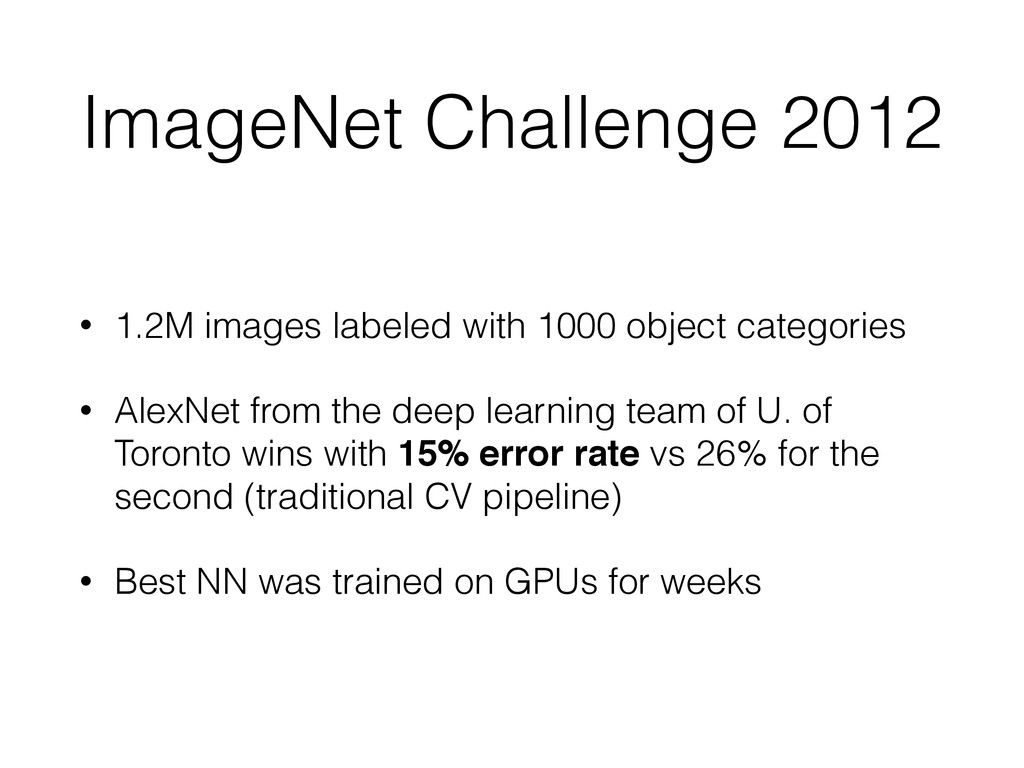
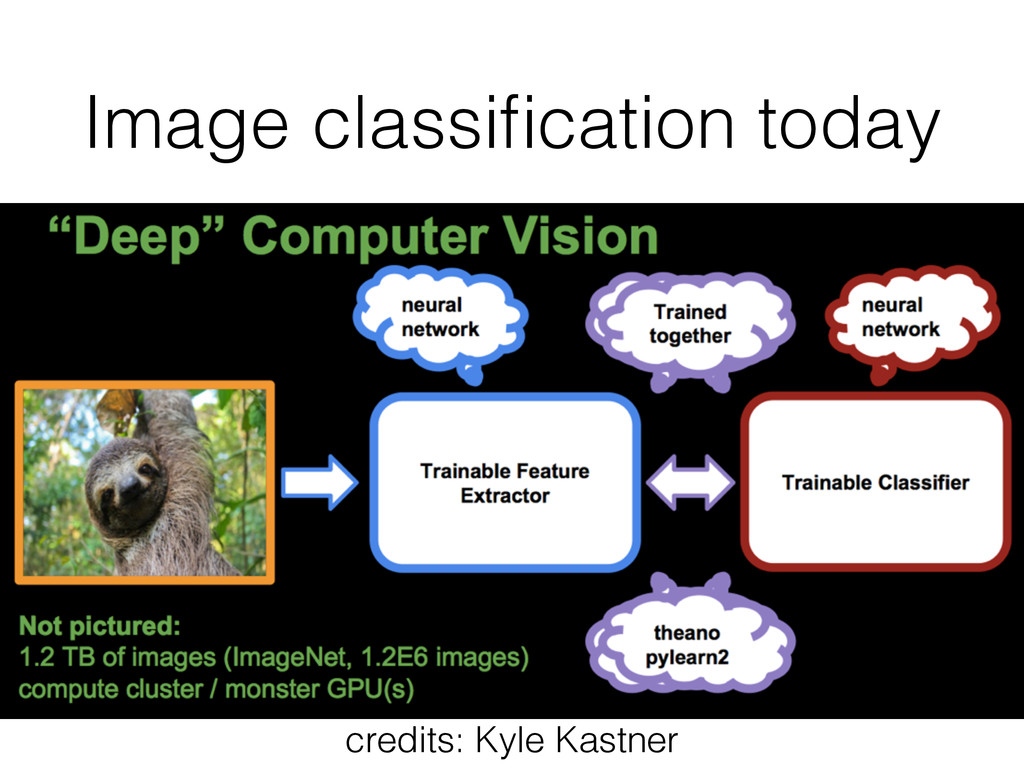
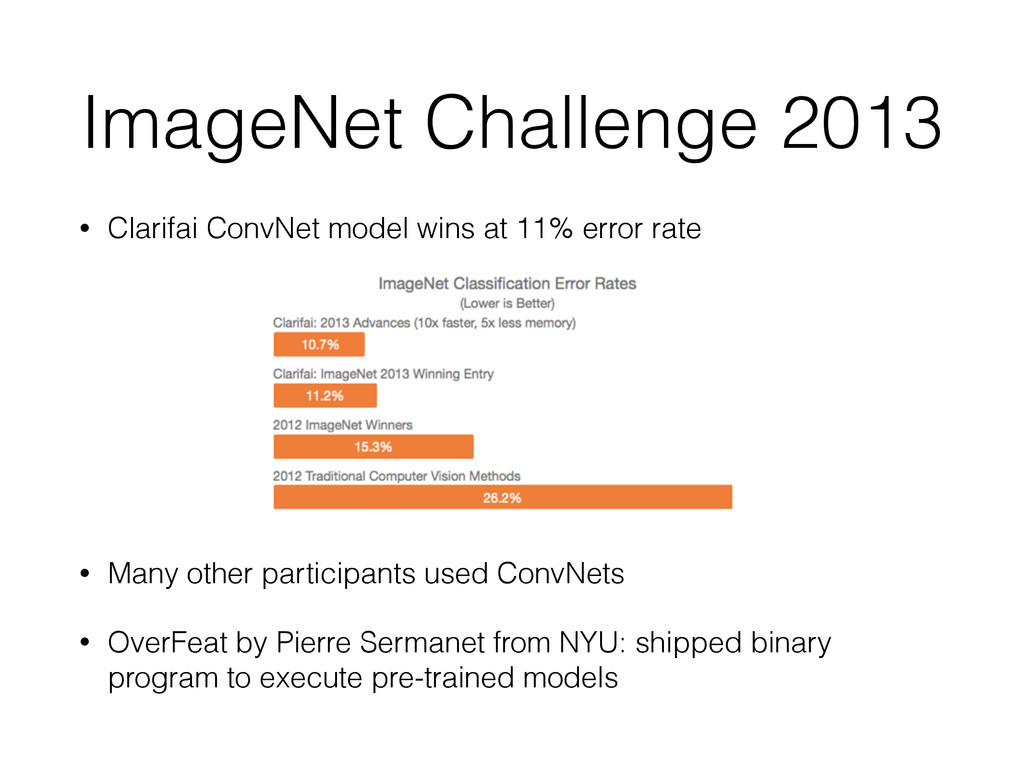
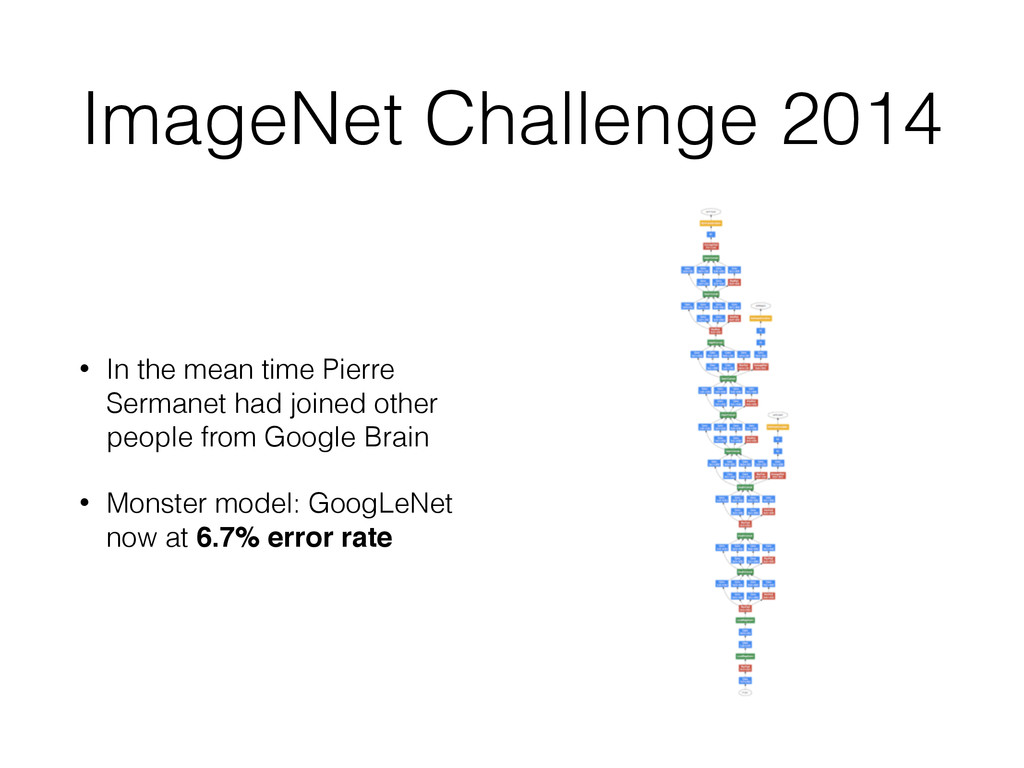
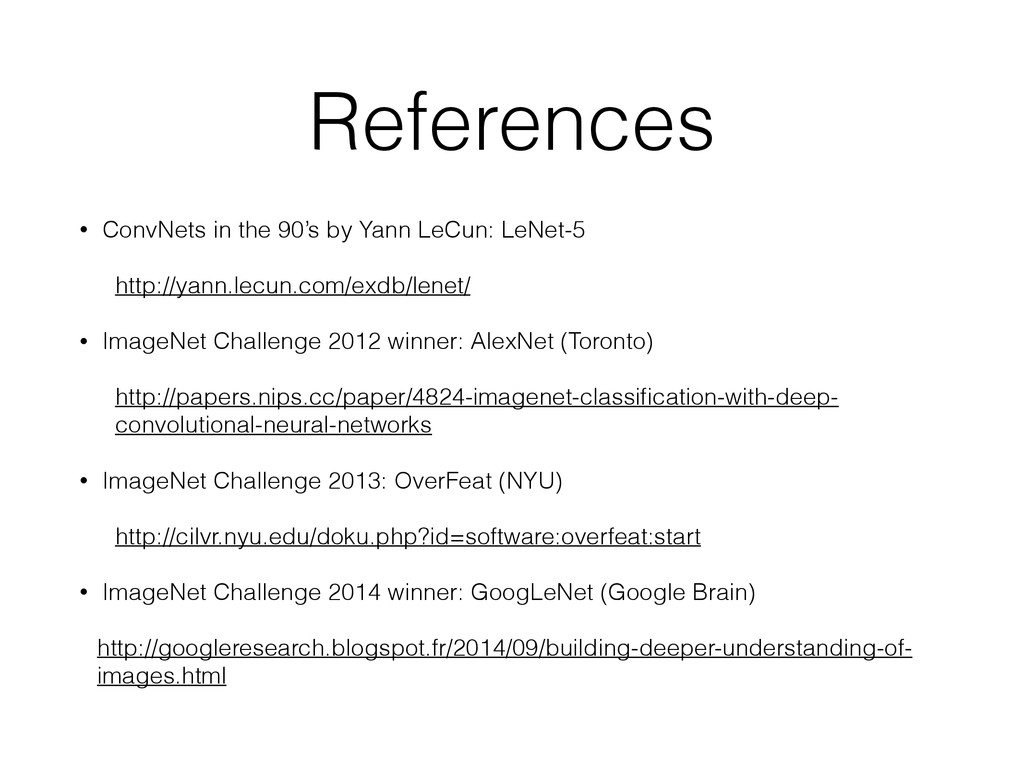
categories • AlexNet from the deep learning team of U. of Toronto wins with 15% error rate vs 26% for the second (traditional CV pipeline) • Best NN was trained on GPUs for weeks
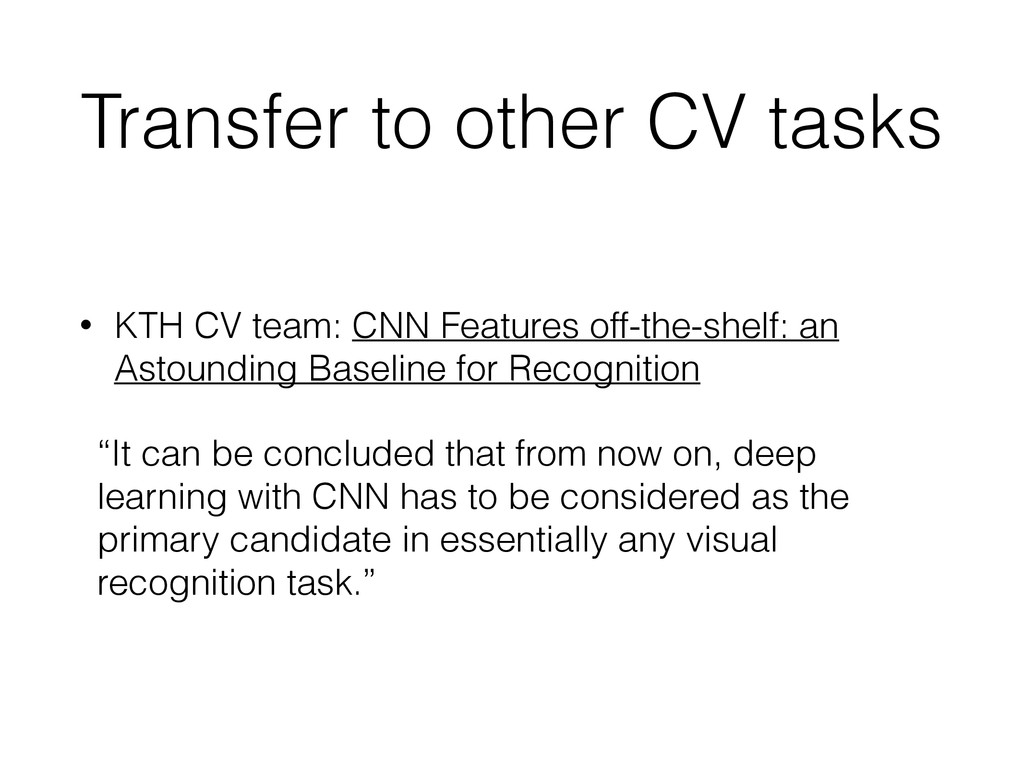
Features off-the-shelf: an Astounding Baseline for Recognition “It can be concluded that from now on, deep learning with CNN has to be considered as the primary candidate in essentially any visual recognition task.”
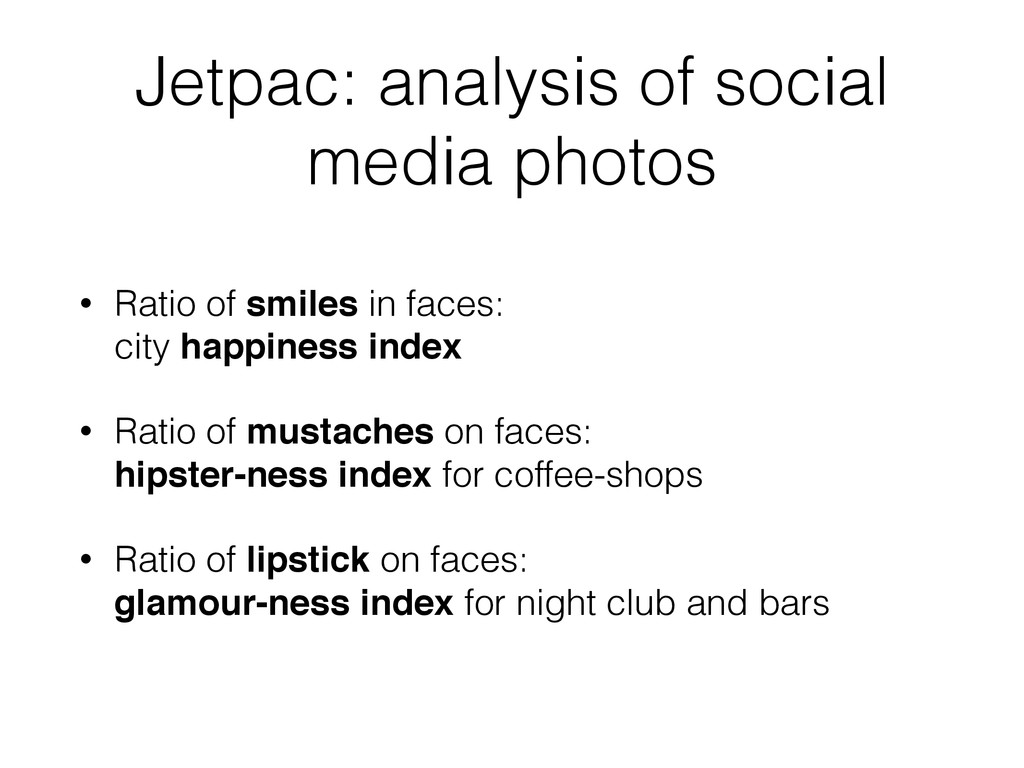
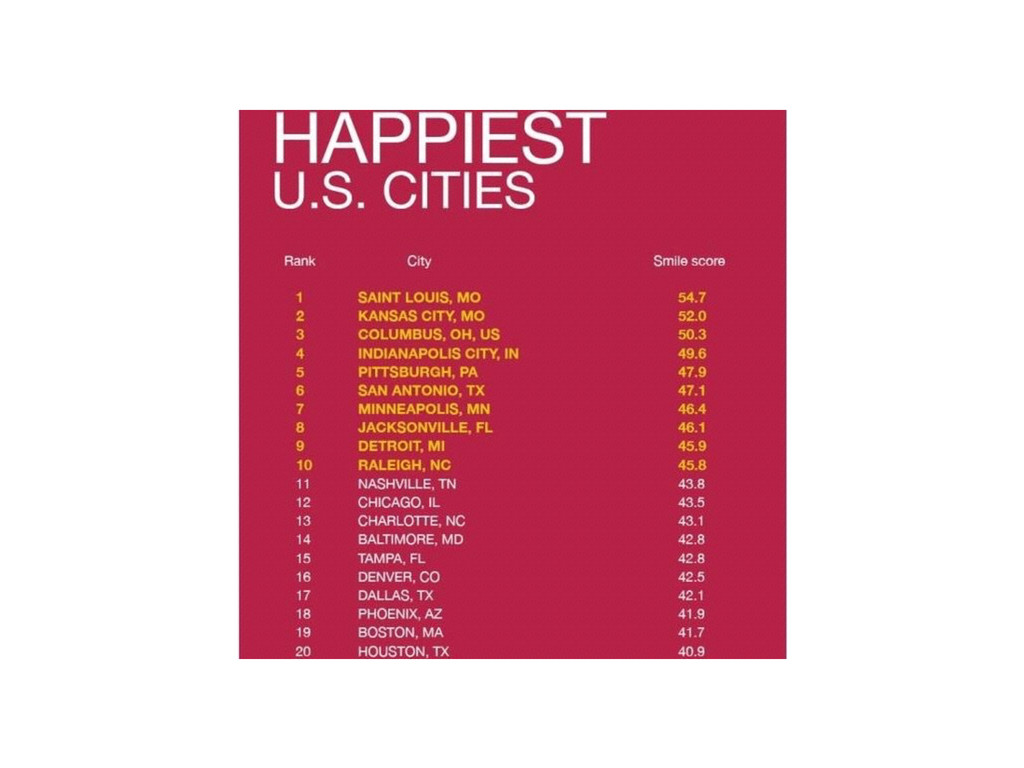
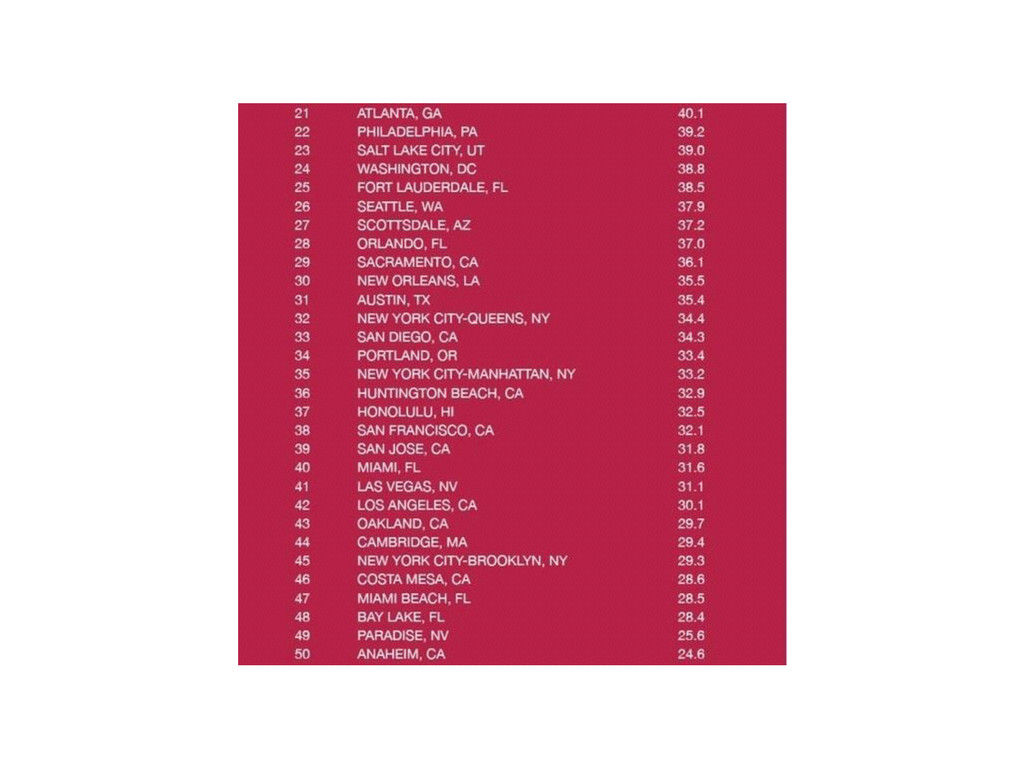
in faces: city happiness index • Ratio of mustaches on faces: hipster-ness index for coffee-shops • Ratio of lipstick on faces: glamour-ness index for night club and bars
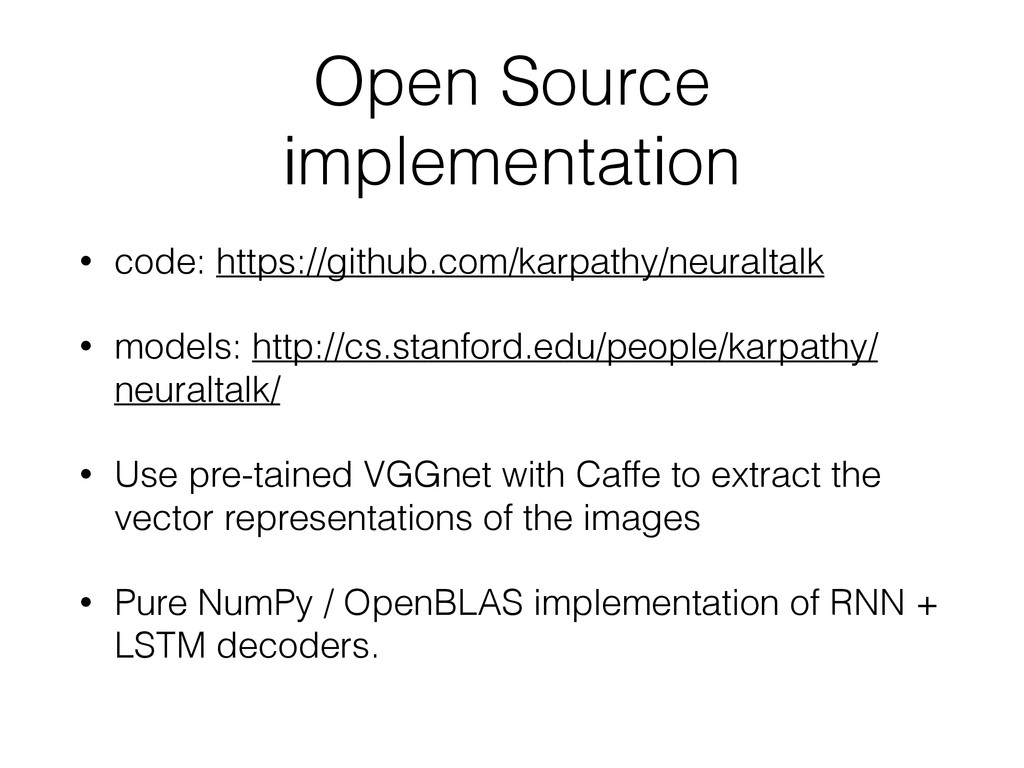
localization task • 16 to 19 weight layers (without max pool and ReLU) • Small 3x3 convolution kernels • Sequence of Conv + ReLU layers then max pool • Supervised pre-training: insert new conv layer to previously model before each max pool • Pre-trained models for Caffe a.k.a. VGGNet
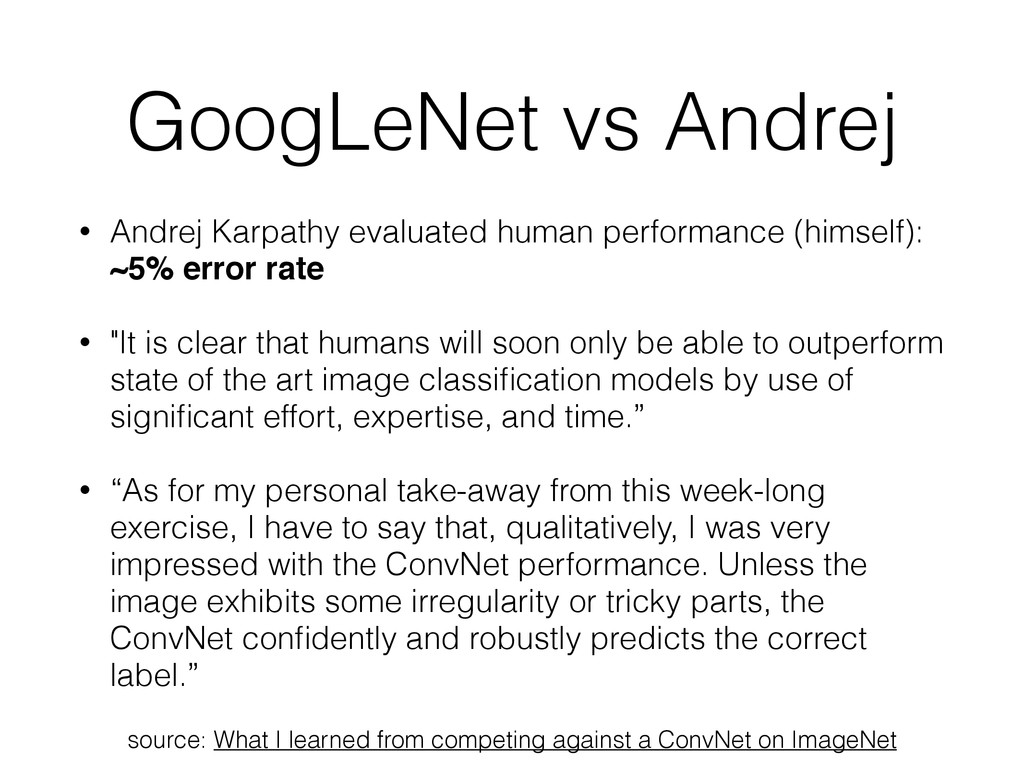
~5% error rate • "It is clear that humans will soon only be able to outperform state of the art image classification models by use of significant effort, expertise, and time.” • “As for my personal take-away from this week-long exercise, I have to say that, qualitatively, I was very impressed with the ConvNet performance. Unless the image exhibits some irregularity or tricky parts, the ConvNet confidently and robustly predicts the correct label.” source: What I learned from competing against a ConvNet on ImageNet
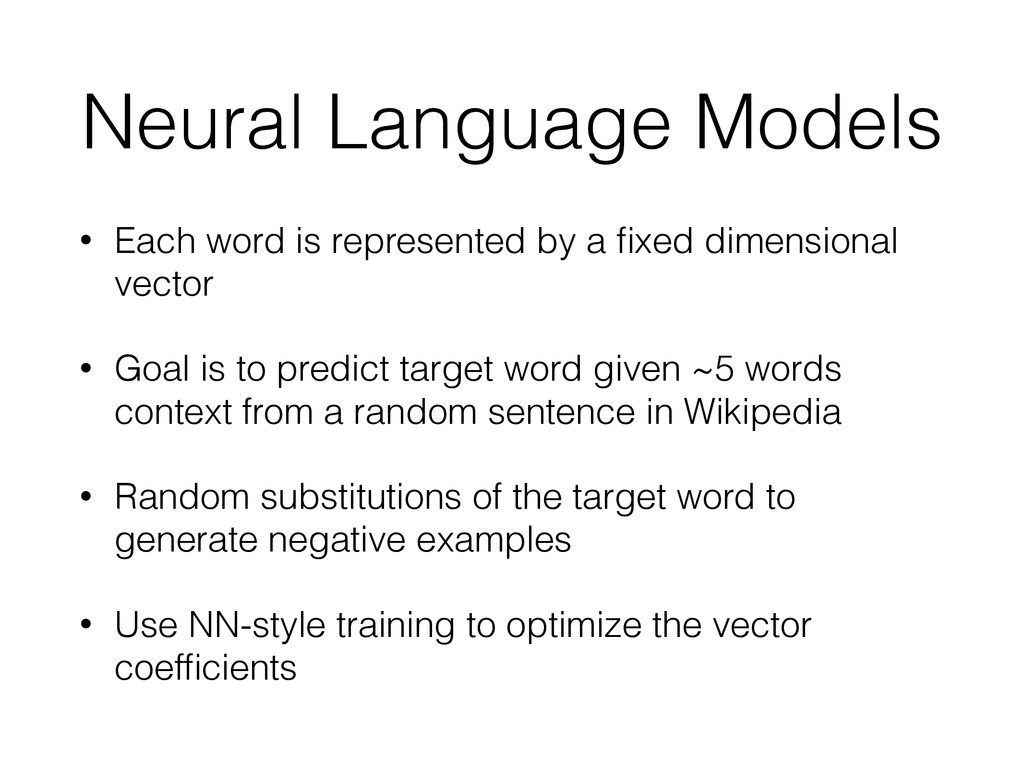
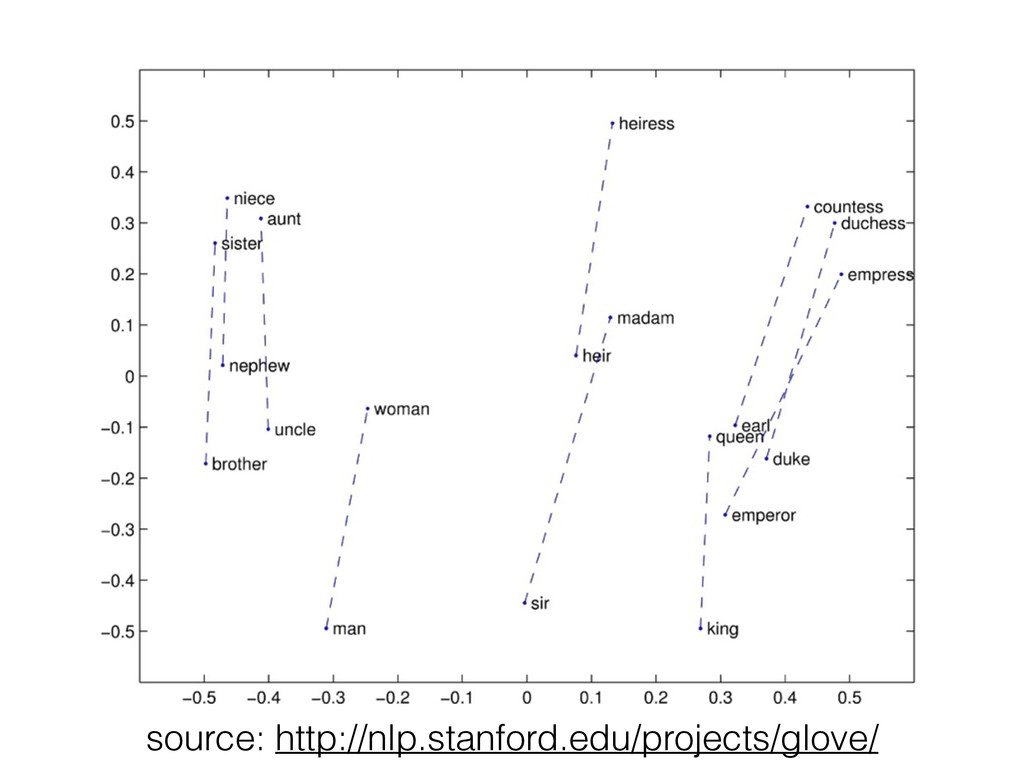
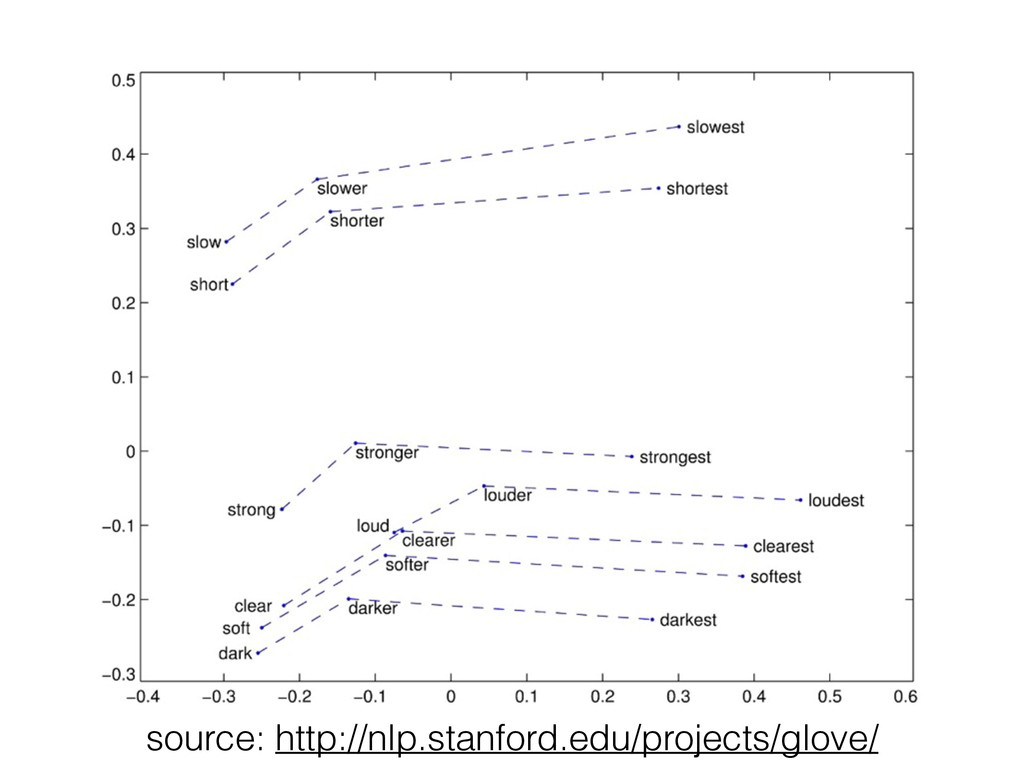
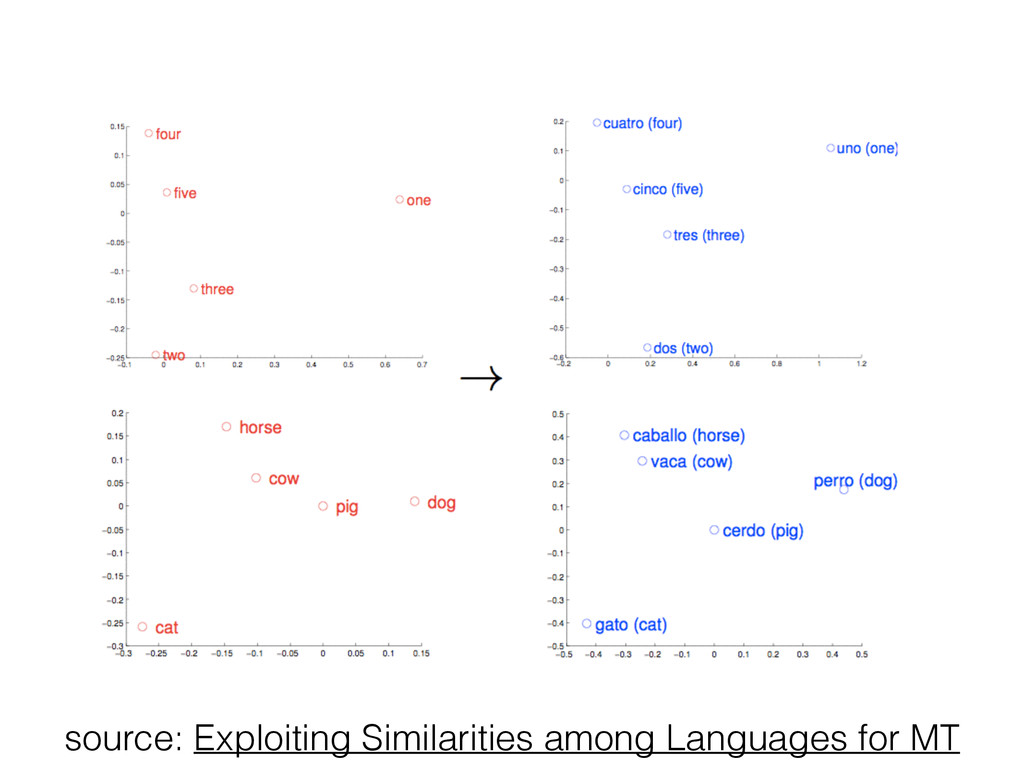
fixed dimensional vector • Goal is to predict target word given ~5 words context from a random sentence in Wikipedia • Random substitutions of the target word to generate negative examples • Use NN-style training to optimize the vector coefficients
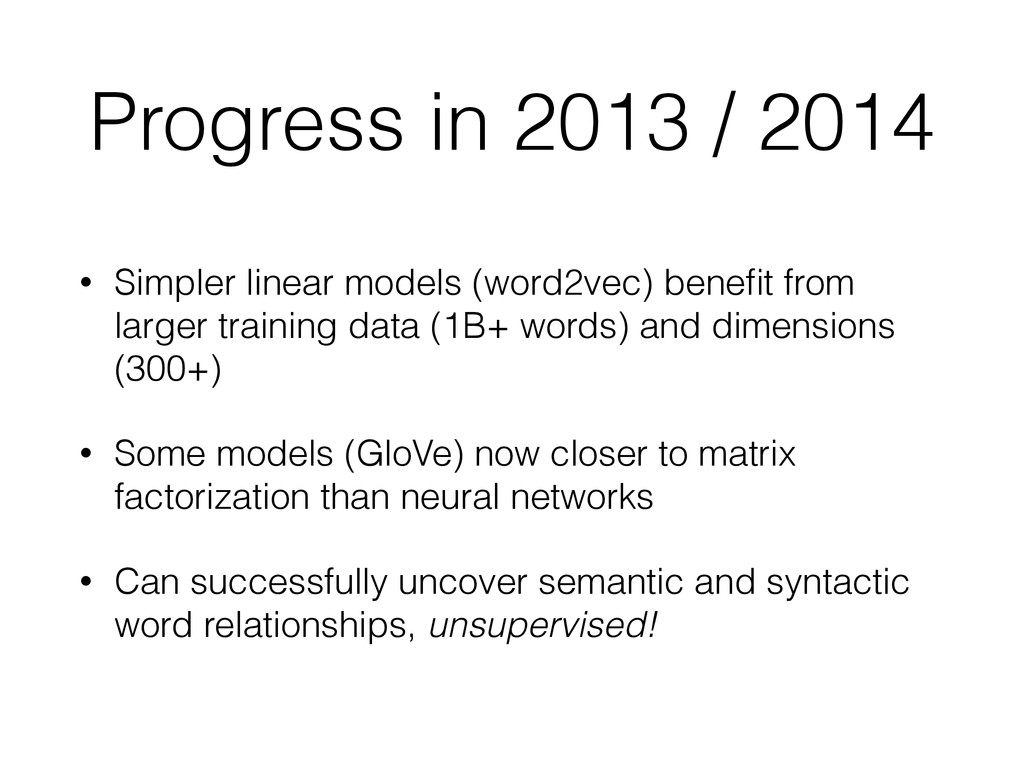
benefit from larger training data (1B+ words) and dimensions (300+) • Some models (GloVe) now closer to matrix factorization than neural networks • Can successfully uncover semantic and syntactic word relationships, unsupervised!
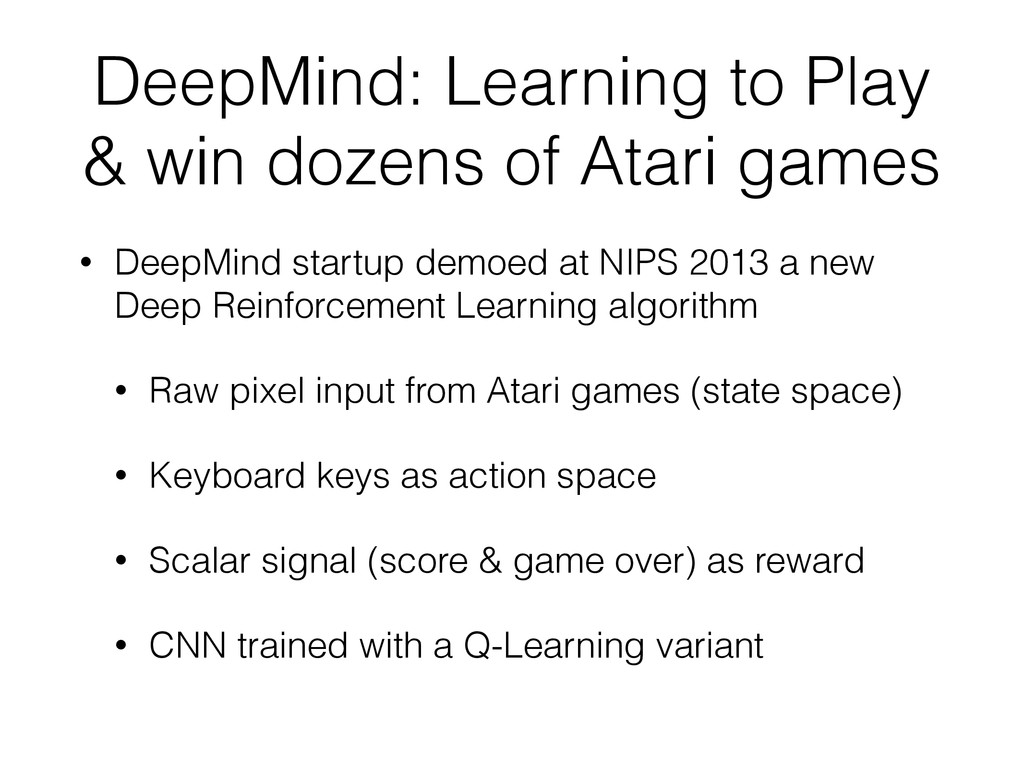
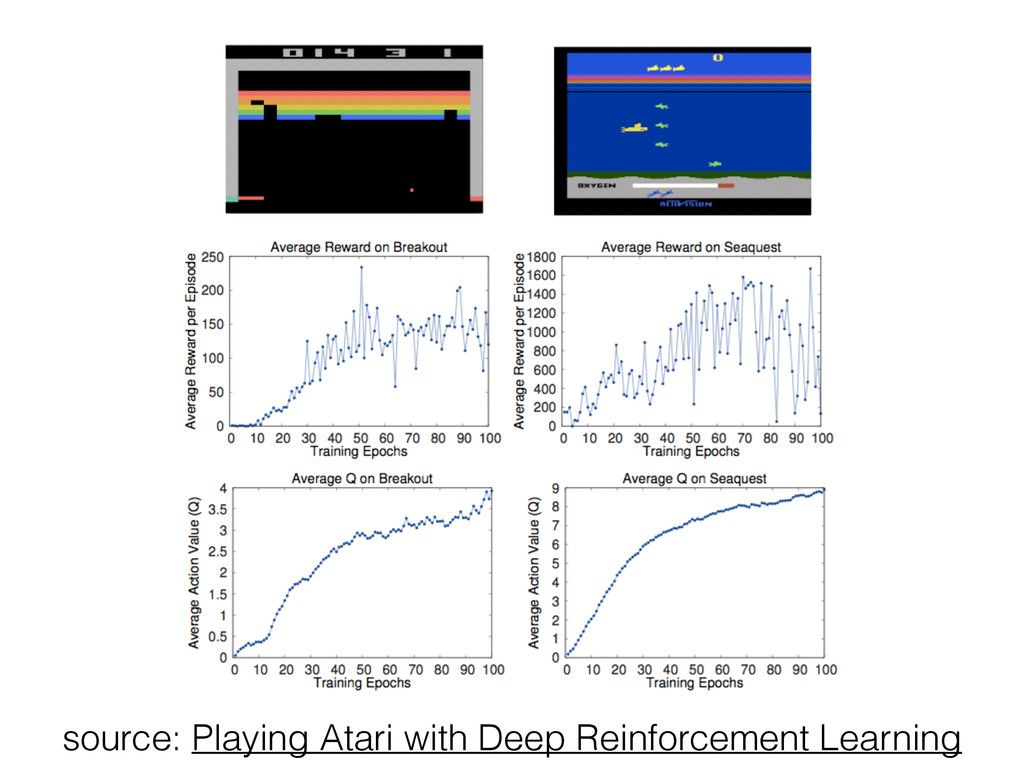
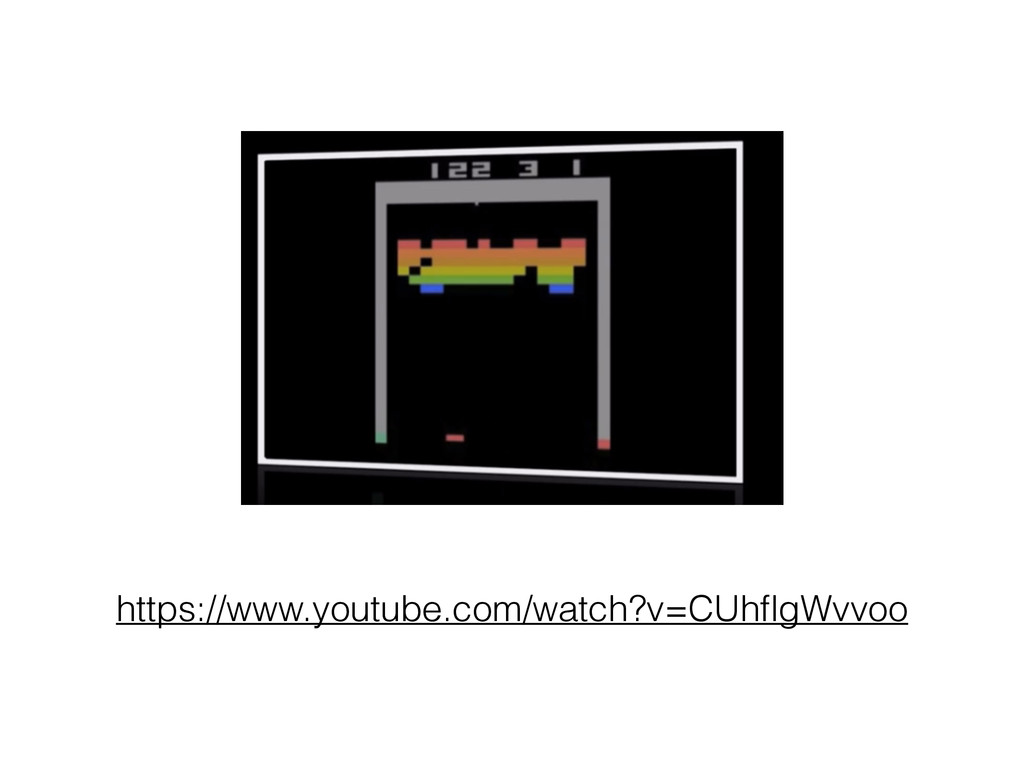
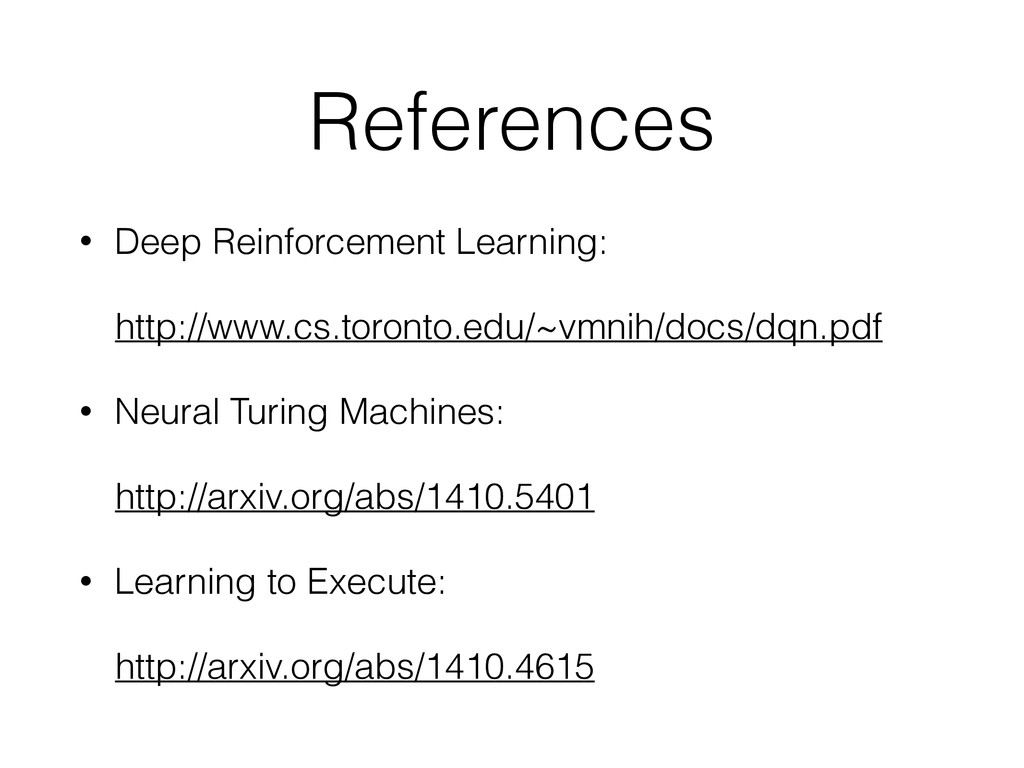
• DeepMind startup demoed at NIPS 2013 a new Deep Reinforcement Learning algorithm • Raw pixel input from Atari games (state space) • Keyboard keys as action space • Scalar signal (score & game over) as reward • CNN trained with a Q-Learning variant
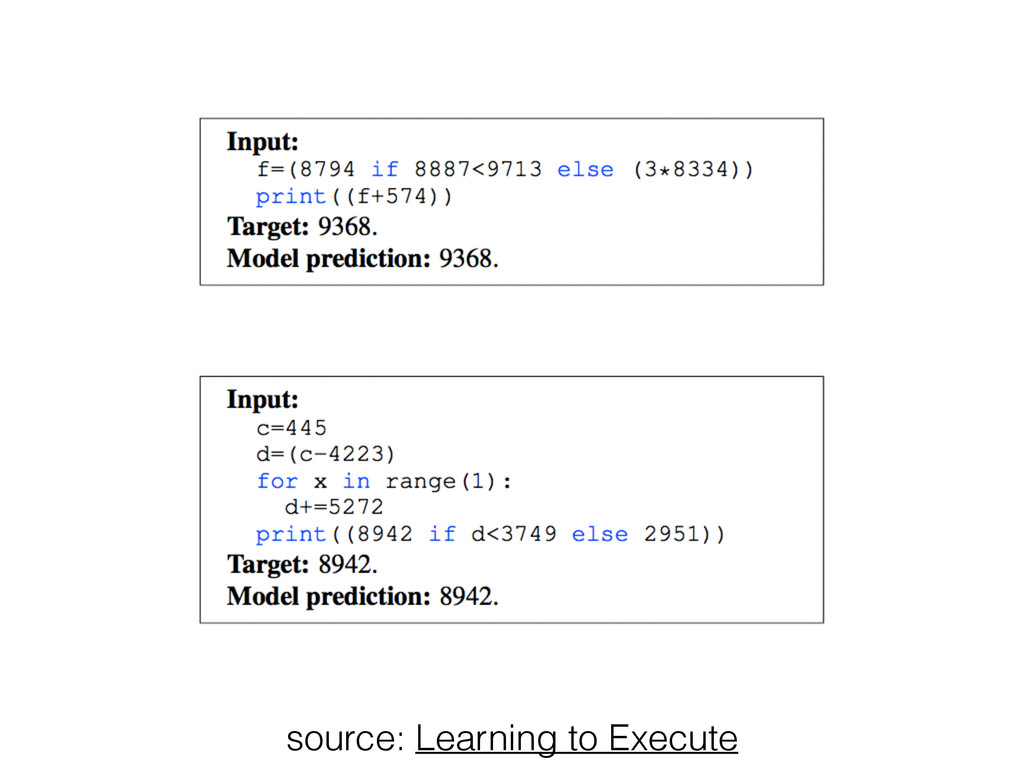
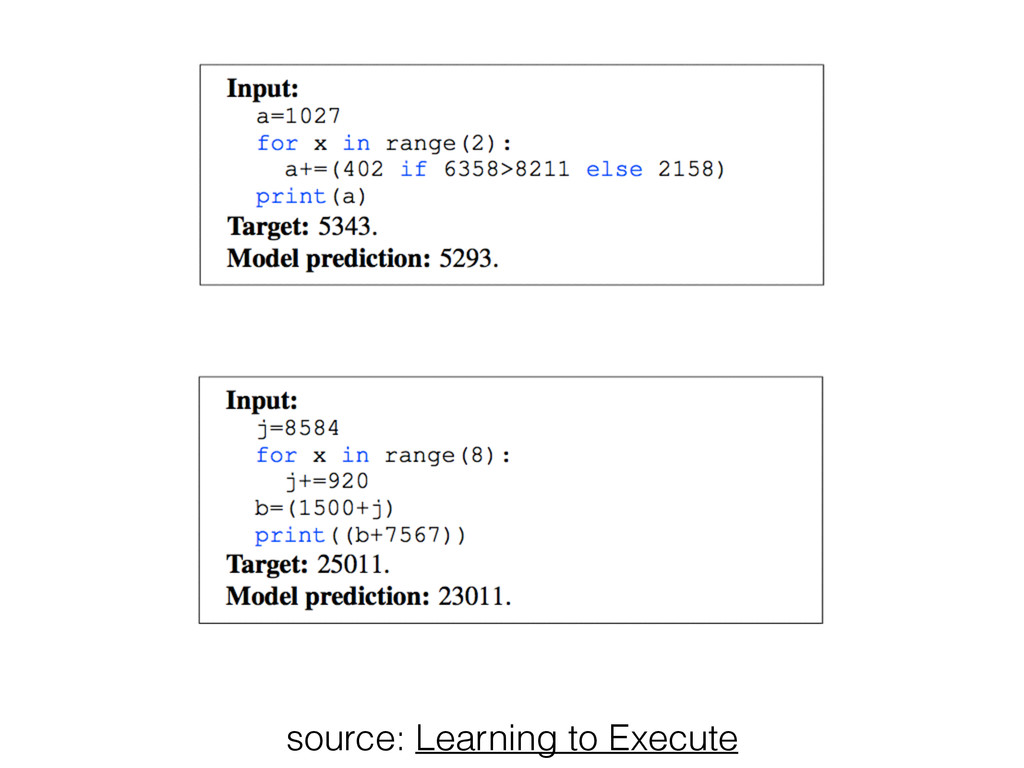
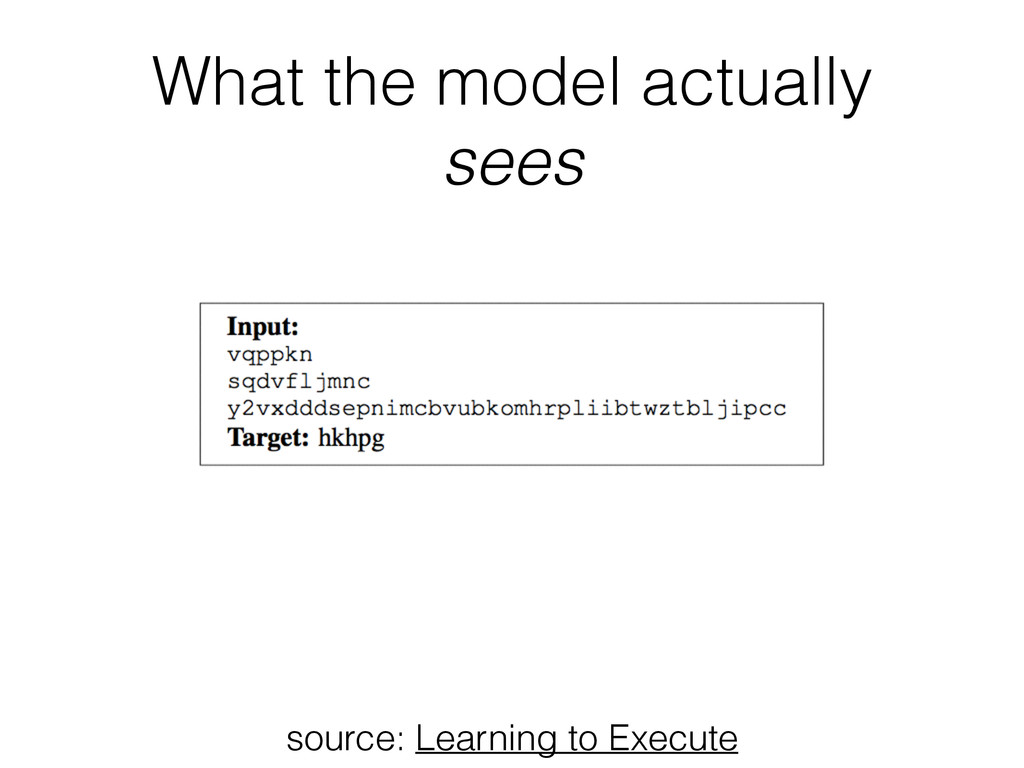
(very new) • RNN trained to map character representations of programs to outputs • Can learn to emulate a simplistic Python interpreter from examples programs & expected outputs • Limited to one-pass programs with O(n) complexity
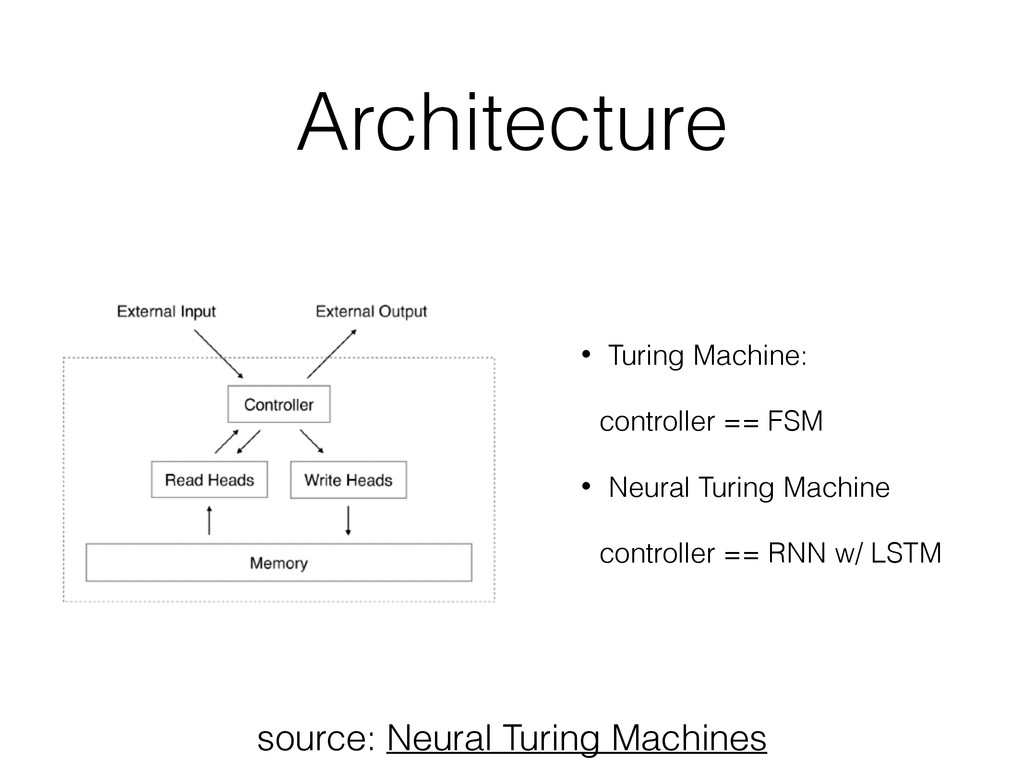
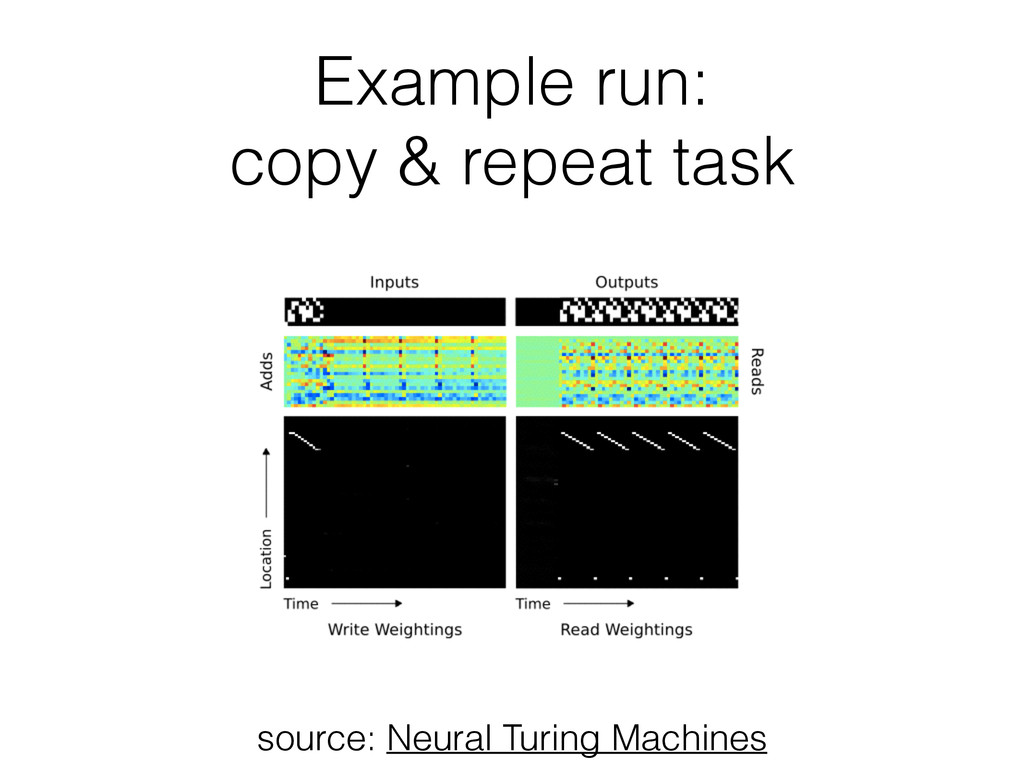
• Neural Network coupled to external memory (tape) • Analogue to a Turing Machine but differentiable • Can be used to learn to simple programs from example input / output pairs • copy, repeat copy, associative recall, • binary n-grams counts and sort
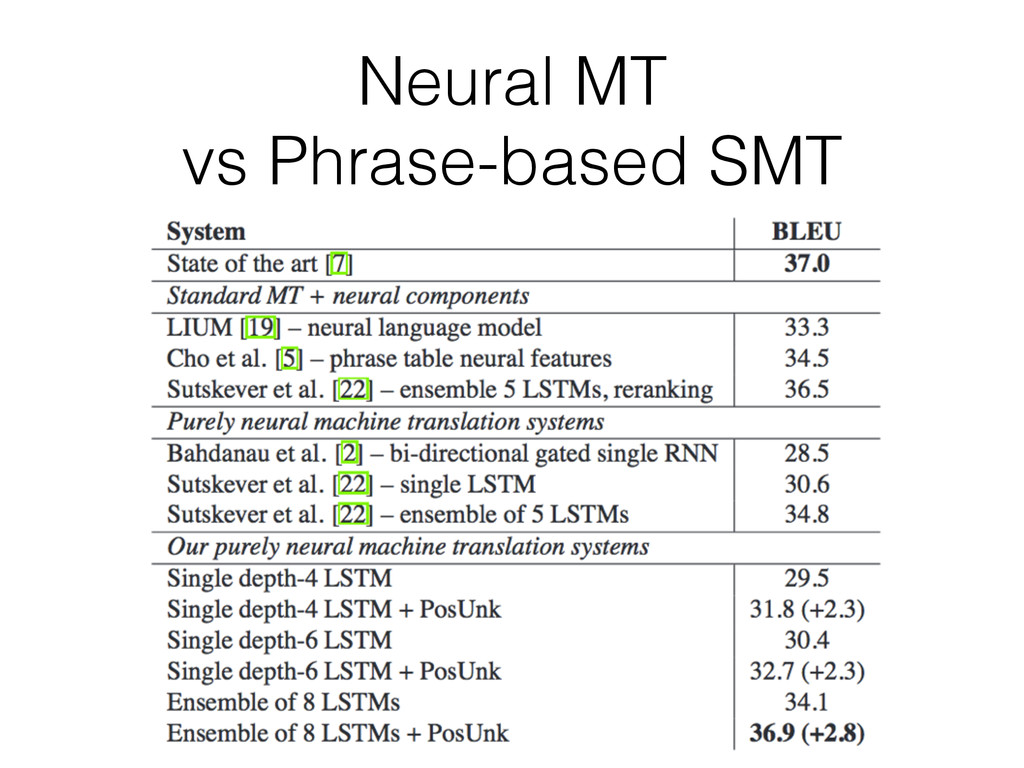
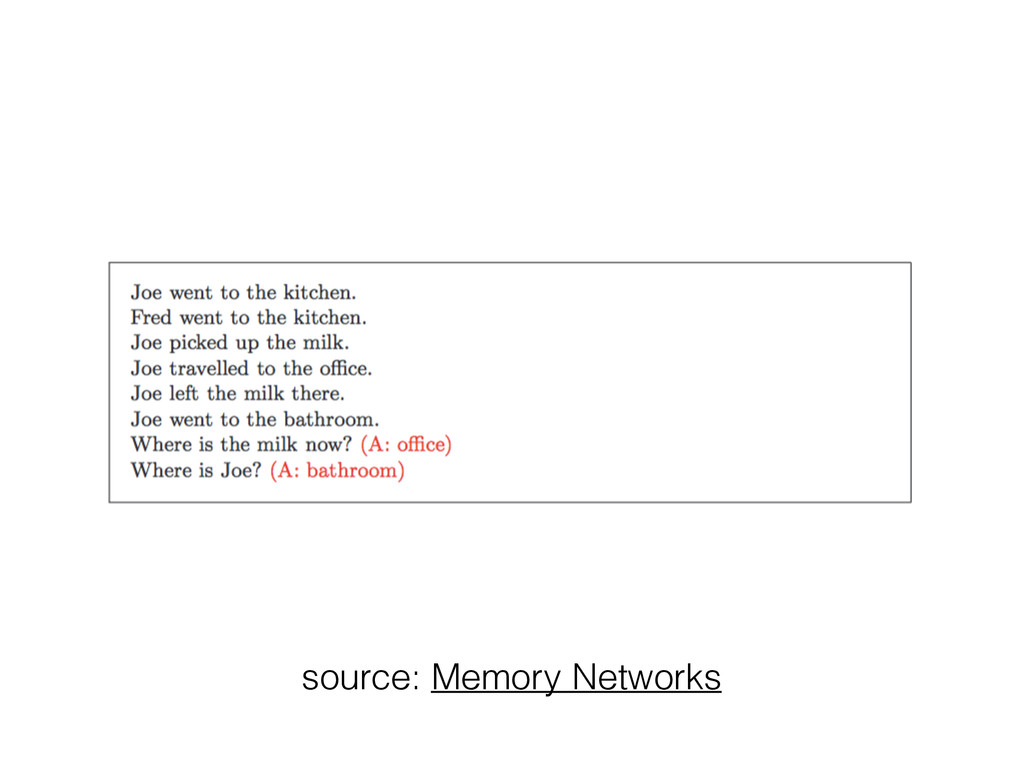
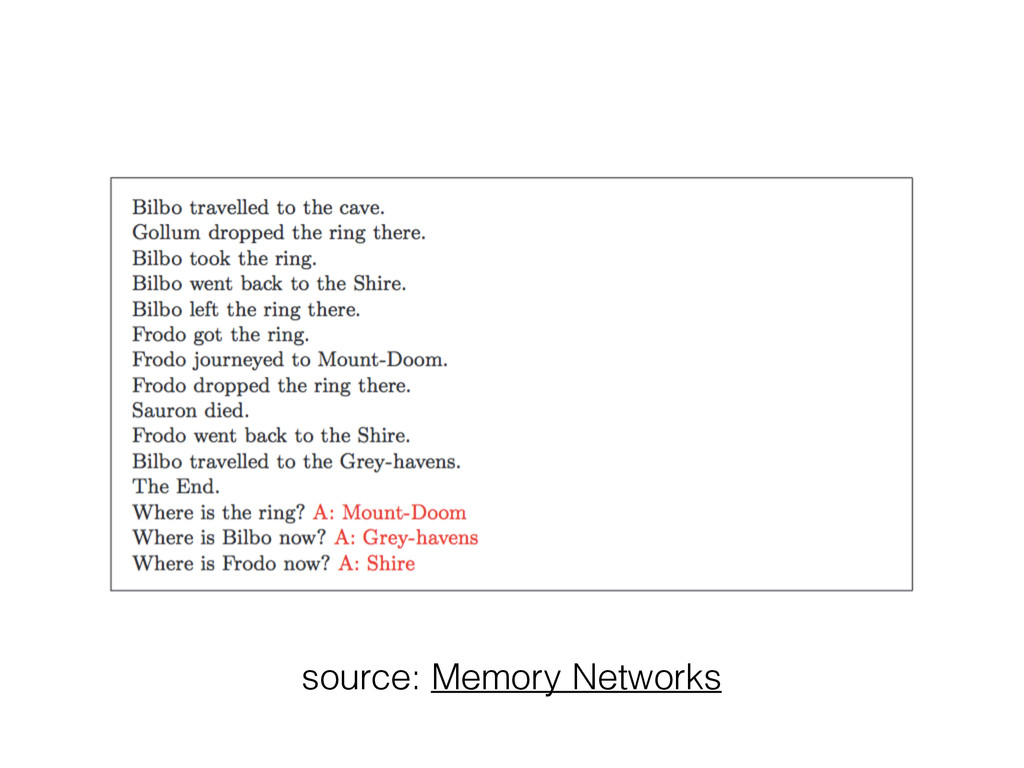
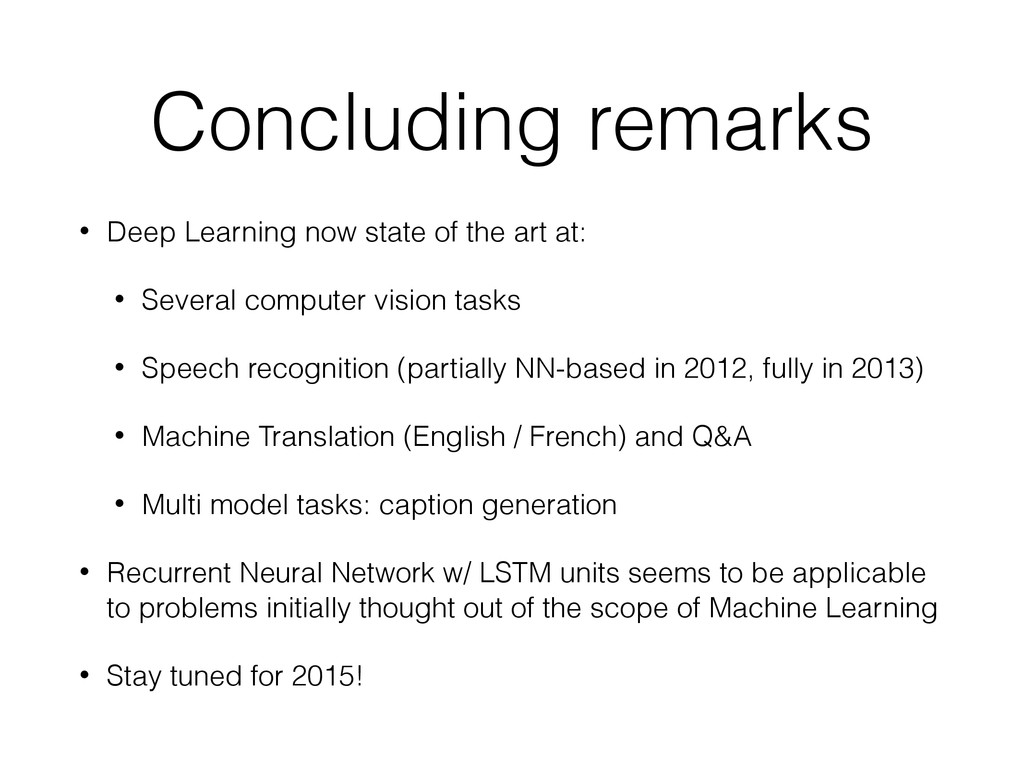
at: • Several computer vision tasks • Speech recognition (partially NN-based in 2012, fully in 2013) • Machine Translation (English / French) and Q&A • Multi model tasks: caption generation • Recurrent Neural Network w/ LSTM units seems to be applicable to problems initially thought out of the scope of Machine Learning • Stay tuned for 2015!
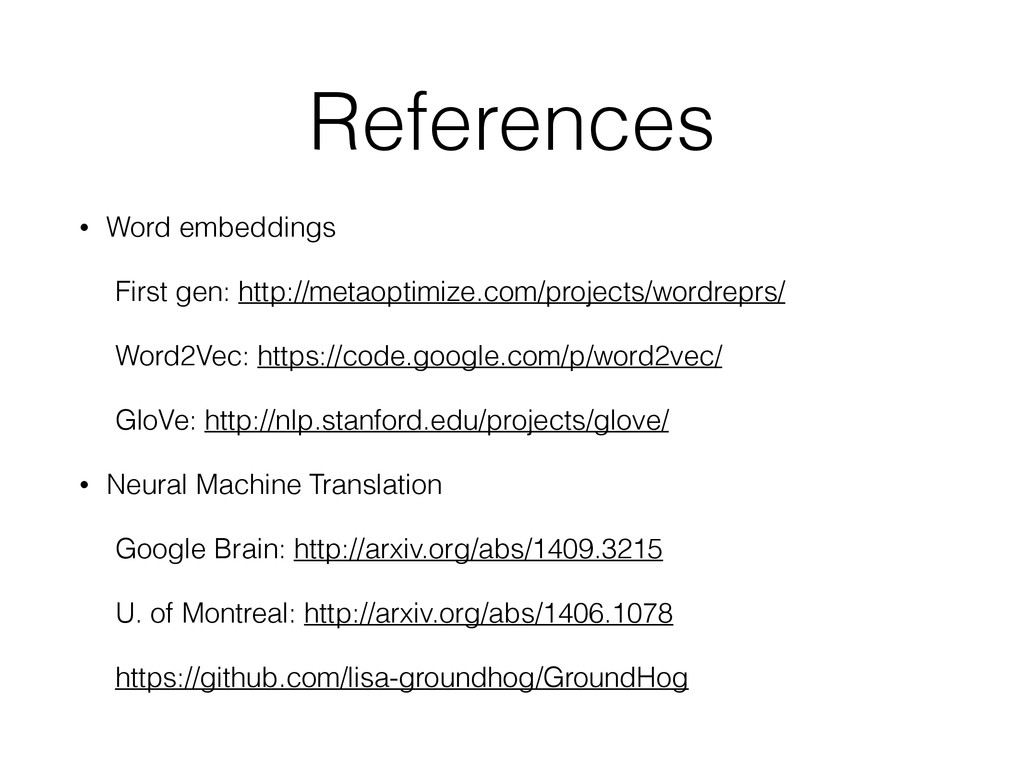
http://nlp.stanford.edu/projects/glove/ • Neural Machine Translation Google Brain: http://arxiv.org/abs/1409.3215 U. of Montreal: http://arxiv.org/abs/1406.1078 https://github.com/lisa-groundhog/GroundHog


 ogrisel
 tagtag
 hayashiyus884
 hayataka88
 kanekomasahiro
 brainpadpr
 institutdelelevage
 bonotake
 arfon
 tsoh
 miyayou
 mickey_0226
 baasie
 ks91
 chrislema
 aleyda
 retrage
 tonyrice
 notwaldorf
 gurzu
 oripsolob
 twada
 ipullrank
 tammielis