Share
Embed
MongoDB Big Data and Friends
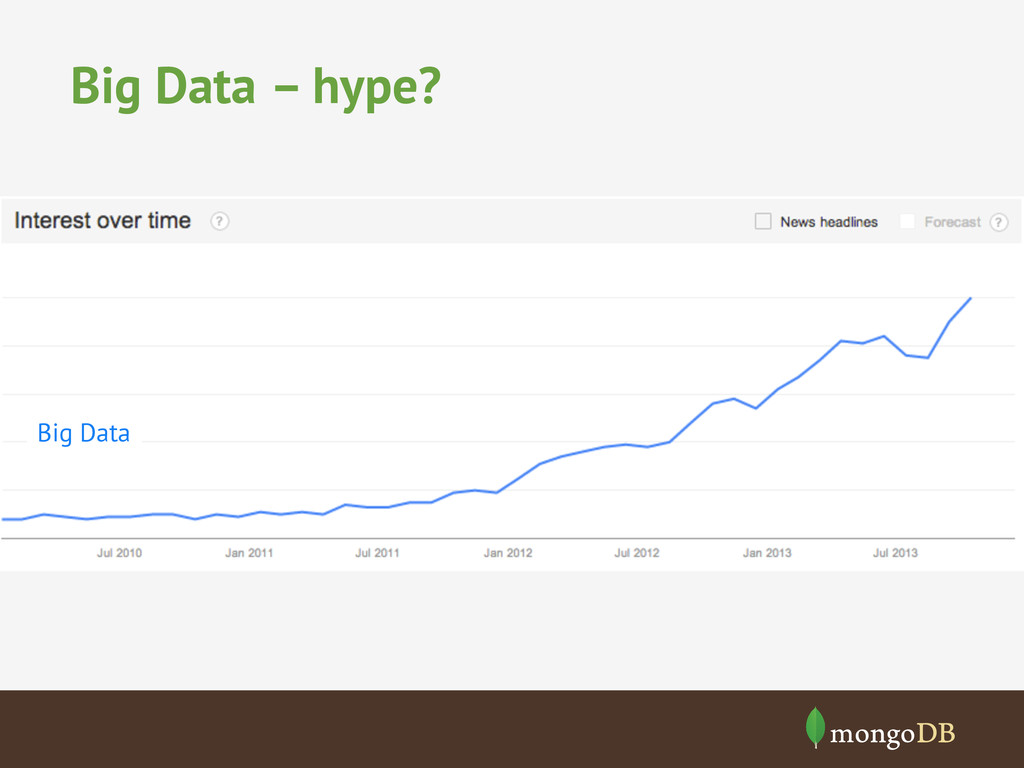
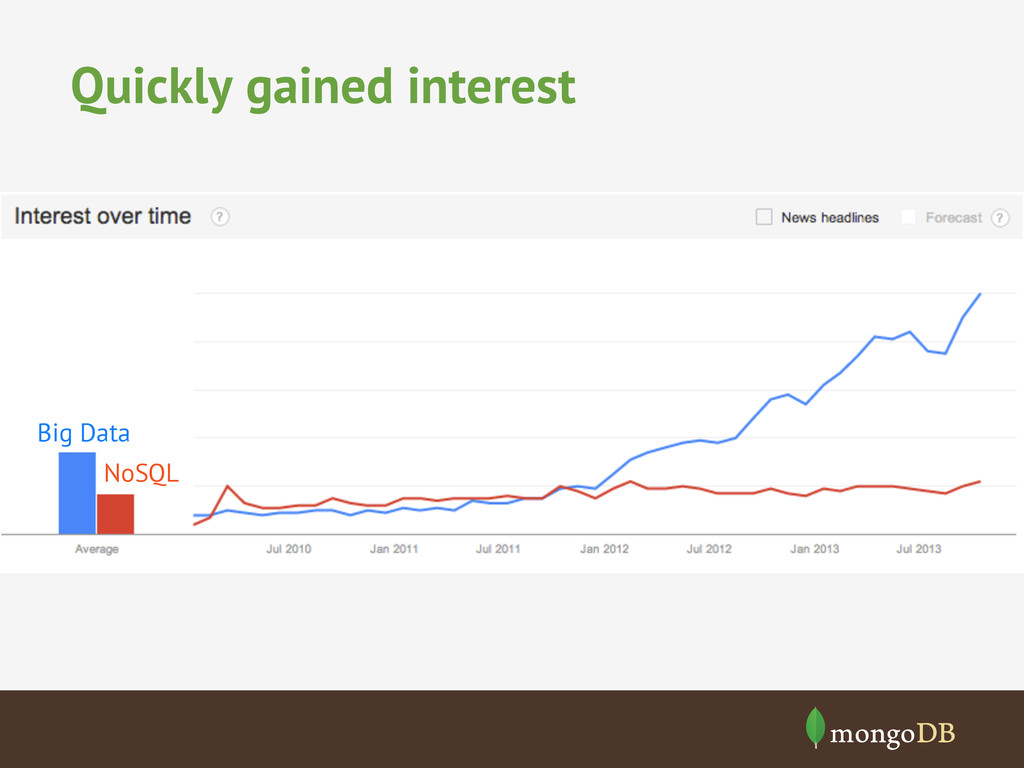
The term Big Data seems to have become a marketeers battle ground, however, the trend of ever increasing volumes of data is only growing and with challenges of how to make sense of that data. We'll look at how MongoDB was designed to store vast amounts of data and how it can be used alone or with other big data processing systems (hadoop) to make sense of big data.
rozza
October 17, 2013
Transcript
59 slides
-
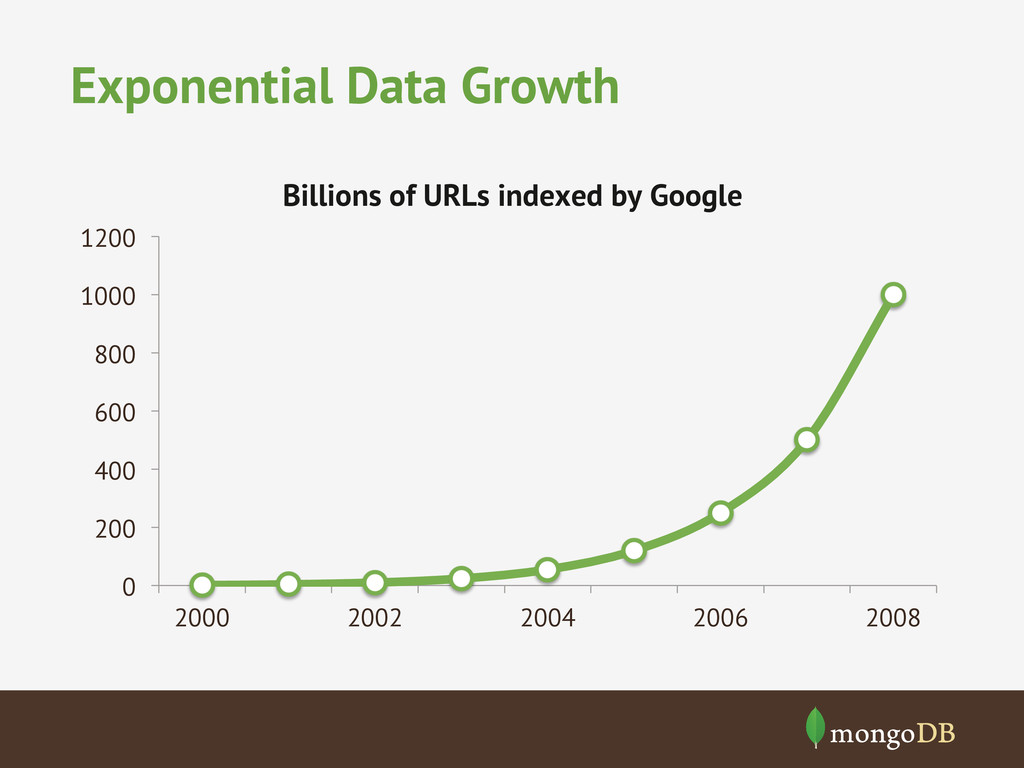
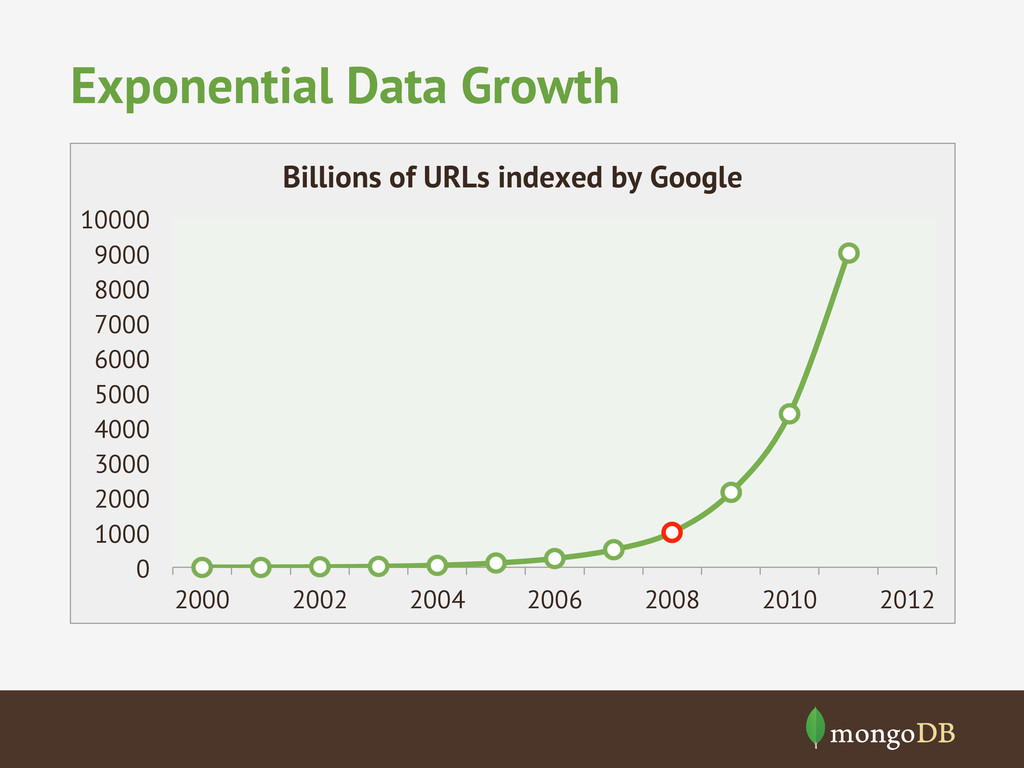
Exponential Data Growth 0 200 400 600 800 1000 1200
2000 2002 2004 2006 2008 Billions of URLs indexed by Google -
In the past few years Open source software has emerged
enabling the rest of us to handle Big Data -
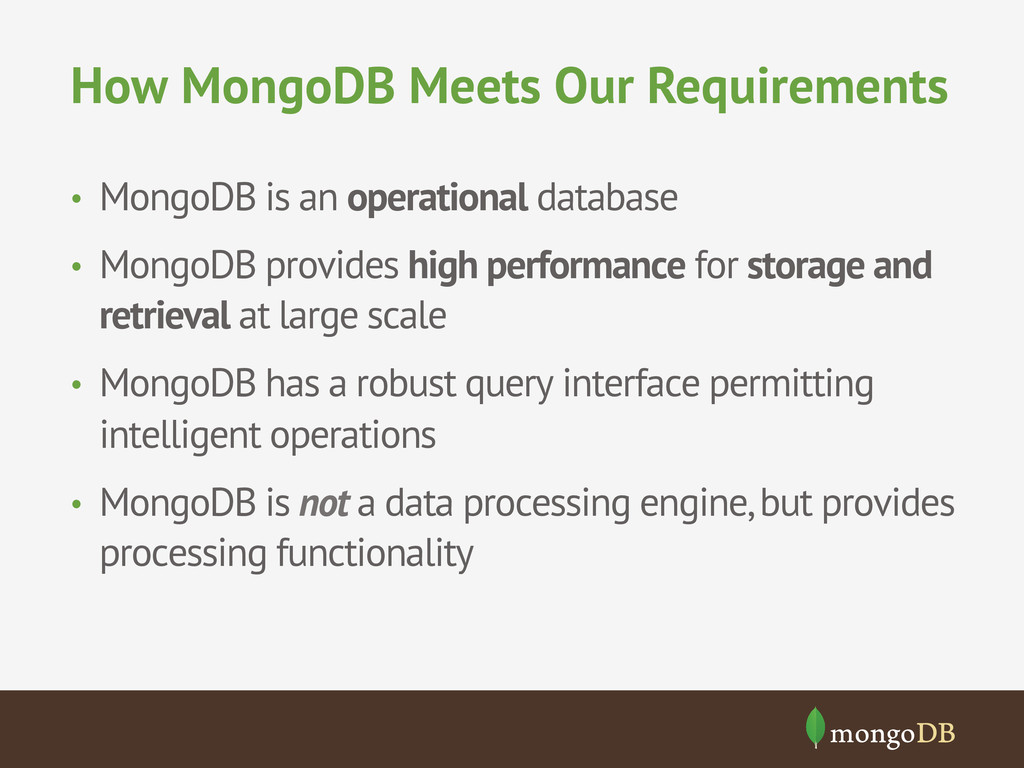
How MongoDB Meets Our Requirements • MongoDB is an operational
database • MongoDB provides high performance for storage and retrieval at large scale • MongoDB has a robust query interface permitting intelligent operations • MongoDB is not a data processing engine, but provides processing functionality -
The "hello world" of MapReduce is counting words in a
paragraph of text. Let’s try something a little more interesting… -
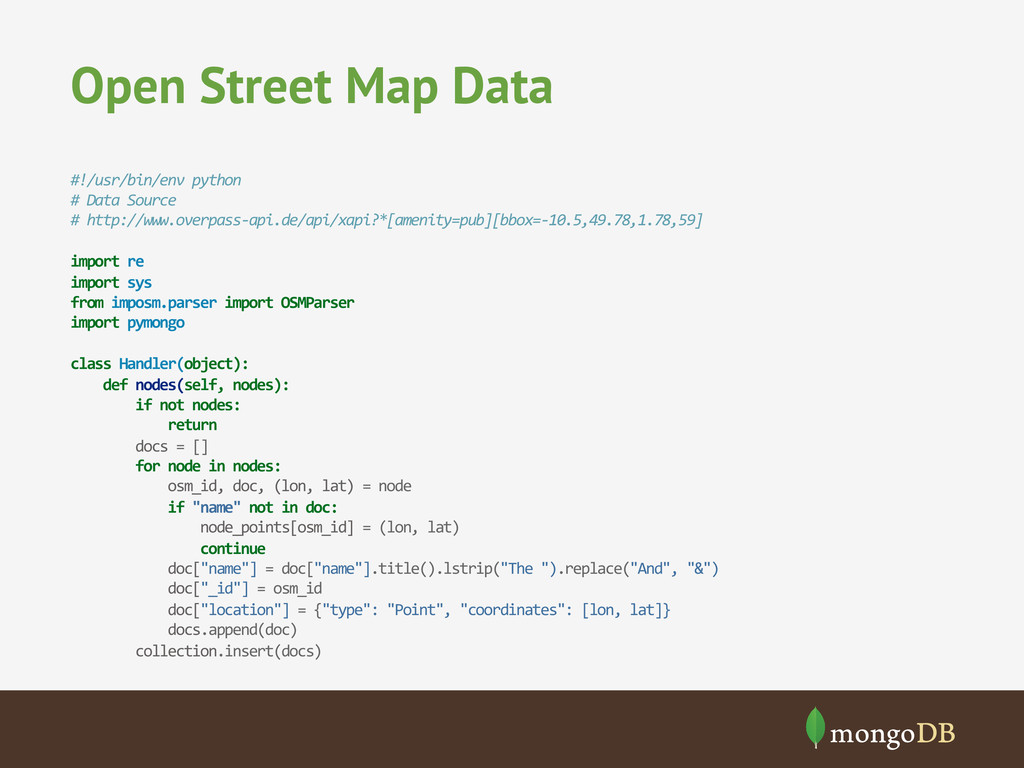
Open Street Map Data #!/usr/bin/env python # Data Source
# http://www.overpass-‐api.de/api/xapi?*[amenity=pub][bbox=-‐10.5,49.78,1.78,59] import re import sys from imposm.parser import OSMParser import pymongo class Handler(object): def nodes(self, nodes): if not nodes: return docs = [] for node in nodes: osm_id, doc, (lon, lat) = node if "name" not in doc: node_points[osm_id] = (lon, lat) continue doc["name"] = doc["name"].title().lstrip("The ").replace("And", "&") doc["_id"] = osm_id doc["location"] = {"type": "Point", "coordinates": [lon, lat]} docs.append(doc) collection.insert(docs) -
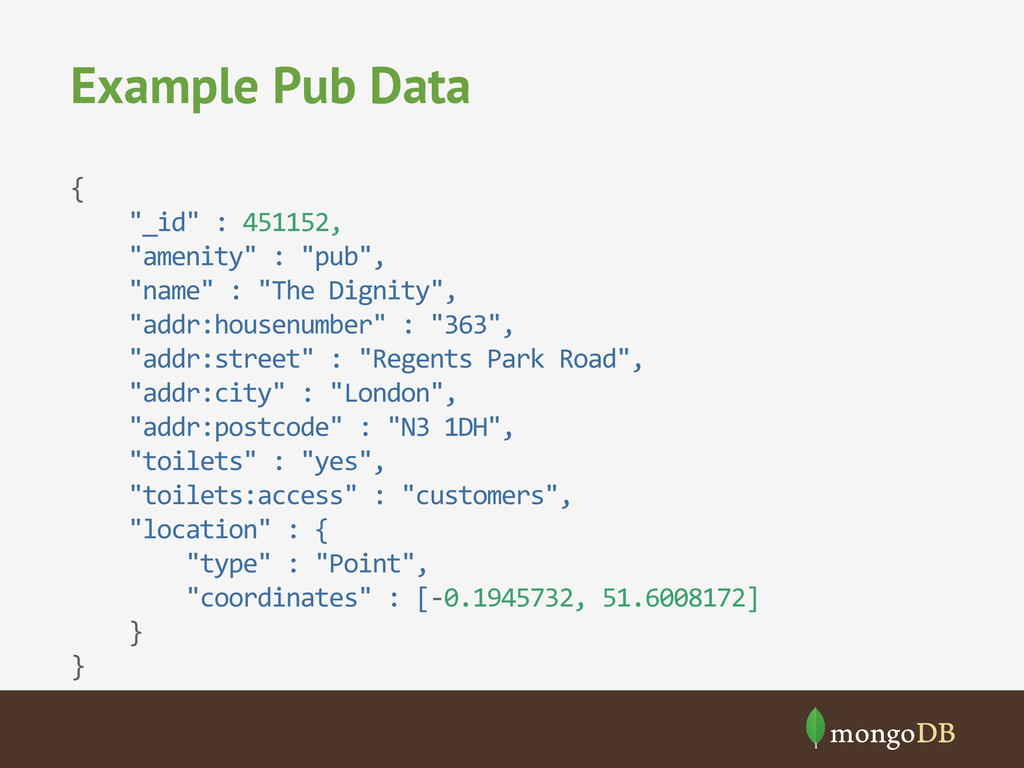
Example Pub Data { "_id" :
451152, "amenity" : "pub", "name" : "The Dignity", "addr:housenumber" : "363", "addr:street" : "Regents Park Road", "addr:city" : "London", "addr:postcode" : "N3 1DH", "toilets" : "yes", "toilets:access" : "customers", "location" : { "type" : "Point", "coordinates" : [-‐0.1945732, 51.6008172] } } -
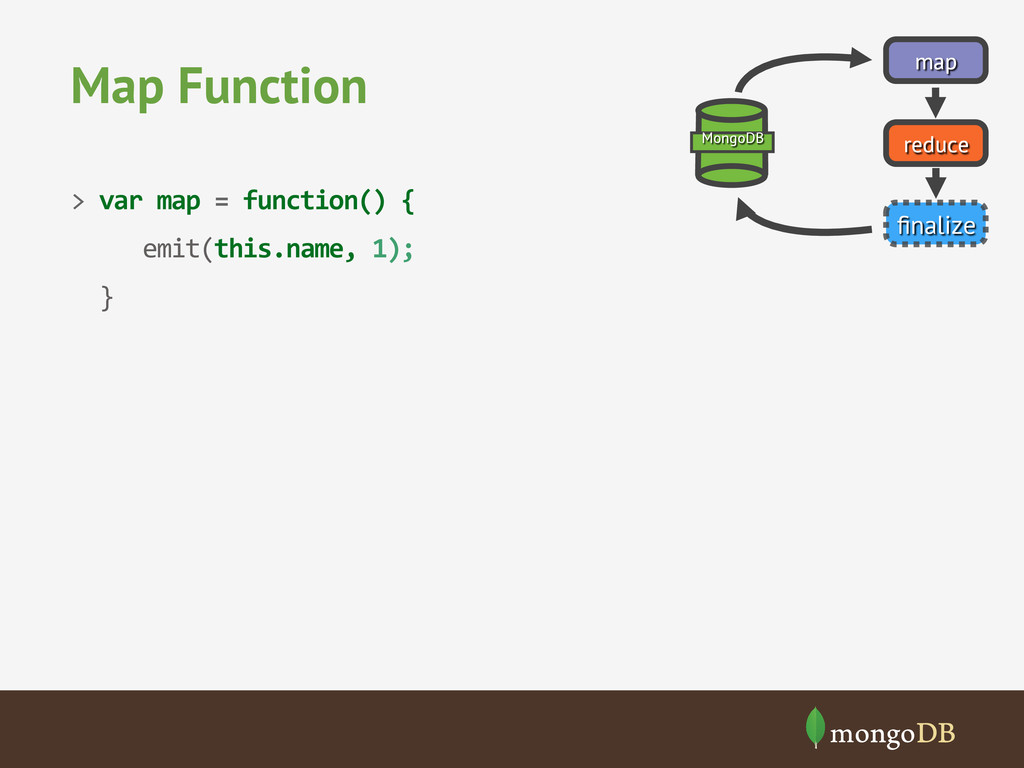
Map Function > var map = function() {
emit(this.name, 1); } MongoDB map reduce finalize -
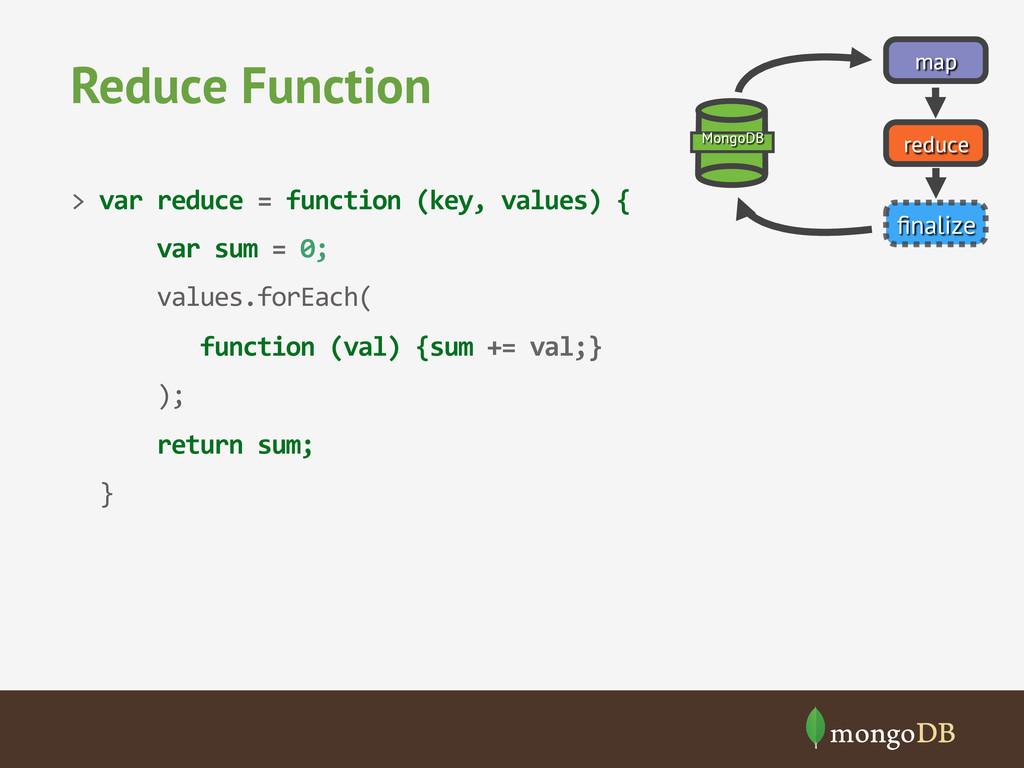
Reduce Function > var reduce = function (key, values) {
var sum = 0; values.forEach( function (val) {sum += val;} ); return sum; } MongoDB map reduce finalize -
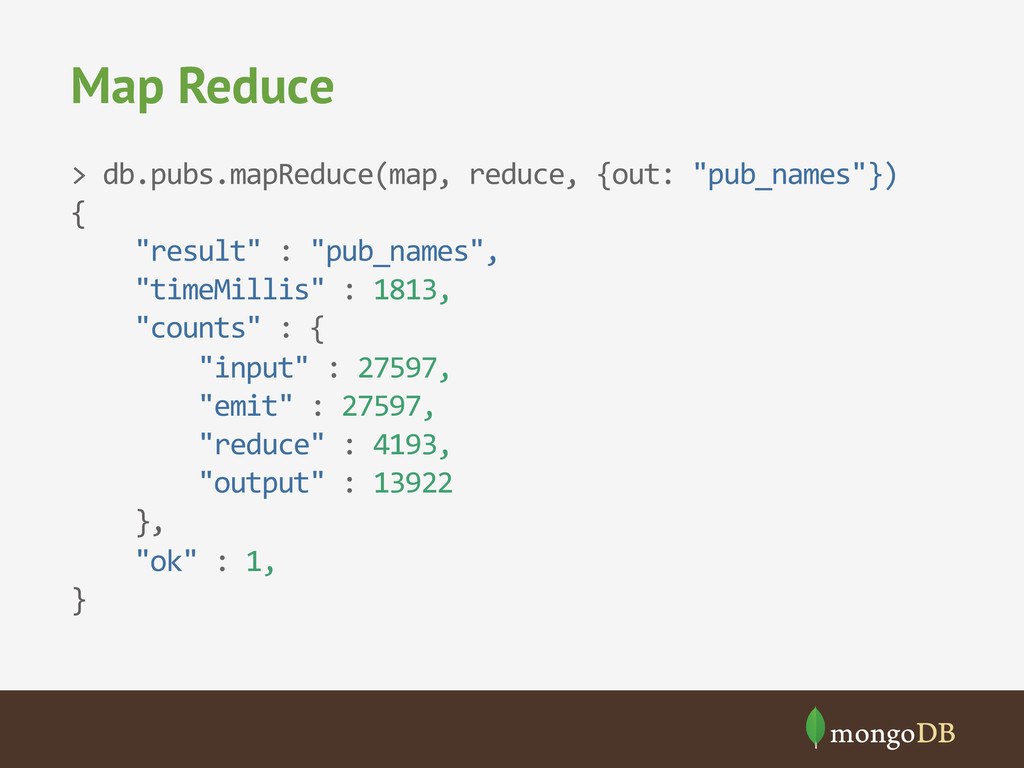
Map Reduce > db.pubs.mapReduce(map, reduce, {out: "pub_names"}) {
"result" : "pub_names", "timeMillis" : 1813, "counts" : { "input" : 27597, "emit" : 27597, "reduce" : 4193, "output" : 13922 }, "ok" : 1, } -
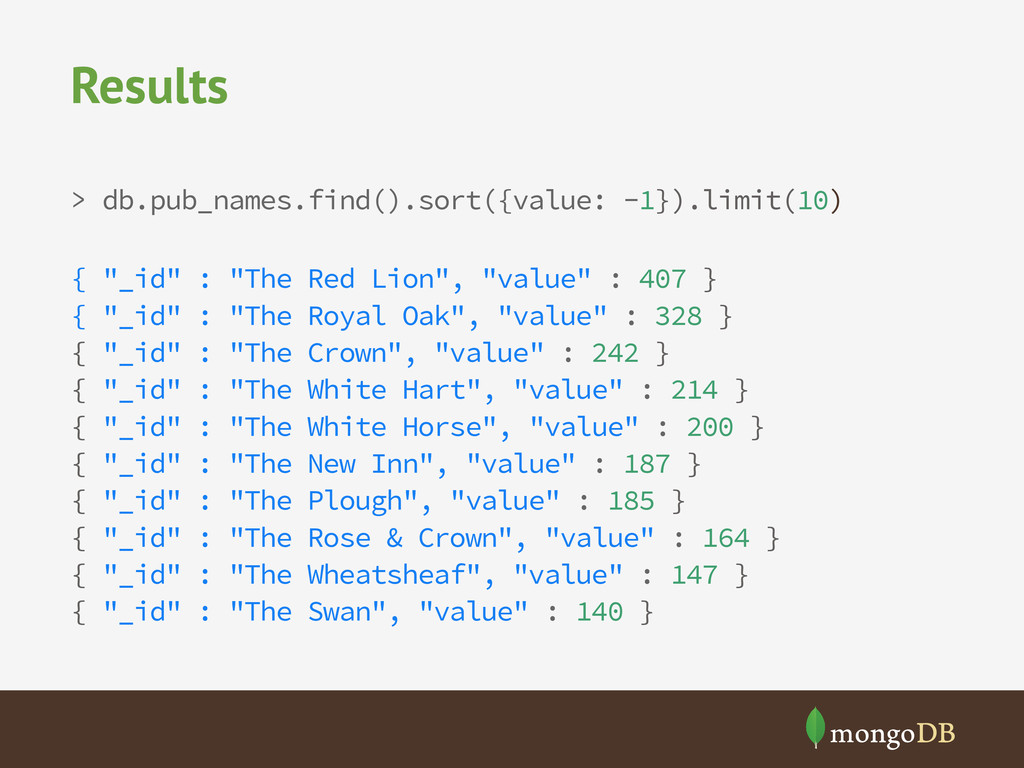
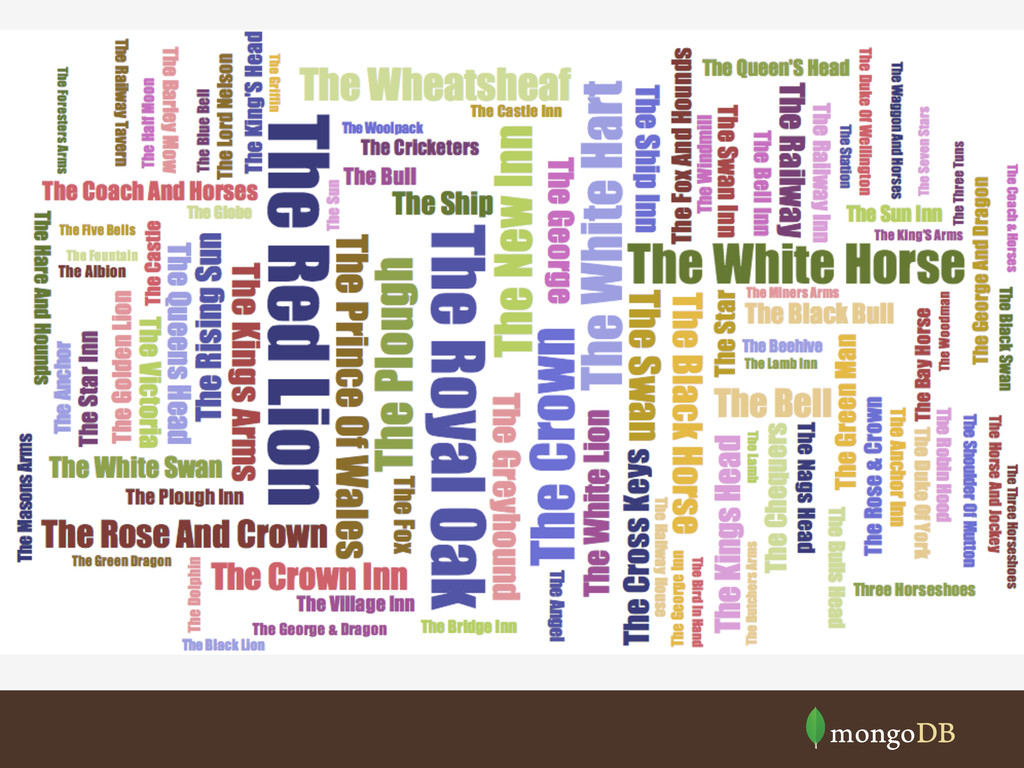
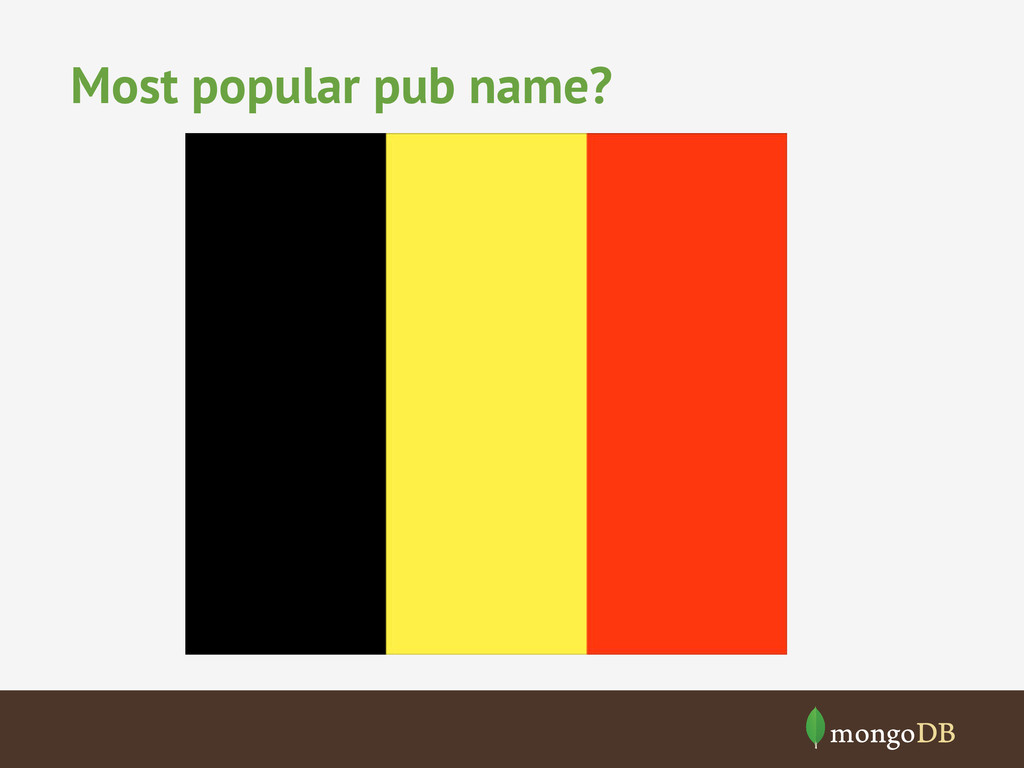
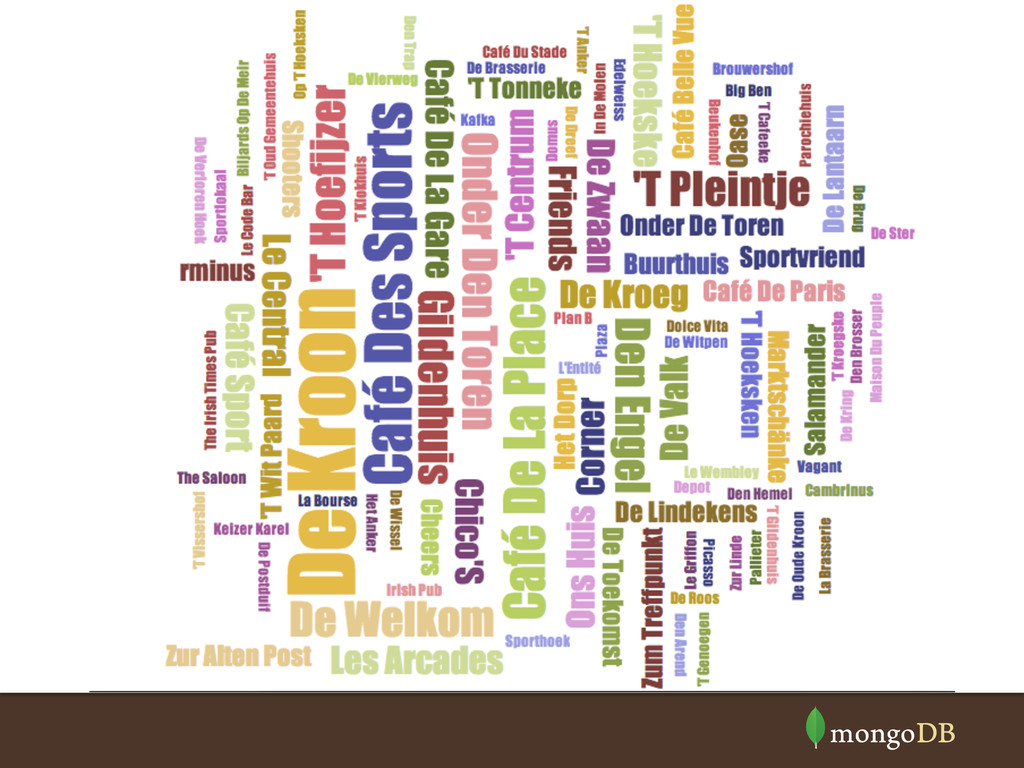
Results > db.pub_names.find().sort({value: -1}).limit(10) { "_id" : "The Red Lion",
"value" : 407 } { "_id" : "The Royal Oak", "value" : 328 } { "_id" : "The Crown", "value" : 242 } { "_id" : "The White Hart", "value" : 214 } { "_id" : "The White Horse", "value" : 200 } { "_id" : "The New Inn", "value" : 187 } { "_id" : "The Plough", "value" : 185 } { "_id" : "The Rose & Crown", "value" : 164 } { "_id" : "The Wheatsheaf", "value" : 147 } { "_id" : "The Swan", "value" : 140 } -
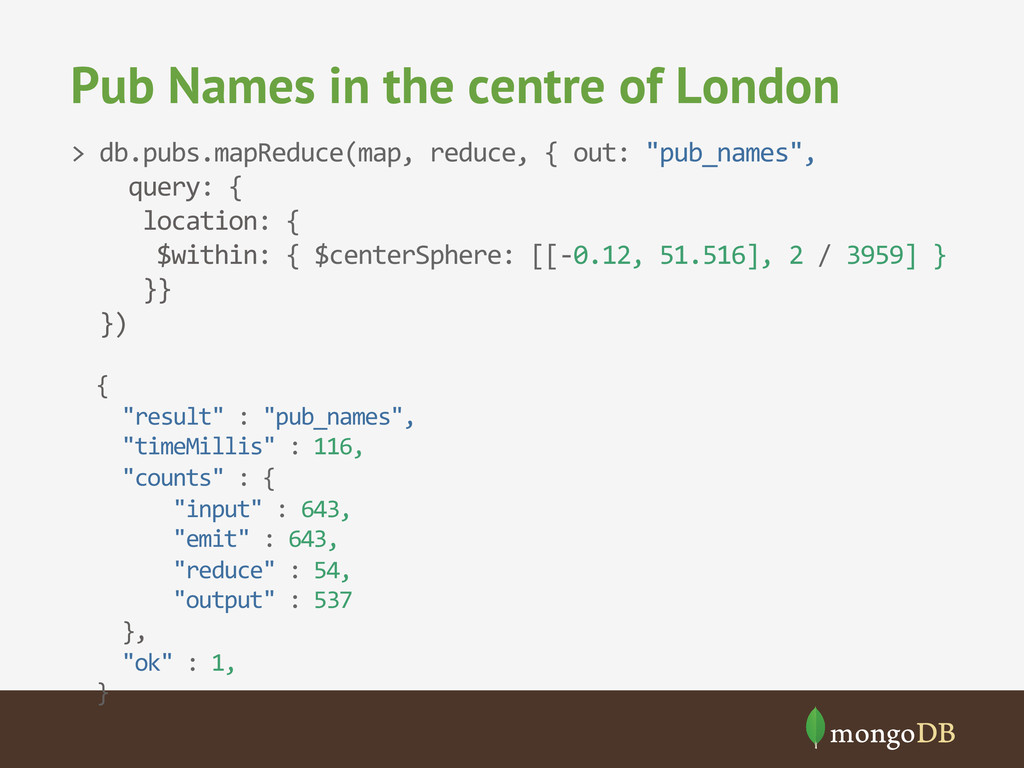
Pub Names in the centre of London > db.pubs.mapReduce(map, reduce,
{ out: "pub_names", query: { location: { $within: { $centerSphere: [[-‐0.12, 51.516], 2 / 3959] } }} }) { "result" : "pub_names", "timeMillis" : 116, "counts" : { "input" : 643, "emit" : 643, "reduce" : 54, "output" : 537 }, "ok" : 1, } -
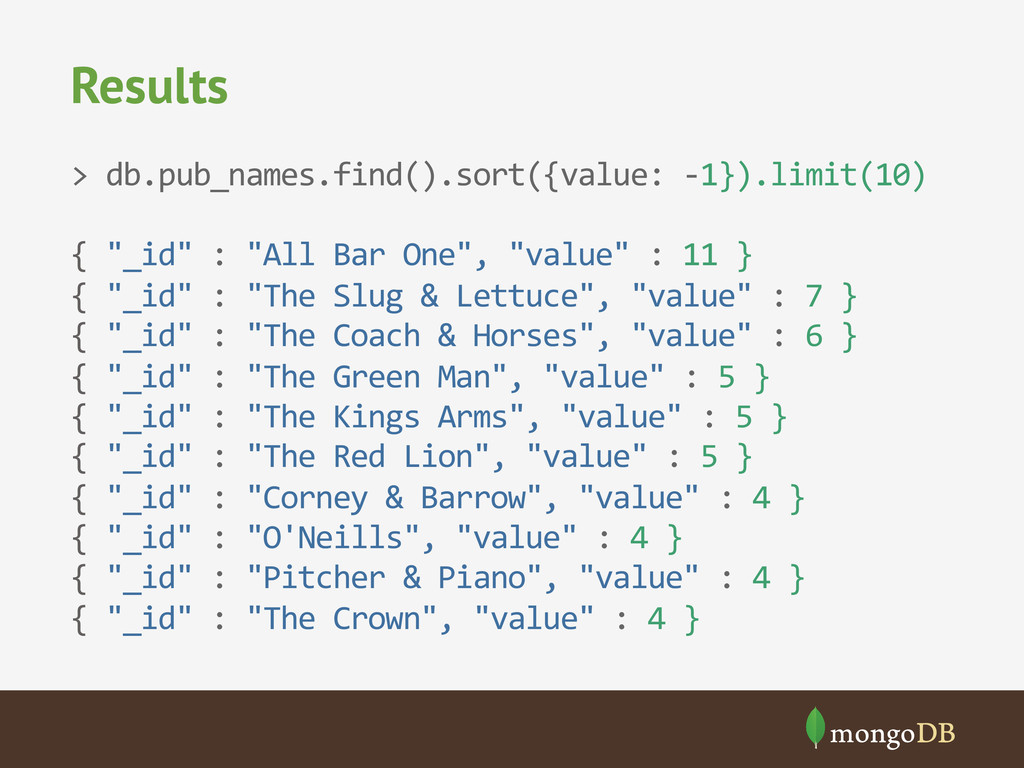
Results > db.pub_names.find().sort({value: -‐1}).limit(10) { "_id" : "All
Bar One", "value" : 11 } { "_id" : "The Slug & Lettuce", "value" : 7 } { "_id" : "The Coach & Horses", "value" : 6 } { "_id" : "The Green Man", "value" : 5 } { "_id" : "The Kings Arms", "value" : 5 } { "_id" : "The Red Lion", "value" : 5 } { "_id" : "Corney & Barrow", "value" : 4 } { "_id" : "O'Neills", "value" : 4 } { "_id" : "Pitcher & Piano", "value" : 4 } { "_id" : "The Crown", "value" : 4 } -
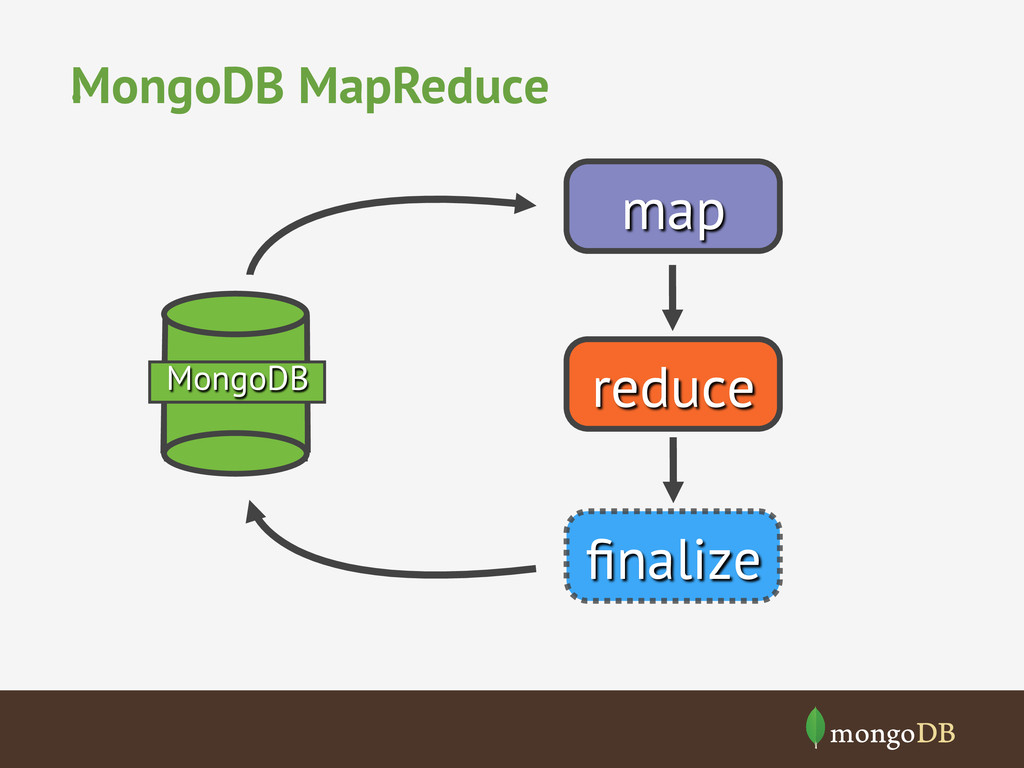
MongoDB MapReduce • Real-time • Output directly to document or
collection • Runs inside MongoDB on local data − Adds load to your DB − In Javascript – debugging can be a challenge − Translating in and out of C++ -
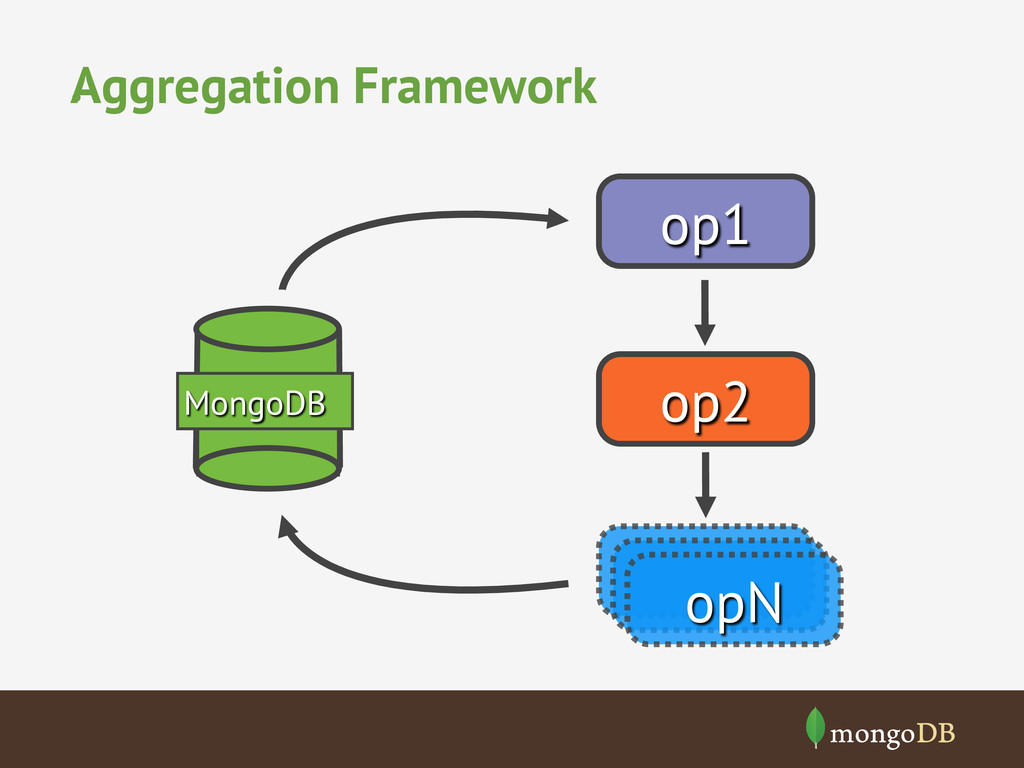
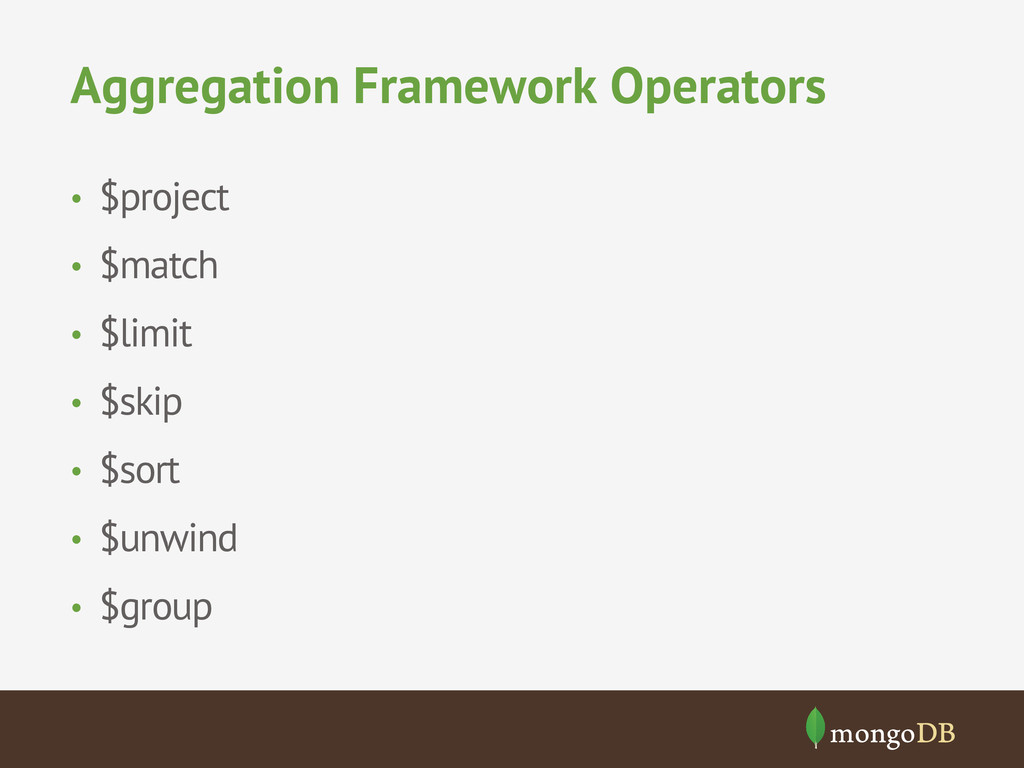
Aggregation Framework Operators • $project • $match • $limit •
$skip • $sort • $unwind • $group -
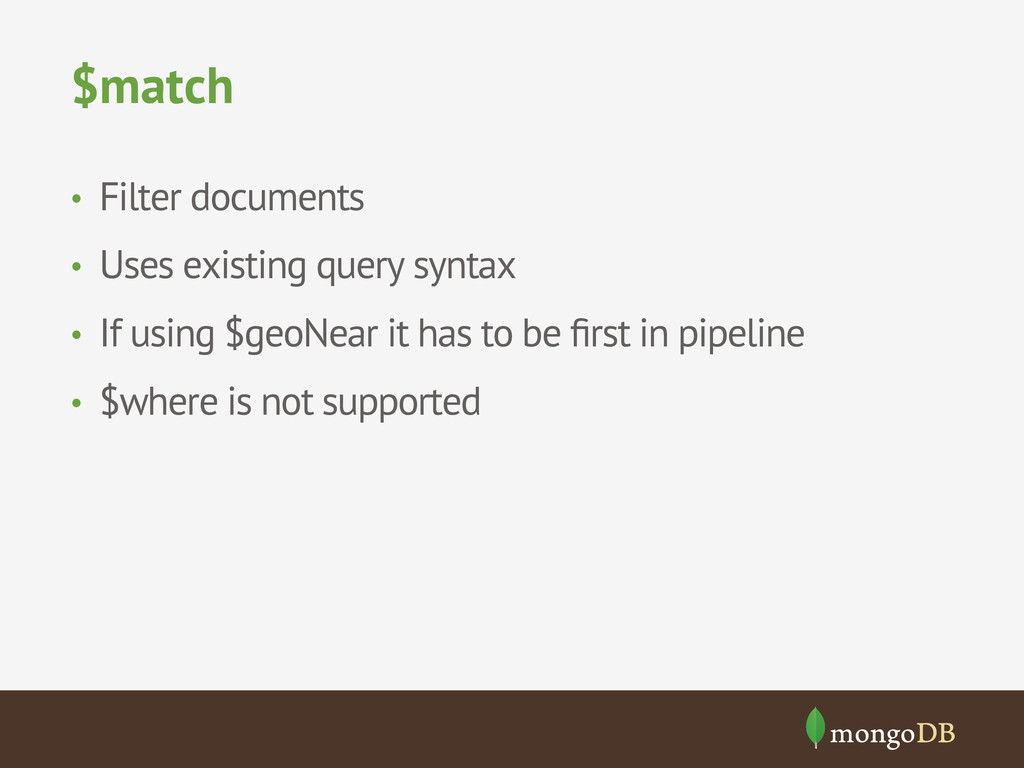
$match • Filter documents • Uses existing query syntax •
If using $geoNear it has to be first in pipeline • $where is not supported -
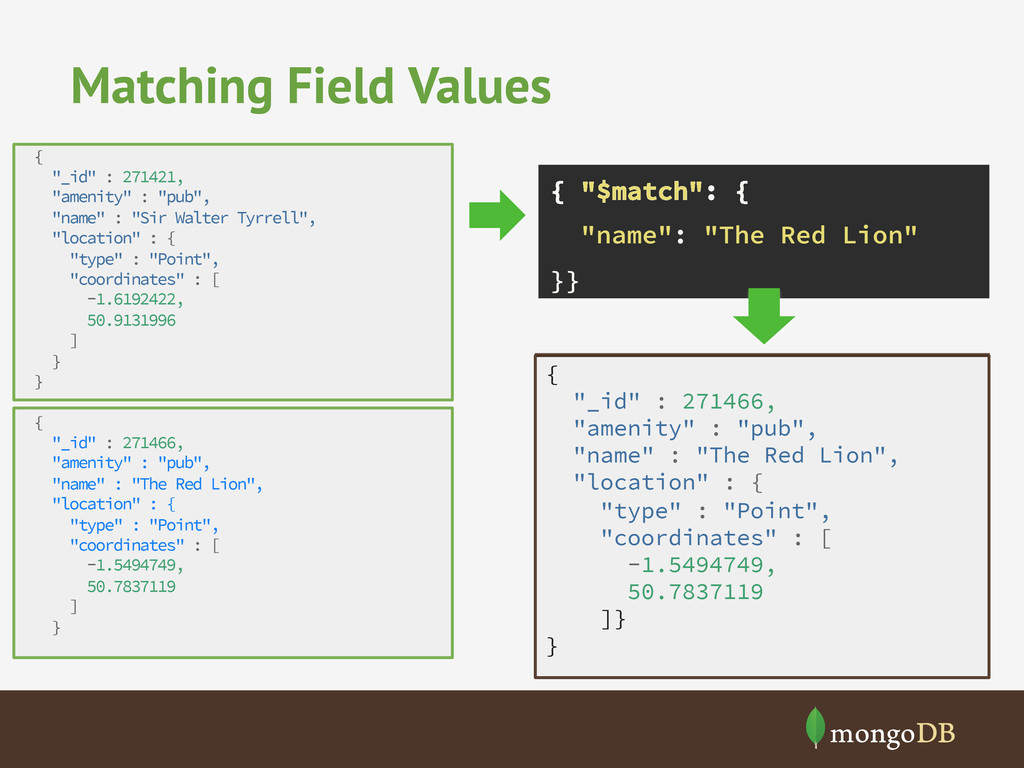
Matching Field Values { "_id" : 271421, "amenity" : "pub",
"name" : "Sir Walter Tyrrell", "location" : { "type" : "Point", "coordinates" : [ -1.6192422, 50.9131996 ] } } { "_id" : 271466, "amenity" : "pub", "name" : "The Red Lion", "location" : { "type" : "Point", "coordinates" : [ -1.5494749, 50.7837119 ] } Matching Field Values { "$match": { "name": "The Red Lion" }} { "_id" : 271466, "amenity" : "pub", "name" : "The Red Lion", "location" : { "type" : "Point", "coordinates" : [ -1.5494749, 50.7837119 ]} } -

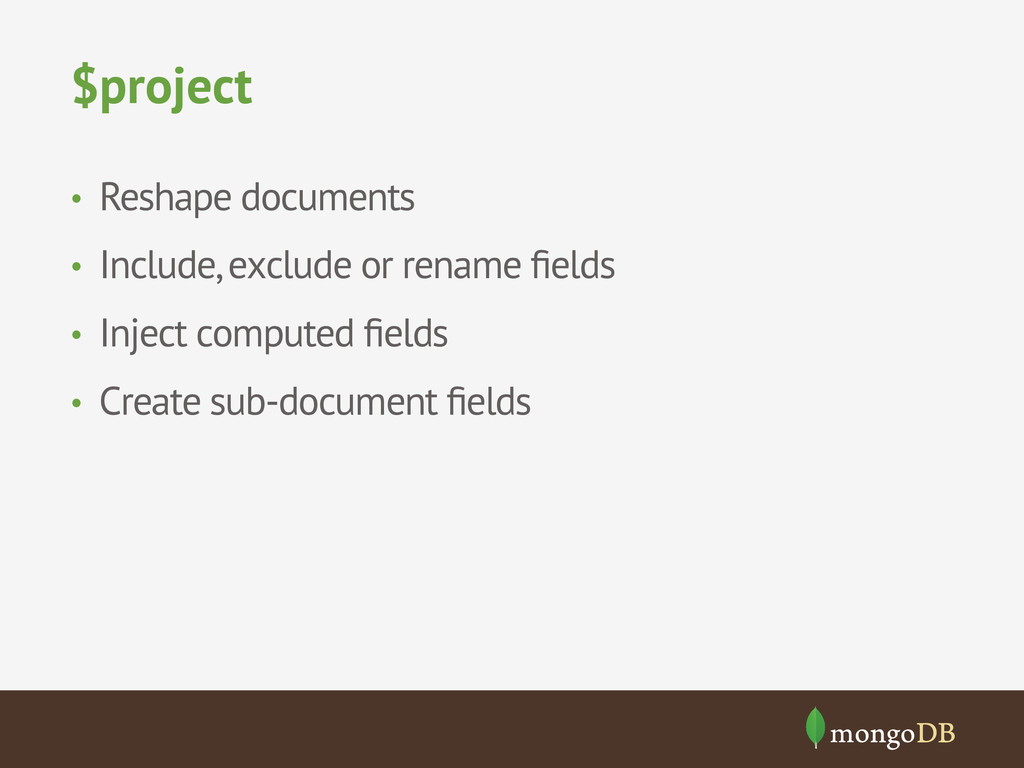
$project • Reshape documents • Include, exclude or rename fields
• Inject computed fields • Create sub-document fields -
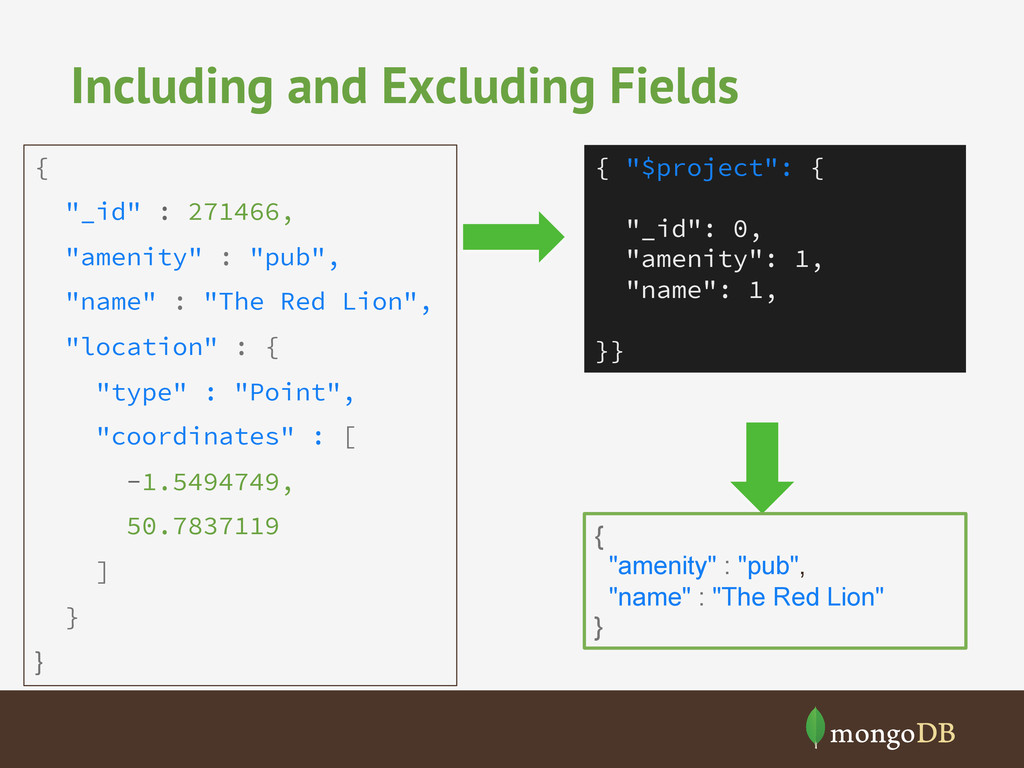
Including and Excluding Fields { "_id" : 271466, "amenity" :
"pub", "name" : "The Red Lion", "location" : { "type" : "Point", "coordinates" : [ -1.5494749, 50.7837119 ] } } { "$project": { "_id": 0, "amenity": 1, "name": 1, }} { "amenity" : "pub", "name" : "The Red Lion" } -
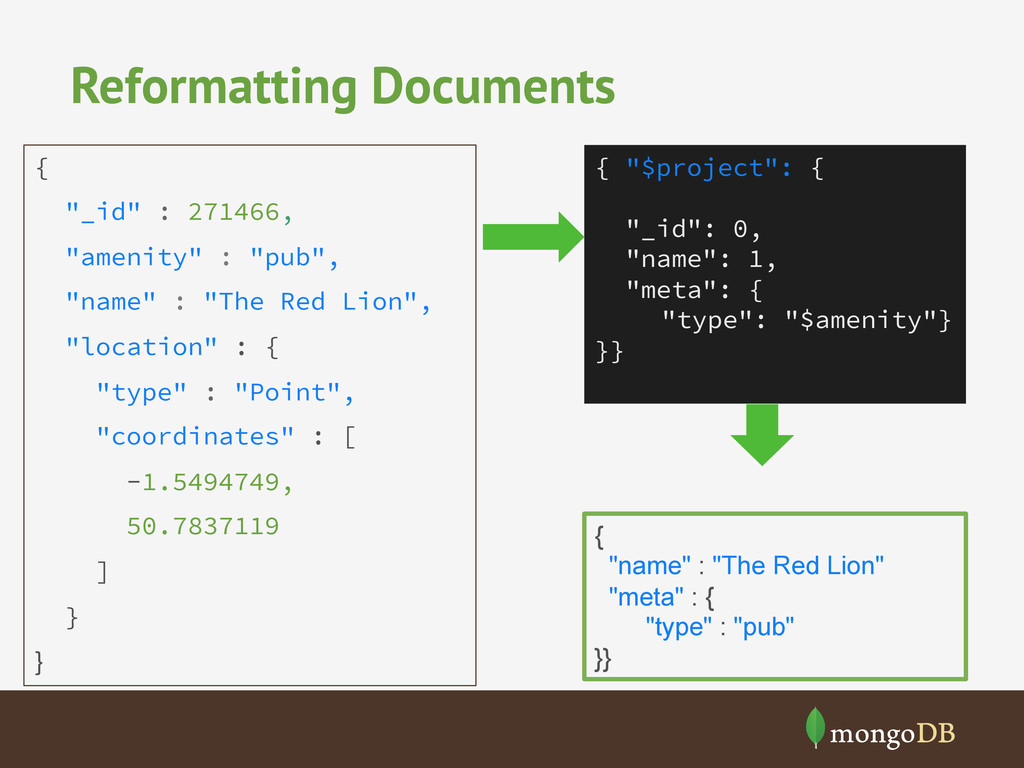
Reformatting Documents { "_id" : 271466, "amenity" : "pub", "name"
: "The Red Lion", "location" : { "type" : "Point", "coordinates" : [ -1.5494749, 50.7837119 ] } } { "$project": { "_id": 0, "name": 1, "meta": { "type": "$amenity"} }} { "name" : "The Red Lion" "meta" : { "type" : "pub" }} -
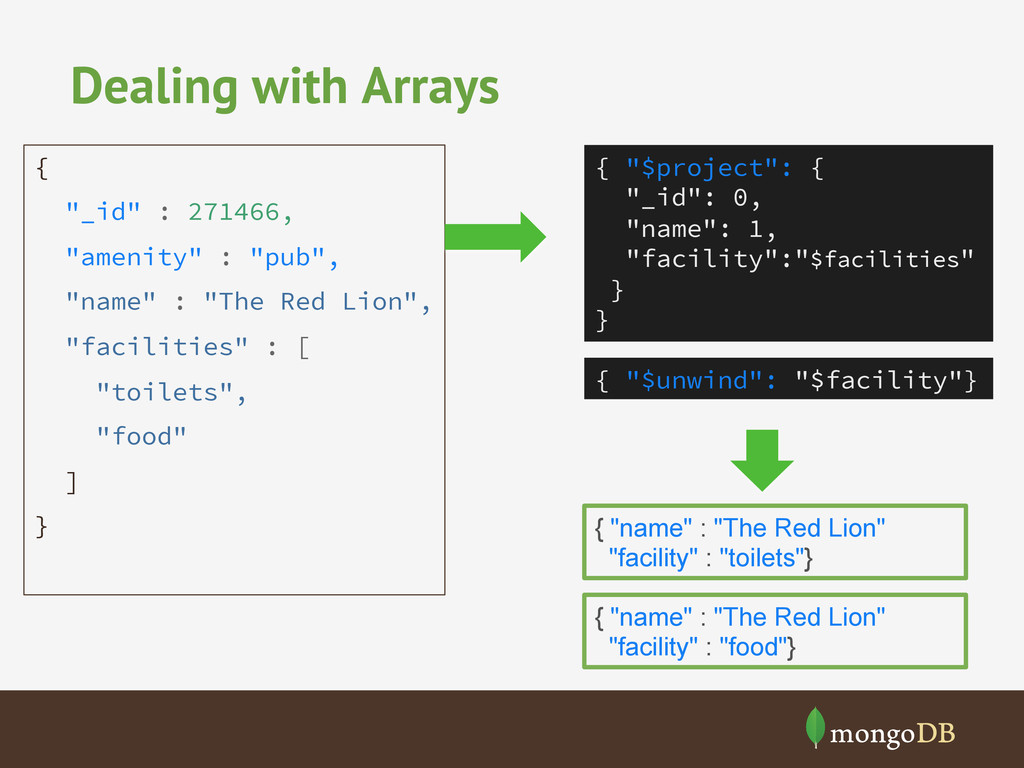
Dealing with Arrays { "_id" : 271466, "amenity" : "pub",
"name" : "The Red Lion", "facilities" : [ "toilets", "food" ] } { "$project": { "_id": 0, "name": 1, "facility":"$facilities" } } { "name" : "The Red Lion" "facility" : "food"} { "$unwind": "$facility"} { "name" : "The Red Lion" "facility" : "toilets"} -
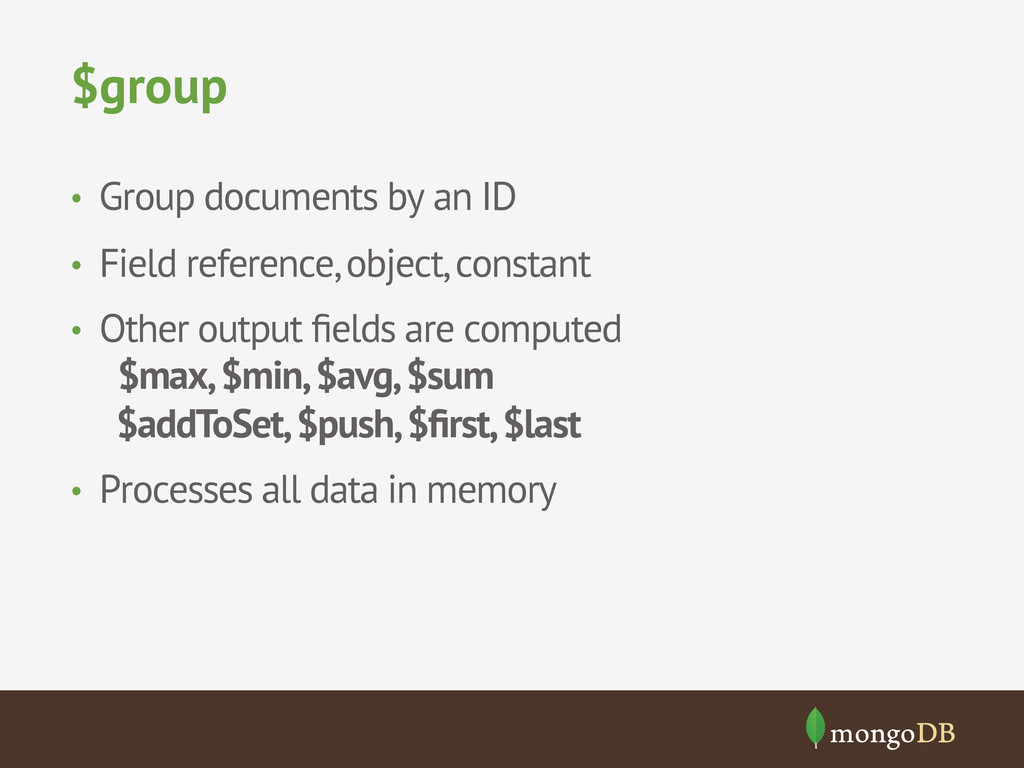
$group • Group documents by an ID • Field reference,
object, constant • Other output fields are computed $max, $min, $avg, $sum $addToSet, $push, $first, $last • Processes all data in memory -
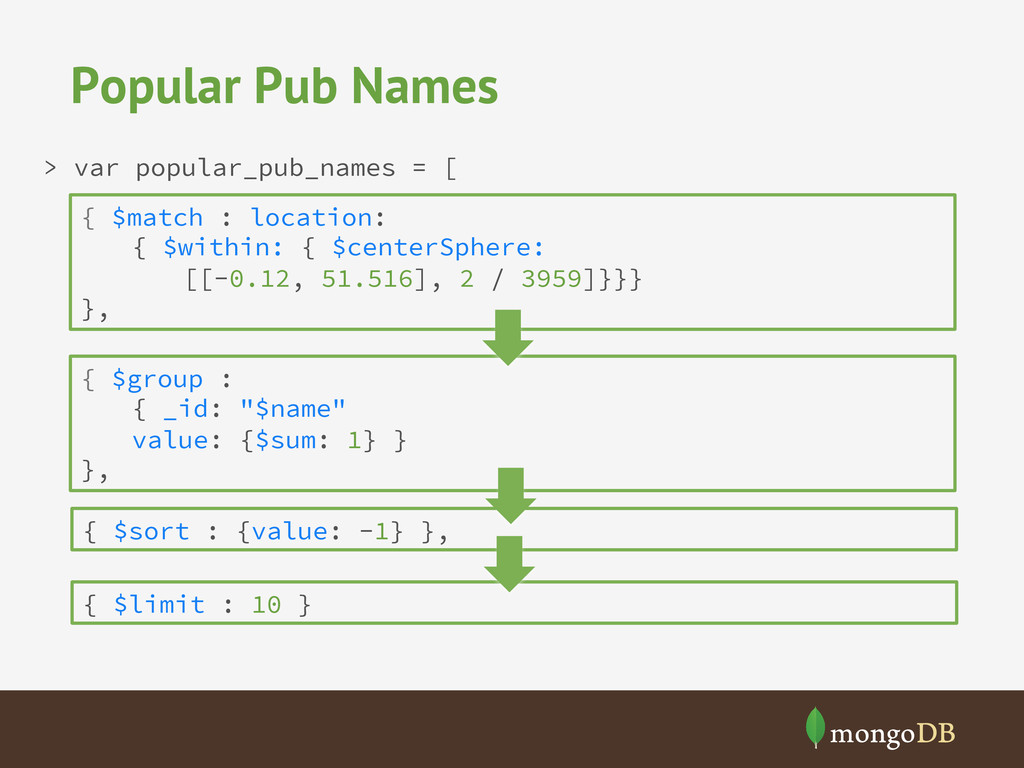
Popular Pub Names > var popular_pub_names = [ { $match
: location: { $within: { $centerSphere: [[-0.12, 51.516], 2 / 3959]}}} }, { $group : { _id: "$name" value: {$sum: 1} } }, { $sort : {value: -1} }, { $limit : 10 } -
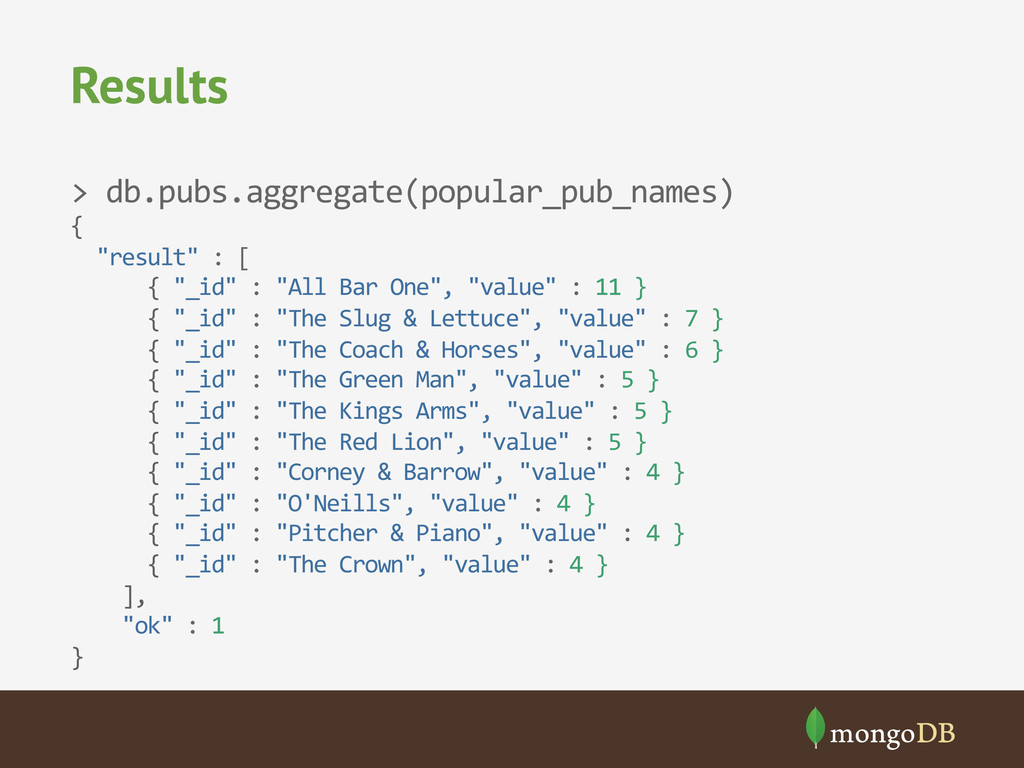
Results > db.pubs.aggregate(popular_pub_names) { "result" : [
{ "_id" : "All Bar One", "value" : 11 } { "_id" : "The Slug & Lettuce", "value" : 7 } { "_id" : "The Coach & Horses", "value" : 6 } { "_id" : "The Green Man", "value" : 5 } { "_id" : "The Kings Arms", "value" : 5 } { "_id" : "The Red Lion", "value" : 5 } { "_id" : "Corney & Barrow", "value" : 4 } { "_id" : "O'Neills", "value" : 4 } { "_id" : "Pitcher & Piano", "value" : 4 } { "_id" : "The Crown", "value" : 4 } ], "ok" : 1 } -
Aggregation Framework Benefits • Real-time • Simple yet powerful interface
• Declared in JSON, executes in C++ • Runs inside MongoDB on local data − Adds load to your DB − Limited Operators − Data output is limited -
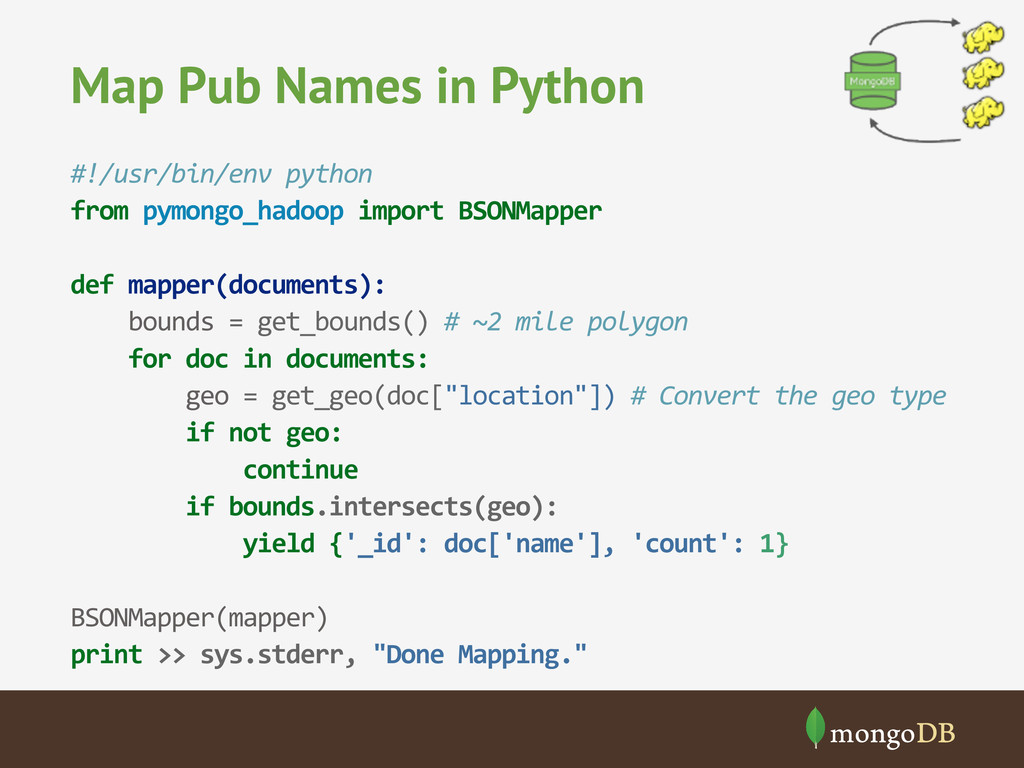
Map Pub Names in Python #!/usr/bin/env python from pymongo_hadoop
import BSONMapper def mapper(documents): bounds = get_bounds() # ~2 mile polygon for doc in documents: geo = get_geo(doc["location"]) # Convert the geo type if not geo: continue if bounds.intersects(geo): yield {'_id': doc['name'], 'count': 1} BSONMapper(mapper) print >> sys.stderr, "Done Mapping." -
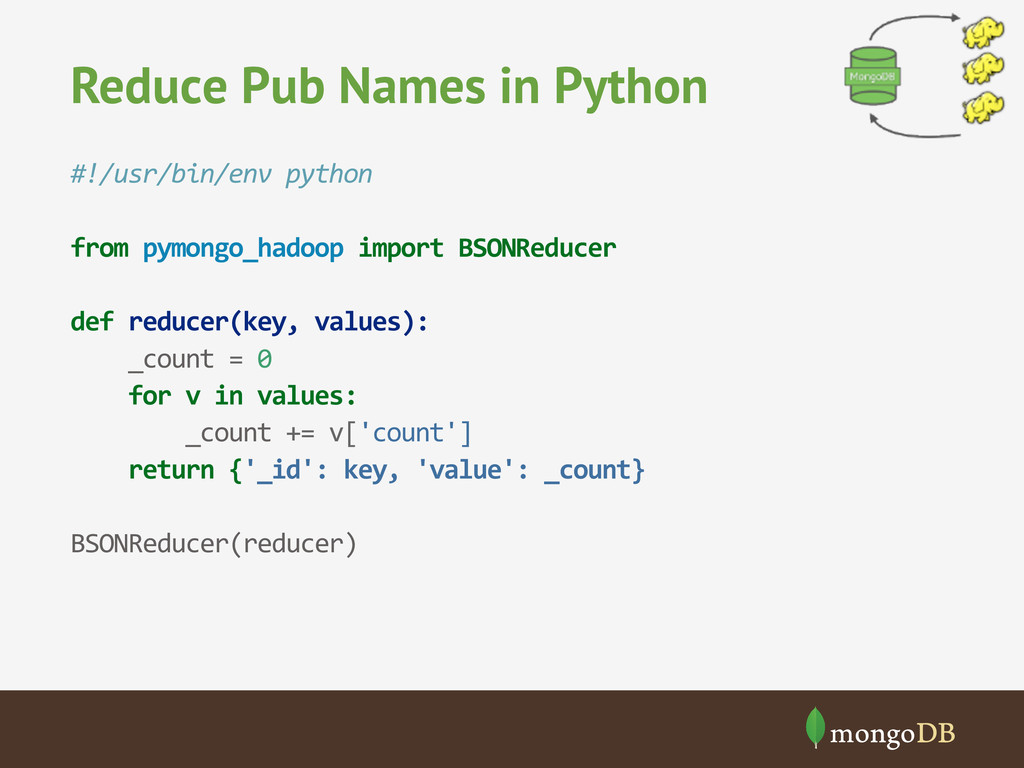
Reduce Pub Names in Python #!/usr/bin/env python from
pymongo_hadoop import BSONReducer def reducer(key, values): _count = 0 for v in values: _count += v['count'] return {'_id': key, 'value': _count} BSONReducer(reducer) -
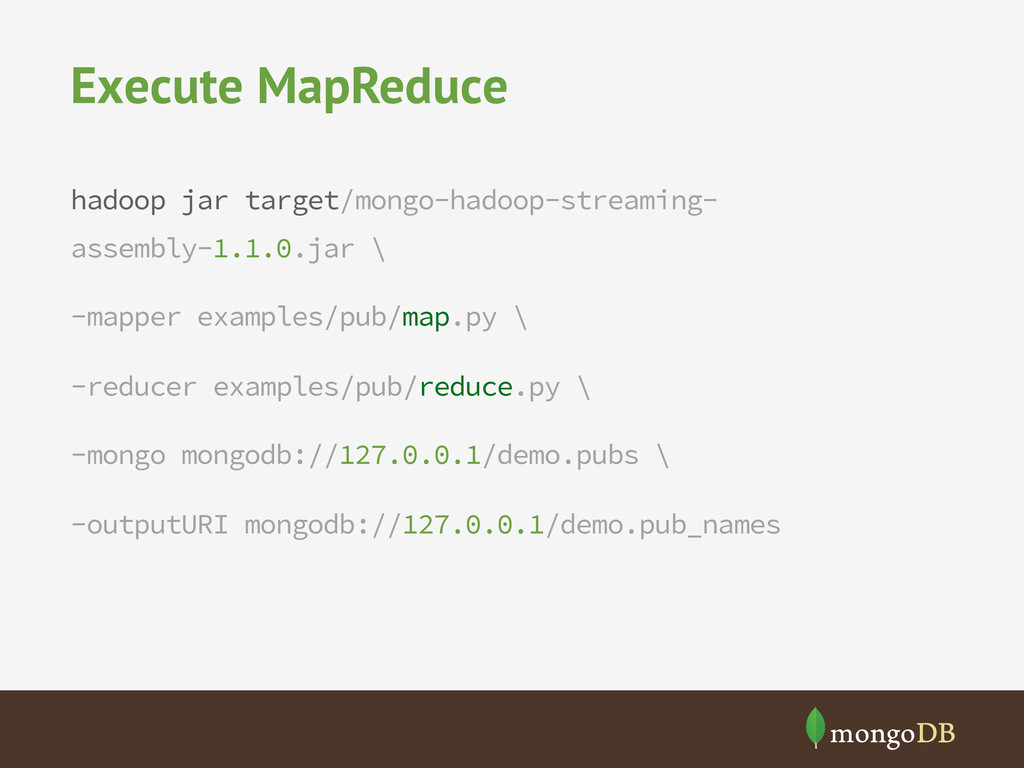
Execute MapReduce hadoop jar target/mongo-hadoop-streaming- assembly-1.1.0.jar \ -mapper examples/pub/map.py \
-reducer examples/pub/reduce.py \ -mongo mongodb://127.0.0.1/demo.pubs \ -outputURI mongodb://127.0.0.1/demo.pub_names -
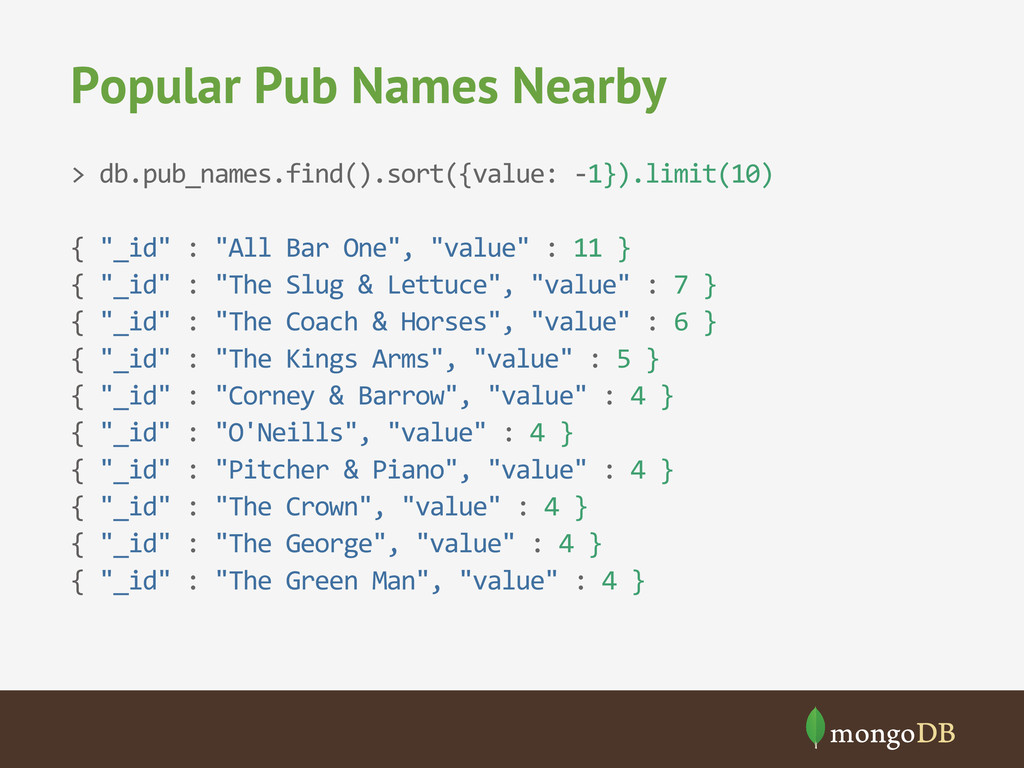
Popular Pub Names Nearby > db.pub_names.find().sort({value: -‐1}).limit(10) {
"_id" : "All Bar One", "value" : 11 } { "_id" : "The Slug & Lettuce", "value" : 7 } { "_id" : "The Coach & Horses", "value" : 6 } { "_id" : "The Kings Arms", "value" : 5 } { "_id" : "Corney & Barrow", "value" : 4 } { "_id" : "O'Neills", "value" : 4 } { "_id" : "Pitcher & Piano", "value" : 4 } { "_id" : "The Crown", "value" : 4 } { "_id" : "The George", "value" : 4 } { "_id" : "The Green Man", "value" : 4 } -
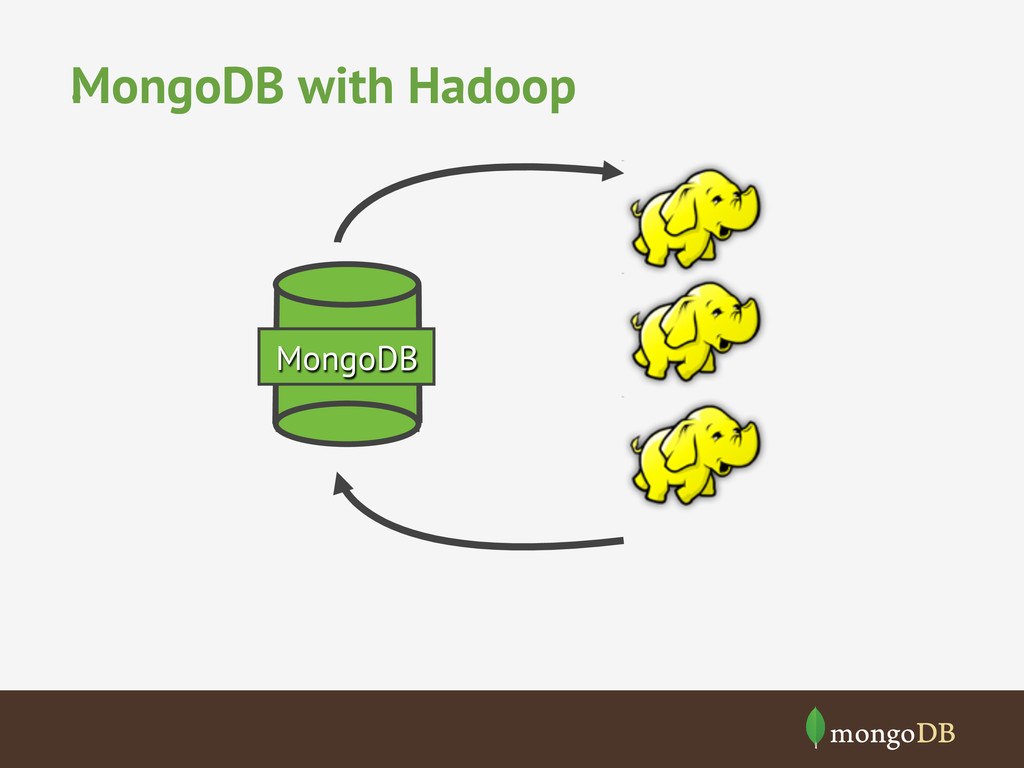
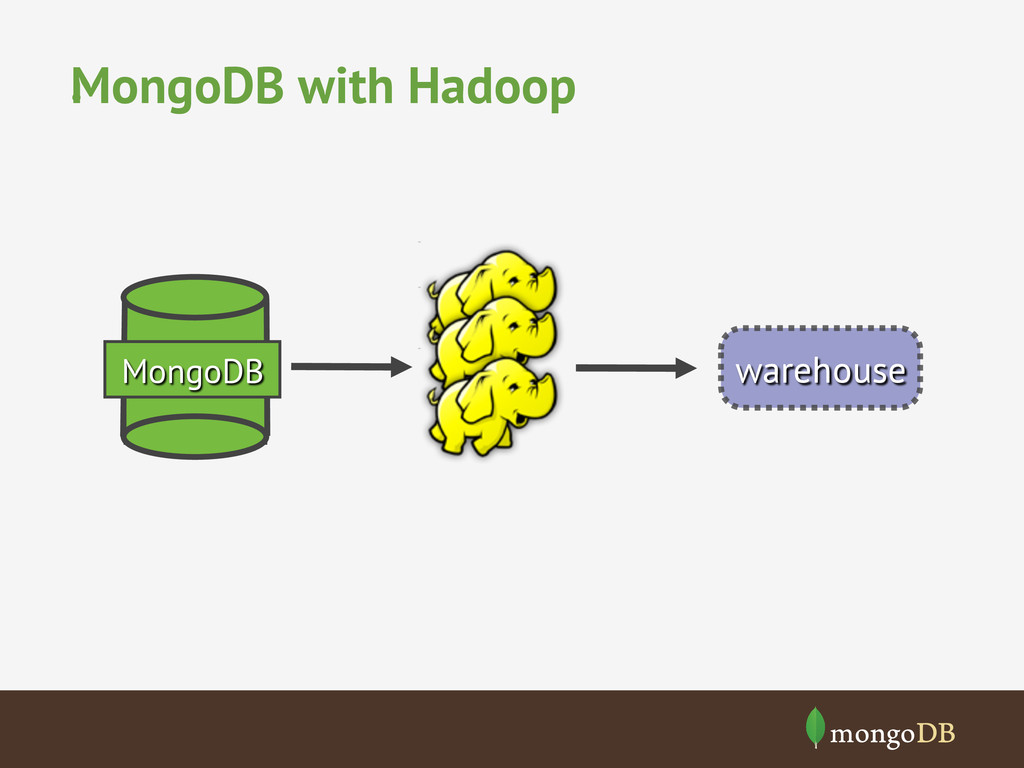
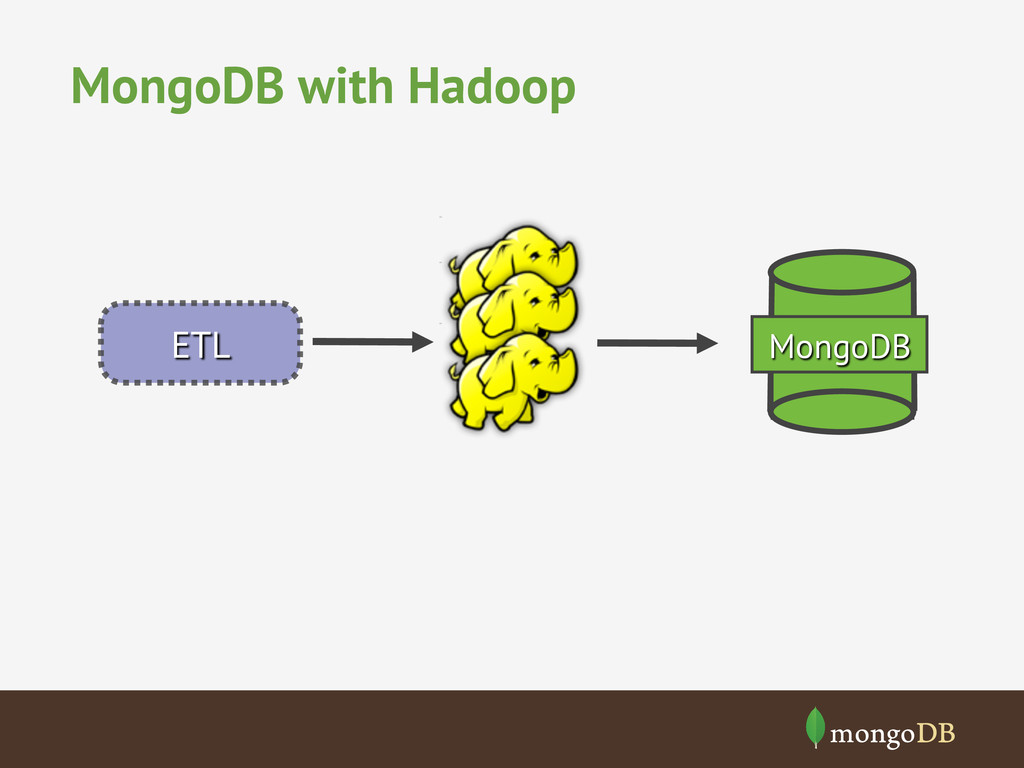
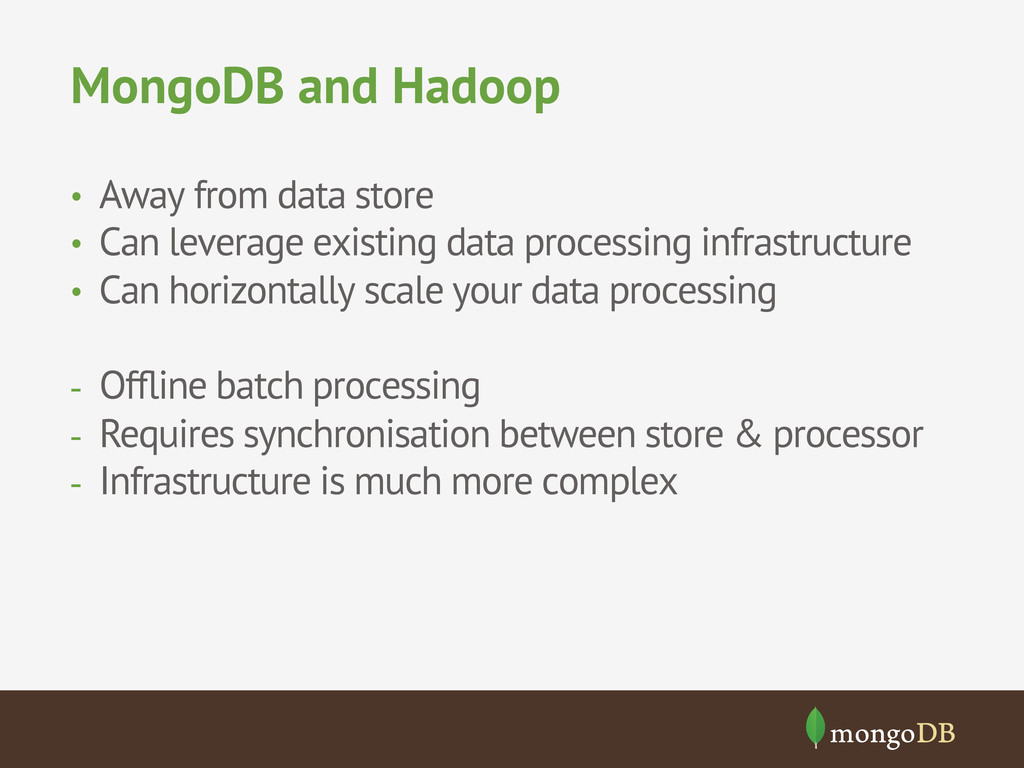
MongoDB and Hadoop • Away from data store • Can
leverage existing data processing infrastructure • Can horizontally scale your data processing - Offline batch processing - Requires synchronisation between store & processor - Infrastructure is much more complex -
Exponential Data Growth 0 1000 2000 3000 4000 5000 6000
7000 8000 9000 10000 2000 2002 2004 2006 2008 2010 2012 Billions of URLs indexed by Google -
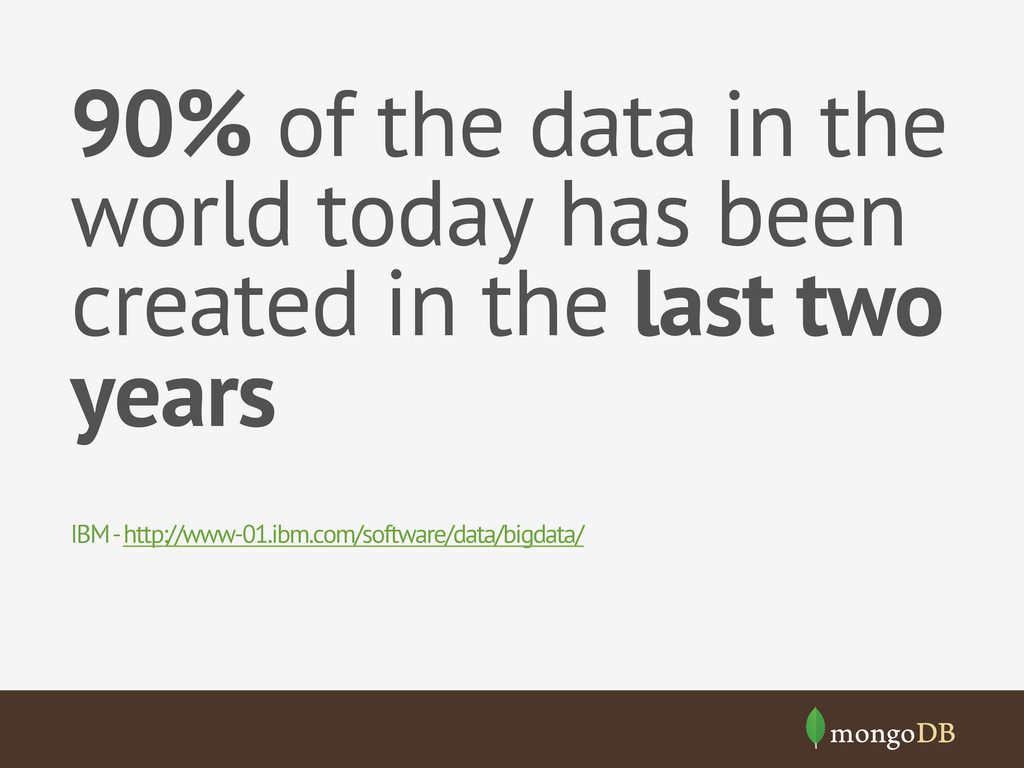
IBM - http://www-01.ibm.com/software/data/bigdata/ 90% of the data in the world
today has been created in the last two years -
Data Processing with MongoDB • Process in MongoDB using Map/Reduce
• Process in MongoDB using Aggregation Framework • Process outside MongoDB using Hadoop and other external tools -
MongoDB Integration • Hadoop https://github.com/mongodb/mongo-hadoop • Storm https://github.com/christkv/mongo-storm • Disco
https://github.com/mongodb/mongo-disco • Spark Coming soon!