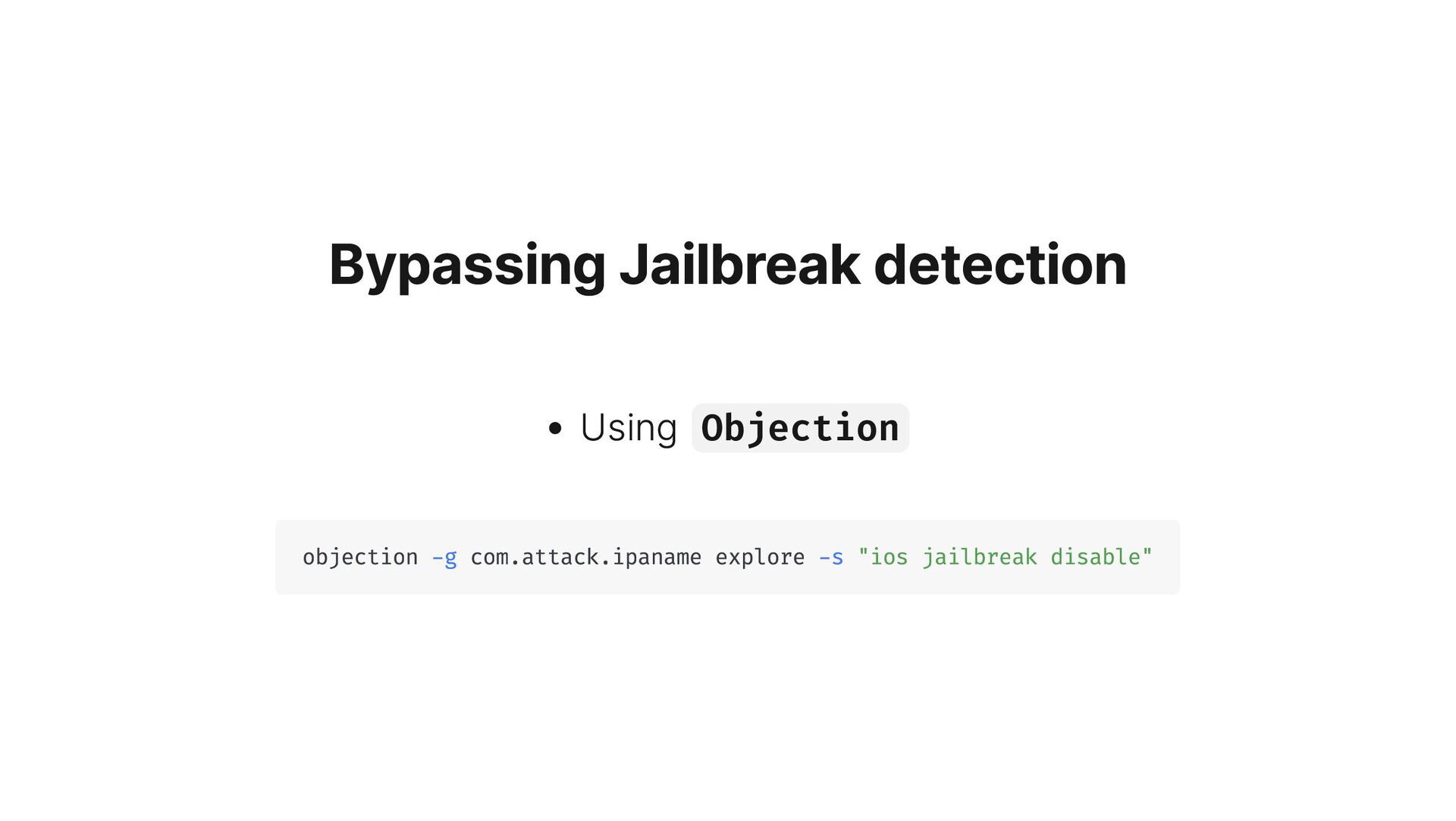
running on a jailbroken device This has become a baseline security mechanism for most apps (opinion) Apps use a variety of libraries or methods to implement this such as IOSSecuritySuite
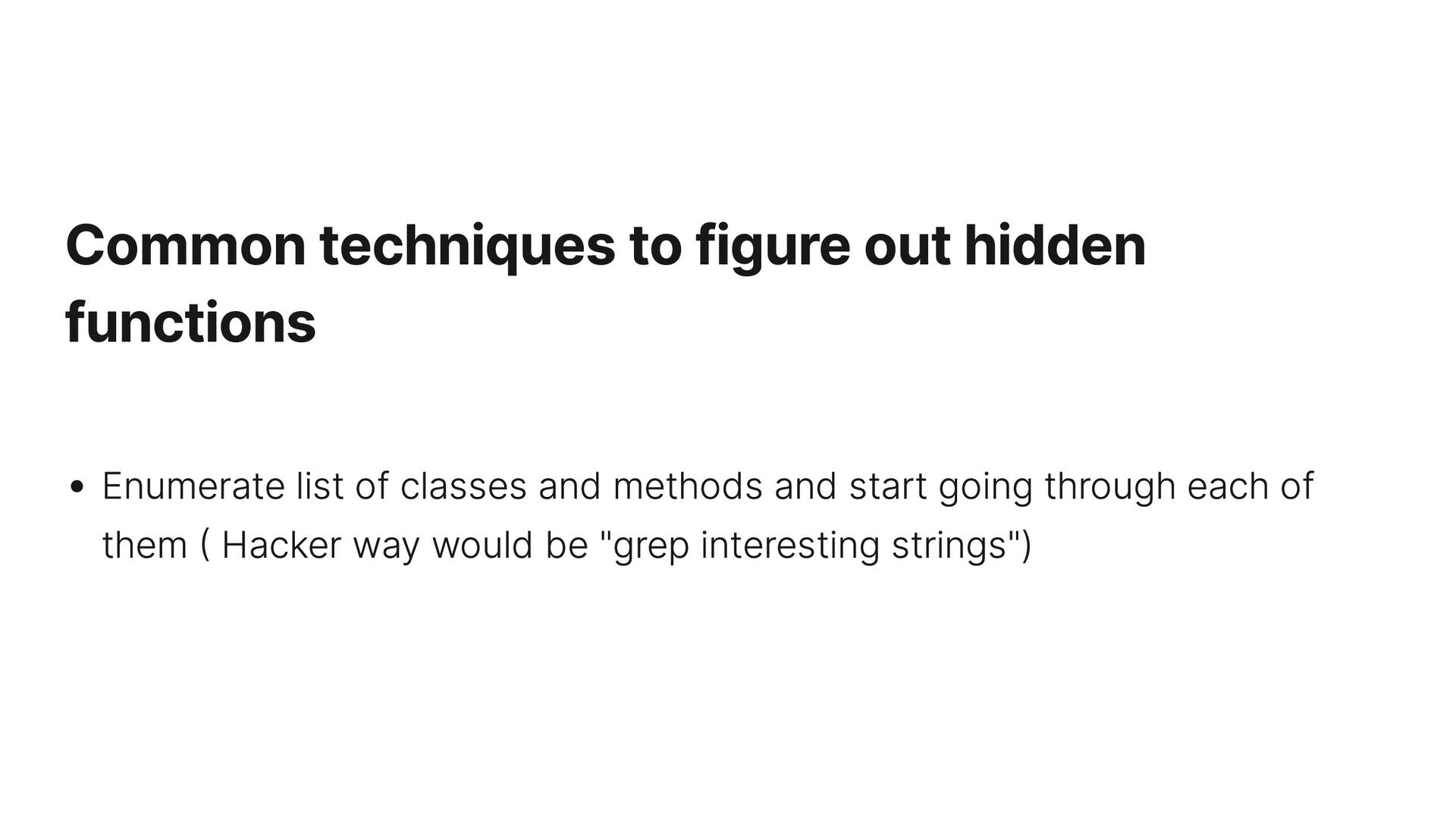
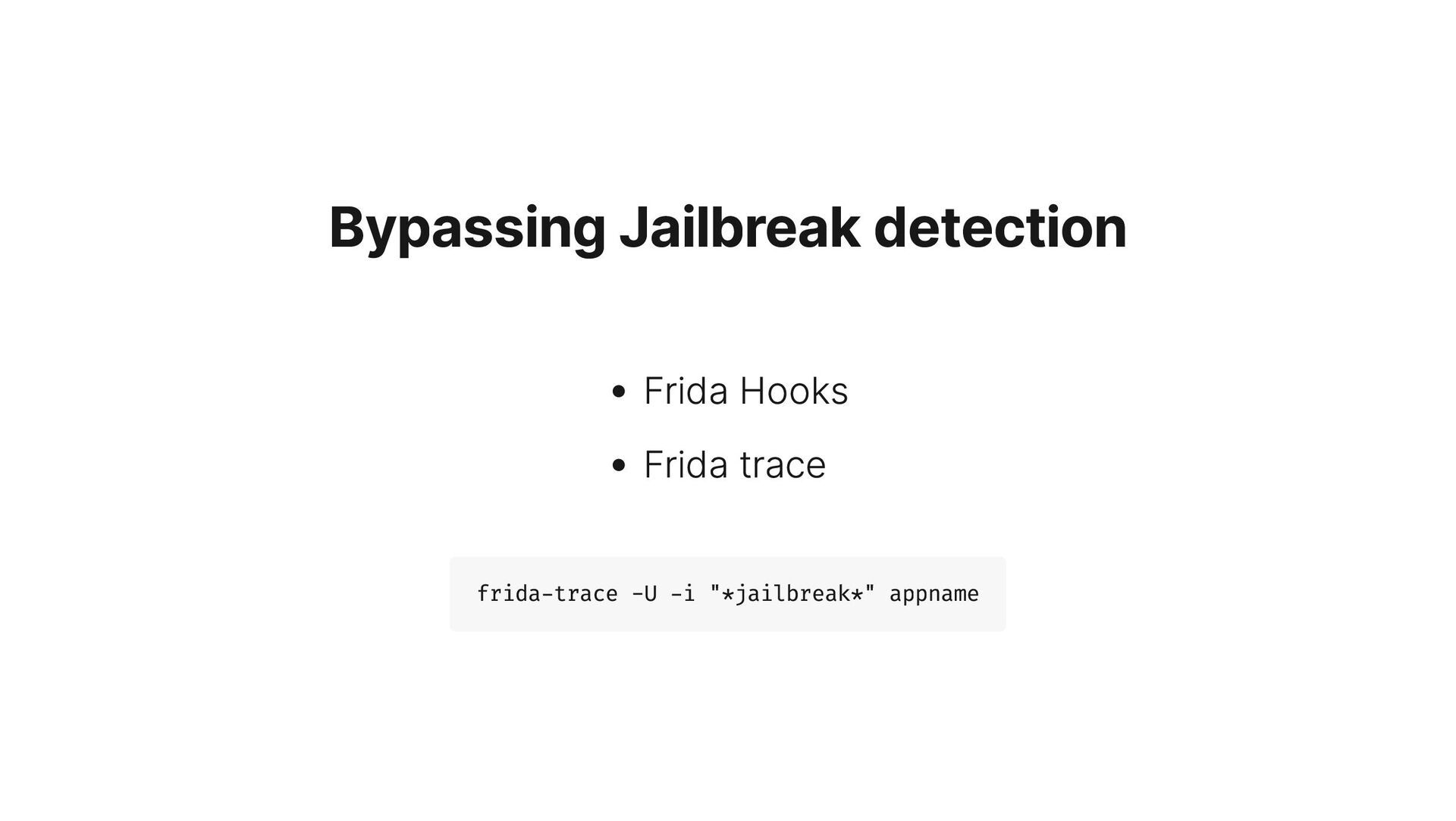
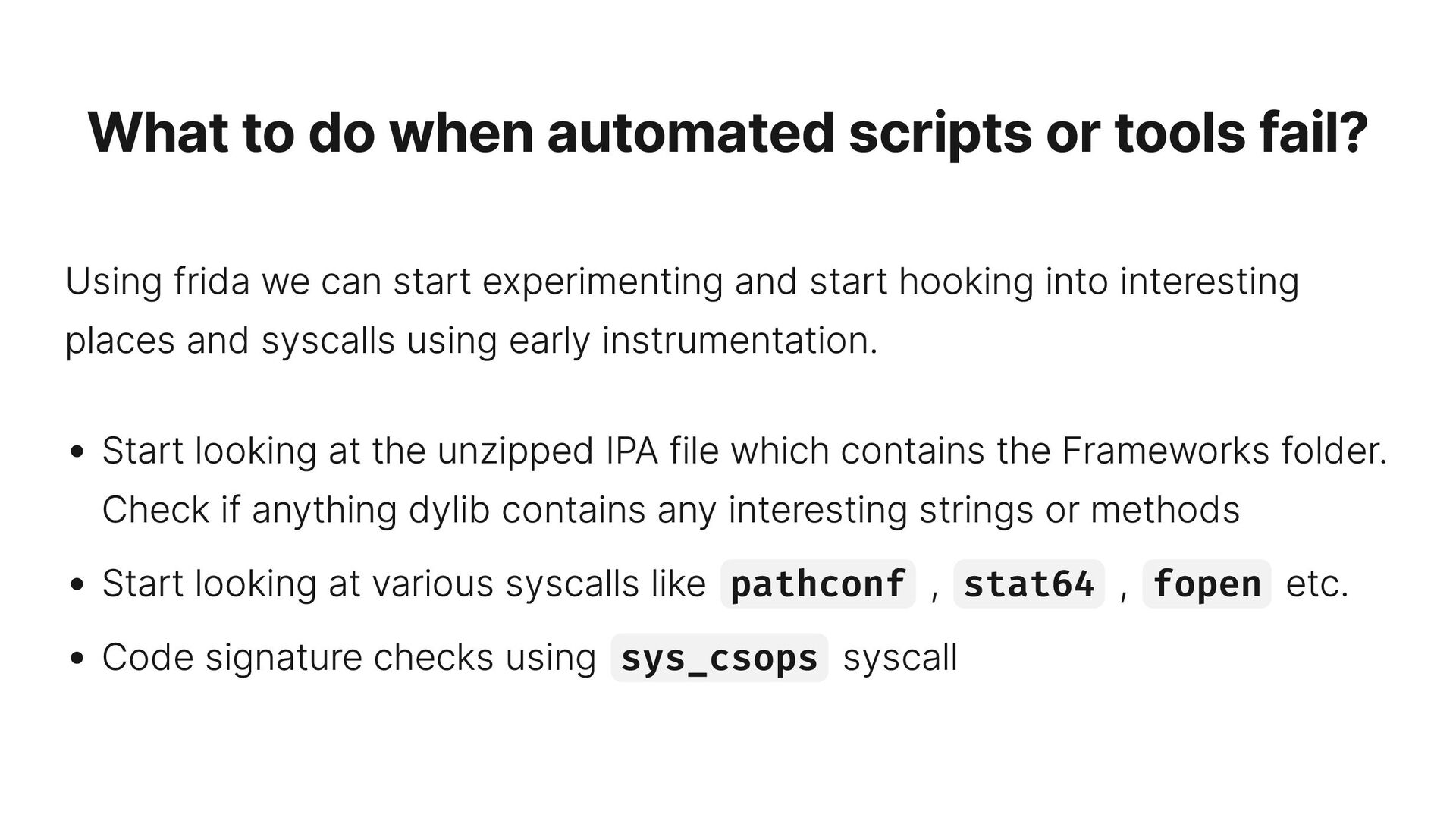
frida we can start experimenting and start hooking into interesting places and syscalls using early instrumentation. Start looking at the unzipped IPA file which contains the Frameworks folder. Check if anything dylib contains any interesting strings or methods Start looking at various syscalls like pathconf , stat64 , fopen etc. Code signature checks using sys_csops syscall
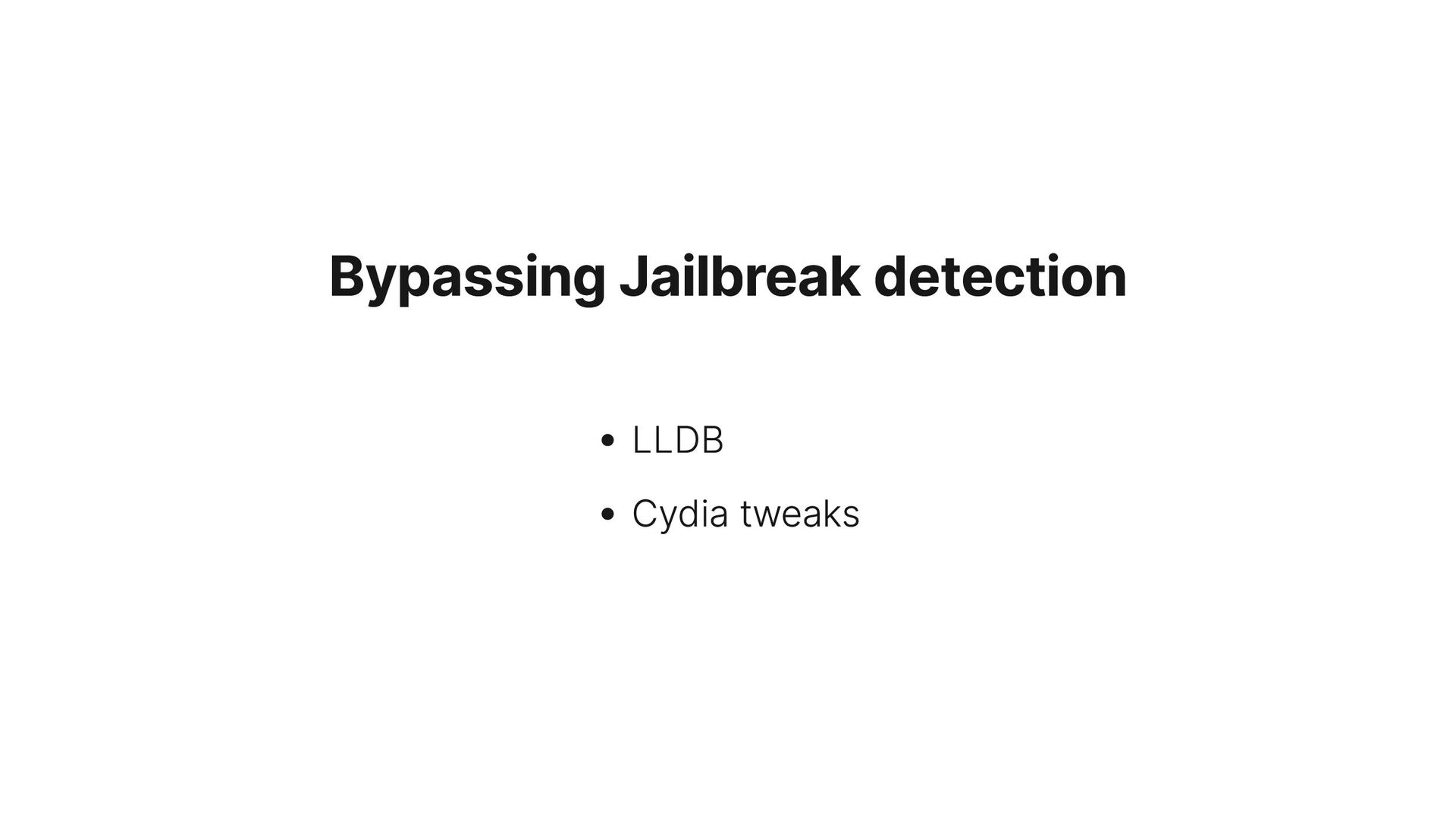
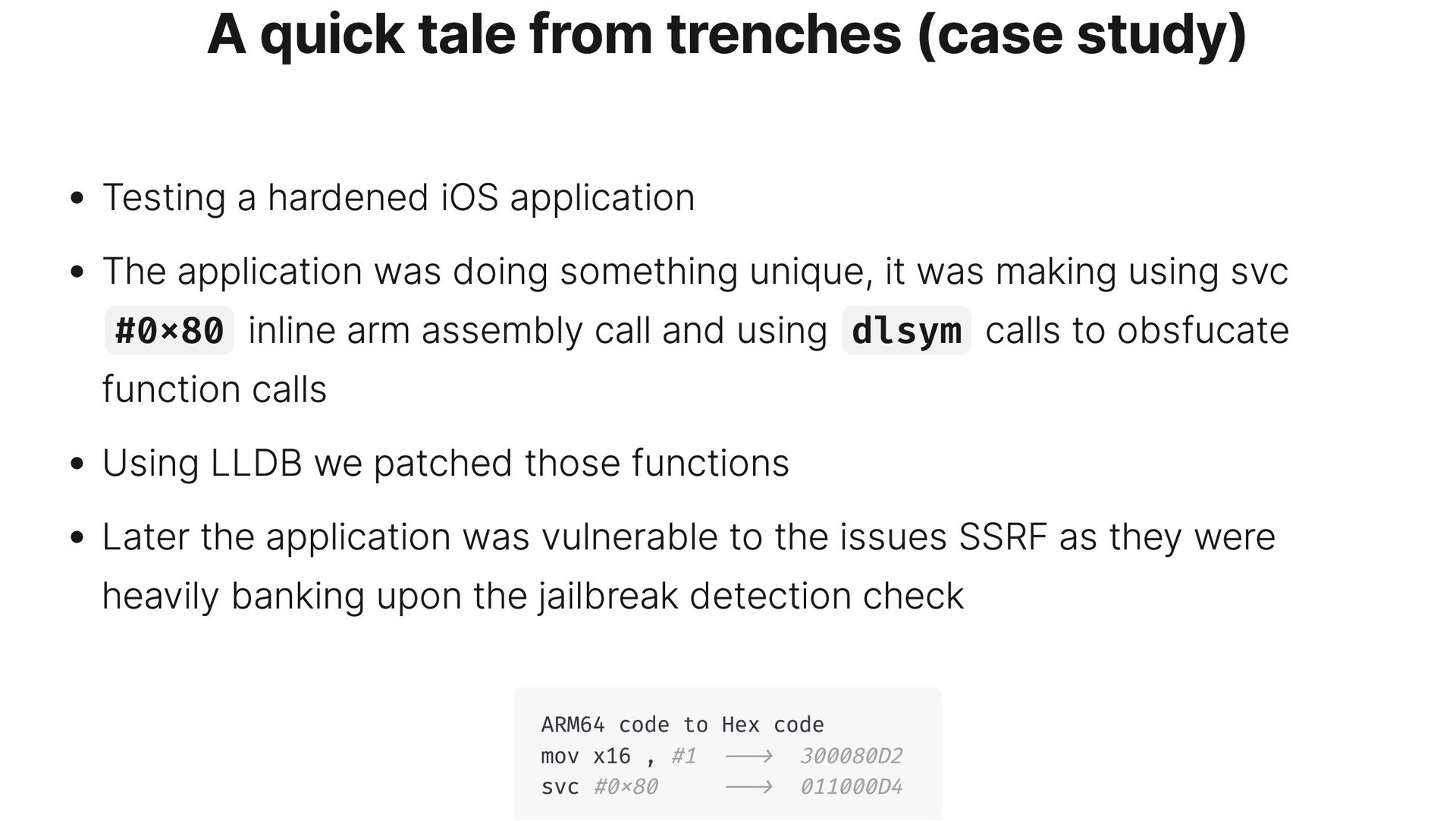
iOS application The application was doing something unique, it was making using svc #0x80 inline arm assembly call and using dlsym calls to obsfucate function calls Using LLDB we patched those functions Later the application was vulnerable to the issues SSRF as they were heavily banking upon the jailbreak detection check ARM64 code to Hex code mov x16 , #1 ---> 300080D2 svc #0x80 ---> 011000D4
authorized ("pinned") certificates for authentication of client-server connections. This mechainism is devised as a means of thwarting MiTM. For us, it essentially means, we will not be able to use our interception proxies to manipulate API traffic.
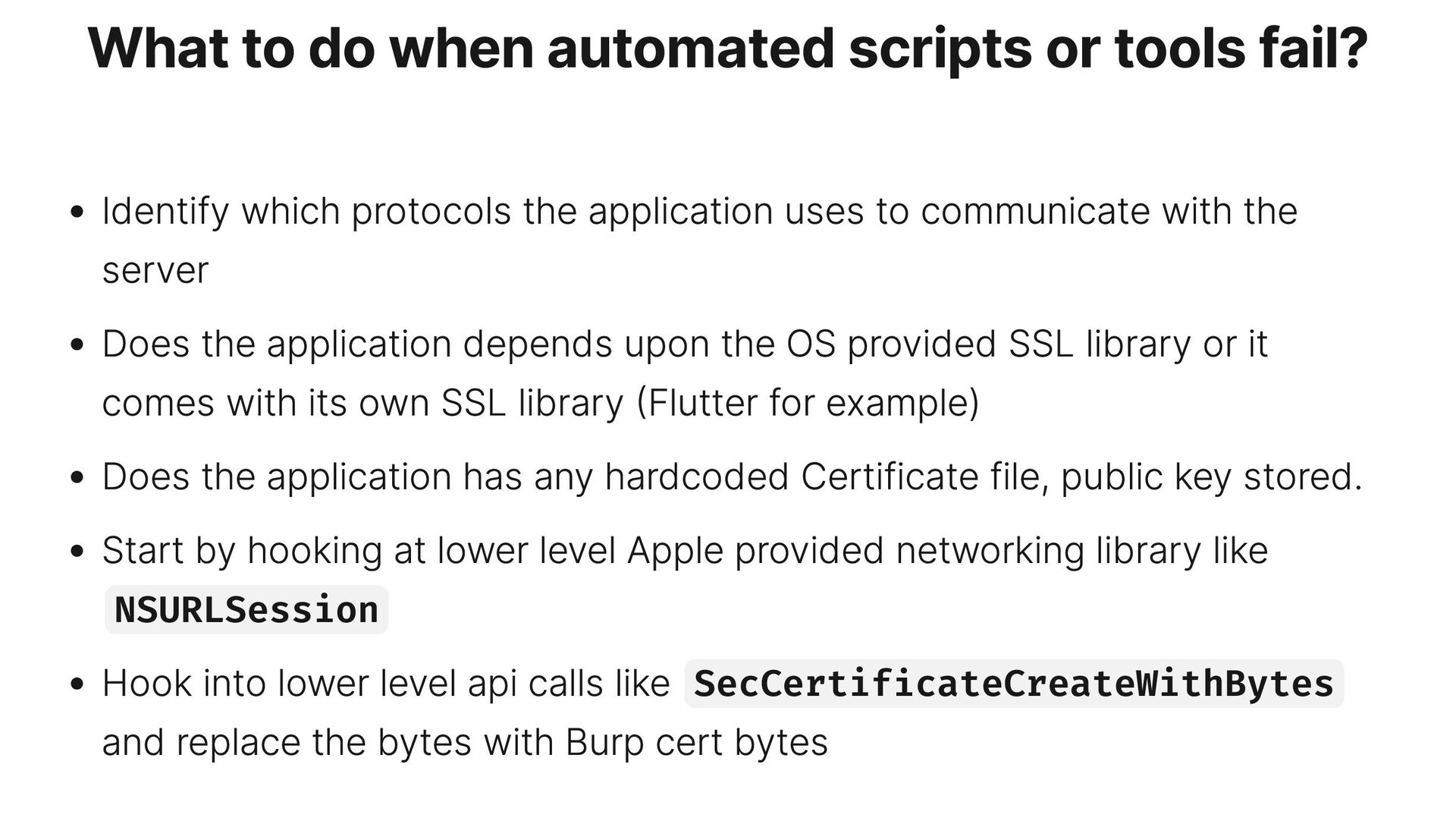
which protocols the application uses to communicate with the server Does the application depends upon the OS provided SSL library or it comes with its own SSL library (Flutter for example) Does the application has any hardcoded Certificate file, public key stored. Start by hooking at lower level Apple provided networking library like NSURLSession Hook into lower level api calls like SecCertificateCreateWithBytes and replace the bytes with Burp cert bytes
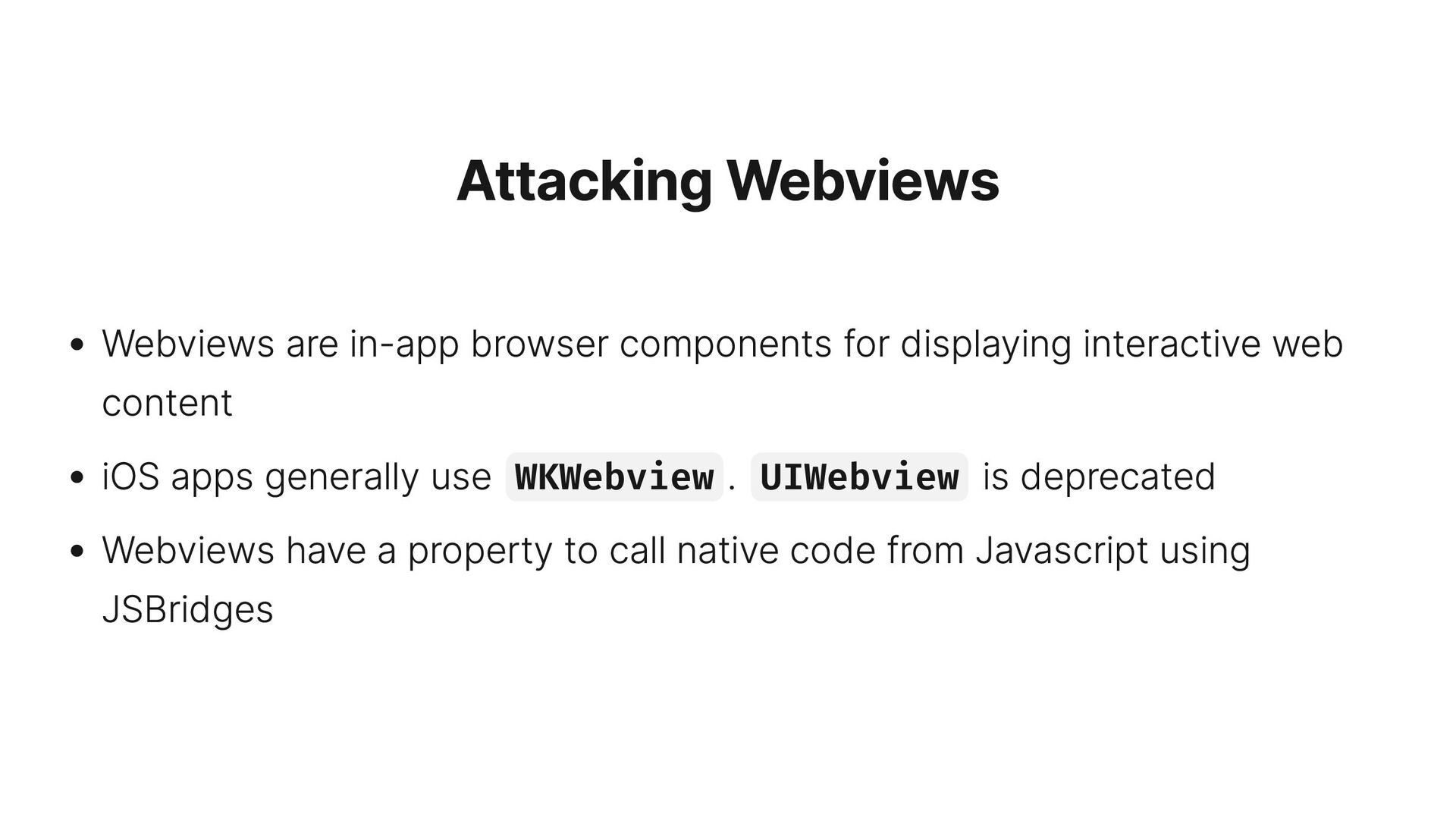
for the presence of HTML injection (or XSS) Once you find a HTML injection you can Use file:/// and then exfiltrate the data back to your server See if the webview has any JSBridges exposed and what sort of data they serve
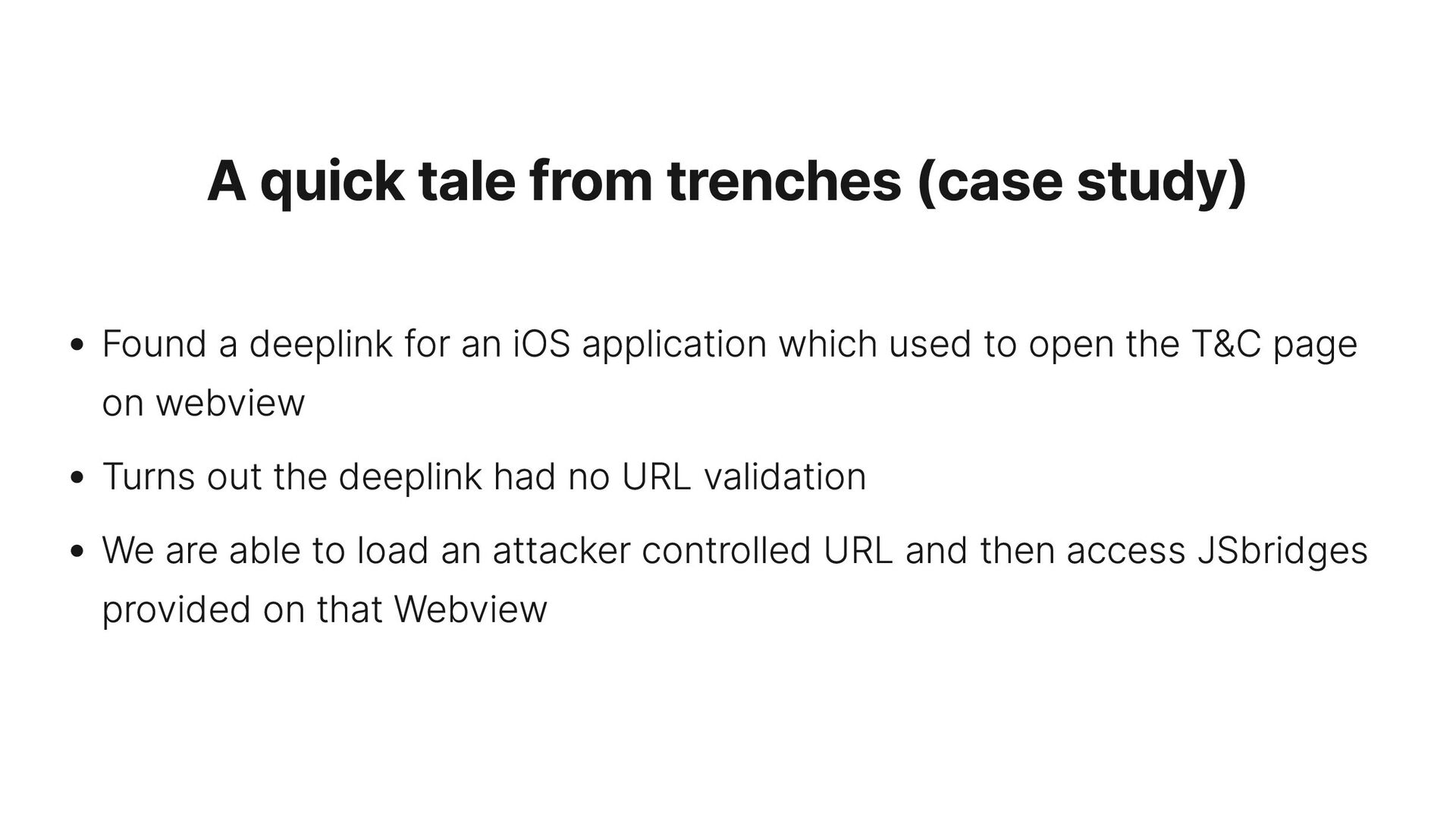
for an iOS application which used to open the T&C page on webview Turns out the deeplink had no URL validation We are able to load an attacker controlled URL and then access JSbridges provided on that Webview
for securing data, communication, and overall app integrity. They play a significant role in ensuring the privacy and security of user information and maintaining the trust of app users.
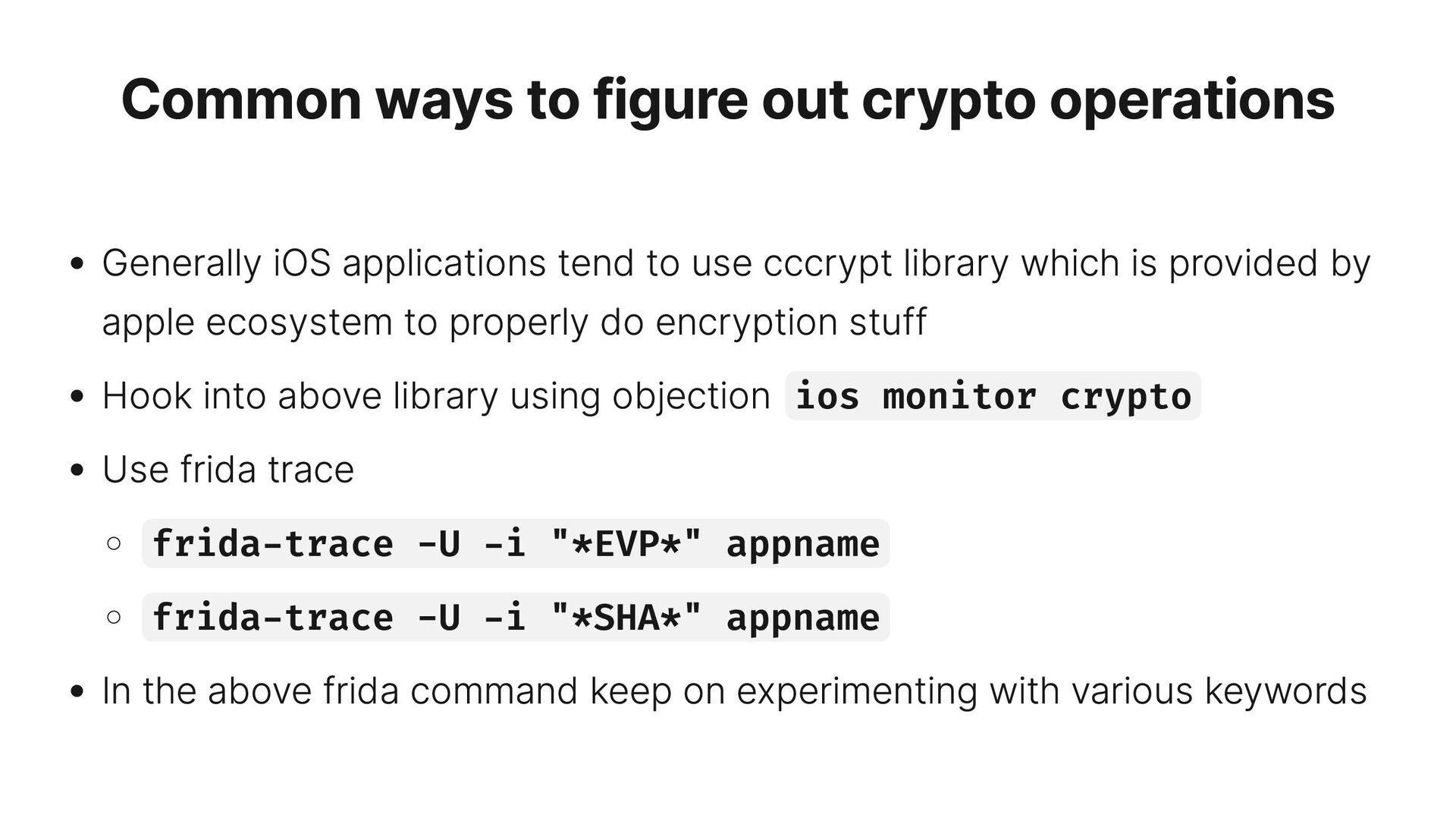
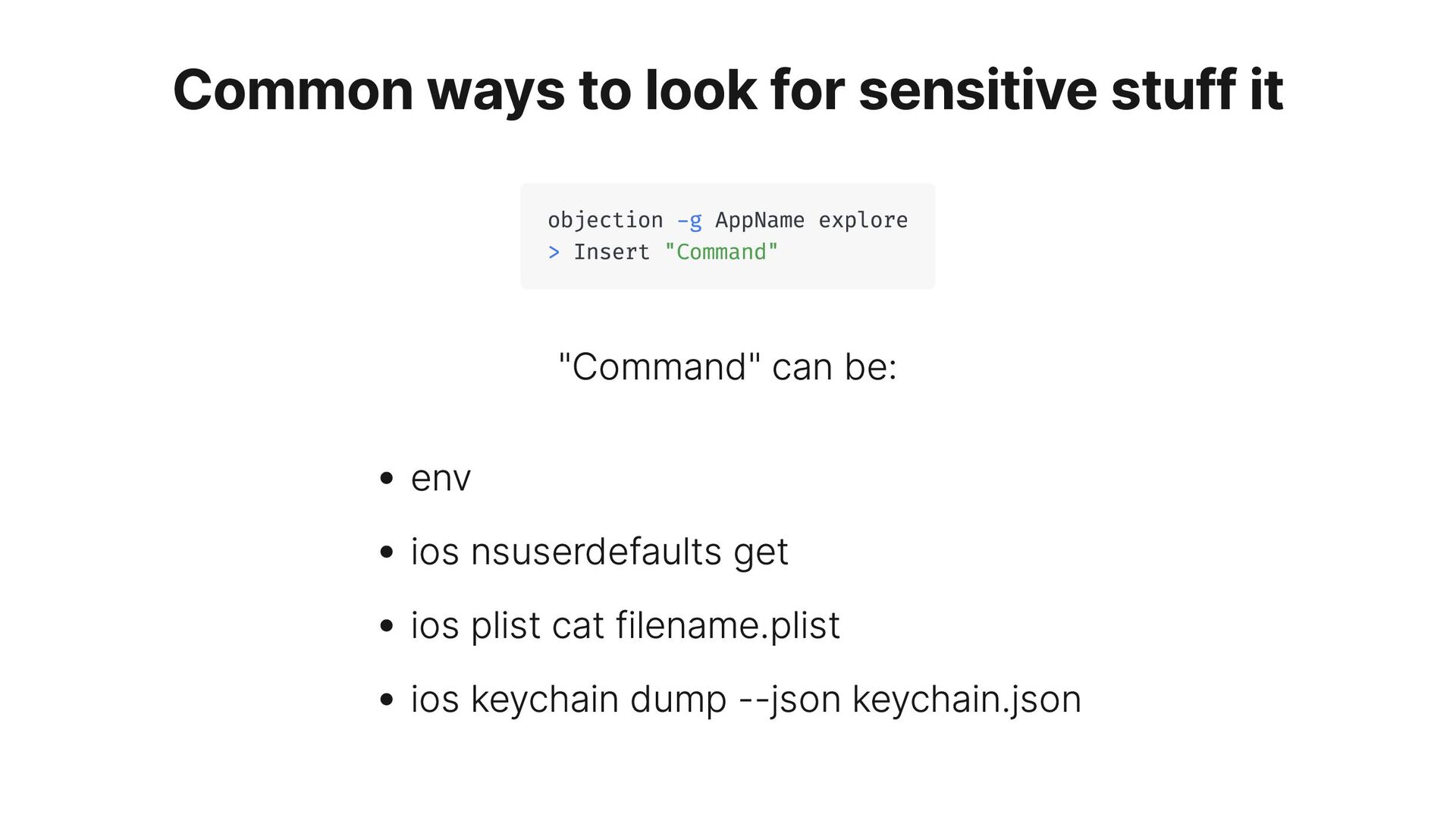
tend to use cccrypt library which is provided by apple ecosystem to properly do encryption stuff Hook into above library using objection ios monitor crypto Use frida trace frida-trace -U -i "*EVP*" appname frida-trace -U -i "*SHA*" appname In the above frida command keep on experimenting with various keywords
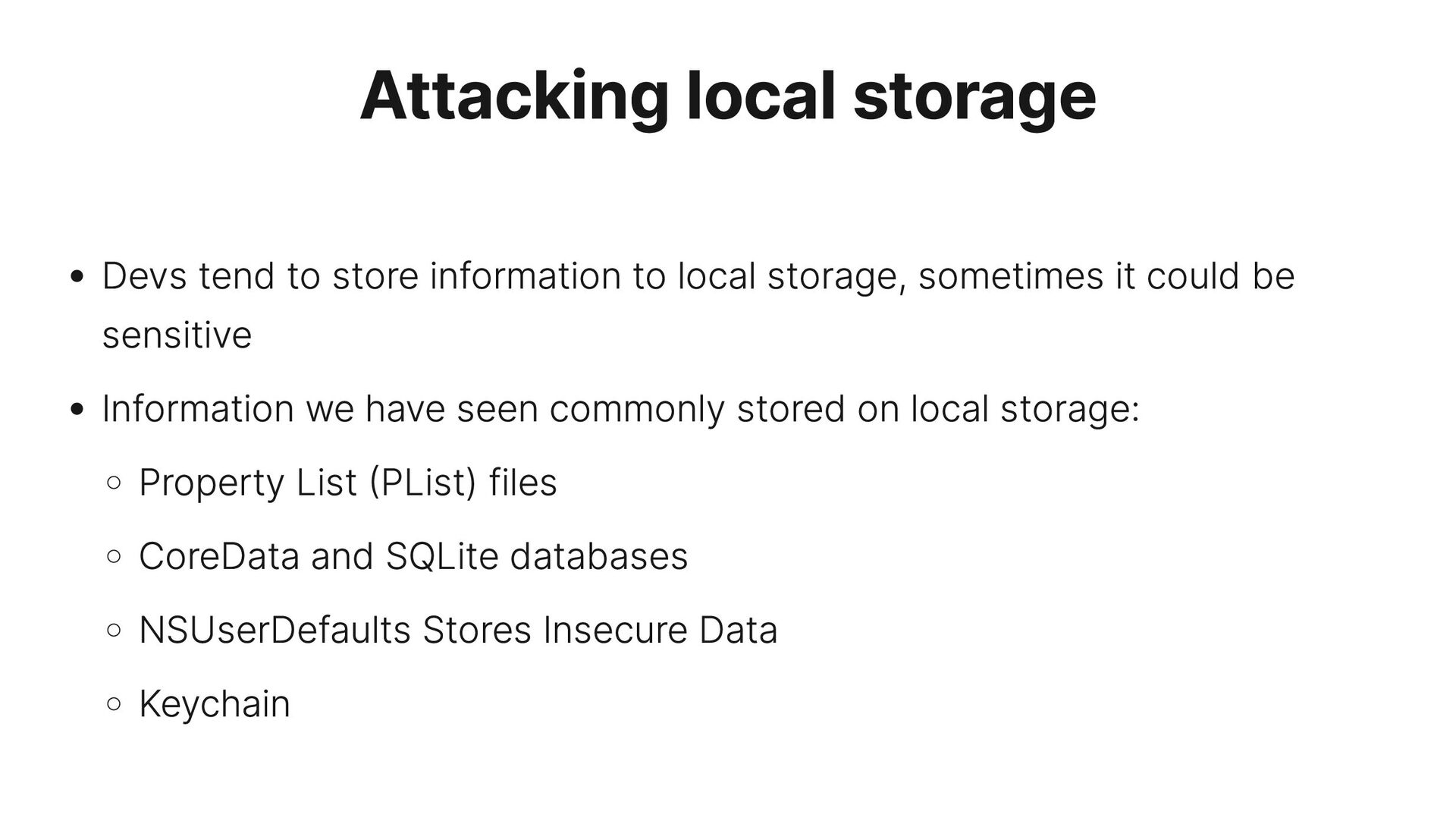
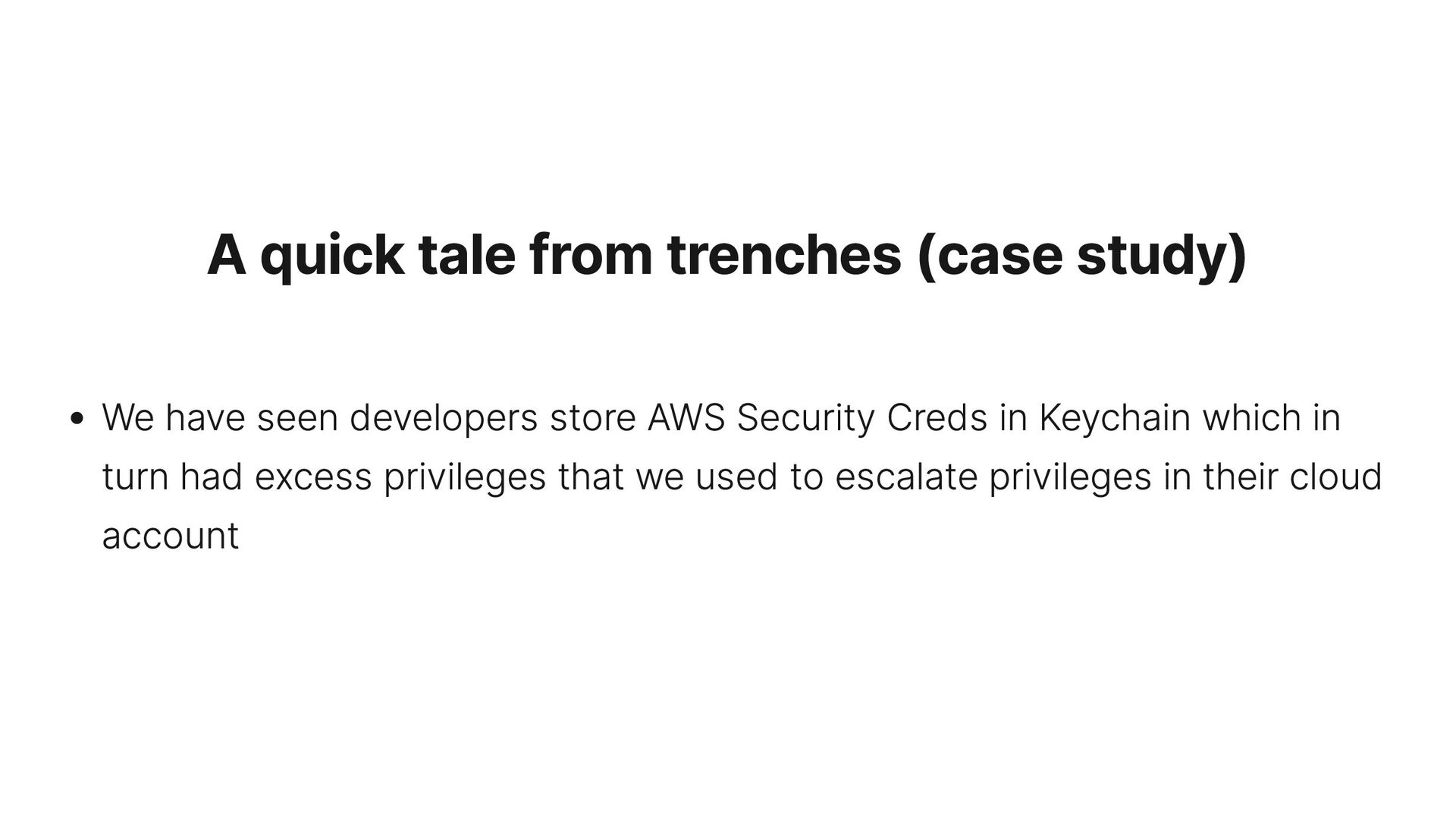
storage, sometimes it could be sensitive Information we have seen commonly stored on local storage: Property List (PList) files CoreData and SQLite databases NSUserDefaults Stores Insecure Data Keychain
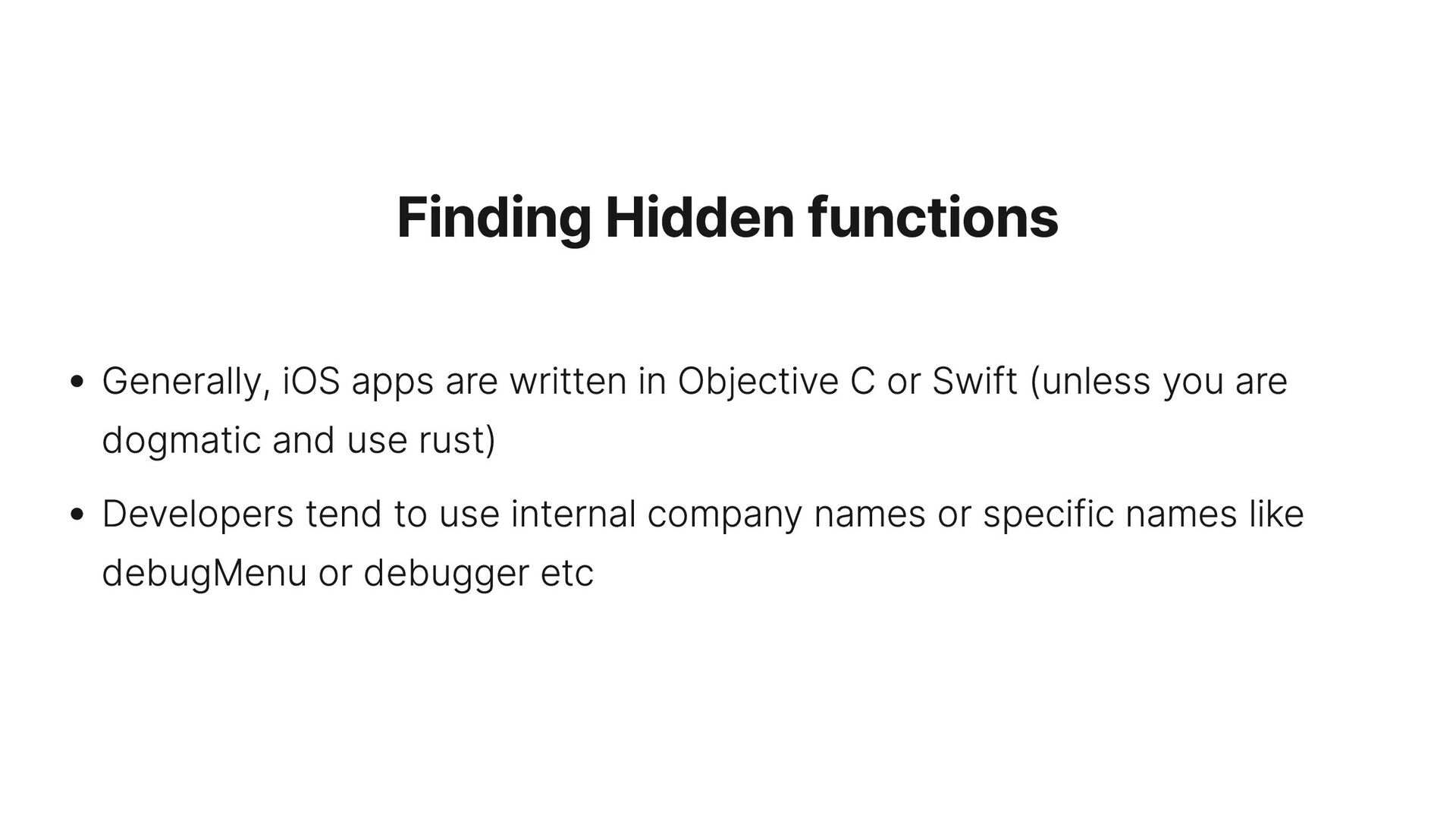
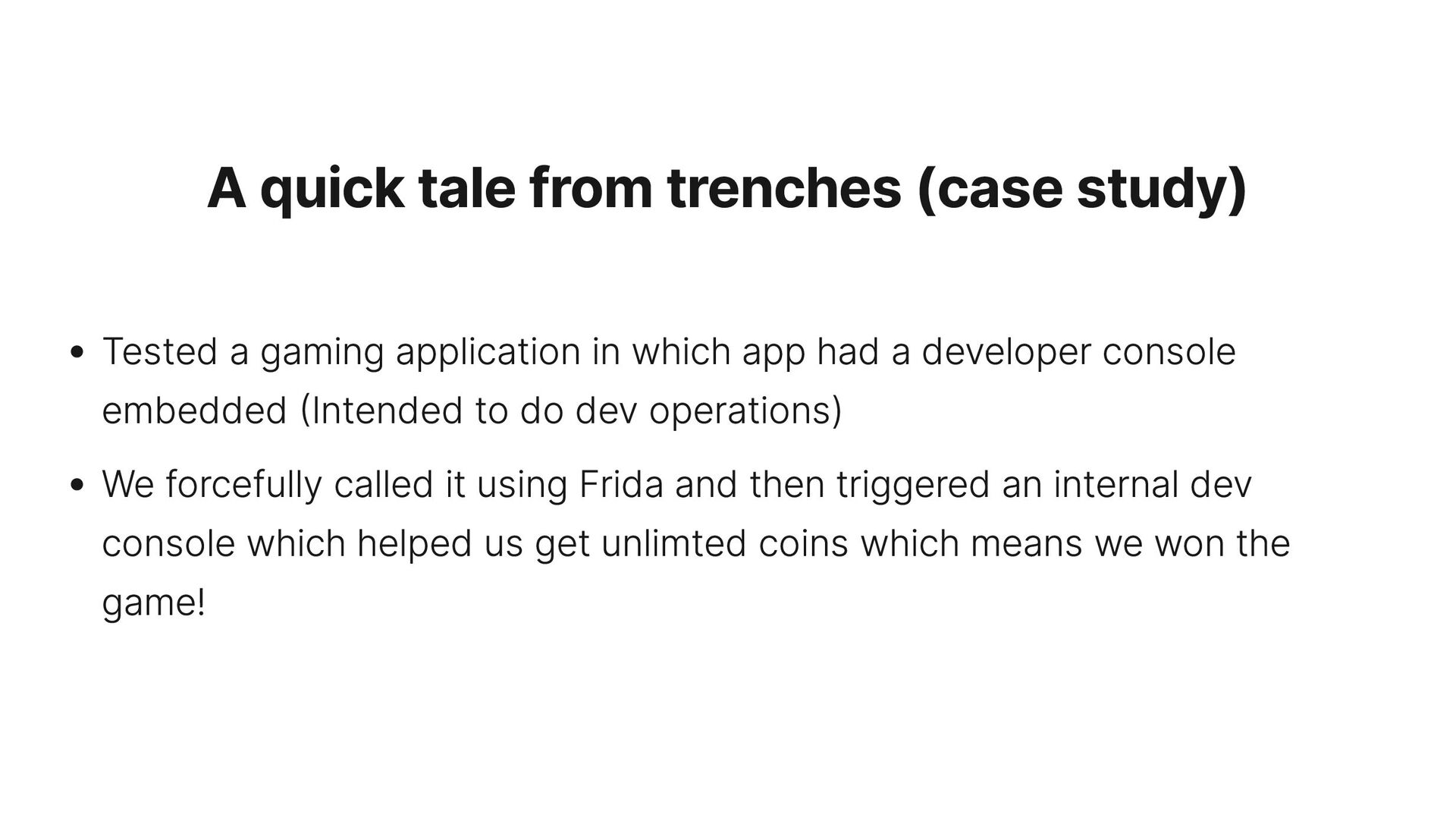
application in which app had a developer console embedded (Intended to do dev operations) We forcefully called it using Frida and then triggered an internal dev console which helped us get unlimted coins which means we won the game!


 0xbharath
 recruitengineers
 tsukuboshi
 mananyuki
 miidas
 kairim0
 kitagawaz
 ennael
 mtpooh
 philipz
 masakiokuda
 kazuho
 furuton
 portentint
 tmiket
 colly
colly
 jonoalderson
 inesmontani
 codingconduct
.png) helenjbeal
helenjbeal
 marktimemedia
 cromwellryan
 ipullrank
 thekraken
 addyosmani






![Common ways to attack Webviews ObjC.choose(ObjC.classes['WKWebView'], { onMatch: function (wk)](https://files.speakerdeck.com/presentations/d71ea5490f404c918f6ca23ee7e2f7bc/slide_19.jpg)