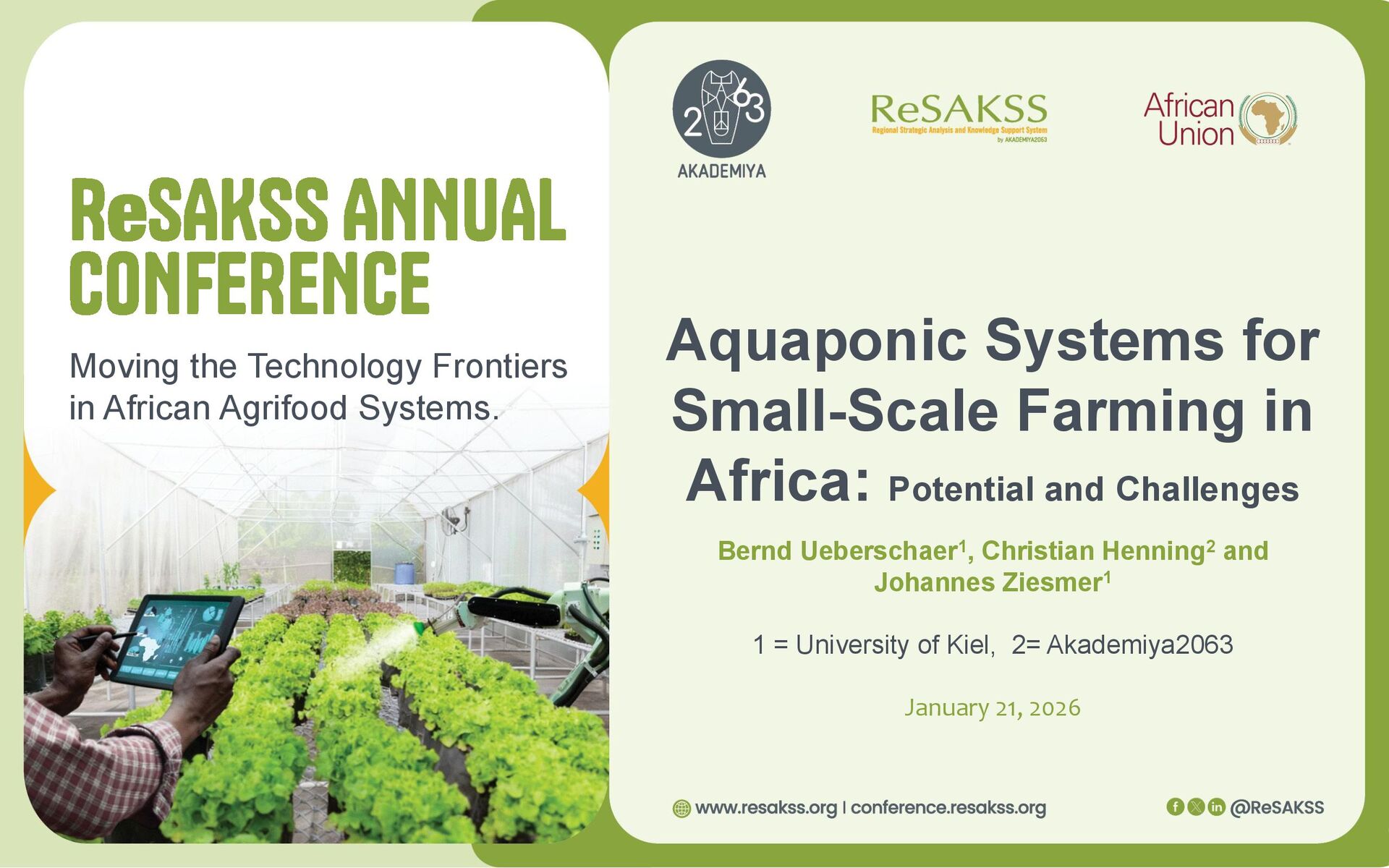
Aquaponic Systems for Small-Scale Farming in Africa: Potential and Challenges Bernd Ueberschaer1, Christian Henning2 and Johannes Ziesmer1 1 = University of Kiel, 2= Akademiya2063 January 21, 2026
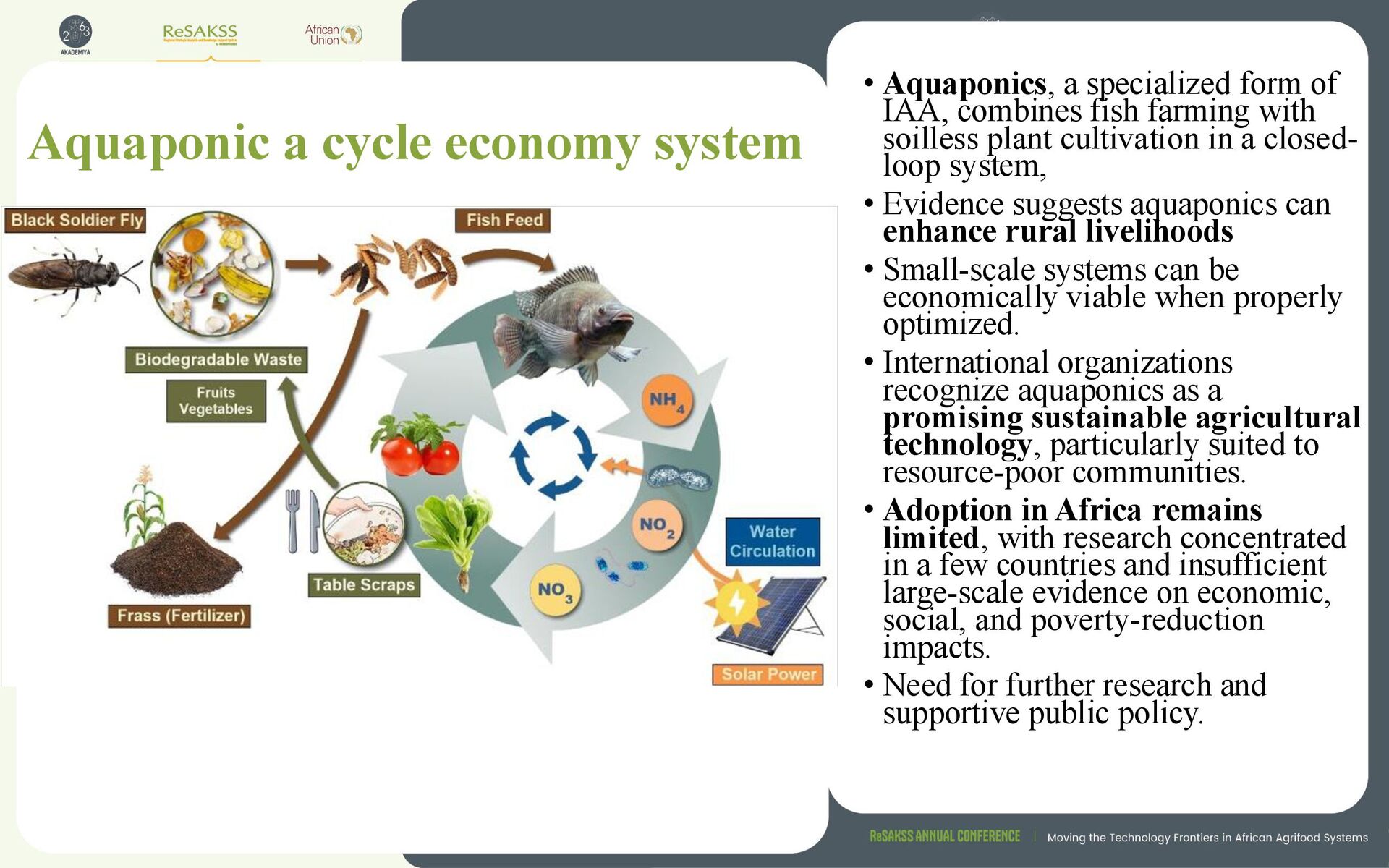
of IAA, combines fish farming with soilless plant cultivation in a closed- loop system, • Evidence suggests aquaponics can enhance rural livelihoods • Small-scale systems can be economically viable when properly optimized. • International organizations recognize aquaponics as a promising sustainable agricultural technology, particularly suited to resource-poor communities. • Adoption in Africa remains limited, with research concentrated in a few countries and insufficient large-scale evidence on economic, social, and poverty-reduction impacts. • Need for further research and supportive public policy.
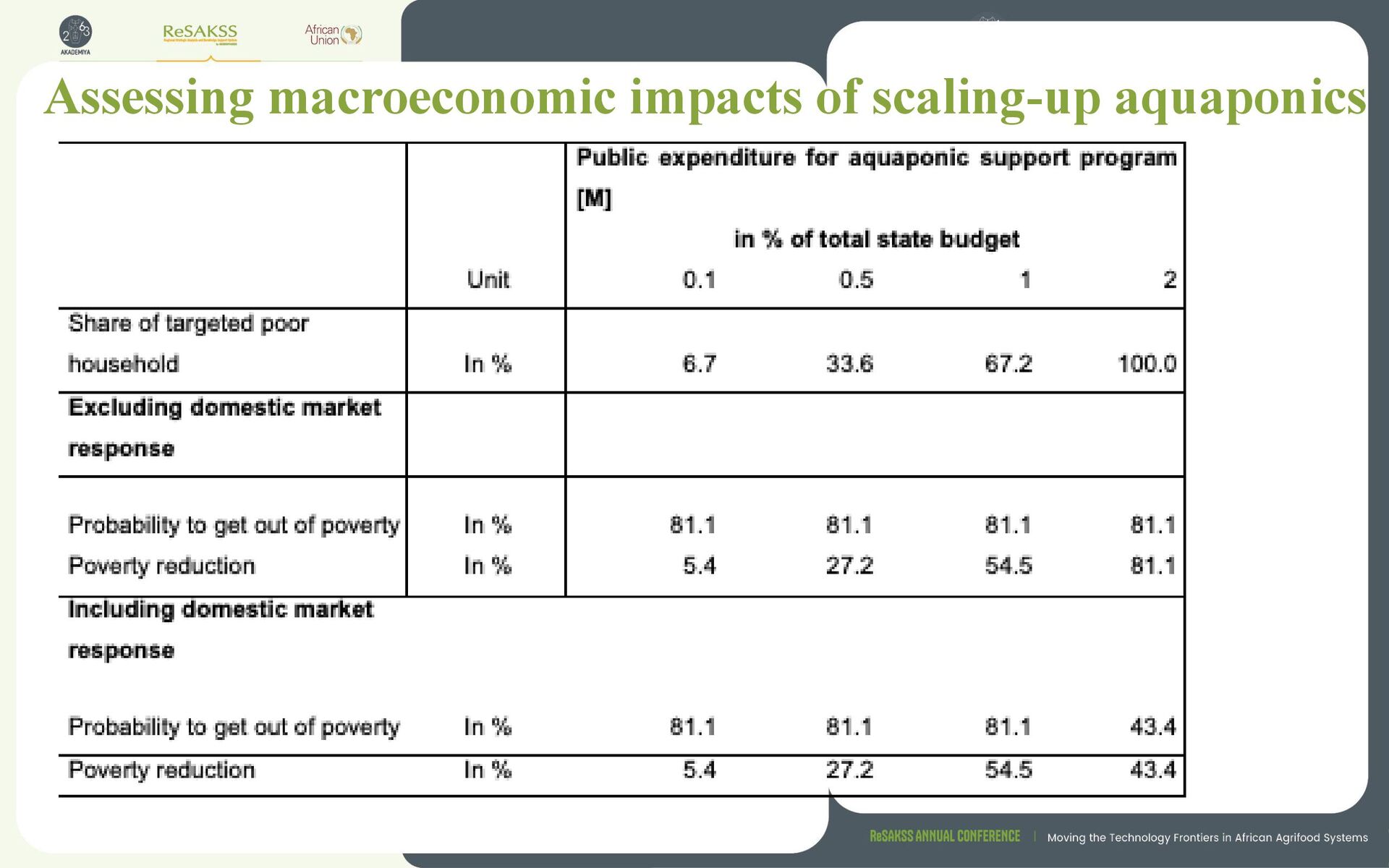
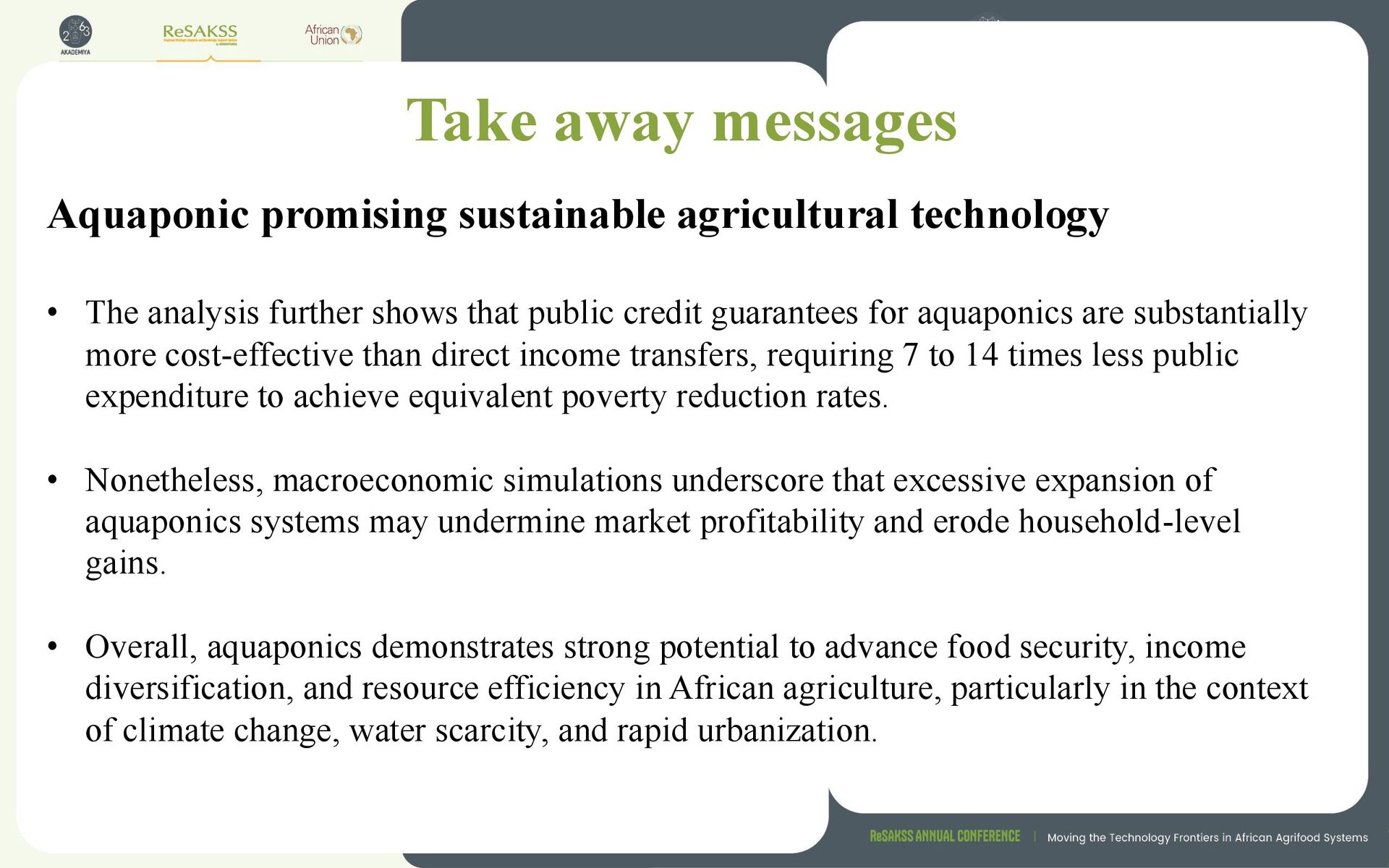
analysis further shows that public credit guarantees for aquaponics are substantially more cost-effective than direct income transfers, requiring 7 to 14 times less public expenditure to achieve equivalent poverty reduction rates. • Nonetheless, macroeconomic simulations underscore that excessive expansion of aquaponics systems may undermine market profitability and erode household-level gains. • Overall, aquaponics demonstrates strong potential to advance food security, income diversification, and resource efficiency in African agriculture, particularly in the context of climate change, water scarcity, and rapid urbanization.
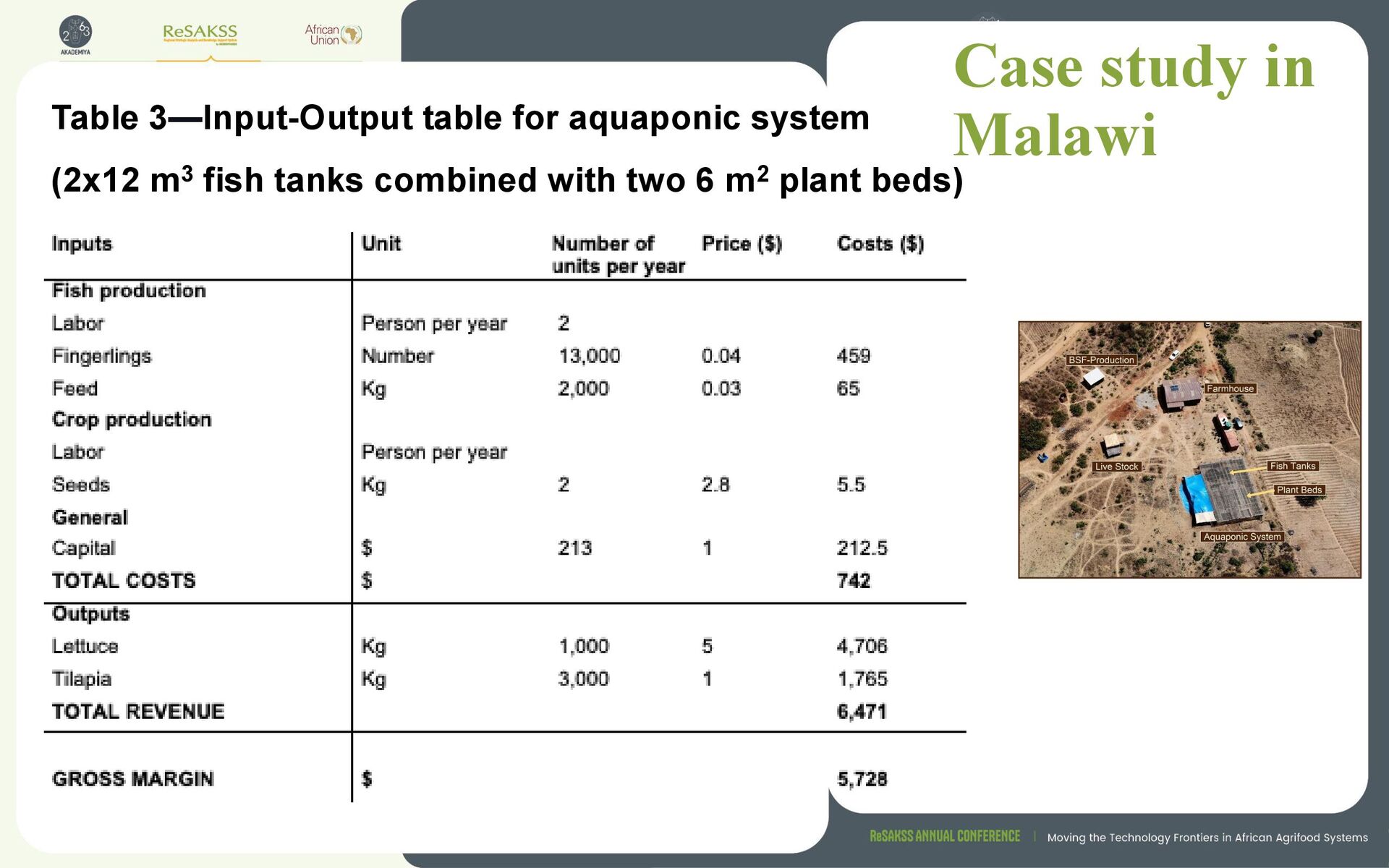
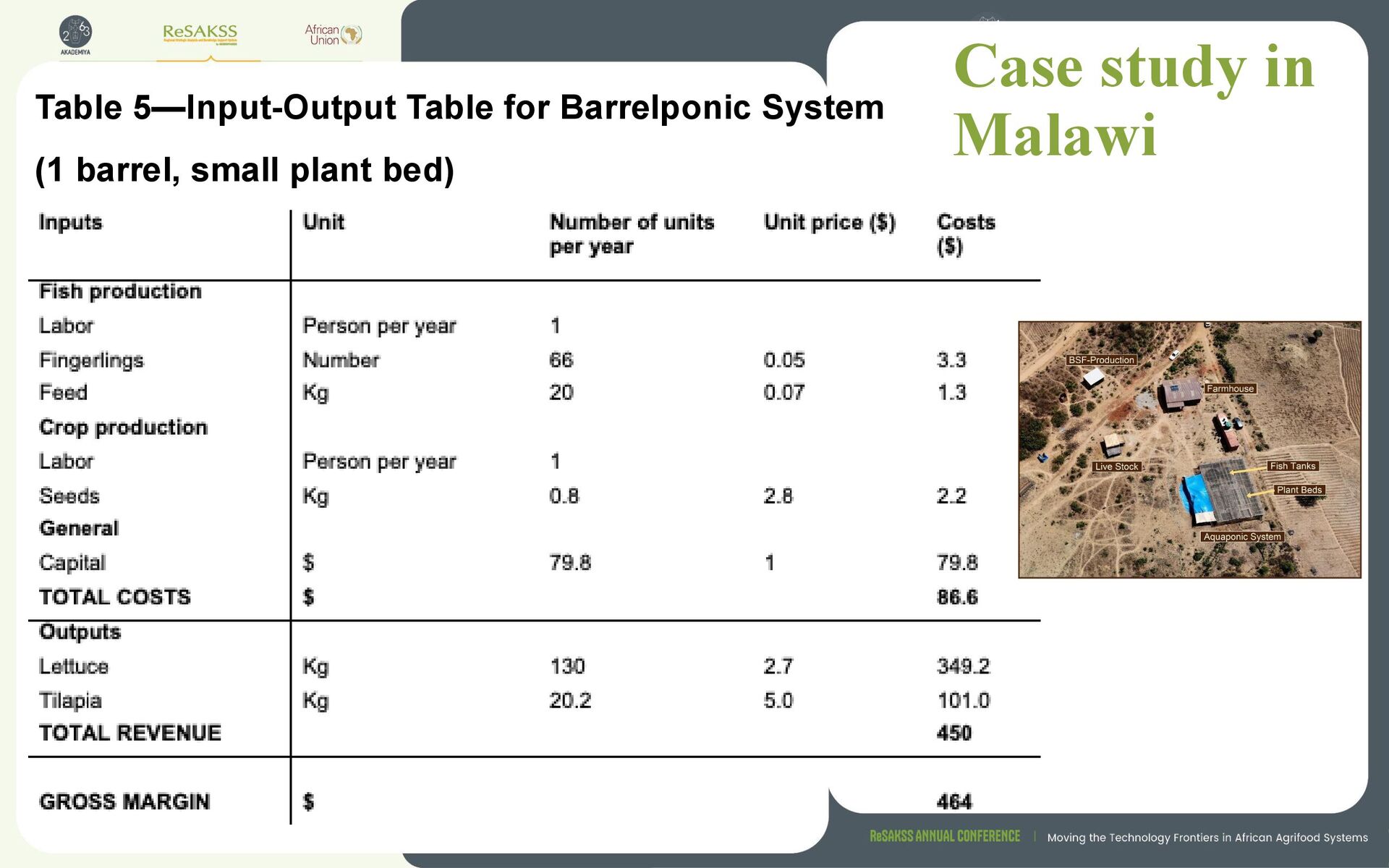
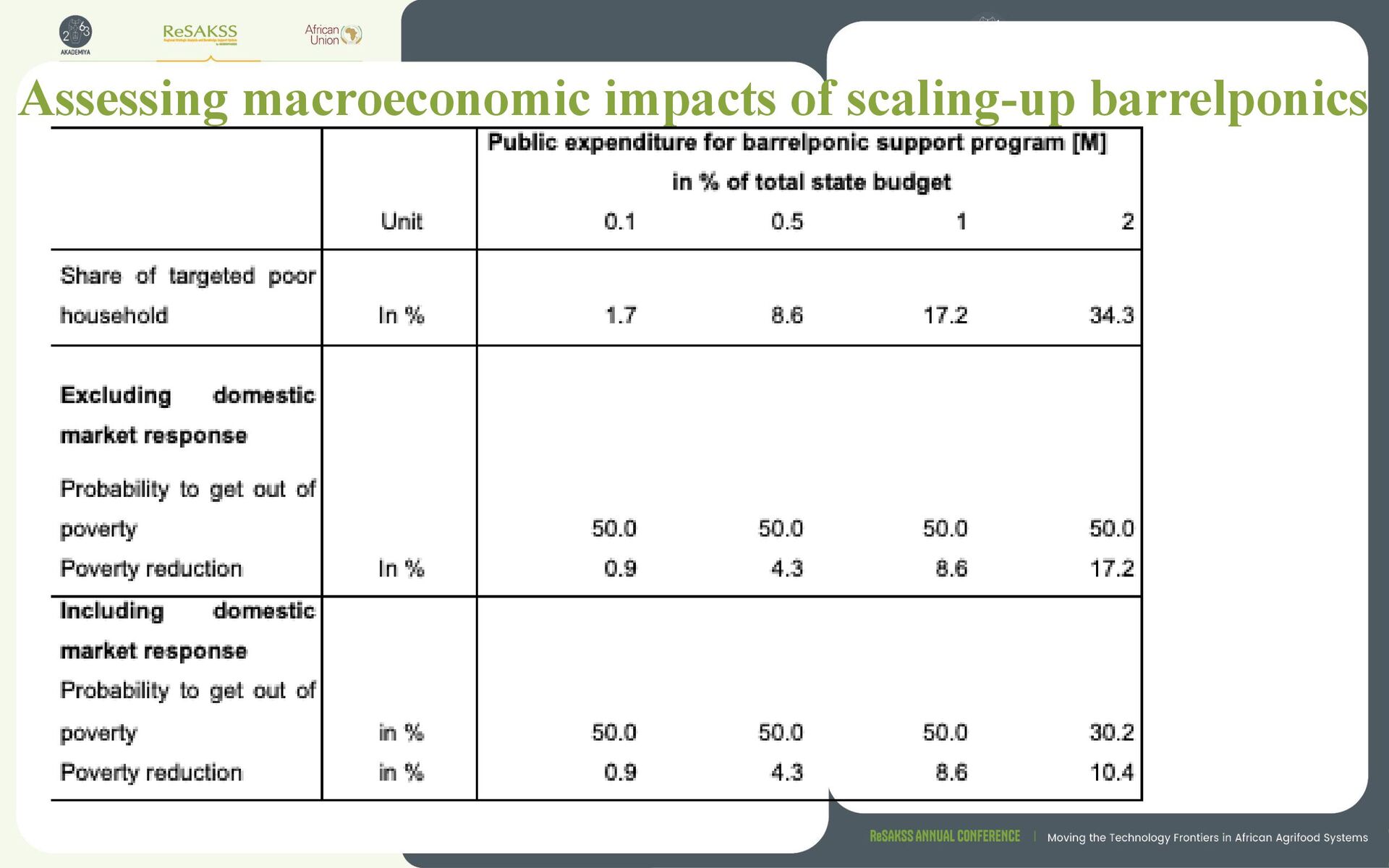
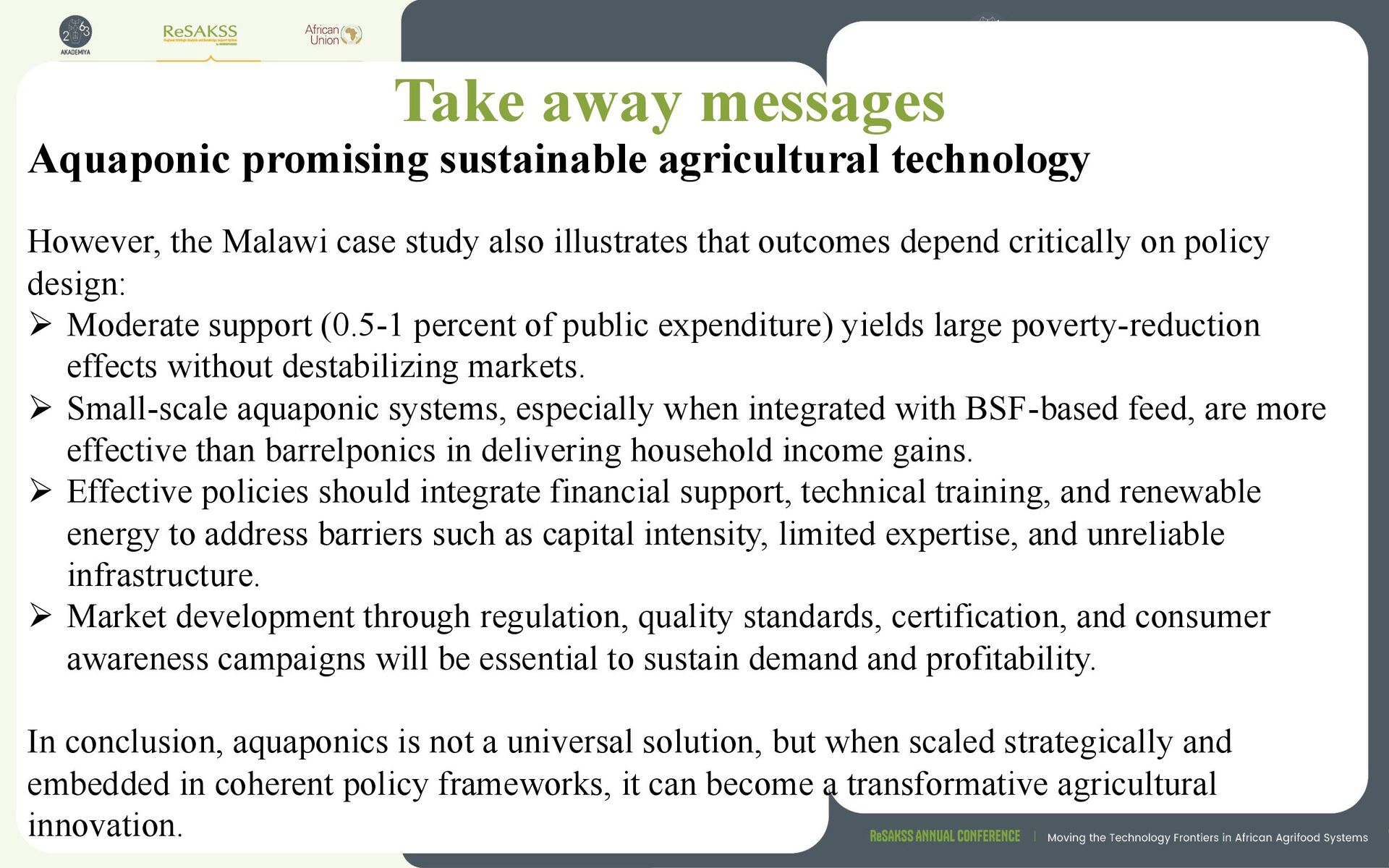
Malawi case study also illustrates that outcomes depend critically on policy design: ➢ Moderate support (0.5-1 percent of public expenditure) yields large poverty-reduction effects without destabilizing markets. ➢ Small-scale aquaponic systems, especially when integrated with BSF-based feed, are more effective than barrelponics in delivering household income gains. ➢ Effective policies should integrate financial support, technical training, and renewable energy to address barriers such as capital intensity, limited expertise, and unreliable infrastructure. ➢ Market development through regulation, quality standards, certification, and consumer awareness campaigns will be essential to sustain demand and profitability. In conclusion, aquaponics is not a universal solution, but when scaled strategically and embedded in coherent policy frameworks, it can become a transformative agricultural innovation.


 akademiya2063
 nzw0301
 butchi
.png) satai
satai
 polipoli
 fr0gger
 yukiar
 junkurihara
 sishi2026
 tomonom
 rikkabotan7
 nttcom
 imai448
 axbom
axbom
 lara
lara
 techseoconnect
 smashingmag
 palkan
 aleyda
 gurzu
gurzu
 khoart
 jeffersonlam
 marketingsoph
 shlominoach