African Agriculture. Critical Insights on Strengthening Public Policy in Africa. Dr. Racine Ly, Director Data Intelligence and Governance, AKADEMIYA2063 – Dakar, Senegal. AGRODEP, Feb, 2026
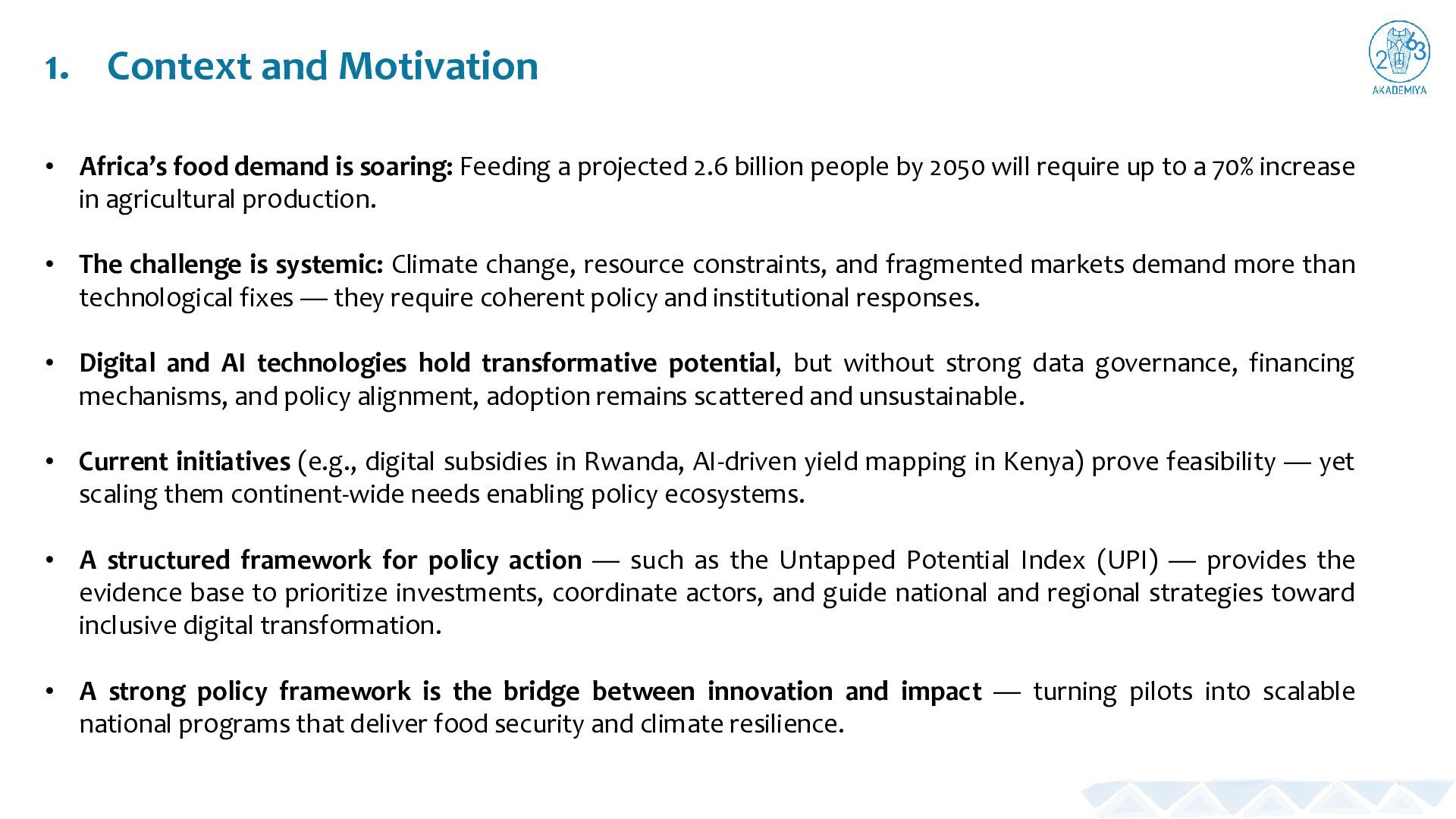
Feeding a projected 2.6 billion people by 2050 will require up to a 70% increase in agricultural production. • The challenge is systemic: Climate change, resource constraints, and fragmented markets demand more than technological fixes — they require coherent policy and institutional responses. • Digital and AI technologies hold transformative potential, but without strong data governance, financing mechanisms, and policy alignment, adoption remains scattered and unsustainable. • Current initiatives (e.g., digital subsidies in Rwanda, AI-driven yield mapping in Kenya) prove feasibility — yet scaling them continent-wide needs enabling policy ecosystems. • A structured framework for policy action — such as the Untapped Potential Index (UPI) — provides the evidence base to prioritize investments, coordinate actors, and guide national and regional strategies toward inclusive digital transformation. • A strong policy framework is the bridge between innovation and impact — turning pilots into scalable national programs that deliver food security and climate resilience.
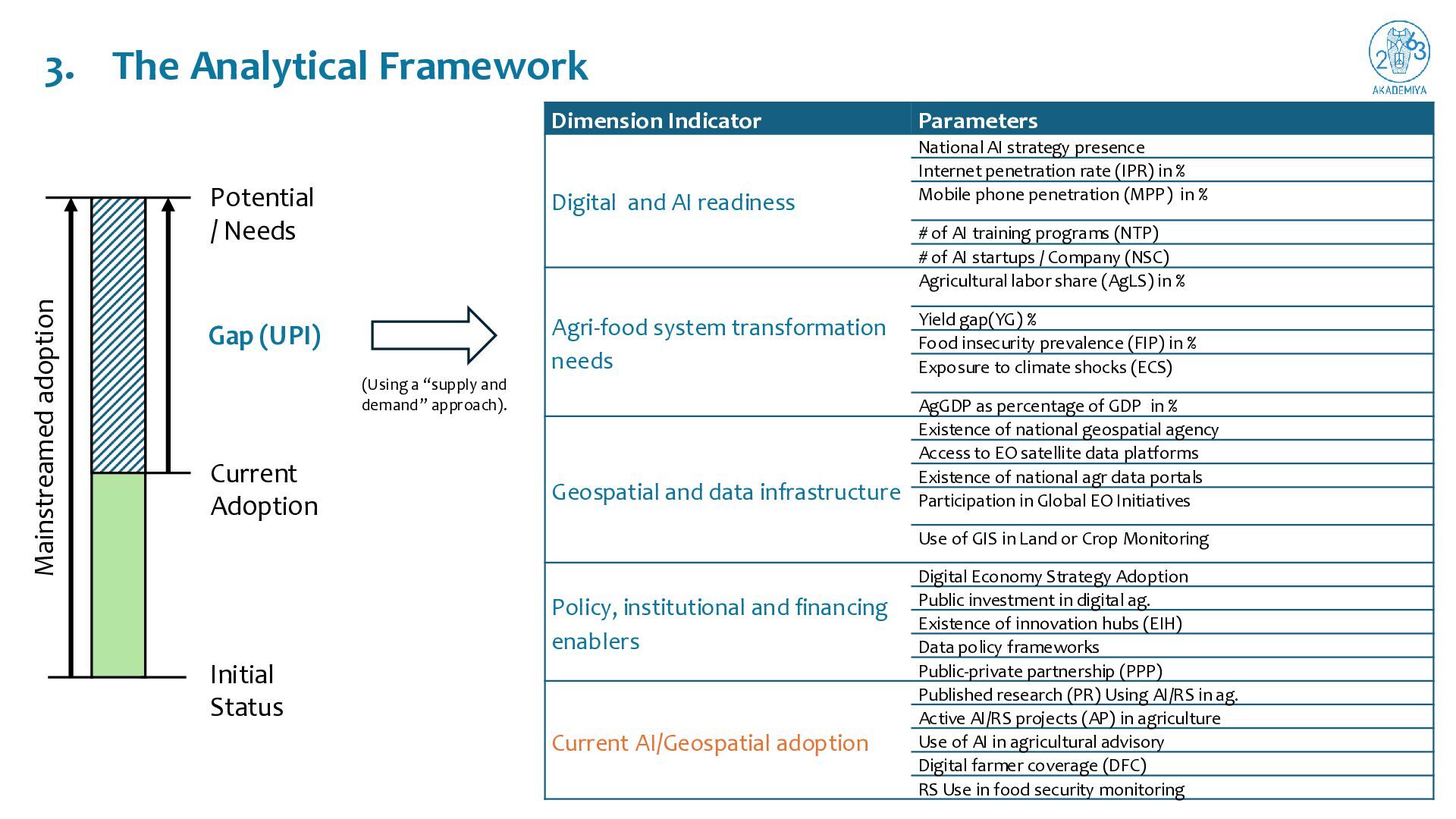
Status Mainstreamed adoption Gap (UPI) (Using a “supply and demand” approach). Dimension Indicator Parameters Digital and AI readiness National AI strategy presence Internet penetration rate (IPR) in % Mobile phone penetration (MPP) in % # of AI training programs (NTP) # of AI startups / Company (NSC) Agri-food system transformation needs Agricultural labor share (AgLS) in % Yield gap(YG) % Food insecurity prevalence (FIP) in % Exposure to climate shocks (ECS) AgGDP as percentage of GDP in % Geospatial and data infrastructure Existence of national geospatial agency Access to EO satellite data platforms Existence of national agr data portals Participation in Global EO Initiatives Use of GIS in Land or Crop Monitoring Policy, institutional and financing enablers Digital Economy Strategy Adoption Public investment in digital ag. Existence of innovation hubs (EIH) Data policy frameworks Public-private partnership (PPP) Current AI/Geospatial adoption Published research (PR) Using AI/RS in ag. Active AI/RS projects (AP) in agriculture Use of AI in agricultural advisory Digital farmer coverage (DFC) RS Use in food security monitoring
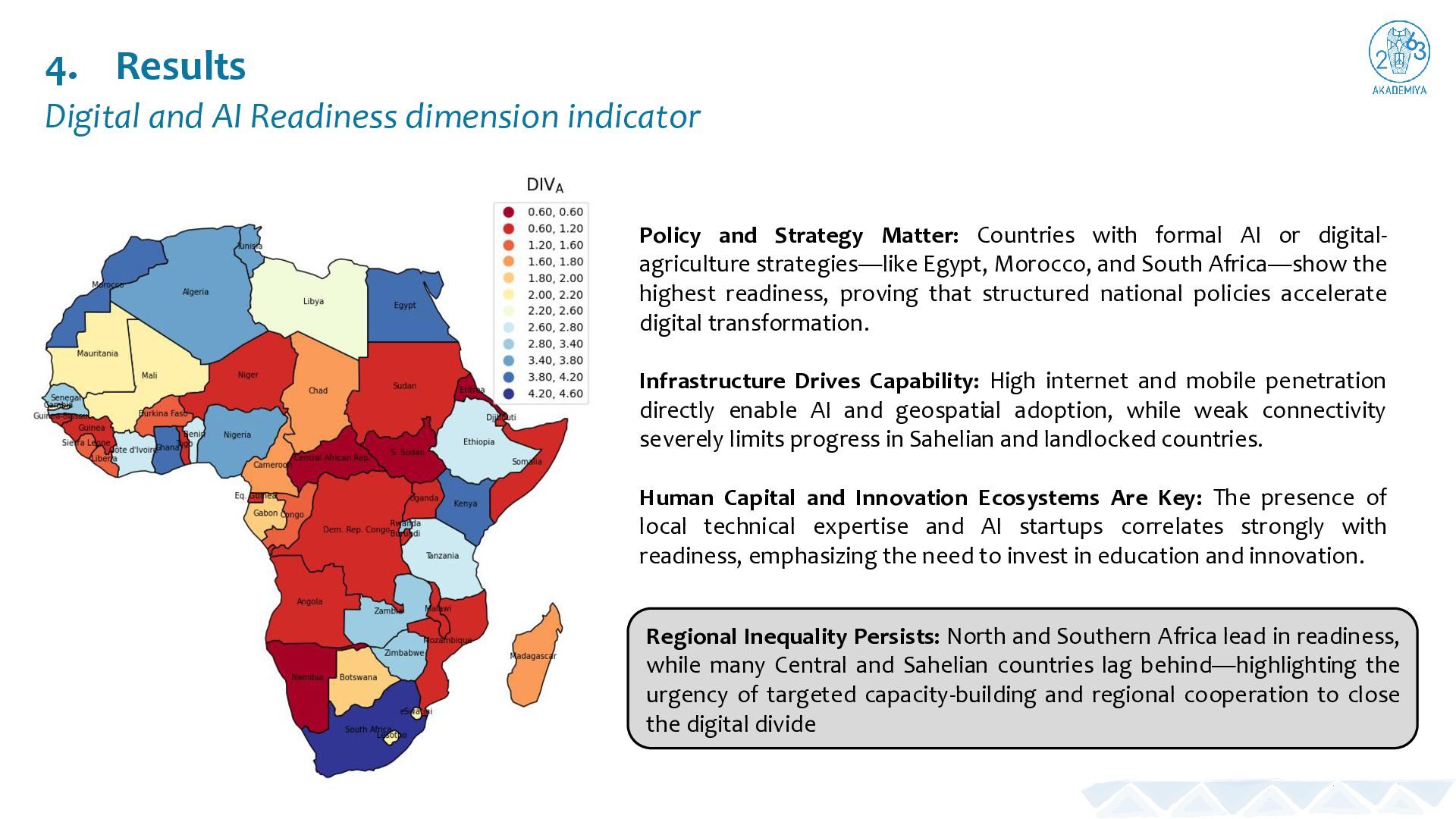
Strategy Matter: Countries with formal AI or digital- agriculture strategies—like Egypt, Morocco, and South Africa—show the highest readiness, proving that structured national policies accelerate digital transformation. Infrastructure Drives Capability: High internet and mobile penetration directly enable AI and geospatial adoption, while weak connectivity severely limits progress in Sahelian and landlocked countries. Human Capital and Innovation Ecosystems Are Key: The presence of local technical expertise and AI startups correlates strongly with readiness, emphasizing the need to invest in education and innovation. Regional Inequality Persists: North and Southern Africa lead in readiness, while many Central and Sahelian countries lag behind—highlighting the urgency of targeted capacity-building and regional cooperation to close the digital divide
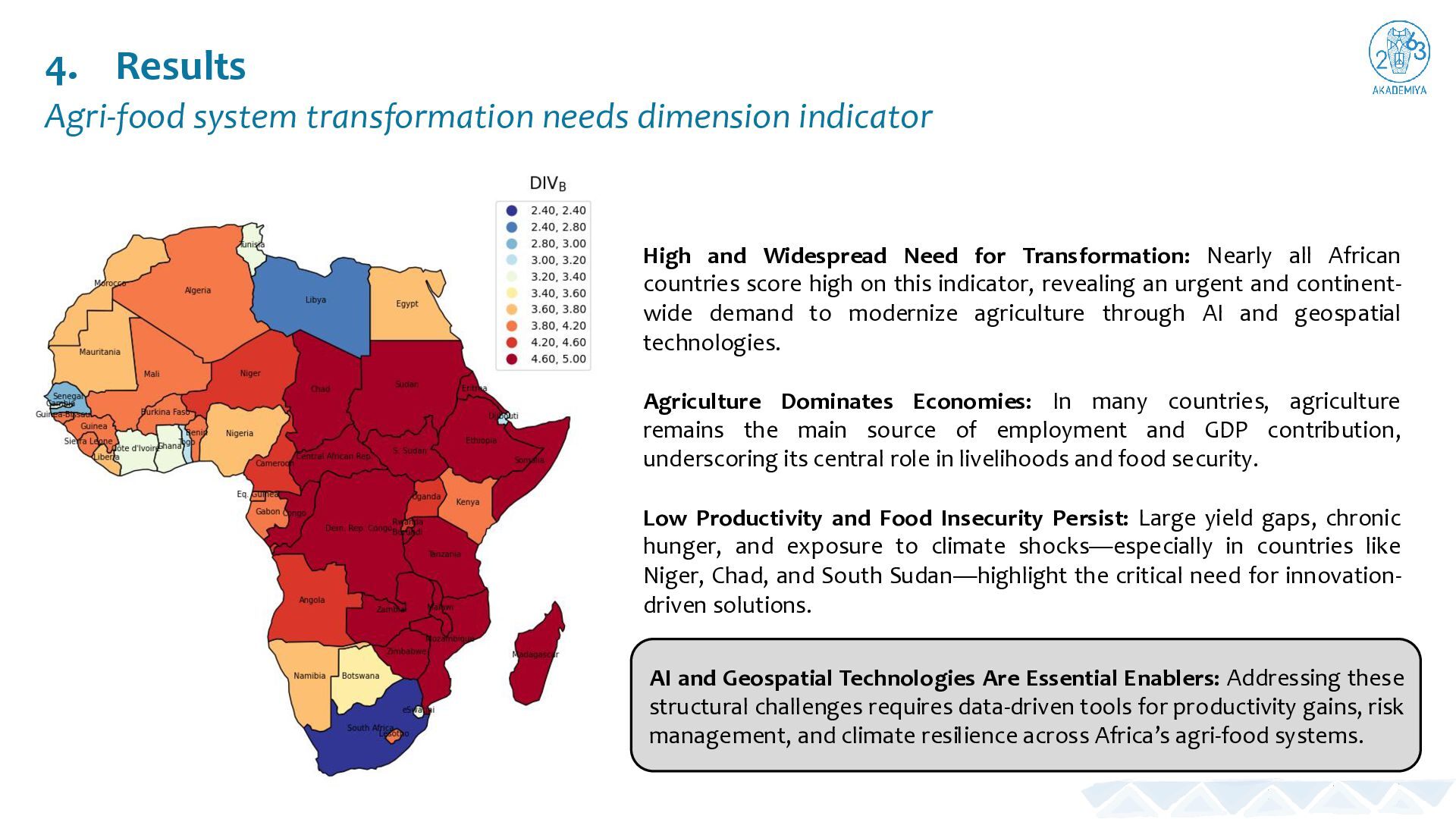
Widespread Need for Transformation: Nearly all African countries score high on this indicator, revealing an urgent and continent- wide demand to modernize agriculture through AI and geospatial technologies. Agriculture Dominates Economies: In many countries, agriculture remains the main source of employment and GDP contribution, underscoring its central role in livelihoods and food security. Low Productivity and Food Insecurity Persist: Large yield gaps, chronic hunger, and exposure to climate shocks—especially in countries like Niger, Chad, and South Sudan—highlight the critical need for innovation- driven solutions. AI and Geospatial Technologies Are Essential Enablers: Addressing these structural challenges requires data-driven tools for productivity gains, risk management, and climate resilience across Africa’s agri-food systems.
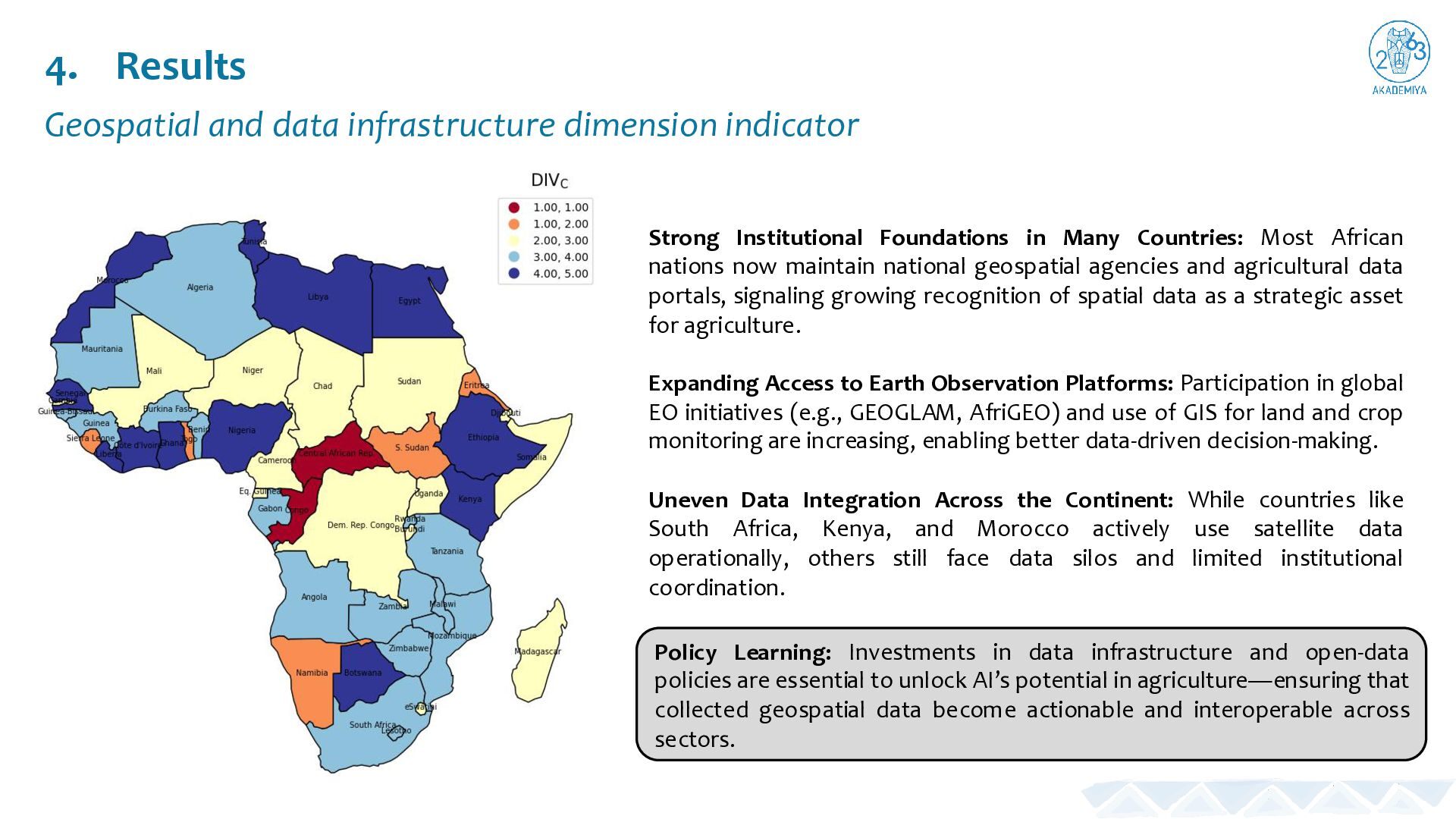
Foundations in Many Countries: Most African nations now maintain national geospatial agencies and agricultural data portals, signaling growing recognition of spatial data as a strategic asset for agriculture. Expanding Access to Earth Observation Platforms: Participation in global EO initiatives (e.g., GEOGLAM, AfriGEO) and use of GIS for land and crop monitoring are increasing, enabling better data-driven decision-making. Uneven Data Integration Across the Continent: While countries like South Africa, Kenya, and Morocco actively use satellite data operationally, others still face data silos and limited institutional coordination. Policy Learning: Investments in data infrastructure and open-data policies are essential to unlock AI’s potential in agriculture—ensuring that collected geospatial data become actionable and interoperable across sectors.
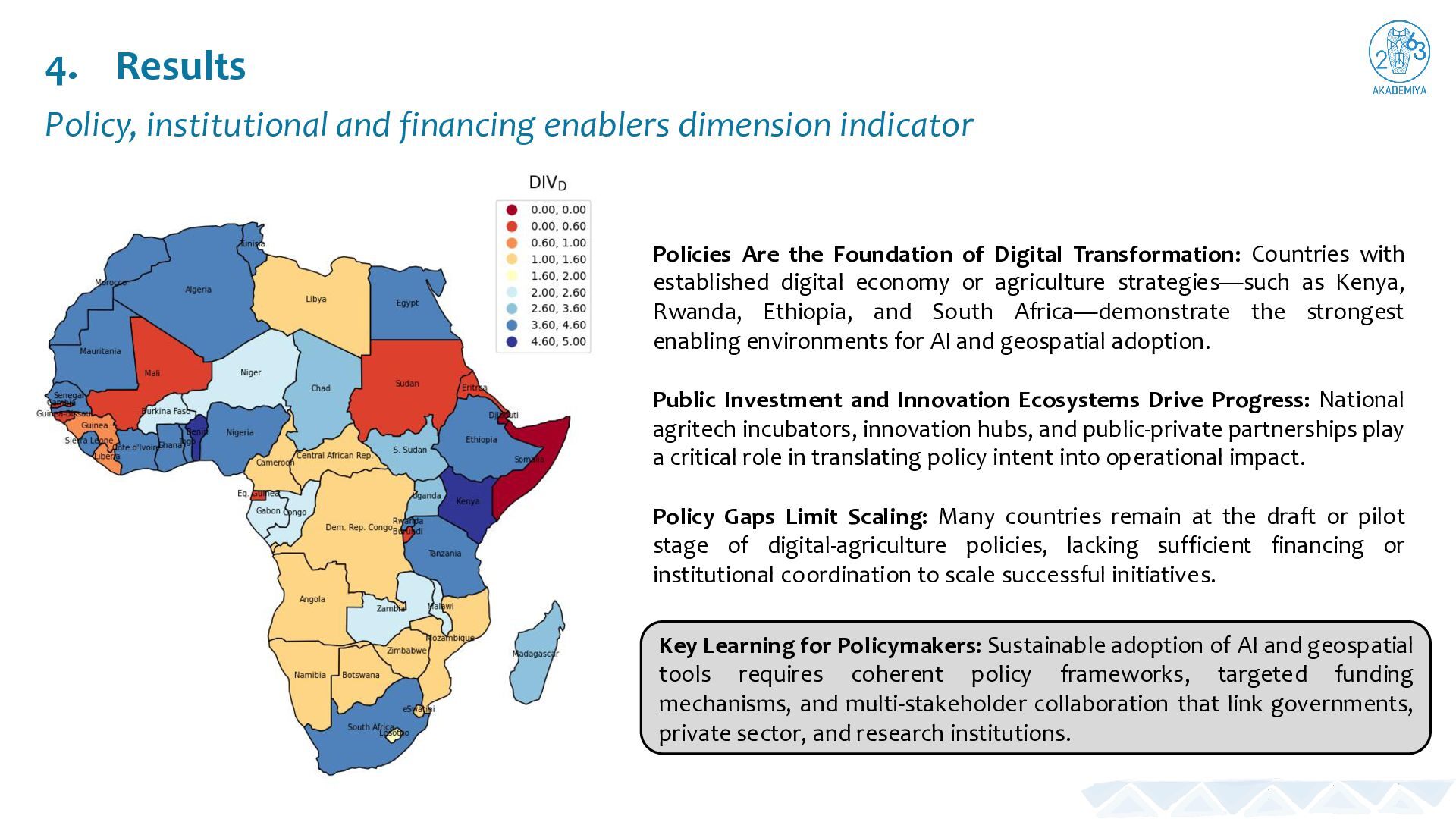
Are the Foundation of Digital Transformation: Countries with established digital economy or agriculture strategies—such as Kenya, Rwanda, Ethiopia, and South Africa—demonstrate the strongest enabling environments for AI and geospatial adoption. Public Investment and Innovation Ecosystems Drive Progress: National agritech incubators, innovation hubs, and public-private partnerships play a critical role in translating policy intent into operational impact. Policy Gaps Limit Scaling: Many countries remain at the draft or pilot stage of digital-agriculture policies, lacking sufficient financing or institutional coordination to scale successful initiatives. Key Learning for Policymakers: Sustainable adoption of AI and geospatial tools requires coherent policy frameworks, targeted funding mechanisms, and multi-stakeholder collaboration that link governments, private sector, and research institutions.
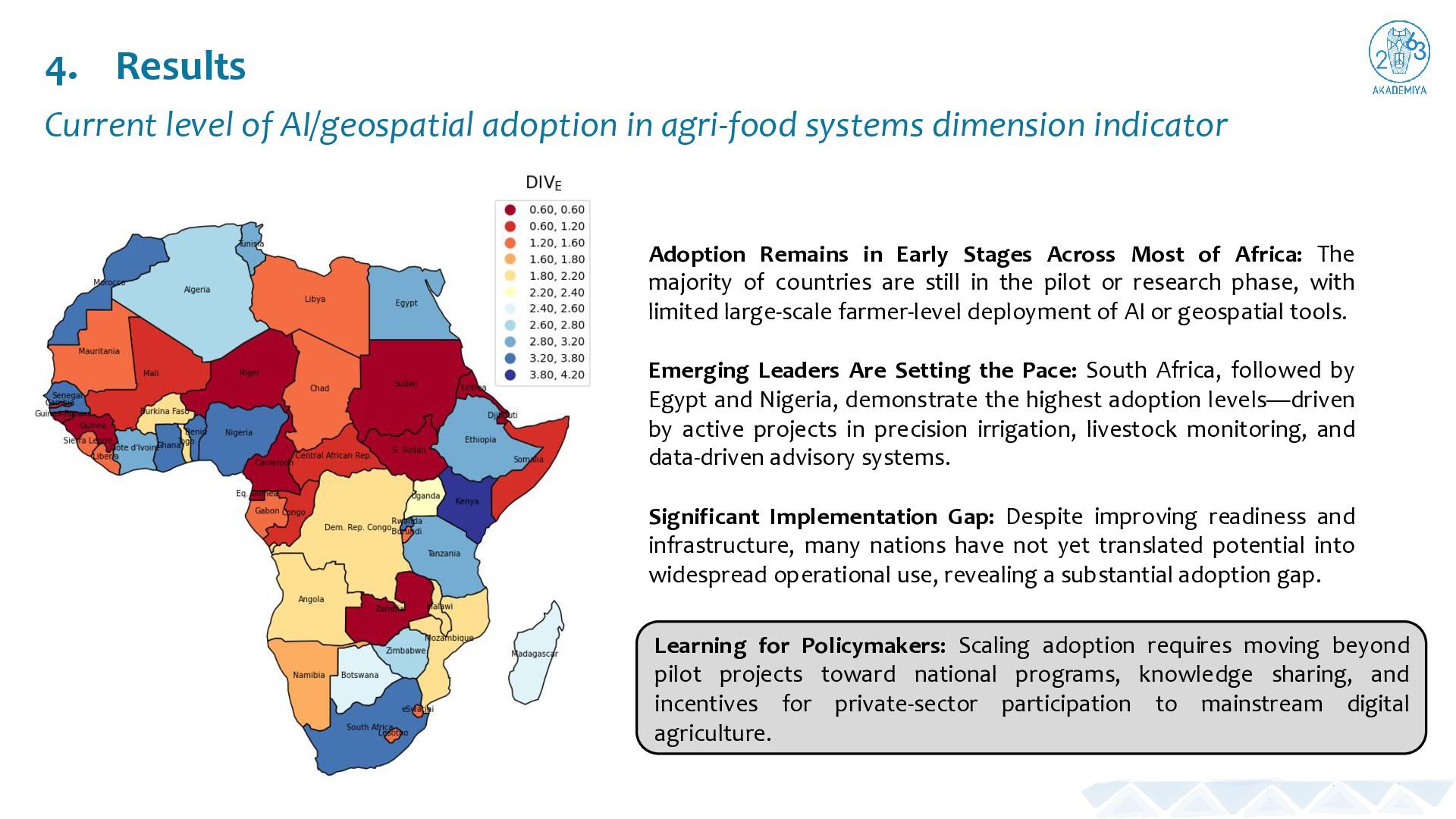
dimension indicator Adoption Remains in Early Stages Across Most of Africa: The majority of countries are still in the pilot or research phase, with limited large-scale farmer-level deployment of AI or geospatial tools. Emerging Leaders Are Setting the Pace: South Africa, followed by Egypt and Nigeria, demonstrate the highest adoption levels—driven by active projects in precision irrigation, livestock monitoring, and data-driven advisory systems. Significant Implementation Gap: Despite improving readiness and infrastructure, many nations have not yet translated potential into widespread operational use, revealing a substantial adoption gap. Learning for Policymakers: Scaling adoption requires moving beyond pilot projects toward national programs, knowledge sharing, and incentives for private-sector participation to mainstream digital agriculture.
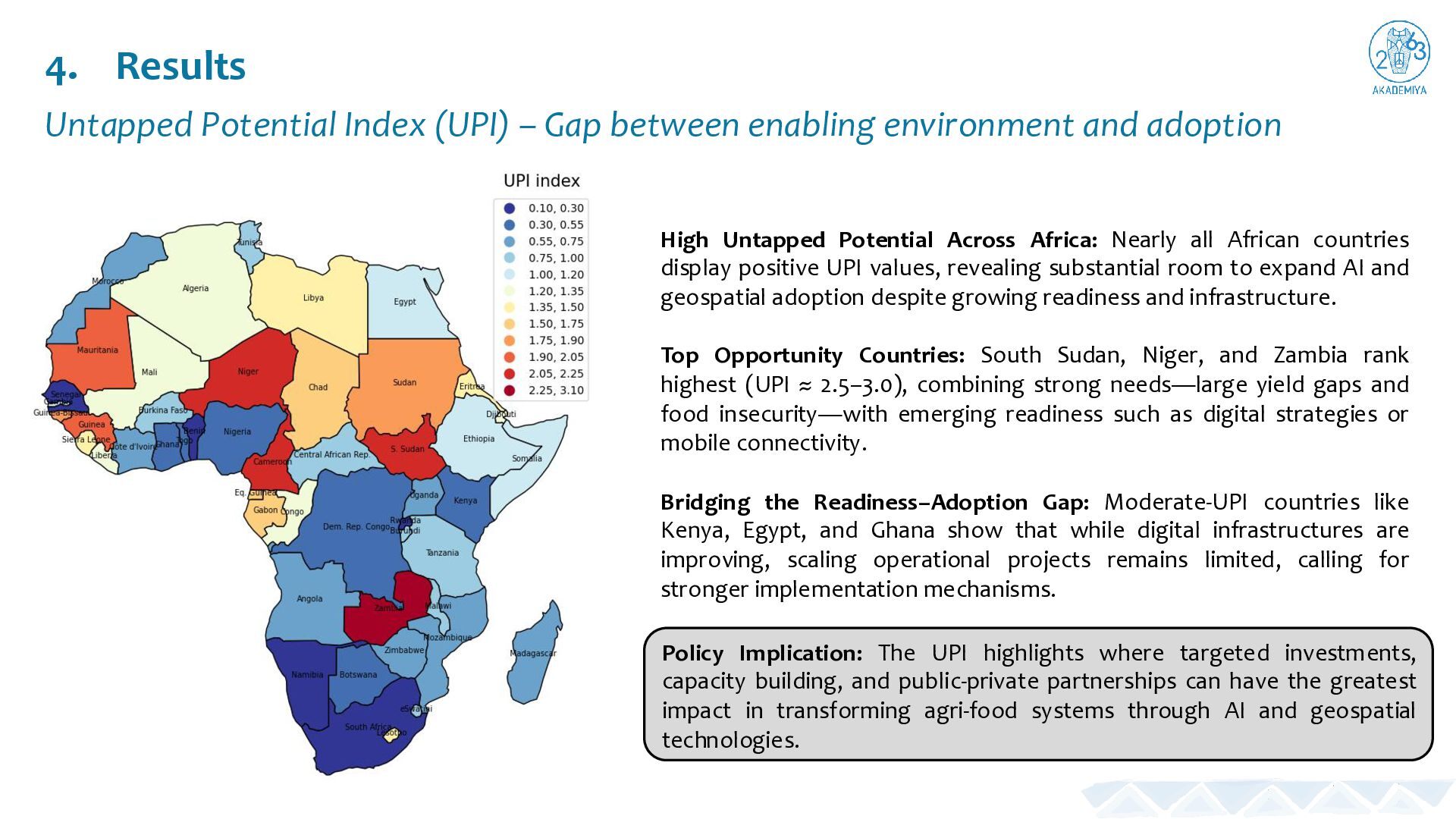
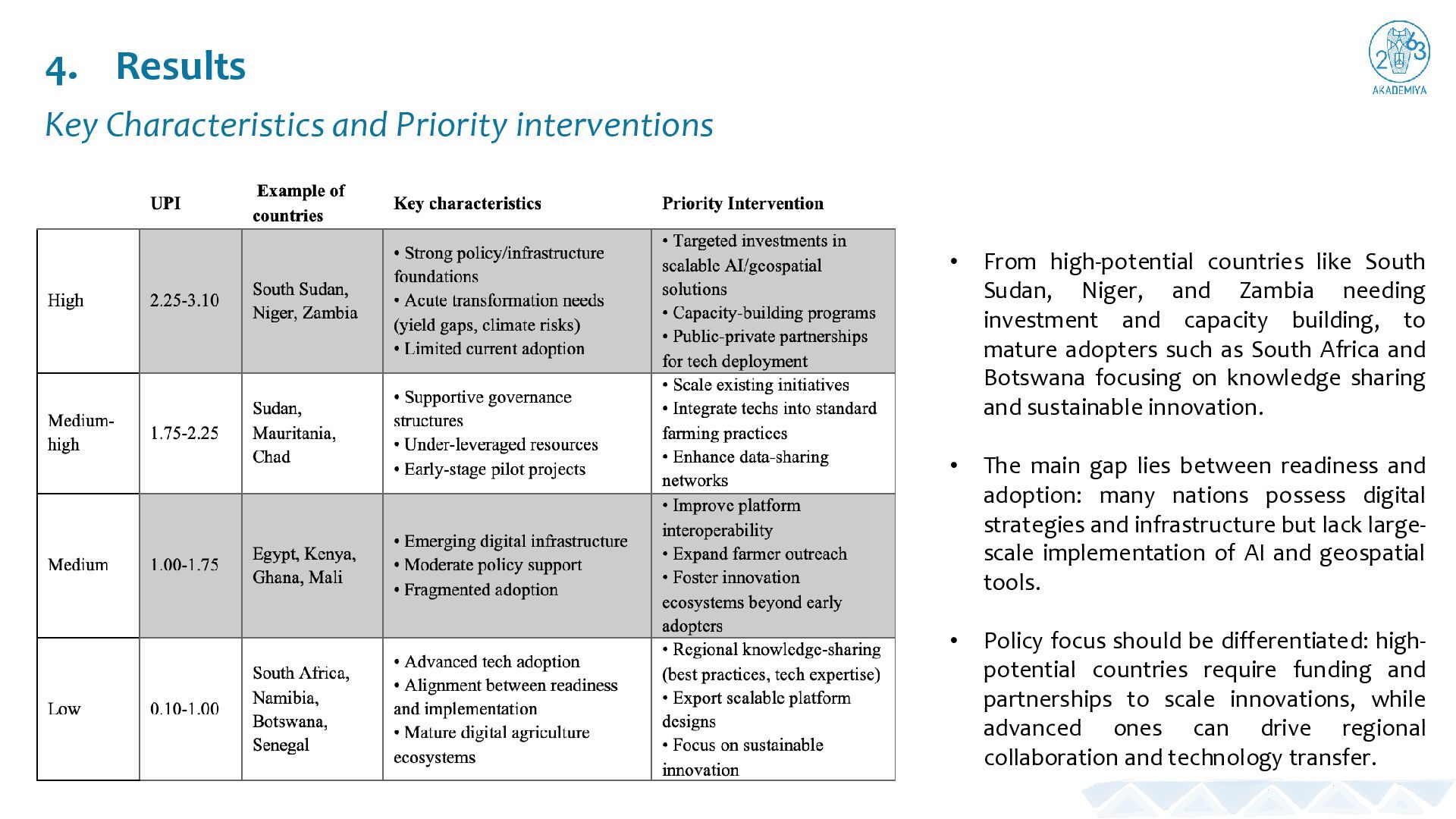
environment and adoption High Untapped Potential Across Africa: Nearly all African countries display positive UPI values, revealing substantial room to expand AI and geospatial adoption despite growing readiness and infrastructure. Top Opportunity Countries: South Sudan, Niger, and Zambia rank highest (UPI ≈ 2.5–3.0), combining strong needs—large yield gaps and food insecurity—with emerging readiness such as digital strategies or mobile connectivity. Bridging the Readiness–Adoption Gap: Moderate-UPI countries like Kenya, Egypt, and Ghana show that while digital infrastructures are improving, scaling operational projects remains limited, calling for stronger implementation mechanisms. Policy Implication: The UPI highlights where targeted investments, capacity building, and public-private partnerships can have the greatest impact in transforming agri-food systems through AI and geospatial technologies.
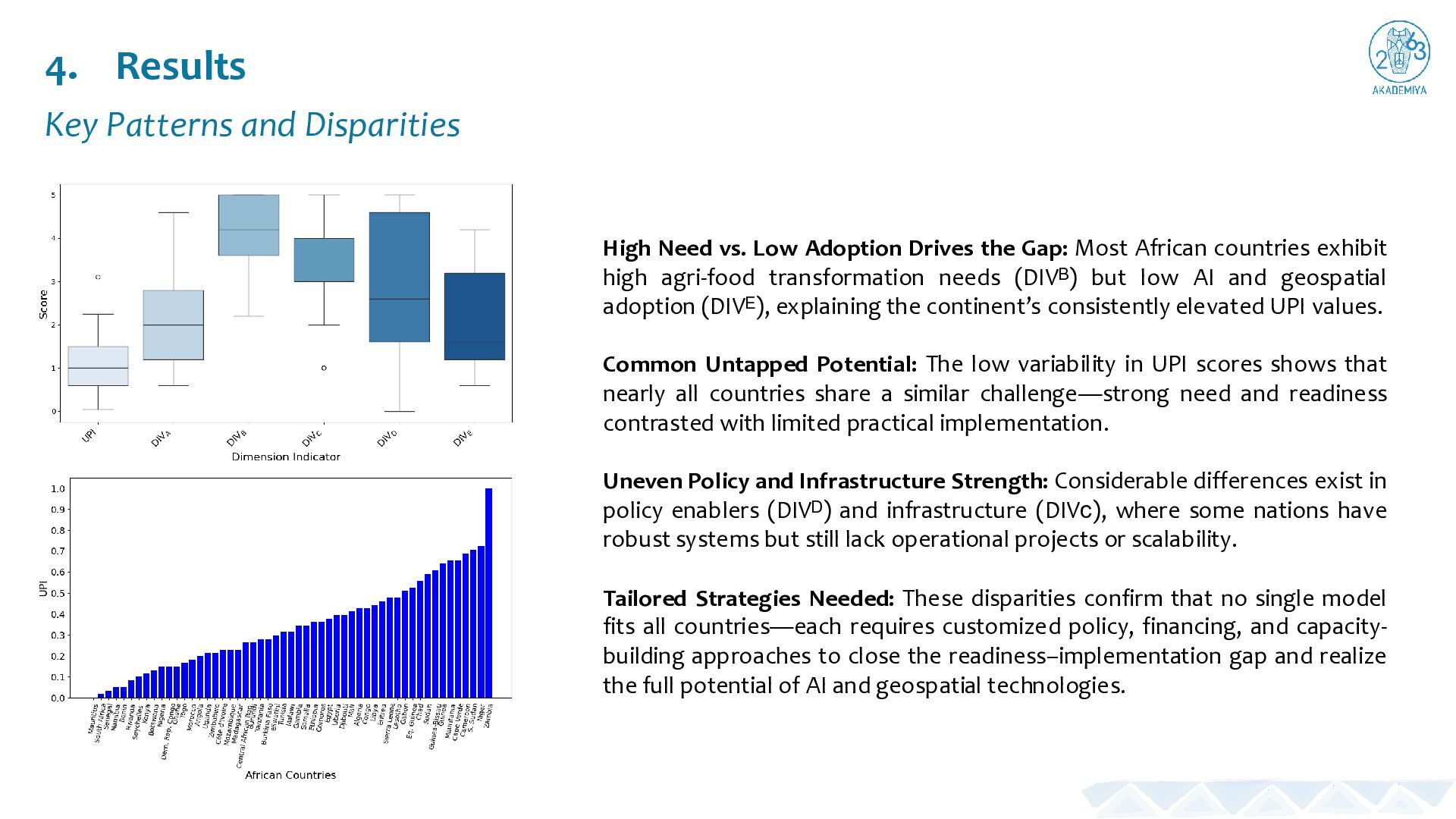
Adoption Drives the Gap: Most African countries exhibit high agri-food transformation needs (DIVᴮ) but low AI and geospatial adoption (DIVᴱ), explaining the continent’s consistently elevated UPI values. Common Untapped Potential: The low variability in UPI scores shows that nearly all countries share a similar challenge—strong need and readiness contrasted with limited practical implementation. Uneven Policy and Infrastructure Strength: Considerable differences exist in policy enablers (DIVᴰ) and infrastructure (DIVᴄ), where some nations have robust systems but still lack operational projects or scalability. Tailored Strategies Needed: These disparities confirm that no single model fits all countries—each requires customized policy, financing, and capacity- building approaches to close the readiness–implementation gap and realize the full potential of AI and geospatial technologies.
countries like South Sudan, Niger, and Zambia needing investment and capacity building, to mature adopters such as South Africa and Botswana focusing on knowledge sharing and sustainable innovation. • The main gap lies between readiness and adoption: many nations possess digital strategies and infrastructure but lack large- scale implementation of AI and geospatial tools. • Policy focus should be differentiated: high- potential countries require funding and partnerships to scale innovations, while advanced ones can drive regional collaboration and technology transfer.


 akademiya2063
 casualconc
.png) satai
satai
 kento1109
 stktu
stktu
 tattaka
 nttcom
 rikkabotan7
 nnchiba
 murakawatakuya
 yuukit
 shiell
 institudelelevage
 inesmontani
.png) helenjbeal
helenjbeal
 eileencodes
 addyosmani
 jonyablonski
 lara
lara
 portentint
 gurzu
gurzu
 csswizardry
 uxyall
 jnunemaker
 soudai