Upgrade to Pro
— share decks privately, control downloads, hide ads and more …
Speaker Deck
Sign up for free
Menu
Search
Features
All features
Private URLs
Password Protection
Custom URLS
Scheduled publishing
Remove Branding
Restrict embedding
Deck Collections
Notes
Features
All features
Private URLs
Password Protection
Custom URLS
Scheduled publishing
Remove Branding
Restrict embedding
Deck Collections
Notes
Explore
Featured decks
Featured speakers
Programming
Technology
Storyboards
Explore
Featured decks
Featured speakers
Programming
Technology
Storyboards
Pricing
Search
Sign in
Sign up for free
GraphQL 簡介
Search
Davy
October 24, 2017
Programming
140
0
Share
Embed
Copy iframe code
Copy JS code
Copy link
Start on current slide
GraphQL 簡介
Davy
October 24, 2017
More Decks by Davy
See All by Davy
Operator SDK 帶你玩轉 Kubernetes
davy_tw
0
470
2016 計中短期資訊推廣課程 —— 多人線上繪圖板
davy_tw
0
200
Open Source Software and Culture -- Crystal
davy_tw
1
230
簡潔優雅的語言 —— Crystal
davy_tw
0
220
各種工具介紹
davy_tw
1
170
Crystal
davy_tw
0
320
Mail Server
davy_tw
0
140
Git 基礎講座
davy_tw
0
440
PHP Cookie/Session MySQL 資料庫操作
davy_tw
1
230
Other Decks in Programming
See All in Programming
Performance Optimization With LLMs
xleitix
0
160
[2026-10-14](C)Re:ゼロから始める異世界生活〜始まりの終わりと終わりの始まり〜
tosite
0
110
コードレビューのボトルネックを"する側"と"される側"の両面から解消する
yub0n
2
1.6k
AI主導のプログラミング学習アプリを作ってみた
econanringo
0
180
設計次第でAIコードの読む量は減らせる / designing-for-code-reading
minodriven
35
17k
R8 の設定見直しでアプリサイズ削減
andpad
0
220
S3 TablesのIcebergデータに、AIエージェントからアクセスしてみた / 20261016developersio2026joetsu-accessing-iceberg-in-s3tables-via-agent
kasacchiful
PRO
0
170
気持ちぃ〜角丸 Squircle
ryu1013
0
320
TechTown - Creating Composable Callables in Contemporary C++
rollbear
0
130
JAWS-UG 東京支部が始める、JAWS-UG支部コラボ / JAWS-UG lunchtime LT Collaboration
y0hgi
0
280
[ハンズオン]AIへの指示だけで「五目並べ」を作ってみよう
satoshi256kbyte
1
380
Jetpack Compose Mechanisms
skydoves
3
830
Featured
See All Featured
The Language of Interfaces
destraynor
162
27k
The Art of Programming - Codeland 2020
erikaheidi
57
14k
How to Talk to Developers About Accessibility
jct
2
580
How People are Using Generative and Agentic AI to Supercharge Their Products, Projects, Services and Value Streams Today
helenjbeal
2
360
Java REST API Framework Comparison - PWX 2021
mraible
34
9.8k
Efficient Content Optimization with Google Search Console & Apps Script
katarinadahlin
PRO
1
930
First, design no harm
axbom
PRO
2
1.3k
Automating Front-end Workflow
addyosmani
1369
210k
The Curious Case for Waylosing
cassininazir
1
570
30 Presentation Tips
portentint
PRO
1
430
How to Build an AI Search Optimization Roadmap - Criteria and Steps to Take #SEOIRL
aleyda
1
2.2k
実際に使うSQLの書き方 徹底解説 / pgcon21j-tutorial
soudai
PRO
203
77k
Transcript
GraphQL 為什什麼 Web 這麼多 QQ
GraphQL
Why? Why not just use RESTful API?
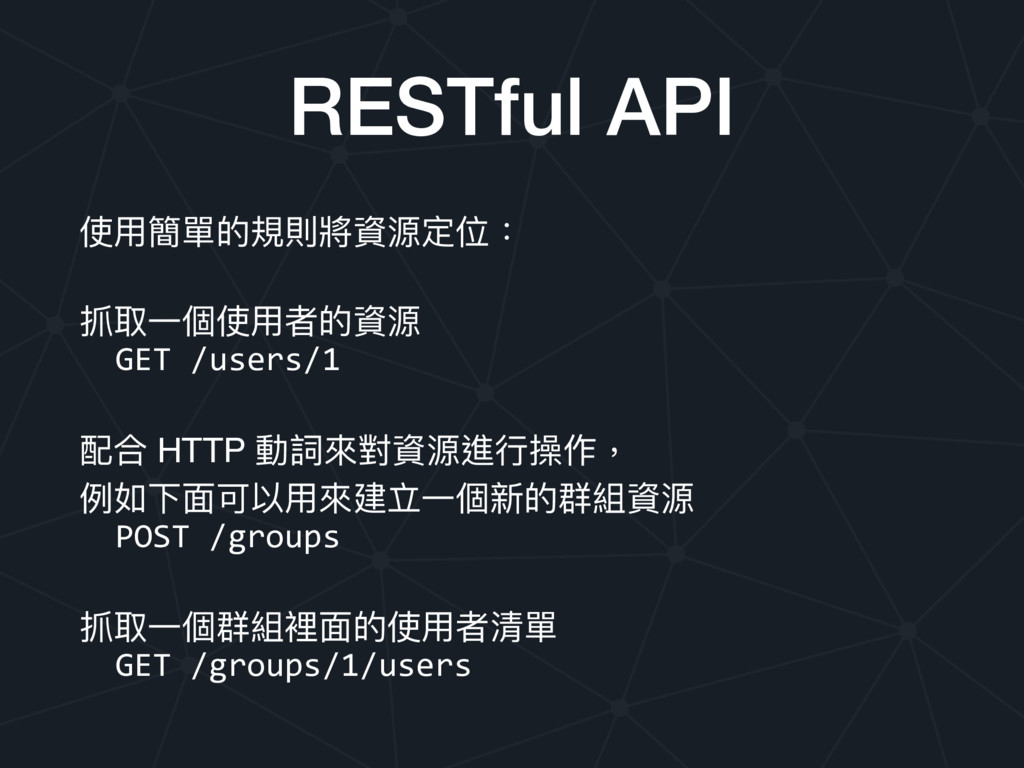
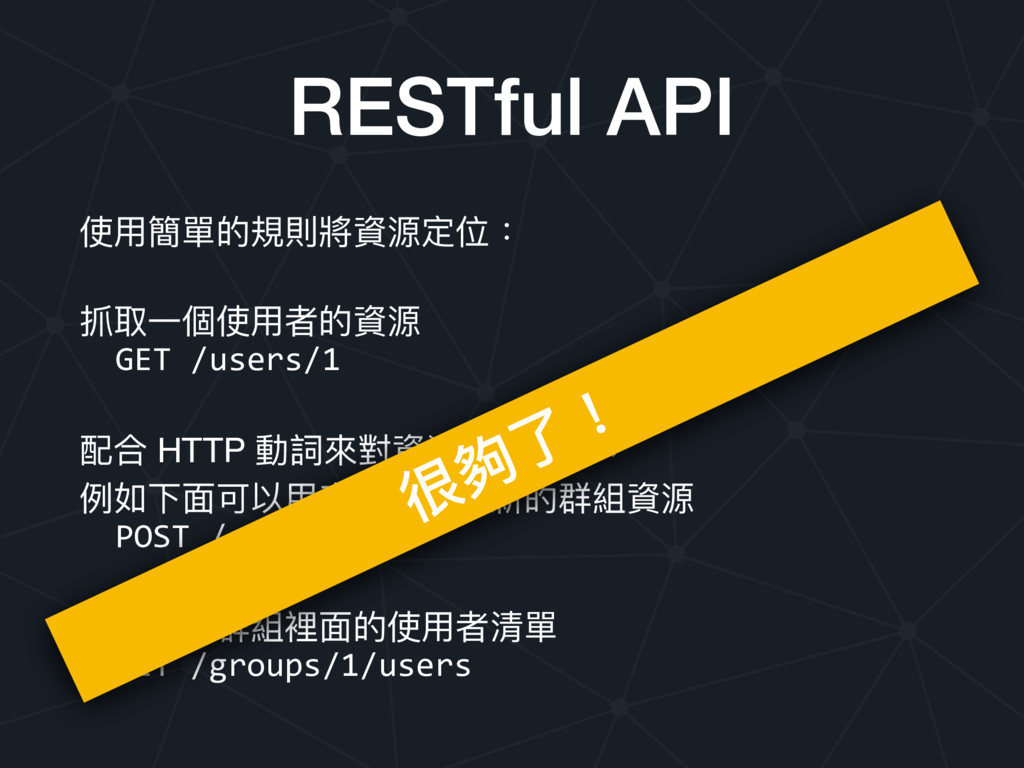
RESTful API 使⽤用簡單的規則將資源定位: 抓取⼀一個使⽤用者的資源 GET /users/1 配合 HTTP 動詞來來對資源進⾏行行操作, 例例如下⾯面可以⽤用來來建立⼀一個新的群組資源
POST /groups 抓取⼀一個群組裡⾯面的使⽤用者清單 GET /groups/1/users
RESTful API 使⽤用簡單的規則將資源定位: 抓取⼀一個使⽤用者的資源 GET /users/1 配合 HTTP 動詞來來對資源進⾏行行操作, 例例如下⾯面可以⽤用來來建立⼀一個新的群組資源
POST /groups 抓取⼀一個群組裡⾯面的使⽤用者清單 GET /groups/1/users 很夠了了!
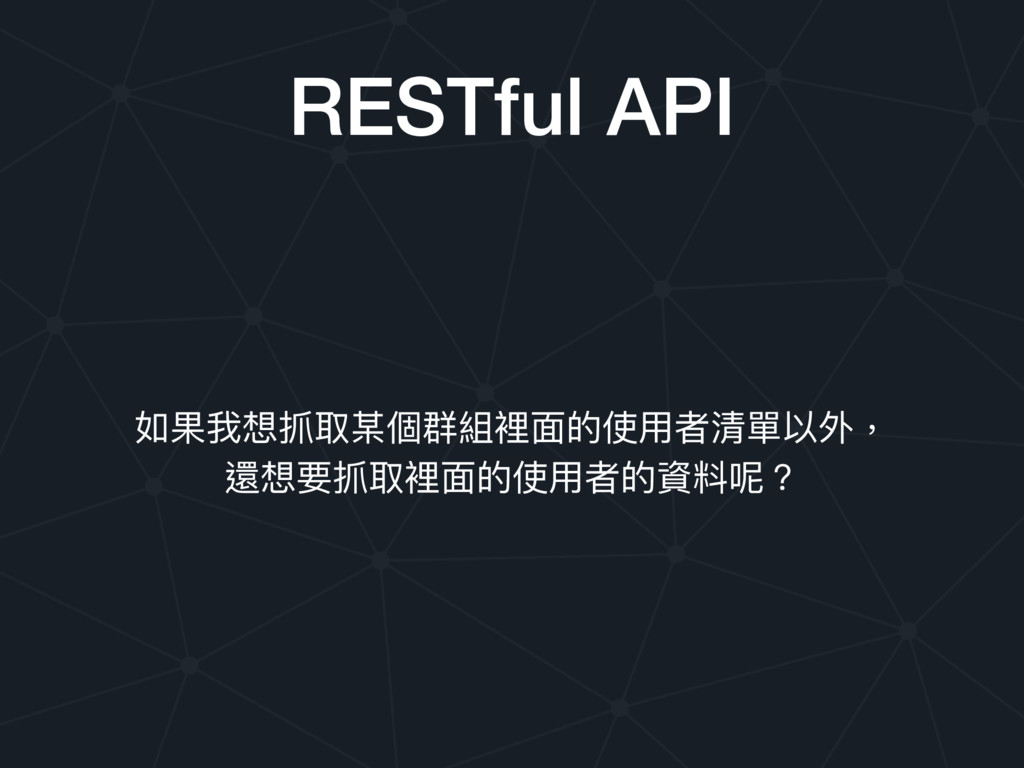
RESTful API 如果我想抓取某個群組裡⾯面的使⽤用者清單以外, 還想要抓取裡⾯面的使⽤用者的資料呢?
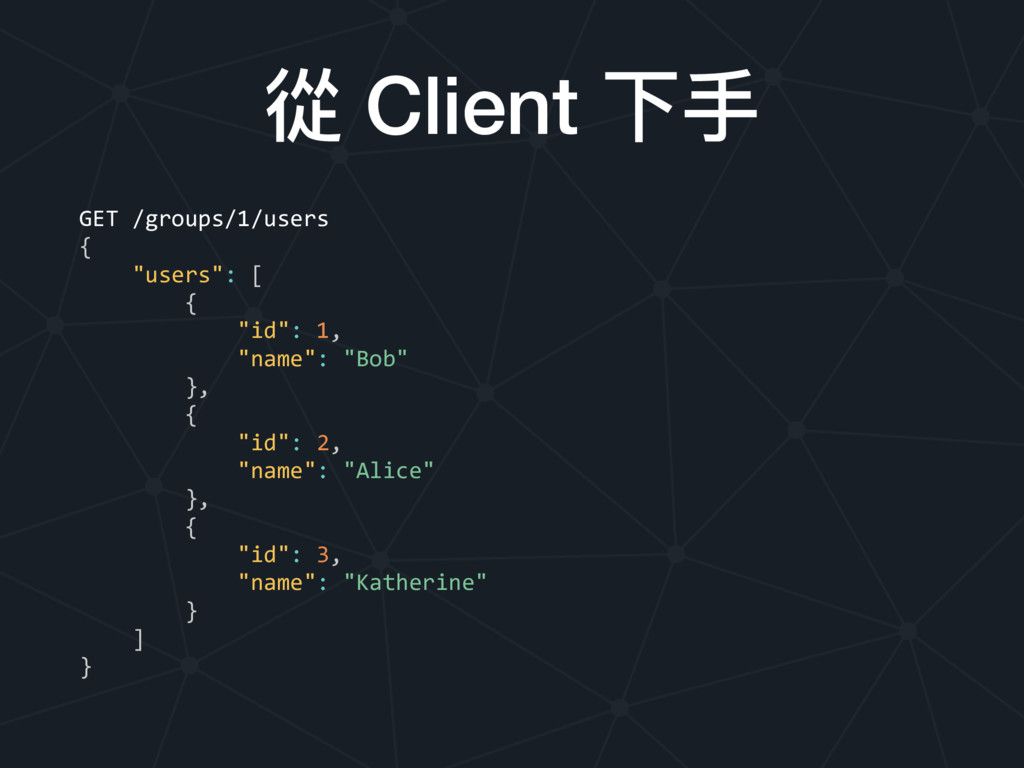
從 Client 下⼿手 GET /groups/1/users { "users": [ { "id":
1, "name": "Bob" }, { "id": 2, "name": "Alice" }, { "id": 3, "name": "Katherine" } ] }
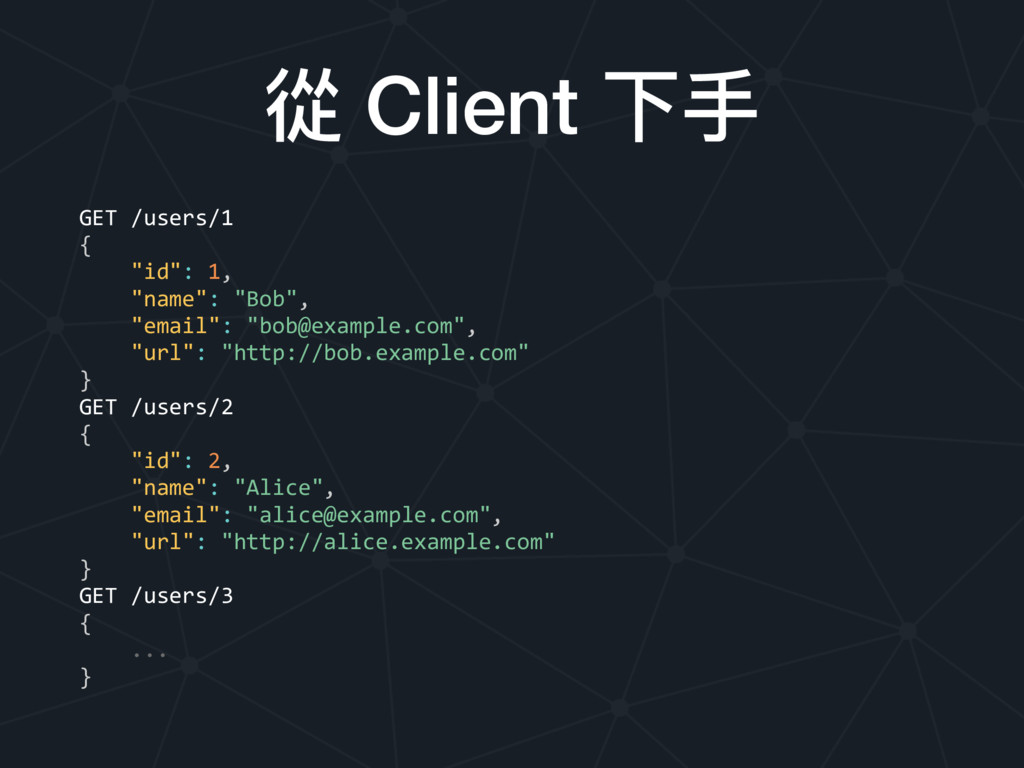
從 Client 下⼿手 GET /users/1 { "id": 1, "name": "Bob",
"email": "
[email protected]
", "url": "http://bob.example.com" } GET /users/2 { "id": 2, "name": "Alice", "email": "
[email protected]
", "url": "http://alice.example.com" } GET /users/3 { ... }
從 Client 下⼿手 • 連線延遲 => 花比較多時間 • 網路路品質不好 =>
花比較多次數
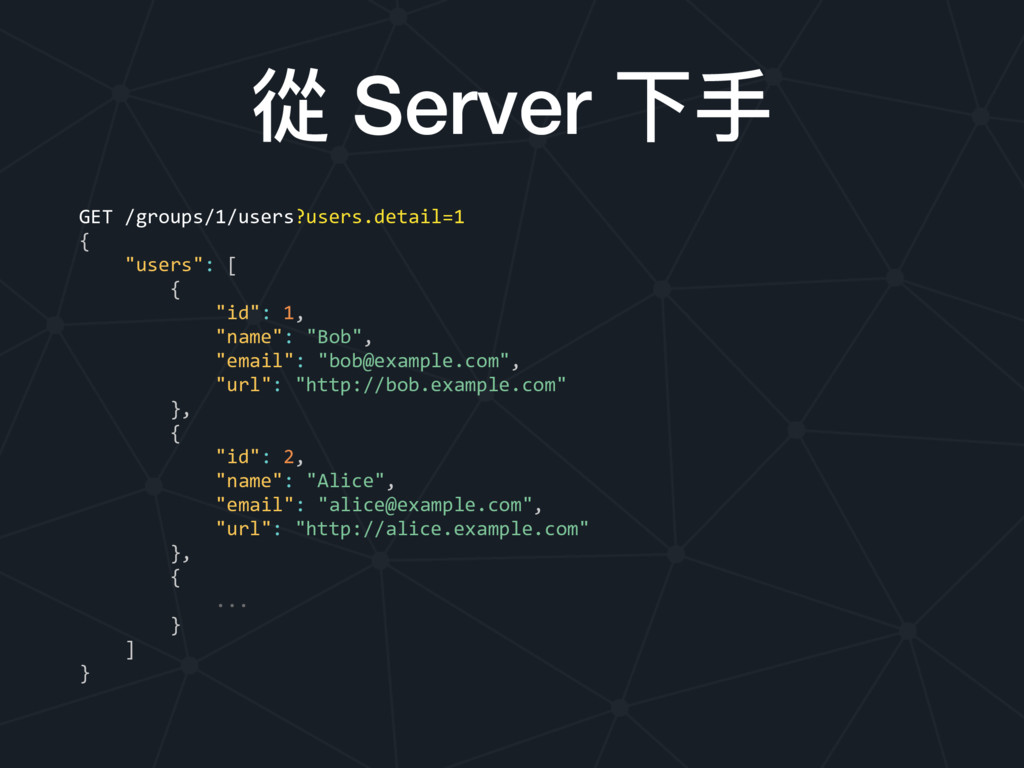
從 Server 下⼿手 GET /groups/1/users?users.detail=1 { "users": [ { "id":
1, "name": "Bob", "email": "
[email protected]
", "url": "http://bob.example.com" }, { "id": 2, "name": "Alice", "email": "
[email protected]
", "url": "http://alice.example.com" }, { ... } ] }
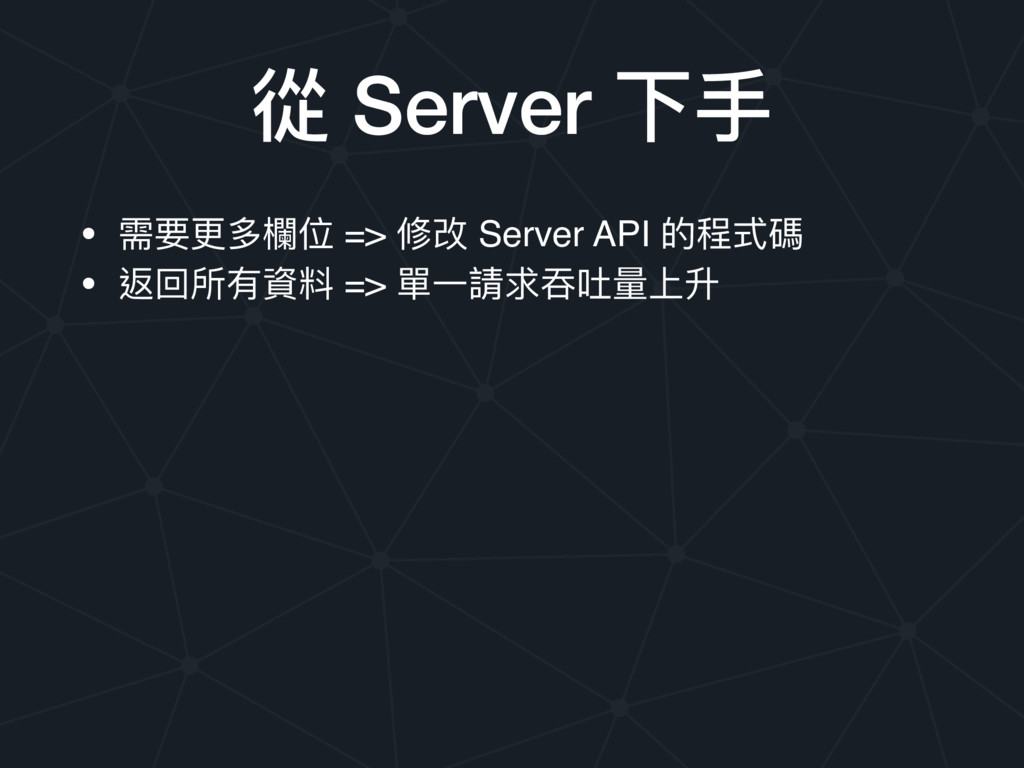
從 Server 下⼿手 • 需要更更多欄欄位 => 修改 Server API 的程式碼
• 返回所有資料 => 單⼀一請求吞吐量量上升
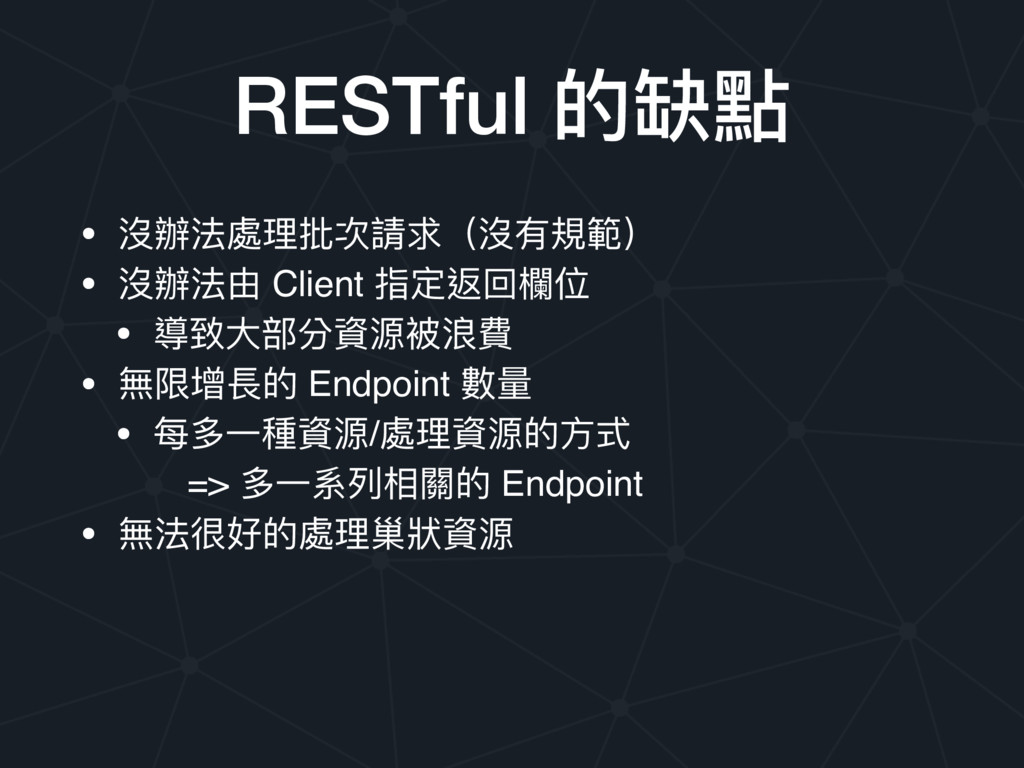
RESTful 的缺點 • 沒辦法處理理批次請求(沒有規範) • 沒辦法由 Client 指定返回欄欄位 • 導致⼤大部分資源被浪費
• 無限增長的 Endpoint 數量量 • 每多⼀一種資源/處理理資源的⽅方式 => 多⼀一系列列相關的 Endpoint • 無法很好的處理理巢狀狀資源
RESTful 的缺點 • 沒辦法處理理批次請求(沒有規範) • 沒辦法由 Client 指定返回欄欄位 • 導致⼤大部分資源被浪費
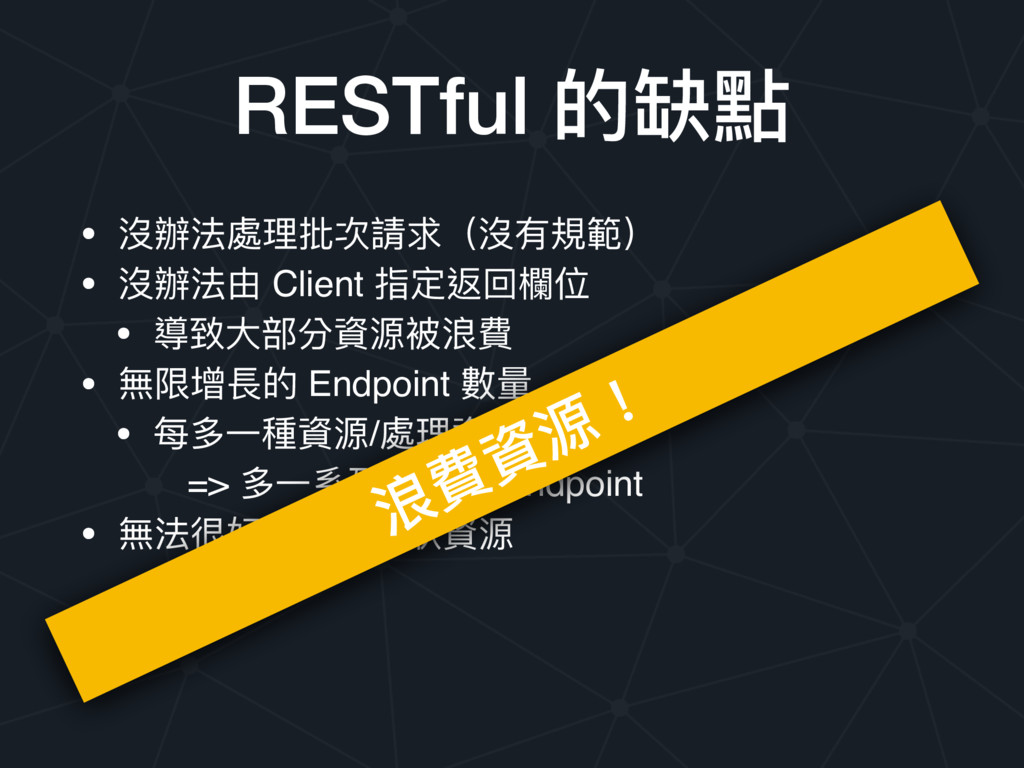
• 無限增長的 Endpoint 數量量 • 每多⼀一種資源/處理理資源的⽅方式 => 多⼀一系列列相關的 Endpoint • 無法很好的處理理巢狀狀資源 浪費資源!
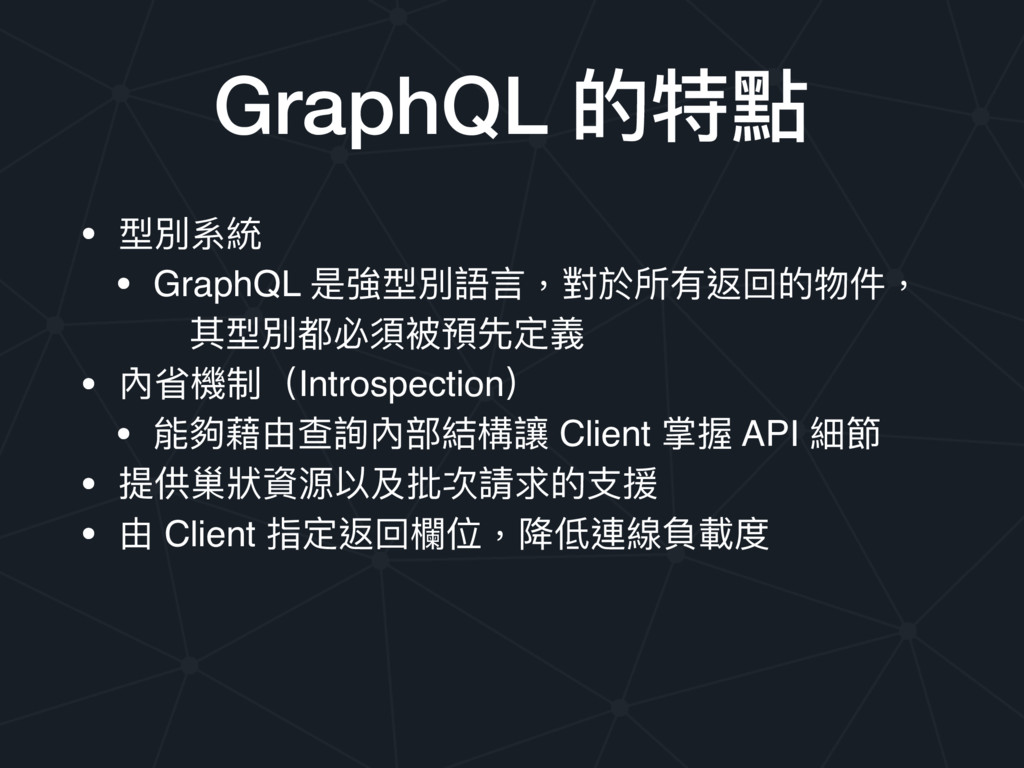
GraphQL 的特點 • 型別系統 • GraphQL 是強型別語⾔言,對於所有返回的物件, 其型別都必須被預先定義 • 內省機制(Introspection)
• 能夠藉由查詢內部結構讓 Client 掌握 API 細節 • 提供巢狀狀資源以及批次請求的⽀支援 • 由 Client 指定返回欄欄位,降低連線負載度
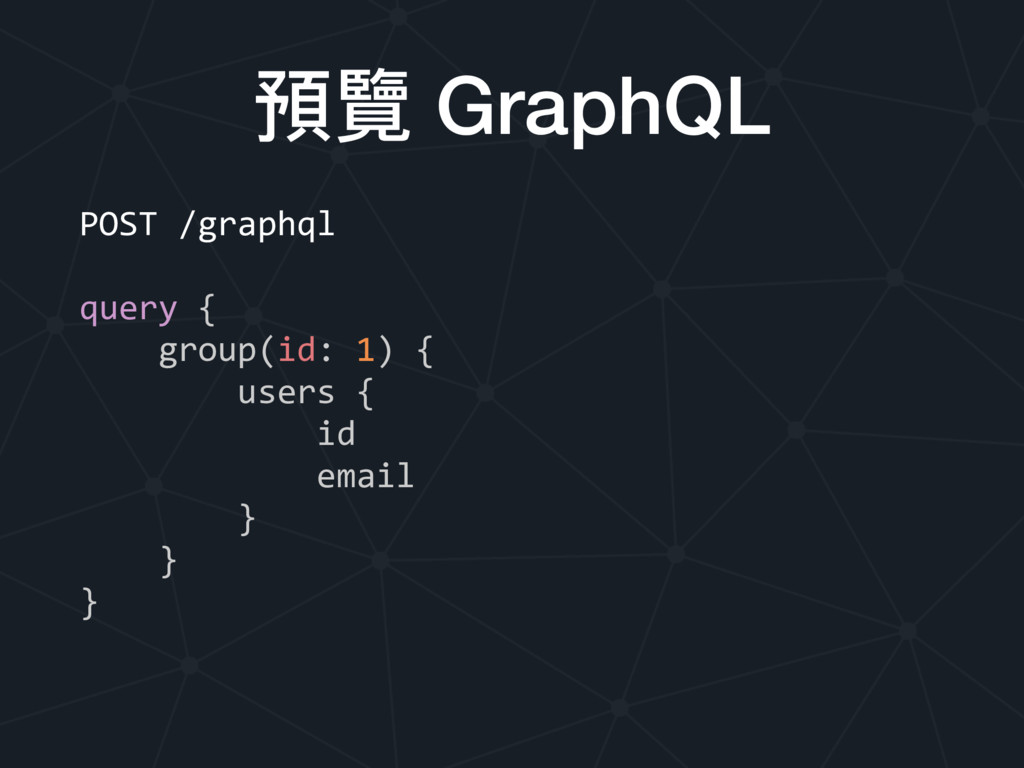
預覽 GraphQL POST /graphql query { group(id: 1) { users
{ id email } } }
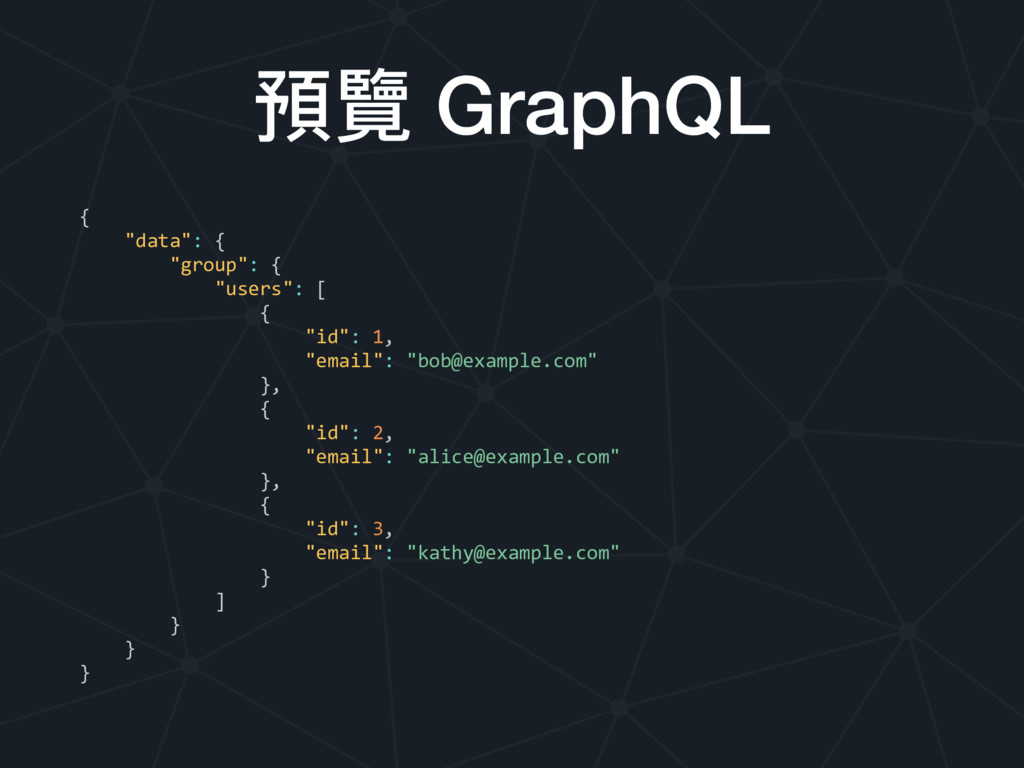
預覽 GraphQL { "data": { "group": { "users": [ {
"id": 1, "email": "
[email protected]
" }, { "id": 2, "email": "
[email protected]
" }, { "id": 3, "email": "
[email protected]
" } ] } } }
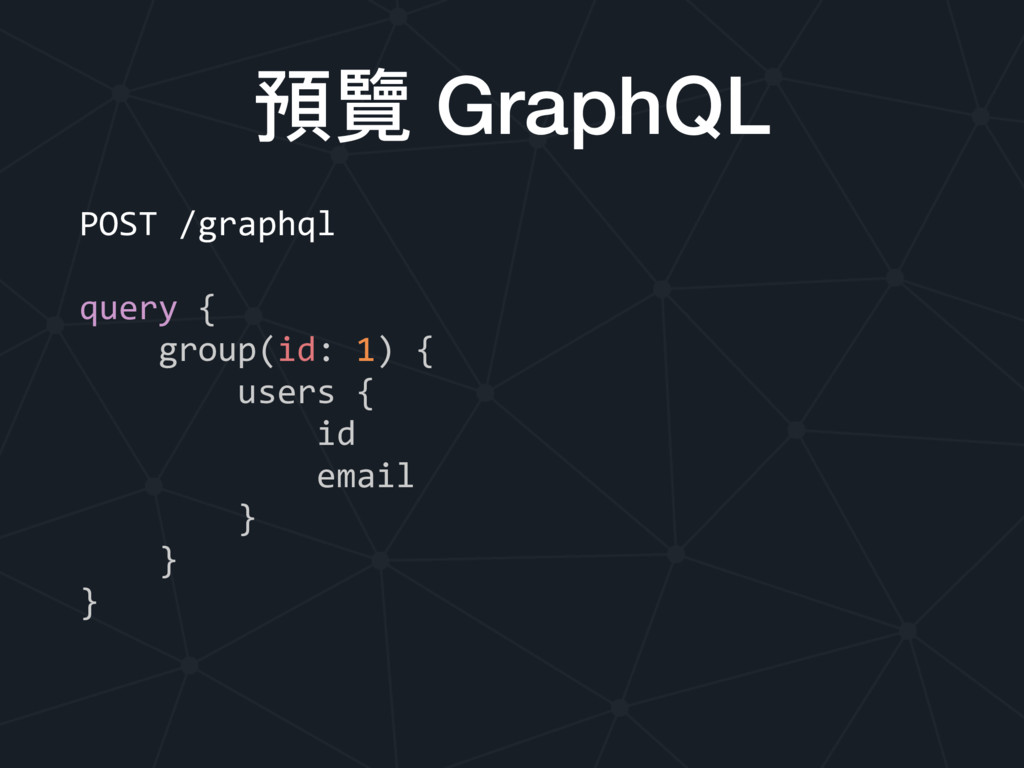
預覽 GraphQL POST /graphql query { group(id: 1) { users
{ id email } } }
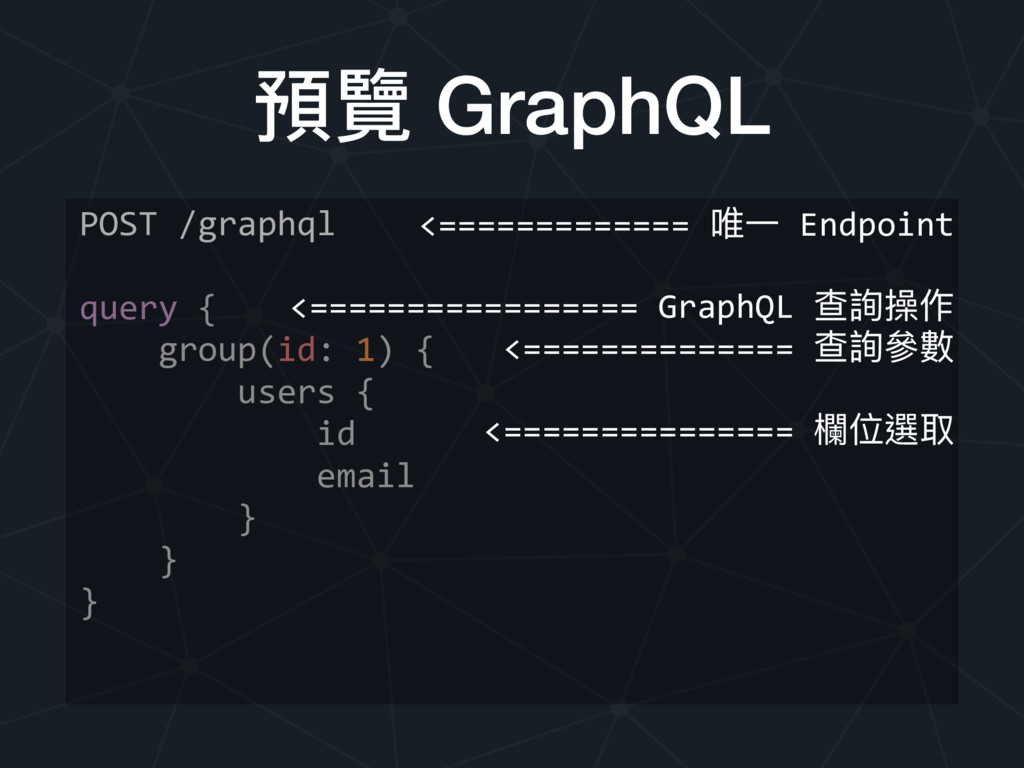
POST /graphql query { group(id: 1) { users { id
email } } } <============= 唯⼀一 Endpoint <================= GraphQL 查詢操作 <============== 查詢參參數 <=============== 欄欄位選取 預覽 GraphQL
GraphQL
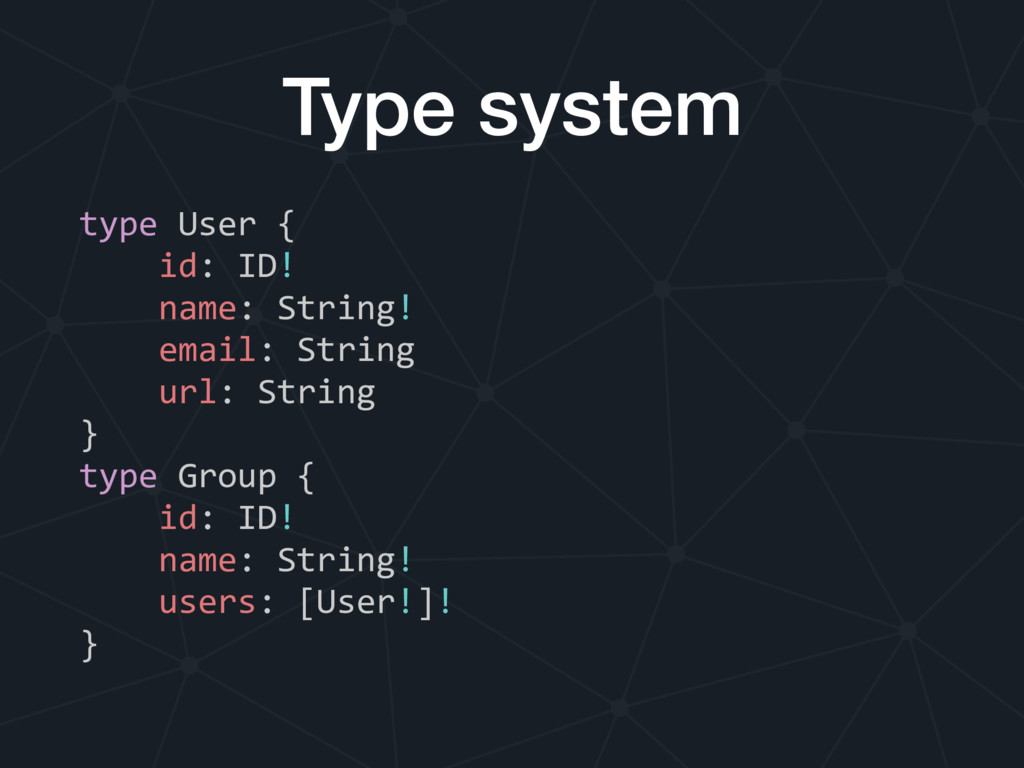
Type system type User { id: ID! name: String! email:
String url: String } type Group { id: ID! name: String! users: [User!]! }
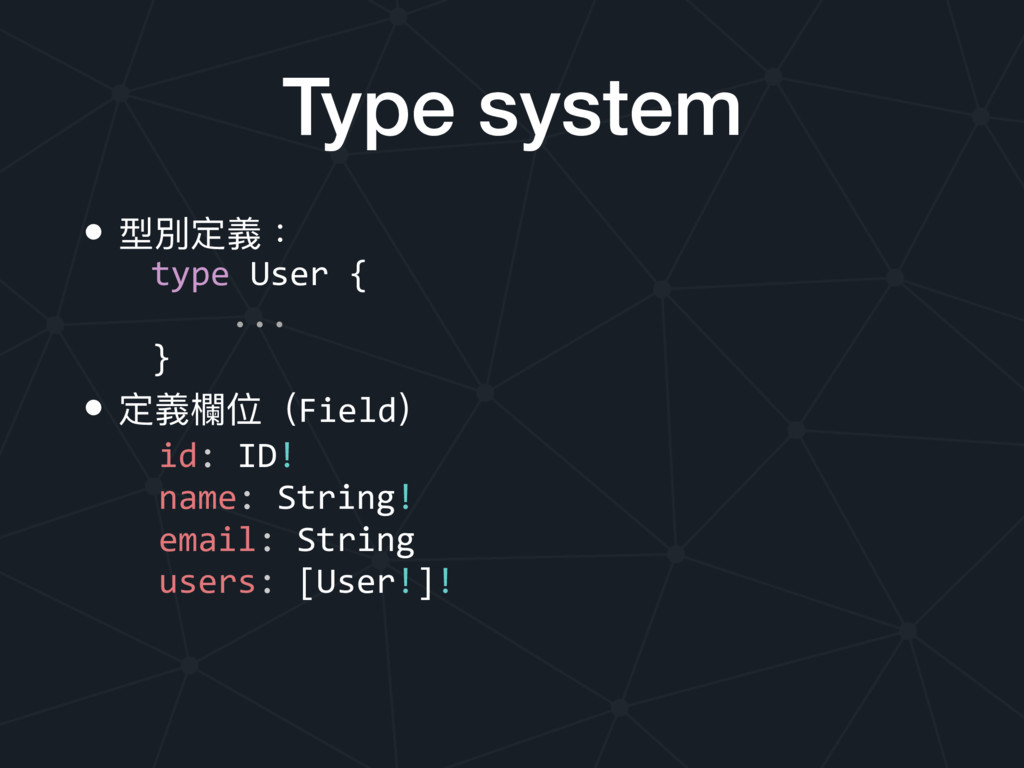
Type system • 型別定義: type User { ... } •
定義欄欄位(Field) id: ID! name: String! email: String users: [User!]!
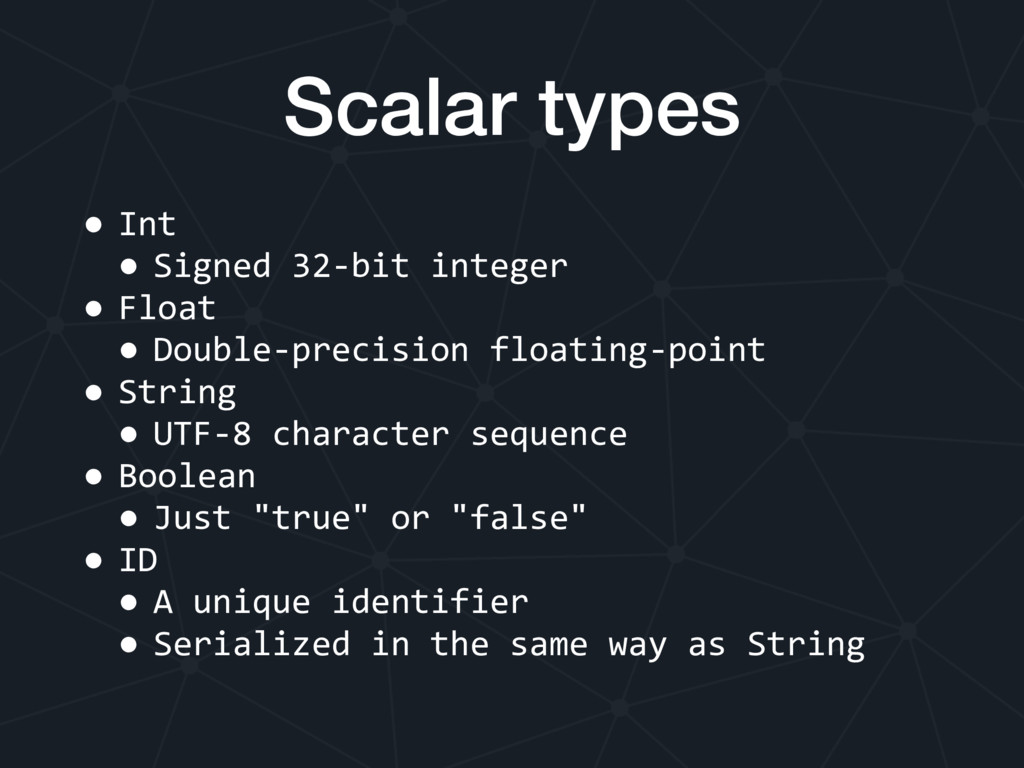
Scalar types • Int • Signed 32-bit integer • Float
• Double-precision floating-point • String • UTF-8 character sequence • Boolean • Just "true" or "false" • ID • A unique identifier • Serialized in the same way as String
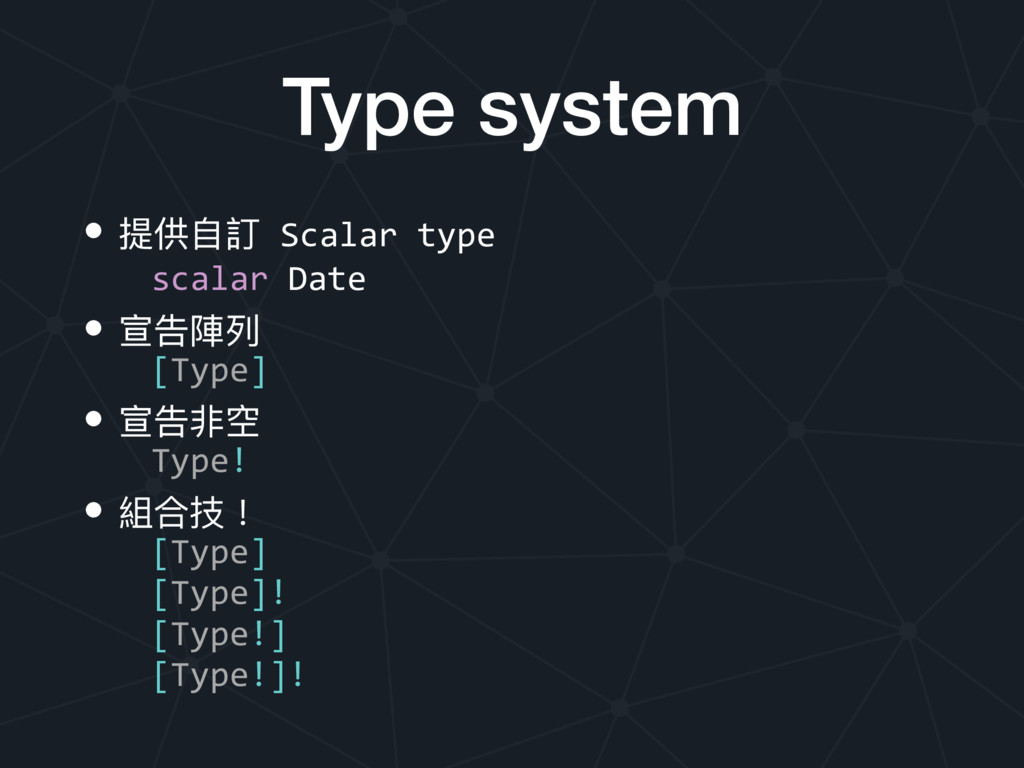
Type system • 提供⾃自訂 Scalar type scalar Date • 宣告陣列列
[Type] • 宣告非空 Type! • 組合技! [Type] [Type]! [Type!] [Type!]!
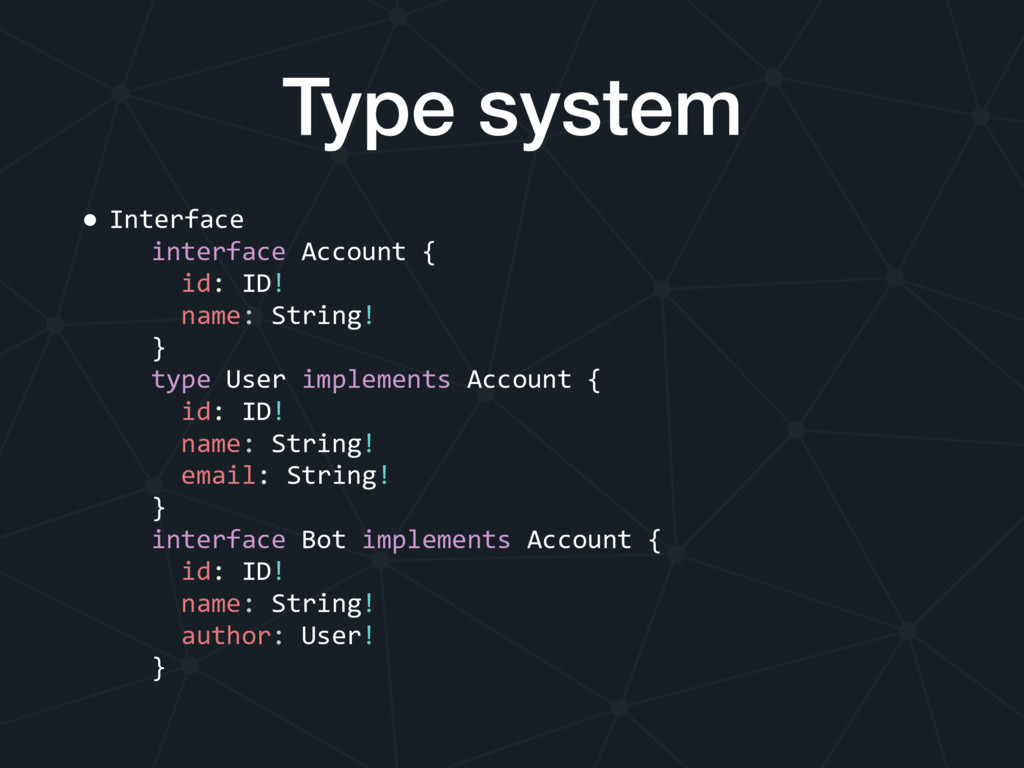
Type system • Interface interface Account { id: ID! name:
String! } type User implements Account { id: ID! name: String! email: String! } interface Bot implements Account { id: ID! name: String! author: User! }
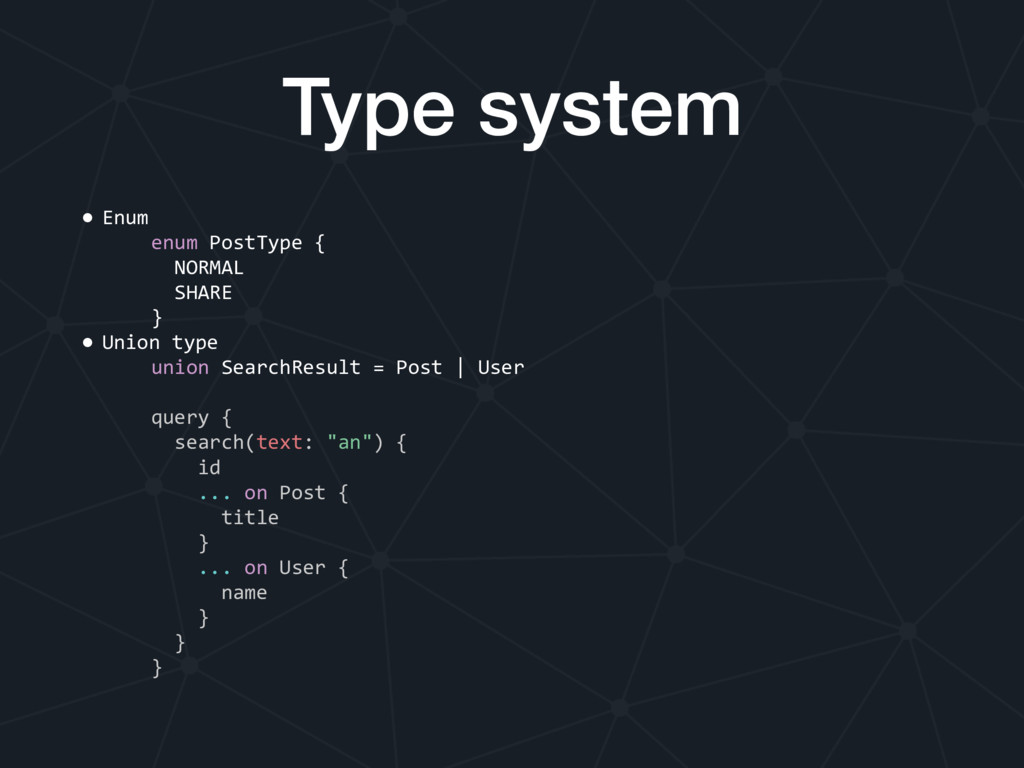
Type system • Enum enum PostType { NORMAL SHARE }
• Union type union SearchResult = Post | User query { search(text: "an") { id ... on Post { title } ... on User { name } } }
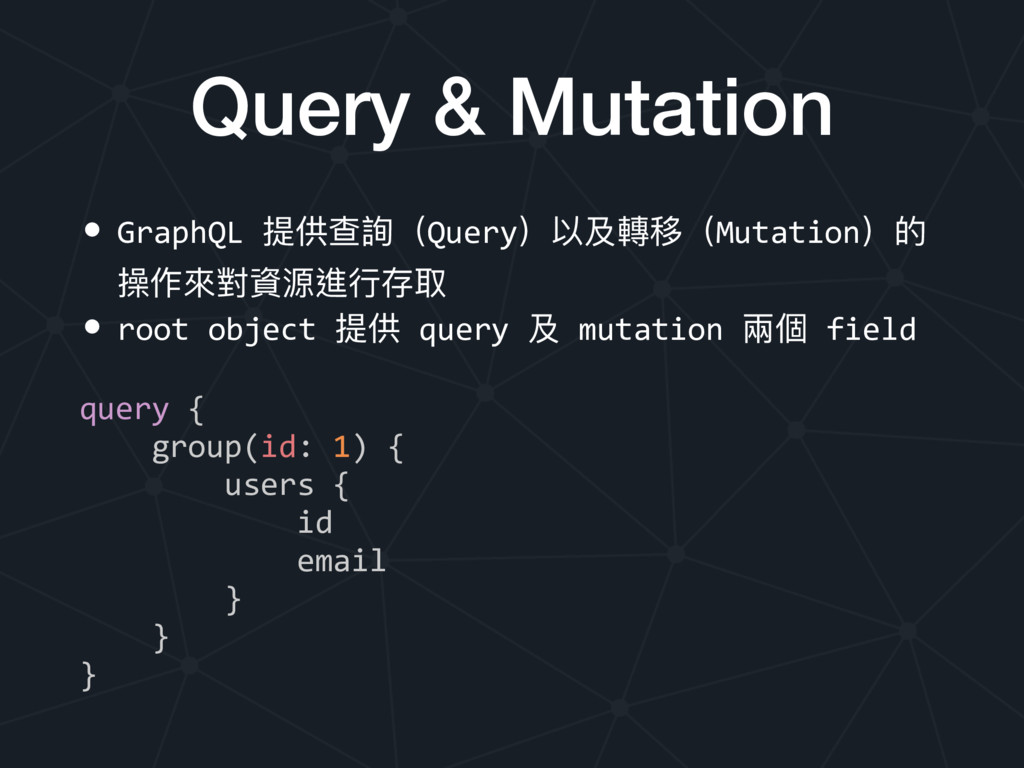
Query & Mutation • GraphQL 提供查詢(Query)以及轉移(Mutation)的 操作來來對資源進⾏行行存取 • root object
提供 query 及 mutation 兩兩個 field query { group(id: 1) { users { id email } } }
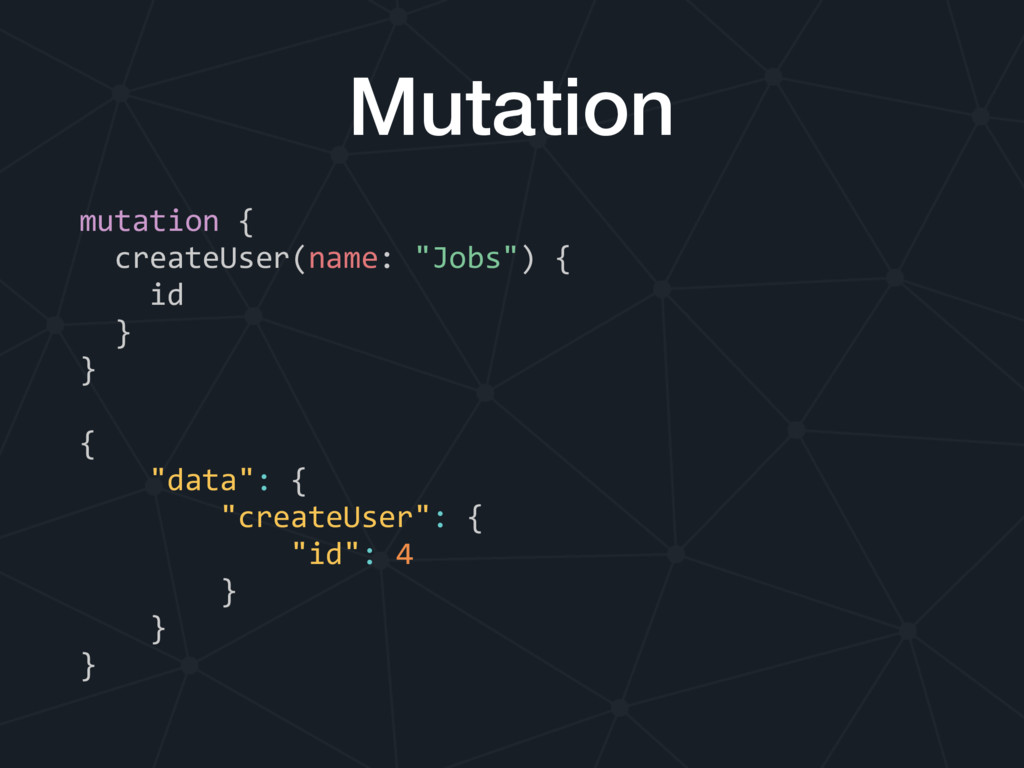
Mutation mutation { createUser(name: "Jobs") { id } } {
"data": { "createUser": { "id": 4 } } }
Query & Mutation • Query 是非同步平⾏行行查詢;但 Mutation 會循序執⾏行行 • Query
沒有副作⽤用
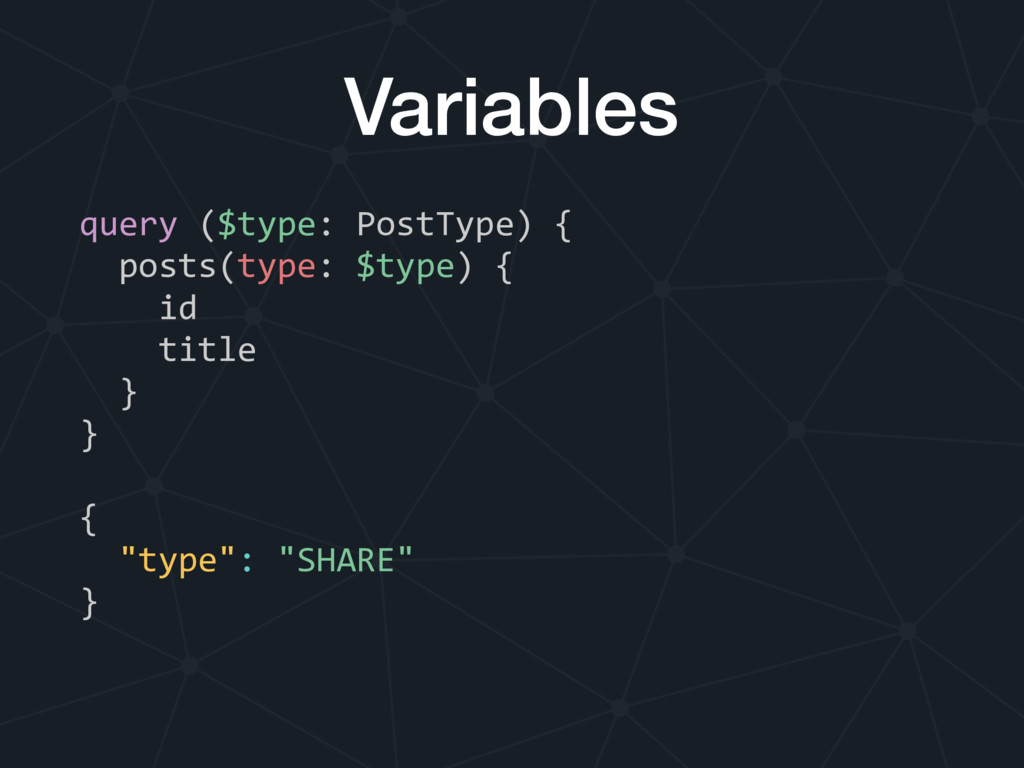
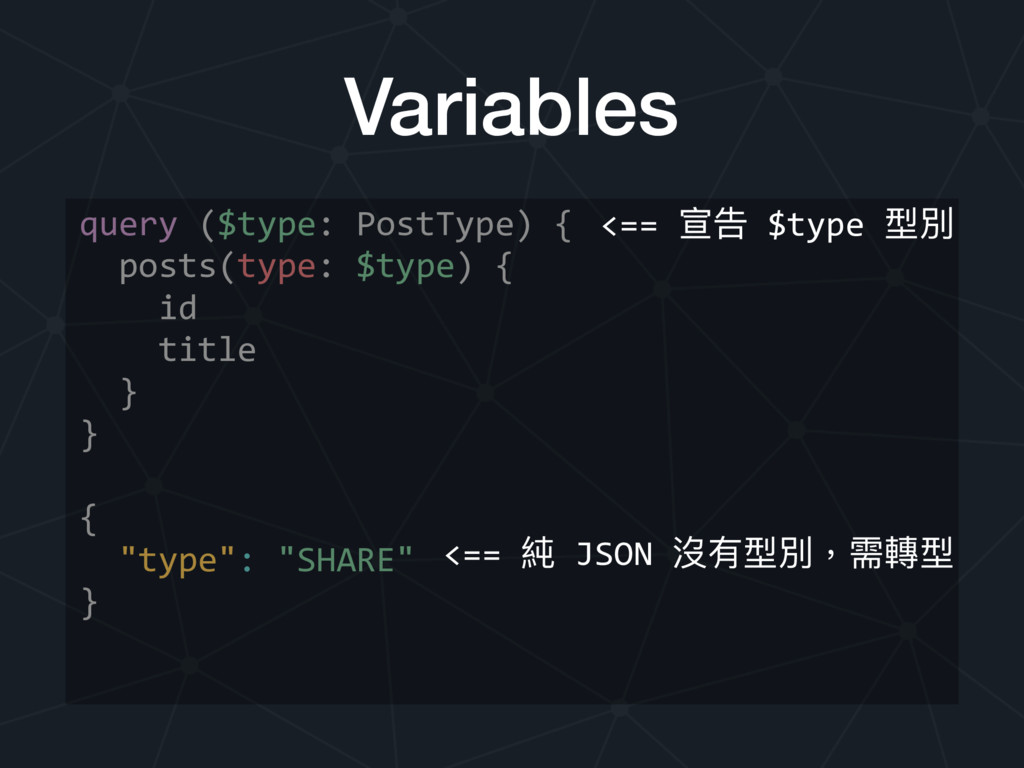
Variables query ($type: PostType) { posts(type: $type) { id title
} } { "type": "SHARE" }
Variables query ($type: PostType) { posts(type: $type) { id title
} } { "type": "SHARE" } <== 宣告 $type 型別 <== 純 JSON 沒有型別,需轉型
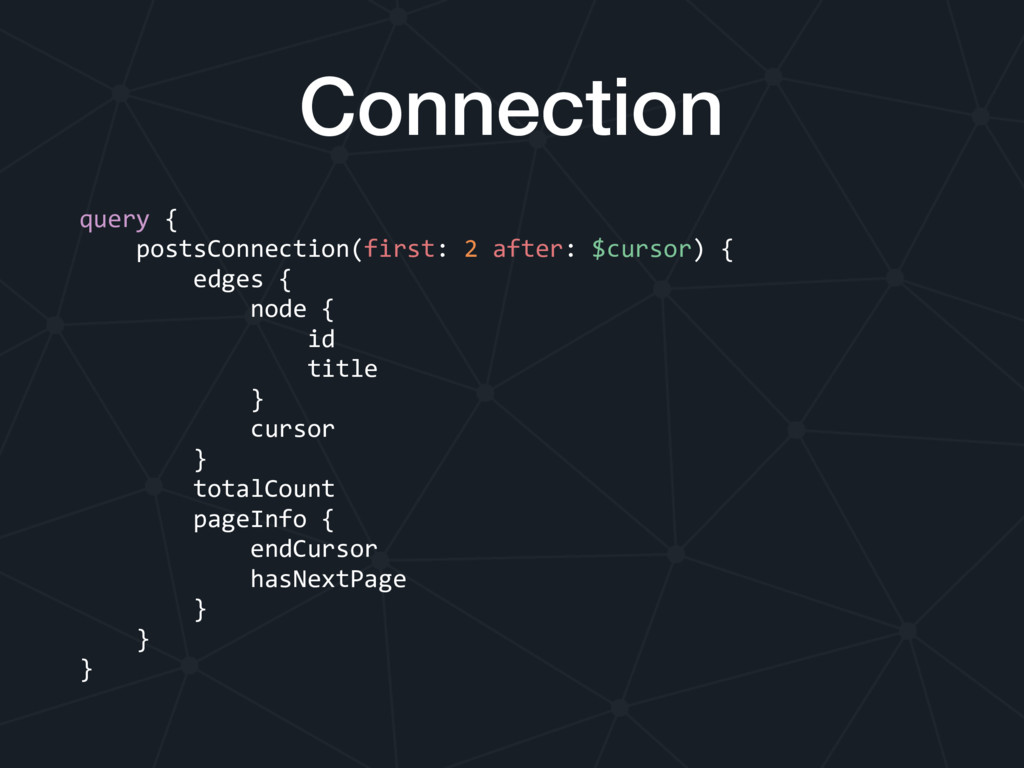
Connection • Connection 是⼀一種特殊形態的 Query • 表⽰示圖上節點之間的邊
GraphQL
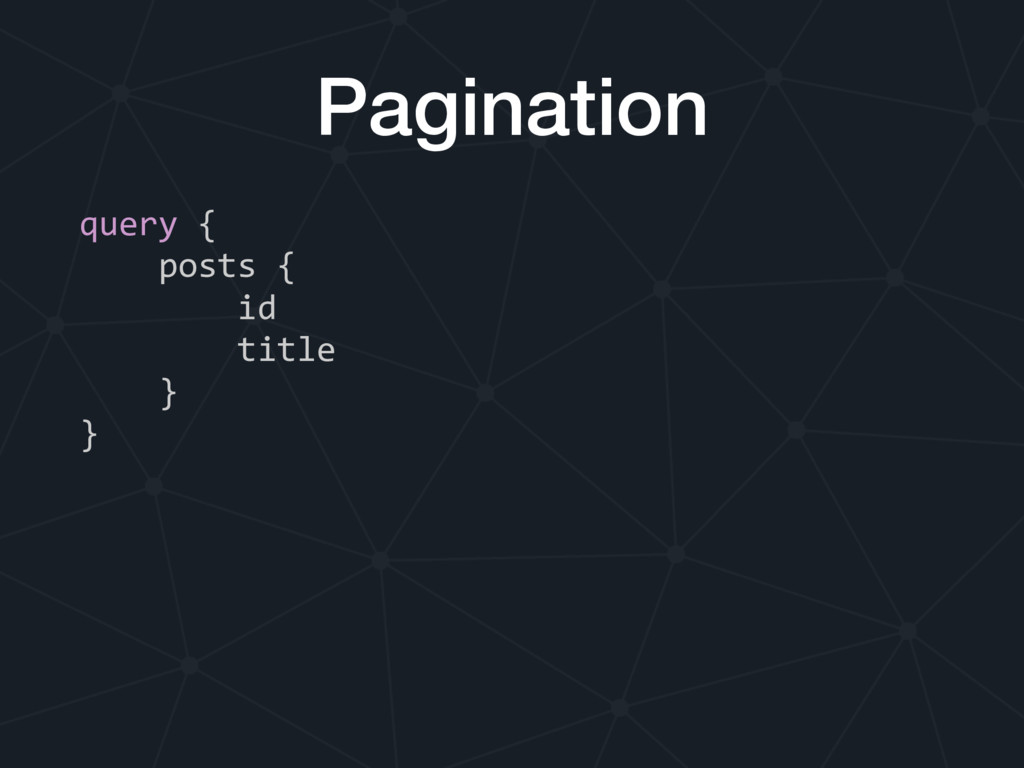
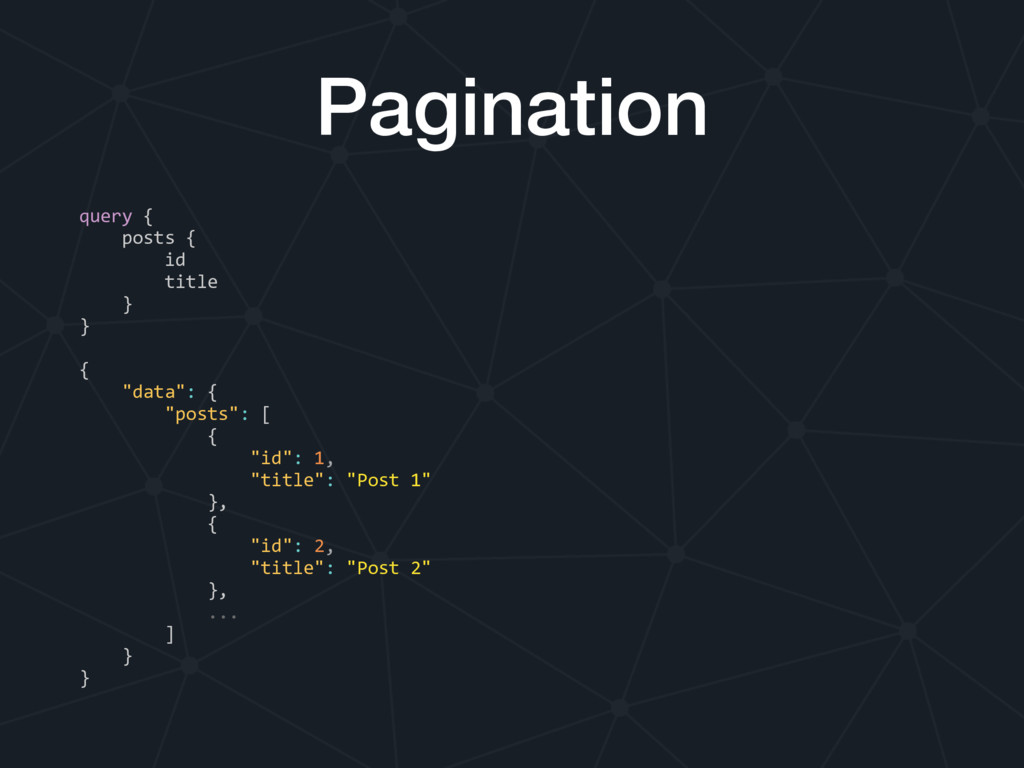
Pagination query { posts { id title } }
Pagination query { posts { id title } } {
"data": { "posts": [ { "id": 1, "title": "Post 1" }, { "id": 2, "title": "Post 2" }, ... ] } }
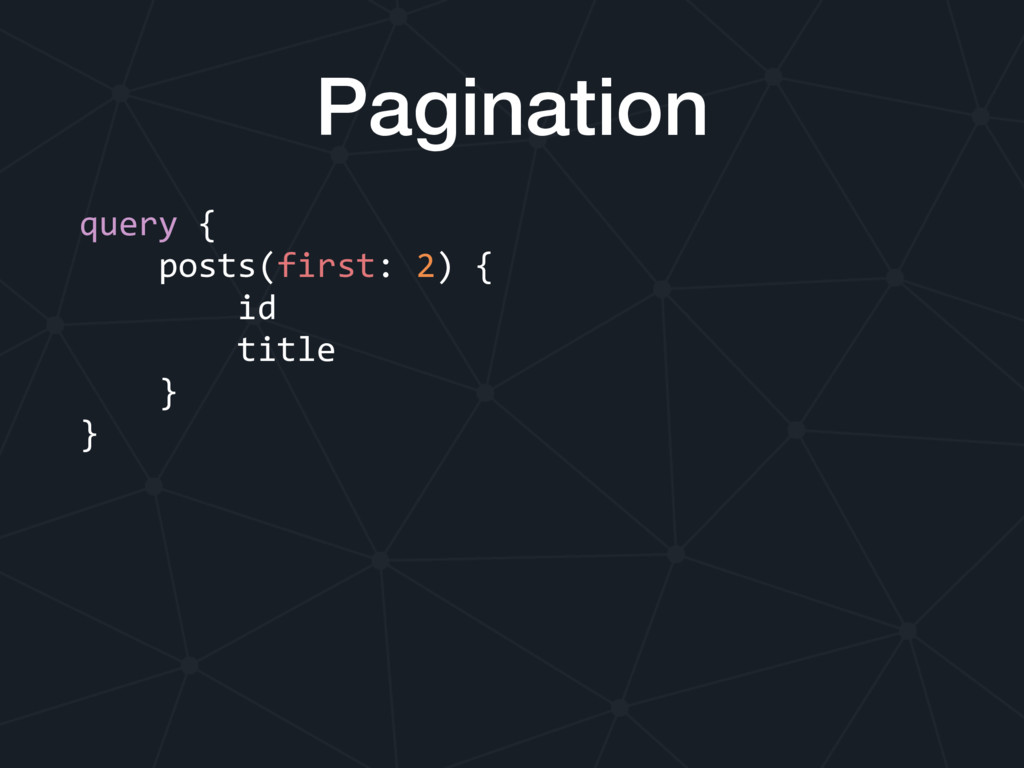
Pagination query { posts(first: 2) { id title } }
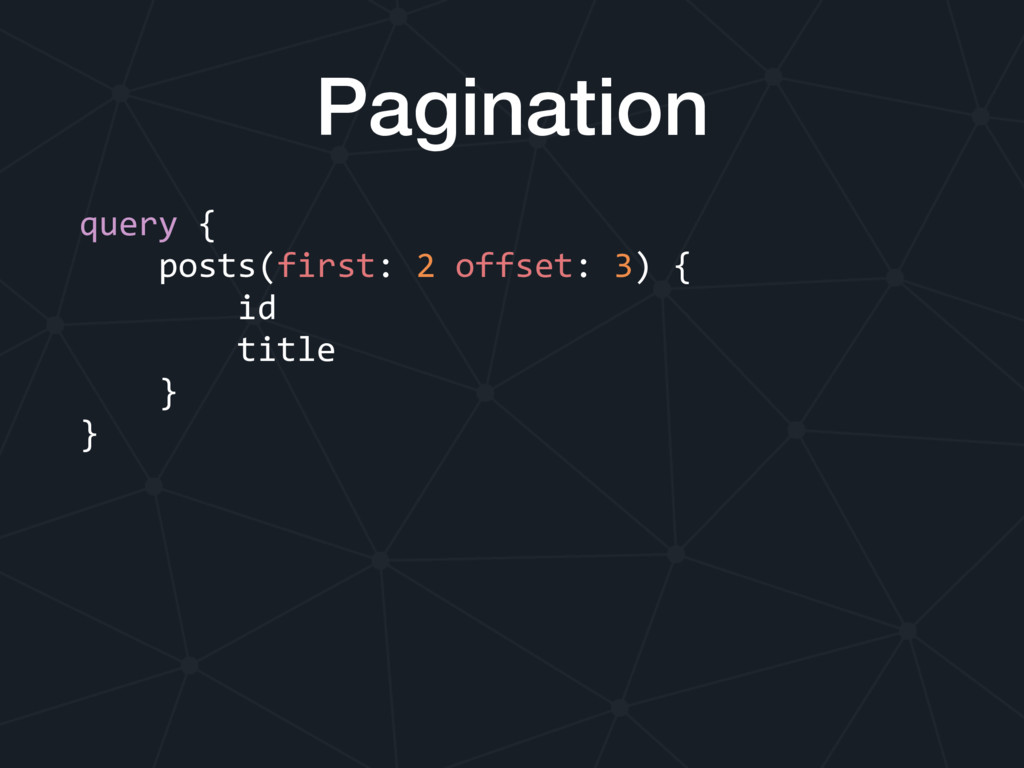
Pagination query { posts(first: 2 offset: 3) { id title
} }
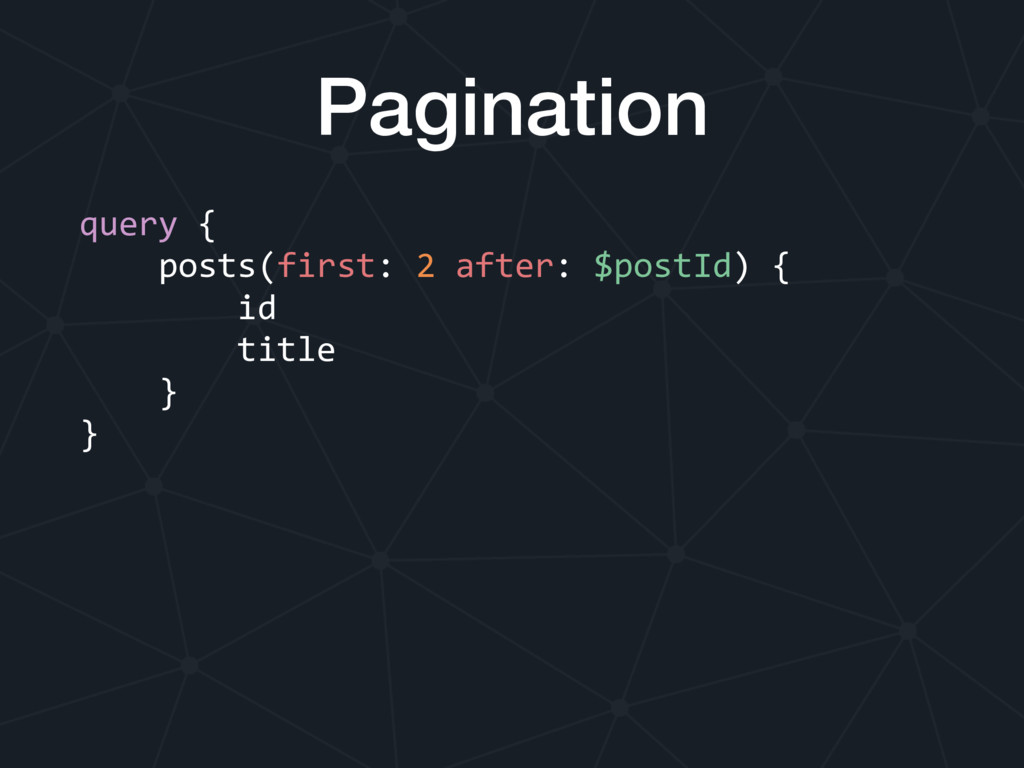
Pagination query { posts(first: 2 after: $postId) { id title
} }
Connection query { postsConnection(first: 2 after: $cursor) { edges {
node { id title } cursor } totalCount pageInfo { endCursor hasNextPage } } }
內省機制 Introspection
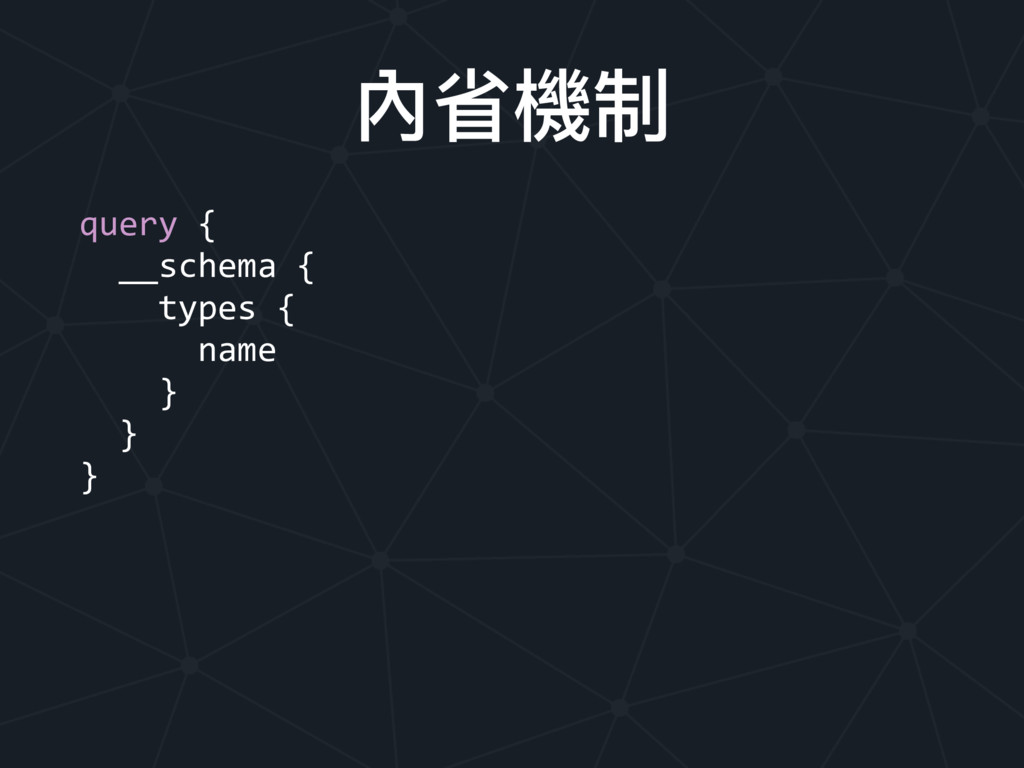
內省機制 query { __schema { types { name } }
}
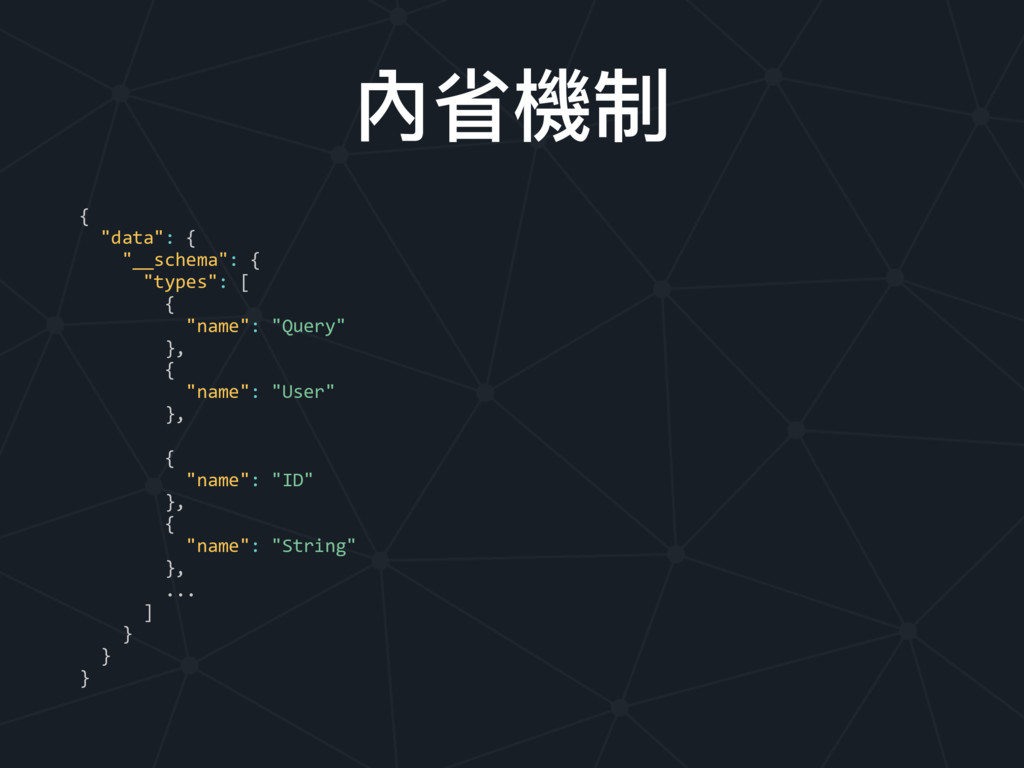
內省機制 { "data": { "__schema": { "types": [ { "name":
"Query" }, { "name": "User" }, { "name": "ID" }, { "name": "String" }, ... ] } } }
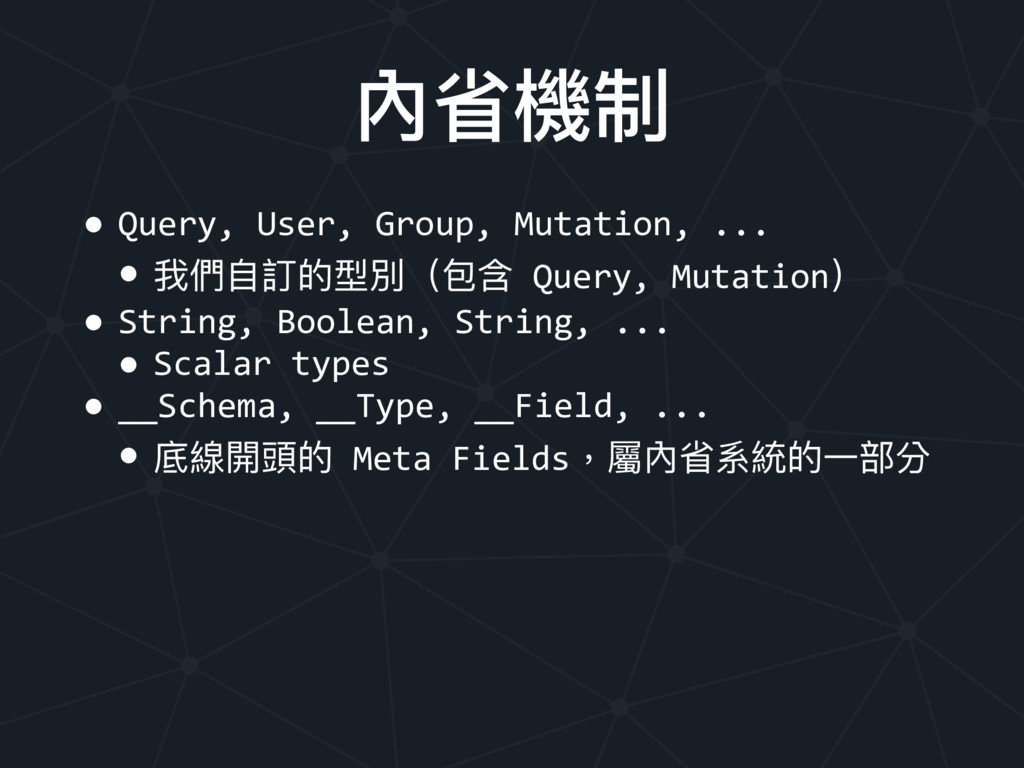
內省機制 • Query, User, Group, Mutation, ... • 我們⾃自訂的型別(包含 Query,
Mutation) • String, Boolean, String, ... • Scalar types • __Schema, __Type, __Field, ... • 底線開頭的 Meta Fields,屬內省系統的⼀一部分
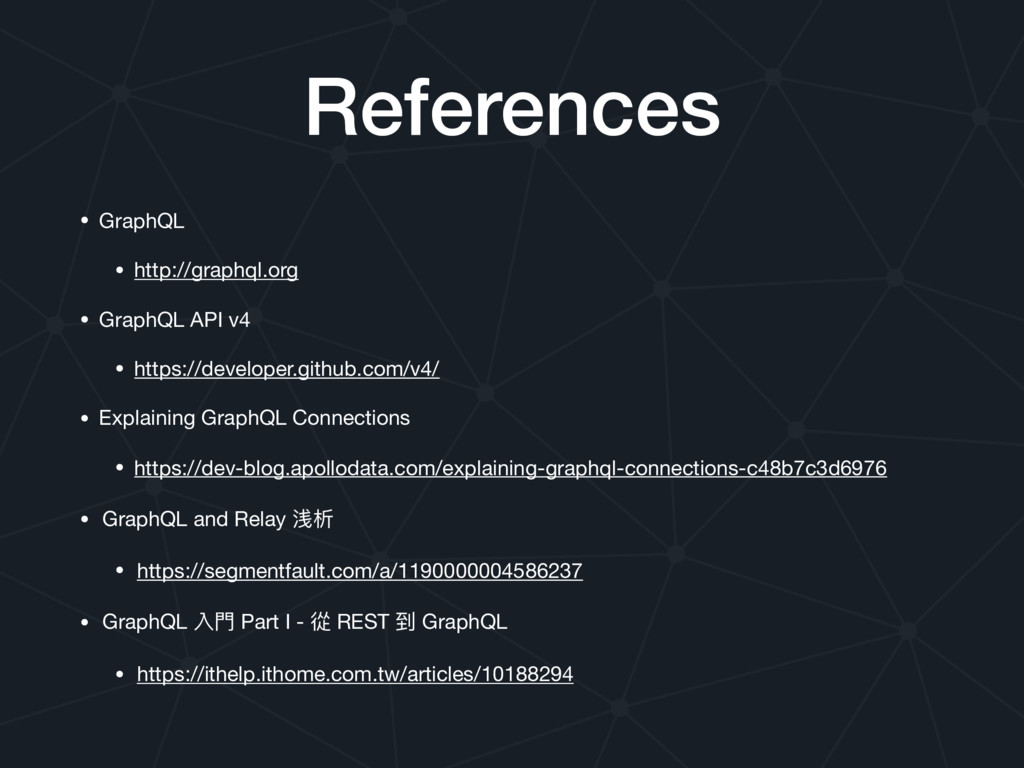
References • GraphQL • http://graphql.org • GraphQL API v4 •
https://developer.github.com/v4/ • Explaining GraphQL Connections • https://dev-blog.apollodata.com/explaining-graphql-connections-c48b7c3d6976 • GraphQL and Relay 浅析 • https://segmentfault.com/a/1190000004586237 • GraphQL 入⾨門 Part I - 從 REST 到 GraphQL • https://ithelp.ithome.com.tw/articles/10188294
GraphQL 3Q~


 davy_tw
 xleitix
 tosite
 yub0n
yub0n
 econanringo
 minodriven
 andpad
 kasacchiful
 ryu1013
 rollbear
 y0hgi
y0hgi
 satoshi256kbyte
 skydoves
 destraynor
 erikaheidi
 jct
jct
.png) helenjbeal
helenjbeal
 mraible
 katarinadahlin
 axbom
axbom
 addyosmani
 cassininazir
 portentint
 aleyda
 soudai