Upgrade to Pro — share decks privately, control downloads, hide ads and more …

Eco-Pork Impact Report 2026.02.09 EN

Avatar for Eco-Pork Eco-Pork
February 08, 2026

Eco-Pork Impact Report 2026.02.09 EN

Avatar for Eco-Pork

Eco-Pork

February 08, 2026
Tweet

More Decks by Eco-Pork

Other Decks in Business

Transcript

  1. Copyright © Eco-Pork. All Rights Reserved. Impact Report 2026 Feb

    2026 Eco-Pork co., ltd. © Eco-Pork. All Rights Reserved.
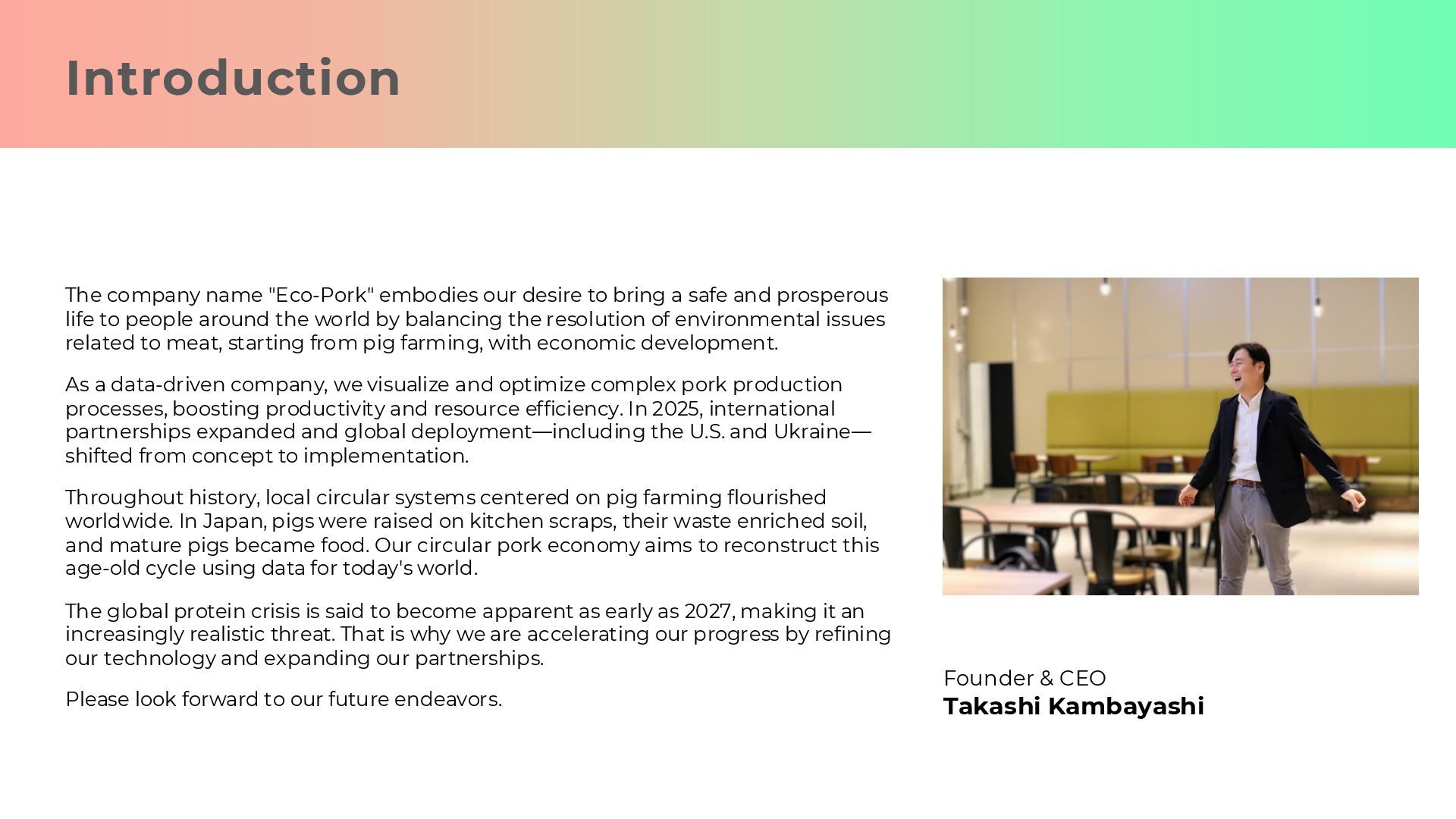
  2. 1 The company name "Eco-Pork" embodies our desire to bring

    a safe and prosperous life to people around the world by balancing the resolution of environmental issues related to meat, starting from pig farming, with economic development. As a data-driven company, we visualize and optimize complex pork production processes, boosting productivity and resource efficiency. In 2025, international partnerships expanded and global deployment—including the U.S. and Ukraine— shifted from concept to implementation. Throughout history, local circular systems centered on pig farming flourished worldwide. In Japan, pigs were raised on kitchen scraps, their waste enriched soil, and mature pigs became food. Our circular pork economy aims to reconstruct this age-old cycle using data for today's world. The global protein crisis is said to become apparent as early as 2027, making it an increasingly realistic threat. That is why we are accelerating our progress by refining our technology and expanding our partnerships. Please look forward to our future endeavors. Founder & CEO Takashi Kambayashi Introduction
  3. 2 2 1. Summary 2. Social Issues in Pig Farming

    3. Our Vision for the Future 4. Eco-Pork's Initiatives 5. Progress 6. Global Expansion 7. Appendix C O N T EN T S
  4. The World's Only Data-Driven Company Tackling Global Food Issues Through

    the Digital Transformation of Pig Farming ーStriving for a Future in 2040 Where We Can Still Choose to Eat Meatー Eco-Pork provides data-driven solutions that enhance productivity in pig farming while reducing environmental impact. We are an impact-driven startup company committed to addressing the global protein crisis and mitigating environmental challenges in livestock industries. Eco-Pork; Data Company for Sustainable Pork Ecosystem “J-Startup Impact” selected by METI 4
  5. Food is Life: Passing on the Genuine Meat Culture to

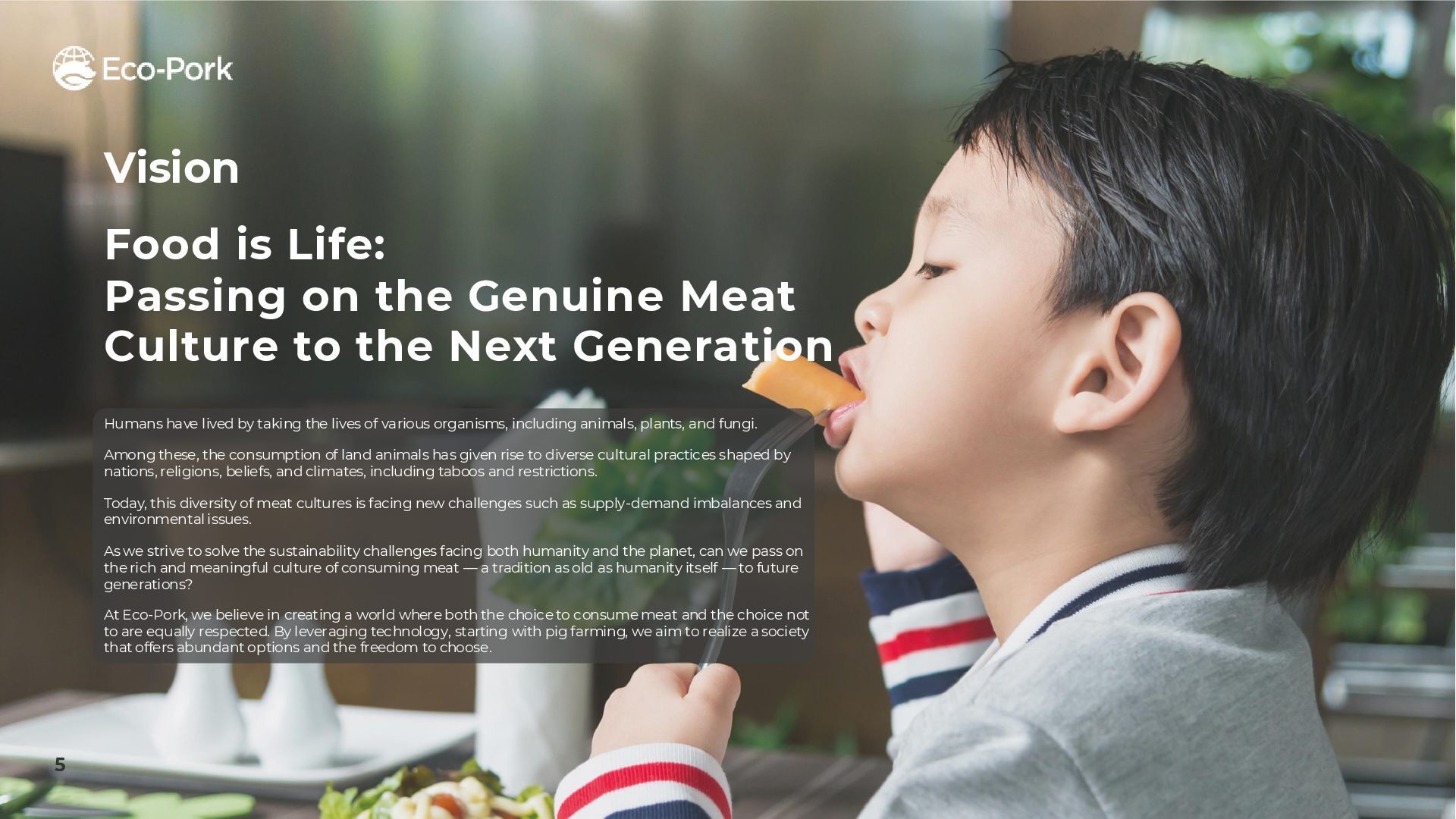
    the Next Generation Vision Humans have lived by taking the lives of various organisms, including animals, plants, and fungi. Among these, the consumption of land animals has given rise to diverse cultural practices shaped by nations, religions, beliefs, and climates, including taboos and restrictions. Today, this diversity of meat cultures is facing new challenges such as supply-demand imbalances and environmental issues. As we strive to solve the sustainability challenges facing both humanity and the planet, can we pass on the rich and meaningful culture of consuming meat — a tradition as old as humanity itself — to future generations? At Eco-Pork, we believe in creating a world where both the choice to consume meat and the choice not to are equally respected. By leveraging technology, starting with pig farming, we aim to realize a society that offers abundant options and the freedom to choose. 5
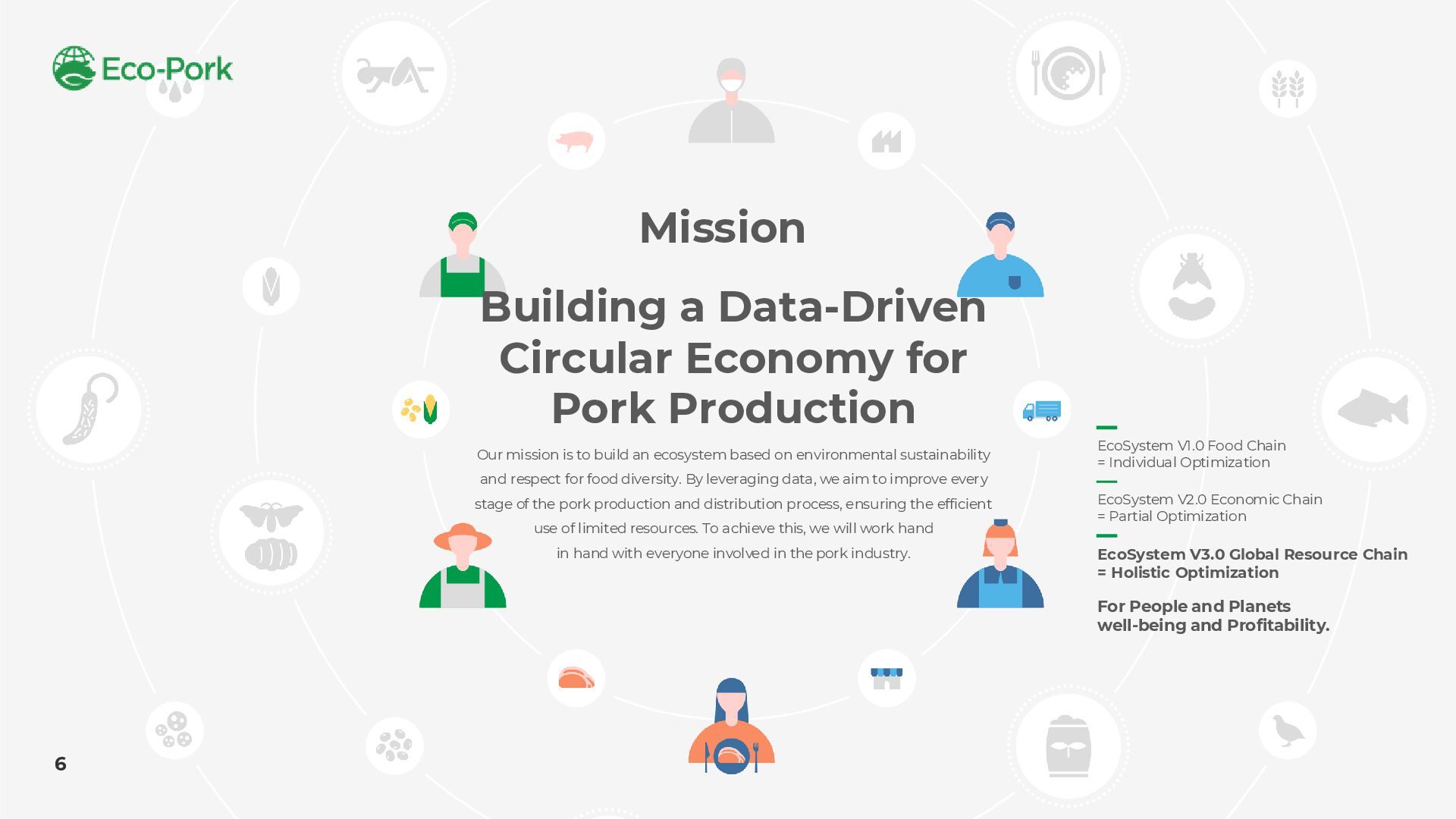
  6. For People and Planets well-being and Profitability. EcoSystem V3.0 Global

    Resource Chain = Holistic Optimization EcoSystem V2.0 Economic Chain = Partial Optimization EcoSystem V1.0 Food Chain = Individual Optimization Our mission is to build an ecosystem based on environmental sustainability and respect for food diversity. By leveraging data, we aim to improve every stage of the pork production and distribution process, ensuring the efficient use of limited resources. To achieve this, we will work hand in hand with everyone involved in the pork industry. Building a Data-Driven Circular Economy for Pork Production Mission 6
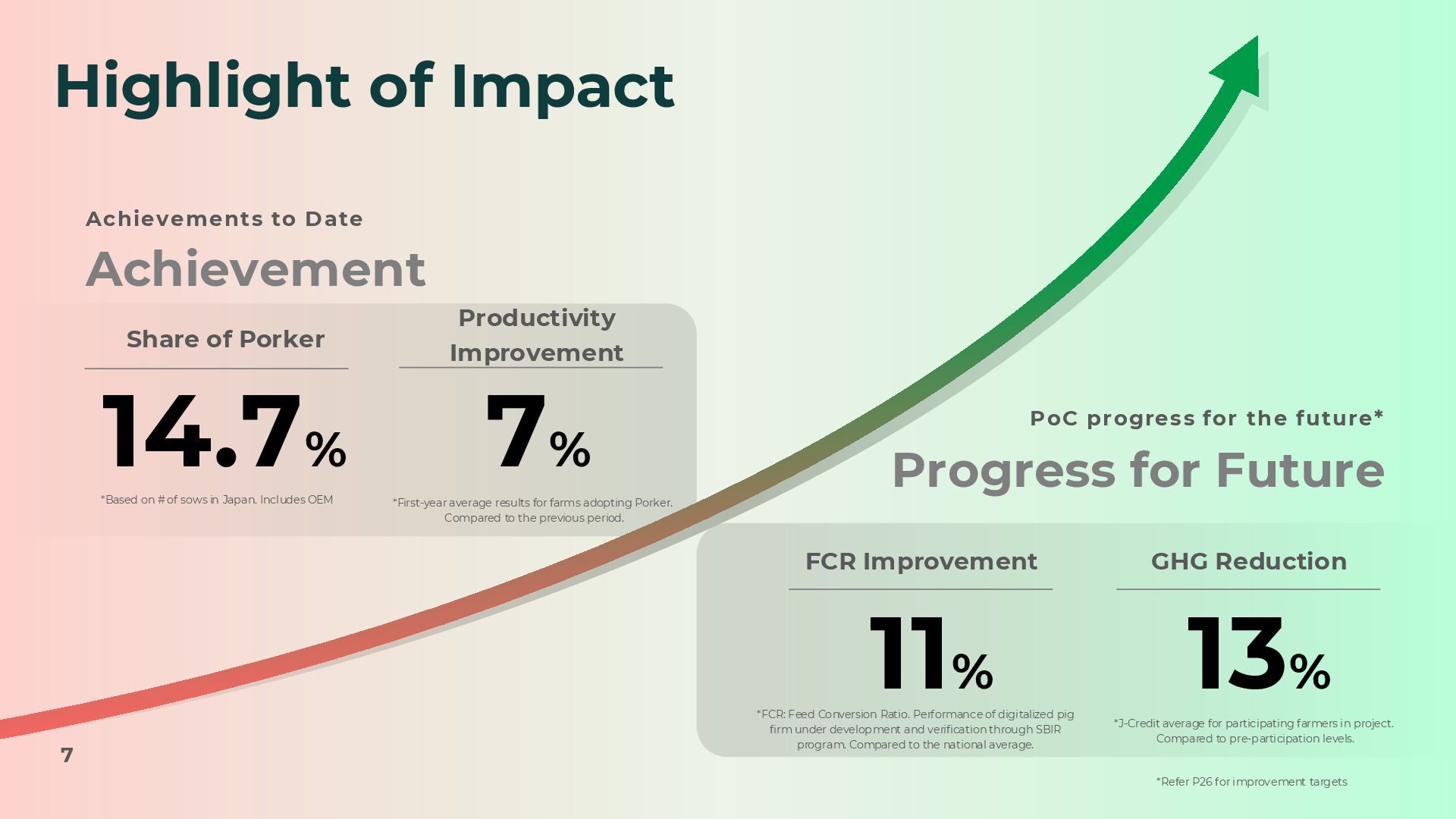
  7. 7 Highlight of Impact Achievements to Date Achievement *Refer P26

    for improvement targets Share of Porker 14.7 % *Based on # of sows in Japan. Includes OEM Productivity Improvement 7 % *First-year average results for farms adopting Porker. Compared to the previous period. FCR Improvement 11 % *FCR: Feed Conversion Ratio. Performance of digitalized pig firm under development and verification through SBIR program. Compared to the national average. GHG Reduction 13 % *J-Credit average for participating farmers in project. Compared to pre-participation levels. Progress for Future PoC progress for the future*
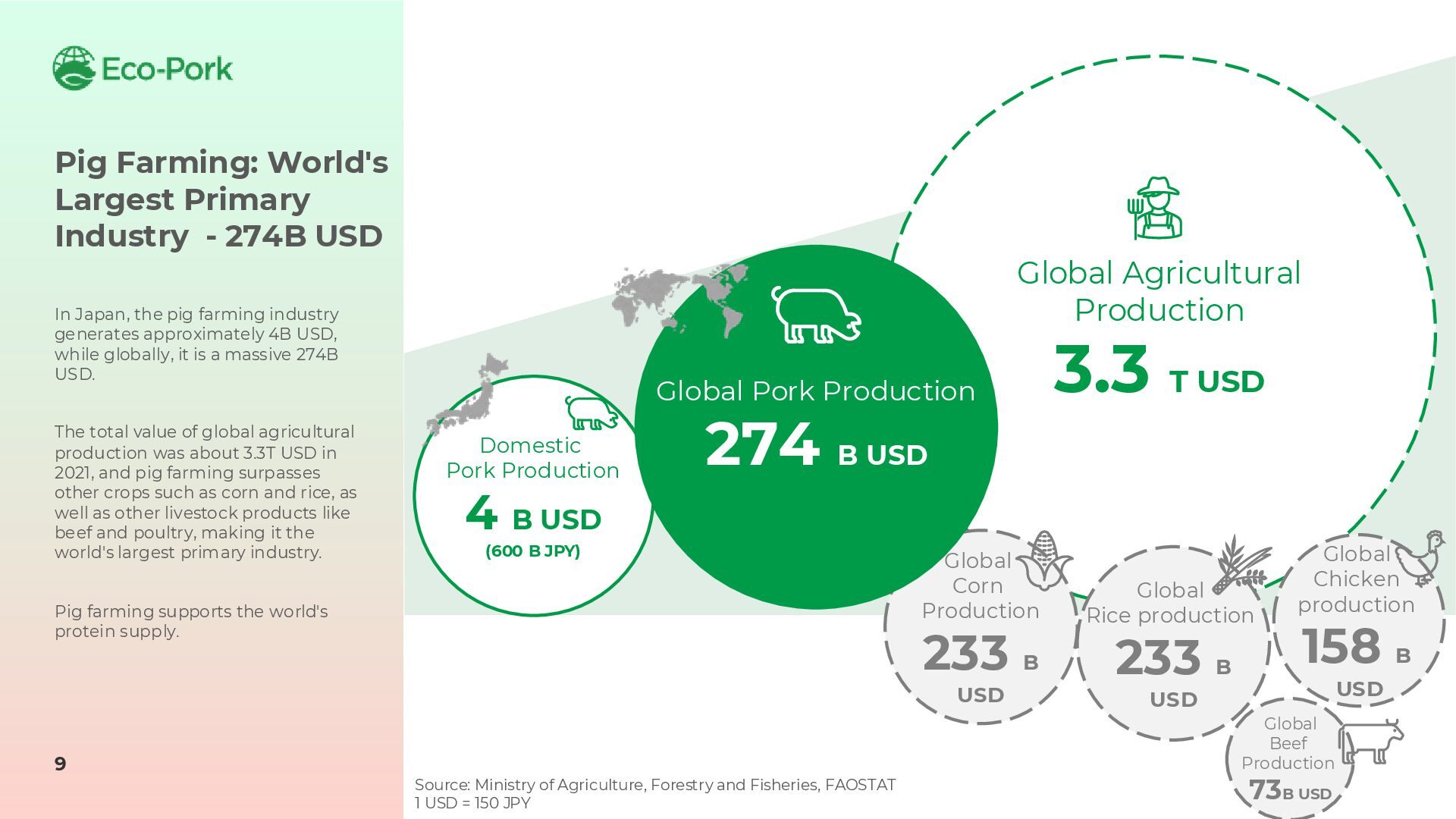
  8. 9 Pig Farming: World's Largest Primary Industry - 274B USD

    In Japan, the pig farming industry generates approximately 4B USD, while globally, it is a massive 274B USD. The total value of global agricultural production was about 3.3T USD in 2021, and pig farming surpasses other crops such as corn and rice, as well as other livestock products like beef and poultry, making it the world's largest primary industry. Pig farming supports the world's protein supply. Source: Ministry of Agriculture, Forestry and Fisheries, FAOSTAT 1 USD = 150 JPY Domestic Pork Production 4 B USD (600 B JPY) Global Agricultural Production 3.3 T USD Global Corn Production 233 B USD Global Rice production 233 B USD Global Chicken production 158 B USD Global Pork Production 274 B USD Global Beef Production 73B USD
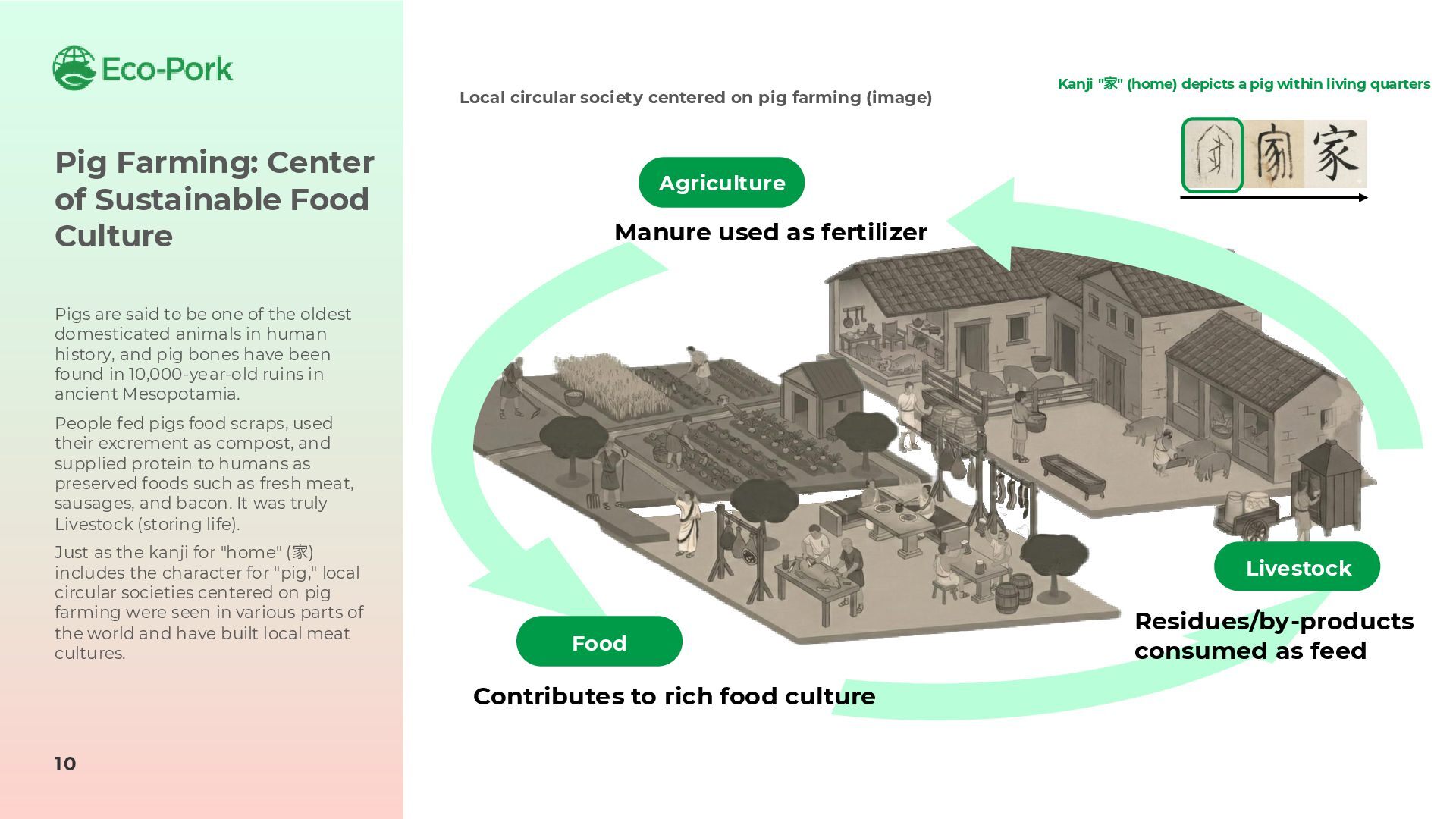
  9. 10 Pig Farming: Center of Sustainable Food Culture Pigs are

    said to be one of the oldest domesticated animals in human history, and pig bones have been found in 10,000-year-old ruins in ancient Mesopotamia. People fed pigs food scraps, used their excrement as compost, and supplied protein to humans as preserved foods such as fresh meat, sausages, and bacon. It was truly Livestock (storing life). Just as the kanji for "home" (家) includes the character for "pig," local circular societies centered on pig farming were seen in various parts of the world and have built local meat cultures. Livestock Residues/by-products consumed as feed Contributes to rich food culture Food Manure used as fertilizer Agriculture Local circular society centered on pig farming (image) Kanji "家" (home) depicts a pig within living quarters
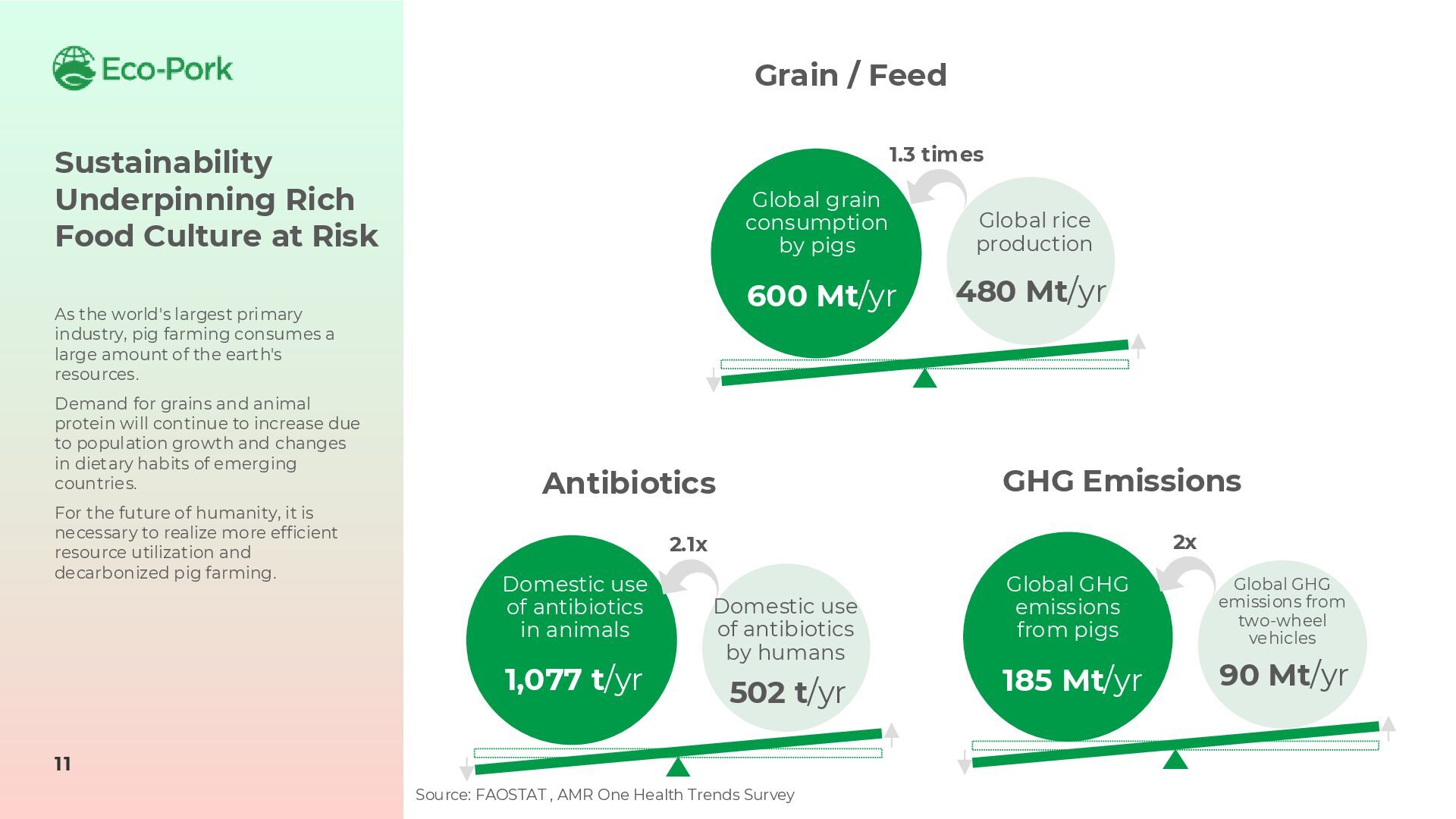
  10. 11 Sustainability Underpinning Rich Food Culture at Risk As the

    world's largest primary industry, pig farming consumes a large amount of the earth's resources. Demand for grains and animal protein will continue to increase due to population growth and changes in dietary habits of emerging countries. For the future of humanity, it is necessary to realize more efficient resource utilization and decarbonized pig farming. Domestic use of antibiotics in animals Domestic use of antibiotics by humans 2.1x Global grain consumption by pigs Global rice production 1.3 times Global GHG emissions from pigs Global GHG emissions from two-wheel vehicles 2x Grain / Feed Antibiotics GHG Emissions Source: FAOSTAT , AMR One Health Trends Survey 600 Mt/yr 480 Mt/yr 1,077 t/yr 502 t/yr 185 Mt/yr 90 Mt/yr
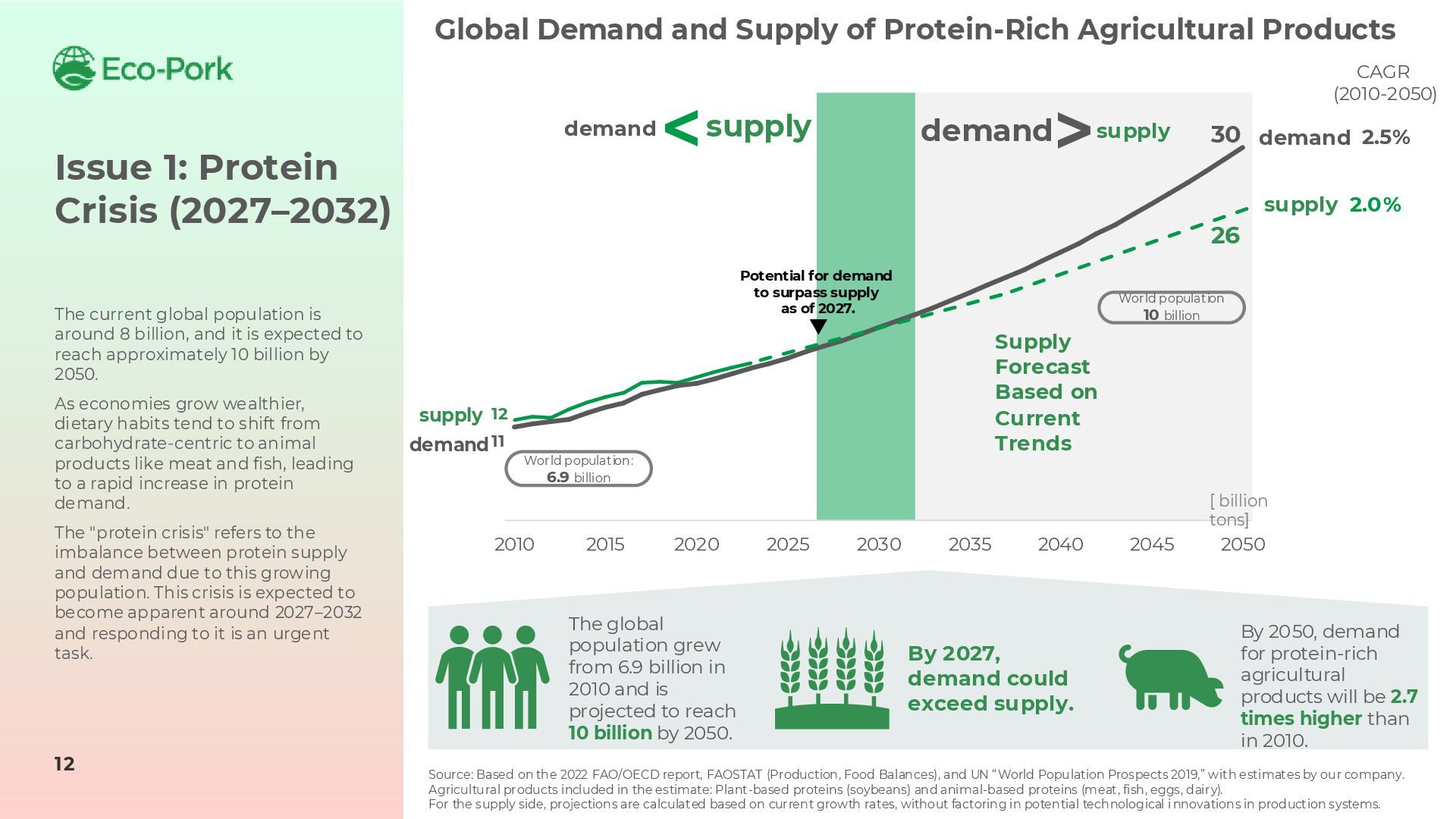
  11. 12 Issue 1: Protein Crisis (2027–2032) The current global population

    is around 8 billion, and it is expected to reach approximately 10 billion by 2050. As economies grow wealthier, dietary habits tend to shift from carbohydrate-centric to animal products like meat and fish, leading to a rapid increase in protein demand. The "protein crisis" refers to the imbalance between protein supply and demand due to this growing population. This crisis is expected to become apparent around 2027–2032 and responding to it is an urgent task. Potential for demand to surpass supply as of 2027. ▼ 5 10 15 20 25 30 35 2010 2015 2020 2025 2030 2035 2040 2045 2050 The global population grew from 6.9 billion in 2010 and is projected to reach 10 billion by 2050. By 2027, demand could exceed supply. By 2050, demand for protein-rich agricultural products will be 2.7 times higher than in 2010. World population: 6.9 billion demand supply < demand supply > demand supply demand CAGR (2010-2050) 2.5% [ billion tons] Global Demand and Supply of Protein-Rich Agricultural Products Source: Based on the 2022 FAO/OECD report, FAOSTAT (Production, Food Balances), and UN “World Population Prospects 2019,” with estimates by our company. Agricultural products included in the estimate: Plant-based proteins (soybeans) and animal-based proteins (meat, fish, eggs, dairy). For the supply side, projections are calculated based on current growth rates, without factoring in potential technological i nnovations in production systems. World population 10 billion Supply Forecast Based on Current Trends 11 12 30 26 supply 2.0%
  12. 13 Issue 2: Antimicrobials & Resistant Bacteria As antimicrobial-resistant bacteria

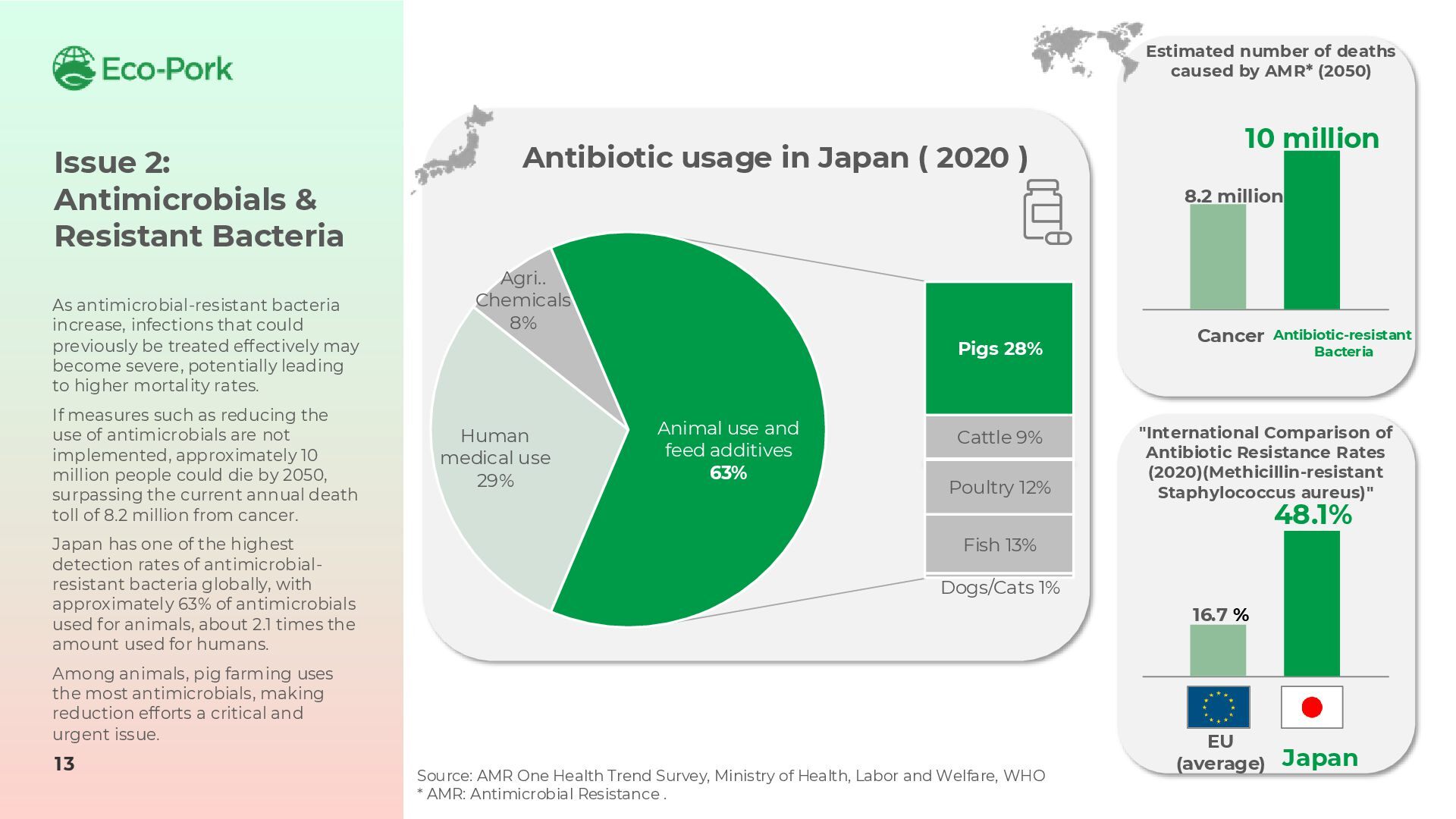
    increase, infections that could previously be treated effectively may become severe, potentially leading to higher mortality rates. If measures such as reducing the use of antimicrobials are not implemented, approximately 10 million people could die by 2050, surpassing the current annual death toll of 8.2 million from cancer. Japan has one of the highest detection rates of antimicrobial- resistant bacteria globally, with approximately 63% of antimicrobials used for animals, about 2.1 times the amount used for humans. Among animals, pig farming uses the most antimicrobials, making reduction efforts a critical and urgent issue. Source: AMR One Health Trend Survey, Ministry of Health, Labor and Welfare, WHO * AMR: Antimicrobial Resistance . Cancer Antibiotic-resistant Bacteria 8.2 million 10 million Estimated number of deaths caused by AMR* (2050) "International Comparison of Antibiotic Resistance Rates (2020)(Methicillin-resistant Staphylococcus aureus)" EU (average) Japan 16.7 % 48.1% Pigs 28% Cattle 9% Poultry 12% Fish 13% Dogs/Cats 1% Human medical use 29% Agri.. Chemicals 8% Animal use and feed additives 63% Antibiotic usage in Japan ( 2020 )
  13. 14 Issue 3: GHG from Pig Farming (Livestock Emissions) Global

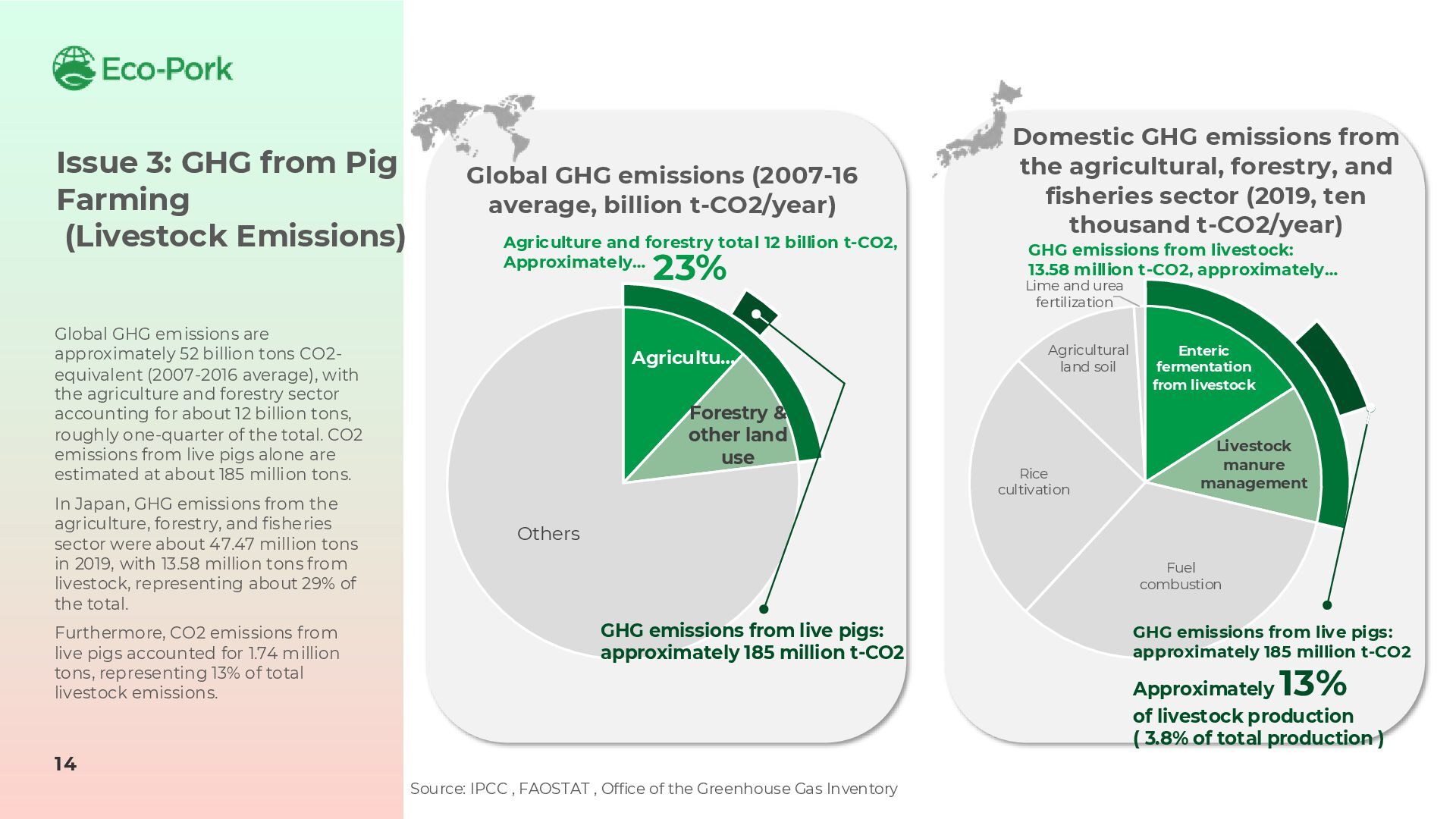
    GHG emissions are approximately 52 billion tons CO2- equivalent (2007-2016 average), with the agriculture and forestry sector accounting for about 12 billion tons, roughly one-quarter of the total. CO2 emissions from live pigs alone are estimated at about 185 million tons. In Japan, GHG emissions from the agriculture, forestry, and fisheries sector were about 47.47 million tons in 2019, with 13.58 million tons from livestock, representing about 29% of the total. Furthermore, CO2 emissions from live pigs accounted for 1.74 million tons, representing 13% of total livestock emissions. Source: IPCC , FAOSTAT , Office of the Greenhouse Gas Inventory GHG emissions from livestock: 13.58 million t-CO2, approximately… Agricultu… Forestry & other land use Others GHG emissions from live pigs: approximately 185 million t-CO2 Agriculture and forestry total 12 billion t-CO2, Approximately… Enteric fermentation from livestock Livestock manure management Fuel combustion Rice cultivation Agricultural land soil Lime and urea fertilization GHG emissions from live pigs: approximately 185 million t-CO2 Approximately 13% of livestock production ( 3.8% of total production ) Domestic GHG emissions from the agricultural, forestry, and fisheries sector (2019, ten thousand t-CO2/year) Global GHG emissions (2007-16 average, billion t-CO2/year) 23%
  14. 15 Issue 3: GHG Impact (Full Pig Farming Lifecycle) The

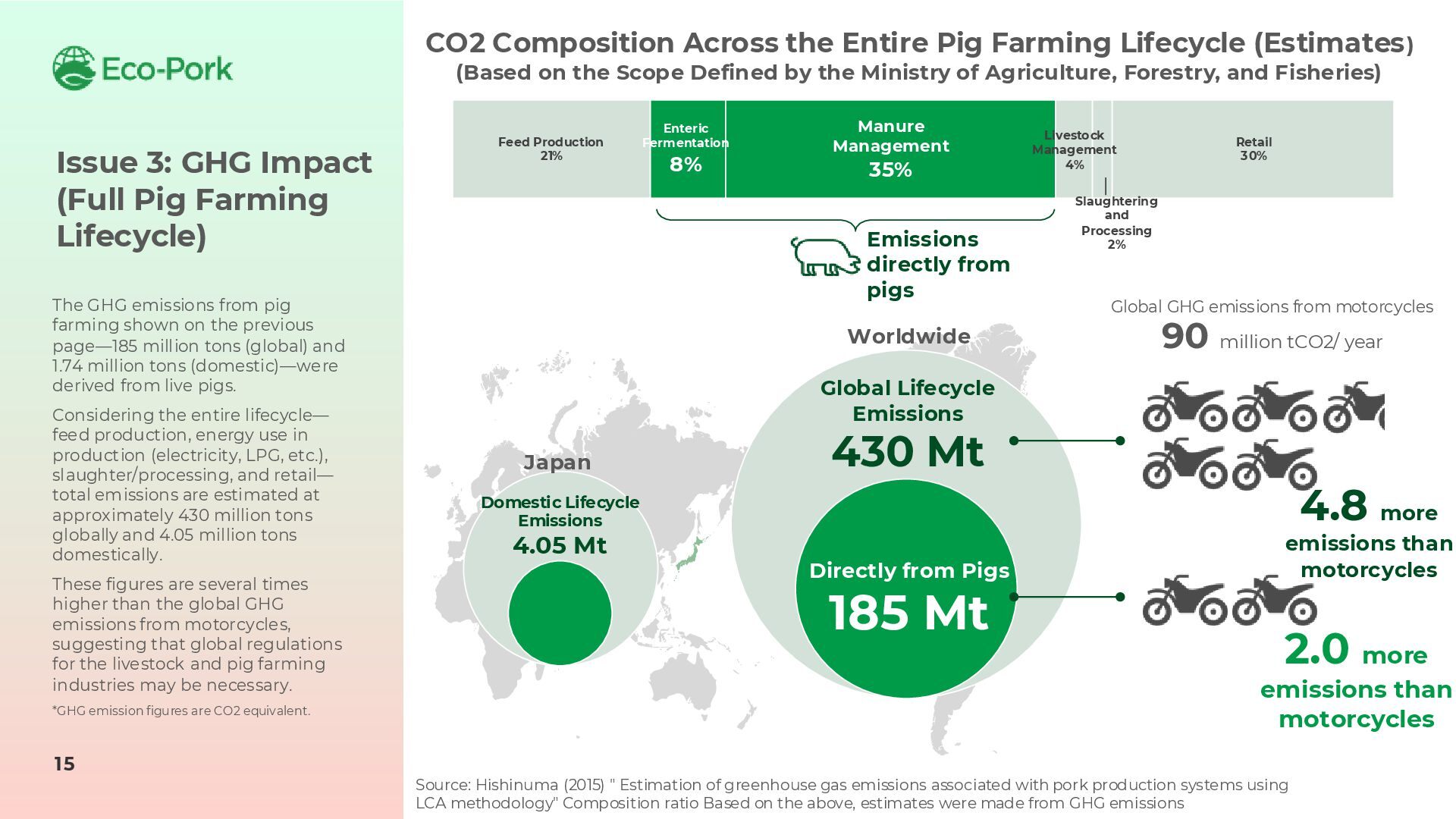
    GHG emissions from pig farming shown on the previous page—185 million tons (global) and 1.74 million tons (domestic)—were derived from live pigs. Considering the entire lifecycle— feed production, energy use in production (electricity, LPG, etc.), slaughter/processing, and retail— total emissions are estimated at approximately 430 million tons globally and 4.05 million tons domestically. These figures are several times higher than the global GHG emissions from motorcycles, suggesting that global regulations for the livestock and pig farming industries may be necessary. *GHG emission figures are CO2 equivalent. Source: Hishinuma (2015) " Estimation of greenhouse gas emissions associated with pork production systems using LCA methodology" Composition ratio Based on the above, estimates were made from GHG emissions Japan Worldwide Feed Production 21% Enteric Fermentation 8% Manure Management 35% Livestock Management 4% Slaughtering and Processing 2% Retail 30% CO2 Composition Across the Entire Pig Farming Lifecycle (Estimates) (Based on the Scope Defined by the Ministry of Agriculture, Forestry, and Fisheries) Emissions directly from pigs 4.8 more emissions than motorcycles Global GHG emissions from motorcycles 90 million tCO2/ year 2.0 more emissions than motorcycles Global Lifecycle Emissions 430 Mt Domestic Lifecycle Emissions 4.05 Mt Directly from Pigs 185 Mt
  15. 17 Will “pork” and “pigs” be necessary in the future?

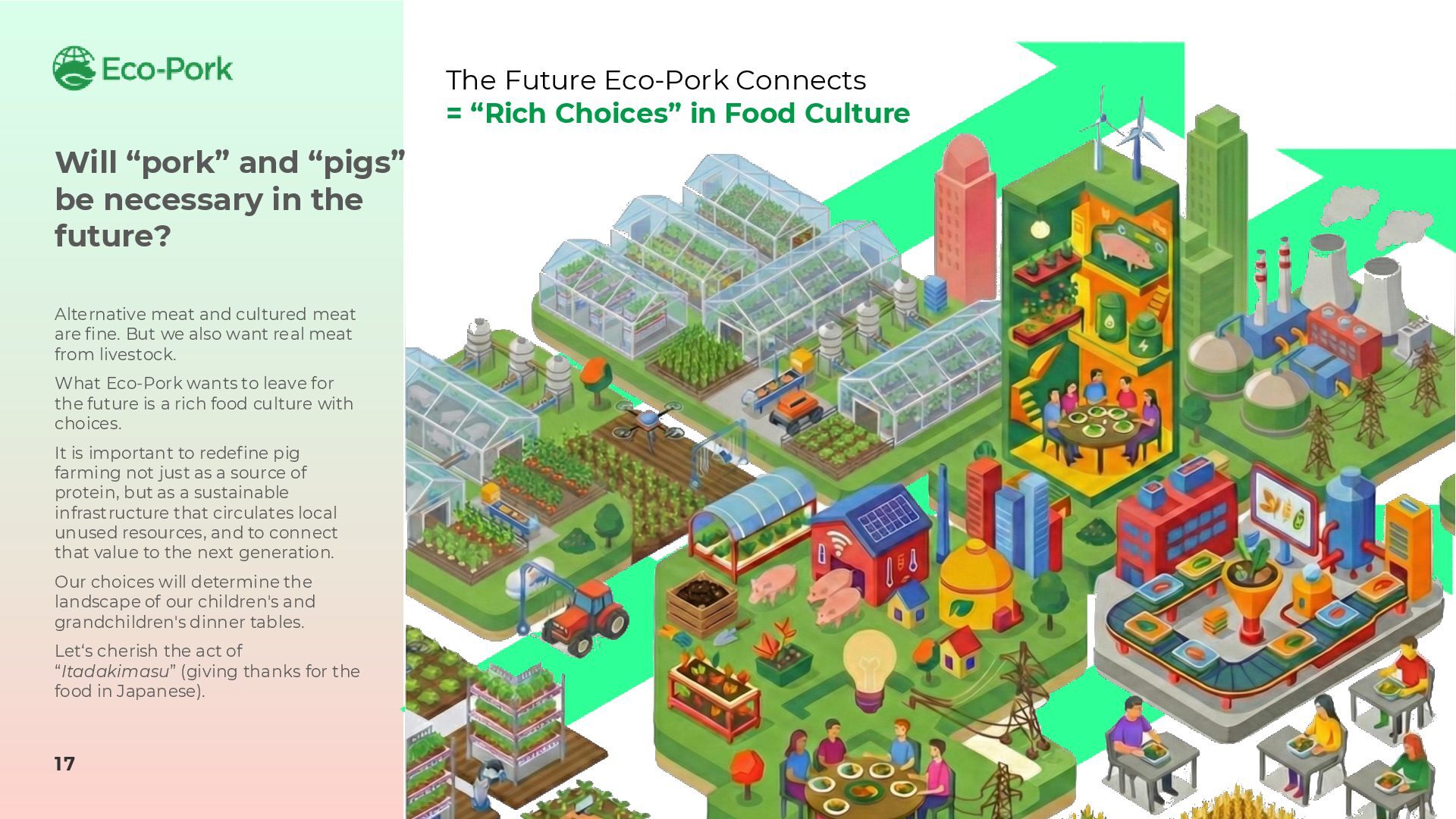
    Alternative meat and cultured meat are fine. But we also want real meat from livestock. What Eco-Pork wants to leave for the future is a rich food culture with choices. It is important to redefine pig farming not just as a source of protein, but as a sustainable infrastructure that circulates local unused resources, and to connect that value to the next generation. Our choices will determine the landscape of our children's and grandchildren's dinner tables. Let‘s cherish the act of “Itadakimasu” (giving thanks for the food in Japanese). The Future Eco-Pork Connects = “Rich Choices” in Food Culture
  16. 18 Pig Farming from a Resource Circulation Perspective Pig farming

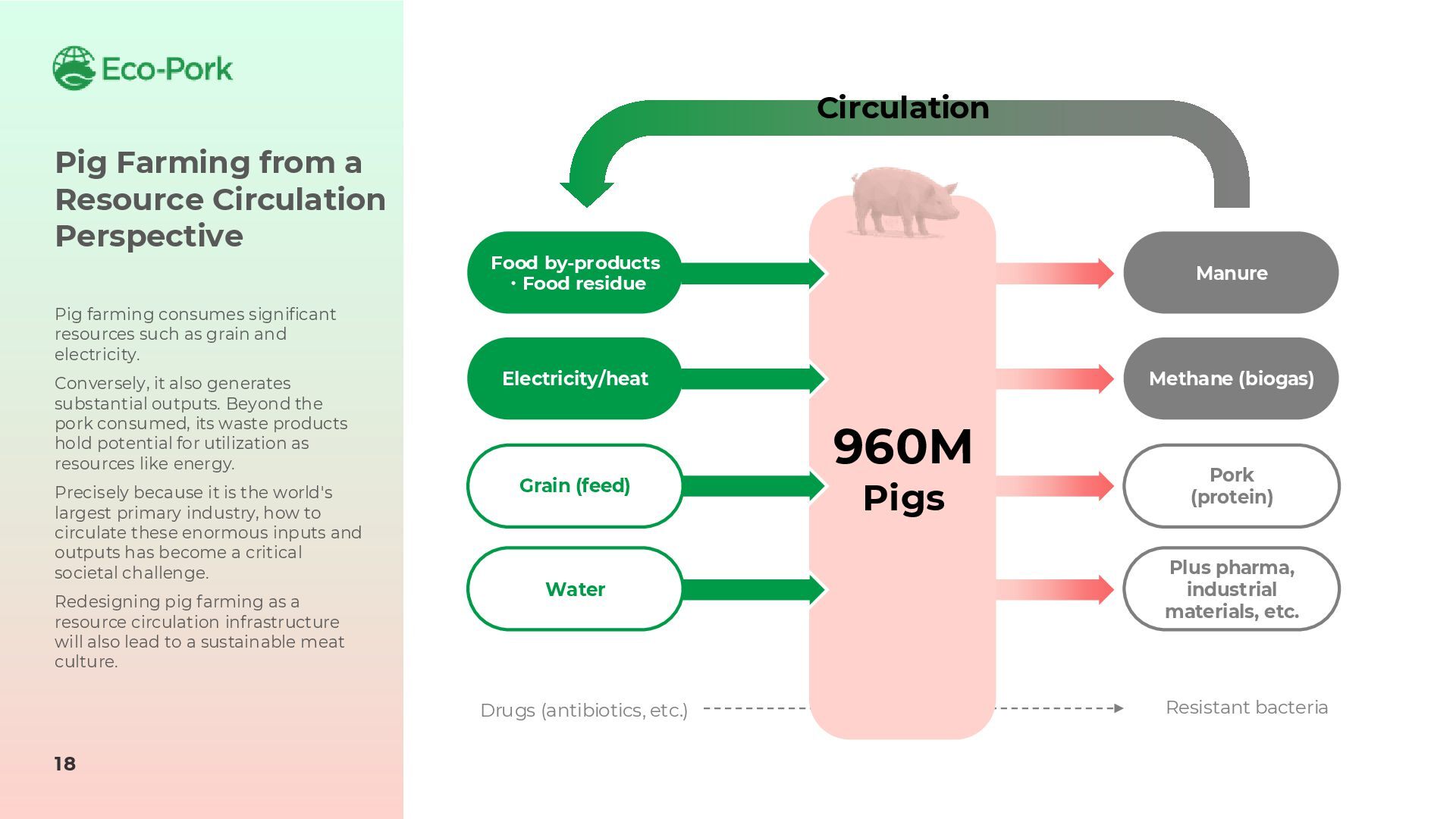
    consumes significant resources such as grain and electricity. Conversely, it also generates substantial outputs. Beyond the pork consumed, its waste products hold potential for utilization as resources like energy. Precisely because it is the world's largest primary industry, how to circulate these enormous inputs and outputs has become a critical societal challenge. Redesigning pig farming as a resource circulation infrastructure will also lead to a sustainable meat culture. 960M Pigs Drugs (antibiotics, etc.) Resistant bacteria Electricity/heat Food by-products ・Food residue Grain (feed) Water Methane (biogas) Manure Pork (protein) Plus pharma, industrial materials, etc. Circulation
  17. 19 Eco-Pork's Role "Visualize" to make pig farming a circular

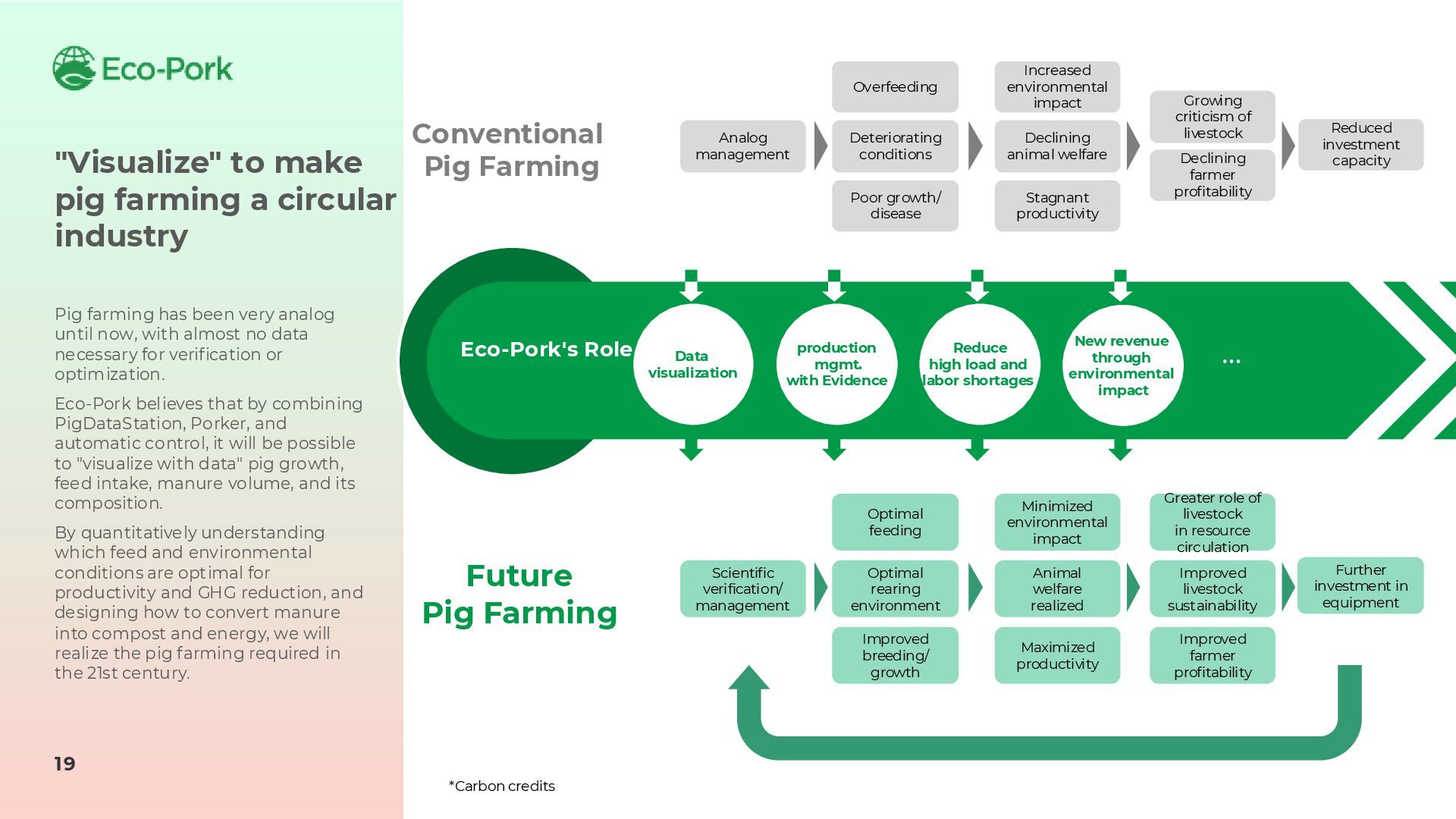
    industry Pig farming has been very analog until now, with almost no data necessary for verification or optimization. Eco-Pork believes that by combining PigDataStation, Porker, and automatic control, it will be possible to "visualize with data" pig growth, feed intake, manure volume, and its composition. By quantitatively understanding which feed and environmental conditions are optimal for productivity and GHG reduction, and designing how to convert manure into compost and energy, we will realize the pig farming required in the 21st century. Conventional Pig Farming Future Pig Farming Optimal feeding Scientific verification/ management Optimal rearing environment Minimized environmental impact Animal welfare realized Further investment in equipment Maximized productivity Improved breeding/ growth Overfeeding Analog management Deteriorating conditions Increased environmental impact Declining animal welfare Growing criticism of livestock Declining farmer profitability Reduced investment capacity Stagnant productivity Poor growth/ disease Greater role of livestock in resource circulation Improved livestock sustainability Improved farmer profitability New revenue through environmental impact Data visualization production mgmt. with Evidence *Carbon credits Reduce high load and labor shortages …
  18. 20 COLUMN: Livestock Digitalization Cattle are raised in small numbers,

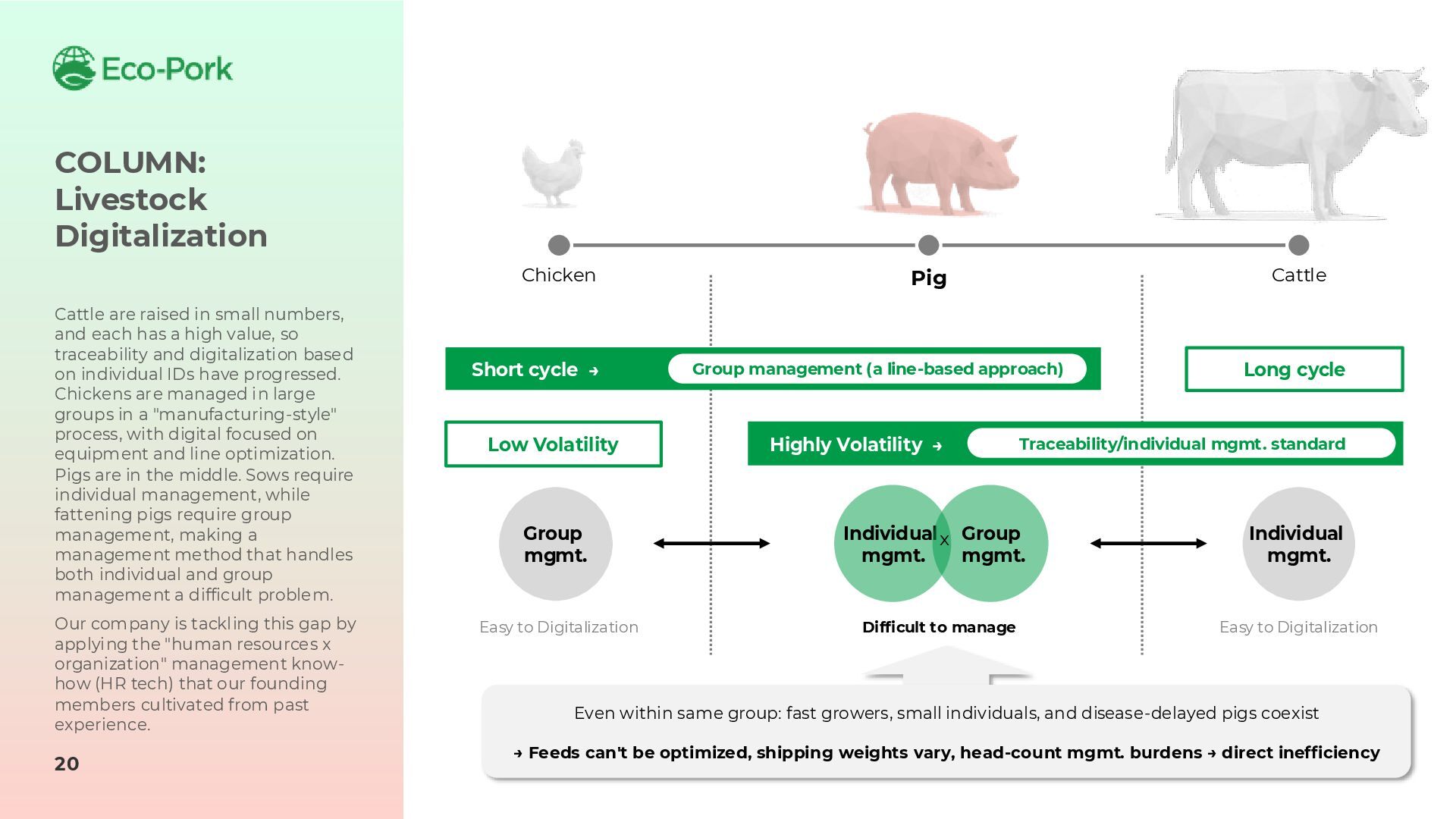
    and each has a high value, so traceability and digitalization based on individual IDs have progressed. Chickens are managed in large groups in a "manufacturing-style" process, with digital focused on equipment and line optimization. Pigs are in the middle. Sows require individual management, while fattening pigs require group management, making a management method that handles both individual and group management a difficult problem. Our company is tackling this gap by applying the "human resources x organization" management know- how (HR tech) that our founding members cultivated from past experience. Long cycle Chicken Pig Cattle Short cycle → Group management (a line-based approach) Highly Volatility → Traceability/individual mgmt. standard Low Volatility Group mgmt. Individual mgmt. Individual mgmt. Group mgmt. x Difficult to manage Easy to Digitalization Easy to Digitalization Even within same group: fast growers, small individuals, and disease-delayed pigs coexist → Feeds can't be optimized, shipping weights vary, head-count mgmt. burdens → direct inefficiency
  19. 22 Passing on the Genuine Meat Culture to the Next

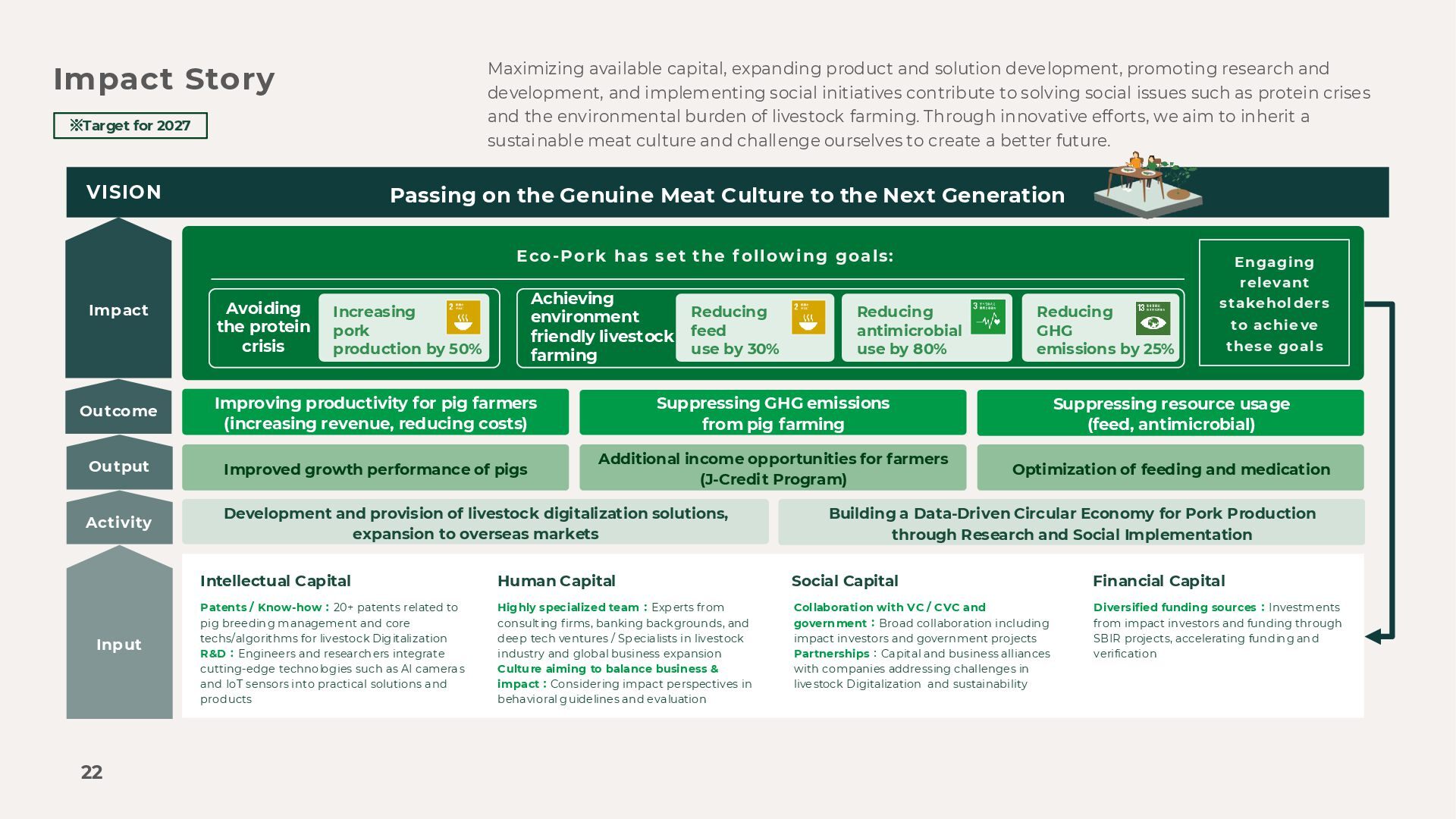
    Generation Patents / Know-how:20+ patents related to pig breeding management and core techs/algorithms for livestock Digitalization R&D:Engineers and researchers integrate cutting-edge technologies such as AI cameras and IoT sensors into practical solutions and products Highly specialized team:Experts from consulting firms, banking backgrounds, and deep tech ventures / Specialists in livestock industry and global business expansion Culture aiming to balance business & impact:Considering impact perspectives in behavioral guidelines and evaluation Diversified funding sources:Investments from impact investors and funding through SBIR projects, accelerating funding and verification Intellectual Capital Human Capital Social Capital Financial Capital Achieving environment friendly livestock farming VISION Eco-Pork has set the following goals: Engaging relevant stakehol ders to achieve these goals Impact Story Maximizing available capital, expanding product and solution development, promoting research and development, and implementing social initiatives contribute to solving social issues such as protein crises and the environmental burden of livestock farming. Through innovative efforts, we aim to inherit a sustainable meat culture and challenge ourselves to create a better future. ※Target for 2027 Development and provision of livestock digitalization solutions, expansion to overseas markets Building a Data-Driven Circular Economy for Pork Production through Research and Social Implementation Improved growth performance of pigs Additional income opportunities for farmers (J-Credit Program) Optimization of feeding and medication Improving productivity for pig farmers (increasing revenue, reducing costs) Suppressing GHG emissions from pig farming Suppressing resource usage (feed, antimicrobial) Collaboration with VC / CVC and government:Broad collaboration including impact investors and government projects Partnerships:Capital and business alliances with companies addressing challenges in livestock Digitalization and sustainability Activity Output Outcome Impact Input Avoiding the protein crisis Increasing pork production by 50% Reducing feed use by 30% Reducing antimicrobial use by 80% Reducing GHG emissions by 25%
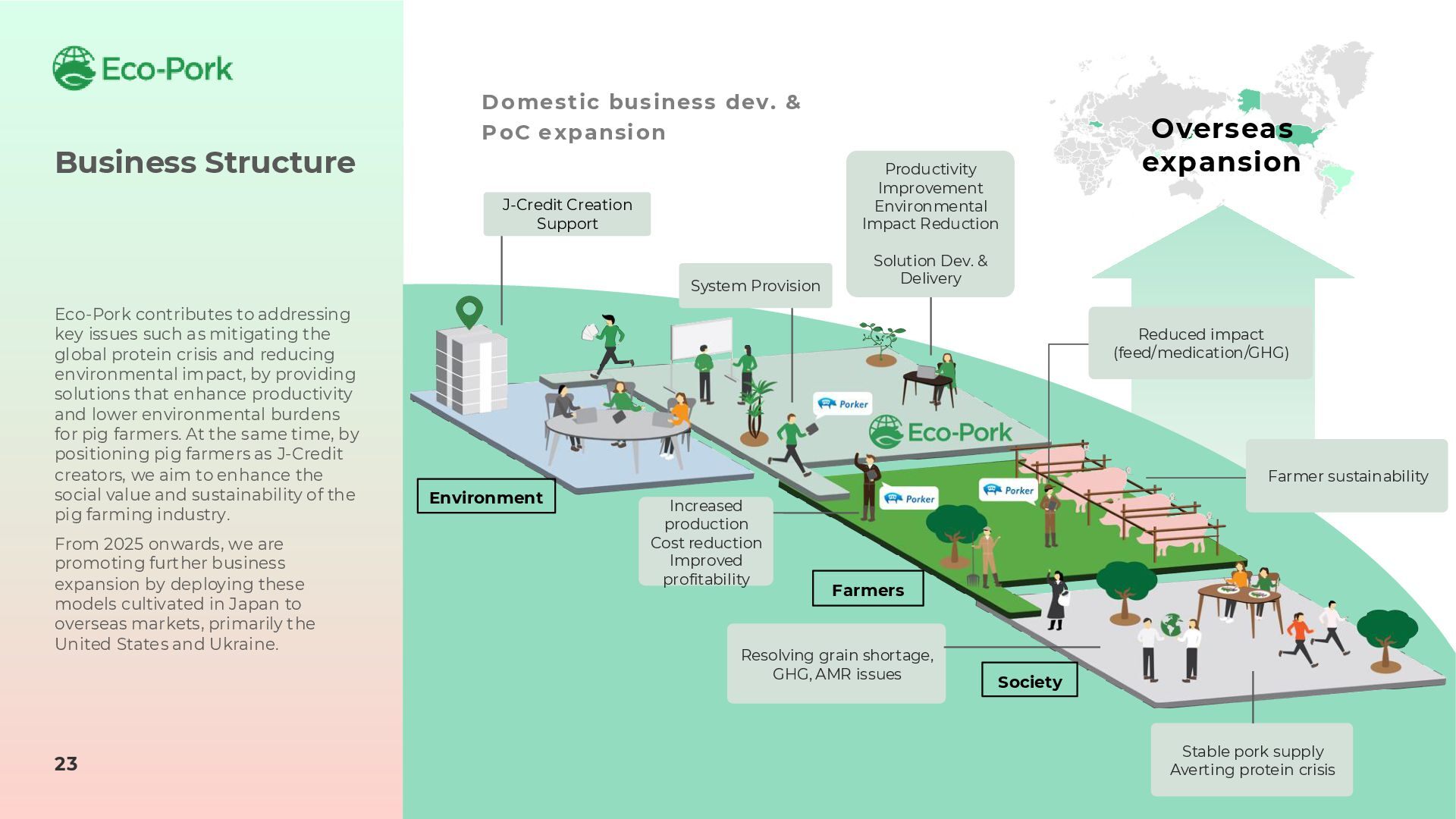
  20. 23 Business Structure Eco-Pork contributes to addressing key issues such

    as mitigating the global protein crisis and reducing environmental impact, by providing solutions that enhance productivity and lower environmental burdens for pig farmers. At the same time, by positioning pig farmers as J-Credit creators, we aim to enhance the social value and sustainability of the pig farming industry. From 2025 onwards, we are promoting further business expansion by deploying these models cultivated in Japan to overseas markets, primarily the United States and Ukraine. Environment J-Credit Creation Support System Provision Productivity Improvement Environmental Impact Reduction Solution Dev. & Delivery Farmers Society Increased production Cost reduction Improved profitability Farmer sustainability Reduced impact (feed/medication/GHG) Resolving grain shortage, GHG, AMR issues Stable pork supply Averting protein crisis Overseas expansion Domestic business dev. & PoC expansion
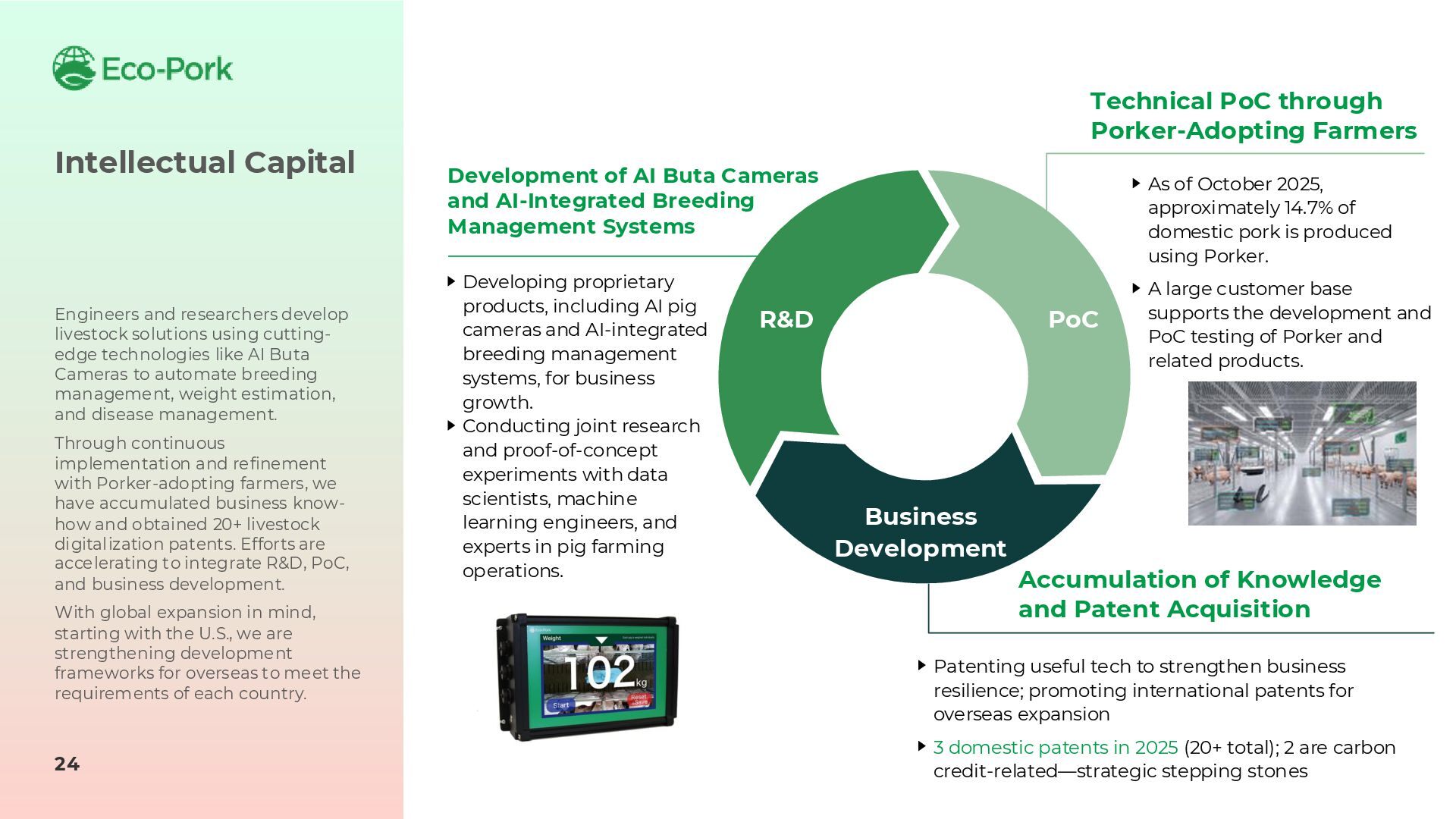
  21. 24 Intellectual Capital Engineers and researchers develop livestock solutions using

    cutting- edge technologies like AI Buta Cameras to automate breeding management, weight estimation, and disease management. Through continuous implementation and refinement with Porker-adopting farmers, we have accumulated business know- how and obtained 20+ livestock digitalization patents. Efforts are accelerating to integrate R&D, PoC, and business development. With global expansion in mind, starting with the U.S., we are strengthening development frameworks for overseas to meet the requirements of each country. Development of AI Buta Cameras and AI-Integrated Breeding Management Systems As of October 2025, approximately 14.7% of domestic pork is produced using Porker. A large customer base supports the development and PoC testing of Porker and related products. Patenting useful tech to strengthen business resilience; promoting international patents for overseas expansion 3 domestic patents in 2025 (20+ total); 2 are carbon credit-related—strategic stepping stones Developing proprietary products, including AI pig cameras and AI-integrated breeding management systems, for business growth. Conducting joint research and proof-of-concept experiments with data scientists, machine learning engineers, and experts in pig farming operations. R&D PoC Business Development Accumulation of Knowledge and Patent Acquisition Technical PoC through Porker-Adopting Farmers
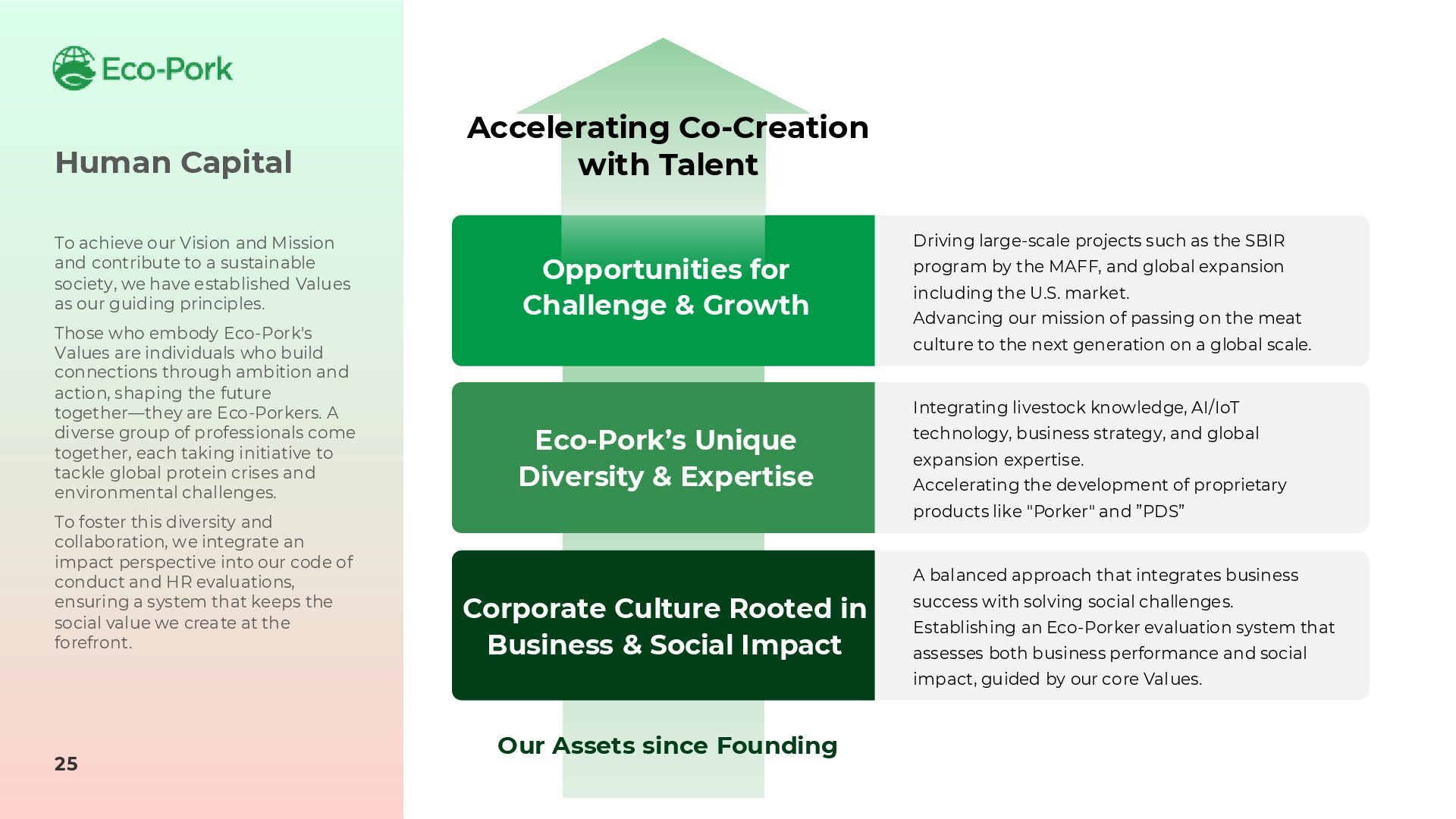
  22. 25 Human Capital To achieve our Vision and Mission and

    contribute to a sustainable society, we have established Values as our guiding principles. Those who embody Eco-Pork's Values are individuals who build connections through ambition and action, shaping the future together—they are Eco-Porkers. A diverse group of professionals come together, each taking initiative to tackle global protein crises and environmental challenges. To foster this diversity and collaboration, we integrate an impact perspective into our code of conduct and HR evaluations, ensuring a system that keeps the social value we create at the forefront. Integrating livestock knowledge, AI/IoT technology, business strategy, and global expansion expertise. Accelerating the development of proprietary products like "Porker" and ”PDS” A balanced approach that integrates business success with solving social challenges. Establishing an Eco-Porker evaluation system that assesses both business performance and social impact, guided by our core Values. Corporate Culture Rooted in Business & Social Impact Eco-Pork’s Unique Diversity & Expertise Driving large-scale projects such as the SBIR program by the MAFF, and global expansion including the U.S. market. Advancing our mission of passing on the meat culture to the next generation on a global scale. Opportunities for Challenge & Growth Our Assets since Founding Accelerating Co-Creation with Talent
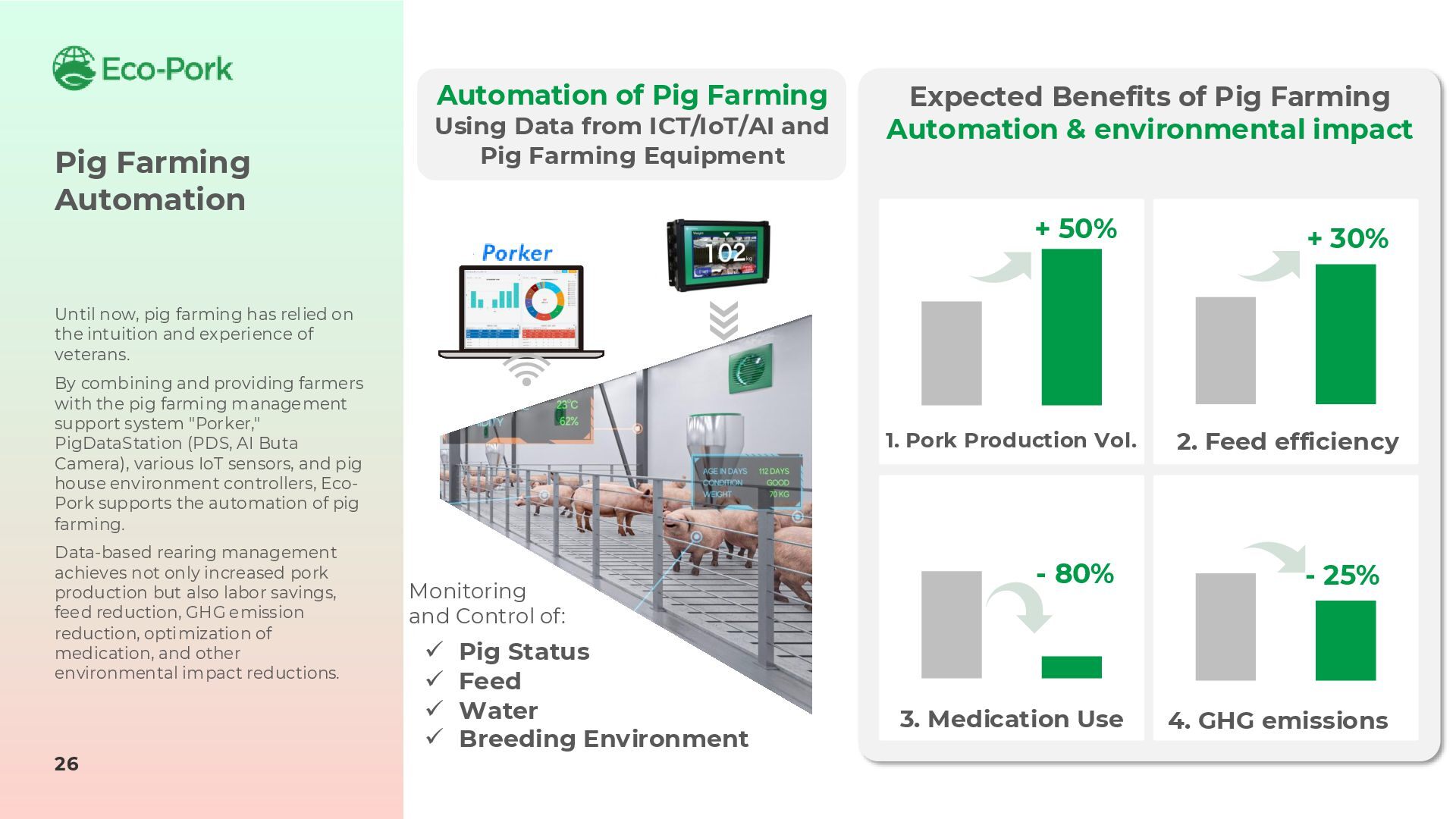
  23. 26 Pig Farming Automation Until now, pig farming has relied

    on the intuition and experience of veterans. By combining and providing farmers with the pig farming management support system "Porker," PigDataStation (PDS, AI Buta Camera), various IoT sensors, and pig house environment controllers, Eco- Pork supports the automation of pig farming. Data-based rearing management achieves not only increased pork production but also labor savings, feed reduction, GHG emission reduction, optimization of medication, and other environmental impact reductions. Automation of Pig Farming Using Data from ICT/IoT/AI and Pig Farming Equipment Expected Benefits of Pig Farming Automation & environmental impact v + 50% 1. Pork Production Vol. v + 30% 2. Feed efficiency v - 25% 4. GHG emissions v - 80% 3. Medication Use ✓ Pig Status ✓ Feed ✓ Water ✓ Breeding Environment Monitoring and Control of:
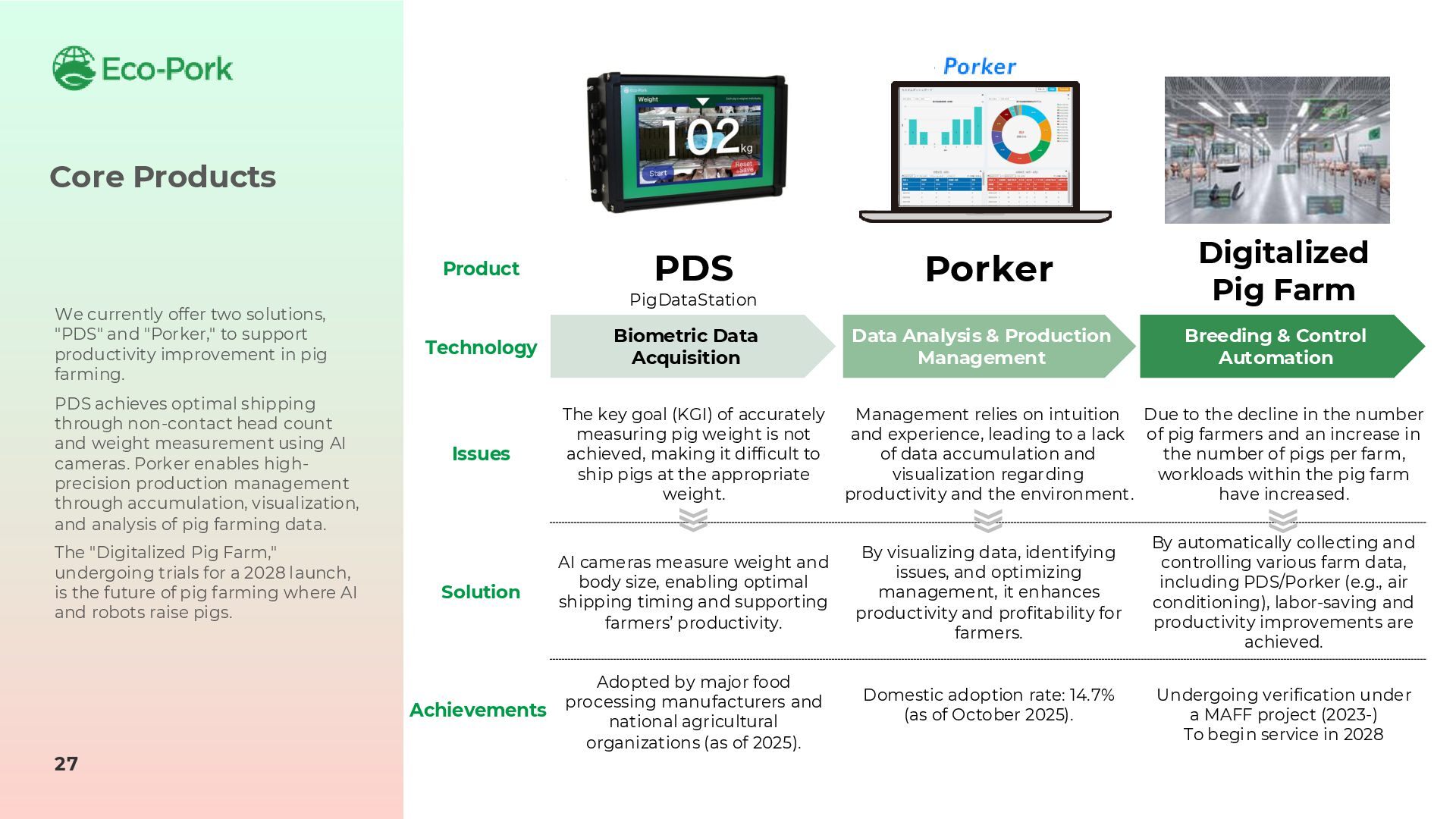
  24. 27 We currently offer two solutions, "PDS" and "Porker," to

    support productivity improvement in pig farming. PDS achieves optimal shipping through non-contact head count and weight measurement using AI cameras. Porker enables high- precision production management through accumulation, visualization, and analysis of pig farming data. The "Digitalized Pig Farm," undergoing trials for a 2028 launch, is the future of pig farming where AI and robots raise pigs. PDS PigDataStation Product Technology Issues Solution Achievements Core Products Biometric Data Acquisition Data Analysis & Production Management Breeding & Control Automation Adopted by major food processing manufacturers and national agricultural organizations (as of 2025). Porker Digitalized Pig Farm Domestic adoption rate: 14.7% (as of October 2025). Undergoing verification under a MAFF project (2023-) To begin service in 2028 The key goal (KGI) of accurately measuring pig weight is not achieved, making it difficult to ship pigs at the appropriate weight. Management relies on intuition and experience, leading to a lack of data accumulation and visualization regarding productivity and the environment. Due to the decline in the number of pig farmers and an increase in the number of pigs per farm, workloads within the pig farm have increased. AI cameras measure weight and body size, enabling optimal shipping timing and supporting farmers’ productivity. By visualizing data, identifying issues, and optimizing management, it enhances productivity and profitability for farmers. By automatically collecting and controlling various farm data, including PDS/Porker (e.g., air conditioning), labor-saving and productivity improvements are achieved.
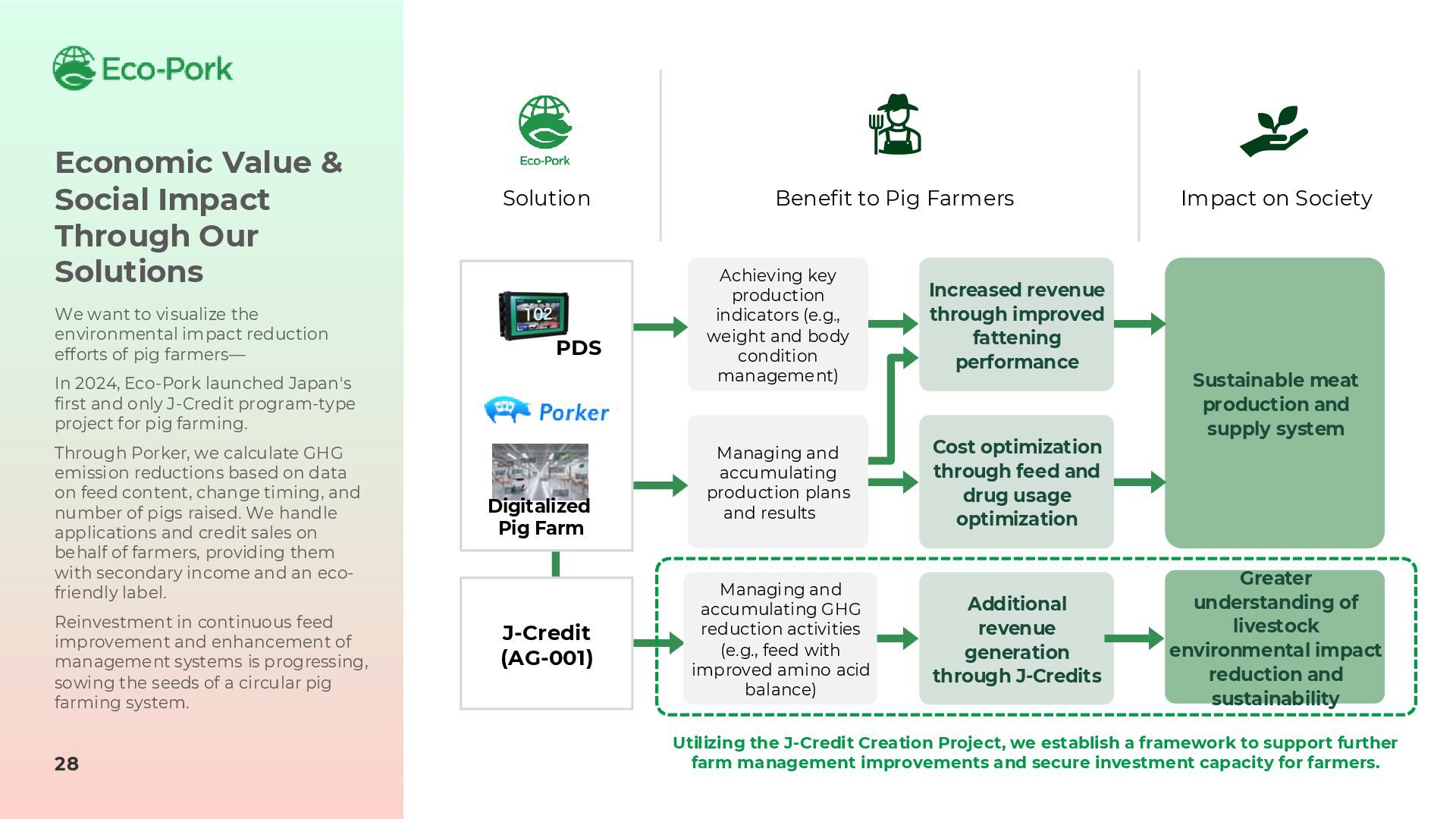
  25. 28 Economic Value & Social Impact Through Our Solutions We

    want to visualize the environmental impact reduction efforts of pig farmers— In 2024, Eco-Pork launched Japan's first and only J-Credit program-type project for pig farming. Through Porker, we calculate GHG emission reductions based on data on feed content, change timing, and number of pigs raised. We handle applications and credit sales on behalf of farmers, providing them with secondary income and an eco- friendly label. Reinvestment in continuous feed improvement and enhancement of management systems is progressing, sowing the seeds of a circular pig farming system. J-Credit (AG-001) PDS Digitalized Pig Farm Benefit to Pig Farmers Impact on Society Additional revenue generation through J-Credits Solution Sustainable meat production and supply system Greater understanding of livestock environmental impact reduction and sustainability Utilizing the J-Credit Creation Project, we establish a framework to support further farm management improvements and secure investment capacity for farmers. Achieving key production indicators (e.g., weight and body condition management) Increased revenue through improved fattening performance Cost optimization through feed and drug usage optimization Managing and accumulating production plans and results Managing and accumulating GHG reduction activities (e.g., feed with improved amino acid balance)
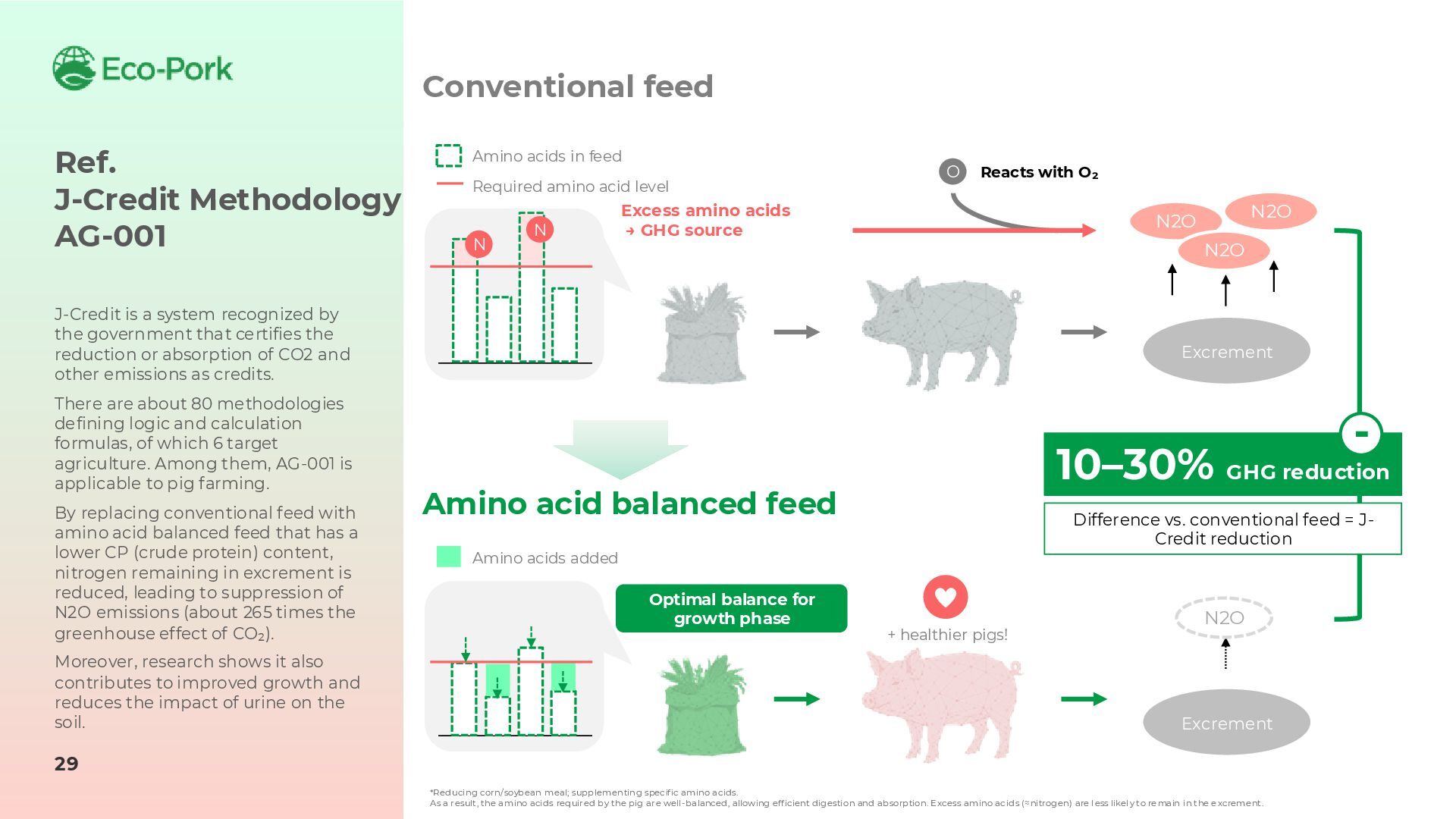
  26. 29 Ref. J-Credit Methodology AG-001 J-Credit is a system recognized

    by the government that certifies the reduction or absorption of CO2 and other emissions as credits. There are about 80 methodologies defining logic and calculation formulas, of which 6 target agriculture. Among them, AG-001 is applicable to pig farming. By replacing conventional feed with amino acid balanced feed that has a lower CP (crude protein) content, nitrogen remaining in excrement is reduced, leading to suppression of N2O emissions (about 265 times the greenhouse effect of CO₂). Moreover, research shows it also contributes to improved growth and reduces the impact of urine on the soil. Conventional feed Amino acid balanced feed Amino acids in feed Excess amino acids → GHG source Required amino acid level Optimal balance for growth phase Excrement Excrement N2O N2O N2O N2O Difference vs. conventional feed = J- Credit reduction 10–30% GHG reduction - + healthier pigs! *Reducing corn/soybean meal; supplementing specific amino acids. As a result, the amino acids required by the pig are well-balanced, allowing efficient digestion and absorption. Excess amino acids (≈nitrogen) are less likely to remain in the excrement. Amino acids added N N O Reacts with O₂
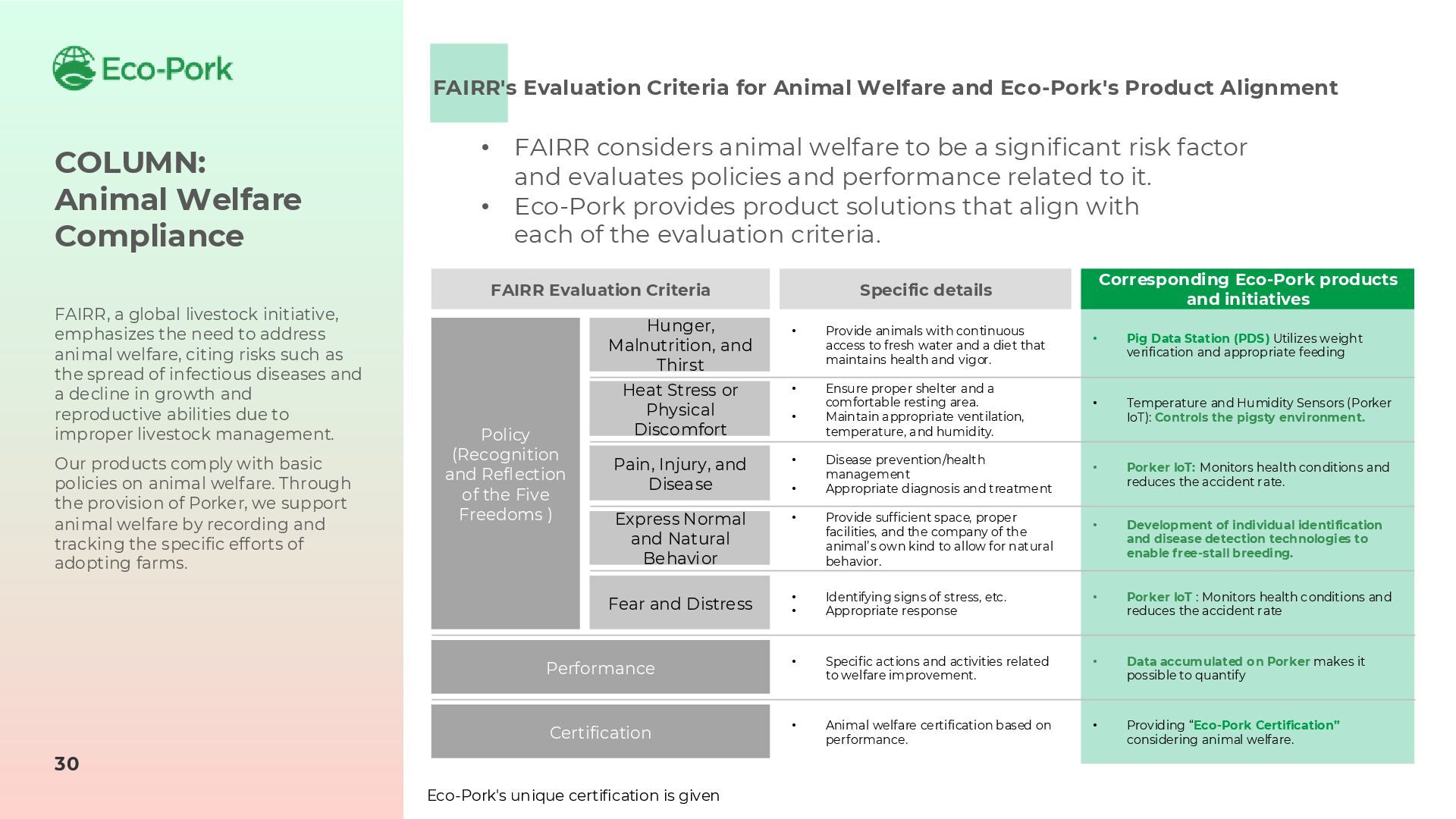
  27. 30 COLUMN: Animal Welfare Compliance FAIRR, a global livestock initiative,

    emphasizes the need to address animal welfare, citing risks such as the spread of infectious diseases and a decline in growth and reproductive abilities due to improper livestock management. Our products comply with basic policies on animal welfare. Through the provision of Porker, we support animal welfare by recording and tracking the specific efforts of adopting farms. • FAIRR considers animal welfare to be a significant risk factor and evaluates policies and performance related to it. • Eco-Pork provides product solutions that align with each of the evaluation criteria. FAIRR Evaluation Criteria Specific details Corresponding Eco-Pork products and initiatives Policy (Recognition and Reflection of the Five Freedoms ) Performance Certification Hunger, Malnutrition, and Thirst Heat Stress or Physical Discomfort Pain, Injury, and Disease Express Normal and Natural Behavior Fear and Distress • Provide animals with continuous access to fresh water and a diet that maintains health and vigor. • Ensure proper shelter and a comfortable resting area. • Maintain appropriate ventilation, temperature, and humidity. • Disease prevention/health management • Appropriate diagnosis and treatment • Provide sufficient space, proper facilities, and the company of the animal’s own kind to allow for natural behavior. • Identifying signs of stress, etc. • Appropriate response • Specific actions and activities related to welfare improvement. • Animal welfare certification based on performance. • Pig Data Station (PDS) Utilizes weight verification and appropriate feeding • Temperature and Humidity Sensors (Porker IoT): Controls the pigsty environment. • Porker IoT: Monitors health conditions and reduces the accident rate. • Development of individual identification and disease detection technologies to enable free-stall breeding. • Porker IoT : Monitors health conditions and reduces the accident rate • Data accumulated on Porker makes it possible to quantify • Providing “Eco-Pork Certification” considering animal welfare. Eco-Pork's unique certification is given FAIRR's Evaluation Criteria for Animal Welfare and Eco-Pork's Product Alignment
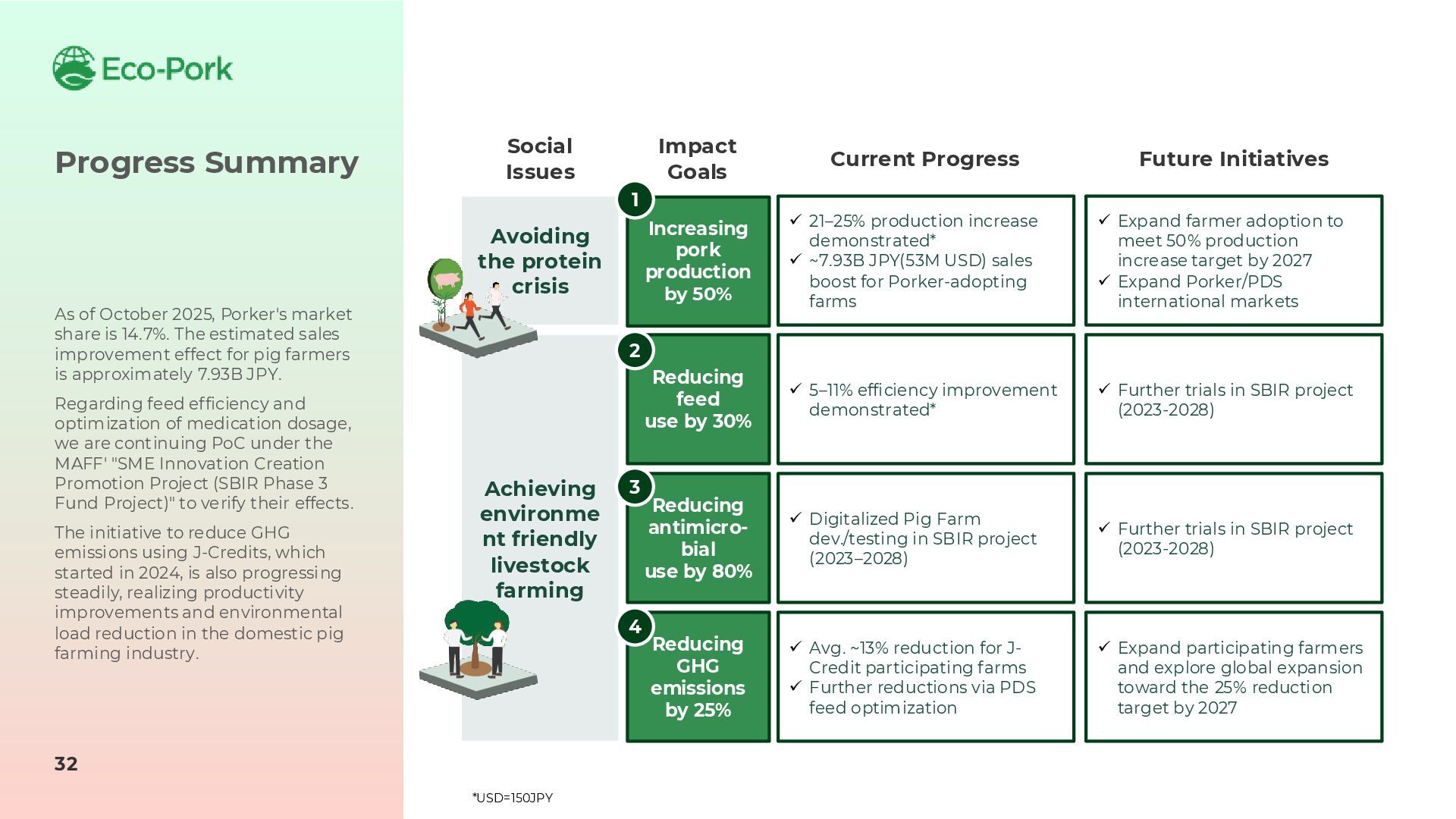
  28. 32 Progress Summary As of October 2025, Porker's market share

    is 14.7%. The estimated sales improvement effect for pig farmers is approximately 7.93B JPY. Regarding feed efficiency and optimization of medication dosage, we are continuing PoC under the MAFF' "SME Innovation Creation Promotion Project (SBIR Phase 3 Fund Project)" to verify their effects. The initiative to reduce GHG emissions using J-Credits, which started in 2024, is also progressing steadily, realizing productivity improvements and environmental load reduction in the domestic pig farming industry. Increasing pork production by 50% Reducing feed use by 30% Reducing antimicro- bial use by 80% Reducing GHG emissions by 25% Avoiding the protein crisis Achieving environme nt friendly livestock farming ✓ 21–25% production increase demonstrated* ✓ ~7.93B JPY(53M USD) sales boost for Porker-adopting farms ✓ 5–11% efficiency improvement demonstrated* ✓ Digitalized Pig Farm dev./testing in SBIR project (2023–2028) ✓ Avg. ~13% reduction for J- Credit participating farms ✓ Further reductions via PDS feed optimization ✓ Expand farmer adoption to meet 50% production increase target by 2027 ✓ Expand Porker/PDS international markets ✓ Further trials in SBIR project (2023-2028) ✓ Further trials in SBIR project (2023-2028) ✓ Expand participating farmers and explore global expansion toward the 25% reduction target by 2027 Impact Goals Social Issues Current Progress Future Initiatives 1 2 3 4 *USD=150JPY
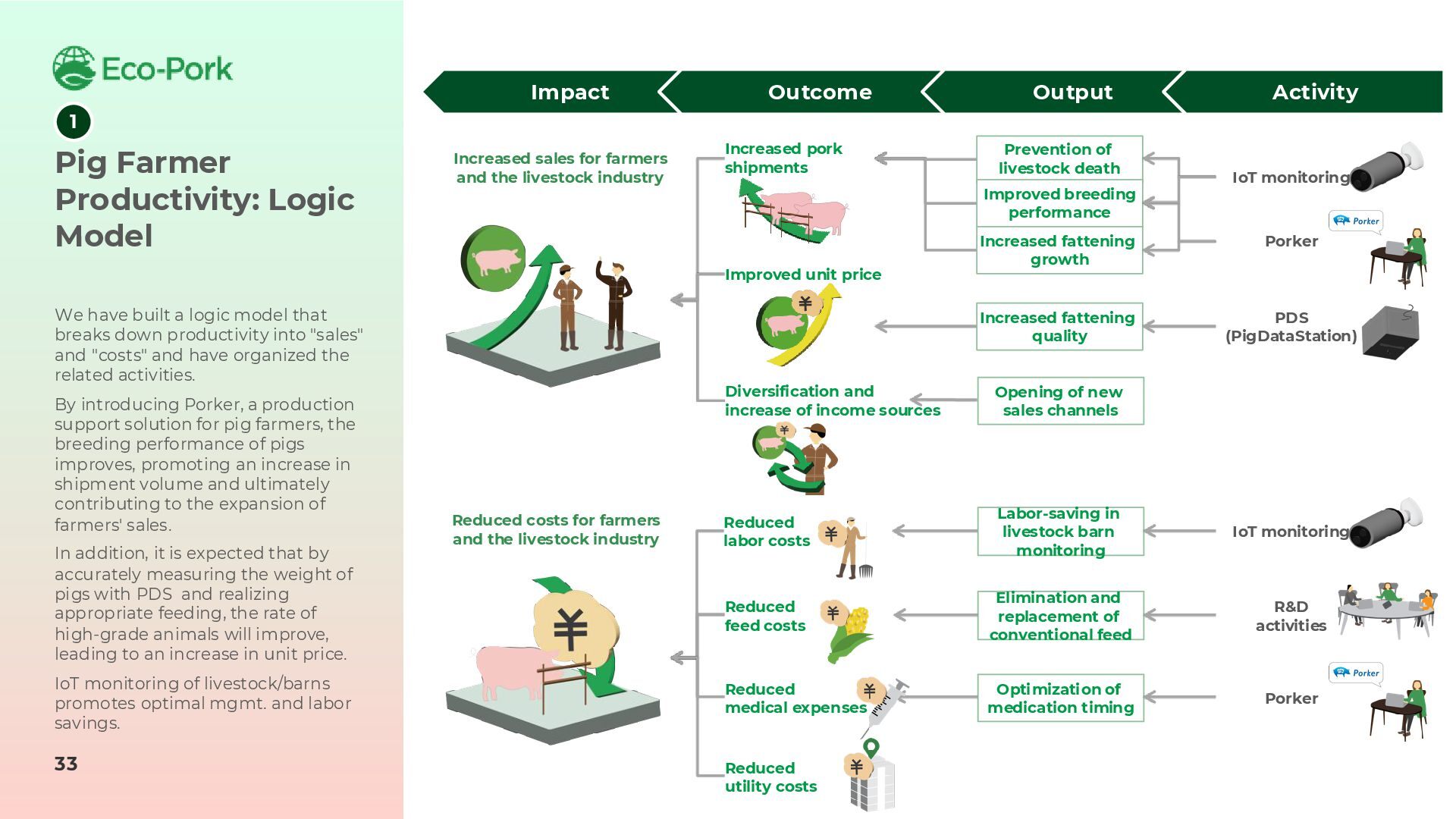
  29. 33 Pig Farmer Productivity: Logic Model We have built a

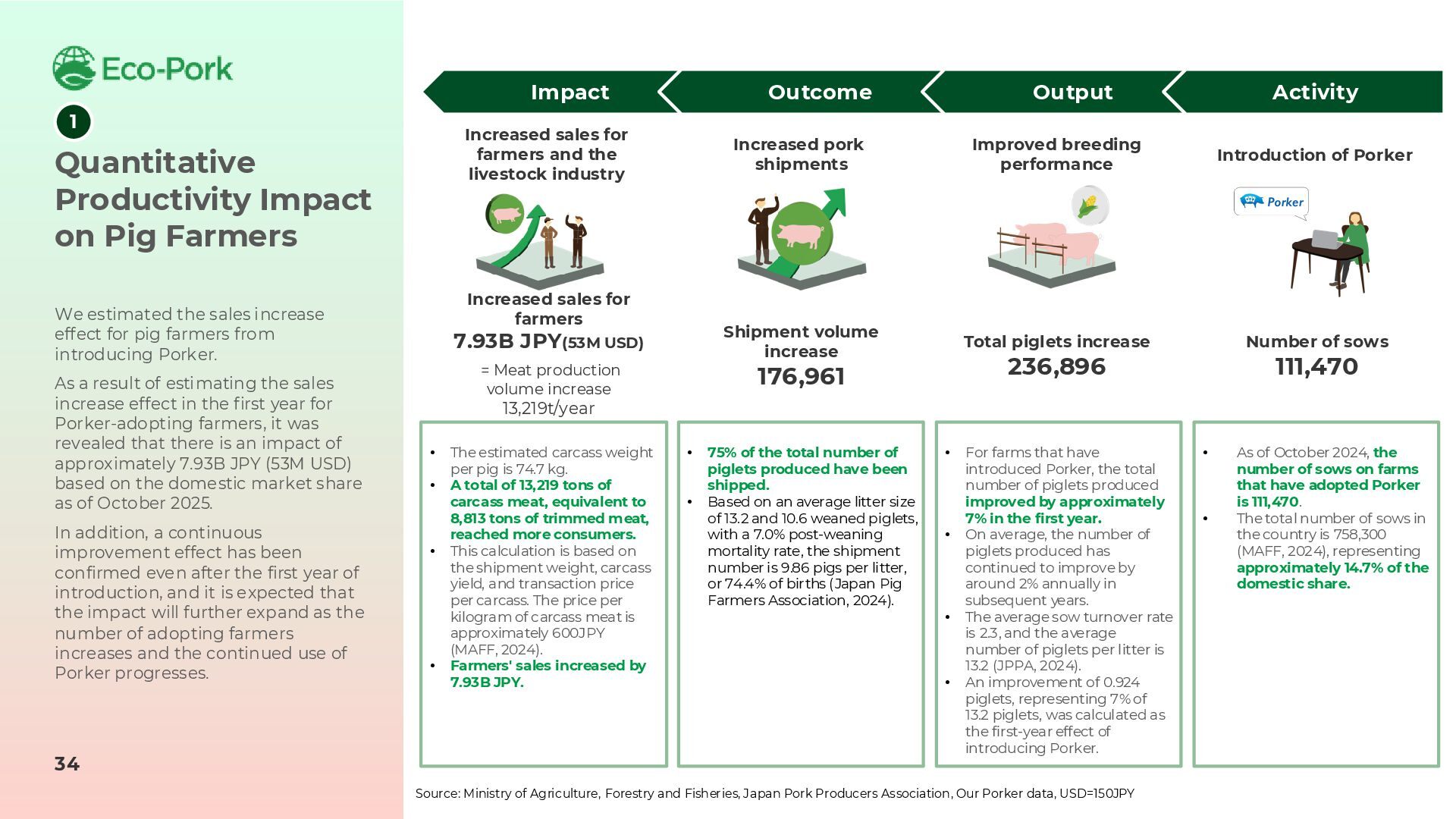
    logic model that breaks down productivity into "sales" and "costs" and have organized the related activities. By introducing Porker, a production support solution for pig farmers, the breeding performance of pigs improves, promoting an increase in shipment volume and ultimately contributing to the expansion of farmers' sales. In addition, it is expected that by accurately measuring the weight of pigs with PDS and realizing appropriate feeding, the rate of high-grade animals will improve, leading to an increase in unit price. IoT monitoring of livestock/barns promotes optimal mgmt. and labor savings. 1 Impact Outcome Output Activity IoT monitoring PDS (PigDataStation) Porker Reduced medical expenses Reduced feed costs Reduced utility costs Reduced labor costs Elimination and replacement of conventional feed Labor-saving in livestock barn monitoring Optimization of medication timing IoT monitoring Porker Prevention of livestock death Improved breeding performance Increased fattening growth Opening of new sales channels R&D activities Increased fattening quality Increased pork shipments Diversification and increase of income sources Improved unit price Reduced costs for farmers and the livestock industry Increased sales for farmers and the livestock industry
  30. 34 Quantitative Productivity Impact on Pig Farmers We estimated the

    sales increase effect for pig farmers from introducing Porker. As a result of estimating the sales increase effect in the first year for Porker-adopting farmers, it was revealed that there is an impact of approximately 7.93B JPY (53M USD) based on the domestic market share as of October 2025. In addition, a continuous improvement effect has been confirmed even after the first year of introduction, and it is expected that the impact will further expand as the number of adopting farmers increases and the continued use of Porker progresses. 1 Increased sales for farmers and the livestock industry Improved breeding performance Increased pork shipments Introduction of Porker Number of sows 111,470 Total piglets increase 236,896 Shipment volume increase 176,961 • As of October 2024, the number of sows on farms that have adopted Porker is 111,470. • The total number of sows in the country is 758,300 (MAFF, 2024), representing approximately 14.7% of the domestic share. • For farms that have introduced Porker, the total number of piglets produced improved by approximately 7% in the first year. • On average, the number of piglets produced has continued to improve by around 2% annually in subsequent years. • The average sow turnover rate is 2.3, and the average number of piglets per litter is 13.2 (JPPA, 2024). • An improvement of 0.924 piglets, representing 7% of 13.2 piglets, was calculated as the first-year effect of introducing Porker. • 75% of the total number of piglets produced have been shipped. • Based on an average litter size of 13.2 and 10.6 weaned piglets, with a 7.0% post-weaning mortality rate, the shipment number is 9.86 pigs per litter, or 74.4% of births (Japan Pig Farmers Association, 2024). • The estimated carcass weight per pig is 74.7 kg. • A total of 13,219 tons of carcass meat, equivalent to 8,813 tons of trimmed meat, reached more consumers. • This calculation is based on the shipment weight, carcass yield, and transaction price per carcass. The price per kilogram of carcass meat is approximately 600JPY (MAFF, 2024). • Farmers' sales increased by 7.93B JPY. Source: Ministry of Agriculture, Forestry and Fisheries, Japan Pork Producers Association, Our Porker data, USD=150JPY Increased sales for farmers 7.93B JPY(53M USD) = Meat production volume increase 13,219t/year Impact Outcome Output Activity
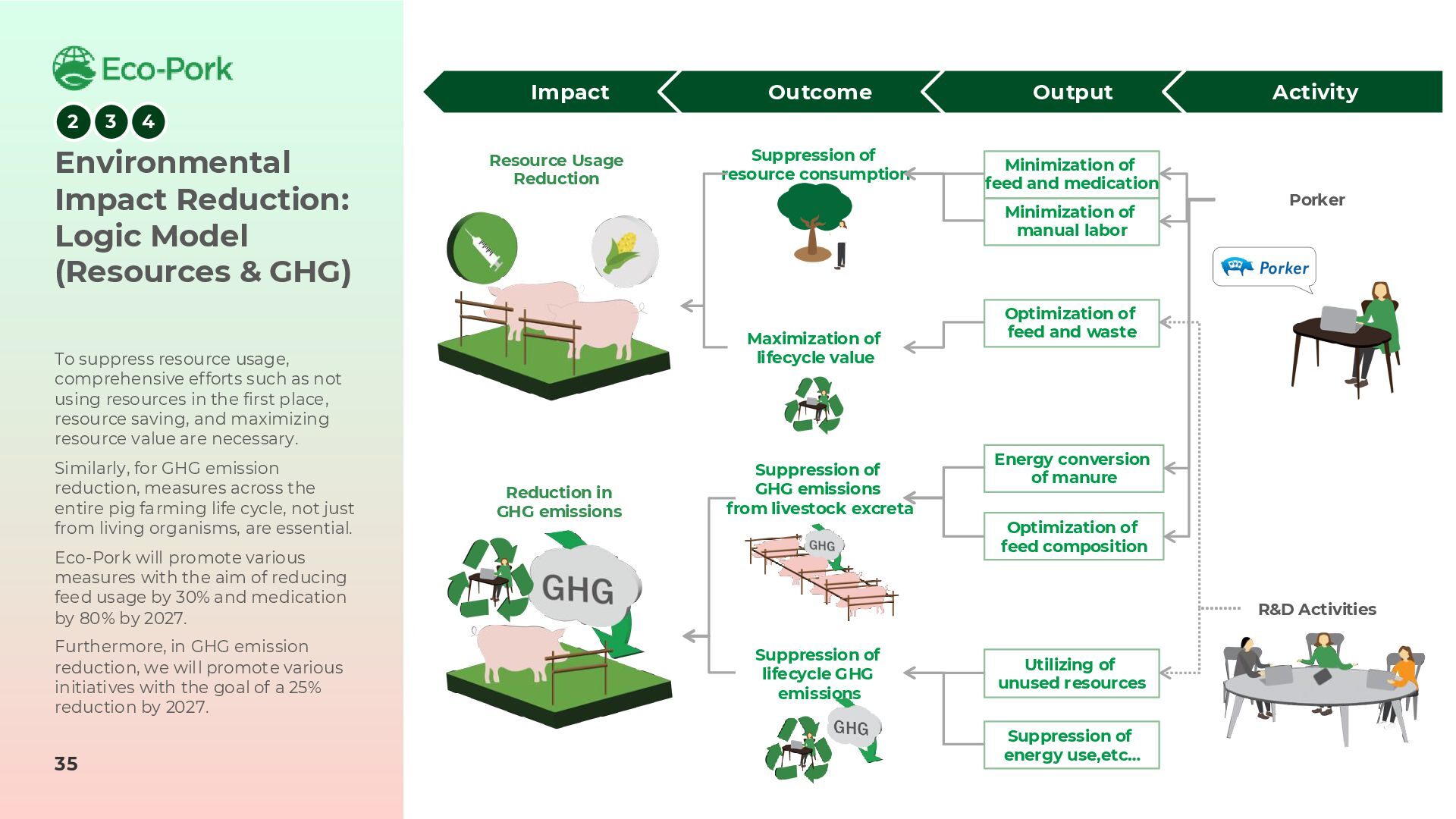
  31. 35 Environmental Impact Reduction: Logic Model (Resources & GHG) To

    suppress resource usage, comprehensive efforts such as not using resources in the first place, resource saving, and maximizing resource value are necessary. Similarly, for GHG emission reduction, measures across the entire pig farming life cycle, not just from living organisms, are essential. Eco-Pork will promote various measures with the aim of reducing feed usage by 30% and medication by 80% by 2027. Furthermore, in GHG emission reduction, we will promote various initiatives with the goal of a 25% reduction by 2027. Resource Usage Reduction Porker Minimization of feed and medication Minimization of manual labor R&D Activities Optimization of feed and waste Maximization of lifecycle value Suppression of resource consumption Impact Outcome Output Activity 3 2 4 Utilizing of unused resources Reduction in GHG emissions Suppression of GHG emissions from livestock excreta Suppression of lifecycle GHG emissions Suppression of energy use,etc… Optimization of feed composition Energy conversion of manure
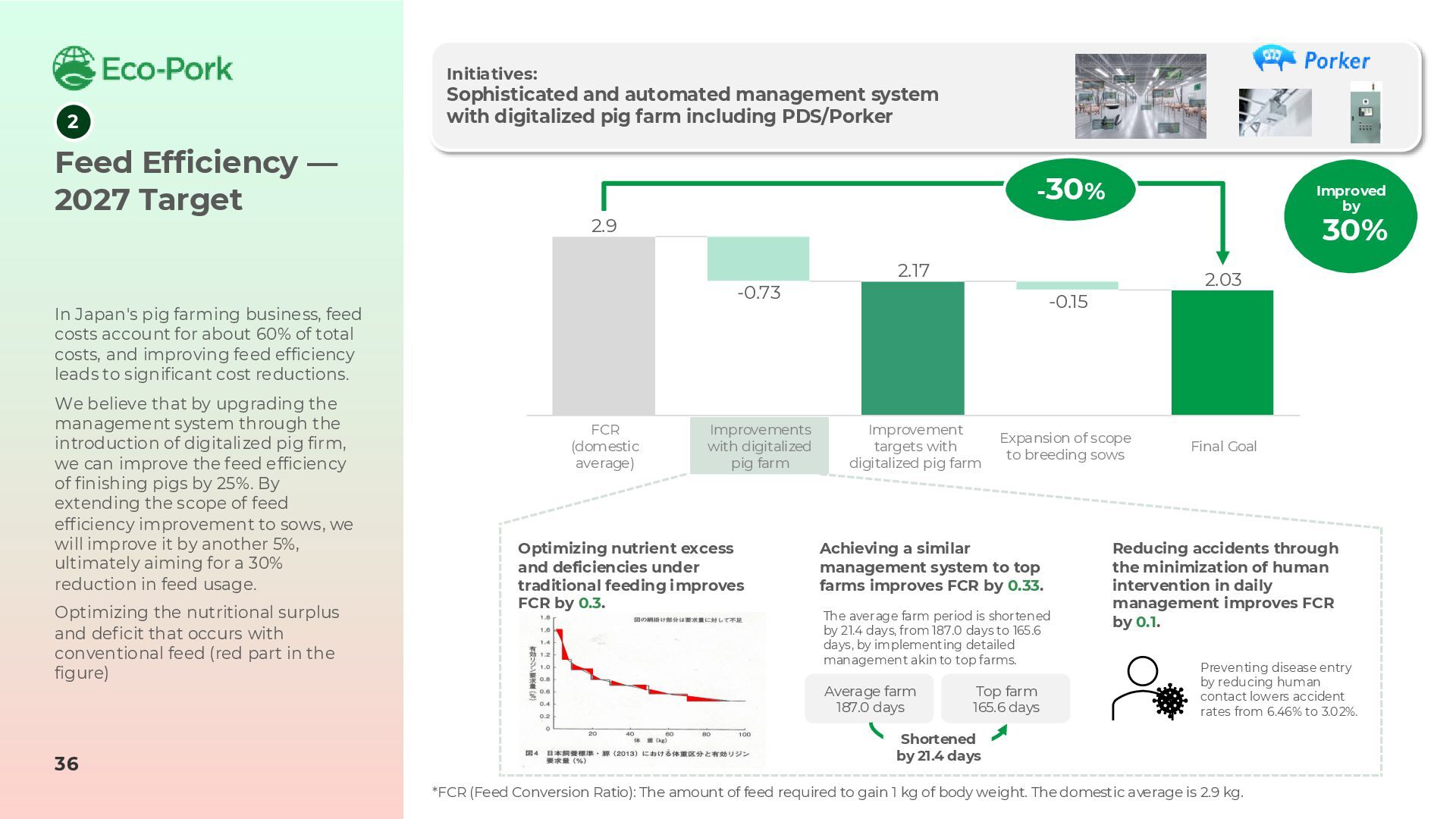
  32. 36 Feed Efficiency — 2027 Target In Japan's pig farming

    business, feed costs account for about 60% of total costs, and improving feed efficiency leads to significant cost reductions. We believe that by upgrading the management system through the introduction of digitalized pig firm, we can improve the feed efficiency of finishing pigs by 25%. By extending the scope of feed efficiency improvement to sows, we will improve it by another 5%, ultimately aiming for a 30% reduction in feed usage. Optimizing the nutritional surplus and deficit that occurs with conventional feed (red part in the figure) 2 Initiatives: Sophisticated and automated management system with digitalized pig farm including PDS/Porker Optimizing nutrient excess and deficiencies under traditional feeding improves FCR by 0.3. *FCR (Feed Conversion Ratio): The amount of feed required to gain 1 kg of body weight. The domestic average is 2.9 kg. 2.9 -0.73 2.17 -0.15 2.03 FCR 国内平均 DX豚舎の 各種施策 DX豚舎による 改善目標 対象範囲を 母豚まで拡大 最終目標 -30% Improved by 30% Achieving a similar management system to top farms improves FCR by 0.33. The average farm period is shortened by 21.4 days, from 187.0 days to 165.6 days, by implementing detailed management akin to top farms. Average farm 187.0 days Top farm 165.6 days Shortened by 21.4 days Preventing disease entry by reducing human contact lowers accident rates from 6.46% to 3.02%. Reducing accidents through the minimization of human intervention in daily management improves FCR by 0.1. FCR (domestic average) Improvements with digitalized pig farm Improvement targets with digitalized pig farm Expansion of scope to breeding sows Final Goal
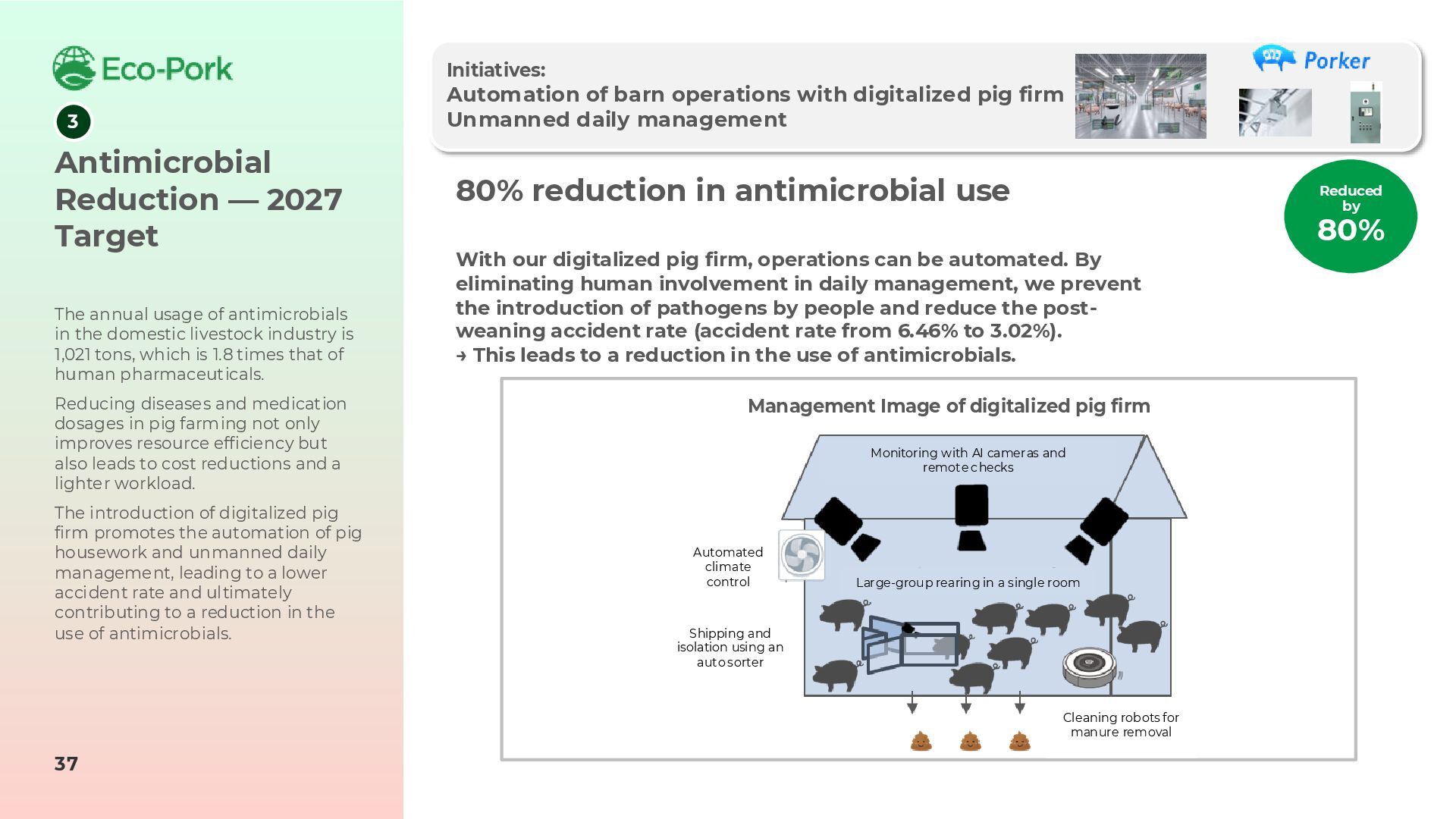
  33. 37 Antimicrobial Reduction — 2027 Target The annual usage of

    antimicrobials in the domestic livestock industry is 1,021 tons, which is 1.8 times that of human pharmaceuticals. Reducing diseases and medication dosages in pig farming not only improves resource efficiency but also leads to cost reductions and a lighter workload. The introduction of digitalized pig firm promotes the automation of pig housework and unmanned daily management, leading to a lower accident rate and ultimately contributing to a reduction in the use of antimicrobials. 3 Initiatives: Automation of barn operations with digitalized pig firm Unmanned daily management 80% reduction in antimicrobial use With our digitalized pig firm, operations can be automated. By eliminating human involvement in daily management, we prevent the introduction of pathogens by people and reduce the post- weaning accident rate (accident rate from 6.46% to 3.02%). → This leads to a reduction in the use of antimicrobials. Management Image of digitalized pig firm Reduced by 80% Monitoring with AI cameras and remote checks Automated climate control Shipping and isolation using an auto sorter Large-group rearing in a single room Cleaning robots for manure removal
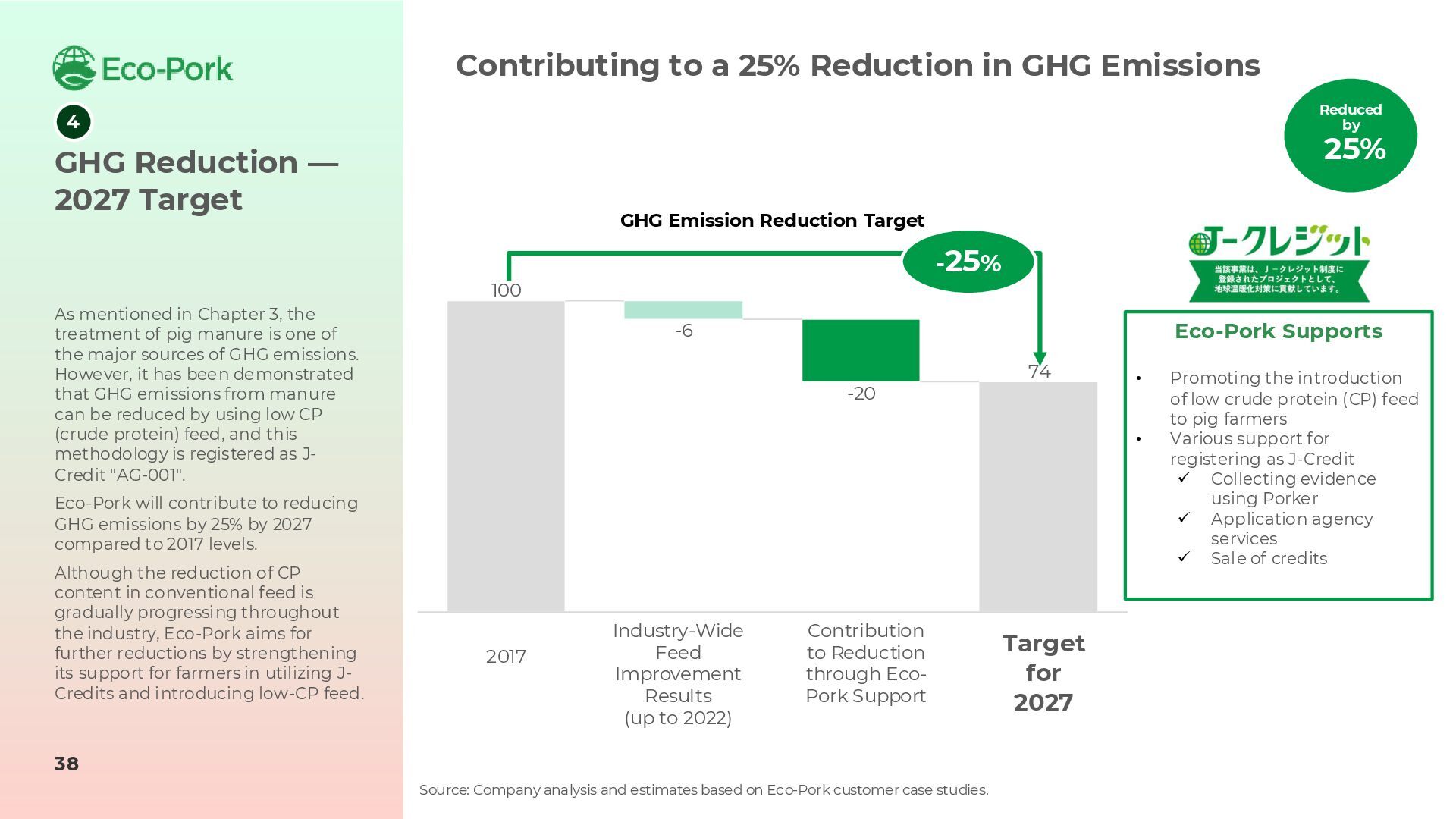
  34. 38 GHG Reduction — 2027 Target As mentioned in Chapter

    3, the treatment of pig manure is one of the major sources of GHG emissions. However, it has been demonstrated that GHG emissions from manure can be reduced by using low CP (crude protein) feed, and this methodology is registered as J- Credit "AG-001". Eco-Pork will contribute to reducing GHG emissions by 25% by 2027 compared to 2017 levels. Although the reduction of CP content in conventional feed is gradually progressing throughout the industry, Eco-Pork aims for further reductions by strengthening its support for farmers in utilizing J- Credits and introducing low-CP feed. 4 Contributing to a 25% Reduction in GHG Emissions Source: Company analysis and estimates based on Eco-Pork customer case studies. 2017 Industry-Wide Feed Improvement Results (up to 2022) Contribution to Reduction through Eco- Pork Support Target for 2027 -25% Eco-Pork Supports • Promoting the introduction of low crude protein (CP) feed to pig farmers • Various support for registering as J-Credit ✓ Collecting evidence using Porker ✓ Application agency services ✓ Sale of credits Reduced by 25% 100 -6 -20 74 GHG Emission Reduction Target
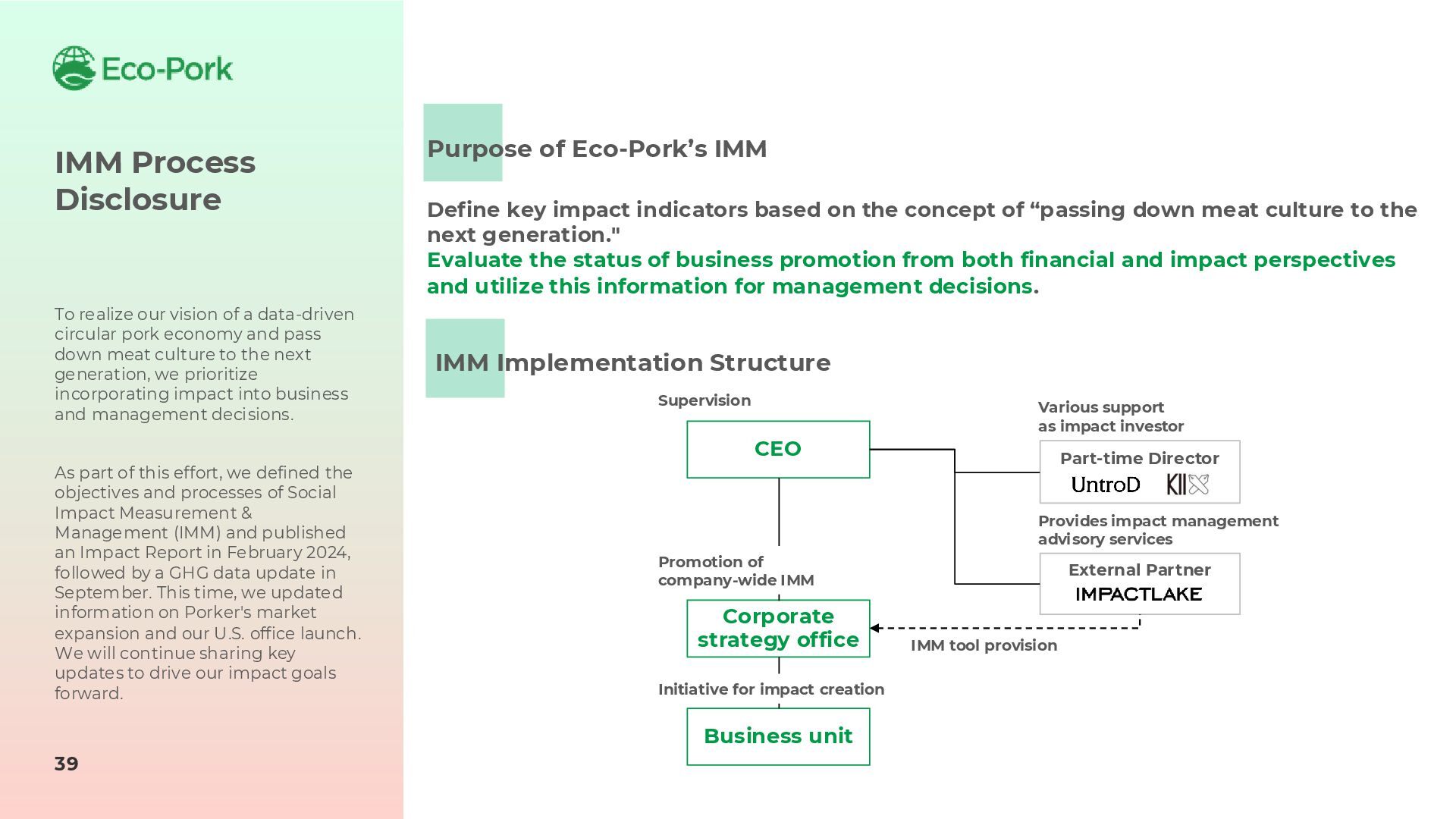
  35. 39 IMM Process Disclosure To realize our vision of a

    data-driven circular pork economy and pass down meat culture to the next generation, we prioritize incorporating impact into business and management decisions. As part of this effort, we defined the objectives and processes of Social Impact Measurement & Management (IMM) and published an Impact Report in February 2024, followed by a GHG data update in September. This time, we updated information on Porker's market expansion and our U.S. office launch. We will continue sharing key updates to drive our impact goals forward. IMM Implementation Structure CEO Corporate strategy office Part-time Director External Partner Various support as impact investor Provides impact management advisory services Business unit Initiative for impact creation Promotion of company-wide IMM Supervision IMM tool provision Define key impact indicators based on the concept of “passing down meat culture to the next generation." Evaluate the status of business promotion from both financial and impact perspectives and utilize this information for management decisions. Purpose of Eco-Pork’s IMM
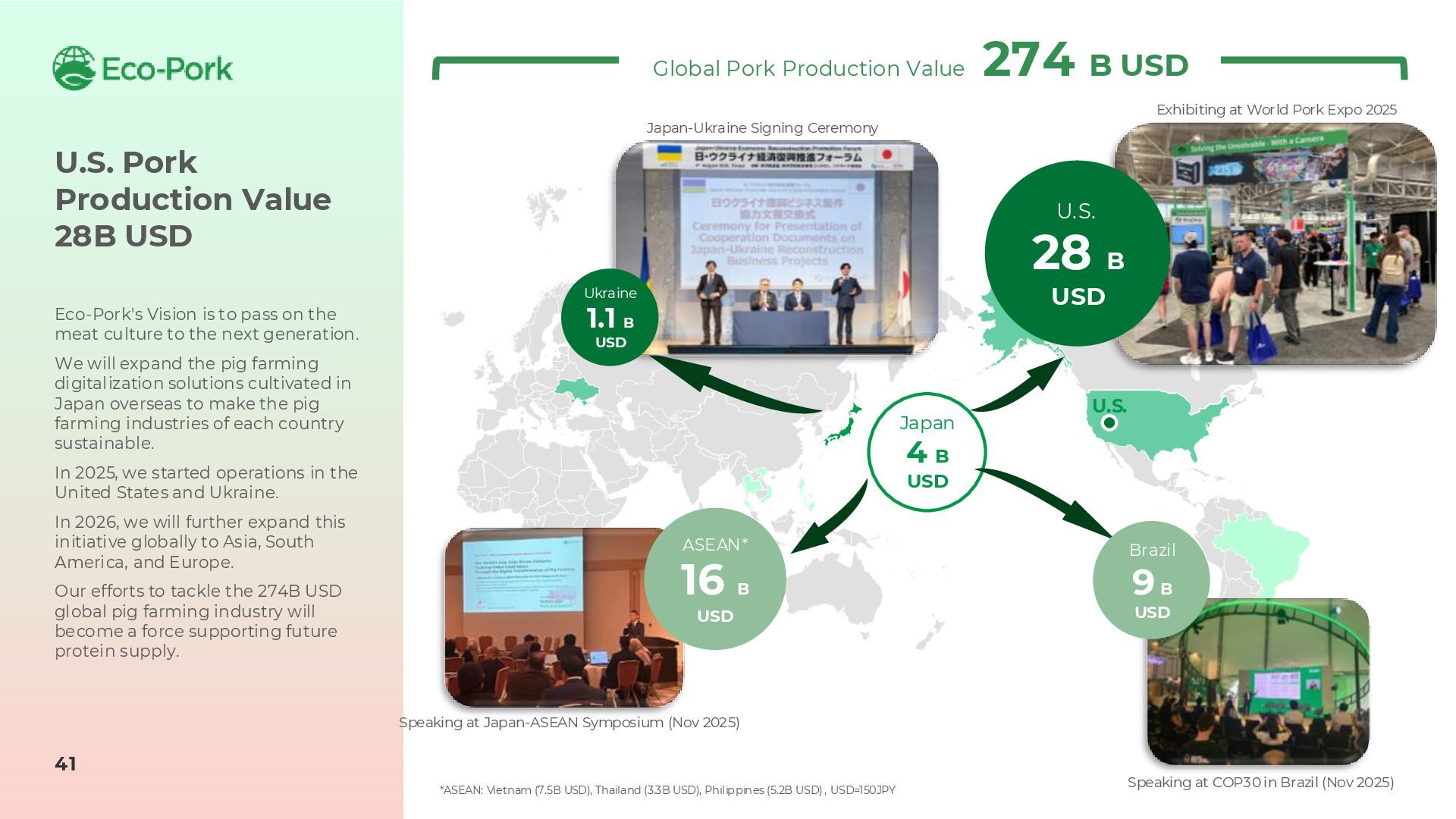
  36. 41 U.S. Pork Production Value 28B USD Eco-Pork's Vision is

    to pass on the meat culture to the next generation. We will expand the pig farming digitalization solutions cultivated in Japan overseas to make the pig farming industries of each country sustainable. In 2025, we started operations in the United States and Ukraine. In 2026, we will further expand this initiative globally to Asia, South America, and Europe. Our efforts to tackle the 274B USD global pig farming industry will become a force supporting future protein supply. U.S. Japan 4 B USD Global Pork Production Value 274 B USD *ASEAN: Vietnam (7.5B USD), Thailand (3.3B USD), Philippines (5.2B USD) , USD=150JPY Brazil 9 B USD Speaking at COP30 in Brazil (Nov 2025) Exhibiting at World Pork Expo 2025 Ukraine 1.1 B USD Japan-Ukraine Signing Ceremony ASEAN* 16 B USD Speaking at Japan-ASEAN Symposium (Nov 2025) U.S. 28 B USD
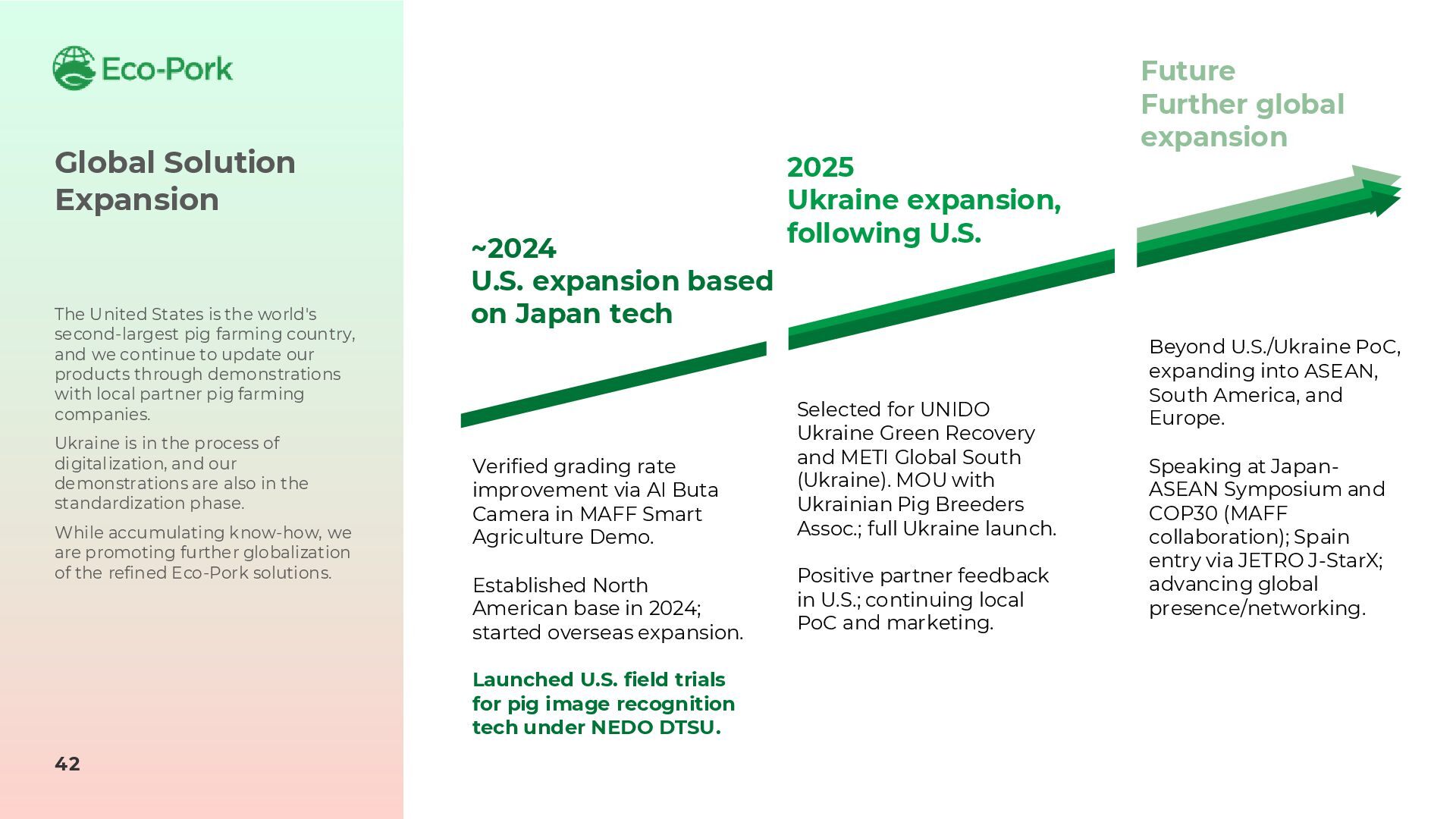
  37. 42 Global Solution Expansion The United States is the world's

    second-largest pig farming country, and we continue to update our products through demonstrations with local partner pig farming companies. Ukraine is in the process of digitalization, and our demonstrations are also in the standardization phase. While accumulating know-how, we are promoting further globalization of the refined Eco-Pork solutions. ~2024 U.S. expansion based on Japan tech 2025 Ukraine expansion, following U.S. Future Further global expansion Verified grading rate improvement via AI Buta Camera in MAFF Smart Agriculture Demo. Established North American base in 2024; started overseas expansion. Launched U.S. field trials for pig image recognition tech under NEDO DTSU. Beyond U.S./Ukraine PoC, expanding into ASEAN, South America, and Europe. Speaking at Japan- ASEAN Symposium and COP30 (MAFF collaboration); Spain entry via JETRO J-StarX; advancing global presence/networking. Selected for UNIDO Ukraine Green Recovery and METI Global South (Ukraine). MOU with Ukrainian Pig Breeders Assoc.; full Ukraine launch. Positive partner feedback in U.S.; continuing local PoC and marketing.
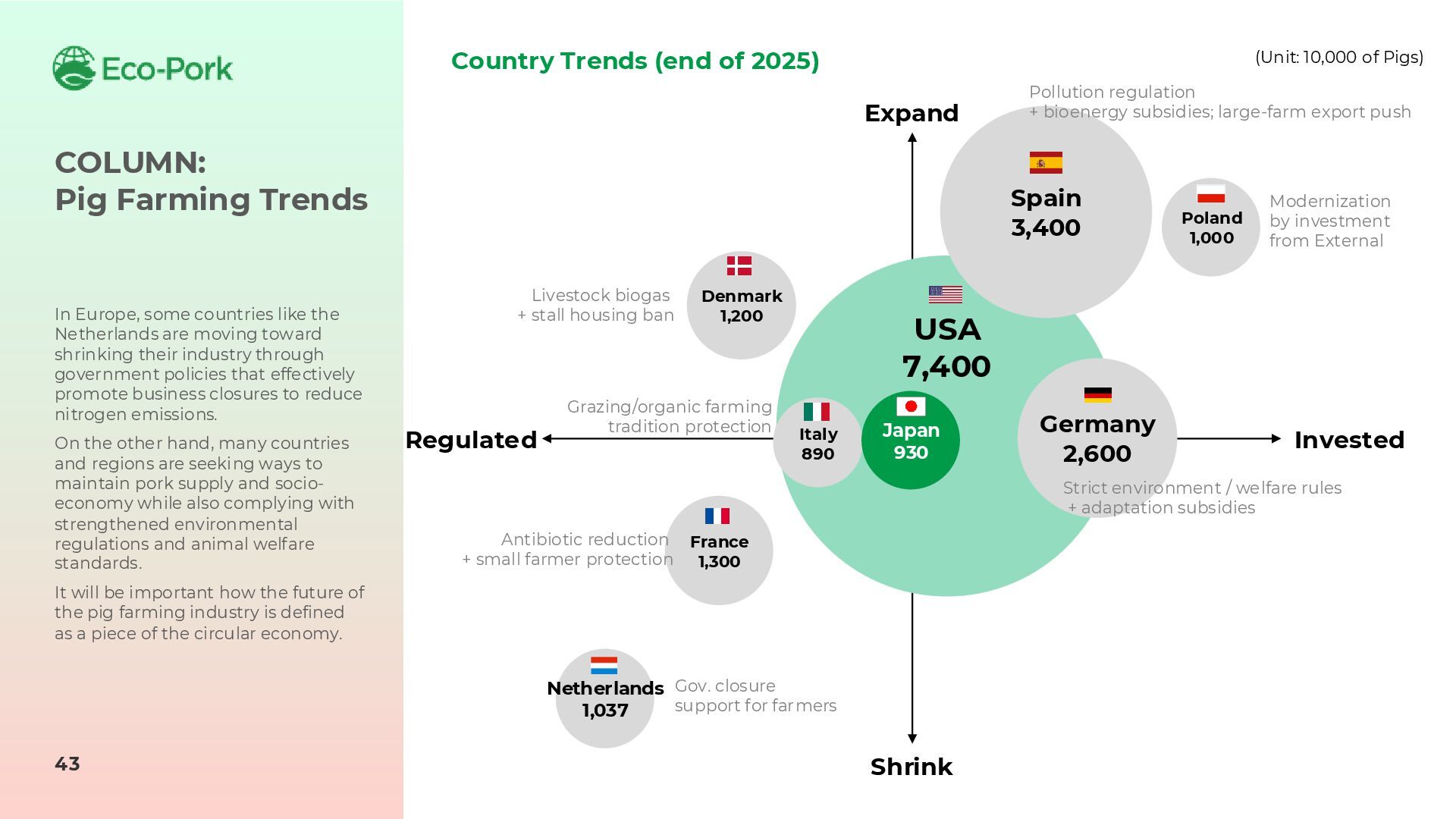
  38. 43 Expand Shrink Regulated Invested USA 7,400 COLUMN: Pig Farming

    Trends In Europe, some countries like the Netherlands are moving toward shrinking their industry through government policies that effectively promote business closures to reduce nitrogen emissions. On the other hand, many countries and regions are seeking ways to maintain pork supply and socio- economy while also complying with strengthened environmental regulations and animal welfare standards. It will be important how the future of the pig farming industry is defined as a piece of the circular economy. Netherlands 1,037 (Unit: 10,000 of Pigs) Gov. closure support for farmers Poland 1,000 Modernization by investment from External Italy 890 Grazing/organic farming tradition protection Denmark 1,200 Livestock biogas + stall housing ban France 1,300 Antibiotic reduction + small farmer protection Germany 2,600 Strict environment / welfare rules + adaptation subsidies Spain 3,400 Pollution regulation + bioenergy subsidies; large-farm export push Japan 930 Country Trends (end of 2025)
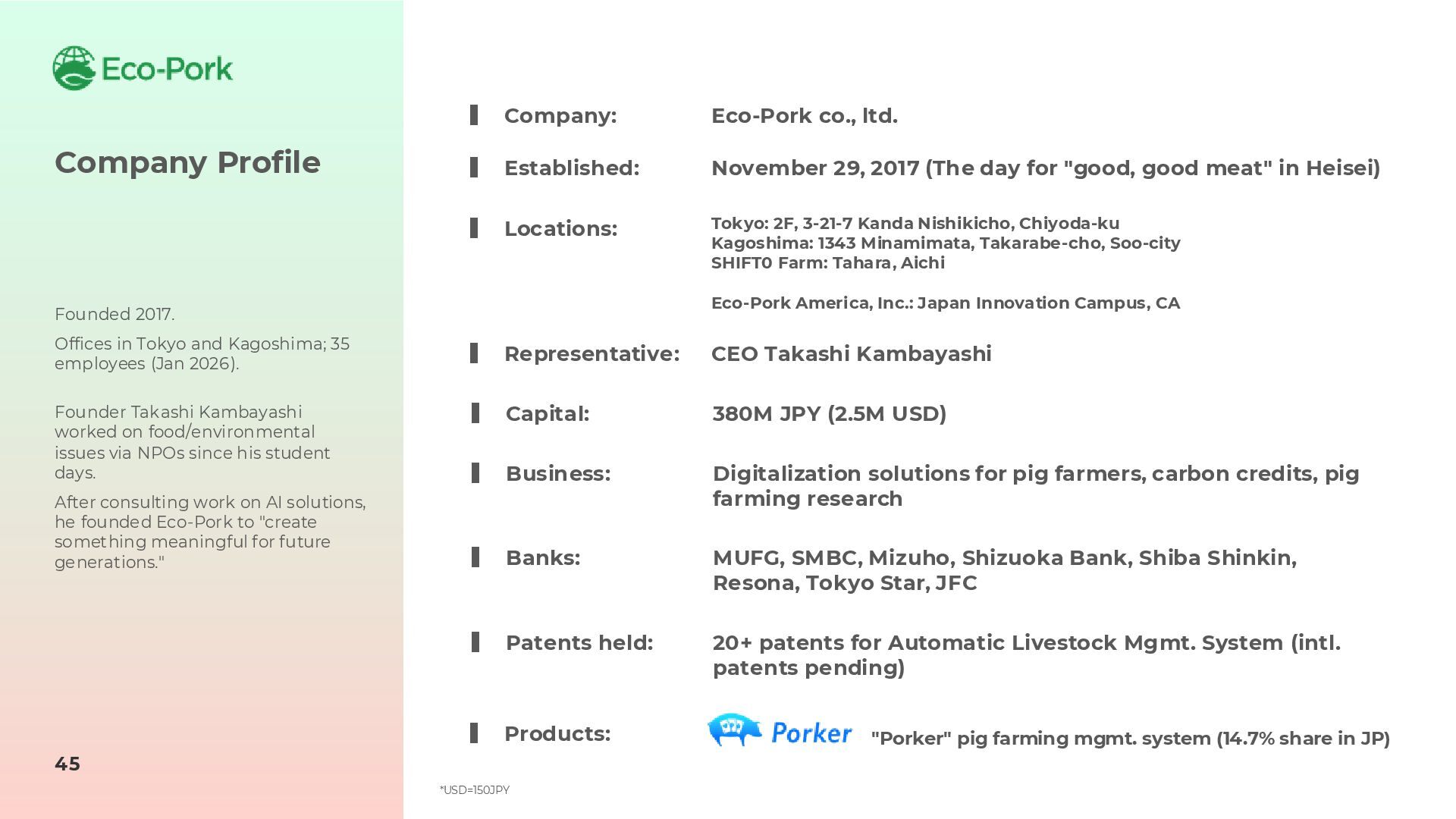
  39. 45 Company Profile Founded 2017. Offices in Tokyo and Kagoshima;

    35 employees (Jan 2026). Founder Takashi Kambayashi worked on food/environmental issues via NPOs since his student days. After consulting work on AI solutions, he founded Eco-Pork to "create something meaningful for future generations." ▍ Company: Eco-Pork co., ltd. ▍ Locations: Tokyo: 2F, 3-21-7 Kanda Nishikicho, Chiyoda-ku Kagoshima: 1343 Minamimata, Takarabe-cho, Soo-city SHIFT0 Farm: Tahara, Aichi Eco-Pork America, Inc.: Japan Innovation Campus, CA ▍ Established: November 29, 2017 (The day for "good, good meat" in Heisei) ▍ Capital: 380M JPY (2.5M USD) ▍ Business: Digitalization solutions for pig farmers, carbon credits, pig farming research ▍ Representative: CEO Takashi Kambayashi ▍ Banks: MUFG, SMBC, Mizuho, Shizuoka Bank, Shiba Shinkin, Resona, Tokyo Star, JFC ▍ Patents held: 20+ patents for Automatic Livestock Mgmt. System (intl. patents pending) "Porker" pig farming mgmt. system (14.7% share in JP) ▍ Products: *USD=150JPY
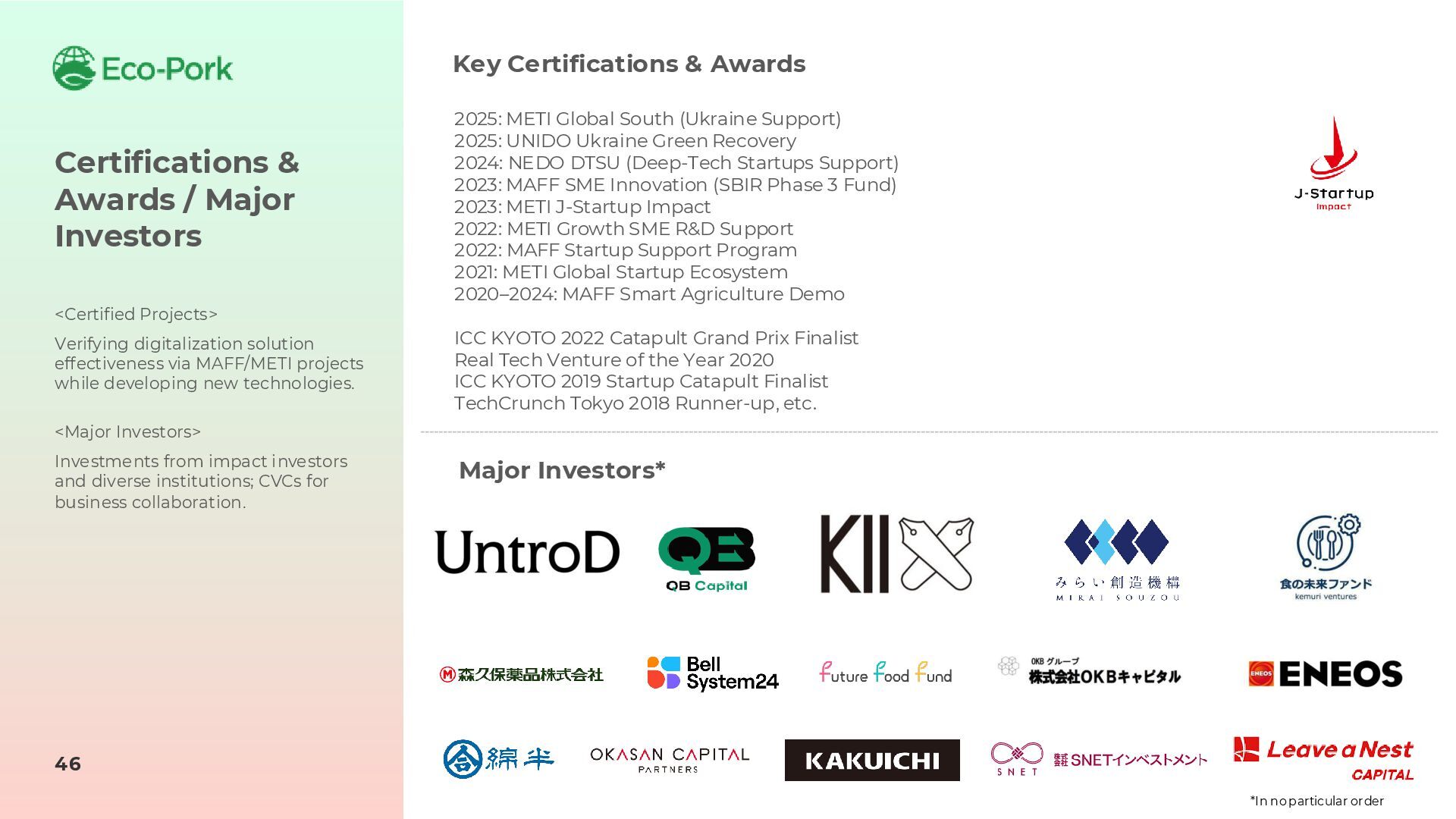
  40. 46 Certifications & Awards / Major Investors <Certified Projects> Verifying

    digitalization solution effectiveness via MAFF/METI projects while developing new technologies. <Major Investors> Investments from impact investors and diverse institutions; CVCs for business collaboration. Key Certifications & Awards Major Investors* 2025: METI Global South (Ukraine Support) 2025: UNIDO Ukraine Green Recovery 2024: NEDO DTSU (Deep-Tech Startups Support) 2023: MAFF SME Innovation (SBIR Phase 3 Fund) 2023: METI J-Startup Impact 2022: METI Growth SME R&D Support 2022: MAFF Startup Support Program 2021: METI Global Startup Ecosystem 2020–2024: MAFF Smart Agriculture Demo ICC KYOTO 2022 Catapult Grand Prix Finalist Real Tech Venture of the Year 2020 ICC KYOTO 2019 Startup Catapult Finalist TechCrunch Tokyo 2018 Runner-up, etc. *In no particular order
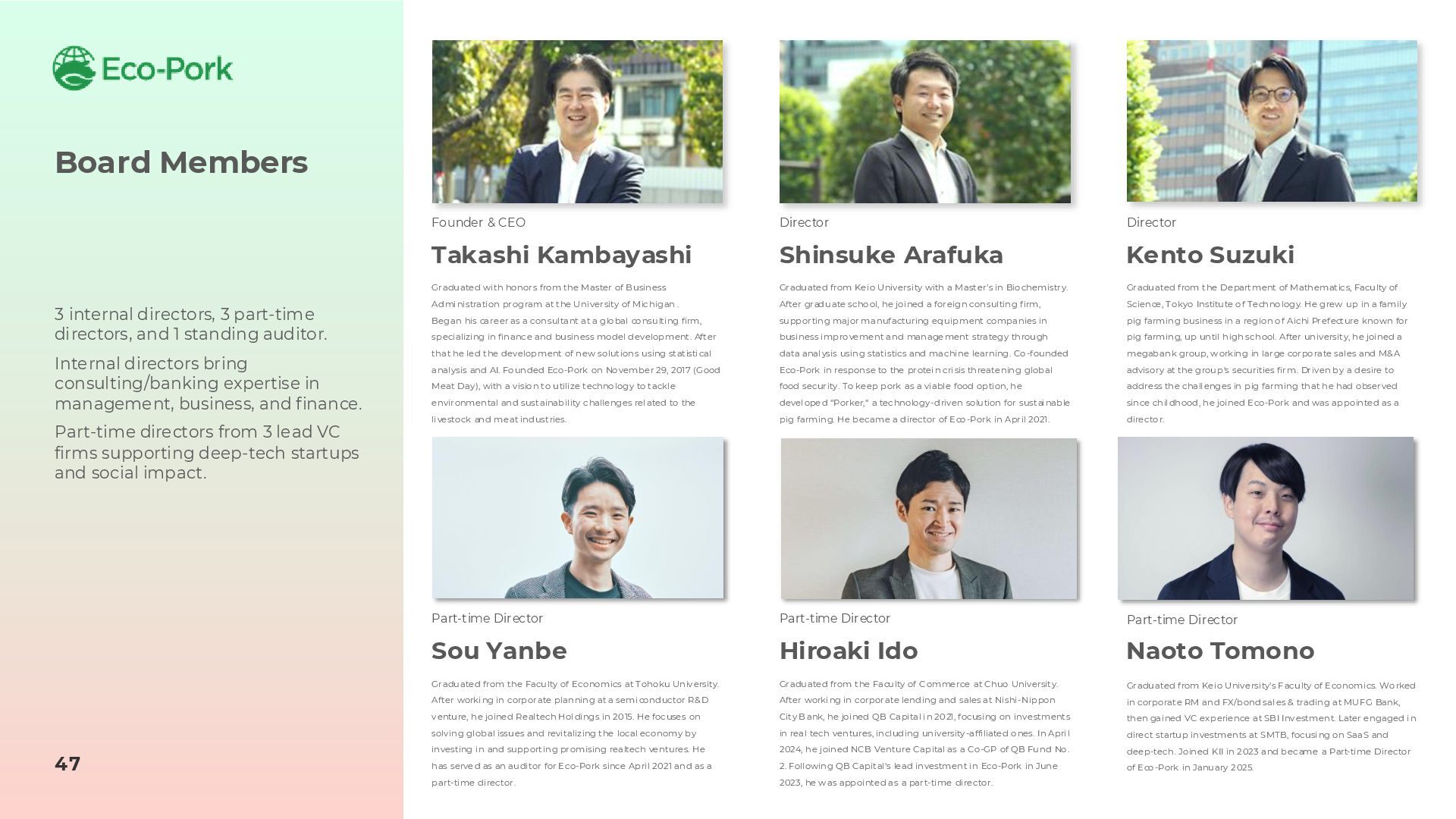
  41. 47 Board Members 3 internal directors, 3 part-time directors, and

    1 standing auditor. Internal directors bring consulting/banking expertise in management, business, and finance. Part-time directors from 3 lead VC firms supporting deep-tech startups and social impact. Kento Suzuki Director Shinsuke Arafuka Director Takashi Kambayashi Founder & CEO Naoto Tomono Part-time Director Hiroaki Ido Part-time Director Sou Yanbe Part-time Director Graduated from Keio University with a Master’s in Biochemistry. After graduate school, he joined a foreign consulting firm, supporting major manufacturing equipment companies in business improvement and management strategy through data analysis using statistics and machine learning. Co-founded Eco-Pork in response to the protein crisis threatening global food security. To keep pork as a viable food option, he developed "Porker," a technology-driven solution for sustainable pig farming. He became a director of Eco-Pork in April 2021. Graduated with honors from the Master of Business Administration program at the University of Michigan . Began his career as a consultant at a global consulting firm, specializing in finance and business model development. After that he led the development of new solutions using statistical analysis and AI. Founded Eco-Pork on November 29, 2017 (Good Meat Day), with a vision to utilize technology to tackle environmental and sustainability challenges related to the livestock and meat industries. Graduated from the Department of Mathematics, Faculty of Science, Tokyo Institute of Technology. He grew up in a family pig farming business in a region of Aichi Prefecture known for pig farming, up until high school. After university, he joined a megabank group, working in large corporate sales and M&A advisory at the group's securities firm. Driven by a desire to address the challenges in pig farming that he had observed since childhood, he joined Eco-Pork and was appointed as a director. Graduated from Keio University’s Faculty of Economics. Worked in corporate RM and FX/bond sales & trading at MUFG Bank, then gained VC experience at SBI Investment. Later engaged in direct startup investments at SMTB, focusing on SaaS and deep-tech. Joined KII in 2023 and became a Part-time Director of Eco-Pork in January 2025. Graduated from the Faculty of C ommerce at Chuo University. After working in corporate lending and sales at Nishi-Nippon City Bank, he joined QB Capital in 2021, focusing on investments in real tech ventures, including university-affiliated ones. In April 2024, he joined NCB Venture Capital as a Co-GP of QB Fund No. 2. Following QB Capital's lead investment in Eco-Pork in June 2023, he was appointed as a part-time director. Graduated from the Faculty of Economics at Tohoku University. After working in corporate planning at a semiconductor R&D venture, he joined Realtech Holdings in 2015. He focuses on solving global issues and revitalizing the local economy by investing in and supporting promising realtech ventures. He has served as an auditor for Eco-Pork since April 2021 and as a part-time director.
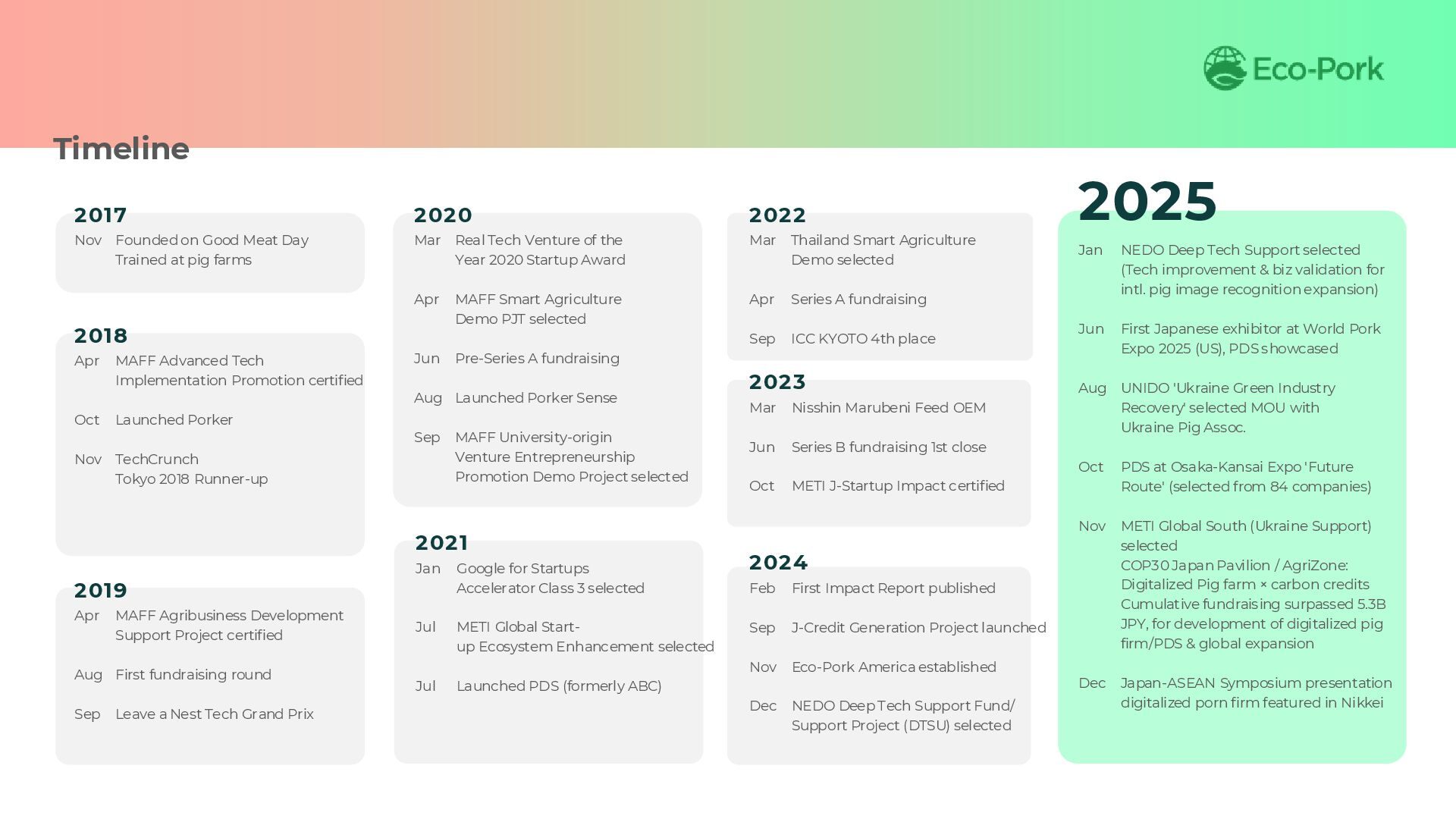
  42. 2021 Jan Google for Startups Accelerator Class 3 selected Jul

    METI Global Start- up Ecosystem Enhancement selected Jul Launched PDS (formerly ABC) 2023 Mar Nisshin Marubeni Feed OEM Jun Series B fundraising 1st close Oct METI J-Startup Impact certified 2017 Nov Founded on Good Meat Day Trained at pig farms 2018 Apr MAFF Advanced Tech Implementation Promotion certified Oct Launched Porker Nov TechCrunch Tokyo 2018 Runner-up 2019 Apr MAFF Agribusiness Development Support Project certified Aug First fundraising round Sep Leave a Nest Tech Grand Prix 2020 Mar Real Tech Venture of the Year 2020 Startup Award Apr MAFF Smart Agriculture Demo PJT selected Jun Pre-Series A fundraising Aug Launched Porker Sense Sep MAFF University-origin Venture Entrepreneurship Promotion Demo Project selected 2022 Mar Thailand Smart Agriculture Demo selected Apr Series A fundraising Sep ICC KYOTO 4th place 2025 Jan NEDO Deep Tech Support selected (Tech improvement & biz validation for intl. pig image recognition expansion) Jun First Japanese exhibitor at World Pork Expo 2025 (US), PDS showcased Aug UNIDO 'Ukraine Green Industry Recovery' selected MOU with Ukraine Pig Assoc. Oct PDS at Osaka-Kansai Expo 'Future Route' (selected from 84 companies) Nov METI Global South (Ukraine Support) selected COP30 Japan Pavilion / AgriZone: Digitalized Pig farm × carbon credits Cumulative fundraising surpassed 5.3B JPY, for development of digitalized pig firm/PDS & global expansion Dec Japan-ASEAN Symposium presentation digitalized porn firm featured in Nikkei 48 2024 Feb First Impact Report published Sep J-Credit Generation Project launched Nov Eco-Pork America established Dec NEDO Deep Tech Support Fund/ Support Project (DTSU) selected Timeline