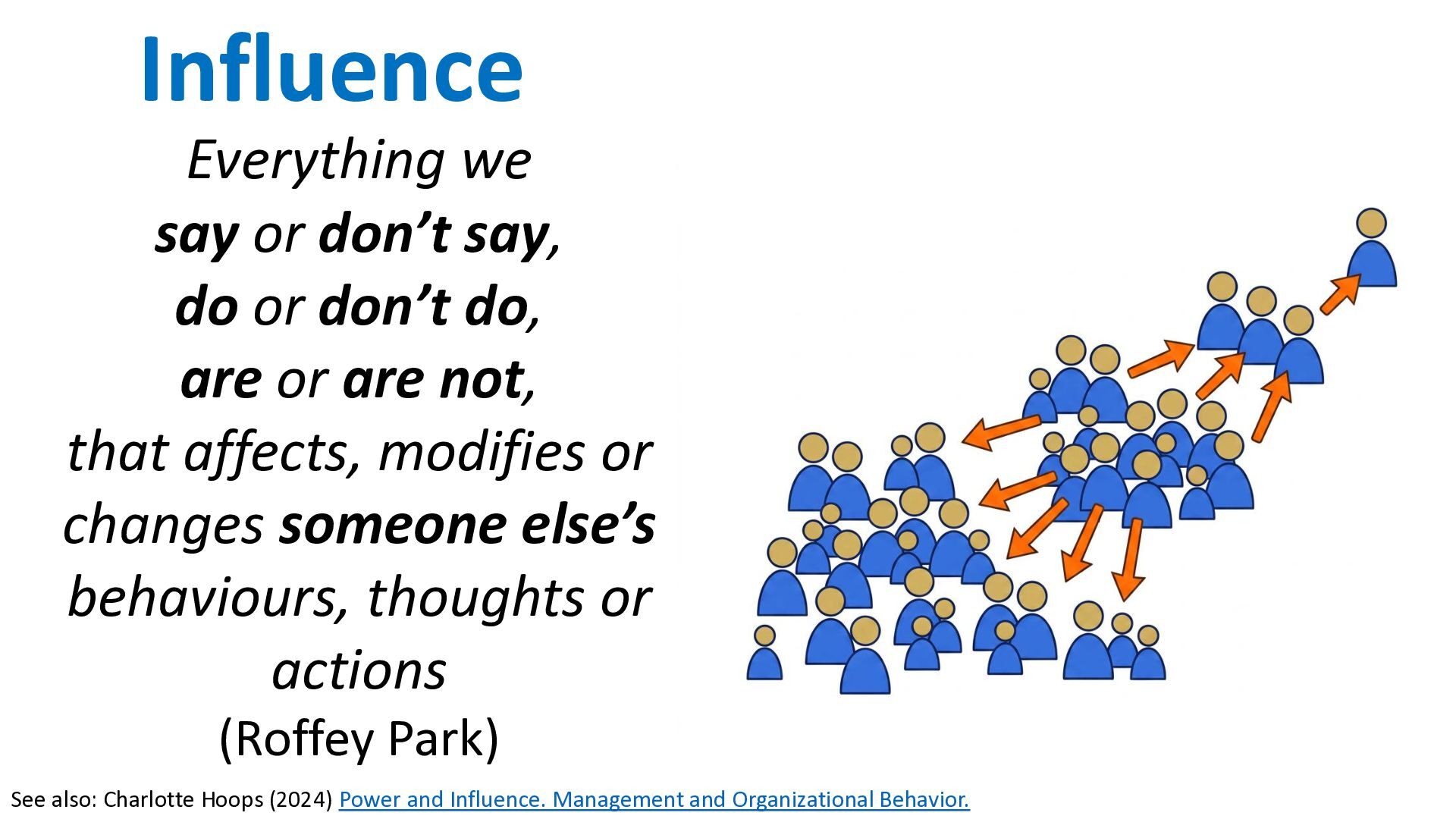
are or are not, that affects, modifies or changes someone else’s behaviours, thoughts or actions (Roffey Park) See also: Charlotte Hoops (2024) Power and Influence. Management and Organizational Behavior. Influence
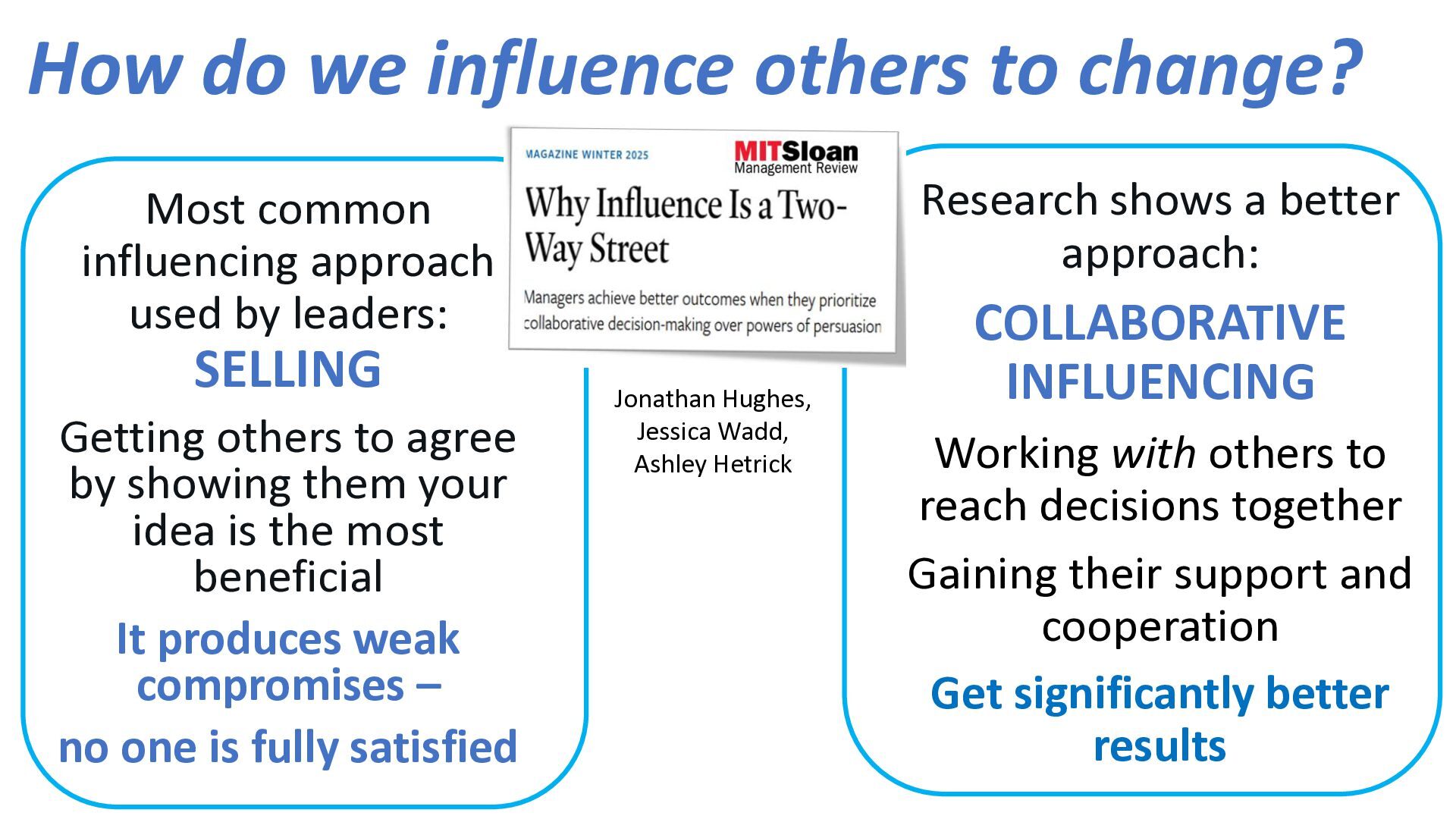
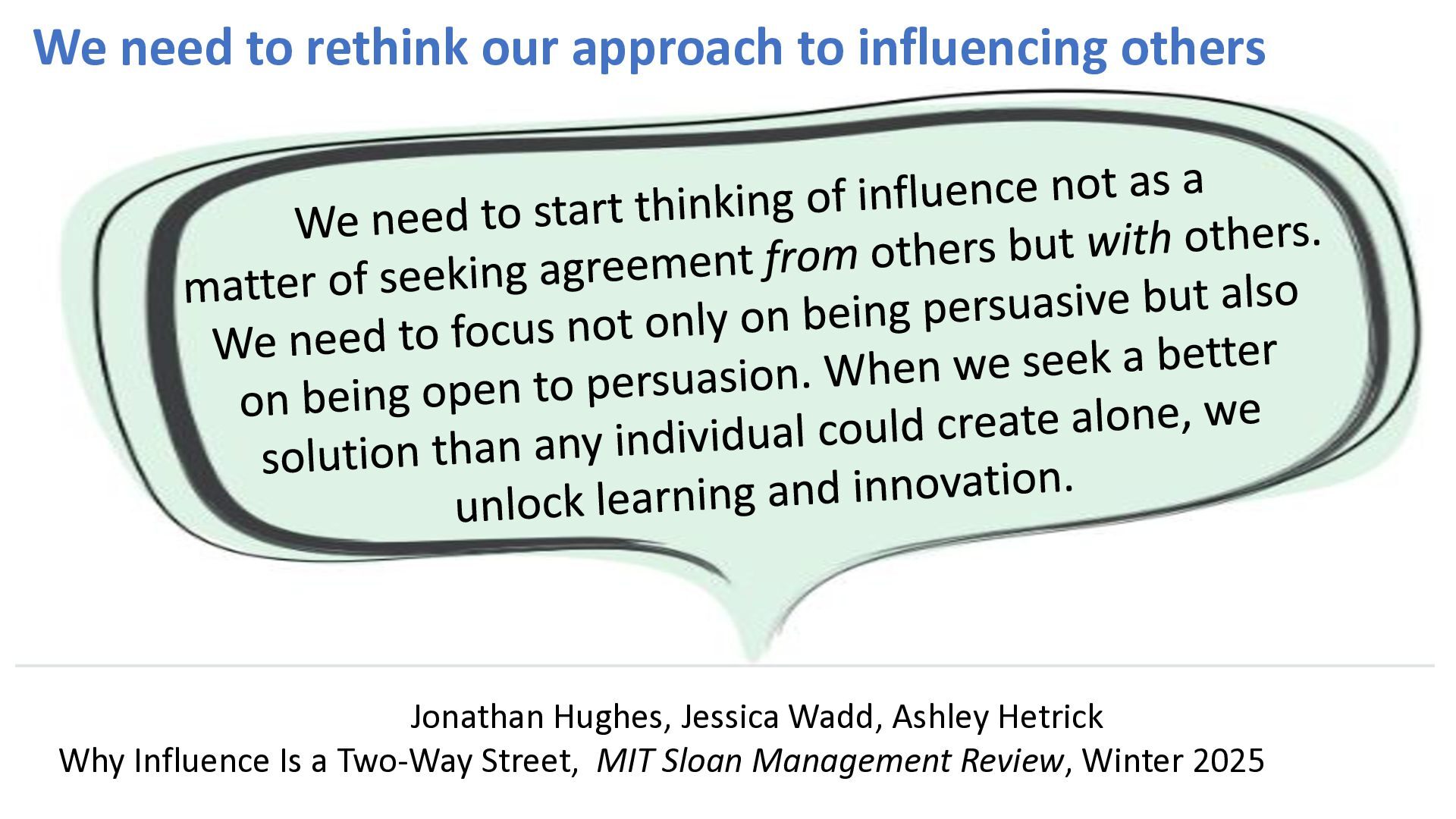
approach used by leaders: SELLING Getting others to agree by showing them your idea is the most beneficial It produces weak compromises – no one is fully satisfied Jonathan Hughes, Jessica Wadd, Ashley Hetrick Research shows a better approach: COLLABORATIVE INFLUENCING Working with others to reach decisions together Gaining their support and cooperation Get significantly better results
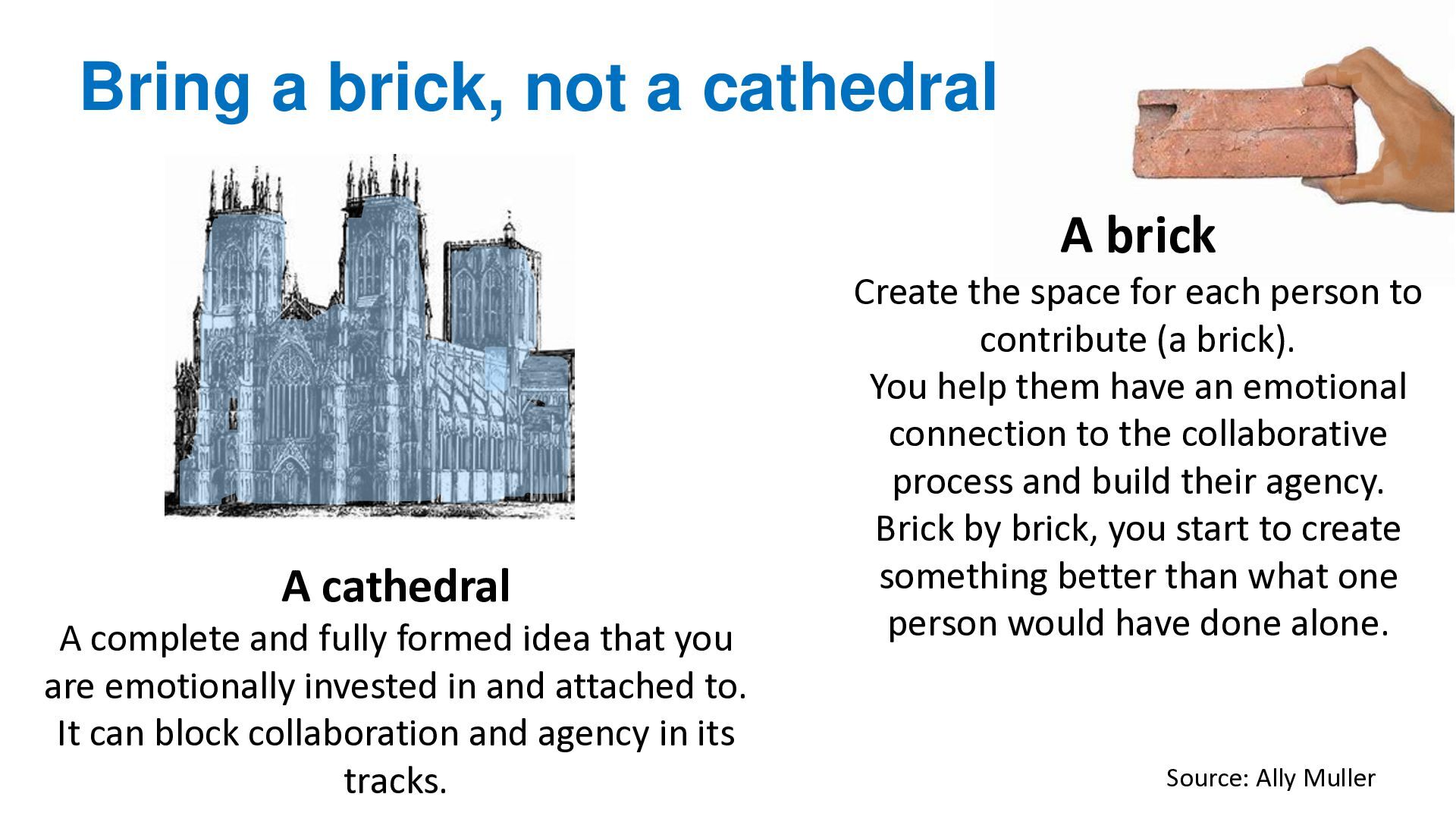
are emotionally invested in and attached to. It can block collaboration and agency in its tracks. A brick Create the space for each person to contribute (a brick). You help them have an emotional connection to the collaborative process and build their agency. Brick by brick, you start to create something better than what one person would have done alone. Source: Ally Muller Bring a brick, not a cathedral
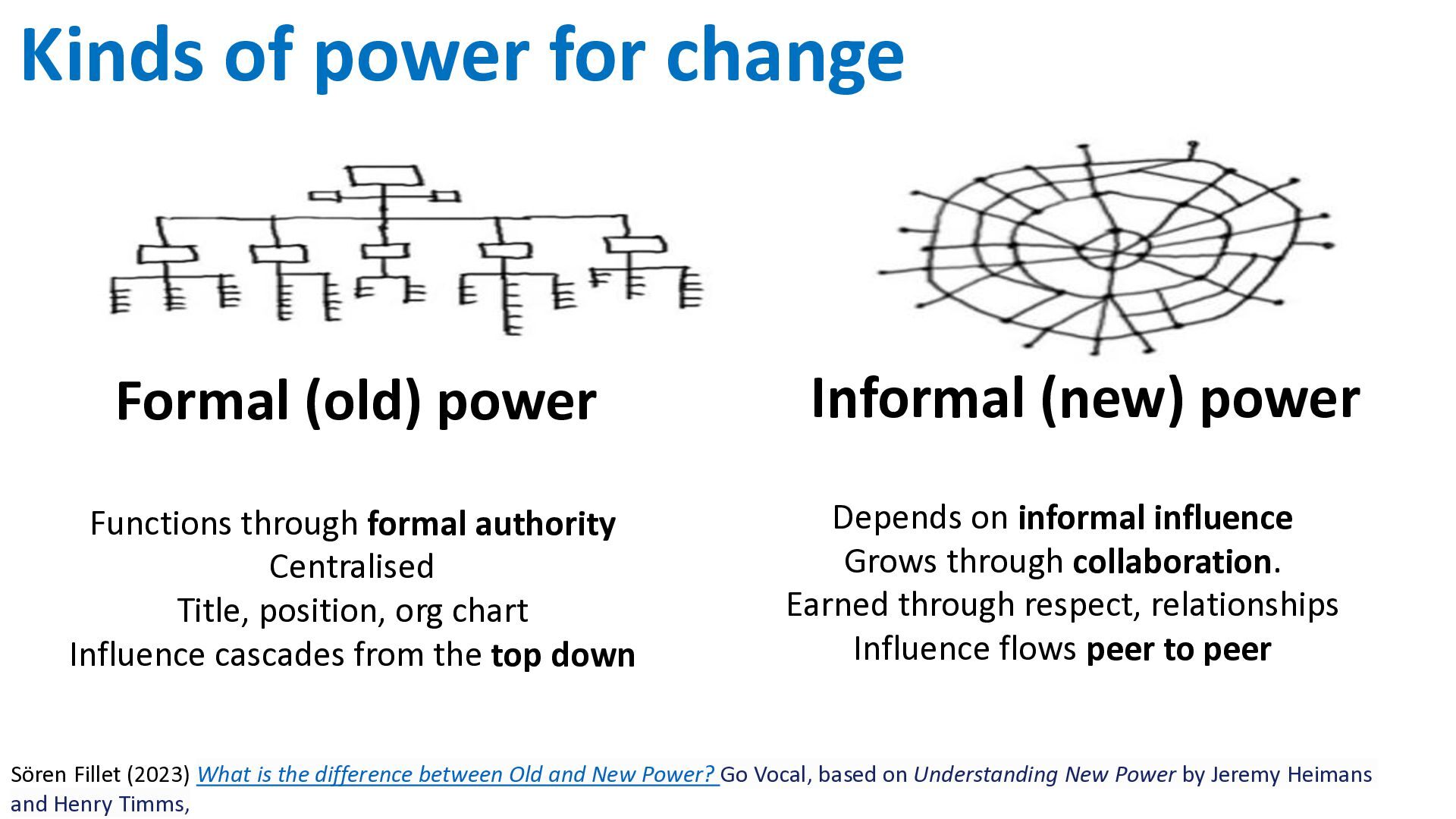
power Depends on informal influence Grows through collaboration. Earned through respect, relationships Influence flows peer to peer Functions through formal authority Centralised Title, position, org chart Influence cascades from the top down Sören Fillet (2023) What is the difference between Old and New Power? Go Vocal, based on Understanding New Power by Jeremy Heimans and Henry Timms,
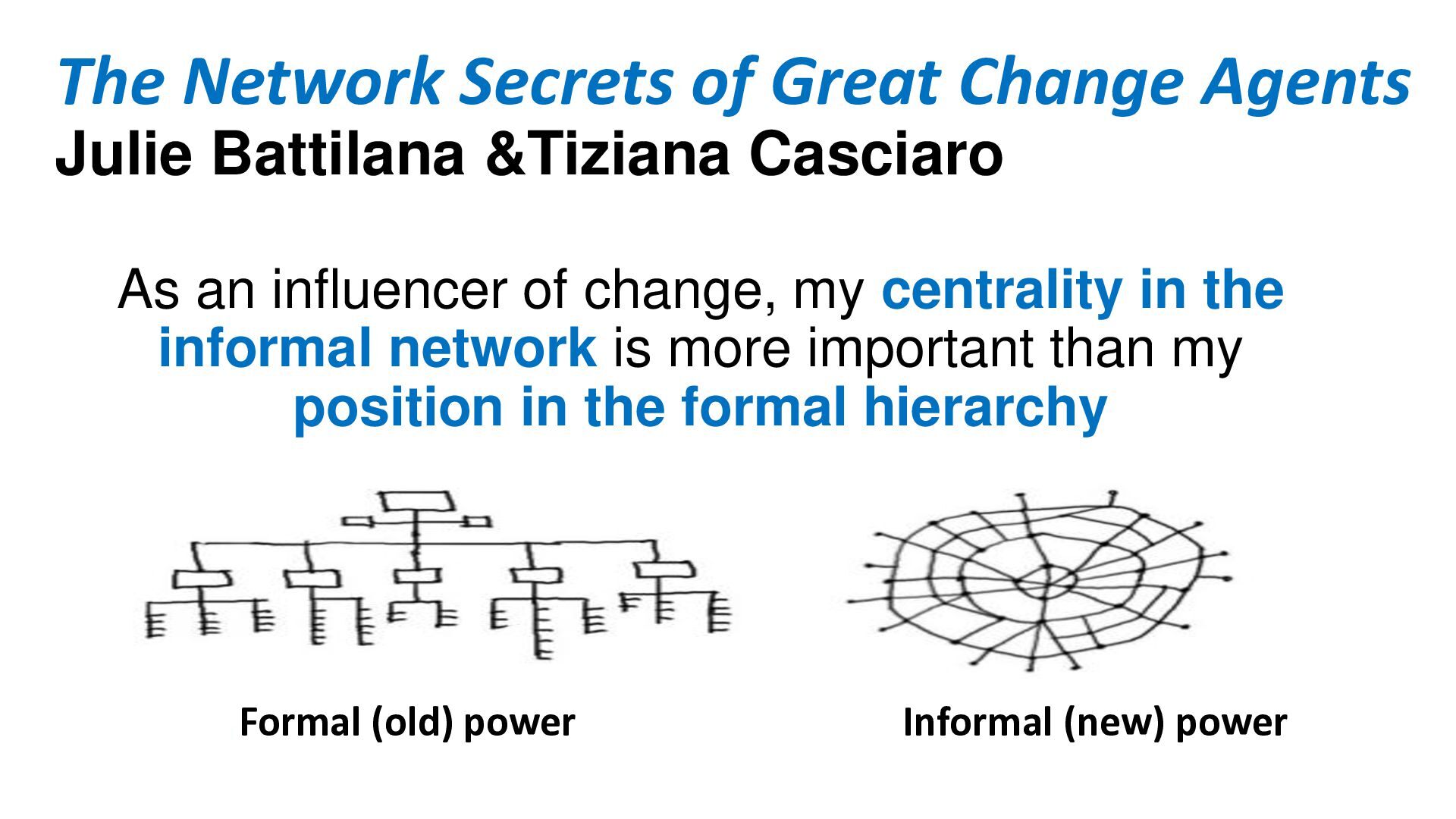
Casciaro As an influencer of change, my centrality in the informal network is more important than my position in the formal hierarchy Formal (old) power Informal (new) power
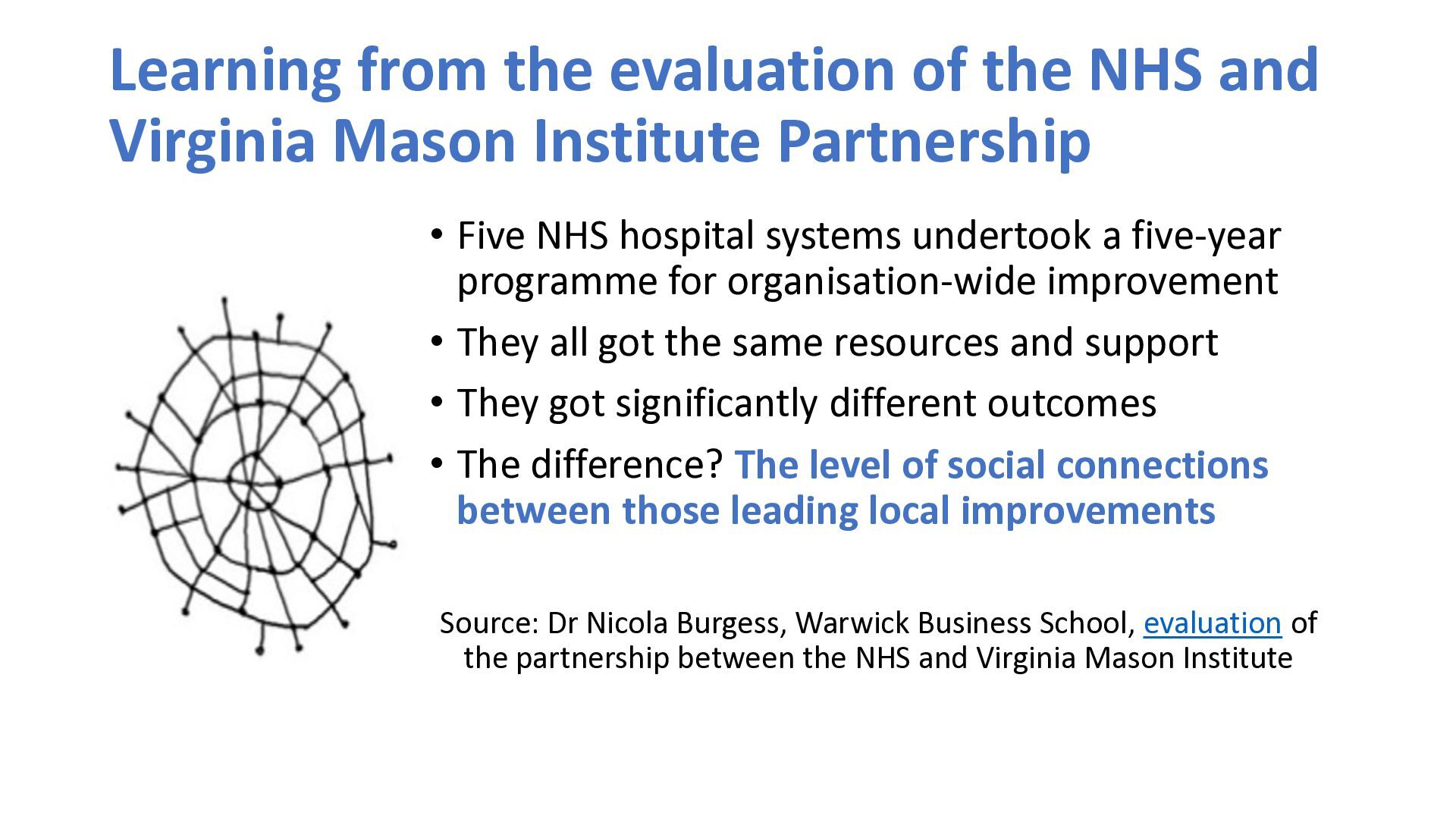
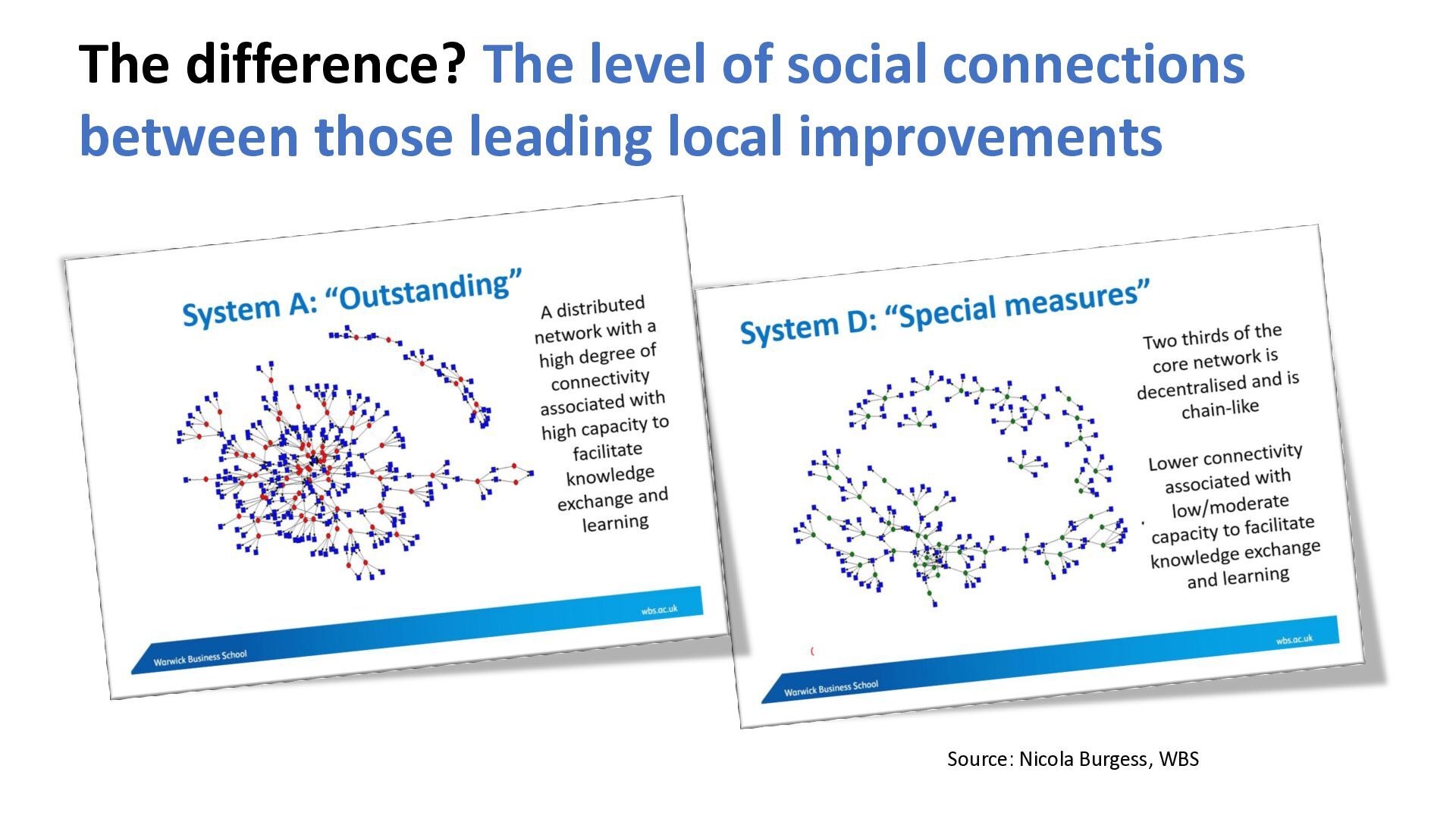
Institute Partnership • Five NHS hospital systems undertook a five-year programme for organisation-wide improvement • They all got the same resources and support • They got significantly different outcomes • The difference? The level of social connections between those leading local improvements Source: Dr Nicola Burgess, Warwick Business School, evaluation of the partnership between the NHS and Virginia Mason Institute
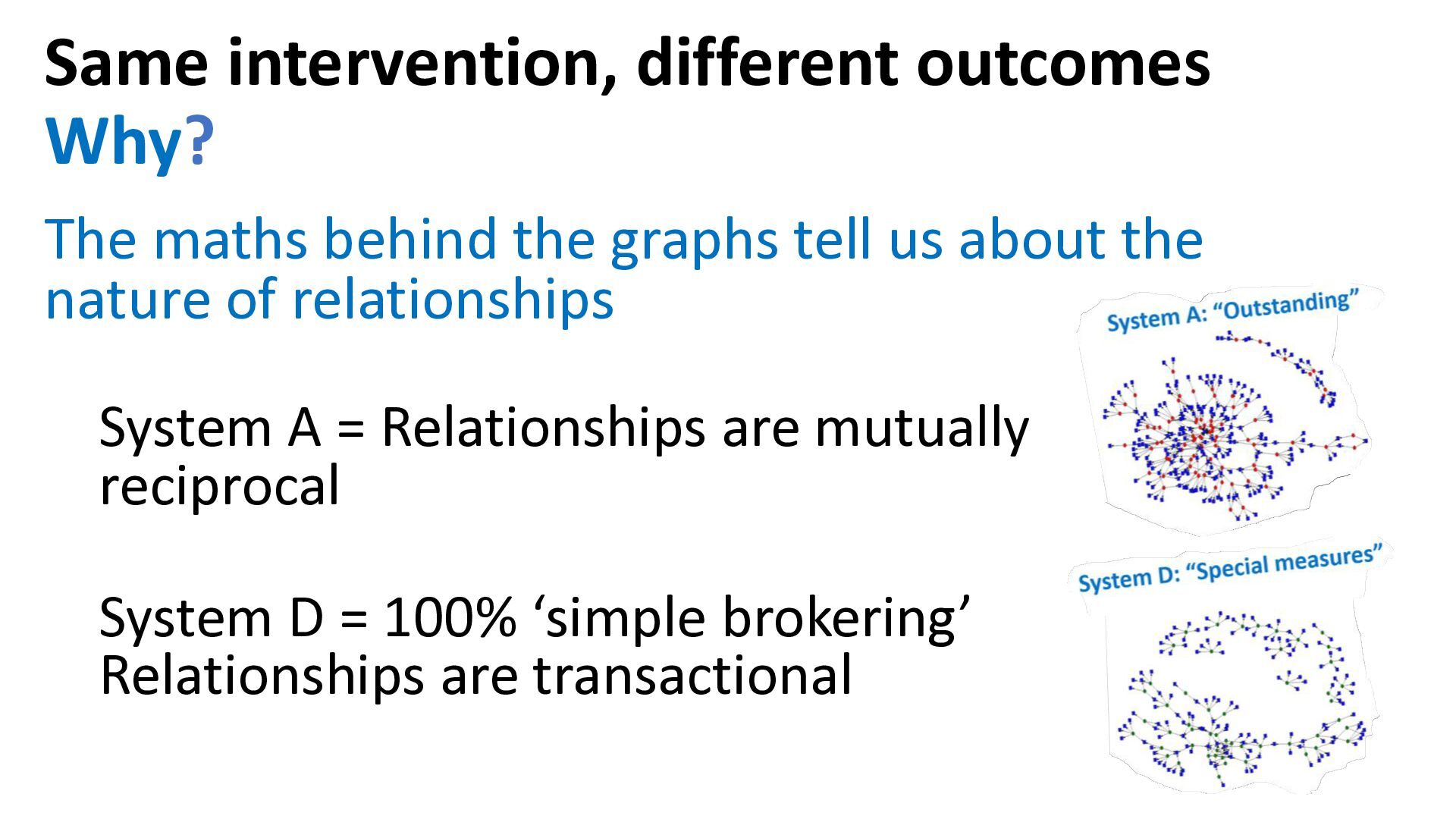
tell us about the nature of relationships System A = Relationships are mutually reciprocal System D = 100% ‘simple brokering’ Relationships are transactional
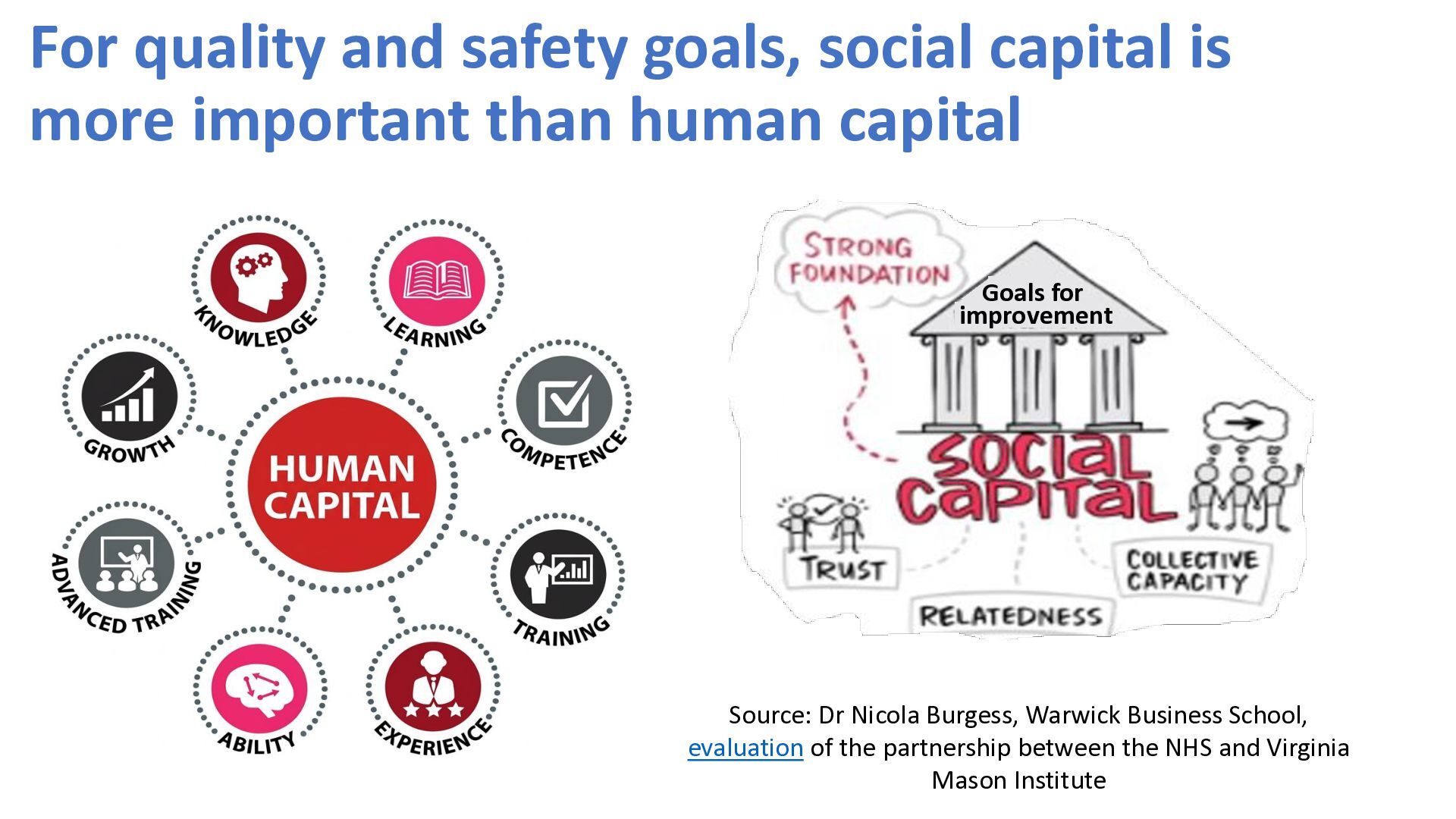
than human capital Goals for improvement Source: Dr Nicola Burgess, Warwick Business School, evaluation of the partnership between the NHS and Virginia Mason Institute
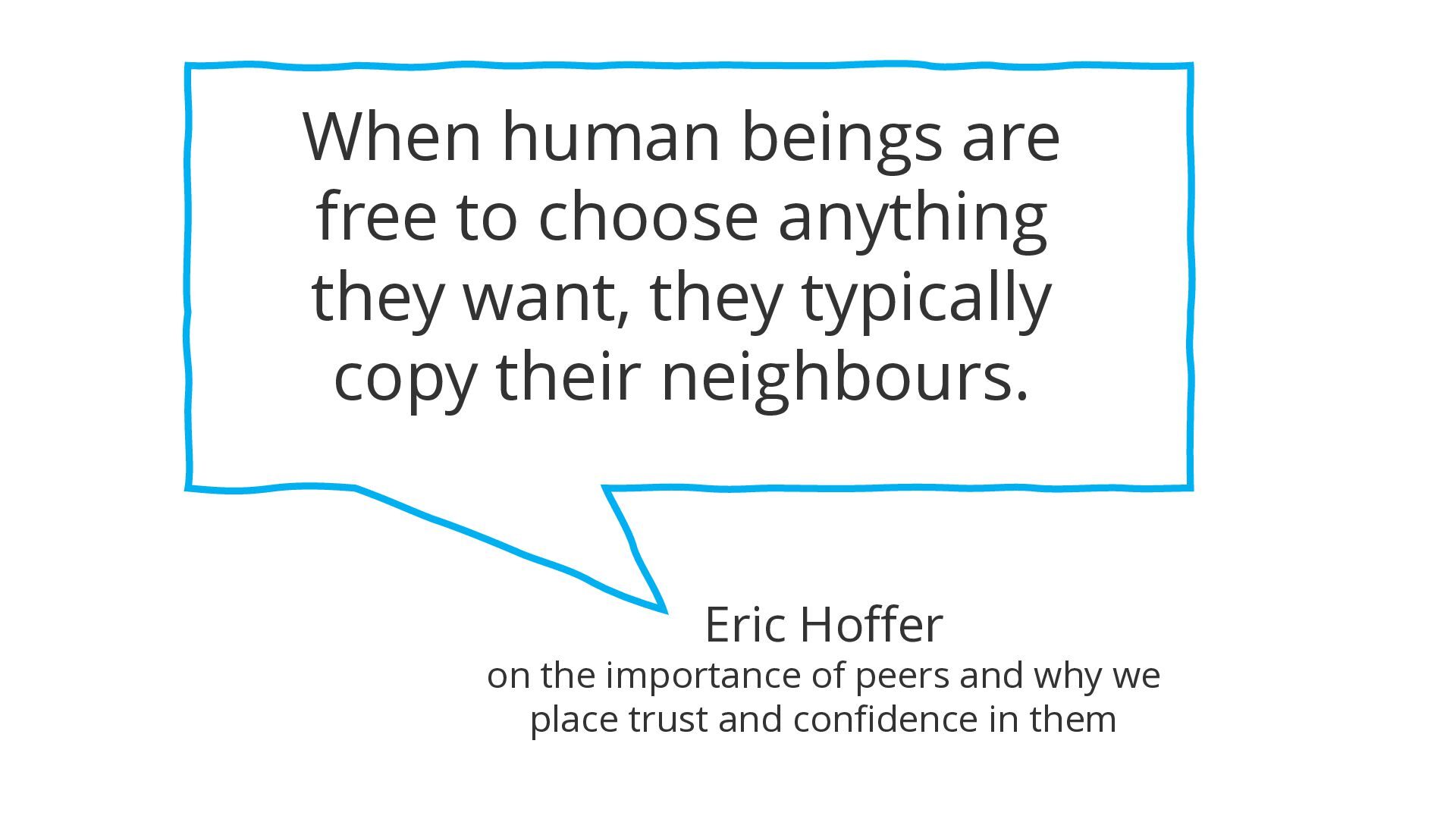
People don’t change their opinions as a result of “effective communication” • The strongest influence on what people do and think is what the people around them do and think • If we want lasting change, focus on shaping the relationships and social connections where attitudes and habits are formed Source: Greg Satell
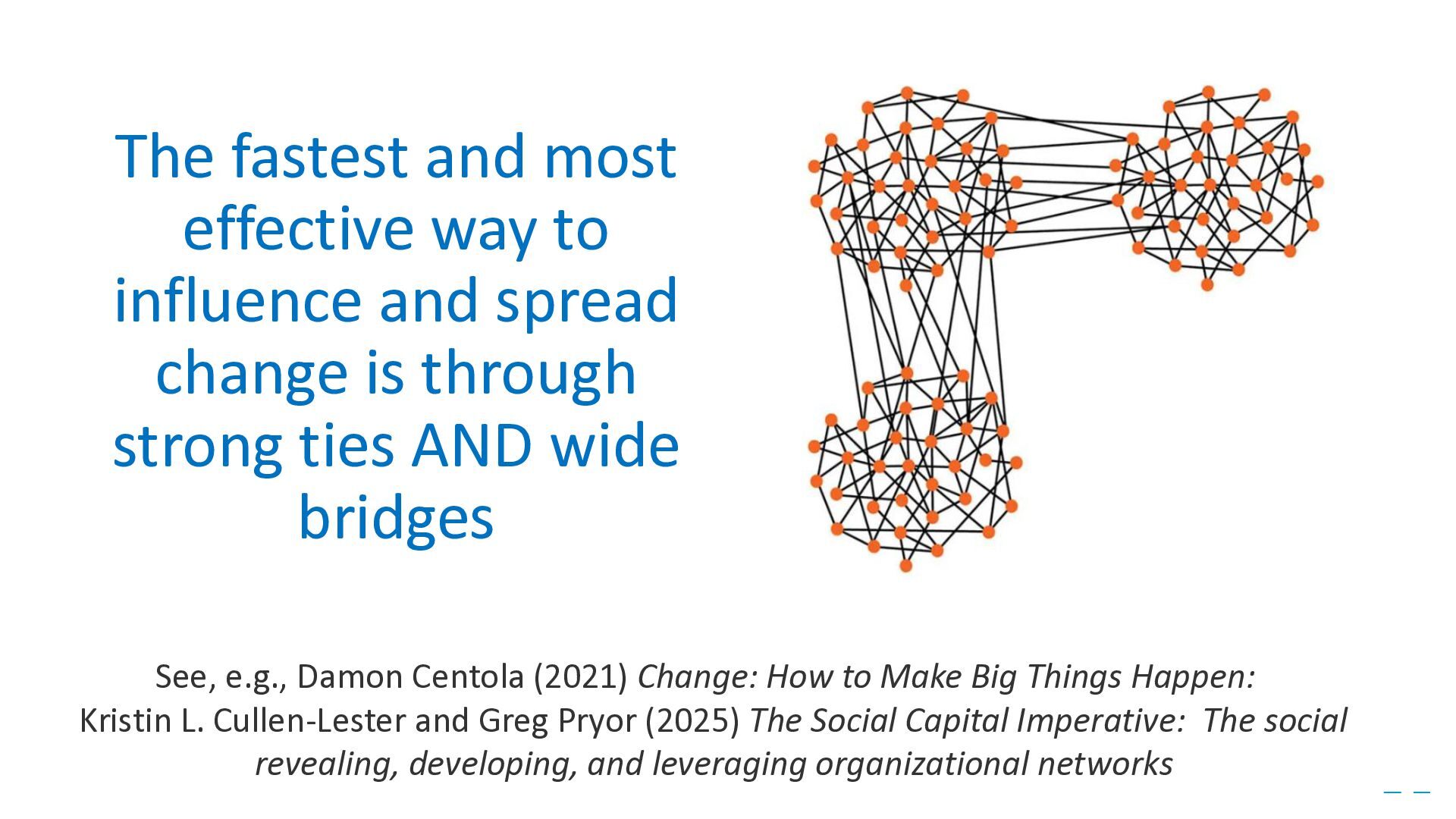
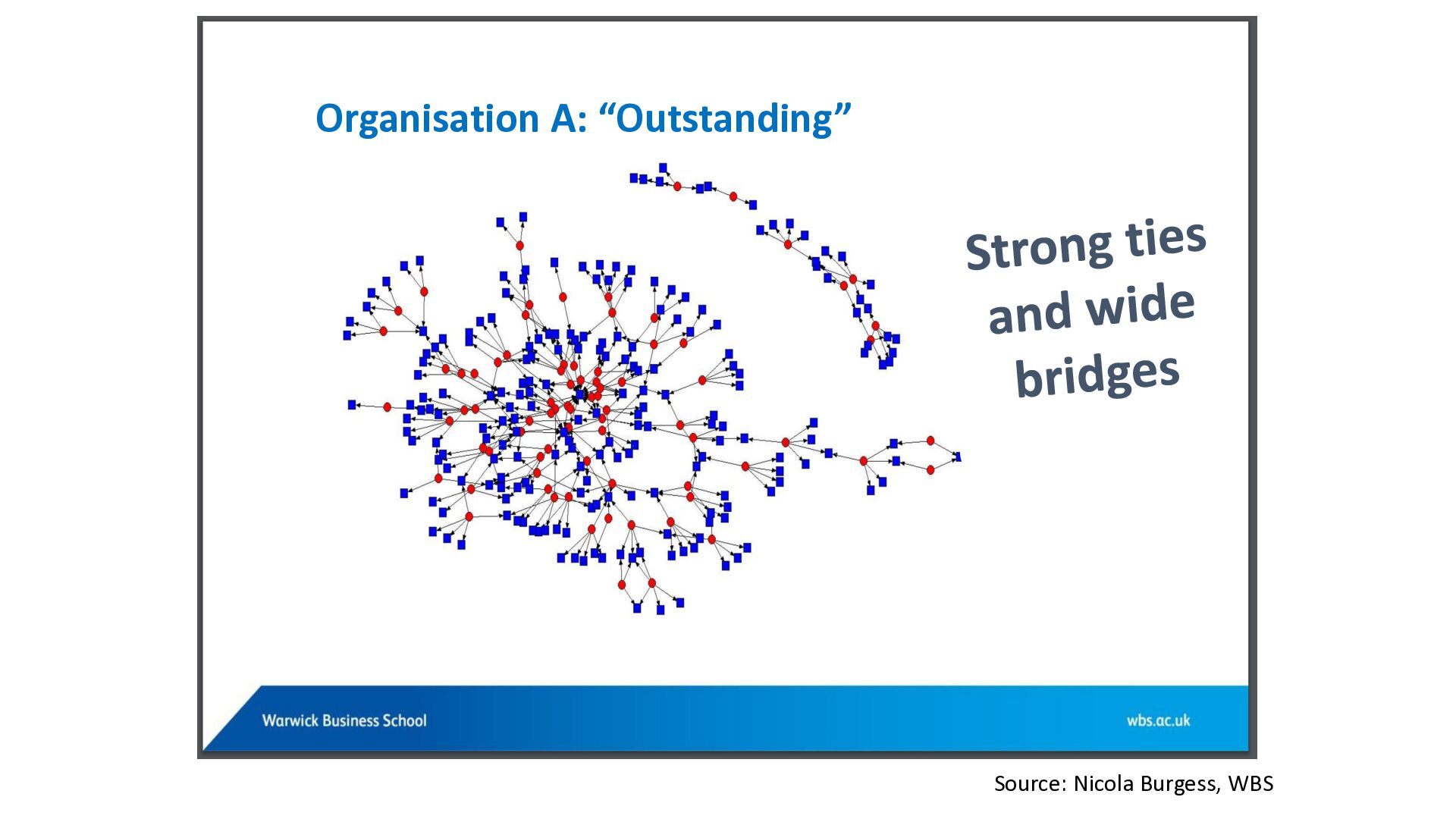
Things Happen: Kristin L. Cullen-Lester and Greg Pryor (2025) The Social Capital Imperative: The social revealing, developing, and leveraging organizational networks The fastest and most effective way to influence and spread change is through strong ties AND wide bridges
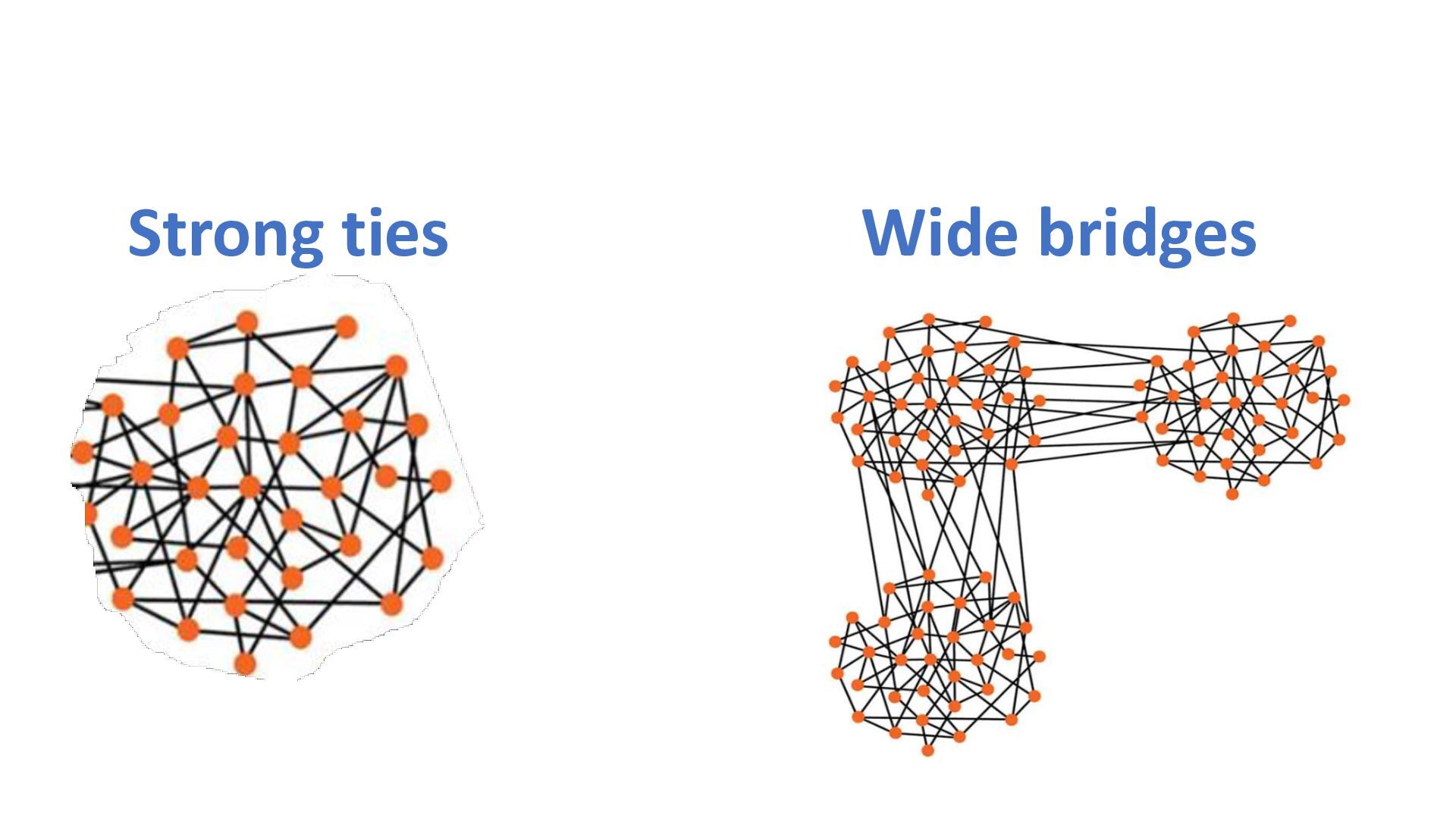
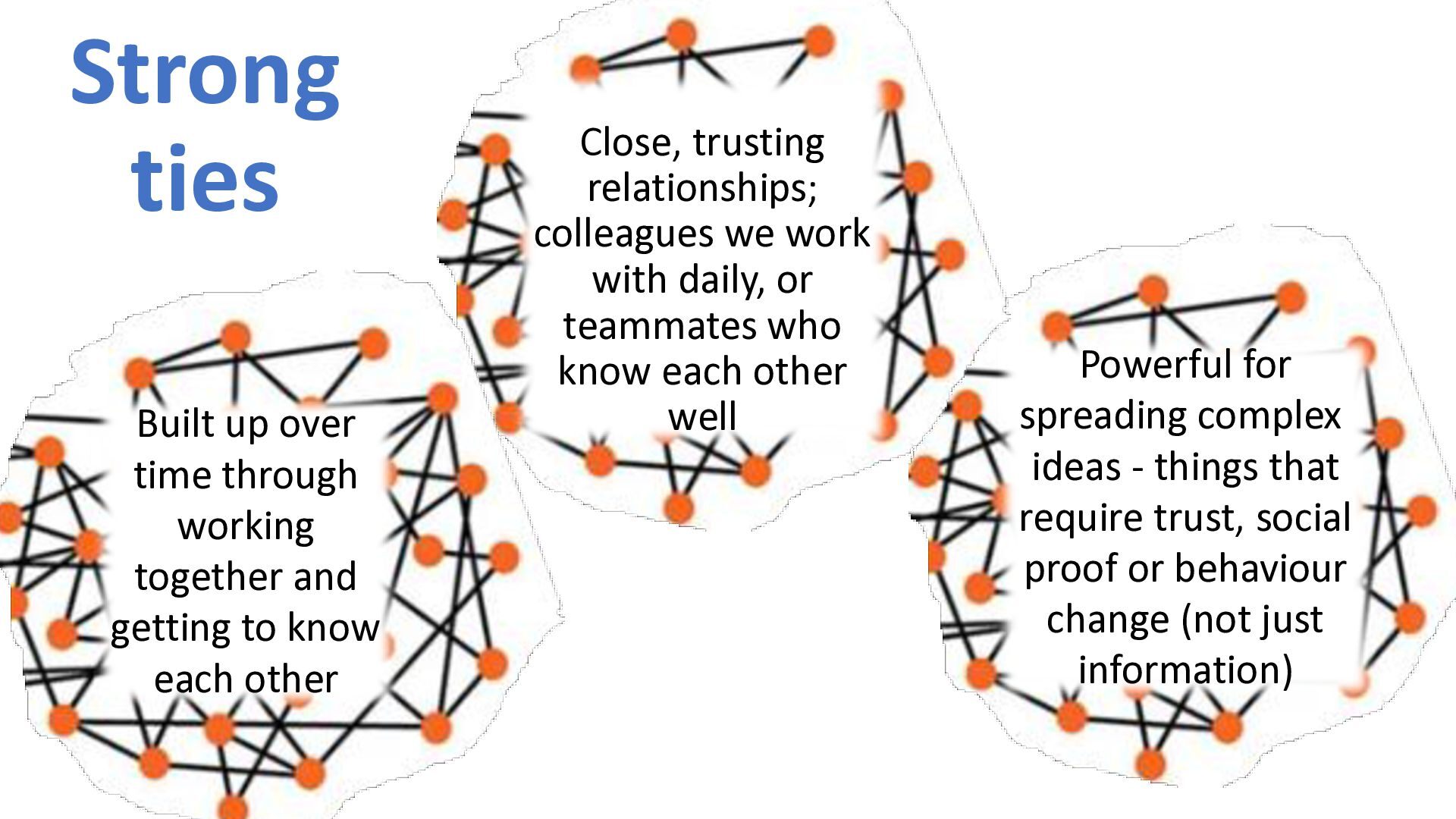
or teammates who know each other well Built up over time through working together and getting to know each other Powerful for spreading complex ideas - things that require trust, social proof or behaviour change (not just information)
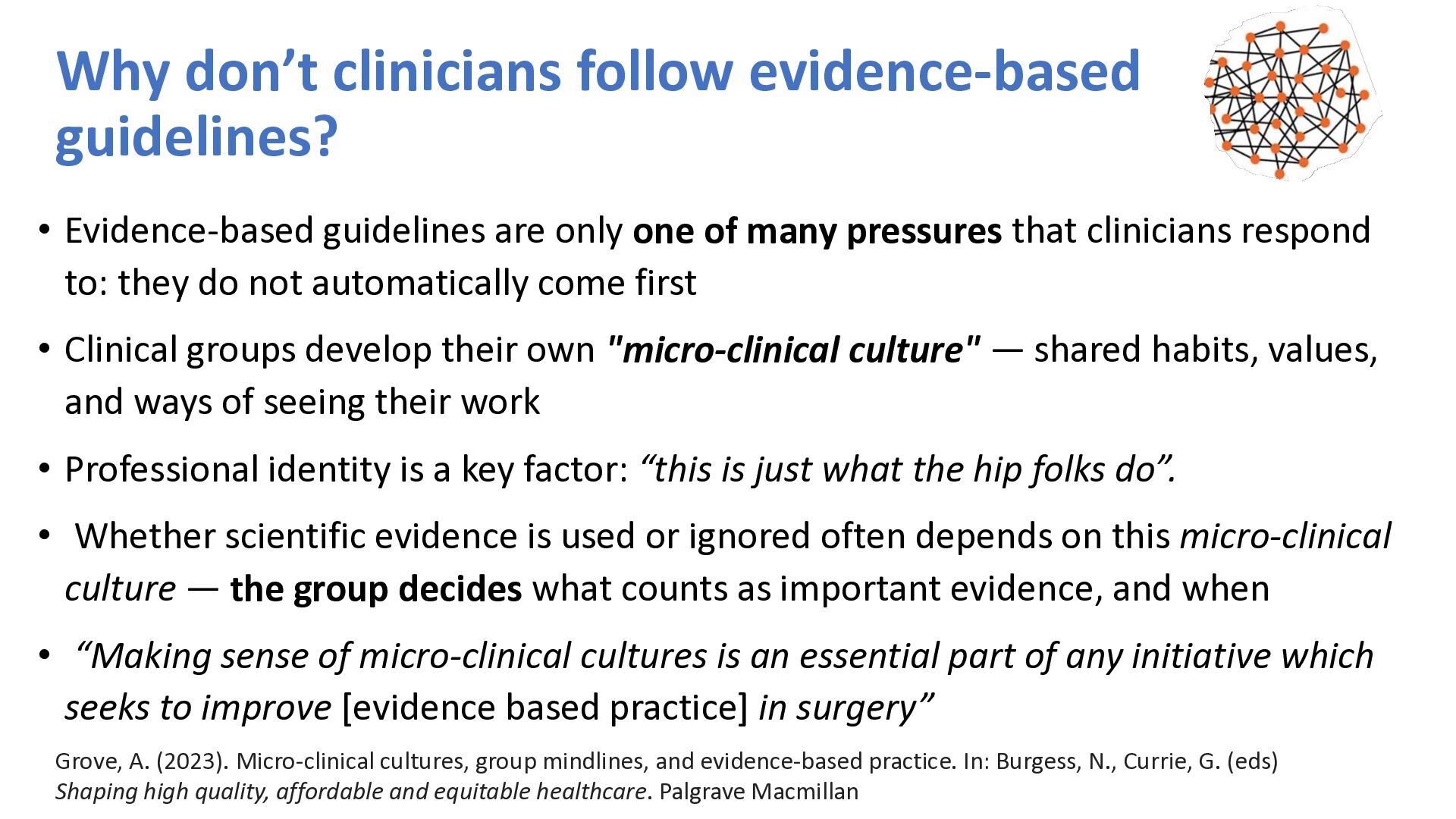
only one of many pressures that clinicians respond to: they do not automatically come first • Clinical groups develop their own "micro-clinical culture" — shared habits, values, and ways of seeing their work • Professional identity is a key factor: “this is just what the hip folks do”. • Whether scientific evidence is used or ignored often depends on this micro-clinical culture — the group decides what counts as important evidence, and when • “Making sense of micro-clinical cultures is an essential part of any initiative which seeks to improve [evidence based practice] in surgery” Grove, A. (2023). Micro-clinical cultures, group mindlines, and evidence-based practice. In: Burgess, N., Currie, G. (eds) Shaping high quality, affordable and equitable healthcare. Palgrave Macmillan
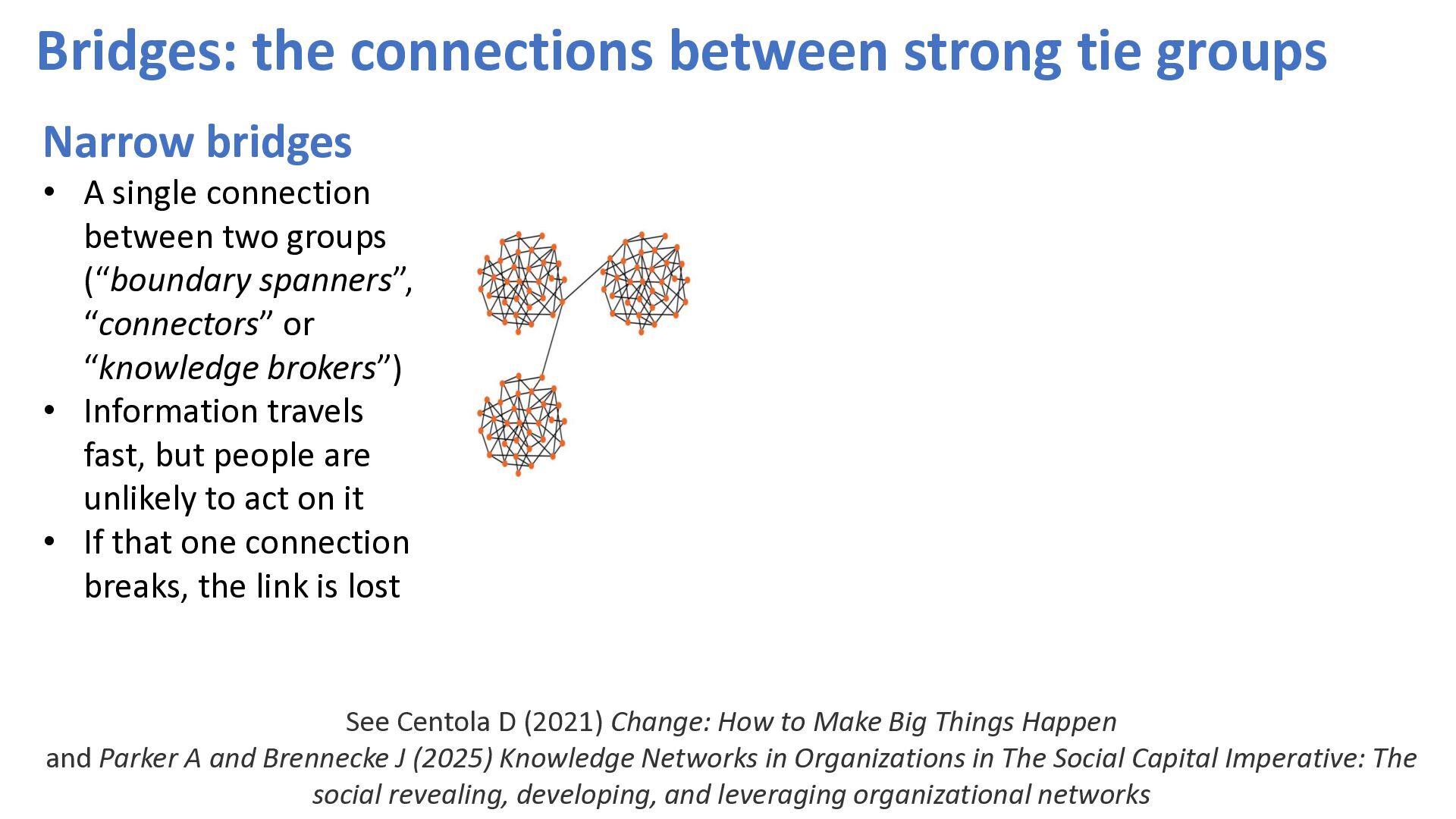
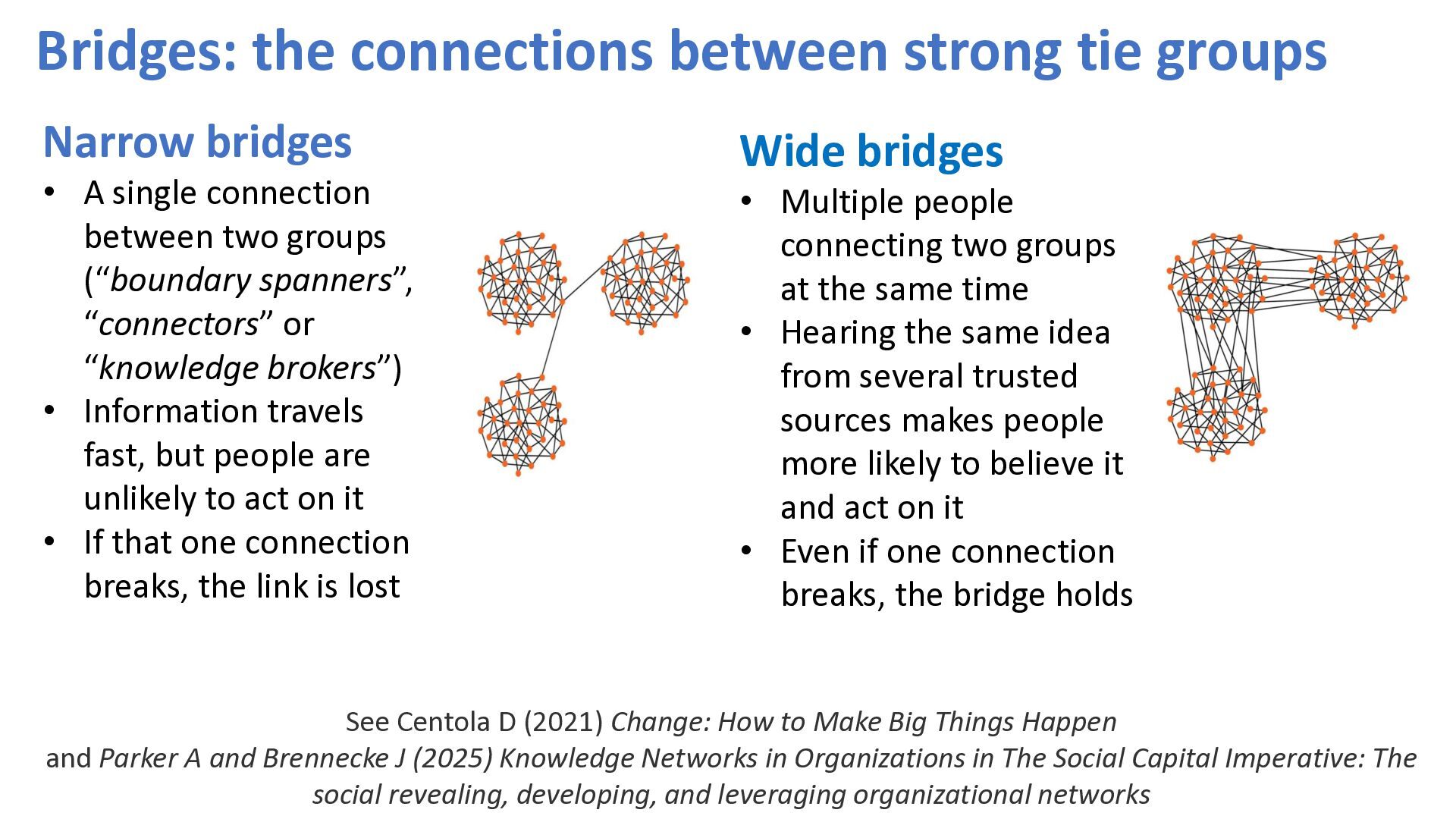
spanners”, “connectors” or “knowledge brokers”) • Information travels fast, but people are unlikely to act on it • If that one connection breaks, the link is lost Bridges: the connections between strong tie groups See Centola D (2021) Change: How to Make Big Things Happen and Parker A and Brennecke J (2025) Knowledge Networks in Organizations in The Social Capital Imperative: The social revealing, developing, and leveraging organizational networks
spanners”, “connectors” or “knowledge brokers”) • Information travels fast, but people are unlikely to act on it • If that one connection breaks, the link is lost Wide bridges • Multiple people connecting two groups at the same time • Hearing the same idea from several trusted sources makes people more likely to believe it and act on it • Even if one connection breaks, the bridge holds Bridges: the connections between strong tie groups See Centola D (2021) Change: How to Make Big Things Happen and Parker A and Brennecke J (2025) Knowledge Networks in Organizations in The Social Capital Imperative: The social revealing, developing, and leveraging organizational networks
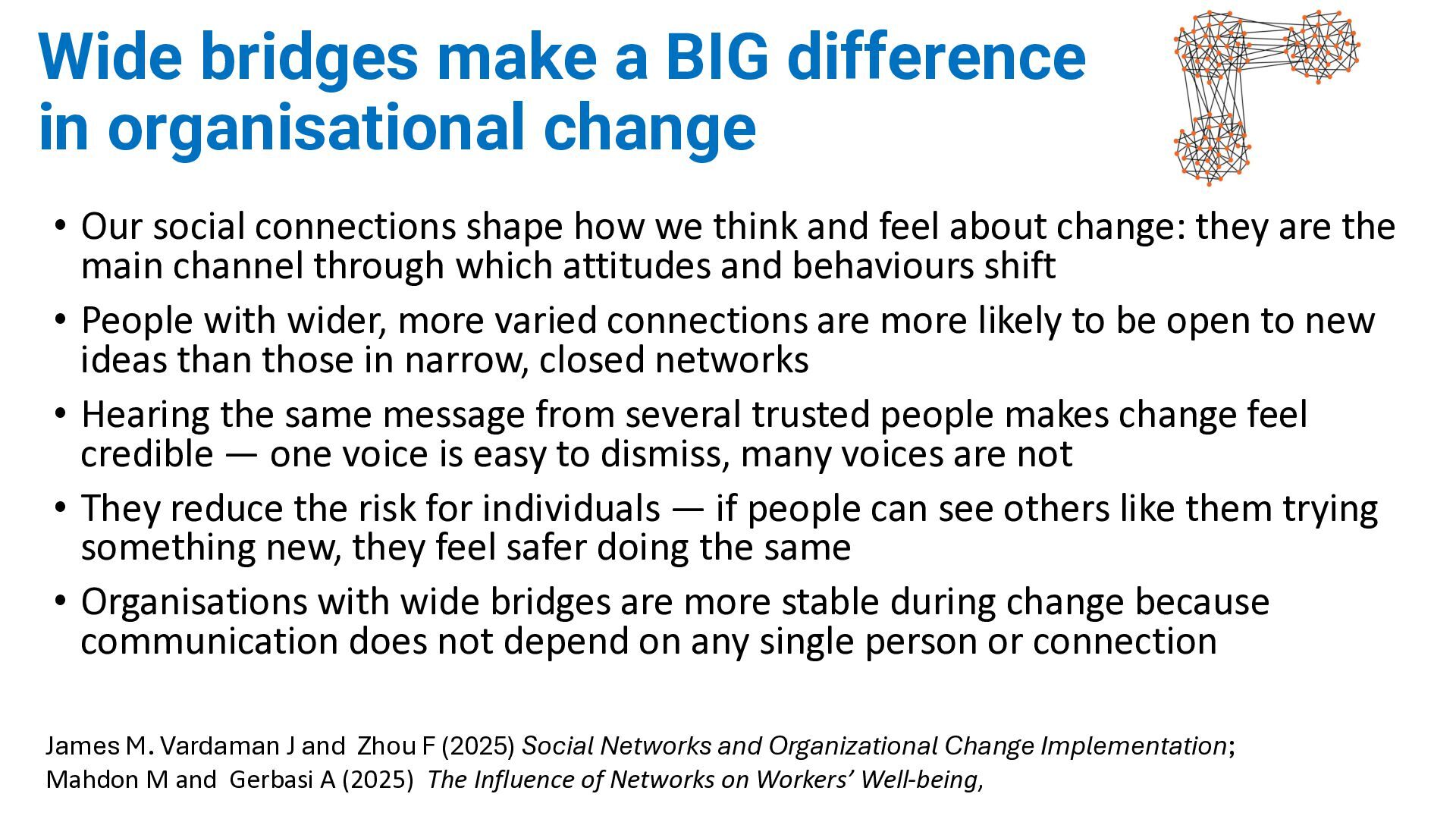
Our social connections shape how we think and feel about change: they are the main channel through which attitudes and behaviours shift • People with wider, more varied connections are more likely to be open to new ideas than those in narrow, closed networks • Hearing the same message from several trusted people makes change feel credible — one voice is easy to dismiss, many voices are not • They reduce the risk for individuals — if people can see others like them trying something new, they feel safer doing the same • Organisations with wide bridges are more stable during change because communication does not depend on any single person or connection James M. Vardaman J and Zhou F (2025) Social Networks and Organizational Change Implementation; Mahdon M and Gerbasi A (2025) The Influence of Networks on Workers’ Well-being,
network with a high degree of connectivity • High degree of interaction – everyone is talking to one another • Dense clusters and groupings also indicate a high degree of collaboration • High degree of connectivity associated with high capacity to facilitate knowledge exchange and learning
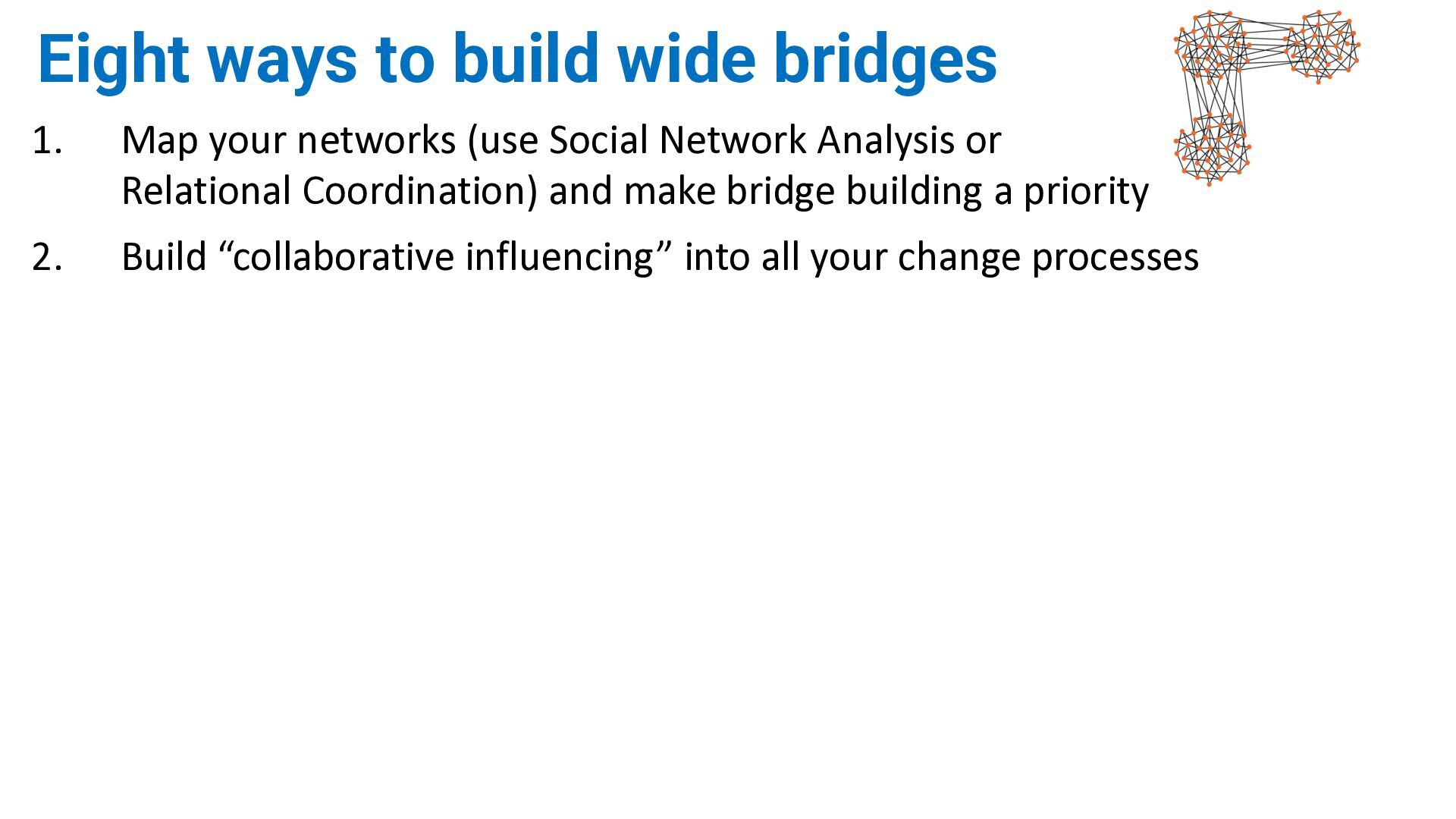
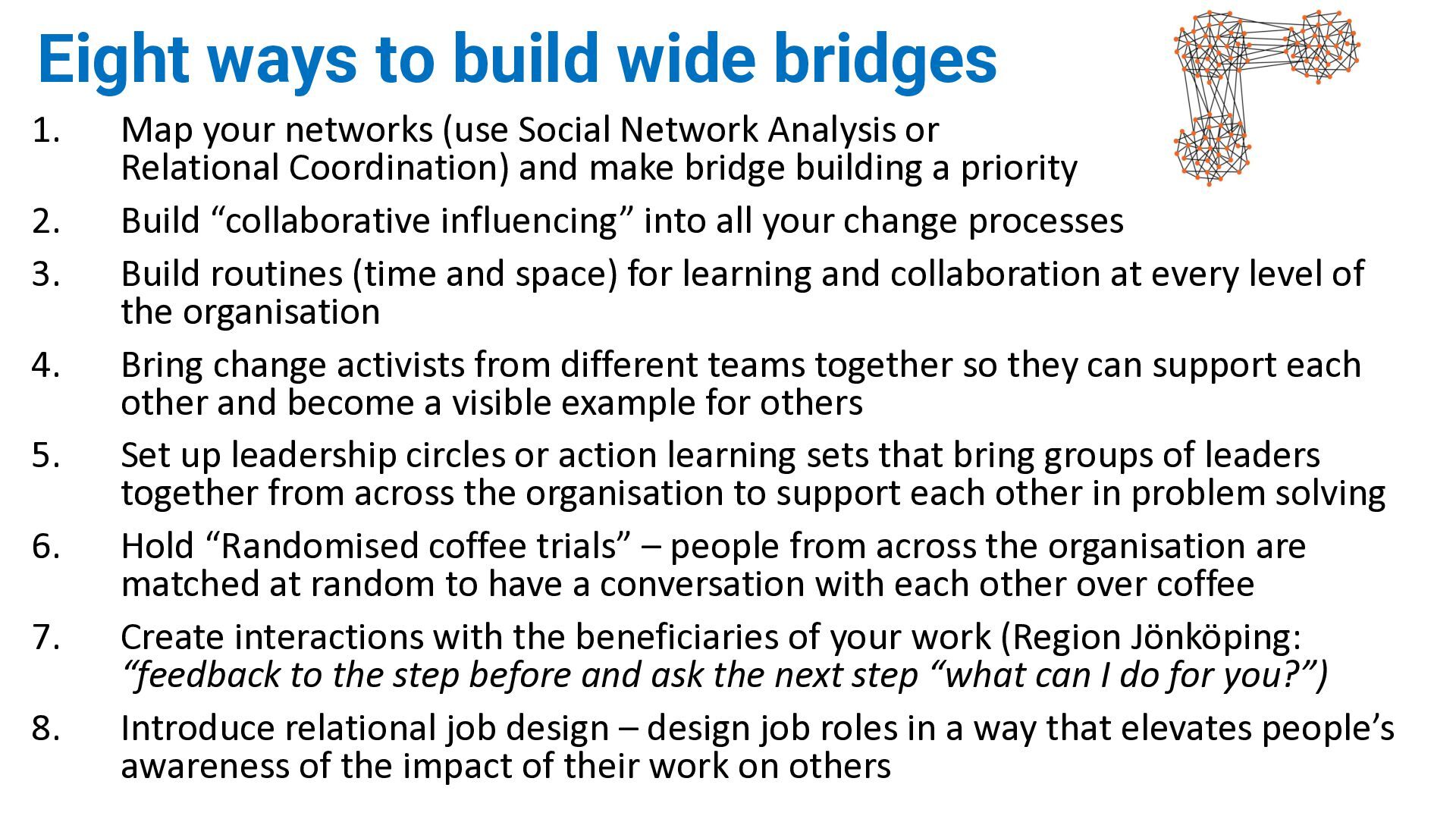
(use Social Network Analysis or Relational Coordination) and make bridge building a priority 2. Build “collaborative influencing” into all your change processes
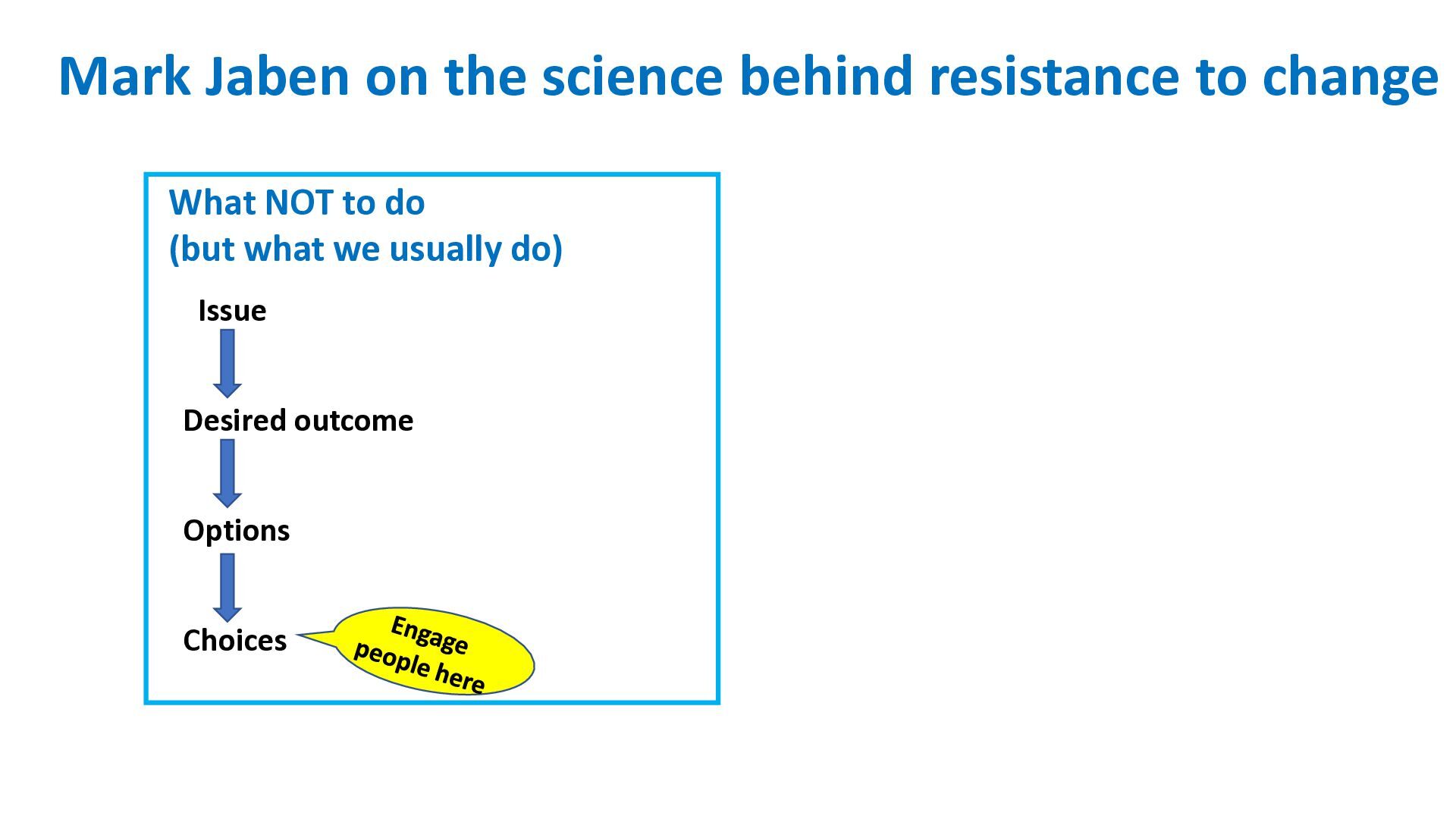
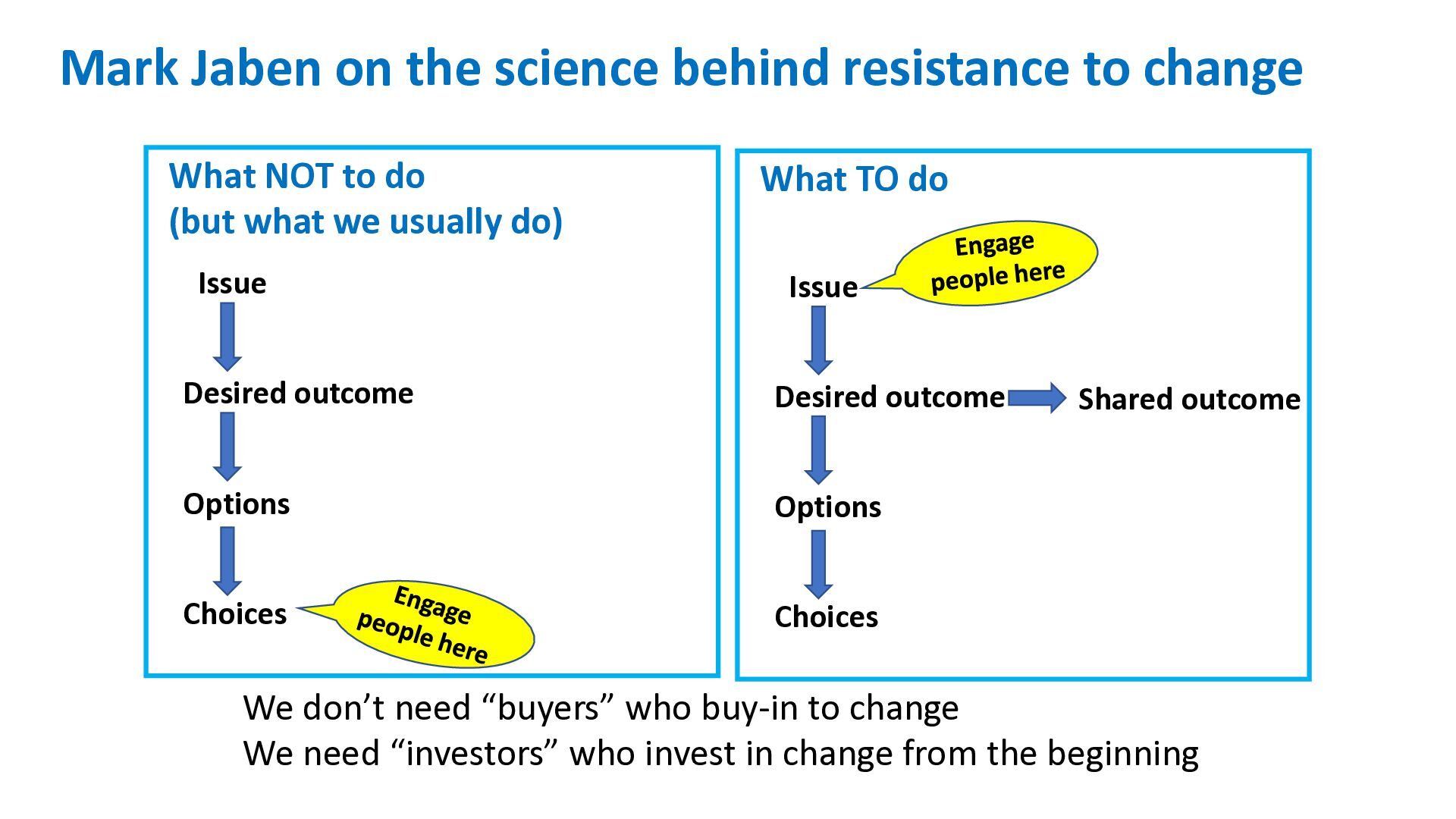
NOT to do (but what we usually do) Issue Desired outcome Options Choices What TO do Issue Desired outcome Options Choices Shared outcome We don’t need “buyers” who buy-in to change We need “investors” who invest in change from the beginning
(use Social Network Analysis or Relational Coordination) and make bridge building a priority 2. Build “collaborative influencing” into all your change processes 3. Build routines (time and space) for learning and collaboration at every level of the organisation 4. Bring change activists from different teams together so they can support each other and become a visible example for others 5. Set up leadership circles or action learning sets that bring groups of leaders together from across the organisation to support each other in problem solving 6. Hold “Randomised coffee trials” – people from across the organisation are matched at random to have a conversation with each other over coffee 7. Create interactions with the beneficiaries of your work (Region Jönköping: “feedback to the step before and ask the next step “what can I do for you?”) 8. Introduce relational job design – design job roles in a way that elevates people’s awareness of the impact of their work on others


 helenbevan
 yumulab
 mickey_0226
 institutdelelevage
 shiell
 wataruuuuu
 ayatokanada
 junkashihara
 izumiyama_lab
 takehaya
 sonatard
 samlambert
 keathley
 jeffersonlam
 szymonslowik
 techseoconnect
 tamaranovitovic
 bethany
 malarkey
 akademiya2063
 baasie
 elsirapls