Upgrade to Pro
— share decks privately, control downloads, hide ads and more …
Speaker Deck
Sign up for free
Menu
Search
Features
All features
Private URLs
Password Protection
Custom URLS
Scheduled publishing
Remove Branding
Restrict embedding
Deck Collections
Notes
Features
All features
Private URLs
Password Protection
Custom URLS
Scheduled publishing
Remove Branding
Restrict embedding
Deck Collections
Notes
Explore
Featured decks
Featured speakers
Programming
Technology
Storyboards
Explore
Featured decks
Featured speakers
Programming
Technology
Storyboards
Pricing
Search
Sign in
Sign up for free
202512_AIoT.pdf
Search
Sponsored
·
Ship Features Fearlessly
Turn features on and off without deploys. Used by thousands of Ruby developers.
→
AIxIoTビジネス共創ラボ
December 24, 2025
Technology
430
0
Share
Embed
Copy iframe code
Copy JS code
Copy link
Start on current slide
202512_AIoT.pdf
AIxIoTビジネス共創ラボ
December 24, 2025
More Decks by AIxIoTビジネス共創ラボ
See All by AIxIoTビジネス共創ラボ
ご挨拶「10周年を迎える共創ラボのこれまでとこれから」
iotcomjpadmin
0
240
AIエージェントとPhysical AIが拓く製造業の変革(ハノーバーメッセリキャップ)
iotcomjpadmin
0
320
Fabricをフル活用する AI Agent Hub -製造業特化AIエージェントの設計
iotcomjpadmin
0
400
製造現場での生成AIの活用、およびエージェントAIの実装のあり方、AVEVAの取り組み
iotcomjpadmin
0
330
AIxIoTビジネス共創ラボ勉強会_登壇資料_成功してる企業は何が違う_AI定着化の現場レポート_20251203.pdf
iotcomjpadmin
0
420
20251203_Azure_Local_and_IoT_Update_AIxIoT__1_.pdf
iotcomjpadmin
0
400
_配信_251203_リアルをデータにつなぐータギング技術が生み出すIoT_AI時代の新たな価値_AIxIoTビジネス共創ラボ_.pdf
iotcomjpadmin
0
400
_第4回__AIxIoTビジネス共創ラボ紹介資料_20251203.pdf
iotcomjpadmin
0
410
TED_modeki_共創ラボ_20251203.pdf
iotcomjpadmin
0
450
Other Decks in Technology
See All in Technology
脆弱性診断って、何をしているの? 〜弱点を見つけて、会社の改善につなげるまで〜
keeg
0
850
MCPゲートウェイを作って運用してわかったこと — Agent時代の権限管理の現在地
mtpooh
10
3.3k
おそらく日本で唯一のDevRelインターン生として
husengs7
0
170
LocalStack を使ったサーバーレスアプリケーション開発 / Serverless Development with LocalStack
kakakakakku
1
390
メルペイ 会計システム概要と歴史
mewuto
0
200
ブラウザとサーバーから考えるAI時代のフロントエンド監視
shogo4131
3
780
Deep Data Security 機能解説
oracle4engineer
PRO
2
770
AIに攻撃される前に、AIに攻撃させる
tsuchikazu
0
170
継続的なAIコスト最適化
bgpat
1
280
V8のArray.prototype.flatを最大約20倍速くするまでと、巨大OSSへの大規模コミットの道のり
riyaamemiya
0
210
AIは爆速なのに、私が詰まっていた話 ― 音声入力と鳴くマスコットでボトルネックを削る
yama3133
0
600
パッチ更新でterraform initが落ちた日
grimoh
1
120
Featured
See All Featured
HU Berlin: Industrial-Strength Natural Language Processing with spaCy and Prodigy
inesmontani
PRO
0
740
Design in an AI World
tapps
1
350
SEO in 2025: How to Prepare for the Future of Search
ipullrank
3
3.9k
Believing is Seeing
oripsolob
1
240
Templates, Plugins, & Blocks: Oh My! Creating the theme that thinks of everything
marktimemedia
31
2.9k
A Tale of Four Properties
chriscoyier
163
24k
Amusing Abliteration
ianozsvald
1
340
Easily Structure & Communicate Ideas using Wireframe
afnizarnur
194
17k
What does AI have to do with Human Rights?
axbom
PRO
1
2.4k
How to optimise 3,500 product descriptions for ecommerce in one day using ChatGPT
katarinadahlin
PRO
3
3.9k
Facilitating Awesome Meetings
lara
57
7.2k
Color Theory Basics | Prateek | Gurzu
gurzu
1
480
Transcript
Copyright 2025 Hoshino Research Institute AIoTエージェントの可能性 2025年12月3日 星野総合研究所合同会社 代表社員 VISITS
Technologies 執行役員 CTO 星野友彦
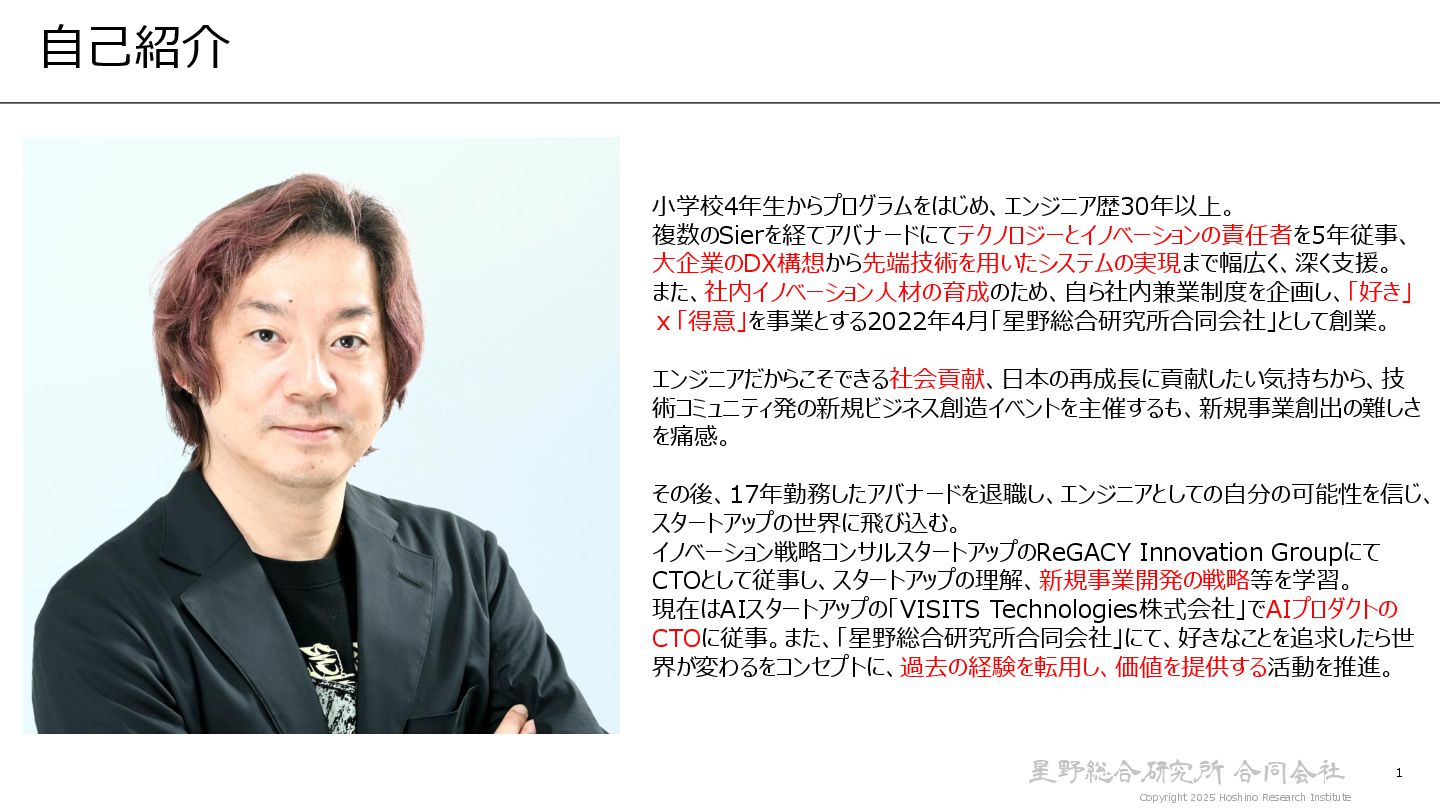
Copyright 2025 Hoshino Research Institute 自己紹介 小学校4年生からプログラムをはじめ、エンジニア歴30年以上。 複数のSierを経てアバナードにてテクノロジーとイノベーションの責任者を5年従事、 大企業のDX構想から先端技術を用いたシステムの実現まで幅広く、深く支援。 また、社内イノベーション人材の育成のため、自ら社内兼業制度を企画し、「好き」
x「得意」を事業とする2022年4月「星野総合研究所合同会社」として創業。 エンジニアだからこそできる社会貢献、日本の再成長に貢献したい気持ちから、技 術コミュニティ発の新規ビジネス創造イベントを主催するも、新規事業創出の難しさ を痛感。 その後、17年勤務したアバナードを退職し、エンジニアとしての自分の可能性を信じ、 スタートアップの世界に飛び込む。 イノベーション戦略コンサルスタートアップのReGACY Innovation Groupにて CTOとして従事し、スタートアップの理解、新規事業開発の戦略等を学習。 現在はAIスタートアップの「VISITS Technologies株式会社」でAIプロダクトの CTOに従事。また、「星野総合研究所合同会社」にて、好きなことを追求したら世 界が変わるをコンセプトに、過去の経験を転用し、価値を提供する活動を推進。 エッジデバイス開発レベル 5/100 1
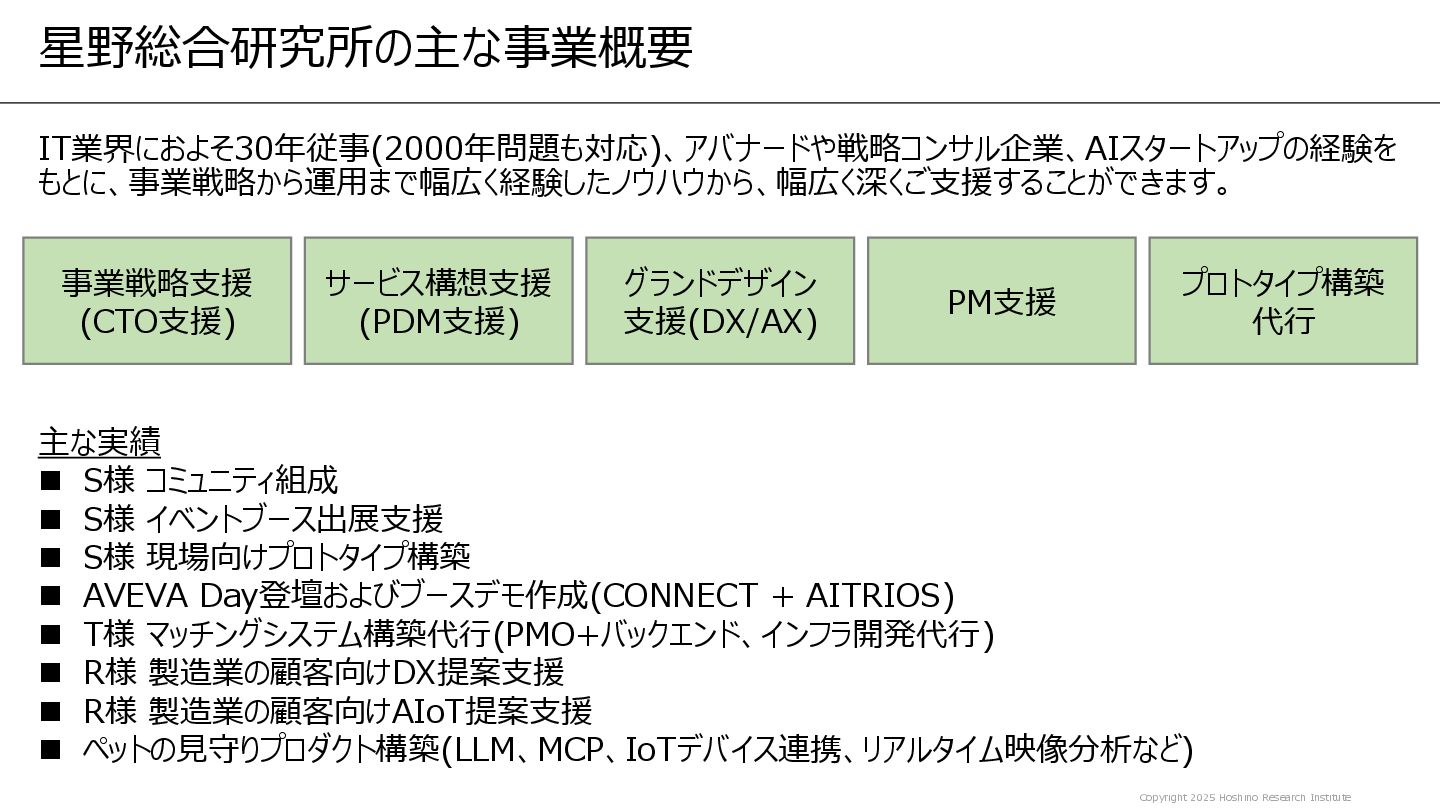
Copyright 2025 Hoshino Research Institute 星野総合研究所の主な事業概要 2 事業戦略支援 (CTO支援) サービス構想支援
(PDM支援) グランドデザイン 支援(DX/AX) PM支援 プロトタイプ構築 代行 主な実績 ◼ S様 コミュニティ組成 ◼ S様 イベントブース出展支援 ◼ S様 現場向けプロトタイプ構築 ◼ AVEVA Day登壇およびブースデモ作成(CONNECT + AITRIOS) ◼ T様 マッチングシステム構築代行(PMO+バックエンド、インフラ開発代行) ◼ R様 製造業の顧客向けDX提案支援 ◼ R様 製造業の顧客向けAIoT提案支援 ◼ ペットの見守りプロダクト構築(LLM、MCP、IoTデバイス連携、リアルタイム映像分析など) IT業界におよそ30年従事(2000年問題も対応)、アバナードや戦略コンサル企業、AIスタートアップの経験を もとに、事業戦略から運用まで幅広く経験したノウハウから、幅広く深くご支援することができます。
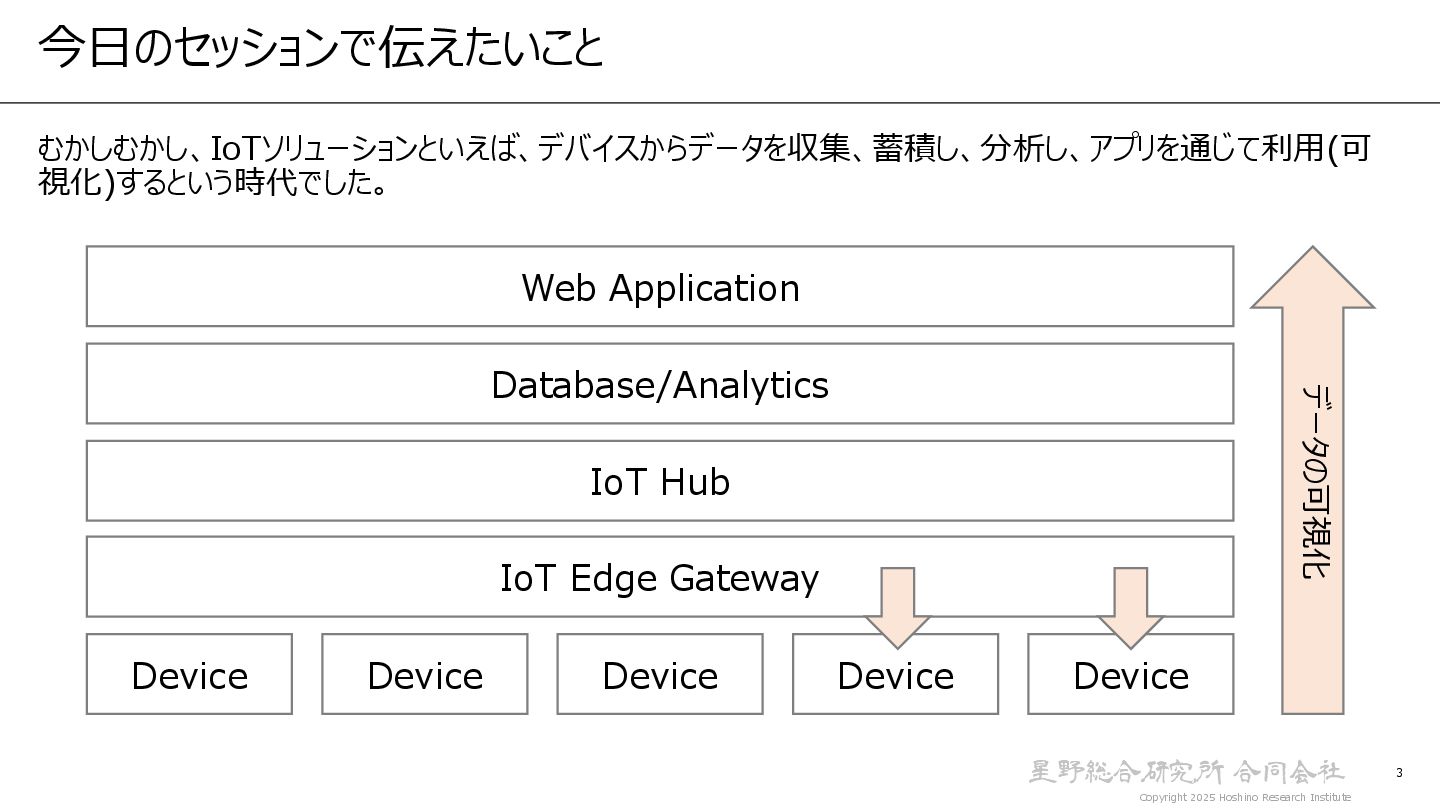
Copyright 2025 Hoshino Research Institute 今日のセッションで伝えたいこと 3 IoT Edge Gateway
Device Device Device Device Device IoT Hub Database/Analytics Web Application むかしむかし、IoTソリューションといえば、デバイスからデータを収集、蓄積し、分析し、アプリを通じて利用(可 視化)するという時代でした。 データの可視化
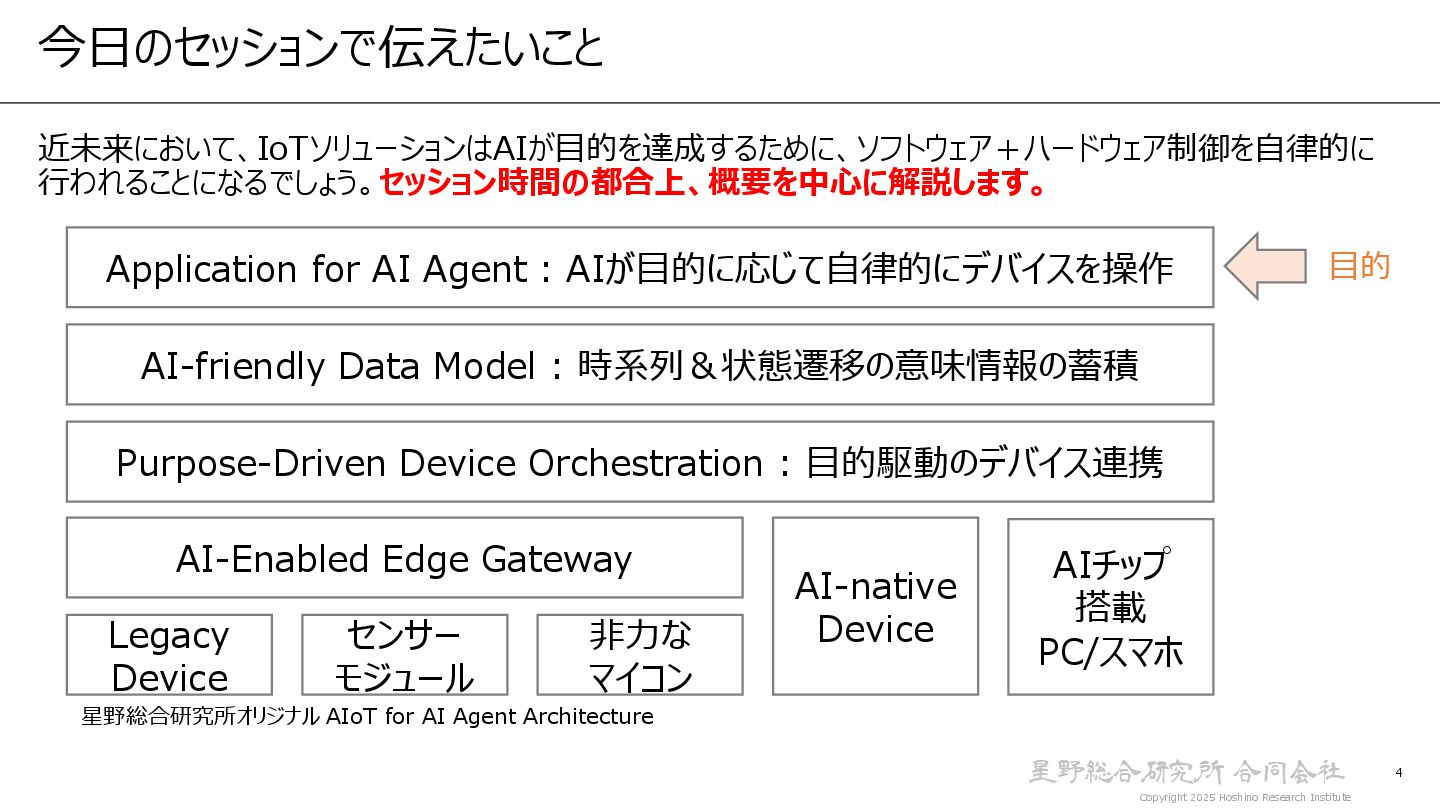
Copyright 2025 Hoshino Research Institute 今日のセッションで伝えたいこと 4 AI-Enabled Edge Gateway
Legacy Device センサー モジュール 非力な マイコン AI-native Device AIチップ 搭載 PC/スマホ Purpose-Driven Device Orchestration : 目的駆動のデバイス連携 AI-friendly Data Model : 時系列&状態遷移の意味情報の蓄積 Application for AI Agent : AIが目的に応じて自律的にデバイスを操作 近未来において、IoTソリューションはAIが目的を達成するために、ソフトウェア+ハードウェア制御を自律的に 行われることになるでしょう。セッション時間の都合上、概要を中心に解説します。 目的 星野総合研究所オリジナル AIoT for AI Agent Architecture
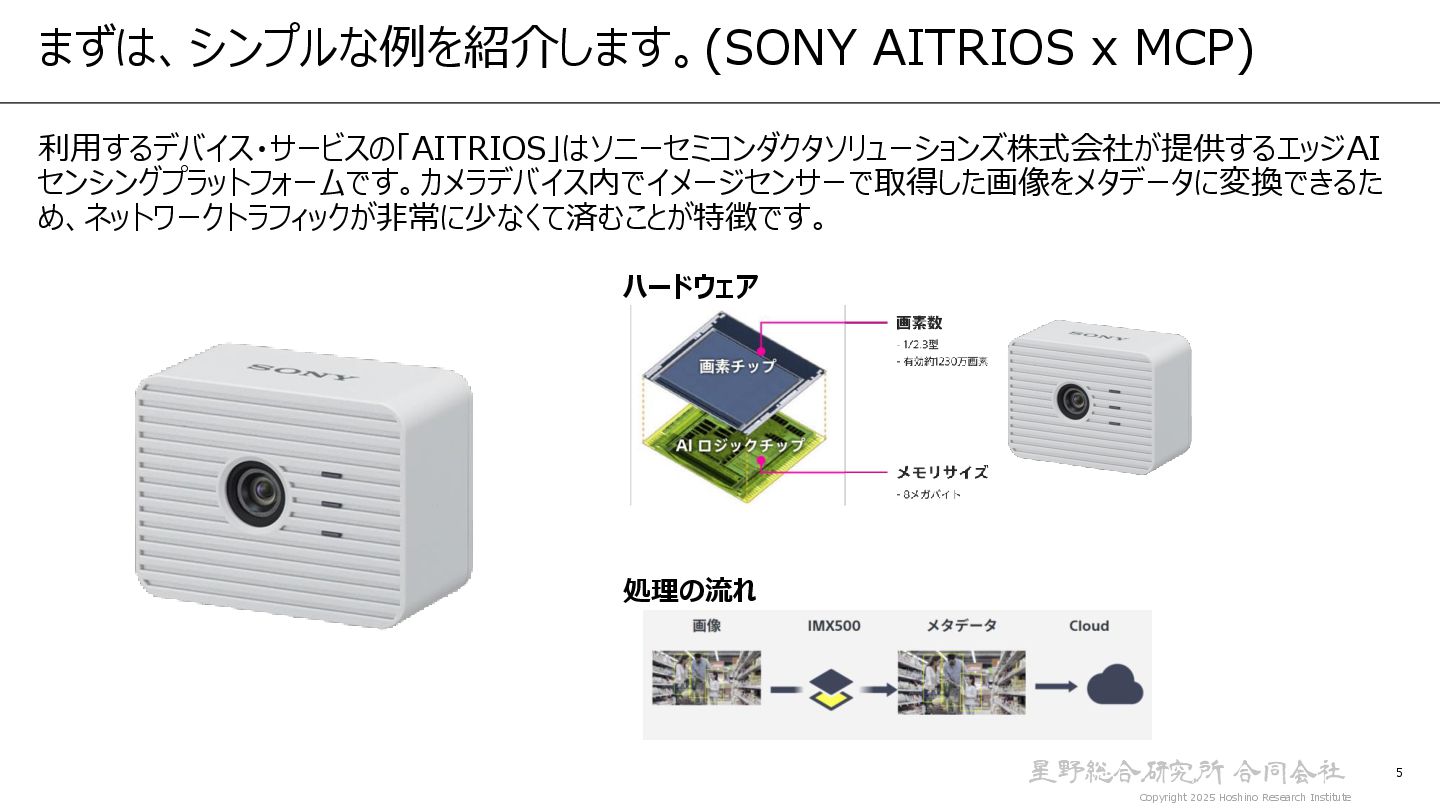
Copyright 2025 Hoshino Research Institute まずは、シンプルな例を紹介します。(SONY AITRIOS x MCP) 5
ハードウェア 処理の流れ 利用するデバイス・サービスの「AITRIOS」はソニーセミコンダクタソリューションズ株式会社が提供するエッジAI センシングプラットフォームです。カメラデバイス内でイメージセンサーで取得した画像をメタデータに変換できるた め、ネットワークトラフィックが非常に少なくて済むことが特徴です。
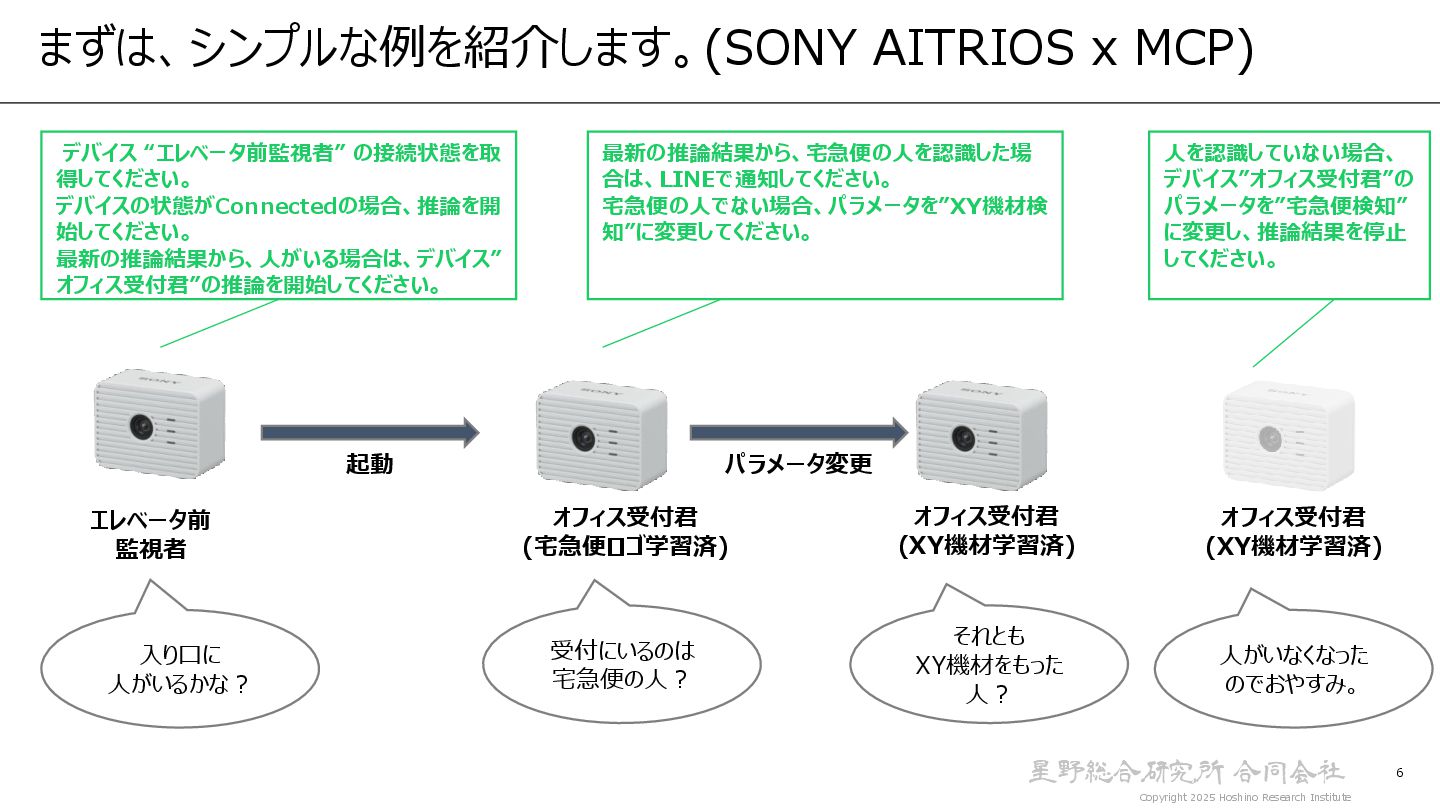
Copyright 2025 Hoshino Research Institute まずは、シンプルな例を紹介します。(SONY AITRIOS x MCP) 6
デバイス “エレベータ前監視者” の接続状態を取 得してください。 デバイスの状態がConnectedの場合、推論を開 始してください。 最新の推論結果から、人がいる場合は、デバイス” オフィス受付君”の推論を開始してください。 エレベータ前 監視者 入り口に 人がいるかな? 受付にいるのは 宅急便の人? オフィス受付君 (宅急便ロゴ学習済) オフィス受付君 (XY機材学習済) 最新の推論結果から、宅急便の人を認識した場 合は、LINEで通知してください。 宅急便の人でない場合、パラメータを”XY機材検 知”に変更してください。 起動 パラメータ変更 それとも XY機材をもった 人? オフィス受付君 (XY機材学習済) 人を認識していない場合、 デバイス”オフィス受付君”の パラメータを”宅急便検知” に変更し、推論結果を停止 してください。 人がいなくなった のでおやすみ。
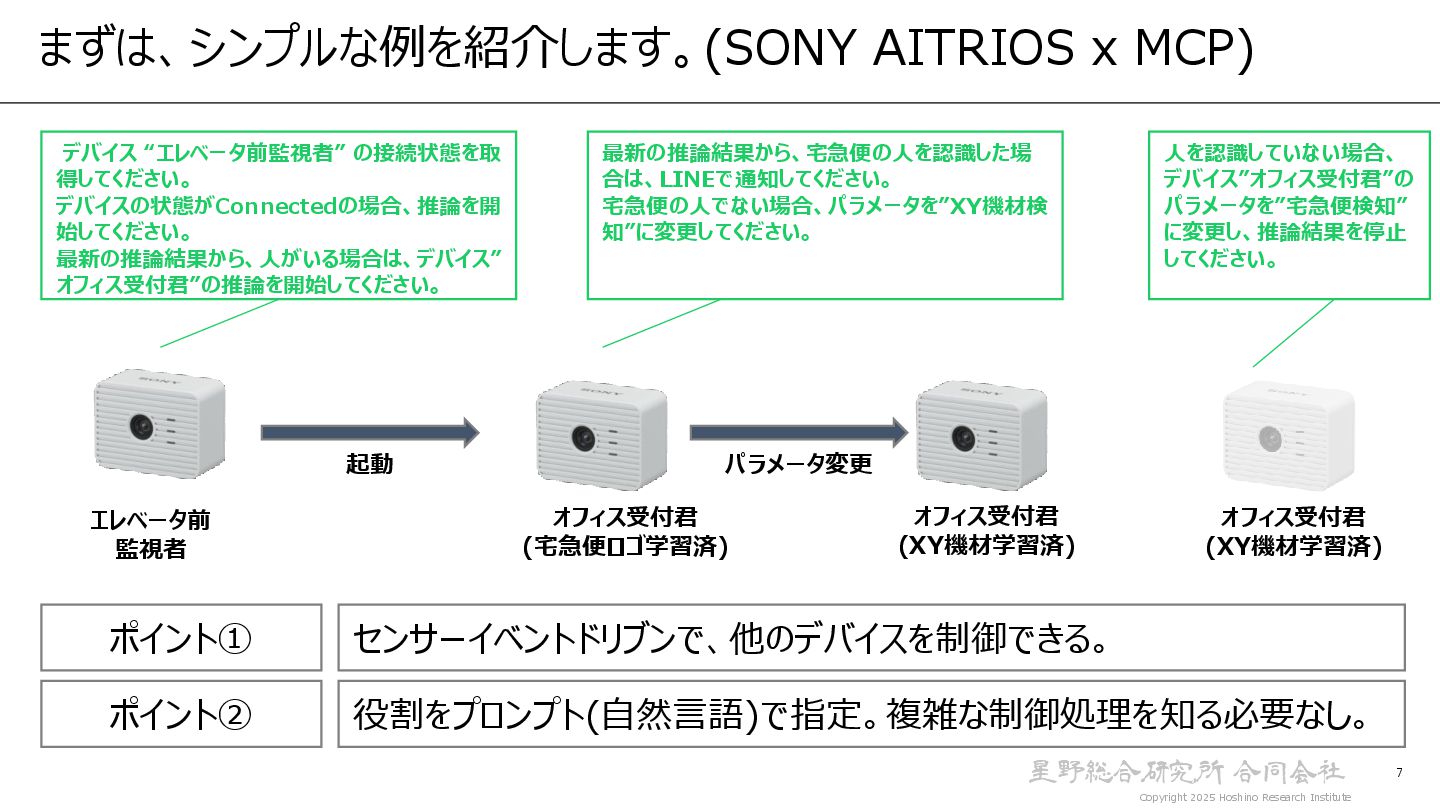
Copyright 2025 Hoshino Research Institute まずは、シンプルな例を紹介します。(SONY AITRIOS x MCP) 7
デバイス “エレベータ前監視者” の接続状態を取 得してください。 デバイスの状態がConnectedの場合、推論を開 始してください。 最新の推論結果から、人がいる場合は、デバイス” オフィス受付君”の推論を開始してください。 エレベータ前 監視者 オフィス受付君 (宅急便ロゴ学習済) オフィス受付君 (XY機材学習済) 最新の推論結果から、宅急便の人を認識した場 合は、LINEで通知してください。 宅急便の人でない場合、パラメータを”XY機材検 知”に変更してください。 起動 パラメータ変更 オフィス受付君 (XY機材学習済) 人を認識していない場合、 デバイス”オフィス受付君”の パラメータを”宅急便検知” に変更し、推論結果を停止 してください。 ポイント① ポイント② センサーイベントドリブンで、他のデバイスを制御できる。 役割をプロンプト(自然言語)で指定。複雑な制御処理を知る必要なし。
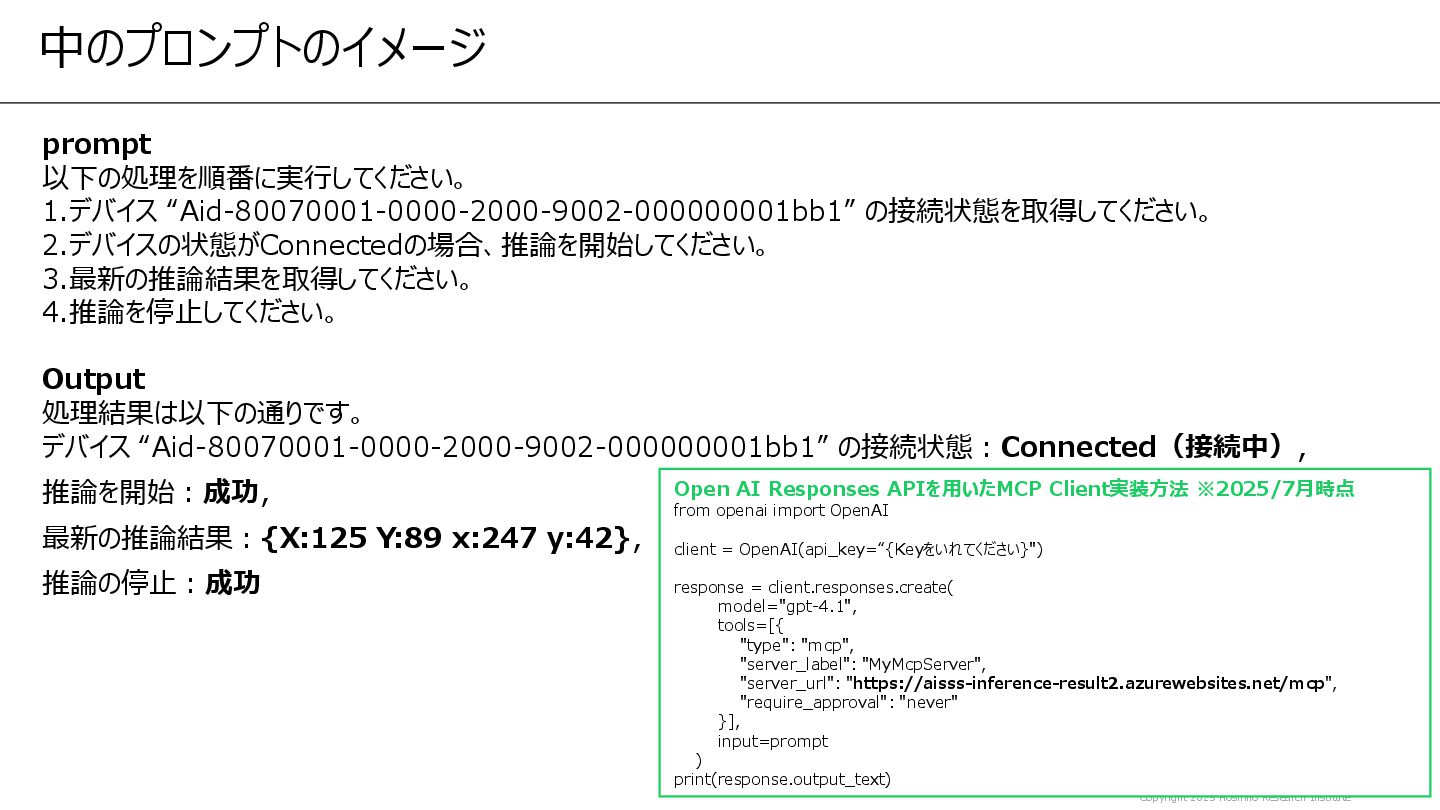
Copyright 2025 Hoshino Research Institute 中のプロンプトのイメージ 8 prompt 以下の処理を順番に実行してください。 1.デバイス
“Aid-80070001-0000-2000-9002-000000001bb1” の接続状態を取得してください。 2.デバイスの状態がConnectedの場合、推論を開始してください。 3.最新の推論結果を取得してください。 4.推論を停止してください。 Output 処理結果は以下の通りです。 デバイス “Aid-80070001-0000-2000-9002-000000001bb1” の接続状態:Connected(接続中), 推論を開始:成功, 最新の推論結果:{X:125 Y:89 x:247 y:42}, 推論の停止:成功 Open AI Responses APIを用いたMCP Client実装方法 ※2025/7月時点 from openai import OpenAI client = OpenAI(api_key=“{Keyをいれてください}") response = client.responses.create( model="gpt-4.1", tools=[{ "type": "mcp", "server_label": "MyMcpServer", "server_url": "https://aisss-inference-result2.azurewebsites.net/mcp", "require_approval": "never" }], input=prompt ) print(response.output_text)
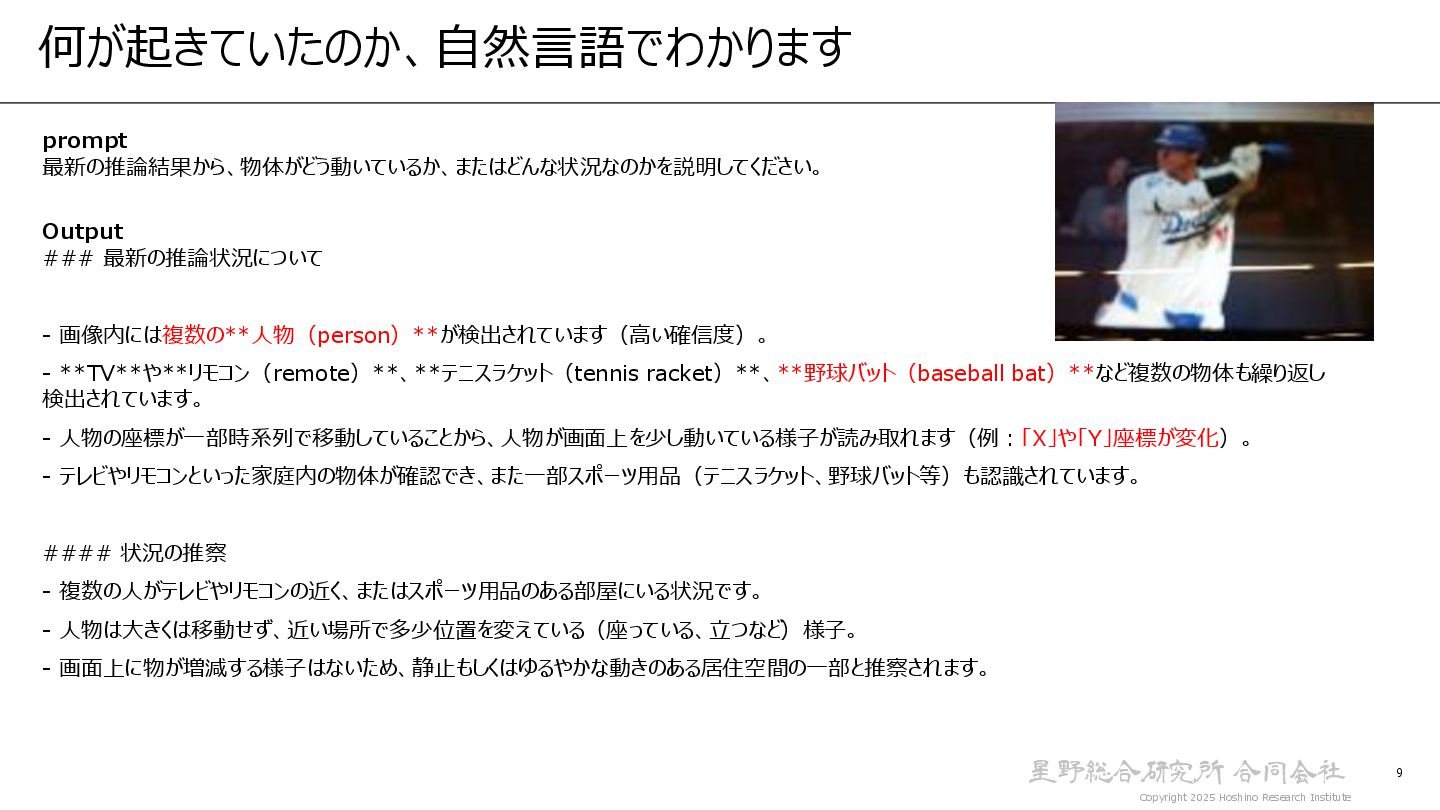
Copyright 2025 Hoshino Research Institute 何が起きていたのか、自然言語でわかります 9 prompt 最新の推論結果から、物体がどう動いているか、またはどんな状況なのかを説明してください。 Output
### 最新の推論状況について - 画像内には複数の**人物(person)**が検出されています(高い確信度)。 - **TV**や**リモコン(remote)**、**テニスラケット(tennis racket)**、**野球バット(baseball bat)**など複数の物体も繰り返し 検出されています。 - 人物の座標が一部時系列で移動していることから、人物が画面上を少し動いている様子が読み取れます(例:「X」や「Y」座標が変化)。 - テレビやリモコンといった家庭内の物体が確認でき、また一部スポーツ用品(テニスラケット、野球バット等)も認識されています。 #### 状況の推察 - 複数の人がテレビやリモコンの近く、またはスポーツ用品のある部屋にいる状況です。 - 人物は大きくは移動せず、近い場所で多少位置を変えている(座っている、立つなど)様子。 - 画面上に物が増減する様子はないため、静止もしくはゆるやかな動きのある居住空間の一部と推察されます。
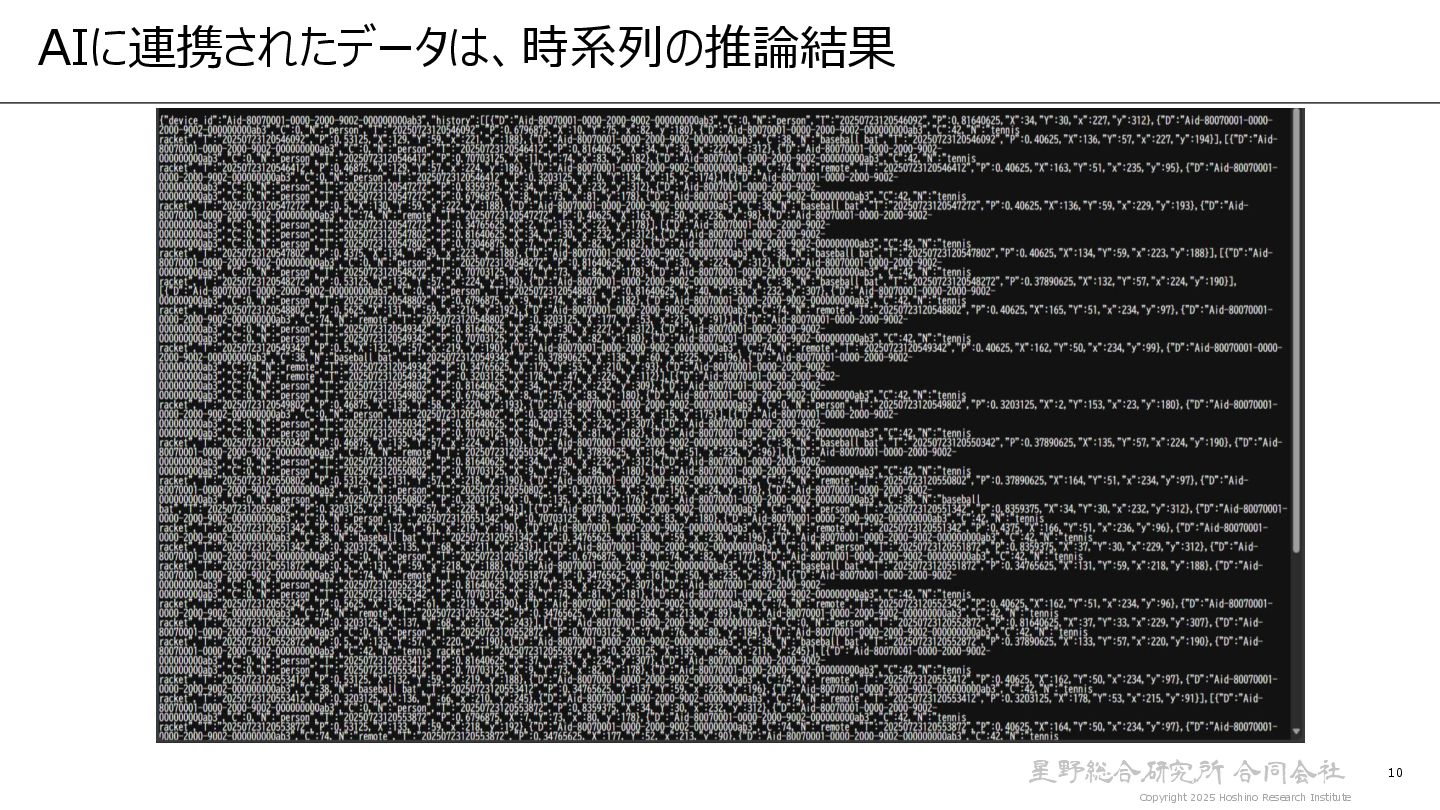
Copyright 2025 Hoshino Research Institute AIに連携されたデータは、時系列の推論結果 10
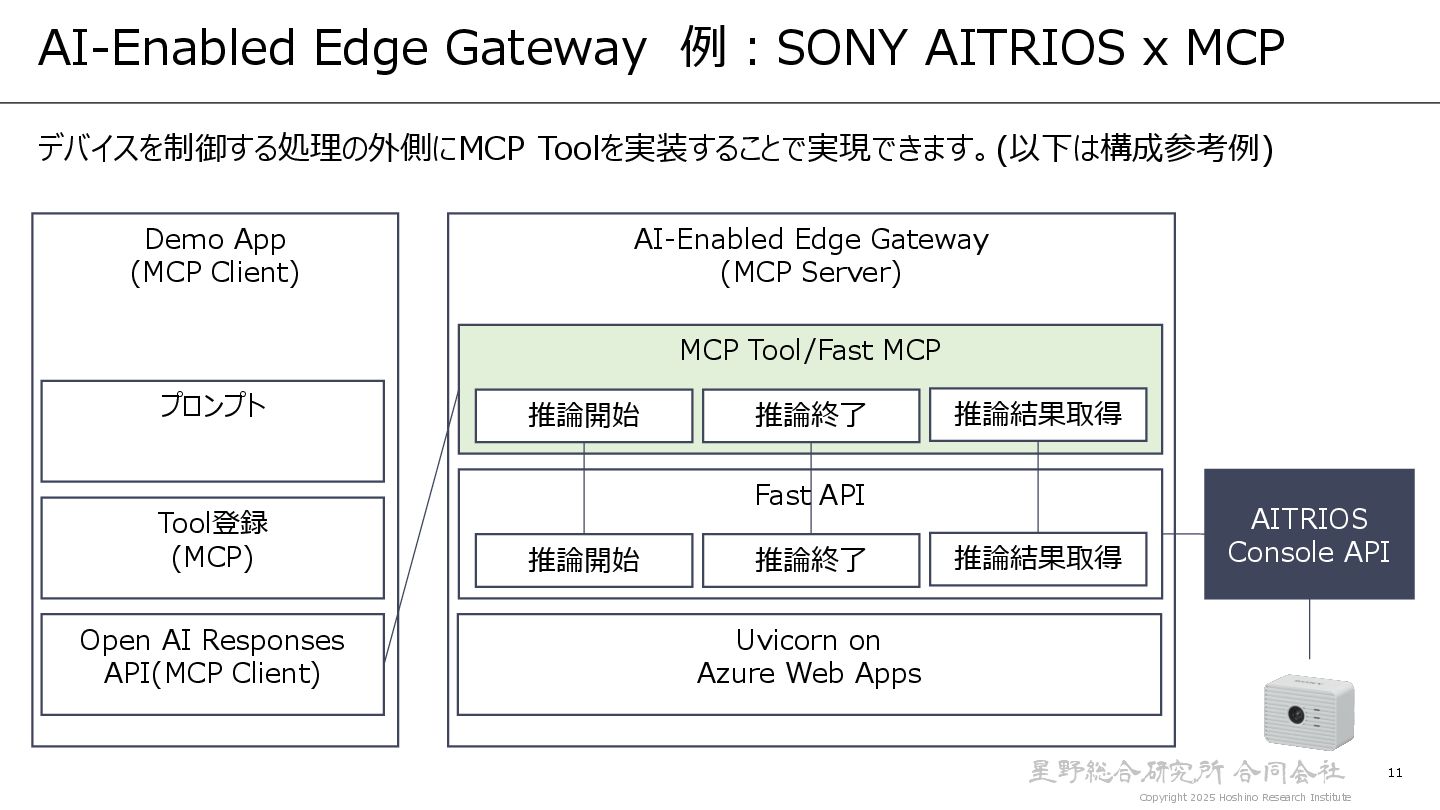
Copyright 2025 Hoshino Research Institute AI-Enabled Edge Gateway 例:SONY AITRIOS
x MCP 11 Demo App (MCP Client) プロンプト Open AI Responses API(MCP Client) Tool登録 (MCP) AI-Enabled Edge Gateway (MCP Server) Uvicorn on Azure Web Apps Fast API 推論開始 推論終了 推論結果取得 MCP Tool/Fast MCP 推論開始 推論終了 推論結果取得 AITRIOS Console API デバイスを制御する処理の外側にMCP Toolを実装することで実現できます。(以下は構成参考例)
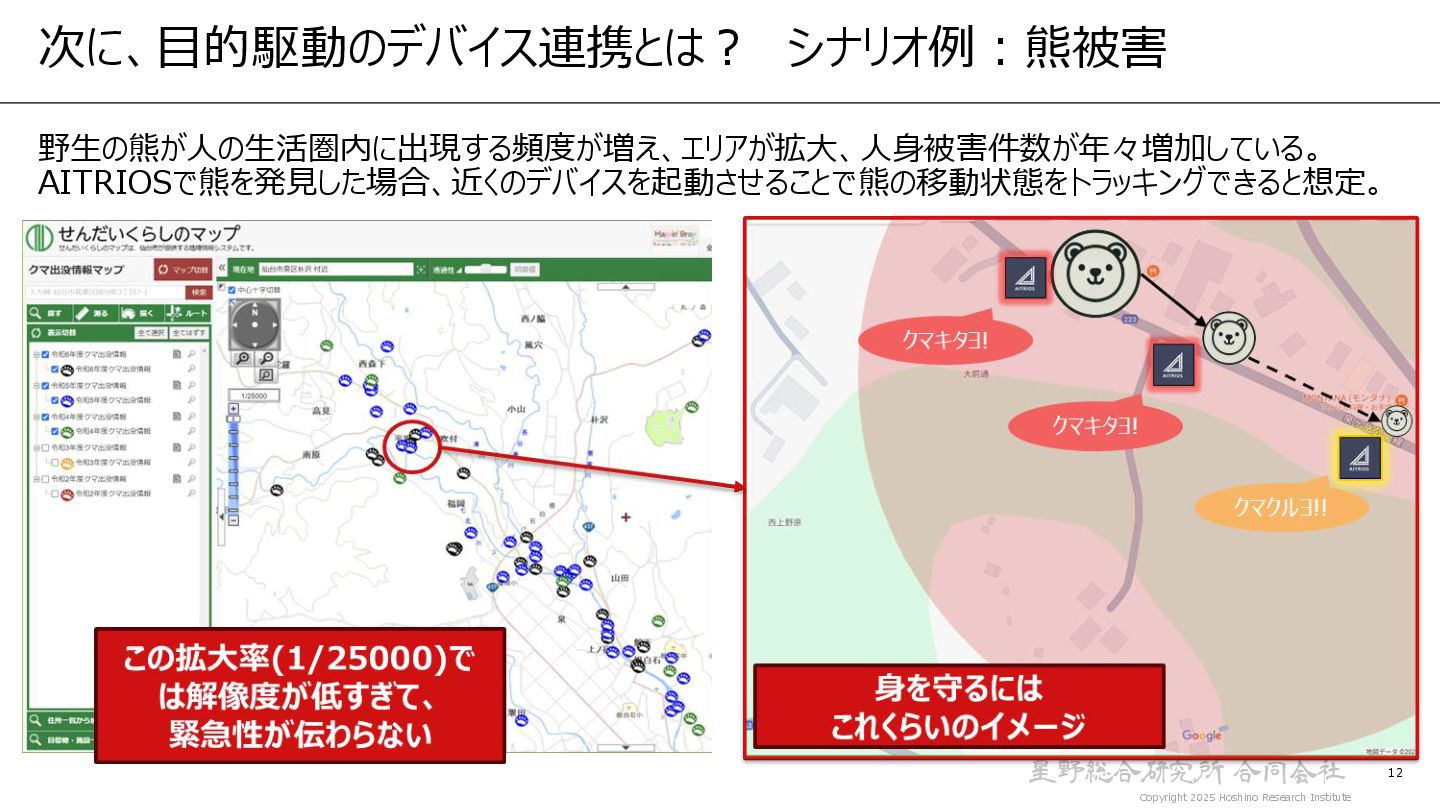
Copyright 2025 Hoshino Research Institute 次に、目的駆動のデバイス連携とは? シナリオ例:熊被害 12 野生の熊が人の生活圏内に出現する頻度が増え、エリアが拡大、人身被害件数が年々増加している。 AITRIOSで熊を発見した場合、近くのデバイスを起動させることで熊の移動状態をトラッキングできると想定。
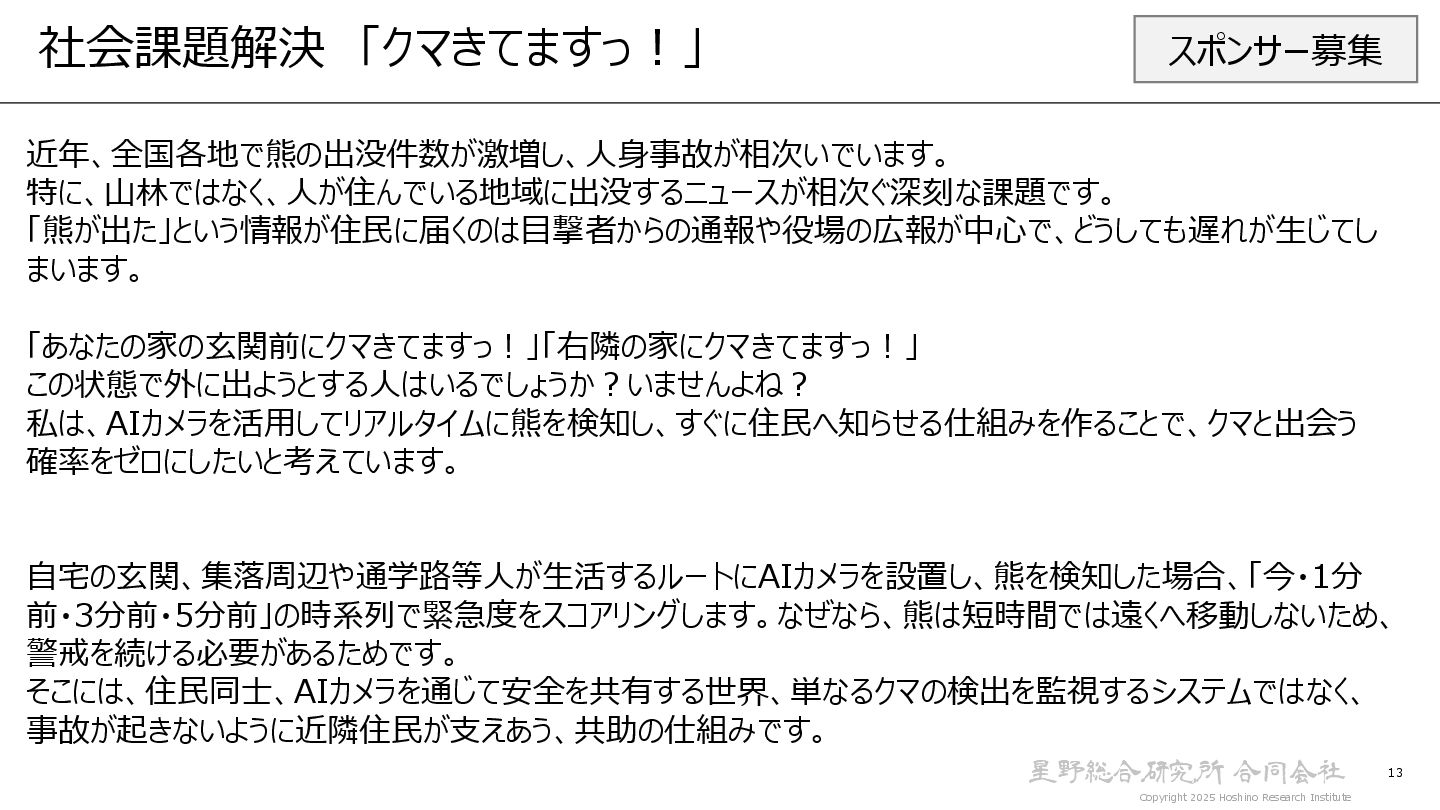
Copyright 2025 Hoshino Research Institute 社会課題解決 「クマきてますっ!」 13 近年、全国各地で熊の出没件数が激増し、人身事故が相次いでいます。 特に、山林ではなく、人が住んでいる地域に出没するニュースが相次ぐ深刻な課題です。
「熊が出た」という情報が住民に届くのは目撃者からの通報や役場の広報が中心で、どうしても遅れが生じてし まいます。 「あなたの家の玄関前にクマきてますっ!」「右隣の家にクマきてますっ!」 この状態で外に出ようとする人はいるでしょうか?いませんよね? 私は、AIカメラを活用してリアルタイムに熊を検知し、すぐに住民へ知らせる仕組みを作ることで、クマと出会う 確率をゼロにしたいと考えています。 自宅の玄関、集落周辺や通学路等人が生活するルートにAIカメラを設置し、熊を検知した場合、「今・1分 前・3分前・5分前」の時系列で緊急度をスコアリングします。なぜなら、熊は短時間では遠くへ移動しないため、 警戒を続ける必要があるためです。 そこには、住民同士、AIカメラを通じて安全を共有する世界、単なるクマの検出を監視するシステムではなく、 事故が起きないように近隣住民が支えあう、共助の仕組みです。 スポンサー募集
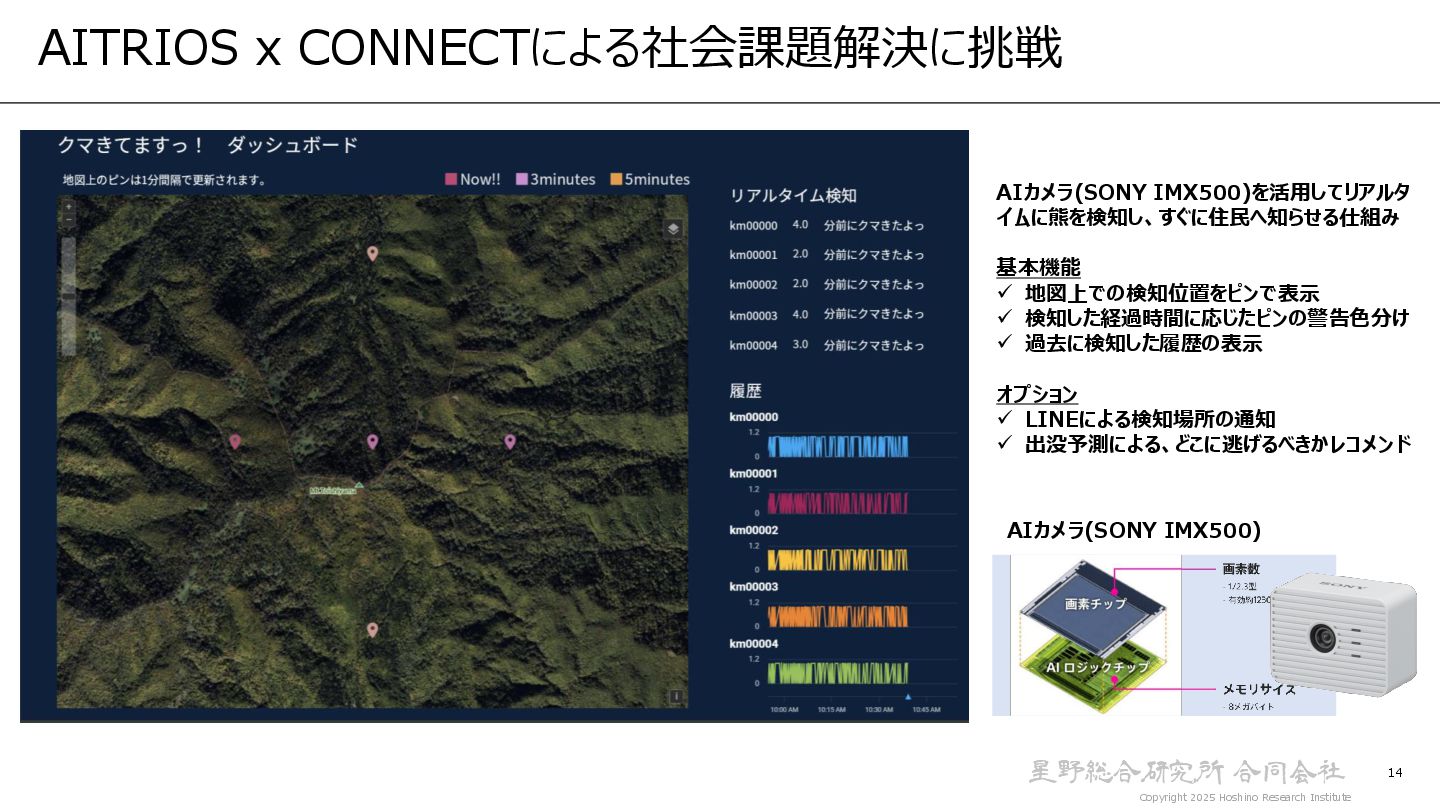
Copyright 2025 Hoshino Research Institute AITRIOS x CONNECTによる社会課題解決に挑戦 14 AIカメラ(SONY
IMX500)を活用してリアルタ イムに熊を検知し、すぐに住民へ知らせる仕組み 基本機能 ✓ 地図上での検知位置をピンで表示 ✓ 検知した経過時間に応じたピンの警告色分け ✓ 過去に検知した履歴の表示 オプション ✓ LINEによる検知場所の通知 ✓ 出没予測による、どこに逃げるべきかレコメンド AIカメラ(SONY IMX500)
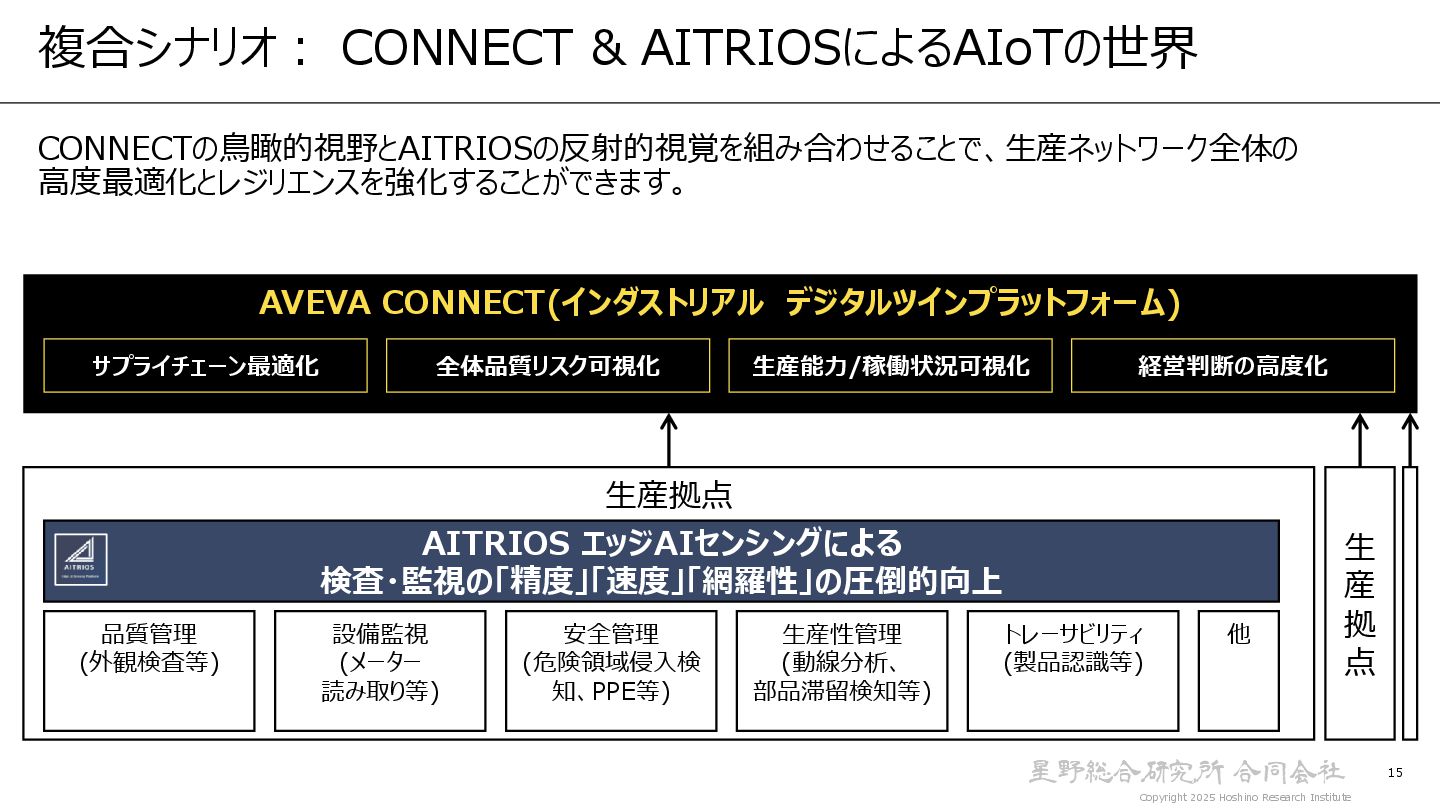
Copyright 2025 Hoshino Research Institute 複合シナリオ: CONNECT & AITRIOSによるAIoTの世界 15
AVEVA CONNECT(インダストリアル デジタルツインプラットフォーム) 生産拠点 品質管理 (外観検査等) 設備監視 (メーター 読み取り等) 安全管理 (危険領域侵入検 知、PPE等) 生産性管理 (動線分析、 部品滞留検知等) トレーサビリティ (製品認識等) 他 生 産 拠 点 AITRIOS エッジAIセンシングによる 検査・監視の「精度」「速度」「網羅性」の圧倒的向上 サプライチェーン最適化 全体品質リスク可視化 生産能力/稼働状況可視化 経営判断の高度化 CONNECTの鳥瞰的視野とAITRIOSの反射的視覚を組み合わせることで、生産ネットワーク全体の 高度最適化とレジリエンスを強化することができます。
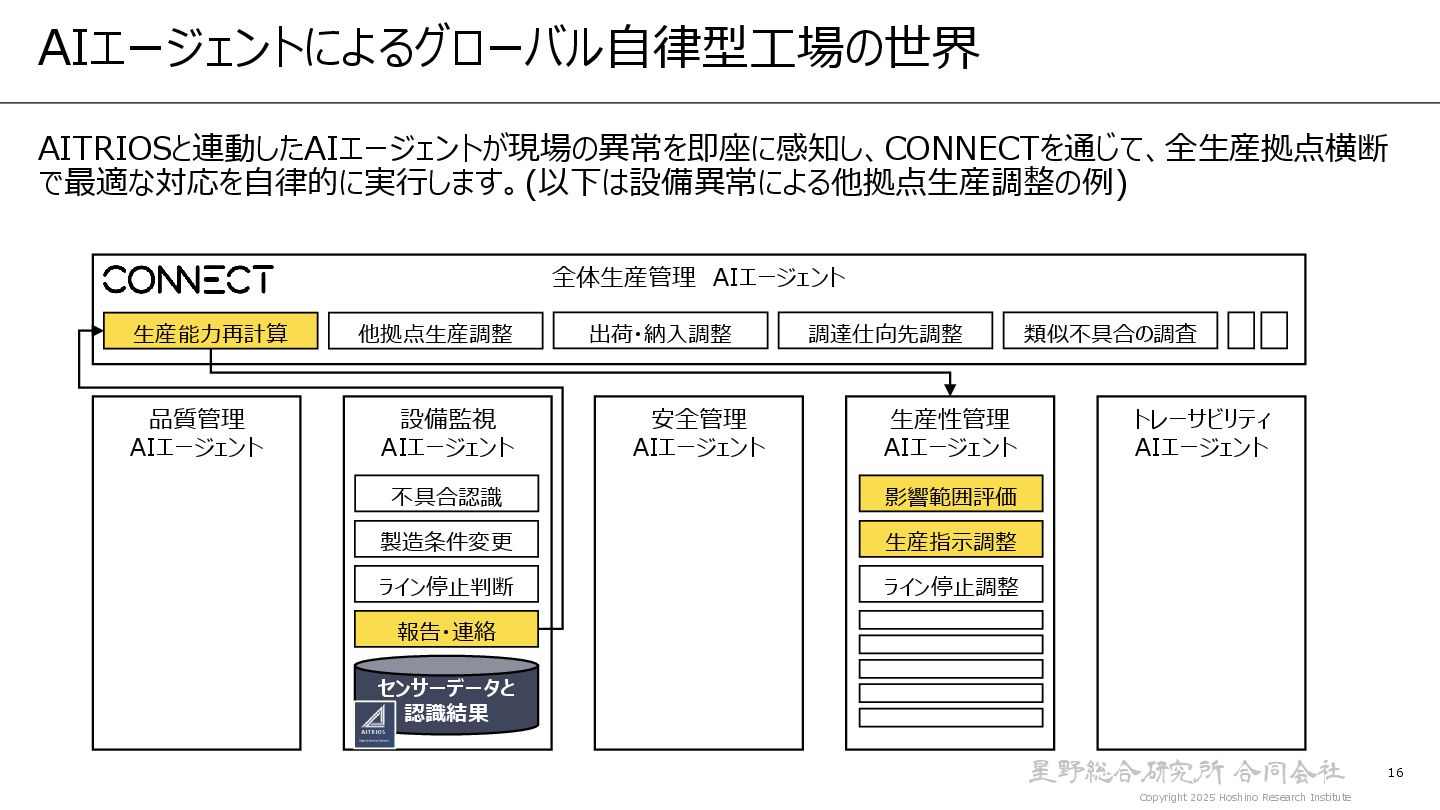
Copyright 2025 Hoshino Research Institute AIエージェントによるグローバル自律型工場の世界 16 AITRIOSと連動したAIエージェントが現場の異常を即座に感知し、CONNECTを通じて、全生産拠点横断 で最適な対応を自律的に実行します。(以下は設備異常による他拠点生産調整の例) 全体生産管理
AIエージェント 品質管理 AIエージェント 生産能力再計算 他拠点生産調整 出荷・納入調整 調達仕向先調整 類似不具合の調査 安全管理 AIエージェント 生産性管理 AIエージェント トレーサビリティ AIエージェント 設備監視 AIエージェント センサーデータと 認識結果 不具合認識 製造条件変更 ライン停止判断 報告・連絡 影響範囲評価 生産指示調整 ライン停止調整
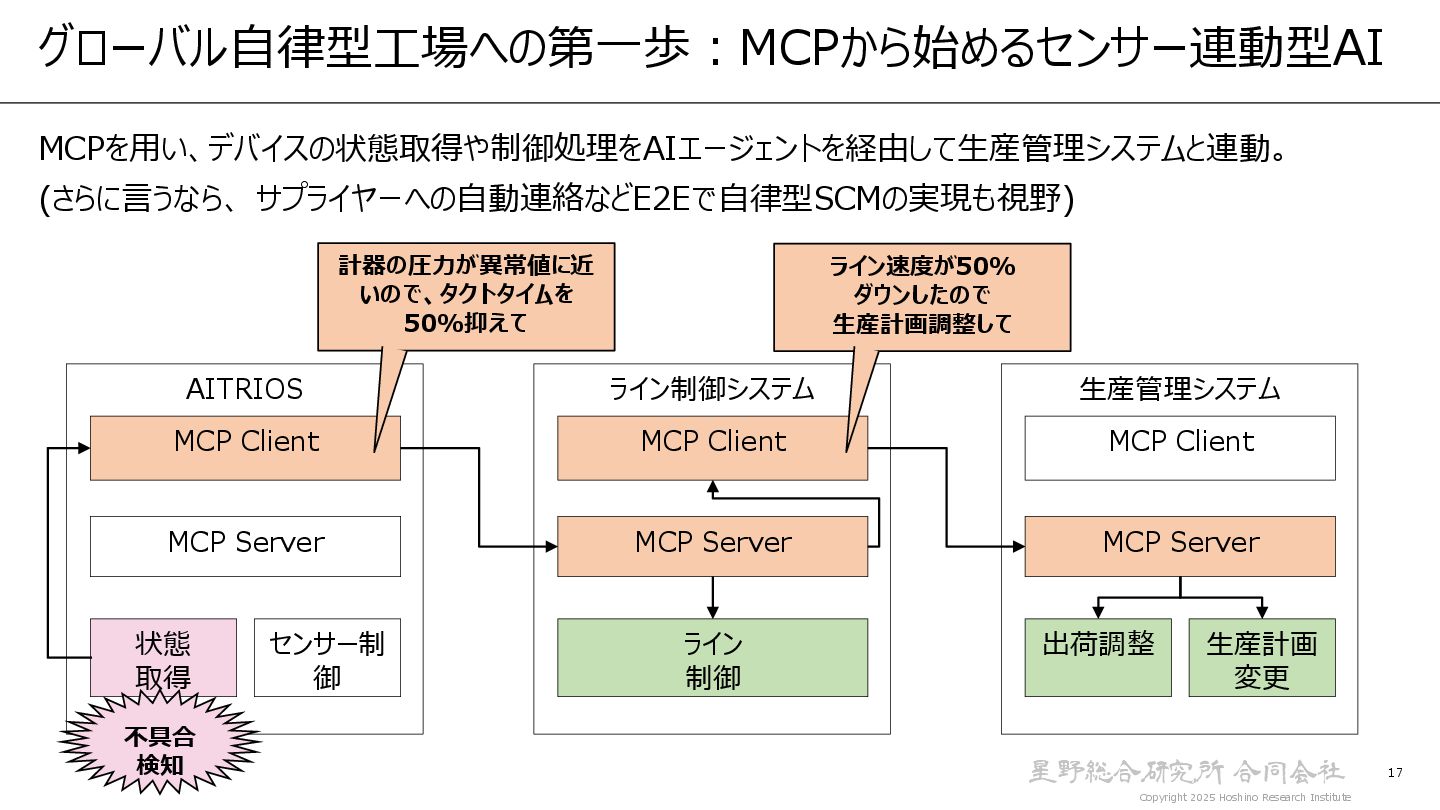
Copyright 2025 Hoshino Research Institute グローバル自律型工場への第一歩:MCPから始めるセンサー連動型AI 17 MCPを用い、デバイスの状態取得や制御処理をAIエージェントを経由して生産管理システムと連動。 (さらに言うなら、 サプライヤーへの自動連絡などE2Eで自律型SCMの実現も視野)
AITRIOS MCP Client MCP Server 状態 取得 センサー制 御 ライン制御システム MCP Client MCP Server ライン 制御 生産管理システム MCP Client MCP Server 出荷調整 生産計画 変更 不具合 検知 計器の圧力が異常値に近 いので、タクトタイムを 50%抑えて ライン速度が50% ダウンしたので 生産計画調整して
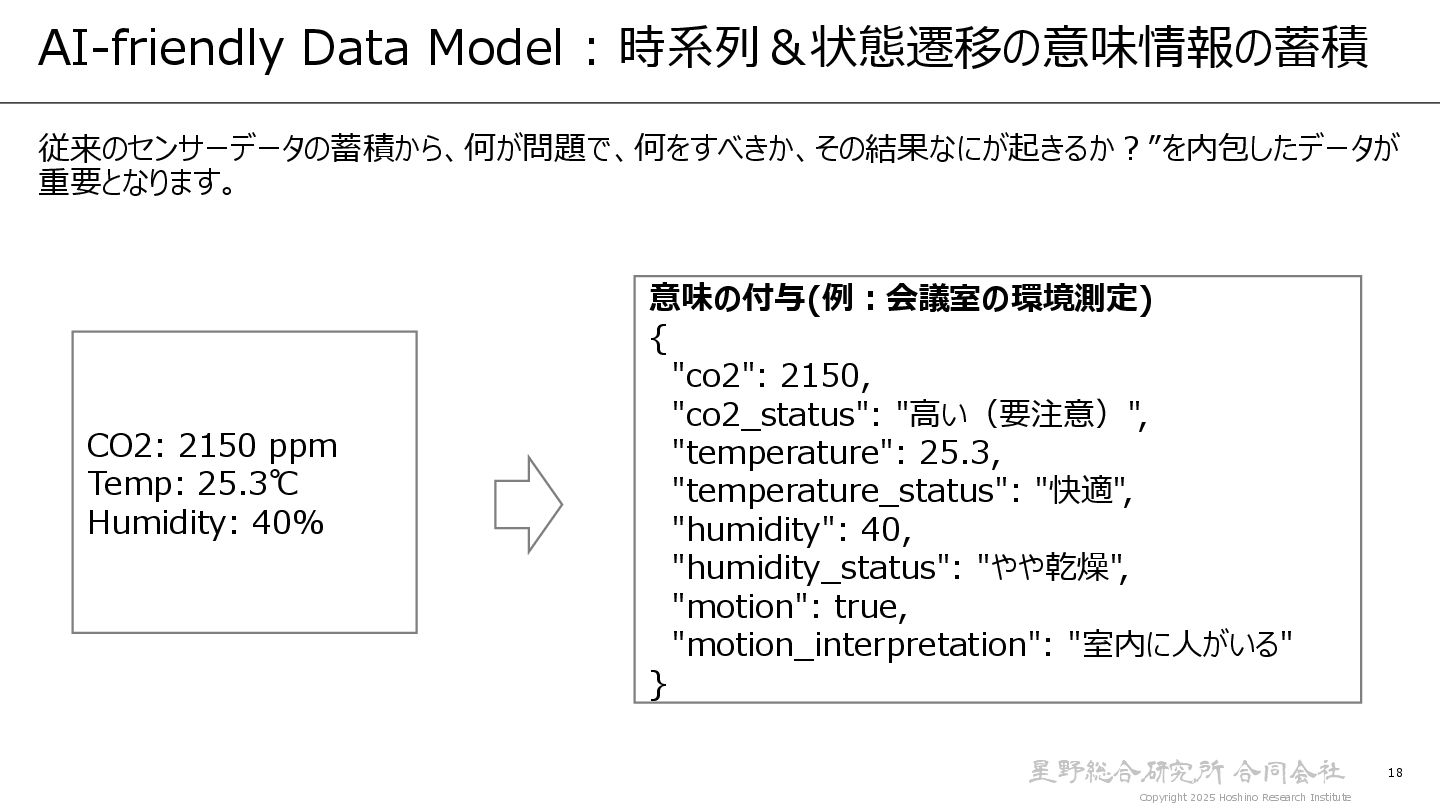
Copyright 2025 Hoshino Research Institute AI-friendly Data Model : 時系列&状態遷移の意味情報の蓄積
18 CO2: 2150 ppm Temp: 25.3℃ Humidity: 40% 意味の付与(例:会議室の環境測定) { "co2": 2150, "co2_status": "高い(要注意)", "temperature": 25.3, "temperature_status": "快適", "humidity": 40, "humidity_status": "やや乾燥", "motion": true, "motion_interpretation": "室内に人がいる" } 従来のセンサーデータの蓄積から、何が問題で、何をすべきか、その結果なにが起きるか?”を内包したデータが 重要となります。
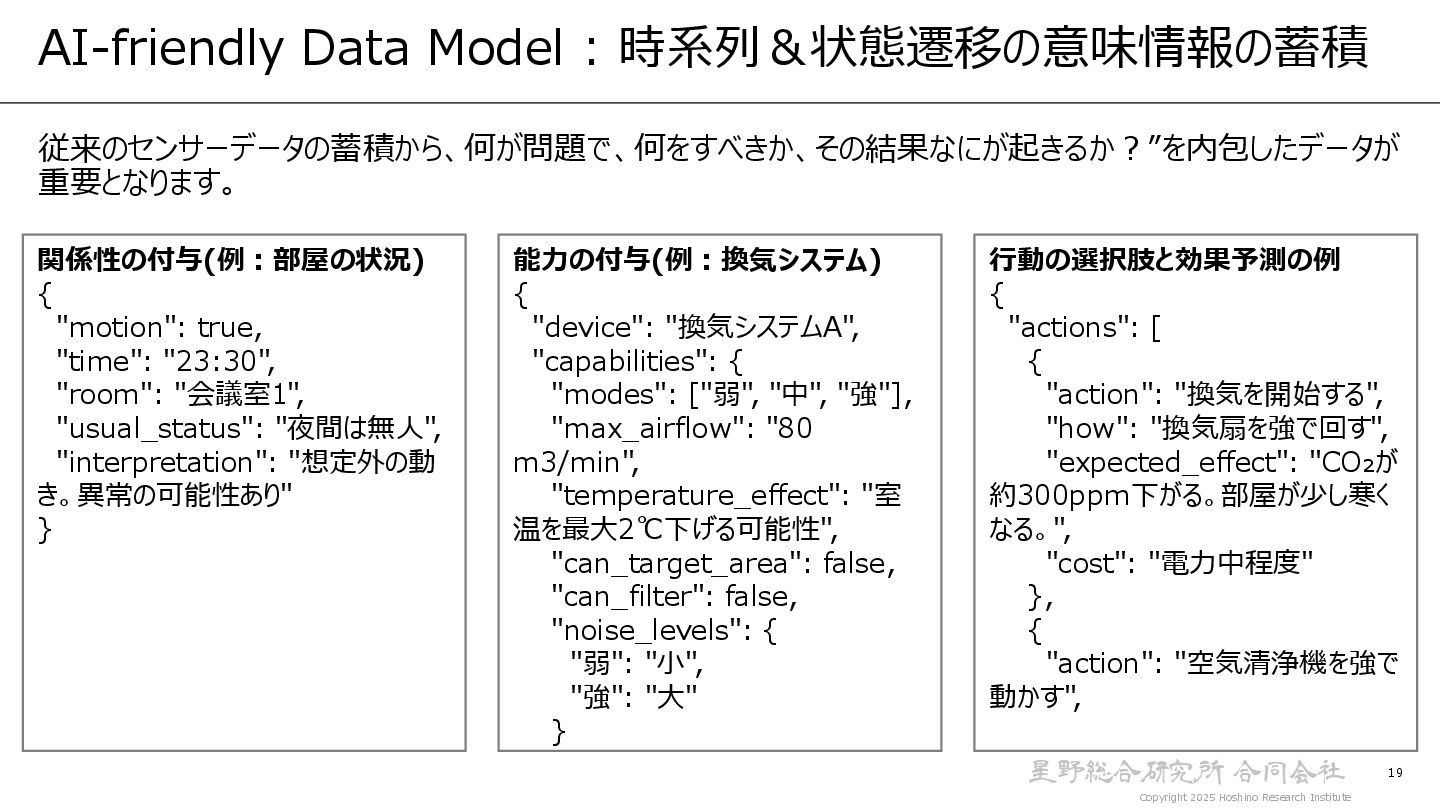
Copyright 2025 Hoshino Research Institute AI-friendly Data Model : 時系列&状態遷移の意味情報の蓄積
19 従来のセンサーデータの蓄積から、何が問題で、何をすべきか、その結果なにが起きるか?”を内包したデータが 重要となります。 関係性の付与(例:部屋の状況) { "motion": true, "time": "23:30", "room": "会議室1", "usual_status": "夜間は無人", "interpretation": "想定外の動 き。異常の可能性あり" } 能力の付与(例:換気システム) { "device": "換気システムA", "capabilities": { "modes": ["弱", "中", "強"], "max_airflow": "80 m3/min", "temperature_effect": "室 温を最大2℃下げる可能性", "can_target_area": false, "can_filter": false, "noise_levels": { "弱": "小", "強": "大" } 行動の選択肢と効果予測の例 { "actions": [ { "action": "換気を開始する", "how": "換気扇を強で回す", "expected_effect": "CO₂が 約300ppm下がる。部屋が少し寒く なる。", "cost": "電力中程度" }, { "action": "空気清浄機を強で 動かす",
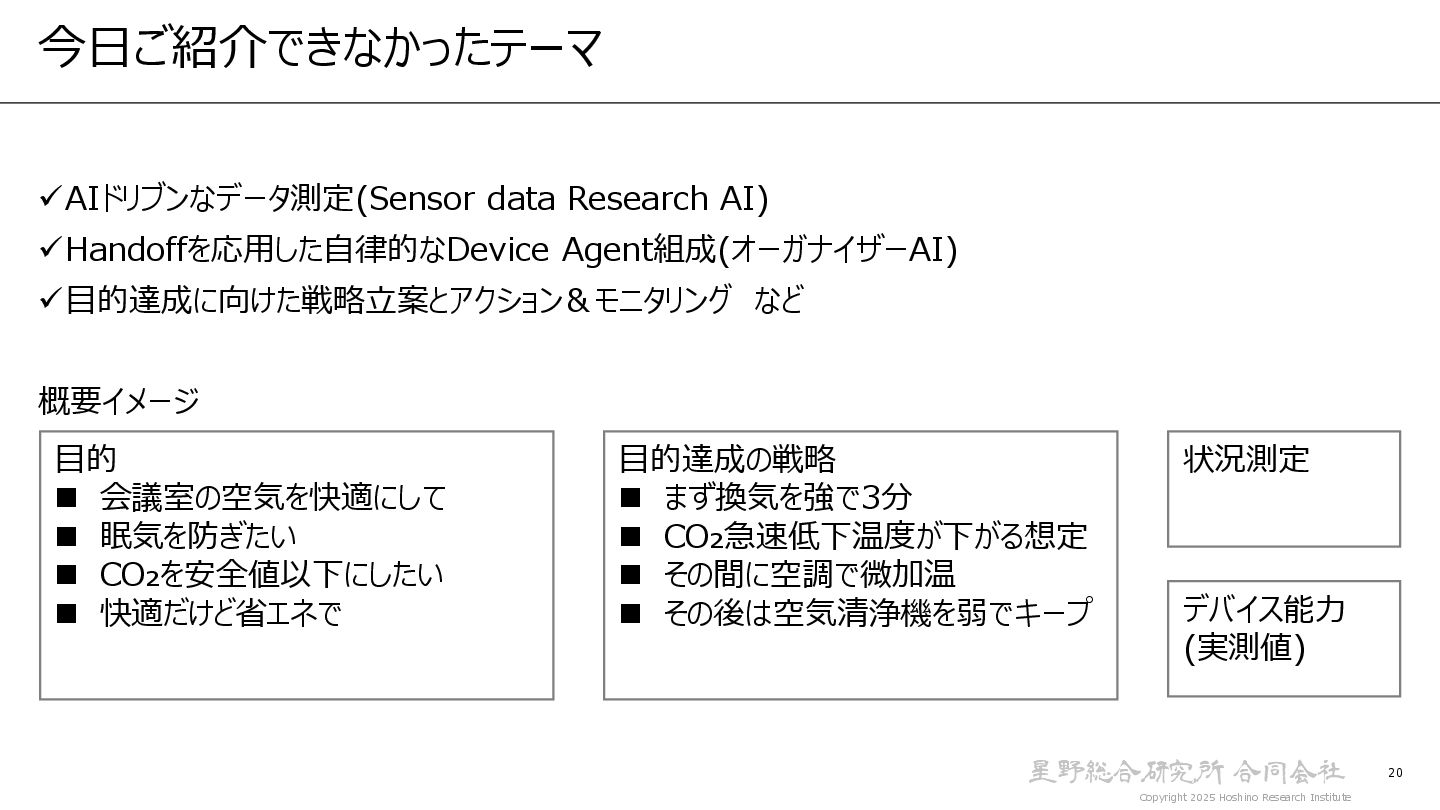
Copyright 2025 Hoshino Research Institute 今日ご紹介できなかったテーマ 20 ✓AIドリブンなデータ測定(Sensor data Research
AI) ✓Handoffを応用した自律的なDevice Agent組成(オーガナイザーAI) ✓目的達成に向けた戦略立案とアクション&モニタリング など 概要イメージ 目的 ◼ 会議室の空気を快適にして ◼ 眠気を防ぎたい ◼ CO₂を安全値以下にしたい ◼ 快適だけど省エネで 目的達成の戦略 ◼ まず換気を強で3分 ◼ CO₂急速低下温度が下がる想定 ◼ その間に空調で微加温 ◼ その後は空気清浄機を弱でキープ 状況測定 デバイス能力 (実測値)
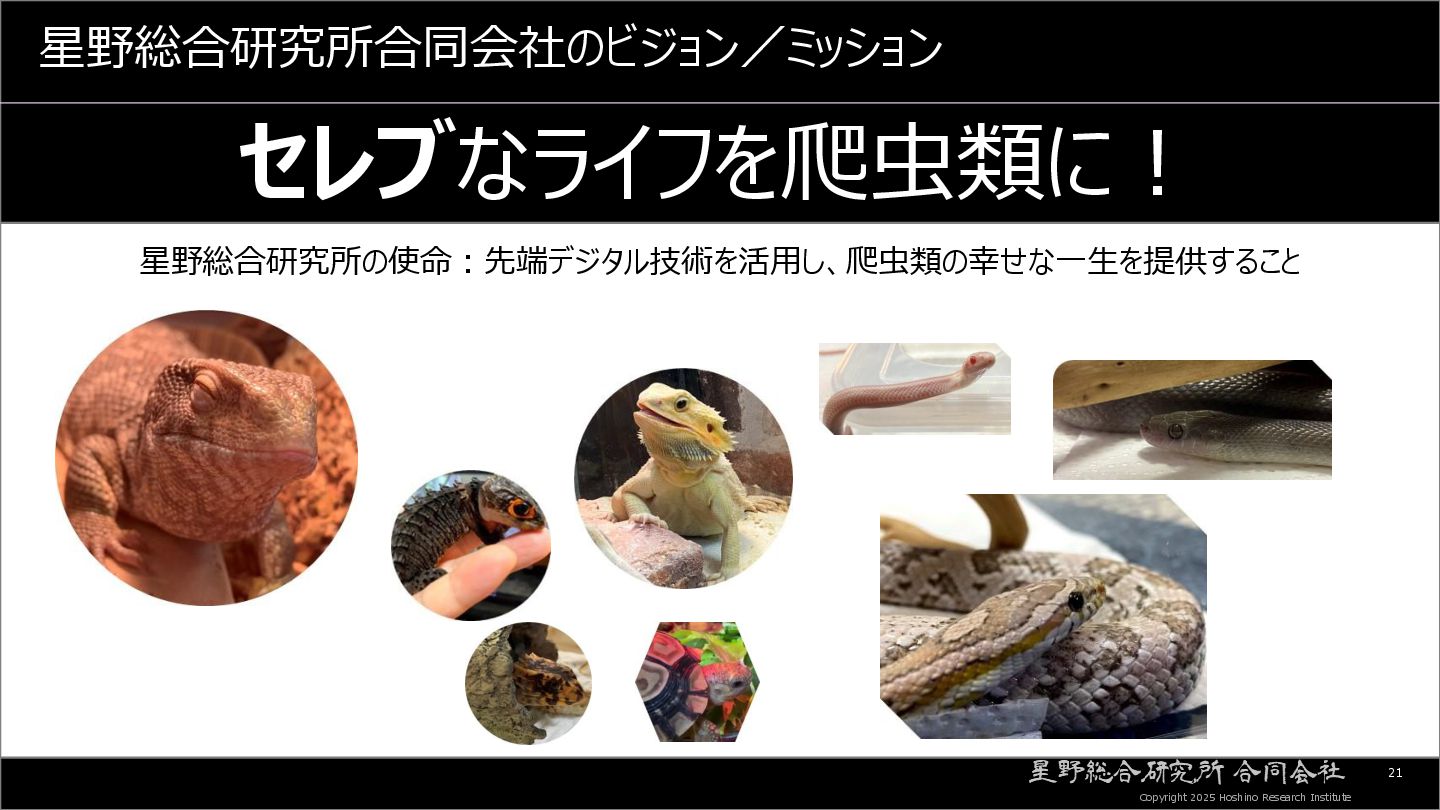
Copyright 2025 Hoshino Research Institute 爬虫類の幸せを爬虫類マニアと共に築くために デジタル技術の活用を研究すること、 それが星野総合研究所の使命。 星野総合研究所合同会社のビジョン/ミッション セレブなライフを爬虫類に!
星野総合研究所の使命:先端デジタル技術を活用し、爬虫類の幸せな一生を提供すること 21
Copyright 2025 Hoshino Research Institute 22 Appendix IKIGAIコンサルティング 好きなことからはじめる課題解決
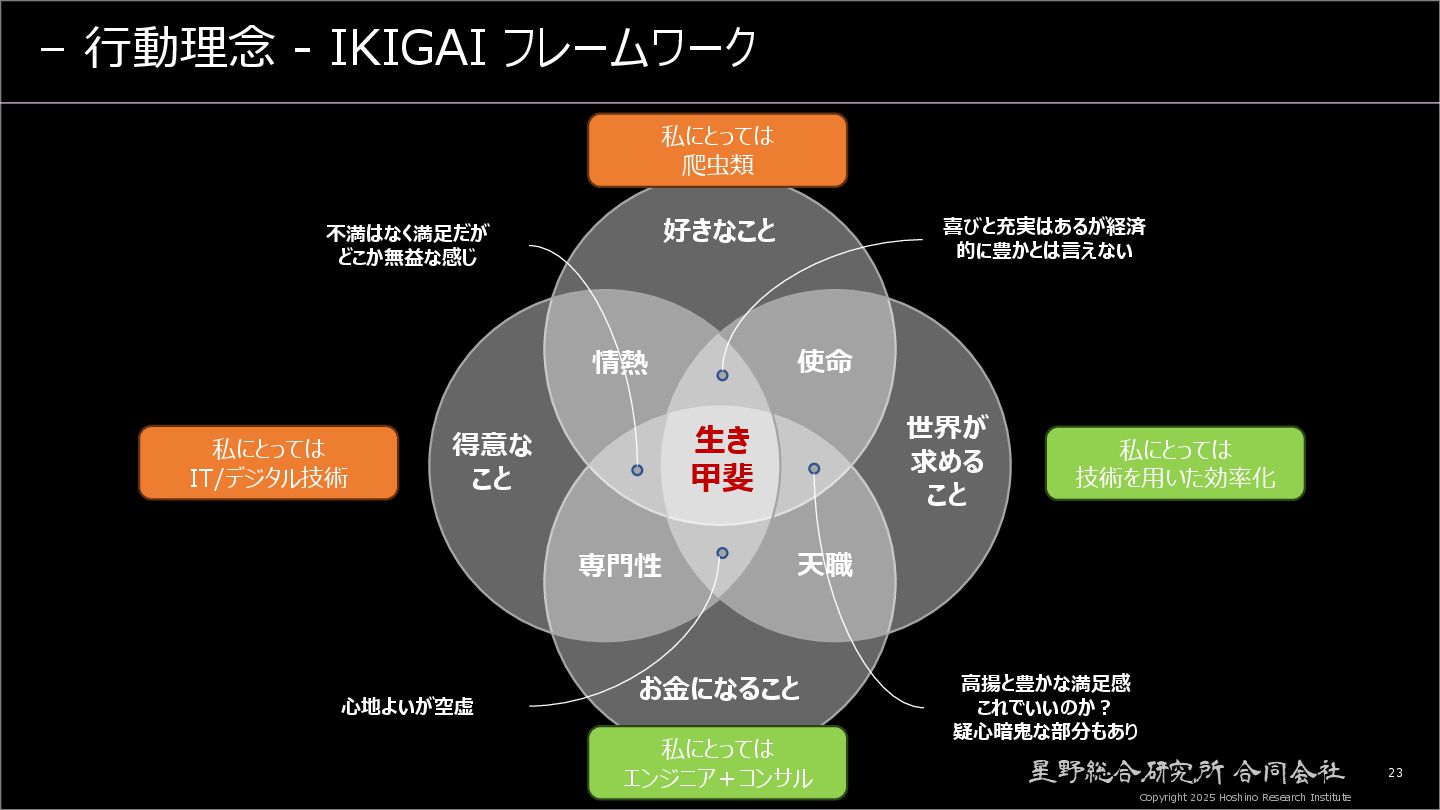
Copyright 2025 Hoshino Research Institute – 行動理念 - IKIGAI フレームワーク
好きなこと お金になること 世界が 求める こと 得意な こと 生き 甲斐 情熱 使命 専門性 天職 喜びと充実はあるが経済 的に豊かとは言えない 高揚と豊かな満足感 これでいいのか? 疑心暗鬼な部分もあり 不満はなく満足だが どこか無益な感じ 心地よいが空虚 私にとっては 爬虫類 私にとっては IT/デジタル技術 私にとっては 技術を用いた効率化 私にとっては エンジニア+コンサル 23
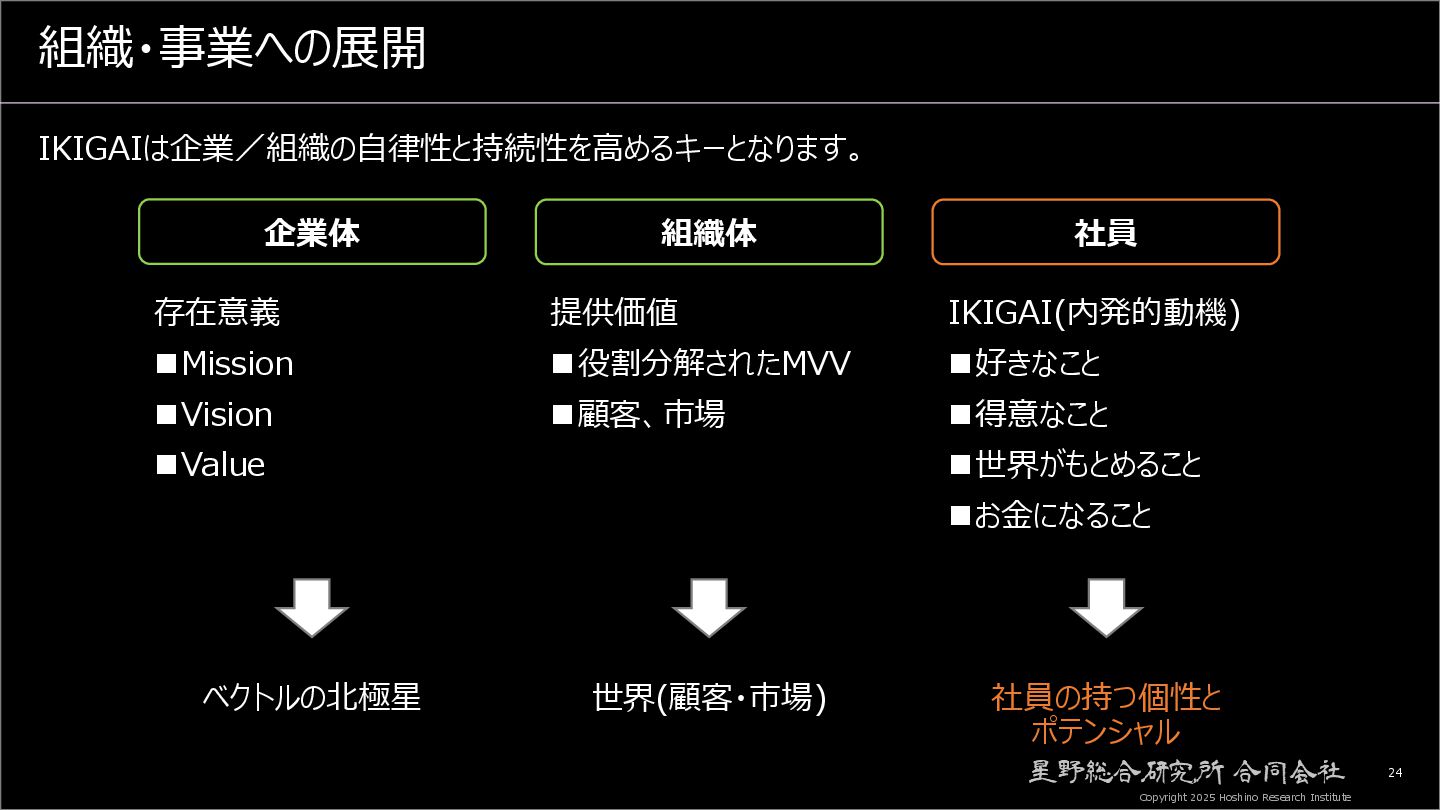
Copyright 2025 Hoshino Research Institute 組織・事業への展開 企業体 組織体 社員 IKIGAIは企業/組織の自律性と持続性を高めるキーとなります。
存在意義 ◼Mission ◼Vision ◼Value 提供価値 ◼役割分解されたMVV ◼顧客、市場 IKIGAI(内発的動機) ◼好きなこと ◼得意なこと ◼世界がもとめること ◼お金になること ベクトルの北極星 世界(顧客・市場) 社員の持つ個性と ポテンシャル 24
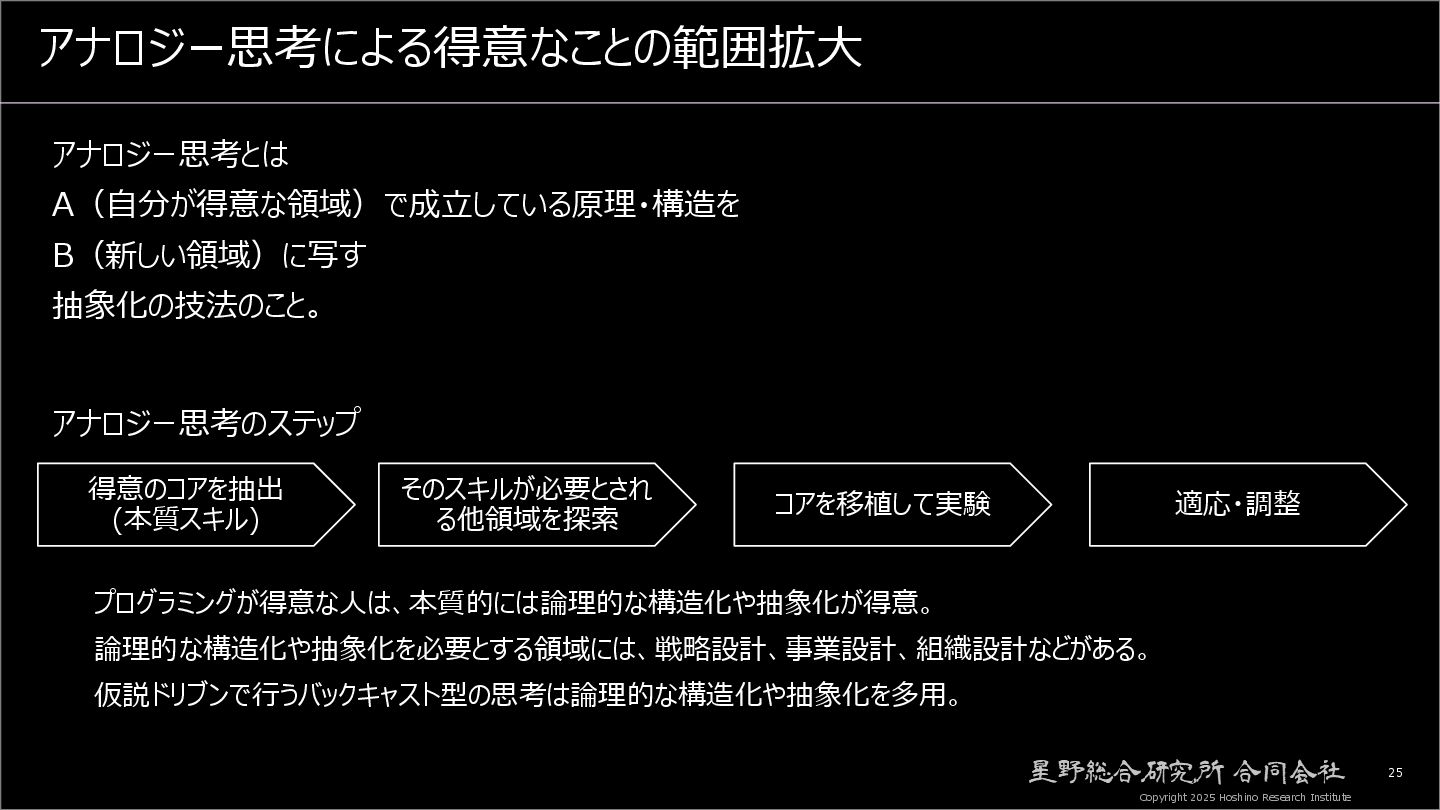
Copyright 2025 Hoshino Research Institute アナロジー思考による得意なことの範囲拡大 アナロジー思考とは A(自分が得意な領域)で成立している原理・構造を B(新しい領域)に写す 抽象化の技法のこと。
得意のコアを抽出 (本質スキル) そのスキルが必要とされ る他領域を探索 コアを移植して実験 適応・調整 プログラミングが得意な人は、本質的には論理的な構造化や抽象化が得意。 論理的な構造化や抽象化を必要とする領域には、戦略設計、事業設計、組織設計などがある。 仮説ドリブンで行うバックキャスト型の思考は論理的な構造化や抽象化を多用。 アナロジー思考のステップ 25
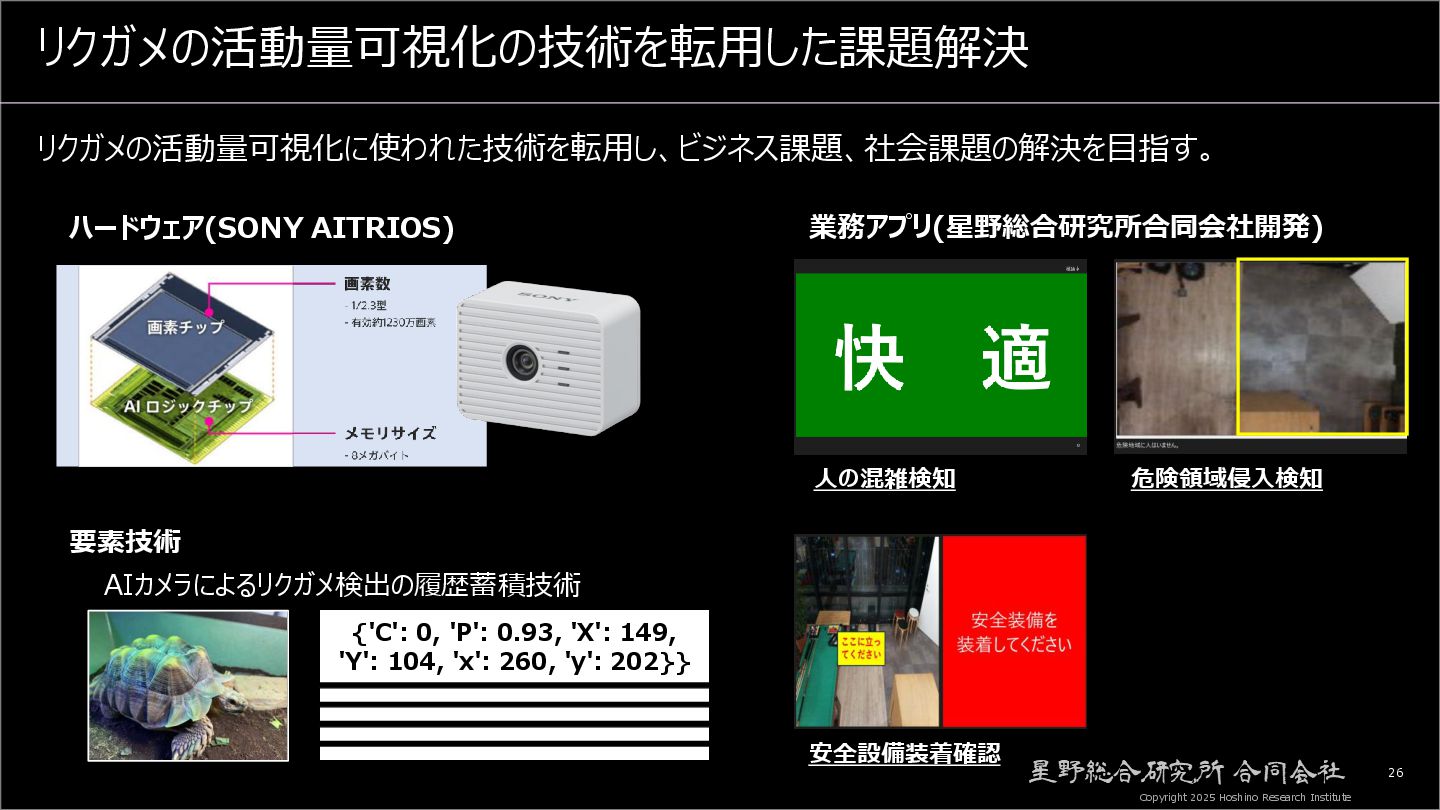
Copyright 2025 Hoshino Research Institute リクガメの活動量可視化の技術を転用した課題解決 リクガメの活動量可視化に使われた技術を転用し、ビジネス課題、社会課題の解決を目指す。 ハードウェア(SONY AITRIOS) 人の混雑検知
危険領域侵入検知 安全設備装着確認 業務アプリ(星野総合研究所合同会社開発) 要素技術 {'C': 0, 'P': 0.93, 'X': 149, 'Y': 104, 'x': 260, 'y': 202}} AIカメラによるリクガメ検出の履歴蓄積技術 26
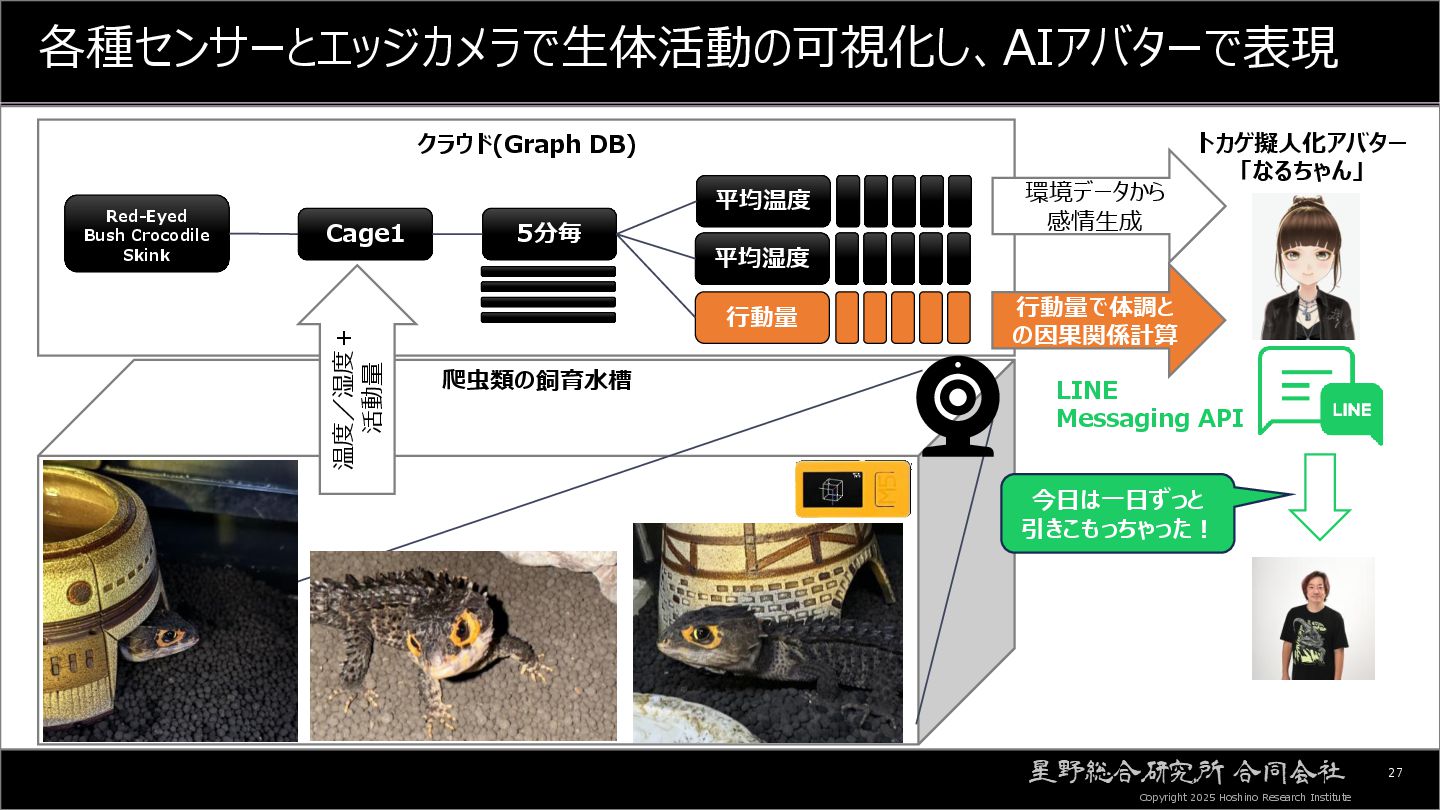
Copyright 2025 Hoshino Research Institute 爬虫類の幸せを爬虫類マニアと共に築くために デジタル技術の活用を研究すること、 それが星野総合研究所の使命。 各種センサーとエッジカメラで生体活動の可視化し、AIアバターで表現 爬虫類の飼育水槽
爬虫類の幸せを爬虫類マニアと共に築くために デジタル技術の活用を研究すること、 それが星野総合研究所の使命。 温度/湿度+ 活動量 クラウド(Graph DB) Red-Eyed Bush Crocodile Skink 5分毎 平均温度 平均湿度 行動量 Cage1 環境データから 感情生成 トカゲ擬人化アバター 「なるちゃん」 今日は一日ずっと 引きこもっちゃった! LINE Messaging API 行動量で体調と の因果関係計算 27


 iotcomjpadmin
 keeg
keeg
 mtpooh
 husengs7
 kakakakakku
 mewuto
 shogo4131
 oracle4engineer
 tsuchikazu
 bgpat
bgpat
 riyaamemiya
 yama3133
 grimoh
 inesmontani
 tapps
tapps
 ipullrank
 oripsolob
 marktimemedia
 chriscoyier
 ianozsvald
 afnizarnur
 axbom
axbom
 katarinadahlin
 lara
lara
 gurzu
gurzu