Upgrade to Pro — share decks privately, control downloads, hide ads and more …

Experiences from two years of AI-driven moderni...

Experiences from two years of AI-driven modernization

Many reports about AI-powered Spec-Driven Development come from greenfield demos or small projects. My experience is quite different.

For the past two years, I've been supporting companies in modernizing large business applications using the AI ​​Unified Process. This involves multiple teams, legacy systems, and various departments. This presentation will show what has worked well in these projects and where we've encountered challenges.

The focus is on four key questions: How should specifications be written so that an agent delivers usable code? How much of the generated code should we actually review, and where is the effort worthwhile? What are the practical benefits of skills and MCP servers? And where have we reached the limits of this approach?

I'll provide concrete examples from ongoing projects, including those we've discarded. This will make it clearer what Spec-Driven Development can actually achieve in large legacy systems and where its limitations lie.

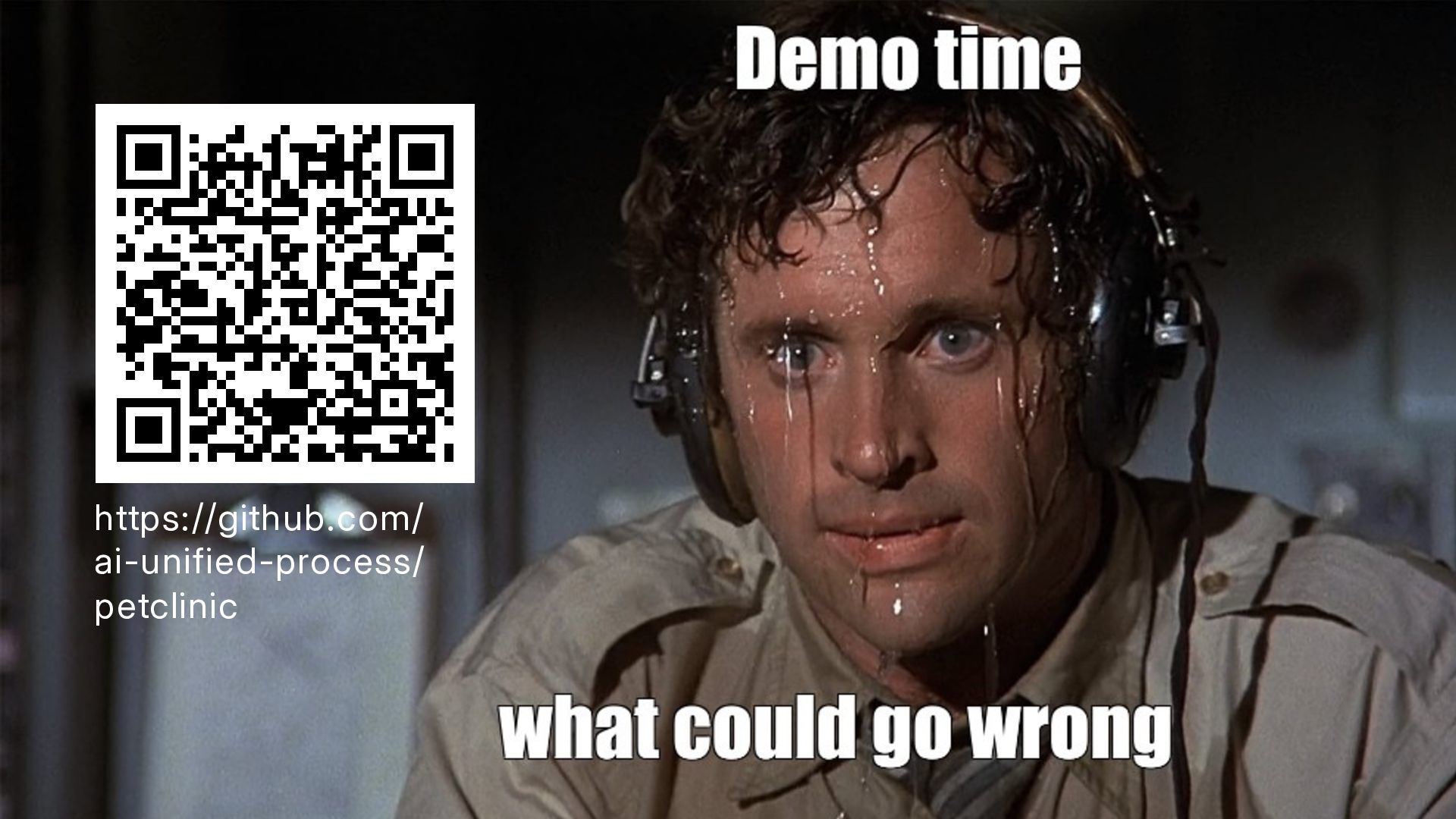
Source code: https://github.com/ai-Unified-Process/petclinic

Avatar for Simon Martinelli

Simon Martinelli PRO

September 30, 2026

More Decks by Simon Martinelli

Other Decks in Programming

Transcript

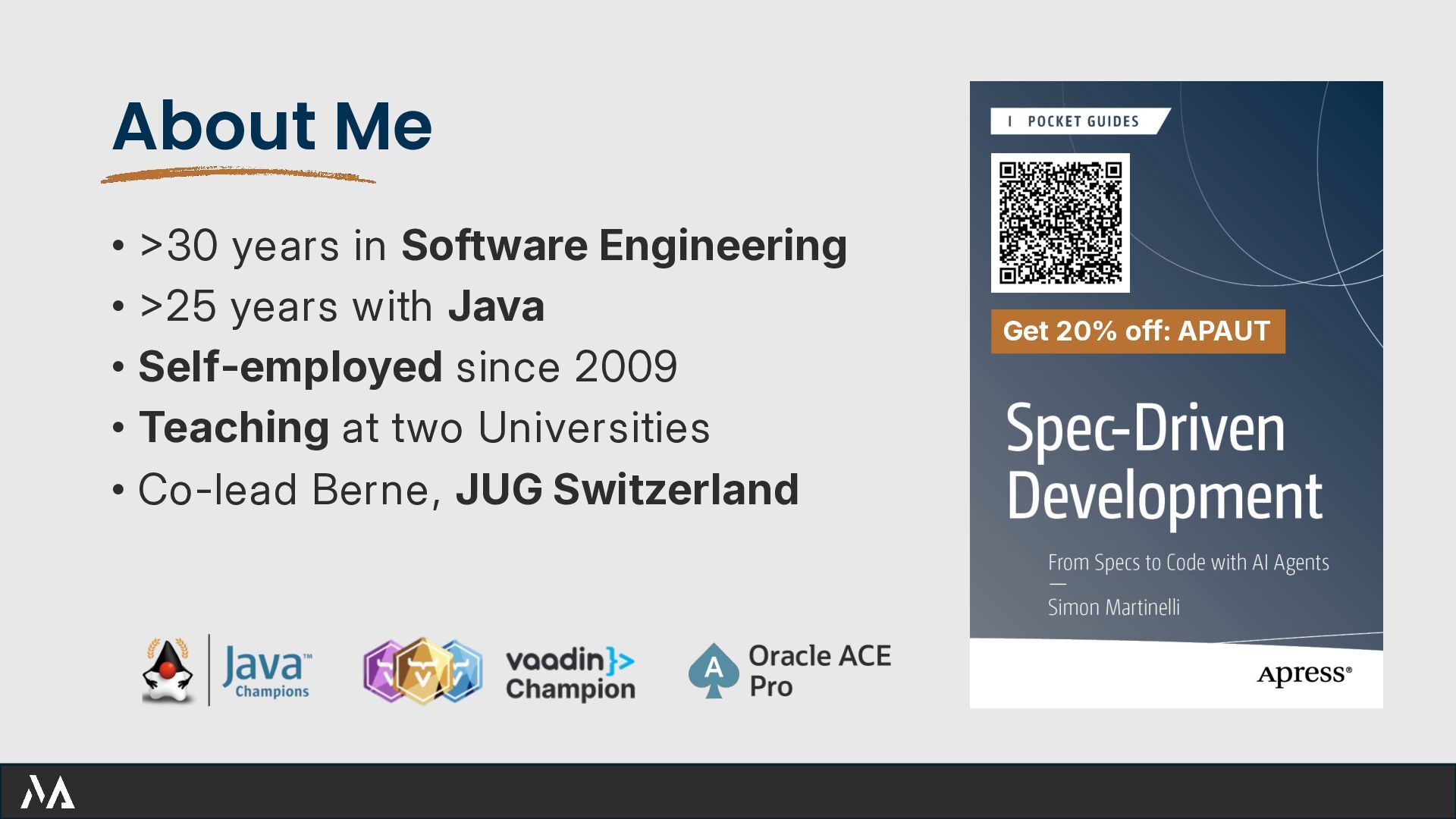
  1. About Me • 30 years in Software Engineering • 25

    years with Java • Self-employed since 2009 • Teaching at two Universities • Co-lead Berne, JUG Switzerland Get 20% off: APAUT
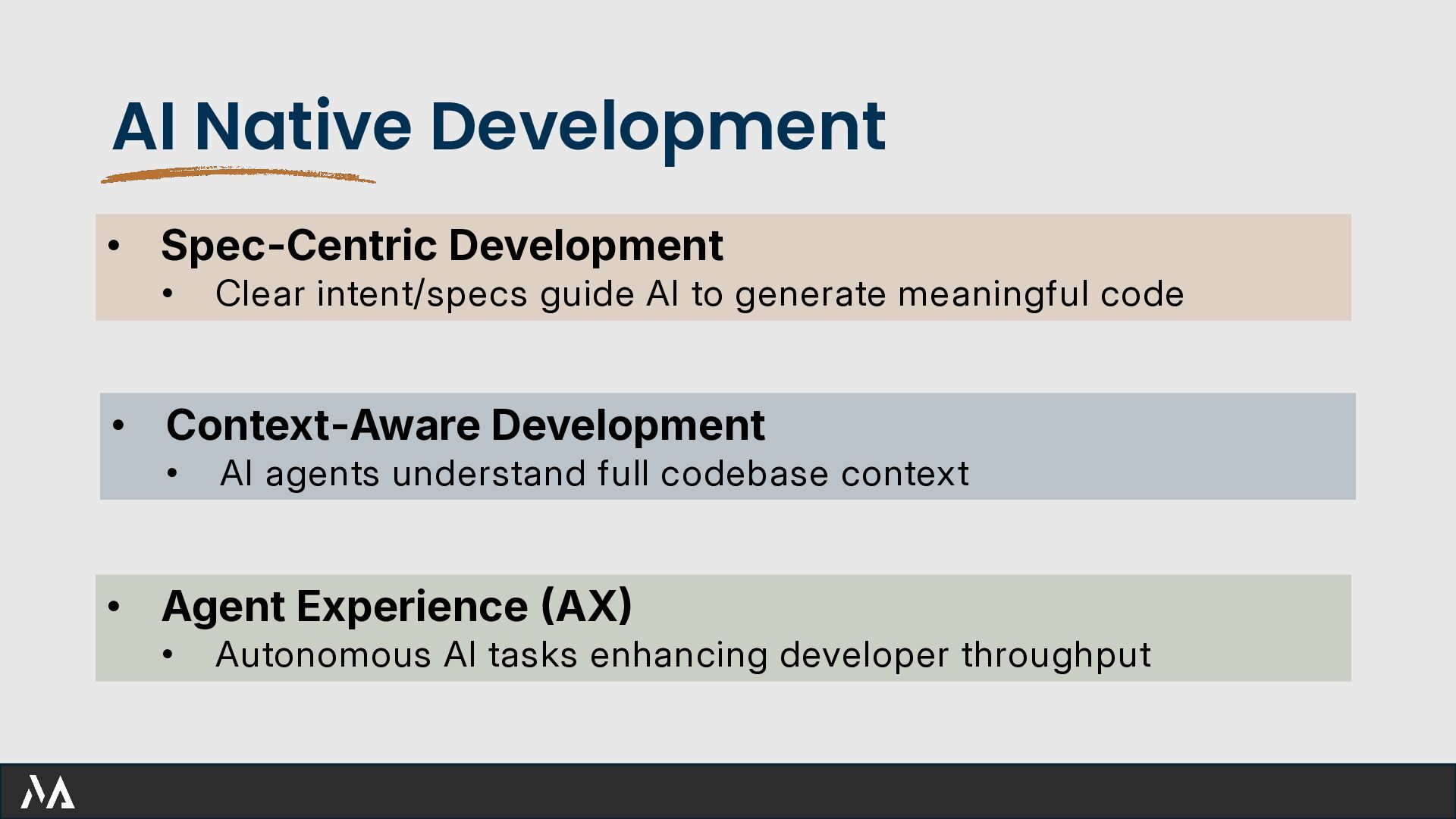
  2. AI Native Development • Spec-Centric Development • Clear intent/specs guide

    AI to generate meaningful code • Context-Aware Development • AI agents understand full codebase context • Agent Experience AX • Autonomous AI tasks enhancing developer throughput
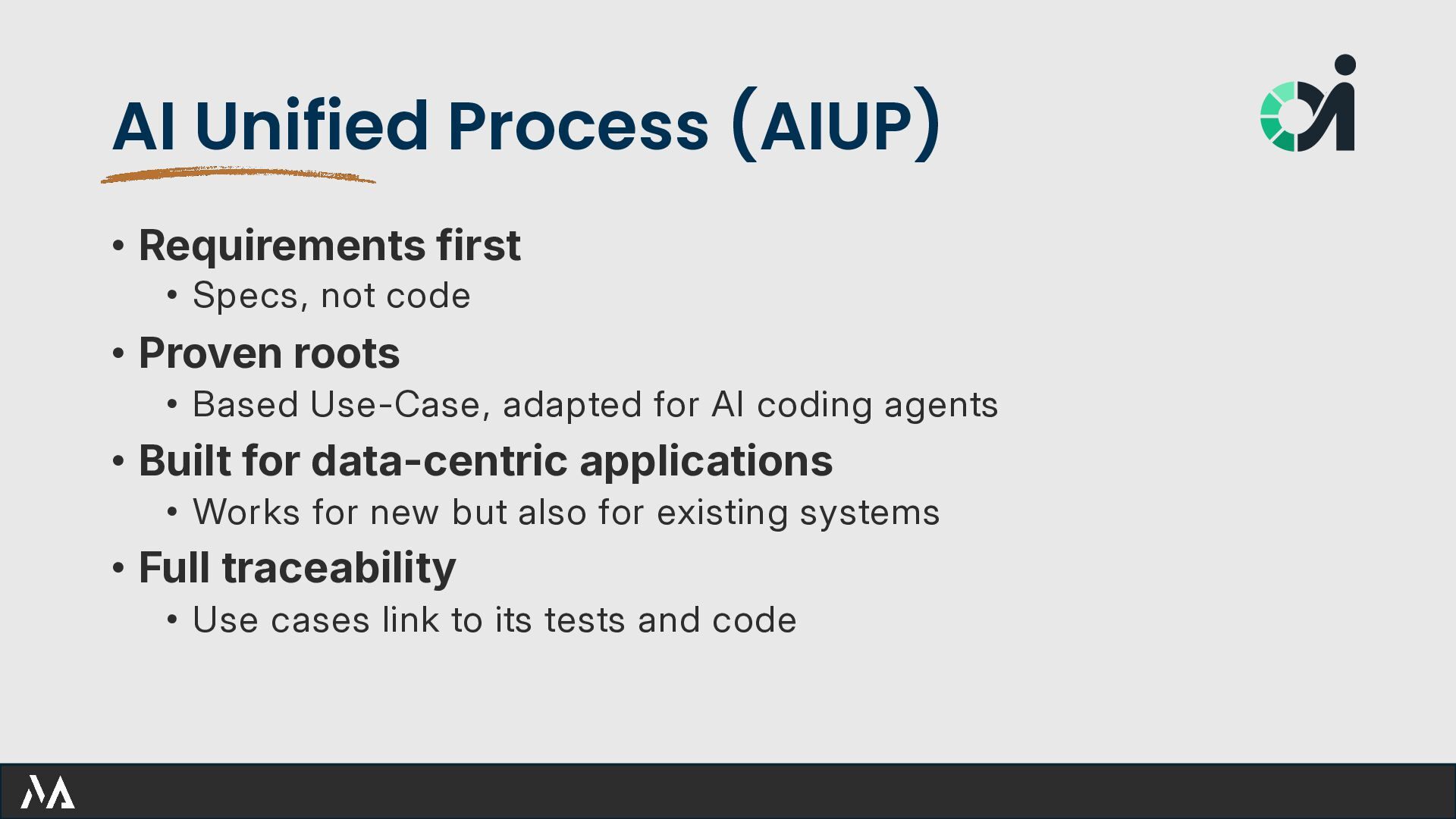
  3. AI Unified Process (AIUP) • Requirements first • Specs, not

    code • Proven roots • Based Use-Case, adapted for AI coding agents • Built for data-centric applications • Works for new but also for existing systems • Full traceability • Use cases link to its tests and code
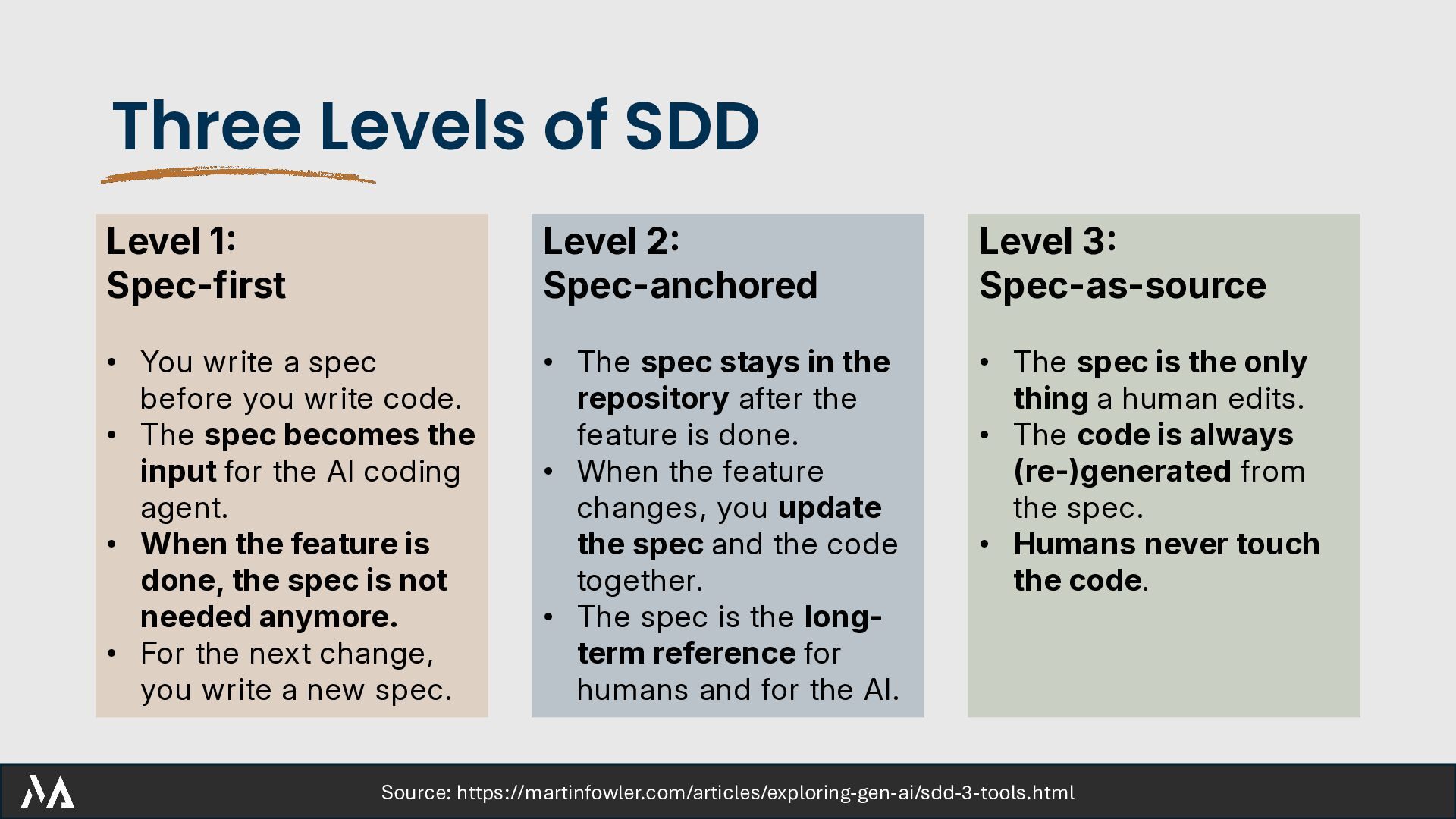
  4. Three Levels of SDD Level 1 Spec-first Level 2 Spec-anchored

    Level 3 Spec-as-source • You write a spec before you write code. • The spec becomes the input for the AI coding agent. • When the feature is done, the spec is not needed anymore. • For the next change, you write a new spec. • The spec stays in the repository after the feature is done. • When the feature changes, you update the spec and the code together. • The spec is the longterm reference for humans and for the AI. • The spec is the only thing a human edits. • The code is always (re-)generated from the spec. • Humans never touch the code. Source: https://martinfowler.com/articles/exploring-gen-ai/sdd-3-tools.html
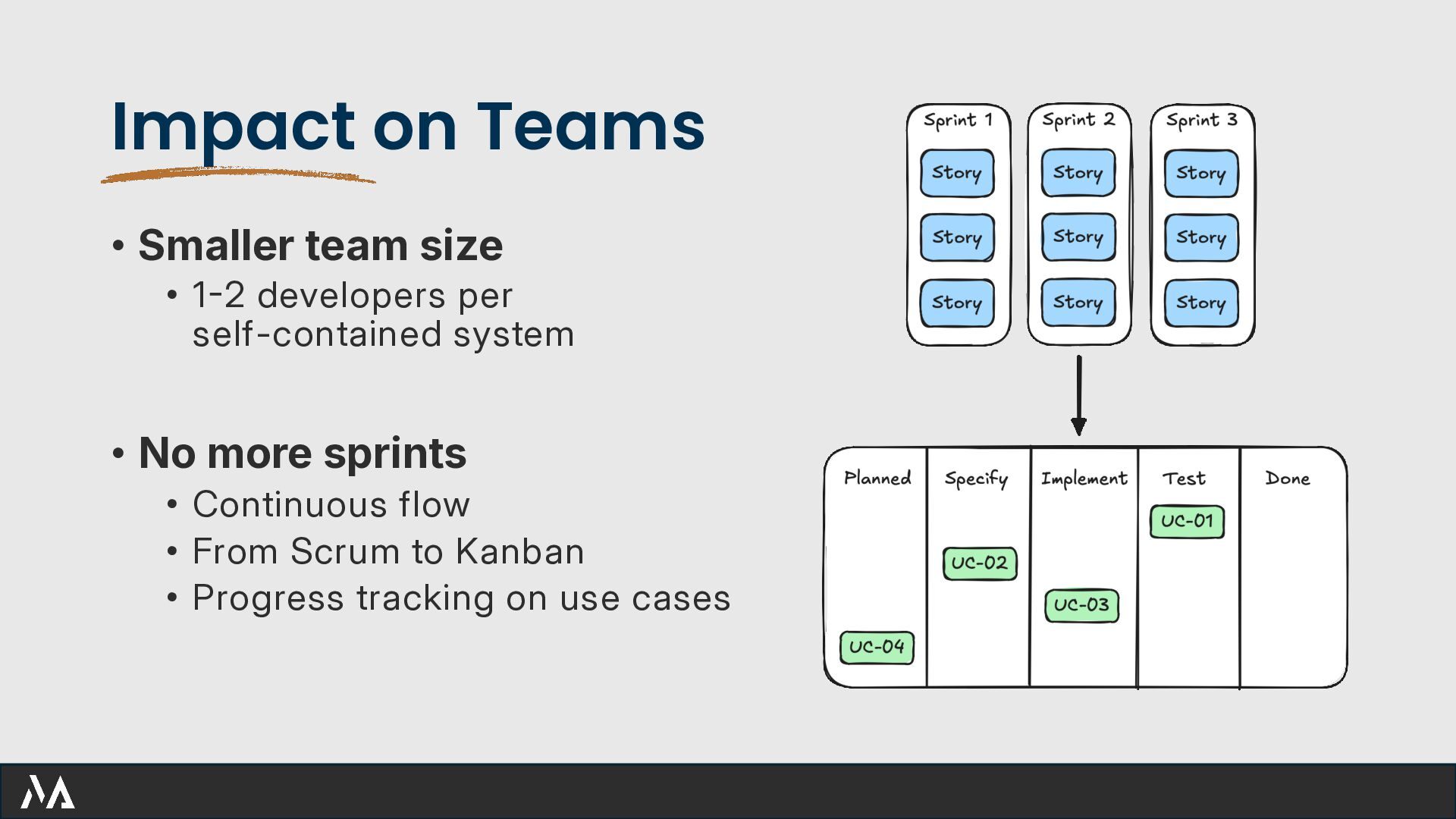
  5. Impact on Teams • Smaller team size • 12 developers

    per self-contained system • No more sprints • Continuous flow • From Scrum to Kanban • Progress tracking on use cases
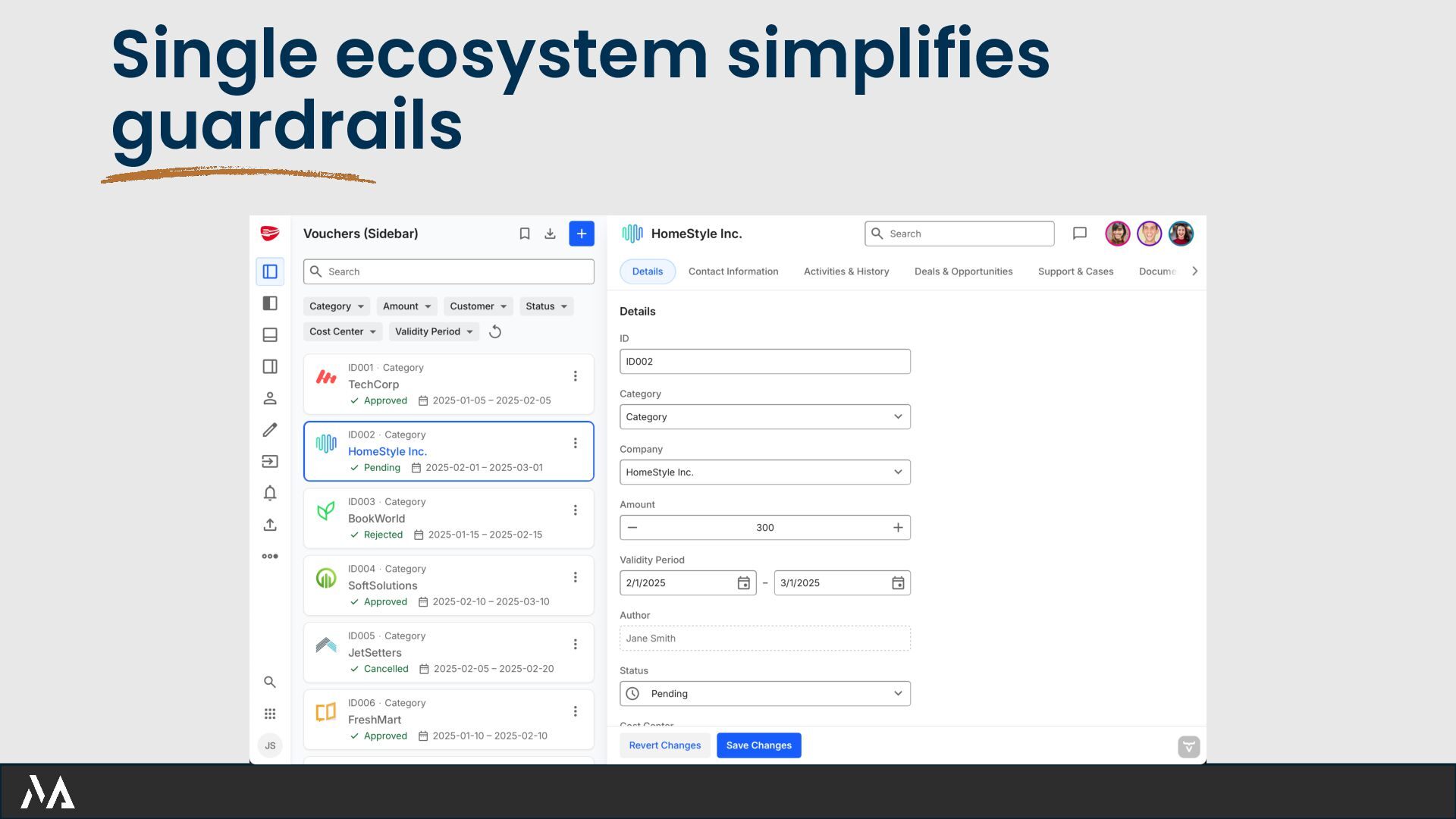
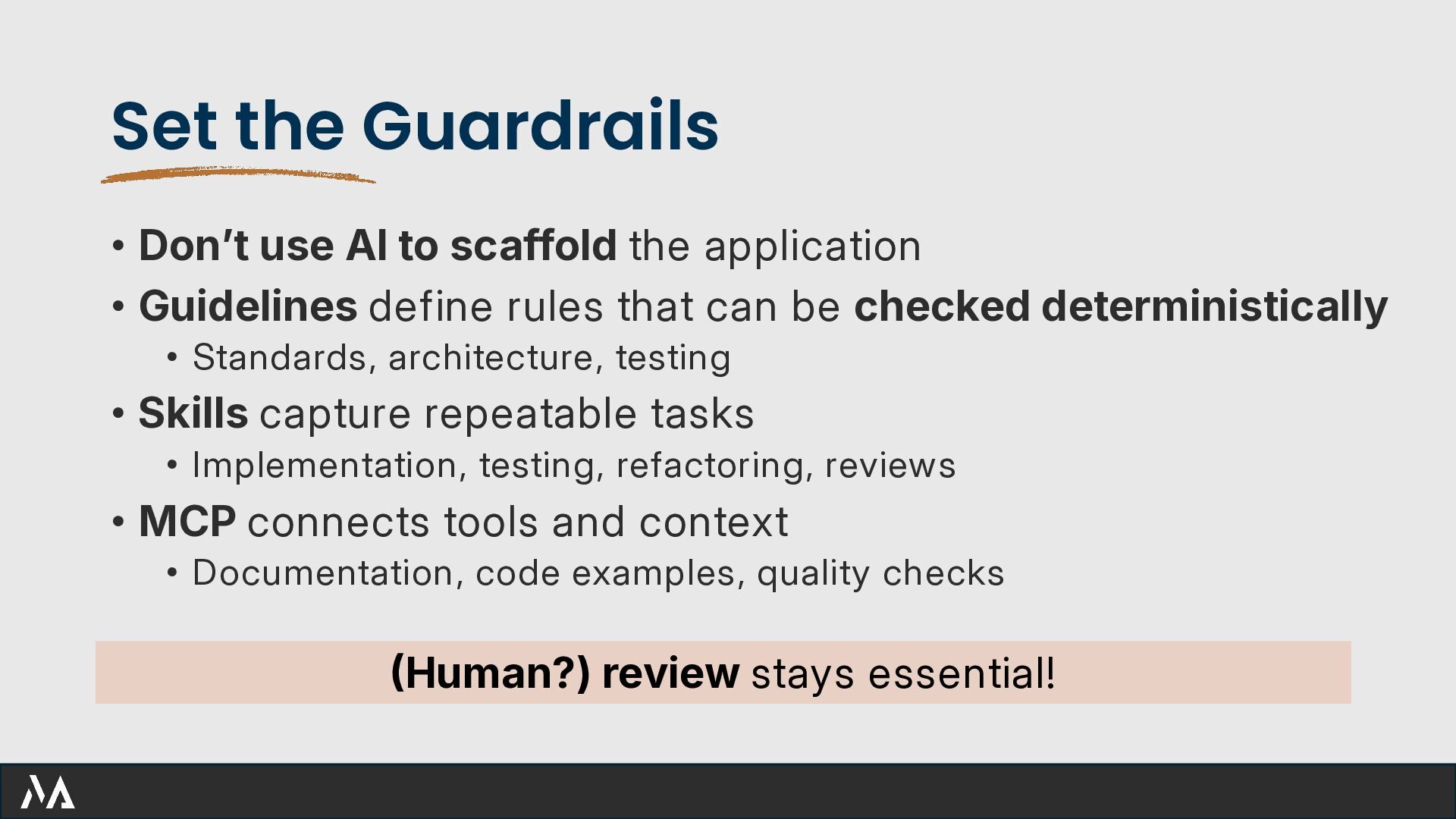
  6. Set the Guardrails • Don’t use AI to scaffold the

    application • Guidelines define rules that can be checked deterministically • Standards, architecture, testing • Skills capture repeatable tasks • Implementation, testing, refactoring, reviews • MCP connects tools and context • Documentation, code examples, quality checks Human?) review stays essential!
  7. Conclusion • Specs, in combination with guardrails, help to make

    development sustainable • It accelerates development, but you are responsible for the quality • Know your architecture and domain
  8. Thank you! • Web martinelli.ch • EMail [email protected] • Bluesky

    @martinelli.ch • X/Twitter @simas_ch • LinkedIn https://linkedin.com/in/ simonmartinelli