Upgrade to Pro — share decks privately, control downloads, hide ads and more …

Avoiding the "Bad Training, Faster" Trap in the...

Avatar for Mike Taylor Mike Taylor
October 28, 2026

Avoiding the "Bad Training, Faster" Trap in the Age of Al

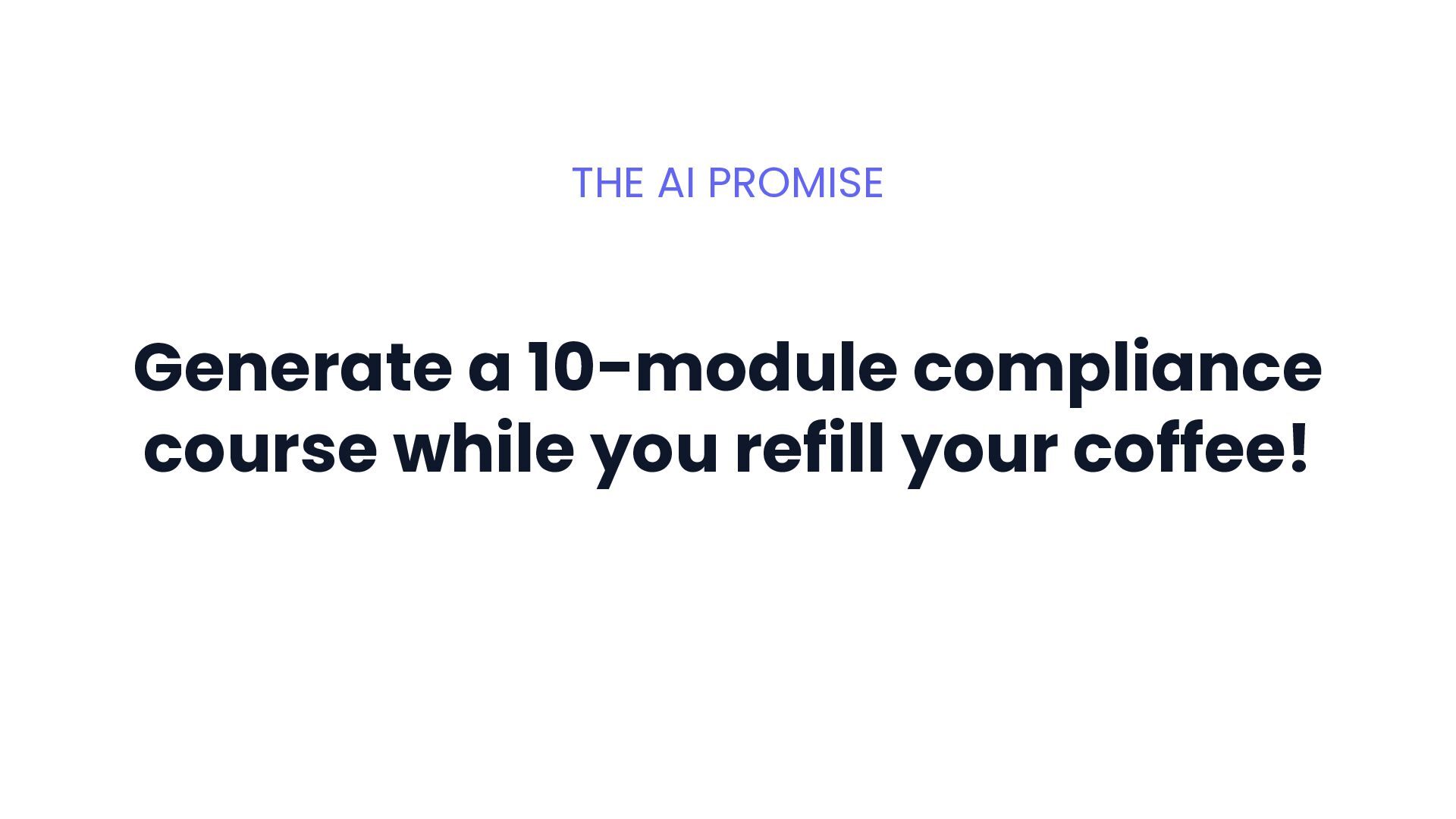
Al can build a course in minutes. That's the problem.

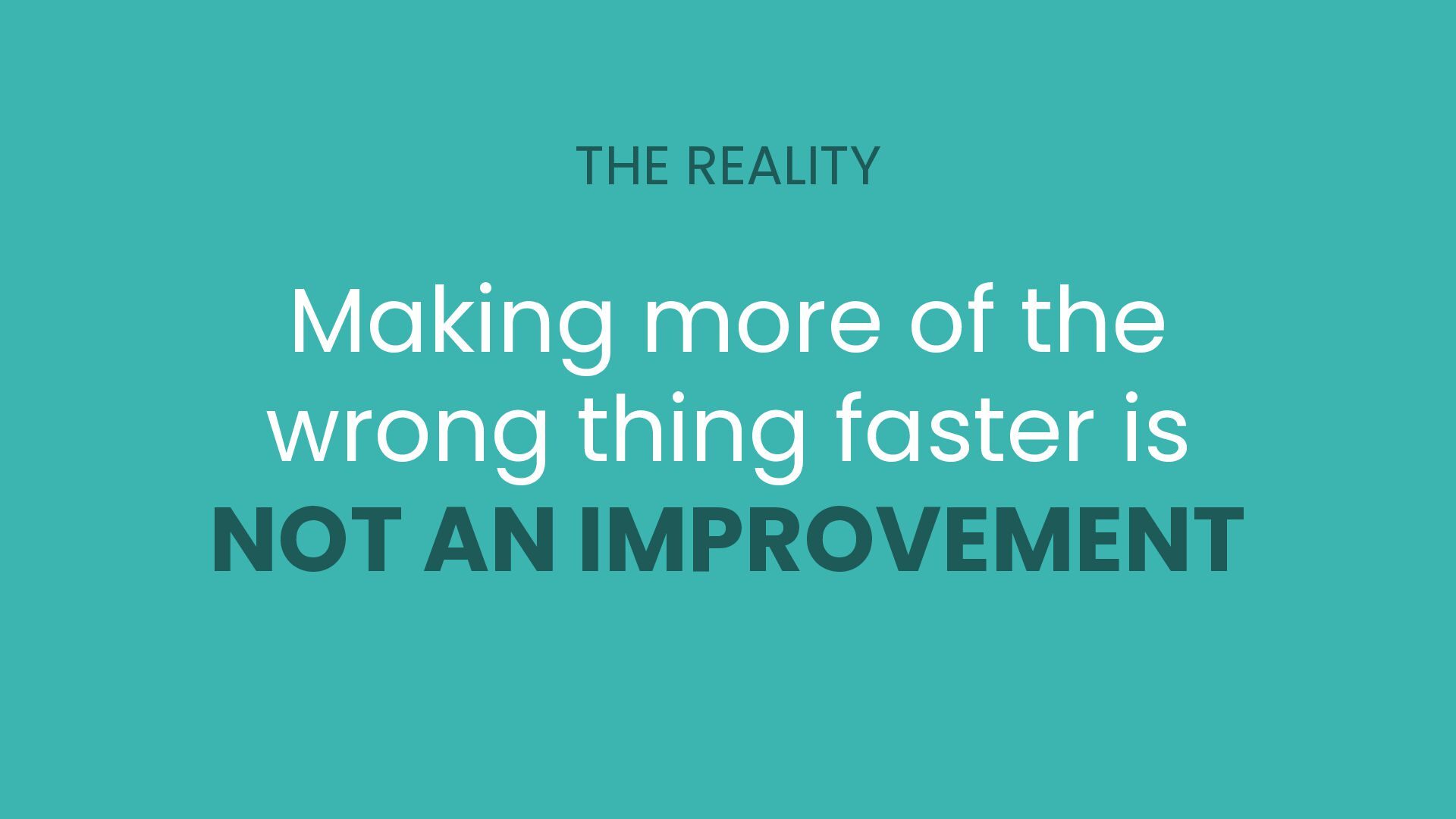
L&D teams are being told to use Al for everything and ship more content, faster. But most training already fails to change what people do on the job. Making it faster doesn't fix that. It just gets us to forgettable sooner.

In this session, you'll see why so much Al-made training gets ignored. It isn't wrong. It's generic, and people tune out generic. Through side-by-side examples of the same content built two ways, you'll see what Al can't supply on its own. Then you'll get a simple way to give it the context that makes people pay attention, remember, and act.

What we'll cover:

The real bottleneck isn't speed
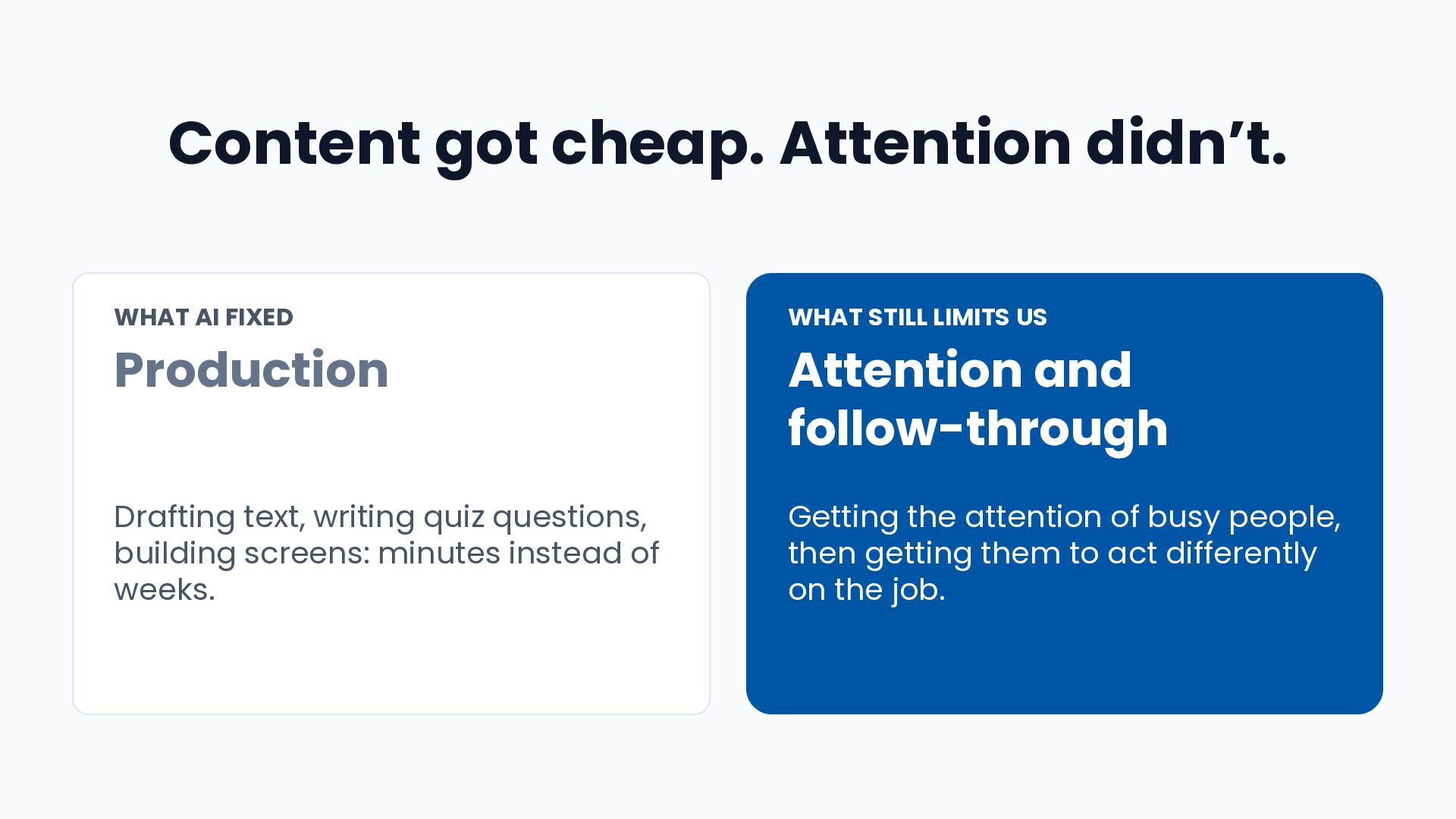
Al fixed production. But production was never our problem. Attention and follow-through are. More content, faster, just means more noise fighting for the same few minutes of focus.

Why Al content slides right off
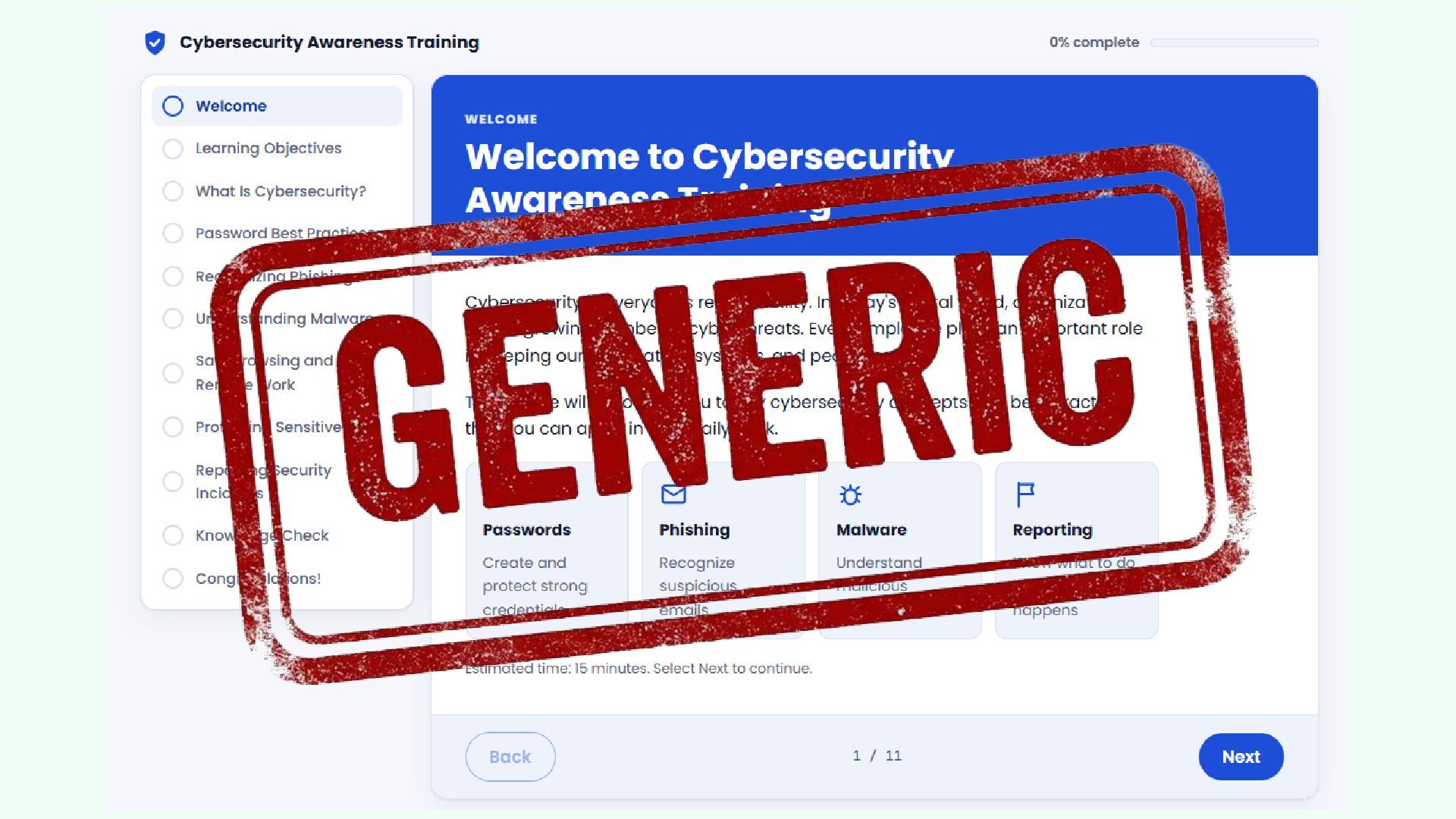
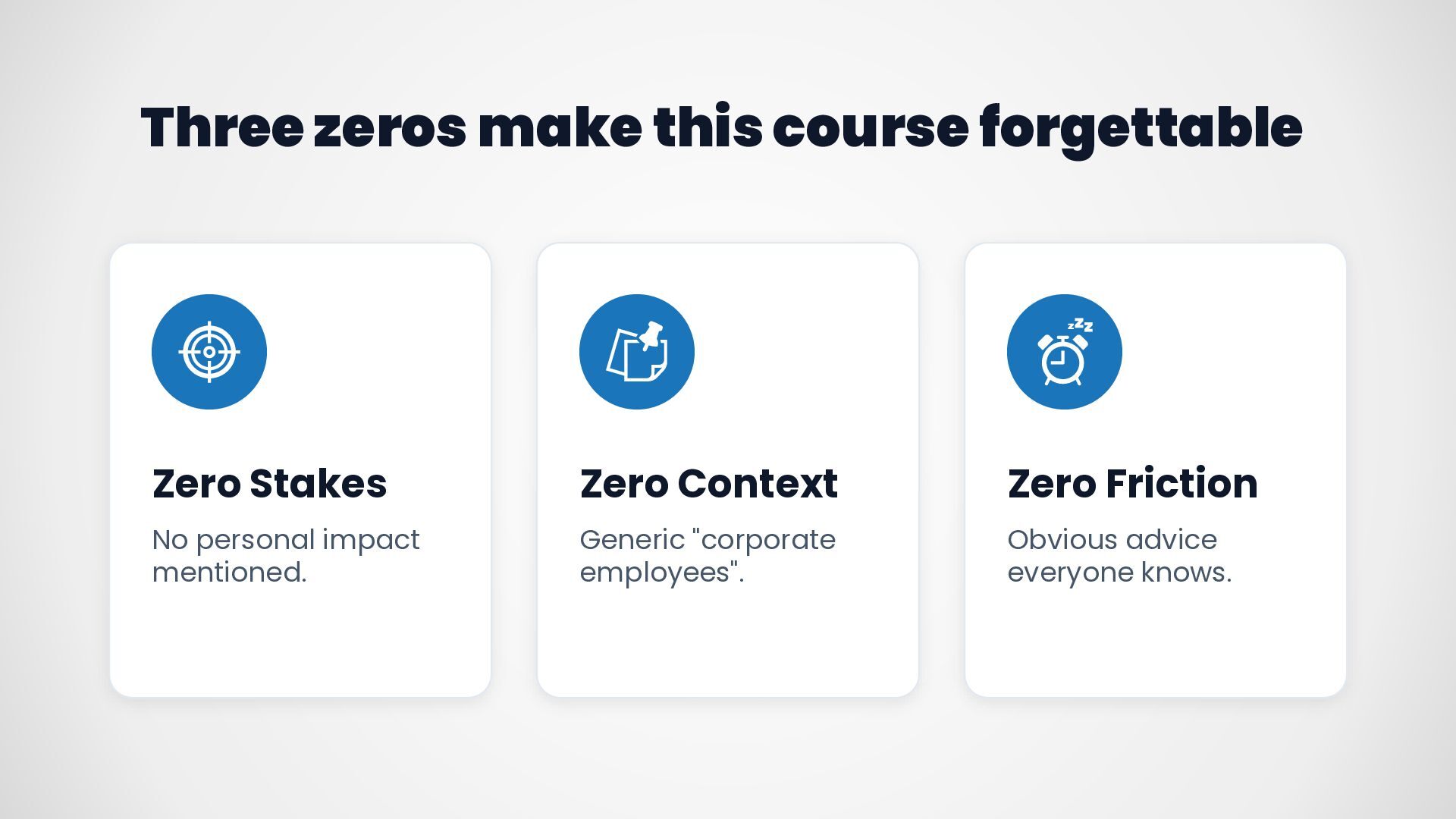
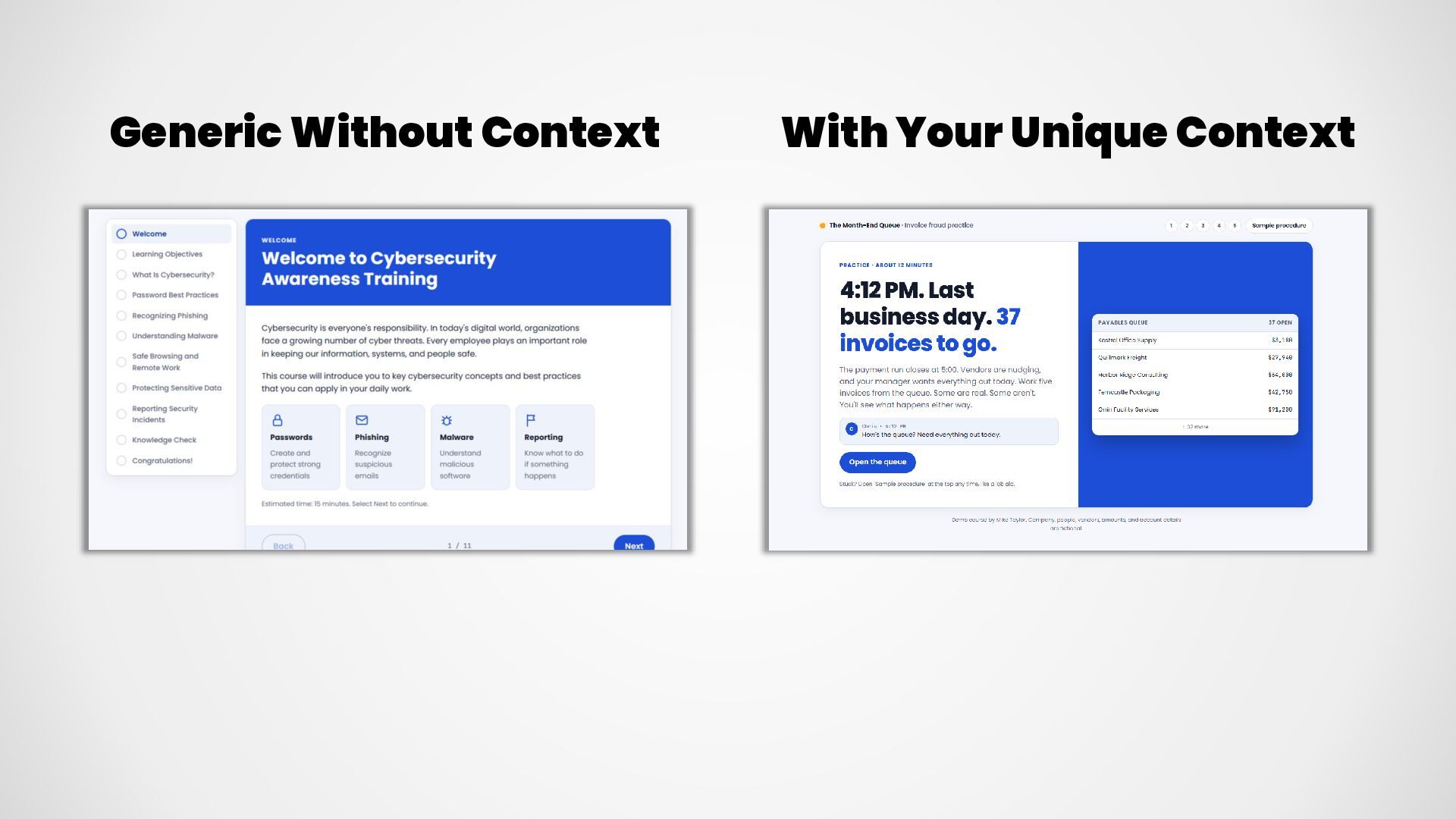
Default Al output is accurate and easy to ignore. We'll watch one prompt produce two very different results and name what the weak one is missing: personal stakes, real context, and a reason to care.

Give Al what only you know
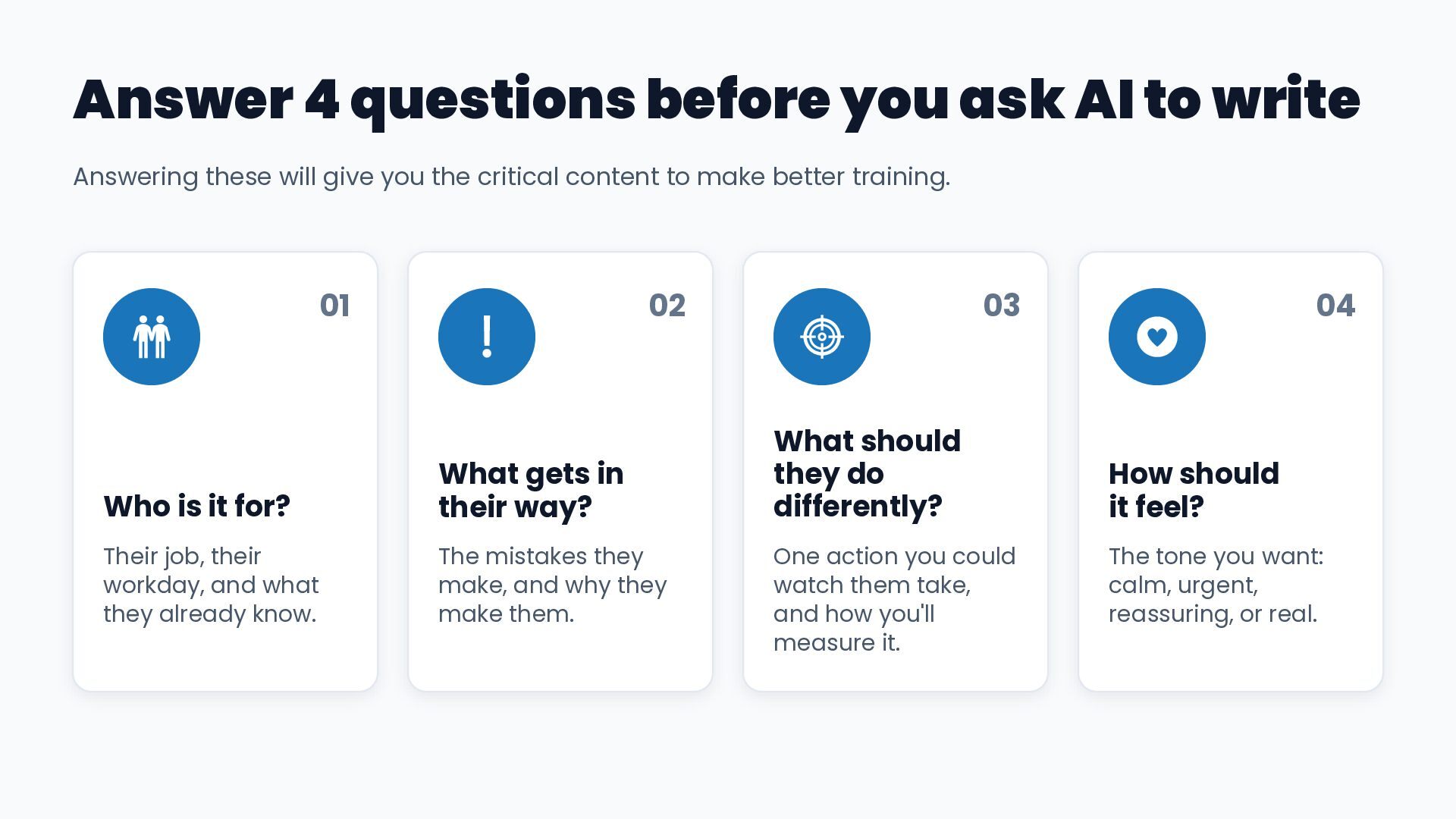
Before you prompt, answer four questions. Who is this for? What do they struggle with? What should change? How should it feel?

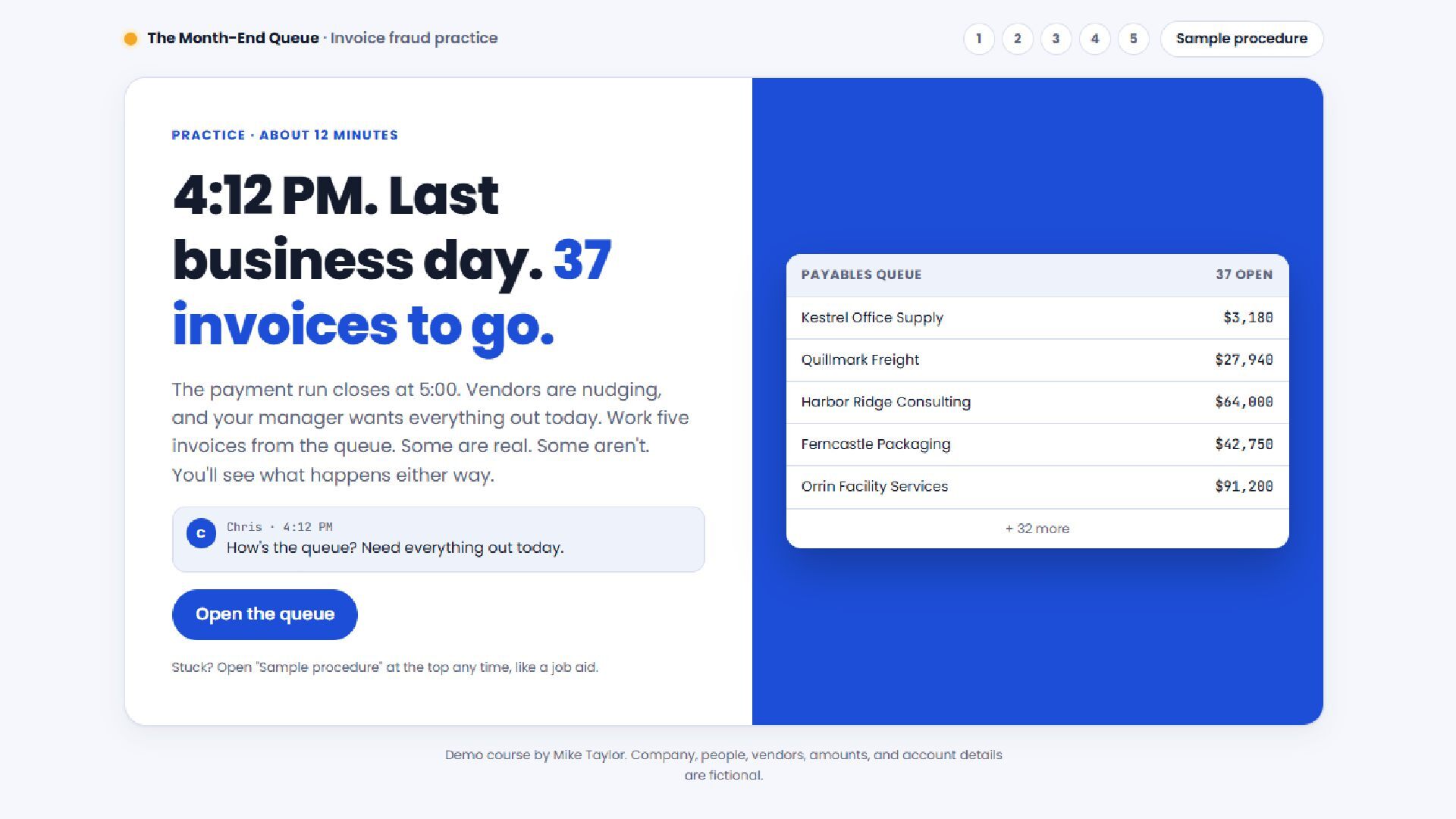
Your answers to turn a generic phishing course into one built for a real team: billing clerks who get fake invoices at month-end, when everyone is rushed and nobody wants to be the one who held up a payment.

Avatar for Mike Taylor

Mike Taylor

October 28, 2026

More Decks by Mike Taylor

Other Decks in Business

Transcript

  1. iSpring AI DAYS · 2026 Avoiding the “Bad Training, Faster”

    Trap in the Age of AI Mike Taylor · mike-taylor.org
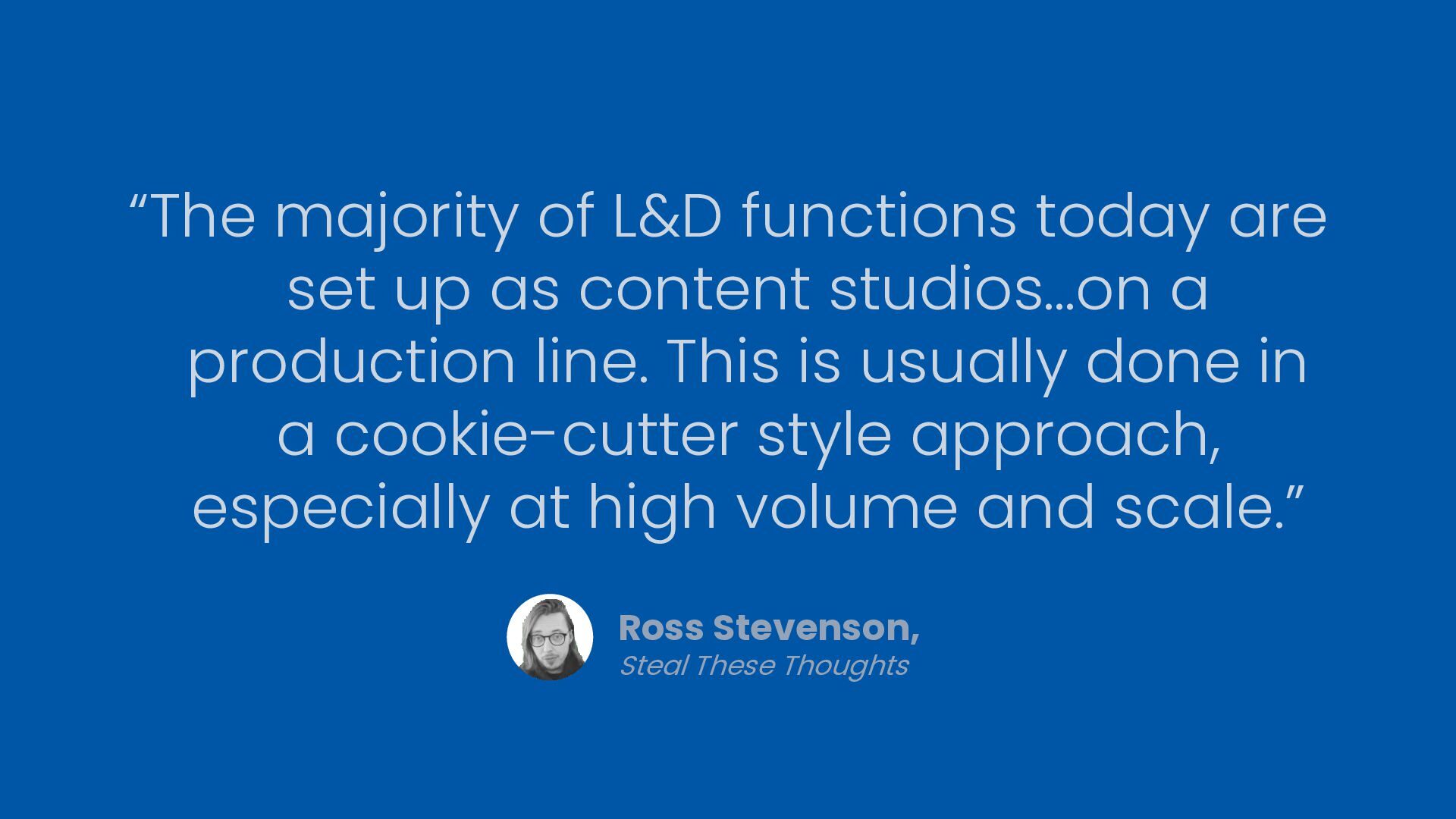
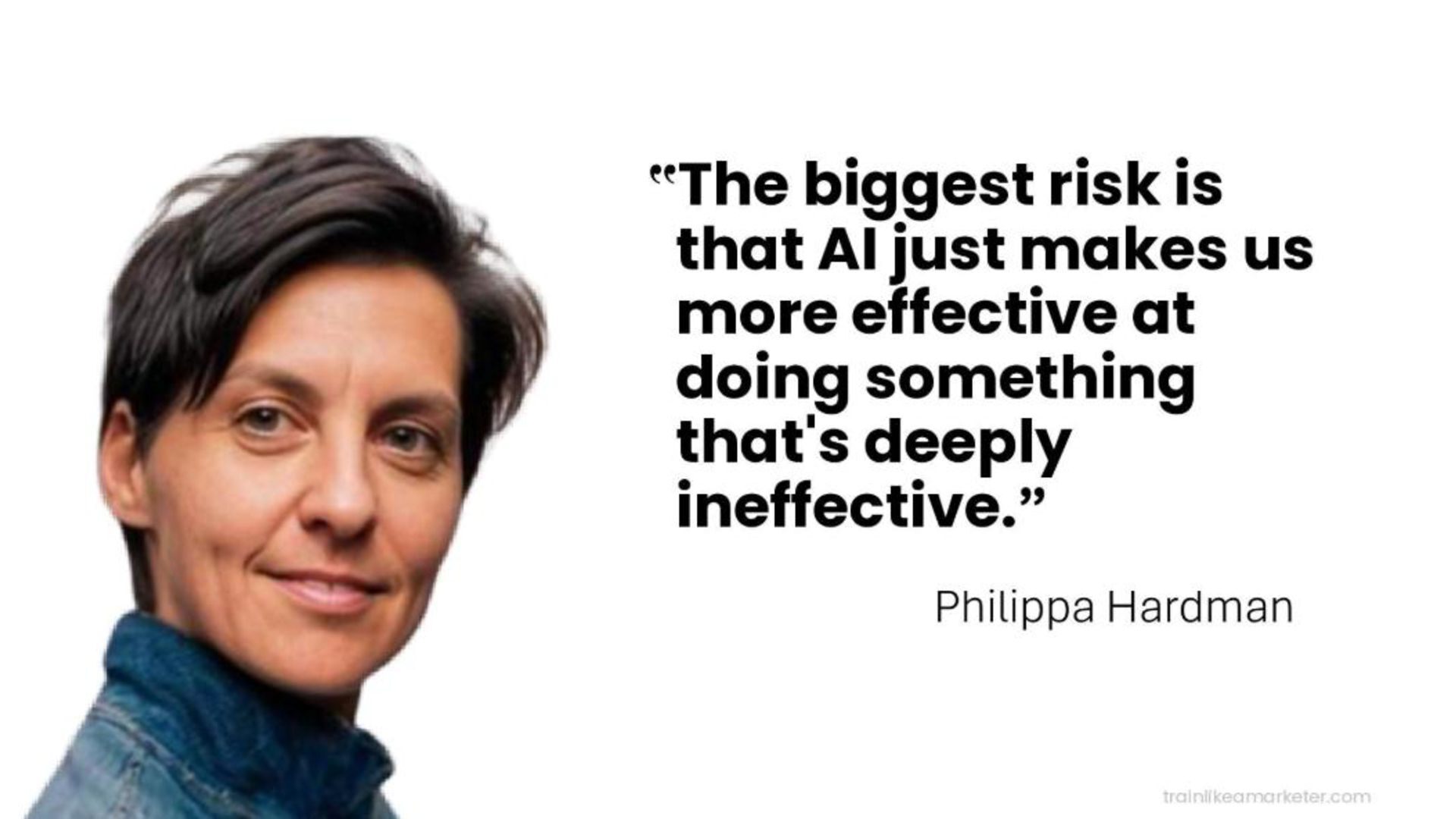
  2. “The majority of L&D functions today are set up as

    content studios…on a production line. This is usually done in a cookie-cutter style approach, especially at high volume and scale.” Ross Stevenson, Steal These Thoughts
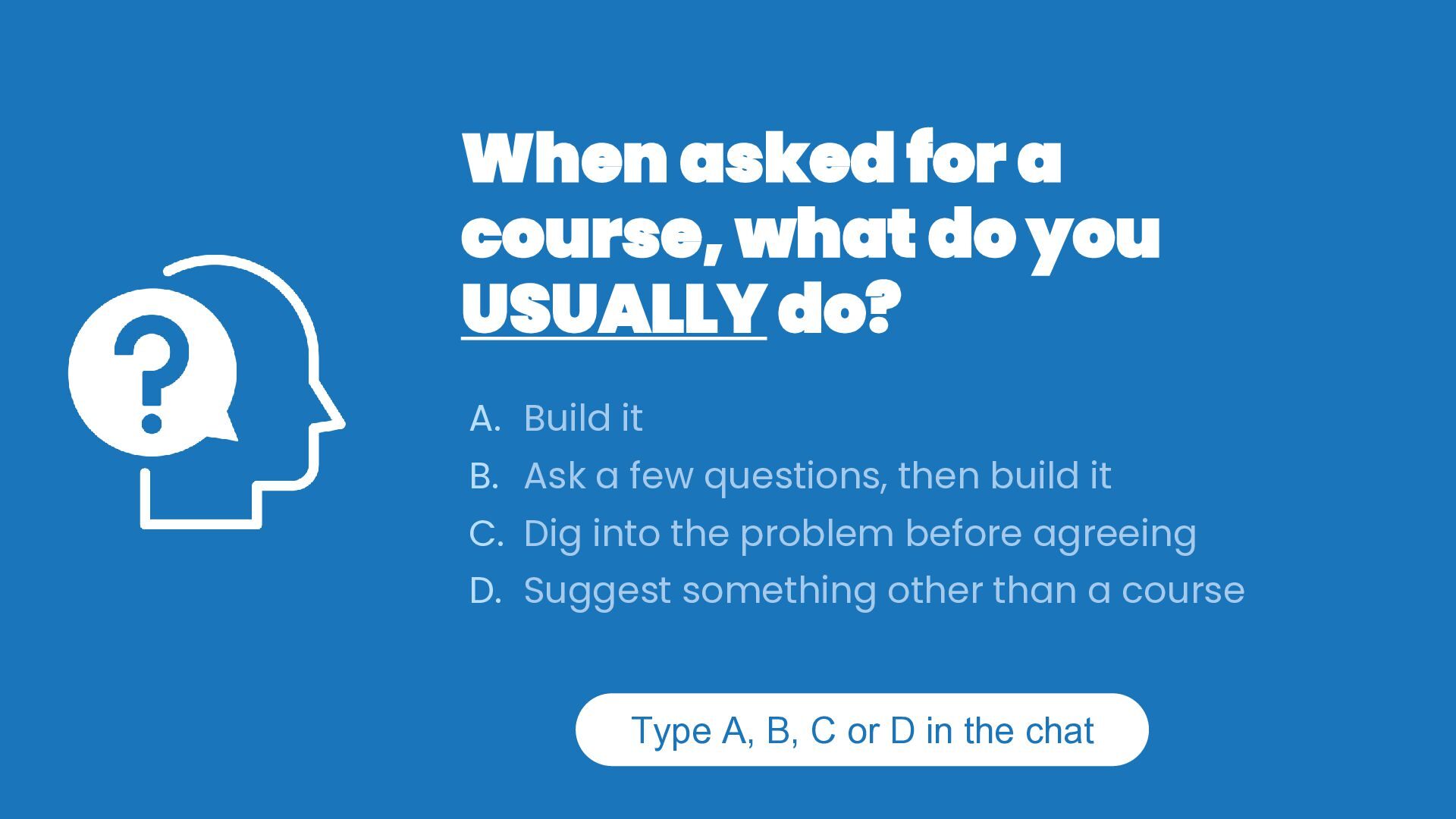
  3. When asked for a course, what do you USUALLY do?

    A. Build it B. Ask a few questions, then build it C. Dig into the problem before agreeing D. Suggest something other than a course Type A, B, C or D in the chat
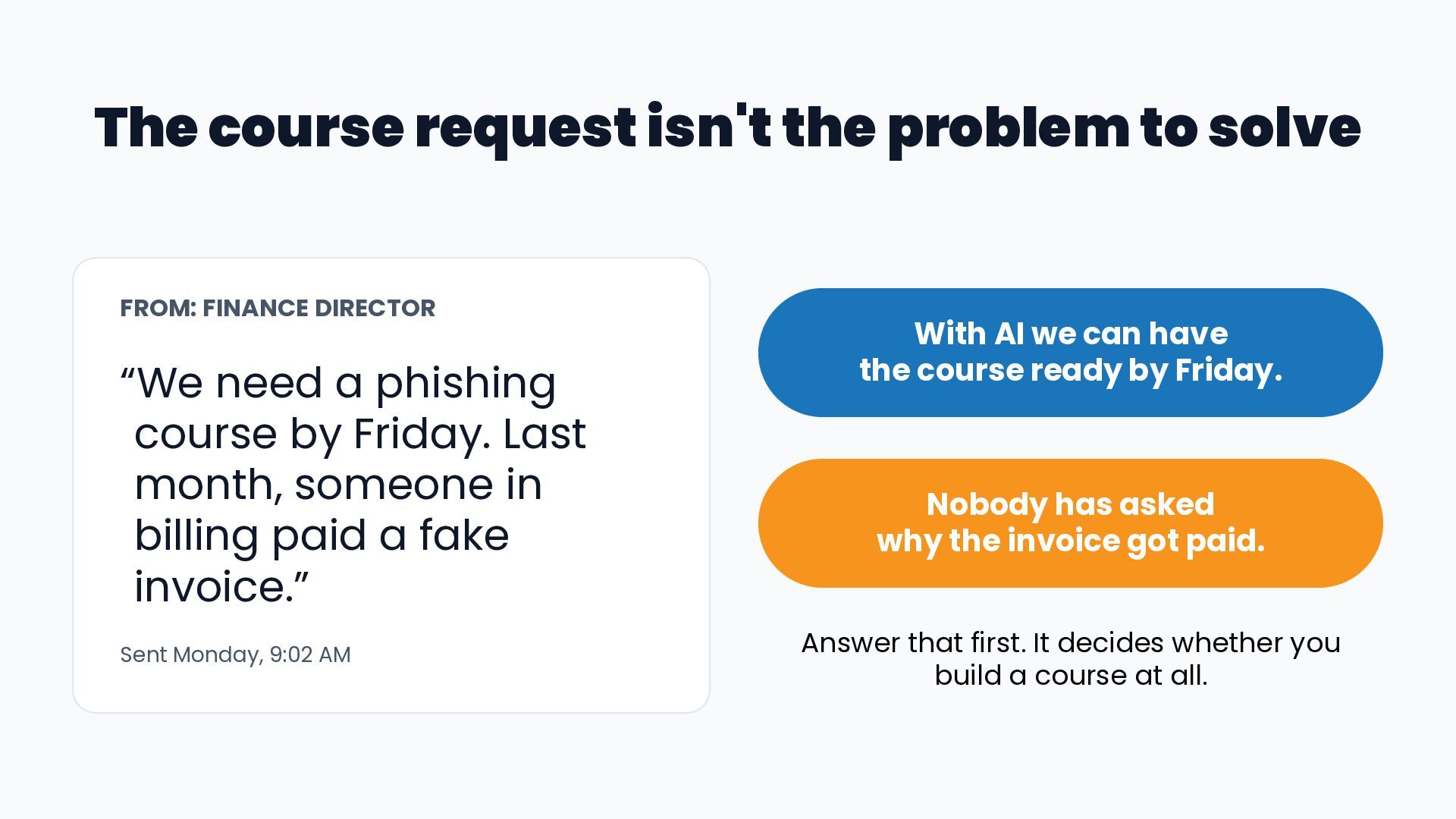
  4. The course request isn't the problem to solve FROM: FINANCE

    DIRECTOR “We need a phishing course by Friday. Last month, someone in billing paid a fake invoice.” Sent Monday, 9:02 AM With AI we can have the course ready by Friday. Nobody has asked why the invoice got paid. Answer that first. It decides whether you build a course at all.
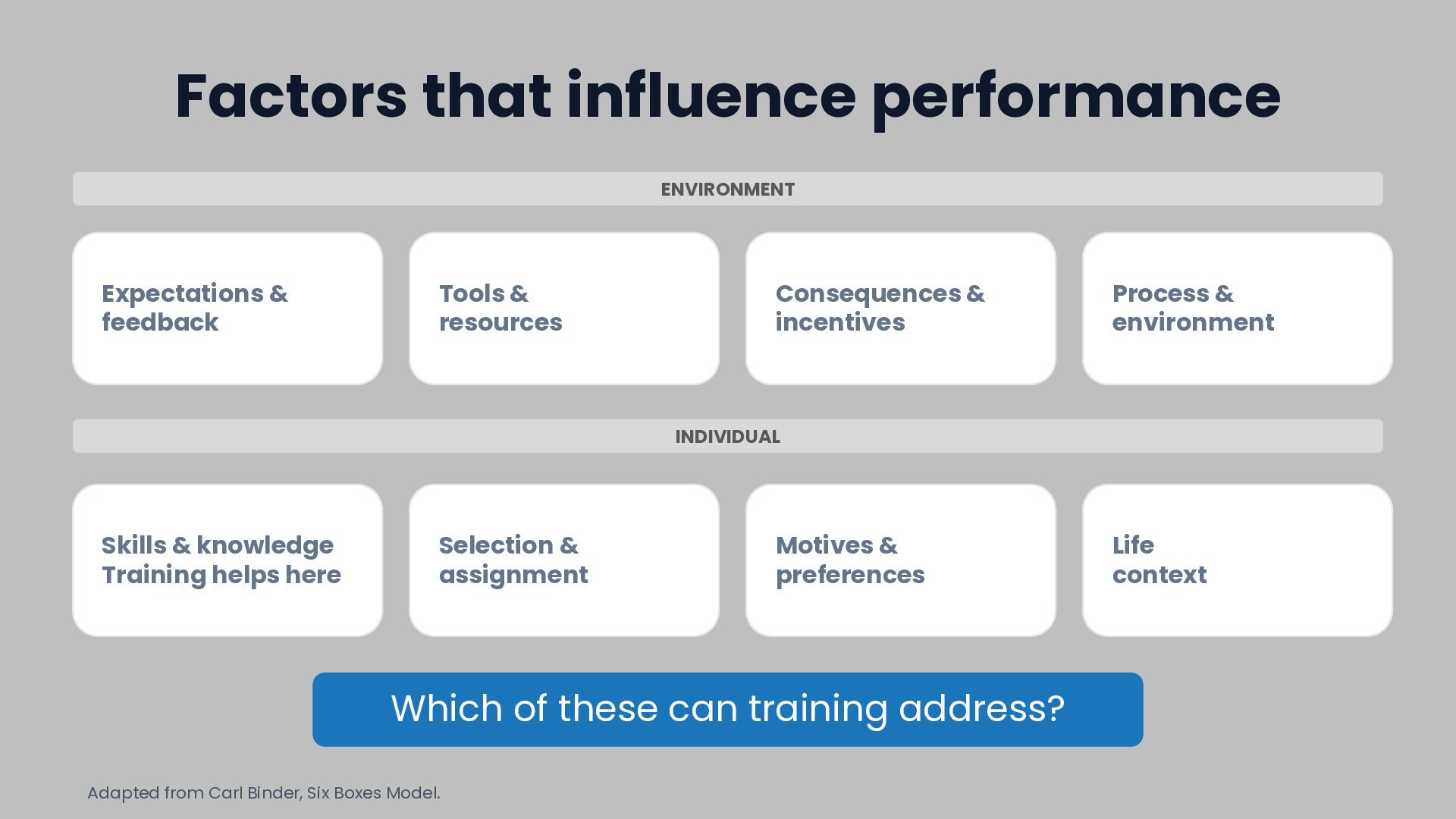
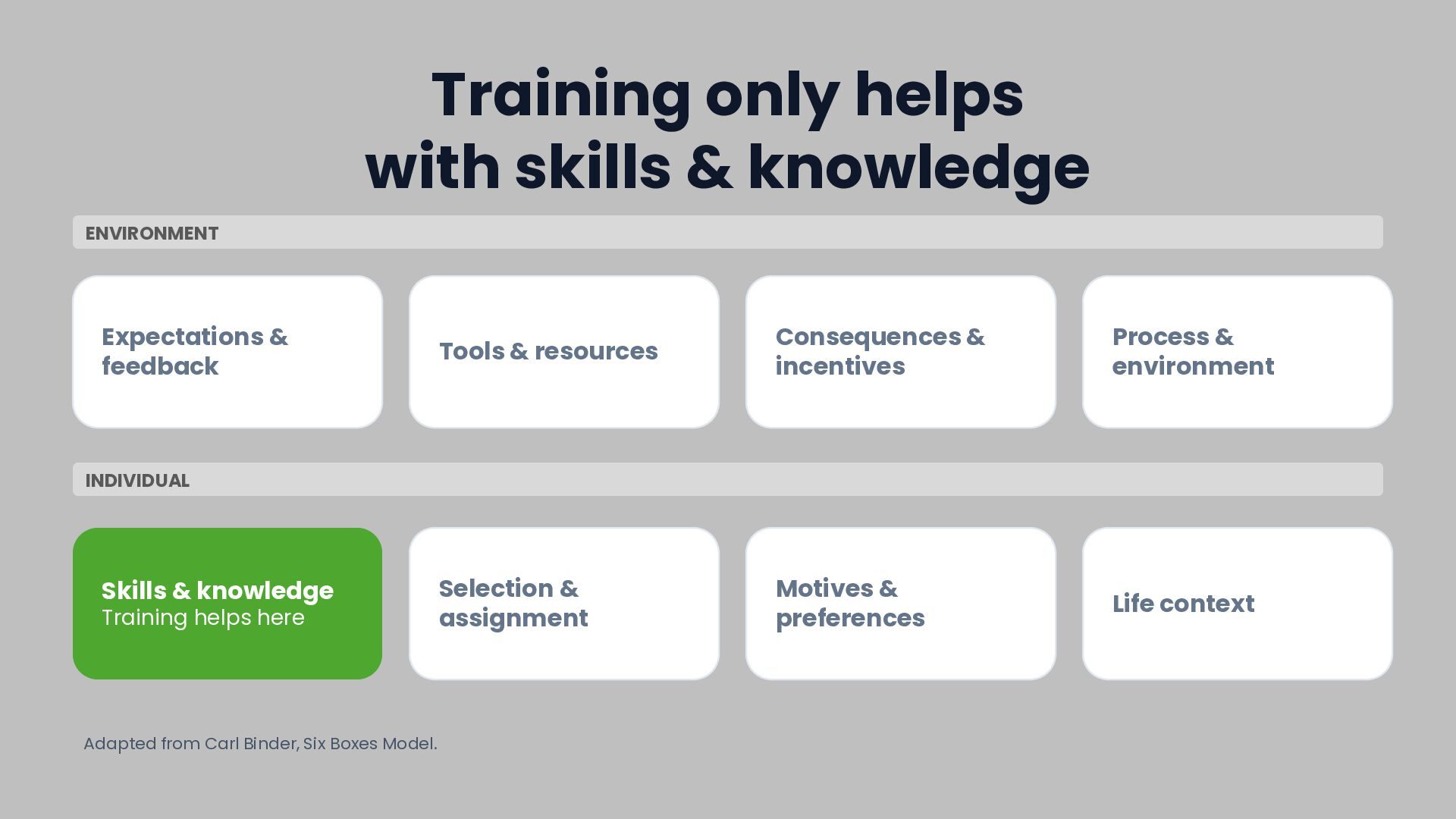
  5. Factors that influence performance ENVIRONMENT Expectations & feedback Tools &

    resources Consequences & incentives Process & environment INDIVIDUAL Skills & knowledge Training helps here Selection & assignment Motives & preferences Which of these can training address? Adapted from Carl Binder, Six Boxes Model. Life context
  6. Training only helps with skills & knowledge ENVIRONMENT Expectations &

    feedback Tools & resources Consequences & incentives Process & environment Selection & assignment Motives & preferences Life context INDIVIDUAL Skills & knowledge Training helps here Adapted from Carl Binder, Six Boxes Model.
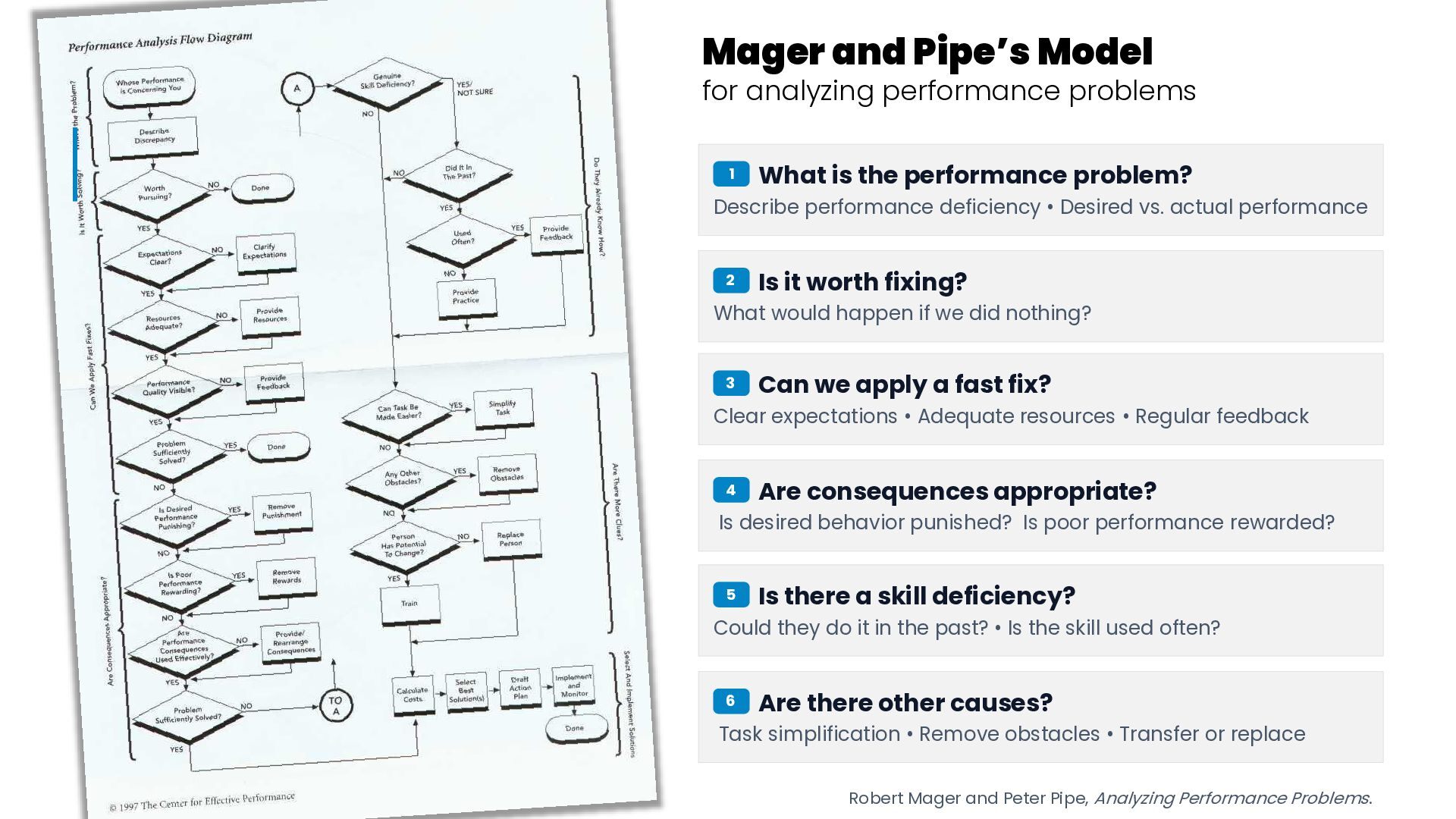
  7. Mager and Pipe’s Model for analyzing performance problems 1 What

    is the performance problem? Describe performance deficiency • Desired vs. actual performance 2 Is it worth fixing? What would happen if we did nothing? 3 Can we apply a fast fix? Clear expectations • Adequate resources • Regular feedback 4 Are consequences appropriate? Is desired behavior punished? Is poor performance rewarded? 5 Is there a skill deficiency? Could they do it in the past? • Is the skill used often? 6 Are there other causes? Task simplification • Remove obstacles • Transfer or replace Robert Mager and Peter Pipe, Analyzing Performance Problems.
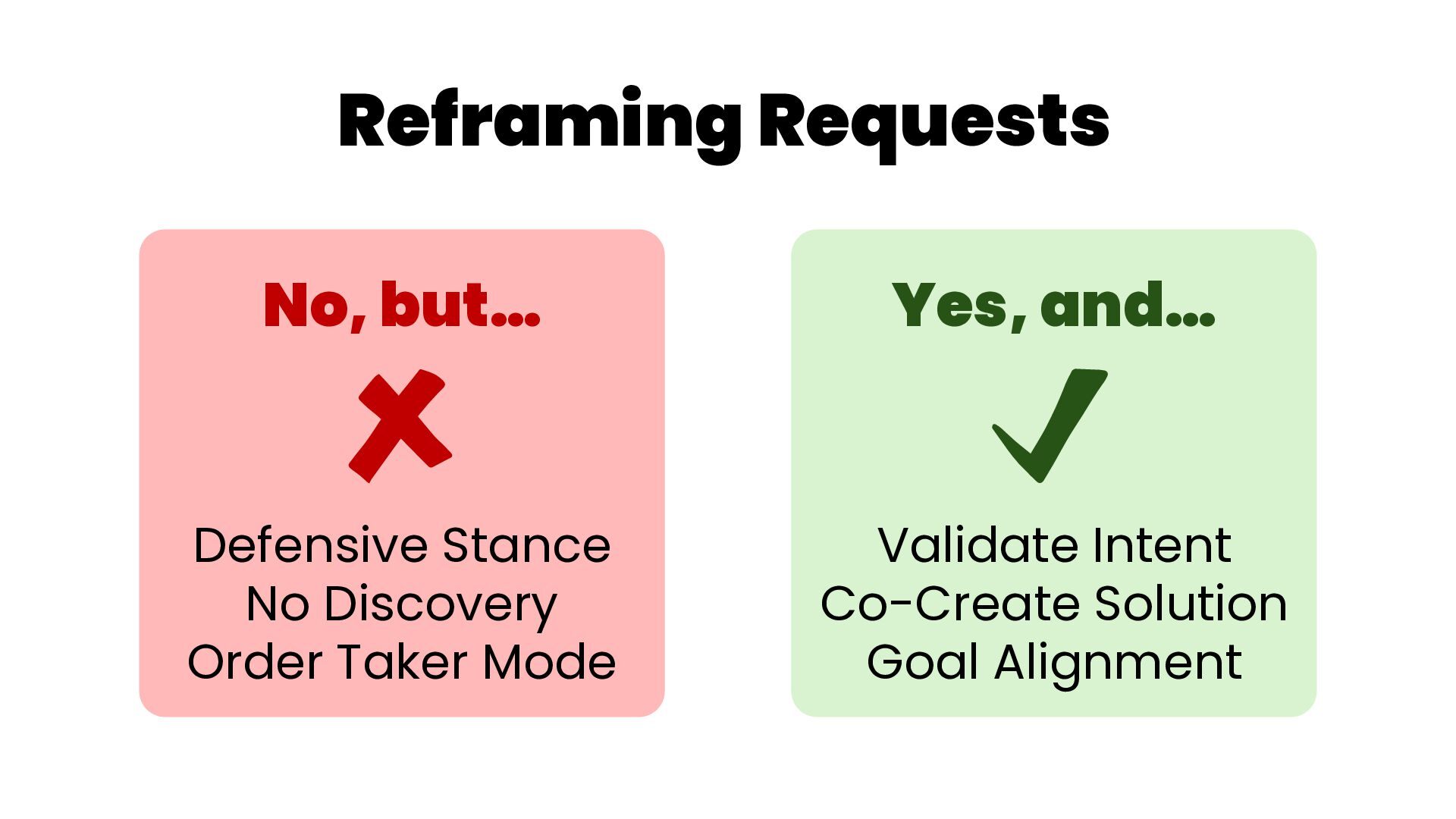
  8. Reframing Requests No, but… Yes, and… Defensive Stance No Discovery

    Order Taker Mode Validate Intent Co-Create Solution Goal Alignment
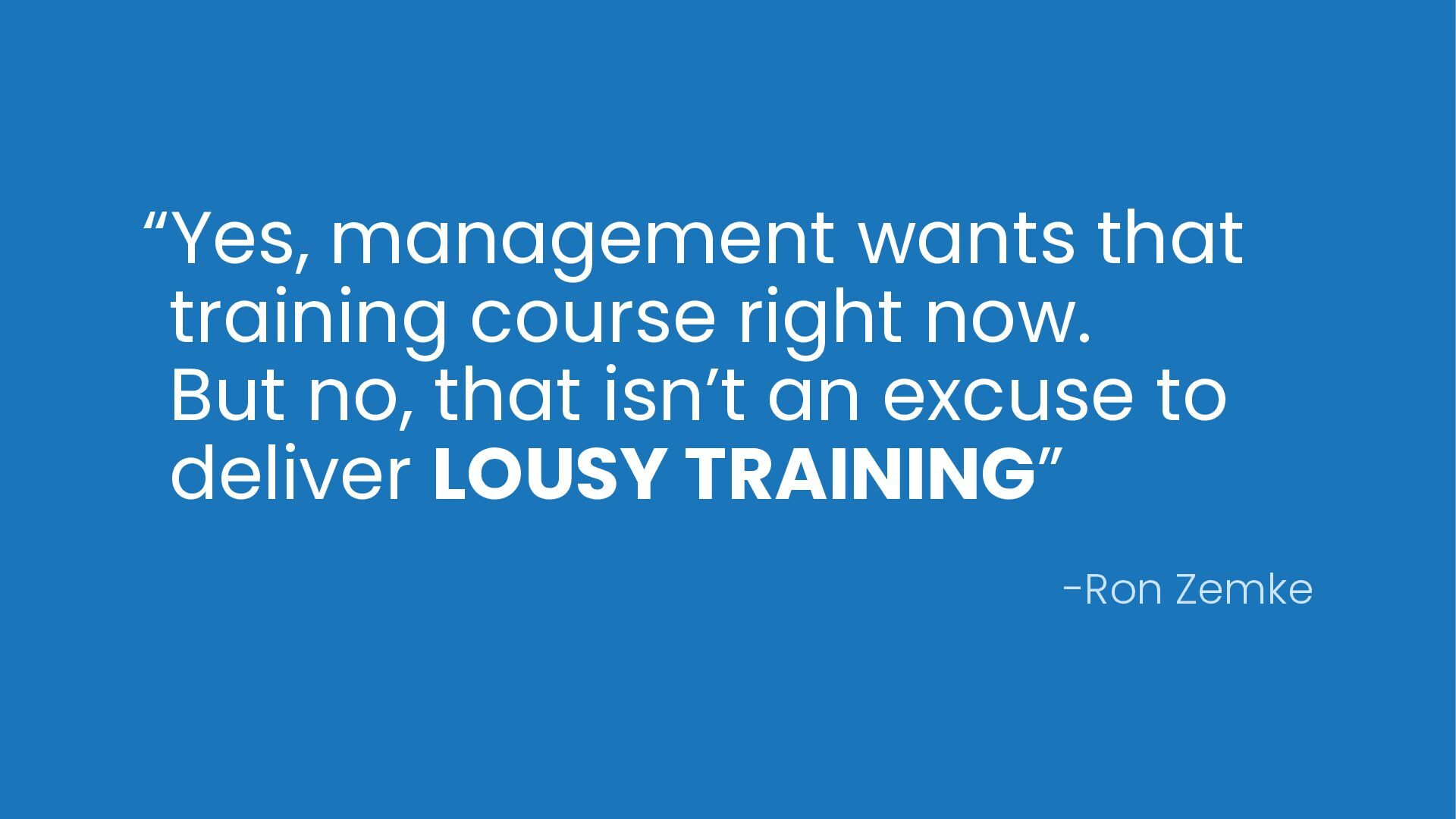
  9. “Yes, management wants that training course right now. But no,

    that isn’t an excuse to deliver LOUSY TRAINING” -Ron Zemke
  10. Content got cheap. Attention didn’t. WHAT AI FIXED WHAT STILL

    LIMITS US Production Attention and follow-through Drafting text, writing quiz questions, building screens: minutes instead of weeks. Getting the attention of busy people, then getting them to act differently on the job.
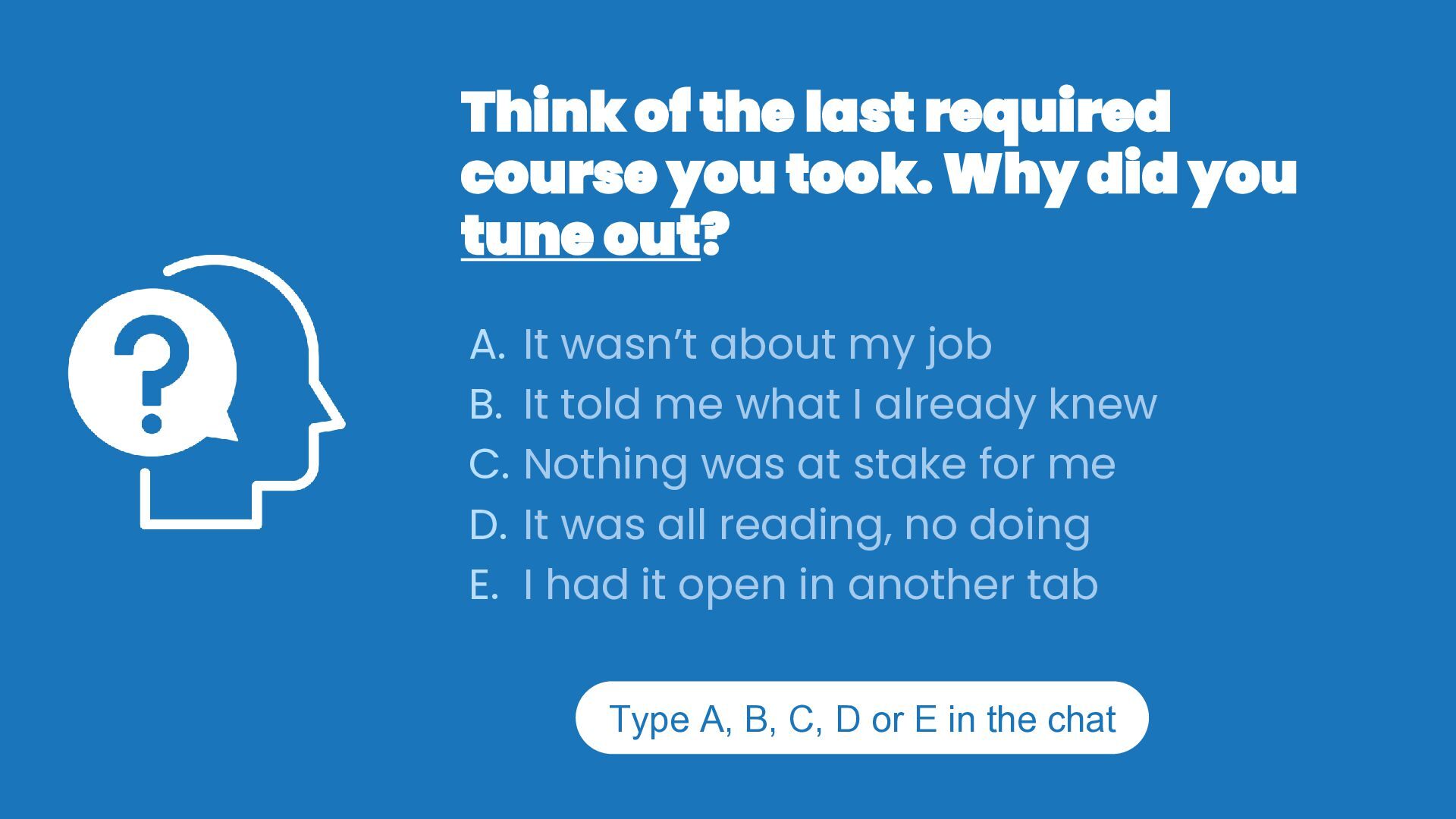
  11. Think of the last required course you took. Why did

    you tune out? A. It wasn’t about my job B. It told me what I already knew C. Nothing was at stake for me D. It was all reading, no doing E. I had it open in another tab Type A, B, C, D or E in the chat
  12. Three zeros make this course forgettable Zero Stakes Zero Context

    Zero Friction No personal impact mentioned. Generic "corporate employees". Obvious advice everyone knows.
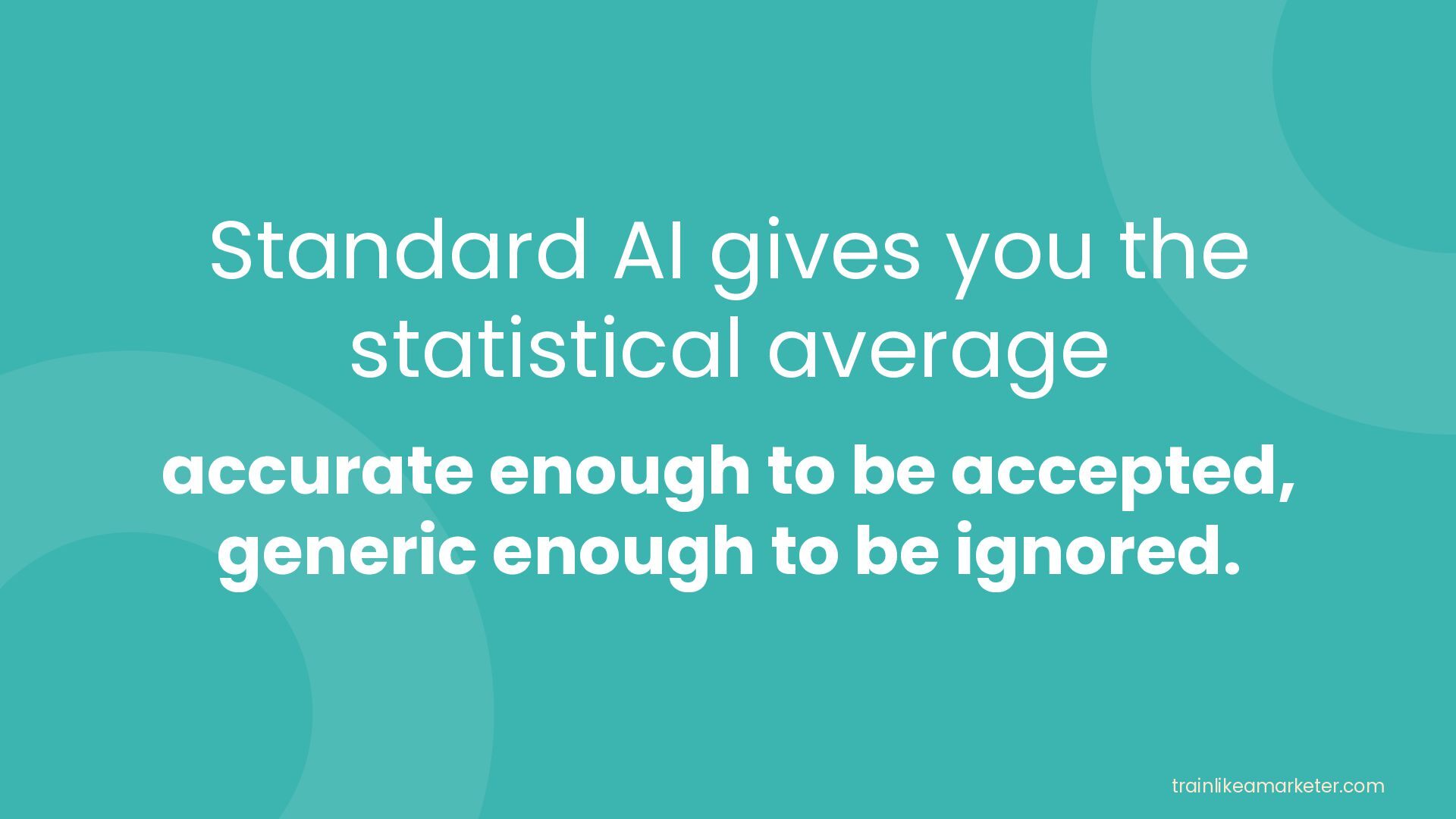
  13. Standard AI gives you the statistical average accurate enough to

    be accepted, generic enough to be ignored. trainlikeamarketer.com
  14. Answer 4 questions before you ask AI to write Answering

    these will give you the critical content to make better training. 01 02 Who is it for? What gets in their way? Their job, their workday, and what they already know. The mistakes they make, and why they make them. 03 What should they do differently? One action you could watch them take, and how you'll measure it. 04 How should it feel? The tone you want: calm, urgent, reassuring, or real.
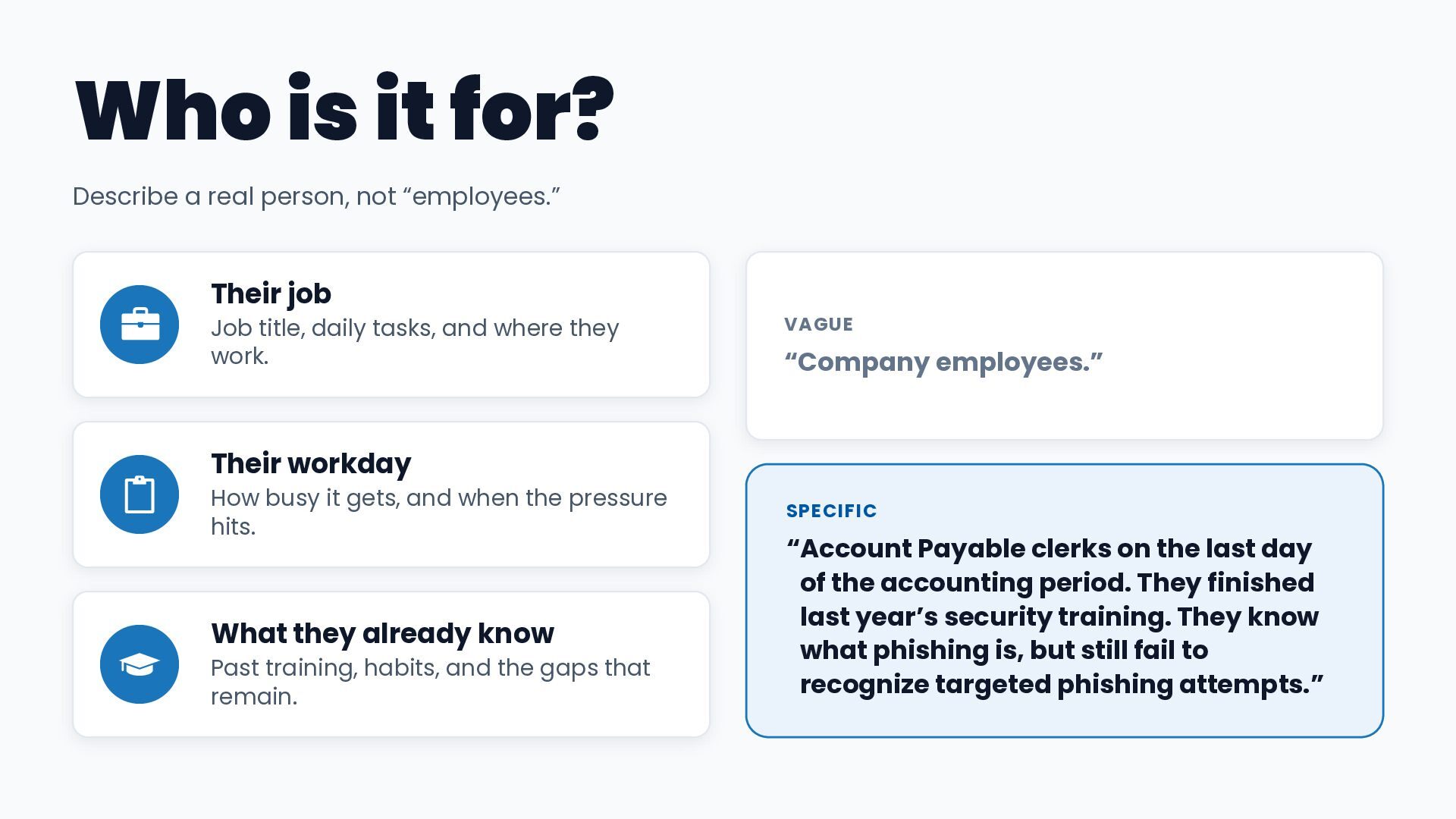
  15. Who is it for? Describe a real person, not “employees.”

    Their job Job title, daily tasks, and where they work. VAGUE “Company employees.” Their workday How busy it gets, and when the pressure hits. What they already know Past training, habits, and the gaps that remain. SPECIFIC “Account Payable clerks on the last day of the accounting period. They finished last year’s security training. They know what phishing is, but still fail to recognize targeted phishing attempts.”
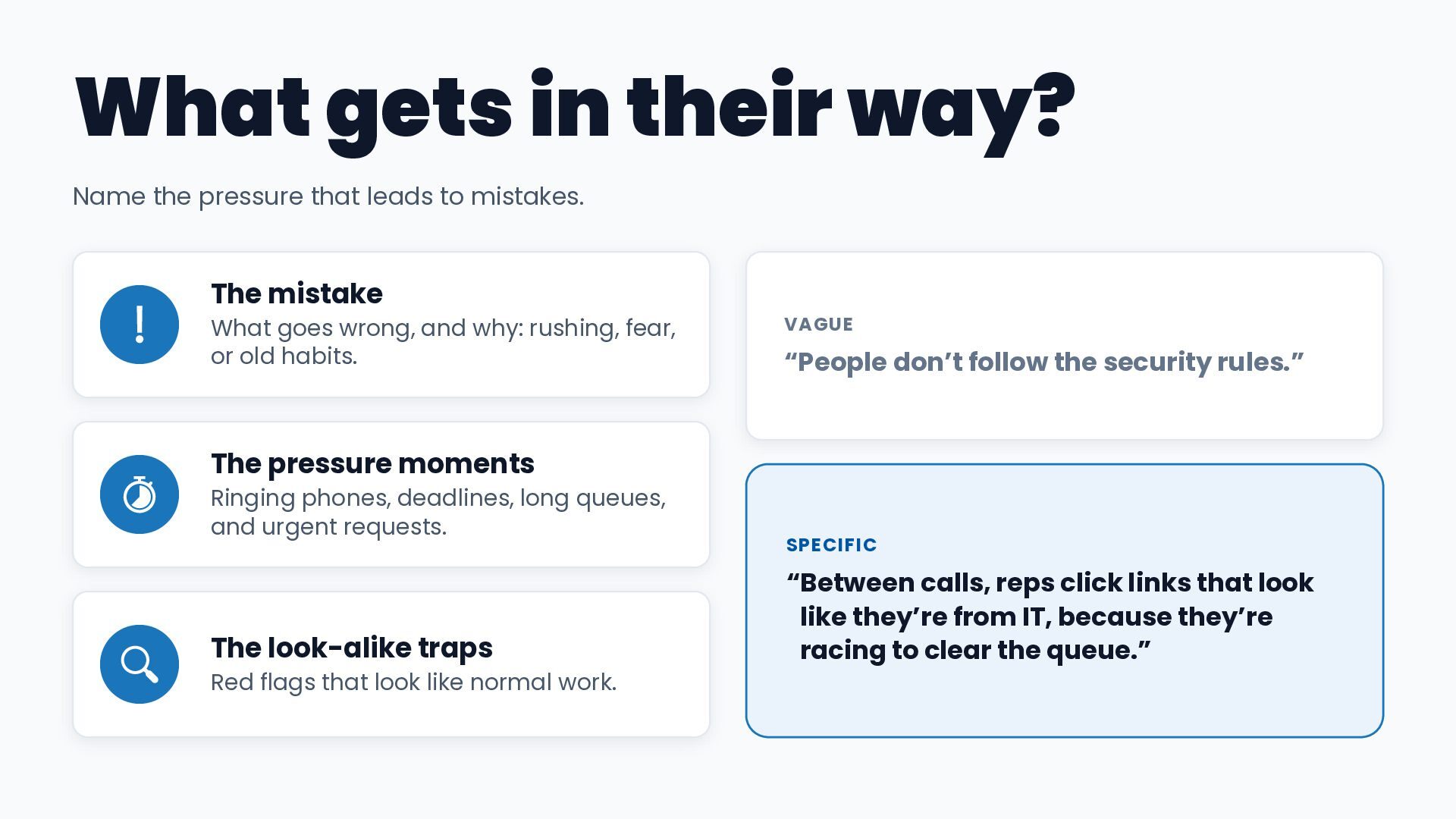
  16. What gets in their way? Name the pressure that leads

    to mistakes. The mistake What goes wrong, and why: rushing, fear, or old habits. VAGUE “People don’t follow the security rules.” The pressure moments Ringing phones, deadlines, long queues, and urgent requests. The look-alike traps Red flags that look like normal work. SPECIFIC “Between calls, reps click links that look like they’re from IT, because they’re racing to clear the queue.”
  17. What should they do differently? Pick one action you could

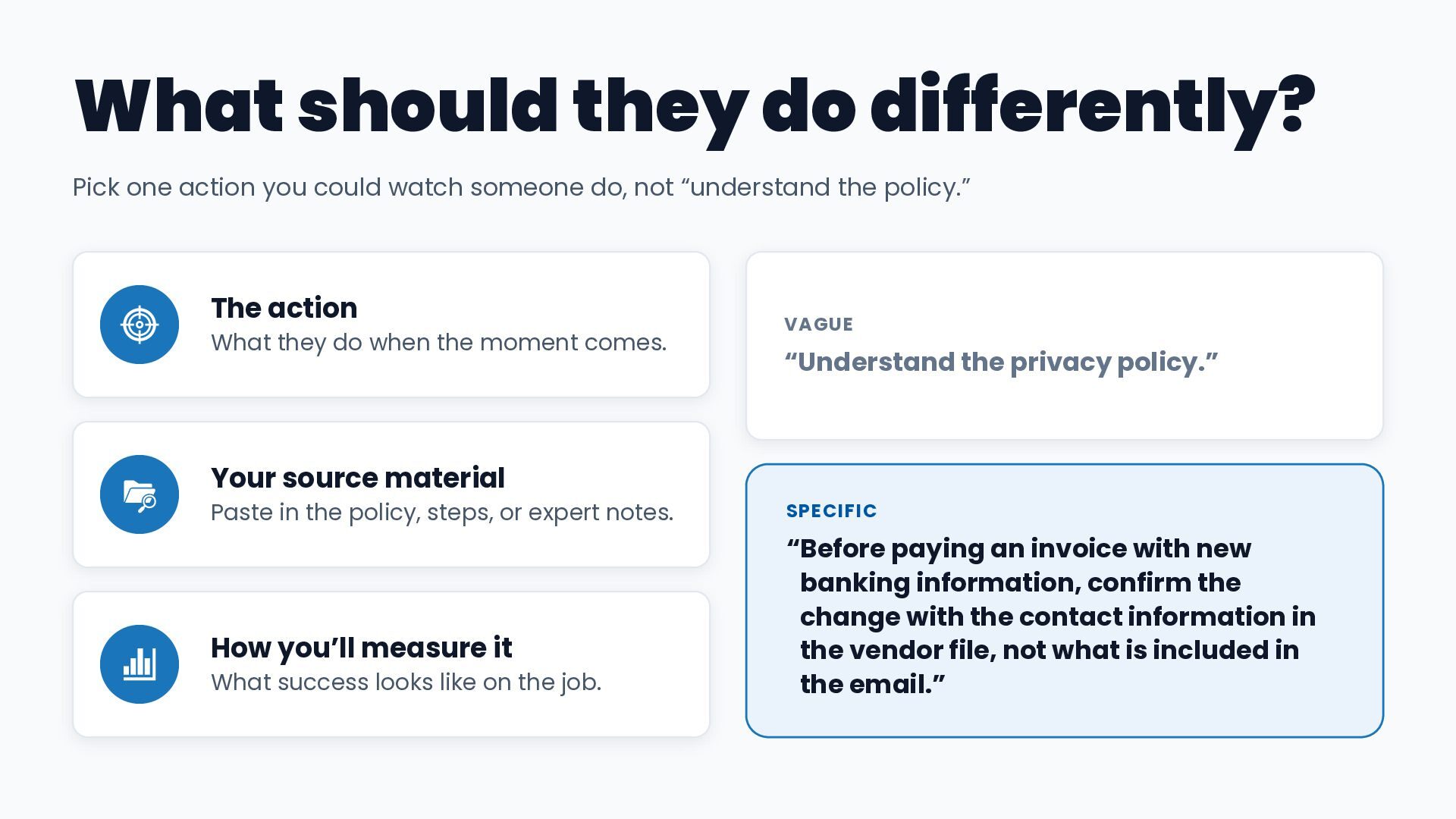
    watch someone do, not “understand the policy.” The action What they do when the moment comes. VAGUE “Understand the privacy policy.” Your source material Paste in the policy, steps, or expert notes. How you’ll measure it What success looks like on the job. SPECIFIC “Before paying an invoice with new banking information, confirm the change with the contact information in the vendor file, not what is included in the email.”
  18. How should it feel? Tell AI the tone, or it

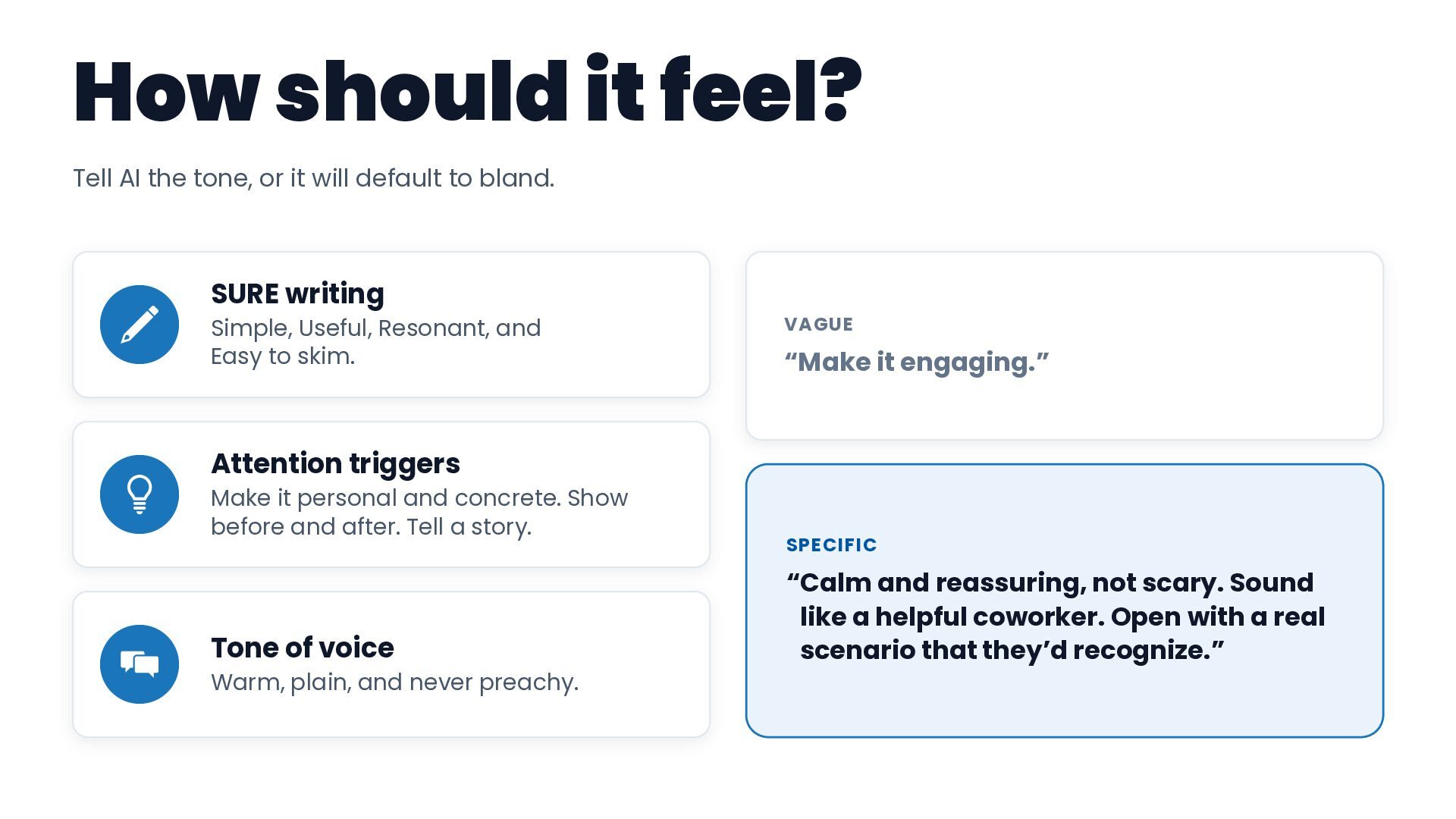
    will default to bland. SURE writing Simple, Useful, Resonant, and Easy to skim. VAGUE “Make it engaging.” Attention triggers Make it personal and concrete. Show before and after. Tell a story. Tone of voice Warm, plain, and never preachy. SPECIFIC “Calm and reassuring, not scary. Sound like a helpful coworker. Open with a real scenario that they’d recognize.”
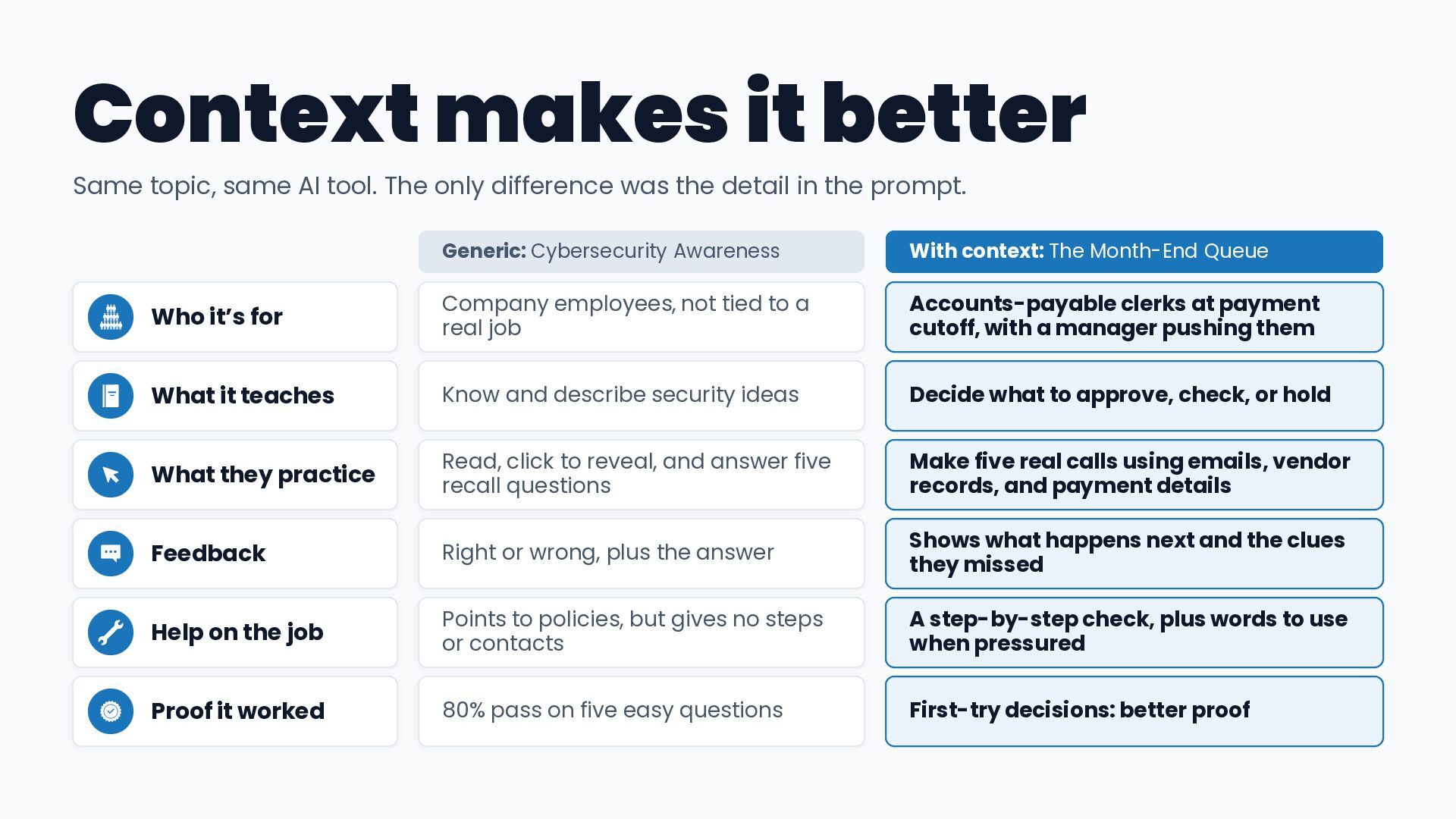
  19. Context makes it better Same topic, same AI tool. The

    only difference was the detail in the prompt. Generic: Cybersecurity Awareness With context: The Month-End Queue Who it’s for Company employees, not tied to a real job Accounts-payable clerks at payment cutoff, with a manager pushing them What it teaches Know and describe security ideas Decide what to approve, check, or hold What they practice Read, click to reveal, and answer five recall questions Make five real calls using emails, vendor records, and payment details Feedback Right or wrong, plus the answer Shows what happens next and the clues they missed Help on the job Points to policies, but gives no steps or contacts A step-by-step check, plus words to use when pressured Proof it worked 80% pass on five easy questions First-try decisions: better proof
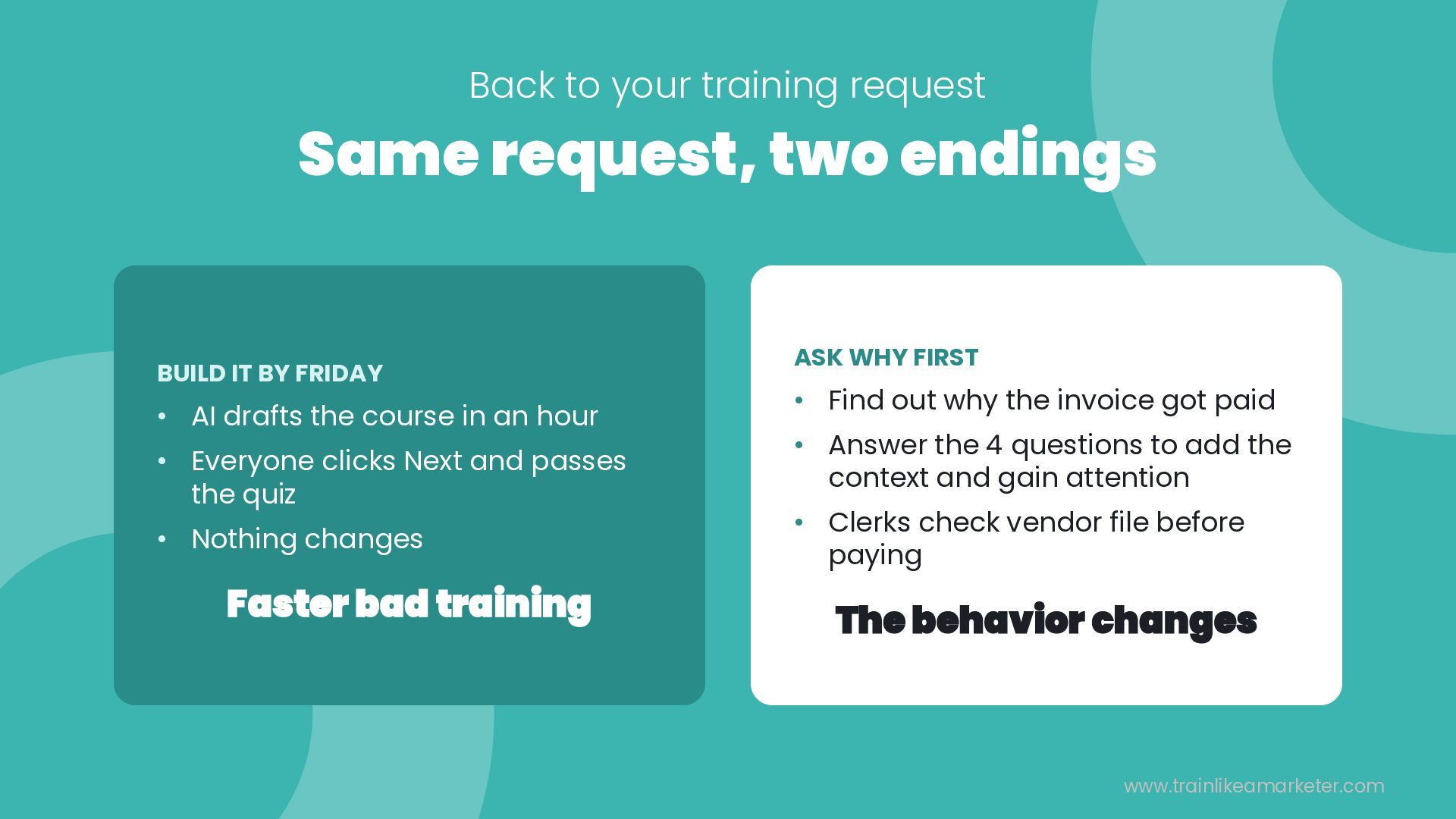
  20. Back to your training request Same request, two endings BUILD

    IT BY FRIDAY • AI drafts the course in an hour • Everyone clicks Next and passes the quiz • Nothing changes Faster bad training ASK WHY FIRST • Find out why the invoice got paid • Answer the 4 questions to add the context and gain attention • Clerks check vendor file before paying The behavior changes www.trainlikeamarketer.com
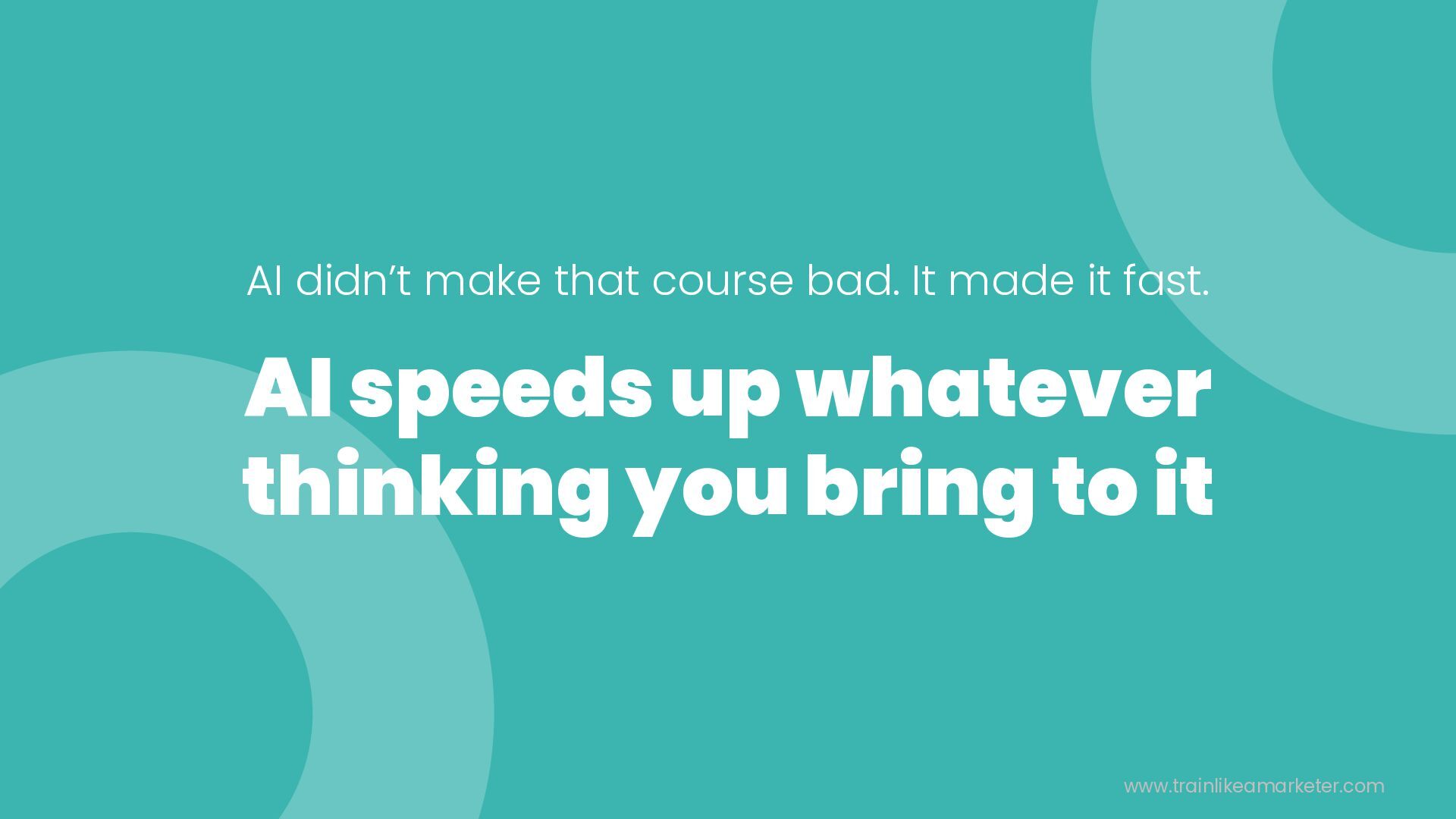
  21. AI didn’t make that course bad. It made it fast.

    AI speeds up whatever thinking you bring to it www.trainlikeamarketer.com
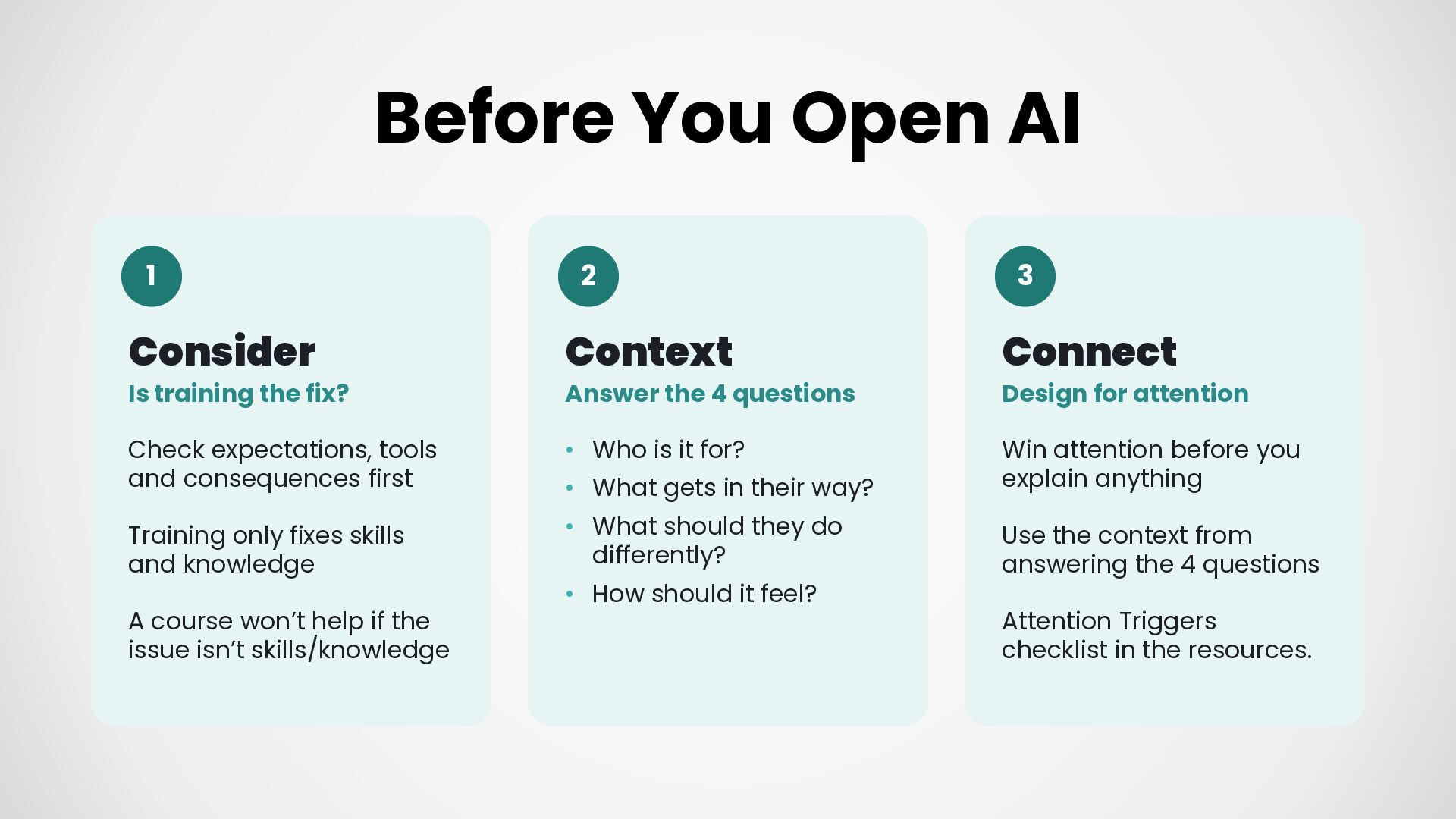
  22. Before You Open AI 1 2 3 Consider Context Connect

    Check expectations, tools and consequences first • Who is it for? • What gets in their way? Win attention before you explain anything Training only fixes skills and knowledge • What should they do differently? Use the context from answering the 4 questions Is training the fix? A course won’t help if the issue isn’t skills/knowledge Answer the 4 questions • How should it feel? Design for attention Attention Triggers checklist in the resources.
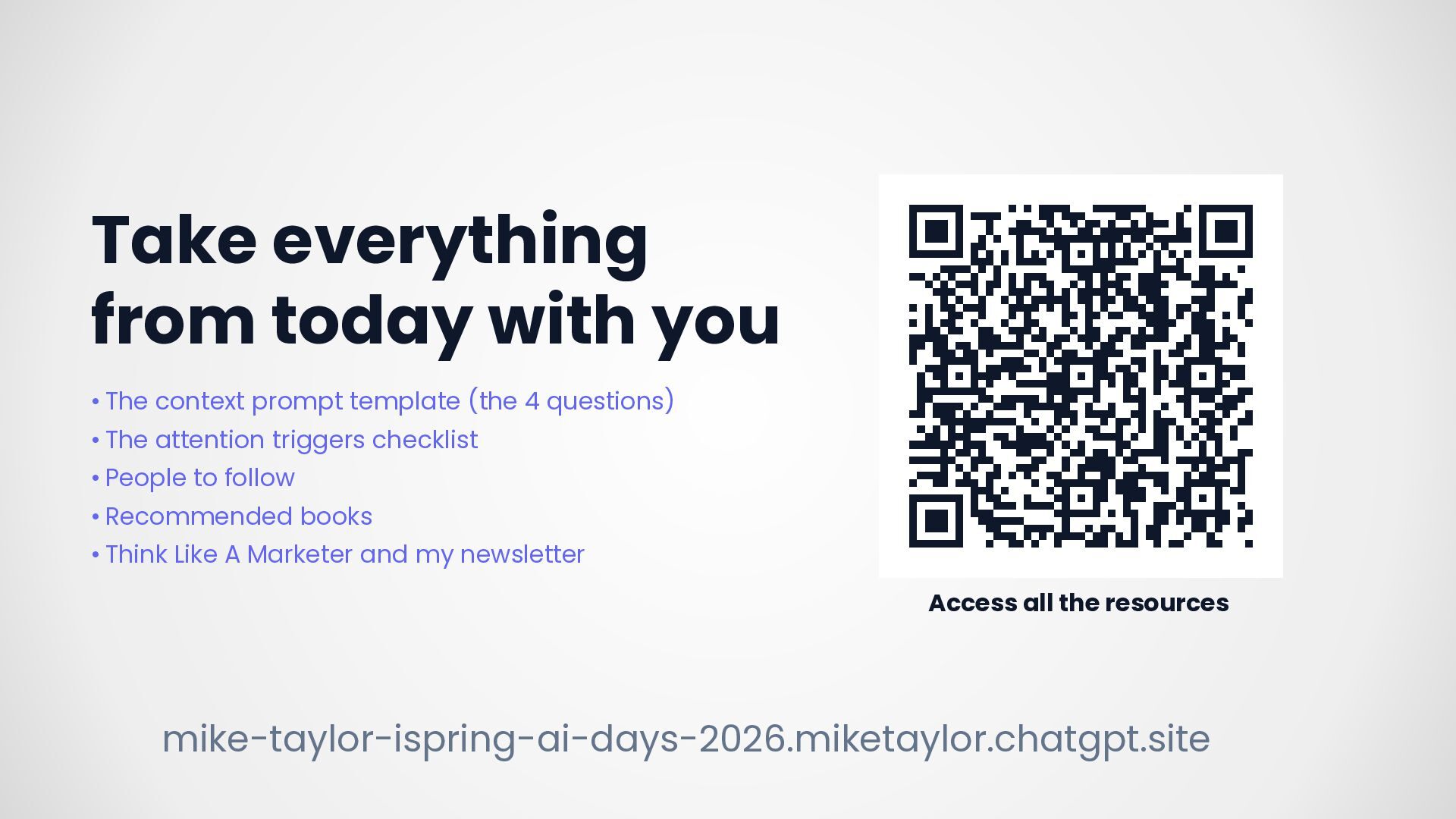
  23. Take everything from today with you • The context prompt

    template (the 4 questions) • The attention triggers checklist • People to follow • Recommended books • Think Like A Marketer and my newsletter Access all the resources mike-taylor-ispring-ai-days-2026.miketaylor.chatgpt.site